Tag: Brian Fitzpatrick

  • Vulnerable Pa. Republican Rob Bresnahan delivers ‘Trump-a-palooza’ speech in Dallas amid tough race back home

    Vulnerable Pa. Republican Rob Bresnahan delivers ‘Trump-a-palooza’ speech in Dallas amid tough race back home

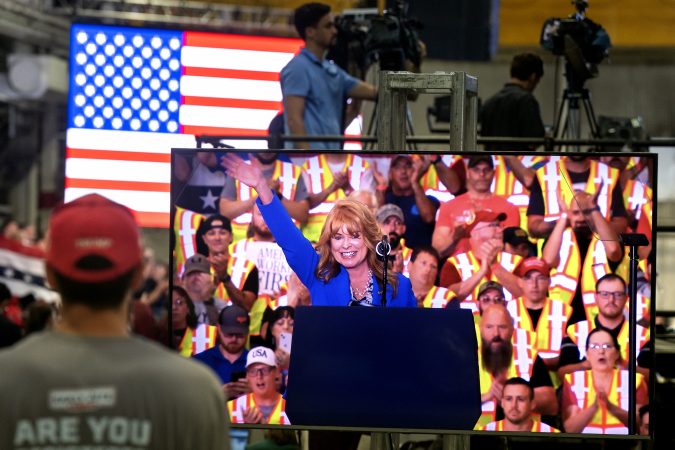
    DALLAS — In an arena littered with President Donald Trump’s image — from the photos that lined the concourse to the gift shops selling merch depicting the president as a cowboy — one of Pennsylvania’s most vulnerable Republican lawmakers this fall went all-in.

    U.S. Rep. Rob Bresnahan, running for reelection in a Scranton-based district that is one of the most competitive in the nation, addressed the Republican Party’s first-ever midterm convention during its opening night on Wednesday.

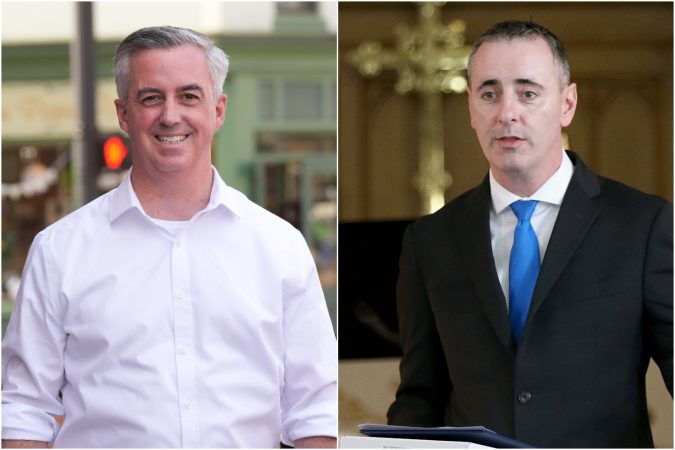
    His decision to attend “Trump-a-palooza” (as the RNC has described it) at all was notable. Some Republicans in tight races decided to stay away out of concerns of associating themselves with a president with low approval ratings. U.S. Rep. Brian Fitzpatrick (R., Bucks), for example, is not attending and has distanced himself from parts of Trump’s agenda.

    Bresnahan promoted Trump’s signature tax policy in a brief speech focused on supporting workers and their families.

    “Tax relief matters,” Bresnahan told hundreds of party loyalists at the American Airlines Arena in a speech that followed Ken Paxton, the controversial Trump-backed U.S. Senate candidate in Texas. “In Northeastern Pennsylvania, we work until the job is done. And those extra hours should mean more money in your pocket.”

    Democrats have used Bresnahan’s vote for the One Big Beautiful Bill Act, which included cuts to Medicaid and food assistance, as a wedge against Bresnahan and other vulnerable Republicans. But Bresnahan contended the income tax cuts and other policies in the legislation, like no tax on tips, are paying dividends for families.

    Two other Pennsylvania GOP lawmakers in similar situations, U.S. Reps. Ryan Mackenzie (R., Lehigh) and Scott Perry (R., York), are also attending the two-day convention, with Mackenzie slated to speak Thursday.

    Bresnahan spoke to a somewhat sparse crowd compared with Republican National Conventions during presidential election years, which served as a model for the novel midterm convention this year as the party looks to energize its base of voters while seeking to defend narrow majorities in the House and Senate.

    Delegates, clustered by state on the convention floor, cheered and waved signs reading “Keep the majority” and “Republicans are fixing Democrats’ mess.” The stands in the roughly 19,000-person arena remained largely empty, at least for the first few hours before Trump’s speech.

    Merchandise shops were packed with Trump’s typical MAGA merchandise, copies of his son Eric Trump’s book, Under Siege, and new mugs and shirts showing Trump on a horse in cowboy gear. Red, white, blue, and — in an unmistakable nod toward the president — gold balloons waited in the rafters for the grand finale on Thursday.

    “I’m asking you to pretend that I’m on the ballot. I’m on the ballot, just one more time,” Trump told the cheering crowd in prime time, noting there were about 35 “swing” races the party was prioritizing.
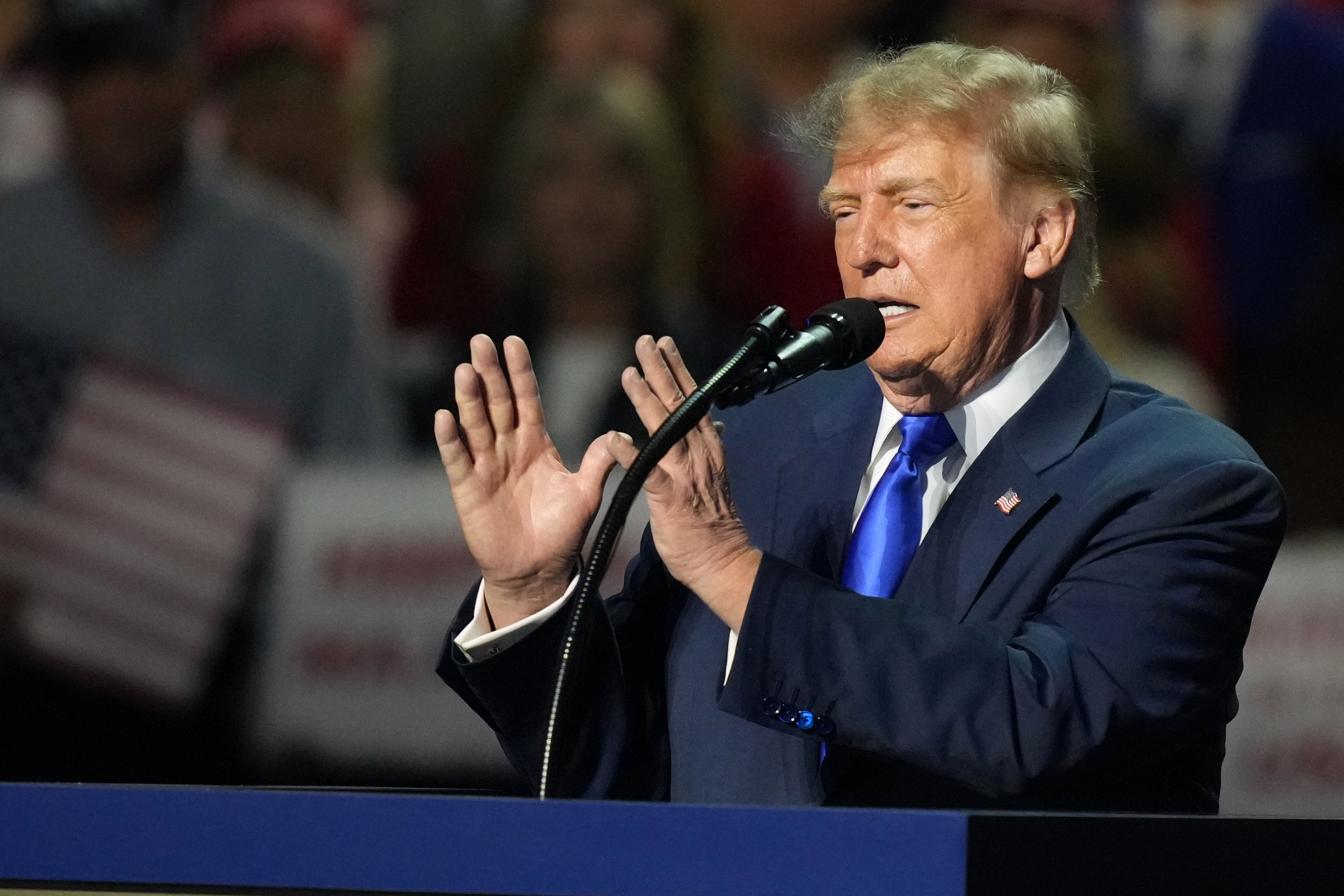
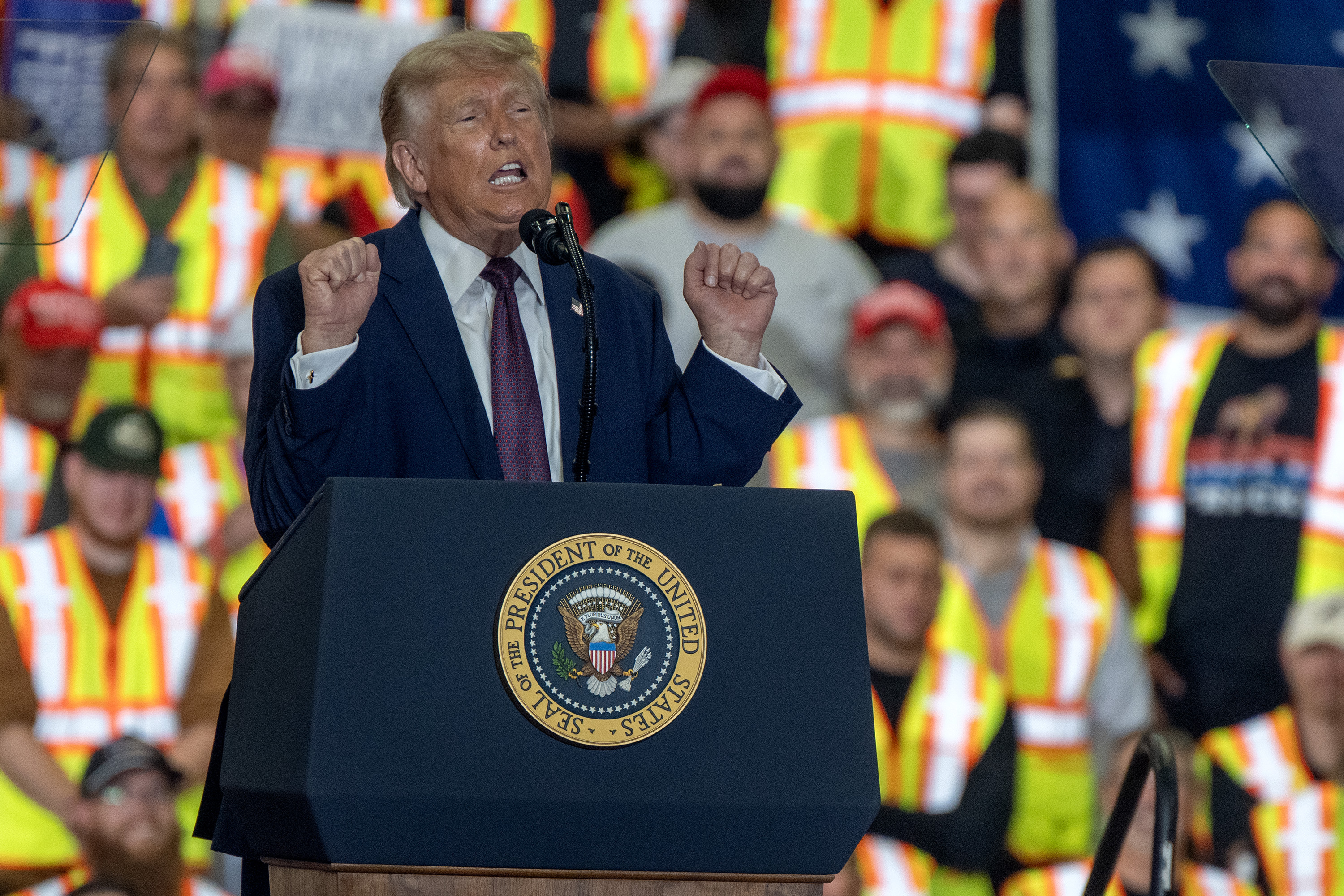
    President Donald Trump speaks at the Republican convention Wednesday, Sept. 9, 2026, in Dallas. (AP Photo/Alex Brandon)Alex Brandon

    About 1,500 miles away, in another town called Dallas, one of Bresnahan’s constituents hatched a plan to tune in.

    On the opening night of the annual Luzerne County Fair — in a booth yards from deep-fried Oreos, flying elephant kiddie rides, and life-size cardboard cutouts of Abraham Lincoln, Donald Trump, and Jesus — Dwayne McDavitt fiddled with his tablet to see if he could stream the convention.

    The symmetry of Dallas, Texas, and Dallas, Pa., was “too good to pass up,” said McDavitt, the head of a conservative group called Thunder and Liberty PAC and also the Pennsylvania chapter of Bikers For Trump.

    He said he supports Bresnahan, who lives in Luzerne County, over Scranton Mayor Paige Cognetti, the Democratic nominee.

    “He shares our values of faith, family, and freedom — meaning free and fair elections,” McDavitt said.

    Interviews with other voters in the district on Wednesday underscored the potentially risky nature of Bresnahan’s leaning into the Trump administration.

    Malcolm Mabry, 28, of Wilkes-Barre, said he had been victimized by a “Trump bait and switch” as a Republican who voted for the president two years ago. He picked Trump, believing that better policing of the Southern border was paramount.

    And while Trump has been using ICE to “grab up people,” as he said, Mabry said much of what else the president promised, like lowering prices and avoiding war, has not occurred.

    “Trump just said what he had to, to get into office,” said Mabry, who was unaware of the convention happening at the same time.

    A campaign about workers and affordability

    Bresnahan won his seat by less than 2 percentage points in 2024 to take down a six-term Democrat in the northeast corner of the state. Trump won the district by more than 8 percentage points.

    His Democratic challenger, Cognetti, has garnered high-profile supporters like Gov. Josh Shapiro, who is also up for election, and she has repeatedly targeted Bresnahan for trading stocks while in office despite his previous statements that he would not do so.

    Bresnahan, the former head of a family-run electrical contracting business, has made jobs and the workforce a top focus in his campaign and in his brief congressional career.

    On a few occasions, he has broken with House Republican leaders to support bills that would strengthen union protections for federal workers. He has said that he hopes his party changes tactics to support those kinds of bills.

    “We need the unions that have trained generations of some of the most skilled workers in American history,” Bresnahan said onstage Wednesday. “We have those workers in Northeastern Pennsylvania, and communities across this country are ready for the same opportunity.”
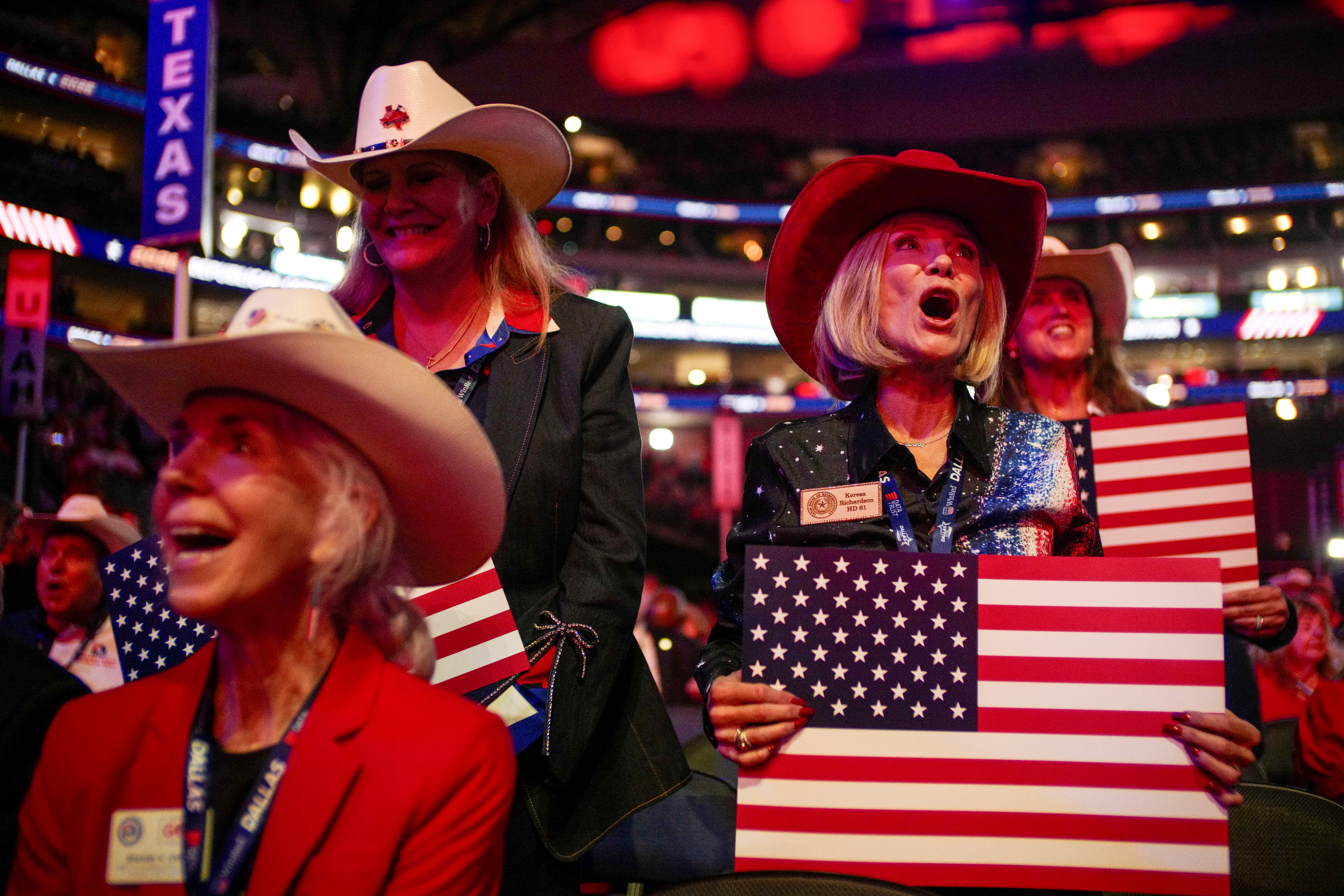
    Texas state Rep. Keresa Richardson (R), right, attends the GOP midterm convention. (Joel Angel Juárez/For The Washington Post)Joel Angel Juárez

    Bresnahan has racked up a series of union endorsements that are otherwise rare for Republicans. While major unions like the AFL-CIO and the Pennsylvania State Education Association have backed Cognetti, he has won support from organizations like the American Federation of Government Employees and the Teamsters — groups that, in a region with a long history of union issues, could make a difference in a close race.

    In his speech, Bresnahan talked generally about supporting workers and manufacturing in the U.S. He spoke about tax policies that put “more money in your pocket” and help “build communities where people can stay, raise a family, and build a life.”

    U.S. Sen. Dave McCormick (R., Pa.), in a speech that was introduced with an unusual video featuring U.S. Sen. John Fetterman (D., Pa.), also spoke about Trump’s push to improve economic indicators.

    They and other speakers did not address other affordability issues that Democrats have seized on and that polls show voters have top-of-mind heading into early voting.

    Trump has mocked the Democratic attacks on the issue as a hoax, including in a speech in Bresnahan’s district last year. But it is a message, and a reality, that has resonated with voters in Pennsylvania, according to polls and interviews.

    “I’m on a fixed income,” Bill Dudeck, 83, of Nanticoke in Luzerne County, said Wednesday. “But under Trump, gas, groceries, and utilities are skyrocketing.”

    Trump promised a lower cost of living, “but now all our money is out the window,” said Dudeck, a Democrat and former construction worker in Bresnahan’s district.

    Bresnahan, whose campaign said earlier this week that he was looking forward to bringing “NEPA to the national stage,” appeared onstage instead with a sheet metal worker and mother of seven from Baltimore.

    Cognetti’s campaign noted the pairing in a comment Wednesday that criticized Bresnahan, in part, for trading stocks in office.

    “That’s probably why he didn’t have a Pennsylvanian on stage with him tonight,” a Cognetti campaign spokesperson said in a statement. “His speech is just more empty words to try and distract from his broken promises.”

    Nora Pruitt, who joined Bresnahan, had previously been recognized by the White House as a beneficiary of Trump’s second term. Listed on the agenda as an “everyday American, factory worker, working mother and manufacturing success story,” Pruitt said “things have really improved for our family since President Trump returned to office.”

    “We are so grateful President Trump and Republicans in Congress like Congressman Bresnahan vote for families like ours,” she said.
  • With control of Congress on the line, Pa. Republicans head to Trump’s midterm convention in Dallas

    With control of Congress on the line, Pa. Republicans head to Trump’s midterm convention in Dallas

    Key figures in Pennsylvania Republican politics — including the state’s top elected federal GOP official and several lawmakers in the middle of heated reelection campaigns — will participate in their party’s first-of-its-kind midterm convention this week in Dallas.

    The gathering, spurred and heavily promoted by President Donald Trump, arrives as Republicans look to defend their control of Congress this fall amid difficult circumstances. Trump’s approval ratings, including on key issues such as the economy and the war in Iran, have sunk, including in Pennsylvania.

    And Democratic challengers, some of whom have outraised their Republican opponents, have waged aggressive campaigns.

    After Trump successfully won the White House and ushered in a wave of downballot Republican wins just two years ago, the convention — described as “Trump-a-palooza” by Republican National Committee chairman Joe Gruters — is aimed at energizing the base at a critical time.

    Pennsylvanians, representing a swing state that has been key to Trump’s success in the past, will play a role.

    U.S. Sen. Dave McCormick (R., Pa.) and a pair of House lawmakers in competitive districts — U.S. Reps. Ryan Mackenzie (R., Lehigh) and Rob Bresnahan (R., Luzerne) — are among the more than 100 scheduled speakers over two days, starting Wednesday.

    Their speaking slots were among the first to be announced. Underscoring the Keystone State’s role in keeping the House Republican majority, only the host state of Texas had more representatives on the initial list of elected officials scheduled to address the crowd.

    The Pennsylvania Republican Party, meanwhile, has orchestrated a “full slate” of 55 delegates and alternate delegates.

    “The Republican Party of Pennsylvania is excited and honored to be a part of the first ever RNC Midterm Convention in Dallas,” spokesperson James Markley said in a statement. “It will be a tremendous opportunity to hear from everyday Americans about how this administration has changed their lives for the better.”

    The state party had not provided the names of the delegates as of Tuesday, though the list is expected to include party activists and other elected officials. State party leaders had encouraged Pennsylvanians to attend the gathering.

    Democrats, who see the president’s lagging approval ratings as a key to their success in the midterms, were quick to blast Pennsylvania Republicans for attending. Their response includes plans to send a small group of House Democrats, including U.S. Rep. Madeleine Dean (D., Montgomery), to Dallas to push back against the GOP messaging.

    “While swing seat House Republicans try to hide from their record of raising costs on working families, gutting Medicaid to fund tax breaks for billionaire donors and supporting a reckless war of choice in Iran, House Democrats will be present to hold them accountable,” House Minority Leader Hakeem Jeffries, the New York Democrat in line to become House speaker if his party wins the majority, said in a statement.

    Fitzpatrick skips as other Pa. Republicans take center stage

    Four of Pennsylvania’s 10 Republican-held U.S. House seats are considered key battlegrounds as the GOP looks to maintain its four-seat advantage nationwide.

    Of those, only U.S. Rep. Brian Fitzpatrick (R., Bucks) has distanced himself from parts of Trump’s agenda and is not planning on attending the convention.

    Mackenzie and Bresnahan, on the other hand, will be among the featured speakers, and U.S. Rep. Scott Perry (R., York) will attend.

    Perry, a close Trump ally, has routinely won reelection in a Harrisburg-based district but is running this year against Democrat Janelle Stelson, a former local television anchor who nearly defeated him two years ago.

    Freshmen Mackenzie and Bresnahan were elected to Congress in 2024 after they each defeated incumbent Democrats by less than 2 percentage points. Local, state, and national Democrats have rallied behind their challengers — union leader and retired firefighter Bob Brooks in the Lehigh Valley, and Scranton Mayor Paige Cognetti in the district that covers the northeast corner of the state.

    Bresnahan campaign spokesperson Samantha Bullock said the lawmaker was “excited to bring NEPA to the national stage because these are the people driving his work in Washington.”

    Mackenzie, in a statement that referenced his work to bring federal funds to his district and support areas like local healthcare and tax relief, said he was “looking forward to talking to the people of the Lehigh Valley, the Poconos, and the entire nation about these accomplishments, and how we can build on them in the years ahead.”

    Brooks said Mackenzie was “flying to Dallas to kiss the ring of Donald Trump and his party bosses.”

    “This is exactly why people are fed up with a broken Washington that isn’t working for working people,” Brooks said in a statement.

    Mackenzie’s campaign has similarly criticized Brooks for campaigning with national Democrats — calling an event Brooks had with Jeffries in July a sign that “establishment backers” were trying to “bail him out.”

    The convention will feature six hours of programming each night.

    Topics that speakers will highlight include the elements of Trump’s signature One Big Beautiful Bill Act, which Republicans have rebranded as the Working Families Tax Cuts Act.

    Supporters have applauded the law’s extension of Trump’s 2017 tax cuts and its litany of other features, such as investment accounts for children. Democrats and other critics have pointed to the law’s cuts to Supplemental Nutrition Assistance Program (SNAP) and Medicaid spending, among other measures.

    The convention speakers will also touch on the president’s enhanced border control measures and his push for election changes such as universal voter ID, according to an outline of the agenda.

    A “candidate showcase” that will highlight “key candidates in target districts” and contrast them with their “extreme” opponents is set for Wednesday night. And an “opposition contrast” to “[deliver] the night’s sharpest partisan case against the extreme liberal Democrats” is slated for Thursday night, according to the agenda.

    Besides Trump, the members of his administration scheduled to speak include Vice President JD Vance, U.S. Attorney General Todd Blanche, Centers for Medicare and Medicaid Services Administrator Mehmet Oz, and Health and Human Services Secretary Robert F. Kennedy Jr., who has engaged in a war of words with Pennsylvania Gov. Josh Shapiro over the state’s measles outbreak.

    National Republicans have described the convention as a way to energize voters in a tough election year.

    Two years after winning Pennsylvania for the second time in 2024, Trump had an approval rating of 39% and a disapproval rating of 58% among likely voters in the state last month, according to an Inquirer/New York Times/Siena University poll.

    The poll found that 51% of likely voters said they were more likely to vote for a Democrat for Congress and 53% said they would want to see the House flip to Democratic control, though the poll did not ask about specific congressional races.

  • Why Democrats’ priorities shifted from abortion to affordability in Bucks County’s key midterm races

    Why Democrats’ priorities shifted from abortion to affordability in Bucks County’s key midterm races

    In what might have been unheard of just two years ago, the Democrat in Bucks County’s key congressional race does not mention abortion or reproductive rights by name on his campaign website.

    Instead, Bob Harvie, the county commissioner challenging U.S. Rep. Brian Fitzpatrick (R., Bucks) in the crucial 1st Congressional District race, largely highlights affordability issues, like tax cuts for the middle class and raising the minimum wage, on his list of 12 priorities.

    It’s not that Harvie is suddenly against abortion — he has been vocal about his support for reproductive rights — but it exemplifies a broader shift in how Democrats are fine-tuning their message for must-win races in the county this fall.

    Once a top-line issue for Democratic candidates in Bucks — one of the swingiest counties in Pennsylvania — discussion of abortion and reproductive rights has faded into the background in local political campaigns in favor of issues related to the economy and the cost of living.

    “People [are] feeling that right now they’re living in an America that’s not fair for them,” Harvie said.

    The issue has also been so far been absent from Fitzpatrick’s campaign and his website. The Republican currently holds a moderate view on abortion, though he has previously voted for restrictions.

    For Harvie, discussions surrounding access to affordable healthcare — which is his No. 1 listed campaign priority — includes abortion. All of these issues reflect a broader struggle, he argued.

    “They’re losing their rights, they’re losing their power over their own futures, they’re losing the American dream, all of that is combined,” Harvie said.

    It’s a noticeable shift from Fitzpatrick’s last challenger Ashley Ehasz’s strategy in 2022 and 2024 when abortion and reproductive rights served as the focal point in both of her campaigns, which followed the backlash to the U.S. Supreme Court’s decision to strike down Roe v. Wade in 2022.

    She lost to Fitzpatrick in both elections, the second time by a wider margin than the first.

    “Folks are pretty pragmatic when it comes to the politics here, and if something isn’t working, we’re not going to just keep doing it over and over again,” said Kierstyn Zolfo, co-leader of the progressive group Indivisible Bucks County, which supported Ehasz and is now backing Harvie.

    Pennsylvania voters’ overwhelming disapproval of President Donald Trump and his handling of economic-related issues, as highlighted in a recent Inquirer/New York Times/Siena University poll, offers Democrats an opportunity as they target key state Senate seats in addition to the congressional contest.

    “The point is to move the needle with the voters,” Zolfo said.

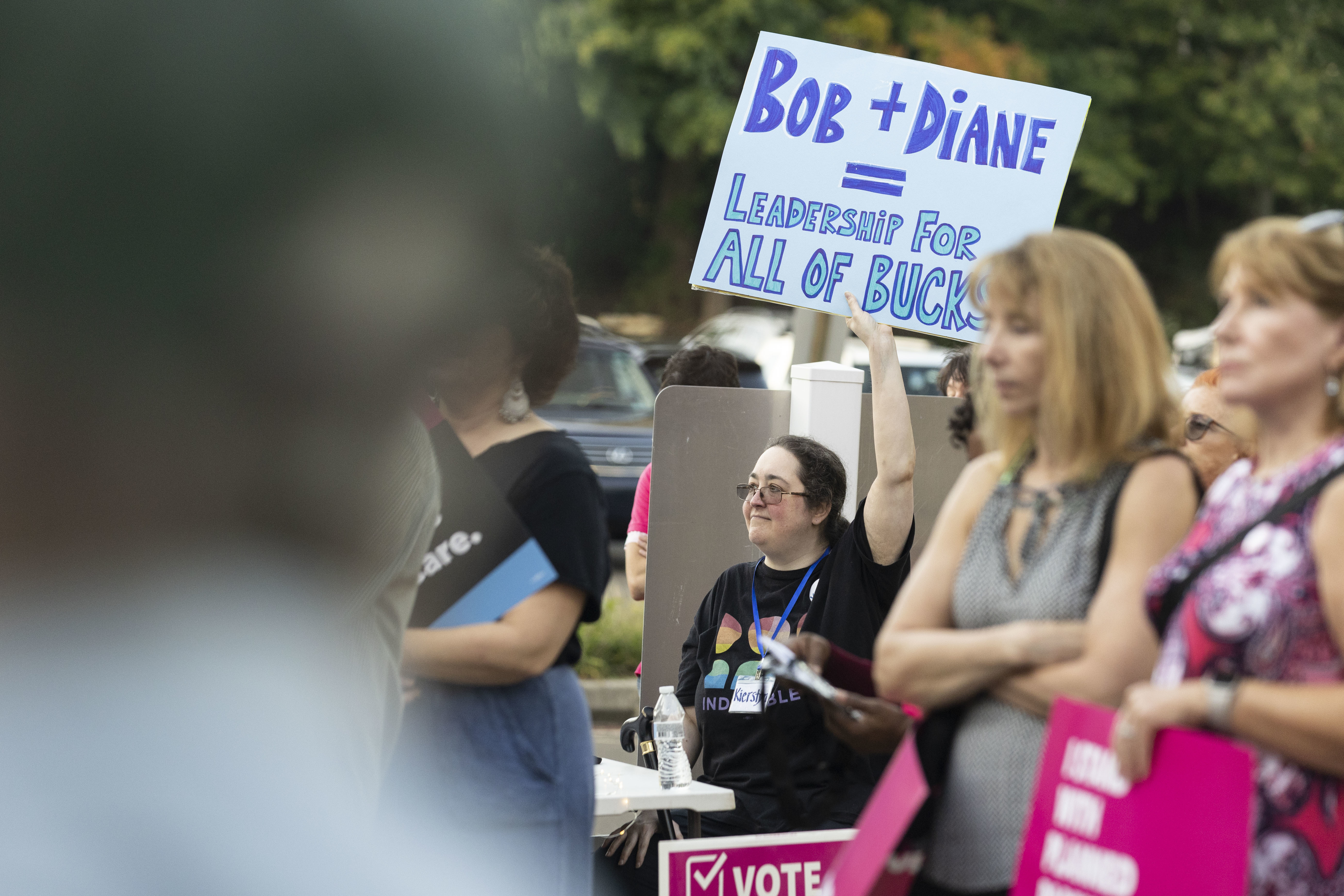
    Kierstyn Zolfo, from Indivisible Bucks County, holds a sign that reads “Bob + Diane = Leadership for All of Bucks,” during a rally outside of the Middletown Township Police Department and Administrative Offices in Langhorne on Oct. 5, 2023. Harvie was running for county commissioner.Monica Herndon / Staff Photographer

    How abortion became a ‘dormant’ issue in the midterms

    The League of Women Voters of Pennsylvania has thousands of volunteers and members talking to voters across the state ahead of the midterm elections.

    And leaders of the nonpartisan organization are hearing very little about reproductive rights. Instead, they’re getting feedback on crucial cost-of-living issues and concerns about democracy.

    Abortion has become a “dormant” issue, said Amy Widestrom, executive director of the League of Women Voters of Pennsylvania.

    “Nobody’s coming to us saying I need talking points on reproductive health in Pennsylvania,” Widestrom said.

    The shift reflects a national trend, with ads related to abortion drastically receding amid Democrats’ focus on bread-and-butter issues, NOTUS reported.

    The midterms are mainly about serving as a “referendum” on Trump’s economic agenda and foreign policy, said State Sen. Steve Santarsiero, chair of the Bucks County Democrats, though reproductive rights “must always be a central plank” of the party and its candidates, noting that majority of the country support a woman’s right to choose.

    “Affordability is really the key issue, so you would expect candidates to talk about that, and then you know they’re obviously going to talk about other issues as well, and abortion rights would be one of those,” said Santarsiero, who is also up for reelection this year.

    In The Inquirer/New York Times/Siena poll, Pennsylvania’s likely voters in November’s gubernatorial election between Shapiro and Republican challenger Stacy Garrity indicated that the economy and the cost of living were the two most important issues.

    Abortion was ranked fourth.

    Democrat Eileen Hartnett Albillar, a social worker and the county’s clerk of courts who is running to unseat state Sen. Frank Farry in the 6th state Senate district, said she doesn’t see abortion and the economy as “competing issues,” though conversations with voters have primarily focused on making ends meet. People, she said, will engage in discussion over protecting abortion rights and related topics if she raises the issue.

    “They want to protect reproductive freedom,” Hartnett Albillar said. “But you know, the cost of living is just so incredibly crushing for so many people. Just because they’re quiet about it, doesn’t mean it’s not important.”

    Reproductive rights took center stage in the 2022 election after several GOP-led states enacted restrictions on abortion following the Supreme Court’s decision to overturn Roe v. Wade.

    In Pennsylvania, the issue helped motivate voters to turn out for Democrats Josh Shapiro and John Fetterman in the contests for governor and Senate. But as the procedure remains protected in the state under Shapiro, the topic has faded from focus.

    Lehigh County Controller Mark Pinsley, a Democrat who is challenging GOP State Sen. Jarrett Coleman in the 16th district straddling Bucks and Lehigh Counties, still believes reproductive rights can motivate voters. But while he thinks his party doesn’t talk about abortion enough, he acknowledged the dynamic is different now than it was then.

    “I think you could win on that issue by itself,” Pinsley said. “I don’t think that’s true in the moment.”

    Brianna Twofoot, vice president of organizing, elections and campaigns at Planned Parenthood Votes, said abortion and reproductive rights still matter to voters even if it’s not taking center stage this year.

    “We’re not asking for anyone to make abortion or reproductive healthcare the number one issue, but we do think that voters want to hear about it,” Twofoot said. “And we do think that elected officials should be standing publicly on the issue.”

    But any discussion of abortion will come amid what’s shaping up to be an apparent rebrand of the topic, folded into conversations about access to basic needs.

    Signe Espinoza, executive director at Planned Parenthood Pennsylvania Advocates, said it’s key to look at reproductive rights through the lens of affordability, especially if health centers are defunded or closed.

    “If Planned Parenthood doors close, where are you going to get your healthcare?” said Espinoza, whose organization is planning some days-of-action in Bucks. “It’s going to become more expensive. Everything’s going up.”

    Bucks County Commissioner Bob Harvie hosts a veterans roundtable in May at Middletown Township Building in Langhorne.William Thomas Cain / For The Inquirer

    How is the issue playing out in Harvie vs. Fitzpatrick?

    Past elections in the Bucks County swing district have shown the abortion argument does not work against Fitzpatrick, who has been known to survive blue wave after blue wave.

    Harvie, a twice-elected county commissioner backed by groups like Reproductive Freedom For All and Planned Parenthood Action Fund, said voters in the district already know where he and Fitzpatrick stand on abortion. The Democrat criticized Fitzpatrick and the Republican Party for supporting “pretty extreme restrictions on abortion.”

    “I think that’s the reason why you’re not hearing it very much because everybody knows the positions and knows who’s on what side,” Harvie said.

    Heather Roberts, a spokesperson for Fitzpatrick, said the Bucks County Republican has long supported “full reproductive freedom” for the first five to six months of pregnancy, as is outlined by Pennsylvania law.

    “We also note that the Congressman’s position is the position held by the overwhelming majority of PA-1 residents,” Roberts said.

    His campaign also noted Fitzpatrick’s backing of legislation in recent years that aimed to protect the right to cross state lines for an abortion as well as bills that protect access to contraception and in vitro fertilization and support of pregnant workers and women’s rights.

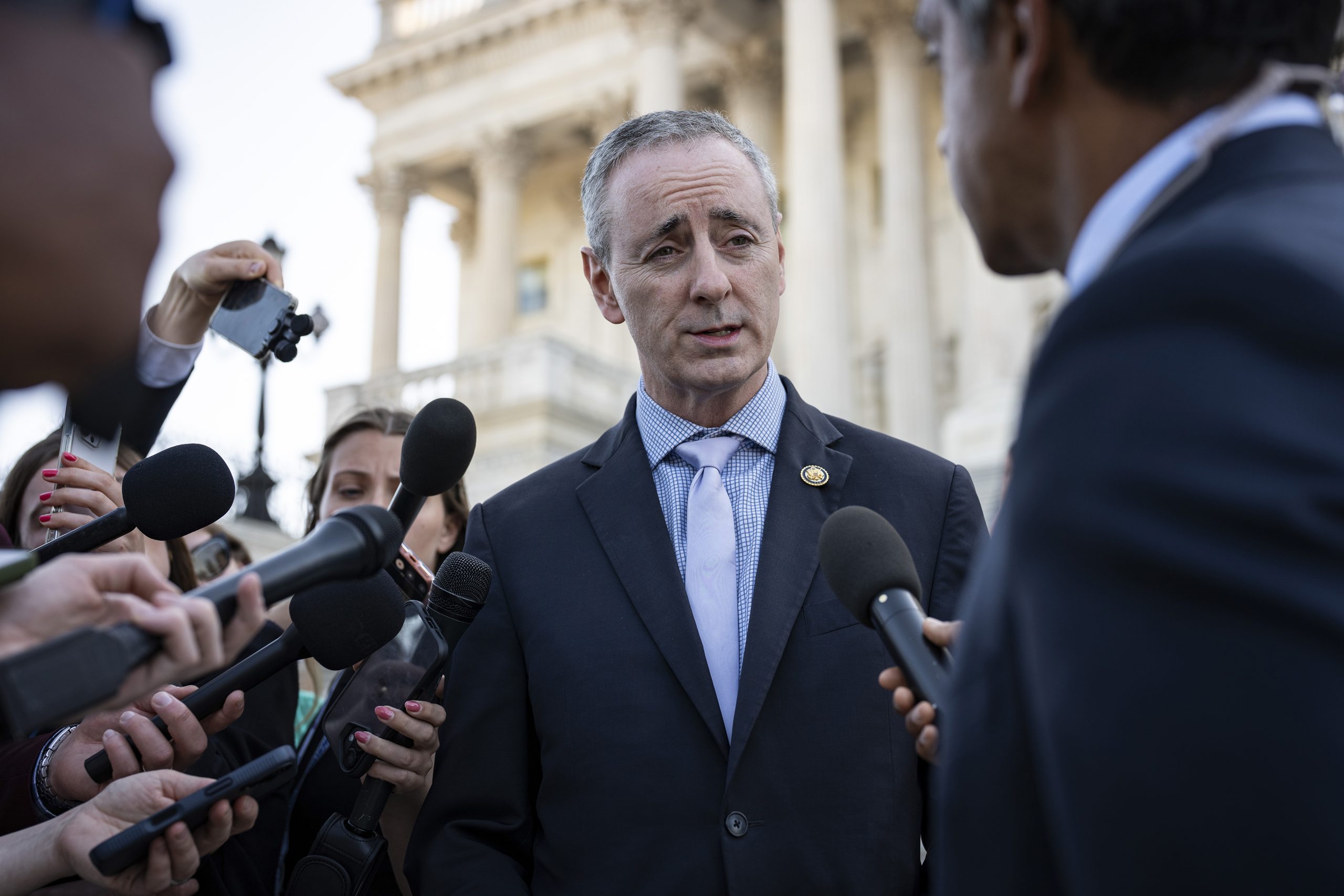
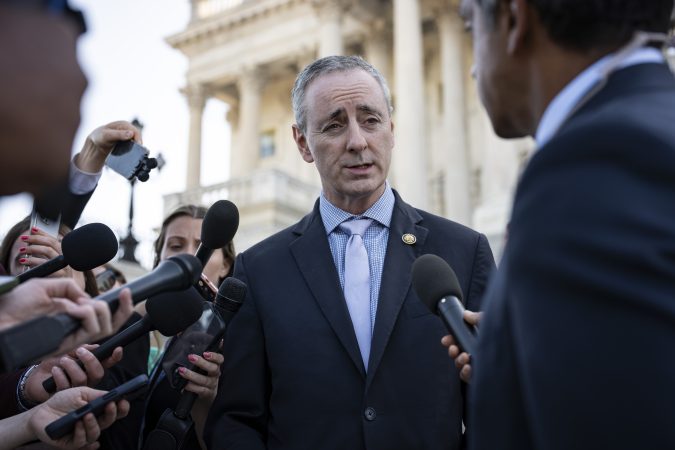
    Rep. Brian Fitzpatrick (R., Pa.) speaks to reporters on June 3 on Capitol Hill after the House passed an Iran war powers resolution.Haiyun Jiang

    But he has also voted for abortion restrictions, including a 20-week abortion ban in 2017 and twice against the Women’s Health Protection Act, which would have codified protections to access abortion into law.

    The issue is absent from Fitzpatrick’s campaign website, which does not reference abortion in sections about healthcare or empowering women.

    Widestrom, the executive director of Pennsylvania’s League of Women Voters, said Fitzpatrick has found a way to “neutralize” issues related to his position on abortion by continuing to win races where his opponents wage such arguments and refraining from touting a “hardcore pro-life” agenda.

    “By not staking a claim, by not talking about it, it loses saliency in voters’ minds,” Widestrom said.

  • The CDC’s latest measles update still doesn’t include Pennsylvania-reported deaths

    The CDC’s latest measles update still doesn’t include Pennsylvania-reported deaths

    The Centers for Disease Control and Prevention’s latest update Friday on the toll of measles outbreaks nationally continued to omit two measles-related deaths reported last week in Pennsylvania, extending an unusual standoff between federal and state health authorities.

    The agency instead placed an asterisk in a column where, if reported, the Pennsylvania deaths would be recorded as the first in the nation this year. A note below stated that ”available information does not establish whether measles caused or contributed to the deaths or whether the individuals died from other causes while infected with measles.”

    The omission marked a clear departure from the agency’s normal operating procedure, as President Donald Trump’s administration and Democratic Gov. Josh Shapiro continue to clash over how the deaths were characterized.

    States report to the CDC cases and deaths for dozens of infectious diseases, such as hepatitis, influenza, and measles. The CDC has long compiled the data into reports that help epidemiologists monitor outbreaks and risk, and can inform lawmakers’ efforts to improve public health policy.

    In a rare break from that norm, Health and Human Services Secretary Robert F. Kennedy Jr. asked the CDC’s newly appointed director, Erica Schwartz, to omit the Pennsylvania deaths, according to Reuters.

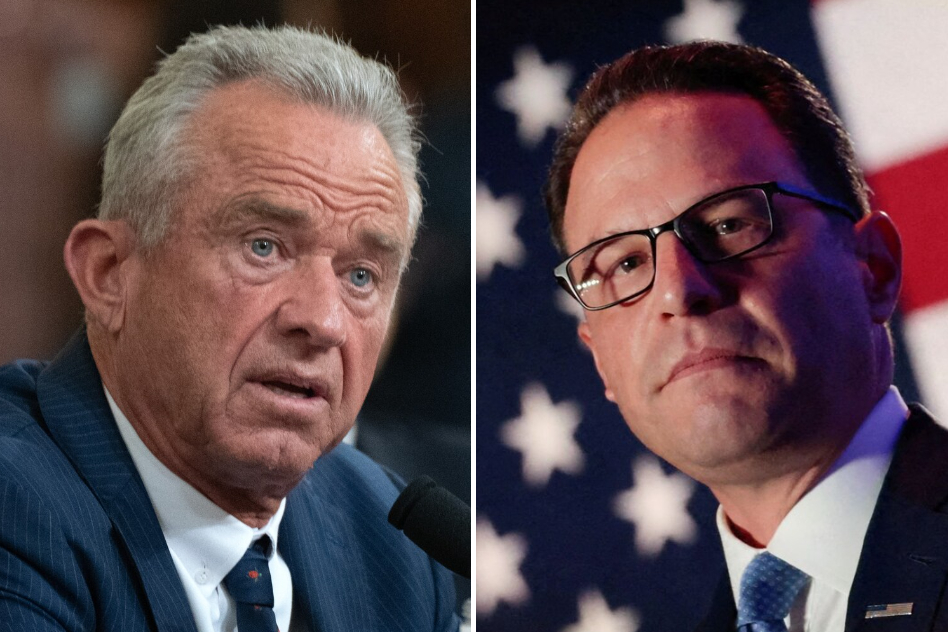
    The move escalated a spat between Kennedy, a longtime anti-vaccine activist, and Shapiro, which began when the governor announced the deaths last Tuesday at a news conference in Lancaster County.

    Shapiro accused Kennedy of spreading vaccine misinformation that has contributed to declining measles vaccination rates, and Kennedy suggested that Shapiro’s office had fabricated the deaths to win political points.

    Public health experts warned that the ongoing political controversy sows doubt in what was designed as an unimpeachable health resource — national disease surveillance — and detracts from the ultimate public health goal of limiting the spread of illness.

    “Every data point is a broken family, a mother crying, a future that’s lost. Instead of grieving that and making sure it never happens again, you’re debating the mechanism of death,” said Brian C. Castrucci, an epidemiologist and president and CEO of de Beaumont Foundation, a community health philanthropy outside Washington, D.C.

    Pennsylvania measles-related deaths

    The Pennsylvania Department of Health reported the two deaths to the CDC the morning of Aug. 25, and professional staff at the CDC “did not express any concern regarding the information,” Neil Ruhland, a department spokesperson, said in an email.

    He described the communication that followed as an extension of the department’s ongoing communications around the state’s outbreak:

    The next day, the state health department discussed the details of each case with CDC professional staff. The CDC requested records containing identifiable information, which the health department did not share, consistent with its past practices.

    Shapiro has cited state privacy laws, and the need to protect the privacy of the families involved to ensure community trust, with limiting his ability to release more information.

    Instead, the health department asked the CDC for a case report form to provide de-identified information. The health department says it has not yet received that form.

    Pennsylvania health officials have a measles outbreak response meeting with the CDC every other week, and most recently met on Tuesday.

    “CDC professional staff have repeatedly made it clear that it has been supportive of DOH’s measles outbreak response,” Ruhland said.

    The CDC’s website says the agency plans to update its measles death count once it has completed its review of Pennsylvania’s cases. But officials have not said what additional information they need from Pennsylvania or when they expect to complete their review.

    The agency did not respond to a request for comment in time for publication.

    Joshua Sharfstein, a physician who served as Maryland’s Health Secretary from 2011 to 2014, said he has never heard of the CDC omitting disease surveillance data reported by states.

    “I wouldn’t say it’s off the table for the CDC to want more information,” but the way the agency went about it in Pennsylvania’s case is unusual, said Sharfstein, who also served as Baltimore’s health commissioner and currently works as a health policy professor at Johns Hopkins University.

    He said he would expect the agency to report Pennsylvania’s data, while alerting officials they are looking for more information. “It’s supposed to be a collaborative relationship,” Sharfstein said.

    Pennsylvania officials initially provided no additional information to the public about the two people who had died, other than they were unvaccinated Lancaster County residents.

    The state’s decision to call the deaths measles-associated came after the state health department’s “epidemiology team thoroughly investigated and verified both individuals tested positive for measles,” Pennsylvania Health Secretary Debra Bogen said in a statement.

    Pennsylvania defines a measles-associated death as deaths of people where evidence of measles is present, even when the disease may not be assessed by the coroner as the immediate cause of death.

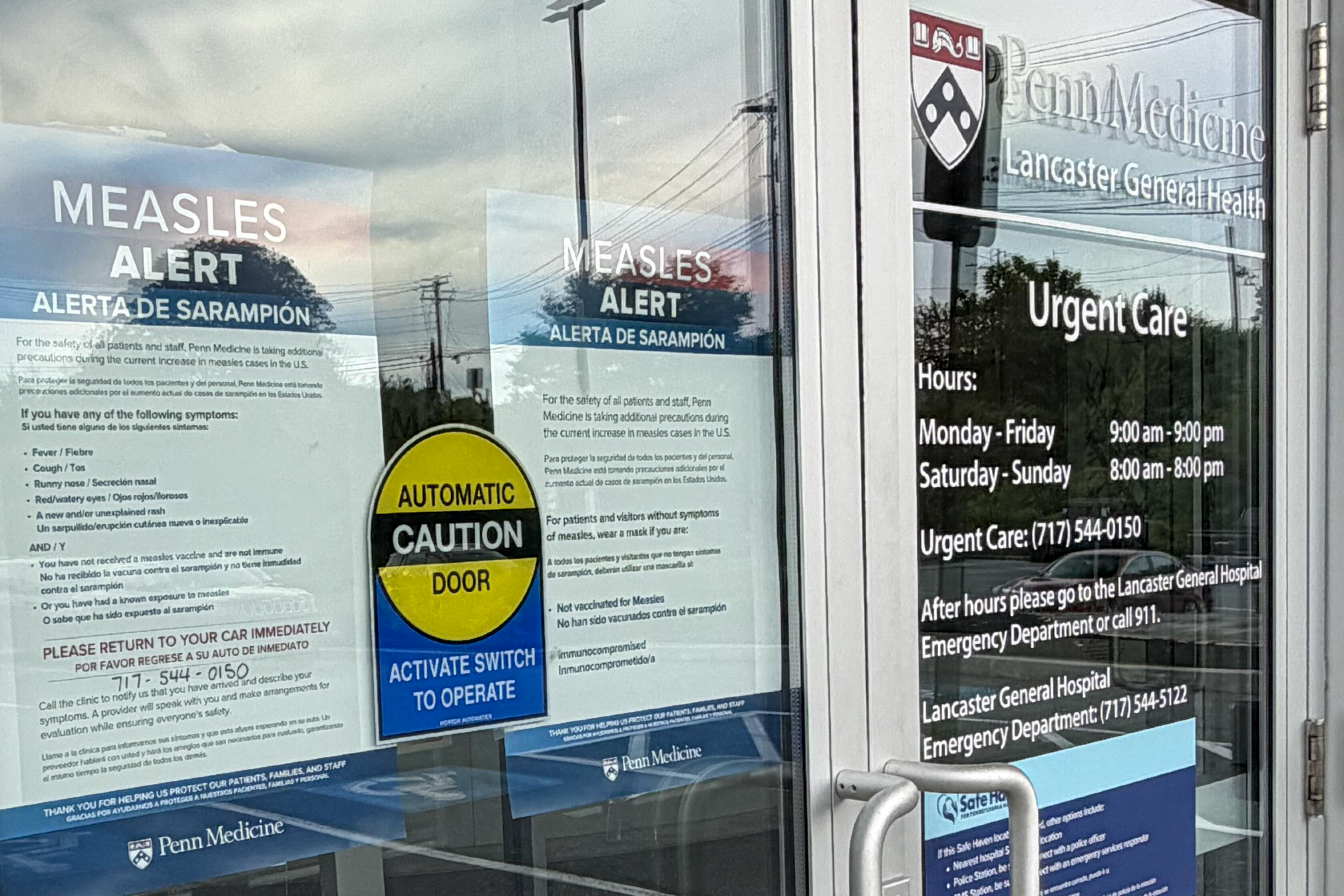
    An alert about measles is posted in the window of a medical clinic in Lancaster.Gillian McGoldrick / Staff

    Lancaster County’s coroner, Stephen Diamantoni, added confusion last week when he contradicted the state’s account.

    Diamantoni, a physician and elected Republican, said his office was investigating one death involving a newborn and said postmortem testing showed the infant had a measles infection acquired before birth. But he said he did not believe measles contributed to the child’s death.

    The child died shortly after birth of a lacerated spleen with trauma to the torso, Diamantoni said. He did not know what caused the lacerated spleen or trauma.

    He later said measles was noted on the infant’s death certificate as a significant condition “contributing to death but not resulting in the underlying cause,” because the baby tested positive for measles.

    On Friday, he said a 6-week-old Amish infant who was being treated for a deadly genetic disorder had died of measles in mid-August. He said he did not know if the case was the second measles-related death Pennsylvania reported, saying that he reported the death to the CDC on Friday.

    Pennsylvania’s health department said it was aware of the information the coroner reported Friday and had “no new measles-associated deaths to report at this time.”

    Shapiro reshared a news article about the death on X. In his post, he blamed Kennedy for creating “a firestorm of conspiracy theories that denied these families’ pain, invaded their privacy, and undermined public health.”

    “It’s long past time for RFK to stop playing games with people’s lives, report these deaths accurately on the CDC dashboard, and heed the guidance of actual medical experts so people get accurate information to discuss with their trusted healthcare providers and can best protect themselves and their children against this deadly disease,” he wrote.

    Kennedy fired back, highlighting the Lancaster coroner’s disclosures, in another X post later on Friday: “The facts emerging now demonstrate why CDC waited for the evidence rather than allowing political grandstanding to dictate its reporting.”

    Politicizing public health

    Fixating on whether a patient died “because of” or “with” measles inevitably politicizes the issue and does not benefit people’s health, Jake Scott, a clinical associate professor of infectious diseases at Stanford University, wrote in an opinion piece published online by the Center for Infectious Disease Research and Policy at the University of Minnesota.

    Measles usually kills through the complications it causes, such as pneumonia, encephalitis, secondary bacterial infections, and pregnancy complications, he wrote.

    “A death tally that can be altered by officials whom it embarrasses will not be trusted by anyone, including the officials who edited it,” Scott wrote.

    Diamantoni, Lancaster’s coroner, told The Inquirer earlier this week he did not want “to be dragged into a political fray.”

    “Our role in our office is not political in any way. We’re focused on determining the cause and manner of death, and using objective and scientific methods to do that,” he said. “We’ve worked hard to be sure that the information we’re providing is based on objective things.”

    More than a week into the controversy, lawmakers continue to take political jabs.

    “I am disgusted the Trump administration is putting Pennsylvania families at risk by spreading dangerous misinformation and politicizing these tragic deaths,” U.S. Rep. Brendan Boyle (D., Phila.) said in a statement.

    Pennsylvania’s highest-ranking federal lawmakers — U.S. Sens. John Fetterman, a Democrat, and Dave McCormick, a Republican — did not respond to a request for comment Thursday about the state’s standoff with the CDC. McCormick voted to approve Schwartz as the new CDC director; Fetterman voted against.

    U.S. Rep. Brian Fitzpatrick (R., Bucks), the only federal GOP lawmaker in the Philadelphia region, also did not respond to a request for comment. Neither did U.S. Rep. Lloyd Smucker, the Republican who represents Lancaster County and who blasted Shapiro last week for not providing more information about the measles-associated deaths.

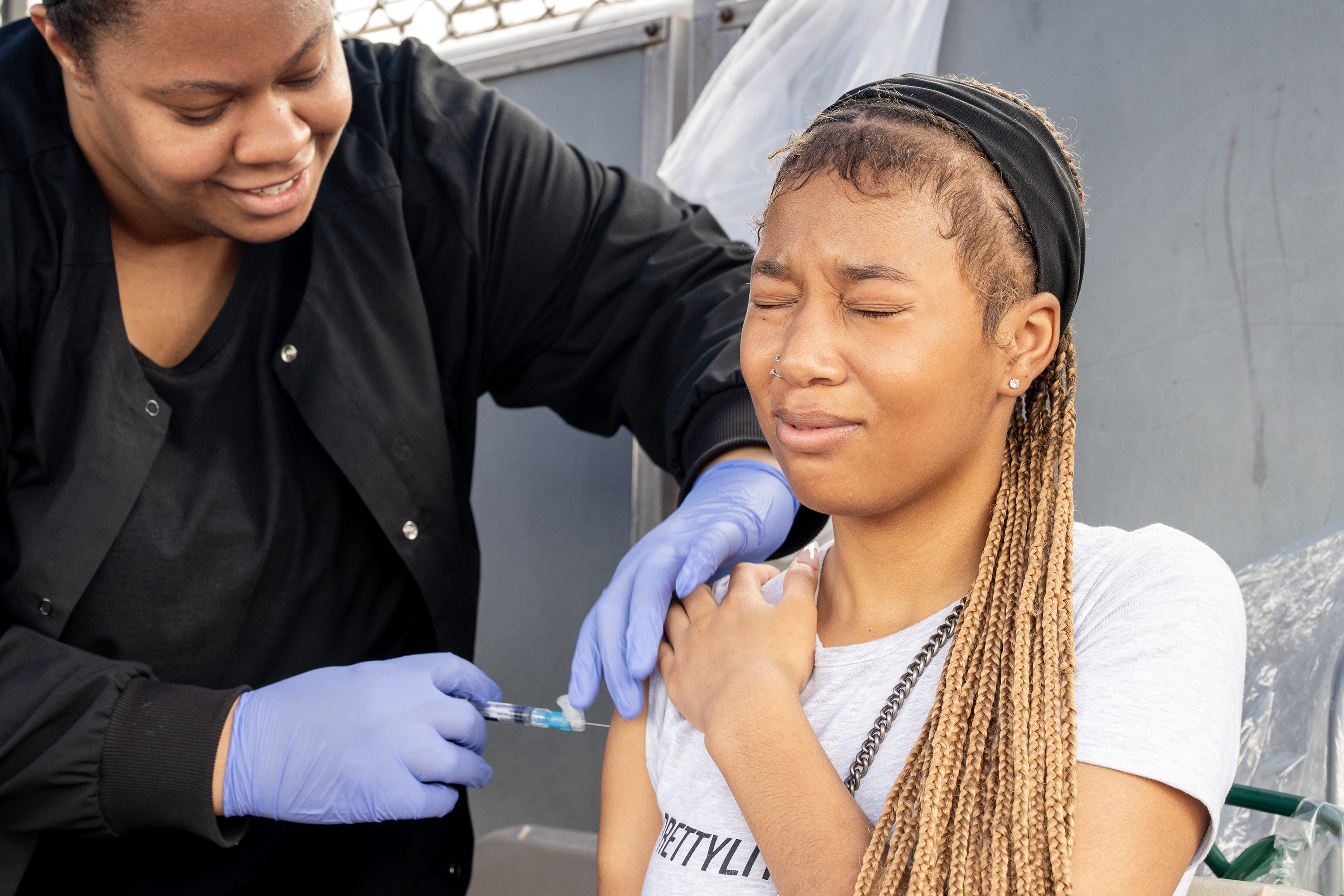
    Cianey Brown, 16, receives an immunization last month during the School District of Philadelphia’s sixth annual Back-To-School Bus Tour stop at Marcus Foster Memorial Stadium. Tom Gralish / Staff Photographer

    Measles outbreak continues

    Public health leaders, doctors, and epidemiologists say that finding a path forward has become an increasingly partisan issue at a time of rising vaccine hesitancy.

    Medical experts will be tasked with trying to rebuild trust in health authorities in order to contain a rapidly spreading outbreak.

    “How can any American citizen begin to make decisions about their health right now, in the milieu of misinformation and falsehoods we’ve created?” said Castrucci, de Beaumont’s CEO. “We have to get back to a point where at least the data can be trustworthy.

    As of Friday, there have been 577 measles cases in Pennsylvania, including 115 reported within the last week, according to the state health department’s online measles dashboard.

    Only South Carolina has reported more measles cases than Pennsylvania so far this year, according to the CDC’s measles webpage. There have been 3,134 cases nationally this year, the agency reported in its latest update Friday.

    Pennsylvania’s measles-associated deaths remain an asterisk.

    Inquirer staff writers Sam Janesch and Aubrey Whelan contributed to this article.

  • Key Pennsylvania races to watch in the midterm elections this November

    Key Pennsylvania races to watch in the midterm elections this November

    In the country’s premier battleground state, Pennsylvania Democrats believe they’re in striking distance of a tidal-wave victories that would dramatically shift the balance of power in both Washington and Harrisburg.

    For the first time in decades, the party could take full control of the legislature. That would give Democratic Gov. Josh Shapiro — seeking reelection with a wide polling gap on his Republican challenger Stacy Garrity — significantly more power to shape the direction of the state as he potentially pursues a White House bid in 2028.

    Democrats also see a chance to flip four congressional seats and take control of the U.S. House. Republicans, meanwhile, are prioritizing defending the Pennsylvania seats with their House majority on the line as President Donald Trump, who won the state just two years ago, sinks in popularity.

    The path for power in Washington in the high-stakes midterms runs through Pennsylvania and its results will be closely watched as both parties prepare for a presidential race in two years when the state promises to play a pivotal role.

    Voters across Pennsylvania will head to the polls in November to cast their ballots for races that will decide the balance of power in the state and nation.

    Here are the races to watch and how to vote.

    Shapiro’s November could dictate his 2028

    Shapiro, widely viewed as a likely contender for the 2028 presidency, has big ambitions this fall when he’ll stand for reelection against Garrity, the state’s treasurer.

    More than just securing his own reelection, Shapiro hopes to run up the margin and carry downballot Democrats across the finish line.

    Another double-digits win and a string of coattail victories would be a show of strength about his ability to perform in a key swing state that his party lost in the last presidential election. In a presidential primary, Shapiro could use that result to make an argument that he’s a strong general election candidate who can boost the Democratic brand.

    Two months out from the election, all signs point to a Shapiro win. He holds a historically large campaign war chest and a commanding 55-39% lead in the race against Garrity, according to a recent Philadelphia Inquirer/New York Times/Siena University poll.

    Garrity, who has been endorsed by Trump, broke the record in 2024 for the most number of votes received by a candidate running for state-level office in Pennsylvania. But support from the national GOP establishment has been limited, and as she faces off against a formidable incumbent, the question is: Can she overcome her stark cash disadvantage and low name recognition to become the state’s first female governor?

    Will Republicans hold on in competitive congressional seats?

    There are four U.S. House districts in the eastern portion of Pennsylvania, targeted by both parties as must wins. In each, the Republican incumbents are seeking to fend off highly financed challengers amid deep frustration among voters with the leader of their party that could translate into a wave of Democratic victories down ballot.

    1st Congressional District: Five-term Republican U.S. Rep. Brian Fitzpatrick faces a challenge from Bucks County Commissioner Bob Harvie in the district, which covers all of Bucks County and a portion of Montgomery. Fitzpatrick, a moderate who has survived previous blue waves, has maintained a fundraising advantage on Harvie unlike the other swing-district incumbents.

    7th Congressional District: Freshman Republican U.S. Rep. Ryan Mackenzie narrowly flipped the Lehigh Valley district two years ago and is widely seen as one of most vulnerable incumbents in Congress. He’s facing a challenge Democrat Bob Brooks, a retired firefighter and union leader whose blue-collar campaign has attracted support across the party’s ideological spectrum with endorsements from Shapiro and U.S. Sen. Bernie Sanders.

    8th Congressional District: Freshman Republican U.S. Rep. Rob Bresnahan ousted a six-term incumbent in this district centered in former President Joe Biden’s hometown of Scranton two years ago. But as he faces a tough challenge from Scranton Mayor Paige Cognetti, Bresnahan has faced scrutiny over his stock trades and his vote to cut Medicaid — to pay for Trump’s tax cuts — despite a promise to protect the program.

    10th Congressional District: Republican U.S. Rep. Scott Perry, a close ally of Trump, faces a November rematch against Democrat Janelle Stelson, a former TV anchor, in the Harrisburg area district. Stelson has consistently outraised Perry after narrowly losing in 2024.

    In addition to these four races both national parties have targeted, Shapiro has argued that the 9th Congressional District, where Democrat Rachel Wallace is taking on incumbent GOP U.S. Rep. Dan Meuser, is flippable — despite the strong GOP lean in the district, which stretches from Berks County to the New York state border. The district is home to two warehouses that ICE was planning to convert into detention centers before abandoning the plan after a backlash from residents.

    Will Democrats flip the Pennsylvania Senate?

    In Harrisburg, Democrats hold an extremely narrow majority in the state House, but the Pennsylvania state Senate has been under Republican control for more than 30 years.

    This year, Shapiro wants to flip the chamber and win a trifecta to push forward his key priorities, such as codifying abortion access, raising the state’s minimum wage, and increasing funding for transit.

    Republicans currently hold 27 of the chamber’s 50 seats. Democrats, who currently hold 23 seats, need to win at least two additional seats and the governor’s office to win control of the chamber with the lieutenant governor as a tiebreaking vote.

    The seats, drawn advantageously for Republicans, have been stubbornly resistant to political change for decades.

    But this year a blue wave could usher in Democratic pickups in Philadelphia suburbs and the Lehigh Valley.

    Races to watch include:

    • Bucks County’s 6th District, where Republican incumbent State Sen. Frank Farry faces a challenge from Democrat Eileen Hartnett Albillar.
    • Montgomery County’s 24th District, where incumbent Republican State Sen. Tracy Pennycuick is up for reelection against Democrat Chris Thomas.
    • Bucks and Lehigh County’s 16th District, which will see a rematch race between incumbent Republican State Sen. Jarrett Coleman and Democrat Mark Pinsley, the Lehigh County controller.

    What are the important dates to know?

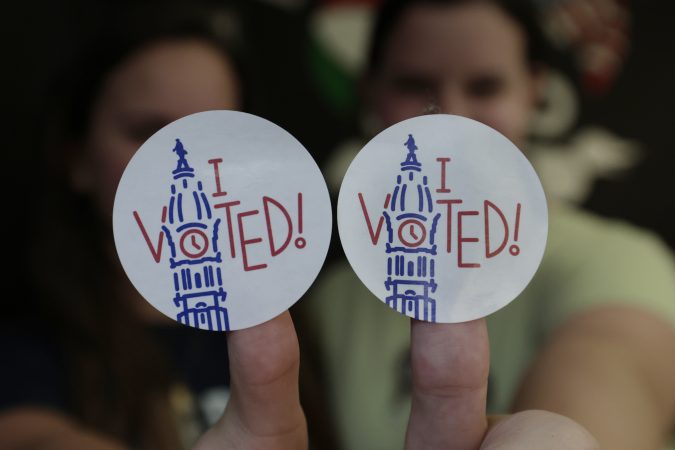
    Election Day is Nov. 3.

    The deadline to register to vote is Oct. 19. You must be at least 18 years old, a resident of Pennsylvania and a citizen of the United States to vote. You can register online, by mail, at your county elections office, or at one of several other government buildings.

    You can check your voter registration on the Department of State’s website.

    Pennsylvanians can vote by mail with no excuse required. To apply, fill out an application by mail, online, or in-person and send it into your county election office. Applications must be received by Oct. 27 at 5 p.m. and the completed mail ballot must be received — not just postmarked — by 8 p.m. on Election Day.

    An application and mail ballot can be completed in one visit at an election office, essentially functioning as early voting.

    Staff writer Fallon Roth contributed to this article.

  • Most of Pa.’s likely voters disapprove of Donald Trump and his policies, new poll shows

    Most of Pa.’s likely voters disapprove of Donald Trump and his policies, new poll shows

    More than half of likely voters in Pennsylvania’s forthcoming midterm elections disapprove of President Donald Trump’s job performance, and he is drastically underwater among the state’s electorate on key issues — some of which helped him win a second term in 2024.

    Trump, who won the crucial swing state by nearly two percentage points in November 2024, now has an approval rating of 39% and a disapproval rating of 58% among Pennsylvania’s likely voters, according to an Inquirer/New York Times/Siena University poll published Tuesday.

    The poll, which was conducted from Aug. 17 to 21 among 760 likely Pennsylvania voters, raises questions about how voters’ perception of the president will affect November’s midterms, when many Pennsylvanians will cast their ballots in four critical swing district races that could determine which party controls the U.S. House.

    (function() { var l = function() { new pym.Parent( ‘nyt-trump2__graphic’, ‘https://media.inquirer.com/storage/inquirer/ai2html/nyt-trump2/index.html’); }; if(typeof(pym) === ‘undefined’) { var h = document.getElementsByTagName(‘head’)[0], s = document.createElement(‘script’); s.type = ‘text/javascript’; s.src = ‘https://pym.nprapps.org/pym.v1.min.js’; s.onload = l; h.appendChild(s); } else { l(); } })();

    Even among his Pennsylvania supporters who were surveyed, Trump faces some of his lowest approval ratings regarding his handling of the war in Iran and cost-of-living issues, according to the poll, counteracting campaign promises that proved successful in 2024: ending foreign wars and helping people pay their bills.

    Once again, the economy will likely be at the front of voters’ minds heading into November — 22% of Pennsylvanians polled said it is their top issue in the governor’s race — and it could also serve as an indicator for the outcome of House races where Republicans will be on the defensive.

    “Certainly it’s got to be a drag on their fortunes,” said Don Levy, director of the Siena Research Institute.

    (function(){function e(){window.addEventListener(`message`,function(e){if(e.data[`datawrapper-height`]!==void 0){var t=document.querySelectorAll(`iframe`);for(var n in e.data[`datawrapper-height`])for(var r=0,i;i=t[r];r++)if(i.contentWindow===e.source){var a=e.data[`datawrapper-height`][n]+`px`;i.style.height=a}}})}e()})();</script

    Trump losing ground on issues that propelled him to White House

    The new polling on Trump’s management of top concerns facing the United States — particularly the economy and the cost of living — shows how the issues that helped propel him to the White House in 2024 are now souring his approval among Pennsylvanians, including some who previously voted for him.

    Among likely voters in the Keystone State, 39% approve and 61% disapprove of Trump’s handling of the economy. On his handling of the cost of living, 33% said they approve and 66% disapprove.

    The data come as voters continue to grapple with rising costs, including unusually high gas prices, and grocery prices that have been increasing for nearly six years. Trump’s tariffs, one of the defining policies of his first year back in office, also raised prices for consumers and businesses.

    Now, a quarter of Pennsylvanians who voted for the president in 2024 say they disapprove of how he is handling of the cost of living.

    Michael Patterson, 60, of Bucks County, is one of them.

    Though Patterson said Trump’s term has been “great” overall, he was expecting more from the president on the economy and costs.

    “The prices are still too high, interest rates are still too high,” Patterson said. “We still haven’t seen anything from that promise yet.”

    (function(){function e(){window.addEventListener(`message`,function(e){if(e.data[`datawrapper-height`]!==void 0){var t=document.querySelectorAll(`iframe`);for(var n in e.data[`datawrapper-height`])for(var r=0,i;i=t[r];r++)if(i.contentWindow===e.source){var a=e.data[`datawrapper-height`][n]+`px`;i.style.height=a}}})}e()})();

    Trump’s messaging on the economy in 2024 was part of why he won Pennsylvania with more votes than any other statewide GOP candidate in history. Pennsylvania voters cited Trump’s promises to bring costs down as a top reason that they voted for him and overlooked Democrats’ warnings about what his election could mean for democracy.

    Trump is also hurting on other issues that helped boost him to the presidency, including his promise to end wars. Thirty-two percent of likely voters in Pennsylvania approve of Trump’s handling of the war in Iran and 66% disapprove — including 30% of Trump voters.

    The war has now gone on for almost six months, after Trump promised it would last just a few weeks, and has contributed to rising oil and gas prices.

    Kay Skripac, who voted for Trump in 2024, said that though she supports the president on almost every other issue, “I just don’t think that we should have invaded or bombed Iran. I was very surprised, because I didn’t vote for that.”

    The 72-year-old independent voter said, despite thinking Trump has done strong work on the economy (she says her retirement portfolio doubled from 2016 to 2026), she is feeling the war’s impact at the gas pump.

    “I want everything to just be normal and stay the same, because everything was fine,” said Skripac, who lives in Crawford County. “We weren’t involved in any wars. You didn’t have to worry about any friends or loved ones potentially getting killed. I don’t like that at all.”

    Trump’s handling of the Israeli-Palestinian conflict also received low marks from voters, with 62% disapproval, compared with 36% approval.

    Republican Sandra Faust, 40, approves of Trump’s handling of that conflict. But her support does not extend to the war in Iran, which Trump launched in coordination with Israel.

    Faust, who voted for Trump two years ago, said she strongly disapproves of the war due to rising gas prices and believes it conflicts with the president’s promise to end wars. The Pittsburgh resident, who has a family member in military training to become a jet refueler, said she wishes the conflict in Iran would end.

    “Them dragging it on is not only harming us, locally with gas and, you know, pricing and stuff like that, but it’s putting our military in harm’s way, and I’m not happy about that,” she said.

    Faust added that she opposes the war because of her belief in the “America First” ideology. That perspective also makes her supportive of Trump’s immigration agenda, she said.

    The president is lagging in Pennsylvanians’ support of his immigration policies — which have included mass deportations and enhanced border security — but the disapproval is not as stark. Among likely voters, 44% approve of his handling of immigration and 55% disapprove.

    “We are not responsible for taking care of the world’s problems,” Faust said.

    What does Trump’s approval rating mean for November in Pa.?

    So what does this mean for the midterms?

    Time will tell.

    But 51% of Pennsylvania’s likely voters who were polled indicated they would be more likely to vote for a Democrat in their congressional district, and 44% said they would support a Republican. More than half, 53%, say they would want to see a flip of control in the House, putting Democrats in charge, while 44% say they would want to see the GOP maintain control.

    The polling for the GOP in November is not as bleak as Trump’s numbers, but it shows where voters’ heads are a little more than two months away from the midterms, when Pennsylvanians will weigh in on four competitive swing district congressional races.

    (function(){function e(){window.addEventListener(`message`,function(e){if(e.data[`datawrapper-height`]!==void 0){var t=document.querySelectorAll(`iframe`);for(var n in e.data[`datawrapper-height`])for(var r=0,i;i=t[r];r++)if(i.contentWindow===e.source){var a=e.data[`datawrapper-height`][n]+`px`;i.style.height=a}}})}e()})();

    Both parties are targeting GOP-held seats in Bucks County’s 1st Congressional District, the Lehigh Valley’s 7th Congressional District, the Scranton area’s 8th Congressional District, and the Harrisburg area’s 10th Congressional District.

    Democrats are hoping that a message focused on affordability and tying opponents to Trump will usher in wins this fall. For instance, Democrat Bob Harvie in the heated 1st Congressional District race published a new campaign platform recently that focuses mainly on addressing economic issues.

    “The task of Republicans running in various congressional districts, or for the governor of the state, is going to be to somehow separate themselves from the perception that Pennsylvanians have about the job that the head of their party is doing on the economy,” said Levy, the Siena polling director.

    But for Democrats, connecting Harvie’s opponent, longtime Republican U.S. Rep. Brian Fitzpatrick, to Trump could be a harder sell. The Bucks County lawmaker consistently outperforms his party and has survived one blue wave after another.

    The poll’s findings signal that both parties may also have to think about their branding to the public — 50% of respondents said the Democratic Party is too far to the left and 47% said Republican Party is too far to the right.

    Republicans will also have to consider Trump’s unpopularity, especially with women. Sixty-two percent of female likely voters in Pennsylvania disapprove of Trump’s policies, while 34% approve. The president is also struggling with men — a key base for him in 2024: 51% of men disapprove of Trump’s policies, compared with 46% who approve.

    (function(){function e(){window.addEventListener(`message`,function(e){if(e.data[`datawrapper-height`]!==void 0){var t=document.querySelectorAll(`iframe`);for(var n in e.data[`datawrapper-height`])for(var r=0,i;i=t[r];r++)if(i.contentWindow===e.source){var a=e.data[`datawrapper-height`][n]+`px`;i.style.height=a}}})}e()})();

    Democrat Vincent Russo, 78, of Lackawanna County, where Republican U.S. Rep. Rob Bresnahan faces a challenge from Democrat Paige Cognetti in the 8th District, said he will be voting straight blue on his ballot in November and thinks opposition to Trump’s policies will motivate his party to get out to the polls.

    “I think the people are starting to see he does nothing but lie,” Russo said.

    Staff writers Michelle Baruchman and Gillian McGoldrick contributed to this article.

  • Bob Harvie’s debate challenge to Brian Fitzpatrick sets off new war of words in Bucks County race

    Bob Harvie’s debate challenge to Brian Fitzpatrick sets off new war of words in Bucks County race

    Candidates are trading debate challenges in a contentious congressional race in a key swing district in the Philadelphia suburbs.

    Democrat Bob Harvie is challenging Republican U.S. Rep. Brian Fitzpatrick to four debates, his campaign told The Inquirer. Fitzpatrick, after learning of Harvie’s challenge from The Inquirer, countered with 10 debates — but only if Harvie releases files related to an FBI investigation that Fitzpatrick and allies have routinely alleged focuses on the Democrat.

    Harvie does not have files to release, said Dan McCormick, the candidate’s campaign manager. Harvie also has never been under investigation, lawyers for his campaign said. And he has already filed a defamation lawsuit against a pro-Fitzpatrick super PAC for making the same claim.

    “Bob would be happy to participate in 10 debates,” McCormick said. “Bob has no files to release and Brian Fitzpatrick knows it. If Fitzpatrick has proof as he says he does, he should put up or shut up.”

    The back-and-forth emerged Monday when the Harvie campaign told The Inquirer that the two-term Bucks County commissioner would be challenging the five-term GOP lawmaker to three debates in Bucks — one each in the lower, central, and upper parts of the county — and a fourth in the Montgomery County portion of the 1st Congressional District.

    Harvie said that Fitzpatrick “refuses to answer questions here at home” and “has nothing to show for his nearly 10 years in Washington.”

    The increasingly heated race is one of four marquee congressional contests in Pennsylvania that could decide which party controls the U.S. House in November.

    “It’s time for Fitzpatrick to show up in Bucks and Montgomery County — not Manhattan or the Lavender Fields in France,” Harvie said in a statement, referring to the venues for Fitzpatrick’s wedding and engagement to Fox News senior White House correspondent Jacqui Heinrich. “I’ll be there whether or not he shows, because I will never forget who I am fighting for.”

    Heather Roberts, a spokesperson for Fitzpatrick, said as soon as Harvie releases “his full FBI files,” the campaign will move forward with date and venue selections for 10 debates.

    “If the Subject of an FBI Corruption investigation is asking to be provided a platform by the only FBI Agent in Congress, he sure as hell will be required to come clean with the public and release these documents in their entirety,” Roberts said in a statement. “If he has nothing to hide, this should be an easy decision for him.”

    Roberts also proposed a joint sit-down interview with Harvie and Fitzpatrick, conducted by The Inquirer, to discuss the allegations.

    The Harvie campaign questioned how Fitzpatrick would know the content of the files.

    Roberts said that Fitzpatrick, who served 15 years as an FBI agent and a federal prosecutor, “is extremely familiar with this specific grand jury protocol and the documents that are generated.”

    The debate drama is the most recent development in what has become an increasingly combative race, filled with personal jabs and legal filings related to controversial ads making allegations that Harvie is the subject of an FBI investigation.

    Harvie, a former Falls Township supervisor, and other officials testified as witnesses to a grand jury in an FBI probe in 2022 into political donations and union contracts related to the Pennsbury School District. In 2020, the FBI interviewed several people connected to Falls Township and Pennsbury.

    It has been four years since voters have been able to see a general election debate in the 1st Congressional District. In 2024, Fitzpatrick did not debate Democratic challenger Ashley Ehasz, after doing so in 2022.

    The Harvie campaign said that it would be willing to work with the Fitzpatrick campaign on logistics and other event details, but that the commissioner’s preference is a town hall-style debate so voters can hear from him directly.

    The last time Fitzpatrick announced an in-person town hall was August 2017, according to Fitzpatrick’s government website.

    Fitzpatrick has held tele-town halls, including one in June, for constituents, and frequently posts on social media recapping the meetings and events he attends in the community.

  • Will Donald Trump and national Republicans help Stacy Garrity’s campaign from falling flat against Josh Shapiro?

    Will Donald Trump and national Republicans help Stacy Garrity’s campaign from falling flat against Josh Shapiro?

    Seated behind his desk in the Oval Office earlier this month, President Donald Trump spoke directly to the camera in front of him. He turned to his right and looked up at the Pennsylvania Republican who, as he had indicated just a few weeks earlier, might very well lose her race for governor this fall.

    “I think you can win,” he said this time, extending his hand to Stacy Garrity. It was a change in tune for Trump, who last month at an event in Pennsylvania said Garrity’s opponent, Democratic Gov. Josh Shapiro, was “expected to” and might win.

    The president’s confidence in Garrity — and whether his support will extend beyond a handshake and a 17-second video with her at the White House — has become a critical question in the final stretch of the Pennsylvania governor’s race.

    Down in the polls and lagging behind Shapiro’s unprecedented fundraising, Garrity has cultivated the president’s support and the potential boost, both financially and in Republican enthusiasm, that could come with it.

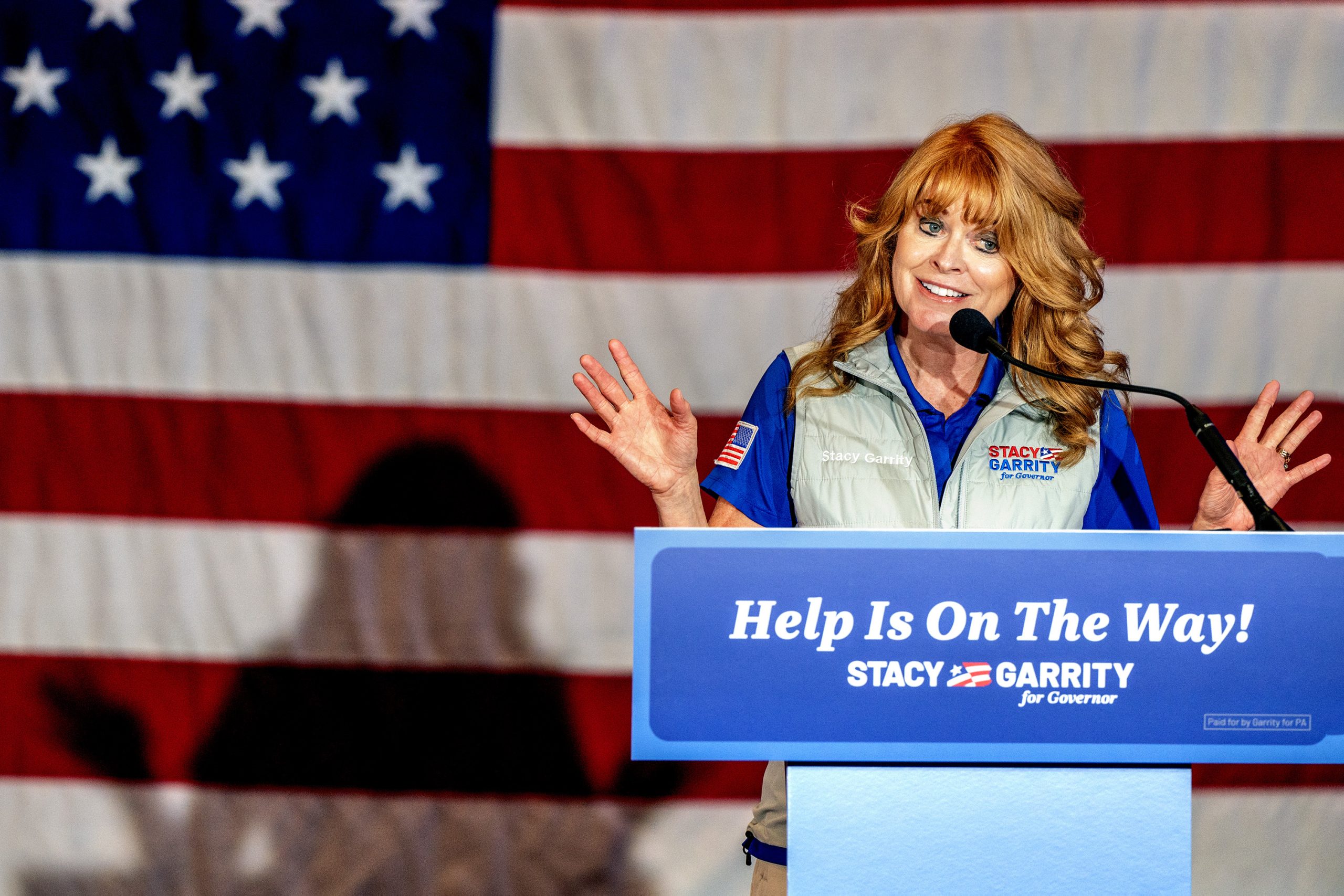
    It is a risky strategy for a swing-state candidate whose party holds the White House, and particularly as polls show Trump becoming increasingly unpopular. Shapiro and his allies have enthusiastically promoted instances when Garrity, the twice-elected state treasurer, has leaned into Trump’s agenda and brand of politics.

    But with less than three months before Election Day, it is not clear to what extent Trump or other key national Republicans will pitch in on her campaign.

    State Treasurer and Republican candidate for governor Stacy Garrity holds a rally in Bucks County at the Newtown Sports & Events Center in this 2025 photo. Tom Gralish / Staff Photographer

    Trump has not yet stumped in any significant way for Garrity in Pennsylvania, a swing state where he was a near-constant presence during his winning 2024 campaign. And he has not lent his vast political resources — including a Trump-aligned super PAC flush with $400 million — to Garrity or other Republican candidates as his party faces tough campaigns across the country in the midterm elections that will determine control of Congress.

    Several gubernatorial races around the country are considered competitive, a reality that also pits Garrity against GOP nominees who polling suggests have better shots of success. The same circumstances have doomed the most recent other Trump-endorsed Pennsylvania Republican nominees for governor — former State Sen. Scott Wagner in 2018 and State Sen. Doug Mastriano in 2022 — who never ended up with national support and lost by double digits.

    Campaigns typically heat up after Labor Day, and there is still time for Garrity’s national allies to converge to boost her. But observers say the political reality is also evident.

    “The president kind of looks toward two things,” said Samuel Chen, an Allentown-based Republican strategist who is not affiliated with Garrity and who previously worked for Tom Corbett, Pennsylvania’s most recent GOP governor.

    “One is loyalty to him. Garrity has been loyal, but has not necessarily been as vocal as some others have. The other side of it is he likes winners. He wants to endorse people who win,” Chen said. “Everyone in Trump’s orbit knows that Garrity has a very uphill climb.”

    Not supporting ‘lost causes’?

    The level of involvement from groups like the Republican Governors Association has been a key indicator of whether the party believes its nominee has a chance at winning recent gubernatorial elections in Pennsylvania.

    The RGA is made up of GOP governors who collectively support one another’s agendas and campaigns. Democratic governors have a similar alliance.

    In 2010 — the last time a Republican won the governor’s mansion in Harrisburg — the group was the largest donor to then-Attorney General Corbett’s gubernatorial campaign, giving him $6 million starting in August of that year. Four years later and helmed by then-New Jersey Gov. Chris Christie, the RGA was once again Corbett’s biggest donor. It donated more than $5.8 million as Corbett became the first sitting Pennsylvania governor in decades to lose a reelection bid. Christie, preparing to run for president in 2016, stumped with Corbett multiple times.

    The picture was starkly different in 2018 and 2022, when Republican voters nominated two candidates closely associated with Trump. Neither Wagner’s campaign against Democratic Gov. Tom Wolf nor Mastriano’s campaign against Shapiro ever became highly competitive — and the RGA and other national groups decided to sit out.

    “We’re watching Pennsylvania very closely,” Arizona Gov. Doug Ducey, then the chair of the RGA, said in September 2022. He added that the group would not support “lost causes” or “landslides.”

    The RGA would spend nothing in the state that year, even with Mastriano and former Trump lawyer Jenna Ellis pleading for assistance. Shapiro went on to trounce Mastriano by nearly 15 percentage points.

    This year, RGA chair and Montana Gov. Greg Gianforte has not publicly weighed in on Garrity’s chances since issuing a brief, generic statement congratulating her after her unchallenged primary in May.

    And the competitive landscape Republicans are facing across the country may mean Pennsylvania’s GOP nominee once again gets the short end of the stick. The RGA did not respond to requests for comment.

    Even with Pennsylvania’s status as a preeminent swing state that went for Trump two years ago, there are nearly a dozen more competitive gubernatorial races across the country this fall, according to the Cook Political Report, a nonpartisan group that provides election analysis.

    Georgia, Iowa, Nevada, Ohio, and Wisconsin — some of which voted overwhelmingly for Trump just two years ago — are all considered toss-ups. Four other states with Democratic governors — Oregon, Arizona, Michigan, and Kansas — are also considered more competitive than Pennsylvania, which is ranked as “solid Democratic,” according to Cook, despite Republicans like Garrity and Trump having won statewide two years ago.

    The RGA, according to its most recent filing with the Federal Election Commission, had less than $1.7 million in its RGA Right Direction super PAC after spending about $16 million so far in the current election cycle.

    Its recent spending has focused on Iowa, where Democrats are attempting to capture the governor’s office for the first time in two decades, and Kansas, where the RGA launched an ad this month.

    “There’s always competition for limited resources,” Charlie Gerow, a longtime Harrisburg-based Republican strategist who also ran for governor in 2022, said of the intraparty competition for donors. “There’s only so much campaign funding to go around as everybody’s trying to get a piece of it.”

    Trump hosted a fundraiser for Garrity in March at his Mar-a-Lago estate in Florida. He has also visited Pennsylvania twice this summer, though not for events specifically with Garrity — and in one in case he did not mention her among a list of candidates he was supporting.

    In July, Shapiro’s campaign announced he had raised $50 million since January 2025. The next financial filing deadline for statewide candidates is in September, but as of the last reporting cycle, he had outraised Garrity 10-1.

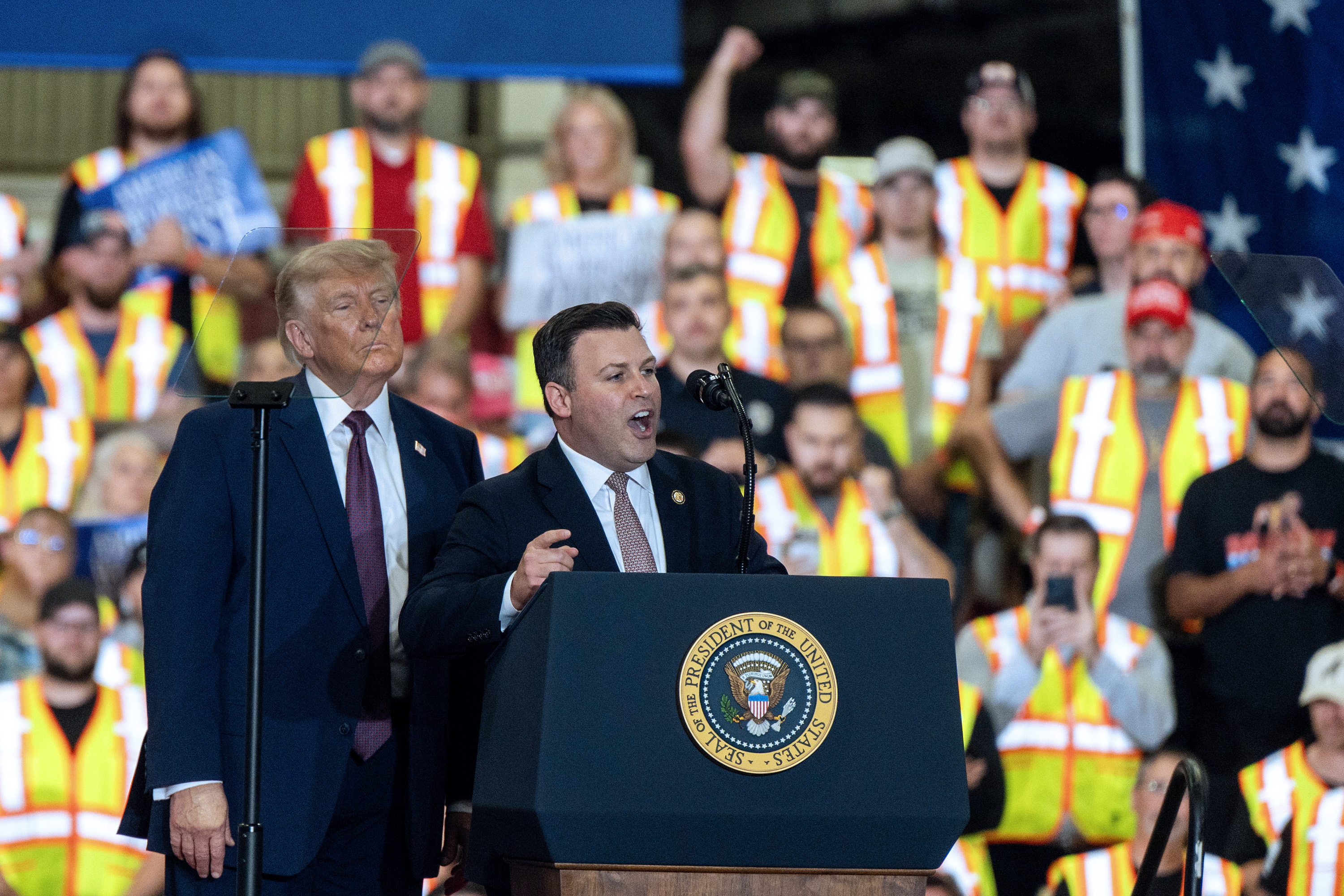
    President Donald Trump brings U.S. Rep. Ryan Mackenzie (right) to the stage as he holds an event in Mackenzie’s Lehigh Valley district at Mack Trucks in Macungie Tuesday, June 23, 2026.Tom Gralish / Staff Photographer

    But Matthew Beynon, a spokesperson for Garrity’s campaign, said she “does not expect, nor does she need, to go dollar-for-dollar with Josh Shapiro.” Instead, he said, she “just needs the resources to prosecute her case against Josh Shapiro … and she is on pace to be able to do so.”

    Garrity looks forward to “continued support” from the RGA, he said.

    Other national attention on Pennsylvania

    After Mastriano’s disastrous performance in 2022, Republicans coalesced around Garrity — whose 3.5 million votes in 2024 were the most ever for a statewide candidate in Pennsylvania — as their best shot at defeating Shapiro.

    But in the year since she received the party’s endorsement, Garrity has barely moved the needle. A Quinnipiac University poll in July found Shapiro leading Garrity 53% to 40% among registered Pennsylvania voters. Trump saw even lower scores: Just 39% of those polled approved of the president’s job performance.

    A poll from a Republican-leaning firm promoted by Garrity showed her down, 50% to 43%.

    Across Pennsylvania, she has also competed for attention and resources as her party prioritizes other major election battles this fall.

    Four Republican-held congressional districts — based in Bucks County, the Lehigh Valley, Scranton, and Harrisburg — are seeing a rush of national attention and money as their outcomes could decide control of the narrowly divided U.S. House.

    Shapiro has also invested heavily in trying to flip the state Senate to Democratic control for the first time in three decades, putting Republicans further on their heels. The $3.3 million that Shapiro committed to the effort is more than Garrity has raised in her entire campaign.

    Pennsylvania Gov. Josh Shapiro addresses the audience during a rally for Democratic congressional candidate Bob Brooks at the United Steelworkers Union Hall in Bethlehem, Pa. on Sunday, July 26, 2026.David Maialetti / Staff Photographer

    On the other side of the aisle, Pennsylvania’s top elected Republican — U.S. Sen. Dave McCormick — has endorsed Garrity but has not appeared to join in her public campaign efforts so far. A Trump ally and former hedge fund leader, McCormick has raised millions since his election in 2024, and political action committees associated with him have donated to other PACs working to elect Pennsylvania Republicans in Congress.

    McCormick has hosted events and campaigned for Garrity, and he “will keep doing everything he can to help her win,” said Mike DeVanney, a spokesperson for the senator.

    “He believes she demonstrates the kind of leadership we need and the kind that President Trump and many others have recognized as one that can move our commonwealth forward,” DeVanney said.

    Gerow said McCormick undoubtedly could help Garrity down the stretch.

    “He’s a prolific fundraiser. He has the connections, and he has the personality to raise large amounts of money. And he can be very, very helpful with the Garrity campaign if he weighs in with full weight,” Gerow said.

    Garrity’s campaign said McCormick has been an “incredible supporter,” including with his early endorsement and connections to supporters.

    Shapiro has also cultivated across-the-aisle relationships with some Pennsylvania Republicans who would be expected to promote Garrity.

    In an April interview with Punchbowl News, U.S. Rep. Brian Fitzpatrick, a Bucks County Republican running for reelection in the nationally watched 1st Congressional District, said he thought Shapiro would win his reelection contest and should run for president, adding: “I think Josh is very, very smart.”

    And during his 2022 run, Shapiro collected endorsements from other prominent Republicans, including Jim Schultz, a former Trump White House lawyer, and former Republican U.S. Rep. Charlie Dent.

    The final stretch

    Though the November election is less than three months away, that is still plenty of time in politics. Most ad spending does not start until September, and ground game efforts — door knocking, phone banking, and get-out-the-vote campaigns — get underway in the fall.

    Winning Pennsylvania is a priority for Trump in the midterms, and Garrity’s campaign said she is “grateful” for his continued support.

    On the state level, James Markley, a spokesperson for the Pennsylvania GOP, said the party is “fully invested” in helping Garrity beat Shapiro. Those efforts include training “thousands” of volunteers and working on education programs around early voting and casting mail-in ballots.

    “The more Pennsylvania voters learn about Stacy Garrity, the more they love her,” he said in a statement. “The more Pennsylvania voters learn about Josh Shapiro, they realize he has no record to stand on.”

    Gerow said Garrity’s challenge, with limited funds compared with Shapiro, is whether she has enough money to get her message out.

    “The major concern for her immediately is to be able to tell her story,” Gerow said. “She doesn’t have the resources to tell that story effectively right now, and she has a great story.”

    Buttons for State Treasurer Stacy Garrity and President Trump are left on a table following a VIP reception before a Garrity rally in Bucks County Thursday, Sept. 25, 2025. Tom Gralish / Staff Photographer

    Throughout her campaign, Garrity has hammered Shapiro on several issues she said reveal his lack of transparency as a public official. She has held roundtable discussions blasting Shapiro for his early embrace of data centers, a position he has since distanced himself from after calling for new guidelines for their development. Her campaign released a video series online that questions his handling of criminal investigations. And she has repeatedly insisted that Shapiro, who is widely rumored to be running for president in 2028, is “more interested in Pennsylvania Avenue than helping Pennsylvania families.”

    Samantha Reposa, a spokesperson for Shapiro’s campaign, disputed Garrity’s framing and emphasized that she has stood in lockstep with Trump on most of his positions.

    “Garrity is now running to be nothing more than a rubber stamp for Trump and his agenda that’s hurting Pennsylvania families — and we will continue to hold her accountable,” Reposa said.

    A new ad from Shapiro’s campaign paints her as “100% MAGA,” highlighting her support for Trump’s tariffs.

    Given Garrity’s fundraising deficit, Chen said, he would advise her to focus on meeting individual people in the community, if he were running her campaign.

    “Forget the GOP dinners. Start going to fairs. Start going to places that Republicans don’t show up. Start retail politics, and start introducing yourself to the state outside of Donald Trump, outside of modern Republicanism,” he said. “Tell the state what you’ve done for them and what you would do differently [as governor].”

    Staff writer Joe Yerardi contributed to this article.

  • Brian Fitzpatrick leads letter urging Trump’s DHS secretary to extend protected status for Ukrainians

    Brian Fitzpatrick leads letter urging Trump’s DHS secretary to extend protected status for Ukrainians

    U.S. Rep. Brian Fitzpatrick (R., Bucks) led a bipartisan group of lawmakers in a letter asking Homeland Security Secretary Markwayne Mullin to extend and expand temporary protected status (TPS) for Ukraine ahead of its expiration this fall.

    The government status allows immigrants to live and work in the United States if conditions are unsafe in their home countries. For Ukraine, which has been in a war waged by Russia for nearly five years, TPS is set to expire on Oct. 19.

    “More than 250,000 Ukrainians have sought safety in the United States after fleeing Russia’s brutal full-scale invasion,” lawmakers wrote in the letter, dated Aug. 4. “These individuals have become valued members of our communities, contributing to our economy, workforce, and tax base while complying with U.S. laws and rebuilding their lives in temporary safety.”

    U.S. Rep. Brendan Boyle (D., Philadelphia) was also among the 27 lawmakers to sign onto the letter, but only three other Republicans joined Fitzpatrick’s effort.

    President Donald Trump’s administration let TPS expire for Haiti and Syria late last month and has promised to deport individuals who lose their legal status, and Ukrainians who fled the war and live and work in the United States under TPS could face a similar fate this fall if the designation expires.

    Ukraine has become a defining issue for Fitzpatrick, who represents all of Bucks County, which is home to more than 12,000 people from Ukraine or of Ukrainian heritage. And it has become one of the areas where the moderate, who is running for reelection in the crucial Pennsylvania swing district against Democratic challenger Bob Harvie, has frequently strayed from Trump.

    In a statement to The Inquirer on Thursday, Casey-Lee Waldron, a spokesperson for Fitzpatrick — who is a cochair of the Congressional Ukraine Caucus and was stationed in the country as an FBI agent in 2015 — said the lawmaker “urges the Secretary to act without delay.”

    “Putin’s brutal unprovoked war continues to destroy communities, endanger innocent lives, and make any safe return impossible for Ukrainian families,” Waldron said.

    On Haiti, Syria, and next month’s expiration for El Salvador, Fitzpatrick’s position appears to be more nuanced.

    Waldron said that Fitzpatrick believes “upholding the rule of law and acting with compassion are not competing obligations,” and that temporary protected status for the three countries should be independently evaluated.

    “And where the standard established by Congress continues to be met and a safe return remains impossible, those protections should remain in place,” Waldron said.

    Last year, the Bucks County Republican, without naming the president, slammed Trump’s criticism of Ukrainian President Volodymyr Zelensky. Fitzpatrick also visited the country and met with Zelensky and soldiers on the front lines, and signed a missile to Russian President Vladimir Putin.

    His support for Ukraine continued this week with the letter to Mullin, which argues that Ukraine continues to meet the statutory benchmarks for qualifying for a TPS designation. In addition to extending the Oct. 19 deadline, lawmakers are also calling on the DHS secretary to redesignate temporary protected status for Ukraine, meaning it would reset the country’s eligibility cutoff date, allowing more immigrants to apply for the protection.

    “Without both an extension and redesignation, many Ukrainians lawfully residing in the United States could be forced to return to a country where their lives and safety remain at serious risk,” lawmakers wrote.

    Iryna Mazur, an immigration attorney and honorary consul of Ukraine in Philadelphia, said it would be economically beneficial to the U.S. to extend and expand TPS for Ukrainians and emphasized the importance of the humanitarian efforts at the core of the law.

    She said that maintaining a united front among political parties on support for Ukraine is key.

    “I don’t think there would be anybody in their good mind with a good sense of justice in their heads who would say it’s a wrong thing to do right now under the circumstances,” Mazur said.

    “This is a very active phase of war, and it just would be inhumane not to extend this particular temporary measure.”

    Staff writer Jeff Gammage contributed to this article.

  • Bob Harvie files defamation suit against GOP super PAC over ‘beyond the bounds’ claims of FBI investigation, inappropriate relationship

    Bob Harvie files defamation suit against GOP super PAC over ‘beyond the bounds’ claims of FBI investigation, inappropriate relationship

    Attorneys for Bucks County Democrat Bob Harvie filed a lawsuit Wednesday against a political action committee and a consultant supporting his opponent, Republican U.S. Rep. Brian Fitzpatrick, in a high-stakes congressional contest.

    The lawsuit comes after what Harvie’s campaign says are repeated and false claims about his involvement in an FBI investigation. Harvie’s legal team is also disputing a new attack from the PAC alleging that the county commissioner had an inappropriate relationship with a county employee.

    The lawsuit, filed Wednesday in the U.S. District Court for the Eastern District of Pennsylvania, claims that Defending America PAC Inc. and its president, Chris Pack, have sustained a “campaign to defame Harvie by repeatedly and recklessly publishing false and defamatory statements imputing criminal conduct that go beyond the bounds even of a highly contested political campaign.”

    Harvie’s testimony to a grand jury in an FBI probe in 2022 has sparked a firestorm in the race for the Bucks County-based 1st Congressional District, a seat that could help determine control of the U.S. House this fall. Harvie’s attorneys last month sent a cease-and-desist letter over such statements to Defending America PAC, which subsequently challenged Harvie to file a lawsuit.

    Last month, Fitzpatrick and his campaign also received a cease-and-desist letter from Harvie’s lawyers, but neither the Bucks County Republican nor his campaign is named in Wednesday’s suit.

    Website and social media posts and other materials from Defending America PAC and Pack this election cycle have stated Harvie is an “FBI corruption subject” or “under FBI investigation” related to his time as a Falls Township supervisor, according to the suit, but Harvie’s lawyers assert that the allegations are false and that he has never been under criminal investigation.

    “Contrary to the meaning that out-of-state political operatives have endeavored to convey — to convince Harvie’s community that Harvie is somehow connected to a crime — Harvie is not now and never has been the target of any criminal investigation nor has he ever been charged with a crime,” wrote Harvie’s attorneys, Timothy J. Ford and Marion Barker Taylor of Dilworth Paxson, in the legal filing.

    Harvie and his campaign are seeking an unspecified amount of damages greater than $150,000, as well as legal fees, for defamation and false light invasion of privacy.

    In a statement to The Inquirer on Wednesday, Pack once again referred to Harvie as an “FBI Corruption Subject” and said the Democrat “has predictably chosen to engage in lawfare by filing a meritless lawsuit in an attempt to stifle our political speech” instead of releasing “complete” records “related to his corruption investigation.”

    “Rest assured we will vigorously defend ourselves and seek every remedy available under Pennsylvania law, including Pennsylvania’s anti-SLAPP protections signed into law by Gov. Josh Shapiro,” Pack said, referring to a bill signed in 2024 by the Democratic governor that essentially offers extra layers of protections for defendants in defamation suits.

    The organization appears to have been ready for this next step to happen. In an email blast and website post last week, the group said “we’re willing to pay for Harvie to sue us” so that the PAC could obtain any relevant records during the suit’s discovery phase.

    In response, Harvie said in a statement Wednesday: “Put your money where your mouth is. Just tell us where to send the bills. See you in court.”

    In that same post last week, the PAC made an additional claim — rebuked by Harvie’s lawyers Wednesday — that the Democrat had a “recent divorce” that “may have had something to do with Harvie getting a little too cozy with a county employee.” It links to a screenshot of a random Facebook account that alleges Harvie cheated on his wife with an employee from Bucks County’s children and youth services department and, in turn, helped her become a supervisor.

    Harvie’s lawyers rejected the allegation, calling it “outrageous.”

    “Harvie never cheated on his wife and never had sex with a Bucks County employee. Harvie never used his position to influence a decision to promote a Bucks County employee inappropriately,” they said.

    Harvie and his wife divorced in 2023, public records show.

    ‘Not politics as usual,’ Harvie’s lawyers argue

    The string of events that culminated in Wednesday’s suit dates back to 2022, when Harvie and other officials testified as witnesses before a grand jury in connection with an investigation into political donations and union contracts related to the Pennsbury School District. In 2020, the FBI interviewed several people connected to Falls Township and Pennsbury.

    Harvie’s attorneys said in the filing Wednesday that he has not been asked to provide additional information or testimony and has not had any contact with the FBI since his 2022 testimony.

    Similar allegations were made during Harvie’s 2023 reelection campaign for county commissioner and were also disputed by the Democrat at the time.

    Three years later, they have again bubbled up to the surface as Harvie seeks federal office in one of four Pennsylvania seats being targeted by both parties.

    Harvie’s attorneys said Wednesday that since the Democrat announced his candidacy for the U.S. House in April 2025, Defending America PAC has maintained a website entitled “Fire Bob Harvie,” where the group refers to him as “the subject of an FBI corruption investigation” or an “FBI corruption subject.” The lawyers estimate that the PAC has used similar language in at least 30 social media posts and that Pack has personally done so at least 27 times.

    The commissioner’s lawyers contend that Defending America PAC’s and Pack’s actions have harmed Harvie’s reputation and qualify as “actual malice.” Since Harvie is a public official, lawyers would have to clear a high legal bar to prove that the organization and Pack either knew the information they are pushing is false or otherwise exhibited a “reckless disregard” for its accuracy.

    “Defendants’ conduct is not politics as usual. As shown by doubling down on their escalating rhetoric, Defendants’ conduct is willful, wanton, malicious, and undertaken with actual malice and reckless indifference to Harvie’s rights, thereby entitling Harvie to recover punitive damages,” Harvie’s lawyers wrote.

    What is Defending America PAC?

    Defending America PAC, a super PAC that is designed to work independently from a candidate, launched as Fitzpatrick was seeking reelection in 2024 and has scaled up its operation this year as the candidate faces his most high-profile challenge yet, according to filings with the Federal Election Commission.

    The goal, according to the PAC’s website, is to defend Fitzpatrick “from extremist challengers on the far left and far right.” In 2024, Fitzpatrick defeated a far-right challenger in the Republican primary.

    Without the same donor limits as candidates, it raised $425,000 in 2024 and spent its money to oppose Fitzpatrick’s challenger in the Republican primary. In the current two-year cycle, it has raised more than twice that amount and started spending to oppose Harvie. The PAC currently has about $712,500 in its account.

    About half the money it has pulled in this election cycle came from labor-affiliated groups that are backing Fitzpatrick, including $250,000 from LIUNA Building America, the political action committee for the Laborers’ International Union of North America. An additional $100,000 came from the PAC for the Transport Workers Union of America, and $50,000 came from the Air Line Pilots Association. In recent weeks, Fitzpatrick has continued to receive sweeping support from labor unions.

    Defending America also appears to have received funds from some of the largest Republican donors in the country.

    Billionaire Harlan Crow, a GOP mega-donor and real estate developer known for his association with Supreme Court Justice Clarence Thomas, donated $25,000. Craig Duchossois, the former chair of a Chicago-based investment firm, donated $50,000.

    A $100,000 donation from Keystone Next — a super PAC that launched in 2025 with funds from an organization aligned with U.S. Sen. Dave McCormick (R., Pa.) — arrived in April. The donation was marked just two days after Keystone Next received a $250,000 contribution from Jeffrey Yass, Pennsylvania’s richest man and largest Republican political benefactor.

    It also coincided with two other $100,000 donations that Keystone Next made to super PACs aimed at boosting Pennsylvania Republicans, including the more conservative U.S. Rep. Scott Perry in a competitive Harrisburg-based district.

    Staff writers Michelle Baruchman and Abraham Gutman contributed to this article.