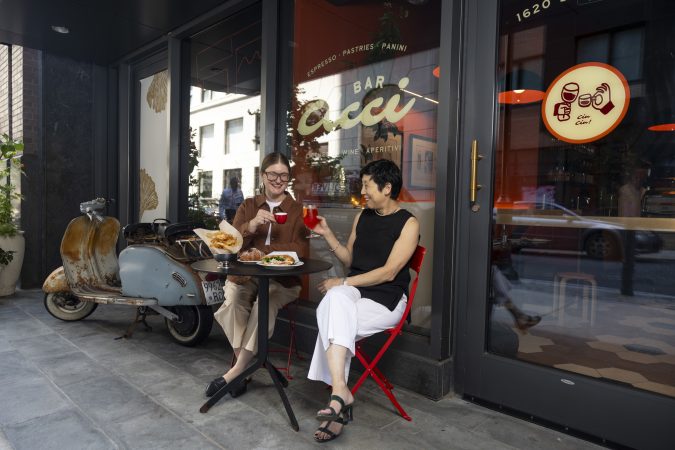
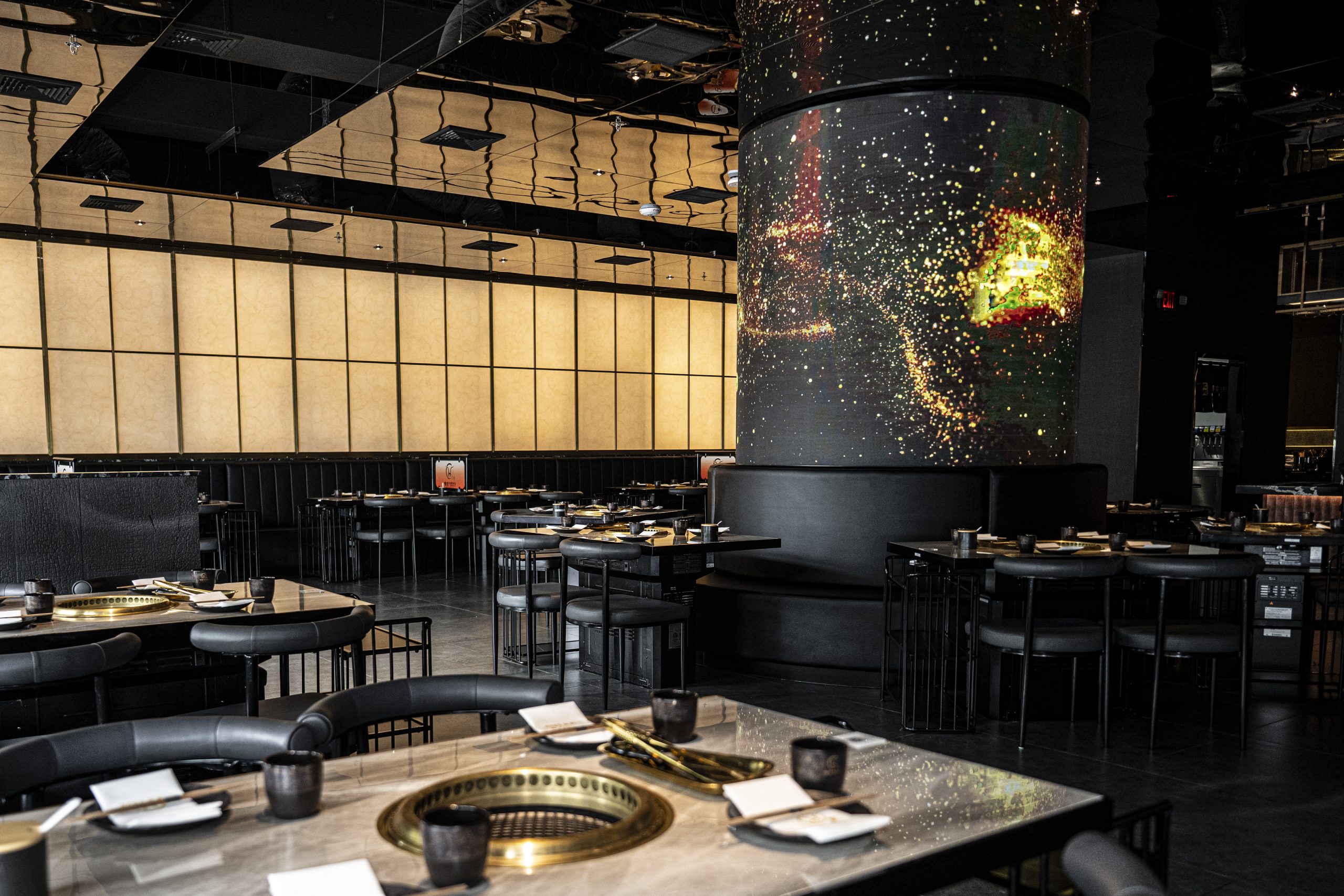
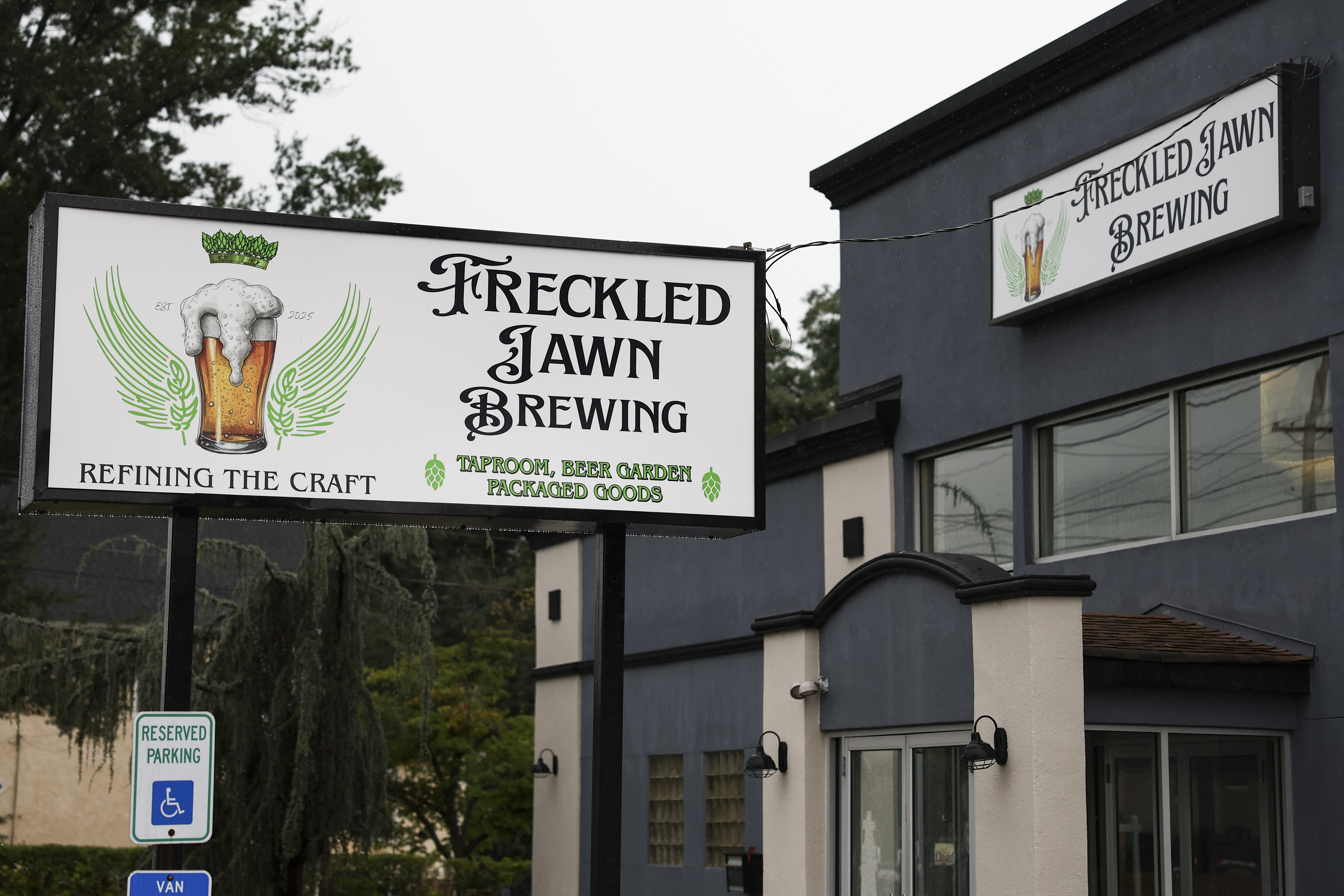
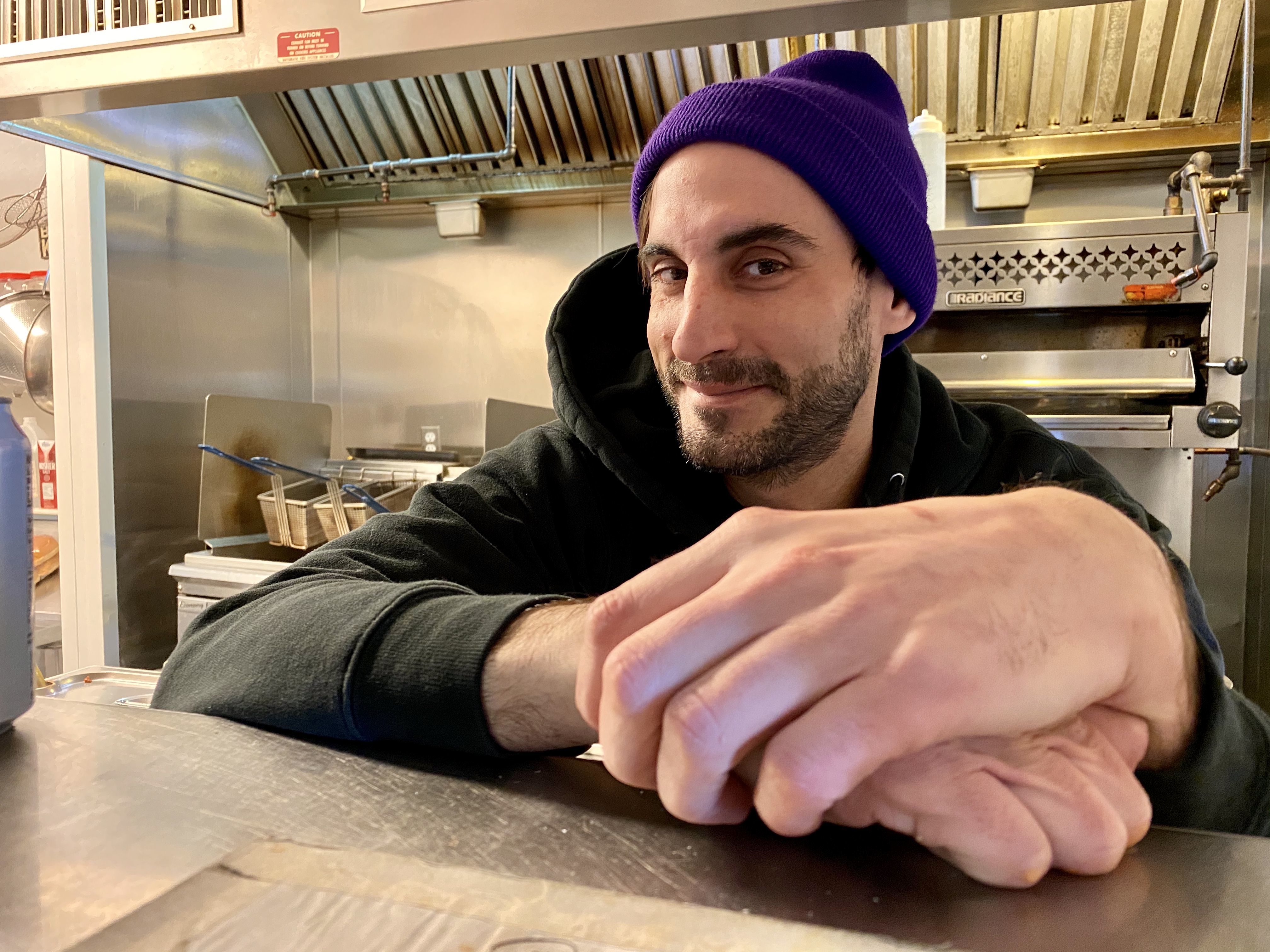
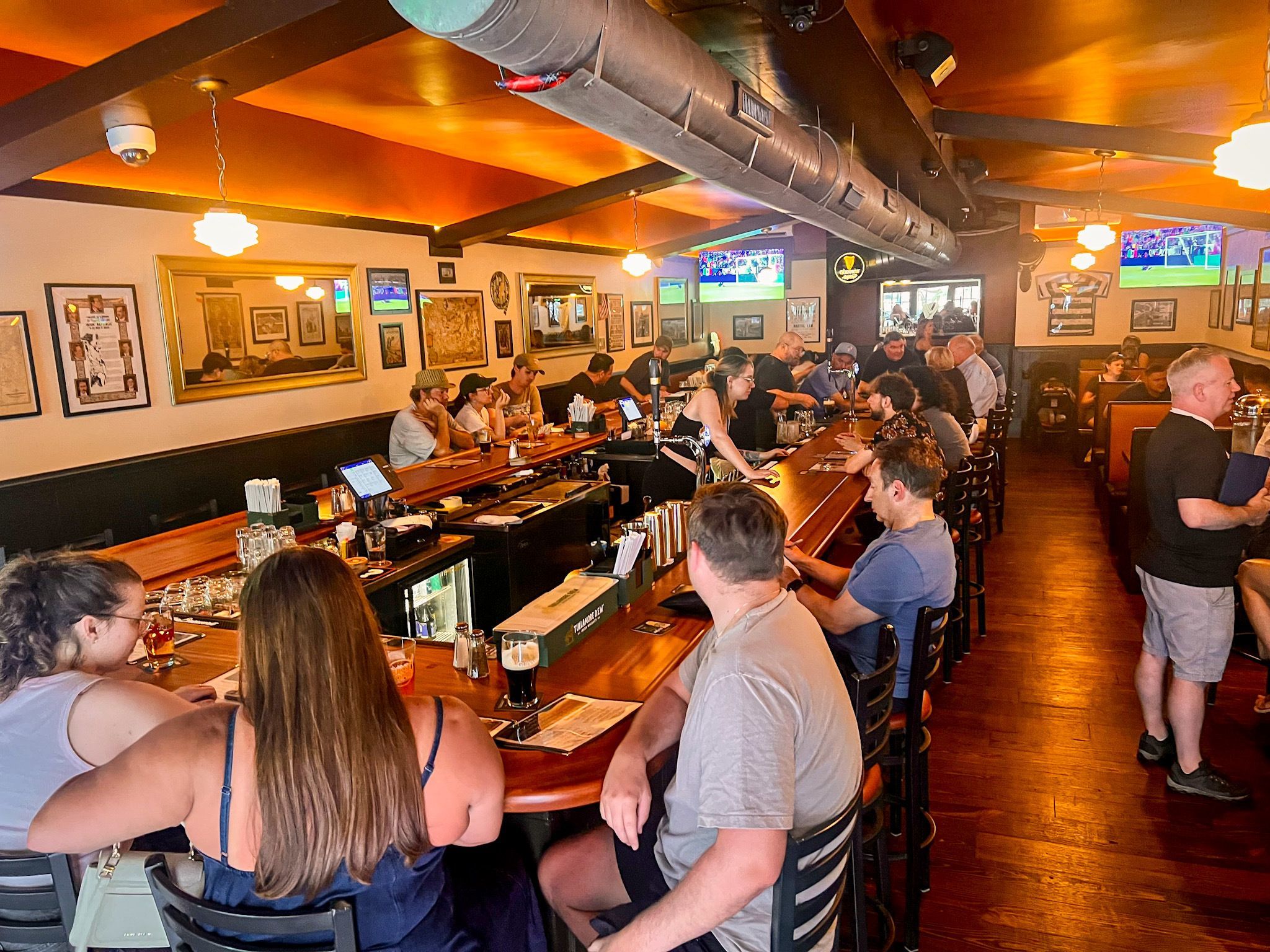
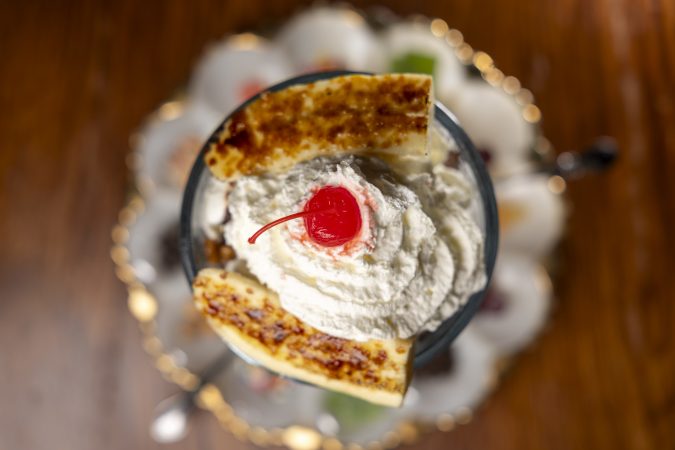
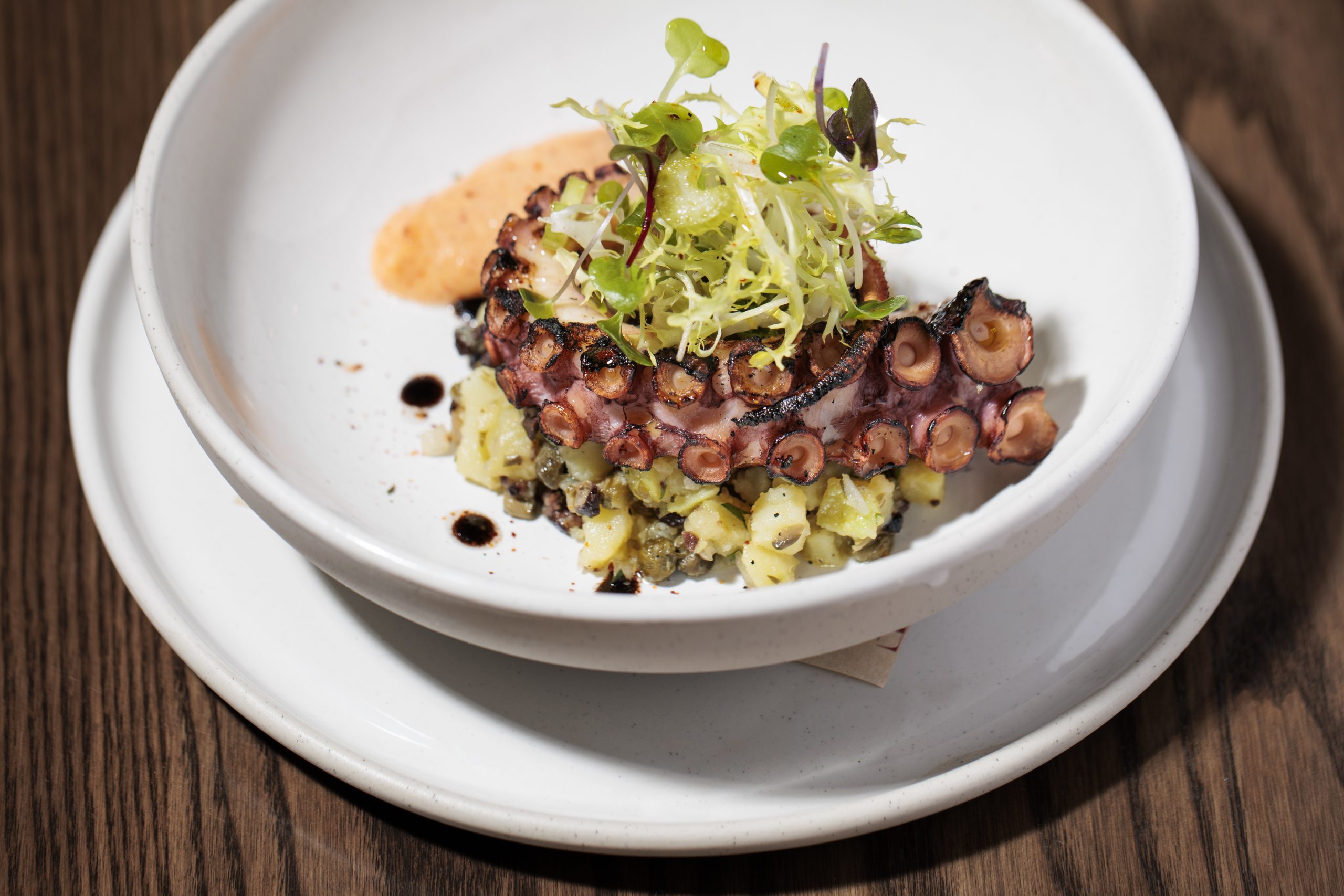
In our quest to keep you up to date on the restaurant scene, here are 12 spots that opened in the last few months. One example is Ogyu (shown above), which took over Ardmore’s former Iron Hill Brewing. It’s a grill-it-yourself Japanese steakhouse from the owner of the nearby Osushi.
You have to be in shape to lug around 100-pound salmon and tuna. Kiki Aranita found a group of sushi chefs who routinely lift weights. As they say in the maki game: no pain, no grain.
A couple didn’t want their local drinking spot to shut down for good. Sarah Nicell writes that they found a solution: They bought it.
The lines are long, and the branding is adorable. Kiki Aranita visits Kyo Matcha in Chinatown.
Pinot grigio is wildly popular for a good reason, and wine writer Marnie Old explains where the best ones come from.
Poe is expanding
Sandwichmeister N.A. Poe will expand the hours of his kitchen operation at Poison Heart next week while preparing to open a new Poe’s Sandwich Joint location by the end of the year.
Starting Tuesday, Poe’s will operate seven days a week out of Poison Heart, 931 Spring Garden St., where he’s run the cocktail bar’s kitchen since last September. Daytime service will be pickup, takeout, and delivery only; Poison Heart itself will not open for daytime bar or dine-in service.
Poe, the nom de plume of Richard Tamaccio Jr., is not disclosing the new joint’s location or opening date. “We look forward to the freedom to do things our way without interference or apologies,” he said.
The move follows Poe’s split with Human Robot Brewing Co., where he had operated since 2019. His last day at Human Robot’s Kensington location is Thursday. Cantina La Martina will take over Human Robot’s kitchens at both Kensington and Brewerytown. Poe also parted company with the Monto, a new Old City bar.
At Poison Heart, Poe’s will operate from 11 a.m. to 9 p.m. Sunday through Tuesday and 11 a.m. to 6 p.m. Wednesday through Saturday. Poison Heart’s regular Wednesday-through-Saturday evening service will continue, with Poe’s classics and specials added to the menu.
Two tasty bright spots of a staycation for Emily Bloch and her boyfriend included hamachi collar and poolside swordfish skewers. In other words: There’s great fish to be had in Fishtown.
Scoops
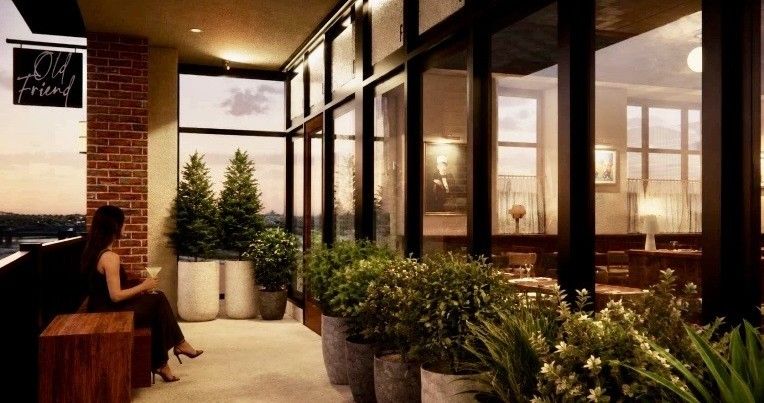
Old Friend, an upscale restaurant with a wood-fired grill and a chef with a Center City pedigree, is coming to the Main Line later this year.
Corte, on its way to the former East Market home of Mulherin’s Pizza, will have an Italian backbone, focusing on handmade pasta and cooking from the wood-fired oven. If that sounds like University City’s Corio, that’s because the same crew is behind it.
Big Charlie’s Saloon, the nationally known Kansas City Chiefs-theme bar in South Philadelphia that closed with the owner’s death last December, is under agreement of sale. The buyers’ plans don’t include NFL memorabilia.
Restaurant report
We’re in a New York state of mind:
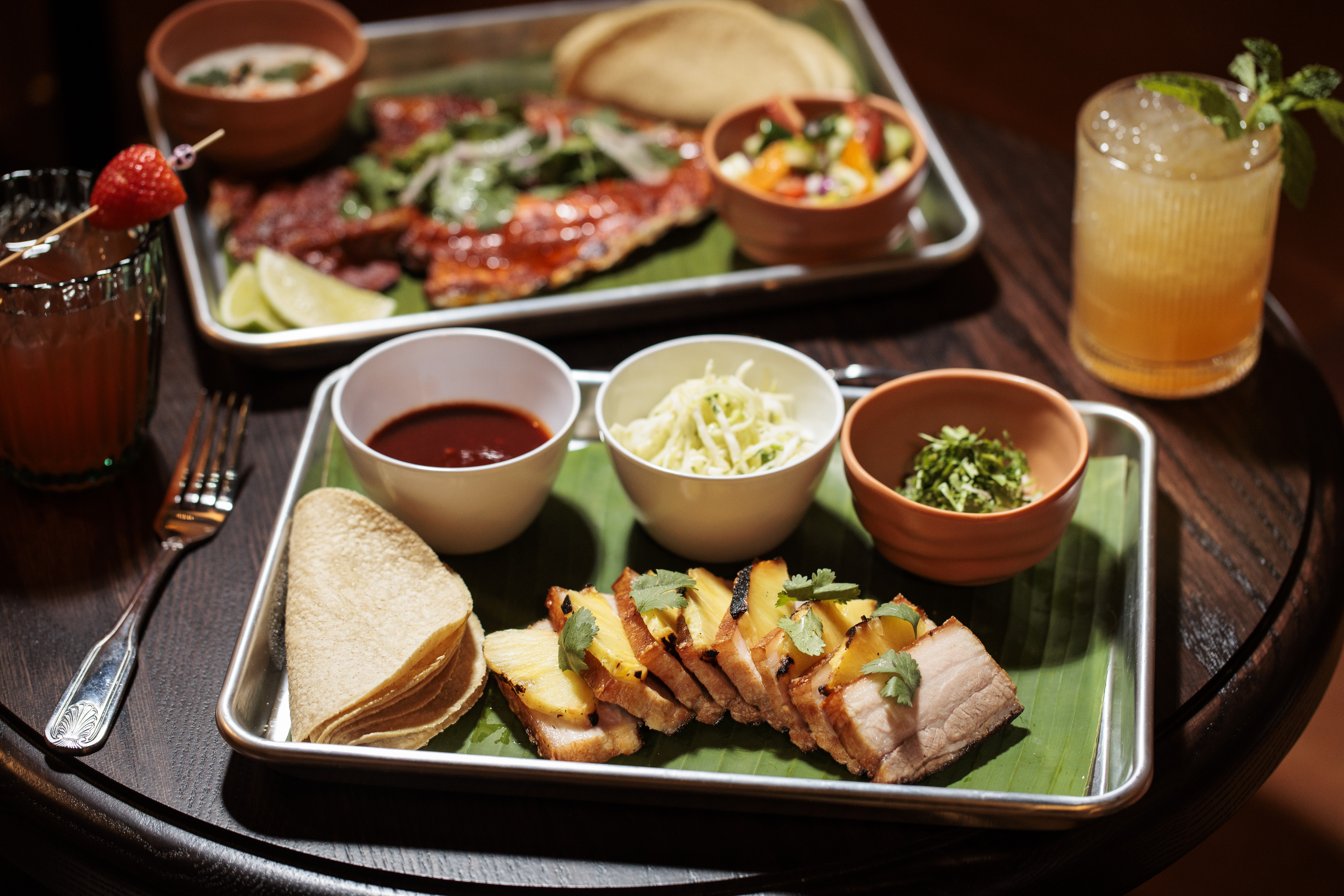
Dorade asado and pork belly al pastor (shown above) are two dishes offered at the new Mixteca, the Kensington offshoot of a Manhattan agave-focused coctelería from two James Beard Award-winning bartenders. Beatrice Forman heads to the former Martha for a look around.
Smash burgers and fries are the hook at 7th Street Burger, a fast-growing Manhattan-based burger chain that just opened the first of four Philadelphia-area locations in Fishtown. Kiki Aranita takes a bite.
Briefly noted
Jose Pistola’s 19-year run in Center City has ended. Its related bars in Fishtown and South Philadelphia are unaffected.
Mount Masala Himalayan Cuisine (300 White Horse Rd., Voorhees) will host a Nepal disaster-relief fundraiser on Thursday, Sept. 10 from 5 p.m. to closing under the auspices of South Jersey Food Scene. It’s a $25 buffet of Nepali-Himalayan dishes for dine-in or takeout, with all sales donated to the Nepalese government for flood relief.
🥂 New Jersey has permanently allowed the sale and delivery of to-go alcoholic beverages in towns that permit it.
Ask Mike anything
Did Philip Korshak ever open his store, Korshak Picnic Provisions? — Joan M.
Back in February, Phil Korshak, the poet-baker who left town in 2023 after closing his cult-favorite Korshak Bagels, thought he’d open his quirky corner store at 13th and Reed Streets by May. However, “you have no idea how many contractors, electricians, and plumbers go to Europe and Japan in the summertime,” he told me in June. This week, Korshak said the store — now called Korshak Parkside Provisions — is in the health department inspections queue and he’s expecting equipment deliveries. “Let’s call it October,” he told me.
📮 Have a question about food in Philly? Email your questions to me at mklein@inquirer.com for a chance to be featured in my newsletter.
By submitting your written, visual, and/or audio contributions, you agree to The Inquirer’s Terms of Use, including the grant of rights in Section 10.
But for thousands of residents, many of whom live in North Philadelphia, next year’s tax bills are expected to soar.
Nearly 6,000 homeowners in Philadelphia saw their property assessments this year climb by more than 50% compared with two years ago, the last time the city conducted a mass revaluation, according to an Inquirer analysis of city property assessment data released in June.
Of those homeowners, more than 2,200 saw their assessments more than double.
That is likely to result in sticker shock come tax time next year, because property tax bills in the city are calculated based on home values. The revenue is split between the city and the Philadelphia School District.
Homeowners across the city saw a median 3% increase in their property assessments this year compared with the 2025 tax year. Jumps were higher in neighborhoods that border gentrifying areas, such as in parts of Kensington and West Philadelphia.
But this year, two other areas of the city had the densest concentrations of homes where property assessments increased by 50% or more, according to The Inquirer’s analysis.
The steep rises are clustered in the southern end of Strawberry Mansion, the historically Black neighborhood along the Schuylkill, and in the tiny Hartranft neighborhood north of Temple University and east of Broad Street, where residents are predominately Latino.
(function() {
var l2 = function() {
new pym.Parent(‘html_sandwich_2026_property4’,
‘https://media.inquirer.com/storage/inquirer/projects/innovation/arcgis_iframe/html_sandwich_2026_property4.html’);
};
if (typeof(pym) === ‘undefined’) {
var h = document.getElementsByTagName(‘head’)[0],
s = document.createElement(‘script’);
s.type = ‘text/javascript’;
s.src = ‘https://pym.nprapps.org/pym.v1.min.js’;
s.onload = l2;
h.appendChild(s);
} else {
l2();
}
})();
Housing experts and advocates for low-income homeowners have long criticized the city’s assessment system as systemically biased, leaving Black and brown homeowners to pay disproportionately high property taxes. Mayor Cherelle L. Parker convened a task force in 2024 to study the city’s revaluation system, and that group’s recommendations are expected to be released later this year.
Monty Wilson, a senior attorney at Community Legal Services who sits on the task force, said the Philadelphia Office of Property Assessment is the best in the state and has “worked really hard to become more and more accurate.”
But he said bias persists in part because of the unique challenges that assessors face in low-income neighborhoods that can cause volatility in home values, such as higher rates of vacant lots, foreclosures, and other factors.
A 2024 CLS report found that errors were clustered in lower-value neighborhoods where a majority of residents are people of color.
“That means when a property is overassessed,” Wilson said, ”it tends to occur in a Black and brown neighborhood.”
(function(){function e(){window.addEventListener(`message`,function(e){if(e.data[`datawrapper-height`]!==void 0){var t=document.querySelectorAll(`iframe`);for(var n in e.data[`datawrapper-height`])for(var r=0,i;i=t[r];r++)if(i.contentWindow===e.source){var a=e.data[`datawrapper-height`][n]+`px`;i.style.height=a}}})}e()})();
The Parker administration did not respond to requests for comment.
In response to a previous article about this year’s property reassessments, city officials emphasized that some lower-income homeowners pay relatively low tax bills because of the popular homestead exemption tax break. The program, which any homeowners can apply for and obtain if they live in their house as their primary residence, exempts the first $100,000 from a home’s taxable value.
That means that some homeowners in working-class neighborhoods previously paid little to no property taxes. A sudden increase in valuation, like the ones seen this year in pockets of North Philadelphia, could require they pay bills next year that are several hundred dollars more than in the past.
Take the 2500 block of North Marshall Street. The residential North Philly street sits between West Kensington and Broad Street, and nearly every home saw its assessment increase by 60% or more, according to The Inquirer’s analysis.
Most of the homes there had previously been valued at less than $100,000, meaning owners with the homestead exemption owed no property taxes. Now, many of the homes on the block are valued at about $140,000, an amount that would next year yield more than $500 in yearly tax bills for owners with the homestead exemption.
More than 40% of the Hartranft neighborhood’s residents are below the federal poverty level, which is $33,000 a year for a family of four, according to U.S. Census data.
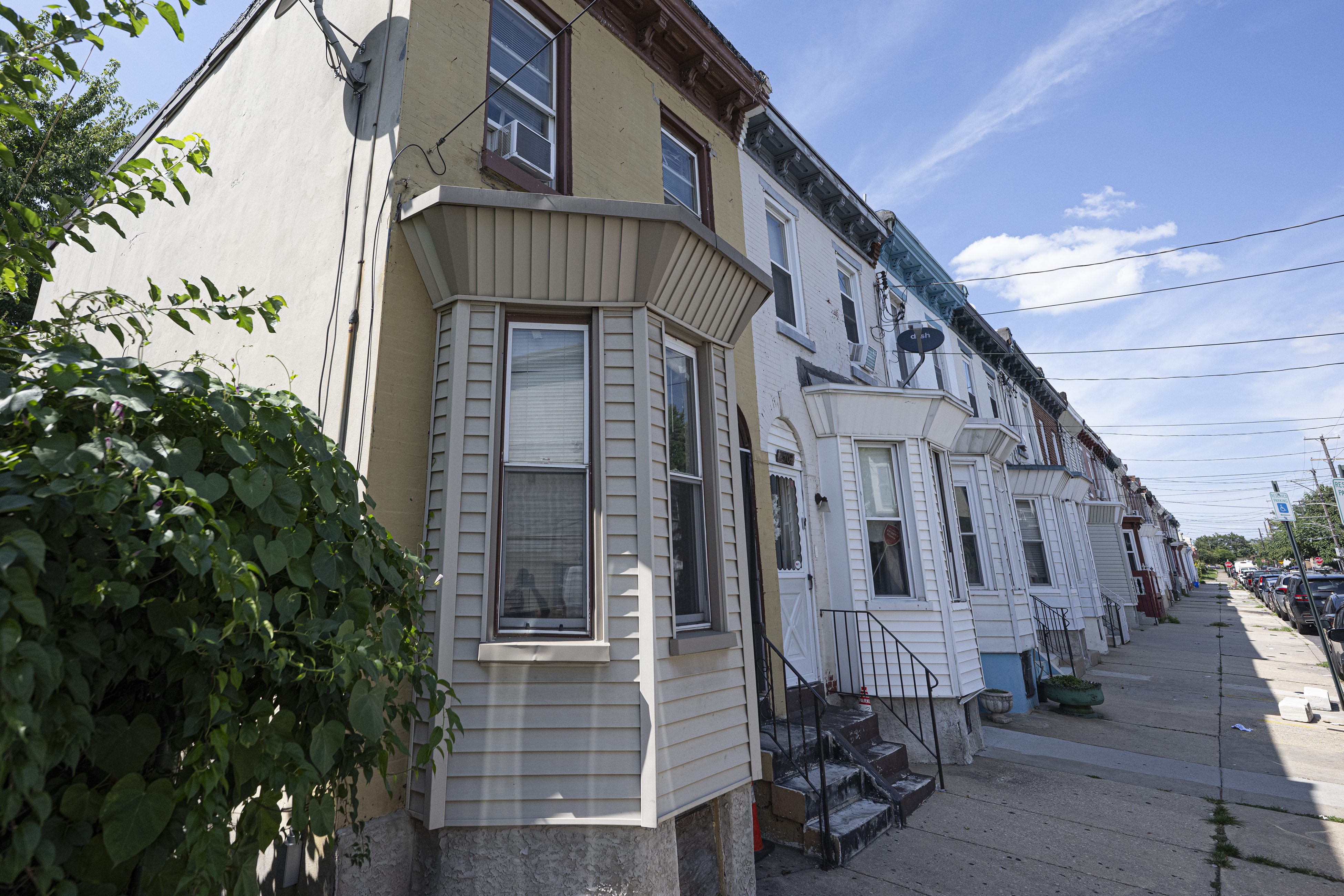
At Left a property on 2500 N. Marshall St., Philadelphia, PA 19133 is shown Wednesday, Aug. 19, 2026, in Philadelphia.Jose F. Moreno / Staff Photographer
City Councilmember Quetcy Lozada, whose district includes parts of Kensington and North Philadelphia, said the Hartranft area is not like sections of Kensington that have seen an influx of development in recent years and where increases in property assessments may be expected.
It is possible, she said, that lower-income residents who have been displaced from parts of Kensington looked to move west of the neighborhood, increasing demand in the Fairhill and Hartranft areas.
Lozada — who has held workshops in the neighborhood to connect residents with property tax relief programs — said she fears her constituents are being asked to pay disproportionately high taxes and not seeing better city services and stronger public schools.
“How is it possible that someone in Fairhill is paying a higher tax for a property that has not had any investment, in a neighborhood that is not as safe, whose school system is not as great, as somebody that lives in Chestnut Hill, for instance?” she said, referring to the upscale Northwest Philadelphia neighborhood with a $109,000 median household income. “There has to be a better way of doing a more accurate evaluation in every neighborhood.”
In Strawberry Mansion, community leaders said that increased assessments are likely a result of market pressure from Brewerytown to its south, a comparatively whiter and higher-income neighborhood.
“The city has to be super transparent about this assessment system so people can better understand it and not feel that sticker stock,” said Tonnetta Graham, president of the Strawberry Mansion Community Development Corp. “If we know how they came to their number, it’s easier to chew.”
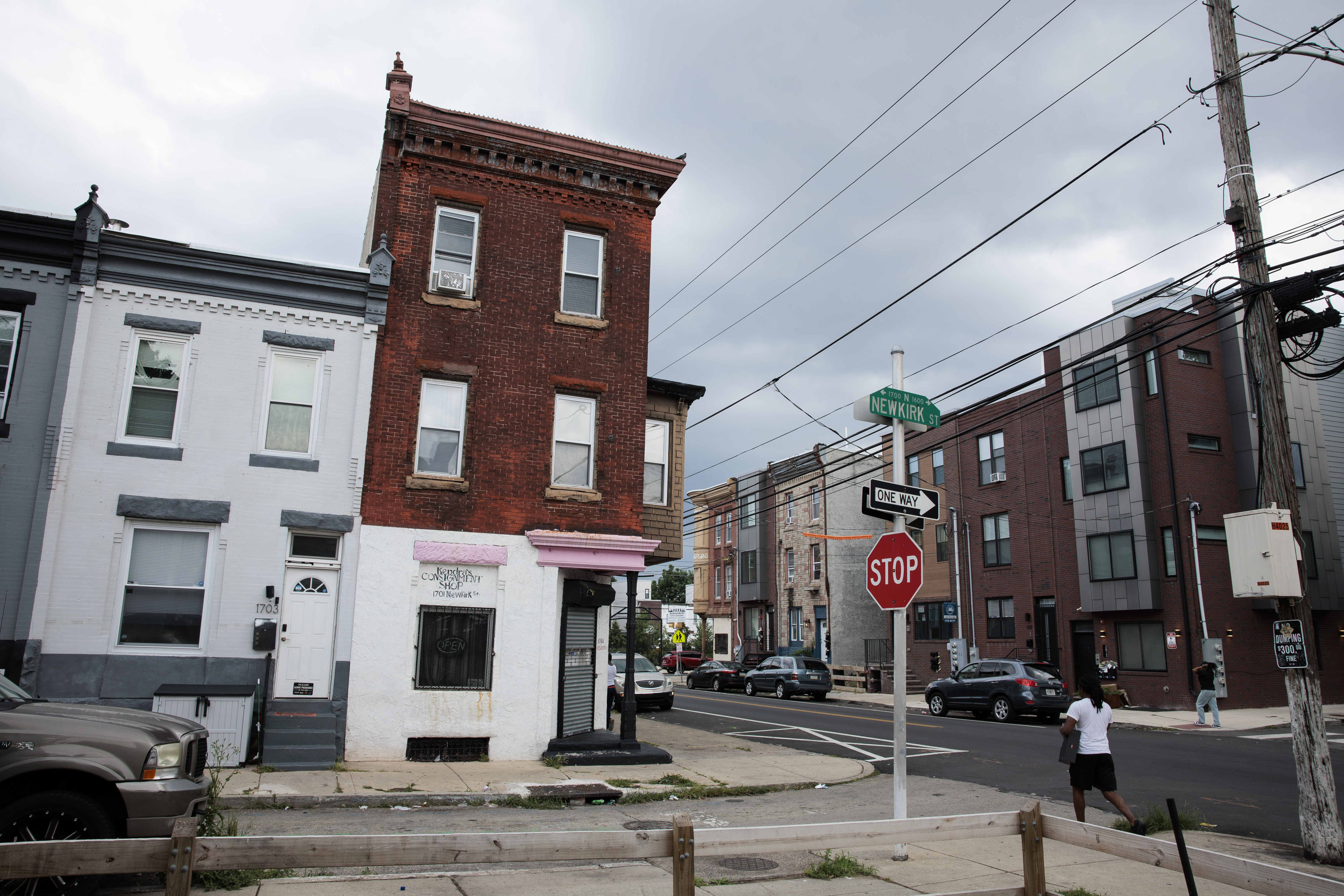
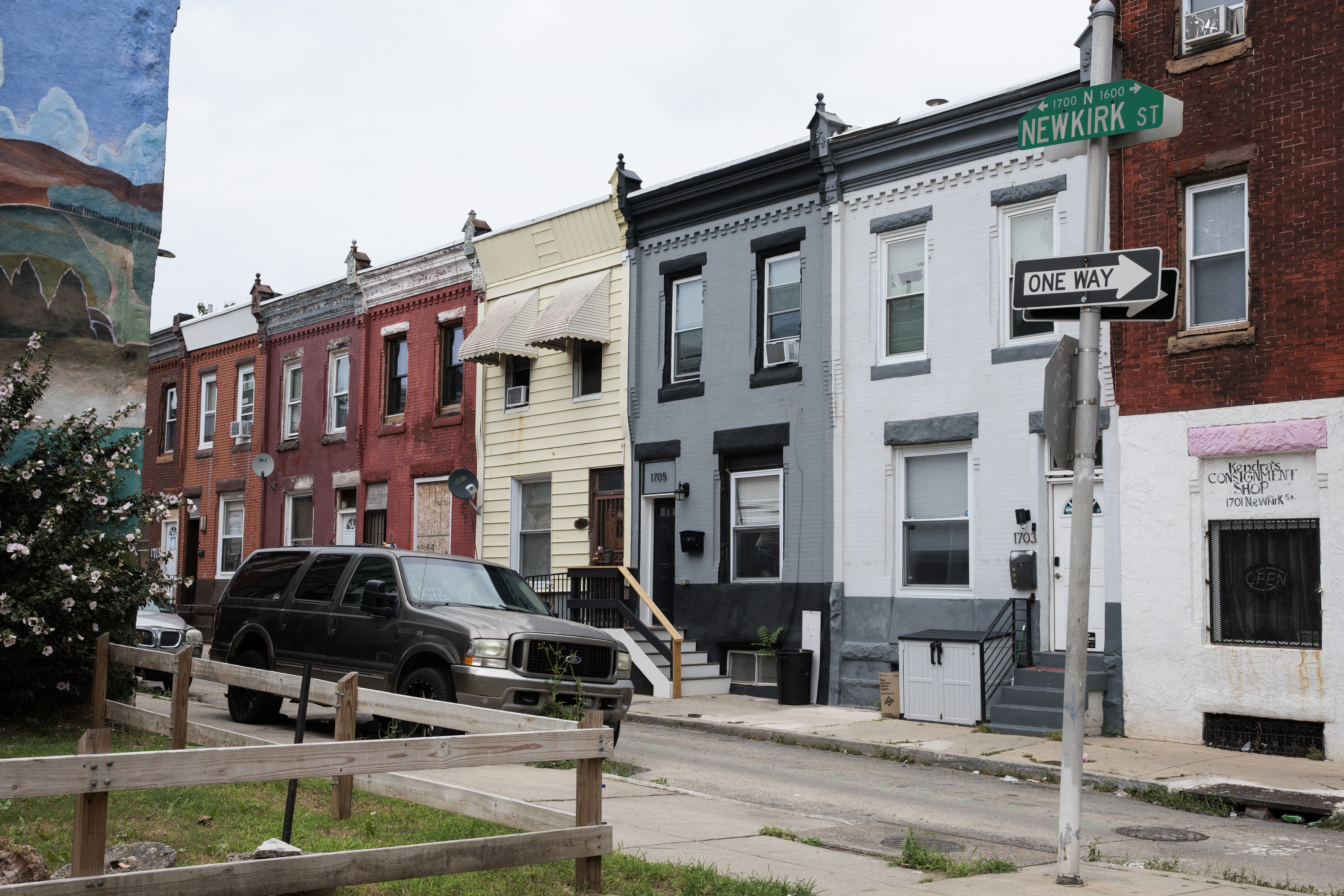
The 1700 block of North Newkirk Street on Thursday, Aug. 20, 2026 in Philadelphia.Monica Herndon / Staff Photographer
Councilmember Jeffery Young Jr., whose district includes both Strawberry Mansion and parts of Hartranft, did not respond to requests for comment.
Jalon Alexander, a Strawberry Mansion native who this month launched a campaign to challenge Young for his Council seat next year, said he was recently at a block party in the neighborhood where he heard repeatedly from older homeowners who were concerned about their increased assessments.
“They feel taken advantage of, and they feel like it’s coming out of nowhere,” Alexander said. “This is an area where there’s high levels of poverty, and there is not a lot of political or government attention in this area. I’ve spoken with many people whose rates have almost doubled. It’s the biggest issue in the neighborhood.”
Staff writer Michaelle Bond contributed to this article.
You say you want a revolution? That’s not quite what SEPTA’s proposing. This weekend, the region’s transit agency will roll out the first phase of its New Bus Network, the bus system’s first significant update since the agency was formed in the 1960s.
Sound familiar? Once dubbed Bus Revolution, the project began in 2021 after transit agencies around the country saw massive declines in ridership. SEPTA’s Bus Revolution was set to launch in 2025 but faced significant community pushback and coincided with the state funding crisis that halted many planned transit initiatives. It was officially shelved in November 2024.
Later phases of the plan, which will roll out in 2027, will impact other neighborhoods. The number of bus routes in SEPTA’s system will drop from the current 124 to 106 when all four phases are complete.
SEPTA says the changes are needed to modernize the system and make it easier to use.
To help you navigate the changes that will impact how you navigate the city, we’re here to breakdown down all 30 impacted routes.
This route remains the same but with reduced service.
Days
Times
Previous
Now
Weekdays
6 a.m. to 9 p.m.
Every 16-25 minutes
Every 30 minutes
Saturdays
8 a.m. to 9 p.m.
Every 22-25 minutes
Every 30 minutes
6
Cheltenham-Ogontz to Olney Transportation Center
On weekdays, route 6 will have increased service during peak hours, but a reduced service otherwise.
Days
Times
Previous
Now
Weekdays
6 a.m. to 9 p.m.
Every 11-13 minutes
Every 10 minutes
Weekdays
9 p.m. to midnight
Every 20 minutes
Every 30 minutes
Weekdays
midnight to 4 a.m.
Every 30-40 minutes
Every 60 minutes
SEPTA also rolled out new signage that identifies certain routes as “frequent red”, indicating a bus is scheduled to arrive within 15 minutes or less on weekdays from 6 a.m. to 9 p.m.
17
Front-Market to 20th-Johnston
Route 17 will be shortened and no longer operate on its old route from 20th Street and Johnston Street down to the stadium complex or the Navy Yard. SEPTA recommends Navy Yard commuters take route 45 instead.
This route will also operate with reduced service overnight.
Days
Times
Previous
Now
Weekdays
midnight to 5 a.m.
Every 30 minutes
Every 60 minutes
SEPTA also rolled out new signage that identifies certain routes as “frequent red”, indicating a bus is scheduled to arrive within 15 minutes or less on weekdays from 6 a.m. to 9 p.m.
25
Frankford Transportation Center to Front-Spring Garden
Route 25 is essentially being cut in half. The old route ran down Delaware Avenue to Columbus Commons. The new route will terminate at the Spring Garden Market-Frankford Line station. The old route from Spring Garden to Columbus Commons will be serviced by the new route 76.
Route 25 will now operate for 24 hours a day, as part of SEPTA’s late-night OWL network.
This route will also have increased service.
Days
Times
Previous
Now
Weekdays
6 a.m. to 9 p.m.
Every 20-30 minutes
Every 15 minutes
Weekends
6 a.m. to 9 p.m.
Every 30 minutes
Every 20 minutes
SEPTA also rolled out new signage that identifies certain routes as “frequent red”, indicating a bus is scheduled to arrive within 15 minutes or less on weekdays from 6 a.m. to 9 p.m.
32
Broad-Carpenter to Ridge-Lyceum
Route 32 will have slightly reduced service with fewer buses overall. All route 32 buses will terminate at Manayunk, as opposed to the previous schedule where half would terminate at 33rd Street and Cecil B. Moore Avenue. There’s also a slight route extension into Roxborough for school service.
35
Manayunk Roxborough Loop
Route 35 will be discontinued on Aug. 23. SEPTA recommends riders take route 61.
According to SEPTA’s operation statistics, route 35 is the seventh most expensive bus based on the average cost per passenger.
39
Richmond-Cumberland to 33rd-Dauphin
Route 39 will remain the same but with reduced service on weekdays and slightly increased service on Saturday evenings..
Days
Times
Previous
Now
Weekdays
6 a.m. to 9 p.m.
Every 20-30 minutes
Every 30 minutes
Saturday
5 p.m. to 9 p.m.
Every 40-60 minutes
Every 30 minutes
44
Front-Market to Ardmore
Route 44 will no longer run along its old route that would sometimes terminate at Gladwyne. Beginning Aug. 23, all 44 buses will run to Ardmore, with select trips stopping at Narberth.
This route will also have reduced service.
Days
Times
Previous
Now
Weekdays
9 a.m. to 3 p.m.
Every 15-30 minutes
Every 60 minutes
Weekends
6 a.m. to midnight
Every 30 minutes
Every 60 minutes
45
Navy Yard/Broad-Oregon to 12th-Noble
Route 45 will be extended to the Navy Yard to cover for the changes to route 17.
After 9 p.m. the route will have reduced service on weekdays.
Days
Times
Previous
Now
Weekdays
9 p.m. to midnight
Every 20 minutes
Every 30 minutes
46
58th-Baltimore to 63rd-Malvern
Route 46 will have increased service on weekdays.
Days
Times
Previous
Now
Saturdays
9 a.m. to 6 p.m.
Every 20 minutes
Every 15 minutes
Sundays
9 a.m. to 7 p.m.
Every 30 minutes
Every 20 minutes
SEPTA also rolled out new signage that identifies certain routes as “frequent red”, indicating a bus is scheduled to arrive within 15 minutes or less on weekdays from 6 a.m. to 9 p.m.
47
Whitman Plaza to 5th-Godfrey
Route 47 will merge with route 47M and have increased service.
Days
Times
Previous
Now
Weekdays
6 a.m. to 9 p.m.
Every 8-9 minutes
Every 7-8 minutes
All days
Midnight. to 5 a.m.
Every 45 minutes
Every 30 minutes
SEPTA also rolled out new signage that identifies certain routes as “frequent red”, indicating a bus is scheduled to arrive within 15 minutes or less on weekdays from 6 a.m. to 9 p.m.
47M
Whitman Plaza to 7th-Spring Garden via 9th
Route 47M has been discontinued and will now be served by a more frequent route 47.
The merger of these two routes includes a realignment so that the northbound 47 runs on Seventh Street, as opposed to Ninth Street. Southbound buses will still run on Eighth Street.
49
33rd-Dauphin to 40th-Baltimore
Route 49 will look very different from its old route. It will no longer serve Gray’s Ferry. SEPTA recommends riders take route 79 instead.
Route 49 will also operate on many different roads. The most notable change is taking 33rd Street instead of 29th Street. in Strawberry Mansion and Brewerytown.
These changes are paired with generally reduced service.
Days
Times
Previous
Now
Weekdays
8 a.m. to 3 p.m.
Every 18-22 minutes
Every 30 minutes
Saturdays
8 a.m. to 9 p.m.
Every 22 minutes
Every 30 minutes
Sundays
9 a.m. to 7 p.m.
Every 22 minutes
Every 30 minutes
52
49th-Woodland to Wissahickon Transportation Center/50th-Parkside
Route 52 will no longer follow its old route to Gladwyne. SEPTA cites low ridership and doesn’t offer an alternative route.
SEPTA also rolled out new signage that identifies certain routes as “frequent red”, indicating a bus is scheduled to arrive within 15 minutes or less on weekdays from 6 a.m. to 9 p.m.
53
Carpenter Station to Richmond-Westmoreland
Buses on route 53 will no longer follow the old route that terminated at Sedgwick Street and Wayne Avenue. Instead, service will end at Carpenter Regional Rail station. There are additionally a bunch of small differences across the route. For example, route 53 will now serve Roosevelt Boulevard. on the western side of Hunting Park.
The 53 will also continue past G Street and extend into Port Richmond.
54
Richmond-Cambria to 33rd-Dauphin
Buses on route 54 will have reduced service during weekdays and increased service during evenings.
Days
Times
Previous
Now
Weekdays
9 a.m. to 3 p.m.
Every 15-18 minutes
Every 20 minutes
All days
9 p.m. to midnight
Every 45 minutes
Every 30 minutes
57
Whitman Plaza to Fern Rock Transportation Center
The old route 57 occasionally would terminate at Packer Marine Terminal, that service will be discontinued.
During weekends the route 57 will run at a reduced service.
Days
Times
Previous
Now
Weekends
All day
Every 10-12 minutes
Every 15 minutes
Service along Crescentville and Cheltenham Avenues will be reduced to every hour.
SEPTA also rolled out new signage that identifies certain routes as “frequent red”, indicating a bus is scheduled to arrive within 15 minutes or less on weekdays from 6 a.m. to 9 p.m.
60
Wissahickon Transportation Center/35th-Allegheny to Richmond-Westmoreland
Most of route 60 will continue to go down Allegheny Avenue, but it will not follow its old route where some buses stopped on Delaware Avenue and Lewis Street.
The 60 will occasionally take an extended route and continue to the Wissahickon Transportation Center. The schedule is roughly split 50:50 whether a bus will continue to this new terminus or stop early at 35th Street and Allegheny Avenue.
Route 60 will also see increased service.
Days
Times
Previous
Now
Weekdays
6 a.m. to 6 p.m.
Every 10-15 minutes
Every 10 minutes
SEPTA also rolled out new signage that identifies certain routes as “frequent red”, indicating a bus is scheduled to arrive within 15 minutes or less on weekdays from 6 a.m. to 9 p.m.
61
9th-Market to Ridge-Summit
Route 61 will be extended to Upper Roxborough. This is primarily to cover for the discontinued route 35.
62
9th-Market to Andorra
Route 62 will be discontinued. SEPTA recommends riders take routes 9, 27, or 61 as an alternative. According to SEPTA, route 62 was the fourth most expensive route to operate, costing an average of $45 per passenger.
64
50th-Parkside to Pier 70
Previously, route 64 would occasionally terminate at 49th Street and Woodland Avenue. Under the new network, all trips will terminate at Parkside Loop. The 64 will also no longer take the old route’s detour into Grays Ferry.
Route 64 will operate at a increased service.
Days
Times
Previous
Now
All days
6 a.m. to 9 a.m.
Every 12-18 minutes
Every 12 minutes
All days
9 a.m. to 9 p.m.
Every 20 minutes
Every 15 minutes
SEPTA also rolled out new signage that identifies certain routes as “frequent red”, indicating a bus is scheduled to arrive within 15 minutes or less on weekdays from 6 a.m. to 9 p.m.
72
Cedarbrook Plaza to Frankford Transportation Center
72 is a brand new route that mostly operates on Cheltenham Avenue and will run every 30 minutes.
73
Frankford Transportation Center to Richmond-Westmoreland
Route 73 will now run at a reduced service from every 20-25 minutes to every 30 minutes.
Additionally the route 73 will no longer be part of the OWL network, ending 24-hour service on the line. SEPTA recommends riders take route 25 for overnight buses.
76
Rising Sun-Olney to Columbus Commons
Route 76 is a brand new route that will mostly run along Delaware and Frankford Avenues every 30 minutes. This route replaces service removed from the newly aligned route 25.
78
Express from Cornwells Heights to Center City
Route 78 will be discontinued due to lower ridership. SEPTA does not recommend an alternative bus.
According to SEPTA figures, the 78 was the most expensive bus to operate in their network. It has an average of 2.4 passengers per hour, costing the agency $394 per rider.
79
Columbus Commons to 29th-Snyder/40th-Market
Route 79 will occasionally be extended into West Philadelphia. Roughly every other bus will continue to 40th and Market Streets, instead of the current terminus of 29th Street and Synder Avenue.
SEPTA also rolled out new signage that identifies certain routes as “frequent red”, indicating a bus is scheduled to arrive within 15 minutes or less on weekdays from 6 a.m. to 9 p.m.
80
Express from Horsham to Olney Transit Center
Route 80 will be discontinued. SEPTA stated that “ridership has declined significantly since 2019 and the same connection can be made with a transfer on local routes 22, 51, and 310.”
According to SEPTA data, route 80 was the third most expensive route to run, costing the agency $50 per passenger.
89
Front-Dauphin to Arrott Transit Center
Route 89 will be discontinued. SEPTA says route 89 is “duplicative of other routes,” and offers “routes 3, 5, 25, 39, 41, 43, 53, 56, 75, 76, and K as alternatives.”
105
Paoli/Rosemont to 69th Street Transit Center
Route 105 will extend to Paoli for roughly every other bus, essentially merging with the now discontinued route 106.
The old route that serviced Suburban Square will no longer operate. There are also minor alignment changes in Overbrook.
Route 105 will operate at a increased service.
Days
Times
Previous
Now
Weekdays
All day
Every 30-60 minutes
Every 30 minutes
Weekends
All day
Every 60 minutes
Every 30 minutes
These changes will take effect on Aug. 24.
106
Paoli to 69th Street Transit Center
Route 106 will be discontinued on Aug. 24.
Do you still have questions about the changes to SEPTA’s bus network? Read our Q&A guide for details on how to contact SEPTA, information about future alterations in 2027, and much more.
Methodology
The animating buses on the diagram are an approximation of the number of buses active at 9 a.m. on a weekday schedule.
Old routes are accurate to SEPTA’s bus network on Aug. 4.
For simplicity, if a route can have different terminuses, we show all possible paths the bus operates on.
story continues after advertisement
Staff Contributors
Design, Development, and Data: Sam Morris
Reporting: Sam Morris and Erica Palan
Editing: Cynthia Henry
Subscribe to The Philadelphia Inquirer
Our reporting is directly supported by reader subscriptions. If you want more journalism like this story, please subscribe today
One bar is finally firing up its kitchen and another is switching food vendors as irreverent sandwich maker N.A. Poe parts ways with his second business partner in three months.
Poe’s Sandwich Joint is out as the food vendor at Human Robot after seven years at the original Olde Kensington brewery, and a little over a year at its Brewerytown outpost. His last day at both locations is Sept. 3, Poe — whose real name is Richard Tamaccio — confirmed to The Inquirer.
Tamaccio’s menu of chicken cutlet hoagies and loaded fries will be replaced by Cantina La Martina, the acclaimed Mexican restaurant from James Beard-nominated chef Dionicio Jimenez and his wife, Mariangeli Alicea Saez. The move is a both an expansion of the couple’s relationship with Human Robot — Cantina La Martina has been serving brunch, tacos, and enchiladas at the brewer’s Jenkintown location since 2024 — and a homecoming.
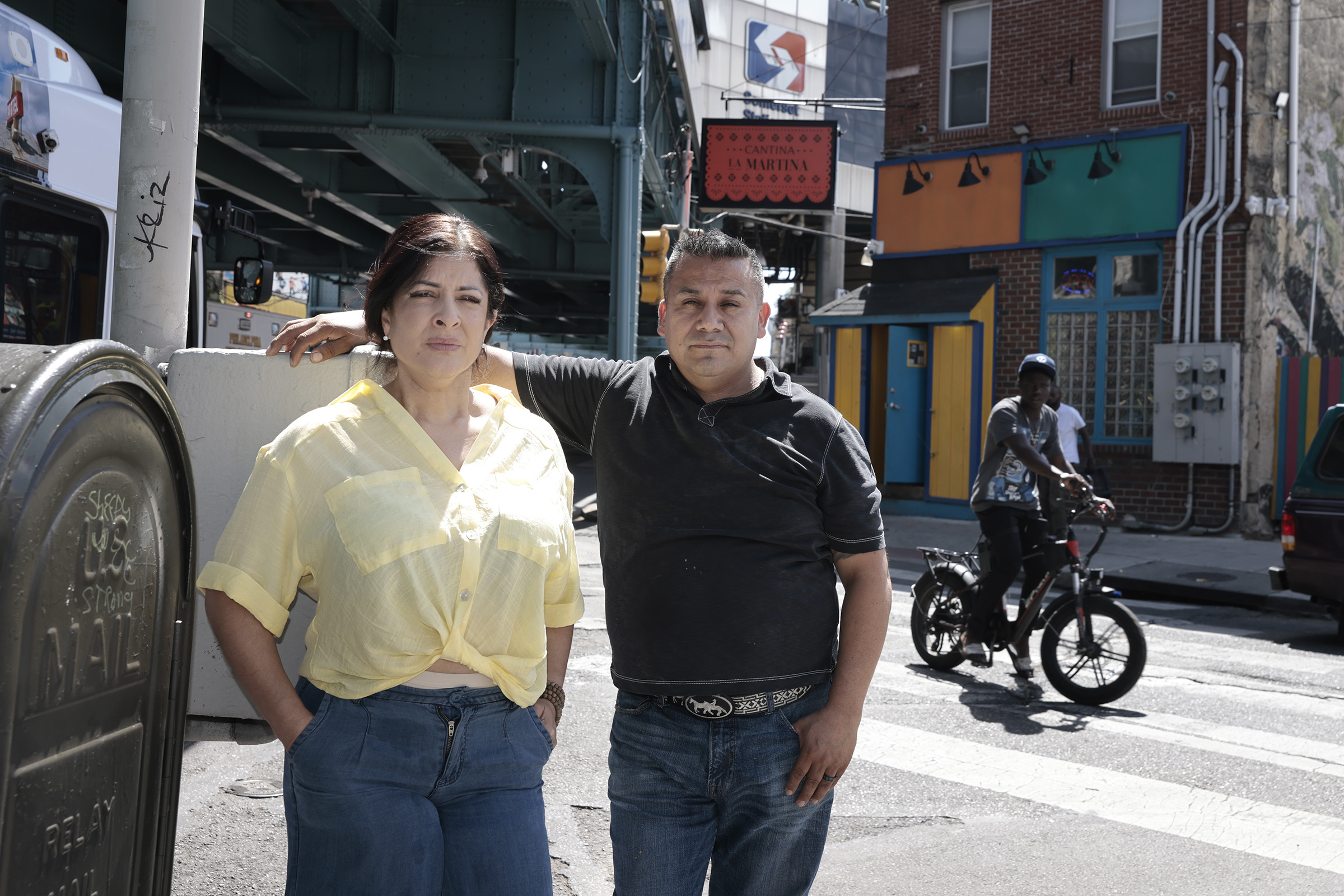
Cantina La Martina owners Mariangeli Alicea Saez (left) and her husband chef, Dionicio Jiménez, in front of their former Kensington Avenue restaurant. Starting Sept. 13, the couple will be Human Robot’s new food vendors in Olde Kensington and Brewerytown.Elizabeth Robertson / Staff Photographer
“We really wanted to be back” in the neighborhood, Saez told The Inquirer. “We built really strong relationships with the community and lifetime friendships” while on Kensington Avenue.
Cantina La Martina’s menu at 1710 N. Fifth St. will include a mix of burritos, tacos, wings, and nachos, plus the return of its popular weekday happy hour, which featured $1 tacos alongside $2 wings, ribs, and empanadas. At 2711 W. Girard Ave. in Brewerytown, Cantina La Martina will run a burrito bar.
Both locations will have a grand opening Sept. 13.
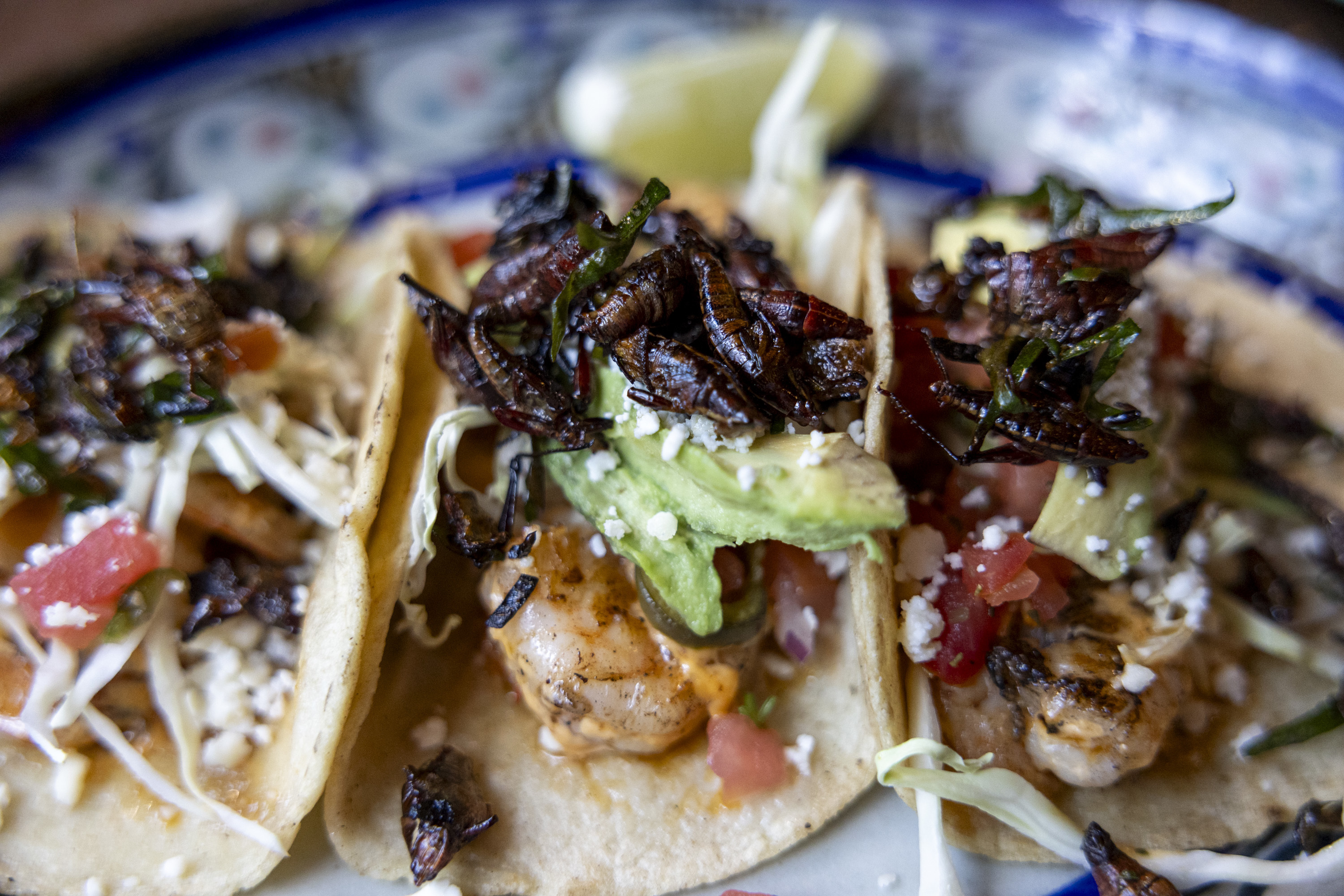
Shrimp and chapulines tacos at Cantina La Martina. At Human Robot’s Olde Kensington location, the menu will feature a mix of tacos, nachos, burritos, and wings.Tyger Williams / Staff Photographer
Starting Sept. 1, chef Jake Bukowski will reopen the kitchen at the Monto with a menu that Carey described as “modern Irish food”: Think black pudding sliders, cheesy chicken fillet rolls, and spice bags, the viral Irish-Chinese takeout staple popular in Dublin.
Bukowski is a Temple grad who previously worked at the long-closed Belgian Cafe (also owned by Carey) and, most recently, as the culinary director of the Havertown gastropub Brick & Brew. Bukowski was best-known for the Galley, the residency he ran for six years from a window inside Garage Fishtown, where he served handmade pierogis alongside wings and burgers.
The Monto, 226 Market St., in June. Michael Klein / Staff
Why is Poe’s leaving Human Robot?
Tamaccio’s abrupt split with Human Robot played outpubliclyover Instagram, when the brewery announced that it had renewed its lease in Olde Kensington. Poe’s would not be staying on, however.
“We are thrilled to kick off this new chapter with a brand-new food partner at both our 5th St & Girard locations,” the brewery captioned their post. “Before we look ahead, we want to send a massive thank you to Poe’s Sandwich Joint for being our food partner for nearly 7 years. Thank you, Poe and team, for slinging some amazing sandos and even better memories.”
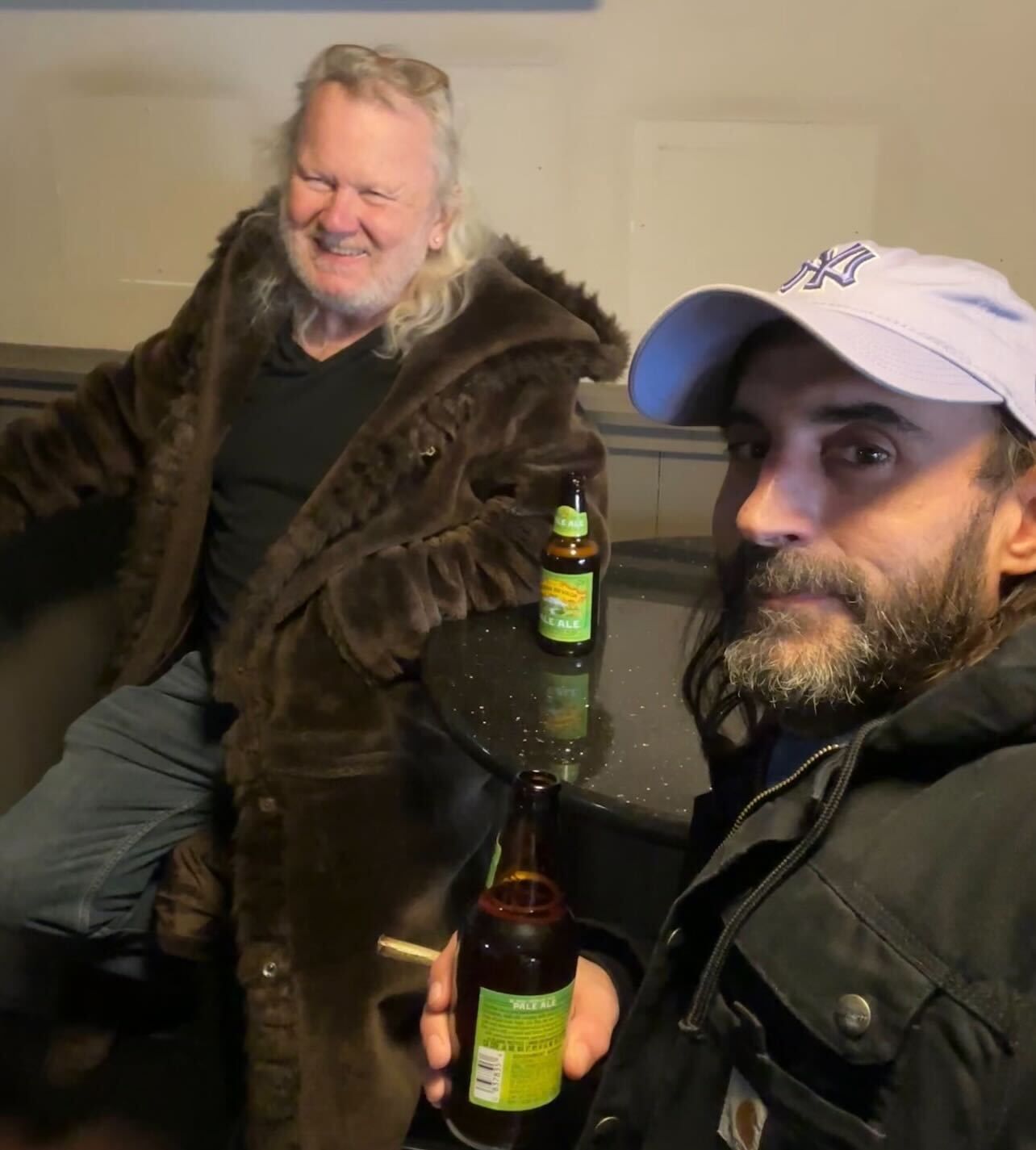
“I guess we’re looking for a new home,” Tamaccio says, while puffing on a joint. “Poe’s is getting booted from Human Robot.”
Inthe video, Tamaccio explains that Human Robot’s lawyers sent him a letter earlier this month that said the brewery was terminating its contract with Poe’s “immediately” over his behavior on social media.
Human Robot co-owner Ken Correll told The Inquirer that the decision to part ways was precipitated by an Aug. 3meeting to discuss concerns about Tamaccio’s behavior, to which Tamaccio showed up “late and alone” instead of with his investors, as discussed. “Given the lack of an active lease with Poe’s and his failure to uphold previous promises, we decided to move on,” Correll said.
In an interview Monday,Tamaccio told The Inquirer that the termination letter, sent Aug. 4, centered on a series of Instagram stories he posted in July after leaving the Monto. They included, among other things, an antisemitic quote from The Sopranos, a homophobic slur, and an AI-generated image of Carey engaging in indecent acts with a phallic potato.
“I was very angry at the time,” Tomaccio said, adding that he sees himself as a provocateur.“Comedy has always been the way that I process or deal with anything … I know what I’m doing, I crossed the line, and this is the result.”
N.A. Poe at the sandwich window inside Human Robot’s Olde Kensington location in 2020. His last day there is Sept. 3.Michael Klein / Staff
Tamaccio has long used social media to promote his sandwiches alongside a near-constant stream of controversial memes on his Instagram story that ranged from 9/11 conspiracies tooff-color jokes about politicians. Most of his content, he said, doesn’t reflect his actual beliefs.
“Everything I’m saying is a joke. I’m not a serious man,” Tamaccio said.
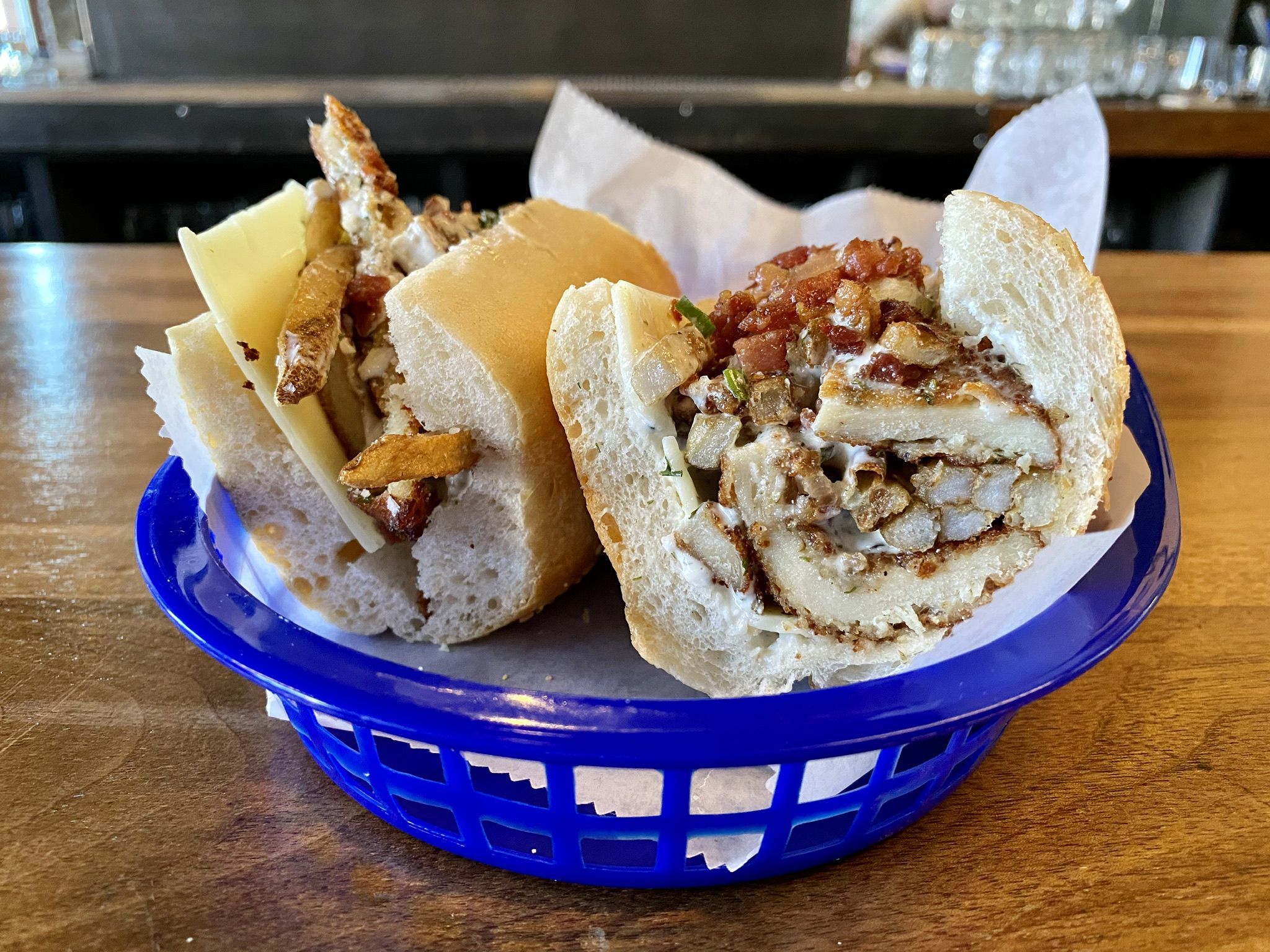
The Hamilton sandwich, served at Poe’s Sandwich Joint inside Human Robot, has chicken cutlet, Cooper sharp cheese, fries, house ranch dressing, and crumbles of bacon.Michael Klein / Staff
The sandwich maker said he felt blindsided and “gaslit” by Human’s Robot decision, which he worries will impact his 10 employees across the Brewerytown and Olde Kensington locations.
Poe’s kitchen staff at both Human Robot outposts have been offered jobs with Cantina La Martina, a representative for the restaurant said.
What happened at the Monto?
This is Tamaccio’s second business partnership to dissolve this summer.
In February, Carey and Tamaccio announced they were going into business together at the Monto, an Irish pub at 226 Market St. There, Tamaccio would serve a mix of Poe’s signature sandwiches alongside more traditional pub fare like shepherd’s pie.
But just two days after the Monto’s June opening, Tamaccio resigned. “I was very excited about the project,” Tamaccio said. “But when it came down to the actual execution in a high-pressure environment, I just couldn’t do it.”
Sandwich specialist N.A. Poe (right) with Monto co-owner Fergus Carey.N.A. Poe
Tamaccio said he decided to leave the Monto after working without a contract, a claim that Carey disputes: “He quit after preparing for six months. That’s totally on him.”
Carey — who never saw the image of himself with the potato — said that Tamaccio has since apologized for the post. He’s choosing to look at the humor of it all.
“I think it’s the funniest twist to the story you could imagine,” said Carey. “One of my partners said, ‘Karma didn’t take very long this time.’ I don’t feel like that at all. I wish him well.”
Tamaccio believes Poe’s Sandwich Joint has a future, either with a new partner or in a storefront of its own, where he can “do and say” whatever he wants.
“Maybe I went too far,” he said. “But what is happening to free speech? Most people don’t even get in a position to be able to own their own business, and then when you do, you just need to shut up to make money.”
When Chuong Nguyen saw the listing for his Brewerytown home, he knew without a doubt it was the one.
Unlike other emotional tales of fraught homebuying searches ending in showings that feel kismet, Nguyen‘s connection to this house was rooted in one clear reason: It had the rare distinction of being a Zero Energy Ready multifamily home in Philadelphia. For Nguyen, a devotee to living with a small environmental footprint, an energy-efficient home was a must.
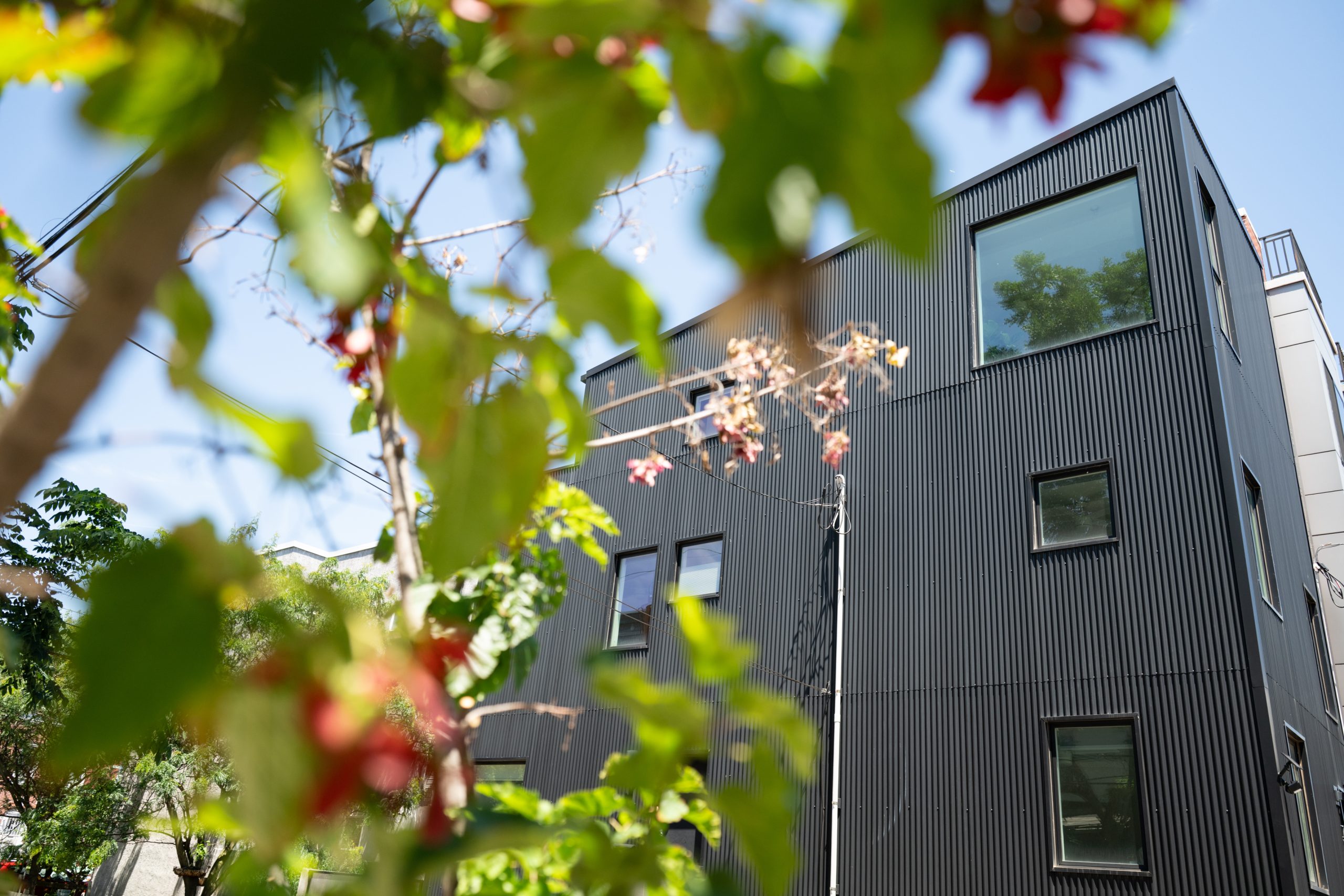
The aesthetic of the home, however, was a bonus. Designed by Bright Common, a Philadelphia studio devoted to creating low carbon emission buildings, the sleek two-unit building completed in 2018 is sheathed in black corrugated metal. That gives it a Scandinavian vibe that appealed to Nguyen, who works as a design strategist with Vanguard. Inside, the all-electric building is equally sleek and modern.
Nguyen’s home, completed in 2018, is designed to be energy efficient.Erin Blewett / For The Inquirer
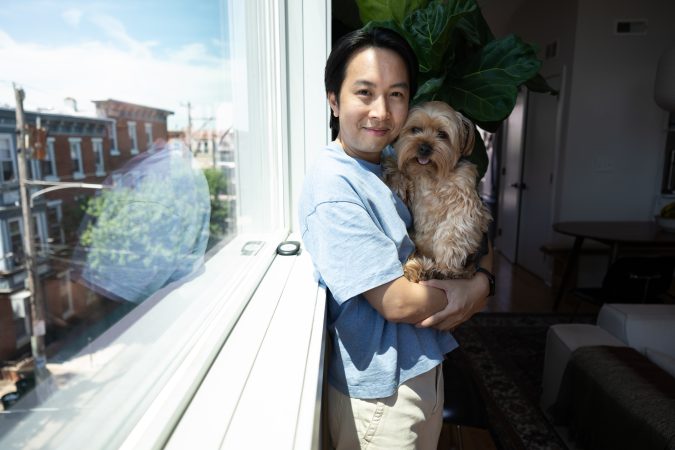
Nguyen lives with his Yorkie-poo, Milo, in the top unit, a two-bedroom with massive windows that not only frame views of Philly’s skyline but also invite in enough sunlight to heat the home throughout the year. (More on that later.)
He rents the bottom two-bedroom unit on Airbnb as The Dubbel, a pun coined by Bright Common that references both the building’s Brewerytown location and its two-unit configuration.
Nguyen, 36, has honed his low carbon footprint philosophy since childhood. Growing up with two parents and two siblings in a one-bedroom house in Ho Chi Minh City, Vietnam, he learned that life could happen happily in small spaces. An eight-year stint in France for university and the beginning of his career backed that up and also introduced Nguyen to thinking about his carbon footprint.
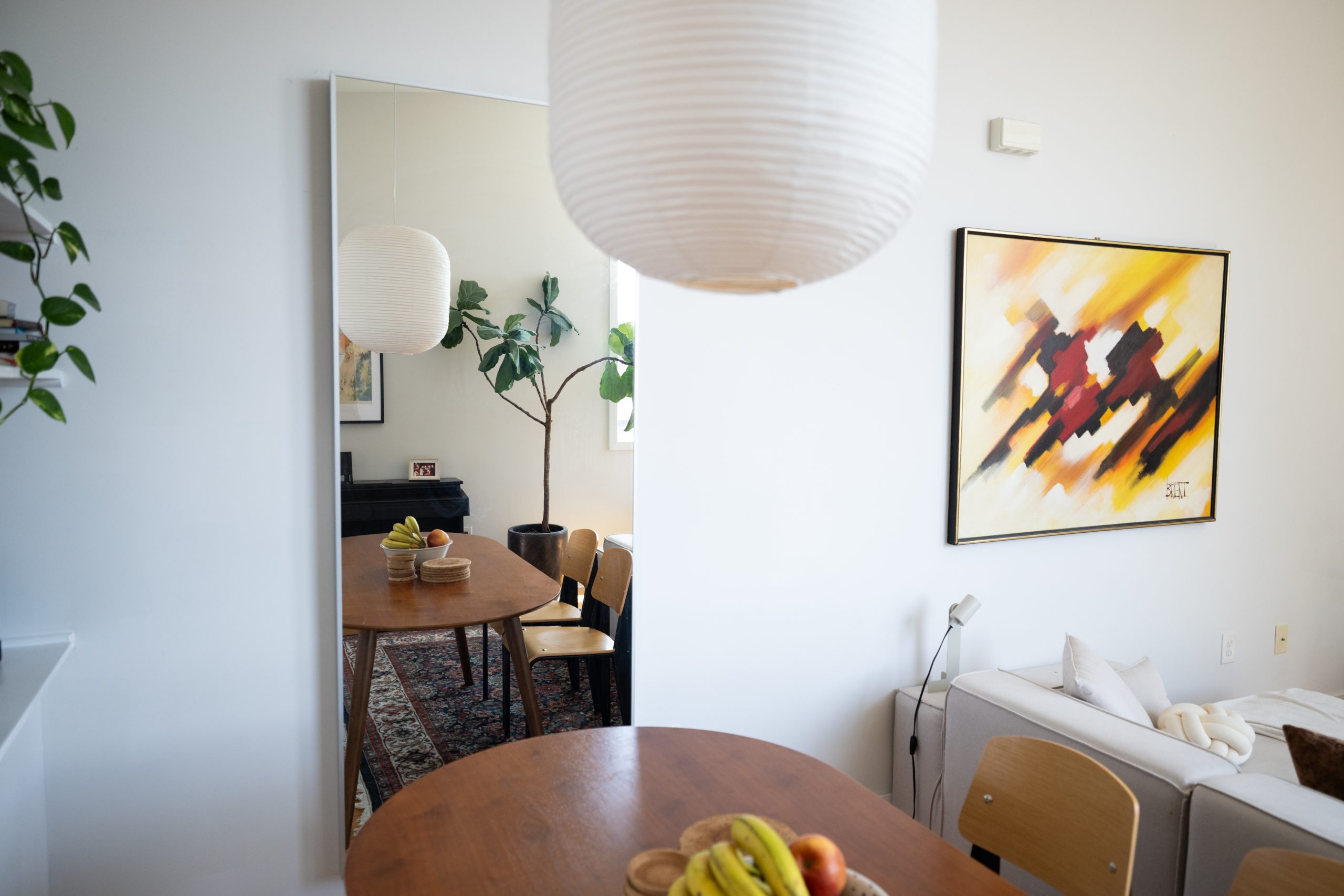
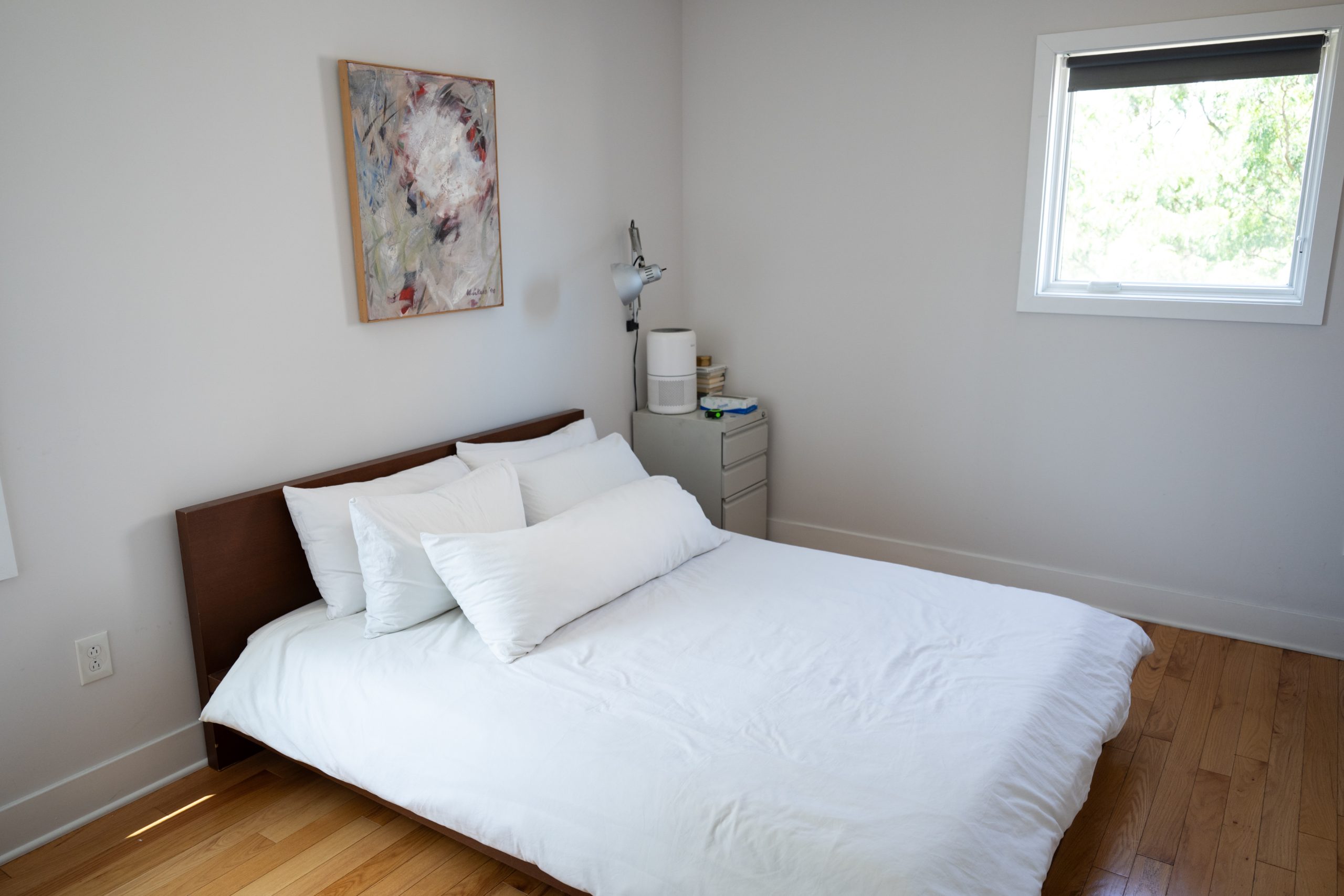
The dining area gets a spacious feel thanks in part to a tall mirror against the wall.Erin Blewett / For The InquirerThe primary bedroom has a simple design. Erin Blewett / For The Inquirer
“Living in France for so long, they really have ways to live small and be conscious about energy, be conscious about the environment,” he said. “Living small provides a coziness. It’s kind of a mindset I carry with me all along the way.”
Nguyen landed in the Philadelphia area after a one-year layover in Houston, which he hated because of its urban sprawl and oversized McMansions. After six years living with a roommate in South Philly as he saved for a home of his own, he purchased his Brewerytown house in October 2022 for $600,000.
Energy-efficient homes like Nguyen’s often cost more up front, but there’s relief down the line in reduced utility costs. Nguyen said he spends about $100 a month on all his utilities throughout the year. The cost to heat the home is almost nil, he said, as the windows provide warming sunlight year-round, and the home’s insulation keeps it temperate.
“Unless it’s under 22 degrees, I don’t even need to turn on the heat,” he said. The house doesn’t have solar power, but it was built for it, with all the necessary infrastructure and an ideal roof pitch for solar panels.
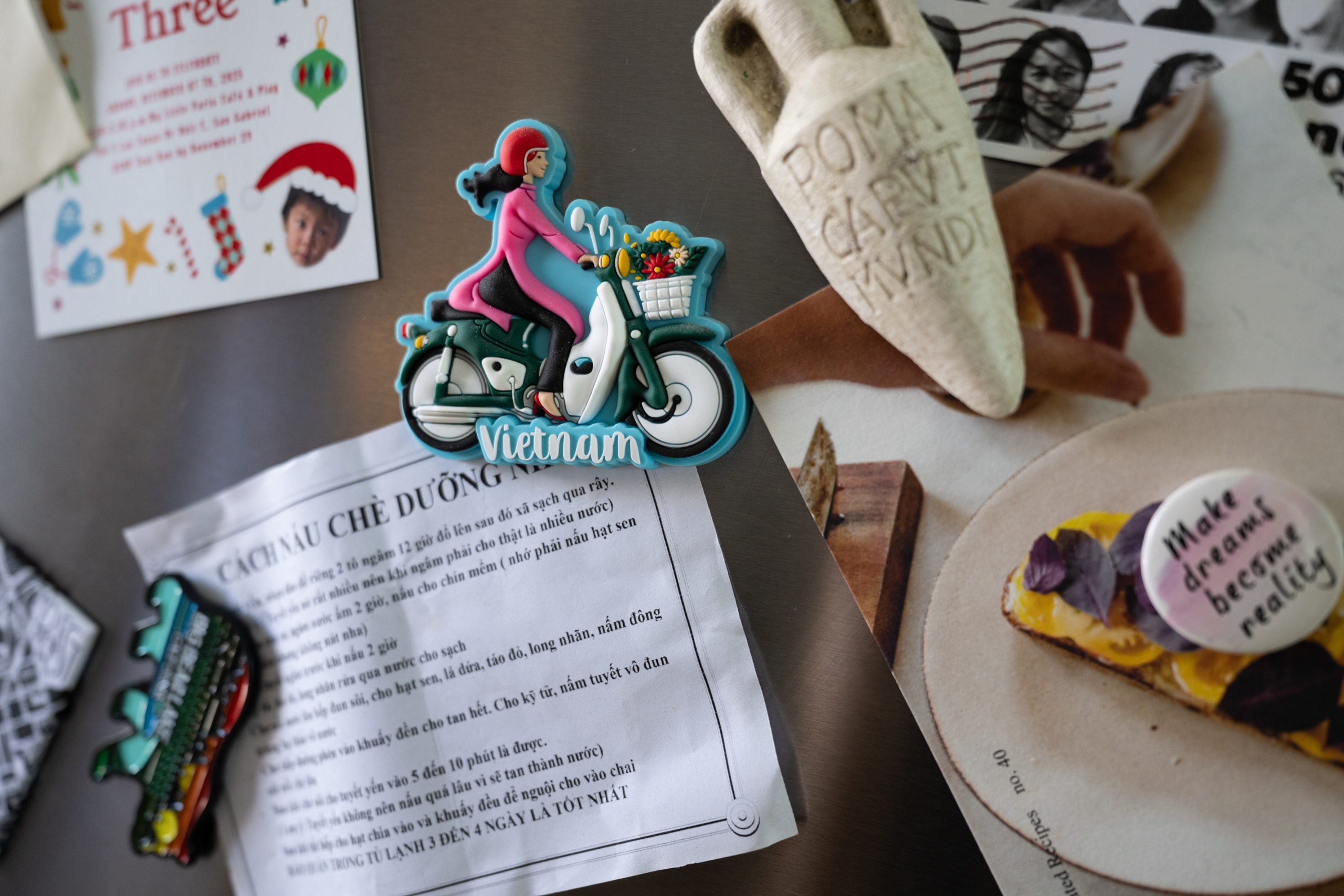
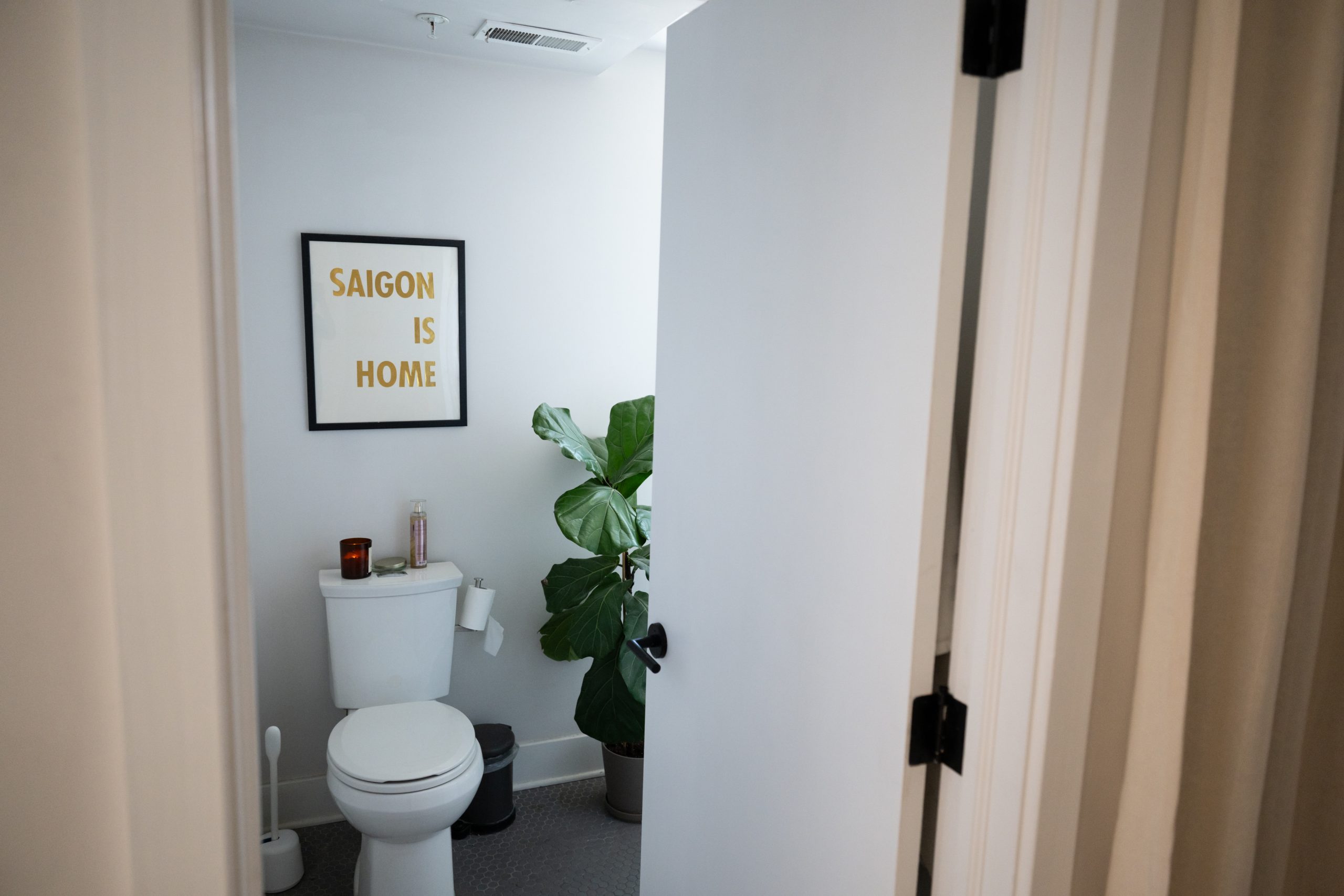
Magnets on the refrigerator include a reminder of Vietnam, where Nguyen grew up.Erin Blewett / For The InquirerThe bathroom continues a theme of clean lines, with another nod to Nguyen’s childhood home.Erin Blewett / For The Inquirer
Nguyen did have an unexpected cost right after buying the house when he learned he needed to replace the energy recovery ventilator (ERV) system to the tune of $6,000. It exchanges stale indoor air with fresh outdoor air while transferring heat and moisture between the air streams. Its functioning is essential to the home’s energy-efficient design.
Nguyen said his home inspector missed that it wasn’t working properly before the sale closed because he didn’t recognize the system — one downside to owning a first-of-its-kind, energy-efficient building.
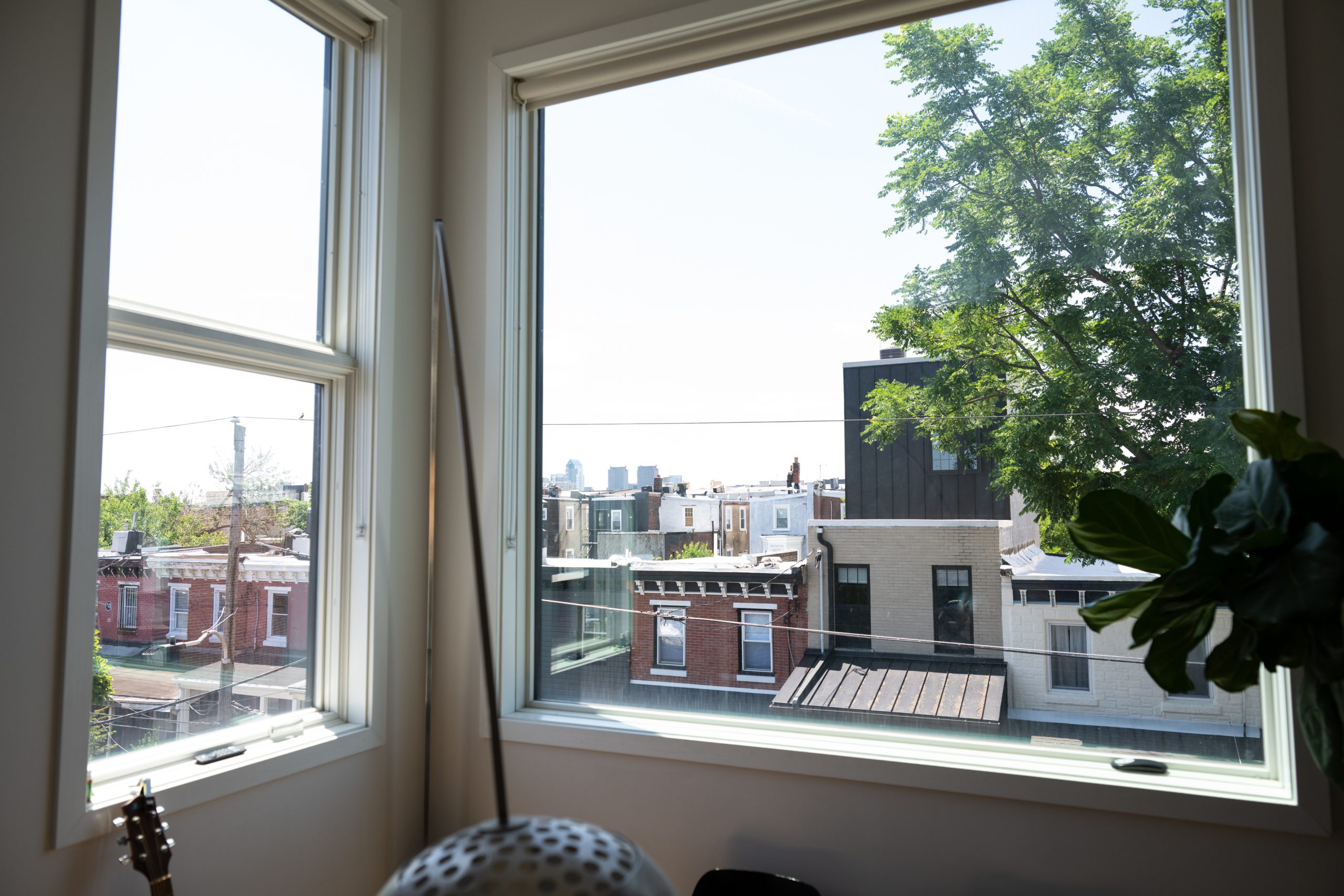
Large windows in the living area provide a view of the neighborhood.Erin Blewett / For The Inquirer
But still, the expenditures were worth it to Nguyen because they speak to his beliefs.
“It was a lot of investment, but I feel like it’s worth that for my lifestyle, for what I want to do and the ethics I believe in,” he said.
Adding to the home’s eco-friendliness, Nguyen furnished it in secondhand finds, mainly from Facebook Marketplace.
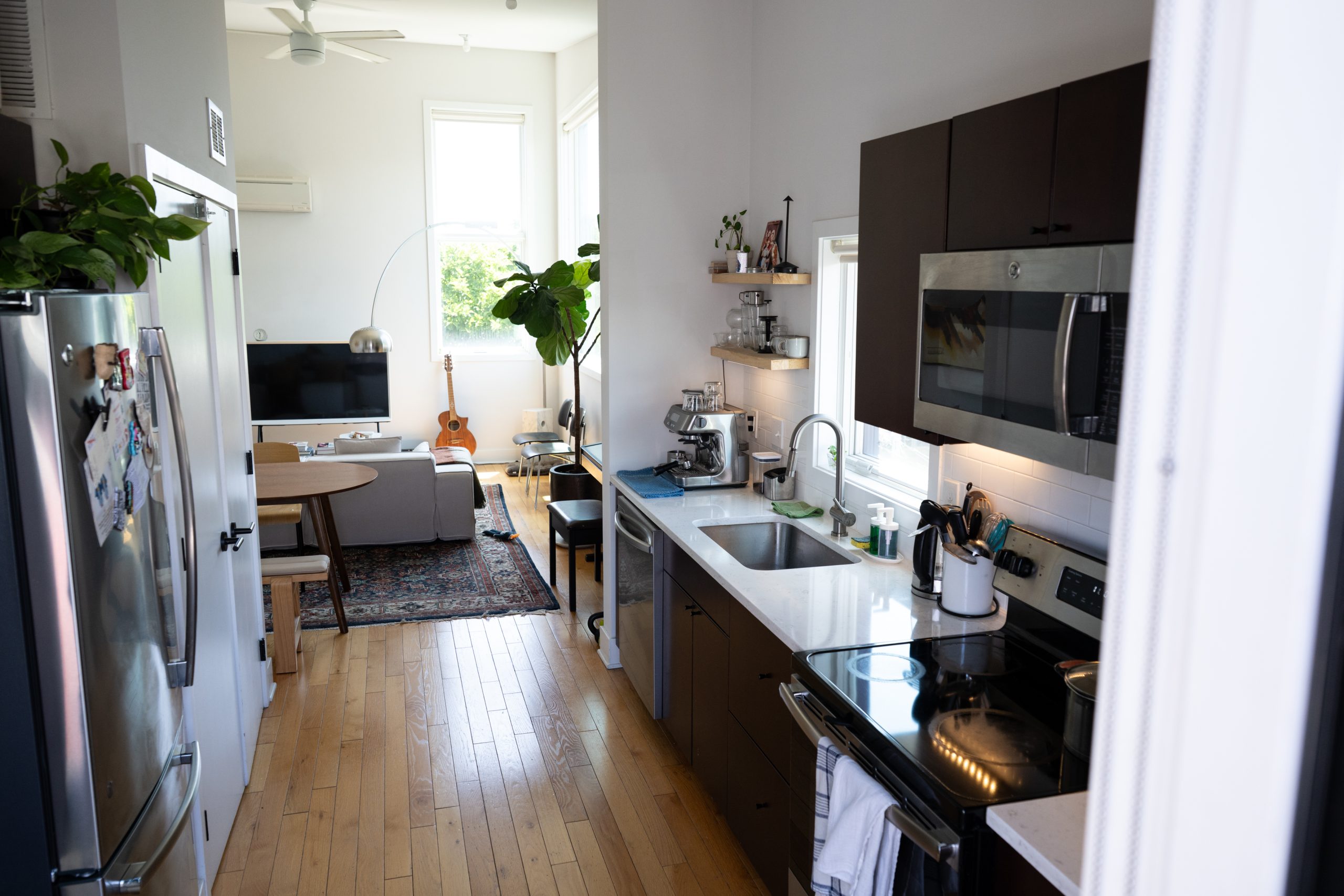
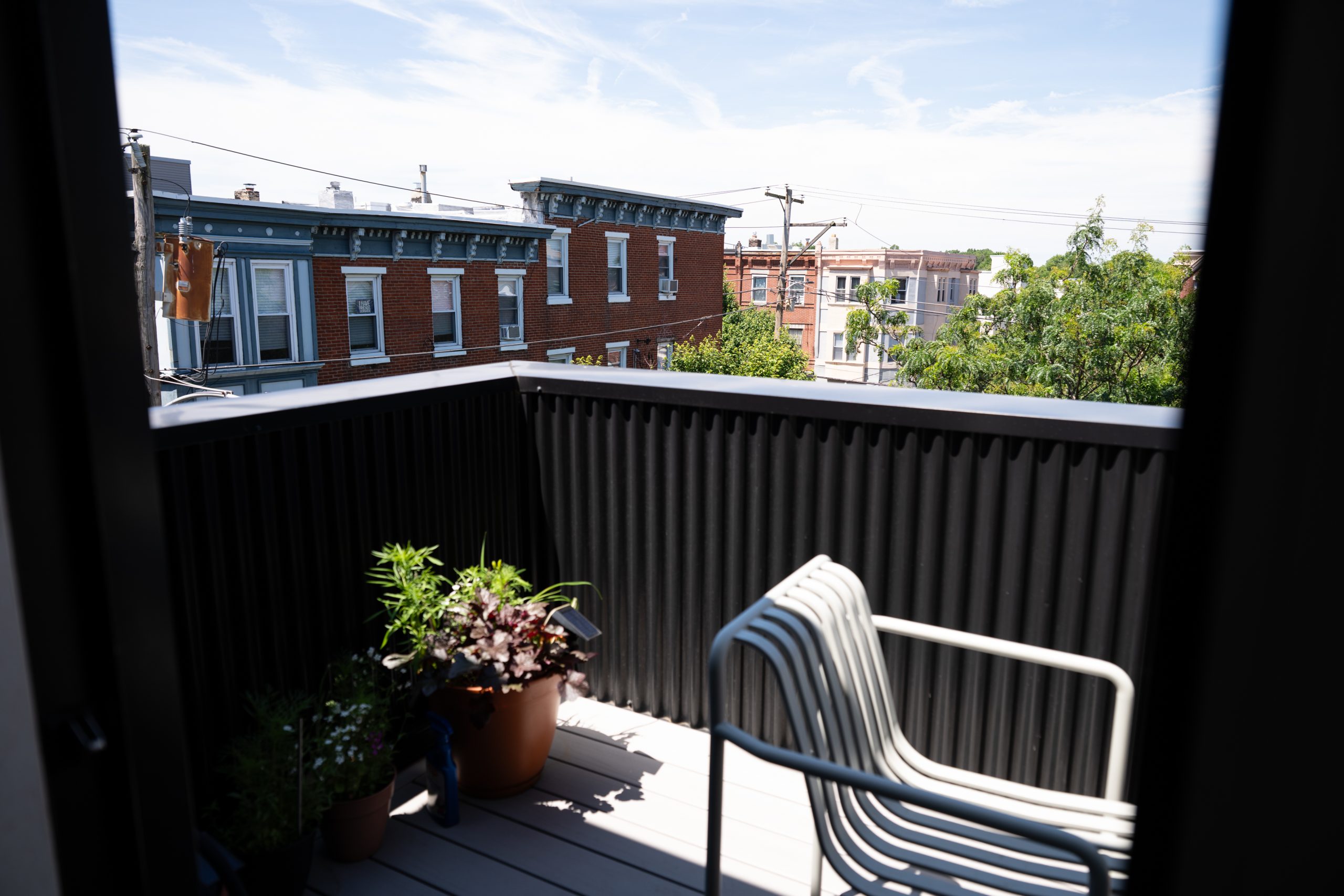
The kitchen leads into the living area.Erin Blewett / For The InquirerThe view from Nguyen’s balcony.Erin Blewett / For The Inquirer
He made a day trip to Princeton to pick up the Flos Arco lamp that lights his living room. He had to carry it up the long flight of stairs into his apartment alone, one step at a time, owing to its heavy marble base. Nguyen also scored a Hay patio set — usually over $1,000 from Design Within Reach — from a Facebook Marketplace seller in Mount Airy for $200.
Another huge perk for him is the home’s location just a 15-minute walk from the Art Museum and Fairmount Park. He said the neighborhood knows him and Milo for the orange booties Milo wears throughout the year and the sound they make trotting down the street.
Nguyen’s dog Milo enjoys the Brewerytown area, and is well known by his neighbors.Erin Blewett / For The Inquirer
He loves the neighborhood and the community on his block, recalling the long table his neighbor sets up on Halloween to paint banners and how the lot that backs up to his, unbuilt on and dotted with trees, was saved by his neighbors from future development because it provides a green reprieve for the area.
Nguyen added of his community, “It’s really lovely to have that.”
Is your house a Haven? Nominate your home by email (and send some digital photographs) at properties@inquirer.com.
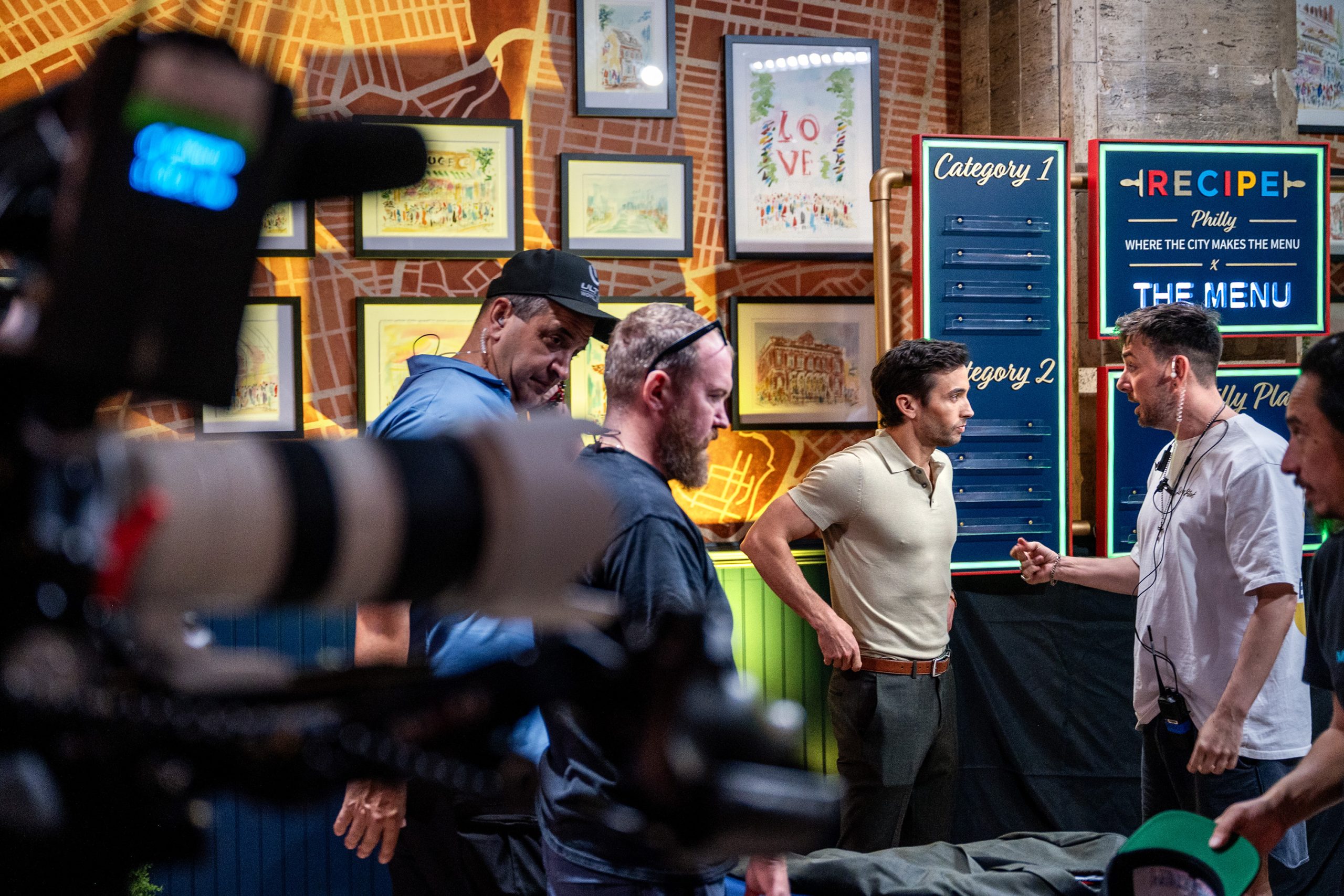
Here’s your first look at Recipe Philly, where home cooks — not pro chefs — contribute the recipes to create the menu. It’s also the basis for a reality series, filming now in advance of the restaurant’s mid-August opening.
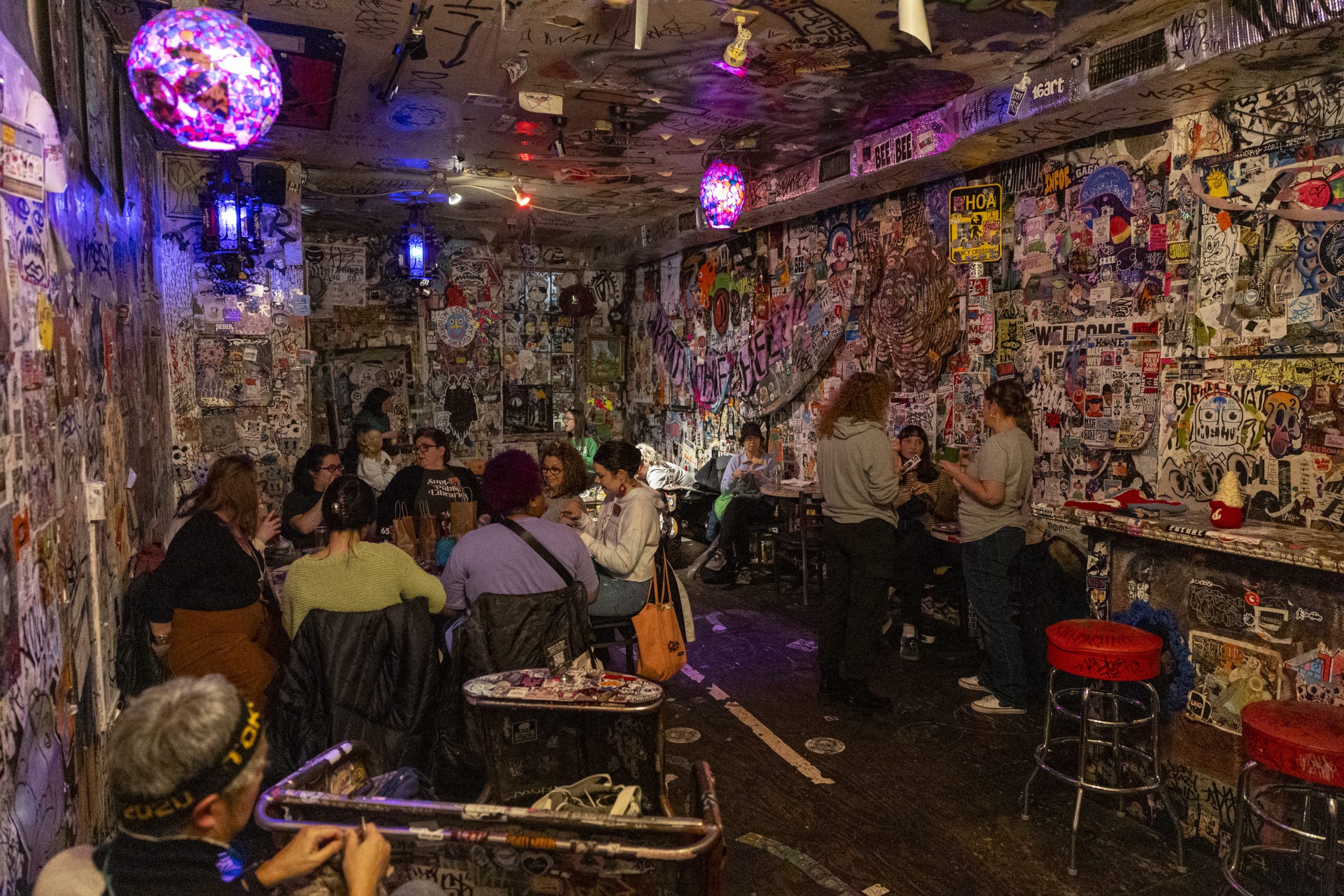
Tattooed Mom has hosted countless drag shows and burlesque performances since it opened on South Street in 1997. But the city has shut down those events (but not the bar itself) over a missing assembly license. Getting one could take six months, its owner tells Beatrice Forman.
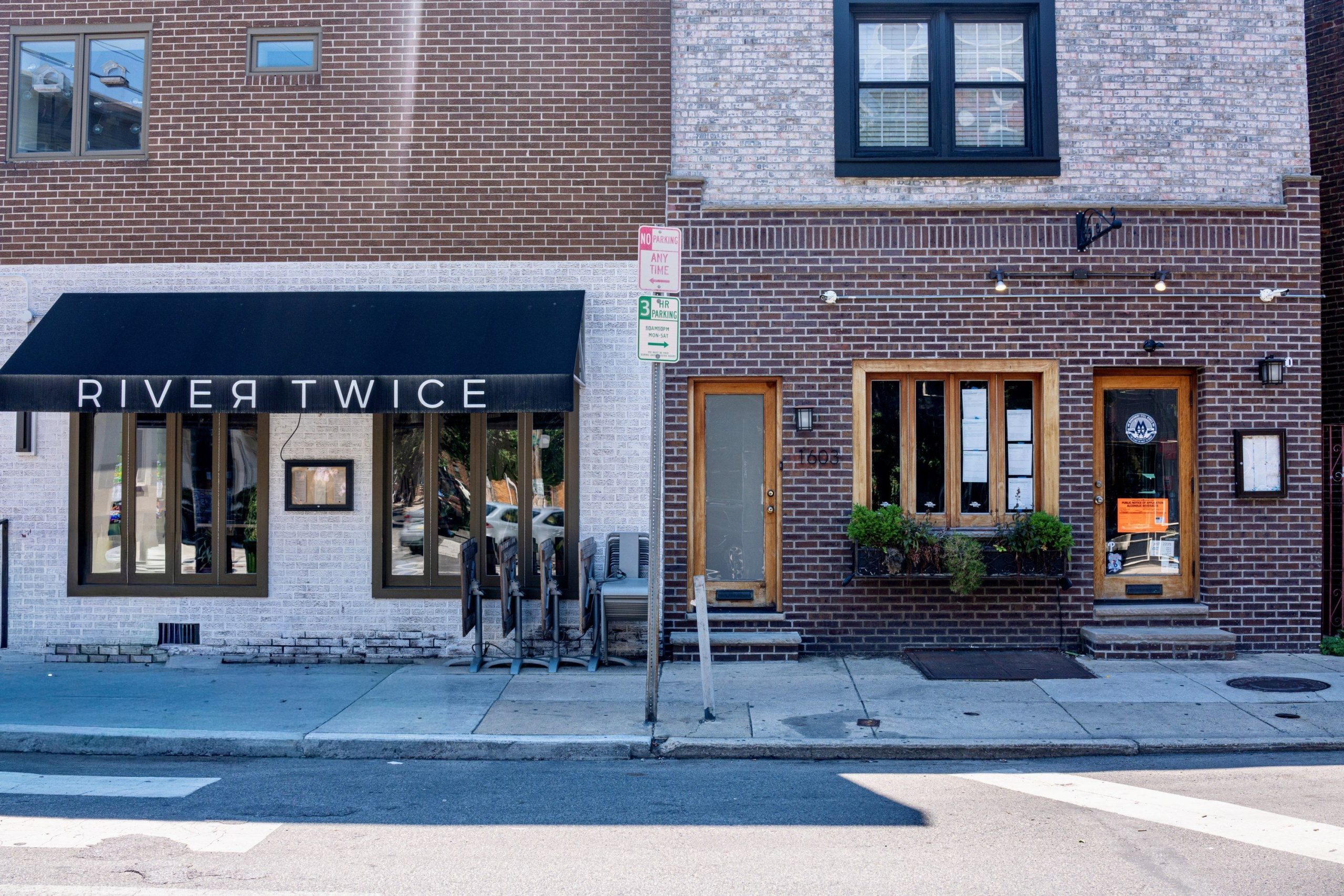
River Twice on East Passyunk is expanding next door, and that means a real bar, more seating, and new opportunities to eat one of our favorite burgers.
Critic Craig LaBan visits Terra Grill, a newcomer from globetrotting chef Laurent Tourondel in Northern Liberties’ Piazza Alta, where he found “a textbook chophouse vibe” and a “something for everyone” menu. Read on for his review.
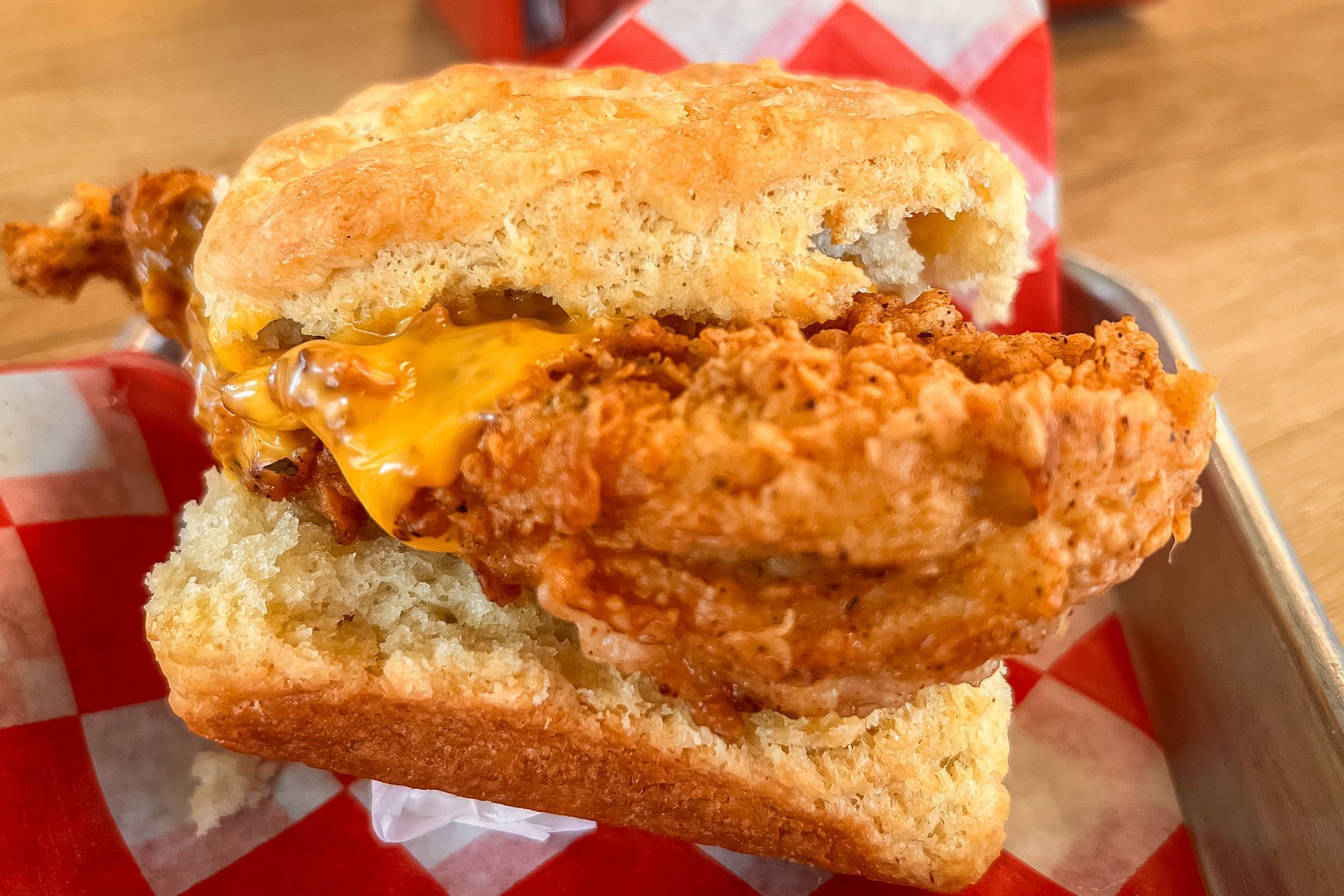
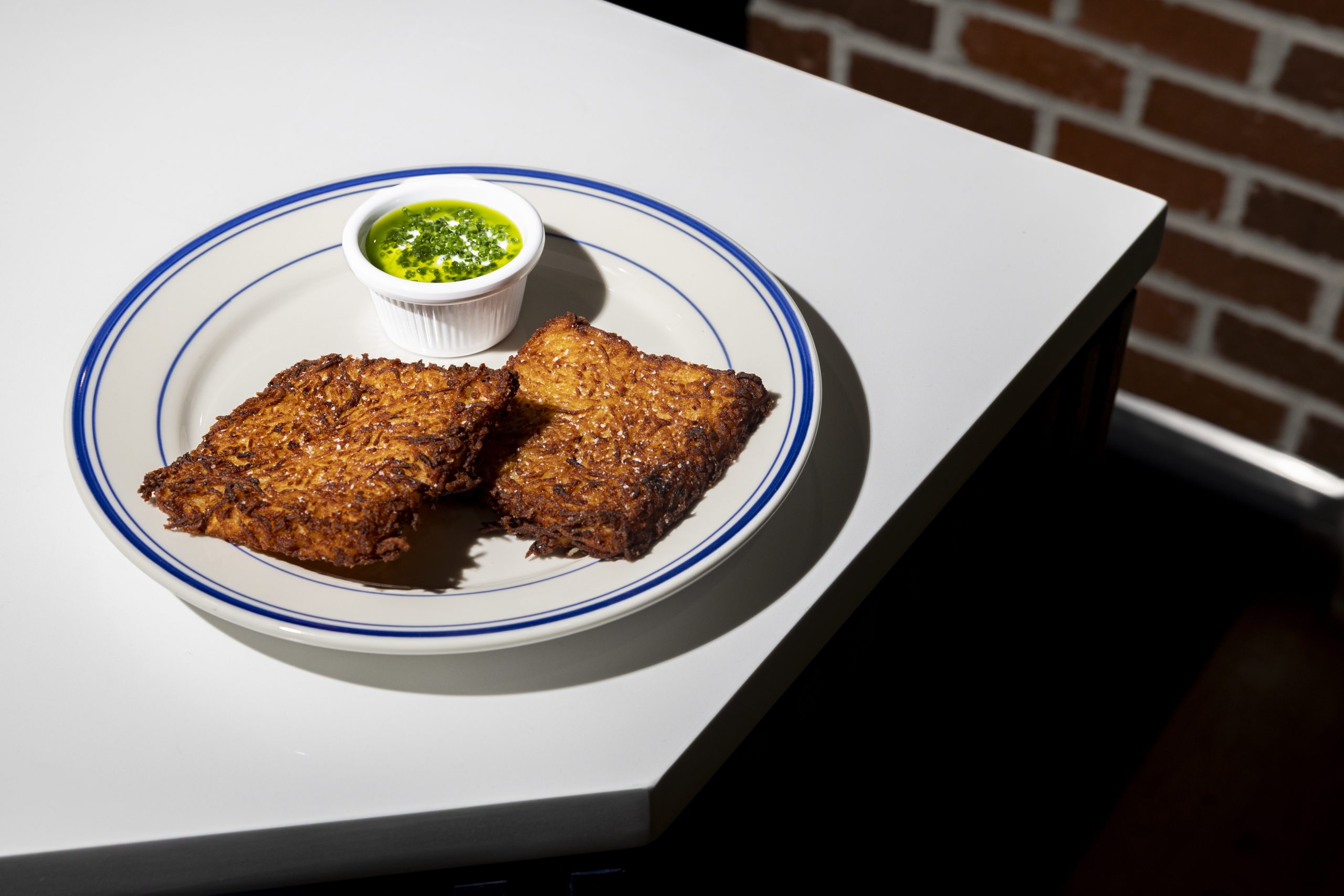
The food team caught up with a tasty chicken biscuit sandwich in Plymouth Meeting, hot dogs in Bella Vista, loaded fries in Northern Liberties, and a winning bowl of gyu-don from a food truck.
Scoops
Eggcetera Haus will replace the shuttered Redcrest Kitchen at Sixth and Bainbridge Streets, likely in the next few weeks. Husband-and-wife team Rey Tamaka and Vina Kencana will operate the all-day bar-restaurant. Tamaka, who spent the last six years as head chef at an Old City brunch restaurant, will oversee a modern American menu spanning breakfast, lunch, and dinner, while Kencana will manage operations. Breakfast will feature specialty coffee from Philadelphia’s Vibrant Coffee Roasters, with dinner service adding pasta, steaks, cocktails, and comfort food. Hours will be 8 a.m.-9 p.m. daily. Queen Village/Bella Vista will get another all-day option next spring when Sabrina’s Cafeopens at Fifth and Bainbridge, down the block from mainstay Famous 4th Street.
Sabrina’s Cafe — speaking of which — is behind a new venture aimed at the late-night crowd. Spence De Abreu, the 21-year-old son of Sabrina’s founders Robert and Raquel De Abreu, is hoping for a late-July opening of Big Spence’s, a sandwich operation at 1816 Callowhill St., a few doors from the Art Museum-area Sabrina’s. It will run via delivery services and pickup (no seating), offering six sandwiches at launch, with additional menu items expected over time. Initial hours will vary, with service planned as late as 2 a.m. during the fall, when college students are back. Opening is tentatively scheduled for July 29.
Scampi, chef Liz Grothe’s Queen Village Italian-ish restaurant, has added a beverage program in partnership with Northeast Philly winemaker Camuna Cellars. The tie-in allows spirits and beer options from Pennsylvania producers, including Fell to Earth vermouthery. BYOB is OK, with a $15-per-bottle corkage fee. Scampi also has collabs planned for August: Percy (at Percy) on Aug. 21; Habibi Supper Club (at Scampi) on Aug. 23; and an Italian American pasta night with chef Wyatt Piazza at Kiddo on Aug. 30.
Chimney Rustic Ales closed its brewery in Hammonton, N.J., in June 2025, in anticipation of opening in Philadelphia. Brewmaster/owner Dan Borrelli is seeing light at the end of a city-permitting tunnel, so he’s looking at a late-2026 opening at 2153 E. Lehigh Ave. in Kensington. Borrelli said this location will have a full kitchen and a chef (to be named later) serving what he calls “elevated bar food, with some seafood mixed in.” Borrelli had a seafood truck called Minnow Seafood Co. “We’re not trying to earn a Michelin star,” he said. “We just want to serve food that’s a little more upscale than you’d typically find at a brewery or neighborhood bar.” He specializes in lagers but also offers IPAs — because “they make up about 60% of the market, so you kind of have to have them.”
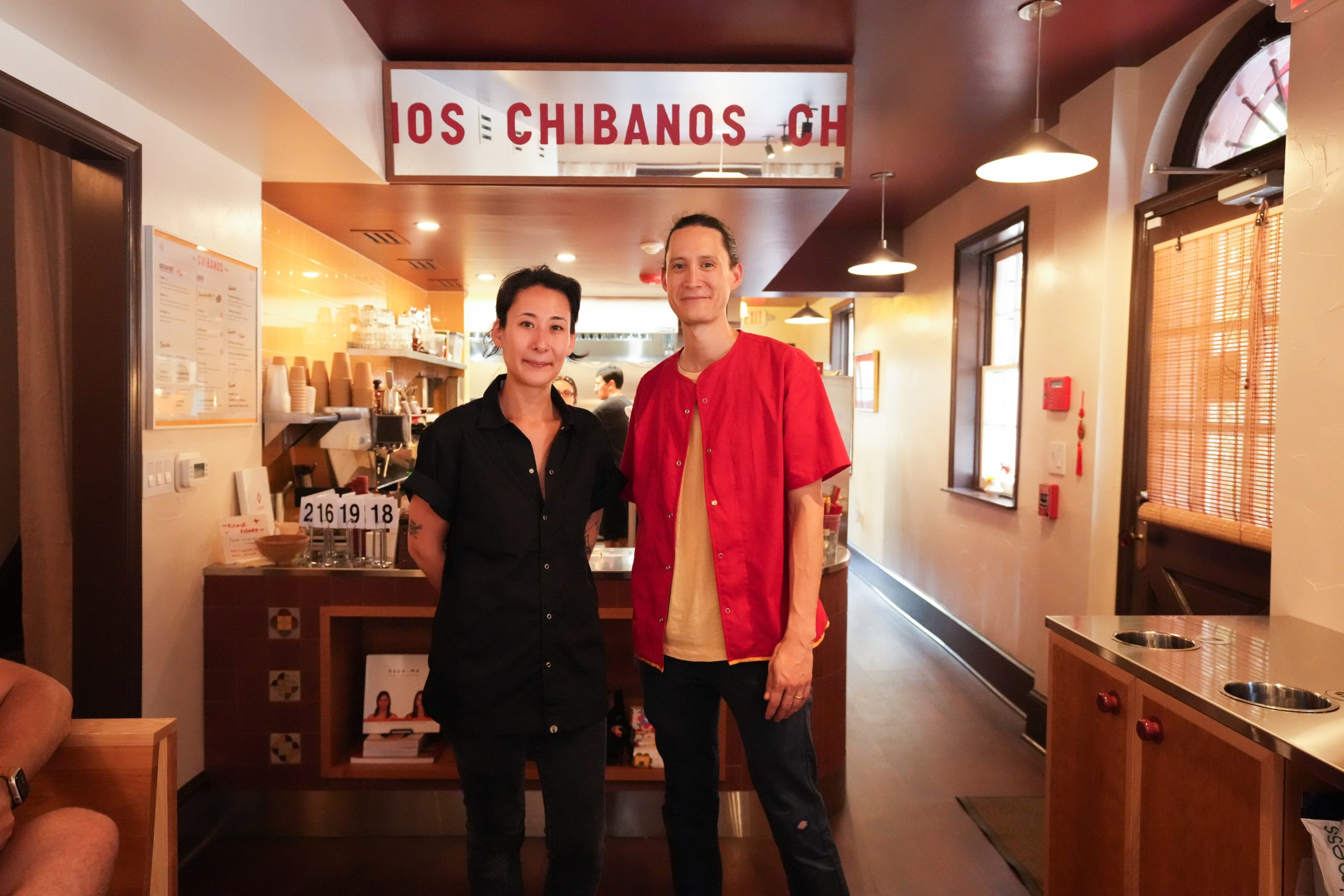
Chibanos has opened at the former Effie’s in Washington Square West, and Delco-raised owner Evan Fong Jaroff expresses his Chinese-Cuban background through pressed sandwiches, fried yuca, flan, and croquetas. Beatrice Forman tells a fascinating story of food and culture.
Call Your Mother, the D.C. bagel-sandwich chain, has signed a third Philly lease before the first shop even schmeared its first bagel.
EMei’s Dan Tsao is taking over a fourth landmark restaurant location — the home of Old Original Bookbinder’s — as part of the Sichuan restaurant’s ambitious expansion.
Briefly noted
Townsend on East Passyunk Avenue has been closed since early May after extensive water damage from a fire next door. Chef/owner Tod Wentz has swung part of the French menu to Oltremare, his Mediterranean seafooder at 2121 Walnut St. “Townsend at Oltremare” offers a hybrid menu from Townsend executive chef Alex Nissley through at least the end of the summer.
Baby’s Kusina & Market in Brewerytown returns Thursday, two weeks after a plumbing issue caused a flood. One change: Dinner service has been paused for the foreseeable future. Meanwhile, Baby’s will do a popup at 11 a.m. Monday at Farina Di Vita (250 Catharine St.) with a roast pork adobo sandwich.
Hop Sing Laundromat (1029 Race St.) is pricing all cocktails at $12 for the summer, discounted from $17-$21; it’s open from 5 p.m. Thursday-Saturday.
❓Pop quiz
Local bartenders have been foraging recently for what prized ingredient to make amaro?
🚗 Winners! Last week’s quiz asked you to guess how many miles Craig LaBan put on his car while scouting restaurants for his Jersey Shore dining package. We had a tie — the total was 1,034 and two readers guessed 1,000, so I ordered a runoff. Jan D. of Norristown submitted “1,005” (29 miles under) while Ed H. of Philadelphia offered “1,066” (32 miles over). What’s 3 miles among friends? I’m sending Inquirer swag to both, along with my sincere thanks for reading.
Please update us on a couple of bakeries, like Manna near Norris Square and Del Buono’s, where McMillan’s was in South Jersey. — Scot T.
Saif Manna, adding a brick-and-mortar location at 110 W. Berks St. in Kensington, is aiming for a soft-opening of Manna Bakery tomorrow, followed by a grand opening on July 30. Meanwhile, the PR machine is revving up for the opening of Del Buono’s, in a partnership with Al DiBartolo’s custom-cake studio DiBartolo’s Kakery, at 15 Haddon Ave. in Haddon Township’s Westmont section. Soft opening is planned for mid-August, with an Aug. 29 grand opening tied to Haddon Township Summer Music Festival.
📮 Have a question about food in Philly? Email your questions to me at mklein@inquirer.com for a chance to be featured in my newsletter.
By submitting your written, visual, and/or audio contributions, you agree to The Inquirer’s Terms of Use, including the grant of rights in Section 10.
Yolanda Welch, owner of All Day Hoagies, walked down West Girard Avenue to grab lunch. It was just a couple hours before the start of another World Cup match in Philly, but near the FIFA Fan Festival, Brewerytown’s main drag was nearly empty.
“Normally, I’m not able to do this,” Welch said, as the lunchtime rush usually keeps her too busy to leave her post.
She had free time on Thursday, she said, because the regular midday crowd had thinned ever since the FIFA Fan Festival arrived at Lemon Hill, about a half-mile away.
City officials have estimated that hundreds of thousands of people have flocked to the monthlong World Cup watch party, which started in mid-June and is set to run through mid-July. But last week some Brewerytown business owners said they had yet to reap the benefits.
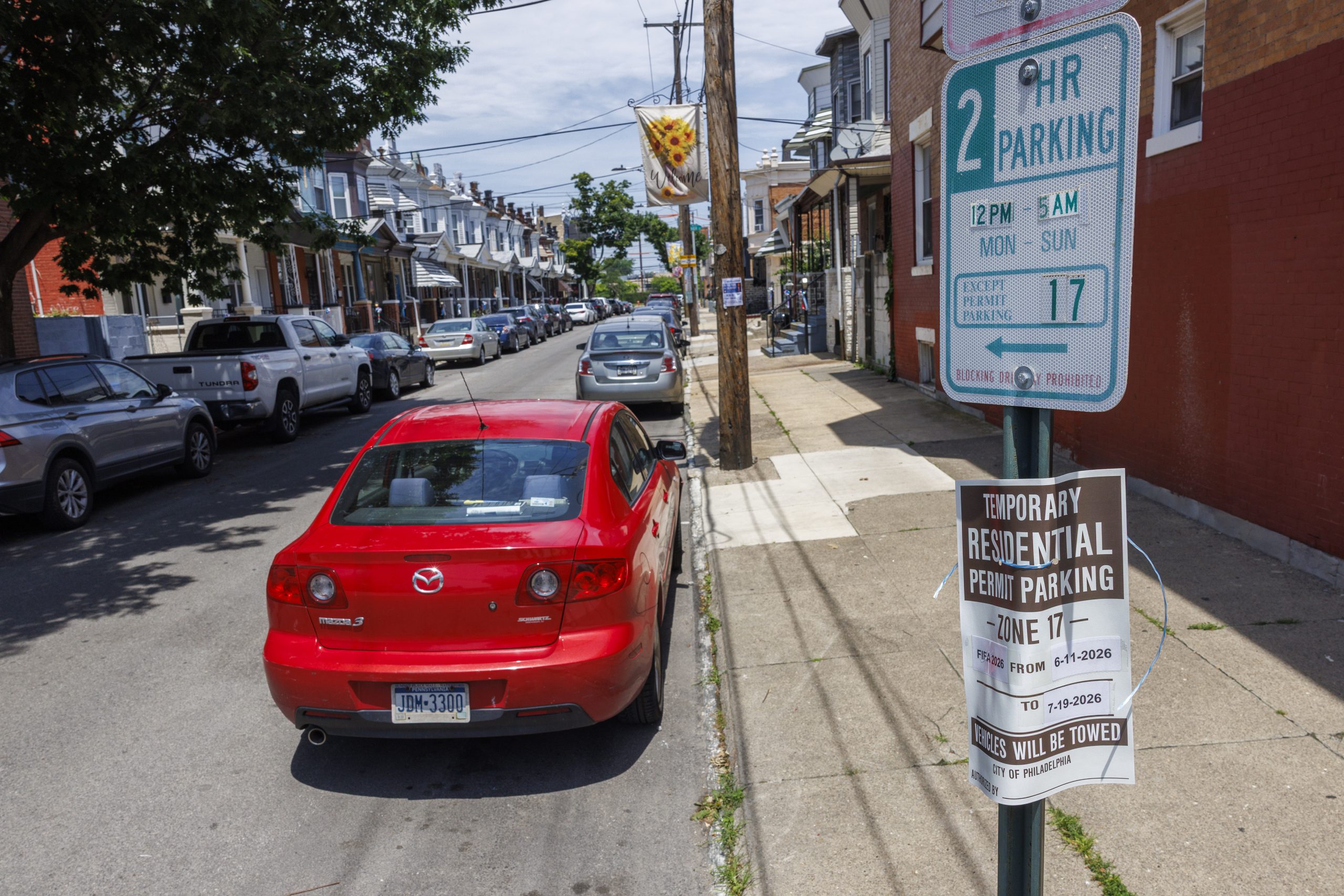
In nearby Fairmount, some bar managers said they had seen a soccer-fueled boost in business. But several other neighborhood shop owners said they were only breaking even, with the slight increase in tourist traffic offset by a sharp drop in regular customers. Parking restrictions and street closures have kept many locals away, business owners said.
Temporary parking restrictions near the FIFA Fan Festival are keeping some customers away, said local business owners.Alejandro A. Alvarez / Staff Photographer
A World Cup let-down for some in Brewerytown
Many Philadelphia business owners said they had high expectations for the World Cup: Some near the Fan Festival stocked up on inventory and even hired extra staff.
“I ordered all kinds of soccer stuff to put in ice cream,” said Welch, who owns the hoagie shop and I Scream for Ice Cream. “I bought a whole [World Cup] banner.”
As of Thursday, Welch said she hadn’t seen enough soccer fans to justify putting out the merchandise or unfurling the banner, which still sat in her car.
Business is down precipitously at All Day Hoagies, which usually goes through 200 rolls a day. Since the World Cup began, the number has dropped to 125 or fewer.
Every night, a handful of people cancel their Baby’s reservations, saying they are worried about parking, Kim said. Staff has tried to dispel misinformation on social media, and lends temporary parking passes to diners, but uncertainty remains.
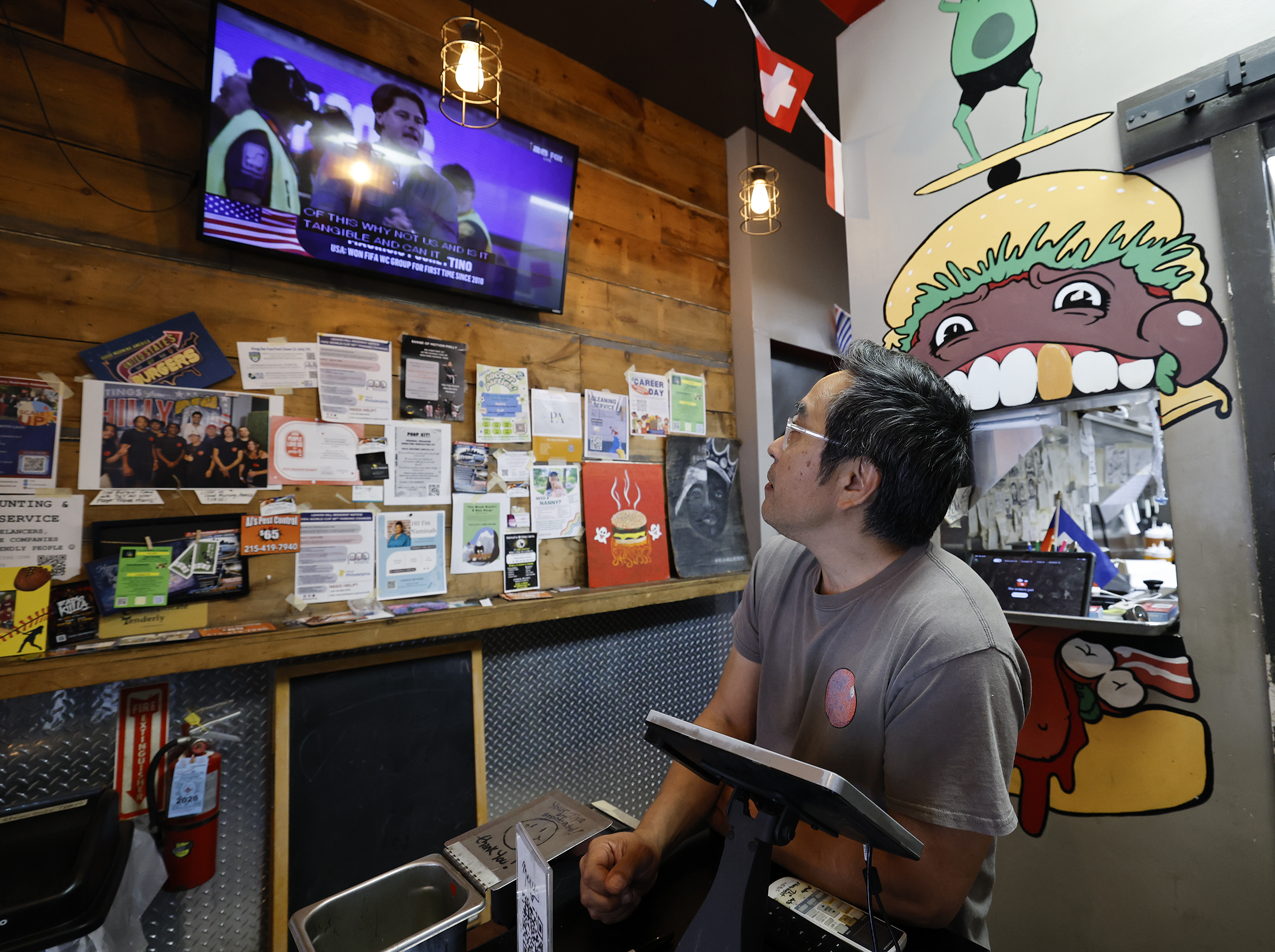
Josh Kim, owner of Spot Gourmet Burgers, watches World Cup programming from his Brewerytown burger joint. Yong Kim / Staff Photographer
Some businesses are faring better than others, even if they aren’t seeing crowds of soccer fans every day.
Josh Kim, owner of Spot Gourmet Burgers in Brewerytown, said international tourists have made special trips to his restaurant for one thing: American cuisine.
“When people go to Italy, they want pasta and pizza,” Josh Kim said. “When they come to America, they want burgers.”
June 19 was a particularly busy day for him: After the Brazil-Haiti match in South Philly, Spot’s sold 200 burgers in less than an hour, he said.
But no other recent days have been as lucrative, and Josh Kim said he worries it could take a while for regular customers to return to Girard Avenue once the World Cup games — and the restrictions — are over.
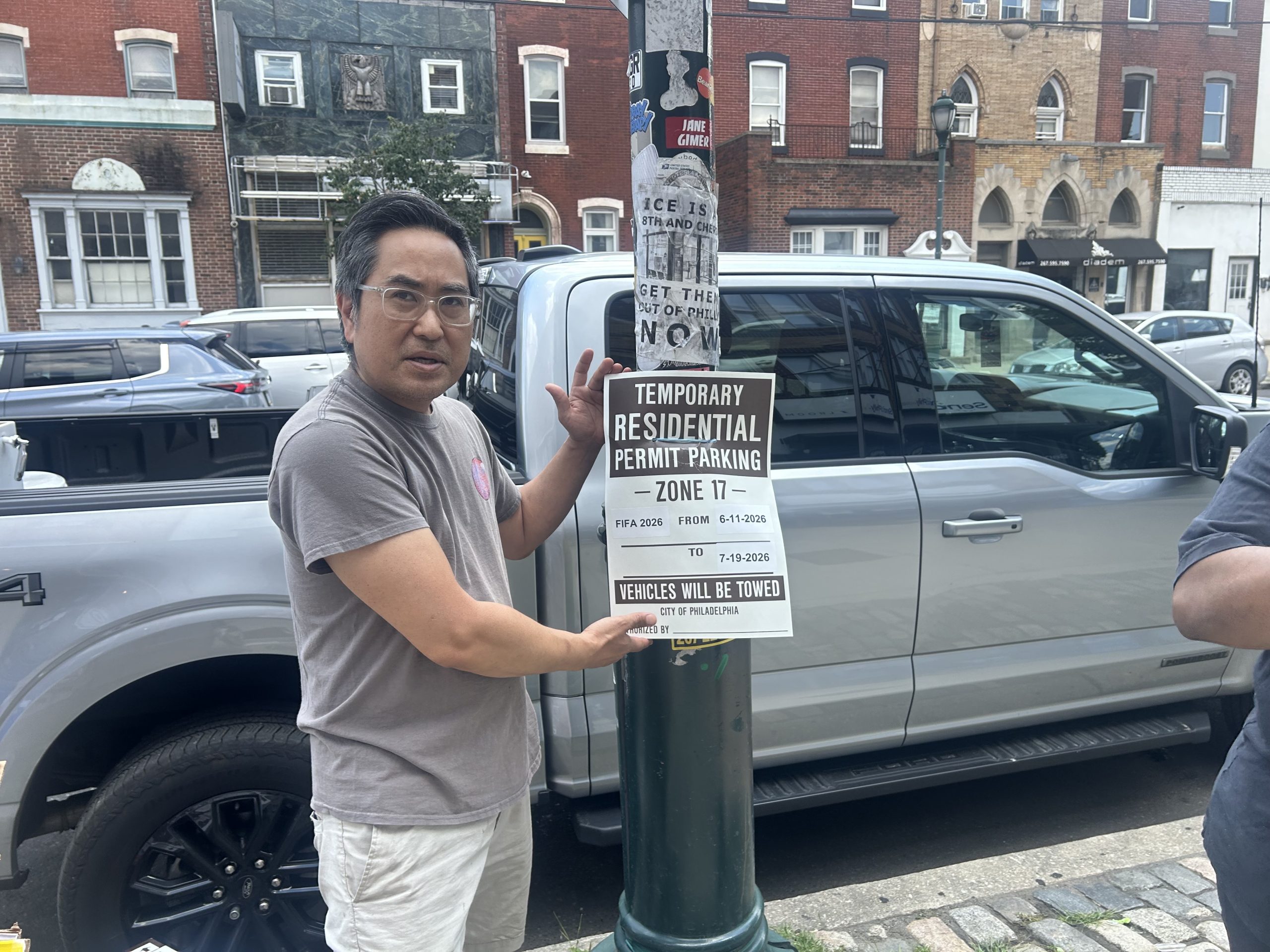
Josh Kim, owner of Spot Gourmet Burgers, points out a temporary residential parking permit sign on Girard Avenue. He said parking confusion has hurt business in the neighborhood during the FIFA Fan Festival.Erin McCarthy/Staff
“Consumers are habitual,” Josh Kim said. “If [they] break that habit, they no longer think about going to Girard Avenue. … They’ll go up Ridge.”
On Boathouse Row, across the street from the Fan Festival, Cosmic Café and Ciderhouse has seen steady business, manager Sachael Sciarretta said. About 30% of the cafe’s regulars drive there, and he said he hasn’t seen them since the festival began. But business from soccer fans has made up for the loss.
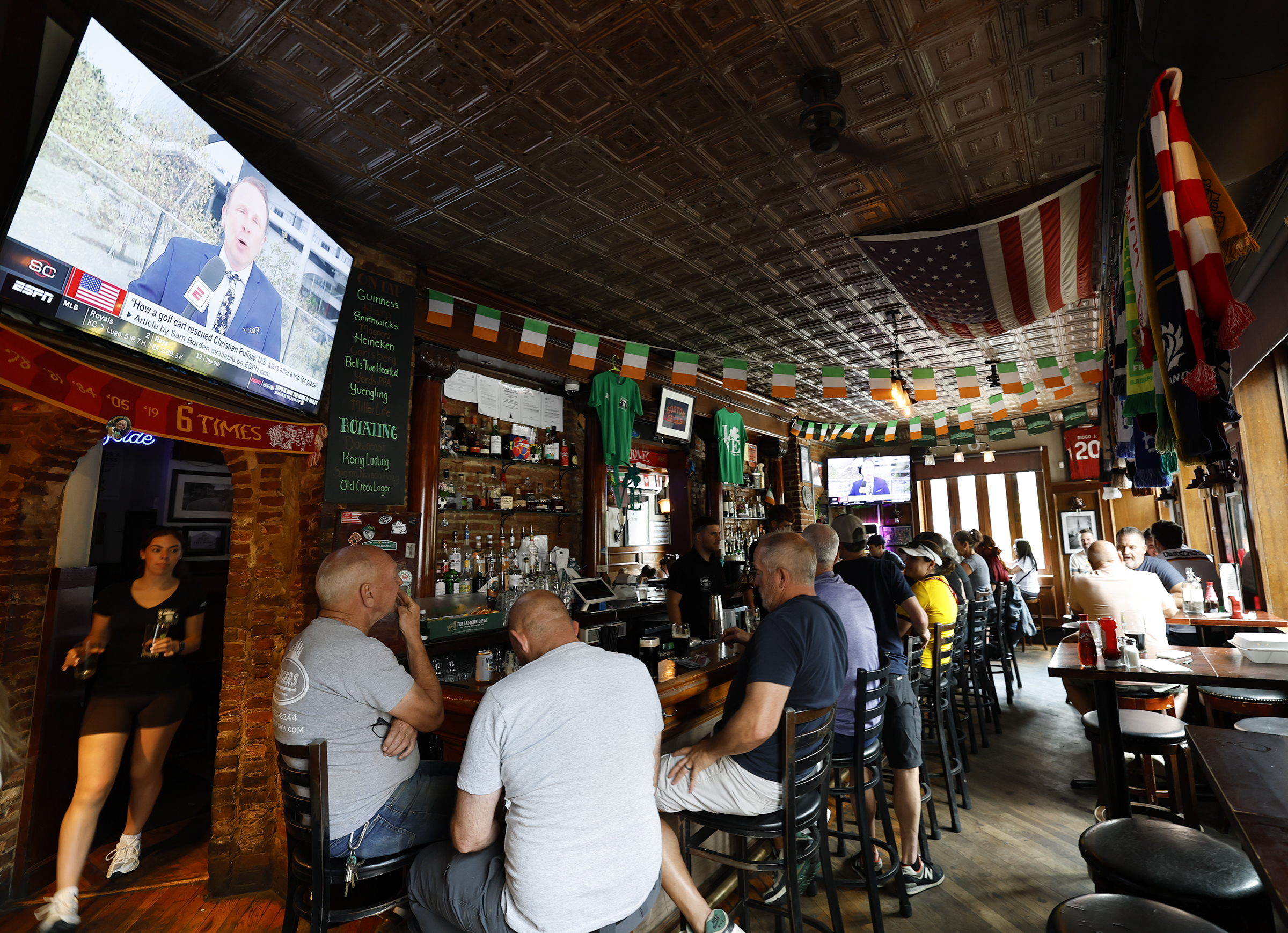
Fairmount bars and restaurants seem to have been among the biggest World Cup winners. On Thursday afternoon at the Black Taxi, an Irish pub a few blocks from the festival, almost every seat was filled — several by customers donning soccer jerseys.
Regulars and soccer fans eat and drink at the Black Taxi Irish Pub in Fairmount on Thursday, June 25.Yong Kim / Staff Photographer
“Foot traffic has been great, and the neighborhood is buzzing,” said manager Neil McKernan, who estimated that sales are up 30%.
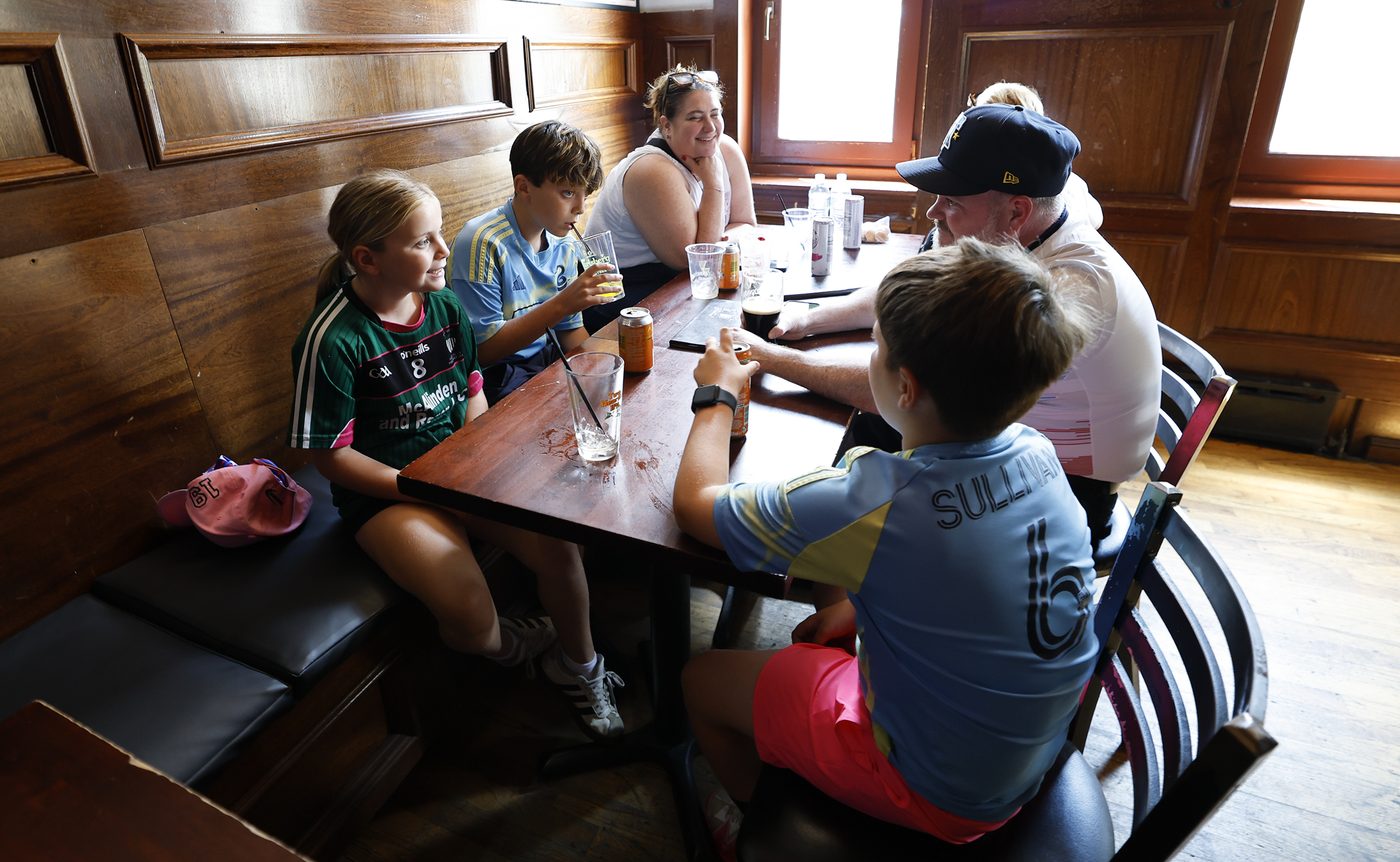
In the dining room, the Trainor family enjoyed a meal before walking to the Fan Festival to watch the 4 p.m. match between Curacao and Ivory Coast.
It was the first time that Kelly Trainor, 42, of Glenside, had been to the Fairmount watering hole, and she brought along her three young children.
“We can’t afford tickets to the game,” Trainor said. “So this is the next best thing.”
The Trainor family, of Glenside, enjoyed refreshments at the Black Taxi before attending the FIFA Fan Festival.Yong Kim / Staff Photographer
Back in Brewerytown, where the business corridor was quiet, some owners said they wished they could have been more involved in the festivities. Josh Kim, of Spot Gourmet Burgers, said perhaps organizers could have allowed local restaurateurs to sell from food trucks outside the fan entrance.
“If we were able to activate this corridor, it would have been a lot different,” Kim said.
“Why didn’t they work with the local businesses so we could make the money?” added Welch, of All Day Hoagies. “Because we ain’t making none.”
Only a few days into the World Cup, residents of Brewerytown and Fairmount, trapped inside the blast zone of the fan festival in their backyards, are seeing their fears realized.
Drivers are clogging up roads, rerouting, and sometimes speeding through neighborhood side streets due to road closures. Uber and Lyft services are offline for residents directly next to the festival during operating hours. Many residents are forced to navigate parking nightmares, turning everyday life into an exhausting headache.
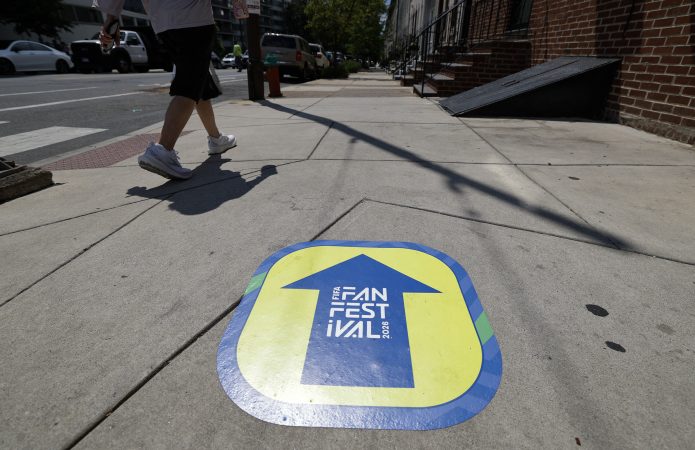
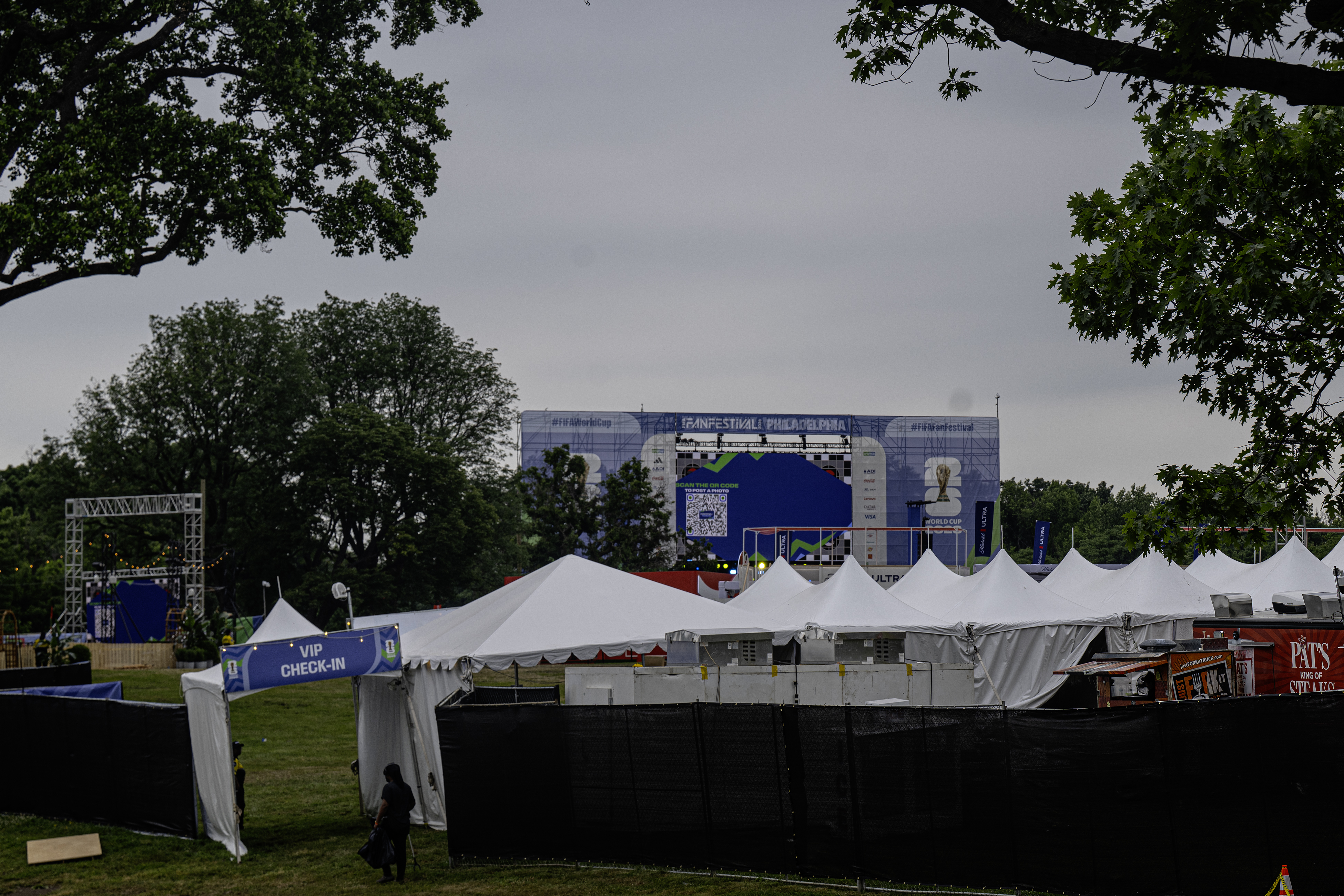
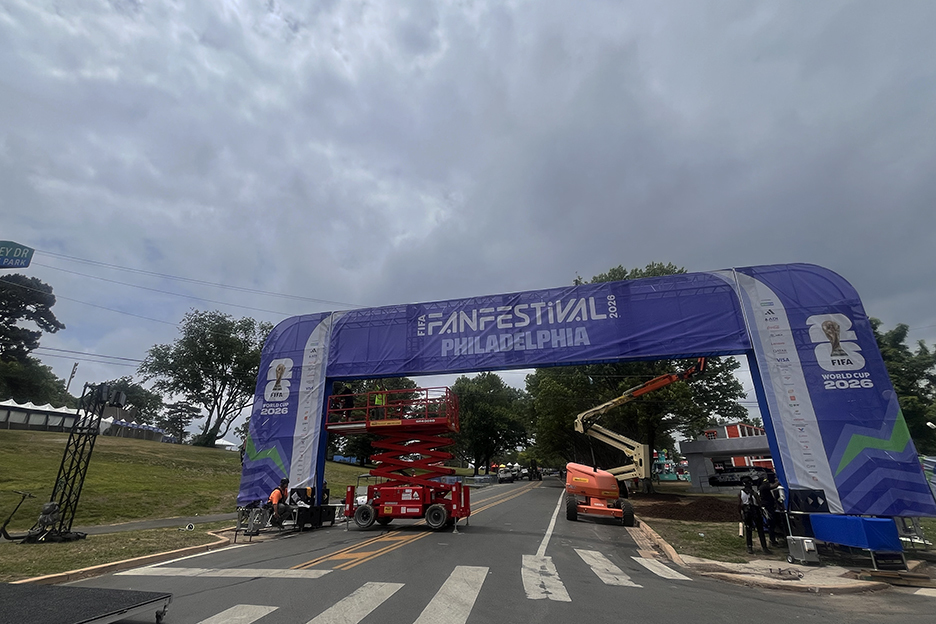
It’s all for the sake of the FIFA Fan Festival, a 39-day, million-square-foot party taking over Lemon Hill and inviting 15,000 daily visitors to its picturesque fields. While city officials and event organizers roll out the red carpet and spend millions on World Cup fans, residents who for years have been pleading for Lemon Hill improvements say the festival will use their neighborhood and park at their expense.
“The sentiment right now is just the complete disrespect for the residents and that this is all being done for tourists,” said Nissa Eisenberg, Fairmount resident and co-organizer of the Lemon Hill Neighbors Association, the organization disseminating festival information and communicating with the city. “Everybody’s feeling pretty resentful, maybe cautiously optimistic, but also just not feeling respected as residents.”
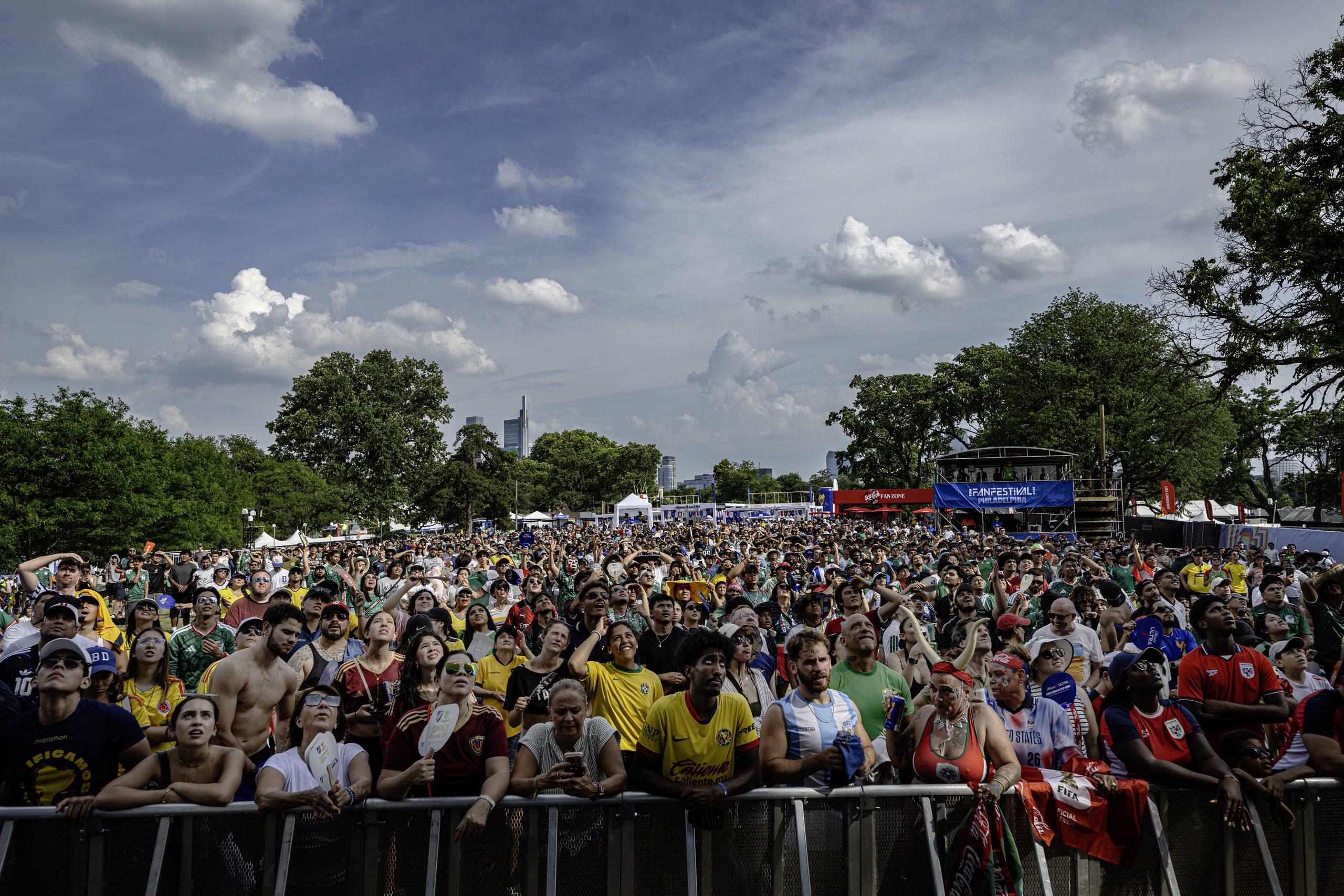
Soccer fans gather to watch Mexico play South Africa on a giant screen during the opening day of the FIFA Fan Festival at Lemon Hill on Thursday, June 11, 2026, in Philadelphia.Jose F. Moreno / Staff Photographer
The FIFA Fan Festival opened its gates to thousands of fans Thursday as not only the cheapest way to experience the revelry of a World Cup game (admission is free, though it requires registration),but also the melting pot of Philly’s best food and shopping. It is also the only fan festival across the 11 U.S. host cities that is open daily for the entire 39-day tournament, culminating on July 19.
If these changes weren’t tough to navigate already, city officials gave residents a little more than three weeks to prepare.
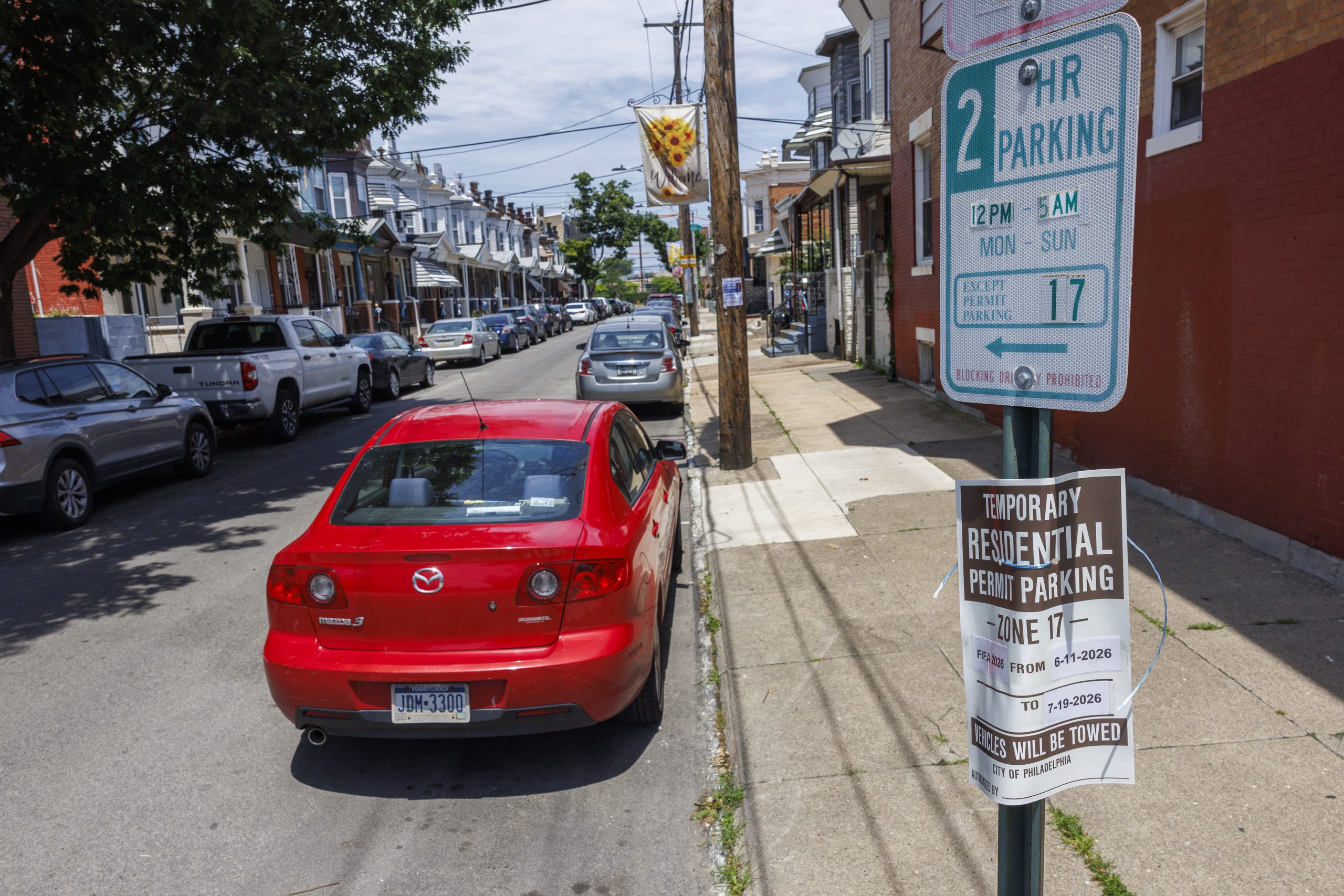
Temporary Residential Permit Parking sign on pole along N. 30th Street and Oxford Street, Thursday, June 11, 2026. Philadelphia Parking Authority is in the area ticketing and enforcing during FIFA Fan Festival at Lemon Hill.Alejandro A. Alvarez / Staff Photographer
“We’ve been talking with them for two years to engage neighbors with a plan, and they waited to communicate their plan until after people made their summer plans, after parents made driving schedules for their kids’ summer camps every week, and after people planned daily commutes,” Eisenberg said.
Charlotte Burns, a Fairmount resident and veterinarian, fears for other residents who work in hospitals and are often on call for medical emergencies. “For months we’ve known this was going to happen, but there has been nothing from the city,” Burns said, referring to the fact that door-knocking, flyers, and posters did not begin in earnest until weeks before the tournament.
(function() { var l = function() { new pym.Parent( ‘fifaroads2__graphic’, ‘https://media.inquirer.com/storage/inquirer/ai2html/fifaroads2/index.html’); }; if(typeof(pym) === ‘undefined’) { var h = document.getElementsByTagName(‘head’)[0], s = document.createElement(‘script’); s.type = ‘text/javascript’; s.src = ‘https://pym.nprapps.org/pym.v1.min.js’; s.onload = l; h.appendChild(s); } else { l(); } })();
On May 18, the city unveiled its plan for how it would manage the festival for residents. Officials informed neighbors that thousands of them would need to swiftly apply for parking permits to allow them to park near their homes for two months, something many residents are still unclear on, said Shaun Cerborino of Lemon Hill Neighbors.
Additionally, no rideshare services like Lyft and Uber will work at Lemon Hill and around six blocks of the surrounding residential areas during festival operating hours, sometimes spanning all day, in a practice called geofencing.Those without cars will have to walk blocks from their home to hail a ride, or use SEPTA, which is still operating in the neighborhood.
City officials told residents last month that rideshare services will not be disabled for riders who require a wheelchair-accessible vehicle (WAV). However, after The Inquirer asked for clarification on how this exemption works in practice, the Philadelphia Office of Transportation and Infrastructure Systems (OTIS) found that a miscommunication between rideshare services occurred.
The city was supposed to designate where WAVs can operate within the geofence, while the city was under the impression that rideshare services handled it.
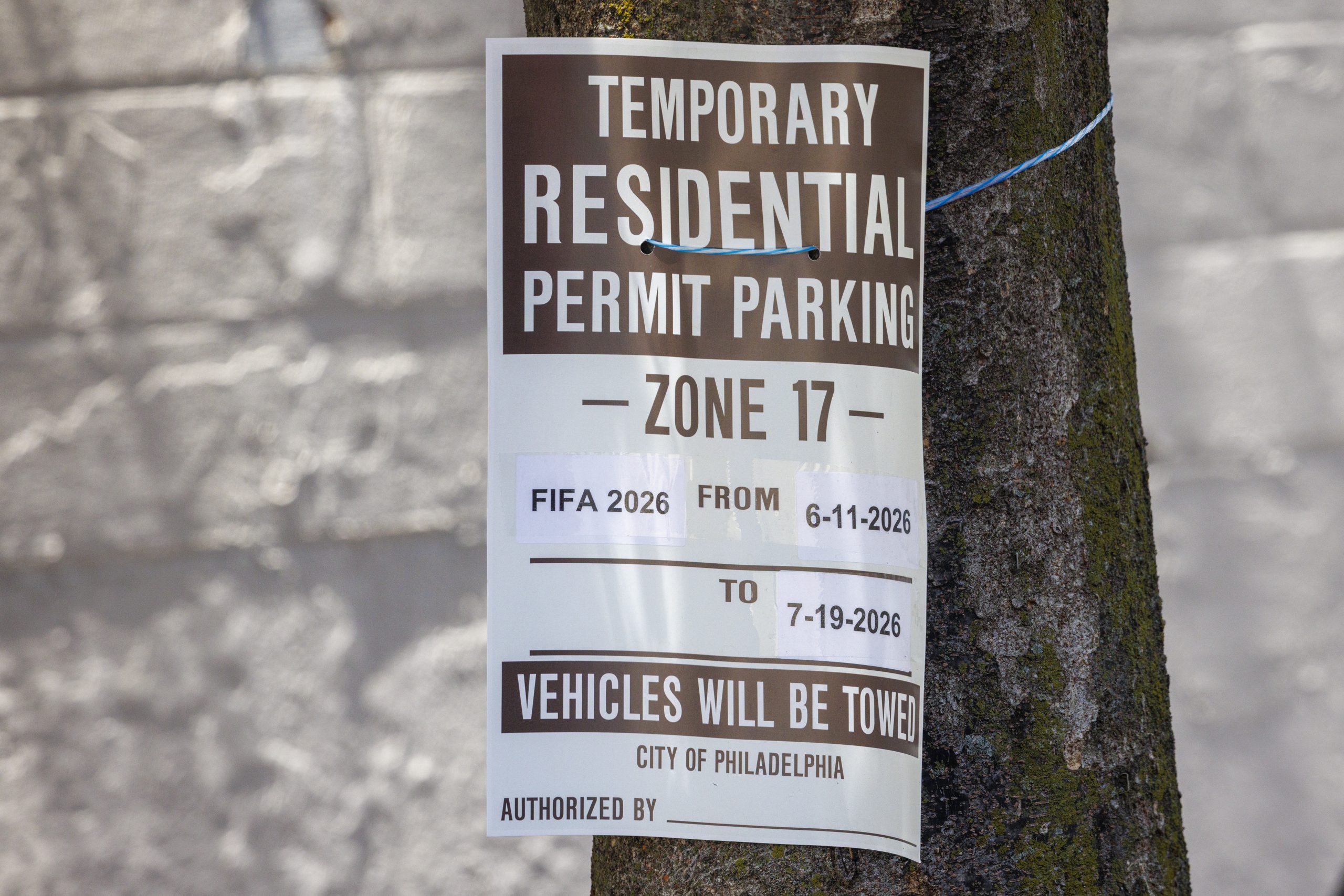
Philadelphia Parking Authority, Zone 17, a temporary no park zone except for residents with special permit during FIFA Fan Festival at Lemon Hill, Thursday, June 11, 2026.Alejandro A. Alvarez / Staff Photographer
“Now that we have that clarity, we’re going to evaluate some changes to the perimeter that is enclosed in the geofence area. We’ll try to act as quickly as we can to adjust the geofence,” said OTIS Deputy Managing Director Mike Carroll.
City officials said they could not specify what these geofence adjustments will look like until they have finished talks with Uber and Lyft. But what was initially promised, that WAVs will pick up and drop off disabled riders at their homes, might not be possible. Instead, there is a chance WAV-only drop-off zones will be created in that geofenced area.
“That challenge is too difficult for us to work through for any resident who needs it,” Carroll said. “It’s too bad that there’s not a more general way to have these vehicles come in, but we can’t really haggle with [rideshare services] at this point. We’ll just try to make it work as best we can.”
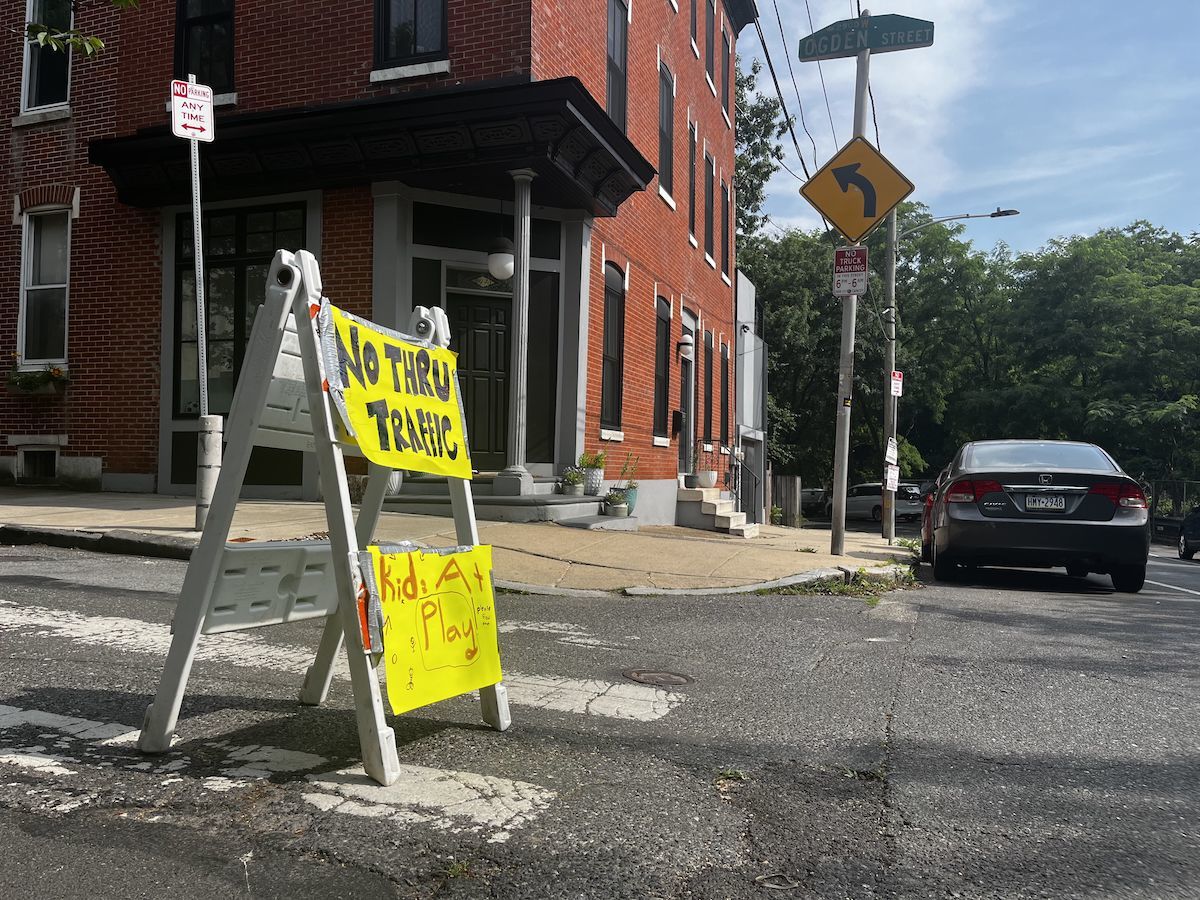
A makeshift sign created by local neighbors, pictured on Wednesday, June 10, 2026, advises drivers not to use side streets for through traffic on Ogden Street, a narrow residential side street one block from the festival, which drivers have been racing down to avoid road closures and traffic.Henry Savage / Staff
The work to calm neighborhood traffic
Dustin Dove, president of the Fairmount Civic Association, points to the 2900 block of Ogden Street, a mere block from the festival, as a microcosm of the neighborhood’s concerns.
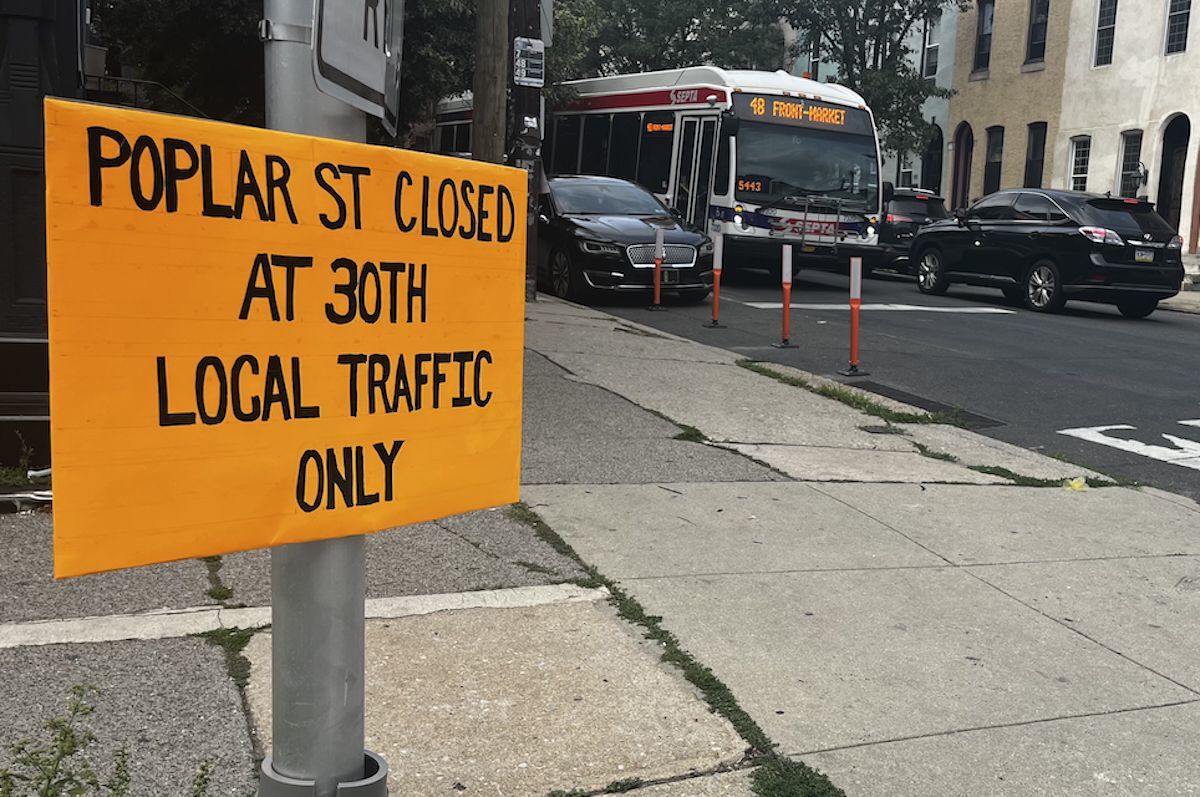
Due to road closures on 30th and Poplar Streets, agitated drivers, stuck in traffic, are choosing to speed down narrow one-way Ogden Street to get around lines of cars, residents said. Neighbors have seen at least two incidents where a car rocketed down the street while young children were playing.
Dove said residents have called every relevant city department and elected official who represents the area, including Councilmember Jeffery Young, requesting additional signage and traffic-control measures at 29th Street to dissuade drivers from using side streets.
“We’re going to be welcoming a lot more people than usual, and we need Council members to come and look at this situation,” Dove said. “There are issues that need some sort of leadership at the top to get them fixed.”
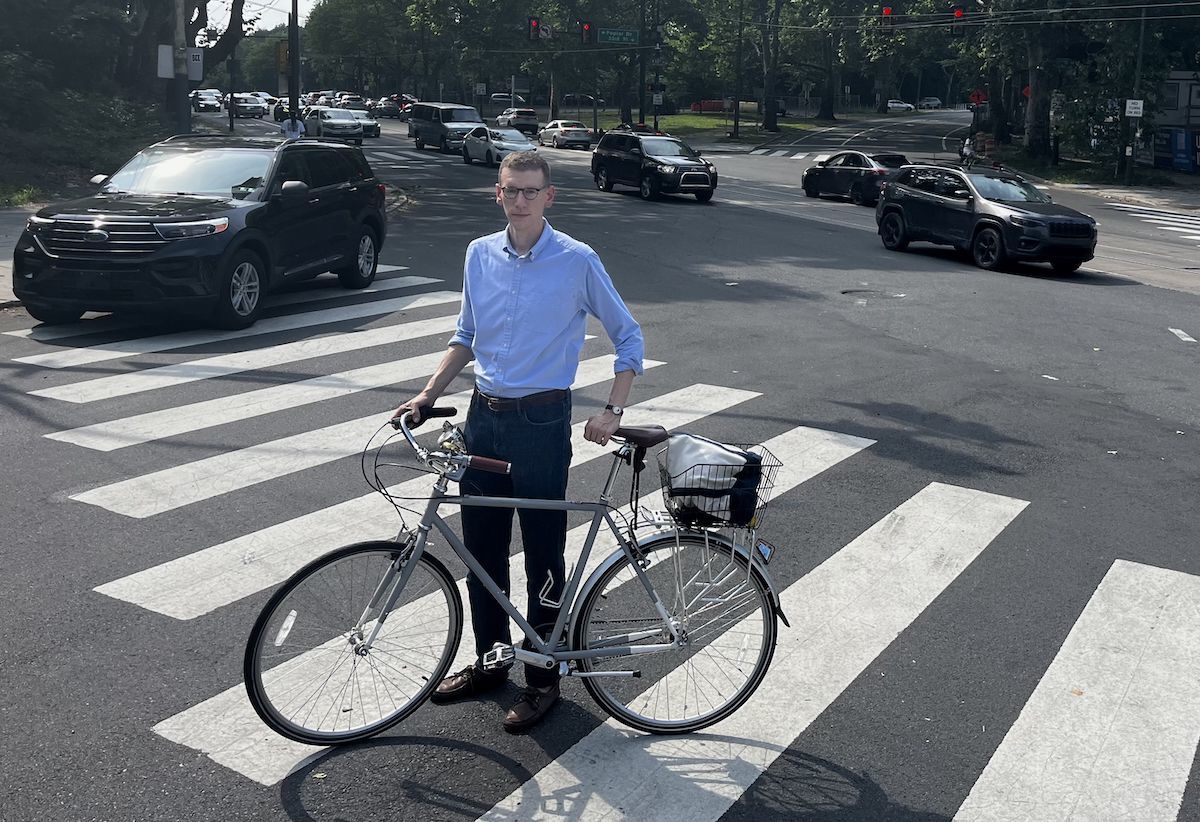
Dustin Dove, a Fairmount resident and president of the Fairmount Civic Association, poses for a photo near one of the busiest intersections near the FIFA Fan Festival in Lemon Hill, at Girard Avenue and Poplar Drive, on Wednesday, June 10, 2026. The FIFA Fan Festival is forcing the local neighborhood to navigate parking restrictions, road closures, and the sacrifice of their summer green space in exchange for the once-in-a-generation World Cup in their backyards.Henry Savage / Staff
Young said he and his office have heard from residents who are “understandably frustrated” by traffic being redirected onto neighborhood streets and confusing or insufficient signage.
“When these concerns were brought to our attention, we immediately notified the appropriate city departments and event organizers and have already seen some additional signage and traffic-control measures put in place. However, more work remains to be done,” Young said.
A city spokesperson said police officers will be stationed at 30th and Poplar Streets throughout the duration of the festival and will make adjustments as needed. The city also committed to installing additional signage where appropriate, the spokesperson said.
Still, as the first day of the World Cup rolled around, neighbors near Ogden Street reported heavy traffic on side streets, Fairmount resident Nicole Ross said, with many residents saying they received parking tickets despite having registered temporary permits. Ross said the Philadelphia Parking Authority later told residents who were ticketed that it was a system error and would be resolved.
Crew members make final preparations, including work on a 60-foot-wide screen, for a FIFA Fan Fest at Lemon Hill in Philadelphia on Tuesday, June 10, 2026.Jose F. Moreno / Staff Photographer
The legacy of Lemon Hill Park
Besides the short-term, everyday nuisances of the FIFA Fan Festival, there are deeper-rooted issues about care and longevity of the park. Park stewards, like Cerborino and Eisenberg, are volunteer workers who care for and maintain much of Lemon Hill.
Across the city’s parks, stewards understand that Philadelphia Parks and Recreation is unable to perform some needed upgrades due to staffing and budgetary constraints. That’s where stewards spend their free time and money to try to keep the city’s nationally ranked parks in an idyllic state. But that often comes with yearslong discussions about proper park funding and upgrades, as recently reported by The Inquirer, where stewards are again pleading with City Council for more funding as they are tired of operating off “love and duct tape.”
When pitching the festival to the city and residents, Philadelphia Soccer 2026 said it would be leaving lasting legacy improvements to the park in exchange for residents giving up their summer green space.
“We will see this through during organizational wind-down following the tournament,” a festival spokesperson said.
Crew members make final preparations, including work on a 60-foot-wide screen, for a FIFA Fan Fest at Lemon Hill in Philadelphia on Tuesday, June 10, 2026.Jose F. Moreno / Staff Photographer
Philadelphia Soccer 2026 is committing $4 million to install a new ADA-accessible sidewalk path, a new playground, and new lighting, as well as to rebuild the picnic pavilion, organizers said. Residents have begged the city for some of these improvements for years, Cerborino and Eisenberg said.
“Residents deserve a clear understanding of what lasting benefits will remain after the crowds leave. I will continue advocating for transparency, accountability, and a concrete plan for legacy investments that benefit the Lemon Hill area and the city as a whole,” Young said.
The city said it will work alongside Philadelphia Soccer 2026 to see these legacy commitments come to fruition, as well as have Philadelphia Parks and Recreation staff monitor the grasslands and trees to address any issues that appear during the festival, a spokesperson said.
While stewards understand that park upkeep is not at the forefront of city budgetary concerns, it does hurt when it seems improvements to Lemon Hill Park will come only after an international or major sponsored event takes place there, Cerborino said.
“Especially when the parks are primarily supported by public dollars, it doesn’t feel right for FIFA or Live Nation, or whatever company, to come in, have their way with our parks, make all the money on it — and the taxpayers foot part of that bill and get very little out of it,” Cerborino said. “The tradeoff is FIFA makes a few billion dollars, and we got a sidewalk.”
The house: a 2,219-square-foot townhouse with three bedrooms and three bathrooms in Wynnefield.
The price: listed for $499,000; purchased for $499,000.
The agent: Nora DeCristofano, Compass
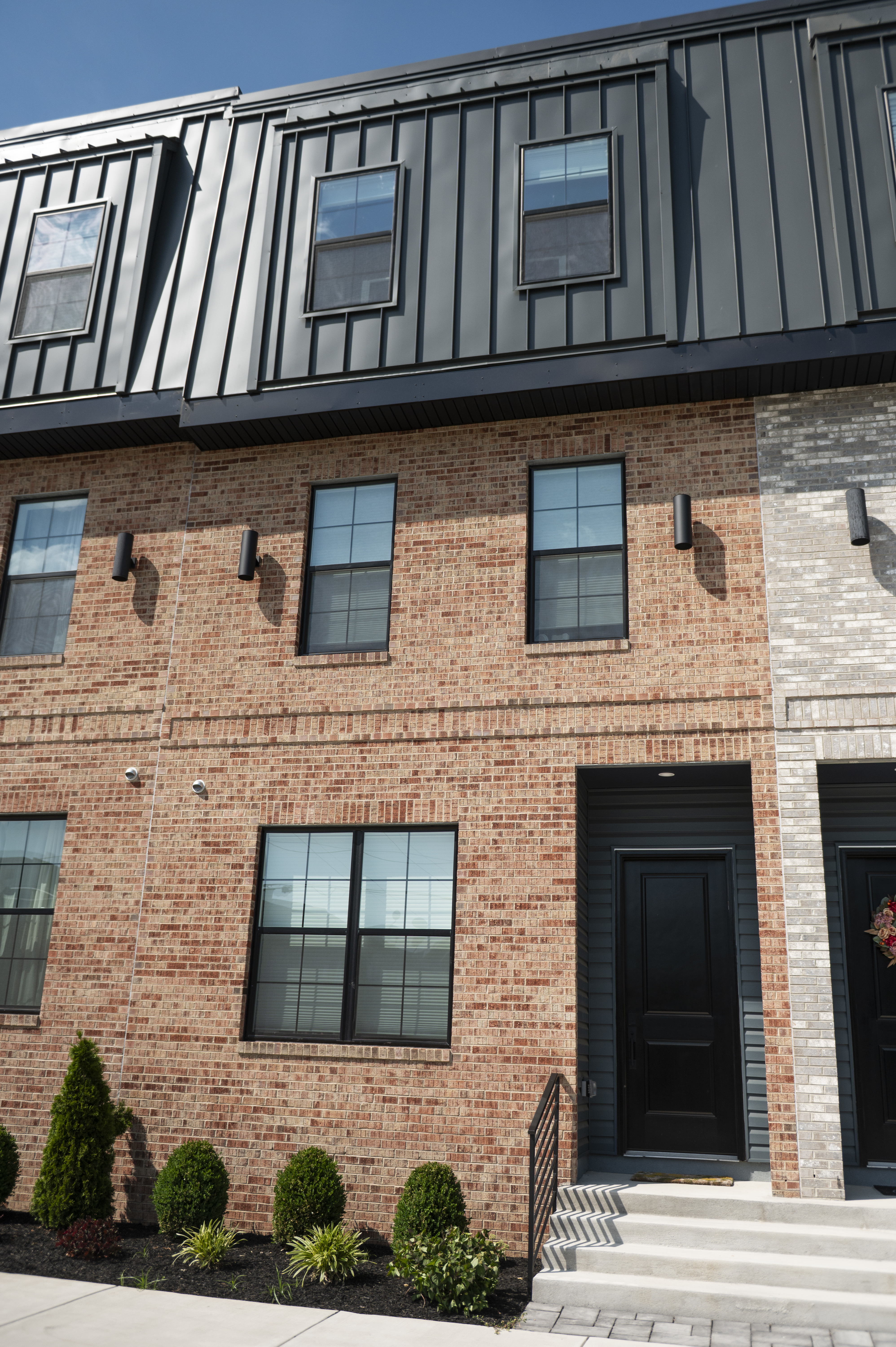
The exterior of Heather Ong’s home in Wynnefield.Allie Ippolito / For The Inquirer
The ask: Heather Ong did not move back to Philadelphia expecting to live with her parents for two years. The plan was to stay with them temporarily — six months at most — just long enough to save money and buy a house.
“What started as a six-month search turned into a two-year search,” she said.
Ong wanted to be in the city but not downtown. She was open to any place that was quiet and had outdoor space for her dog. She also wanted something move-in ready with three bedrooms and at least two bathrooms, and she wanted it for less than $600,000. That combination turned out to be hard to find.
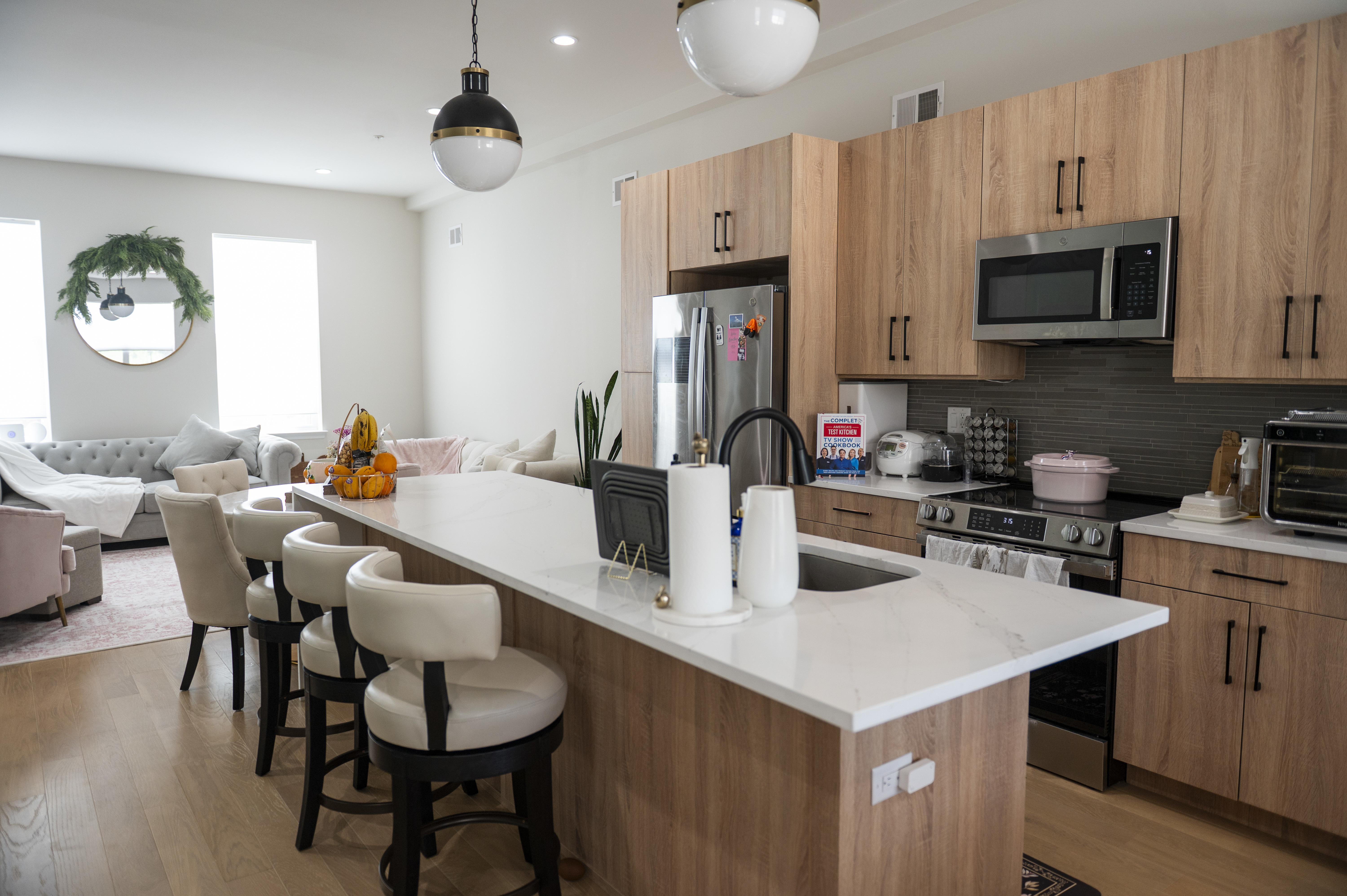
Ong liked the house’s modern, open-concept kitchen. Allie Ippolito / For The Inquirer
The search: Ong started looking seriously in October 2023. She looked everywhere except Center City. In Point Breeze and Brewerytown, she kept running into the same problem. The houses were expensive, and many still needed work. “I refused to spend $600,000 on a home that I’d have to fix up,” she said.
Housing inventory was low at the time. Very few of the listings she saw on Zillow met her criteria, so eventually she stopped checking the site. She did deep dives on local Reddit real estate threads instead. That’s where she saw a link to an Inquirer article about a new development near City Avenue.
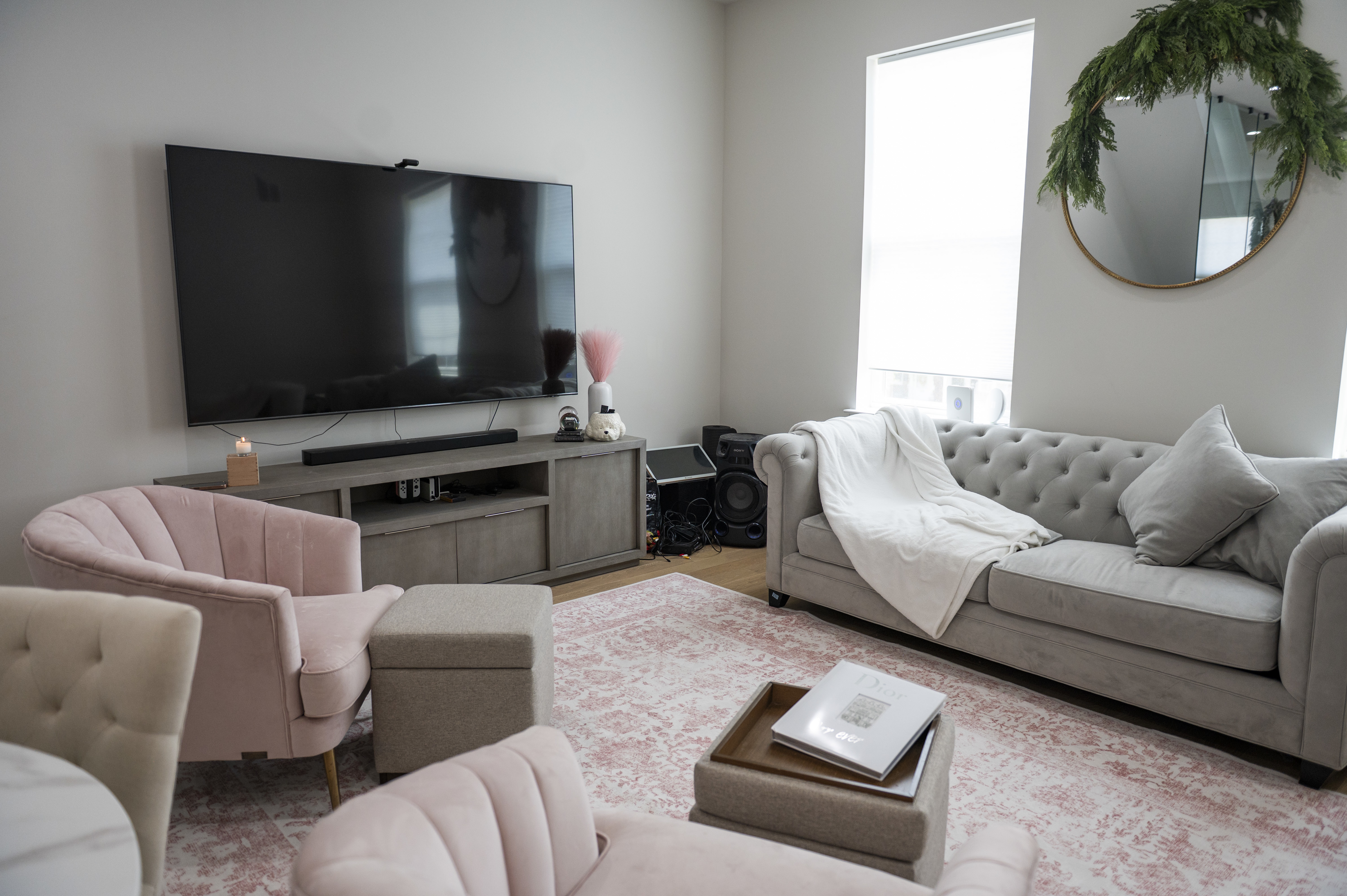
The living area in Heather Ong’s home.Allie Ippolito / For The Inquirer
The location was close to where she wanted to be, and the price was close to what she wanted to spend, so she e-mailed the developer. She visited the site, but the townhouses were still under construction. She walked through a few model homes that were almost done to get a feel for the space.
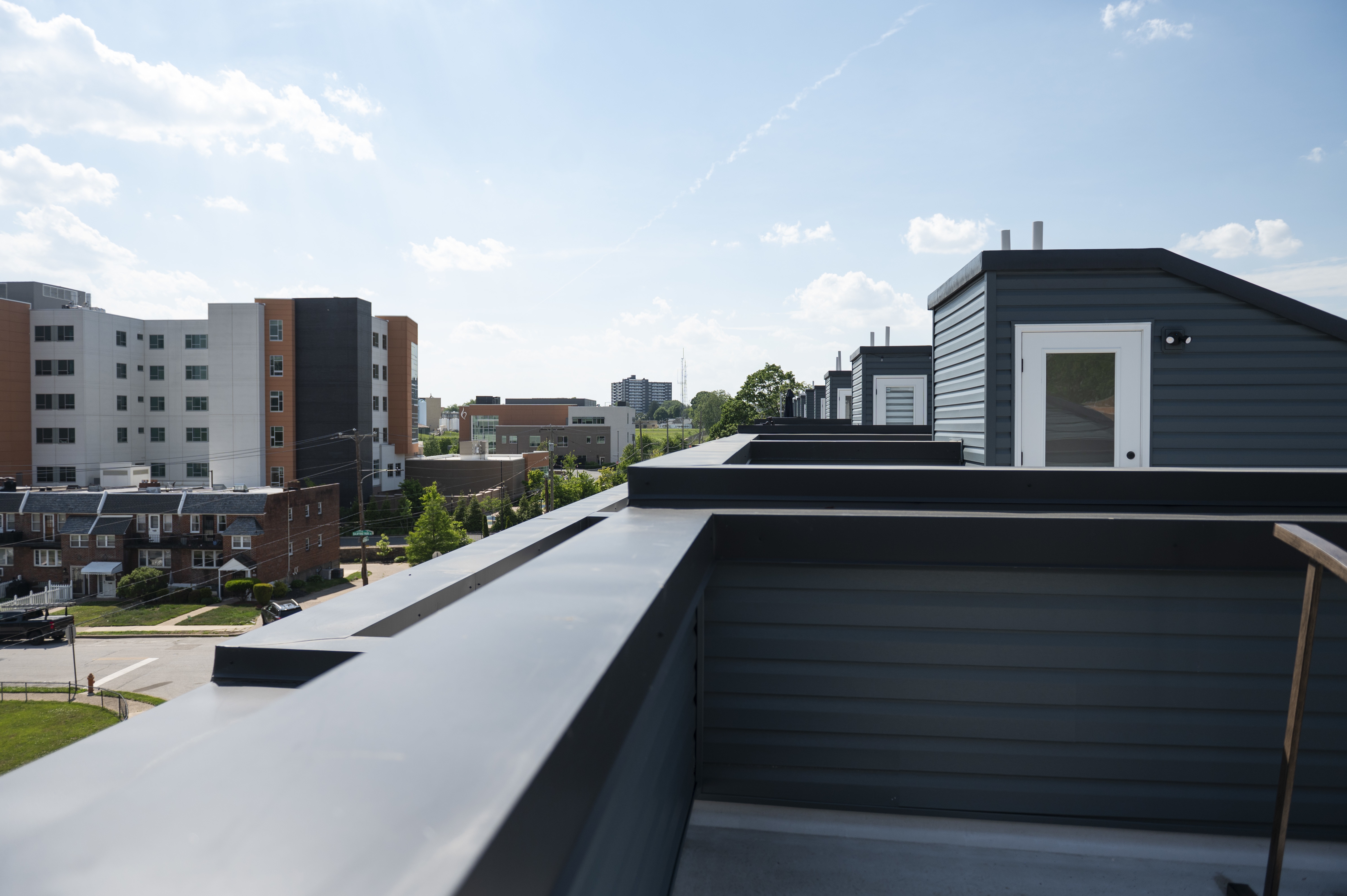
The appeal: The house she saw was a “typical Philly townhome,” Ong said. It had 10-foot ceilings and a roof deck. She liked that it had three full bathrooms and that it was close to I-76 and Martin Luther King Jr. Drive. “Location-wise, it’s very convenient,” Ong said.
And while she didn’t think the neighborhood was very exciting, she saw potential.
“I feel like there are a lot of changes coming to the area,” she said.
Plus, the house offered her more space than she could find elsewhere for the price.
The house is a “typical Philly townhome,” Ong said. Allie Ippolito / For The Inquirer
”I got a bigger bang for my buck out here,” she said.
The deal: The home was listed for $499,000, which is what Ong offered. There wasn’t much to negotiate. The builder was firm on price and told her she couldn’t customize any part of the house. “They said, ‘What you see is what you get,’” Ong recalled.
She did, however, get the builder to agree to a mortgage contingency so that if they didn’t finish the house as promised, she could back out.
Ong hired an independent inspector, who she said was incredibly thorough. “He came back with 100 things that needed to be fixed,” Ong said. The builder addressed all of them. He also installed larger vanities in the bathrooms per her request. The original ones were “barely larger than airplane bathroom sinks,” Ong said.
The money: Ong put 10% down. Between the down payment and closing costs, she spent about $70,000. That included $4,000 to buy down her interest rate from 7% to 6%.
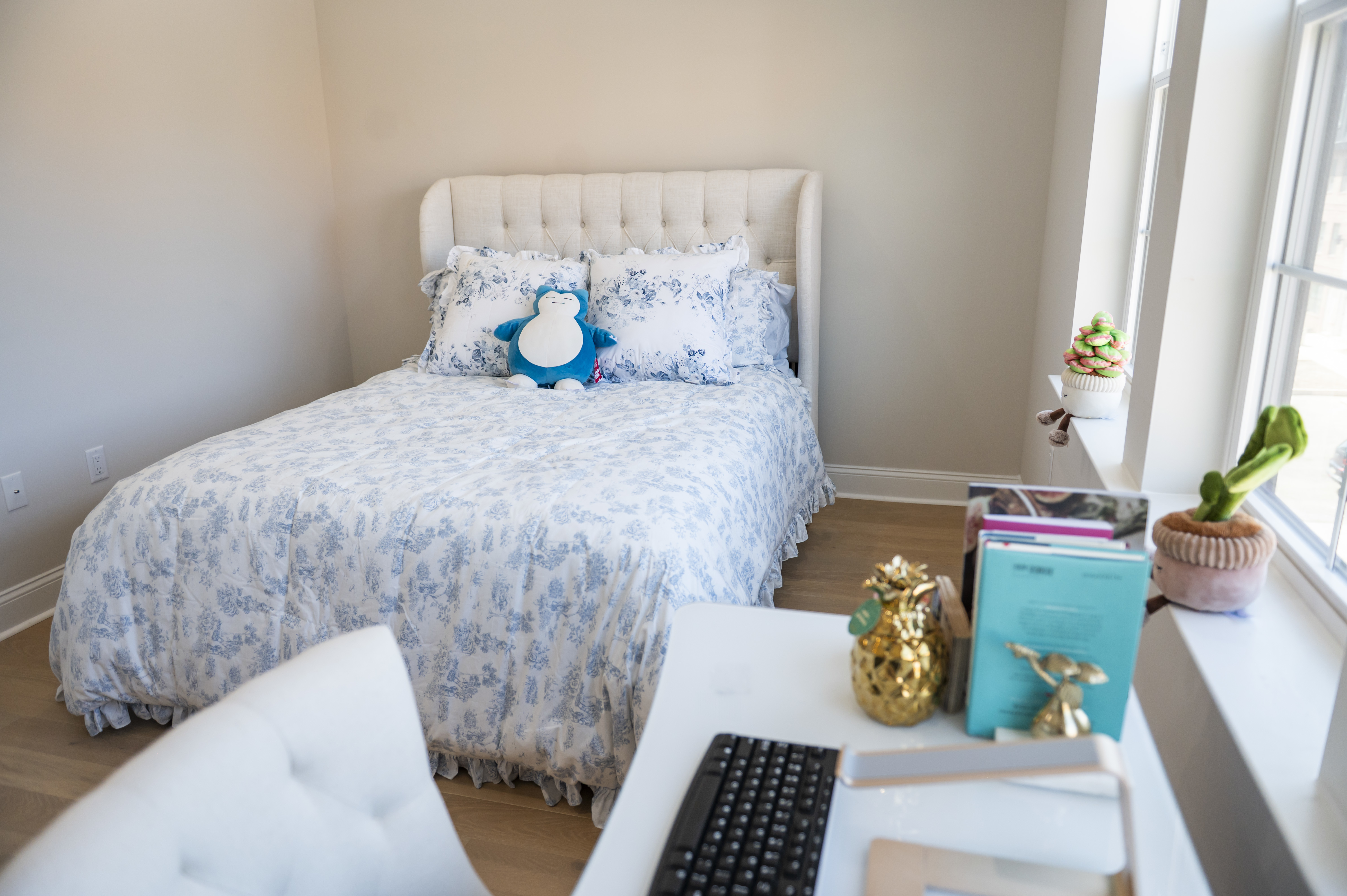
The house has three bedrooms and three full bathrooms, plenty of space for Ong to host family and friends. Allie Ippolito / For The Inquirer
The $70,000 came from her personal savings. She was able to put away a lot of money when she lived with her parents. She also had stock from her job at Zoom Info Technologies, which had vested by the time she was buying. It was worth about $25,000. Without it, she would not have been able to buy.
“If that didn’t happen, I would still be stuck,” Ong said.
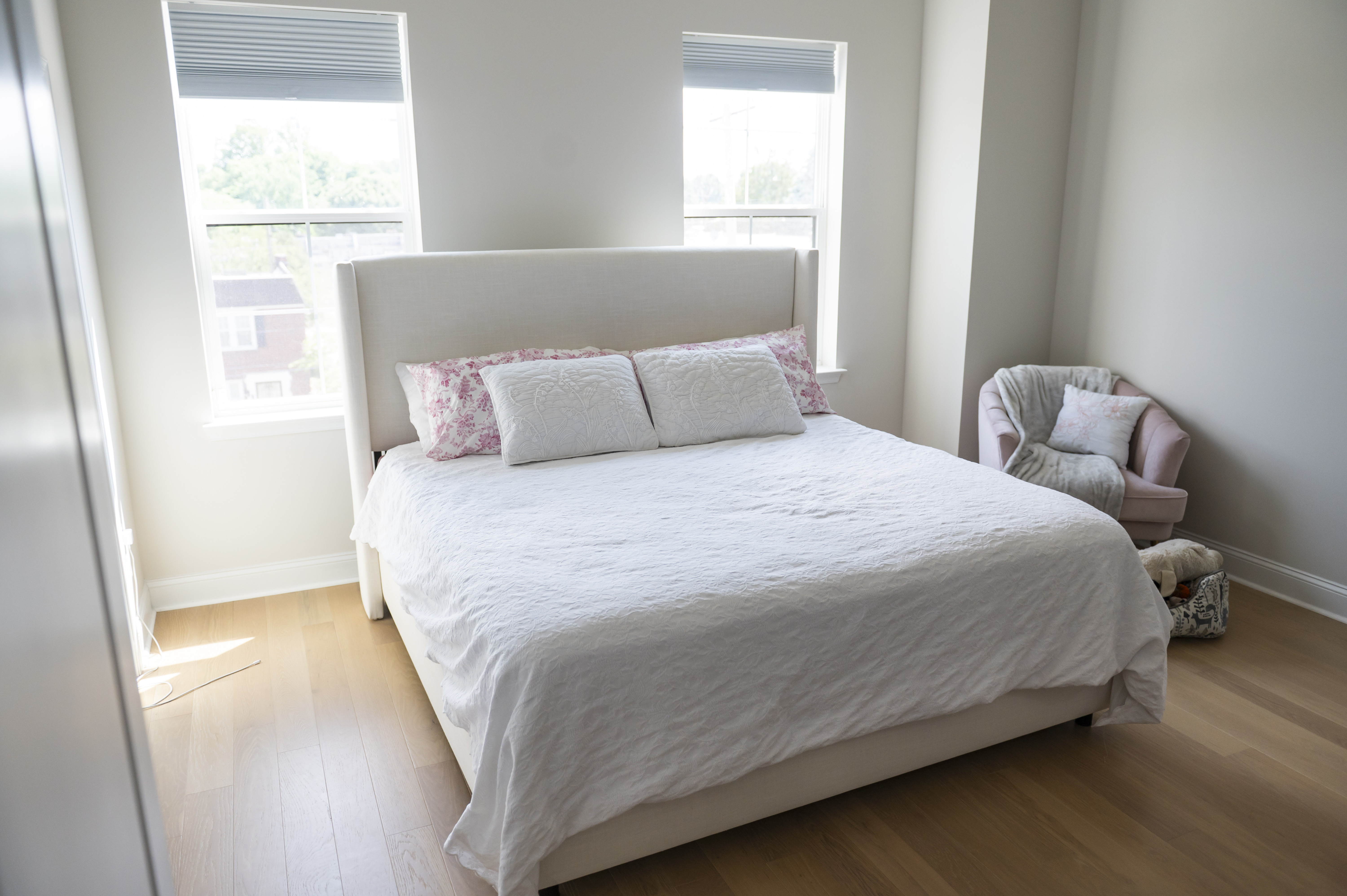
The primary bedroom in Heather Ong’s home in Wynnefield. Allie Ippolito / For The Inquirer
The move: Ong closed on May 1, 2025, and moved in on May 22, a rainy, thunderous day. The move itself was quick — most of her things were in storage. But settling in took months. The development was so new that Google Maps didn’t recognize her address yet, so her deliveries kept getting lost.
“That was a nightmare,” she said.
She also didn’t have internet for the first month.
Life after close: After a year in the house, Ong has learned that new construction can still come with plenty of repairs.
There have been nail pops, cracks, leaks, electricity issues, a microwave that keeps breaking, and a brand-new dryer that did not work. The constant repairs have made it harder for Ong to enjoy the house. Still, she does not regret buying it.
“These are first-world problems that I’m dealing with,” she said.
Did you recently buy a home in the Philadelphia area or South Jersey? Share the story of how you did it. Email Inquirer real estate reporters at properties@inquirer.com.
Editor’s note: This story has been updated to clarify the name of Ong’s employer and the specifics of her down payment.
Lilly, age 13, sits on the couch.Allie Ippolito / For The Inquirer