Tag: Bob Harvie

  • Bob Harvie’s win over Brian Fitzpatrick was fueled by Bucks County’s younger, lower-income, and Hispanic voters

    Bob Harvie’s win over Brian Fitzpatrick was fueled by Bucks County’s younger, lower-income, and Hispanic voters

    U.S. Rep-elect Bob Harvie’s hometown of Bristol Borough had the largest swing toward the Democrat of any municipality in the 1st Congressional District, helping push him to victory against one of the toughest Republican incumbents in the country.

    Bristol Borough had a 32-percentage-point swing toward the Democrat compared with 2024.

    All precincts in the 1st District, which includes all of Bucks County and a portion of Montgomery County, swung toward Harvie compared with two years ago, but he found his strongest support in his win against Republican U.S. Rep. Brian Fitzpatrick in Lower Bucks municipalities with a higher percentage of key voting blocs.

    Bristol Borough and four other communities in Lower Bucks — Bensalem Township, Bristol Township, Falls Township, and Tullytown Borough — are younger and lower-income, have fewer people with college degrees, and have a larger Hispanic population that the rest of the district. These areas had the biggest swing toward the Democrat and helped move the needle for Harvie throughout the district, an Inquirer analysis of municipal-level election results and census data from 2024 and 2026 found.

    Fitzpatrick won Lower Bucks two years ago when he won the district by double digits, but this year Bristol Borough and 10 other municipalities had a 20-percentage-point or more shift toward Democrats from 2024 — including Tullytown Borough, Falls Township, Richlandtown Borough, and Bristol Township.

    (function(){function e(){window.addEventListener(`message`,function(e){if(e.data[`datawrapper-height`]!==void 0){var t=document.querySelectorAll(`iframe`);for(var n in e.data[`datawrapper-height`])for(var r=0,i;i=t[r];r++)if(i.contentWindow===e.source){var a=e.data[`datawrapper-height`][n]+`px`;i.style.height=a}}})}e()})();

    Both Harvie and Fitzpatrick are from Lower Bucks (with the five-term GOP lawmaker growing up in Levittown), but Harvie’s campaign particularly focused on his upbringing in the county and community ties. He spent 20 years teaching social studies at Bucks County Technical High School and more than a decade as a Falls Township supervisor. He has served as a county commissioner since 2020, making him the first challenger of Fitzpatrick’s to have previously won countywide elections.

    Harvie improved on 2024 nominee Ashley Ehasz’s performance in every corner of the district, and Democrats saw gains nationally with virtually every demographic group.

    But in a race decided by fewer than 6 percentage points, these are the people and places that propelled Harvie to victory.

    Building on the youth vote

    The younger the municipality, the more it shifted toward Harvie.

    The Democrat won a majority of the two-party vote in every age group across the district, but he had his strongest performance in boroughs or townships with a median age between 23 and 39.

    Harvie took 57% of those areas, the analysis found.

    Fitzpatrick had won among all age groups in 2024, but Harvie benefited from a 22-percentage-point swing among the youngest municipalities.

    (function(){function e(){window.addEventListener(`message`,function(e){if(e.data[`datawrapper-height`]!==void 0){var t=document.querySelectorAll(`iframe`);for(var n in e.data[`datawrapper-height`])for(var r=0,i;i=t[r];r++)if(i.contentWindow===e.source){var a=e.data[`datawrapper-height`][n]+`px`;i.style.height=a}}})}e()})();

    Though the 1st District is older overall than the United States as a whole, the backlash to President Donald Trump was particularly severe among young voters and may have helped Harvie and other Democrats.

    An Inquirer/New York Times/Siena University poll in August found that 75% of Pennsylvania voters ages 18 to 29 disapproved of Trump’s job performance.

    He was deeply underwater with young voters across all issues, particularly on the cost of living, an issue on which 90% disapproved of his handling, compared with only 9% who approved. A quarter of voters under 30 who had cast a ballot for Trump in 2024 disapproved of his performance on the issue.

    Lower-income voters supported Harvie amid affordability crisis

    As affordability remained top of mind for voters this election, Harvie’s best performance came in the district’s lowest-income municipalities, where he won 56% of the vote.

    The district is, on average, more affluent than the country as a whole, but Harvie saw a roughly 22-percentage-point shift in his direction in communities where the median household income is between $65,000 and $94,000, the analysis found.

    The lower a municipality’s median household income — such as in places like Red Hill Borough or Tullytown Borough — the larger the move toward the Democrat this year.

    (function(){function e(){window.addEventListener(`message`,function(e){if(e.data[`datawrapper-height`]!==void 0){var t=document.querySelectorAll(`iframe`);for(var n in e.data[`datawrapper-height`])for(var r=0,i;i=t[r];r++)if(i.contentWindow===e.source){var a=e.data[`datawrapper-height`][n]+`px`;i.style.height=a}}})}e()})();

    Though Fitzpatrick had won all four of the district’s income categories in 2024, this year he held on to only one — municipalities where median income is roughly between $95,000 and $112,000 (a demographic that Trump has won in the past) — but by less than a percentage point, 50.3% to Harvie’s 49.7%.

    Trump ran in 2024 on a promise to lower costs on day one, but voters this year were frustrated by rising prices in the grocery store and at the gas pump. Harvie focused much of his campaign on affordability — often discussing heating oil prices, housing costs, and healthcare expenses.

    Harvie’s strongest performance came in municipalities where fewer people have a college degree — a statistic that dovetails with income. He won 56% of the vote in places where between 21% and 32% of adults hold a bachelor’s degree or higher.

    But he also performed nearly as well in municipalities where a larger portion of the population is highly educated. He had 55% of the vote in areas where between 56% and 75% of adults have at least a bachelor’s degree.

    Fitzpatrick won municipalities where 32% to 42% of adults have at least a bachelor’s degree, but that was the only group he was able to hold on to — by less than a percentage point — after previously dominating among all education levels in 2024.

    Hispanic communities helped boost Harvie

    Most of the 1st Congressional District — about 79% of the population — is white, but Hispanic voters helped push Harvie to victory.

    Almost 7% of the 1st District identifies as Hispanic, and the larger a place’s Hispanic population, the more strongly it shifted toward Harvie, with Telford Borough, Bristol Borough, Souderton Borough, and Bensalem Township at the top of that list.

    (function(){function e(){window.addEventListener(`message`,function(e){if(e.data[`datawrapper-height`]!==void 0){var t=document.querySelectorAll(`iframe`);for(var n in e.data[`datawrapper-height`])for(var r=0,i;i=t[r];r++)if(i.contentWindow===e.source){var a=e.data[`datawrapper-height`][n]+`px`;i.style.height=a}}})}e()})();

    Democrats also made a point in the homestretch to reach out to Asian voters — a key voting bloc in the 1st District — for Harvie, with the Democratic Congressional Campaign Committee tapping Montgomery County Commissioner Neil Makhija, a Democrat and the first Asian American county commissioner in Pennsylvania, for a digital ad.

    Harvie won a slightly higher share of the vote in places with more prominent Asian communities, such as Hatfield Township, than in the rest of the district. But these were communities where his party had also done well two years ago.

  • ‘You failed our country’: Pa. lawmakers vote along party lines in failed move to impeach Pete Hegseth

    ‘You failed our country’: Pa. lawmakers vote along party lines in failed move to impeach Pete Hegseth

    Pennsylvania’s federal lawmakers voted along party lines Tuesday in an unsuccessful effort to impeach Defense Secretary Pete Hegseth over his handling of the war in Iran, accusations of international war crimes, and more.

    Republican leaders in the U.S. House sidestepped the mostly Democrat-backed move, likely setting up another attempt to remove Hegseth when Democrats take control of the chamber in January.

    The vote fell one week after Democrats swept four competitive swing races in Pennsylvania, unseating Republicans in a nationwide blue wave driven in large part by frustrations with President Donald Trump’s handling of the war.

    U.S. Rep. Brian Fitzpatrick (R., Bucks), who lost his bid for a sixth term to Democratic Bucks County Commissioner Bob Harvie, was the only one of 11 Pennsylvania House Republicans to previously vote for war powers resolutions to end Trump’s unilateral ability to attack Iran.

    But Fitzpatrick had also not criticized Trump for beginning the war, which many Democrats said was illegal from the start because it didn’t receive congressional approval.

    Fitzpatrick ultimately joined his Republican colleagues in voting to defer a final, official vote on the impeachment resolution.

    President Donald Trump greets Secretary of Defense Pete Hegseth (right) following their appearance at a Defense and Innovation Summit hosted by U.S. Sen. Dave McCormick at the US Army War College in Carlisle Wednesday, July 15, 2026.Tom Gralish / Staff Photographer

    Another Pennsylvanian who lost his seat after making a last-minute push to put some distance between himself and the war — U.S. Rep. Rob Bresnahan (R., Luzerne) — also voted against considering the impeachment. Bresnahan, who lost to Democratic Scranton Mayor Paige Cognetti after serving just one term, said during a late October debate that “the mission has been accomplished and the war absolutely needs to end,” though he also said withdrawal had to be “pragmatic.”

    The resolution with eight separate articles of impeachment was filed Monday by outgoing U.S. Rep. Thomas Massie, a Kentucky Republican who lost his seat after becoming a vocal critic of Trump and the war.

    The articles accused Hegseth of high crimes and misdemeanors for starting the war in Iran, continuing to wage it after the passage of war powers resolutions and ignoring laws aimed at minimizing civilian casualties.

    Massie was the only Republican who ultimately voted to advance the resolution while Democrats, who have for months called for Hegseth’s removal, united behind it. Entering the majority in January, they had promised to impeach the secretary then if Republicans wouldn’t help to do it now.

    “We’re coming for you because you failed our country,” U.S. Rep. Chris Deluzio, an Allegheny County Democrat and Navy veteran, said in a video featuring veteran Democratic lawmakers, released earlier Tuesday by the nonprofit Vet Voice Foundation.

    U.S. Rep. Chrissy Houlahan, a Chester County Democrat and Air Force veteran, was also featured in the video — criticizing Hegseth’s leadership and, specifically, the episode in 2025 when he shared classified information in a Signal group chat that accidentally included a reporter. The incident risked the safety of service members, an independent review found.

    Both Houlahan and Deluzio were also among the group of six veterans serving in Congress who last year called on service members to “refuse illegal orders” from the administration. Trump and Hegseth lashed out in response, leading to an investigation that failed to indict the lawmakers. And the Pentagon’s retaliation against U.S. Sen. Mark Kelly, of Arizona, for the same message was the justification for one of the impeachment resolutions against Hegseth on Tuesday.

    “He wants to pretend that calling out his failures, his incompetence and his zealotry is an attack on our men and women in uniform,” Houlahan said on the House floor. “And he has done so while preening and peacocking all over the world, in push up contests and PT stunts, using our service members as props. Our nation deserves a real secretary of defense who will not be laughed out of every room in the Pentagon, in Brussels and in Congress.”

    Neither U.S. Sens. Dave McCormick, a Republican, or John Fetterman, a Democrat, immediately reacted to the impeachment vote. If Democrats make another attempt in 2027 and pass a resolution with their large majority, the Senate would have to vote to convict Hegseth. Both Pennsylvanians have been staunch supporters of the war effort. Fetterman has been the only senator from his party to vote against the war resolutions while echoing Trump’s justifications for the war.

    Hegseth, meanwhile, defended his record Tuesday as Trump and Vice President JD Vance said they stood by him.

    “This isn’t about Iran, this is about the fact that Pete took on the bureaucracy at the Pentagon,” Vance said on social media.

    Democratic Gov. Josh Shapiro, whose election to a second term last week has further fueled speculation that he will launch a campaign for the White House in 2028, called Hegseth “completely incompetent” during an interview on Meet the Press over the weekend.

    “He is like an 8-year-old playing with toy soldiers every day,” he said while declining to say if he supported impeachment specifically. “He is someone who I think is making America less safe, and there has to be real accountability.”

  • Tangled up in blue | PA 2026 Newsletter

    Tangled up in blue | PA 2026 Newsletter

    📅 It’s 3 days after Election Day.

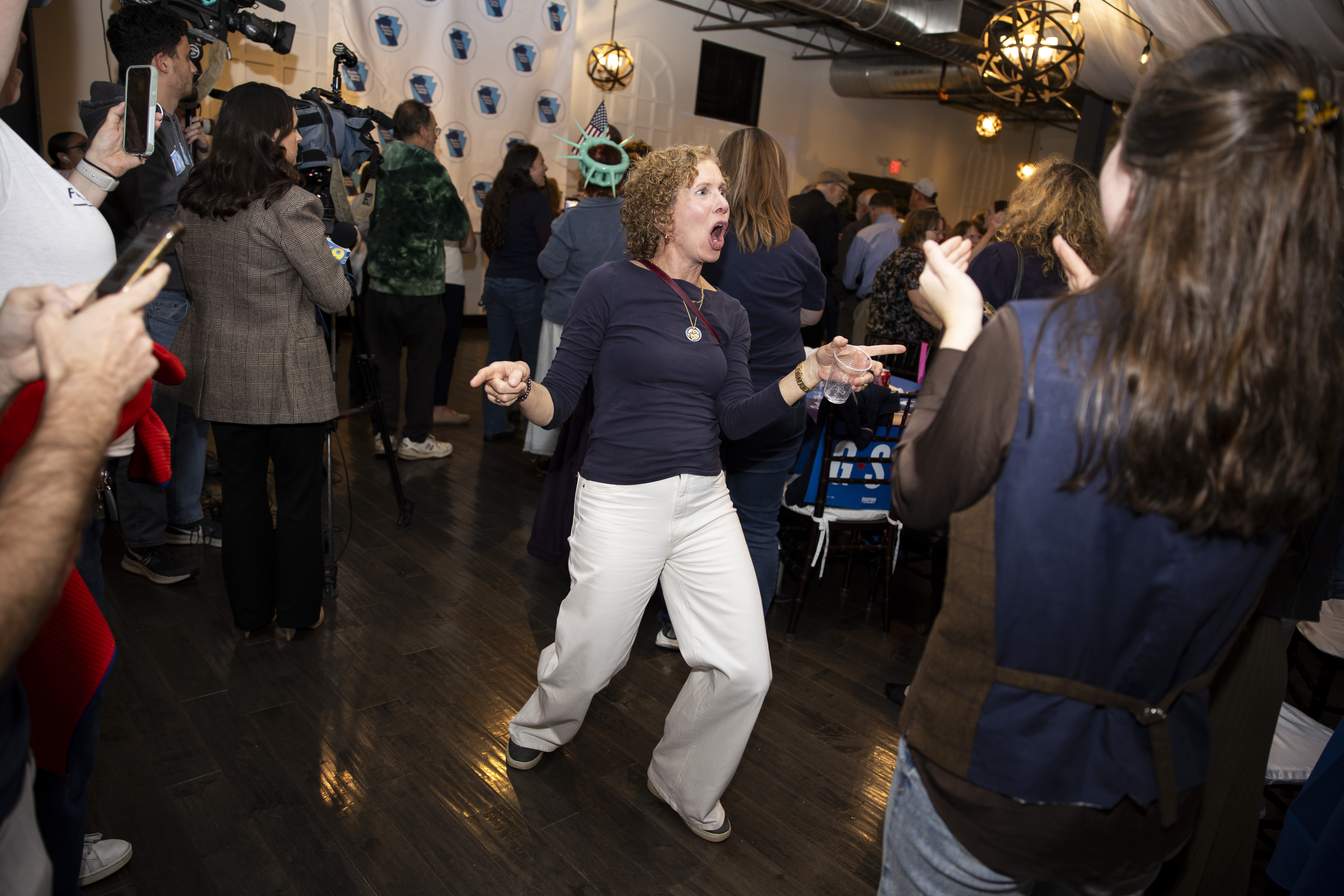
    A crowd of boisterous Democrats in a Newtown event hall screamed with joy on Tuesday night when the blue wave washed over races in South Carolina, Georgia, and Texas.

    Those states are hundreds of miles away.

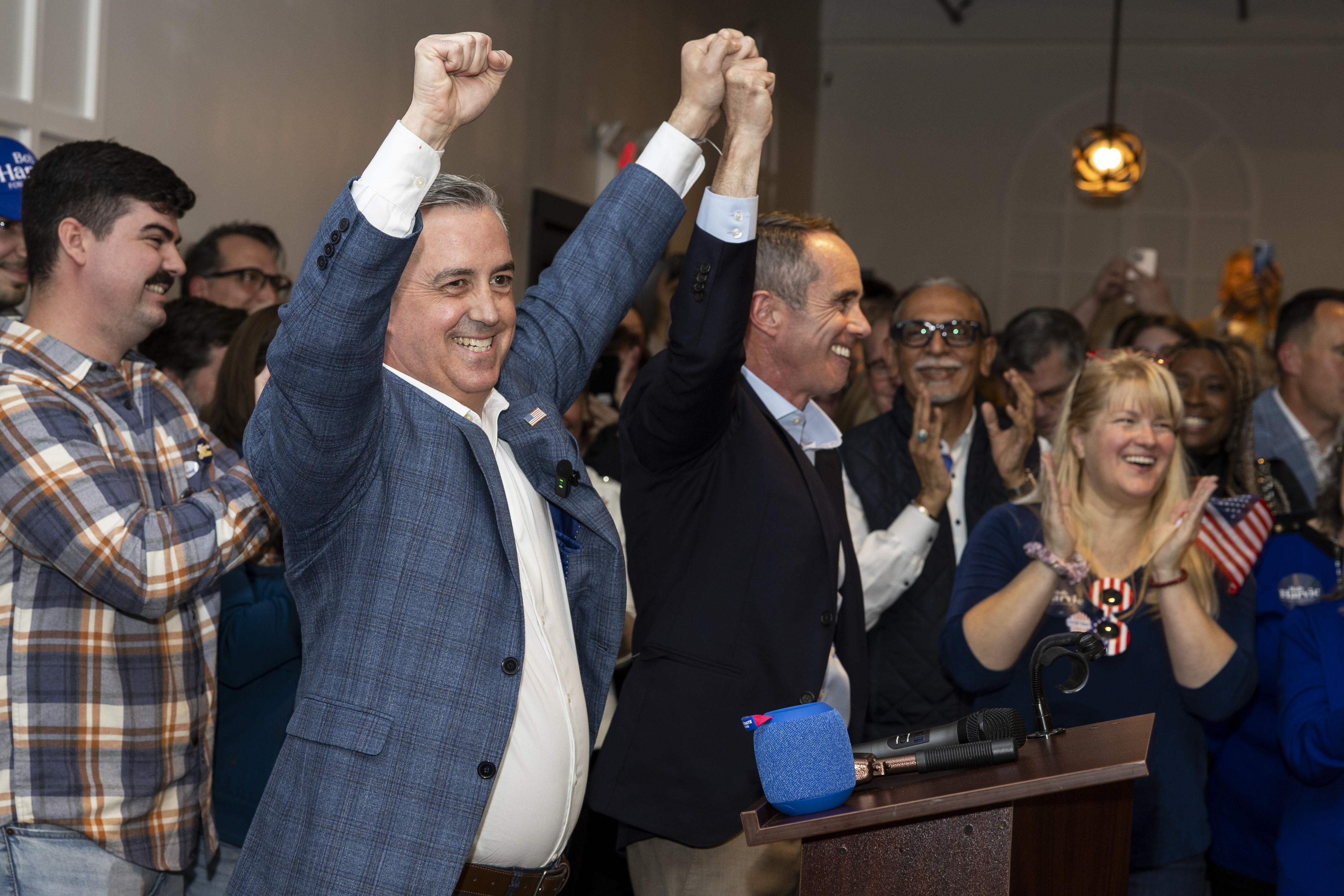
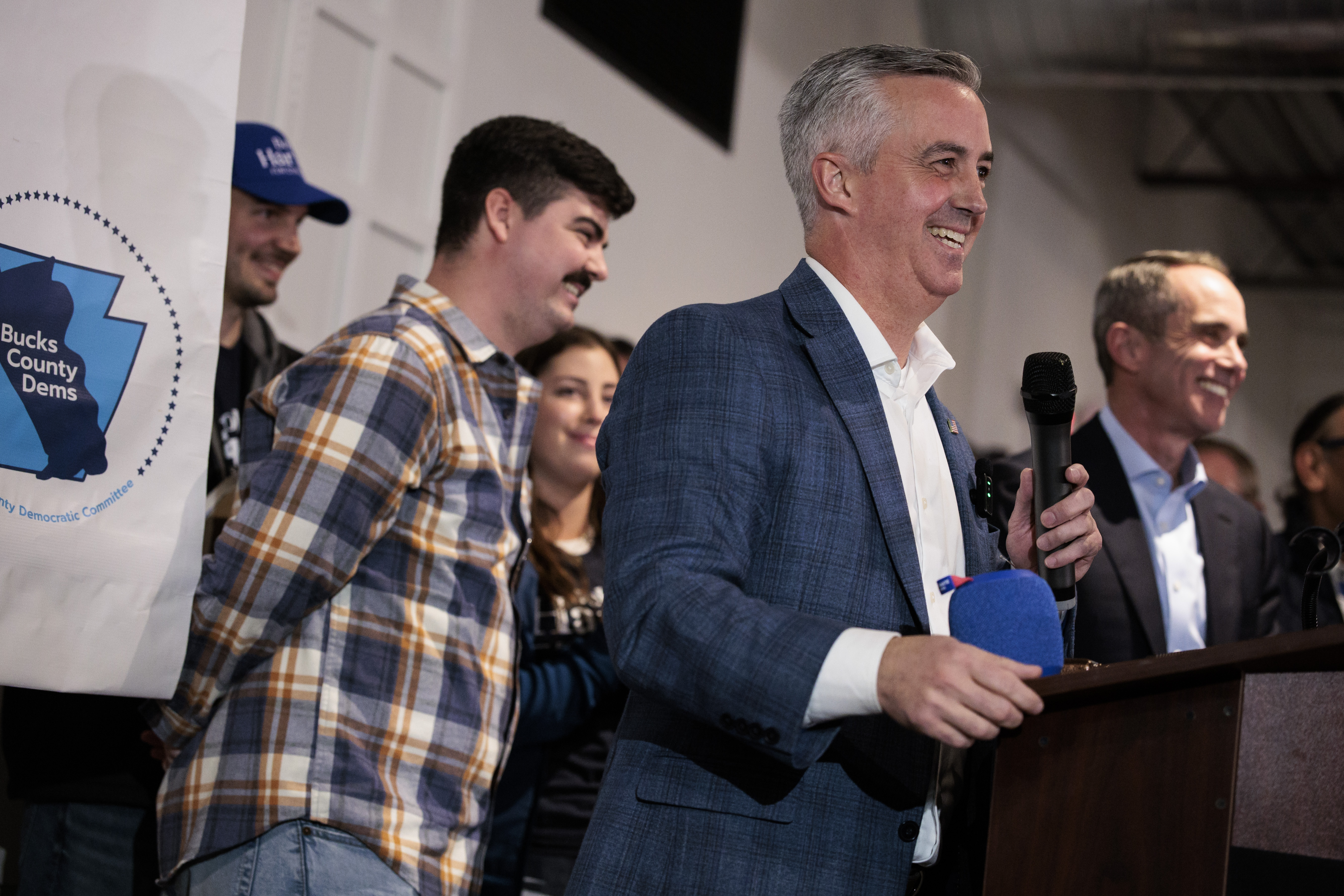
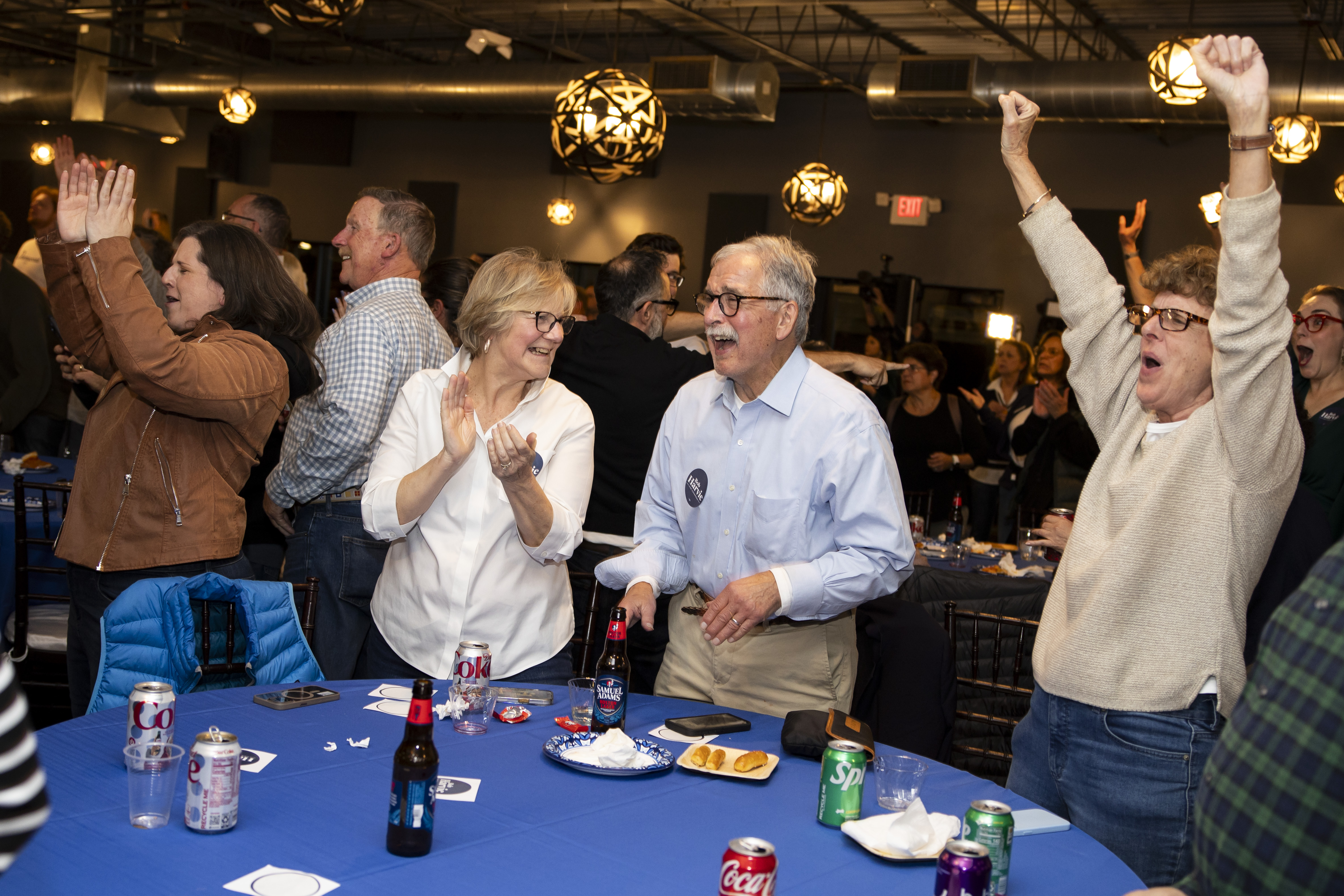
    So can you imagine how loud supporters — full of adrenaline and pizza — roared when their homegrown Bucks County Democrat, Bob Harvie, walked in and declared victory over Republican incumbent Rep. Brian Fitzpatrick in one of the toughest races this cycle?

    🎤 I’m Fallon Roth, The Inquirer’s suburban politics reporter, bringing you our final PA 2026 newsletter, and I can personally tell you the answer to that question is: very loud.

    I’ve spent the better part of the past year covering the 1st Congressional District race in Bucks County, and on Tuesday night, Harvie achieved something no one else has — defeating Fitzpatrick, a five-term incumbent.

    And when January comes, Harvie will be the first Democrat to represent Bucks County in Congress since 2011.

    But that’s hardly the only win Democrats notched in Tuesday’s “blue tsunami.” Key seat flips in Bucks County helped expand Democrats’ majority in the state House and won the party’s control of the state Senate, delivering a Democratic trifecta for Gov. Josh Shapiro (who coasted to reelection) for the first time since 1993.

    In this edition:

    🗳️ Complete control: Democrats score a trifecta in Harrisburg for the first time since 1993, giving Shapiro a lot more power.

    🗳️ Staying put: Philly’s Rep. Brendan Boyle won’t seek Sen. John Fetterman’s seat in 2028 as he prepares to take a House chairmanship instead.

    🗳️ Big swing: Bucks County Democrats tried for years to unseat Brian Fitzpatrick. Here’s how Bob Harvie finally did.

    — Fallon Roth, Sam Janesch, Gillian McGoldrick, Michelle Baruchman (pa2026@inquirer.com)

    If someone forwarded you this email, sign up for free here.

    The latest

    Data dive

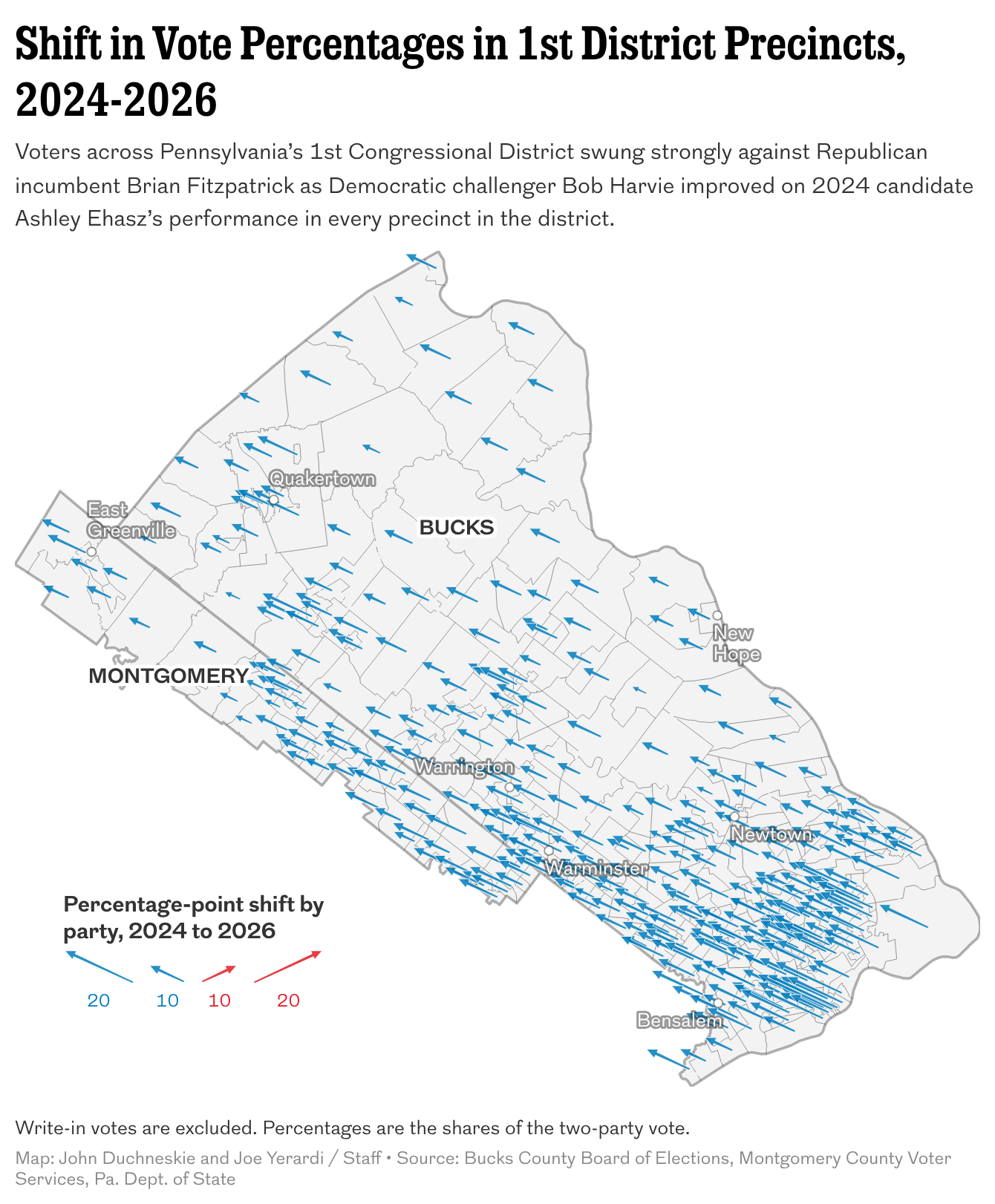
    Every precinct in the 1st Congressional District shifted toward Democrats Tuesday in comparison to 2024.

    Every single one.

    Shift in vote percentages in 1st district precincts 2024-2026.John Duchneskie

    Harvie significantly improved on the performance of Ashley Ehasz, the party’s 2024 nominee, in a year when Fitzpatrick comfortably won reelection by 10 points even as the district went for Democrat Kamala Harris in the presidential race.

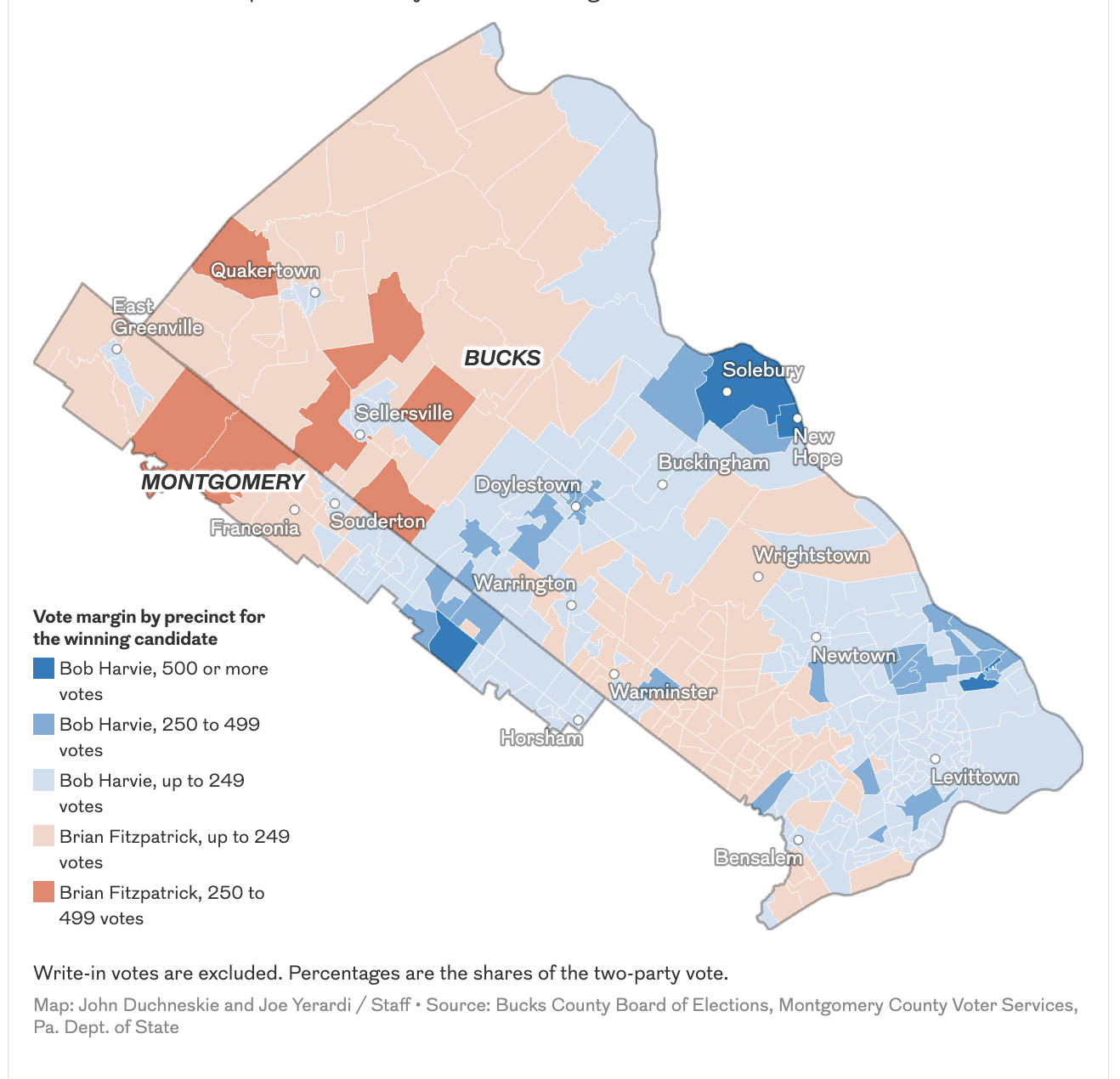
    The district covers all of Bucks County and a portion of Montgomery County. Harvie saw his highest vote margins in a precinct in Solebury Township, New Hope Borough, a precinct slightly north of Horsham in Montco, and in a precinct in Falls Township, Harvie’s stomping grounds.

    Bob Harvie received about 52.7% of the two-party vote in his 2026 election victory over Republican incumbent Brian Fitzpatrick in Pennsylvania’s 1st Congressional District.John Duchneskie

    Most of Lower Bucks — a populous part of the county where both candidates are from — went blue, as did most of Central Bucks and the district’s portion of Montgomery County.

    Upper Bucks, a more rural part of the county, leaned red and Fitzpatrick had his largest precinct win margin in a part of Hilltown Township.

    Campaign Scrapple

    • Culture clash: Our colleague Al Lubrano caught an exchange between two voters in Carlisle in the 10th District. Republican Robert House, 57, a beekeeper who said he owns 175 firearms, said he voted for Republican Rep. Scott Perry because he “agrees with the Bible” and opposes abortion. That prompted Adrienne Cedro, a 21-year-old college student, to say she voted to oust Perry and anyone “who’s against the rights of women, LGBTQ, and trans people.”
    • Name that tune: After Republican gubernatorial nominee Stacy Garrity concluded her concession speech Tuesday, she walked off to Fleetwood Mac’s “Don’t Stop” — a song famously associated with Democrat Bill Clinton’s 1992 presidential campaign. Shapiro, for his part, walked off the stage from his reelection victory speech to Tom Petty’s “I Won’t Back Down,” previously associated with George W. Bush’s 2000 presidential campaign until Petty’s team demanded Bush stop using it.

    📸 Behind the scenes snapshot

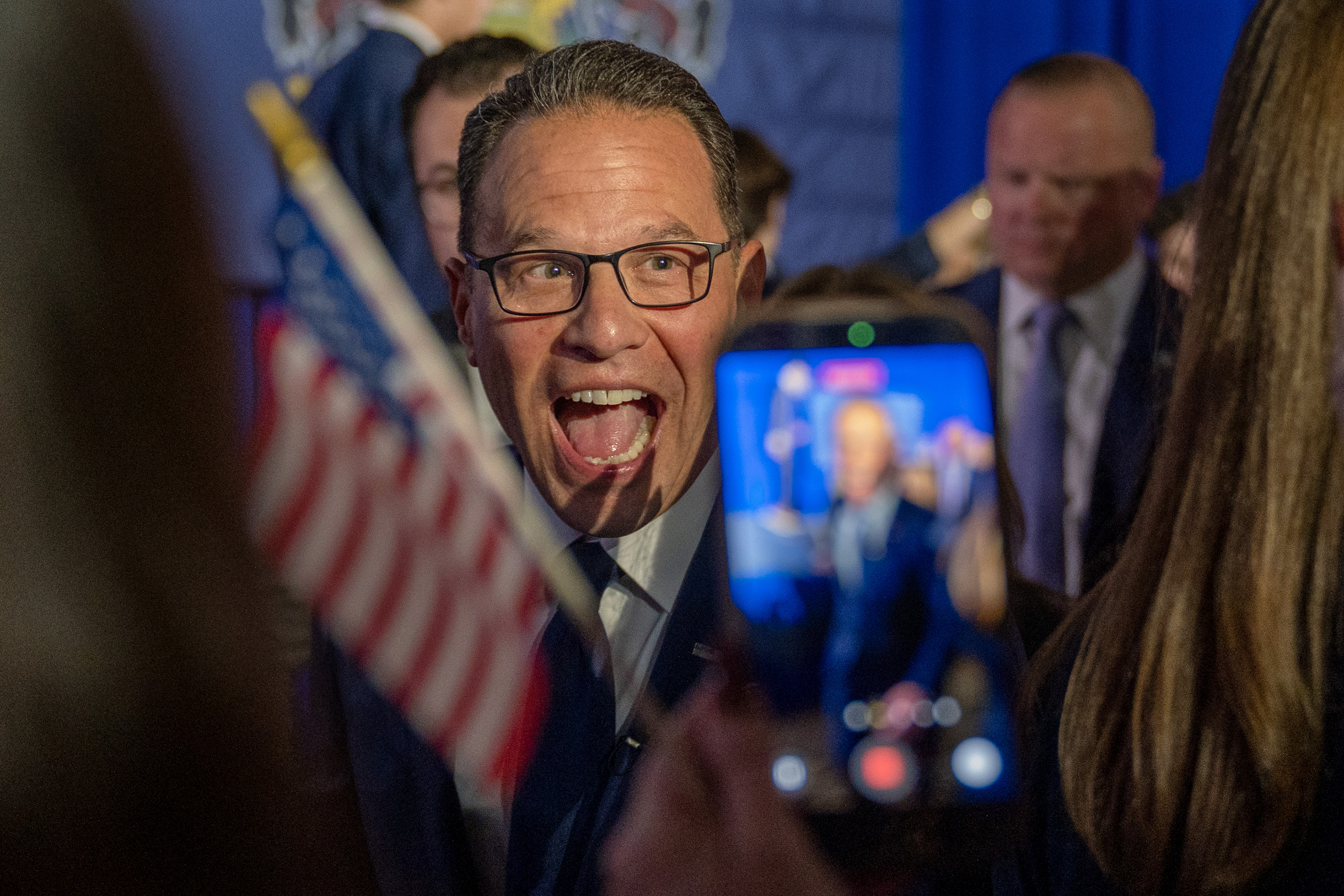
    Gov. Josh Shapiro greets supporters after making his victory speech at his Election Night party in Camp Hill, Tuesday Nov. 3, 2026.Tom Gralish / Staff Photographer

    Rarely do we get to see Shapiro giddy or animated, but our photographer Tom Gralish was able to capture him authentically gleeful on Tuesday evening at his reelection party in Camp Hill. Shapiro went on to bring a similar excitement about Pennsylvania Democrats’ major wins to national network news, as he boasted about his own role in Tuesday’s “bluenami.”

    👀 What we’re watching

    The historic midterm results didn’t just answer massive lingering questions about the limits of Trump’s enduring stranglehold on American politics. It raised countless others — transforming the range of possibilities for the rest of Trump’s time in the White House and far beyond it.

    How will Democrats unite — or butt heads — as they wield their new majorities in Congress amid their own ideological battles? How will Republicans, both in Pennsylvania and Washington, handle the repudiation of a president who’s molded their party in his image over a decade?

    By mid-2027, we’ll also likely — finally — get answers to critical questions about 2028.

    Will Josh Shapiro launch a long-rumored campaign? And, if so, how will his record in the nation’s largest swing state match up against what’s almost certainly going to be a huge field of other Democratic governors, senators and outsiders?

    The other big prize on the 2028 ballot for both parties will be John Fetterman’s seat in the U.S. Senate. Fetterman’s decisions about his own future are a mystery that may not be answered any time soon.

    But Democrats who’ve been promising for months to oust him are already preparing to run (check out our coverage of Rep. Chris Deluzio here) or deciding against it (Rep. Brendan Boyle is taking his talents to the Budget Committee chairmanship).

    Quote of the week

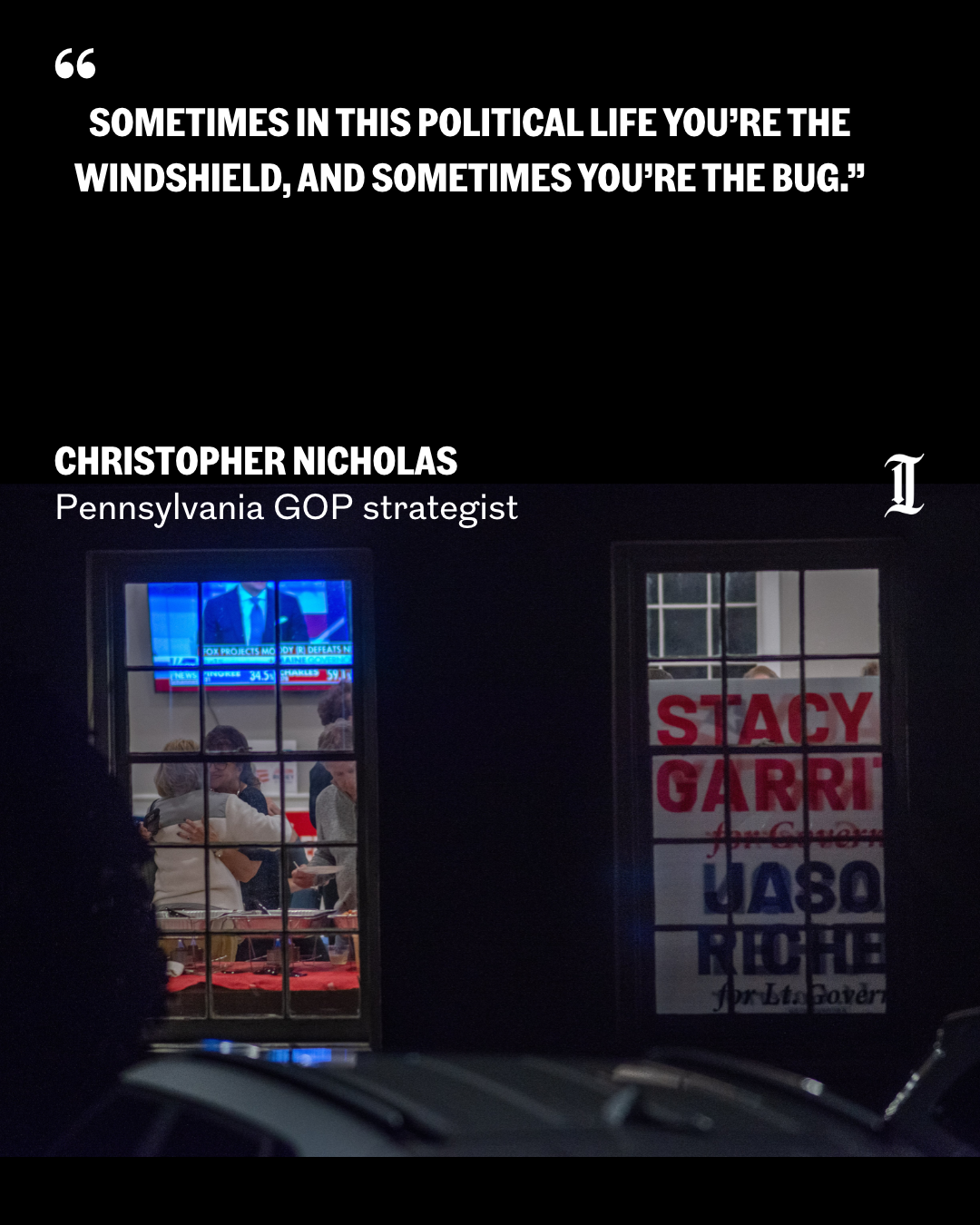
    Christopher Nicholas, a GOP consult, described the reality for Pa. Republicans.William Thomas Cain / For The Inquirer

    Nicholas, a veteran strategist who grew up in Bucks County, captured the reality for Republicans after their wipeout across the state and country.

    It happens.

    Democrats were the bug just two years ago when they lost every statewide race and two congressional seats. But this year, they were the windshield, and Republicans went splat.

    The contrast in mood between the two parties was stark.

    Harvie held his election night party at a massive wedding venue while Fitzpatrick watched in private and Bucks County Republicans kept a small watch party closed to the media. And up in Wyoming County, the AP called Garrity’s loss a minute after polls closed, as people were still filtering into her party.

    👋 Thank you for following along on our journey through the homestretch of this chaotic, exciting, and unpredictable midterm cycle. This may be our last PA 2026 newsletter, but you can always find our in-depth reporting here.

    And see you in 2028? 😎

    By submitting your written, visual, and/or audio contributions, you agree to The Inquirer’s Terms of Use, including the grant of rights in Section 10.

  • Bucks County Democrats tried for years to unseat Brian Fitzpatrick. Here’s how Bob Harvie finally did.

    Bucks County Democrats tried for years to unseat Brian Fitzpatrick. Here’s how Bob Harvie finally did.

    Bob Harvie was still processing.

    On Wednesday morning, Bucks County’s new representative-elect waded through congratulatory text messages (four hours later he still hadn’t made a dent), fielded a phone call from an excited Gov. Josh Shapiro and Lt. Gov. Austin Davis, and attended a meeting with colleagues on the county commissioners board.

    “I don’t know if it’s really sunk in,” Harvie said in an interview Wednesday afternoon.

    Shortly after midnight, Harvie became the first Democrat to win Bucks County’s congressional seat since 2008 — a historic outcome, toppling one of the most entrenched Republican dynasties in the country. He had just delivered a victory speech at a Newtown event hall to a crowd with adrenaline and pizza coursing through their veins.

    At first, successfully challenging U.S. Rep. Brian Fitzpatrick, a five-term incumbent whose brother previously held the seat, seemed like an uphill battle.

    But the momentum kept shifting in Harvie’s favor, he said, as voters in the 1st Congressional District sought to put a check on President Donald Trump’s agenda. He ultimately achieved what no other Democrat has done before — defeating Fitzpatrick.

    Harvie’s victory, combined with Democratic wins in the Lehigh Valley, Northeastern Pennsylvania, and the Harrisburg area, helped his party handily secure control of the U.S. House as part of a blue wave that enveloped the country.

    All precincts in the 1st District, which also includes a portion of Montgomery County, shifted toward Harvie on Tuesday, an Inquirer analysis of voting data found.

    (function(){function e(){window.addEventListener(`message`,function(e){if(e.data[`datawrapper-height`]!==void 0){var t=document.querySelectorAll(`iframe`);for(var n in e.data[`datawrapper-height`])for(var r=0,i;i=t[r];r++)if(i.contentWindow===e.source){var a=e.data[`datawrapper-height`][n]+`px`;i.style.height=a}}})}e()})();

    The Democrat won most of Lower and Central Bucks as well as Montgomery County.

    Democrats in Bucks County appeared to have played the long game to get to this almost politically surreal moment, and it was enhanced this year by Trump’s toxic political brand, Shapiro’s lights-out win, and a message focused on affordability.

    For the last decade, the party had tried and failed to unseat Fitzpatrick, who in years past had managed to gain support from voters across the political spectrum and win almost regularly by double digits, but each of those candidacies helped chip away at the Republican’s tenure, resulting in this year’s seismic seat flip.

    When Harvie, a county commissioner, launched his candidacy, he felt he could win the race, he said, but because of previous election results in the district, he acknowledged he was “swimming a little upstream.”

    Though something changed this year.

    “I was a different kind of candidate than he was used to facing,” Harvie said.

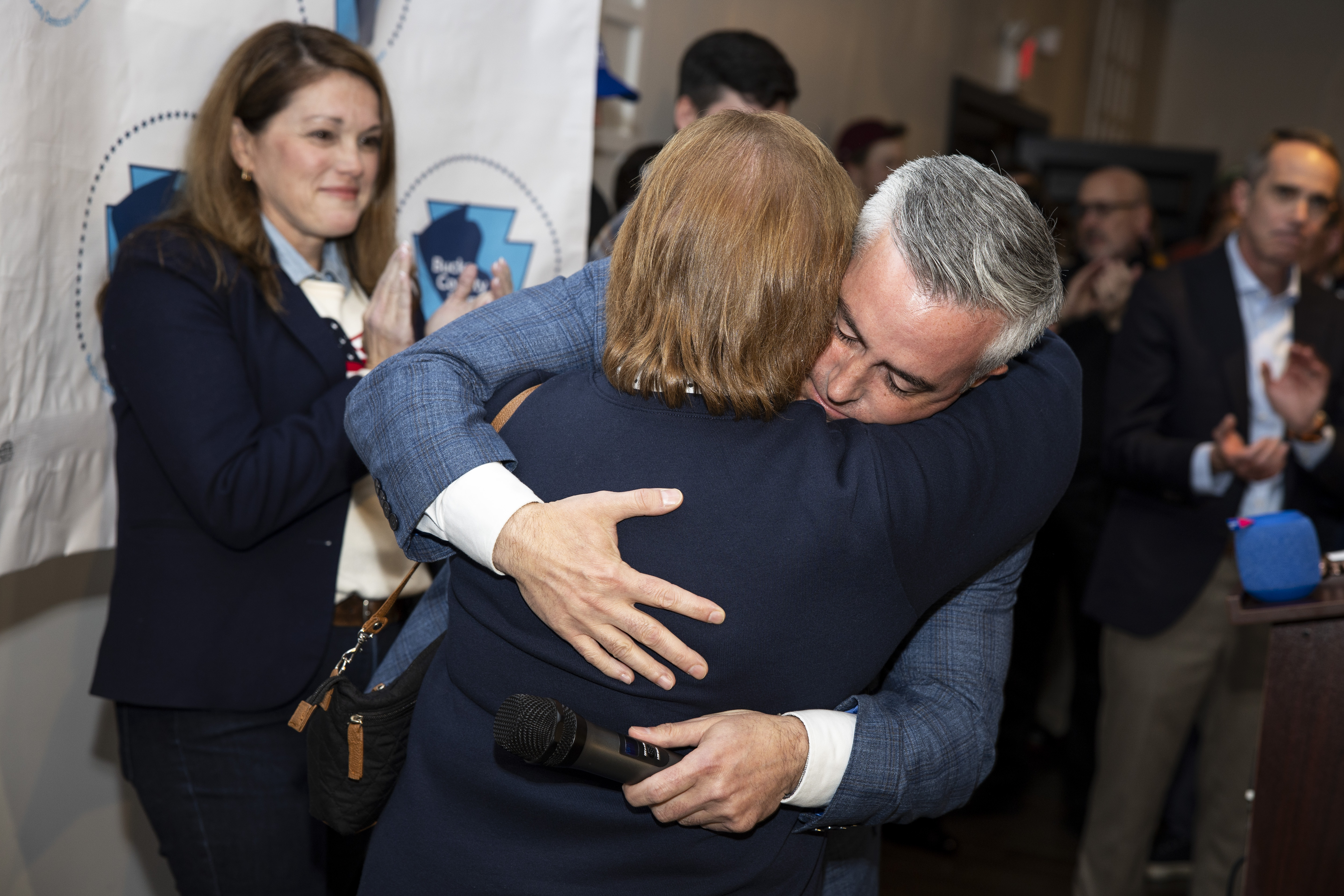
    U.S. Rep.-elect Bob Harvie greets his mom (left) at his election night party at Rafters on Tuesday, Nov. 3, 2026 in Newtown, Pa.Monica Herndon / Staff Photographer

    ‘I’m a different candidate, it’s a different time’

    Harvie was the first challenger of Fitzpatrick’s to have previously won countywide office. His deep roots in Bucks gave him a level of familiarity among voters.

    When donors or outside supporters initially had “fatigue” about backing yet another Democrat in the 1st District, the connections he had made in running for county commissioner were crucial, Harvie said.

    On top of that, the mood of the country — including voters’ deep disapproval of Trump — combined with Harvie’s affordability-focused message as residents grappled with the cost of living proved successful for his campaign.

    (function(){function e(){window.addEventListener(`message`,function(e){if(e.data[`datawrapper-height`]!==void 0){var t=document.querySelectorAll(`iframe`);for(var n in e.data[`datawrapper-height`])for(var r=0,i;i=t[r];r++)if(i.contentWindow===e.source){var a=e.data[`datawrapper-height`][n]+`px`;i.style.height=a}}})}e()})();

    “The argument I made from the beginning was that this is a different race, I’m a different candidate, it’s a different time, and focusing literally from the start of the campaign, focusing on issues — even before affordability was something people were focusing on, it was what we were focusing on,” Harvie said.

    But Harvie had to overcome some hurdles, too, before he reached a surge of momentum in the final weeks of his campaign.

    He lagged in fundraising and was without support from dozens of influential labor unions, and the investment from the national party was less pronounced during the first several months of his bid.

    “The flippable four was the big three for a time, and the national environment combined with the really strong candidacy of Bob Harvie made it into the flippable four,” Bucks County Sheriff Danny Ceisler, a Democrat and top surrogate for the Harvie campaign, said in an interview.

    (Ceisler’s own win against a Trump-aligned Republican in 2025, along with the Democratic sweep of other local row offices, was seen as an early building block to Harvie’s win this year.)

    “I was screaming to anybody who would listen that Bob Harvie had a real shot in this race, and in really the last six to eight weeks, we saw the national party begin to take interest,” Ceisler said.

    The Democratic Congressional Campaign Committee, the national arm dedicated to electing Democrats to the U.S. House, started infusing cash into the 1st District race in October, which was the first time since the 2020 election it had done so.

    Eli Cousin, a spokesperson for the DCCC, said that the organization has been behind Harvie since day one, including adding him early on to its “Red to Blue” list.

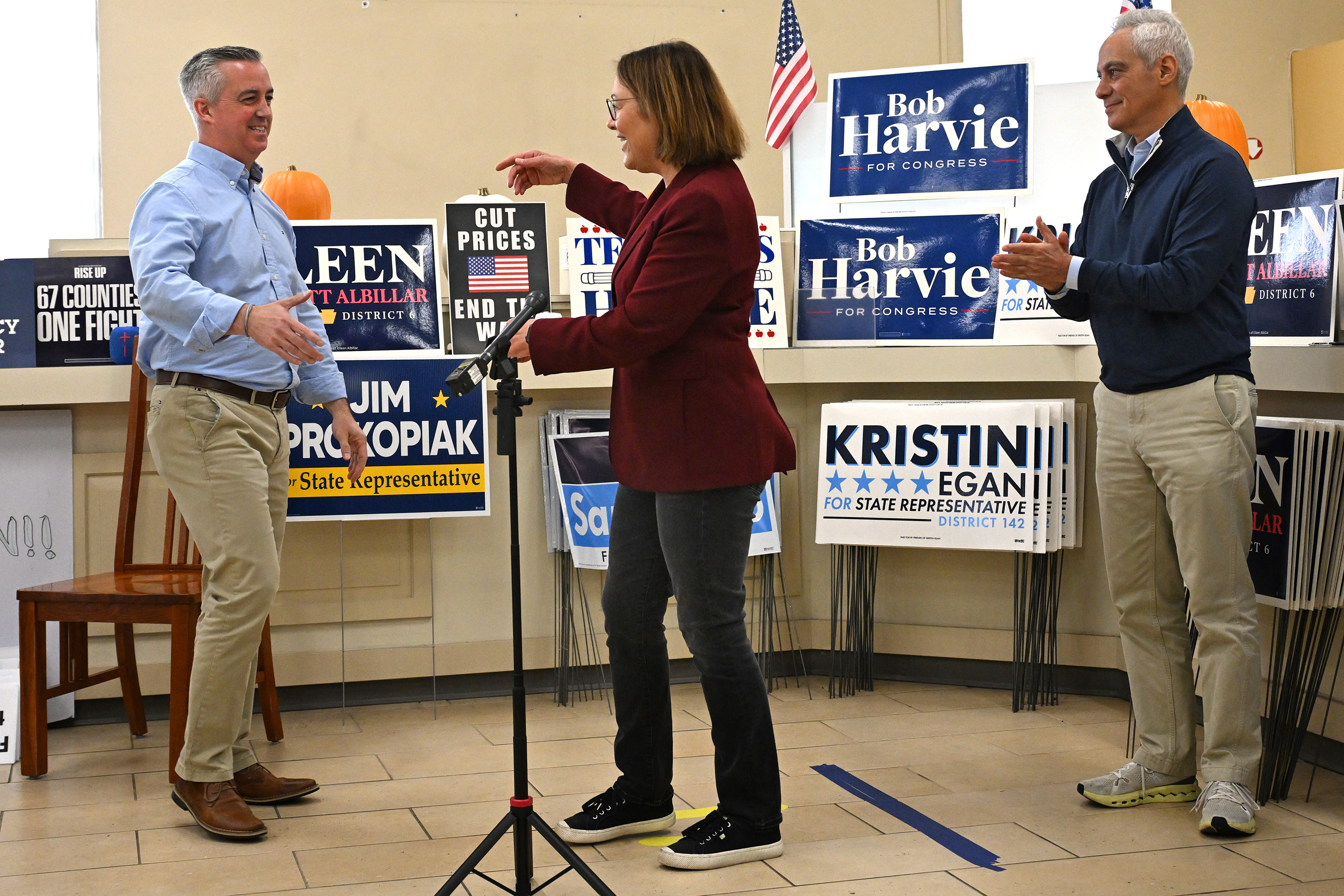
    The down-the-stretch spending was planned, strategic timing in an expensive Philadelphia media market against a well-financed opponent who was flooding the zone with ads, and Cousin noted that the DCCC ended up spending more on broadcast in the 1st District than on the other Pennsylvania swing seats. DCCC chair Suzan DelBene also visited Bucks County and held an event with Harvie the day before Election Day.

    “It would have been very easy for the DCCC to just say we’re gonna go and pick a different race and put money in somewhere else,” Cousin said. “We stayed the course. We were very intentional about when and where we were spending and what message we were carrying. And wave or not, our spending absolutely moved the needle and brought Democrats home for Bob Harvie.”

    State Sen. Steve Santarsiero, chair of the Bucks County Democratic Committee, said Wednesday that with the victory secured, it’s up to Democrats to deliver for voters.

    “I am confident that Bob Harvie is never going to forget that lesson. … He will serve for years to come because I believe that people will see just how dedicated he is to their interests and moving us forward,” Santarsiero said.

    Democrat Bob Harvie (left) joins U.S. Rep. Suzan DelBene, chair of the Democratic Congressional Campaign Committee (DCCC), and former Chicago Mayor Rahm Emanuel (right) as they campaign for him at his Bucks County headquarters Monday, Nov. 2, 2026.Tom Gralish / Staff Photographer

    Josh Shapiro’s impact

    Was Tuesday’s contest anti-Trump or pro-Shapiro?

    It was a “pro-good government election,” Harvie said.

    Support for the Democrat was driven simultaneously by disdain for the president and admiration for the governor.

    Harvie and the three other Democrats in the four key U.S. House contests “got rid of four of Trump’s enablers,” Shapiro declared at a news conference Wednesday.

    Shapiro spent almost every weekend in October in Bucks County, pulling more focus to the race. Harvie said Wednesday that Shapiro had gone to bat for him in Washington and told party leaders that “this race was real, that I was a real candidate, and that this was going to be different this year.”

    Harvie also pointed to Davis and individuals he knew within the DCCC as being early supporters of his campaign, in addition to Democratic U.S. Reps. Chris Deluzio, Madeleine Dean, and Mary Gay Scanlon, who also vouched for the candidate.

    And as Shapiro had his best approval rating among the four congressional districts in the 1st, an October Inquirer/New York Times/Siena University poll found, Trump also had his worst.

    “The top line is this was clearly a repudiation of the president,” said Samuel Chen, a GOP strategist, noting that “I think every policy played a small piece of it.”

    Despite Fitzpatrick constantly working to separate himself from Trump and his status as the only House Republican in Pennsylvania without the president’s endorsement, Trump still contributed to the lawmaker’s downfall.

    Bob Harvie speaks to voters during a town hall at Ben Franklin Middle School in Levittown, P.a. on Saturday, Oct. 24, 2026.Allie Ippolito / For The Inquirer

    Harvie’s campaign — though it centered on issues beyond this — made a point of painting Fitzpatrick as someone who was no longer independent, as the Republican had argued to be, and as an enabler of Trump’s agenda. Fitzpatrick this congressional term voted with the president and his party roughly 70% of the time, the least often of any House Republican.

    Harvie told reporters Tuesday night that he felt the race shifted in his favor back in the spring, before it started picking up more widespread momentum in August, partly because “this administration was not suddenly going to get competent or less cruel.”

    “That they were just going to keep getting worse, and it was just going to be pushing people closer toward a change, quite frankly, what’s happening nationwide when it comes to government,” Harvie said.

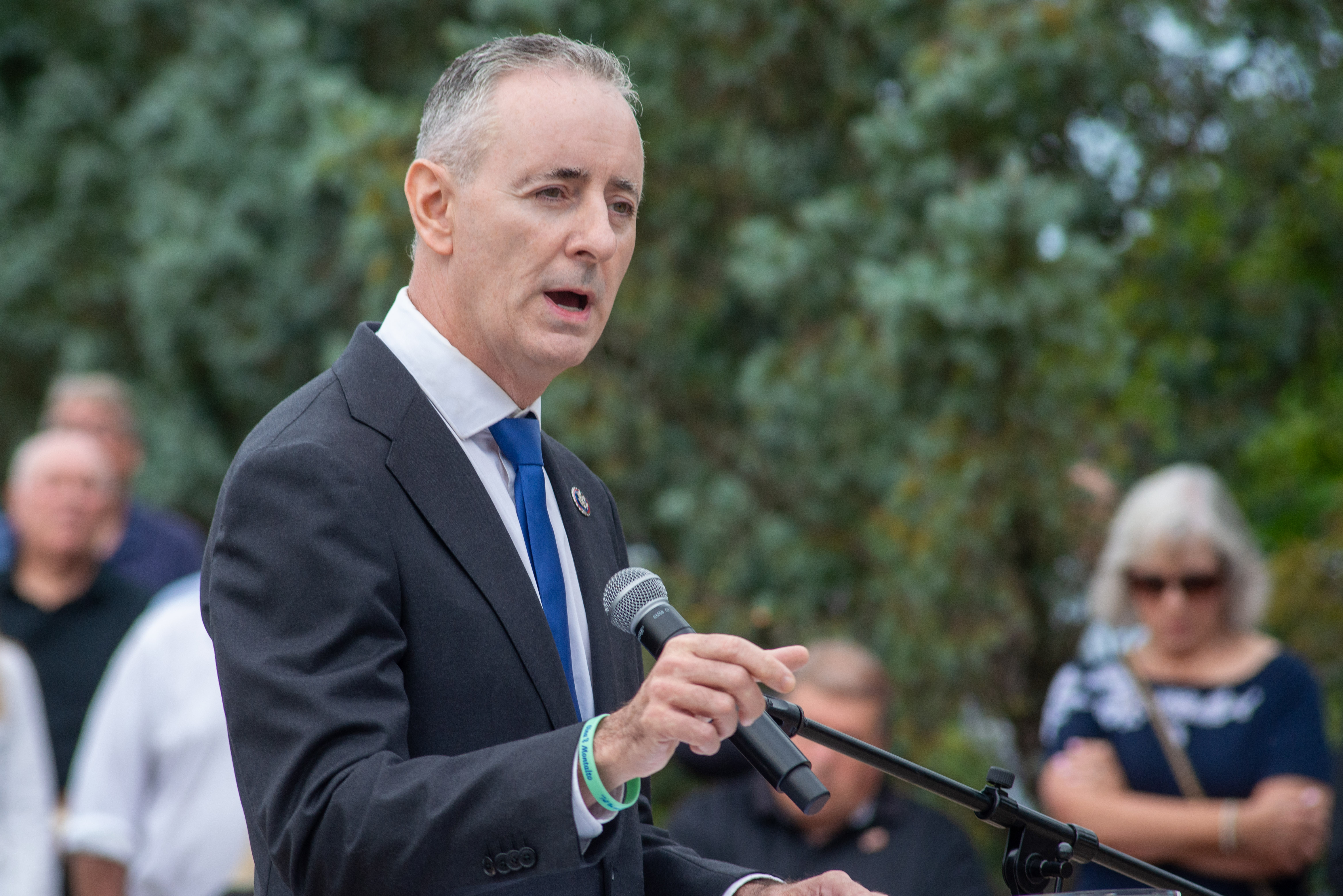
    US Rep Brian Fitzpatrick speaks during the Garden of Reflection remembrance ceremonies Friday, September 11, 2026 at Garden of Reflection in Yardley, Pennsylvania. The Garden of Reflection is Pennsylvania’s official state memorial honoring all 2,973 victims of the September 11 terrorist attacks, with a special tribute to 18 local residents from Bucks County, Pennsylvania.William Thomas Cain / For The Inquirer

    Fitzpatrick’s brand ‘is a lot harder for people to square’

    Despite Fitzpatrick’s survival of earlier blue waves with the help of split-ticket voters, this year’s dynamics were more difficult for the Republican to overcome.

    “When the president has approval ratings that low, there’s only so much you can do downballot to mitigate,” Anthony Campisi, a Democratic strategist, said. “The amount of loyalty that Trump demands means the idea that Fitzpatrick is truly independent is a lot harder for people to square.”

    GOP strategists contend that Fitzpatrick’s loss was a product of the wave and not anything that the Republican, who has been able to appeal to both sides of the aisle, particularly did wrong.

    “Voters sometimes have cognitive dissonance,” said Christopher Nicholas, a GOP political consultant. “They kept telling us they wanted independent bipartisanship, and then they voted out the most bipartisan person in the House.”

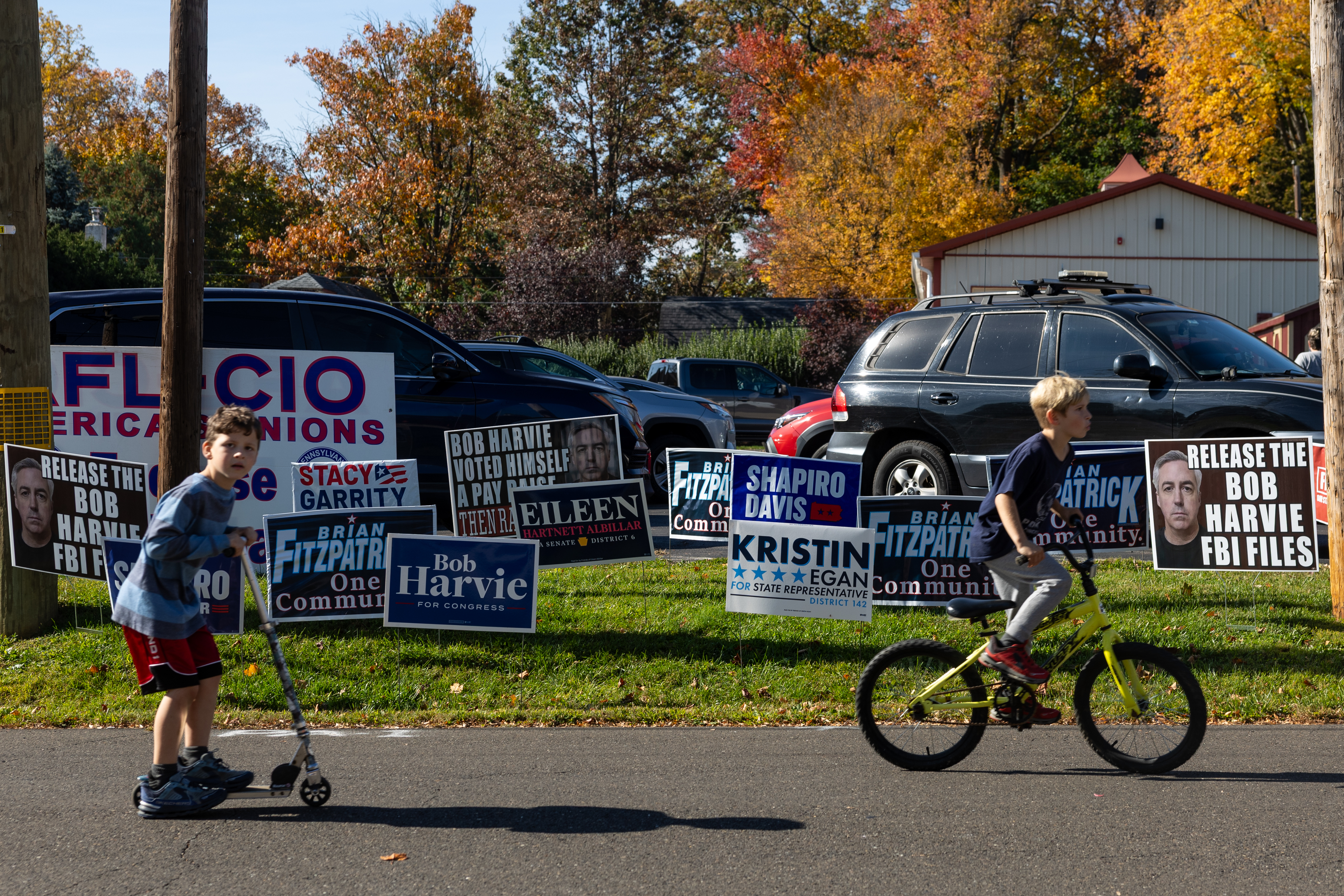
    But Fitzpatrick also ran his most expensive and public campaign yet, holding a rally with labor leaders and focusing much of his resources on negative lines of attack alleging that Harvie was the “subject” of a FBI investigation. Harvie and lawyers have repeatedly said that he has never been under investigation by the bureau.

    The allegations were a hallmark of a tense campaign with jabs from both candidates.

    While Fitzpatrick’s campaign and other groups bombarded the airwaves with anti-Harvie ads and posted billboards throughout the county spreading attacks, the Republican opted for considerably fewer public events on the campaign trail.

    Harvie barnstormed with Shapiro and other prominent Democrats, but he also held four town halls in October across the district, where he fielded questions from voters on their fears and frustrations, a markedly on-the-ground style in contrast to Fitzpatrick’s more private approach in recent years.

    Harvie said he plans to continue town halls when he is in office.

    The Democrat said Wednesday that he had missed a call from Fitzpatrick that morning. When asked if he planned to give him a call back, he said, “I’m sure we’ll connect at some point.”

    Harvie said, ultimately, that he is proud his campaign “didn’t buckle” in the face of negative rhetoric, and that continuing to have roots in the district will keep him grounded and available even when he heads to Washington.

    “This is where I shop. This is my supermarket. This is where I go. I’m not going to change that,” Harvie said.

    Staff writers Joe Yerardi, Anna Orso, and Alfred Lubrano contributed to this article.

  • Voter turnout was down across Southeastern Pennsylvania compared to the 2022 midterms

    Voter turnout was down across Southeastern Pennsylvania compared to the 2022 midterms

    At least in Southeastern Pennsylvania, the blue wave was not fueled by a surge in voter turnout.

    Although some votes are still being counted, Tuesday’s turnout in Philadelphia and the four suburban counties is on track to come in slightly lower than in 2022, the last presidential midterm election cycle.

    In Philadelphia, where more than 99% of ballots had been counted as of Wednesday afternoon, turnout among registered voters was about 44.6%. Four years ago, about 47.4% participated.

    In Montgomery, Chester, and Bucks Counties, turnout was just over 62% on Tuesday, compared to about 66% or more in 2022. And in Delaware County, where almost 61% of registered voters cast ballots in 2022, turnout Tuesday was just shy of 57% as of Wednesday afternoon.

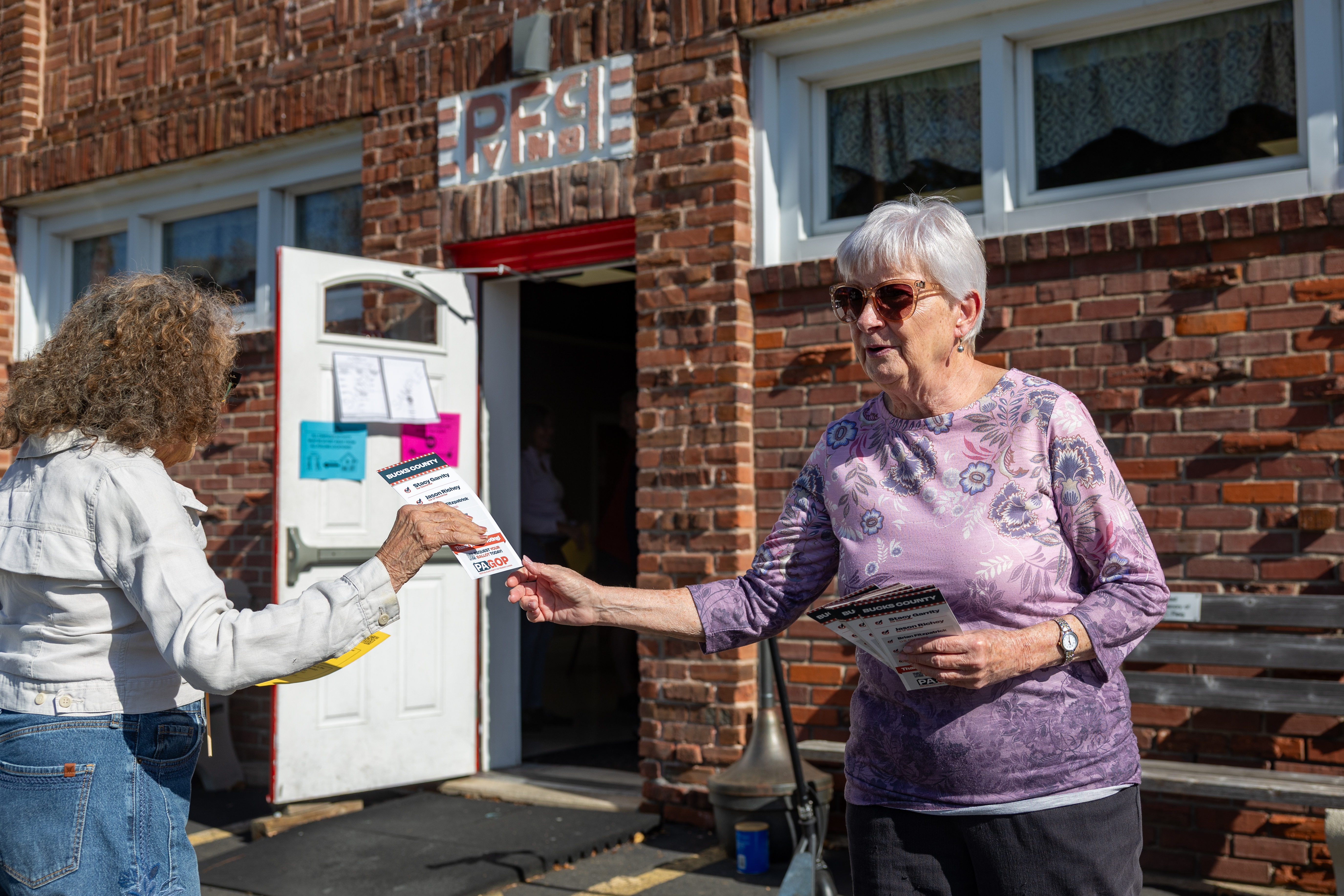
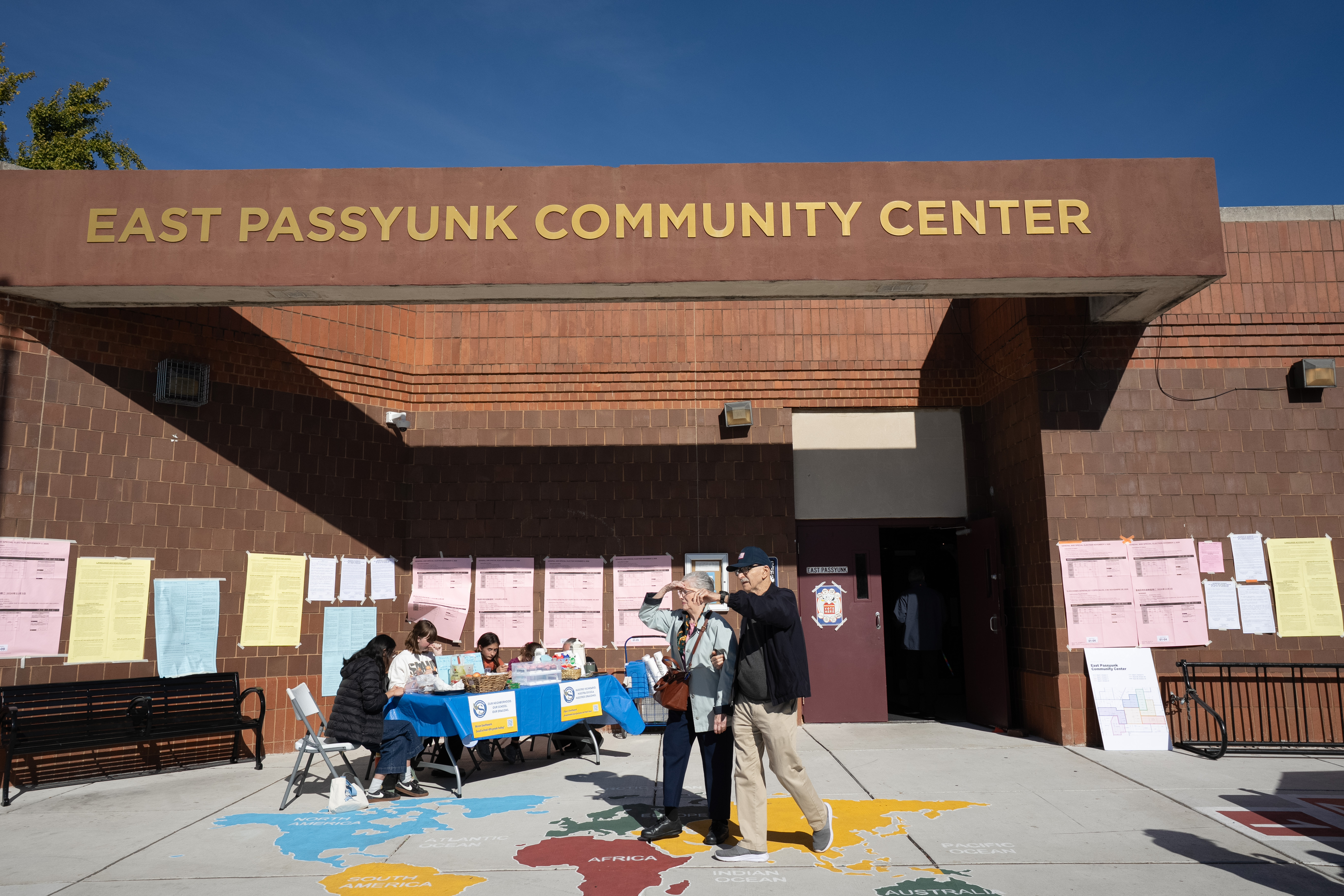
    Committee person Therese Marshall, 77, of Langhorne, Pa., hands out a Republican ballot to a local voter outside the Parkland Fire Company during midterm elections in Langhorne, Pa., on Tuesday, Nov. 3, 2026.Aidan T. Gallo / Staff Photographer

    Some votes still had not been counted by Wednesday, including provisionals, ballots from overseas voters, and mail-in ballots with errors that voters still have a chance to cure.

    That means voter turnout rates are likely to increase slightly before results are finalized. But even if they come close to 2022 levels, there are no signs of a spike in turnout in Philly and the collar counties.

    “In recent midterm elections, it was higher than the turnout that we just had, but we’re not done counting,” Philadelphia City Commissioner Seth Bluestein said.

    Southeastern Pennsylvania’s relatively lower turnout may not reflect a national trend, with voter participation reportedly up in several battleground states and setting records for non-presidential years in Michigan and Minnesota.

    Jim Allen, the elections administrator for Delaware County, said he was surprised turnout wasn’t higher, but declined to speculate why.

    “We expected it do be a little higher, based on the speed with which people were returning their mail and absentee ballots,” Allen said Wednesday. “There seemed to be a strong desire to get that ballot back to us, even though we didn’t have as many applications.”

    Democratic Committee members on Election Day outside polling place located in the Marconi Plaza Bocce Courts, in Philadelphia, November 3, 2026.Jessica Griffin / Staff Photographer

    One reason turnout may have been depressed locally was a dearth of competitive races that could draw voters to the polls.

    “We had one competitive state [representative] race, based on the results,” Allen said of Delaware County.

    Pennsylvania did not have a U.S. Senate this year, for the first time in a midterm since 2014. In the only statewide race on the ballot, Democratic Gov. Josh Shapiro cruised to victory as expected over Republican Stacy Garrity.

    And only one U.S. House race in the region was viewed as competitive heading into Election Day. In that contest, Democrat Bob Harvie unseated Republican U.S. Rep. Brian Fitzpatrick in the Bucks County-based 1st Congressional District.

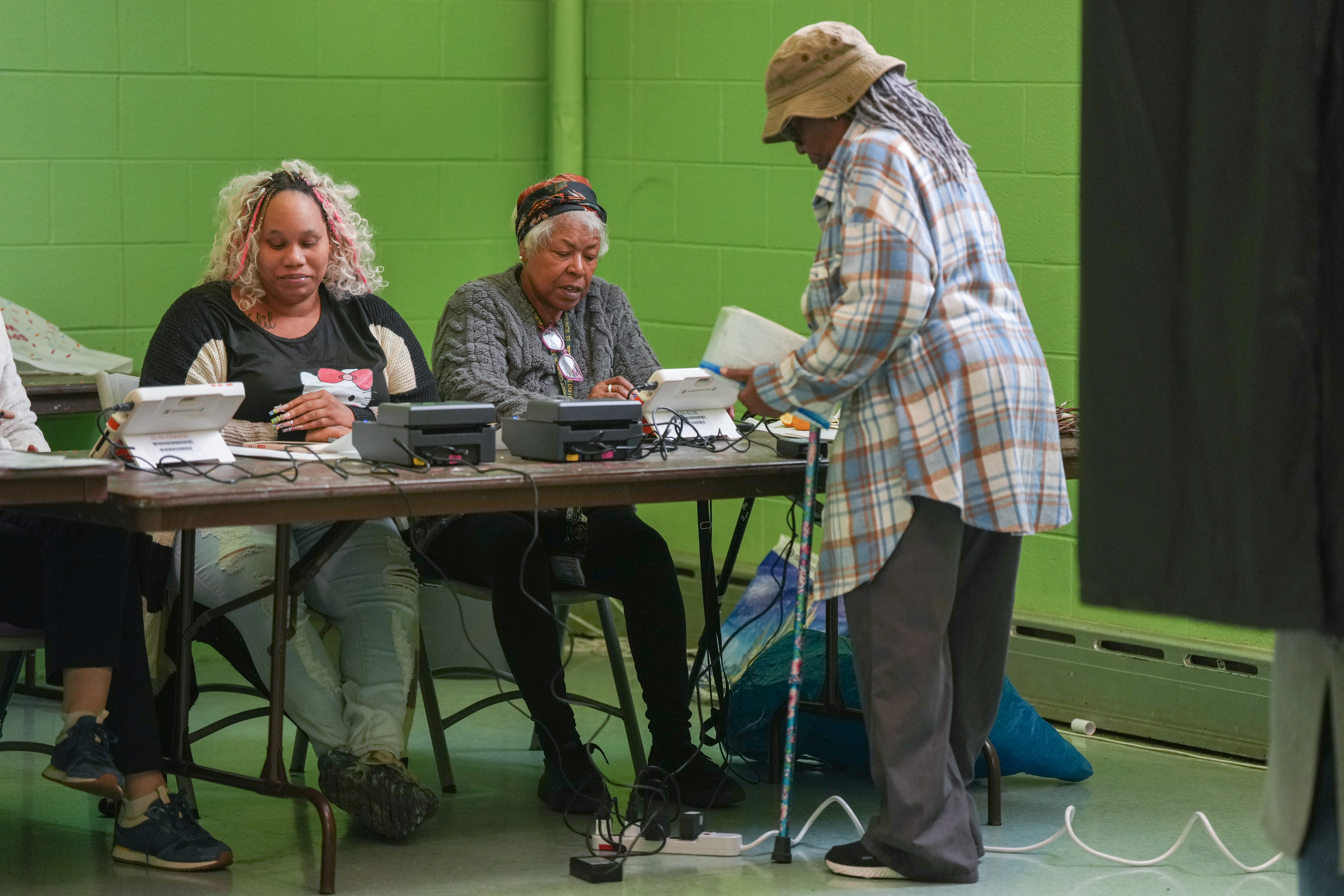
    Volunteers assist a voter at the polls at the Hawthorne Recreation Center, on Election Day, in Philadelphia, November 3, 2026.Jessica Griffin / Staff Photographer

    Another reason may be that the blue wave had as much to do with Republicans staying home as it did with Democrats flocking to the polls.

    Montgomery County Commissioner Neil Makhija, a Democrat who chairs the county’s elections board, said the turnout story provides a warning for his party as it takes the reins of power.

    “Much of the win is likely from Republicans who didn’t have the enthusiasm to turn out,” Makhija said. “It’s an important lesson for Democrats because the right answer to that is we need to actually respond to the pressing issues people are facing. Otherwise, the same thing will happen when Democrats are in charge.”

    This year’s participation levels were a stark contrast from 2018, the first midterm election under President Donald Trump. That year, Democrats made major gains as turnout surged to about 65% or higher in Bucks, Montgomery, and Chester Counties that year, and north of 50% in Philadelphia.

    In 2022, when local turnout had slipped from four years earlier but was still relatively strong, the ballot in Pennsylvania was headlined that year by an ultra-competitive Senate race in which Democrat John Fetterman topped Republican Mehmet Oz.

    Jim Knapp, who chairs the Haverford Township GOP in Delaware County, said he sensed a lack of enthusiasm heading into Election Day.

    “At a cursory glance, it’s pretty disappointing. There’s just a lot of apathy,” Knapp said. “I didn’t see a whole lot of lawn signs.”

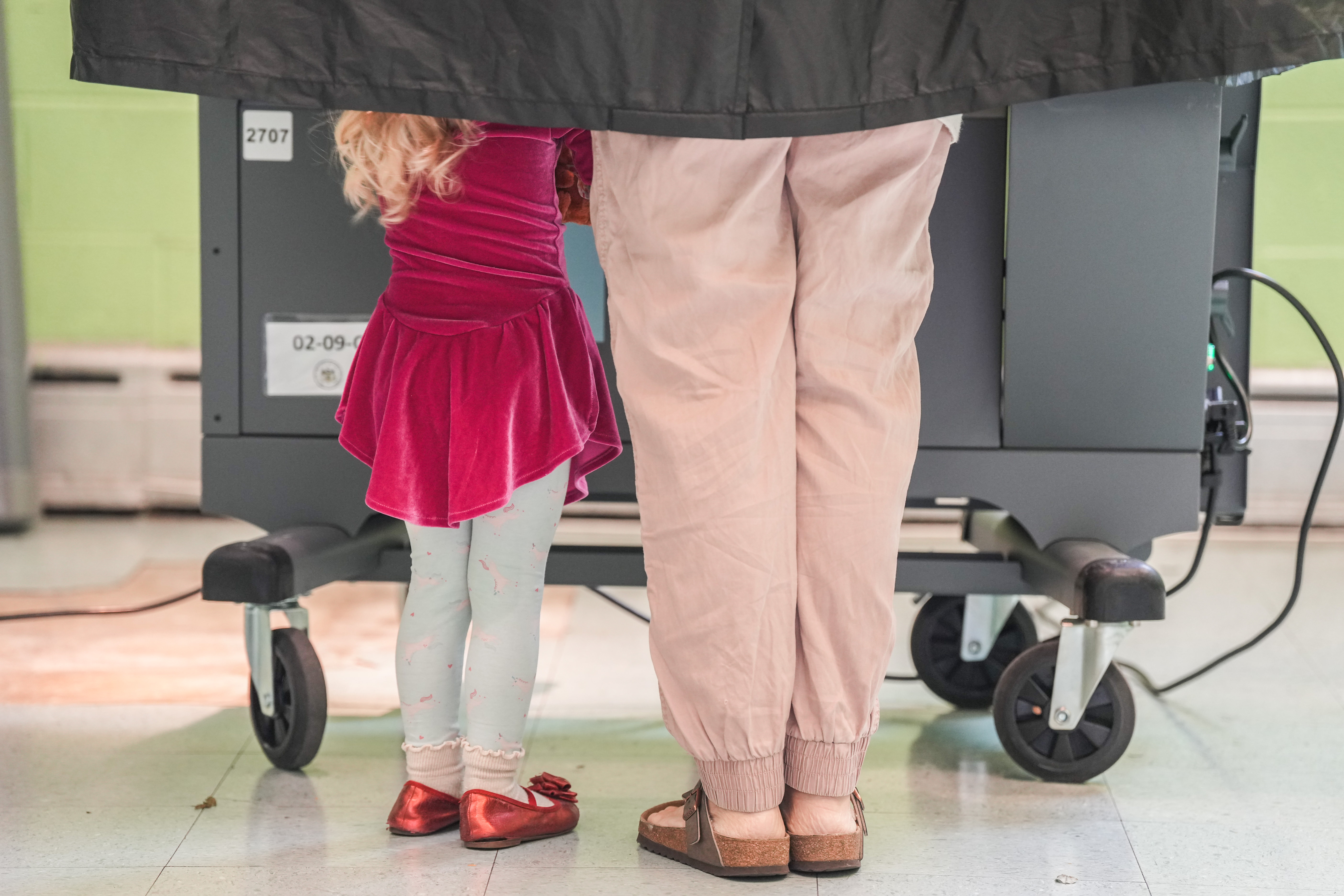
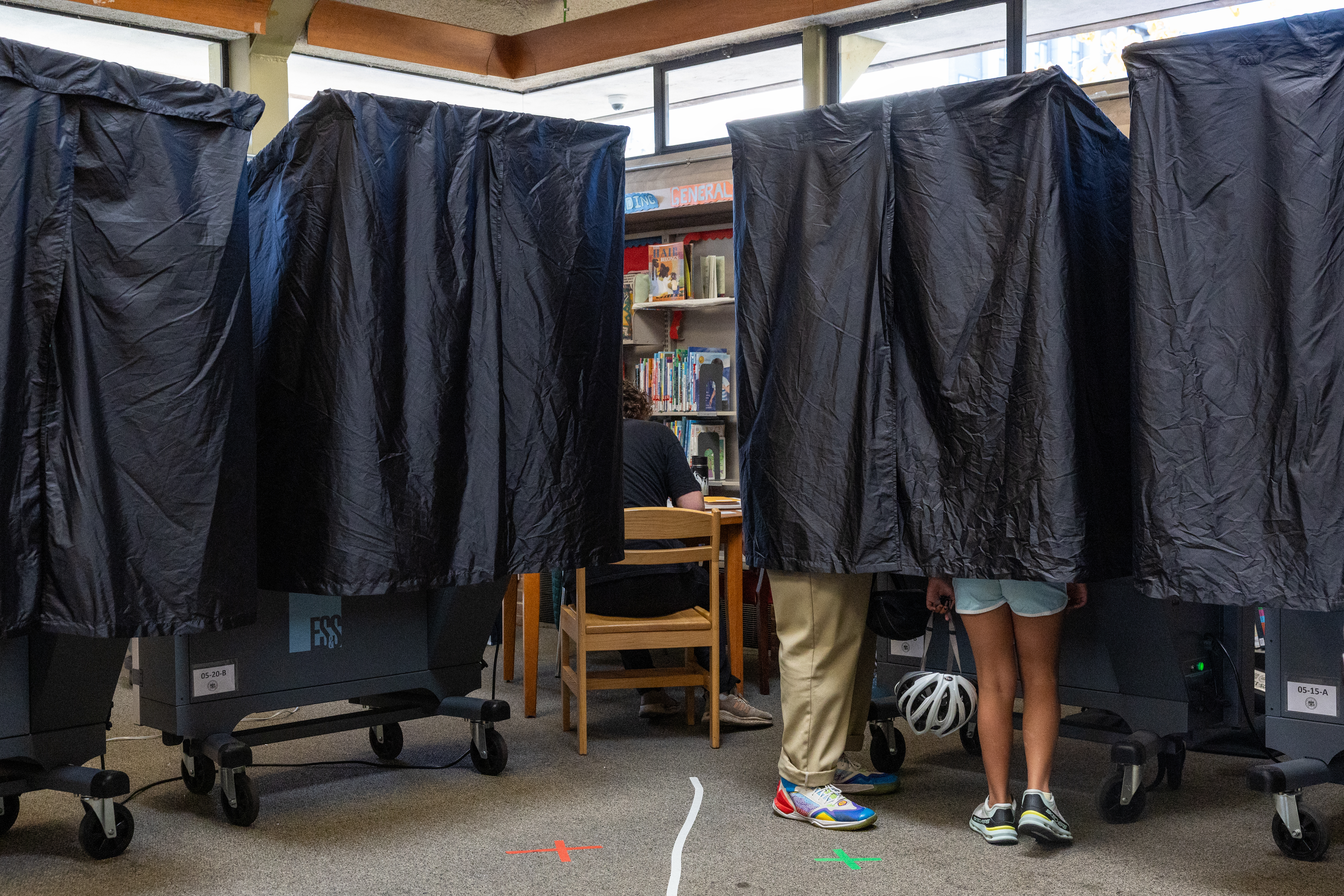
    Bronwynn Hall and her three-year-old daughter, Elodie, vote at the Hawthorne Recreation Center, on Election Day, in Philadelphia, November 3, 2026.Jessica Griffin / Staff Photographer
  • Philly’s U.S. Rep. Brendan Boyle said he won’t run for Sen. John Fetterman’s seat in 2028

    Philly’s U.S. Rep. Brendan Boyle said he won’t run for Sen. John Fetterman’s seat in 2028

    U.S. Rep. Brendan Boyle (D., Philadelphia) said Wednesday he would not run for U.S. Sen. John Fetterman’s seat in 2028, opting instead to focus on serving as chair of one of the most powerful committees in Congress after Democrats’ dominant victories to regain control of the U.S. House.

    Boyle, who will begin his seventh term in January, is set to take the reins of the House Budget Committee, the first Pennsylvanian to do so in nearly four decades.

    His decision takes a potentially formidable candidate off the board as Fetterman’s seat becomes the highest-profile Pennsylvania election after this year’s midterms. The senator has not said whether he will seek a second six-year term, though he has alienated his former voter base and Democratic allies while being largely absent from the job.

    Boyle, Pennsylvania’s longest-tenured House Democrat and one of the most outspoken against Fetterman, had not ruled out a 2028 campaign. One of his colleagues, U.S. Rep. Chris Deluzio (D., Allegheny), has more openly positioned himself to run.

    Boyle said in a statement Wednesday that he had weighed both options and now believes he can be most effective in the House.

    “For months, many of my supporters have urged me to consider running for U.S. Senate in 2028. I have always said that after the November 2026 election, I would make a decision based on one simple question: where can I have the biggest impact on public policy?” Boyle said. “After months of consulting many whom I respect, including current senators and past committee chairs, it is quite clear that I can have a much bigger impact on policy as Budget Committee Chairman rather than as a freshman member of the Senate.”

    As the top Democrat on the committee while it was under Republican control for the last four years, Boyle would still have to be selected by his colleagues to serve as its chairman, though he is not expected to face opposition. Lawmakers and incoming members of Congress will return to Washington in the coming weeks to organize ahead of the next session in January.

    Boyle will likely become the first Budget Committee chair from Pennsylvania since U.S. Rep. Bill Gray, another Philadelphia Democrat, led it from 1985 to 1989.

    The group has critical sway over annual spending bills and economic issues — putting Boyle in charge at a time when voters have seemingly elected Democrats with a mandate to focus on affordability issues. Boyle has consistently focused on those topics, becoming one of his party’s “best messengers,” Hakeem Jeffries, the New York Democrat in line to be the country’s first Black speaker of the House, said last year.

    Jeffries credited Boyle for pushing back against President Donald Trump’s One Big Beautiful Bill Act — which enacted tax cuts while trimming spending on Medicaid and food assistance — and the expiration of Affordable Care Act tax credits, which raised premiums for millions of Americans this year.

    Boyle has also used his leadership position on the committee to take an early lead on Democrats’ messaging that tied the war in Iran to larger affordability issues as gas prices spiked. In September, a nonpartisan analysis he requested found the war was costing American taxpayers up to $3 billion per month. Voters on Tuesday repeatedly mentioned the war as a motivating factor when they rejected Republican candidates, and Democrats who won have promised to make ending the war a top priority moving forward.

    “I look forward to utilizing my position as Budget Committee Chairman to finally get this nation’s fiscal health back on track, and bring more resources back home to our community,” Boyle said.

    Boyle, 49, of Somerton, won an easy reelection Tuesday in a heavily Democratic district that stretches from Center City through Northeast Philadelphia.

    When the new Congress starts, he will have served longer than all but two of Pennsylvania’s 17 federal lawmakers and be the dean of a much larger Democratic bloc. Four challengers to Republican incumbents — including U.S. Rep. Brian Fitzpatrick, the last Republican serving in the Philadelphia area — won in the massive blue wave, tipping the final ranks of the Keystone State delegation in the House to 11 Democrats and six Republicans.

    Deluzio, who was elected to a third term in a district outside Pittsburgh, was the incumbent Democrat who campaigned the most aggressively to flip those seats, including fundraising and events for candidates like Bucks County Commissioner Bob Harvie, who beat Fitzpatrick. His additional fundraising and messaging have fueled expectations that he will run for Senate, a prospect he said he is considering.

    Fetterman, meanwhile, said in September that his future would become more clear after the midterms. As of Wednesday afternoon, he had not yet commented on his party’s generational victories the day before, which likely eliminated the possibility of him being a regular, and powerful, swing vote for the next two years.

  • Bob Harvie ousts Brian Fitzpatrick in Bucks County, flipping a House seat Republicans have held for over a decade

    Bob Harvie ousts Brian Fitzpatrick in Bucks County, flipping a House seat Republicans have held for over a decade

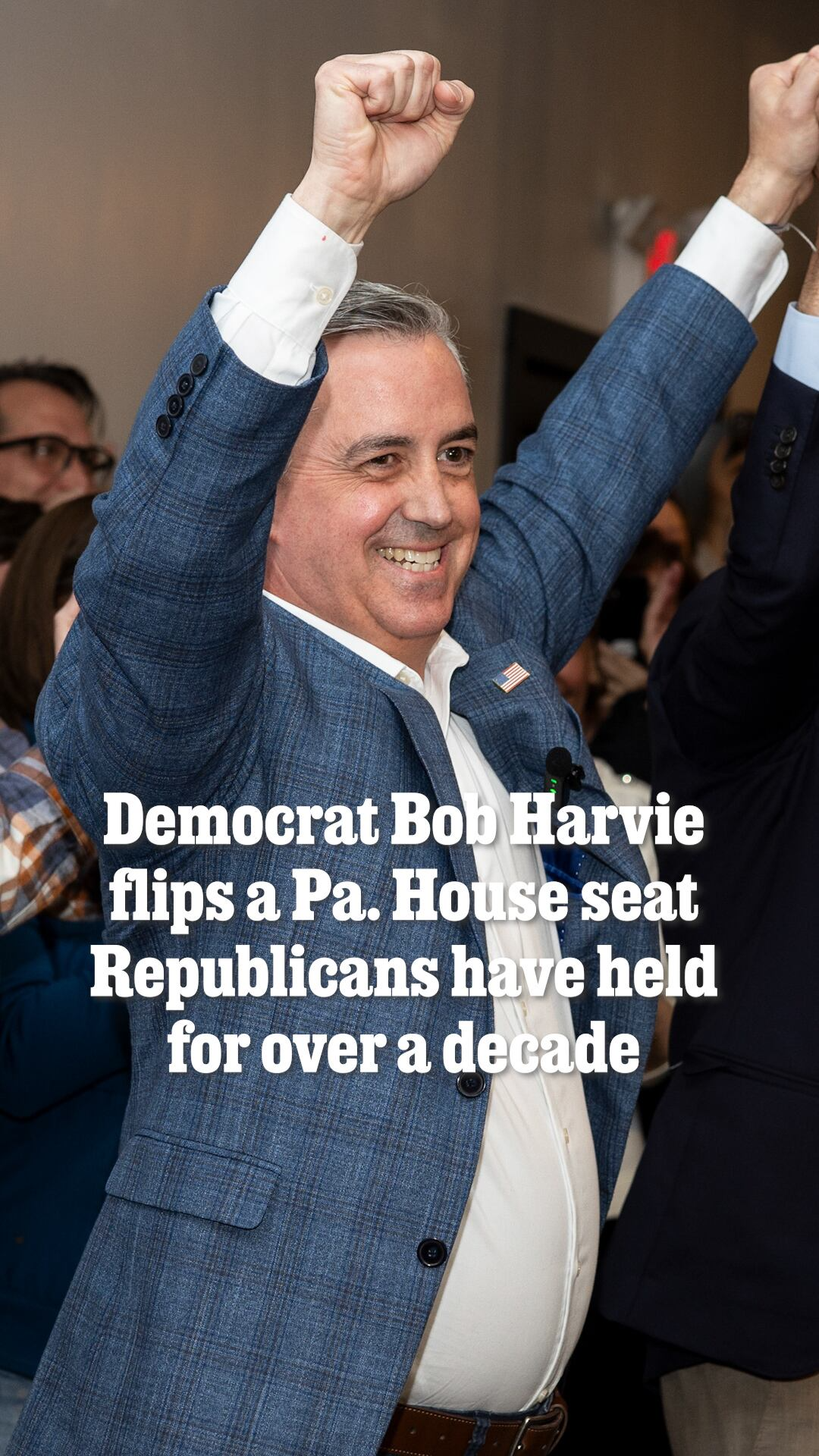
    Democratic County Commissioner Bob Harvie has defeated Republican incumbent U.S. Rep. Brian Fitzpatrick in Bucks County’s 1st Congressional District — a monumental outcome in one of the most closely watched races in the country.

    Harvie’s victory is seismic and marks the first time that a Democrat will represent Bucks County in Congress since 2011. Fitzpatrick is a five-term incumbent who has survived multiple blue waves in the past, touted enormous fundraising numbers and decades worth of family-name recognition, and has historically been able to score support from across the political spectrum.

    Running against one of the toughest incumbents in the country, Harvie, 55, had a lot of ground to cover as he lagged in fundraising and name recognition in comparison. But his momentum came in the homestretch, powered by three visits from popular Gov. Josh Shapiro, increased spending and attention from the national party, and a political climate fostered by President Donald Trump that has shown to be extremely toxic for Republicans on the ballot this year.

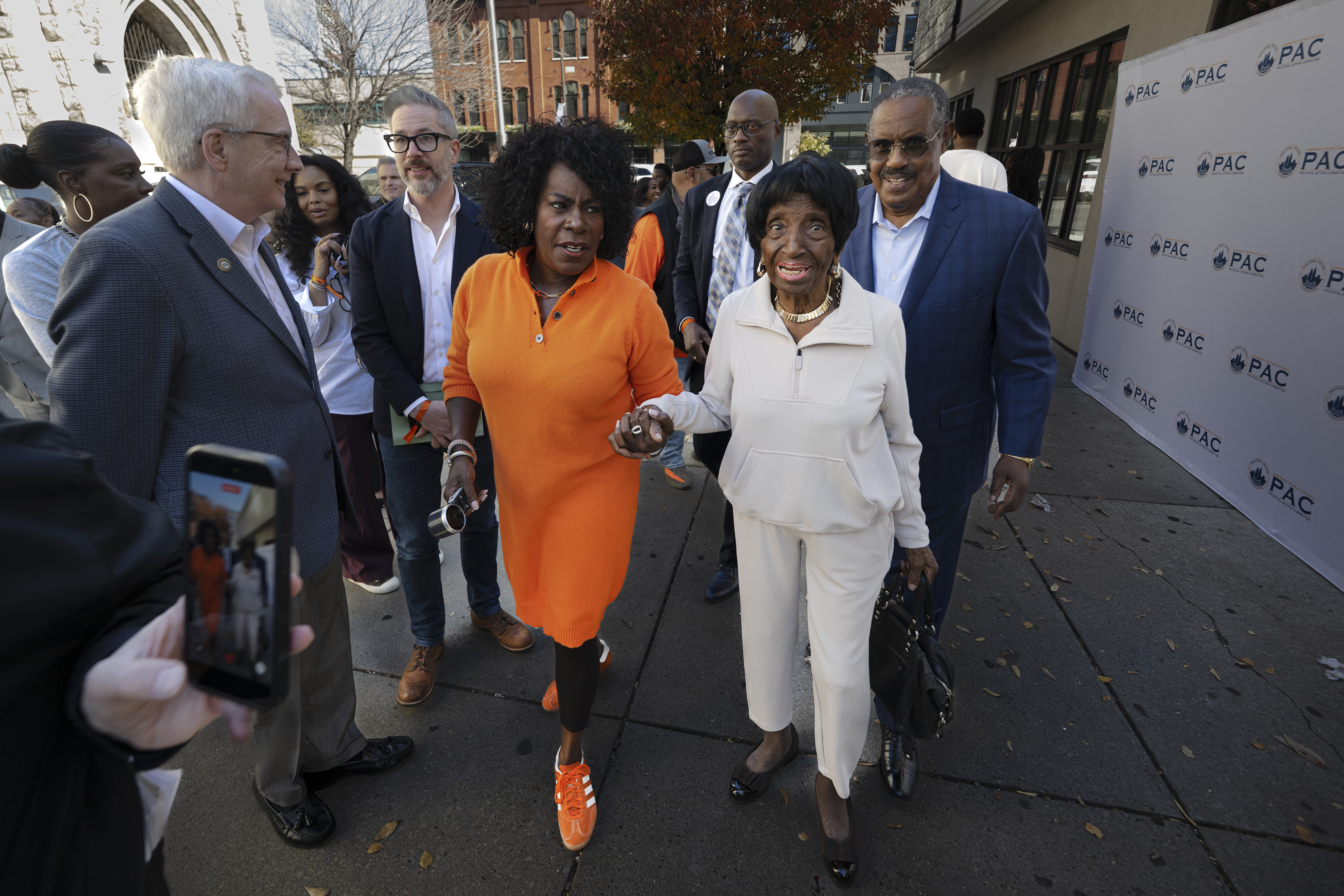
    “I was a Republican all my life, but this is the first time I went full Democrat,” said Dolores Hatton, 82, of Levittown, who listed the economy and cost of living among her chief concerns.

    The 1st Congressional District, which includes all of Bucks County and a part of Montgomery County, was one of four congressional races heavily targeted by both parties as they battled for control of the U.S. House.

    In an October Inquirer/New York Times/Siena University poll, Harvie was narrowly leading Fitzpatrick in the margin of error, a practically unthinkable prospect in years past. Democrats have worked to unseat Fitzpatrick for the better part of the past decade, but voters across the political spectrum in Bucks County — one of the swingiest parts of Pennsylvania — routinely decided to keep the Republican around.

    Harvie joined fellow Democrats on election night at Rafters, a 10,000-square-foot venue in Newtown, which often hosts weddings. Supporters backed the rustic-style event space — mingling with friends, eating pizza, and sipping drinks as they watched the election returns projected up on a wall.

    In blue wave victory, Democrat Bob Harvie flips a House seat Republicans have held for over a decade
    Video: In blue wave victory, Democrat Bob Harvie flips a House seat Republicans have held for over a decade

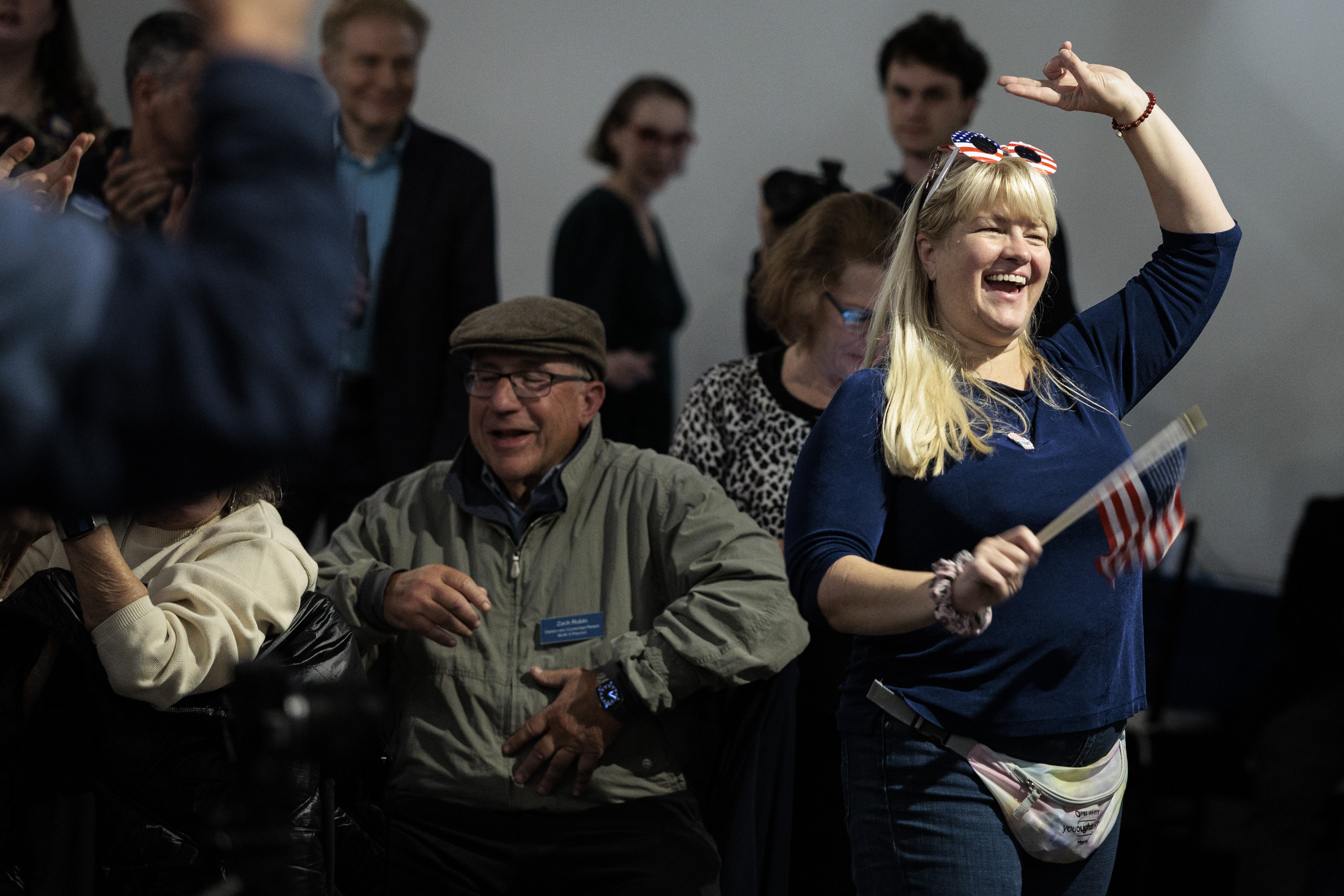
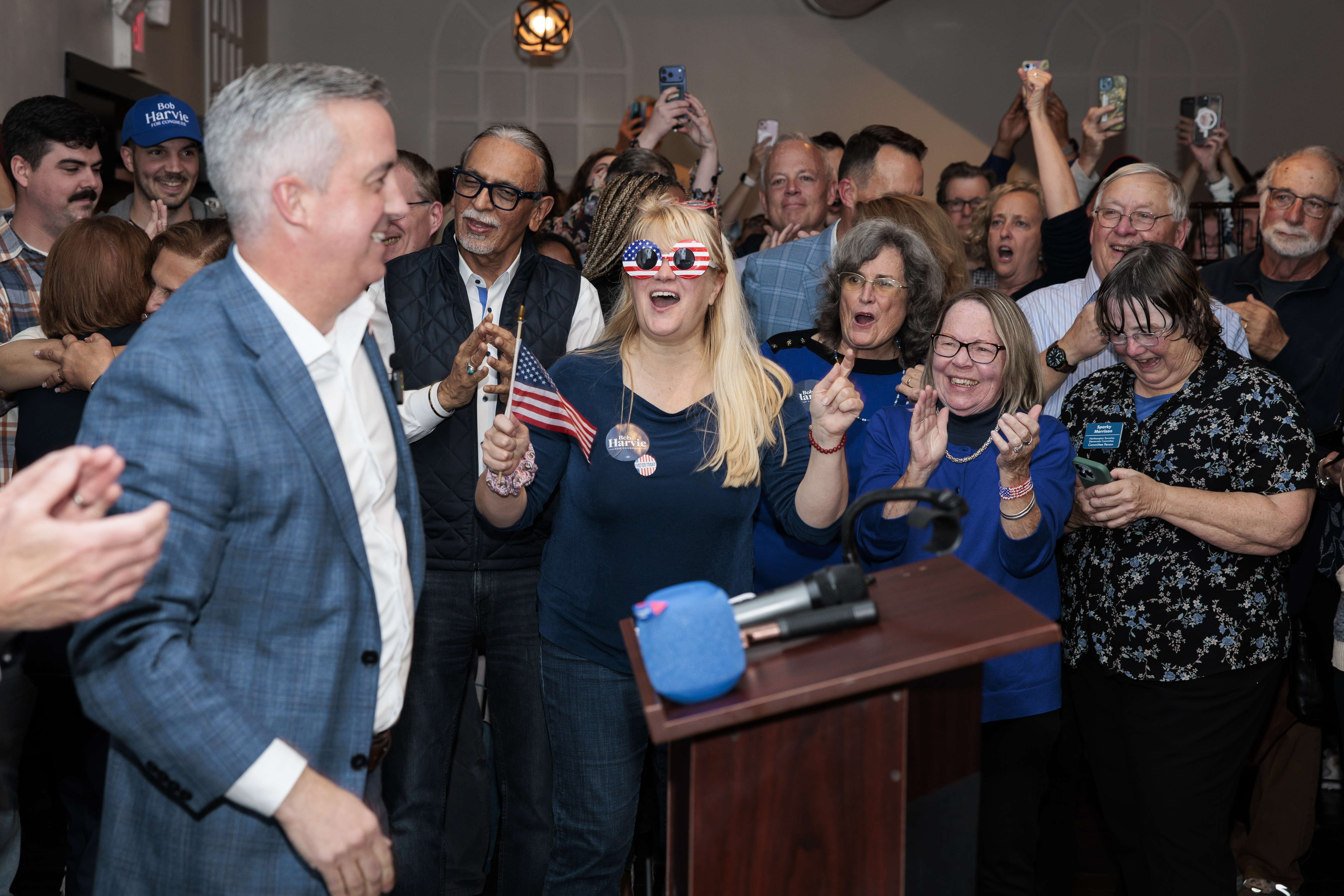
    The celebrations for Harvie stretched past midnight with Democratic supporters anxiously awaiting for their chosen candidate to speak. Even after the Democrat delivered a rousing victory speech (before the Associated Press had officially called the race) some voters, volunteers, staffers, and Harvie himself were still mingling in the Newtown event space riding the wave of their adrenaline and excitement.

    “I’m gonna keep leaning on you,” Harvie told the crowd. “As we should all lean on each other and we need to lift each other up.”

    Michelle Leiby, of Langhorne, cheers as early Bucks County results are announced during Bob Harvie’s election night party at Rafters in Newtown.Monica Herndon / Staff Photographer

    He pulled off the win as he focused his campaign message largely on affordability and achieving the “American Dream,” as the cost of living continues to take priority over any other issue for voters. Though Democrats have sought to tie Fitzpatrick to Trump in the past, this year it finally seemed to succeed for Harvie and allies who also worked to poke holes in the lawmaker’s moderate brand by painting him as an enabler of the president’s policies.

    Jacquie Shafer, 44, a teacher from Langhorne, does not typically vote in midterms but she cast her ballot for Harvie Tuesday and said cost-of-living issues prompted her to support a “straight blue” ballot.

    “You make this living and you think you’re doing well, and suddenly you’re strapped,” said Shafer, who says she’s now having to decide whether her kids can do extracurriculars or if the money could be better used elsewhere. “[Our family] has two kids, two working adults, and it’s still really, really stressful.”

    The Democrat is born and raised in Lower Bucks County, meaning he was able to lean into his roots growing up in populous neighborhoods on the campaign trail, particularly his 20 years teaching social studies at Bucks County Technical High School. He is also the first Fitzpatrick challenger to have won countywide office, giving him slightly more familiarity among voters than previous candidates.

    After serving as a Falls Township supervisor, Harvie won a seat on the board of the Bucks County Commissioners in 2019 and 2023, the latter of which marked the first time since the Civil War that Democrats held onto the majority party for two consecutive terms.

    (function () {window.addEventListener(‘message’, function (e) { var message = e.data; var els = document.querySelectorAll(‘iframe[src*=”‘ + message.id + ‘”]’); els.forEach(function(el) { el.style.height = message.height + ‘px’; }); }, false); })();

    Harvie’s background gave him some familiarity with voters. Evan Jeronis, a 27-year-old Langhorne resident who works in information technology and voted for the Democrat, said he attended Bucks County Technical High School while Harvie was teaching there and heard about his good reputation as an educator.

    “I never had him myself,” Jeronis said, “but everyone I know that ever had him … loved him.”

    Harvie was also able to overcome several ubiquitous lines of attacks from Fitzpatrick, who ran a far more public and expensive campaign than in years past. The contentious election cycle saw early jabs being thrown and dueling debate challenges that ultimately crashed and burned. The most prominently of which focused on Fitzpatrick, a former FBI agent, calling the Democrat the subject of a bureau investigation.

    (function(){function e(){window.addEventListener(`message`,function(e){if(e.data[`datawrapper-height`]!==void 0){var t=document.querySelectorAll(`iframe`);for(var n in e.data[`datawrapper-height`])for(var r=0,i;i=t[r];r++)if(i.contentWindow===e.source){var a=e.data[`datawrapper-height`][n]+`px`;i.style.height=a}}})}e()})();

    Harvie and lawyers have said the commissioner has never been under investigation and sued a super PAC supporting Fitzpatrick for defamation. That case is still ongoing.

    Adding to the tensions in the matchup, Fitzpatrick sued last week to remove Democratic County Commissioner Diane Ellis-Marseglia — a friend, colleague, and supporter of Harvie — from the county Board of Elections, alleging her bias against the Republican presents a conflict of interest.

    A judge rejected that bid on Monday.

    But Fitzpatrick struck a conciliatory tone Wednesday when he offered his concession and goodwill to Harvie after a heated race.

    “I wish Bob Harvie success as he assumes a responsibility that is both extraordinary and humbling. The responsibility to represent every person in our community, whether they voted for him or not. To lead with independence, to welcome differences of opinion, and to remember the people we serve must always come before party.

    “I wish Bob Harvie success as he assumes a responsibility that is both extraordinary and humbling. The responsibility to represent every person in our community, whether they voted for him or not. To lead with independence, to welcome differences of opinion, and to remember the people we serve must always come before party,” Fitzpatrick said in a statement.

    “I wish him well in that responsibility, and his success in serving our community is something we should all hope for.”

    Staff Writer Dugan Arnett contributed to this article.

    This story was updated to include a statement from Fitzpatrick.

  • Democrats flip six seats in Pa. and N.J., winning back the U.S. House in blue wave

    Democrats flip six seats in Pa. and N.J., winning back the U.S. House in blue wave

    Democrats in Pennsylvania and across the country racked up generational victories on Tuesday in a stunning display of dissatisfaction with President Donald Trump — flipping four U.S. House seats in what amounted to a clean sweep of competitive Keystone State races, as well as downballot races that put the party in control in both Washington and Harrisburg.

    The decisive wins left strategists on both sides of the aisle declaring the midterms a “blue tsunami” that not only reversed Republican gains from 2024 but changed the realm of political possibilities for Democrats.

    Two of the ousted GOP incumbents in Pennsylvania won their seats with Trump’s help just two years ago. The other two, including U.S. Rep. Brian Fitzpatrick in Bucks County, were longtime Republican lawmakers with long tenures and distinct political brands.
    The Pennsylvania results — along with Democratic wins in New Jersey — will help put the party in control of the House for the first time in four years and for the remaining years of Trump’s presidency.

    And the party racked up Senate wins in longtime Republican states across the country — flipping seats in Kansas, Texas, and South Carolina — to build solid majorities in both chambers.

    It was the second time in the last decade that an uprising against Trump’s unpopularity led to Democrats gaining four seats in Pennsylvania’s House delegation, with the first happening in the 2018 midterms.

    This year, it also came as Democratic Gov. Josh Shapiro — who handily defeated Republican challenger Stacy Garrity on Tuesday — used his campaign and popularity as a boon to downballot Democrats.

    Unlike the 2018 midterm backlash against Trump, Democrats in Pennsylvania didn’t just win open seats that Republicans had vacated. They unseated incumbents in each of the races this year — a particularly challenging feat in modern politics when elected officials run for reelection with substantial resources and name identification.

    “Sometimes in this political life you’re the windshield, and sometimes you’re the bug,” said Christopher Nicholas, a veteran GOP strategist. “Pennsylvania voters have totally reversed what they did in 2024.”

    Across the river, Democrats also flipped two U.S. House seats in New Jersey, including a shocking upset in which Cape May Mayor Zack Mullock ousted four-term U.S. Rep. Jeff Van Drew in South Jersey’s 2nd District.

    “It was not only a normal wave election,” Van Drew said after conceding. “What I said all along was, ‘I’ll be fine as long as it isn’t Watergate.’ And it kind of is a Watergate, where it’s larger-than-life and just swept people along with it who weren’t necessarily doing anything wrong.”

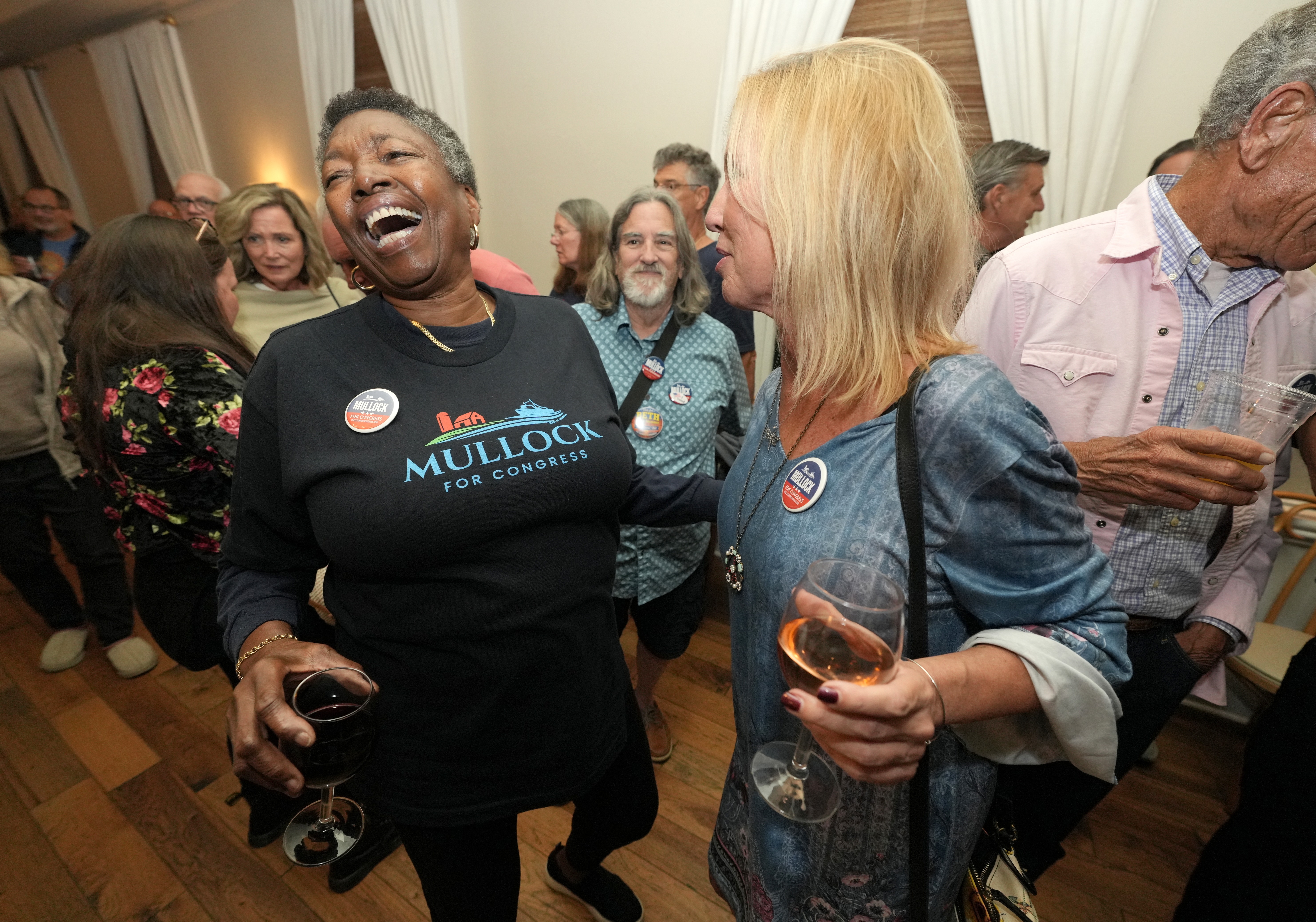
    Julia Hankerson (left), from Woodbine, and Amelia May, from North Cape May, dance during an election night party for Democratic congressional candidate and Cape May Mayor Zack Mullock at the Chalfonte Hotel in Cape May.Tim Hawk / For The Inquirer

    Fitzpatrick’s loss to Democrat Bob Harvie in Bucks County was perhaps the most monumental of those outcomes, and it means that Democrats had ousted the last House Republican in the Philadelphia suburbs. Fitzpatrick had repeatedly survived blue waves and entered the race with a massive cash advantage.

    “We’re turning it away from the negative, from the ugly, from the heartless, from the ignorant, from those who would take us backward and who would divide us and make us fight each other,” Harvie said. “And instead we are turning toward the America that we have always wanted to be and have been at brief times in our past.”

    A late surge of momentum behind Harvie meant millions of dollars in ad support from national Democrats and repeated voter turnout efforts headlined by Shapiro and other prominent party members.

    Fitzpatrick’s astounding $11.9 million in campaign spending in the campaign through Oct. 22, which was the last available public report, was ultimately more than he spent in his last three campaigns combined. He still saw millions of dollars more spent on his behalf from national Republican groups and even Trump’s super PAC.

    In his race and another around Harrisburg, Democrats worked to capitalize on the especially challenging moment for Republicans to attack lawmakers who repeatedly managed to win close elections in the past.

    Fitzpatrick’s loss was in part fueled by former supporters who, this year, decided to cast their ballot for Harvie.

    Julie Marshall, 61, a Democrat, has previously voted for Fitzpatrick, but the final straw for the Levittown resident was when she repeatedly called his congressional office but could not get in direct contact with him.

    She cited gas prices, housing, education, and healthcare among the issues that had left her frustrated with the state of the country, adding that Fitzpatrick hasn’t done enough to hold Trump and his contemporaries accountable.

    “Something’s gotta be done,” she said. “We can’t keep doing this.”

    Other voters were motivated by the economy. Democrat Dennis Bridges cast an enthusiastic vote for Harvie at Central Bucks High School South on Tuesday to, in his view, correct the course of a federal government that has veered wildly off track.

    “Healthcare was the big one, the gas, the war,” the 75-year-old Chalfont resident said of his concerns this year. “And then the corruption. It seems like no matter what, [Trump is] getting away with all kinds of corruption.”

    Attendees cheer as other Democratic winners are announced during Bob Harvie’s election night party at Rafters in Newtown.Monica Herndon / Staff Photographer

    Neil Makhija, a Montgomery County commissioner who stumped for Democrats across the state, compared the results to 2006, when the party won back power with George W. Bush in the White House as voters rejected an unpopular war. Among the losses that year: Fitzpatrick’s brother, then-U.S. Rep. Mike Fitzpatrick, in the seat that would later change hands within the family.

    “Back then, I remember feeling stunned that we were winning states we weren’t supposed to win,” Makhija said. “This kind of election expands people’s view of what’s possible.”

    Every precinct in the district shifted toward Democrats compared to 2024, a sign of how widespread the backlash to Trump was.

    (function(){function e(){window.addEventListener(`message`,function(e){if(e.data[`datawrapper-height`]!==void 0){var t=document.querySelectorAll(`iframe`);for(var n in e.data[`datawrapper-height`])for(var r=0,i;i=t[r];r++)if(i.contentWindow===e.source){var a=e.data[`datawrapper-height`][n]+`px`;i.style.height=a}}})}e()})();

    Fitzpatrick offered his concession Wednesday morning. He did not reference Trump or the wider backlash to his party, but he said that it was “not the ending we had hoped or envisioned” as he talked about transcending party lines.

    “But when I look back on all we have built, the extraordinary coalition of people we have brought together, and the countless people we have come to know as partners, friends, and family, I am overwhelmed not by what is ending, but by all we have been fortunate to experience together,” Fitzpatrick said in the statement.

    U.S. Rep. Scott Perry, one of Trump’s staunchest allies in Washington and the former leader of the far-right House Freedom Caucus, had won seven times in the 10th Congressional District that now encompasses all of Dauphin and parts of York and Cumberland Counties. The district morphed and became more competitive during Perry’s time in office, with the Republican winning by just 1 percentage point in 2024.

    In a rematch this year with Democrat Janelle Stelson, the challenger hammered Perry over rising gas prices due to the war in Iran and what she called his too-extreme platform for the district.

    Meghan Getz, 42, an elementary school art teacher, supported Stelson and said of the Democrat, “Her core values, like supporting food stamps and Medicaid, are just better than Perry’s.”

    The two other districts — one in the Lehigh Valley and another in the Northeast corner of the state — saw the largest influx of campaign spending as both parties saw opportunities in key battlegrounds.

    In the 7th Congressional District, union leader and retired Bethlehem firefighter Bob Brooks defeated U.S. Rep. Ryan Mackenzie. In the 8th District, Scranton Mayor Paige Cognetti won against U.S. Rep. Rob Bresnahan.

    Carlene Flynn, 74, hasn’t seen much change in the city since Cognetti became mayor in 2020, but was hoping Tuesday that she would replace Bresnahan because of the Republican’s alignment with Trump.

    “We just watched Bresnahan vote for everything that Trump wanted,” said Flynn, as nearly every voter passing by greeted her by name.

    As Democrats looked to rebound after a disastrous 2024 effort, all four races were not only defined by Trump but also hinged on critical recruitment efforts to secure what the party considered the best possible candidates.

    Harvie is a twice-elected Bucks County commissioner. Stelson is a well-known former local television anchor who came within a hair of defeating Perry in a GOP-friendly year in 2024.

    Attendees cheer for 1st Congressional District winner Bob Harvie at his election night party at Rafters in Newtown.Monica Herndon / Staff Photographer

    Cognetti focused on her history in local politics and anti-corruption work that meshed with a top attack line against her opponent.

    And Brooks leaned into his working class background — a clear attempt to recapture voters who drifted toward Trump — and his experience around the political process as a well-connected advocate for emergency responders.

    “D.C. is going to hear this message loud and clear when Bob Brooks gets to town,” Brooks said while declaring victory in Bethlehem, surrounded by union leaders and supporters wearing plastic firefighter hats with his campaign logo. “We aren’t going down there to try and piece things back together where they were before. We’re going down to shake up the status quo, fight for working people, stop the bulls— and build something better from the ashes.”
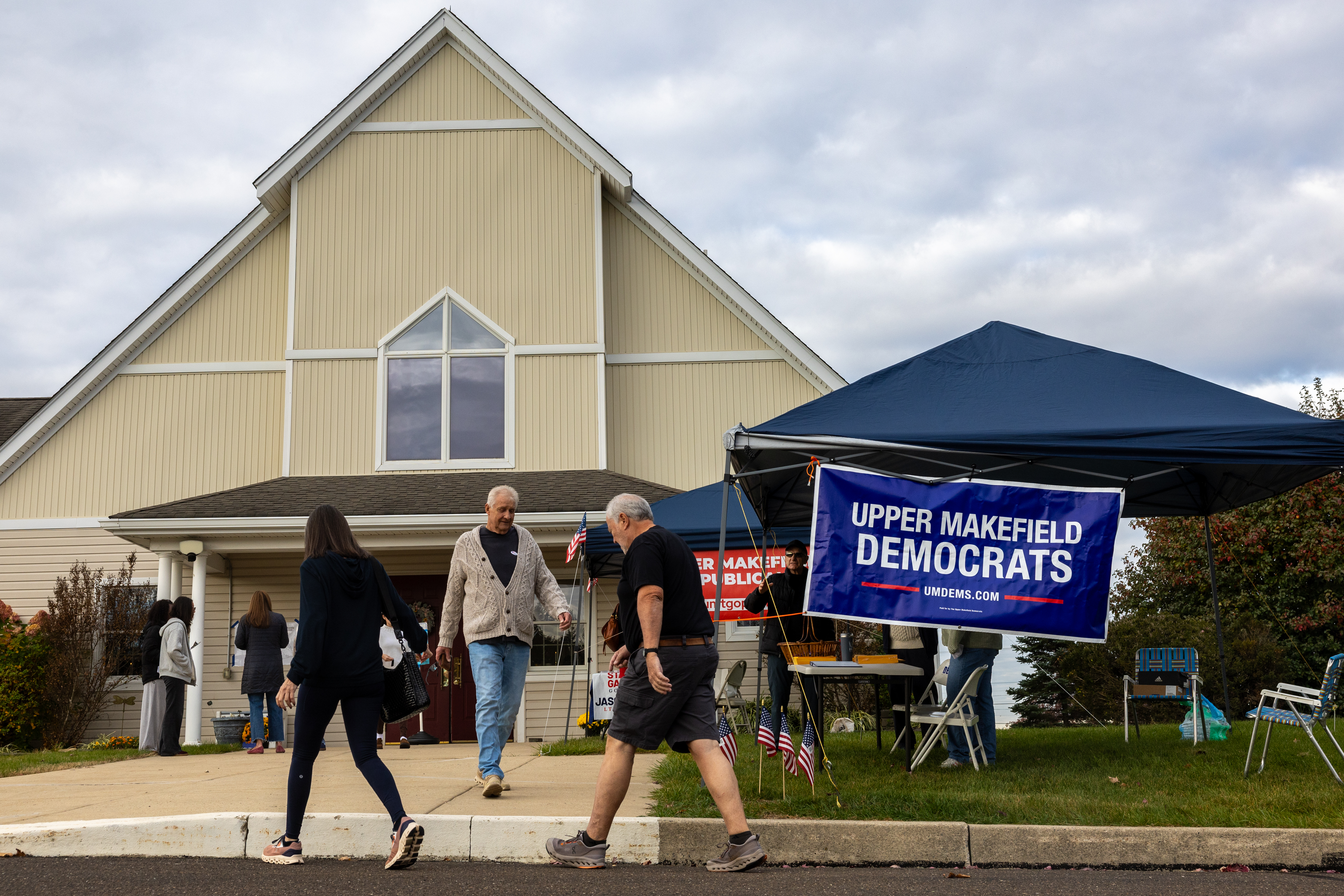
    While Brooks emphasized his union support, one key ally said his and other victories around the country leaned on Latino voters who swung toward Trump in 2024 but had become enraged by his immigration enforcement and policies that raised prices.

    “Latinos decided this election,” said Allentown Mayor Matt Tuerk, the first Latino mayor of the majority-Latino city, which is Pennsylvania’s third largest. “We saw significant turnout in Allentown. … We supported candidates that rejected Republican policies and have done harm to our families [and] that have raised prices.”

    Kevin Black, 66, a retired teacher from Macungie, cast his vote for Brooks because he was turned off by Mackenzie’s negative ads and is concerned with the economy.

    “I can go either way. I used to vote with Republicans a lot. The past few years now, I’ve been switching around,” he said.

    Republicans in all four races launched attacks at the newcomers while defending their records and, in some cases, distancing themselves from the leader of their party.

    “There’s been plenty of examples of where we’ve pushed back on the administration,” Bresnahan said last week at the end of a debate — a notable move in a region that voted more for Trump than any of the other competitive districts.

    Those late rhetorical efforts came after Bresnahan and Mackenzie had largely stood by Trump and his policies. Each of them spoke at the Republican midterm convention he convened in September. They also welcomed support from House Republican leaders, though Trump didn’t appear in the state for a campaign event in the final stretch.

    But in all four of the districts, Trump’s approval ratings had sunk dramatically, according to an Inquirer/New York Times/Siena University poll conducted in recent weeks. Democrats also had the edge over their opponents on nearly every policy issue that the survey asked about — such as cost of living and corruption.

    By the time voters went to the polls on Tuesday, one major nonpartisan ratings agency had moved all of the races — which had started as toss-ups or “leans Republican” in the summer — to “leans Democratic.”

    Michelle Leiby, of Langhorne, cheers as early Bucks County results are announced during Bob Harvie’s election night party at Rafters in Newtown.Monica Herndon / Staff Photographer

    The picture was similar across the country, with Democrats projected to easily retake the House and also the Senate. When Trump took office nearly two years ago, that level of a blue wave seemed far out of reach.

    Samuel Chen, an Allentown-based GOP strategist, said voters often feel a sense of regret in midterm elections if they don’t feel like they’re getting what they bargained for.

    But amid rising inflation and the unpopular war in Iran, the dissatisfaction ran deeper. Even some Trump voters, Chen said, “felt a sense of betrayal.”

    “They didn’t want forever wars, they didn’t want prices to go back up, and they did,” Chen said. “And the president is saying ‘the economy is not that bad, suck it up.’”

    Philadelphia-based Democratic strategist Anthony Campisi said disaffection with the president appeared too much for even Fitzpatrick, who was the most bipartisan member of Congress and was considered the toughest challenge for Democrats, to overcome.

    “When the president is talking about the Reflecting Pool instead of the cost of living the night before the election,” Campisi said, “it’s kind of like an allegory.”

    Staff writers Aliya Schneider, Dugan Arnett, Al Lubrano, Dana Munro, and Jesse Bunch contributed to this article.

    This story was updated to include a statement from Fitzpatrick.

  • Trump again looms large among Pa. and N.J. voters, with Congress and a governor’s chair at stake

    Trump again looms large among Pa. and N.J. voters, with Congress and a governor’s chair at stake

    By the time polls opened just after daybreak on what turned out to be a magnificent Election Day with the weather evoking a spring primary, the sunlight had turned the foliage on the treetops to fire.

    Whether that somehow lit a fire among those who voted was arguable, but a certain energy was evident at the polls as voters cast ballots that potentially could change the balance of power in the U.S. House and the Pennsylvania Senate.

    Of several congressional seats considered up for grabs, the race in solid purple Bucks County between GOP incumbent U.S. Rep. Brian Fitzpatrick and Democratic challenger Bob Harvie was among the most closely watched in the nation as talk of a Democratic “blue wave” had been building.

    Voters in one of the nation’s most important swing states also were deciding on whether to return Democratic Gov. Josh Shapiro to Harrisburg in his race against Republican nominee Stacy Garrity. However, polls suggested strongly they already had decided, and the results affirmed that perception.

    Even so, and without hot races occurring in the Philadelphia and Allegheny County population centers, turnout in Pennsylvania likely would exceed 50%, said Lauren Cristella, executive director of the nonpartisan Committee of Seventy. That would be more than respectable for a midterm election.

    She added that everything appeared to have gone smoothly, and the federal monitors had not raised any issues.

    Voters interviewed spoke passionately about their top issues — the state of the economy; ICE; the war with Iran; AI data centers; and of course, he who was not on the ballot, President Donald Trump.

    After watching a steady stream of voter traffic at her Drexel Hill, Delaware County polling place, Democratic greeter Risa DeSilva-King, 43, remarked: “I think we have Trump to thank for that.”

    Trump was on the minds of voters throughout the region. Outside Margate’s city hall, Bill Grutzmacher, 73, a retired Philadelphia police officer, said he remained a steadfast Trump supporter. “I like Donald Trump because he supports Israel and supports law and order,” he said.

    Debra Fitzgerald, 67, voting in Shapiro’s hometown of Abington Township, didn’t quite agree. “This administration’s appalling,” she said.

    “Trump looms over this entire midterm,” said Ashley Koning, director of the Rutgers University Eagleton Institute Center for Public Interest Polling. “But he isn’t on the ballot the way he is in a presidential year, and that distinction matters.”

    It could matter particularly for the fortunes of Republican Jeff Van Drew in New Jersey’s 2nd Congressional District. Once heavily favored, his race against Democratic Cape May Mayor Zack Mullock tightened.

    On the Pennsylvania side, in addition to the Fitzpatrick race, Democrats had high hopes for taking three other seats in Pennsylvania, including the one held by Trump loyalist Scott Perry, being challenged by Democrat Janelle Stelson.

    At Monaghan Presbyterian Church in Dillsburg, York County, near Perry’s home, by 7:15 a.m. Tuesday, the parking lot was as full as it would be for a Sunday morning service as voters crammed into the brick sanctuary.

    Turnout was ultra-brisk in Scranton, where incumbent Republican U.S. Rep. Rob Bresnahan was in a tight race with Scranton’s Democratic mayor, Paige Cognetti.

    With the popular Shapiro leading the ticket, Pennsylvania Democrats believed they had a shot at taking control of the state Senate for the first time in decades. Shapiro was expected to win overwhelmingly, a possible prelude to a run for the presidency in 2028.

    Voters generally viewed him favorably, but not without at least a few reservations. Millie Grieve, 19, a Democrat voting in Swarthmore in her first federal election, voted for him although she says she disagrees with some of his policy positions, including on AI data centers. She felt he was a better choice than “someone who’s just going to be one of Trump’s lackeys.”

    In Northeast Philly, Audrey Lamping voted for Shapiro, saying, “I like him, and he’s doing a good job.”

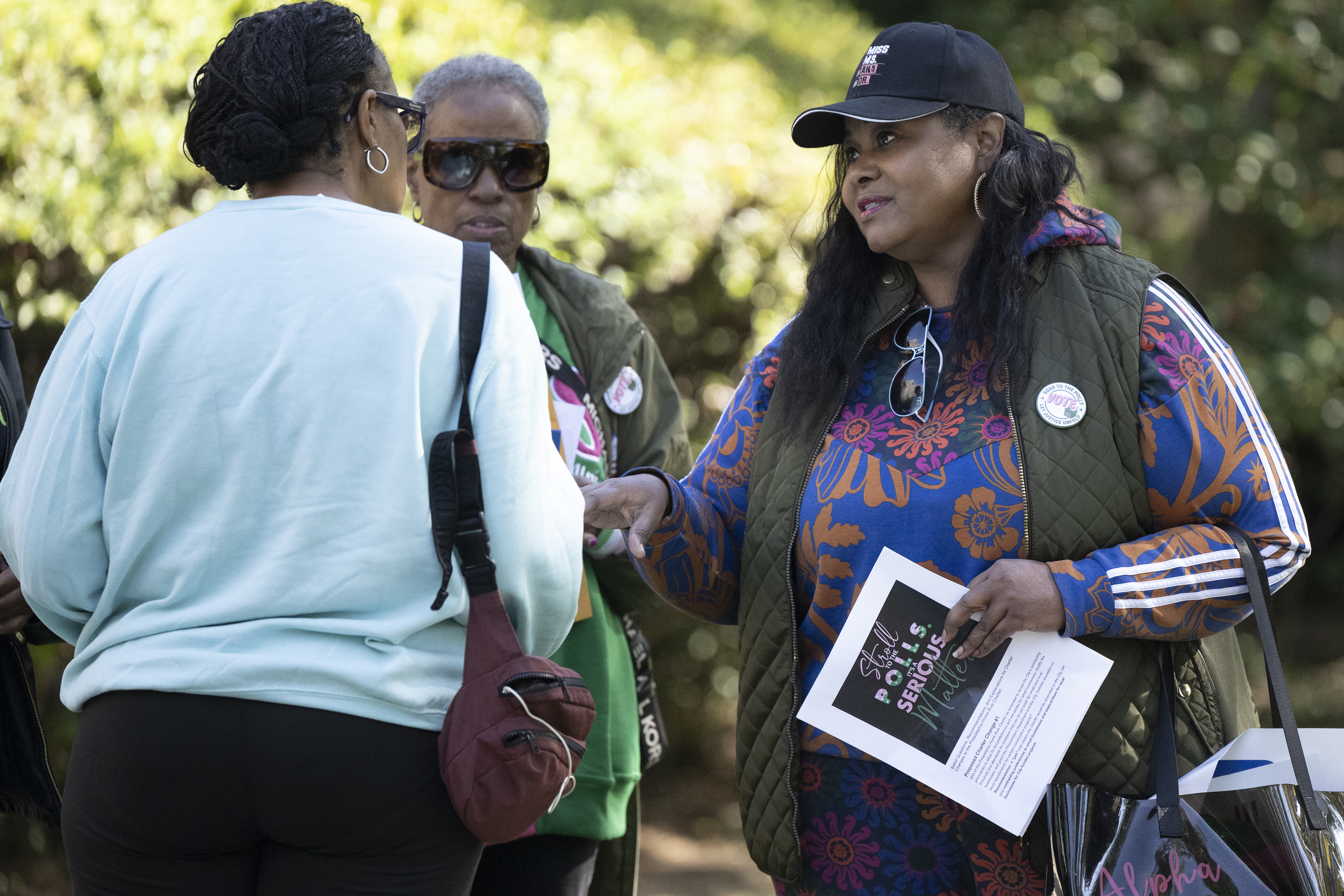
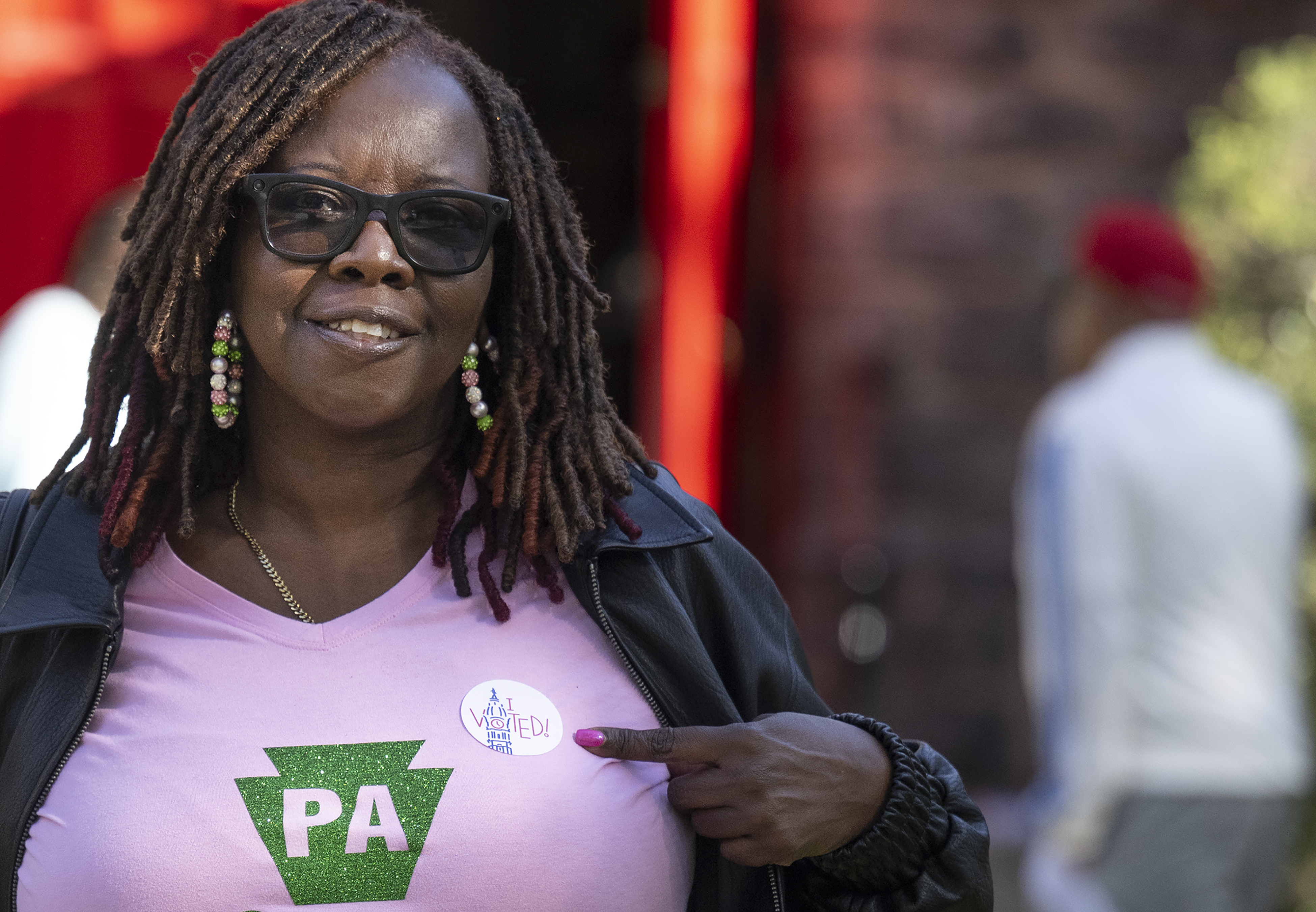
    Alpha Kappa Alpha Sorority members Muriel Moseley, left, and Alisa Rhodes assist voters by providing last-minute information at the 34th Ward polling place, located at the African Episcopal Church of St. Thomas, on Election Day, Tuesday, Nov. 3, 2026, in Philadelphia.Jose F. Moreno / Staff Photographer

    At the Erma Volunteer Fire Co. in Cape May County, voting was brisk as the sun began to set. Mike Lawrence, 81, said he was “not interested” in talk about a blue wave and predicted it would stop before it hit deep South Jersey.
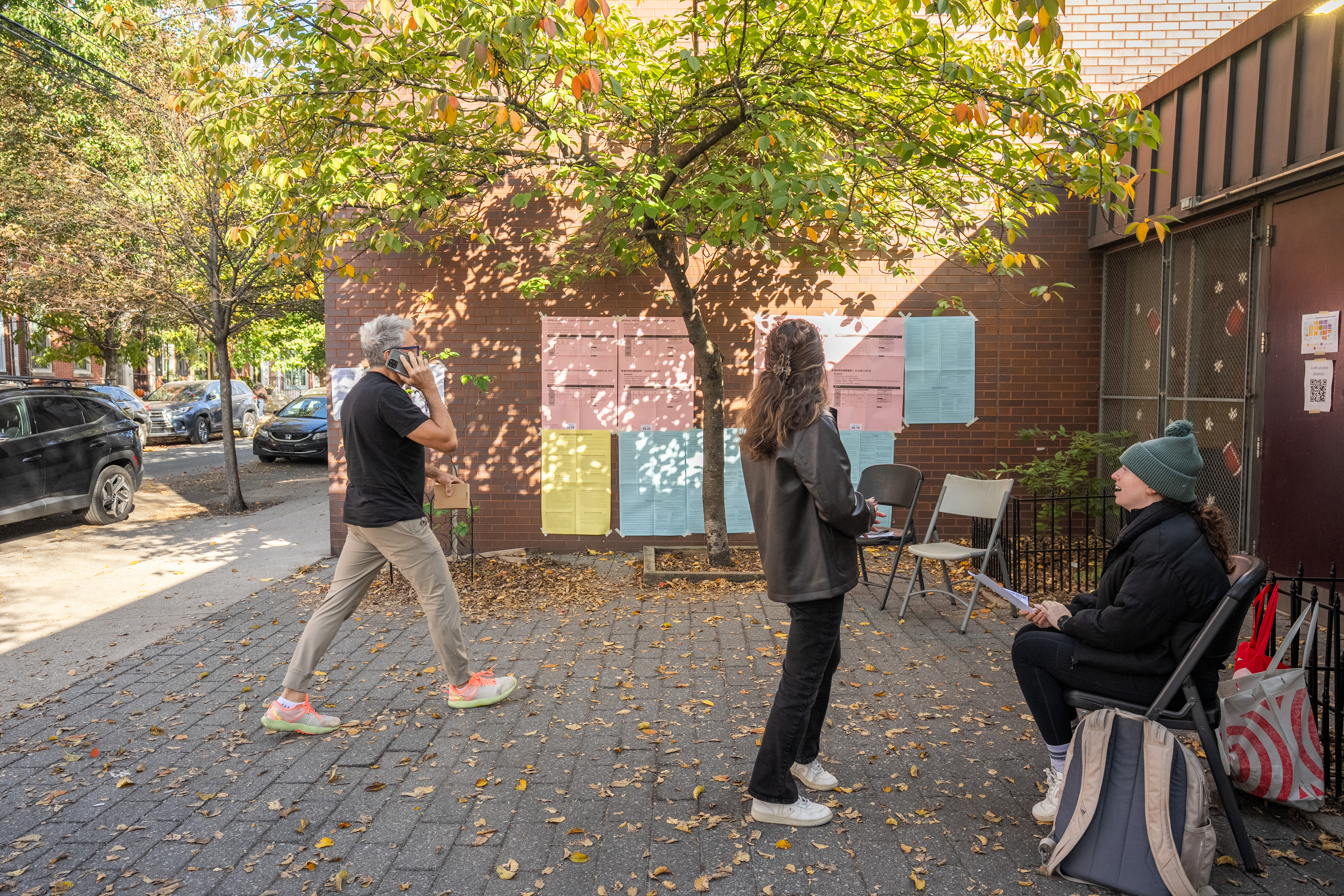
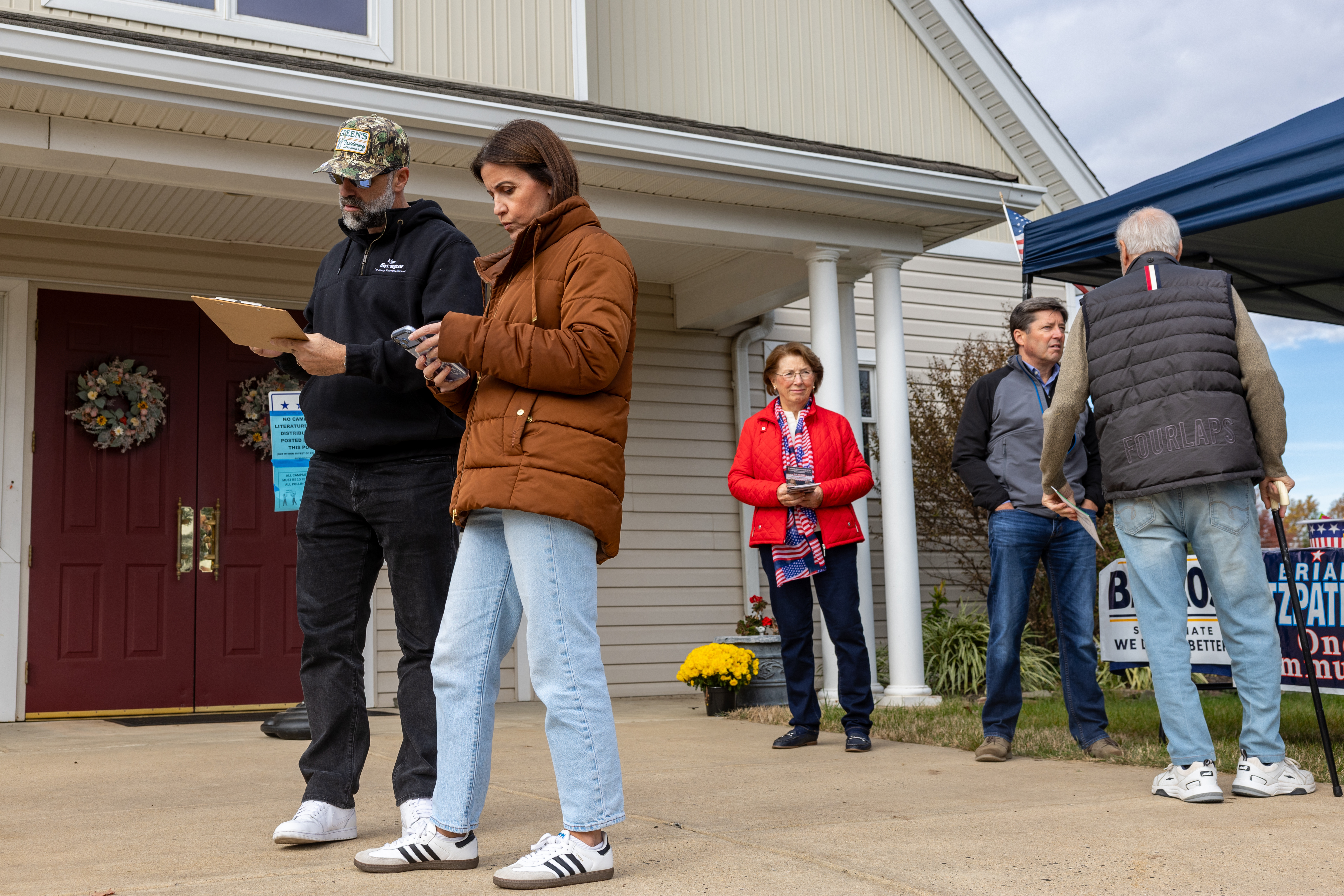
    “I’m voting straight Republican,” said Lawrence, who owned a driving school before retiring. “Van Drew, I just think he does a good, good job. You know, he follows up.”

    Voters had their share of complaints about partisanship and divisions.

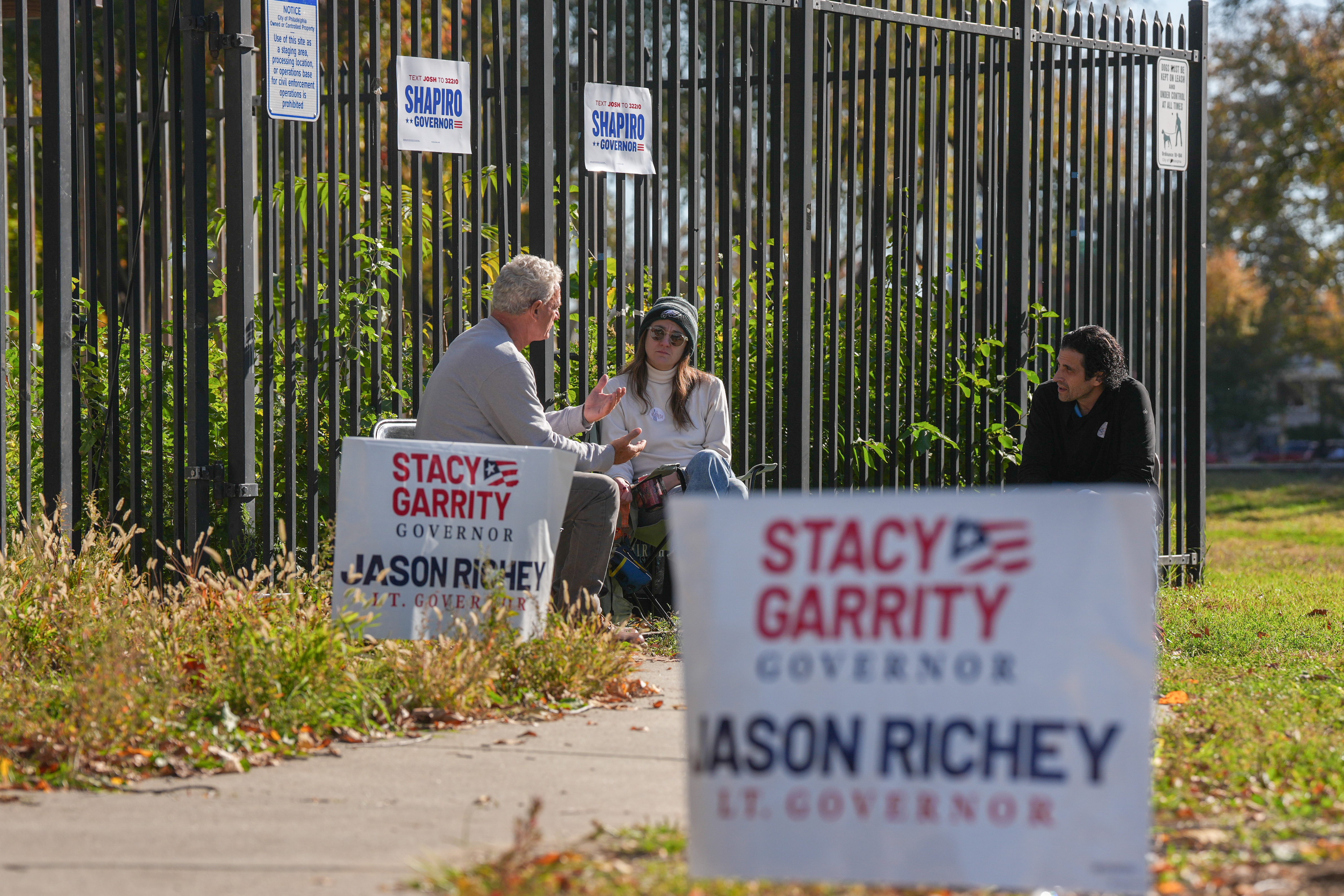
    And in that tense Bucks County race, voters said they were absolutely fed up — with the ads.

    The commercials — and mailers and text messages — have been flowing nonstop, they said.

    “They’re coming in every hour, just about,” said Sue Sutter, 73, a retired registered Republican from Penndel, of the political text messages she has received. She deletes them and reports them as spam, she says, “but they come in the mail, too.”

    “They’re killing too many trees.”

    Some voters decried the negative nature of some ads.

    “I think it’s disgusting and obnoxious how many millions of dollars are spent on this,” said Kathy Johnson, 71, a wealth adviser from Middletown Township and an independent. “And it gets worse and worse.”

    Fitzpatrick was on pace to spend more on advertising in this race than in his last three campaigns combined, The Inquirer reported last month. At the time, Harvie was approaching $1 million in spending.

    The result? In Bucks County, it’s all been difficult to avoid — and not just for those on the receiving end.

    Said Gary Ray Caton, 76, a pastor from Langhorne, “Every time we see the mail person he’s cursing up a storm because he’s got to deliver it all.”

    Whether the ad blitz had any effect on the outcome would be impossible to measure.

    “I’m done with Fitzpatrick,” said Kathy Johnson, 71, a wealth adviser from Middletown Township. “And I’m willing to give Harvie a chance.”

    “I dislike Fitzpatrick with a passion … but I would not put Harvie in,” said Gary Ray Caton, 76, a pastor from Langhorne. “I have no choice. We cannot lose Congress.”

    Anthony Falk, 26, of Perkasie, is a former Marine reservist, and hoped Fitzpatrick would help end the Iran war if he held on.

    Voting at Lincoln University in Chester County, student Carl Richardson, 21, had a decidedly nonpartisan perspective to offer.

    “It’s a blessing to vote,” he said. “We’re the generation of the future.”

    Staff writers Dugan Arnett, Jesse Bunch, Nate File, Kristen A. Graham, Zoe Greenberg, Sam Janesch, Jillian Kramer, Dana Munro, Sarah Nicell, Jess Rohan, Denali Sagner, Henry Savage, Brooke Schultz, and Vinny Vella contributed to this article.

  • Our recommendations on two Philadelphia City Charter amendments | Endorsement

    Our recommendations on two Philadelphia City Charter amendments | Endorsement

    Voters in Philadelphia will be asked two questions on Tuesday’s primary ballot. Here are the Editorial Board’s recommendations.

    Question No. 1

    Should the Philadelphia Home Rule Charter be amended to revise the City’s contracting procedures to allow for bid preferences and set-asides for small businesses; modify the threshold and standards for contracts that can be set aside for small and local businesses; and grant the Procurement Department and the City Solicitor discretion on bond requirements for certain construction projects?

    The first question would change the City Charter so officials can provide preferences to small businesses that bid on contracts for city-funded projects. The measure would also expand the preferences that are given to local businesses.

    The proposal reflects Mayor Cherelle L. Parker’s decision to eliminate racial diversity goals in contracting decisions and instead emphasize assisting small businesses — a step she took in response to a series of recent court rulings. Parker’s shift has been decried by some Black business owners in the city.

    A study conducted last year by the Pew Charitable Trusts found that Philadelphia’s business density — a key driver of municipal economies based on the number of firms per 1,000 residents 16 and older — has increased in recent years, but is still well below the national average (111 here; 129 across the country). Philadelphia also trails such cities as Indianapolis (122), St. Louis (119), and Baltimore (113). Anecdotally, local business owners also report significant pressures from inflation, high interest rates, and general uncertainty about the economy.

    While preferences could provide some relief for many local entrepreneurs, they can hardly be counted on as a singular cure for what ails Philadelphia’s business ecosystem. It is crucial that city officials continue to address the systemic challenges facing local businesses — including a burdensome and uncompetitive tax system, and what has historically been an often-cumbersome permitting process (even as expedited review initiatives like PHL Prime show promise).

    While it is an imperfect solution with an unfinished surrounding infrastructure, voters should vote YES to allow officials to offer the preferences, which can serve as a much-needed tool to help promote economic growth locally. At the same time, this board also calls on City Hall to continue working to overhaul the structural hurdles to business development in Philadelphia.

    Question No. 2

    Shall the Philadelphia Home Rule Charter be amended to establish and define the functions of Creative Philadelphia, an office headed by the Chief Cultural Officer to promote the City’s arts, culture, and creative economy sector?

    The second question would make Creative Philadelphia — which now exists via executive order and which promotes and supports the city’s arts community — a formal and permanent part of municipal government. Aside from the often intangible civic value of increasing public engagement with the arts, a recent study found that the cultural sector in Philadelphia has an annual economic impact of $2.2 billion.

    Given those stakes and the broader public benefits, voters should vote YES to formally establish Creative Philadelphia as a permanent office in city government.

    ENDORSEMENTS

    Election Day is today — Tuesday, Nov. 3. That means it is time to vote.

    The polls are open from 7 a.m. to 8 p.m. Mail ballots must also be returned by 8 p.m.

    Voters in Pennsylvania can find their polling place online at pavoterservices.pa.gov.

    New Jersey voters can find polling places at voter.svrs.nj.gov/polling-place-search.

    The Inquirer has an interactive voter guide available at inquirer.com/politics/election.

    To help voters make their decisions, The Inquirer Editorial Board — which operates independently from the newsroom — interviewed candidates in several competitive primary races in the city and statewide. The board conducted independent research, reviewed the candidates’ position statements, and discussed the strengths and weaknesses of the candidates before making its endorsements.

    Here are the board’s choices: