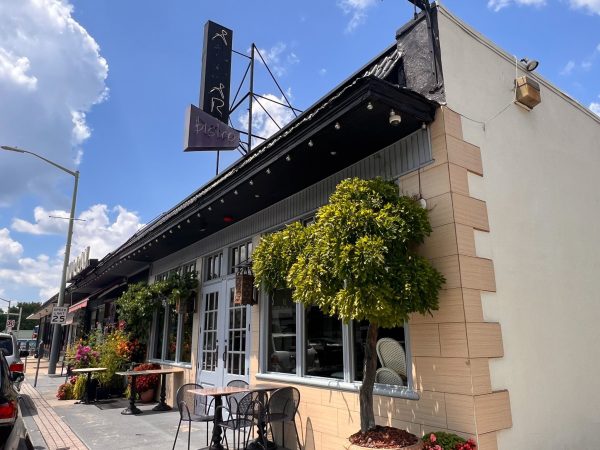
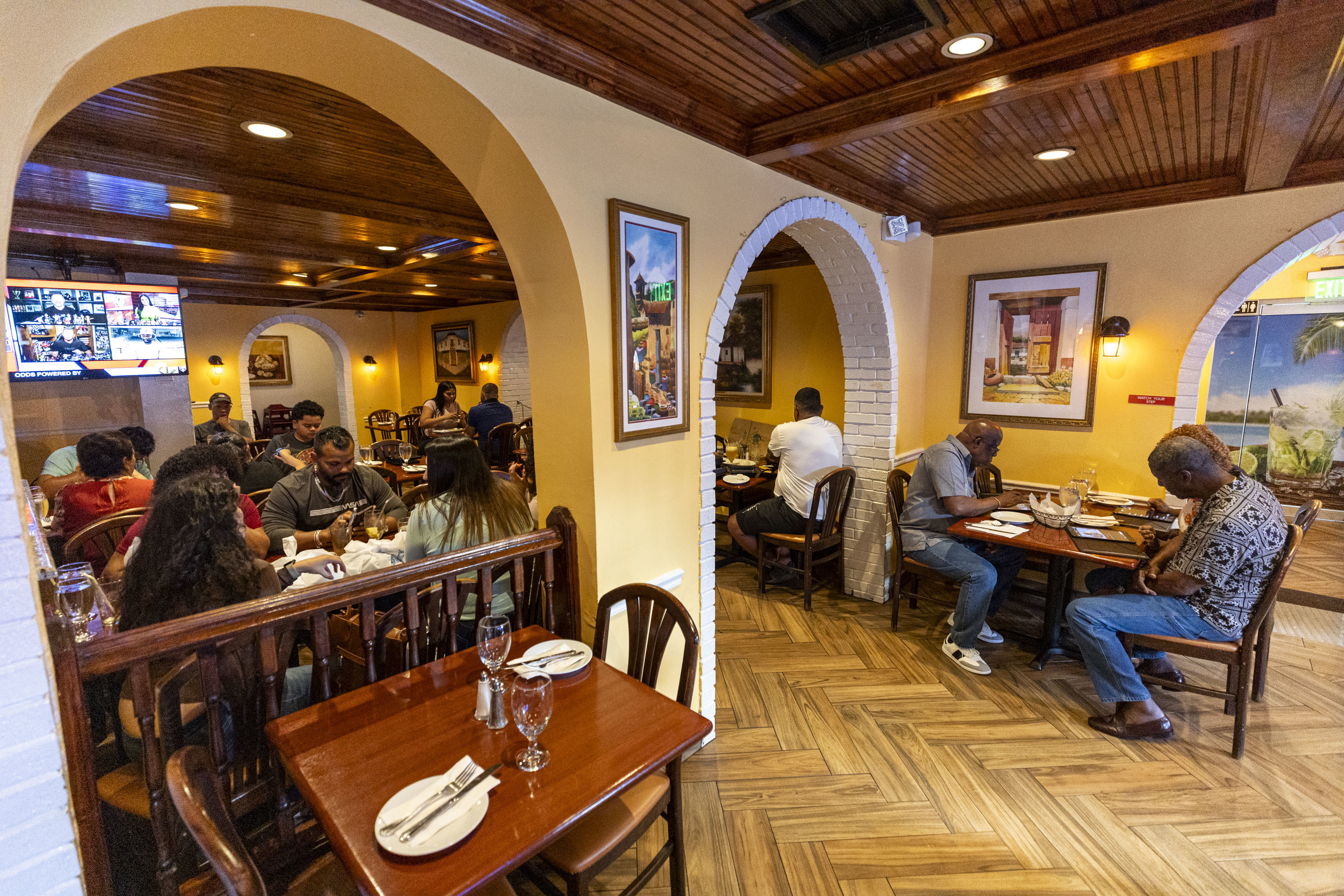
After more than three decades, the Wakim family is handing off Bala Cynwyd’s Aldar Bistro to veterans of Center City’s Gran Caffè L’Aquila, who plan to transform the longtime Lebanese restaurant into a soft-lit, white-tablecloth Southern Italian destination called Bruzi.
Two Philly-based couples from Cosenza in Calabria — Luciano and Tania Spensierato and Marco Mondello and Anna Bellizzi — are buying the restaurant at 285 Montgomery Ave. from Joseph Wakim and family.
The sale, contingent on approval of the liquor license transfer, will end the Wakims’ 34-year run at Aldar, which will be open during the transfer process. The restaurant succeeded the family’s Italian restaurant, Allegresse, which opened in 1980.
The Wakims — brothers Joseph, Michel, and George, and sister Fadia — also own Murray’s Deli next door, as well as Evviva, a restaurant, catering venue, and private-events space in Narberth.
“We all grow older, and it’s time to step aside,” Joseph Wakim said. “Over the past five years, we probably had 10 suitors, and I said, ‘No, thank you.’”
He said he ultimately chose the two couples because they were “the right families for us to pass the torch to.”
Tania Spensierato said Aldar “checked all the boxes we were looking for. We wanted to be on the Main Line. We wanted tall ceilings, an existing liquor license, and a space that was roomy but not enormous. We weren’t looking for a 200- or 300-seat restaurant. We wanted a spacious kitchen so the chef would have room to do what he does best.”
“We also wanted to be part of a community,” she said. “Bala Cynwyd and Lower Merion really fit that vision. The location on Montgomery Avenue was exactly what we were looking for.”
Aldar will remain open until the liquor-license transfer is approved, a process that Wakim believes could be completed in September. The new owners then anticipate about two months of renovations before opening Bruzi in late October or November.
Luciano Spensierato has worked behind the bar at Gran Caffè L’Aquila since 2015, while Marco Mondello joined the Center City restaurant a year later as a bartender. Tania Spensierato works in retail, though her background is in restaurants. Bellizzi is a scientist at Temple University.
The name Bruzi refers to the ancient people of Calabria, where all the partners trace their roots. Tania Spensierato, a first-generation Italian American, said the restaurant is intended to reflect that heritage.
The menu will focus on house-made pastas and traditional Calabrian cooking. Planned dishes include sliced black boar prosciutto, Calabrian cheeses, fusilli with slow-cooked meat sauce, baked lamb with tomatoes, olives, and roasted peppers, and grilled tuna with arugula.
The beverage program also will be a centerpiece. Marco Mondello, an Italian-trained sommelier, plans to open with about 100 Italian wines and expand the list over time. Spensierato, who has worked as a bartender for 35 years, said cocktails will also play a prominent role.
Glynis Tart of Verden Interior Design will give the dining room a modern Mediterranean makeover with blue-and-gold accents inspired by the Calabrian flag, along with olive trees and other greenery, Tania Spensierato said. A small retail section will sell imported Italian products.
The partners have hired an Italian-born chef currently working in Florida but declined to identify him until a later date. “Our first priority is simply to get started,” Tania Spensierato said. “One goal at a time.”
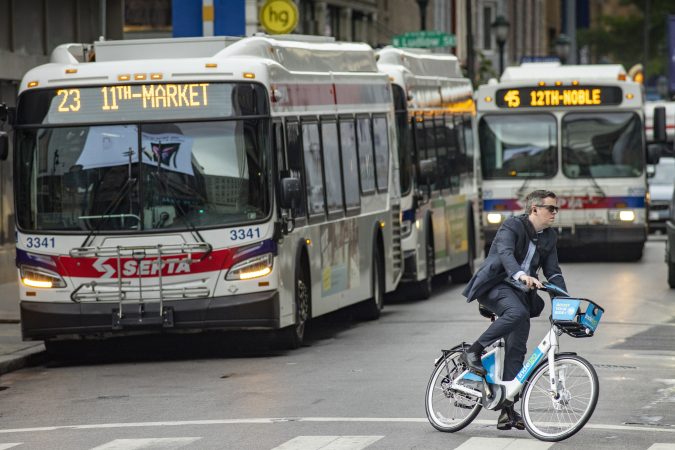
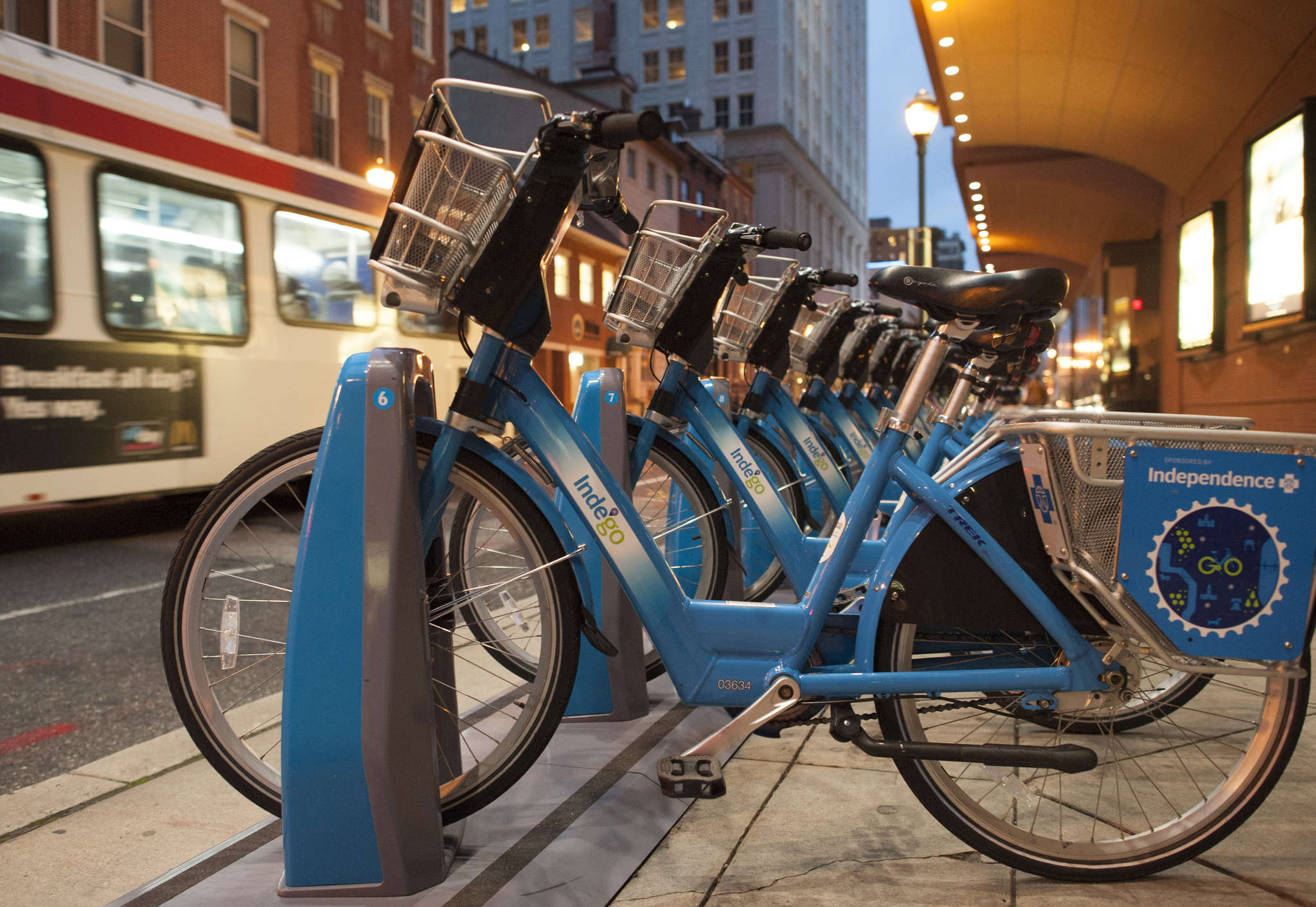
Indego, Philly’s bike share system, may be expanding to the suburbs for the first time.
Lower Merion Township commissioners are set to consider an agreement on Wednesday that would bring the Indego program into Bala Cynwyd, adding three docks and around two dozen e-bikes to a growing corridor in the suburban community.
Under the proposed agreement, bike share docks would be placed at Pencoyd Landing, One Bala Plaza, and One Belmont Avenue. The three sites would house a total of 45 docking points and 22 e-bikes. The agreement between Lower Merion and Indego would last for three years after the effective start date, which would be determined upon the contract’s approval.
Indego launched in 2015 in Philadelphia and has since expanded to include over 250 docks and 2,000 bikes in the city, according to the bike share program. Indego is owned by the City of Philadelphia, operated by Revolution BTS (previously Bicycle Transit Systems), and sponsored by Independence Blue Cross.
The proposed Bala Cynwyd expansion would connect suburbanites to Philadelphia’s extensive Indego network and would make Lower Merion the first municipality outside the city lines to have Indego bikes.
If approved, the township would pay $150,000 up front, all of which would be reimbursed by Montgomery County through its Montco 2040 grant program. Montco 2040 is the county’s comprehensive plan, which outlines land use and growth goals for the county’s 62 municipalities, including “improved bikeability of roads and bicycle facilities.” The county has doled out 173 grants totaling more than $22 million thus far for implementation of the goals outlined in the plan.
Indego, Philadelphia’s bike share program, may be expanding to Lower Merion, marking the program’s first foray into the Philly suburbs.TRACIE VAN AUKEN / For The Inquirer
Efforts to bring Indego to Lower Merion have been in the works for years. Lower Merion received a grant from Montgomery County to expand the bike share program in 2023, and has since received two extensions to carry out the grant after delays caused by “changing market conditions,” according to a staff report.
The proposed bike share expansion is the latest development in an ongoing effort to transform City Avenue from a collection of office parks to a vibrant, mixed-used hub with easy walking, biking, and transit access. Hundreds of new apartments have gone up on City Avenue in recent years, as well as new retail spaces, and more are on the horizon.
The bicycle docks at One Bala Plaza and One Belmont Avenue were included as conditions of approval for the new developments on those sites. The property owners of all three sites will pay $12,000 annually to cover ongoing maintenance costs and will provide the electricity for the stations, if the expansion is approved.
In Montgomery County, Lower Merion is not the only municipality working to expand its bicycle network. Abington Township in 2023 received a Montco 2040 grant to install 6.68 miles of bike infrastructure, including signage and road markings. In 2024, Whitpain Township received a grant from the county to install bicycle repair kits and racks in township parks, and in 2025, Hatfield Borough and Hatfield Township were awarded a grant to install bike racks, repair kits, wayfinding signage, and pavement marking for bike routes.
This suburban content is produced with support from the Leslie Miller and Richard Worley Foundation and The Lenfest Institute for Journalism. Editorial content is created independently of the project donors. Gifts to support The Inquirer’s high-impact journalism can be made at inquirer.com/donate. A list of Lenfest Institute donors can be found at lenfestinstitute.org/supporters.
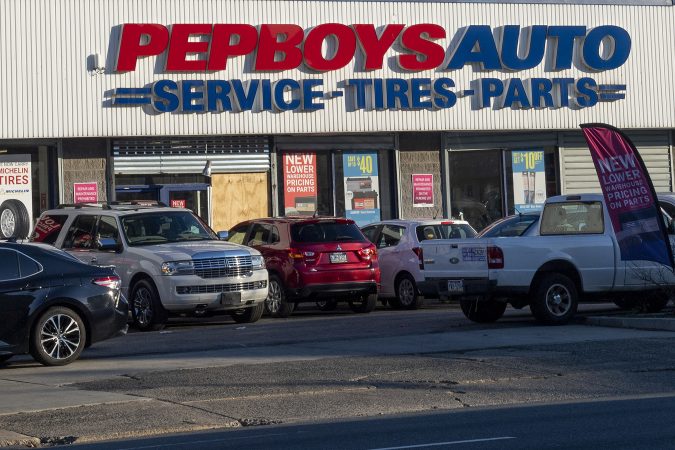
Billionaire investor Carl Icahn’s company is selling Pep Boys, the Philadelphia-founded auto service chain, to private equity-backed Mavis Tire Express Services for $700 million in cash, the parties said Tuesday.
Icahn’s publicly traded company, Icahn Enterprises LP, will keep owned real estate as well as Montgomery County-based Aamco Transmissions and Precision Tune Auto Care businesses.
Founded more than a century ago by Navy veterans Emanuel Rosenfeld, Maurice L. Strauss, W. Graham “Jack” Jackson, and Moe Radavitz, Pep Boys started with a store at 63rd and Market Streets in Philadelphia’s Overbrook section. It now offers repair and maintenance services at more than 750 locations across the country.
The founders became immortalized in the company’s branding, with a logo that included the cartoon faces of Manny, Moe, and Jack.
“For more than 100 years, Pep Boys has earned the trust of drivers across the country by delivering quality service with honesty and care,” Pep Boys CEO Joe Auriemma said in a statement. “Mavis shares these values and, as part of the Mavis family, Pep Boys will have the scale, footprint, and operational and technological strength to continue building on its legacy as it enters a new chapter of growth.”
A spokesperson for White Plains, N.Y.-based Mavis said Pep Boys “will continue operating under its iconic brand name.”
The deal expands Mavis’ footprint to more than 4,400 service locations. David Sorbaro, co-chief executive officer of Mavis, said in a statement that Pep Boys “brings a loyal customer base, deep-rooted market presence across the United States, and a distribution network that will meaningfully enhance our supply chain nationwide.”
The acquisition comes a decade after Icahn won Pep Boys in a bidding war with Japan-based tire giant Bridgestone for $1 billion. Around the same time, Icahn also bought the smaller Auto Plus chain, based in Kennesaw, Ga.
That bet did not go as planned. Auto Plus filed for bankruptcy in 2023, with Icahn citing “lessened demand, supply chain disruptions, an inflationary environment, and the effects of COVID-19.”
Under Icahn’s ownership, Pep Boys closed retail auto parts stores as it focused on repairs and tire sales.
Icahn Enterprises’ auto segment reported a 3% decline in revenue in 2025 over the prior year, for a total of $1.4 billion, according to a securities filing. Icahn’s company cited “the strategic closure of underperforming locations.”
Icahn Enterprises has also pointed to reduced consumer spending on auto repairs and maintenance.
Around 2020 Icahn sold Pep Boys’ longtime headquarters on Allegheny Avenue in North Philly — which had been home to 500 employees — but leased back some space. Pep Boys no longer occupies the building, a spokesperson said.
The company is now based in Bala Cynwyd. Pep Boys spokesperson Amanda Crisafulli declined to say how many jobs are based there. She also declined to say how many employees work for the company in total.
Asked whether Mavis will keep the Bala Cynwyd office, a Mavis spokesperson said: “The integration of Mavis and Pep Boys will follow the closing of the transaction, which we expect to occur in the coming months, subject to customary closing conditions.”
Editor’s Note: This story has been updated with additional information about Mavis’ plans for Pep Boys.
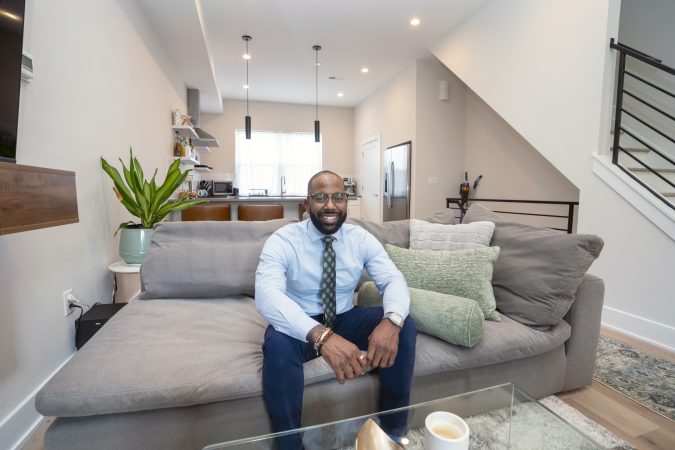
The buyers: Eric Murchison, 35, vice president and commercial loan officer
The house: A 2,617-square-foot townhouse in East Falls with 4 bedrooms and 3 baths built in 2025.
The price: Listed for $525,000; purchased for $490,000.
The agent: Marvin Capps, Marvin Capps Realty, Inc.
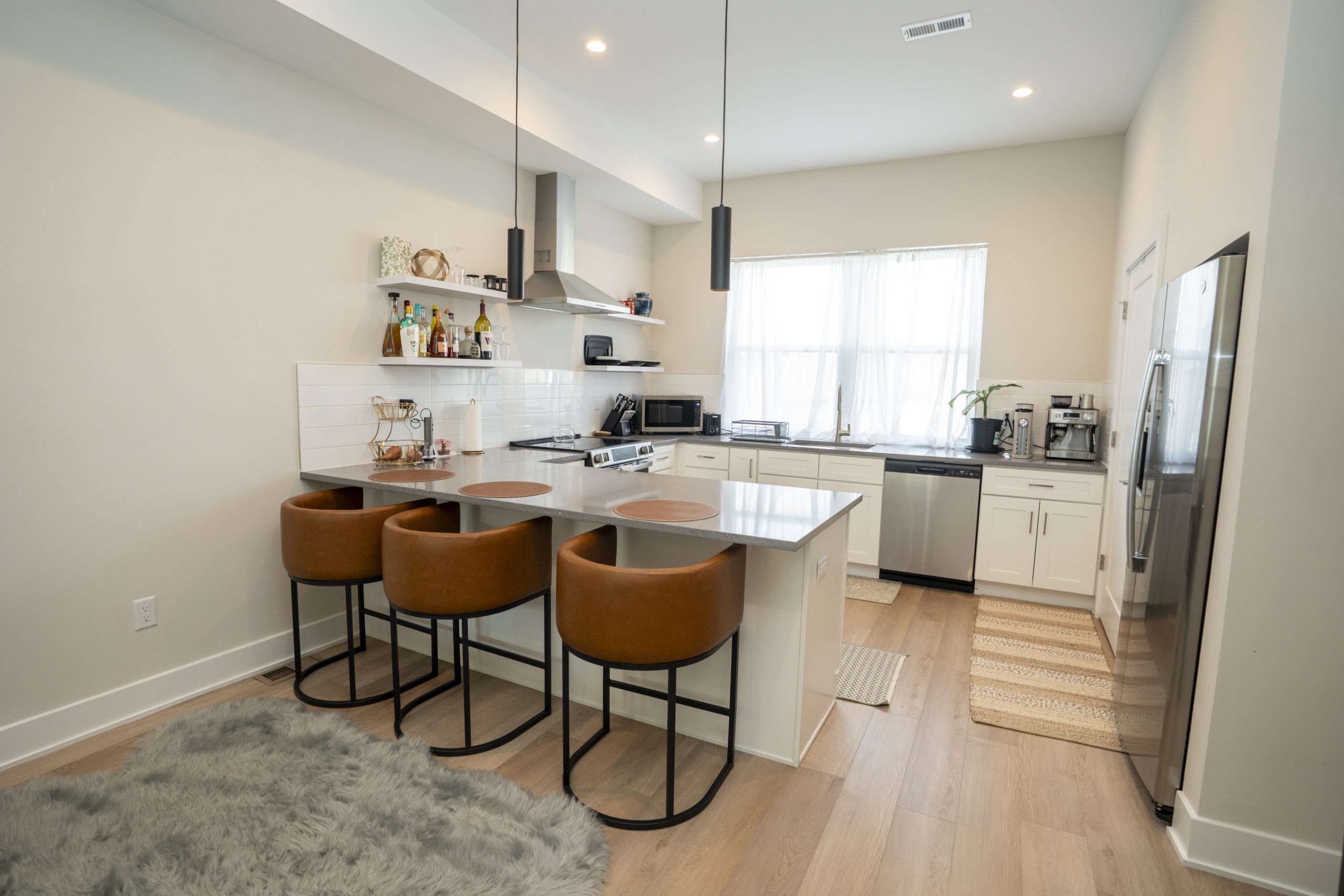
The kitchen of Murchison’s new East Falls townhouse.Jessica Kourkounis / For The Inquirer
The ask: The idea of buying in Philly had begun to feel impossible to Eric Murchison.
Born and raised in North Philly, he’d watched prices in the city skyrocket for years, convincing him that in order to own a nice home, he’d need to move somewhere like Texas. He’d already begun telling friends that he’d be gone within two or three years.
But when a work client urged him to think about buying in his home city — Why would you leave your hometown? Why not own a piece of it? — he began to think seriously about the possibility.
“I kind of couldn’t sleep at night after he said that to me,” Murchison said.
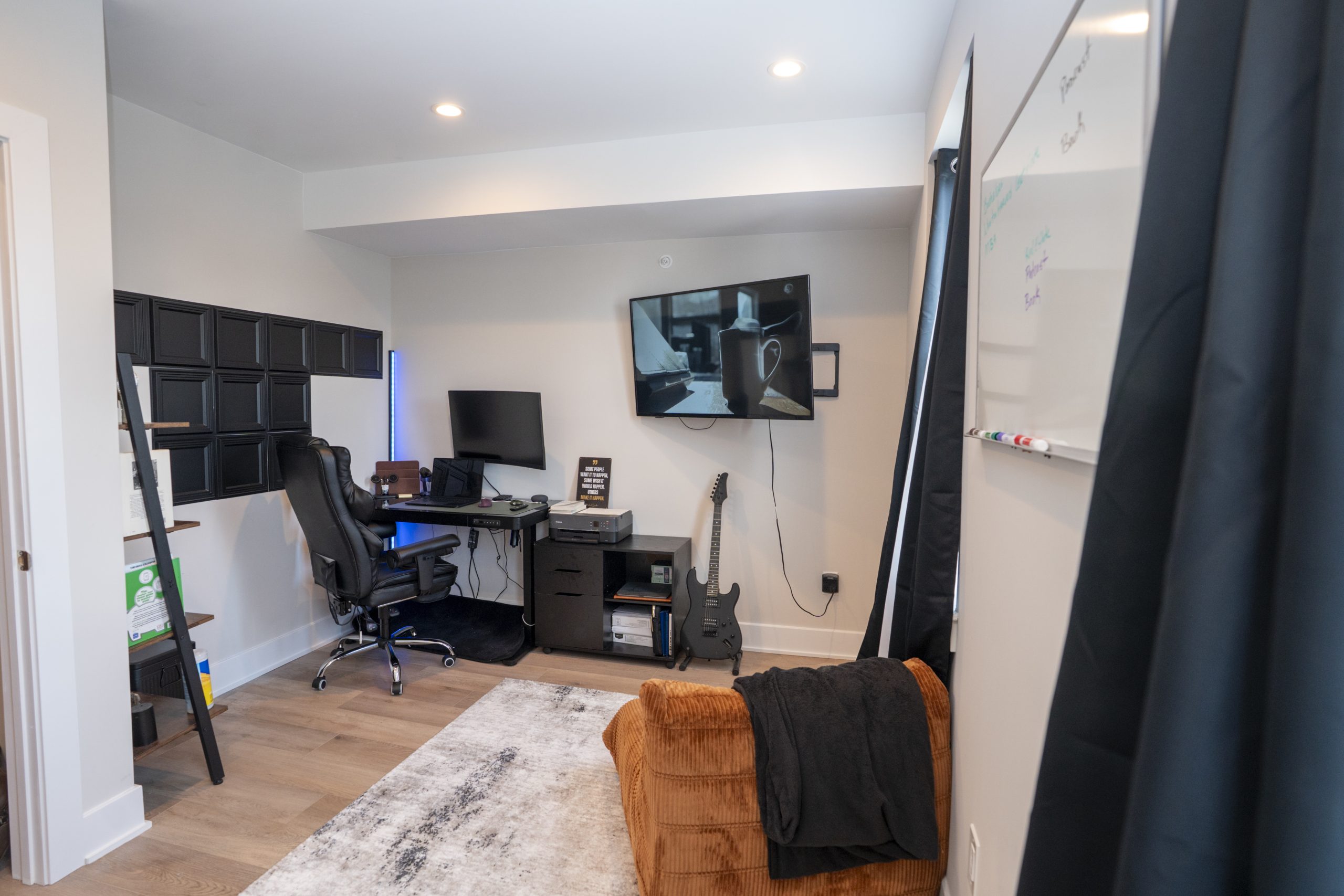
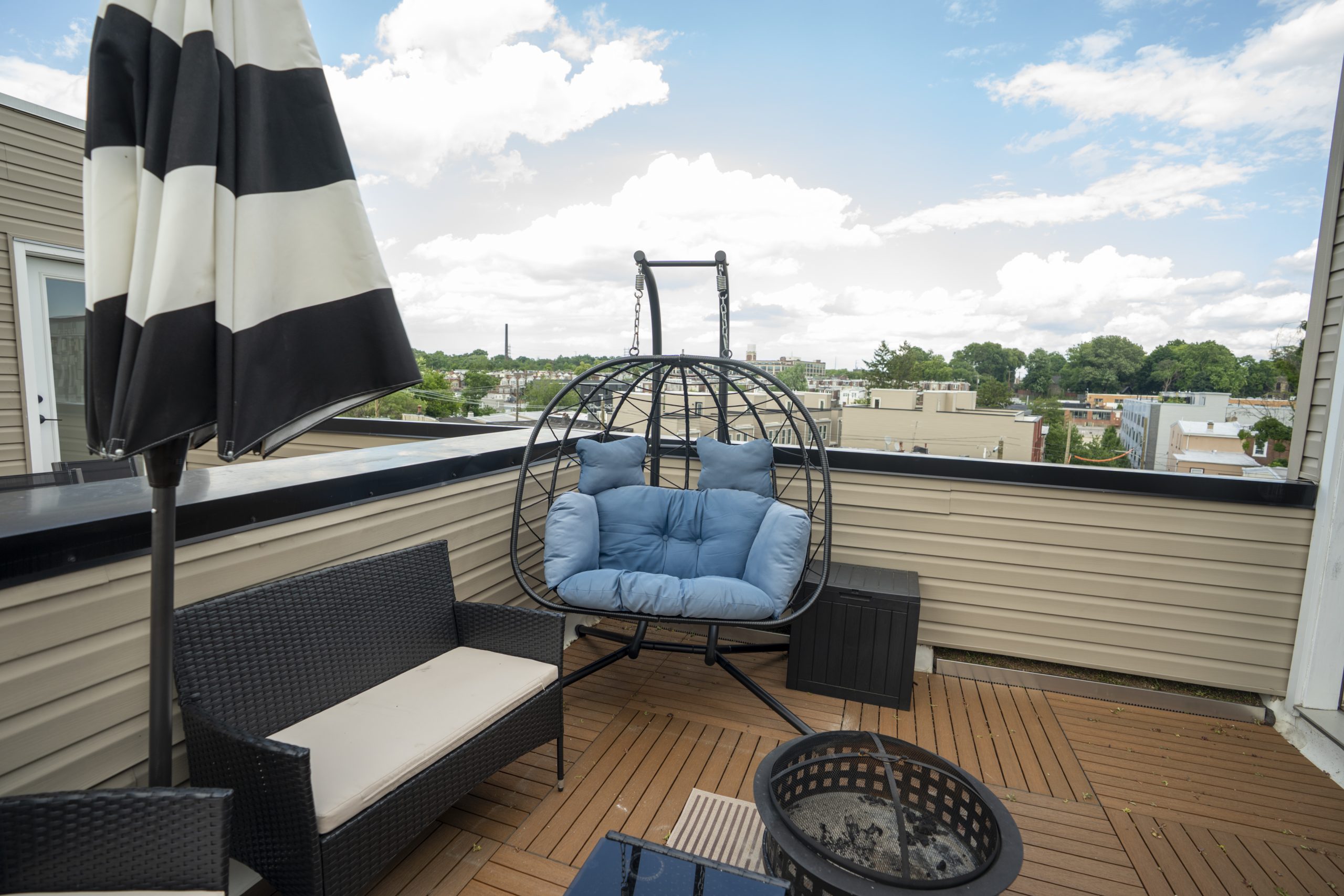
What he was looking for wasn’t extravagant. He wanted a garage and a rooftop space, along with a separate bathroom for his 16-year-old daughter — which he didn’t have in his rental in Bala Cynwyd. And to be “in an area where you could visually see that developers are in this space.”
He hoped to find all that under $500,000, even as his real estate agent tried to temper expectations.
“When I said ‘under a half-million,’” Murchison recalled, “he said, ‘Eric, are you kidding me? That’s [probably] not going to happen.’”
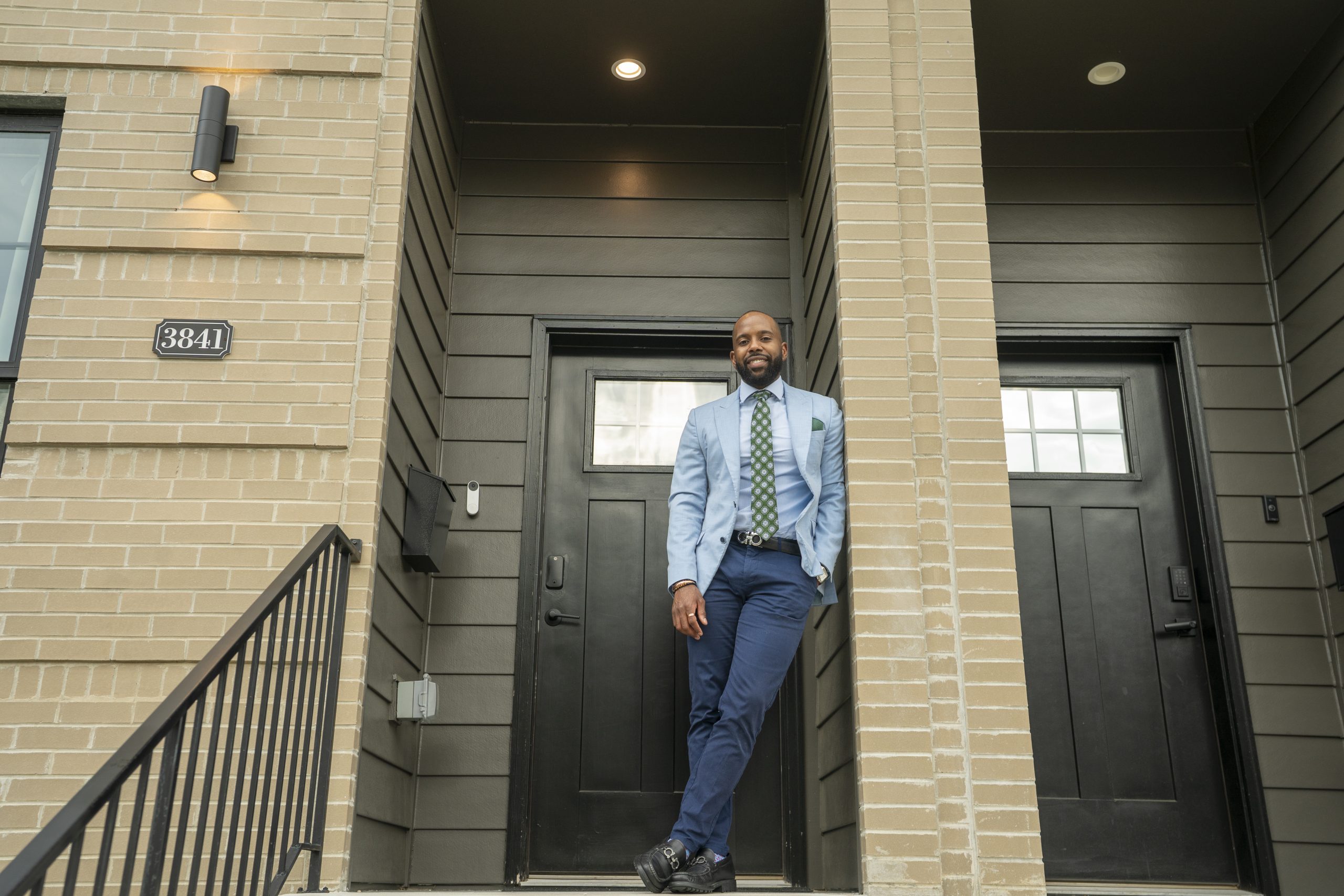
Eric Murchison, 35, on the front steps of his new East Falls townhouse.Jessica Kourkounis / For The Inquirer
The search: By his own admission, Murchison’s search was “very spontaneous and random.” He’d see a potential home while searching online during his lunch break and decide to go check it out.
One — a duplex near Temple University — was well over his budget, at $750,000. (He’d liked the idea of buying a duplex and renting out one of the units while living in the other.)
Another home he liked in South Philly was priced around $550,000, with no wiggle room. “The guy just was not budging on the price,” Murchison said.
Discouraged, he let his property manager know that he was renewing his lease for the following year.
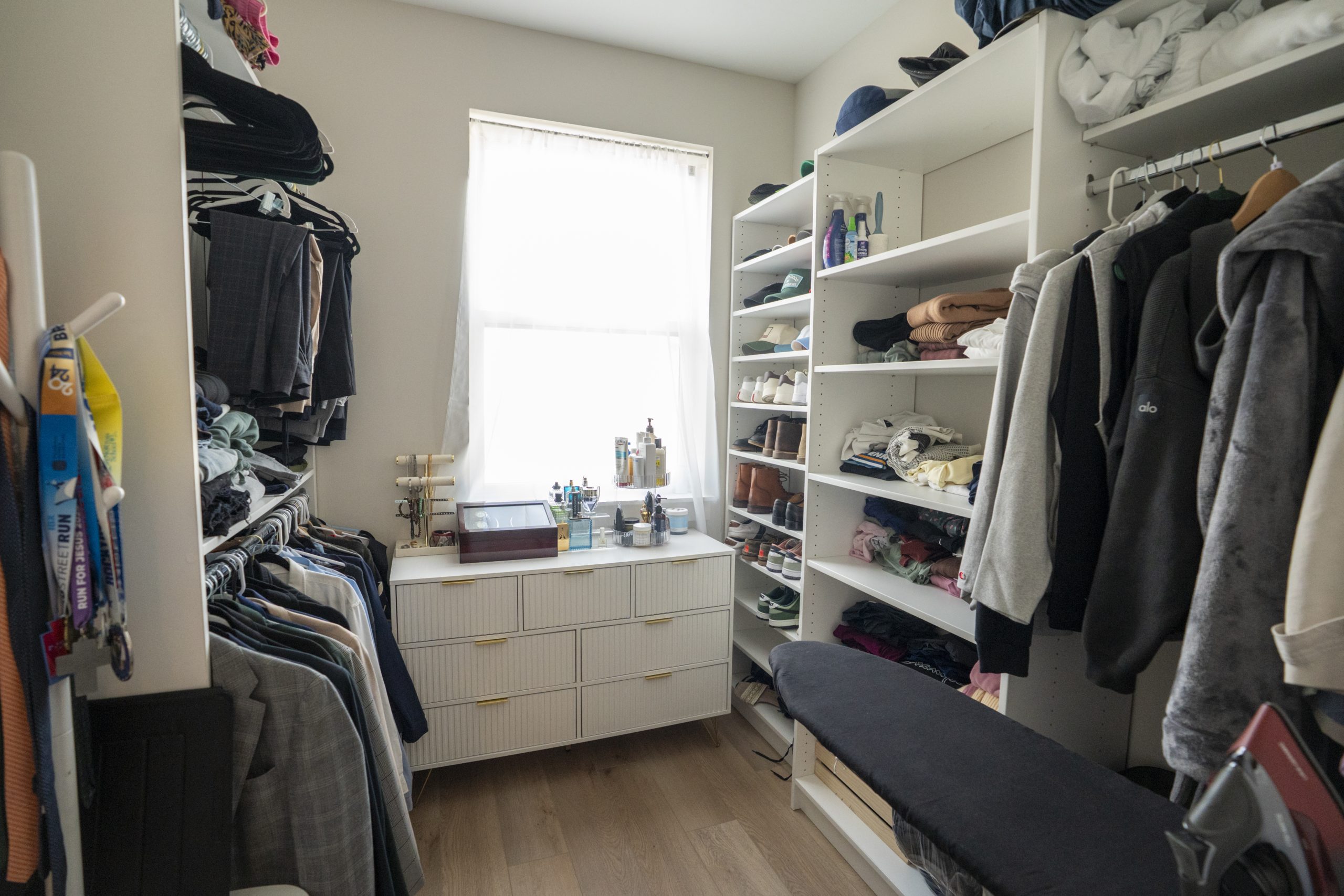
The primary suite includes a walk-in closet.Jessica Kourkounis / For The Inquirer
The appeal: The first time he came across his future home was on Zillow. It was also on his drive to work, so he’d passed it on his commute, admiring the newly constructed townhouses.
But when he randomly met the developers through work, he said, it felt like kismet.
The development was across from a cemetery and a bit over budget at $525,000. But it was just a 10-minute drive to Center City and a half-mile walk to Kelly Drive, where Murchison liked to go running. He liked the neighborhood, too, which he felt was poised for a boom.
Murchison turned one of the home’s four bedrooms into an office and meditation space.Jessica Kourkounis / For The Inquirer
Because it was a newly constructed home, it was part of a city program that provides a 10-year tax abatement to buyers who bought into certain new construction projects in the city.
“But what ultimately made me move on it was that feeling like, ‘This feels like it could be home,’” he said. “I remember having that feeling, and seeing my daughter, envisioning us like having popcorn and watching TV, and I kind of had in mind where I could put the furniture.”
By the time he toured a second time, he was sold.
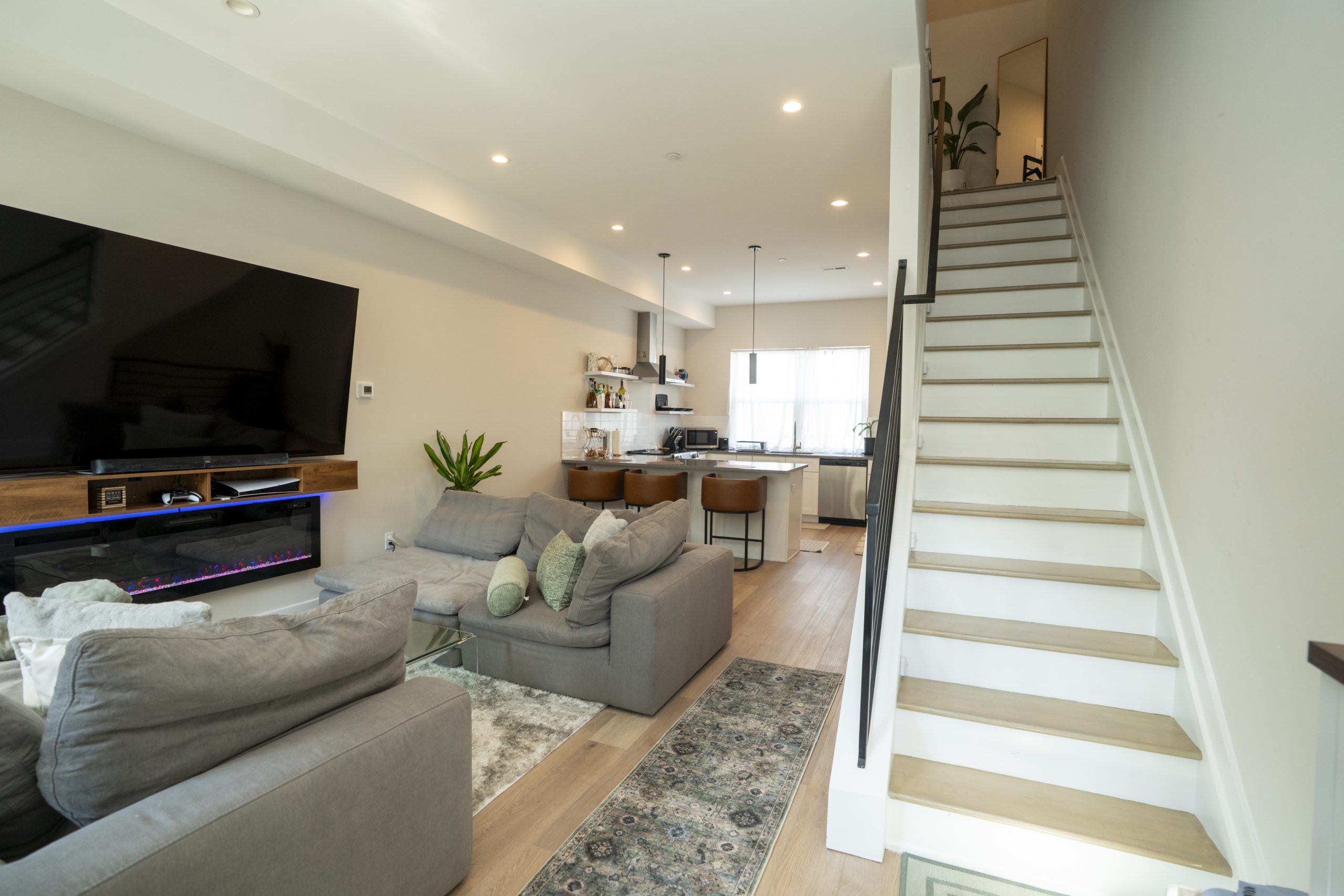
The first floor of Murchison’s new townhouse. At 2,617 square feet, it’s more than twice the size of his previous rental. Jessica Kourkounis / For The Inquirer
The deal: Listed at $525,000, Murchison initially offered $480,000 before settling on $490,000, with a 6% seller’s assist.
Though it was a new home, an inspection turned up some minor issues — a loose faucet and a noisy kitchen range fan — that the developer agreed to fix.
The money: Murchisonwas prepared to put 3% down on the new home.But when he inquired with another lender, he said, he was able to get a more attractive deal, in which a down payment wasn’t required.
“I actually got a refund at settlement because I had the 6% seller’s assist,” he said. “So the only down payment was like transfer tax, closing cost, all those things.”
Today, his mortgage is $3,400 — $400 more than his previous rent — and because of the tax abatement, he pays just $68 a month in taxes, he said, instead of the roughly $500 he’d otherwise owe.
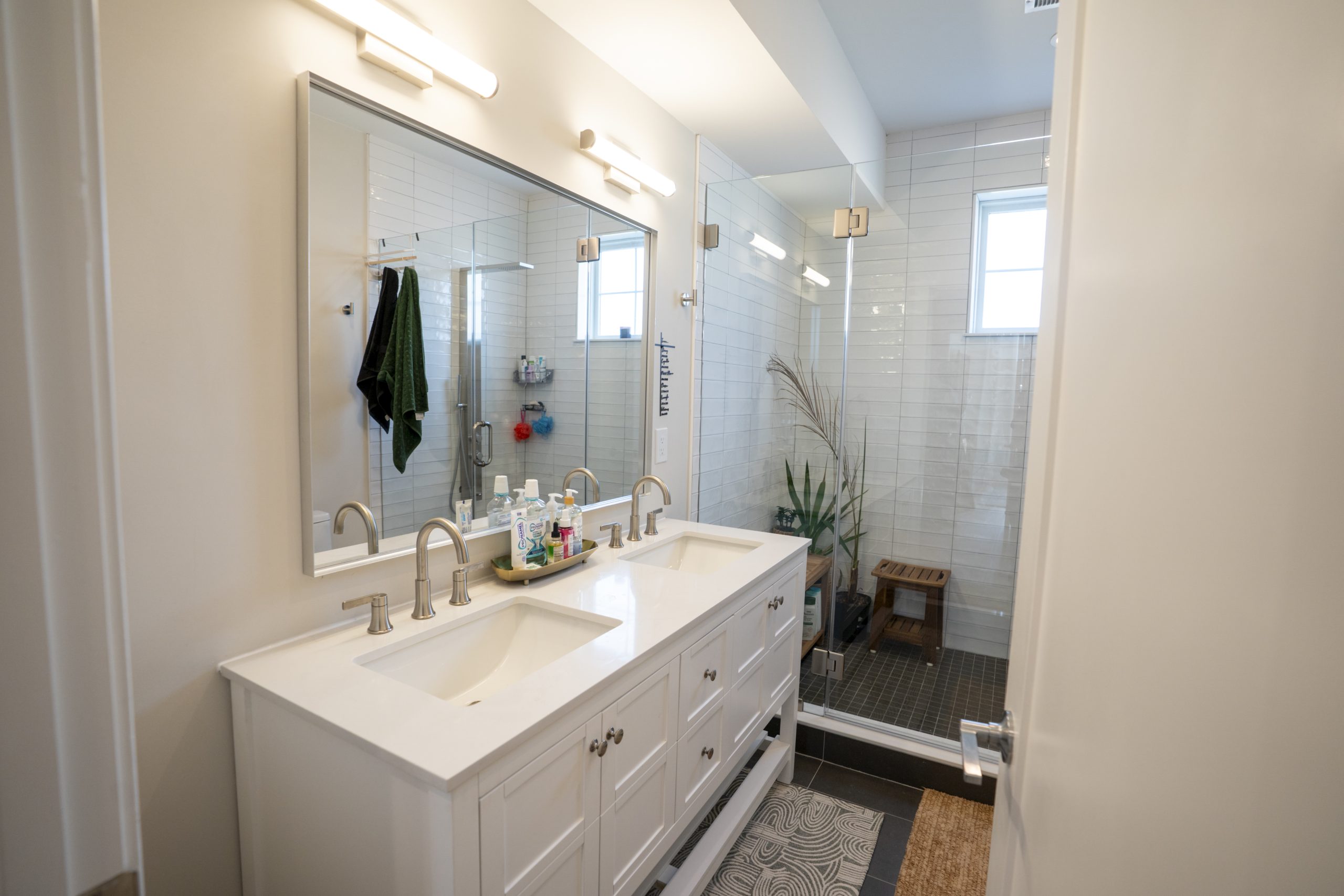
The primary bathroom in Murchison’s new townhouse.Jessica Kourkounis / For The Inquirer
The move: With the money he was able to save by not putting down the 3% down payment, he was able to pay for movers, plus a nice dinner for his first night in his new home.
He moved in the same day he closed on the home. “Iclosed Feb. 6, I think at like 10 a.m., [and] the movers were done by 1 p.m.,” he said.
Life after close: At more than 2,500-square-feet, the new home dwarfs Murchison’s previous rental, which was about 1,000 square feet.
In addition to bedrooms for both him and his daughter, he also has a meditation/prayer room.
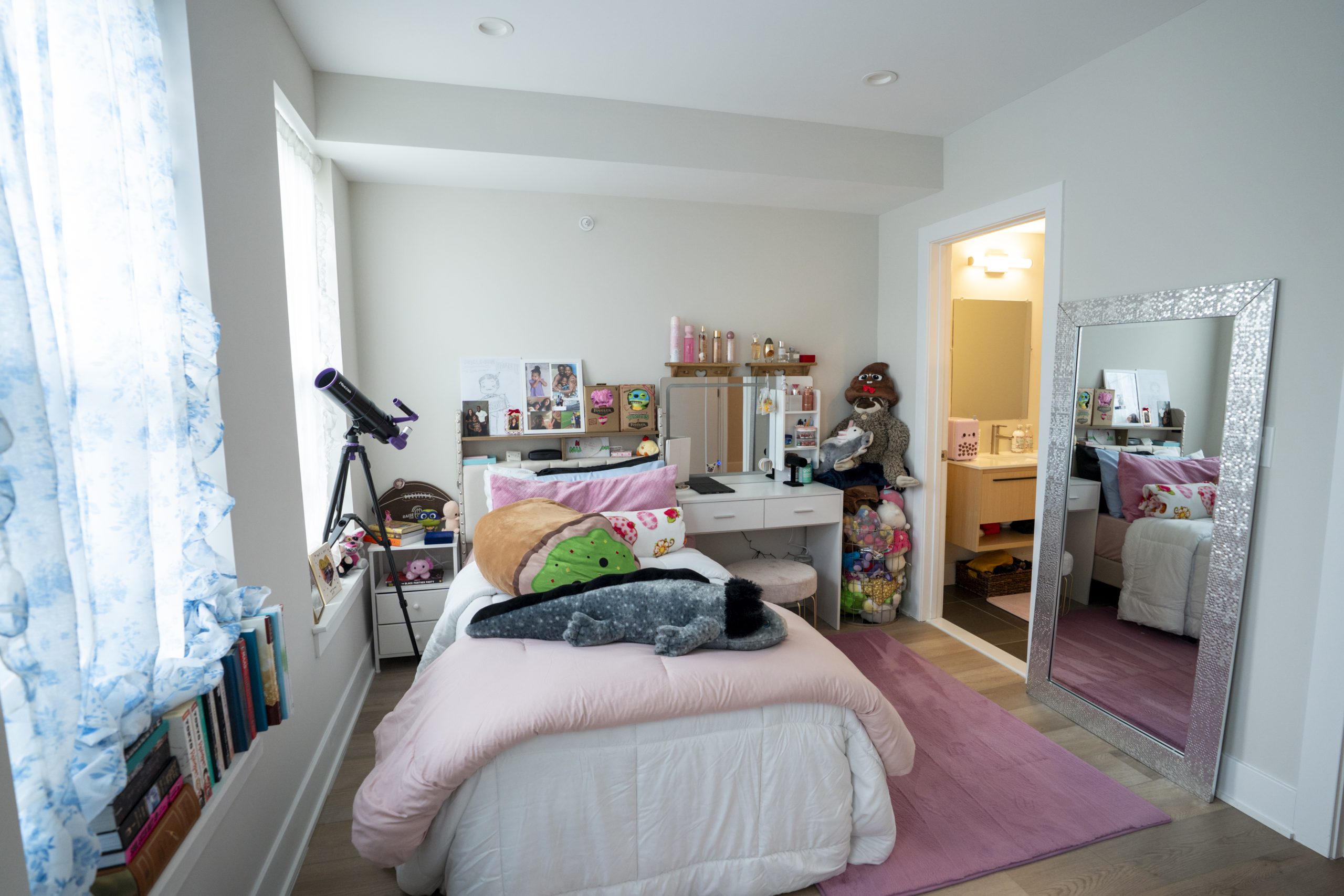
Eric Murchison’s daughter’s bedroom in his new East Falls townhouse.Jessica Kourkounis / For The Inquirer
So far, he’s had one small renovation project done — removing some shelving in a hallway between his bedroom and bathroom — with plans to make two more improvements in the not-too-distant future: adding a sauna, as well as some shade to the rooftop.
He considers himself “very happy” with his new home, and hopes his story inspires other Philadelphians that homeownership in the city remains possible.
“People need to know — especially Philadelphia natives who think they have to leave — like, hey, if you have a good real estate agent and you have creative financing, you might as well buy.”
A rooftop deck is one of amenities Murchison was seeking in his new home. He got it.Jessica Kourkounis / For The Inquirer
Did you recently buy a home in the Philadelphia area or South Jersey? Share the story of how you did it. Email Inquirer real estate reporters at properties@inquirer.com.
Elon Musk’s company that runs the Starlink communications network, launches rockets for NASA, and develops artificial intelligence software raised more than $75 billion from investors last week — a record initial public stock offering (IPO) for a company fast-burning through billions in investor dollars in hopes of future profit.
SpaceX is just the flashiest of a string of industrial stocks that have soared as orders for missiles, drones, and other war machines, as well as civilian aircraft and rockets, pile up. S&P’s Aerospace and Defense Select Industry Index is up 44% over the past year vs. 24% for the broader S&P 500 stocks, even with Google, Nvidia, and other AI-linked stocks leading the 500.
The share price for Philadelphia-based Carpenter Technology is up 125%, almost three times as much as that index of aerospace and defense stocks.
Carpenter does $3 billion in annual sales, melting or grinding iron, tungsten, cobalt, and other metals into super hard or relentlessly flexible alloys used in stainless steel and other specialty parts by military, commercial airliner, medical, industrial, and space equipment makers.
The company operates plants in Reading, Berks County; Latrobe and other Western Pennsylvania towns; and around Athens, Ala. It has a finishing plant in China and distributors worldwide. Carpenter’s large customers include passenger jet and military aircraft maker Boeing and European aerospace giant Airbus.
CEO Tony Thene has said space is a fast-growing growing part of Carpenter’s customer base, exciting some investors into expecting the company will share SpaceX’s gains.
Thene, who is stepping down at the end of the month, hasn’t said SpaceX is a customer. Chief operating officer Brian Malloy will take over leading the company.
Investor Louis Navellier was quoted last month as saying he’d rather own Carpenter, which makes the metals used by SpaceX and other aerospace companies, and its larger customer, Pittsburgh-based Howmet Aerospace, than SpaceX itself, at recent valuations.
That price is above the targets set by analysts at Bala Cynwyd-based Susquehanna International Group and Wall Street brokerages after Thene reported earnings at the end of April. At that time, Carpenter officials predicted stronger than expected sales and higher profits, to be split between investor dividends and new furnace equipment.
Carpenter at recent valuations is worth around $30 billion, roughly as much as Hershey or Kraft Heinz, whose sales are much larger, and almost as much as gas-drilling giant EQT, based in Pittsburgh.
Shares of area aerospace manufacturers such as Ametek, which has its headquarters in Berwyn and plants around the world, and Innovative Aerosystem, of Exton, are also up significantly over the past year.
Howmet, with $8 billion in yearly sales to Carpenter’s $3 billion, hasn’t boosted its share value as fast in past year, but it has risen enough to become the most valuable company in Pennsylvania, the only company whose shares are worth over $100 billion on the stock market.
That’s more valuable than companies with much larger sales, such as Philadelphia-based media giant Comcast; mega-drug distributor Cencora of Conshohocken, or Pittsburgh’s PNC, the nation’s fifth-largest bank.
At today’s share prices, many times earnings or projected future profits, investors are gambling that suppliers like Carpenter and Howmet — and SpaceX, the spaceship builder — will grow a lot faster than the economy as a whole.
Bennett L. Aaron, 92, of Bryn Mawr, longtime Philadelphia attorney, honorary trustee of the Jewish Federation of Greater Philadelphia, former president of the Federation of Jewish Agencies of Greater Philadelphia, board member for the Jewish Agency for Israel, onetime chair of the United Israel Appeal, mentor, volunteer, and world traveler, died Monday, June 1, of age-associated decline at Beaumont at Bryn Mawr retirement community.
Born in Brooklyn, Mr. Aaron earned his law degree at Columbia Law School in New York in 1957, moved to Philadelphia, and spent the next six decades, until his semi-retirement in 2019, focusing on estate planning, gift taxation, probate, and trust law at Cohen, Shapiro, Polisher, Shiekman & Cohen and, later, Pepper Hamilton law firms.
His clients included principals at Pocono Raceway and the Rite Aid Corp., and colleagues praised his ability to engage through both professional and personal connections. “He understood that estate planning was not merely about documents and tax strategy,” his family said in a tribute, “but about values, legacy, and protecting treasured family succession plans.”
His son Steve said: “He was a superior listener and problem solver. That was his superpower.”
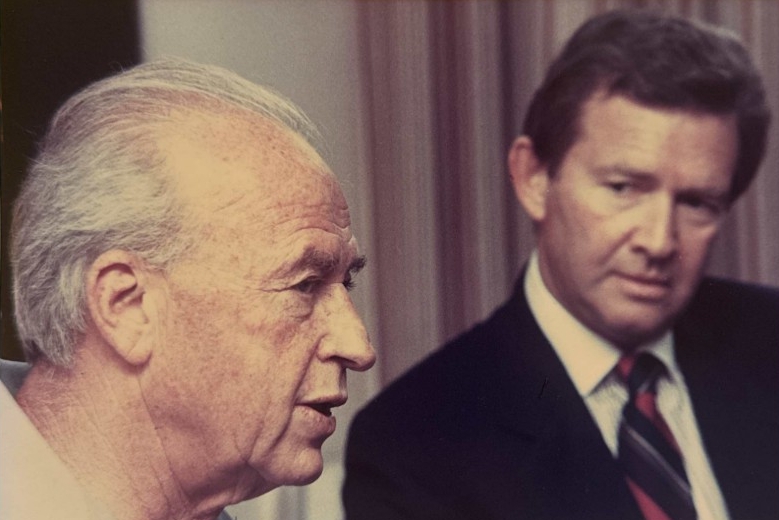
Mr. Aaron (right) listens to Yitzhak Rabin, former primer minister of Israel.Courtesy of the family
Mr. Aaron was friendly and energetic, his family said, and he excelled at collaborating through phone conversations and face-to-face encounters. He rarely micromanaged big contracts, colleagues said, but was available if something extra was needed.
He mentored young lawyers and talked frequently with former Gov. Ed Rendell, former Sens. Arlen Specter and Bob Casey, and other government officials. Colleagues called him “a tremendous community leader and visionary” and “the smartest, warmest, most terrific guy” in online tributes.
One colleague said: “It was easy to see the positive impact he had on those around him.”
The son of a New York rabbi, Mr. Aaron was a prolific fundraiser and the local public face of Jewish philanthropy for decades. He served as president of the Federation of Jewish Agencies of Greater Philadelphia from 1983 to 1987, as chair of the United Israel Appeal for the United Jewish Appeal, as chief volunteer officer for the Jewish Federations of North America, and in other roles.
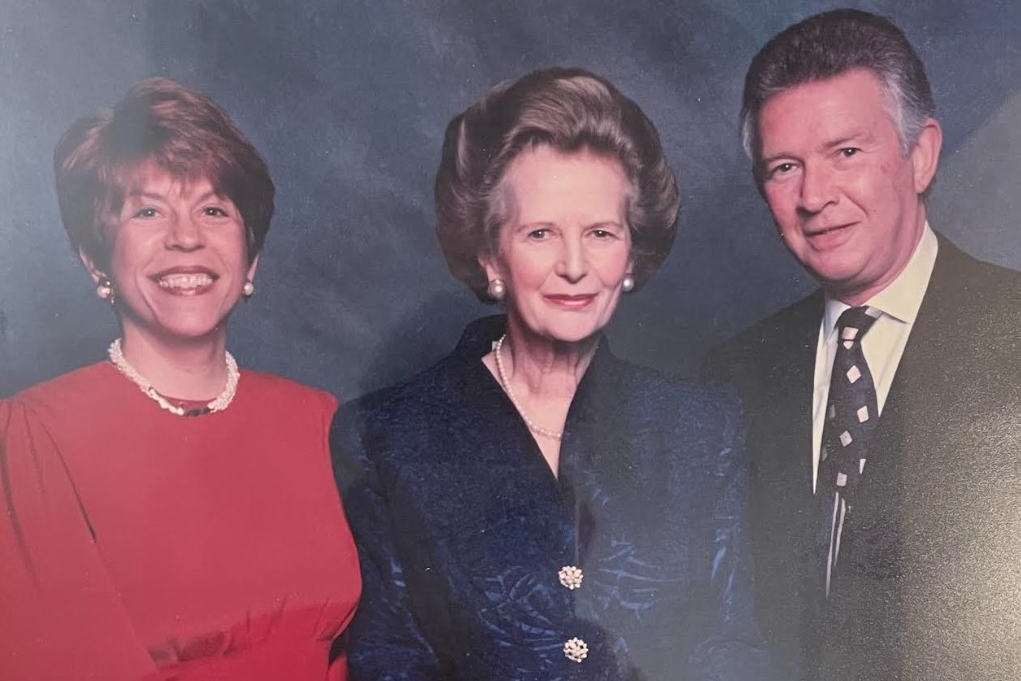
Mr. Aaron and his wife, Carol (left), met Margaret Thatcher, former prime minister of the United Kingdom, on their travels.Courtesy of the family
He was adept at balancing assets and liabilities for the nonprofit agencies. He oversaw record-breaking fundraising campaigns in Philadelphia and helped other leaders determine the direction of international Jewish philanthropy.
His 10-hour fundraising phone-athon at the Civic Center in 1986 drew more than 2,400 volunteer callers and raised a then-record $2.4 million in pledges to the United Jewish Appeal. “We have no trouble getting more than enough volunteers for this,” Mr. Aaron told The Inquirer. “People look forward to coming here all year. There’s camaraderie and plenty of fun.”
Colleagues at the Jewish Agency for Israel called him “an inspiration to many” and “a true mensch whose character, integrity, and warmth will be greatly missed.”
Mr. Aaron traveled to Israel often and met with former Prime Minister Yitzhak Rabin, former U.K. Prime Minister Margaret Thatcher, and other leaders. “He worked tirelessly to foster understanding and solidarity between his Philadelphia community and Israel,” his family said. “He leaves behind a legacy of integrity, service, and enduring impact on the city he came to cherish and the causes that defined his life.”
Mr. Aaron and his wife, Carol, married in 1955.Courtesy of the family
Bennett Louis Aaron was born Oct. 2, 1933. He and his older brother, Joseph, shared a tiny bedroom, played stickball after school, and cheered for the old Brooklyn Dodgers baseball team.
He graduated from high school at 16 and earned a bachelor’s degree at Columbia University in 1954 and a master’s degree in taxation at New York University School of Law in 1966.
He met Carol Perlmann in 1953 at the Pennsylvania summer camp his parents owned, and they married in 1955. They lived in Merion and Bala Cynwyd before moving to Beaumont, and reared daughters Marjorie and Roberta, and sons Morrie and Steve. His daughter Roberta died in 2003.
Mr. Aaron was an avid tennis player. He had season tickets to Eagles games and traveled with his wife to four Olympic Games.
Mr. Aaron (right) was close with his sons Morrie (left) and Steve.Courtesy of the family
He cherished his family, everyone said, and he and his wife toured the world together. He was dapper and debonair. He liked to explore downtown city streets between meetings and answer the phone with “Hello there.”
“He set the standard for hard work and integrity,” his son Morrie said, “always coupled with kindness, compassion, and generosity.”
“He was the definition of a gentle man,” his son Steve said. His family said: “His was a life lived fully, purposefully, and with a really, really big heart.”
In addition to his wife, children, and brother, Mr. Aaron is survived by eight grandchildren and other relatives.
Mr. Aaron “was the definition of a gentle man,” his son Steve said.Courtesy of the family
The World Cup officially lands in Philly on June 14, when the Ivory Coast takes on Ecuador at the temporarily-renamed Philadelphia Stadium (aka Lincoln Financial Field) in South Philly, with five more games to follow.
But let’s be real: Getting into a match is going to be difficult. And besides, nothing screams Philly more than taking in a game at a local bar alongside strangers and Citywides that will give you the courage to cheer even louder.
Here are 19 bars in Philly and the suburbs that are going all-in on the World Cup, including four planning to be open until 4 a.m. for late-night matches.
🍺 Bars allowed to stay open until 4 a.m.
Earlier this year, Gov. Josh Shapiro signed a bill into law permitting Philly bars to stay open until 4 a.m. for the duration of the World Cup. Just over 50 bars in the city thus far are eligible to apply for a permit to stay open that late, according to a list from the City of Philadelphia, and several told The Inquirer that extending their hours just wasn’t worth it.
On the eve of the World Cup, several bars were still waiting to get permit approval to stay open late.
These are four spots that plan to be open until 4 a.m. in Philly, from a bowling alley to a Latin American club-staurant.
The bar at Cavanaugh’s Rittenhouse, 1941 Sansom St., on Aug. 31, 2022.MICHAEL KLEIN / Staff
While Cavanaugh’s Headhouse location has a rep among Newcastle United and Liverpool fans as a solid bar for soccer matches, the sports bar’s Rittenhouse location is the one that will be open until 4 a.m. during the World Cup. Cav’s will be serving daily drinks and food specials, and is one of more than 20 bars participating in the Crawl for the Cup, a citywide World Cup-themed bar crawl, including a scavenger hunt, on June 20.
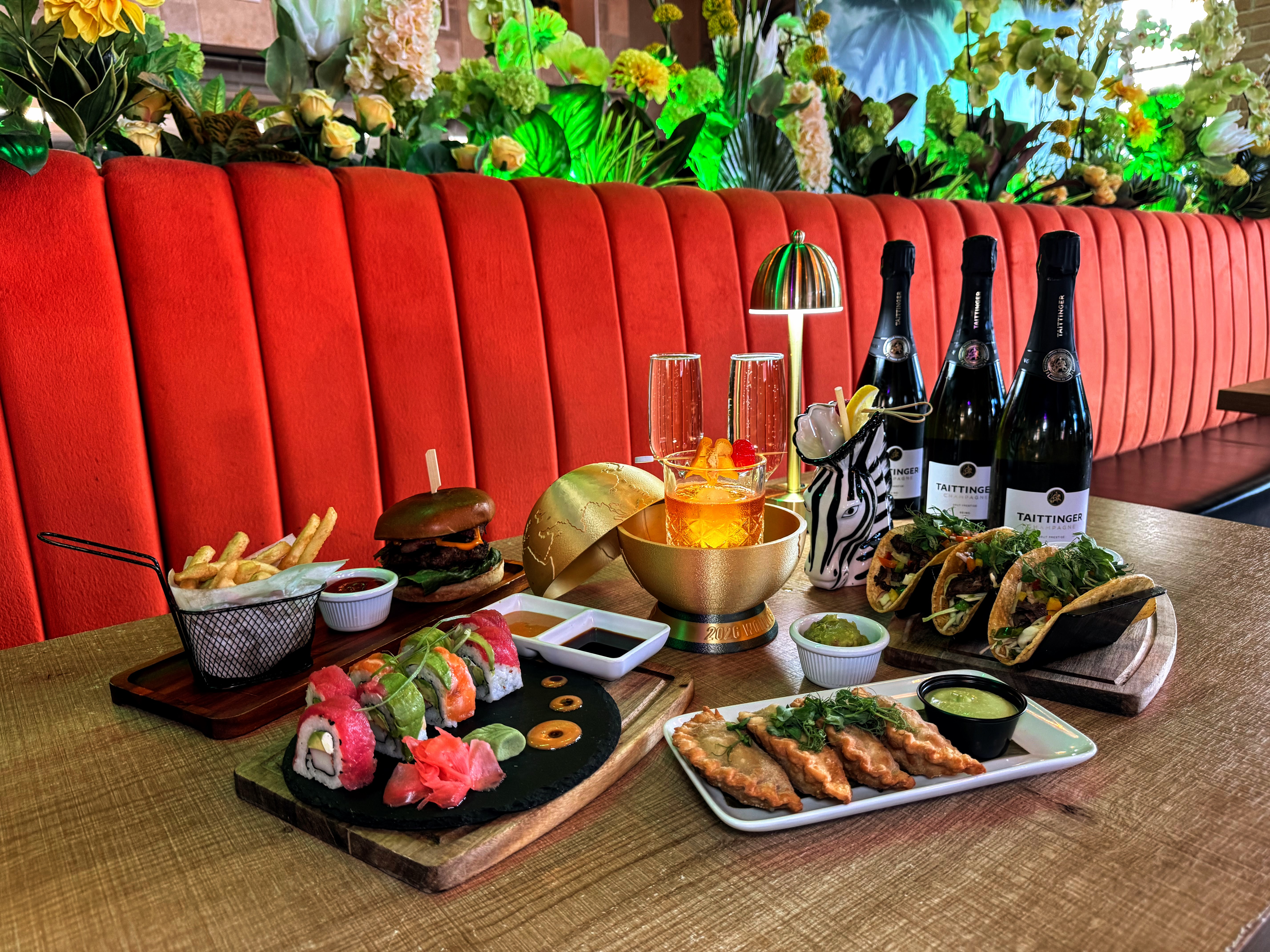
The World Cup is practically a 24 / 7 event at Mamajuana. The Latin American Northern Liberties club-staurant will be staying open until 4 a.m. on match days while also hosting Sunday brunches and watch parties for 10 games from June 13 through July 19. The club’s World Cup special promises mascot appearances, daily food specials, and limited-edition cocktails, such as the Golden Cup, an old-fashioned served in a gold globe-shaped goblet. A full schedule can be found on Mamajuana’s Instagram.
This lively Hunting Park institution will be open until 4 a.m. during the World Cup to broadcast games in its downstairs bar and upstairs night club. Tierra Colombiana’s menu spans Latin America, which means you can have arepas while Colombia plays, ceviche during Ecuador’s matches, and extra large mojitos all tournament long.
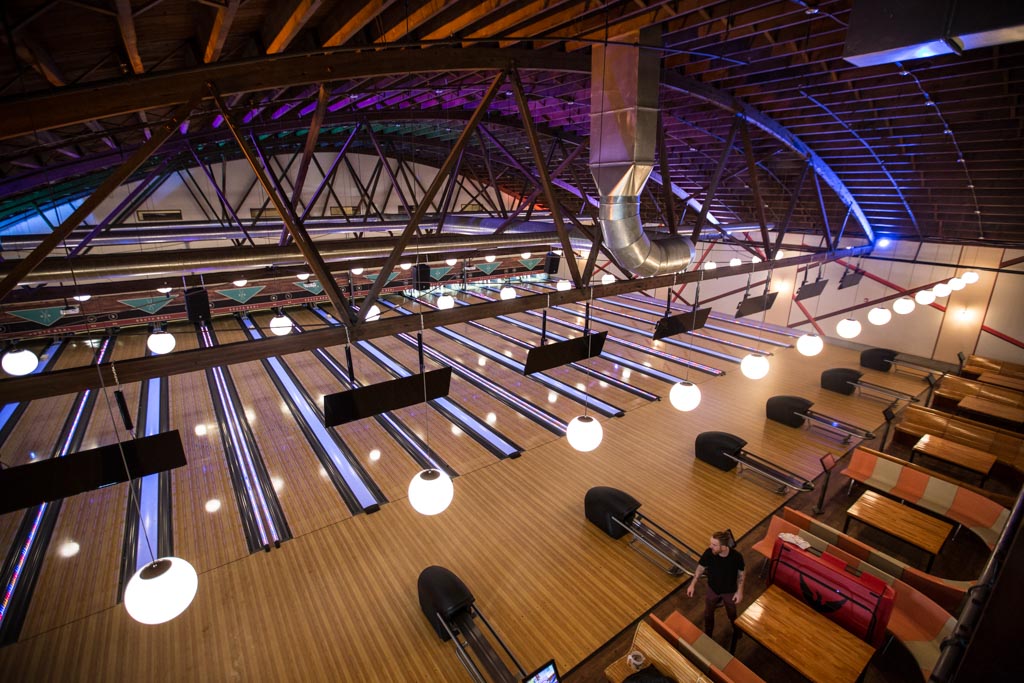
Soccer at a bowling alley? That’s literally the vibe at Oregon Avenue’s South Bowl, a bowling alley and bar (with an outdoor lounge) that is staying open until 4 a.m. to broadcast the following matches: Australia vs. Turkey on June 14, Austria vs. Jordan on June 17, and Tunisia vs. Japan on June 21. Games will play on the screens above each lane, which means there’s the potential to land a strike while watching pro athletes score goals.
If the 4 a.m. crowd isn’t your speed, these 10 Philly bars are hosting World Cup watch parties that don’t skimp on the fun — even if they aren’t going all night long.
Scenes from the opening night of Bok Bar — initially called Le Bok Fin — in 2015.Michelle Gustafson
The Black Taxi
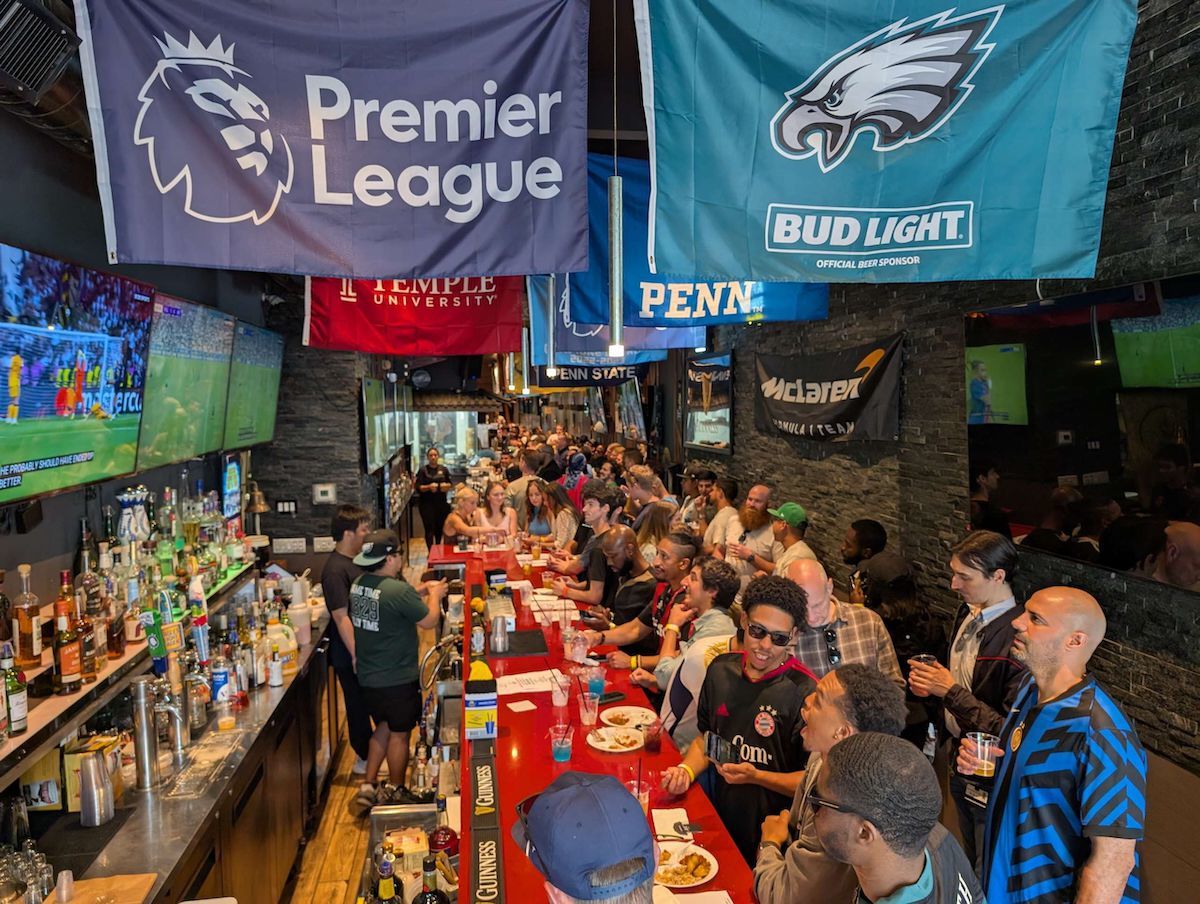
This Irish pub in Fairmount has long been a host for English Premier League matches, at one point even displaying the trophy for an afternoon of photo ops. Roughly a half-mile from the FIFA Fan Fest at Lemon Hill, this is the spot to take in a game with a perfect pour of Guinness.
📍 745-747 N. 25th St., 📞 215-232-1086, 🌐 theblacktaxi.com
All of Philly’s tournament matches will be simulcast on screen’s atop Philly’s most famous rooftop bar, which is hosting Puyero Venezulean Flavor for a monthlong food pop-up in June that includes arepas, empanadas, and bite-sized churros. Where else can you see the lights from the Linc — I mean, Philadelphia Stadium — twinkle in distance during a knockout game on July 4?
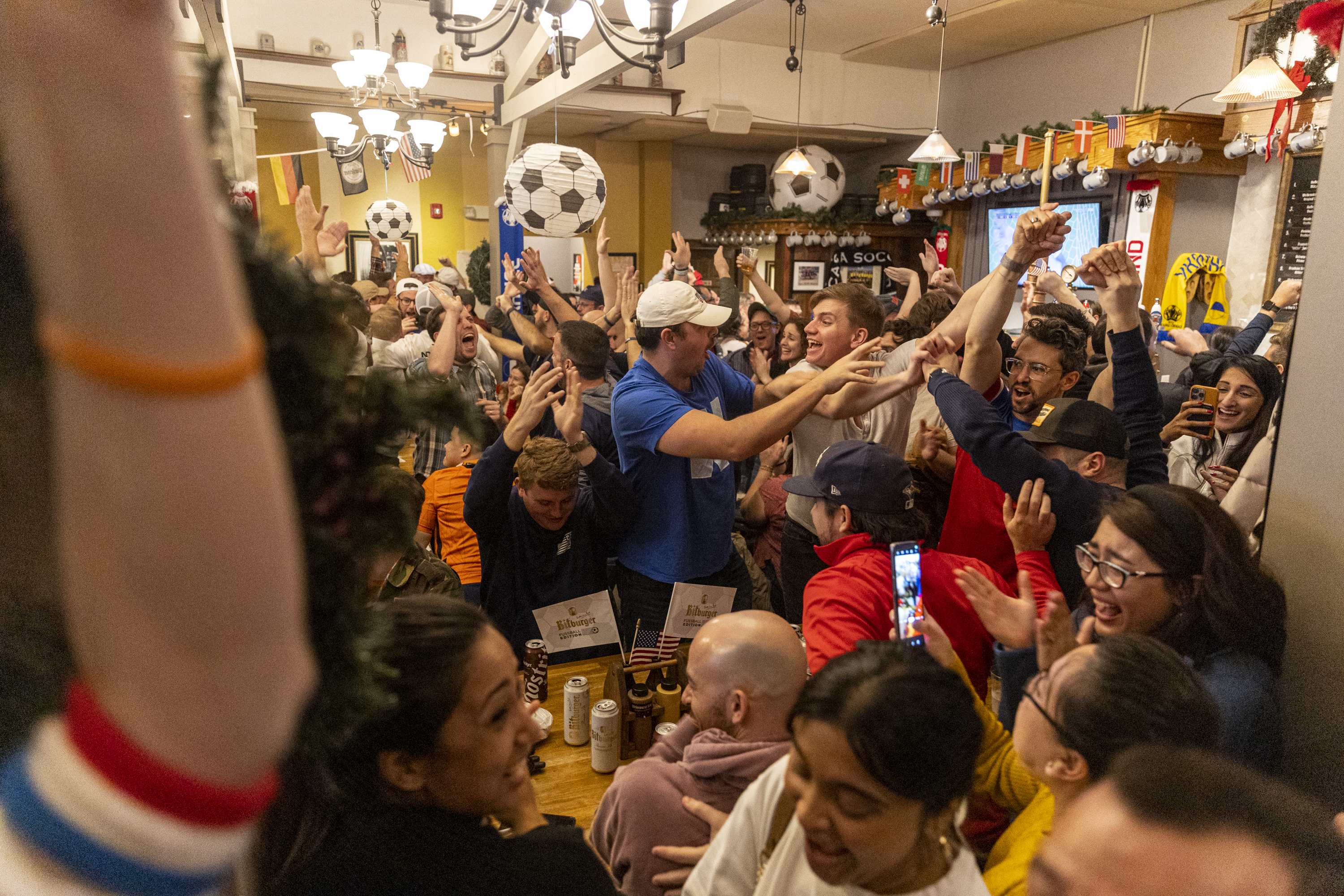
The crowd at Brauhaus Schmitz in Philadelphia cheers USA’s first goal against the Netherlands in the World Cup on Dec. 3, 2022.Tyger Williams / Staff Photographer
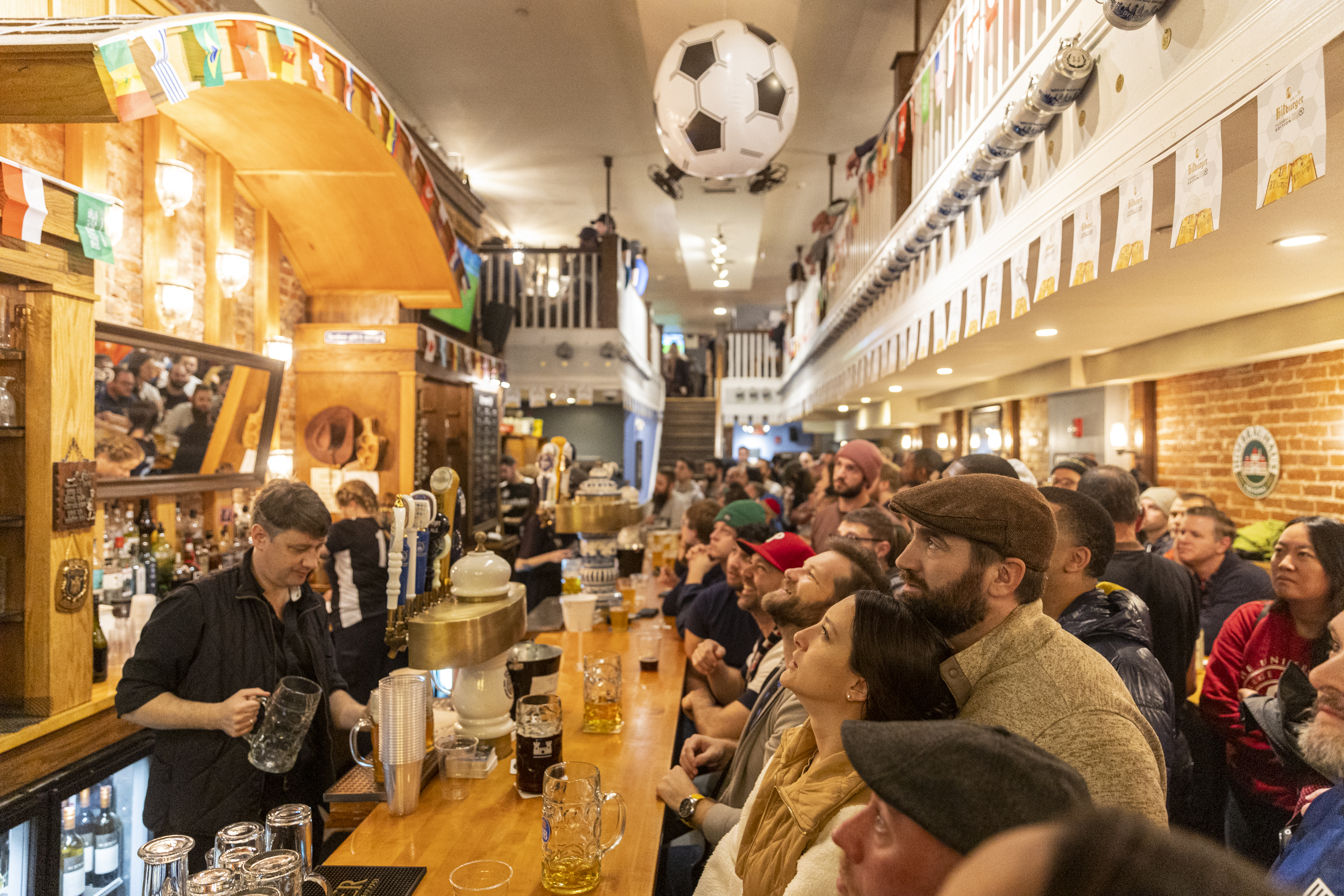
Bella Vista’s sprawling German biergarten is taking the party to the streets, closing down the block for free outdoor watch parties for matches on June 25, June 27, July 3, July 4, and July 19. Games will be broadcast on 20-foot-tall TVs in the middle of South Street, while indoors will feature 34 beers on tap, surprise giveaways, and burgers with novelty soccer ball pretzel buns. And on non-block party days, Brauhaus Schmitz will be still be airing World Cup matches indoors.
This Brazilian sports bar in Northeast Philly is the place to be for fans of team Brazil and is hosting not one, but two lively watch parties during the team’s match against Morocco on June 13 and Haiti on June 19. And if you’re only there for the vibes, Guanabara has a rooftop, three types of caipirinhas, and Brazilian-style cheesesteaks.
Known for its supremely satisfying smashburger, this neighborhood bar with a French twist has big plans for the Group Stage. Good King Tavern will open daily starting at 3 p.m. with an extended happy hour that features mini cocktails and street food-style snacks. Its upstairs wine bar, Le Caveau, will also be getting in on the action, which means you can sip a draft negroni and nosh on a fancy hot dog while watching your team of choice.
A bar where you can play 18-holes of mini golf between matches? Sign us up. Libertee Grounds will be gamifying its World Cup watch parties with the Pitch Passport, a punch card that rewards guest for watching every game at the bar-slash-indoor-mini-golf-course. How it works: Earn a punch for each nation when you a watch a match, which are redeemable for rewards such as a free beer, mini golf passes, or a lifetime membership. Drink specials will also be available.
This Chinatown sports bar is committed to soccer year-round, airing everything from Premier League matches to La Liga games on its 35 TVs. Expect the World Cup to be no different. Lion Sports Bar will be airing all matches at its original location and taking over Yamitsuki Ramen across the street for a ticketed open bar and buffet. Also available at both locations: a signature World Cup pink margarita garnished with collectible Lionel Messi stickers.
This longstanding Irish Pub in Center City is the official home of Philly’s Chelsea FC and Manchester City FC clubs, so you can expect that it will be a hub for World Cup games. The bar will air all 104 matches (with the sound on!) across 14 TVs and two projectors. Weeks one and two of the tournament are bringing specials on Michelob Ultra and Stella Artois, plus a ticket giveaway on June 13 for a future match.
The real fun at this rowdy, double-decker sports bar comes during the USMNT’s matches against Paraguay on June 12, Australia on June 19, and Turkey on June 25. The American Outlaws — the official support group for Team USA — will be taking over Top Tomato during those games for block parties with a live DJ that are open to all, no RSVP required.
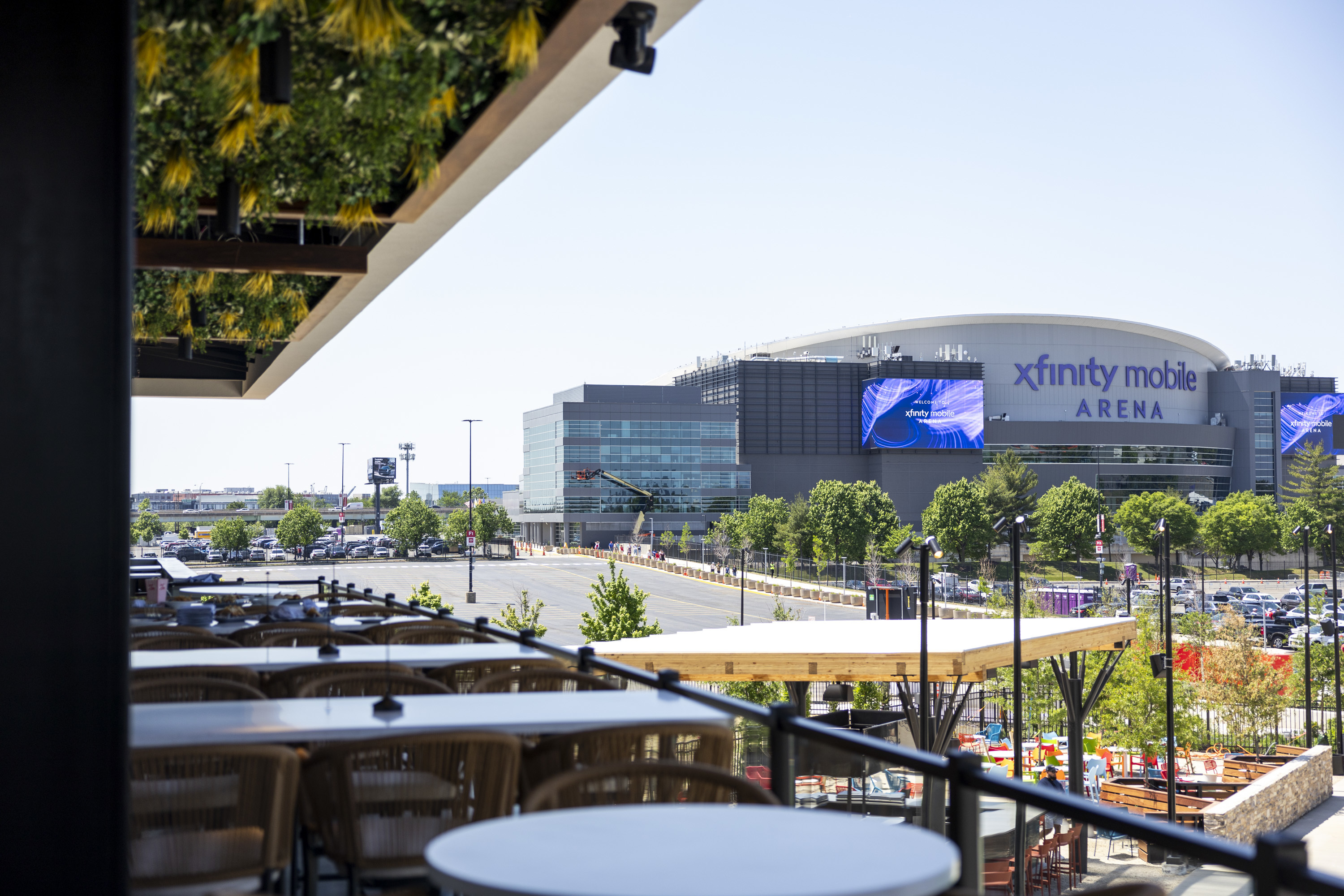
The newly renovated (and re-christened) Stateside Live! now includes a rooftop bar and beer garden. Just steps away from the action at Philadelphia Stadium, what will it offer soccer fans? The entertainment complex is hosting the official World Cup pregame for ticketholders. A match ticket and $50 will get you expedited entry and access to a tailgate with a food voucher, while $175 buys a spot at a prematch buffet with cheesesteaks, roast pork sandwiches, and open bar.
Stateside Live! will also be open to the general public during all six of Philly’s World Cup games. Matches will be simulcast on the venue’s new outdoor stage alongside a selection of food trucks.
But if you’re looking to keep it extra local during the World Cup, these bars in the Philly suburbs are going above and beyond for the World Cup, from erecting a pop-up beer garden to brewing a special IPA.
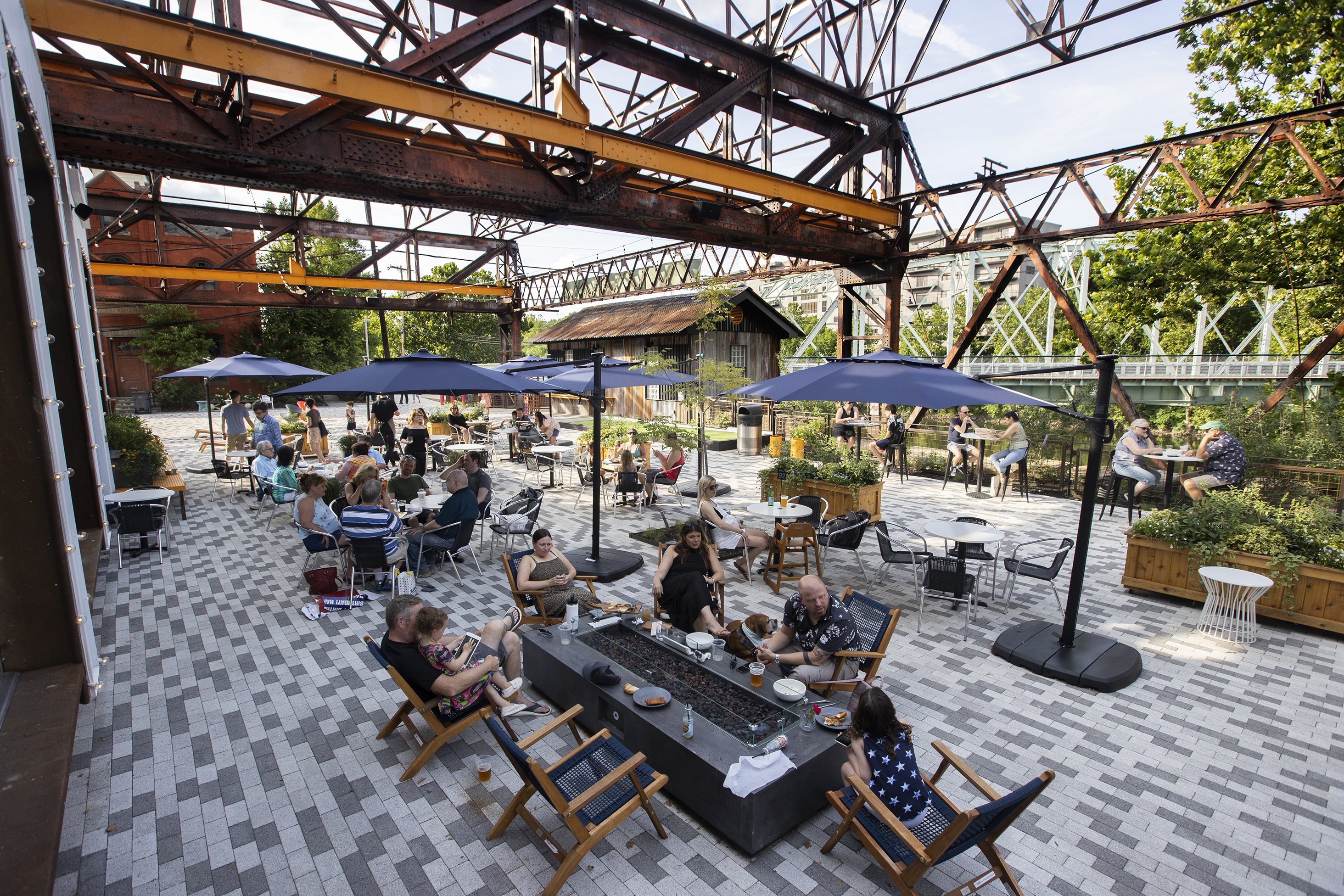
The Landing Kitchen, an all-day cafe created by Nicholas Elmi and Fia Berisha at the riverside redevelopment of the Pencoyd Ironworks on July 10, 2021.CHARLES FOX / Staff Photographer
Located in Bala Cynwyd, just across the Pencoyd Bridge from Manayunk, this all-day riverside cafe with a family friendly vibe will be broadcasting all quarterfinal, semifinal, and finals matches outdoors on a 164-inch screen. Chef Nicholas Elmi will be firing up a smoker for barbecue specials during the games, and guests are strongly encouraged to play bocce or relax at a fire pit during halftime.
Named one of the 10 best bars for watching soccer in the U.S. by the Men in Blazers, Bucks County’s Villa Capri is one of the only bars in the Philadelphia suburbs that has committed to airing all 104 World Cup matches — with the sound on. The Doylestown bar is also rolling a limited-edition cocktail menu for the tournament that includes drinks such as the $14 Equalizer margarita, which comes in passionfruit, pineapple, strawberry, or pomegranate.
This haunt for West Chester University students already has a reputation in Chester County as a Liverpool bar that airs Philadelphia Union games. During the World Cup, Kildare’s is going all in on USMNT. The bar will be shutting down a portion of Gay Street for a free, 21+ watch party during Team USA’s matchup against Paraguay on June 12. Kildare’s will also be showing a selection of other games starting at noon daily, with to-be-announced drink and food specials on offer.
Malvern’s Locust Lane Craft Brewery is hosting a pop-up World Cup beer garden in Upper Merion’s Nor-View Farm Park with free entry from June 11 through July 19. Games will be broadcast on TVs under the park’s pavilion, where attendees can bring their own chairs and enjoy a selection of $8 beers on tap, plus food from the Epicurian Garage Truck. The beer garden will open one hour before the first broadcast game and close before midnight; schedule can be found here.
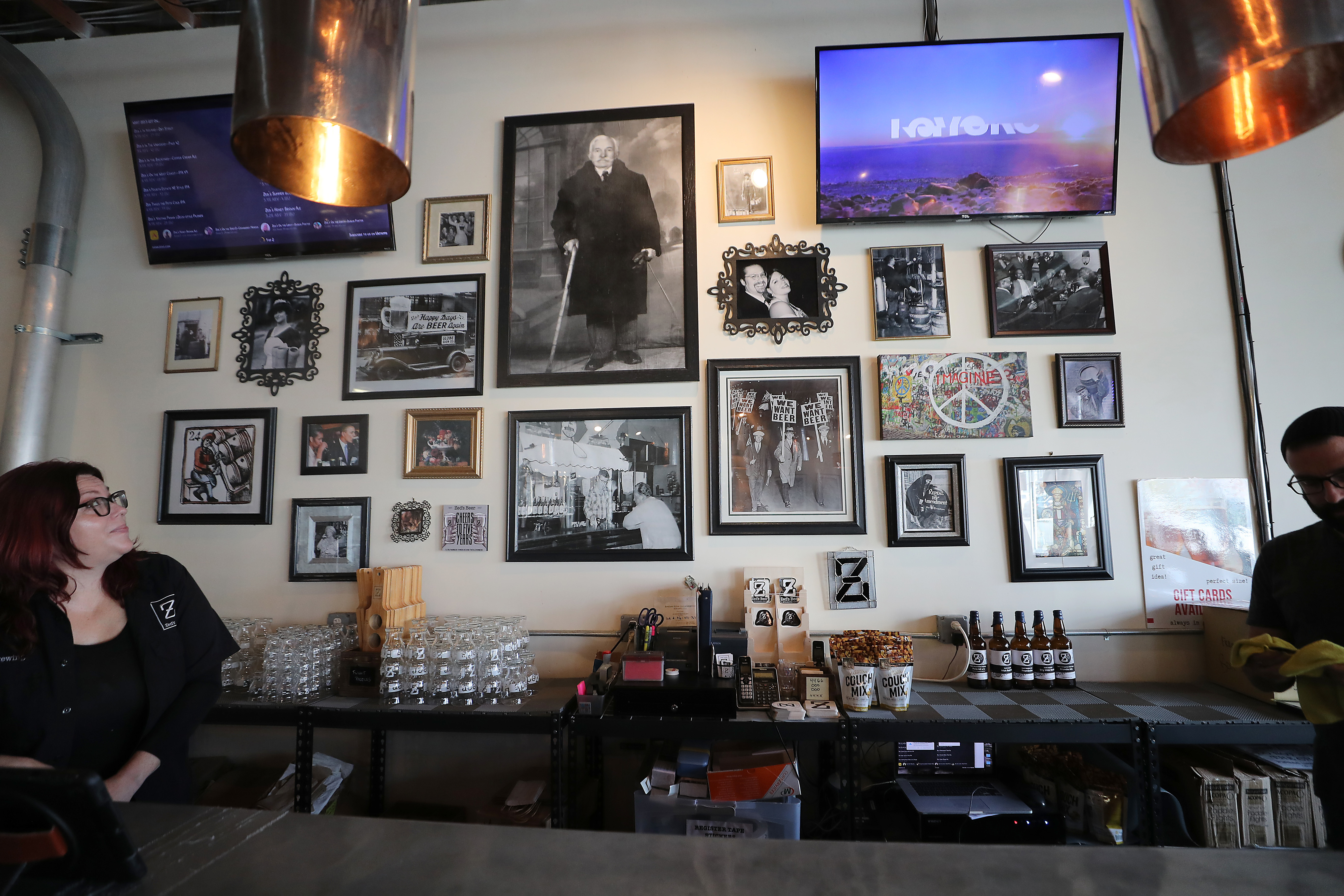
A former New Jersey Brewery of the Year, Zed’s Beer takes the World Cup as seriously as it takes its brews. The Marlton bar will be airing all Team USA matches, alongside several other key games as designated on the bar’s digital calendar. Also on offer: Soccer-themed quizzo and a new limited-edition IPA called the “48 hops for 48 teams.” Made with hops from each country with a qualifying FIFA team, this beer will be available for the duration of the tournament.
📍19 N. Maple Ave., Ste. A, Marlton, N.J. 📞 856-872-7632, 🌐 drinkzeds.com
Every week for the last five or six years, Scott Isdaner got another call: Are you ready to sell?
As managing partner of one of the last remaining larger independent public accounting firms in the Philadelphia region, Isdaner, 67, had watched many of his competitors — “our brethren” — get acquired by national companies, in many cases because they needed to do so to survive.
“We felt that we were in a position as a firm that if we chose to remain independent and continue down that path, that we would be able to succeed and do so,” said Isdaner, whose firm counts 70 employees, including 10 partners. “However, we’re also very mindful and realistic of what was going on in the marketplace in connection with our industry.”
The acquisition adds to a wave of deals in an industry that in recent years has seen a boom in investment from private equity and other sources of outside capital.
The companies did not disclose the financial terms of the deal, effective June 1. It came two years after Aprio received what it called a “strategic investment” from private equity firm Charles Bank Capital Partners.
And in January, South Jersey’s Bowman & Co. was acquired by a larger firm, PKF O’Connor Davies, which was backed by a Bahrain-based private equity group and a Canadian pension investment manager.
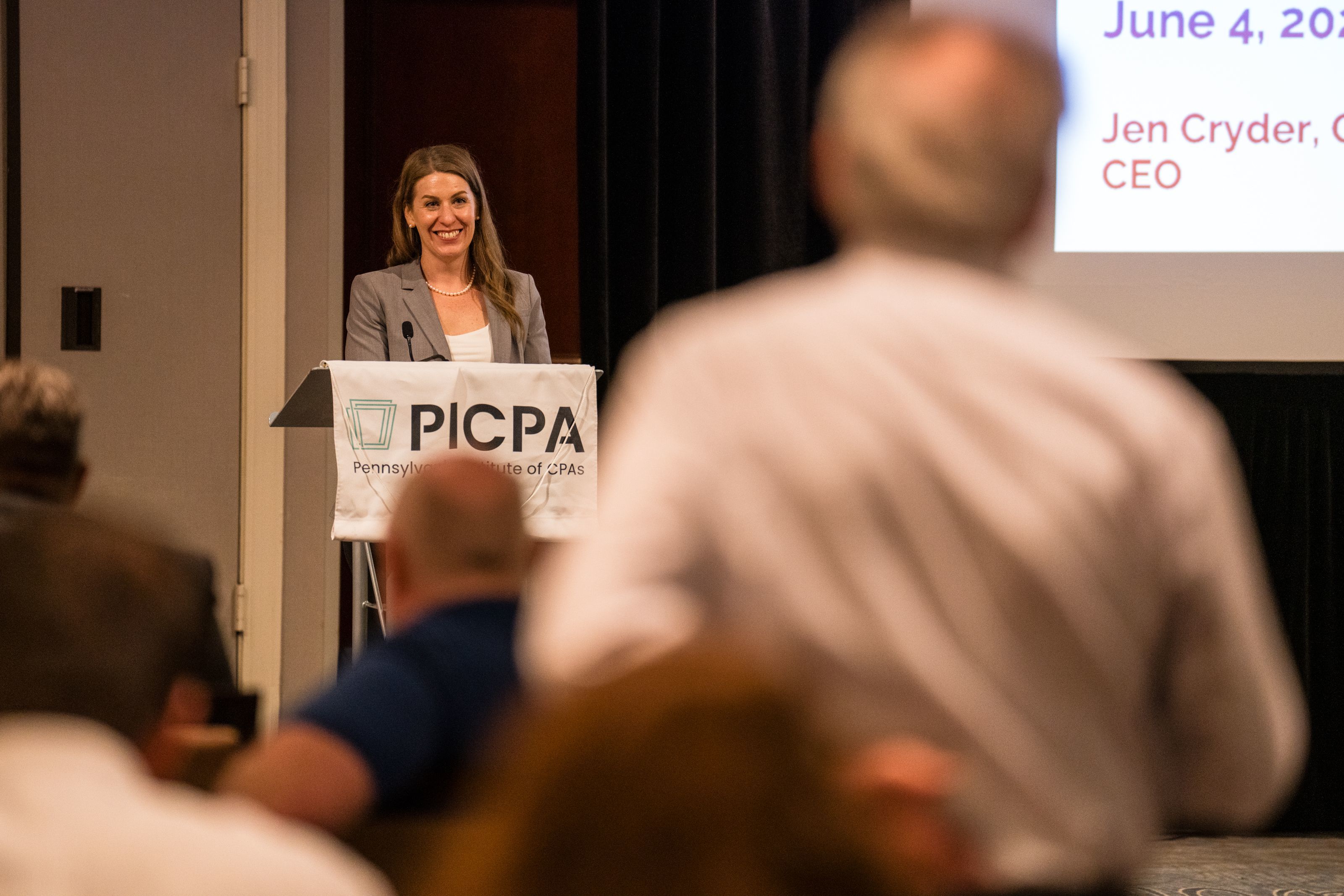
Mergers and acquisitions activity in accounting has been “unprecedented” the last few years, said Jen Cryder, CEO of the Pennsylvania Institute of Certified Public Accountants.
Private equity has invested at least $2 billion in public accounting since 2022, Bloomberg reported last year. Sovereign wealth funds and wealth management firms are also pouring in money.
Jen Cryder is chief executive officer of the Pennsylvania Institute of CPAs.Courtesy PICPA
Firms backed by outside capital accounted for two-thirds of the 129 CPA firm transactions last year, up from a 7% share just five years ago, according to Chicago-based Koltin Consulting Group, which specializes in mergers and acquisitions.
Not a lot of regional firms are left in the Philadelphia market, Cryder said. As talent shifts to national firms, that raises the question of how the middle market of closely held businesses, family firms, nonprofits, biotech, and others will continue to be served.
Clients have asked Isdaner whether they’ll still be able to call him and his team. “We’re staying put,” he said. “We’re still going to be here. … And we intend to continue to service our clients as we have, and maybe even better in the future.”
He added that employees will continue to have “career development opportunities.”
Aprio CEO Richard Kopelman said his company is “building something different in Philadelphia, a firm where every client has trusted advisers who anticipate the challenges ahead.”
Family business
Isdaner’s firm was founded in 1967 by his father and grandfather, who wanted to start a boutique firm serving small businesses. They called it Isdaner & Isdaner.
They worked with clients from the creation of businesses through sales or passage to future generations. Scott Isdaner was working as a tax attorney at a Philadelphia law firm in the 1980s when he got a call from his dad, Larry, who along with his partners had realized “they lacked a level of tax sophistication that they needed to help to continue to build and grow the practice.”
Scott agreed to join the firm. “My dad and I were best friends,” he said. “The opportunity to work with him was what motivated me ultimately to say I’ll make the leap.”
Scott became managing member in 2002. “The core mission of the firm is to serve closely held businesses and their owners, and along with that, we’ve built a significant tax practice in working with high net-worth families and individuals and family offices,” he said.
Industry challenges
In recent years technology has transformed the profession, as firms increasingly automate certain tax preparation and auditing services.
Isdaner and his partners lacked the resources to meet those technological demands, he said, especially amid the rise of artificial intelligence. Client needs also have expanded beyond the services Isdaner’s firm could provide, he said, and the firm faced challenges attracting young talent to build a future leadership pipeline.
“When you add up those three pegs on the stool,” Isdaner said, the firm “decided that we should be entertaining the path of becoming a part of a large organization.”
Why is private equity attracted to accounting?
As independent CPA firms see more and more reason to sell, outside investors have seized on the opportunity.
“Private equity investment in the accounting profession has evolved from an emerging trend to a rapidly scaling force reshaping the business of professional services,” trade publication Inside Public Accounting wrote in a 2025 report.
Cryder, of the Pennsylvania Institute of Certified Public Accountants, pointed to accounting firms’ strong recurring revenue.
“What I’ve heard [investors] say is, ‘They’re well run, they’ve got great teams, strong client relationships,’” she said.
Critics have questioned whether private equity investment will increase accountants’ focus on profits and diminish the quality of audits.
Cryder said accounting firms have “always had a profit motive,” adding that in her experience, new investors understand that a firm’s value is tied to its trust in the community.
Isdaner said Aprio wants “us to serve the same clients in this marketplace as we always have.”
“In terms of outside funds, Aprio is run by Aprio,” he said. “It was really not an issue that we’re personally concerned or worried about.”