Tag: Arts Guide

  • From Phoebe Bridgers, to AC/DC, to Gorillaz, and Doja Cat, here are 30 pop music concerts you cannot miss this fall

    From Phoebe Bridgers, to AC/DC, to Gorillaz, and Doja Cat, here are 30 pop music concerts you cannot miss this fall

    Summer lingers as fall pop music season gets underway, with outdoor shows still happening in Camden, South Philly, and Fairmount Park into early October. And then the calendar quickly fills up with indoor nights in arenas, theaters, and small clubs in Philadelphia and throughout the region.

    Besides the Phoebe Bridgers, Johnny Blue Skies, Olivia Rodrigo, and Dojo Cat tours highlighted below, there are still more big names coming to Xfinity Mobile Arena: Jonas Brothers on Oct. 2, Teddy Swims on Oct. 10, and Sombr on Nov. 19.

    The Met has Beck on Oct. 18, Rawayana on Nov. 1, and Orville Peck on Nov. 11, and the Fillmore has Chief Keef on Oct. 6, Horsegirl on Oct. 23, Yebba on Oct. 30, and the Menzingers on Nov. 20. Penn Live Arts shows at the Annenberg Center include TM Krishna on Oct. 15 and Bela Fleck on Nov. 15.

    There are lots of choice dates in cozier venues. Laura Veirs and Karl Blau are at Nikki Lopez on Oct. 9; Mirah, Evan Greer, and Sad13 play PhilaMoca on Oct. 10; and Mannequin Pussy plays First Unitarian Church Oct. 28.

    Laura Cantrell and Amy Rigby do Elkton Music Hall on Nov. 12, Marshall Crenshaw is with Sarah Borges and Eric Ambel at Sellersville Theater on Nov. 18, Strand of Oaks plays Johnny Brenda’s on Dec. 12 and 13, and Musiq Soulchild kicks off a four-night stand at City Winery on Dec. 17.

    That aside, here’s your list of 30 shows not to miss.
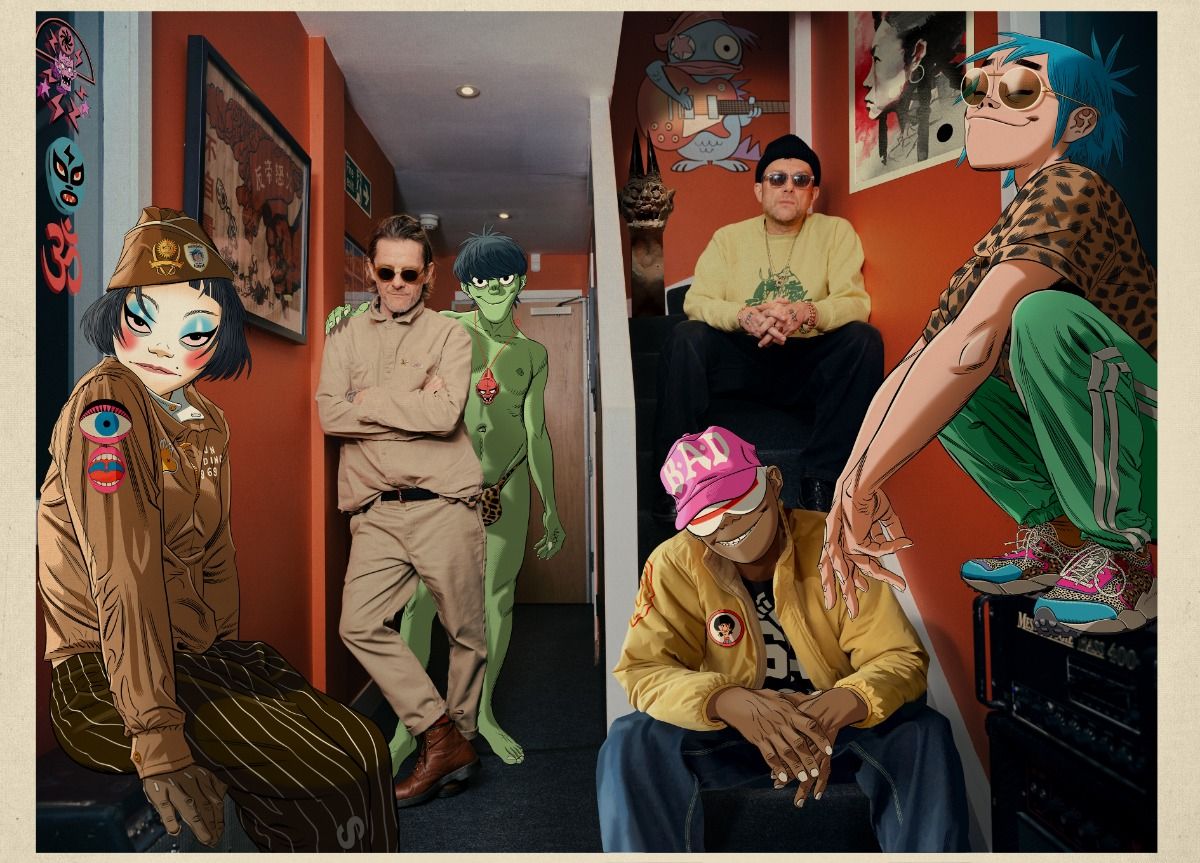
    Gorillaz play Freedom Mortgage Pavilion in Camden on Sept 27.Reuben Bastienne-Lewis

    Gorillaz

    Sept. 27, Freedom Mortgage Pavilion

    Gorillaz co-creators Damon Albarn and Jamie Hewlett’s plan to make an album shaped by experiences visiting India took grief-stricken shape when both men’s fathers died within a week of each other. On The Mountain, the virtual band as usual employs many guests, including Anoushka Shankar, Black Thought, Asha Puthli, and Johnny Marr. It also features collaborations from Dennis Hopper and Bobby Womack who collaborated with the Gorillaz before their deaths. freedomortgagepavilion.com

    Phoebe Bridgers

    Sept. 28, Xfinity Mobile Arena

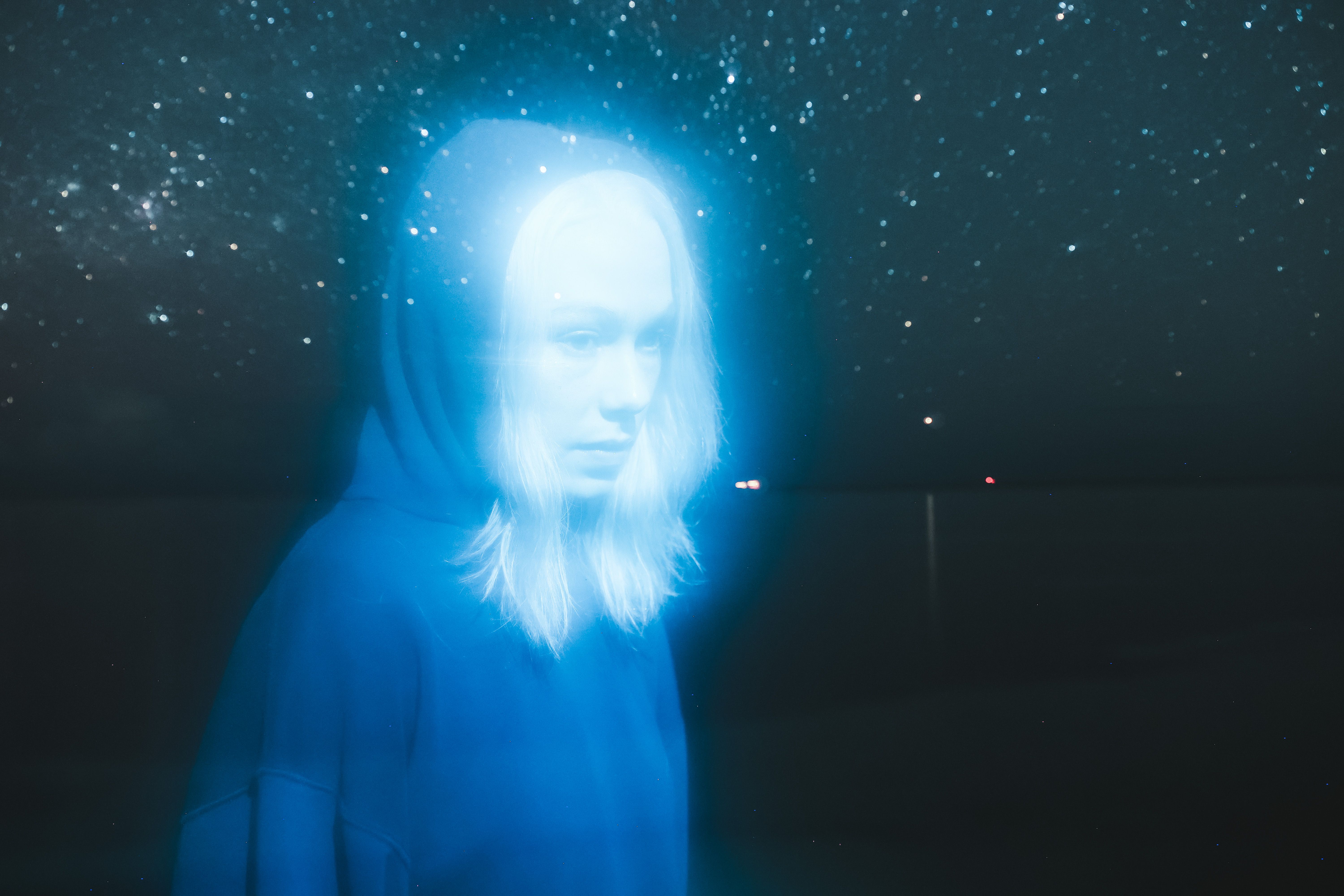
    Three years after she sold out the Mann Center with her boygenius bandmates Lucy Dacus and Julien Baker, Phoebe Bridgers is bigger than ever. She stoked the ardor of her fan base with pop-up shows around the U.S. in the lead-up to the release of the moody, compelling, and intensely personal Lost Weekend, whose many guests include Havertown’s own Alex G. xfinitymobilearena.com
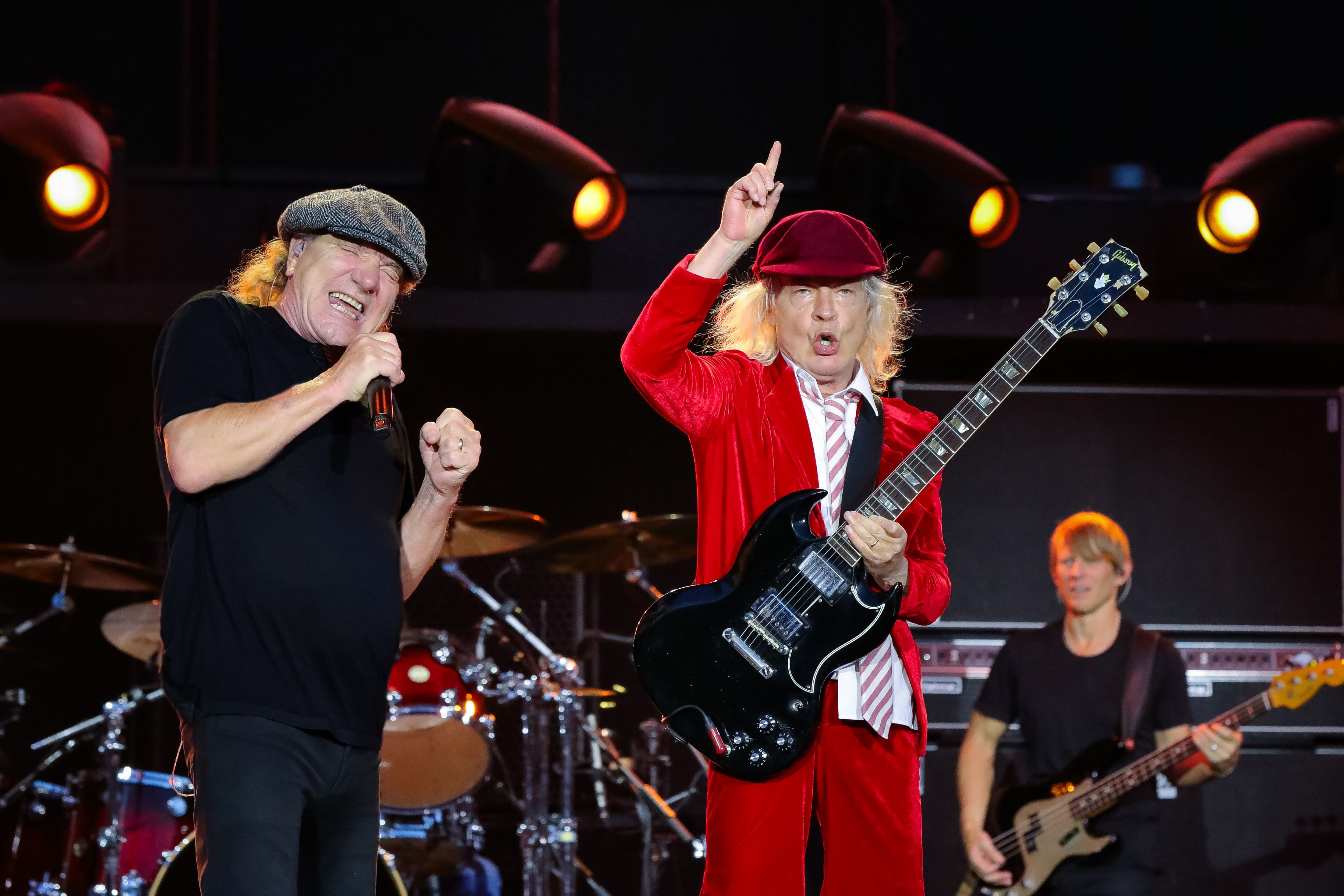
    AC/DC — with Brian Johnson on the left, and Angus Young on the right — will bring their Power Up tour to Lincoln Financial Field on Sept. 29.Courtesy of the Artist

    AC/DC

    Sept. 29, Lincoln Financial Field

    The last big blowout at the Linc this year — other than the Eagles putting a hurting on opponents — will be the final date on the Australian hard rock band’s “Power Up Tour.” The “Back in Black” band will be powering down after two and a half years on the road. Taylor Momsen’s the Pretty Reckless opens. lincolnfinancialfield.com

    Public Image Ltd

    Oct. 2, Union Transfer

    The Sex Pistols is touring with Frank Carter cosplaying as Johnny Rotten, so John Lydon couldn’t resist hitting the road again with his other band, whose “This Is Not the Final Tour” arrives a week after the Pistols play the Fillmore. utphilly.com
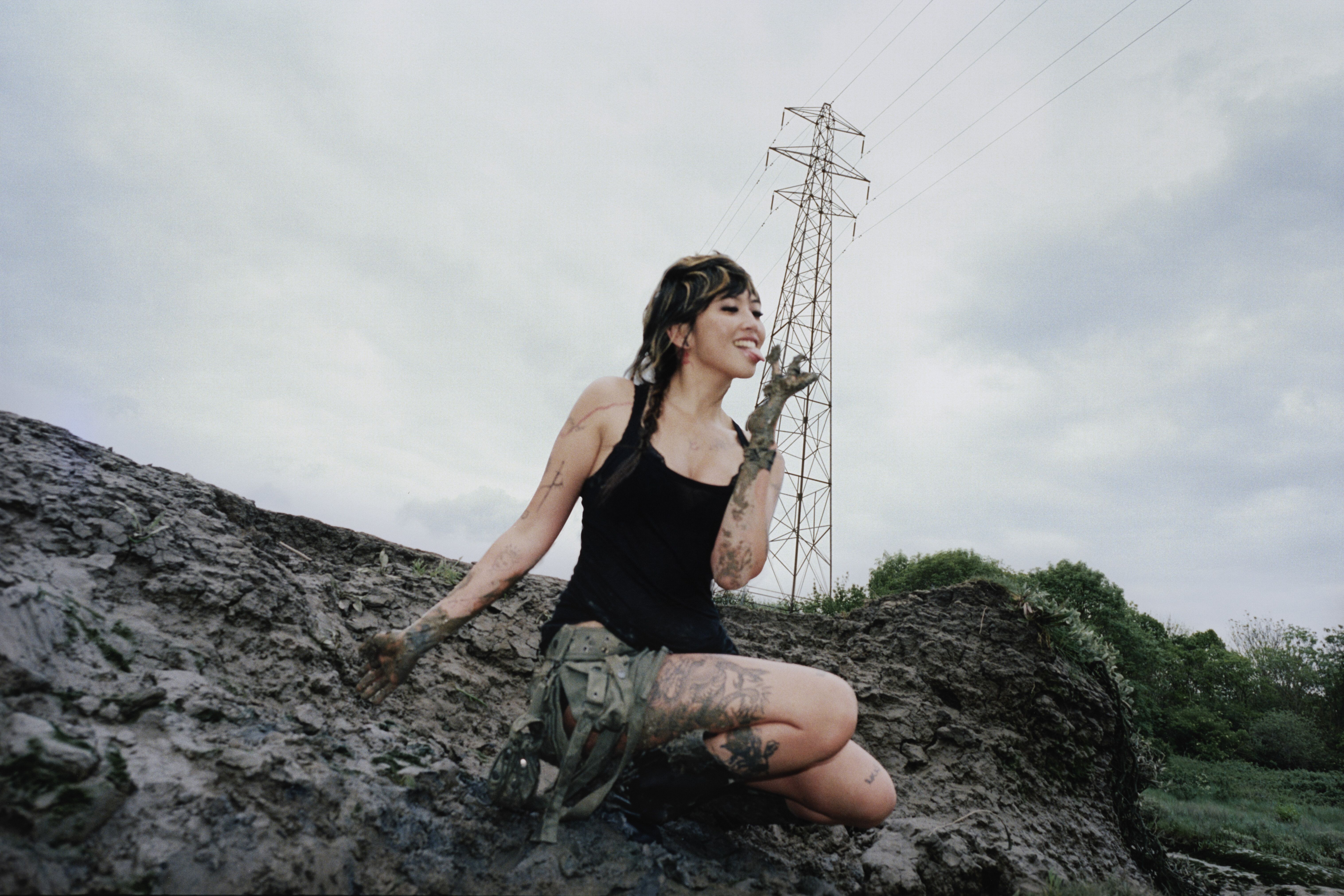
    Beabadoobee brings her Powerlines Tour to the Liacouras Center on Oct. 2.Erika Kamano

    beabadoobee

    Oct. 2, Liacouras Center

    Filipino and British songwriter Beatrice Lau’s “Powerlines Tour” is in support of her fourth album, Pylon, a bracing follow-up to 2024’s Rick Rubin-produced This Is How Tomorrow Moves. liacourascenter.com
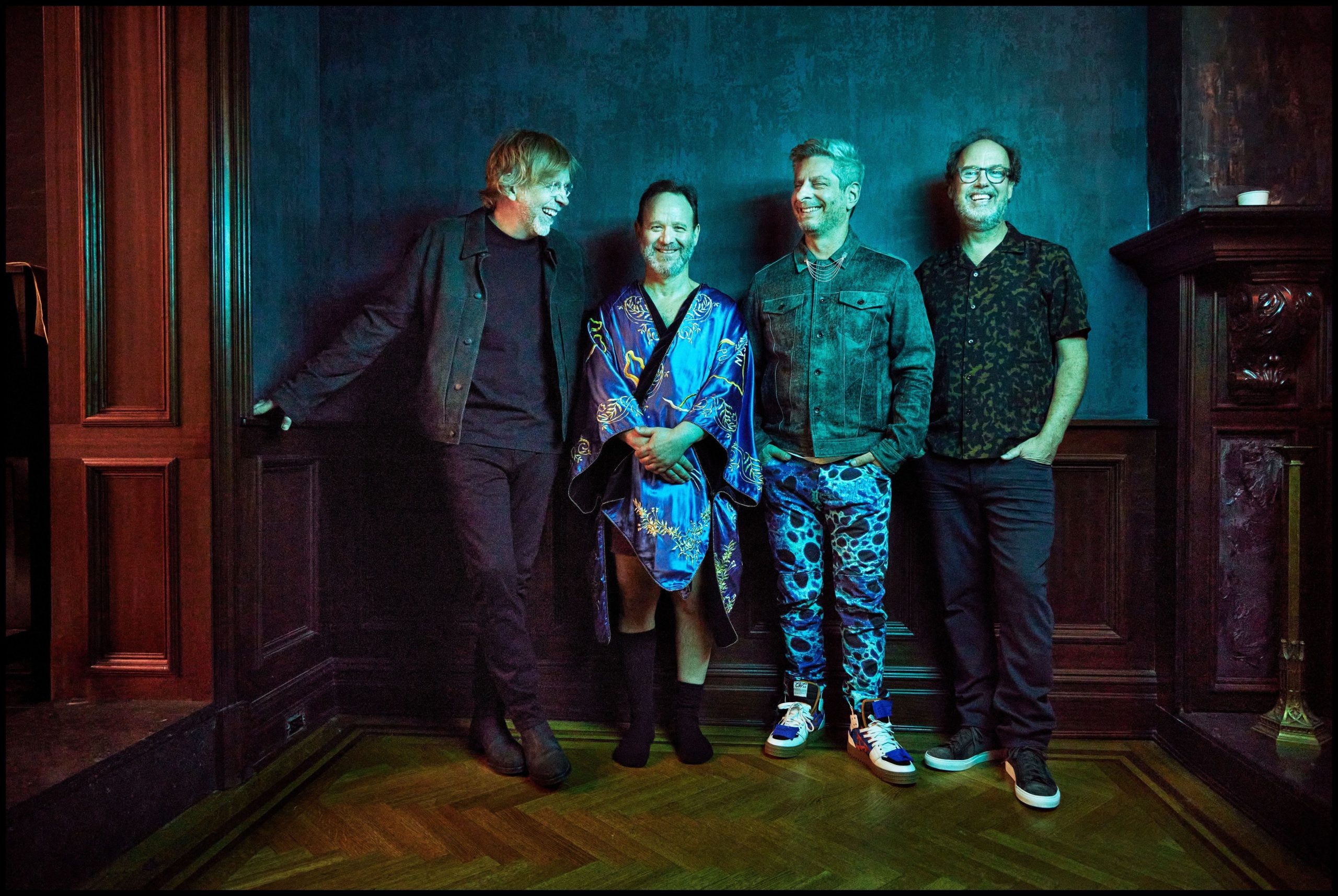
    Phish will play three nights at Jim Whelan Boardwalk Hall in Atlantic City on Oct. 2-4.Courtesy of the Artist

    Phish

    Oct. 2-4, Boardwalk Hall

    Phish comes in threes. Last year, the jam band’s troika of shows were at the Mann; the year before the Trey Anastasio-fronted quartet’s Mondegreen fest was in Dover, Del. This year, the band returns for indoor shows in Atlantic City, where it was last seen on the beach in 2022. boardwalkhall.com
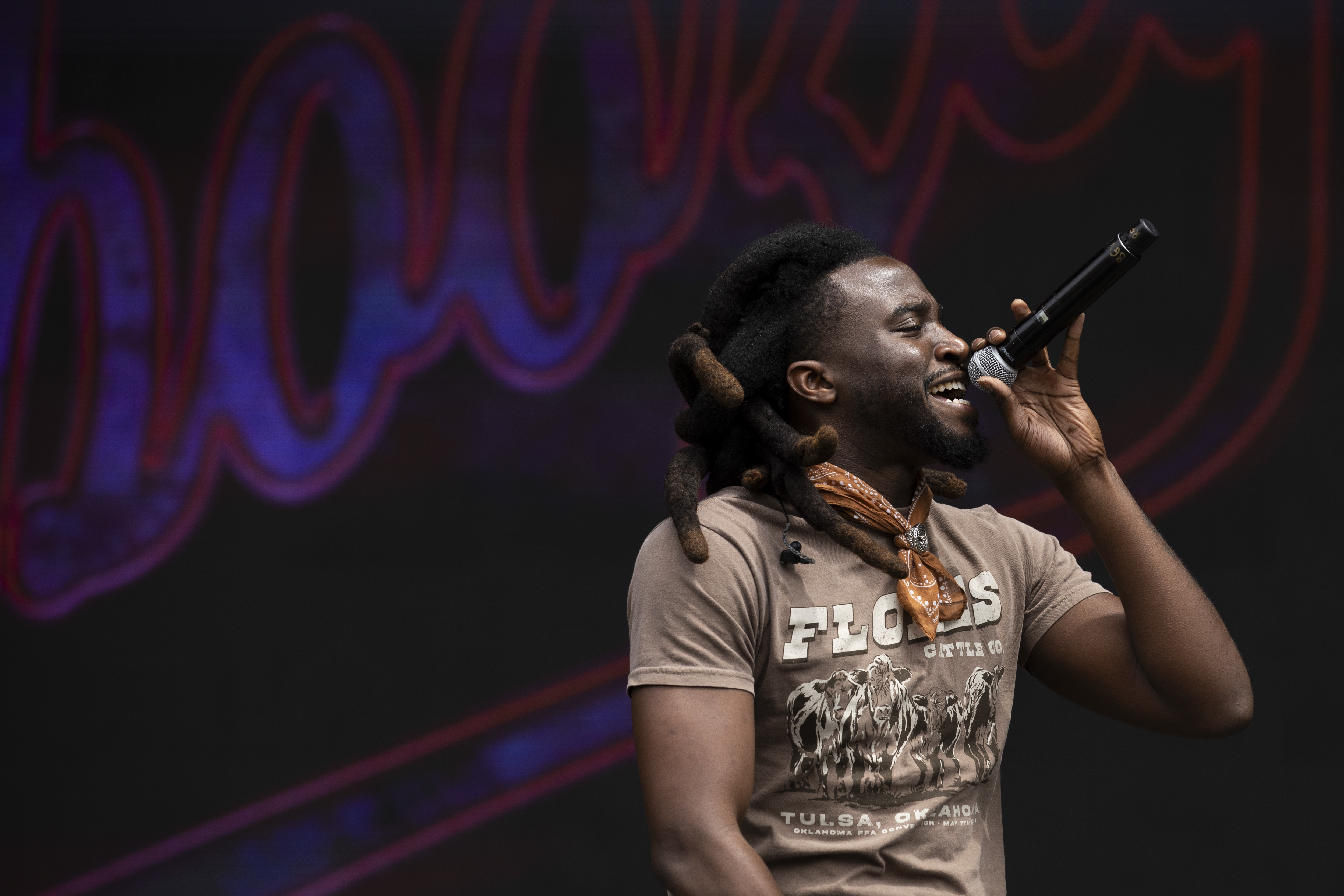
    Shaboozey performs during the Roots Picnic at the Mann Center in Philadelphia on June 2, 2024.Monica Herndon / Staff Photographer

    Shaboozey

    Oct. 6, Skyline Stage at Highmark Mann

    Shaboozey played the Mann at the Roots Picnic in 2024, just as “Tipsy (A Bar Song)” was turning him onto a star. Now he’s back, behind The Outlaw Cherie Lee & Other West Tales, his ambitious concept album that is also a comic book. highmarkmann.org

    The Chicks

    Oct. 7, Met Philly

    Texas country trio the Chicks — singer Natalie Maines and sisters Emily Strayer and Martie Maguire — is celebrating the 20th anniversary of Taking the Long Way. That 2006 album was the band’s first after it was essentially banned from country radio after Maines criticized then-President George W. Bush’s war in Iraq. themetphilly.com

    Sugar

    Oct. 12-13, Union Transfer

    Hüsker Dü cofounder Bob Mould has carried on a relentlessly rocking career with 14 uncompromising albums under his own name. But he hasn’t worked with Sugar, his power trio featuring bassist David Barber and drummer Malcolm Travis, since the mid-1990s. utphilly.com
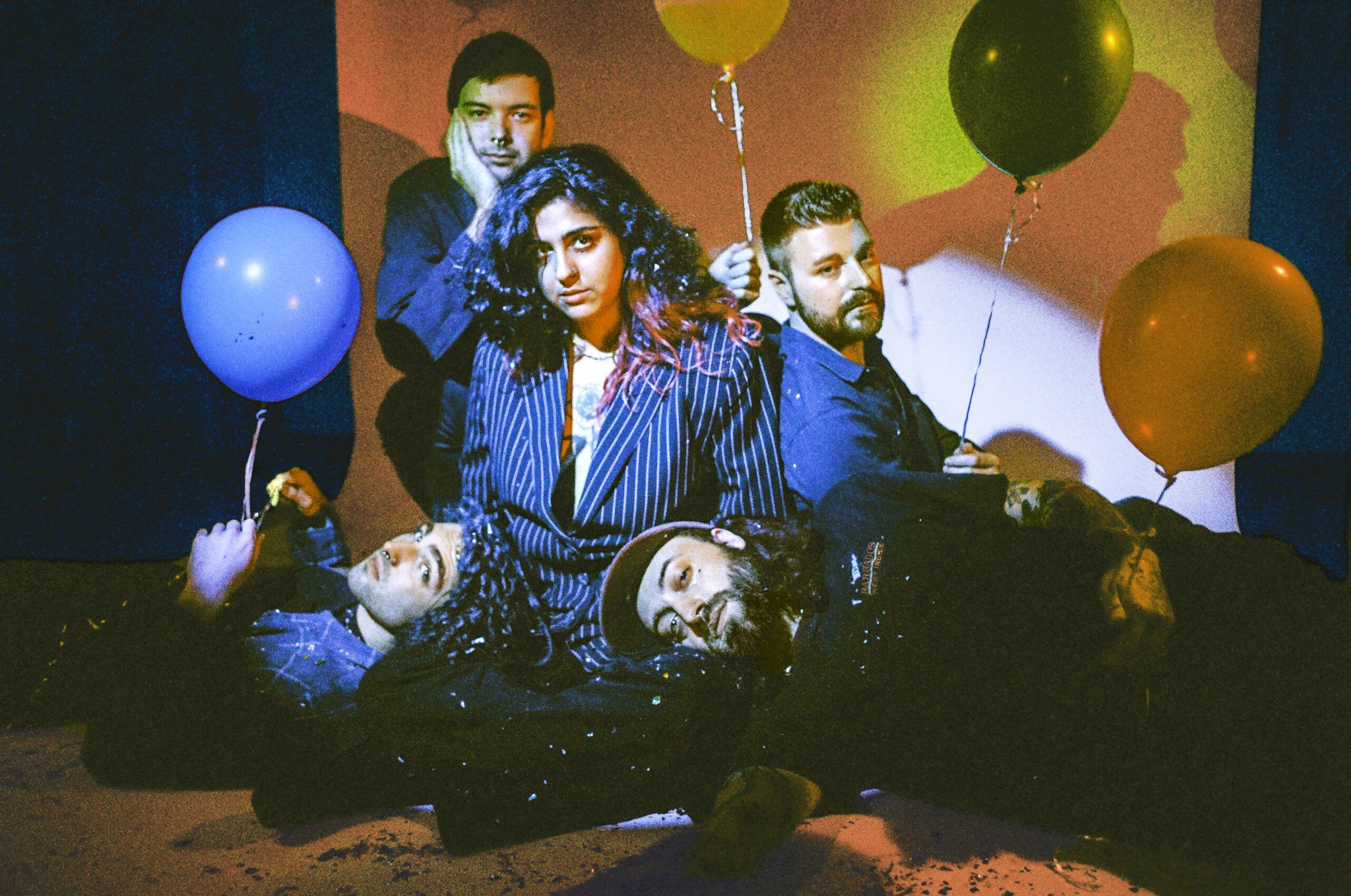
    Philly band Sweet Pill will play the Philly Music Fest. Juliette Boulay

    Philly Music Fest

    Oct. 12-18, various venues

    The genre-spanning all-Philly showcase at independent venues kicks off with two nights of Gregory Alan Isakov at Ardmore Music Hall and concludes with Upper Darby-raised jazz sax star Immanuel Wilkins at Solar Myth. In between, attractions during the 10th anniversary of the fest include Sweet Pill, Owen Stewart, RJD2, Sug Daniels, Roberta Faceplant, and Mo Lowda & the Humble. phillymusicfest.com
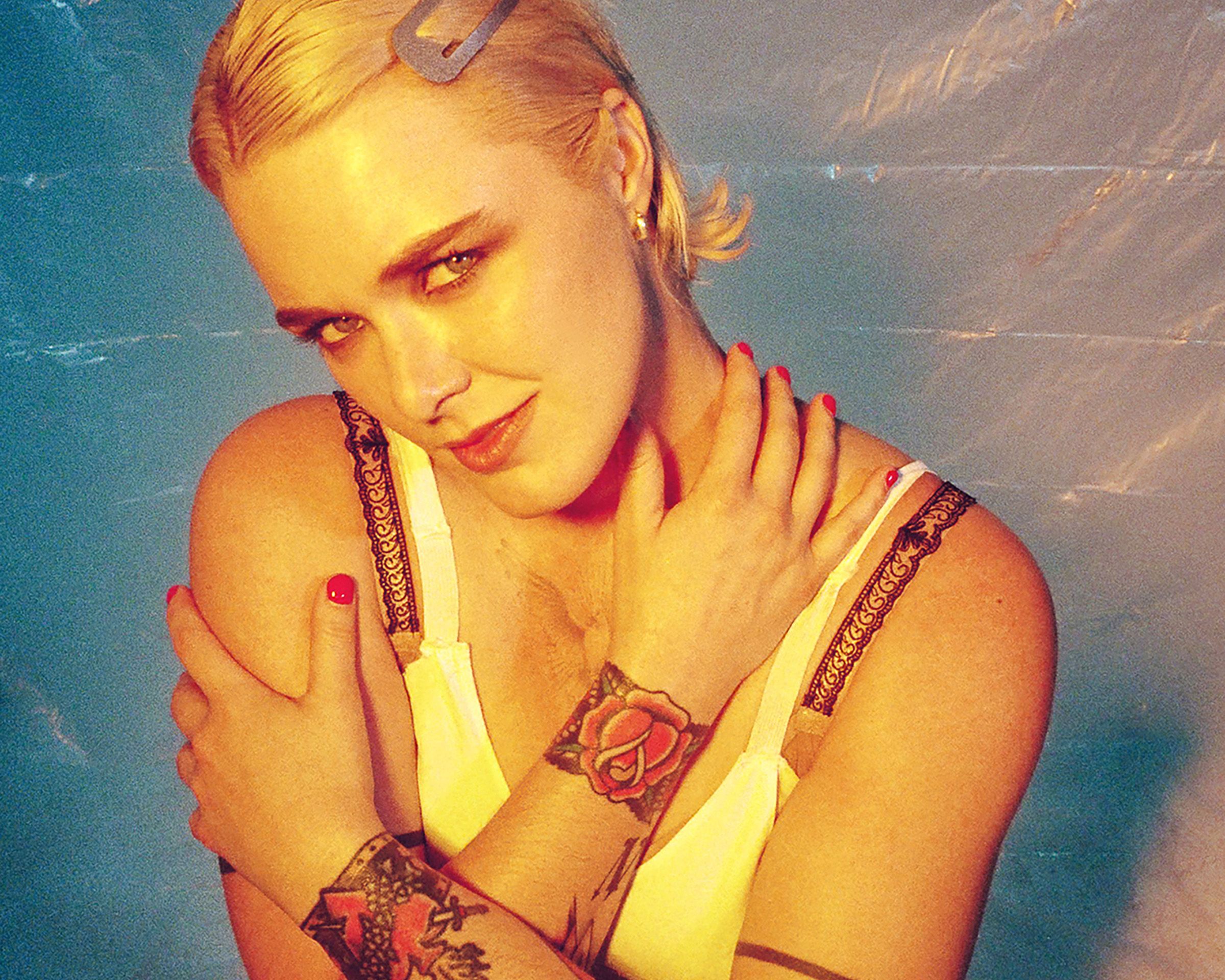
    Brennan Wedl plays Johnny Brenda’s Oct. 13.Blaire Beamer

    Brennan Wedl

    Oct. 13, Johnny Brenda’s

    Minnesota-born singer Brennan Wedl — a former leader of queercore band Dazey & the Scouts — impressed as the opening act of the Waxahatchee and MJ Lenderman tour that played the Met this year. Now she’s playing her first Philly headlining gig, behind her self-titled debut album, which was produced by Waxahatchee’s Katie Crutchfield and Brad Cook. johnnybrendas.com
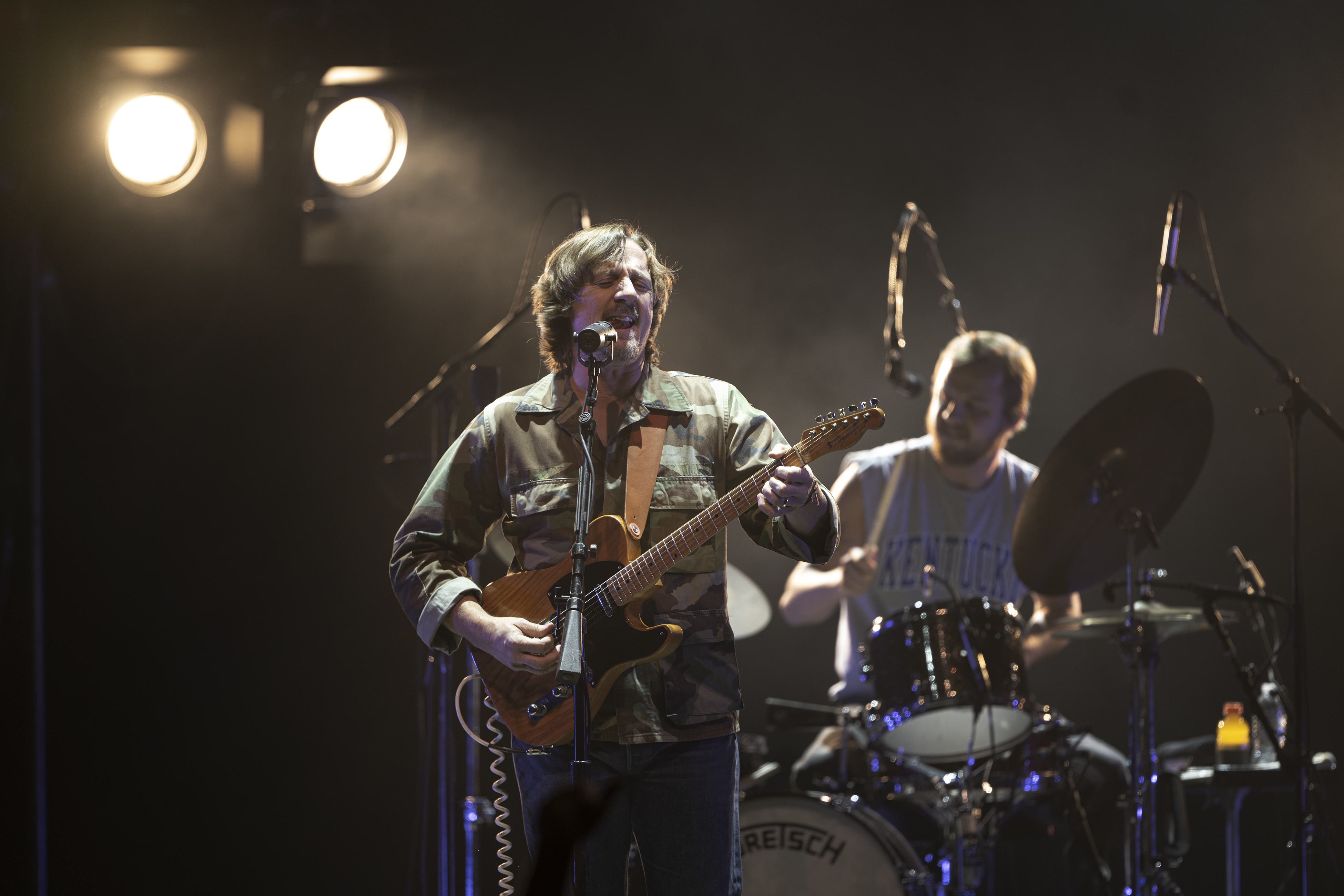
    Sturgill Simpson performs on Nov. 12, 2024, at the Met. Simpson is coming to the Xfinity Mobile Arena with his band Johnny Blue Skies.Jose F. Moreno / Staff Photographer

    Johnny Blue Skies & the Dark Clouds

    Oct. 15, Xfinity Mobile Center

    “I want to make America not suck again,” Sturgill Simpson sings on the frisky lead track of Mutiny For the Masses, the always-unpredictable maverick songwriter’s second album as Johnny Blue Skies that makes rebellious rock and roll, country-soul, and funk fun again. xfinitymobilearena.com

    Pinhead Gunpowder

    Oct. 16, First Unitarian Church

    Big-name rock star in a tiny space: Pinhead Gunpowder is a Green Day side project of sorts. Along with Billie Joe Armstrong, the current version of the band includes Green Day touring guitarist Jason White. r5productions.com
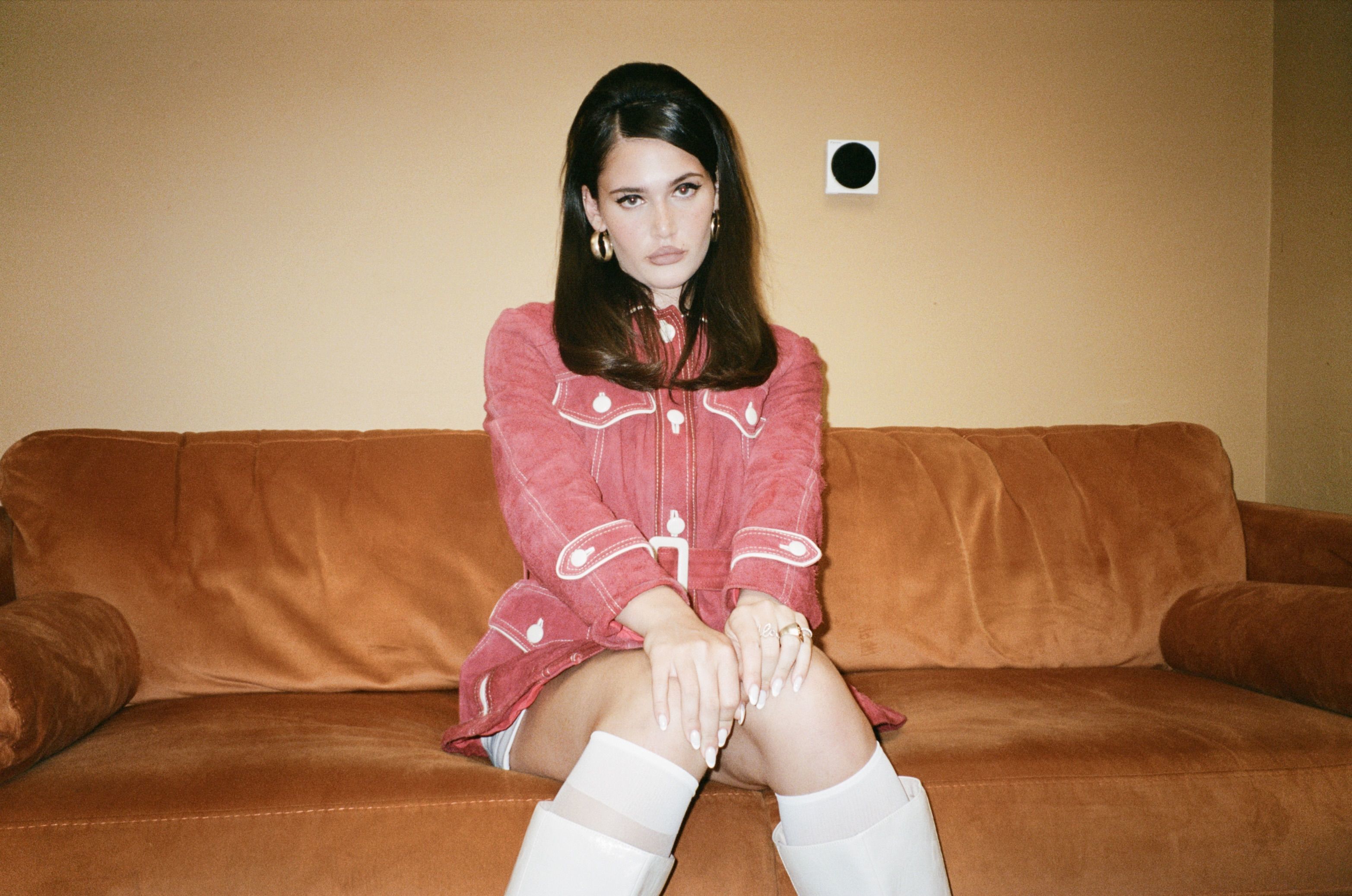
    Sienna Spiro plays the Fillmore on Oct. 17.Mathias Apap

    Sienna Spiro

    Oct. 17, the Fillmore

    Powerhouse vocalist Sienna Spiro’s name rhymes with “pyro.” Sam Smith has called her “the voice of a generation.” The stylish 20-year-old “Die on the Hill” singer, who displays the influence of fellow throwback soul Brits like Amy Winehouse and Duffy, played the Foundry in March. She has since won raves at Coachella and Lollapalooza. She’s back at the Fillmore in October, but in the big room this time. thefillmorephilly.com

    Mike D 5D

    Oct. 19, Union Transfer

    Beastie Boys’ Adam Horowitz and Mike Diamond have been largely inactive since the death of bandmate Adam Yauch in 2012. Now Diamond — aka Mike D — has returned with Thank You, a solo album of hip-hop electro punk. He’s touring backed by a band that includes his sons Skyler and Davis Diamond. utphilly.com

    L7

    Oct. 22, Brooklyn Bowl

    L7 was a key player in the alt-rock late 1980s and early 1990s, and the grunge-adjacent all-female band was also a precursor to the riot-grrrl movement. The “Pretend We’re Dead” and “S— list” band fronted by Donita Sparks and Suzi Gardner is carrying on with its “Last Hurrah Tour” despite the loss of bassist Jennifer Finch, who died of brain cancer this year. Finch’s memoir, Shooting Up and Making Out, is due in January. brooklynbowl.com/philadelphia
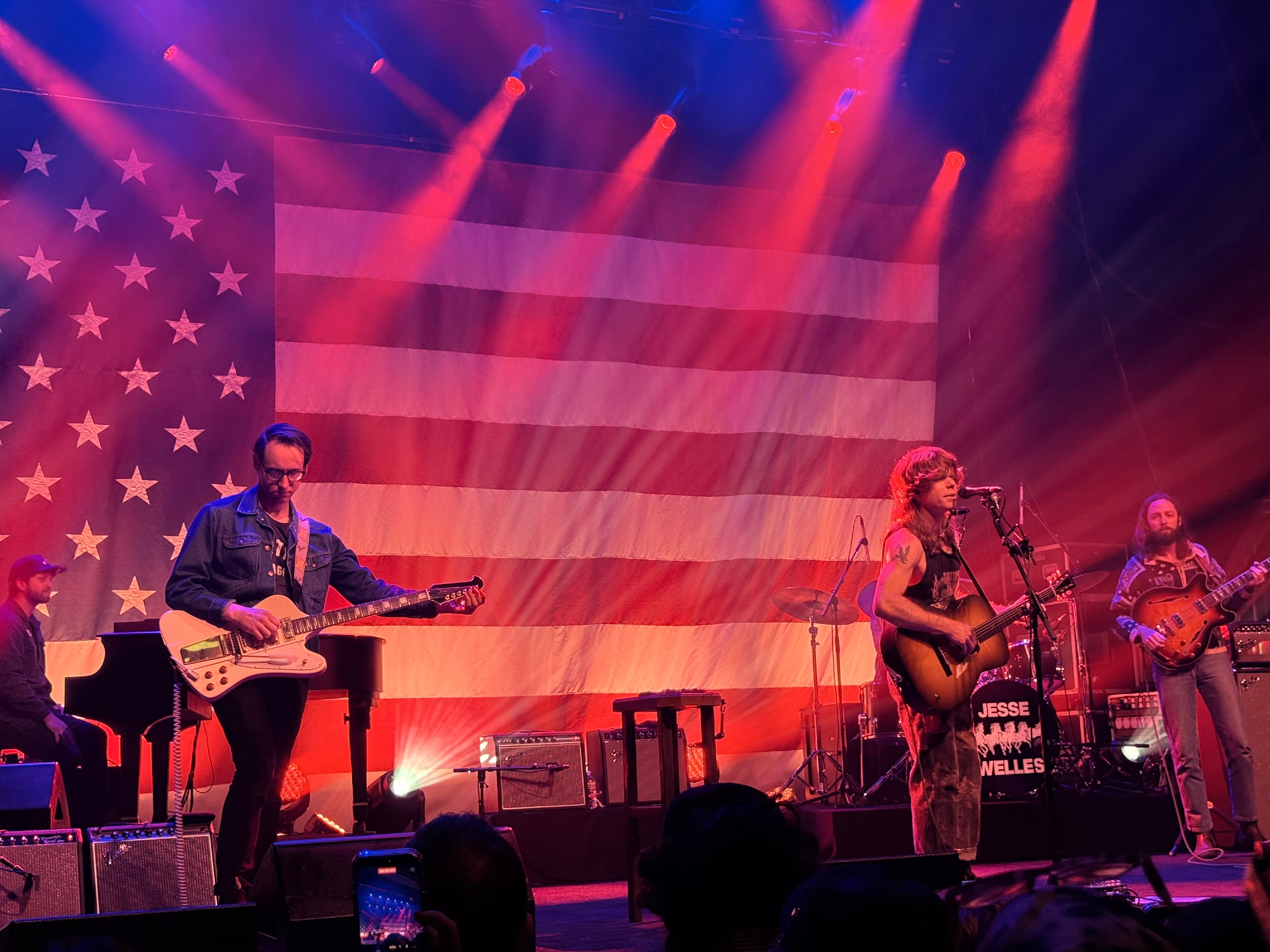
    Singer-songwriter Jesse Welles performs March 10 with members of his band in Detroit. He plays the Met on Oct. 23. Ted Anthony

    Jesse Welles

    Oct. 23, the Met

    Jesse Welles’ resistance songs like “Join ICE” and “United Health” — along with whimsical ones such as “At the Zoo” — have fueled a steady growth in popularity. The self-styled Dylanesque folk singer has collaborated with Joan Baez and Philly’s Mt. Joy, with whom he did a pop-up show in June at Race Street Pier. themetphilly.com.

    Ashley McBryde

    Oct. 24, Lansdowne Theater

    Arkansas country songwriter Ashley McBryde has always leaned into rock and roll going back to her 2018 debut Girl Going Nowhere. But she really turns up the volume on the new Wild, which is a song cycle about a journey toward sobriety. thelansdownetheater.com
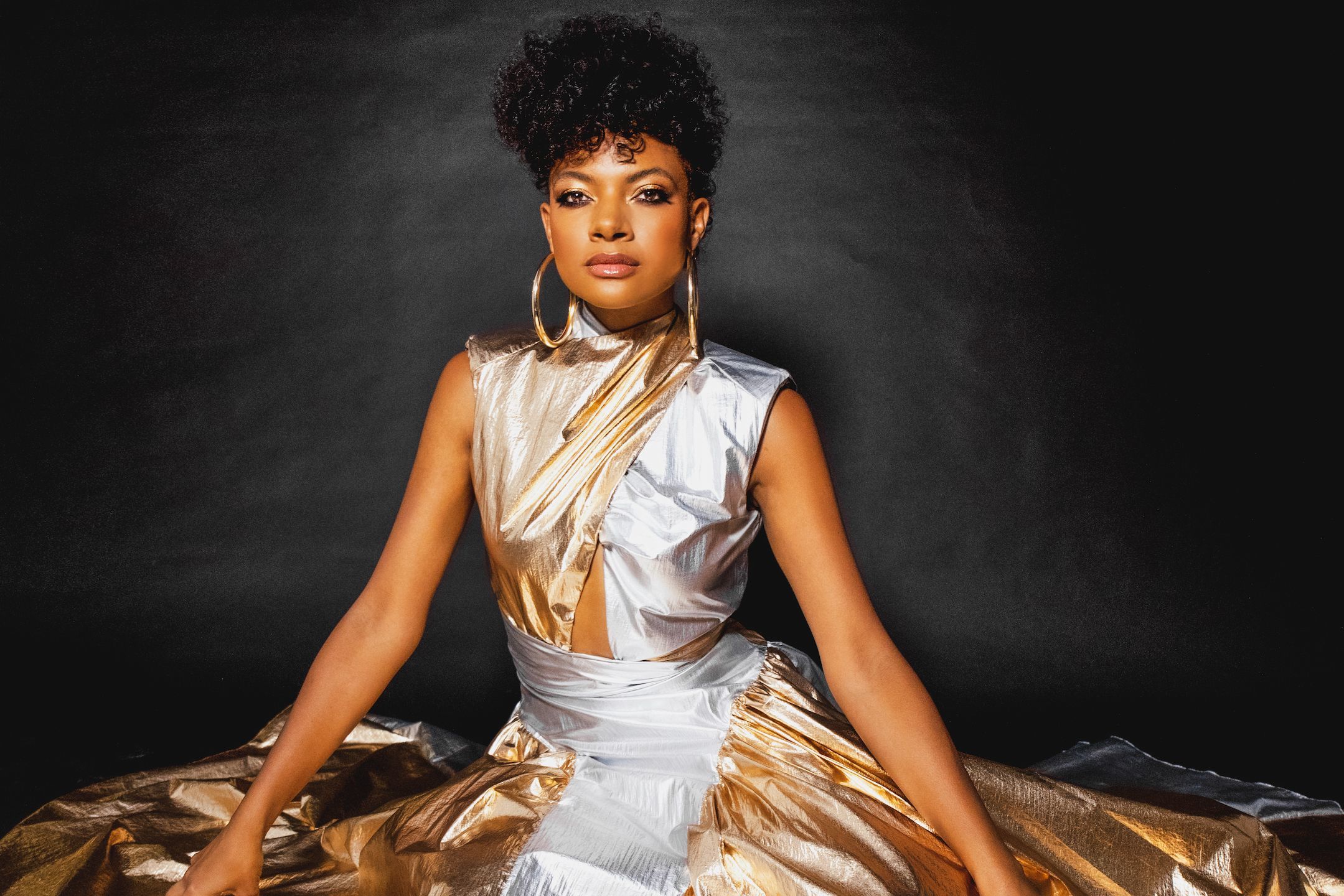
    Allison Russell plays the Colonial Theatre on Oct. 28. Dana Trippe

    Allison Russell

    Oct. 28, Colonial Theatre

    Canadian-born and Nashville-based songwriter Allison Russell says her new album In The Hour Of Chaos, is about “connecting our hearts and voices in the same space in real time.” Its many guests include Brittany Spencer, Norah Jones, and Delco soul singer Devon Gilfillian. thecolonialtheatre.com

    Afro Cuban All Stars

    Oct. 30, Miller Theater

    Juan de Marcos Gonzalez is a vocalist, impresario, and musician whose specialty is the Spanish tres guitar. He has been a key player in the Buena Vista Social Club. This tour continues the ongoing work of bringing Cuban music to the world. ensembleartsphilly.org
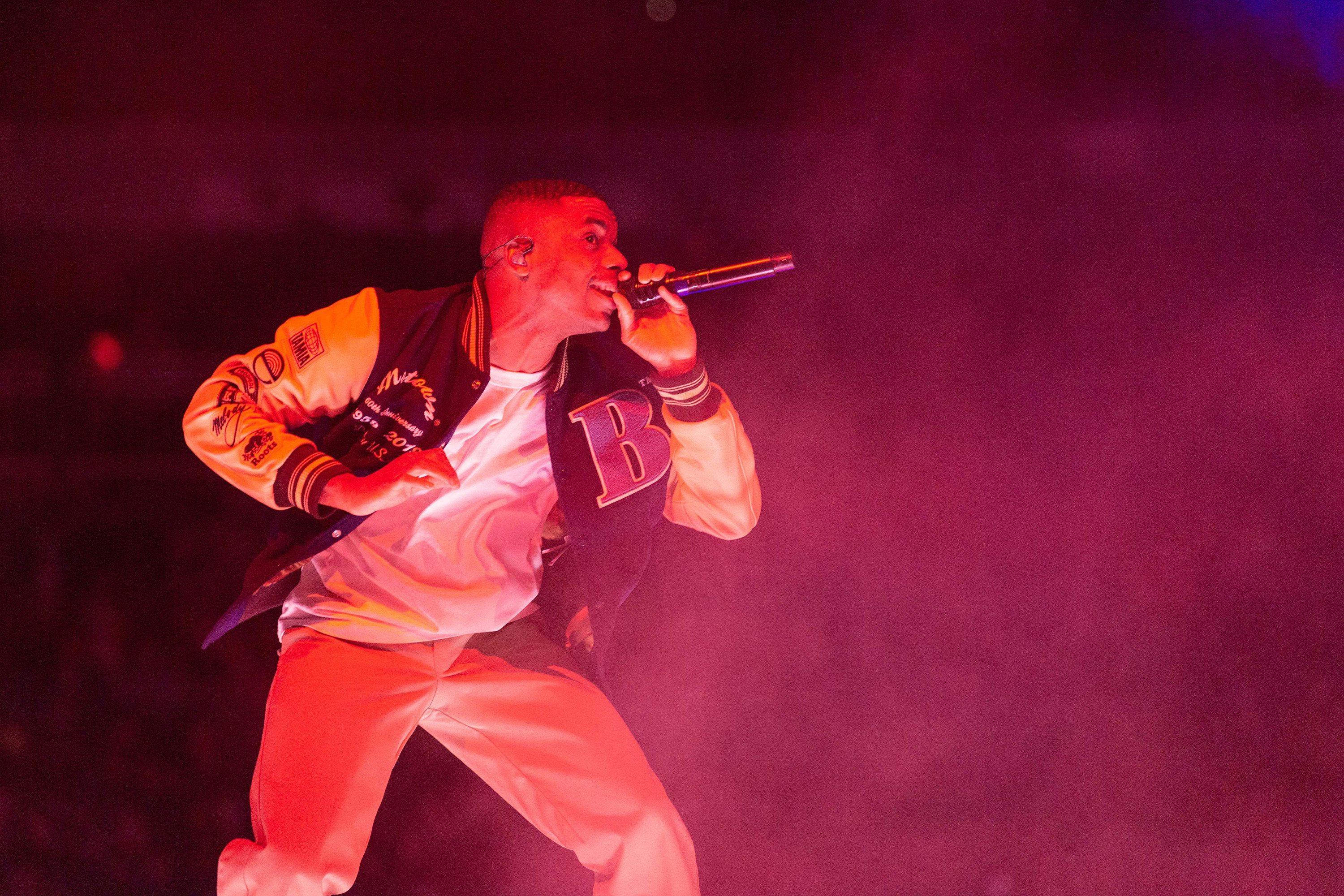
    Vince Staples at Fiserv Forum in Milwaukee, on Feb. 24, 2022. The Long Beach, Calif., rapper plays Franklin Music Hall on Oct. 30. Daniel DeSlover / MCT

    Vince Staples

    Oct. 30, Franklin Music Hall

    Long Beach, Calif., rapper Vince Staples is back on top of this game on Cry Baby, his pointedly political album that blends rock riffage and soulful funk into the mix. franklinmusichall.com

    Built to Spill & Quasi

    Oct. 30-31, Ardmore Music Hall

    Doug Martsch is an indie rock guitar hero stretching back to Built to Spill’s 1993 debut Ultimate Alternative Wavers. These days, Martsch is joined by bassist Melanie Radford and drummer Teresa Esguera. Also on the bill is Quasi, the rollicking band of ex-spouses Sam Coomes and Janet Weiss, formerly the drummer of Sleater-Kinney. ardmoremusichall.com
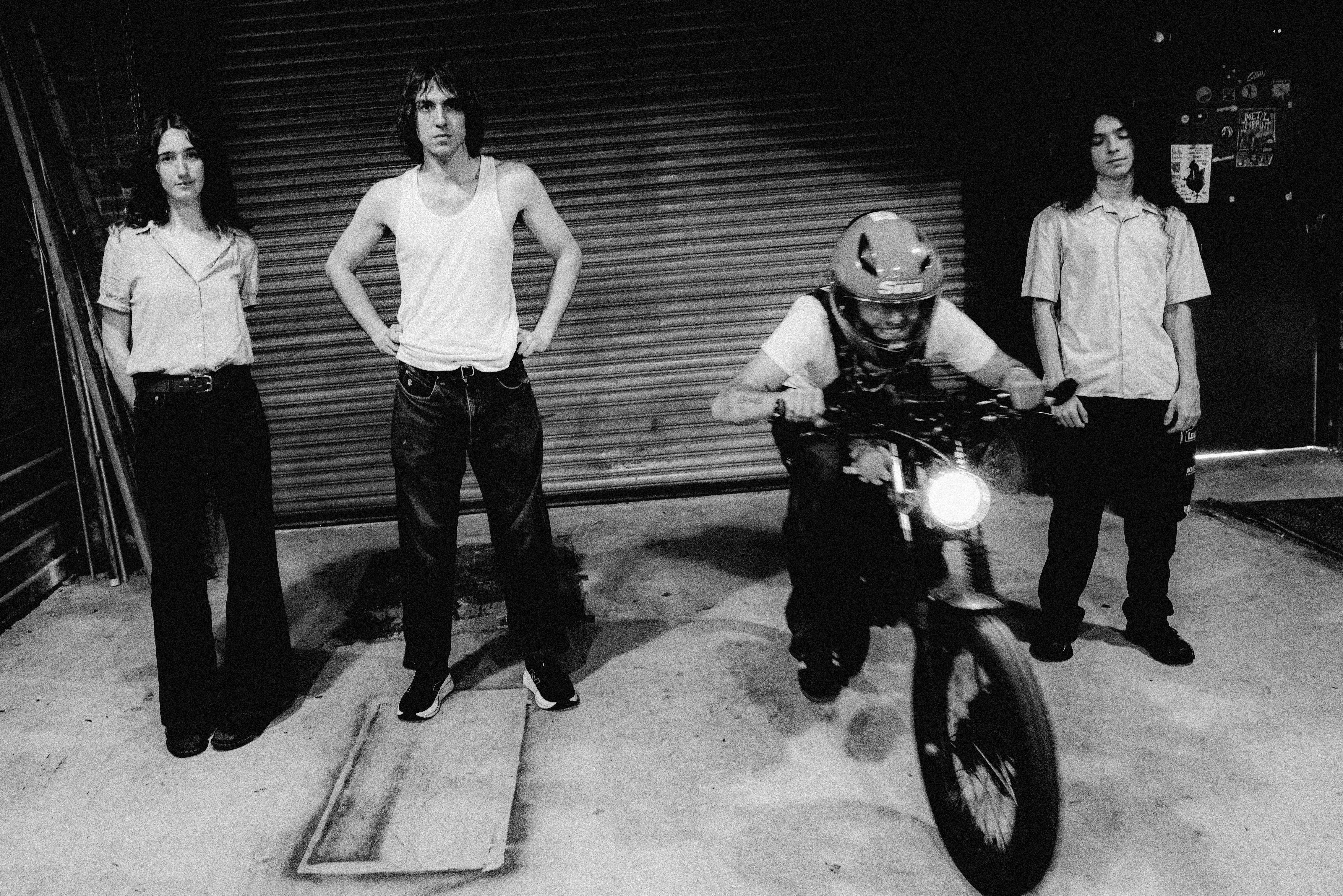
    Geese play the Fillmore on Nov. 8 and 9.Lewis Evans

    Geese

    Nov. 8-9, Fillmore

    Incredibly brilliant indie art-pop band or nefarious industry plant that owes its success to TikTok payola? The debate around Geese’s breakthrough as (almost) universally praised critics’ darlings is silly. After the band led by Cameron Winter — the subject of a forthcoming Paul Thomas Anderson concert film — played a super sold-out Union Transfer last year, it’s back with two shows in a larger space. thefillmorephilly.com
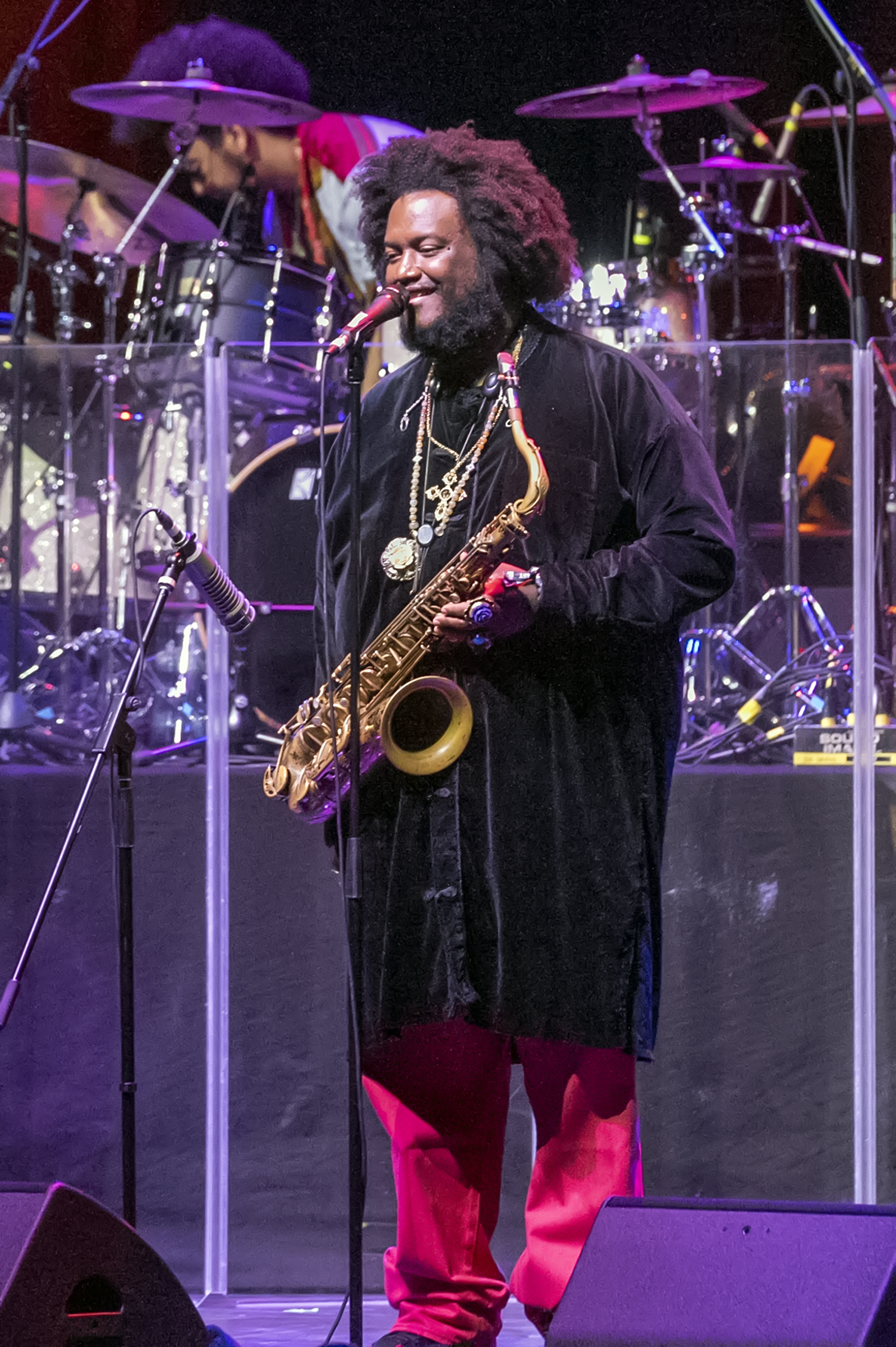
    Kamasi Washington at the Met Philly in 2019.

    Ami Taf Ra & Kamasi Washington

    Nov. 5, City Winery Philadelphia

    Moroccan vocalist Ami Taf Ra collaborated with maximalist jazzman Washington on The Prophet and The Madman, her 2025 spiritual jazz debut that bears the influence of Sun Ra and mixes Arabic music with gospel and jazz. citywinery.com/philadelphia

    The Hooters

    Nov. 5-6, Keswick Theatre

    Last year, the Hooters’ annual Keswick shows were introduced, as always, by Pierre Robert, the WMMR-FM (93.3) radio legend who died a few days later. This will be an emotional weekend for the longstanding Philly rock band and its fans. keswicktheatre.com

    Daniel Villarreal

    Nov. 6-7, Solar Myth

    Panama-born drummer Daniel Villarreal made his name on the Chicago music scene with a mixture of jazz and funk and a range of Latin music styles. The now-Philly-based synthesist will lead a five-piece band in a two-night residency. arsnovaworkshop.com

    Olivia Rodrigo performs at the Daisy Chain Fields Music Festival on Aug. 29 at Great Park in Irvine, Calif.Chris Pizzello

    Olivia Rodrigo

    Nov. 7, Xfinity Mobile Arena

    On “The Cure,” the second single from her third album You Seem Pretty Sad for a Girl So in Love, Olivia Rodrigo repeats the words “I’m unraveled,” as she reels from a breakup. That lyric leads us to “The Unraveled Tour,” the second arena trek from the former Disney star who hosted her own all-woman Daisy Chain Fields festival in August. xfinitymobilearena.com
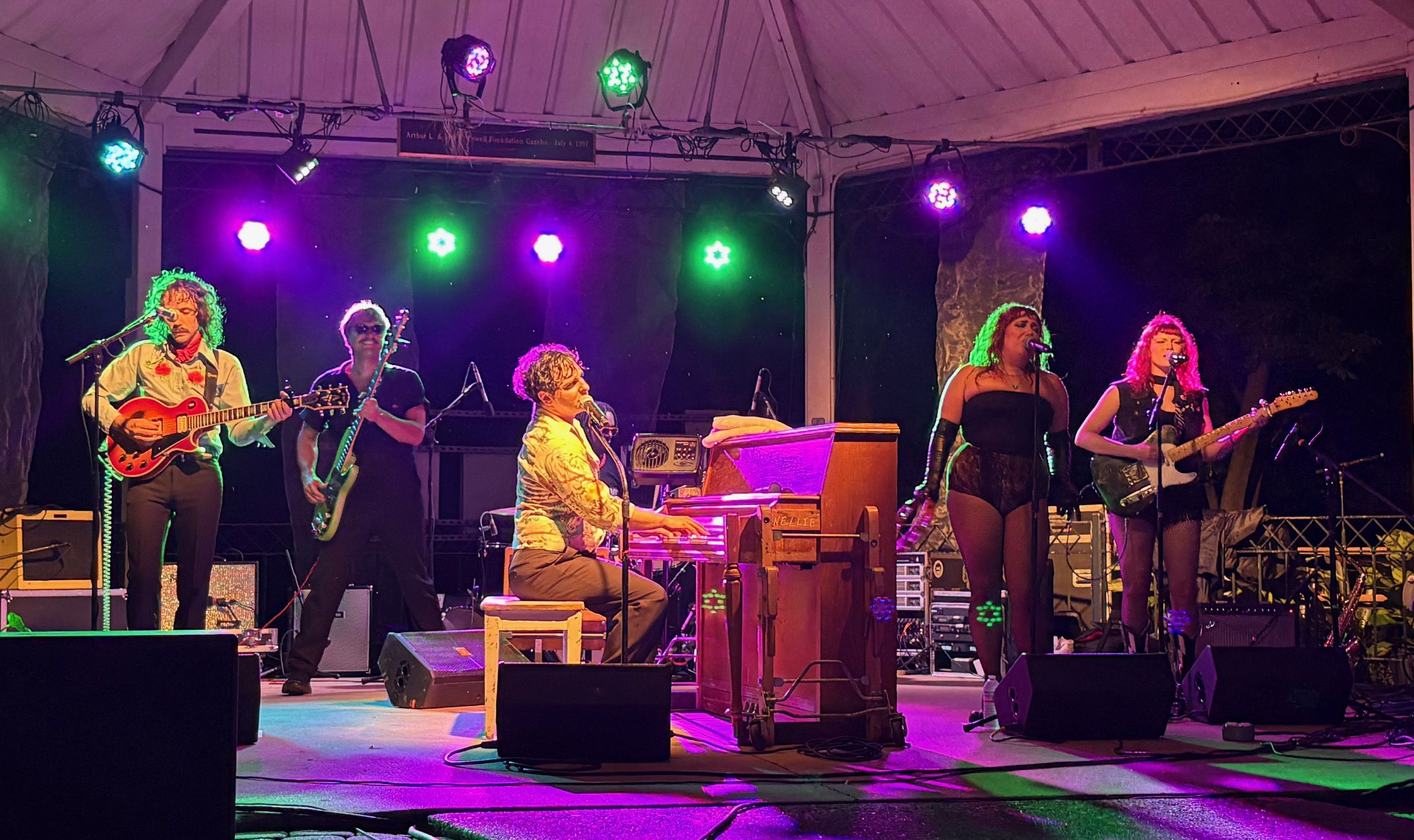
    Low Cut Connie at Concerts Under The Stars in King of Prussia on Aug. 1, 2025. Left to right: Rich Stanley, Nick Perri, Adam Weiner, Jarae Lewis (on drums, partially hidden), Amanda “Rocky” Bullwinkel, Kelsey Cork.Dan DeLuca

    Low Cut Connie & Ben Vaughn

    Nov. 20, Union Transfer

    Two generations of Philly rock and rollers team up on this bill, which finishes off a leg of the tour for Low Cut Connie’s party plus protest album Livin In the USA. LCC’s Adam Weiner is a sweaty, over the top showman, while radio host-producer Vaughn — who has a new album, Magnetic East: The Deer Tick Sessions due in October — prefers an understated, semi-ironic approach. WXPN-FM 24 Hour Song Challenge winners the Flying Vees open. utphilly.com
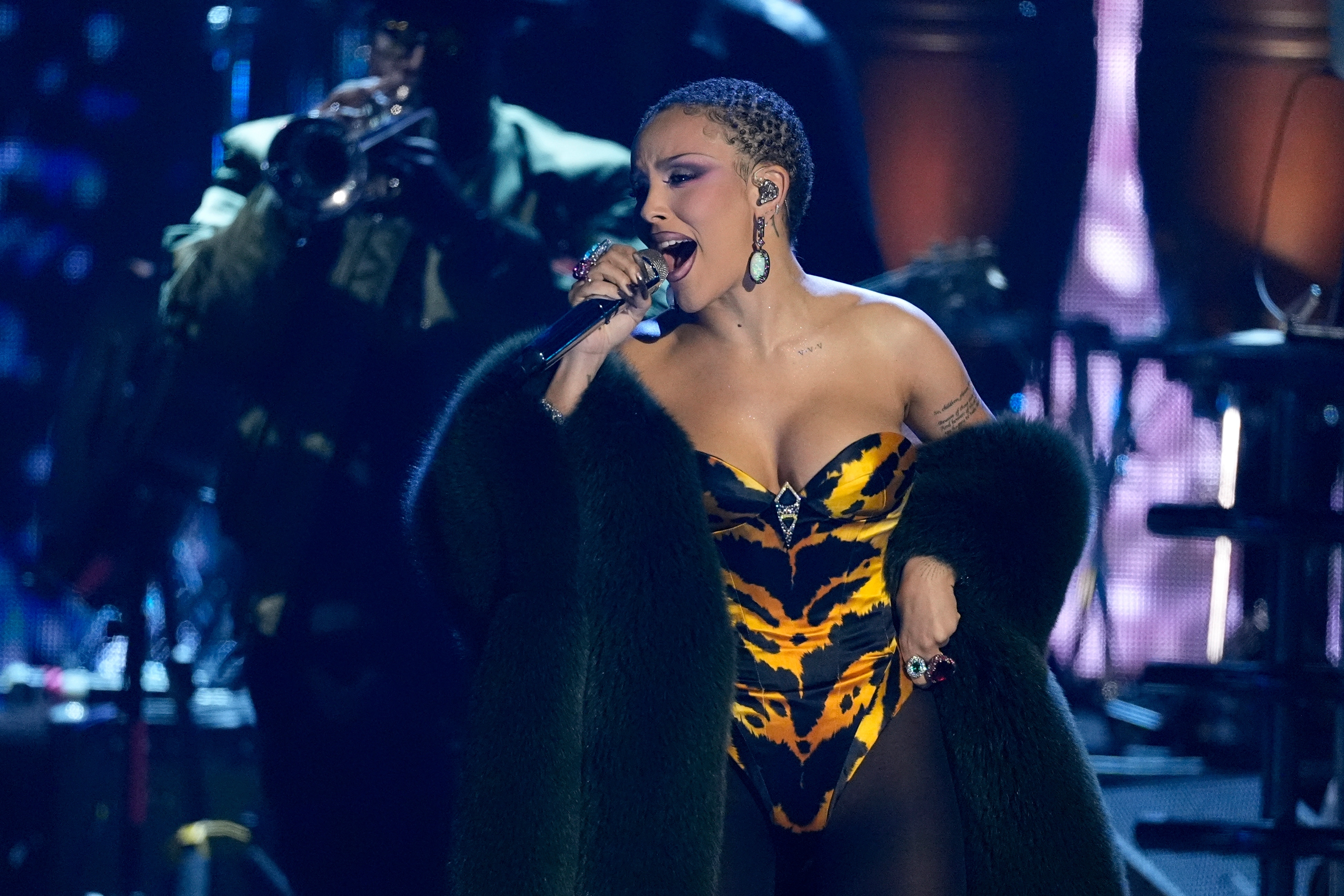
    Doja Cat performs during the 2025 Rock and Roll Hall of Fame Induction Ceremony on Nov. 8, 2025, at L.A. Live in Los Angeles. She plays Xfinity Mobile Arena on Nov. 29. Chris Pizzello

    Doja Cat

    Nov. 29, Xfinity Mobile Arena

    Rapper and singer Amala Ratna Zandile Dlamini — otherwise known as Doja Cat — plays the penultimate show of a world tour that began in New Zealand last year in support of her disco-pop fifth album, Ma Vie. “Big Energy” Atlanta rapper Latto opens. xfinitymobilearena.com

    Goosemas

    Dec. 12-13, Boardwalk Hall

    Every holiday season, the Connecticut-born yacht rock jam band throws a Christmas party. This year, it’s in Atlantic City. The show in support of the band’s new Big Modern! is a benefit for Western Sun Foundation, which supports grassroots nonprofit organizations. boardwalkhall.com
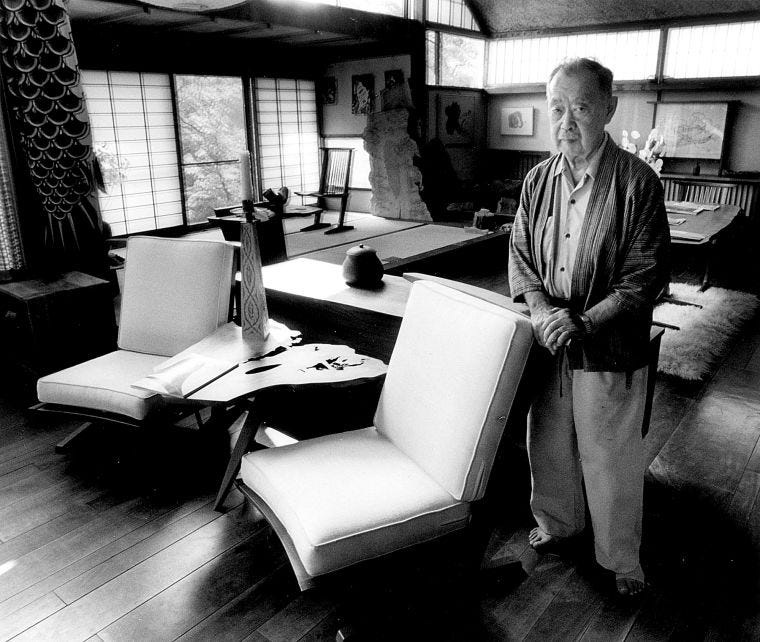
  • The painful, complicated roots of American mid-century design trace back to Japanese American concentration camps

    The painful, complicated roots of American mid-century design trace back to Japanese American concentration camps

    George Nakashima never intended to move his family to New Hope.

    The famous furniture maker became one of the most sought-after artists in modern American design, considered so impactful that his home and studio in Bucks County were named a National Historic Landmark.

    It was a significant recognition from the government that had previously incarcerated Nakashima, his wife, Marion, and their then newborn daughter, Mira, forcing them to relocate from their home in Seattle to the Minidoka concentration camp in Idaho in 1942.

    The family was among some 120,000 Japanese Americans — including about 80,000 U.S. citizens — imprisoned during World War II due to the unsubstantiated fear that they could be foreign spies.

    By that point in his late 30s, Nakashima was already a successful architect and woodworker who had earned a master’s degree from MIT and traveled the world. Incarceration shaped his artistic practice and changed his trajectory significantly. At the camp, he met a skilled carpenter who taught him traditional Japanese carpentry techniques that greatly influenced his burgeoning signature style.

    Furniture designer and craftsman George Nakashima in his woodworking shop. In 2014, the U.S. Department of the Interior named his Solebury property a national landmark.The Intelligencer, file

    New Hope became a new home to the Nakashimas in 1943 when the War Relocation Authority released them under supervision, thanks to Nakashima’s old boss Antonin Raymond, who sponsored their freedom.

    (Ironically, the government respected the authority of the Czech immigrant Raymond, who was a naturalized citizen, over that of the Spokane-born Nakashima.)

    The conditions of the release prevented Nakashima from pursuing architecture projects with Raymond, so he worked as a farmhand by day while continuing to craft furniture by night. He transformed the farm’s milk house into a workshop and found inspiration in the woodlands surrounding him, where he would eventually establish himself as a giant of American design for decades to come.

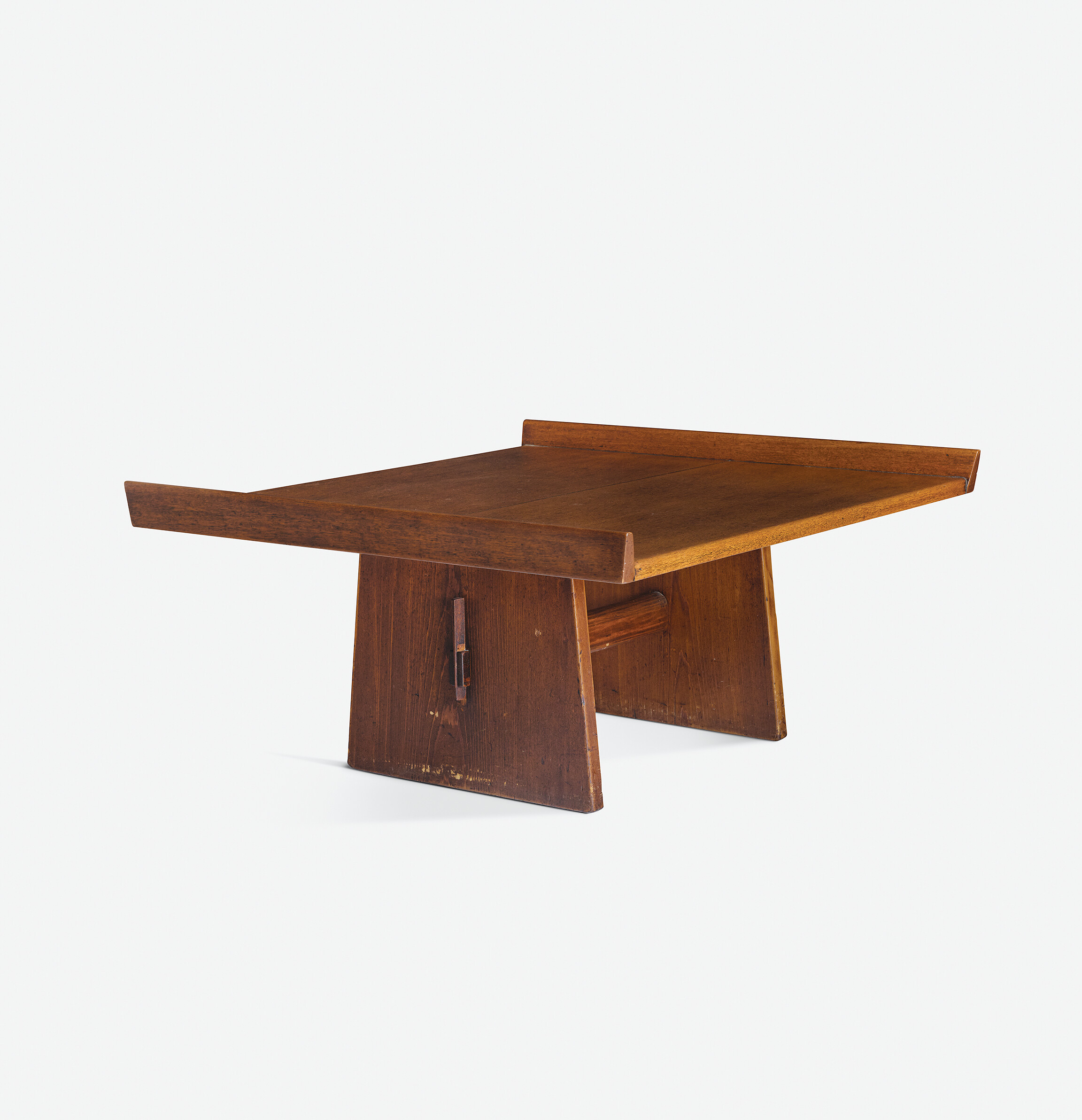
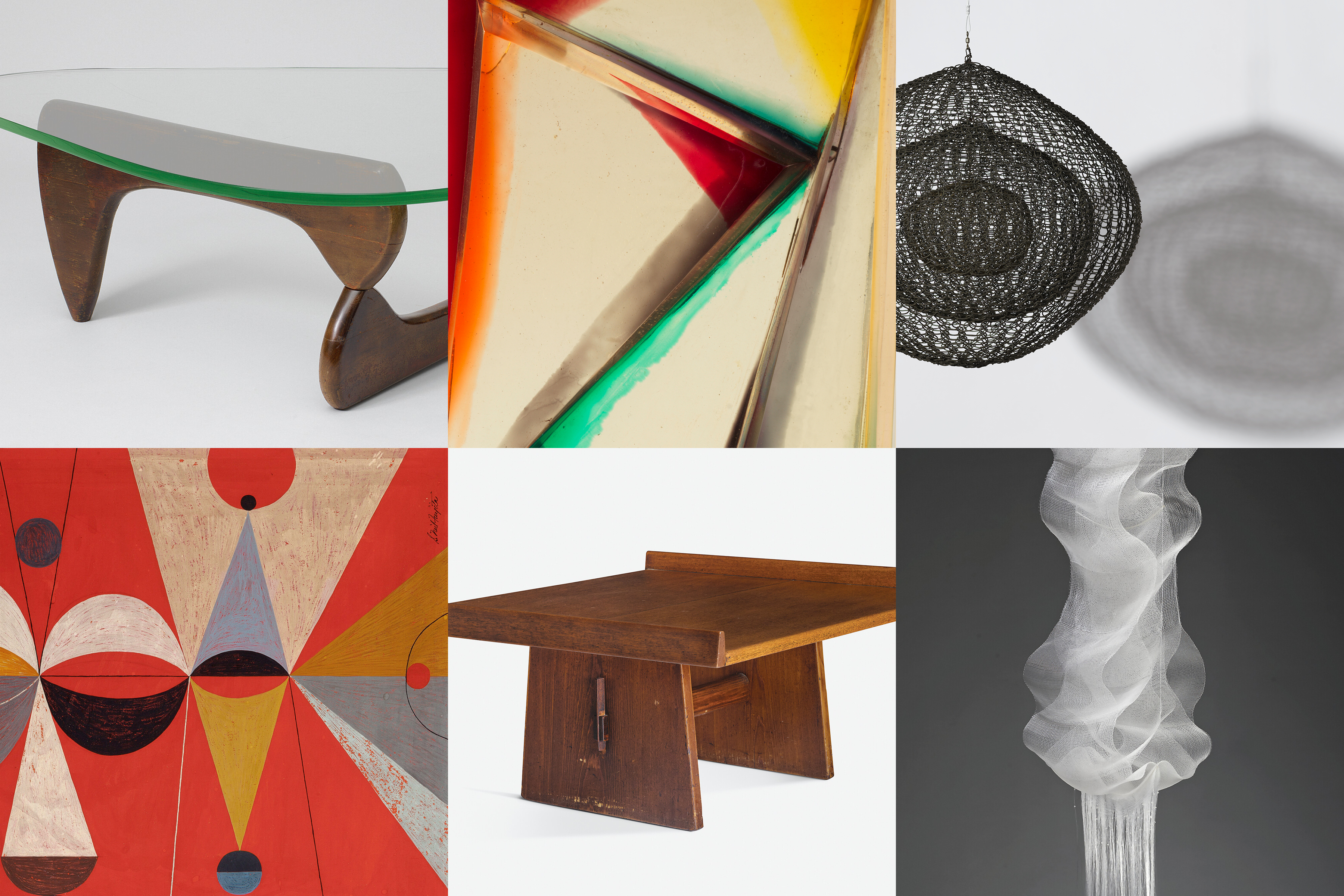
    George Nakashima (1905–1990), Milk House Table, 1944, Teak and cypress, 17 1/4 × 37 1/4 × 33 1/2 in. (43.8 × 94.6 × 85.1 cm), Nakashima Foundation for Peace.Christian Giannelli

    One of his earliest pieces after incarceration served as a poetic callback to the home he was compelled to leave behind: a coffee table made of teak wood from Washington a friend shipped to him.

    Milk House Table (1944) is one of 10 Nakashima artworks on view at the Barnes Foundation this fall as part of its American art programming marking the 250th anniversary of the nation’s founding. The exhibit “Noguchi to Asawa: Designing Postwar America” examines six renowned Japanese American artists whose work defined modern American art and design in the mid to late 20th century — all of whom were severely impacted by mass incarceration.

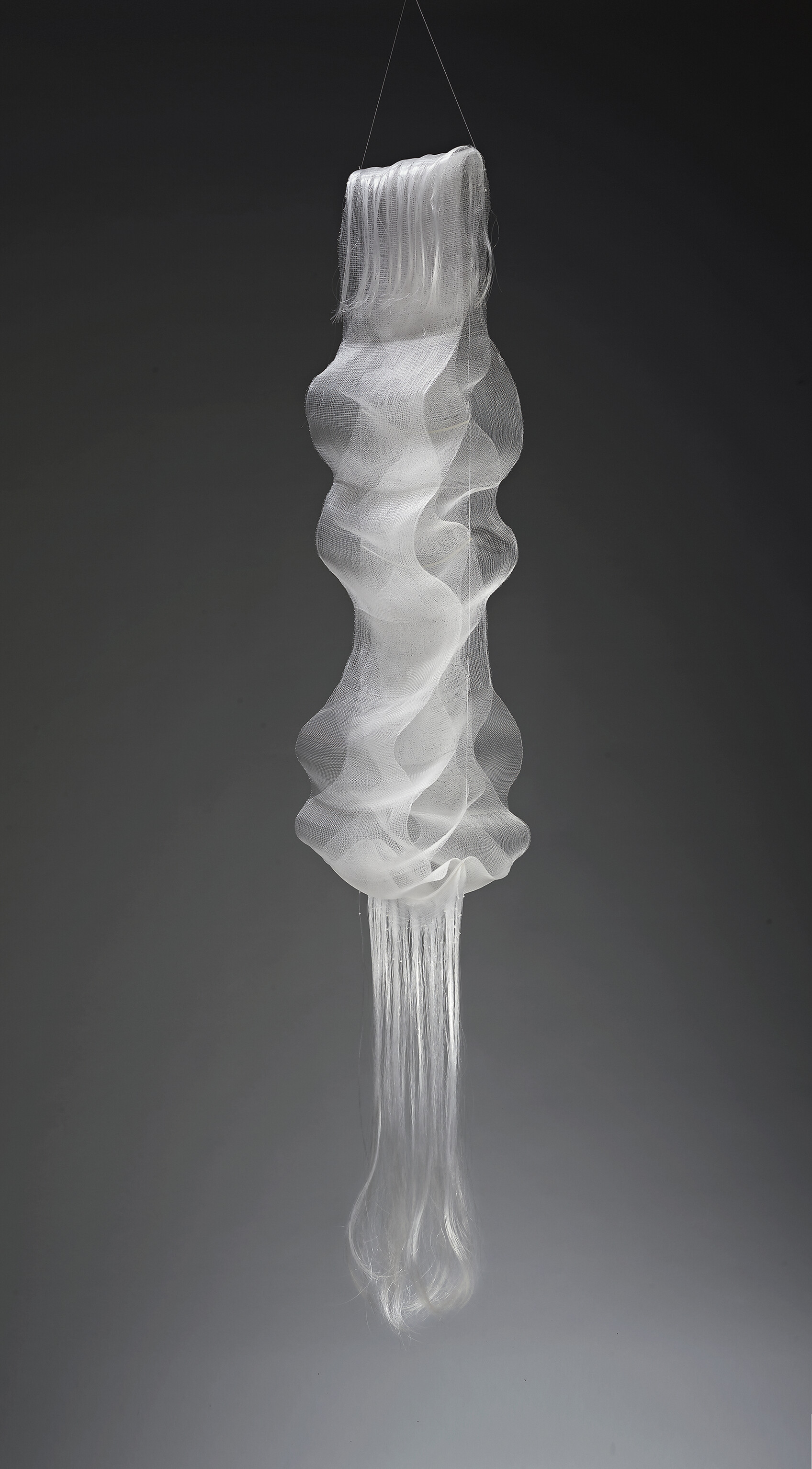
    Kay Sekimachi (b. 1926), Ogawa II, 1969, Nylon monofilament, glass beads, and plastic tubing, 76 × 12 × 10 1/2 in. (193 × 30.5 × 26.7 cm), Forrest L. Merrill Collection, © 2026 Kay Sekimachi / Artists Rights Society (ARS), New York.M. Lee Fatherree

    “This project is focused on six pretty iconic Japanese American artists who very much collectively shaped the look and the feel of mid-century America. The idea was to really look at the collective impact of this pivotal moment of Japanese incarceration during World War II, not only in the lives and careers of these artists, but by extension, in American art and design,” said Barnes curator Cindy Kang, who spearheaded the exhibit. “The roots of American modernism actually do extend into the Japanese incarceration camps. Some of these artists received their first really important artistic experiences there because they were incarcerated with professional artists, and that very much shaped the direction of their future careers.”

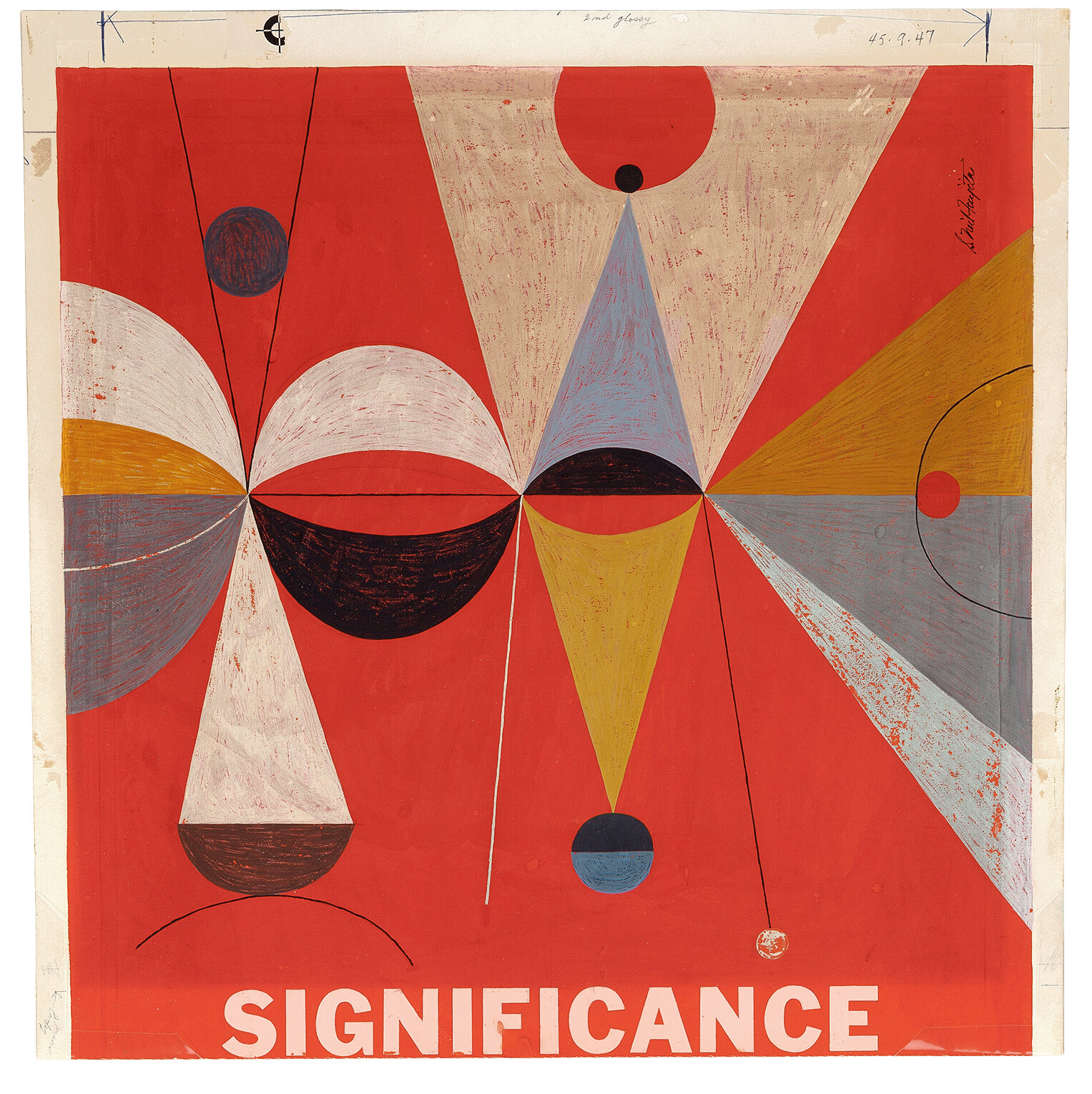
    Two generations are represented in the show — those who were older, established artists before incarceration (Nakashima, sculptor/designer Isamu Noguchi, and sculptor Leo Amino) and a younger generation who had formative experiences learning from artists while incarcerated (graphic designer S. Neil Fujita, fiber artist Kay Sekimachi, and sculptor Ruth Asawa).

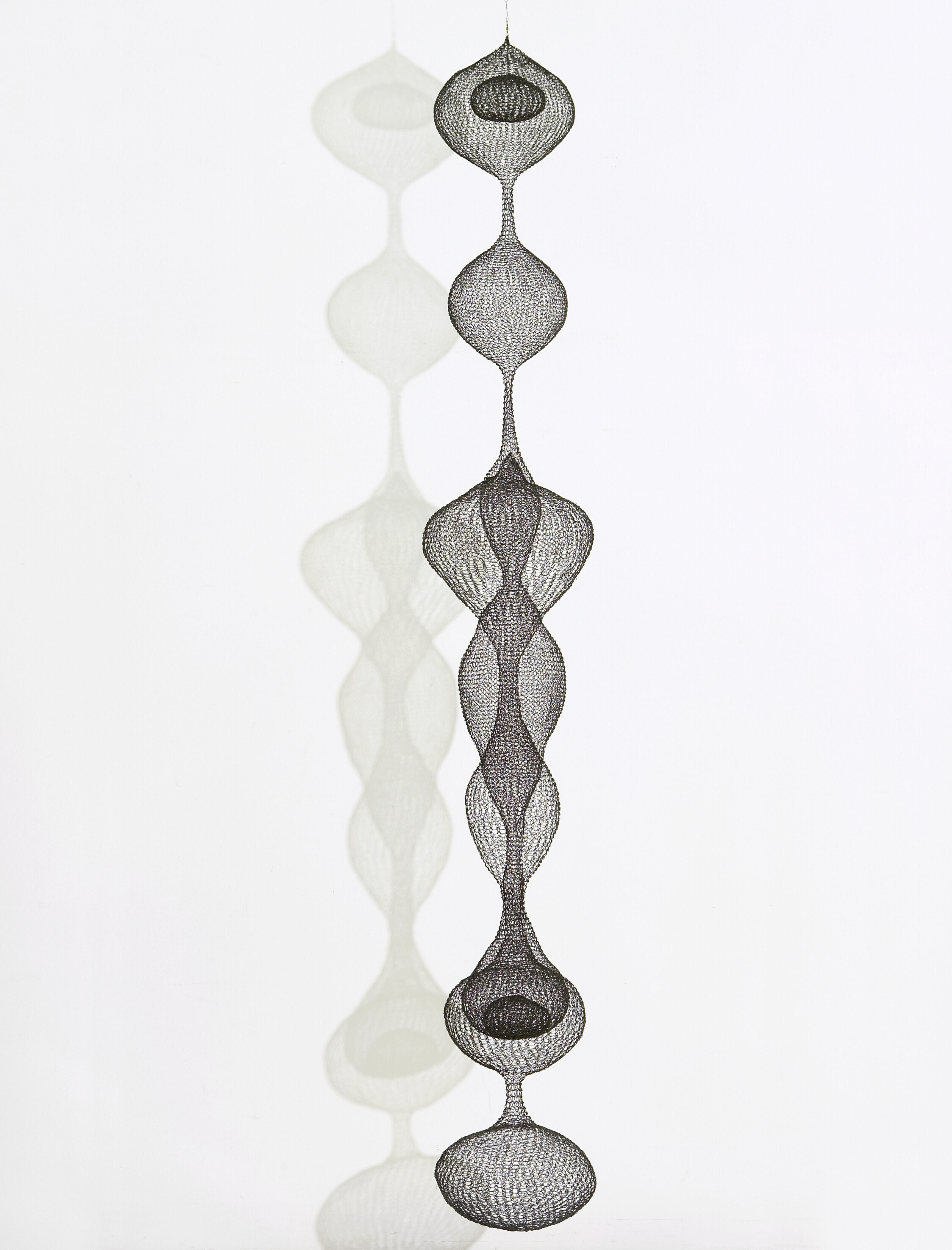
    Ruth Asawa (1926-2013), Untitled (S.272, Hanging Seven-Lobed Continuous Interlocking Form with Spheres in the First and Sixth Lobes), c. 1954, Copper and iron wire, 111 × 14 × 14 in. (281.9 × 35.6 × 35.6 cm), Private collection.Laurence Cuneo @ Studio 71, Inc

    Their works span media, from wood furniture to copper wire sculptures to jazz album covers. (Fujita got his start at a Philadelphia ad agency and taught at the Philadelphia Museum College of Art, which was later named University of the Arts, before becoming the design director at Columbia Records.) The final room in the exhibit evokes a typical postwar American living room with everything made by Japanese American artists that underscores how essential their artwork became to the aesthetics of modern design.

    “You may not have a Noguchi Akari lamp, but you may have the knockoffs from Target and Ikea,” said Kang.

    S. Neil Fujita (1921–2010), “Significance,” advertisement for the United Aircraft Corporation, 1959, Paper, 11 3/8 × 8 1/8 in. (28.9 × 20.6 cm), Private collection. © 2026 Estate of S. Neil Fujita. Heritage Auctions / HA.com.Courtesy of the Barnes Foundation

    In her research, Kang explored how wartime incarceration contributed to the complicated formation of an Asian American political identity following decades of anti-immigration policies and discrimination. She found that these artists’ assimilation into the legacy of American design often sidelined or erased their connections to these historic injustices.

    “Especially with Nakashima and Noguchi, their work has been so fully assimilated into American design that the fact that they have these histories is so buried … you don’t even connect American design with these histories,” Kang said.

    “That’s what I was trying to bring out [in this show]… You see a Noguchi or Nakashima chair or lamp or table and think, ‘Oh yeah that’s American design,’ and then not have any idea that it’s connected to Asian American history.”

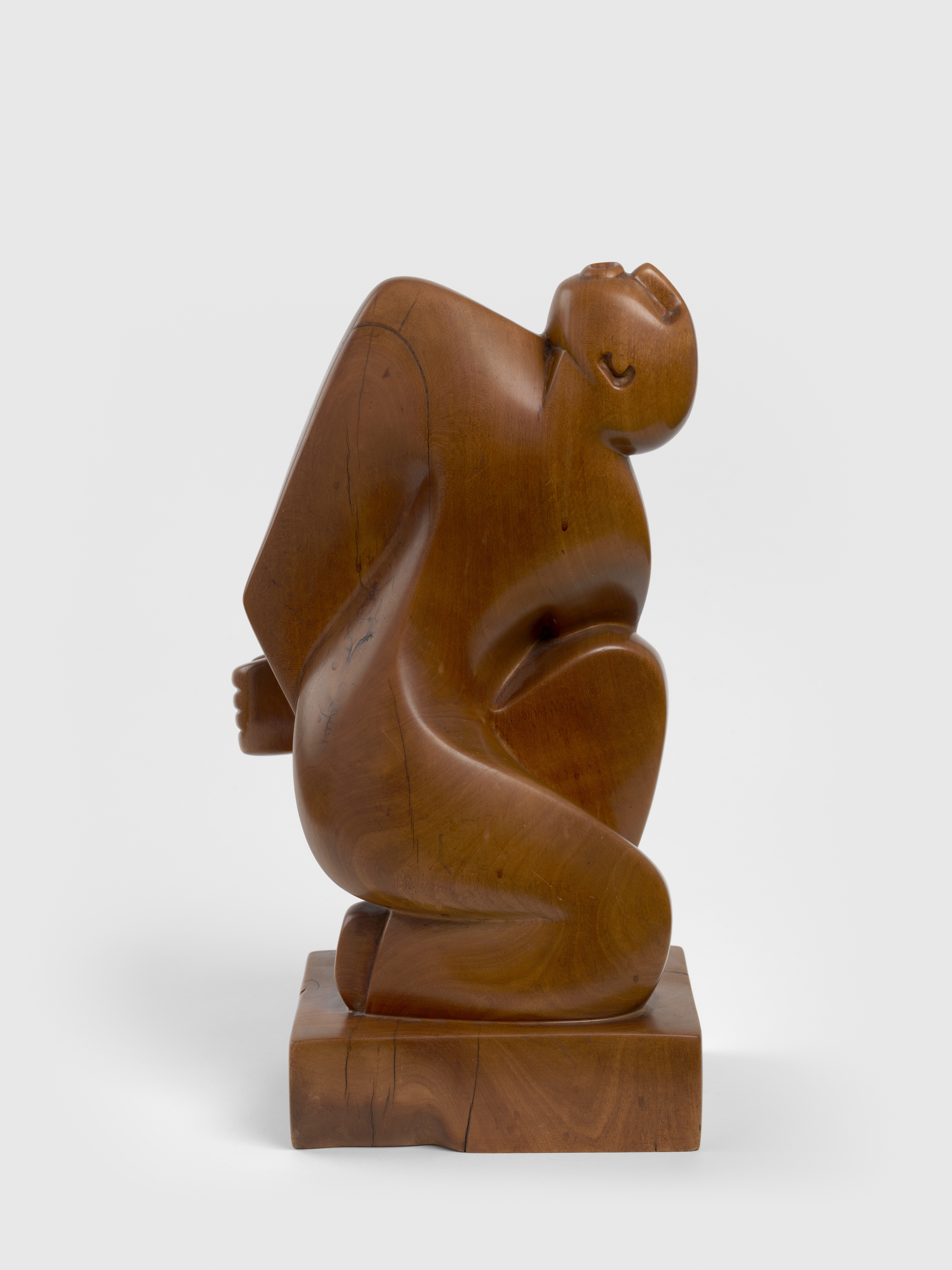
    Leo Amino (1911 – 1989), Unyielding Defiant, 1940, Wood, 18 × 9 3/4 × 7 in. (45.7 × 24.8 × 17.8 cm), Private collection, Memphis, Tennessee. Works by Leo Amino © 2026 Leo Amino Estate. Courtesy of the Estate and David Zwirner.Stephen Arnold

    Who gets to be an “American”? That question weighed heavily on Kang as she developed the exhibit and studied the historic period when the U.S. government imprisoned thousands of immigrants, including American citizens and children. She had no idea just how timely her project would feel opening this year, as the U.S. government continues to imprison tens of thousands of immigrants under President Donald Trump’s second administration.

    “It really was not in our minds that this would be as relevant, or as on the nose as it is today, that’s really unfortunate,” said Kang. “We need to keep remembering we’ve been through this and we already know this is not a good direction. We need to learn this lesson again.”


    George Nakashima (1905 – 1990), Dried Bitterbrush collected by the Nakashimas in Minidoka, Idaho, c. 1942, Wood, 5 1/2 × 14 × 10 in. (14 × 35.6 × 25.4), Nakashima Foundation for Peace.Christian Giannelli

    For many of the featured artists, life after incarceration provided an opportunity to move past that traumatic time — they often did not discuss or share details about their imprisonment with their families or others. However, younger generations of Asian Americans, including the artists’ descendants, want to interrogate these histories further to understand how that trauma lingered on in the lives of these beloved artists.

    For his part, Nakashima told his daughter that “his wounds healed over and left no scars.”

    Still, he kept pieces of wood he collected from the Minidoka camp, which he used to create case furniture for their family home. In the exhibit, one of these remnants will be on display: a branch of dried bitterbrush.

    “Noguchi to Asawa: Designing Postwar America,” runs through Jan. 10, 2027 at The Barnes Foundation, 2025 Benjamin Franklin Pkwy., Philadelphia, 215-278-7000 or barnesfoundation.org

  • ‘A Nation of Artists’ is the epic story of American art. It has its charms and its slights.

    ‘A Nation of Artists’ is the epic story of American art. It has its charms and its slights.

    To find “A Nation of Artists” at the Philadelphia Museum of Art, you walk from the Great Stair Hall down a long gallery lined with art that’s not part of the show. The path zigs left and tightens into what looks like a service corridor, and then zags right past the bathrooms.

    After this distinctly unceremonious approach, you’ve arrived at one of the museum’s most spectacular events of recent years.

    Not only is “A Nation of Artists” momentous — it is billed as the “most expansive presentation of American art ever mounted in Philadelphia” — but it comes with the added juice of inaugurating the museum’s newly renovated American wing on the second floor after a 14-month closure.

    The occasion brings yet another distinction: amazingly, after three more galleries open in the wing, it will be the first time in a decade that all of the galleries in the main building will have been open at the same time.

    The odd journey to the second-floor American galleries has long been in place, but it seems especially odd now. It would have been nice to reopen this major piece of real estate with more of an architectural drumroll than a drab, winding hallway, especially for an institution that, after the tumultuous year it’s had, could use a thing or two to celebrate.

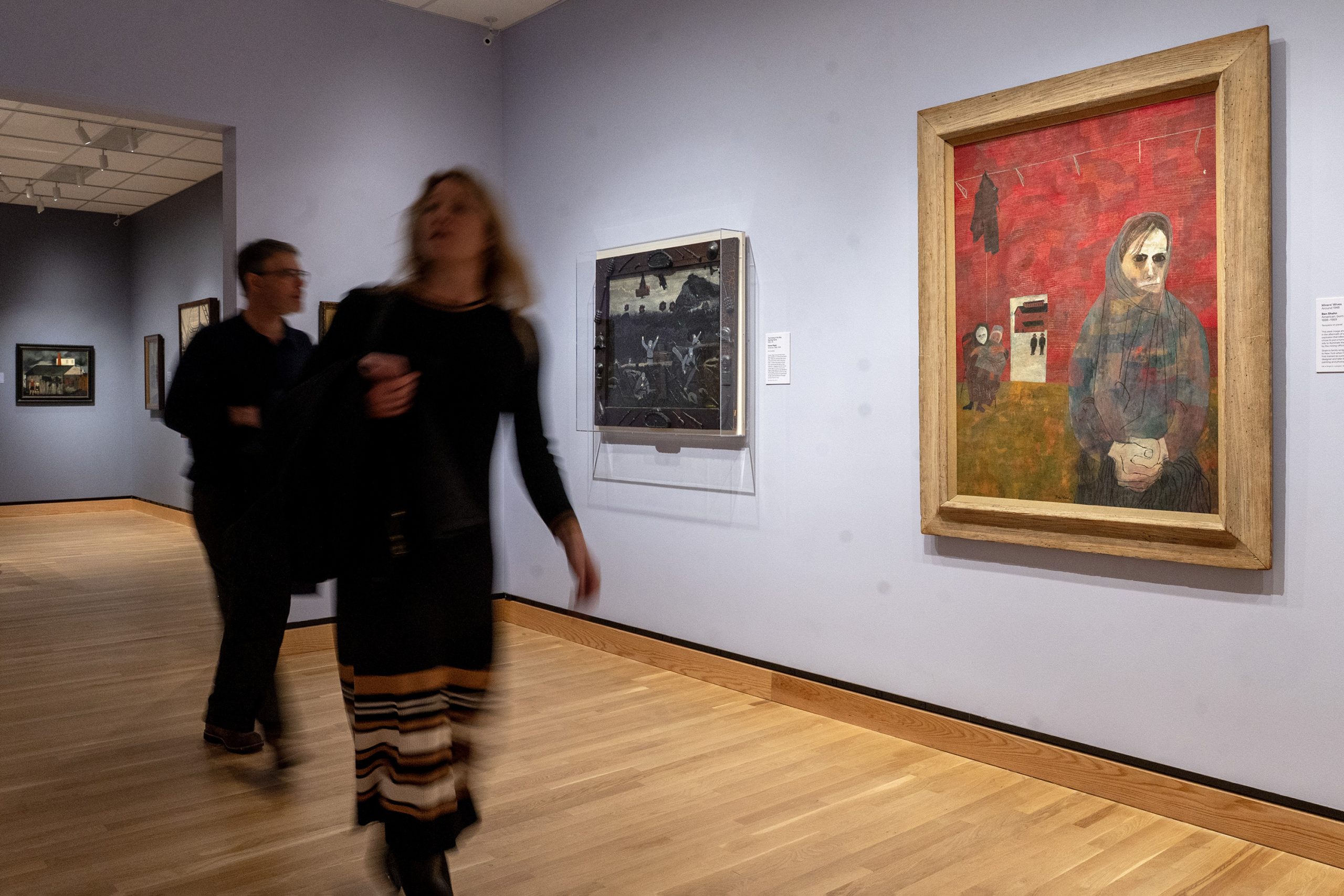
    “Miners’ Wives” (right) by Ben Shahn and “The End of the War, Starting Home” by Horace Pippin at the Philadelphia Museum of Art.Tom Gralish / Staff Photographer

    It might also be easy to miss the show’s greater significance to the museum and its cohost, the Pennsylvania Academy of the Fine Arts. “A Nation of Artists,” which opened in April with more than 1,000 works at both museums, arrives as a bolt of ambition as the groups work their way through deficits and reorganizations and remind audiences and funders that beyond crisis, there is art, and it is glorious.

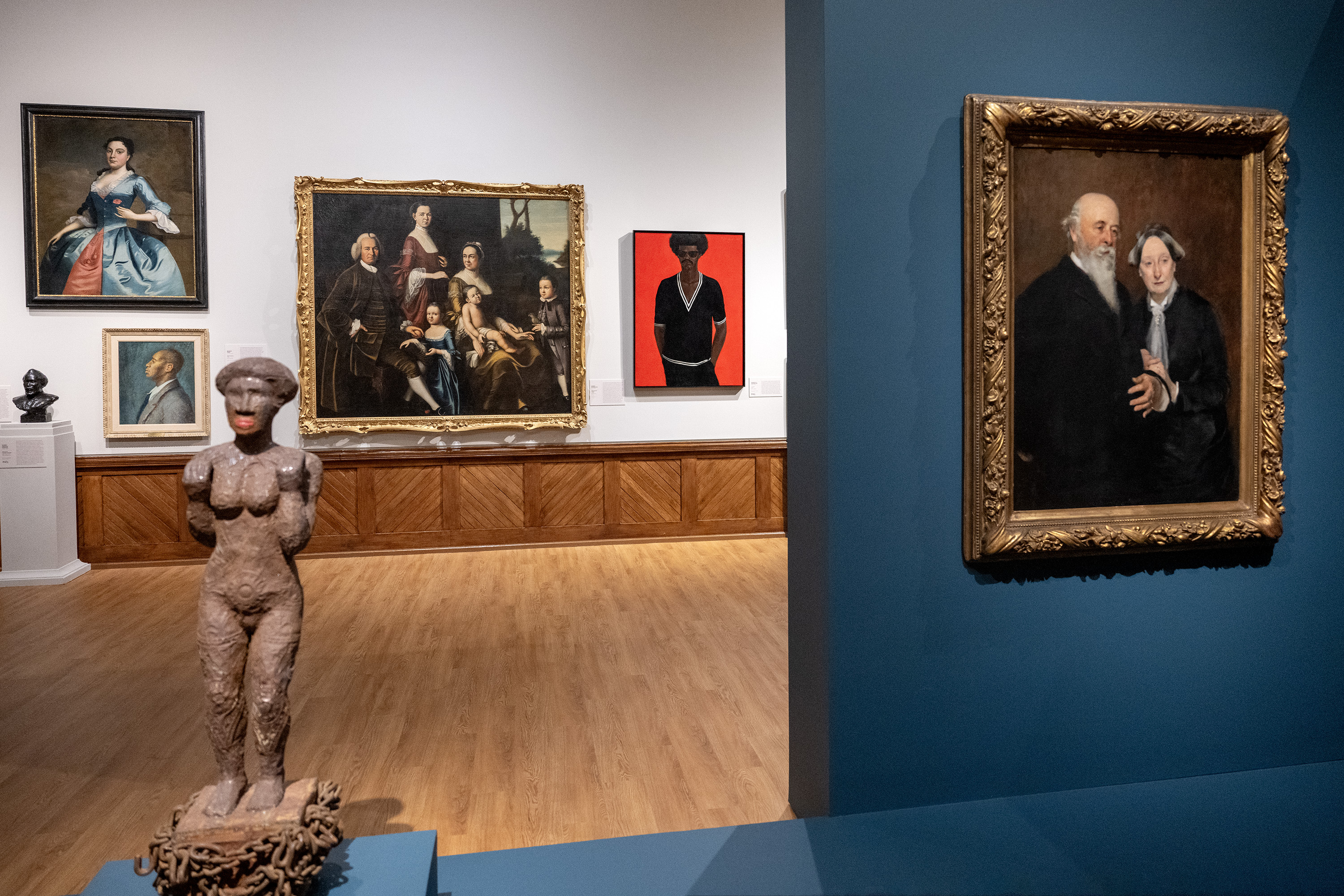
    The show is the city’s major visual arts celebration of the nation’s 250th anniversary, and while it’s an impossible task to compress the story of art in America into any single show, the overall image that emerges is not a cohesive snapshot, but a fascinating mirror.

    There’s sometimes a random, almost improvisatory feeling to “A Nation of Artists” — despite the show’s attempt to place works around themes like the American West or inequity — because America is itself ever-random and improvisatory.

    Works in thematically grouped ensembles in ‘A Nation of Artists’ in the newly renovated Furness and Hewitt building at the Pennsylvania Academy of the Fine Arts.Tom Gralish / Staff Photographer

    More than 120 works from the collection of John and Leigh Middleton and their family are augmenting “A Nation of Artists.” But after the show closes and the Middleton works are gone, PAFA will put in place a newly curated permanent collection, and the PMA will be left with a sweeping look at American art that starts on the first floor with earlier works and proceeds to the second to bring it up to the mid-20th century.

    In other words, “A Nation of Artists” absorbs the Middleton works, but also spotlights the incredible riches in residence nearly all the time. That’s no small thing at a time when arts and culture in Philadelphia is struggling for engagement in the attention economy.

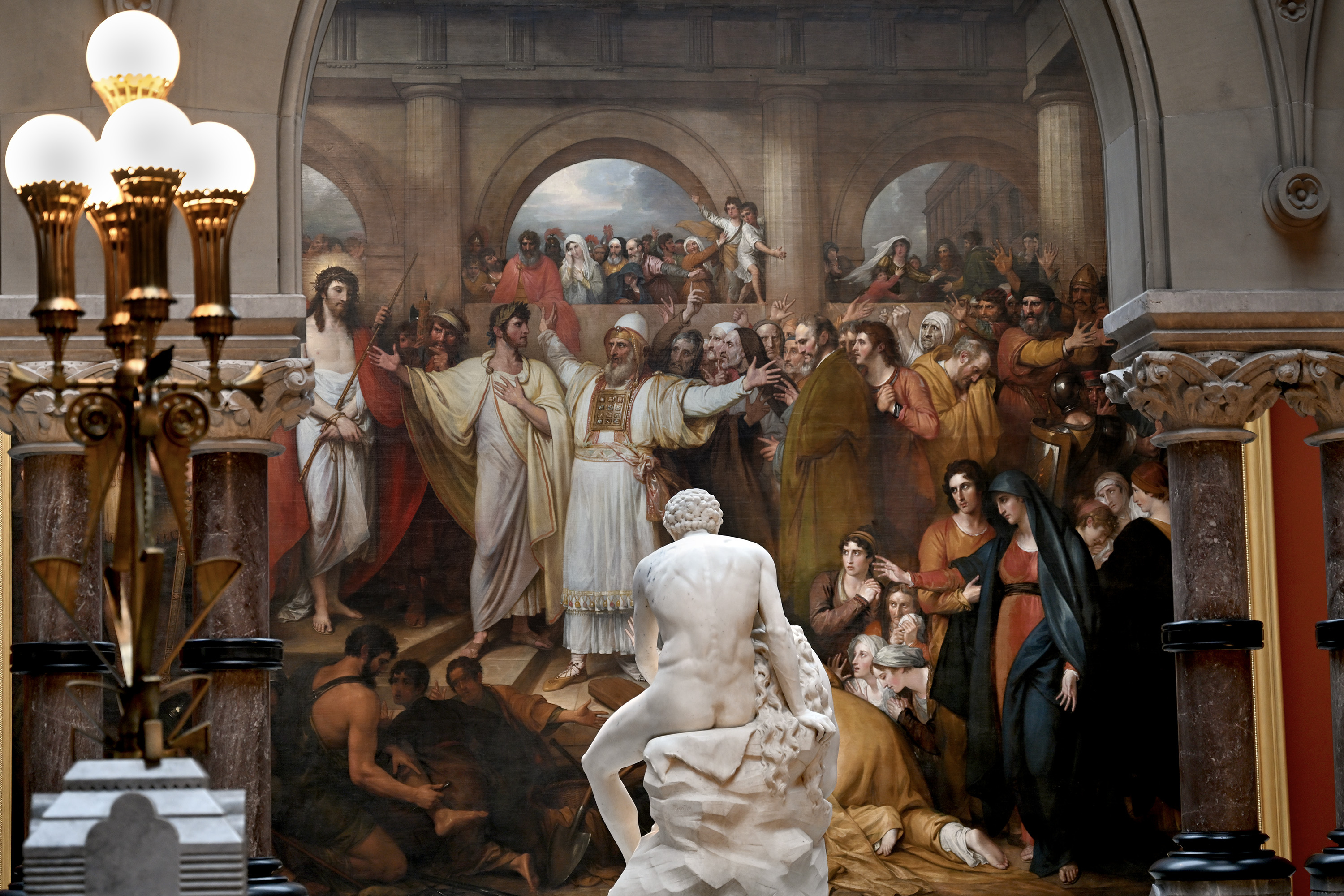
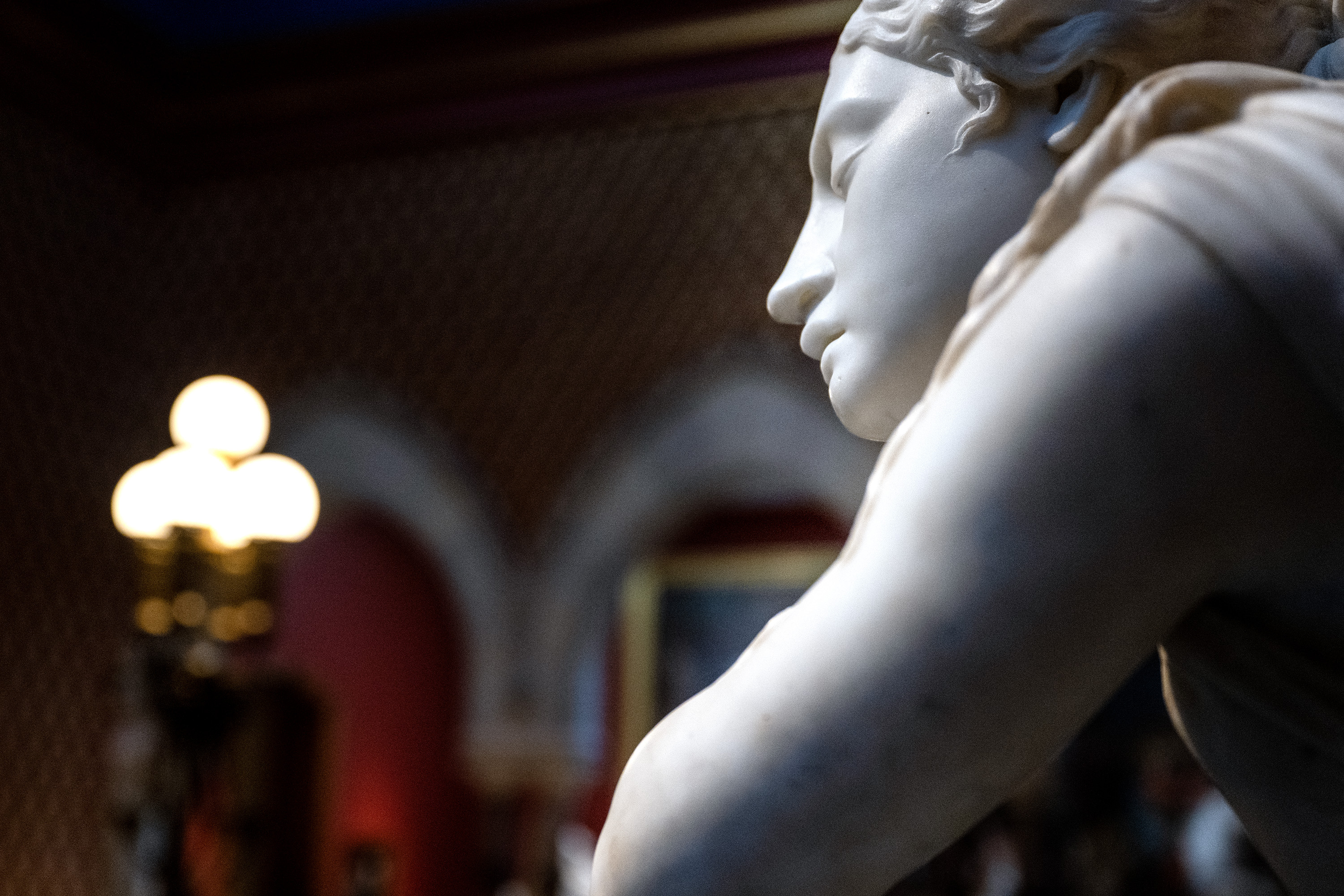
    The painting “Christ Rejected” by Benjamin West and marble sculpture “Paradise Lost” by Joseph A. Bailly at the Pennsylvania Academy of the Fine Arts.Tom Gralish / Staff Photographer

    A crisp reset at PAFA

    At PAFA, the outside world seems to creep in in ways both positive and worrisome.

    How can you admire the fruitful pedagogy at PAFA on display by generations of academy students and instructors without feeling concern for the place? The relationship between the museum and school — a specific artistic legacy unique to Philadelphia — is what makes PAFA special, and it remains to be seen whether a recently revamped certificate program at the school is the ultimate answer, artistically or financially.

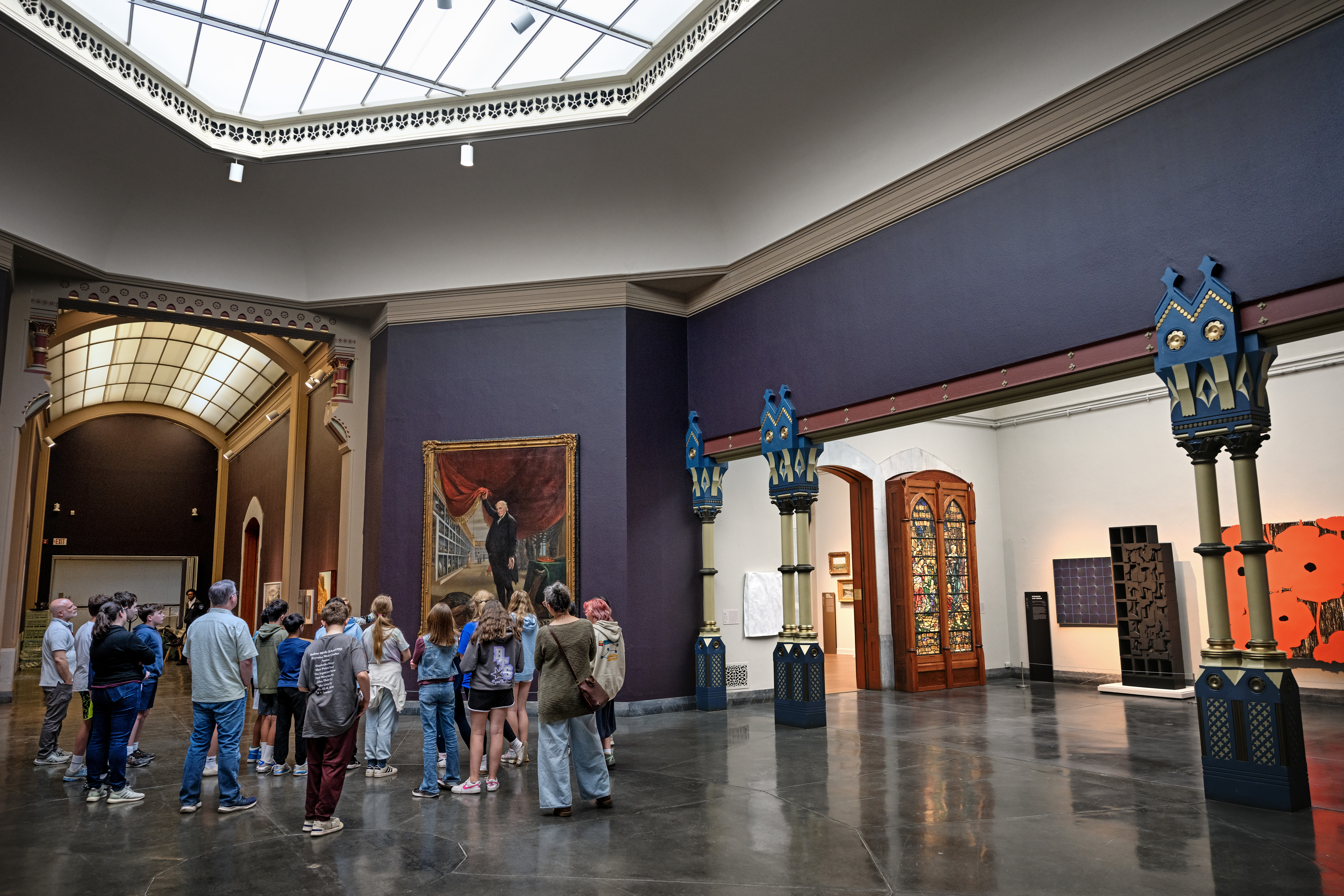
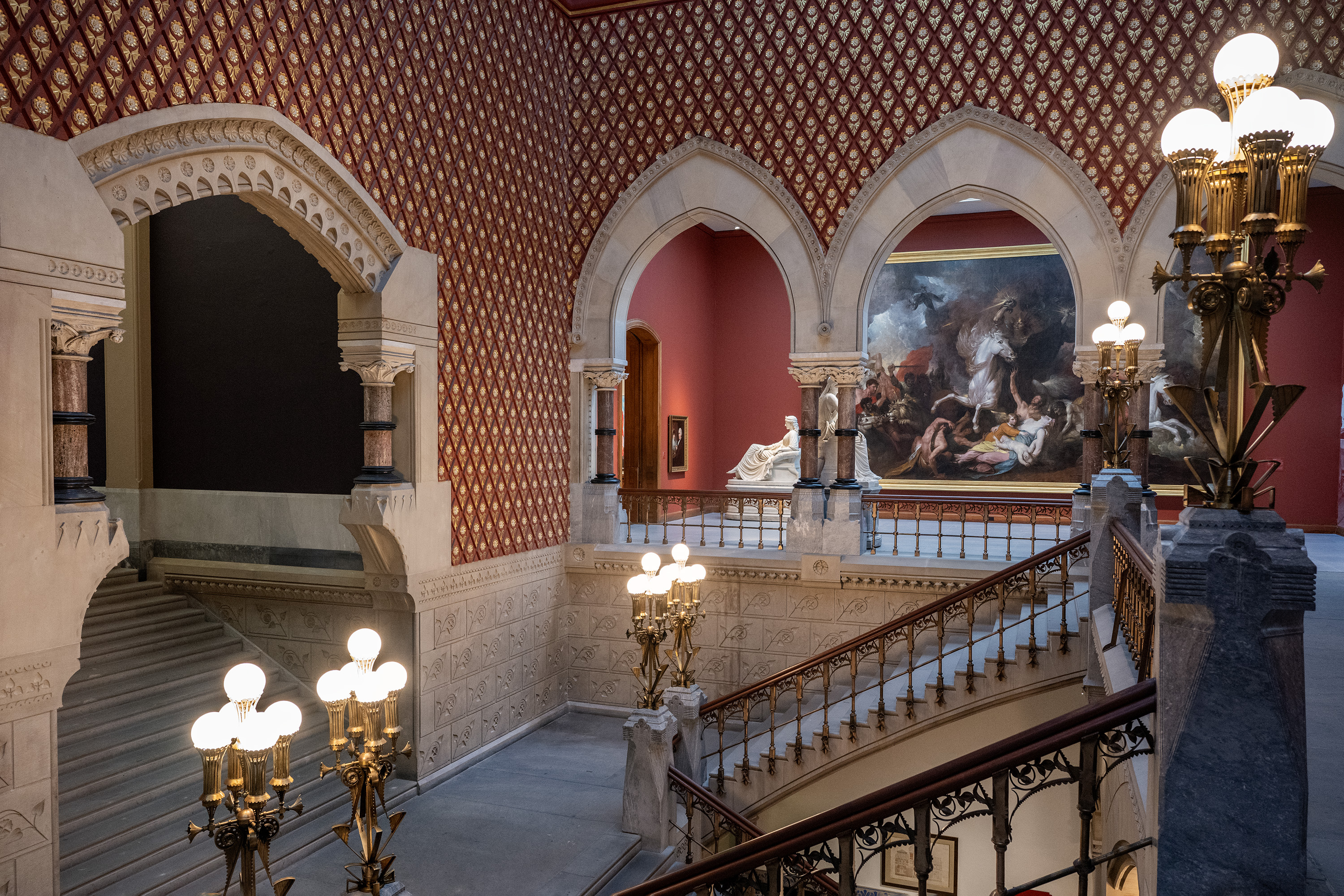
    The exhibition marks a crisp reset: the reopening of PAFA’s jewel of a building, the riotously detailed 1876 Furness and Hewitt-designed landmark, after a renovation project that included a new HVAC system and other renovations.

    Laylights (variously utilizing natural or artificial light) in the newly renovated Furness and Hewitt building at the Pennsylvania Academy of the Fine Arts.Tom Gralish / Staff Photographer

    It’s good news that there are no dramatic changes; the building continues to dazzle. I visited the show there a half dozen times, and via the church-like rose window and skylights, nature played handmaiden to art. When clouds parted, sun filtered into some of the spaces, and in one gallery the natural light made the whites and colors of George Bellows’ North River pop.

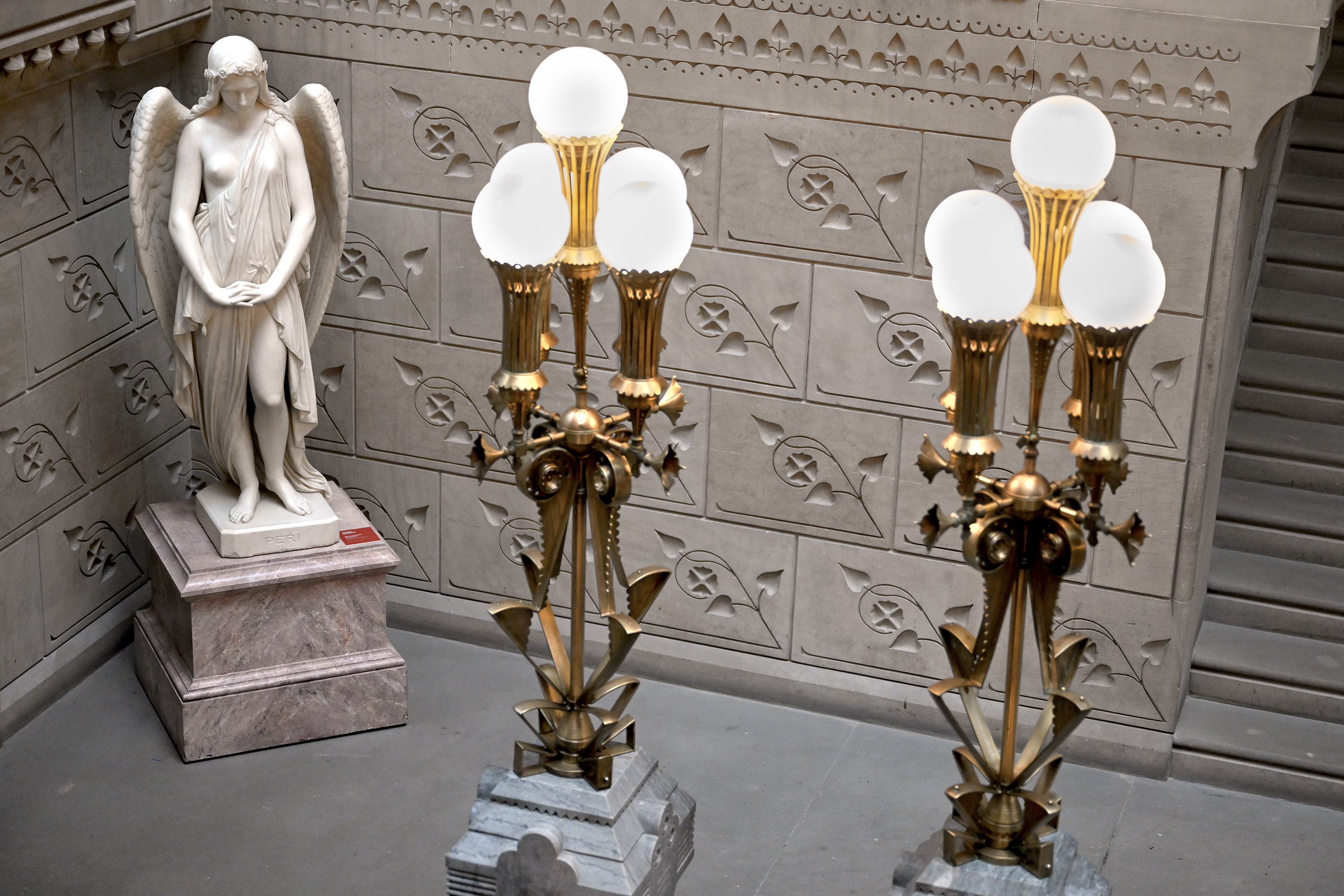
    The marble sculpture “Peri at the Gates of Paradise” by Thomas Crawford in the grand staircase at the Pennsylvania Academy of the Fine Arts.Tom Gralish / Staff Photographer

    On another morning, the sunlight made the grand stair hall of the Furness building practically vibrate. The smooth white of marble sculptures like Thomas Crawford’s Peri at the Gates of Paradise glowed and the stars-on-cobalt pattern beneath the skylight seemed to be showering down.

    Here on this day, there was no more beautiful interior in the city.

    At the Pennsylvania Academy of the Fine Arts. In the rear is the oil painting “Death on the Pale Horse” by Benjamin West.Tom Gralish / Staff Photographer

    A more sequestered PMA

    If PAFA maintains a lively relationship with the outside world, the PMA’s new American wing feels sequestered. There are no visible windows letting in light in the second floor American galleries — no natural light except for a small opening in a staircase.

    The layout and footpath (including that unceremonious approach) is largely the same as it had been before the renovation. But the flow within and from gallery to gallery is more open, and there is now a central spine of four continuous middle galleries that opens up a vista that helps to orient the visitor. Three remaining galleries in the renovated American wing are expected to reopen, though the date is uncertain.

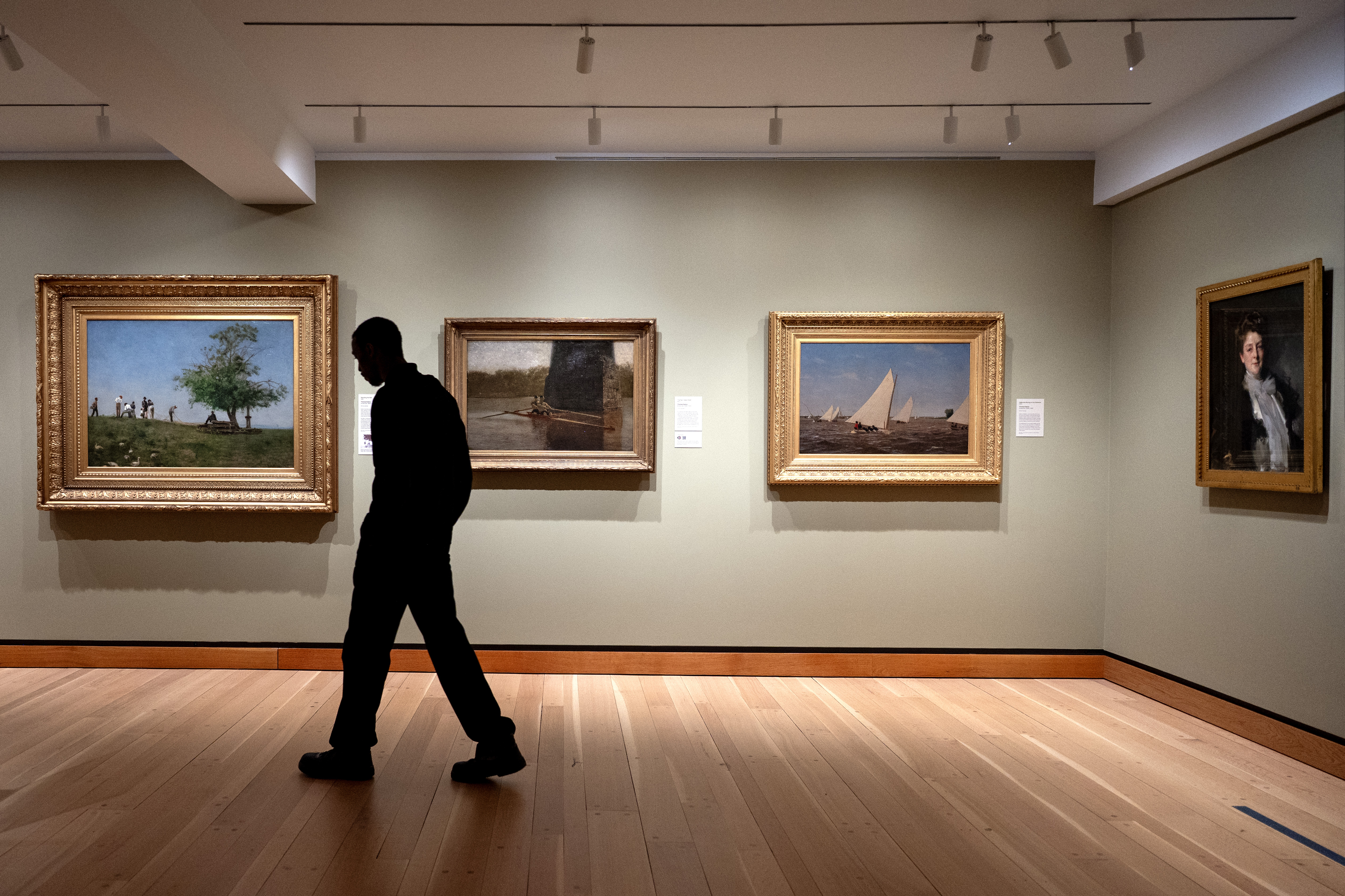
    Three Thomas Eakins oils (from left): “Mending the Net,” “The Pair-Oared Shell,” and “Sailboats Racing on the Delaware.”Tom Gralish / Staff Photographer

    The PMA half of “A Nation of Artists” features a lot of big names (Andrew Wyeth, John Singer Sargent, Georgia O’Keeffe), as well as about three dozen works by Thomas Eakins — intimate portraits as well as epic canvases. There’s a beautiful sequence of three Eakins oils, all painted within a decade of one another, all with rivers in various hues and states of excitement: The Pair-Oared Shell, Sailboats Racing on the Delaware, and the stunning Mending the Net, a seemingly ordinary scene that gathers filmic mystery and story through minutely detailed figures mending a fishing net by the river against a gauzy beyond.

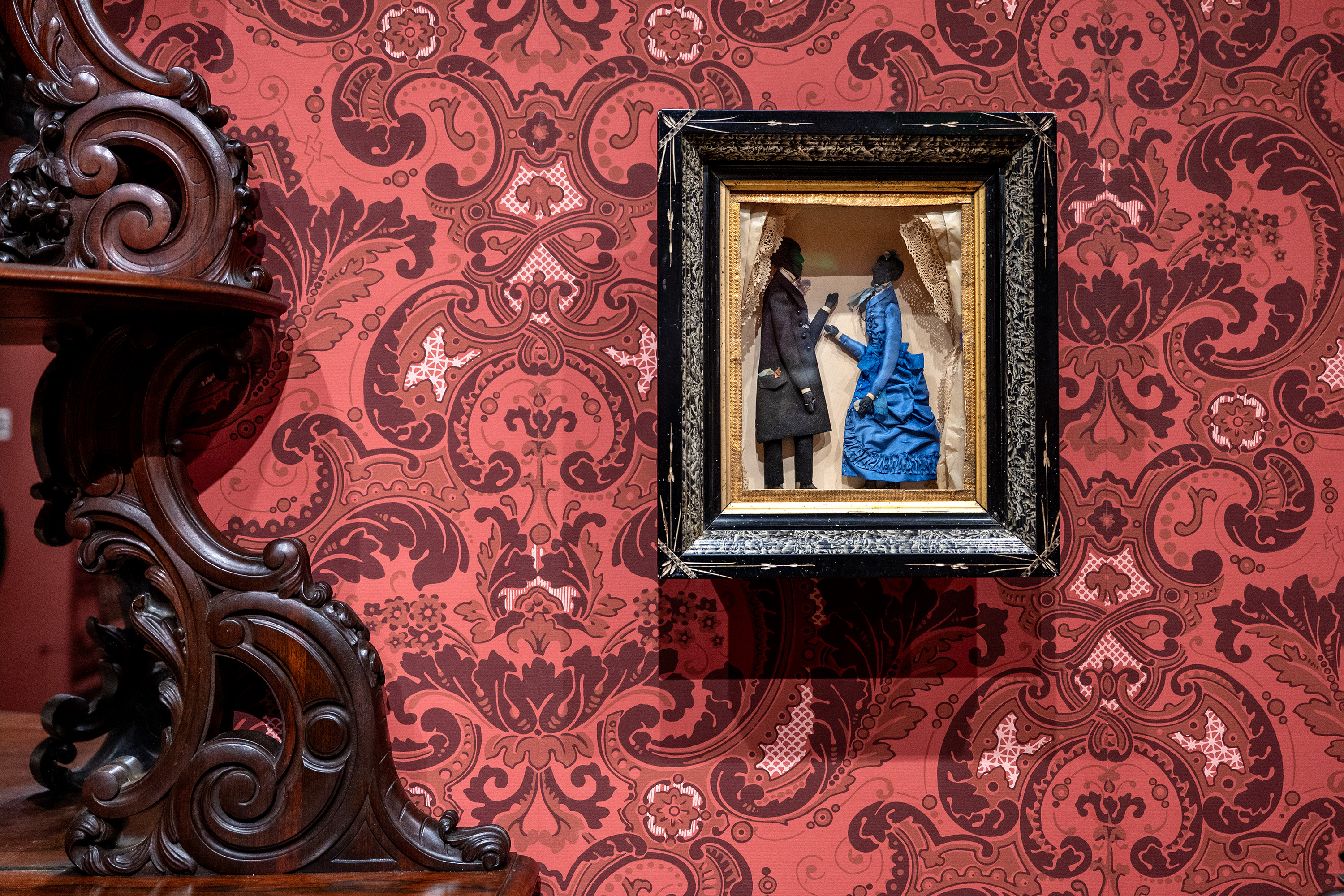
    In terms of visitor experience, the new second floor American space succeeds most in moments of drama. The wall in one gallery uses a specially reproduced rich-burgundy period wallpaper, and the relationships among the paintings, furniture, pottery, and other items in the room ricochet beautifully.

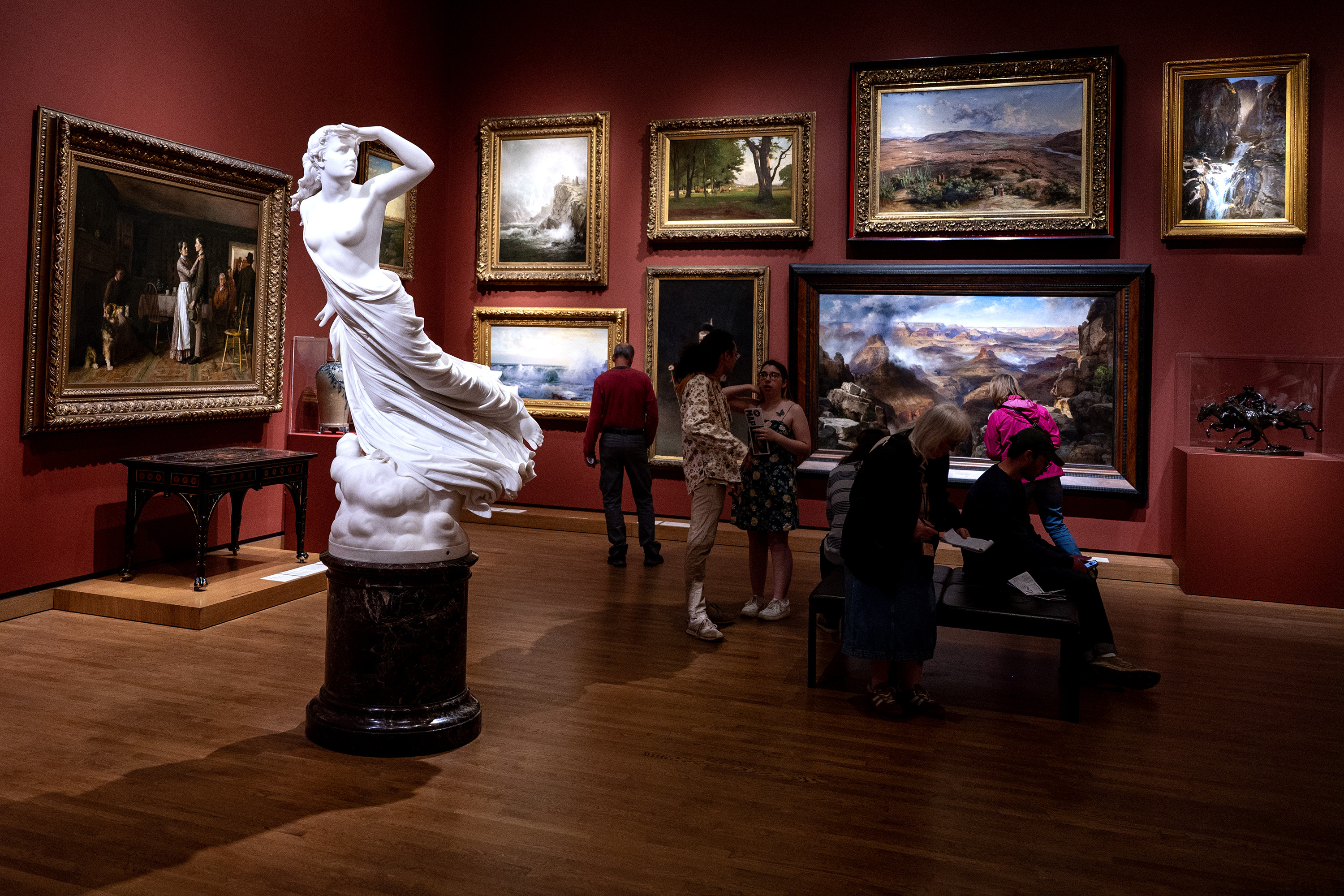
    “The Lost Pleiad” by Randolph Rogers in the Philadelphia Museum of Art’s salon-style gallery.Tom Gralish / Staff Photographer

    A sumptuous feeling immerses visitors in the high-ceilinged salon-style room (gallery 211) that includes vast landscapes and marble sculpture. Though it’s not immediately obvious, the first-floor American works are also part of the show, and they hold yet more Middleton works.

    Classics and surprises, and a lot of charm

    There’s greater poetry in the architecture at PAFA, but the work itself at both museums is undeniably impressive in scope, and especially at the PMA: painting, sculpture, furniture, silver, fabric, works in clay, and more.

    The curators — Kathleen A. Foster and Alexandra A. Kirtley at the PMA, and Leah Triplett and Lea C. Stephenson at PAFA — have delivered not just old favorites, but also surprises.

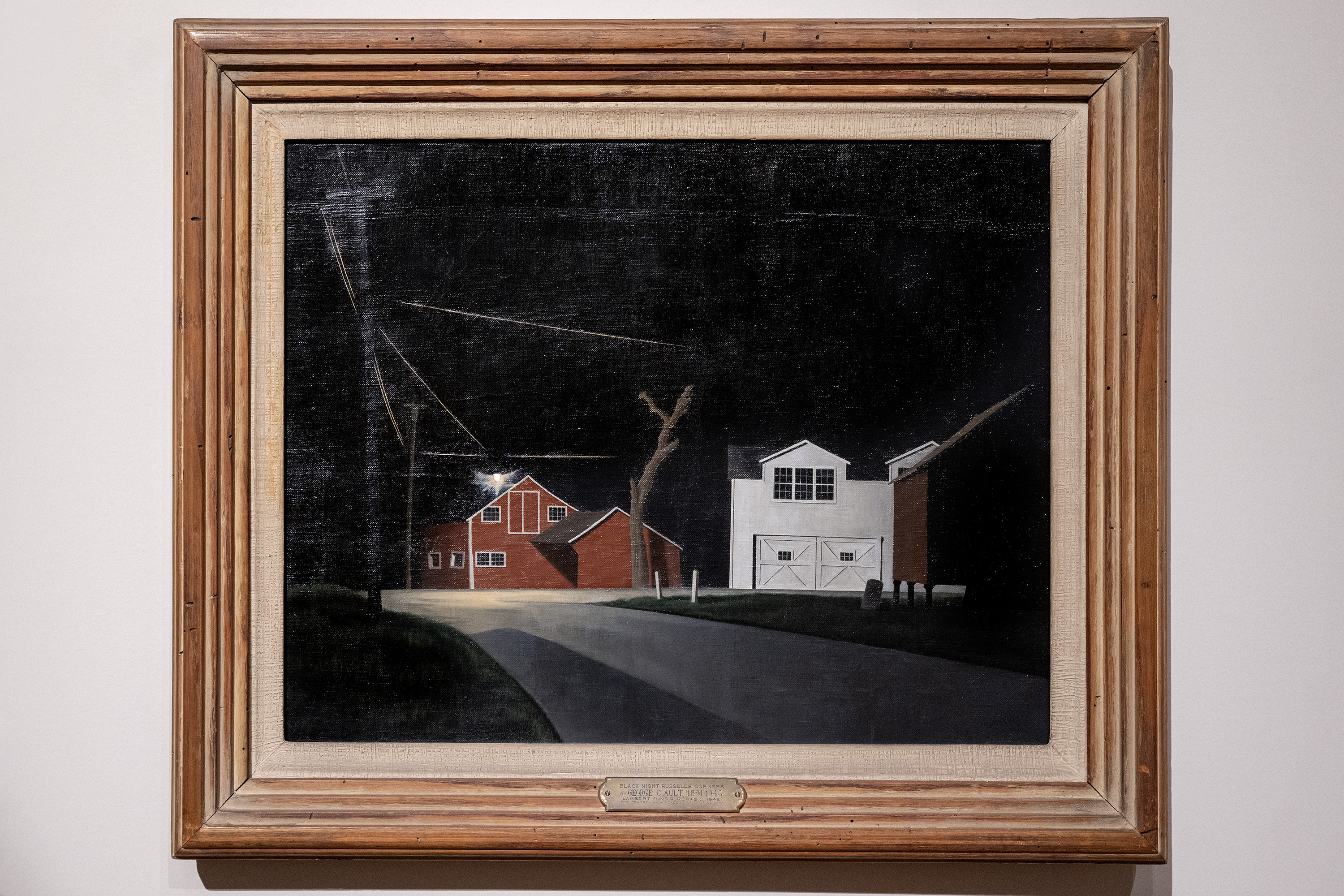
    “Black Night: Russell’s Corners” by George Copeland Ault at the Pennsylvania Academy of the Fine Arts.Tom Gralish / Staff Photographer

    PAFA’s classics include Winslow Homer’s Fox Hunt; the Jasper Johns Flag 1960-66 from the Middletons (which the couple brought home from an auction in 2010 for $28.6 million); and George Copeland Ault’s Black Night: Russell’s Corners (1943), whose flat, cold, electric light suggesting a modern encroachment on agrarian life, can only be appreciated in person.

    Among the pieces to which I kept returning: Pink Flower with Clock by PAFA 2011 graduate Aubrey Levinthal, because of the smart way it plays with the idea of photographic positive and negative imagery even though it is an oil; and Harriet Goodhue Hosmer’s Puck on a Toadstool, from 1856, whose supernatural energy is so potent that the figure appears poised to shape-shift and break free of its marble confines.

    At the PMA, a single canvas has me reconsidering Edward L. Loper Sr., the Wilmington artist who had his beginnings working for the WPA. Loper’s Abandoned Ferry Terminal is a complex refraction of shadows and colors from 1958 whose geometries never seem to stop shifting.

    A small shadowbox of a man and woman formally costumed from around 1880 might be the most unassuming bit of charm in the entire exhibition. Its maker is unknown.

    Custom wallpaper at the Philadelphia Museum of Art, with “Portrait Figures of a Man and a Woman, in a Shadowbox.”Tom Gralish / Staff Photographer

    Leaning into representation

    If you ever wanted a lesson in the difference how a work is displayed can make, just consider how much more substantial an achievement The Gross Clinic looked a few months ago. With bright but warm lighting at the PMA, Eakins’ 1875 canvas was frightening in its vividness, the red of blood on the surgeons’ hands glistening. Today, at PAFA, it looks a little washed out, overpowered by the light coming through the nearby rose window.

    Both museums have made a conscious effort to represent a spectrum of identity — gender, regional origin, ethnicity, and so on. This is all to the good, of course. Everyone will find something relatable in this exhibition, and many will discover works that aren’t necessarily relatable on first examination but become so. This is why museums, and good curators, are important.

    Detail of “Nydia, the Blind Girl of Pompeii” by Randolph Rogers at the Pennsylvania Academy of the Fine Arts.Tom Gralish / Staff Photographer

    It’s a fascinating marker of time to think about the cultural whiplash of the past couple of years in this country, and how vulnerable the simple concept of representation now feels. The tastes of the art establishment change, and so too does how we perceive art.

    How could it be otherwise? Every movement comes in with an air of moral and scholarly authority that purports to lay down once and for all an accurate cultural perspective.

    The prevailing ethos arrives as the new reality. Then the next reality comes along.

    “A Nation of Artists” runs through July 5, 2027, at the PMA, 2600 Ben Franklin Parkway; and Sept. 5, 2027, at PAFA, Broad and Cherry Streets. philamuseum.org, pafa.org.