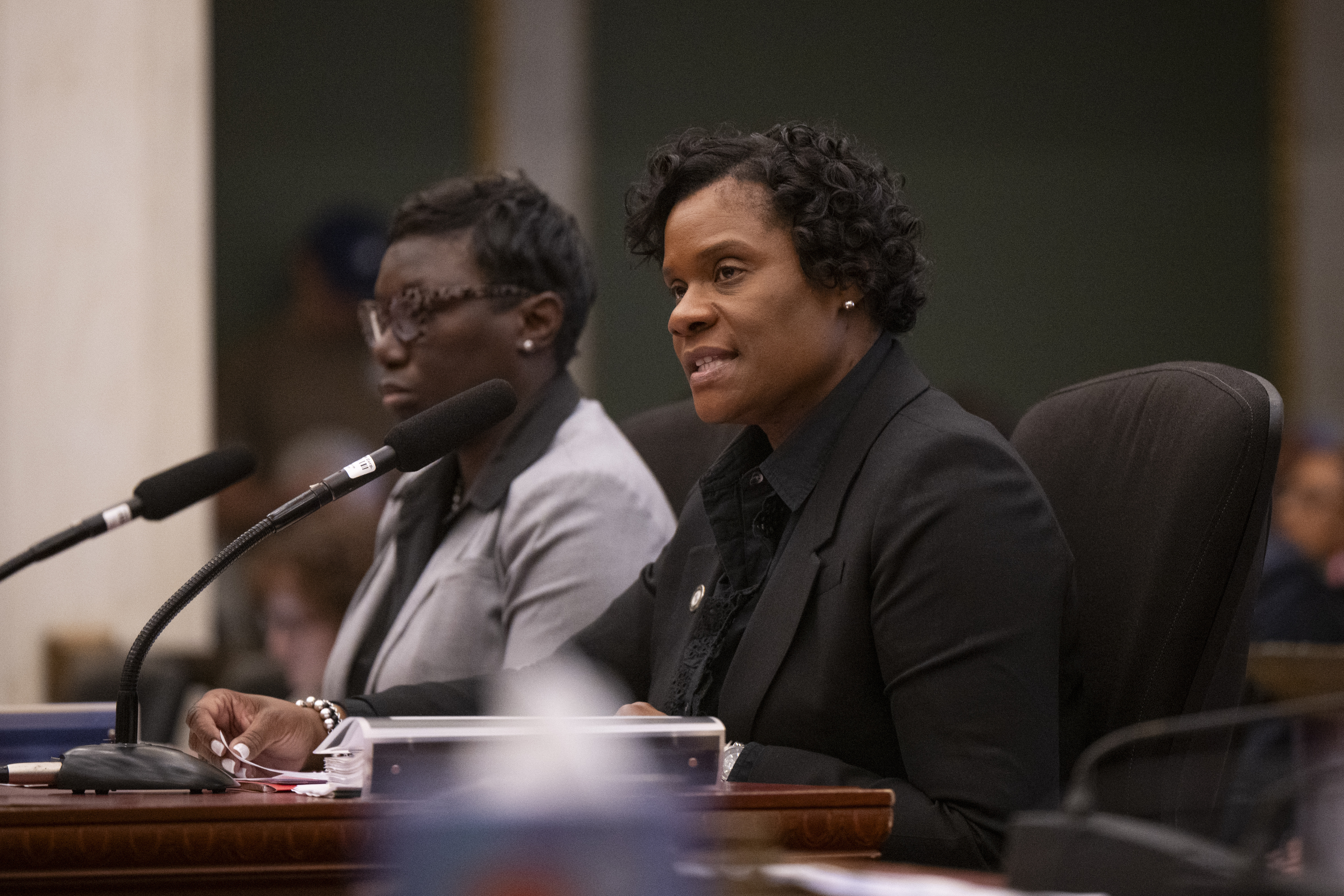
Tag: Anthony Phillips

  • A state database may have raised red flags about Malayshia Allford’s foster mother. Philly couldn’t access it.

    A state database may have raised red flags about Malayshia Allford’s foster mother. Philly couldn’t access it.

    Philadelphia’s child welfare chief said Friday that the city does not have access to a state database that could have helped alert officials to a previous abuse allegation against the foster mother accused of killing 10-year-old Malayshia Allford.

    Kimberly Ali, the commissioner of the city’s Department of Human Services, said Friday during a City Council hearing that it can’t access Pennsylvania’s Resource Family Registry, which includes information about potential foster parents.

    City officials identified the gap after reviewing Malayshia’s case, Ali said.

    In 2022, a state review found that the girl’s foster mother, Carprice Williams, had abused a 4-year-old foster child in her care in 2021, and it was recommended that she never be allowed to foster again. Williams, a former Philadelphia public schoolteacher, appealed, and the state expunged its abuse finding from her record. Years later, she took Malayshia in.

    The state registry, Ali said, tracks the history of foster homes — including past closures and why the homes were closed.

    A closure can serve as a warning sign prompting further investigation, which can uncover abuse allegations that are not in the registry itself, Ali said.

    State law allows officials or private agencies responsible for approving foster homes to have access to information in the registry. In Philadelphia, the city’s DHS has delegated that duty to about two dozen private agencies, including Pennsylvania Mentor, which certified Williams’ home before Malayshia’s placement.

    Ali said the city is exploring potential ways to obtain information from the database.

    State officials pushed back on Ali’s description. Brandon Cwalina, press secretary for the Pennsylvania Department of Human Services, clarified that no agency has unfettered access to the entire registry. Instead, agencies can request information about specific foster families or homes that they are vetting or have approved. Cwalina added that state DHS officials were not invited to Council’s hearing.

    Council members, who convened the hearing Friday to review the city’s foster system in the wake of Malayshia’s death, told Ali that the city should do everything in its power to obtain access to the database.
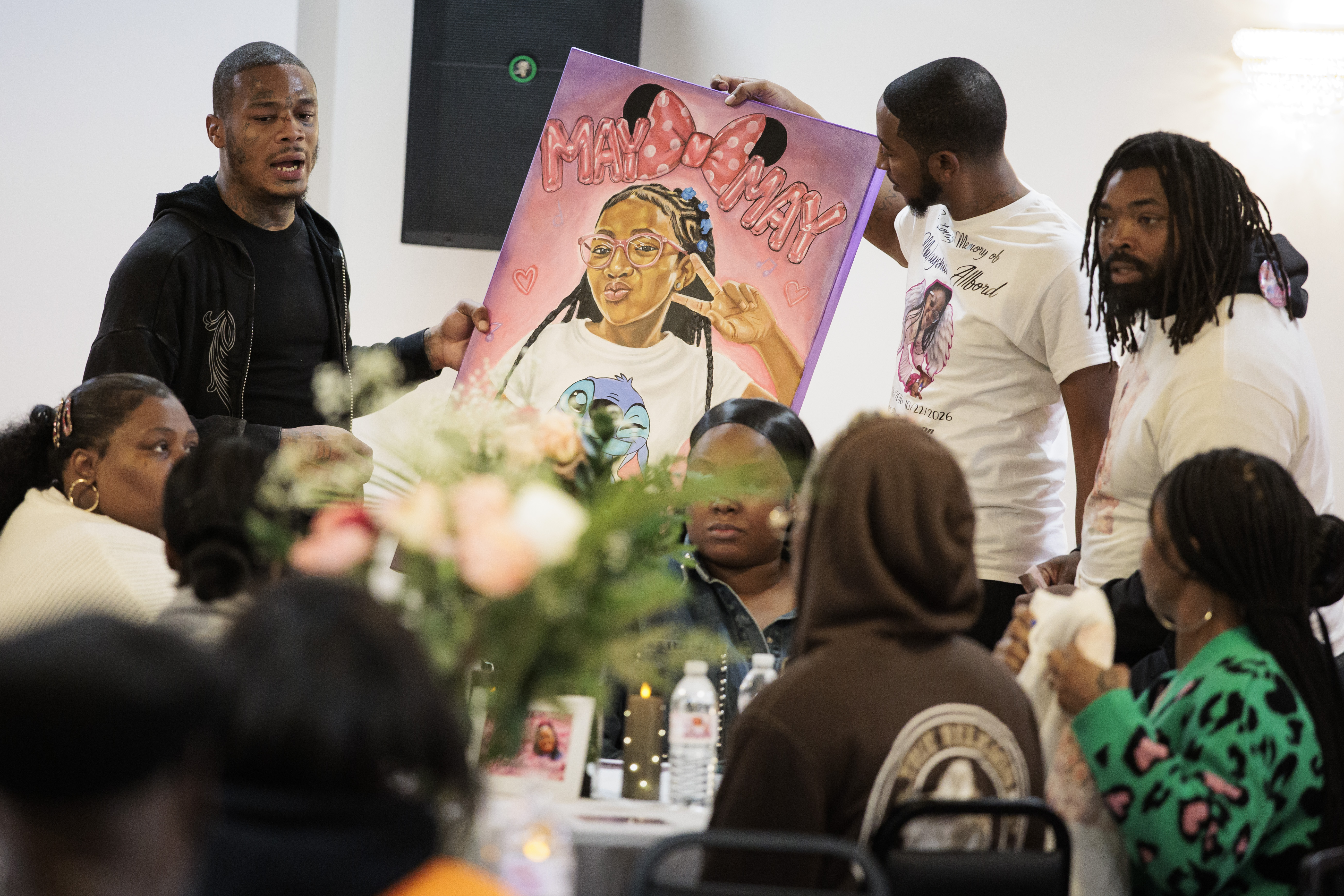
    Family members hold a painting of Malayshia Allford, 10, during a Celebration of Life in her honor at Compassion Connect Venue on Wednesday, Nov. 18, 2026 in West Philadelphia. Carprice Williams, foster mother of Malayshia Allford, was charged with her murder.Monica Herndon / Staff Photographer

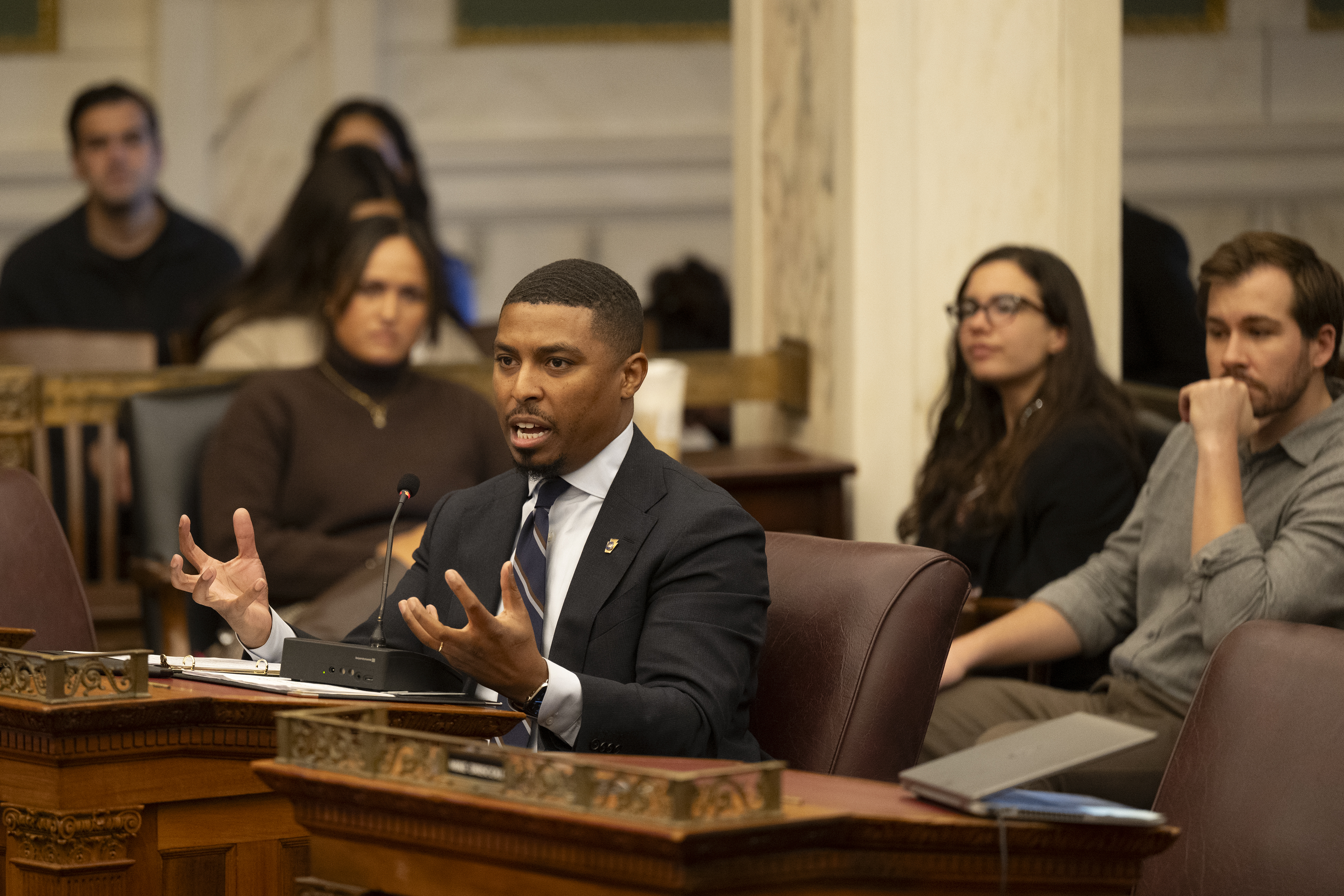
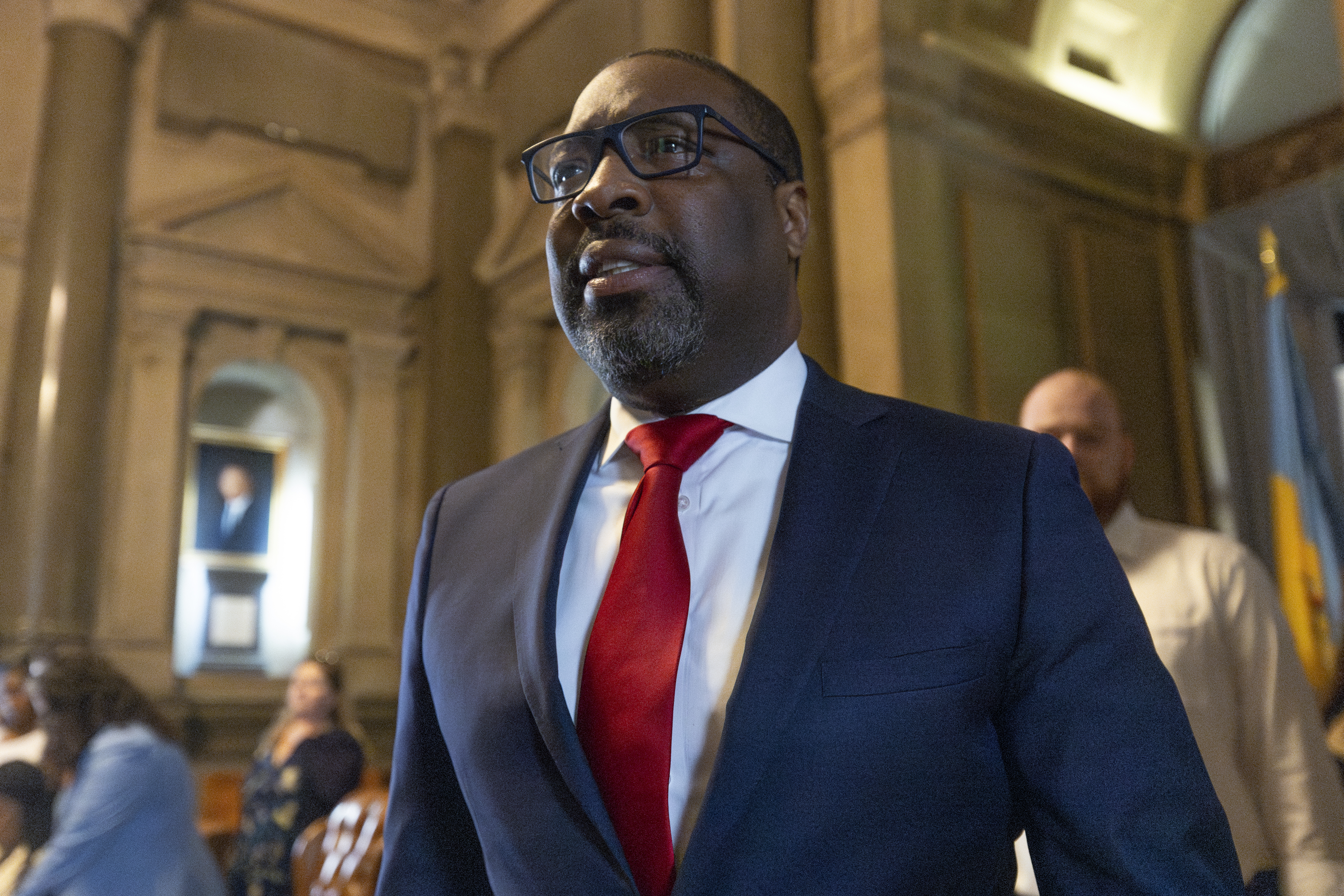
    Councilmember Anthony Phillips, a Democrat who represents parts of Northwest and Northeast Philadelphia, told Ali to do “whatever it takes to figure this out.

    “This is a huge opportunity for you to make sure our children are safe, and you can’t miss it again,” he said.

    Friday’s hearing was held by the Committee of the Whole, which is composed of all 17 Council members.

    Council called the hearing following reports that witnesses who had visited Williams’ West Philadelphia home told police that Malayshia was subjected to horrific abuse, including withholding food, beating her with a phone cord, and throwing her down the stairs. The girl’s body was found in the trunk of a car parked at a Camden County apartment complex this month. A medical examiner determined she had died of blunt force trauma. Williams has been charged with murder.

    Several members were deeply critical of DHS and of Ali, who has led the agency for six years and has worked in the department for 26 years. Councilmember Nina Ahmad, a Democrat who represents the city at-large, said Ali’s points about access to the state database were “moot” for Malayshia.

    “Malayshia is not with us,” Ahmad said. “She has been sacrificed to this system, and this is abominable and intolerable. And we will not put up with this.”
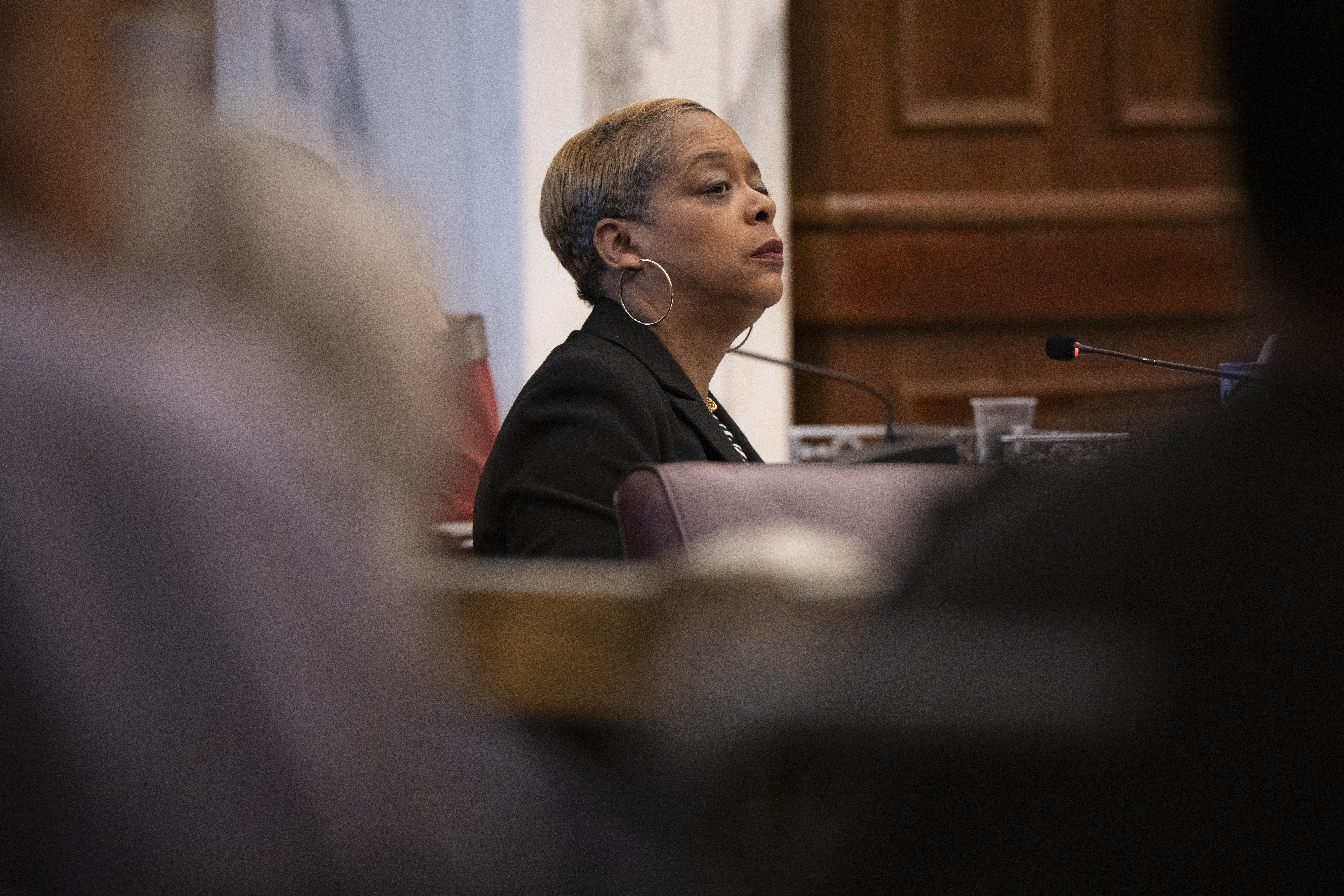
    Councilmember Cindy Bass addresses Kimberly Ali, Commissioner of the Philadelphia Department of Human Services, during a hearing regarding the city’s foster care system following the murder of Malayshia Allford, Friday, Nov. 20, 2026 at City Hall.Joe Lamberti / For The Inquirer

    Councilmember Cindy Bass, a North Philadelphia Democrat who has for years been critical of DHS, said the city needs to entirely overhaul its child welfare system.

    On Thursday, she introduced legislation to move away from outsourcing child welfare case management to privately contracted agencies and for the city to control the foster system itself.

    “This death was preventable. There were so many red flags all over the place that it was really a failure on a colossal scale,” Bass said. “Everything failed for this child. Everything. Every system that was in place.”

    In 2013, the city revamped its child welfare system to rely on outside nonprofits called community umbrella agencies, which provide case management to children and families in 10 geographic service areas throughout Philadelphia.

    The idea was to localize services and engender trust in the system through neighborhood-based relationships.

    However, CUAs have faced a number of documented problems, including backlogged caseworkers and little progress on the number of near-fatalities and deaths of children. A 2025 Inquirer/Resolve Philly investigation found that CUAs have faced dozens of lawsuits alleging abuse in foster care.

    Malayshia was receiving case management services from Catholic Community Services, also known as Community Umbrella Agency No. 4. Pennsylvania Mentor was the certifying foster care agency in her case.

    Unlike DHS, Pennsylvania Mentor was among the private agencies authorized to access the Resource Family Registry. It’s unclear whether the agency did so, however.

    In a written statement sent to The Inquirer, a spokesperson for Sevita — the national company that operates Pennsylvania Mentor — said that the company is cooperating with law enforcement agencies. Because of the ongoing investigation, the spokesperson said, “we cannot offer further comment.”

    Councilmember Jim Harrity, a Democrat who represents the city at-large, said he was frustrated with Ali and the “blame get[ting] passed around.”

    “You know, state DHS, no access to this, no access to that, CUAs, yada yada yada,” Harrity said. “But I want you to tell me, realistically, how do we fix this system? What are you going to do to make sure that no more of our children end up in the grave?”
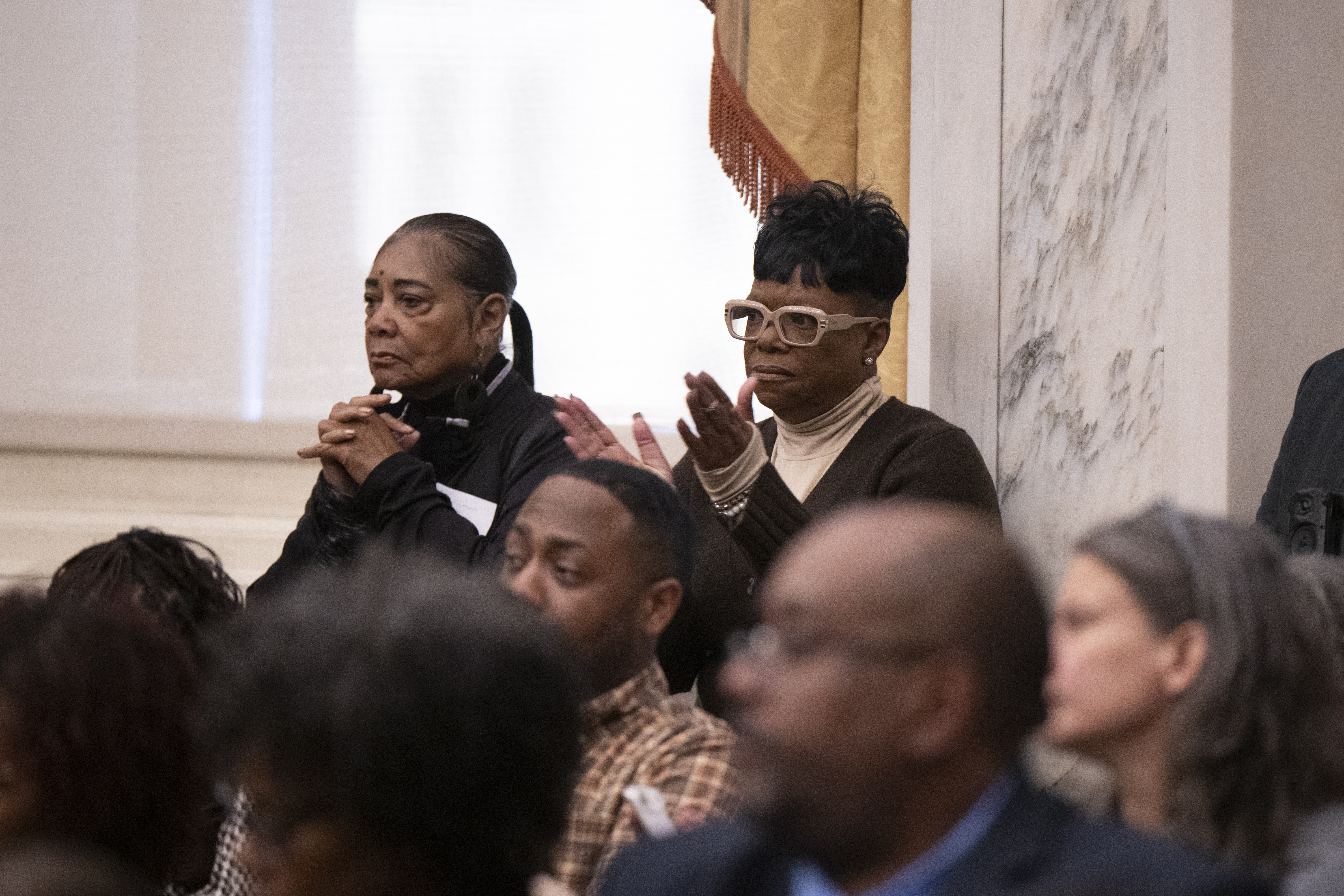
    An attendee reacts during a City Council hearing regarding the city’s foster care system following the murder of Malayshia Allford, Friday, Nov. 20, 2026 at City Hall.Joe Lamberti / For The Inquirer

    Ali testified that DHS does regular but random quality checks of foster homes and placements, including speaking directly with children. But she also acknowledged that the department may not speak with every child in foster care — and that some kids may not know they have a right to speak with DHS staff.

    She told Council that Malayshia’s killing has “rocked us to our core.”

    Ali said her “No. 1” priority is getting access to the state registry and get a more thorough background of potential foster parents. Until then, she said, the department needs to ensure its own “do-not-use list” of unsafe foster homes is “accurate, it’s current, and it reflects the voices of young people.”

    But the problems exposed by Malayshia’s death extend beyond access to a state registry, child welfare experts told The Inquirer.

    Philadelphia’s foster care system relies on about two dozen private agencies under contract with the city to certify foster parents and identify homes for potential placements. Those agencies operate largely in a silo, and that fragmentation can limit the options available when a child needs a home.

    An agency typically looks to the foster parents it has licensed, rather than considering all available homes across Philadelphia — potentially making it harder to find the best fit for a child, said Sarah Wasch, associate director of the University of Pennsylvania’s Field Center for Children’s Policy, Practice and Research.

    “The best available fit is likely going to be easier to find when you’re looking among 2,000 possibilities instead of 200 possibilities,” Wasch said.

    Stefanie Arbutina, vulnerable youth policy director for Children First, a child advocacy group in Philadelphia, said in an interview that every agency involved in licensing, investigating, and monitoring foster homes needs a “pretty tight communication loop” to find and close gaps that can lead to tragedies.

    Children First is one of several advocacy groups that plan to make recommendations to Mayor Cherelle L. Parker’s administration on changes needed to the city’s foster care operations. Parker ordered the creation of a special committee to review the city’s foster care system.

    One recommendation, Arbutina said, will be to establish a system for city officials to see and track foster parents who have been found to be unfit to care for children — but for whom no official report is available.

    “The best thing we could possibly do is not worry about kids going into foster care in the first place,” she said.

    ‘We failed her’

    A Philadelphia School District official was also called to answer for Malayshia’s death.

    Kristi Murphy Baldwin, the system’s human resources chief, said she could not address specifics of Williams’ employment, but noted that all district employees must undergo three separate background checks: a Pennsylvania State Police criminal history, a DHS child abuse history clearance, and an FBI criminal history report.

    Those must be renewed every five years. Williams presumably passed all the checks when she was hired by the district, first as a substitute teacher in 2015, then as a full-time teacher in 2017.

    Baldwin indicated that in the wake of Malayshia’s death, changes may be coming.

    “The law requires every five years, but that is something we are actually looking at now to do more frequently. That is under conversation now as we look at our practices,” Baldwin said.

    Multiple systems, Ahmad said, failed Malayshia.

    “We are living in silos that are literally killing our children, because Malayshia was going to school. Malaysia had adults in her life, as she was being tortured by this horrible person, who was her foster mother, and who was a teacher — all of this was happening under your eyes in the school district,” Ahmad said. “So we failed, you failed her, we failed her.”

    Harrity said he knew Baldwin couldn’t answer the main question on his mind: “How was this woman still a teacher to begin with?… I’m trying to see how somebody like this fell through the cracks, especially when she had a case of abuse that was fairly heinous.”
  • Philly City Council moves to fund community groups left out of the spring budget | Council roundup

    Philly City Council moves to fund community groups left out of the spring budget | Council roundup

    Philadelphia lawmakers are set to consider legislation that would allocate millions of dollars in funding to community groups that were left out of the city budget in the spring.

    Council President Kenyatta Johnson on Thursday advanced legislation known as a midyear transfer, which is the city’s budget reconciliation process used outside the typical budgeting cycle in order to shift or administer additional municipal funds.

    The transfer procedure is intended to make minor changes to the city budget and to reconcile accounts, but Council members have often used midyear transfers to fund their priorities.

    Johnson said this fall’s transfer would include money for community-based organizations that need “some level of emergency funding.”

    Details on which organizations would benefit and how much money they would receive were not immediately available.

    Also on Thursday: Council approved a measure to rename a street after Officer Shane Seiber, who was killed in the line of duty, and passed legislation to waive some trash-related fines.

    What was this week’s highlight?

    Another try at securing funding: The midyear transfer bill represents something of a do-over for Council members who were angry about how the spring budget process played out.

    Typically, the mayor’s administration and Council negotiate over line items as part of their annual budget process, and members are used to winning allocations for their priorities, such as community groups in their districts.

    However, in June, Council largely rejected Mayor Cherelle L. Parker’s tax proposals — including a $1-per-ride tax on rideshare services — and so the administration did not agree to any line item requests by lawmakers for new funding.

    This legislation gives Council members a chance to try to rectify that. A hearing on the matter has not yet been scheduled.

    What else happened this week?

    A street in honor of Officer Seiber: The street next to the 19th Police District headquarters in West Philadelphia will soon be renamed to honor Seiber, the officer who was killed in the line of duty on Oct. 10.

    Council on Thursday passed legislation to rename the 6100 block of Haverford Avenue as “Sergeant Shane J. Seiber Way.”

    Seiber, 40, of Bensalem, was a 10-year veteran of the force and a father of two. He was fatally shot on a West Philadelphia porch in an ambush-style attack that also critically wounded his partner.

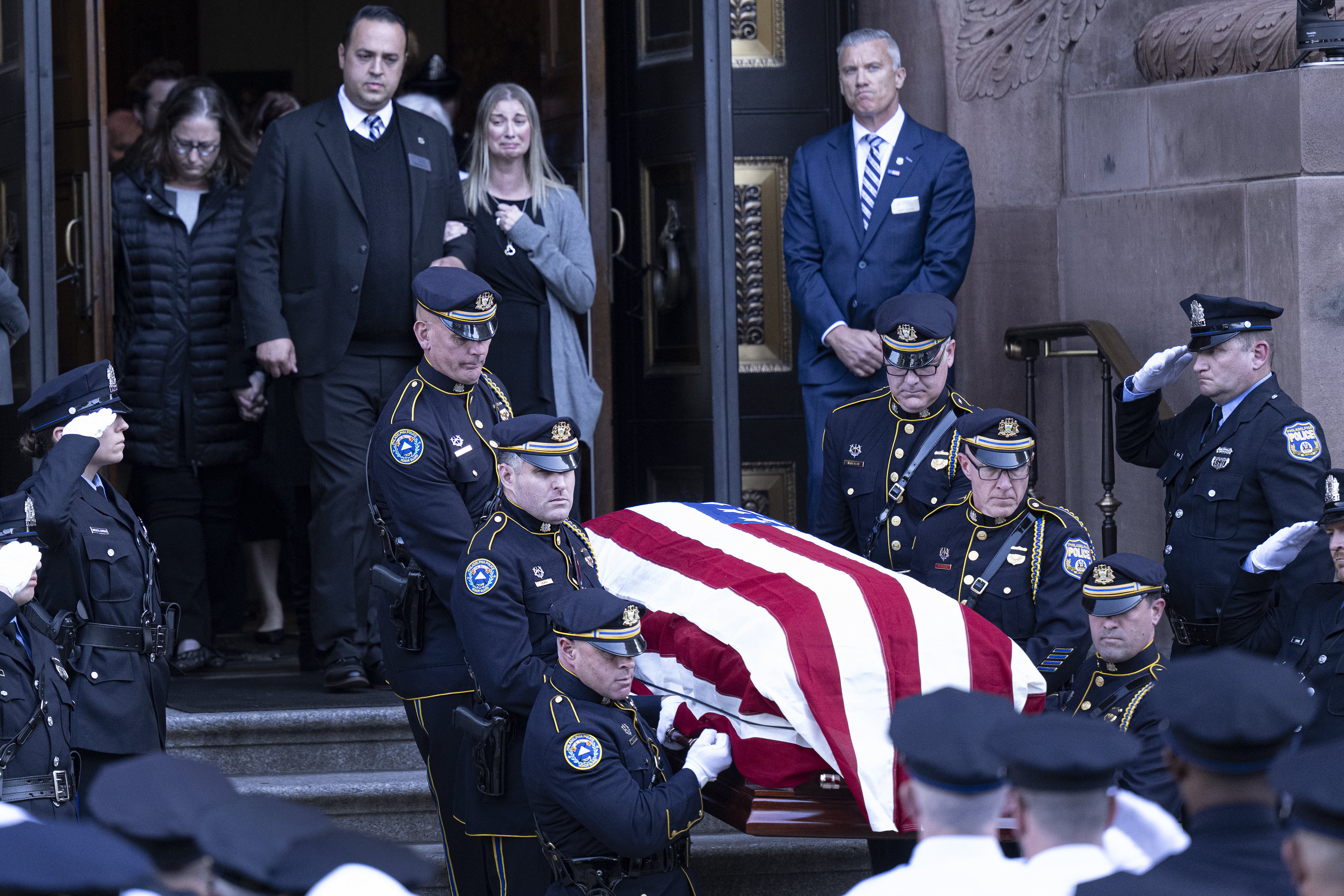
    Honorary pallbearers walk alongside the casket of fallen Officer Shane Seiber as his family follows during his funeral at the Cathedral Basilica of Saints Peter and Paul in Philadelphia on Tuesday, Oct. 20, 2026.Jose F. Moreno / Staff Photographer

    Trashing the fines: Philadelphia residents who are fined for leaving their trash on the sidewalk will likely soon be able to have those penalties canceled if they can prove it was the city’s fault.

    Council on Thursday passed legislation that makes it clear in the city code that any fine issued to a resident can be canceled if the city missed that resident’s designated trash collection day.

    The bill was authored by Councilmember Jeffery Young Jr., who cast the measure as a matter of basic fairness.

    “You cannot hold residents to a standard that the city itself fails to meet,” he said.

    Quote of the week

    Philadelphia City Councilmember Anthony Phillips in September 2025.Alejandro A. Alvarez / Staff Photographer

    That was Councilmember Anthony Phillips, who publicly chowed down on a plastic-wrapped sandwich on Thursday as part of a weeks-long campaign to improve public school lunches.

    A handful of schoolchildren testified that their lunches — which are prepared off-site and reheated at school — are not fresh or healthy.

    “This is what they feed our children,” Phillips said while holding the grilled cheese. “No good.”

  • Krasner to investigate Malayshia Allford’s death and the foster care system, as City Council pushes for change

    Krasner to investigate Malayshia Allford’s death and the foster care system, as City Council pushes for change

    The Philadelphia District Attorney’s Office will conduct an independent investigation into the death of 10-year-old Malayshia Allford as well as the city’s foster care system, officials said Thursday.

    District Attorney Larry Krasner announced the sweeping investigation at a news conference, saying Malayshia’s death in the care of her foster mother, 36-year-old Carprice Williams, was a tragedy.

    “The law, sadly, did not completely protect Malayshia Allford,” Krasner said. “This is for that family, this is for that community, it is for the outsiders in the city of Philadelphia that care so much.”

    The district attorney joins a growing list of city officials who have called for changes to the city’s child welfare system this week following the girl’s death.

    On Tuesday, Mayor Cherelle L. Parker issued an executive order convening a committee of child welfare experts who will review how the city can improve oversight of a foster care system of more than 2,000 children. And on Thursday, City Council members introduced three resolutions calling for public hearings on the city’s child welfare system, including the oversight of children in foster care.

    The investigation by Krasner’s office will utilize the “special powers” of his position, the district attorney said, though the exact outcome of such an inquiry remains unclear. Some of the potential changes that Krasner suggested could come of the probe would require shifts to policies and laws that his office does not control.

    Asked whether anyone other than Williams would be prosecuted over the circumstances that led to Malayshia’s death, Krasner said that the investigation would be broad but that, in tandem with Williams’ criminal prosecution, it would shed light on bureaucratic solutions to systemic problems.

    For example, the district attorney said his office would explore how to improve funding for court-appointed special advocates, the people who represent abused and neglected children in court, and who Krasner said deal with high turnover and low pay.

    His office will consider whether to implement regular reviews of child abuse cases alongside Philadelphia police and advocates, a process Krasner said is currently conducted for sexual assault cases.

    The review will also question the kinship laws that determine which caregivers are eligible for foster care placement. That includes exploring how to expedite the licensing process for a child’s extended family members and relatives to become caregivers, Krasner said.

    “Is it all about blood,” he asked, “or does it have to do with someone in a child’s life who can provide a safe and loving place to live?”

    In what Krasner said was perhaps the most important part of the investigation — and one that touches on a core element of Malayshia’s case — his staff will scrutinize the expungement process that foster parents have used to remove abuse allegations from their records.

    Police discovered Malayshia’s body, beaten and bruised, in the trunk of a Lincoln sedan in Camden County on Nov. 4, ending a more than weeklong search for the girl, who had been living with Williams in her West Philadelphia rowhouse for about two years.

    Williams, a teacher with the Philadelphia School District, was charged with murder and related crimes the following day.

    And The Inquirer learned that Williams had been accused of abusing another foster child in her care in 2021, although she was able to have that allegation expunged from her record and continue caregiving through Catholic Community Services, a designated community umbrella agency (CUA) contracted by the Philadelphia Department of Human Services (DHS).

    City Council President Kenyatta Johnson said after Thursday’s meeting that “everything is on the table” to prevent what happened to Malayshia from happening to other children.

    The resolutions introduced Thursday direct committees to examine how DHS monitors children placed outside their homes, how its network of CUAs manages child welfare cases, and whether agencies are doing enough to prevent abuse, neglect, and child fatalities. One resolution also calls for scrutiny of the Philadelphia School District’s hiring and screening practices.

    The measures were introduced by Councilmembers Anthony Phillips, Kendra Brooks, and Cindy Bass. Phillips said some members of Council had been “sounding the alarm about DHS for a long time.” He described the weeks following Malayshia’s death as a “challenging [time] for many of us who love children and have families,” and vowed that her “legacy is going to be a great change in the city of Philadelphia.”

    Johnson said the state’s role in placing children in foster care also should be examined. “However, I’m not getting into pointing fingers,” he said. “We all have to work together and figure out” the state- and city-level policies, then decide, “How can we all come together and make sure something like this does not happen in the future?” he said.

    Also appearing before Council was a young woman who said that she lived with Williams as a foster child for several months until she ran away in May 2020.

    Maria Campbell, 21, stood beside local activist Ameer Barber as he pressed for Council members to take swift action to fix the foster care system, and did not speak. But afterward, she told The Inquirer she had run away from Williams’ Simpson Street house to escape what she described as months of abuse.

    Witnesses familiar with Malayshia’s time in Williams’ care described her treatment of the girl as horrific, court records show.

    She was repeatedly denied food, beaten with a phone cord, and thrown down the stairs, among other abuses, according to the report obtained by The Inquirer. Williams has since been accused of intentionally misleading investigators who had been searching for Malayshia, going as far as faking affectionate text messages from the girl to make it appear as if she was still alive.

    A medical examiner determined that Malayshia died of blunt force trauma, suffering a fractured rib, bruises on her head, torso, and buttocks, and whiplike marks across her legs, according to a police report.

    Surveillance video from late October shows a relative of Williams’ carrying a large bag from her home and loading it into a vehicle, according to a police report.

    It was not clear whether prosecutors will charge that man with a crime. Krasner said his office would have an update on that investigation in the near future.

    Staff writer Jake Blumgart contributed to this article.

  • What actions have City Council and Mayor Parker proposed following Malayshia Allford’s death?

    What actions have City Council and Mayor Parker proposed following Malayshia Allford’s death?

    The death of 10-year-old Malayshia Allford in the care of her foster mother — a West Philadelphia woman who has been charged with murder and was previously accused of abusing another child — has rocked the city and spurred calls for changes to the foster care system.

    On Tuesday, city leaders began officially responding to those demands.

    Mayor Cherelle L. Parker, who called 36-year-old Carprice Williams’ alleged treatment of Allford a “crisis of unimaginable proportions,” issued an executive order that calls for child welfare experts to convene and deliver a report on how the city can improve its handling of the thousands of foster cases overseen by the Philadelphia Department of Human Services and managed by a network of contractors and nonprofits.

    Meanwhile, City Council members announced they had taken their own interest in investigating the circumstances that led to Allford’s death and making changes to Philadelphia’s child welfare system.

    A resolution calling for hearings on the matter, introduced by Councilmember Anthony Phillips and cosponsored by Councilmember Curtis Jones Jr., calls for hearings to probe the workings of DHS and foster care contractors, particularly when it comes to accessing records that detail prior abuse allegations leveled against foster parents. That is a reference to the fact that Williams was able to foster Allford after having a 2021 abuse allegation expunged from her record.

    The goal, the resolution says, is to propose safeguards that may prevent another tragedy. Read on for a summary of the mayor’s executive order and the City Council resolution.

    What actions were proposed?

    Mayor’s executive order: Establishes a Child Welfare Review Committee, which will be tasked with reviewing the way DHS interacts with community umbrella agencies (CUAs) — the nonprofits that contract with the city to manage foster care cases — as well as local foster care agencies.

    Committee members will be asked to conduct a “comprehensive review” of issues affecting the city’s child welfare system, according to the order.

    Members will review the process for placing children in foster care homes, for example, and probe how the city and state monitor such cases, the order says.

    They will also examine how foster homes are licensed and consider how to best manage visitations from a child’s biological family members. And they will review the city’s criteria for contracting with certain foster care providers.

    City Council resolution: Authorizes Council’s Committee on Children and Youth to hold hearings that will examine how the city keeps children in its child welfare system safe.

    The hearings will explore what safeguards exist to support children placed outside the care of their biological families and how the city can engage with the concerns of a foster child’s family members during placement, according to the resolution.

    They are also expected to delve into how city agencies can better coordinate with foster care providers and how to prevent abuse, neglect, and fatalities within the system.

    The hearings will probe how contractors select homes for foster placement, for example, or how they assess whether a child’s relatives are eligible for possible placement within the family.

    Additionally, the discussions will examine the training foster care providers receive, exploring whether they are prepared to meet the needs of children in their care. That includes training received by staff with the CUAs responsible for managing many of the city’s foster care cases.

    The hearings will also focus on DHS — specifically how the city agency records and responds to instances when a foster care provider has been accused of prior abuse or neglect.

    That includes examining what types of records and prior investigations providers may “lawfully access and consider during interviews, home studies, and approval decisions, including when a former [caregiver] applies to foster another child through a different provider,” the resolution says.

    Who’s involved in the plans?

    Mayor’s executive order: The Child Welfare Review Committee will be composed of up to 15 members who are “experts and leaders in the field of child welfare and foster care,” according to the order.

    Members will be selected by the mayor from a variety of professional fields, such as childcare advocacy groups, social workers, medical and behavioral health professionals, and legal experts who specialize in child welfare and the foster care system.

    Two committee chairs will be appointed by the mayor.

    City Council resolution: Council’s Committee on Children and Youth will oversee the hearings. The committee is chaired by Phillips, with Councilmember Isaiah Thomas as vice chair.

    The committee includes Councilmembers Kendra Brooks, Jamie Gauthier, Jim Harrity, and Rue Landau.

    What are the possible outcomes?

    Mayor’s executive order: The committee’s goal is to “work toward the elimination of child abuse-related fatalities, near fatalities, and injuries,” the order says.

    It also aims to improve how DHS coordinates with CUAs, nonprofits, and local foster care agencies.

    City Council resolution: The hearings could change how the city’s child welfare system operates.

    For example, the resolution says the discussions will explore whether additional training is needed for DHS employees to assess whether a foster placement is safe, and to learn how to escalate their concerns about possible abuse to superiors.

    The talks could lead to changes in how foster care providers access information about potential caregivers, how caseworkers verify that a child is safe in a foster home, and how attorneys and family members advocate on behalf of a child in a potentially dangerous situation.

    And the hearings could change how agencies determine when it is safe for children to return to their original home, among other possible outcomes.

    Participating Council members are also expected to consider how to publicly release information regarding these potential changes, whether they are working, and whether additional safety measures may be required.

    What are the timelines?

    Mayor’s executive order: Mandates that committee members submit a report on their findings to the mayor within 120 days of convening.

    City Council resolution: There is no date set for hearings to begin.

    After the first hearing, the resolution requires DHS to provide the Committee on Children and Youth a monthly report for a period of two years.

    That document is expected to include tallies of children who are placed in kinship and foster care, reunited with a parent or guardian, or subject to a court order terminating parental rights, according to the resolution.

  • An ex-Philly City Council staffer allied with the left wants to shake up one of City Hall’s most obscure offices

    An ex-Philly City Council staffer allied with the left wants to shake up one of City Hall’s most obscure offices

    The blue wave last week washed over Congress, Harrisburg, and the Jersey Shore. Progressives are going all-out for a City Council majority in 2027. And now, leftists have their sights set on a tiny, arcane Philadelphia row office.

    Michael Byrd, a former Philadelphia City Council staffer allied with progressives, launched a bid last week to be the city’s register of wills, the independently elected leader of the office that issues marriage licenses, oversees estates, and approves wills.

    The 29-year-old Germantown native, who most recently worked as a legislative aide to City Councilmember Anthony Phillips, has ties to left-leaning groups such as One PA, an economic and racial justice organization.

    The register of wills is one of three row offices that will be on Philadelphia ballots in May, along with the sheriff’s office and the city commissioners, who run elections. Given Democrats far outnumber Republicans in the city, the winner of the primary is likely to be elected in the fall general election.

    It’s unclear whether Byrd will be taking on current Register of Wills John Sabatina Sr., a Democratic Party stalwart and longtime ward leader who has led the office since 2024. Sabatina, 80, has not said publicly whether he intends to run for reelection, and he did not respond to a request for comment.

    Ideology has not traditionally driven campaigns for the register of wills office — challengers have in recent years largely run on reform platforms.

    But Byrd said the office can play a role in how the city responds to affordability concerns by addressing the widespread problem of “tangled titles.” The legal complication occurs when a person inherits a property from a deceased relative but does not have their name on the deed, making it challenging for them to sell the property or borrow against it.

    Sabatina created a unit dedicated to clearing tangled titles. Byrd said he would expand the unit, publish performance baselines publicly, and partner with legal service organizations to assist people navigating the process.

    Register of Wills John Sabatina.Courtesy

    The office, which has a $7 million annual budget and 85 employees, has seen substantial turnover at the top in recent years.

    Former Register Ron Donatucci led the office for more than 40 years, proudly hiring political allies and running the office as a patronage den. That practice was often cited by government reformers who have called for the office to be abolished and its duties folded into the court system.

    In 2019, Tracey Gordon shocked the Democratic establishment and ousted Donatucci in the primary.

    But she faced her own controversies and allegations of using the office for political gain. Gordon lost a reelection bid in 2023, when Sabatina prevailed in a four-way primary.

    Byrd, a first-time political candidate, said that, if elected, he would prioritize education and outreach to help families better understand probate, will authorization, and property transfers.

    “I want people to know that the office is there for them to help them in their most vulnerable times,” Byrd said. “They are dealing with the office at two of the most key times in their lives: when someone passes, or when it’s time to get married. I think the service that people receive should match the moment.”

  • Even with skill games money in the governor’s race, Stacy Garrity will not hit the jackpot | Shackamaxon

    Even with skill games money in the governor’s race, Stacy Garrity will not hit the jackpot | Shackamaxon

    This week’s edition of Shackamaxon reflects on the closure of the Academy of Natural Sciences museum, City Council’s misguided efforts to restrict Philadelphia Gas Works, a last-minute cash infusion in the governor’s race, and how people argue when they know they are wrong.

    Melissa Richman (center), executive director of operations in the Office of the President of Drexel University, testifies as City Council holds a hearing Monday on the closure of the museum at the Academy of Natural Sciences.Tom Gralish / Staff Photographer

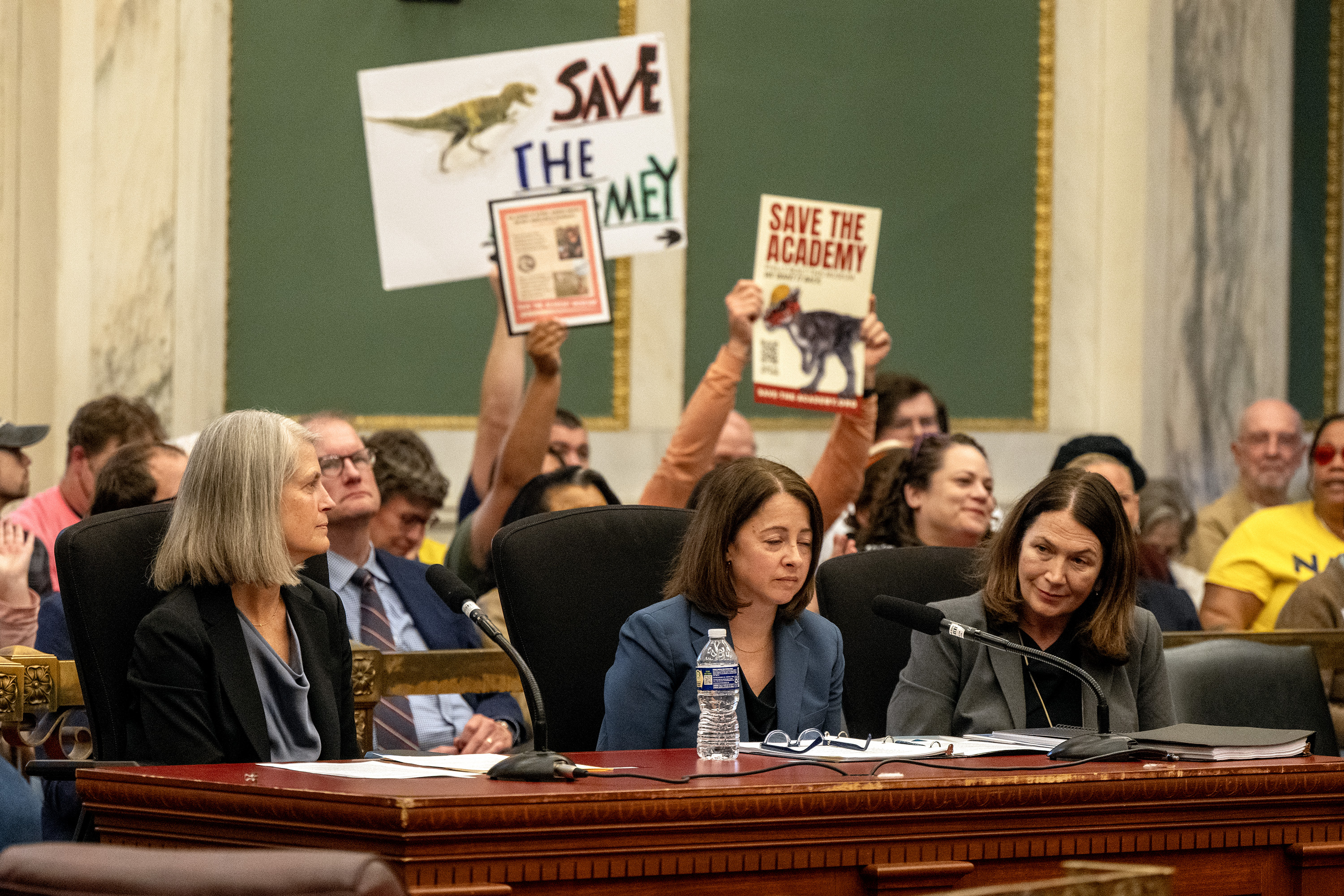
    Confusing closure

    On Monday, City Council held its long-awaited hearing into the closure of the Academy of Natural Sciences museum on the Parkway. Throughout the discussion, one question kept popping into my brain: “Why is this building closed?”

    Nothing in the proceedings provided a satisfactory answer.

    Yes, it is true that the building needs significant work, that both Drexel and the Academy are struggling financially, and that shutting down the public-facing side would save millions of dollars. It is just as true that for the average Philadelphian, the museum is the Academy of Natural Sciences. Without the ability to see the collections ourselves — where they belong in the historic building on the Parkway — the benefits of hosting the Academy are much less clear.

    Unfortunately, city and state leaders do not seem to understand this sentiment. Deputy Mayor Trish Wellenbach, who has been appointed to advise the Academy, did not attend the hearing. The Parker administration issued a statement saying that “the critical work to preserve the Academy’s educational mission is ongoing.” Of course, to most of us, opening the building to the public is at the core of that mission.

    Even more mystifying is the failure to accept the help offered by the William Penn Foundation to keep the museum open while options are explored, or to notify the wider public of the institution’s fiscal needs before insisting on a quick closure. This left many museum fans unable to visit before the doors shut on Sept. 27.

    Many speakers cited the influence of Academy CEO Scott Cooper as a negative for the institution. Former employees said Cooper did not appreciate the museum’s charms, echoing reporting in Philadelphia Magazine and my own conversations with sources on the matter.

    Cooper apparently preferred talking about art and architecture to dinosaurs and dioramas, and moved the museum away from its core audience of children and families. In a particularly bizarre decision for an institution with millions of dollars’ worth of deferred maintenance, Cooper spent $3 million on an art gallery no one had ever asked for. It replaced the museum’s reading room, which had actually brought visitors, and their money, to the museum.

    Additionally, simply moving the collections to a new location is not a panacea. As many panelists testified, these are delicate artifacts that require specialized transportation and storage. This means moving itself would likely cost many millions of dollars.

    Council members also seemed mystified by the lack of clarity from Drexel and the Academy. The hearing represented a strong reminder of how important their oversight role can be.

    Councilmember Curtis Jones Jr. inside City Hall in 2023.Tom Gralish / Staff Photographer

    Running on fumes

    But while Council giveth, it also taketh away. Members are working to prevent Philadelphia Gas Works, the city-owned gas utility, from shutting off heat for residents. Citing a 39% rise in shutoffs, 4th District Councilmember Curtis Jones Jr. introduced a resolution that calls for hearings into PGW’s shutoff procedures.

    Jones, who will likely face a reelection challenge next year, cast the move as a way to combat affordability concerns. But there’s a big problem with his logic: restricting shutoffs could lead to higher costs for paying customers.

    A city-owned utility, PGW does not earn a profit. It also cannot shut off anyone’s heat during the winter. There are no shareholders hoping for dividends. There’s also an existing pathway to protect access to heating. Ratepayers already contribute roughly $100 million per year to cover the heating needs of the neediest Philadelphians, which is around $150 to $200 per year per paying household. According to PGW sources, covering the cost of the shutoffs would add approximately $43 million to the total, a 40% increase in subsidy costs.

    I’m all for helping our neediest neighbors stay warm, but eligibility for this assistance should remain tied to incomes, not payment status.

    State Treasurer and Republican candidate for governor Stacy Garrity sits down for an interview with Inquirer reporters at the newspaper’s offices in September.Tom Gralish / Staff Photographer

    All in

    Throughout this year’s gubernatorial race, Republican nominee Stacy Garrity has been noticeably outspent by incumbent Gov. Josh Shapiro. However, reporting from Spotlight PA indicates that this has changed during the last weeks of the election.

    Stephen Caruso and Jaxon White write that “Republican Stacy Garrity raised more money in the past five weeks than she did during the rest of her campaign for governor, much of it tied to the skill games industry.” She’s still being outraised by Shapiro, but between Sept. 15 and Oct. 19, Garrity brought in almost $5.4 million.

    Coincidentally, Garrity’s allies in the Pennsylvania Senate rejected a proposed compromise over the devices, which are currently illegal under state law, during this same period. While Shapiro has also received money from the skill games lobby, more than 80% of Garrity’s recent fundraising has come from groups that advocate for the extractive machines.

    The additional money has enabled Garrity to run some TV ads. Although it remains to be seen whether the AI-generated takedowns of Shapiro will get her back in a race she’s been consistently losing by double digits in the polls.

    City Councilmember Jeffery Young Jr. at a union protest outside Temple University Hospital on North Broad Street in 2025.Tom Gralish / Staff Photographer

    Much ado about tickets

    When a political official receives a tough question from yours truly, there are many ways they could choose to proceed. They can ignore the question altogether. They can tell me they have nothing to say. Or they can speak with me and defend their position (I’m always open to changing my mind).

    Councilmember Jeffery “Jay” Young Jr., however, chose a different option.

    He went on a tirade at the end of last week’s Council hearing, alleging that the media is out to get him, and that criticism of his plan to forgive parking ticket debt was somehow anti-Philadelphia.

    On social media, Young’s staff piled on. “This is how these new ‘Philadelphians’ feel about natives,” wrote Young’s legislative director. Of course, as Young well knows, this column is written by a lifelong resident. I also doubt that sentiment about parking enforcement varies significantly across demographic fault lines. Plenty of “new Philadelphia” social media influencers have made resentment of the city’s parking authority a major part of their content.

    The reason Young gets so much negative media coverage isn’t a mystery: It’s because he makes bad decisions. His colleague Anthony Phillips entered Council at roughly the same time, and I’ve yet to write a bad word about him. That’s because he makes responsible choices, chooses his words carefully, and treats all his constituents with respect.

    Young, so far, has not done these things. Instead, a remarkably wide assortment of residents, from grandmothers in Strawberry Mansion to young professionals in Logan Square and everyone in between, has reached out to say he’s nonresponsive and disrespectful.

    Whenever people’s arguments veer away from facts and evidence and into the territory of smears, misrepresentations, and insinuations, it is a reminder of how limited their ideas are.

  • Philly workers say they are still owed pay, months after jail healthcare collapse

    Philly workers say they are still owed pay, months after jail healthcare collapse

    Months after Philadelphia abruptly ended its decades-long relationship with its bankrupt jail healthcare provider, some medical workers who went unpaid during the company’s collapse still have not been made whole, union representatives say.

    Jail medical workers, prison advocates, and city officials this week gave City Council’s Committee on Legislative Oversight a fuller public account of how the contractor, YesCare, unraveled over months — and what the city knew as it did.

    Even before YesCare’s bankruptcy, the city had decided to switch providers and awarded a one-year contract worth up to $80 million to CFG Health that was scheduled to begin in July. But the South Jersey-based company took over in May after YesCare’s sudden financial collapse led the city to ask a federal bankruptcy judge to end the YesCare contract five weeks early.

    YesCare’s bankruptcy in May followed a $308 million federal verdict against the company in a Michigan medical negligence case and Alabama’s termination of a $1 billion prison healthcare contract with the company. Bankruptcy court records described medical workers in Philadelphia’s jails failing to report for shifts amid missed paychecks.

    But for the workers who kept the jails staffed through that collapse, the damage has outlasted the contract, two workers testified at Wednesday’s Council hearing. Advocates, meanwhile, said the city’s handling of the crisis, and of the search for YesCare’s replacement, raised broader concerns about oversight of the health of the city’s incarcerated population, which has ranged from 3,000 to 4,000 people daily in recent years.

    “Contracts worth millions and millions of dollars deeply impacting our incarcerated population, decided with no public input or transparency,” Chris Kimmenez, the chair of Philadelphia’s new citizen-led oversight commission for the prisons, said at the hearing.

    The city knew a crisis was brewing as YesCare had failed on occasion to pay for lab services and pharmaceuticals since 2022, Kimmenez said, but the public was kept in the dark until its financial collapse this spring.

    Those missed payments hurt staffers’ ability to provide quality healthcare and drove up costs, said Christine Bendig, who has worked as an X-ray technician at the jail for more than 22 years.

    Councilmember Nicolas O’Rourke, speaks during a City Council hearing Wednesday on medical care in city prisons.Jose F. Moreno / Staff Photographer

    YesCare’s problems predated the company’s bankruptcy. Telephone service interruptions, declined company credit card payments, and discontinued lab services, all due to unpaid bills, had become routine, she said.

    “These failures disrupted patient care and made it difficult for staff to provide timely, appropriate treatment,” said Bendig, who is also a union delegate for District 1199C of the National Union of Hospital and Healthcare Employees.

    Some of Bendig’s colleagues noticed in late 2025 that 401(k) employee contributions deducted from their paychecks were not appearing in their retirement accounts for weeks, she said.

    Starting in March, according to Bendig, scheduled paycheck deposits arrived late to employees’ bank accounts — and only after workers made multiple calls to human resources to report the issue.

    Brianna Miller, a behavioral health professional who has worked in the prisons for eight years, said the paycheck delays were at first a matter of hours. But by May, she said, YesCare missed payday altogether.

    “Employees should not have to choose between meeting their own basic financial obligations and continuing to fulfill their professional responsibilities,” said Miller, who is also a union delegate.

    Asked by Councilmember Nicolas O’Rourke, who called for the hearing, whether the hundreds of 1199C members affected had been made whole, Bendig replied, “No.”

    The union is still calculating how much members are owed in 401(k) contributions and in paid time off they had accrued when YesCare filed for bankruptcy, she said. The amounts vary widely: Some workers are owed about $1,000, while others had more than $20,000 in banked paid time off, Bendig said.

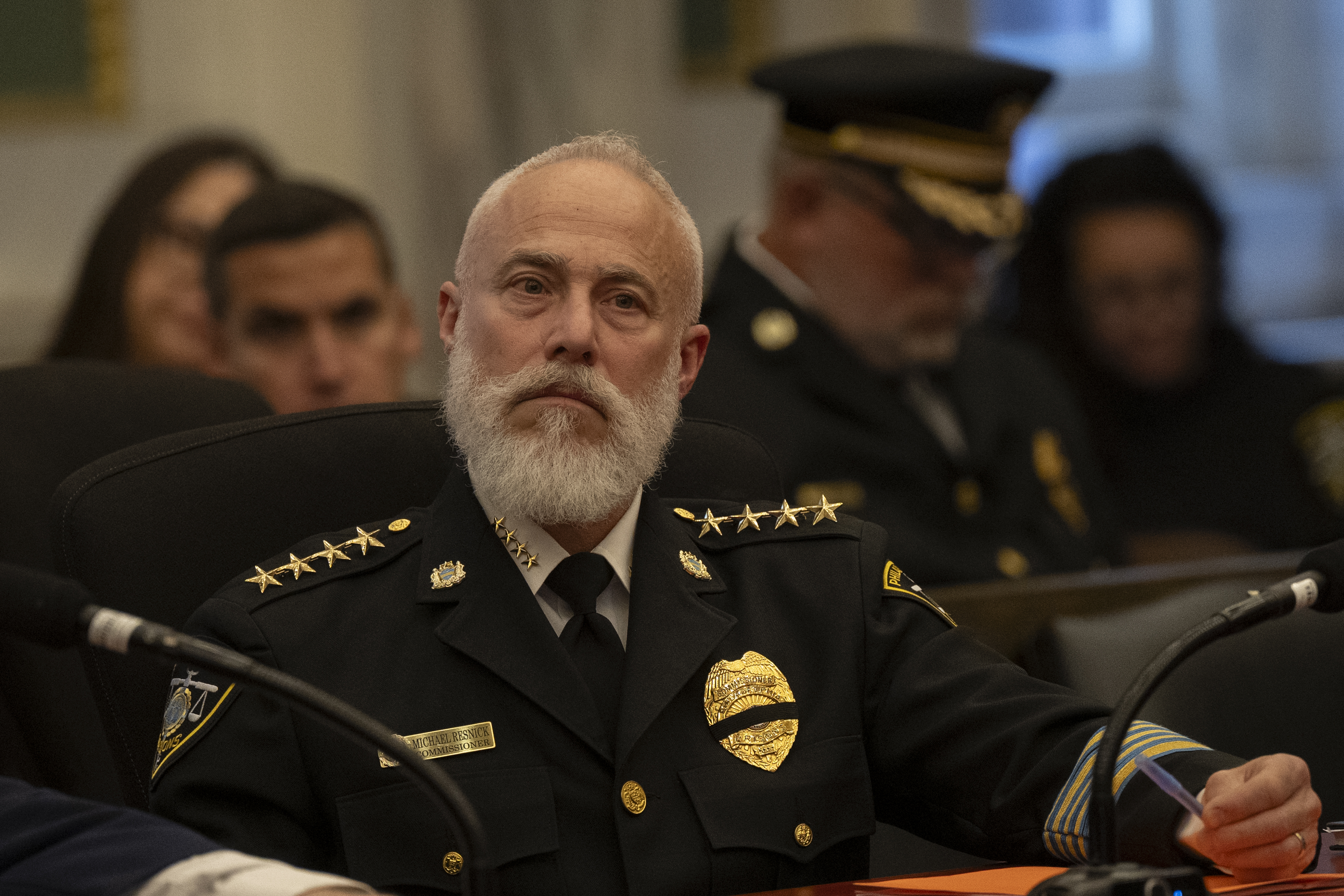
    The delayed payments to vendors in recent years were concentrated around two bankruptcies filed by the company and its corporate predecessor, Corizon Health, Prisons Commissioner Michael Resnick said.

    “It’s important to note that YesCare’s delivery of medical care services at [the Philadelphia Department of Prisons] was satisfactory prior to its declaration of bankruptcy,” Resnick said.

    The city began searching for a new medical provider for the jails in April 2025, and the bidding process drew seven proposals, including one from YesCare, the commissioner said. The solicitation was not done “under cover of darkness,” Resnick said, and the city ultimately “picked the best of who offered their services.”

    But when Councilmember Anthony Phillips asked what the CFG Health contract does differently — including requirements for financial health reporting, payroll protections, and termination triggers — Resnick said he did not know.

    While the commissioner said he spent six weeks in the spring spreading awareness of YesCare’s unraveling, not everyone was informed, according to O’Rourke.

    “We need more communication when those structures are shaken,” O’Rourke said. “As far as I know, there was no communication to this legislative body about the YesCare bankruptcy or its impact in Philly in real time.”

  • Philly City Council is reluctant to abolish the sheriff’s office, even after a $20 million scandal

    Philly City Council is reluctant to abolish the sheriff’s office, even after a $20 million scandal

    After a top aide to Philadelphia Sheriff Rochelle Bilal confirmed in court last month that her scandal-plagued office had been sitting on nearly $20 million meant for public coffers, reformers renewed calls to abolish her position.

    But for City Council, which has the power to initiate such a change, eliminating the antiquated sheriff’s office is not on the agenda.

    The Inquirer attempted to contact all 17 Council members last week, and five said they opposed or were skeptical of proposals to eliminate the sheriff’s office — a long-troubled holdover from before Philadelphia’s city and county governments merged in 1854. The modern iteration of the office has limited law enforcement powers but controls the flow of vast sums of city money.

    Six Council members acknowledged they may be open to a conversation about abolishing the office at some point — and some said that the missing money was a sign the office’s internal changes are not working. Six declined to comment or did not respond to inquiries.

    And though all the Council members who responded to The Inquirer expressed dismay over the recently located $20 million, as the city’s schools and other agencies are in desperate need of funds, none clearly stated they were in favor of eliminating the sheriff’s office.

    Most important, Council President Kenyatta Johnson — a staunch supporter of Bilal and who controls the flow of city legislation — objected to the notion that the sheriff’s office should be abolished with its tasks folded into other branches of government, as has been proposed by the good-government group Committee of Seventy and a state oversight board, the Pennsylvania Intergovernmental Cooperation Authority.

    “It’s an independent body, and so right off the top, I know I don’t support abolishing it,” Johnson told reporters last week. “But it probably is due for some reforms to make sure that particular office operates in a more efficient and transparent manner.”

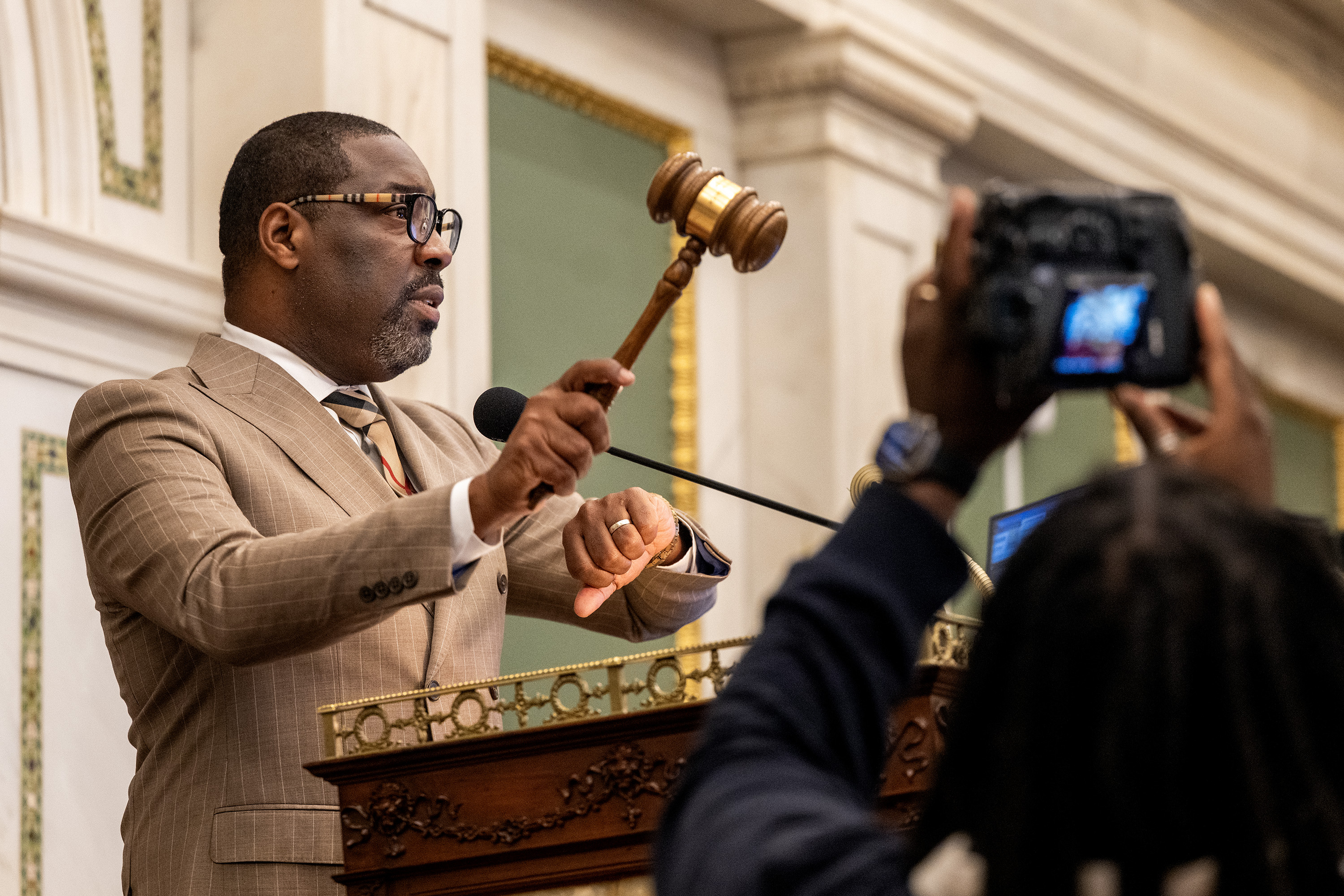
    President Kenyatta Johnson checks his watch and gavels City Council into session Thursday, Sept. 17, 2026.Tom Gralish / Staff Photographer

    Anti-corruption advocates have for generations called for the elimination of independently elected “row offices” like the sheriff and register of wills. Led by officials elected in races often determined by party politics, the offices tend to operate with less oversight over hiring and awarding contracts than regular city agencies. The city’s previous five sheriffs have seen corruption or sexual harassment scandals unfold during their tenures.

    “We should get rid of it, and turn [the office’s tasks] over to a highly competent technocrat working with the mayor and Council,” State Rep. Jared Solomon (D., Philadelphia) said in an interview. “The office has been plagued with corruption and incompetence and mismanagement for all of modern history.”

    The discovery that the sheriff’s office had failed to transfer $20 million — mostly proceeds from delinquent property auctions owed to the city to cover unpaid taxes and other costs — should be a wake-up call, he said.

    “At a moment in time when my constituents can’t afford their prescription drugs or figure out how to put food on the table or pay their gas bill, she lost $20 million,” said Solomon, who represents parts of Northeast Philadelphia.

    Johnson said Council would examine what happened with the missing money, which came to light as the result of judicial hearings into the office’s operations.

    “We will be taking a close look at that $20 million and why it wasn’t distributed to Philadelphia,” Johnson said, “and so our team would take a deeper dive to get answers regarding that particular issue, and then go from there.”

    But he declined to commit to holding a public hearing on it, a common mechanism for Council members to demand accountability.

    Council has squabbled with the mayor’s administration over much smaller sums. Lawmakers have recently bemoaned a $1.4 million cut to the Mural Arts Philadelphia program, and they are currently locked in a tense behind-the-scenes battle with Parker over $2 million in funding for the Philadelphia Activities Fund, which Council members dole out to community groups.

    For Lauren Cristella, president of watchdog group Committee of Seventy, Council’s response to the multimillion-dollar discovery in the sheriff’s office falls short.

    “Council is the only group that can provide a long-term solution for these issues, and we welcome their efforts to solve this problem for the people of Philadelphia,” she said. “This office has been in dire need of reform for over 40 years. From failing to perform the most basic duties to misplacing millions of dollars, self-dealing, and secret slush funds, the same problems repeat regardless of who is elected.”

    Bilal and her spokesperson, Teresa Lundy, did not respond to questions about the missing money and Council’s response.

    Shortly after she won the Democratic primary in 2019, Bilal told The Inquirer she was open to the possibility of eventually abolishing her own office. But Lundy, Bilal’s campaign manager at the time, interrupted the interview to say that was not on the table.

    “No, right now,” Bilal said then, “but if there’s a situation where we need to evaluate that in order to save the city money … then we will have that conversation.”

    ‘Every decision is political’

    The sheriff’s office is responsible for serving warrants, transporting prisoners, providing courthouse security, and auctioning off tax-delinquent or foreclosed real estate. Critics assert most of these functions could be handled by the city’s police force or court administrators, without an elected leader.

    To eliminate the sheriff’s office, Council would have to approve an amendment to the Philadelphia Home Rule Charter that would go before voters in a ballot question.

    The Inquirer’s survey of Council members revealed that is not likely to happen any time soon.

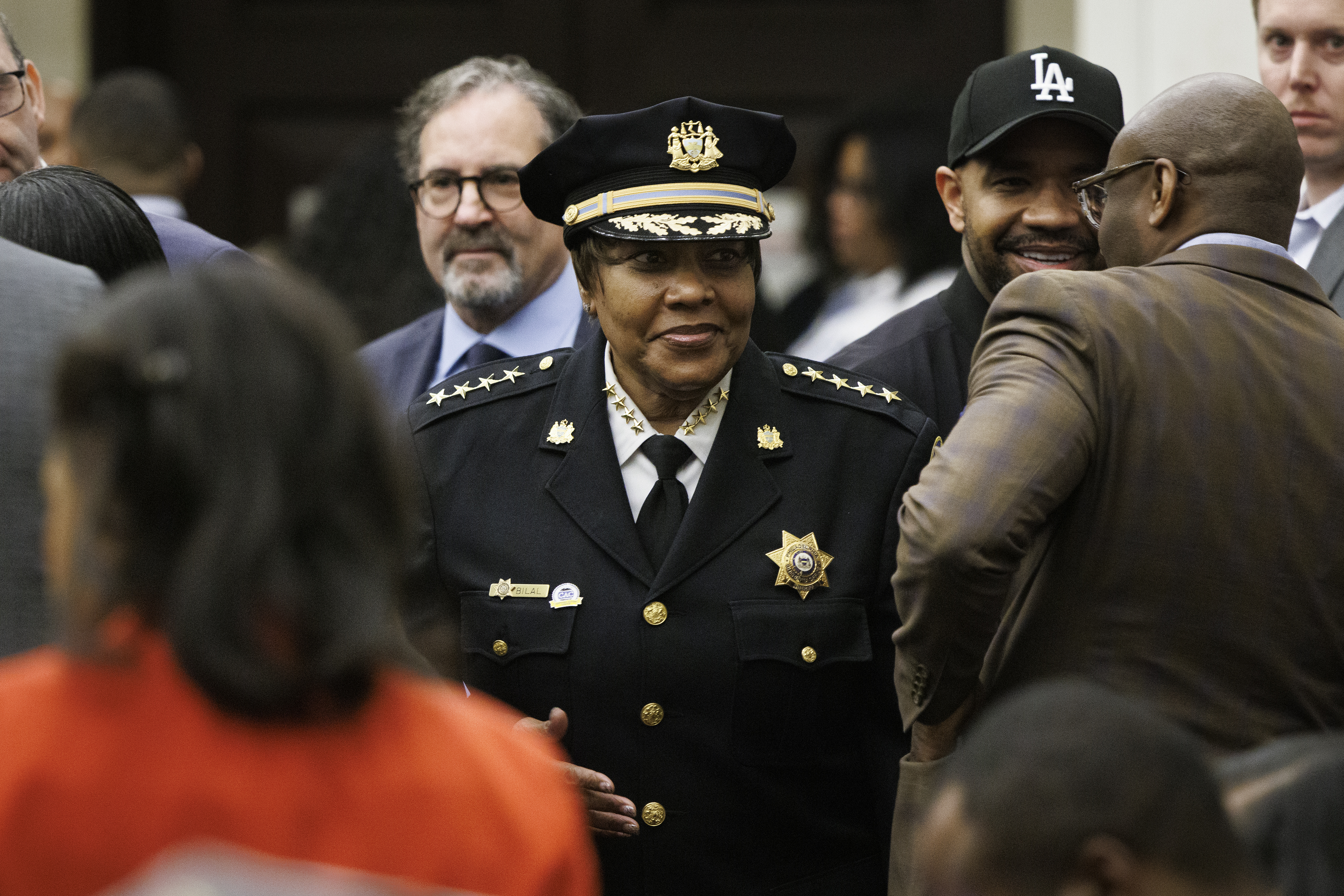
    Vehicle of the Office of the Sheriff for the City and County of Philadelphia April 28, 2026.Tom Gralish / Staff Photographer

    Four members — Johnson, Mark Squilla, Cindy Bass, and Jim Harrity — clearly stated they opposed doing away with the office.

    A fifth, progressive Councilmember Kendra Brooks, said that without “clear answers” on how the city could carry out the office’s functions, she is “not sure the calls for abolition are the right move.”

    “Philadelphians should make decisions about the office and will get to weigh in next year,” when Bilal is up for reelection, she said. (Bilal will face a challenge from corporate security consultant Jennifer Vrana in the Democratic primary in May. Other candidates may join the race.)

    Four Council members — Nicolas O’Rourke, Jamie Gauthier, Nina Ahmad, and Isaiah Thomas — said they were open to discussing the possibility of eliminating the office. Thomas said the discussion would have to be about eliminating all the city’s row offices, not just the sheriff. Ahmad said: “Everything’s on the table.”

    Two other members — Rue Landau and Mike Driscoll — did not rule out the possibility, but said they need more information. Landau wants Council to examine the office’s structure and functions in the next city budget cycle, if not sooner, a staffer said. And Driscoll said he first wants to see what happens in the court case, which stems from a lawsuit over the office’s alleged failure to transfer deeds following sheriff’s sales.

    “Depending on how that plays out, perhaps City Council needs to get involved,” he said.

    The other six members gave noncommittal answers or did not comment.

    Councilmember Quetcy Lozada said she was not prepared to discuss the possibility of abolishing the office. Majority Leader Katherine Gilmore Richardson said she hopes intervention by the courts would result in a “better management process.” (Bilal this summer agreed to independent oversight of her real estate division, but is now seeking to block any outside supervision.)

    Councilmember Anthony Phillips declined to comment. Councilmembers Brian O’Neill and Curtis Jones Jr. did not respond to requests for comment. An attempt to reach Councilmember Jeffery Young Jr. was unsuccessful.

    The Philadelphia Council members inside the caucus inside City Hall in Philadelphia, Pa. on Thursday, June 11, 2026.Aidan T. Gallo / Staff Photographer

    Former Councilmember William J. Green IV said he is not surprised the current Council remains uninterested in eliminating the office.

    When he introduced a bill in 2010 to eliminate the sheriff’s office, Green said, he was inundated with calls from Democratic ward leaders who told him the issue was a nonstarter due to an unwritten agreement in local politics.

    To appease the city’s various political factions, the local Democratic Party often employs blunt racial math, such as setting aside slots for white and Black candidates when deciding judicial election nominations.

    Green said he learned a similar logic applied to row offices, explaining why some politicians are protective of the current arrangement. Black officials, he says he was told, controlled the sheriff’s office, while white officials ruled the register of wills office, another relic of the city’s now-defunct county government that lives on as a pool of patronage jobs.

    “There was definite racial politics involved in each office and who was expected to be the nominee,” Green, who is white, said in an interview. “The bill went absolutely nowhere.”

    Green said he is not surprised little has changed since.

    “I think you can find among most elected leaders in Philadelphia a lack of core convictions or guiding principles, and so every decision is political,” Green said.

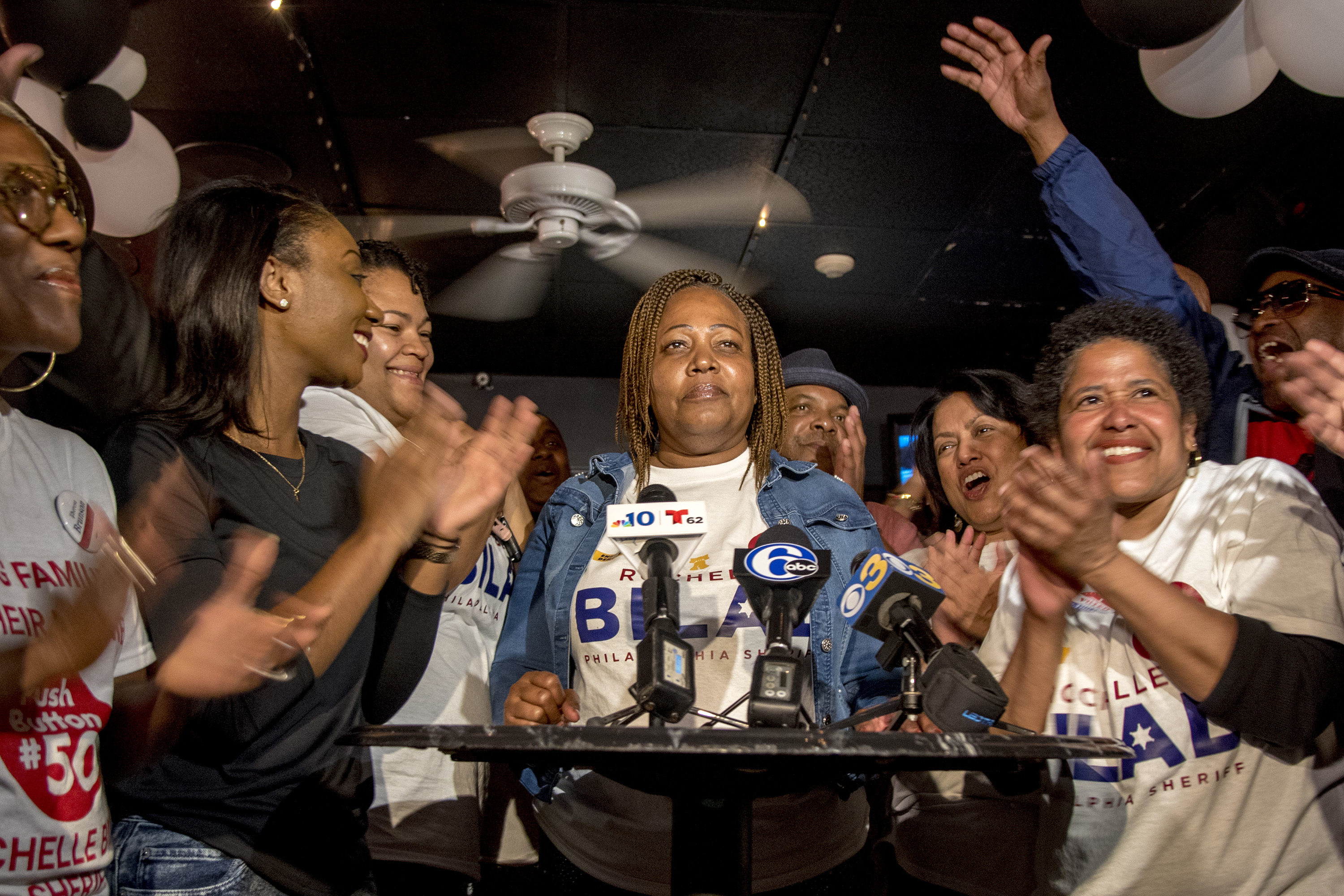
    Rochelle Bilal is surrounded by supporters as she wins the Democratic primary for sheriff May 21, 2019.TOM GRALISH / Staff Photographer

    Bilal, the city’s first Black female sheriff, burst onto the political scene in 2019, when she shockingly dethroned Sheriff Jewell Williams, whom multiple women had accused of sexual harassment, and two other candidates in a crowded Democratic primary.

    She ran that year without the Democratic City Committee’s blessing and with endorsements from anti-establishment progressives, including the activist group Reclaim Philadelphia and District Attorney Larry Krasner.

    Most ward leaders stood by Williams in the 2019 election, party chair Bob Brady said at the time. But in 2023, when Bilal was already facing accusations of mismanagement, the party endorsed Bilal for reelection.

    Before running for office, Bilal was a 27-year veteran of the Philadelphia Police Department and a former leader of the Guardian Civic League, an organization for Black officers.

    Nearly two centuries of reform

    The dispute over the sheriff and Philadelphia’s other elected row offices stems from a 172-year-old effort to fully combine the city and county of Philadelphia.

    Prior to 1854, the City of Philadelphia, which then was composed only of modern-day Center City, was one of dozens of local governments with separate jurisdictions across the county. The fragmented townships and boroughs lacked a unified police force, driving public safety concerns after a series of riots erupted targeting Black people and Catholic immigrants.

    That year, Harrisburg approved the Act of Consolidation for Philadelphia, merging the city, county, and other local governments into a single entity. But the sheriff and a string of other county row officers were carved out of the merger.

    The debate over Philly’s parallel governments raged for decades, with the focus shifting to corruption. Party-backed candidates for these obscure offices typically cruised to victory, often doling out jobs in return for political endorsements.

    The enactment of Philadelphia’s 1952 Home Rule Charter and state legislation in the 1950s and ’60s brought a new wave of reform, legally placing most elected row offices under city control, and transforming several more — including the coroner and prothonotary — into appointed positions. The city now had the power to abolish most of the remaining row offices via referendum and fold their duties and staff into other departments.

    But Council has never voted to initiate such a referendum for the sheriff and register of wills.

    In 2008, Mayor Michael A. Nutter proposed eliminating the sheriff’s office, the register of wills, and the clerk of quarter sessions, another row office relic that auditors found had lost track of millions in mishandled bail, fines, and court fees.

    (Mayors can propose legislation and use their bully pulpit to encourage Council to adopt it. Ultimately, Council has the power to approve a Home Rule Charter amendment eliminating the sheriff’s office and send it to the voters. Mayor Cherelle L. Parker has not proposed eliminating any row offices.)

    Nutter succeeded in doing away with only the clerk of quarter sessions.

    In 2025, the Pennsylvania Intergovernmental Cooperation Authority, the state-appointed board that oversees the city’s finances, called for both Philadelphia’s sheriff’s office and register of wills to be axed.

    There are procedural differences between the two. Under state law, Philadelphia cannot unilaterally dissolve the register of wills office without state authorizing legislation, while the city has final say over the sheriff’s office.

    ‘We’re looking into it’

    The revelations about missing money and records have spilled out of Common Pleas Court hearings over the last six weeks.

    Real estate investors who bought foreclosed or tax-delinquent properties at sheriff sale — but never received a deed — filed suit, leading Judge Paula Patrick to issue a May order demanding Bilal explain the chronic delays.

    After a tense first hearing in August, Bilal agreed to allow independent oversight of her real estate division, but reneged on the deal weeks later.

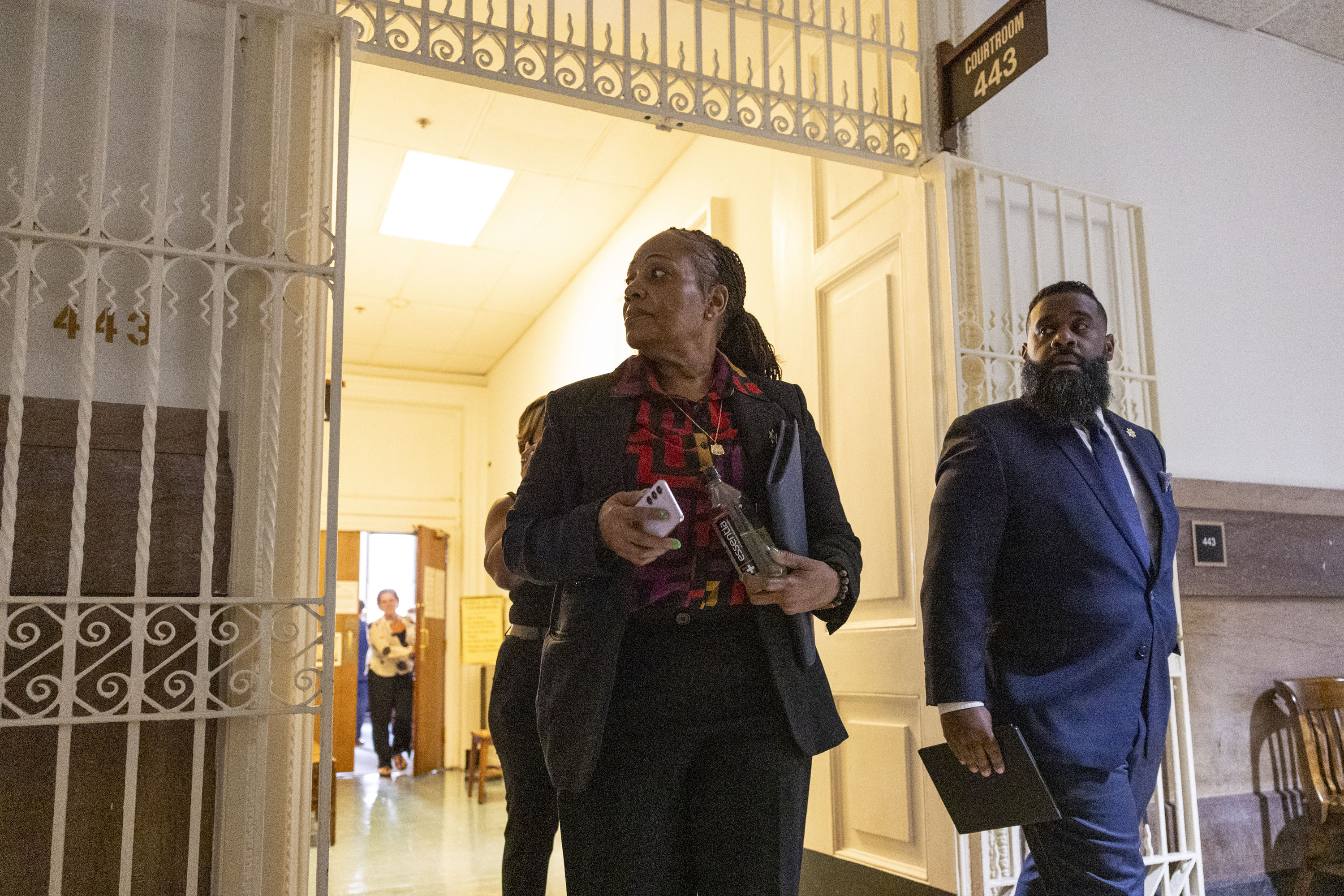
    Sheriff Rochelle Bilal is seen exiting the courtroom at City Hall during a break on Wednesday, Aug. 26, 2026, in Philadelphia.Tyger Williams / Staff Photographer

    In September, a deputy undersheriff testified that the backlog had been cleared and that Bilal’s office was auditing revenues linked to the stalled sales for any lingering discrepancies. Under questioning from the judge, the deputy revealed that the audit had already uncovered $20 million from sales in just the last year that should have gone to the city.

    Instead, the money had been stuck in limbo in several sheriff’s office bank accounts. The deputy said that it was disbursed to the city after this discovery, and that the office was reviewing earlier years for other unclaimed funds.

    Parker told NBC10 that week that she had not been briefed on the millions owed to the city. Asked last week about the money, the mayor’s spokesperson, Joe Grace, said: “We’re looking into it.” He declined to answer questions or make anyone available in the treasurer’s office for an interview.

    Some Council members have questioned Bilal’s management in the past, including her office’s handling of millions more in fee revenue that the city controller in 2022 said was meant to flow into city coffers. The Inquirer reported Bilal had instead diverted the money into an off-budget bank account ex-staffers called a “slush fund” that paid for mascot costumes, DJs, and a $600,000 ad campaign, among other discretionary expenses. Bilal has also drawn two prior court orders linked to chronic understaffing and security lapses in the court facilities her office patrols.

    Additionally, Bilal’s office delayed the collection of an estimated $35 million in tax revenue because it failed to auction off tax-delinquent properties between 2021 and 2024 as a result of a contract dispute involving an online auction company.

    Parker, during her first budget address in March 2024, described that money as “dollars that could have been invested in classrooms and in rec centers or on building affordable homes.”

    This year, Bilal returned to Council, seeking to increase her office’s budget by more than 50%. (Ultimately, Council approved only a fraction of that, a $146,000 funding increase, bringing her office’s budget to $35.8 million.) She was greeted with enthusiasm by several lawmakers, who thanked her for her work.

    Sheriff Rochelle Bilal during the mayor’s budget address, Philadelphia City Hall, March 12, 2026.Alejandro A. Alvarez / Staff Photographer

    ‘We’ve seen all the criticism’

    The sheriff enjoys close political relationships with many of the Democrats on Council, and some have fiercely defended her.

    In March, during Women’s History Month, Council members heralded Bilal for her leadership, and she accepted an honorary resolution on behalf of the women in her office.

    “We’ve seen all the criticism,” Bass, a longtime ally of Bilal’s, said as she presented the citation. “And let’s be clear, accountability is essential, but the challenges facing the sheriff’s office did not begin with Sheriff Bilal.”

    But the $20 million revelation seems to have altered the conversation. Over the last two weeks, a handful of members pointed to the news as a sign that the sheriff’s internal reforms had not taken hold.

    “That’s money that was supposed to go to the city, and we’re in a financial bind right now,” Harrity said. “They need to get their act together.”

    Brooks said it is clear that the office’s revenue collection and distribution issues are “systemic,” and she encouraged Bilal to work with the courts to establish independent oversight — a move that Bilal now publicly opposes.

    And Gauthier said that she was particularly “surprised” by the finding given that Bilal has repeatedly asked Council to increase her office’s yearly budget.

    “We need to understand why that happened, how that happened, and we need to understand that before we’re in another conversation about millions of dollars being needed,” Gauthier said.

    But it is largely up to Johnson whether that understanding happens in public or behind closed doors.

    Gilmore Richardson — the Democratic majority leader who has in the past sharply criticized city departments that have misspent or lost track of taxpayer dollars — said that she called Johnson shortly after learning of the undisbursed money. She said she trusts that “he’ll be working to ensure that we can adequately address this.”

    Solomon, who has been a rare vocal supporter of abolishing the office, said that despite the reform’s lack of popularity on Council, he is heartened that some members said they are open to the conversation.

    “You seem to be seeing a growing number of folks — and maybe it’s after the $20 million marker — who seem to be saying, ‘Let’s figure out a path forward,’” Solomon said. “Other municipalities do this. They function with efficiency, and the sheriff is effective, and they’re not losing $20 million.”

  • Council members would rather boycott Starbucks than hold accountable the sheriff who misled them | Shackamaxon

    This week’s edition of Shackamaxon asks why City Council won’t hold Sheriff Bilal accountable, explores the Philadelphia Police Department’s continued inaction on traffic safety, offers a compromise for student SEPTA fares, and provides an update on historic preservation.

    Sheriff Rochelle Bilal during the mayor’s budget address at City Hall in March.

    Council’s choice

    Philadelphia Sheriff Rochelle Bilal continues to embarrass the city. Most recently, she reneged on her agreement to accept court-appointed oversight of her office, while a top deputy announced that roughly $20 million worth of taxpayer dollars had been hiding in the department’s couch cushions.

    All of this comes just months after Inquirer reporting showed that Bilal had misled City Council during her budget hearing, claiming deed processing was moving full steam ahead despite significant evidence that things were stuck.

    Given these circumstances, you might think Council would act, hold fact-finding hearings, and even consider abolishing the office. Instead, their focus is on something completely different, namely Starbucks workers’ unionization effort. Council wants everyone to know it supports boycotting the coffee chain until a contract agreement is reached.

    It is one thing for members to signal their support for organized labor, but Council could have done so by signing a letter. Instead, where people get their coffee became the biggest issue of the day during last week’s Council hearing, which included an anti-Starbucks rally. The Seattle-based chain itself is no longer thriving. The company just closed 250 stores nationwide, including three in the Philadelphia area.

    This level of attention was particularly galling when paired with Council’s inaction over Bilal, which is an issue they can actually do something about. Instead, the city’s lawmakers have been virtually silent.

    Beating up on big out-of-town corporations is easy; fixing systemic issues in city government is hard. It is clear what the current crop of Council members prefers to do.

    A Philadelphia police officer makes a car stop on the 4400 block of Chestnut Street just after midnight in December 2014.ELIZABETH ROBERTSON / Staff Photographer

    Stalled stops

    In August, after a Philadelphia police officer left a struggling man to die in the street, I joined others in criticizing the department’s decision to deprioritize traffic enforcement. Unfortunately, it doesn’t seem like anything has changed. When a cyclist was struck by a hit-and-run driver near Jefferson Einstein Hospital on North Broad Street on Sunday, police apparently failed to arrive at all. I wish I could say I was surprised, but this inaction is par for the course.

    Walk or drive here long enough, and you’ll find multiple examples of motorists executing blatantly illegal maneuvers on the city’s streets, only for the police who witness it to do nothing at all. The numbers confirm it: Traffic citations have decreased by 90% since 2000.

    Policing experts I’ve talked to suggest this strategy is a kind of risk avoidance. In an era when cops fear potential “social media moments,” doubling or tripling the number of stops could double or triple the number of bad headlines police brass are forced to explain.

    It is safer, from a public relations standpoint, to simply respond to calls rather than engage in “proactive policing.” This, however, is the wrong mindset. What’s needed is for police to do their jobs, including traffic stops, with poise and professionalism.

    Beyond the impact on traffic safety, there’s also evidence that traffic enforcement helps to reduce other forms of crime. Policing experts pointed to the U.S. Department of Justice’s “Data-Driven Approaches to Crime and Traffic Safety” program, which is built on the idea that “traffic law enforcement not only prevents accident fatalities and injuries, but also provides an opportunity to identify fugitives, stolen merchandise, illegal weapons, and stolen cars … the more vehicle stops an agency conducts, the more likely it is to identify persons wanted by the police.”

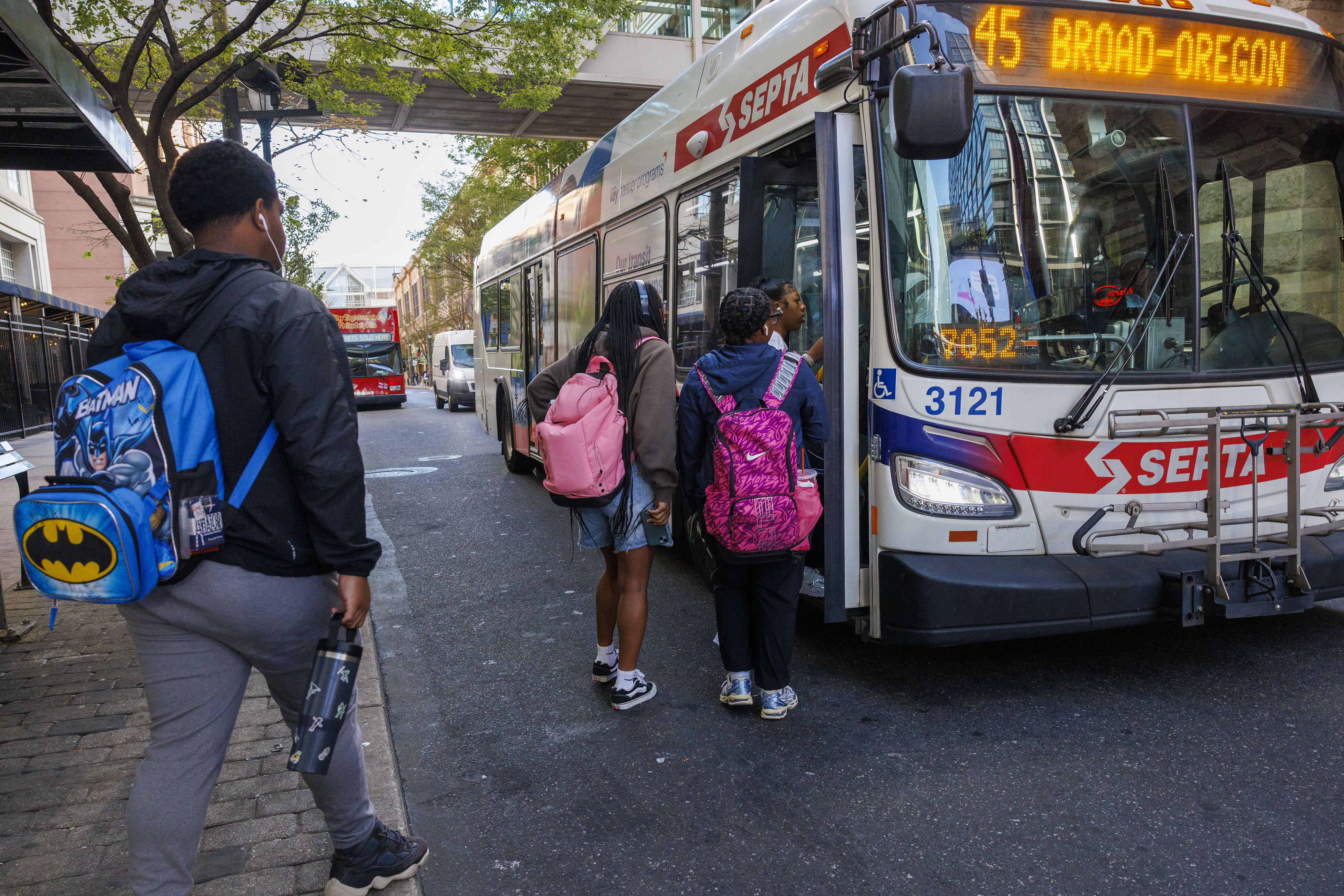
    Students making their way south board a SEPTA Route 45 bus as they commute to school in September 2025.Alejandro A. Alvarez / Staff Photographer

    Earned privilege

    On Tuesday, City Council’s transportation committee held a hearing to explore expanding free student access to SEPTA’s TransPass+, which currently does not work after 8 p.m. or on weekends. There was widespread agreement that something should be done.

    While we had to pay for our school tokens back when I attended Central, they were similarly restrictive. Paying full price to get home from work or engage in weekend extracurricular activities is a pain when the only people interested in hiring you pay just $7 an hour. Expanding access could help get more students to broaden their horizons, which would enrich both them and the city.

    There were, however, two major concerns noted before Council. One is how to pay for this expanded access, which could cost tens of millions of dollars. The other is the behavior of some students. Councilmember Curtis Jones Jr. mentioned the crowds that have mobbed Dilworth Plaza, while others brought up the inexplicable failure of many students to tap their fare cards on their way to and from school, which reduces SEPTA’s ability to get reimbursed by the state.

    Councilmember Anthony Phillips, citing his own experience working with young people, suggested limiting the expansion to only students who are enrolled in extracurricular activities, while Jones suggested turning off the benefit for students who have misbehaved. Although these ideas are well-intentioned, they also sound like a headache to administer.

    There may be a way to overcome these obstacles, in part by tying them together. A key part of growing up is earning privileges. In that spirit, SEPTA and the school district could extend transit access if students start tapping their cards at an acceptable rate. This would cut down on turnstile jumping, offer some of the accountability Jones and Phillips were looking for, and create a pathway to expanded access.

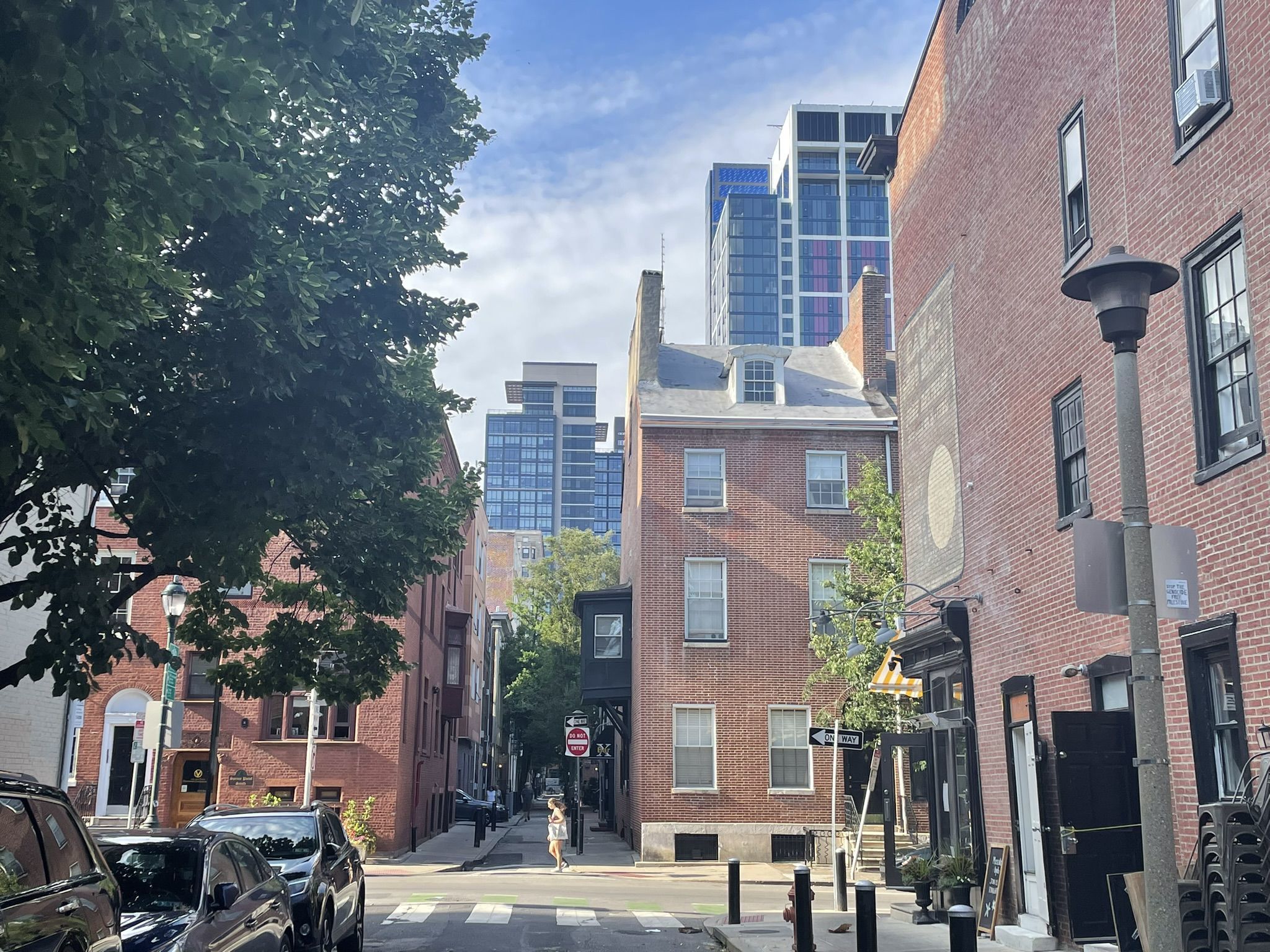
    The Washington Square West neighborhood has accommodated all types of buildings, from elegant townhouses to modern high-rise towers.Inga Saffron

    Historic ruling

    Last week, I wrote that Common Pleas Court Judge Christopher Hall seemed skeptical of the case for the Washington Square West Historic District. That observation was confirmed by this week’s decision, which once again revoked the Philadelphia Historical Commission’s decision to create the city’s largest and most extensive preservation zone.

    I share the Preservation Alliance’s appreciation for great architecture and our city’s history. At the same time, the revocation of this district should not come as a surprise. As Hall’s order notes, 85% of residents opposed the designation during the commission’s hearing, and in many cases, properties were included simply due to their location, with no other justification listed.

    It turns out that infringing on homeowners’ ability to renovate their own property according to their own wishes requires more than good intentions.

  • How Carlton Williams rose from a scandal-plagued department to one of Philadelphia’s most powerful government positions

    How Carlton Williams rose from a scandal-plagued department to one of Philadelphia’s most powerful government positions

    Eleven years ago, Carlton Williams was, to some, a symbol of government dysfunction.

    He was leading the troubled Philadelphia Department of Licenses and Inspections, an agency engulfed in controversy over safety lapses and staffing issues following the deadly 2013 Market Street building collapse. The city controller called on Williams to resign, and Jim Kenney, then a candidate for mayor, promised that he’d get rid of him.

    And yet Williams remained.

    In July, he was named Philadelphia’s managing director, one of the most powerful positions in city government, second only to the mayor. He is assuming responsibility for L&I again, plus dozens of other agencies and thousands of employees who carry out the day-to-day operations that make the city run.

    It is perhaps an improbable outcome for a longtime city employee who absorbed a level of scrutiny that could have easily ended his career.

    But Williams proved durable, cycling through leadership positions across several departments while establishing himself as a City Hall insider. He has politically powerful allies and a reputation among City Council members as someone who will quickly act on their needs. That goes a long way with 17 politicians who value responsiveness and omnipresence, traits that they did not see in Williams’ predecessor, Adam K. Thiel.

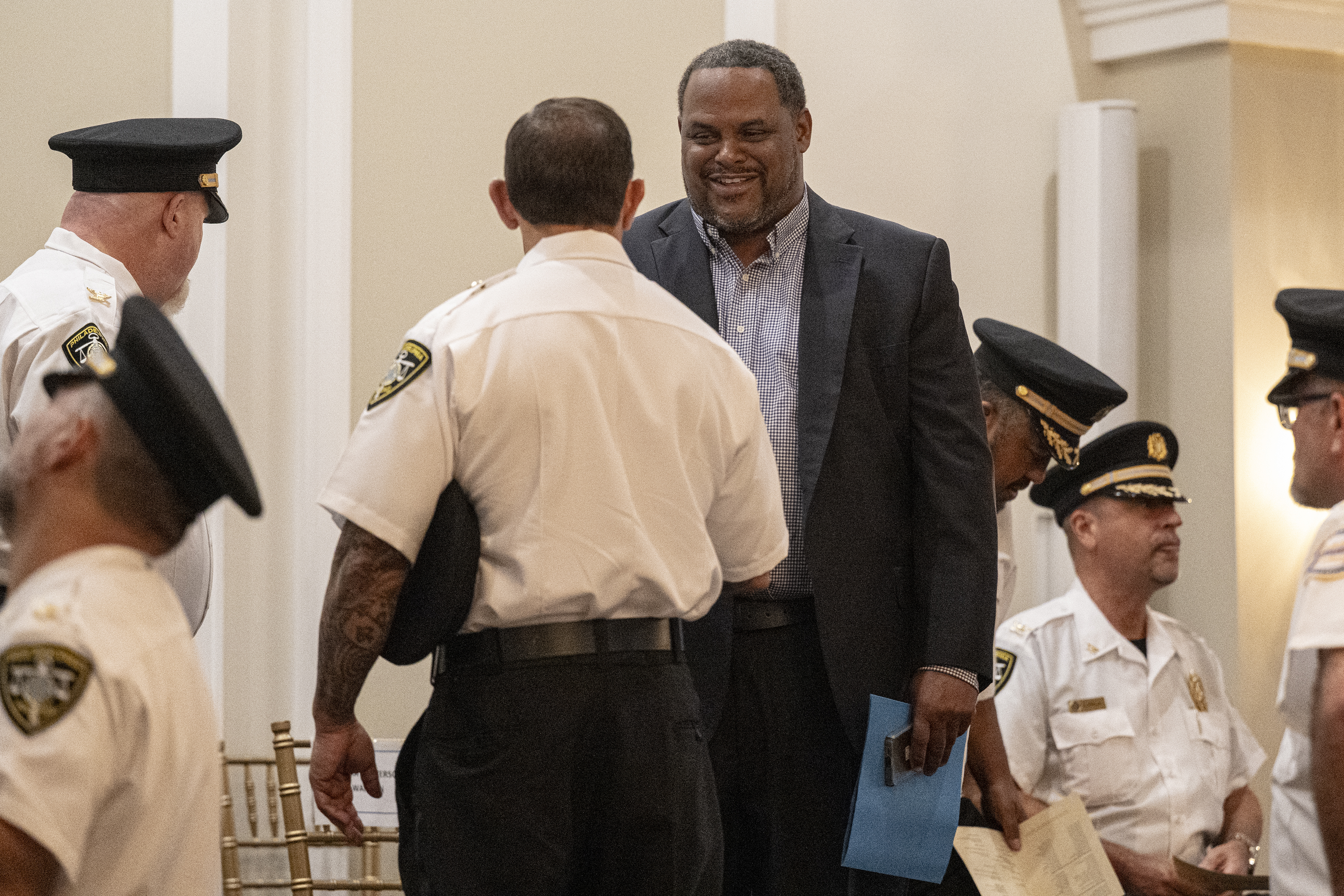
    Newly appointed Managing Director Carlton Williams interacts with city officials during a correctional officer graduation ceremony at FOP Lodge 5 in Philadelphia on Friday.Jose F. Moreno / Staff Photographer

    Perhaps most importantly for Williams’ ascent: he is all-in on Mayor Cherelle L. Parker.

    The ties between Parker, 53, and Williams, 57, stretch back to their childhoods in Northwest Philly — he played football for the Oak Lane Wildcats, and she was a cheerleader. The team remains a part of both of their identities: Williams has led the Oak Lane Youth Association for 20 years, and the mayor often says proudly that she is a “Wildcat for life.”

    Later in life, both found allies in the storied Northwest Coalition, a powerful political family. Williams said that he has known for 20 years that Parker would one day sit atop City Hall. And he most recently led Parker’s Office of Clean and Green Initiatives, overseeing the implementation of some of her key campaign promises.

    “I’m bringing the ‘One Philly’ brand to the managing director’s office,” Williams said in an interview, echoing the mayor’s oft-used slogan. “Not to say it wasn’t being done under my predecessor. But I want to make sure it’s completely aligned with the mayor’s goals, because I believe in that vision.”

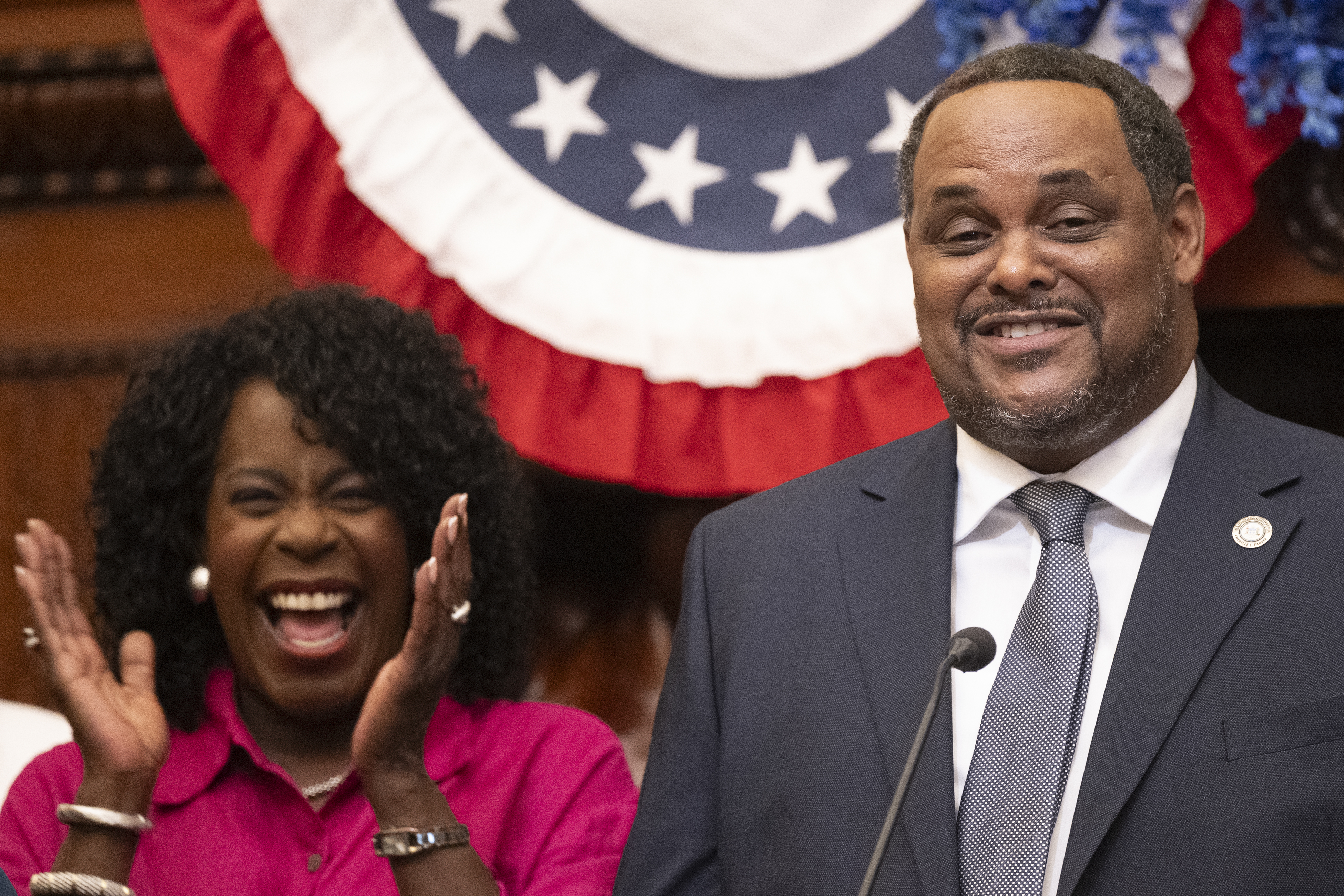
    New Philadelphia Managing Director Carlton Williams speaks at the podium after being announced by Philadelphia Mayor Cherelle L. Parker during a July 28 news conference at City Hall.Jose F. Moreno / Staff Photographer

    His appointment as managing director marks a new stage for the Parker administration that has seen significant turnover at its highest levels. And it is indicative of what Parker values in her inner circle: vast institutional knowledge and loyalty.

    For the mayor, trust in Williams’ ability to operate within the bureaucracy and advance her priorities may outweigh his mixed record of management.

    “Whenever we had a crisis of any kind in this city, he has been on my speed dial,” Parker said when she announced Williams’ appointment last month. “No matter who’s been leading, I’ve always called him for his counsel.”

    Overseeing ‘a very broken’ L&I

    Parker’s bet on Williams would have seemed almost unimaginable a decade ago.

    A year after Williams was appointed to lead L&I, an excavator demolishing a wall on Market Street in Center City toppled the building onto an adjacent Salvation Army store, killing six people and injuring a dozen more. The inspector responsible for the demolition project died by suicide a week later.

    Calls for reform abounded and questions swirled about whether the city’s agencies were responsible. There were multiple investigations launched and commissions convened to probe the disaster, and within days, Council members were pressing Williams to institute reforms that would bolster safety on private construction sites.

    In response, Williams sought to hire more inspectors, increase their training, raise demolition standards, and create new specialized units within L&I.

    Today, he says the collapse on Market Street was “one of the saddest moments” of his time in government.

    “You have to lead through some tough challenges when you’re a leader,” he said. “You don’t get to pick and choose when you lead.”

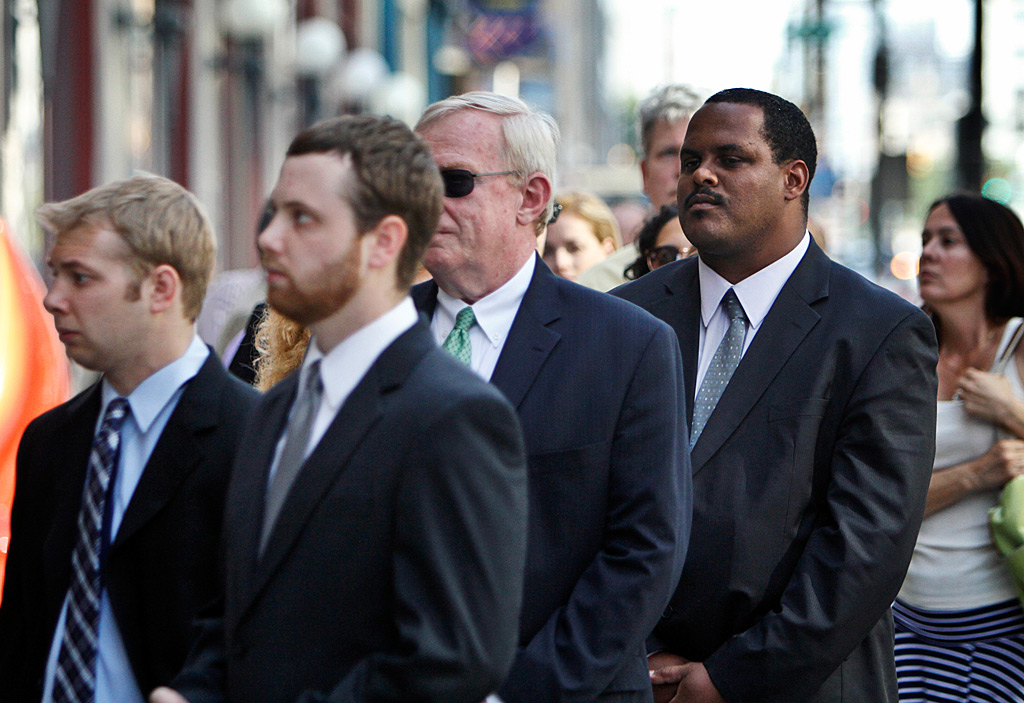
    In this June 2013 file photo, then-Philadelphia Commissioner of the Department of Licenses and Inspections Carlton Williams (second from right) waits in line to attend a memorial service for Anne Bryan, who was among the victims of the Market Street building collapse.JOSEPH KACZMAREK / Associated Press

    But it was not the only controversy he faced.

    The Inquirer reported that, in 2014, Williams personally intervened in the demolition of a Point Breeze building and allowed it to proceed without the requisite permits.

    And in 2015, L&I was forced to reorder hundreds of inspections after sending unlicensed and unqualified inspectors to examine unsafe buildings across the city.

    By fall 2015, then-City Controller Alan Butkovitz was calling on Williams to be fired. He said at the time that L&I had long been troubled, but that his office’s audit of the agency found that Williams had not made enough improvements.

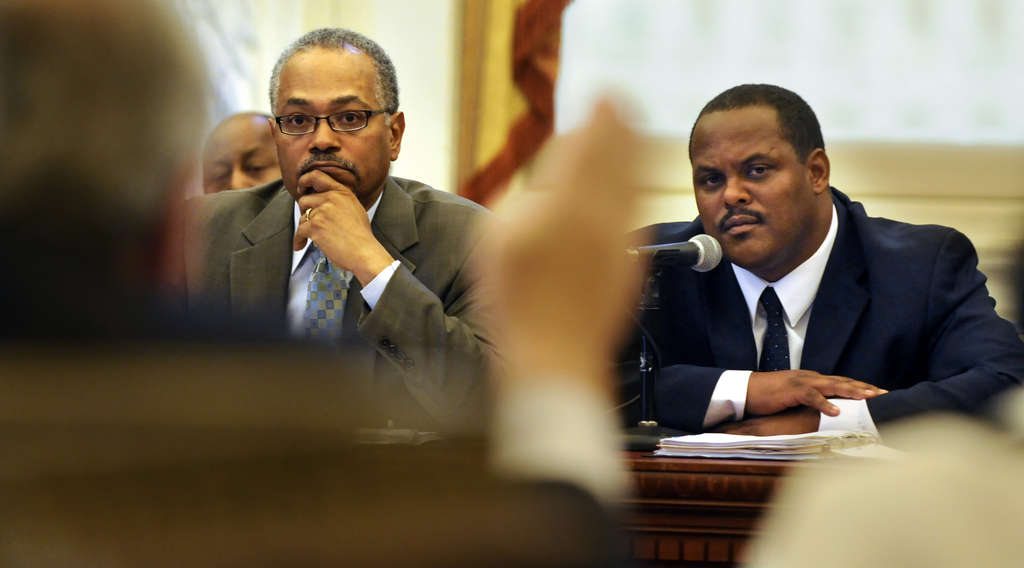
    In this 2013 photo, then-Deputy Mayor Everett Gillison (left) and then-Commissioner of Licenses and Inspections Carlton Williams listen to members of City Council during a hearing.TOM GRALISH / Staff Photographer

    Butkovitz now says that he blames former Mayor Michael Nutter instead, and that Williams was “caught between the mayor and me.” He said Williams had promised to provide the controller’s office with documents to assist in an audit, and then did not.

    “I took it out on Carlton Williams at the time,” Butkovitz said. “His inclination was to cooperate with me, but at the time, it looked to me like duplicity. And I don’t think it was. I think he was overridden by higher authority.”

    Nutter did not respond to a request for comment.

    Estelle Richman, a former Philadelphia managing director who has held a variety of roles in local, state and federal government, said L&I is “one of the most difficult city departments.” She noted that past agency leaders have been pushed out, fired, indicted, and jailed.

    “We can go back and say ‘maybe [Williams] should have done this or that,’ but the reality is it was a very broken department,” she said. “I think he did more to try to get it restabilized and back on track than any other commissioner at that time could have done.”

    ‘You have to be accessible’

    Before taking the helm at L&I, Williams was a career bureaucrat.

    Born in North Philly and raised in West Oak Lane, Williams started with the city at age 19, working in Fairmount Park as one of the first-ever members of the Philadelphia Ranger Corps. The program paid for part of his tuition to attend Temple University and marked his foray into public service.

    Jeffrey Montague, who led the Philadelphia Ranger Corp. and has been a mentor to Williams for decades, said that at a young age, Williams showed potential.

    “He didn’t try to fit in. He always stood out on his own independence,” Montague said. “He wasn’t trying to fit into a crowd.”

    After working as a ranger, Williams spent three years running a Harrisburg youth program for AmeriCorps — the first and last time Williams lived outside the city.

    He returned to Philadelphia to work for the Parks and Recreation Department, rising to become a deputy commissioner in both the recreation and streets departments.

    Then came the four-year stint leading L&I, and when Kenney took office in 2016, he moved Williams back to his old job as a deputy in the streets and sanitation department.

    But it didn’t last. Five months after Kenney took office, the streets commissioner was arrested for assault. Williams ascended to the role, and suddenly, the person who Kenney said he wouldn’t retain to lead L&I was in charge of one of Philadelphia’s most visible departments, overseeing transportation and sanitation operations citywide.

    Carlton Williams, then the director of the Office of Clean and Green Initiatives, speaks during a news conference at Bigler and South 15th Streets on July 7, 2025.Monica Herndon / Staff Photographer

    It was there where Williams solidified himself as a City Hall fixture. He said that as an administration staffer, he has “one primary that I listen to” — the mayor — but he has always tried to be attentive to Council.

    That may be a key difference between Williams and Thiel, his predecessor. Thiel was the former fire commissioner and a nationally recognized expert in emergency management who was seen as a skilled behind-the-scenes operator.

    But Council members said that Thiel did not foster close relationships with members of the city’s legislative body who are often conduits between residents and the mayor’s administration.

    In addition, Thiel was often absent during major events in the city and he was frequently on leave — he joined the Army Reserve eight months into his tenure, and held several jobs outside city government, including as a consultant and professor.

    That was a departure from prior administrations, when the managing director was often the public face of city operations.

    On several occasions during the Parker administration, it was Williams who was in the spotlight. As director of the Office of Clean and Green Initiatives, he played a key coordinating role during the eight-day municipal worker strike that halted city services — most visibly, trash pickup.

    And he oversaw the city’s response to a severe winter storm earlier this year that left much of the city encased in ice, despite weather emergencies typically falling under the managing director’s purview.

    New Philadelphia Managing Director Carlton Williams (left) stands near the former director, Adam Thiel, before an introduction by Philadelphia Mayor Cherelle L. Parker during a July 28 news conference at City Hall.Jose F. Moreno / Staff Photographer

    City Councilmember Anthony Phillips, whose district includes Northwest Philadelphia, said that prior to Thiel’s resignation, members of Council were “gravely concerned” about his frequent leave. Some members said that, in Thiel’s absence, Williams was their primary contact among Parker’s top staff.

    “You can’t get certain things done and you can’t expect an efficient and effective city when you’re not present,” Phillips said. “Carlton is going to be the complete opposite of that.”

    Williams said that his role as managing director is his only job aside from volunteering.

    “It’s a full-time, 24-hour, seven-day-a-week job,” he said. “You have to be accessible.”

    Williams’ coziness with elected officials has also drawn criticism.

    A former city employee who previously worked for Williams said his relationships with Council amount to a “favor machine.” The staffer spoke on the condition of anonymity in order to preserve relationships.

    “There is this cycle of Council getting calls from constituents, like ‘there’s a pothole,’ and then they get it fixed, and that’s the main work,” the former staffer said. “It’s not actually setting up systems that are solving the problems. It’s reacting to them.”

    But Williams said some of his proudest achievements have resulted in systemic change: he led the installation of some of the first spraygrounds in the city, overhauled the recycling program, had BigBelly trash cans placed throughout Philadelphia, and started the annual Philly Spring Cleanup.

    “He is probably one of the most well-prepared managing directors that the city has had,” Richman said. “He knows not only how operations work within the city departments, he knows the political structure of the city. And I believe a managing director has to know both.”

    Testifying in the Johnny Doc trial

    Williams’ close relationship with a Council member also came under a microscope in a federal courtroom in 2021.

    John Dougherty, the former leader of the politically powerful Local 98 of the International Brotherhood of Electrical Workers, and his ally, ex-Councilmember Bobby Henon, were on trial for bribery and other corruption charges. Prosecutors accused Henon of taking official actions as a Council member at Dougherty’s behest in exchange for a salaried, no-show job with the union.

    One of the schemes prosecutors presented during the trial focused on efforts by union officials in 2015 to halt the installation of an MRI machine at the Children’s Hospital of Philadelphia, a project that was being completed with nonunion labor. Williams, at the time, was at the helm of L&I.

    Department of Streets Commissioner Carlton Williams exits federal court on Oct. 12, 2021, after testifying in the John Dougherty and Bobby Henon bribery trial.Thomas Hengge / Staff Photographer

    During the 2021 trial, Williams was called to testify. He told the jury that Henon called him in August 2015 to report that an unlicensed contractor was working at CHOP, and that he dispatched an inspector to investigate.

    The inspector, Williams testified, issued a stop-work order on the construction of the MRI machine. But he insisted that he did not direct the inspector to do so, and told the jury that responding to complaints from Council members was a routine part of his job.

    Ultimately, L&I reversed the stop-work order, and the MRI machine was built.

    Prosecutors said Dougherty paid Henon to be his “man on the inside” in City Hall and used the episode at CHOP to establish evidence of a corrupt agreement between the two.

    “You heard what happened,” Assistant U.S. Attorney Frank Costello told the jury during closing arguments. “Henon contacted Carlton Williams, Carlton Williams sent inspectors out and they issued orders — they issued orders to shut the job down.”

    But defense attorneys said one public official asking another to take action doesn’t constitute a crime.

    “Carlton Williams was the recipient of information just passed on to him about the MRI and the unlicensed contractor,” said defense attorney Brian McMonagle. “That ain’t a crime.”

    Dougherty and Henon were both convicted. Henon was released from prison last year, and Dougherty remains incarcerated.

    Carrying out Parker’s vision

    During the 2023 mayoral campaign, when a half-dozen Democrats could have plausibly won the party’s nomination, Williams nearly left the city.

    He said he got a job as the public works director in San Francisco, but before he accepted, Parker won the primary election. Williams decided to stay.

    “I wanted to work for Cherelle Parker,” he said. “I believed in her vision.”

    Mayor Cherelle L. Parker is applauded by members of her administration at City Hall on July 9, 2025, hours after reaching a tentative contract agreement with District Council 33 leaders overnight, ending the workers’ strike. At left is Carlton Williams, director of the Office of Clean and Green Initiatives. Chief Deputy Mayor Sinceré Harris is behind the mayor at right.Tom Gralish / Staff Photographer

    Parker took office in 2024 and created a new role: director of the Office of Clean and Green Initiatives. Williams would carry out her campaign promise to rid the city of its “Filthadelphia” moniker by implementing twice-weekly trash collection, an expansion of illegal dumping enforcement, and a biannual citywide program to clean every block.

    As managing director, Williams’ portfolio will grow substantially. He will be responsible for the city’s response to public health and homelessness, as well as overseeing large agencies like the fire department and the prisons.

    He will also coordinate the city’s strategies in Kensington, the beleaguered neighborhood and the site of an open-air drug market that the Parker administration has spent more than two years working to shut down. Williams said there is inherent pressure that comes with being responsible for addressing such long-entrenched issues.

    “But I work best under pressure, and so I take that as a badge of honor,” he said.

    Williams said he intends to prioritize communication with residents because they “understand that everything can’t get fixed at one time.”

    “But at least we can say what needs to be done, when it’s going to [be] fixed, what’s the timeline,” he said. “I manage through the eyes of everyday citizens. I want what they want.”