Tag: Amanda Shulman

  • 12 of Philly’s best restaurants are collaborating at The Inquirer Food Fest. Here’s what’s cooking

    12 of Philly’s best restaurants are collaborating at The Inquirer Food Fest. Here’s what’s cooking

    Philly’s a small town, and that’s true of its chef community, too.

    We invited a number of the city’s top chefs to Bridesburg’s BLDG39, where The Inquirer’s Ariane Datil did some light matchmaking, pairing up Philly chefs and tasking them with whipping up something that marries two culinary perspectives into one creative, collaborative dish. Below, read about the dishes they created for The Inquirer Food Festival, scheduled for Nov. 14 at the Fillmore. (Watch their meet-cutes in Datil’s reality TV-inspired series, Love at First Bite.)

    If you’re tempted to try the fruits of their labor in person, get a ticket soon: The event is nearing sellout.
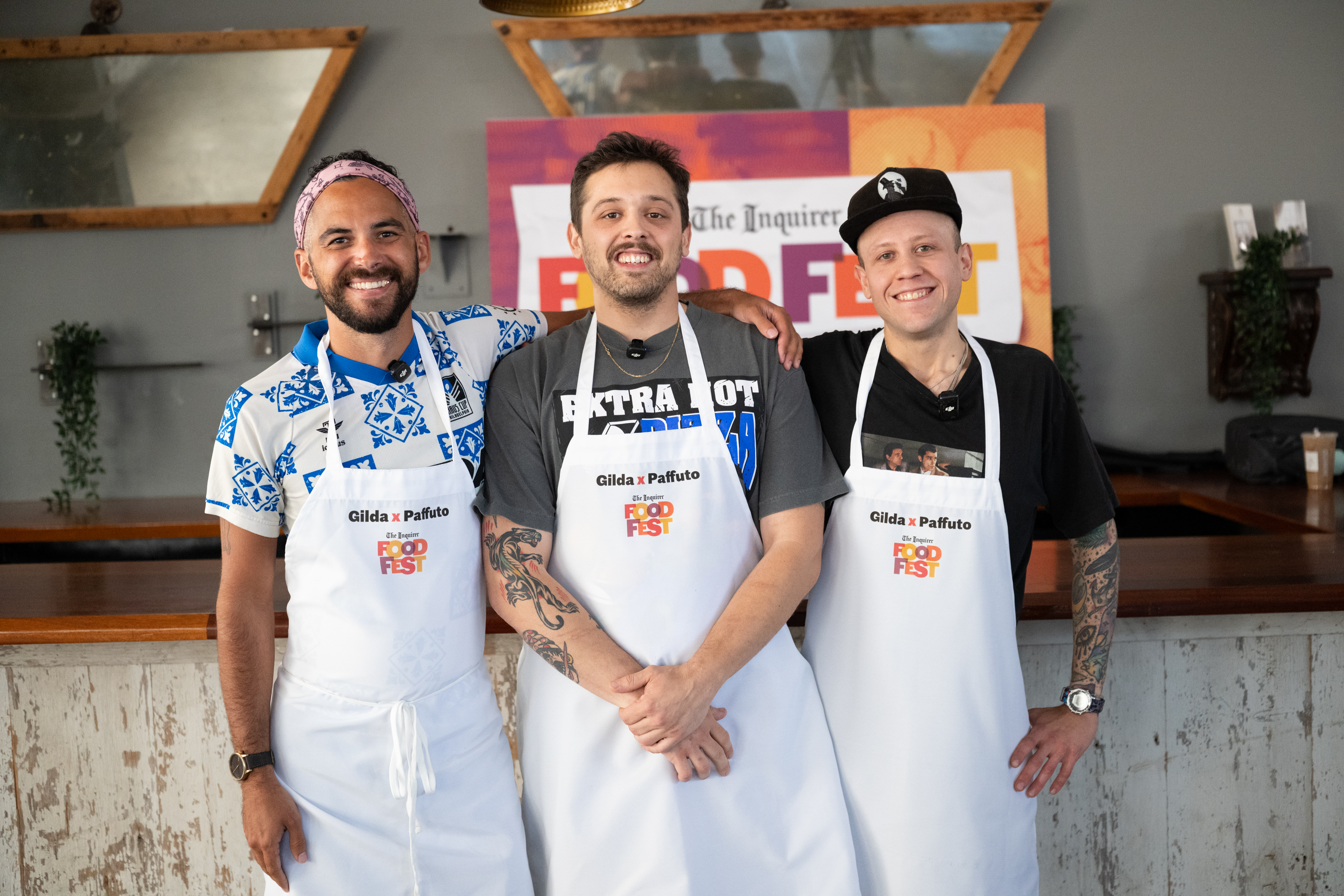
    Brian Mattera, chef and owner of Gilda (left), and Paffuto chefs and owners Jake Loeffler and Daniel Griffiths.Erin Blewett / For The Inquirer

    Paffuto x Gilda

    “Too many cooks in the kitchen spoil the broth,” or so the old saying goes. At The Inquirer Food Festival, they’re actually planning to make a delicious stew.

    Gilda chef Brian Mattera is teaming up with Jake Loeffler, Sam Kalkut, and Danny Griffiths — the trio behind panzerotti specialist Paffuto — to make a Portuguese-inspired (but mostly Italian) beef stew served with chorizo and crispy mushrooms over polenta.

    The stew is “something warm, comforting, [and] familiar,” Griffiths said. “Grandma’s bite.”

    The collaboration is kismet. Both restaurants are inspired by no-nonsense, East Coast grandparents. They also happen to share the same interior designer. “Our places are also designed to feel like grandma’s kitchen,” Mattera joked. “Well, a cool grandma.”

    Gilda (pronounced JILL-dah) is literally named after Mattera’s grandmother. He opened the easygoing Portuguese café in Fishtown with former partner Brian Oliveira in 2023. The restaurant immediately developed a reputation for a best-in-class breakfast sandwich and flaky pastel de natas that still sell out most weekends.

    Paffuto, which opened in 2023 in Bella Vista, draws inspiration from Griffiths’ and Loeffler’s Italian American upbringings in North Jersey and New York. As such, the menu’s centerpiece is panzerotti, a fried treat that is basically a hybrid of a calzone and a Totino’s pizza roll. Paffuto’s get stuffed with combos of the good stuff — like bacon, eggs, and Cooper Sharp, or sliced rib eye, caramelized onions, and more Cooper Sharp — and they’re delightfully crisp.

    The Gilda and Paffuto crews collaborated earlier this year on a knockout panzerotti stuffed with crispy suckling-pig skin. The partnership, Loeffler said, resulted in Mattera giving the Paffuto dudes a sterling piece of advice: “Read the good reviews once, the bad reviews twice, and then never again,” Loeffler recited. “Think about them, learn from them, but never dwell on them.”
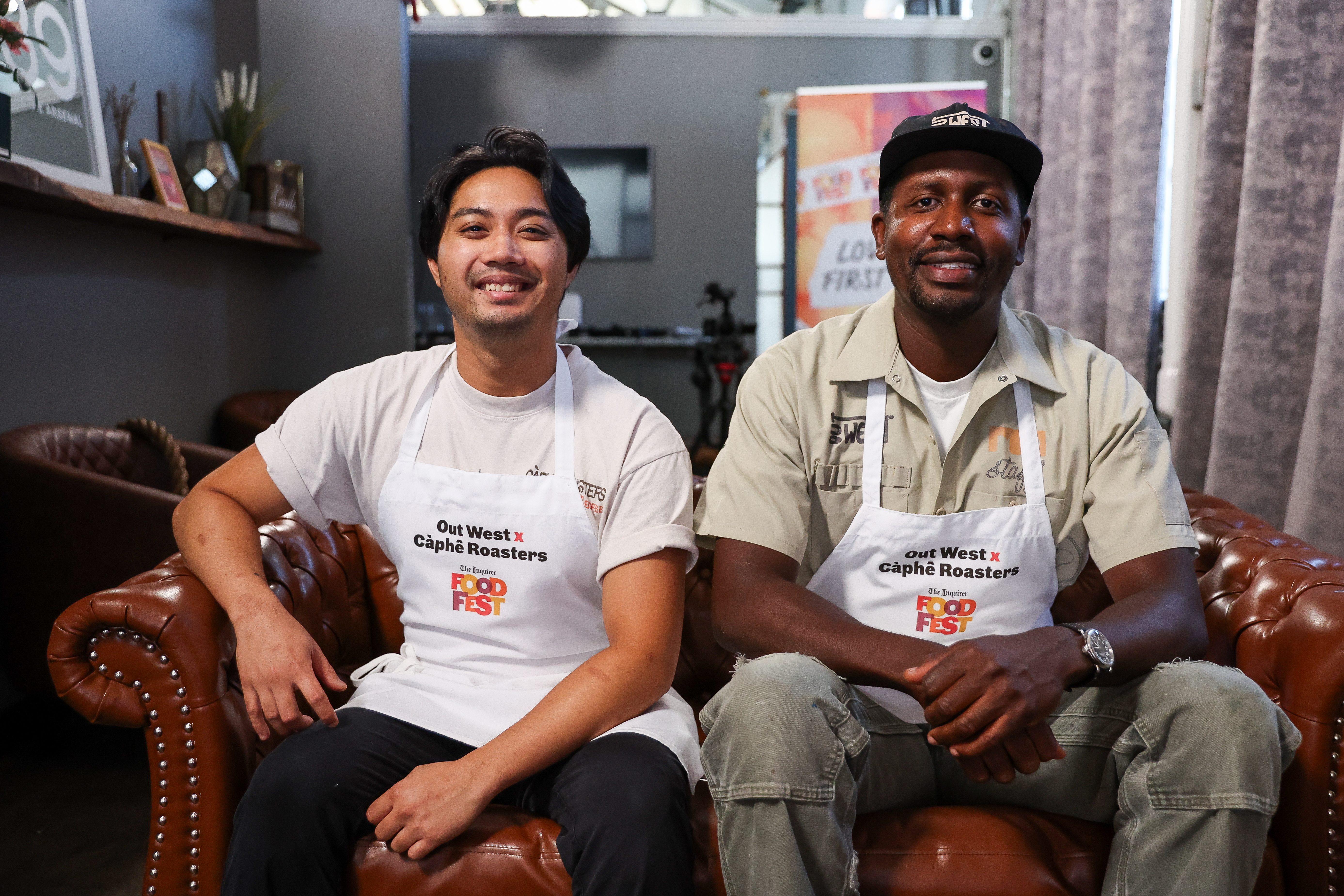
    Càphê Roaster’s chef Luigi Datu (left) and Out West’s co-owner Muhammad Abdul-Hadi. Isaiah Vazquez / For The Inquirer

    Càphê Roasters x Out West

    When Càphê Roasters and Out West come together, it gives a whole new meaning to the term “Philly Special.”

    Kensington’s modern Vietnamese café and new-school West Philly coffee shop are mashing up their cultures with a take on the hoagie at The Inquirer Food Festival. A baguette from South Philly’s Ba Le Bakery, the city’s banh mi standard-bearer, will be the vehicle for a lamb-belly terrine banh mi that gets smeared with a pork-free version of Càphê Roasters’ signature pâté and finished with a hearty dose of aromatic Thai basil.

    “I don’t think you can have a good sandwich without the right bread,” said Muhammad Abdul-Hadi, Out West’sowner.

    The dish was a fun thought exercise for Càphê Roaster’s chef Luigi Datu, who recommends customers there add chả lụa, a steamed pork sausage from Vietnam, to the café’s classic banh mi or staple breakfast sandwich. Out West, meanwhile, is halal, so the coffee shop regularly subs in lamb for pork in its own scrapple and sausage, egg, and cheese options.

    When Càphê Roasters opened on Kensington’s J Street in 2021, it was one of the first Vietnamese café-roasteries in the United States. A 2025 James Beard Award semifinalist for outstanding beverage program, Cáphê is a celebrity favorite for its frothy lattes and hefty sandwiches. Next up: Opening a second, even larger location in Grays Ferry by next spring.

    Out West, meanwhile, burst onto the Philly coffee scene in 2025 as a second act for Down North Pizza founder Abdul-Hadi. Like its predecessor, the coffee shop also provides employment opportunities for formerly incarcerated individuals, imbuing its menu of novelty matcha lattes and comforting sandwiches (cheesesteaks included) with a do-good mission.

    Located on opposite ends of the city, the two cafés have mutual respect for each other. Datu admires Out West because the coffee shop “feels pretty Philly” while Abdul-Hadi was quick to start calling Datu “cousin Luigi.”

    “Kitchens are like family,” Abdul-Hadi said while bumping shoulders with Datu.
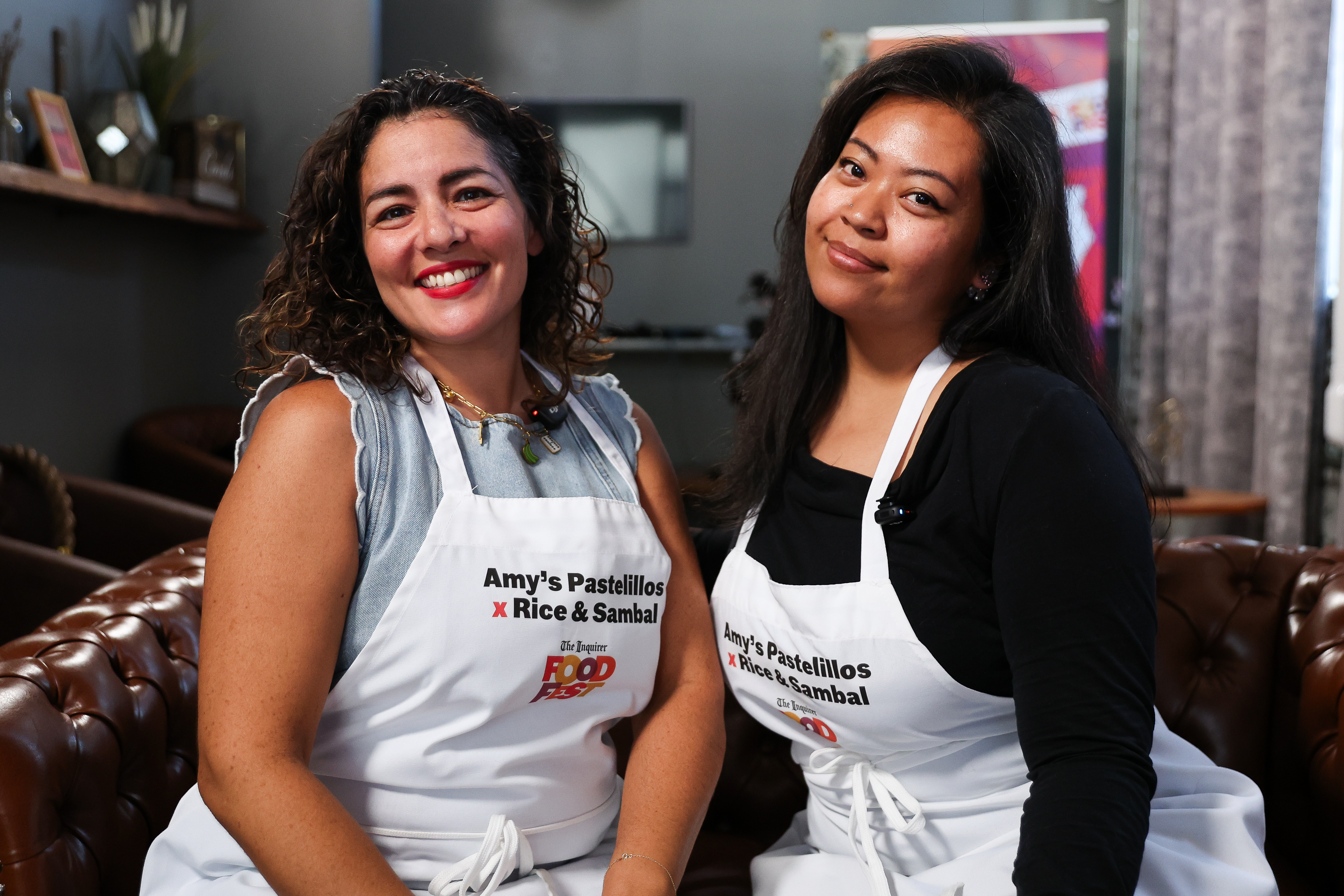
    Amy’s Pastelillos owner Amy Rivera-Nassar (left) and Rice & Sambal’s Diana Widjojo partner together during an Inquirer Food Fest “Love at First Bite” production at BLDG 39 on Monday, Sept. 14, 2026, in Philadelphia.Isaiah Vazquez / For The Inquirer

    Amy’s Pastelillos x Rice & Sambal

    Where else besides The Inquirer Food Festival can you get a single bite that blends flavors from Puerto Rico, Indonesia, and India?

    That’s what you can expect from Amy’s Pastellilos’ Amy Rivera-Nassar and Rice & Sambal’s Diana Widjojo, who are collaborating on what they described as a “deconstructed pastelillo,” aka thimble-size servings of slow-cooked ropa vieja and rice served inside hollow spheres of fried Indian panipuri. It all gets topped with lemongrass and Widjojo’s sambal aioli.

    “It’s more interesting than mayo-ketchup,” Widjojo said playfully, comparing her signature chile-spiced sauce to the classic Latin American condiment combo that Rivera-Nassar offers with pretty much her entire menu. (Rivera-Nassar immediately told her to cool it with the trash talk.)

    Dip dispute aside, it’s all love between Rivera-Nassar and Widjojo in the kitchen. The pair have long admired each other’s tenacity and joyful cooking as members of Sisterly Love Collective, a mentorship community for women entrepreneurs in hospitality. Widjojo, for her part, is an Amy’s Pastellilos regular.

    Rivera-Nassar’s stews (often offered as specials), remind Widjojo of growing up in Queens, where Puerto Rican and Southeast Asian communities commingle. They taste like “having my friends around,” Widjojo said.

    Rivera-Nassar beamed. The chef converted her neighborhood pop-ups into a brick-and-mortar in Kensington in 2024, cementing locals’ love of the traditional Puerto Rican turnovers.

    Widjojo, meanwhile, got her start at Hardena, the James Beard-nominated Indonesian restaurant that she ran with her mom and sister in South Philly. She struck out on her own in 2025 with Rice & Sambal, a cozy East Passyunk BYOB where her skills shine best in the Liwetan platter, a stunning arrangement of 24 Indonesian staples.

    “We kept going back and forth on what our cultures look like together,” Widjojo said. The result, Rivera-Nassar bragged, is “memories in a pot” and a whole lot of crunch.
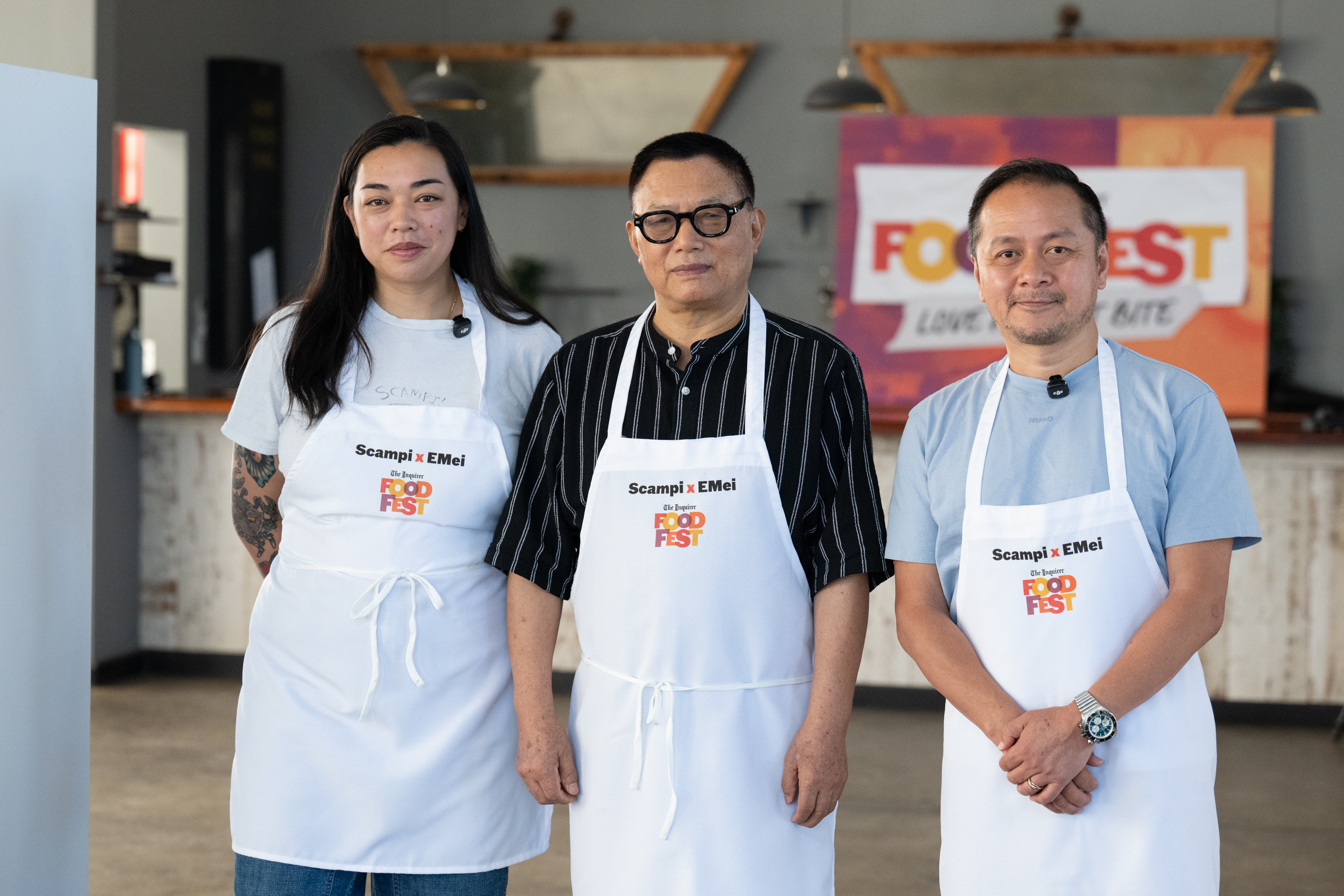
    Scampi chef and owner Liz Grothe (from left), EMei chef Yongcheng Zhao, and EMei co-owner Dan Tsao pose for a portrait.Erin Blewett / For The Inquirer

    EMei x Scampi

    What happens when one of Philadelphia’s most accomplished Sichuan chefs pairs up with a young gun who prefers to keep things “middle-class fancy?” Shockingly, a twist on Irish street food.

    Scampi’s Liz Grothe will partner with EMei’s owner and chef, Dan Tsao and Yongcheng Zhao, at The Inquirer Food Festival. They’ll repurpose the Chinatown restaurant’s best-selling Chongquing chicken as the base for a spice bag — the compulsively snackable Chinese Irish combo of spicy fried chicken and curry on fries. Zhao will bring the heat and Grothe will bring the potato and curry (which will be pumpkin-based, for fall).

    For Grothe, cooking alongside Zhao is akin to meeting an idol. She can rattle off a list of favorites from EMei’s extensive menu: mapo tofu, the white fish and green peppercorn pot, and (gluten-free) dan dan noodles. When she was a sous chef at Fiorella, Grothe used to order from EMei every Saturday to cap off a long work week.

    “I feel like I’m a kid again trying to soak up everything I can,” she said while firing up the burners next to Zhao. He’s “one of the masters of Chinese cuisine.”

    Zhao has been a fixture at EMei since its 2011 opening in Chinatown, where it has endured as one of the neighborhood’s best restaurants, according to food critic Craig LaBan, thanks to its uncompromisingly authentic menu, adaptability, and Zhao’s more than half-century of experience working with Sichuan spice.

    Grothe is just starting her come-up. The Filipino chef from Oklahoma transferred the energy she brought to Couch Café — the successful pop-up supper club she ran from her living room — to Scampi, a Queen Village BYOB that is Midwestern at heart, despite a tasting menu that heavily features seafood and regional Italian pastas. Just over a year and a half after its 2024 opening, LaBan hailed dinner there as a “singular DIY dining experience.”

    Zhao and Tsao are already fans of Grothe’s determination. “There’s a lot we can learn from the younger generation,” Tsao said.
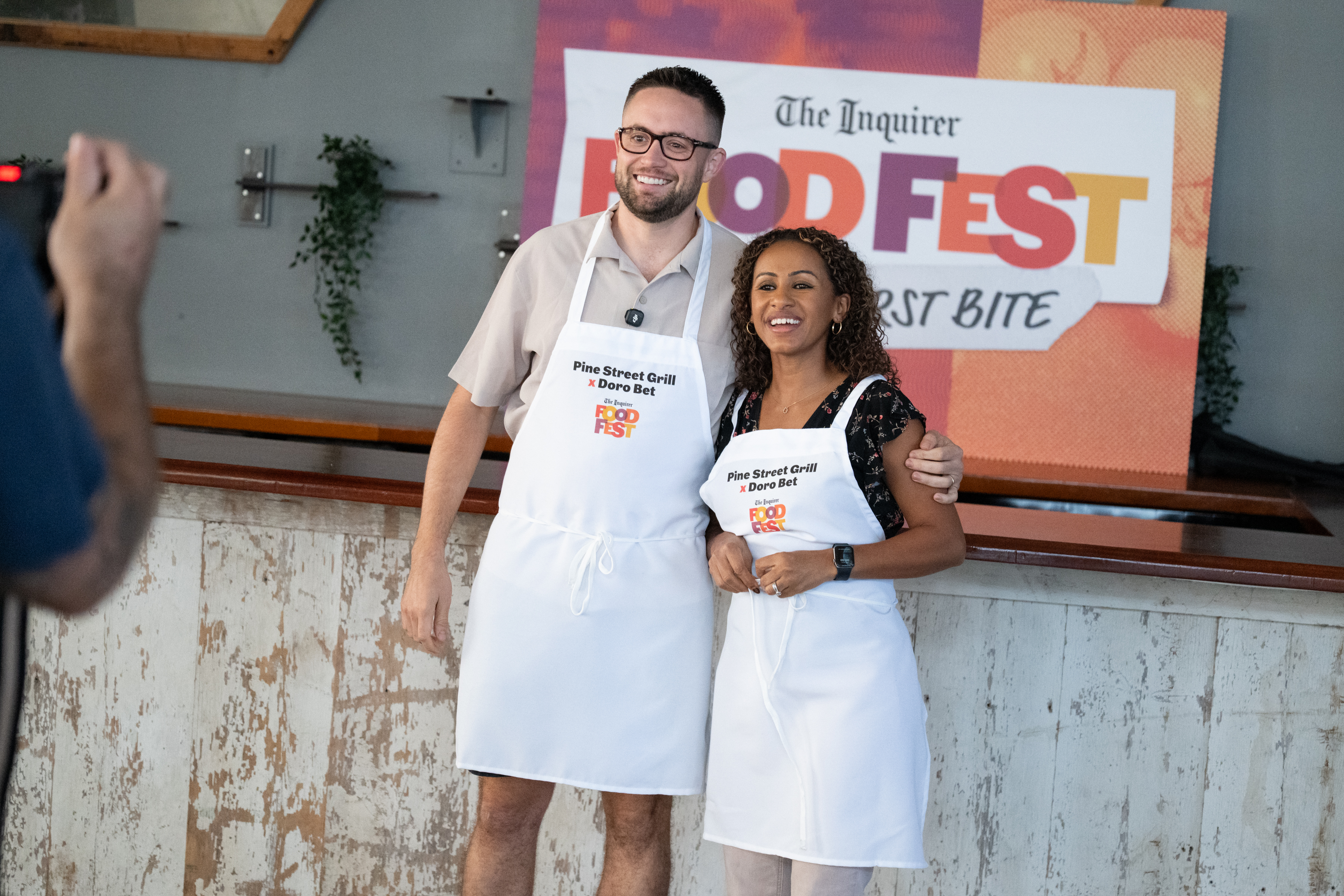
    Co-owner and chef at Pine Street Grill Alex Kemp and chef and co-owner Mebruka Kane of Doro Bet pose for a portrait.Erin Blewett / For The Inquirer

    Pine Street Grill x Doro Bet

    Doro Bet is known for berbere and turmeric-spiced fried chicken. Pine Street Grill is known for brown butter Buffalo wings. But don’t expect them to serve either at The Inquirer Food Festival.

    Instead, Alex Kemp, of Pine Street, and Mebruka Kane, of Doro Bet, will collaborate on a classic Canadian smoked trout dip paired with crisp strips of injera, the spongy Ethiopian flatbread that tastes like pumpernickel when fried.

    Both elements are labors of love: Kemp’s trout must smoke for 24 hours before getting the dip treatment, while the injera’s sourdough ferments for four days before baking atop a mitad, a skillet-size griddle designed just for injera. The berbere, Kane said, ties it all together, seasoning both the chips and the dip. (She uses her mom’s recipe, whose secret ingredient is a touch of fenugreek for nuttiness.)

    “Trout dip is a little boring [to me] because I grew up eating it,” said Kemp, who is from Quebec. Kane’s additions “are the most interesting. Growing up in Canada, I never saw anything like [her] technique.”

    Kane and her sister, Hayat Ali, have quietly built an Ethiopian empire on Baltimore Avenue: First with their traditional coffee shop Alif Brew, and later, with Doro Bet, a gluten-free and halal fried chicken joint. The secret to their chicken — which has gotten big ups from USA Today, the New York Times, and The Inquirer — is using spices imported from Addis Ababa.

    Kemp is also one part of a heavy-hitting Philadelphia family business. Together with his wife, chef Amanda Shulman, the chef co-owns Pine Street Grill, My Loup, and Her Place Supper Club (which was among the first restaurants to earn a coveted Michelin star last year). Kemp takes the reins at My Loup, the James Beard-nominated French bistro where the “Esca-roll” — a giant, garlicky escargot roll with cinnamon bun-esque structure — has become the signature hit.

    Pine Street Grill, which opened in Fitler Square in 2025, is where Kemp gets to kick back. It’s a neighborhood restaurant with highlights that include fat eggplant Parmesan, matzo ball soup, a burger, and those Buffalo wings.

    Kemp and Kane move about the kitchen as if they’ve known each other for ages, casually swapping spices and stories about what it’s like to scale family businesses. “We might get a cooking show after this,” Kemp joked.
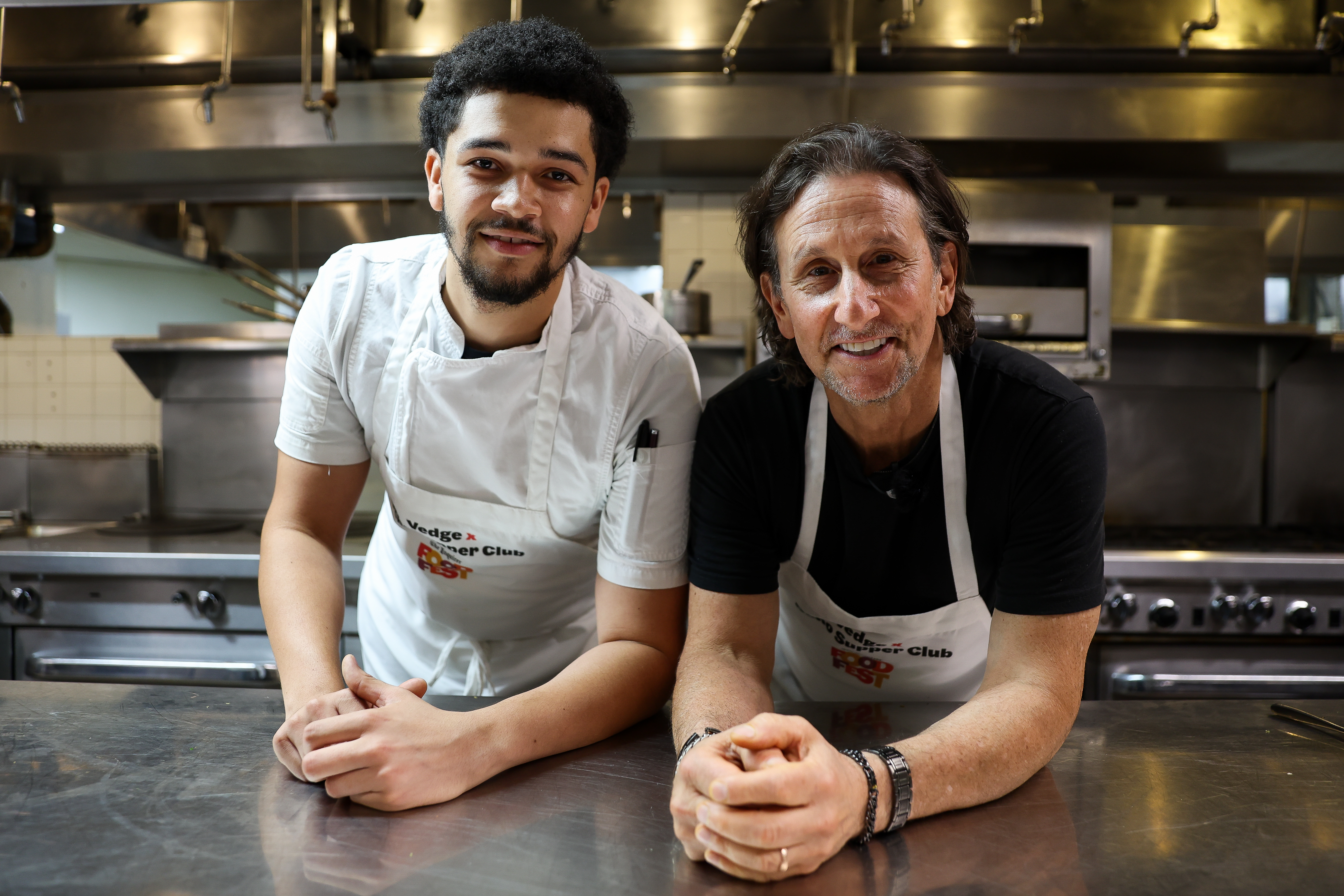
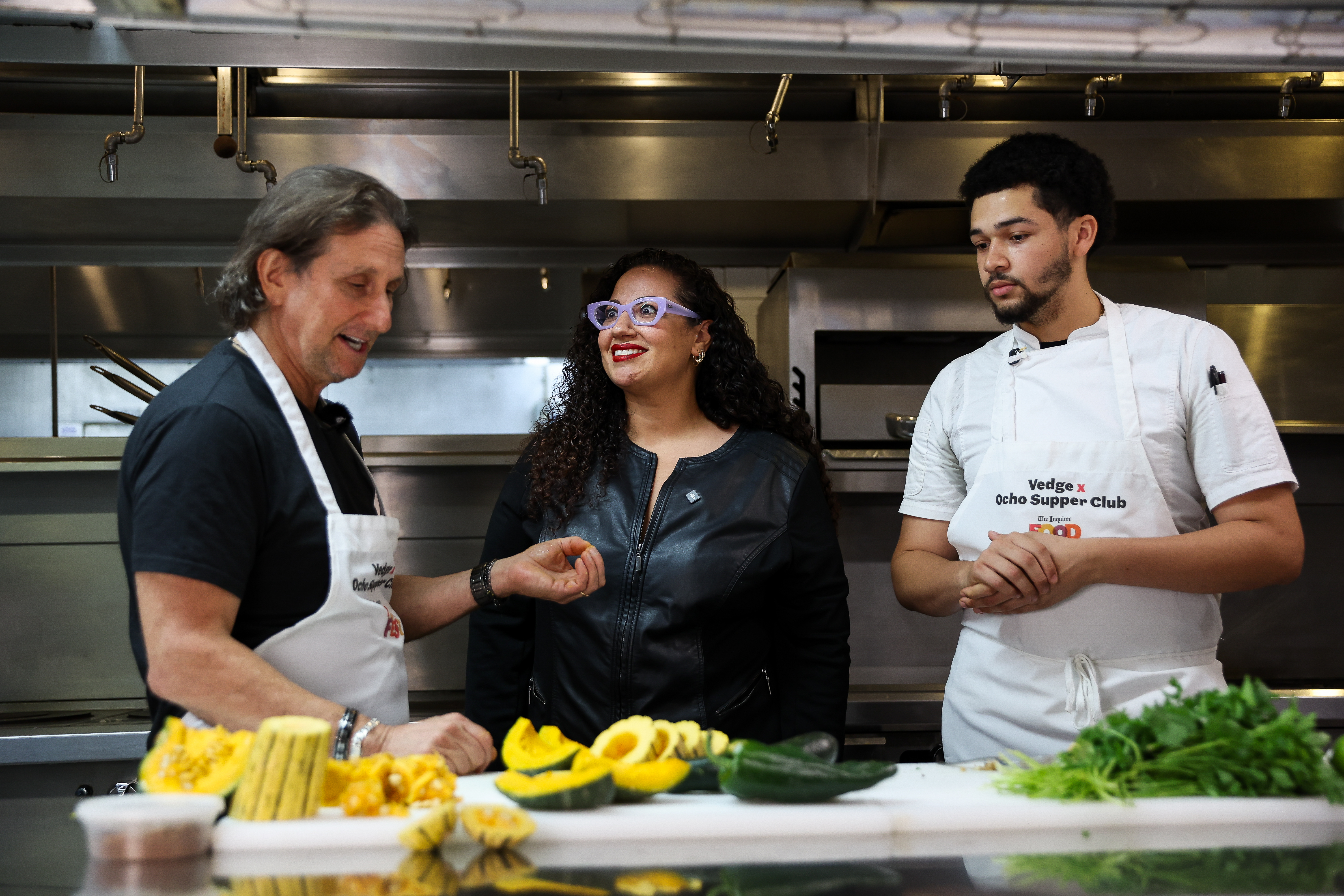
    Ocho Supper Club chef RJ Smith and Vedge owner and chef Rich Landau pose for a portrait during an Inquirer’s Food Fest 2026 production shoot.Isaiah Vazquez / For The Inquirer

    Vedge x Ocho Supper Club

    When a fine-dining legend partners with one of the city’s most exciting young chefs, it’s all about eating your vegetables.

    At The Inquirer Food Festival, Vedge and Ocho Supper Club will team up on an autumnal dish: jerk squash smoked over pimento wood, topped with a green jerk sauce and crumble made from the squash skin and seeds.

    Husband-and-wife chefs Rich Landau and Kate Jacoby sit at the vanguard of Philadelphia’s vegan dining scene. Their long-closed Bella Vista restaurant Horizons was Philly’s first true experiment in vegetable-focused fine dining. Its sequel, Vedge, has endured for 15 years on Locust Street, with a menu of all-vegan greatest hits, ranging from silky rutabaga fondue to spicy dan dan noodles flecked with oyster mushrooms, that still feels timeless. Now the restaurant is honing its approach to sustainability, turning its food scraps into compost that eventually fertilizes the soil at Linvilla Orchards, the popular Delaware County farm and apple orchard.

    While Landau and Jacoby are focused on fine-tuning their business, Ocho Supper Club chef RJ Smith is still looking for a permanent home for his. Smith, 21, grew his supper club from just a few seats in his Drexel University dorm room to the Rittenhouse Hotel, where his elaborate tasting menus scored an indefinite residency.

    With Ocho, Smith draws on Afro-Caribbean recipes and fine-dining techniques honed in the kitchen at hot spots such as Provence and Royal Izakaya. He creates dishes that pulse with flavor and originality, like jerk duck and king crab served in a yellow curry laced with roasted garlic.

    Originally from the Bay Area, Smith has been working in Michelin star kitchens since he was 16. He graduated from Drexel in June. “Everyone told me I was crazy for wanting to go to culinary school,” he told The Inquirer in January. “But I always felt there was something more than just being behind the line.”
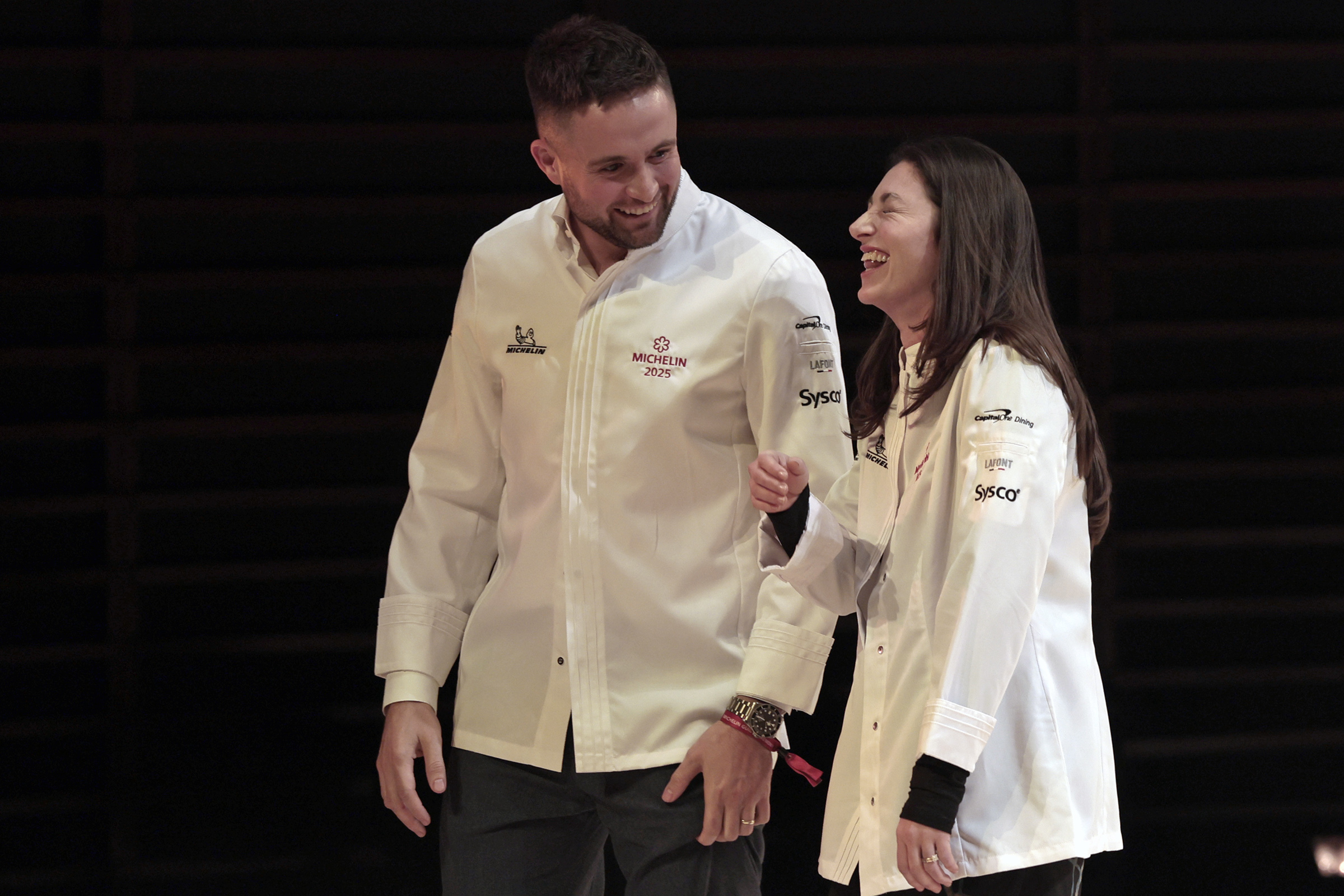
  • Chefs Amanda Shulman and Alex Kemp are opening another restaurant in Rittenhouse

    Chefs Amanda Shulman and Alex Kemp are opening another restaurant in Rittenhouse

    Chefs Amanda Shulman and Alex Kemp have been building a restaurant empire within walking distance of their Rittenhouse Square home. Their next project will be no exception.

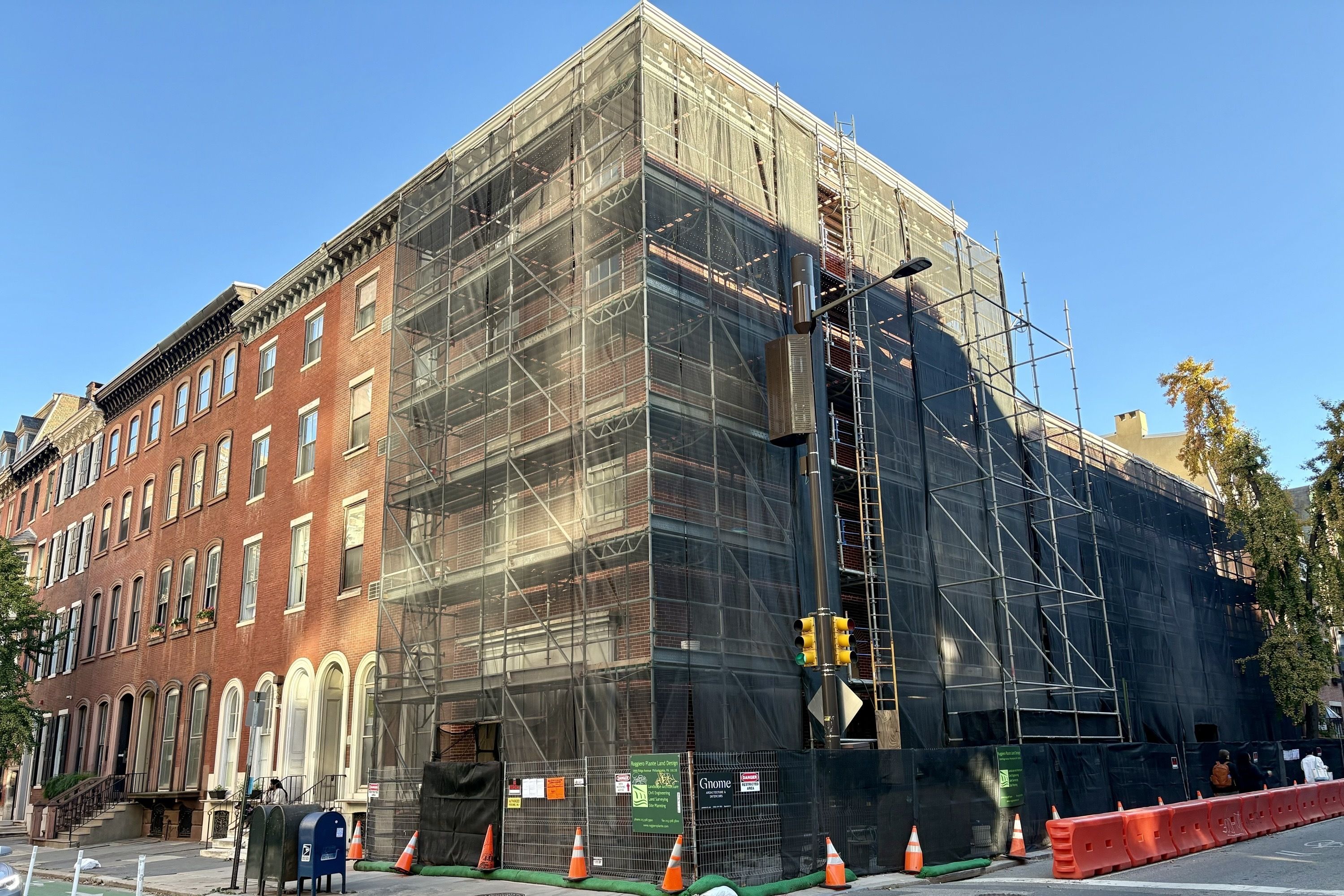
    The couple filed an application with the Pennsylvania Liquor Control Board on Thursday for a new restaurant at 1736 Spruce St., the southeast corner of 18th and Spruce Streets. The address is the former home of Barclay Pharmacy, a neighborhood institution that closed in 2023 after more than eight decades in business.

    “I saw the space and absolutely fell in love with it,” Shulman told The Inquirer, confirming that the couple had signed a lease. “We’re still figuring out the details of what it will become.”

    The former Barclay Pharmacy, destined to become a restaurant by Amanda Shulman and Alex Kemp, as seen on Oct. 22, 2026. The corner of 18th and Spruce Streets has been under construction for several months.Craig LaBan / Staff

    The license — previously held by the now-shuttered Le Pain Quotidien at 1423 Walnut St. — is in the corporate name of Her Place, Shulman’s first restaurant, which opened at 1740 Sansom St. in 2021.

    The building, a mid-19th-century Italianate townhouse with a distinctive facade (now shrouded in scaffolding), has its own history.

    Its residents included members of the Wetherill and Wanamaker families, according to a Hidden City Philadelphia feature. In 1924, antiques dealer Arthur Sussel bought the property, converting the first floor into a shop while his family lived upstairs.

    Barclay Pharmacy opened in 1939 on the northeast corner of 18th and Spruce, now part of Rittenhouse Market. Founder Bernard Friedman moved the business across the street in 1959, eventually buying the townhouse and converting its upper floors into apartments.

    His son, Russell, took over in 1974 and ran the pharmacy largely as a one-man operation until its closing in 2023.

    The pharmacy was something of a time capsule. Its shelves held vintage greeting cards, combs, and other merchandise, while a mural by artist Kenton Warne Hudson depicted 48 plants and drugs used in medicine. Friedman specialized in dermatological compounding and was known for keeping his Labrador retriever, Tico, at the shop.

    My Loup, 2005 Walnut St., as seen in 2023.Tyger Williams / Staff Photographer

    It remains to be seen what features will survive the conversion to a restaurant.

    Shulman was similarly guarded about the details of the couple’s previous project when they signed a lease at 23rd and Pine Streets last year. That space became Pine Street Grill, a casual neighborhood restaurant that opened in December.

    At the time, Shulman said their restaurant locations were no accident.

    “It’s all part of our master plan to be able to keep our commute to a 15-minute walk, max,” she said.

    The couple have opened three permanent restaurants in less than five years, each with a different approach to dining.

    Her Place Supper Club opened as a temporary BYOB inspired by the dinner parties she hosted while attending the University of Pennsylvania. It soon became permanent, offering a changing multicourse menu influenced by French, Italian, and Jewish cooking. Shulman presides over the intimate dining room, often introducing dishes to guests. Her Place received a Michelin star in November 2025.

    In April 2023, Shulman and Kemp opened My Loup at 2005 Walnut St. The lively à la carte restaurant draws on French and Québécois cooking, with a raw bar and an extensive wine program. Kemp leads the kitchen.

    Their third restaurant, Pine Street Grill, opened in December 2025 at 2227 Pine St., overlooking Fitler Square. The space is perhaps best remembered as a longtime location of the Greek BYOB Dmitri’s.

    The couple also operated Amourette, a seasonal outdoor restaurant in the garden of the Philadelphia Art Alliance, just off Rittenhouse Square, in summer 2024.

    Unlike the destination dining at Her Place and My Loup, Pine Street Grill is intended as an everyday neighborhood restaurant, serving American comfort food such as matzo ball soup, burgers, rotisserie chicken, and eggplant Parmesan. It also offers a full bar, weekend brunch, and a children’s menu.

    A Connecticut native, Shulman graduated from Penn, where she studied political science and journalism before pursuing a cooking career. She worked in Marc Vetri’s Philadelphia kitchens and later cooked in Italy, New York, Las Vegas, and Montreal, including stints at Momofuku Ko and Joe Beef.

    She returned to Philadelphia in 2020 and opened Her Place the following year. Shulman and Kemp, who met while working at Momofuku Ko in New York, married in 2023 and operate their restaurants through Libbie Loup Hospitality.

    Shulman, named one of Food & Wine’s Best New Chefs in 2023, was a James Beard Award finalist for Best Chef, Mid-Atlantic, in 2025 and 2026.

  • A Rittenhouse Square grocery store is behind on its rent. Neighbors are stepping in to help.

    A Rittenhouse Square grocery store is behind on its rent. Neighbors are stepping in to help.

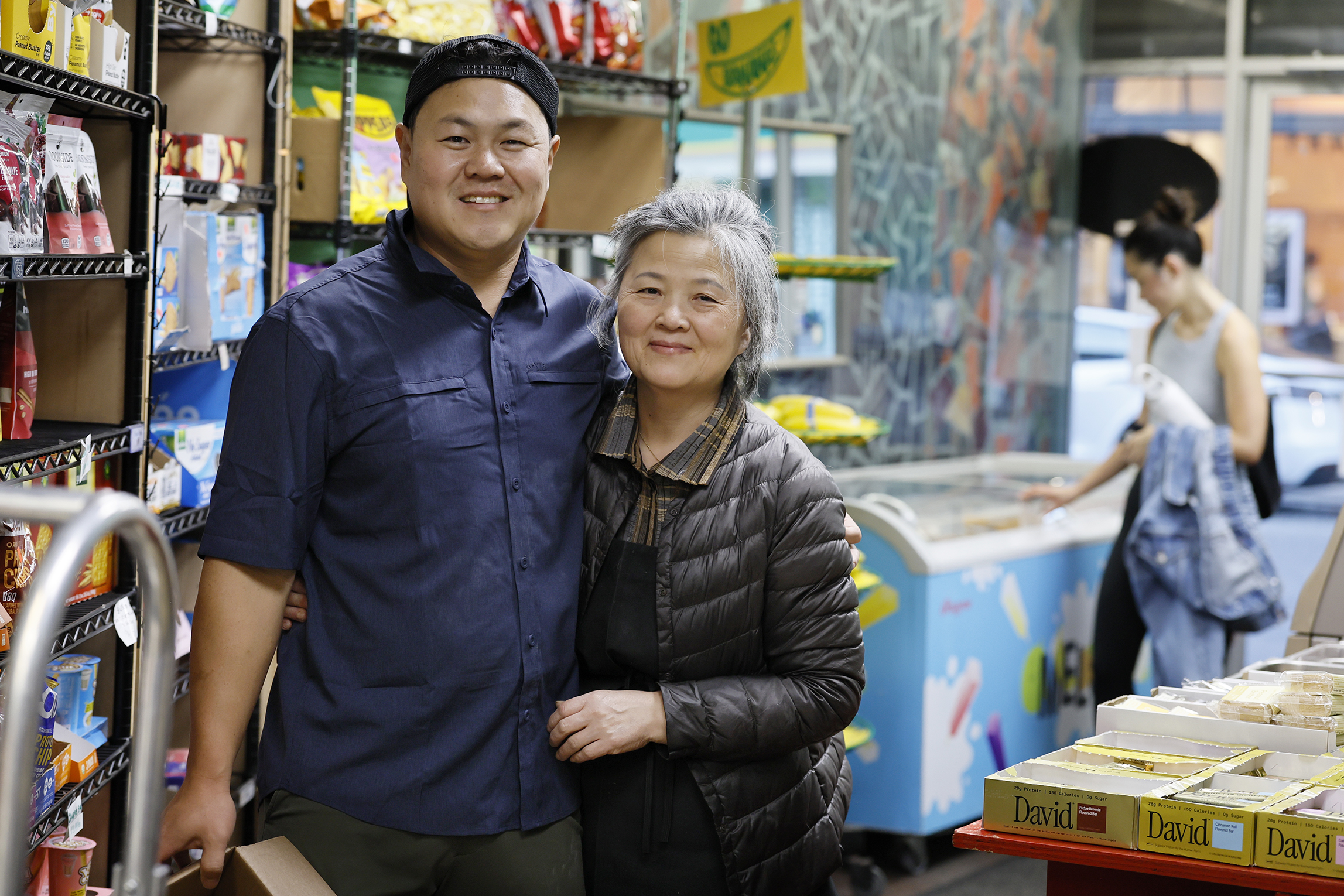
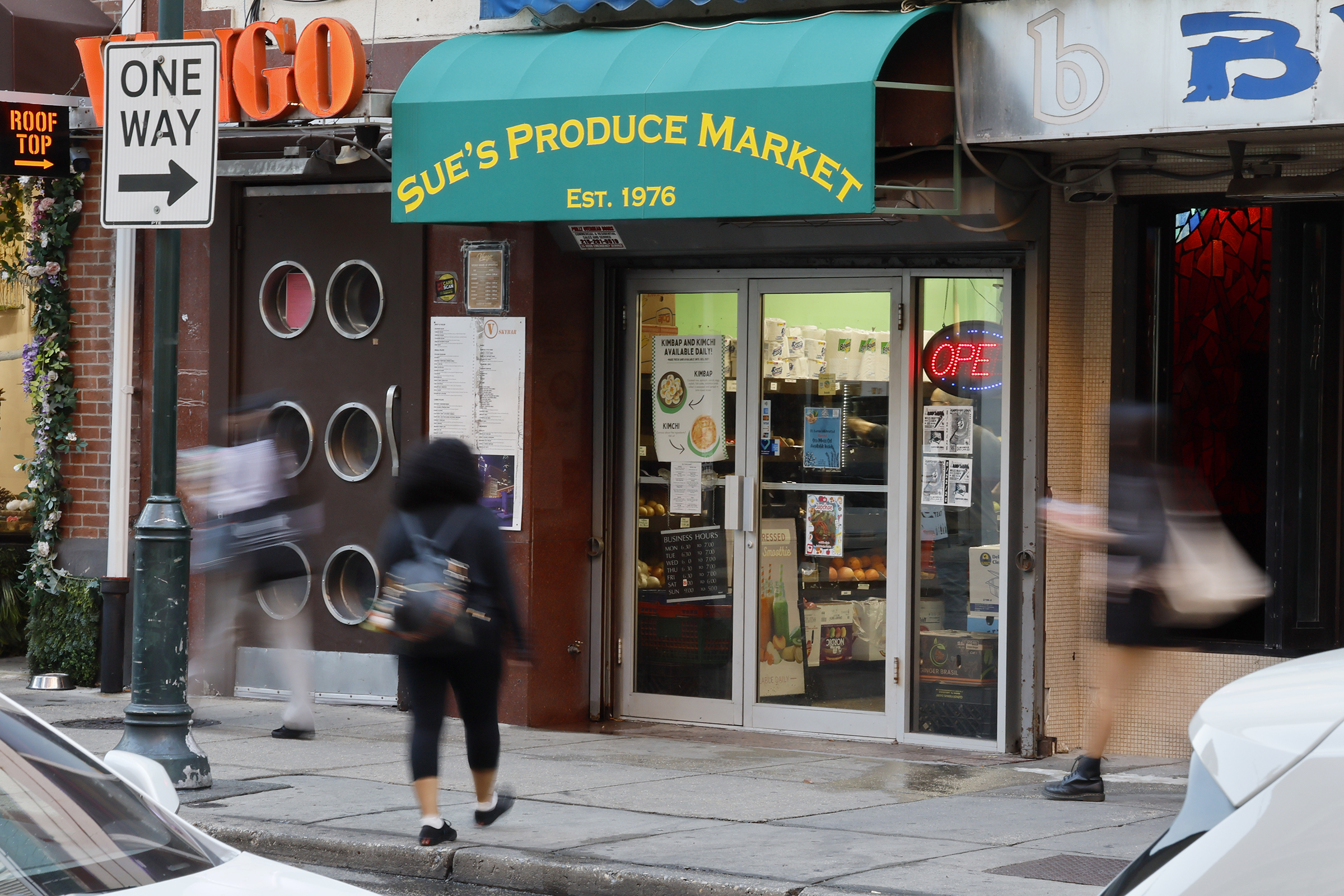
    Mi Ja “Tina” Shin smiled at the man approaching the register at Sue’s Produce, her small food market on 18th Street, two blocks from Rittenhouse Square. They locked eyes. Silently, he pressed a $100 bill into her hand. Shin stared at it and gave him a hug.

    And so it has been going lately at Sue’s, one of the few small grocery stores in a retail district dominated by restaurants, boutiques, and big-name brands.

    While Di Bruno Bros. across the street offers scores of cheeses and elaborate charcuterie, Sue’s takes a more workaday approach to retail: Packaged Dietz & Watson cold cuts and everyday cheeses, plus dozens of varieties of produce, snacks, drinks, and pantry staples are jammed into the narrow storefront. Shin’s homemade Korean food at the counter is the house specialty.

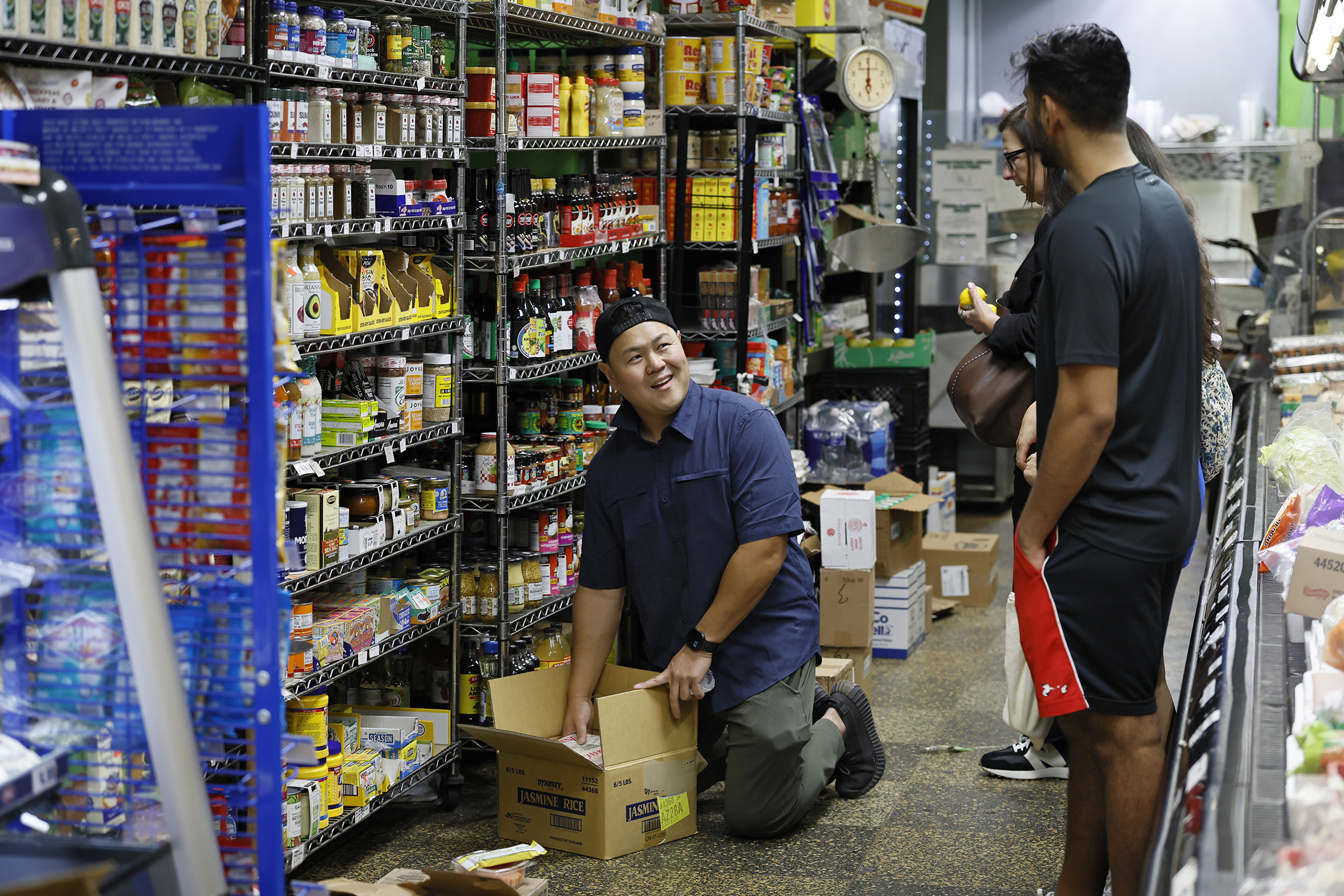
    James Shin talks with customers while stocking shelves at Sue’s Produce Market.Elizabeth Robertson / Staff Photographer

    But Sue’s is behind on its rent, and neighbors have been stepping up since Shin’s son James launched a GoFundMe campaign last week.

    By early Friday, the fundraiser had exceeded $27,000 and was closing in on its current goal, $30,000.

    James Shin said his last understanding was that his mother owed about $38,000 in back rent, which is why the fundraiser was initially set at $40,000. Diaa Sawan, whose family owns the building at 114-116 S. 18th St., said Thursday that the current arrears are about $32,000.

    Sue’s has been struggling for some time, according to both Shin and Sawan.

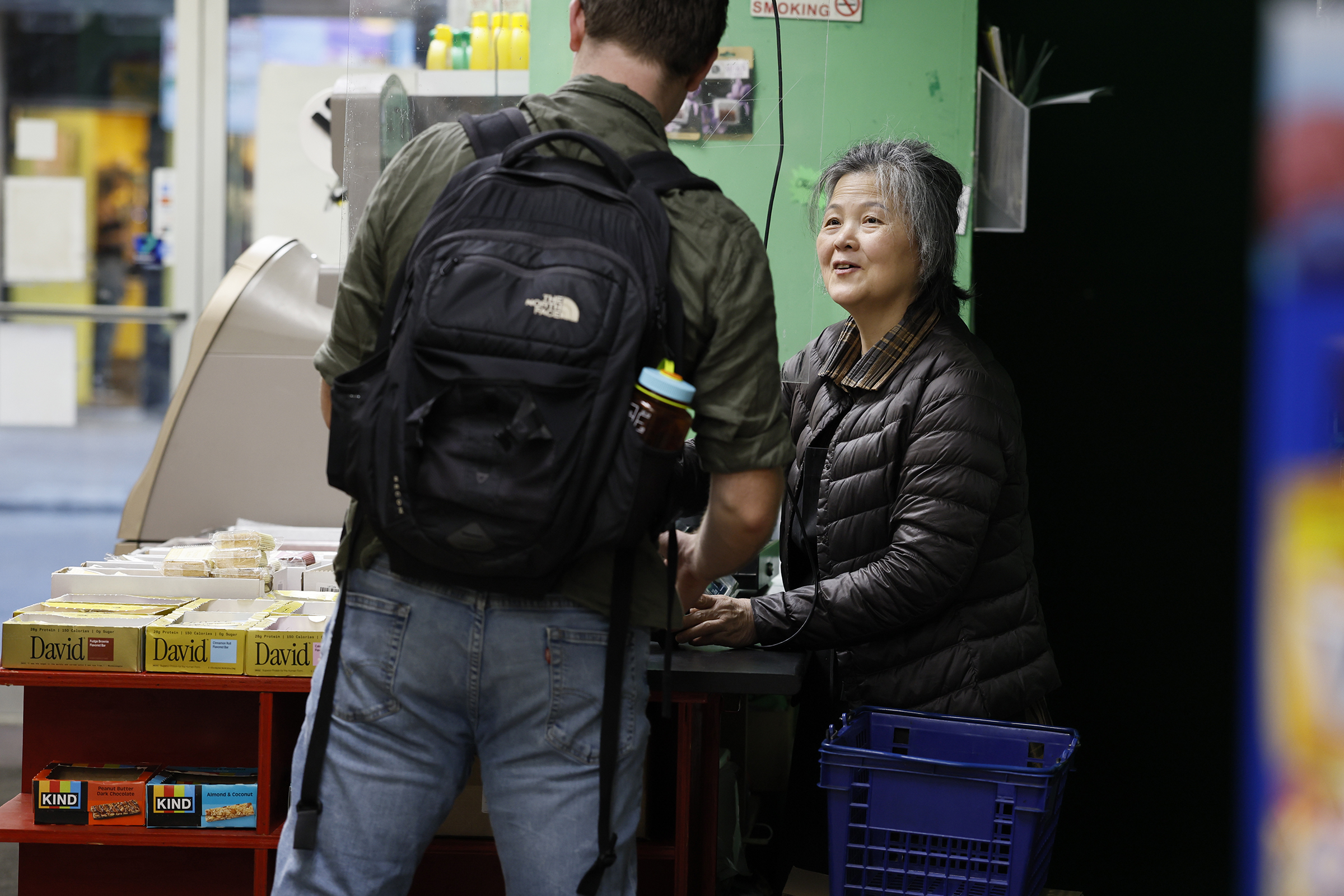
    Mi Ja “Tina” Shin chats with a customer at Sue’s Produce Market.Elizabeth Robertson / Staff Photographer

    Sawan said the store has typically been three or four months behind, and has at times made partial payments. “We’ve been so patient,” he said. “My family and I are actually trying to give them a chance, and hopefully she can make it.”

    Asked whether eviction proceedings were possible, Sawan said it was. “After a couple of years, I have no choice,” he said. “We have a mortgage. We have to pay the bank.” He said well-funded national tenants could pay thousands more in rent.

    James Shin, who has been speaking publicly for his mother because she is not comfortable speaking in English, described the relationship with the Sawans as longstanding and accommodating. “They’ve always tried to help my mom out,” he said.

    Sue’s Produce Market, 114 S. 18th St.Elizabeth Robertson / Staff Photographer

    A neighborhood rallies

    So are the customers. The man who handed her $100 Thursday morning was Ron Schlesinger, a neighbor.

    “I don’t like GoFundMe because they take a fee,” Schlesinger said. “I’ll give her more money if she needs it. My whole family has been coming here for 50 years.”

    That history predates the current store. Tina Shin’s aunt Sue operated a produce business nearby before the family opened the 18th Street storefront in the early 2000s next to Byblos, the Mediterranean restaurant owned by the Sawan family. Vango, the Sawans’ club, is above both establishments.

    Support is also coming from Amanda Shulman, chef-owner of nearby Michelin-starred Her Place Supper Club, who announced this week that she would host a Korean-inspired benefit dinner Oct. 16, with snacks provided by Shin and proceeds donated to Sue’s.

    The dinner will have two family-style seatings, at 6 and 8:30 p.m., with 48 seats total at $275 per person, beverages included. Reservations will go online at 6 p.m. Sunday. The goal is to raise $10,000.

    Sue’s is “such an integral part of our little Rittenhouse neighborhood,” Shulman said. “Someone from our team visits Sue’s at least two times and sometimes up to four times a day for this or that or a pick-me-up snack or gorgeous herbs when we’re shorted.”

    ‘Having a hard time’

    James Shin, 37, who runs another market at Society Hill Towers, said the family’s problems built gradually. “My mom has a lot of business expenses, plus the slowdown of the economy and her trying to keep up,” he said. “Eventually, she fell behind on rent. I knew my mom was having a hard time. Business was slow.”

    Part of the problem, he said, is that Sue’s was built around a shopping habit that has faded.

    “We’ve always been a produce market, so people know us for produce,” Shin said. “But nowadays, no one really grocery-shops or buys produce as much as they used to.”

    Tina Shin, 63, has had decades of experience in the food trade. Her son said she came to the United States from South Korea in the late 1980s after marrying his father, Dong Shin. In the early 1990s, the couple took over a fruit cart from a relative at 18th and Walnut Streets, outside of what was then Urban Outfitters and is now Anthropologie.

    James remembers tagging along with his mother when he was young because the family had no babysitter. On rainy days, he said, he would crouch beneath the shelter of the building while she cut fruit inside the cart.

    The family later operated a series of stores in North Philadelphia that failed through fire or economic downturns. In 2012, they took over Sue’s from relatives. “At the time, business was still pretty good, but it was shifting,” Shin said.

    Rent then was about $5,000 a month, he said. Today it is $12,000, according to Sawan.

    A survival strategy

    As produce sales declined and costs rose, Tina Shin began leaning more heavily on prepared Korean food.

    After the pandemic, she started with kimchi, then kimbap. At first, James Shin said, she made only five or 10 rolls a day and would be disappointed if one or two remained unsold. Then demand grew.

    “She was selling 10, and next thing you know, she’s selling 20, 30, 40 a day,” he said.

    She expanded into banchan and other dishes, studying recipes and techniques online and adapting them.

    The cooking also extended an already-grueling workday. James Shin said his mother often wakes at 2 a.m. to prepare food, works at the store from 7 a.m. to 7 p.m., then goes home, preps again, sleeps a few hours, and starts over.

    But are the fundraisers just putting a bandage on a systemic problem? James Shin said he hopes that the attention will help in the long term.

    People who are not donating online, he said, have been coming into the Rittenhouse store to buy Korean dishes, smoothies, and groceries.

    “I feel like this is a good opportunity for us to catch back up and try to start — not fresh, exactly — but restart and get everything back together,” he said.

    For his mother, he said, the strongest encouragement remains the simplest kind.

    “What keeps my mom going is the customer who comes back and says, ‘Your food is the best. Your Korean food is really good,’” Shin said. “I feel like that’s the drive that’s been keeping her going.”