Tag: Almanac

  • Philly’s most ambitious bartender wants to shake up cocktail making everywhere

    Philly’s most ambitious bartender wants to shake up cocktail making everywhere

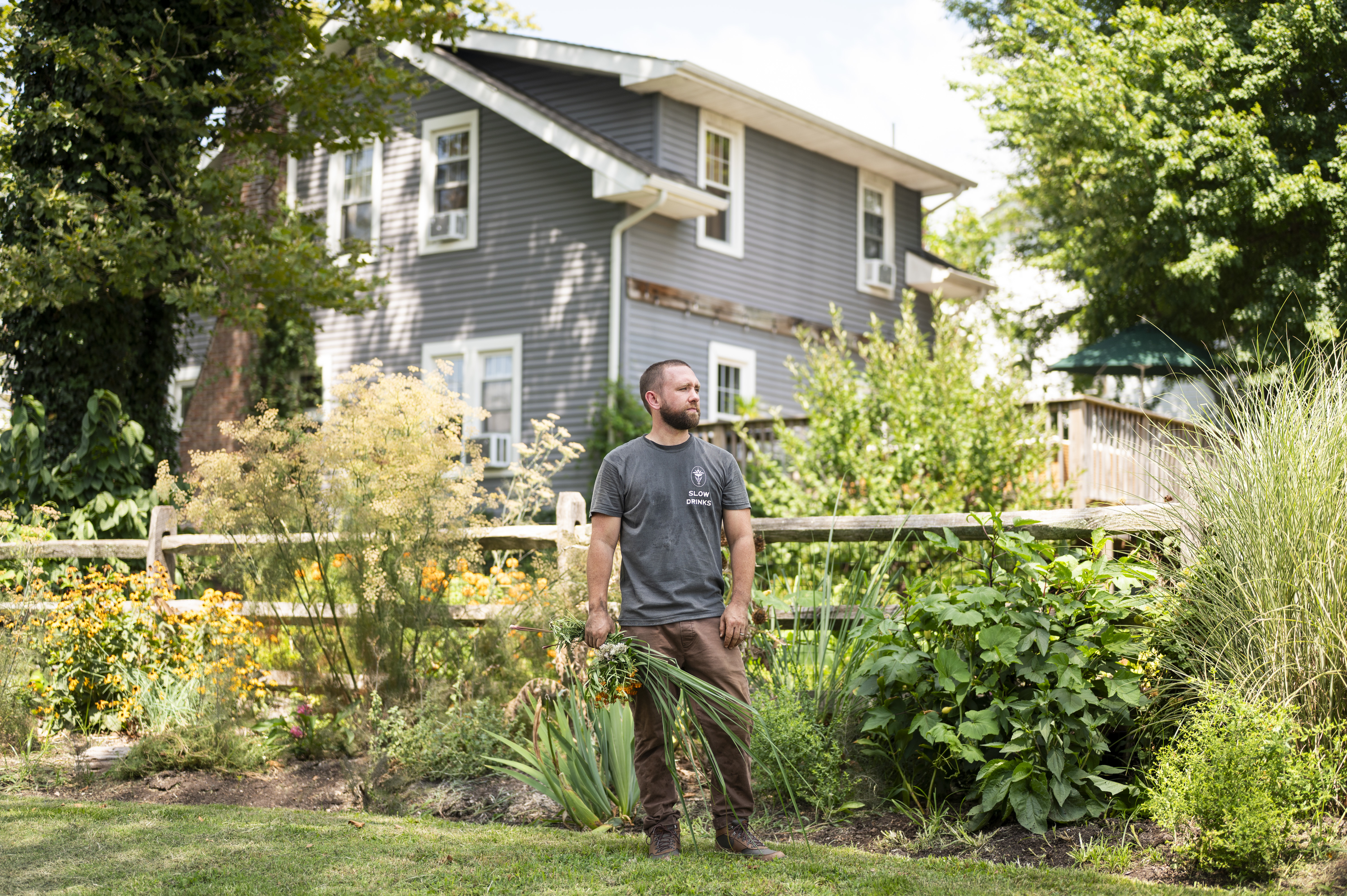
    There’s an unassuming backyard in South Jersey that powers some of the area’s most interesting cocktails. The third-of-an-acre Pennsauken plot looks like that of any suburban home, with a weathered swing set and plenty of lawn, but it generates over 100 species of fruit, vegetables, herbs, and flowers each year, a mix of the familiar — lavender, dill, celery, tomatoes, peppers, etc. — and the far more intriguing: dandelion chicory, huacatay, prickly pear cactus, pawpaws, yuzu, jujubes, wormwood, and Jenny Lind melon.

    Ingredients from this garden have been showcased in drinks at some of Philly’s best cocktail bars, as well as bars in Chicago; Cleveland; Berlin; Mexico City; Turin, Italy; and Bacolod, Philippines. That’s because the garden’s keeper, James Beard Award-winning beverage writer and bartender Danny Childs, knows how to transform the bounty into a liquid treasure trove.
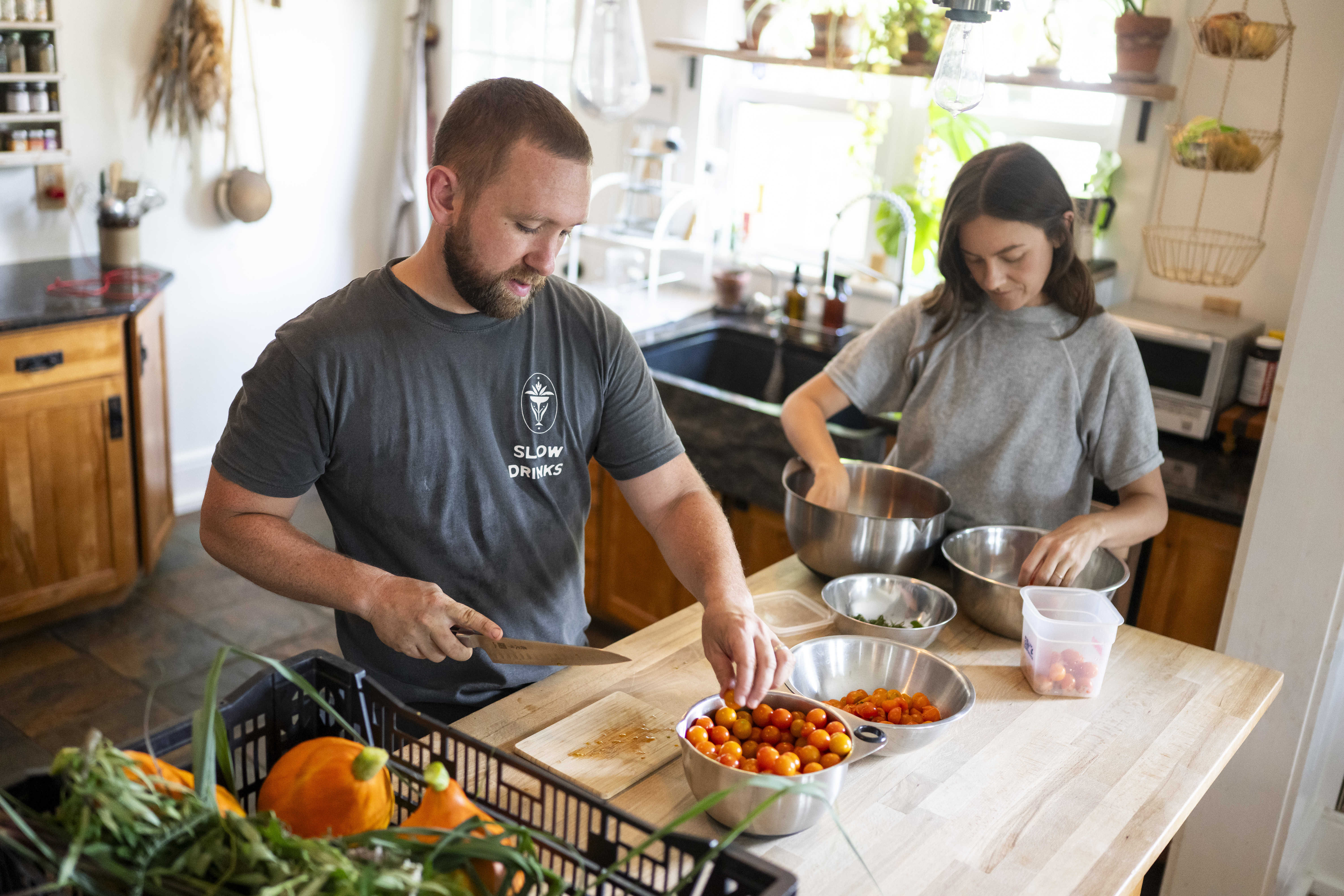
    Danny Childs and his wife Katie sift through tomatoes picked from their garden at their home in Pennsauken, N.J., while making lacto-fermented tomato water.Allie Ippolito / For The Inquirer

    This backyard and the wilds of South Jersey inspired Childs to develop a range of farm- and field-to-bar beverages, alcoholic and non, collected and detailed in his 2023 book, Slow Drinks.

    The principles and practices in the book combine to form a drink-making theory that’s familiar to anyone who’s dined in a farm-to-table restaurant. The best illustration may be homemade amaro, which can capture a time and a place in a bottle by way of its botanicals. Slow Drinks has a recipe for every season — in spring, it’s a strawberry-tinged rabarbaro with roasted dandelion root; in fall, it’s a wormwood-heavy génépy spiked with apples, cranberries, and figs.

    The theory behind Slow Drinks, which Childs views as larger than the book itself, emphasizes seasonality, local sourcing, preservation, and storytelling, and it can be applied anywhere.
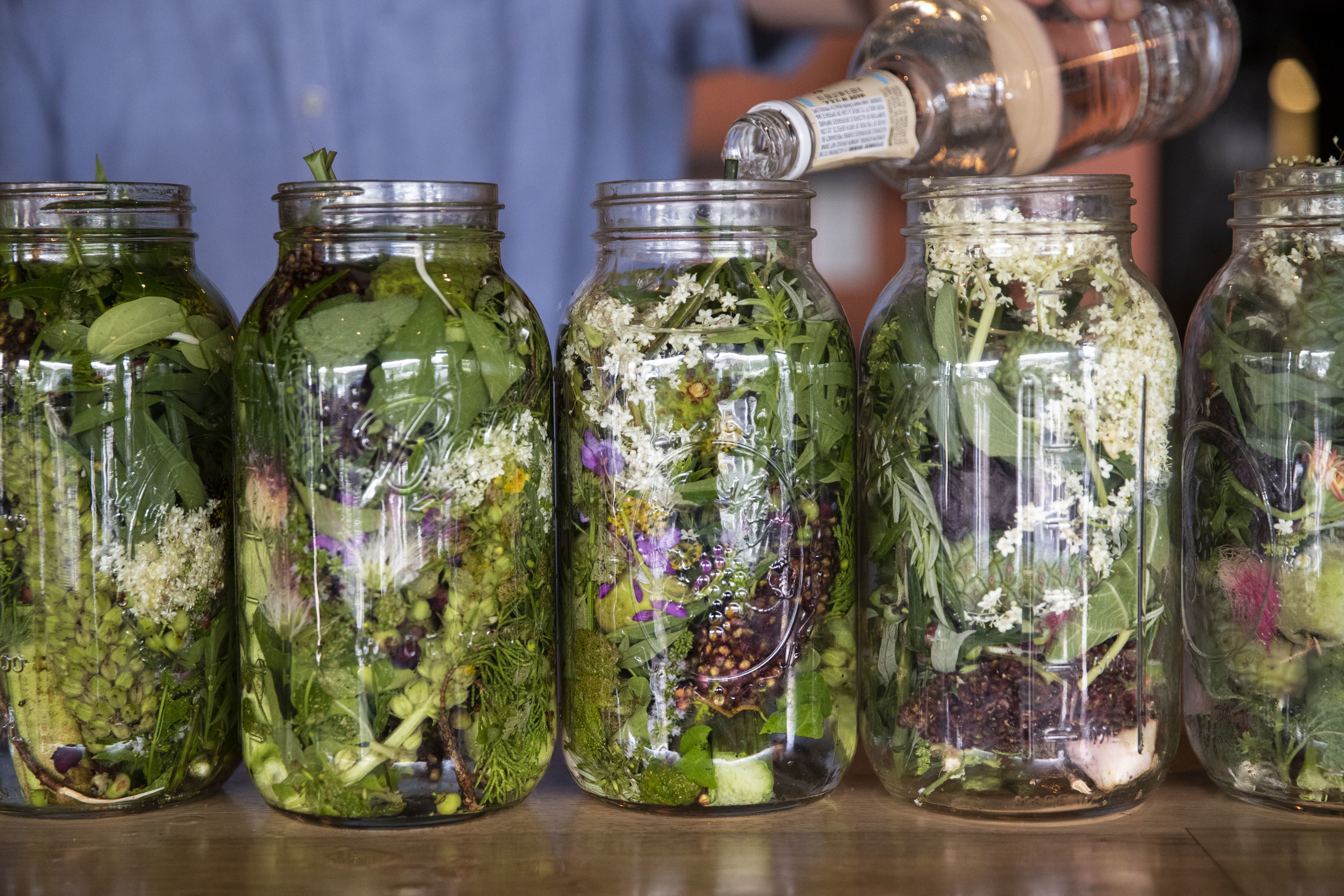
    Childs’ South Jersey-inspired amari are infused with botanicals from backyards, forests, and parking lot shrubberies. MONICA HERNDON / Staff Photographer

    The farm- and field-to-bar approach has caught the attention of prestigious bar programs here and abroad: Slow Drinks has sold 14,000 copies in English and some 4,000 copies in Italian. It was recently translated to Mandarin.

    Though Childs has consulted on several beverage programs in Philly, this year marks the opening of his first bar, Field Day, in Northern Liberties, which he owns with his wife, Katie. Flagged as a “regional cocktail bar,” Field Day will filter its menu through a Slow Drinks lens, showcasing the breadth of ingredients and culinary traditions that swirl around our pocket of the Mid-Atlantic, from the Jersey Shore to Pennsylvania Dutch country. Think sherry and cherry wishniak highballs, boozy gelati, and a daiquiri-colada hybrid flavored with pawpaws and strawberries, along with regional foods like tomato pie, Lebanon bologna, and steamed clams.
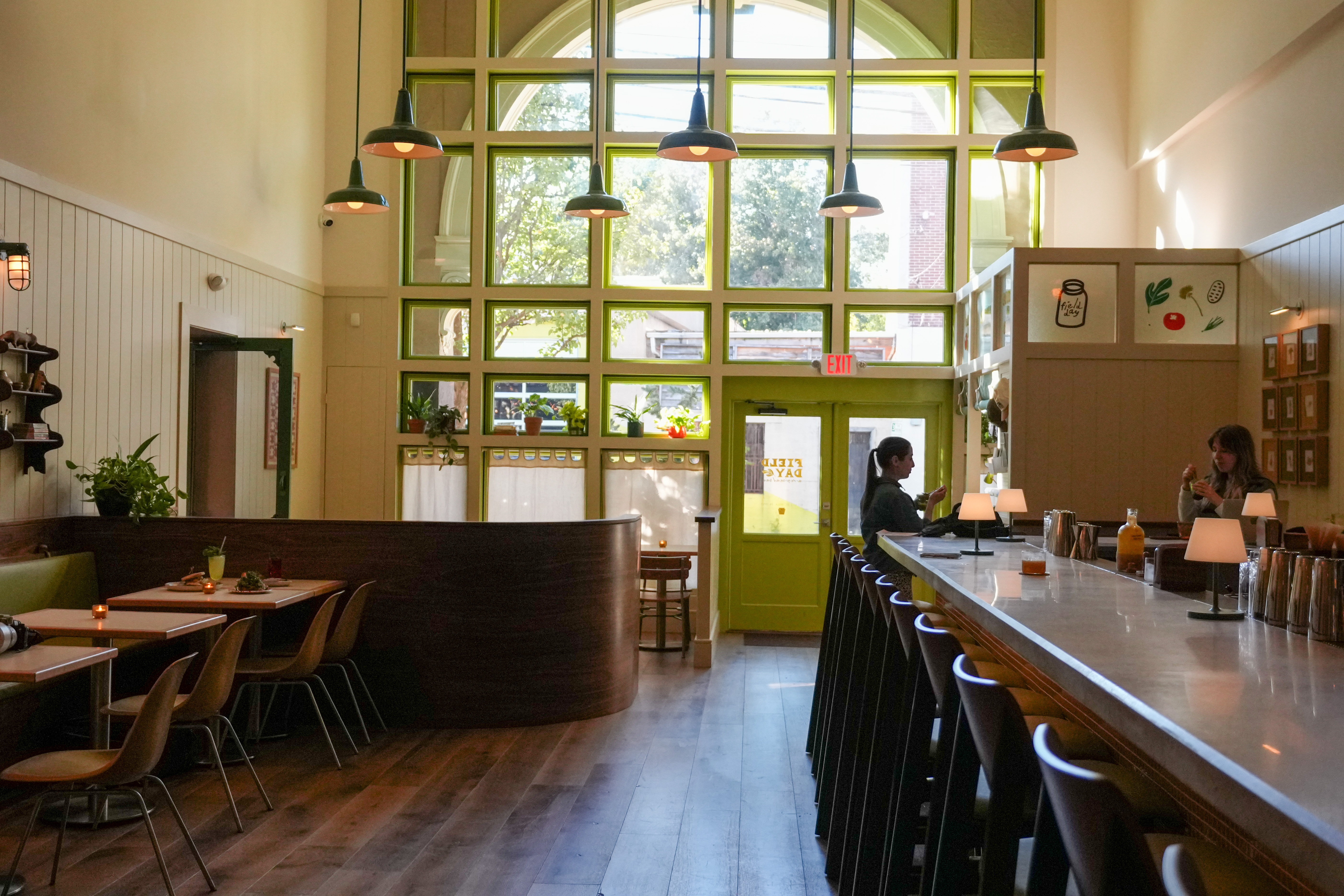
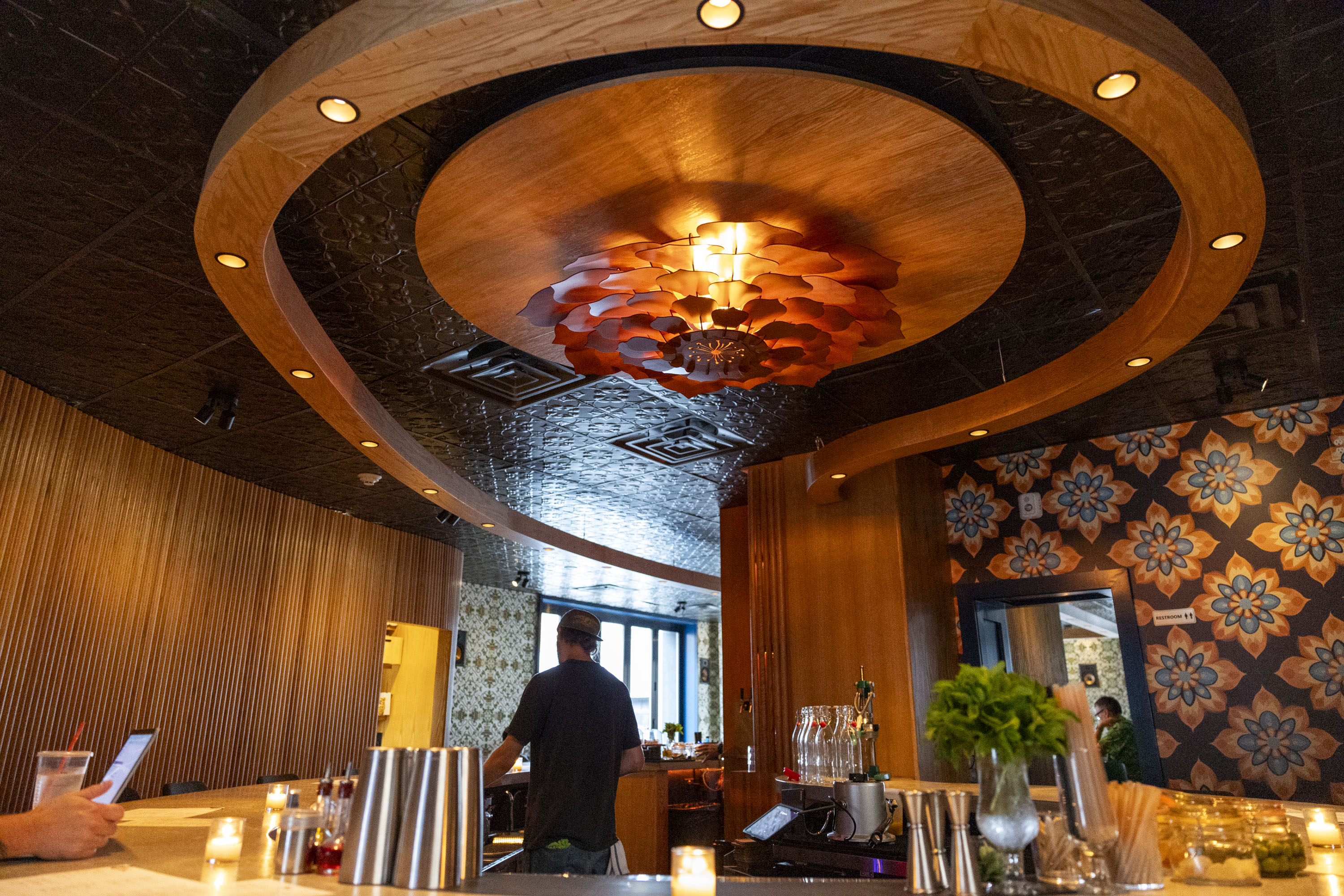
    Field Day, in Philadelphia’s Northern Liberties neighborhood, opened Oct. 21.Jessica Griffin / Staff Photographer

    The bar’s debut marks the culmination of years of work. But Childs’ ultimate goal is much bigger. He wants Slow Drinks to take root at bars everywhere. He’s made some headway, but just as it takes time to turn black walnuts into booze, sowing the seeds of a cocktail revolution is no fast or easy feat.

    Pitching a movement

    It was steamy outside but freezing inside the Ritz-Carlton New Orleans, where Childs was presenting at 2025’s Tales of the Cocktail, the national drinks-industry conference that is nerdy and bacchanalian in almost equal measure.

    The annual convention brings together a wide range of beverage professionals — bartenders, bar owners, distillers, marketers — who converge on seminars that would likely bore a layperson to tears. Slideshows on backbar configuration, viscosity, extraction, and “sensory analysis of spirits” were standing-room only, even as cocktail samples were being passed outside conference-room doors. The most-anticipated presentations saw people queue up outside the meeting rooms up to 45 minutes beforehand.

    Childs had organized a panel with himself, bartending legend Jim Meehan (best known for cofounding the East Village cocktail bar Please Don’t Tell, or PDT), and Matchbook Distilling’s Leslie Merinoff Kwasnieski. It was slated for a Thursday morning, the penultimate day of the five-day-long conference and when many bartenders fly back home to work lucrative weekend shifts. That may have accounted for the relatively modest crowd in the double-wide meeting room that had been jam-packed for a boisterous lecture on dilution two days before.
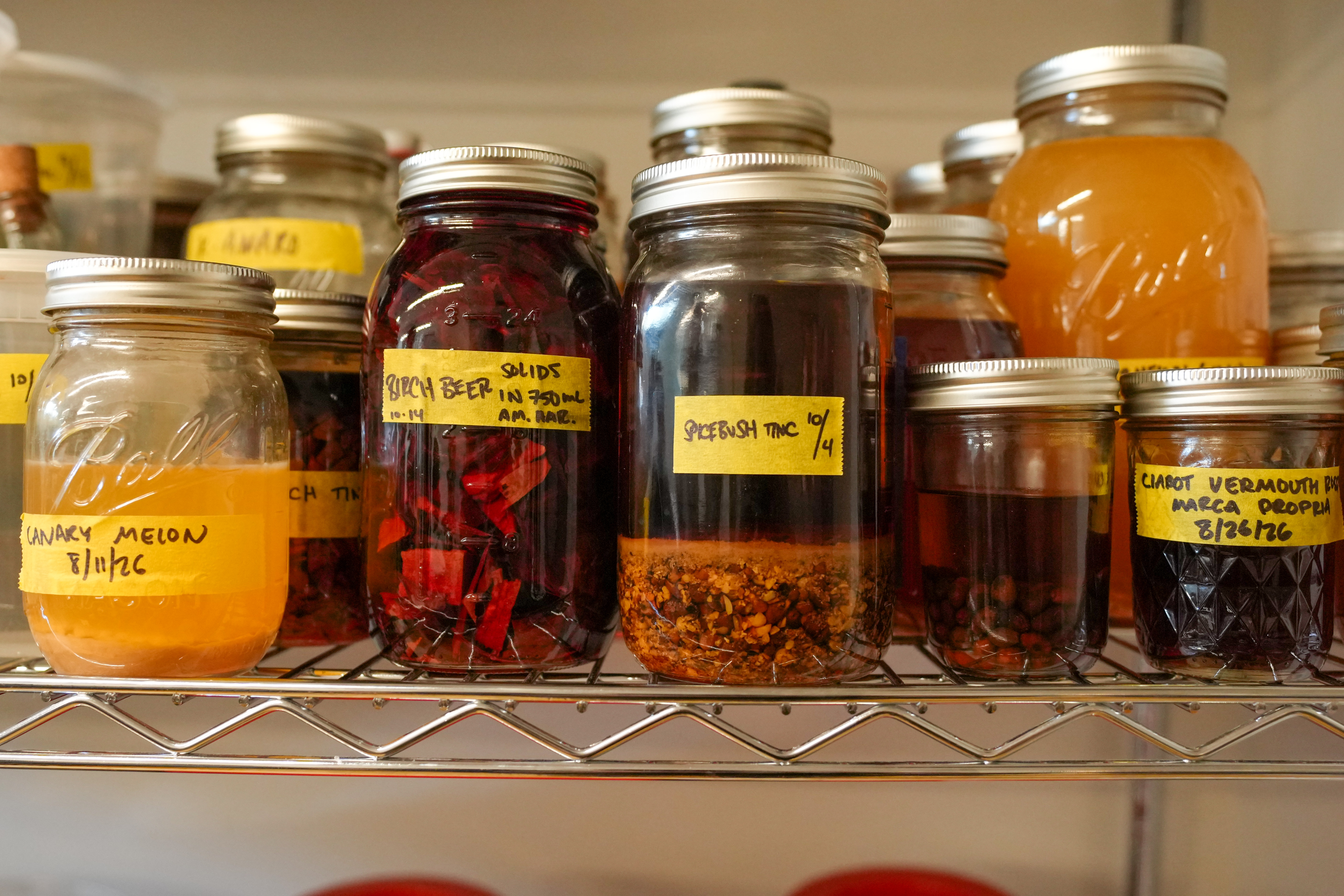
    Local botanicals and produce macerate above Field Day, in the Slow Drinks’ second-floor HQ.Jessica Griffin / Staff Photographer

    Another factor that may have contributed to crowd size? Compared to some more granular items on the Tales of the Cocktail agenda, the panel — entitled “the Slow Beverage Movement” — promised to be a little lofty.

    Over an hour, fielding questions from then-executive director of Slow Food USA Bilal Sarwari, the panelists made the case for cocktails concocted the locally inflected way. The discussion at times veered into very dry territory: Childs waxed on ethnobotany, Meehan meditated on our world’s disappearing biodiversity, and Merinoff Kwasnieski, at one point, gushed about fungal networks’ impact on soil quality.

    The talk was well-received by the audience (a small contingent of which were Slow Food Negroni Week scholarship recipients, whose rides to the conference had been subsidized by fundraising efforts that Childs had a hand in), and a couple queries ate up the 10 minutes left for questions. Reliably upbeat, Childs said he couldn’t have been happier with how it went.

    Having sat in on several other seminars with higher-energy audiences, I myself wasn’t so sure how well the pitch had landed. A bartender with a gardening habit might be an easy sell. But could Slow Drinks’ time- and labor-intensive cocktail theory gain a foothold in the mainstream? How many bartenders are willing to ferment their own ginger beer, forage ingredients for housemade amari, or harvest actual roots for root beer?
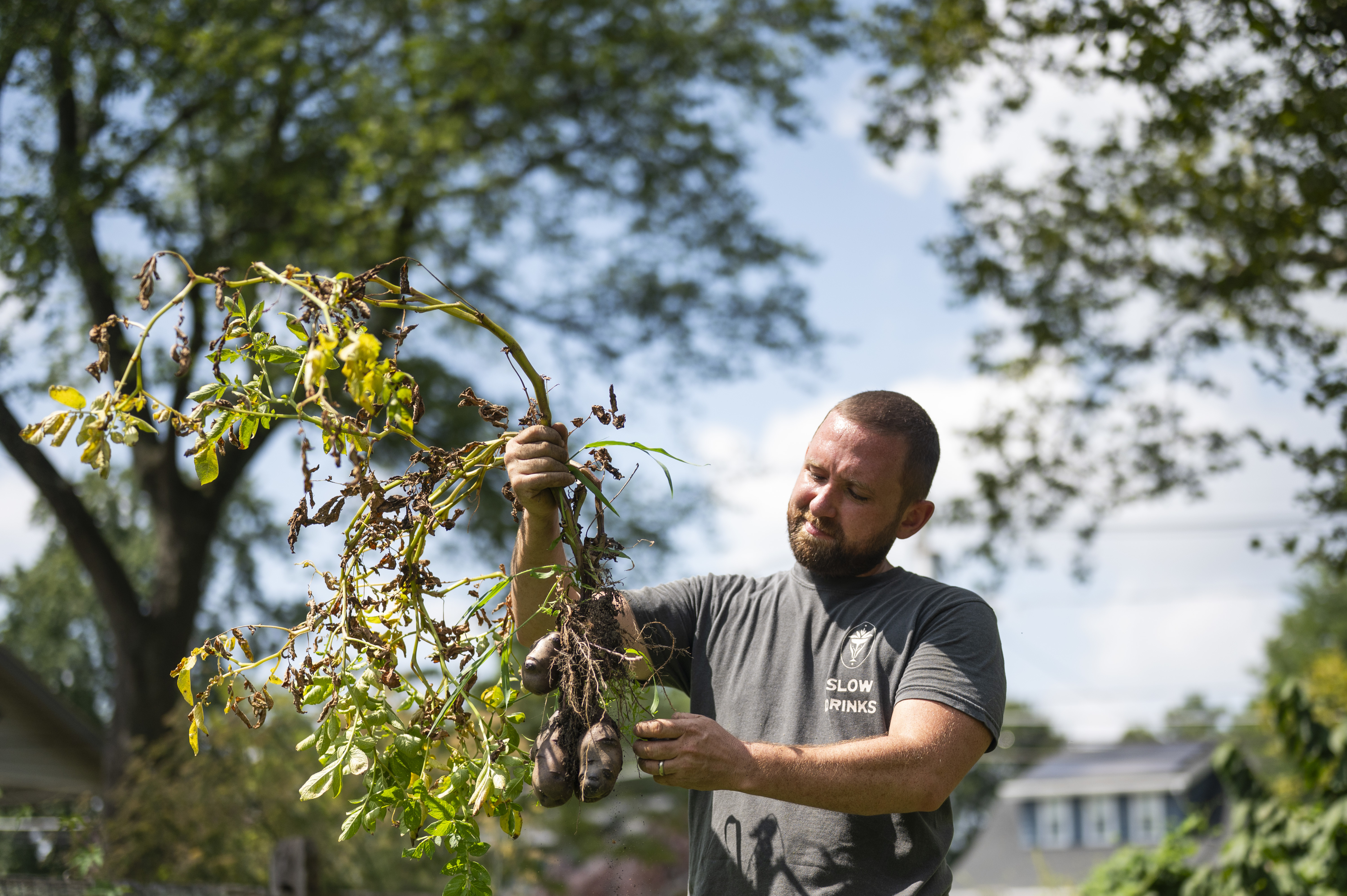
    Purple potatoes are among the hundreds of plants Childs grows in his backyard. Allie Ippolito / For The Inquirer

    Deeply unpopular, very important

    I asked Meehan later about the challenges facing this prospective movement. In 2024, Meehan released a book, The Bartender’s Pantry, written, as he framed it in our interview last year, “in the wake of the reindustrialization of the craft cocktail.” He considers it in league with Slow Drinks — a call to think harder about cocktail ingredients and their sourcing in a time when “our world and our climate is under great duress.”

    Like Childs, Meehan feels strongly about this cause, but he’s skeptical about industry uptake. “Are people doing this? Absolutely not. And will they do this? I don’t know. I doubt it,” he said.

    But Meehan had reason for optimism, too. “As I think back to the early days of the craft cocktail movement that I participated in [in the aughts] … it is very hard to describe to today’s young bartenders how deeply unpopular what we were doing was — how unpopular, unprofitable, and how vain and silly most people viewed us.”
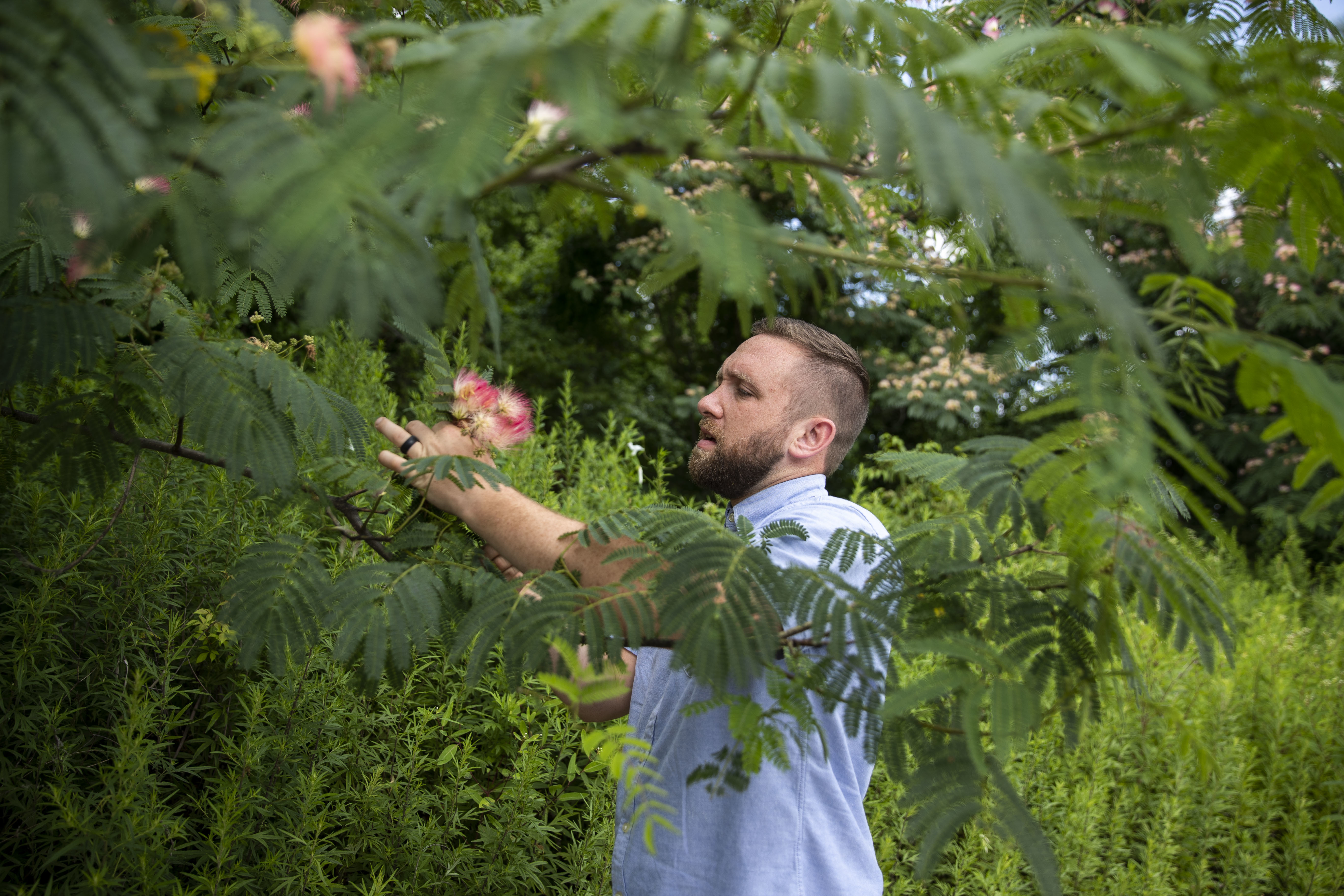
    Danny Childs foraging for blooms from a mimosa tree in 2021, when he was still bar manager at the Farm and Fisherman Tavern.MONICA HERNDON / Staff Photographer

    He remembered working 12-hour shifts at Pegu Club, the storied New York cocktail bar that opened in SoHo in 2005, and earning just $80, a fraction of what he would make at Gramercy Tavern. He would repeatedly deny requests to sub vodka in for other spirits on the cocktail menu. “It was tough,” Meehan said.

    Time and “a never-ending parade of great press” eventually moved the needle, he said, as a curious clientele of mostly young professional women came in, dragging their vodka-drinking boyfriends with them. He was surprised to see customers casually embracing whiskey and gin drinks within just a couple of years. By the 2010s, craft cocktail bars were opening in cities all over the country.
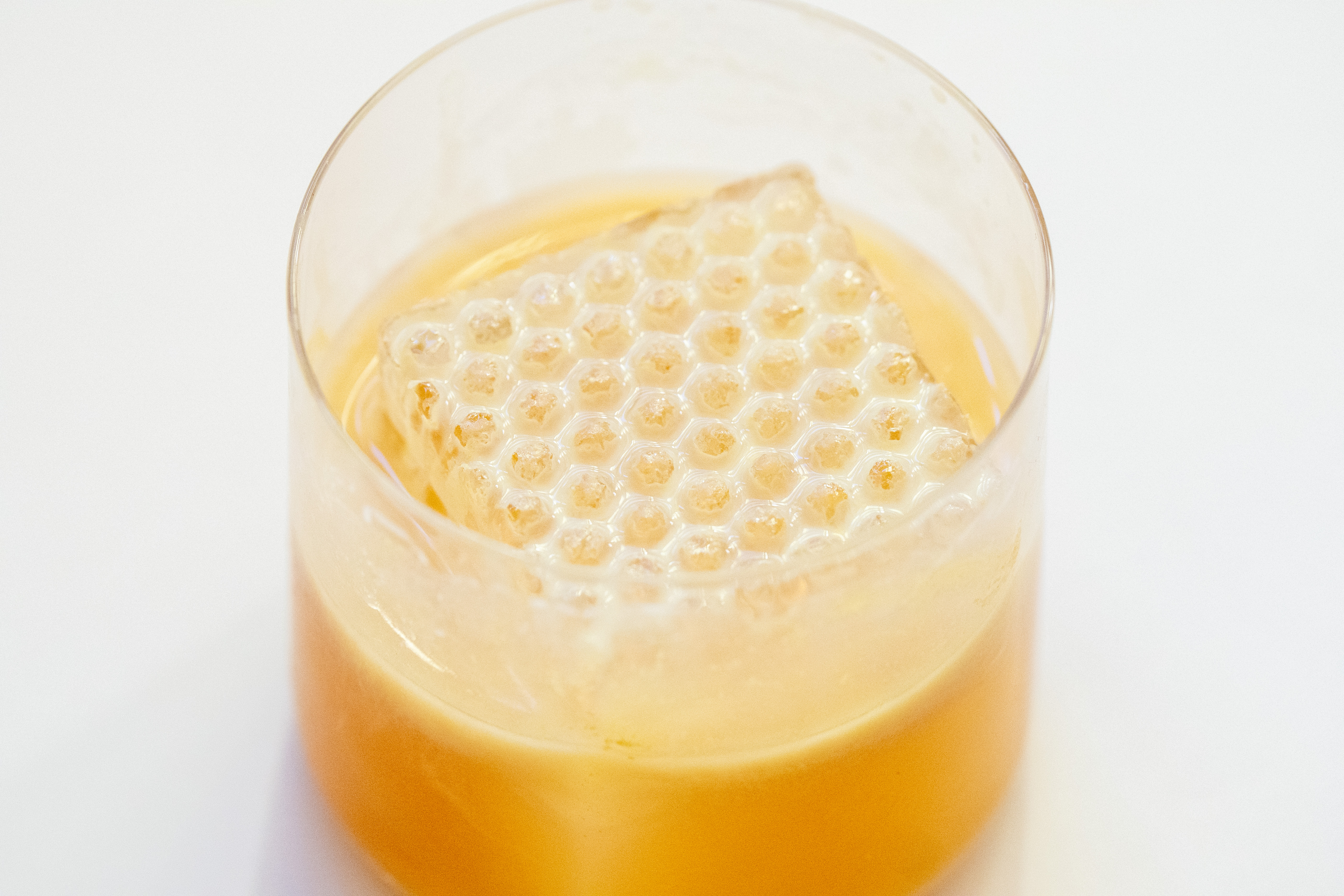
    Liquid Gold, an Old Fashioned riff that uses beeswax, propolis, and raw honey, at Field Day.Jessica Griffin / Staff Photographer

    To some extent, Meehan — no longer bartending — finds himself on the outs again, having taken up a new mantle in advocating for a more thoughtful, sustainability-minded approach to beverages. He considers himself in the same camp as Childs in that sense, but he thinks Childs has an edge he and his cocktail-pioneer comrades didn’t: “We were weirdos, and Danny is, frankly … very normal and very reasonable and very articulate, and I think mostly he’s very positive,” Meehan said. “For these reasons, I think this guy has a very good chance of being successful.”

    “I think that there’s something revolutionary about what Danny’s putting out there,” Meehan said. “I’m sure people think that we look like some bartender form of Alice Waters, but I think that it is very important work.”

    Changing perceptions

    Childs is well aware that the very idea of locally inflected cocktails can come across as pretentious and twee — they’re the kind of thing you might have seen skewered on Portlandia.

    But it’s also hard to imagine a better ambassador for what seems like a very fancy thing: Childs first developed Slow Drinks as a concept while working as bar manager at Farm & Fisherman, a family-friendly tavern in a Cherry Hill strip mall. Over a decade, he hooked suburbanites on sophisticated cocktails that were also approachable and highly drinkable, only going on a spiel about sourcing when prompted.
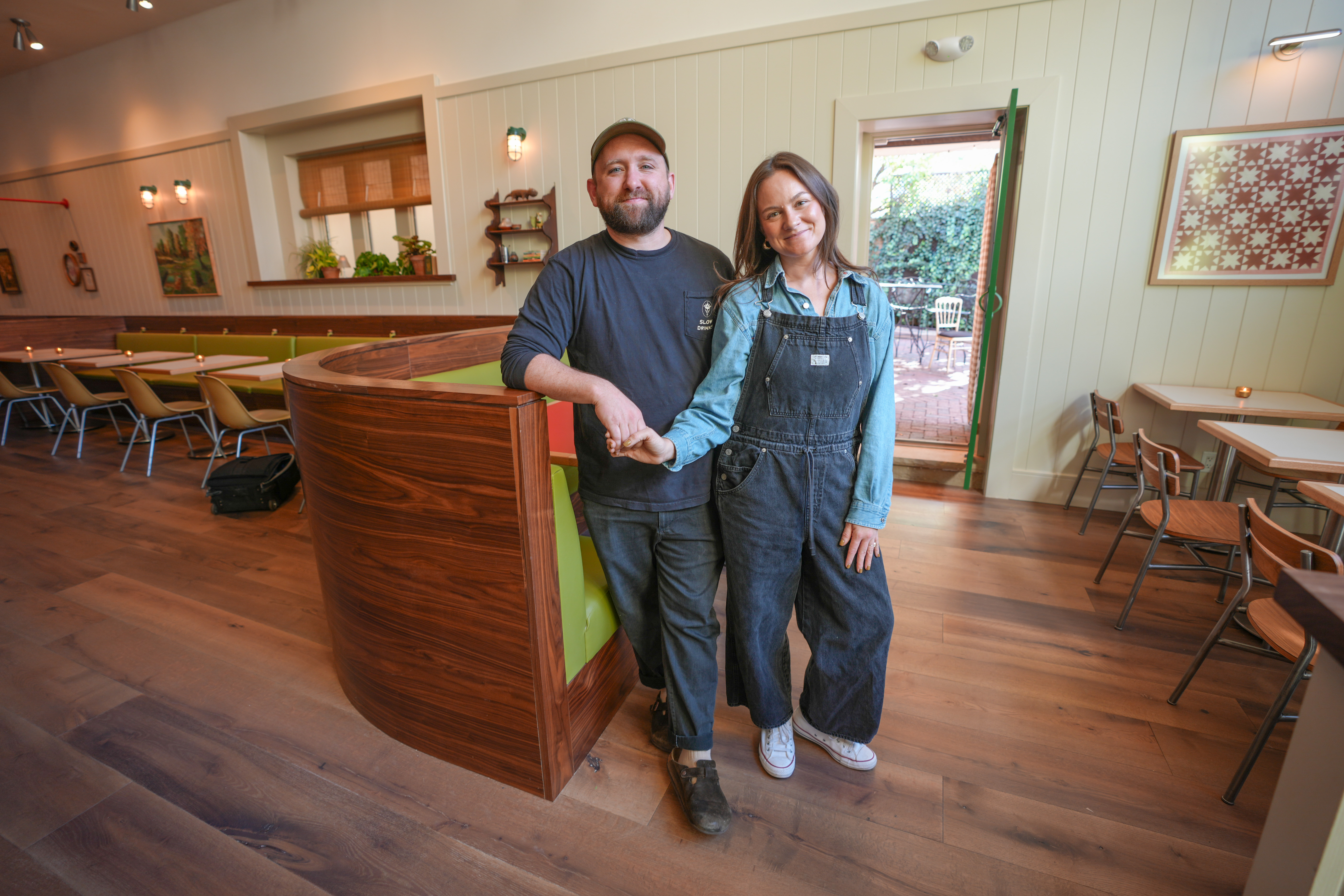
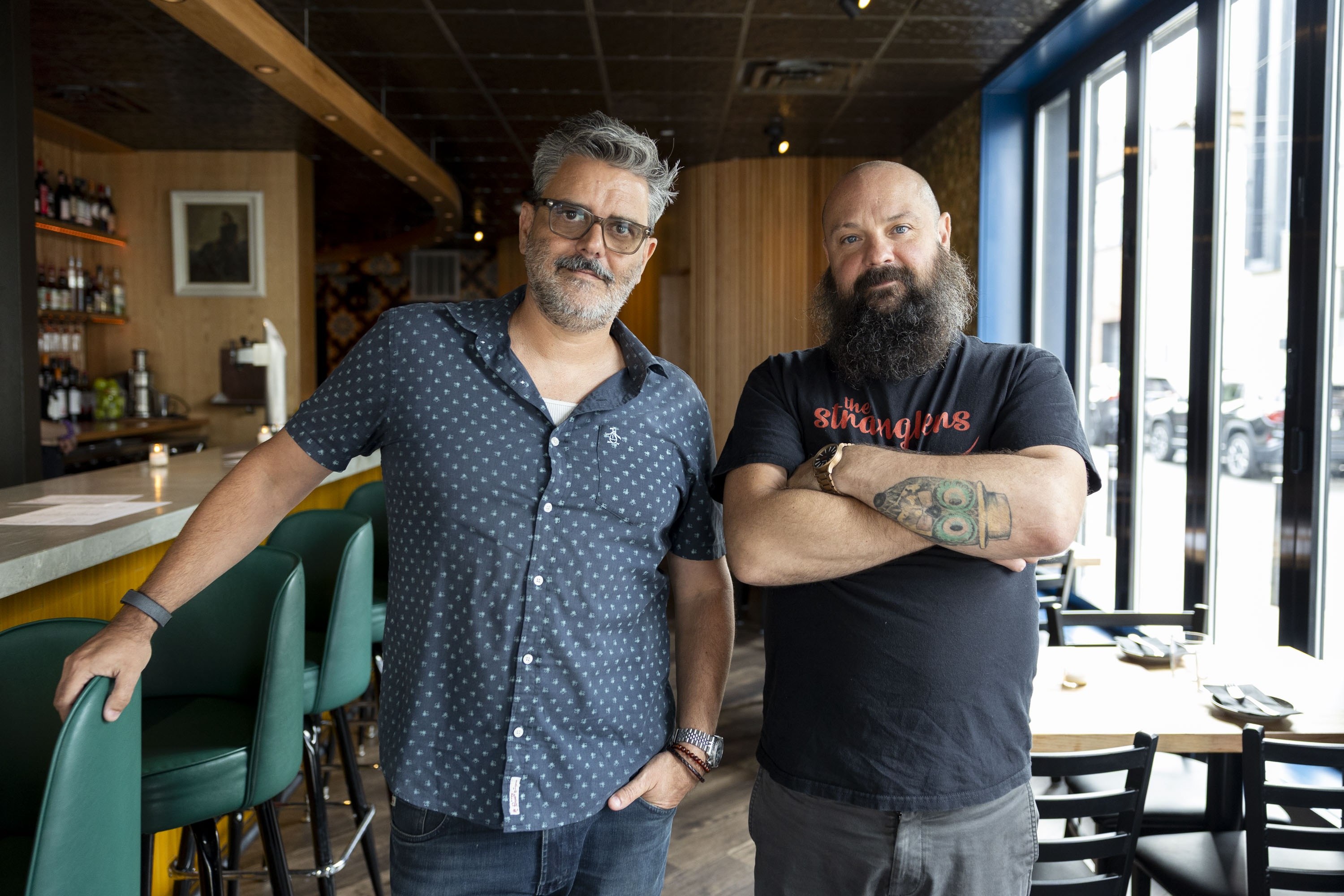
    Danny and Katie Childs at their regional cocktail bar Field Day. “He looks like a he looks like a Division Three running back,” bartender and beverage writer Jim Meehan said of Danny Childs. “He’s very approachable.”Jessica Griffin / Staff Photographer

    Childs’ upbringing no doubt plays a part in his innate ability to soft-sell. Before he moved to Marlton at age 11, he grew up in Delco: first in his grandparents’ house and then a Clifton Heights apartment complex. His dad bartended at the Clifton Inn (now Murray’s Bar & Grille) for years. “I grew up in that bar in a lot of ways,” Childs said. He remembers learning to play pool and shuffleboard there, and having his first underage drink one Christmas Eve.

    His blue-collar roots are balanced by a deeply nerdy side. Childs’ fascination with plants, fostered by his naturalist-oriented uncle and grandfather, kicked into high gear when he studied anthropology and ethnobotany at the University of Delaware. He spent four years traveling through South America to study the use of medicinal plants among Indigenous people. (If not for a bartending gig in Chile, Childs might be an M.D./Ph.D. teaching and practicing ethnomedicine today.)

    He swerved out of academia postcollege, when a would-be gap year sent him down an agricultural rabbit hole: first on a Marlton Christmas tree farm — where he and Katie homesteaded in a military tent equipped with a wood-burning stove for nine months — and then over stints at Urban Roots Farm in Newtown Square and at Plowshare Farms in Bucks County.
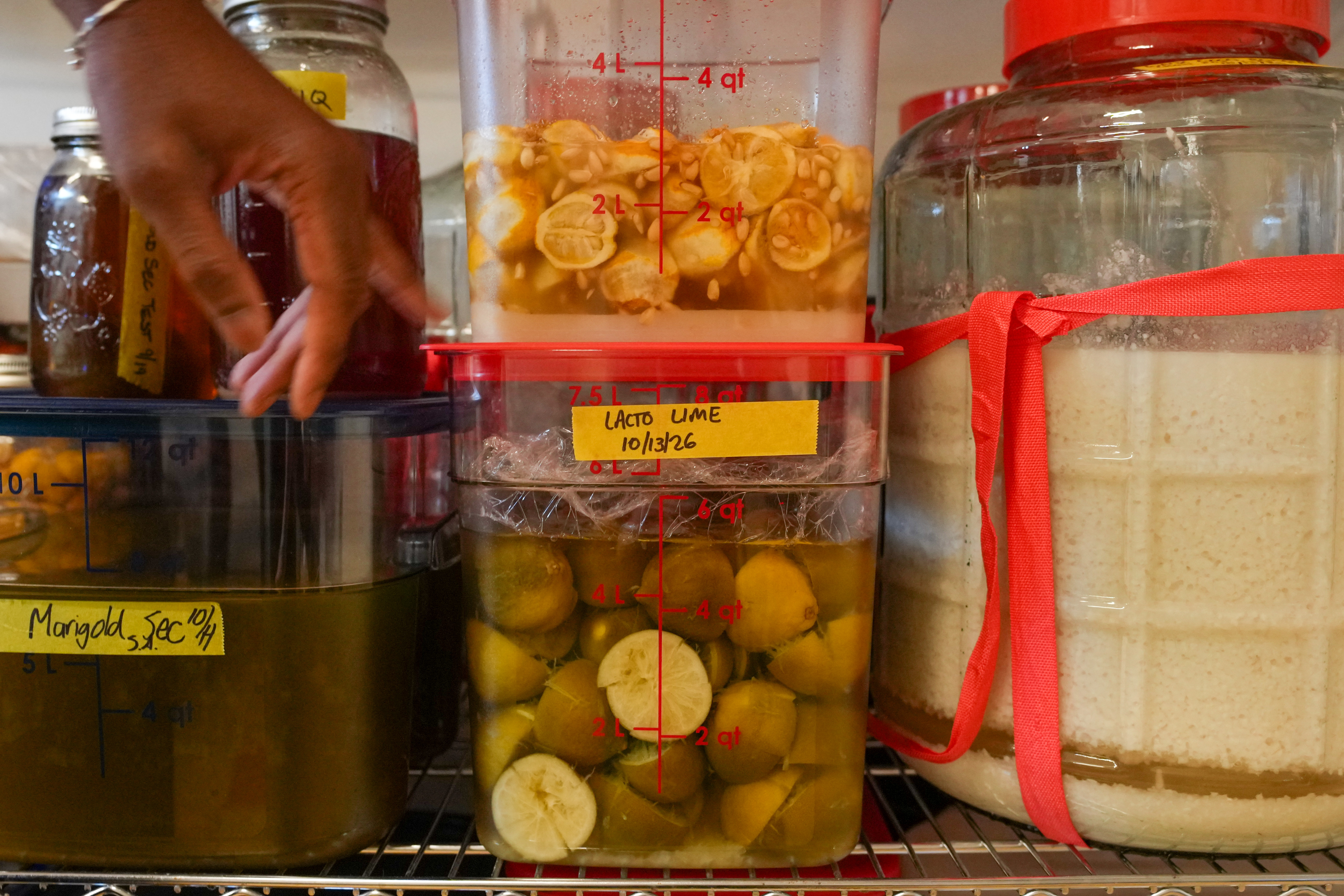
    Lacto-fermented limes sit below a bin of trifoliate oranges steeping to eventually make cheong (fermented syrup) in the Slow Drinks HQ and Field Day R&D lab in Northern Liberties. Jessica Griffin / Staff Photographer

    Those various walks of life all braided together when Childs took a job at Farm & Fisherman in 2013. It was there that he started dreaming up “cocktails through an anthropological lens” — a phrase, as he writes in Slow Drinks, that he scrawled on a bar napkin, then spent years teasing out. He started applying age-old practices of fermentation and infusion to the local ingredients surrounding him, then mixing them up behind the bar.

    Childs codified these methods in Slow Drinks, which is intended as a springboard for other bartenders and home enthusiasts, offering building-block master recipes for shrubs, liqueurs, aromatized wines, and more preserved, distilled, and infused liquids. Cocktail recipes (pickled ramp martini, stone-fruit amaretto sour, clarified persimmon punch, etc.) round out the book, showing region-specific applications season by season.
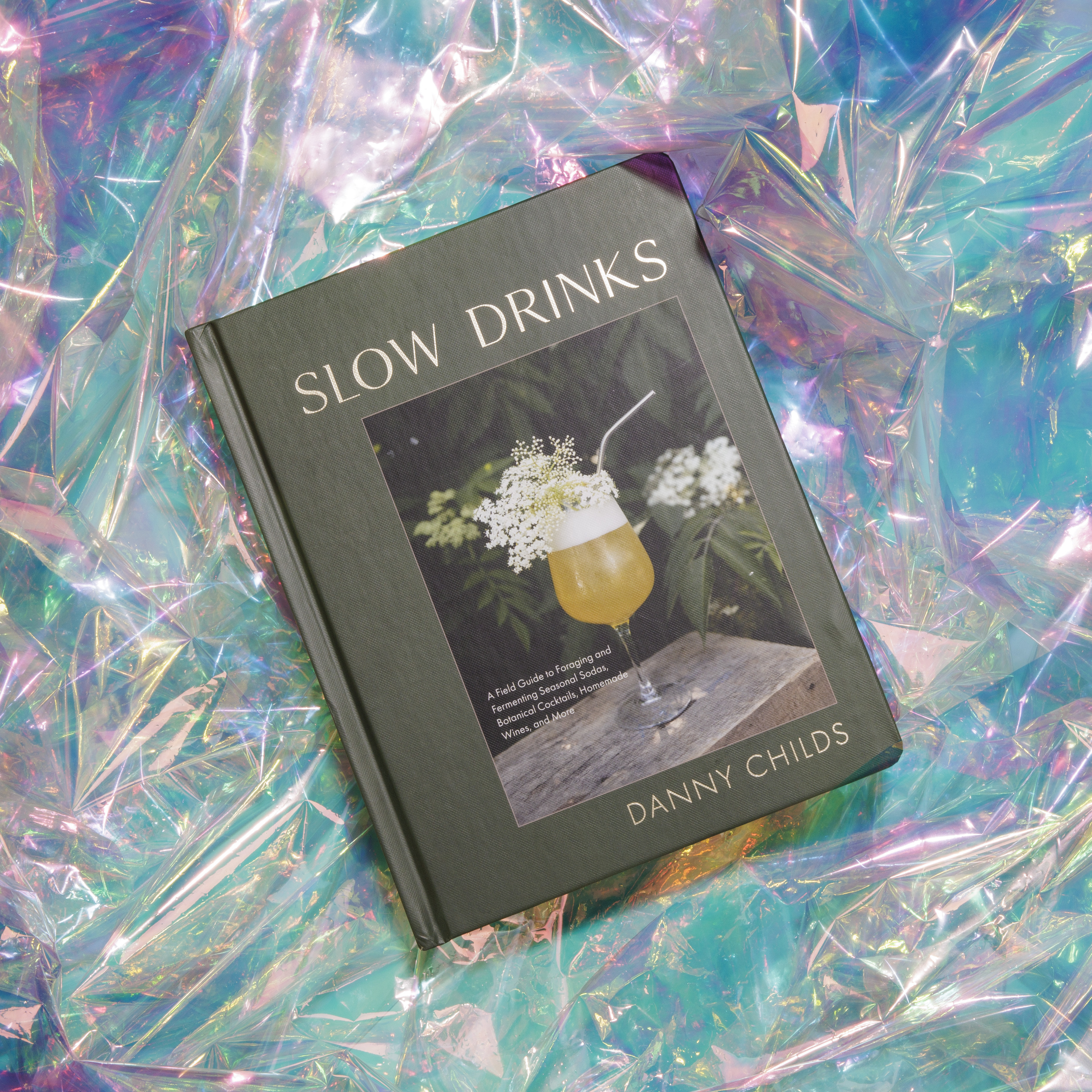
    The Slow Drinks book by Danny ChildsMonica Herndon / Staff Photographer

    Just as he knows the larger theory runs the risk of feeling esoteric to guests, he recognizes the work required may intimidate industry pros. “Bartenders are taught how to make syrups and mix cocktails with ingredients that are on their backbar. It’s changing a little bit, but the bars pushing that envelope are still like the top 1%,” he said. “I know it might seem difficult or out of reach.”

    Childs’ ultimate counterargument is a humble one: He’s not actually doing anything new here. “People have been doing this for hundreds and in a lot of cases thousands of years.”

    Local gaze, global ambition

    Childs has been dedicated full-time to Slow Drinks as a business and a concept since 2023, when he left his role at Farm & Fisherman. The departure gave him time to promote the book but also more flexibility and autonomy over where the larger idea might go.

    “It was kind of like jumping out of the plane without a parachute and hoping for the best,” Childs said of the decision to leave.
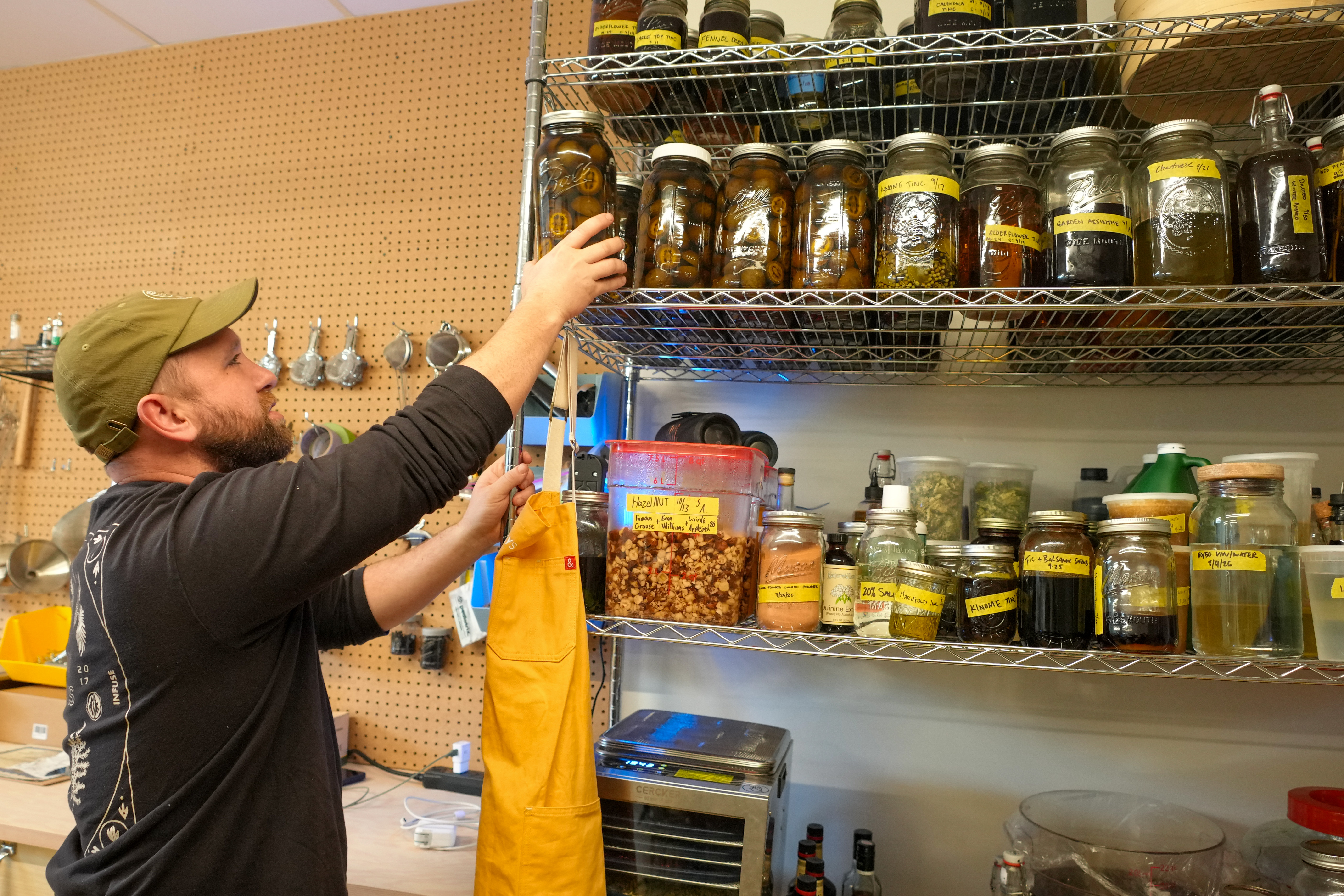
    Childs handles nocino in the Slow Drinks HQ above Field Day.Jessica Griffin / Staff Photographer

    In the years since, he’s consulted on several bar projects in the Philly area (most notably Almanac and La Jefa, both James Beard Award nominees). With Katie as copilot, he’s grown the Slow Drinks brand via pop-ups and collaborations, some of which have left lasting impressions. (If you find yourself at Mexico City’s Baldió, ask to try the chinampas Chartreuse and agave amazake.) He’s also established a close relationship with the international organization Slow Food that’s taken him to various cities and countries to present on the budding movement, often with an entourage of scholarship-backed bartenders who are practicing this style of drink making already.

    Childs also spent much of the last two years laying the groundwork for Field Day, whose staff claims a number of Philly’s most promising restaurant-industry talent, including chef Melissa McGrath and fermentation whiz Jamaar Julal.

    Even as he becomes a bar owner, Childs is going full tilt on Slow Drinks. The business’ headquarters live above the bar, in an office/lab that shares space with Cescaphe Ballroom’s wedding complex. This summer he and Katie hired Canyon Shayer, a Philly Distilling and Heaven Hill alum, to be the S corporation’s COO and “director of culture,” working with clients on developing and implementing Slow Drinks-style beverage programs.
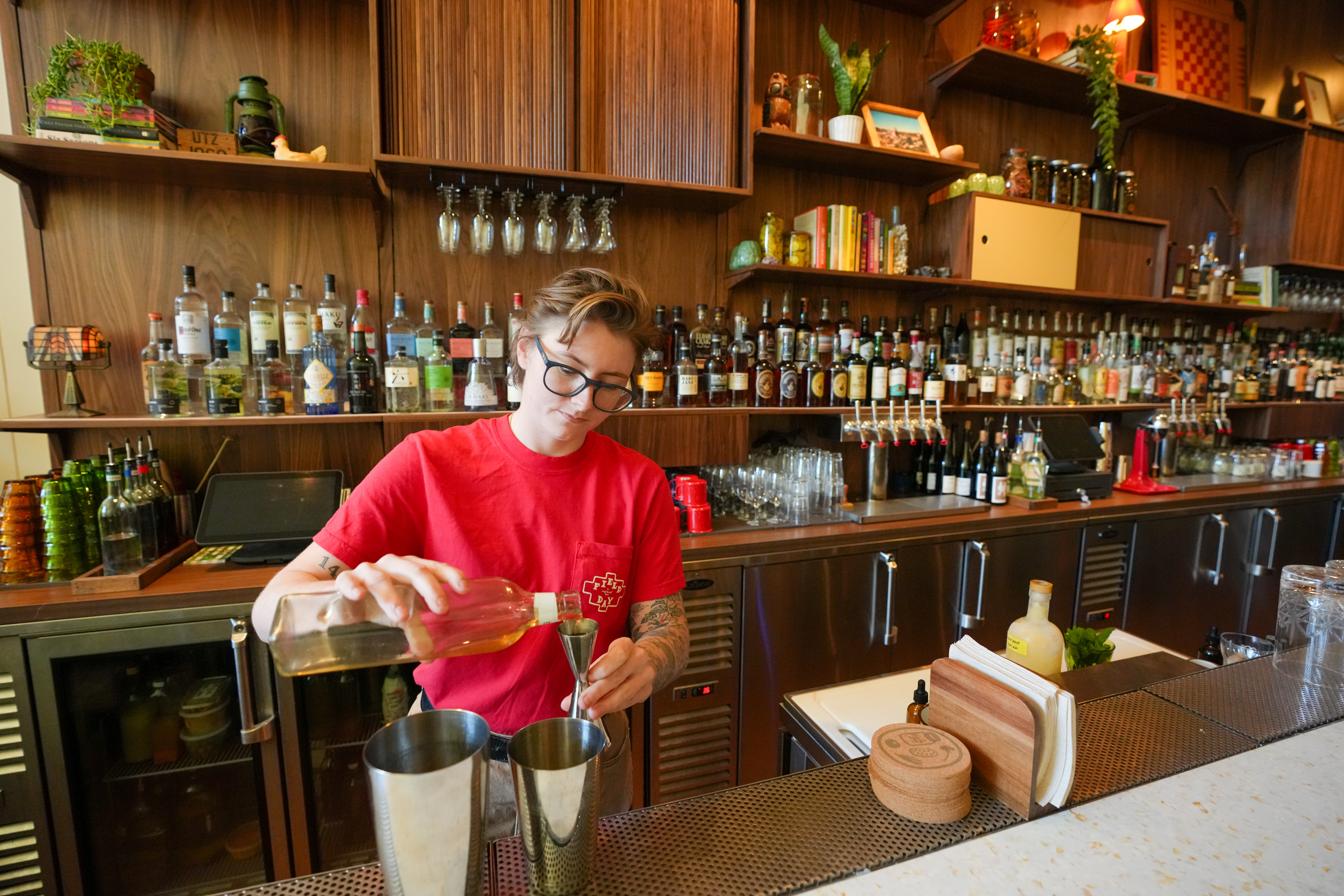
    Erin Dassler makes cocktails at Field Day. Childs hope the bar serves as a model of a full-fledged Slow Drinks program. Jessica Griffin / Staff Photographer

    In a way, Field Day is a test case, “a blueprint for, this is what [Slow Drinks] looks like in practice day in and day out,” Childs said. “I think we’ve just really scratched the surface of getting people fully bought into it, and that it is something that can leave the industry better than we found it.”

    If Childs gets his way, bartenders all over will see potential ingredients every time they step foot outside — even if it’s just into their own backyards.
  • One of Philly’s most anticipated bars of the year has opened

    One of Philly’s most anticipated bars of the year has opened

    Northern Liberties has had a humming bar scene for decades, long anchored by Ortlieb’s and Standard Tap. Splashy newcomers come (and go) on occasion, thanks to the Piazza and other developments along Second Street, and there are standout restaurants like Pietramala, Pera, and Apricot Stone. But by comparison, NoLib’s food and drink landscape has been dwarfed by that of Fishtown and Kensington, where buzzy openings happen on the regular.

    This week, however, Northern Liberties scores one of the most anticipated new bars of the year. Field Day, from James Beard Award-winning bartender Danny Childs and his wife, Katie, opens today.

    Field Day, at 923 N. Second St., is a love letter to our region. Its food and drink menus highlight ingredients and culinary traditions from as far west as Appalachia and Lancaster County, as far east as the farmlands of South Jersey and the Shore, and as far south as the Chesapeake Bay. Early food hits from the bar’s soft open include tomato pie and seasonal Roman-style “field pie,” Lebanon bologna sandwiches on sourdough English muffins, a roast pork “Philly dip” with long hots and broccoli rabe, skillet chocolate chip cookies, and fluffy seasonal water ice (currently Concord grape).

    The bar is a showcase for Slow Drinks, shorthand for Childs’ farm- and field-to-bar beverage approach, documented in his award-winning book by the same name. He first developed it at Cherry Hill’s Farm & Fisherman Tavern, where he worked for nine years, and he’s since applied it as a consultant at bars like Almanac and La Jefa, where Slow Drinks-style cocktails — heavily influenced by local, seasonal ingredients and ancient fermentation practices — are interpreted through Japanese and Mexican lenses, respectively.

    The Liquid Gold is a tribute to bees. Local beeswax-washed gin gives the cocktail a smooth mouthfeel, as do bitters infused with propolis, which bees use to seal their hives. Raw honey from Kara Jo Bee Farm sweetens the Old Fashioned riff.Jessica Griffin / Staff Photographer

    At Field Day, Philly and its surrounds get the Slow Drinks treatment. That means a cream-clarified cream soda cocktail that gets its vanilla notes from shagbark hickory bark harvested in Tewksbury, N.J.; an umami martini enriched with brown butter, sweet Jersey corn-made miso, and lacto-fermented beech mushrooms from Kennett Square; and an orange crush flavored with house ginger beer and wild persimmons from Childs’ own backyard.

    The list goes on. There are 36 cocktails in the bar’s keystone-stamped, leather-clad “Field Guide” menu (designed by Haridelle’s Kylie Silvestri) that’s divided by highballs, martinis, shaken, stirred, dessert drinks, and nightcaps. The guide details the ingredients and backstory behind each drink, with a legend to indicate its sourcing and processes. In that sense, Field Day is a textbook destination cocktail bar, but that’s not the owners’ goal.

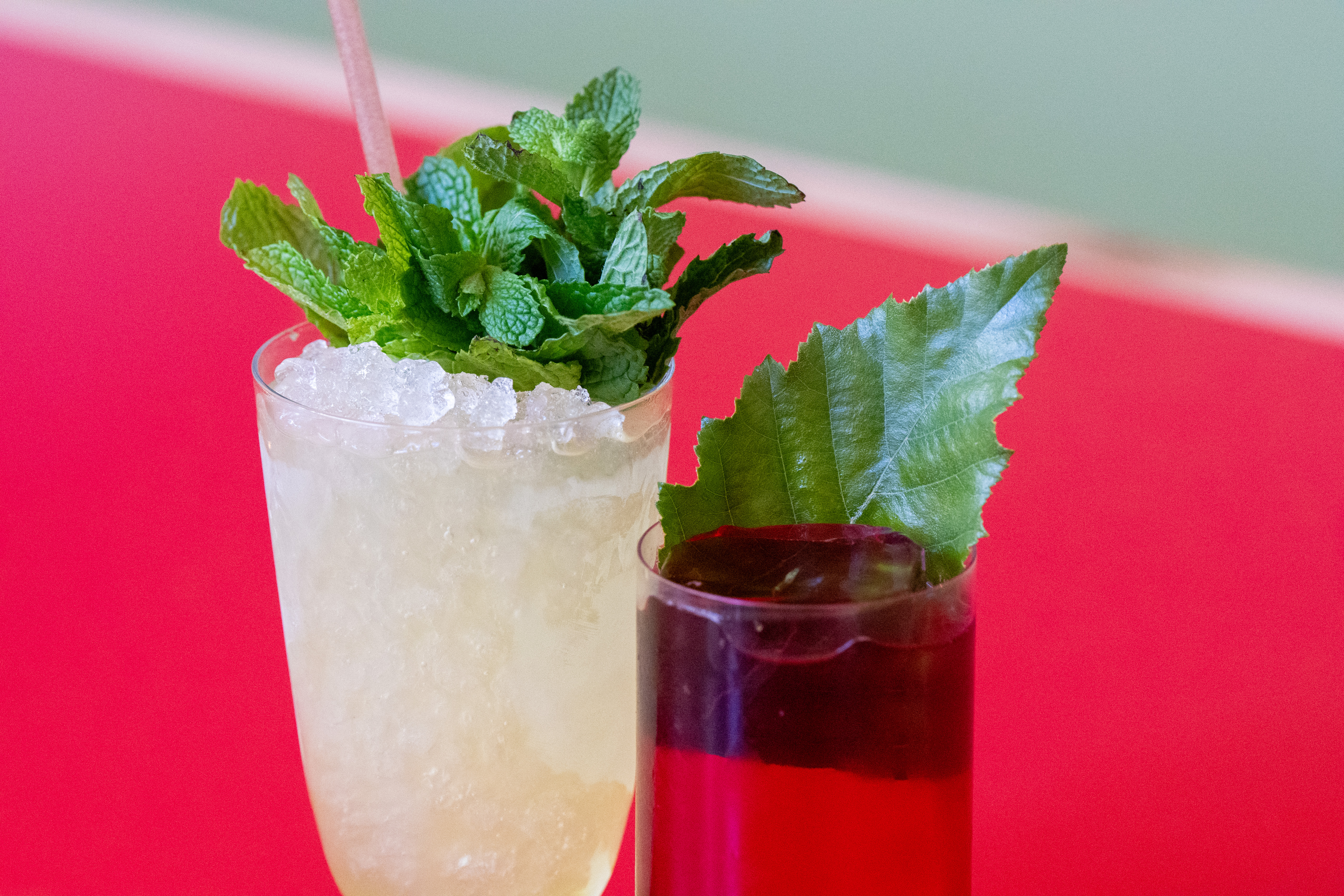
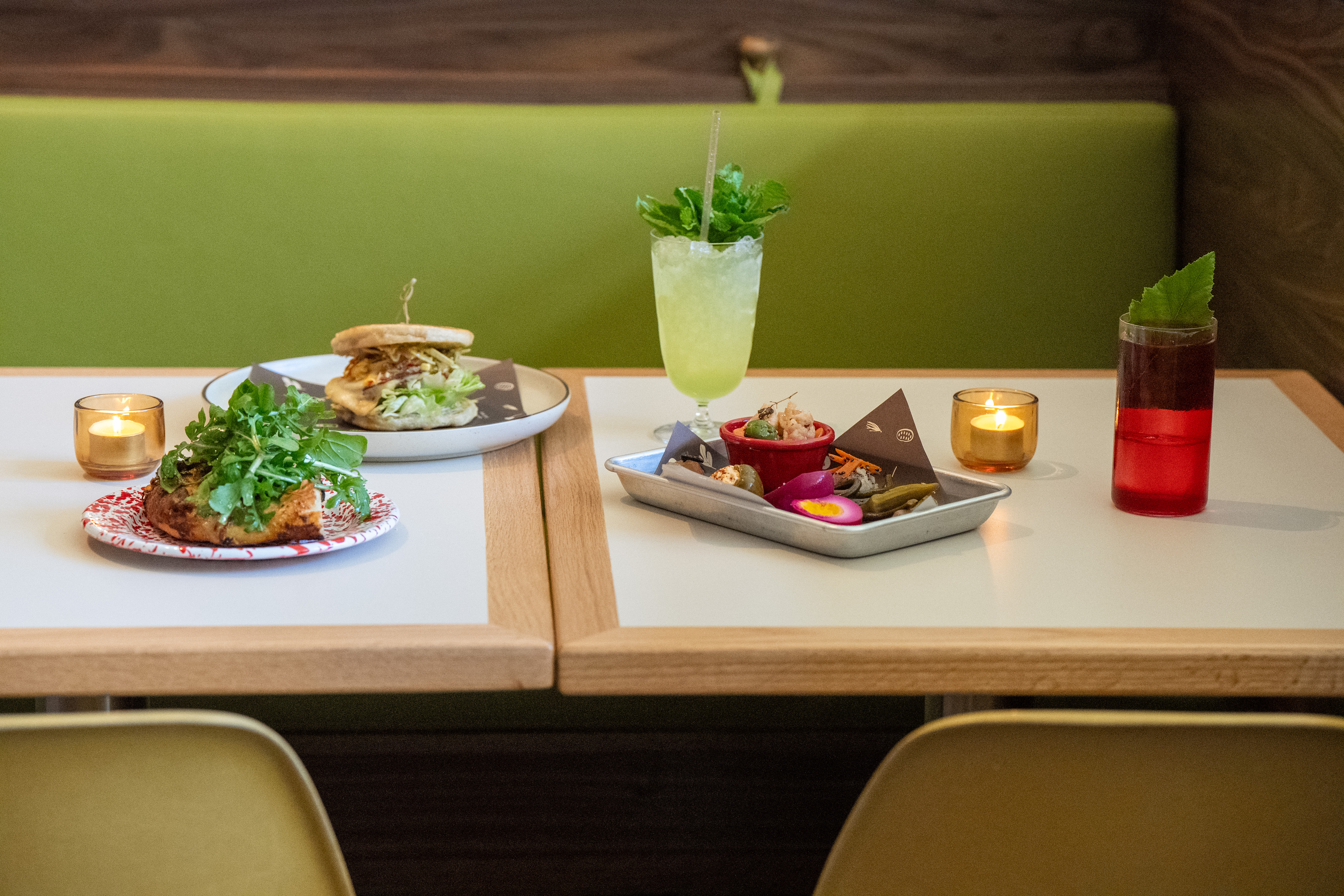
    Field Day’s Jenny Lind Tokyo Tea (left) combines vodka, gin, rum, a Jenny Lind melon liqueur, and cucumber shrub. The Birch & Bourbon highball (right) mixes Baby Jane bourbon with house birch beer, made with Pennsylvania-harvested birch bark and homegrown hibiscus (to make it red). Jessica Griffin / Staff Photographer

    “We want anybody to walk in here and feel welcome, and that it’s not like they’re going to school, that they’re just at a great bar,” Childs said. “And if they want to learn more, they can.”

    For the locals

    The Childses, who live in Pennsauken with their two young kids, want Field Day to be for the neighborhood, too. To that end, they have a streamlined “$15 Holler” cocktail list — nine drinks, no notes — targeted to locals dropping in for a casual drink and a bite. There’s a robust lineup of nonalcoholic drinks, including housemade sodas, kombucha, and lemonade, plus coffee, tea, wine, a Tonewood-brewed house lager, and Guinness. There’s also a kids’ menu, complete with a botanical-themed coloring page and crayons.

    Erin Dassler, who moved from Chicago to head up Field Day’s bar staff, makes cocktails at the bar.Jessica Griffin / Staff Photographer

    The family-friendliness is also borne out in the personal touches that suffuse the bar’s design, overseen by Katie Childs and Betsu Studio’s Laura Weiszer. The walnut shelves above the bar are lined with souvenirs from their travels as well as family heirlooms, including both of their great-grandfathers’ bottle cappers (Danny’s brewed sassafras root beer, Katie’s dandelion wine). Portraits of the couple are framed inside the bar’s host stand, drawn by Italian illustrator Gianluca Cannizzo, whom Childs met on a Slow Drinks work trip. There’s another Cannizzo illustration in the bathroom, depicting the military tent the couple lived in for nine months on a Marlton Christmas tree farm, at the beginning of their Slow Drinks journey.

    All the little things are an effort to transform this former auxiliary space for Cescaphe Ballroom into a homey, welcoming spot that’s trying to telegraph comfort above all else. Roughly half the seats in the space, including all 20 bar seats, are earmarked for walk-ins.

    All-star staff

    With a 50-seat dining room and 25 employees, Field Day is arguably just as much restaurant as bar. The kitchen is led by James Beard-nominated chef Melissa McGrath of Sweet Amalia fame, who’s bringing to bear her considerable South Jersey seafood expertise with steamed clams, smoked fish dip, and a fish fry. McGrath is backed by sous chef and preservation pro April McGreger, whose pickle plate is already a must-try.

    Food at Field Day, (from left): the field pie, the Lebanon bologna sandwich, and the pickle plate. Jessica Griffin / Staff Photographer

    Splitting time between the kitchen, bar, and Field Day’s upstairs R&D lab is Jamaar Julal, who spearheads various fermentation projects, including miso made from stale tomato pie and several cheongs (fermented syrups) made from foraged fruits.

    McGrath, McGreger, and Julal are part of a deep bench of talent that also includes floor lead Jonathan Doherty, who’s worked with Childs since his Farm & Fisherman days, and bar lead Erin Dassler, a Chicago transplant who was previously at legendary tiki bar Three Dots and a Dash and Kitty’s Cosmopolitan Club.

    Childs is thrilled to have assembled a team of this caliber. “These are people that I love and respect and look up to in a lot of ways,” he said. “To see them all coming here, working for Katie and I — we go home at the end of the day every day and we’re like, ‘Oh my goodness.’”

    Field Day, 923 N. Second St., 215-703-9458, fielddayphilly.com. Hours: 4 p.m. to midnight Wednesday through Saturday, 4 p.m. to 8 p.m. Sunday. Reservations available on Resy.

  • One of Philly’s elite cocktail bars is opening a bigger second act near Rittenhouse Square

    One of Philly’s elite cocktail bars is opening a bigger second act near Rittenhouse Square

    The team behind one of Philadelphia’s most acclaimed new cocktail bars is preparing a larger second act in Rittenhouse.

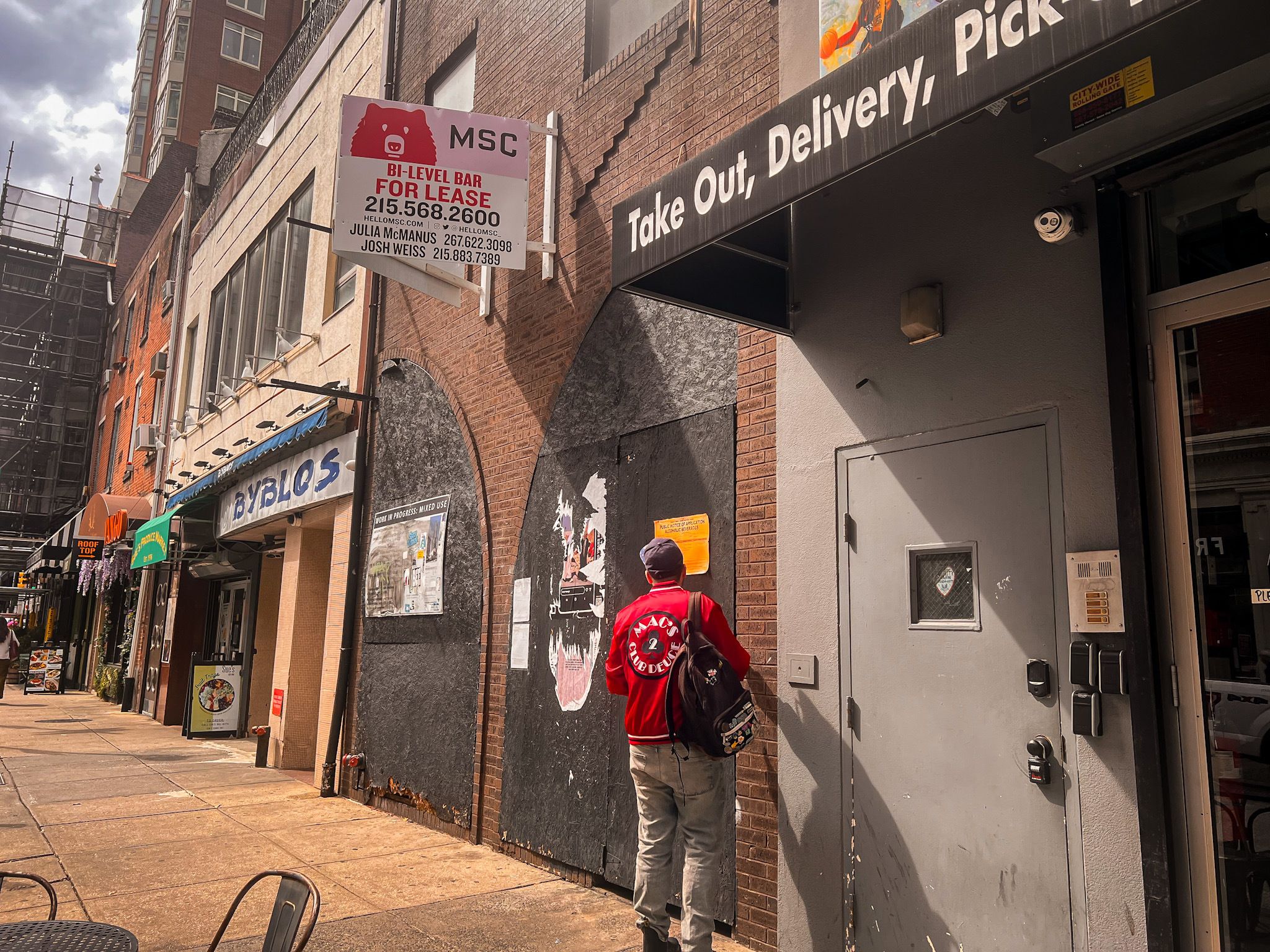
    Almanac co-owners Vy To and Victor Ng and bar manager Rob Scott are building a two-level bar in the former Franklin Mortgage & Investment Co. space at 112 S. 18th St. A name and opening date have not been announced. Much more work needs to be done, they said, as the space has been vacant since Franklin left in 2021. It later reopened behind the 1715 Rittenhouse Hotel. The new bar is between Cleavers and Byblos and its upstairs lounge, Vango.

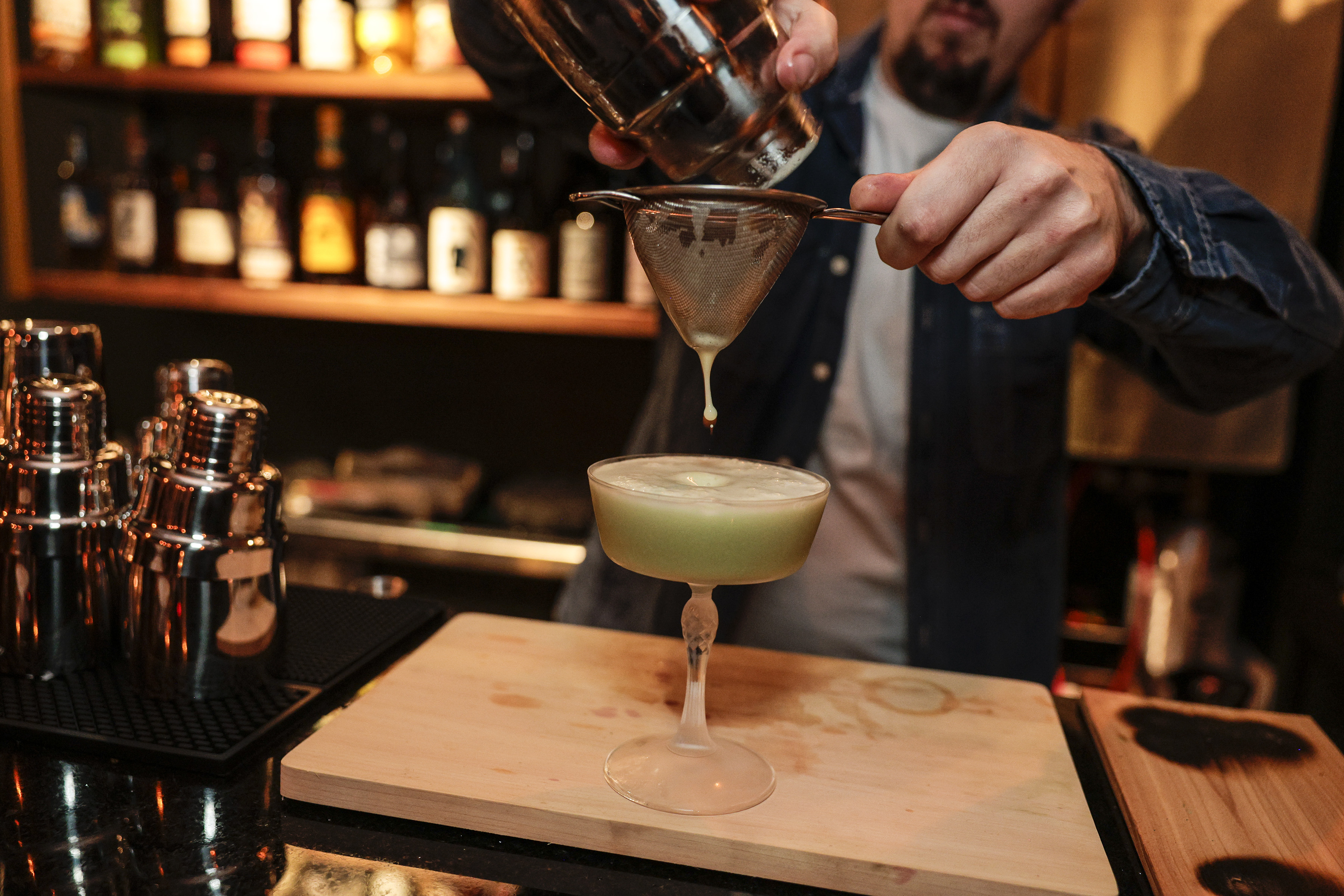
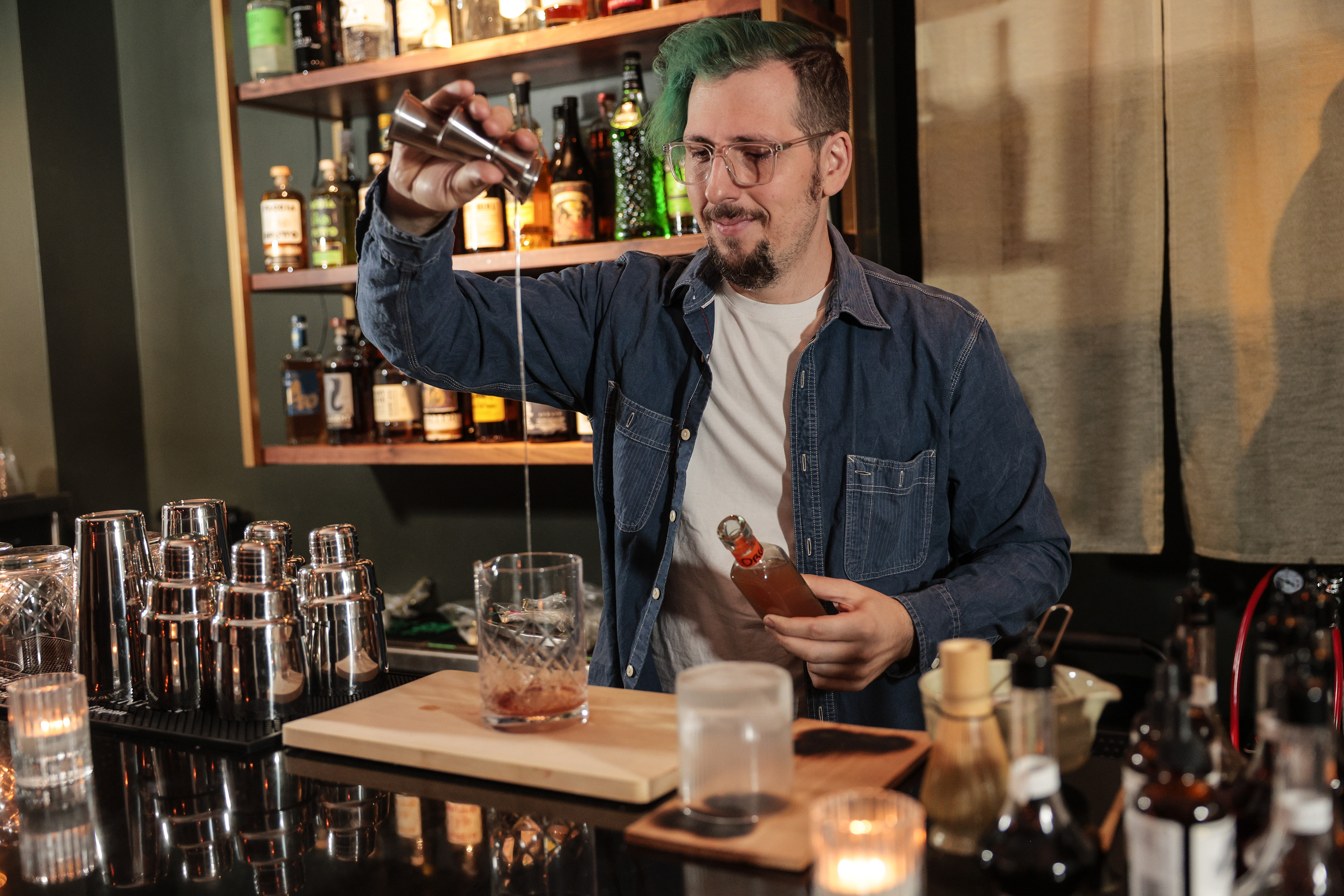
    Bar manager Rob Scott making a drink at Almanac’s opening in November 2024.Steven M. Falk / Staff Photographer

    To, Ng, and Scott have been riding high on public acclaim since they opened the 23-seat, Japanese-influenced Almanac in 2024 above its sister restaurant, Ogawa Sushi & Kappo, at 310 Market St. in Old City.

    With Scott at the stick, Almanac was named a 2026 James Beard Award semifinalist for Best New Bar. Bon Appétit included it among America’s nine best new bars of 2025, while The Inquirer has called it one of Philadelphia’s most original cocktail bars.

    To, Ng, and Scott will be partners in the new venture. They started working together in 2024, when the Drexel Food Lab connected To and Ng with Danny Childs, the James Beard Award-winning author of Slow Drinks. Childs recruited Scott, his former colleague at Cherry Hill’s Farm & Fisherman, to run Almanac.

    The Rittenhouse bar will divide its personality between two floors, and each will carry its own name. The long, narrow lower level will be calm, dark, and intimate, with a cocktail menu built around a single theme that could remain for 12 to 18 months. Upstairs will be brighter, livelier, and designed to handle more customers.

    Its largely fixed beverage menu upstairs will rely on draft, frozen, freezer-door, nitro, and shaved-ice cocktails. Scott said he hopes to avoid conventional shakers, mixing tins, and jiggers upstairs. Most preparation would occur before service, allowing bartenders to pour and garnish drinks quickly while spending more time with customers.

    “You can return in a week, a month, or a year, and it will probably still be there,” Scott said of the upstairs menu selections.

    The new approach is partly a response to Almanac’s economics. Its hyperseasonal menu and fermentation and preservation work can require hours of preparation, but its size limits capacity. Scott said Almanac’s cocktails cost $19 to $23 partly because labor and ingredient expenses must be divided among relatively few guests.

    The new project would preserve Almanac’s distinctive, intimate experience downstairs while increasing volume upstairs to allow more guests to experience Scott’s hospitality without a reservation, To said. Kitchen and preparation employees would work across both floors. The Drexel Food Lab is developing a small-bites menu.

    Rob Scott locks the door at the future bar at 112 S. 18th St. on Sept. 23.Michael Klein / Staff

    Behind Bars Agency of Oslo is designing a customized downstairs system allowing two bartenders to work independently in the narrow room. Philadelphia designer Ian Chapin, whose resumé includes Middle Child Clubhouse, R&D, and Pub & Kitchen, is handling the interiors; Kylie Silvestri, who worked on Almanac, Ogawa, and Little Water, will oversee graphic design.

    The partners plan to divide the downstairs room into smaller lounge areas while preserving sight lines to the bar. Upstairs will feature custom lighting and metalwork. Scott described the contrasting rooms as “two sides of the same coin.”

    To said the larger project is intended to turn the hospitality practiced at 12-seat Ogawa and Almanac into a more durable business with enough revenue to create long-term jobs.

    “We want our employees to be able to build careers and have a sustainable lifestyle if they choose to remain in this world with us,” she said.

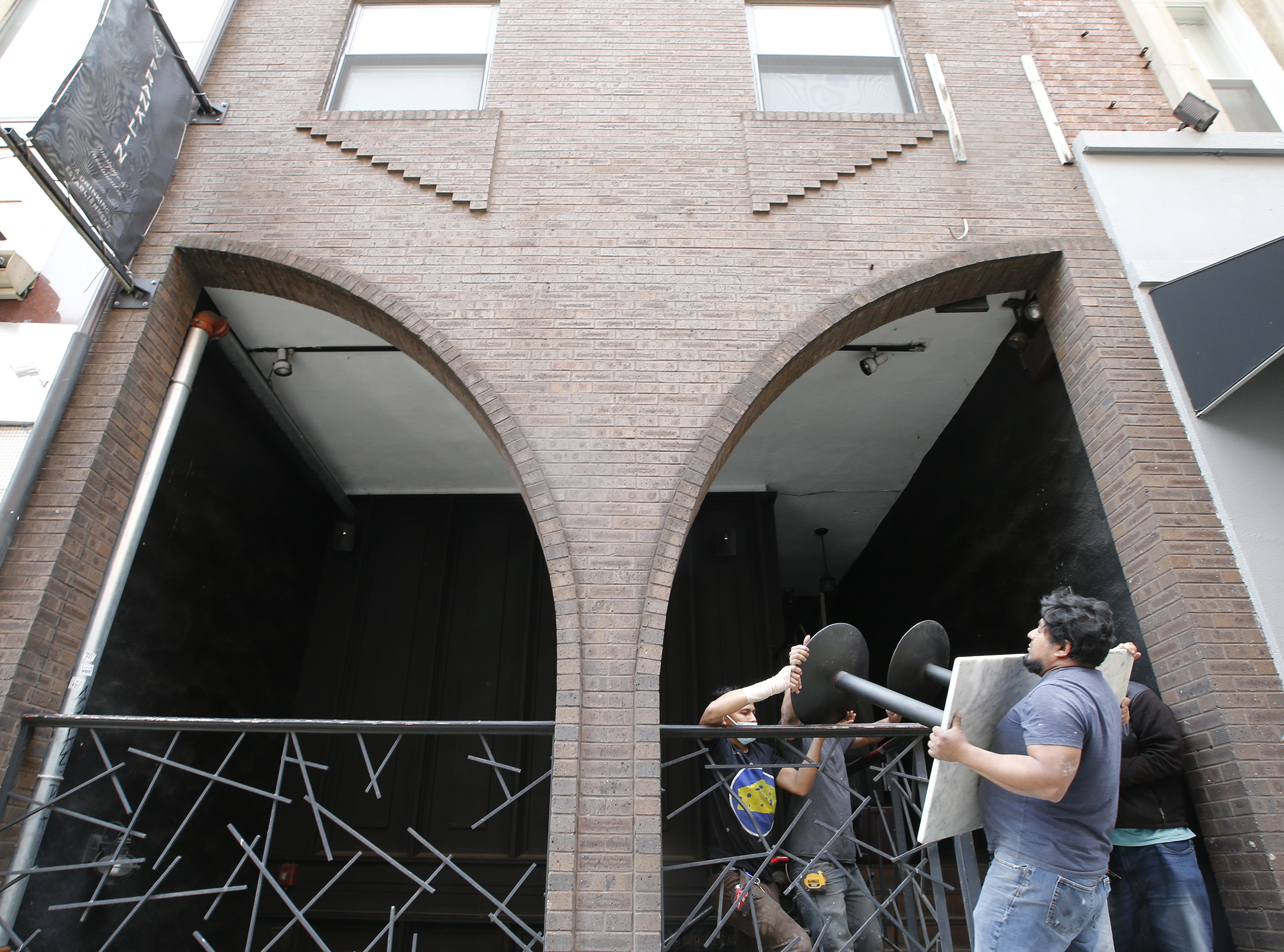
    Workers carrying out tables from Franklin Mortgage & Investment Co.’s location at 112 S. 18th St. in May 2021. Franklin later reopened nearby.Yong Kim / Staff Photographer
  • Strong drinks and small plates set BAR ilu and Grace & Proper apart in Philly’s buzzy bar scene

    Strong drinks and small plates set BAR ilu and Grace & Proper apart in Philly’s buzzy bar scene

    There are few Spanish bar snacks as satisfying — or so hotly debated — as a properly made tortilla Española.

    If you’re lingering in the hot southern cities of Andalusia, where the iconic potato-and-onion omelet is typically served room temperature or cold, the eggs are fully set.

    “But from Madrid north to Basque Country, it’s traditionally made to order and served warm and custardy,” says Patrick Iselin, 50, the co-owner of BAR ilu, who spent half his childhood in Spain and now splits time between Philadelphia and the Madrid apartment once owned by his grandmother, Iluminada “Ilu” Prellezo Inchausti.

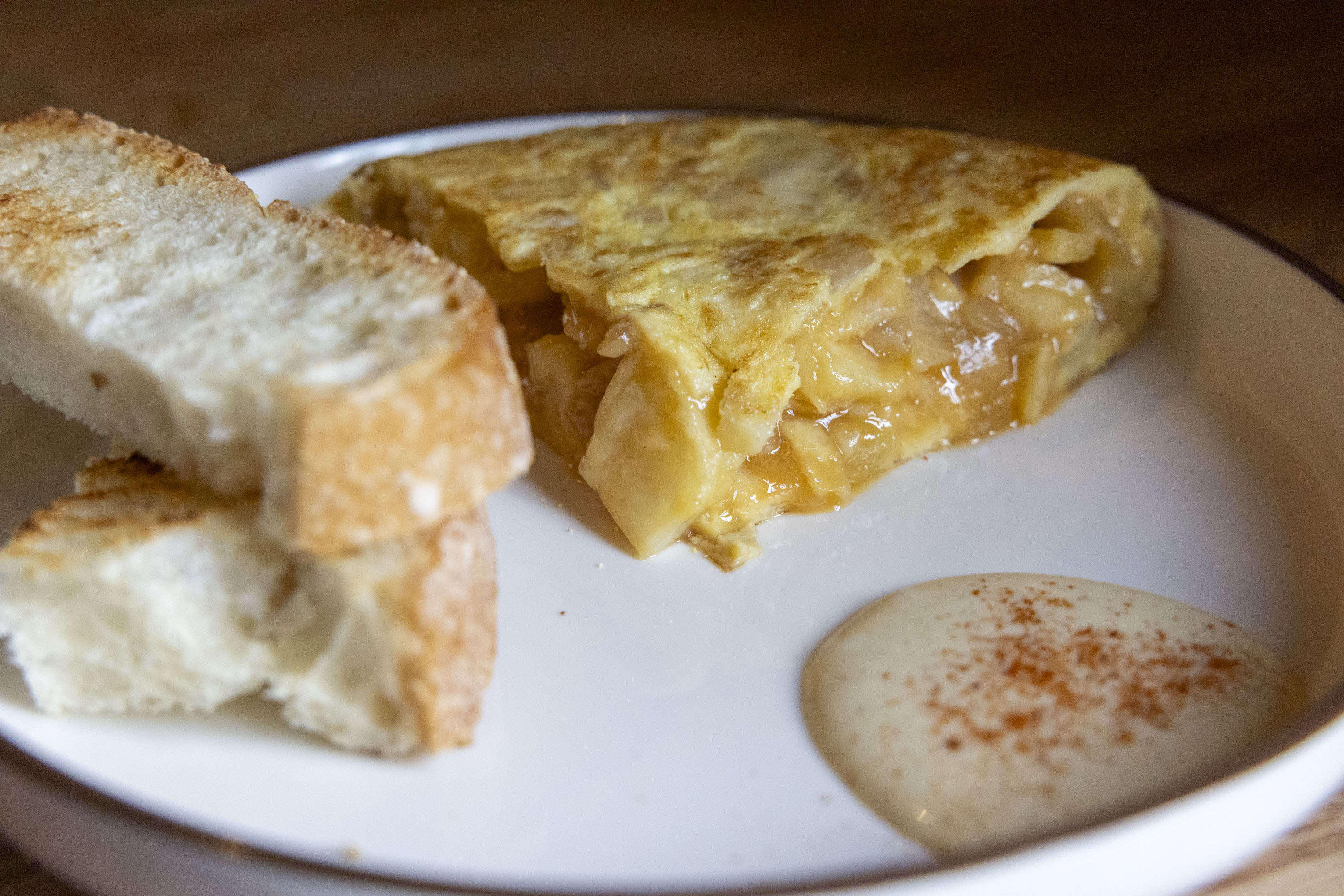
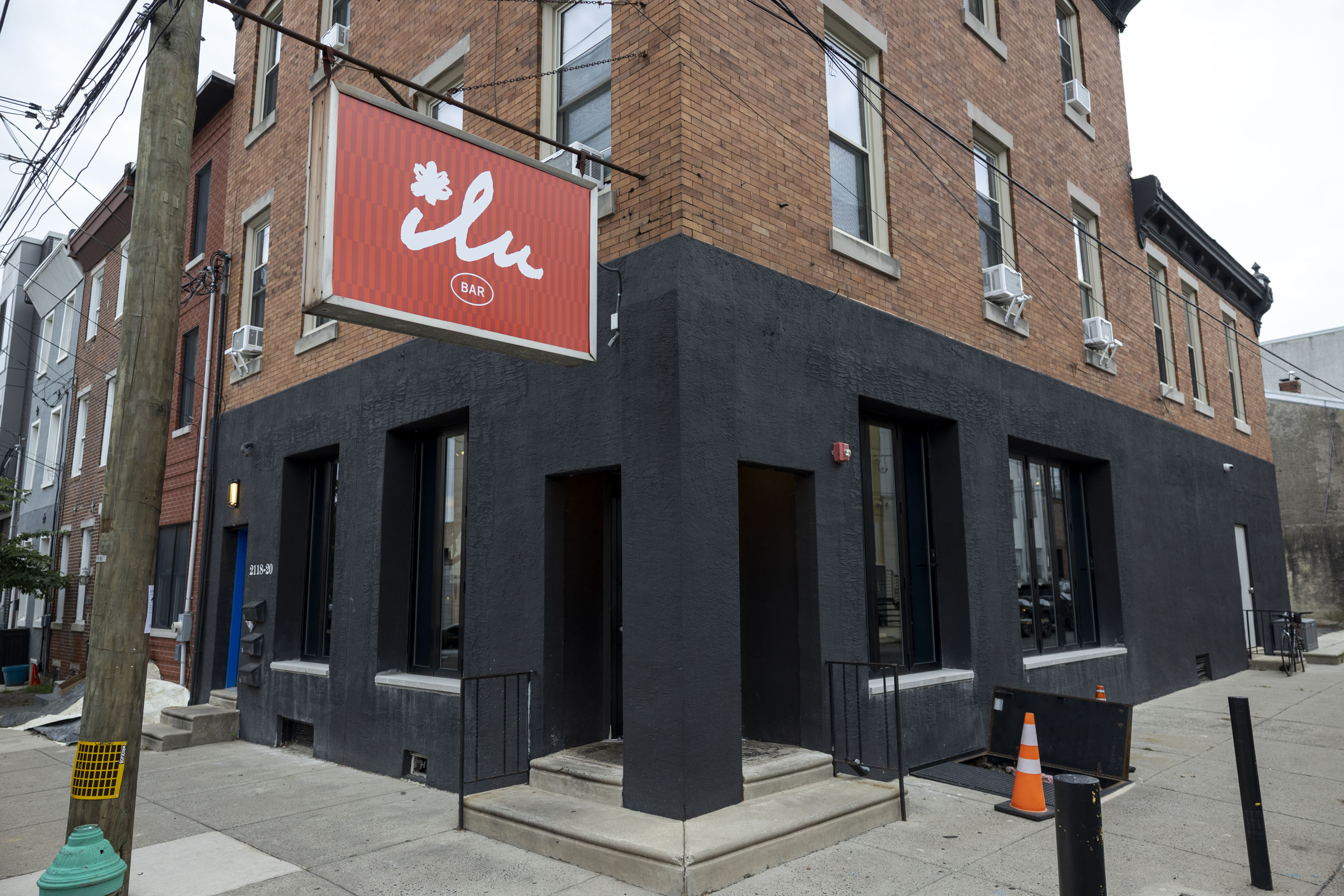
    So it follows that the eponymous new corner bar at Dauphin and Martha Streets — which happen to share the 40th parallel north with Madrid — serves its tortilla Española with a loose and edgy Kensington flair: “runny af,” as noted on the menu. Served as a wedge, with olive oil-fried potato chunks and sweet onion laces bulging from its glossy middle, a warm forkful of this eggy wonder is as transporting as it gets.

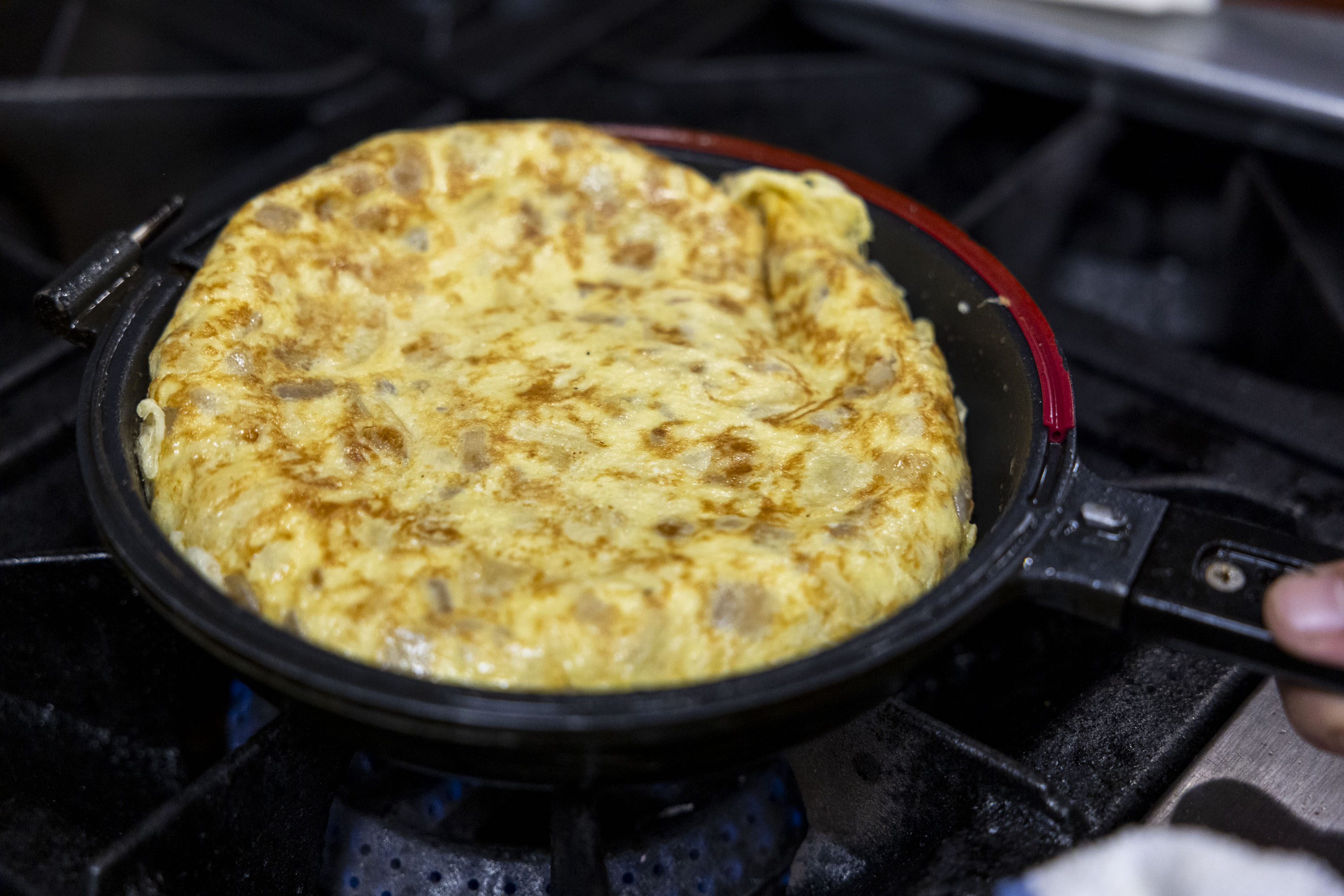
    Andrew Butler, chef de cuisine at BAR ilu, making the tortilla Espanola.Tyger Williams / Staff Photographer
    The tortilla Espanola at BAR ilu.Tyger Williams / Staff Photographer

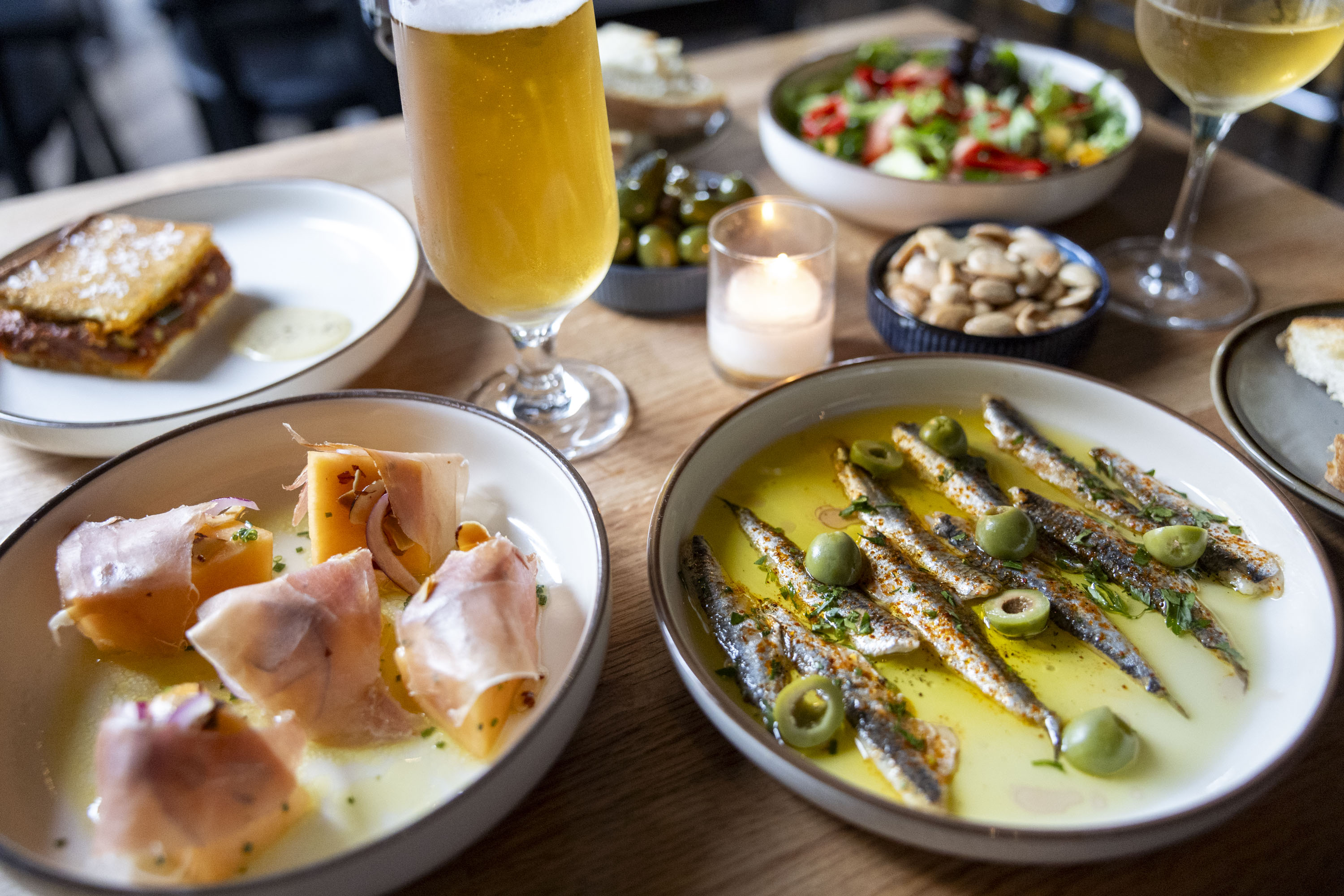
    Wash it down with a bracingly crisp glass of La Gitana Manzanilla sherry on draft, plus a fistful of crunchy Marcona almonds, a forkful of tangy boquerones, and a crock of olives warmed with orange zest and herbs, and it’s hard to deny that BAR ilu is an appealing development for this rapidly changing corner of Kensington. It is perhaps also a little dissonant for those who know the neighborhood history. This stylish Euro concept, complete with its undulating circular bar and foam-topped glasses of vermouth, has landed in a space previously occupied by the Old Philadelphia Bar, one of the last unreconstructed dive bars from what co-owner Scott Coudriet calls Kensington’s “pre-hip-storic” days.

    Coudriet, who owns Fishtown’s Lloyd Whiskey Bar, is also partnered with Iselin at nearby Cormorant bar. Their other partners in ilu are Salvatore D’Amato and Jason Evenchik, whose Vintage Syndicate hospitality group operates Vintage, Starbolt, Time, Bar, three Garage locations, and the Goat Rittenhouse.

    This veteran team is keenly aware of the sensitive dynamics of change at longstanding bars. That’s why Iselin was adamant about keeping prices reasonable for Kensington locals — no more than $14 a plate, and $16 for distinctive cocktails that would easily cost a few dollars more in Center City — while building this tribute to Spain in his adopted city.

    The outside of BAR ilu on Thursday, Aug. 20, 2026, in Philadelphia.Tyger Williams / Staff Photographer
    The back bar area at BAR ilu on Thursday, Aug. 20, 2026, in Philadelphia.Tyger Williams / Staff Photographer

    Iselin wanted to craft this 40-seater with as few clichés as possible (no hanging hams, no toro horns, no sangria), but rather the feel of a modern tapas bar he might frequent in Madrid today. He had no idea he was also tapping into the latest evolutionary trend for the Philadelphia bar.

    Twenty years ago, the smoky old taverns of yore were being replaced by the gastropub movement of the early aughts, where local craft beers flowed and house charcuterie and pickle programs anchored ambitious seasonal menus that gave a cool new vibe to the neighborhood restaurant. In some cases, they helped redefine the neighborhoods themselves.

    Philly’s bar scene is now officially in its grazing phase, with curated drink menus centered around culinary cocktails, natural wines, and nonalcoholic drinks with food offerings often so limited that a hungry fellow like me might need to order three-quarters of the menu to make a meal. Supérette, the charming French wine bar beside East Passyunk’s Singing Fountain, captured this development perfectly in 2025. Owners Chloé Grigri and Vincent Stipo described these snack-centric bars as a “generational thing” for 30-somethings who want a stylish place to hang for in-between meals with friends without committing to an entire evening.

    Co-owners Patrick Iselin and Scott Coudriet of BAR ilu, pose for a portrait together on Thursday, Aug. 20, 2026, in Philadelphia.Tyger Williams / Staff Photographer
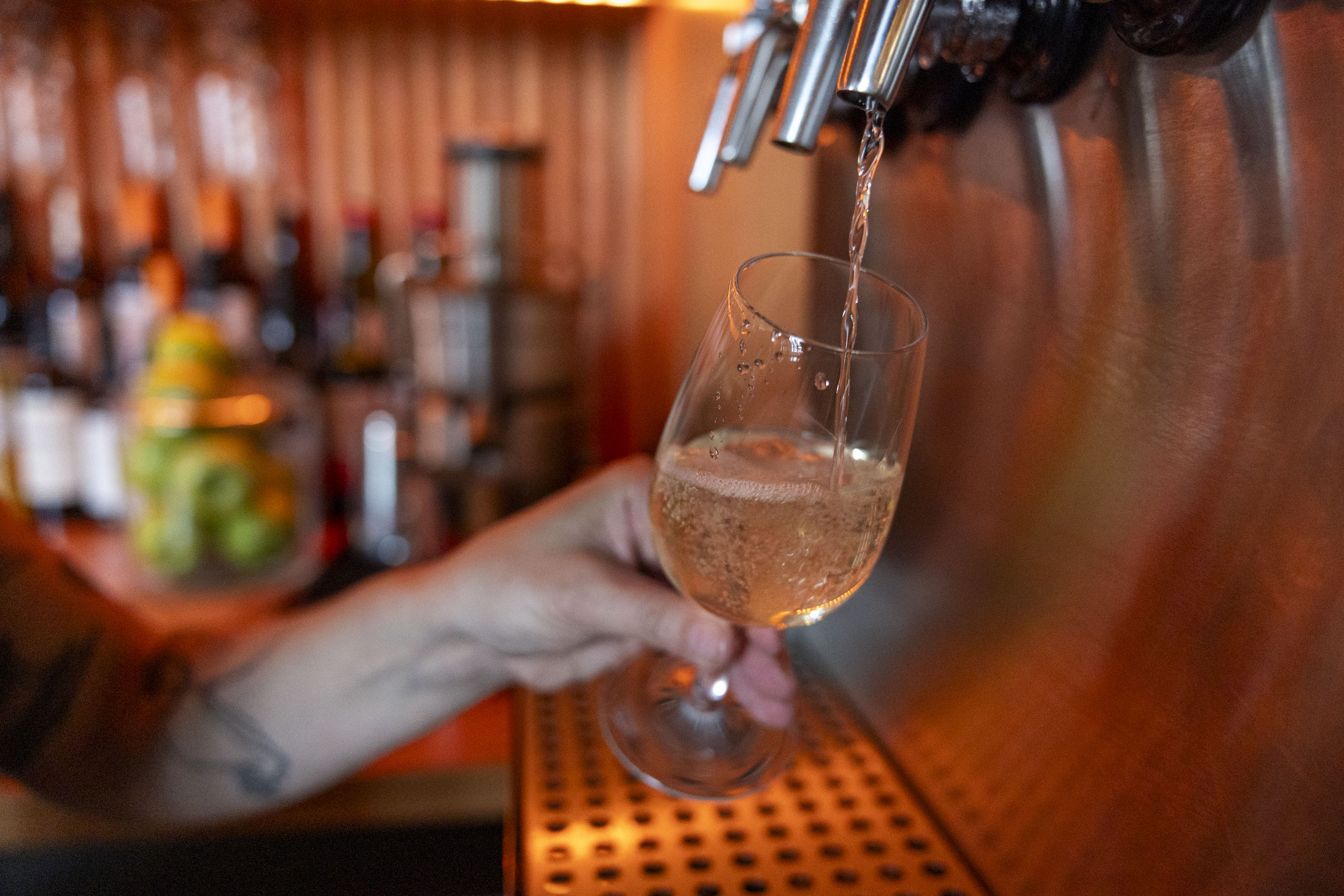
    The La Gitana Manzanilla Sherry at BAR ilu on Thursday, Aug. 20, 2026, in Philadelphia.Tyger Williams / Staff Photographer

    A similar approach is at work through a Japanese lens at Almanac, the cutting-edge Japanese cocktail bar (with Wagyu hot dogs and kombu-cured celery sticks) above the omakase room at Ogawa. The food menu at Chris Kearse’s new cocktail bar in Washington Square West, Known Associates, lists only a dozen items, counting the cool ranch freeze-dried peas. Same with the recently opened Lillian’s Bar in Point Breeze. As Chris Fetfatzes told me about Grace & Proper, the Portuguese-inspired bar with “tasca” nibbles he debuted in 2022, this template — a distinctive drink program bolstered by a small menu that can be produced with limited service and light kitchen investment (i.e. no hood) — makes perfect business sense in the post-COVID era.

    Of course, the Spanish have been doing this for centuries with tapas, a light-bite evening repast that reflects their cultural preference for a larger meal earlier in the day. And yes, Amada has been serving tapas here for 20 years, but always alongside a much broader menu with large plates and paellas.

    Considering all the new small-plate projects that have come online recently, including Bar Cicci, Ellen Yin’s all-day aperitivo bar, Philadelphians may have finally embraced the concept on its own snacky terms.

    The front bar at BAR ilu, 2118 E. Dauphin St.Michael Klein / Staff
    The various plates including The Boquerones, Melon with Ham, the Tuna Empanada, Tomato Salad, Almonds, and Olives at BAR ilu on Thursday, Aug. 20, 2026, in Philadelphia.Tyger Williams / Staff Photographer

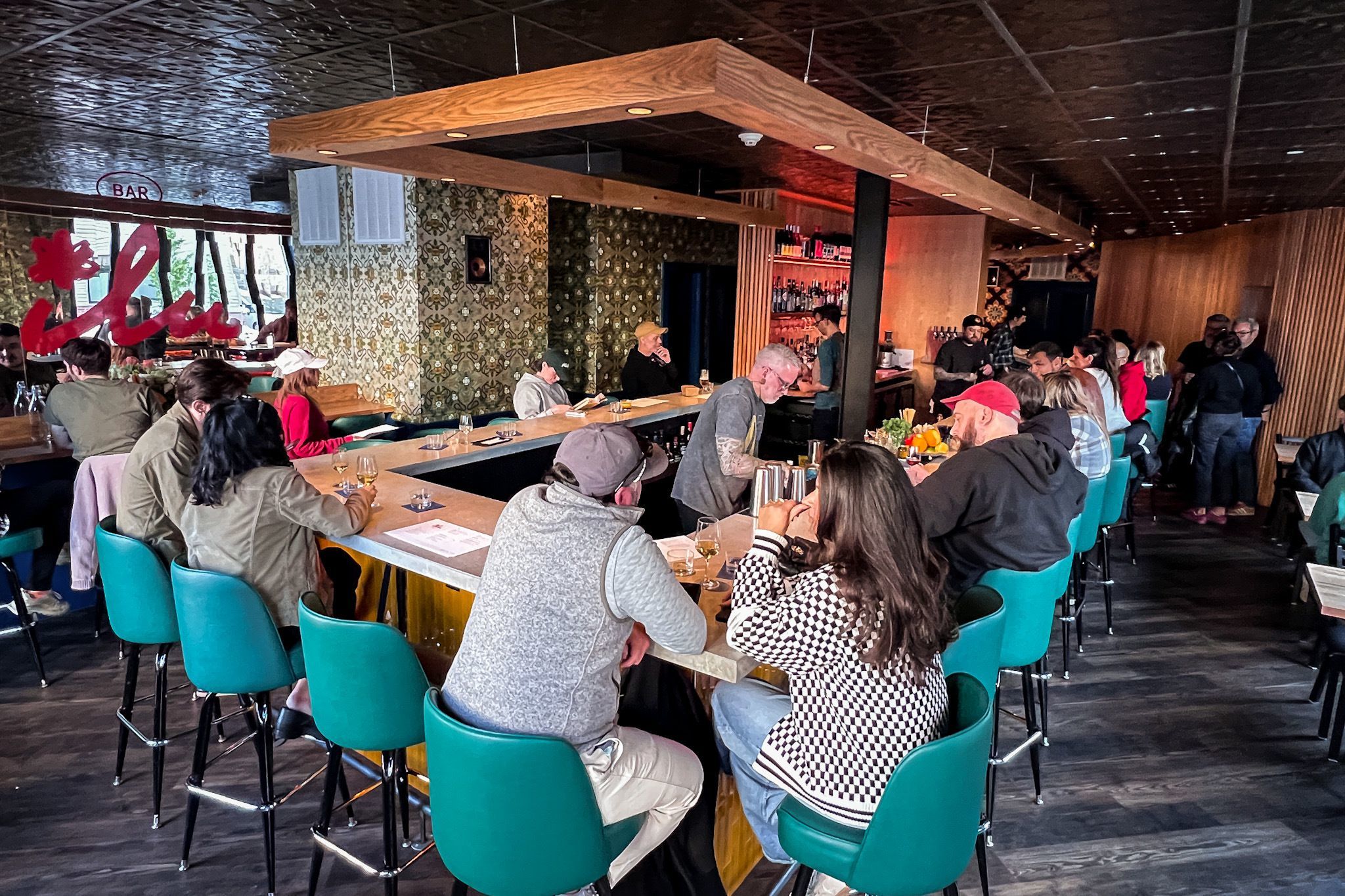
    BAR ilu has a slightly more substantial food menu than most. And part of its appeal is the natural ease with which it blends a Kenzo vibe (see the mismatched thrifter style of its floral-print wallpaper, black tin ceiling, and teal barstools) with an inventive drink program and classic Spanish plates lightly updated by chef Andrew Butler.

    Fig leaf oil adds a shade of coconut-vanilla to a familiar pairing of juicy cantaloupe with shaved serrano ham. Smoked olive oil brings a whiff of earthiness to ripe summer tomatoes with cucumbers and piquillo peppers. A juicy burger topped with Manchego cheese, pickled red onions, and aioli firmly anchors the menu with one can’t-miss comfort option that even the least Spanish-inclined customer will embrace.

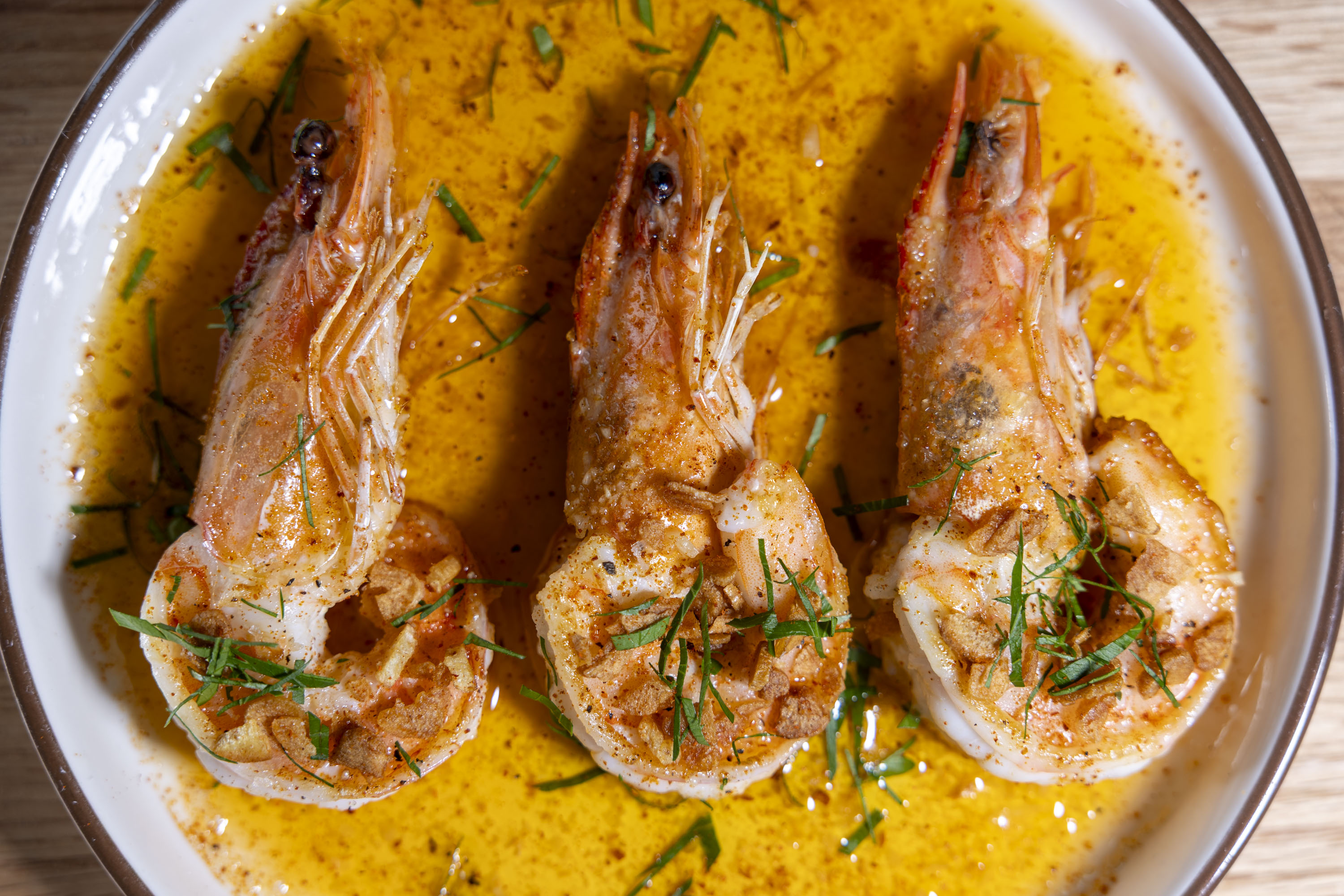
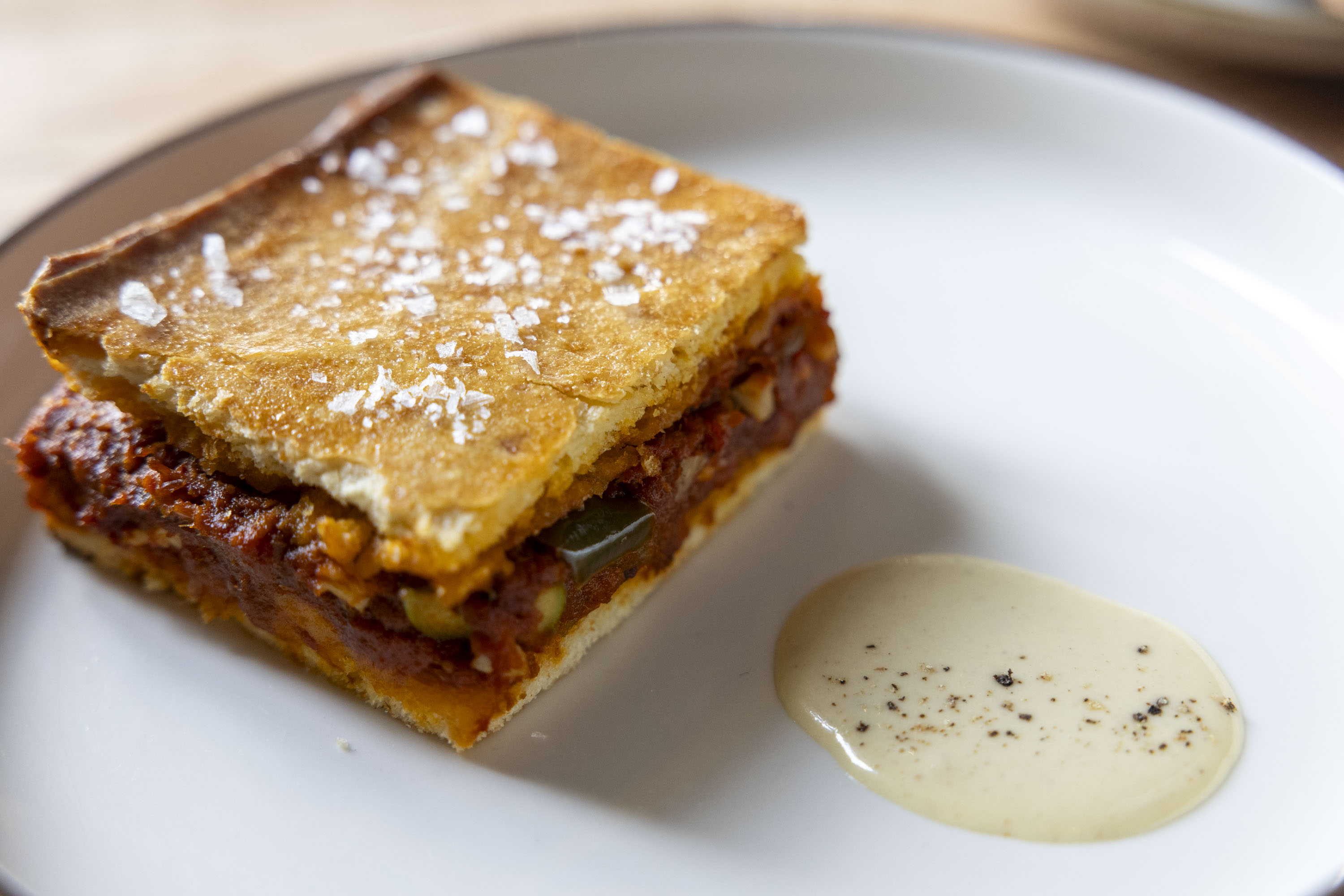
    But the Spanish flavors, both on the plate and in the glasses, are what have me hooked. Aside from the tortilla, there’s a double-crusted Galician-style empanada stuffed with tuna and cooked-down tomate frito. Plump head-on gambas al ajillo take on a flicker of chili oil heat. Crisp spheres of perfectly fried croquetas harbor lusciously creamy béchamel centers flecked with serrano ham or, my favorite, salty flakes of bacalao.

    A Tuna Empanada at BAR ilu on Thursday, Aug. 20, 2026, in Philadelphia.Tyger Williams / Staff Photographer
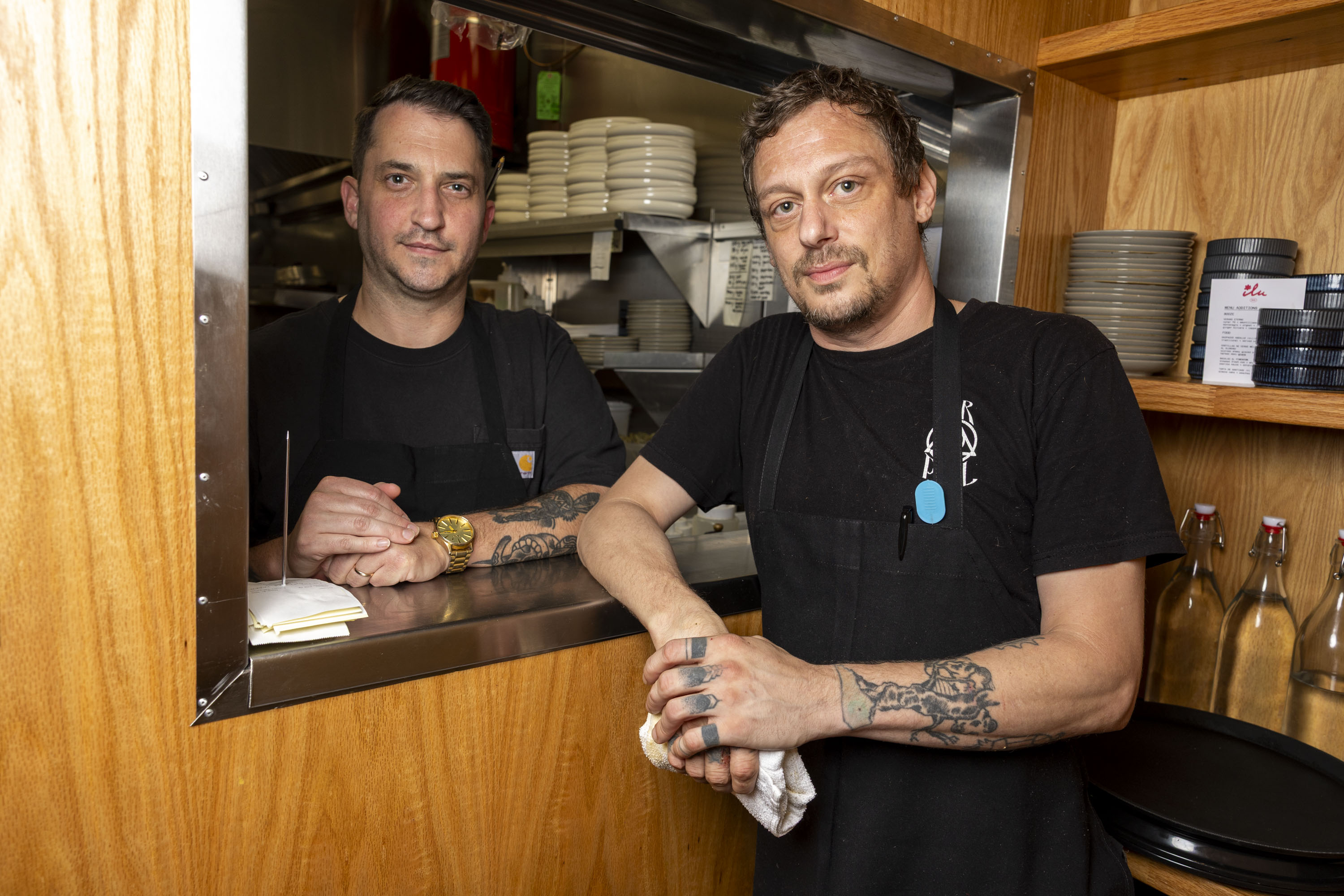
    Pat Szoke, culinary director, and Andrew Butler, chef de cuisine, at BAR ilu.Tyger Williams / Staff Photographer

    There were a few misfires. The patatas bravas were pale and lacking crisp. The flattened confit artichoke heart was mushy. The seared mushrooms were oversalted. But these were minor complaints compared to winners like the crusty bocadillo sandwich overstuffed with paprika-fried baby squid drizzled with lemony aioli and more tomate frito. Along with some tiny olives stuffed with briny anchovy, every morsel seemed deliberately calibrated to stoke a thirst.

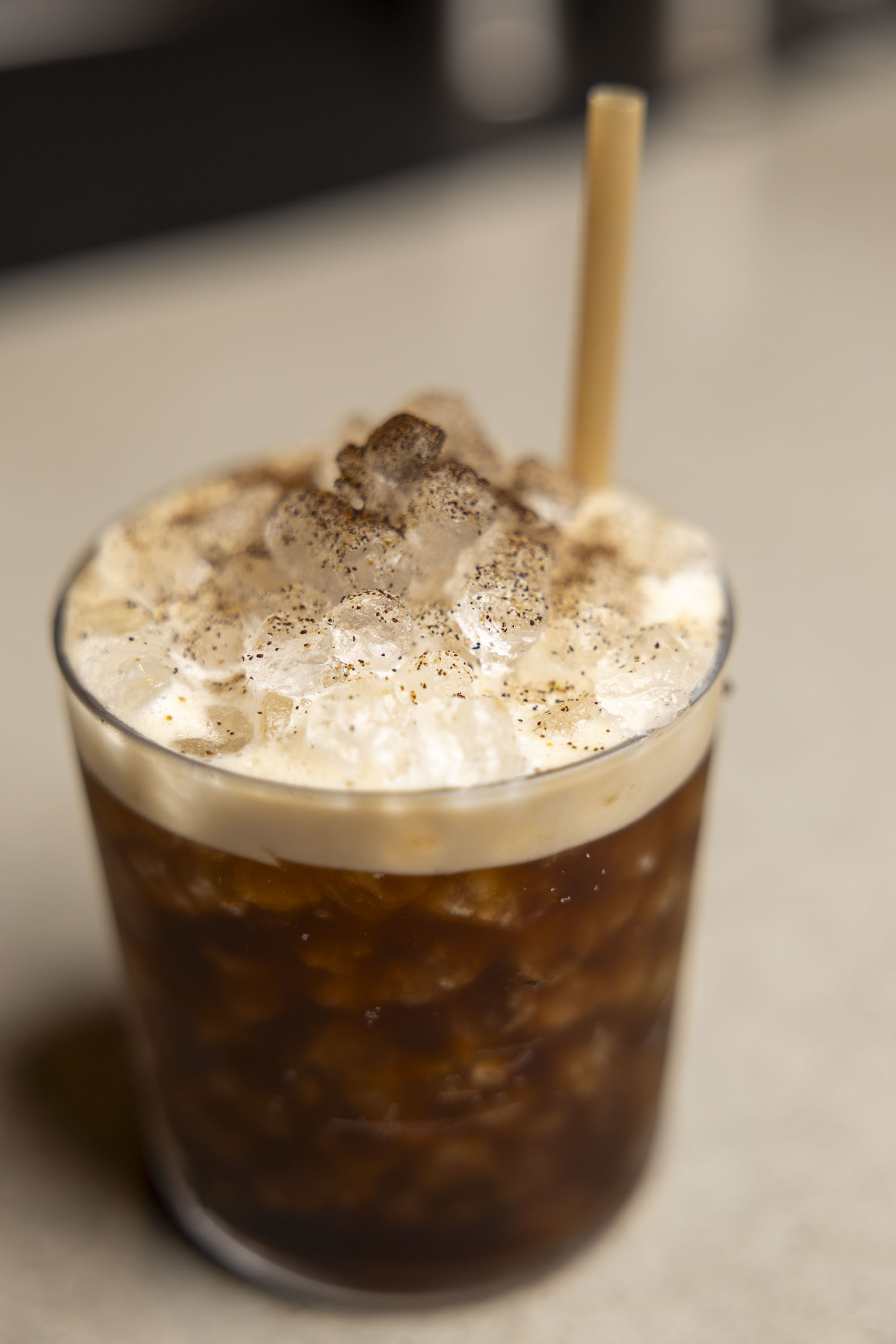
    I especially enjoyed BAR ilu’s creative approach to sherry and vermouth, both in cocktails and poured neat. A crisp Manzanilla, already one of my favorite predinner quaffs in summer, added a bracing dryness to Cynar amaro and gin for Remember the Alimony. Vanilla-scented Licor 43 from Spain pairs with chilled Cafe Bustelo for a carajillo whose pebble ice is dusted with coffee-orange powder, and is now one of my top five coffee cocktails in the city.

    The Carajillo at BAR ilu on Thursday, Aug. 20, 2026, in Philadelphia.Tyger Williams / Staff Photographer

    The Fire Drill is a refreshing tropical blast of passion fruit swirling in mezcal smoke, with an herbal whiff of Lo-Fi gentian amaro to counter the fruity sweetness. A whole Granny Smith apple is juiced to order for the simple Booze & Juice, paired with the spirit of your choice (make it mezcal).

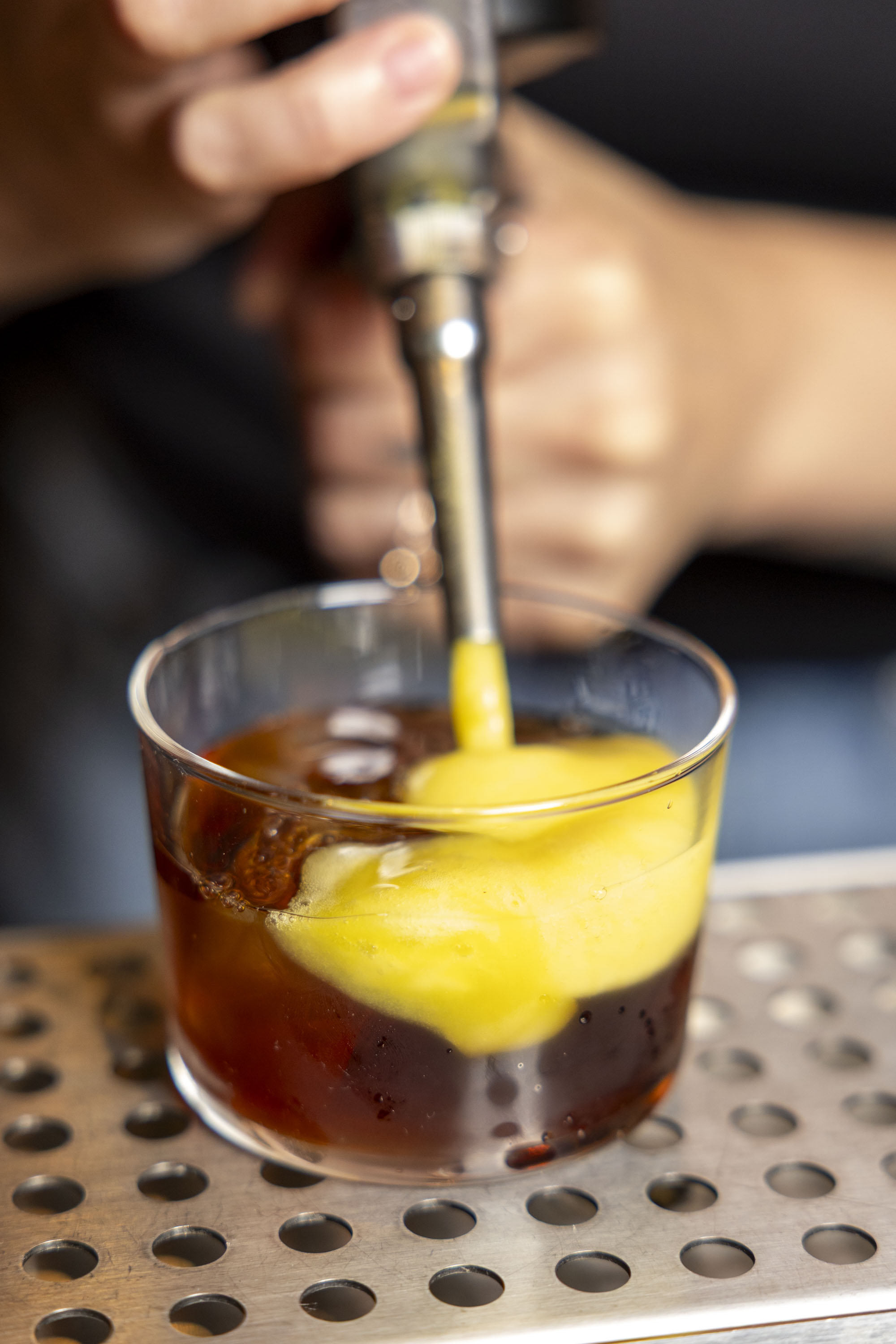
    Meanwhile, unless you order a glass of dark, sweet-tangy Pedro Ximenez to cap your meal, try the Barquero vermut on draft and top it with orange foam, a combo that tastes like flat Coke dolloped with an orange-creamsicle cloud. There is actual dessert here, too: a perfectly fine almond cake with macerated peaches and cream. But that foamed vermouth was satisfyingly herbal, sweet, and mysterious — and one of the best things I drank all summer.

    The Vermouth with Orange foam at BAR ilu on Thursday, Aug. 20, 2026, in Philadelphia.Tyger Williams / Staff Photographer
    The Bifana sandwich as served at Grace & Proper in Queen Village Wednesday, Mar. 8, 2023.Tom Gralish / Staff Photographer

    Grace & Proper

    If BAR ilu represents a modern interpretation of tapas culture in Philly, the vintage vibes at Grace & Proper’s Italian Market space reflect a different take on Iberian bar culture, this one influenced by the Portuguese roots of co-owner Chris Fetfatzes’ family.

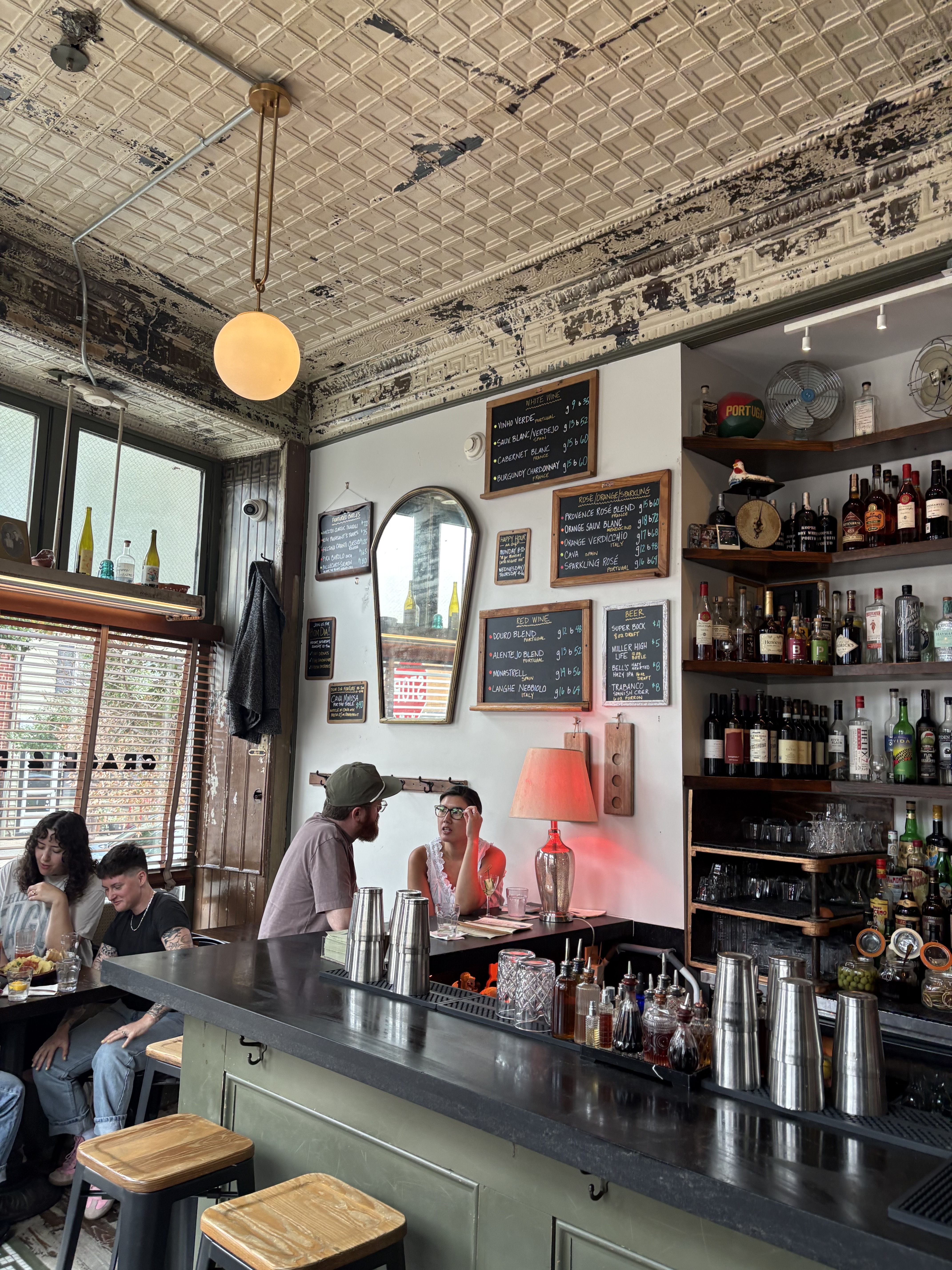
    Fetfatzes, his wife, Heather Annechiarico, and their Happy Monday Hospitality partner Susan Freeman, who also own Wine Dive and Sonnys Cocktail Joint, leaned into the antique charm of the distressed tin ceiling, tiled floor, and exposed brick walls that were uncovered during renovations of the old pharmacy (and Italian deli) that once occupied this corner space at Eighth and Carpenter. Fetfatzes was hoping to create the cocktail counterpart to Fountain Porter, the 14-year-old craft beer destination in East Passyunk known for its $7 burgers and pickles that, perhaps, helped mark the beginning of the minimalist-nibble bar.

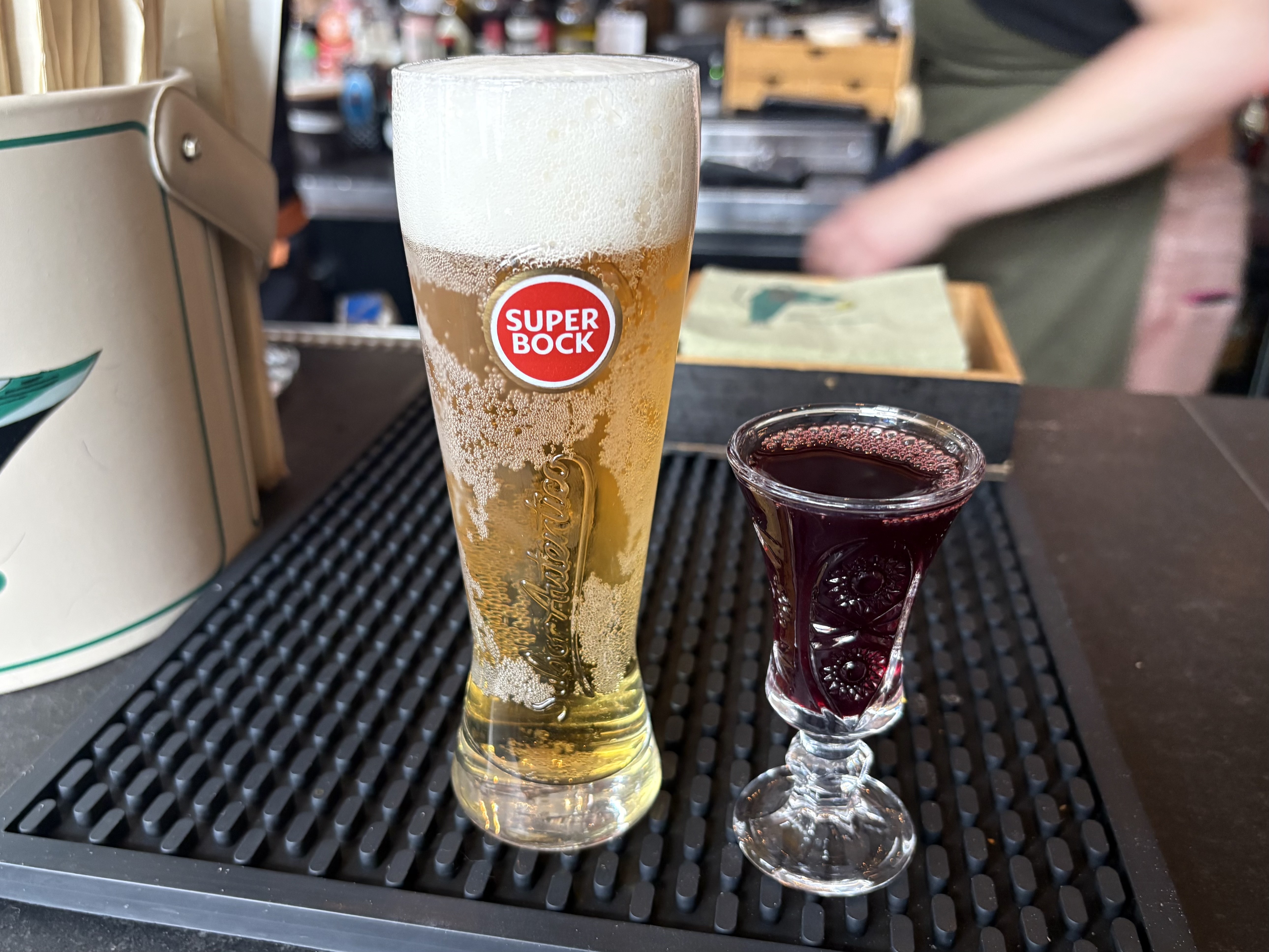
    Given Grace & Proper’s compact space, with just 15 barstools and 26 table seats sidled into window banquettes (plus 30 more outside in fair weather), it’s amazing how its 200-bottle collection of amari, vermouths, ports, whiskeys, Madeiras, sherries, agave spirits, and indie Euro wines somehow fits into the tall shelves behind the bar. If you’re a fan of funky Asturian cider, there’s a proper porrón carafe to stream it directly into your mouth from an arm’s length away, ideally while watching Premier League or MLS soccer. Or try the Philly-Portugal Lisbon Wide hybrid, a draft of Super Bock Portuguese lager paired with a shot of ginjinha, a house-made cordial steeped from Morello sour cherries harvested in Northeast Philadelphia.

    The Lisbon Wide is Grace & Proper’s Portuguese twist on a Citywide, pairing Super Bock beer with housemade Ginjinha sour cherry liqueur.Craig LaBan / Staff
    The Meat & Chips at Grace and Proper on Thursday, Aug. 3, 2023.Allie Ippolito / Staff Photographer

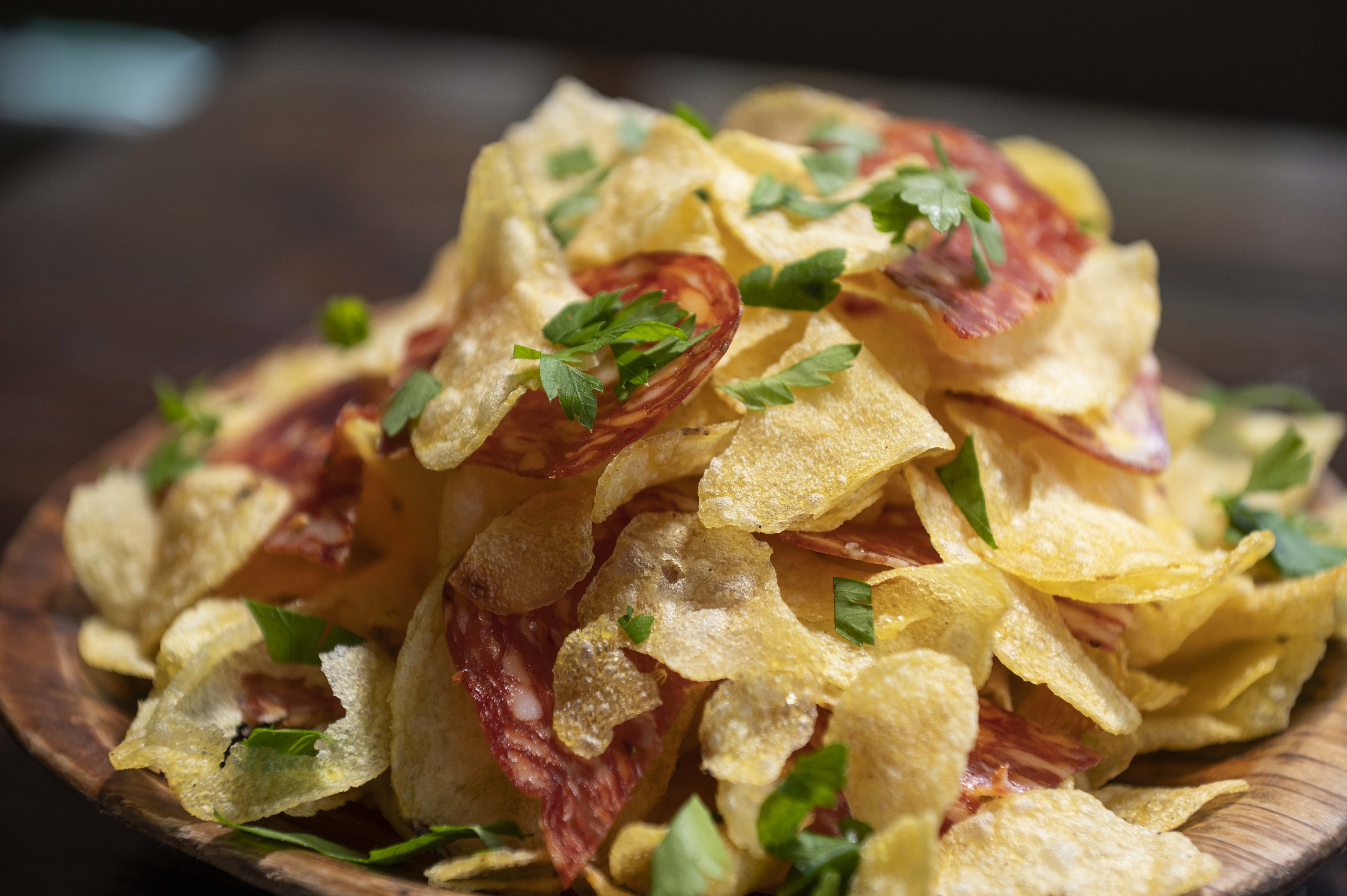
    Grace & Proper doesn’t post a food menu online, but it’s substantial enough to anchor your table for a couple hours of snacking, from an irresistible pile of truffled potato chips feathered with spicy Calabrese salami to soulful onion soup infused with port and lardo, a crock of white bean stew with kale and breadcrumbs, piri piri-spiked Buffalo chicken dip, and sweet-tart-smoky bacon-wrapped prunes with black garlic aioli.

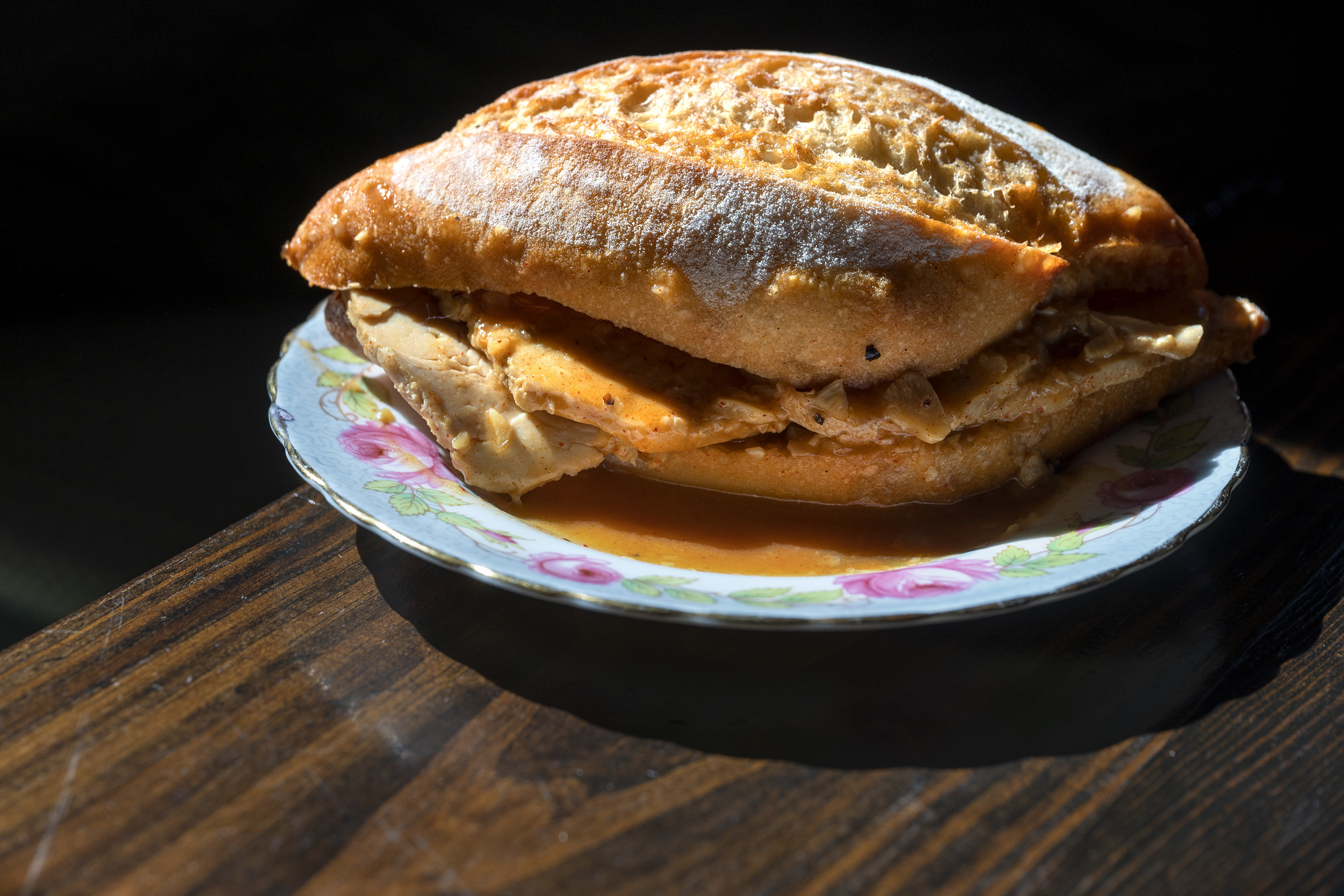
    I didn’t care for the overly firm meatballs and their unbalanced blackberry romesco or, for that matter, the presentation of cheeses as crumbled nuggets. But these are all quibbles. Because there is really a single essential reason to visit Grace & Proper: the bifana, a classic sandwich of wine-marinated roast pork on a molete roll from Teixeira’s Bakery in Newark that comes perched over a paprika-orange pool of zesty gravy. Equal parts lemony, garlicky, winey, and scented with bay, that roasted pork essence is so good, the gravy is also offered as a chaser to the Piggy Back shot (oloroso sherry and Armagnac).

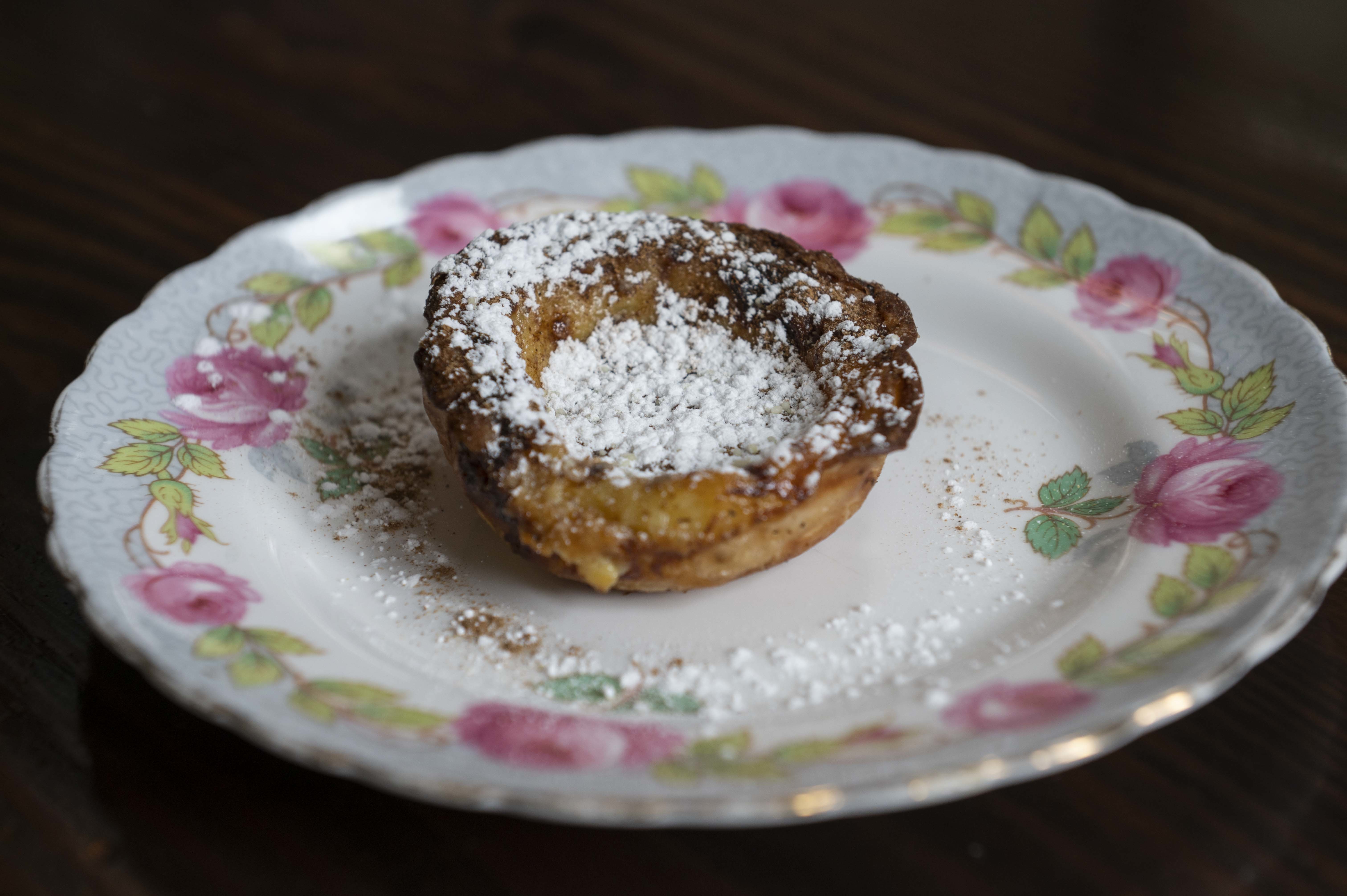
    All you’ll need after that is a custardy sweet pastel de nata (also baked by Teixera’s, according to G&P’s recipe) and what might well be the best crema-topped shot of espresso at any bar in Philly. Grace & Proper is one of the precious few that actually adds fresh-pulled coffee to its espresso martinis, but I still prefer this coffee solo. I value the energy boost because, in these days of no-commitment sip-and-nibble bars, I’ve still got places to go.

    The Pastéis de Nata at Grace and Proper on Thursday, Aug. 3, 2023.Allie Ippolito / Staff Photographer
    Vintage details of the former pharmacy and Italian deli have been preserved to add character to the bar at Grace & Proper.Craig LaBan / Staff

    BAR ilu

    2118 E. Dauphin St., 267-807-2466, iluphl.com

    Menu available 4 to 11 p.m. Sunday, Tuesday through Thursday; 4 p.m. to midnight Friday and Saturday. Bar is open 4 p.m. to midnight Sunday, Tuesday, Wednesday; 4 p.m. to 1 a.m. Thursday through Saturday.

    Plates, $4-$14.

    Dining room is wheelchair accessible via a ramp off rear of building off Martha Street. Bathrooms are not accessible.

    Not ideal for gluten-free diners, aside from some small snacks.

    Menu highlights: croquetas (ham and bacalao); anchovy-stuffed olives; serrano ham and chips; tortilla Española; ham and melon; cheeseburger; gambas al ajillo.

    Drinks: Cocktails built around sherry and vermouth are the most distinctive opening move, while straight fortified wines on draft, including La Gitana Manzanilla or Barquero vermut with orange foam, are also highlights. There are also 10 affordable Spanish wines by the glass.


    Grace & Proper

    941 S. Eighth St., graceandproper.com

    Menu served 4 p.m. till midnight Monday, Wednesday, Thursday; noon to midnight Friday through Sunday. Bar is open till 1 a.m. on Friday and Saturday.

    Plates, $7-$15.

    Not wheelchair accessible.

    About 40% of the menu is gluten-free or can be modified.

    Menu highlights: bifana; bacon-wrapped plums; salami and truffled chips; Porto lardo onion soup; pasteis de nata.

    Drinks: The vast 200-bottle collection is a sipper’s delight, from amari to fortified wines, extensive whiskies, and a surprising agave spirits collection. Don’t miss creative cocktails made with the company’s new house-distilled spirits, including a Chartreuse-inspired “Green Monk” or the ginjinha cordial, steeped from Northeast Philly sour cherries, served in the Lisbon Wide as a sidecar to a draft of Super Bock.

  • The sandwich of the summer is the hot dog. It always is.

    The sandwich of the summer is the hot dog. It always is.

    Several weeks ago, The Inquirer food desk deliberated on declaring a sandwich of the summer, after the New York Times designated Italian piadinas their pick for said title (a phenomenon that seems mostly confined to Brooklyn). Personally, I think the designation is pretty silly. Why?

    The hot dog is the sandwich of the summer. It always has been, but it’s especially true now.

    The Philadelphia area is a few years into a hot dog obsession that seems to grow in intensity with each passing summer — epitomized by the standing-room-only July crowds at Royal Tavern’s now-annual Dog Days of Summer hot dog bonanza, featuring chef Nic Macri’s proprietary hot dogs. (Royal sold nearly 10,000 dogs this summer; you can still try one until the end of August.)

    Hot dogs at Royal Tavern’s Dog Days of Summer special, held annually in July. (A few dogs remain on the menu in August.)Tom Gralish / Staff Photographer

    Dogs have not only made their way onto more bar and restaurant menus — upscale and otherwise — at several places they are the backbone of the menu (see Ortlieb’s in Northern Liberties, Pip’s in Fishtown, Bad Nina’s in Germantown, the Hidden Dog in Haddonfield, and Dock Dogs in Margate). Hot dogs have become a hallmark of post-pandemic, inflation-era high-low food combos. Look no further than the hot dogs-and-fancy bubbles happy hour (Herman’s), wagyu hot dogs (Almanac), hot dog towers (Sonny’s Cocktail Joint), and rooftop hot dog fetes with oysters and caviar (Irwin’s) for evidence.

    The boom times won’t necessarily end after Labor Day, but, for many people, hot dogs have a season, and it is summer. After all, nearly half of the 100 million hot dogs made annually by Dietz and Watson, Philly’s homegrown deli meat maker, are sold between May and August, according to Lauren Eni Canseco, Dietz’s vice president of brand strategy and fourth-generation family owner.

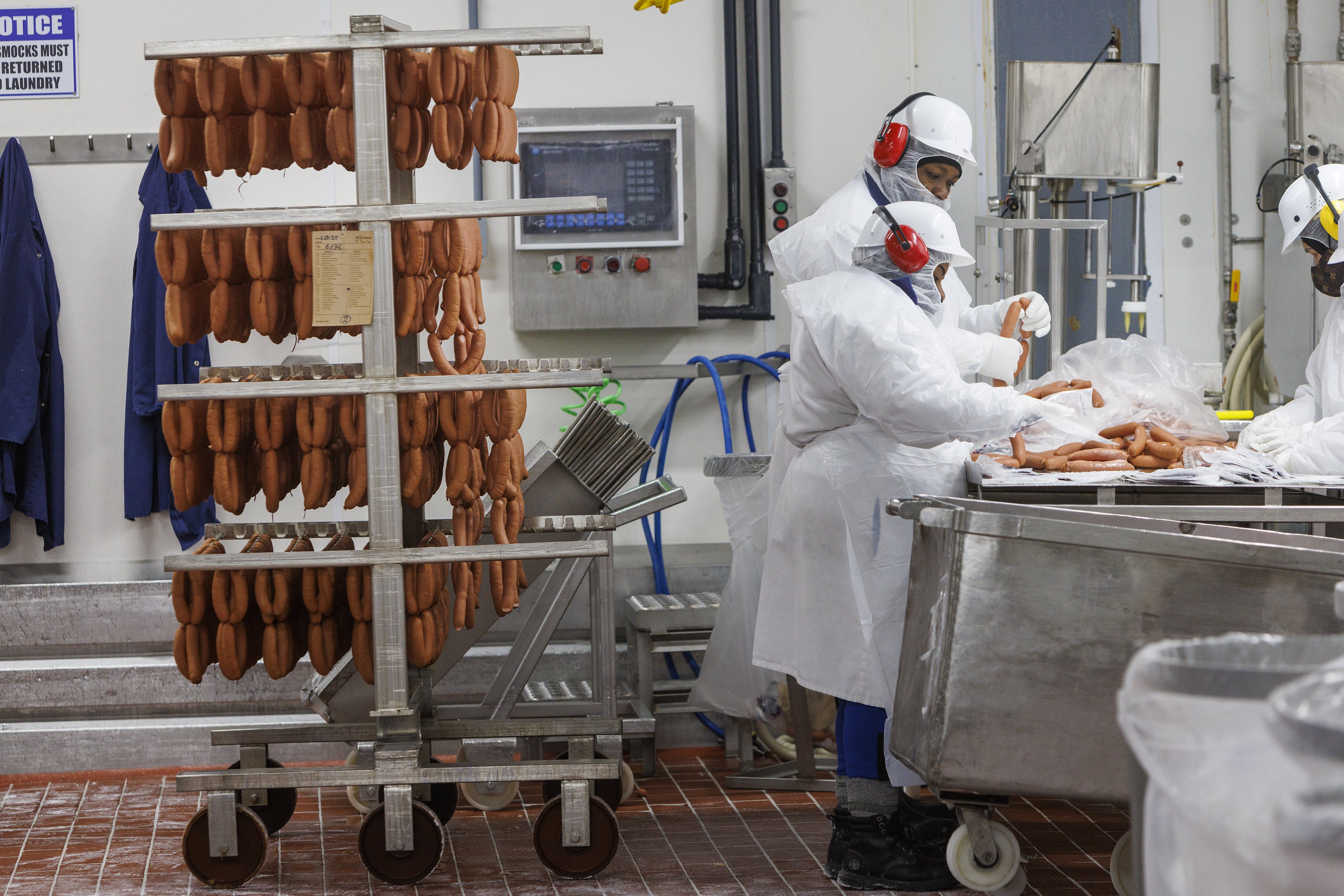
    Food handlers packaging Black Forest Uncured Knockwurst at Dietz and Watson plant Philadelphia in 2025. Dietz and Watson produces and distributes deli meats, cheeses, and other specialty food products.Alejandro A. Alvarez / Staff Photographer

    That the hot dog is the sandwich of the summer, here or anywhere, seems so obvious, it almost shouldn’t even need to be verbalized. It’s ballpark food, barbecue food — summer food.

    The one major hitch? The enduring, irreconcilable debate over whether a hot dog is a sandwich. This is well-tread ground among hot dog enthusiasts, a subset of civilization that is fiercely opinionated and quite vociferous.

    To give both sides of the argument equal air time, I asked several local glizzy authorities — makers, avid consumers, etc. — to weigh in. Is a hot dog a sandwich? Here’s what they said:

    Craig LaBan, Inquirer restaurant critic: Technically, yes. As much as a hoagie, or hot roast beef, cheesesteak or cutlet can be a sandwich. You put sausage on a bun and call it a sandwich. Hot dog is a sausage, so …That is not to say hot doggery is the same thing as eating a peanut butter and jelly. … and it’s true hot dogs can absolutely exist on their own — in a pot of beans or Korean Army soup, baked into a croissant, wrapped in a blanket, in which cases they are not a sandwich. So … now that I rethink it, a hot dog is NOT a sandwich, but it can become one.

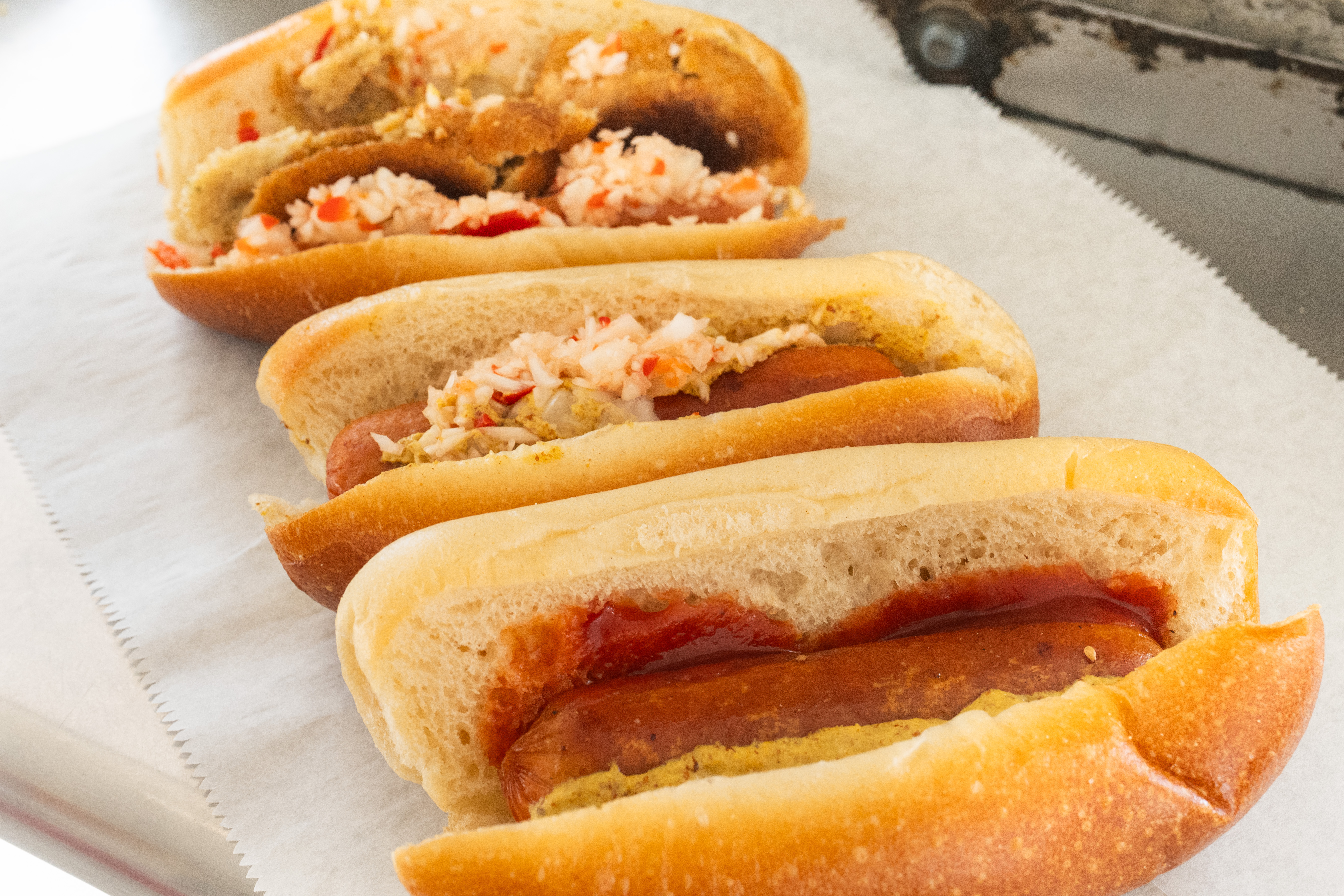
    Standard hot dog with ketchup and mustard, hot dog with pepper hash, and hot dog with fish cake and pepper hash at Johnny’s Hots on Aug. 17.Jessica Griffin / Staff Photographer

    Chris Barnes, owner of Lucky’s Last Chance: A hot dog is a hot dog! It’s unique and perfect and one of one. Anyone who says otherwise probably also likes ketchup on it.

    Jen Zavala, owner of Juana Tamale: Yes, a finger sandwich.

    Hawk Krall, illustrator and noted hot dog chronicler: I’ve always been a hard NO on this. Why?

    1. Sandwiches are commonly considered a complete meal. One hot dog is a snack. You need two or three to make a meal.
    2. Sandwiches are usually portable, packable. Something you can put in a Ziploc, bring for lunch, or save for later. This is not a pleasant or regular practice with hot dogs, they are designed to be eaten immediately.
    3. Sandwiches are usually COLD, unless advertised as a “hot sandwich.” Hot dogs are almost NEVER served cold.
    4. Hot dogs and sandwiches are best purchased from different sorts of vendors. You probably wouldn’t want a hoagie from your favorite Center City hot dog lunch cart; and you probably wouldn’t want a hot dog from your favorite Philadelphia deli (I’ve tried) — unless it was Famous 4th Street.
    5. I’ve been painting and writing about hot dogs for almost 20 years. Poring over old articles, menus, going back to the early 1900s. Very rarely, or maybe even never, have I seen a hot dog historically referred to as a sandwich.
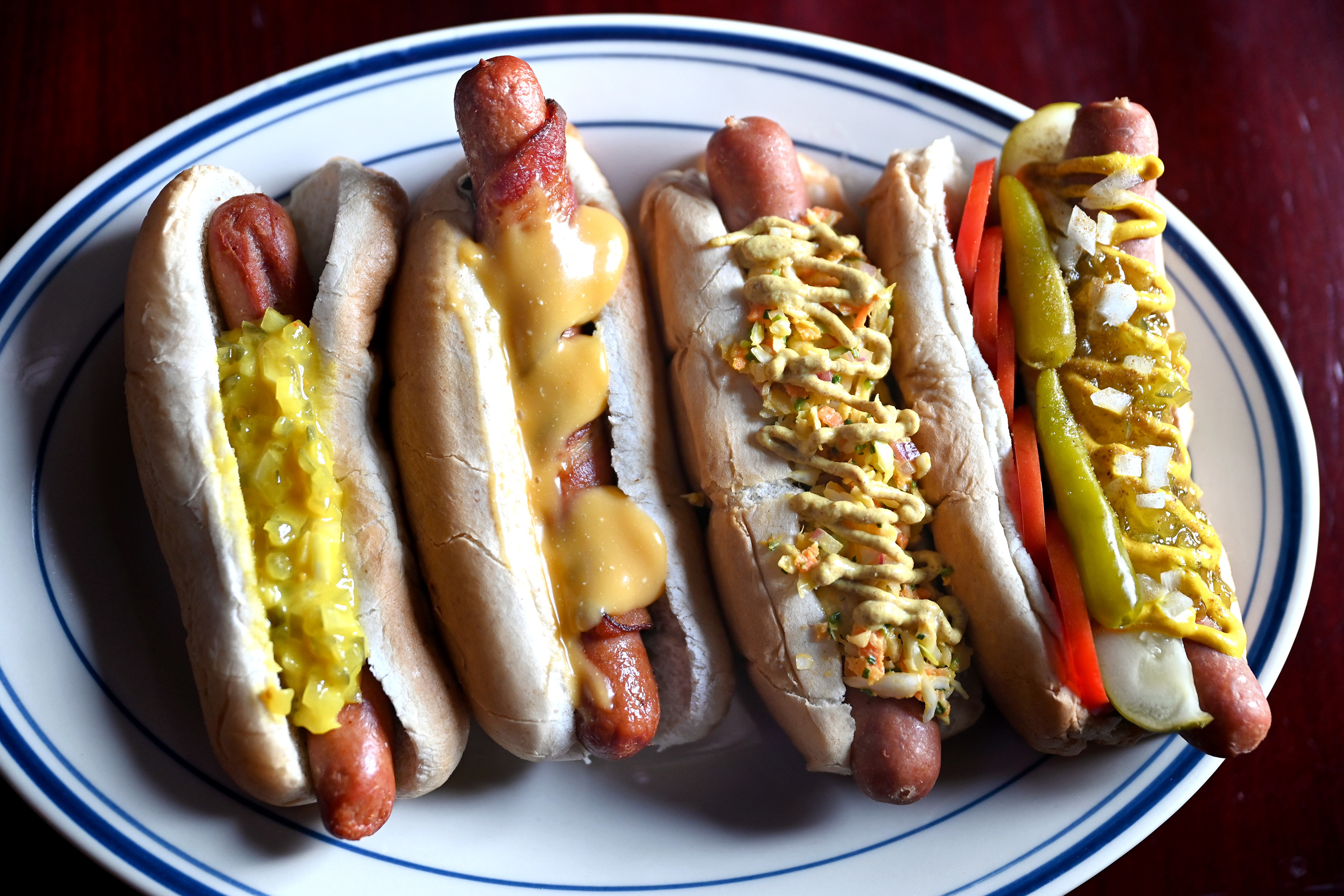
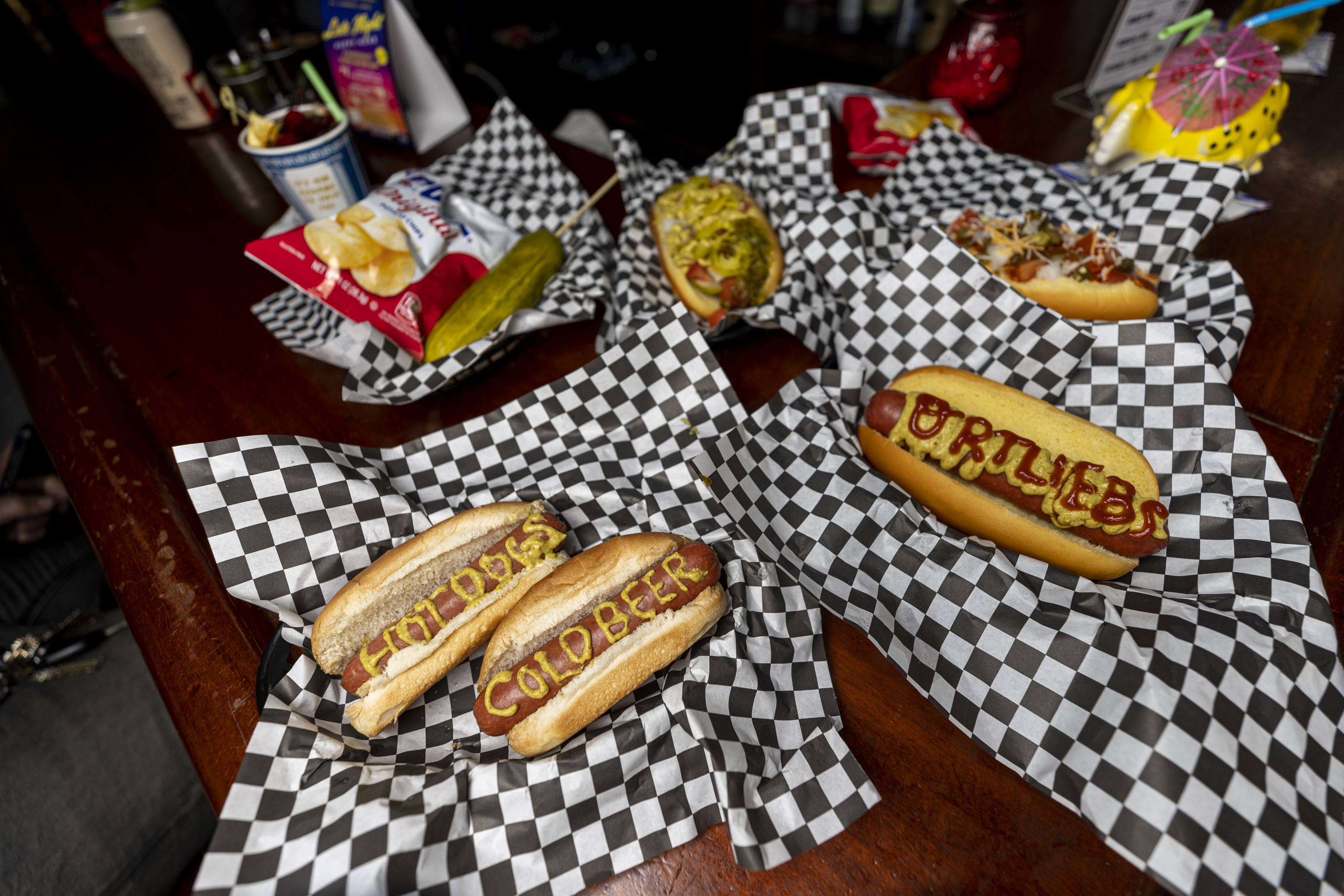
    An assortment of classic hot dogs with mustard and ketchup writing at Ortlieb’s in Northern Liberties.Tyger Williams / Staff Photographer

    Nic Macri, chef at Royal Tavern: Considering a hot dog is a hot dog without the bun, I am going to say no. I’ll tell you what is not a hot dog — a sausage in a hot dog roll!

    Pierre Li Peters, aka @theehotdogsummer: A hot dog is not a sandwich because it’s an entirely different art form. A hot dog is a hot dog, even when it doesn’t look like the classic Nathan’s frank we all imagine. For example, a corn dog could be considered a part of the hot dog family but doesn’t really fit into the sandwich category … The beautiful thing about the hot dog community: It’s not limited in being classified as a sandwich; creativity flourishes due to unique characteristics shaped by the regions that enjoy them.

    Lauren Eni Canseco, Dietz & Watson VP: A hot dog CAN be a sandwich, but it can also be an ingredient, an entree, or a snack! If it’s a high-quality, high-protein dog, the possibilities are endless.

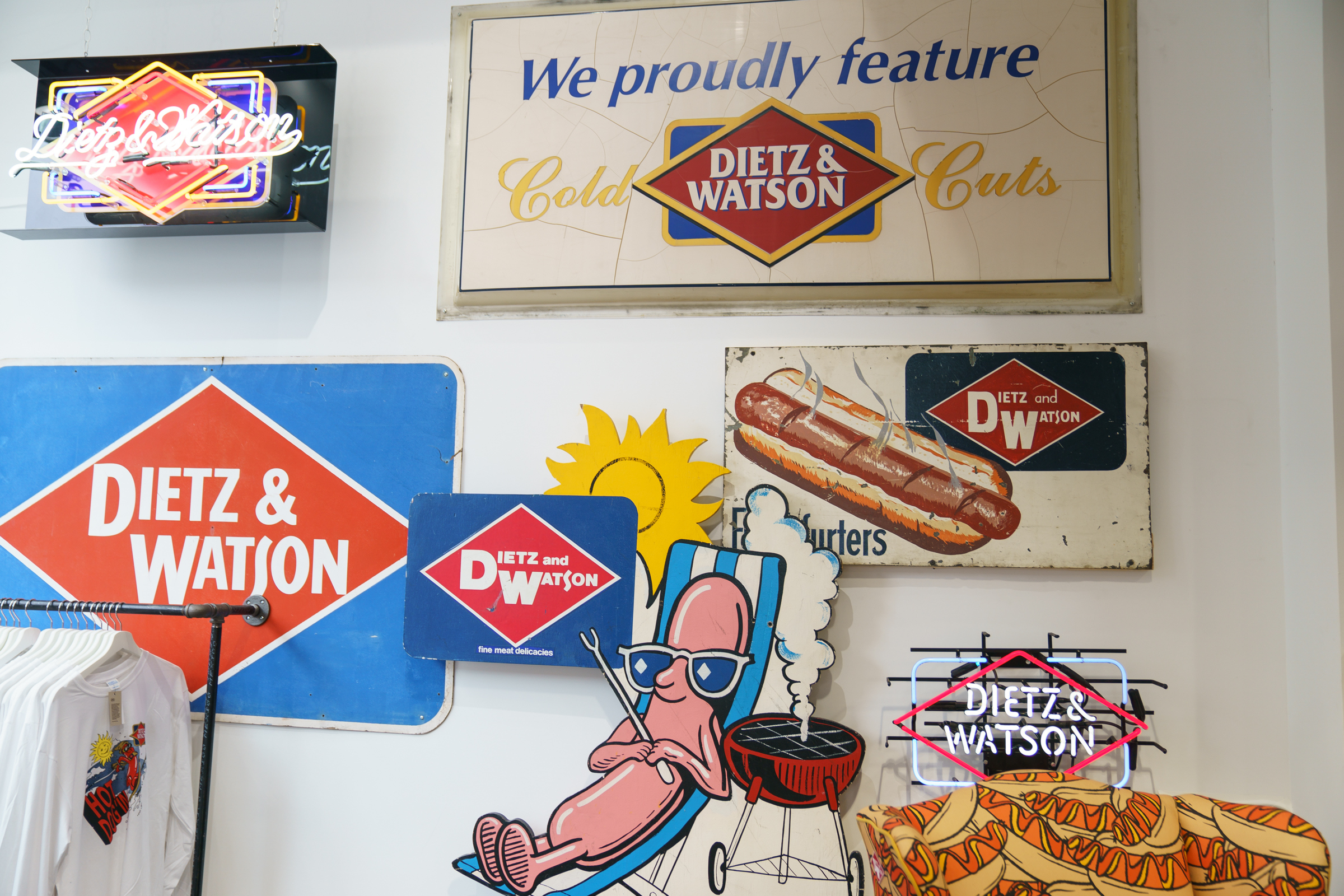
    Retro wall decor at Dietz & Watson pop-up store at Fifth and South Streets in 2019.JESSICA GRIFFIN / Staff Photographer

    Emilie Dormer, aka @glizzygirliez: In my heart, I don’t consider a hot dog a sandwich. A hot dog feels like its own category entirely. There’s something culturally distinct about it that gets lost when you simply call it a sandwich. That said, if you forced me to place it into one of the traditional food categories, I’d have to admit that yes, structurally, I guess that it probably qualifies as a sandwich. Bread, filling, handheld … the evidence is unfortunately there.

    Ralph Stollenwerk, artist and hot dog illustrator: I think a hot dog is as much of a sandwich as a hoagie. Nobody officially calls it a “hoagie sandwich,” [just] as nobody calls it a “hot dog sandwich,” but it is meat held between bread. I’m calling it a sandwich, but I would NEVER call it a sandwich in public.

    As for me, I pretty much agree with Stollenwerk. You can quibble with my headline, but the substance of the argument is undeniable: The hot dog is the sandwich of the summer, even if the “sandwich” is silent.