With questions about election integrity roiling American politics, Scott Presler — a social media influencer from Pennsylvania who regularly makes wild and unproven accusations around voter fraud — seems determined to fan the flames.
In a recent social media post with more than a million views, Presler claimed — without providing any evidence — that there are as many as 50,000 noncitizens who are registered to vote in the Keystone State. His millions of followers across various platforms are routinely inundated with similar messages, in between appeals to volunteer with his organization, Early Vote Action.
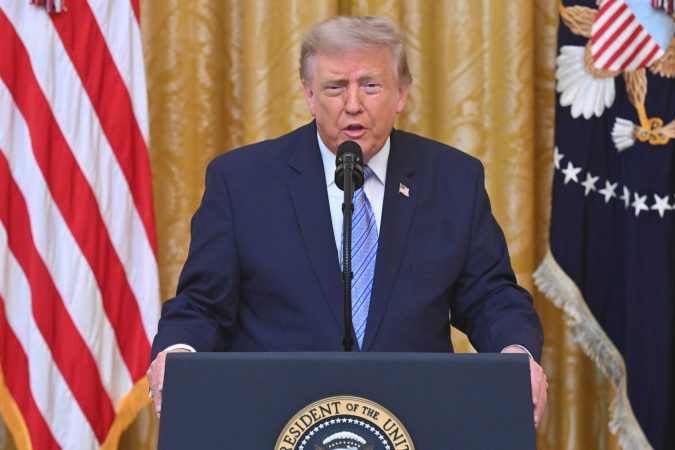
Presler’s post came on the heels of an announcement over the summer by the U.S. Department of Homeland Security — again, without providing much in the way of details — that it had identified 14,576 noncitizen registrations.
Pennsylvania election officials have said the Trump administration doesn’t even have a lot of confidence in its numbers, and Gov. Josh Shapiro said that claims of widespread voting by noncitizens are “not connected to reality.”
I’ve emailed Presler multiple times to find out how he’s arrived at his figures and have yet to receive a response.
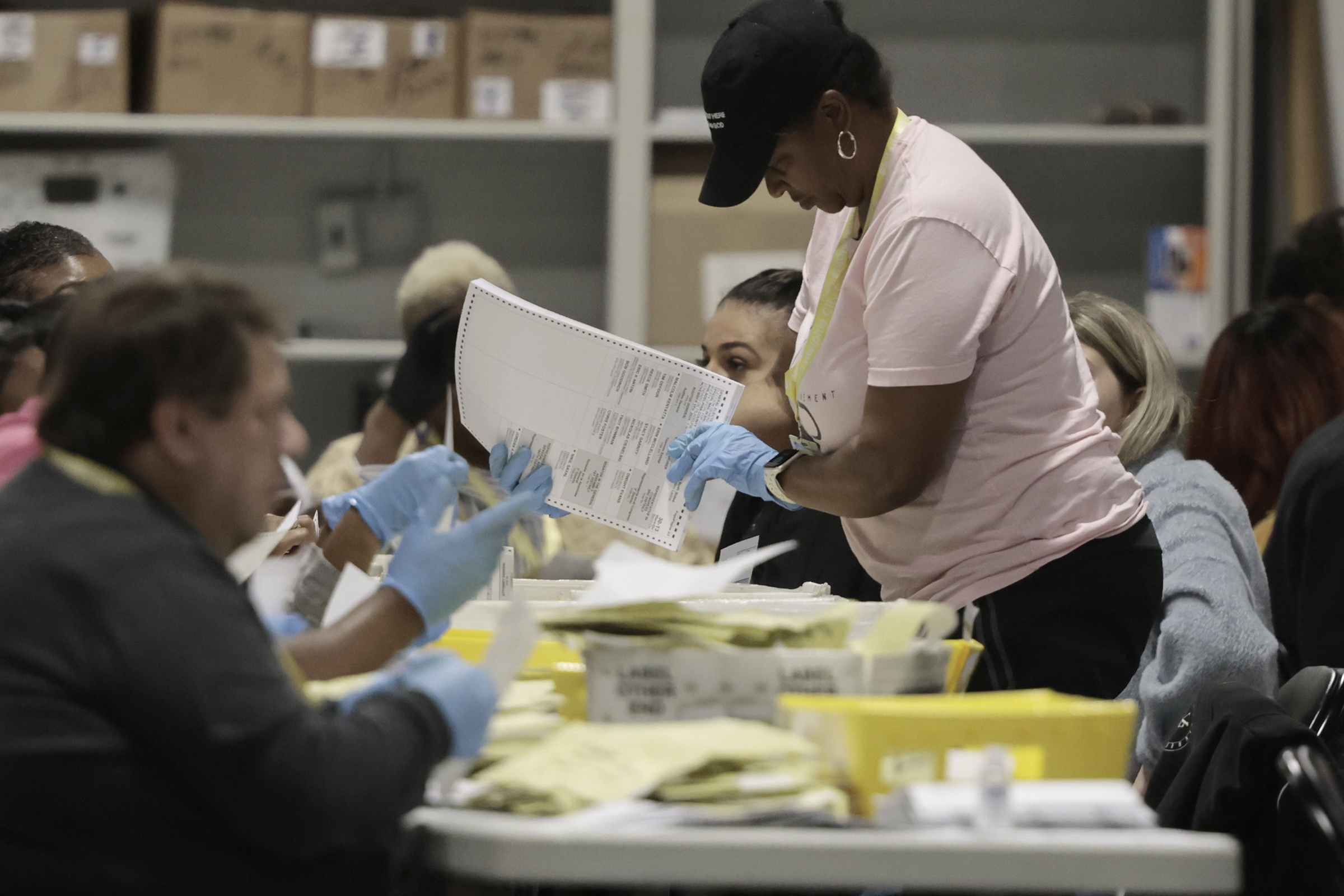
These episodes underscore one of the biggest challenges facing voting officials in Pennsylvania and elsewhere as they prepare for next month’s midterm elections: debunking vague or unverified claims about widespread fraud.
Long before Donald Trump’s unfounded assertions that the 2020 presidential contest was stolen from him, election officials, lawyers, activists, and political parties argued over election security. The goal is to balance two valid, competing concerns: that every eligible voter can cast a ballot, and that every ballot counted is cast by an eligible voter.
But there are crucial differences between partisans like Presler and the most conscientious elections officials.
Because of the sanctity of the ballot, voting officials are careful about the language they use and the claims they make.
Elections administrators distinguish between voting irregularities — errors caused by computer glitches or benign mistakes — and voter fraud, instances where there is a deliberate attempt to shift the outcome of a vote.
And, perhaps most important, the best voting officials regularly show their work and provide evidence for their assertions.
For Presler and others like him, the latter can be especially challenging.
“I have never seen Presler release actual verified data, so we are left to guess, which may be his intent,” said Linda Kerns, a conservative Republican election lawyer with a long history of campaigning for voter integrity. “He appears to compare juror lists to voter registrations, but there are many more steps to the process. Social media posts are rarely evidence-based.”
What experts told me is that what people like Presler are doing is focusing on so-called soft targets, which are very different from confirmed cases of wrongful registration. Lists of people who are not eligible to vote — which may include, for example, those who marked themselves as noncitizens when called for jury duty — are not necessarily wrong, but they may be outdated. Hundreds of thousands of people become U.S. citizens every year. But officials said it is exceedingly rare that noncitizens intentionally register to vote illegally.
More common is what happened recently in Nevada, where Homeland Security officials originally claimed there were around 16,000 noncitizens registered to vote. When the agency later sent a list to the state, it only included 185 names. Nevada officials then confirmed all 185 people were eligible to vote.
It is easy to mock the Trump administration or Presler’s brand of hyperbolic nonsense, but that doesn’t mean election security concerns aren’t real — or that local officials don’t take them seriously.
Election integrity
When it comes to securing elections, conservative policies to avoid diluting legitimate votes have tended to prioritize measures like voter ID laws and restricting who is allowed to drop off a mail-in ballot. Liberals and progressives, meanwhile, have favored widening access. That’s why they’ve fought against ID requirements and anything else that might encumber legitimate voters.
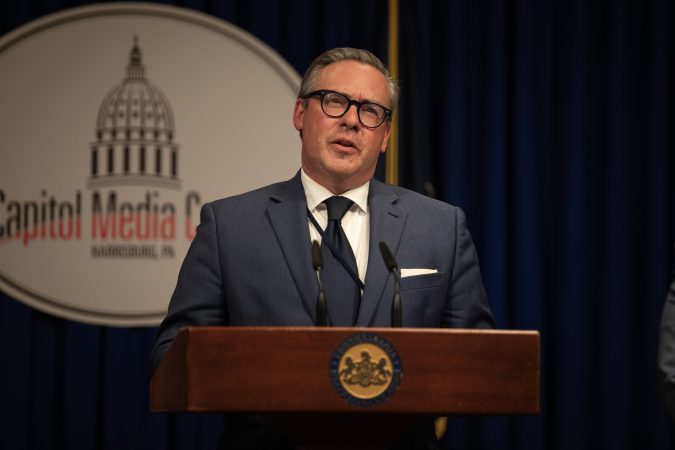
Pennsylvania Secretary of the Commonwealth Al Schmidt has been caught between these competing impulses for 15 years.
In 2011, Schmidt was an insurgent candidate for Philadelphia’s Republican spot on the Board of Elections. A former analyst at the Government Accountability Office, Schmidt ran and won on a platform of cleaning up local elections.
In 2012, he issued his own report on voting irregularities in that year’s primaries. It was met with some partisan pushback, particularly from progressives. The much-missed City Paper even went as far as calling Schmidt a “snake in the grass.”
Before joining The Inquirer, I worked with Schmidt at the Philadelphia City Commissioners. When I joined the office in 2014, it was clear the city’s elections were in need of fine-tuning.
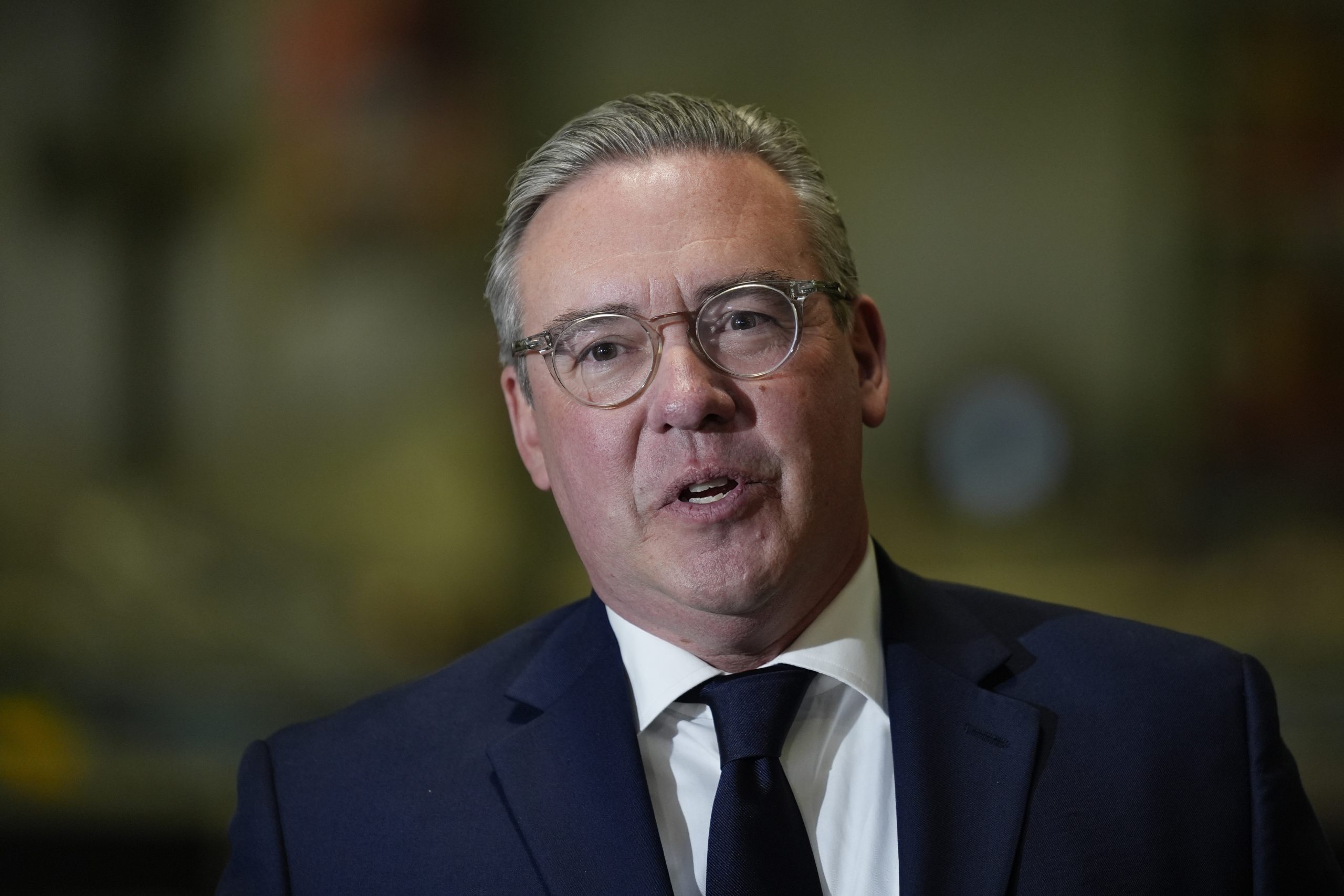
Then-Deputy City Commissioner Seth Bluestein, who would take Schmidt’s seat in 2022, already had a series of open investigations. (Full disclosure: I’ve known Bluestein for more than 20 years, having met him on our first day as freshmen at Central High School.)
Our office’s biggest find was Dom DeMuro, a South Philadelphia judge of elections who later admitted that during several elections from 2014 to 2016, he had changed the results on voting machines after the polls had closed. This led to a federal investigation that uncovered an entire electioneering scheme, orchestrated by former U.S. Rep. Michael “Ozzie” Myers.
Myers, DeMuro, and another poll worker were all sentenced as a result. As Adam Bonin, a widely respected election lawyer, told me, Schmidt “has found places where Democrats were trying to cheat and he caught them. And they should have been caught.”
After all, much of what was going wrong in city elections was occurring on a smaller scale than what Myers was up to. Bluestein remembers cases where nonaffiliated voters were allowed to participate in primaries, or voters used the wrong machine at shared polling locations.
While these mistakes should not occur, they also aren’t crimes, let alone proof of a conspiracy.
Suspicious minds
When it comes to names on lists, suspicion is not evidence, and investigations help dispel doubt. Take the case of a Philadelphia woman named Cheerful Happiness.
All the way back in 2012, city Republican leaders asked Schmidt to look into a series of names they found suspicious. In the case of a “Joe Cheeseborough/Cheeseboro,” investigators found that his supposed home was a 7-Eleven on South Broad Street. Cheerful Happiness, however, turned out to be a real person.
At the time, she was 100 years old, and workers at her assisted living facility confirmed her identity and the fact that she still voted regularly. Cheeseboro, on the other hand, was listed as “inactive.” This means that if someone had shown up to vote using that name, they’d have to present ID to prove they were who they claimed.
Among election deniers, much has been made of the recent acknowledgment by New Jersey voting officials that 6,600 noncitizens were allowed to register to vote prior to the 2024 election because of a glitch in the state’s motor vehicle system. Even after indicating they were not citizens, a computer registered them to vote anyway.
Bluestein identified a similar case here — with a nearly identical cause — between 2012 and 2017. He led an investigation that was prompted by the wrongfully registered voters themselves; some had written letters asking for their names to be removed from the voting rolls before they applied for citizenship.
As Bluestein looked into the phenomenon, “it became clear that much of the problems were individuals who were getting registered to vote at PennDot.”
Despite having documentation that said they were not citizens, they were asked to register anyway, leading some to believe they were eligible. In other words, this was PennDot’s fault, not the individuals. Of the 220 wrongfully registered voters discovered, 76% had registered to vote at PennDot.
After identifying the problem, Schmidt offered recommendations, which were then adopted by the state. These reforms worked.
When Republican Auditor General Tim DeFoor reviewed the state’s motor voter system earlier this year, he found that the “process works.” DeFoor’s staff looked at more than 200,000 applications and identified 58 that required further review. Of those 58, just one was improperly registered — the result of a data entry error.
Still, this success has not satisfied election integrity activists.
Kerns, the election lawyer, told me that “Schmidt’s focus appears to be on PennDot, but 20% of registrations in Pennsylvania come from other sources. How many noncitizens register through PennDot is the wrong question. What matters is: Can a foreign national register to vote in this commonwealth without their citizenship status being verified?”
Bluestein confirmed that his staff cannot run these checks. He did, however, point out that when officials do find noncitizen registrations, they happen at license centers because the consequences of knowingly violating the law are severe. Filling out a voter registration application as a noncitizen counts as perjury. A perjury conviction could preclude current legal residents from becoming citizens, or even lead to jail time, a fine, and loss of permanent residency or deportation.
Of course, the ideal number of noncitizens on the voting rolls is zero. Each unlawful vote increases the sense of skepticism about the votes of the eligible. That’s why Schmidt and Bluestein — along with their colleagues across the country — regularly take on the challenge of finding and eliminating irregularities.
Reasonable people can disagree on how to balance the need to protect voter rolls vs. ensuring eligible voters are not disenfranchised due to onerous requirements and have their privacy protected throughout the process.
What election deniers are doing has nothing to do with protecting the voting process. By publishing unvetted, outlandish claims, they stoke fear and cast doubt on one of the most crucial parts of our democracy. If anything should fuel suspicion around elections, it’s the motivations of those who want to question the results without sufficient evidence.