Tag: Abington

  • Data centers are good business but bad politics. Josh Shapiro tries to thread the needle. | Shackamaxon

    In this week’s Shackamaxon, the race for City Council kicks off, SEPTA police officers step in front of the cameras, and a Big Tech reckoning comes for the Ambitious Abingtonian.

    Councilmember Jeffery “Jay” Young Jr. during the Barber’s Hall community legacy celebration on Aug. 1.Yong Kim / Staff Photographer

    Contrarian challenge

    In political circles, the legislative lineage of Philadelphia’s 5th Council District is one of the city’s most esteemed and iconic. The first person to represent the residents of the 5th in City Council was Raymond Pace Alexander, the civil rights leader who was later appointed as the first African American judge on the Court of Common Pleas. The seat has also been held by Cecil B. Moore, Ethel Allen, and John Street. Few other districts can boast such an impressive list of luminaries.

    Today, its occupant is someone very different, Council’s quarrelsome contrarian, Jeffery “Jay” Young Jr.

    Of course, there’s nothing wrong with “good trouble” or sticking out from the crowd. Moore himself was famously pugnacious, with the former Marine once quoted as saying that “The imported Gandhi philosophy of nonviolence that still exists in the South will not be accepted in Philadelphia, where we believe in self-help and self-defense.” Allen was also a maverick, styling herself as a “B.F.R. — a Black, female Republican, an entity as rare as a Black elephant and just as smart.”

    Moore and Allen, however, were quarrelsome on behalf of the people they represented, and contrarians at a time when Black Philadelphians were mostly excluded from the halls of power.

    Moore successfully desegregated Girard College, paving the way for Young himself to attend decades later.

    Allen broke barriers, too, becoming the first Black woman to hold a seat on City Council, and served the community directly as a physician.

    Young, however, starts fights that help nobody. Worse, no one seems to understand why he’s fighting in the first place.

    From delaying repairs at the Cecil B. Moore Library to blocking popular housing proposals, Young’s actions frequently bring him in conflict, rather than concert, with the community he was elected to represent.

    It is unsurprising, then, to see that he’s already attracted a declared challenger for his seat, months before election season kicks off in earnest.

    Jalon Alexander has a big advantage over the opponents Young (almost) faced in the past: He’s managed to successfully get onto the ballot before, during the 2023 City Council at-large election.

    While he brings his own ideas to the table, Alexander is also clearly running in opposition to Young’s choices. The cybersecurity attorney grew up in Strawberry Mansion, and still lives there, but is running a campaign built to find support across the district’s geographic and political spectrum.

    Kellan White, at this point a potential candidate, presents another strong alternative. White managed Rebecca Rhynhart’s 2023 mayoral campaign, which was successful across much of the 5th District. He has a deep knowledge of city politics and policy, and a Rolodex of contacts that any political journalist would be jealous of. Unlike Young, both Alexander and White are willing to answer the phone to talk to reporters, community leaders, and their constituents.

    At this point, even if a dozen candidates run against him and split the opposition vote, Young may still face an uphill battle.

    When I’ve criticized other Council members, I always get calls or emails from constituents who defend their choices. In nearly three years writing about Young, not a single person has offered a defense.
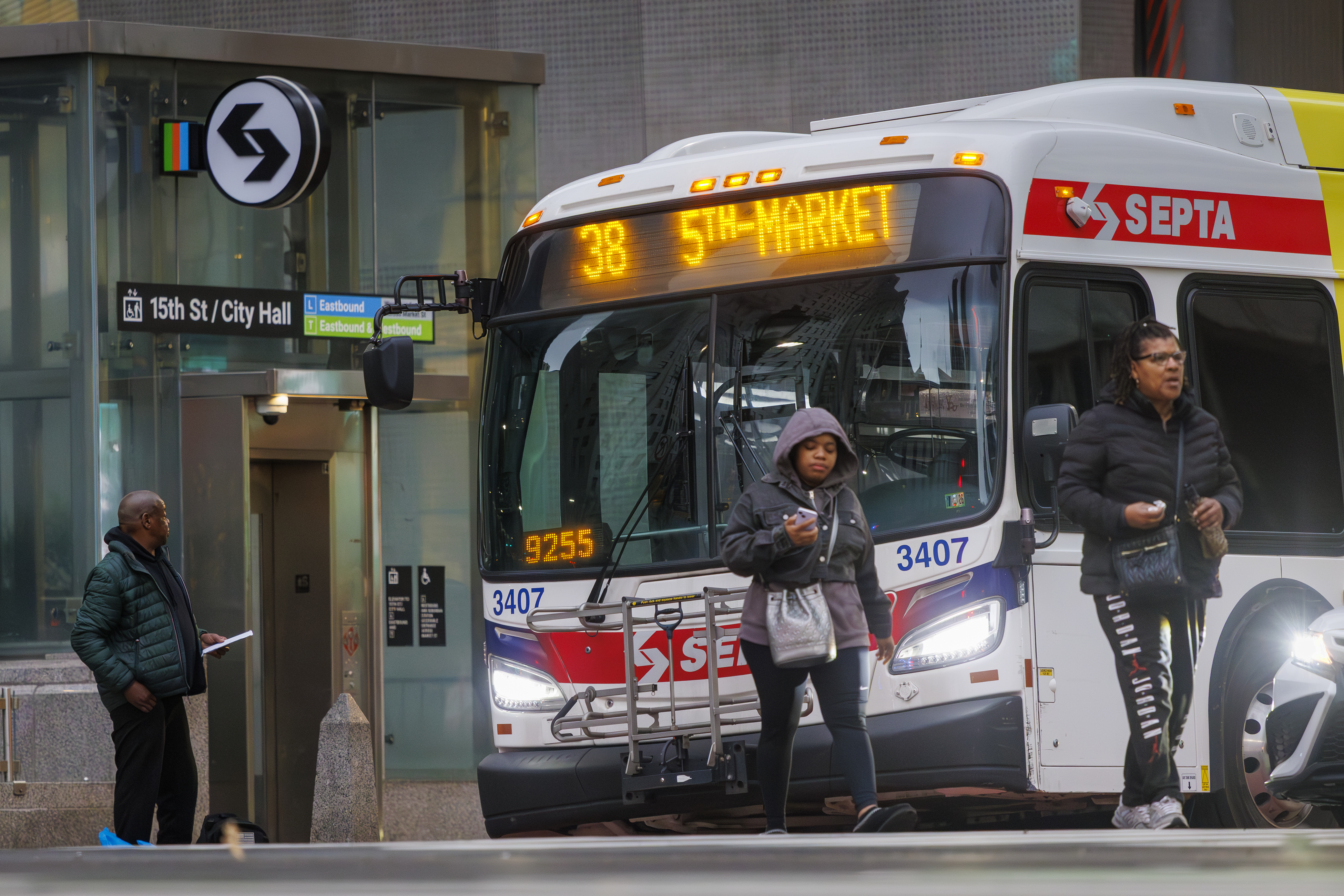
    A SEPTA Route 38 bus at 15th and Market Streets in May.Alejandro A. Alvarez / Staff Photographer

    Spotlight on SEPTA

    A few readers have asked me about film crews they’ve seen following SEPTA police around stations and transit vehicles recently. Media Relations Director Andrew Busch confirmed that the A&E Network is filming a docuseries, which will be broadcast next year.

    Personally, I’m looking forward to watching it. SEPTA’s roughly 250-strong police force is charged with patrolling more than 285 train and trolley stations, and nearly 3,000 vehicles. They are also in the midst of substantial declines in serious crime, which occurred alongside a crackdown on fare evasion and a surge in enforcement for quality-of-life issues. That’s a story worth showing.

    Less worthwhile would be a series focused on Kensington and the city’s drug epidemic. That’s a real part of SEPTA’s policing duties, but is often exploitative when told by outsiders.

    Gov. Josh Shapiro announces a $20 billion investment by Amazon in Pennsylvania data centers in Salem and Falls Townships in 2025.Commonwealth Media Services

    Data-driven

    Ever since the creation of the first computer, there have been concerns about its role in the future. It doesn’t help matters that many tech CEOs, like OpenAI’s Sam Altman, regularly express a kind of contemptuous attitude toward humanity and human needs. At one point, Altman said that artificial intelligence would “lead to the end of the world.” How inspiring!

    This has put public officials in a tough position over their support of data centers.

    For generations, states and cities have competed to attract investment. But these days, cash is flowing into an industry opposed by 74% of voters. Seeing an opportunity, challengers from across the political spectrum are using data centers in their political attack ads, while incumbents are scrambling to explain themselves.

    This isn’t run-of-the-mill NIMBYism, either. According to one report, only 8% of data center opponents live near one.

    Gov. Josh Shapiro, the Ambitious Abingtonian, exemplifies this conundrum. He was an early advocate for embracing data centers, but with polls tightening for his reelection efforts, he’s been forced to adapt.

    Of course, there’s a certain opportunism to state Treasurer Stacy Garrity’s embrace of the techlash.

    Her own party has been quite supportive of data centers. President Donald Trump has called them “tremendous.” Pennsylvania state Senate Majority Leader Joe Pittman has long advocated for the centers, which represent a particular opportunity for his own community, which has, in his words, “a long and storied history when it comes to the production of electricity.” U.S. Sen. Dave McCormick, the highest-ranking Republican in Pennsylvania, is married to Meta executive Dina Powell McCormick. Meta is one of the four companies investing a total of $1.5 trillion in new data centers.

    Pennsylvania Senate Republicans declined to pursue Shapiro’s proposed “GRID” initiative, which would have required the centers to produce their own electricity, conform to environmental standards, and make community benefits agreements in exchange for permitting assistance.

    Many of the current pitchfork-wielding politicos may themselves be forced to pivot when in office. Voters may hate data centers, but they also hate tax increases and service cuts.

    Loudoun County, Va., which is known as data center alley, has averted both. Local authorities have cut property tax rates by nearly 30% over the last decade, and the centers pay roughly half of the county’s property tax revenue. Given the increasing share of Pennsylvania’s budget that is paid through the extractive gambling industry, the need to invest more in schools and transportation, and the continuing structural deficit, it is no surprise politicians initially saw the AI boom as an opportunity.

    Now, state leaders will have to pick their poison.

    If they pursue data centers, they’ll face voter backlash. If they continue to embrace gambling, they’ll contribute to the impoverishment of their own constituents. If they stop investing in education or allow transit agencies to fail, they’ll weaken the commonwealth’s economy going forward. If they raise taxes, they’ll take the blame for that, too.

    While the data center surge may seem sudden to many, it is also a response to demand. Both businesses and individuals are increasingly using AI in daily life.

    Ironically, many social media posts about data centers include AI-generated text and images. It is a bit like if the Women’s Christian Temperance Union had fundraised with a booze cruise.
  • Cheltenham school board promises frustrated parents it will ‘move with deliberate speed’ to rebuild trust after locker-room assaults

    Cheltenham school board promises frustrated parents it will ‘move with deliberate speed’ to rebuild trust after locker-room assaults

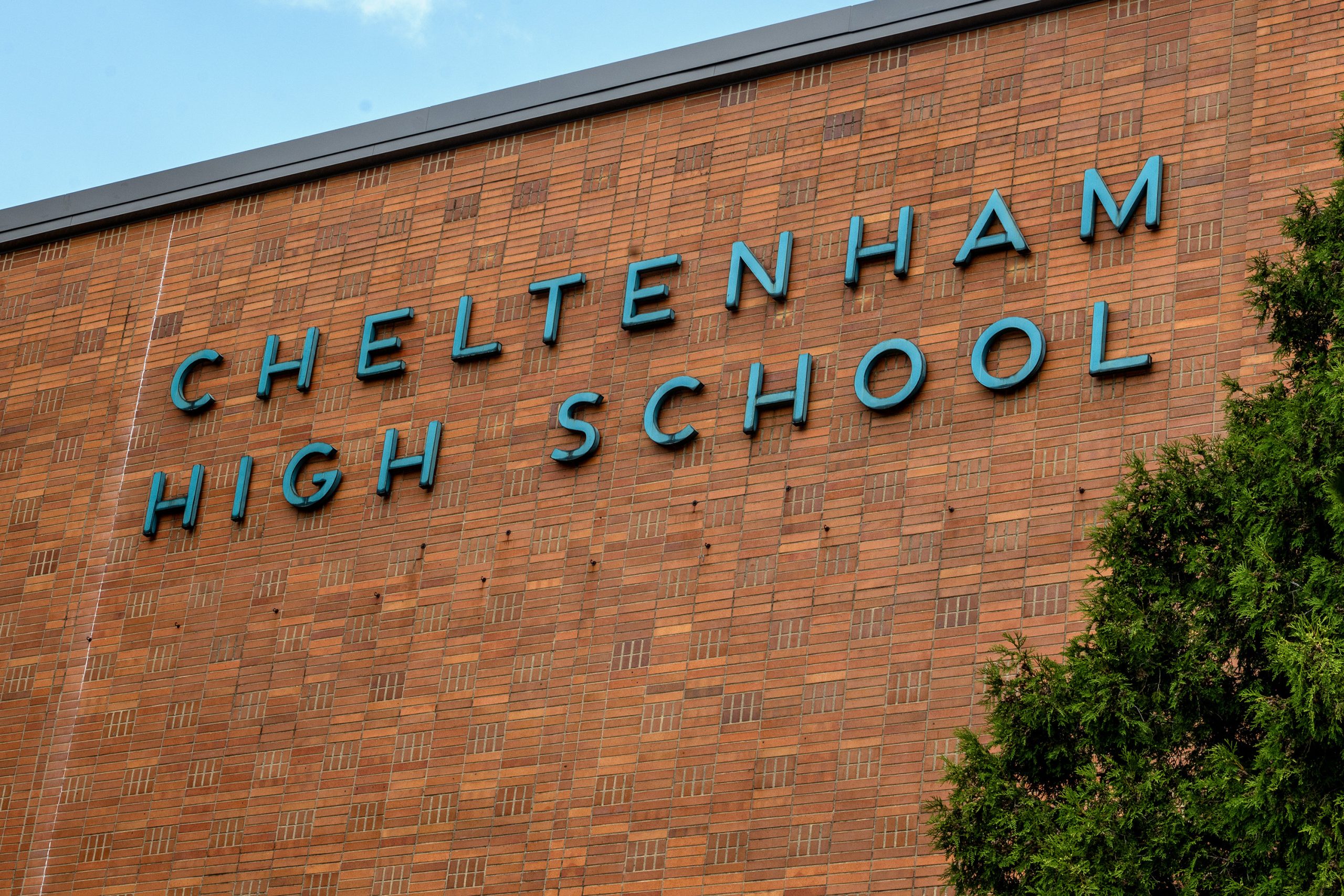
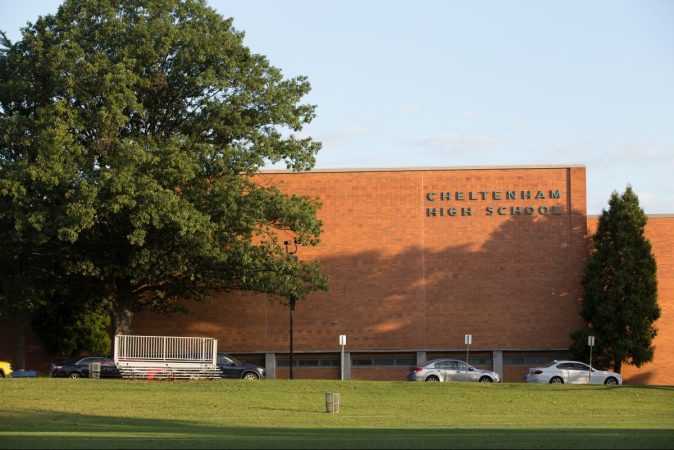
    The Cheltenham school board said it would review safety procedures and assess the culture in all of its athletic programs as it pledged to rebuild community trust after an explosive grand jury report condemned the district’s response to the assaults of a football player last season in a high school locker room.

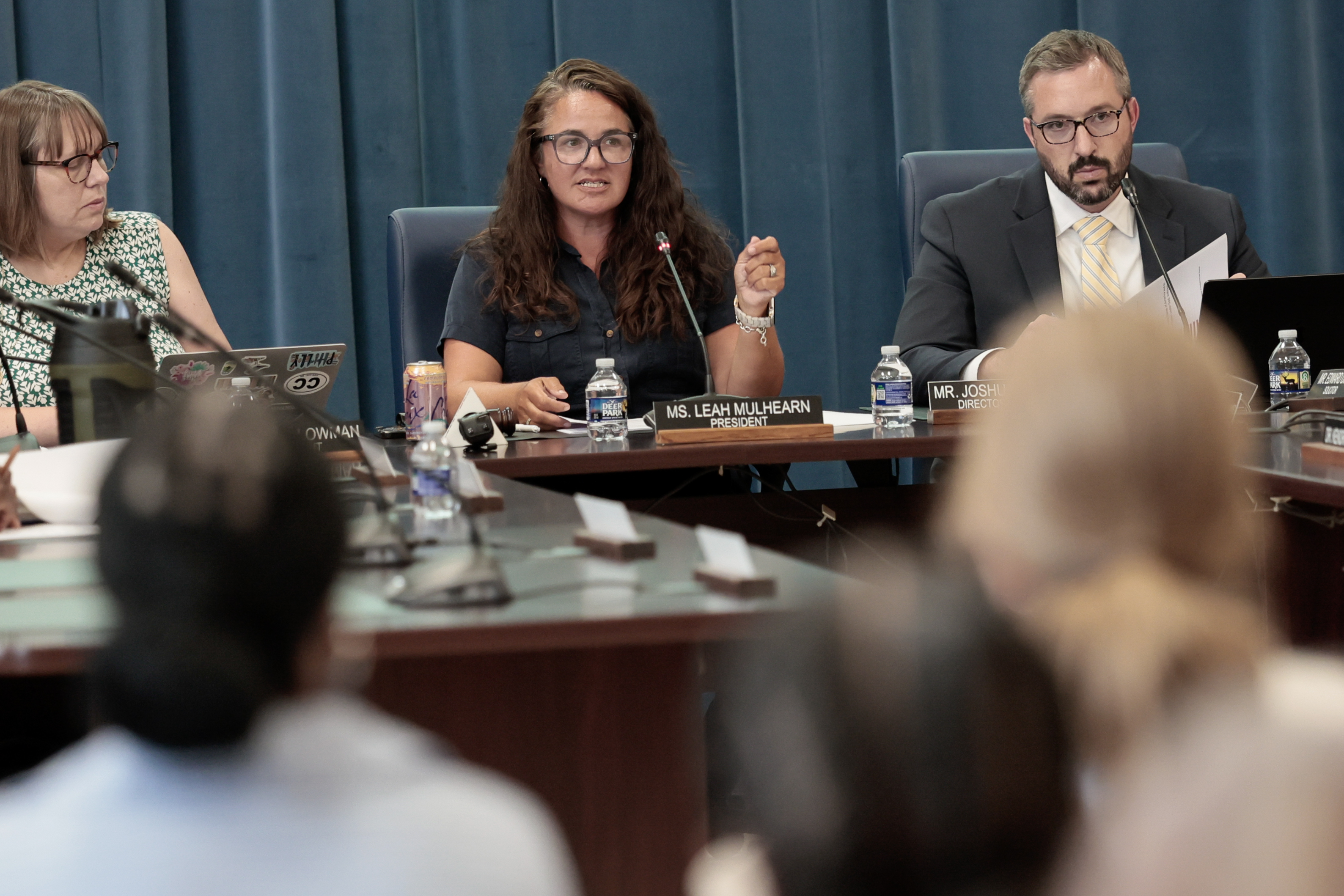
    The attacks on the 15-year-old, which took place in August and September 2025, “arose in the context of a culture of intimidation and acceptance of violence,” board president Leah Mulhearn said Tuesday night at the board’s first meeting since criminal charges were announced against four coaches and six players.

    Mulhearn, who also announced that veteran educator Chris McGinley would be tapped as interim superintendent, promised the board would move quickly to fix problems.

    The district already canceled the 2026 football season in May. “Football will not return until we address this, no matter how long it takes,” Mulhearn said.

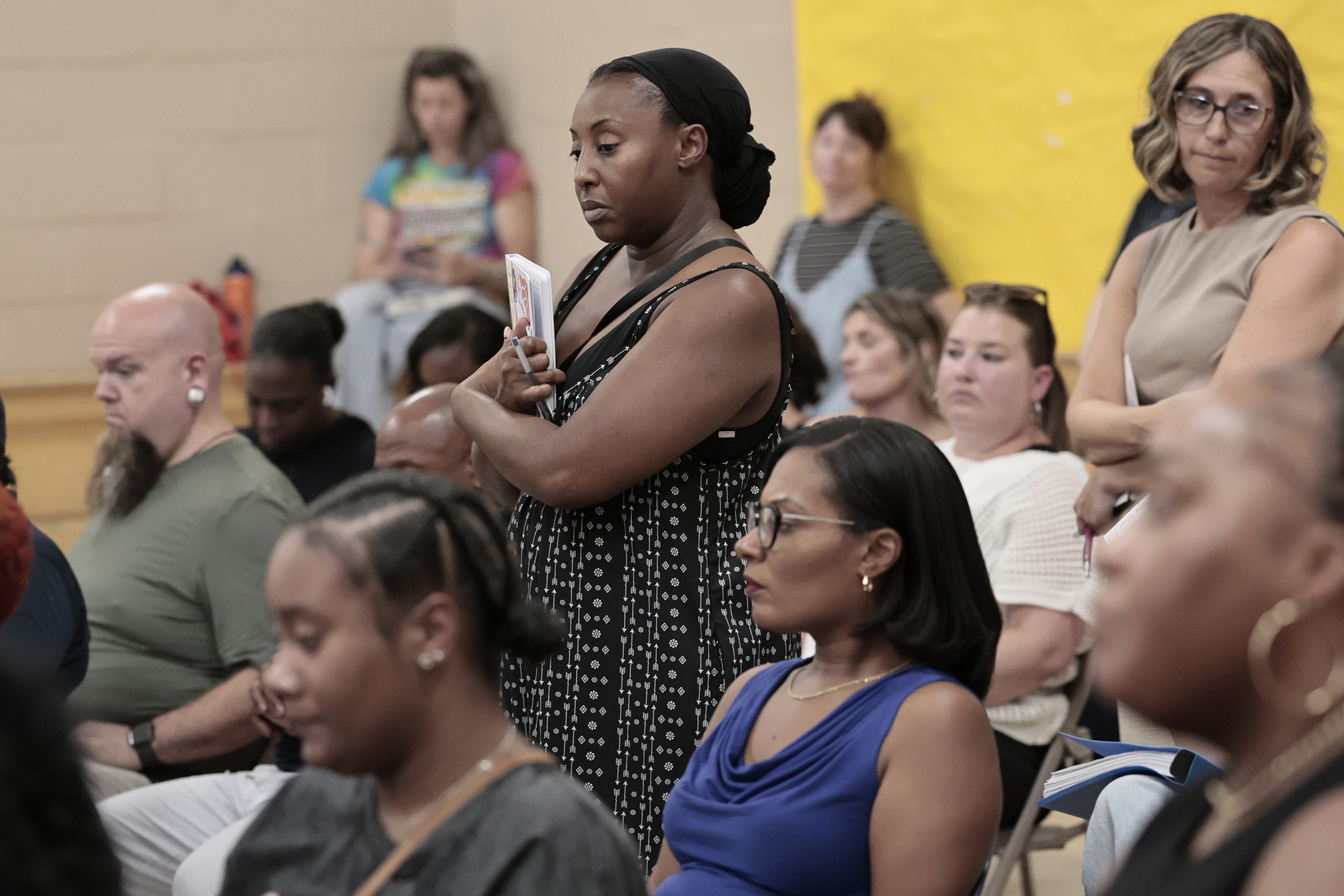
    Parents, who lined up behind a microphone in the district’s administration building awaiting their turn to speak, expressed skepticism and demanded more from the board after a grand jury report accused the district of endangering students through a failed response to the assaults, one of which was captured on video.

    In emotional comments, some parents said their children had been assaulted in the schools, while others questioned how they could believe the board, when they had warned against hiring a coach who has since been charged with conspiracy and endangering the welfare of a child.

    “We entrusted our children to this district,” said Chowan Cowans, who withdrew her son, a rising senior and former Cheltenham football player, because “I don’t feel safe with him being there anymore.”

    Cowans accused the district of a lack of transparency, which “has to mean something when the truth is uncomfortable,” she said.

    PTO president Stephanie Curry (center) waits in line to speak during the Cheltenham School Board meeting in Elkins Park on Tuesday, August 11, 2026. The school board was meeting for the first time since criminal charges against four football coaches and six players were announced, and since Brian Scriven resigned as superintendent. .Elizabeth Robertson / Staff Photographer

    ‘Mistakes were made’

    The board has been navigating the fallout since Montgomery County prosecutors nearly two weeks ago announced the charges in the locker-room assaults and delivered a stinging assessment of the school district, with a grand jury report accusing it of “incompetence” in its handling of the situation.

    Employees at the high school appeared to minimize the Sept. 3 assault after it was reported to them by the 15-year-old victim’s mother, according to the grand jury report. They also took the head coach, Terence Tolbert, at his word that he had not instructed the player not to tell his parents what happened, and they included the coach in their investigation — which failed to uncover that there were two assaults, the report said.

    It also noted that employees were also confused about their mandatory reporting requirements.

    On Tuesday, Mulhearn said that while the board “may differ with the grand jury with respect to some of its findings about how the district and board responded, the hard truth is that we must acknowledge that mistakes were made.”

    Mulhearn said the board would “move with deliberate speed to address these issues.” She said the board would enlist an outside attorney, Leigh Dalton — who was hired by the Central Bucks School District last year to investigate special-education abuse allegations — to review the district’s policies and procedures and make recommendations within 60 days.

    She did not comment on Superintendent Brian Scriven’s resignation last week. Some parents questioned whether and when the board’s position on Scriven had shifted, after the board praised the superintendent’s leadership in May.

    A district spokesperson did not respond to a question this week about whether Scriven, who received a new five-year contract in December, would receive any payout following his resignation.

    Nor did the board indicate whether it was considering taking action against any employees at the high school. One parent, for instance, asked whether Mark Hoff, the former vice principal at Cheltenham High School, would still become the vice principal at Wyncote Elementary, in light of the grand jury report faulting high school employees.

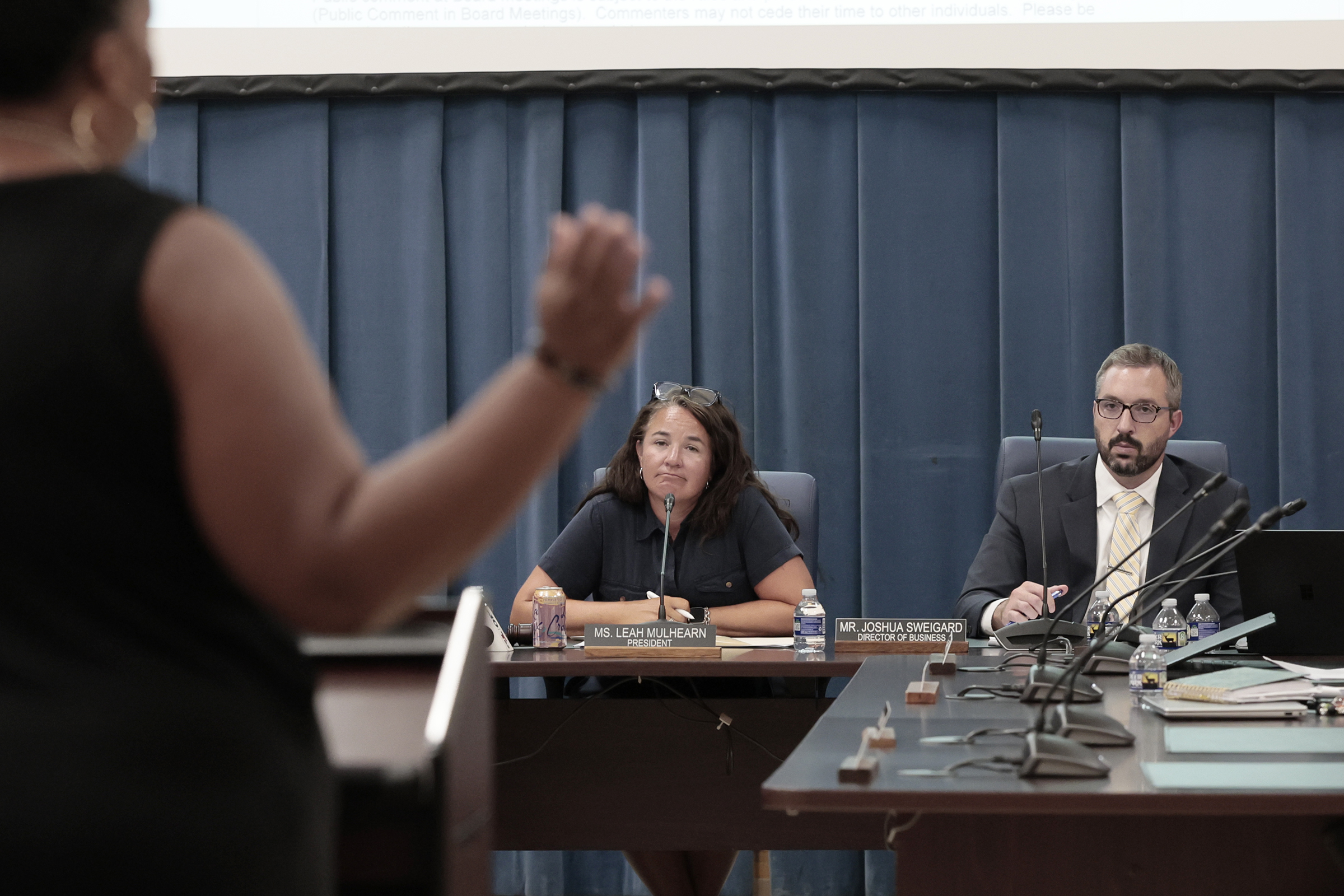
    Taryn Knox (left) speaks to School Board President Leah Mulhearn and Director of Business Joshua Sweigard during the Cheltenham School Board meeting in Elkins Park on Tuesday, August 11, 2026. The school board was meeting for the first time since criminal charges against four football coaches and six players were announced, and since Brian Scriven resigned as superintendent. .Elizabeth Robertson / Staff Photographer

    The board, which appointed director of business services Joshua Sweigard acting superintendent on Tuesday, will hold a special meeting next week to appoint McGinley as interim superintendent, Mulhearn said. McGinley previously led both the Cheltenham and Lower Merion districts and more recently served on the Philadelphia School Reform Commission and Philadelphia school board. His most recent position was as the faculty program coordinator of the Educational Leadership and Policy program at Temple University.

    Parents’ pleas

    Parents urged the board to commit to more steps. In a joint statement, the United Parents Group, the Special Education Alliance of Cheltenham, and the Cheltenham African American Alliance called for numerous actions, including a community town hall ahead of the first day of school and an assembly on the first day “to enforce a zero-tolerance policy regarding sexual harassment, bullying and hazing.” They also called for safety data to be a part of every school board meeting.

    “We are demanding a fundamental shift in how our school district operates,” Aubria Nance, reading from the groups’ joint statement, told the board.

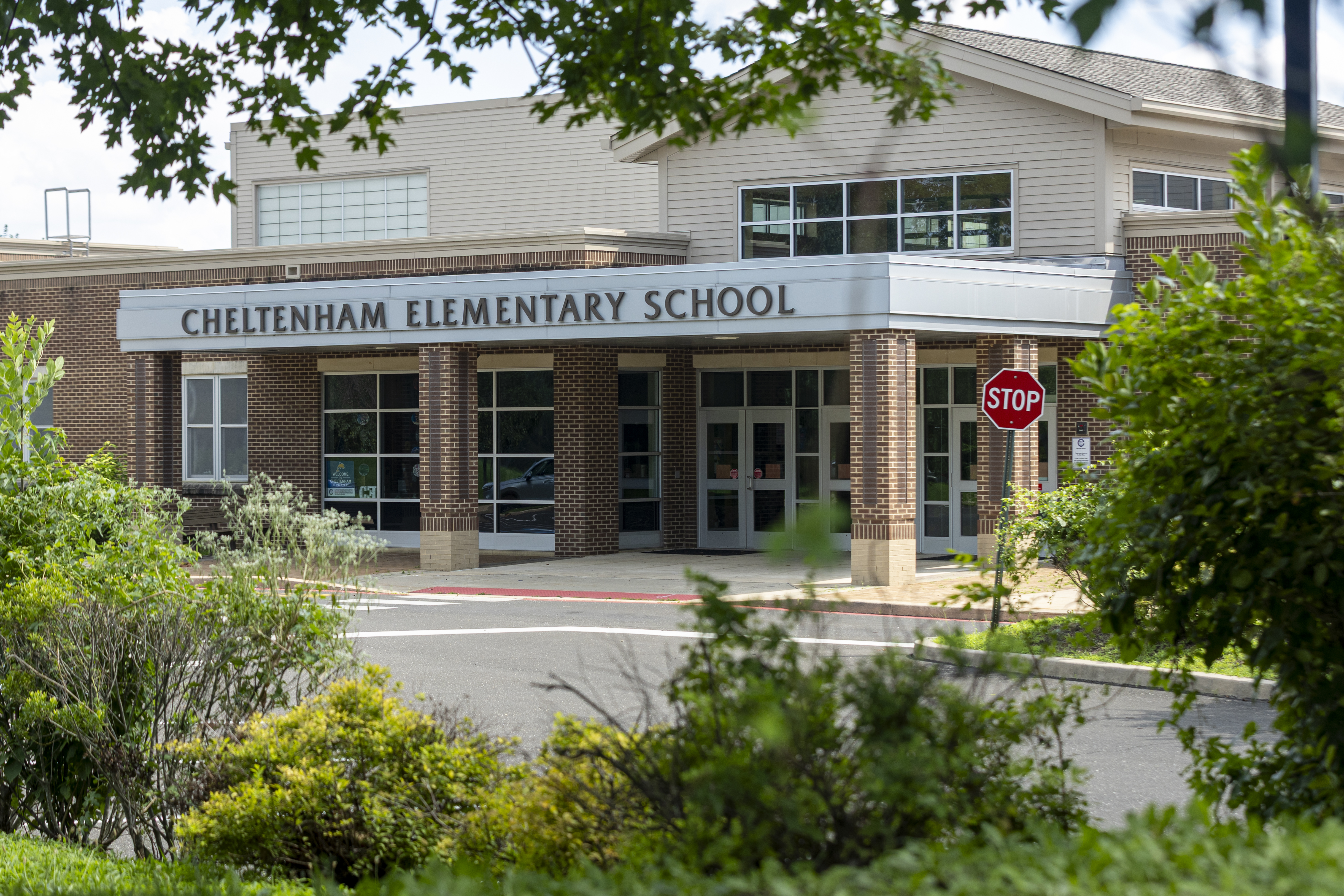
    Numerous parents from Cheltenham Elementary, who have been pressing the district to address safety concerns they say have affected students and staff, questioned how the board’s response this time would differ.

    “Every time I hear a commitment to our students’ safety, I want to see the proof,” said Erin Fadako, a parent at the school.

    The Inquirer reported last week that some football parents had urged the district not to hire Tolbert, saying he had allowed bullying while previously serving as head coach in Abington, where he left after one season.

    “Everyone from the administration on down that has failed these students, you all have approved them to be hired here,” said Taryn Knox, who was among the football parents who had asked the district not to hire Tolbert.

    After a year of negative news coverage, Knox said, “we’re now about to go into the next school year, and the news is still here.”

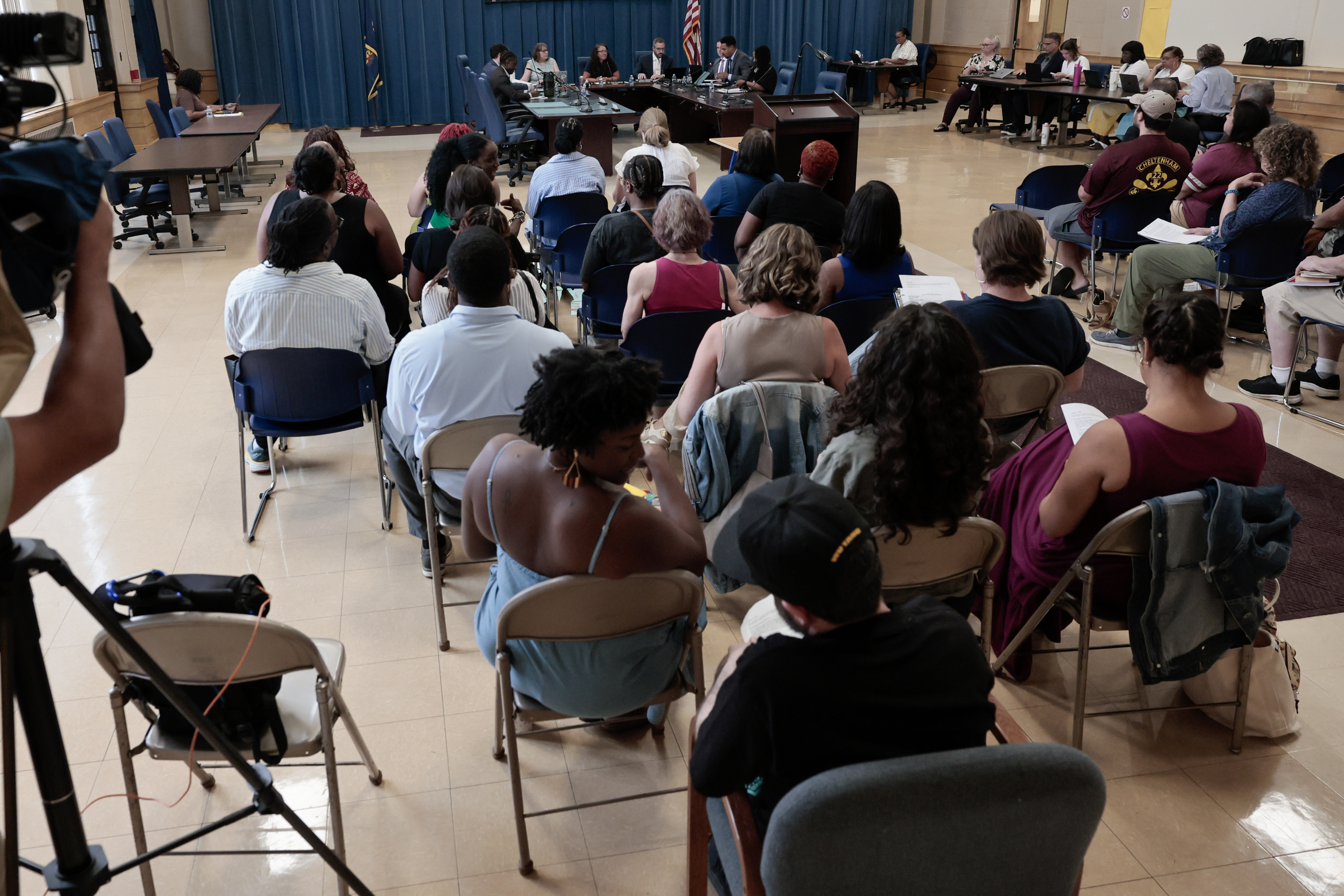
    The Cheltenham school board meeting Tuesday, Aug. 11, 2026, in Elkins Park.Elizabeth Robertson / Staff Photographer

    As they voiced their frustration, parents pleaded with the board to make real changes.

    “Stop being risk averse and do what you need to do to make it safe for our children,” said Stephanie Curry, president of the high school’s parent teacher organization. “Our kids are the ones that are suffering.”

  • Janet Klein, celebrated longtime historic preservationist and philanthropist, has died at 96

    Janet Klein, celebrated longtime historic preservationist and philanthropist, has died at 96

    Janet Klein, 96, of Rydal, Montgomery County, former member of the Philadelphia Historical Commission, historic program director for the Fairmount Park Commission, regional project coordinator for the National Trust for Historic Preservation, chair of the Pennsylvania Historical and Museum Commission, volunteer, and philanthropist, died Tuesday, Aug. 4, of age-associated decline at her home.

    Born in Philadelphia, Mrs. Klein earned degrees at Philadelphia High School for Girls and the University of Pennsylvania. She and her husband, Lewis, traveled the world after they married in 1952, and she told The Inquirer in 1973 that she became interested in local historic preservation after returning from abroad in 1964.

    “I felt something was lacking here,” she said. “There was no pride nor a thorough knowledge of what we really have in Philadelphia to share with visitors.”

    So she joined the Philadelphia Museum of Art’s tour guide program, rose to chair of guides for the Fairmount Park house tours, and conducted hundreds of tours for thousands of visitors to the eight historic houses in the park. “The guides,” she said in 1973, “can’t help but sense that somehow they have passed on to the visitors the continuing life of historic Philadelphia.”

    Eventually, Mrs. Klein became historic program director for the Fairmount Park Commission, was appointed to the Philadelphia Historical Commission by then-Mayor Wilson Goode in the 1980s, and served as chair of the Pennsylvania Historical and Museum Commission from 1997 to 2003. Friends called her “formidable” and compared her to the Energizer Bunny.

    Keen to spark public interest in historic sites, Mrs. Klein forged partnerships between site officials and schools, community groups, businesses, and the media. In 1997, she oversaw filmmakers as they shot scenes for the movie Beloved at the Landis Valley Museum in Manheim Township.

    She appeared often in The Inquirer and said in 1989: “We often find that people who live just around the corner from a house museum don’t know it existed.”

    At Fairmount Park, she redefined the commission’s operating procedures and enlisted students as volunteers at its public mansions. At the city historical commission, she led walking tours of Old City and helped determine the historic designation of the old Lit Bros. building, the Boyd Theatre, the Dilworth house, and other significant structures.

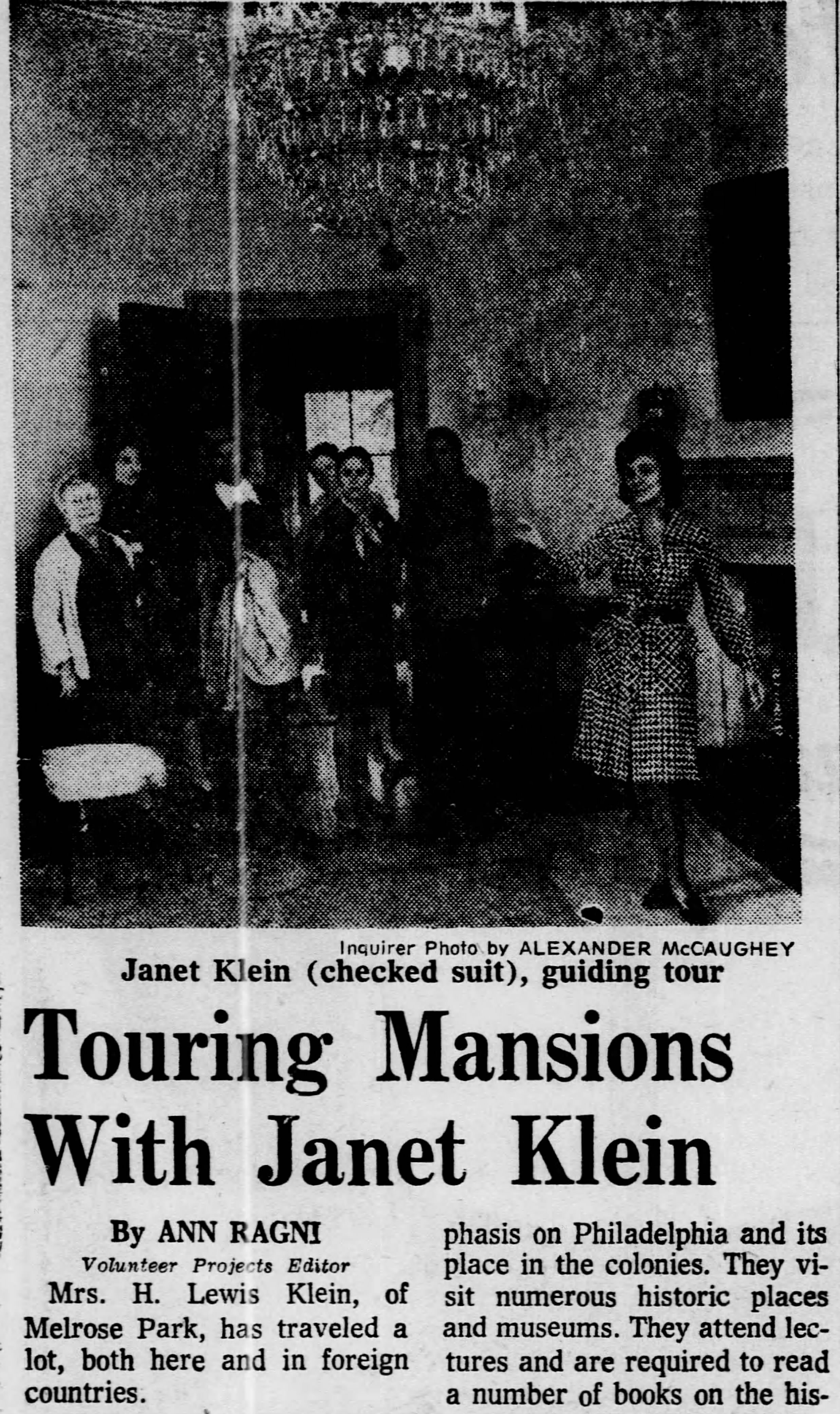
    This story and photo of Mrs. Klein (right) was published in The Inquirer in 1973.Newspapers.com

    With the state historical and museum commission, she erected historical markers across the state, helped designate the Art Museum as a Commonwealth Treasure in 2002, and directed the commission’s public relations, tourist promotions, and preservation efforts.

    “History doesn’t have to be dead,” she said in 1998. “Historical markers represent the people and their interests. They are a way for young people to learn about their heritage and gain a personal respect for the past.”

    She also led the Comprehensive Historic Assistance Program for the National Trust for Historic Preservation in the 1980s, helped create the Liberty Trail near Independence Hall, and directed the restoration of the first historic home in the Lukens National Historic District of Coatesville.

    She served on the board of visitors at Temple University’s Ambler campus and Klein College of Media and Communications, on the collections committee at the Union League, and as a guide at the Winterthur Museum in Delaware. She was active with the Pennsylvania Department of Conservation and Natural Resources, the Museum Council of Philadelphia, and other groups.

    This story and photo of Mrs. Klein appeared in The Inquirer in 1998.Temple University

    She was honored for her service by the Women’s Center of Montgomery County in 1999 and by the Preservation Alliance for Greater Philadelphia in 2001, and was named a Distinguished Daughter of Pennsylvania in 2000. In 2018, she earned an award for service and philanthropy from Coatesville’s National Iron and Steel Heritage Museum.

    As philanthropists, Mrs. Klein and her husband supported what became, named after them, the Klein College at Temple, the National Association of Television Program Executives, the Police Athletic League, the American Heart Association, and other organizations dedicated to education, healthcare, youth development, and social service. They created the Janet and Lew Klein Making A Difference Award for the Pennsylvania Association of Broadcasters and donated his professional papers to Temple.

    “She was an inspirational community leader,” said David Boardman, dean of Temple’s Klein College, “who inspired others through her generosity, her brilliance, and her warmth.”

    Janet Surman was born March 3, 1930. She grew up in Oak Lane and earned a bachelor’s degree at Penn.

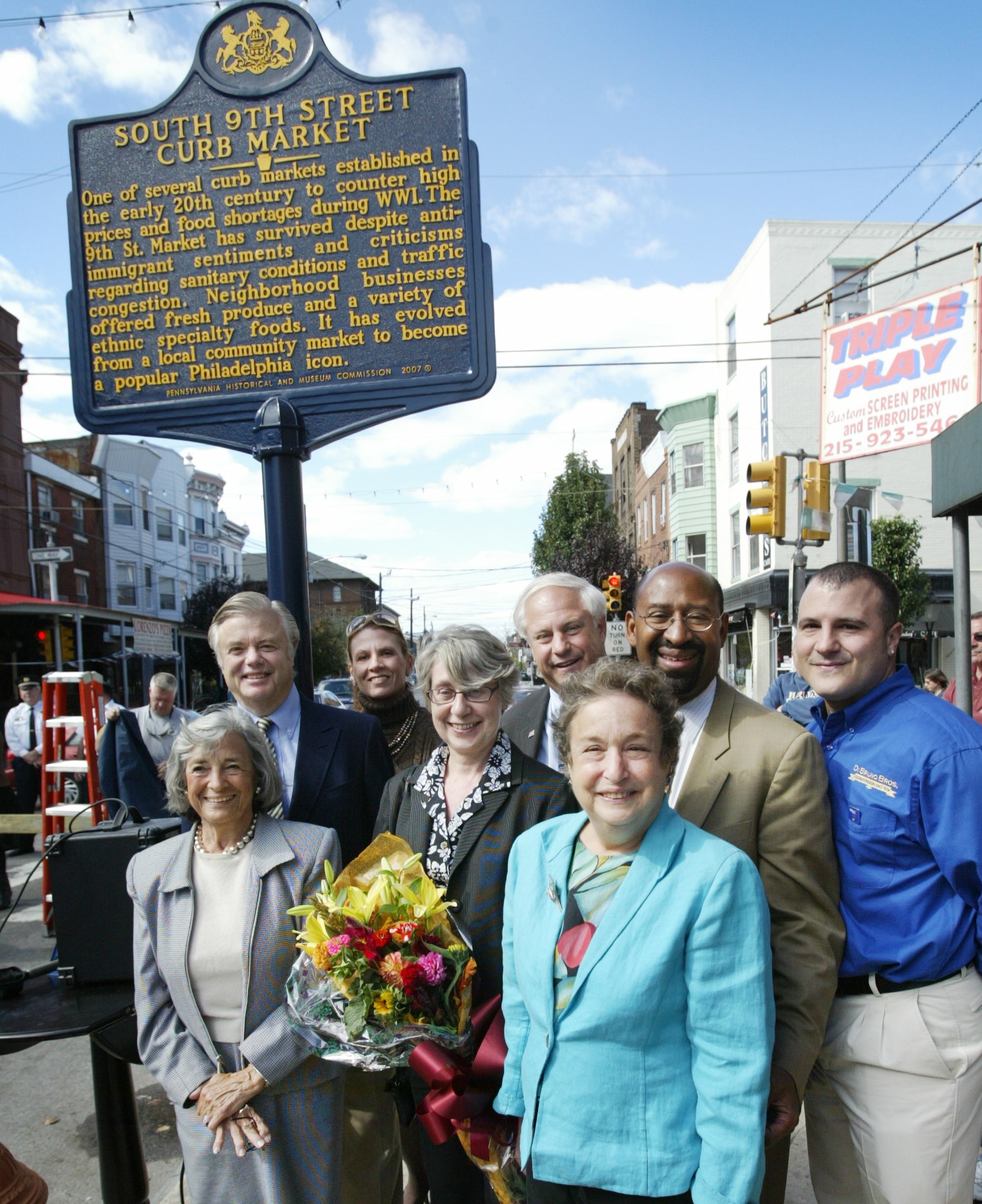
    Mrs. Klein (left) appeared with others in 2007 to celebrate a historical marker at the corner of 9th and Christian Streets.Alejandro A. Alvarez / Staff Photographer

    She met Lewis Klein in college, and they married in 1952. They had a son, Stephen, and a daughter, Ellen, and lived in Melrose Park and Rydal. Her husband, a pioneering TV broadcaster and cofounder of Gateway Communications, died in 2019.

    Mrs. Klein and her husband traveled the world for decades and attended dozens of galas and fundraising events. She enjoyed gardening, was an avid reader, and liked to play Scrabble.

    In 1993, Inquirer columnist Clark DeLeon called her “a wonderful, funny, vivacious lady.” Temple’s Boardman said: “She was truly one of the best human beings I’ve ever had the privilege to know.”

    In addition to her children, Mrs. Klein is survived by a granddaughter, two great-grandchildren, and other relatives.

    A celebration of her life is to be held later.

    Donations in her name may be made to the Abington Police Athletic League, 1166 Old York Rd., Abington, Pa. 19001.

    Mrs. Klein grew up in Oak Lane and earned a bachelor’s degree at Penn. Courtesy of the family
  • Cheltenham’s got a plan for 2040 | Inquirer Greater Abington

    Hi, Greater Abington. 👋

    I hope you’ve been surviving the summer heat. This week, we dive into Cheltenham Township’s new comprehensive plan, which lays out a vision for what it could look like by 2040. We also continue to follow the ongoing turmoil in the Cheltenham School District, where elementary school parents now say they’ve flagged concerns about alleged sexual and physical incidents since October.

    Plus, a new Yemeni- and Saudi-inspired concept (with a drive-through!) opens in Willow Grove, and other news.

    — Laura Smythe (greaterabington@inquirer.com)

    P.S. Our journalists want to solve the local mysteries that keep you up at night. Submit any questions you might have about the region to Curious Greater Abington, and we’ll see if we can dig up some answers in a future story.

    If someone forwarded you this email, sign up for free here.

    Cheltenham’s plan for 2040

    Cheltenham Township’s new comprehensive plan lays out challenges and recommendations for homes, businesses, transportation, community services, and historical assets over the next 10 to 15 years.

    Among the dilemmas facing the township is navigating the need for more tax revenue while avoiding too big a boom of new residents. That’s because many of the large estates in Cheltenham belong to non-property-tax-paying institutions.

    The Inquirer’s Jess Rohan has all the details on the 2040 plan, including which neighborhood hubs have been identified for more development and why the township may be drawing inspiration from 1990s-era Ardmore.

    Following Cheltenham superintendent’s resignation, families say safety problems extend beyond high school

    The Cheltenham School District remains embroiled in controversy as families in the township allege safety issues aren’t confined to the high school. Here’s the latest:

    Superintendent Brian Scriven resigned last week after two violent assaults in the high school locker room led to charges against four football coaches and six players. But Cheltenham High School football families repeatedly warned against the former head coach’s hiring because of allegations that he allowed bullying to fester in his prior coaching position at Abington Senior High School.

    Cheltenham Elementary parents now say they’ve been raising concerns to administrators since last October over multiple alleged physical or sexual incidents affecting students. The district has not commented on the status of any other administrators. Its school board meets tonight.

    The Inquirer’s latest reporting on the ongoing tumult examines how the district is struggling to contain the alleged mishandling of these incidents.

    💡 Community news

    🏫 Schools briefing

    • In the wake of the fallout from the Cheltenham locker room assaults, Inquirer columnist Mike Sielski unpacks the incidents through the lens that they are yet another example of failed adult leadership in youth and high school sports.
    • University of Pennsylvania education professor Jonathan Zimmerman shares a perspective on the prevalence of hazing at institutions across the U.S. over the years.
    • Valencia Peterson, who has more than a decade of experience working in violence prevention through youth sports, pens an op-ed about how the Cheltenham incidents should prompt schools and athletic organizations nationwide to ask, “Could this happen here?”

    🍽️ On our plate

    • Mazaj, a Yemeni- and Saudi-inspired cafe slinging coffee, pastries, and za’atar-topped flatbreads and pizzas, recently opened in Willow Grove. It plans to debut a drive-through later this month.

    🎳 Things to do

    📚 Silent Book Club: At this dream event for introverts seeking new pals, get comfy with a good book and read alongside your neighbors. ⏰ Friday, Aug. 14, 4-6 p.m. 💵 Free 📍 Jenkintown Library

    🎞️ Movie Under the Moon: Take a trip back to good ‘ol 1993 with an outdoor viewing of The Sandlot projected on the big screen. ⏰ Friday, Aug. 14; movie starts at dusk 💵 Free 📍 Conway Field, Abington

    🎲 Game Night: Show off your skills or learn to play a variety of board and card games. ⏰ Monday, Aug. 17 at 6:30 p.m. 💵 Free 📍 Elkins Park Free Library

    🏡 On the market

    A cozy Colonial with character

    Inside 124 Kingston Road in Cheltenham, PA.

    Tucked away on a tree-lined street in Cheltenham, this stone-and-brick house comes complete with a fireplace, partially finished basement, and details such as exposed beams and a bay window. It has five bedrooms and four bathrooms, including a private first-floor suite with a full bathroom and separate entrance.

    See more photos of the home here.

    Price: $549,000 | Size: 3,667 SF | Acreage: 0.25

    🗞️ What other Greater Abington residents are reading this week:

    By submitting your written, visual, and/or audio contributions, you agree to The Inquirer’s Terms of Use, including the grant of rights in Section 10.

    This suburban content is produced with support from the Leslie Miller and Richard Worley Foundation and The Lenfest Institute for Journalism. Editorial content is created independently of the project donors. Gifts to support The Inquirer’s high-impact journalism can be made at inquirer.com/donate. A list of Lenfest Institute donors can be found at lenfestinstitute.org/supporters.

  • As Cheltenham’s superintendent resigns, families say safety problems extended beyond football program

    As Cheltenham’s superintendent resigns, families say safety problems extended beyond football program

    Cheltenham Superintendent Brian Scriven resigned Thursday, a little more than a week after prosecutors charged four football coaches and six players in connection with violent assaults against a player last season in a high school locker room.

    The superintendent’s resignation, effective immediately, came amid community outcry over the district’s handling of the August and September 2025 incidents, which prosecutors say both involved students attacking a 15-year-old and using a broomstick to poke at his buttocks.

    Yet the district did not uncover that there had been two assaults, and administrators appeared to downplay a report from the 15-year-old’s mother, according to the Montgomery County grand jury that recommended the charges. It described a “level of incompetence” in the district that “put every young man on the football team at risk.”

    Some parents who have been battling the district to take student safety more seriously said Scriven and his administration did not fail only in overseeing the football program.

    “I see a complete lack of urgency,” said one mother who has been among a group of parents pressing the district since October to address violent incidents at Cheltenham Elementary School. The mother, who spoke on the condition of anonymity out of fear of retaliation for her child, said administrators still have not answered questions about how students are disciplined and how others are supported after assaults.

    Another Cheltenham Elementary parent, Shanyl Jones, said her daughter, an incoming second grader, twice experienced sexual touching and comments in school. In kindergarten, a boy repeatedly touched her against her will, conduct that escalated to him grabbing her vagina, Jones said.

    The boy also made sexually explicit comments to her daughter, Jones said. She reported the conduct and filed a Title IX sexual harassment case; the school moved the boy to a different classroom, she said.

    After a separate boy made sexual comments to Jones’ daughter in first grade, the principal called Jones and apologized, though the boy was not moved to a different classroom, Jones said.

    News of the football charges “just tore me up on what my daughter’s future would be in the school system,” Jones said. “It gave me no assurance they’re going to be able to reconcile what’s happening now.”

    Scriven said in his resignation letter Thursday that “this year has tested our community in ways none of us anticipated.”

    “I have come to believe that the district is best served by a fresh start under new leadership, and that stepping aside now is the right and necessary step to allow Cheltenham to move forward,” he said.

    The district has not commented on how else it plans to respond to the explosive grand jury report released last week, which described the response of several employees at the high school — identified only as Employees #1, #2, and #3 — as minimizing an assault reported by the 15-year-old’s mother, and trusting the word of the head coach, Terence Tolbert, that he had not instructed the student not to tell his parents what happened.

    The district did not respond to questions this week about its hiring of Tolbert — who was among the four coaches charged — including whether it had sought references from Abington, which cut ties with him after one year as its head football coach. Some parents of football players told The Inquirer they had “pleaded” with Cheltenham administrators not to hire Tolbert, whom they accused of allowing bullying during his tenure at Abington Senior High School.

    Nor did the district respond to questions about whether it would take action against any employees, including those described in the grand jury report.

    The Cheltenham High School vice principal whom the mother said she had reported allegations to, Mark Hoff, was named vice principal at Wyncote Elementary last month.

    The grand jury report “details very troubling questions about the management and operation of the district’s athletic programs, including the football program,” school board president Leah Mulhearn said in a statement this week. “Our highest priority is the safety and welfare of the children we serve.”

    Mulhearn, who did not address questions about Cheltenham Elementary in the statement, said the board was “focused on conducting a comprehensive review of the grand jury’s findings, including our policies and practices related to athletics, as the first step in implementing measures to ensure that no such conduct ever occurs again at our schools.”

    The district has said a Title IX investigation into the allegations will soon be finished, with possible discipline for students. Two 18-year-old players charged as adults — the other four were charged as juveniles — have already graduated.

    State Rep. Napoleon Nelson (D., Montgomery) said this week he plans to introduce legislation that would classify hazing as child abuse — a recommendation of the grand jury’s — requiring school employees to report allegations to the police.

    Community members are closely watching the school board’s next steps. Sharif El-Mekki, a nationally known Philadelphia-based educator who runs the Center for Black Educator Development and previously led Mastery Shoemaker Charter School, called on the school board in a letter to apologize to the victimized student and commission an independent investigation into the district administration’s conduct.

    “Every student in Cheltenham, every teacher, every parent, and every young leader in Montgomery County is being taught something right now by how the district is responding,” El-Mekki said.

    ‘Environment of ongoing chaos’

    Cheltenham Elementary parents said they raised concerns to administrators last October, after they heard from their children that a student touched another student’s penis sexually in class, over his clothes, in view of classmates.

    Some initially did not believe it. “We would have been told about it,” said one mother, who also spoke on the condition of anonymity out of fear of retaliation against her child.

    Parents began talking to one another to confirm what happened. Other parents and students told them the same child had been involved in previous sexual incidents, two mothers said.

    A group of parents sent an email on Oct. 3 to ShaVon Savage, then the district’s assistant superintendent, saying they had recently learned that a student “touched another child sexually during class time” and that the child had been involved in “multiple sexual incidents over the past few years.” They asked to be notified about instances of physical or sexual assault.

    In the email, shared with The Inquirer, they also asked for additional supervision and counseling for students with behavioral challenges and described an “environment of ongoing chaos” at the school, which last year served a larger number of students with emotional support needs than the district’s other three elementary schools.

    Savage wrote back 10 days later, saying she needed more details “to conduct a full and thorough investigation,” according to an email shared with The Inquirer. She also said that when a situation poses a “threat to a particular school community,” the district would communicate with parents, but could not share details about particular children due to federal privacy laws.

    Savage met with some parents in early November and said she would visit the school — though parents were unsure whether she did, the mothers said.

    Their concerns escalated when on Dec. 5, a Friday, the school’s principal, Stephanie Junod, was assaulted by a student, according to the mothers.

    That night, Scriven, the superintendent, sent an email to school parents, informing them that “while Ms. Junod was attempting to de-escalate a situation with a high-needs student, she was struck in the head by their thermos.” Scriven said the principal was “expected to make a full recovery.” Junod could not be reached for comment.

    Scriven said central office staff would be at the school the following Monday “to begin implementing additional measures to strengthen safety and provide more comprehensive support for students who require additional behavioral interventions.”

    Brian Scriven has resigned as superintendent of the Cheltenham School District.Courtesy of Cheltenham School District

    The mothers were angry that the district had not already been providing that support. Around the same time as Junod’s injury, they said, there was an assault on a student, and “at least two” against staff members, one of the mothers said.

    Parents had a meeting scheduled with Savage for Dec. 15, but administrators pushed it to January, one of the mothers said.

    Scriven met with parents on Jan. 8 and apologized for not treating their concerns urgently enough, according to the mother, who said Scriven also assured parents that “the football situation had been handled.”

    “Obviously, that was a lie,” she said.

    Scriven met with them again on Feb. 25 and said changes would be made, including putting a behavioral specialist at the school four days a week, according to the mother.

    Scriven did not mention that Junod would be resigning, the mother said — a decision announced shortly after the meeting.

    ‘Slow to respond’

    Problems at the school continued.

    On March 26, parents said, a student assaulted five staff members — including punching one in the face — in view of other children. Police came to the school.

    The district did not immediately notify parents. But Scriven sent an email to the school community the next day, reporting that “an emotional support student had an episode during which he eloped from the building and engaged in physical altercations with a number of staff as they were trying to de-escalate” the situation.

    “While I cannot share individual student consequences or placements, I can assure you that this situation is being addressed with the highest level of seriousness and urgency,” Scriven said in the email.

    In an email the next day demanding a meeting with administrators, one parent wrote: “The frustration among parents has reached a boiling point.”

    “Information is simply not being shared, and critical questions regarding the safety and education of our children are being ignored,” the parent said in the email, which one of the mothers shared with The Inquirer.

    Scriven responded to the parents on April 14.

    “I understand the urgency of your concerns and sincerely apologize for the delay in providing a comprehensive response,” Scriven said, in an email the mother shared with The Inquirer.

    Scriven said the school’s new principal, Shareese Nelson, had needed time to settle into the job, but “we are prepared to move forward in a more formal and collaborative manner.” He invited families to the school for an April 29 community meeting.

    The meeting was “highly emotional,” one of the mothers said, with parents sharing their children’s experiences. After the meeting, Scriven told a 6abc reporter: “I was slow to respond. I do have to own that, and rectify that immediately.”

    Shanyl Jones recalled that administrators seemed “completely unprepared” during the meeting to address parents’ safety concerns.

    In a message to the community May 6, the school board acknowledged “concerns around safety and student conduct have presented challenges that we continue to navigate.”

    The board said it took “all concerns that are raised with us as a board” seriously and was paying attention to how they were addressed.

    It also stood by Scriven, a former Baltimore County Public Schools administrator who was named Cheltenham’s superintendent in 2021.

    “Five years ago, the board invested in Dr. Scriven and his vision for the district,” the board said, calling the superintendent a “strong strategic thinker.”

    “We continue to support him and his vision,” it said.

    On Thursday, Mulhearn said in a statement that the board thanked Scriven “for his dedicated service to Cheltenham public schools.” She said the board had selected Joshua Sweigard, Cheltenham’s director of business services, as acting superintendent.

    While the district in May released an action plan for Cheltenham Elementary, including a safety audit, staff training, and monthly reports on school incidents, the mothers said it still has not clearly explained how it handles student assaults, and how kids who are victimized or witness them are supported.

    Until it does, “beginning from kindergarten up, we are not going to see this change in any meaningful way,” one of the mothers said. “This is not a one-off event.”

  • Booker Rowe, celebrated trailblazing Black violinist with the Philadelphia Orchestra, has died at 85

    Booker Rowe, celebrated trailblazing Black violinist with the Philadelphia Orchestra, has died at 85

    Booker Rowe, 85, of Philadelphia, award-winning violinist, the first Black musician to play with the Philadelphia Orchestra and the Nashville Symphony String Quartet, the second permanent full-time Black player in the Philadelphia Orchestra, teacher, mentor, and role model, died Friday, July 31, of complications from pneumonia and sepsis at Jefferson Abington Hospital.

    A lifelong musician — he played piano at age 5 and violin at 11 — Mr. Rowe was invited by famed music director Eugene Ormandy in 1968 to become the first Black musician to perform with the Philadelphia Orchestra. He was a substitute violin during most of the 1968-69 season and returned for good in 1971 as the orchestra’s second Black permanent full-time member.

    Mr. Rowe stayed for 49 years.

    “My first day, I came in late from New York, and the orchestra was already rehearsing, and I sat myself down on the last stand to play,” Mr. Rowe told The Inquirer’s Peter Dobrin in 2020. “The sound was amazing. It was like stereo all around me. The stage was slanted down, and when the brass and winds would play I had to brace myself with my right leg from being blown off stage. It was just so beautiful.”

    For five decades, until his retirement in 2020, Mr. Rowe played with half a dozen elite conductors and traveled the world in the orchestra’s second violin section. He and his colleagues gave thousands of memorable performances at the Academy of Music, the Kimmel Center, and the Mann Center in Philadelphia, Carnegie Hall and the Lincoln Center in New York, and the Saratoga Performing Arts Center in Saratoga Springs, N.Y.

    They played at the 1993 World Series at Veterans Stadium, for Pope Francis in 2015, and at the Vail Music Festival in Colorado. They played in Europe, South America, Asia, and elsewhere around the world.

    This photo of Mr. Rowe (left) appeared in the Daily News in 1993Newspapers.com

    In 1973, the orchestra made a historic 10-day, five-concert cultural exchange tour in China, and Mr. Rowe told the Daily News afterward that he visited a commune and returned with Chinese instruments. In 2008, he mingled with former Secretary of State Alexander Haig and other international notables after a concert in Beijing.

    In 2013, he posed for pictures with the Chinese welcoming contingent at Shanghai Airport. “Booker was such a kind soul, and his passion, his artistry, and his humanity are woven into who we are,” Yannick Nézet-Séguin, the orchestra’s music and artistic director, said in a tribute.

    Ryan Fleur, the orchestra’s president and chief executive officer, said: “He was a warm and steadying presence in our orchestra.”

    Born in Kentucky, Mr. Rowe and his family moved to North Philadelphia when he was 2. His father was a singer, and his mother played piano, and they “pushed me in the direction of classical music,” he told the Daily News in 1981.

    He became concertmaster for the West Philadelphia High School orchestra, the All-City high school orchestra, and the old all-Eastern Conference college orchestra. He earned a bachelor’s degree in music at Temple University in 1963 and a master’s degree in music at Yale University in 1968.

    Before Philadelphia, he played solo in New York and with symphony orchestras in Nashville, New Haven, Conn., and Washington. Later, he played with the old Symphony Club of Philadelphia, the Lansdowne Symphony Orchestra, and other local groups.

    Mr. Rowe (left) stands with fellow musicians Andre Watts (center) and Renard Edwards.Courtesy of the family

    He also got freelance gigs with Sammy Davis Jr., Isaac Hayes, Smokey Robinson, the Supremes, Barbra Streisand, Aretha Franklin, and other stars. He played with chamber music ensembles around the country and gave dozens of free concerts for children, churches, and community and scholarship fundraisers.

    He championed racial and ethnic diversity, and was active with the Philadelphia Orchestra’s cultural diversity initiative. He sought and performed work by Black and other minority composers, and mentored dozens of colleagues and students.

    He encountered at least one racist incident that first year in Philadelphia and told the Daily News in 1981: “The time was right for an Afro-American in the Philadelphia Orchestra. It was just a matter of finding somebody who was ready.”

    Mr. Rowe and his family lived in Center City, East Mount Airy, and Germantown. Courtesy of the family

    A friend said on Facebook: “His legacy and historical contributions are unparalleled.”

    Mr. Rowe taught at Settlement Music School and gave private lessons. He earned music and service awards from City Council, the American Foundation for Negro Affairs, and other groups.

    In 2019, he was asked to advise young musicians in a video interview for the Philadelphia Orchestra website, philorch.ensembleartsphilly.org. “Practice, practice, practice,” he said. “But also enjoy, enjoy, enjoy. Do it with love in your heart.”

    Booker Taliaferro Washington Vance Rowe Jr. was born Dec. 10, 1940, in Lexington, Ky. In Philadelphia, he studied at the old Philadelphia Musical Academy and Settlement Music School, and his father worked at RCA Victor records in Camden. So their home was always filled with music.

    Mr. Rowe (rear center) stands with Philadelphia Orchestra colleagues and members of the Chinese welcoming contingent in 2013.

    Jan Regan / Philadelphia Orchestra

    He met soprano Patsy Baxter at a Philadelphia Orchestra concert, and they married in 1970 and had a son, Landis, and a daughter, Vivian. They lived in Center City, East Mount Airy, and Germantown, and visited his family often back in Kentucky and Tennessee.

    Mr. Rowe enjoyed puzzles, hiking and kayaking with his family, and tai chi. Friends noted his “kindness,” “million-dollar smile,” and “cheerful presence” in Facebook tributes.

    “He liked people,” his wife said. “He liked socializing. He liked to stick with one thing and concentrate on it.”

    His son said: “My father and I always had a good time together, and we never knew when playful sparring would break out.”

    Mr. Rowe and his wife, Patsy, married in 1970.
    Jose F. Moreno / Staff Photographer

    His daughter said: “He was very fiery and lovable. He was always who he was. He was one of a kind.”

    In addition to his wife and children, Mr. Rowe is survived by a daughter-in-law, Maria, two granddaughters, and other relatives.

    A celebration of his life is to be held later.

    Mr. Rowe (rear second from left) enjoyed time with his family.Courtesy of the family
  • Some Montco residents are living a lie | Inquirer Greater Abington

    Some Montco residents are living a lie | Inquirer Greater Abington

    Hi, Greater Abington. 👋

    It’s nice to see you again. This week, we’re taking a look at the specifics of Bradley Cooper’s Montgomery County origin story. In other news, we look closer at the fallout of two assaults in Cheltenham High’s locker room, Abingtonians can request traffic-deterring devices on some roads, and felony rape and sexual assault charges have been dropped against a Jenkintown physician after his accuser didn’t show up to court.

    As always, we hope to hear your feedback on this newsletter. Let us know what you think by taking our survey or replying to this email.

    — Laura Smythe (greaterabington@inquirer.com)

    If someone forwarded you this email, sign up for free here.

    The great hometown debate

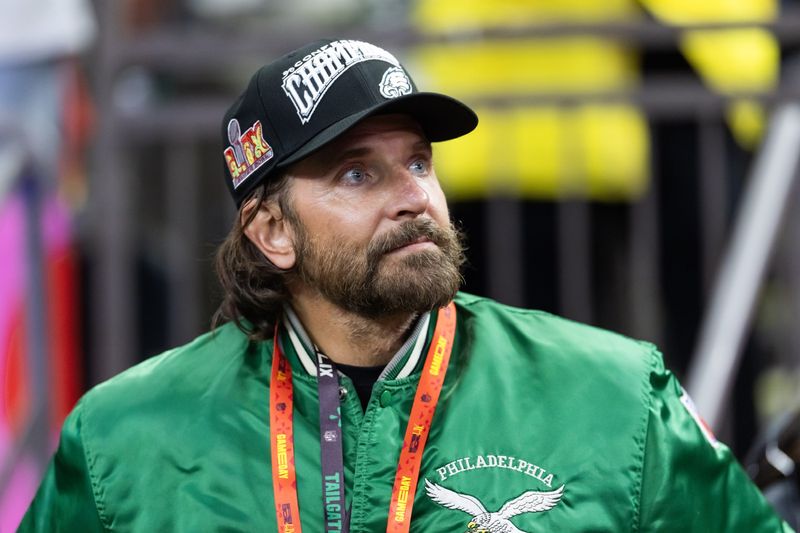
    Apparently Bradley Cooper has a thing for confusing home addresses. Montgomery County’s hometown hero is often said to be from Jenkintown, when in reality, he hails from Abington Township — the unincorporated community of Rydal, to be exact.

    The Oscar-nominated actor also supposedly owns a New Hope estate, though he actually lives in Solebury Township.

    Could you also be among the many Abingtonians living a lie? Many mistakenly believe they live in Jenkintown, and sometimes the appearance of a tax bill from Abington is the catalyst that tips them off.

    The Inquirer’s Jess Rohan digs into the complicated geographical maze of the area, untangling a web that involves a playbill from the 1980s, Jenkintown’s National Geographic-famous Color Day, and more U.S. postal service lore than you thought your Tuesday needed.

    Prosecutors fault Cheltenham School District for putting every football player ‘at risk’ in locker room assaults

    Four football coaches and six players have been charged in relation to two violent 2025 attacks in the school’s locker room that injured a 15-year-old student and prompted the cancellation of two football seasons. Prosecutors said coaches tried to cover up the assaults, in which multiple cleat-wearing teenagers stomped on the victim’s chest and groin, and used a broomstick to poke at his buttocks.

    The Montgomery County grand jury that recommended the charges also faulted the Cheltenham School District for a “level of incompetence” that “put every young man on the football team at risk.”

    Inquirer reporter Maddie Hanna has the latest on the locker room assaults that have rattled the Cheltenham community in recent weeks after coming into public view in vivid detail nearly one year after they took place.

    💡 Community news

    • Abington property owners can now request and weigh in on proposed traffic-deterring devices, including speed humps and roundabouts, on certain streets.
    • Felony rape and sexual assault charges were dropped against Jenkintown physician John Smyth Michel, 56, after his accuser failed to appear to his criminal trial. Michel is the founder of the currently closed Excel Medical Center, which is made up of 12 locations in the Philadelphia region.
    • The Holocaust Awareness Museum and Education Center in Elkins Park is dedicating its archives to the late Donald Wittenberg, the site’s longtime curator who died in March. Wittenberg spent decades chronicling how the Holocaust impacted folks in the Philadelphia region and educating people on how to prevent a similar occurrence in the future.
    • Neysa Adams, a former Elkins Park resident who established the Neysa Adams’ Library Fund at Reform Congregation Keneseth Israel, died recently at 104. Known as a civic and community leader, scientist, and teacher, Adams was once recognized by former Gov. Ed Rendell as a Distinguished Daughter of Pennsylvania for her “outstanding service and contributions to the Commonwealth of Pennsylvania.”
    • Drivers in Cheltenham Township can expect a daily lane closure through Friday from 9 a.m. to 3 p.m. on Church Road between Township Line Road and Route 73 due to utility adjustments. Milling will also close a lane at the same spot overnight through Friday, from 8 p.m. to 5 a.m.

    🍽️ On our plate

    🎳 Things to do

    🐦 Curtis Arboretum Bird Walks: Spend some time with nature on this mixed-terrain outing. ⏰ Friday, Aug. 7, 8-10 a.m. 💵 Free 📍 Curtis Arboretum, Wyncote

    🧶 Stitch and Chat: Make some progress on your current craft project or start a new one, and maybe make a friend along the way. ⏰ Friday, Aug. 7, 1-3 p.m. 💵 Free 📍 Roslyn Branch Library, Abington

    🥁 Stranger Things Rock: Check out the classic rock band’s return to The Drake Tavern. ⏰ Friday, Aug. 7, 7-10 p.m. 💵 Pay as you go 📍 The Drake Tavern, Jenkintown

    🎥 Flick ‘N’ Float: Bring your own float or raft to watch a movie while cooling off in the pool, or post up on the lawn. ⏰ Friday, Aug. 7, 8 p.m. 💵 $5 for members, $10 for non-members 📍 Conklin Pool, Elkins Park

    🏡 On the market

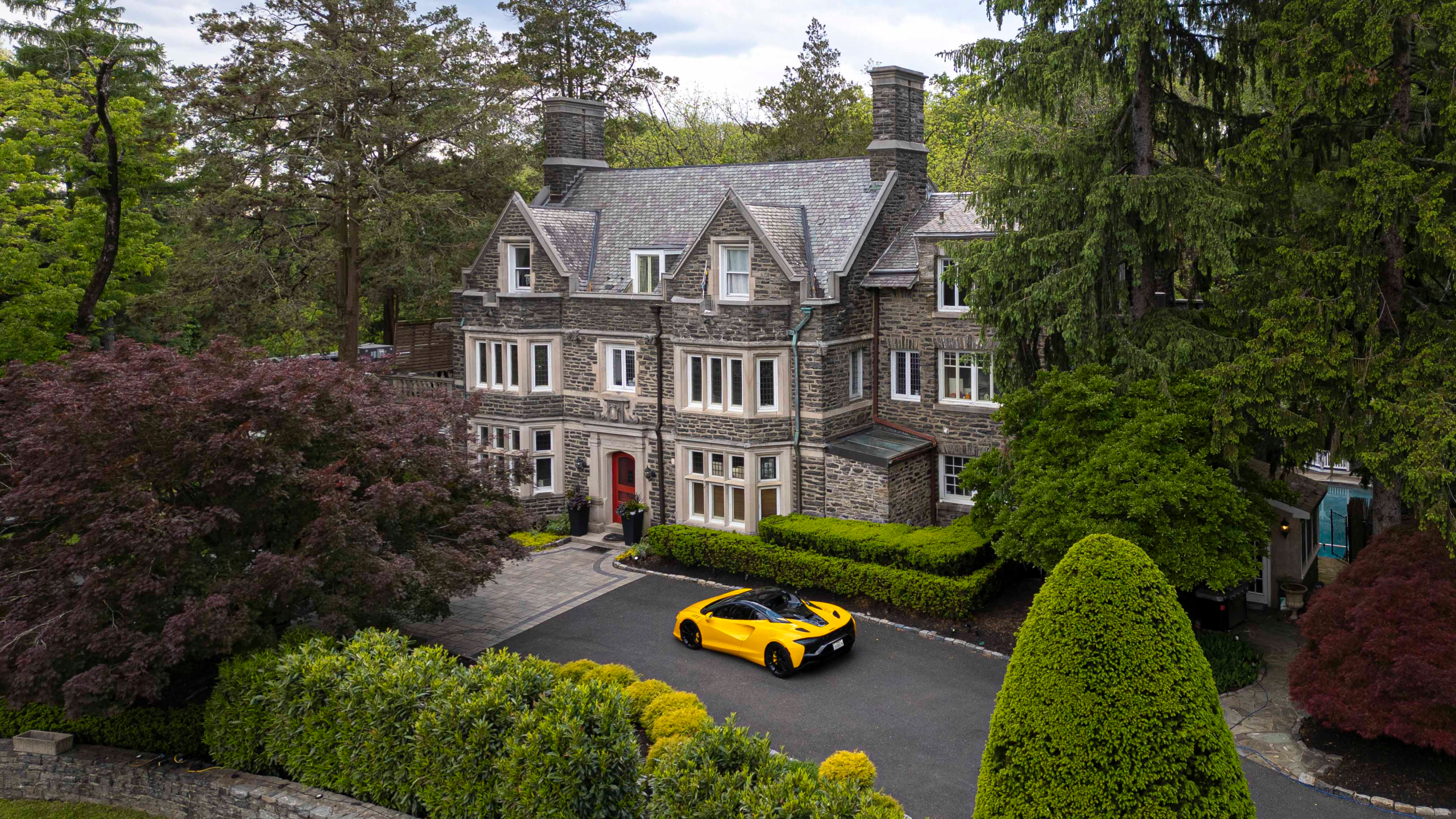
    An early 20th-century Rydal estate built with locally quarried stone

    This sprawling estate from 1904 spans more than two acres in Rydal (anyone seen Bradley Cooper lately?). Live-in carpenters carefully crafted the details in the residence, which was constructed from locally quarried stone, according to the listing.

    Inside features private au pair quarters and multiple princess suites, while the back leads to gardens, an in-ground pool, a hot tub, and large terraces.

    See more photos of the property here.

    Price: $1.695M | Size: 7,546 SF | Acreage: 2.02

    🗞️ What other Greater Abington residents are reading this week:

    By submitting your written, visual, and/or audio contributions, you agree to The Inquirer’s Terms of Use, including the grant of rights in Section 10.

    This suburban content is produced with support from the Leslie Miller and Richard Worley Foundation and The Lenfest Institute for Journalism. Editorial content is created independently of the project donors. Gifts to support The Inquirer’s high-impact journalism can be made at inquirer.com/donate. A list of Lenfest Institute donors can be found at lenfestinstitute.org/supporters.

  • Is Bradley Cooper really from Jenkintown? We investigate.

    Is Bradley Cooper really from Jenkintown? We investigate.

    Unlike Philadelphia — a city, county, and school district all in one — the collar counties are a mesh of townships, boroughs, and informal neighborhoods.

    That geographical maze, along with the centuries-long evolution of the U.S. Postal Service, means some suburbanites are not even sure what town they live in.

    Which may explain why one of Montgomery County’s most famous sons, former Daily News contributor Bradley Cooper, is often reported to be from Jenkintown, but he is not.

    He is from Abington Township and, like many Abingtonians, he has been living a lie.

    Where is Bradley Cooper from?

    Cooper grew up not in Jenkintown, but a mile away in the unincorporated Abington community of Rydal, in a house his parents bought before he was born, property records show.

    In the 1980s, he attended Rydal Elementary, where he played a mime, according to a playbill shared on social media.

    The Oscar-nominated actor later enrolled at Germantown Academy, a private school in Whitemarsh Township whose reunions he still attends.

    Cooper is known to call nearby Jenkintown his hometown from time to time — maybe because the borough is more well-known, and because that is what his childhood mailing address was. His reps did not return a request for comment this week.

    Some Abingtonians don’t know where they live

    But unlike people who grew up in the tiny enclave, Cooper could not have attended Jenkintown School District or participated in its National Geographic-famous Color Day.

    “As someone who grew up in Jenkintown and loved cute boys and is about the same age as Bradley Cooper, I can tell you he is not from the Borough of Jenkintown,” writer Lauren McCutcheon said.

    Many Abingtonians think they live in J-town, borough manager George Locke has said — so much so that his staff starts resident service calls by asking for an address. Otherwise they could spend 45 minutes on the phone, Locke said, before realizing the caller is in Abington.

    Residents of unofficial neighborhoods like Glenside, or towns that span counties like Telford, may be more aware of their official designation. Some Glensiders attend school in Cheltenham, while others attend Abington School District.

    For people without a kid in public school, an invisible municipal boundary may not matter much day to day. But it matters for local elections and during tax season.

    Nye Stevens, a longtime Postal Service expert for the U.S. Government Accountability Office and the Congressional Research Service, said mailing addresses can also affect people’s insurance rates, which are often based on zip code instead of municipality.

    And a zip code across two towns is nothing, Stevens added — some people get their mail from another state.

    Bob O’Brien of Wyncote used to think his practice, Relief Counseling & Art Therapy, was located in Jenkintown — until the tax bill from Abington arrived.

    “It was confusing,” O’Brien said — especially since there is a Jenkintown post office in the same building.

    “How it got this way, I’m not sure,” he added.

    The demands of mail delivery

    U.S. post offices began primarily as a pickup service in cities until the agency introduced home delivery in the late 1800s.

    Then cars expanded the suburbs, townships shifted, and assigned post office locations grew increasingly messy.

    “As townships grow, post offices seem farther away,” a New York Times headline about South Jersey observed in 1997.

    The U.S. has also closed tens of thousands of post offices in the last several decades, Stevens said, which may mean losing a mailing city that reflects where people actually live.

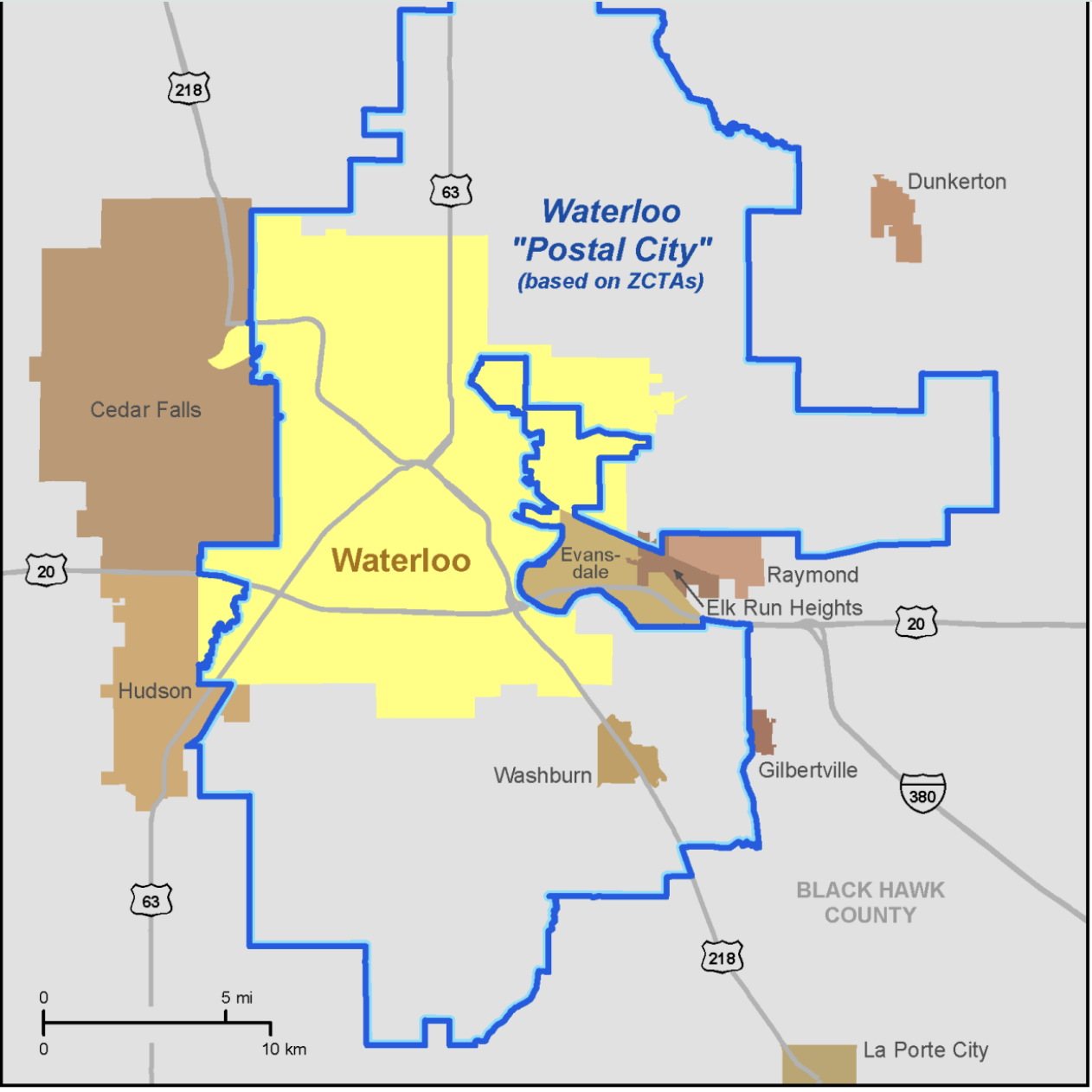
    A map shows the city limits of Waterloo, Iowa, in yellow, while a blue line shows the boundaries of the “Waterloo” zip code.U.S. Census Bureau

    Around 1990, some in Congress tried to fix the issue with a bill requiring the Postal Service make zip codes match municipal boundaries if towns request it.

    But such a change would “absolutely ruin the postal system,” Stevens said. “You can’t have a post office for every little borough.”

    The bill failed, and years later, the Postal Service was routinely rejecting zip code change requests, Stevens wrote in a 2006 Congressional Research Service report.

    “Some communities that lack delivery post offices complain that the need to use mailing addresses of adjacent areas robs them of a community identity,” he noted in the report.

    But at the end of the day, “zip codes are basically a delivery system. They’re not a neighborhood recognition system,” Stevens said this week.

    As for Bradley Cooper, the confusion around his addresses in the Philly suburbs has not ended.

    He supposedly owns an estate in New Hope. But he really lives in Solebury Township.

    This suburban content is produced with support from the Leslie Miller and Richard Worley Foundation and The Lenfest Institute for Journalism. Editorial content is created independently of the project donors. Gifts to support The Inquirer’s high-impact journalism can be made at inquirer.com/donate. A list of Lenfest Institute donors can be found at lenfestinstitute.org/supporters.

  • Abingtonians can now request anti-speeding devices on certain streets. Will yours be one of them?

    Abingtonians can now request anti-speeding devices on certain streets. Will yours be one of them?

    Neck-downs, chicanes, bulb-outs: They sound like threats from a 1930s mobster, but all three are traffic-slowing techniques that could soon arrive on your Abington street.

    The township will now allow residents to request traffic-calming measures under a new policy approved last week that requires traffic studies and majority approval from nearby property owners.

    The new petition policy adds to over a decade of efforts to curb speeding in Abington, which was the first town outside of Philadelphia to begin installing red-light cameras in 2014. Abington police have said they saw a resurgence in violations after the department limited in-person traffic stops during the pandemic.

    Which streets can get traffic calmers?

    To qualify for a traffic-calmer application, a street has to average between 500 and 6,000 vehicles per day on three weekdays in a row and cannot be a major artery or an emergency route. Private roads and alleys aren’t eligible, either, and the road has to be at least 500 feet long.

    There are other criteria too, depending on why the traffic-calming tool is needed.

    If the issue is speeding, only roads where three-day traffic studies show that over 15% of drivers are going more than 10 miles above the speed limit will qualify.

    If cut-through traffic on a sleepy street is the problem, the traffic volume has to exceed the expected level under a formula the township uses, either as a daily average or at its peak.

    Who decides which roads get bumps?

    There are two ways a road can be evaluated for traffic calmers under Abington’s new policy: a property owner’s petition, or the township manager’s request.

    If the manager requests it and a traffic study shows the road meets the criteria, property owners “directly adjacent” to the proposed traffic calmers will get at least 30 days’ notice of the proposal, the traffic data for that road will be posted on the township website, and there will be a two-week public comment period on the plan.

    If a property owner submits their road, the police will do a traffic study and ensure it meets the criteria, and then get approval from the township manager to proceed with a petition for approval from local residents. The property owner who filed the request has to get signatures from 60% of the directly affected home and business owners supporting the measure within 90 days.

    If approved, the property owner would then pass around a second petition to get 60% to 70% approval from a larger group of affected residents for the specific traffic-calming device and its planned location within 90 days.

    Ticketable speeding not as common as some Abingtonians think, traffic studies show

    The traffic study alone may stop many proposals in their tracks, based on similar studies the township already does when residents complain about speeding.

    Most studies on the township’s website from 2025 and 2026, spurred by complaints, found very few enforceable speeding infractions.

    For example, an October 2025 study at the 500 block of Montgomery Avenue where the speed limit is 25 mph found zero enforceable speeding violations. The average driver was going 18 mph, with 85% going 21 mph or slower.

    Many of the dismissed complaints were for roads posted at 25 mph, where going just 9 mph over is 136% of the speed limit.

    But some complaints do reflect frequent, enforceable speeding violations: An August 2025 study of the 300 block of Shelmire Street next to Lawnview Cemetery found an average speed of 31 mph in the 25 mph zone, and about 10% of passing vehicles met the criteria for enforcement. The police department planned to add speed enforcement on that block, according to the report.

    “Most of our residential streets tend to have 25 mph speed limits,” said Sgt. Michael Coughlin, the traffic safety officer who introduced the new policy at last week’s commissioners’ meeting. “In our experience, people tend to be a little more concerned about speeds where they live, which helps explain some of the complaints.”

    What traffic devices could Abington add?

    The traffic-calming measures mentioned in the policy include speed humps, roundabouts, road narrowing (called neck-outs), bulb-outs (extended curbs), and chicanes, which create artificial curves in the road with deflectors.

    A chicane, or artificial curve, at Charlotte Motor Speedway in Concord, N.C., in 2018. AP

    But there are downsides to some devices, township officials have noted at public meetings: Residents might win speed humps on their street, only to realize they now hear the sound of tires thunking over bumps thousands of times per day.

    This suburban content is produced with support from the Leslie Miller and Richard Worley Foundation and The Lenfest Institute for Journalism. Editorial content is created independently of the project donors. Gifts to support The Inquirer’s high-impact journalism can be made at inquirer.com/donate. A list of Lenfest Institute donors can be found at lenfestinstitute.org/supporters.

  • Family speaks on Cheltenham High assault | Inquirer Greater Abington

    Family speaks on Cheltenham High assault | Inquirer Greater Abington

    Hi, Greater Abington. 👋

    Thanks for reading the third edition of this newsletter. It’s been incredibly helpful to hear your thoughts so far. Please keep sharing your insights with us via this survey so we can shape this resource to be the most helpful it can be!

    This week, we go inside the alleged assaults in the Cheltenham High School locker room that led to the cancellation of two football seasons. We also take a look at the resident-driven push that’s prompted Cheltenham Township to pull millions from Citizens Bank, what caused the Friends of Fox Chase Farm volunteer group to disband, and the approach Jenkintown’s new superintendent is taking to overseeing the school district.

    — Laura Smythe (greaterabington@inquirer.com)

    P.S. If you’re not in a survey mood, you can also share your feedback on this newsletter by replying directly to this email.

    If someone forwarded you this newsletter, sign up for free here.

    The long shadow of locker room assaults

    A Cheltenham mother has spoken exclusively to The Inquirer about the alleged assaults her son experienced last year in the Cheltenham High School football locker room. In one instance, nearly 20 students watched as the boy’s teammates attempted to sexually assault him, his lawyers said.

    No students have been disciplined even after the school district determined that an assault had taken place and been recorded on video by witnesses, while the affected teenager “can’t escape” continued harassment throughout the local community, his mother said.

    The school’s previous and upcoming football seasons were both canceled amid the ongoing investigation by the Montgomery County District Attorney’s Office.

    Meanwhile, the teen’s family is still awaiting accountability.

    The Inquirer’s Maddie Hanna tells the story of a school district’s nightmare and a mother’s push for justice.

    Cheltenham closing Citizens Bank accounts over immigrant detention center ties

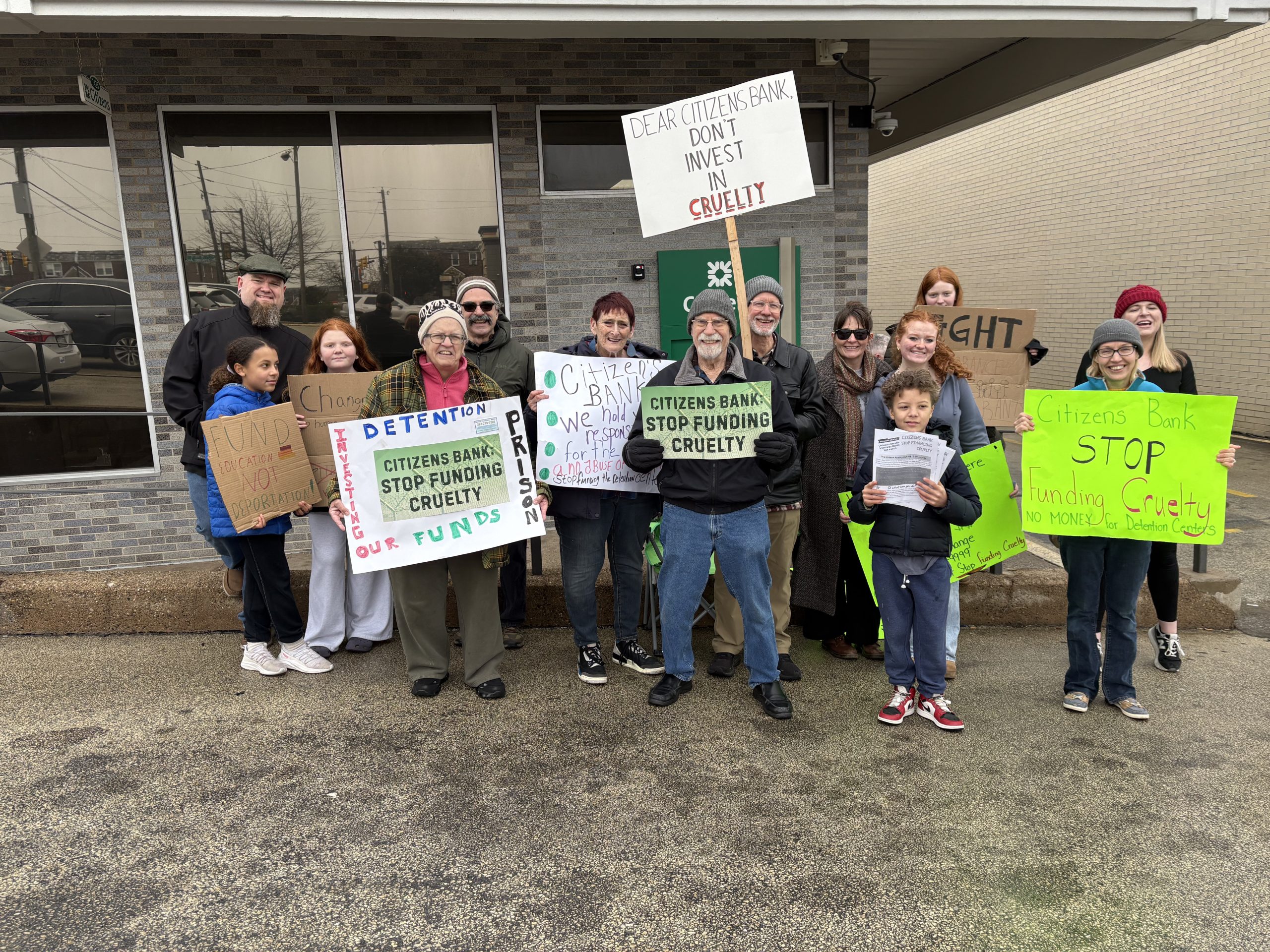
    Cheltenham Township is closing its last two accounts with Citizens Bank over the bank’s financing of companies that run detention facilities, despite the bank’s announcement it would no longer do so.

    The accounts hold about $9 million cumulatively, which township officials are planning to divert to Santander Bank. The move comes after months of lobbying by local residents.

    The Inquirer’s Jess Rohan explains the divestment plan, plus the pending status of some other Citizens Bank accounts held by the township’s tax collector’s office.

    💡 Community news

    • Friends of Fox Chase Farm, a volunteer group that supports the 112-acre expanse that straddles Abington Township and Philadelphia, has disbanded after more than 30 years.
    • Ramah Day Camp, a Jewish summer program in Cheltenham, will also shutter soon, ending its 30-year run.
    • Abington, Jenkintown, and Cheltenham are among the Montgomery County locales that will be scrutinized by law enforcement in the coming weeks in an effort to combat aggressive drivers.
    • A 27-year-old Nigerian man who laundered money as part of a “sextortion” plot that led a 20-year-old Abington native to kill himself has been sentenced to five years in federal prison.
    • Jenkintown man Seok Joon Lee, 54, has been charged with impersonating a federal officer after allegedly pretending to be an FBI agent at a Philadelphia grocery store, where he carried a loaded gun and attempted to conduct a security check of the supermarket.
    • The community is mourning the deaths of esteemed clothing designer and professor of fashion Emil DeJohn, 88, who was a congregant of St. Luke the Evangelist Church in Glenside, and Ida Schmertz, 91, a former Jenkintonian who became a pioneering women’s activist, presidential appointee, and the first female senior vice president at American Express. They each died in recent weeks.
    • Inquirer contributor Paul Jablow takes a good look at a three-story, six-bedroom Queen Anne Victorian home up for sale in the Wyncote Historic District.

    🏫 Schools briefing

    • Meet Brea D’Angelo, the former Sixers reporter who is now leading Jenkintown School District as its new superintendent.
    • Also in the Cheltenham School District, a new vice principal starts at Wyncote Elementary on Aug. 1. Plus, Glenside Elementary has named an interim principal and Cheltenham Elementary has named a new principal, both pending school board approval.
    • Construction is underway on Abington High School’s forthcoming Ash Carter Courtyard, a tribute to the late 1972 alumnus who served as U.S. Secretary of Defense from 2015 to 2017, the Main Line Times reports.

    🍽️ On our plate

    🎳 Things to do

    🔨 Legacy Park Community Build Week: Volunteers will help assemble the new Legacy Park playground. ⏰ Tuesday, July 28-Sunday, Aug. 2, various shifts 8 a.m.-8:30 p.m. 💵 Free 📍 Legacy Park, Jenkintown

    👻 Summerween Character Event: Enjoy spooky-themed drink specials, check out your favorite scary characters in their summer garb, and get a reading from a medium (if you dare). ⏰ Saturday, Aug. 1, 11 a.m.-1 p.m. 💵 Pay as you go 📍 Pot Heads Coffee House, Jenkintown

    🕺 The Concert: A Tribute to ABBA: The touring production from Sweden, featuring original band members from the iconic pop group, will perform renditions of ABBA’s ‘70s and ‘80s hits to Montgomery County. ⏰ Tuesday, Aug. 4, 8 p.m. 💵 $52.53-$75.74 📍 Keswick Theatre, Glenside

    🏡 On the market

    A cozy Colonial with a wood-burning fireplace

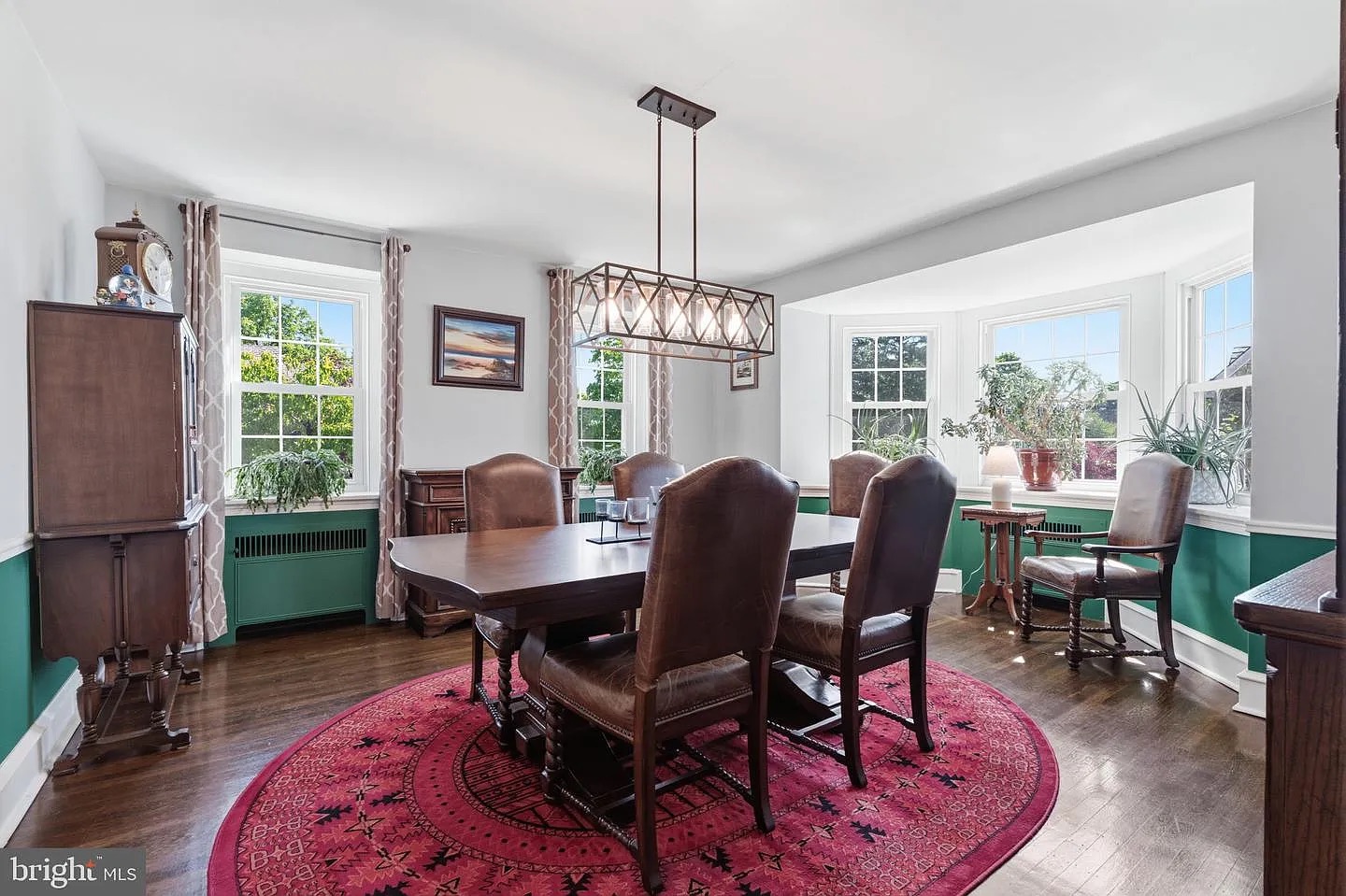
    1248 Gordon Rd. features a bay window in the dining space.

    Built in 1935 in Jenkintown Manor, this charming four-bed, three-bath home features original hardwood floors, a bay window in the dining area, and a wood-burning fireplace. There is a front porch as well as a back patio.

    See more photos of the home here.

    Price: $725,000 | Size: 2,982 SF | Acreage: 0.31

    🗞️ What other Greater Abington residents are reading this week:

    By submitting your written, visual, and/or audio contributions, you agree to The Inquirer’s Terms of Use, including the grant of rights in Section 10.

    This suburban content is produced with support from the Leslie Miller and Richard Worley Foundation and The Lenfest Institute for Journalism. Editorial content is created independently of the project donors. Gifts to support The Inquirer’s high-impact journalism can be made at inquirer.com/donate. A list of Lenfest Institute donors can be found at lenfestinstitute.org/supporters.