Blog

  • Thora Jacobson, award-winning former chief executive officer at the Fleisher Art Memorial, has died at 77

    Thora Jacobson, award-winning former chief executive officer at the Fleisher Art Memorial, has died at 77

    Thora Jacobson, 77, of Philadelphia, award-winning former chief executive officer at the Fleisher Art Memorial, former executive director at the Philadelphia Art Alliance, former director of design review for Mural Arts Philadelphia, former chief operating officer for Philagrafika, former chair of the Philadelphia Art Commission, onetime adjunct instructor at Drexel University, independent curator, artist, mentor, Mummers Parade judge, and much more, died suddenly Sunday, Aug. 2, at her home. The exact cause of her death has not been determined.

    Born and reared in Ridley Park, Delaware County, Ms. Jacobson became interested in art education, administration, and conservation at Trinity Washington College in Washington in the 1960s. She settled in South Philadelphia after college in the 1970s and spent the next 50 years organizing, promoting, and inspiring local artists and art organizations.

    “Philadelphia richly deserves to be known as a place that honors its own,” she told The Inquirer in 2006.

    She joined Fleisher in 1972, rose to CEO in 1983, and left in 2006 to work over the next two decades at Philagrafika, Mural Arts Philadelphia, the Philadelphia Art Alliance, and elsewhere. During her 34 years at Fleisher, she developed its Center for Works on Paper, the Community Partnerships in the Arts program, and the Challenge series juried competition.

    She also oversaw three capital campaigns and told The Inquirer that her priority was “seeing connections and possibilities between and among artists, institutions, and their constituencies.” A colleague said on Facebook: “To many of us she was Fleisher.”

    She prepared Philagrafika to host the city’s first international festival of printmaking in 2010, consulted with artists on major projects at Mural Arts, and organized popular national juried exhibitions at the Art Alliance. “Her love and commitment to the arts knew no bounds,” Jane Golden, executive director of Mural Arts Philadelphia, said in a tribute. “Thora’s imprint was profound.”

    John Ittmann, former curator at the Philadelphia Museum of Art, told The Inquirer in 2006: “Thora is a real firecracker. She has a wonderful type of energy that is really infectious.”

    Ms. Jacobson was also chair of the Philadelphia Art Commission for a decade, interim director of operations for the Asian Arts Initiative, vice president of the Philadelphia Volunteer Lawyers for the Arts, trustee of the National Guild of Community Arts Education, member of the American Swedish Historical Museum, and, most recently, a visual arts management consultant.

    Ms. Jacobson and fellow curator Warren Angle admire an exhibition at the Fleisher Art Memorial in 2002. April Saul / Staff Photographer

    “Thora was kind and clear,” colleagues at Social Impact Studios said on Facebook, “but firm as she pushed us to keep tweaking things until they were as strong as they could be.”

    She was an adjunct instructor at Drexel University from 2010 to 2014 and led research projects at Drexel and the University of Pennsylvania on social impacts of art in Philadelphia neighborhoods. Her first job out of college was coordinator of the student center at the Art Museum.

    She curated and juried shows, and wrote forwards and essays for art books and catalogs. She drew in her spare time and judged the Mummers Parade for years.

    She was featured in The Inquirer and Daily News, and appeared in the 1992 TV art documentary Monuments in Love. In 2006, she earned the Visionary Woman Award from Moore College of Art and Design, and was honored for lifetime achievement by Tri-State Artists Equity.

    Ms. Jacobson, standing between Jim Straw, to the left, and Ralph Wellington to her right, earned the Visionary Woman Award from Moore College of Art & Design in 2006.Gary Horn Photography

    “She’s really respected throughout the arts community in Philadelphia,” Happy Fernandez, then president of Moore, said in 2006. Anne d’Harnoncourt, then director of the Art Museum, said Ms. Jacobson’s “impact has been enormous.”

    William Valerio, director and CEO of the Woodmere museum, said: “Thora was a towering figure in the arts of Philadelphia, a builder of institutions whose accomplishments are lasting.”

    Thora Elizabeth Jacobson was born Feb. 19, 1949, in Ridley Park. She was the youngest of three children; her father died when she was 3. She played field hockey in high school, was fascinated by words and language, and graduated from the old Holy Child Academy in Sharon Hill.

    She met her husband, Antonio Sorgini, when he was taking classes at Fleisher, and they married in 1980 and had a son, Antongiulio. Her husband died in May.

    Ms. Jacobson, her husband, Antonio Sorgini, and their son, Antongiulio, lived in South Philadelphia.Courtesy of the family

    Ms. Jacobson was a talented seamstress and baker. She did humorous impersonations, collected art, and enjoyed working with young people.

    Friends noted her “many kindnesses” and “decades-long advocacy for artists and the cultural community” in online tributes. Woodmere’s Valerio said: “She was both a strong voice and a warm friend to many.”

    Her son said: “She had a sharp wit and relished cheerful banter among friends and colleagues. Above all, she took the work of mentorship very seriously.”

    In addition to her son, Ms. Jacobson is survived by a sister and other relatives. A brother died earlier.

    Friends noted Ms. Jacobson’s “many kindnesses” and “decades-long advocacy for artists and the cultural community.”Courtesy of the family

    A celebration of her life is to be held later.

    Donations in her name may be made to the Fleisher Art Memorial, 719 Catharine St., Philadelphia, Pa. 19147; and Mural Arts Philadelphia, 1727-29 Mount Vernon St., Philadelphia, Pa. 19130.

    Ms. Jacobson was a talented seamstress and baker.
    Mark Garvin, / Philadelphia Museum of Art
  • Lights, camera, action on the El. SEPTA police to star in a TV docuseries.

    Lights, camera, action on the El. SEPTA police to star in a TV docuseries.

    Film crews are hard to hide on the subway.

    SEPTA said a production company is making a TV docuseries for A&E on the work of the transit police, shadowing officers in Philadelphia as they patrol trains, buses, and streets.

    SEPTA riders posted a flurry of photographs, questions, and comments on social media platforms after sightings of TV crews.

    An email was sent to SEPTA employees last week explaining what’s behind filming they might see on the system.

    The documentary will ”offer viewers a unique perspective of SEPTA law enforcement, allowing the audience to get to know some of the men and women of SEPTA’s 200-plus strong police force,” the internal message said.

    Screenshot of a post on X of an internal email sent to SEPTA employees about the A&E documentary.X.com

    SEPTA says it looks forward to having the transit police being in the spotlight, noting their challenging job, a sharp drop in violent crime on the transit system, and a crackdown on fare evasion and anti-social behaviors like smoking in stations and on vehicles.

    The production company has editorial control but has SEPTA’s permission to embed with police units. The transportation authority says it is not receiving any compensation from the production.

    SEPTA senior press officer John Golden said the eventual series will not be so-called reality TV.

    “There is nothing scripted about this,” he said, and the action as crews follow officers is not staged. It also is not focused only on arrests or confrontations.

    The docuseries project was first reported Thursday by news site Philly Voice.

    Alastair Cook, cofounder and owner of Double Act Productions, emailed that he was traveling and not able to immediately discuss the show.

    The company, headquartered in the Brixton district of London, has produced dozens of documentaries and fact-based dramas for outlets like A&E, the BBC, National Geographic, and Discovery+.

    A representative for A&E Global Media did not respond to a request for comment.

  • DOJ files charges against woman accused of vandalizing World War II Memorial

    DOJ files charges against woman accused of vandalizing World War II Memorial

    The Justice Department filed two felony charges against the woman accused of vandalizing the World War II Memorial in Washington, according to court records.

    “Vandalizing our World War II Memorial is a despicable attack on a sacred monument honoring the Americans who fought and died for our freedom,” U.S. Attorney for D.C. Jeanine Pirro said in a statement announcing the charges on social media. “Those Americans include my father and grandfather.”

    On Thursday afternoon, part of the memorial on the National Mall was tagged with graffiti, and soapy bubbles overtook a fountain. Red graffiti spelled out “Clean hands dirty $” beneath the Atlantic Arch, and red and green paint was splattered on some of the granite stonework.

    Pirro said the woman suspected of vandalizing the memorial, Melissa L. Farris, was in custody. Two felony charges — depredation against U.S. property and destruction of veterans’ memorials — were filed against her, according to court records. Both charges carry a prison sentence of up to 10 years.

    Around 2 p.m. on Thursday, members of the U.S. Park Police and U.S. Park Rangers responded to a call about a disorderly person at the memorial, according to court records.

    On her Facebook account, Farris livestreamed herself at the memorial. In the video, she alternated between narrating her actions and getting emotional about the state of her life and of the country. She said she has autism and ADHD but that she was not suffering from psychosis.

    Farris also said that Thursday was her 41st birthday. Her current address is listed in Kentucky, according to public records.

    Later, Farris filmed herself dropping an item into the fountain near the Atlantic Arch. “Oops,” she said. Then, she shook spray-paint cans and livestreamed herself adding graffiti to the granite.

    “It was me. I’m doing it. I’m on camera,” she said.

    She said she was willing to be arrested because she wanted her day in court. The court filing said that as a ranger approached her at the Atlantic Pavilion, she fled.

    After spraying the graffiti, she said, “It’s time for a tea party, kids.”

    “This is democracy sometimes, guys,” she said as the livestream showed the fountain filling with bubbles. “And I didn’t have to shoot somebody. I didn’t have to go to war. I didn’t have to make choices that harmed another human being.”

    Shortly before 4 p.m., according to the court filing, Farris posted another video to Facebook, in which she said: “I was just allowed to deface Federal f—ing property, and nobody batted an eye, and that is very strange.”

    The Interior Department condemned the incident Thursday as an “utter disgrace” that “will not be tolerated.”

    The incident comes weeks after the White House blamed vandals for disturbing the nearby Reflecting Pool after President Donald Trump’s renovations quickly degraded, causing algae blooms and a peeling liner.

    Pirro eventually dropped the vandalism charges against four people and blamed the damage on flawed installation.

    In response, Trump said Pirro “folded like an umbrella.”

    “I just think she was totally wrong,” Trump told reporters earlier this month, noting that National Park Service employees had told authorities they saw vandals in action. He described problems with the contractor as “a couple of little things.”

    It’s unclear what material was used to create the bubbles in the fountain. Ryan Compton, owner of Domain Aquascapes in Northern Virginia, said adding standard bubbles to a fountain generally doesn’t cause system damage but is a “maintenance nightmare.” It requires draining, cleaning out, and rinsing the fountain and pump system.

    “That’s going to be a lot of man hours and work involved,” he said.

    Trump denounced the World War II Memorial vandalism in a Friday morning post on Truth Social.

    “THERE CAN BE NO GREATER INSULT TO THOSE AMERICAN HEROES WHO DIED IN WORLD WAR II,” Trump wrote. “First the Reflecting Pool, now this. We are on their trail! Where do these animals come from???”

    A preliminary estimate of the costs to clean and restore the memorial already exceeds $1,000, according to court records.

    The Washington Post was unable to immediately reach a representative of Farris for comment. Her sister declined to comment.

  • Trump signs memo authorizing private sector to launch cyberattacks

    Trump signs memo authorizing private sector to launch cyberattacks

    President Donald Trump signed an order Wednesday authorizing select private companies to carry out government-sponsored cyberattacks against foreign criminal hacking groups — actions that have until now been the domain of U.S. national security agencies.

    The memorandum enables the government to contract with U.S. firms to hack into and disrupt overseas digital networks belonging to “cyber-enabled transnational criminal organizations.”

    The memo stipulates that the companies, under the supervision of the federal government, may breach computer systems to conduct surveillance and manipulate or destroy digital or physical infrastructure “controlled by information systems” but are barred from targeting foreign governments or taking actions that result in the “loss of life” or “serious injury.”

    The move marks a significant shift from the more restrained approach of previous administrations, which prohibited companies that suffered intrusions from “hacking back” into their attackers’ systems for fear of geopolitical blowback. Now the Trump administration wants to enlist the private sector to help take the fight to criminal hackers.

    “President Trump is unleashing every available tool to stop foreign-based organized criminal organizations that exploit Americans in cyberspace,” the White House said in a fact sheet accompanying the memo.

    Some analysts and industry executives hailed the move, saying it should help the government degrade foreign criminals’ abilities to hack Americans. “Cyberattacks are cheap to launch and expensive to defend against,” said Joe Lin, co-founder and CEO of a Northern Virginia startup that builds large-scale cyber offense platforms for the U.S. government. “The more we can disrupt adversaries at scale using vetted commercial partners, the less our adversaries will be able to attack the United States.”

    Other experts say it could pose legal and geopolitical risks for the federal government and the companies themselves.

    “What if a company carries out an operation against what it thinks is an Iranian or Russian criminal group, but that group is actually controlled, influenced, or protected by Tehran or Moscow?” said Matt Curtis, who served as White House senior director for cyber policy in the Biden administration.

    “Suddenly, what was intended as an operation against criminals could be viewed as a U.S.-authorized cyber operation against a nation-state actor … and potentially trigger retaliation or escalation,” he said.

    The memo establishes a national coordination center to be run jointly by the Justice Department and the Department of Homeland Security, which will vet participating companies. The firms could be fined up to $1 million for contract violations.

    The order raises questions about potential liability for companies under the Computer Fraud and Abuse Act, which makes it a federal crime to gain unauthorized access to internet-connected computers. If the company is acting as an agent of the U.S. government, it probably would not be bound by this law, some analysts say, but would still have to comply with Fourth Amendment protections requiring a warrant to hack into a domestic system. The order does not directly address this issue.

    The FBI’s top cyber official says the memo is an effort to normalize what is currently “ad hoc” collaboration between industry and government.

    Just last month, for instance, the FBI and Google disrupted a botnet used by hundreds of criminal and nation-state hackers who didn’t want their attacks traced back to Beijing, Tehran, and Moscow, and so routed them through at least 2 million proxy IP addresses to TV streaming boxes and home routers, FBI Assistant Director for Cyber Brett Leatherman said in an interview with the Washington Post.

    Armed with a court order, the FBI seized hundreds of proxy domains and Google disabled accounts on its own networks that the botnet was using to control the malware.

    The presidential memo, he said, is about “providing additional authority and capability” to “empower” U.S. industry in helping the government battle foreign cybercriminals.

    Leatherman pointed to the Chinese state-sponsored Salt Typhoon espionage hack, discovered in late 2024, which compromised several of the largest American telecommunications firms and targeted the cellphones of U.S. political figures, including then-presidential candidate Donald Trump and his running mate JD Vance. At least one Chinese company assisted the campaign and was punished by the Treasury Department last year, Leatherman said.

    China and Russia often leverage private companies to carry off hacks that provide a measure of state deniability.

    “They are industry people [in China] that are doing this,” Leatherman said, referring to Salt Typhoon. “If we don’t close the gaps … we’re going to continue to fall behind.”

    U.S. agencies such as the FBI, the military’s U.S. Cyber Command, and the National Security Agency may legally hack systems overseas. But private-sector companies do not have such independent authority.

    Jason Kikta, a former U.S. Cyber Command operator, said using contractors to perform government work “makes us no better than China and Iran,” where, he noted, industry has conducted ransomware operations, attacked U.S. banks, and carried out indiscriminate cyberspying operations.

    “The U.S. has fought against such abuses for years, and this now makes us look hypocritical,” said Kikta, now chief technology officer at Automox, a cybersecurity firm.

    Former military cyber lawyer Gary Corn noted that Cyber Command’s primary focus is on countering foreign nation-state threats — not criminals. The command lacks the numbers and resources to take on the criminal threat. So the administration’s move could help fill that “big gap,” said Corn, who was formerly the command’s top lawyer and now directs American University’s Technology, Law & Security Program.

    Former White House aide Curtis, now CEO of the cybersecurity firm 190 Intel, said private companies have tremendous technical capability, data, and speed. With the right guardrails, he said, “this could be a very effective way to disrupt criminal networks that are otherwise hard to reach.”

    Charlie “Tuna” Moore, a former deputy commander of U.S. Cyber Command, has long called for the government to team with the private sector in conducting cyber offense. “It’s the only way to scale quality and quantity to defend the nation,” said Moore, now a visiting professor at Vanderbilt.

    The memo contains a classified annex, which describes how the companies and law enforcement agencies will coordinate their actions with the military and intelligence agencies, a process known as “deconfliction.”

    Moore noted that the military and spy agencies have extensive deconfliction rules, and it will be “critical” to see how well thought-out the new process is, he said.

    “The overarching approach is very good,” he said. “The devil’s in the details.”

  • The Foo Fighters played ‘song after song after song after song’ in a three-hour tour stop at the Linc

    The Foo Fighters played ‘song after song after song after song’ in a three-hour tour stop at the Linc

    The five-and-a-half-hour, three-band odyssey that was the Foo Fighters’ “Take Cover Tour” stop at Lincoln Financial Field on Thursday started with a bang.

    It came courtesy of a hellacious opening set by Mannequin Pussy for what was the Dave Grohl-led band’s first show in Philadelphia in 15 years.

    The Philly punk rock-plus band earned a position of prominence in this review with an absolutely ripping performance that Foo fans who didn’t arrive at the sports complex by 5:30 p.m. on a weekday afternoon should be kicking themselves for missing.

    I’m being effusive about Mannequin Pussy not simply to cheer on one of the best bands to emerge from the Philly music scene in the last decade. The Marisa “Missy” Dabice-led quintet did make the most of their biggest hometown show ever.

    Marisa “Missy” Dabice, lead singer of Mannequin Pussy, performs as the first opener during the Foo Fighters’ “Take Cover Tour” at Lincoln Financial Field on Thursday, Aug. 13, 2026. Mannequin Pussy is from Philadelphia and performing their first stadium tour.Allie Ippolito / For The Inquirer

    Nor is the cheerleading an inappropriate response, especially after the band performed in the home of its favorite football team all dressed in green and ending its action-packed set by leading the crowd in “Fly, Eagles, Fly” and an “E-A-G-L-E-S” chant before leaving the stage flapping their arms as if they were wings.

    In 30 minutes, in a less than half full Linc, Mannequin Pussy found time to emphatically deliver seven songs from their top notch 2024 LP I Got Heaven, plus career highlights like “Drunk II,” “Control,” and “Romantic.” They also paid tribute to stage hands and support staff at the Linc while sharing several Go Birds! exclamations along with less friendly words for Pennsylvania U.S. Sen. John Fetterman.

    With a take-no-prisoners attitude driven by bassist Colins “Bear” Regisford and drummer Kaleen Reading, Mannequin Pussy repeatedly displayed a knack for constructing compact songs that — much like a band that Grohl used to play drums with called Nirvana — move from passages of real beauty to explosions of fury.

    Mannequin Pussy performs as the first opener during the Foo Fighters’ “Take Cover Tour” at Lincoln Financial Field on Thursday, Aug. 13, 2026. Mannequin Pussy is from Philadelphia and is performing their first arena tour.Allie Ippolito / For The Inquirer

    I’m making a point of Mannequin Pussy’s concise, impactful approach because it contrasted so sharply with the Foo Fighters’ sprawling headlining set, which stretched over three hours.

    In between, Josh Homme’s desert rock band Queens of the Stone Age was also excellent in an hourlong set. The band lived up to its stoner rock rep while riding a slinky, sometimes downright sexy groove, particularly on “Make It Witchu.”

    It was impressively locked in, though Homme — which rhymes with “mommy” — sounded a little woozy at times. It was hard to tell if he was kidding when he quipped: “Wow, it was the wrong day to take mushroom before the show.”

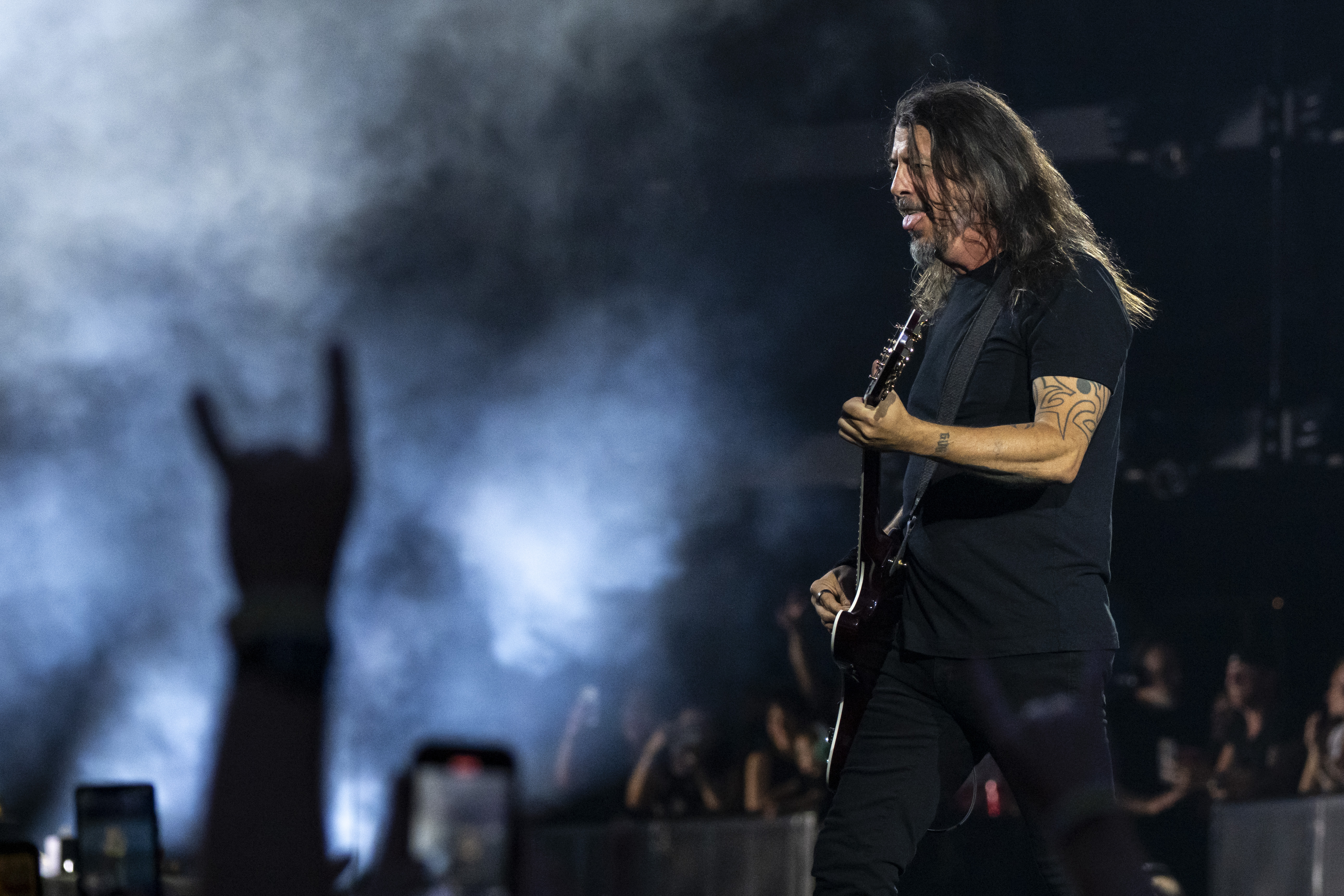
    Dave Grohl, lead singer of the Foo Fighters, performs during their “Take Cover Tour” at Lincoln Financial Field on Thursday, Aug. 13, 2026.Allie Ippolito / For The Inquirer

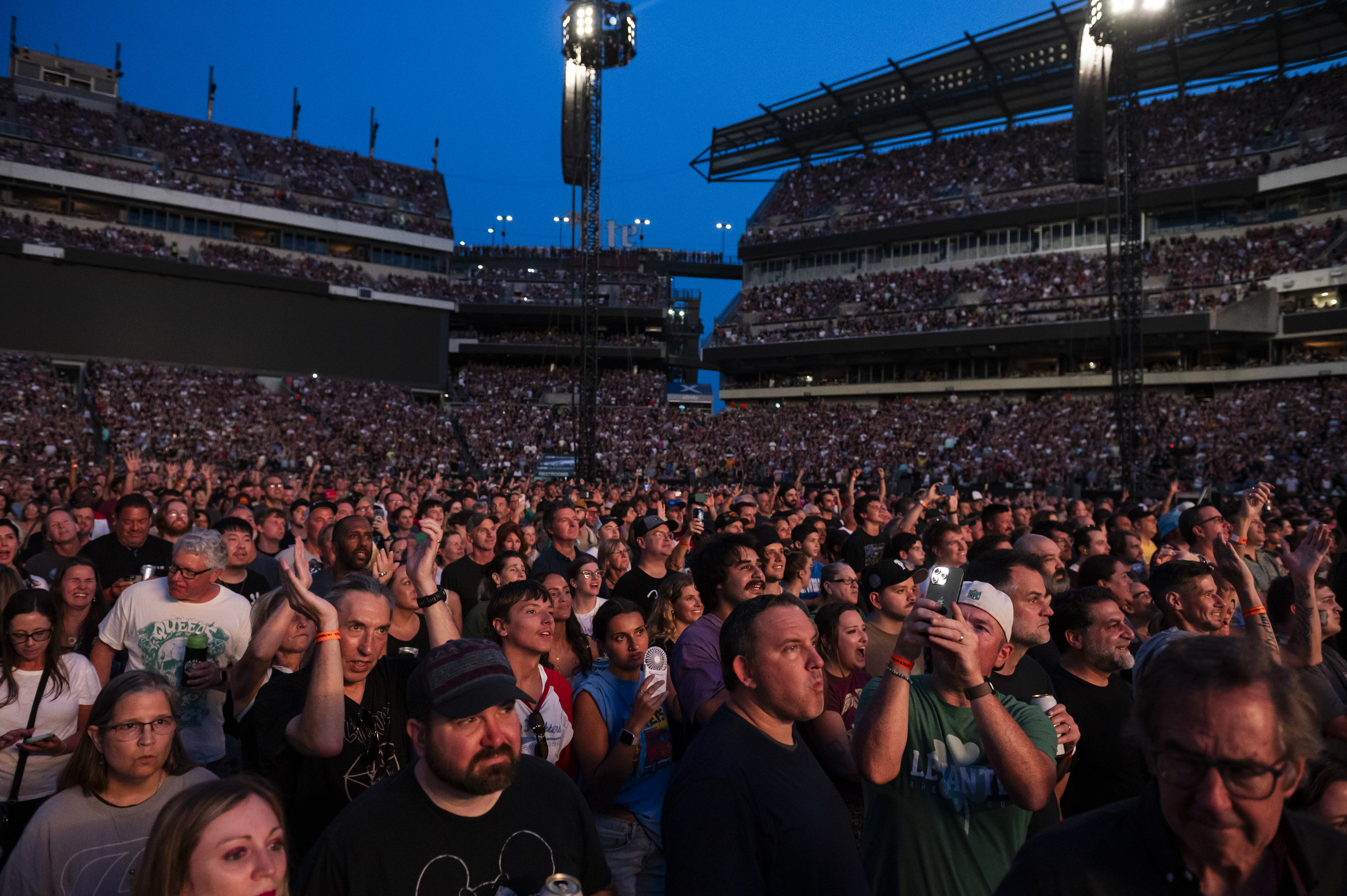
    The Foo Fighters hit the stage a few minutes after 8 p.m. Grohl trotted down the runway that extended onto the field of the stadium, by then filled with 60,000-plus fans of the band who first performed in Philadelphia at the Trocadero in 1995. They last played South Philly at what was then the Wells Fargo Center, in 2011.

    Since then, there were several Foo shows across the river in Camden at the amphitheater now known as the Freedom Mortgage Pavilion. A scheduled 2022 show at the Linc was canceled after the death of drummer Taylor Hawkins earlier that year.

    The Foos’ return features new drummer Ilan Rubin, who formerly pounded the skins for Nine Inch Nails. Earlier this year, Rubin replaced Josh Freese, who had replaced Hawkins in 2023.

    On the “Take Cover Tour,” which kicked off in Mexico in January and runs through March, the Foos are exerting themselves as one of the world’s biggest bands, playing stadiums all over the globe.

    Grohl — who sang and played guitar, except for one brief stint in which he switched places with Rubin and got behind the drum kit — repeatedly mentioned the Linc was the largest venue the band has played in Philadelphia. He also name-checked the Electric Factory, where the band performed three times in the late 1990s and early ’00s.

    The Foo Fighters during their “Take Cover Tour” at Lincoln Financial Field on Thursday, Aug. 13, 2026.Allie Ippolito / For The Inquirer

    The stature of the band was also expressed by the length of the show.

    Playing for three hours means you’ve attained epic status. Bruce Springsteen has done it for decades. It comes naturally to jam bands like Phish, whose identity is built around extended improvisation. And Taylor Swift also crossed the threshold with her career-spanning “Eras Tour.”

    The marathon set gave the Foos — that also includes guitarists Pat Smear and Chris Shiflett, bassist Nate Mendel, and keyboard player Rami Jaffee — time to visit all its own eras.

    That meant reaching back to the 1995 self-titled release on which Grohl played all the instruments, which is still the band’s best album. Of the two songs from that record, “This Is the Call,” was included in extended version. The other, “Big Me,” was part of a acoustic set and brimmed with a welcome melodic sweetness and light.

    The stripped-down set also included a breezy “Wheels” and “Marigold,” a rarity that Grohl put out on a cassette-only release in 1992 using the band name Late! And when he briefly dismissed the band to do a solo, “Under You,” from the band’s 2023 album, But Here We Are, Grohl delivered a not-on-the-set-list surprise.

    It was a Philly special: a shortened version of New Hope duo Ween’s “Freedom of ’76,” a song that The Inquirer recently named one of the most iconic Philadelphia songs of all time. Ween FTW!

    Queens of the Stone Age performs as the second opener during the Foo Fighters’ “Take Cover Tour” at Lincoln Financial Field on Thursday, Aug. 13, 2026.Allie Ippolito / For The Inquirer

    In April, the Foos released its 12th album, Your Favorite Toy, a bracing, disciplined record that benefits from brevity, with its 10 songs clocking in under 33 minutes.

    For whatever reason, only one of those songs — the hard-hitting title song — made the cut on Thursday. Perhaps Grohl was worried about performing too much material unfamiliar to the crowd — a significant portion of which was in his mid-50s age cohort, but also with many fans a generation or two younger.

    The show had its highlights, from crowd-pleasers like the crunchy “Monkey Wrench” to “The Teacher,” a tribute to Grohl’s mother, Virginia, who died in 2022. It was a heartfelt, lengthy elegy in which he played a double-necked guitar and sang: “You taught me how to be / Never showed me how to say good bye.”

    Also entertaining was a medley where the band members were introduced, and got to play a song by a band they used to be in. It was especially fun since Mendel was once in Sunny Day Real Estate, Jaffee played with the Wallflowers, and Smear was a member of L.A. punks, the Germs.

    Dave Grohl, lead singer of the Foo Fighters, performs during their “Take Cover Tour” at Lincoln Financial Field on Thursday, Aug. 13, 2026.Allie Ippolito / For The Inquirer

    Grohl was, as always, an ingratiating presence. He drops F and MF bombs at an astounding rate without seeming the slightest bit subversive or mean-spirited. The joy he takes from being on stage is infectious, and was reciprocated by a singing-along audience pleased to be hanging out on what turned out to be a pleasant and not-too-crushingly-humid of a summer evening.

    The Foos have a number of memorable songs that the band has made stick over its 30-year career — such as “The Best of You,” “Learn to Fly,” and “Everlong,” which was the final encore, with fireworks.

    But the band doesn’t have an endless supply, nor much variety in their meat-and-potatoes approach. Many songs like “Run” were burdened by drawn out arrangements that turned into a slog.

    Early on, Grohl promised that as the evening went on the Foos would be generous in performing “song after song after song after song … three hours isn’t enough!”

    On the contrary, it was more than enough.

    The crowd watches the Foo Fighters perform during their “Take Cover Tour” at Lincoln Financial Field on Thursday, Aug. 13, 2026.Allie Ippolito / For The Inquirer
  • Bucks man charged with homicide in wife’s strangling death

    A Bristol Borough man was charged with homicide and related crimes in the strangling death of his wife this week, authorities said.

    Michael Myers, 59, was arrested Thursday in the killing of his wife, Dawn, in their Lower Bucks County home, according to the affidavit of probable cause for his arrest.

    Around 6:30 a.m. that morning, police found Dawn Myers, 54, dead in a room on the second-floor of the Wood Street property. She appeared to have been be strangled, and had multiple men’s ties wrapped around her neck and her shirt was pulled up, the affidavit said.

    It was not the first time police responded to the property, the document said.

    Officers first arrived shortly after 6 a.m. after receiving a security alert from the Myers’ alarm company. But the door was locked and no one answered when they knocked, according to the document.

    They returned just before 6:30 a.m. after Dawn Myers’ son, Brendan Murray, arrived at the home to find his mother dead, the affidavit said. There, Murray also found Myers, his stepdad, who had been released from the hospital the previous day after being admitted for making suicidal threats, according to the document.

    Myers had been in and out of the hospital for those concerns, the affidavit said, and was released after medical professionals determined he was not a threat to himself, the affidavit said.

    Murray told investigators he arrived to find Myers sitting outside the home in a parked car with blood on his face. He said he asked where his mother was, and Myers led him to the front door and unlocked it.

    He soon found his mother upstairs and as he tried to descend the stairs, he said, Myers blocked his way with arms outstretched, the document said.

    Murray said he fought past him, ran out to the front lawn, and yelled for his wife to call 911.

    After police arrived, the document said, Murray pointed to Myers ― who was standing behind the front glass door ― and accused him of killing his mother.

    Police took Myers into custody as investigators began gathering evidence from the alarm system and security cameras that indicated Myers had been inside in the home.

    The cameras captured Dawn and Michael Myers returning home together on Wednesday afternoon. They also captured the last time Dawn Myers was seen alive, when she let their dogs out in the backyard around 6:40 p.m.

    The next time they recorded activity, Myers was leaving the home around 6 a.m. on the morning of the killing.

    He is being held at the Bucks County Correctional Facility and was denied bail.

    In addition to homicide, Myers was charged with strangulation, aggravated assault, intimidation of witnesses, possessing instruments of a crime, and false imprisonment.

    He is expected to appear in court for a preliminary hearing on Aug. 26.

  • Cheltenham is starting a new school year just weeks after locker-room assault charges. Parents and kids are nervous.

    Cheltenham is starting a new school year just weeks after locker-room assault charges. Parents and kids are nervous.

    Some Cheltenham families are anxious about the new school year that begins Aug. 31, because it feels like the last year, marked by uncertainty and pain for many, hasn’t ended.

    After a 15-year-old football player was allegedly assaulted twice in the locker room last August and September, the community hung in limbo for months, with no punishments for anyone involved while district and county investigations rolled out.

    Now, Cheltenham is heading into what would have been a fresh start just as a flurry of conclusions finally arrived: criminal charges for four coaches and six players, a grand jury report finding the district mishandled the assaults, and the superintendent’s resignation.

    Five of those charged are set to appear at a preliminary hearing on Aug. 27.

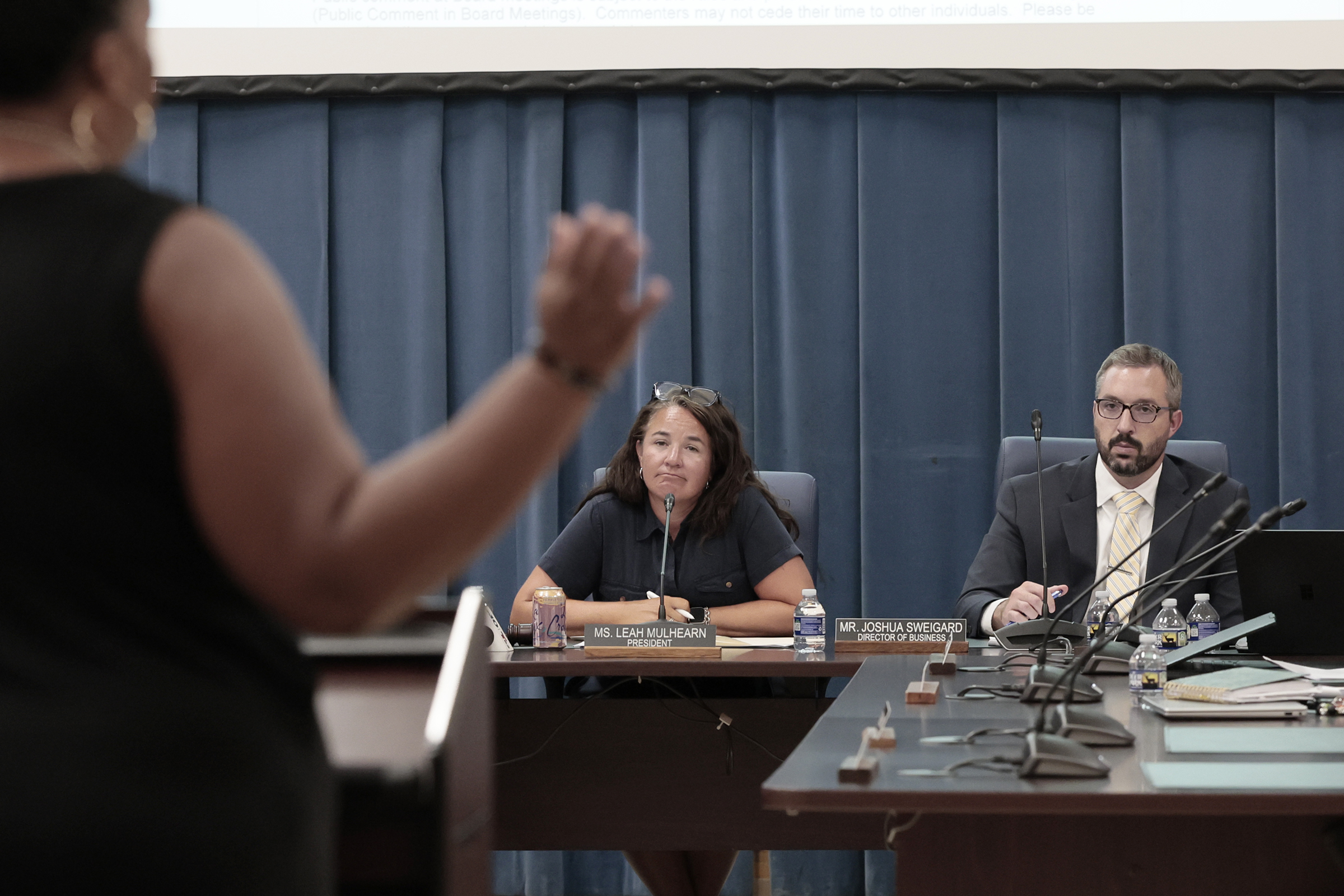
    “We are coming to school in the next three weeks. What is the plan for the morale of all the kids that have been affected?” Francis Brown, the parent of a senior, asked at a school board meeting this week. “Should the seniors expect to come and sit on the lawn for Senior Sunrise and see news cameras in their face?”

    Some families are afraid to say they’re from Cheltenham, residents said at Tuesday’s board meeting, which was the first public forum for the school community since the charges were brought.

    “Half our parents don’t want to wear anything that says Cheltenham on it, because they’re embarrassed,” Shelley Gaither, the president of Cheltenham Elementary’s parent-teacher association, said at the board meeting. “Because they get asked questions, they get looked down upon.”

    And the interim superintendent Chris McGinley, whose selection was announced at the meeting, will lead an administration that many families say has repeatedly failed to address safety concerns across grade levels.

    This year’s staff may include three people referred to the Montgomery County grand jury report as Employee #1, #2, and #3, one of whom texted about dissuading the victim’s mother from visiting the school. Texts also downplayed the assault allegations, according to the grand jury report.

    The district has not answered questions about the status of the three employees.

    Officials emailed parents on Aug. 13 that Vice Principal Mark Hoff — to whom the victim’s mother said she first reported the assault allegations — will be staying at the high school, instead of moving to Wyncote Elementary as planned, for continuity during a turbulent time.

    The school board said Tuesday an outside attorney will be reviewing all safety policies and the board will review all sports programs in the district in the coming weeks.

    The district has also enlisted the Bucks County Intermediate Unit to audit the human resources department, and Cheltenham is checking that all staff have current child abuse and criminal history clearances after the grand jury report found five of the coaches weren’t up to date last year.

    But families are still worried what the school climate will be like in September.

    “I asked [my kids] how they felt about going to school, and they’re nervous,” a member of the high school’s parent-teacher association said at the Tuesday meeting. “Not just for safety concerns, but for the environment of the school … My oldest said ‘I’m worried the teachers will be upset.’”

    A coalition of parent groups presented a list of joint demands at the meeting that includes a town hall on school safety, first-day assemblies on sexual assault, hazing, and bullying by age group, and a community-wide survey assessing district leadership.

    And the Saturday before schools starts, the Cheltenham African American Alliance plans to hold a “Together We Can Change Their Tomorrow” march at 8 a.m. from the administration building to the high school, president Ikysha Dearry announced Tuesday.

    “We have to take back our power as people,” Dearry said. “We have kids who will be coming through these doors in the next two or three weeks.”

    Staff writer Maddie Hanna contributed to this article.

    This suburban content is produced with support from the Leslie Miller and Richard Worley Foundation and The Lenfest Institute for Journalism. Editorial content is created independently of the project donors. Gifts to support The Inquirer’s high-impact journalism can be made at inquirer.com/donate. A list of Lenfest Institute donors can be found at lenfestinstitute.org/supporters.

  • Luigi Mangione pleads guilty to federal stalking charges in the killing of UnitedHealthcare CEO

    Luigi Mangione pleads guilty to federal stalking charges in the killing of UnitedHealthcare CEO

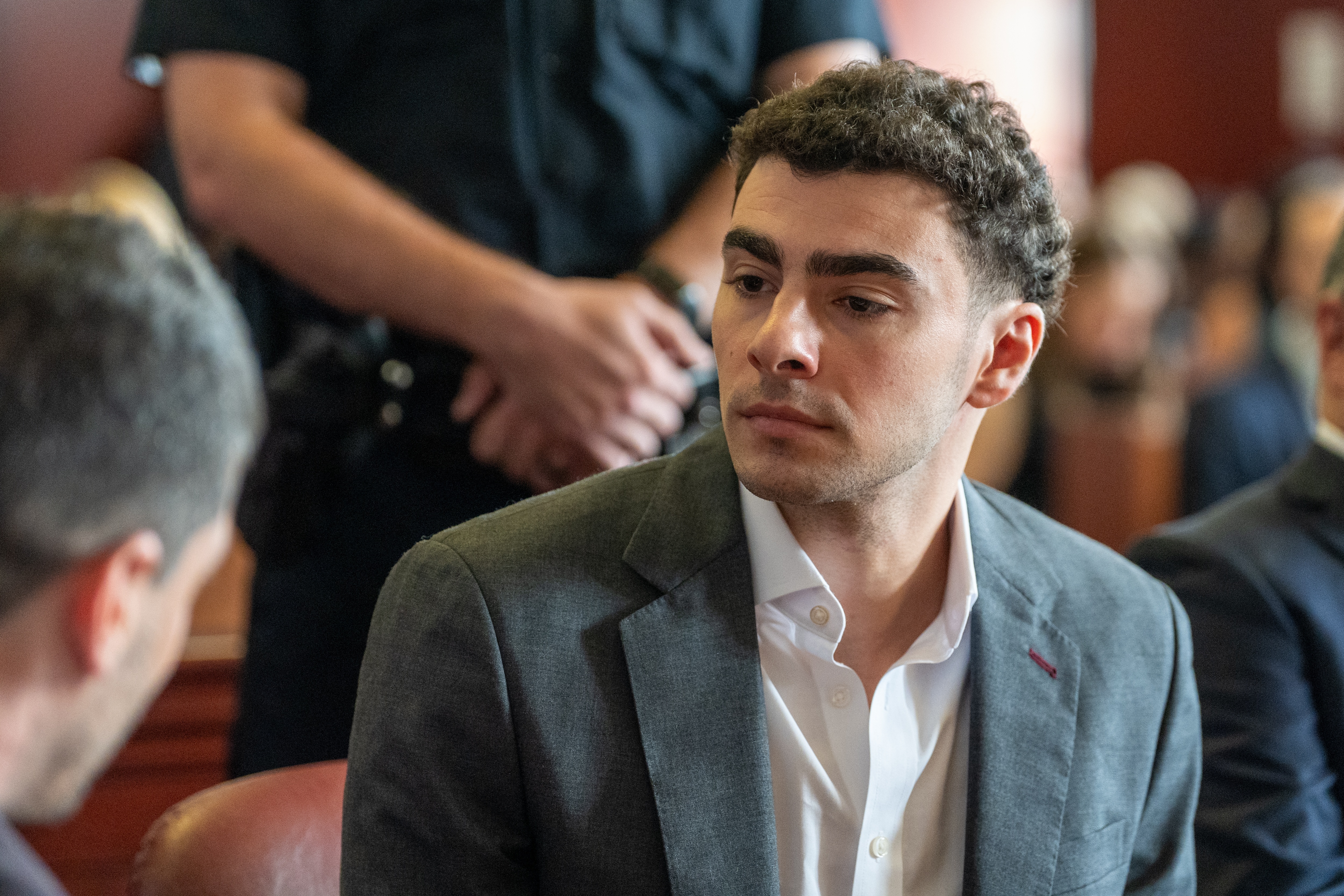
    NEW YORK — Luigi Mangione pleaded guilty on Friday to federal stalking charges in the killing of UnitedHealthcare CEO Brian Thompson, admitting matter-of-factly that he trailed the executive to an investor conference in 2024 and gunned him down on a New York City street.

    Mangione, 28, said he even used a ruse to glean information about the event, contacting the health insurance company ahead of time under the guise of being an investor at a multibillion-dollar firm.

    “On the morning of Dec. 4, 2024, I shot Mr. Thompson in Manhattan, and he died,” Mangione told the court as Thompson’s wife, Paulette, took several deep breaths and repeatedly wiped tears from her eyes. A supporter put an arm around the wife and held her tight.

    Mangione is set for sentencing Dec. 18. When U.S. District Judge Margaret M. Garnett asked whether he understood that he could spend the rest of his life in prison, Mangione answered neutrally: “Yes.”

    Mangione entered the plea at a hastily scheduled hearing in Manhattan federal court, resolving one of two cases against him in connection with Thompson’s death. Mangione’s lawyers could now seek to have his separate New York state murder case thrown out on double jeopardy grounds.

    Surveillance video of the ambush showed a masked gunman shooting Thompson, 50, from behind. Police say “delay,” “deny,” and “depose” were written on the ammunition, mimicking a phrase used to describe how insurers avoid paying claims. That detail — and revelations that Mangione’s private writings lambasted health insurers as greedy, according to authorities — made the case a fulcrum for debate about the industry and made Mangione a cause célèbre for some of its critics.

    Mangione told the court Friday that he pursued Thompson “after years of enduring severe pain from a broken back and navigating the obstacles of the health insurance system.”

    Mangione never was a UnitedHealthcare customer, according to police and the company. A University of Pennsylvania graduate from a wealthy Maryland family, he was arrested five days after the shooting, when he was spotted at a McDonald’s in Altoona, Pa. It’s about 230 miles west of Manhattan.

    Thompson led one of the United States’ largest health insurers, but he wasn’t well known outside the industry. Trained as an accountant, he had worked at parent company UnitedHealth Group Inc. for 20 years and became CEO of its insurance arm, UnitedHealthcare, in 2021. He and his wife had two sons, who were in high school when their father was killed.

    Both the federal and state cases could lead to a life prison sentence for Mangione. A federal judge earlier this year tossed out additional charges that could have exposed him to a potential death penalty.

    Mangione had complained about the prospect of two trials, telling a judge in February: “It’s the same trial twice. One plus one is two. Double jeopardy by any commonsense definition.”

    Under New York law, a state prosecution could potentially be barred if the federal case is resolved first.

    The state’s double jeopardy protections kick in if a jury has been sworn in a prior prosecution, such as a federal case, or if that prosecution ends in a guilty plea. Mangione’s cases involve different charges arising from the same course of conduct.

    In a letter last month, state prosecutors objected to the possibility of a guilty plea in the federal case wiping out the state case.

    Garnett has delivered some setbacks to the defense, including ruling in January that prosecutors could use items collected from Mangione’s backpack during his arrest as evidence against him.

    They included a 3D-printed pistol that investigators said matched the one used to kill Thompson and a notebook in which authorities say Mangione described his intent to kill an insurance executive.

    In June, Mangione’s lawyers said they would pursue a psychiatric defense in the state case but reversed course a day later. The defense, involving claims that he was suffering from extreme emotional disturbance at the time of the killing, isn’t allowed in federal court.

  • Trump asks Supreme Court to let White House ballroom construction continue during appeal

    Trump asks Supreme Court to let White House ballroom construction continue during appeal

    WASHINGTON — President Donald Trump’s administration on Friday asked the U.S. Supreme Court to allow the White House to continue construction on its $400 million ballroom project while it appeals a lower court’s order to halt the work.

    Trump’s solicitor general petitioned the high court to suspend last week’s decision by a three-judge panel from the U.S. Court of Appeals for the District of Columbia Circuit.

    The divided panel ruled last week Trump must stop the White House ballroom’s construction because Congress has not approved the project. The panel’s majority said Trump doesn’t have the unilateral authority to build a 90,000-square-foot ballroom where the White House’s East Wing stood before he ordered its demolition last fall.

    The lower court suspended its own ruling for two weeks to give Trump’s Republican administration time to appeal to the Supreme Court. Solicitor General D. John Sauer asked the Supreme Court to rule on its stay petition before the appeals court panel’s decision takes effect on Aug. 21.

    “This case involves an extraordinary and unlawful injunction that will halt the ongoing construction of the integrated military complex, including a totally secure ballroom space, at the East Wing of the White House, which is vitally required by national security,” Sauer wrote.

    The lower court’s 2-1 decision upheld an order to pause aboveground construction on the project, siding with historic preservationists who sued to stop construction of the ballroom.

    “Whether or not a massive ballroom should be constructed is for Congress to decide and is not a matter for Executive self-help,” wrote the majority’s two judges, both appointed by Democratic presidents.

    A third judge disagreed, finding that the preservationist group that challenged the project had no legal right to sue.

    “The district court elevated the aesthetic displeasure of a single passerby over the government’s security interests in the ballroom,” wrote Judge Neomi Rao, who was appointed by Trump.

    The Trump administration argues that the president, not Congress or the courts, has unimpeded authority to renovate the White House. The current state of the project, essentially an open construction site, makes it harder to protect the White House, the Justice Department contends.

    The administration also says the National Trust for Historic Preservation does not have the legal right, or standing, to sue over the ballroom, which is part of Trump’s plans to quickly remake Washington. The solicitor general said the ballroom project “should be a matter for the President and the political process, not construction-by-injunction.”

    During an appeals court hearing in early June, an administration lawyer defended a broad view of presidential control over iconic public facilities. The government could bulldoze the Statue of Liberty and the White House, Justice Department lawyer Yaakov Roth said in response to a hypothetical question, and the descendants of immigrants who came through Ellis Island and the enslaved people who built the White House would not have standing to sue.

    The D.C. Circuit panel upheld a ruling by U.S. District Judge Richard Leon, who was nominated by Republican President George W. Bush. Leon concluded that a pause wouldn’t jeopardize national security. He also exempted any construction work that is necessary for the safety and security of the White House.

    The ballroom has been under construction for 10 months. The administration says the work is roughly 65% finished.

    “Given those developments, the injunction promises chaos in service of nothing,” Sauer wrote.

  • Homeland Security paid $464M for airplanes, then it parked them

    Homeland Security paid $464M for airplanes, then it parked them

    WASHINGTON — Starting last fall, the Department of Homeland Security spent $464 million on a no-bid contract to buy 10 used airplanes from a firm in northern Virginia.

    That was an enormous price tag, but the department said it had no time to consider other offers. The planes were needed urgently for deportation flights.

    But since then, the department has barely used this new fleet — for deportations, or anything else.

    Three of the aircraft are luxury business jets. Just months after acquiring them, the department sought to loan or lease two to other agencies, including one for the use of FBI Director Kash Patel, according to a letter to the department sent Wednesday by top Democrats on the Senate Appropriations Committee.

    The other seven are older Boeing 737 passenger jets, which the government has left parked at an airport in Lake Charles, La., for months at a time. An internal government document, obtained by the New York Times, said the agency did not have the staff necessary to operate them.

    The acquisitions were part of a surge of rushed contracts handed out recently by the Homeland Security Department, which has repeatedly used the need for “urgency” to bypass regular contracting procedures. The idled planes highlight the risks of that approach. The agency rushed headlong to spend nearly half a billion dollars, only to end up with planes it did not fly.

    The contract also illuminated a broader trend within the second Trump administration: no-bid contracts awarded to people with connections to Trump or his cabinet secretaries. The company that received this contract, Daedalus Aviation Corp., is led by a chairperson who had donated to a political committee supporting the previous Homeland Security secretary, Kristi Noem.

    The department’s Immigration and Customs Enforcement agency has long outsourced its deportation flights by chartering planes from private companies. It also uses military and Coast Guard aircraft. Because of that, former immigration officials said, there seemed to be little need for the department to take on the expense of buying and maintaining a significant number of its own aircraft.

    “If you asked me to write a list of the things ICE needed to increase the number of deportations, buying its own fleet of airplanes would absolutely not make the top 10,” said John Sandweg, a former acting director of ICE during the Obama administration.

    In a written statement, the Homeland Security Department sought to shift responsibility for the contract to Noem. President Donald Trump fired her in March, and appointed Markwayne Mullin, a Republican senator from Oklahoma, as secretary.

    “The contract for Daedalus was made and approved by department leadership before Secretary Mullin was sworn in,” the department said in a statement. The agency said it “reserves the right to adjust course in an environment with evolving requirements and demands.”

    A spokesperson for Noem sought to place the responsibility on Mullin instead, saying the purchase was “finalized” under his leadership.

    Contracting records show that the size of the contract increased by $303 million on the day that Mullin was sworn in as secretary.

    The agency said that the idle 737 passenger jets had been undergoing maintenance checks, and that there were plans for two of them to begin deportation flights later this month.

    The situation with the planes was reminiscent of the department’s about-face on a plan to acquire warehouses to hold detainees. The department spent heavily on those when Noem was secretary, but reversed itself just months later under Mullin. The department is now giving away or selling seven warehouses that it bought for more than $700 million.

    A letter sent to the department Wednesday by Democratic Sens. Patty Murray of Washington and Christopher Murphy of Connecticut, who sit on the Senate Appropriations Committee, said Homeland Security officials had already conceded to the committee that most of the planes would not be used for deportations.

    “The American people deserve a full accounting of this gross misuse of their tax dollars,” the letter, which was reviewed by the Times, said.

    The senators asked for details about the purchase price of each plane and how they would be used.

    Federal law generally requires government agencies to seek competing bids before awarding a contract, to ensure taxpayers get the best deal. But the department sidestepped that requirement for the planes contract, by invoking an exemption for cases of “unusual and compelling urgency.”

    That exemption can be used only when delaying the contract would result in “serious injury, financial or other,” to the government. Historically, it has been used during natural disasters, war, and the coronavirus pandemic.

    The department declined to answer questions about what serious injury it was trying to prevent. Contracting regulations require agencies to publish the rationales for no-bid contracts, but the department refused to release this one, saying it “would compromise national security or create other security risks.”

    The department has invoked the urgency exemption to justify more than $29 billion in spending across about 500 contracts awarded during Trump’s second term, according to an analysis of federal data by the Times. Much of that total came from border wall spending. Urgency claims were also used to justify projects like the $220 million in media contracts awarded to firms tied to Noem and her allies, scrutiny over which contributed to her ouster.

    The exemption accounts for nearly two-thirds of the $34 billion that the department has spent on contracts signed in 2026. That’s up sharply from past years. In 2025, the figure was about one-quarter. In 2024, it was less than 1%.

    No other major agency has used the exemption for urgency as frequently as Homeland Security, even in an administration that has turned to no-bid contracts repeatedly — for event planning, fountain repair, and the troubled makeover of the Lincoln Memorial Reflecting Pool.

    Lorna Tedder, a retired contracting expert who spent more than three decades at the Defense Department, said that, “Some things truly are urgent — people are going to die if you don’t do this.” But if agencies claim the exemption all the time, “it will eventually be abused.”

    The contract for the planes was first awarded in late November. At the time, the government was already paying other contractors hundreds of millions to operate a network of charter flights called “ICE Air.”

    The immigration agency has chartered about 25,800 flights in Trump’s second term, shuttling immigrants between detention centers domestically and deporting them abroad, mainly to Latin America and the Caribbean, according to the ICE Flight Monitor tracking project at Human Rights First, a nonprofit advocacy group. The department sometimes has 25 or more planes in the air in a day, according to the nonprofit’s tracking.

    But at the time, the Homeland Security Department said it still needed its own planes.

    Last fall, Tricia McLaughlin, a department spokesperson, told the Washington Post that purchasing the planes would allow “ICE to operate more effectively, including by using more efficient flight patterns.” McLaughlin has since left the agency. The department did not respond directly to a question asking about her comments.

    Daedalus, the Arlington, Virginia-based company the government hired to find the planes, had not previously held a federal contract. However, a company spokesperson said it had worked as a subcontractor to other companies evacuating Afghans who had done work for the U.S. government.

    Daedalus’ chair is William Walters, a doctor who until 2021 led a State Department office that evacuated Americans from outbreaks of Ebola, COVID-19, and other crises. In 2024, after leaving government, Walters donated $10,000 to a political committee connected to Noem, then the governor of South Dakota.

    Last year, with Noem in charge, the agency gave a separate company run by Walters a contract worth nearly $700 million to encourage immigrants to leave the U.S. voluntarily.

    A Daedalus spokesperson said that Walters was unaware that the political committee was tied to Noem.

    Daedalus declined to say how much each of the 10 planes had cost, or what its profit margin was for acting, essentially, as a broker. It provided a written statement that it was proud to provide “the best value to the American taxpayer.”

    One of the planes is a Boeing 737 luxury jet, now painted in the color scheme of Trump’s new Air Force One. Two others are smaller Gulfstream business jets, each seating about 14 people.

    Those planes flew only sporadically after the agency acquired them, according to flight records from airplanes.live, an independent flight tracking service. And the department soon moved to jettison two of them to other agencies, according to the account from Senate Democrats and the internal document reviewed by the Times.

    One of the luxury jets “has already been leased to the FBI for 12 months to support director Patel’s travel — despite the fact that the FBI already has its own jets to support the director’s travel,” the Senate Democrats wrote.

    The FBI confirmed that it is using one of the Gulfstream jets, saying it was paying the Homeland Security Department significantly less than it had paid a private company to lease a similar plane and that the aircraft was being used to support a range of agency operations, in addition to Patel’s travel.

    The Homeland Security Department also wanted to lend the larger Boeing luxury jet to the Pentagon, according to the senators’ letter and the internal document. But a Pentagon spokesperson said no agreement had been signed.

    One Gulfstream jet will remain with Homeland Security, for the use of its top leaders, according to the letter.

    The other 737s seemed more suited for deportation flights. Flight records show they had been in active use by Avelo Airlines, a low-cost carrier that also flew charter flights for ICE.

    But when the government bought them, it parked them.

    Daedalus said that two were used briefly to evacuate Americans from the Middle East at the outbreak of the Iran war in early March.

    Senate Democrats said they were told by Homeland Security staff that four of the 737s were no longer expected to fly detained immigrants. The senators said the department said it would use them to fly members of Congress on overseas trips, a job now handled by commercial carriers or military aircraft.

    For the long term, the agency said it needs a contractor to provide crews and mechanics to operate its new fleet. A recent solicitation said that contract would start next summer.

    This article originally appeared in The New York Times.