Rachel Maddow’s brief turn as a Philadelphian began with her bicycle being stolen on the first day of a new job.
“I got to work at 9 a.m. and I got out for lunch before noon, because I didn’t have anything to do,” Maddow said. “My bike was already gone.”
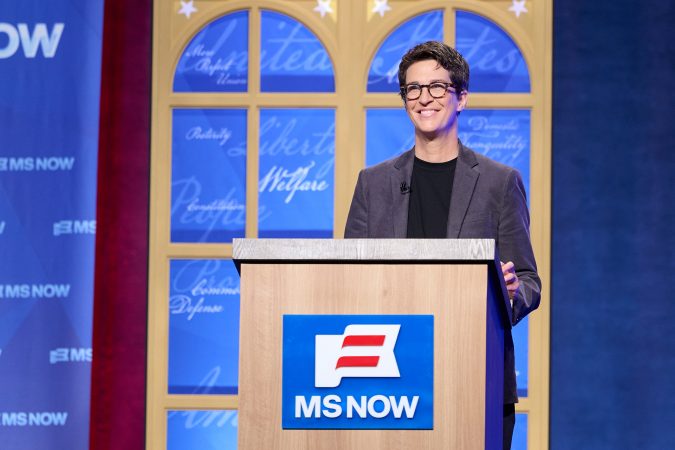
MS NOW’s top star was in Center City on Thursday night to interview constitutional legal expert Sherrilyn Ifill live in front of nearly 2,000 people at the Academy of Music.
But prior to the event, she reminisced about her brief time in Philly in the early 1990s, shortlyafter she came out as gay during her freshman year of college at Stanford University.
“It didn’t go well at home, so it was a bit of a scramble in terms of like paying for college, figuring out what I was going to do, where I was going to live,” Maddow said. “And I got an internship at a think tank at Penn.”
Maddow lived in West Philadelphia and basically ate nothing but Ethiopian food for a few months, though she can’t remember the name of the street: “It was in the 40s and it was one of the tree-named streets.”
In college she was an AIDS activist and focused on healthcare policy, so landing at the University of Pennsylvania’s Leonard Davis Institute of Health Economics seemed liked an ideal fit.
Maddow said her job was to answer the phone. But the internship didn’t last long.
“I was not an additive,” Maddow said. “I don’t think I was an asset to the organization.”
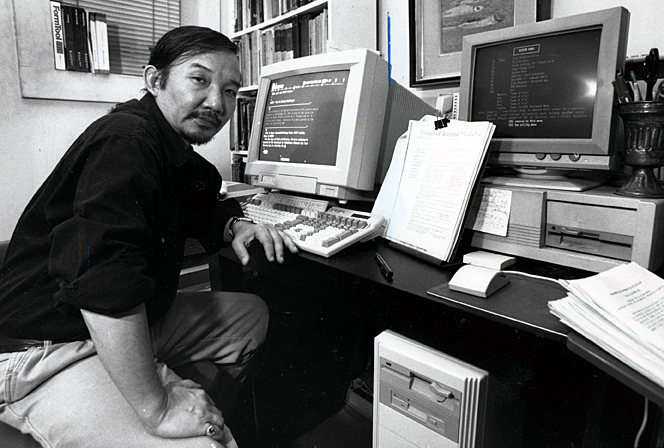
Kiyoshi Kuromiya seen here in 1992, was a gay civil rights activist who helped establish ACT UP Philly. GEORGE REYNOLDS / Staff Photographer, file
Maddow’s activism began when she was still in high school, when she began working at a hospice for people who were dying during the AIDS epidemic.
Still, those few months living in Philadelphia influenced Maddow’s developing political voice. She idolized ACT UP Philly, an activist organization fighting for people with HIV/AIDS, and thinks that gay civil rights activist Kiyoshi Kuromiya is the city’s most overlooked hero for the work he did helping connect people with hard-to-find information about the virus and treatment.
“He saved millions of lives,” Maddow said. “The city needs to build a statue for Kiyoshi Kuromiya.”
Maddow has returned to Philly a number of times over the years, and every time she does, it makes her feel like she’s 19 again. Things have changed — seeing Indego bicycles to rent on street corners after hers was stolen is pretty jarring — but though her time living here was brief, she didn’t hesitate saying, “Philly was really formative for me.”
“The thing I loved about Philly at the time, and that I kind of fell in love with, even before I really knew what to do with it, was the really sparky, edgy, impolite activist spirit,” Maddow said. “I think I’m just a middle-class polite kid who doesn’t like to offend anybody, and Philly kind of shook me out of that a little bit, and made me aspire to edgier things.”
More live events and a new app coming from MS NOW
Nearly 2,000 people attended Thursday night’s event at the Academy of Music. MS NOW
A strong Philly current ran through MS NOW’s event Thursday night, which highlighted the messy history of the American experiment leading up to the country’s 250th anniversary next week.
“My mother’s best friend of 70 years lives here,” Psaki said.
Thursday’s event was part of a larger strategy of engagement at the network after breaking away from NBC and becoming part of Versant, hence the name change from MSNBC to MS NOW. Ratings are up, but the cord-cutting trend is undeniable, so MS NOW is attempting to secure a digital future while it remains a popular TV destination.
The network has now hosted three large fan events since 2024 and another is planned for Sept. 26 ahead of the midterm elections, though further details have not been announced. Attendees in Philly on Thursday night received a free, one-year subscription to MS NOW’s membership product that is set to launch soon. It will act as a streaming platform and online community for the network’s progressive fans and provide access to its biggest stars.
“We’re always looking for ways to connect with our MS NOW community, to meet more viewers where they are, and to engage them in new ways,” said Lauren Peikoff, the network’s executive producer of live events.
Cecil Parker, a Philadelphia musician, said the state of affairs in Washington compelled him to attend Thursday’s event.
“Urgency. That’s the all-encompassing word,” Parker said, who often tunes into MS NOW to get their take on the news. “They have their opinions, but it’s based on the facts. So I dig that.”
Some audience members traveled from as far as Arizona and California to have a chance to hear Maddow and her MS NOW colleagues in person.
Tony Clyburn and his wife, Lisa, drove more than 10 hours from West Columbia, S.C., to take part. A radio host back home, Clyburn said it was inspiring being in a room with people from different walks of life who want what’s best for their neighbors and their country.
“These gatherings are good because they’re as close to a town hall as we can get,” Clyburn said.
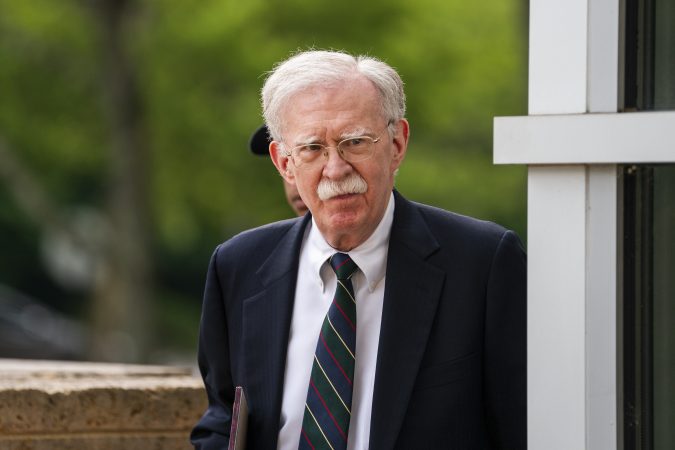
WASHINGTON — John Bolton, a former top adviser to President Donald Trump who became one of his most outspoken critics, pleaded guilty Friday morning to mishandling classified information in a case that could send him to prison.
Bolton appeared in U.S. District Court in Greenbelt, Md., and admitted to a single charge of illegal retention of classified information over notes he compiled for a book that excoriated Trump.
“I’m sorry for it,” he told Judge Theodore Chuang, who said he would sentence Bolton in October.
Under the plea deal, Bolton could be incarcerated for up to five years, according to the terms of the plea deal described in court. The deal also includes a fine of $2.25 million. If Bolton had gone to trial and lost, he could have faced decades in prison.
When he was first indicted, Bolton sought to frame the case against him as part of a push by the president to misuse the Justice Department to punish his perceived political enemies. The case against Bolton, however, began in the first Trump administration and gained momentum during the Biden administration, as investigators gathered additional evidence.
The original 18-count indictment against Bolton accused him of using personal email and a messaging app to share more than 1,000 pages of notes, which included national defense information, with two family members who did not have security clearances.
The accusations against Bolton center on his notes for The Room Where It Happened, his 2020 memoir about his time as Trump’s national security adviser. Those relatives were Bolton’s wife and daughter, according to people with knowledge of the matter, who spoke on the condition of anonymity to describe details of the case that were not in court filings.
According to the indictment, Bolton’s notes revealed that he understood that he was documenting intelligence secrets. One entry began, “The intel briefer said,” while another read, “While in the Situation Room, I learned.”
The first Trump administration fought unsuccessfully to prevent the publication of Bolton’s book, but the criminal investigation ultimately focused not on what was in the published manuscript, but instead on what Bolton wrote in private notes and correspondence.
Unlike some other investigations involving classified information, including charges filed in 2023 against Trump, Bolton was not accused of retaining the secret documents themselves, but rather of keeping diaries and sending emails that mentioned details of his daily work in national security.
Bolton’s emails, however, were later hacked by someone associated with the government of Iran, the indictment said.
“A representative for Bolton notified the U.S. government of the hack in or about July 2021,” according to the filing, “but did not tell the U.S. government that the account contained national defense information, including classified information, that Bolton had placed in the account from his time as national security adviser.”
One section of the indictment described Bolton apparently being taunted by his hacker. A message on July 25, 2021, warned, “I do not think you would be interested in the FBI being aware of the leaked content of John’s email (some of which have been attached).”
The email went on to declare: “This could be the biggest scandal since Hillary’s emails were leaked, but this time on the GOP side! Contact me before it’s too late.”
A representative for Bolton forwarded the email to the FBI.
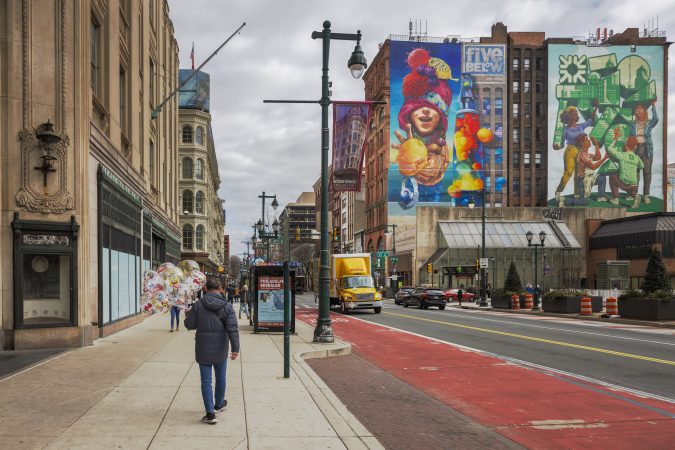
Philadelphia officials are planning a major renovation of Market Street’s sidewalks, landscaping, and streetscapes, from Sixth Street toward City Hall.
The announcement of a $2.5 million federal grant to begin the planning and design comes on the heels of the recently completed renovation of the thoroughfare in Old City from Second to Sixth streets. That effort took 18 months of construction and $16 million.
Most recently, the row of storefronts on the 900 block of Market owned by Comcast and Harris Blitzer Sports & Entertainment have begun hosting small pop-up businesses for the summer,as the city celebrates the 250th anniversary of the Declaration of Independence.
The Department of Planning and Development is overseeing the revitalization, and the public-private Market East Corridor Advisory Group is helping to craft a vision.
The new $2.5 million grant from the U.S. Department of Transportation, which the city will match, is limited to planning the streetscape along Market Street between 6th and Juniper Streets.
Construction is years away, said Kelley Yemen, Philadelphia’s director of the Office of Multimodal Planning. Her office is gathering information to evaluate everything from traffic patterns to potential road diets and bike lanes.
“Everything’s on the table at this point,” Yemen said.
Safety remains a primary driver, she said, given that the section of Market Street is situated on the city’s “high-injury network.”
However, she said redesigning the corridor poses unique logistical challenges compared with the recent improvements in Old City.
Market East serves as a major commercial hub with heavy transit use, requiring planners to balance the needs of transit riders, pedestrians, and cyclists.
Additionally, the shallow depth of the underground subway system may constrain surface-level landscaping.
Yemen explained that any trees or plantings must account for the height of the subway ceiling, potentially leading to elevated planters rather than vegetation that’s rooted in the ground.
The city is working with the consulting firm WSP and a team of subconsultants to develop design options.
Yemen anticipates the design will take two to three years, as the city also has to navigate federal environmental reviews.
Though the planning phase is now paid for, the city does not yet have money to fund construction and will likely look to federal or state grants for help in the future.
Public involvement will be a key next step, she said.
The planning commission is expected to launch a broader public engagement push this July to gather community input on the larger Market East revival.
The region may be getting some significant drought relief during the weekend, and then it may be some time before it gets relief from heat that could persist through July Fourth.
Rounds of showers — possible Friday night into Saturday evening when Croatia and Ghana meet in a World Cup match in South Philly — should be more widespread across the region than Monday’s scattershot downpours, said Brian Hurley, senior branch forecaster with the Weather Prediction Center, in College Park, Md.
The severe storms likely would stay well to the south of Washington, D.C. However, “you always have potential” for a few thunderstorms, he said.
Then, after two decent days Sunday and Monday, what is looking like the longest-lasting hot spell of the season to date is due to get underway Tuesday as temperatures head to the mid-90s.
“That’s going to be main story,” said Hurley.
The wild card for the duration would be the possibility of “ring of fire” thunderstorms, forecasters said, which might have temporary cooling effects. Those are storms that form along the boundaries of high-pressure heat domes, and Philly may be near the eastern edge.
How hot might it get next week in Philly?
Expect some tweaking during the next few days, but with “increasing confidence” the National Weather Service in Mount Holly was seeing heat indexes in the triple figures next week.
Come Tuesday, daytime temperatures should be “off to the races,” said Bill Deger, senior meteorologist with AccuWeather Inc., which has forecast highs up to 98 degrees late in the workweek.
It also will be steamy, and that will inhibit nighttime cooling as water vapor slows the escape of daytime warning. Readings are unlikely to get lower than the 70s Wednesday through at least next Saturday.
The heat could lap into the following week, said Deger. “It shows some staying power,” he said.
The region already has had 14 days with official temperatures of 90 or higher in 2026, about half the average total for an entire year.
The potential for those ring-of-fire storms would be a wild card, said Hurley and Deger.
Cooling thunderstorms can break heat waves, although they may come with a price. Ring-of-fire storms in July 2020 wrung out as much as 6 inches of rain that set off widespread flooding.
As drought continues, the Philly region could use more rain
Six inches might be a bit over the top, but the region could use more rain to ease the ongoing drought conditions.
Some areas received close to 2 inches on Monday and Tuesday; however, the jackpot zones eluded areas where the dry conditions have been most intense — parts of South Jersey and Chester County.
The entire region remained in some state of drought according to the interagency U.S. Drought Monitor, but Chester County was in “severe drought,” along with small pieces of Bucks and Delaware Counties. In “extreme drought” were all of Cape May County, other Jersey Shore towns, and areas bordering Delaware Bay.
In an analysis based on a network of measuring stations throughout the counties, the weather service’s Middle Atlantic River Forecast Center calculated that Cape May County received less than a half inch of rain, and Cumberland and Salem Counties about 0.6 inches.
In contrast, Burlington, Camden, and Gloucester Counties weighed in with well over an inch.
On the other side of the river, Philly’s total was 1.28 inches, compared with 0.71 for Chesco, which, like New Jersey, is under a state-declared drought emergency.
This summer, there is a creative escape for sports and art fans alike. The opening of a new exhibit, the Founders of Philadelphia Sports, welcomes a free gallery at City Hall.
The exhibition is a collection of seven mosaic portraits by local artist Jonathan Mandell. Each piece features a groundbreaking figure in Philly sports, as a way to pay tribute to their achievements and keep their name alive, while celebrating America’s 250th anniversary.
The collection is a joint effort between the City of Philadelphia’s Creative Philadelphia team and the upcoming Philadelphia Museum of Sports.
An unveiling of the first two mosaics took place Thursday evening, showcasing local baseball legends Effa Louise Manley and Ed Bolden. Manley, a pioneer for women in baseball, co-owned the Newark Eagles, a franchise in the Negro leagues. In 2006, she became the first woman inducted into the Baseball Hall of Fame. Bolden’s portrait is set in front of the Philadelphia Stars stadium, honoring the team he founded.
The other portraits include Bert Bell, Ed Snider, Billie Jean King, Connie Mack, and Eddie Gottlieb, which are set to arrive in the gallery throughout the summer before eventually finding a permanent home at the Philadelphia Museum of Sports.
Founders of Philadelphia Sports Exhibition features mosaic portraits of Ed Snider (top left), Bert Bell, Billie Jean King, Connie Mack, Effa Louise Manley, Ed Bolden, and Eddie Gottlieb (bottom right).Courtesy of Brett Mandel
“This project has been envisioned for years,” said Brett Mandel, executive director of the Philadelphia Museum of Sports. “It’s really exciting to bring something from conception to something three-dimensional and beautiful, and what’s more important is the story of seeing these beautiful pieces of art and asking, ‘Who was Effa Manley? And why is she important?’”
Mandell, the artist behind each creation, considers that question carefully when precisely cutting and placing each tile and piece of glass.
“At heart, I’m a storyteller,” Mandell said. “I want to tell stories visually, so that’s what I’m hoping to do with the narrative pieces. It’s not just the portrait, but the narrative tells the story.”
Each 36-by-36-inch portrait is accompanied by a 12-by-12-inch mini mosaic that encapsulates a story of each founder’s work. The exhibit was specifically selected as the first to be a part of the Philadelphia Museum of Sports because “the Founders is where you begin any story,” Mandell said.
This exhibit is a step toward the long-awaited and much-speculated museum. Having been in discussion for more than a decade, the museum is closer than ever to achieving an in-person experience, Mandel says.
Located at 7th and Market, it will serve as a place for local fans and tourists to learn about the people and moments that have built Philadelphia’s rich sports culture over the past century.
“We hope the Museum of Sports is going to connect generations and inspire people to fulfill their dreams on and off the field,” Mandel said. “We want to educate and inspire people through the stories of sports, the champions we’ve cheered for, the hometown heroes that we’ve celebrated, and all the ways sports are about more than just sports.”
Brett Mandel (left), executive director of the Philadelphia Museum of Sports, and Jonathan Mandell (right), a local artist who is designing the pieces, pose together at City Hall on Thursday.Becca O'Reilly
However, Mandel noted it may be some time before visitors can interact with the full collection in person.
“Philadelphia waited almost 100 years for the first World Series championship,” Mandel said. “We waited more than a half century for a Super Bowl championship. It is not uncommon in Philadelphia to keep thinking, ‘This is the year, this is the year, this is the year.’ But eventually, if you work hard enough and you keep focused, you’re going to win that championship. So we are telling the world that we are real, and we are here, and we got next.”
In the meantime, Creative Philadelphia, with the aid of the William Penn Foundation and a grant from the National Endowment for the Arts, was able to showcase Mandell’s mosaics in new display cases on the first floor of City Hall. The Founders is just one of many free galleries in the building.
“This is City Hall. It’s the People’s Building,” said Tu Huynh, curator of exhibitions and programs at Creative Philadelphia. “We want to represent all the communities that create the culture here, and this is just one of the exhibits of Philadelphia Stories 250 [a citywide initiative]. They are all local and community driven.”
Whether you’re celebrating the semiquincentennial or waiting until the Philadelphia Museum of Sports finds its permanent home, the mosaics gives folks a chance to encounter the stories that built the city’s iconic sports legacy, one portrait at a time.
This article was originally published May 29, and has been updated with recent information about bargaining and IBEW Local 614’s strike plans. This is a developing story, and it will continue to be updated.
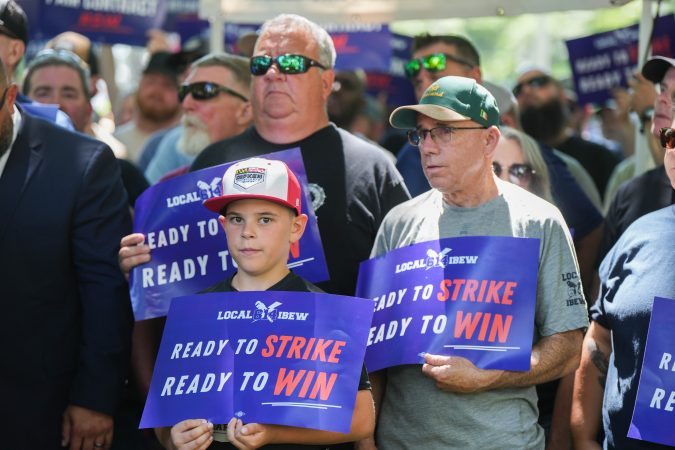
Peco workers plan to strike on the Fourth of July, after three months of working under an expired contract.
Union members include employees who help restore electric service during outages, such as those sometimes caused by intense summer storms.
The company and the union have been bargaining since January, and they have reached some agreements, but wages and benefits have become sticking points.
Bargaining turned ugly in April, as both sides filed unfair labor practice charges with the National Labor Relations Board. Peco has suggested using a federal mediator.
The most recent bargaining session was on June 19. Peco and Local 614 plan to bargain next on July 1.
They voted at the end of May to authorize a strike if their union called for it, with over 1,000 participating in the vote.
Have Peco workers gone on strike in the past?
No. This would be the first work stoppage in the company’s history. Since unionizing, this group has never before seen their contract expire without a new one in place.
Peco workers voted to join the union in 2004 and ratified their first contract in 2007.
Who are the union members and what do they do?
IBEW Local 614 represents roughly 1,500 Peco employees, including call center employees and field workers who maintain electric and gas infrastructure.
Some members work long hours during outages to help restore electricity to customers. Linemen, who repair and maintain power lines, are some of the union’s highest paid workers, and made on average over $243,500 last year in wages, including overtime.
Workers want higher wages and a uniform retirement plan for all members. Some 600 workers who were hired in recent years don’t have a pension, while other groups have pension plans with varying terms.
Peco has offered a 20% wage increase over five years, as well as “enhanced retirement and medical benefits,” according to company officials, who said their proposals “support our employees while maintaining affordability for customers.”
What does a Peco strike mean for my electricity? What if there’s an outage?
Peco has a strike contingency plan in place, chief operating officer Nicole LeVine has said. Customers shouldn’t expect delays or interruptions in service, she said.
“If there’s severe weather, we’ll be able to restore any service issues,” LeVine has said.
The company would call in substitutes for the striking workers, LeVine said this week, some of whom are “familiar with our specific system,” while others “are coming in from outside of the region.” She declined to say how many workers are part of the contingency plan.
“We’re an emergency response company,” LeVine said. “We’ve been working on contingency planning in the event of a strike, and we were well prepared to execute our plan if needed.”
How many customers does Peco service?
In Southeastern Pennsylvania, Peco provides electricity to 1.7 million customers and natural gas to 553,000.
Major League Baseball proposed limiting most free agent contracts to five years and 15% of a team’s salary cap and to eliminate deferred compensation, fleshing out details of a plan likely to spark a confrontation with the players’ association.
“There’s no question that we’re very far apart,” union head Bruce Meyer said during an online news conference.
During a bargaining session Thursday at the union’s office, MLB said it would accept the union’s proposal granting free agency a year early for players who have reached age 30 if the union accepted the league’s salary cap system. MLB also proposed boosting the minimum salary from $780,000 to $1 million for those with two years of big league service.
MLB also proposed increasing the pre-arbitration bonus pool from $50 million to $65 million next year and $75 million by 2032, the sixth season of MLB’s proposed seven-year deal.
Meyer said “the debate got a little more vigorous today.”
“The league has done us a favor because their proposals are in fact so obviously and extremely bad for players at all levels that it’s actually been a benefit for our unity,” Meyer said. “Anybody who’s banking on Major League Baseball players cracking, it’s never happened. It’s not going to happen. That’s why we’re the only ones who don’t have a salary cap.”
MLB also said it would agree to eliminate the qualifying offer for free agents that since its inception in 2012 has restricted the market for some players.
Bargaining started May 13 for a contract to replace the five-year deal that expires Dec. 1, and owners proposed a salary cap for the first time since the union fought off the system during a 7½-month strike in 1994-95. MLB is expected to impose a lockout in December, halting free agent signings and trades.
After the prior agreement expired in December 2021, intensive bargaining did not start until late February as the threat approached of losing regular-season games — along with revenue and salary. The sides reached an agreement on March 10, the 99th day of the lockout, preserving the 162-game schedule.
In the league’s cornerstone proposal, made last month, team spending would be capped next year at $245.3 million, using figures for luxury tax payrolls that include $20.1 million for benefits and the pre-arbitration bonus pool. It also would establish a payroll floor of $171.2 million, forcing several teams to spend more. The two-time World Series champion Los Angeles Dodgers, baseball’s biggest spenders, had a $415.2 million payroll on opening day this year — around $170 million over the proposed cap.
“The biggest issue baseball fans want solved to strengthen the game is fixing the payroll disparity that leaves too many fans without hope of their team competing for a World Series title,” MLB spokesman Glen Caplin said in a statement. “Every other major U.S. sport has tackled this problem, and every year more small market teams in those leagues have a chance to win. The salary cap and floor proposal levels the playing field.”
Meyer took issue with that.
“It’s appalling that the stewards of the game, the people whose job it is to grow the game primarily and promote the game have for whatever period of time now in the last couple of years been saying nothing but the game’s broken,” he said.
As part of the plan, MLB would establish a “cornerstone player” similar to the NBA’s Bird rule, which would allow a team to re-sign a player at 16% of the cap. A free agent switching clubs would be limited to a $36.8 million salary next year and a re-signing player to $39.2 million.
Salaries for free agents in additional seasons of a multiyear contract would be limited to 5% increases, as would salaries for younger players in multiyear deals that cover potential free-agent seasons.
Contracts would be capped by service time: at $500 million and 12 years for those yet to make major league debuts, $461 million and 11 seasons for those with 0-1 years of service, $421 million and 10 years for 1-2, $382 million and nine seasons for 2-3, $343 million and eight years for 3-4, $304 million and seven years for 4-5, and $265 million and six years for free-agent eligible players.
Agent Scott Boras claimed the then-record $252 million, 10-year contract he negotiated for Alex Rodriguez in December 2000 would not have been allowed.
“It’s like offering a few pieces of furniture if you agree to live in a house with a 4-foot ceiling,” he said, “an attempt to move player contract values back to the 1990s.”
Banning deferred compensation would eliminate a business practice used most prominently by the Dodgers, who owe just under $1.1 billion to 10 players from 2028-47. In addition, MLB would restrict bonus provisions in player contracts and mandate a standard award bonus package.
MLB said it would accept the union’s proposal to drop free-agent eligibility to five seasons of service from six for those turning 30 by the Nov. 1 of the offseason. MLB said 354 players on big league rosters as of Thursday would reach free agency a year earlier. MLB would start the change in the 2027-28 offseason.
As part of the minimum salary proposal, MLB said players with less than two years of service would have a $900,000 minimum and if earning a full year of service would get an additional $100,000 from the pre-arbitration bonus pool. Minor league minimums for players with major league contracts would increase from $63,600 to $73,400 for initial big league deals and $127,100 to $146,700 for additional contracts.
The union proposed to jointly lobby with MLB for the prohibition on prop bets; to allow player endorsement and sponsorship of legal betting entities, including sportsbooks and prediction markets; to have players under MLB betting investigations to be placed on administrative leave, similar to the domestic violence policy; and to allow players near the end of suspensions for betting to have unpaid 15-day minor league assignments, similar to the drug policy.
In addition, players asked for increases for in-season meal and tip allowances; housing benefits for players with major league contracts who are assigned to the minors; and increased moving expenses, including for assignments from one minor league affiliate to another.
Meyer expects at least one more bargaining session before the All-Star break.
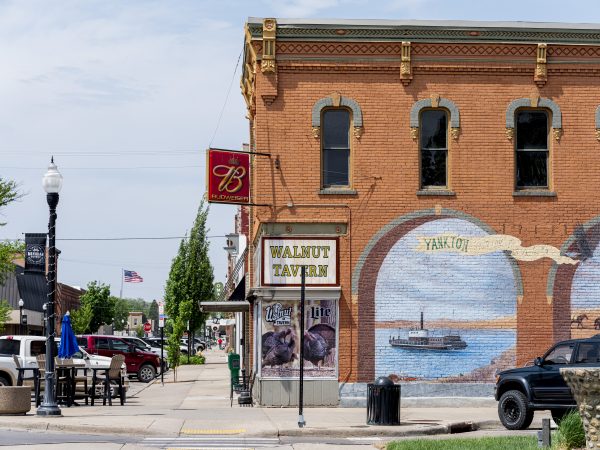
YANKTON, S.D. — Charl Kleinhaus did not like the direction his country was taking.
A white South African, Kleinhaus said the laws meant to empower Black people after the demise of the racist apartheid system had hurt his mining business. Violence in the country — a scourge affecting everyone, regardless of race — had become too much.
So Kleinhaus considered his options.
Some of his fellow Afrikaners, the ethnic minority that ruled during apartheid, had moved to Germany, but the language barrier was not ideal. He thought about Australia, but decided that moving his family thousands of miles from home would be too hard.
Then, in February of last year, Kleinhaus received what he described as “a message from above.” President Donald Trump had suspended refugee admissions to the United States, but he made an exception for people like Kleinhaus: white Afrikaners who claim they are victims of racial persecution in South Africa.
“It’s now a reverse apartheid,” Kleinhaus said, summing up his grievances about his homeland. “That’s what we are fighting about now.”
In a matter of months, Kleinhaus secured refugee status and moved with his family to the United States, completing a process that can take years under normal circumstances. Now, after a year in the country, he has settled in South Dakota, where he has found part-time work at a car dealership, a farm, and a brickyard while planning his next business.
Kleinhaus is among more than 6,000 South Africans — the vast majority of them white — who have benefited from Trump’s decision to upend America’s refugee program, which for decades had made the United States a sanctuary for people fleeing disaster and persecution.
Charl Kleinhaus secured refugee status and moved with his family to the United States in a matter of months. Terry Ratzlaff
Under Trump, the program has effectively become a whites-only path to life in the United States, a culmination of the president’s long-standing antipathy toward immigrants and his embrace of the concept of “reverse racism” as a guiding principle in his administration.
The president has fought to limit immigration for more than a decade, imposing travel bans on mostly African and Muslim-majority nations and making it much more difficult for people from those nations to obtain green cards. He has railed against affirmative action, and in an interview with the New York Times earlier this year said he believed civil rights-era protections had resulted in white people being “very badly treated.”
But few of Trump’s efforts are as striking as his efforts to turn the refugee program on its head, leaving thousands of people across the world sitting in refugee camps with no chance of entry into the United States, even as he created a workaround for Afrikaners.
The Trump administration has argued that the overhaul of its refugee program is necessary to prioritize refugees who can better assimilate into the United States.
“President Trump has provided a lifeline for Afrikaners, who are being raped, maimed, killed, and driven off their property across South Africa,” Anna Kelly, a White House spokesperson, said in a statement. “While the South African government and many in the media have brushed off the horrific lived experiences of this community, the Trump administration continues to process applications for refugee status because the president has a humanitarian heart.”
But critics of the policy who are involved in refugee resettlement say the Trump administration’s priorities have made it impossible to help people who have nowhere else to turn.
“It’s the moral and legal inversion of what this work is about,” said Jason Marks, a senior refugee officer who resigned from the Department of Homeland Security last year when Trump announced the effort to fast-track Afrikaners to the United States. “They are rolling out the red carpet for this group with a clear racial and political agenda at the expense of everyone else.”
‘Too many people’
Kleinhaus acknowledges that moving to the United States from South Africa’s Mpumalanga province was not his “last option.” He left behind resources: a Jaguar sports car, a Range Rover, and what he estimates is property worth at least $300,000. He plans to sell them all to bring in extra money.
But he also says many of his white relatives and friends were no longer safe in South Africa.
White farmers — a population that Trump has spotlighted in public remarks — have indeed been killed in vicious acts of violence in a country that suffers from a high murder rate. But so have Black South Africans and others, and police data does not support the idea that white South Africans are more likely to be targeted than any other group.
Kleinhaus also said his profits were suffering because of racial equity laws.
“You’re not going to get a big contract from a mining company if you’re not Black,” he said. “There’s too many people. How do you divide a small cake between such a big population? Yeah, you cannot.”
He said he felt no guilt about bringing his children and grandson to America to pursue a new life, even as families fleeing conflict in Afghanistan, Sudan, and Ukraine remained walled off.
“You can’t take in those hard-core war people,” said Kleinhaus, whose news feed is full of social media videos and memes promoting the idea that white people are targeted in South Africa. “You can’t put them in a first-world country, you’ll be mad.”
After allowing refugees from around the globe to enter the country for decades, the United States was now trying to “have some type of balance,” he said.
Secretary of State Marco Rubio said this month that U.S. refugee policy must benefit Americans.
“Everything we do has to be geared by the national interest,” Rubio told lawmakers. He said, “It is in our national interest” to allow in people who can “quickly assimilate into society and be successful.”
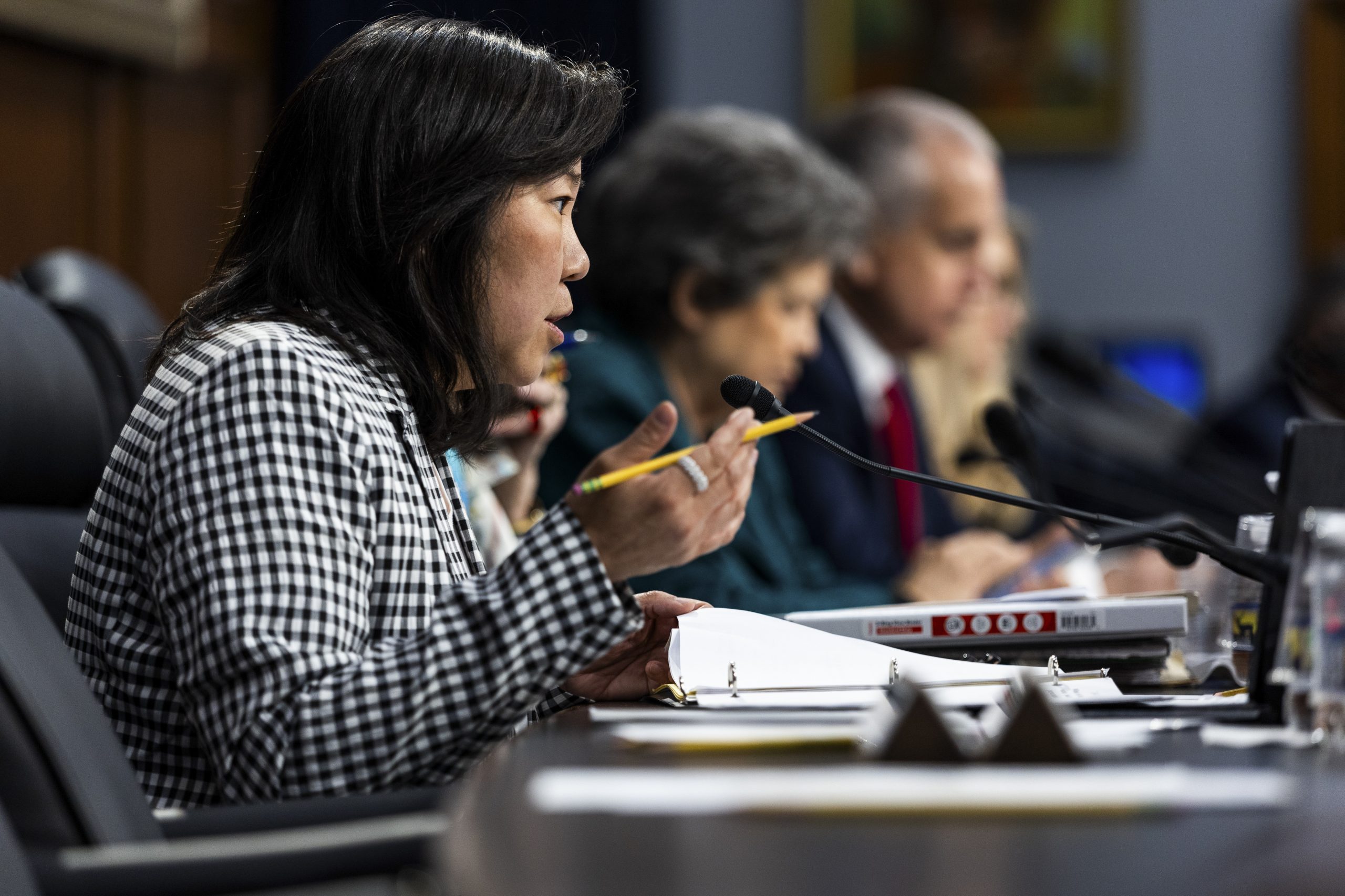
Rep. Grace Meng (D., N.Y.) questions Secretary of State Marco Rubio during a House Appropriations subcommittee hearing this month.Demetrius Freeman
Rep. Grace Meng (D., N.Y.) asked why the administration thought other refugees could not assimilate, including Afghans who had helped U.S. soldiers during the war, cleared vetting, and were now stuck in limbo.
“They have assimilated and contribute and pay taxes,” Meng said of Afghan refugees who had moved to her district in Queens, New York. “I think it’s important for America to keep our promise as well,” she added.
Some of the Afrikaners, who are the descendants of Dutch and other European settlers, have not acclimated as smoothly as the administration expected.
During their initial months in the United States, refugees typically can receive some money for housing and food from resettlement organizations who receive federal funding. Those organizations can also help them find work.
But refugees are expected to eventually be self-sufficient. The process is often a difficult one.
Multiple Afrikaners reported delays in receiving financial support from their local resettlement agency, according to complaints obtained by the New York Times. (The names of many of the refugees were omitted from the documents.) One of the families complained about needing to complete Medicaid and Social Security applications on their own. That same family griped about needing to use public transportation, according to the documents.
Another South African relocated to Texas said he felt staffers from the local resettlement agency, which has a Muslim affiliation, had “discriminated” against him as a Christian. The staff members who picked up his parents from the airport were candid about their views of Trump’s changes to the refugee program.
“They told my mother they cannot wait for next election when Trump can leave office as they had a problem with his decision to give South Africans refugee status and how angry they are that only South African refugees are now allowed,” according to the correspondence.
The newly arrived South African also said his family was placed in an apartment that was “dirty, contained mold, and is located in an unsafe area in Fort Worth.”
The complaints by the Afrikaners about their level of assistance also came after the Trump administration made cuts to funding for resettlement agencies and benefits that in the past were made available to new refugees, including food stamps.
At least three Afrikaners made the return after being settled in states including Minnesota, Idaho, and Illinois, according to government documents. Some had sick relatives back home. One Afrikaner said the process had “occurred quickly” and “she had not thoroughly thought through the process.”
“I think some of them are finding that actually it’s not an easy life to be a refugee,” said Bryony Fox, a lecturer at South Africa’s Stellenbosch University, who researches forced displacement.
Claims of genocide
South African officials strongly dispute claims by Trump that Afrikaners are being targeted in a “genocide.”
During apartheid, which ended in 1994, the government denied Black South Africans the right to own prime agricultural land. That meant that almost all of the country’s large-scale commercial farmers were white, and that remains so to this day.
South Africa’s Commission for Employment Equity found that white people made up 61% of top management posts in 2024, while they are only 7.5% of the population. Black South Africans are also unemployed at far higher rates than their white peers, a disparity that has not improved over time.
To address the disparities, the African National Congress government has instituted racial equity laws that incentivize companies to have Black ownership and leadership. That Black Economic Empowerment initiative has prompted intense scrutiny from the Trump administration, as well as from Afrikaners fleeing to the United States who say it has harmed their businesses.
Kleinhaus said such policies make him as a white man feel targeted by the South African government. He said that he had struggled to keep thieves off his property and that his relatives had been the victims of violence, although he said getting into the specifics made him too emotional.
In his experience, white people are portrayed as “the problems in the economy” and “the privileged ones.”
“There’s no such thing as that,” Kleinhaus said. “Most whites have lost a lot.”
Fox said there was no denying the violence in South Africa.
“That is our biggest problem,” she said. “But it is not targeted. It is not systematic targeting.”
She said criminals had attacked farms because they “have resources that communities are seeking.”
Trump has echoed fringe claims about a white genocide in South Africa for years, going back to his first term. Last year, in a stunning confrontation in the Oval Office, Trump lectured the South African president, Cyril Ramaphosa, about his own country. Ramaphosa implored Trump to listen to “the voices of South Africans.”
The State Department does not break down its refugee data by race, but it has allowed in more than 6,600 refugees this fiscal year. All but three were from South Africa.
Trump’s aides have defended the program by saying that other racial minorities in majority-Black South Africa are welcome to apply for the refugee program.
South Africa also has minority populations of people of Indian descent, white people of British heritage, and mixed-race people — and a few individuals from those communities have been processed through Trump’s refugee program. But refugee resettlement officials say nearly all of those who have been accepted are white, and government documents confirm that the administration has prioritized resettling white Afrikaners.
Why white South Africans?
Long before Trump created the refugee program, many white South Africans traveled to the United States — from the Midwest to the Mississippi Delta — on temporary visas to work as seasonal farmers.
Since 2019, Kobus Van Den Berg has been traveling to and from the United States to plant soybeans and fertilize fields in North Dakota to save money for his family back home in South Africa. He agrees that crime is an issue in South Africa, but he pushed back on the notion that white South Africans are being singled out.
“They’ll attack anybody,” he said. “It doesn’t matter what color or race you are.”
He has watched as Afrikaners have come into the United States in recent months with refugee status and a pathway to citizenship, even as he has spent years navigating a complicated immigration system with the hopes of obtaining a green card.
“Why is it so easy for this other Afrikaner from South Africa to come over here?” Van Den Berg said. “The thing that blows everyone’s mind today is, why is it specifically white South Africans?”
Critics of the Trump administration say the answer lies not just in Trump’s long-standing embrace of the Afrikaners’ cause, or the administration’s desire for “assimilation,” but in his stance toward refugees more broadly.
Sharif Aly, the president of the International Refugee Assistance Project, said the policy shows an “indifference to the plight of nonwhite refugees.”
It is difficult to ascertain how rigorously the administration is vetting the South Africans. In the past, the process has been time-consuming, with agents demanding criminal records, medical records, and even social media posts.
The Trump administration has said it would deny immigration requests for those with antisemitic or “anti-American” posts on their social media accounts, but Kleinhaus was welcomed even though he had made antisemitic comments on social media. In April 2023, the X user @charlkleinhaus wrote in a now-deleted post that Jews were “untrustworthy” and “a dangerous group” and that “they are not Gods chosen.”
Kleinhaus said his grandmother was Jewish, he was not an antisemitic person and he had written the post in error while he was taking medication for a kidney stone. He also shared other posts that had been written by others.
During his processing, he said, he signed off on administration vetting of his social media accounts and no one brought up any problems.
‘Leaving everything behind’
Over breakfast at a local diner, the Fryn’ Pan Family Restaurant, Kleinhaus said he missed some aspects of his life in South Africa, including “the people, my workers, my friends, and family.”
But he also appreciates “these advantages that I’ve got here to do things I can do just as a white person” and not needing to worry about laws requiring him to sell a percentage of equity of his mining company to Black shareholders in South Africa “because they were here first or whatever the story can be.”
He said he was focused on working and contributing to the United States.
He said he did not complain when he, his son, daughter, and grandson were initially placed in one hotel room in Buffalo, N.Y. He soon identified a farmer in Yankton, S.D., who had hired seasonal workers from South Africa for years and was looking for more help.
Now, his daughter works at a flower shop in the small town of Yankton. His son works at another farm and his grandson has learned English quickly after knowing only Afrikaans.
And he has found part-time work at a car dealership and at a brickyard while he plans how to start his next business. He occasionally takes his grandson fishing in this area known for the Lewis and Clark trail on the weekends.
“I just want my kids to be successful,” he said.
Kleinhaus hopes he can convince other relatives to join him soon in America. He said he knows he cannot simply go back and visit, because that would undermine his claims of persecution.
“I’m leaving everything behind,” he said. “When you accept the refugee thing, it’s not a thing like, ‘I’ll be back in two weeks; I’m going on holiday.’ It’s nothing like that. You’re saying, ‘It’s done. I’m not going back.’”
NEW YORK — Carlos Mendoza was fired as manager of the underperforming New York Mets on Friday and replaced by Andy Green.
New York is 34-47 following a six-game losing streak, 15 games behind NL East-leading Atlanta and 9½ games back of the NL’s last wild-card berth.
The Phillies open a three-games series against the Mets at Citi Field on Friday night.
Mets owner Steve Cohen had high expectations for a team without a World Series title since 1986. New York opened the season with baseball’s highest payroll at $358 million and was projected to pay an additional $124 million in luxury tax.
“Our commitment to bringing our fans a championship-caliber team has not changed,” Cohen said in a statement. ”There is no sugarcoating it: This season has been a disappointment and our fans deserve better than what we’ve delivered.”
A former Yankees assistant coach, Mendoza replaced Buck Showalter after the 2023 season and led the Mets to a 206-199 record. While New York advanced to the NL Championship Series in 2024, the Mets failed to reach the playoffs last year and are among the sport’s biggest disappointments this season.
“Carlos has led the organization with passion and grace and is beloved by everyone who works with him on a daily basis,” president of baseball operations David Stearns said in a statement. “Carlos’ impact on our players, staff, and culture over the last three seasons has been transformative. Unfortunately, we know we are falling short and change is necessary to move forward.”
Green, a former major league infielder, joined the Mets in 2023 as senior vice president of baseball development. He managed San Diego to a 274-366 record from 2016-19.
Paoli Hospital was not cited by the Pennsylvania Department of Health for any safety violations between April 2025 and March of this year.
Located in Chester County, the hospital is one of four owned by Main Line Health.
Here’s a look at the publicly available details:
June 18, 2025: Inspectors came to investigate a complaint but found the hospital was in compliance. Complaint details are not made public when inspectors determine it was unfounded.
June 19: The Joint Commission, a nonprofit hospital accreditation agency, renewed the hospital’s accreditation, effective April 2025, for 36 months.
Oct. 20: Inspectors came to investigate a complaint but found the hospital was in compliance.
March 12, 2026: Inspectors came to investigate a complaint but found the hospital was in compliance.