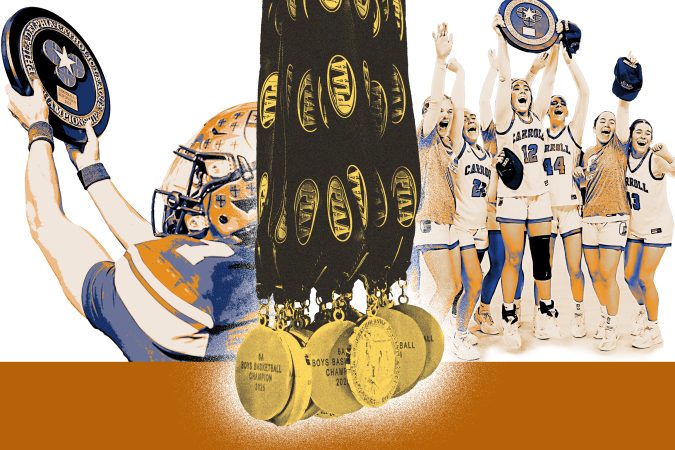
For years, there’s been a rift between Pennsylvania’s public high schools competing against private schools in state playoffs.
Since the Catholic League and Public League moved under the jurisdictional umbrella of the PIAA in the fall of 2008, complaints have become common among public school coaches, administrators, parents, and players about issues of fairness.
But this fierce debate could soon be cast in stark relief, writes Mike Sielski.
Back in April, Pennsylvania State House of Representatives passed a bill that would allow the PIAA to “establish separate playoffs and championships for athletics for boundary schools and non-boundary schools.”
However, it has yet to be voted by the state’s senate. In the meantime, local coaches share their thoughts on the divide between public and private schools in the PIAA.
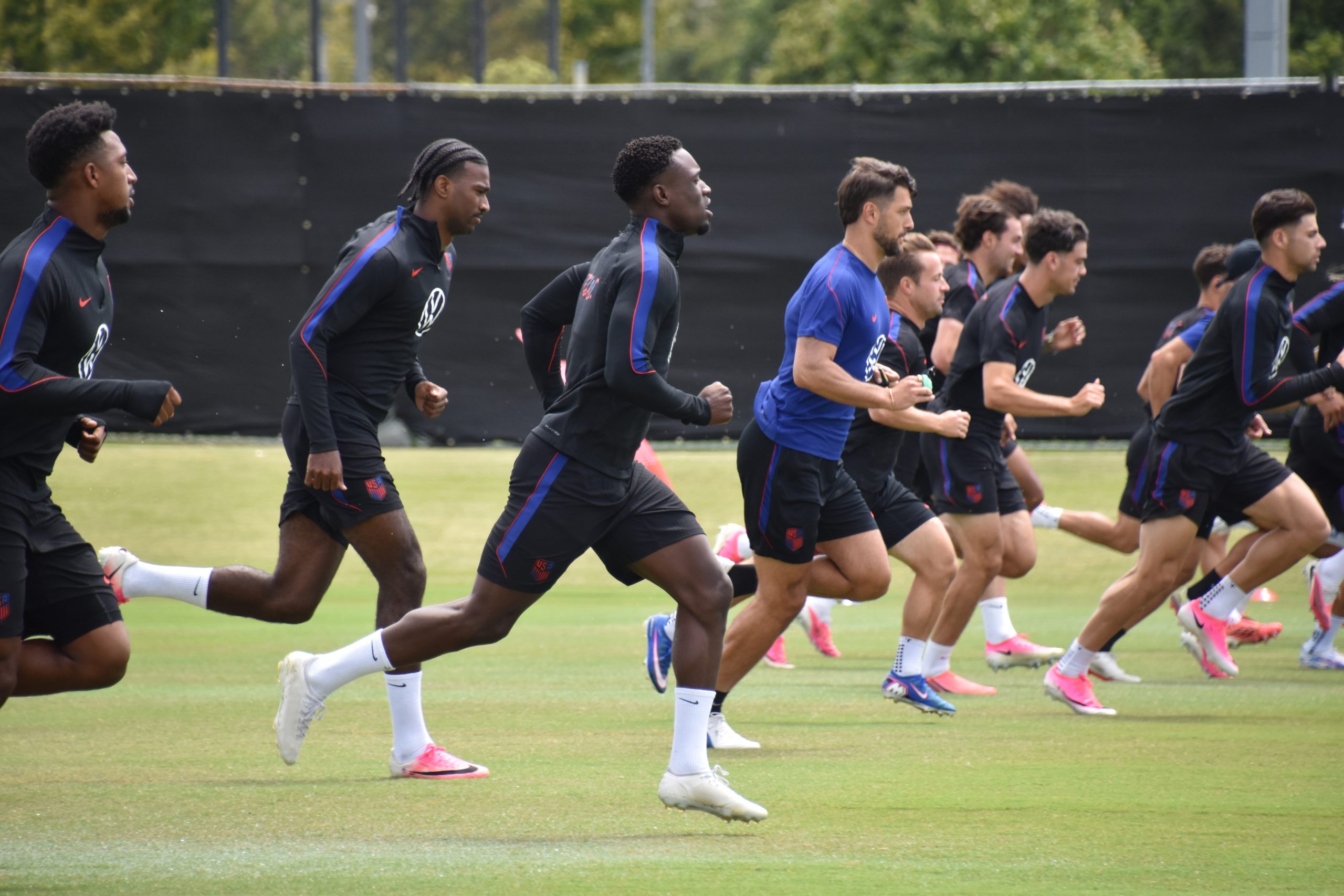
Folarin Balogun (center) running with teammates during a United States men’s national soccer team practice at Great Park in Irvine, California on Sunday.Jonathan Tannenwald
Leading up to Wednesday’s round of 32 contest with Bosnia & Herzegovina, it’s good to remember that the U.S. men’s soccer team has won just one World Cup knockout game ever.
So while it may feel cliché to say this is one of the biggest moments in U.S. men’s history, it’s also true.
And now that the World Cup knockout bracket is set, let’s take a look at the 32 games left to go between now and the July 19 final.
What we’re…
⚽ Reminiscing: The best moments from Philly’s World Cup group stage matches, which ended Saturday night.
🥊 Learning: Philly’s Jaron Ennis knocked out Xander Zayasto become junior middleweight champ at the Barclays Center on Saturday.
Kyle Schwarber reached the 30-homer mark on Sunday in the Phillies’ 84th game, faster than any player in franchise history. His 408-footer to right-center field against Mets righty Kodai Senga in the seventh inning also gave the Phillies the lead to power a 5-4 victory that drew them to within three games of first place in the NL East.
After a wildly successful road trip, the Phillies’ flaws still bubbled to the surface: they’re vulnerable to left-handed pitching; the middle relief can be exposed when the starter doesn’t go six innings; the defense isn’t good. Ideally, the Phillies will address a few areas before the Aug. 3 trade deadline, writes Scott Lauber.
Also, Andrew Painter made his first start for triple-A Lehigh Valley on Sunday. While Don Mattingly is counting on having the 23-year-old back, the interim manager doesn’t have an outlined timetable for Painter’s return.
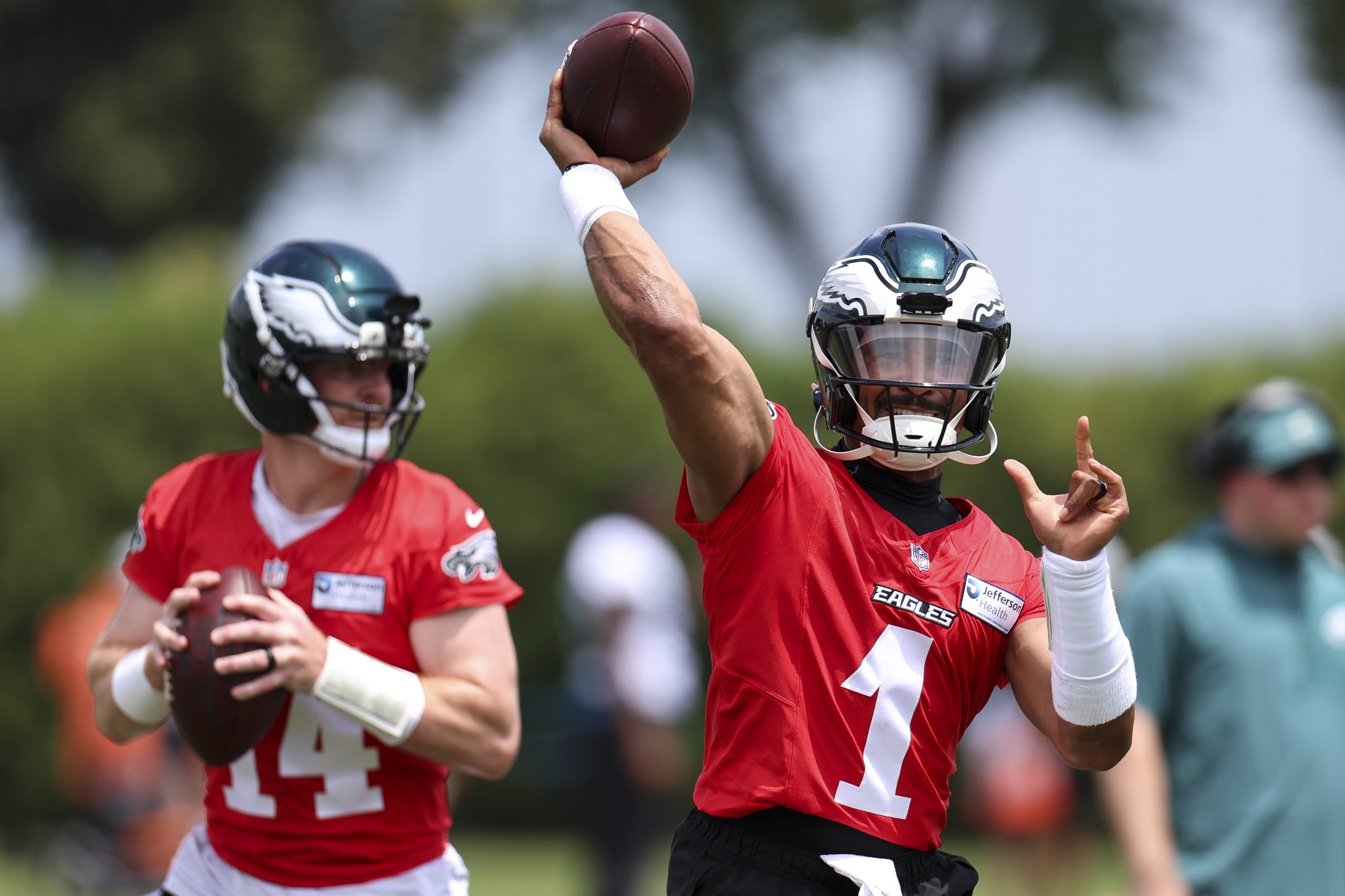
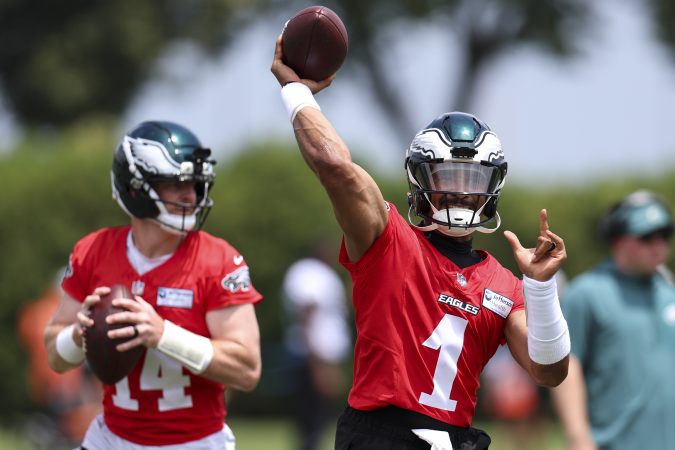
Eagles quarterback Andy Dalton (left) was brought in to compete for a role behind Jalen Hurts. Will he emerge as QB2 during training camp and preseason?Monica Herndon / Staff Photographer
With the Eagles training camp on the horizon, let’s take a closer look at the more than three-dozen new faces who are expected to report along with the rest of the team on July 28.
Our writers will roll out two players per day in a mostly unscientific order that balances offense and defense, bigger names with mysteries, and locks with longer shots to be chosen for the 53-man roster — starting with Andy Dalton and a lesser-known name, defensive back Kapena Gushiken.
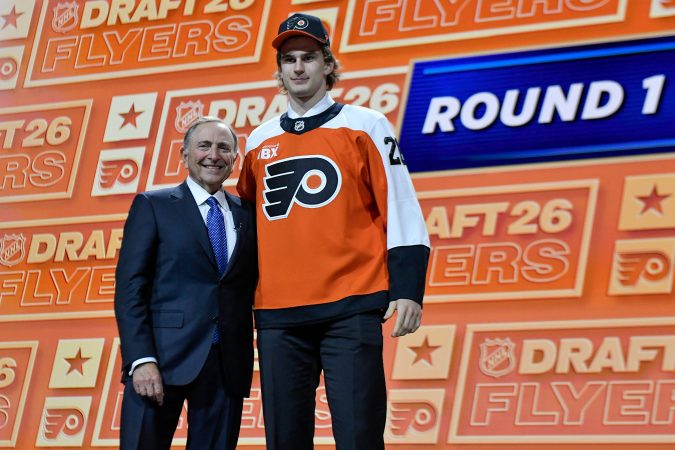
Maksim Sokolovskii, right, stands with NHL commissioner Gary Bettman, left, after being drafted by the Flyers with the 27th pick in the draft.Adrian Kraus
The feelings after the Flyers’ 2026 draft doesn’t feel fantastic. It doesn’t feel terrible. It just feels there.
The Flyers did, however, stick to their usual script of prioritizing size and two-way responsibility over offensive flash. It will take a few years before we know if that was the right course.
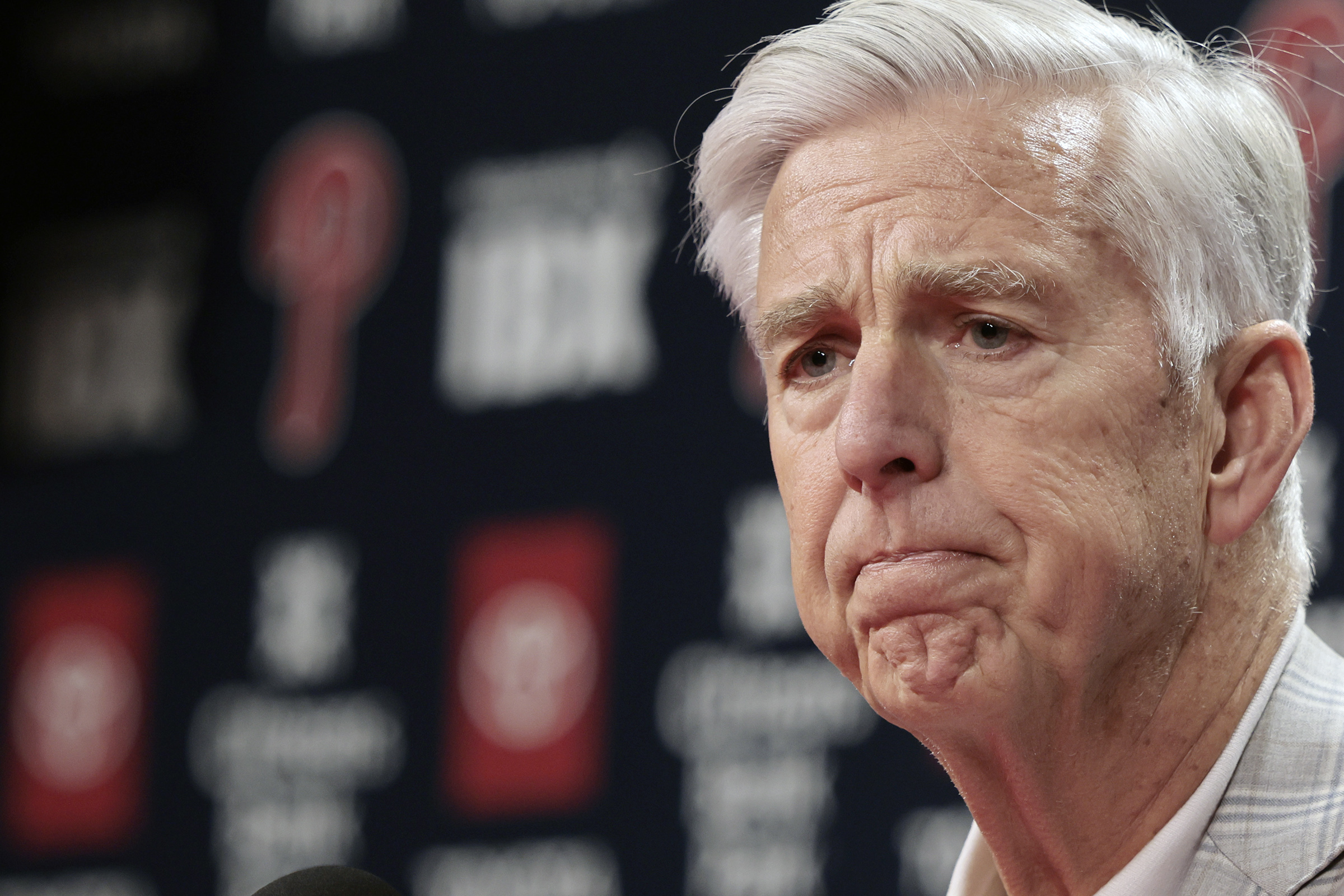
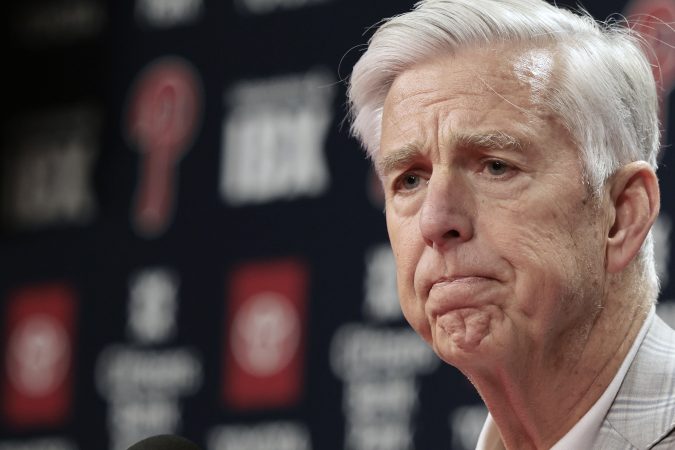
Right now, Dave Dombrowski’s offseason looks like a near-total failure.Elizabeth Robertson / Staff Photographer
There isn’t an executive in Major League Baseball that should be feeling more pressure than Dave Dombrowski now that Bryce Harper has answered fully and satisfactorily the infamous question that the Phillies president posed this offseason.
“Can he rise to the next level again? I don’t really know that answer.”
With just over a month to go until the trade deadline, Dombrowski and his front office better have a serious plan for broadening the team’s potential contributors, writes columnist David Murphy.
We compiled today’s newsletter using reporting from David Murphy, Mike Sielski, Jonathan Tannenwald, Matt Breen, Mel Greenberg, Jackie Spiegel, Scott Lauber, Olivia Reiner, and Kerith Gabriel.
By submitting your written, visual, and/or audio contributions, you agree to The Inquirer’s Terms of Use, including the grant of rights in Section 10.
Thanks for getting your morning started with me. Have a wonderful Monday, we’ll be back in your inbox tomorrow. — Bella
“This draft, I’ll be honest with you, there’s layers, and especially early on, our layers got cleaned out quickly. And I’ve never seen it like that before,” he said. “Even as the draft went along, but we were able to move back in the first, and then we’re able to move around and get players we’re happy with, so it worked out fine.”
Maybe that’s it. It was fine.
Yes, it’s too early to tell where this draft will land because 99% of the time, players need time to develop and grow. And there may have been something in the air because while the gambling floor of the Hard Rock Hotel & Casino had people testing their luck with the press of a button on a slot machine, on each spin of the roulette wheel, and every roll of the dice, that appears to have permeated upstairs to the Flyers’ draft room as they selected their next generation in the 2026 NHL draft.
The Black and Orange opted for long-term wait-and-see projects. (They love projects, don’t they?) And, to be fair, they have some time with the past few draft classes finally bearing fruit.
Maksim Sokolovskii, the Flyers’ first-rounder who Flahr called “a unicorn,” is a big, mean defenseman who needs to continue building his defensive game while also trying to add some offense. Goalies Martin Psohlavec and Marek Sklenička looked great at the U18s for Czechia — another Flyers trademark — but are still raw. And second-rounder Brek Liske, probably the best story of the draft, just for the fact that his dad is a diehard Flyers fan, has a solid foundation, but does have to work on his skating — where have we heard that before?
The Flyers were higher than most on Maksim Sokolovskii. They view him as a defensive “unicorn.”Yong Kim / Staff Photographer
Center KJ Sauer missed most of this past season after tearing his posterior cruciate ligament the year prior and compared his style of play to that of Brady Tkachuk. Flahr said last week the Flyers could add a small, dynamic defenseman — but in the later rounds — and they got Max Laatikainen, a small Finnish defenseman they are hoping still can grow.
Whether they actually see an NHL game is truly a crapshoot anyway. But that’s always the case. In 2020, DobberProspects did a study showing that 60 NHL players from a draft class eventually make it to the NHL, which is less than 27%. TSN director of scouting Craig Button recently told NBC Sports Philadelphia that “approximately 45 players from any draft will play 350 games or more in the NHL.” That’s not a whole lot.
Entering this draft, since Flahr has been at the helm, the Flyers have drafted 50 players. Not counting the two previous classes, although Porter Martone and Jett Luchanko have already played NHL games, 44% have played at least one NHL game. Will this class make it? Who knows.
Now it does feel like they stayed the course and went down the path of previous drafts with a slight twist.
They again drafted for size — even though Flahr said Saturday it wasn’t a focus — with only Laatikainen of the six picks under 6 feet. In the process, they left players like dynamic but risky small defensemen Ryan Lin, Tommy Bleyl, and Xavier Villeneuve on the table in the first round and talented forwards like the Ruck Twins, Jack Hextall, J.P. Hurlbert and Brooks Rogowski.
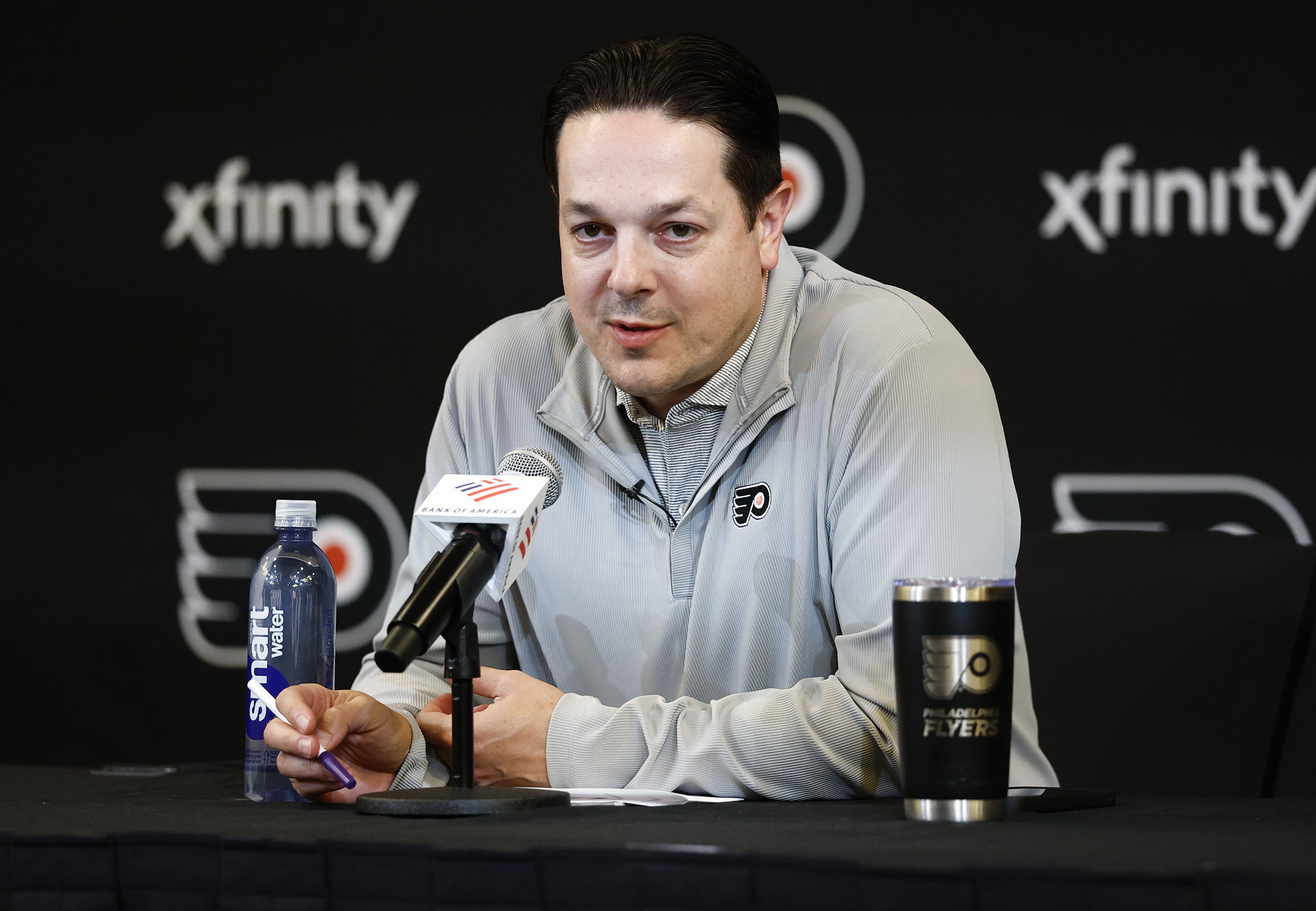
But Flahr and general manager Danny Brière did stress that players drafted today will not help the team in the near future — so drafting a power-play specialist would not have made the atrocious power play better in the here and now — and they needed goaltending and defensive depth.
It just felt like maybe there were better options?
But who is to know today what tomorrow brings?
Rugged defenseman Maksim Sokolovskii was the second-biggest player drafted this past weekend.Courtesy of London Knights
KNOXVILLE, Tenn. —With Tennessee’s Candace Parker among the eight inductees in the 28th class of the Women’s Basketball Hall of Fame, the site of Tennessee Theatre, which opened in 1999, seemed perfect.
But Philadelphia could have worked equally well as a magnet attraction, considering the number of people at the Women’s Basketball Hall of Fame with ties to the area.
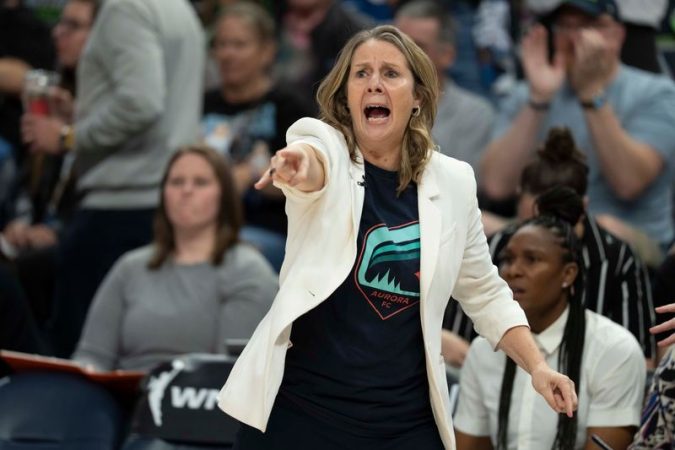
South Jersey native and former La Salle star Cheryl Reeve, longtime coach of the Minnesota Lynx who, with 379 victories, is one away from being the all-time league leader in a 17-year career, became the second WNBA mentor to gain induction.
She already is the combined leader when playoff appearances are factored.
Reeve is tied with former Houston Comets coach Van Chancellor at four WNBA titles and is in the hunt again this season. She also guided the 2024 USA Olympic team in Paris to its eighth straight gold medal.
The former high school hoops star at Washington Township was presented by one of her assistants, former Lynx great Lindsay Whelan. Among her supporters were recently retired Northwestern coach Joe McKeown, a Father Judge graduate who had Reeve as an assistant at George Washington, and Taj McWilliams-Franklin, who played for her in Minnesota and was also on the ABL Philadelphia Rage.
“She always treated everyone the same,” McWilliams-Franklin said of playing for Reeve.
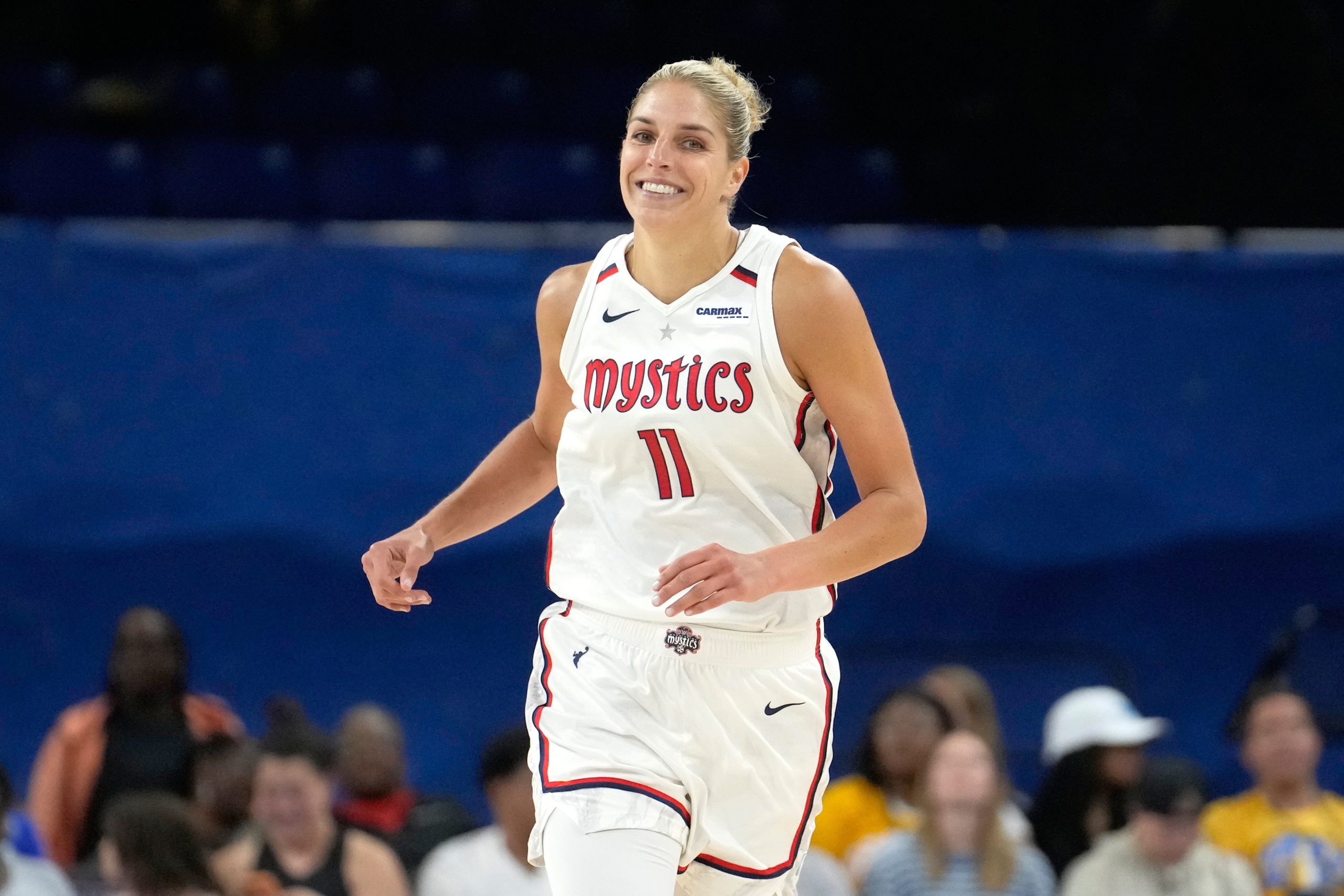
Delaware grad Elena Delle Donne, out of Wilmington, now retired and the first managing director of USA 3×3 women’s national team, was also in the class and was introduced by former Immaculata star Marianne Stanley, who was an assistant coaching her on the Washington Mystics’ 2019 WNBA championship team.
Delle Donne was the No. 2 draft pick by the Chicago Sky in 2013, earning WNBA Rookie of the Year that season. She was twice league MVP and was the first member of the 50/40/90 club in 2019, shooting 51.5% from the field, 43% from three-point range, and 97.4% from the line.
“That’s a whole season,” Stanley said of Delle Donne’s shooting accuracy.
Elena Delle Donne was a two-time WNBA MVP and Olympic gold medalist. She retired after the 2023 season.Charles Rex Arbogast
Acclaimed ESPN broadcaster Doris Burke, who could not attend but earned induction as a contributor, has lived in Ardmore since 2018. She has been a pioneering woman on NBA broadcasts besides having done WNBA and NCAA national women’s games earlier in her career as an analyst.
The late Barbara Kennedy-Dixon out of Clemson, whose husband accepted the award on her behalf, was presented by all-time Kentucky great Val Still, who lives in Palmyra, N.J.
Kennedy-Dixon, one of eight players in NCAA history with 3,000 points and 1,000 rebounds, still holds a slew of ACC single season marks. and in 1982 playing against Penn State, she scored the first basket in the inaugural NCAA women’s tourney.
Meanwhile, taking over as the Hall’s executive director this year is former Tennessee star Michelle Marciniak, known as “Spinderella” in her high school days as a point guard in Allentown, and who also played on the Philadelphia Rage at the same time as Dawn Staley.
Parker and Delle Donne are also headed for Springfield, Mass., in August as part of the Naismith inductee class as is former Tennessee notable Chamique Holdsclaw, who was Parker’s presenter.
“She changed the game,” Holdsclaw said of Parker, who then saluted likewise in her acceptance speech.
The other inductees Saturday night were Amaya Valdemoro, a former WNBA star in Houston and the first Spanish star inducted here, former Colorado star Isabelle Fijalkowski, the first French player into the WNBA, drafted in the inaugural 1997 season and whose daughter 6-foot-7 Alicia Tournebize now plays for Staley at South Carolina, and recently retired Kirkwood Community College coach Kim Muhl, who is the NJCAA leader with a 1,108-178 record and nine titles. He holds the NJCAA D-II women’s record of 39 straight wins.
One of the more opinionated individuals in the WNBA, Reeve during Friday’s media session got emotional, shedding a few tears talking about playing for Speedy Morris at La Salle and how much of his coaching she has taken with her to her career.
Taking about her high school coach Dawn Schilling, later married to Eagles star John Bunting, Reeve, who also played softball, credited Schilling for steering her to continue basketball “with more opportunities.”
In Saturday’s speech, she made references on working Immaculata coach Cathy Rush’s camps and mentioned John Miller, who also coached her at La Salle.
Reeve, who was taking a 5 a.m. flight Sunday to rejoin the Lynx at Dallas, has had her share of controversy with WNBA officials and talking about seeing some listed as inductees here, quipped “I can’t wait to get one.”
Talking about her first WNBA job as an assistant to Anne Donovan at a $5,000 salary and later with Dan Hughes and Bill Laimbeer before hired with the Lynx, Reeve said, “From 2001 until today, I ate, drank, and slept everything WNBA. I experienced teams folding, I collected unemployment, and hearing my dad wonder when I was going to get a real job.
“This game has given me a fulfilling lifetime of joy. To share the Hall with so many women’s basketball greats makes me glad I never got a real job.”
Marciniak, doing her first welcome, noted her number was retired.
“I had No. 3 before Parker, so yes my number is retired.”
Delle Donne, who had a short commitment at UConn before landing home at Delaware to be closer to her sister Lizzie, who was born deaf, blind and cerebal with cerebral palsy, brought the house down in her opening remarks, expressing the warmth she felt from Knoxville.
“I’m not sure if it’s because of this Hall of Fame honor or because I left UConn after 24 hours.”
Saluting her sister, Delle Donne was emotional, saying, “Although you can’t hear me, I hope you can feel the impact you made on me. For the challenges most people couldn’t begin to understand … you’ve shown me that the hardest battles are met head-on without self-pity.”
On her recent retirement after dealing with back issues late in her career, dealing with the pain, she decided it was time and was at peace with herself.
She described her career as “a love story, that even had a brief divorce for volleyball until I came back.”
Parker wore a suit designed as a tribute to her coach, the legendary Pat Summitt, who 10 years ago Sunday, died from complications of early-onset Alzheimer’s disease.
“My continued desire to imitate Pat and how she attacked life every day proves there’s nobody like her,” Parker said. “Though she’ll be gone 10 years ago tomorrow, she’s still leaving a lasting impact that we all can and should draw from.”
The funny thing about Bryce Harper’s 2026 world-wrecking tour is that he has somehow managed to both vindicate his boss and hang him over the dunk tank. There isn’t an executive in Major League Baseball that should be feeling more pressure than Dave Dombrowski now that Harper has answered fully and satisfactorily the infamous question that the Phillies president posed this offseason.
“Can he rise to the next level again?‚” Dombrowski asked about Harper after the Phillies’ postseason loss to the Dodgers. “I don’t really know that answer.”
Eight months later, Dombrowski should know it better than anyone. The Phillies’ personnel boss has spent 84 games watching Harper bail him out of another failure of an offseason. One year after the Phillies’ superstar posted an .844 OPS that was his lowest since 2016, his current .915 OPS would be his best since 2021, when he hit .309/.429/.615 with 35 home runs en route to winning his second MVP.
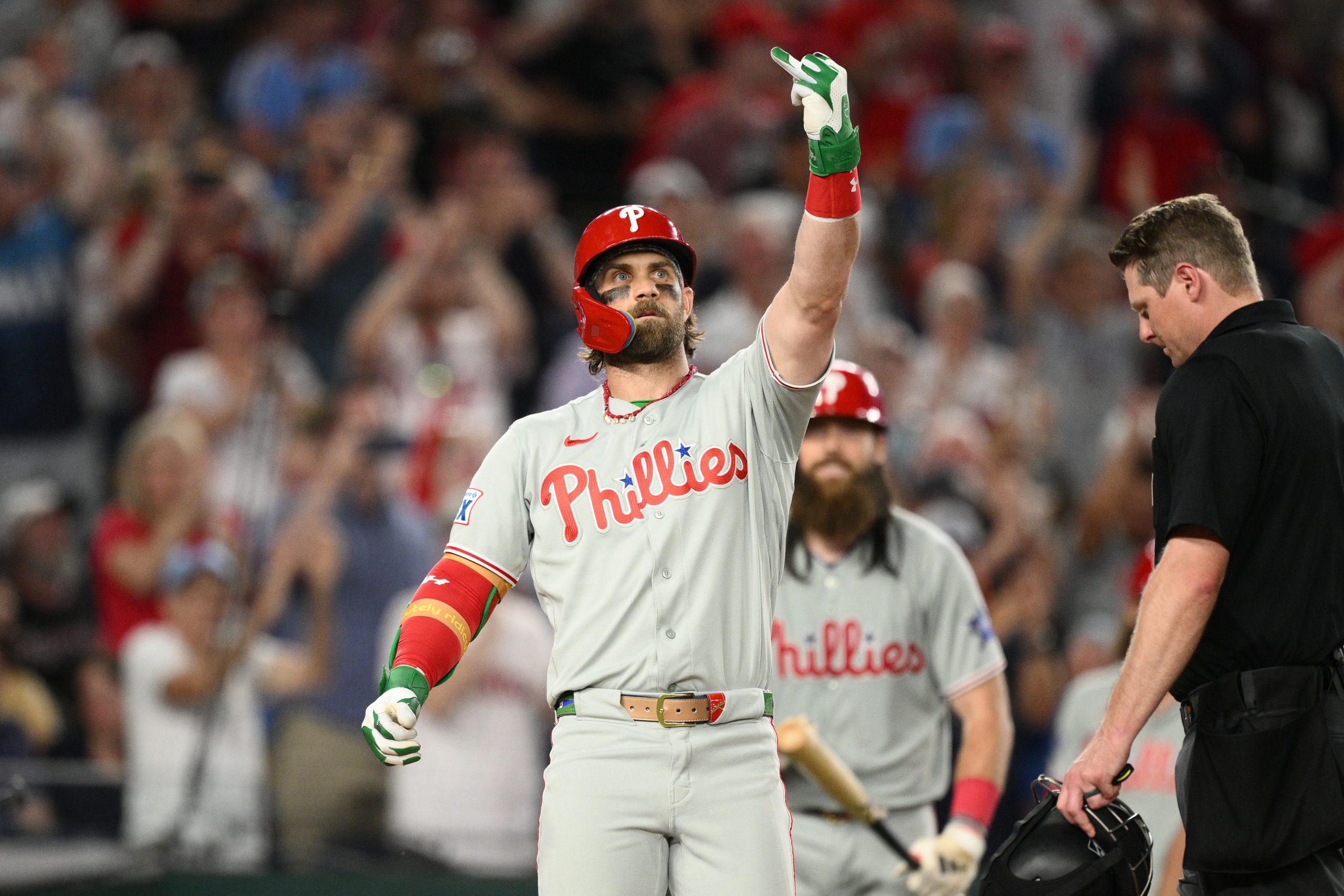
Harper’s 19 home runs in his first 83 games were his second-most as a member of the Phillies. His .391 wOBA ranked eighth in the major as of Saturday. His .278/.379/.536 batting line is pretty much exactly his career baseline. It is a lofty baseline. You might even call it elite.
While Harper might argue that retribution is a dish best served raw (like milk), his performance this season actually lends some credence to his boss’ offseason critique. Harper isn’t proving Dombrowski wrong. He is proving him right.
Fact is, Harper wasn’t an elite player in 2025. Between 2021 and 2024, Harper was one of five players in the majors with a wOBA of .390+. The other four were Aaron Judge, Shohei Ohtani, Juan Soto and Yordan Alvarez. Add in Ronald Acuña Jr., Freddie Freeman, and Mookie Betts, and those were the truly elite hitters in Major League Baseball.
Bryce Harper has hit 19 home runs this season.Nick Wass
In 2025?
Harper’s .361 wOBA ranked 25th, behind guys like Ramon Laureano (.364), Pete Alonso (.368) and Geraldo Perdomo (.370). That was Dombrowski’s whole point. You can certainly question whether it was an appropriate one to make. The under-the-hood numbers suggested that Harper’s “down” year was mostly attributable to chance.
There weren’t any significant dips in his hard hit rate or his strikeout rate or his bat speed. He showed fewer signs of regression than most 32-year-old hitters. The Phillies could not have hoped for a better return on the first seven years of the 13-year, $330 million contract that Harper signed in 2019. As the old saying goes, don’t look a gift horse in the mouth and tell him he isn’t elite.
At the same time, Dombrowski’s assessment was correct. In 2025, Harper’s production wasn’t in the same realm as a Judge or a Soto or an Ohtani. It just wasn’t. He was still a very, very good player. He just wasn’t a singular one.
Here in 2026, Harper is reminding us just how much of an impact he can make when he is elite. The Phillies have been the best team in baseball since the beginning of May despite a lineup that has five regulars who have been 30% worse than league average as measured by OPS+. Harper’s 146 OPS+ is more than twice as high as those of four of the six guys who hit behind him in the lineup.
The onus is now on Dombrowski to do his part.
How active will Dave Dombrowski and the Phillies be at the MLB trade deadline?Elizabeth Robertson / Staff Photographer
As good as the Phillies have been since replacing Rob Thomson with Don Mattingly, any realist should wonder how good they’d be with a roster that wasn’t completely reliant on two MVP seasons at the plate, two Cy Young seasons in the rotation, and one of the best closers in the game … and Brandon Marsh. It would be foolish for anybody to think that formula can carry them through a month of playoff baseball.
With just over a month to go until the trade deadline, Dombrowski and his front office better have a serious plan for broadening the team’s potential contributors for a postseason series against the Dodgers or Braves.
window.addEventListener(“message”,function(a){if(void 0!==a.data[“datawrapper-height”]){var e=document.querySelectorAll(“iframe”);for(var t in a.data[“datawrapper-height”])for(var r,i=0;r=e[i];i++)if(r.contentWindow===a.source){var d=a.data[“datawrapper-height”][t]+”px”;r.style.height=d}}});
Even with Marsh’s All-Star-worthy season, the Phillies’ outfield entered Sunday with the sixth-worst collective OPS in the majors. At catcher, theirs is the second-worst OPS. They rank in the bottom five at third base and shortstop and are 23rd at third base. But, hey, other than that they’ve been great.
Right now, Dombrowski’s offseason looks like a near-total failure. Adolis García, J.T. Realmuto, Andrew Painter, Brad Keller, Justin Crawford — all received his stamp of approval as he tinkered with a roster that had suffered three straight playoff disappointments.
Even if you are willing to credit Crawford with being a perfectly adequate bottom-of-the-order hitter at a premium position in center field, the aggregate output of the offseason maneuvering still qualifies as a man-made disaster.
It may not be now or never. But it is getting close. The Phillies owe it to Harper, Schwarber, Zack Wheeler, Cristopher Sánchez and Jhoan Duran to aggressively address the holes that threaten to undermine one of the greatest efforts we’ve ever seen from five superstars in one season.
With Eagles training camp drawing nearer on the horizon, The Inquirer is taking a closer look at the more than three-dozen new faces who are expected to report along with the rest of the team on July 28. Whether a 2026 draft choice, a veteran addition or a rookie free-agent hopeful, we’re telling you more about each player’s potential role this season. We’re rolling out two players per day in a mostly unscientific order that balances offense and defense, bigger names with mysteries, and locks with longer shots to be chosen for the 53-man roster.
Player: Andy Dalton
Position: Quarterback
Age: 38
Previous experience: Dalton has the most NFL experience on the 2026 Eagles — unless Brandon Graham returns. The veteran quarterback is going into his 16th NFL season. Dalton began his career with the Cincinnati Bengals, the team that drafted him in the second round, 35th overall in the 2011 draft out of TCU.
He started 133 games over nine seasons with the Bengals and reached the playoffs in five straight years (2011-15). Although Dalton was successful during the regular season, the three-time Pro Bowler has not won a postseason game in his career.
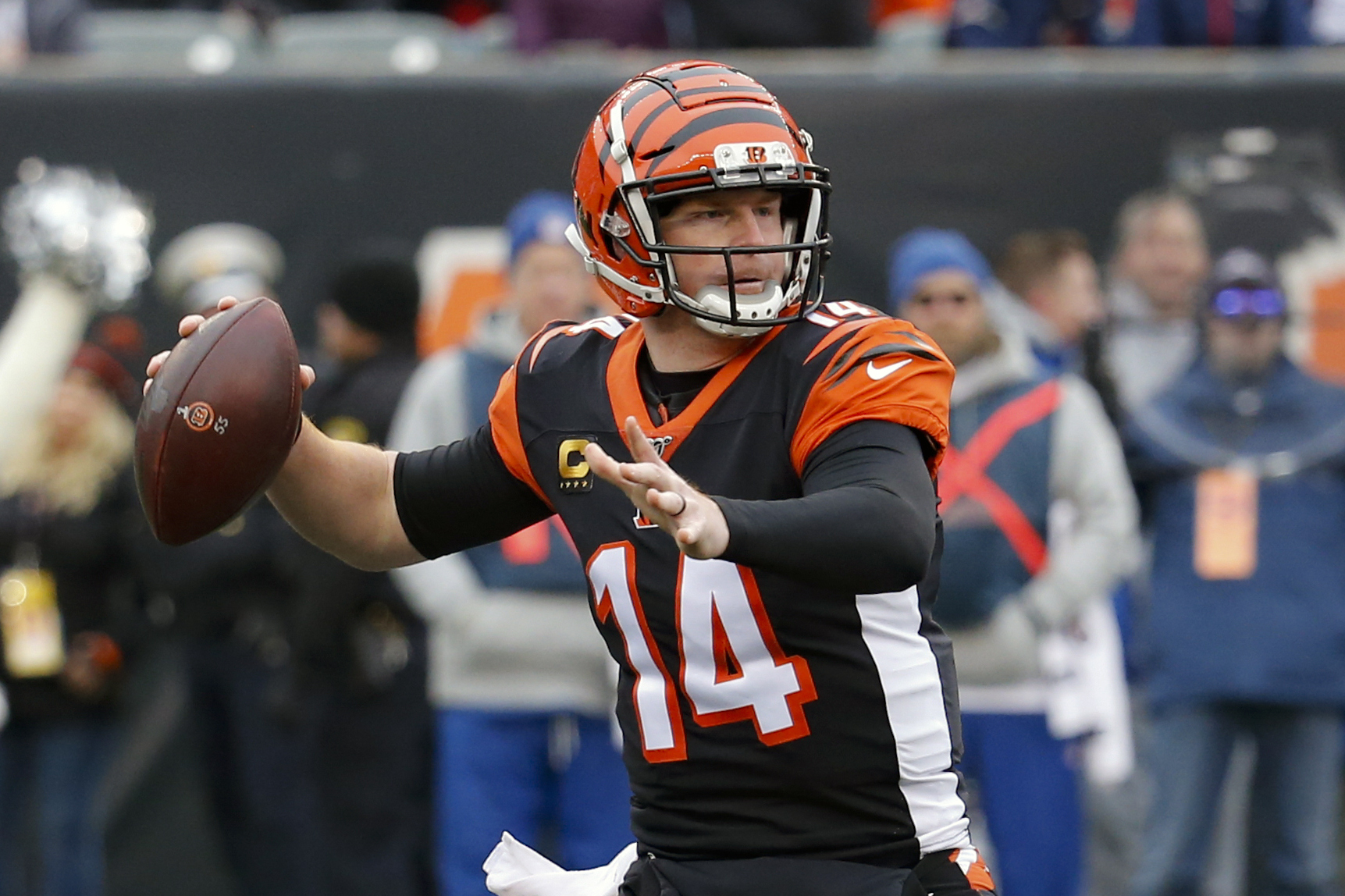
Andy Dalton’s best NFL years came in a Bengals uniform. Frank Victores
The Bengals eventually moved on from Dalton in favor of 2020 first-overall pick Joe Burrow, marking the beginning of the veteran’s journeyman career. Dalton has spent time primarily as a backup with the Dallas Cowboys (2020), the Chicago Bears (2021), the New Orleans Saints (2022), and the Carolina Panthers (2023-25).
He has started 36 games since 2020 (14 wins, 22 losses), completing 65.1% of his passing attempts while throwing 50 touchdowns and 33 interceptions. In his seven starts over the last three seasons with the Panthers (one win, six losses), Dalton completed 64.7% of his passes, throwing 10 touchdowns and seven interceptions.
Path to a roster spot: Seeing as the Eagles tend to carry three quarterbacks on the active roster, Dalton is essentially a lock to make the team out of training camp. But in the aftermath of the offseason program, bigger questions linger about his role on the team.
Dalton and Tanner McKee split reps with the second-team offense behind Jalen Hurts, while Nick Sirianni did not commit to McKee as the backup for the upcoming season. Could Dalton have a chance to usurp the incumbent McKee for the QB2 role in training camp? And does Dalton’s contention for the job indicate that McKee could be a candidate for a trade ahead of the start of the regular season?
Alternatively, if teams aren’t willing to take a chance on the inexperienced McKee (who has started just two games over the last two seasons), could Dalton eventually be on the move before the November trade deadline? The Eagles seem to have options with their depth quarterbacks depending on their preseason performances and the team’s start to the season.
Fun fact: In addition to having zero career playoff wins, Dalton has thrown just one touchdown pass in the postseason. His lone passing touchdown — a 4-yard completion to tight end Jermaine Gresham — came in the Bengals’ 27-10 wild-card loss to the San Diego Chargers during the 2013 season.
Random Obscure Moments in Bengals History: Dalton throws a playoff TD
Andy has a passer rating of 57.8 with 873 yards, 1 touchdown and 6 interceptions in 4 games in the playoffs in his career
His lone playoff TD Pass was to Gresham in a loss @ home to SD in the 2013 WC Round pic.twitter.com/OfJ7OgS5xq
Since 1970, 83 quarterbacks have played at least 10 NFL seasons and started at least four playoff games, according to Stathead. Dalton has the fewest passing touchdowns in the postseason among them.
Quotable: “Any time you’ve got a guy that’s got experience, different types of experiences, you lean on that. Having a relationship with him, I was with him in Carolina, so being with him prior, [I] knew that he had that wealth of knowledge, that he’s open to helping other guys as well … he’s a great resource for all of us to be able to lean on, just a guy that’s played a lot in the NFL successfully.” — Eagles quarterbacks coach Parks Frazier on Dalton
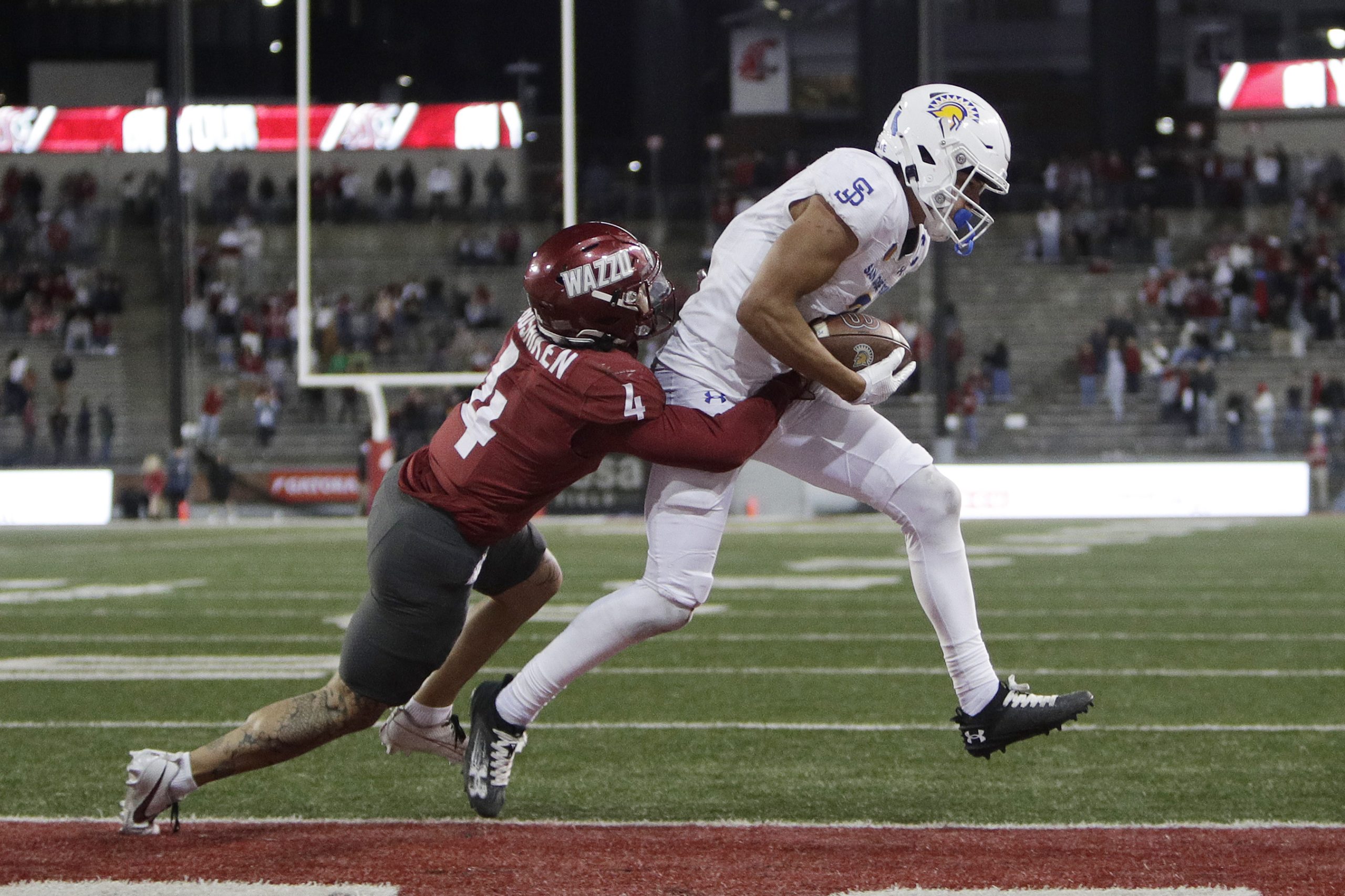
Kapena Gushiken (4), then at Washington State, attempts to defend a potential touchdown against San Jose State in 2024. Young Kwak
Player: Kapena Gushiken
Position: Defensive back
Age: 23
Previous experience: As an undersized defensive back at 5-foot-8, 160 pounds, Gushiken wasn’t highly recruited coming out of high school in Maui, Hawaii, according to The Seattle Times. But his coach at Kamehameha High School knew the coach at Saddleback College, a community college located in Mission Viejo, Calif, a connection that would lead to the first stop in his college football career.
He spent two years at Saddleback and became a starter in his second season. As a sophomore, Gushiken posted 22 tackles (one for a loss), six pass breakups, one interception, and one forced fumble in nine games. His strong JUCO performance earned him opportunities at the Division I level, first at Washington State (2023-24) and then at Ole Miss (2025).
Through 40 games (28 starts) over his final three seasons, Gushiken racked up 143 tackles (5½ for a loss), 20 pass breakups, four interceptions (including one returned for a touchdown), two fumble recoveries, and a sack. Gushiken has played every spot in the secondary, from outside cornerback at Saddleback to nickel cornerback at Washington State to safety at Ole Miss.
Gushiken, now listed at 5-9, 189 pounds, signed with the Eagles as an undrafted free agent this offseason.
Path to a roster spot: Special teams and safety depth. Gushiken is a long shot to make the initial 53-man roster, but he has a chance to carve out a role on the team, especially on the practice squad. Still, in May, Vic Fangio called the starting safety spot vacated by Reed Blankenship “open,” acknowledging that Marcus Epps, Michael Carter, Andrè Sam, J.T. Gray, and “Gush” will each get a look in the competition when the Eagles are in nickel. Cooper DeJean will start at safety alongside Drew Mukuba in base.
Special teams will be Gushiken’s most likely path to a role on the Eagles in 2026. His overall athleticism, as evidenced by his 4.35 40-yard dash at his pro day, makes him a strong candidate for the unit.
Fun fact: In high school, Gushiken lettered in football, track, volleyball, and basketball. As a junior in 2019, he ran a personal best of 11.17 seconds in the 100-meter dash at the Hawaii High School Athletic Association Track and Field Championship.
Quotable: “He’s really versatile. He can play a bunch of spots, a really savvy player. Hoping he can be [former Ole Miss safety] Trey Washington-ish for us. He’s really smart. So it’s really good to have him.” — former Ole Miss coach Lane Kiffin on Gushiken, via 24/7 Sports.
Any Collingswood resident over the last 18 years can remember the fight to legalize backyard chickens. Or the second attempt. Or the third.
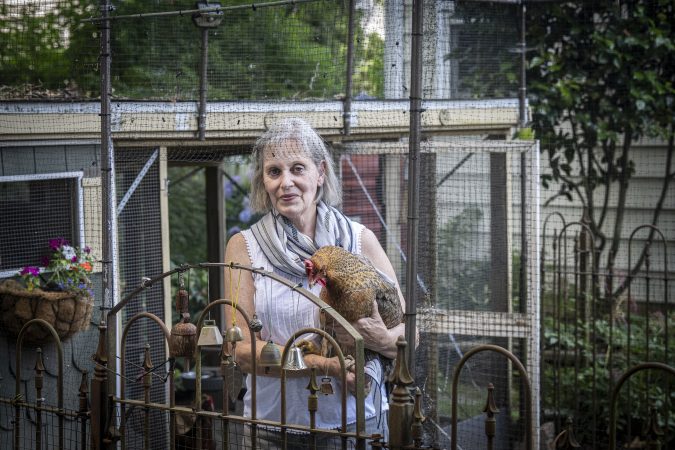
Gwenne Baile, 77, knows the efforts well. A Haddon Township resident and the unofficial “Chicken Lady of South Jersey,” Baile initially became interested when she saw Martha Stewart showing off her chickens on TV. After retiring in 2009 from a long career as an ob-gyn nurse, Baile decided she needed a hobby.
“I started looking into it,” Baile said, “but it was illegal here.”
Since then, Baile said, she has played some part in changing the ordinances in 35 municipalities across South Jersey, including in her hometown. She keeps a list of places with pro-chicken zoning rules, including the 19 municipalities in Camden County that allow them. Baile now has five hens, taken in as fosters, including those injured by predators or forced from owners whose municipalities do not allow coops.
One hen with arthritis lives indoors. Baile calls her a “mini me” since she hates the heat, doesn’t like exercise, and has golden feathers that match Baile’s hair.
Gwenne Baile, an advocate of backyard chickens, holds Mimi, a family’s hen in Audubon.TRACIE VAN AUKEN / For The Inquirer
Baile and a small group of hopeful Collingswood residents have frequented Collingswood Borough Board of Commissioners meetings in recent months. At its last working meeting on June 17, the group handed over proposed language that they hope the board will use in a future ordinance supporting backyard chickens, informed by Baile’s years of advocacy.
The last major push for residential hens fizzled out in 2019 after several Collingswood residents spent more than a year regularly attending meetings to champion an ordinance that never saw the light of day.
But this time feels different, Baile said, and some locals and officials agree.
Dan DiVito, 42, has lived in Collingswood for six years and owns Front Yard Food, a business that teaches people how to grow their own crops and helps design the backyard infrastructure to do it. If Collingswood passes an ordinance, DiVito said, he will get chickens himself and join the new Backyard Chicken Advisory Board — a five-member commission that would oversee the initiative and investigate complaints.
“Chickens are a no-brainer,” DiVito said. “It’s a pet that makes you breakfast.”
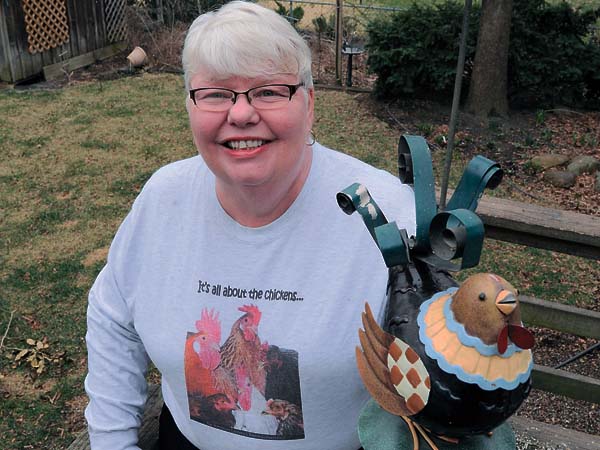
Gwenne Baile in her backyard in 2014. CLEM MURRAY
‘A change and an opportunity’
Collingswood did not always ban chickens.
But in 2008, Collingswood’s three-person board of commissioners — made up of a mayor, deputy mayor, and a commissioner — adopted measures prohibiting residents from keeping or breeding a long list of livestock and fowl, including chickens.
Local news records from 2008 do not give a clear explanation why the rules were adopted, other than comment from then-Mayor Jim Maley that the board wanted to “head off a problem before it presents itself.”
The maximum penalty for violating the ordinance is a $500 fine.
Repeated attempts to end the ban have been unsuccessful, even as neighboring municipalities passed ordinances to allow chickens. Some residents voiced concerns about the smell or the noise, or about Collingswood properties being too small to house chicken coops. Collingswood Chicken Uprising, the local Facebook group for the chicken resistance, was created 16 years ago and is up to 234 members.
But a recent political shift in Collingswood has meant hope for some local chicken advocates.
Maley’s 28-year tenure as mayor ended last May, when two progressive challengers joined Maley to win seats on the board of commissioners.
Daniela Solano-Ward became the first female and Latina mayor of Collingswood in 2025, and Deputy Mayor Amy Henderson Riley became one of only a handful of women to serve on the board in the borough’s history. That shuffling was one factor that brought on the chicken resurgence.
“Advocates and community members saw that this was a change and an opportunity to try this out with the new team and see what could happen,” Henderson Riley said.
Passing an ordinance takes time. There must be two separate readings of the proposal, and time must be given for residents to comment. The next commissioners meeting is not until July 15, and Henderson Riley said Tuesday that she was unsure whether the proposal drafted by Collingswood residents would make it to the agenda.
But with an organized, citizen-led group, Henderson Riley said, she suspects this is the most favorable effort thus far. Plus, with concerns like the cost of living and gas prices, she said, there are bigger things to worry about than banning chickens.
“Let the chicken people have their thing,” she said.
Maley and Solano-Ward did not respond to requests for comment.
What advocates are proposing
Suzanne Passante feeds her chickens inside the chicken coop in the backyard of her home in Haddon Township, N.J., on Wednesday, June 24, 2026.Jose F. Moreno / Staff Photographer
Every municipality’s backyard chicken ordinance is slightly different. Most have strict requirements, including that coops are predator-proof, set a certain distance from other properties, and kept dry and clean.
Collingswood residents’ pitch to the commissioners would ban roosters, forbid residents from selling their eggs, and require completion of an online course teaching applicants how to care for hens. Collingswood could have only 30 households with hens at a time (of the 6,900 estimated housing units the U.S. Census Bureau estimates are in Collingswood), and new licensees would be capped at four chickens.
Chicken owners would have to pay $10 fees annually to renew their licenses. The Backyard Chicken Advisory Board would investigate complaints and help relocate chickens that are no longer wanted, since the advocates are calling for a ban on slaughtering hens.
Any violations could result in a fine of up to $1,250 or imprisonment of up to 90 days, a more severe punishment than the current ordinance gives for keeping chickens.
Henderson Riley, who has a doctorate in public health, took the three-hour backyard chicken course to learn more about the potential process residents would have to go through to get a coop.
She passed, but not without a bunch of red markings and a reality check that owning chickens takes time, money, and energy that she does not have. Henderson Riley said she thinks the long list of requirements, along with the difficulty of raising hens, will dissuade the vast majority of people from partaking in the hobby.
“It’s not like the hens are going to take over Collingswood.”
Words of wisdom
Lynn Parker, 52, has 10 hens in her backyard in Stratford Township, Camden County. When Stratford passed its ordinance allowing chickens in 2023 (an effort Baile helped with), Parker was the first person in line for a chicken permit.
She now chairs the township’s Hen Advisory Commission, which inspects new coops and educates residents. Fourteen homes in Stratford have chickens now, Parker said, and there have been no complaints.
Her advice to people who want to change their municipality’s chicken law is simple.
“Even if you get a no, do it again,” Parker said.
Suzanne Passante, 71 and Baile’s neighbor, chairs Haddon Township’s Backyard Chicken Advisory Board. She has four chickens and averages a dozen eggs per week.
It took time to educate residents about the benefits of hens and to quell misconceptions, like chickens attracting rats, but she said complaints have been nonexistent in recent years.
“Now, after 11 years, people don’t even think about it,” Passante said.
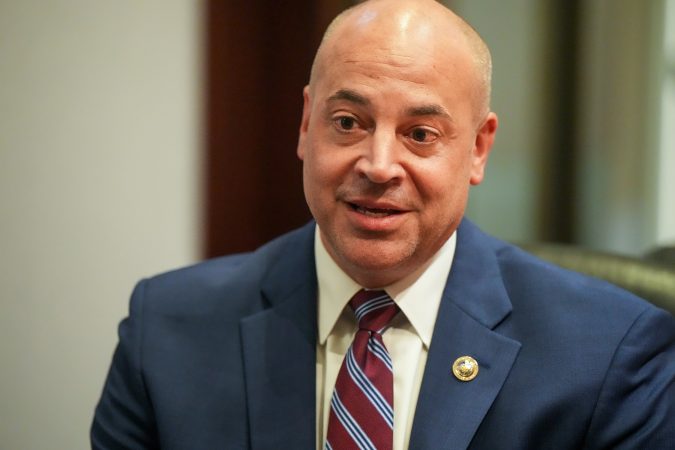
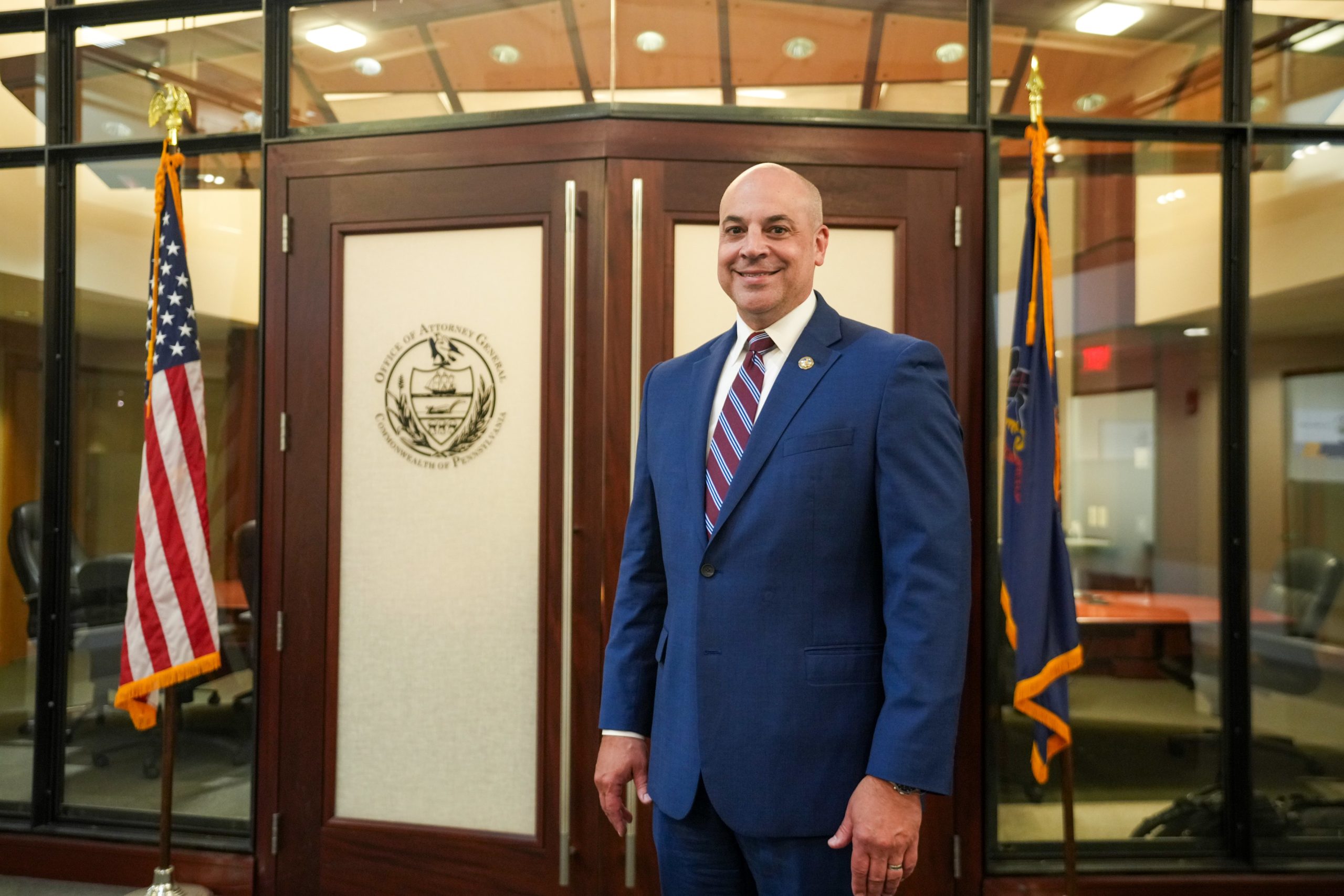
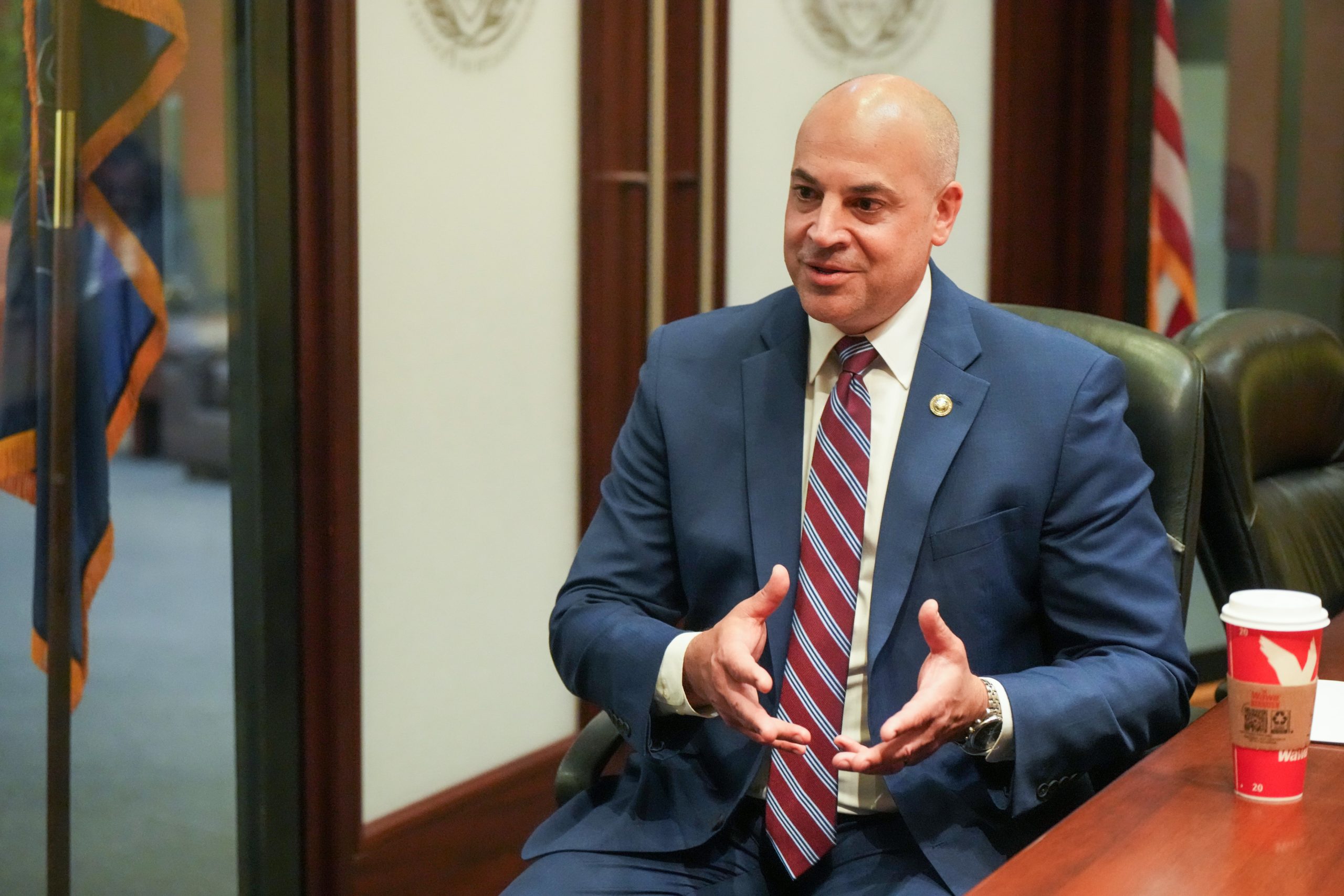
Attorney General Dave Sunday has spent 18 months as the state’s chief law enforcement officer, overseeing a sprawling office that handles criminal prosecution, civil litigation, consumer protection services, civil rights enforcement, and more.
In that time, the 51-year-old Republican and Harrisburg native says, he has taken on issues ranging from the opioid crisis to illegal crime guns. And last week, the Pennsylvania Supreme Court handed his office broad authority to review the efforts of Philadelphia prosecutors to overturn murder convictions they have called unjust, a signature initiative of District Attorney Larry Krasner’s office.
In a recent interviewat his Philadelphia office, Sunday talked about that and more.
What is your reaction to the Supreme Court ruling on the work of District Attorney Larry Krasner’s Conviction Integrity Unit?
Obviously, it’s an unprecedented ruling.
Oftentimes, the best outcome is through the adversarial process. We work with the Philly DA’s office in a lot of different areas, and I viewed this ruling as any other that provides me with instructions on a way on which I have to run my office.
Moving forward, the ruling requires your office to review any post-conviction concession that Krasner’s office aims to pursue. How will that work?
There are questions. How many times will we have to intervene? What will that do to staffing? Will we have the logistics and resources to do it appropriately? I think that process will unfold over the next month or so.
There’s no other real comparison for this ruling, and so what I can say very simply is this: It is absolutely crucial that there is a voice for the families of victims, and at the same time, I think it’s crucial to make sure that we protect the rights of individuals who are charged with crimes and convicted of crimes.
That balance is found in applying the law and the facts to the issue. That’s something we will enthusiastically do.
.Assistant General David Sunday, in Philadelphia, June 23, 2026.Jessica Griffin / Staff Photographer
Since Krasner first took office, his prosecutors have supported efforts to overturn around 115 convictions. Given the Supreme Court’s findings, do you now question whether some of those overturned convictions should be reconsidered?
Well, we have to look at the legal process there. For individuals who the court has already ruled in a manner in which they’re out of prison, those cases are done.
But with cases that are still going through the appellate process, individuals that are incarcerated, those are situations where we’re going to have to take a look at it. I mean, this is very serious, and when the Pennsylvania Supreme Court rules in this manner — not just the ruling itself, but the verbiage — I, as attorney general, take that extremely seriously.
We will do our job, and we’ll do our duty, and we’ll review it, but it’s also important to understand that this isn’t a quest to prove someone wrong. It’s a quest to ensure that all parties are zealously advocated for.
Krasner has strongly opposed the ruling. He’s likened this issue to the struggles of the Civil Rights Movement and said that the decision undermines the votes of those who elected him to office. What is your response to that?
I don’t think that it benefits anyone for criminal justice leaders to editorialize a lot of the work we do.
It’s critical that the citizenry knows and understands that their case will be dealt with by applying the facts to the law — and I know that’s not the most exciting answer, but there are things that are in my control and there are things that aren’t in my control, and his reaction to anything is completely out of my control.
The last thing individuals who live in the community want to hear are elected officials yelling at each other. They want to see outcomes.
Earlier this year, justices ruled that mandatory life sentences without parole for those convicted of second-degree murder are unconstitutional. What are your thoughts on that?
Third-degree murder, second-degree murder, those are cases where the acts resulting in the crime are vastly different case to case. As a prosecutor, I’ve tried horrific second-degree murder cases — one was an in-home burglary where an individual was left face down on the ground, duct-taped, and they ultimately died from positional asphyxiation, which really is torture.
At the same time, there are second-degree murder cases where you have multiple codefendants, and — this case is highlighted a lot — one of the codefendants pulls a gun out, kills an individual, and all those codefendants, because they were acting in concert and furthering some conspiracy, they’re all guilty of second-degree murder and they’re in for life.
So there are second-degree murder cases where the individuals should have an opportunity for parole, and at the same time, there are cases that are absolutely horrific, where individuals should spend the rest of their lives in prison.
The important place we’re in now is the legislative process, moving forward to ensure that the punishment is commensurate with the harm caused in the crime.
Violent crime has fallen dramatically from its pandemic-era highs in Philadelphia and across the state. Should the attorney general’s office get some credit for that?
There is no one individual or agency that can take credit for these outcomes. We’re with our federal partners, we work with everybody.
After I was elected, some of the very first calls I made were to the Philadelphia mayor and the police commissioner, and I made it very clear that we’re partners. I’m excited, let’s go. And that’s what we’ve done.
The Attorney General’s Gun Violence Task Force is a huge part. We do everything we can every day to go after gun traffickers, illegal straw purchasers. We’ve removed more than 500 crime guns off the streets [statewide] in 2025.
In addition to that, our Bureau of Narcotics works every day in Philadelphia. Last year, we removed 56 million doses of fentanyl from the streets, and a large portion of that was in the city.
The Commonwealth Court struck down a decades-old law that banned Pennsylvanians from using their Medicaid benefits to pay for abortions, and last month, your office appealed. Why?
A lot of people don’t understand the role of the AG in a lot of issues. In Pennsylvania, we have the Commonwealth Attorneys Act, the rules that dictate the job, and one of the rules in there is that the attorney general shall defend the constitutionality of statutes in Pennsylvania.
I have irritated the entire political spectrum, because I am defending statutes whether you like them or not. That’s literally my job. What a lot of people don’t understand is that the [Medicaid] law is part of the Abortion Control Act — the same law that allows abortions to occur up to six months of pregnancy, the very same law.
In that law is a subsection that also says that government funds cannot be used for abortions — so I’m defending the abortion law in Pennsylvania, just like I would any other section of that law.
Critics say that by appealing the ruling and prolonging this issue, you are denying Pennsylvanians of what the court called a “fundamental right to reproductive autonomy.” How do you respond?
Just like every law we defend — every single one — there are people that like it and don’t like it, and they will have commentary. I certainly respect their absolute right to have that commentary.
What I will say is, this decision has nothing to do with that. It is the job of the attorney general to defend the statute.
.Assistant General David Sunday, in Philadelphia, June 23, 2026.Jessica Griffin / Staff Photographer
What would you say has set your tenure apart from your predecessor, Gov. Josh Shapiro, and his appointed successor, Michelle Henry?
Very simply, I came into this job as a prosecutor. I ran on public safety. I wasn’t a legislator, so when I look at the office, I view it as a place where you follow the facts in the law, and you fight hard to keep people safe.
With that being said, I have hyper-focused on issues impacting citizens. We have huge crises in Pennsylvania that need to be addressed, specifically the mental health crisis.
When I came into office, I saw our prisons are full of people that have mental and behavioral health challenges. Individuals go to jail solely because they have a mental health crisis, and what I want to see are people getting treatment.
What we did was create a new initiative that gives police a toolbox, so when they come into contact with someone in a mental health crisis [who is committing a low-level criminal offense], they can get that person into treatment [if the person chooses to do so]. At the same time, that person can be charged, and the police have the flexibility to hold that charge.
This is brand-new, and we have nine counties that are already signed up and are rolling. We have five more lined up and ready to roll over the next few months.
President Donald Trump held a rally in Pennsylvania on Tuesday, and he was joined by some of the state’s other top Republican officials, such as Stacy Garrity. Is that an event you would have liked to attend?
In all candor, I have events that have been scheduled for months and months, and the reality is, a lot of these [presidential] events pop up pretty quickly.
On Tuesday, I had an event with the first elected attorney general in Pennsylvania, LeRoy Zimmerman. I was with him at a fireside chat, talking about what the AG’s office has looked like, and how it’s changed over the last 30 years.
The players amble into the auditorium on acloudy May morning to run through their schemes and formations and make last-minute adjustments to the roster. Some are already in uniform — waistcoats and breeches — fueling up on Wawa coffee and bagels. Others scroll aimlessly on iPhones or finish off their cigarettes outside the Free Quaker Meeting House near Independence Hall. They discuss contingencies, ready their gear, and buckle their latchet shoes tight.
“Get out there and have fun,” their coach, Historic Philadelphia’s director of storytelling Johanna Dunphy, says as she sends her proud-chested team of historical reenactors off for their preseason opener.
This is the start of the team’s Super Bowl run: the lead-up to the nation’s Semiquincentennial. The cast of Ben Franklins, John Adamses, and Betsy Rosses — actors who have spent months and uprooted their lives to learn about and live as colonial America’s key characters — will be at the front lines of the 250th birthday celebrations, which began with the cast’s opening day on May 23 and reach a fever pitch on July 4. They will become de facto historians, guides, entertainers, and ushers to an expected crush of tourists, all while anchoring how the country’s earliest days are memorialized and whose stories get to be told.
“Fly!” Dunphy says with gusto as the performers shuffle out of the modest redbrick building.
This set of actors is part of Historic Philadelphia’s Once Upon a Nation program — a series of performances staged throughout the summer and beyond in Philadelphia’s historic district and at Valley Forge. It’s Once Upon a Nation’s 21st season, but this year is expected to be one of its biggest ever, with the most actors, plays, scripts, and events.
And, with tourism agencies expecting this summer’s events to draw upward of one million visitors, it’s almost certain to be the program’s largest audience.
“Philadelphia is ready for you,” Amy Needle, Historic Philadelphia CEO, told the players on the last day of the preseason. “And I know you’re ready for them.”
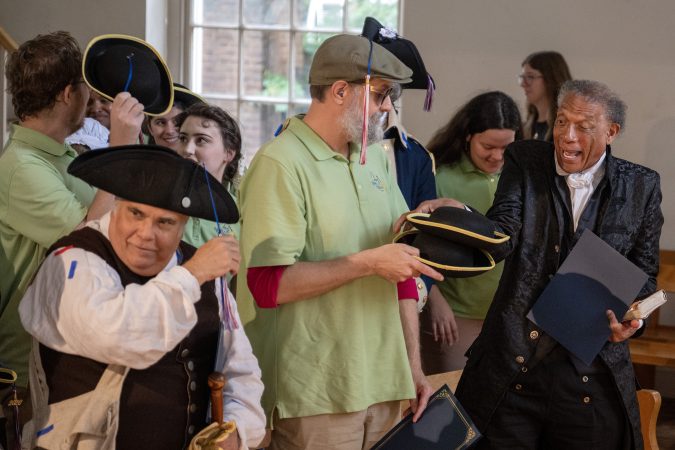
Shecky Perlman as Ben Franklin, and other historical reenactors receive their diplomas on May 21, 2026, after weeks of intensive, immersive training at the Benstitute. Tom Gralish / Staff Photographer
Fourmonths to game day
Actors, mostly local, file in and out of Jason Greenplate’s office on a chilly January afternoon. Greenplate, program manager for Once Upon a Nation, and his colleagues are seeking the strongest possible players who have the passion, the look, and the improvisational skills to take on the characters and become “history makers” — what Historic Philadelphia calls its reenactors.It’s essential for these coaches to choose players who are not only capable of taking on these roles but are also willing to challenge their own understanding of history.
Spencer Salusky, a 23-year-old fresh William & Mary graduate, walks through the door.
As a draft prospect, Salusky is an impressive pick. He can execute even the most complex of plays (tricky lines and blocking), and his stats (body measurements and head shape) are optimal.
“He kind of looks like John Adams,” Greenplate thinks.
After conferring with his peers, Greenplate chooses Salusky tobecome Once Upon a Nation’s next John Adams, and, one by one, 19 more actors are cast as history makers and storytellers, those who are stationed at the city’s historic sitesin green polos to offer context to visitors. They join the existing 30 company members returning from prior years.
Courtney Mitchell, who portrays Margaret Woodby (left), and Spencer Salusky (right) as John Adams, join other historical reenactors at graduation on May 21, 2026, after weeks of intensive, immersive training at the Benstitute.Tom Gralish / Staff Photographer
Three months to game day
The actors soon begin their training. For Salusky, that looks like receiving a large packet full of biographical information about John Adams — where he was born, his wife’s name, and his perspective on slavery — from Doug Thomas, director of history makers.
Thomas is a player-coach, a star in his own right who can seamlessly transition to the coaches’ box. Like Deion “Prime Time” Sanders, Thomas is a Swiss Army knife on the field, having played every position in the game of historical reenacting, from William Penn and Patrick Henry to Francis Scott Key, and has been doing the work for nearly 30 years. But what makes him truly elite is his position as Mount Vernon’s George Washington.
Out in the field, the players might be blindsided by a granular question from a tourist, an offensive remark from a passerby, or incessant badgering from a child. On the stage — where the history makers also perform a series of scripted plays — they must be prepared to embrace their characters’ conflicting motivations, shifting attitudes on political issues, and complex interpersonal relationships.
Thomas is equipped to help them tackle it all.
He guides them in studying their characters, trains them on redirecting conversations with visitors toward topics they’re knowledgeable about, and teaches them improvisational techniques. He also prepares them to embody the voice, posture, and behavior of historical figures.
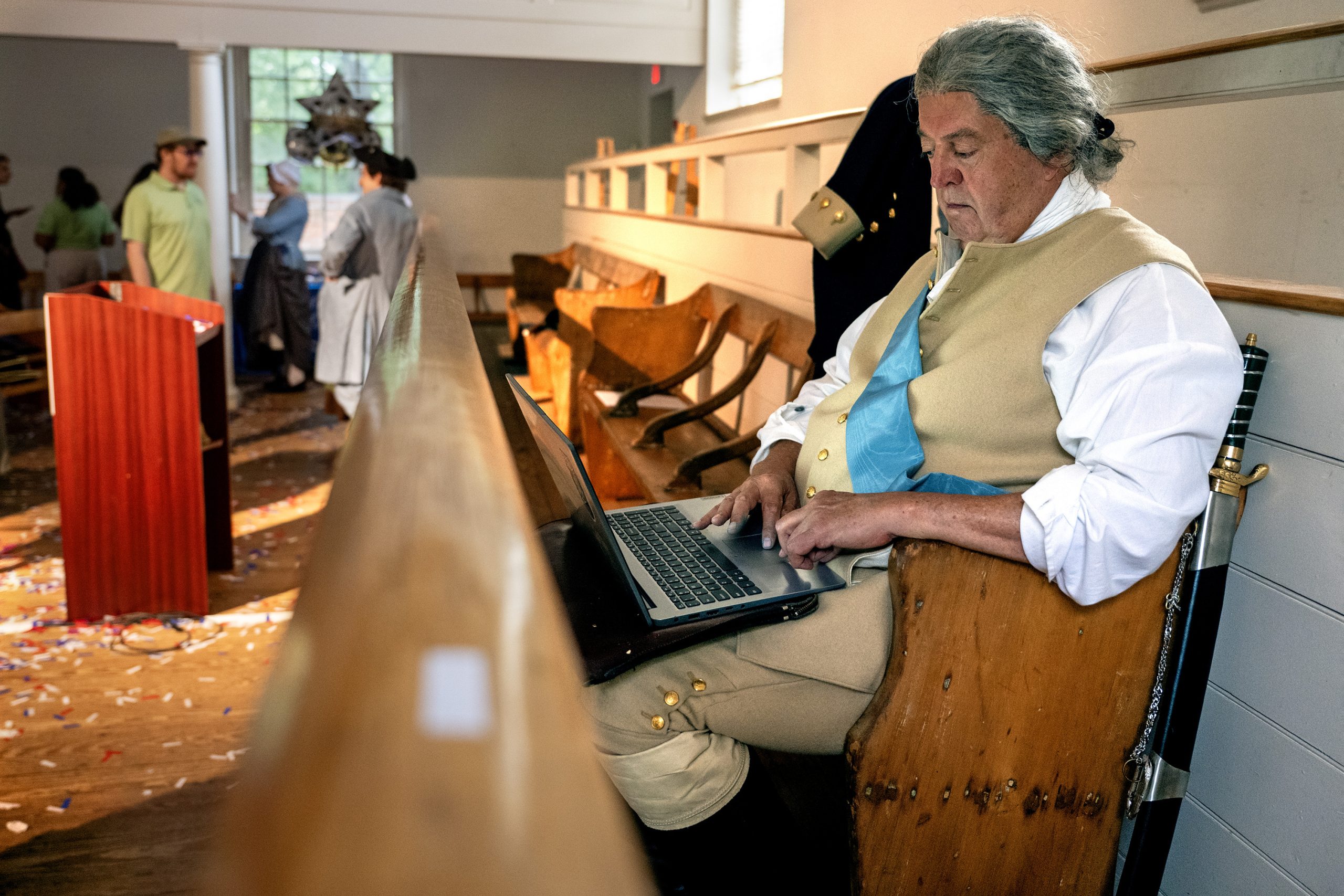
Jim Fryer as George Washington checks in on his laptop on May 21, 2026, after the graduation of dozens of historical reenactors after weeks of intensive, immersive training at the Benstitute.Tom Gralish / Staff Photographer
Three days to game day
“Adams,” Thomas says, summoning Salusky during a rehearsal for Cocktails and Congress, a marquee performance in the Once Upon a Nation repertoire.
On a scorching 95-degree afternoon that foreshadows what the players can expect during the steamy home games to come, Thomas scans the script, glasses poised atop silky black hair that grazes his shoulders. He directs Salusky’s attention to a moment in the dialogue: “Slavery is like a great cancer.”
He cautions the actor to be careful with how he utters that line. Adams is torn about slavery at this point in his life, Thomas explains.
“He doesn’t like it, he doesn’t support it, but also he does realize very practically what eliminating slavery would do to the economy,” Thomas tells Salusky.
Salusky contemplates the note, sitting on a Meeting House pew with a mechanical pencil tucked behind his ear.
“Adams is evolving,” Thomas tells him. But “he’s a practical man.”
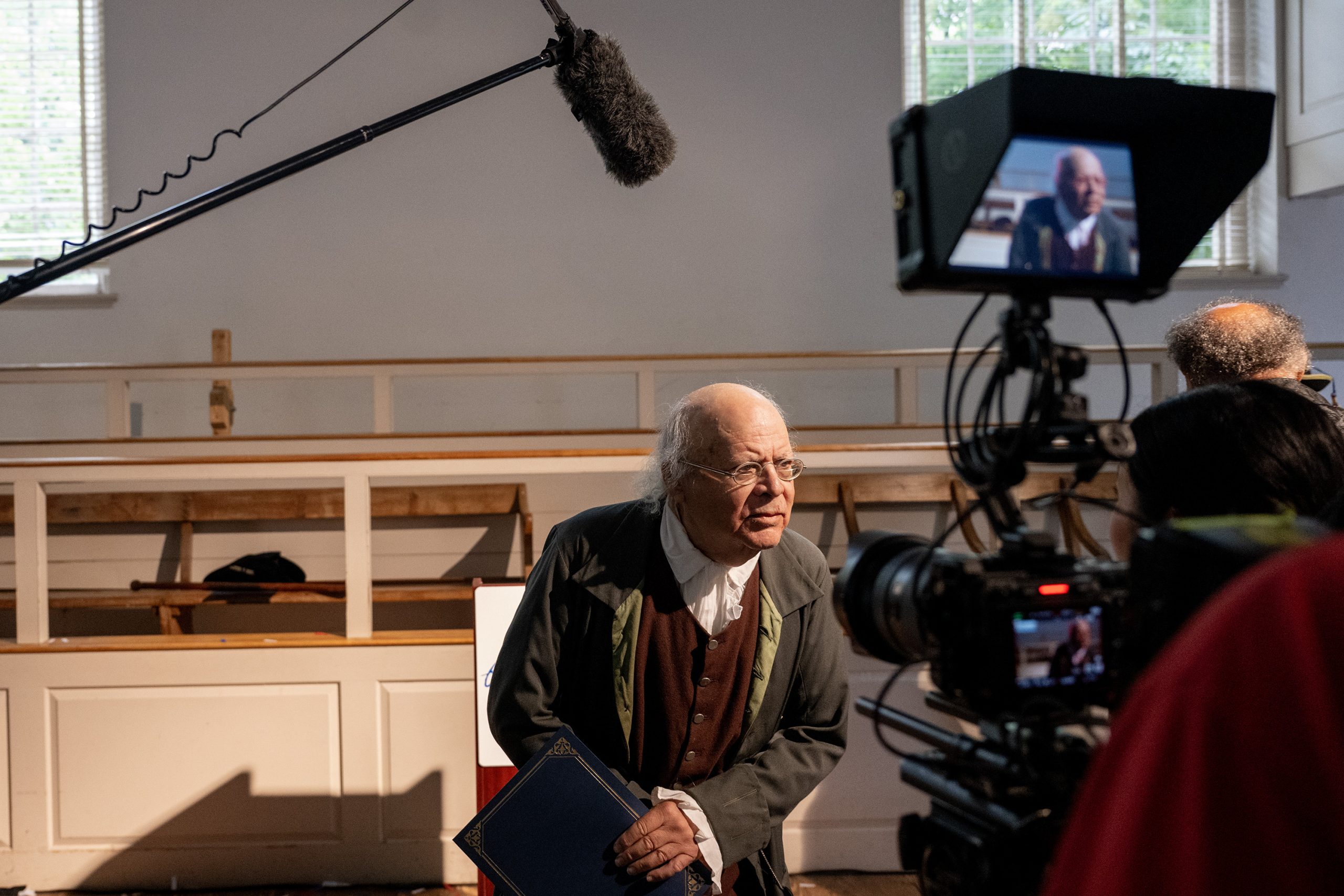
Shecky Perlman as Ben Franklin, ready for his close-up, on May 21, 2026, as he is interviewed by a documentary film crew, as dozens of historical reenactors graduate after weeks of intensive, immersive training at the Benstitute. Tom Gralish / Staff Photographer
Two days to game day
Even with centuries of primary and secondary sources, and extensive research, there are still gaps in what’s known about 18th-century American life that the actors and program coordinators must contend with. There’s a trove of information on John Adams, for example, but the documented lives of women and people of color are far less complete, like that of Hannah Till, an enslaved cook for George Washington at Valley Forge, who purchased her freedom. What’s known about Till is often centered on her enslavers.
West Philadelphia actor Miranda Thompson, who portrays Till as well as Sarah, a fictional composite character in Cocktails and Congress, relies on more general information about how women of color lived during the colonial era to inform her performance. “You just want to get it right,” Thompson, 43, says. “You want to give truth to who that person was. … I feel like if I’m grounded and honest within that interpretation, I think that I’ve done it justice.”
For historian Sandra Mackenzie Lloyd, who authored many of the Once Upon a Nation scripts and founded the Benstitute — the immersive training program the actors undergo — the American story is about “more than the dead white dudes.”
“It’s not a straight line,” Lloyd says. “We are people who have been through many difficult periods and ups, downs. This is a country that was created by people from many places with different beliefs, and that’s historic, and it’s contemporary.”
Organizers were intentional about the stories and figures they chose to platform this summer, centering diverse and layered voices in the narrative of the nation’s founding, including those of Black Americans whose stories have been omitted in the retellings of the story of 1776.
“Our history is being erased, voting rights [are being erased], certain books are banned,” Thompson says. “Representation matters … to know that we were there, and we played an important role.”
Prominently featuring Black history during the 250th, she says, is also an opportunity to dismantle racist, archaic stereotypes about enslaved people through authentic storytelling and connection.
“You can change a person’s mind,” Thompson says. “We’re human, we can always change our minds.”
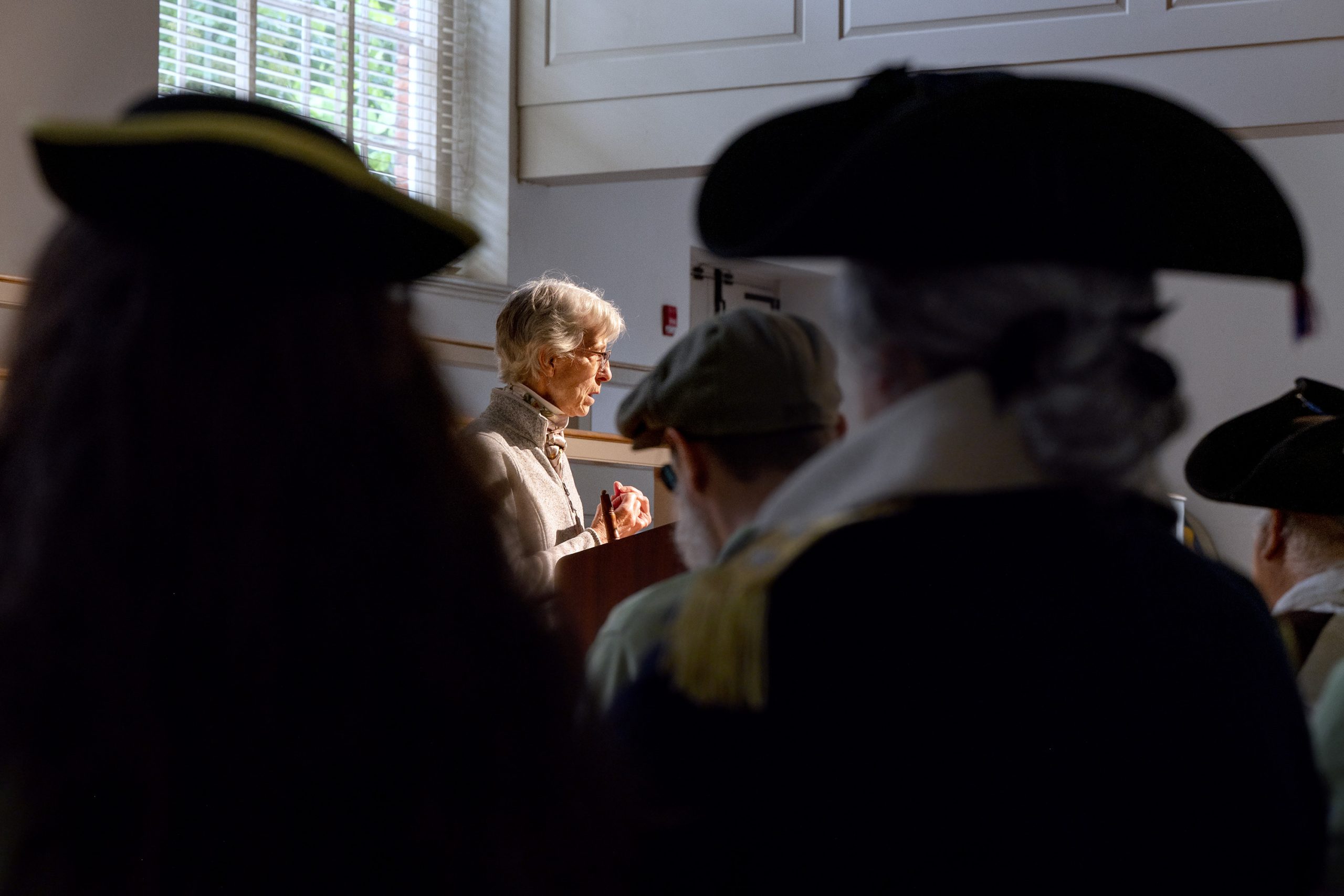
Historian Sandra Mackenzie Lloyd, founder of the Benstitute, delivers the commencement address on May 21, 2026, as dozens of historical reenactors graduate after weeks of intensive, immersive training.Tom Gralish / Staff Photographer
One day to game day
Preparations for the reenactors include not only character work, but also tourism and hospitality training. They learn how to guide someone to the best cheesesteak or nearest toilet while staying in character and using period-appropriate vernacular. The actors also learn how to beat the heat in wool frocks and petticoats and stay safe.
“Make sure to hydrate, hydrate, hydrate,” Dunphy, the storytelling director, tells her team during a morning gathering at the Meeting House before they hit the streets in costume, and a set of volunteer fake tourists heads out to test the reenactors’ skills before they’re faced with real tourists.
She points them to a packet in their supply bags full of powder to pour into their water for extra hydration.
“Drink this,” she instructs them.
Most importantly, Dunphy reminds both the history makers and the storytellers what to do if they’re out in the field and feeling unsafe.
“History makers, please remember this: If a storyteller says, ‘Have you seen John Adams?’ Don’t be cute. That is a plea for help; they need you to stay with them. It is not a joke. They need you to stay,” she says. “Things can turn on a dime.”
And, as this is live performance, things often don’t go according to plan.
During an April news conference at which a Betsy Ross and a Benjamin Franklin from the company stood onstage beside Gov. Josh Shapiro, a giant poster reading “America 250 PA” fell forward, scraping Franklin’s behind.
Carol Spacht, the Betsy Ross at the event, acted quickly.
“This is such an exciting announcement that the world is falling apart over it,” she exclaimed after the poster came down, gesticulating with a scroll clasped in her hand before turning to the Benjamin Franklin reenactor, Bill Robling.
“Quite all right, Dr. Franklin?” she asked as he nodded. “We’re sturdy at our age. 250 years does that.”
At a recent event at Reading Terminal Market, Salusky, as John Adams, had to navigate how to handle tourists approaching him, thinking he was Benjamin Franklin.
“As John Adams, how do I react to people thinking I’m Ben Franklin. Well, he was a mentor of his. He really admired him, found him annoying, but would still be a little flattered,” Salusky says. “It’s kind of just like in-the-moment problem-solving.”
Over the course of their four months of training, the actors finally reach a place of feeling ready for anything … mostly.
“Speaking in 18th-century tongue continuously, I am nervous about that,” Thompson says. “I want to portray it real.”
Cause for celebration
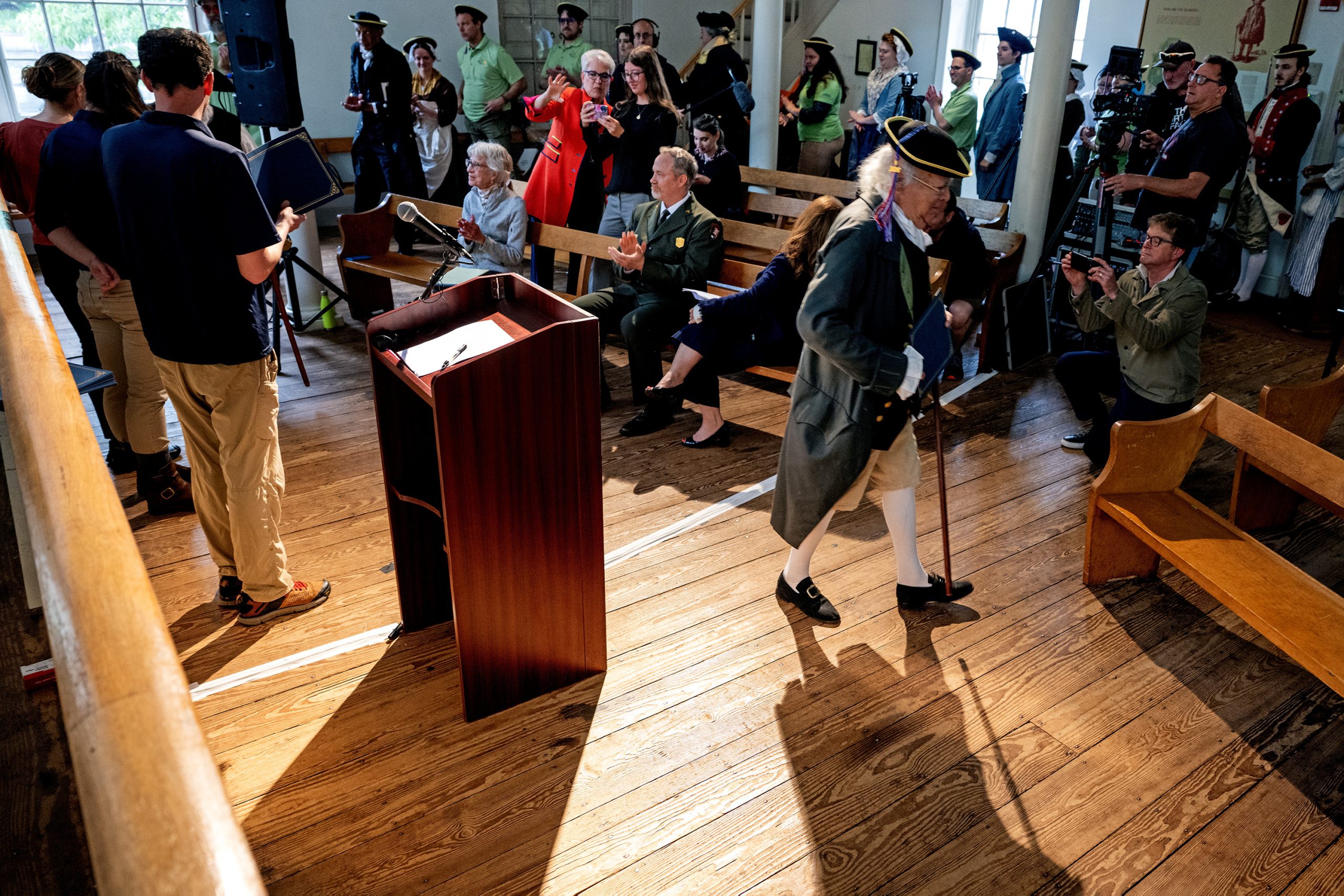
Before the actors are on their own on the Philly streets, they and their mentors celebrate the completion of their Benstitute training with a graduation ceremony at the Free Quaker Meeting House.
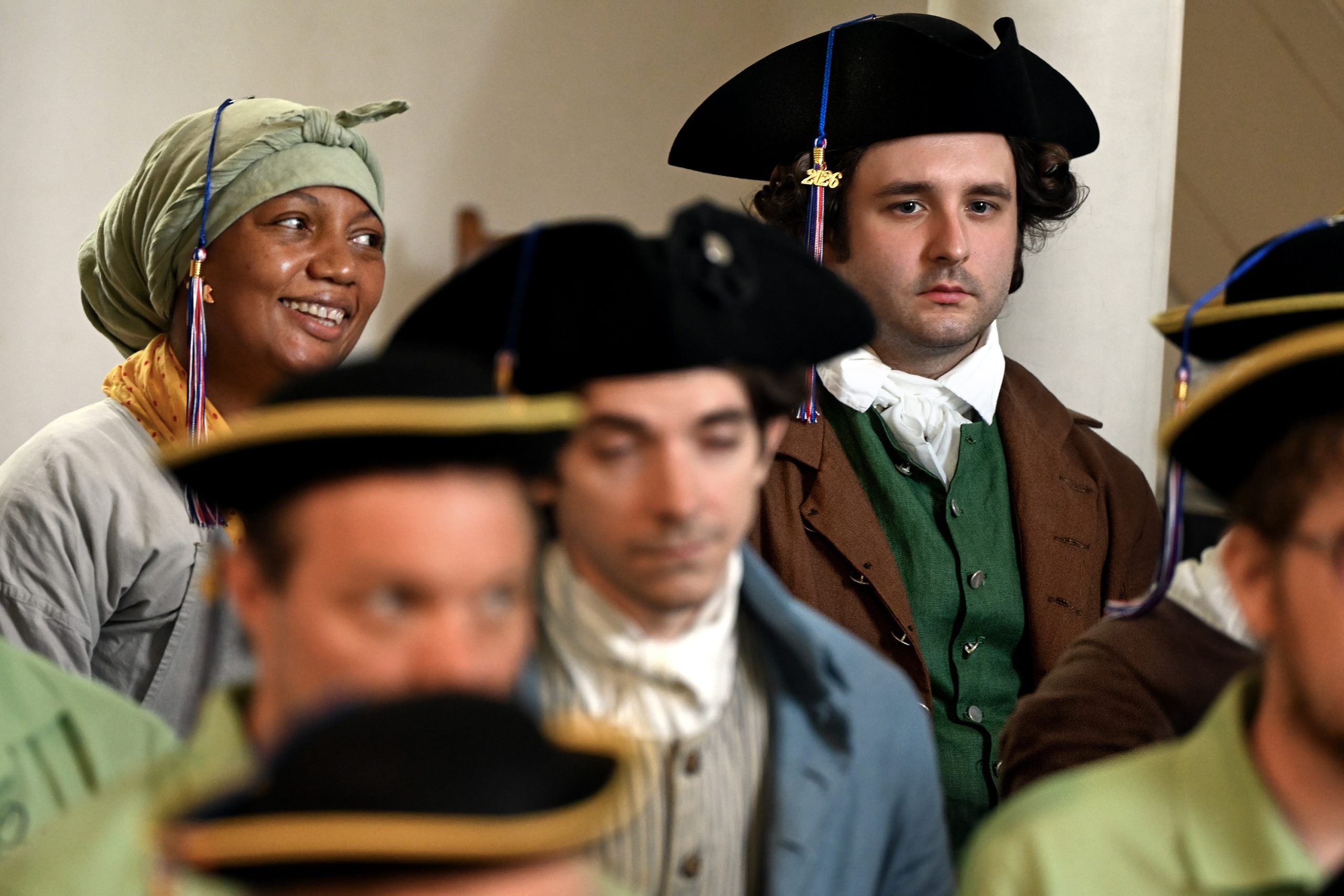
Graduates file in, some in polos and slacks and some in costume, all wearing red, white, and blue tassels dangling from the center of their mob caps and other historical hats. They sit in the pews, players awaiting the game-time whistle, as their coaches offer them final words of encouragement before they put their drills to the test and tackle the real world, beginning with their season’s opening day — their fervor not letting up until they run through the proverbial tunnel onto the championship field for July 4.
“History is not just about buildings, artifacts, and famous moments. It is about people — their choices, their struggles, their disagreements, their courage, their hopes for the future,” says Steven Sims, superintendent of Independence National Historical Park. “Long after visitors leave Philadelphia, they may not remember every date they heard or every building they toured, but many will remember how someone made them feel connected to history. Many will remember you.”
One by one, the reenactors and storytellers cross the stage, graciously accept their diplomas, smile for photos, and return to their seats.
“Class of 2026, please stand up,” says Amy Needle, the Historic Philadelphia CEO.“Change your tassels. Congratulations! George Washington?”
“Class of 2026,” aWashington reenactor calls. “Hip hip.”
“Huzzah,” they respond.
“Hip hip,” he repeats.
“Huzzah!” they conclude as audience members deploy tiny silver confetti cannons and red, white, and blue rain down upon them.
Shecky Perlman as Ben Franklin, his cane and feet, Thursday, May 21, 2026, among the confetti as dozens of historical reenactors graduate after weeks of intensive, immersive training at the Benstitute.Tom Gralish / Staff Photographer
Why can’t Johnny read? That depends on whom you ask. For years, they blamed it on Johnny. Then they blamed his teacher. Now, a new culprit has emerged: They are blaming Johnny’s teacher’s teacher. The new blame came from a recent report from the National Council on Teacher Quality examining whether colleges and universities have aligned their curriculums for future teachers to teach reading. They evaluated 23 graduate and undergraduate programs in Pennsylvania; five received “A’s” and five received “F’s.” Ron Noble, director of teacher preparation, said it all: Pennsylvania is “among the lowest performing states in this analysis.”
I don’t buy this new scapegoating. Don’t blame it on the colleges and universities. Teachers must know how to teach before they take the job. And, if they have deficiencies, it is their duty — not that of the colleges and universities — to correct them. Sadly, by the time Johnny gets to third grade, if he still can’t read, the system will cease to prepare a curriculum and begin to prepare a jail cell.
Leon Williams, Philadelphia
Regulate, don’t ban
Recently, the Pennsylvania Supreme Court decided that skill games, now found in many local bars and social clubs, should be treated as slot machines. The Inquirer Editorial Board believes Harrisburg would be making a mistake if it tried to tax the games at the same rate as slots.
I would take the other side. Since Donald Trump became president a second time, many useful federal programs that helped the states, including Pennsylvania, to balance their budgets have been shut down, or at least severely curtailed. Exhibits A, B, and C could be the Supplemental Nutrition Assistance Program, money for hospitals, and funding for federal housing programs. So now the General Assembly is finding its fiscal cupboard bare as it tries to pay for these useful programs.
With that in mind, why shouldn’t the 70,000 skill games outside the casinos also be taxed?
The Editorial Board mentioned how skill games contribute to problem gambling. I believe it is possible to seriously reduce the urge to gamble with these skill games. One idea I have is that the legislature declares that someone has to be 18, 21, or even 24 years old to play and win at these skill games. By the age of 24, most people realize money doesn’t grow on trees and know they need to earn it.
Andrew Saul, Media
Drop DROP
I was struck by two articles in a recent issue of The Inquirer. On one hand, Mayor Cherelle L. Parker’s budget slashed $1.5 million from the city’s $5 million arts budget; a rounding error for the city, but a cut that will hurt arts and culture groups throughout the city. And then, I read that Councilmember Curtis Jones Jr. and Jazelle Jones, an appointee of Mayor Parker, by themselves, are grabbing a $750,000 payday thanks to DROP. Fully half of this cut to the arts throughout Philadelphia is being paid out to two people who are gaming the pension system. Councilmember Jones is planning to retire temporarily before his next term starts. We, the voters, should remember this next year and make it permanent.
Jared Cram, Philadelphia
Citizenship needs reform
I applaud The Inquirer’s story of Muhammed Emanet. It highlights the plight of those who have entered our country legally, applied for green cards, and then are left in limbo for years because of our nation’s faulty immigration system. Regardless of where one stands on the issue of immigration and the need to deport criminals who are here without legal status, we know that, like Emanat and his family, most immigrants are here in search of a safer life and are actually contributing to our society. This issue becomes more dire today, as the U.S. Supreme Court cleared the way for the current administration to remove legal protections from thousands of Haitian and Syrian immigrants in the United States, meaning they could be subject to deportation. Again, we are not talking about criminals, but rather people seeking refuge. I hope The Inquirer will continue to publish front-page stories like that of the Emanet family. Readers need to better understand the many difficulties within the pathway to citizenship in this country. We have so much work to do before we can ever be considered “Great Again.”
Kathleen Coyne, Wallingford
Profits over patients
The special interests that have shaped America’s dysfunctional healthcare system remind me of Oliver Hardy’s comment to Stan Laurel: “Well, here’s another nice mess you’ve gotten us into!” The Editorial Board suggests that we need a public option that “would allow eligible participants of all ages to pay adjusted health insurance premiums based on their incomes.” I assume infants would be excluded? While most agree that we need major reform, allowing for profit greed to continue only perpetuates the enormous administrative overhead that sucks 30% of healthcare dollars. It would also allow the “expensive” ill patients to be turfed to the “public option,” accelerating a death spiral for taxpayers. The cost savings we need only come from a single-payer, national health insurance program with a private delivery system focused on public health, prevention, and primary care.
Walter Tsou, Philadelphia
The writer is a former health commissioner of Philadelphia.
Smart meter mandate
The entire General Assembly should be ashamed of how it let the Public Utility Commission, an out-of-control, unelected bureaucracy, wholly controlled by the utilities it is supposed to regulate for the good of the public, dictate the mandating of electric smart meter installation, with zero opt-out, contrary to the original intent of Act 129, which was electric smart meter opt-in legislation.
In their recent op-ed, Michael Marrone and Joseph Marano claim that the average Liguori Academy family’s income is close to the federal poverty line, that Liguori students typically display significant growth in reading and math, and that, according to a study commissioned by the Children’s Scholarship Fund of Philadelphia, educational tax credit scholarship recipients outperform their public and private school peers.
All of those claims may be true. Or not. We have no way of knowing because current Pennsylvania law prevents such information as a scholarship recipient’s family income levels, household demographics, or former school from being shared with the state government. We, therefore, have no way of knowing whether these tax credits are going toward a quality education for the commonwealth’s neediest students or for a family vacation in the Bahamas.
This is not simply conjecture. In 2019, a Keystone Crossroads investigation found that many private schools that accept Educational Improvement Tax Credit scholarship admissions have no low-income students in attendance.
House Bill 2632 will begin to address this problem by allowing the auditor general to acquire the necessary information to determine whether qualified families have access to a quality education.
The foundation of our children’s education should rely more on accountability than acts of faith. This is the reason we need the state Senate to pass House Bill 2632, and for Gov. Josh Shapiro to sign it into law.
Diane Payne,retired public schoolteacher, Philadelphia
Join the conversation: Send letters to letters@inquirer.com. Limit length to 150 words and include home address and day and evening phone number. Letters run in The Inquirer six days a week on the editorial pages and online.
DEAR ABBY: My 20-year-old nephew, “Conrad,” has anger issues. His girlfriend recently broke up with him. He was upset and went to see his grandma, my mom. When Conrad pulled into her driveway, my mom’s boyfriend, “Rob,” was standing outside. Conrad told Rob to “stay out of the house.”
Conrad’s girlfriend was there talking to my mom. Conrad was visibly upset and went in, yelling and screaming. Watching from outside, Rob saw Conrad push Mom down. She fell on her hand and her bottom. Rob immediately ran into the house to make sure my mom was OK. Conrad then began yelling and screaming at Rob, calling him terrible names.
My sister, Conrad’s mother, knows what happened. I haven’t spoken to her about the incident. My mom has confided in me. I listened to her and tried to remain calm and rational. She wants to protect Conrad. What do I do? Do I mind my own business? Keep my nose out of it? This is my mom and my kids’ grandma.
— SICK TO MY STOMACH
DEAR SICK: It’s no wonder that Conrad’s girlfriend ended their relationship. Heaven only knows how many times he has abused her. If your mother thinks she is helping her troubled grandson by remaining silent about the abuse she suffered at his hands, she is making a huge mistake. Conrad’s temper is out of control. He needs professional help before he hurts someone seriously. That said, there is nothing that can be done about this unless Mom decides to file a police report about the assault.
** ** **
DEAR ABBY: I’m a single 48-year-old male. I come from a close-knit family of four. I am my disabled nephew’s personal home caregiver, taking care of him 24/7, 365 days a year. I live a normal, happy life with no interference.
Lately, I’ve been stuck in a rut of sorts, and I can’t figure it out. I am a Type 2 diabetic who maintains and watches my health very carefully. I eat right and walk a mile or two every other day. I go to my doctor appointments when needed and stay on top of everything else that’s important for me and my family.
I have been feeling down and sluggish lately. I don’t know if I am having a midlife crisis or something else. I never married and don’t have children, so I am not sure what this could be. I don’t have any outbursts or PTSD. All I’m feeling is like life is slowing me down and I don’t know why. Please give me your thoughts.
— NOT MYSELF IN NEW MEXICO
DEAR N.M.I.N.M.: My thought is this: You appear to be admirably in touch with your physical self. You are doing everything you can in that department. However, because you are so concerned about your change in mental health that you would write to me, this is something you should discuss with your doctor. If there is nothing physically wrong and your feelings of sluggishness and mild depression persist, it may be time to discuss them with a licensed psychotherapist.