Blog

  • Chips, a Christmas tree, and the Liberty Bell: Here’s what’s inside Pennsylvania’s new showcase at the Great American State Fair

    Chips, a Christmas tree, and the Liberty Bell: Here’s what’s inside Pennsylvania’s new showcase at the Great American State Fair

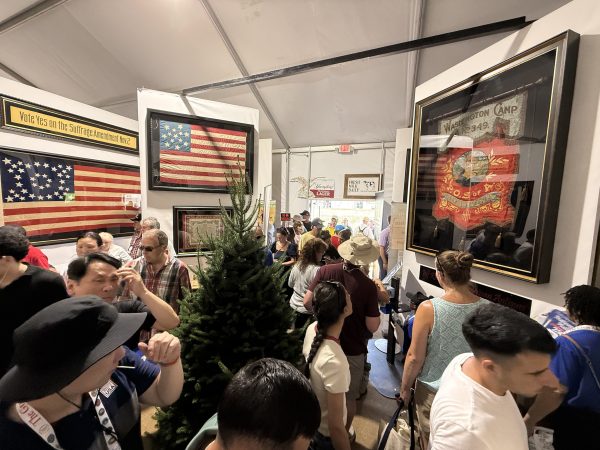
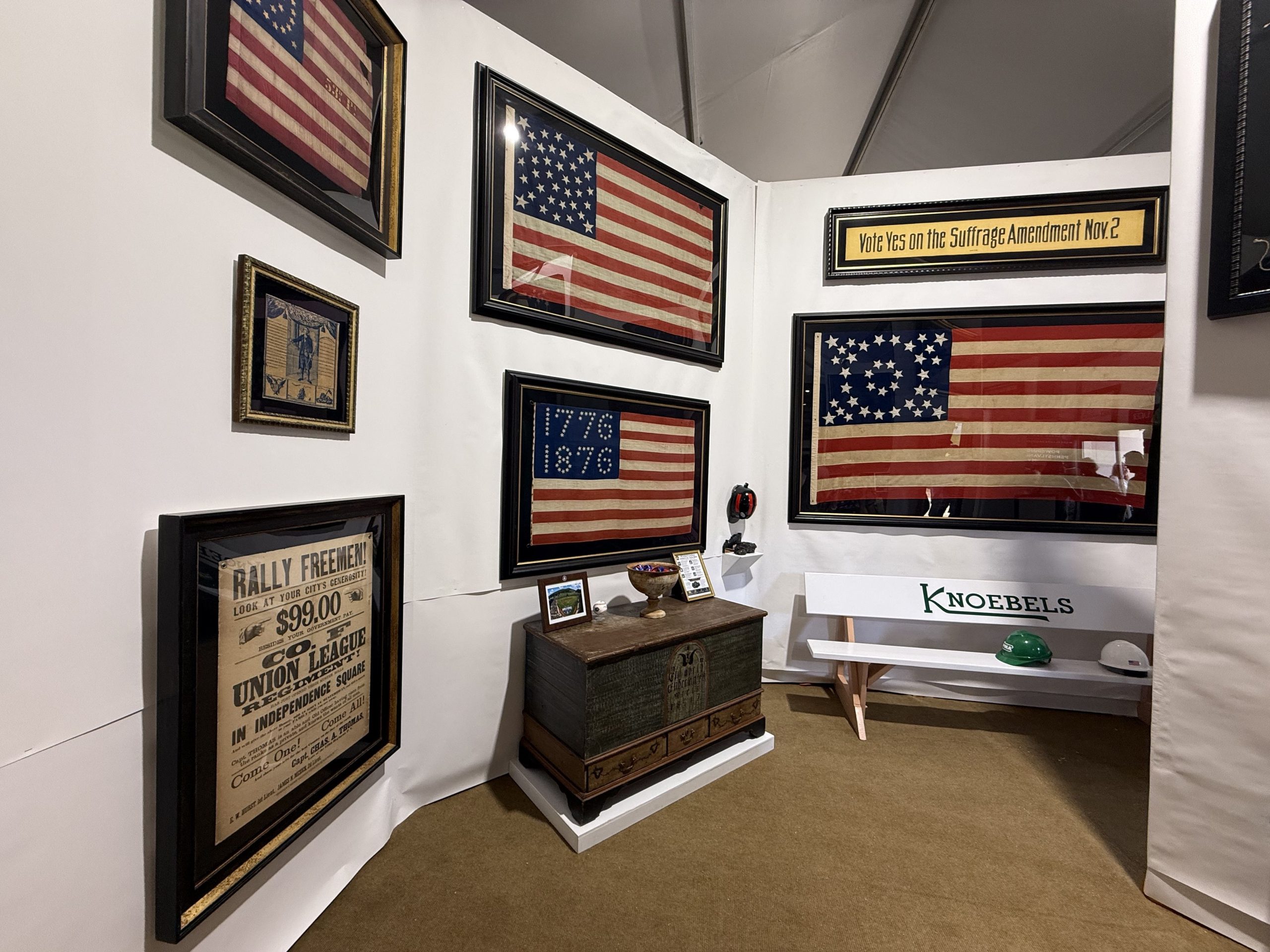
    WASHINGTON — A replica Liberty Bell, a Knoebels amusement park bench, hundreds of bags of potato chips, and dozens of sweating tourists packed into Pennsylvania’s location at President Donald Trump’s Great American State Fair on Tuesday — a stark turnaround from when the signature 250th anniversary event opened in Washington last week without a Keystone State presence.

    Pennsylvania was one of the few Democratic-led states that — describing the two-week fair as too partisan — had either decided not to participate or failed to find another host to showcase local history and memorabilia.

    The interest, Gov. Josh Shapiro said at the time, was just not there.

    But after a weekend-long sprint initiated by U.S. Sens. Dave McCormick (R., Pa.) and John Fetterman (D., Pa.) to dredge up that interest, Pennsylvania’s pavilion opened Tuesday with nearly every inch of the space filled.

    The walls were covered by antique flags and signs lent by York County’s Jeff R. Bridgman Antiques. Children stood in line for a U.S. Steel penny-press machine, grabbed bags of Middleswarth chips made in Snyder County, and Crayola crayons from Easton. (Additional chip donations from Utz and Martin’s will be arriving soon.)

    Tourists collected pamphlets about Gettysburg and the Pennsylvania Farm Bureau. They took pictures of anthracite coal and a drill bit used for fracking, both of which were on loan from U.S. Rep. Dan Meuser (R., Luzerne).
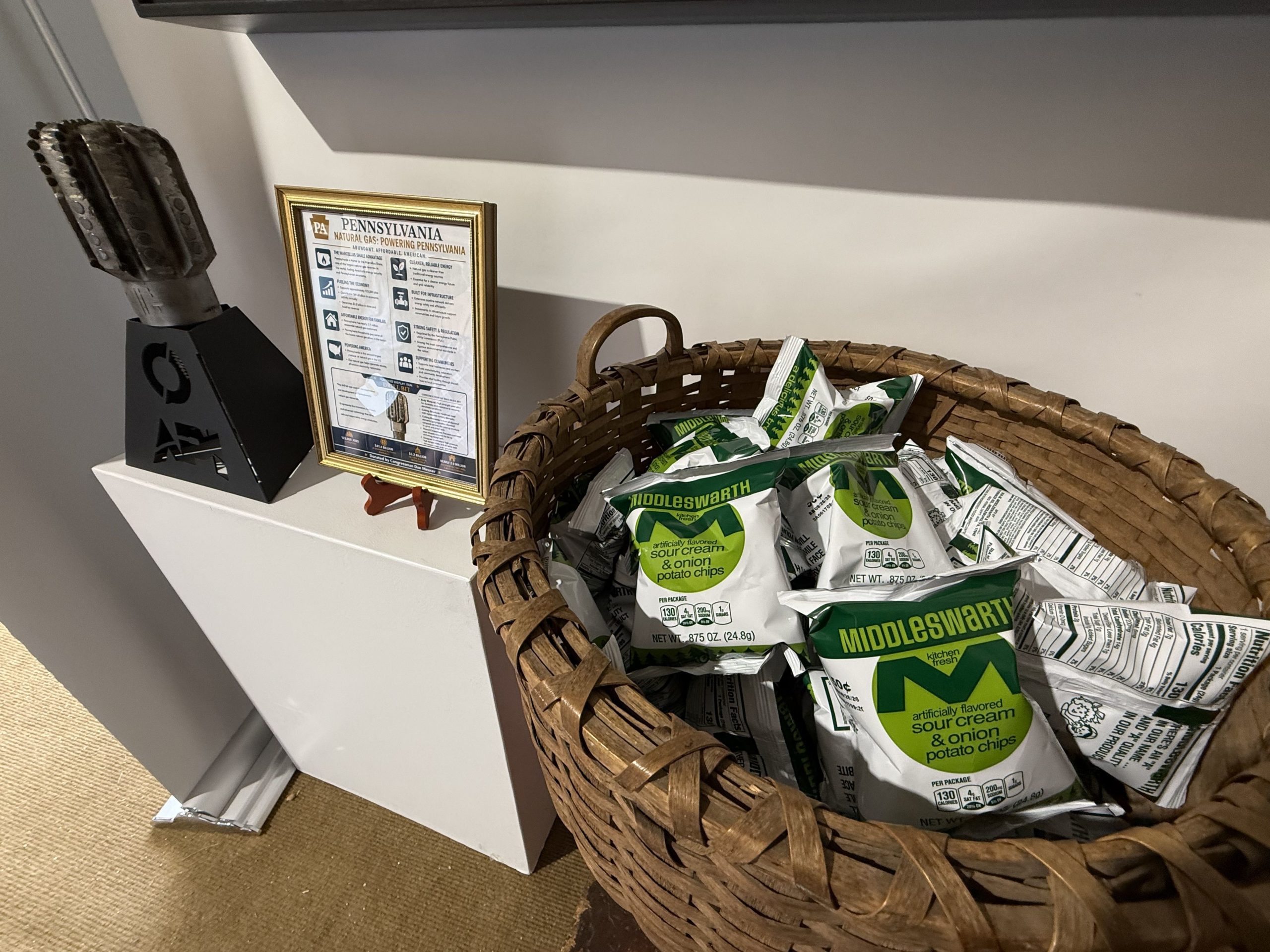
    Pennsylvania’s pavilion showcases a natural gas drill bit and Middleswarth chips at the Great American State Fair on June 30, 2026, in Washington, D.C.Sam Janesch / Staff

    “I always look for an opportunity to highlight our industry,” Beth Ann Bossio, a Christmas tree farmer from Fayette County, said after driving three and a half hours to drop off a tree to display in the center of the space.

    Pennsylvania is one of the largest producers of Christmas trees, and Bossio said it was important to her that both the state and its farmers were represented at the fair.
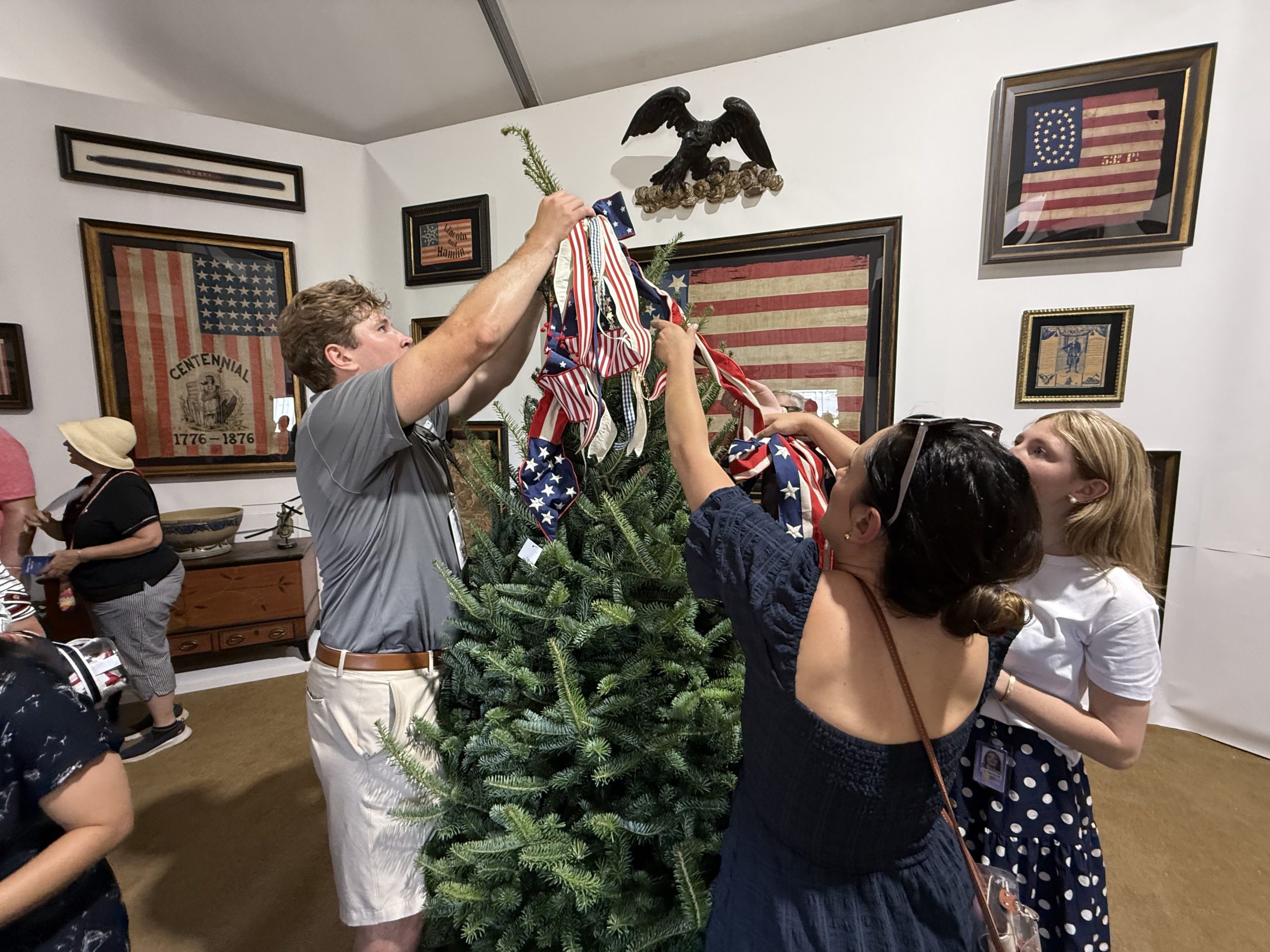
    Beth Ann Bossio (front center), a Christmas tree farmer from Fayette County, helps staff from U.S. Sen. Dave McCormick’s office set up a tree she brought for Pennsylvania’s pavilion at the Great American State Fair on June 30, 2026, in Washington, D.C.Sam Janesch / Staff

    “That was my vision to come here, to make sure that Pa. is being reflected of what we are, and what we represent,” she said before tying an American flag-themed bow on the tree. “Farmers are very proud of that. We’re patriotic. We take pride in our land and how we steward it.”

    The packed room on the National Mall came together in a rush in recent days, after Shapiro joined Democratic governors from other states in declining to use state resources to create and staff a pavilion, which his office said would have run a tab of “hundreds of thousands of taxpayer dollars.”

    He also said his administration’s search for another Pennsylvania host came up short. No companies or other kinds of groups were interested, he said, even as businesses and local governments stepped up to fill the spaces in other states.

    While Shapiro last week blamed the lack of interest on the president’s polarizing impact on the 250th celebrations, he said in an interview Tuesday with The Inquirer that it “was never a political exercise. This was an exercise in practicality.”

    Shapiro said Pennsylvania’s pavilion would have cost the state $700,000, all of which was money he saw better spent on the major events happening in Pennsylvania this year, including the NFL Draft, PGA Championship, MLB All-Star Game, the ongoing World Cup games, and a number of events across the state for the nation’s 250th birthday.

    “My focus is on spending the taxpayer dollars here,” he said.

    His administration spent two or three weeks reaching out to businesses and to the Pennsylvania Chamber asking them if they wanted to participate. None of them did, Shapiro said.

    “They obviously had a change of heart at the last minute. That’s fine,” Shapiro said about the revived Pennsylvania pavilion.

    Organizing the booth in Shapiro’s place were the state’s two senators, a bipartisan duo who have often worked together.

    McCormick and Fetterman withheld any direct criticisms of Shapiro while talking about their effort, though Fetterman has clashed with the governor in the past and has also repeatedly broken Democratic ranks to support Republican-led efforts.

    McCormick said he understood Shapiro’s desire not to spend taxpayer money, but when he found out there would be nothing to represent the state that is “the center of America’s history,” he sprang into action.

    The freshman Republican said he and Fetterman spoke Saturday morning and quickly made calls to the Pennsylvania Chamber of Business and Industry, the Pennsylvania Farm Bureau, and individual businesses to donate time and resources.

    “It’s just inconceivable that we wouldn’t have a booth that would represent all that Pennsylvania had to offer,” said McCormick, whose staff greeted guests at the pavilion all day Tuesday.

    Fetterman, who has said Pennsylvania’s role as a purple state means he should consistently work across the aisle, said he was proud to work with McCormick on the effort.

    “America’s turning 250 years old,” Fetterman said alongside McCormick during an appearance in Philadelphia on Monday. “Can’t we all just celebrate that and not just find new ways to fight about the politics and the dynamic right now?”

    McCormick’s office listed 23 companies or groups that signed up to help, though only a few corporate sponsors were front and center in the space.

    Two large signs showcase the Marcellus Shale Coalition, a natural gas advocacy group that has a significant lobbying presence in Harrisburg. And U.S. Steel, the Pittsburgh-based company that benefited from a Trump-approved takeover by a Japanese-owned company last year, offered the penny press and colorful wristbands reading “forging the future.” Hats and signage commemorating Yuengling and Mack Trucks were lent from the Pennsylvania Manufacturers’ Association.
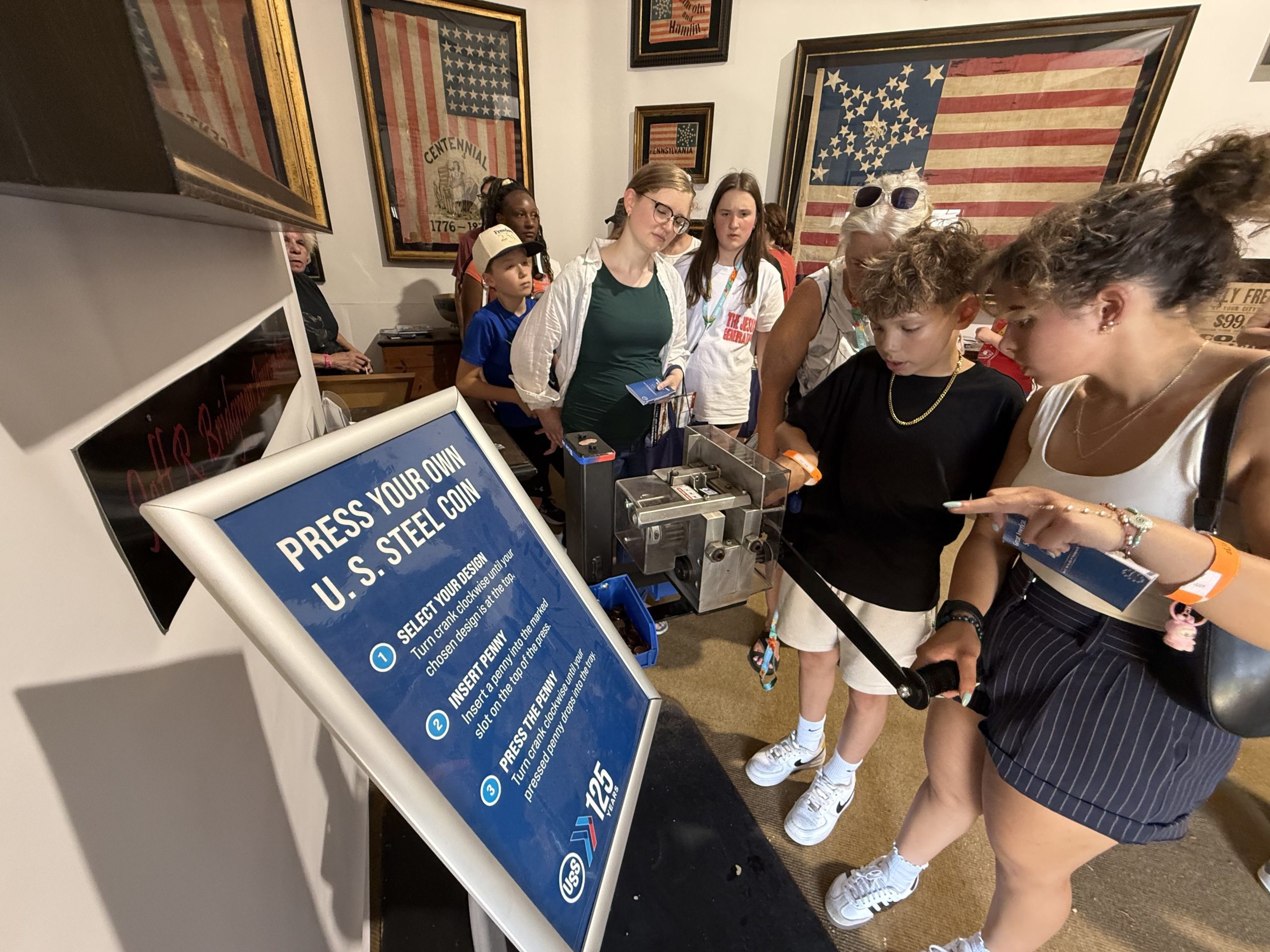
    Tourists use a U.S. Steel penny-press machine on display at Pennsylvania’s pavilion at the Great American State Fair on June 30, 2026, in Washington, D.C.Sam Janesch / Staff
    Pennsylvania’s pavilion showcases state history and memorabilia at the Great American State Fair on June 30, 2026, in Washington, D.C.Sam Janesch / Staff

    Some organizations have acknowledged earlier conversations with Shapiro’s office to participate that didn’t go anywhere.

    A report from The New Republic that Pennsylvania would not be participating in the affair “caught us off guard because that was not our experience at all, nor was it what we had communicated to the [the governor’s] office,” said Jon Anzur, the senior vice president of public affairs for the Pennsylvania Chamber of Business and Industry. “It’s unfortunate that it occurred that way.”

    He said the governor’s office approached the chamber less than two weeks out from the start of the fair to help get companies involved.

    “It just seems odd that we were approached at the eleventh hour and now it sounds like the governor’s office is trying to point fingers when there was ample time to get ducks in a row,” he said.

    The Hershey Co. is among the Pennsylvania-based companies that declined to participate.

    “We were asked by Gov. Shapiro’s office in mid June and then again over the weekend by Sen. McCormick’s office,” said Todd Scott, a spokesperson for the chocolate business.

    Both were told that the size of the ask and the limited amount of time to make it happen was not possible.

    “We were asked so late in the game that logistically we couldn’t make that happen. We just cannot provide on a moment’s notice that amount of product that they would have been asking for,” he said.

    But the summer weather was also a factor.

    “There’s no refrigeration on the mall, and with extreme heat, chocolate doesn’t do well in 100-degree temperatures,” he said. “We always want to make sure that people have the best experience with our products that they can.”

    But another candy company, Asher’s Chocolate Co. in Souderton, decided to join.

    “Asher’s was asked to participate by the Chamber of Commerce [Monday] and agreed to donate prepackaged bite-size pieces of fudge, which were on hand,” said David Neff, who represents Asher’s. “Asher’s is deeply committed to America and celebrating America’s 250.”

    Bob Asher, a longtime influential GOP leader in Southeastern Pennsylvania from Montgomery County, was previously involved with the company but he has no remaining financial interests, Neff said. Asher donated thousands of dollars to Treasurer Stacy Garrity, Shapiro’s Republican opponent for governor, and is her honorary campaign chair.

    Other Philadelphia-area companies are also financially supporting Trump’s effort.

    SAP, the German business-software giant whose U.S. headquarters and 2,000 staff are in Newtown Square, Delaware County, donated $5.6 million to Trump’s Freedom 250 initiative.

    “SAP is committed to the communities where our customers, employees, and partners live and work. SAP’s support of America’s 250th anniversary celebrations reflects our long‑standing commitment to supporting innovation, economic strength, and workforce development,“ SAP spokesperson Bridget Carroll said in a statement.

    SAP software is used by the U.S. military and its NATO allies to track troop deployments, military supply chains, and equipment maintenance.

    The military aircraft producer Lockheed Martin, which has engineering centers in King of Prussia and in Moorestown, N.J., is the top donor to Trump’s initiative, giving nearly $20 million.

    This story has been updated to clarify Bob Asher’s role in Asher’s Chocolate Co.

    Staff writer Joseph N. DiStefano contributed to this article.

    This story was updated to clarify that Bob Asher is no longer involved in Asher’s Chocolate Co.
  • Two measles cases reported in Chester County, widening spread in Southeastern Pennsylvania

    Two Chester County residents have been diagnosed with measles, local health officials said on Tuesday, the first cases reported in the Philadelphia region this summer.

    Pennsylvania has identified 88 measles cases so far this year, the highest case count in three decades and more than five times the cases reported in 2025.

    Chester is now the seventh Pennsylvania county with confirmed measles cases since April.

    Jeanne Franklin, the county’s public health director, said it was too early to tell whether the two adults’ cases were linked to a growing measles outbreak centered in Lancaster County, which borders Chester.

    Health workers in Chester County have conducted contact tracing regularly for months, speaking to about 100 people since the beginning of the year who had come into contact with someone with measles.

    “The process is working,” Franklin said. She added that the county is preparing to identify more cases as they continue contact tracing.

    The two Chester County residents with measles had initially sought care in Lancaster County, she said, and county officials were still working to determine their vaccination status.

    Earlier in June, Delaware County health officials announced they had detected measles in wastewater samples, meaning a person with measles — either a resident or a person passing through the county — had used a bathroom connected to the county’s public water supply.

    Since late April, officials have recorded 43 cases in Lancaster County, 20 in Lebanon County, six in Northumberland County, two each in Berks, Chester, and Dauphin Counties, and one in York County. (A winter outbreak saw 12 cases among Chester, Montgomery, and Lancaster Counties.)

    The current outbreak is spreading largely among people who are unvaccinated, state officials have said.

    The public health threat remains unpredictable in the Philadelphia metro area, where a recent Inquirer analysis found under-vaccinated pockets pose a rising risk to a region with higher overall vaccination rates.

    Franklin said her department is increasing public communications about the measles risk, and encouraging local health providers to vaccinate infants with a “dose zero” of the measles, mumps, and rubella shot.

    Typically, children receive an MMR dose at around 1 year old and before entering kindergarten. A “dose zero” is given at six months and provides additional protection before children receive two more doses of the vaccine.

    State officials last week also recommended that physicians in affected areas provide early measles vaccinations to infants and young children.

    Chester County officials are also working with the state to analyze school-level vaccination data to pinpoint at-risk communities, Franklin said.

    Overall, 94.5% of Chester County kindergarteners were vaccinated against measles in the 2024-2025 school year, the last for which data is available. That’s just below the 95% threshold required to prevent the spread of the virus.

    (function() {
    var l2 = function() {
    new pym.Parent(‘HE_MEASLES4.html’,
    ‘https://media.inquirer.com/storage/inquirer/projects/innovation/arcgis_iframe/HE_MEASLES4.html’);
    };
    if (typeof(pym) === ‘undefined’) {
    var h = document.getElementsByTagName(‘head’)[0],
    s = document.createElement(‘script’);
    s.type = ‘text/javascript’;
    s.src = ‘https://pym.nprapps.org/pym.v1.min.js’;
    s.onload = l2;
    h.appendChild(s);
    } else {
    l2();
    }
    })();

    Spread may be wider than cases reported

    Some providers in Lancaster County have said that they fear measles is spreading more widely than state officials have been able to track, either because patients don’t realize the importance of informing health officials about their condition or are avoiding providers.

    Chester County also is contending with uncertainty. Franklin said that some residents who have had contact with infected patients have told health workers that they’d rather not get tested for measles.

    “They say, ‘I don’t want to be tested. Let this run the course,’” she said.

    Contact tracers stress that they’re not judging that decision, she said. But the department emphasizes that they need residents to work with contact tracers, so other potentially exposed families can make informed decisions about their health.

    Franklin urged Chester County residents to check their vaccination records to ensure they are protected against measles, which can infect up to 90% of unvaccinated people exposed to the disease.

    If they can’t find their records, a primary care physician can order a test to determine whether they’re immune.

    Residents should also look out for symptoms of measles, including a fever, a cough, and a runny nose — similar to other respiratory diseases — that often emerge before patients develop a telltale rash.

    Several people sickened this summer have experienced severe illness and required hospitalization for serious electrolyte abnormalities and liver and kidney dysfunction, according to physicians in Lancaster County.

    “If you previously decided not to get a vaccine, this is the time to reconsider, based on what’s going on,” Franklin said. “The window to get a vaccine once you’ve been exposed is very small.”

  • U.S. and Iran meet with mediators in Qatar

    U.S. and Iranian negotiators were in Qatar on Tuesday as both sides were set to hold talks with mediators, after a surge of attacks in recent days over the Strait of Hormuz threatened to derail efforts to agree on a lasting peace deal.

    Steve Witkoff and Jared Kushner, two of President Donald Trump’s closest advisers, were to meet with the prime minister of the Persian Gulf state, Sheikh Mohammed bin Abdulrahman Al Thani, a U.S. official said. The official added that the U.S. and Iranian delegations would hold separate talks with Qatari and Pakistani mediators today.

    Iran and Qatar said no direct, high-level meetings between the U.S. and Iranian officials were planned and that the discussions would instead be conducted via Qatari intermediaries. The negotiations would focus on implementing the preliminary ceasefire deal reached two weeks ago, the spokespeople for both countries’ foreign ministries said separately.

    The absence of face-to-face talks underscores the depth of the distrust between the United States and Iran, after negotiators met in Switzerland in June. The meetings follow a dayslong flare-up of hostilities over the strait, a key transit route for oil and gas shipments that Iran effectively blockaded during the war.

    The preliminary ceasefire largely deferred discussion of the toughest topics, including Iran’s nuclear program and U.S. sanctions on Iran, and allotted 60 days for the countries to reach a comprehensive, long-term deal. But the two sides have been unable to agree even on the meaning of the ceasefire agreement.

    U.S. officials also hoped that the pact would lead to the full reopening of the strait to its prewar status, when ships transited for free. Iran, however, has insisted that the agreement gives it substantial authority over the waterway and has threatened ships that do not travel on Iranian-mandated routes.

    Iran and Oman, a U.S. ally, are advancing a plan to collect payments for ships moving through the strait, despite U.S. objections, according to an Iranian official and four diplomats with knowledge of the matter.

    The latest round of hostilities began Thursday when the U.S. military said Iran had attacked a cargo ship hours after Iran warned that vessels could only travel through its waters in the strait. The ship was transiting through an alternative route near the Omani coast.

    U.S. officials also blamed Iran for another attack Saturday. The U.S. retaliated by striking what it said were Iranian military sites, and Iran responded by carrying out drone and missile strikes against U.S. targets in Bahrain and a Kuwait.

    The clashes ended Sunday, but neither side has publicly acceded to the other’s demands on the strait.

  • Phillies’ Derek Hill uses his artistic side to paint his own cleats as a ‘little getaway from the game’

    Phillies’ Derek Hill uses his artistic side to paint his own cleats as a ‘little getaway from the game’

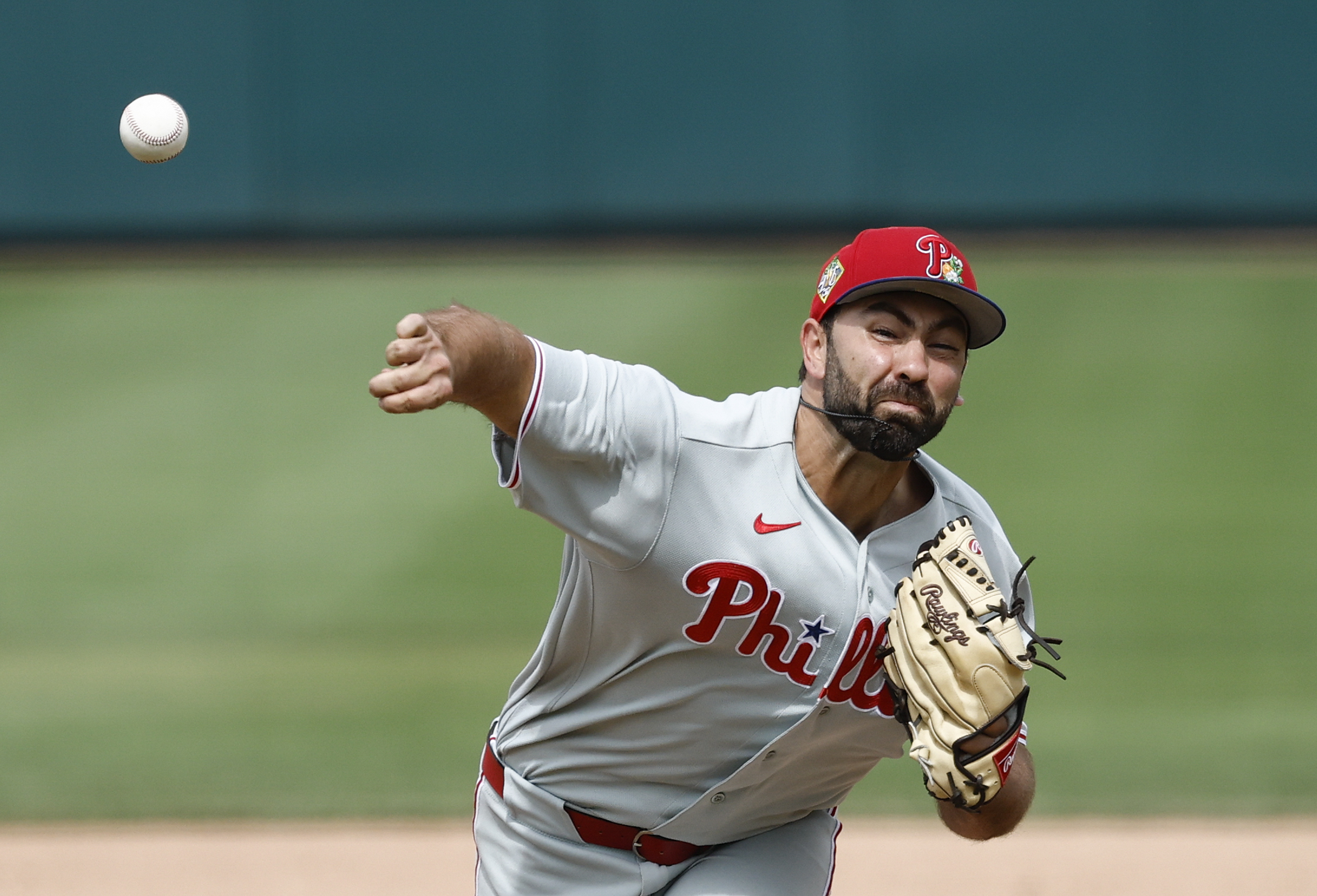
    During the Phillies’ rain delay last week in Washington, Derek Hill kept himself busy with a Sharpie and pair of cleats.

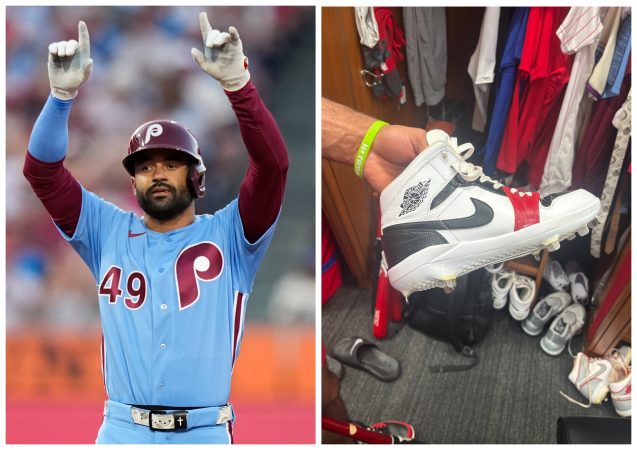
    The outfielder spent the hour and a half coloring the white shoes red with a marker. It was just a way to pass the time while the Phillies waited for their game to start, but it’s not the first pair of spikes that Hill has customized.

    It’s actually a hobby of his, although typically it involves more elaborate designs and acrylic paint instead of a Sharpie.

    “It’s like a little getaway from the game,” Hill said. “It’s pretty addicting. So, once I get going, I’ll go for like two months, and then I’ll stop for like two months, then I’ll just pick it up and just keep on going. But I got to make some for Philly.”

    @derek_hill

    Drop in the comments what design I should do next 🙏🏽 #fyp #mlbb #art #mlb #baseball

    ♬ original sound – derek_hill

    Hill, 30, has always been artistic. Not only does he love to draw and paint, he also had an interest in metalwork and ceramics growing up.

    This is the first year he’s tried painting his cleats, though, and found that the process helps him unwind.

    “Just don’t have any outside noise,” Hill said. “Just sitting there, it’s just quiet, and you get to relax, and just focus on one thing, and not worry about anything outside of that.”

    His new teammates don’t yet know about this side of him, as Hill was only acquired from the White Sox on June 11.

    He has already made an impression in the clubhouse with two clutch ninth-inning home runs in Washington and a home run-robbing catch against the Mets in New York. In 14 games since the trade with the White Sox, Hill is batting .313 with a .865 OPS. He’s become a key utility platoon outfielder, primarily starting against lefties or coming off the bench.

    But so far, his affinity for art has been under wraps. Even Brandon Marsh, who shares the outfield with Hill and played with him in 2019 as prospects in the Arizona Fall League, was unaware.

    “I had no idea how much of an artiste he was,” Marsh said.

    Hill said the favorite shoes he’s done recently were a colorful pair he made for Easter, with bright purple, orange, green, blue, and pink on a white base.

    The entire process, starting with a plain white pair, takes him about two days.

    “I acetone them down, to get rid of all the finisher that they put on it,” he said. “And then let that dry, throw my paint on, throw my clear coat on, and let it dry, and it’s good to go.”

    Most of the cleats Hill has designed were with the White Sox in mind. He has a red, white, and black pair in his Phillies locker, but originally wore them with Chicago’s City Connect uniform, which draws inspiration from the red Chicago Bulls basketball jersey.

    For him, inspiration can come from anywhere.

    “Honestly, I just see something and I’m like, ‘Oh, let me see if I can recreate that,’” Hill said.

    Now that he’s settling in with his new team, he has plans for more at some point — maybe a pair that incorporates the Phillies’ powder blues.

    “We’re going to have some heat on the feet,” Hill said.

    Lou Trivino’s contract was selected by the Phillies on Tuesday.Yong Kim / Staff Photographer

    Extra bases

    The Phillies made a bullpen swap ahead of Tuesday’s game, optioning Chase Shugart and selecting the contract of right-hander Lou Trivino, a Green Lane, Montgomery County native. “Just needing a fresh arm,” said interim manager Don Mattingly. “Bullpen’s been on fumes. I know Shug gave up a couple homers lately, but he’s really good for us this year. He did what we needed from that role, taking the ball a lot, always ready to take it.” … Brad Keller (right forearm tendinitis) threw a live batting practice session on Tuesday. The Phillies will re-evaluate him on Wednesday to determine next steps. … Zack Wheeler (8-1, 2.03 ERA) is scheduled to start Wednesday opposite Pirates right-hander Paul Skenes (6-7, 3.10).

  • Serena Williams loses in opening round at Wimbledon in first singles match in nearly four years

    LONDON — Serena Williams showed plenty of what made her a 23-time Grand Slam tennis champion in her first professional singles match in nearly four years on Tuesday.

    But Williams, 44, couldn’t quite dominate like she used to and was beaten, 6-3, 6-7 (6), 6-3, by an opponent less than half her age, 20-year-old Maya Joint of Australia, in the opening round of Wimbledon.

    “It was really great to be back at Wimbledon. I never expected to be here,” Williams, who did not meet with media after the match, said in a statement released by Wimbledon organizers. “The atmosphere was amazing. Walking out was amazing. I definitely relished it and missed it and enjoyed the moment more than anything.”

    Williams displayed the same powerful serve and heavy groundstrokes that led her to seven Wimbledon singles titles, but the 87th-ranked Joint handled her pace and won more of the big points by hitting beyond Williams’ reach on Centre Court.

    “I don’t know what just happened, to be honest,” Joint said. “I didn’t get much sleep last night. I was up until like 2 a.m. just thinking about it.

    “She has such an aura, she’s just a legend, and this court has so many huge names that have played on it. I’ve been dreaming about this moment since I was a little kid, so this is pretty crazy.”

    While Williams played two doubles matches just before Wimbledon to announce her comeback to the sport she once dominated, she hadn’t played a singles match since the 2022 U.S. Open.

    Williams has 98 career victories in singles on the hallowed grass of the All England Club. By contrast, it was Joint’s first Wimbledon victory in just her second appearance at the All England Club after losing in the opening round last year.

    But Joint won a Wimbledon warmup in nearby Eastbourne last year and knows how to play on grass.

    Doubles match still to come

    Williams, who has no singles ranking after being out for so long, was given wild card invitations by Wimbledon organizers to play singles and doubles with her older sister, Venus. Her doubles match is later this week.

    Williams has said that having her two daughters off from school inspired her comeback, and it marked the first time that her younger daughter, Adira, who is almost 3, saw her play singles. Adira sat next to her 8-year-old sister, Olympia, in the front row of Serena’s players’ box.

    Standing ovation

    Williams was given a standing ovation as she walked on court before the match started under a closed roof and several supporters held up signs with messages like “Welcome Back” and one wore a T-shirt with the text “Unstoppable Queen.”

    Williams executed a delicate topspin lob winner early on and then cranked out a 121 mph ace to hold for 3-3 in the first set. But Williams also had a costly double fault that led to the only break of the first set.

    In the second set, Williams came back from 0-40 and saved four break points to hold for 6-5. Then Williams saved a match point in the tiebreaker with a big serve down the T followed by a forehand approach winner. Another big serve — clocking in at 122 mph — set up Serena’s first set point, which she converted when Joint missed a forehand long.

    After winning the set, Williams pumped her fist calmly.

    But Joint took control early in the third and a forehand from Williams sailed long on Joint’s third match point to conclude the encounter after 2 hours, 22 minutes.

    Williams then smiled as she walked off the court to loud applause.

    Williams and Joint both had 37 unforced errors, while Joint led, 40-26, in winners.

    Zverev, Świątek advance

    After opening day featured wins for No. 1s Jannik Sinner and Aryna Sabalenka, along with Novak Djokovic, French Open champion Alexander Zverev and defending Wimbledon champion Iga Świątek made it into the second round on Tuesday.

    In a match between hard servers, the second-seeded Zverev beat Alexander Blockx, 6-4, 6-7 (8), 7-6 (5), 7-6 (0).

    Świątek, who had her father and sister looking on from the Royal Box, struggled with her serve and committed nine double-faults before overcoming Taylor Townsend, 6-1, 2-6, 6-3.

    No. 2 Elena Rybakina also advanced, beating Lois Boisson, 6-4, 1-6, 6-3.

    Fourth-seeded Ben Shelton, a quarterfinalist here last year, lost to 140th-ranked Finnish qualifier Otto Virtanen in five sets, 6-4, 3-6, 6-7 (8), 6-2, 7-6 (9).

    Matteo Berrettini, a finalist in 2021, beat Stan Wawrinka, 6-7 (7), 7-6 (16), 7-6 (7), 7-6 (5). It was the final Wimbledon match for Wawrinka, who plans to retire at the end of the year.

  • Philly declares a heat emergency and Welcome America alters events as 100-degree temperatures loom

    Philly declares a heat emergency and Welcome America alters events as 100-degree temperatures loom

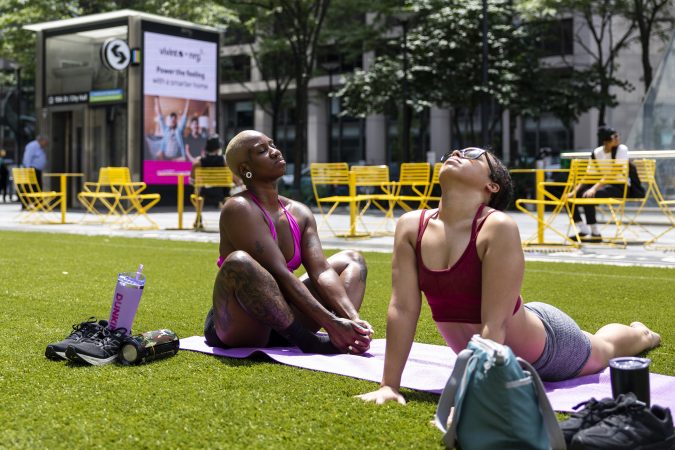
    The National Weather Service on Tuesday issued an “extreme heat” warning for the entire region through July Fourth, with a record-tying three consecutive days of 100-degree temperatures possible in Philadelphia.

    Though heat warnings may lack the sizzle of warnings for blizzards or hurricanes, health officials advise that they can be more dangerous — slow-motion disasters that target the most-vulnerable populations. Plus, the timing of this one couldn’t be much worse.

    Along with the daytime heat indexes approaching 110, the nights aren’t going to be much cooler. Temperatures Friday morning may not get below 80 degrees in the city, said Sarah Johnson, the warning coordination meteorologist with the National Weather Service in Mount Holly, which has been briefing emergency managers since late last week.

    “It’s very concerning,” she said.

    The city on Tuesday declared a “heat health emergency” in effect from 1 p.m. Wednesday through 8 p.m. Saturday, activating its pioneering heat-response system.

    In deference to the heat, Wawa Welcome America announced several schedule changes, including canceling Thursday’s All-American Block Party, and moving back start times for concerts Thursday and Friday.

    It also said the Liberty Medal ceremony on Friday honoring Pope Leo XIV would be moved to inside the Constitution Center and the route of the Semiquincentennial Parade, which begins at Fifth and Chestnut Streets, would end at Broad and Chestnut, rather than proceeding to Logan Circle as originally planned.

    PJM Interconnection, the region’s electric grid operator and one of the nation’s largest, already has sounded alarm bells regarding power demands. Peco advised that it has a contingency plan in case workers go on strike Saturday, as they have threatened.

    SEPTA is making preparations for what would have been a challenging week even if the weather was cool (as it was in 1776, by the way). At Philadelphia International Airport, a bigger concern would be pop-up thunderstorms that could disrupt the weekend celebrations that have been 250 years in the making.

    The heat wave will have staying power in Philly

    Only twice has Philly had three consecutive days of triple-digit temperatures — in 1993, and on July 2, 3, and 4 of 1966. That could happen again on July 2, 3, and 4 of 2026, the weather service says.

    Officially it reached 90 degrees Tuesday at the airport, the 16th time this year that the high reached at least 90 degrees, the second-most number of days before Jul 1 in records dating to 1874. Wednesday’s forecast high, in the mid to upper 90s, would be the prelude to the holiday heat festival.

    Along with the heat, of concern for event planners is the potential for strong thunderstorms on Saturday afternoon and evening during the climax of the Semiquincentennial events.

    Preparing for the heat and storm threats in the region

    At Philadelphia International Airport, it’s not the heat so much as the attendant storm threat that is the major concern, said spokesperson Heather Redfern.

    The national extent of the extreme heat — the result of a so-called heat dome of high pressure — and the pop-up storm threat could “impact flights with delays, diversions to other airports and cancellations,” she said.

    The airport was expecting more than 680,000 departing and arriving passengers from Wednesday through next Tuesday. Redfern advised travelers to sign up for airline flight alerts.

    In its forecast discussion Tuesday, the weather service cautioned “that any holiday weekend festivities could be impacted by thunderstorms,” adding that “the environmental setup would be favorable for strong to severe” storms.

    SEPTA was expecting a crush of passengers, especially Saturday when in addition to the 250th bash, a World Cup soccer match will be played in South Philly. The agency may set up misters outside stations where long lines may develop, spokesperson Andrew Busch said. The agency would try to make some cooling buses available if the city requests, he said.

    A Saturday complication for Peco is a threatened strike by 1,500 union members. The company said it has a “contingency plan” in place to keep customers’ air-conditioning systems operating and would be able to respond to any severe storm issues.

    With or without storms, in deference to the heat SEPTA will be reducing speeds on all rail lines, said Busch, as extreme heat can cause overhead lines to sag and tracks to buckle.

    Heat-wave response is a Philly thing

    It’s not in a league with the Rocky statue or cheesesteaks, but heat response is a very Philly thing that got its start in the 1990s when the city won high praise from the Centers for Disease Control and the National Oceanic and Atmospheric Administration.

    The impetus was the summer of 1993 when Philadelphia recorded 118 heat-related deaths — about triple the combined total of 2015-16. That summer was also the last time the city had three consecutive days of 100-plus degree temperatures.

    The relatively inexpensive program includes setting up more than 50 cooling centers; health officials hold that even a short break from extreme heat can save lives. Residents are encouraged to look in on elderly neighbors, and the Philadelphia Corporation for Aging will be operating a heat hotline, 215-765-9040.

    Variants of Philly’s response system have spread to other cities around the country.

    In Philadelphia, even though summer temperatures have been rising, heat-related deaths have declined dramatically.

    May that trend continue.

    Staff writer Ariana Perez-Castells contributed to this article.

  • Shelter-in-place order lifted after freight train derailment in Bucks County

    Shelter-in-place order lifted after freight train derailment in Bucks County

    No injuries were reported after a CSX freight train derailed Tuesday afternoon in Bensalem Township in Bucks County, and shelter-in-place and evacuation orders have been lifted, authorities said.

    Hazmat teams and other emergency personnel responded to the derailment that occurred between Street Road and the Neshaminy Falls train station just before 2 p.m., and no hazmat leaks were found, authorities said.

    A SEPTA spokesperson said the West Trenton Line on the agency’s Regional Rail service was suspended, but later was cleared to resume.

    “We operate on our own tracks in this area, but the CSX tracks are sort of parallel to ours in that area, so we had to suspend due to the emergency response,” said SEPTA spokesperson Andrew Busch.

    Bensalem Township police said 72 train cars were traveling eastbound when 13 cars derailed, though CSX said 16 cars derailed. Three of the derailed cars were marked as possibly containing hazardous materials.

    “Out of an abundance of caution, the Bucks County Hazardous Materials Response Team was activated while police officers established a shelter-in-place order for the surrounding area. Officers also conducted door-to-door notifications along Grove Avenue and Old Lincoln Highway to evacuate nearby residents and businesses,” the Bensalem Township police said.

    “Residents are asked to avoid the area and stay away from the railroad tracks while cleanup operations continue,” the police said.

    A spokesperson for CSX said the train derailed near the crossing of East Bristol Road and Grave Avenue.

    “Our primary focus remains the safety of onsite personnel and the surrounding community,” CSX spokesperson Jonathan Stuckey said in an email.

    “CSX crews are currently on scene and working as safely and quickly as possible to restore the impacted site. The cause of the incident is currently under investigation. We will provide more information as it becomes available,” Stuckey said.

    U.S. Rep. Brian Fitzpatrick, who represents all of Bucks County, said he was closely monitoring the situation and the cause of the accident was under investigation.

    “In moments like this, every minute matters. Response time, coordination, calm under pressure, bravery, and professionalism are what keep people safe,” Fitzpatrick said.

    “We are grateful for the safe outcome, and for the incredible men and women on scene this afternoon who protect our community day in and day out,” Fitzpatrick said.

  • 2 teens sought in shooting death of Penn State student in South Philly

    2 teens sought in shooting death of Penn State student in South Philly

    Two 16-year-olds are being sought for the fatal shooting of a 22-year-old Penn State student in South Philadelphia, police said Tuesday.

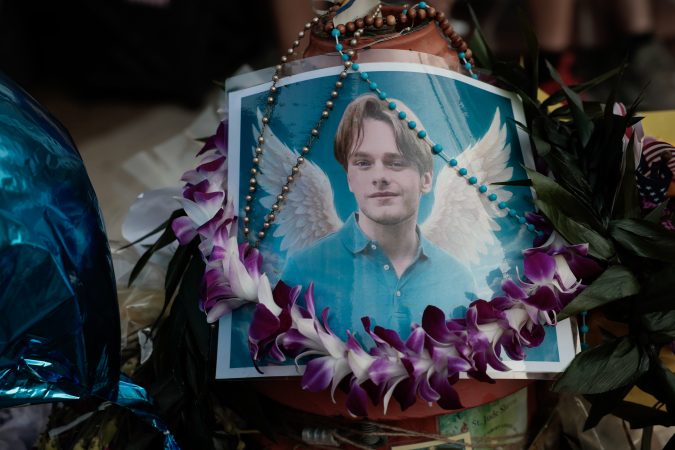
    Police obtained arrest warrants for Kaiseem Smith and Azzubair Outen-Fleming on charges of murder and related offenses in the death of William “Billy” Schmidt, said Deputy Commissioner Frank Vanore.

    On June 6, Schmidt was gunned down just footsteps from his home on the 2300 block of South 20th Street in an apparent robbery attempt.

    Schmidt was pronounced dead at Penn Presbyterian Medical Center a short time later. Schmidt was studying digital journalism and media at the Penn State World Campus, the university’s online campus.

    His father told 6abc that Schmidt was returning home after watching the NBA Finals at a nearby bar with friends.

    His two assailants were captured on security footage both approaching the scene and fleeing the area after the shooting.

    Anyone with information helpful to police in this case can call 215-686-TIPS-8477.

  • Soccer Extra: The knockout rounds begin

    Soccer Extra: The knockout rounds begin

    The knockout rounds are here! Lisa Carlin and Jonathan Tannenwald preview the USMNT’s path, break down the biggest Round of 32 matchups, and Round of 16 match coming to Philly. Watch Here.

  • Three words in the Declaration of Independence paint a cruel picture of Natives

    Three words in the Declaration of Independence paint a cruel picture of Natives

    McKaylin Peters, a 24-year-old Native American graduate student at Johns Hopkins University, still recalls when she first heard the words “merciless Indian savages.”

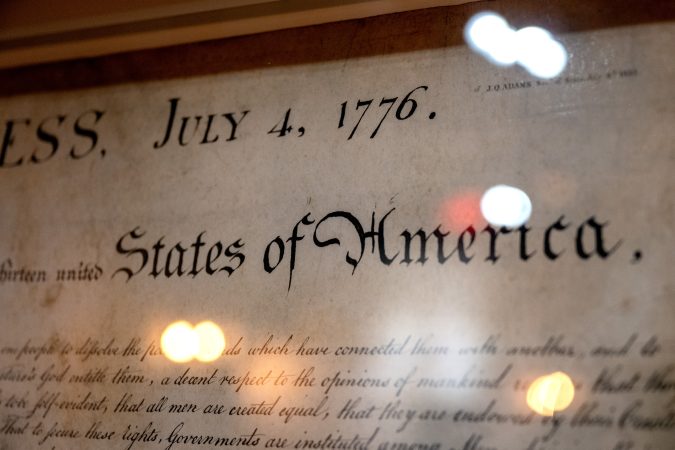
    Sitting in social studies class at her predominantly White middle school near Green Bay, Wisc. — a school that once used an image of an Indian as its mascot — she cringed when the teacher read a passage deep in the Declaration of Independence: “He has excited domestic insurrections amongst us, and has endeavoured to bring on the inhabitants of our frontiers, the merciless Indian Savages, whose known rule of warfare, is an undistinguished destruction of all ages, sexes and conditions.”

    Peters said she and the six other Native students in the class looked quietly at one another.

    “I was upset. It just rolled off her tongue very easily,” recalled Peters, a citizen of the Menominee Nation who is getting her master’s in organizational leadership. “It seemed like no one else was shocked except for us, the Indigenous students in the classroom. We were like, ‘Did she really just say that?’”

    As the United States marks the 250th anniversary of the Declaration — a document fundamental to the nation’s founding and still revered — Peters and other Native American scholars and tribal leaders are reflecting on the Founding Fathers’ use of the derogatory description for Indigenous people in 1776. Many note that while the Declaration promises that “all men are created equal,” its ideals were not extended to everyone.

    The document’s portrayal of Indigenous people helped establish a moral and legal framework that justified decades of devastating U.S. policies toward Native communities, according to historians. Celebrations of the 250th anniversary of the Declaration’s signing come amid a striking contrast: Native tribes are working to reclaim ancestral lands, revive lost languages, and preserve cultural traditions, while the Trump administration has sought to remove or downplay references to slavery, Native dispossession, and other dark chapters of U.S. history in parks and museums and on government websites.

    “It’s not just a line in an old document,” Peters said. “It’s a reminder that this country was built by declaring us less than human. When the Declaration of Independence calls us that, it’s a message that Native youth sadly still hear today in classrooms, policy debates, and in how society talks about us.”

    Many historians and Indigenous historians say the term “savages” did more than reflect 18th-century attitudes. It helped perpetuate stereotypes of Native Americans and contributed to their marginalization; centuries later, it adds to feelings, especially for Native youths, of being excluded from America’s national story. A 2022 study by Texas A&M University researchers found that the Declaration’s pejorative reference to Native Americans helped normalize a view of them as threats rather than as sovereign nations and peoples with rights.

    For many Native people, the meaning — and impact — of the phrase is emotional and complicated.

    Some discover the wording as adults and are appalled. Others see it as a reminder of racist attitudes and centuries of broken treaties, land theft, and forced assimilation. Some young people have reclaimed the epithet, debating it on social media and displaying it on T-shirts and tattoos as a symbol of resilience and empowerment. An Indigenous-led heavy metal band intentionally used the phrase as its name.

    “It’s become sort of an ironic touchstone,” said Kevin Gover, the Smithsonian Institution’s undersecretary for museums and culture. A citizen of the Pawnee Tribe of Oklahoma, Gover said he did not encounter the term until middle age. After his initial outrage, Gover said, he responded as many Native people do: by mocking it.

    “Even we, on the side of the descendants of those who were victimized, have to take a nuanced view,” said Gover, who is also the former director of the National Museum of the American Indian in D.C. “In many respects, it’s a badge of pride that our ancestors had the wherewithal to survive and allow us to be alive in this time.

    “We can acknowledge the wrong,” he said, “and be grateful for our ancestors’ fortitude.”

    Hartman Deetz, an enrolled member of the Mashpee Wampanoag — the Massachusetts tribe that famously helped the Pilgrims survive their first Thanksgiving in 1621 — said the wording reflects the opposite of how Indigenous people treated white settlers.

    “They were fed when they were starving, given hospitality by us, but they treated us in a way that was savage and merciless in the dispossession of our homelands,” said Deetz, who served as a consultant for an exhibition at the Museum of the American Revolution in Philadelphia about the Declaration and the history behind it. “It was framed in a way that justified the treatment they brought upon us, and it continues to this day in attempts to sell our sacred sites for copper mines and to drill for oil and mining on our lands.

    “The colonial enterprise hasn’t stopped,” he said. “There’s such a disregard for Natives to exist or have rights of where we do exist. That’s the legacy of these words.”

    The words originated in an early draft of the Virginia Constitution written by Thomas Jefferson, who later included it in the Declaration of Independence, which Congress adopted.

    Ironically, some historians say, the characterization of Native people contradicts Jefferson’s own views. In Notes on the State of Virginia, a book Jefferson wrote that laid out many of his views on race, government, and religious freedoms, he was “very sympathetic to Native people,” said Kevin Butterfield, a historian at the Library of Congress. Jefferson described Indigenous people as just, honorable and noble — a sharp contrast to the widespread European belief that Indigenous people were inferior.

    But Jefferson understood the Declaration was political rhetoric — a kind of “public relations piece,” said Butterfield, who is the acting chief of the Manuscript Division at the Library of Congress. He placed it near the end to bolster the case for independence.

    “He’s trying to paint the worst possible picture of how the king is approaching his interactions with the American colonists,” Butterfield said. “So he’s laying out horrible wartime atrocities from the Revolutionary War.”

    The description reflected colonial attitudes and the realities of frontier warfare, scholars say. Colonists were hostile toward Native Americans, who were powerful political and military figures and, just like other nations, protecting their sovereignty. Some Native nations had allied with the British — a move that many settlers resented — and many colonists also opposed King George III’s Proclamation of 1763, which barred settlement west of the Appalachian Mountains.

    Repeated violence between Indigenous people and settlers also helped shape the ideology behind the description, including the French and Indian War and Dunmore’s War in 1774, when Virginia colonists fought the Shawnee and Mingo to expand into the Ohio Valley, according to historians. In the summer of 1776, as the Declaration was drafted and adopted, a lesser-known conflict unfolded when Cherokee warriors attacked frontier settlements across parts of Virginia, North Carolina, South Carolina, and Georgia. Colonists responded by burning more than 50 Cherokee towns and driving Native people from their homes.

    By 1776, the Founding Fathers “understood their need to accuse the king of what they considered the ultimate crime — partnering with Indigenous peoples and arming them,” said Ned Blackhawk, a Native American author and Yale University historian. “So they created this vilification in the Declaration that, in many ways, was at odds with their experience of living alongside Natives for generations.”

    The rhetoric was part of a broader racial ideology taking shape during the Revolutionary era, said Blackhawk, an enrolled member of the Te-Moak Tribe of Western Shoshone Indians of Nevada.

    “They were deeply committed to Enlightenment principles, but those were restricted to people similar to themselves,” he said. “Native Americans became a foil in simplified and racialized ways.”

    Tracy L. Canard Goodluck, executive director of the Center for Native American Youth at the Aspen Institute, said she is disappointed the term is either glossed over or not taught in many school curriculums, its impact not discussed.

    It wasn’t until she was a student at Dartmouth College, she said, that she fully understood the context of the description. She was angry, but the new knowledge also awakened in her a passion for educating others about Indigenous history and mistreatment. Goodluck, a member of the Oneida Nation who is also Mvskoke Creek, said in her previous work as a teacher in Seattle and Albuquerque she taught about Indigenous people and the harsh characterization in the Declaration.

    “It shouldn’t just be about white history,” she said. “It should be about all history — the good, the bad, and the ugly.”

    She said it’s also important to educate the public, so every Fourth of July, she wears a T-shirt emblazoned with the phrase from the Declaration.

    “Those words served the purpose back then as a way to dehumanize Native people in this country,” said Goodluck. “We need to change that narrative. We’re still here. We’re doctors, lawyers, teachers and political leaders.

    “I am that merciless Indian savage who my ancestors prayed for to do great things.”