The Philadelphia Cycling Classic is back this weekend for the first time in a decade.
From 1985 to 2016, the race was a staple in the streets of Philadelphia, and it’s finally making its return with the men’s and women’s races on Sunday.
Here’s everything you need to know about the race and its return …
What is the Philadelphia Cycling Classic?
The Philadelphia Cycling Classic started in June 1985 and was recognized as one of the most iconic cycling races in the country.
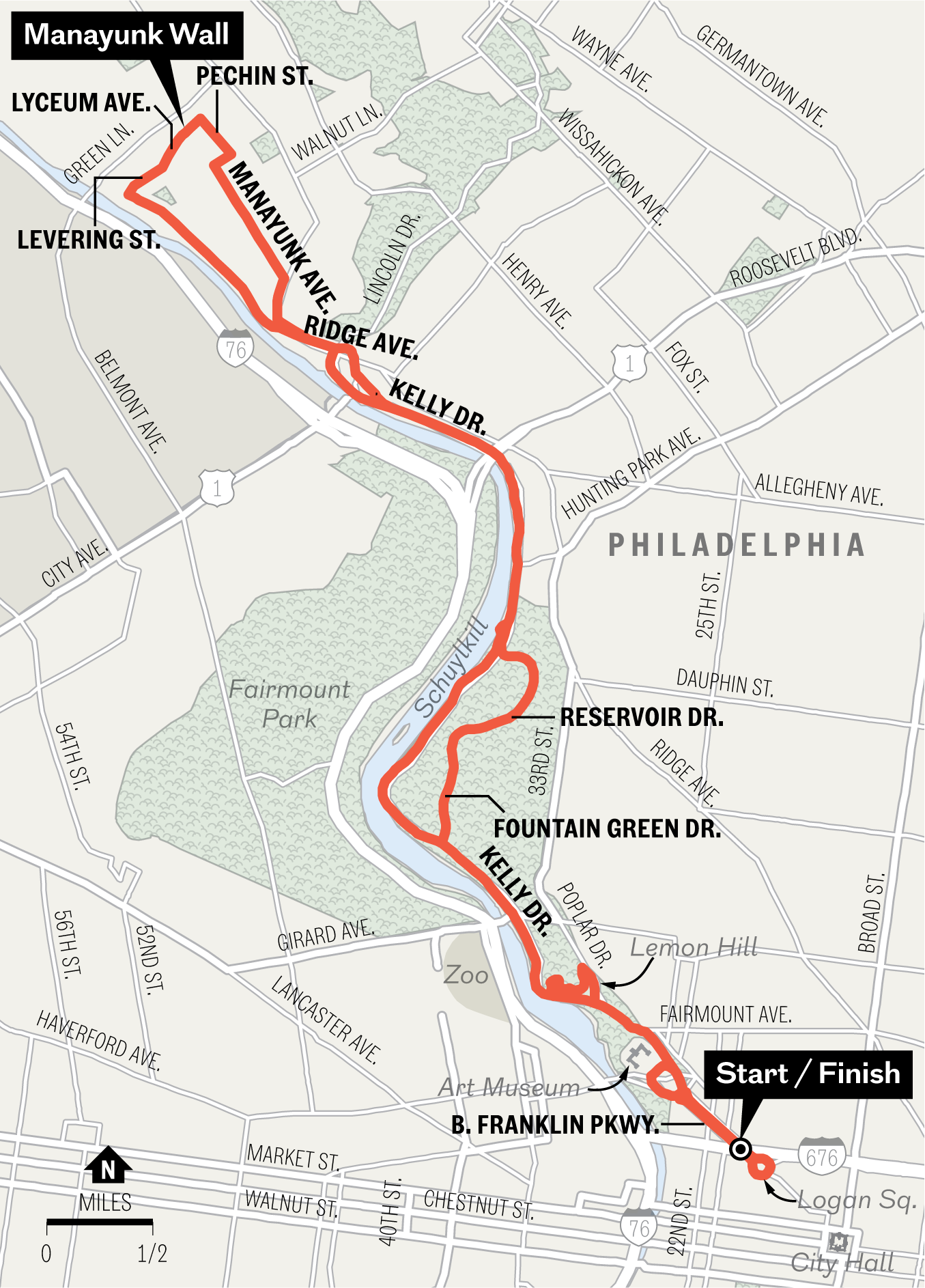
The course is a 14.4-mile circuit that will start and finish on the Benjamin Franklin Parkway. The women’s race will total 65 miles, while the men’s race will be 122 miles.
Originally known as the CoreStates U.S. Pro Cycling Championship, the race took about 100 professional riders on a 10-lap circuit spanning Fairmount Park and the hills of Manayunk, with speed skater and Olympic gold medalist Eric Heiden winning the inaugural race.
In late January 2017, city officials announced that the race’s run had come to an end. That year, organizers said, the race would cost an estimated $1 million to stage successfully and safely, and not enough sponsors were interested.
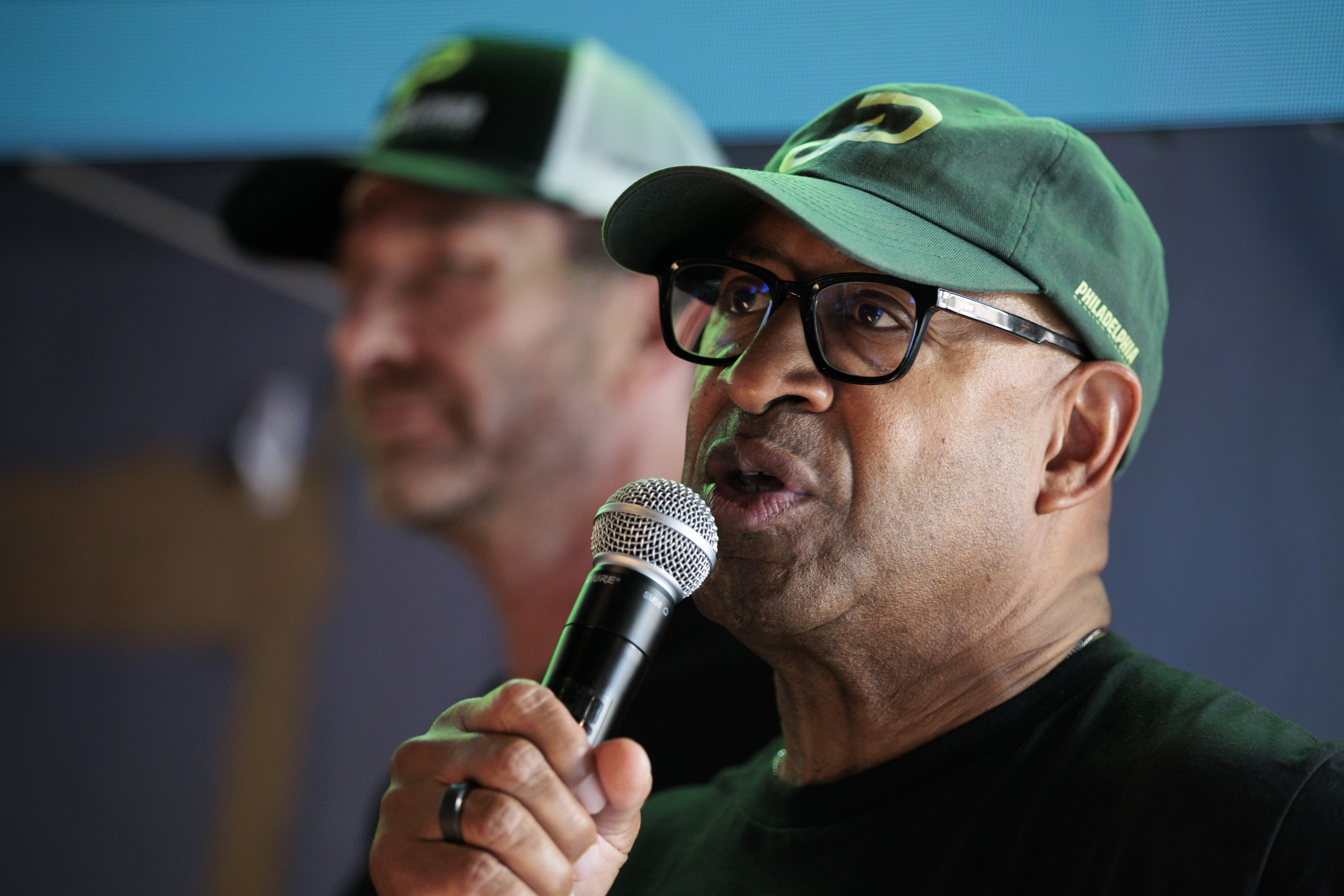
Former racer Carlos Rogers, former Philadelphia Mayor Michael Nutter, and Eric Robbins are responsible for spearheading the race’s return this year.
What is the race route?
The original course ran up the Ben Franklin Parkway to Kelly Drive, passing through East Falls, Roxborough, and Manayunk, which was home to the most famous part of the course, the Manayunk Wall.
This year’s race will return to that original course, and will take participants past Strawberry Mansion, Lemon Hill, Boathouse Row — and, of course, up the Wall.
Course map for the 2026 Philadelphia Cycling Classic.John Duchneskie
The Wall is a steep incline hill, reaching up to a 17% grade over a stretch of about a half mile, mostly on Levering Street in Manayunk. It is considered one of the race’s most iconic components, and has been part of the race since 1985, when Jerry Casale and David Chauner first mapped out the course.
Road closures will start Saturday with the Philadelphia Cycling Classic Amateur Time Trial and continue into Sunday for the main races.
Who is competing?
The Philadelphia Racing Classic will feature 36 teams and 212 riders.
Eight of the teams competing are WorldTour teams — three women’s and five men’s. Overall, there will be 21 women’s teams and 15 men’s teams, with riders representing 28 countries.
Olympians and national champions are among the riders on Sunday, including world class athletes who have competed in the Tour de France, Giro d’Italia, and Vuelta a España.
Racers Robin Carpenter of Modern Adventure Pro Cycling and Kim Stoveld of AUTOMATIC Racing will be among the local riders. For Carpenter, this is his fourth Philadelphia Cycling Classic while Stoveld has witnessed the race as a spectator before she started cycling around the time of the COVID-19 pandemic.
What do the winners receive?
The Philadelphia Cycling Classic offers equal prizes, in the men’s and women’s races, of $75,000 each. Winners will also receive trophies crafted by John Rais, an artist and metalsmith with a studio located in North Philly.
How do I watch?
Locally, 6abc will air the race live on television for those who want to watch from home, which includes streams on 6abc’s YouTube Channel, website, and on Hulu and Disney+. A special will air at 5:30 p.m. on Sunday on 6abc.
The women’s race will start at 8:35 a.m. with the men’s race to follow at noon.
For fans interested in attending, access to the race will be free, meaning anyone can line up along the course to watch.
Traditionally, large parties take place along the tight streets of Manayunk, turning the race into a festival of sorts. But for those not located in the Manayunk area, the event’s official Fan Fest will be held by the Iroquois Sculpture near Philadelphia Museum of Art from 10 a.m. to 5 p.m. on Saturday and 8 a.m. to 5 p.m. on Sunday. Entry is free and will include vendors, live entertainment, a stream of the race, activities for kids, and a beer garden.
For the better part of two decades, I have been living with cancer. I’m grateful for the advances in treatment that have made that possible, but I also have faced denials and delays to my care that could have meant a different outcome for me.
In 2010, I went to the doctor with what I thought was the flu. I was having trouble sleeping, frequent heartburn, and a persistent cough. My life quickly took an unexpected turn when I was diagnosed with chronic myelogenous leukemia (CML), a cancer that starts in the bone marrow.
Again, the unexpected. Suddenly my family and I were navigating an unknown and scary world — multiple tests and treatments I couldn’t spell, countless decisions, and most unexpectedly, despite having insurance coverage, wondering how we’d be able to afford the treatments to save my life.
For most of my adult life, like most people, I paid insurance premiums for my family, expecting that if my wife or I or one of my daughters gets sick, the money I’ve paid into that pool will be there to help cover what we need. But when I was diagnosed, I quickly realized this wasn’t the case.
It turns out the insurance company had a treatment plan of its own for me, but not the one my actual oncologist had prescribed.
I was told that before the insurer would grant coverage for the treatment my oncologist felt was best for me, I had to try and fail on medications the insurance company preferred. That practice is called step therapy, and for cancer patients, it can be deadly.
I can’t speak for everyone, but for me, failure is not really a word you want to be part of the discussion when it comes to cancer. The companies driving it, pharmacy benefit managers like OptumRx, Express Scripts, and CVS Caremark, profit from controlling what drugs get covered and in what order.
For patients with other blood cancers like chronic lymphocytic leukemia, the most common adult leukemia, the consequences can be even more severe. Delays and forced substitutions can allow the disease to evolve in ways that close the window on the best available treatment entirely.
If I had been diagnosed 10 years earlier, the treatment for CML would have included chemotherapy or a bone-marrow transplant. Today, thanks to medical advances, the most effective treatment option for my type of leukemia is daily oral anti-cancer therapy.
There are no comparable IV medications, and the self-administered pills allow me to continue to work and be an active person. In the last several years I’ve started running again, which has been a great outlet for me and another way to protect my health.
Thankfully, when my insurance tried to force me to try and fail on their alternative treatment plan, my oncology team was able to get me enrolled in a program with a drug company through which I’m able to get my medication directly from them and at low cost. But without that option, I could be forced to deal with my insurer and likely face delays and denials for my care.
Thanks to medical advances, the most effective treatment option for his type of leukemia is daily oral anti-cancer therapy, writes Paul O’Hara.Pongsak Tiantad/Dreamstime/TNS
Congress has an opportunity to stop this from happening to cancer patients, and everyone else who has been put through the dangerous process of step therapy.
The House Oversight Committee is already leading the charge. In a letter to Mehmet Oz, administrator of the Centers for Medicare and Medicaid Services (CMS), Oversight Committee Chair James Comer called on the centers to do more to protect Medicare Part D patients from insurer- and pharmacy benefit manager-imposed step therapy.
Part D plans are already bound by national cancer treatment guidelines that make clear not all cancer drugs are interchangeable, yet insurers and their pharmacy benefit managers routinely substitute treatments for financial reasons rather than medical ones. CMS has the tools to crack down and needs to use them.
Comer also played a critical role in crafting pharmacy benefit manager reforms. He and his colleagues should seize on the momentum of those successes by passing the Safe Step Act, which would ensure patients can receive timely exceptions when step therapy is medically inappropriate.
The commitment to putting patients first should extend to ending fail-first policies that can delay access to the cancer treatments that physicians determine are most appropriate for their patients.
All cancer patients want is to live life to its fullest, to see the other side of their diagnosis, and to get back to knowing what to expect out of each day. Patients deserve to know that their health insurance will provide the care their doctors say they need. I ask the Pennsylvania federal delegation to get behind the Safe Step Act. It is vitally important to the lives of American patients.
Paul O’Hara is a Doylestown resident and the president of Connected Cloud LLC, an information technology consulting firm specializing in cybersecurity.
TORONTO — Canada struck back at the United States on Tuesday with retaliatory tariffs on about $20 billion worth of American goods, including steel, dairy products, appliances, and farm equipment, as the trade war between the once-friendly neighbors escalated sharply.
The confrontation threatened one of the world’s largest trading relationships and further strained ties between the United States and a country long considered one of its closest allies. A prolonged dispute could raise costs for American businesses and consumers less than 2½ months before the midterm elections.
The new tariffs extended well beyond industrial goods, hitting everyday purchases such as seafood, cheese, clothing, cosmetics, and toilet paper, with some facing duties as high as 50%.
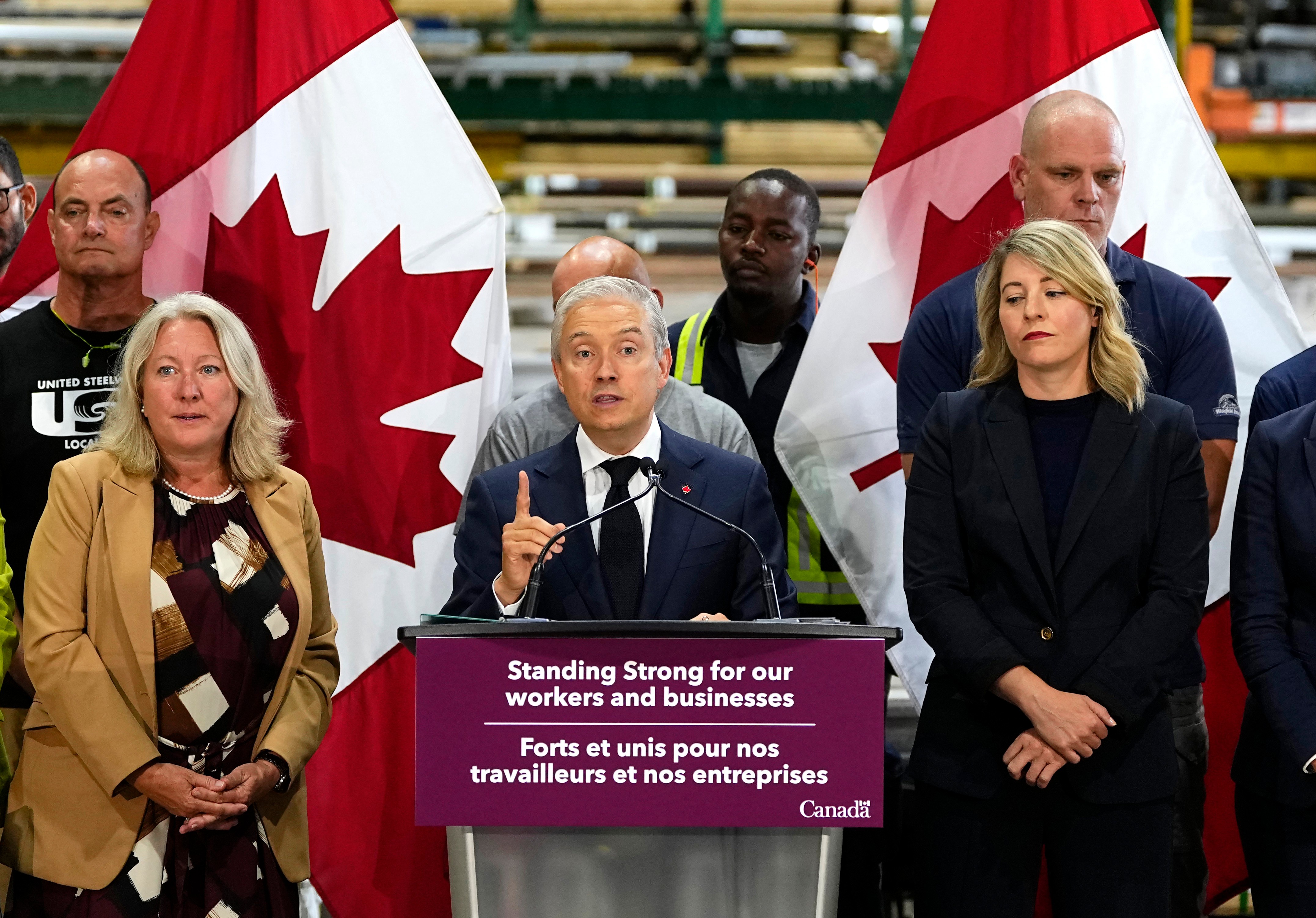
“We did not choose this conflict, but when our economic integration is used as a weapon rather than the foundation for a win-win partnership, we need to stand up,” Finance Minister François-Philippe Champagne said in French, calling the situation “an unprecedented challenge imposed on Canada.”
Industry Minister Mélanie Joly urged Canadians to buy Canadian goods, saying doing so would help protect jobs and launch a “movement of resistance.” She said Canada selected some American products for tariffs to put political pressure on particular U.S. states. Canadian officials used a similar strategy during Trump’s first term, when retaliatory tariffs targeted Kentucky whiskey, Florida orange juice, and Wisconsin yogurt.
Canada’s retaliation came after the Trump administration imposed 50% tariffs over the weekend on Canadian goods following the collapse of trade negotiations. Canadian Prime Minister Mark Carney accused Washington of trying to subordinate Canada and said U.S. demands during the failed talks showed that Americans wanted to “destroy our major industries.”
Trump told Canadian leaders to ‘fall in line’
Trump intensified the confrontation Monday, telling Canadian leaders to “fall in line” or face consequences “far WORSE” than existing tariffs and threatening new 50% tariffs on Canadian vehicles, auto parts, and steel.
Trump added another provocation Tuesday, saying the United States was giving “serious consideration” to renaming Lake Ontario “Lake America” in a feud with Ontario Premier Doug Ford. Such a change would be reminiscent of the Republican president’s unilateral action last year by executive order to rename the Gulf of Mexico to the Gulf of America.
In the hours before Canada’s announcement, Trump went on a social media tear against the country, accusing it of ripping off American farmers and driving American companies out of business.
“I deal with many countries, and Canada is easily the most difficult and unreasonable,” Trump wrote in one post. “They feel entitled, but they are not a State, and will be entitled no longer!”
Tariffs on many U.S. products would double
The tariffs will take effect Sept. 8 at rates of 15%, 25%, and 50%, with Canada matching the corresponding U.S. tariff rate on more than 700 products such as pulp and paper and electronics. The tariffs on many American products would double from 25% to 50%, with the largest share of the new measures affecting steel and aluminum.
Canadian officials said the goal is not to raise revenue but to protect Canadian companies and reduce U.S. imports.
U.S. steel imports, for example, have already fallen 30% since Canada imposed a 25% tariff, and the new 50% rate is expected to cut them further, Canadian officials said.
Goods facing 50% tariffs include some steel and aluminum products, furniture, and clothing. Appliances, dairy products including cheese, fish and seafood, and certain steel and aluminum derivatives will face 25% tariffs. Existing Canadian countertariffs on U.S. autos will remain in place.
Canada also announced a support package for workers and businesses affected by the dispute worth $7.5 billion in Canadian dollars ($5.4 billion in U.S. dollars).
Canadian officials acknowledged the counter tariffs will raise costs for some businesses and consumers but said they expect the overall economic effects to be moderate.
They said the government has provided more than $30 billion Canadian dollars (US$21.7 billion) in tariff-related support since the beginning of 2025 — far more than it has collected in retaliatory duties — as it tries to cushion the blow from the trade fight.
Countries have integrated supply chains
Canada and the United States have deeply integrated supply chains across autos, energy, agriculture, and manufacturing, making a prolonged trade fight potentially costly for businesses and workers on both sides of the border.
Businesses and consumers are caught in the middle, facing uncertainty about how much prices may increase.
Michael Howard II, owner of a furniture business in Warren, Mich., outside Detroit, said the tariffs will hamper the “ability for us to put food on the table for our family” and affect ”the ability for us to give back to our community.”
Howard and his wife started their business a decade ago. They make and sell everything from dining room tables to bookcases.
“To say that we don’t need Canada is just disingenuous,” he said. “It’s dishonest. And it’s just absolutely not truthful. We need our neighbor, but also they need us.”
On Monday, Carney said U.S. negotiators had raised objections to French-language content on streaming platforms and French-language labeling rules. He rejected the idea that those issues were negotiable, saying in French: “For the Americans, questions about the French language, Quebec culture, francophone culture, and Canadian culture are irritants. Here in Quebec, here in Canada, they are rights.”
In a social media post early Tuesday, Trump wrote: “I would never interfere with Canadians speaking French! In fact, I have never even thought of doing such a stupid thing. This lie was made up by a weak and ineffective Prime Minister in an attempt to gain political support, which he has totally lost, from the people of Quebec. I love French Canadians!”
Emily Wielk, a senior policy analyst for working families at the Bipartisan Policy Center, says that she “hears consistently” that paid family and medical leave is a benefit that workers want and need to continue working.
“It is also a benefit that many businesses want to offer, but they are trying to determine the best way to manage the financial, compliance and administrative burdens,” she said.
It doesn’t matter how big or small your business is. Providing this benefit has become increasingly important for recruiting and retaining talent. The good news is that the federal government can help, and thanks to 2025’s One Big Beautiful Bill Act, more support is available.
Employer tax credit
Since 2018 there has been a generous tax credit available for employers who want to voluntarily provide some sort of compensation to their employees taking leave. It’s called the Employer Credit for Paid Family and Medical Leave under Internal Revenue Code Section 45S.
As long as you pay your employee a minimum of 50% of their normal wages while they are on leave, you can take a 12.5% tax credit on what you pay. The credit then increases by 0.25% for each additional percentage point of wages paid.
“If you offer the leave, you have greater certainty that the employee is coming back, and you can determine how to manage the gap in the interim,” said Wielk. “If you lose the worker, you will spend more time, money, and energy recruiting and trying to replace that employee.”
For example, if an employee normally earns $15,000 over 12 weeks and you pay the employee $7,500 while on qualifying leave, your business may receive a federal income-tax credit of $937.50. The more of the employee’s normal wages you replace, the larger the potential credit — up to 25% of the qualifying wages paid. So if you paid the full $15,000, your credit would be $3,750.
To claim the credit, you must have a written policy and provide two weeks of paid leave (not vacation or sick time).
If you own a pass-through business, like an S corporation or partnership, you can still claim the credit against the taxes you owe. If the credit is larger than the taxes you owe, you can carry it forward for up to 20 years. Highly compensated employees — those making $96,000 or more per year — are excluded.
“One specific thing the Section 45S credit does is encourage businesses to offer the benefit specifically to lower- and moderate-wage workers — not just necessarily to their C-suite or higher-wage earners,” said Wielk. “It is designed to ensure that workers who typically don’t have access to the benefit are getting access.”
Updated guidance
Earlier this month, the Treasury Department and Internal Revenue Service provided interim guidance on the expanded credit (more comprehensive proposed regulations are expected.)
Among these changes: Employers who purchase insurance providing paid family and medical leave benefits may now calculate the credit using qualifying premiums rather than wages actually paid during leave. It also potentially allows certain employers to use the credit where leave is required by a state or local government (such as New Jersey and soon in Delaware).
Previously, only wages paid to employees who worked for a company for a year were eligible, but that requirement was relaxed to six months. For 2026, employees who earned more than $96,000 are excluded. Most importantly, the credit has now been made permanent. Previously it came up for renewal every few years.
Stability promises
Wielk says that for Section 45S in particular, the fact that it was a pilot program created uncertainty. She believes that even when businesses knew the credit existed, they couldn’t be sure it would still be there four, five, or six years down the road.
“Many businesses were hesitant to use it for a few years and then have to assume the entire financial burden if the credit expired,” she said. “I think that uncertainty deterred some businesses from utilizing the credit.”
According to Wielk, the data “is very clear” that when workers have access to paid family leave, it boosts employee morale and increases loyalty to the business.
“It allows employees to take the time they genuinely need away from work with the knowledge and security that they can come back,” she said. “That has ripple effects on their ability to return and be productive.”
As a former psychiatric hospital nurse, Justinna Dixon knows what it’s like to feel passionate for a job and overwhelmed by it at the same time.
Dixon graduated from nursing school at the height of the COVID-19 pandemic, and threw herself into her work, caring for people struggling with mental health and addiction issues. But her new-nurse shine quickly dulled under the burden of long hours, high caseloads, and insufficient support.
Now a postdoctoral fellow at Penn Nursing’s Center for Health Outcomes and Policy Research, Dixon is studying the burnout she experienced. She hopes her work will help hospital systems better understand what contributes to burnout and what they can do to improve.
Two out of five inpatient psychiatric mental health registered nurses experience high burnout, according to Dixon’s latest study, published in July in the Journal of Psychiatric and Mental Health Nursing. The study, based on data from 740 registered nurses across 10 states, found that workplace improvements — such as increasing staffing — can help nurses feel more supported and provide better care.
Dixon spoke to The Inquirer about her research and experience as a nurse in an interview lightly edited for length and clarity.
What in your experience as a nurse made you want to study burnout?
I’m a Ph.D.-prepared registered nurse. After I finished my bachelor’s degree in nursing in 2020 from Rutgers University, I worked as an inpatient psychiatric registered nurse for two years. I worked within the same types of units that I talk about in this study. I have personally seen and even felt myself how, when we didn’t have enough leadership support and adequate staffing, it made the job much harder. It made me and my other fellow colleagues give worse care to our patients and made our patients suffer even more than they already were.
What were the study’s most significant findings?
One of the main takeaways is that 40% of current inpatient psychiatric nurses right now are burned out. One of the other takeaways: Staffing was a huge driver of these outcomes, the impact of the work environment on the poor job outcomes of the nurses.
Were you surprised by what you learned?
To be honest, I’m actually not struck by any of my findings, because I have lived it. Normally, on medical-surgical units in a general acute hospital, nurses are assigned around four to five patients to take care of for their shift.
I worked on a substance-abuse detox unit in a psychiatric hospital. In this unit, one of the most medically complex units in the psychiatric hospital, I was typically assigned around 10 to 12 patients. One time, we were very short-staffed and had a full house or an almost full house, and we had one patient who was just so sick from actively withdrawing. We were so overwhelmed with all the other patients on the unit, taking admissions on top of caring for our other patients, being short a nurse.
To be honest, we just couldn’t take care of him the way we wanted to, we couldn’t get him the medication he really needed to quell his uncomfortable symptoms. He was in a lot of distress, and he ended up getting so overwhelmed he threw a chair into our nursing station. It was terrifying for the nurses, but imagine how the other patients felt. It made us delay their care because now we have to deal with this situation, and they’re all sick, too.
What could hospitals do to reduce nurse burnout?
Nurse staffing is a very complex issue. But there are some things I think could move the needle. In the current system, hospitals are not financially incentivized to improve their staffing. Hospitals are typically able to bill individually for physicians or other prescribing provider services. But for registered nurses, there’s really no financial structure that allows hospitals to bill insurance companies to pay for a nurse’s contributions to patient care. Nurses are actually lumped in with hospitals’ overhead costs.
I think that a potential solution to incentivize hospitals to improve hiring is giving them a financial incentive to do so. Another thing that I think could really help is enlisting the public. As nurses, we try to advocate so much for our patients. But maybe we could let our patients advocate for us, too.
Carlos Rogers was devastated when the iconic Philadelphia Cycling Classic hosted its final race in 2016.
“It was like a schism across my body,” Rogers said. “As a fan, it was a big gash. It was a feeling of loss, as a passionate cyclist and as a fan.”
For years, he and others both in and outside the Philly cycling community lamented the loss of the race. But while attending the Maryland Cycling Classic in 2022, Rogers decided he’d “had enough of people missing it.”
Rogers, a salon owner in Old City, had helped organize smaller bike races before, but never anything on the scale of the 14.4-mile course through Philadelphia. Virtually everyone he talked to in the community, from local government leaders and civic organizations to those formerly involved with the Philly Cycling Classic, was interested in bringing the race back.
The hard part, of course, was finding the money.
“I was throwing spaghetti on the wall and seeing what would stick with any kind of corporate sponsors,” Rogers said.
“Someone’s got to step up,” said Carlos Rogers, co-owner of the Philadelphia Cycling Classic. Monica Herndon / Staff Photographer
One of his connections referred him to entrepreneur Eric Robbins, who lived in Manayunk in the late 1990s and remembered how great an event the race used to be for the neighborhood.
Rogers’ enthusiasm and determination made it a “no-brainer” to partner with him on bringing back the race. Robbins looped in former Mayor Michael Nutter, who used to represent the Manayunk and Roxborough neighborhoods in City Council. But from there, it still took about a year and a half to secure the funding.
“There were a tremendous amount of no’s,” Robbins said. “For us, the vision of 2026, of bringing it back after a 10-year hiatus, it made perfect sense. It’s the greatest year to bring it back, but also the most difficult one.”
Because of the large number of sports events in the area this summer, from the World Cup to the PGA Championship to the Major League Baseball All-Star Game, sponsorship dollars were extremely competitive. As the lead organizers, they knew why bringing the race back was important, but with so many events happening, they struggled to find sponsors who understood their mission.
“We’re reintroducing an historic event to a whole new crowd of people and bringing along the folks who knew it because they longed for it,” Nutter said.
Former Mayor Michael Nutter is one of the co-owners of the Philadelphia Cycling Classic.Monica Herndon / Staff Photographer
Rogers was reluctant to publicize his efforts to bring back the race until they’d actually secured the funding.
“I knew how easy it would be to fail, and then how everybody could point the finger and be like, here’s another clown trying to do something. … I had no resumé of success at this level, where people would invest in me.”
But he ultimately decided to go to the press late into the process, as a last-ditch effort to get the race up in 2026. His hope was that maybe a CEO or local business leader would see it and be moved to support.
That didn’t happen, but it did put a bit of “wind in his sails” as more people learned about the efforts and tried to push it along. Ultimately, through a mutual connection, he met with Bob Flexon, CEO of the UGI Corporation, who happened to be an avid cyclist himself, and got AmeriGas on board as the title sponsor in September 2025.
Carlos Rogers (from left), Brian O’Reilly, Eric Robbins and Former Mayor Michael Nutter toast with the new Philadelphia Classic Lager from Mainstay brewery during an event at Craft Hall on Thursday, Aug. 6, 2026 in Philadelphia.Monica Herndon / Staff Photographer
Since then, it’s been a mad dash to rebuild the teams that made past iterations of the race so successful. Former race director Robin Morton and G4 Productions are leading the production, and numerous city employees who managed logistics for the race 10 years ago are still in place.
“[Raffaele Casale], he’s worked security barricade staging for 31 years of the race, and he’s on our crew this year,” Rogers said. “He could put barricades around the course blindfolded. He knows every turn, every corner, every pothole. He’s a secret weapon.”
Rogers, Robbins, and Nutter coined the race “the People’s Race.” Spectating the men’s and women’s races, which will be held Sunday, is completely free, everywhere from Kelly Drive to the iconic Manayunk Wall. They hope it will be a big community celebration, like the Philadelphia Marathon, and what the race once was.
“This race is by Philadelphians, for Philadelphians,” Rogers said. “We haven’t brought in any outside components. We put the band back together.”
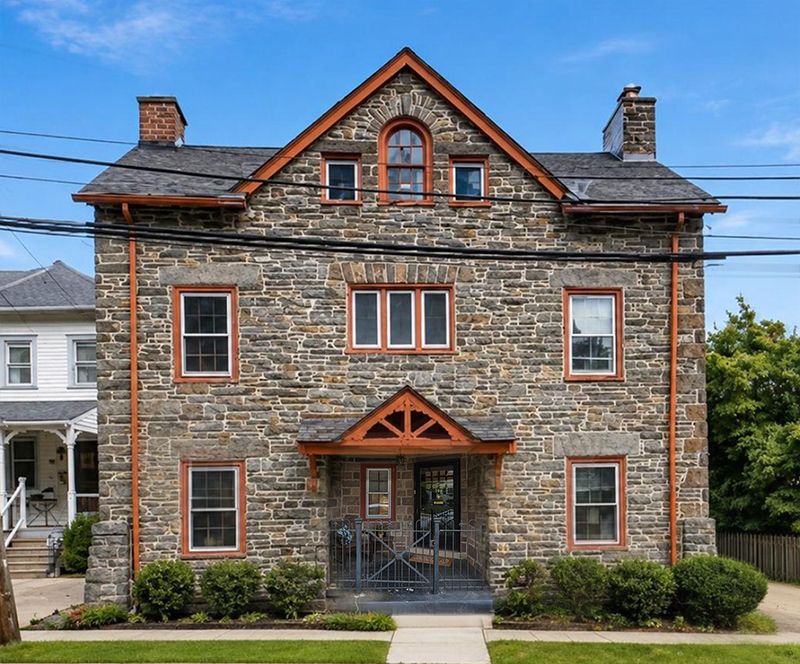
Elizabeth Monroe was living in New Jersey with her son in 2006 when she saw a listing in Bryn Mawr, and thought it might be time to go back to the town where she’d grown up.
“I hadn’t even gone inside it,” she said. “but I loved the Tudor look and the stone.
“It’s a soulful kind of house. A friend once called it my ‘sanctuary,’” she recalled.
One of the bedrooms in the Bryn Mawr home features large windows to let in the light. Brendan Farrell
The four-bedroom, two-bathroom house spans 1,762 square feet.
Monroe, an ordained Presbyterian minister who mostly worked as a hospice chaplain, said she had considerable renovations done, mostly on the first and second floors.
The house, has a gated front porch, original hardwood floors, and deep-set windows.
The kitchen has updated appliances. Brendan Farrell
The kitchen has white cabinetry, black granite countertops, and updated appliances.
The living room has a working gas fireplace.
Each of the two second-floor bedrooms has its own sitting room, which could be used as a home office, reading room, art studio, or playroom.
A working gas fireplace is a highlight of the living room.Brendan Farrell
The third floor has two additional bedrooms and a hall bathroom.
There is high velocity central air and 200-amp electrical service.
There is a private brick patio, a fenced outdoor space, and a detached one-car garage. It is walkable to the Bryn Mawr Regional Rail station.
The dining room can fit a table for six.Brendan Farrell
And “it’s walkable to the Wawa,” Monroe joked. And since the parking lot there is often congested, “I thought that this might be a selling point.”
The house is in the Radnor School District.
It is listed by Colleen Whitlock and Brianna Golden of Keller Williams Main Line for $699,000.
Through tense smiles and laughter, Fox News host Jesse Watters frequently reminded his guest — the Democratic nominee for Senate in Michigan, Dr. Abdul El-Sayed — that Watters was the one conducting their prime-time interview as the candidate swerved through a minefield of hostile questions about issues ranging from transition surgeries to reparations to Islam to immigration.
The appearance Monday night by El-Sayed, a progressive who has sought to dispel worries from moderate Democrats that he is too left-wing to win battleground Michigan, signaled his growing efforts to reach Republican voters and previewed his messaging strategy for the general election. His hard-fought primary victory this month has set up a race against former Rep. Mike Rogers, a Republican, in a contest considered crucial to Senate control.
When Watters sought to pin down El-Sayed, the candidate would often redirect the question to more favorable political terrain. He pivoted from a question on immigration enforcement to high gas and grocery costs, and turned an inquiry on whether he drives an electric car (he drives a plug-in hybrid, he said) into a jab at President Donald Trump’s new trade war with Canada.
In the most eye-popping moment of the exchange, Watters asked if El-Sayed believed it was OK “for a parent to slash his kid’s ding-a-ling off,” referring to transition surgeries for minors.
El-Sayed responded by asking if Watters was circumcised.
“Uh, yeah, but that’s a personal question, doctor,” Watters responded, laughing, before contending that “circumcision’s different than castration.”
El-Sayed said that he believed the government should not tell Americans what healthcare procedures they could undergo, but he did not directly say whether he approved of transition surgeries.
The interview showed the strategy El-Sayed is adopting as Rogers seeks to paint him as a radical leftist who is out of touch with Michigan voters. The Democratic nominee’s approach is to cast “culture-war” issues as a distraction from the everyday problems Americans face, like rising costs and worries about health care.
The interview also previewed the kinds of arguments that could animate El-Sayed’s planned debate against Rogers, which is set for Oct. 8 on WOOD-TV, both campaigns announced Monday. The two men may face off sooner if they agree to additional debates.
After Watters brought up Shariah — the system of Islamic religious rules often invoked by opponents to portray Islam as dangerous and anti-American — El-Sayed countered by asking the host if he knew about canon law, the code of religious rules that guides the Roman Catholic Church.
“Nobody is trying to push Shariah law on anyone else, just like I hope nobody is trying to push canon law on anybody else,” El-Sayed said. “Because we live in an America where you should have the freedom of your religion.”
Watters responded by saying: “Maybe. Shariah law in Michigan is kind of scary.”
El-Sayed argued that voters were far more concerned about affording gas, seeing doctors and keeping their jobs than they were about Shariah.
Asked about his position on trans athletes in sports, El-Sayed said he believed that matter should be “decided by the people who govern sports,” not him.
“I’m out here trying to take on the healthcare crisis and Big Pharma, and you’re asking me about who gets to play what sports,” El-Sayed said. “It’s silly.”
El-Sayed’s appearance Monday was his third televised interview with Fox News of the campaign, and his first of the general election.
Whether or not he is able to attract a slice of Republican voters, he has already sought to capitalize on Watters’ comments about him. He started airing an ad Thursday that features the Fox News host saying after the primary, “You’ve got to respect Abdul because he beat the machine.”
At the end of the interview Monday, Watters gave his guest “credit for facing the music” by going on his show, but called him “a little naive” and said some of his policies were “straight-up wacky.”
El-Sayed contended that Trump’s ballroom renovations amid the war with Iran were “wacky,” and then said he would “love to come back on” to talk about money in politics, affordability and Medicare for All.
“We’ll do it again, Abdul,” Watters said, smiling amusedly and adding, “Good luck in Michigan.”
TORONTO — Canada will announce retaliatory tariffs against the United States on Tuesday after relations deteriorated sharply Monday, with President Donald Trump telling Canadian leaders to “fall in line” or face consequences “far WORSE” than existing tariffs and Prime Minister Mark Carney accusing Washington of trying to subordinate Canada.
Trump also threatened new 50% tariffs on Canadian vehicles, auto parts and steel, while Carney said U.S. trade demands showed Washington wanted to “destroy our major industries,” including autos, steel and aluminum.
Finance Minister François-Philippe Champagne and three other Cabinet ministers are also expected Tuesday morning to share details of supports for workers affected by tariffs. Carney said earlier Monday that Canada may need to move away from matching U.S. tariffs dollar for dollar and instead use more targeted retaliation aimed at protecting Canadian workers and businesses.
“An attitude at the negotiation table that Canada is a subsidiary of the United States” is “not something we’re going to accept,” Carney said.
Carney was even more blunt in French.
“We learned during the negotiations that the Americans want to destroy our major industries, including autos, steel and aluminum,” Carney said. “That was one of the main reasons we said no. It was a bad deal.”
The fiery words from both sides show how U.S.-Canada relations have deteriorated since Carney walked away from trade negotiations with the Trump administration late Friday, triggering the president’s threatened 50% tariffs the next day on about $20 billion worth of Canadian goods.
Canada and the United States share one of the world’s largest trading relationships, with deeply integrated supply chains across autos, energy, agriculture and manufacturing, making a prolonged trade fight potentially costly for businesses and workers on both sides of the border.
Carney cast doubt on the U.S.’s dependability, saying Canada was finding reliable partners “everywhere in the world, except in the United States. Except in the United States. And Russia.”
Trump unleashes personal attacks on Canadian leaders
On Monday, Trump came back with further tariffs, warning that he would impose them on Canada’s auto industry beginning next year.
“Canada has been ripping off the United States of America for years,” Trump wrote on social media, criticizing what he called the country’s “ridiculously high tariffs” on American farmers.
Carney said Washington’s auto-sector proposals would gradually have the effect of dismantling Canadian production.
“This is the most successful automotive partnership in history,” Carney said, referring to the deeply integrated Canada-U.S. industry.
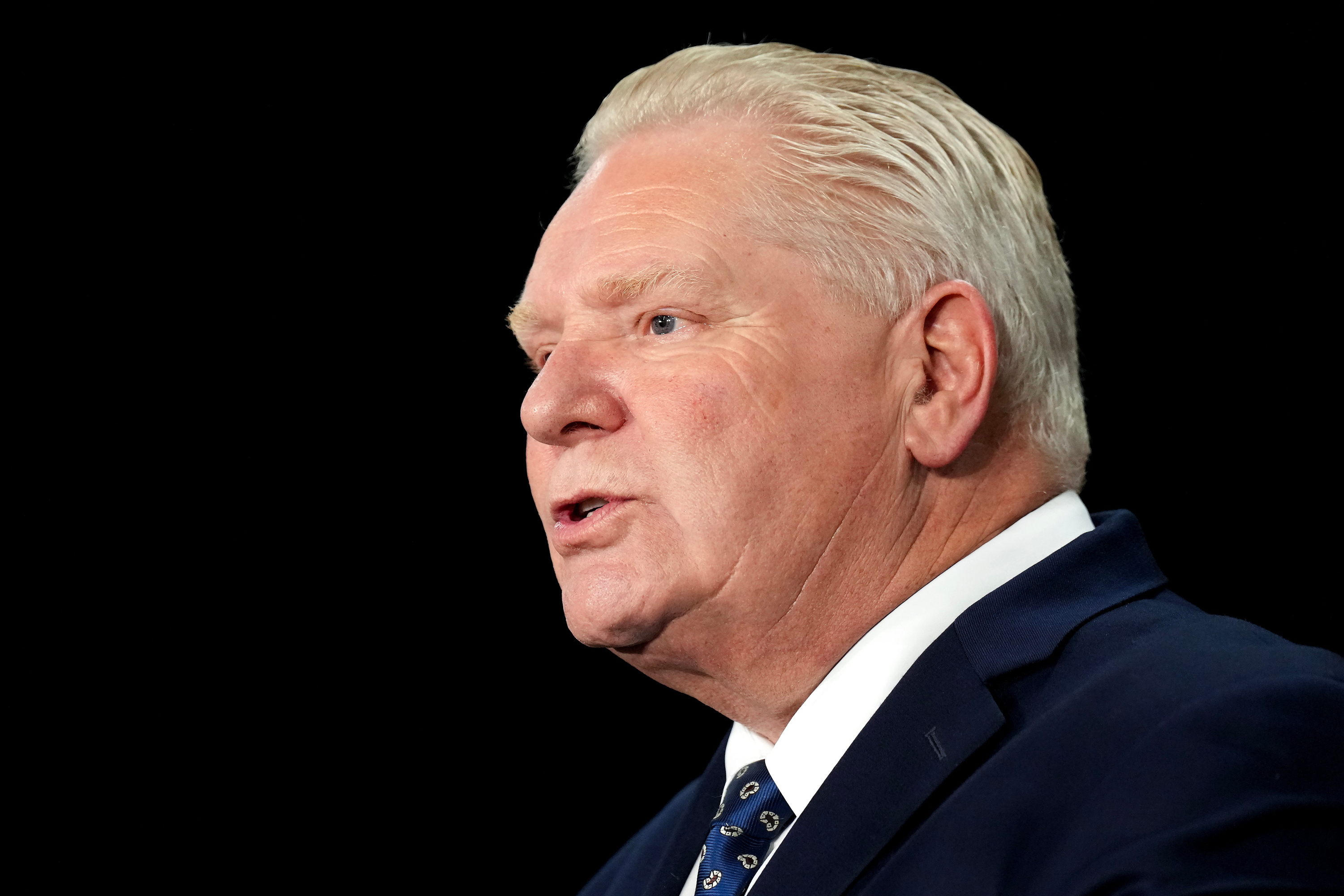
Meanwhile, Ontario Premier Doug Ford unleashed his own tirade. In an interview with The Associated Press, he said Trump had underestimated Canadians’ willingness to endure economic pain rather than give in to U.S. pressure.
“We’re all in,” Ford said. “Up here, we’re at a fever pitch; everyone’s in for an economic war. They know they’re going to have to sacrifice.”
Trump responded in a social media post by attacking Ford personally, calling him “the less charismatic, intelligent, and overall unimpressive brother of the late, great, Rob Ford,” and once again referring to Canada’s prime minister as “Governor Carney.”
Ford dismissed the insults: “If you think an insult from him hurts me? Well, bring it on, buddy, I’m ready.”
Ford is a Progressive Conservative whose party differs from that of Carney, a Liberal, but the two underscore broad political unity in Canada over the trade fight with Trump.
Ford threatens critical minerals and electricity
Ford said “everything is on the table” if the dispute worsens, including cutting off electricity and critical minerals from Ontario.
Critical minerals are increasingly important to U.S. national security and manufacturing. The Pentagon has sought more secure supplies of minerals used in military aircraft, missiles, munitions and electronics as Washington tries to reduce reliance on China, which dominates the mining or processing of several strategically important minerals.
Ford said Canada should also consider increasingly severe retaliation if Trump continues targeting Canadian industries, including oil and potash, while Ontario could raise electricity prices or stop sending power south.
“We power 1.5 million homes and businesses,” Ford said. “Everything’s on the table. I’ll do whatever it takes.”
Ford has used electricity as leverage before. During an earlier phase of the dispute, Ontario imposed a 25% surcharge on electricity exported to Michigan, Minnesota and New York. Trump responded by threatening to double tariffs on Canadian steel and aluminum before both sides backed away.
Auto industry becomes a central battleground
Ford accused Trump of not simply seeking a better trade deal but aiming to hollow out Canadian industries and move production south.
Ford said Trump wants to make Canada a vassal state.
“He wants to bleed out every single sector and bring them down to the U.S.,” Ford said.
The auto sector is especially important to Ontario, the center of Canada’s vehicle manufacturing industry. Plants and suppliers in Ontario are tightly integrated with factories in Michigan and other U.S. states, with parts routinely crossing the border multiple times during production.
Automakers including Ford, General Motors and Stellantis operate major assembly plants in Ontario, and the wider supply chain supports tens of thousands of jobs. Trump’s new threat of a 50% tariff on Canadian vehicles and parts puts that sector directly at the center of the escalating dispute.
U.S. Trade Representative Jamieson Greer said Monday that “the only reason Canada has auto production in the first place” was because of the 1960s Auto Pact, under which Canada used access to its market to encourage vehicle production north of the border.
Ford says he opposed preliminary deal
Ford also disclosed that he had opposed the preliminary agreement Carney was considering before Canada walked away from negotiations, and that he was unwilling to restore American liquor to Ontario store shelves as part of an agreement.
“I wasn’t going to put the booze back on the shelves,” Ford said. “I was ready to go out there and call a press conference … and say I’m not buckling over.”
Ford said he understood Washington had sought language late in the negotiations that would have restricted Canada’s ability to negotiate trade agreements with other countries without U.S. approval. Carney has called that demand unacceptable and a question of Canadian sovereignty.
Carney said the dispute also exposed a deeper divide over language and culture, saying protections for French and Canadian culture that Washington views as trade irritants are considered fundamental rights in Canada.
“Who does he think he is?” Ford said of Trump. “You gotta be kidding.”
Fierce primary fights throughout the spring and summer have exposed deep ideological fractures within the Democratic Party. They’ve also reopened an internal party debate about whether African Americans — one of the pillars of the Democratic Party — will support “progressive” or left-wing candidates in primaries against moderate opposition.
In Michigan’s contentious Senate primary, upstart candidate Abdul El-Sayed narrowly beat establishment candidate Haley Stevens, despite the latter performing better overall with African American voters. In Wisconsin, however, African American voters proved decisive, as David Crowley eked out a narrow victory over Democratic Socialist Francesca Hong. In both campaigns, perceptions of electability in November became a key issue and a key indicator of whether a candidate could win Black support.
This fight isn’t new. The Democratic Party has long featured debates over electability, and whether it ought to prioritize finding candidates who can excite base voters or identifying candidates who have crossover appeal in November.
This question has unique importance for African American voters. They take a deeply pragmatic approach, one that has been shaped by the fraught racial environment that is, sadly, a key part of American electoral history. For close to a century, that has translated into a reluctance to back political causes or campaigns that make broad promises, but will have difficulty delivering results. While African Americans have been a stalwart Democratic constituency for more than 60 years, they have not automatically gravitated toward left-wing causes.
The 1948 presidential campaign took place at the height of the Cold War abroad and the Second Red Scare at home. It also had a critical civil rights dimension.
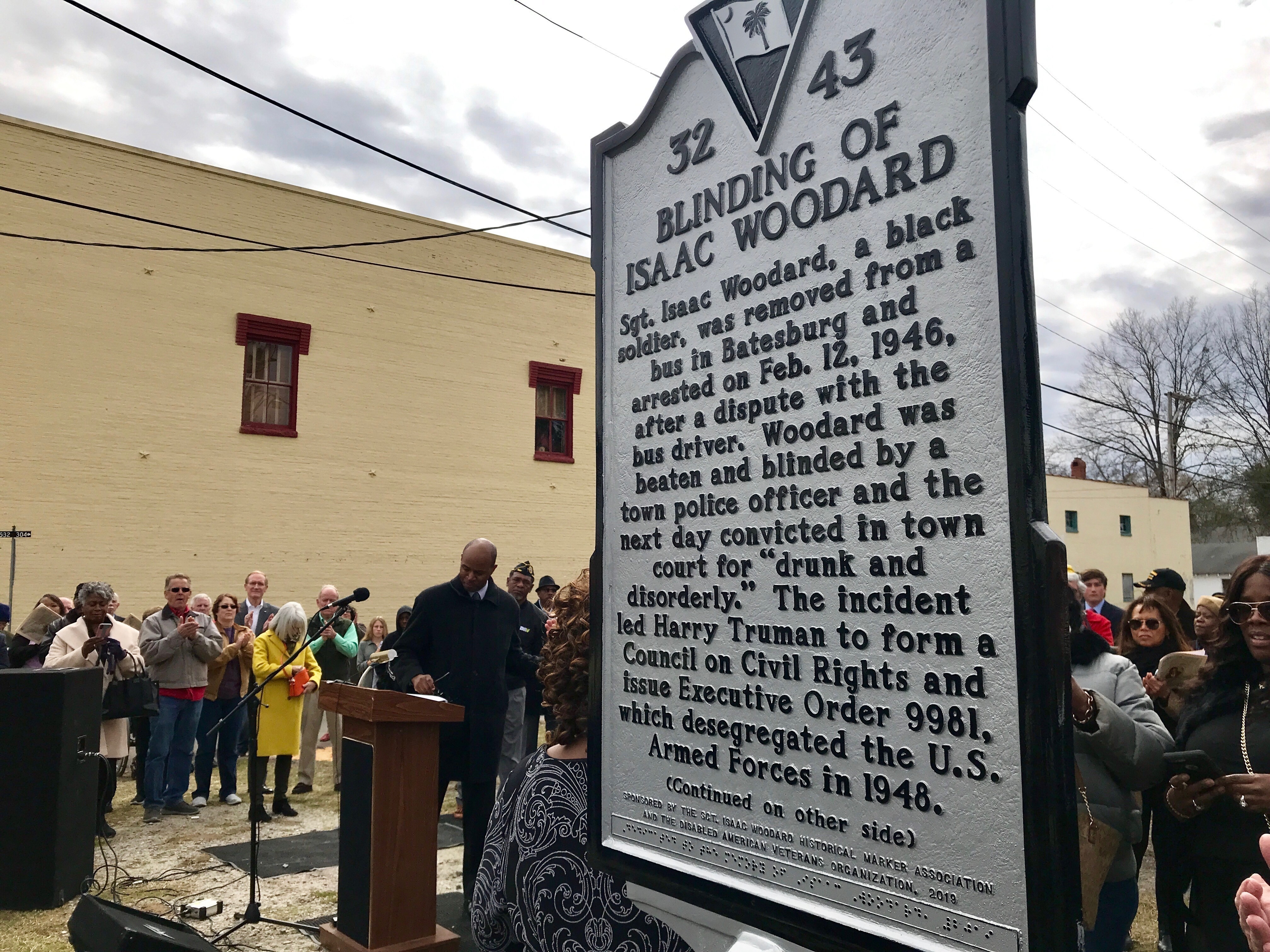
Many Black soldiers had fought in World War II for a “Double V” — victory against fascism abroad and victory over racism at home. Yet, returning after the war, they discovered that many of their white counterparts did not want to eliminate Jim Crow segregation in the South, or other forms of white supremacy and discrimination elsewhere in the country. Lynchings and racial violence dramatically increased after the war, most memorably, the beating and blinding of Pacific War veteran Sergeant Isaac Woodard in South Carolina in 1946.
In this Feb. 9, 2019, file photo, the Blinding of Isaac Woodard historical marker was dedicated in Batesburg-Leesville, S.C. Woodard, a uniformed World War II veteran was headed home on a bus in 1946, when he was removed and beaten by a white South Carolina police chief, leaving Woodard permanently blind.Christina Myers
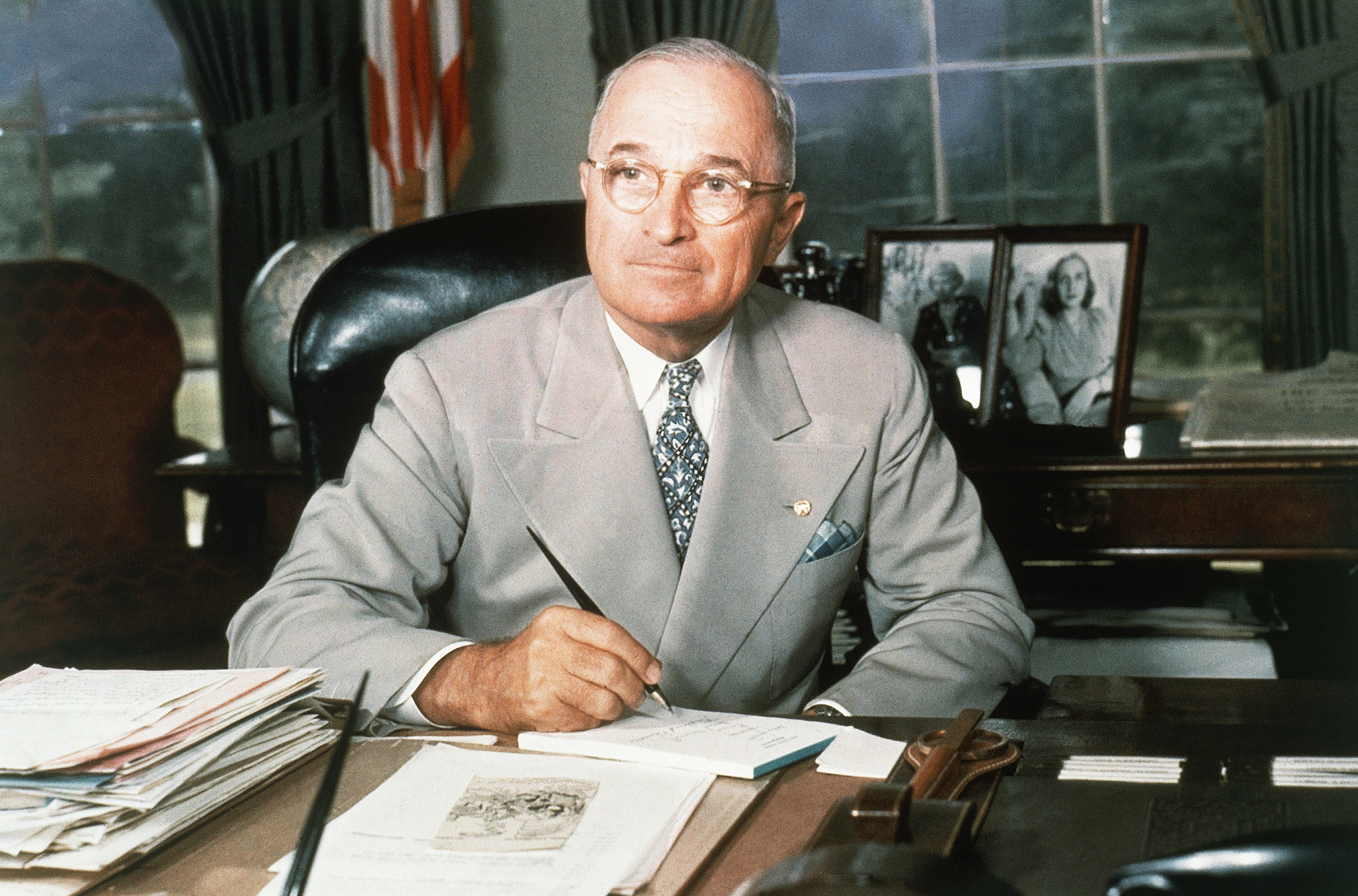
Black Americans demanded that embattled President Harry Truman embrace new civil rights protections. Truman was aghast at the treatment of returning veterans and believed in fairness. He also realized that he’d need the votes of African Americans to have any chance of winning reelection.
In 1947, Truman began making a concerted effort to advance the civil rights cause. He became the first president to speak at the National Association for the Advancement of Colored People’s annual convention. The White House also released To Secure These Rights, a book detailing how the Truman administration both acknowledged the problems facing African Americans and the steps it would take to ameliorate them. Additionally, Truman desegregated the armed forces, a critical step in showing he was serious about embracing civil rights.
Truman made these moves to showcase American freedom and democracy and juxtapose it with Soviet communism, while also trying to shore up the African American vote. That was especially critical because of a political insurgency that threatened Truman’s hope for reelection: the rise of Henry Wallace and the Progressive Party.
Wallace had served as agriculture secretary during Franklin Roosevelt’s first two terms as president and as vice president during Roosevelt’s third term. He had also served as Truman’s secretary of commerce. Many on the left saw Wallace as the only hope for achieving their main goals: preventing a full-blown war with the Soviets, and securing greater labor, civil and human rights at home.
Wallace’s backers included prominent African Americans like Paul Robeson and W.E.B. Du Bois, who distrusted Truman. Both men supported Wallace due to the former’s strong stance in favor of civil rights at home and deep-seated opposition to the brewing Cold War abroad. Their support helped catalyze a debate in the Black community over which candidate to back.
Forums like The Crisis, the official magazine of the NAACP, became spaces for African American voters to debate Wallace vs. Truman. In early 1948, The Crisis editors declared “Wallace is straight on our question,” referring to his unabashed support for civil rights. They refrained, however, from outright endorsing him, noting his mixed record as secretary of agriculture.
Made By History sponsors. FOR USE ON MADE BY HISTORY STORIES ONLY.Inquirer Staff
Readers remained divided over this support for Wallace. Some felt the editorial was too harsh about his policies as secretary, while others believed he had not done enough for Black Americans in the federal government. “I challenge you to name another American of equal stature,” Robert and Selma Singer from Chicago wrote to The Crisis offices after its April 1948 issue, “who has mass support, who has given such impetus toward solving the ‘Negro Problem.’”
Yet, others, such as Max Womack of Iowa City, argued that Wallace had no chance as a third-party candidate, and would merely split the votes of people who’d otherwise back Truman. He also wondered why the editors hadn’t given “President Truman any credit at all?”
This last question hinted at the prevailing sentiment in the Black community: most African American voters backed Truman that November. They preferred trusting the incumbent — a proven commodity — rather than taking a chance on what turned out to be a quixotic campaign.
Their overwhelming support delivered key margins in battleground states in the North and Midwest, like Michigan, a testament to the maturing power of the African American vote. “Negro leaders pointed out,” proclaimed the front page of the Black-owned and operated Detroit Tribune, “that the Michigan Republican party seemed to go out of its way to avoid the Detroit population and its political desires.”
Black voters siding with mainstream, liberal Democrats over more radical ideas proved to be no anomaly. Twenty-four years later, in 1972, Black voters again engaged in an ideological skirmish. Activists debated the best way forward after the heyday of the Civil Rights Movement and the election of Republican Richard Nixon in 1968 against a deeply divided Democratic Party.
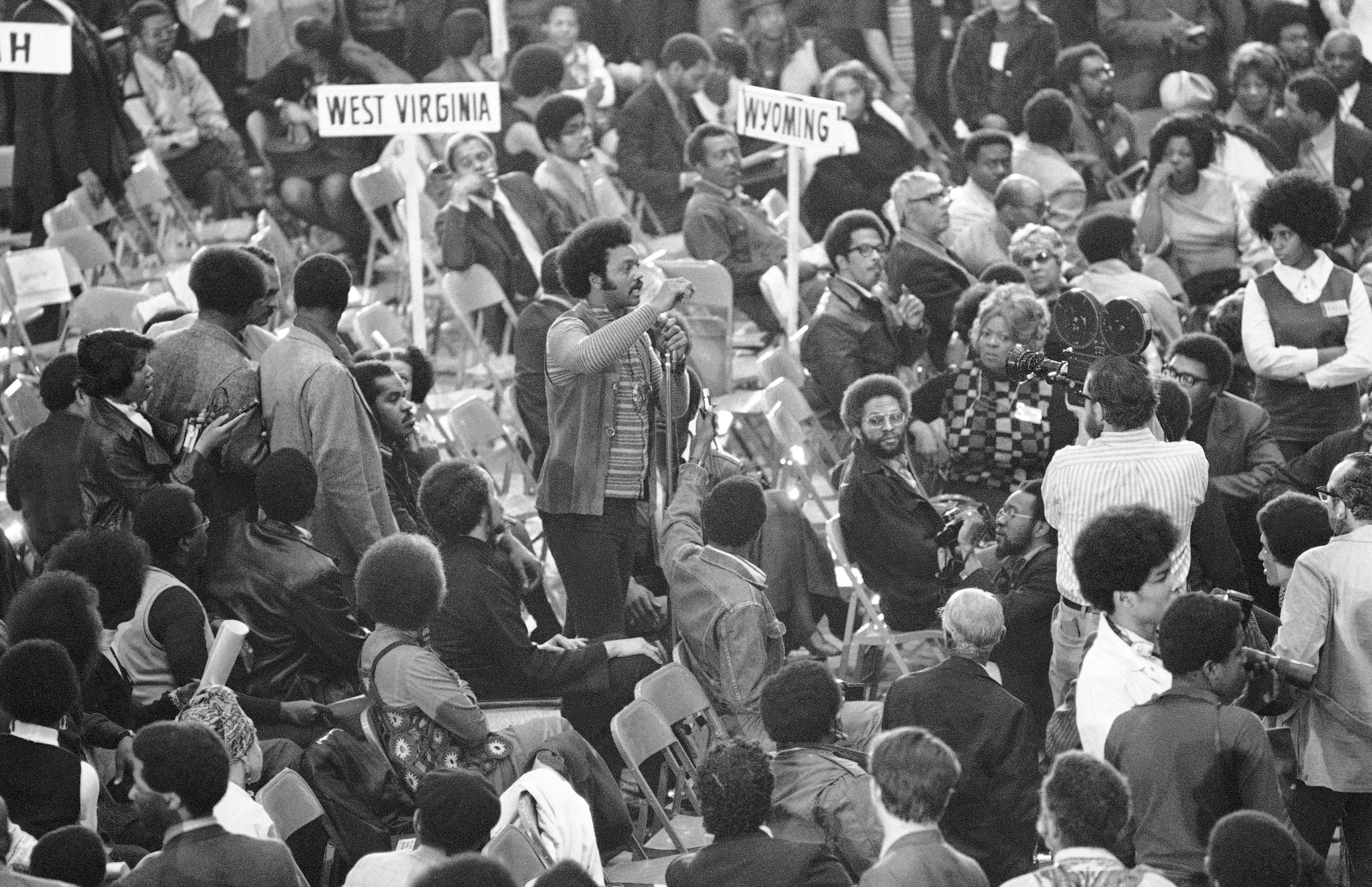
At the National Black Political Convention, held in Gary, Indiana, African American liberals, moderates, socialists, nationalists, and even conservatives gathered to map out a strategy for adjusting the politics of Black America to a new normal. Nixon’s administration had largely practiced “benign neglect” on racial issues, while suppressing the Black Power Movement. Attendees grappled with an overall backlash to the Great Society programs spearheaded by the liberal wing of the Democratic Party.
In this March 13, 1972, file photo, the Rev. Jesse Jackson, executive director of Operation: PUSH, speaks from the floor of the National Black Political Convention in Gary, Ind.Jim Wells
The Convention’s “Gary Declaration” gave voice to the frustration of many Black Americans, arguing, “Both parties have betrayed us whenever their interests conflicted with ours (which was most of the time), and whenever our forces were unorganized and dependent, quiescent and compliant.”
Still, despite the critique of both Nixonian conservatism and Great Society liberalism, the members of the Gary Convention disagreed over a radical proposal to create an all-Black political party that could, in theory, broker deals with both major parties on behalf of Black America. Later that year, most Black Americans stuck with the Democrats — one of the few constituencies to back the doomed campaign of George McGovern.
The primary that year had illustrated Black political pragmatism at work. Ebony magazine journalist Alex Poinsett acknowledged that McGovern was far from perfect and that Black voters lacked a truly satisfactory option. Yet, he argued that the candidate’s support for elements of the Gary Declaration — and a competing “Black Bill of Rights” proposed by the Congressional Black Caucus — made him a sensible option over several longer shots, including African American congresswoman Shirley Chisholm.
The choice of McGovern over Chisholm reflected how Black voters’ wariness about progressivism that did not seem to be electorally viable even applied to Black candidates. The same was true three decades later: Barack Obama struggled with Black voters in polling until his victory in Iowa in January 2008 made it clear he was a candidate who could win.
These cases epitomize how, over time, Black voters have stuck with liberals in the Democratic Party who demonstrate a genuine chance of victory over more radical options that might promise better policy. They aren’t always happy with their choices, but they know what to expect from mainstream Democrats.
This choice reflects how, ultimately, for African American voters, a pragmatic view of politics overrules almost everything else. The old saying that “politics is the art of the possible” is, often, the rueful outlook on politics by African Americans.
Robert Greene II is associate professor of history at Claflin University. He is also managing editor of “Global Black Thought” and co-host of the award-winning podcast, “Our New South.”
Made by History takes readers beyond the headlines with articles written and edited by professional historians. Opinions expressed do not necessarily reflect the views of The Inquirer.