Blog

  • 🔔 Revisiting Philly’s 1976 party | Morning Newsletter

    Good morning and happy Friday, Philly.

    Today’s high temps could break records, and nightfall may not bring much relief. Experts tell us why warmer nights can be more dangerous than daytime heat.

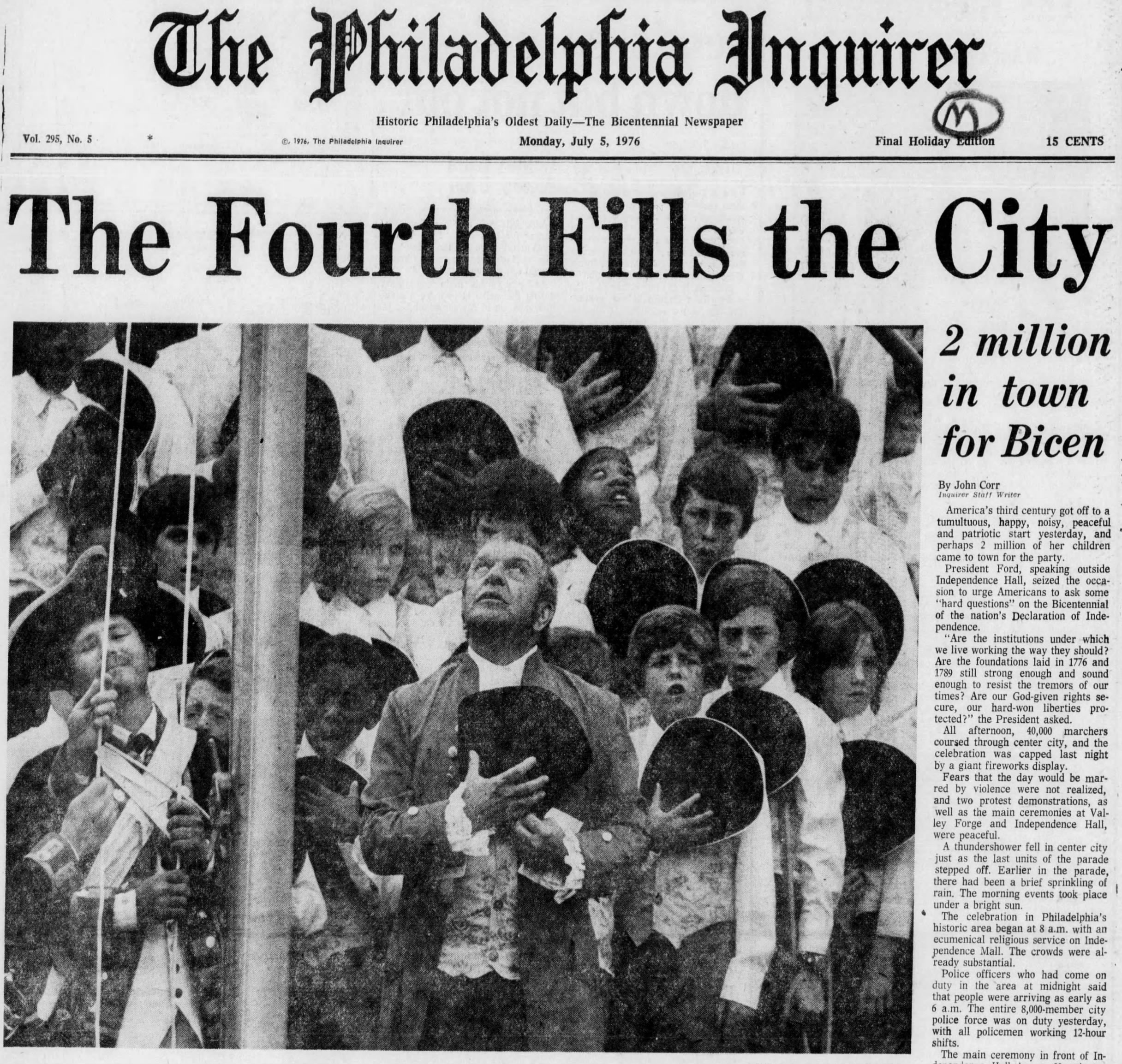
    On the eve of America’s 250th, we’re flashing back five decades for a look at how Philadelphia celebrated the Bicentennial.

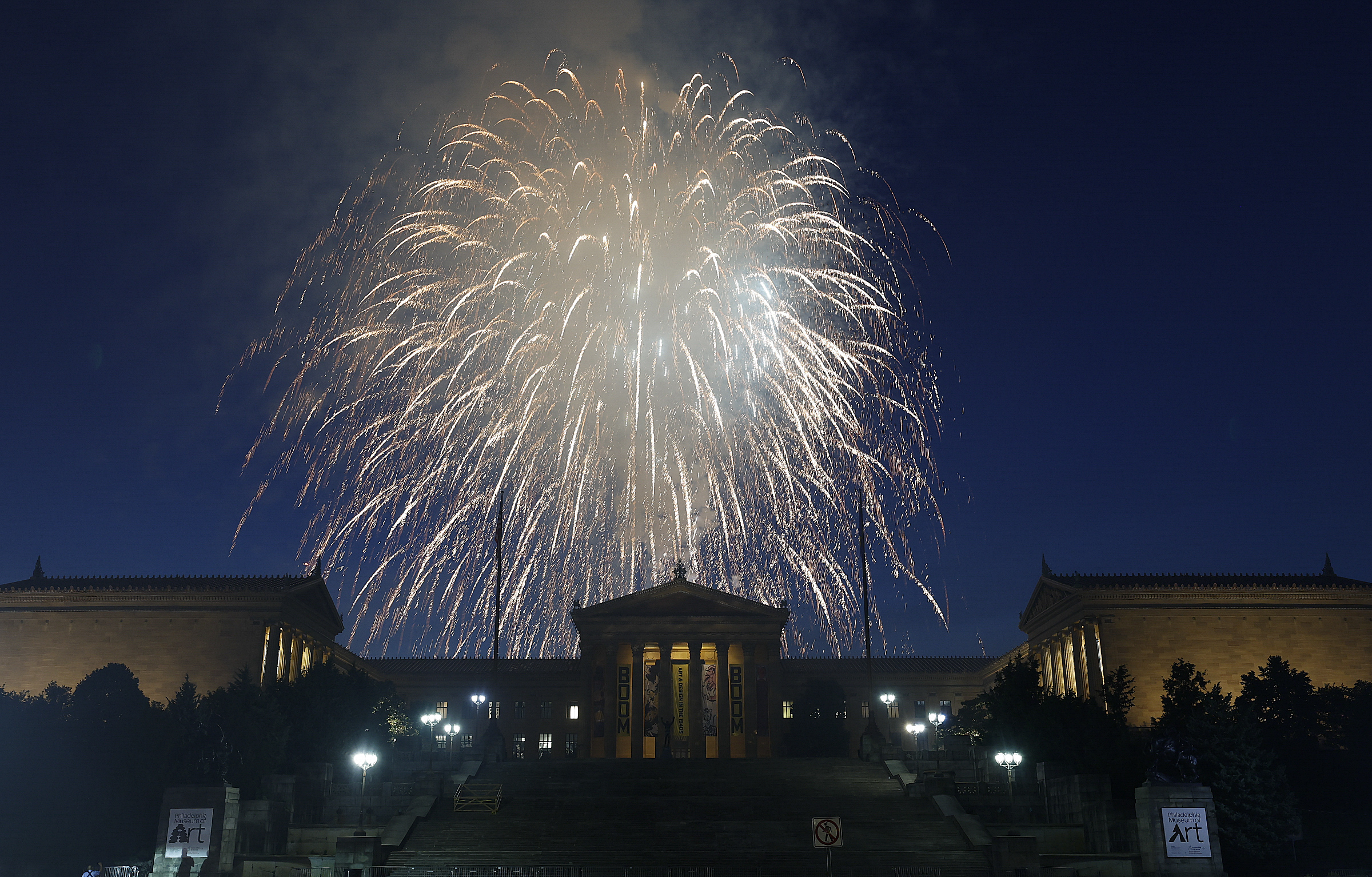
    And to the surprise of some Fairmount residents, this year’s fireworks display will start around midnight. They aren’t happy about it.

    Plus, a federal judge ruled that Philly can’t force ICE agents to unmask, and more news to know to kick off your holiday weekend.

    — Paola Pérez (morningnewsletter@inquirer.com)

    If someone forwarded you this email, sign up for free here.

    Falling short

    The hype was real for the Bicentennial in Philly.

    With 20 million visitors projected to travel to the city, there were big dreams for projects to mark the major occasion, like a massive suspended platform at 30th Street Station and a flower-focused theme park in Fairmount Park.

    Instead, the birthplace of American democracy hosted an under-attended party, and was then caught in the grips of a disease outbreak.

    It’s an understatement to say reality did not live up expectations of a Bicentennial boom, but it wasn’t a complete bust. In some ways, the nation’s 200th birthday gave us some of the Philadelphia we know today.

    For more on the lasting legacy, dive into the Inquirer archives with Nick Vadala.

    Parkway after dark

    Those who live near the Benjamin Franklin Parkway are used to the sparks and blasts for July Fourth, but some aren’t particularly thrilled about their late start this year.

    🎆 Fireworks will begin closer to midnight. The star-studded lineup for the One City: Unity Concert for America is bigger this year, so the show will also start earlier and end later.

    🎆 The noise is not the problem. Some residents told The Inquirer the nuisance is the events’ timing competing with youngsters’ bedtimes, referring to the move as “not a family-friendly decision.”

    🎆 Traffic will be a headache, too. With 300,000 people expected, there are concerns about how the city is handling traffic leaving the Parkway.

    Henry Savage has the full story.

    Plus: Brush up on road closures and transportation info before heading to the Parkway.

    What you should know today

    Plus: How does SEPTA’s bus numbering system work?

    Welcome back to Curious Philly Friday. We’ll feature both new and timeless stories from our forum for readers to ask about the city’s quirks.

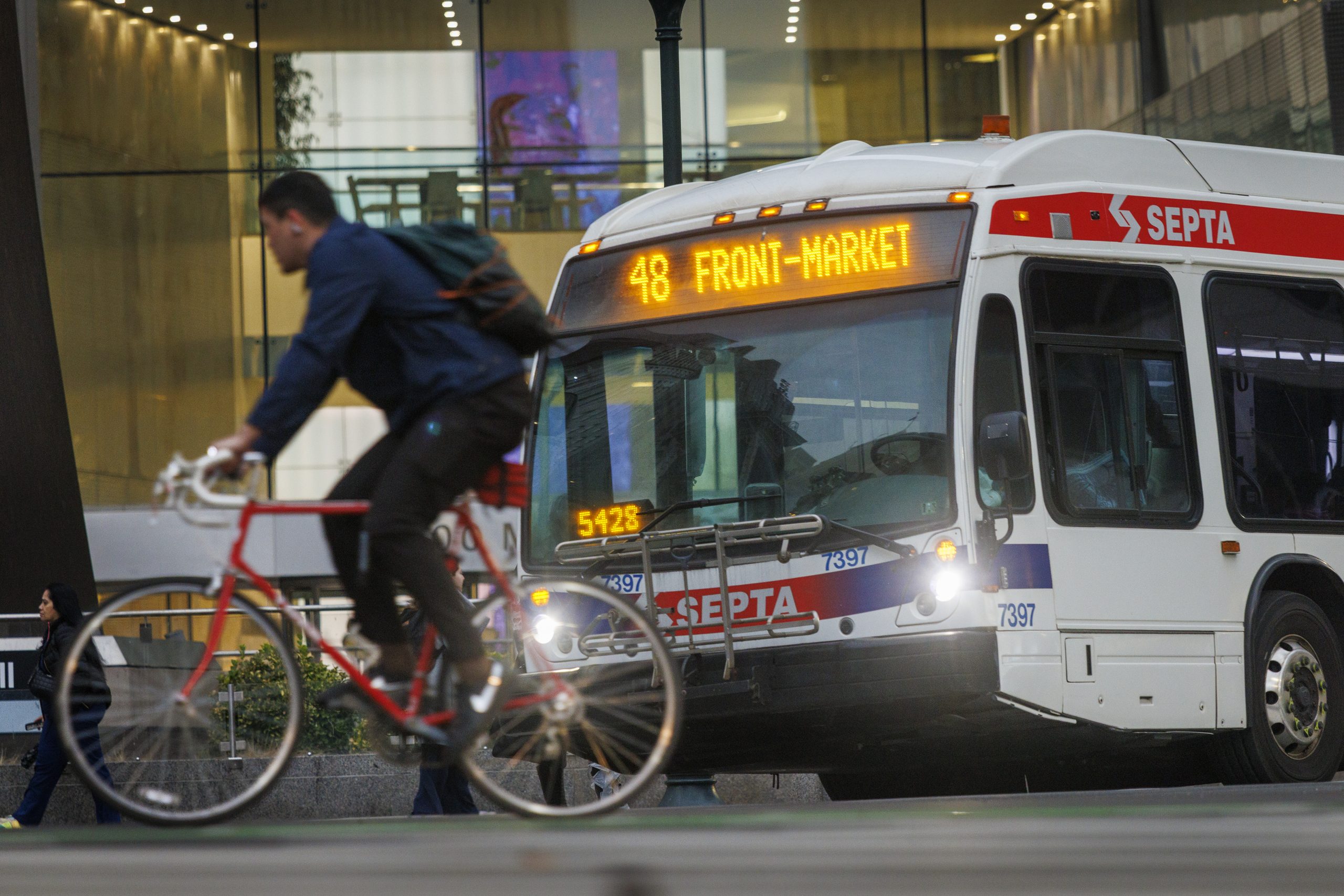
    This week, we have an explainer from Michelle Myers on the logic behind SEPTA’s bus route numbers.

    The transit system operates more than 120 routes, but its numbers don’t necessarily indicate where they go or what streets they operate on. It turns out the digits are a relic from the streetcar era. Here’s the full story.

    Have your own burning question about Philadelphia, its local oddities, or how the region works? Submit it here and you might find the answer featured in this space.

    🧠 Trivia time

    A local ceramicist, whose dishware can be seen at restaurants ranging from Provenance to Zahav, is rebuilding following bankruptcy and a kiln disaster. What are they called?

    A) Le Creuset

    B) Fiesta

    C) Felt and Fat

    D) East Fork

    Think you know? Test your local news know-how and check your answer in our weekly quiz.

    What we’re …

    🥵 Avoiding: Exhaustion and dehydration in the heat, and at Philly’s last World Cup game.

    🚂 Excited to see: Big Boy, the world’s largest steam locomotive, as it passes through Philly.

    🏛️ Shocked by: Lawmakers almost demolished Independence Hall in the 1800s.

    📺 Looking out for: Task will start filming its second season next week in Manayunk.

    🌱 Learning: Soil from Revolutionary battlefields was mixed at Independence Hall on this week in Philly history.

    🧩 Unscramble the anagram

    Hint: A destination for Main Line musicians

    ANY DASHING SPROUT

    Email us if you know the answer. We’ll select a reader at random to shout out here.

    Cheers to Tanya O’Neill, who solved Thursday’s anagram: Christina Aguilera. This singer has been recruiting Philly-area “soldiers” for her concert on the Fourth of July.

    Photo of the day

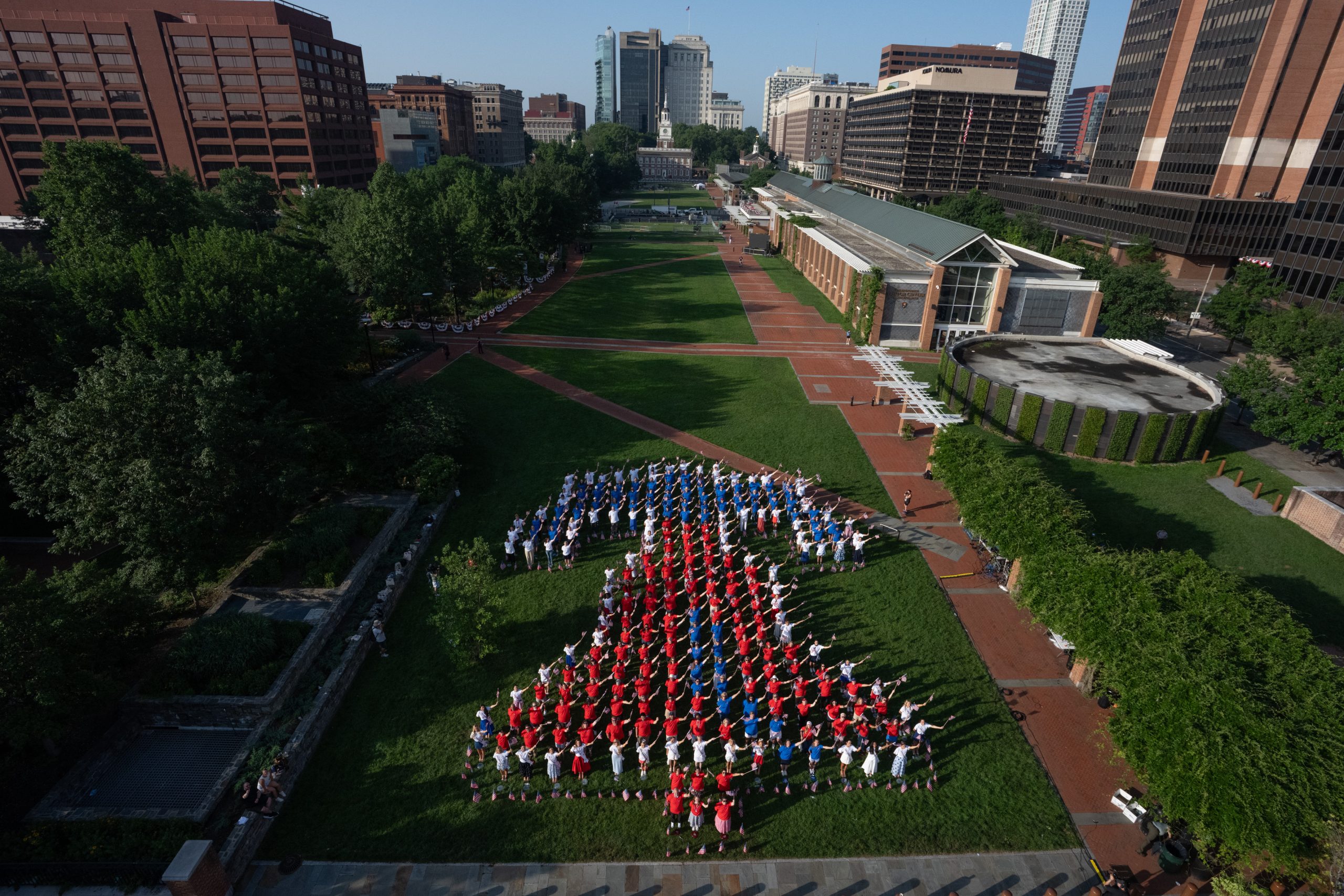
    Participants gather to create the Living Liberty Bell, gathering 250 people to form the shape of the famous bell on Independence Mall on Thursday.Jessica Griffin / Staff Photographer

    🔔 One more Semiquincentennial thing: Members of Congress gathered in Philadelphia Thursday to commemorate the vote for independence 250 years ago. Their speeches reflected on historical struggles and present-day tensions.

    👋🏽 This newsletter is taking a break in observance of the Fourth of July. We’ll be back on Monday. Until then, you can find all the latest news and our holiday weekend coverage at Inquirer.com. Take care!

    By submitting your written, visual, and/or audio contributions, you agree to The Inquirer’s Terms of Use, including the grant of rights in Section 10.

  • SEPTA’s bus numbering system is a relic from the streetcar era

    SEPTA’s bus numbering system is a relic from the streetcar era

    While waiting for his SEPTA bus, Jake McGovern, 28, noticed at least three routes go by his corner in Point Breeze.

    He wondered if route numbers had any particular meaning: Maybe 7 indicated a north-south route, and 9 meant east-west.

    “There has to be some logic to it,” he thought.

    No amount of looking at the bus maps proved helpful in deciphering the pattern, so McGovern asked Curious Philly, The Inquirer’s forum for questions about the city: “Is there any rhyme or reason for the SEPTA bus numbering system?”

    » ASK US: Have something you’re wondering about the Philly region? Submit your Curious Philly question here.

    Places like New York City have bus lines with a combination of letters and numbers that show the borough they serve: Bx (Bronx), B (Brooklyn), M (Manhattan), and even S for Staten Island.

    Philly, on the other hand, has always vibed to its own logic, even when that might mean not having one.

    SEPTA operates more than 120 bus routes, including the lines to the suburbs. But bus numbers in Philly do not indicate where routes go or which streets they operate on, according to SEPTA spokesperson John Golden.

    SEPTA bus numbers above 90 are lines driving to the suburbs.

    The routes below 90 were formerly Philadelphia Transportation Co. streetcar routes, Golden said.

    The bus numbers in Philly are a relic of a time when Philadelphians moved through streetcars pulled by horses.

    Back then, the lines were named in the order they were introduced, Billy Penn reported in 2020. When bus routes replaced them, the route numbers were retained.

    For areas with new bus routes, letters were assigned as the route identifier. Eventually, new bus routes were numbered in the high 80s, Golden said.

    The letter system ended in February 2025, when SEPTA renamed bus routes named after letters into numbers, turning:

    • The G into 63
    • The H into 71
    • The J into 41
    • The L into 51
    • The R into 82
    • The XH into 81

    Upon hearing the explanation McGovern said, “Oh, jeez” between laughs.

    “It’s kind of a letdown, but it’s funny that it worked out like that,” McGovern said. “I imagine the randomness is probably useful to other people in the city as well, because it makes it very unique.”

  • We asked nurses. Here are the at-home medical items they swear by.

    We asked nurses. Here are the at-home medical items they swear by.

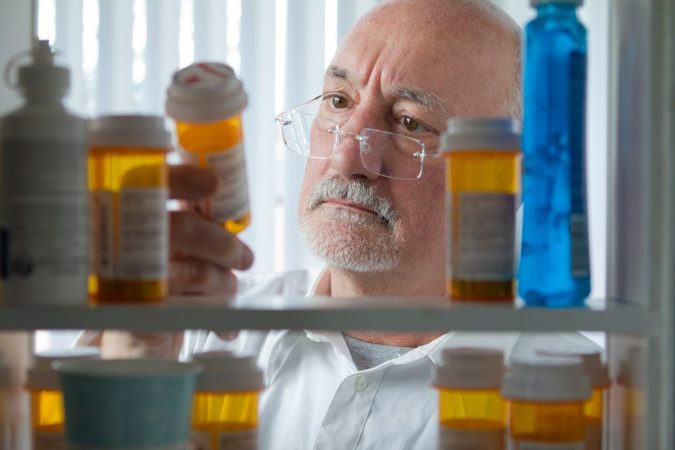
    Peeking inside somebody’s medicine cabinet is a no-no, which is a big part of what makes poking around all those tubes and bottles so tempting. (Still, don’t. It’s not only rude, but also an egregious violation of privacy.) But what if someone were to invite you into their medicine cabinet, and then took it a step further by showing you the items they swear by for every ailment under the sun? Fabulous!

    In service of bringing you that exact experience, we asked nurses — and, truly, who better than nurses? — to tell us what they always keep stocked in their medicine cabinets. And any items you can’t do without? Let us know in the comments.

    (Responses have been edited for length and clarity.)

    Hanna Weitzman-Flanigan, a nurse-practitioner in New York City

    Tylenol is the universal answer. Headache? Tylenol. Sore back after a 12-hour shift? Tylenol. Low-grade fever? You guessed it. It’s the “don’t overthink it” solution — reliable, effective, and always within reach.

    Rubbing alcohol is one of those quiet MVPs. Need to clean a cut? Done. Disinfect something quickly? Easy. Somehow get marker, sticker residue or who knows what on your skin? Rubbing alcohol has entered the chat. I love it because it’s simple and it works without fuss.

    I use Band-Aids for almost everything. Paper cut, kitchen nick, blister from new shoes … it’s getting a Band-Aid. Part comfort, part prevention, all habit.

    Benadryl cream is a favorite for all the annoying things — bug bites, mystery rashes, skin that just suddenly decides to act up. It’s the “Why is this itchy, and how do I make it stop immediately?” solution. And it usually works.

    Vicks VapoRub is basically magic. Congestion? Vicks. Cough? Vicks. Headache, sore muscles, questionable life decisions? Somehow … also Vicks. It’s part remedy, part nostalgia, and 100% a staple in my home.

    Zac Shepherd, an intensive care unit travel nurse

    Electrolytes. I keep these around because they’re useful in a lot more situations than people realize. Travel, stomach bugs, heat, long days, hard workouts, or simply not drinking enough water. As an ICU nurse, I’ve seen firsthand how much electrolyte imbalances can affect the body. That said, more isn’t always better — don’t take them just for the sake of taking them. Electrolytes that are too high can be just as dangerous as electrolytes that are too low.

    Vaseline. It’s not exciting, but I probably use it more than anything else on this list. Dry skin, chapped lips, minor cuts, irritated skin. There’s always a tub of it somewhere in my house.

    A blood pressure cuff. Working in the ICU has made me appreciate having objective information. If something feels off, getting a useful piece of data like your blood pressure can help you decide what to do next. Checking it periodically can also help you understand what’s normal for you, especially if white coat syndrome tends to make you run higher at the doctor’s office or hospital.

    Ibuprofen (Advil). It’s a staple for a reason. Headaches, sore muscles, back pain, minor injuries. It’s one of those things that has a permanent spot in my medicine cabinet. When appropriate, alternating it with Tylenol can be a very effective way to manage pain.

    Jennifer Armendariz, a nurse-practitioner in Texas

    Oscillococcinum is a homeopathic product that I keep on hand at all times. As soon as someone starts to feel a cold coming on, we start taking it.

    Excedrin migraine. My daughter and I both suffer from migraines. I keep this at home and in my purse.

    Magnesium glycinate to help with sleep. I will also pair Excedrin and magnesium when I have a headache.

    Arnica ointment for any bruising to help speed up the healing process.

    Aloe vera gel is especially helpful during the summer if you’re out in the sun too long. The plant is best, but you can get the gel as well.

    Icy Hot or Biofreeze are great for muscle aches or joint pain.

    Bonnie Fecowicz, a registered nurse in New Hampshire

    Aleve, cortisone cream, Band-Aids, and antidiarrheal meds. Nothing impairs you more than having to find a bathroom frequently! I used to host teenagers and young adults for summer vacations, and no matter what they were up to the night before, these things got them through the next day.

    Louis Joseph, a neonatal ICU nurse in Chicago

    Castor oil. It helps with digestion, skin care, hair care, hair growth. I was born in Haiti, and it’s something everyone keeps in their home.

    Vicks VapoRub. When you rub it on your chest or under your nose, all that menthol and the minty smell help to open your sinuses. It warms and cools your skin, and it seems as if it can fix anything, like a headache, a cold, or a stuffy nose. It may be a superstitious thing, but someway, somehow it helps you feel better.

    Baby aspirin. It’s good for treating pain, and it’s an antiplatelet.

    Albuterol inhaler for asthma. Cold and flu medication. Tums.

    Also, in my backpack that I take everywhere, I carry a mini medicine cabinet that has baby aspirin, cough drops, acetaminophen (Tylenol),a blood pressure cuff, a stethoscope, an ophthalmoscope, and emergency albuterol. There are a lot of kids in the city and in my neighborhood with asthma because of air pollution. So I like to keep things around just in case. Everyone around me knows that I’m the go-to for anything.

    Diane Plas, a family nurse-practitioner in Texas

    Second-generation antihistamines, like loratadine (Claritin), cetirizine (Zyrtec), fexofenadine (Allegra), or levocetirizine (Xyzal), are multipurpose medicines. When the weather changes, when a wind storm blows in, or when new flora blooms, they come to the rescue to treat troubling allergies. You can also grab these antihistamines to treat itchy skin and rashes caused by allergies, and they also come in handy for skin breakouts due to new cosmetics and self-care items, irritation from certain fabrics, food allergies, and pet allergies. It’s best to have antihistamines on hand year-round.

    I always have a trio of meds to cover all GI issues: Gaviscon — you want something quick and chewable to help with heartburn, indigestion, and GERD. An antidiarrheal may not be needed very frequently, but when you need it, you need it! No one wants to go out to the pharmacy during a bout of this type of tummy trouble. Stool softeners like Colace or Miralax that pull water into the bowel without a stimulant. You can ensure everything keeps moving without the dramatics of a stimulant. This is also great for travel.

    Antifungal cream for itchy rashes along toes, underarms, and skin folds. They often increase in hot, humid, and sweaty areas and can be very bothersome. Treating these rashes quickly helps prevent them from spreading.

    You can put hydrocortisone on so many trouble spots. It will help with inflammation and itchy areas due to contact dermatitis, allergies, and yeast.

    Jessica Varghese, a registered nurse in New York

    Vicks VapoRub is my go-to solution for everything. From headaches, to chest congestion, to general uneasiness, Vicks is the remedy. When I was pregnant, the smell even helped my nausea. It’s the answer to many ailments.

    I carry Benadryl in my purse and have used it in emergency situations in the community. Benadryl can be used when there is some type of allergic reaction. Having a child with an egg allergy, it has come in handy when certain things you don’t account for have egg, such as brioche or certain ice creams. It can also be used to help with itching, induce sleep, or as a treatment for hay fever.

    Tweezers. Someone is always getting something stuck somewhere. It’s very helpful for splinter removal, ticks, and bee stings, which happen a great deal outdoors.

    Chai calms you from the inside out (I usually store that in my kitchen cabinet, not my medicine cabinet, but it still serves the same medicinal purpose). I make it with ginger and cardamom, and it is very therapeutic for healing.

    Pam Vollmer, a registered nurse in Florida

    Fever reducer. Acetaminophen is the best choice here.

    Nonsteroidal anti-inflammatory. I prefer ibuprofen for this, but naproxen (Aleve) is another excellent over-the-counter choice. Doses of ibuprofen range from 400 to 800 mg. My rule of thumb is that if the pain I have is not bad enough to need an 800-mg dose, then I don’t take anything at all.

    Antihistamine for severe reactions. My go-to for this is diphenhydramine (Benadryl). The antihistamine kept on hand should be something that can treat allergic emergencies, not simply daily or seasonal type allergies.

    Sandra Russo, a registered nurse in New York City

    Two pain relievers: plain acetaminophen and plain ibuprofen, both in one standard strength so nobody has to squint at labels when they don’t feel well. If someone has a low‑grade fever, a headache, or just feels achy, we start with acetaminophen. If it’s something clearly inflamed, like a twisted ankle, a sore back after too much lifting, or dental pain, that’s when I pull out the ibuprofen.

    There’s always a nondrowsy antihistamine (I usually buy cetirizine), a small bottle of diphenhydramine and a tube of 1% hydrocortisone cream. Between those three, we’ve gotten through bug bites, surprise rashes from who‑knows‑what, and random hives that show up right before bed. Aloe gel and a battered bottle of calamine lotion live there, too, because in the summer someone is always coming home sunburned or bitten.

    For stomach and “I knew that second slice was a bad idea” problems, I keep chewable antacids, loperamide (Imodium), and a couple of electrolyte drinks or powder packets.

    If there’s a bug going around, I add honey, throat lozenges, and saline spray to the rotation before I reach for anything stronger.

    And because the nurse part of my brain never fully clocks out, there’s a small first aid box tucked nearby — containing bandages in too many sizes, gauze, tape, antibiotic ointment, alcohol wipes, tweezers, a tiny pair of scissors, gloves — and a reusable ice pack waiting in the freezer.

    A plain digital thermometer is the unsung hero of the whole setup. It’s not glamorous, but it’s the thing I reach for first.

    Veneta Simone Easter, a registered nurse in California

    I find myself always reaching for the following three things again and again that I will always recommend having. Witch hazel should be a staple for everyone because it’s so versatile. It can be used to soothe irritated skin, calm any redness, refresh your skin when needed. It’s also great if you get a bug bite or a minor scrape as it gives you fast relief. This product is inexpensive and simple, and I highly recommend it.

    Medical-grade hyaluronic acid is great in the serum form, and for skin care this is my top recommendation. No better way to get healthy, hydrated skin. A quality serum helps maintain and protect the skin’s barrier, gives you instant hydration and can be used for all skin types. A win-win for everyone.

    Sunscreen is next, and this is nonnegotiable! Go for a mineral sunscreen with an SPF of at least 30 for daily sun protection and use. This product will help prevent premature aging, hyperpigmentation and, of course, protect your skin from sun damage.

    Jeff Doucette, a chief nurse officer in Pennsylvania

    The three must-haves in my medicine cabinet are a tub of CeraVe Moisturizing Cream for all the handwashing and rehydrating; it’s second to none! Lumify eye drops: With all my travel, something to clear up red eyes from flights and different hotels, no day starts without a couple of drops. SPF 30 light facial moisturizer: No face should leave the house without it.

    Karen Selby, registered nurse and patient advocate in Florida

    I always have a supply of the classic first aid kit essentials: burn cream, antibiotic ointment, aspirin, antacids, and Tylenol. But in addition to those, I always have a supply of Tegaderm transparent dressing. This is a great way to keep wounds clean and dry, especially in the summer months.

    Another must-have is some type of woven sleeve bandage, which is perfect for keeping those scraped knees and elbows clean and covered.

    Jessica Wise, a licensed practical nurse in Pennsylvania

    Burn gel is crucial to stop wounds from continuing to burn and blister.

    Saline wound wash as a “hurt free” rinse for boo-boos. My kiddos think it’s magic! Butterfly dressings to help keep wounds/cuts closed.

    A Dechoker helps remove foreign objects from airways — you will never know when you need it!

    All the Band-Aids: every shape, size, color, and character of Band-Aids, because the kids go through 100 a day, even if they aren’t actually needed.

    Fedline Lysius, a senior nurse clinician in New York City

    A heating pad is one of my go-to recommendations because it can provide soothing relief for muscle tension, menstrual cramps, back pain, and stress-related tightness.

    I keep oral rehydration packets on hand, as they can be especially helpful during illness, after travel, following strenuous activity, or any time dehydration contributes to fatigue, headaches, or dizziness.

    I swear by aromatherapy rollers containing ingredients such as peppermint. Many people find these useful for easing tension headaches, promoting relaxation, and creating a sense of calm during stressful moments.

    Another favorite is a simple stress ball, which can serve as a practical mindfulness tool by helping release nervous energy, improve focus, and encourage grounding during periods of stress and overwhelm.
  • NovaCare Rehabilitation’s parent, Select Medical, was sold in $3.9 billion private equity deal

    NovaCare Rehabilitation’s parent, Select Medical, was sold in $3.9 billion private equity deal

    NovaCare Rehabilitation’s parent company, Select Medical Holdings Corp., was taken private in $3.9 billion private equity deal this week.

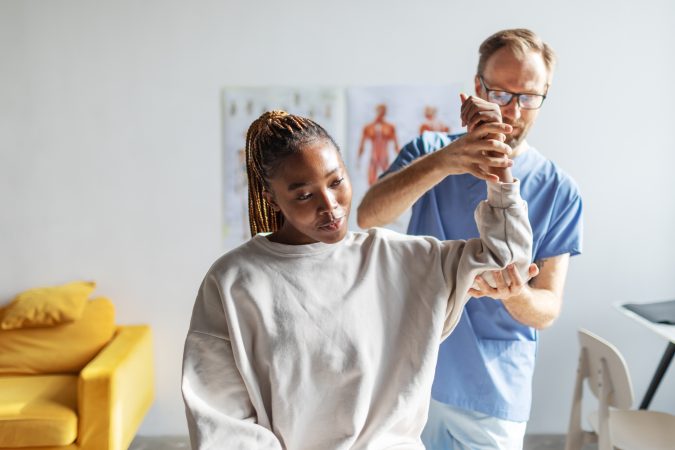
    NovaCare has more than 100 physical therapy locations in the Philadelphia region, including some through a partnership with Rothman Orthopaedics.

    For 25 years, NovaCare sponsored the Philadelphia Eagles practice complex in South Philadelphia. Jefferson Health took over the sponsorship this year.

    Top management joined private-equity firm Welsh, Carson, Anderson & Stowe in the acquisition of Select Medical, which is based in Mechanicsburg, Pa. The sale was completed Wednesday. The price per share was $16.50 per share, an 18% premium to the latest close before the deal was announced in November.

    In addition to outpatient physical therapy through NovaCare and other subsidiaries at 1,850 locations in 36 states, Select Medical operates 104 long-term acute-care hospitals in 28 states and 38 rehabilitation hospitals in 15 states. The company has more than 45,000 employees and had $5.5 billion in revenue last year.

    Select Medical acquired NovaCare in 1999. Publicly traded NovaCare fell on hard times because of Medicare reimbursement changes under the federal Budget Reconciliation Act in 1997. The law capped reimbursement for speech, physical, and occupational therapy in nursing homes.

    The company, then headquartered in King of Prussia, lost $700 million in annual revenue because of those changes, The Inquirer reported at the time.

  • One year of inspections at Chestnut Hill Hospital: April 2025 — March 2026

    One year of inspections at Chestnut Hill Hospital: April 2025 — March 2026

    Chestnut Hill Hospital was not cited by the Pennsylvania Department of Health for any safety violations between April 2025 and March of this year.

    The Philadelphia-based hospital is majority-owned by Temple Health, which holds an 80% share in a partnership with Philadelphia College of Osteopathic Medicine.

    Here’s a look at the publicly available details:

    • May 21, 2025: Inspectors came to investigate a complaint but found the hospital was in compliance. Complaint details are not made public when inspectors determine it was unfounded.
    • July 7: Inspectors came to investigate a complaint but found the hospital was in compliance.
    • Aug. 15: The Joint Commission, a nonprofit hospital accreditation agency, renewed the hospital’s accreditation, effective June 2025, for 36 months.
  • America turns 250 with its soul in the balance | Editorial

    America turns 250 with its soul in the balance | Editorial

    The Founding Fathers gathered in Philadelphia 250 years ago and formally adopted the Declaration of Independence, which proudly proclaimed that “all men are created equal” and endowed with certain inalienable rights, including “life, liberty and the pursuit of happiness.”

    The Great Experiment’s Semiquincentennial should be cause for celebration. Instead, a great malaise hangs over the United States.

    While America has an abundance of exceptional qualities, for many, the dream has never matched the declaration. Even worse, the nonstop chaos, corruption, and incompetence coming out of Washington make it feel like the founders’ belief in the fundamental rights of humanity is under attack.

    The country is deeply divided, and the outcome of the battle against illiberalism has never been more uncertain. That has tempered the excitement for this July Fourth.

    While many Americans, including members of this Editorial Board, celebrate the freedoms, strengths, and highest ideals of the United States, we, like the author James Baldwin, love this country more than any other but reserve the right to criticize its current leadership and what’s been done in our name.

    In fact, it is not only our First Amendment right but our duty to the founders, who raised their voices against the injustices of their era, stood up to a king, and crafted an imperfect declaration of the importance of individual freedoms that has inspired generations of democracies around the world.

    Their ghosts walk the streets of Philadelphia, which might explain the intensity of the ambivalence many of us feel about how best to honor America as it celebrates what was started here 250 years ago.

    A recent poll found only 33% of U.S. adults are “extremely proud” to be American — the lowest rating since Gallup began asking a quarter century ago.

    Those feelings are understandable. It is not unpatriotic to express concerns about the direction of the country.

    Masked federal agents stand outside the Delaney Hall detention center in Newark, N.J., during a protest in May.Seth Wenig/AP

    After all, it is difficult to be proud when masked federal agents kill U.S. citizens in broad daylight.

    It is difficult to be proud when U.S. Immigration and Customs Enforcement agents round up migrants while they work on farms in California, repair a roof in Louisiana, or wash cars in North Philadelphia.

    It is difficult to be proud when a hapless defense secretary celebrates the killing — in violation of international law — of more than 200 civilians in tiny boats, who may be transporting drugs or just fishing.

    It is difficult to be proud when a nation founded by immigrants sends migrants with no criminal record to maximum-security prisons in foreign lands without any due process.

    Pride does not come easily when you live in a country whose leader dismantles higher education, shakes down law firms, slashes scientific research, tramples the rule of law, and cuts off health insurance for the most vulnerable citizens.

    Where is the pride in watching the world’s richest man parade across a stage with a chain saw to celebrate the firing of hundreds of thousands of federal workers? Or when he ends foreign aid for the poorest lands, leading to mass deaths?

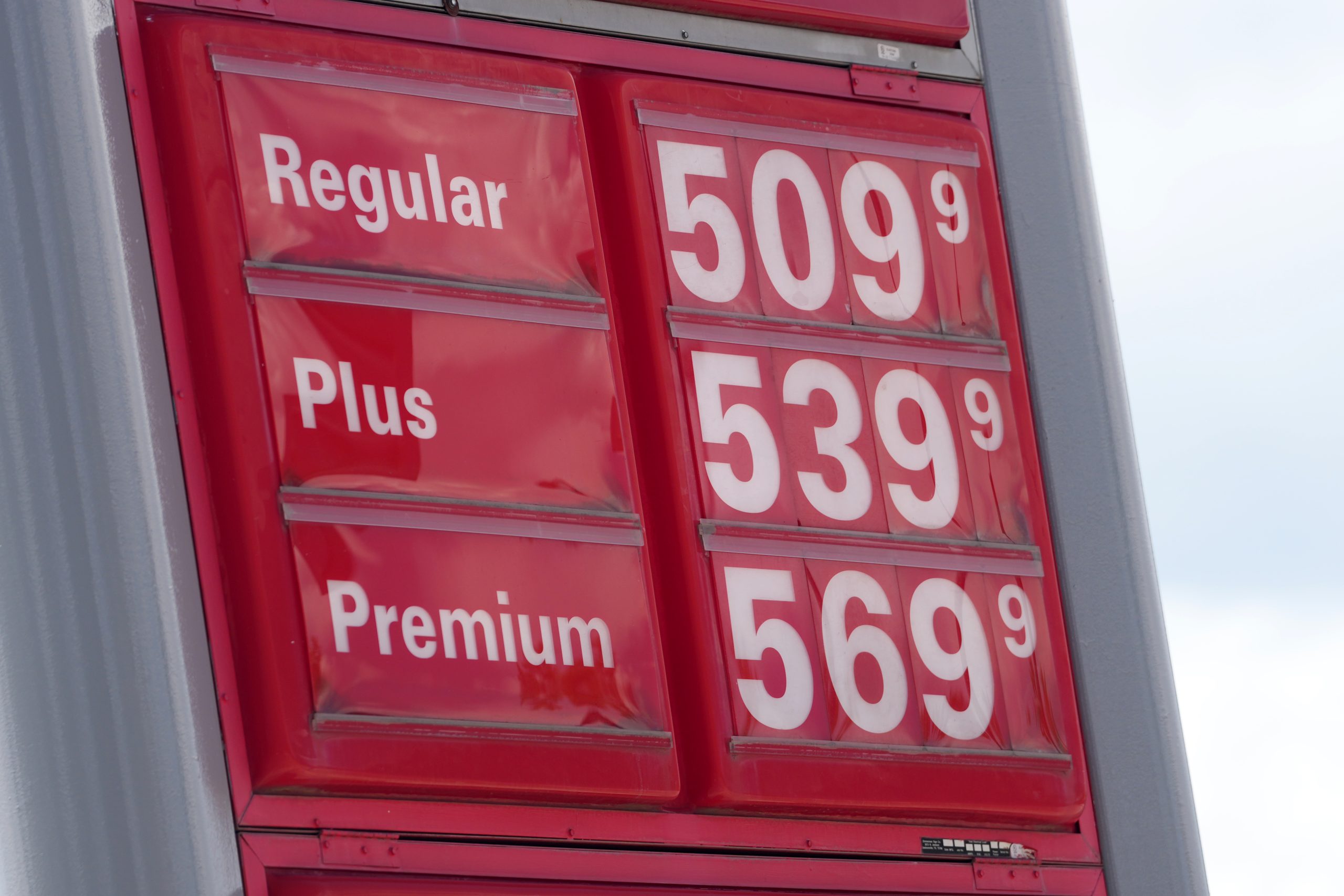
    Who was proud to lose another senseless and illegal war that cost billions and sent gas prices above $5 a gallon?

    Who is proud to have a convicted criminal in the White House, pocketing $2 billion on side hustles that blur the line between policy and personal business?

    How did lies, anger, and cruelty replace life, liberty, and the pursuit of happiness?

    The per-gallon prices for the various grades of gasoline available at a gas station are displayed on a sign above pumps in southeast Denver in May.David Zalubowski/AP

    Life expectancy in the U.S. declined to its lowest level since 1996, in part from the pandemic, but also from the growing inequality in education and healthcare.

    Child poverty has tripled in recent years while the rich keep getting richer.

    The top 1% of American households own more stock than the bottom 90%, according to the Federal Reserve.

    A booming stock market has helped to fuel a surge in wealth inequality. The number of U.S. billionaires reportedly jumped by 50% from 2017 to 2025.

    Elon Musk, who recently became the first trillionaire, makes $3.6 million an hour, while more than 42,000 Pennsylvanians make the minimum wage of $7.25 an hour.

    Billionaire tech oligarchs are reshaping American politics, civic discourse, media, and the economy for the worse. We have seen the enemy, and it is not trans athletes or day laborers outside Home Depot.

    Much of the anger, division, and disillusionment stems from the fact that for most of the country, the American dream is out of reach.

    Stagnant wages, rising healthcare costs, and attacks on unions explain, in part, why fewer than 40% of U.S. households can afford to buy a starter home priced at $200,000.

    Forget pursuit of happiness; most Americans can’t afford basic necessities like groceries, utilities, and gasoline, let alone go on vacation, a recent poll found.

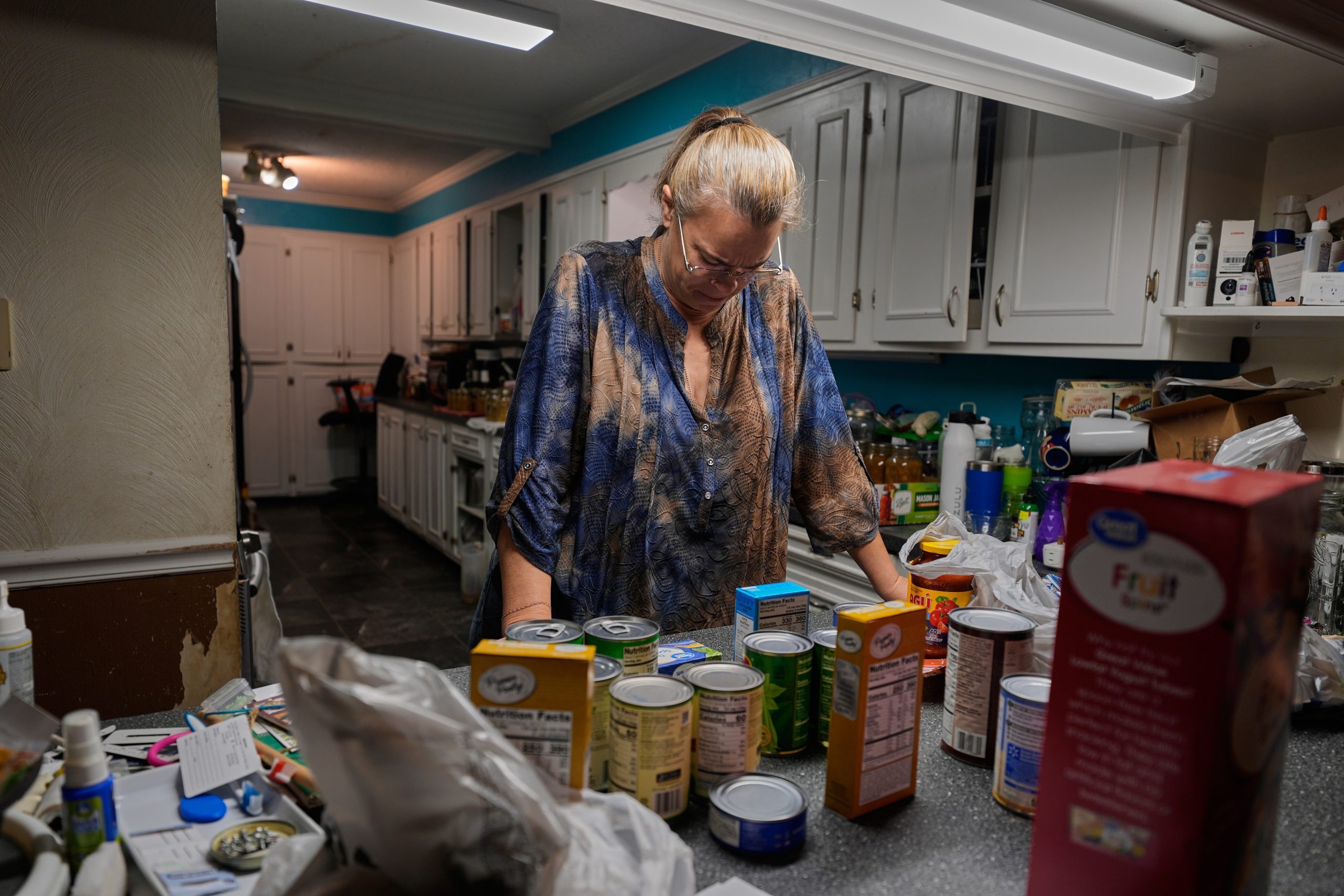
    Goldie Getter, the wife of a civil service employee who was furloughed due to the government shutdown, unpacks groceries her husband received from a food bank, in Gulfport, Miss., in November.Gerald Herbert

    Turns out you can’t build a strong middle class on a gig economy, dollar stores, and legalized gambling.

    Many Americans are so fed up that they are voting with their feet. For the first time since the Great Depression, more people moved out of the country than moved in, with many citizens packing up and looking for a better life elsewhere.

    Then there is the long-ignored elephant in the room.

    While there has been great progress over two-and-a-half centuries, the United States has failed to live up to the promise Thomas Jefferson penned while living on the corner of Seventh and Market Streets: After 250 years, all still are not equal.

    The country continues to live in the shadow of slavery.

    There have been efforts to right the wrong. The 13th Amendment abolished slavery in 1864. The landmark U.S. Supreme Court ruling in Brown v. Board of Education prohibited segregation in public schools in 1954.

    Passage of the Civil Rights Act in 1964 dismantled institutional segregation, and the Voting Rights Act in 1965 barred racial discrimination in voting, eventually paving the way for the election of the first Black president in 2008.

    But one truth remains self-evident: Systemic racism continues to create disparities in the quality of housing, education, employment, wealth accumulation, law enforcement, and health outcomes for many Black and brown citizens.

    For a lot of Americans, the reality has never matched our nation’s founding principles. Yet, every day, millions of people do their part to help the United States become a better version of itself, a more perfect union.

    Two hundred and fifty years ago, a small group of citizens met in Philadelphia and changed the world. Keeping the republic requires all of us to preserve, protect, and defend the Constitution from the current attacks coming from within.

    Still, the question remains: Should we raise the American flag? Or fly it upside down in a sign of distress? Or lower it to half-staff in mourning or remembrance of things past?

    Like any assessment of the state of the American Experiment, there is no easy answer. Perhaps, on the Semiquincentennial Fourth of July, the most appropriate response might be to simply sit briefly with the discomfort of the nation’s dichotomies — the contradictory truths that coexist.

    And after taking a moment to acknowledge the grand vision that birthed a nation where all men are created equal — a vision yet to be fulfilled — let’s continue the work to see it realized.

  • J. Crew Factory and other outlets are often selling worse-quality goods than main stores | Expert opinion

    J. Crew Factory and other outlets are often selling worse-quality goods than main stores | Expert opinion

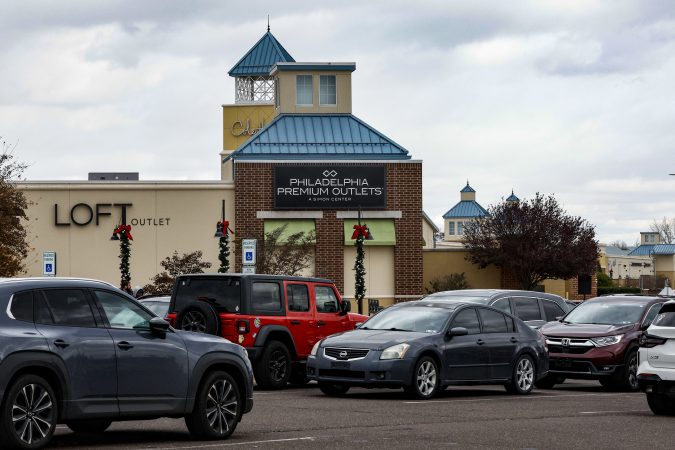
    The words outlet mall or factory store make many shoppers envision marked-down designer bags, slightly damaged furniture, or last season‘s fashions at steep discounts. But a new study by Consumers’ Checkbook found that many are churning out cheaper merch specifically for their “discount” locations. Checkbook staffers spent three months visiting 40 brand-name outlets, scrutinizing online terms and conditions to learn what exactly off-price stores were selling.

    What we found was that about half the off-price stores we investigated — particularly for mid-priced apparel stores like J. Crew and Banana Republic — are selling made-for-outlet goods, usually with cheaper fabrications and fewer fine details than mainline store merchandise.

    Other factory stores mix made-for-outlet products with clearance items from their original brands. Houseware chains and some high-end designers operate genuine clearance centers with discounted merchandise that once appeared in regular stores: a floor model Pottery Barn dresser; last season’s Burberry trench coat.

    The evolution of outlet shopping

    Outlet stores started as small, manufacturer-run businesses — often near factories — selling past-season, overstock, or slightly damaged products at big discounts. Outlet malls began popping up in the late 20th century, fueled by big name factory stores from the likes of L.L. Bean and Coach. But the rise of fast fashion — and an increasingly bargain-hungry populace — meant shoppers wanted more deals.

    So brands like Ann Taylor, Gap, and J. Crew opened off-price stores. These became so popular that they were impossible to fill with leftovers or older goods. So many retailers started manufacturing completely different, lower-quality, lower-priced merchandise for their “outlet” or “factory” locations.

    Often, these outlet stores have obtuse signage, product labels, and logos. Many outlet stores bear signs with the company name but no mention of outlet, clearance, or factory. Some use different labels and logos on outlet merchandise, but it’s often an if-you-know-you-know secret.

    “Companies are subtle about branding and labels for outlets because they don’t want to lose their magic,” said Gonca Soysal, who led a study on outlet shopping when at the University of Texas in Dallas. “If they say, ‘this is a different product,’ then that illusion vanishes.”

    Another hint that the stuff at outlets may never have been on the floor at your local mall? Many brands now operate more off-price stores than regular price ones. For instance, there are 96 Ann Taylor stores — but 122 Ann Taylor Factory stores — across the U.S., and just 93 Nordstrom department stores compared to 269 Nordstrom Racks.

    Yes, prices at outlet stores are usually lower than those at mainline stores for similar items, but even a casual glance at a fabric composition tag or a look at the stitching on a bag reveals significant quality differences. If you want to do some outlet shopping, arm yourself with a few tips.

    Know which stores offer only made-for-outlet merchandise

    Checkbook made a list of stores that only (or mostly) stock made-for-outlet items. If you shop at them, you’re getting a completely different product than you’ll find at department stores or mainline shops. “A brand you know at full price might have a certain standard of quality that isn’t the same at the outlet,” said Pamela N. Danziger, an outlet mall expert and author of Why People Buy Things They Don’t Need.

    Don’t believe tags with ‘compare at’ prices

    These are outlet and off-price marketing tricks and don’t mean anything. If an item came from an original store or maker, it’ll usually have a price tag reflecting that (i.e. a mainline Nordstrom tag), sometimes with little low-tech stickers planted over original prices.

    Know your brand

    Whether you’re bargain hunting for last-season or overstock stuff at a clearance center or a thrift store, it helps to be familiar with the mainline brand’s styling, fabrication, construction, and quality. This can also help you separate made-for-outlet wares from better-made original items: For instance, the ballet flats we spotted at the Tory Burch outlet have plastic soles and retail for around $120; mainline Tory ballerinas cost $200 or more and usually sport leather soles.

    Expect chaos, limited sizing, restrictive return policies, and slight damage

    True outlets (aka clearance centers) are a mixed bag, stocking things people didn’t buy at regular price in regular stores, floor model furniture, and, in the case of Anthropologie and Free People’s Reclectic outlets, used rental garments. Part of the reason off-price stores started producing made-for-outlet goods was that consumers got tired of this treasure hunt.

    Compare prices

    Check prices of similar items currently for sale at the mainline store. If Banana Republic’s regular store is running 40% off, you’ll probably get a nicer sweater or shirt there than if you buy the made-for-outlet version.

    Similarly, when shopping outlet or factory stores for Nike, Polo Ralph Lauren, New Balance, and other brands that also sell stuff in department stores, Amazon, etc., compare what you’ll pay in the brand-operated stores with what you’d pay elsewhere. Our researchers often dug up better deals by buying online, not from outlets.

    Check for coupons

    Outlet malls and stores often have discount coupons, usually digital but occasionally old-school paper.

    Delaware Valley Consumers’ Checkbook magazine and Checkbook.org is a nonprofit organization with a mission to help consumers get the best service and lowest prices. It is supported by consumers and takes no money from the service providers it evaluates. Until Aug. 5, readers can access Checkbook’s full outlets report, and all its ratings and advice free at Checkbook.org/Inquirer/outlets.

  • America emerging

    America emerging

    When the people drafting the U.S. founding documents got to work in the mid-1700s, they made unprecedented progress on the ills plaguing the preceding era, while failing to meet the fullest expression of their ideals. They would leave those moral aspirations to us — their inheritors.

    Their impact is all around us. When any person, anywhere in the world, claims, “I have rights,” they are nodding toward the Enlightenment ideals at the heart of the U.S. founding. Today, it is difficult to appreciate the extent to which those founding principles were revolutionary for simply quelling religious violence.

    In the era preceding the founding, millions of Europeans died in warfare couched within differences of faith. On this side of the Atlantic, institutions reflected the certainty of one, true God. Harvard was founded in 1636 to train Puritan clergymen; William and Mary was established six decades later to train Anglican clergy. In the colony of Maryland, Catholics battled Protestants in 1655, leading to the execution of four Catholic leaders.

    In this context, 11 years before he would take control of Pennsylvania, William Penn wrote a treatise establishing a rationale for religious toleration. Benjamin Franklin picked up that emphasis when he shared Proposals Relating to the Education of Youth in Pensilvania in 1739. In the document that framed the University of Pennsylvania’s early years, Franklin insisted that students would consider “the Advantage of Civil Orders and Constitutions, how Men and their Properties are protected by joining in Societies and establishing Government.”

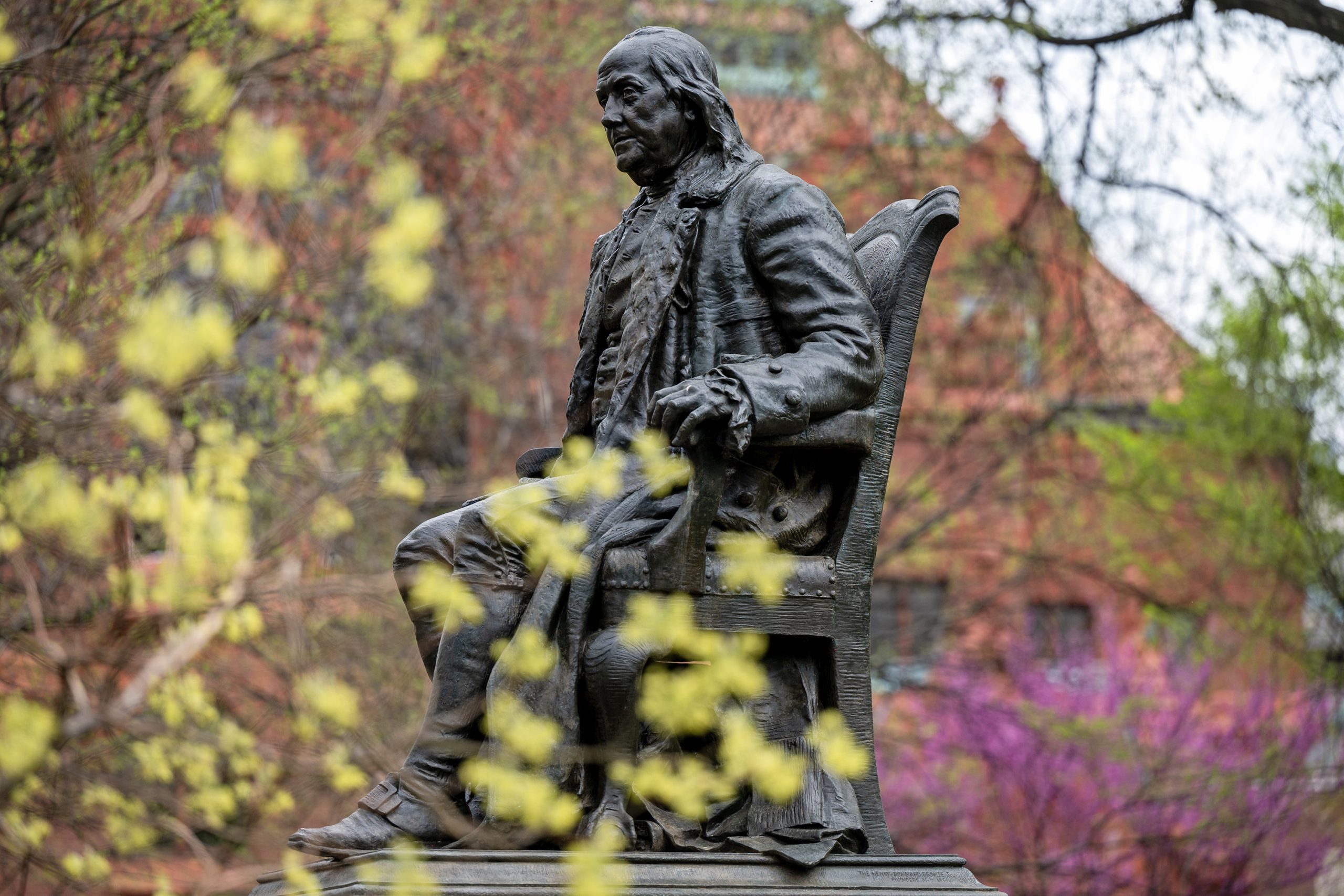
    Benjamin Franklin statue on the campus of the University of Pennsylvania in front of College Hall. Tom Gralish / Staff Photographer

    Penn’s early, religiously inclusive orientation was at odds with the identity politics of the era, which featured an association between Anglicanism and British loyalty. As tensions grew, the university trustees mandated an Anglican majority on the board, contributing to suspicions of loyalist bias.

    After the British occupation of Philadelphia and 2,000 disease-driven deaths among the Continental Army at Valley Forge, state leaders dissolved the university. According to the Pennsylvania Assembly, “the College had been ‘in the hands of dangerous and disaffected men’ who have provoked ‘tumult, sedition, and bloodshed.’”

    A new university was mandated — and the leadership was diverse across Protestant sects, including even Catholic representation. The leaders, however, were uniform in their support for the American revolutionaries.

    This creation of, and commitment to, a civic, secular, tolerant institution of higher learning reflected centuries of conflict in arms, persuasion in conversation, and development of ideals. And, like the Declaration of Independence, it was so near in time and space that Penn’s founding was not a crowning achievement but a milestone on a much longer journey.

    Indeed, America’s hypocrisies at the founding and struggles since that time are understood in terms of American ideals: enacting in life and in law, through shared governance, a country that embraces the dignity of all people.

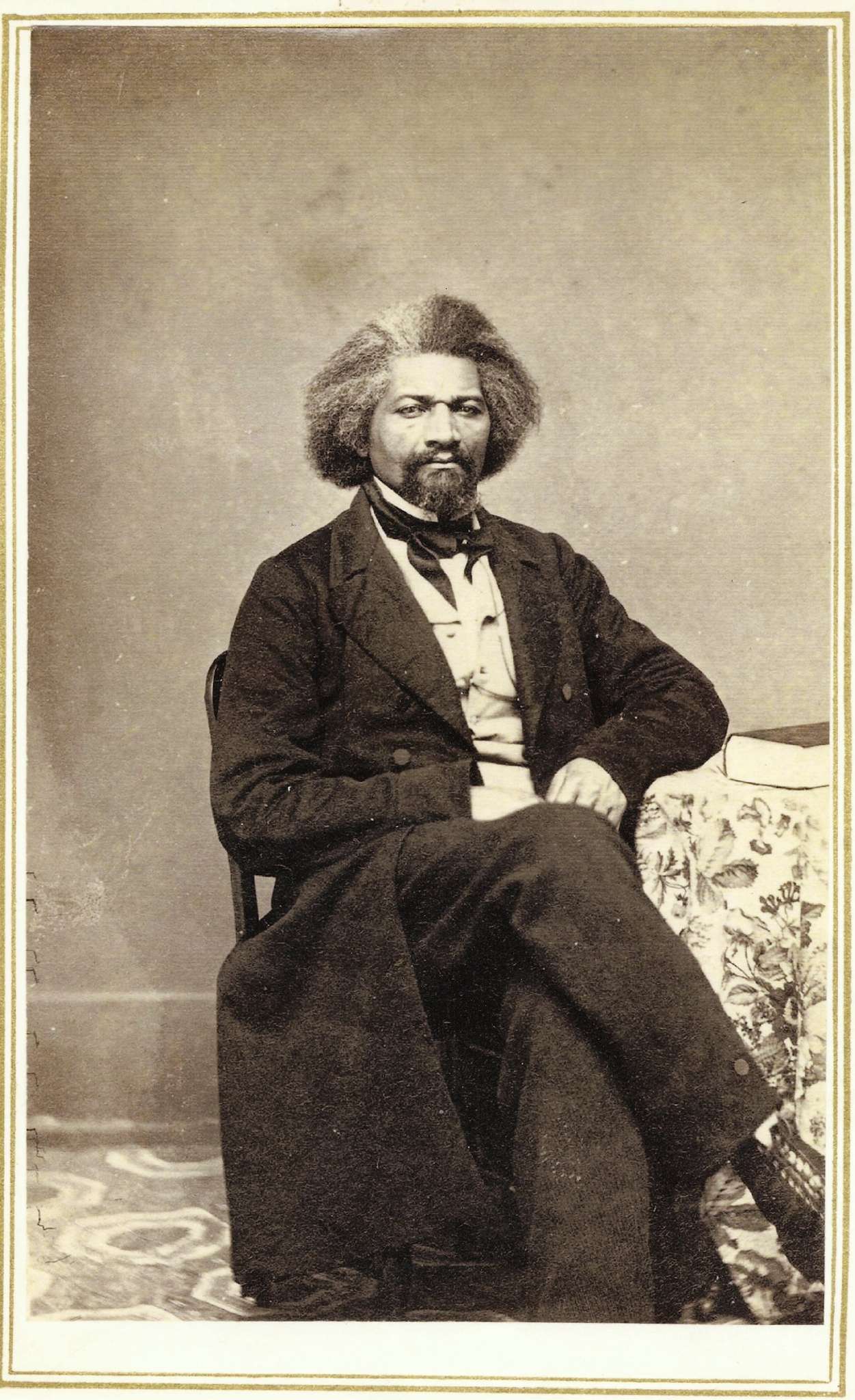
    A century after William Penn died, Frederick Douglass was born into enslavement — yet he was destined to advance America’s moral imagination.

    Douglass self-emancipated by escaping to Philadelphia at the age of 20 in 1838. Only three years later, he rose to fame through his abolitionist speeches, compelling audiences with his message and oratory power.

    An 1863 photograph (carte-de-visite) of Frederick Douglass, by Edwin Burke Ives and Reuben L. Andrews.Hillsdale College

    He also grew through international collaboration. His 1840s tour of Ireland and Britain revealed the interdependence of global struggles for freedom.

    When Douglass returned to the states in 1847, he joined Elizabeth Cady Stanton and Philadelphian Lucretia Mott in upstate New York at the Seneca Falls Convention for women’s rights. As his reputation grew, he occasionally parted ways with his mentor, the abolitionist William Lloyd Garrison.

    One critical difference featured a perennial question: Is it possible to reform the system?

    Garrison and many of his followers viewed the U.S. Constitution as a pro-slavery document. He refused to participate in U.S. electoral politics and believed free states should separate from states that permitted slavery. Douglass differed.

    The debate extended across the Atlantic. In 1860, Douglass was invited to Glasgow, Scotland, to defend his position. He began by clarifying that “the American government and the American constitution … are as distinct from each other as the compass is from the ship.”

    In an extensively argued defense of constitutional principles, textual, and moral clarity, Douglass asserted that if Americans honor the Constitution, “we will have no need of a dissolution of the Union — we will have a dissolution of slavery all over that country.”

    In this orientation toward America, emerging ever more aligned with its fullest expression as a birthplace of freedom, Douglass echoed Franklin.

    At the age of 81, in 1787, Franklin urged adoption of the U.S. Constitution — specifically recognizing it had faults he disagreed with. He emphasized union over disunion; he offered faith in the possibility of stepping from the rule of a king to the rule of the people, however small that first step was — it was still a spark.

    Though Douglass would live most of his life in Massachusetts, New York, and the nation’s capital, he gained his freedom by coming to Philadelphia — a city and region awash in abolitionist organizing. Harriet Tubman also established her freedom in Philadelphia before moving northward. In the same era, the nation’s first historically Black colleges and universities, Lincoln and Cheyney, were founded in Southeast Pennsylvania. They would soon educate numerous pivotal civil rights leaders in the U.S., as well as the young men who would later become the first presidents of Ghana and Nigeria.

    Revolutions in human freedom move much more like a river than a straight line. We who work, vote, and struggle for freedom are the water. We hit rocks, cliffs, and eddies — but freedom, like water, finds its path.

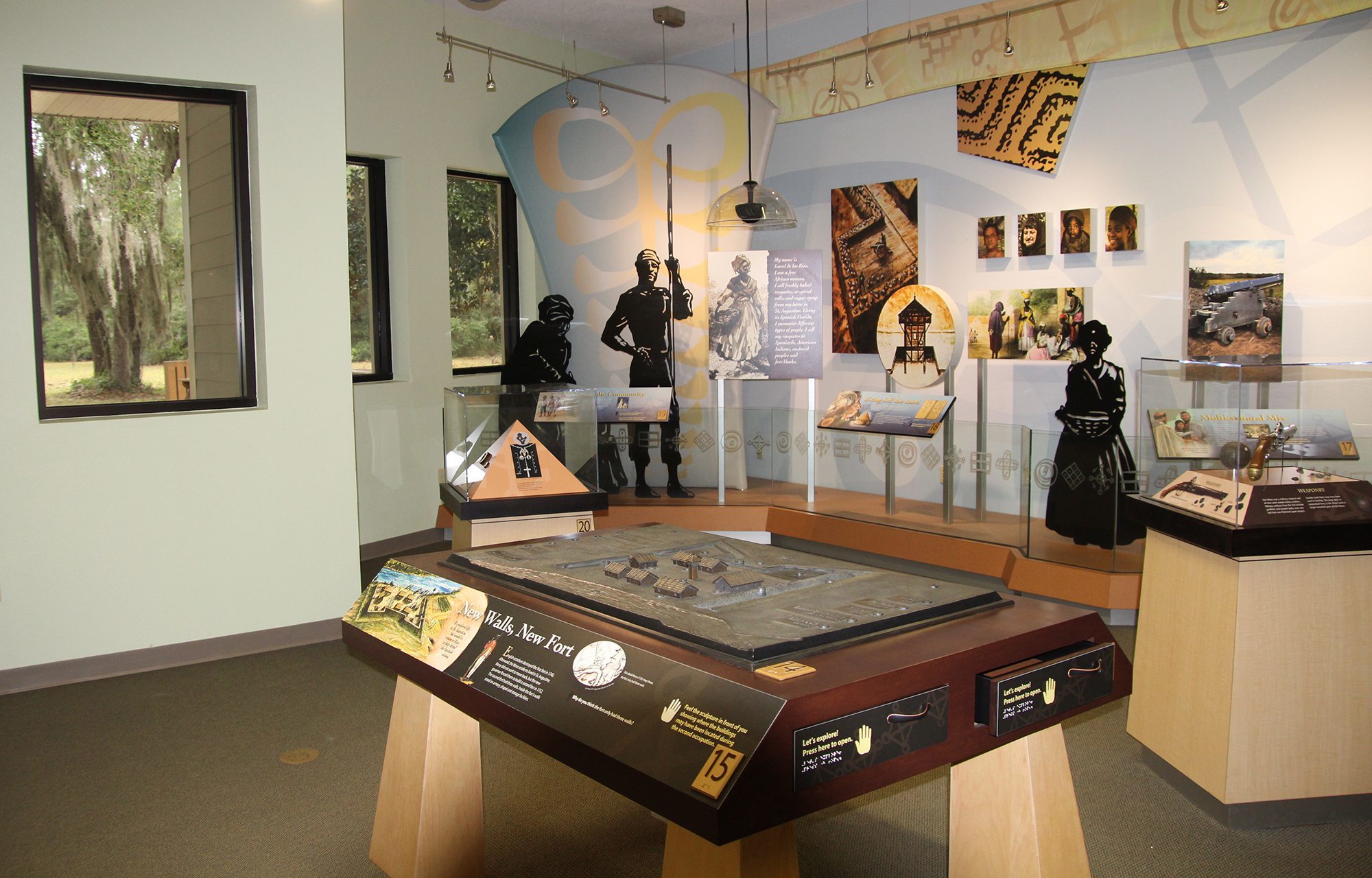
    That freedom-finding is not merely metaphorical. In the 1700s and early 1800s, enslaved Africans fleeing Georgia fled not north but south, where the Spanish ruled until 1821. Just a bit north of St. Augustine, Fla., is Fort Mose, established as a legally sanctioned free Black community in 1738.

    The Visitor Center at Fort Mose Historic State Park includes several exhibits and a detailed timeline that tells the story of the first free Black community in the U.S.Mary Ann Anderson / MCT

    Freedom can be enacted on any soil, by any heritage. And it has been violated — all around the world — by a full range of traditions. Legally sanctioned slavery continued in Brazil through the end of the 1800s; it persisted in the Indian Ocean region well into the 1900s. Religious freedom — and freedom of conscience — remains an ideal that has yet to be fully enacted.

    In the U.S., it is better than it is in much of the world, but we, like people anywhere, will always need to challenge ourselves to fully understand and enact our highest ideals.

    When we celebrate the founding, we celebrate ideals. When we make American progress, we advance their implementation. The rights underlying democracy are not a given; they are the product of a cocreated moral imagination, grounded in shared values, extended through quality schooling, and in need of restrengthening and improving with every generation.

    Eric Hartman recently delivered invited lectures on these topics at Northeastern University and at Flagler College in St. Augustine, Fla. This op-ed is excerpted from a longer article currently under review.

  • 250 years has taught us that freedom comes only with economic security

    250 years has taught us that freedom comes only with economic security

    In America, one broken-down car can cost someone a job. One medical bill can wipe out a bank account. One missed paycheck can push a family from stability to desperation.

    That is not freedom in any real sense.

    As the nation marks 250 years of independence, we should say plainly what too many families already know: Freedom requires economic security. And economic security is only achievable when people have resources that exceed the basic cost of living, allowing them to cover their daily needs and build essential wealth — the savings, assets, and financial cushion needed to withstand life’s inevitable shocks.

    Pathway to opportunity

    Two hundred and fifty years ago, our Founding Fathers made a promise that people would have a right to self-determination. It was a promise that hard work, responsibility, and perseverance would open real pathways to opportunity. As we mark this anniversary, we must ask an honest question: For how many Americans does that promise hold?

    For too many, it does not. Millions of families are working, paying their bills, and doing everything right, yet have almost nothing set aside for the moment life goes wrong. A child spikes a fever. A parent grows too frail to climb the stairs alone. The cost of in-home care lands like a bombshell. One emergency room visit, one layoff, one transmission repair, and stability collapses into crisis. Their rights exist in theory, but their actual circumstances leave people with fewer choices, fewer chances, and far less control over their own lives.

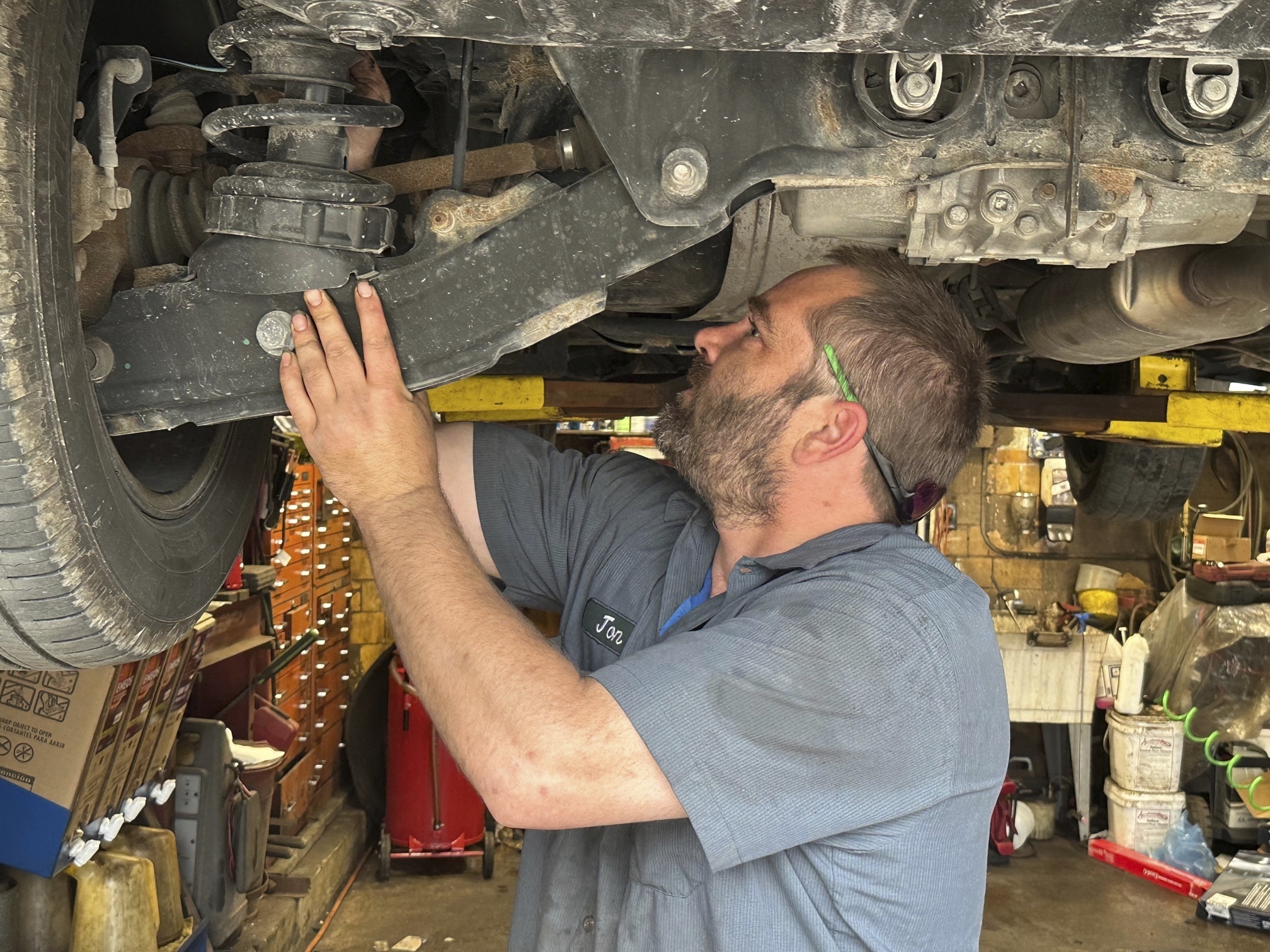
    A mechanic works on a pickup truck in Michigan. The expense of a major auto repair bill can mean the difference between stability and ruin for many Americans.Tom Krisher

    The Constitution guarantees liberty, but circumstances can constrain it. People without the resources to withstand hardship face insurmountable barriers to education, purchasing homes, launching businesses, or saving for retirement. They cannot give their children a running start. They may have rights on paper, but lack the economic security to fully exercise them.

    The founders understood at least this much: Liberty could not survive as an abstraction. The Virginia Declaration of Rights, a document that helped supply the moral language of the Declaration of Independence, described the inherent rights of the people as including life and liberty, but also “the means of acquiring and possessing property” and pursuing happiness and safety. That phrase matters.

    Today, we understand “the means” less as land than as essential wealth. This is not wealth in the sense of luxury, privilege, or vast accumulation. It is the modest but vital foundation that allows a family to absorb a shock without being knocked flat. It is the money to repair the car that gets someone to work, cover the childcare that keeps a parent employed, pay for medicine before a condition becomes a crisis, or help an aging parent remain safe at home.

    Essential wealth is what allows families to plan instead of merely react. It is the difference between recovering from a setback and being defined by it.

    For generations, the government has measured economic well-being almost entirely by the absence of poverty. It tracks what people earn while paying little attention to what they own, save, or can lean on when hardship strikes. Income matters, but it cannot tell us whether a family is truly economically secure.

    Wealth, not income

    The real test comes when life happens. And in those moments, the difference between stability and crisis is not income. It is wealth, or the lack of it.

    The cost of ignoring this is written across the country and across Pennsylvania. Tens of millions of American households cannot cover a modest emergency expense, including 48% of households here in the commonwealth, according to the “Measuring the True Cost of Economic Security” report. Wealth gaps yawn across race, geography, and generation, falling hardest on communities long denied the chance to build.

    As we celebrate 250 years of American independence, we must think bigger.

    We need policies that help families build assets, not just scrape by. Policies that expand pathways to homeownership, invest in children’s futures, widen access to savings and wealth-building, and tear down the barriers that block economic mobility. We need to ensure every child, no matter their zip code or their parents’ income, has the tools to build a secure future.

    We must stop managing poverty and start measuring the true cost of living, which includes investing in freedom. Two and a half centuries in, the promise of America was never that people would simply get by. It was that they would have the freedom to get ahead. Living up to it now is the work this anniversary demands.

    Michael A. Nutter served as the 98th mayor of Philadelphia from 2008 to 2016 and is currently a senior executive fellow at the Weitzman School of Design at the University of Pennsylvania. Jennifer Jones Austin is the CEO of the Federation of Protestant Welfare Agencies and cochair of the National True Cost of Living Coalition.

  • Celebrate the nation’s birthday at these Philly events this weekend

    Celebrate the nation’s birthday at these Philly events this weekend

    America’s 250th birthday is finally here, and organizations throughout Philadelphia have planned a full itinerary of celebrations for the weekend.

    For those seeking historical enrichment, live music from national headliners, or even a patriotic pet parade, look no further.

    Here is a schedule of the activities and events happening in the city over the July Fourth weekend:

    Friday, July 3

    Free Museum Day: Fireman’s Hall Museum

    In a renovated 1898 firehouse, the Fireman’s Hall visitors can learn about the history of firefighting in Philadelphia, the birthplace of volunteer fire companies.

    10 a.m., 147 N. 2nd St.

    Free Museum Day: Science History Institute

    The museum will feature a new exhibition on fireworks, exploring the art, chemistry, and craft behind the colorful emblem of the holiday.

    10 a.m., 315 Chestnut St.

    38th annual Liberty Medal ceremony

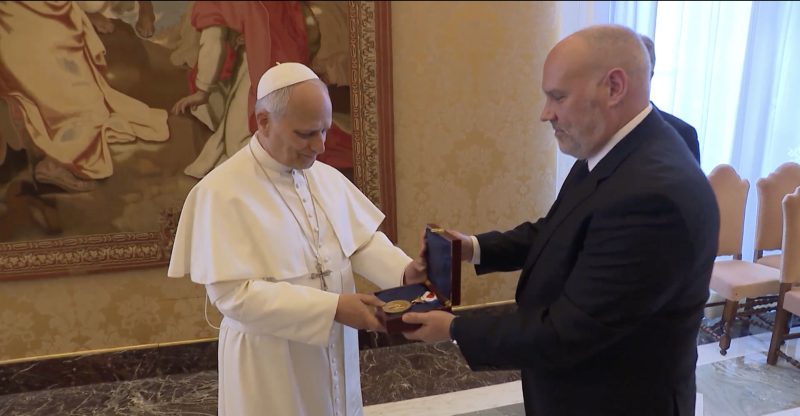
    In a public ceremony, the National Constitution Center will award the 38th annual Liberty Medal to Pope Leo XIV, who will deliver live acceptance remarks virtually from the Vatican.

    10:45 a.m., 525 Arch St.

    Free Museum Day: Historic St. George’s Museum and Archives

    Celebrating traditional craftsmanship, the museum will offer hands-on workshops where participants can create their own wax seals and try out water marbling.

    11 a.m., 235 N. 4th St.

    Salute to Independence Semiquincentennial Parade

    The largest professionally produced 250th celebration parade in the country, the event will feature 50 marching bands, 19 floats, and all 52 Miss America state and territory titleholders.

    Noon, Independence Hall to Benjamin Franklin Parkway

    Free Museum Day: Historic Waynesborough

    Located in Paoli, this National Historic Landmark was once the home of Revolutionary War hero Gen. Anthony Wayne. Free tours of the Georgian-style property will be available for visitors.

    Noon, 2049 Waynesborough Road, Paoli, Pa.

    Pops on Independence

    Enjoy a live orchestral show with the Philly Pops, headlined by Tony Award-winning performer Idina Menzel.

    8 p.m., 599 Market St.

    Saturday, July 4

    Celebration of Freedom ceremony

    The ceremony will honor America’s 250th anniversary in the heart of its historic center, with speeches, awards, and a performance by Grammy Award winner Yolanda Adams.

    10 a.m., 525 Arch St.

    Free Museum Day: Cliveden of the National Trust

    Visitors can view exhibit panels in the Barn and participate in free tours of the house, which was built in 1767 and is the site of the Revolutionary War’s Battle of Germantown.

    10 a.m., 6401 Germantown Ave.

    Free Museum Day: Historical Society of Pennsylvania

    The museum will offer the exhibition, “Paths to Independence: 1765-1787,” showcasing more than 140 items that represent the people and events involved in the American Revolution.

    10 a.m., 1300 Locust St.

    Betsy Ross House Patriotic Pet Parade

    An annual pet parade will occur at the Betsy Ross House, where prizes will be awarded for the best and most patriotic costumes.

    10:30 a.m., 239 Arch St.

    Free Museum Day: Powel House

    Owned by Philadelphia’s first mayor after American independence was secured, visitors can tour the 18th century house where President George Washington once danced.

    11 a.m., 244 S 3rd St.

    One Philly: Unity Concert for America

    The free concert will be hosted by comedian Wanda Sykes and feature performances from headliners including Christina Aguilera, Jill Scott, The Roots, and Will Smith. Music begins at 5 p.m. and will be broadcast on NBC10.

    3 p.m., 2600 Benjamin Franklin Parkway