Blog

  • NATO unveils billions in arms deals to prove its firepower as Trump arrives in Ankara

    NATO unveils billions in arms deals to prove its firepower as Trump arrives in Ankara

    ANKARA, Turkey — President Donald Trump arrived in Ankara Tuesday afternoon for the NATO summit, as the transatlantic military alliance was announcing billions in arms deals in an attempt to appease the mercurial U.S. leader.

    Trump was expected to head first to the presidential compound of Turkish leader Recep Tayyip Erdoğan, a close ally who is hosting this year’s gathering.

    Just before Air Force One touched down in Ankara, NATO showcased a series of military projects worth billions of dollars — an investment that the alliance’s secretary-general, Mark Rutte, called “money well spent.” An energized Rutte was speaking to government ministers and defense industry officials at a forum billed as NATO’s “big reveal,” to the thrum of techno music and a slick video display.

    NATO as an organization does not own any weapons — these are the property of the 32 member countries — but it does have a fleet of 14 AWACS early warning radar surveillance planes that are about 50 years old, along with some newer surveillance drones.

    A deal to replace the aging planes was announced Tuesday. Swedish manufacturer Saab will be supplying up to 10 new GlobalEye surveillance aircraft for a 10-nation consortium, Swedish Prime Minister Ulf Kristersson announced.

    “It’s a moment of great pride,” he said, noting that the twin-engine aircraft would be “made within the alliance for all the alliance.”

    Some of the projects will be paid for with funds from a system of cheap loans for defense purposes set up by the European Union, comprising up to $170 billion raised on capital markets.

    “We need to ensure that we are translating our economic might into military capabilities, putting the cash to work from defense plans to drones, from money to missiles and interceptors,” Rutte said.

    Trump has branded NATO a “paper tiger” that would cease to function without American arms and leadership. At the forum on Tuesday, Michael Duffy, a U.S. undersecretary of defense, said “the reality is that we need production increases across the board.”

    “We will be looking to increase our exports to those who are looking to buy our equipment, and we’ll also be looking to partner with the expansion of production capacity here in Europe,” he said.

    Defense sales announced

    Representatives from 15 nations shook hands and patted shoulders on a vast podium under the NATO logo as they announced a multinational effort to buy air-to-air refueling and transport planes from Airbus.

    Then Rutte announced a four-country effort to purchase as many as five new Triton surveillance drones to add to NATO’s small fleet.

    “It is genuinely made in NATO, and creating jobs on both sides of the Atlantic,” he said.

    Rutte told reporters on the eve of the military alliance’s two-day summit in Turkey that “we will announce tens of billions in new contracts that will provide the crucial kit we need to deter and defend.”

    However, at Tuesday’s event, no dollar figures were given and the display included some projects long since agreed.

    The defense industry splash comes a few weeks after Rutte tried to ease U.S. concerns about military spending at NATO with a new pitch using a chart labeled “The Trump Trillion” — showing $1.2 trillion in spending by European allies and Canada since 2017.

    Far from being impressed, Trump appeared unmoved, saying he was still disappointed at some NATO allies’ refusal to join the Iran war, which he had launched alongside Israel without consulting them.

    “We don’t need their money — we don’t need anything,” Trump said. “I just want loyalty.”

    Debate over jet sales to Turkey

    The summit is being held in President Recep Tayyip Erdogan’s sprawling palace compound in Ankara, and Trump has suggested he would come bearing gifts for the Turkish leader.

    Speaking Monday on the morning show “Fox & Friends,” Israeli Prime Minister Benjamin Netanyahu urged the U.S. not to sell F-35 fighter jets to Turkey, saying that Erdogan “calls openly for the annihilation of Israel.”

    Turkey and Israel have acrimonious relations. Erdogan frequently accuses Israel of committing genocide in its war in Gaza, triggered by the deadly Oct. 7, 2023, Hamas-led attack on southern Israel.

    Turkey was barred from the F-35 program in 2019 after it purchased Russian-made S-400 missile defense systems. However, Trump, who has warm relations with Erdogan, has hinted ahead of his planned visit to Ankara that the sales could soon resume.

    Netanyahu said selling Turkey F-35s would “upset the power balance in the Middle East, which is ultimately guaranteed by Israeli air superiority and also, I think, by America’s posture in the Middle East.”

    Israel’s Air Force depends on hundreds of U.S. fighter jets, including F-35s, F-16s and F-15s.

    Turkey beefed up security and banned protests in Ankara during the summit, but a small group of demonstrators gathered on Tuesday in the capital. They were quickly surrounded by police, and a legal association said 22 students affiliated with the leftist Turkish Workers Party and three lawyers had been detained.

    Seeking a stronger Europe for a stronger NATO

    The focus of the summit is a stronger Europe for a stronger NATO. The Trump administration has warned the allies that they must handle Europe’s security alone as the United States focuses on China and the Indo-Pacific region.

    The Pentagon wants a reboot and is promoting what it calls “NATO 3.0,” a vision of the alliance in which Europe assumes greater responsibility for its own defense, freeing the U.S. to concentrate on other priorities.

    But hiking defense spending means increasing taxes or diverting resources from other priorities. U.K. Defense Secretary John Healey unexpectedly quit last month, saying the British government was not willing to spend at a time of rising threats.

    Concern is mounting among some northern and central eastern countries that Russia might be preparing a hybrid attack — a combination of conventional warfare with tactics like cyberattacks — on the continent as Russian President Vladimir Putin struggles to secure victory in Ukraine.

    Keir Starmer’s office said the British leader will be “focused on building a stronger and more European NATO” on what is likely to be his last foreign trip as prime minister.

    Starmer, who announced his resignation June 22, has faced criticism from military leaders, opposition politicians and some in his center-left party for the slow rate of increase in U.K. military spending.

    His government has committed to reach the NATO budget target of spending 3.5% of gross domestic product on defense by 2035 but does not have a concrete plan to get there. Its current spending plan will see that spending hit 2.7% of GDP by 2029.


  • The demand for purity in Trump’s GOP comes from the death of the party’s moderate wing

    The demand for purity in Trump’s GOP comes from the death of the party’s moderate wing

    With the 2026 midterm elections shaping up to be one of the most consequential in recent memory, President Donald Trump has gone on offense — not only against Democrats, but also against Republicans who he has accused of disloyalty. In fact, in recent primary elections, Trump has targeted candidates in his own party, from those running for state office to U.S. senators seeking reelection, including John Cornyn and Bill Cassidy.

    Most of those targeted by Trump have lost, which has sent a clear message: there is no longer room for debate within the GOP; only complete allegiance to MAGA orthodoxy — and by extension to Trump himself — is acceptable. This is a far cry from the GOP of yesteryear, which comfortably included staunch conservatives like Barry Goldwater and Ronald Reagan, as well as a robust moderate-to-liberal wing centered in the Northeast, upper Midwest and on the West Coast. In Pennsylvania and New Jersey alone, moderate Republicans like Hugh Scott Jr., Arlen Specter, Thomas Kean Sr. and Christie Whitman, routinely won Senate and gubernatorial elections into the 21st century.

    In fact, an often-forgotten chapter in the career of Richard Nixon — the president most often compared with Trump — vividly illustrates that the ideological boundaries in the GOP were once quite malleable. Nixon regularly shapeshifted and operated across multiple wings of the GOP as he rose from congressman to senator to vice president, and finally, to president. Yet, as Republicans have become more ideologically rigid, such moves have become increasingly difficult, replaced by debates over who qualifies as a “real Republican” — and who is a Republican in Name Only (RINO).”

    The Richard Nixon who embarked on a political career in 1945 was nothing like the figure who resigned the presidency in disgrace three decades later. When he launched his first campaign in California’s 12th Congressional District, Nixon pledged to local Republicans that he would wage an “aggressive, vigorous campaign on a platform of practical liberalism” to defeat the popular incumbent congressman, Jerry Voorhis.

    At this time, Nixon modeled himself on Republican Harold Stassen, the former “boy wonder” governor of Minnesota. Stassen had built a national reputation in the late 1930s for his bipartisan “middle way” approach to governance, which blended fiscal discipline, civil service reform and bipartisan labor legislation. By 1943, when he resigned from the governorship to serve in the Navy during World War II, Stassen had become one of the country’s most prominent progressive Republicans.

    In Stassen’s success, Nixon saw a model for how a newcomer could win over liberal and independent voters in California. He wrote to the Minnesotan, “I have been very interested in following your campaign to liberalize the Republican Party because I feel strongly that the party must adopt a constructive progressive program in order to merit the support of voters.” Key to this program was retooling the principles of Democrat Franklin D. Roosevelt’s vaunted New Deal instead of rejecting them outright like many conservative Republicans did.

    This formula included accepting popular New Deal programs like Social Security — and even bolstering them. It also involved advocating against American isolationism and in favor of increased international cooperation. On labor rights — another thorny issue — Nixon, like Stassen, sought a middle ground: he supported arbitration to avoid strikes, while balancing the interests of workers and management. In a campaign speech, Nixon claimed that he “would not be a candidate if he were not strongly in favor of unions and small business.”

    This platform proved successful for Nixon, who the Minneapolis Star Tribune dubbed a “Stassen Candidate.”

    Shortly after he upset Voorhis and became the representative-elect for the 12th District, a former Whittier College classmate wrote to Nixon to offer “hearty congratulations” — despite being a Democrat who hadn’t voted for him. Nixon’s progressive message resonated with his former classmate, who expressed hope not only for Nixon’s success but “for the success of the progressive and liberal elements” within the Republican Party.

    In the coming years, Nixon would dash this hope as he illustrated the ease with which politicians moved between ideological camps in the GOP. During his early years in Congress, Nixon hung his hat not on the progressive vision of Stassen, but on staunch anti-Communism and red baiting. In 1947, Nixon joined the House Un-American Activities Committee (HUAC), where his pursuit of former State Department official Alger Hiss generated national attention. The case helped transform Nixon from an anonymous freshman congressman into one of the nation’s most prominent anticommunists.

    In 1950, Nixon further cemented his anti-Communist reputation during a successful Senate campaign against Rep. Helen Gahagan Douglas, who he portrayed as soft on Communism by repeatedly linking her voting record to that of left-wing Congressman Vito Marcantonio.

    Nixon’s reputation as an anti-Communist crusader compelled Dwight Eisenhower to select him for the 1952 GOP ticket as an olive branch to disgruntled conservatives after he beat their preferred candidate for the nomination, Ohio Sen. Robert Taft.

    Eisenhower’s election was a victory for progressive Republicans as he promised an era of “Modern Republicanism” — which paired a commitment to free enterprise with a belief that the government had an obligation to improve society and provide a basic social safety net.

    The GOP’s right flank derided this philosophy, and Nixon often spent time mediating between the two wings of the party. His ability to move comfortably between the camps reflected the ideological flexibility that still characterized the Republican Party during the 1950s.

    Made By History sponsors. FOR USE ON MADE BY HISTORY STORIES ONLY.Inquirer Staff

    Yet, even as he tried to reassure conservatives, Nixon embraced Modern Republicanism; he represented the Eisenhower administration abroad, including during his highly publicized exchanges with Soviet Premier Nikita Khrushchev. This engagement reflected the desire to contain communism through diplomacy and alliances, and the administration’s internationalist approach.

    Domestically, Nixon served as the administration’s point man on civil rights, supporting measures such as the Civil Rights Act of 1957 and overseeing efforts to combat employment discrimination through his leadership of the President’s Committee on Government Contracts. In 1958, Martin Luther King Jr. expressed his belief that “Nixon would have done much more to meet the present crisis in race relations than President Eisenhower has done.”

    In 1960, Nixon embarked on his first presidential campaign. During an October question-and-answer session at the University of Southern California, the vice president turned to the question of whether he considered himself a liberal or a conservative.

    He started by offering a definition of liberalism from Roosevelt. “A liberal is a man who wants to build bridges over the chasms that separate humanity from a better life,” Nixon explained. To him that meant, “we’re all liberals … We all want a better life.” Nixon concluded his answer by describing himself as a “practical progressive” — an echo of the “practical liberalism” he embraced during his 1946 campaign.

    Nixon went on to lose that race narrowly. But in 1968, he rebounded, by once again successfully navigating the party’s competing factions. He appealed to conservatives with his Southern Strategy and rhetorical emphasis on “law and order,” while reassuring moderates that he remained an experienced and pragmatic Republican.

    As president, he did some things that were progressive by today’s standards, including enacting the first federal affirmative action program and signing the Clean Air and Clean Water Acts. Simultaneously, however, he tangled with the liberal wing of his party over Vietnam and several Supreme Court appointments, and he vetoed legislation to provide federally funded daycare for children.

    Nixon is typically remembered for helping to usher in the populist conservative tide that would eventually sweep GOP politics. Today, he’s often compared with Trump because of his embrace of white grievance politics, his demands for personal loyalty and his abuse of power.

    Yet, his career also highlights how the Republican Party once had a vibrant and popular progressive and moderate wing. When Nixon launched his career, the idea of branding someone a RINO would have been far-fetched because the GOP comfortably managed to include staunch conservatives like Taft, as well as progressives like Stassen. The progressive or moderate wing of the party survived into the 1990s and 2000s; in Pennsylvania, Specter won the first of five Senate terms in 1980, while in New Jersey, Kean and Whitman both served as governors in the 1980s and 1990s.

    Yet, their careers tell the story of what happened as the brand of populist conservatism that Nixon capitalized on to win the presidency gained steam: In 2009, Specter switched parties and became a Democrat for his last years in the Senate, and Whitman is now a national co-chair of the Forward Party, and has endorsed Democrats in the last three presidential elections.

    Their departures reflected the rise of a new hard-line conservative Republican base with little tolerance for moderation or compromise. The collapse of the GOP’s liberal wing made today’s battles of who counts as a “real Republican” not just possible, but inevitable.

    Gaetano V. Della Torre is a New Jersey-based historian and educator. His article “Nixon’s Practical Liberalism: How Richard Nixon Tapped Harold Stassen’s Progressive Vision in 1946” is forthcoming in the Southern California Quarterly.

    Made by History takes readers beyond the headlines with articles written and edited by professional historians. Opinions expressed do not necessarily reflect the views of The Inquirer.

  • Democrats begin pulling Platner endorsements after Maine candidate faces sexual assault allegation

    A woman who previously dated Maine Democratic Senate candidate Graham Platner said he drunkenly forced her to have sex after she told him to stop, according to a Politico report released Monday, leading prominent supporters to pull their endorsements and throwing a must-win race for the party into turmoil.

    Platner denied the allegation, but said he would be considering next steps for his campaign.

    “Regardless of the inaccuracy of the reporting but mindful of the political reality it will inflict, we’re taking the time to reflect on the best path forward,” he said in a video released on social media.

    Jenny Racicot, who lives in Maine, told Politico that Platner entered her home in 2021 while drunk and assaulted her. Racicot said she had been in an on-and-off relationship with Platner, but she cut off contact with him after that night and told him the incident wasn’t consensual. A voicemail left at a number listed for Racicot seeking comment did not receive an immediate response, but she said in a CNN interview on Monday evening that she opted not to fight back for fear of Platner, a former Marine, becoming more violent.

    “He violated multiple layers of consent that night,” Racicot said.

    Platner’s campaign did not immediately respond to an email and phone message from The Associated Press seeking comment.

    “Any accusation of non-consensual behavior is categorically false,” Platner said in his video.

    Uproar in the Democratic Party

    Platner won the Democratic nomination last month, setting himself up to face Republican Sen. Susan Collins, who has beaten back previous attempts to dislodge her from the seat that she’s held for nearly three decades.

    Although Platner has long been controversial, the sexual allegation sparked a flight away from the candidate, who canceled a handful of town hall events. The main campaign arm of Senate Democrats called on Platner to drop out and said it would spend no money on the race, which is considered critical to control of the chamber, if he is the nominee.

    “Graham Platner needs to immediately withdraw as the Democratic nominee for Senate and allow Maine Democrats the opportunity to choose a new candidate who can defeat Susan Collins,” Kirsten Gillibrand, chair of the Democratic Senatorial Campaign Committee, and Chuck Schumer, the top Senate Democrat, said in a joint statement.

    The Democratic National Committee sent out an email soliciting money for Senate races hours after the Politico report posted, but Maine was not one of them. Ken Martin, the party chair, said, “Maine Democrats should select a new nominee.”

    Rep. Ro Khanna, a California Democrat who stood by Platner even as the candidate faced previous controversies, said Monday’s allegation was enough. “I’ve been very clear that sexual assault or violence against women is a red line,” Khanna said. “These allegations are very serious and credible. Graham Platner should drop out from the race. I am withdrawing my endorsement.”

    Arizona Sen. Ruben Gallego and Massachusetts Sen. Elizabeth Warren announced they were pulling their endorsements and called on Platner to drop out. The Democratic leaders of Maine’s legislature and top officials at the state Democratic Party did the same.

    “This Senate race comes at a pivotal moment in the struggle against a government, supported by Senator Collins, that serves the interests of the wealthy and powerful at the expense of ordinary Maine people. It is essential that we refocus this campaign on that struggle,” party chair Charlie Dingman, vice chair Imke Schessler and executive director Devon Murphy-Anderson said in a joint statement.

    Collins issued only a brief statement.

    “These allegations are appalling,” she said. “Nevertheless, it is not up to me to choose the Democratic nominee for Senate.”

    State law allows Platner to be replaced on the ballot if he withdraws by July 13. The replacement candidate must be named by July 27.

    The Associated Press generally does not name victims of sexual assault, but in this case Racicot spoke in an interview with Politico.

    A succession of campaign controversies

    Platner had never before held elected office, and Democratic leaders in Washington preferred Gov. Janet Mills in the primary. However, Mills, 78, dropped out as Platner, 41, consolidated support with help from progressive leaders at a time when Democratic voters have grown disenchanted with the party establishment.

    While some Democrats came around to support him after his commanding primary win, Platner’s controversial history had already left others openly despairing of their chances of winning the race. A veteran who also worked for a private security contractor, Platner has a chest tattoo recognized as a Nazi symbol, reportedly sexted with other women shortly after getting married and had a history of inflammatory comments on social media.

    In 2013, Platner posted on Reddit that people shouldn’t get so drunk “they wind up having sex with someone they don’t mean to” and that sexual assault victims should “just take some responsibility for themselves.” He’s since apologized for the post and says he no longer holds those beliefs.

    The New York Times also reported that Platner had volatile relationships with previous girlfriends, one of whom said an argument became physical. Platner denied the allegation.

    Hasan Piker, a leftist commentator and streamer who backed Platner, seemed to reverse himself Monday following the Politico report.

    “If new evidence presents itself, I’m going to change my perspective — it’s that simple,” Piker said during a livestream on Twitch, adding: “This is a clear-cut instance of verifiable sexual assault allegations. It’s completely irredeemable.”

    Our Revolution, a progressive organization founded by Sen. Bernie Sanders of Vermont, said Platner should withdraw because the allegations “are too serious to treat as a distraction from the campaign or the issues.”

    It also hinted at the potential battle over who would replace Platner.

    “Whoever leads this movement forward must be someone who has actually lived the fight Graham Platner ran on: a record with working people, with unions, against corporate money, already tested and trusted by the same base that delivered this result,” said a statement from Joseph Geevarghese, executive director of Our Revolution.

    Platner had pitched himself as a blue-collar oysterman and veteran who could reach disaffected voters. But as controversies mounted, some state Democrats had heartburn, embodied by Mills’ refusal to endorse Platner after she dropped out of the primary. Chatter circulated about possible replacements, including former state senator and logger Troy Jackson and Secretary of State Shenna Bellows.

    “I’ve known this has been coming,” said Marie Follayttar, a Democrat and community organizer in Maine, talking about the growing whispers inside the state’s small population that had been bracing for yet another revelation surrounding Platner. “I’ve been scared and I’ve been sick waiting.”

    Mike Connelly, a business owner and Democrat in Brunswick, Maine, said in an interview that he wants Platner to drop out after the latest allegations. But Connelly said he’d vote for him if he stays in.

    “I would vote for a comatose Democrat before I would vote for Susan Collins,” Connelly said.

  • US support for Israel slips as Democrats grow more critical, AP-NORC poll finds

    NEW YORK — After decades of reliable bipartisan backing for Israel, a new AP-NORC poll reveals a dramatic erosion of support for the longtime U.S. ally, with rising opposition from Democrats and signs of division among Republicans.

    The survey by The Associated Press-NORC Center for Public Affairs Research arrives at a moment when a once-consensus foreign policy issue is increasingly polarizing Americans along partisan and generational lines, driven by criticism for Israel’s conduct nearly three years after the outbreak of its latest war with Hamas in Gaza.

    About one-third of U.S. adults — including roughly half of Democrats — believe that Israel has committed genocide against Palestinians during the war in Gaza, an accusation that’s been leveled by some human rights organizations and vehemently denied by Israel and the U.S. government. About 2 in 10 Americans say Israel has not and the rest, about half, don’t know enough to say.

    A similar share, 30%, of Jewish adults say Israel has committed genocide, although about half, 49%, say it has not.

    Harold Kalmus, a 69-year-old Democrat from Arden, Delaware who describes himself as Jewish by birth, said he remembers being proud of Israel when he was younger. Not anymore.

    “I realize that there is a threat from Hamas. And I realize they’re in a very difficult situation, but what they have done is just an unspeakable horror,” he said of Israel’s military action against the Palestinians. “They’re trying to wipe out a civilization as far as I’m concerned.”

    The findings show sharply eroded views of Israel in the U.S., nearly three years after Hamas’ attack on Oct. 7, 2023, which left 1,200 people dead in Israel, mainly civilians, while 251 hostages were taken back to Gaza. More than 73,000 Palestinians have died in Gaza according to the Hamas-run Gaza Health Ministry, which doesn’t distinguish between civilian and militant deaths, including more than 1,000 killed since the beginning of the latest ceasefire. American sympathies had been shifting toward the Palestinians and away from the Israelis since around 2020, according to other polling, but has nose-dived since the latest war in Gaza began.

    Many Americans, about 4 in 10, don’t know enough to say whether Israel’s immediate military response to Hamas’ attack or its ongoing military operations were justified. Among those who did have an opinion in each case, most say the initial retaliation was justified — but a majority think its current actions are not.

    About three-quarters of Jewish adults said Israel’s initial response was justified, but only about 4 in 10 believe that about its ongoing operations.

    Only about one-third of U.S. adults view Israel as an “extremely” or “very” important issue to them personally. But it’s been a searing topic in American politics as the relationship between the two countries remains tense, just four months before high-stakes midterm elections determine the balance of power in Congress for President Donald Trump’s final two years in office. Vice President JD Vance recently criticized Israeli leaders who have expressed frustration with Trump, while vocal critics of Israel recently defeated establishment-backed Democrats in New York and Colorado primaries.

    Democrats’ support for Israel drops

    The AP-NORC poll reveals a decisive shift within the Democratic Party.

    About 58% of Democrats now say the U.S. is “too supportive” of the Israelis, up from 45% in an AP-NORC poll from January 2024 when former President Joe Biden was in office. That includes 51% of Jewish Democrats in the new poll.

    Roughly 6 in 10 Democrats, 62%, say the U.S. is “not supportive enough” of the Palestinians, up from 49% in 2024. Younger Democrats — those 45 and younger — are still more likely than older ones to say that the United States is “not supportive enough” of the Palestinians, but older Democrats are catching up to their younger counterparts. About 57% of older Democrats now say the U.S. should do more for the Palestinians, up from 39% two years ago.

    Joy Jennik, a 73-year-old Democrat from Brookfield, Wisconsin, said she didn’t have strong opinions about the U.S. relationship with Israel until after Hamas’ Oct. 7 attack.

    Now, she believes Israel is guilty of genocide.

    “The Gaza Strip, there’s not a lot left of it. Those poor people are barely living,” said Jennik, a retired home economics teacher.

    GOP stays behind Israel, but less so among young Republicans

    Just a sliver of Republicans, 13%, describe Israel’s actions as genocide, although there is an apparent age gap. About 2 in 10 Republicans under 45 say Israel has committed genocide, while about 1 in 10 Republicans ages 45 and older say the same.

    Overall, 60% of Republicans describe the U.S. support for Israel as “about right.” Only about 2 in 10 Republicans say that the United States is “too supportive” of the Israelis, although Republicans under 45 are more likely to say this.

    The share of Republicans overall who say the U.S. is “too supportive” of Israel has not changed meaningfully since 2024, but the share who say the U.S. is “not supportive enough” has shrunk from 39% to 15%.

    Mike Cardona, a 70-year-old Republican from suburban Phoenix, said he’s pleased with the level of support that the U.S. is giving Israel and rejects the notion that Israel has committed genocide.

    “I wish they’d gone in harder and better,” Cardona, a retired industrial supply salesperson said of Israel’s military action in Gaza. “Unfortunately, some innocents will be hurt, but Hamas and Hezbollah never took that into consideration when they were killing children and women in Israel.”

    Netanyahu is broadly unpopular, while views of Mamdani are split

    In interviews, several respondents emphasized that their criticism of Israel was focused on its leaders, especially Prime Minister Benjamin Netanyahu, who is perceived as closely aligned with Trump after repeated clashes with Democratic presidents.

    Overall, only 20% of U.S. adults have a favorable view of the Israeli prime minister, while about twice as many, 38%, have an unfavorable view. About 41% don’t know enough to have an opinion.

    Netanyahu is particularly unpopular among Jewish adults: about 6 in 10 view him unfavorably, while about one-third see him positively.

    Younger adults, regardless of party, are more likely than older adults to say they don’t have an opinion about Netanyahu. But while older Republicans see Netanyahu more positively than negatively, younger Republicans’ views tilt unfavorably.

    New York City Mayor Zohran Mamdani has gained prominence as an outspoken critic of Israel, and 27% of U.S. adults have a favorable opinion of the 34-year-old democratic socialist. Another 28% of U.S. adults have an unfavorable opinion, while 44% don’t know enough to say.

    Jewish adults, who overwhelmingly identify as Democrats, have a more positive view of Mamdani than of Netanyahu, with 44% viewing the New York City mayor positively, 39% viewing him negatively, and 17% saying they don’t know enough to say.

    About half of Democrats overall have a favorable impression of Mamdani and only about 1 in 10 have an unfavorable view of him, while the rest, about 39%, don’t have an opinion.

    Meanwhile, the U.S.-Israel relationship is not top of mind for many Americans as they think about the upcoming midterm elections.

    For people like Michael Ripka, a 34-year-old stage hand from Casper, Wyoming who typically votes Republican, the economy is by far the most important thing on his mind.

    “Everything is mad expensive,” he said. The conflicts in the Middle East, he added, is “100% a very big distraction.”

  • Explosions rock Damascus, wounding 18, as French President Macron visits Syria

    Explosions rock Damascus, wounding 18, as French President Macron visits Syria

    DAMASCUS, Syria — Explosions rocked Damascus on Tuesday as France’s president met with his Syrian counterpart in a landmark visit, wounding at least 18 people, Syria’s Interior Ministry said.

    Emmanuel Macron was inside the presidential palace when the explosions happened, and Macron’s office said he was safe and that the meeting with Syrian President Ahmad al-Sharaa continued.

    “Nothing can smother the aspiration of Syrian women and men to live in a fully sovereign, safe, pluralistic, and united Syria,” Macron said in a post on X hours after the deadly explosions. “This morning I met Syria in all its diversity. I saw dignity, courage and determination.”

    A large plume of smoke could be seen from the site of the explosion near the Four Seasons Hotel, where Syrian media reported Macron was staying. Footage widely circulated on social media showed a van and a motorcycle on fire and blood stains on the street in the area on a busy street near the headquarters of the Tourism Ministry and the Damascus National Museum.

    The explosions represent a challenge to al-Sharaa, who came to power after leading an insurgency that ousted Bashar Assad in 2024 and ending the country’s 14-year uprising turned-civil war. Assad’s dynasty ruled Syria with an iron fist for half a century.

    Al-Sharaa has since pushed to assert full control over and bring stability to war-torn Syria, appeal to minorities skeptical of his Islamist-led rule, and win the support of Western governments who were concerned about his past leadership of the formerly al-Qaeda-linked Hayat Tahrir al-Sham group. His government has promised political and economic reform after decades of autocratic rule.

    Macron is the first major Western leader to visit Syria since al-Sharaa came to power and his visit comes before he is set to head to Ankara, Turkey later Tuesday for a NATO summit. Macron also plans to hold a joint news conference with his Syrian counterpart. The official spoke on condition of anonymity to discuss Macron’s whereabouts and security.

    The French head of state played a major role in pushing Europe and the United States to drop most sanctions on Syria. He arrived in the country Monday night with an economic delegation, and is scheduled to sign memorandums of understanding with his counterpart as the battered country tries to lure investors to help it rebuild after 14 years of war.

    The Interior Ministry in a statement reported by Syrian state media said that the two blasts in the heart of the capital were caused by explosive devices, one placed in a garbage bin and the other in a parked car. It added that four of the wounded were police officers, and no deaths were immediately reported.

    An investigation is currently taking place at the scene of the attack. No group immediately claimed responsibility.

    Macron arrived in the country Monday night with an economic delegation, and is scheduled to sign memorandums of understanding with his counterpart as the battered country tries to lure investors to help it rebuild after the war.

    The incident comes days after an explosive device was detonated in a cafe near the Justice Palace in Damascus, killing at least 10 people and wounding more than 20.

    While Syria’s new rulers have wrestled with violence involving different groups in the country as they work to assert control, the capital has largely been peaceful during the turbulent period.

    The conflict in Syria killed nearly half a million people and displaced millions. Syria’s infrastructure lies in ruins, and while other nations and businesses have made large investment pledges, the country still needs hundreds of billions of dollars to rebuild and lift millions out of poverty.

    Before arriving at the presidential palace, Macron met with members of Syrian civil society, though his office did not give details on who.

  • The Supreme Court’s conservative majority keeps choosing ideology over impartiality — and the rulings show it | Editorial

    The U.S. Supreme Court concluded another tumultuous term in which many rulings seemed driven more by politics than by the rule of law.

    While the high court rejected some of Donald Trump’s blatantly unconstitutional initiatives, the justices delivered lasting and transformative wins for the president and the Republican Party.

    In doing so, the court’s conservative majority continued to mar its reputation as independent arbiters of the rule of law, charged with upholding the Constitution and protecting individual rights and liberties.

    The court — which includes three Trump appointees — continued to overturn precedents, curtail voting rights, and expand presidential power.

    In one major case, the justices ruled the president can fire the leaders of independent government regulators for any reason or no reason at all. The decision overturned a 91-year precedent that had long protected the agency heads from political pressure.

    But then the conservative majority contradicted itself by blocking Trump’s effort to remove Fed governor Lisa D. Cook from the central bank.

    The takeaway here is: Don’t look for the conservative majority to provide legal logic or follow longstanding precedents. The justices move from originalism to textualism to intentionalism and pragmatism depending on the argument.

    In another step backward, the conservative majority continued its more than a decade-long assault on voting rights, clearing the way for more gerrymandering and the elimination of majority-Black congressional districts.

    The court also expanded gun rights and paved the way for even more money to shape elections. On both scores, the public good is further compromised.

    Many of the conservative majority’s landmark rulings continue to contradict both public opinion and legal precedents, dating back to the 2022 decision to overturn Roe v. Wade, ending a woman’s federal right to legal abortion.

    Thankfully, the court drew some red lines on Trump’s abuse of power.

    The court rejected his illegal effort to impose tariffs, which was causing economic chaos around the globe.

    The court also rejected Trump’s effort to toss out mail-in ballots that arrive late. The court said the votes should be counted if the ballots were postmarked by Election Day.

    Pro and anti-Trump demonstrators rally outside the U.S. Supreme Court, before justices hear oral arguments on whether President Donald Trump can deny citizenship to children born to parents who are in the United States illegally or temporarily, on Capitol Hill in April.J. Scott Applewhite

    As expected, the court rejected Trump’s illegal effort to end birthright citizenship. But legal experts were surprised that the vote was not 9-0.

    Three of the more extreme justices — Clarence Thomas, Samuel Alito, and Neil Gorsuch — argued that citizenship is not constitutionally guaranteed, even though the 14th Amendment clearly states that “all persons born in the United States … are citizens.” Conservative Justice Brett Kavanaugh offered an even more convoluted opinion that agreed with the majority, but not its reasoning.

    The closeness of the vote is sure to set the stage for future political battles, as the GOP will use the issue to animate its base by using anecdotal stories to argue that birth tourism is a national security threat when children born to tourists account for less than 1% of all U.S. births annually.

    The slapdash legal gymnastics by dissenting justices underscore how personal politics — and not impartiality — drives the decision-making by the conservatives on the court.

    The number of cases involving Trump highlighted just how much time the court has to spend on his attacks on long-standing norms, policies, and procedures that have guided the country.

    While the conservative majority on the court sometimes rules against Trump, they have largely cleared the way for him to do what he wants and placed him above the law.

    The greater danger of the misguided rulings, of course, is that they will live long after Trump. He will eventually be gone, and the next president will be free to abuse the power of the office as well.

    How will the conservative majority respond then?

    Playing politics at the Supreme Court is a losing proposition for the entire country.

    Supreme Court justices swear two oaths.

    One requires the justices to support and defend the Constitution against all enemies, foreign and domestic. The other stipulates they “administer justice impartially, without respect to persons, and to do equal right to the poor and the rich.”

    On both scores, the conservative majority remains blinded by its ideology.

  • How farmers are surviving lost crops | Inquirer South Jersey

    How farmers are surviving lost crops | Inquirer South Jersey

    Good morning, South Jersey.

    Local farmers are getting creative to recoup costs from lost crops after a devastating April freeze.

    And scrapyard operators are saying the rise of lithium-ion batteries in appliances is the cause of recent fires.

    Plus, Camden County experienced intense flooding and about 1,000 emergency calls because of Monday morning’s thunderstorms, and more news of the day.

    — Taylor Allen (southjersey@inquirer.com)

    If someone forwarded you this email, sign up for free here.

    How farmers are making it work

    The freeze in April destroyed crops across the Northeast, with New Jersey’s estimated losses hitting at least $300 million. It’s why the state secured a disaster declaration that allows farmers in every county to be eligible for emergency federal loans.

    Even with the help, farmers are finding creative ways to survive until next year. Their tactics include:

    🫐 The promotion of frozen fruit

    🍒 Higher prices

    🌺 More reliance on U-pick cut flowers

    “Everybody is kind of in the same boat,” said a Sewell farm owner who planted pumpkins early to make up for wiped-out peaches. “Just support your local farm. We’ll recover.”

    Reporters Lacey Latch and Sarah Nicell have the story on how farmers are rushing to adapt.

    Exploding lithium-ion batteries

    Since Camden city officials halted operations at EMR recycling facility in June after its latest fire, scrap metal has been piling up in the area scrapyards.

    To reopen, EMR CEO Joseph W. Balzano agreed to pay the city $4.5 million upfront and an additional $2.2 million over the next five years in a proposed settlement. City Council is set to review the proposal this evening.

    Scrap dealers are pointing the finger at lithium-ion batteries, which are often found in lawn movers, construction tools, and household appliances as the cause of the fires.

    “It’s the biggest issue all recyclers face,” Balzano said. “Regulations need to be put in place that keep these batteries out of commerce.”

    Meanwhile, New Jersey lawmakers are pushing bills to track such batteries and regulate scrapyards.

    The Inquirer’s Joe DiStefano explains the impact on yards around the region.

    What to know today

    🗣️ Quote of the week

    Sally Hopkinson learned she was a descendant of Francis Hopkinson, a signer of the Declaration of Independence from New Jersey, when she was in the fifth grade.

    🧠 Trivia time

    Which New Jersey-based retailer opened its first store on Route 130 in 1972?

    A) Spencer’s

    B) Burlington

    C) ShopRite

    D) The Vitamin Shoppe

    Think you know? Check your answer.

    What we’re …

    💭 Wondering: If you can name the players who played for both the Sixers and the Celtics.

    🍰 Remembering: When renowned South Jersey cake decorator Al DiBartolo and pastry chef Manny Agigian won second place on TLC’s Next Great Baker.

    🍴 Touring: Craig LaBan’s latest recommendations at the Shore this year.

    That’s all I have for you this morning. Thanks for spending it with The Inquirer. ☀️

    By submitting your written, visual, and/or audio contributions, you agree to The Inquirer’s Terms of Use, including the grant of rights in Section 10.

  • A union fight in the DA’s office | Morning Newsletter

    Good morning, Philly! Ready for another rainy day? Be prepared to break out the umbrellas for the rest of the week. ☔

    Some workers say DA Larry Krasner has put up roadblocks to securing a union and taken positions that the workers see as at odds with his public image as a leader of the city’s progressive movement.

    Philly chefs are taking brunch, once the most dreaded offering, seriously — but not too seriously. A handful of local restaurants have reimagined the genre and the results are delicious.

    Plus, a rowing program for breast cancer survivors is set to compete across the pond, and more news of the day.

    — Sam Stewart (morningnewsletter@inquirer.com)

    If someone forwarded you this email, sign up for free here.

    ‘He is not pushing for us’

    Philadelphia District Attorney Larry Krasner has long said he’s a friend to organized labor. As prosecutors in his office are gearing up for an election to authorize their union, Krasner has said their efforts could ensure his own legacy. But not everyone in his office is feeling the support.

    More than 100 lower-level employees in the District Attorney’s Office, including paralegals and victim and witness coordinators, are separately trying to secure their own union — and some say they’re meeting resistance.

    Several workers said that Krasner’s administration has put up roadblocks and taken positions that they see as at odds with his public image as a leader of the city’s progressive movement.

    And meanwhile, the lower-level employees say there’s been a separate Wild West-style standoff between two unions, which are both vying to represent them.

    The Inquirer’s Anna Orso has more information.

    🥐 A brunch renaissance in Philly

    🍳 The golden age of brunch has arrived in Philadelphia, borne on the menus of chefs who are reinventing the genre.

    🥞 All over the city, chefs who had long focused on dinner are turning their attention to brunch-specific menus, some available just one day a week. The results are dazzling.

    🥓 To many in the restaurant industry, the very word brunch conjures up feelings of dread. The stigma against the not-quite-breakfast, not-quite-lunch meal, often accompanied by endless mimosas, has endured. Until now.

    ☕ Rice & Sambal’s brunch-specific snacks, savory items, and sweet dishes are extensive. They range from crispy tofu to lumpia (vegetable and bamboo-stuffed spring rolls) to a Sumatran rendang. And La Jefa’s brunch features Guadalajaran twists on American brunch standards, like chilaquiles tucked into omelets.

    What you should know today

    • Five people were arrested ahead of Philadelphia’s July Fourth celebration after protesters attempted to set an American flag on fire, according to police.
    • A Northeast Philadelphia mosque was damaged in an arson attack early Sunday morning, authorities said, rattling the city’s Islamic community.
    • The president and CEO of Welcome America Inc. has resigned, and while the reasons were unclear, the announcement followed the city’s decision to take over Philly’s Fourth of July concert and fireworks from the organization that has organized it since 1993.
    • Fresh off the first playoff berth of his career, Tyson Foerster locked in his future with the Flyers, last week signing an eight-year extension with $7.1 million average annual value.
    • Ring of Honor, a wrestling promotion under the AEW banner that was founded in Philadelphia, will return to the city on Aug. 21 to host its pay-per-view event, Death Before Dishonor, at the 2300 Arena for a second consecutive year.

    Quote of the day

    WeCanRow-Philadelphia is a rowing program through Whitemarsh Boat Club for breast cancer survivors. While the program focuses on mental and physical healing for those treated for breast cancer, the participants are competitors, too. From July 10 to 12, Whitemarsh Boat Club will have three boats compete at the Henley Masters Regatta in Henley-on-Thames, England.

    🧠 Trivia time

    Which of these NBA players played for both the Sixers and the Celtics?

    A) Moses Malone

    B) Dana Barros

    C) Allen Iverson

    D) Hal Greer

    Think you know? Check your answer. And be sure to take the rest of our quiz to test your Sixers knowledge.

    What we’re…

    🐮 Obsessed with: The Bradford County dairy cow beauty pageant! The last one took place 100 years ago.

    ⚾ Learning: Everything we need to know about baseball’s best coming to Philly for the 97th All-Star Game.

    ⛹️ Celebrating: The official addition of Jaylen Brown to the Sixers. He was was acquired in exchange for Paul George and four draft picks.

    🧩 Unscramble the anagram

    Hint: Sportscaster and radio play-by-play announcer for the Phillies

    ETC FRATS ZONK

    Email us if you know the answer. We’ll select a reader at random to shout out here.

    Cheers to Gerald Frank, who solved Monday’s anagram: Benjamin Franklin. Philly held a Ben Franklin look-alike contest on the eve of Independence Day. ‘Twas glorious.

    Photo of the day

    SEPTA workers clear a drain at the flooded intersection of Girard Avenue and 33rd Street on Monday, July 6, 2026 in Philadelphia, Pa.Monica Herndon / Staff Photographer

    👋 Have a great day, folks! Stay dry.

    By submitting your written, visual, and/or audio contributions, you agree to The Inquirer’s Terms of Use, including the grant of rights in Section 10.

  • A dozen businesses have opened in Ardmore this year. Here’s a list of what’s new, and what’s on the horizon.

    A dozen businesses have opened in Ardmore this year. Here’s a list of what’s new, and what’s on the horizon.

    A dozen new businesses have opened in downtown Ardmore so far this year, bringing Japanese barbecue, build-your-own salads, and organic dog treats, among other goods, to the Main Line community. New and incoming businesses include mom-and-pop shops, national chains, and expansions of popular Philly-area names, such as decorated Szechuan eatery EMei and New Jersey-based burger chain Gouldsburger’s.

    Downtown Ardmore’s new retailers and restaurants join a collection of recent additions to Ardmore’s Suburban Square, the Kimco Realty-owned outdoor mall that has long been a retail anchor in Philadelphia’s western suburbs.

    Here’s a breakdown of the new retailers that have opened in Ardmore this year, and some others that are on the horizon.

    What’s new?

    OGYU Japanese BBQ

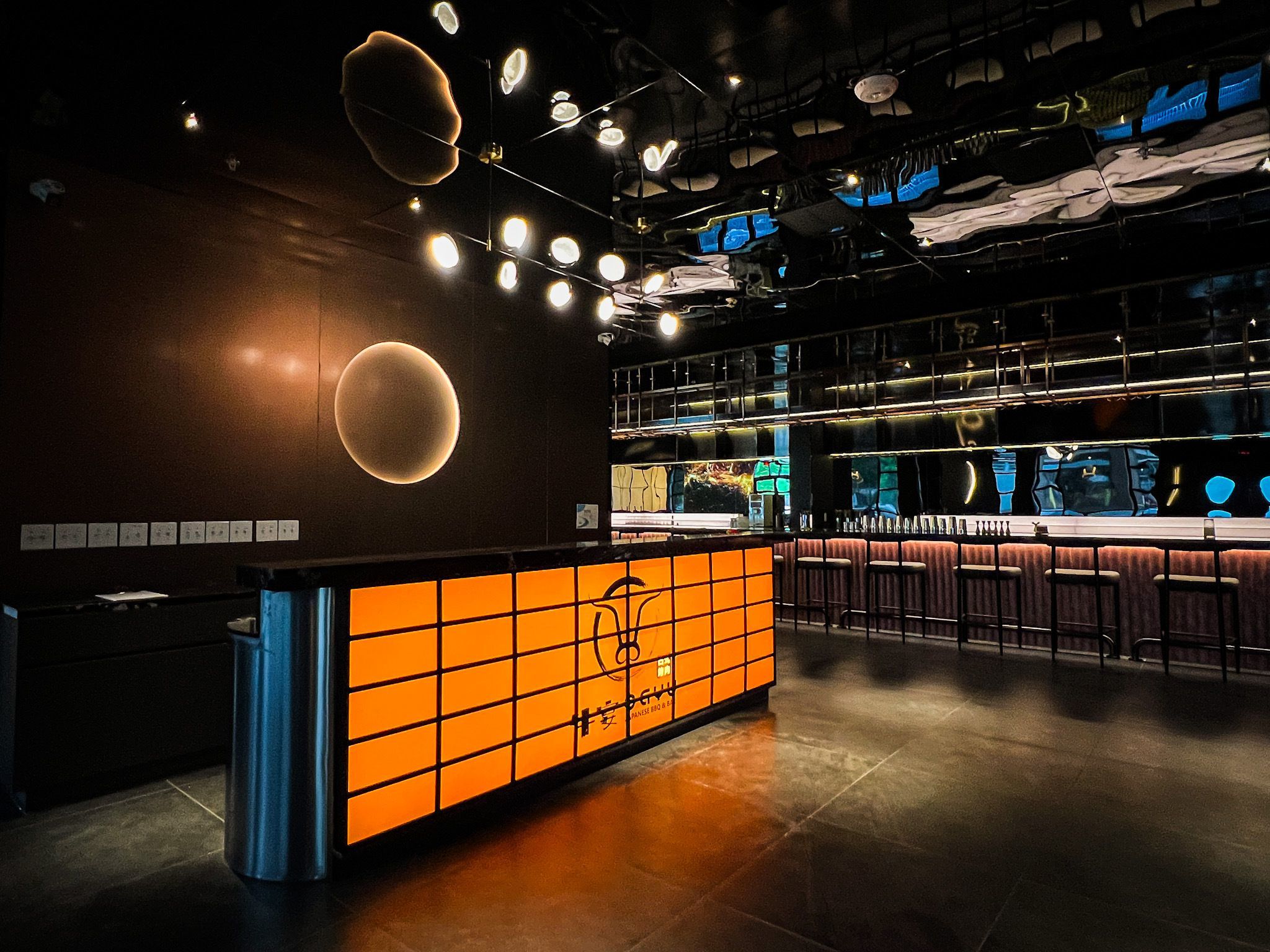
    OGYU Japanese BBQ (60 Greenfield Ave.) is a tabletop cooking Japanese steakhouse experience from Osushi owner Sam Li. OGYU offers an all-you-can-eat, tiered, fixed-price menu, as well as a full bar. Li has opened Osushi locations in Wayne, Ardmore, and Marlton, as well as upscale eatery Hiramasa in Newtown Square. OGYU opened last month.

    Just Salad

    Healthy food chain Just Salad (167 W. Lancaster Ave.) opened in Ardmore in May, adding to the company’s more than 100 locations across seven states. Just Salad serves fast-casual salads, warm bowls, wraps, and smoothies.

    Barizi

    Barizi (29 W. Lancaster Ave.) is a design, home, and gift store offering curated ceramics, textiles, leather goods, vintage furniture, and self-care items. Barizi’s Ardmore store opened in May and is its second after New York City.

    Gouldsburger’s

    Gouldsburger’s (4 Station Rd.), a Jersey-based mini-chain serving up burgers, cheesesteaks, chicken sandwiches, and other fried snacks, opened across from Ardmore’s train station in February. The restaurant has vegan and vegetarian options, and its cheesesteak has even made the ranks of the Inquirer’s favorites.

    Inside OGYU Japanese BBQ in Ardmore. Michael Klein / Staff

    CorePower Yoga

    CorePower Yoga (169 W. Lancaster Ave.), a heated yoga and strength training studio with hundreds of locations across the U.S., opened in Ardmore in April. This is the chain’s third location in the Philadelphia area, after Center City and Northern Liberties.

    Bikini Burger

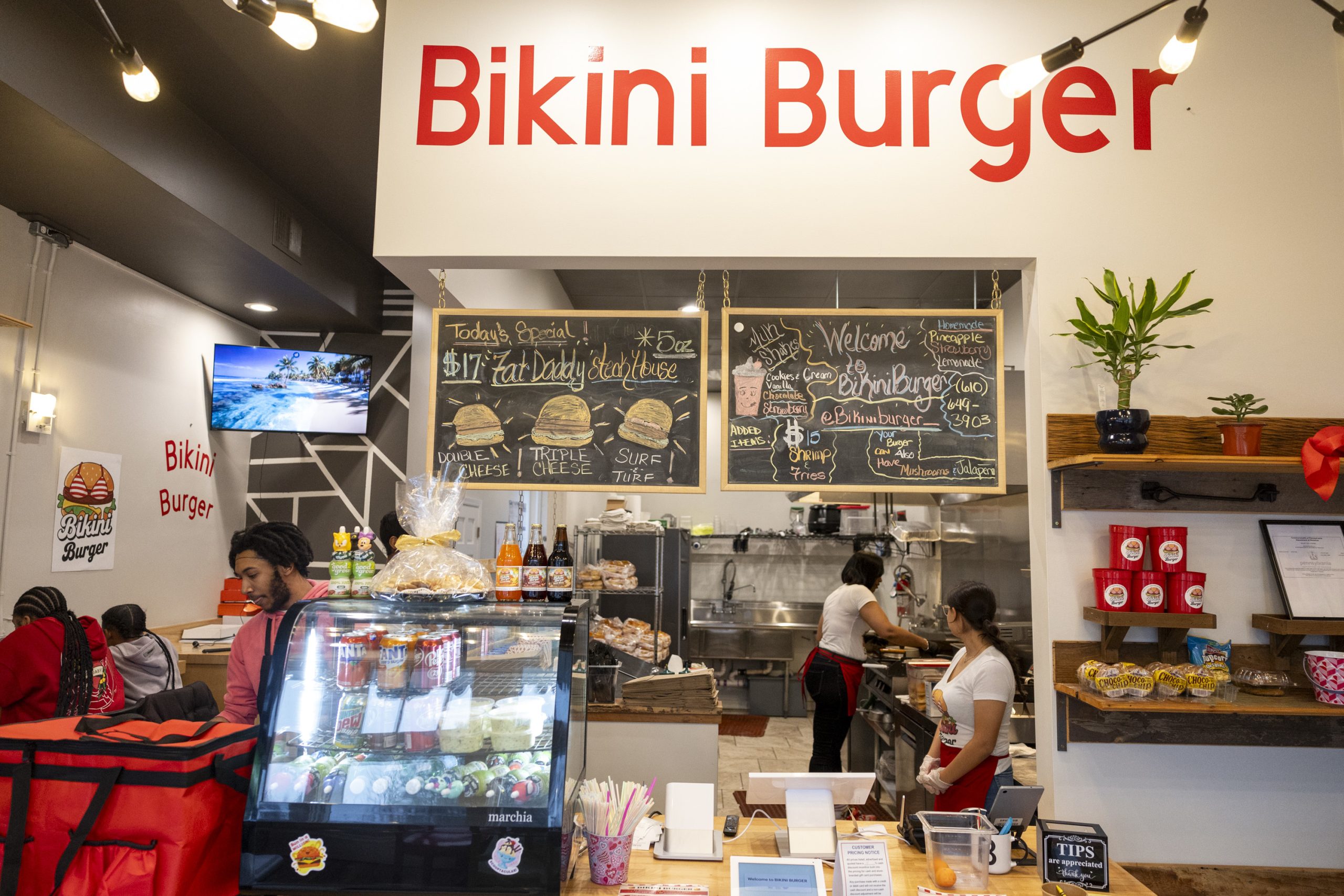
    Penn Valley resident Mia Robertston opened Bikini Burger (44 Rittenhouse Pl.) in January with the goal of bringing a simple and “really good burger” to the area. Robertson’s Burgers are made with beef from a Lancaster County butcher, can be topped with Cooper Sharp, among other accoutrements, and are never smashed.

    R3 Gaming & Toys

    R3 Gaming & Toys (6 W. Lancaster Ave.) is a toy and game shop built for collectors and “curious minds of all ages.” The store stocks classic toys, board games, puzzles, comics, graphic novels, and other novelties.

    Jersey Mike’s

    Sub sandwich giant Jersey Mike’s (20 Greenfield Ave.) opened its doors in the former Revitalize Aesthetics storefront in March. The sub shop is open seven days a week and offers both hot and cold sandwich options.

    Mila’s Pup Tienda

    Mila’s Pup Tienda (18 E. Lancaster Ave.) is a cat and dog supply store opened in March by Ardmore resident Dayanna Cardenas. Cardenas prides herself on stocking organic treats, durable toys, and products sourced primarily from local brands.

    Mia Robertson, owner of Bikini Burger, makes a cheeseburger at the Bikini Burger in Ardmore. The burger joint is one of a slate of new businesses to open in Ardmore this year. Tyger Williams / Staff Photographer

    Revivéa Health

    Revivéa Health (20 Ardmore Ave.) opened in Ardmore in April and offers various wellness treatments including IV therapy, vitamin injections, and red light therapy. Ardmore is Revivéa’s second local storefront after West Chester.

    Raffs Italian Cuisine

    Raffs Italian Cuisine (65 Cricket Ave.) is the second restaurant of chef and owner Raffael Kupa, who also runs Buona Vita in Somers Point, N.J. Raffs, which opened in April, is BYOB, open for dinner seven days a week, and offers traditional Italian fare.

    Bored Trading Café

    Bored Trading Café (43 Cricket Ave.) is an all-day eatery serving bagels, sandwiches, salads, wraps, smoothies, and burgers, among other items. The cafe held its grand opening in January.

    What’s coming soon?

    Mango Mango

    At Mango Mango (38 Greenfield Ave.), an Asian-inspired dessert chain with locations across the U.S., “mango’s our muse.” Mango Mango serves mango- and non-mango-flavored cakes, waffles, smoothies, ice creams, and teas. Its Ardmore franchise will be opening later this month.

    Vintner’s Table

    Vintner’s Table (24 Cricket Ave.) is an Italian-inspired wine bar affiliated with Folino Estate Winery & Restaurant in Kutztown. The Ardmore location will be the third Vintner’s Table after Phoenixville and Wyomissing. Vitner’s Table has not shared an anticipated opening date yet.

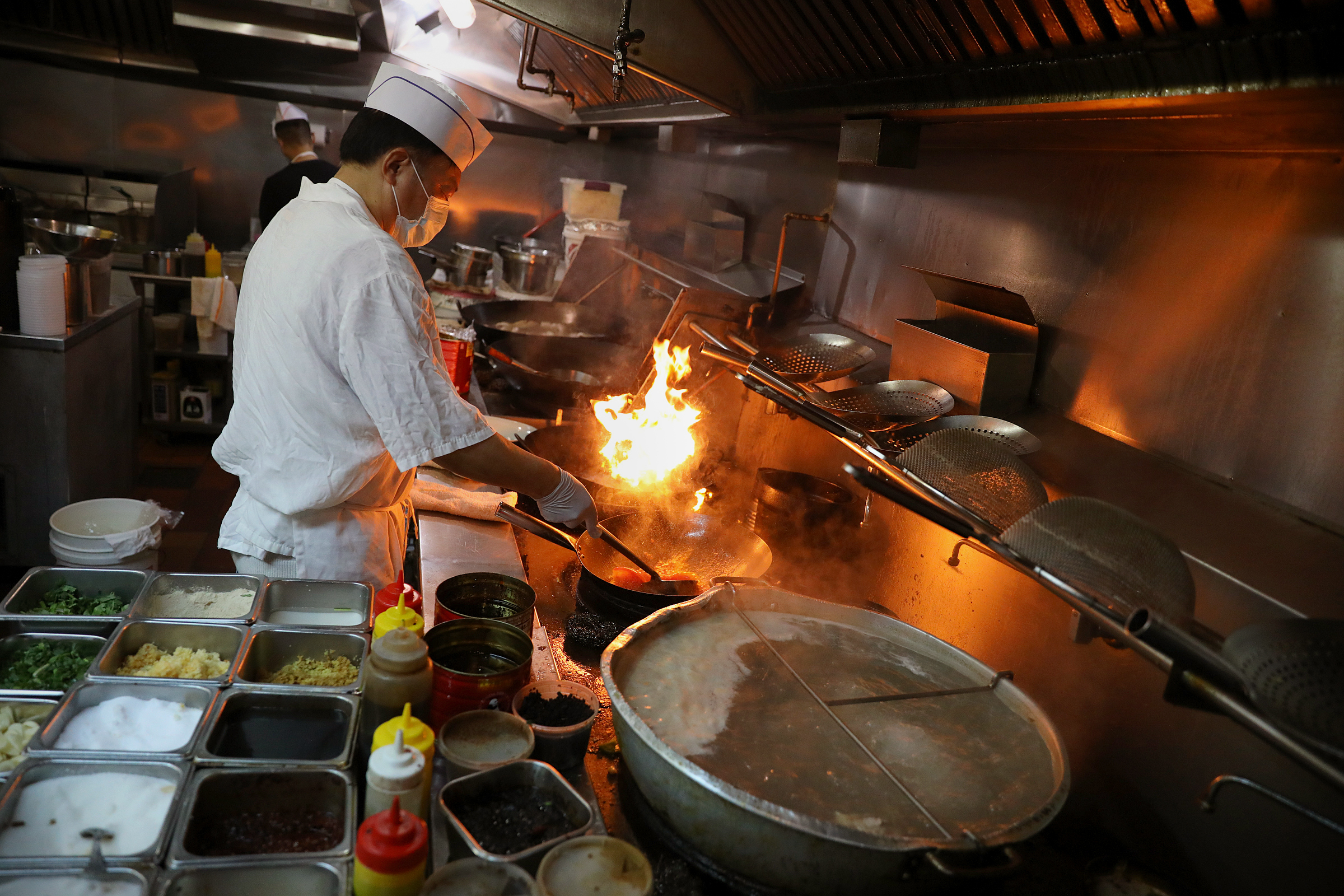
    Chef Yongcheng Zhao preparing a crispy whole boneless sea bass dish at EMei in Chinatown. The restaurant is set to expand to Ardmore. TIM TAI / Staff Photographer

    EMei

    Inquirer food critic Craig Laban says EMei (98 Cricket Ave.) is a “Szechuan feast with few peers in Philly.” The lauded Chinatown eatery, owned by Dan Tsao, is expanding to South Philly and Ardmore in the near future, though the timeline for expansion has been pushed back due to permitting and architecture hiccups.

    Pure Green

    Cold-pressed juice company Pure Green (56 E. Lancaster Ave.) is set to open in Ardmore next year. Pure Green offers superfood smoothies, acai and pitaya bowls, steel-cut oatmeal bowls, sourdough toasts, and cold-pressed juices.

    Calm and Strong Yoga and Pilates

    Calm and Strong (46 Rittenhouse Pl.) is a yoga and pilates studio bringing a variety of sculpt, flow, and strength classes to Ardmore. The studio is set to open this fall.

    This suburban content is produced with support from the Leslie Miller and Richard Worley Foundation and The Lenfest Institute for Journalism. Editorial content is created independently of the project donors. Gifts to support The Inquirer’s high-impact journalism can be made at inquirer.com/donate. A list of Lenfest Institute donors can be found at lenfestinstitute.org/supporters.

  • Philly chefs are leading a brunch renaissance

    Philly chefs are leading a brunch renaissance

    The golden age of brunch has arrived in Philadelphia, borne on the menus of chefs who are reinventing the genre.

    All over the city, from Manong in Fairmount to dancerobot and Little Water in Rittenhouse and Rice & Sambal in South Philly, chefs who had long focused on dinner are turning their attention to brunch-specific menus, some available just one day a week. The results are dazzling.

    Customers enjoying drinks and food at the bar at Manong.Tyger Williams / Staff Photographer

    To many in the restaurant industry, the very word brunch conjures up feelings of dread. “Brunch menus are an open invitation to the cost-conscious chef, a dumping ground for the odd bits left over from Friday and Saturday nights or for the scraps generated in the normal course of business,” Anthony Bourdain wrote in his seminal memoir, Kitchen Confidential. And the stigma against the not-quite-breakfast, not-quite-lunch meal, often accompanied by endless mimosas, has endured. Until now.

    For Chance Anies of Manong, brunch is an opportunity.

    Wingko, cassava, and coconut pancakes on Rice & Sambal’s new brunch menu.Kiki Aranita / Staff

    “I love that we’re making Spam,” said Anies. “It’s ironically the first food I got made fun of for eating at school because my dad would make me Spam and rice for lunch as a kid. I had kids calling me ‘Spam.’”

    Anies is also making his own version of the processed meat, a highly labor-intensive activity compared to popping open a can. “We grind pork shoulder and smoked ham, and some other ingredients, then set the farce in a terrine mold to steam. After pressing overnight, we slice them into little Spam squares,” he said.

    Manong’s house-made Spam is served on pandesal, a soft, buttery Filipino bread, in the breakfast sandwich at brunch, served seven days a week from 8 a.m. to 2 p.m. “Pandesal was the thing that got me into cooking, so having an outlet for the recipe I’ve been developing for over 10 years has been a cool full-circle moment,” said Anies.

    Diana Widjojo’s Rice & Sambal on East Passyunk in South Philly has been open for two years, but only recently started serving Sunday brunch. Widjojo had toyed with starting brunch service last year, “but I didn’t market it very well.” She officially restarted brunch two weeks ago because “I thought it would be fun.”

    Rice & Sambal’s brunch-specific snacks, savory items, and sweet dishes are extensive and only served on Sunday from 11 a.m. to 3 p.m. (a la carte, no reservations taken). They range from crispy tofu to lumpia (vegetable and bamboo-stuffed spring rolls) to a Sumatran rendang that is cooked far longer than her typical Javanese rendang, so that it’s “spicier and more fragrant — I cook the curry until the coconut milk turns into oil.”

    And then there are dishes like her Indonesian omelet ($17) and Wingko ($12). The omelet is stuffed with fragrant shallots and served with spicy sambal ketchup. The Wingko pancakes are made of cassava and shredded coconut and colored a deep purple with ube. No maple syrup here, but rather a little pitcher of coconut milk and a squeeze bottle of sweet palm sugar syrup are provided for you to decorate your pancakes.

    There are also fun drinks like Happy Soda, served in a wine glass and consisting of coconut-pandan syrup, seltzer, and condensed milk, Indonesian coffee, and numerous tea drinks, including a deeply nourishing beras kencur ($7), made of ginger, turmeric, and rice. There’s excitement, creativity, and joy embedded in all these beverages — it’s a menu that dovetails with a rise in Indonesian cafes in Philadelphia.

    In Rittenhouse, other previously dinner-focused fine-dining chefs are celebrating brunch. Little Water’s Sunday brunch (11 a.m. to 4 p.m.) is spectacular. On the menu, there’s a dish of fried oysters on beef tartare, blanketed in golden hollandaise and tucked in with pickled surprises, sometimes a gherkin, sometimes another pickled vegetable, that you discover through little bites. You can also add caviar to fancy seafood, like Sweet Amalia oysters slicked with Alabama white sauce.

    La Jefa’s brunch is equally marvelous, served Wednesday through Sunday (10 a.m. to 2:45 p.m.). It features Guadalajaran twists on American brunch standards, like chilaquiles tucked into omelets or lengua given the pastrami treatment and layered into a sandwich. You get to wash it down with a beverage menu spiked with corn, tepache, and other fascinating ferments.

    Also in Rittenhouse, dancerobot’s weekend brunch (Saturdays and Sundays 10:30 a.m. to 3 p.m.), has quietly become an incubator for incredible creativity, led by chef Justin Bacharach and sous chef Christina Betz, but featuring dishes from many other chefs and cooks on staff.

    The sourdough pancake at dancerobot should be shared with everyone at the table.Kiki Aranita / Staff

    Bucks County native Bacharach grew up with classic diner omelets, pancakes, French toast, and bacon, egg, and cheese breakfast sandwiches, but these brunch stalwarts are completely scrambled up at dancerobot, where bacon, egg, and cheese are fashioned into crispy, crusted onigiri, and omelets are omurice, splayed open tableside into a blanket of egg curds, and pancakes are meant to be shared with the whole table.

    “It’s an homage to fluffy Japanese pancakes,” Bacharach said. But his have more depth and oomph. They also have delightfully crispy edges. His sourdough pancakes, by the way, are made with the starter Amanda Shulman, the Michelin star-earning chef who also recently opened a restaurant serving brunch, gave him five years ago.

    The Caesar salad inari at dancerobot is a riff on the “girl dinner” trend.Kiki Aranita / Staff

    Pastry chef Sophie Wieber contributed cinnamon buns served with amazake-cream cheese frosting. Sous chef Drew Kornrumpff conceived a brilliant interpretation of “girl dinner” by stuffing pockets of aburaage, or fried tofu skin, with Caesar salad and topping them with ikura. Everything is original, delicious, and a little wacky.

    Bacon, egg, and cheese onigiri at dancerobot.Kiki Aranita / Staff

    “Brunch is a breath of fresh air,” Bacharach said. “The people are happier, the sun is out.”

    Dancerobot is also leaning into the creativity brunch can offer by teaming up with chef friends in Philly and beyond, hosting brunch club events with Chicago’s Kasama and soon, Middle Child Clubhouse.

    This new era of brunch is whimsical and riveting, a far cry from the dreaded services Bourdain once complained about.

    All these chefs reinventing brunch have one more thing in common: They don’t have time to go out for brunch themselves. “Usually I am too tired to go to brunch,” Widjojo said. “I can’t remember the last time I did, but if I could, I would.”