Blog

  • Dick Langman, retired award-winning editor at The Inquirer, has died at 99

    Dick Langman, retired award-winning editor at The Inquirer, has died at 99

    Dick Langman was always a wordsmith.

    Even as a boy in New York, he loved language, literature, and poetry. He earned a bachelor’s degree in English, took graduate classes at the University of Missouri School of Journalism, and could recite lines from Shakespeare, Wordsworth, and Frost on demand.

    He was generally calm and reasonable, too, his sons said. “He didn’t get upset easily,” his son Mark said.

    His vocabulary was extensive, and he could spell practically any word. So it is no surprise that he spent 50 years, from the early 1950s to his retirement in 2002, as an editor, page designer, and reporter for The Inquirer, the Bulletin, the Morning Call of Allentown, the Pottstown Mercury, the Honolulu Star-Bulletin, and the Evening Tribune in Hornell, N.Y.
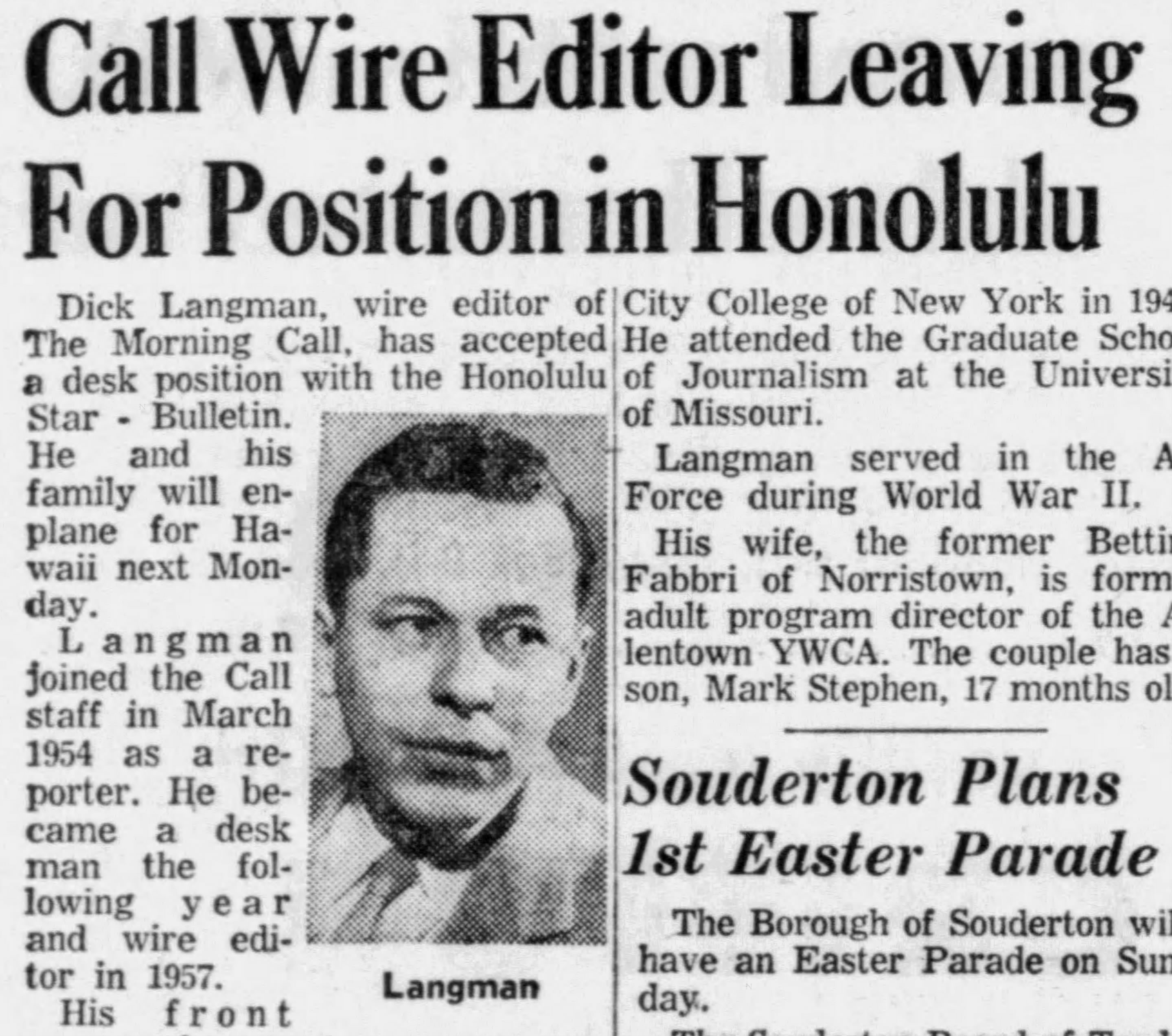
    The Morning Call published this story in 1959 when Mr. Langman left to work in Hawaii.Newspapers.com

    He joined The Inquirer in 1981 and worked mostly nights for 21 years as a copy editor, assistant news editor, and suburban assigning editor. Former colleagues at The Inquirer called him a “meticulous” editor, “enormously patient,” and “a man of great integrity” in online tributes.

    He won an award from the old Pennsylvania Newspaper Publishers Association in 1957 for a front page he designed for the Morning Call and spent 20 years as assistant city editor and news editor at the Bulletin. “I’m glad that I had a chance to work with him,” a former Inquirer copy desk colleague said. “What a pro.” Another said: “I could not have had a better teacher.”

    On Saturday, June 13, Dick Langman died of complications from pneumonia at Bryn Mawr Hospital. He was 99.

    Long before he came to Philadelphia in 1961, Mr. Langman was a seasoned newspaperman. He honed his reporting skills as a writer at the Evening Tribune in New York and the Mercury in Pottstown.

    Mr. Langman and his wife, Betty, married in 1954.Courtesy of the family

    In January 1954, he opened a Page 1 story for the Mercury with: “From clomping around in wooden shoes in Holland to wearing modern footwear in Bechtelsville is a long way, and Mrs. LaVerne Fronheiser is glad to be home. She’s not too glad, however, because her husband had to stay in Germany, where he’s stationed with the infantry.”

    On Page 1 in March 1954, he wrote: “They had need of a chaplain yesterday at borough hall. He could have served well the 50 moaners and groaners whose cars were tagged for parking violations.”

    He moved on to the Morning Call and covered high school sports and other news. He left for Honolulu in 1959 and became sports editor at the Star-Bulletin. But he missed the East Coast and returned to work at the Bulletin in Philadelphia in 1961.

    “Hawaii is one of the loveliest places in the world,” he told the Morning Call. But his wife, Betty, had roots in Norristown, he said, and they both got homesick.
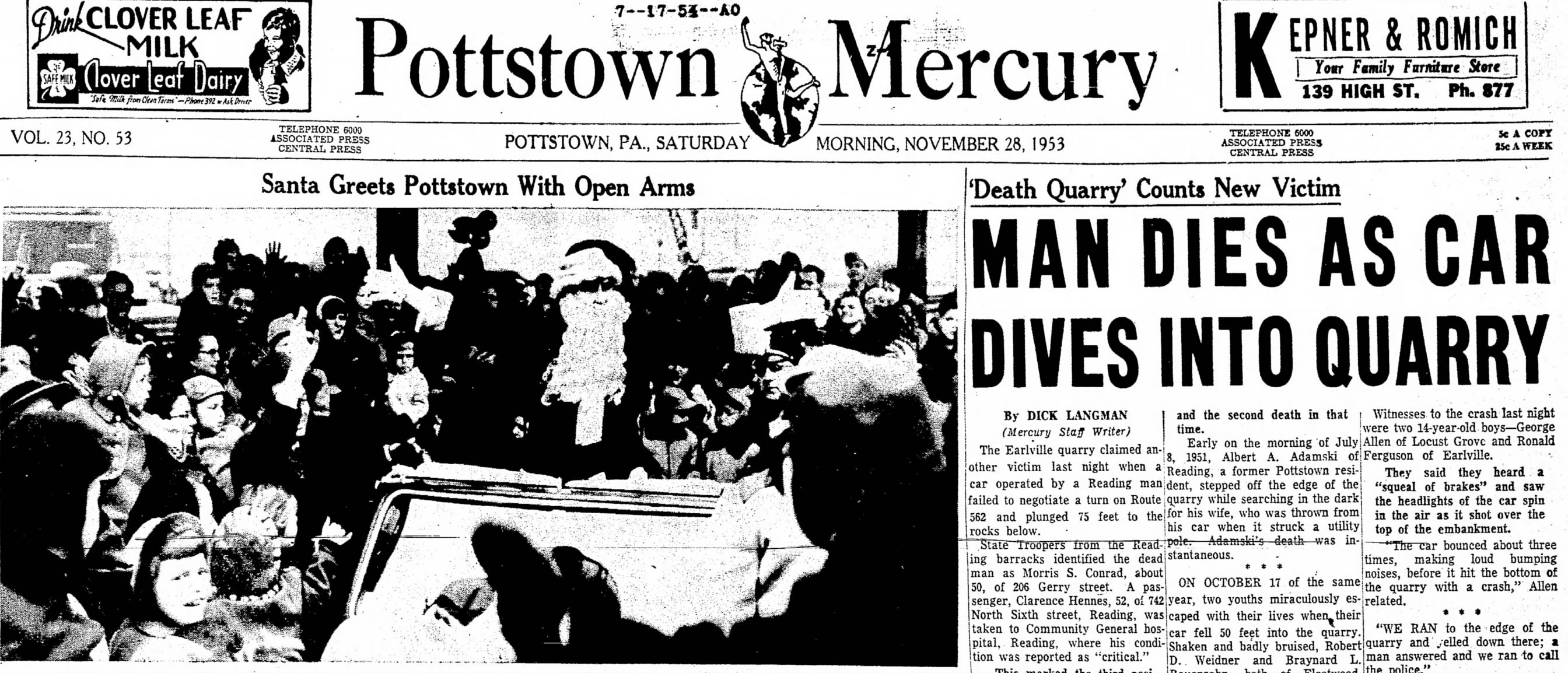
    Mr. Langman wrote this Page 1 story for the Pottstown Mercury in 1953.Newspapers.com

    Earlier, after college, Mr. Langman worked briefly for the Associated Press in New York and as a statistician for what is now the Elias Sports Bureau. He enlisted in the Army after high school in 1944, went to active duty in 1945, and served until the end of World War II.

    At The Inquirer, a former colleague recalled, Mr. Langman edited a story about a horse that had injured a leg. Naturally, he tried to find out which leg was hurt.

    “Dick was a painstaking editor,” his former colleague said on Facebook, “and a master in getting the details right.”

    Richard Langman was born Sept. 5, 1926, in New York. He graduated from Stuyvesant High School and earned a bachelor’s degree at City College of New York in 1948.
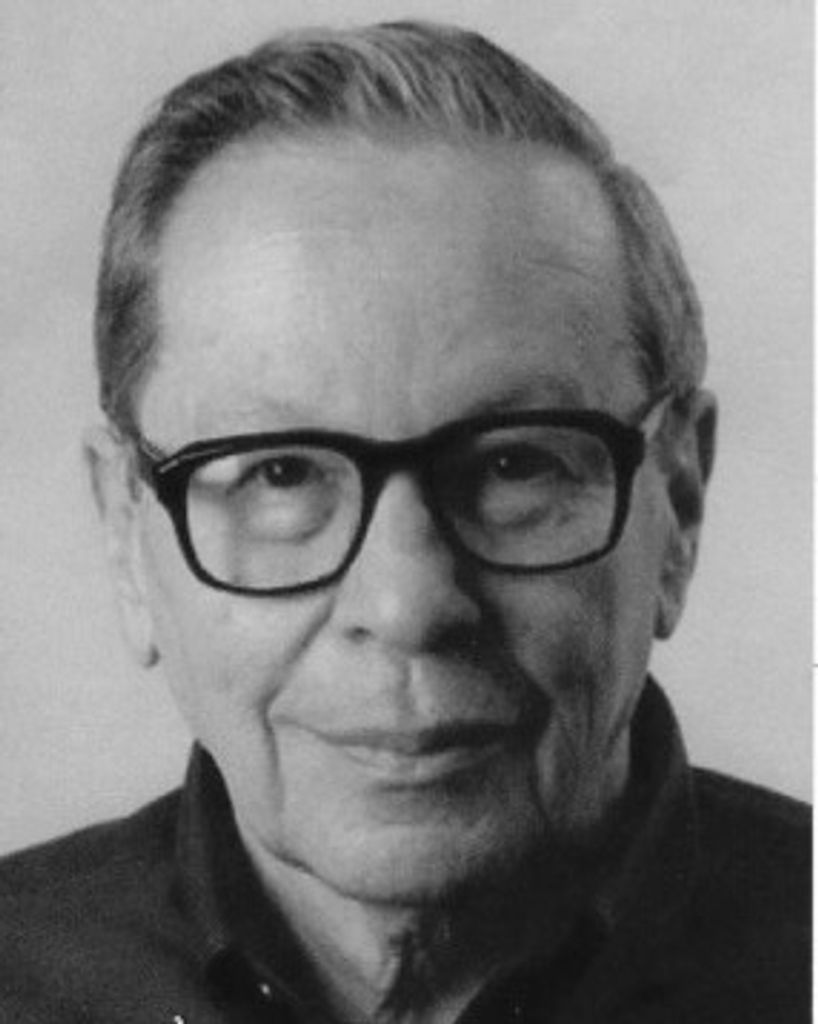
    Mr. Langman enjoyed cooking and shared his favorite recipes with colleagues at The Inquirer.Dick Langman

    He met Betty Fabbri, the society editor at the Mercury, and they married in 1954. The Morning Call announced their union in its Breakfast Chatter column by saying: “Best wishes to reporter Dick Langman, who walks the long mile in Norristown Sunday with Bettina.”

    He and his wife had sons Mark, Peter, and Andrew, and lived in Allentown, Ardmore, and the Quadrangle retirement community in Haverford. His wife died in 2017.

    Mr. Langman and his wife shared wanderlust, and they went to Russia, Austria, Hungary, Europe, and elsewhere. They visited Italy 10 times, France three times, and Cape May as often as possible.

    They liked to cook together, too, and he shared his favorite recipes with colleagues at The Inquirer. At the Bulletin, he became part of the “old bulls” lunch group.

    He submitted his own prewritten obituary to his funeral director long before it was needed and said: “He enjoyed classical music, poetry, mystery novels, and British mystery and comedy.” He also liked crossword puzzles, fishing, table tennis, classic movies, and duplicate bridge.

    He cheered for the New York Yankees baseball team and the Green Bay Packers and Penn State football teams.

    “He delighted in jokes and was a real fan of the Marx Brothers,” his son Peter said. “When we were children and a local movie theater would feature a Marx Brothers film for one night, my parents made sure that we went. Fond memories indeed.”

    In addition to his sons, Mr. Langman is survived by two grandchildren and other relatives.

    Services were held earlier.

    Donations in his name may be made to the Lenfest Institute for Journalism, 100 S. Independence Mall West, Suite 600, Philadelphia, Pa. 19106.

  • Judges reinstate convictions for ‘Chester Trio,’ who say they were wrongly accused of woman’s 1997 murder

    Judges reinstate convictions for ‘Chester Trio,’ who say they were wrongly accused of woman’s 1997 murder

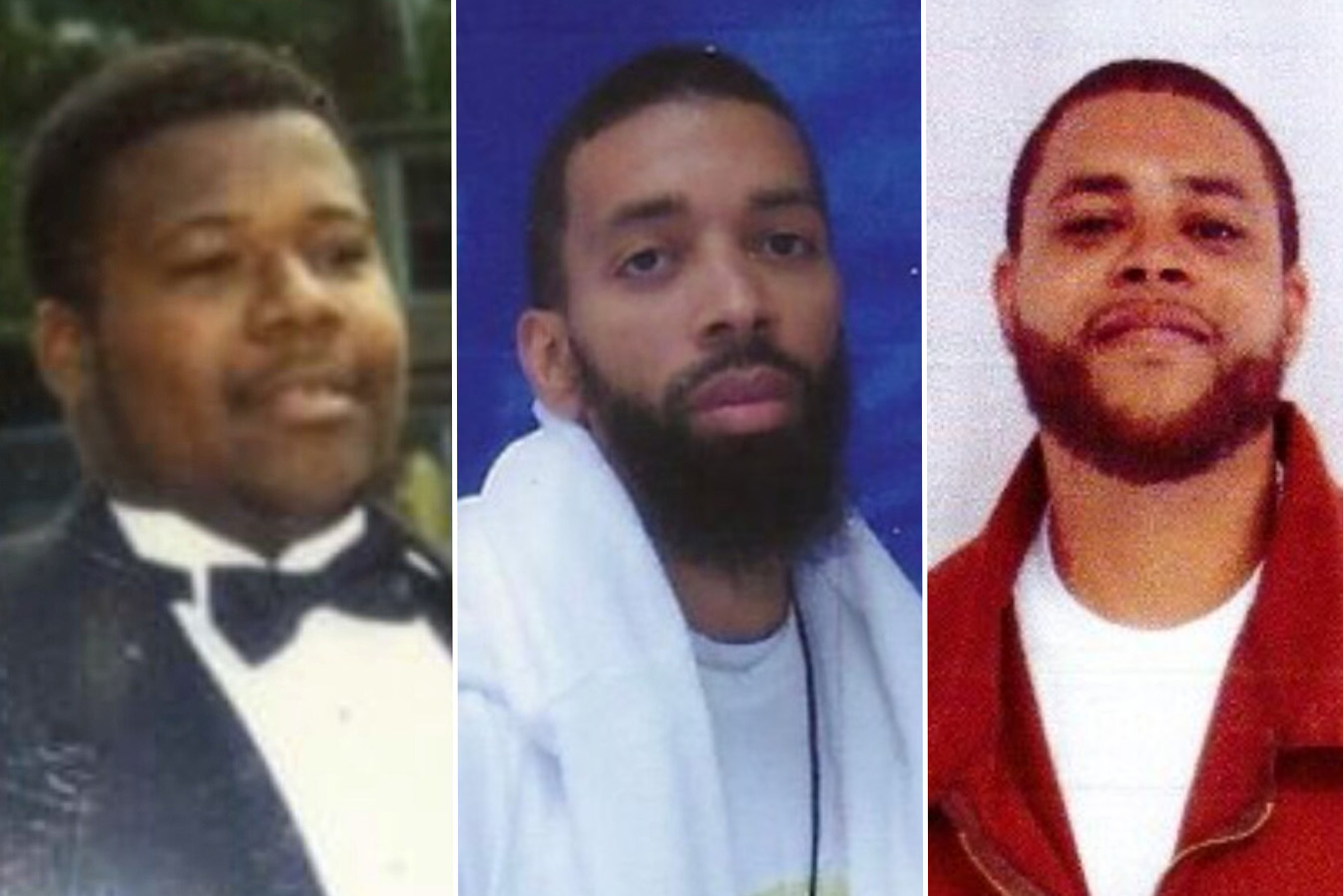
    The Pennsylvania Superior Court has reinstated the murder convictions of three men who were granted new trials after being imprisoned for nearly 25 years for a crime they say they did not commit.

    The men, known as the “Chester Trio,” were convicted in separate trials in the 1997 beating death of 70-year-old Henrietta Nickens in her Delaware County home and are serving life in prison.

    Derrick Chappell, 44, Morton Johnson, 46, and Samuel Grasty, 49, have insisted for decades that they were not responsible for the death of Nickens, whose battered body was found face down in the bedroom of her Chester home, her bed and walls stained with blood.

    In 2024, a Delaware County Court judge vacated the three men’s convictions, saying newly tested DNA from the crime scene cast doubt on their culpability and might have persuaded jurors to reach a different conclusion had they been presented with that evidence at trial.

    But late last month, a panel of Superior Court judges disagreed and reversed that outcome.

    In a 2-1 decision, the judges said that they did not consider the evidence presented by defense lawyers to be new, and that it therefore would not have changed jurors’ minds.

    Judges Maria McLaughlin and Megan Sullivan said in a 41-page opinion that the newly tested DNA — recovered from Nickens’ dress and bedsheet, a green jacket found at the scene, and items in the jacket’s pockets — did not offer any revelations because it matched an unknown DNA profile that had been presented to the jurors who decided the trio’s fate.

    “This same information was previously considered by all three separate fact-finders and rejected,” the judges said of the verdicts in three trials.

    During the trials, they said, jurors were told that the DNA found at the scene was not a match for any of the defendants.

    And they said the newly tested DNA did not alter the argument defense lawyers made at the earlier trials that someone other than the three men had broken into Nickens’ home, raped her, and beaten her to death.

    Prosecutors relied on witnesses who testified that they had overheard the men discussing their involvement with the crime.

    Their star witness, 15-year-old Richard McElwee, testified that he had acted as a lookout while the men robbed Nickens of $30. He pleaded guilty to third-degree murder in exchange for his testimony and was sentenced to six to 12 years in prison.

    The men’s lawyers have long contended that the prosecution’s witnesses were unreliable and that the investigation was flawed. And they emphasized the lack of a DNA match for the men.

    Paul Casteleiro, legal director of the nonprofit law center Centurion Ministries and Grasty’s attorney, said he was dismayed by the court’s decision and, along with attorneys for Chappell, has filed an appeal.

    “We’re going to fight this every way possible,” he said.

    A spokesperson for Delaware County District Attorney Tanner Rouse said the office appreciated the Superior Court’s affirmation of the jury verdicts.

    As the men continued to assert their innocence, the possibility that Nickens was raped and beaten by a single assailant was central to defense arguments during 2023 hearings in which they sought to overturn their convictions.

    In presentations before Delaware County Court Judge Mary Alice Brennan, the attorneys called on forensic experts who testified that the new tests showed a sample of Nickens’ blood and semen from the unknown assailant were deposited on her bedsheet at the same time, lending credence to their theory that she had been raped and beaten by the same person.

    Prosecutors rejected the contention that Nickens had been sexually assaulted, and suggested the semen found on the sheet and in her body was from an earlier consensual encounter.

    Brennan sided with the defense lawyers when she vacated the murder convictions the following year.

    Jack Stollsteimer, then the Delaware County district attorney, swiftly appealed that decision, leading to the Superior Court decision reinstating the convictions.

    Defense lawyers, in turn, have appealed that decision, saying the Superior Court panel had erred. Their arguments mirrored a strongly worded dissent by Superior Court President Judge Anne Lazarus, who said she believed that the recent DNA testing constituted a new finding — and that it was exculpatory.

    The evidence, she wrote, “does significantly more by excluding the petitioners from being present at all in Nickens’ home.”

    But her colleagues rejected that view in the majority opinion, which was sharply critical of the lower court’s decision to overturn the men’s convictions.

    That decision, they said, was based on “erroneous conclusions.”

    Because of that, the judges said, “we reverse.”

  • Film attendance has been diminishing, but not at BlackStar. It’s bigger than ever.

    Film attendance has been diminishing, but not at BlackStar. It’s bigger than ever.

    Across Hollywood, industry leaders are cheering the “return” of summer moviegoing.

    Last month, Variety published a cover story titled “The Box Office Bounces Back,” which celebrates attendance levels not seen since before the COVID-19 pandemic, and a projected $10 billion in domestic profits this year. Carried both by blockbusters like The Odyssey and lower-budget hits like Obsession, the article claims that “everyone had it wrong” about the cinematic appetite of Gen Z and the future of the art form. Actor/director Seth Rogen finds a “sense of optimism” among studio heads that mirrors “how it felt 15 years ago.”

    Yet, buried at the end of the effusive piece is the familiar admission that “industry watchers” also know that ”there aren’t enough films geared to women or Black or Hispanic ticket buyers.”

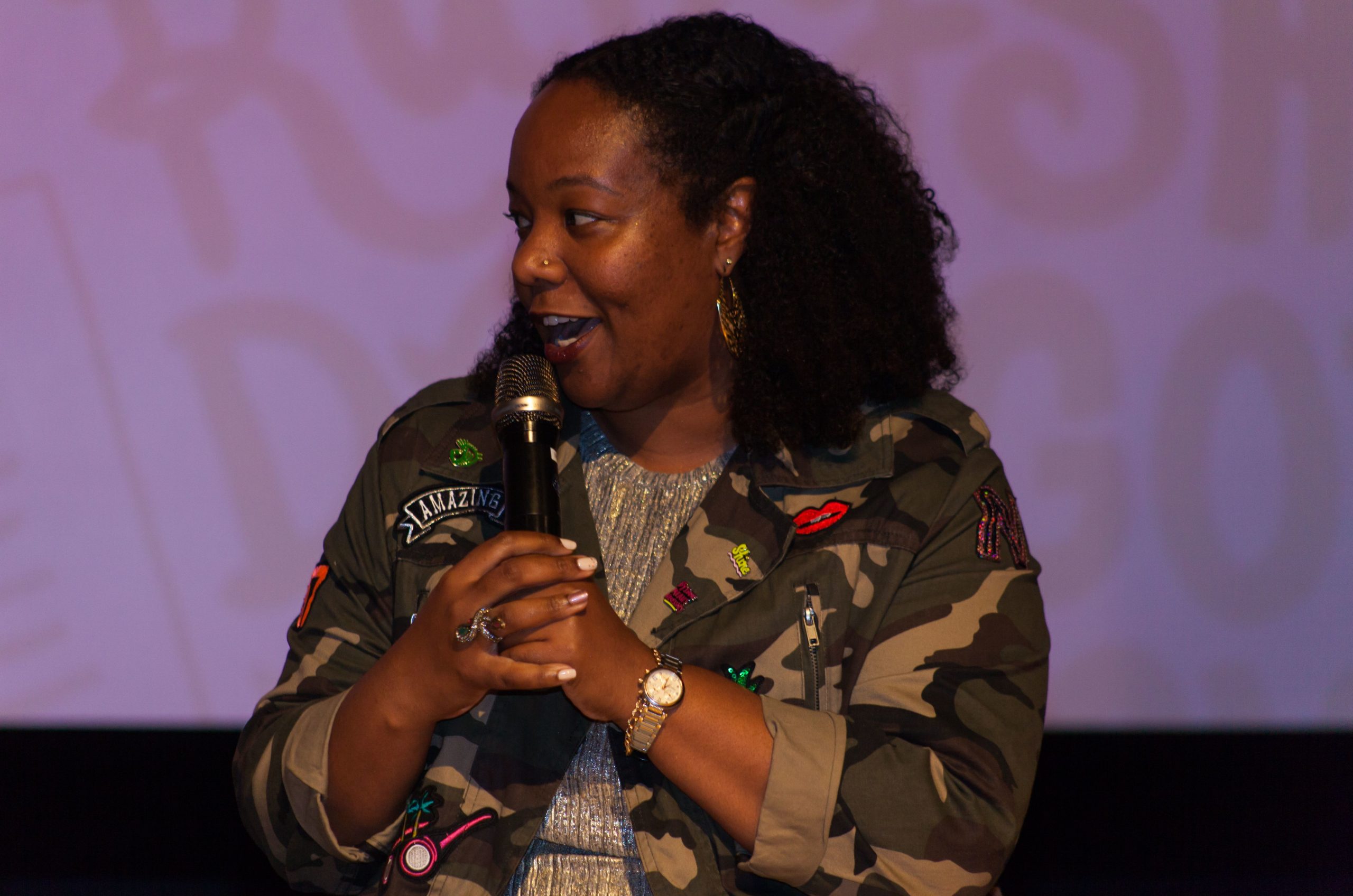
    Nehad Khader, the BlackStar Film Festival director, at the 2020 festival at the Mann Center for the Arts in Philadelphia.Daniel Jackson

    Which begs the question: To where — or to what — exactly do they want us to return?

    Experts in the article and elsewhere credit the apparent shift in cinematic habits to a generation raised on YouTube and Letterboxd that is now antsy to get off their phones, for the apparent shift in cinematic habits. But it remains unlikely that the most influential voices behind internet culture — namely Black creators — will be the ones to benefit from these observations.

    Maori Karmael Holmes, the founder of the BlackStar Film Festival and current chief executive and artistic officer of BlackStar Projects, at the BlackStar Film Festival at the International House in Philadelphia in 2015.Daniel Jackson

    Despite the fact that people of color bought the majority of opening weekend tickets for five of the Top 10 films released in theaters last year (including Ryan Coogler’s Sinners), and specifically represent “the majority of the audience share” for the most profitable genres of film (horror and animation), most of the mainstream excitement around the rising fortunes at the box office has focused on white directors like Backrooms’ Kane Parsons.

    At the BlackStar Film Festival, we’ve felt the disconnect between the cinematic doomsayers of the past few years and the reality on the ground at our festival, which also started 15 years ago and has substantially grown since the onset of the pandemic.

    The audience at the 2024 BlackStar Film Festival at the Kimmel Center’s Perelman Theater in Philadelphia.Daniel Jackson

    In 2024, while the same publications were fearing disaster based on still-dipping box office receipts, we were experiencing record attendance in Philadelphia at a festival where masking was still required. This included a sold-out screening of Shatara Michelle Ford’s Dreams in Nightmares on opening night that brought over 500 people into the Kimmel Center to watch the world premiere of a feature film rooted in Black queer culture.

    Director, producer, and writer Shatara Michelle Ford (left) and actor and singer Denée Benton at the 2024 BlackStar Film Festival at the Kimmel Center in Philadelphia.Daniel Jackson

    It was an unforgettable moment of intergenerational joy and community safety that felt very much like the future of moviegoing to us.

    We’ve never doubted the desire for the kind of space that BlackStar provides, but we have felt, like many sister organizations in the field, the impact of a film industry with limited imagination that’s still reliant on very narrow measures of “success.”

    In 2014, Nehad Khader (left) and Jacob Winterstein at the BlackStar Film Festival at the International House in Philadelphia. Khader first became involved with BlackStar as a volunteer, but later took on programming and senior roles within the organization, and now serves as the festival director.Jati Lindsay

    Funding for our nonprofit, BlackStar Projects, started to dwindle in 2024, not based on our numbers — which were, again, on the rise — but based on a lack of corporate interest in Black independent cinema after an initial influx of support during the racial reckoning that followed the killing of George Floyd in 2020.

    As much as things change in Hollywood, they seem to stay the same — or at least attempt to return to the median.

    Former MOVE members and independent filmmakers Mike Davis Sr. and Debbie Davis at the 2021 BlackStar Film Festival at the Annenberg Center for the Performing Arts in Philadelphia.Daniel Jackson

    Which is why box office results have always been an imperfect indicator of film trends or what audiences crave. Especially if you’re interested in building a sustainable, care-based ecosystem for filmmaking which challenges rather than sustains the status quo.

    A more interesting question than which movies make the most money, particularly given the state of the world, is which movies are contributing to real change? Which filmmakers can speak to and for the people working to free us from white supremacist capitalism?

    As we celebrate the 15th edition of the BlackStar Film Festival this week, we have ample evidence that what Black, brown, and Indigenous communities want is a space that actually brings us together around such movies; not just to watch, but to talk, critique, celebrate, learn, laugh, and cry.

    The 2025 audience at the BlackStar Film Festival at the Kimmel Center Perelman Theater in Philadelphia.Daniel Jackson

    In 2025 we started using the tagline “Cinema for Liberation,” but from the beginning BlackStar has been committed to building environments where films are seen as tools for broader social change. And we’ve watched our audience expand even as we’ve stuck to our values and insisted on centering care amid the most challenging moments.

    Maybe flying under the radar is how we have managed to sustain this for so long, but nevertheless, if the film industry is truly looking for a model on how to build and retain an audience long term, they could try looking here.

    The BlackStar Film Festival producing committee (from left to right), Louis Manon, Lauren Jane Holland, Maori Karmael Holmes, Nuala Cabral, Nehad Khader, and Lendl Tellington at Pipeline Philly in 2015.Gralin Hughes

    We pride ourselves on our curation, facilitated by some of the world’s greatest programmers, but there’s no doubt that the context in which our films play is just as important. Too many of those in charge of arts institutions have devalued the importance of safety, in the physical and emotional sense, referencing the losses of the pandemic without thinking of the mass loss of life.

    The pandemic wasn’t a business problem to solve, but rather a health crisis to adapt to, compounded by racist, misogynistic, and oppressive state policies that made — and continue to make — it frightening to gather in large groups. What our model proves, though, is that leaning into your politics rather than shying away from them is a pathway to keeping your audience coming back, summer after summer.

    From left to right, BlackStar Film Festival director Nehad Khader; MacArthur Prize winner, filmmaker and Scribe Center founder Louis Massiah; Venezuelan film director and editor Monica Henriquez; Emmy Award-winning composer and drummer Jerome Jennings; and Eleanor Traylor, scholar and chair of the department of English at Howard University, during a panel presentation on the work of Toni Cade Bambara, at the 2025 BlackStar Film Festival at the Kimmel Center Perelman Theater in Philadelphia.Daniel Jackson

    This looks like a goal of making every screening as accessible as possible, giving a documentary about the formidable late cultural worker and author Toni Cade Bambara the spotlight moment at the 2025 festival — knowing her ideas would speak to the moment — or by leaning into our values and showing up in solidarity with our people in Haiti, Palestine, Sudan, and beyond, in these moments of human-made catastrophe and genocide.

    It also means, since 2012, paying filmmakers and thinkers in a way that feels respectful, knowing that many of them are not making back the money they’ve spent to produce their work.

    It’s not only BlackStar that makes this radical space possible, but the vibrant organizing and artistic history in Philadelphia. As outlined in Robin D.G. Kelley’s Freedom Dreams, there has been a legacy of Black internationalism in our liberation movements — specifically so in Philadelphia.

    The crowd at the BlackStar Film Festival at the International House in Philadelphia, 2019.Daniel Jackson

    By Black internationalism, we mean a global, transnational framework in which Black Americans connect our struggles to those of worldwide anti-colonial liberation movements. For example, this fall we’re proud to launch the “People’s Cinema Club” at the Village of Industry and Art, a weekly film series in collaboration with some of the city’s diverse independent cinema organizers, including cinéSpeak, the Philadelphia Asian American Film Foundation, and the Philadelphia Latino Arts and Film Festival.

    At BlackStar, we’re not interested in returning to a Hollywood system that was built to exclude and demean us, but we are invested in learning from our elders and ancestors who have been using moving images to expand our vision since the advent of the art form.

    What we find in that archive is a long history of independent screenings, festivals, and organizing around cinema as a tool to dream bigger and organize together, across racial and class lines. We see the filmmakers of color we platform not just as artists, but as the architects of the better world in which we want to live.

    The 2026 BlackStar Film Festival takes place from Aug. 6 to 9, at venues across the city. For a full schedule of events, click here.

    Maori Karmael Holmes is the founder of the BlackStar Film Festival and chief executive and artistic officer of BlackStar Projects. Nehad Khader is the BlackStar Film Festival director.

  • Caitlin Clark, Angel Reese, Paige Bueckers set for World Cup debuts; Kahleah Copper returns to Team USA

    Caitlin Clark, Angel Reese, Paige Bueckers set for World Cup debuts; Kahleah Copper returns to Team USA

    NEW YORK — Caitlin Clark, Angel Reese, and Paige Bueckers will make their World Cup debuts as members of the U.S. women’s national team next month.

    The trio will try to help the U.S. win its fifth consecutive FIBA World Cup title. The young stars will be joined by 2024 Olympic gold medalists A’ja Wilson, Breanna Stewart, Napheesa Collier, Chelsea Gray, Jackie Young, Kahleah Copper, and Kelsey Plum.

    “It’s always good when you compete for a gold medal, it’s a big honor,” said Wilson, a four-time WNBA MVP. “It’s something I don’t take lightly. Time to go there and have some fun and also win.”

    Rhyne Howard and Aliyah Boston also will be making their World Cup debuts to round out the team.

    “I’m so excited to announce the 2026 USA Basketball Women’s National Team,” USA Basketball national team managing director Sue Bird said. “This is an incredibly talented group that has earned the opportunity to compete in Berlin. Wearing a USA jersey is a privilege, and I know these 12 players will embrace that responsibility as we go after another gold medal. I can’t wait to see what this team accomplishes together.”

    Copper, a North Philly native and Prep Charter alumna, is among five returners from the 2022 World Cup squad that won gold. Copper also recently was a WNBA All-Star for the fifth time. She’s currently averaging 21 points for the Phoenix Mercury, good for fifth in the WNBA.

    Wilson leads the league in scoring (26.6 points per game) and blocks (2.0 per game) and is third in rebounds with 9.6 per game. Clark is fourth in scoring (21.5 points per game) and second in assists (8.0 per game).

    Phoenix Mercury guard Kahleah Copper, a North Philly native, is heading to the FIBA World Cup with Team USA.Ross D. Franklin

    This is the first time that USA Basketball has had a managing director choose the team; in the past, it was a committee. Duke women’s basketball coach Kara Lawson, an assistant on the 2022 team, will coach this year’s squad.

    Stewart is the third player in USA Basketball history to appear in four World Cup tournaments, joining Bird, who played in five; and Diana Taurasi, who also played in four.

    The Americans will face China, Italy, and the Czech Republic in pool play at the World Cup, which will be held Sept. 4-13 in Berlin. The WNBA will take a nearly three-week break in its season to accommodate the event.

    Clark, Bueckers, and Reese helped the Americans win a World Cup qualifying tournament in March in Puerto Rico.

    Sabrina Ionescu has been a big part of the U.S. roster the last few years but was left off this season’s team.

    Bird said she called many of the players who didn’t make the team this time, including Ionescu.

    “I think we can all agree the hardest part, which is a problem I would never trade, is that we have so much talent,” Bird said. “The beauty of that is it means almost all players are wanting to be on this team, willing to be on this team. It is a sacrifice. It is a time commitment.”

    Alyssa Thomas helped the U.S. win gold at the Paris Olympics but hasn’t taken part in any USA Basketball camps since. Minnesota rookie Olivia Miles also hadn’t taken part in any USA camps, either.

    “Tremendous player. So much fun to watch,” Bird said of Miles, who is the frontrunner for the WNBA Rookie of the Year. “It’s been amazing watching her grow in this league. … She’s played with USA Basketball before. She will undoubtedly be in the mix for teams in the future.”

  • A sweeping audit of the Philadelphia School District’s management and operations is coming, at City Council President Kenyatta Johnson’s request

    A sweeping audit of the Philadelphia School District’s management and operations is coming, at City Council President Kenyatta Johnson’s request

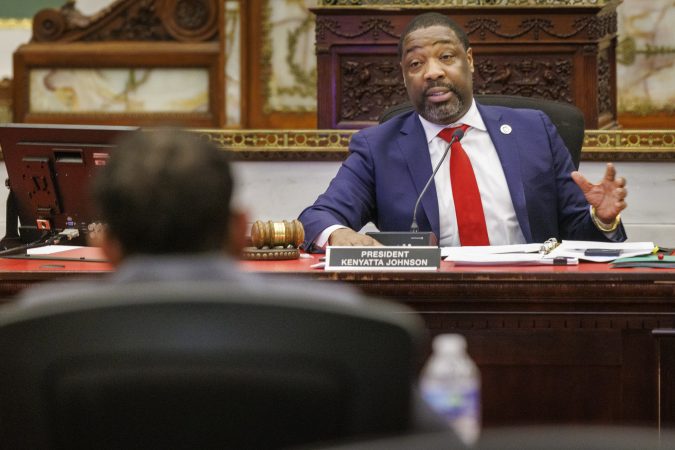
    The Philadelphia School District is about to face significant new scrutiny, with City Council President Kenyatta Johnson asking for a sweeping performance audit of the school system’s management and operations.

    City Controller Christy Brady has agreed to the request, which came via a letter in recent weeks signed by all 17 Council members, Johnson’s office told The Inquirer. The comprehensive review will go beyond the audit Brady’s office performs annually, delving into areas such as staffing and outside contractors.

    Council laid out no deadline for the audit but made clear it is expecting the results in time for next budget season, which will begin in the new year and ramp up in the spring.

    The district, one of the largest in the United States, has a $4.6 billion budget, which funds education for 113,000 students in 213 district schools and 65,000 in 81 charters. About $2 billion of that money comes directly from the city.

    “While the SDP is subject to regular financial statement audits that examine the accuracy of financial reporting and compliance with applicable accounting standards, this request seeks a performance audit focused on evaluating the efficiency, effectiveness, and management of financial and operational practices, including budgeting decisions, resource allocation, internal controls, and long-term fiscal planning,” Johnson said in a statement Thursday.

    The news comes during a period of heightened tensions between Council and the district, spurred by members’ frustration over the school board’s move to close 17 schools and a separate $300 million structural deficit that took Council by surprise.

    Last week, at a news conference where several members “begged” the district to come to the table to negotiate over school closings, Councilmember Curtis Jones Jr. said Council has “tools in our tool belt that we will use” if the board does not change its mind about some building closures.

    Jones has sponsored legislation to hold hearings on creating an independent financial authority, like the Pennsylvania Intergovernmental Cooperation Authority, to oversee the district’s finances.

    Council sources told The Inquirer that there is no indication that the district has conducted malfeasance, but that given the billions that flow to the district from city coffers, Philadelphia officials want a closer accounting of how the money is being spent.

    After the board voted to begin the closure process in April, multiple members of the public also called for increased financial scrutiny of the district.

    Reginald Streater, the school board president, said in a statement Thursday that the board and district will work with the controller’s office “to continue strengthening our financial processes and procedures.”

    Streater said the audit squares with the board’s approach to governance.

    “Good governance is not about assuming we have all the answers; it is about asking the right questions, using evidence to guide decisions and being willing to improve. We look forward to understanding the proposed scope of the audit and ensuring that the examination is constructive and focused on helping the district work well for students, families and educators,” Streater said.

    Superintendent Tony B. Watlington Sr. stressed the district’s academic strides, history of audits with no material weaknesses, and moves to solidify its credit rating.

    Frustration over a budget deficit and school closings

    Johnson, in his statement, said that the audit will reassure Council that “resources are being managed effectively and operations are functioning efficiently by the SDP,” and that he believes its findings will help inform priorities for next fiscal year’s budget.

    This year’s budget season was chaotic.

    After Mayor Cherelle L. Parker introduced her initial budget, Watlington ordered $225 million in cuts, including some school cuts, with 300-plus teachers, counselors, and climate staff slated to lose their positions.

    The problem, Watlington underscored in remarks in March, was “not because we’re not good stewards of the dollars, but because of historic underfunding.” (The district achieved its highest credit rating ever under Watlington, who has said he wants to be the superintendent to retire the system’s structural financial issues permanently.)

    Philadelphia’s school system cannot raise its own revenue but instead depends on the city and state to bankroll it, unlike every other district in Pennsylvania.

    City Hall seemed shocked at the news of the deficit and job cuts, despite the fact that Watlington had warned officials in 2025 that a budget gap was coming. The school district spent $300 million in reserves that year to avoid layoffs and program cuts as federal COVID-19 funds dried up.

    After Watlington said he would be forced to make the school cuts, Parker then upped her proposed 20-cent-per-trip rideshare tax to a $1-per-trip levy. That frustrated a Council already catching heat from city residents anguished over plans to close schools.

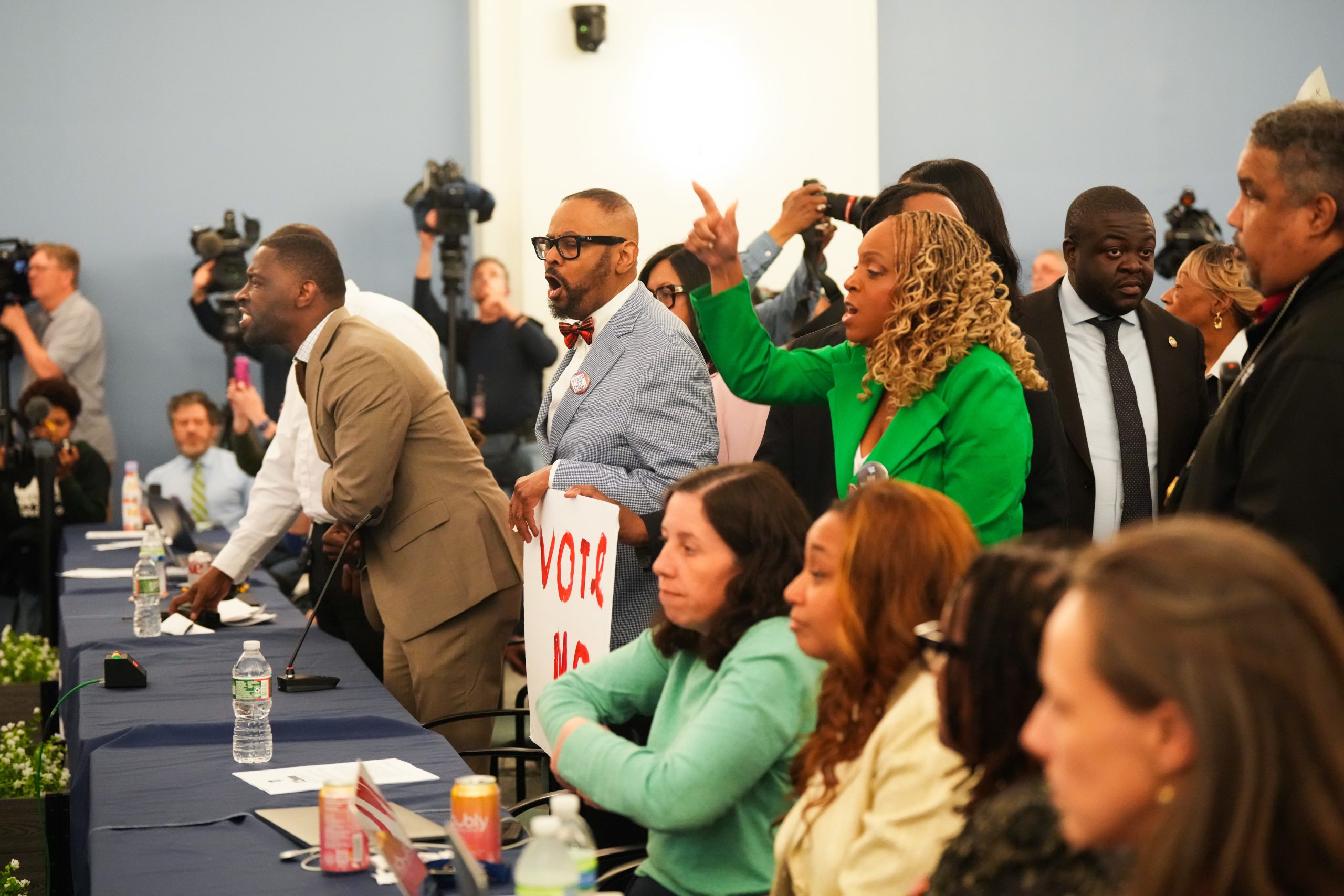
    (Left to Right) Councilmembers Isaiah Thomas, Curtis Jones Jr., and Jamie Gauthier protest at Thursday’s school board meeting as the board prepared to vote on the facilities plan.Jessica Griffin / Staff Photographer

    In April, several Council members took the dramatic step of repeatedly disrupting the school board’s vote in an attempt to get it to reconsider the closures of a handful of schools, including Lankenau and Robeson High Schools and Overbrook Elementary.

    The school board proceeded anyway — Council approves school board members, who are appointed by the mayor, and the city’s budget, but had no formal authority over the closures.

    The rideshare tax ultimately died.

    Eventually, Parker, Watlington, Council, and the school board worked out a deal to save the 300 jobs, with the city promising $216 million over five years from yet-unspecified sources.

    But it quickly became clear that some Council members remained frustrated with the school system and were looking for a way forward.

    Councilmember Isaiah Thomas has said he will not vote to reconfirm any school board member who voted for the closings; he and others have also said they believe it is time to rethink the school board’s governance structure.

    The city, as a primary funder of the district, needs a clearer picture of what is going on, they say.

    “Given the SDP’s current budget challenges, requests for additional public revenue, and recent proposals involving school closures and operational reductions, City Council believes a comprehensive performance and management review is warranted to ensure transparency, accountability, and informed public decision-making,” Johnson said in the statement. “The City of Philadelphia has a responsibility to ensure that all available revenues, expenditures, obligations, and funding strategies have been thoroughly reviewed before significant decisions affecting students, families, educators, neighborhoods, and public assets are implemented.”

    What will the special audit examine?

    City Controller Christy Brady (second from left, standing next to Mayor Cherelle L. Parker) is seen in this January file photo. Alejandro A. Alvarez / Staff Photographer

    Brady, in a statement, said the audit will “ensure resources are being managed effectively, operations are functioning efficiently and students are receiving the support they deserve. We’ve been encouraged by the SDP administration’s response to our previous audits and the steps it has taken to implement our recommendations. We expect this audit will continue that collaborative approach and continue to produce positive results for the benefit of students, educators and taxpayers.”

    Council has asked Brady to go deep, from probing into the current structural deficit and the projections used to get there to the status of Philadelphia Parking Authority revenues, both expected and received.

    Brady will also look at the district’s use of reserves and its administrative costs, and she will explore “the effectiveness and efficiency of administrative and operational expenditures, including central office functions, non-instructional spending and other costs not directly tied to classroom instruction.”

    She will look into how the district’s budgeting methods and long-term planning square with industry best practices, and examine contract management and consultant utilization to try to find areas “for improved accountability, transparency, and cost efficiency.”

    Brady is also charged with a deep dive into the financial effects of forthcoming school closings, and the potential ramifications of the closings on surrounding neighborhoods.

  • How one French wine region manages to keep prices steady

    How one French wine region manages to keep prices steady

    Red Côtes-du-Rhône is consistently one of the best bargains to be found in the French wine aisle. Not only have their prices held reasonably steady over the past decade as other French regions have seen notable price increases, but their price-to-quality ratio has remained reliably high as well.

    Côtes-du-Rhône is a generic regional wine appellation that covers most of France’s Rhône Valley as the river flows from Lyon to the Mediterranean. In practice though, only wines made in the stony flats of the southern Rhône are affordable enough to be sold under this name. While 21 different grapes are technically permissible in this appellation, the Grenache grape dominates, typically comprising at least 60% and up to 100% of any given red Côtes-du-Rhône.

    Grenache is capable of producing excellent wine at a lower cost than most other grapes due to its freakish ability to produce large volumes of flavorful fruit even in arid conditions — vintners can rely on bumper crops to keep production costs low. The weakness of Grenache is that its grapes contain lower levels of the dark phenolic compounds in grape skins that give red wine its color and help it resist oxidative spoilage. This explains why vintners here typically blend in at least two other local grapes, Syrah and/or mourvèdre. Both are thicker-skinned varieties that deepen wine’s color and boost its antioxidant properties.

    This wine from one of the region’s most historic producers features vibrant flavors of fresh blackberry and red cherry, and an appetizing spiced-meat aroma reminiscent of soppresata salami.

    Ogier Côtes-du-Rhône “Artésis”Courtesy of Maison Ogier

    Ogier Côtes-du-Rhône “Artésis”

    Rhône Valley, France; 14.5% ABV

    PLCB Item #100048783 — on sale for $12.99 through Aug. 30 (regularly $14.99)

    No alternate retail locations within 50 miles of Philadelphia, according to Wine-Searcher.com

  • Senate committee votes to hold Fauci in contempt for refusing to answer COVID questions

    Senate committee votes to hold Fauci in contempt for refusing to answer COVID questions

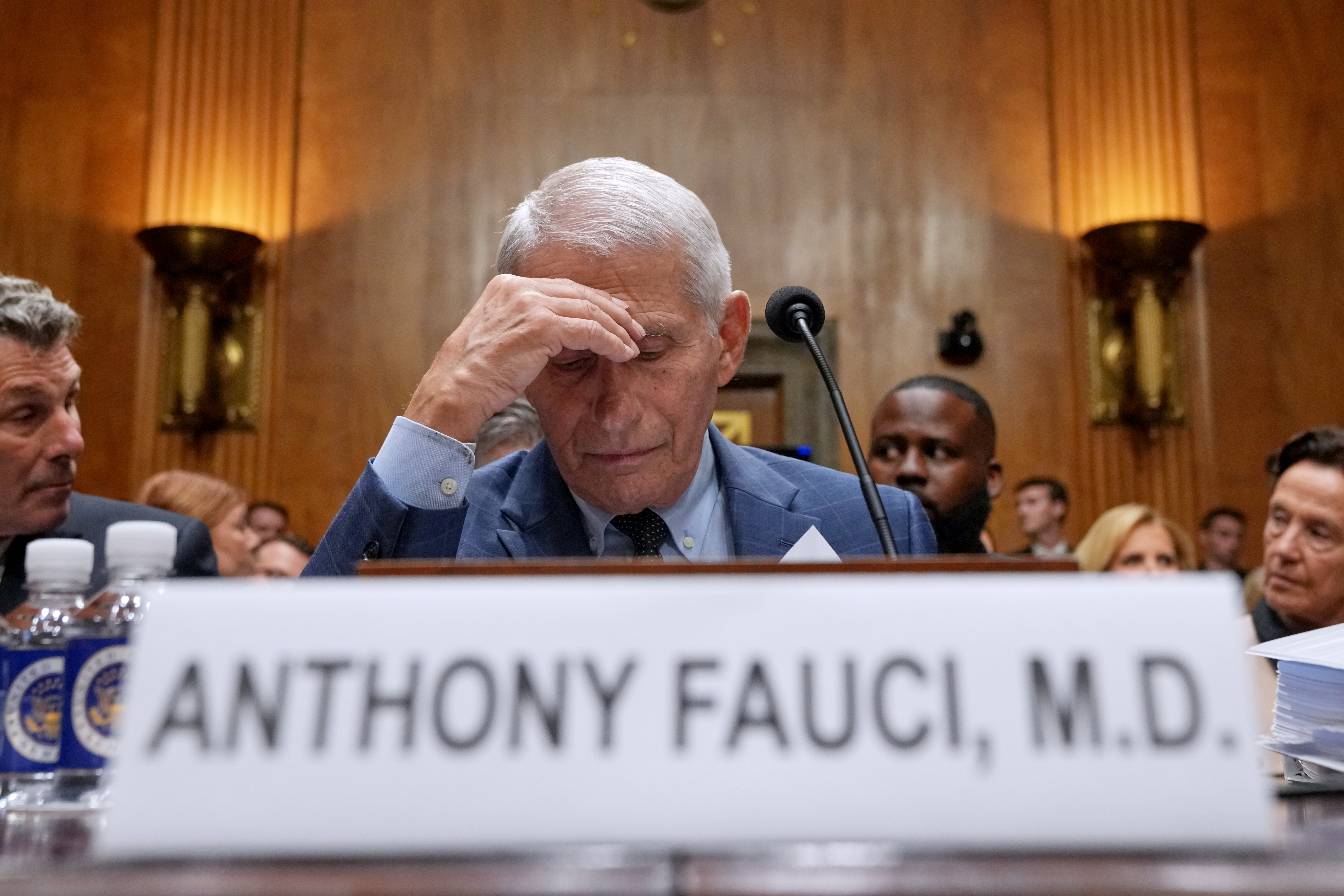
    WASHINGTON — A Senate committee on Thursday voted to hold Dr. Anthony Fauci in contempt of Congress and refer him to the Justice Department for potential prosecution over his refusal to answer questions at a hearing last week focused on his handling of the COVID-19 pandemic.

    The party-line vote approving the contempt resolution came a week after Fauci invoked his Fifth Amendment right against self-incrimination more than 100 times when he appeared before the Senate Committee on Homeland Security and Governmental Affairs.

    Republican Sen. Rand Paul of Kentucky, the committee chairman, said that constitutional protection did not apply since Fauci last year received a pardon from Democratic President Joe Biden and thus did not have to worry about the threat of prosecution. Fauci and Democrats who opposed the contempt resolution said he had a well-founded fear of self-incrimination given a public desire by Republicans to seek his prosecution.

    “Dr. Fauci faced no risk of federal prosecution,” Paul said at the outset of a hearing. ”All he had to do was tell the truth.”

    Paul noted that the vote had nothing to do with Fauci’s policies, opinions or anything he has said in previous congressional appearances.

    Instead, the senator said, “We are voting on whether a witness who has received the benefit of a sweeping pardon can be ordered by this committee to answer questions and then defy that order without consequence.”

    Fauci, in a statement explaining his decision to invoke his Fifth Amendment rights, said he had good reason to fear the possibility of criminal charges given what he said was Paul’s determination “to get me to say something, anything, that could vindicate his repeated public pledges that I end up, in his words, quote, behind bars, unquote.”

    The pardon from Biden covered acts from 2014 through the January 2025 day it was issued. It does not shield Fauci from state-level prosecutions or from investigations into any testimony that he did give that lawmakers thought was false.

    The referral goes to the U.S. attorney’s office in Washington, which will decide whether or not to investigate or potentially attempt to prosecute the doctor for contempt.

    Paul, who has previously sent referrals on Fauci on his own, acknowledged on Wednesday that contempt resolutions have often gone through the full Senate but said he did not “want to waste time” with that route. The resolution there would be unlikely to muster the required 60 votes needed to advance.

    No matter the outcome, the episode raises fresh and complicated questions about lawmakers’ ability to compel testimony from previously pardoned witnesses — and the outcome could resonate beyond Fauci given the possibility that Trump may also grant clemency to his own aides before leaving the White House.

  • 2026 Volkswagen Jetta GLI: A quick bargain that may be gone in a flash

    2026 Volkswagen Jetta GLI: A quick bargain that may be gone in a flash

    2026 Volkswagen Jetta GLI Autobahn vs. Hyundai Elantra N vs. Mazda3 2.5T Premium Plus AWD Hatchback: Let’s have some fun without breaking the bank.

    This week: Volkswagen Jetta GLI Autobahn

    Price: $35,670 as tested. And that comes pretty tricked out, with heated and ventilated seats, and premium audio. Just $650 for the 18-inch black rims and black side mirror caps. Autobahn is simply a top trim level, with one special feature noted below.

    What others are saying: “Highs: Just as quick as the GTI, as playful as ever, kind of a hot deal. Lows: We still prefer the manual even if it’s slower, annoying exhaust drone at highway speeds, deserving of a summer-tire option,” says Car and Driver.

    What Volkswagen is saying: “It’s the kind of car that’s hard to ignore.”

    Reality: It actually is quite easy to ignore, with all the exterior excitement of a Buick sedan, but it’s worth paying some attention.

    What’s new: Volkswagen has been having some financial problems and is planning to cut 100,000 jobs, according to BBC. As those in the know handicap which models may be cut from the lineup, Car and Driver is betting the GLI could be on the short list.

    Until then, though, let’s take this baby out for a ride. Fun seems to be harder to find these days, with war in Iran and tariff roulette costing us all money, so it seems like a good time to see which little cars might return a smile to our faces with little-ish price tags. With that comes a comparison of the Jetta GLI, Hyundai Elantra N, and the Mazda3 Turbo.

    Competition: In addition to the comparison vehicles, there are the Honda Civic Si, Honda Civic Type R, Toyota GR Corolla, Volkswagen Golf GTI, and Volkswagen Golf R.

    Up to speed: Woo hoo, the Jetta GLI Autobahn will get you to 60 quickly. Car and Driver says it gets there in 5.6 seconds, and I’m skeptical. It feels faster than that; I thought for sure I’d find a sub-5 time. But whatever, the 2.0-liter turbocharged four-cylinder engine creates 228 horses, and it really gets the small sedan around in a hurry.

    Zipping past cars on the highway is easy, so is getting the Jetta to 65, 70, and beyond, if you’re not looking. This is not the car to hand over to a teen to take to college.

    On the road: In fact, the Jetta GLI gets moving with more force than the front-wheel-drive system can adequately handle. Stomp on the accelerator while turning from a red light and the Jetta GLI Autobahn can quickly lose its composure and start dancing from side to side. All-wheel drive would be such a blessing to this little car.

    After you get rolling, give the GLI free rein in and out of turns and it’ll go exactly where you point it. The highway seams are not as brutal as you’d think in this sporty little sedan (unlike the unforgiving Toyota Sienna XSE I tested on a recent Minnesota drive) and there’s certainly plenty of gusto for passing your fellow motorists.

    Shifty: The Jetta in all its forms offers Volkswagen’s typical D-S shifter, where a double pull adds to the performance, and a push to the (wrong) right side gives you shift capabilities (the left side is the right side for shifting, people). Then a push forward lets you upshift — also incorrect, because a pull was mandated in documents carried by Moses from the Mount. The shifter is also a little too mushy for shifting, so maybe opt for the paddles.

    Or the stick shift. The Jetta GLI is one of the last few vehicles to let you shift for real, with a 6-speed manual also on offer.

    The interior of the 2026 Volkswagen Jetta GLI continues a tradition of no-nonsense colors and functionality.JAMES LIPMAN

    Driver’s Seat: The leather-covered, red-accented Driver’s Seat offers more performance than comfort; it’ll hold you firmly in place, but it’s not ache-inducing. (Ask me about my back problems; I have aged into the perfect Goldilocks for all your Driver’s Seat insights.)

    The controls and gauges haven’t changed much in the past 10 years. You go, Volkswagen. Save those pennies.

    Friends and stuff: The rear seat has decent headroom and legroom, although foot room under the front seat is a little snug. The center seat is tight behind the console, of course. The entire seat is comfortable enough, especially for the price point.

    Cargo space is 14.1 cubic feet; the seats fold down for a pass-through.

    In and out: The Jetta sits sports-car low, so brace yourself for the ups and downs.

    Play some tunes: The stereo interface is also classically inspired, with volume and tuning knobs and an 8-inch screen. Like the 0-60 time, the little screen really punches above its weight; I searched and searched to make sure I didn’t have some larger upgrade, but no.

    Sound from the Volkswagen Premium Audio system, part of the Autobahn trim level, is quite good, an A- almost hitting an A.

    Keeping warm and cool: Dials control temperature, and buttons handle everything else. The blowers provide plenty of air on the hot days, something we’ve had more than our share of this summer, and the ventilated seats help with cooling as well.

    Fuel economy: The vehicle averaged 29 mpg over the last 1,500 miles, including a few hundred of mine.

    Where it’s built: Puebla, Mexico. The parts are 36% Mexican and 17% German.

    How it’s built: Consumer Reports predicts the Jetta reliability to be a 2 out of 5.

    In the end: You’re basically getting an Audi A3 for a Volkswagen price, so why wouldn’t you take it? Still, gotta check out the competition.

    Next week: We try the Hyundai Elantra N.

  • Philadelphia is the birthplace of the all-American cupcake

    Birthdays call for cake and the country’s 250th is no exception.

    America250, the federal agency behind the Semiquincentennial celebration, cut the official national birthday cake in a July 4th ceremony at the Library of Congress. Online, Goldbelly created “America’s Official 250th Birthday Cake Collection.” In Philadelphia, the Independence Visitor Center arranged 5,000 cupcakes into a flag formation.

    When Philadelphia served cupcakes, it was doing more than choosing the simplest way to apportion cake. It was remaining true to its roots as the birthplace of all-American cupcakes.

    The “cup cake” was the brainchild of Eliza Leslie, an accomplished Philadelphia author of cookbooks, fiction, and other prose. Leslie’s cupcake appears in her category-defining 1828 book, Seventy-Five Receipts for Pastry, Cakes, and Sweetmeats, considered the first baking book published in the U.S. and published at a time when recipes were called receipts.

    The small-cakes genre predates Leslie; the first known American cookbook author, Amelia Simmons, included a “light cake to bake in small cups” in her 1796 American Cookery. Simmons didn’t specify the type of baking vessel, so the “small cups” reference in the recipe title is the only allusion to a cupcake-sized cake.

    There are other records of similar baking practices, but Leslie was the first to call the petite cake a cupcake. Not only is her recipe titled “cup cake,” but she also includes specific instructions to bake in “small tins.” Cupcake history thus begins here, in this printed record of the name and form recognized today.

    A chocolate Eagles cupcake from Carlino’s Market in Ardmore.Craig LaBan / Staff

    Leslie was born in 1787 in Philadelphia’s historic core. She learned to read by age 5, educated at home by her father, Robert Leslie. U.S.-born of Scottish ancestry, Robert was a polymath who owned a clock and watchmaking company. Her mother was an American of Swedish descent.

    Eliza wrote that her father was an intellectual who “obtained the custom of the principal people [of Philadelphia], including that of Washington, Franklin, and Jefferson; the two last being his warm personal friends.” He likely debated revolutionary values with politicians, for “[i]t was by Mr. Jefferson’s recommendation that my father was elected a member of the American Philosophical Society,” Eliza wrote in her autobiography, published in Godey’s Lady’s Book in 1858.

    In her late 30s, she enrolled in cooking school, a decision that would change the course of her life. She learned to bake from Elizabeth Goodfellow, a respected Philadelphia pastry chef who owned a bakery and candy store. Leslie took notes and kept the recipes from her studies at Mrs. Goodfellow’s cooking school.

    In response to repeated requests to share the recipes she learned from Goodfellow, Leslie compiled them into a book, having grown tired of handwriting copies for friends. Seventy-Five Receipts was authored anonymously by “a lady of Philadelphia.” Leslie didn’t credit Goodfellow and Goodfellow herself never authored a cookbook.

    Leslie acknowledged her teacher in later books and dropped the anonymity to write under her real name or the pen name of Miss Leslie. Bucking social norms, Leslie was a lifelong childfree, never-married woman who earned her living as a writer.

    Leslie’s was the first American cookbook to list ingredients separately at the beginning of a recipe, a style she copied from Goodfellow. The previous convention was to state the ingredients within the narrative directions.

    She intended to write simple, logical recipes that resolved the common pain points American cooks faced. “There is frequently much difficulty in following directions in English and French Cookery Books, not only from their want of explicitness, but from the difference in the fuel, fire-places, and cooking tools generally used in Europe and America,” she wrote in the Seventy-Five Receipts preface.

    She prioritized locally grown, accessible, affordable ingredients and stressed the economic savings in home baking as opposed to buying cakes from a bakery. “Many of the European receipts are so complicated and laborious that our female cooks are afraid to undertake the arduous task of making anything from them,” she lamented. Confidently patriotic, Leslie affirmed that her recipes were, “in every sense of the word, American.” Her dishes could compete with the standard bearers, she insisted. They “will not be found inferior to any of a similar description made in the European manner,” she declared.

    While statesmen instilled independence in the U.S. political culture, Leslie and other women adopted the same mentality in American cooking. Their DIY spirit was creative, rebellious, defiant, and nonconformist vis-à-vis European culture. For example, Leslie was among the authors to publish an Election Cake recipe, fusing the political and the culinary.

    “Election Cake became the first food strongly associated with American politics,” wrote historian Gregg Mangan, who argued that this baking provided women with an opportunity to express themselves politically long before they got voting rights. Food and gender scholar K.C. Hysmith noted, “While women couldn’t vote, they could bend the ear of the voting-eligible men they hosted on election day. And at the very least, serving slices of cake allowed them access to political conversations they might otherwise miss.” More than just an item in the baker’s repertoire, Election Cake was an “exercise in everyday politics” and “statement of community organizing.”

    “Through their production of Election Cake and other recipes, including Independence Cake, Franklin Gingerbread, and Democratic Tea Cakes, women projected their influence into the public sphere and helped ingrain patriotism into our national culture,” Mangan wrote.

    Food historian Stephen Schmidt locates Leslie in the historical arc extending from America’s infancy to an evolving nation edging towards civil war. “By the end of her career, the tiny, parochial, overwhelmingly culturally English America of Leslie’s youth had been swallowed up by a far larger, rapidly industrializing and urbanizing, and increasingly diverse and factionalized America,” wrote Schmidt. “Food and cooking had changed in tandem, the prevailing taste of the times, at least as exhibited in the many cookbooks now on the market, having shifted from an essentially British, upper-class, 18th-century cuisine, freighted with rich, expensive ingredients and many practical difficulties, to a much simpler, easier, more naturalized cuisine that truly was ‘in every sense of the word, American.’”

    Leslie would go on to write juvenile fiction, etiquette guides, short stories, and a novel, while continuing to author smash-hit cookbooks. There’s broad consensus that her third, Directions for Cookery, was the most popular American cookbook of the 19th century.

    The must-have cookbook “passed through 60 editions from its first appearance in 1837 until 1870, a dozen years after the author’s death,” wrote Dover Publications in its 2013 reprint. According to historian Liz Susman Karp, it sold more than 150,000 copies.

    Made By History sponsors. FOR USE ON MADE BY HISTORY STORIES ONLY.Inquirer Staff

    Leslie spent her later years holding court in a fashionable hotel lobby, having established herself as a lifestyle influencer and public figure. “Long before her death, Miss Leslie had become a Philadelphia institution,” wrote Mary Tolford Wilson in a 1971 biography. “Grown portly and walking with difficulty, she lived for about a decade at the United States Hotel, where she not only met every visiting celebrity, but was herself sought out as one.”

    More than one modern authority has likened Leslie to Julia Child, another American author and chef who taught Americans to cook. In the introduction to a 2022 reprint, chef and author Dorie Greenspan wrote, “As I read Seventy-Five Receipts, I was reminded over and over of Julia. Both are a pleasure to read. Both clearly love sharing what they’ve learned. Both have a generous spirit — you sense it each time they comfort and encourage us as we follow their instructions. And both have an intelligence that sparkles on each page and within each recipe.”

    Leslie died in 1858 at the age of 70 and was buried at St. Peter’s Church in Philadelphia. Her 200-year legacy is baked into all the cupcakes Americans have eaten since she coined the term.

    Andrea Adleman is a journalist specializing in the cultural history of cupcakes. Her forthcoming Cupcake Nation book is based on her award-winning Washington Post story “The psychology of cupcakes.”

    Made by History takes readers beyond the headlines with articles written and edited by professional historians. Opinions expressed do not necessarily reflect the views of The Inquirer.

  • 2 soldiers killed in Lebanon in the first Israeli deaths since June truce with Hezbollah

    2 soldiers killed in Lebanon in the first Israeli deaths since June truce with Hezbollah

    BEIRUT — Two Israeli soldiers were killed in an explosion in southern Lebanon, Israel’s military said Thursday, the first Israeli deaths since a shaky truce between Israel and the Lebanese militant group Hezbollah began nearly two months ago.

    Four other soldiers were seriously wounded, the military said. An Israeli military official, who spoke on condition of anonymity in accordance with the army’s policy, said that “an explosion was detonated” when the soldiers entered a site in the village of Majdal Zoun and that the nature of the explosive was under review.

    Israeli media reported the two deaths a day earlier.

    The Israeli army launched strikes Wednesday in southern Lebanon in response to what it described as Hezbollah’s violation of the ceasefire and called on residents of the village of Mansouri to flee — the first such warning Israel has issued in Lebanon for weeks.

    Lebanon’s Health Ministry said one person was killed and 12 wounded in an Israeli strike in the town of Tebnine Wednesday and another eight wounded in overnight strikes on the village of Burj al-Shemali. Artillery shelling also targeted the areas of Mansouri and Majdal Zoun, the state-run National News Agency said.

    There was no immediate statement from the Iran-backed Hezbollah.

    The latest Israel-Hezbollah war erupted on March 2, when Hezbollah fired rockets across the border two days after the U.S. and Israel launched their attacks on Iran. More than 4,000 people have been killed by Israeli strikes in Lebanon since then, including hundreds of civilians. About 40 soldiers and three civilians – including a military contractor – have been killed on the Israeli side.

    A precarious truce between Israel and Hezbollah has largely held since June 20, but Israeli forces have continued to occupy swaths of southern Lebanon and to carry out periodic airstrikes and shelling.

    The latest escalation came as Lebanese and Israeli negotiators met in Rome to discuss implementation of a June 26 deal reached between Israel and the Lebanese government under which Israeli forces are supposed to withdraw from areas they occupy in southern Lebanon and allow the Lebanese army to take control, in exchange for Hezbollah’s disarmament.

    Hezbollah has refused to disarm and opposed the direct Lebanon-Israel talks. It was not a party to the deal. The group has accused the Lebanese government of making too many concessions without guaranteeing an Israeli withdrawal.

    Wednesday’s talks ended early due to the escalation on the ground, but were set to resume Thursday.

    The talks in Rome have focused on implementation of “pilot zones” where Israeli forces would withdraw and the Lebanese army would take control. Implementation began last month with an initial pilot zone in an area that wasn’t occupied by Israeli forces but had previously sustained Israeli fire.

    The Lebanese army entered the town of Zawtar al-Gharbieh and some civilians returned, although many came only to find their homes destroyed and left again.

    A diplomat familiar with the negotiations who spoke on condition of anonymity because they were not authorized to comment publicly said earlier this week that Lebanon had asked for the next pilot zone to be either in the town of Khiam or Bint Jbeil. Both areas saw heavy fighting in the latest Israel-Hezbollah war and are currently occupied by Israeli forces.

    But U.S. Ambassador to Lebanon Michel Issa suggested ahead of the three-day talks that no new pilot zones would be immediately implemented, saying that “moving too quickly risks jeopardizing the very civilians this process is meant to protect.”