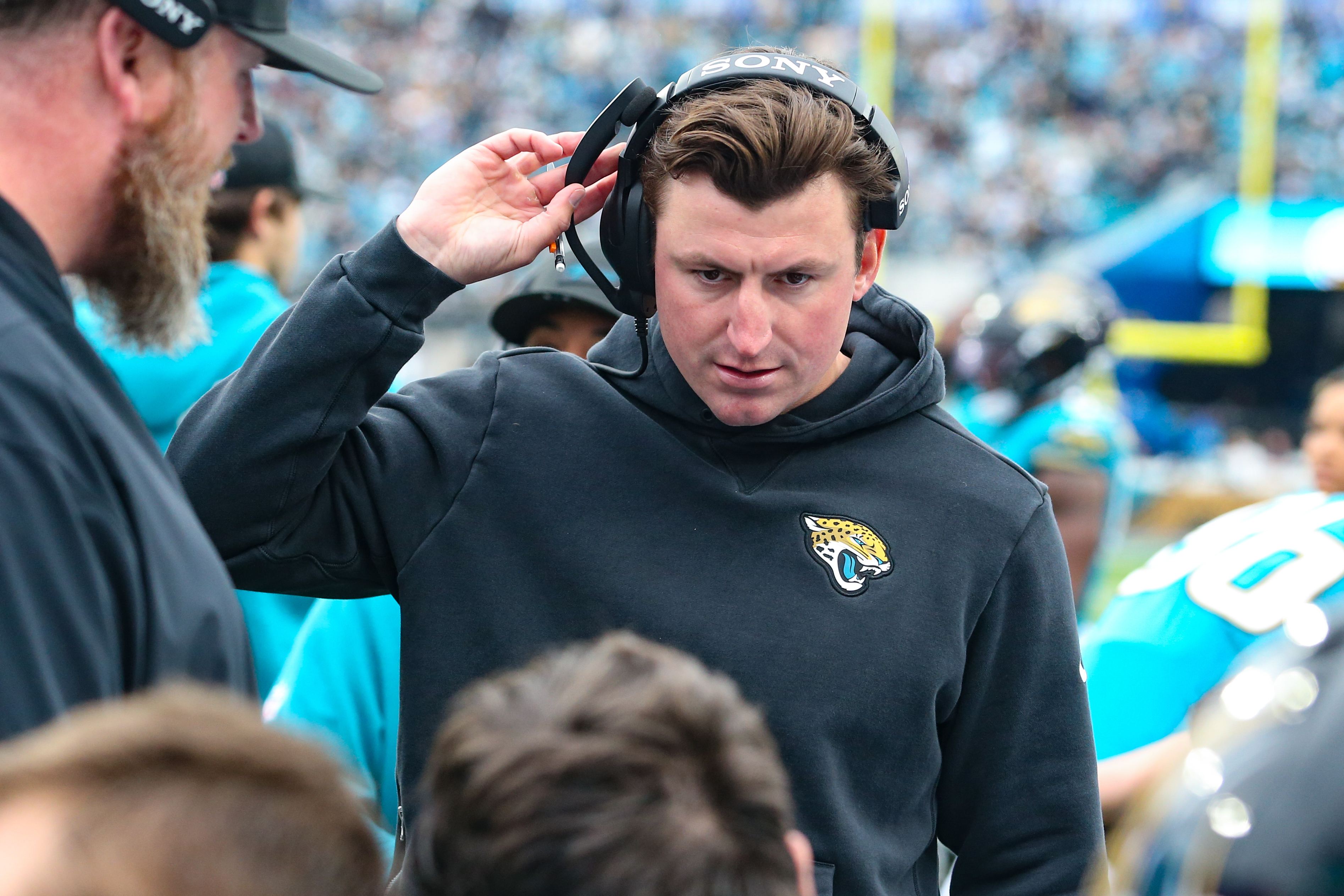
During NFL broadcasts on Sundays, anyone can watch 30-year-old Jacksonville Jaguars offensive coordinator Grant Udinski coach from the sideline, working closely with head coach and offensive play-caller Liam Coen.
But his father, Jim, has a unique vantage point on the sideline that he gets to see any day of the week.
Jim keeps a photo in his Doylestown home office that captured Udinski’s first foray on an NFL sideline. On Dec. 19, 1999, a month shy of his third birthday, Udinski attended his first Eagles game with his older brother, Ward, and Jim at Veterans Stadium. Before they watched Koy Detmer lead the Eagles to a 24-9 victory over the New England Patriots, they took a photo together just inches from the field, with Udinski wearing an Eagles cap backward.
Jacksonville Jaguars offensive coordinator Grant Udinski attended his first Eagles game ahead of his third birthday with his father, Jim, and his older brother, Ward, in 1999.Courtesy of Jim Udinski
Looking back, Udinski recognizes that his up-close view of the many Eagles playoff teams of the Andy Reid era influenced his early fascination with the game. He never could have fathomed, though, that he would have an opportunity to coach from those NFL sidelines, even after he’d first considered getting into coaching when he was in middle school.
“I don’t know that I ever thought I was going to coach in the NFL,” Udinski said. “I don’t know [if] that ever crossed my mind. That probably seemed like such a far stretch or such a reach that I don’t know that I ever would have thought that coaching at that level would be possible.”
He didn’t stretch too far. Twenty-seven years after he attended his first Eagles game, Udinski began his second season in his role with the Jaguars, who currently sit atop the AFC South with a 3-1 record. Last season, he worked with Coen to help lead the team to franchise records in scoring and first downs, reaching 13 wins for the first time since 1999.
Come Sunday in London, Udinski will stand on the Tottenham Hotspur Stadium sideline opposite the Eagles, coaching against the team he grew up watching.
Udinski’s early love of football wasn’t limited to the Eagles. Growing up in Doylestown, he said, Sundays were for watching the Eagles, and Fridays were for Central Bucks West football. Udinski is the latest CB West product to coach in the NFL, joining longtime former coach Mike Pettine Jr., Seattle Seahawks run game coordinator Justin Outten, and Detroit Lions safeties coach Jim O’Neil.
“People maybe say there’s something in the water in Doylestown,” Pettine said.
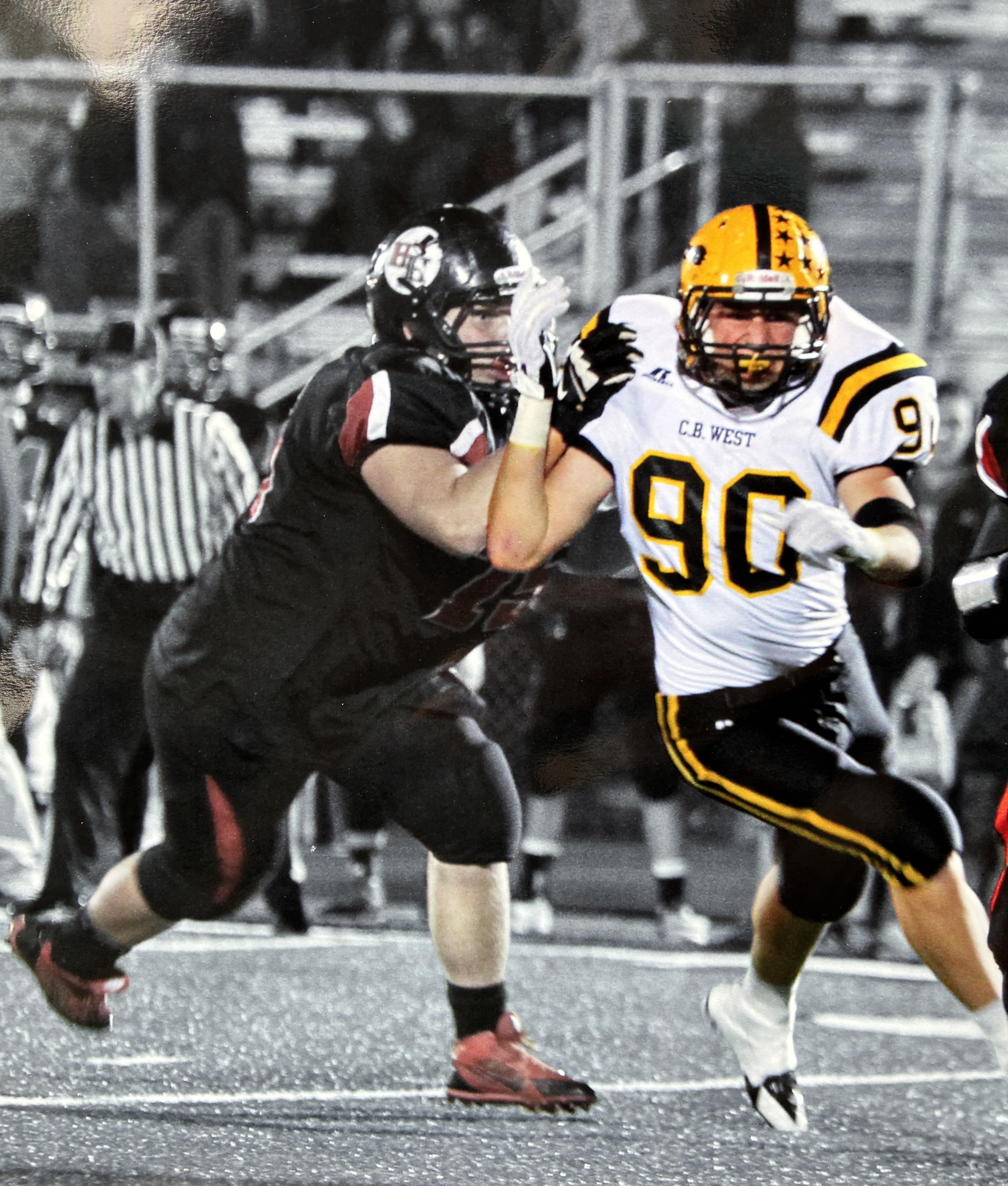
Jacksonville Jaguars offensive coordinator Grant Udinski was a defensive lineman and a tight end at Central Bucks West High School in Doylestown who graduated in 2014.Courtesy of Jim Udinski
Pettine, whose late father, Mike Sr., won four state championships as the head coach of CB West, hesitated to lump Udinski in as an offshoot of a theoretical coaching tree at the school. But his local roots are undeniably at the foundation of his football journey and a fervor for the game that has fueled him throughout it.
“That’s what drives him,” Pettine said of Udinski’s passion. “That’s obviously what has gotten him very quickly to where he is today.”
Father’s coaching style ‘rubbed off’
Udinski’s earliest football memories in the early 2000s were at CB West, where Jim, his seven siblings, and Kerry, Jim’s wife and Grant’s mother went to high school.
He remembers eating Nat’s Pizza before games. He remembers going to the stadium — both at home in Doylestown and on the road at neighboring schools — with his family, including his cousins, who lived down the street.
Most of the specifics are fuzzy, though. Udinski said he was at CB West’s three consecutive state championship wins from 1997-99, even if he doesn’t remember being there. Nonetheless, he was exposed to the success of the program early in his life, and it stuck with him, Jim said.
“He definitely knew of the aura of CB West from those years, because it was still fresh in people’s minds,” Jim said.
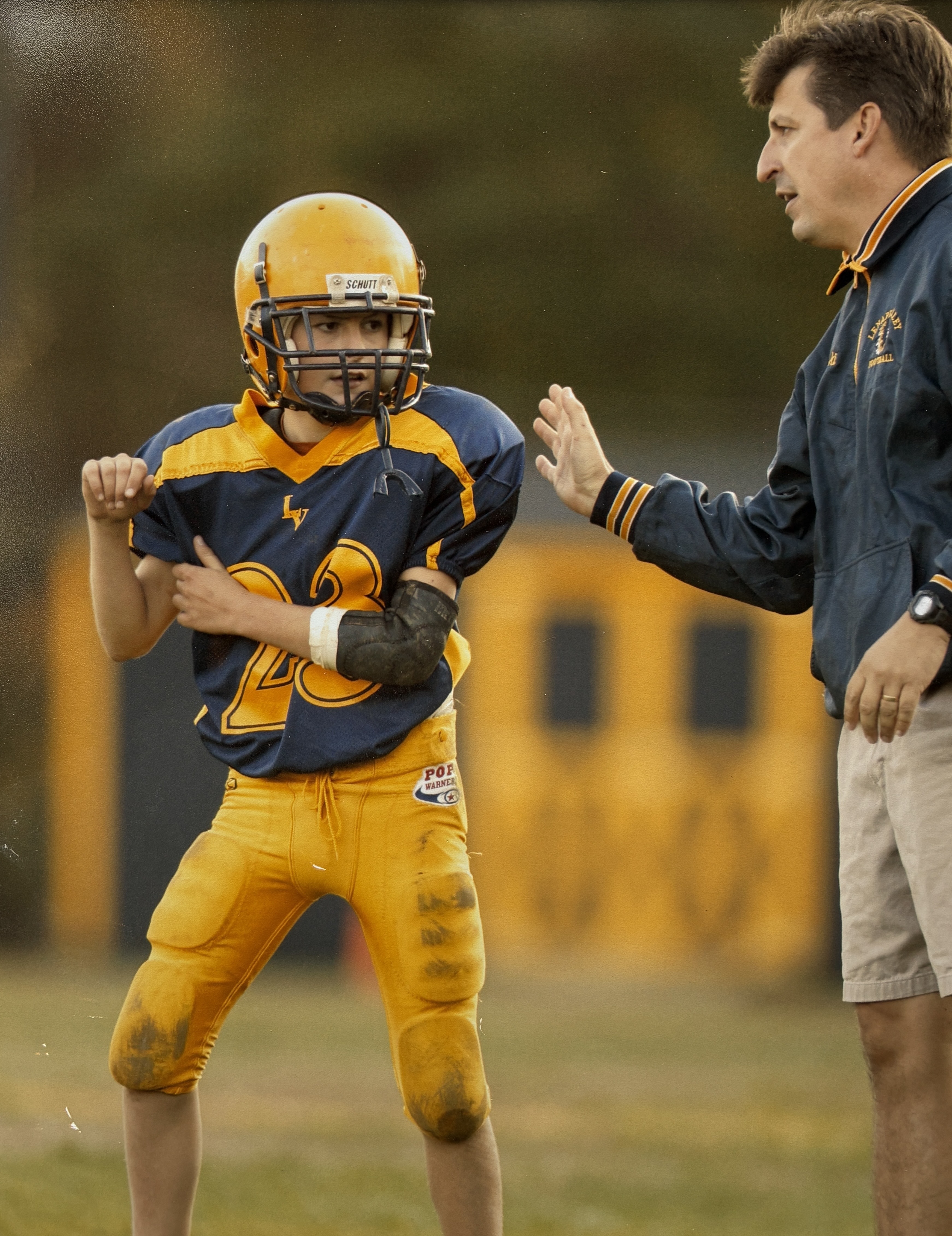
Jim played football at CB West for Pettine Sr. He overlapped on the team for a year with Pettine Jr., who was two grades behind him. But the joy Jim derived from his playing career paled in comparison to the pride he took in coaching all three of his sons — Ward, Grant, and Reece, his youngest — in Pop Warner football.
Jim Udinski coached all three of his sons, Grant (pictured), Ward, and Reece, for the Lenape Valley Indians Pop Warner program based in Chalfont.Courtesy of Jim Udinski
In 1998, Jim got involved with the Lenape Valley Indians, the Pop Warner program based in Chalfont, Bucks County. He estimated the association consisted of a handful of tackle football teams and a couple of flag teams at the time. He took over as president two years later, which he called the “right time,” coinciding with an influx of people moving to the area.
The organization grew rapidly. By the time Udinski was in his later elementary years, Jim said they had upward of 22 tackle teams and 12 flag teams. He saw the parents invest a lot of time and money into the program, so as a volunteer, he wanted to give them something back of equal value. Brian Hensel, the current CB West head coach, met the Udinski family when his son, Brian Jr., played with Udinski and was coached by Jim on the same Pop Warner team when the boys were about 8 years old.
“[Jim] took football very seriously and grew up under Coach Pettine Sr.’s tutelage, and he took an approach with the kids when they were young to keep it simple, but also be sharp and execute to the highest level of degrees you could,” Hensel said.
Jim said he viewed himself more as a teacher than a coach. He felt that with his players — not just his own kids — the better he taught them the game, the more they wanted to be part of it. He said he never cared which level his sons were playing, whether it was the top team or the middle team. Getting reps and learning the different concepts in all three phases of the game was more important than getting the ball in their hands, he said.
He coached Grant through the Pop Warner program from third grade through eighth grade. Before Grant, he coached Ward’s teams. After Grant, he coached Reece’s teams. Grant joked that his mother, who ran the snack bar, was “so ready for us to be done” with Lenape Valley football by the time they reached high school.
Kerry said they practically lived at the field. When she went into labor with Reece in 1998, on the same day as Ward’s picture day, they swung by the field before going to the hospital.
“It was part of what we did,” Kerry said.
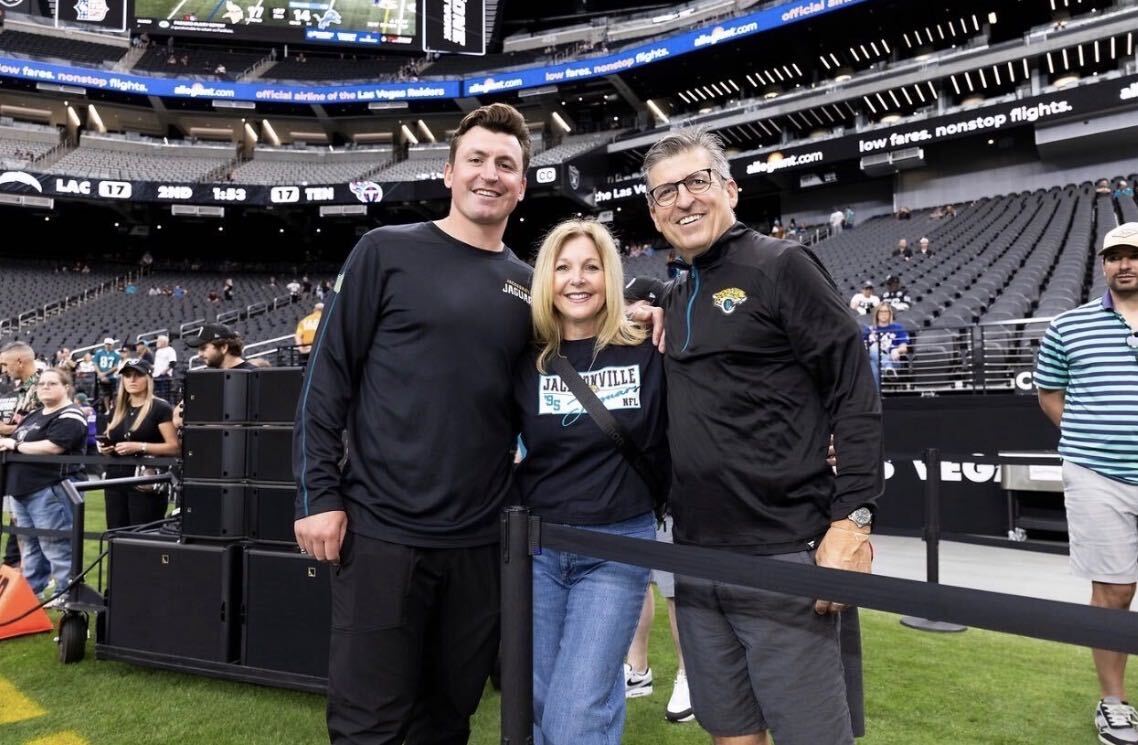
Grant Udinski (with parents Jim and Kerry) has evolved quickly into one of the league’s hot young offensive coordinators.Jacksonville Jaguars/Chris Kim
Their football endeavors weren’t limited to the field. Jim would watch film with his players, too, starting when they were 8 years old. He didn’t review film to critique his players’ past performances, though. He said he used it as a tool to prepare for upcoming opponents, especially as the kids got older and reached the “competitive level” of Pop Warner after age 10.
Udinski isn’t sure how many fifth- and sixth-grade Pop Warner teams were watching extra tape together to study an opponent after practice. Nonetheless, his father’s approach to coaching taught him the importance of detail, discipline, and work ethic at an early age.
“I was certainly very thankful to have him as our coach growing up,” Udinski said. “He did a great job with us, and probably more than I would like to admit that he taught me has rubbed off onto how I coach now.”
Earliest ‘coaching’ experience
Ward and Reece both became quarterbacks, playing at CB West and North Penn, respectively, in high school. Ward would play in college at Division III Juniata in central Pennsylvania, while Reece would play at FCS Virginia Military Institute and Richmond as well as a season at Maryland.
Grant was the lone Udinski brother who didn’t play quarterback. Jim noted that he preferred the blocking and tackling aspect of the game, traits that led him to play on the defensive line and at tight end as he got older. Occasionally, though, at the Pop Warner level, his father would call on him to play quarterback if the starter got hurt.
In those instances, Udinski, a gifted student in school, demonstrated his aptitude for the game. Jim would start reading a play to Udinski that he wanted him to run, and he would put his hand up mid-call and run back to the huddle because he already knew the rest. Sometimes, Jim would call the wrong play, and Udinski would run back to the huddle with his father shouting after him.
“He would wave me off, going, ‘I know you called it wrong. I got this,’ and he would correct it,” Jim said.
Grant Udinski (left) was coached at an early age by his father, Jim, who has now watched his son excel as a coach himself.Jacksonville Jaguars/Chris Kim
Udinski displayed that aptitude on the sideline, too. Jim said his first “coaching” experience came when he was 12 years old. Jim was coaching Reece’s team, two age groups behind Grant. Jim had scouted the team in advance, wrote down their signals, and told Grant to study the plays. He asked Grantto stand with him on the sideline on game day, watch the team’s signals, and tell him the play.
Jim estimated the sheet contained approximately 20 signals. He said Grant was “dead on” every play.
“I don’t think he ever looked down,” Jim said. “I think he just memorized them, and then when the other coach would signal them, Grant knew what that signal meant and would tell me the play, and then we would adjust our defense accordingly.”
He took on more responsibility assisting his father when he was in high school. Jim didn’t want to miss Ward’s college games on the weekends, so he would send Grant to scout Reece’s upcoming opponents. Scouting was a common practice at the competitive level of Pop Warner, Jim said, but it wasn’t so common to see a 16-year-old doing it rather than a coach.
Udinski scouted one of the better teams in the league three or four times, Jim recalled. Again, when it came time to play against them, Reece and his teammates were well-prepared.
“We knew every play,” Jim said. “We knew everything, because [Grant] told me everything. He told me their cadence, he told me their audibles, everything. And we, of course, took the time to prepare, and taught the kids on the team what to expect.”
At that point, Udinski already knew he wanted to get into coaching. He said he understood his playing career wouldn’t last long, although he went on to play in college at Davidson at tight end and Towson as a defensive lineman. Even at Towson, Jim recalled watching Udinski shout out the opposing team’s plays in his junior season, both on the field before the snap and as he was rotating out.
Grant Udinski (97) parlayed his CB West career into a successful collegiate career as a tight end and pass rusher at the Division I FCS level.ENP Photography
When he was in high school and when he would come home for breaks in college, Udinski would watch every college football game on Saturdays, from noon to 2 a.m., when Pac-12 play was ending. Jim knew how much he cared about the game, but he and Kerry weren’t informed of Udinski’s intent to get into coaching until he told them he was going to Baylor in spring 2019 to watch practice.
Udinski had been networking, sending emails to schools and attending coaches’ conventions and clinics, and was invited to visit Baylor by then-co-offensive coordinator Jeff Nixon. He drove down to Waco, Texas, without a return date in mind, sleeping in his car in a nearby Walmart parking lot at the end of each day. Kerry assumed Udinski had a temporary housing situation set up, though he hadn’t filled in his parents with many of the details of his trip.
“Honestly, tons of worry,” Kerry said. “I can remember basically being like, ‘Please just respond to my texts and let me know you’re good. Send me an emoji, whatever it takes. I want to know you’re good.’”
Phil Snow, who was Baylor’s defensive coordinator at the time, took Udinski in and gave him a place to stay for the duration of spring practice. That eased his parents’ minds — and so did his eventual acceptance into Baylor’s graduate school and his hiring as a graduate assistant when a spot became available.
Matt Rhule, the former Temple head coach who was then at the helm at Baylor, wasn’t about to let Udinski’s stint in Waco end after spring practice. He said he could tell that Udinski was “kind of a genius,” and he also possessed the requisite “grit and determination” of a promising coach.
“We only let people [in here that] we feel like are one of us, right?” Rhule, now at Nebraska, said. “That are going to bring great value. So the fact that he was willing to do that let me know that, hey, he loves this, and that no job’s going to be too small for him. It’s kind of rare to have someone who has that type of desire and dedication.”
Grant Udinski was introduced to the NFL by Matt Rhule, who brought Udinski with him from Baylor to the pros in 2020. Associated Press
Bringing the ‘it factor’
At Baylor, Udinski was tasked with doing all of what Rhule called the “quality control work” — the game plans, the scouting reports, the opponent breakdowns. Rhule was especially impressed with Udinski’s “unbelievable recall” when relaying information about the opponent and their scheme, while also self-scouting Baylor’s own tendencies.
After Baylor went 11-3 that season and made trips to the Big 12 Championship and the Sugar Bowl, the Carolina Panthers hired Rhule as their head coach. Following the Bill Belichick model, Rhule wanted to fill out the lower ranks of his staff with “really smart, young coaches” at a relatively low cost, then see if they could work their way up the ranks.
“I thought, ‘Hey, who could be a head coach?’” Rhule said. “Who could be a coordinator? And make them learn kind of from the ground up. Start [at] that entry-level position, and kind of go from there.”
Rhule said Udinski was a natural fit for a coaching assistant position, doing many of the same tasks he handled at Baylor for two seasons with the Panthers. During Udinski’s time with Carolina, he connected with Pettine at the NFL scouting combine over breakfast. While Pettine knew of Udinski because of his parents and Reece, who was the quarterback at North Penn, where Pettine was the head coach at the turn of the century, he hadn’t yet met the middle son.
Pettine left the conversation feeling like they had a shared vision of football and the application of technology within it. He continued to monitor Udinski’s progress through Brian Angelichio, the former Panthers tight ends coach who was on staff with Pettine in Cleveland and Green Bay. When Kevin O’Connell hired Pettine and Angelichio to his Minnesota Vikings staff in 2022, Pettine asked Udinski to send him some of his work, from scouting reports to playbook drawings.
He wasn’t surprised by the quality of Udinski’s work. Shortly after their hiring, both Pettine and Angelichio walked into O’Connell’s office and advocated for Udinski to join the staff. Pettine said they were both “annoying enough” that O’Connell finally agreed to meet with Udinski over Zoom.
“I’m like, ‘Good,’” Pettine recalled. “You won’t be five minutes into the Zoom and you’re going to know that you’re going to want to hire the guy.’”
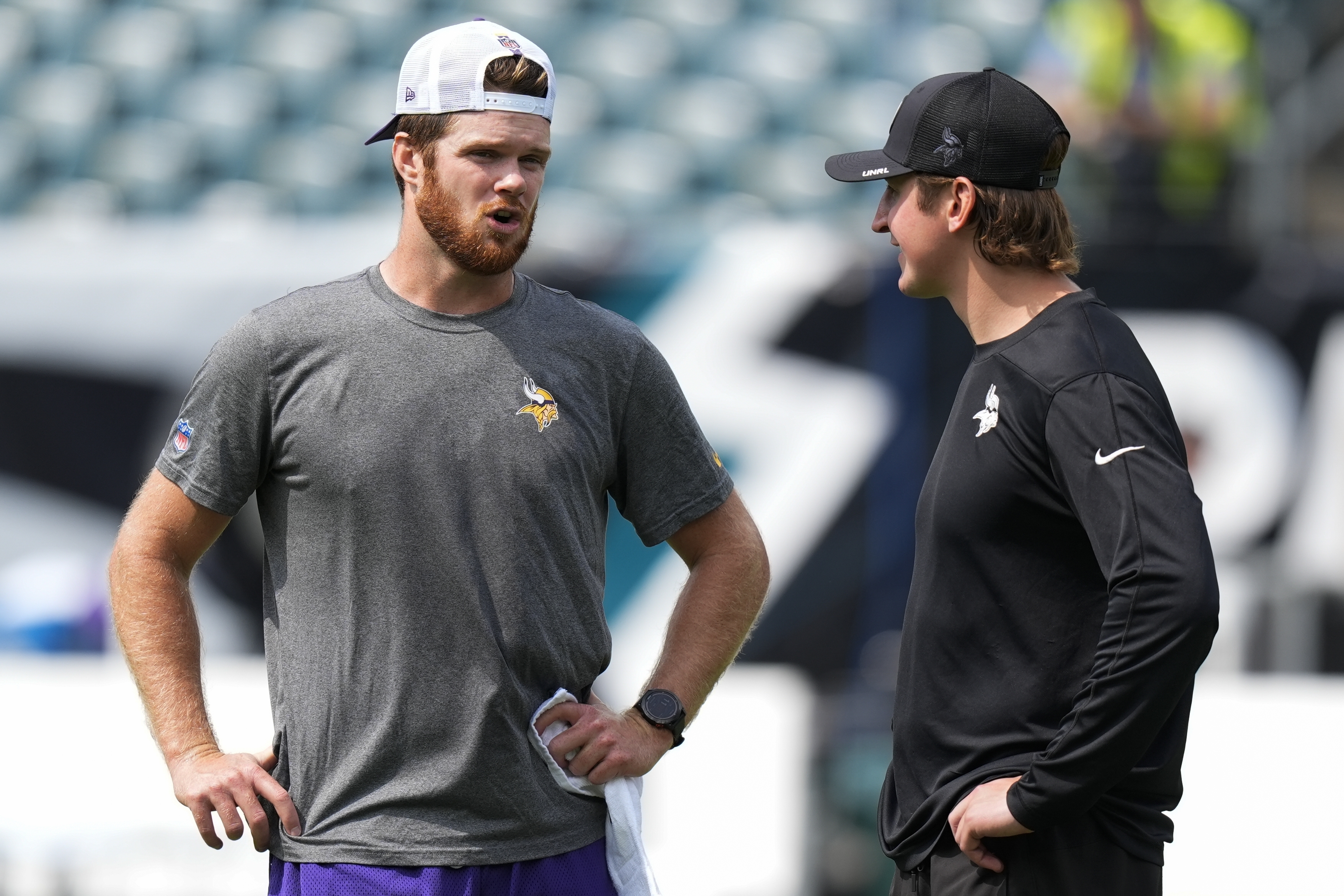
Then-Vikings quarterback Sam Darnold (left) talks to assistant QB coach Grant Udinski in 2024.Chris Szagola
Udinski joined the Vikings as an assistant to the head coach, which was technically more of an administrative role. He was still giving detailed introductory scouting reports to the offensive staff to begin the week of game preparation. Given his fluency in Excel, he could type the plays into the call sheet for O’Connell. But Pettine said that Udinski wasn’t simply dictating the plays from someone else into the system — he was responsible for checks and balances, ensuring that each play had the right name or was typed in the proper way.
He was also a “very quiet, but calming influence in Kevin’s ear” during games, Pettine said. He would monitor how defenses were responding to the Vikings’ game plan and whether their defensive calls aligned with his expectations.
“He thinks very quickly on his feet, he has excellent recall, and can make an adjustment very quickly, and I just think that’s one of the bigger reasons why he’s the rising star that he is,” Pettine said.
That trust led to more responsibility, as he became the assistant quarterbacks coach in 2023 and added assistant offensive coordinator to his title in 2024. As an assistant quarterbacks coach, Udinski played a role in ensuring the backups were ready to play, which was particularly important in 2023 when Kirk Cousins tore his Achilles tendon. But he didn’t solely have an impact in the quarterbacks room, Pettine said.
“A good indicator of a guy who’s a good coach is that the players go to him,” Pettine said. “So everybody would be just like, ‘Oh, ask Grant.’ So a lot of times when the players weren’t clear, obviously starting with the quarterbacks, but even the other positions. ‘Hey, if you weren’t sure,’ because Grant just had such a good feel for not just what the quarterbacks were doing, but just kind of like the concept of the whole plan.”
Grant Udinski’s work with the Vikings helped put him on the radar to become an offensive coordinator in Jacksonville. Gary McCullough
Now, as the Jaguars offensive coordinator, Udinski is able to make more of an impact on the whole plan. A head coaching opportunity could be next. This summer, Udinski interviewed for the Cleveland Browns and Buffalo Bills head coaching vacancies. He withdrew from the Browns’ coaching search, ultimately deciding to return for his second season with Jacksonville.
Udinski said the interview process was a “great opportunity” to refine and present the philosophies that he believes in as a coach. Pettine said it isn’t a matter of if, but when, as it relates to Udinski’s future as a head coach.
“It first goes back to that ‘it’ factor,” Pettine said. “He has a presence about him. He’s so well respected because he knows the information inside and out, and he communicates it well. I think he has excellent people skills, excellent communication skills. A lot of times he would be the quietest guy in the room. But when it comes time to speak, when Grant would speak up, it would carry some weight.
“I think from that standpoint, everybody looked at him as ‘Wow, this guy’s too young. This guy’s too young,’ and I just didn’t see it that way because he was very mature beyond his years.”
Still, Jim said what has impressed him most about Udinski’s fast rise has been his level of focus on the present. He asserted that his son isn’t focused on himself and his own climb.
His parents are just happy to be along for the ride, whether they’re cheering him on from Doylestown, Jacksonville, or London. Jim said their friends, who are Eagles fans, are making the trip across the pond for Sunday’s game and want to go to Eagles bars. Jim and Kerry, who shed their Eagles allegiance long ago, will keep their distance, he said.
“People ask me all the time, ‘What if he went to a team like the Dallas Cowboys?’ and I look at them and say, without hesitation, ‘I would cheer for the Dallas Cowboys,’” Jim said. “It’s my son. So that’s just the way it goes.”
For the majority of Campbell McKinnon’s volleyball career, she’s known where her place is on the hardwood: the middle.
McKinnon has thrived as a middle blocker, starring as a two-time district regular- season MVP during her high school days in Collierville, Tenn., outside Memphis.
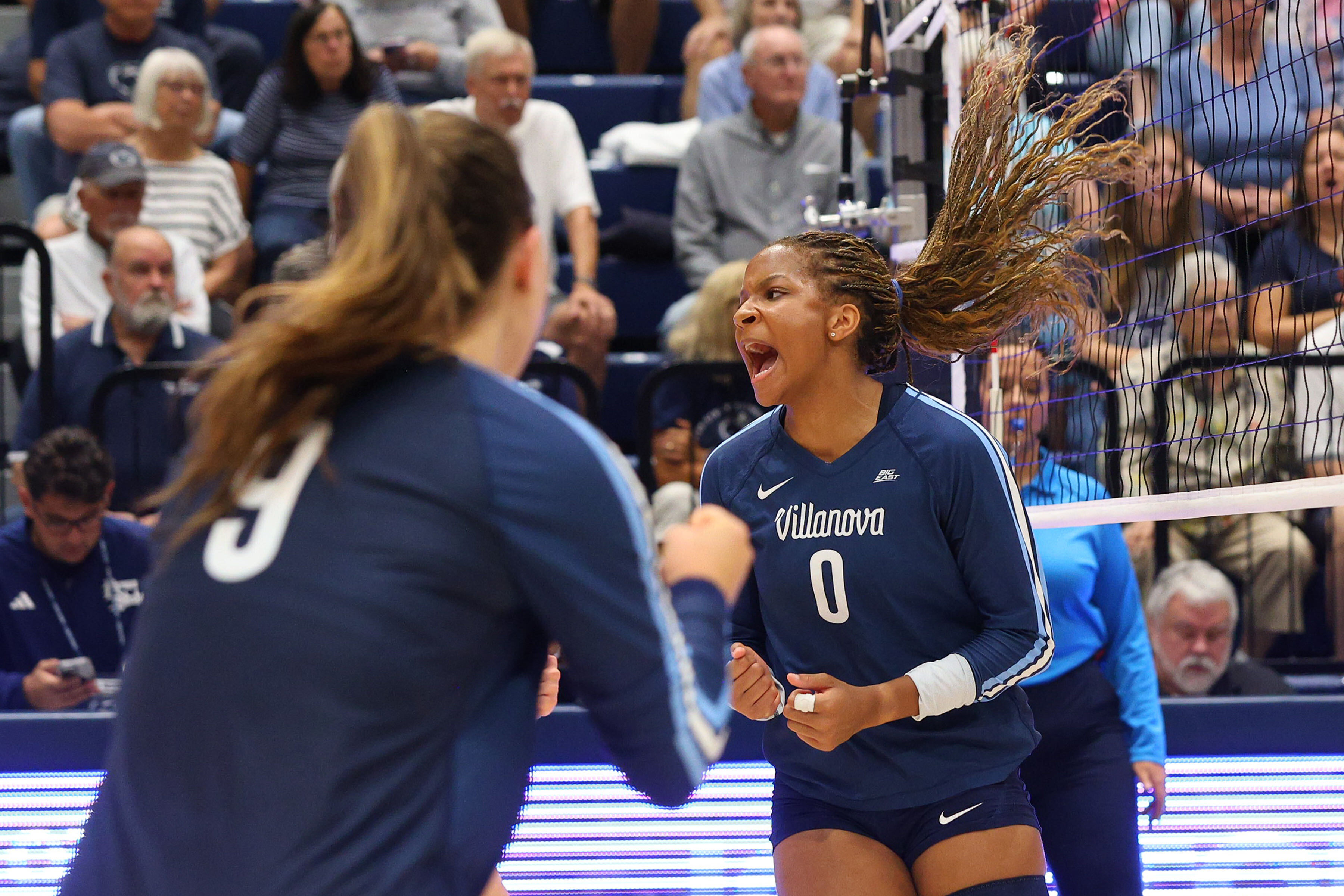
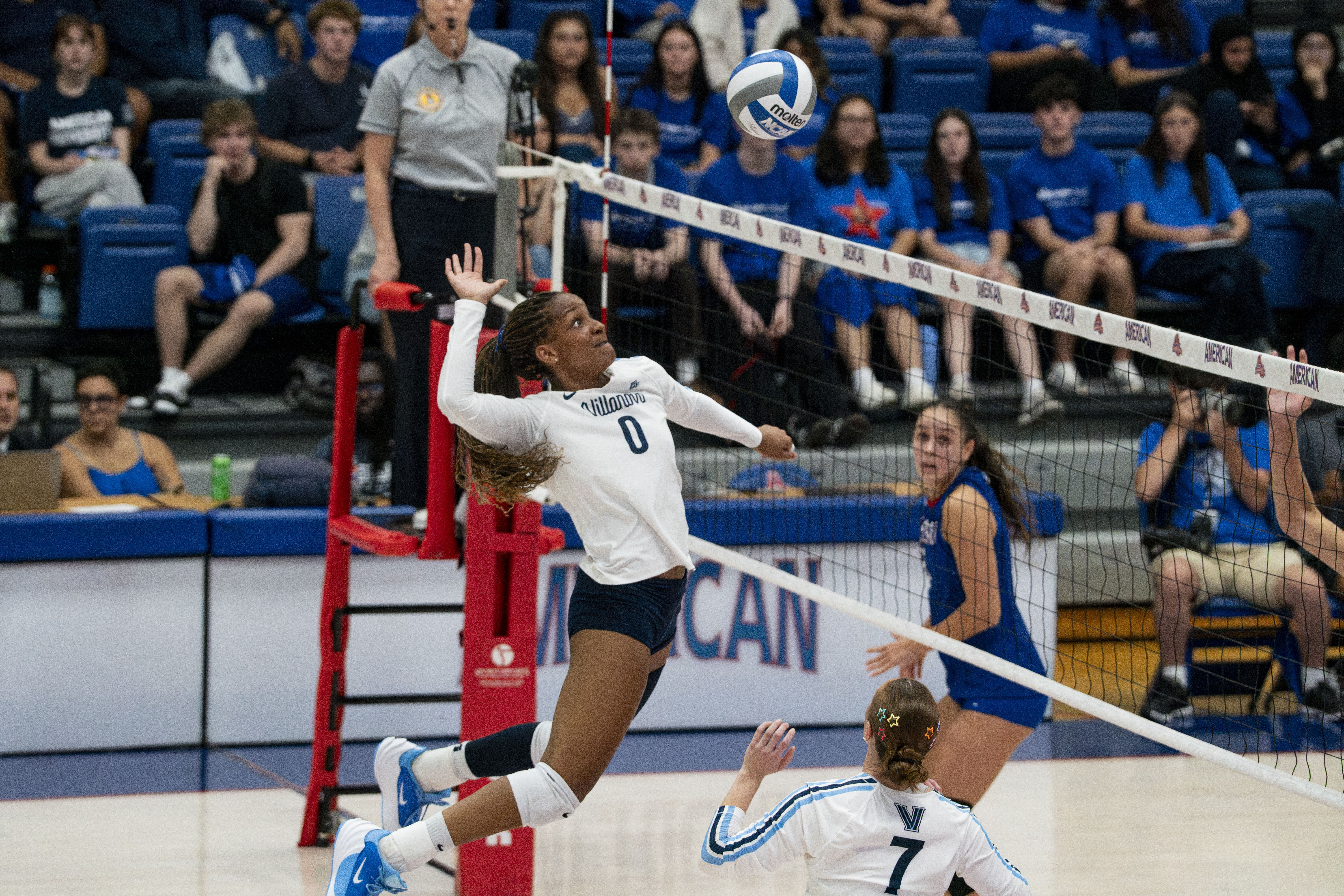
At Villanova, despite initial concerns about where she’d fit in due to her size — which, standing 5-foot-10, is considered undersized for the position — she has been one of Villanova’s brightest stars. Since her arrival on the Main Line, McKinnon earned a Big East All-Freshman selection in 2024 and was named a unanimous All-Big East selection last year.
Now a junior, McKinnon is learning to balance the leadership responsibilities that come with being an upperclassman, and a new position. She recently started flipping between middle and outside blocker.
Campbell McKinnon earned unanimous All-Big East volleyball honors as a sophomore.Villanova Athletics
“It’s definitely been difficult because middle is a faster position where you’re just kind of up and you just hit what you have,” McKinnon said. “But outside, there’s more time to think, there’s less to block. So there’s more time to think, which is different for me.”
The adjustment hasn’t fazed McKinnon, who’s off to an outstanding start. She leads all Villanova players in points, kills, and blocks through the team’s first 15 games.
McKinnon said the Wildcats (9-6, 2-2 Big East) are still looking for consistent cohesion as they enter the heart of Big East play. DePaul is up next on Friday (8 p.m., ESPN+).
“She’s better at everything; she’s gotten better serving, she’s better defending, she can pass a bit now, she’s made huge jumps as a blocker,” Steinbach said. “Her attacking skills have always been good, but she’s worked on it; she’s got more ability to do more things and score in different ways. She’s just a super hard-working, super competitive kid.”
When McKinnon first committed to the Wildcats, Steinbach or his assistants could not have envisioned her remarkable career to date.
“We had some debate as to whether she was good enough, it wasn’t a slam dunk,” Steinbach said. “She was an undersized middle blocker at that time who had some bad blocking technique and [we] just didn’t know what role she was going to be able to fall into. But, day one on campus, we’re like ‘This kid’s kind of special.’”
McKinnon says she was drawn to the Main Line for its academic-athletics balance and for the Wildcats coaching staff.
“When I came on a visit, I really loved the coaching dynamics, I liked the way they ran practices,” McKinnon said. “Outside of volleyball, I feel like the school has a good sports culture in general, like everyone supports athletics and as well, the academic culture here is very driven and people do want to succeed. So, I found that this was the perfect balance of what I was looking for.”
In the summer of 2024, when McKinnon first arrived on campus and with those initial questions of her fit on this team lingering, the team embarked on a European trip to Slovenia and Italy. During those matches, the staff quickly saw McKinnon’s talents and her upside in the middle.
“This kid has some tools that are going to be pretty special and we just got to get her to figure out what she can and can’t do,” Steinbach said, recalling that summer. “And there’s not much she can’t do.”
Those tools first seen two and a half years ago have only blossomed. As a freshman, she led the team in hitting percentage (.332) and a year later, McKinnon made history with the highest hitting percentage for a middle blocker in program history (.379), nearly identical to her mark to date this season (.378). Now, with more playing time on the outside, Steinbach aims to get the most out of her play and versatility.
As her career continues to evolve at Villanova, Campbell McKinnon is looking to be more of a leader on the Wildcats’ volleyball program. Villanova Athletics
“As a left side, she’s going to get more touches on the ball and more swings and we have the opportunity to let her go in the back row a little bit and do some things back there,” Steinbach said. “She’s getting better as a defender and passer and she’s one of our best servers too so it makes sense, we want to get her touching the ball as much as we can.”
In addition to her on-court prowess, McKinnon has become a team leader, passing along lessons while setting the tone both in practice and matches.
“I’m definitely a lead-by-example type player,” McKinnon said. “Every day on the court, the coaches and my teammates know I’m gonna give 100%, 110% even, and hopefully that helps my teammates’ [desire to] want to do the same.”
Another adjustment McKinnon has strived to make this season is in her on-court demeanor, making sure she’s not unintentionally affecting her fellow teammates.
“I do have to be more mindful of how I react to things, on the volleyball court. Everyone knows I’m pretty emotional, but at times, that’s not really necessary and I have to realize my facial expressions, my actions do impact my teammates because volleyball is such a team sport,” McKinnon said. “If I see my body language is bad, that could start to impact them. So [I’ve] just kind of been being more mindful of how I react to things on the court.”
Steinbach has seen McKinnon grow into a very coachable player to the point where he hasn’t found himself focusing on her as much as others on the roster.
“It’s interesting as a coach, you know you’re worried about your least problematic children or your players, right, and she’s the one I have to worry about the least,” Steinbach said. “I have to consciously sometimes spend time with my best kids because they need as much attention as everybody else.”
Especially now, as the Wildcats haven’t been at the level where they aimed to be in the preseason, remaining confident in their play and turning frustration into progress is key for McKinnon and the Wildcats.
“We’ve got some frustration in the program right now as far as wins and losses,” Steinbach said. “I think she needs to make sure she’s staying the course and doesn’t let any of those things affect how she’s playing and keep it day to day. If she can separate those things and [stay focused] right now, doing the best you can, she’s gonna be fine.”
“We all know we’re very capable volleyball players,” McKinnon said, “but at times, things can be choppier rather than smooth playing. If we can find our glue together and start to work together a little bit better, I think we can find some success.”
Sometimes I feel like I missed my window. As a sportswriter, I mean. Paul Simon has a song called “Born at the Right Time” that he released in 1990, which is fitting, because when it comes to covering pro sports, I struggle to shake the sense that I was born at the wrong time.
It would have been cooler, and perhaps more fulfilling, to have been a sportswriter in that era, the mid-1980s into the mid-1990s, not just because the nature of the job was different, but because the nature of sports was, too.
Access to the athletes, coaches, and executives was much greater, of course, and traditional media had a wider reach, more influence, and healthier expense accounts. But the games and teams themselves were themselves more colorful, more daring, full of characters and strategic experimentation.
The most popular terms, trends, and names in the NFL included Buddy Ryan and the 46 defense, the Buffalo Bills and the K-Gun, Jerry Glanville and the run and shoot, Brett Favre, Deion Sanders. It wasn’t unusual to see NHL players score between 65 and 80 goals in a season: Wayne Gretzky, Mario Lemieux, Steve Yzerman, Brett Hull, Teemu Selänne, Alexander Mogilny.
The ’93 Phillies, bawdy and beer-bellied and built to beat you or beat you up, didn’t have to win the World Series to define baseball in this city for a generation. And in the NBA, you could ricochet from the Bad Boy Detroit Pistons dynasty to the 1990-91 Denver Nuggets, coached by West Philly native Paul Westhead, who quoted Shakespeare on the regular, tried to implement his breakneck “system” at the pro level, and won just 20 games … but goosed the offensive stats of such immortals as Michael Adams, Orlando Woolridge, and Blair Rasmussen.
The point is, it’s possible — and I’d argue it was much more common back then — to lose, or to have a season with a disappointing ending, while still being interesting. Why the reminder? Because the last two weeks might have convinced people around here that following their favorite teams must be the emotional equivalent of having Joe Pesci put your head in a vise and start slowly turning the handle.
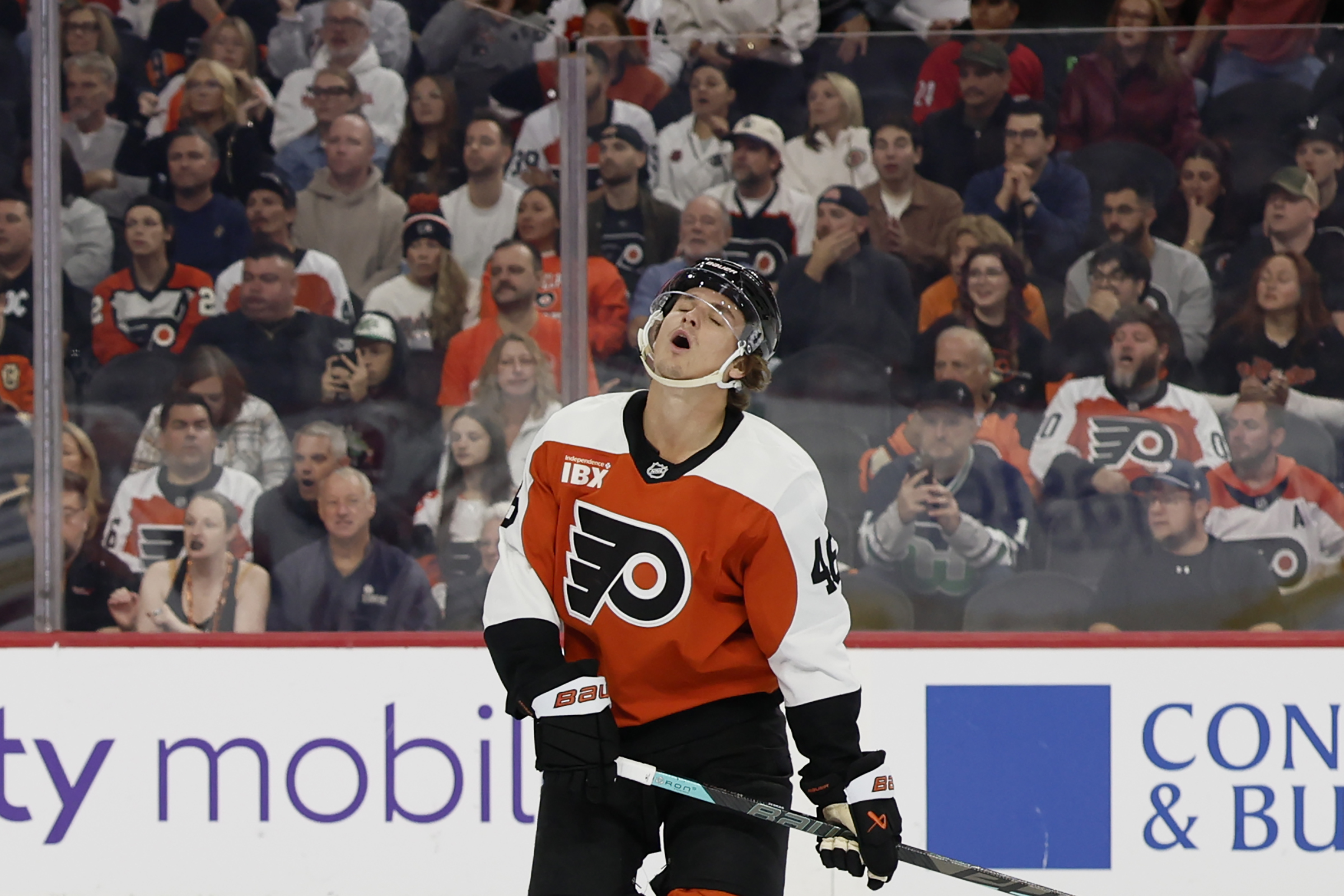
Trevor Zegras and the Flyers are off to one of the worst starts in NHL history.Elizabeth Robertson / Staff Photographer
It has been rough, all right. The Phillies had every baseball-loving teenager in the Delaware Valley asking ChatGPT about “1964 COLLAPSE” before the Braves knocked them out of the National League wild-card round. The Eagles are an injury-riddled, identity-missing mess, fortunate to be 2-2. And over their first four games, the Flyers have done little more than lie down at center ice with their skates in the air.
Even the most dispassionate observer would have to acknowledge that it has been excruciating just to pay attention to these three teams lately, let alone care about them deeply. But the reasons that they’ve been such a hard watch, that so much anger and angst has been bubbling up, go beyond the Phillies’ dropping their fourth straight playoff series or the Eagles’ squandering a double-digit fourth-quarter lead. It isn’t just that these teams have been losing. It’s that these teams have been boring.
The 2026 Phillies were exactly the club that everyone (other than John Middleton and Dave Dombrowski, apparently) expected them to be. They had their moments, thanks to their starting pitching and Kyle Schwarber, but those flickers were snuffed out by the team’s atrocious baserunning, lousy situational hitting, and poor defense. All of those flaws were present and visible when the regular season began, and the Phillies corrected none of them. They were on track most of the season to meet every worst expectation, so it was hardly surprising or fascinating when they did.
A similar dynamic is playing out with the Eagles. Sure, the offense had a new coordinator in Sean Mannion, some question marks along the offensive line, and some work to do to make up for the departure of A.J. Brown. It was natural to think Mannion, Jalen Hurts, and everyone else would need time, maybe a few weeks into the regular season, before they got their footing, except they’re wobbling and wiping out like rookie surfers. (Turns out, converting on third down is kind of important for an offense!)
Hurts can’t operate the system from under center. Lane Johnson retired. Cam Jurgens has been traded. DeVonta Smith, Dallas Goedert, Saquon Barkley, and Landon Dickerson are hurt. The result of all this upheaval, inexperience, and incompetence is that Mannion might as well be drawing up plays in the dirt at FDR Park. OK, Darius, you’re the bottle cap. Elijah, you’re the piece of glass. Remember not to cover up the tight end this time.
The Flyers are a different category of bus crash altogether, because they were supposed to be fun. They were supposed to be the young, up-and-coming team hitting its stride. Instead, they’re the perfect example of the distinction between bad and dull. If they were losing 5-4 or 6-5 every night, if Porter Martone and Matvei Michkov were scoring and setting up one goal after another, if the team merely needed to clean up some defensive deficiencies, that would be one thing. It’s another thing, though, to be outscored, 17-5; to be outshot, 158-77 —tied for the league’s second-highest such differential through four games since 1959 — and to be a shallow speed bump for opponents to drive over.
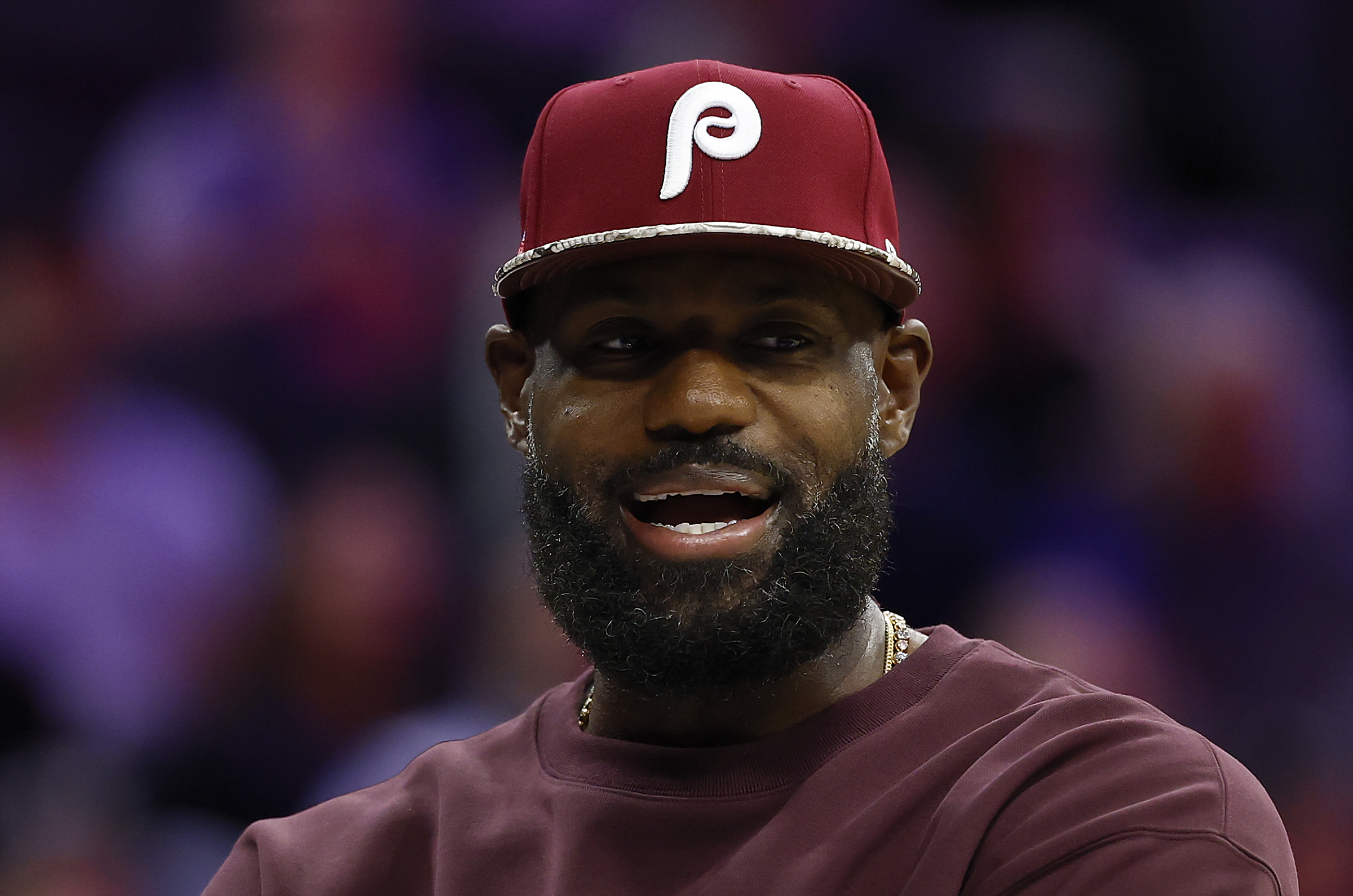
Philadelphia’s hopes for a winner this year might be down to LeBron James and the 76ers.Yong Kim / Staff Photographer
Hopelessness. That’s the prevailing feeling here. The Eagles’ defense might improve enough that they can slog through the rest of the season into the playoffs, dragging the offense along. The Flyers could make a franchise-altering trade or, in theory, straighten things out without one. But at the moment, there’s no sign of either of those happy outcomes on the horizon. There seems to be just the same predictable tedium until Oct. 20, when the 76ers open their regular season. Help us, LeBron. Hey, entertain us, at least.
Phillies pitcher Zack Wheeler wipes his face during a mound meeting with his teammates in the fourth inning against the Toronto Blue Jays on Friday, Aug. 7, 2026 in Philadelphia.Yong Kim / Staff Photographer
Which Phillies Should Stay or Go? Swipe and decide
Another year, another early postseason exit for the Phillies.
It was a turbulent season from start to finish. An early April swoon cost Rob Thomson his job, with Don Mattingly taking his place as interim manager. The Phillies clawed back into the race for the National League East, but were ultimately doomed by a dismal September. They bowed out of the wild-card series against the Braves in three games, leaving them no closer to that elusive World Series trophy.
Two of Dave Dombrowski’s major winter adds, outfielder Adolis García and pitcher Brad Keller, suffered season-ending injuries. None of his trade deadline additions — Luis Arraez, Caleb Kilian, and Brooks Raley — were included on the wild-card roster. Arraez and Kilian had both been injured while Raley was too inconsistent to trust with the ball in the postseason.
story continues after advertisement
“I’d imagine this team looks a lot different next year,” Bryce Harper said after the Phillies’ season-ending Game 3 loss on Thursday.
Indeed, the Phillies are poised for bigger changes than in years past. Seven players are heading toward free agency, and salaries for Taijuan Walker and Nick Castellanos will also be coming off the books. They could have the flexibility for a bigger shake-up this winter.
Make your pick for each player by swiping the cards below — right for Stay or left for Go. Yes, just like Tinder. Finding it hard to decide? We'll also show you how other Inquirer readers have voted so far and what we think the team will do.
*Player ages are as of opening day 2027.
Pitchers
As much as anything, this Phillies team is built around its rotation. But beyond their five starters, they have a serious depth problem, one that was amplified this year when Andrew Painter was in triple A and again when Jesús Luzardo hit the injured list. The bullpen is one of the team’s biggest areas of need. The bridge to Jhoan Duran was an issue all season, and when the playoffs rolled around, the Phillies had no clear setup man for their closer.
#46
José
Alvarado
Crowd says
Contract
Free agent
Age
31
Inky Says Go
March: Alvarado didn’t throw a single pitch in the postseason, an indication of the Phillies’ low level of trust in the lefty. Triple-digit velocity means little if there’s no command of it.
#19
Kyle
Backhus
Crowd says
Contract
Pre-arbitration
Age
29
Inky Says Stay
March: Backhus didn’t stick around in the major leagues as hoped this year, but with his unique arm slot (6 degrees, lower than all qualified lefties) and several years of team control, he is an interesting depth piece.
#58
Tanner
Banks
Crowd says
Contract
Arbitration
Age
35
Inky Says Go
March: Banks majorly regressed from a 3.07 ERA in 2025 to 6.19 in 2026. He returned from an extended absence due to a forearm injury as a multi-inning option, but was a nonfactor in the wild-card series.
#52
Jonathan
Bowlan
Crowd says
Contract
Pre-arbitration
Age
30
Inky Says Stay
March: Bowlan had a meteoric rise to the setup man, and an equally meteoric fall with his September struggles culminating in a groin injury. But the righty still has one of the best strikeout rates (31.9%), whiff rates (31.3%), and chase rates (35.2%) in baseball.
#59
Jhoan
Duran
All-Star
Crowd says
Contract
Arbitration
Age
29
Inky Says Stay
March: Duran became the latest Phillies reliever to surrender a back-breaking postseason home run, but he’s still the best reliever they have and one of the best league-wide. However the Phillies reshape their bullpen, the closer will still be the centerpiece.
#40
Brad
Keller
Crowd says
Contract
Signed thru '27
Age
31
Inky Says Stay
March: Keller’s rehab from the Tommy John surgery he underwent in July could take him through most or even all of next season. He’ll stay through his contract, but it’s not a sure thing that he’ll throw another pitch for the Phillies.
#50
Orion
Kerkering
Crowd says
Contract
Arbitration
Age
25
Inky Says Go
March: Kerkering was once viewed as having the potential to be a homegrown closer, but after extended struggles, he was optioned to triple A in September. Perhaps a change of scenery would be best for all parties.
#56
Caleb
Kilian
Crowd says
Contract
Pre-arbitration
Age
29
Inky Says Stay
March: There’s little to judge Kilian’s Phillies tenure on, as he only made four appearances before an oblique injury ended his season. But he had intriguing numbers with the Giants before the trade, including a 48.8% ground-ball rate.
#44
Jesús
Luzardo
All-Star
Crowd says
Contract
Signed thru '31
Age
29
Inky Says Stay
March: It’s fair to wonder how different the Phillies’ September would have looked if Luzardo hadn’t been dealing with shoulder inflammation. The lefty proved worthy of the extension he got in March with his first career All-Star selection and is one of the co-aces.
#37
Tim
Mayza
Crowd says
Contract
Free agent
Age
35
Inky Says Stay
March: Mayza was an unsung hero in the beleaguered Phillies bullpen, taking the ball in a variety of roles. He isn’t a high-leverage pitcher, but could be a reasonable and inexpensive depth option.
#71
Alex
McFarlane
Crowd says
Contract
Pre-arbitration
Age
25
Inky Says Stay
March: McFarlane showed elite velocity and impressive composure in his rookie season. As one of the Phillies' most exciting homegrown talents, he could be a factor in this bullpen for years to come.
#27
Aaron
Nola
Crowd says
Contract
Signed thru '30
Age
33
Inky Says Stay
March: With his contract, Nola isn’t going anywhere. But his second-half resurgence provides some optimism that he can still be a reliable arm in the back end of the rotation.
#24
Andrew
Painter
Crowd says
Contract
Pre-arbitration
Age
23
Inky Says Stay
March: J.T. Realmuto called his postseason relief appearance a “career-altering performance.” Year 2 of Painter should be exciting to watch.
#30
Brooks
Raley
Crowd says
Contract
Free agent
Age
38
Inky Says Go
March: This was a deadline move that didn't work out. Raley's first-half ERA of 1.96 with the Mets became 7.94 with the Phillies, and he wasn't included on their postseason roster.
#61
Cristopher
Sánchez
All-Star
Crowd says
Contract
Signed thru '32
Age
30
Inky Says Stay
March: Sánchez’s 50⅔ consecutive scoreless innings set a franchise record, something quite difficult to do for a team established in 1883. The rotation continues to be the Phillies’ greatest strength, and Sánchez is at the center of it.
#55
Chase
Shugart
Crowd says
Contract
Pre-arbitration
Age
30
Inky Says Stay
March: Shugart will forever be a trivia answer as a Phillies pitcher who earned both wins in a doubleheader. He could stick around and compete for a middle relief innings-eater spot next season.
#45
Zack
Wheeler
Crowd says
Contract
Signed thru '27
Age
36
Inky Says Stay
March: Wheeler returned one rib lighter but the same competitor as ever. He has been open in the past about retiring at the end of his current contract. Unless he changes his mind, he has one last chance at those elusive goals of a Cy Young Award and World Series trophy.
After starting 122 games behind the plate, the highest total for an age-35 or older catcher since Jason Kendall 17 years ago, J.T. Realmuto said: "I feel healthy and as good as I ever have." Swell. But Realmuto's bat often looked old and slow en route to a 65 OPS+ (100 is average). Pitchers swear by his game-calling, and he's as good as it gets at using ABS to challenge pitches. It's time, though, for the Phillies to find a backup catcher who can play 65 games instead of 35.
#13
Rafael
Marchan
Crowd says
Contract
Arbitration
Age
28
Inky Says Go
Lauber: For J.T. Realmuto's own good, the Phillies need more from their backup catcher. There's little evidence they will get it from Marchan, a former prospect.
#10
J.T.
Realmuto
Crowd says
Contract
Signed thru '28
Age
36
Inky Says Stay
Lauber: There isn't anyone the pitchers trust more to call a game and use ABS. But he should challenge more and play less (100-ish games instead of 125).
#21
Garrett
Stubbs
Crowd says
Contract
Arbitration
Age
33
Inky Says Stay
Lauber: To be clear, the backup catcher spot must be upgraded. It would be wise to keep him around on a minor-league deal, though, for organizational depth.
A year ago, Dombrowski said the infield was "pretty well solidified." How about now? In August, the Phillies displaced three-quarters of the infield after the trade for Arraez. Bryce Harper is expected to return to first base after two months in right field. But Arraez and Alec Bohm are free agents, and Trea Turner could be in line for a position switch after the worst defensive season among shortstops. Everything is on the table.
#4
Luis
Arraez
Crowd says
Contract
Free agent
Age
29
Inky Says Go
Lauber: What's the value of a hitter with extreme contact skills but a low hard-hit rate? If it's more than a one-year commitment, it's too much.
#28
Alec
Bohm
Crowd says
Contract
Free agent
Age
30
Inky Says Go
Lauber: Though miscast as a cleanup hitter, he was a prolific run producer. After two offseasons of trying to trade him, would the Phillies really re-sign him now?
#3
Bryce
Harper
All-Star
Crowd says
Contract
Signed thru '31
Age
34
Inky Says Stay
Lauber: The Face of the Franchise started all 162 games, led the NL in walks, and was tied for seventh in OPS. Can we retire the "elite" debate?
#33
Edmundo
Sosa
Crowd says
Contract
Free agent
Age
31
Inky Says Go
Lauber: If he's looking to play every day, or to get paid accordingly, it won't be here. But he's versatile, popular among teammates, and valuable for the right price.
#5
Bryson
Stott
Crowd says
Contract
Arbitration
Age
29
Inky Says Stay
Lauber: Even if he's only ever a league-average hitter, his defense (at multiple infield positions), speed, and overall baseball IQ are undeniable assets.
#7
Trea
Turner
Crowd says
Contract
Signed thru '33
Age
33
Inky Says Stay
Lauber: Sorry, but with seven years and $191 million left on his contract, he isn't going anywhere. Except maybe to another position. It's time to move him off shortstop.
Stop us if you've read this before: The outfield could look completely different next season. Brandon Marsh went from starting the All-Star Game to not cracking the lineup in an elimination playoff game. Is he a trade candidate? Justin Crawford could either be ready for more responsibility or traded. And there's still a hole in right field. It feels like the only certainty is another 40-plus-homer season from DH Kyle Schwarber.
#2
Justin
Crawford
Crowd says
Contract
Pre-arbitration
Age
23
Inky Says Stay
Lauber: After a rookie season that got mixed reviews, there's still upside. How much? The Phillies' answer will inform whether they trade him or not.
#41
Bryan
De La Cruz
Crowd says
Contract
Arbitration
Age
30
Inky Says Go
Lauber: A Don Mattingly favorite, he played well in a platoon role. But it's only a lack of organizational depth that would keep him from getting nontendered.
#49
Derek
Hill
Crowd says
Contract
Arbitration
Age
31
Inky Says Stay
Lauber: The platoon center fielder provided energy and defense after coming over in a June trade with the White Sox. The Phillies need more depth, not less
#16
Brandon
Marsh
All-Star
Crowd says
Contract
Arbitration
Age
29
Inky Says Go
Lauber: Remember when he started the All-Star Game? Can you believe it was this year? His .482 OPS after July 1 was worst among all hitters (min. 230 plate apps).
#12
Kyle
Schwarber
All-Star
Crowd says
Contract
Signed thru '30
Age
34
Inky Says Stay
Lauber: Few things in life are certain. Forty-plus Schwarbombs per season are among them. He and Bryce Harper are the lineup pillars. But they need help.
#53
Adolis
García
Crowd says
Contract
Free agent
Age
34
Inky Says Go
Lauber: After not hitting for two months, he tore a lat muscle under his right shoulder and had season-ending surgery. At least it's $10 million off the books.
All Outfielders rated!
story continues after advertisement
Staff Contributors
Design and development: Sam Morris, Jasen Lo, Lucas Reasoner, and Garland Fordice
Reporting: Lochlahn March and Scott Lauber
Editing: John Roberts
Copy Editing: Maria McIlwain
Photography: Inquirer Staff, additional photography provided by Associated Press
I would recommend people read the Sinclair Lewis novel, It Can’t Happen Here. While set in the 1930s — and while depicting more egregious government overreach than today — the similarities are striking. A militia similar to U.S. Immigration and Customs Enforcement to detain those opposed to the fictional president, and a promise of a $5,000 payment to all citizens if the fictional president was elected (which he was), are among the parallels to Trumpism today. Of course, in the novel, the public never saw the $5,000 payments, and we can be almost certain that if Republicans manage to maintain control of the House and Senate in November, it will be a cold day in hell before anyone receives a $5,000 check.
Joe Riches, Coatesville
Prevention saves lives
Pennsylvania’s rise in measles cases, including hospitalizations and deaths, should be more than a statistic. It must be a wake-up call.
Measles is highly contagious yet preventable. When vaccination rates drop, the consequences extend far beyond individual choice. Infants too young for immunization and individuals with compromised health are left at severe risk.
We must be able to discuss public health without devolving into political arguments. Parents deserve accurate information, communities deserve transparent guidance, and our most vulnerable neighbors deserve our protection.
Faith and civic responsibility both teach us that caring for our community is a shared duty. We may hold different beliefs, but protecting those who cannot protect themselves transcends background or ideology.
Pennsylvania should not wait for health crises to escalate further before taking prevention seriously. Caring for our neighbors starts with the choices we make today.
Farid Ahmad, Easton
Appeal of socialism
If the Trump administration, considering the extreme corruption, malfeasance, and cruelty of its policies and the cadre of crackpots and greedy billionaires that now seem to run it for their own benefit, represents the best corporate capitalism has to offer, then it’s really no wonder democratic socialism has become more appealing to many Americans. Under Donald Trump, the federal government exists mainly for the purpose of doing favors for whoever is wealthy or powerful enough to pay for them. The idea that corporations, billionaires, and tech bros are suddenly going to start to police themselves is laughable. The people look to the government to address the unregulated excesses of the capitalist system, because in a democratic society, government is the voice of the people.
Patrick J. Ream, Millville
Join the conversation: Send letters to letters@inquirer.com. Limit length to 150 words and include home address and day and evening phone number. Letters run in The Inquirer six days a week on the editorial pages and online.
ARIES (March 21-April 19). “Don’t judge a book by its cover” was said in simpler times when covers were either expensive or not. These days the countless artistic choices that go into packaging are often an accurate indication of what’s inside. Judge away.
TAURUS (April 20-May 20). Things have occurred that you didn’t deserve to have happen to you. Acknowledge this truth, and if there was a lesson in it, assume you already learned it — no need to keep processing, digging, ruminating. Onward — ever onward.
GEMINI (May 21-June 21). You decide who to trust by noting how they show up over time. This is no time to be distracted by ideas about core goodness, soul ties or anything too mystical. Look at the hard data. Facts won’t lead you astray today.
CANCER (June 22-July 22). Even genuinely remarkable people may be living inside a curated identity. People choose their words and angle toward their best light. Tune into the intent behind the words, the vibe behind the visuals and the energy behind the smile.
LEO (July 23-Aug. 22). What seems like a bad mood is actually just stuck energy. To find it, do a body scan. Locate the tension and touch it. You intuitively know how to release the bind and open so joy can circulate once more.
VIRGO (Aug. 23-Sept. 22). A lot of mundane maintenance comes with just existing. The people who are actually “into it” have the most opportunity for joy. Enjoy the challenges in cooking, cleaning, fitness, emotional hygiene or finance? Then today will be a blast.
LIBRA (Sept. 23-Oct. 23). A lucky change of circumstance calls for a fun rewrite of your plans. You can keep the heart of it and adjust around that. A good outcome has many possible routes, and today’s detour will be more interesting than the original idea.
SCORPIO (Oct. 24-Nov. 21). The stability of your closest relationships has given you a secure base, and now you’re ready for someone or something less predictable. The challenge ahead will feel stimulating and manageable — enough to wake you up without overwhelming you.
SAGITTARIUS (Nov. 22-Dec. 21). You’ll be among those with fragile egos and high sensitivities. Too bad it’s so risky to be honest. Though the truth happens to be an uncomfortable one, it’s time to either share it or distance yourself from this scene.
CAPRICORN (Dec. 22-Jan. 19). Someone falls outside the official borders of your responsibility, yet their welfare matters to you. You’ll step in because your conscience has a wider jurisdiction than any job description. What you give changes their path and strengthens your own.
AQUARIUS (Jan. 20-Feb. 18). You used to think about the day you would finally win at a particular game, get to a number on the scale or restore the balance in a difficult relationship. Today you may remember the era in which this mattered so much to you and note the current level of importance: zero.
PISCES (Feb. 19-March 20). You give love as you feel it. But you also give love in acts of care that do not read as particularly emotive. Giving someone a ride or filling their plate count. Walking a dog counts. Doing the dishes counts, too.
TODAY’S BIRTHDAY (Oct. 8). In your Year of the Healing Touch, you’ve a nearly miraculous gift for restoring both physical and emotional vitality. People (including you) feel better because of your work and presence — remarkably so. Your profound impact will be celebrated and rewarded. More highlights: Collaborations with unique results, temporary access to different lifestyles, two items checked off the bucket list. Capricorn and Pisces adore you. Your lucky numbers are: 3, 1, 19, 24 and 6.
DEAR ABBY: My fiancé gets annoyed and calls it weird that I talk to my daughter every morning on my way to work and in the afternoon on my way home. She’s a wife and young mother of two, ages 1 and 4. I’m proud of how well she is doing. I work full time, and she works part time. We’re both always busy, so we don’t see each other as often as we’d like, even though we live in the same town. At 25, my daughter is becoming my best friend. I love helping her through decisions, ideas, etc. I don’t agree with my fiancé that this is “weird.” I believe mothers and daughters who are close do this.
What’s your opinion about this? How can I better explain to my fiancé that this isn’t taking anything away from him?
— MOTHERING IN MASSACHUSETTS
DEAR MOTHERING: You are extremely fortunate to have such a warm relationship with your daughter. You can explain this until you’re blue in the face, but if your fiancé feels that he, and not your daughter, should be your best friend, it will be like talking to a wall.
From where I sit, for your fiancé to dictate how often you talk with your daughter — when you’re not with him — is more than a little bit controlling. It’s time to ask yourself if his need to control manifests itself in other ways. If it does, you may want to reconsider his status as fiancé.
** ** **
DEAR ABBY: One of my neighbors keeps their dog tied outside for long periods of time. I often see him shivering and pacing, and he barks and cries late into the night. I don’t know my neighbor well, and I don’t want to cause conflict or make assumptions. At the same time, it’s hard to ignore what I’m seeing and hearing, especially when the temperatures drop below freezing. I’ve thought about saying something or even reporting it, but I worry about overstepping or making the situation worse. What’s the right thing to do?
— CONCERNED IN THE COLD
DEAR CONCERNED: You can’t possibly make the situation worse, so why not try to make it better? Research the appropriate authority for your area (usually Animal Control) and report what you’ve seen and heard. It’s up to them to determine whether your neighbor’s actions constitute abuse and what to do from there. If you do, you’ll feel better and you may save the poor animal from a lifetime of suffering.
** ** **
DEAR ABBY: A dear friend of mine, “Connie,” told me of a situation she has with her husband. This man will not let her use his cell phone in an emergency. He said his phone is for his private use only. When Connie and her husband moved to a different state, he stayed behind and followed the family several days later. Do you think Connie should have concerns about her marriage?
— CURIOUS IN PENNSYLVANIA
DEAR CURIOUS: What you and I think matters far less than what Connie thinks. Between you and me, I find that people who act in a secretive way usually have something to hide. However, you should not stir the pot. If you want to be helpful, stay out of it.
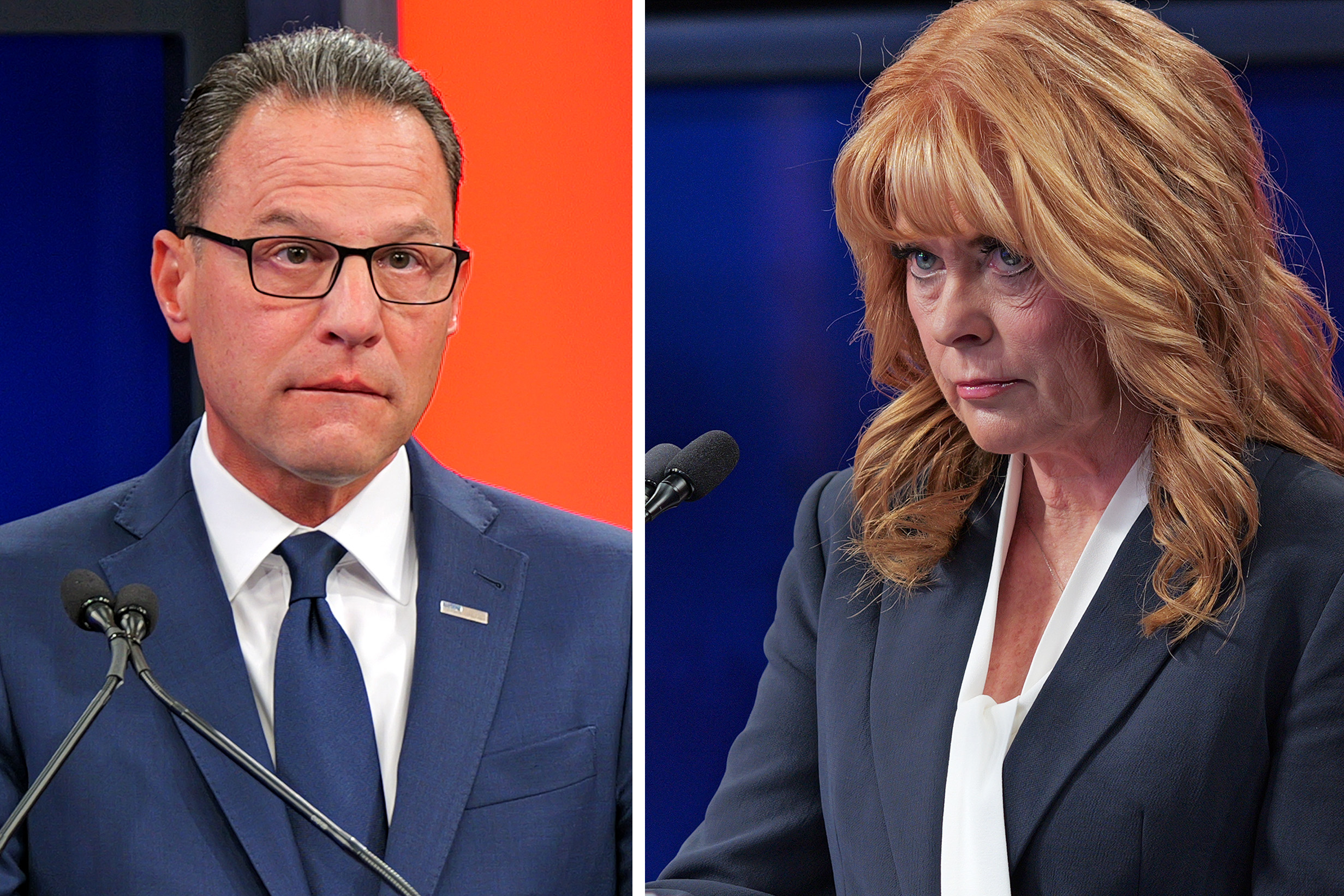
HARRISBURG — Gov. Josh Shapiro and State Treasurer Stacy Garrity on Wednesday sparred over President Donald Trump’s leadership, soaring gas prices, the state budget deficit, and other top issues facing Pennsylvania in their only scheduled debate before Election Day.
And at one point, the gloves came off.
In the wide-ranging and mostly even-tempered debate, Garrity, a Republican who is in her second term as the state’s top fiscal officer, turned to Shapiro after he swiped at her, accusing her of taking direction from Trump by denying the results of the 2020 election. (Garrity in 2022 told a crowd at a Trump rally that “we know that he won” but has since walked back those comments.)
“I don’t even know why you’d say that, and how you can look yourself in the mirror at night,” Garrity said, turning to look at Shapiro across the abc27 studio in Harrisburg, in one of the most heated moments of the night.
Gov. Josh Shapiro and Republican challenger Stacy Garrity at the WHTM-TV studios in Harrisburg Wednesday, Oct. 7, 2026, during their lone debate ahead of next month’s gubernatorial election.Kaylee Lindenmuth / WHTM
The debate, moderated by abc27’s Dennis Owens and WPXI’s Lisa Sylvester, came as Shapiro maintains a double-digit lead in statewide public opinion polls of likely Pennsylvania voters ahead of the Nov. 3 midterm election, including a 25-point advantage over Garrity in a Quinnipiac University poll released Wednesday.
The televised debate, broadcast and streamed for free statewide, marked a consequential night for both candidates. Garrity needed to give an attention-grabbing performance to bring more eyes — and resources — to her struggling campaign. And the night presented Shapiro, who has long been rumored to have his eyes on a White House bid, the chance to show political observers whether he could compete on a crowded Democratic presidential primary stage.
Here are four takeaways from the debate.
With a potential 2028 run, Shapiro doesn’t promise to fulfill another four-year term
Shapiro, 53, from Abington Township, again declined to say whether he would fulfill another full, four-year term as governor if reelected. A well-rehearsed orator with two decades of political experience, Shapiro gave the debate’s moderators the same answer he has repeated to reporters for months:
“The only thing I am focused on is running for reelection as governor,” he said, before restating his frequent refrain about Trump’s chaos, cruelty, and corruption.
Gov. Josh Shapiro meets with patrons alongside Michigan Gov. Gretchen Whitmer inside Sam’s Morning Glory Diner in South Philadelphia on Friday, Sept. 25, 2026.Aidan T. Gallo / Staff Photographer
Wednesday’s debate took place on the third anniversary of the Oct. 7, 2023, attacks by Hamas on Israeli civilians that marked the start of the war in Gaza — a conflict that has divided Democrats nationally and is certain to remain a top issue in the years ahead.
Shapiro, who is Jewish, was asked by the moderators about a recent Inquirer-New York Times-Siena poll that found 60% of likely Democratic voters in Pennsylvania do not want the U.S. to provide economic and military support to Israel.
After firstlamenting the attacks, Shapiro dodged the question. When he was asked for clarity, Shapiro said he wants “America to have a strong relationship with Israel and with the Israeli government,” which he does not see as possible under Prime Minister Benjamin Netanyahu, whom he has criticized for years.
“I’ve been very, very, consistent in my position, in my love of Israel, and also in my disagreements with the Netanyahu government,” Shapiro said, adding that he hopes Israel chooses a new leader in its forthcoming election.
Garrity, for her part, opened her first response of the night — to a question about data centers — by recognizing “the lives that were stolen” in the Oct. 7, 2023, Hamas attacks.
Garrity distances herself from Trump
Garrity, 62, a retired U.S. Army colonel from Bradford County in Northeastern Pennsylvania, was endorsed by Trump in January and has remained largely loyal to him.
Shapiro’s campaign has seized on this support, running millions of dollars’ worth of negative ads calling her “100% MAGA.” Garrity, meanwhile, has no ads on TV with less than a month before the election, as she struggles to fundraise during an especially challenging midterm year for Republicans.
State Treasurer and Republican candidate for governor Stacy Garrity is seen on a big screen as she speaks to supporters before the arrival of President Donald Trump at Mack Trucks in Macungie on Tuesday, June 23, 2026.Tom Gralish / Staff Photographer
In an interview last month, Garrity said that she would have taken a different, “more targeted” approach to instituting tariffs on other countries, and she has called for a pause on development of data centers, in contrast to Trump’s embrace of them.
During the debate, she also put an arm’s length between herself and members of Trump’s cabinet, including Health and Human Services Secretary Robert F. Kennedy Jr., with whom she stood with at a “Make America Healthy Again” rally in Harrisburg earlier this year.
Garrity on Wednesday said she is vaccinated against measles, mumps, and rubella, and added that she does not share all of Kennedy’s views and that she attended the event to promote healthier food choices for children.
Blame game
Shapiro during his first term has frequently highlighted his ability to bring Democrats and Republicans together, as one of few governors leading a state with a politically split legislature, where Democrats control the House and Republicans control the Senate.
But he has struggled to forge consensus when it comes to solving some of the top issues facing Pennsylvania, including funding mass transit and taxing and regulating skill games. Garrity jabbed at that point multiple times during the debate.
“The governor has consistently … used the excuse that he can’t do anything because he has a divided legislature,” Garrity said. “Well, that’s not what real leadership is. Real leadership, they call the leaders to the table and you negotiate.”
During the debate, Shapiro blamed the legislature for its inaction on: voter ID, establishing new penalties for second-degree murder, temporarily halting the state’s gas tax, and regulating skill games.
Gov. Josh Shapiro delivers his third budget address to a joint session of the state House and Senate in the House chambers at the State Capitol Tuesday, Feb. 4, 2025.Tom Gralish / Staff Photographer
As the candidate at the top of the ticket, Shapiro is campaigning for Democrats up and down the ballot in hopes of flipping the state Senate to Democratic control for the first time in more than 30 years. If Democrats are successful, Shapiro would get the chance to lead a Democratic trifecta in Harrisburg, with the ability to more easily address the party’s top priorities, such as increasing the minimum wage and codifying abortion rights in the state constitution.
Shapiro has negotiated four budgets with the divided General Assembly through the state’s tough fiscal conditions, including one budget impasse over mass transit funding that lasted nearly five months and led to closures and pauses of state services. He noted that he brought lawmakers together to cut taxes for seniors, working residents, and start-up businesses.
“I’ve got a strong track record of bringing Democrats and Republicans together to cut costs for the good people of Pennsylvania, and in a second term, we’ll continue our work to cut taxes, not raise them,” he added.
As for why some Pennsylvanians are struggling, he pointed to Trump’s leadership, his tariffs, and his war in Iran — all of which Garrity supports, he said. (Garrity has recently begun criticizing some of Trump’s tariffs and has said she hopes the war ends soon.)
When asked how he would help make up the state’s budget deficit, Shapiro said: “There’s some priorities that the Republican Senate put in that I would likely cut. We’ll see what the makeup of the legislature looks like next year.”
He also rejected questions about why he had not called the legislature into a special session to handle time-sensitive issues, such as the forthcoming deadline to enforce a court decision that found skill games are illegal slot machines, or to pass a gas tax holiday. While governors can call a special session, they cannot compel lawmakers to consider specific legislation.
“It’s still up to the lawmakers to show up and do their jobs and vote on these matters,” Shapiro added, noting that the GOP-controlled Senate has been in session voting on legislation only 34 days so far this year, with five more days scheduled for the rest of the calendar year.
Should taxpayers pay for stadiums?
Should taxpayer money help fund construction for professional sports stadiums?
In Pennsylvania, where many Philadelphia or Pittsburgh fans are fervently devoted to their teams, state taxpayer money has helped build stadiums and arenas in the past.
But as both the Philadelphia Eagles and the Pittsburgh Steelers eye new stadiums, the moderators asked both Garrity and Shapiro whether Pennsylvanians should help pay for them directly through state contributions or tax incentives.
Jeffrey Lurie, the owner of the Philadelphia Eagles and a contributor to Shapiro’s campaign, has said he is exploring the idea of renovating Lincoln Financial Field or building a new stadium.
He has emphasized that he would make a decision that is “best for the fans” but kept open a range of possibilities that could mean moving out of the city. The Steelers are similarly looking to upgrade their stadium or find a new home.
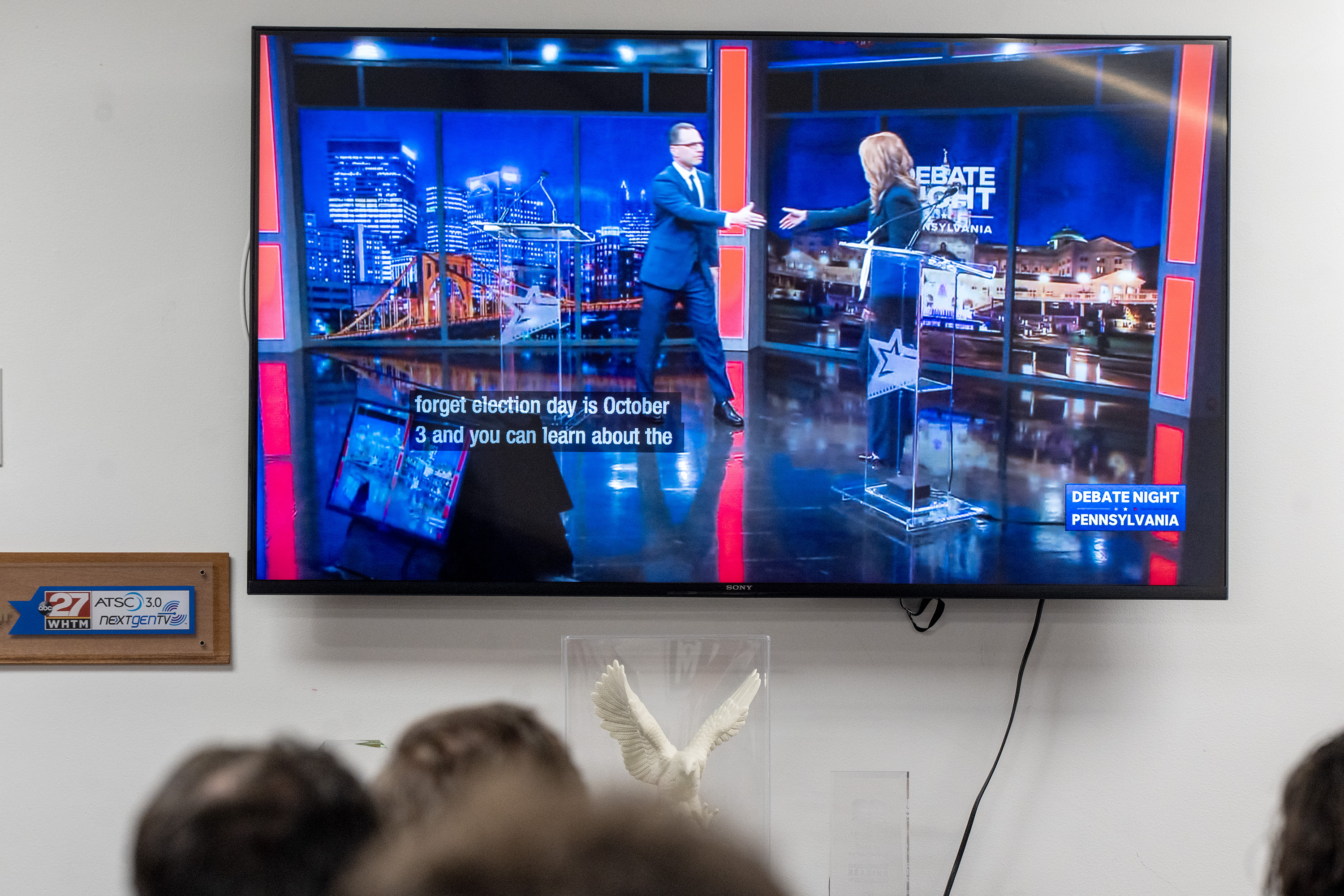
Monitor at the WHTM-TV studios in Harrisburg Wednesday evening Oct. 7, 2026, at the conclusion of the lone debate between Gov. Josh Shapiro and Republican challenger Stacy Garrity ahead of next month’s gubernatorial election. There is no live audience but the one-hour debate was televised on several local stations statewide and streamed on their websites and YouTube channels. Tom Gralish / Staff Photographer
Shapiro said he has already spoken with Lurie and the owners of the Steelers about their new potential stadiums. And he noted that he opposed using public dollars toward the Sixers’ new arena and said he would “be a strong protector of our Pennsylvania taxpayers.”
“On my watch, the Steelers will remain in Pittsburgh, the Eagles will remain in Philadelphia. Period,” Shapiro said. “And as I’ve shown with the Sixers and Flyers scenario, you can do that without providing tax dollars in order to make that happen.”
Garrity, who has said she supports all Pennsylvania sports teams but admitted she is also a Buffalo Bills fan, pledged to make any new stadium costs the responsibility of the owners, not taxpayers.
“I don’t think that we need to be giving taxpayer dollars to billionaire owners,” she said.
New Jersey Gov. Mikie Sherrilldisclosed additionalissues with the state’s voter registration system Wednesday, months after she announced the discovery of noncitizens on the voter rolls.
Sherrill said Wednesday that a review of the state’s voter registration processes revealed that the same system that allowed for those improper registrations also allowed people to register who said they were not of legal age to vote.No underaged voters were registered as a result, however.
She also identified a separate problem, which dates back to 2016, that appears to have allowed people incarcerated for indictable offenses to register in violation of state rules.
“The review showed that this issue had gone undetected and unaddressed, with some going as far back as a decade,” Sherrill said Wednesday. “My administration found them and moved immediately to fix them.”
Both issues were found after Sherrill’s administration launched a reviewafter discovering that thousands of people who identified themselves as noncitizens were registered to vote in New Jersey between June 2023 and June 2024because of what she described asa glitch in the Motor Vehicle Commission’s software.
An outside firm is still conducting an independent investigation, according to her office.
Incarcerated registrants
The review found that about 340 people may have improperly registeredthrough the MVC’s reentry program, which is designed to help people leaving prison obtain driver’s licenses and other ID.
The MVC’s mobile clinics also help them register to vote.
In New Jersey, peoplewho are serving a sentence for an indictable offense (comparable to a felony in other states) are not allowed to vote until their sentence is complete.But people who are serving for misdemeanors or are in jail as they await trial are still allowed to vote.
The reviewfound that some people incorrectly said they were eligible to register even though they were serving time for an indictable offense. Sherrill’s administration is referring 340 registrations from this program to county election offices for vetting.
The review separately found about 60 people who are currently registered to vote but are not eligible because of their incarceration status.Their names are being sent to the counties, which routinely review and remove individuals who are no longer eligible to vote because of their sentences, Sherrill’s office said.
The governor said she directed the MVC to create a prompt at reentry events where people who want to register to vote must confirm that they are not incarcerated for an indictable offense to prevent this issue in the future.
Sherrill spokesperson Darwin Pham said the investigation is ongoing when asked whether anyone who improperly registered through the reentry program actually voted.
Age verification
Sherrill has blamed former Gov. Phil Murphy’s team, as well as software vendor IDEMIA, for the registration of people who had answered they weren’t citizens and therefore ineligible to vote. Both have denied responsibility.
The governor’s review found that about 750 additional voter registrations were impacted by a similar issue related to the software during that June 2023-24 period. These individuals selected “no” when asked if they are old enoughto vote but were still registered to vote. However, Sherrill said they were all of voting age anyway — as indicated by their dates of birth — and no one underage voted as a result of the issue.
Many of these people “were well above voting age,” indicating they likely pressed the wrong button by mistake, her office said.
Even though they are all of legal age to vote, since these individuals indicated that they weren’t of age while answering the software’s prompts, the system did not ask them the verification questions required for a legal registration, a state official said.
About 370 of these 750 people actually voted, according to Sherrill’s office. Of those, about 320 may have other valid voter registrations — such as by changing their address or party — and will be sent to counties for review. About 50 of these people who voted had only registered with the error so they are being removed from the rolls.
About 380 of the 750 people did not vote and did not have any other registrations, and are being deleted from the rolls, according to the governor’s office.
This issue is similar to the noncitizens who were improperly registered even when they indicated they are not citizens.
U.S. Rep. Jeff Van Drew’s office, which met with IDEMIA as part of a House Republican probe into the issue, said the state reached out to the software company in June 2024 after noticing voter registration files missing their age and party affiliation. Van Drew spokesperson Paxton Antonucci said the software had not prompted those customers to fill out those demographic questions because they indicated they were not citizens.
Sherrill has framed the issue as a “glitch” in the IDEMIA software, but IDEMIA spokesperson Lisa Shoemaker said the company’s software operated how the state directed it to, and accurately recorded applicants’ responses.
The issue at hand, from IDEMIA’s perspective, is about the Division of Elections’ responsibility to verify the data before registering people to vote.
“IDEMIA’s software accurately recorded applicants’ responses and operated according to state specifications,” Shoemaker said in a statement after Sherrill’s announcement Wednesday. “We do not determine eligibility or register voters. The MVC sends data to the Division of Elections, which is responsible for validating the information and determining voter eligibility.”
To avoid similar issues in the future, Sherrill said she directed the MVC to implement an automatic daily audit process that compares voter registration records against customers’ responses before sending the information to elections department. The program, as directed, would prevent registrations with missing or conflicting information from being sent to the DOE and flag incomplete or inconsistent records for review by MVC staff.
To make voting policies and processes clearer, the MVC is also working to make voter registration prompts clearer by expanding the available languages to English, Spanish, Portuguese, Hindi, and Simplified Chinese, adding multilingual signage, and implementing handheld translation devices that support more than 80 languages.
The agency is also updating its online license-renewal pages to state voter eligibility requirements clearly and making sure the department’s website can be translated on supported browsers.
The U.S. Department of Education said Wednesday it was expanding its antisemitism investigation of Swarthmore College after a student group allegedly shared a video of an effigy of an Israeli soldier being set on fire.
The group, Students for Justice in Palestine, already had its affiliation revoked by Swarthmore College in 2025 for past actions that were deemed to be violations of college policies.
On Monday, the group reportedly reposted a video, which it has since deleted, showing fuel being poured on an effigy dressed in an Israeli soldier uniform and set on fire while the video promotes a pro-Palestinian protest at Rittenhouse Square on Wednesday evening.
The video declares in writing “Long live Al-Aqsa Flood,” which is the name used by Hamas for its attack on Israel on Oct. 7, 2023.
A representative for the student group could not be reached for comment Wednesday night.
Andy Hirsch, a spokesperson for Swarthmore College, said in an emailed statement that the college was notified Wednesday afternoon by the U.S. Education Department about the expanded investigation, and that it was the first contact from the federal government about the investigation since the probe started in late 2024.
“We understand this latest OCR [U.S. Department of Education’s Office of Civil Rights] action was prompted by a video posted online by a Philadelphia-based group, also with no known affiliation to the College, that shows the burning of an effigy of an Israeli soldier. That video was reposted by a social media account using the handle @swarthmoresjp (Swarthmore Students for Justice in Palestine or SJP),” Hirsch said.
“SJP is not a recognized organization at the College, and hasn’t been since September 2025, when the College permanently revoked its affiliation. That means the group is prohibited from accessing College funds, scheduling or hosting events on campus, or accessing any other College resources available to student organizations. Additionally, other student organizations are prohibited from co-sponsoring, acting on behalf of, or affiliating with Swarthmore SJP in any manner,” Hirsch said.
“This is not the first time this account has shared deeply offensive, if not reprehensible content on its social media account, which the College has condemned in the past. But the College has no control over what is posted to @swarthmoresjp. Beyond that, it’s unclear whether those running the account now are even Swarthmore students. During the investigation that led to the College’s decision to revoke the group’s affiliation, it started acting anonymously, and students who were members of the group claimed they were no longer affiliated with the organization,” Hirsch said.
“While we believe the complaints that led to OCR’s expanded investigation have no merit, we will comply with the law and work with the Department of Education as it reviews the allegations,” Hirsch added.
The U.S. Department of Education’s Office of Civil Rights said it was expanding its investigation of Swarthmore, which began in late 2024, “over complaints that it has not adequately and promptly responded to particularly egregious antisemitic propaganda on campus.”
As the Oct. 7 anniversary approached, “the Students for Justice in Palestine (SJP) at Swarthmore College saw fit to release a video depicting an Israeli soldier being doused in gasoline and burnt in effigy,” the department said.
The department added: “The video then shows the burning Israeli soldier under a Palestinian flag and proceeds to call on supporters to go ‘All Out’ at rallies on October 6 and October 7, 2026. ”
The Education Department then said: “In the context in which that call is presented, ‘All Out’ appears to be a call to violence.”
On Wednesday night, police reported no arrests as pro-Palestinian demonstrators marched around Center City and then dispersed without incident.
Assistant Secretary for Civil Rights Kimberly Richey said in a statement: “If Swarthmore has in fact turned a blind eye to such provocation — using the most horrific acts of violence against Jews since the Holocaust as a propaganda tool — someone is asleep at the wheel.”
Richey added: “The Trump Administration will never allow students to be subjected to an unsafe learning environment. It appears the college’s leaders have cravenly allowed this to happen; therefore, OCR will thoroughly investigate Swarthmore College to determine whether the school violated Title VI. Every student must have equal treatment under the law.”