Blog

  • Wyoming governor requests investigation into activity of Justice Department monitors during primary

    Wyoming governor requests investigation into activity of Justice Department monitors during primary

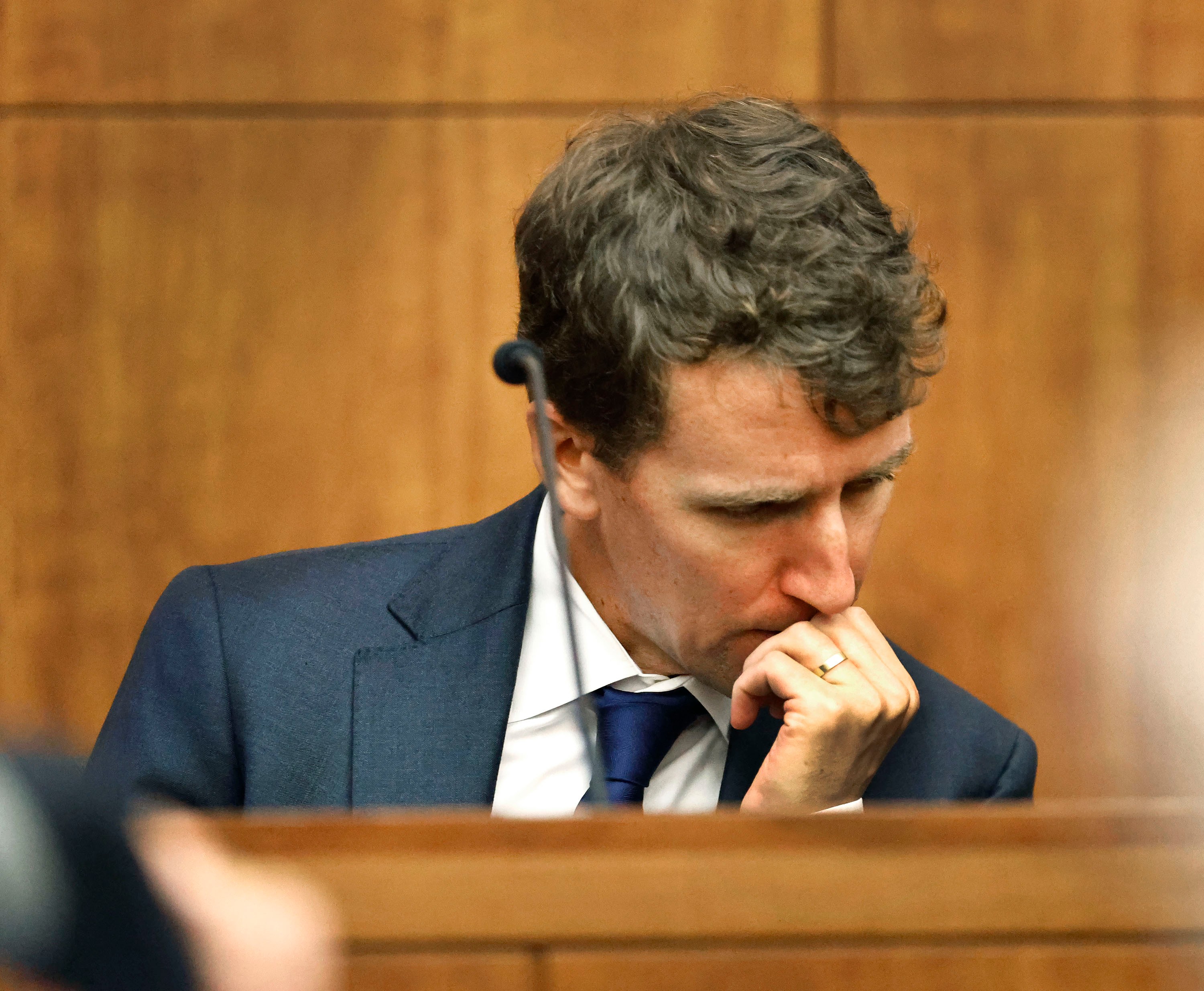
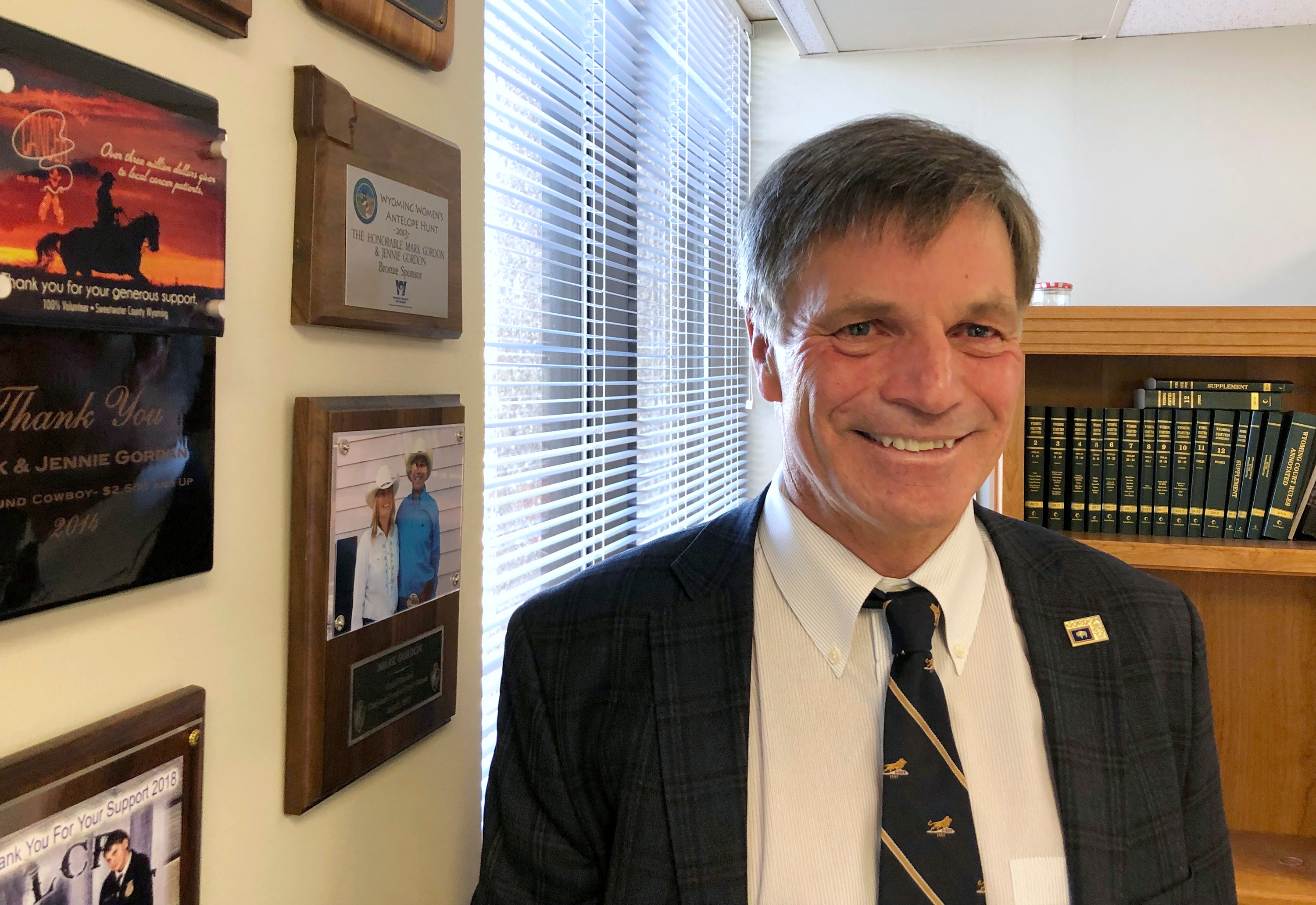
    FORT COLLINS, Colo. — Wyoming’s attorney general is investigating how two U.S. Department of Justice officials monitored poll workers and observed voters in the state’s most populous county during the Aug. 18 primary, a spokesperson for Republican Gov. Mark Gordon said Friday.

    Gordon called the monitors’ behavior “a bit aggressive” and “irregular” in an otherwise routine meeting to confirm the election results in the mostly rural and Republican state.

    “I feel very strongly about the federal government coming in and taking our guns. I don’t like that. I don’t like the federal government coming in and taking our votes, either,” Gordon said at the meeting Wednesday.

    Gordon spokesperson Amy Edmonds on Friday confirmed the investigation by Attorney General Keith Kautz, who was appointed by the governor.

    Voting rights groups have raised concern about President Donald Trump’s Justice Department shifting priorities away from enforcing civil rights laws with respect to voting. Trump instead has directed federal prosecutors to search for fraud in the 2020 election, which he lost to Democrat Joe Biden.

    Trump has meanwhile been more assertive about influencing the department, including encouraging investigations of political opponents, in his second term.

    Approaching the end of his second and final term in office, Gordon has publicly expressed little if any previous criticism of federal polices under Trump.

    The monitoring happened in southeastern Wyoming’s Laramie County, home to the state capital, Cheyenne.

    The monitors arrived soon after polls opened at 7 a.m. on primary day and said they intended to interview voters while assessing compliance with federal civil rights and voting rights laws, Laramie County Clerk Debra Lee said in a statement.

    Lee said her office didn’t allow interviews to be conducted in polling places and denied the monitors permission to do so. The monitors questioned local officials about “the nature, length, and timing of poll worker training,” Lee said.

    “Monitors requested training guides, asked how our new election equipment was acquired, and wanted to examine our tabulators,” Lee said.

    Wyoming law allows only election observation by certified poll watchers who monitor registration and turnout, Lee said.

    “This was a poorly managed exercise and one that showed complete disregard for our state laws and administration of our elections,” Lee said in the statement.

    She said she hadn’t been notified the monitors would be in Laramie County. A Justice Department official in Washington told her the decision to send them was made on short notice and an email was sent to her but “may have gone to the wrong address,” Lee said.

    The Justice Department routinely sends monitors to observe polling places or election offices, but they are not supposed to interfere with voting or election administration.

    The DOJ did not answer questions about the monitors Friday but referred to a primary day statement by Darin Smith, the U.S. attorney for Wyoming. He said monitors would be in the state “to ensure transparency, ballot security, and strict compliance with federal voting rights statutes.”

    “Voters deserve absolute confidence that their ballots are secure and their voices are heard without interference,” Smith said in the statement. “We are working alongside local officials to ensure every lawful vote is protected.”

    Appointed by the governor, Wyoming’s attorney general works mainly in the service of the executive branch and is not politically independent as in other states.

    No one, including Gordon, is asserting the monitoring influenced the election outcome, Edmonds said.

    “It’s really a fact-finding mission just to sort of figure out exactly what did happen,” Edmonds said.

    Trump’s fraud claims about the 2020 election have been amplified by Wyoming’s Republican secretary of state, Chuck Gray, who successfully ran in 2022 in part by showing a discredited documentary about those claims at campaign rallies across the state.

    Gray told Gordon at the elections meeting that his office “got an email,” but that was all the communication it had with the Justice Department about the federal officials. Wyoming law allows election observers, Gray said.

    “Certainly happy to visit with the attorney general,” Gray told the governor during the meeting. “Transparency is so important, and accountability.”

    Gray is not seeking reelection as secretary of state and won the Republican nomination for Wyoming’s seat in the U.S. House during the primary.


  • A new line of tailgate-themed canned cocktails will benefit the Eagles Autism Foundation

    A new line of tailgate-themed canned cocktails will benefit the Eagles Autism Foundation

    If you’re looking for some on-theme drinks to bring to an Eagles tailgate this season, Bird Gang Spirits has you covered.

    In partnership with BOTLD, which works with distilleries nationwide, Bird Gang Spirits released a “tailgate pack” of canned cocktails. The eight-pack’s flavors are Tailgate Tea, Orange Crush, and Green Machine Margarita — which have an ABV of 7% — and Jawn Island Iced Tea, which boasts an ABV of 12%. The latest addition to the seltzer aisle isn’t just for a good time, however, said BOTLD president Andrew Auwerda.

    “We thought it would be kind of a fun, new twist to do good by doing some can cocktails, with the proceeds benefiting Eagles Autism Foundation.” he said. “ It’s supposed to be kitschy, fun, and perfect for the tailgate and in time for the Eagles’ season. It’s been great working with the Eagles Autism Foundation. They’re just a real pro organization and great cause.”

    Bird Gang Spirits released a line of canned cocktails. Part of the proceeds from the cocktails will benefit the Eagles Autism Foundation.BOTLD

    Since the Eagles Autism Foundation was created in 2019, the team has raised millions for research, accessibility resources, and community programs. A portion of the tailgate pack’s sales will go to the foundation, and Bird Gang Spirits itself is a collaboration with the Eagles.

    The team’s partnership with BOTLD began in 2023 alongside the return of the beloved kelly green uniforms. Since then, Bird Gang has released a line of liquors, from Bird Gang Spicy Tequila to “Bird Gang World Championship 2024 Irish Whiskey.”

    The tailgate pack is $24 and available online at BOTLD’s website; in person at grocers like Acme, Giant, and Weis; or brick-and-mortar BOTLD locations in King of Prussia and Rittenhouse. Bird Gang Spirits is taking advantage of the booming seltzer market that has emerged in the past few years, joining brands like Surfside that have become nationwide hits as well as Philly stadium favorites.

    “I mean, they’ve only been in the stores maybe a week, and it’s still rolling out to more stores, but we’re already seeing some reorders,” Auwerda said. “We’re really grateful for a great start from the retail partners.”

    As for his favorite flavor?

    “I think the margarita right now, for the time of the year. It’s the end of summer, but it’s still marg season.” he said. “The Jawn Island Iced Tea has a bit more alcohol, so I will save that for a game day.”

  • Judge issues new block on Trump’s sweeping restrictions on mail-in voting

    Judge issues new block on Trump’s sweeping restrictions on mail-in voting

    A federal judge in Massachusetts on Thursday once again blocked major pieces of the Trump administration’s plan to impose sweeping restrictions on mail-in voting for November’s elections, but the legal fight will continue.

    U.S. District Judge Indira Talwani issued a temporary restraining order halting parts of the effort that would bar the U.S. Postal Service from delivering mail-in ballots to voters not on a list of citizens created by federal agencies. It also requires mail-in ballot envelopes to have bar codes to thwart fraud.

    The judge’s move continues a week of intense legal action over the controversial executive order on mail-in voting issued by President Donald Trump. It is the subject of multiple legal challenges.

    Trump has claimed voting by noncitizens is rampant, while court records and independent studies have found it to be rare.

    Talwani said it would be impossible for many states to issue new envelopes for voting by mail, since some are supposed to send out ballots as early as next week. She also said the Trump administration had presented no evidence that noncitizen voting is a major issue.

    The League of Women Voters and other voting rights groups are challenging the administration’s initiative, saying the measure could inject chaos into pivotal races that will decide control of the House and Senate.

    Talwani echoed those concerns.

    “The USPS’s interest in correcting an unsubstantiated problem through likely unconstitutional means is dwarfed by the overwhelming risk of pervasive disenfranchisement of citizens who need access to mail ballots in order to vote,” Talwani wrote.

    The Associated Press reported that the White House plans to appeal the order.

    Spokesperson Lauren Bis said in statement Friday that the Trump administration will immediately appeal the order handed down late Thursday.

    In a separate challenge to the executive order brought by 23 states and the District of Columbia, the Supreme Court on Monday found the plaintiffs’ lawsuit was premature because the U.S. Postal Service had yet to issue final rules for how the order would be carried out.

    After those rules were finalized Wednesday, the states and D.C. filed a new lawsuit challenging the executive order.

    The injunction Talwani issued Thursday marked the second time she has blocked the executive order in the case brought by the voting rights groups. She lifted the earlier injunction after finding the Supreme Court’s logic applied to that case as well, but allowed the plaintiffs to ask for a new block.

    Ultimately, the issue could end up before the Supreme Court again, but even if the administration prevails it’s unclear whether there is enough time to implement the changes before November.

    Many states will begin sending out mail-in ballots by mid-September, and election administrators have said it would be exceedingly difficult to comply with the executive order in time for the fall contests since preparations have been going on for months.

  • New Jersey permanently allows the sale and delivery of to-go alcoholic beverages

    New Jersey permanently allows the sale and delivery of to-go alcoholic beverages

    In New Jersey, “to-go” alcoholic beverages are officially here to stay.

    Gov. Mikie Sherrill on Friday signed legislation making permanent the COVID-era provisions that allowed bars, restaurants, and other permitted businesses to sell and deliver alcoholic beverages for off-premises consumption. Intended to be temporary, those allowances were previously set to expire Sept. 1.

    Moving forward, the legislation allows certain establishments to sell and deliver mixed cocktails in closed, sealed containers, and alcoholic beverages in their original containers, to be consumed away from their locations. Craft distillery licensees will also be able to sell and deliver their products under certain conditions.

    “New Jersey’s small businesses shouldn’t have to navigate outdated rules just to serve their customers and grow,” Sherrill said in a statement. “Cocktails to-go worked, customers liked it, and small businesses told us it was another way to bring in revenue. Today, we’re making it permanent.”

    The bipartisan legislation making those to-go alcohol changes permanent passed both New Jersey houses in late June.

    In addition to restaurants and bars, under the law, other permitted businesses with retail consumption licenses, such as hotels, may also sell alcoholic beverages for delivery and off-site consumption. Deliveries can be made by the licensed business itself, or a permitted third-part delivery company.

    New Jersey distilleries, meanwhile, can sell mixed drinks for on-site consumption when the beverages are made using alcohol manufactured on premises. Those businesses can also sell mixed drinks using their own distilled alcohol for off-site consumption, though the beverages must be sold in containers with a tamper-evident seal. And distilleries can also sell their own products accompanied by nonalcoholic beverages and food items that enable customers to make their own mixed drinks.

    “During the pandemic, this commonsense policy helped restaurants survive one of the toughest periods in their industry’s history,” said state Sen. Declan O’Scanlon, a Republican from Monmouth County. “I’m proud that the flexibility we gave these businesses will now be permanently available to them with the signing of this law.”

  • Rescuers retrieve flood survivors caked in mud as death toll in Nepal-China border disaster climbs

    Rescuers retrieve flood survivors caked in mud as death toll in Nepal-China border disaster climbs

    KATHMANDU, Nepal — Rescuers pulled out survivors caked in dark brown mud and helicopters lifted stranded people to safety, as Nepal and China raced to respond to catastrophic flash floods that killed nearly 600 people and left almost 2,500 missing.

    The rescue efforts included a team that rappelled into a severely damaged checkpoint area on the Chinese side of the border between the two countries. Rescuers were on high alert for more flooding from a new lake that formed high up in the Himalayan mountains after the initial floods Wednesday. Experts warned that the lake, created after a glacier collapse that triggered the floods, was starting to overflow.

    Nepal’s army was deployed to help rescue more than 100 people believed trapped inside a tunnel at a hydropower plant located in the country’s worst-hit district. Like elsewhere in the disaster zone, their work was complicated by thick layers of mud that covered the site.

    The rappelling rescue team descended into the once-bustling border-crossing area from wooded mountain slopes, the state broadcaster China Central Television said.

    “As far as I can see, it’s nothing but debris,” rescue official Zou Mingqi told state media. The area where travelers went through border control to enter or leave China has been flattened to a muddy area, according to satellite images.

    The floods have killed 579 in Nepal, the country’s disaster-management authority said Friday. Nepali police later put the number of deaths at 553. There was little information on survivors on the Chinese side, where the death toll rose to five Friday as state media showed evacuations of villages and leaders’ efforts to direct the relief response.

    More than 3,700 people have been rescued in Nepal so far. Meanwhile, the number of people who were unaccounted for in the country nearly doubled to 1,924 as more local residents were added to the tally. China’s state media previously said 558 people were missing on the Chinese side. Hundreds of the missing are foreigners in the area to work, trek, or make a pilgrimage to a sacred peak.

    Authorities warn of flooding from a new lake

    Nepali police issued a fresh alert Friday after receiving information that a dam on the Tibet side had burst. Security personnel and rescue and relief workers were told to stay on high alert and move to a safe location if necessary.

    It was unclear if the dam bursting was related to flooding concerns over the lake that formed after the initial flash floods. Chinese broadcaster CCTV said the newly formed lake, located more than 6 miles from Gyirong Port, the hard-hit border crossing with Nepal, sits at an elevation of 9,680 feet.

    Nepali and Chinese authorities earlier warned of more flooding from the lake, which was already overflowing. Rescue workers heading to the disaster zone were ordered to stop temporarily Friday due to concern the lake would release more water and debris, and people in potentially affected areas were urged to move to safer ground.

    Monitoring data from the Chinese Ministry of Water Resources later showed that the lake had dwindled in size. The water level dropped by 32 feet from the high point on Thursday morning, the state broadcaster said.

    Some 680 rescuers eventually reached the Gyirong area by foot and via rafts. Some were dropped down from drones flown to the area, CCTV footage showed. “Anyone, anyone?” rescuers yelled, according to footage by the broadcaster.

    It was not immediately known how many people were at the border checkpoint building when the floods hit.

    Thousands have been evacuated while others await rescue

    In Nepal’s Rasuwa district, Nepali army rescuers struggled to help more than 100 people believed to be trapped by thick mud in a tunnel that’s part of the Upper Trishuli-1 Hydropower Project. The army said it had rescued 350 people from the tunnel so far.

    Video from the scene showed rescuers helping a man covered in mud out of the tunnel by pulling and pushing.

    “It is complicated to find the entry and exit points of the tunnel because everything has been covered by mud,” Army spokesperson Brig. Gen. Raja Ram Basnet said.

    Nepal’s disaster-management authority said 3,253 people had been airlifted by helicopter from the disaster area.

    The search-and-rescue efforts have been supported by an outpouring of financial support from neighboring countries, including small, poorer countries like Sri Lanka, said Kanni Wignaraja, the United Nations development agency’s regional director for Asia and the Pacific.

    “Sri Lanka has its own huge fiscal problems, but it has just sent $1 million immediately to the Nepal government,” Wignaraja said. “So you can see that while this devastation is happening, it has also really brought together countries in that neighborhood, who have stepped in for each other.”

    Some felt the ground shake, then saw a ‘black storm’

    Scientists who studied satellite images said bedrock underneath a glacier high in the Himalayan region had collapsed, taking part of the glacier with it. The rockfall was so extreme that it registered as magnitude 5.2. The rocks and melted water then swelled the rivers in the valleys below, causing a torrent of water that swept buildings, bridges, and earth downstream in Tibet and Nepal.

    Customs officer Karbir Gaire was among some of the survivors in Timure, the closest Nepalese village to the border with China, where some 1,500 people had lived.

    Gaire reached his office around 8 a.m. Wednesday and was working on his computer when he first felt the ground shake.

    “Right after the shake, I noticed a black storm coming towards us,” he recalled from Kathmandu, where he is back with family. “We all immediately started running out, and within a few seconds, we were climbing uphill on the opposite side of our office building. I think those 10 or so seconds saved some of us.”

    Fifteen of Gaire’s colleagues are missing. “It was like a Hollywood movie scene. I don’t call it a flood. It was a tsunami.”

    Families around the world hope for news of loved ones

    Nepal’s tourism board has said that among the missing are more than 500 foreigners.

    While the Nepal government shared a public list of people they rescued, there was little information about victims on the Chinese side of the border.

    Chinese government officials stuck to their tight media controls. Information about major disasters is typically released with a delay and without personal stories of victims. State media has focused on stories of rescuers working to reach the disaster site or reporting on instructions from top leaders.

    About 90 Americans were unaccounted for.

    Some of the missing may have been on a pilgrimage to Mount Kailash in Tibet, a sacred site for Hindus, Buddhists, and others.

    Vishnuram Ramaswamy, who works at a private company in the southern Indian city of Puducherry, said that he last spoke to his mother and two sisters who were on that pilgrimage Wednesday morning. It was a highly anticipated trip, something his mother had always wanted to do, he said.

    “My mother said they were on their way towards the border area and said they’ll reach their hotel and call us,” he said. He’s in touch with government officials and the travel agency, but there’s been no news.

    “This was the last we spoke to them. They have been unreachable since.”

  • An officer failed to help a man lying in the road minutes before he was killed by a hit-and-run driver, Philly police say

    An officer failed to help a man lying in the road minutes before he was killed by a hit-and-run driver, Philly police say

    Philadelphia police are investigating a fatal hit-and-run that took place early Thursday morning in the Olney section of the city, minutes after an officer left the 48-year-old victim lying on the ground in a bike lane.

    Police are treating the case as two separate matters — a search for the hit-and-run driver led by crash investigators, and an internal disciplinary probe into the officer’s conduct leading up to the crash.

    First Deputy Commissioner John Stanford, at a news conference on Friday, criticized the officer for failing to help the man and leaving him in a vulnerable state on the roadway.

    “[It’s] very troubling to see that there is an officer that responds to this location and fails to render any type of aid to the individual prior to that individual being struck by the vehicle, being run over by that vehicle, driven over by that vehicle and that’s troubling for us,” he said.

    The officer’s name has not been released. He is assigned to the 35th District and has two years on the force, Stanford said. The department placed the officer on administrative leave while the incident is investigated, Stanford said.

    Police have also not released the victim’s identity as they are trying to contact relatives.

    At about 1:40 a.m., a man with an “unsteady gait” was seen walking down the 5500 block of Rising Sun Avenue, Stanford said.

    Video shows the officer pull his police vehicle next to the man and engage with him. During that encounter, the man falls to the ground, lying in the bike lane and partially in the traffic lane, Stanford said.

    The officer pulls his patrol car in front of the man, Stanford said, and gets out to speak with him. Then the officer leaves.

    Minutes later, a car stops before reaching the man, Stanford said. But a second vehicle drives into the bike lane to go around the first car, running over the man and driving away. The victim was pronounced dead hours later at approximately 6:15 a.m.

    Police are searching for a 2023 to 2026 green Kia Sportage X Line series with black-and-chrome rims.

    Stanford said passersby pulled the 48-year-old man out of traffic and called police.

    The officer who had first engaged with the victim and then left him in the road mere minutes before was the first officer to respond to the scene, Stanford said.

    Stanford said the officer did not make a police report, waiting for medics to arrive. Stanford said the officer did not render aid during this time.

    Stanford said the officer did not check whether the victim was impaired or having a medical condition, calling the officer’s behavior “very troubling, very disturbing, and to be quite blunt about it, extremely disappointing.”

    “It goes against everything we stand for,” he said.

  • Postpartum mental illness has a 19th century history

    Postpartum mental illness has a 19th century history

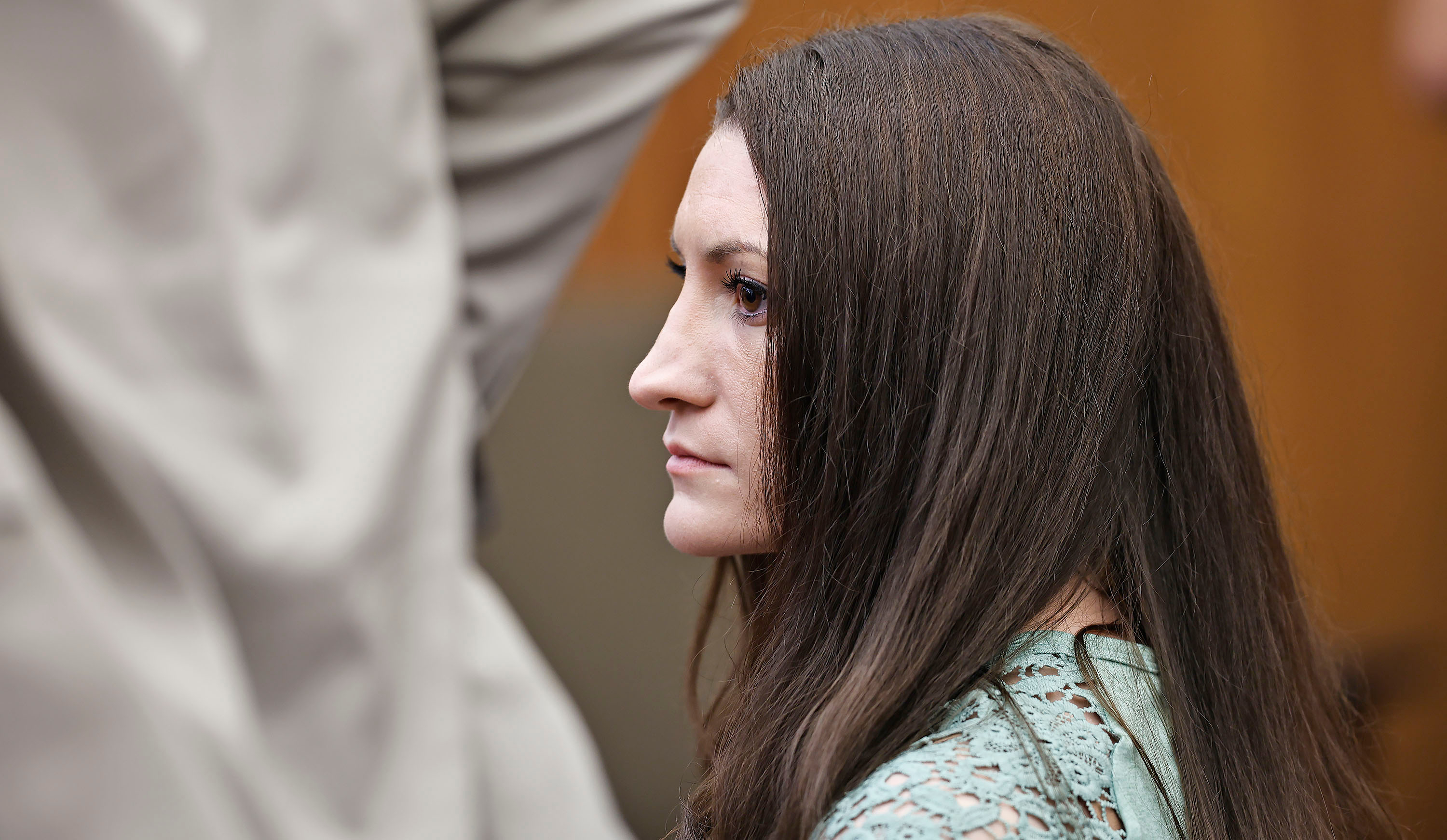
    The murder of three young children by their own mother lies at the center of an ongoing trial that has gripped the nation. Lindsay Clancy, a white, 36-year-old former labor and delivery nurse from Duxbury, Mass., stands accused of first-degree murder for strangling her 5-year-old daughter, Cora, and sons, 3-year-old Dawson and 8-month-old Callan, at their home on Jan. 24, 2023.

    Following the deaths, Clancy attempted suicide by jumping from a second-story window, an act that has left her paralyzed from the waist down. The prosecution argues that Clancy’s actions were premeditated. Her defense team says that a months-long struggle with severe postpartum mental illness culminated in Clancy’s violent, psychotic break.

    The gravity of these allegations has garnered widespread attention and shocked the public. Significantly, the case has also reignited a familiar public debate: Can postpartum mental illness explain an act that many find unimaginable?

    The Clancy case is hardly the first to provoke this question. Twenty-five years ago, Andrea Yates infamously drowned her five children in the bathtub of her Houston home, prompting many commentators to draw comparisons between the two cases. Initially found guilty of capital murder, Yates successfully appealed the verdict on the grounds of insanity after her defense argued that she had experienced severe postpartum depression and psychosis.

    But the roots of this debate about postpartum mental illness and its role in mitigating or eliminating criminal responsibility go back even further. Beginning in the 19th century, when postpartum mental illness was explicitly linked to white motherhood, race shaped which mothers were afforded psychiatric explanations for acts of maternal violence.

    Lindsay Clancy watches jurors as they enter the courtroom to start their second day of deliberations in her murder trial at Plymouth Superior Court on Aug. 28 in Plymouth Mass.Greg Derr/The Patriot Ledger

    In the early 19th century, French psychiatrist Jean-Étienne Dominique Esquirol and English obstetrician Robert Gooch independently helped establish the diagnosis of puerperal insanity, a term used to describe psychiatric disturbances associated with pregnancy, childbirth, and the postpartum period. Physicians’ descriptions of the disorder sound remarkably familiar today.

    Women diagnosed with puerperal insanity were described as experiencing persistent sadness, anxiety, hopelessness, confusion, hallucinations, delusions, or dramatic behavioral changes. In severe cases, they also documented women who neglected, harmed, or even killed their children.

    Despite being categorized as a disorder of childbearing, puerperal insanity was not believed to threaten all childbearing women. Rather, American physicians saw mental illness through a racial lens. Puerperal insanity was framed as a disorder of “civilization,” reflecting physicians’ belief that modern society weakened white, middle- and upper-class women’s reproductive systems and increased their vulnerability to mental illness.

    The diagnosis allowed physicians to reconcile anti-maternal behaviors such as neglect and violence with one of the 19th century’s most deeply held assumptions: that white, middle- and upper-class mothers were naturally nurturing, domestically oriented, and morally respectable.

    While this racial construction of puerperal insanity was widely accepted within the medical sphere, it posed a challenge in the courtroom.

    During the 1840s and 1850s, the M’Naghten Rule — which held defendants not criminally responsible if mental illness prevented them from understanding either the nature of their actions or that those actions were wrong — became the dominant legal standard in the United States. But the line between ordinary psychological changes associated with pregnancy and legally recognizable insanity was often far less clear than the courts required. For example, in 1847, physician James MacDonald aptly observed that “during pregnancy, women without being considered insane, are often in that state of mind which precedes, if it do[es] not in fact constitute, the first stage of mental derangement.”

    Sympathetic physicians and legal reformers argued that puerperal insanity rendered otherwise respectable white women temporarily incapable of exercising moral judgment.

    Patrick Clancy reacts as images of himself and his children on vacation a month before they were killed is shown in the courtroom at Plymouth Superior Court in Plymouth, Mass., July 27.Greg Derr

    In her widely circulated 1887 article “Forensic Relations of the Puerperal State,” physician Harriet C.B. Alexander condemned that “the mental state of the puerperal female has not received the attention its forensic importance merits” and contended that it was “obvious” that pregnant women were “subject to influences that weaken her will, engender emotional mobility, render apathetic natural affection, and give rise to […] perverted sensations and propensities” that legally predisposed them to commit murder and infanticide.

    In other words, white women’s violence was recast as the temporary consequence of a psychiatric illness.

    For instance, in 1893, Lena Brown stood trial in Bordentown, N.J., for strangling her own son and her neighbor’s two children. Although she admitted to committing the deed, she was unable to explain why and was ultimately found not guilty by reason of insanity. The defense successfully argued that she was suffering from puerperal insanity and had been “in a delicate condition at the time” of the killings. When Brown gave birth to another child in prison and “treated [the infant] with the utmost tenderness,” her behavior was offered as further evidence that her violence was temporary and that she was a good mother.

    The same could not be said for women whom physicians considered racially inferior. Black women, in particular, were often characterized as habitual criminals, rather than patients, who frequently committed infanticide because they were naturally violent and had no regard for the sanctity of children.

    In 1905, for example, Lottie Hawkins was imprisoned for allegedly throwing her two-week-old child into the Anacostia River. Records documented that she had been admitted to and treated at St. Elizabeth’s Hospital, a psychiatric asylum in Washington, D.C., two days after giving birth and released the day before the killing. Yet no one suggested that she might have been suffering from puerperal insanity. Instead, prosecutors emphasized that she “wanted to get rid of the baby” because she neither wanted to provide care or financial support and that she consumed large amounts of cocaine and whiskey on the day of the killing to take away her senses.

    Made By History sponsors. FOR USE ON MADE BY HISTORY STORIES ONLY.Inquirer Staff

    In short, debates over maternal mental illness have never been simply about diagnosis or criminal responsibility. They have also been shaped by enduring assumptions about race, class, motherhood, and which women are recognized as deserving of medical explanation, public sympathy, and legal recognition.

    Just four years ago, Latarsha Sanders, a Black mother from Brockton, Mass., was convicted of first-degree murder and sentenced to life without parole for the deaths of her two sons, Edson, 8, and La’Son, 5. Earlier this year, the Massachusetts Supreme Judicial Court ruled that Sanders had been denied a fair trial after evidence documenting her history of mental illness was excluded from the proceedings.

    The Clancy trial’s visibility reflects the enduring political and cultural significance of motherhood in the United States. That significance also helps explain why some cases of maternal violence become national spectacles that generate public debate over the role of postpartum mental illness, while others — like Sanders — are met with comparatively little public attention or a far stronger presumption of guilt.

    Udodiri R. Okwandu is an assistant professor of Women’s, Gender, and Sexuality Studies at Rutgers University–New Brunswick and a historian of medicine whose current work examines how racialized medical knowledge about maternal mental illness has shaped ideas about acceptable motherhood in the United States since the 19th century.

    Made by History takes readers beyond the headlines with articles written and edited by professional historians. Opinions expressed do not necessarily reflect the views of The Inquirer.

  • Norway’s King Harald V, who fled Nazis as a child and modernized monarchy, dies at 89

    Norway’s King Harald V, who fled Nazis as a child and modernized monarchy, dies at 89

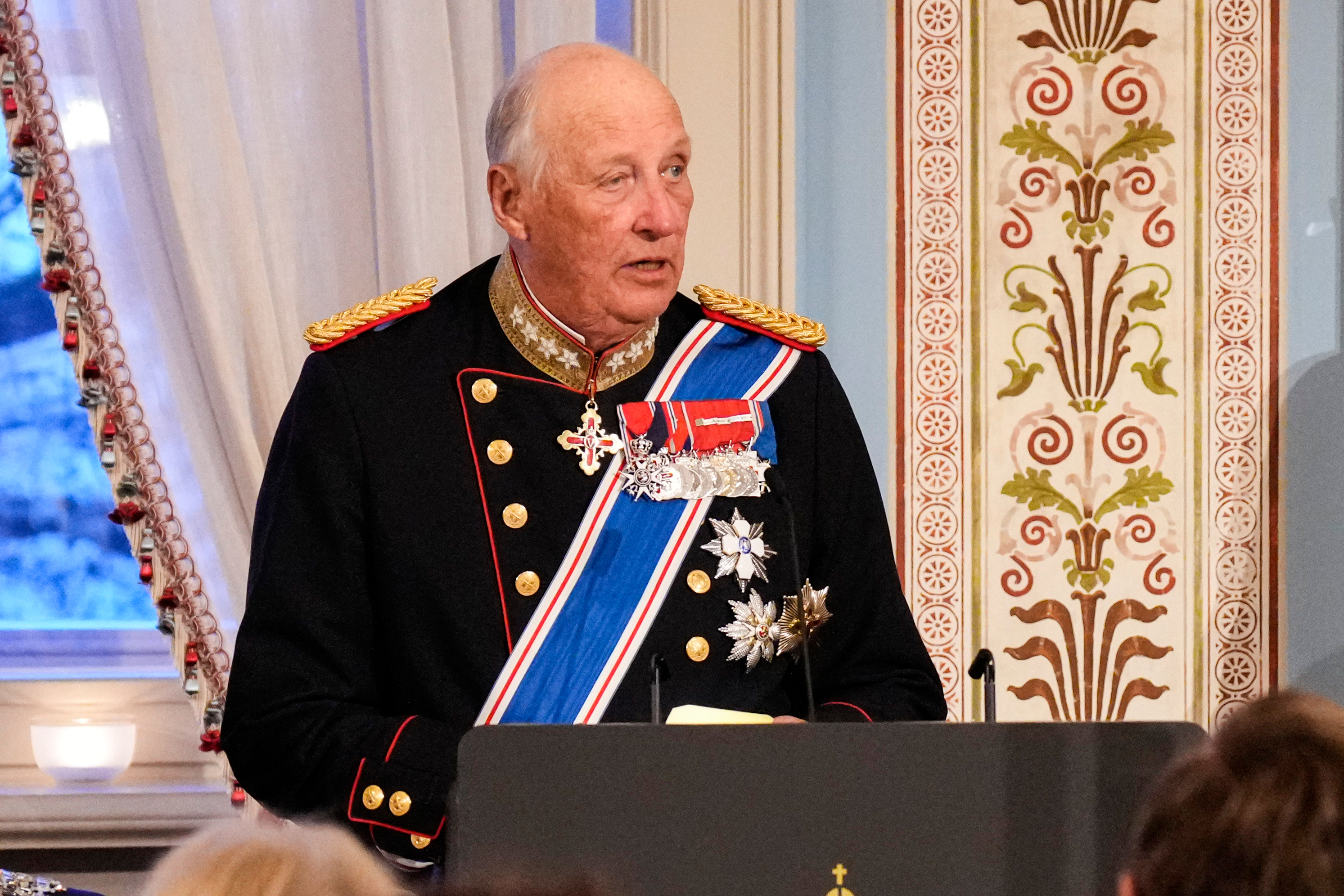
    Norway’s King Harald V, who fled Adolf Hitler’s invasion with his family to take refuge in the White House as a boy, and who later helped modernize the country’s monarchy during his popular 35-year reign, died Friday at a hospital in Oslo. He was 89.

    His death was announced by Norway’s royal family, which did not cite a cause.

    Norway’s Prime Minister Jonas Gahr Store said the “whole nation is in mourning” in a statement Friday, adding that King Harald had “helped us to see the best in ourselves — and in one another.”

    “King Harald had a profound love for Norway. And Norway had a profound love for King Harald,” he said. Other ruling families from across Europe including the United Kingdom, Denmark, Sweden, and the Netherlands shared tributes, alongside political leaders.

    The Norwegian ruler was spirited to safety as a child while war gripped Europe. He spent his formative years in the United States before returning home at age 8, furnished with an American accent and a memory of standing behind President Franklin D. Roosevelt at his inauguration.

    As an adult, King Harald defied tradition by marrying commoner Sonja Haraldsen in 1968. Their marriage shocked the establishment and sparked warnings of the monarchy’s downfall but proved to be one of several ways he charted his own course as ruler. The couple were married more than five decades.

    The avid sportsman and nature lover represented his country in sailing at three Olympic Games — Tokyo in 1964, Mexico City in 1968, and in Munich 1972 — before finally declaring an end to his competitive days in 2022, at age 85. He led the Norwegian chapter of the World Wide Fund for Nature (WWF) for 20 years and is the first king to have a portion of the Arctic named after him.

    As leader of Norway’s constitutional monarchy, King Harald had a largely ceremonial role. But he endeared himself to the country of 5.6 million with his emotional openness and support of diversity and religious tolerance. He sought to modernize the monarchy and make it more transparent, engaging in media interviews and publishing annual financial reports.

    In 1997, King Harald publicly apologized to the Arctic Sami people for government efforts to eradicate their culture over more than two centuries. In the aftermath of the 2011 massacre in which far-right extremist Anders Behring Breivik killed 77 people in a bombing and shooting rampage, he drew praise for a speech in which he struggled to contain his emotions while trying to console the nation. During the speech, he reiterated his belief in a strong, multicultural society.

    In 2016, he went viral for his passionate speech at a royal palace garden party in support of diversity, religious tolerance, and LGBTQ rights.

    “Norwegians are enthusiastic young people — and wise old people. Norwegians are single, divorced, families with children, and old married couples. Norwegians are girls who love girls, boys who love boys, and girls and boys who love each other. Norwegians believe in God, Allah, the Universe, and nothing,” he said at the time.

    “In other words,” he added, “Norway is you.”

    King Harald V was born Feb. 21, 1937, at Skaugum, outside Oslo, the first Norwegian-born prince in 567 years, after the country’s earlier union with Denmark and Sweden. His grandfather, King Haakon VII, became Norway’s sovereign in 1905, establishing a new independent monarchy. The family are relatives of Britain’s royals, and King Harald and Queen Elizabeth II were second cousins.

    He was the third child of Crown Prince Olav and Crown Princess Märtha, who already had two daughters. But at the time, only male heirs could inherit the throne, ensuring his place in the line of succession. (This was amended in 1990 so that the eldest child takes precedence, regardless of gender.)

    His peaceful early childhood was shattered when German troops invaded the country in April 1940. As members of the government and royal family sought to escape the capital by train, Princess Märtha fled to Sweden with her three children and sailed on to the United States at Roosevelt’s invitation.

    In the U.S., they stayed at the White House and at Roosevelt’s home in Hyde Park, N.Y., while King Harald’s father and grandfather escaped to London to set up a government in exile. Princess Märtha and the children eventually settled in a Tudor-style mansion north of Bethesda, Md.

    King Harald would speak of his time in the U.S. fondly, saying in a 1999 speech to President Bill Clinton that he clearly remembered “standing right behind President Roosevelt when he was sworn in.” Images show the Norwegian royal children standing on the White House steps at the time.

    In 2015, King Harald said in a speech in Seattle that he was “deeply grateful for the generosity and hospitality we felt throughout those five years in the United States.”

    “Your country has had a special place in my heart ever since,” he added.

    Upon returning home in 1945, King Harald attended school in Oslo before training at a military academy and studying at the University of Oxford in Britain.

    When Haakon died in September 1957, he became Crown Prince, working alongside his father, King Olav V, before ascending to the throne after his father’s death in 1991.

    Survivors include Queen Sonja; two children, Princess Märtha Louise and Crown Prince Haakon, who will succeed him as king; an elder sister, Princess Astrid; and two grandchildren.

    While initially controversial, King Harald and Sonja’s love story endeared them to the Norwegian public. In 2016, the couple shared unseen photos of their courtship with Norway’s national broadcaster, NRK, describing how they met in 1959, when Crown Prince Harald was 22, and quickly fell in love.

    Though filled with guilt over expectations he would marry a member of European nobility, King Harald said attempts to end their romance amid disapproval from the establishment and Norwegian press were not “entirely successful.” He ended up delivering his father an ultimatum: If he could not marry Sonja, he would remain unmarried. Olav relented, and the couple married at Oslo Cathedral.

    Crown Prince Haakon’s decision to marry a former server and single mother in 2001 would also draw controversy. King Harald supported their relationship, and the fairy-tale wedding drew thousands of flag-waving well-wishers.

    The royal family has faced controversy this year, with Crown Princess Mette-Marit under scrutiny for her friendship with the late sex offender Jeffrey Epstein. Files released as part of a U.S. Justice Department investigation revealed more than 100 messages between Mette-Marit and the disgraced financier. Mette-Marit also came under the spotlight this summer after her eldest son, Marius, was convicted of rape and sentenced to four years in prison. King Harald said he had sympathy for “all those affected” by the trial, and declined to comment on his daughter-in-law’s ties to Epstein.

    Being a sovereign, he once said, was a “lifelong learning period.” But he said he believed the monarchy is in good hands with his son. In 2024, he announced a permanent reduction in duties, citing health issues, but ruled out abdicating as monarch, saying the oath he swore “lasts for life.

    “It’s that simple for me. We’re going to keep going until the bitter end.”

  • Cherry Hill district’s pre-K students are absent from school almost as much as seniors

    Cherry Hill district’s pre-K students are absent from school almost as much as seniors

    Getting all prekindergarten students to consistently attend school has proven to be a challenge as the Cherry Hill district rapidly expands its program for early learners.

    Absenteeism rates among the district’s pre-K students is second only to Cherry Hill high school seniors, the grade with the highest chronic absenteeism rate, according to state data. The district’s experience is similar to other districts rolling out pre-K programs with state funding, which reaches $1.4 billion in the latest budget.

    “Unfortunately, I have to say that preschool had one of the highest rates of chronic absenteeism,” Farrah Mahan, assistant superintendent for pre-K to grade 12 and curriculum, told school board members at this week’s meeting. She explained some tactics being used to combat high absenteeism.

    The chronic absenteeism rate, a widely used measure in education, shows the percentage of students absent 10% or more days in the school year.

    In Cherry Hill public schools in 2024-25, the latest year available, the rate for Cherry Hill pre-K students was 23.5% compared with a statewide average of 29.9%, according to the New Jersey Education Department School Performance Reports.

    Overall, the district’s rate was 14%, slightly less than the state average of 14.4%. However, 25.8% of all high school seniors were chronically absent — more than the statewide average of 21%.

    The district’s preschool social workers and other staff members have been working with parents to get the youngest children to attend school, Mahan said.

    “They’ve really been acting almost as like a social service agency, which is really sometimes what our families need, making sure that they are connected to the appropriate resources that are available in the community to ensure that their child is able to get to school on a daily basis,” she told board members.

    Sometimes it is as simple as greeting students at the bus or as they’re exiting the family car in the morning or providing extra attention during the school day, she said.

    “But we’ve also had some tough conversations like, this really matters,” Mahan said. “When you were in a private preschool location, maybe it was OK to take a vacation that second week, because it was more convenient and a little bit cheaper for families. But really expect your preschooler, if they’re enrolled in the program, to be in school.”

    She said the focus has resulted in reducing the chronic absenteeism rates among the preschoolers.

    Mahan joked that when schools open on Wednesday she looks forward to welcoming the Class of 2041.

    Pre-K enrollment has increased sharply in Cherry Hill and some other districts as former Gov. Phil Murphy and Gov. Mikie Sherrill have supported free and expanded access to early childhood education.

    Cherry Hill and other districts have had to rely heavily on private providers to help take on the growing enrollment as parents shift from privately paid to publicly funded preschool. The district has two district preschool locations and uses nine private providers.

    With its expansion to 11 sites last year, the district was able to clear the initial wait list, Mahan said. All 559 students who applied for a pre-K seat were accepted, so the district opened up the list to additional families. A total of 93 applied and the district could offer spots for 34.

    In the new school year, nearly 900 preschoolers have been offered spots. The total will include 740 general education seats, 55 preschool inclusion seats, and 96 disabled student seats, Mahan said.

    The district’s program has grown from 17 classrooms after preschool expansion was announced in 2023 to 53 classrooms in the 2026-27 school year.

    Mahan said the goal is to eventually expand to a projected 1,700 seats — more than a 90% increase over this coming year’s group. She said 110 classrooms will be needed to accommodate the enrollment.

    The district’s private providers for the new school year are Adventure Kids, Cadence Academy, Discovery Corner, Goddard School, KinderCare, Lightbridge Academy. Primrose School, Chesterbrook Academy of Voorhees, Mosaic Early Learning of Oakland. The two in-district locations are at Kilmer Elementary School and the Malberg Early Childhood Center.

    “Children who participate in early childhood education programs generally enter kindergarten with stronger foundational skills,” Mahan told the board. “The research in early childhood education states that early learning environments foster essential language skills, early literacy, and basic math concepts,” she said.

    Supervision of curriculum and teaching at all 11 locations is important to the preschool program, she explained.

    “It is imperative that we have consistency across all of our locations. So when we speak about our preschool private provider locations and our in-district locations, we talk about consistency across all of our guidelines, our curriculum,” Mahan said.

    70and73.com is a hyperlocal news site focused on South Jersey, including the communities of Cherry Hill, Evesham, Mount Laurel, Voorhees, Medford, Medford Lakes, and Moorestown.

  • President Donald Trump loses again in bid to erase his hush money conviction

    President Donald Trump loses again in bid to erase his hush money conviction

    NEW YORK — A federal judge on Friday once again spurned Donald Trump’s effort to erase his hush money conviction, rejecting the president’s bid to move the state court case to federal court and have it dismissed on presidential immunity grounds.

    Judge Alvin K. Hellerstein reiterated his earlier finding against Trump, saying that the reasons Trump cited for renewing his request were “neither new nor legally sufficient.”

    The judge added: “He has failed to show good cause and diligence.”

    It is the third time Hellerstein has blocked Trump from having the U.S. District Court in Manhattan seize control of the case from the New York court where he was tried and convicted.

    And, like before, Trump will appeal, according to a spokesperson for his legal team who called Hellerstein’s ruling “baseless and lawless.”

    “The Supreme Court’s historic decision on Immunity, the Federal and New York State Constitutions, and other established legal precedent mandate that the Witch Hunt perpetrated by the Manhattan DA be removed to federal court, and immediately overturned and dismissed,” a statement issued on behalf of the legal team said. “President Trump will be filing a powerful appeal, and will continue defeating Democrat weaponization at every turn.”

    The guilty verdict, reached in May 2024 while Trump was between terms, made him the first former — and now current — U.S. president to be convicted of a crime. Trump is also challenging his conviction through the state court appellate process, which is pending.

    Hellerstein’s decision came after a federal appeals court last year ordered him to reconsider his prior denial. The judge previewed his ruling during oral arguments in February, slamming Trump’s lawyers for legal maneuvers that amounted to taking “two bites at the apple.”

    State prosecutors did not immediately respond to a request for comment.

    Case centered on a payment to Stormy Daniels

    Trump was convicted in May 2024 of 34 felony counts of falsifying business records to conceal a $130,000 hush money payment to adult film actor Stormy Daniels, whose claim of a sexual encounter with Trump a decade earlier had threatened to upend his 2016 presidential campaign.

    Trump was sentenced to an unconditional discharge, which left his conviction intact but spared him any punishment. He had long denied Daniels’ claim and said he did nothing wrong. He has sought to get the conviction overturned both by attempting to move the case to federal court and through the appeals process in state court, which is pending.

    Hellerstein rejected Trump’s requests to move the case twice before. The first was after Trump’s March 2023 indictment. The second was after Trump’s trial, as his lawyers sought to nix his conviction in the wake of the Supreme Court’s July 2024 ruling that presidents and ex-presidents can’t be prosecuted for official acts and prosecutors can’t use official acts as evidence that unofficial actions were illegal.

    Trump appealed Hellerstein’s posttrial ruling and, last November, the 2nd U.S. Circuit Court of Appeals ordered the judge to reconsider his decision, finding that he had failed to consider “important issues relevant” to the president’s request to move the case.

    A three-judge appellate panel said it expressed no view on how he should rule but instructed Hellerstein to closely review evidence that Trump claimed was related to official acts and whether Trump could argue those actions were taken as part of his White House duties.

    The judges also instructed Hellerstein to determine if Trump had “diligently sought” to have the case moved to federal court and whether the case can even be moved to federal court now that Trump has been convicted and sentenced in state court.

    Judge questioned the Trump legal team’s strategy

    During oral arguments in February, Hellerstein took issue with the Trump legal team’s decision-making after the Supreme Court ruling.

    Instead of immediately seeking to move the case to federal court, he noted, Trump’s lawyers first asked the trial judge in state court, Juan Merchan, to throw out the verdict on immunity grounds. Normally, such a request must be made within 30 days of an arraignment, but a federal appeals court in Washington, D.C. has ruled that exceptions can be made if “good cause” is shown.

    Trump, a Republican, did not attend the arguments.

    Trump lawyer Jeffrey Wall argued that prosecutors rushed to trial instead of waiting for the Supreme Court’s presidential immunity decision and that Trump’s legal team was crunched for time after the high court’s ruling because his sentencing was scheduled for just 10 days later.

    Trump’s lawyers did not ask Hellerstein to intervene until nearly two months later, while their request to Merchan was still pending. The judge called that a “strategic decision” and suggested that by going to the state court first, Trump’s lawyers cost him the right to pursue remedies in federal court.

    “No, your honor,” Wall replied. “It is what any sensible litigant would do” in that situation.

    “Not so,” Hellerstein replied.

    “That is a decision on your part,” the judge added. “You didn’t have to do that. You could have come right to the federal court. Just by filing a notice of removal, there would be no sentencing.”

    Trump’s lawyers “made a choice,” Hellerstein said, “and you sought two bites at the apple.”

    In his written ruling Friday, Hellerstein said Trump was asking for a “‘second bite at the apple,’ a result the law disfavors.”

    The judge added that “Trump’s delay in filing for removal constitutes a ‘quintessential strategic decision,’ and the ‘fact that he later came to view that decision as a poor one is not sufficient, by itself, to establish cause.’”