Blog

  • What if ADHD isn’t about attention at all? | Expert Opinion

    What if ADHD isn’t about attention at all? | Expert Opinion

    As a psychiatrist, I increasingly see people seeking help for a familiar constellation of troubles. They have a hard time staying focused. They often forget things. They suffer from disorganization, restlessness, and impulsivity. They struggle with spreadsheets and memos, with laundry and food preparation, with showing up at appointments and meeting deadlines — with tackling, in other words, the necessities of daily life.

    Increasingly, these patients view their problems as ones of “attention,” as more people identify with the diagnosis of attention-deficit/hyperactivity disorder, or ADHD.

    The rise in ADHD diagnoses — along with the use of prescribed stimulants like Ritalin or Adderall — has led to great debate among the public and within my field of psychiatry. Has the medical establishment finally recognized a long-overlooked disorder? Or has the diagnosis become too capacious, overmedicalizing ordinary difficulties?

    But this debate runs up against a fundamental scientific uncertainty. The condition’s name notwithstanding, “attention deficit” may be the wrong conceptual framing for ADHD. Scientists have been exploring a more basic quandary: What is the condition in the first place?

    A major study published last year in the journal Cell spoke directly to this question. It looked at how stimulant medications influence the functioning of brain circuits in children. The researchers found that the drugs seemed to affect brain networks involved in salience, reward, and arousal. But they found no detectable changes in the brain’s attention networks, whether or not the child had been diagnosed with ADHD.

    It’s a clear signal that the most popular mental model for ADHD — as a deficit of attention that stimulants remedy — might not be entirely accurate.

    What would a better mental model look like? Part of the answer is understanding that “attention” means different things in the clinic and in the neuroscience lab. For scientists studying brain functions, attention means something narrow: the selective amplification of relevant information. It can be measured by laboratory tasks that assess, for example, how well someone ignores irrelevant or conflicting information or finds a target hidden among distractions.

    But that’s generally not what people mean when they are talking about attention problems in ADHD.

    The classic features of ADHD include things like not staying on task, losing the thread of a conversation, and forgetting instructions. They are failures of “sustained engagement.” If attention is about the mind homing in on what’s relevant in a given moment, engagement is about keeping that spotlight pointed at the same target over time. Doing so may be less a matter of filtering out distractions and more a matter of whether the task registers in the brain as worth doing in the first place.

    Once this distinction is appreciated, the results of the Cell study stop being contradictory. Stimulants create what looks like improved attention and focus, but they really do so by enhancing the salience of mundane activities — tricking the brain into assigning greater worth and significance to things like math homework and laundry.

    This also helps explain why stimulants like amphetamines calm down hyperactive children. People without ADHD who use amphetamines often find themselves jittery and revved up, so the calming effect may seem counterintuitive. However, if a child is restless and fidgeting because the task at hand isn’t rewarding enough, then it makes sense that stimulants would help that child sit still and stay engaged rather than seek stimulation elsewhere.

    The Cell study’s results focused mostly on what stimulants do, but scientists have been challenging the idea that ADHD is a deficit of attention since the 1990s.

    In a 1992 experiment, developmental psychologist Edmund Sonuga-Barke and his colleagues gave hyperactive children repeated choices between a small but immediate reward and a larger, delayed one. The children preferred the immediate reward only when that choice allowed them to end the experiment sooner. The problem was not necessarily an inability to wait, but an aversion to waiting itself.

    Sonuga-Barke later argued that ADHD could arise from several underlying causes, including difficulty stopping an action once it’s underway, intense dislike of waiting, and disruptions in the brain’s ability to track events over time. Psychologists can measure capacities such as working memory, impulse control, and the ability to wait for a reward with standardized tasks. This is called neuropsychological testing. But no single abnormality turns up in all people with ADHD on these tests, and no deficit is unique to them. This is why neuropsychological testing is not considered a gold standard for diagnosis.

    Clinical neuropsychologist Russell Barkley proposed that the basic problem in ADHD is with a person’s ability to inhibit behaviors and regulate emotions, and with motivation and working memory. People with ADHD can live in a shrunken present moment, in which future consequences carry little significance and weight. Barkley’s shorthand for this, time blindness, has become a popular characterization. His later work showed emotional self-regulation as a core feature of ADHD, manifesting as emotional impulsiveness and low frustration tolerance.

    While names for medical conditions denoting outdated hypotheses can be harmless etymological curiosities — malaria means “bad air,” for example — incorrect names like “attention deficit” can invite confusion. The focus on attention as the central problem for ADHD means those who struggle with lateness, boredom, emotional volatility, and the inability to start anything without the pressure of a deadline might remain undiagnosed because these issues don’t sound like a problem of “attention.”

    On the other hand, recognition of these aspects of ADHD has not only made the boundaries of the disorder harder to specify, but it has also raised uncomfortable questions about whether some of these problems make sense as a diagnosable medical disorder. The prospect of using medications to help children sit still in class and focus on tedious coursework, or using medications to allow adults to tolerate periods of intense boredom and dreary housework, makes many people uncomfortable.

    It’s also the case that some people reach for medications in an effort to maintain lifestyles that are unsustainable for them. Modern work environments heavily emphasize the ability to handle multiple tasks and tedious work, and that has been compounded by other aspects of 21st-century living, such as cellphones and social media, that have arguably made us distractible and impatient. The result of all this is that modern life becomes more disabling for those with ADHD.

    ADHD may be poorly named, but the consensus in psychiatry is that it’s a genuine problem for which there are effective treatments. In observational studies, treating ADHD with medication is associated with reductions in death, self-harm, transport accidents, criminal convictions, and substance misuse.

    As a society, we are struggling to answer these complicated questions that the science and treatment of ADHD throw at us. A recent Channel 4 documentary in Britain, “The Great ADHD Myth?” characterized ADHD as a “social construct” rather than a disorder of the brain. This binary tendency to locate the problem either in the brain or in the environment can overlook how impairment arises from an interaction of mental capacities and situational demands. When disadvantages in mental abilities become disabling under the demands of modern life, those who struggle will desire and even need treatment. But it’s also worth understanding that the problem is not entirely with the individual.

    There are many pathways in the brain that probably influence the difficulties in focus that characterize ADHD, but scientific investigations into causes and treatments point toward problems with impulse control and motivation more than a defective capacity for attention. This accumulating data underscores how even psychiatrists and scientists can change their thinking about what a diagnosis means based on more research into how the brain works. What’s perhaps most important for understanding ADHD is to not allow its name to confuse us; it’s a poor guide to how the human mind works.
  • Mayor Parker — and her mixed record — reaches 1,000 days in office | Shackamaxon

    Mayor Parker — and her mixed record — reaches 1,000 days in office | Shackamaxon

    This week’s column covers the ongoing Washington West Historical District saga, a 1,000 mayoral days, a City Council member who should retire, and an NFL coach who is a secret urban planning enthusiast.

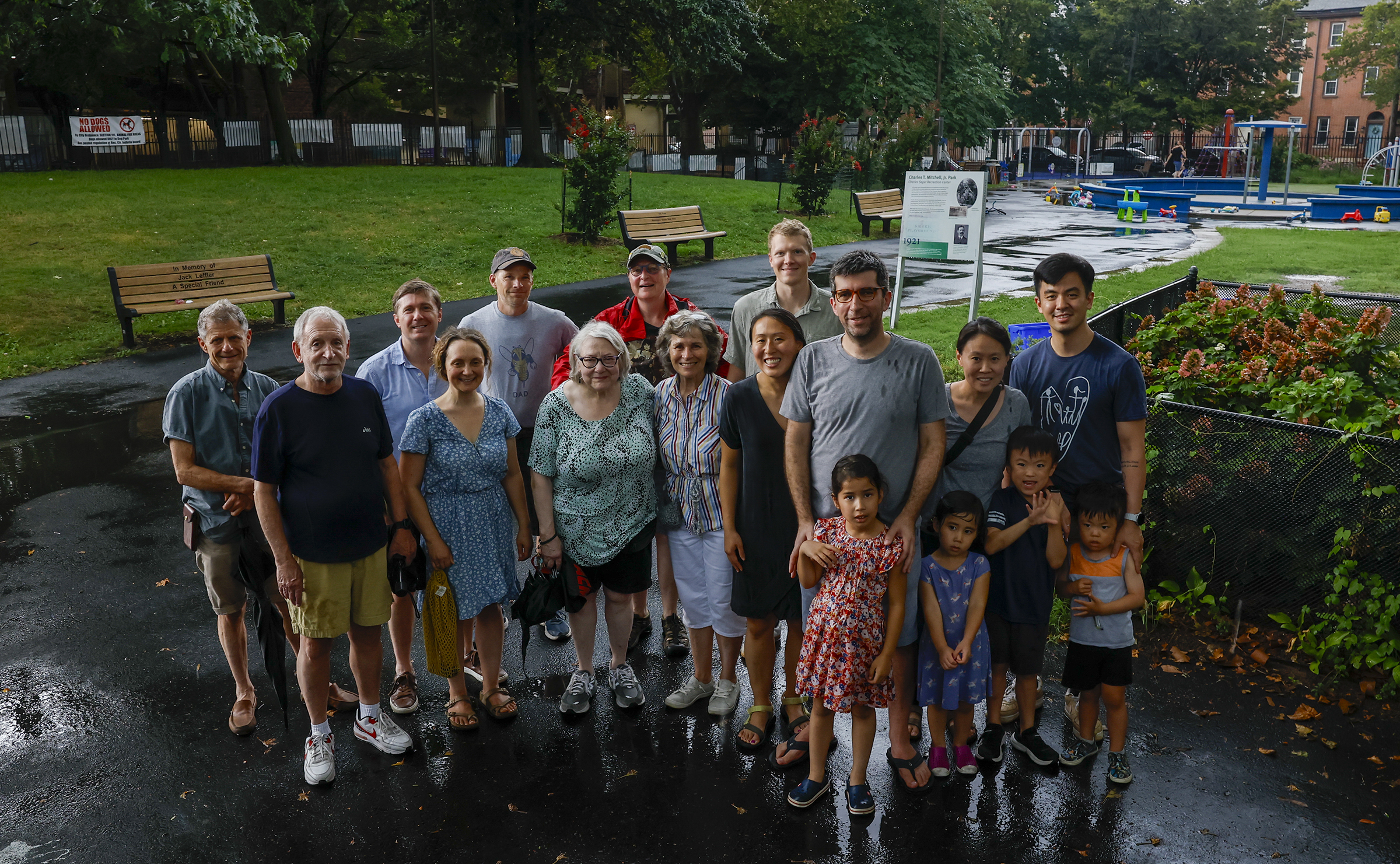
    Members of the Philadelphians for Rational Preservation gather at Seger Park in the Washington Square West neighborhood in July 2025. The group opposes the Washington Square West Historic District designation.Yong Kim / Staff Photographer

    People vs. preservation

    In a City Hall courtroom, lawyers for the city and the preservation alliance sought to defend the designation of the Washington West Historic District against a coalition of homeowners who have claimed the decision has cost them time and money. The outcome could have significant ramifications for such districts across Philadelphia.

    Dan Auerbach, a lawyer for the homeowners, says the district was created without sufficient evidence, and that a historic commissioner’s participation in drafting the document represents a conflict of interest. Attorneys Leonard Reuter and Paul Toner, who represented the defendants, took a different approach.

    When Common Pleas Court Judge Christopher Hall repeatedly asked for evidence, beyond the nomination itself, for the district’s historic significance, Toner replied, “I don’t need to.” The commission’s decision to approve is apparently all that’s required. They also argued that historic designation does not impose significant costs on homeowners.

    Hall seemed to take a skeptical view of these claims. As Auerbach pointed out, most pages of that document simply inventory the existing properties. Often, newly designated homes have no specific justification at all, or just a few words.

    Personally, I also find the dismissal of the real costs imposed on homeowners to be unconvincing. According to evidence supplied by Philadelphians for Rational Preservation, the group that formed in opposition to the district, homeowners who have been added to the district are already seeing adverse impacts. Door and window replacements now require permits, for example, and homeowners must spend considerably more to acquire historically accurate versions. This costs real time and real money.

    If Hall sticks with his initial ruling, which overturned the district designation, it could have serious consequences for the city’s preservation law.

    It may be that this district is simply too large and too broad. The period of significance covers nearly the entire history of Philadelphia, and many of the newly designated buildings are frankly unremarkable. While the city and the preservation alliance may feel the urge to appeal the matter to the Commonwealth Court, my suggestion is that they don’t.

    While I am skeptical of this particular nomination, I do think historic districts have a role to play in our city. Many of them are popular with residents, or have existed for so long that most homeowners were aware of the restrictions before purchasing.

    In the case of Washington West, however, the commission may simply have been too ambitious. The geographic range is just too large, the period of significance too extensive, and the residents themselves too strongly opposed.

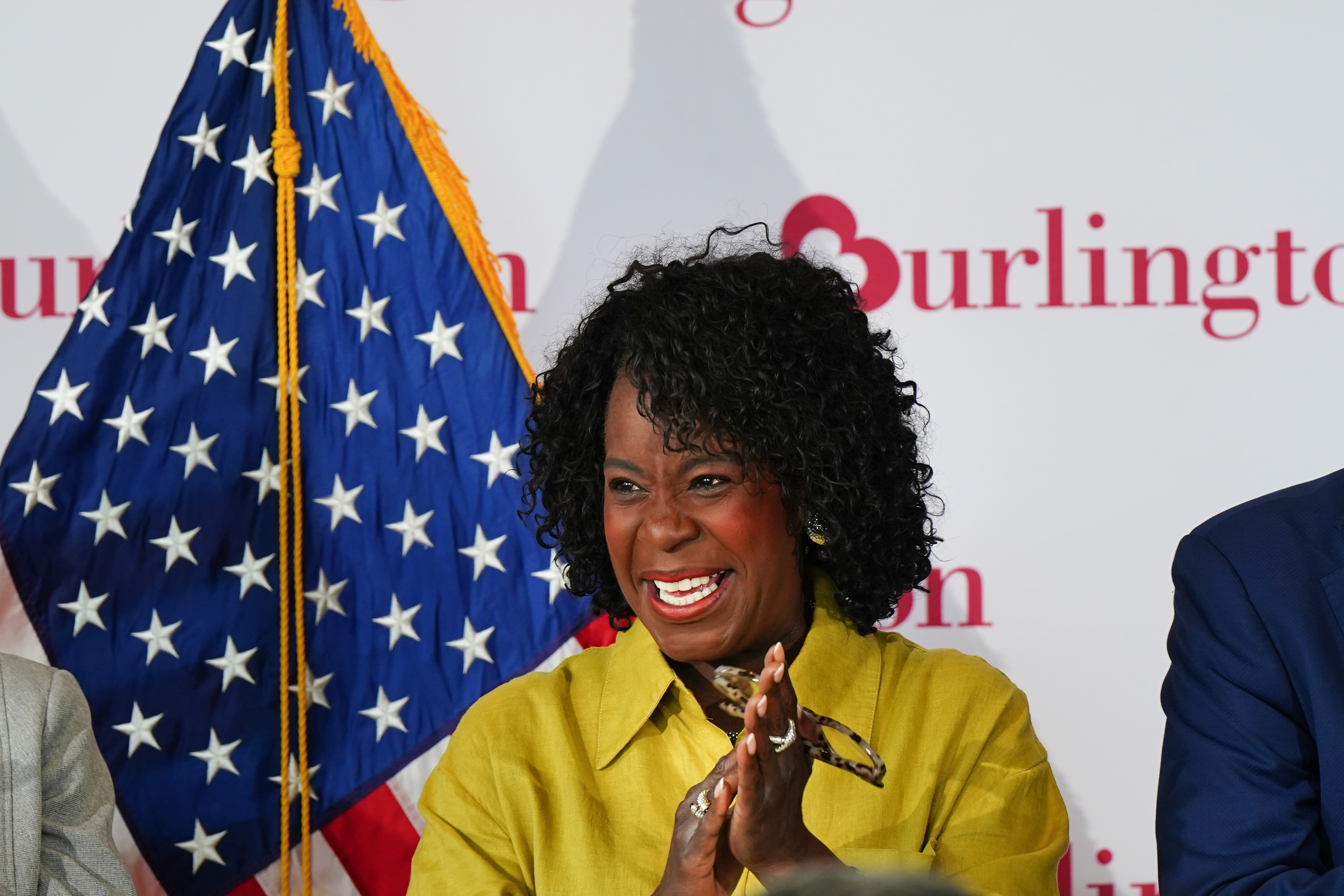
    Mayor Cherelle L. Parker at a news conference in September.Jessica Griffin / Staff Photographer

    Mayoral milestone

    Mayor Cherelle L. Parker celebrated her 1,000th day in office earlier this week at McPherson Square Library in Kensington, which is set to receive a $21.7 million renovation. Parker has made investing in Kensington a priority in her administration, although some of her priorities have been contested.

    She’s added police patrols to the neighborhood, sought to dismantle the drug market, and increased cleaning and greening efforts. She’s also come under fire from harm reduction advocates for eliminating funding for the nonprofit Prevention Point and city efforts to rein in a network of services built to alleviate the struggles of addiction, which some residents have blamed for the drug market’s continuing presence in their community.

    In many ways, Kensington is a microcosm of Parker’s tenure.

    Her administration has made genuine progress. Violent crime is at historic lows, with decreases in the city’s most dangerous neighborhoods driving the decline. Surveys suggest residents believe the city has gotten cleaner under her leadership. Yet discontent, some legitimate and some not, continues. Parker’s approval rating sits at 44%, a number that is likely high enough for reelection next year, but isn’t strong enough to give her the political capital she needs to take on and win fights with City Council.

    The biggest factors in whether residents approve or disapprove of the mayor seem to be their age and race. Among Philadelphians of color and those older than 45, Parker is popular. For those under 45 and white voters, she’s not.

    It is easy to say this divide is based on style. As Parker herself has said, she’s unapologetic about who she is and where she came from. To residents who may be fans of New York’s Zohran Mamdani, Parker may seem old-fashioned and unexciting. Of course, Mamdani also has a municipal budget of $126 billion at his disposal, while Parker makes do with just $7 billion.

    But a lot of it has to do with substance. Small-business owners have lost a crucial tax exemption; her vaunted ability to work across the aisle has not resulted in sustainable transit funding or enabled the school district to avoid closing 17 schools; and Parker has shied away from the ambitious civic reformer causes embraced by predecessors like Michael Nutter.

    If the mayor intends to reach 2,000 days in office without becoming yet another tired and unpopular chief executive, she’ll have to step up her game.

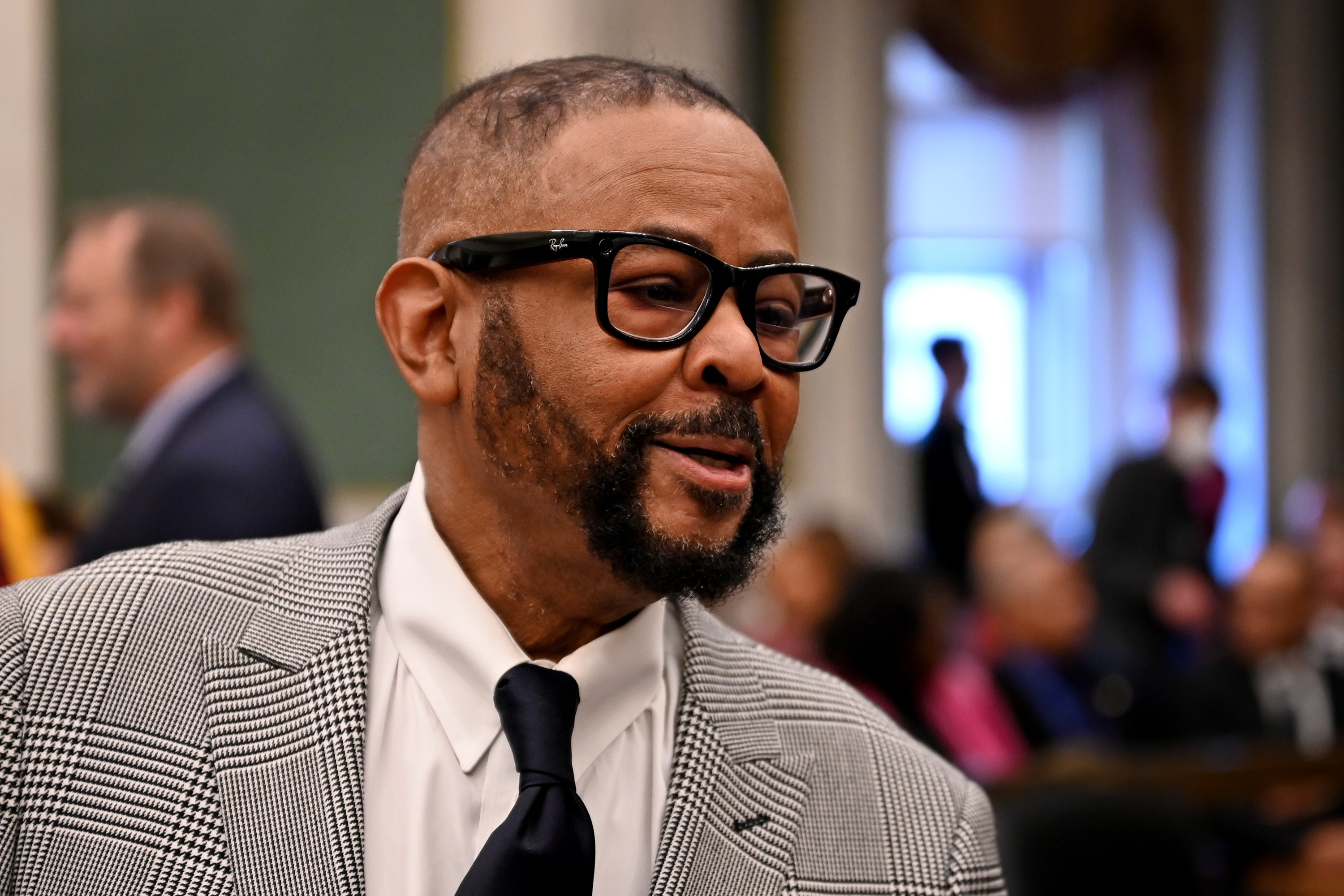
    Councilmember Curtis Jones Jr. in chambers as City Council meets in December.Tom Gralish / Staff Photographer

    Jonesing to stay

    Fourth District Councilmember Curtis Jones Jr. has had a long and often laudatory career in public service. But it is now time for it to end.

    My Inquirer colleagues have reported that even some of Jones’ closest friends and allies are urging him to consider retiring for real, rather than simply exploiting the city’s notorious Deferred Retirement Option Plan (DROP) program. Jones has only himself and his own statements to blame for his newly precarious position.

    It isn’t just that Jones and his wife are taking hundreds of thousands worth of taxpayer money while avoiding retirement; he also asked to delay a critical infrastructure project for his own political benefit.

    Jones cited his ongoing health issues as justification to The Inquirer, saying he needed the money to pay for treatment. I certainly sympathize with anyone struggling to maintain their health. However, Jones represents a city where the median household income is just over $60,000. At 69 years old, he is also eligible for Medicare.

    Retirement would also give Jones a chance to relax and focus on staying healthy. For his sake and ours, he should listen to his friends.

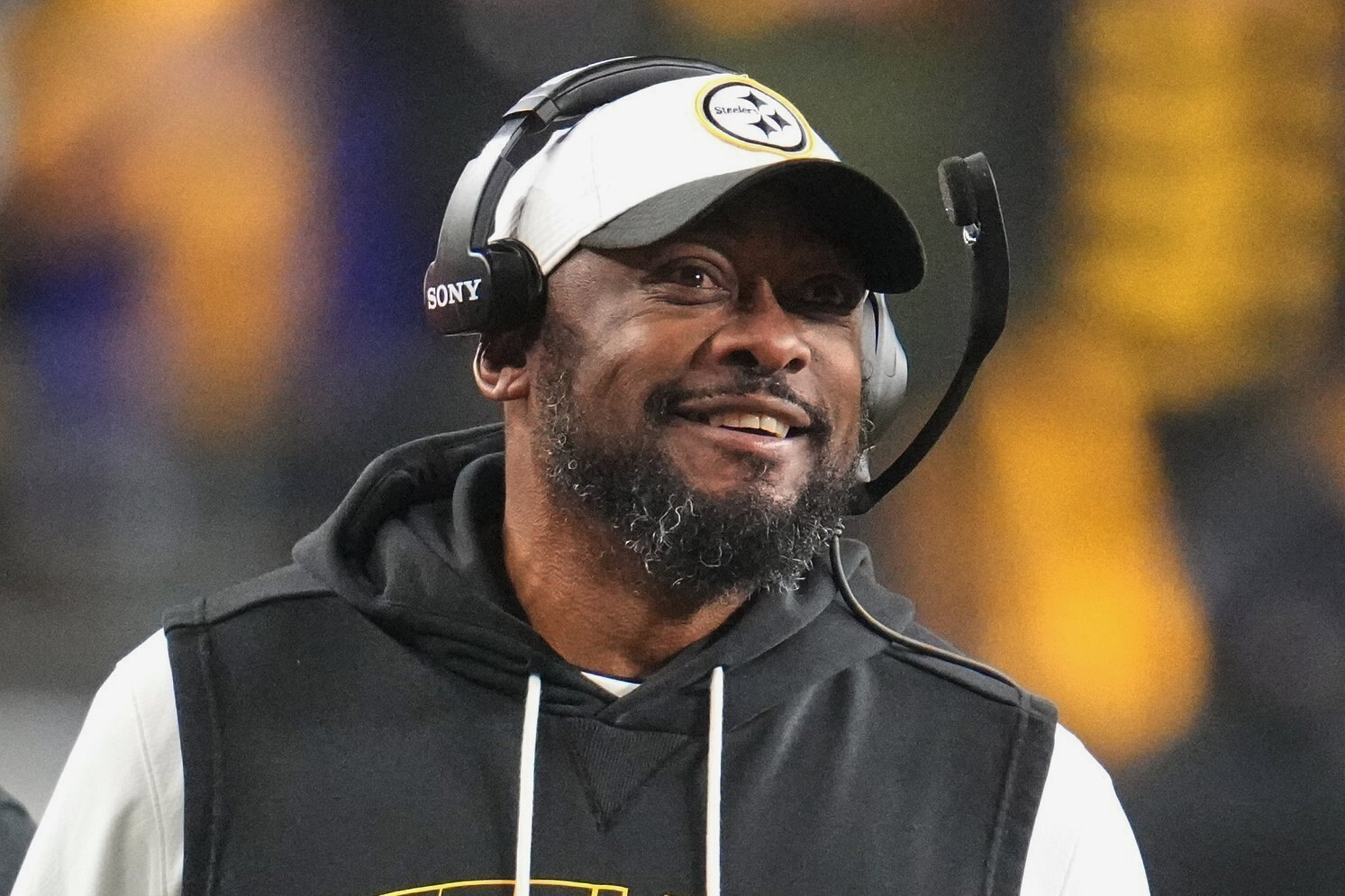
    Pittsburgh Steelers head coach Mike Tomlin stands on the sidelines during the second half of an NFL football game against the Baltimore Ravens in Pittsburgh in January.Gene J. Puskar

    Tomlintown

    When you write frequently about transit and housing, you tend to hear from the small cadre of people who are extraordinarily enthusiastic about these issues. This week, I found out about a surprising member of their ranks: former Pittsburgh Steelers head coach Mike Tomlin.

    Famous for his uncanny resemblance to actor Omar Epps and being the second Black NFL coach to win a Super Bowl, Tomlin used the game Minecraft to build his own fantasy city — a project that took place over a dozen years. He’s now giving the public a tour of his work.

    Tomlin said he wanted densely populated buildings because of his interest in architecture, and went as far as creating interiors for each of his creations. His work is remarkably cognizant of genuine urban questions like lighting and viewsheds.

    Like many gamers, he said his habit helped him “detach from the realities and the pressures of life.” We all need a way to unplug sometimes, but Tomlin’s impressive urban planning side project may have turned him into an unlikely urbanist hero.

  • A 15-acre site in Upper Darby could become a public forest — if organizers can raise $8 million to buy it

    A 15-acre site in Upper Darby could become a public forest — if organizers can raise $8 million to buy it

    Fifteen acres of undeveloped land in Upper Darby Township face an uncertain fate as environmental groups rush to secure funding to purchase and protect the site.

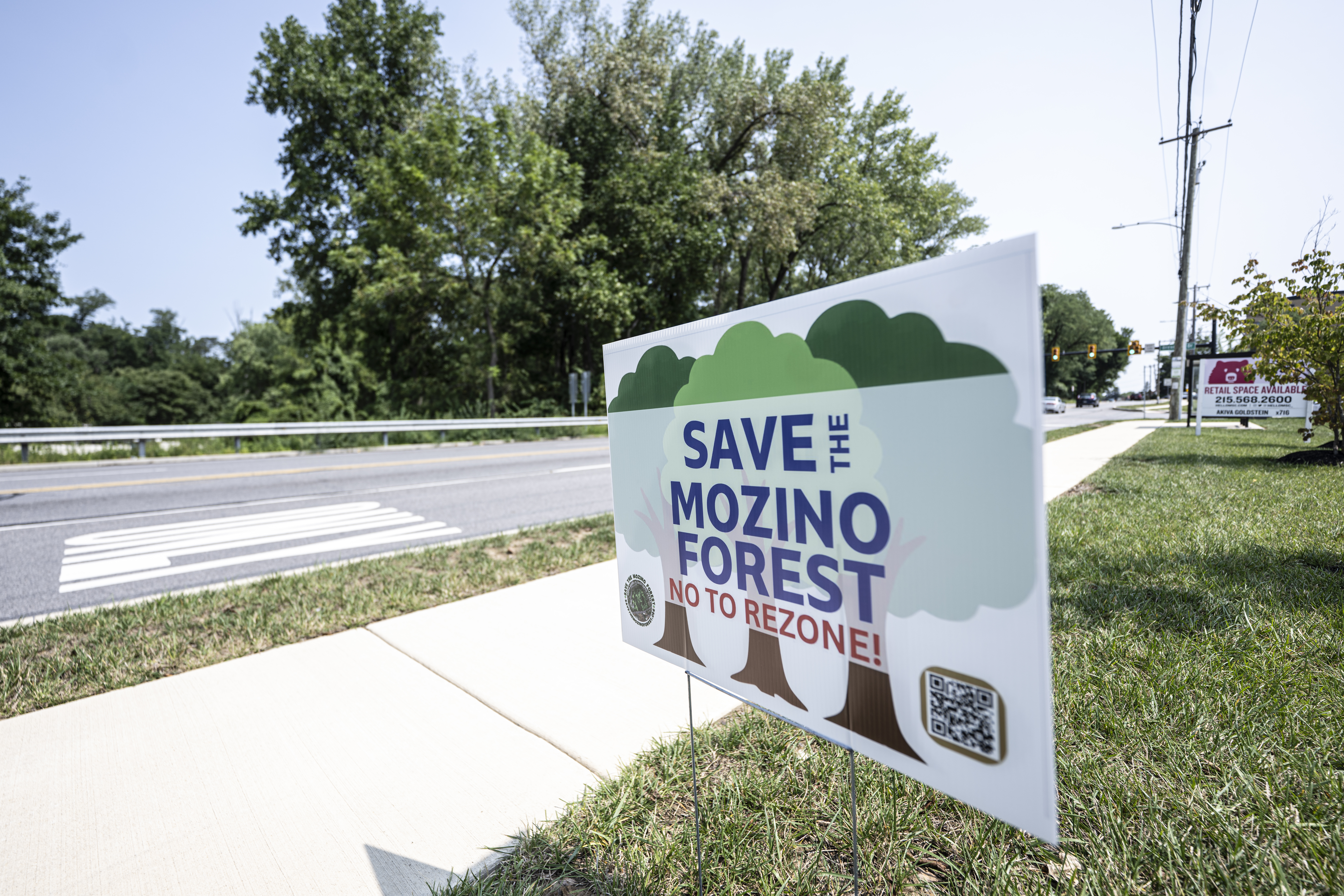
    Upper Darby residents and environmentalists are working to pull together $8 million to secure the purchase of the Mozino Tract, a parcel of land in Drexel Hill that, until recently, was slated to become a mixed-use housing and retail development.

    Upper Darby’s council in August voted to table a proposal to rezone the land, currently zoned for residential use, to allow for a blend of single-family homes, townhouses, apartments, commercial spaces, and community gathering spots. Township staff at the meeting said they worked with the developer to create the mixed-use zoning proposal, a plan they said would help meet core township goals of increasing tax revenue and adding diverse housing options far more than an initial proposal to put 56 single-family homes on the site.

    Now, developer Greg Lingo of Rockwell Development Group says he has abandoned the plans to build the mixed-use development and is giving organizers a chance to purchase the land for open space preservation.

    If they can’t pull the money together, Lingo will go back to his original plan to put 56 single-family homes on the Mozino Tract, a proposal that is already permitted under the current zoning and won’t require special approvals.

    As the high price tag looms, organizers say they’re confident they can find the money to keep the Mozino Tract wild.

    What is the Mozino Tract?

    The Mozino Tract is a 15-acre wooded parcel located between State and Township Line Roads in Drexel Hill. The land is currently owned by the Peter S. and Catherine G. Mozino Deed of Trust and is under contract to be sold to Lingo’s Rockwell Drexel LLC.

    At an August meeting, Upper Darby residents packed the council chambers, urging the township to reject the plan for a mixed-use development and asking council to purchase the land to preserve it as open space. Many described spending time in the wooded area that, while not officially a public park, has been a place to commune with nature.

    Amid pushback from residents, Lingo at the meeting said he would be willing to sell the property to the township, despite thinking that it would not be “a great use,” and approximated the cost of the sale at $8 million. Council unanimously tabled the zoning ordinance and voiced an openness to purchasing the property if funds could be raised.

    The property’s assessed value is $446,920, according to Delaware County property records.

    Lingo in an email on Sept. 15 wrote that it was immediately clear when he first met with neighbors that “they did not want any development” of the Mozino Tract, so he thought it best to work with the township on the mixed-use plan to “maximize open space, introduce different housing types across different price points, improve pedestrian mobility, maximize taxable income to the township and to dedicate a public park.”

    Lingo’s email affirmed his commitment to Upper Darby, where he grew up, and said it was his “fault for assuming that I knew what was best” in proposing the mixed-use project.

    If the environmental groups can’t find the funding to purchase the property, Lingo plans to enter into an agreement with a public or national homebuilder to build the 56 single-family homes.

    Rockwell Development Group is “communicating regularly” with the environmental groups, Lingo wrote.

    Organizers ‘have all confidence’ in raising funds

    Bonnie Hallam, an organizer spearheading the effort to preserve the Mozino Tract, said local environmentalists “have all confidence” that they will be able to raise the $8 million.

    “We really believe that this is going to be conserved, and we want the township to get on board with that,” Hallam said.

    Hallam said she and other organizers submitted their first grant application on Sept. 25 to the Open Space Institute and have been in conversation with local and national funding groups, including the William Penn Foundation and the Pennsylvania Department of Conservation and Natural Resources. The group is going to start a community fundraising effort through the Foundation for Delaware County, she said.

    The environmental leaders are also hoping to secure money through an open space referendum on the ballot in Delco this November. If the referendum is approved by voters, the county could spend $120 million financing land conservation projects, including “protecting natural areas from development.”

    “We’re really going to work hard to secure that because we feel that the county is very much interested in this piece of property as well,” Hallam said.

    Delaware County “has not had any conversations with Mr. Lingo regarding the purchase of the tract,” according to county spokesperson George Basile.

    Hallam hopes Upper Darby Township will agree to be the title holder for the land, an agreement they have not made yet.

    Upper Darby Township is “exploring its options right now” and “hoping for a resolution soon” regarding the Mozino Tract, public information officer Rob Ellis said in an email.

    For Hallam and her co-organizers, preserving the open space — its wildlife, tall trees, and bubbling creek — is priceless. The Save The Mozino Forest group is organizing a rally on Saturday at Collenbrook Church.

    “We have a really unique piece of property here that’s doing hard-working environmental services for the township,” Hallam said.

    This suburban content is produced with support from the Leslie Miller and Richard Worley Foundation and The Lenfest Institute for Journalism. Editorial content is created independently of the project donors. Gifts to support The Inquirer’s high-impact journalism can be made at inquirer.com/donate. A list of Lenfest Institute donors can be found at lenfestinstitute.org/supporters.

  • Adem Bona and Ariel Hukporti have battled since they were teenagers. Now, they are vying to be the Sixers’ backup center

    Adem Bona and Ariel Hukporti have battled since they were teenagers. Now, they are vying to be the Sixers’ backup center

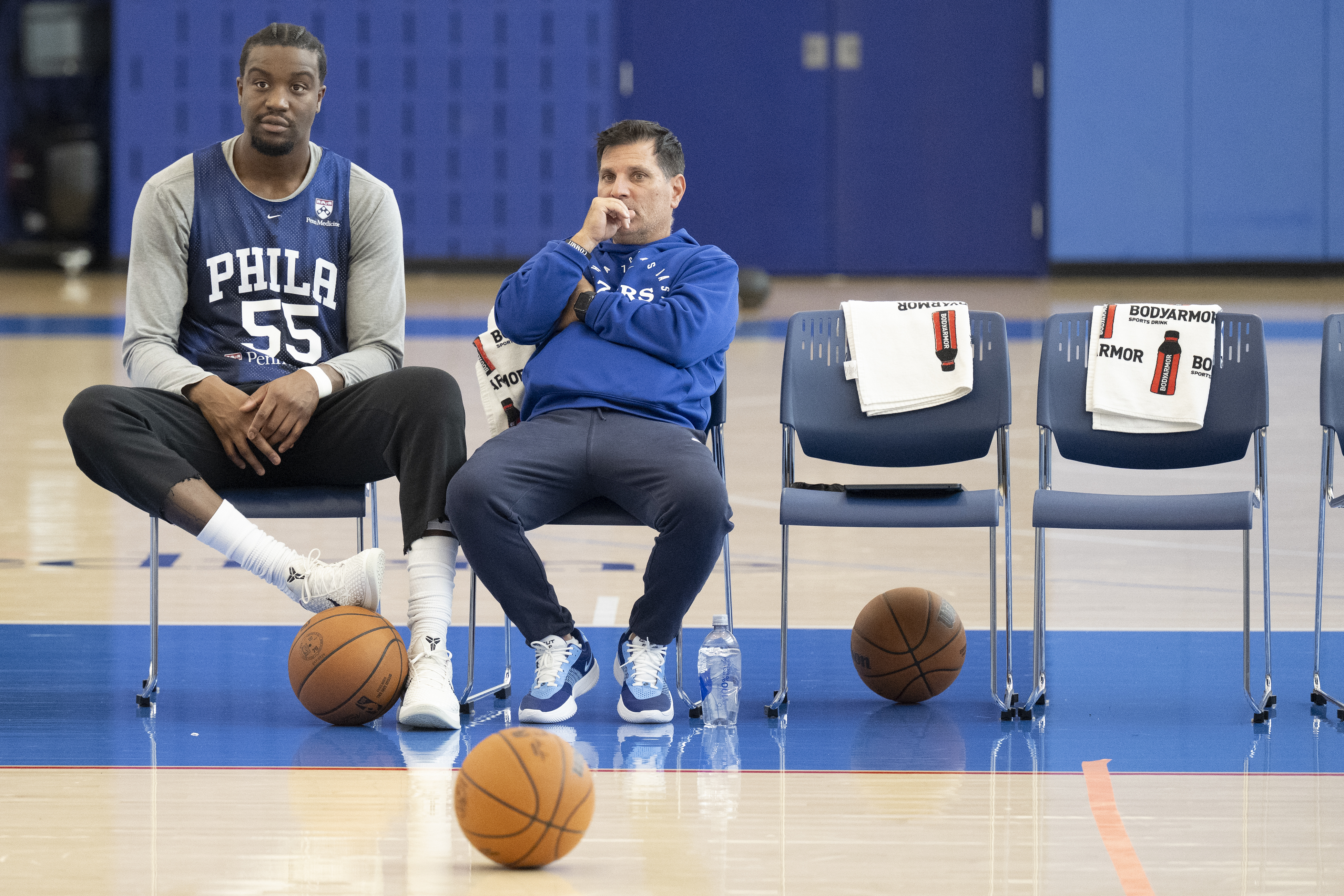
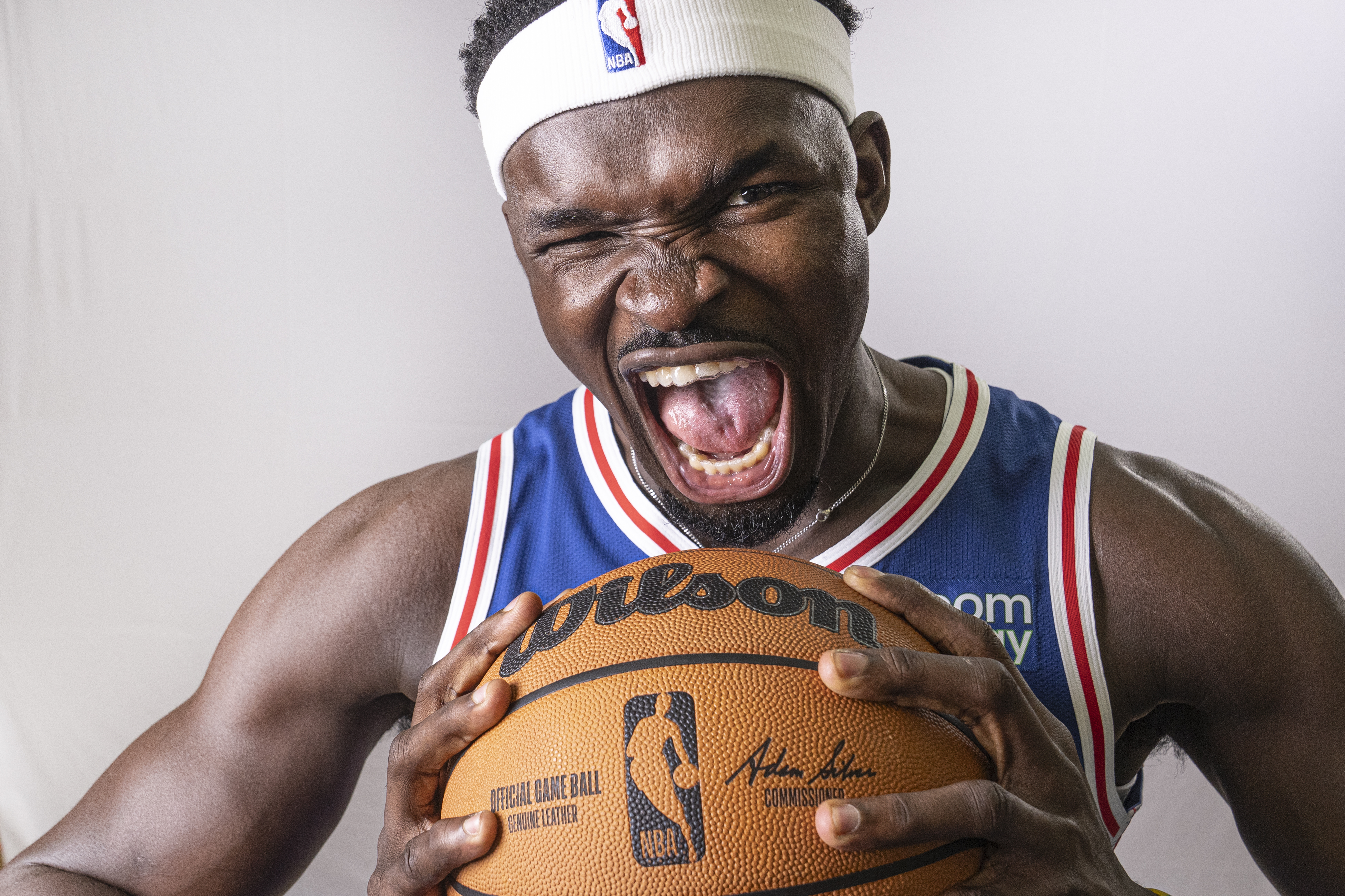
    Adem Bona and Ariel Hukporti first met on the basketball floor as teenagers, while playing for the Turkish and German national team programs, respectively. They were on rival teams again when they reached the NBA, with the 76ers and New York Knicks.
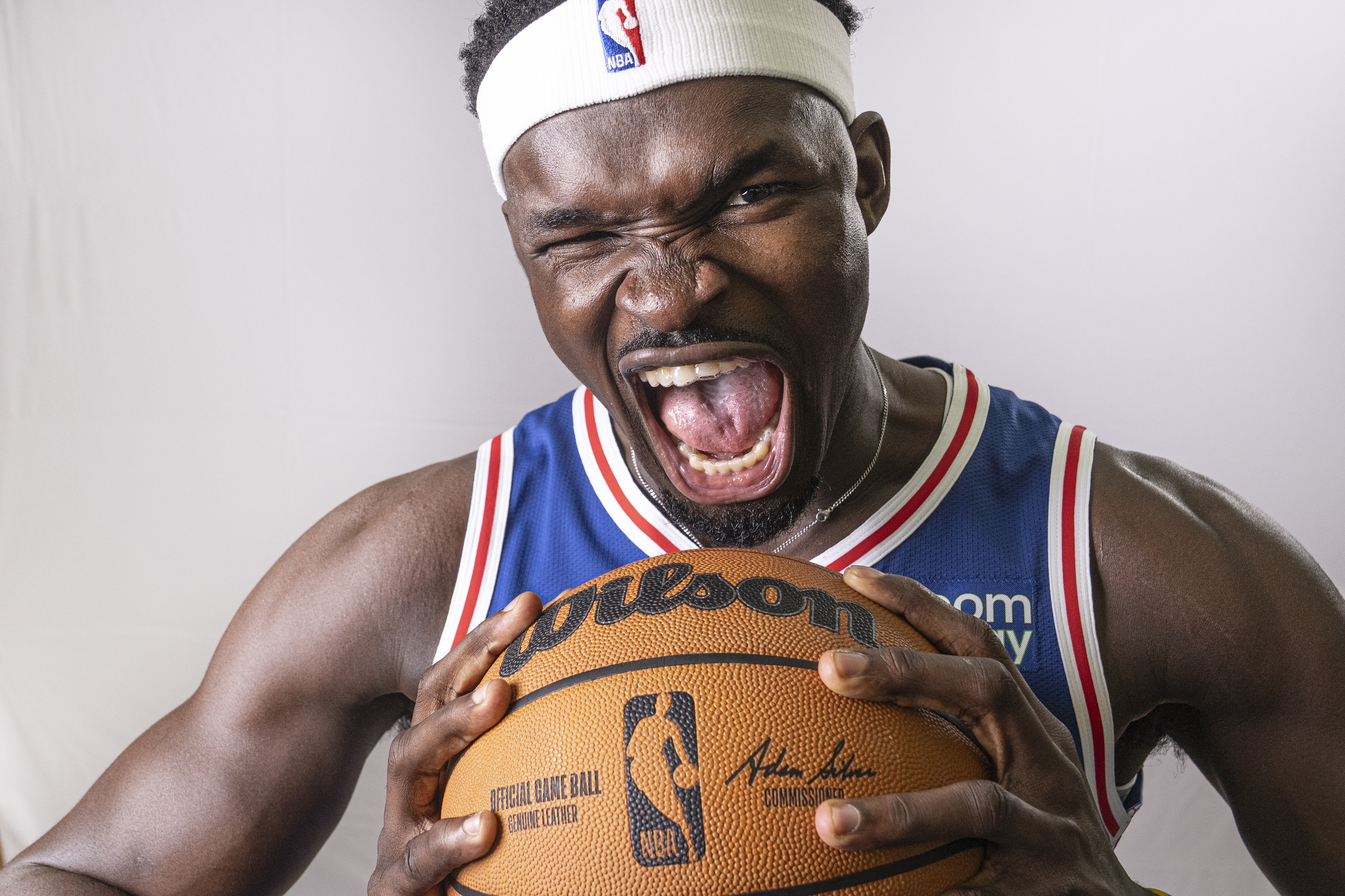
    Still, Bona smiled and said, “That’s my guy” when asked about Hukporti at Monday’s Sixers media day.

    Now they are teammates, after Hukporti signed as a free agent following his stint as a deep reserve on the Knicks’ championship run. Their longstanding healthy competition has shifted internally, for an important role on this star-heavy Sixers roster with massive expectations. Bona and Hukporti, who are less proven than several of their bench counterparts, are the primary contenders to fill the backup center minutes behind Joel Embiid — and to start when Embiid inevitably misses games to manage his health.
    “People can say ‘battle’ or whatever,” Hukporti said following Thursday’s training camp practice. “But when it comes to the end goal, [you’re] coming together as a team and you produce as a team. It don’t matter. It can be me playing five minutes, [Bona] playing 15 minutes. Me playing 25 minutes, him playing 15. …

    “Whoever gets in, gets in. Get the job done. Especially in the playoffs, we need everybody. We need all players.”

    Hukporti would know. The 7-footer received spot minutes during the Knicks’ playoff tear, including in Game 1 of their second-round series sweep of the Sixers when All-Star Karl-Anthony Towns and sound backup Mitchell Robinson got into early foul trouble.

    Still, in an overwhelmingly lauded first offseason for new Sixers president of basketball operations Mike Gansey — which included signing all-time great LeBron James, trading for All-NBA wing Jaylen Brown, and adding role players such as Dean Wade and Anfernee Simons — the Hukporti signing arrived with the most uncertainty. The 24-year-old has logged 715 total minutes across 79 career games in his first two NBA seasons, averaging 2.1 points and 2.7 rebounds.

    The 6-10 Bona, meanwhile, held the Sixers’ backup center role for the bulk of last season. And in several games Embiid did not play, Bona maintained the reserve minutes behind veteran Andre Drummond, who coincidentally left Philly to sign with the Knicks in free agency.

    Sixers center Adem Bona has missed training camp for a knee injury. Jose F. Moreno / Staff Photographer

    Bona is an excellent athlete and shot-blocker, but is still raw offensively and has struggled with fouling and catching the ball. He averaged 4.8 points, 4.3 rebounds and 1.2 blocks in 71 games with 18 starts last season, and also has expressed a strong desire to play next to Embiid in big lineups. In July, the Sixers guaranteed Bona’s $2.3 million salary for the final year of his contract in 2026-27, creating a crucial season for the 23-year-old.

    Yet with Bona sidelined with a foot sprain sustained while playing for Turkey over the summer, opportunity has surfaced for Hukporti so far during training camp.

    While highlighting the Sixers’ new-look bench unit Thursday, coach Nick Nurse called Hukporti “athletic, long, [and] plays really hard. He’s been awesome to see.” Hukporti added that he hopes to showcase more of his offensive repertoire with the Sixers, with “quite-good” ball movement during early practices helping him get to his floater and around-the-rim finishes.

    Hukporti’s current spot on the depth chart also has meant matching up against Embiid, who has impressed Hukporti with his post game and patience to get to his spots on the floor.

    “Obviously, he was an MVP in this league,” Hukporti said of Embiid. “And it just makes me a way better defender.”

    Nurse said Thursday that Bona is expected to be reevaluated in the next couple days and could be available to play at some point during the preseason. Fellow returners Dominick Barlow and Jabari Walker, who both parlayed two-way contracts into standard deals last season, are small-ball center options. The 7-6 Tacko Fall, who is on an Exhibit 10 deal and in contention to land the Sixers’ final two-way contract, is out at least two weeks with a hip issue. James has even played center at points during his legendary career.

    But the Sixers’ prime position battle begins with former “rivals” Bona and Hukporti, who have been competing against each other in some capacity since they were teenagers.

    “Now we’re on the same team,” Hukporti said. “So it’s been nothing but a blessing.”

  • Orifice the Awebot is Philly’s ‘magical’ response to Uber Eats robots

    Orifice the Awebot is Philly’s ‘magical’ response to Uber Eats robots

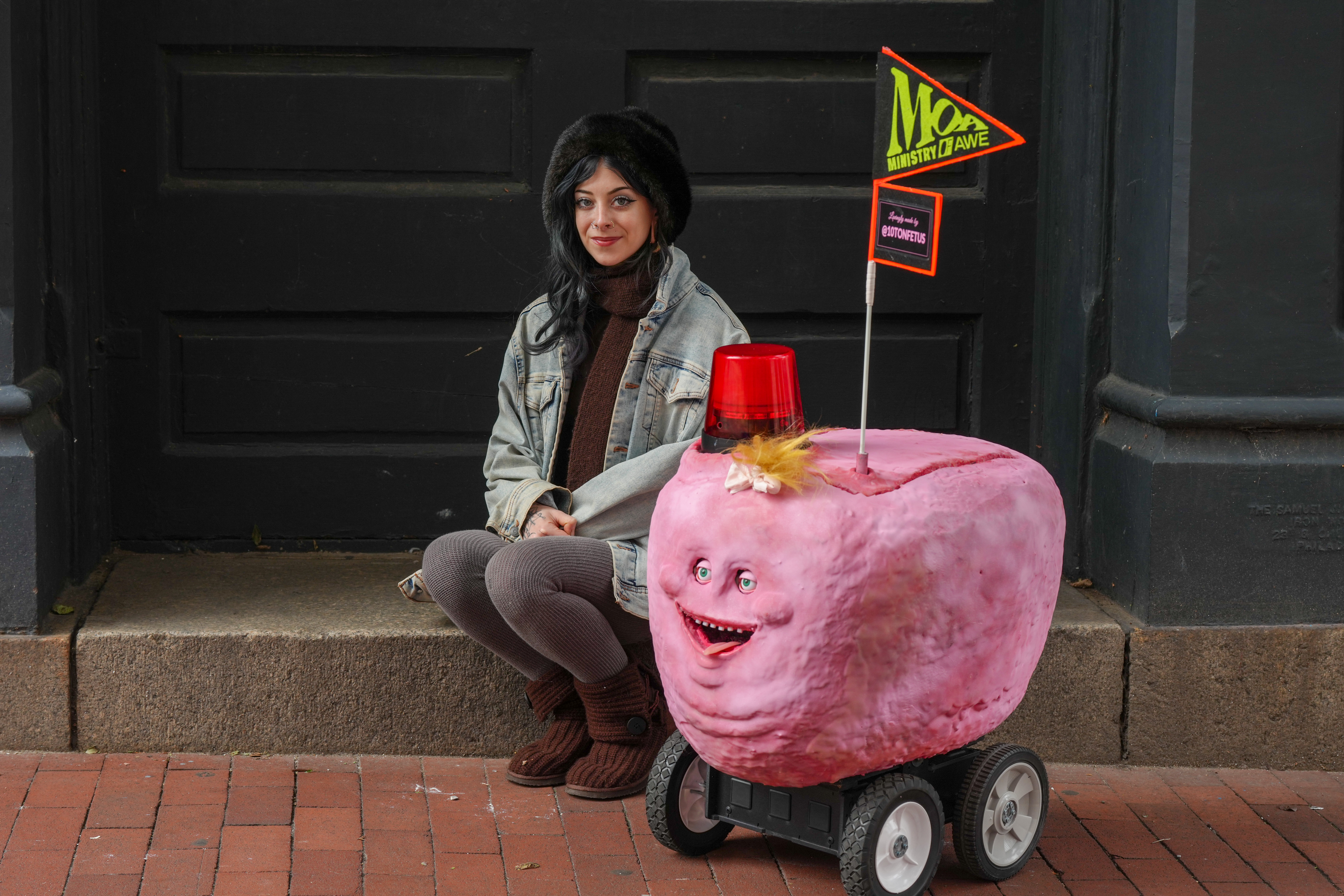
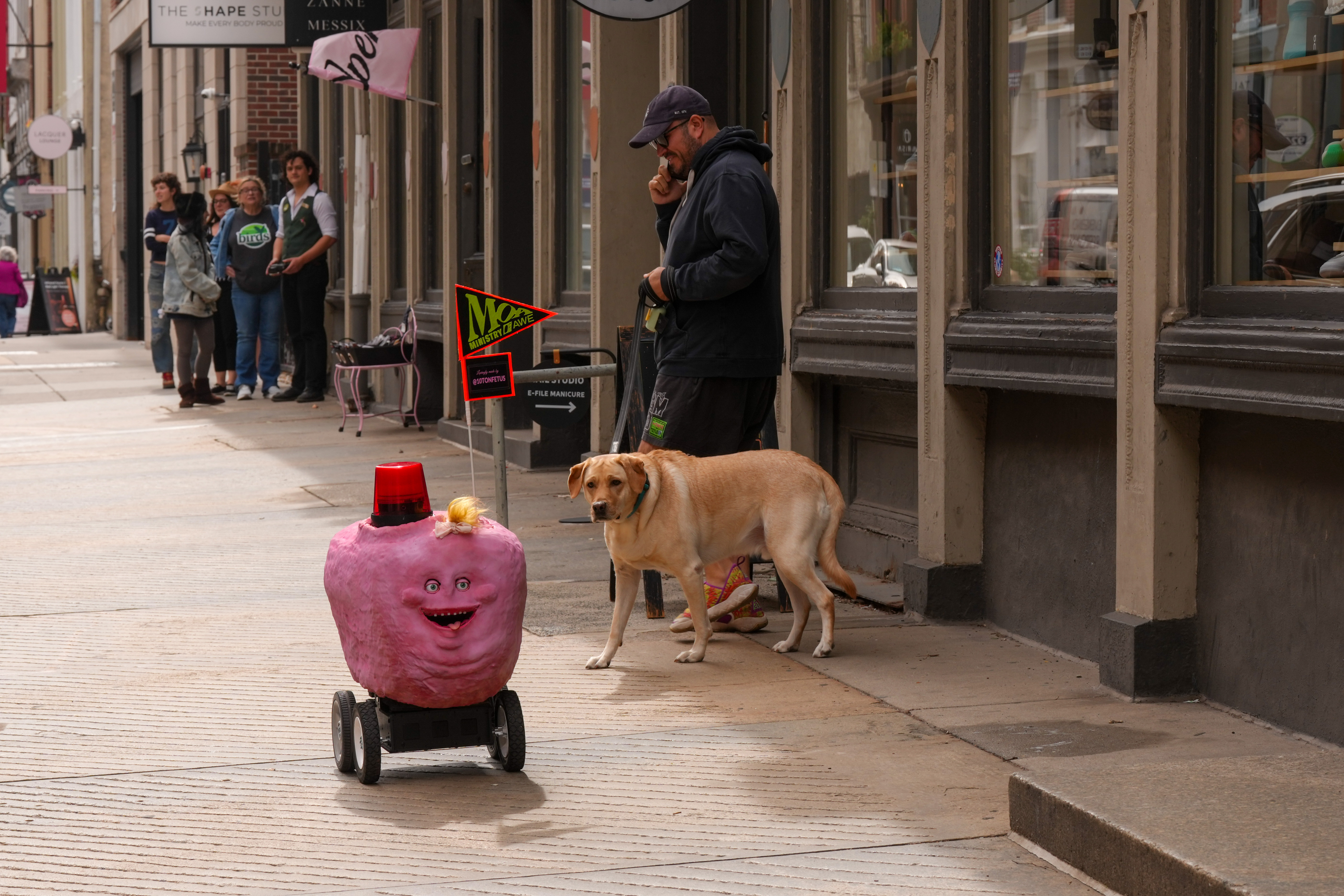
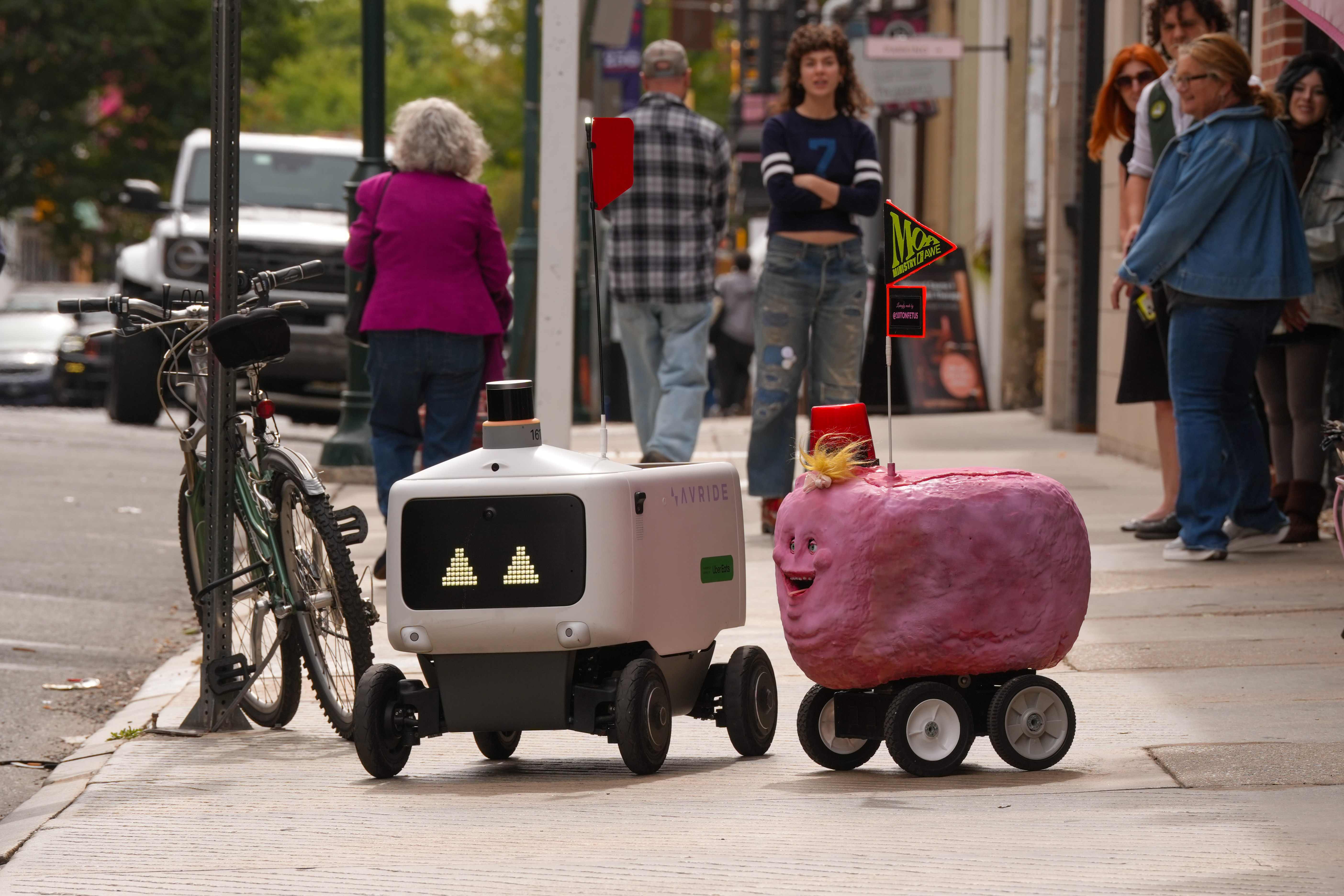
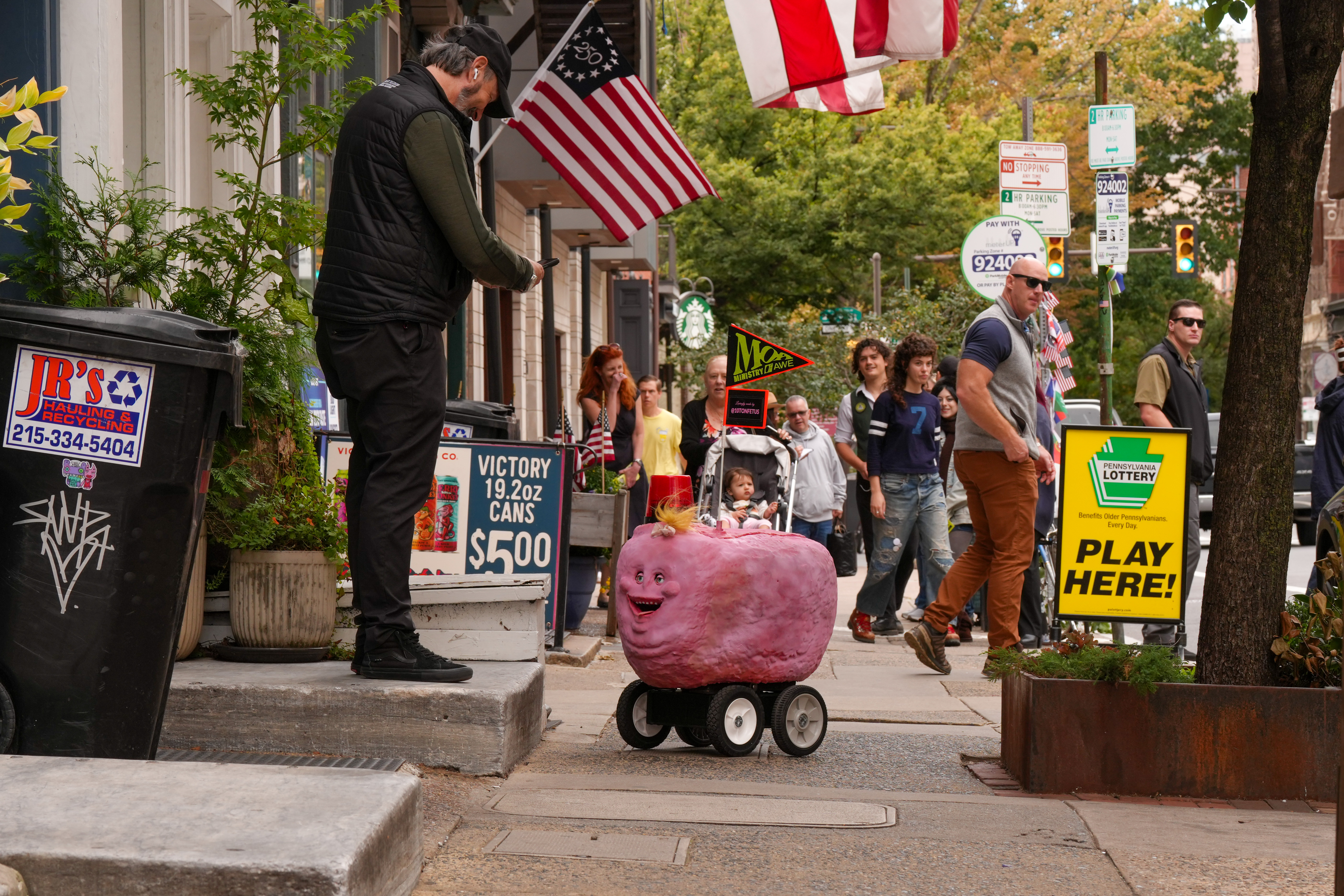
    Orifice the Awebot rolled down the sidewalk across from the Betsy Ross House last Friday, striking joy, confusion, and mild terror in those who unexpectedly encountered her — and nobody expects to encounter a two-foot-tall, pink, potato-shaped robot with a dangling tongue, blue eyes, and a shock of blond hair.

    As I trailed behind the little bot, I could hear people whisper and scream.

    “Oh that’s adorable!”

    “What did I just see?”

    “It’s terrifying!”

    Tourists on top of a double decker bus pointed at her. Philadelphians who didn’t have time for whatever this nonsense was steered clear. But after the initial shock of seeing Orifice wore off, most people smiled and laughed, like Justin Lutz of California.

    Orifice the AwebotJessica Griffin / Staff Photographer

    Lutz had already seen the Uber Eats robots on our sidewalks while visiting Philly and he immediately recognized that Orifice, despite being approximately the same size, was something quite different.

    “I bet you Betsy Ross never thought a little robot would be scooting around in front of her house,” he said. “I love the personality and it’s super cool. We don’t even have these in California.”

    I wanted to tell Lutz there’s a lot of great things we have in Philly they don’t have in California, like all four seasons and Gritty and the Phanatic, but I stopped short.

    “Have a great time in our city,” I said, instead. “It’s just this weird here all the time!”

    ‘Kind of like a dog’

    I was invited to follow Orifice around Old City with some folks from the Ministry of Awe (MoA), the interactive and immersive art installation created by Philly muralist Meg Saligman that’s housed in a 19th-century Old City bank.

    The “Awebot” was born out of one of MoA’s community Co-Creation Nights as people were bouncing around ideas and discussing the Uber Eats robots that have become ubiquitous in Philly since they descended upon our city in March.

    “We thought what if [robots] didn’t just bring things, what if they were used for purposes other than just delivery and business and commerce. Would that somehow let us reflect in a different way?” Saligman said.

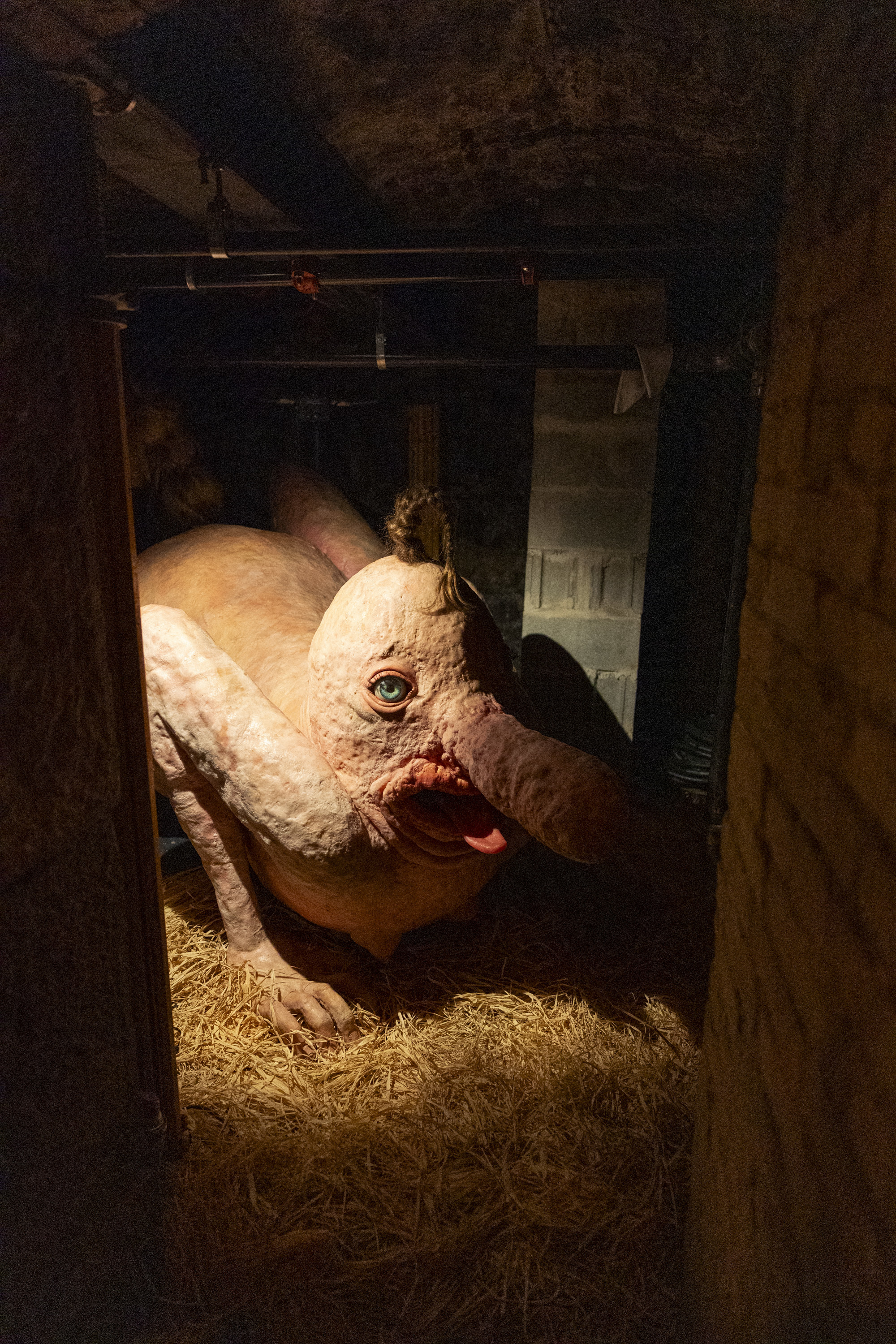
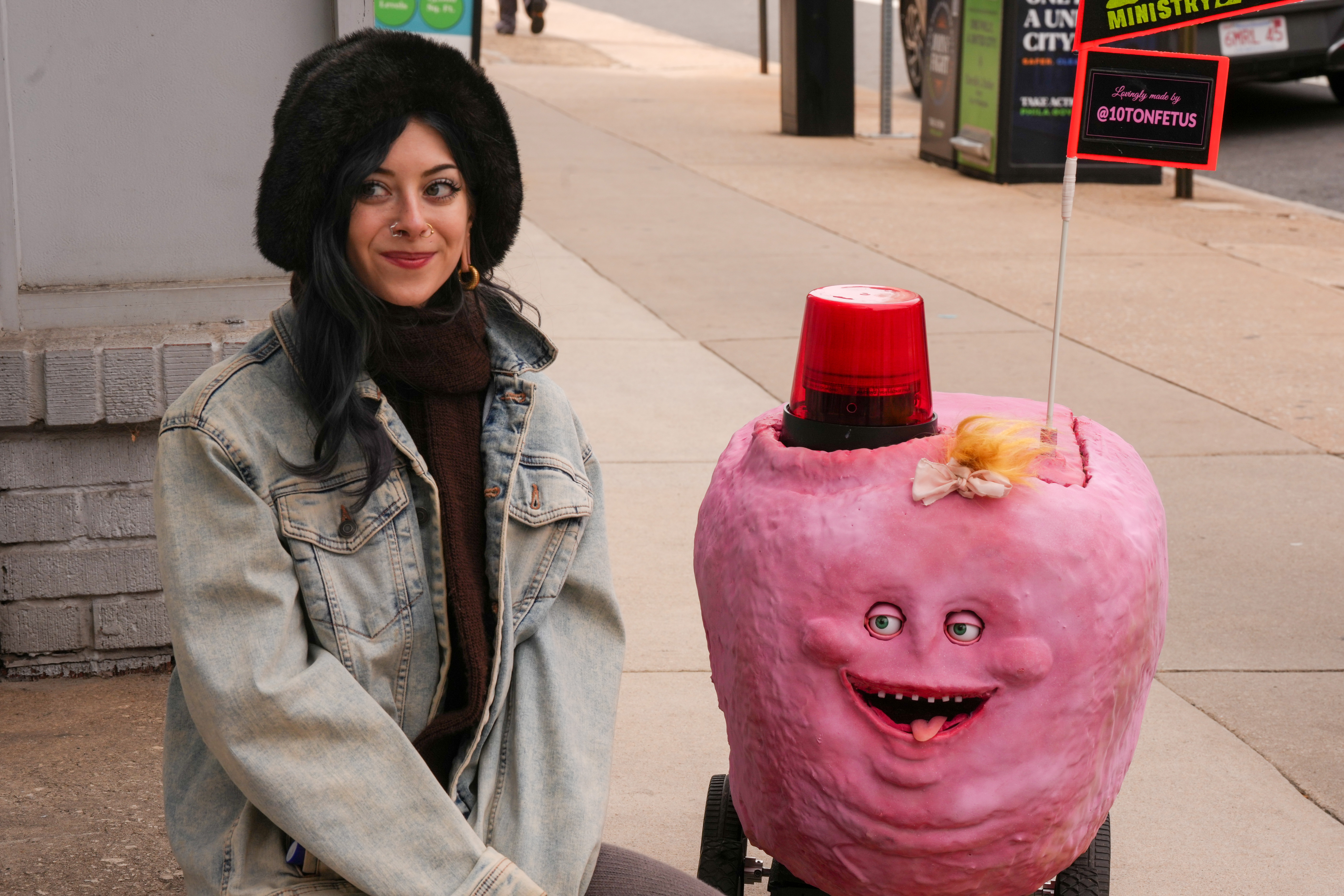
    Artist Madison Polidoro (aka 10 Ton Fetus), a sculptor and metal fabricator whose human-animal-hybrid creatures like “Skin Horse” inhabit the bathrooms at MoA, brought Orifice to life. She’s affectionately known as the robot’s “mommy.”

    “Skin Horse” is one of the sculptures from artist Madison Polidoro that inhabits the bathrooms at the Ministry of Awe. Tyger Williams / Staff Photographer

    “What I find interesting about the Uber Eats robots is that they do create this kind of horror, this dystopian feeling in a lot of people,” Polidoro said. “So I was excited about the idea of making my own robot creature to sort of do an opposite thing where it could inspire something lighthearted and silly and fun and kind of magical.”

    Polidoro fabricated Orifice’s base out of aluminum and left an empty vessel in the center, so it can carry things. She made the skin out of weatherproof urethane rubber and included an orifice on the robot’s rear end, which is where it gets its name.

    Orifice is driven via a wireless remote but the range of the controller is quite far (at least half a city block), so the driver can remain pretty inconspicuous. The Awebot’s large blue eyes blink independently at intervals, but they can also be controlled by the operator. The dangling tongue, however, remains permanently out.

    Artist Madison Polidoro with her creation, Orifice the Awebot.Jessica Griffin / Staff Photographer

    “She’s a sweetie pie who’s curious and likes to explore and try new things. And she loves attention. She’s kind of like a dog,” Polidoro said of her creation.

    ‘They’re gonna fight!’

    As a team of folks from MoA, including Saligman and Polidoro, set out with Orifice in Old City last Friday, they didn’t even get a few hundred feet down the block before people stopped to pet the Awebot and ask questions.

    “Is this a good hair day or a bad day for it?” a man in an Eagles jersey asked.

    “Does it poop?” another guy wondered.

    He was assured it did not.

    This yellow Labrador retriever was very dubious of Orifice the Awebot. Jessica Griffin / Staff Photographer

    As Orifice rolled down the sidewalk, she scared a few dogs, people pulled over their cars to see her, and others ran across the street to take her picture.

    An Xfinity van driver sitting in his vehicle looked stunned as we passed. Then we made eye contact, he shook his head, I shrugged my shoulders, and were shared an “only in Philly” laugh.

    At one point, Saligman spotted an Uber Eats robot down the sidewalk and ran to stand in front of it and stop it so Orifice could meet it face-to-face.

    “They’re gonna fight!” Polidoro said.

    Alas, the meeting did not result in a new kind of BattleBots, but it was clear that at one point, a human must have taken control of the Uber Eats robot, because it skillfully maneuvered its way around Orifice and Saligman. I can only imagine what the person on the other end of that camera thought.

    An Uber Eats robot rudely ignores Orifice the Awebot on the sidewalks of Old City. Jessica Griffin / Staff Photographer

    All the while, MoA staffer Jordan Rampulla — who served as Orifice’s “conduit to humanity” — encouraged people to interact with the robot, handed them fliers for the MoA, and told them to click a QR code on an MoA flag attached to the robot, which leads to a landing page about the creation on the MoA website.

    Orifice is not just MoA’s creative response to the dystopian Uber Eats robots, it’s also a inventive marketing tactic. While some people we met had heard of MoA, others had not, and they seemed interested in learning more about the experience after meeting its Awebot ambassador.

    ‘Bringing delight and surprise’

    As the little pink robot passed by the little pink Tarte’s Pastry Shop on Arch Street near Second, owner Teresa Wall popped outside of her business, stunned by what she saw.

    “It’s hysterical! We need more of that. I love it,” Wall said. “Any of this in today’s climate is great, any joy and laughter, we need it more.”

    When Stephanie Gentle, who was out walking her French bulldog, Frank, first saw Orifice, she worried it might be a new kind of delivery bot. She was relieved to learn it was a creation of the MoA.

    “I would much rather have this on the streets than an Uber Eats robot. It’s much less scary and much less evil,” Gentle said. “I’m so happy I ran into this. This made my day.”

    A passerby takes a photo of Orifice the Awebot as she roams the streets of Old City. Jessica Griffin / Staff Photographer

    I too would rather have Orifice wandering around Philly than those Uber Eats robots any day. She’s the rare kind of robot that connects humans with each other and illustrates the creativity of humanity in a unique way.

    “When people see a lot of my creatures they intuitively connect with them through these anchoring points of the eyes and the skin and the hair and the orifices. Those are things that sort of force you to engage with another person when you look at them and meet them,” Polidoro said.

    “They also force you to engage with my work in a very specific way, and I think that that’s something that I’ve really been leaning into and enjoying lately in a time of food-delivery-robot-dystopian-level technology that’s sort of separating us all from those very basic, but fundamental, important human connections.”

    Polidoro and Saligman have big dreams for Orifice’s future. They’d like to take her to an Eagles tailgate and maybe out to lunch at Parc one day. If it doesn’t rain this Friday, they’re planning on bringing her to Elfreth’s Alley for the 11th anniversary celebration of the destruction of hitchBOT.

    Orifice will make special appearances at MoA and her upcoming public appearances around the city will be announced on MoA’s social media channels, though she could pop up anywhere, unannounced, any day.

    “She’s part of our bringing delight and surprise and letting it ripple through the city,” Saligman said.

    Artist Madison Polidoro with her creation, Orifice the Awebot. Jessica Griffin / Staff Photographer
  • Eagles vs. Rams predictions: Our writers pick a winner for the Week 4 game vs. L.A.

    Eagles vs. Rams predictions: Our writers pick a winner for the Week 4 game vs. L.A.

    There is no rest for the weary.

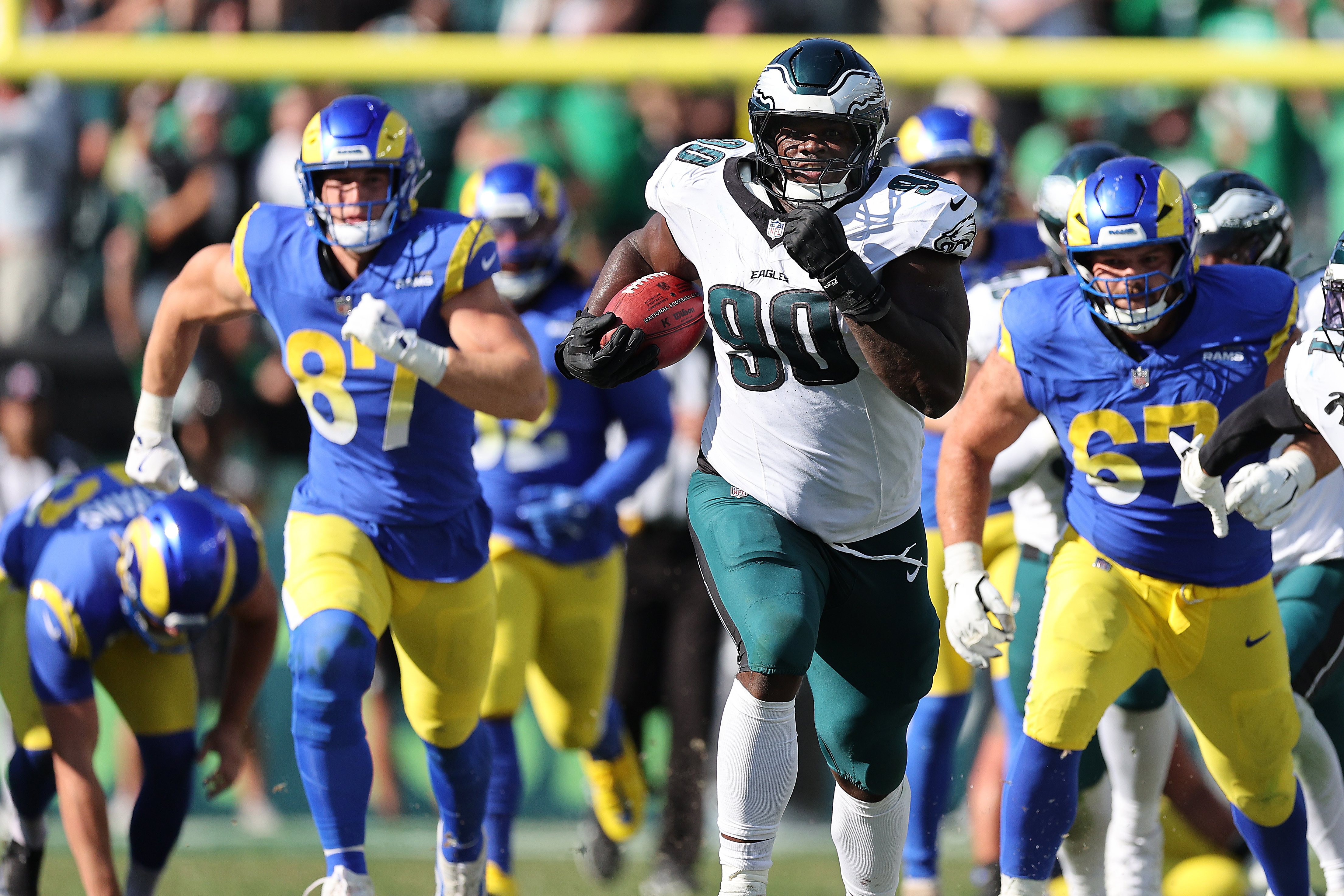
    The Eagles’ ghastly meltdown in Chicago on Monday night raised more questions than it answered, but Nick Sirianni’s team won’t have much time to lick its wounds or implement fixes. The Los Angeles Rams come to town Sunday (1 p.m., Fox29) looking to reestablish some cachet of their own after the preseason Super Bowl favorites dropped to 1-2 with a Sunday night loss to the Broncos.

    The Inquirer’s Eagles reporting team took a long look at the matchup and assessed whether the Birds can get well as they return to the Linc for the first time since Week 1.

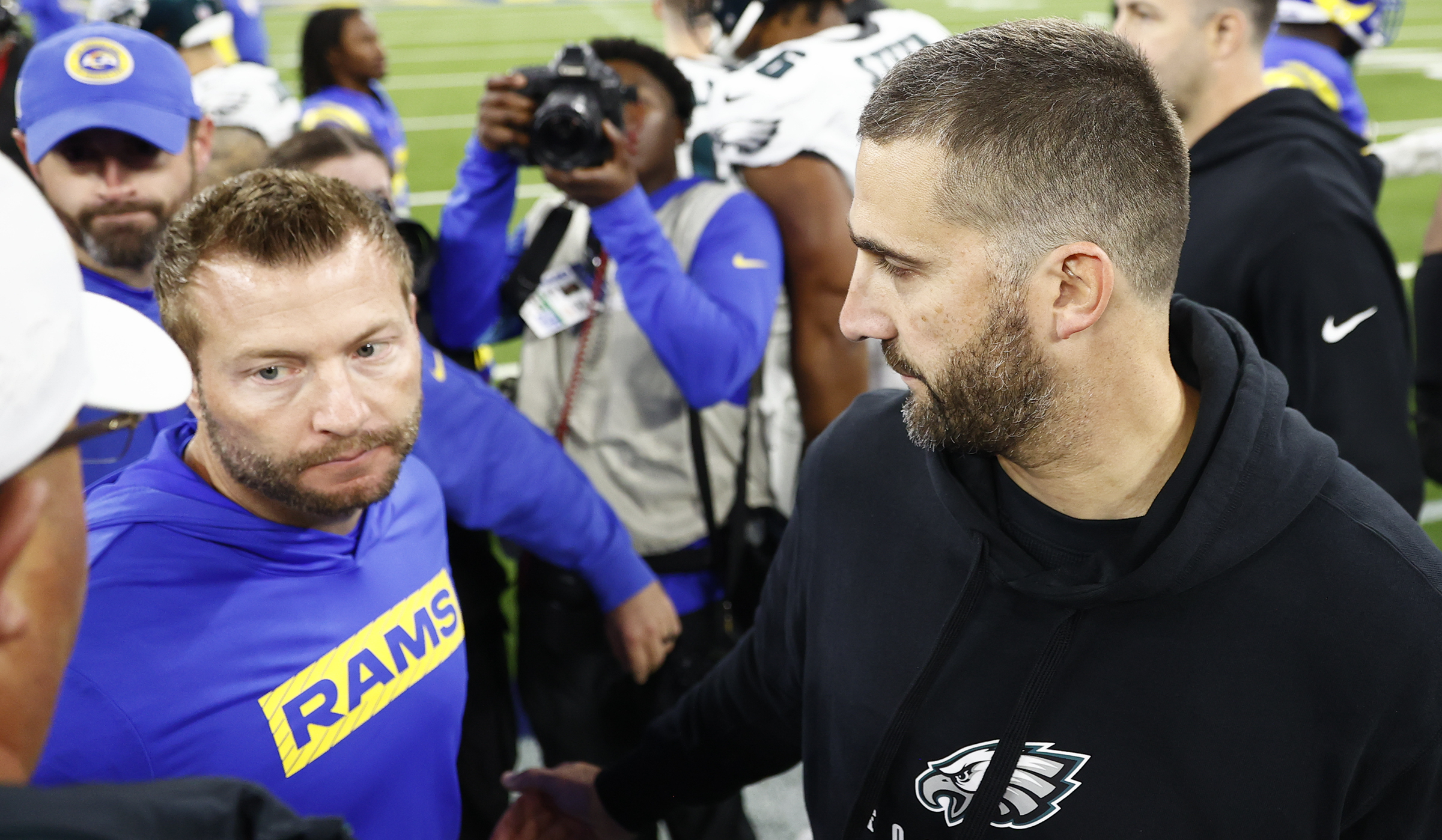
    Nick Sirianni (right) has owned Sean McVay in their personal head-to-head series. Yong Kim / Staff Photographer

    Jeff Neiburg

    The Eagles only scored seven points Monday night in Chicago, but I came away from the game a little bit more concerned with the defense than the offense.

    The problems with Vic Fangio’s unit are persisting. The Eagles don’t tackle well enough. They haven’t forced a turnover. They are rotating safeties because they don’t have strong enough options. Their best defensive lineman is playing with a fracture in his wrist. Their linebackers have been inconsistent. Their pass rush isn’t getting home enough.

    It remains to be seen if linebacker Zack Baun gets through the concussion protocol in time to play on Sunday, but his absence would complicate things even further for a defense that needs a bounceback performance.

    That won’t be easy against one of the best offenses in the NFL. Puka Nacua is on track to play, and the Rams are much better with him on the field, and much more capable of attacking the Eagles where they are weakest right now.

    The Eagles should be able to build off some of the run success they had in the first half vs. Chicago, but it’s hard for me right now to imagine the offense keeping pace with Matthew Stafford, Davante Adams, Nacua, and the Rams, especially if DeVonta Smith (hamstring) can’t go.

    Sirianni’s undefeated record against Sean McVay has to end at some point, right?

    Prediction: Rams 30, Eagles 20

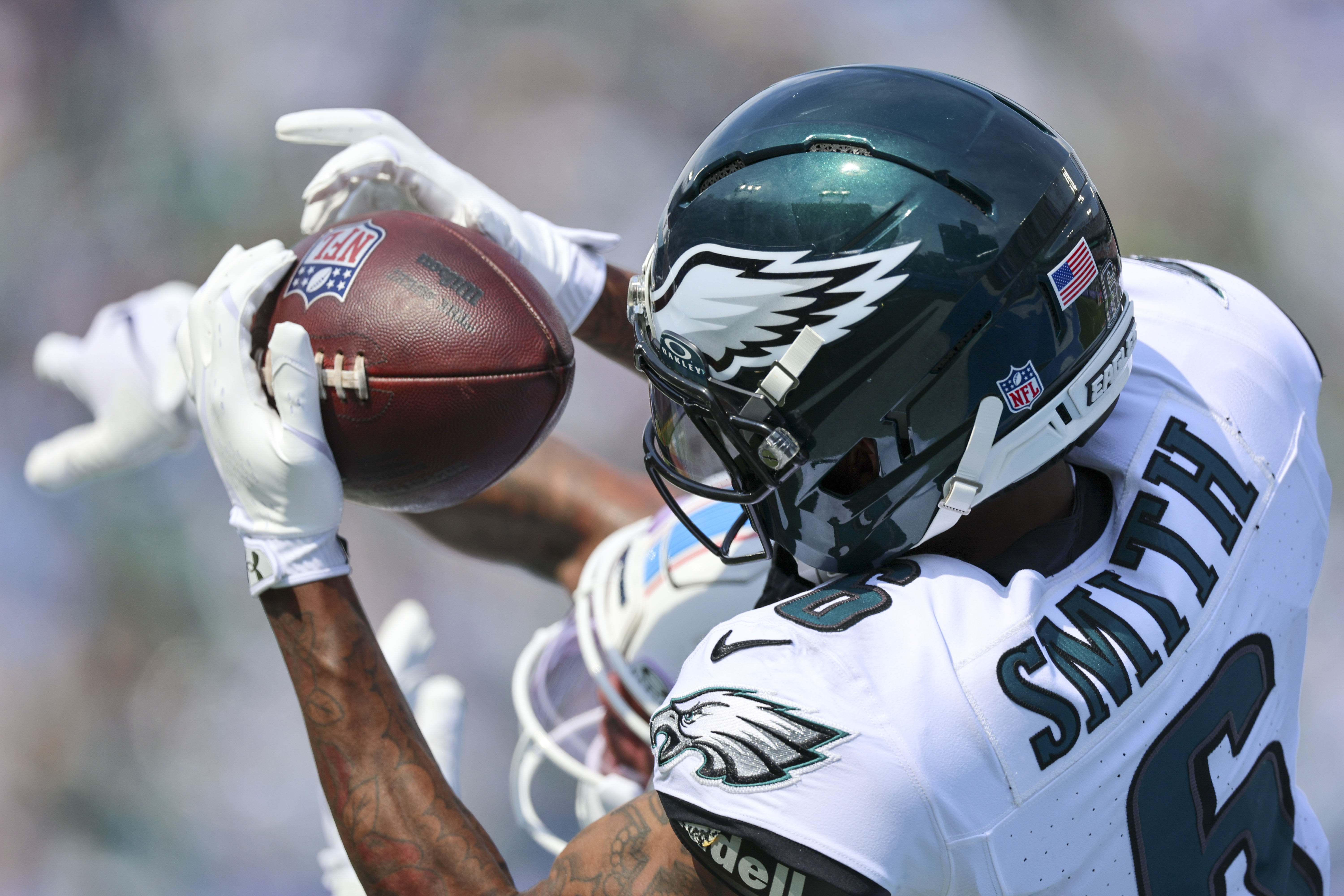
    A hamstring injury could keep DeVonta Smith (6) off the field on Sunday. David Maialetti / Staff Photographer

    Ryan Novozinsky

    It’s difficult to be optimistic about the Eagles this week.

    Baun (concussion) probably won’t play. Smith’s (hamstring) status is up in the air now. The team struggled mightily against the Bears, even with those two at full health. The first two weeks weren’t pretty either, even in victories.

    Jeremiah Trotter Jr. will likely fill in for Baun, and while the 23-year-old had a nice preseason and training camp, facing the Rams is a different beast.

    The same goes for the wide receiver room. Dontayvion Wicks has been a decent No. 2 receiver option, but can he outplay a Rams secondary led by Trent McDuffie? How will Makai Lemon, who has a meager stat line so far, fare?

    Putting aside the Eagles’ woes for a second, the Rams enter this game as motivated as ever following their drama-filled Sunday Night Football loss to Denver, plus the sting of an opening night loss to San Francisco still fresh in their minds.

    The Rams also received positive injury updates this week, with Nacua returning to practice as a limited participant. Nacua — arguably the best wide receiver in the league — and Stafford facing an Eagles defense that got torched by Case Keenum last week seems like a recipe for disaster.

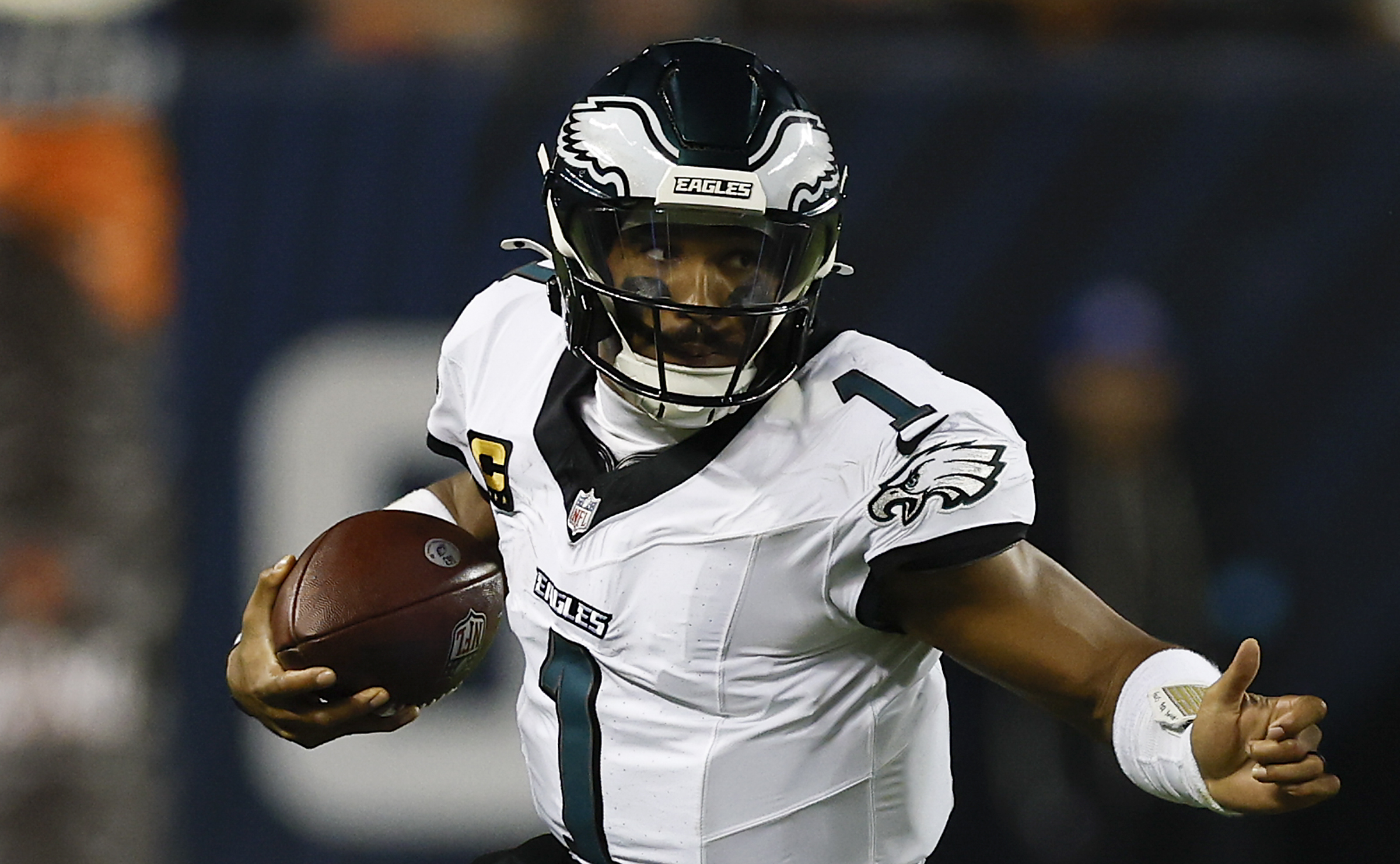
    All of this is to say: The Eagles need Jalen Hurts to play the game of his life, plus Sean Mannion/Fangio to bounce back after an ugly play calling performance in Chicago if they want a chance against L.A.

    Even then, this Rams team might simply be too talented to defeat.

    Prediction: Rams 35, Eagles 17

    Jalen Hurts might have to be Superman again for the Eagles on Sunday. Yong Kim / Staff Photographer

    Olivia Reiner

    I’m lower on the Eagles now than I was at the start of the week.

    If Baun (concussion) is out and Smith (hamstring) can’t go, both the Eagles defense and offense face potential setbacks. As Jeff wrote on Thursday, Hurts has targeted Smith on 32.9% of his pass attempts, which is the second-highest rate in the NFL behind the Seahawks’ Jaxon Smith-Njigba (37.9%).

    Who would step up in Smith’s place? Wicks has been promising, but he has averaged less than four targets per game over the course of his four-year career. Smith has been targeted nine times per game this season. Can Wicks handle the increased workload? Or can the Eagles lean more on Lemon, who has just seven receptions on nine targets for 38 yards in his young career?

    If elevated from the practice squad to the active roster again, Zach Ertz could have a bigger role in the passing game on Sunday after having one reception on two targets for nine yards against the Bears.

    Baun’s potential absence could make Nacua’s return all the more challenging for the Eagles defense to handle. Trotter has been solid in preseason action and the Week 18 outings he has started in over the last two years, but this could be the first meaningful start of his NFL career if Baun isn’t cleared to play.

    Perhaps the Eagles will rebound after a dismal loss to the Bears on Monday night. But the cards are stacked against them in this game.

    Prediction: Rams 30, Eagles 16

  • Kevin Willard believes his new-look Villanova team has closed the gap between the Wildcats and Big East powers

    Kevin Willard believes his new-look Villanova team has closed the gap between the Wildcats and Big East powers

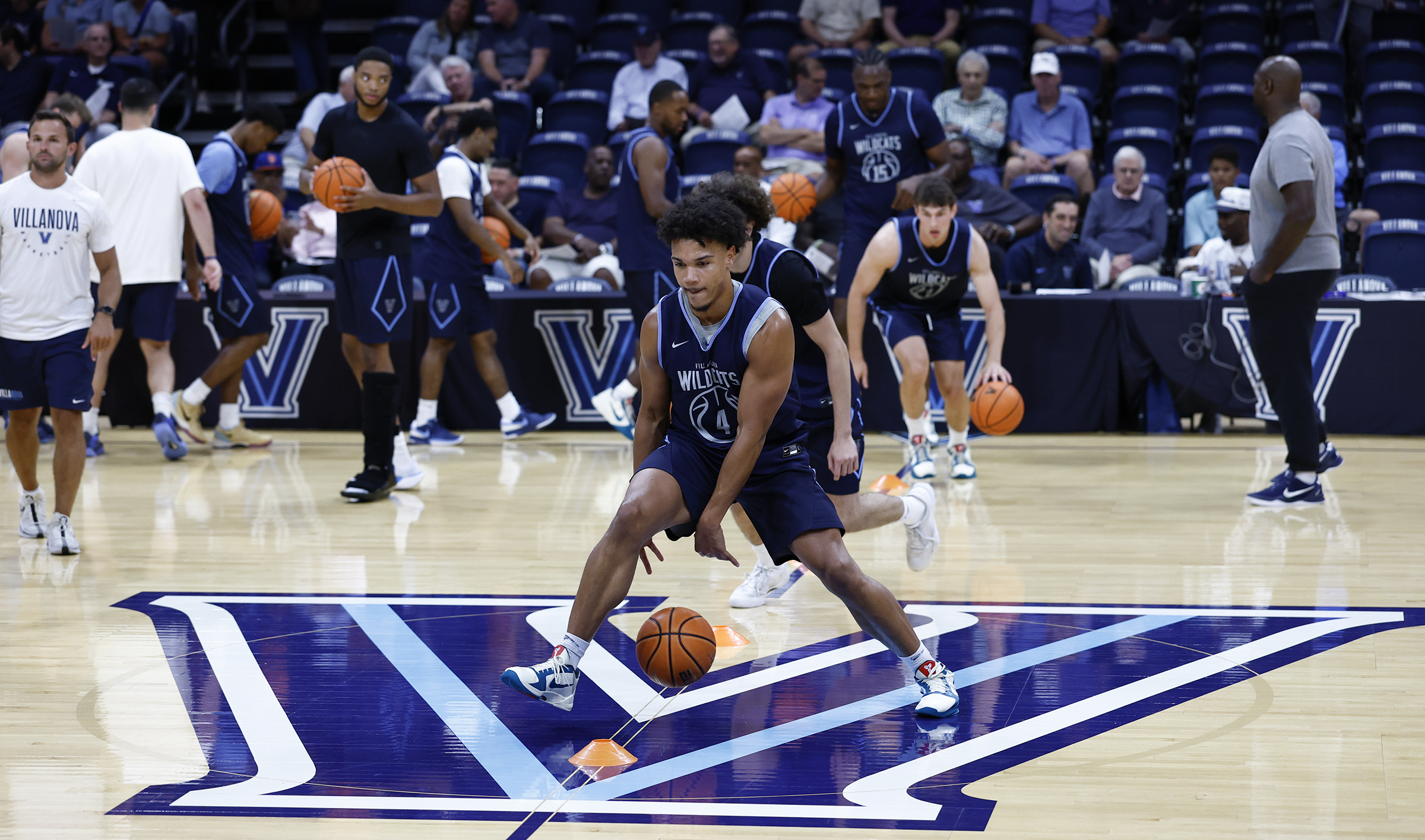
    NEW YORK — The first thing worth mentioning is that most of the hoopla and prognosticating going on Thursday morning at the Marriott Marquis in Times Square is rather meaningless. The transactional nature of college sports — Villanova’s men’s team, for example, has two returning players — has made it so that trying to predict an order of teams, and which players will fill out the all-conference teams, is like throwing darts with one eye closed after several pints.

    Kevin Willard at one point responded to a reporter who asked about scouting other teams that he had “no idea who is on anyone’s roster.” Surely he knows a few, but the sentiment was an honest one. Villanova won’t play a Big East game until Dec. 19, and Willard has to continue getting his new-look team ready for the start of its 12-game nonconference slate.

    But where Villanova landed in the preseason coaches poll was fitting. The Wildcats are third, right where they finished last season, behind the 1-2 punch of Connecticut and St. John’s at the top of the Big East. Villanova went 15-5 in the conference last season, Willard’s first campaign as Villanova coach. St. John’s was 18-2 and UConn was 17-3. There was a clear top tier, a clear No. 3 in Villanova, and then the rest of the pack started with fourth-place Seton Hall at 10-10.

    Willard took the data from last season and went to work in the offseason. The Wildcats lost just about every time they matched up with NCAA Tournament-quality teams. Blown out and beaten up at Michigan. Bullied twice by St. John’s. Beaten twice by UConn, which went to the Final Four. Not composed enough down the stretch in a tournament loss to Utah State. The offseason rebuild had a clear goal: Get bigger, more physical, more experienced.

    Villanova guard Tyler Perkins was the team’s leading scorer last season.Yong Kim / Staff Photographer

    Leading scorer Tyler Perkins is back, as is forward Matt Hodge, who is recovering from an ACL surgery. But the Wildcats are likely to roll out a five-man starting lineup one month from Thursday in Rome against Notre Dame with four newcomers. They include 7-foot-3 center Luigi Suigo, a 19-year-old freshman from Italy projected to be selected in the first round of next year’s NBA draft. Next to Suigo in the front court are two seniors who played three seasons of Big Ten basketball prior to transferring to Villanova in 6-10 power forward Kwame Evans Jr. (Oregon) and 6-6 forward Devin Royal (Ohio State). Junior Illinois-Chicago transfer Elijah Crawford is projected to start at point guard next to Perkins.

    The bench has two senior guards in Jake Fiegen (Cornell), a sharpshooter, and a smaller scorer in Buddy Simmons (St. Bonaventure), who scored 16.4 points per game last season. Hodge will be a 22-year-old redshirt sophomore whose shooting prowess will be useful as soon as he’s ready to return from surgery. Freshman Adam Oumiddoch, a 6-5 guard, also will get minutes and contribute. Willard may play as many as 11 guys after finishing last season with an eight-man rotation that sometimes was more like seven. That final rotation had two freshmen, two sophomores, and a redshirt sophomore.

    This team, by contrast, will start a junior, three seniors, and a freshman lottery pick, while the top of its bench rotation has two seniors and a 22-year-old redshirt sophomore.

    Willard was open about what separated his roster from the better ones last season and what he had to do to rectify that.

    So, gap closed?

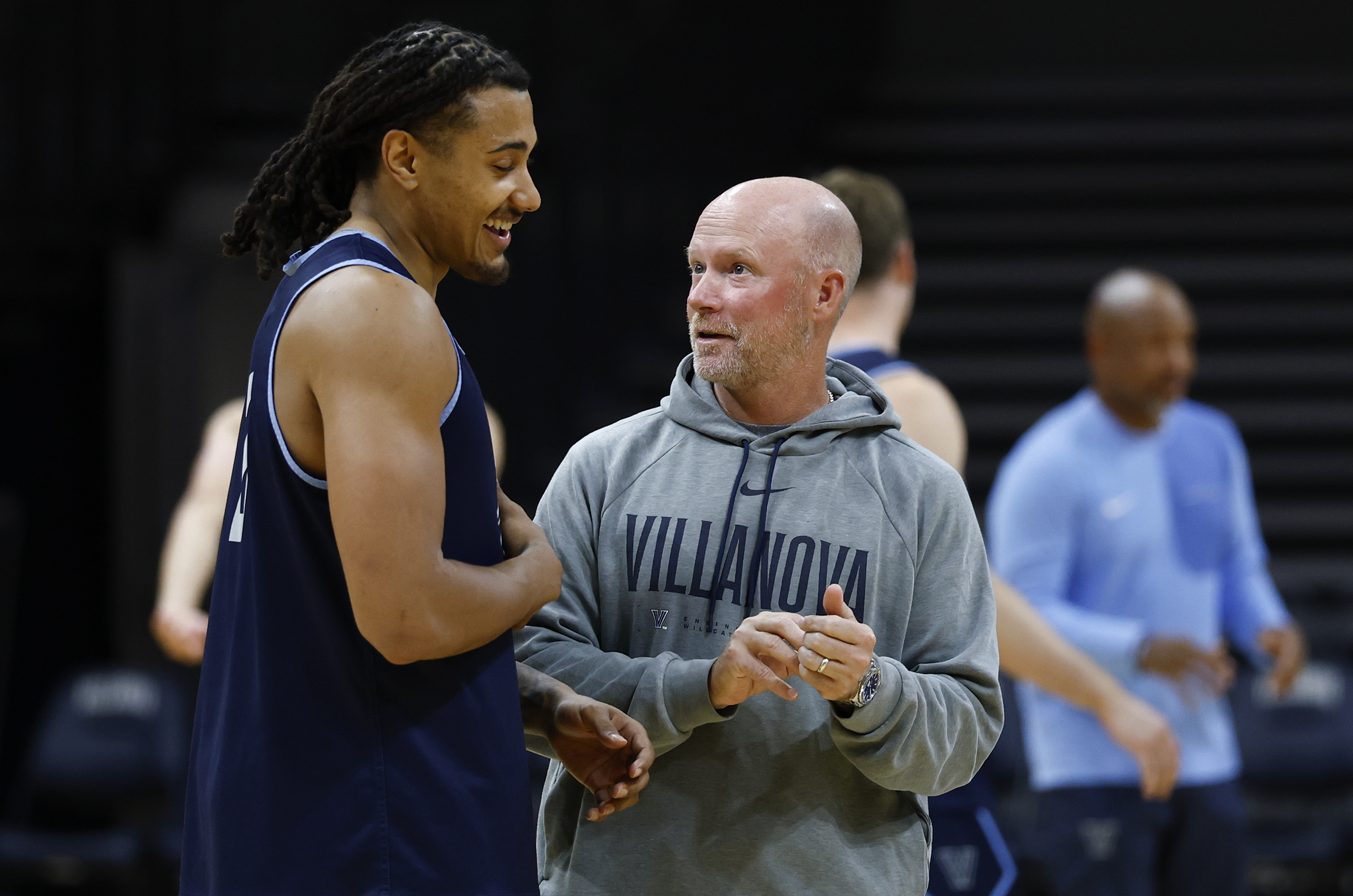
    “Absolutely,” he said Thursday. “I think in practice, if you come watch practice, the level of physicality, it’s almost a little bit too much. I haven’t practiced longer than 90 minutes so far. Just the experience we have, the games that these guys have played in, they understand what high-level basketball is all about.

    “I think one of the issues last year was we were so young at times we just didn’t understand the physicality we were going to have to play. Last year’s group played with unbelievable heart and passion. It’s why we won so many games. It just wasn’t old enough and physical enough to be able to understand what you have to do to win at a little bit higher level.”

    Kevin Willard with forward Devin Royal during an open practice on July 27.Yong Kim / Staff Photographer

    There’s a different understanding with this group.

    “We already know the expectations that come with coming to Nova and what we have to bring every night,” said Evans, who has shed the walking boot he wore on his left leg during the team’s Summer Jam open practice in July.

    Those physical practices and the different bodies Villanova has in the rotation are certainly noticeable to Perkins, who is back to full basketball activities after right shoulder surgery.

    “It’s definitely an adjustment,” Perkins said. “This year when I drive the paint I got 7-3 Luigi Suigo and 7-1 Nico [Onyekwere, a reserve center]. It’s not every time you can get a layup. Shooting over them has also been something I’ve been noticing.”

    A new roster with a new makeup also means the coach has changed his approach.

    “It’s two total polar opposites,” Willard said when asked if his coaching style changes this year. “Last year’s team was really fun to coach because you had to do so much coaching and teaching. So from that standpoint it was really fun. This team is a lot of fun because they know what they’re doing.

    “From that standpoint it’s a lot of fun because we kind of let them be who they are and the team can kind of evolve around their personalities instead of mine.”

    What the personality of this team ends up being remains to be seen. The Wildcats begin a three-game exhibition slate on Oct. 11 at Rutgers and then open their season Nov. 1 in Italy. They have a measuring stick game on Nov. 21 vs. Michigan in South Philly and play at Kansas on Black Friday.

    Are they ready for UConn and St. John’s? Are they ready to be back in the conversation at the top of a conference Jay Wright once lorded over?

    Perkins had a pretty simple answer for what proving that looks like.

    “Just winning games,” he said. “That’s what it takes, to win games.”

  • Why Rams defensive tackle Aaron Donald has the Eagles’ respect, even after hiatus: ‘He’s still Michael Jordan’

    Why Rams defensive tackle Aaron Donald has the Eagles’ respect, even after hiatus: ‘He’s still Michael Jordan’

    (Ed. note: Aaron Donald was ruled out for Sunday’s game against the Eagles with a back injury, ESPN reported on Friday afternoon).

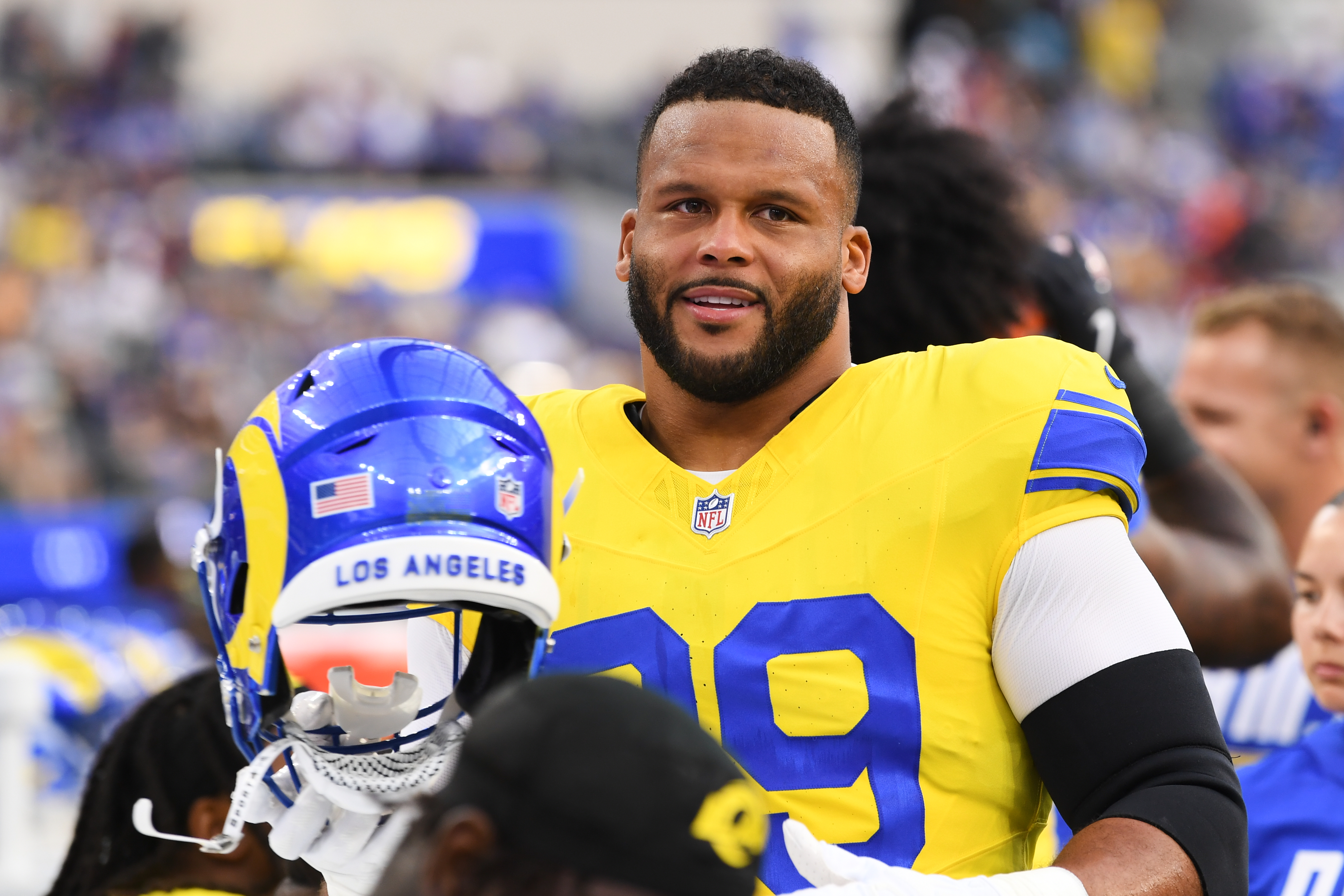
    Two and a half years after he first announced his retirement, Los Angeles Rams defensive tackle Aaron Donald decided he wasn’t finished wreaking havoc against NFL offenses.

    Donald, 35, officially came out of retirement on Aug. 30, signing a one-year, $20 million contract to return to his former club of 10 years. The three-time NFL Defensive Player of the Year, eight-time All-Pro, 10-time Pro Bowl interior defensive lineman figured to team up with similarly decorated edge rusher Myles Garrett, whom the Rams acquired from the Cleveland Browns in June.

    Four weeks into the season, the Rams defensive front won’t be at full strength in Sunday’s game against the Eagles. Garrett is on injured reserve while recovering from knee surgery. Donald, meanwhile, has been back in action for the last two games following a three-week ramp-up period.

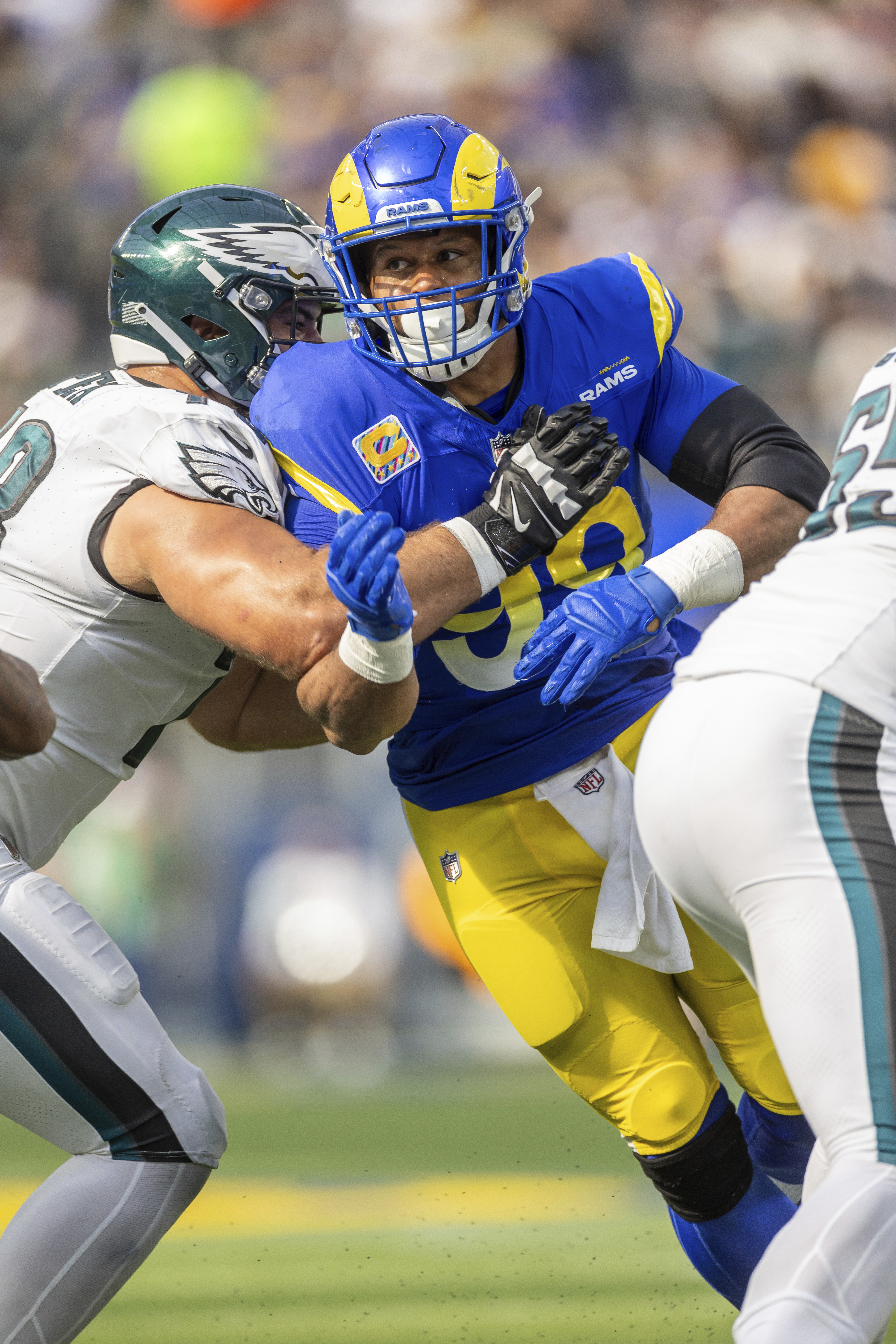
    Still, led by Donald, tackle Kobie Turner, and outside linebacker Byron Young, the Rams defensive line will pose a challenge to the recently reconfigured Eagles offensive line. Although Donald was away from football for the last two seasons, he hasn’t lost a step, according to Cam Jurgens.

    “It’s like Michael Jordan quitting to go play some baseball,” said Jurgens, who has shifted from center to left guard in the absence of the injured Landon Dickerson. “He comes back, he’s still Michael Jordan.”

    But even the Jordan of the NFL hasn’t shot 100%. Through 156 career regular-season games, the 6-foot-1, 280-pound Donald has recorded 111 sacks, compiled against all but two teams — the Eagles and the New York Jets.

    On Sunday, Donald will seek his first sack since his NFL return and the first sack of his career in his sixth game against the Eagles, so long as he is healthy enough to play after missing practice Wednesday and Thursday with a sore back. The Eagles offensive line, which has the fourth-best pass-block win rate in the league through three games (58%), according to ESPN, will be tasked with preventing him from adding another feather to his cap.

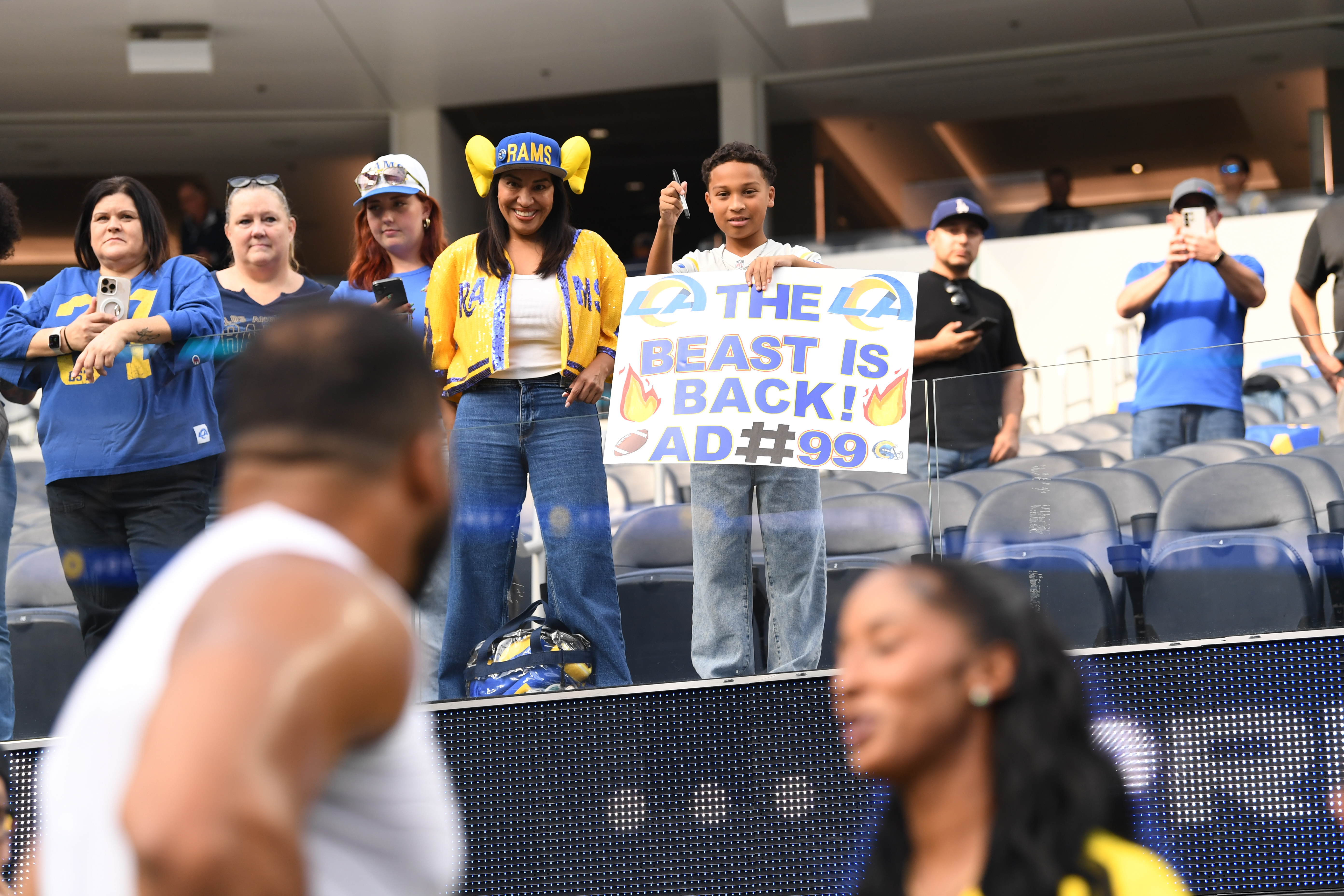
    Aaron Donald (left) looks up at a sign held by a young fan before a Week 2 meeting with the Giants. Katie Chin

    The Eagles could catch a break if Donald can’t take the field. But even before the Rams added Garrett and Donald this offseason, Tyler Steen acknowledged that they still had a “really good” defensive front.

    Regardless, the Eagles are preparing as if Donald will play, and for good reason.

    “He can ruin the run game, he can ruin the pass game, and if you don’t formulate a plan, you’re cooked,” Jordan Mailata said.

    ‘Four hands’ on Donald

    Mailata remembers well the week of preparation leading up to the Eagles’ Week 5 matchup against the Rams in 2023.

    That was the last time that the Eagles faced Donald, who was 32 at the time and would go on to lead Rams’ interior defensive linemen that year with a 12.9% pressure rate. Whenever the Eagles played a premier player like Donald, coach Jeff Stoutland and the Eagles offensive line would devote extra time to game-planning against them.

    “We spend so much time on making sure that they don’t wreck the game, because they’re game wreckers,” Mailata said. “So there was a lot of detail involved in understanding, especially with Coach Stout and how he [was] very anal on the details and the small things, making sure that there were four hands on him, and if we could get six hands, we could get six hands.”

    The more hands and eyes on Donald, the better. The plan the Eagles devised wasn’t novel. That season, he faced double teams on over 60% of his pass-rush snaps during the regular season, according to ESPN.

    The Eagles contained Aaron Donald when he last faced them in 2023.Jeff Lewis

    He would still find ways to make the most of his reps, even when he had at least two sets of hands on him. By the end of the regular season, Donald generated 17 pressures against double teams, which was tied for sixth-most in the league, per Next Gen Stats.

    But in Week 5 of that season, the Eagles kept Donald out of the major categories on the stat sheet in their 23-14 win over the Rams. They accomplished that feat with backup right guard Sua Opeta starting in place of the injured Jurgens. Rarely was Donald ever isolated against any single Eagles offensive lineman. Especially when Donald lined up against Opeta, either Jason Kelce at center or Lane Johnson at right tackle were on standby to help block him.

    Donald finished with a 2.9% pressure rate, which would end up being his second-lowest of the year, according to Next Gen Stats.

    While lined up over left guard Landon Dickerson, Donald was credited with a quarterback pressure, setting up the lone sack that Jalen Hurts took that day at the hands of Rams outside linebacker Zach VanValkenburg (although Hurts held on to the ball for roughly six seconds before taking the sack).

    “We [came] into work that year and that season, and we knew what time it was,” Mailata said. “The coaches did a great job of formulating the plan, making sure that we’re all on the same page on the protection. And so after that, it’s all about executing.”

    A new-look O-line against a familiar foe

    As Mailata watched Donald’s most recent game against the Denver Broncos, he noticed that Rams defensive coordinator Chris Shula will move him around the line of scrimmage, from right guard to left guard. But as Donald continues to get acclimated to game action, Mailata noted that the Rams could decide to line the prototypical “3-technique” over the center on occasion.

    “This could be the week,” Mailata said.

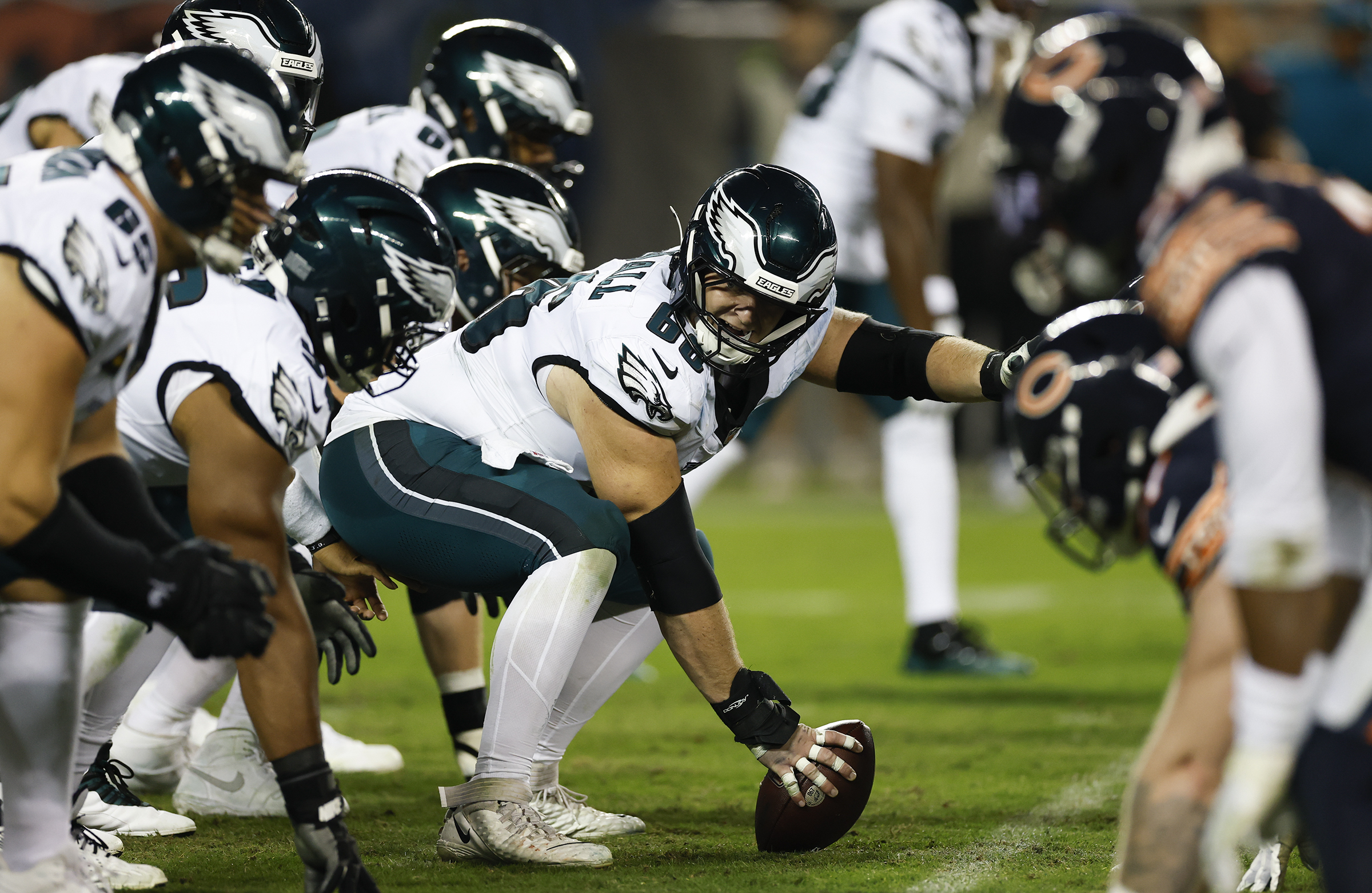
    The Eagles’ new-look offensive line, including center Drew Kendall (66), will have its hands full on Sunday. Yong Kim / Staff Photographer

    After all, Donald is set to face three young, relatively inexperienced interior offensive linemen he has never faced in Jurgens, Steen and center Drew Kendall. Jurgens is on the cusp of starting his third career game at left guard, where he has conceded a total of 11 pressures on 73 pass-blocking snaps (15.1%), per Next Gen Stats.

    The group managed to prevent Tennessee Titans All-Pro defensive tackle Jeffery Simmons from completely wrecking the game. Can they do the same to Donald? Jurgens asserted the offensive line’s success on Sunday has less to do with game-planning against a specific player and more to do with looking inward.

    “How can you get better in your technique and be sound and complete with everything?” Jurgens said. “A lot of times, you look at somebody, jersey number, and you change how to block them. You’ve got to worry about your own technique and whenever you have a stud like that, you just want to get four hands and four eyes on him as much as you can.”

    Mailata said new offensive line coach Chris Kuper has taken a “pretty similar” approach to game-planning against Donald as the Eagles have in the past. He has been detailed while conveying what the protection unit is trying to achieve in any given situation. Steen said any great player requires a little extra attention.

    The plan itself, though, won’t be exactly the same as it was in 2023. Steen acknowledged that it won’t be possible to double-team Donald all the time, as it can mess up the integrity of the protection as a whole.

    “There’s some plays that he’s just going to be one-on-one,” Steen said. “We’re going to have to find a way to block him up and execute.”

    But Mailata said regardless of the plan, it’s on the players to execute, especially in the less familiar realm of the outside zone run-blocking scheme at the root of Sean Mannion’s offense.

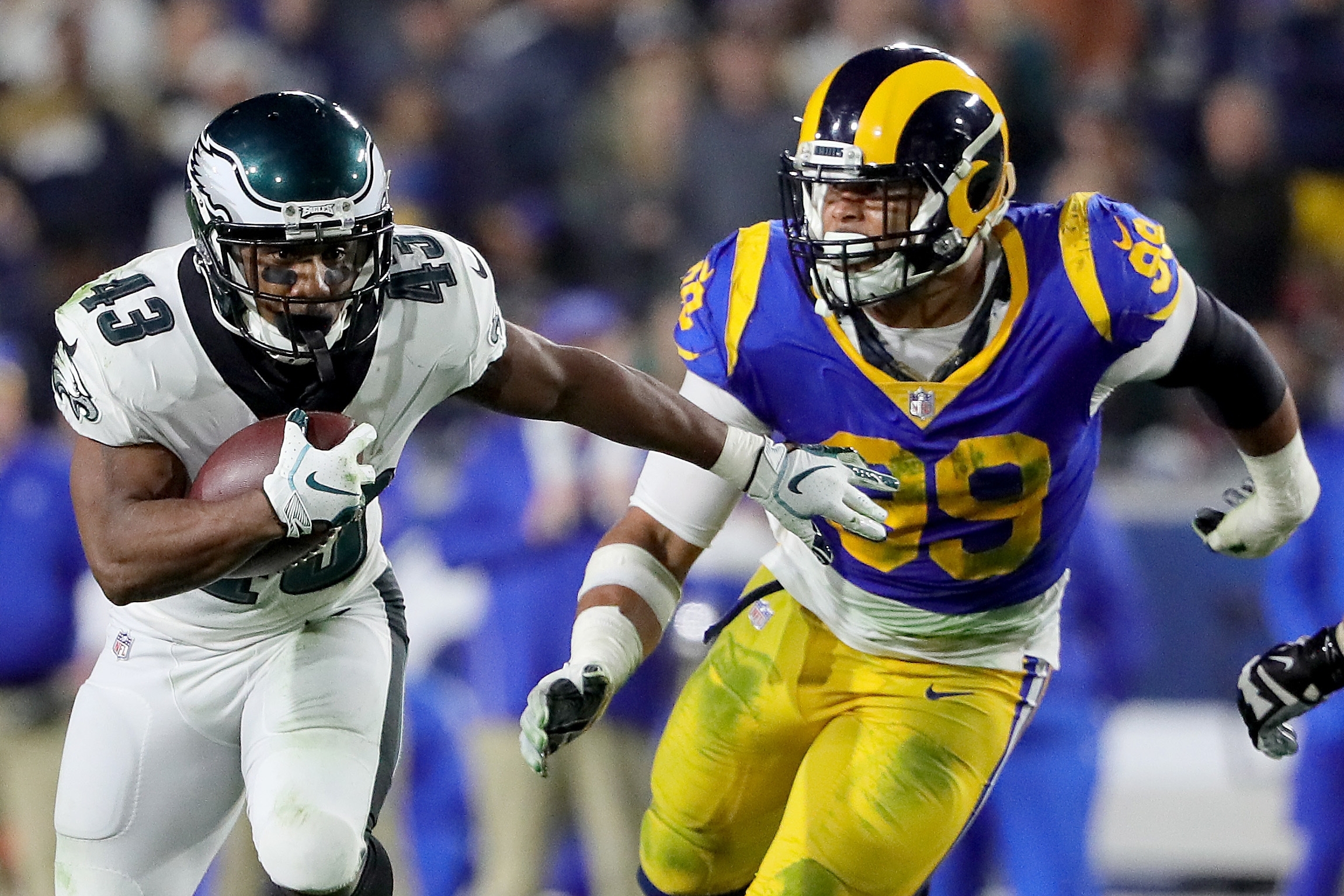
    Aaron Donald (chasing Darren Sproles in 2018) is revered as both a run-stopper and sack artist. DAVID MAIALETTI / Staff Photographer

    Mailata said the Eagles offense laid a “great foundation” for the outside zone game in the first half of Monday’s loss to the Chicago Bears. According to Sumer Sports, Saquon Barkley amassed 61 yards on seven outside-zone carries (+.38 expected points added per rush) before the offense was hampered by negative plays and penalties in the second half.

    “That’s going to help us so much heading into this week, because they have to protect against it,” Mailata said. “They have to plan for that, and so we just have to do a better job at … not being frazzled or scared about the defense of what’s going to happen and what if, just execute, put your head down, and run.”

    In theory, the more successful the Eagles are running the ball on early downs, the less likely they’ll see Donald on the field. He played 33 defensive snaps in Week 2 against the Giants (56.9%) and 35 in Week 3 against the Broncos (52.2%). Donald’s missed snaps have primarily been on early downs — he has been on the field for 24 of 27 third-down snaps over the last two weeks (88.9%), per Next Gen Stats.

    Kendall is hesitant to believe that the Rams are only going to utilize Donald in select situations for the rest of the season, however.

    “For all we know, he’s probably gearing up to play a full game against us,” Kendall said. “So we’ve just got to be ready for whatever happens this week, and we have to be prepared for him to be out there on every snap.”

    On paper, Donald hasn’t been as effective as he was when he last played in 2023. He mustered a single pressure on 18 and 24 pass rushes in Weeks 2 and 3, respectively, after generating multiple pressures in 89 out of 92 games played from 2018 to 2023. He hasn’t been on the field as much, though, playing 54% of the defensive snaps over the last two weeks compared to well over 80% in that same previous span.

    Still, that doesn’t mean the future Hall of Famer isn’t capable of turning on the jets, especially as he works his way back into playing shape.

    “Until he decides to stop, he’ll continue to be what he’s been,” Hurts said. “A lot of respect for him.”

  • ⚾ A-BS outcome | Sports Daily Newsletter

    ⚾ A-BS outcome | Sports Daily Newsletter

    Well, the Phillies’ hunt for Red October crashed and burned on the first day of the month. Last night’s 6-2 wild card loss in Atlanta ended a season that lasted 165 games and cost $322 million in payroll.

    The Phillies have made the postseason in five consecutive years but haven’t won a postseason series since the 2023 National League division series against the Braves. Now, like the rest of us, the team will watch as the Braves take on the Los Angeles Dodgers in the NLDS.

    Probably won’t be watching too intently, though, as Monday kicks off Sixers preseason; all eyes will be on whether the Eagles and Flyers can rebound from tough losses, and whether the Union can finish off its resurgent season on a high note.

    However, for those of us who need to relive the Phillies loss:

    Enjoy one more unseasonably warm day with temps expected in the 80s on this first Friday in October. Enjoy.

    — Kerith Gabriel, @phillysport, sports.daily@inquirer.com.

    If someone forwarded you this email, sign up for free here.

    ❓What did you think of this Phillies season? Email us back for a chance to be featured in the newsletter.

    ‘Who are we?’

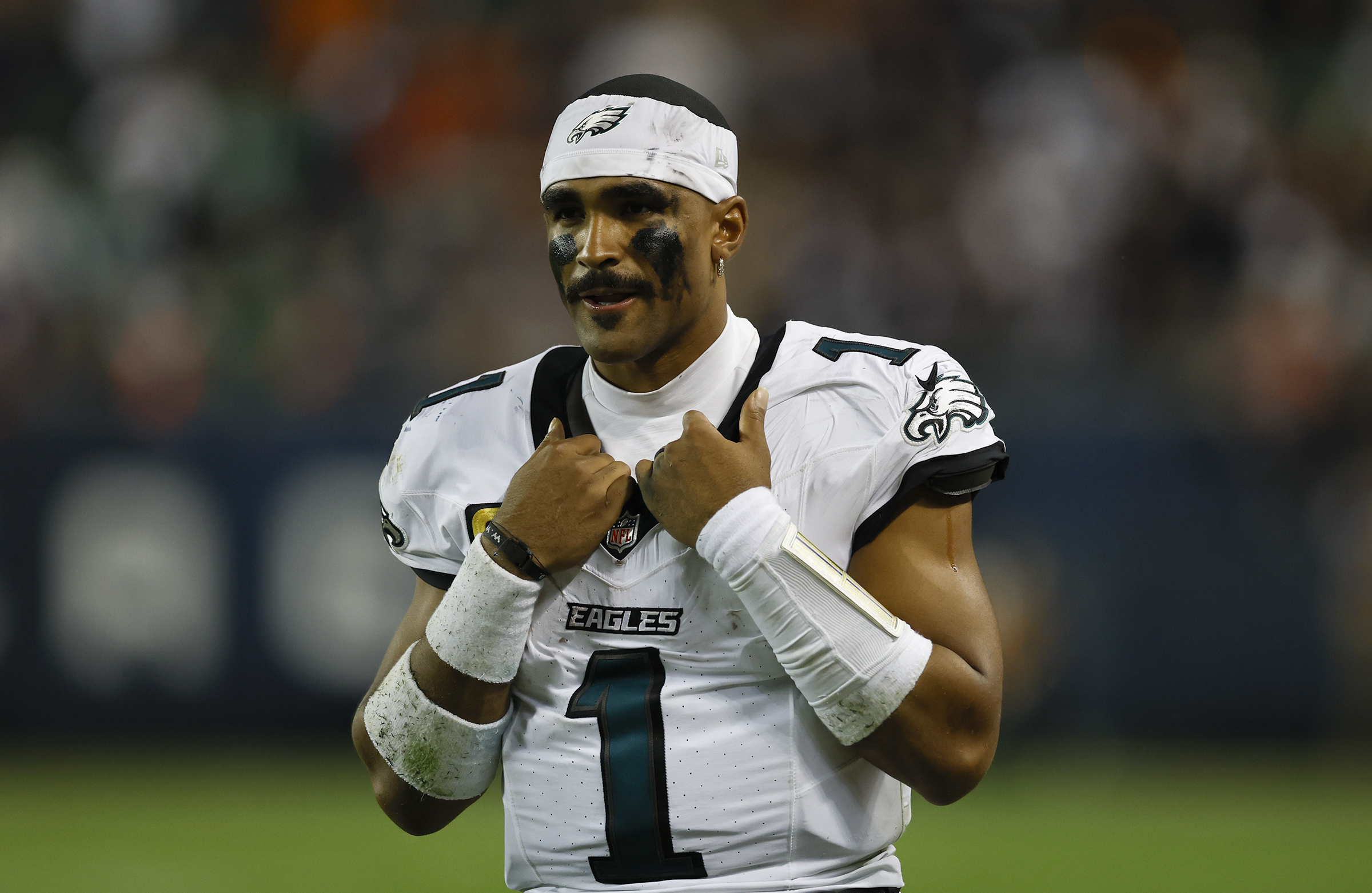
    Eagles quarterback Jalen Hurts said he asked the team to take an inward-facing look at itself following Monday’s loss to the Chicago Bears. Yong Kim / Staff Photographer

    Jalen Hurts said that’s the question he asked his Eagles teammates following Monday’s loss to the Chicago Bears.

    “Ask yourself that question because that’s a choice you can make, and being deliberate and intentional on how we move forward, so we can continue to improve,” Hurts recalled.

    The Eagles’ identity crisis is one the team hopes to figure out sooner rather than later with the Los Angeles Rams coming to Lincoln Financial Field on Sunday (1 p.m., Fox29). Inquirer writer Olivia Reiner has more on Hurts and the state of the offense.

    What we’re …

    🏈 Sharing: What the Rams are saying about playing the Eagles at the Linc this Sunday.

    🤔 Wondering: What goes into the decision to play a sport as demanding as football with a wrist hairline fracture?

    ⚽ Reading: How playing soccer has gotten more “fun” for Union striker Milan Iloski in a return to his rightful position.

    🪗 Watching: This one-woman band and superfan when it comes to the Eagles fight song.

    🎧 Doing: Getting up to speed on all things Eagles courtesy of the unCovering the Birds podcast with Jeff McLane.

    Locking in

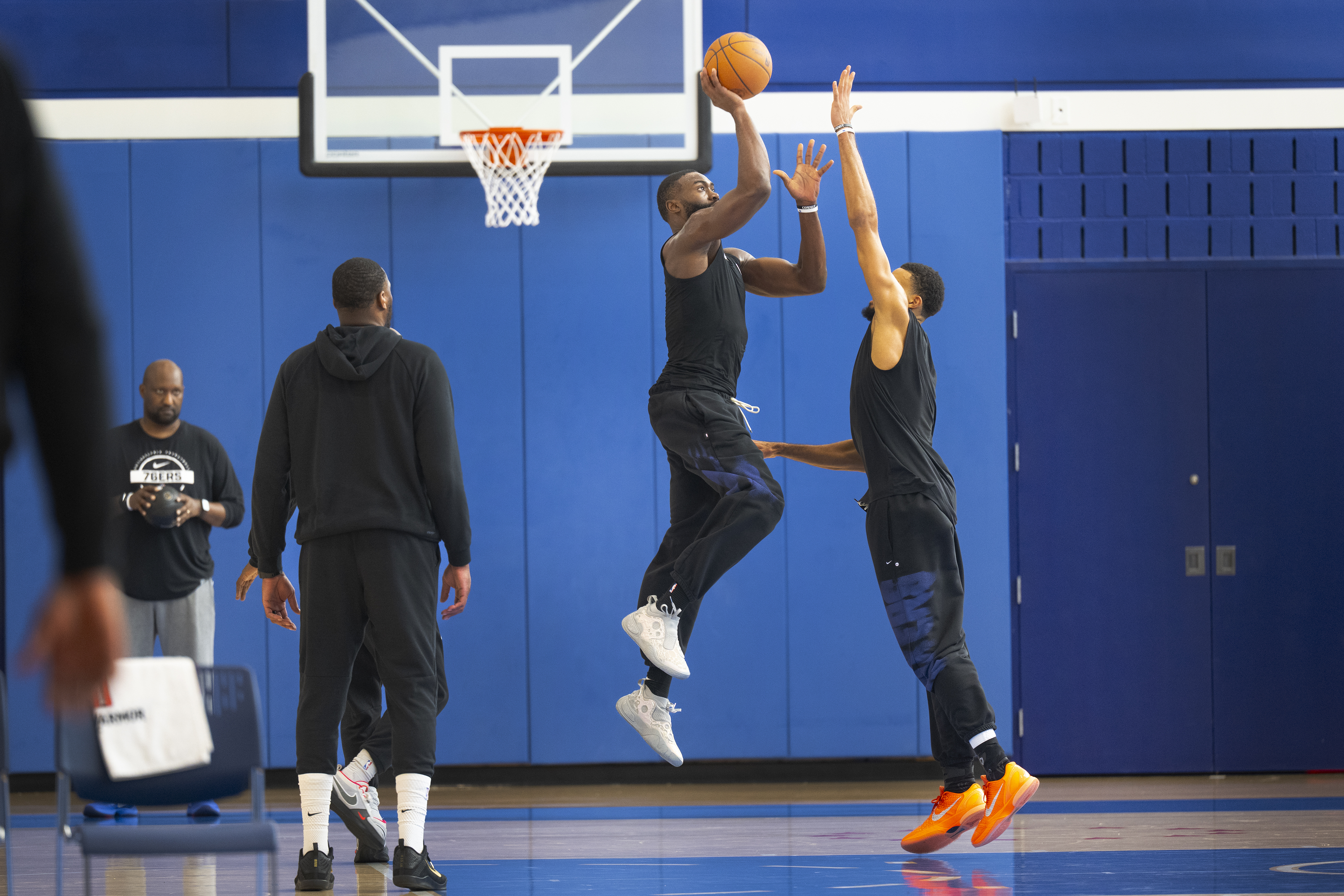
    Jaylen Brown (center) practices at the Sixers’ practice facility Thursday.Jose F. Moreno / Staff Photographer

    Jaylen Brown was once again the last player to leave the floor after practice on Wednesday, an encouraging sign heading into the first official preseason game against the New York Knicks on Monday (7 p.m., NBCSP).

    After working on post-ups and back-to-the-basket moves on Wednesday, Brown was particularly in small group workouts with members of the player development staff and players like Justin Edwards and Rayan Rupert.

    That facet of training camp — the ability to work with and impart knowledge to some of the younger players — has been a highlight for Brown so far.

    “A lot of them have shown me a lot of respect,” Brown said. “Ask me questions, or ask to jump in my workouts, and I’m welcome, and I’m open to all of that, being a teacher. I was a guy who was always asking questions, so I appreciate it when the young guys are asking questions.”

    High expectations

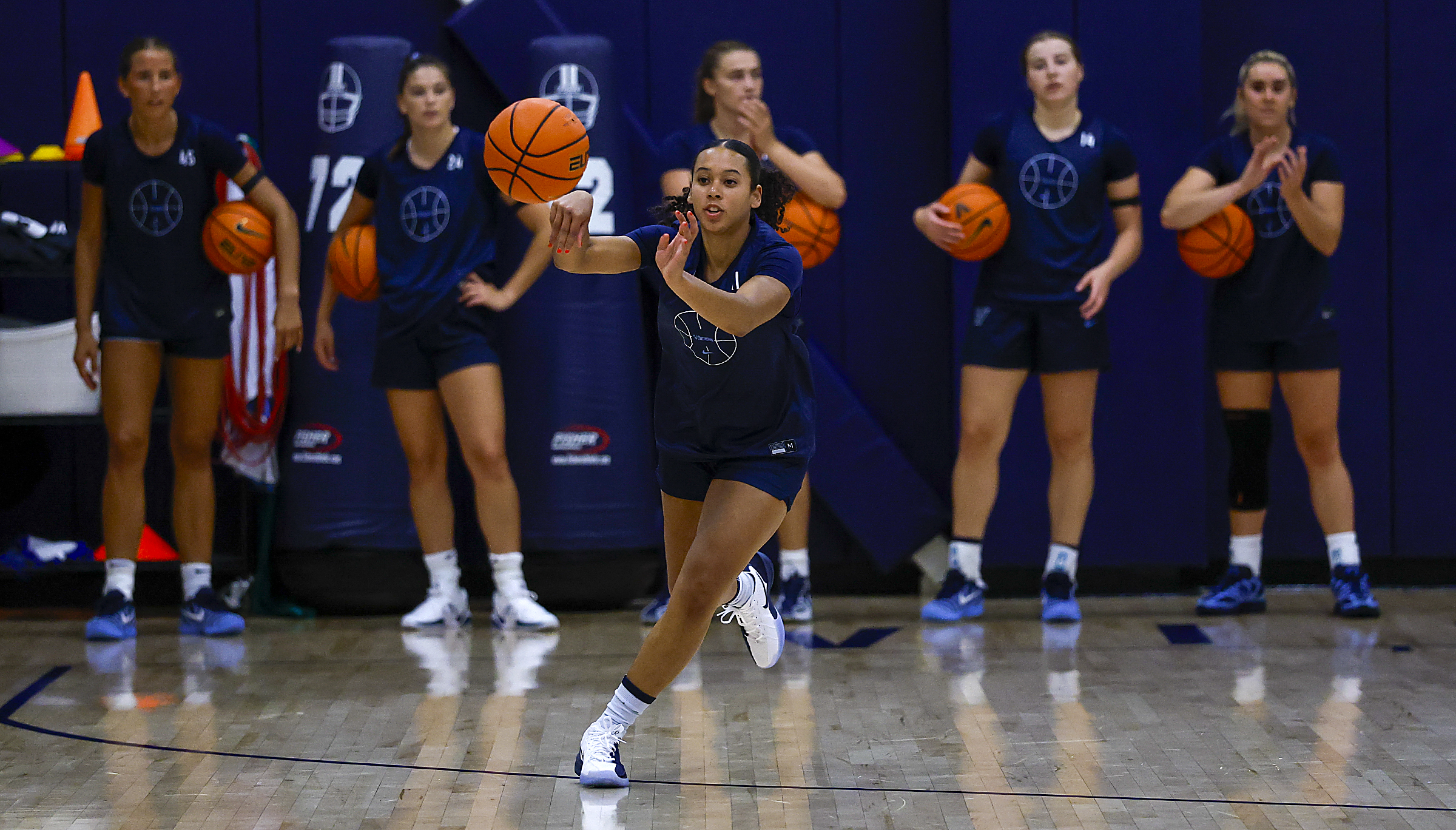
    Villanova guard Jasmine Bascoe is expected to lead the Wildcats once again this season as a team ranked second in Big East preseason polls. Yong Kim / Staff Photographer

    Villanova is usually high atop the list of the coaches who help compile preseason basketball polls, but this year both the men’s and women’s programs are ahead of the pack. On the men’s side, the Wildcats are picked third in the polls, while the women were picked to finish second behind Geno Auriemma’s perennially dominant UConn program.

    It’s where both teams ended last year, at least on paper, but what’s different about this year? Yesterday, Inquirer writer Jeff Neiburg attended Big East media day to take a look.

    On this date

    Oct. 2, 1991: The day that kickstarted the move of former Flyers great Eric Lindros to Philly, after he refused to play for the Quebec Nordiques after being selected with the No. 1 overall pick in the NHL draft. Lindros landed in Philly a few months later on June 1992.

    Our best sports 📸 of the week

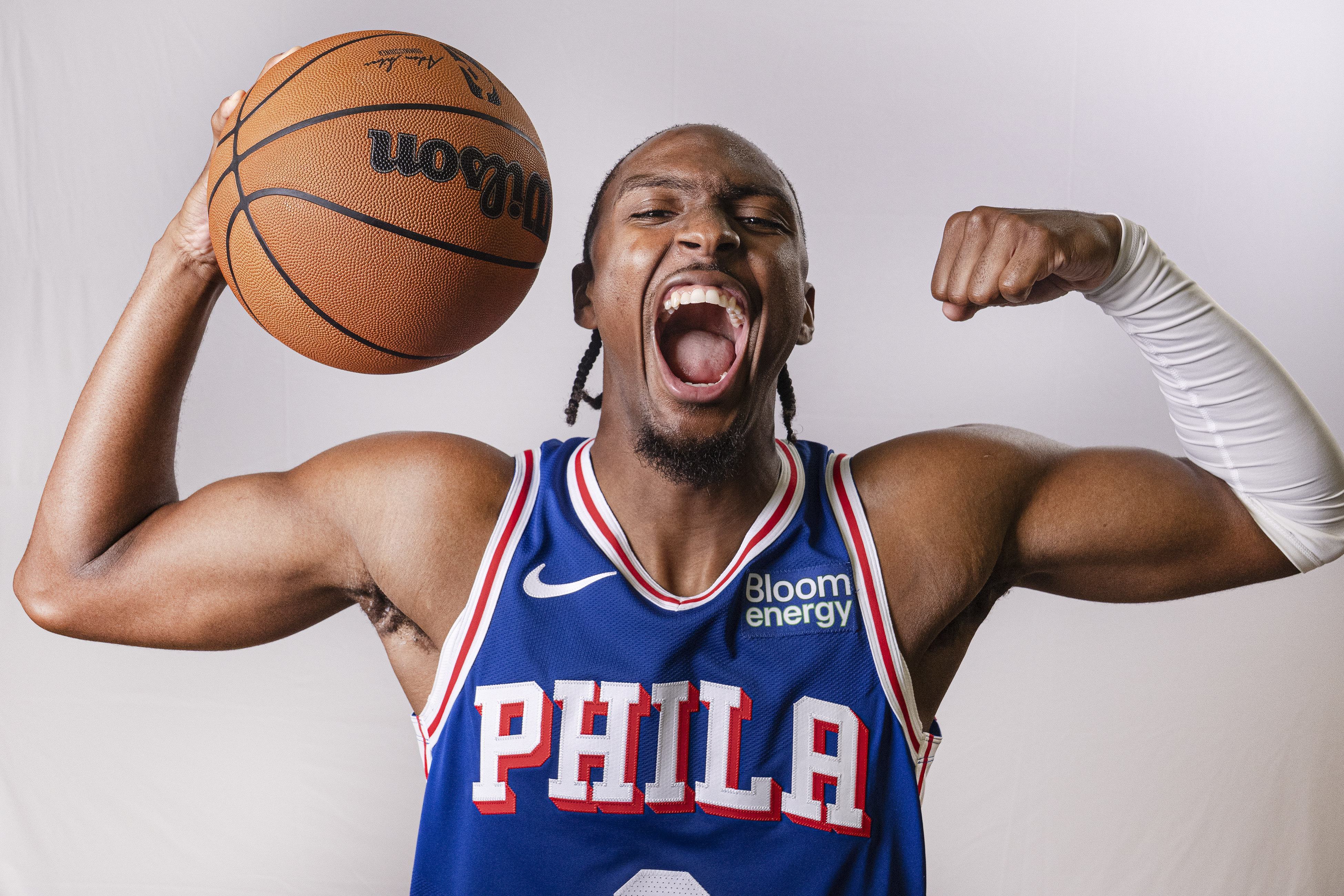
    Sixers guard Tyrese Maxey poses for a portrait during NBA Media Day at the team’s training facility in Camden on Monday.Jose F. Moreno / Staff Photographer

    The Eagles hit the first bump in their 2026 schedule with a 27-7 loss to the Chicago Bears on Monday night, but the day wasn’t a total loss for Philly sports fans: it was also their first chance to see LeBron James in a Sixers uniform during the team’s media day. The Phillies also clinched a playoff berth a day earlier and traveled to Atlanta for a wild-card series against the Braves.

    Each Friday, Inquirer photo editors picked the best sports images from the last seven days. Here’s this week’s Big Picture …

    Mike Sielski’s take …

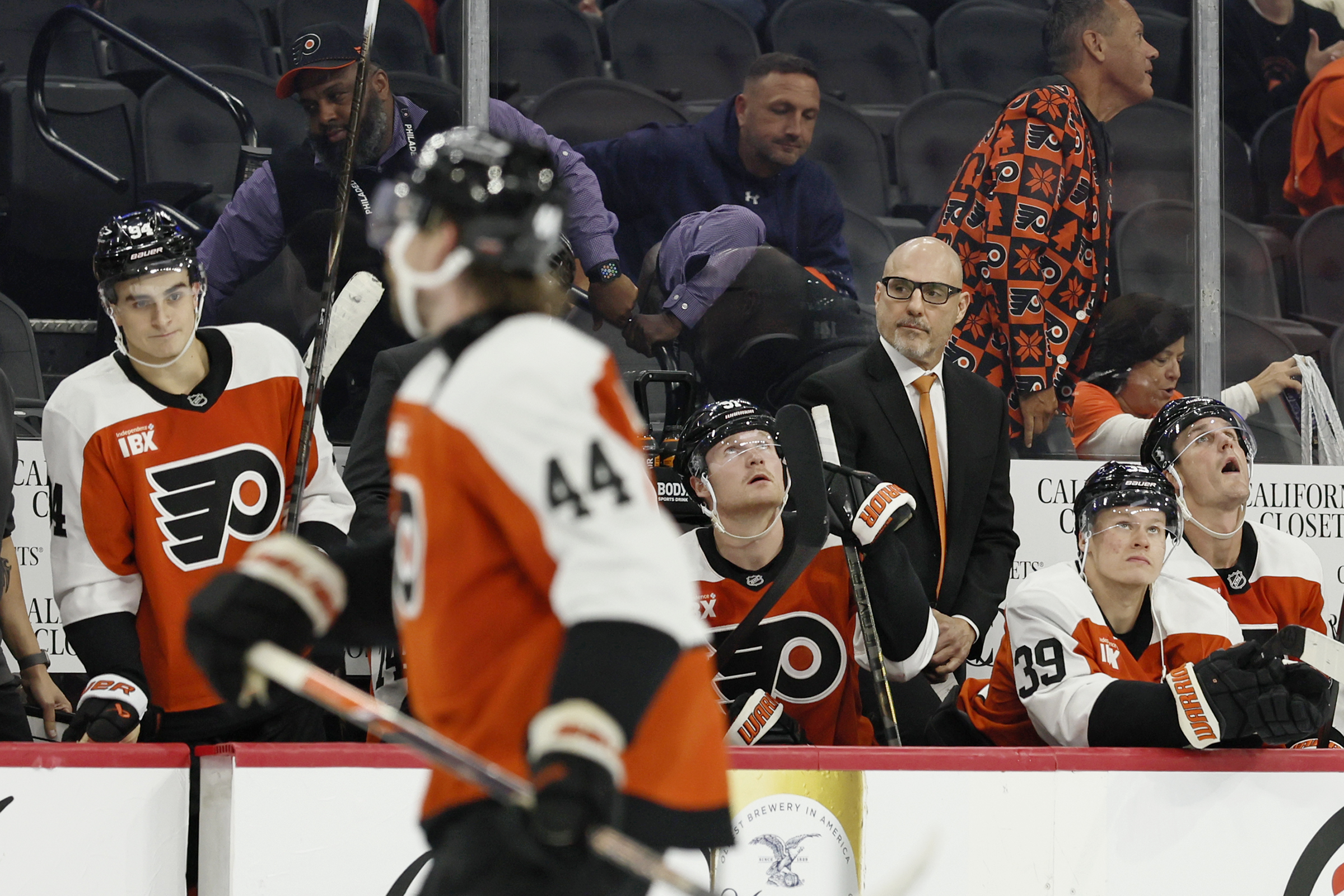
    A dejected Flyers group looks on following the team’s season-opening loss to the Pittsburgh Penguins on Wednesday.Elizabeth Robertson / Staff Photographer

    Amid the most optimism and the highest expectations around them in years, the Flyers opened their regular season Wednesday night and were bad. More than just bad, actually. They were horribly bad. They were terribly bad. They were Plan 9 from Outer Space bad, left-the-milk-out-too-long bad, Andy Dalton-on-third-and-goal bad. — Mike Sielski’s latest looks at whether or not the Flyers’ 7-0 season-opening loss is cause for concern or a fluke.

    🧩 Unscramble the anagram

    SPAT NETEN

    Which team held a players-only closed-door meeting this week to “get back on track” following a demoralizing conference loss? Think you know? Take a guess and then click here to see if you’re correct.

    What you’re saying about the Flyers

    We asked: After the Flyers’ opening night, share your prediction for this year’s squad. How far do you think they’ll go?

    All right: last night was the worst home opener loss in 55 years. In 1971, the Flyers lost to the Kings by an identical 7-0 score. Let’s assume they got it out of their system, and that Vladař cleaned off the rust. (One has to hope he wasn’t playing hurt: if he was, that’s trouble.)

    Two things were deeply disturbing: the pass-first mentality is still there, and the power play is completely inept. If either is allowed to persist, the playoffs may well be a long shot at best. If both persist, say hello to a lottery pick.

    About all I can offer is the recommendation of going completely outside the organization and hiring the best available power play coach — that is, one with a proven record of success — and effectively giving them autonomy. As to the pass-first mentality…maybe it’s time to bar the old boys and the lifers from practice except from the stands. Keep them out of the locker room unless invited specifically, and don’t invite them to address the team under any circumstances. — John B.

    We compiled today’s newsletter using reporting from David Murphy, Mike Sielski, Lochlahn March, Jeff McLane, Kerith Gabriel, Olivia Reiner, Jeff Neiburg, Ariel Simpson, Lexie Linderman, Chris Hine, Mike Sielski, Becca O’Reilly, and The Inquirer’s photography staff.

    By submitting your written, visual, and/or audio contributions, you agree to The Inquirer’s Terms of Use, including the grant of rights in Section 10.

    Thanks for reading, and enjoy your first weekend of October. We’ll be back in your inboxes on Monday. — Kerith

  • The Big Picture: The Sixers get their close-ups, the Phillies hunt for Red October, and the week’s best sports photos

    The Big Picture: The Sixers get their close-ups, the Phillies hunt for Red October, and the week’s best sports photos

    The Eagles hit the first bump in their 2026 schedule with a 27-7 loss to the Chicago Bears on Monday night, but the day wasn’t a total loss for Philly sports fans. It was also their first chance to see LeBron James in a Sixers uniform during the team’s media day. The Phillies also clinched a playoff berth a day earlier and traveled to Atlanta for a wild-card series against the Braves.

    Each Friday, Inquirer photo editors pick the best sports images from the last seven days. Here’s this week’s Big Picture …

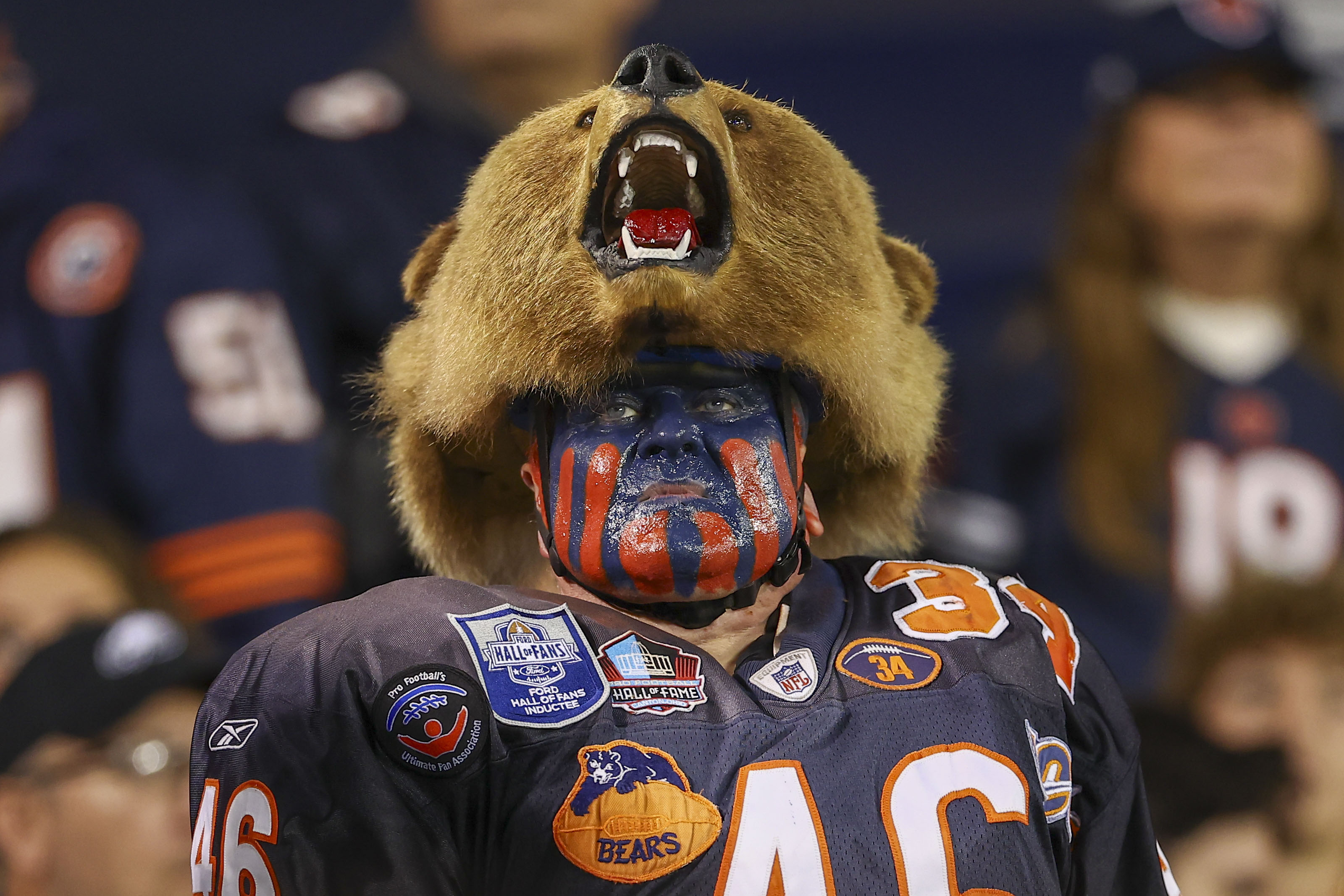
    A Chicago Bears fan wasn’t thrilled by the Eagles’ last-second Tush Push score in the second quarter, but that was about all they had to frown about as their team rolled to a 27-7 win over the Birds.Monica Herndon / Staff Photographer
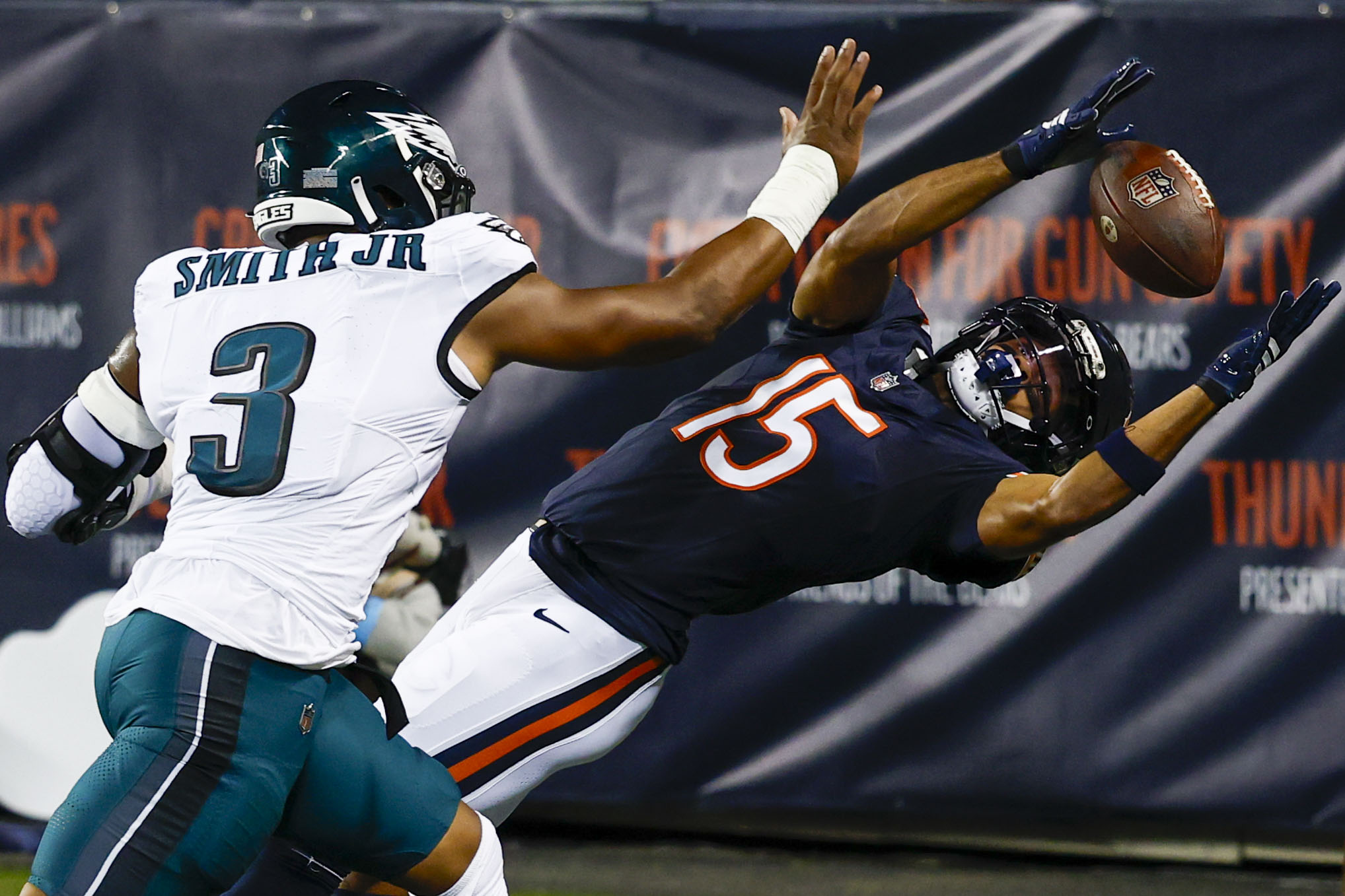
    Chicago Bears wide receiver Rome Odunze can’t hang on to a pass from Case Keenum (not pictured) as he’s defended by Eagles linebacker Nolan Smith.Yong Kim / Staff Photographer
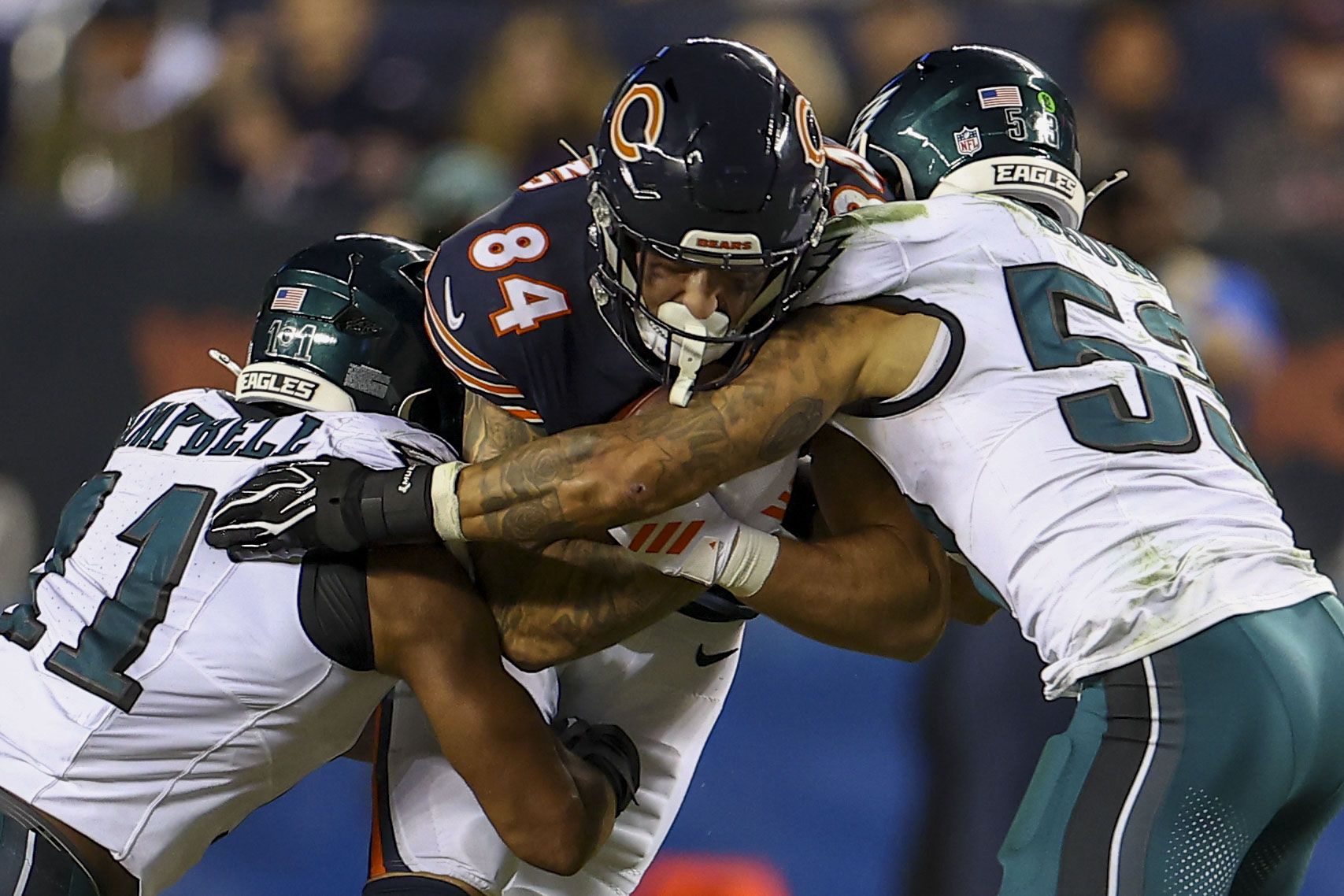
    Eagles linebackers Jihaad Campbell and Zack Baun tackle Bears tight end Colston Loveland in the third quarter. Loveland caught four passes for 31 yards.Monica Herndon / Staff Photographer
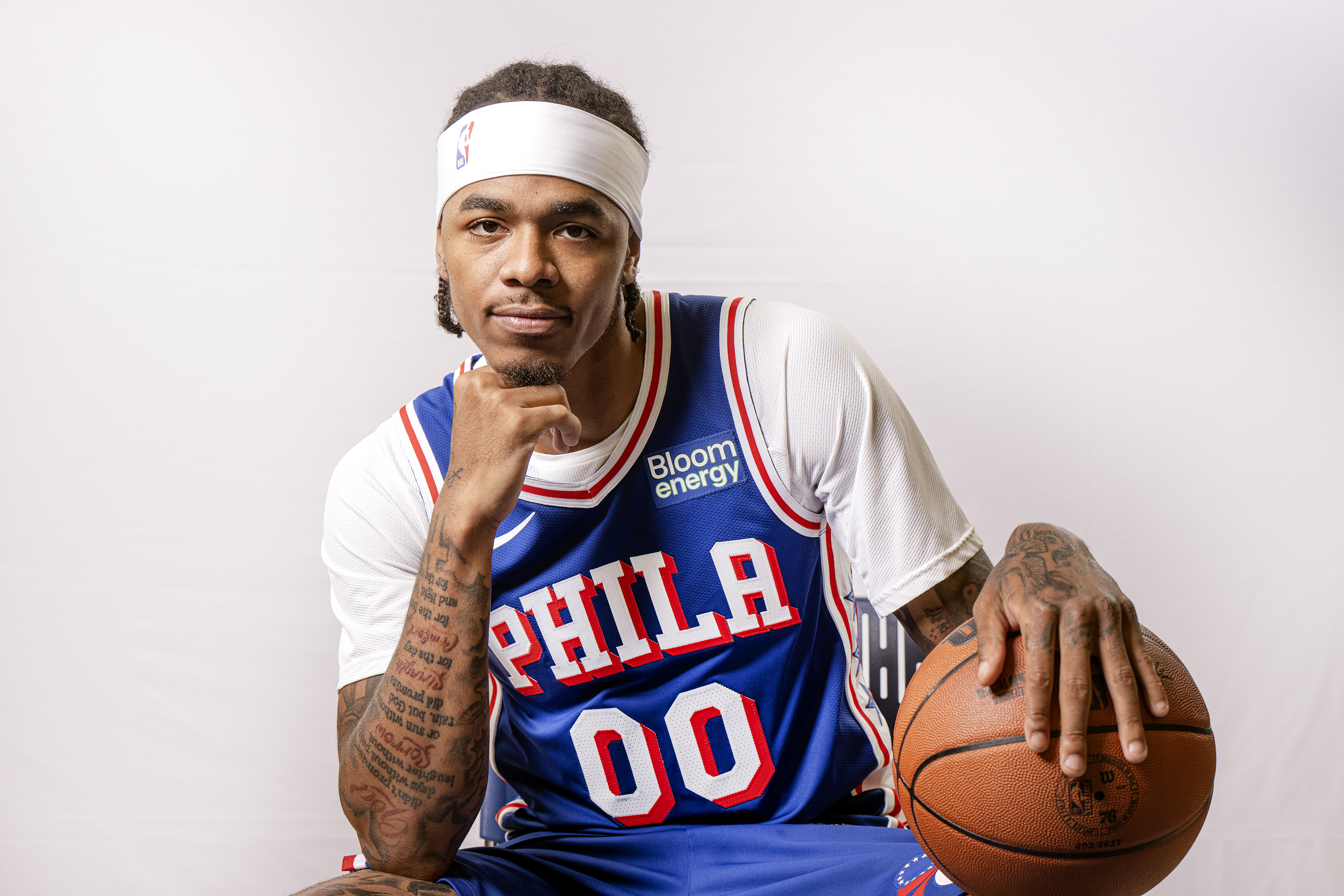
    Sixers center Adem Bona poses for a portrait during media day. The third-year player is expected to serve as Joel Embiid’s backup when he recovers from the foot sprain he suffered in the offseason.Jose F. Moreno / Staff Photographer
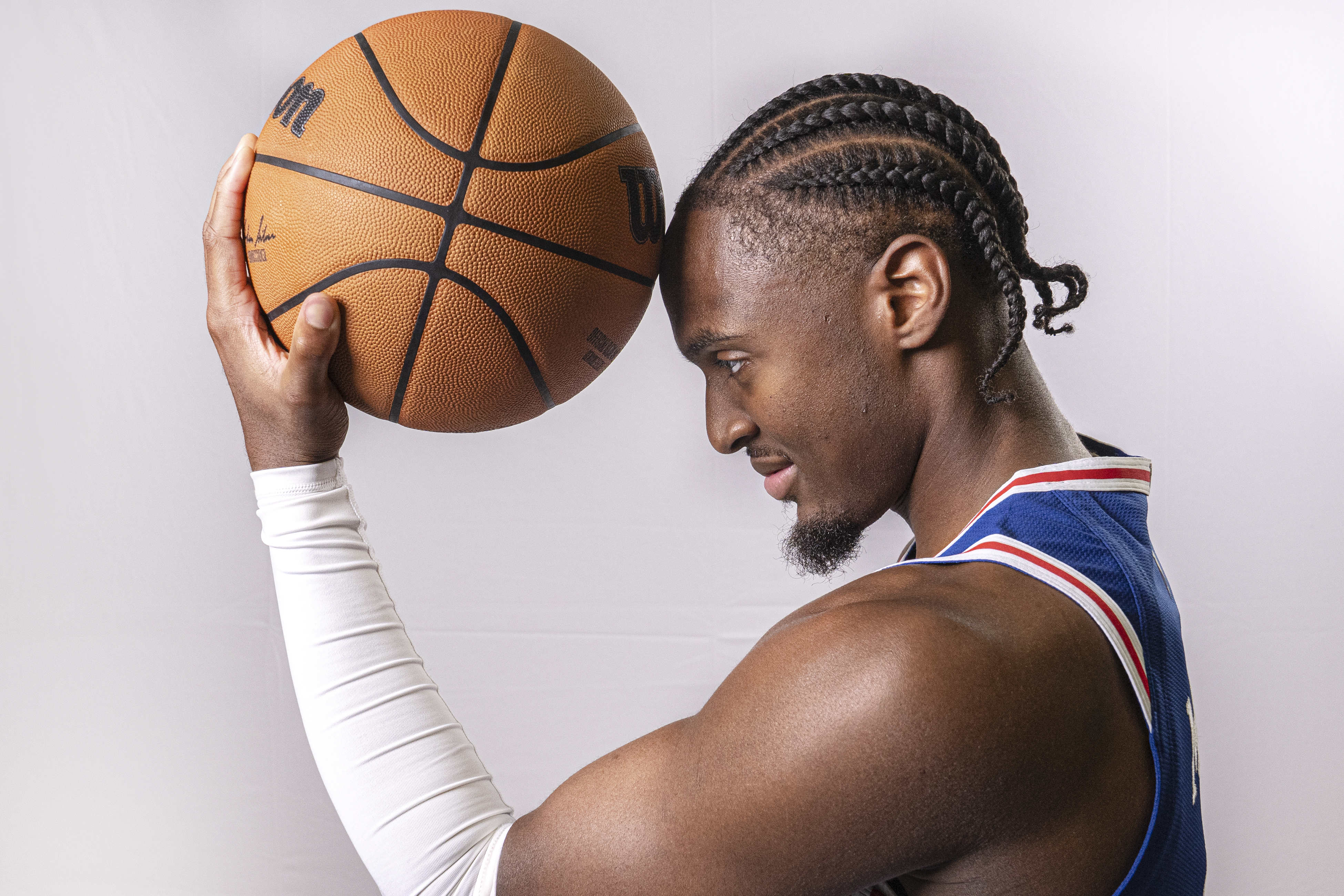
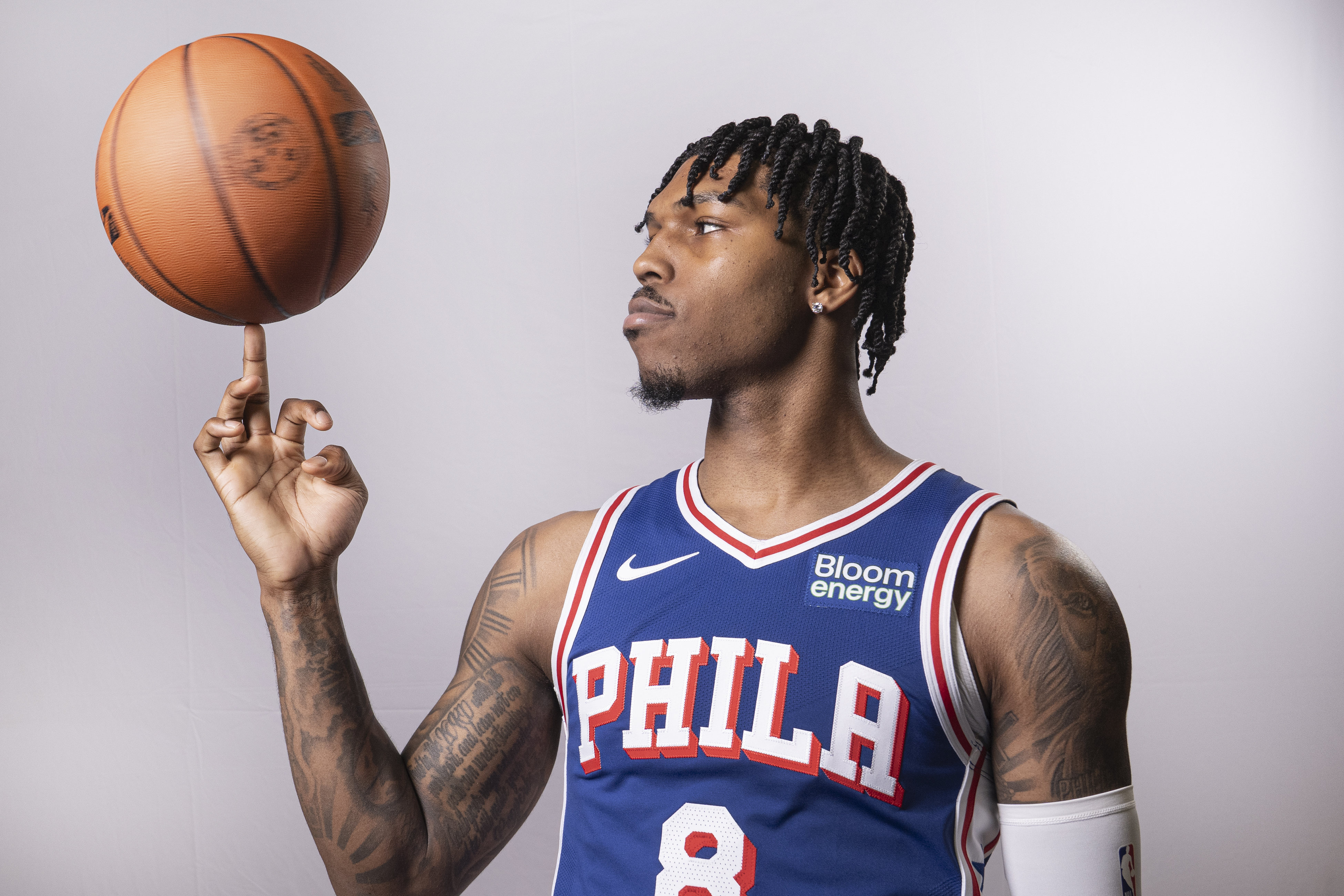
    Caleb Love spins a ball on his middle finger during a portrait session at Sixers media day. Love, a second-year player, signed a two-way deal with the Sixers this summer.Jose F. Moreno / Staff Photographer
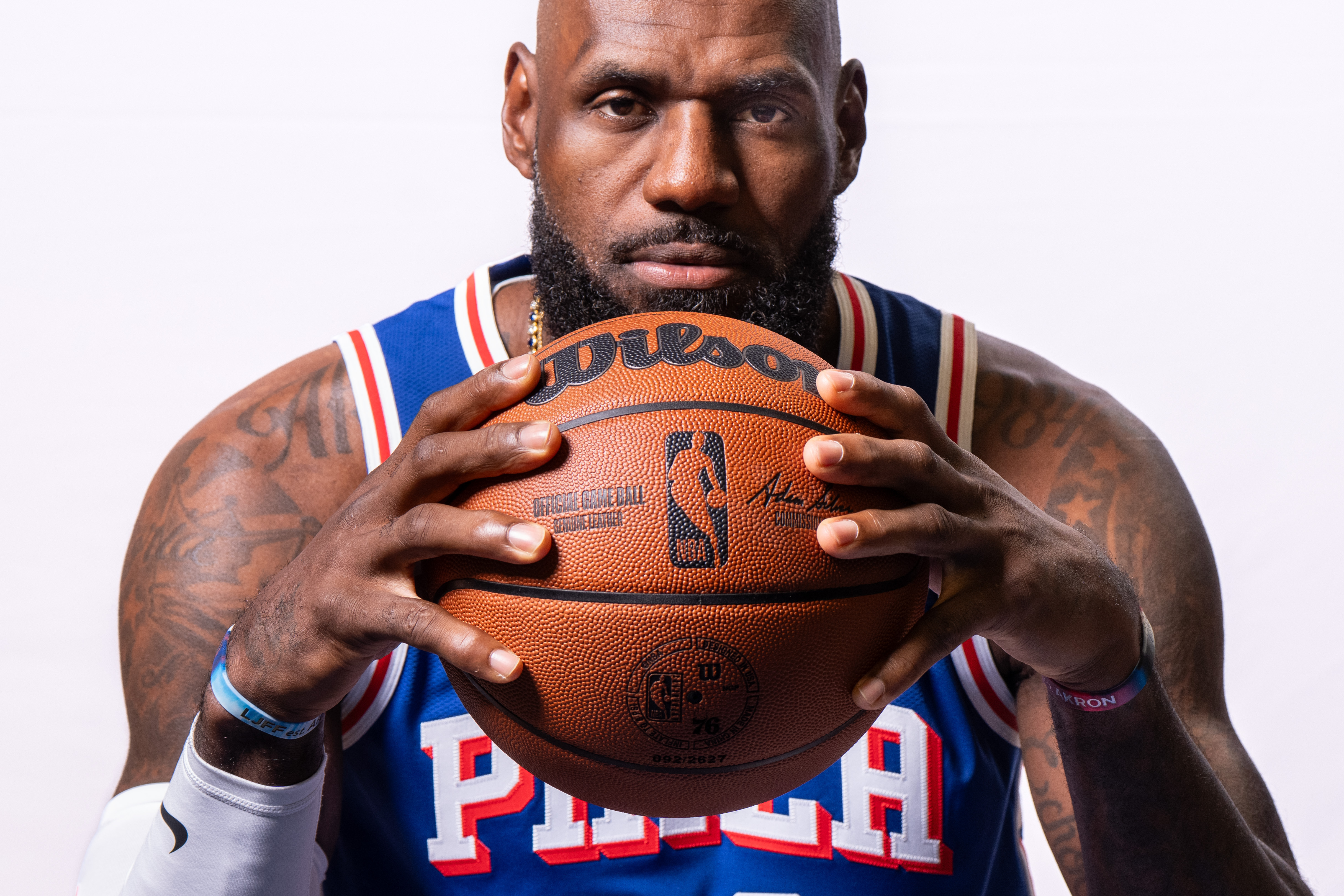
    LeBron James donned a Sixers uniform publicly for the first time at Monday’s media day.Jose F. Moreno / Staff Photographer
    First-round pick Labaron Philon, who has flown under the radar after the Sixers acquired LeBron James and Jaylen Brown, poses for a portrait during media day.Jose F. Moreno / Staff Photographer
    Tyrese Maxey is entering his seventh season with the Sixers, one that comes with big expectations after the team’s splashy offseason.Jose F. Moreno / Staff Photographer
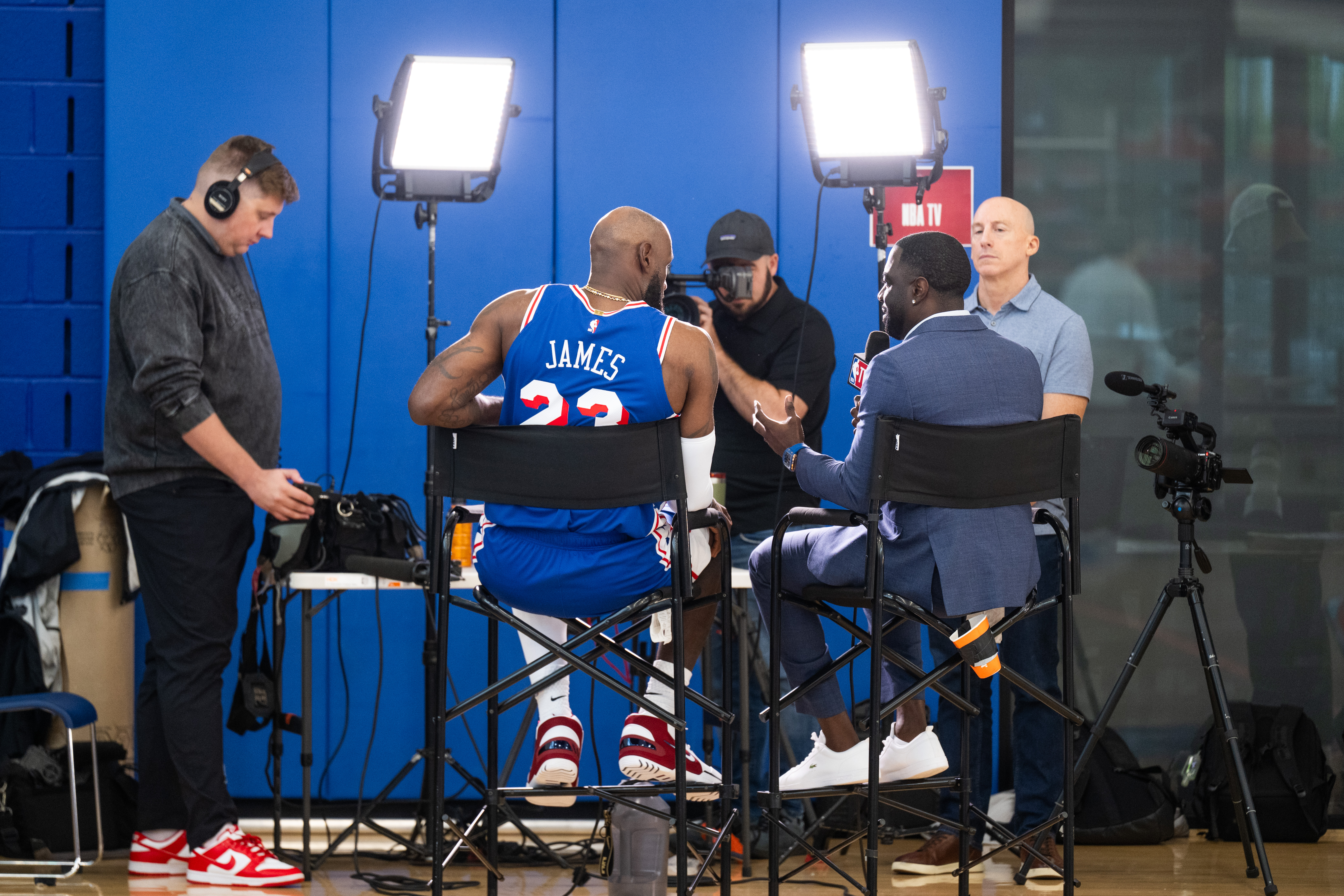
    LeBron James gets interviewed during Sixers media day. He’ll likely make his on-court debut Monday when the Sixers kick off their preseason slate against the Knicks.Jessica Griffin / Staff Photographer
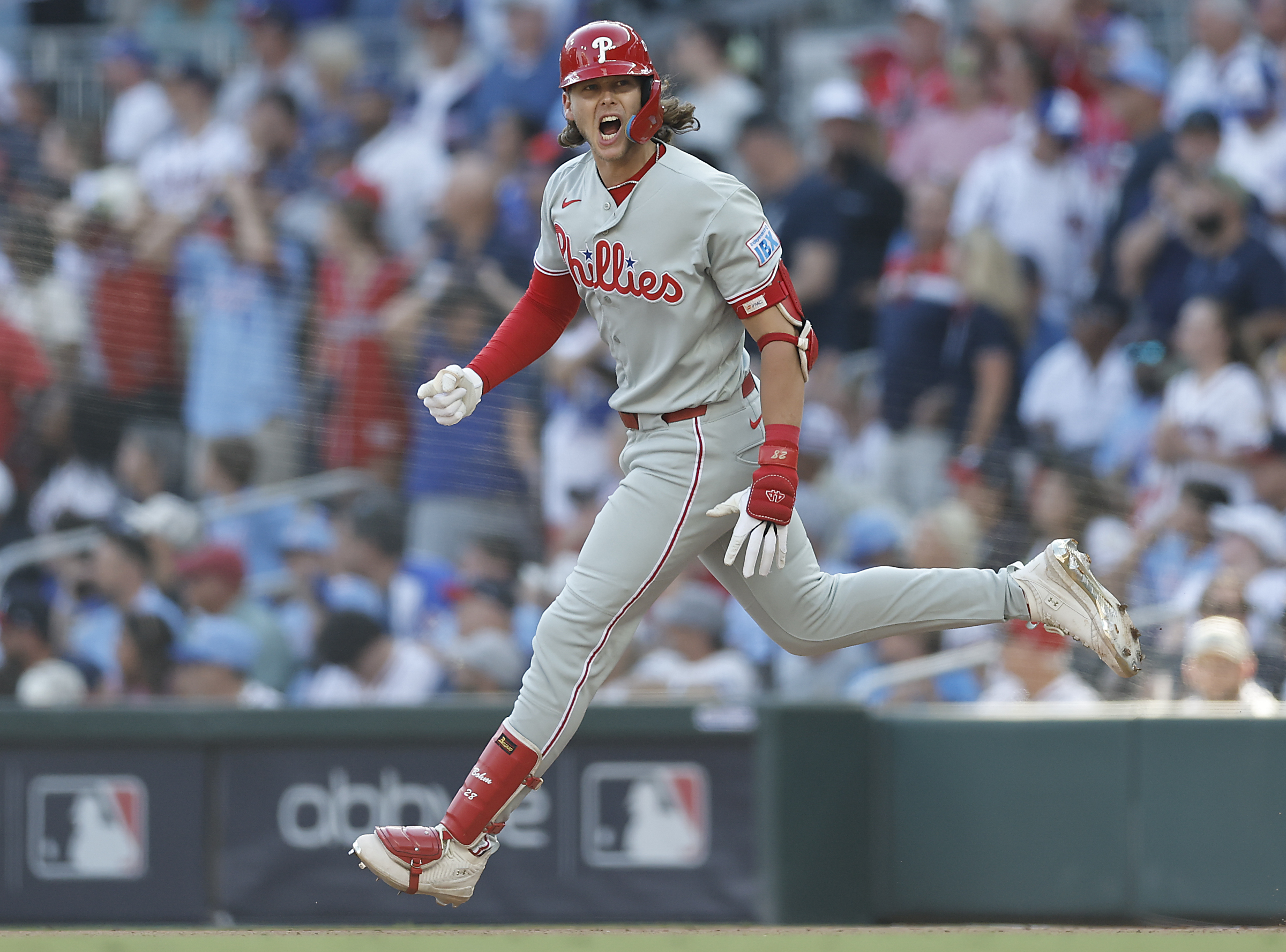
    Alec Bohm celebrates after hitting a 10th-inning solo home run against the Atlanta Braves to lift the Phillies to a 4-3 win in Game 2 of their wild-card series.Yong Kim / Staff Photographer
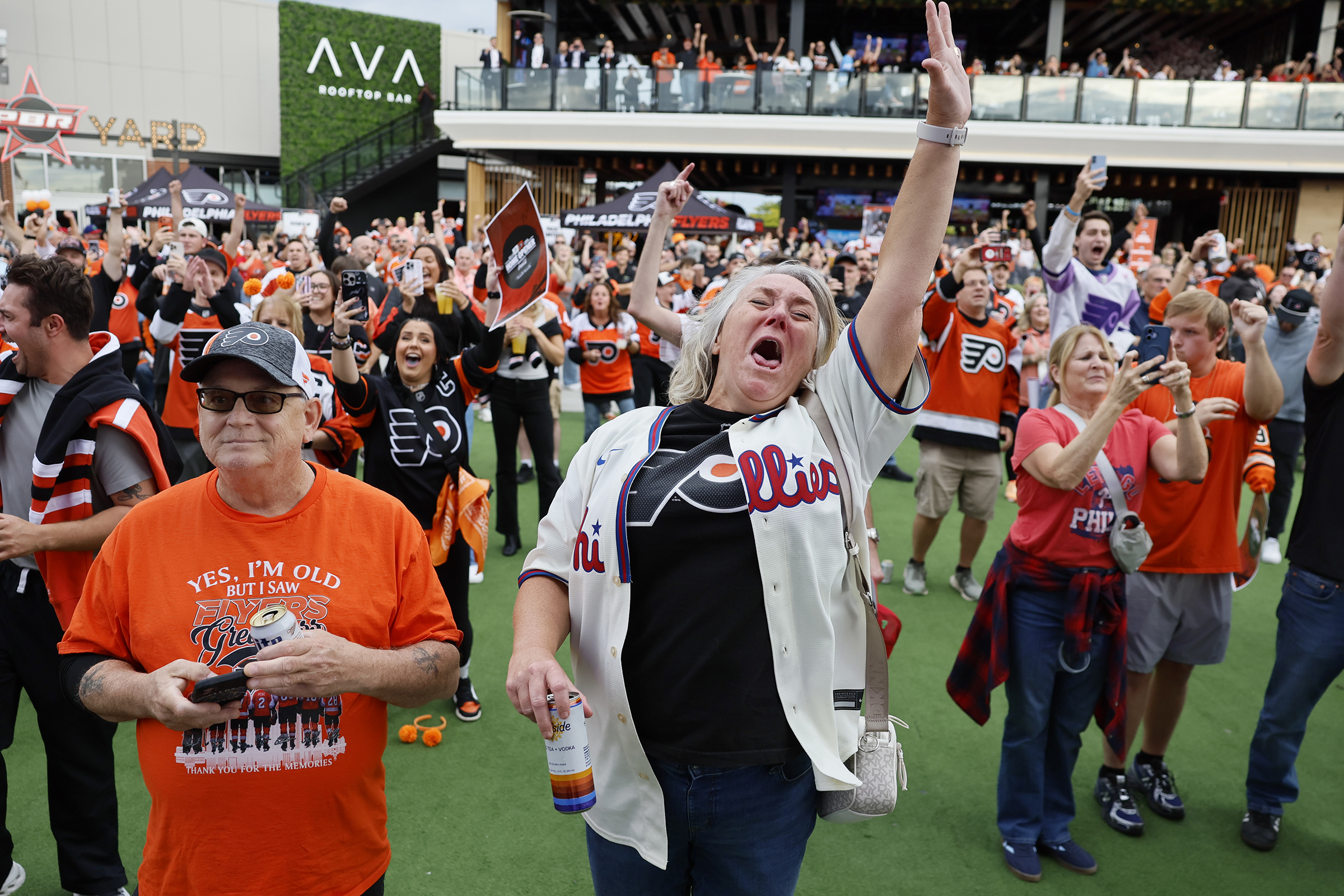
    Phillies fans Nate Smith (left) and his wife Karen Smith of Cochranville, Pa., celebrate after the Phillies beat the Braves in Game 2 on Wednesday. The couple, along with hundreds of others, were at Stateside Live for an event kicking off the Flyers’ season, which opened Wednesday night.Elizabeth Robertson / Staff Photographer
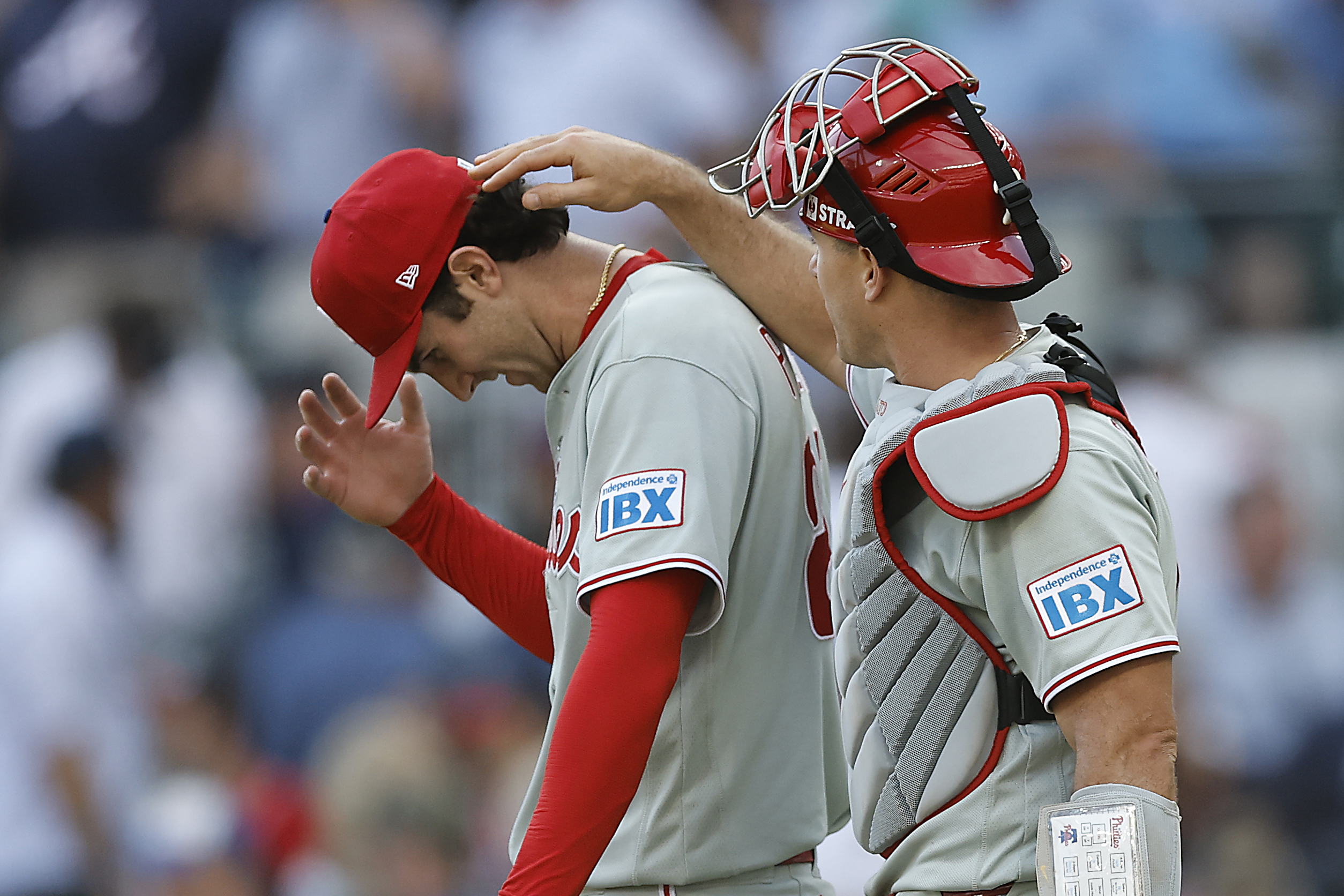
    Phillies catcher J.T. Realmuto celebrates with Andrew Painter, who made his postseason debut in the team’s Game 2 win.Yong Kim / Staff Photographer
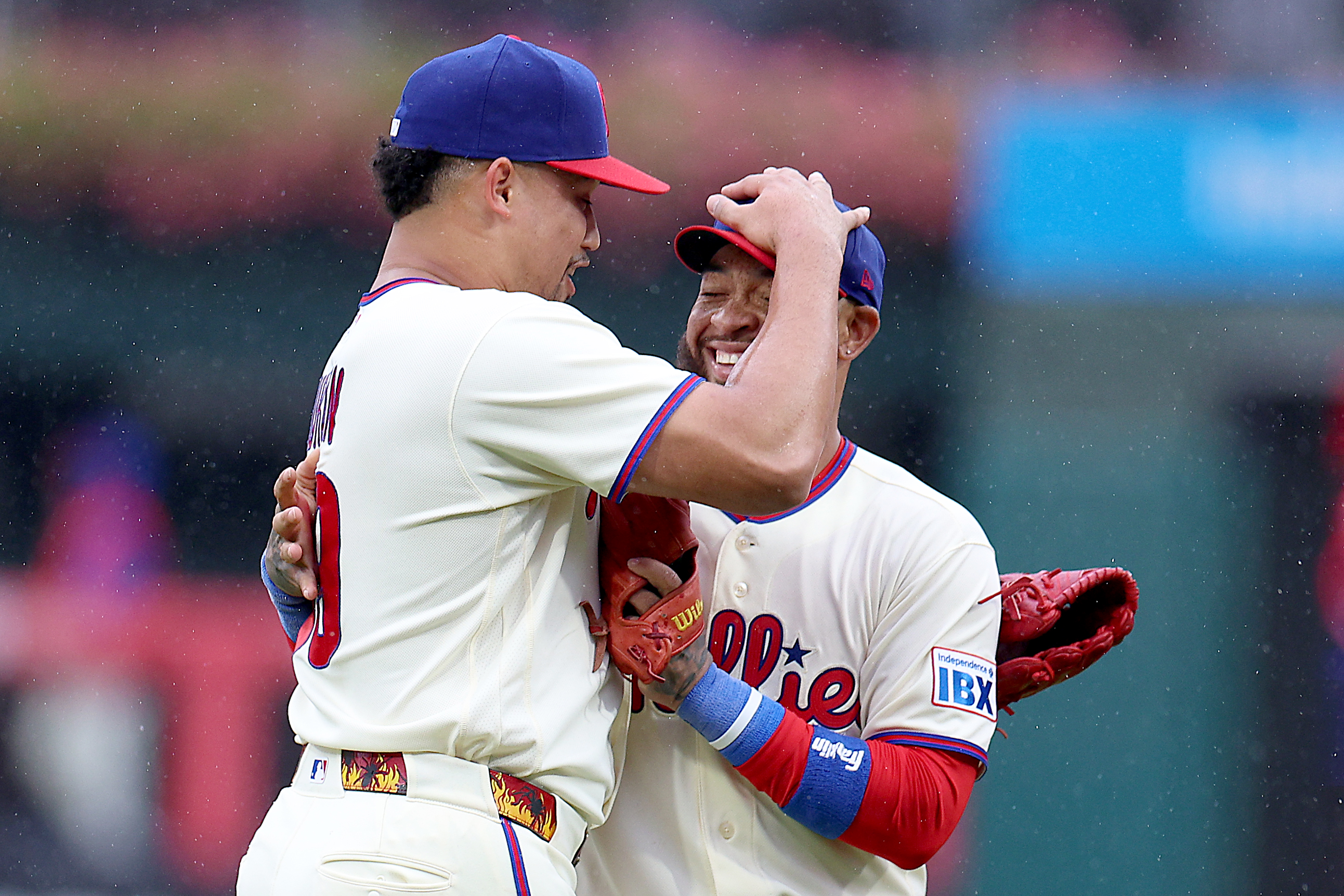
    Phillies pitcher Jhoan Duran (left) and infielder Edmundo Sosa (right) celebrate after clinching a postseason berth. They waited until the last possible minute, securing their spot in the playoffs in Game 162 of the season.David Maialetti / Staff Photographer
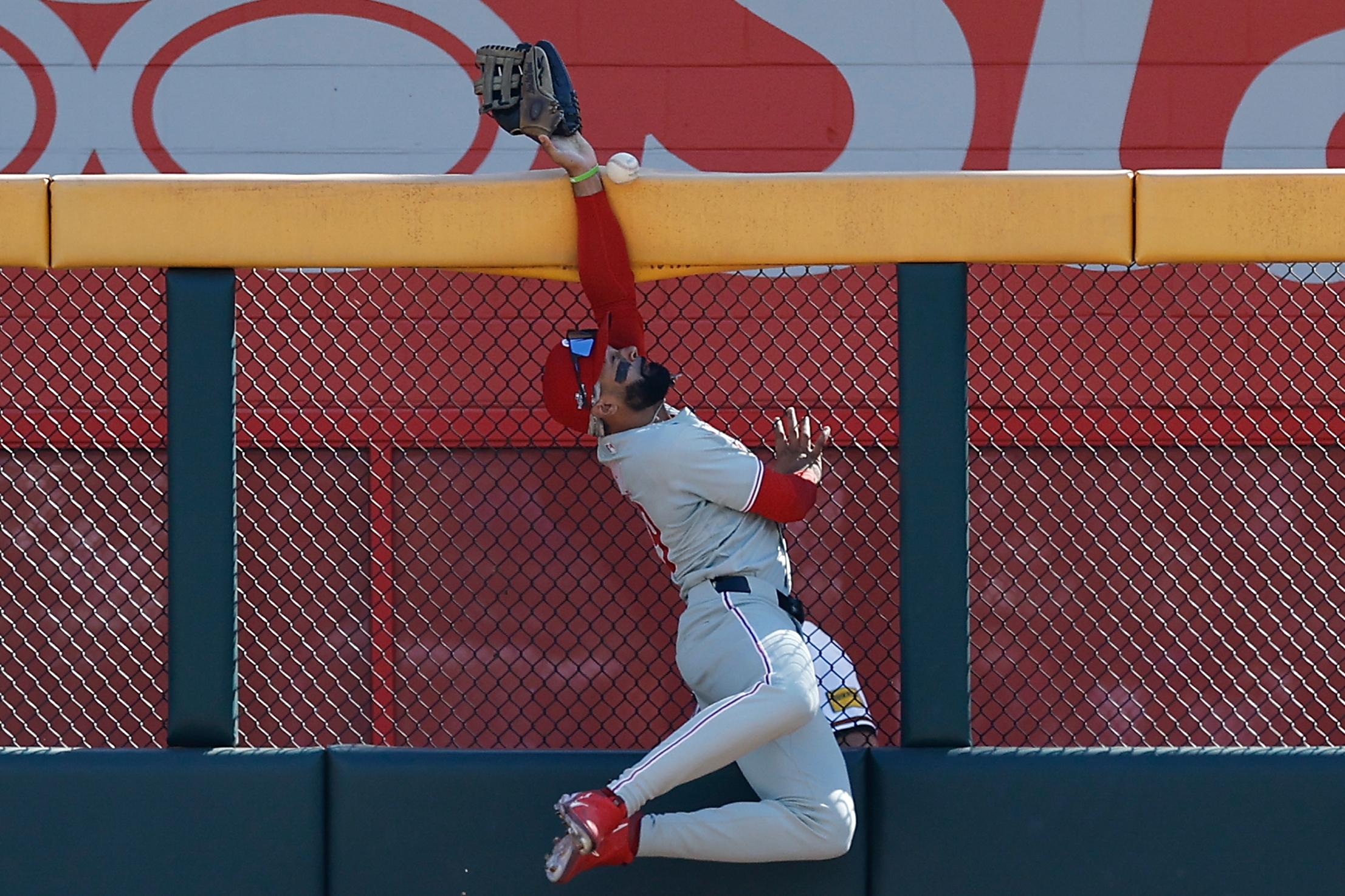
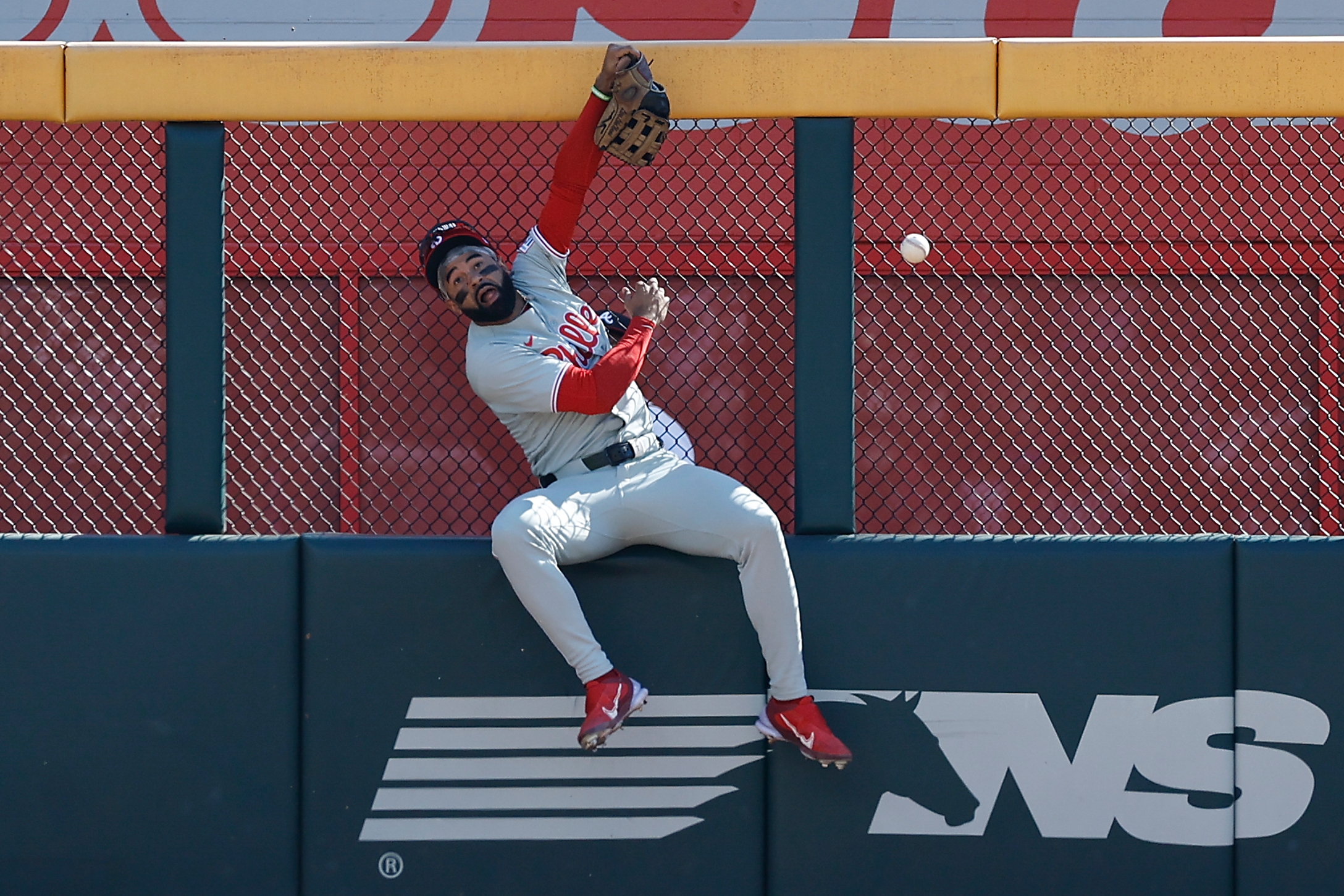
    Phillies outfielder Derek Hill can’t come down with a deep fly ball off the bat of Braves second baseman Ozzie Albies.Yong Kim / Staff Photographer
    Thanks to Derek Hill’s miss in the sixth inning of Game 1, Albies plated a run with an RBI triple.Yong Kim / Staff Photographer
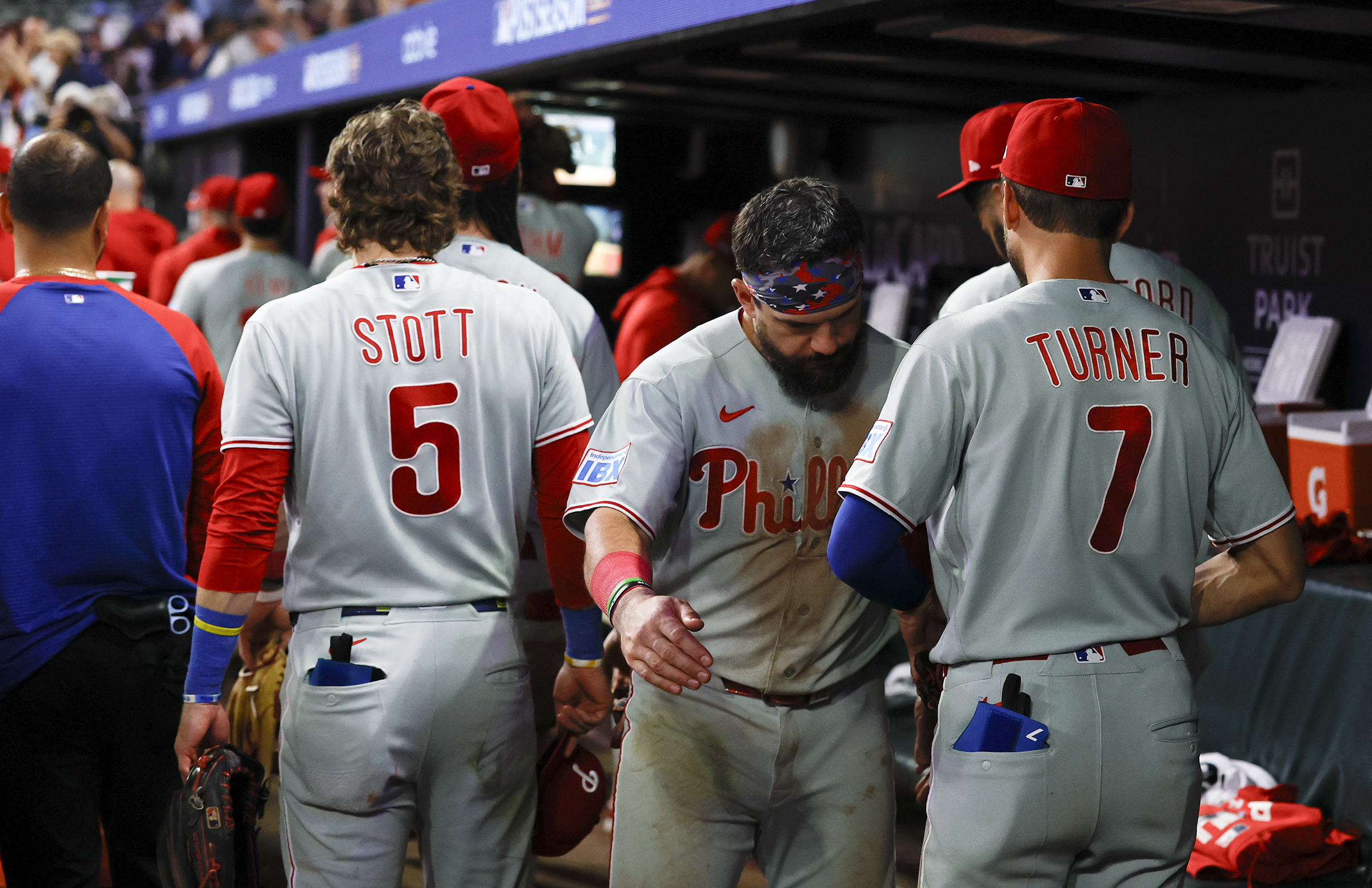
    Catcher Garrett Stubbs again leads the celebration in the clubhouse after the Phillies clinched a playoff spot on Sunday.David Maialetti / Staff Photographer
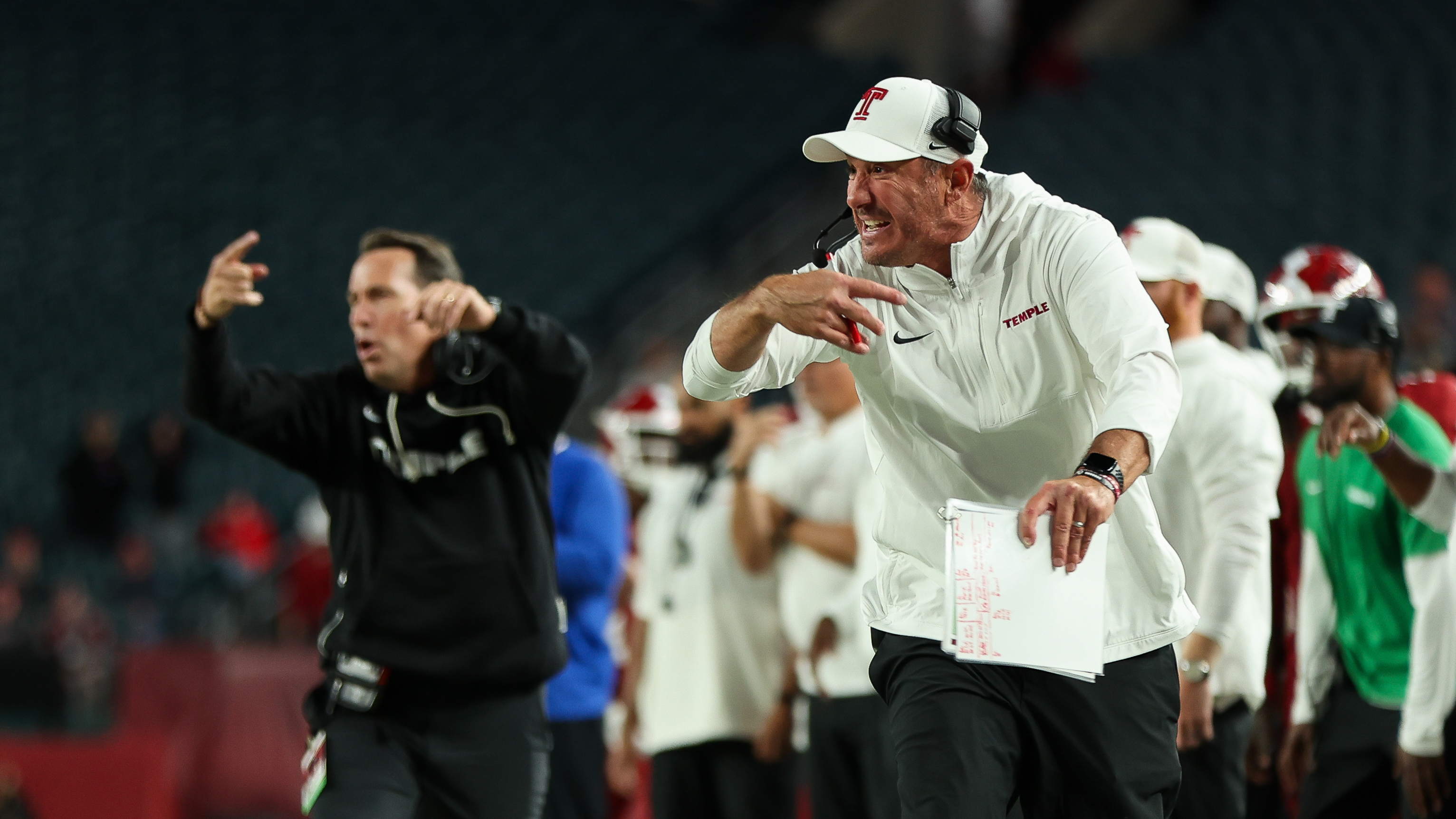
    Temple special teams coordinator Brian Ginn (right) and head coach K.C. Keeler yell instructions during a goal-line stand in the fourth quarter against Army.Isaiah Vazquez / For The Inquirer
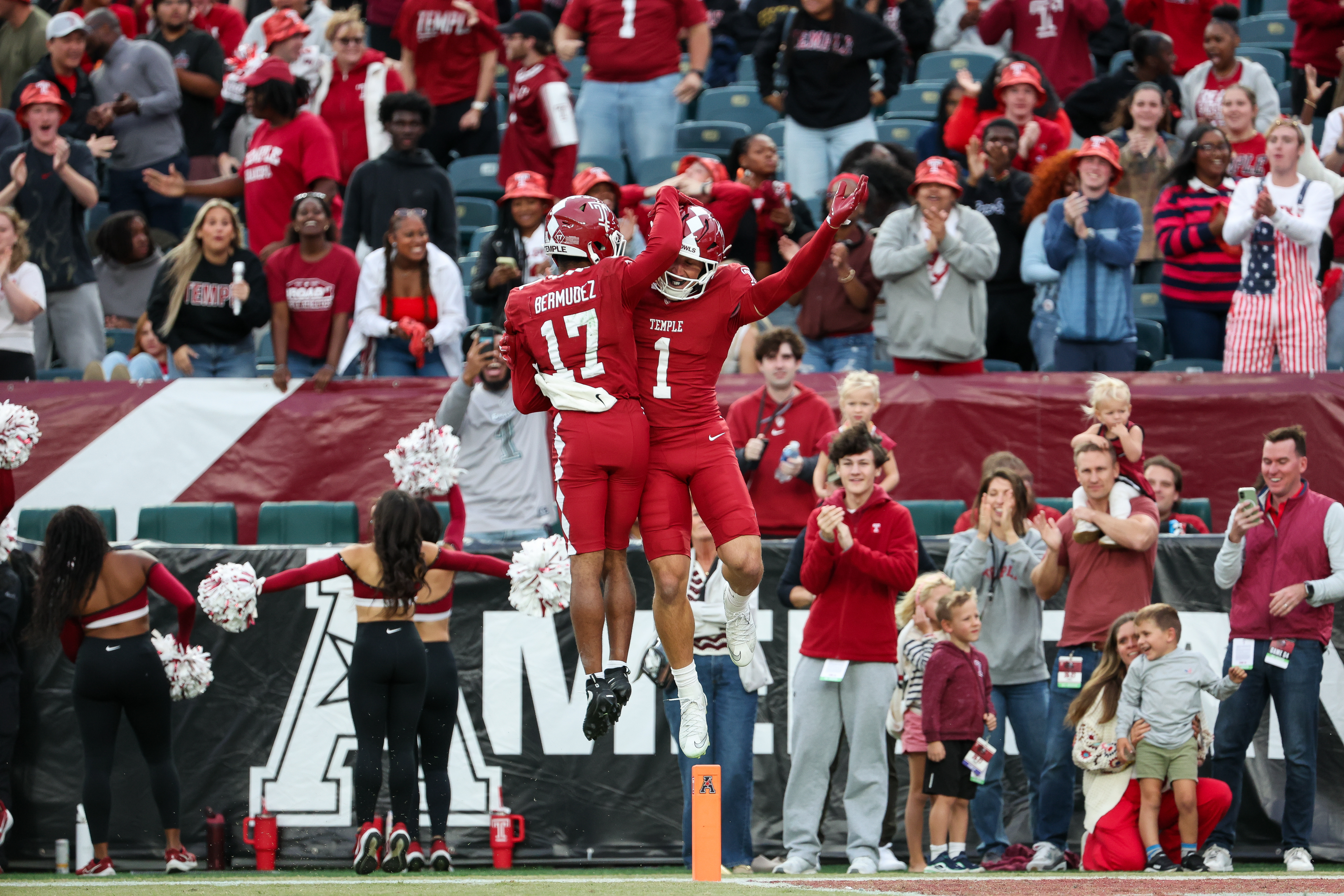
    Temple wide receivers Colin Chase (1) and JoJo Bermudez celebrate after Chase scored a touchdown during in third quarter against Army, but it wasn’t enough as the Owls fell, 21-17.Isaiah Vazquez / For The Inquirer