Category: Sports Wires

  • Canadiens acquire U.S. Olympian Dylan Larkin in trade with Red Wings

    Canadiens acquire U.S. Olympian Dylan Larkin in trade with Red Wings

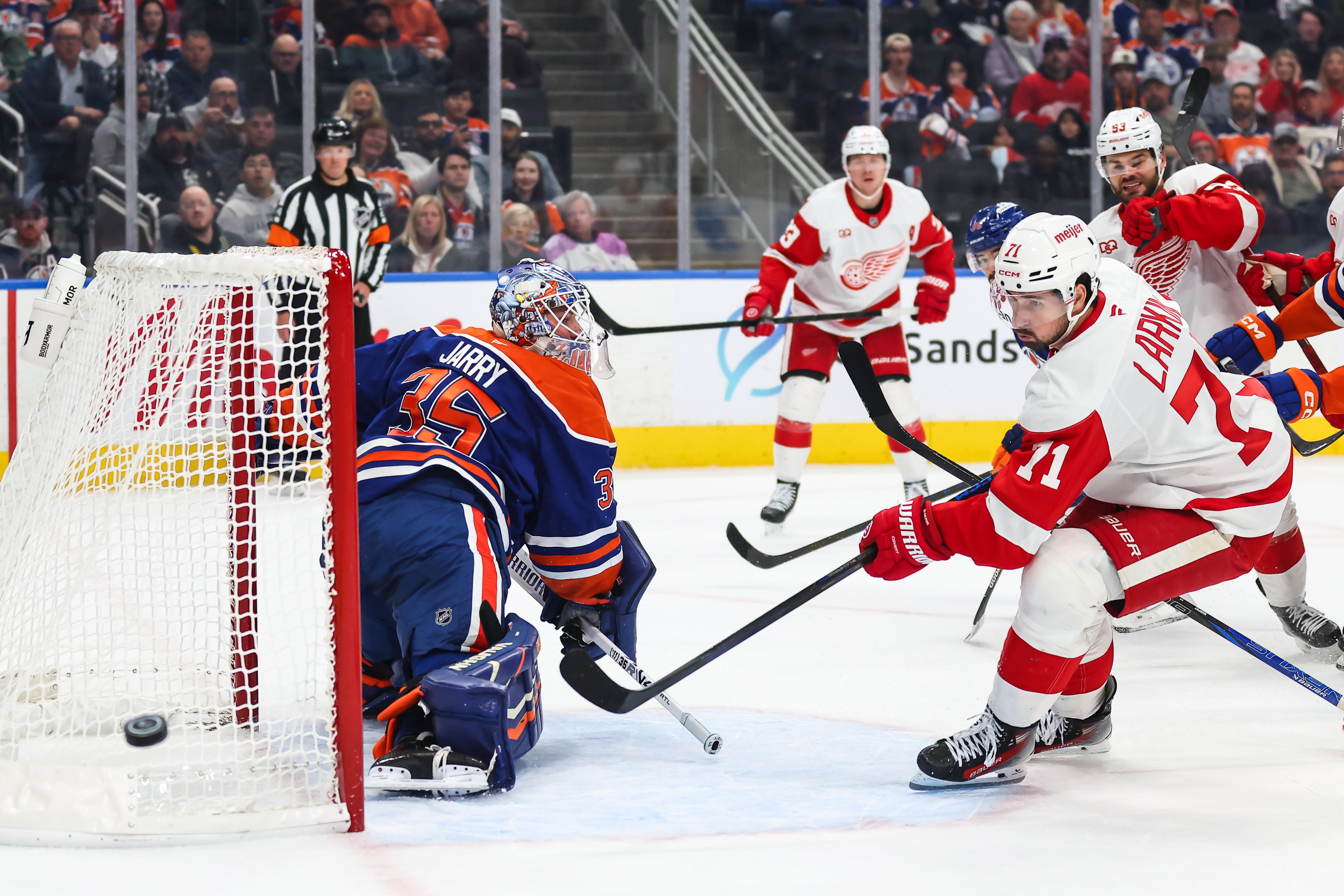
    DETROIT (AP) — The Detroit Red Wings traded ex-captain Dylan Larkin to the Montreal Canadiens in a blockbuster swap involving four players and six draft picks, including two first-round selections, in a deal announced by both teams on Sunday night.

    In acquiring Larkin, the Red Wings landed forward Kirby Dach, goalie Sam Montembeault and center prospect Michael Hage, as well as Montreal’s first-round picks in 2027 and 2029, plus a 2027 second-round selection and a 2028 fourth-rounder.

    Along with Larkin, Montreal acquired Detroit’s 2028 second-round pick and a third-round selection in 2027.

    The long-awaited trade happened between two Atlantic Division rivals and a month after the Red Wings suspended Larkin without pay. The suspension came after the player’s agent informed the team the center would no longer play for the franchise, and had grown frustrated by the Red Wings’ inability to move him months after he asked to be dealt.

    AP Hockey Writer John Wawrow contributed to this story.

    ___

  • Source: Tarik Skubal agrees to record $450 million, 9-year contract with Mets

    Source: Tarik Skubal agrees to record $450 million, 9-year contract with Mets

    Tarik Skubal, the two-time Cy Young Award winner who was the top free agent on this offseason’s market, has agreed to record $450 million, nine-year contract with the New York Mets, a person familiar with the negotiations told The Associated Press on Sunday.

    The person spoke on condition of anonymity because the agreement was subject to a successful physical.

    Skubal’s deal, averaging $50 million annually, is the largest for a pitcher, topping Yoshinobu Yamamoto’s $325 million, 12-year contract with the Los Angeles Dodgers that started in 2024. The previous high for a pitcher’s average salary was $37 million for Jacob deGrom in a $185 million, five-year contract with Texas that began in 2023.

    It’s the fourth largest deal among all baseball players, trailing Juan Soto’s $765 million, Shohei Ohtani’s $700 million and Vladimir Guerrero Jr.’s $500 million.

    Skubal’s agreement includes a full no-trade clause and a $45 million signing bonus that is shielded from the management lockout that threatens the 2027 season, the person said.

    A two-time All-Star left-hander who turned 30 on Friday, Skubal is 43-17 with a 2.42 ERA in 88 starts over the last four seasons, striking out 655 and walking 95 in 546 innings.

    Skubal had a $32 million salary this year after winning a record amount in salary arbitration.

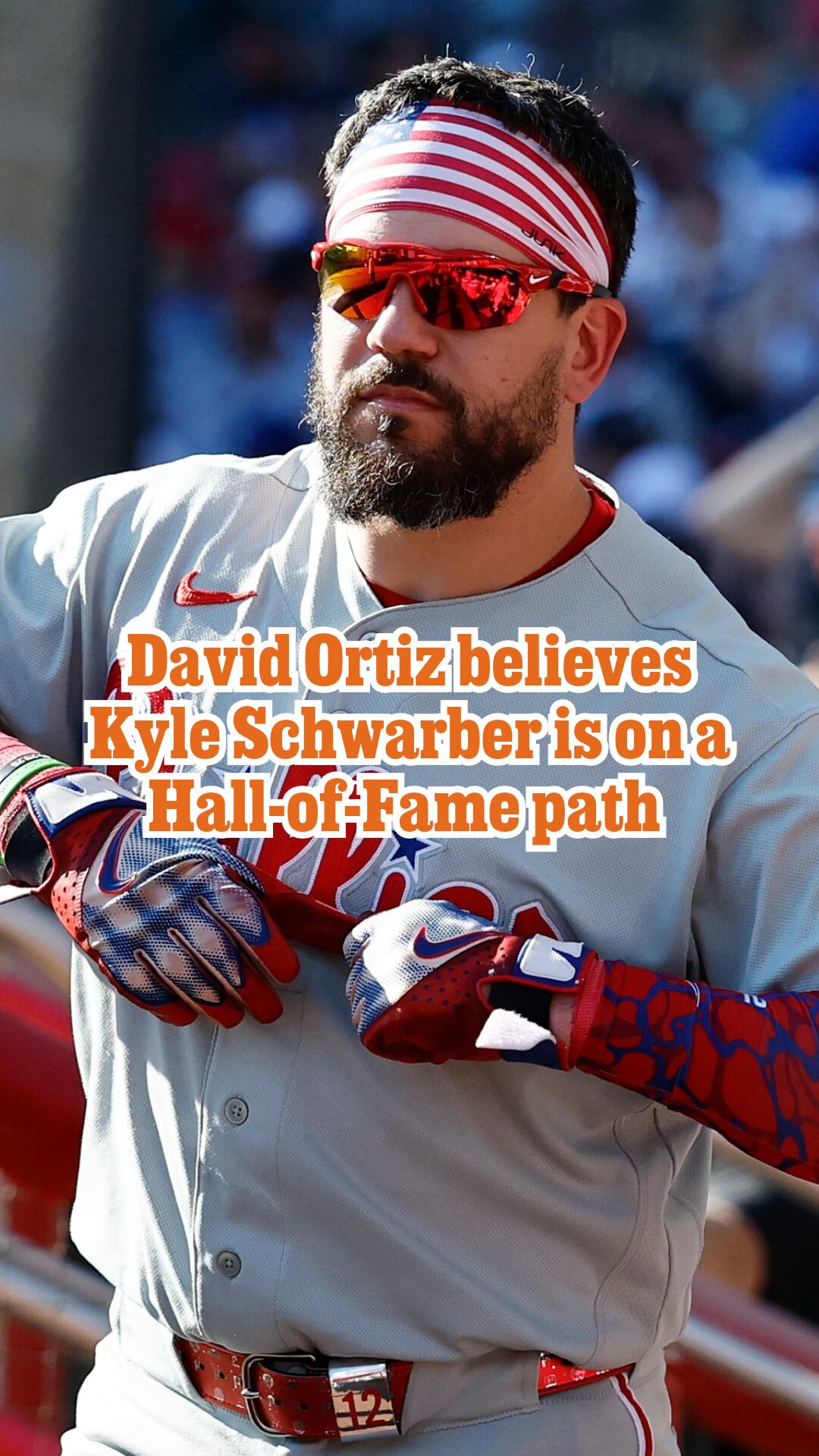
    David Ortiz believes Kyle Schwarber is on a Hall-of-Fame path | Phillies Extra
    Video: David Ortiz believes Kyle Schwarber is on a Hall-of-Fame path | Phillies Extra

    He joins a Mets team that finished last in the NL East at 74-88 despite having baseball’s highest payroll on opening day at roughly $352 million. New York’s starters had a 4.47 ERA, ranking 23rd in the majors. Skubal will top a rotation featuring youngsters Nolan McLean and Christian Scott, with veterans Sean Manaea and Kodai Senga also under contract.

    Skubal was 12-7 with a 2.72 ERA in 26 starts this year for Detroit and the Los Angeles Dodgers, who acquired him on Aug. 2 for three prospects: right-handers River Ryan and Brady Smith, and outfielder Zyhir Hope. Skubal didn’t pitch for the Tigers between April 29 and June 13 because of surgery to remove a loose body in his pitching elbow. Dodgers head team physician Dr. Neal ElAttrache used a NanoNeedle scope 2.0 to perform the procedure, designed to speed recovery.

    Skubal was 1-1 with a 2.45 ERA in a pair of postseason starts for the Dodgers. He beat Atlanta in a Division Series opener and lost Game 1 of the NL Championship Series against Milwaukee, allowing two runs over five innings in a 2-1 defeat. The Brewers went on to sweep the two-time defending World Series champions.

    He averaged 96.8 mph with his four-seam fastball this year, down from 97.6 mph in 2025, when he won his second straight AL Cy Young Award. He threw 38% four-seamers this year, 25.6% changeups, 17.5% sinkers, 13.9% sliders and 5% curveballs.

    Skubal is 66-44 with a 3.02 ERA in 160 starts and three relief appearances over seven major league seasons with 1,075 strikeouts over 925⅓ innings.

  • James Harden posts 26th 50-point game, moves past Kobe Bryant for third-most in NBA history

    James Harden posts 26th 50-point game, moves past Kobe Bryant for third-most in NBA history

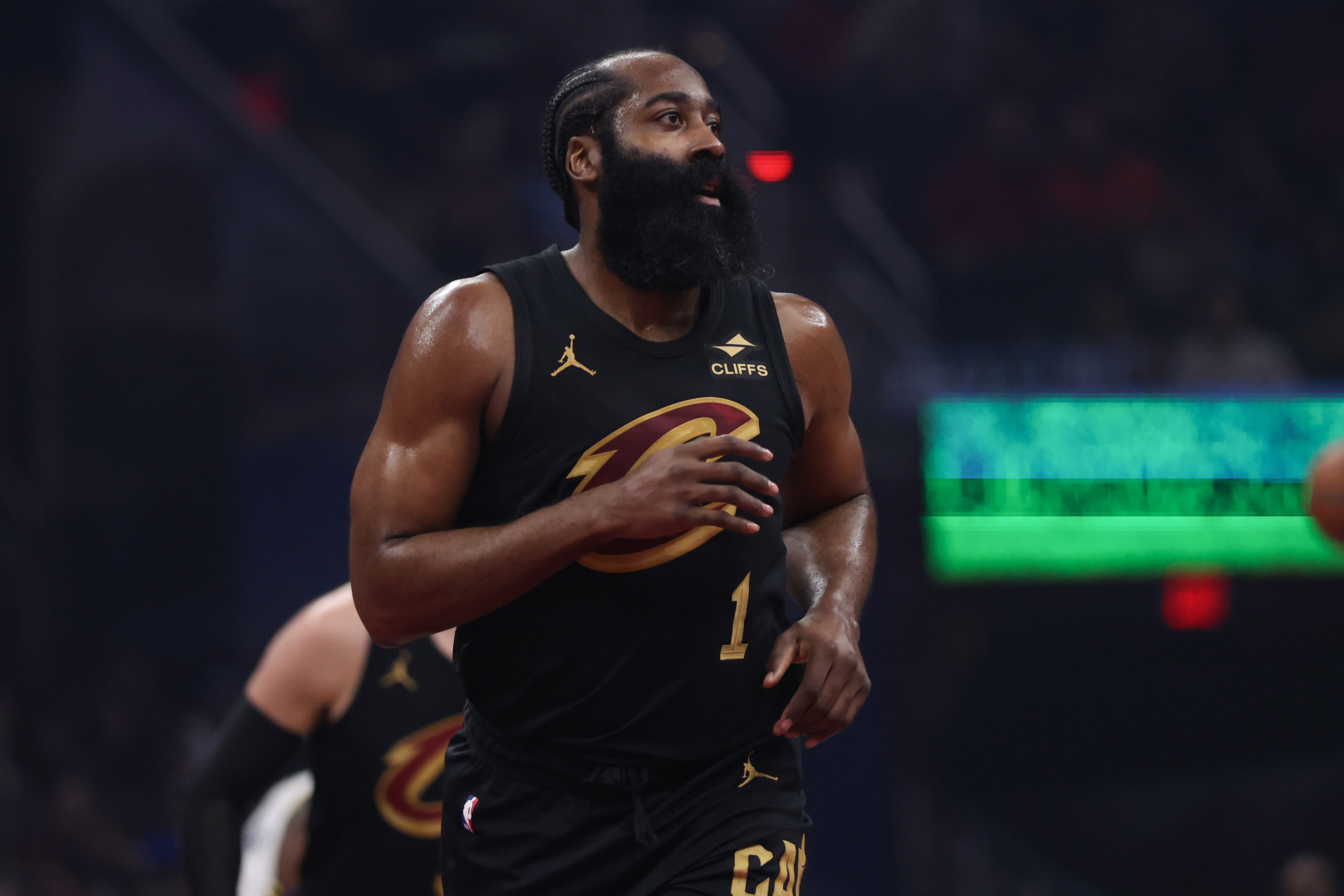
    James Harden scored 51 points as the Cleveland Cavaliers defeated the Indiana Pacers 128-119 in an NBA Cup game on Friday night.

    It was the 18-year veteran guard’s 26th 50-point game, passing the late Kobe Bryant for third-most 50-point games in NBA history. It was Harden’s first since he had 55 points for the Los Angeles Clippers against the Charlotte Hornets on Nov. 22, 2025.

    Harden is the sixth player to have a 50-point game for Cleveland. It was also his best scoring game with the Cavaliers since being acquired near the trade deadline in February, surpassing the 36 he had against Chicago last season.

    Harden was 15 of 26 from the field, including 7 of 11 from beyond the arc. He also made all 14 of his free throws along with six rebounds and six assists for the Cavaliers, who have won three of four and improved to 2-1 in East Group B.

    Donovan Mitchell added 20 points. Peyton Watson, who missed Wednesday’s game due to a lower back contusion after being injured on Monday against Chicago, scored 15.

    Ivica Zubac had 21 points and 10 rebounds and Pascal Siakam scored 21 for the Pacers, who have dropped three straight and fell to 1-2 in East Group B.

    Cleveland was up 74-73 four minutes into the third quarter before going on a 21-4 run over a nearly four-minute span. Harden scored 13 during the spurt as he made all four of his shots from the field, including a pair of 3-pointers.

    The Cavaliers’ largest lead was 113-90 with 7:39 remaining before the Pacers countered with a 21-4 run to make it a two-possession game with 2:03 left. Mitchell ended the spurt though with a basket on the ensuing trip.

    Up next

    Pacers: At New York on Sunday.

    Cavaliers: At Chicago on Monday.

    ___

  • Rob Manfred says MLB owners won’t compromise on a salary cap, leaving sport headed to a lockout

    Rob Manfred says MLB owners won’t compromise on a salary cap, leaving sport headed to a lockout

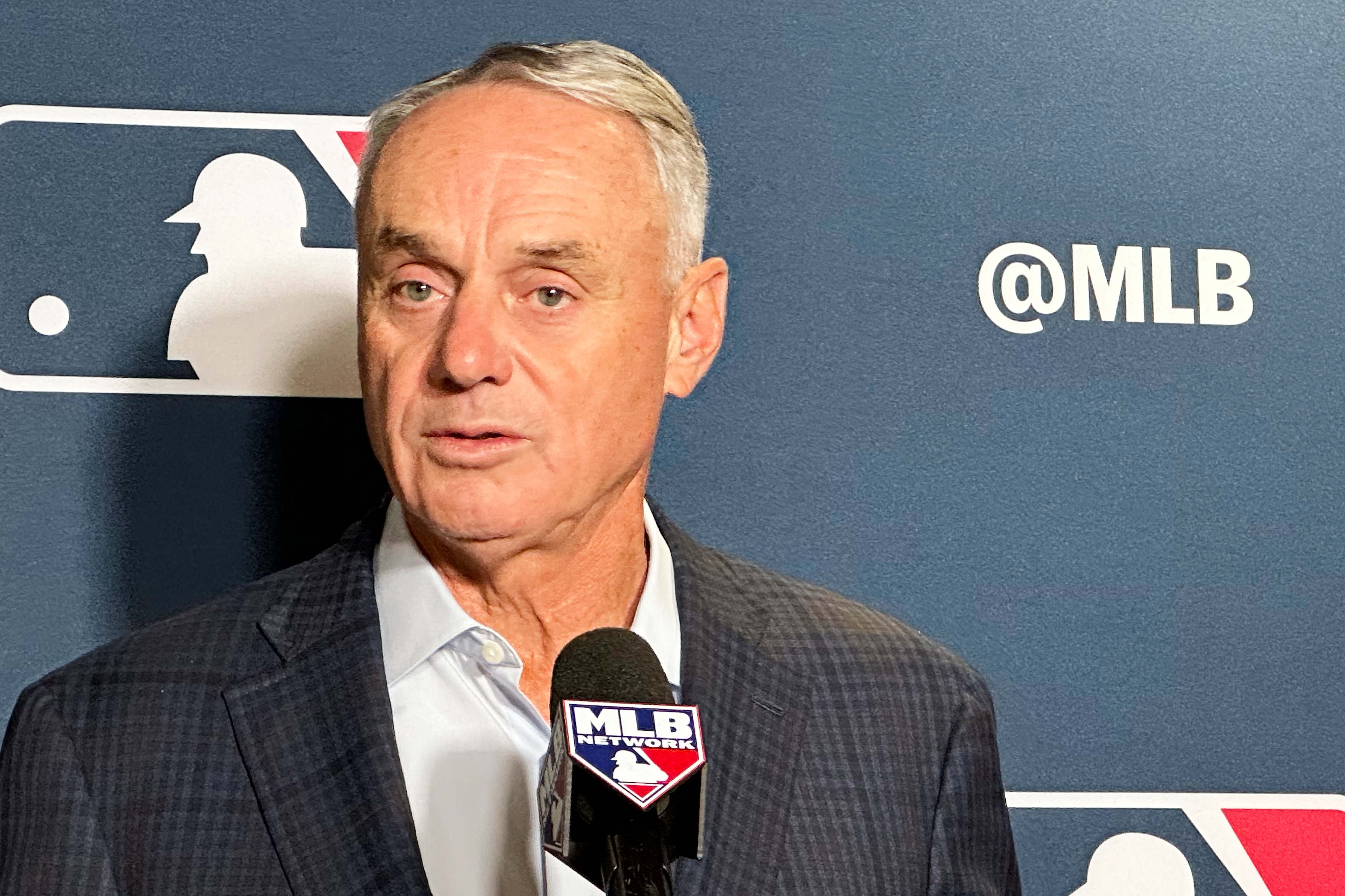
    NEW YORK — Major League Baseball Commissioner Rob Manfred said owners will not move off their demand for a salary cap, leaving the sport on track for a lockout starting Dec. 2 that could threaten the 2027 season.

    “I can’t imagine the owners ratifying a deal that does not include a cap and floor,” he said Wednesday at a news conference during an owners meeting.

    Players say they will never accept a salary cap. The last time management proposed a cap in 1994, it led to a 7½-month strike that caused cancellation of the World Series for the first time in 90 years.

    “There’s plenty of room for compromise, but there’s one thing that I will not compromise and that’s the issue that we’re hearing from the vast majority of our fans: They want a salary cap and floor and on that we will not compromise,” Manfred said. “We are not prepared to tell 70% of our fans that they’re wrong on this issue. Competitive balance is a serious problem, and it needs to be addressed and it’s one that we can’t avoid just because the negotiation may be difficult.”

    Just a little more than a month after Milwaukee became the first small-market team to win the World Series since 2015, baseball’s five-year collective bargaining agreement expires at 11:59 p.m. EST on Dec. 1. A lockout, the sport’s 10th work stoppage since 1972, would halt all trades and signings.

    “A decision on a lockout is one that we’re going to make at the last possible moment,” Manfred said. “We’re going to devote ourselves to the bargaining process. I’m not that big on Thanksgiving as a holiday. We’ll make ourselves available whenever and wherever to bargain in an effort to make an agreement.”

    MLB proposed the sport adopt a hard cap of $258.2 million for 2028 and a floor of $180.2 million, using luxury tax payrolls with average annual values. A team would be allowed to remain as low as 90% of the floor in 2028, which would be $162.18 million, but would have to spend the entire amount of the floor over a three-year period.

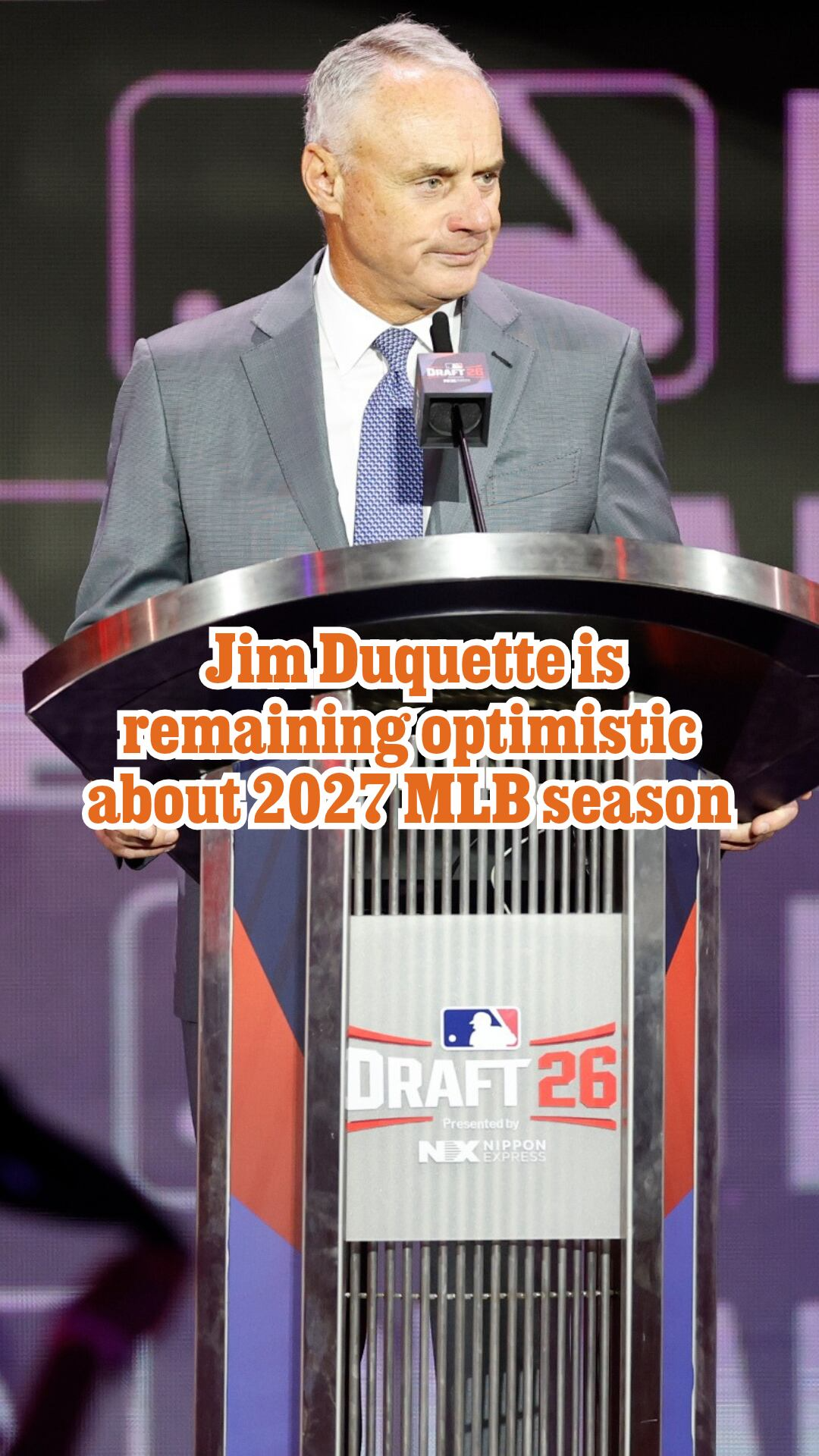
    Former MLB GM Jim Duquette is remaining optimistic about 2027 MLB season | Phillies Extra
    Video: Former MLB GM Jim Duquette is remaining optimistic about 2027 MLB season | Phillies Extra

    The union remains steadfastly opposed to a salary cap

    Individual contracts also would be capped at 15% of payroll under the plan (16% for re-signing free agents). MLB says it proposed a 50-50 split of revenue, while the union says it calculates the players’ current share as over 55%.

    “There can be no clearer example of the league’s lack of seriousness than their insistence that they will not negotiate over the economics outside of a radical change to the system that would dramatically reduce overall player compensation for all categories of players and strip fundamental rights from players like the ability to have truly guaranteed contracts,” union head Bruce Meyer said in a statement. “There should be no illusions about the owners’ true motivation in pushing for this system. They want to make more money in profits and franchise values by artificially suppressing player salaries.”

    Players have called the salary cap a “non-starter.”

    “We made the proposal way back in May. Another word for ‘non-starter’ over months is a refusal to bargain,” Manfred said. “I think it’s time that the MLBPA needs to realize that this proposal is serious. I’m not suggesting they need to accept it whole cloth. I think they need to look at the proposal and try to find some ways to move to the middle as opposed to making no proposal at all.”

    Players proposed a “competitive integrity tax” that would penalize teams dropping below a payroll floor. They also asked for a rise in the luxury tax threshold, almost doubling the minimum salary and increased salary arbitration rights.

    “The MLBPA wants more and its proposals undermine, further undermine the competitive quality of our game,” Manfred said.

    “What has the MLBPA done? They’ve engaged in a lot of rhetoric,” he added. “They’ve characterized our proposals as not real or not serious. They’ve criticized and mischaracterized aspects of the cap and floor system in an effort to promote player opposition. What the MLBPA has not done is made any meaningful effort to move towards us. In fact, they have not made a significant economic proposal since their opening proposal. Indeed, there’s a paucity of responses even on topics that do not directly impact our economics.”

    Garrett Stubbs isn't buying the competitive balance argument in CBA talks | Phillies Extra
    Video: Garrett Stubbs isn’t buying the competitive balance argument in CBA talks | Phillies Extra

    MLB exec says the Brewers’ small-payroll championship was ‘truly aberrational’

    In a 40-minute presentation before Manfred’s news conference, MLB executive vice president Morgan Sword outlined the economics behind MLB’s proposals. He said according to the Financial Information Questionnaires submitted by teams, revenue this year was $12.9 billion.

    MLB said FIQ revenue rose 246% from 2003 and player payroll increased 147%. The union disputes the validity of management’s conclusions from those calculations.

    While the World Series champion Brewers play in baseball’s smallest market and the World Series matchup was the first since 1991 between teams in the bottom half of payrolls, MLB contends high-spending teams have better chances of success in the long term. It highlighted that since 1998 only one team that didn’t have a top-20 payroll won the title and eight of the top-10 teams by payroll reached this year’s playoffs.

    “It is truly aberrational in baseball for small markets to be successful,” Sword said. “It’s not impossible, but it is much, much more difficult in our sport than it is in any of the other sports.”

    MLB said that since the start of the current labor contract in March 2022, the Los Angeles Dodgers, New York Mets, New York Yankees and Phillies combined to commit $5.95 billion to free agents and the bottom 22 teams in free-agent spending allocated $5.41 billion.

    Based on 2026 payrolls and the 2028 cap level, the Dodgers would have to cut payroll by $174 million, the Mets by $108 million, the Yankees by $83 million and the Phillies by $64 million.

    Sword said it had not yet been determined how teams with players with no-trade provisions would be able to get under the cap, saying it was to be bargained.

    Garrett Stubbs believes the players will remain unified during CBA talks | Phillies Extra
    Video: Garrett Stubbs believes the players will remain unified during CBA talks | Phillies Extra

    MLB’s proposal includes splitting local media revenue equally among the 30 teams for the first time. MLB said that due to the decline of cable networks, local media revenue is $1.8 billion this year, down $575 million from a high of about $2.4 billion annually from 2021-24.

    Management said that while players with six or more years of service earned 69% of compensation this year, counting regular payrolls and the pre-arbitration bonus pool, those players combined for just 29% of an averaged Baseball Reference and Fangraphs WAR.

    “Major league players will earn more money in this system and it’s just a matter of just distributing the players differently across the teams,” Sword said. “The key to having valuable national media rights we believe is having lots of teams that have a national audience and appeal beyond just the contours of their city.”

    The union says MLB isn’t accounting for what players currently are getting from luxury proceeds and from amateur signing bonuses.

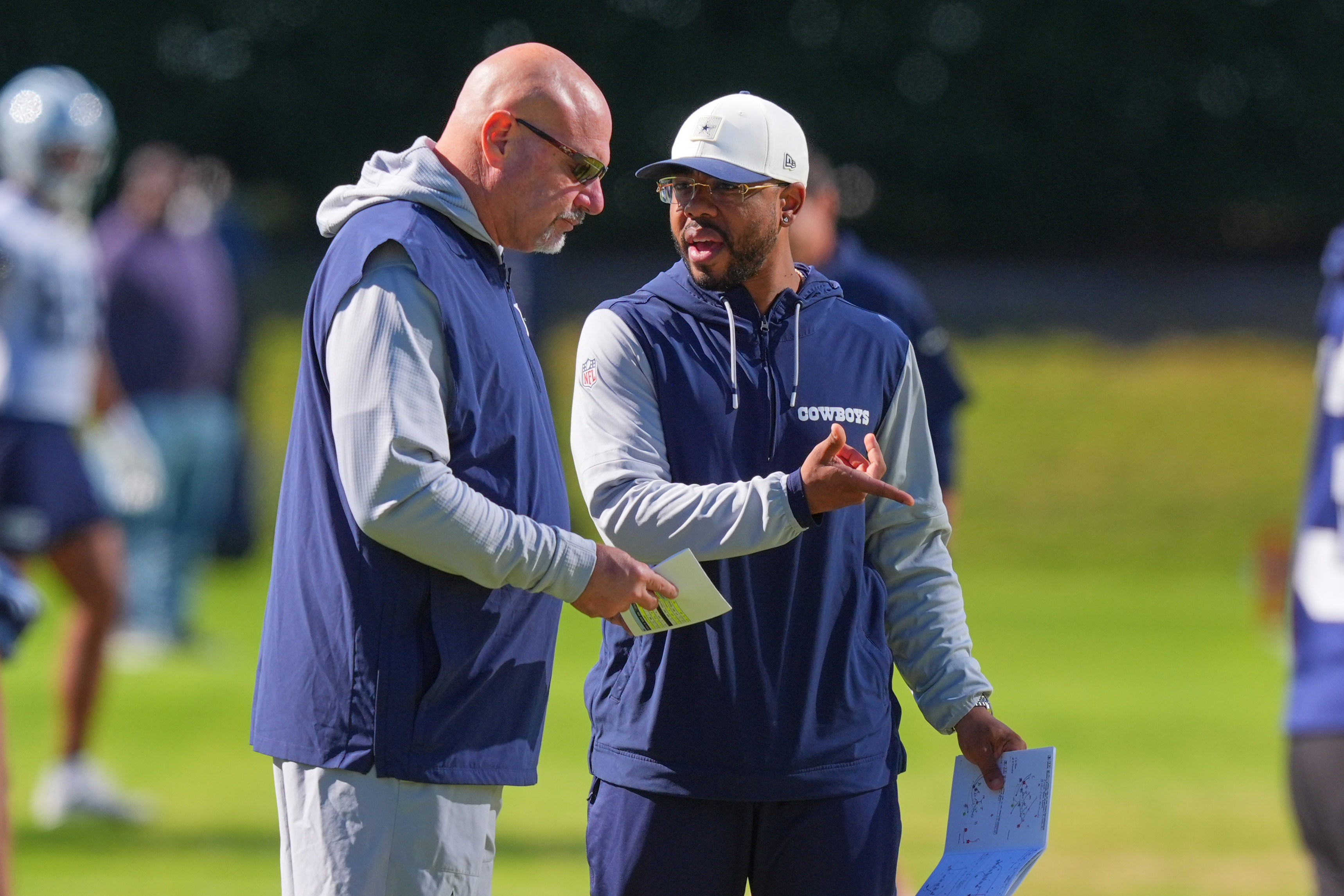
  • Cowboys give defensive play-calling to Pettine after taking that role from coordinator Parker

    Cowboys give defensive play-calling to Pettine after taking that role from coordinator Parker

    FRISCO, Texas — The Cowboys are taking play-calling duties away from first-time defensive coordinator Christian Parker after Dallas gave up three long touchdowns and the most yards at home in franchise history during a loss to San Francisco.

    Parker will retain his title, but former NFL defensive coordinator Mike Pettine, who joined the staff a month ago, will call the plays, coach Brian Schottenheimer confirmed Wednesday.

    Schottenheimer said he believes Parker still has a future with the organization but that he wanted to make this change in part because of Pettine’s experience. Schottenheimer said he informed the staff of the decision Tuesday and told the players Wednesday when they returned from their day off.

    “I was up front and honest with them,” Schottenheimer said. “I said, like I said to you guys, that Christian Parker is a huge part of what we’re trying to build here, that he is our defensive coordinator, he is our leader, he’s not changing any of those things, but that I do feel that in the best interest of winning, that (Pettine) calling the game is going to help us get to where we want to get to.”

    The 46-40 loss to the 49ers was far from the first meltdown on defense under the 34-year-old Parker, the youngest defensive coordinator in franchise history. But it was the most frustrating for Schottenheimer, who called the overall performance “unacceptable” and the tackling “atrocious.”

    The San Francisco defeat was the third time in franchise history the Cowboys have scored at least 40 points and not won the game. Two have been under Schottenheimer. The other was a 40-40 tie against Green Bay in 2025, the only season for Matt Eberflus before he was fired and replaced by Parker.

    How much are Howie Roseman and Jeffrey Lurie to blame for current state of Eagles? | unCovering the Birds
    Video: How much are Howie Roseman and Jeffrey Lurie to blame for current state of Eagles? | unCovering the Birds

    Dallas (4-6) plays Tennessee (1-8) at home Sunday, and the Cowboys still have hopes of trying to overtake the New York Giants in the mediocre NFC East.

    Pettine, who turned 60 less than a month before coming out of retirement to join the Cowboys as a senior defensive assistant, was the head coach in Cleveland in 2014-15. He has been the defensive coordinator with the New York Jets and Green Bay Packers. He was on Minnesota’s staff when he retired after last season.

    Schottenheimer said it hadn’t been decided whether Pettine would be on the sideline or in the press box. Parker was on the sideline, and Pettine has been in the press box on game day since joining the staff.

    “We’re going to be doing the same things that we’ve been doing,” said defensive tackle Kenny Clark, who played for Pettine in Green Bay. “It’s not like a completely new defense. It’s no magic play call that Pettine’s going to be able to give us. It’s our job to go out there and execute the game plan whatever it is.”

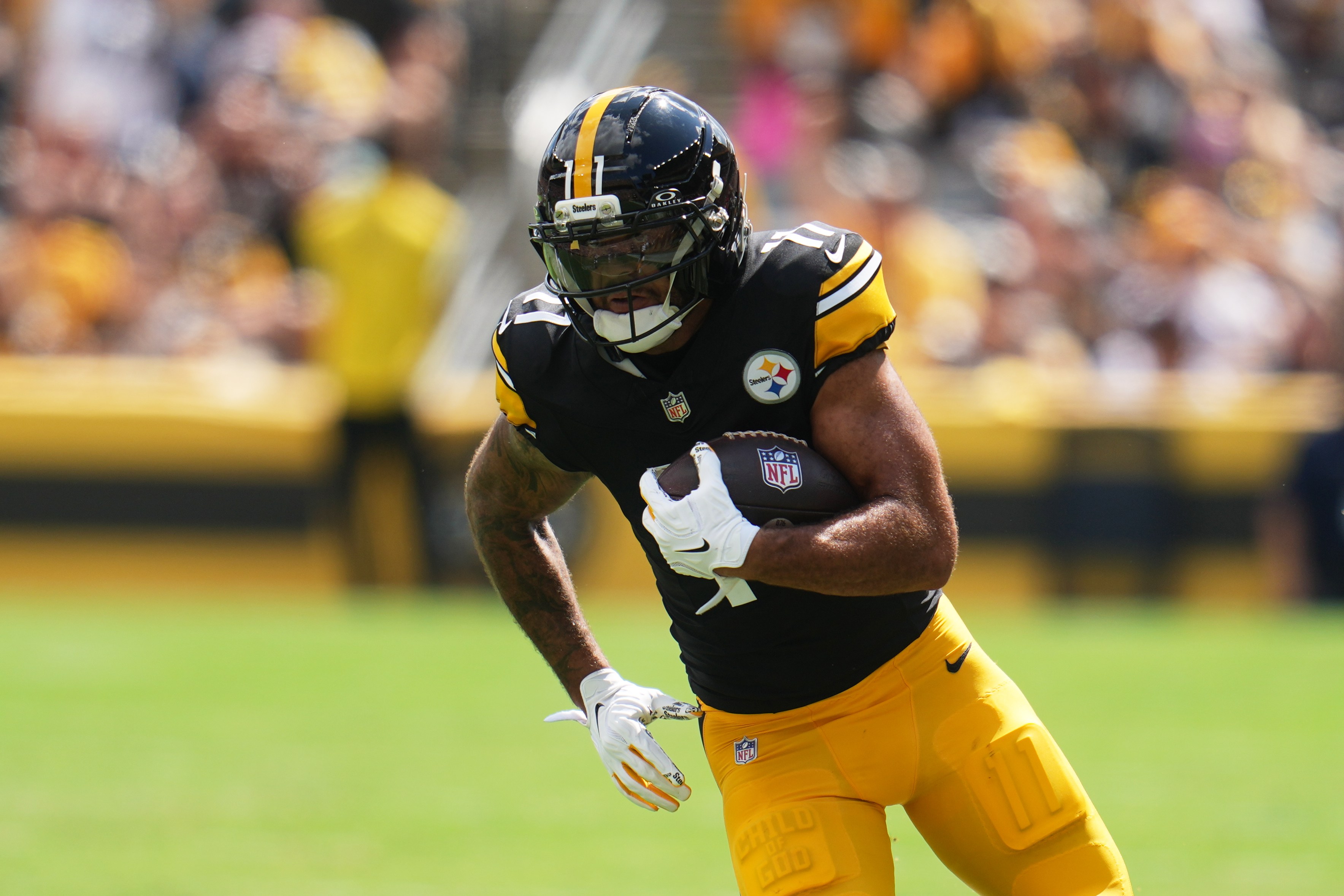
  • Steelers get a boost as WRs Michael Pittman Jr. and Roman Wilson return to practice

    Steelers get a boost as WRs Michael Pittman Jr. and Roman Wilson return to practice

    PITTSBURGH — Michael Pittman Jr. wants to remind his teammates that yes, he can make an impact.

    The Pittsburgh wide receiver is hopeful his aching right foot is healed enough for him to actually do it.

    Pittman, along with wide receivers Roman Wilson and Max Hurleman and rookie offensive guard Gennings Dunker, began the path back off injured reserve on Wednesday by returning to practice, a welcome development for the Steelers (6-3) coming off a nationally televised blowout loss to Cincinnati last weekend.

    Pittsburgh’s passing game could use a lift going into their game on Sunday against the Eagles. Aaron Rodgers threw for just 143 yards and two garbage-time touchdowns against the Bengals, who had little trouble locking up DK Metcalf and Germie Bernard until they had things well in hand.

    Pittman’s arrival in an offseason trade with Indianapolis was supposed to take some of the pressure off Metcalf. It hasn’t quite worked out that way. He was limited during the preseason because of a right foot injury and has appeared in just three games after developing a different problem in the same foot in a loss to Cleveland on Oct. 1.

    The 29-year-old has just seven catches for 89 yards on the season.

    “We’ve just got to get him feeling good about the plan and his body,” Rodgers said. “Pitt’s a savvy pro. He’s a gamer. So if he feels good to go, then that will help our offense.”

    Pittman acknowledged that watching from the sideline has been frustrating.

    “It’s definitely challenging because you want to prove to all your teammates so you can actually play football,” Pittman said, only half-jokingly. “So luckily, most of these guys I’ve played against and they just know me from playing football for so long, but still you want go out and prove it every single day.”

    How much are Howie Roseman and Jeffrey Lurie to blame for current state of Eagles? | unCovering the Birds
    Video: How much are Howie Roseman and Jeffrey Lurie to blame for current state of Eagles? | unCovering the Birds

    The Steelers have three weeks to activate all four players, and Pittman is taking it day by day while declining to get into specifics while dealing with plantar fasciitis. He added he doesn’t plan on returning until he feels he can be effective.

    “Like I don’t wanna go out there and hurt this team because I can’t do something that I should be,” he said.

    Rodgers has relied heavily on tight ends Darnell Washington and Pat Freiermuth and running back Jaylen Warren to move the ball down the field through the air. While Bernard has made significant strides, Metcalf has endured an erratic season while commanding plenty of attention from opposing secondaries.

    As a result, generating plays downfield has been difficult, one of the reasons that Rodgers’ passer rating is a pedestrian — by the four-time MVP’s standards anyway — 86.4, 20th in the NFL.

    Not that the numbers matter that much to Rodgers, who came back for a 22nd season hoping to author one last playoff run. The Steelers are firmly in position to make the postseason for the sixth time in seven years, but more will be required to end a playoff victory drought that is nearing a decade.

    There’s still plenty of work to be done for that to happen, but putting Pittman and Wilson — who was finally showing flashes in his third NFL season before dislocating one finger and breaking another while trying to make a leaping grab in a win over Indianapolis on Oct. 11 — back into the mix certainly won’t hurt.

    Watching from afar is nothing new to Wilson, who spent most of his first two seasons battling injuries. He treated this go-round like his earlier stints on the IR, not that it ever gets any easier.

    “Coaches on the team just (told me to) become a film junkie, be a film rat,” said Wilson, who has 14 receptions for 188 yards and two scores. “I try to watch as much film as I possibly could. I feel like I learned a lot. I feel I grew a little bit.”

    Wilson will wear some sort of protective device on his hand when he returns, though he added it shouldn’t be an impediment to doing what the Steelers are paying him to do.

    Neither does his boss.

    “I think anytime you have players come back, it’s definitely a boost,” Pittsburgh coach Mike McCarthy said. “I mean, just thinking about their personal situation, what they’ve gone through here the last four, five or six weeks. … So yeah, it definitely gives us a boost.”

  • Ground stop highlights chronic vulnerabilities in air traffic system

    Ground stop highlights chronic vulnerabilities in air traffic system

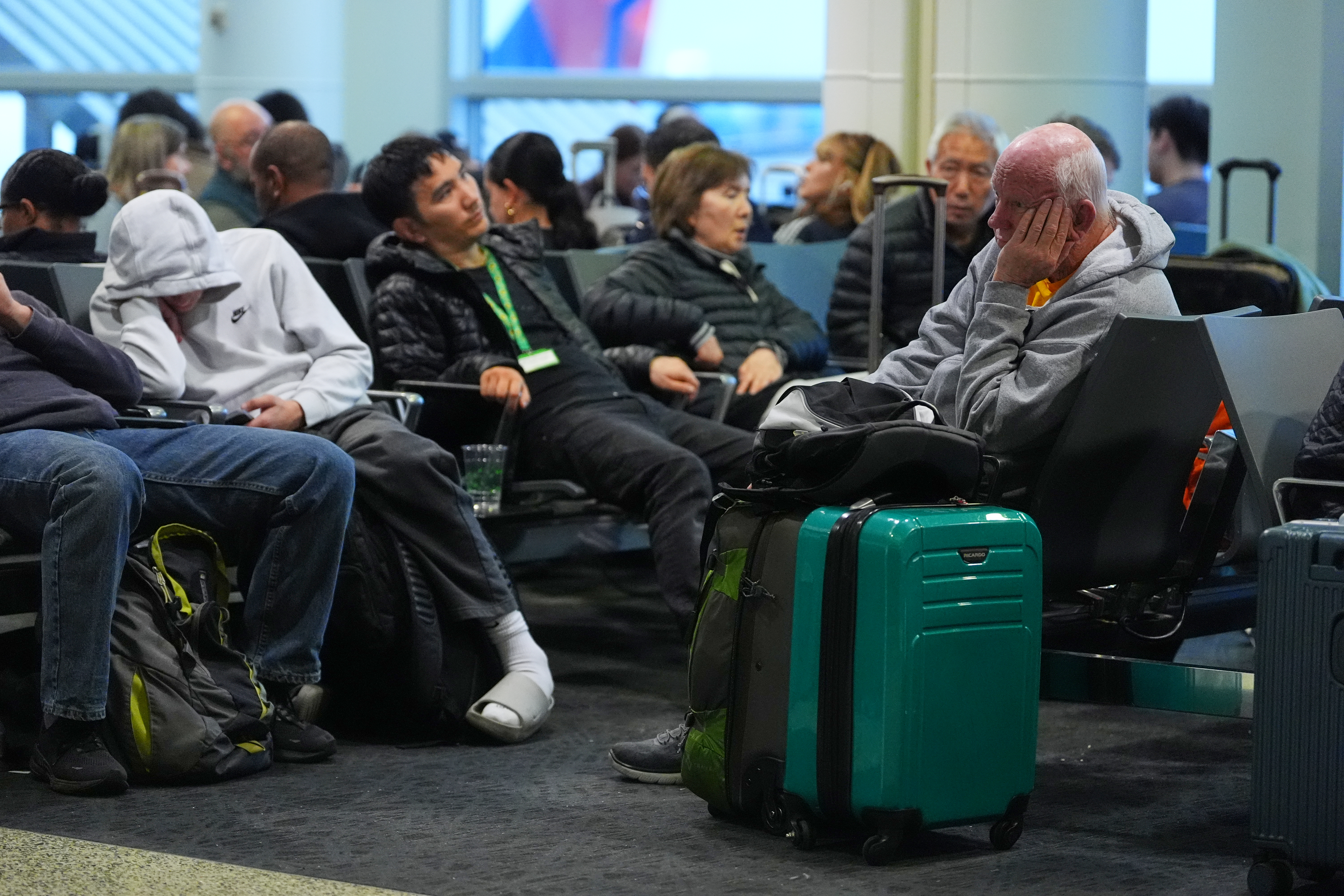
    WASHINGTON — The nationwide ground stop that brought air travel across the country to a halt Friday evening has highlighted persistent weaknesses in the Federal Aviation Administration’s aging air traffic control infrastructure that has had several disruptive failures in recent months.

    Officials called the rare ground stop after outdated communications lines became overloaded and began to fail, interrupting communication lines between air traffic controllers and pilots, according to Transportation Secretary Sean Duffy and Homeland Security Secretary Markwayne Mullin.

    The breakdown occurred less than two months after a circuit failure and severed fiber optic cable caused crippling ground stops and delays at airports along the East Coast. Smaller outages unfolded in October at Raleigh-Durham International Airport in North Carolina and George Bush International Airport in Houston, when contractors accidentally cut into fiber line.

    The Friday ground stop, which was only the third the FAA has issued this century, eclipsed the fallout of previous air traffic communications equipment failures. The FAA has yet to identify precisely what caused communication lines to falter.

    The Associated Press reported that Bryan Bedford, administrator of the Federal Aviation Administration, said Saturday that the U.S. air travel schedule should be back to normal by the end of today. He said airlines “will still have delays and cancellations” Saturday but promised that the “worst is behind us.”

    New technology being added to the nation’s air traffic control system overloaded antiquated equipment and caused “intermittent” communications and radar gaps, leading to the ground stop that lasted more than four hours Friday, Trump administration officials said.

    Duffy said a contractor had been working on replacing a section of the system’s old copper wire with new fiber wire, and that work somehow caused the system overload. Duffy said officials were investigating whether contractor “incompetence” or a faulty router was the cause.

    “Our contractor didn’t meet the moment,” Duffy said.

    But the successive episodes of such problems have underscored the structural vulnerabilities that continue to hamper air traffic controllers’ ability to safely manage flight traffic, even after concerted efforts to make improvements. And they raised questions about whether the federal authorities have done enough to create backup systems and redundancies to prevent disruptive or even catastrophic failures.

    For decades, air traffic communications have relied on a system that runs on analog copper wire, floppy disks, and alphabetical keyboards so old that the FAA has difficulty sourcing spare parts. Last year, Congress approved $12.5 billion in funding to help pay for upgrades, after a series of outages in air traffic control facilities, including the one serving Newark Liberty International Airport in New Jersey, caused alarming losses of radar and other communications capabilities.

    Earlier this month, L3 Harris, the primary telecoms contractor tasked to manage the system upgrades, boasted on its website that it had converted about 70% of the copper line to fiber optic cable; last week, the FAA announced it would begin to phase out floppy disks.

    But the disruptions in recent weeks showed that those upgrades had serious vulnerabilities themselves.

    In September, when a circuit at a regional air traffic facility failed, operators had no backup options beyond the fiber line, 600 feet of which they discovered — to their surprise — had been severed by a construction crew in New Jersey working on Amtrak project. More than 430 flights were canceled before the system was fixed several hours later.

    A similar incident occurred in October at the Raleigh-Durham International Airport in North Carolina, when a contractor working on plumbing accidentally severed a fiber line. The airport was forced to issue a ground stop for several hours. Just one day after that, officials were forced to issue a ground stop at George Bush International Airport, when yet another contractor inadvertently severed a fiber line.

    The fiber line upgrades themselves, Bedford, the FAA administrator, told reporters at the time, were not enough to save the system from failure.

    Ideally, the FAA wanted to put data into cloud services, he told reporters then, so that “when you have a fiber cut, you have multiple pathways of backup.”

    “Today we have physical fiber and when it’s cut, there’s one redundancy, and when we lose that, there’s no more redundancy,” he added.

    Friday’s national ground stop revealed that the lack of redundancies in the FAA’s system could trigger catastrophic failures in other ways and touched off a blame game in Washington.

    Duffy seized on the chaos to hammer Congress, saying it had failed to pony up enough funding to pay for systemwide upgrades.

    “How many more times does this have to happen for Congress to give the money to fix it?” he told reporters at the White House Friday night, asking that lawmakers approve $50 billion in emergency funds for the project. Their lack of action, he said, had forced his department to pursue patchwork upgrades that were insufficient. It was a dramatic increase in his demand for additional money, which for the past several months has hovered at $30 billion.

    But lawmakers in both parties are raising questions about how efficiently Duffy and the FAA have been spending the money they have already been given.

    “Today’s unprecedented breakdown is the latest in a series of unacceptable air travel incidents under the Trump administration’s failed leadership,” Rep. Hakeem Jeffries, the minority leader, said in a statement issued shortly after Duffy’s news conference, accusing the administration of failing to take responsibility for its failures in “the latest in a series of unacceptable air travel incidents.”

    This article originally appeared in the New York Times.

  • Dan Hicks, longtime NBC Sports announcer, dies at 64

    Dan Hicks, longtime NBC Sports announcer, dies at 64

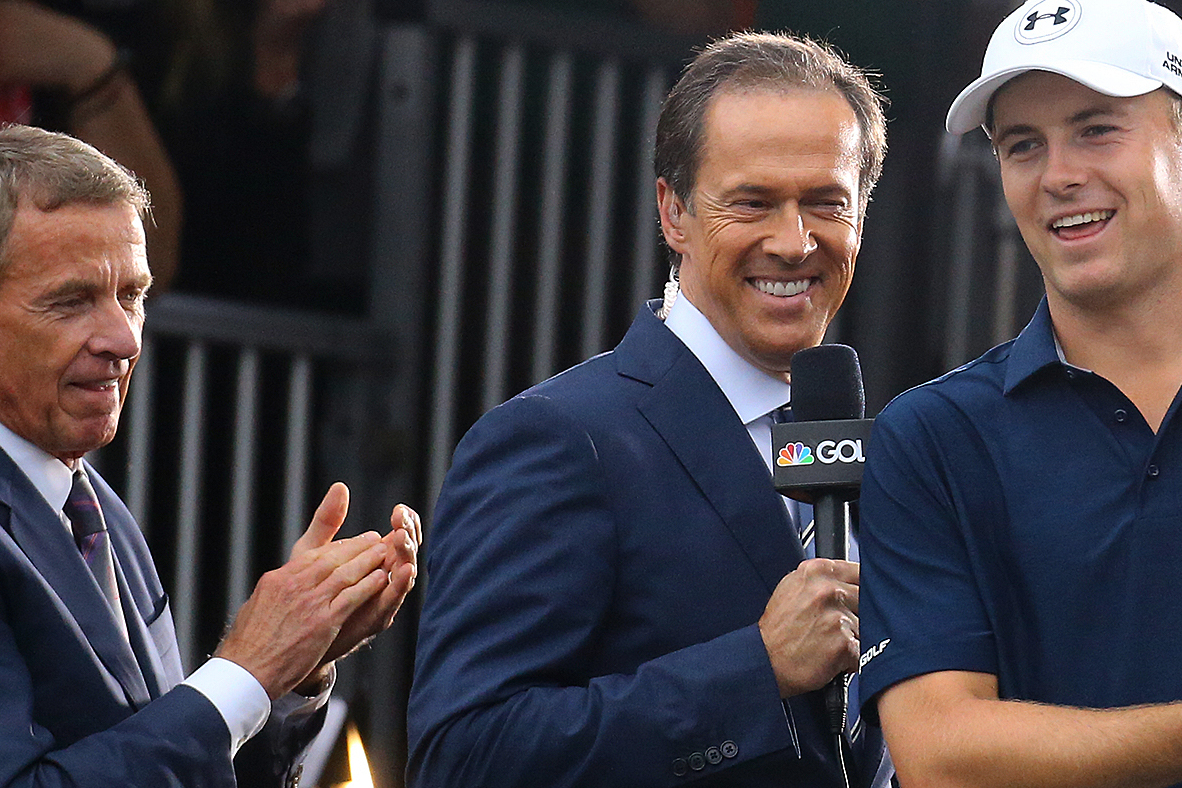
    Sportscaster Dan Hicks, who was the voice of golf, Olympic swimming, and Notre Dame football during a 35-year career at NBC Sports, has died, his family and NBC announced Thursday. He was 64.

    Mr. Hicks died late Wednesday in Connecticut. He died of an acute illness, according to his wife, Hannah Storm. He had been scheduled to call Notre Dame’s game Saturday.

    “Our family is heartbroken by the sudden and unexpected passing of Dan,” Storm said in a statement. “He was a devoted husband of over 30 years, loving father to our three daughters, and cherished friend to so many. His loss is immeasurable.

    “Dan was truly one of a kind and, quite simply, the person everyone wanted to be around. When he walked into a room, he brought the energy, the laughter, and the people together. He was endlessly kind, thoughtful, and funny, and he made everyone feel like they mattered.”

    Mr. Hicks was best known as the lead announcer for golf, as well as swimming and skiing at the Olympics and Notre Dame football. He joined NBC in 1992 following three years at CNN.

    “I’m incredibly lucky to stay at one place this long. It takes a lot of things going your way as far as NBC continuing to have the properties that I’ve been a part of through the years,” he said during an Associated Press interview in September. “So lots of variables, lots of things that can happen in your career. But I think I appreciate it more and more the longer it’s been.”

    Hicks’ favorite sport was golf

    Mr. Hicks was on the call for 27 tournament victories by Tiger Woods, including three at the U.S. Open. His most famous was 2008, when Woods, playing with shredded ligaments in his left knee and a double stress fracture in his leg, faced a 12-foot birdie putt on the 18th hole at Torrey Pines to force a playoff.

    “He asked what it was like on the 18th,” Roger Maltbie, who was on the ground for NBC at Torrey Pines, said Thursday. “I said Tiger expected to make it. Everyone expected him to make it. He had that invincible aura at the time.”

    The putt curled in the right side and Mr. Hicks said, “Expect anything different?”

    Mr. Hicks was a tower announcer from 1995-99 before taking over as the main voice in 2000.

    “He was a great quarterback, a point guard. If you listen to his broadcast, to me he was terrific at passing the ball around,” Maltbie said. ”He always had a question. He always got you engaged. That’s a big part of the job.”

    Mr. Hicks called 27 U.S. Opens and 23 U.S. Women’s Opens. USGA CEO Mike Whan said in a statement that Mr. Hicks “was a true friend to the game and to the USGA, but more importantly, a wonderful person whose warmth, generosity, and friendship touched everyone fortunate enough to know him.”

    Mr. Hicks also called the Ryder Cup, British Open, and PGA Tour events, including the Players Championship.

    “Dan’s voice filled our living rooms with his steady narration of countless golf broadcasts, calling some of the game’s biggest moments,” the PGA Tour said in a statement. “The sound of his voice is woven into our memories of the game, and the warmth he brought to the broadcast was matched only by the kindness he showed those around him.”

    One of NBC’s most versatile Olympic announcers

    Mr. Hicks worked a total of 16 Olympics — nine Summer, seven Winter — with his first being the 1992 Barcelona Games as a host for the Olympic triplecast.

    “Dan Hicks was an extraordinary colleague, friend and person,” NBC Sports’ Rick Cordella, Sam Flood, and Molly Solomon said in a statement. “He was an exceptional storyteller and caller of games and events who elevated some of the biggest moments in sports history.”

    Mr. Hicks called swimming at the Olympics eight times with Rowdy Gaines. The duo chronicled Michael Phelps’ eight gold medals at the 2008 Beijing Games and Katie Ledecky’s 14 medals across four Olympics (2012-24).

    “My heart is broken. Danny wasn’t just my partner in the booth for eight Olympics. He was one of my closest friends, someone I trusted with everything, both in and out of that arena. He was the glue that held us all together at all of those Games,” Gaines posted on social media. “He made me laugh like no other person ever has. We shared thousands of races and a friendship that went way beyond the pool deck. I’ll miss his voice, his steadiness, and just having him next to me.”

    Mr. Hicks was on the call for Alpine skiing for the last four Winter Games as well as speed skating in 2002, ’06 and ’10.

    Two-time Olympic champion Ted Ligety, who was NBC’s Alpine skiing analyst the last two Olympics, said Mr. Hicks excelled at calling races but also telling athletes’ stories.

    “I was always in awe of his ability to know so much about so many sports so fluidly. And his curiosity, he didn’t come in ever with this idea that he knew what was up — he asked a million questions and was really curious. He was able to instantly bring that into the broadcast,” Ligety said. “It’s fun to sit there next to somebody and watch them at their craft at such a high level. Beyond that, just fun to sit next to him and be with him and after a call, share a beer. Just a genuinely fun and awesome dude. The amazing part is his on-air personality and likeableness was only greater in real life.”

    Two stints calling Notre Dame football

    This was Mr. Hicks’ seventh season calling games for Notre Dame, from which his wife graduated in 1983. He did it from 2013-16 before returning in 2024.

    Fighting Irish athletic director and former NBC Sports president Pete Bevacqua said Mr. Hicks “was a fixture here on campus and in the broadcast booth as one of the great voices for Notre Dame Football. … More importantly, a dear friend over the course of the last quarter century.”

    Mr. Hicks also called regional NFL games on NBC from 1992-97, five French Opens, and some NBA coverage from 1992-2000.

    Hicks is survived by Storm — his wife of 32 years — and their three daughters Hannah, Ellery and Riley.
  • Brewers’ Pat Murphy wins third straight NL Manager of the Year; Phillies’ Don Mattingly finishes third

    Brewers’ Pat Murphy wins third straight NL Manager of the Year; Phillies’ Don Mattingly finishes third

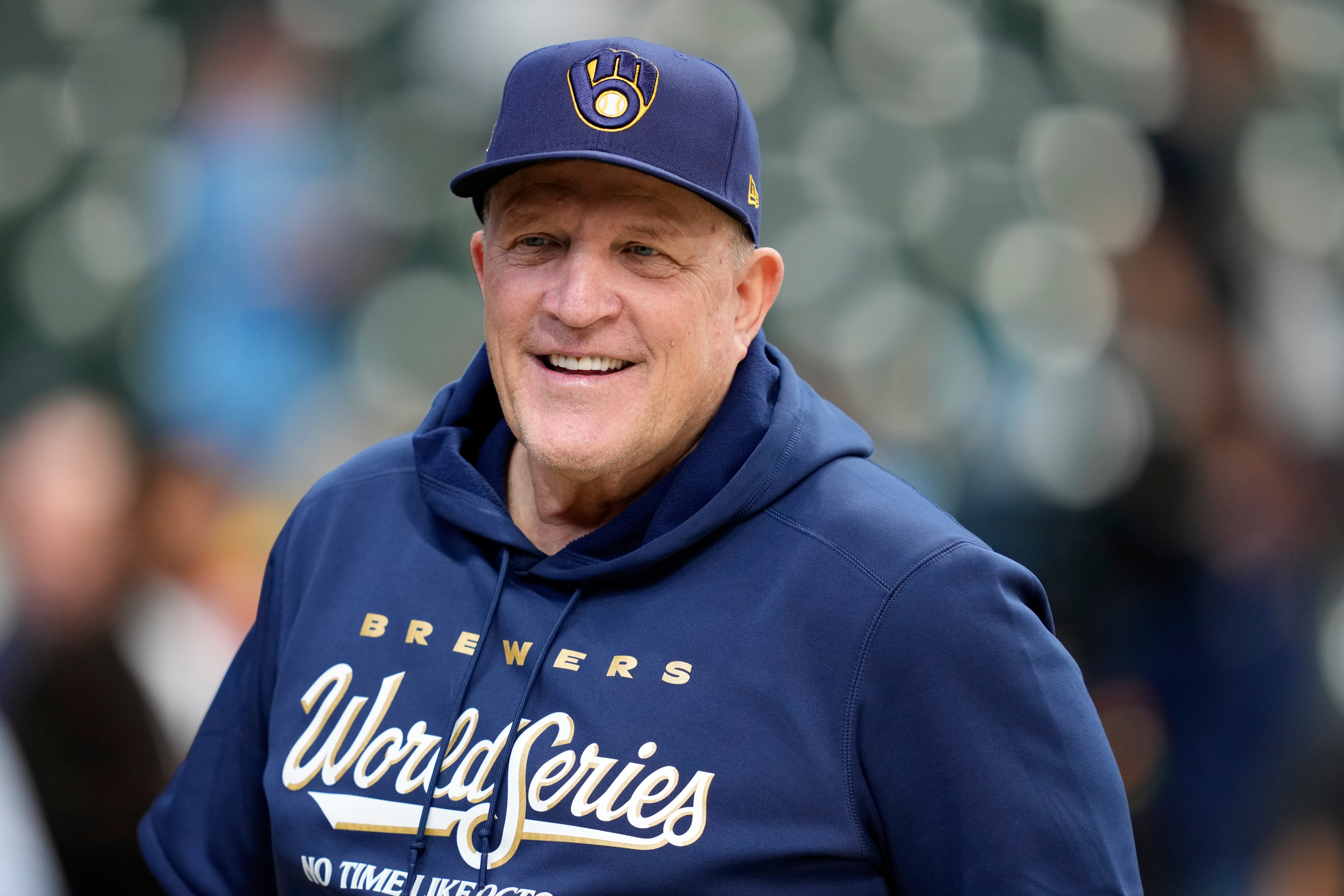
    NEW YORK — Pat Murphy from first-time World Series champion Milwaukee is the NL Manager of the Year, making him the first skipper from either league to win the award three years in a row.

    Murphy, who led the Brewers to an MLB-high 103 wins, received 20 of 30 first-place votes and 124 points to finish ahead of the Braves’ Walt Weiss (84) and the Phillies’ Don Mattingly (25).

    Milwaukee has won the NL Central in all three seasons with Murphy as its manager after he spent eight seasons on Craig Counsell’s staff. The Brewers swept the two-time defending World Series champion Los Angeles Dodgers in the National League Championship Series and beat Tampa Bay in a five-game World Series.

    Murphy, who turns 68 on Nov. 28, was in a hospital bed recovering from hip replacement surgery when he did interviews on MLB Network before and after the announcement.

    Mattingly led the Phillies to a 79-55 record as interim manager after taking over for Rob Thomson, who was fired in April after a 9-19 start. The Phillies reached the playoffs on the final day of the regular season and lost a wild-card series to Weiss’ Braves in three games. The Phillies removed the interim tag and signed Mattingly to a two-year extension after the season.

    Will Venable won the AL Manager of the Year award after the Chicago White Sox made the playoffs this year following three 100-loss seasons in a row.

    The White Sox became the first team in major league history to reach the playoffs after consecutive 100-loss seasons. Only the third of those came under Venable after he took over in 2025. Chicago went 84-78 this year.

    Venable got 15 of 30 first-place votes and 111 points in balloting by the Baseball Writers’ Association of America that was conducted before the postseason and announced Tuesday night. The other AL finalists were two-time winner Kevin Cash of the AL champion Tampa Bay Rays, who got 12 first-place votes and 98 points, and Chad Tracy, who took over the Boston Red Sox in April and led them to the playoffs.

    Venable, a former big league outfielder, got his first managerial job when the White Sox were coming off 121 losses in 2024, a record for the most since 1900, after 101 losses the previous season. They went 60-102 in Venable’s debut and followed that this season by making the playoffs for the first time since 2021.

    After sweeping Houston in two games on the road in the AL Wild Card Series, they had a 2-0 series lead before losing a five-game AL Division Series to Cleveland.

    Venable is first White Sox manager to win the award since Ozzie Guillen in 2005.

  • College Football Playoff doubles up, expands to 24 teams beginning next season

    College Football Playoff doubles up, expands to 24 teams beginning next season

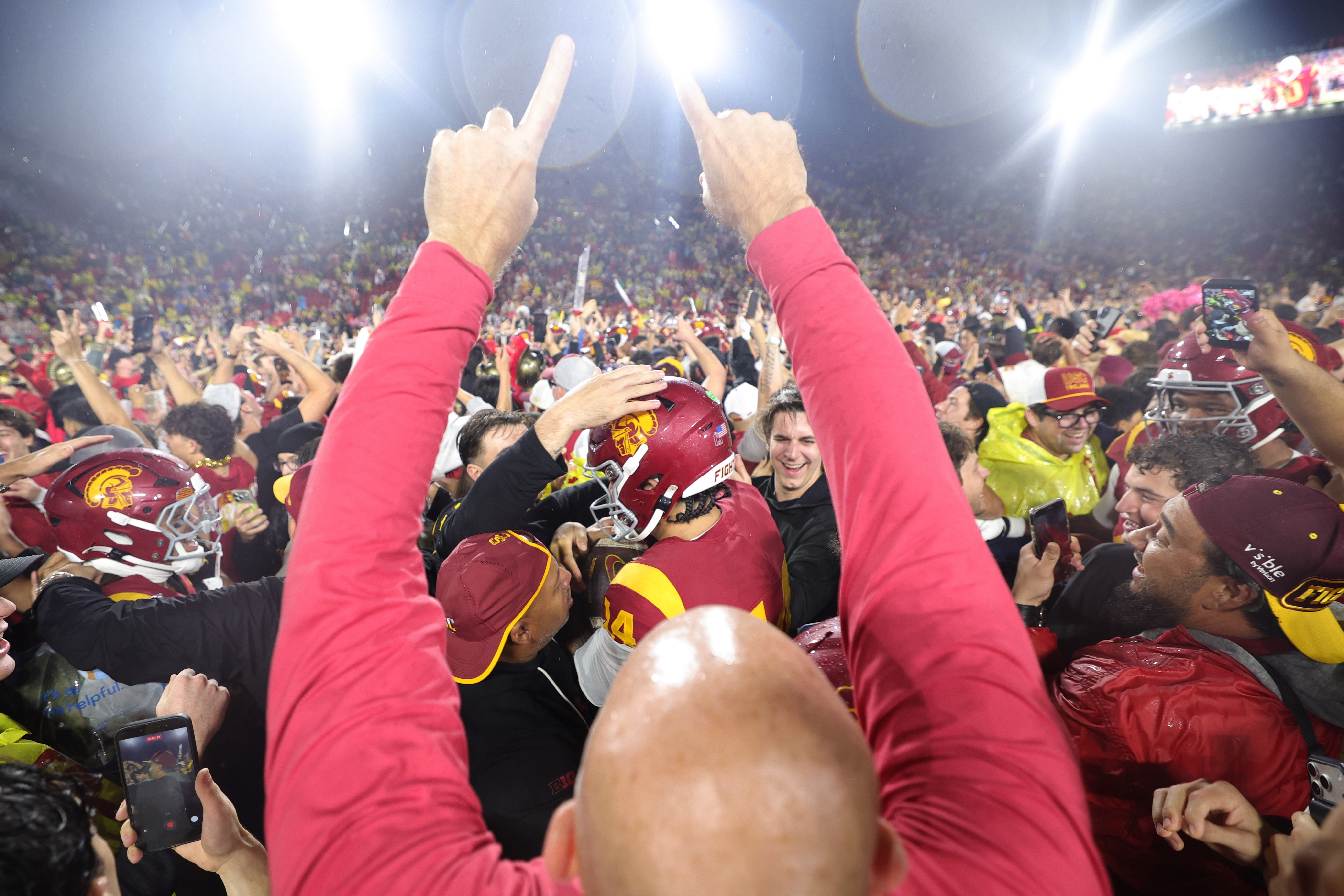
    The College Football Playoff will double in size to 24 teams beginning next year, bringing an end to a three-decade era of conference title games that used to be among the marquee events of the season.

    College leaders announced the new format Monday, after ESPN agreed to rework its contract to add the 11 new games. Terms were not announced, though ESPN said it was a deal for five years and additional $1.7 billion, on top of the $7.8 billion contract that runs through the 2031 season.

    The revenue generated from the new games will presumably make up for the estimated $345 million the Power Four conference title games were worth. ESPN would then not be on the hook for $140 million of the extra money due to cancellation of the title games, the network reported.

    The new format will have five automatic qualifiers — the champions of the Power Four leagues and the best-ranked team in the smaller Group of Six conferences — with the other 19 teams being chosen by a selection panel. Notre Dame does not receive any guarantees, the way it does this year if it’s ranked in the top 12 for what will be the last year of the 12-team postseason.

    The top eight seeds will receive first-round byes in the new format and the playoff will start on the second weekend in December, with the first two rounds of games on campus. The traditional Army-Navy game will be played on the first weekend in December, which used to be reserved for conference title games.

    Both the Southeastern and Big Ten conferences, whose approval was needed to adopt this change, and their Power Four brethren — the Big 12 and Atlantic Coast Conference — are banking that most of the additional spots will go to their members so some of the second-tier teams have new motivation to keep spending big in an era of NIL and $50 million football rosters.

    “Opening the playoff to more programs, more student-athletes and more fan bases across the country is great for college football,” said Mississippi State president Mark Keenum, who is chair of the CFP board. “We look forward to seeing this expanded format come to life next season.”

    The first final for the 24-team playoff remains set for Jan. 24, 2028, in New Orleans. Traditional bowl games will still host the quarterfinal and semifinal rounds.

    As part of the expansion, the CFP is requiring Power Four teams to play at least 10 “qualifying” regular-season games against conference foes, other Power Four opponents and Notre Dame. Group of Six teams will have to play 10 games against conference opponents and a mix of G6 teams, Notre Dame and other independents.

    The agreement guarantees two off weeks during a regular season that will begin the week before Labor Day.

    An NFL-sized playoff changes the nature of the college regular season

    The move to 24 teams marks the second expansion of the playoff since it began in 2014 as a modest four-team affair. Right after it moved to 12 in 2024, most thought it would eventually max out at 16, which was the SEC’s preference.

    But the Big Ten wanted to go bigger, while the SEC balked at that, concerned about the league title game — a property it invented in 1992 and made billions from over the decades — along with the marketability of games featuring third- and fourth-place finishers in power conferences.

    ESPN took care of the money problem. Now, the question is whether fans will embrace an NFL-style free-for-all that could include about one-third of the Power Four’s 68 teams, depending on what happens with the Group of Six schools, whose role in these big-money power grabs seems to diminish with every move.

    It’s the latest seismic change for a sport that, for decades, built its distinct character and generated controversy by leaning on media and coaching polls to hand out national titles.

    The new system won’t be a completely clean break. Critics see a risk in giving more power to a selection committee that hasn’t really mastered the four- or 12-team brackets. The exclusion of Florida State in 2023 and Notre Dame last season stand out as the best examples — and the first rankings release of this season left people scratching their heads again.

    Skeptics also view the expanded playoff as another watering-down of what’s largely seen as one of the most important regular seasons in sports, replacing potential matchups between, say, Alabama and Georgia in an SEC title game with a 13 seed vs. 20 seed game that would pit, say, Kentucky and South Carolina.

    But, as Big Ten commissioner Tony Petitti argued from the beginning, a postseason that gives bubble teams hope and keeps others vying for home-field advantage or byes will bring more eyes — not fewer — to the end of a regular season that sometimes boils down to only three or four traditional rivalry games with meaning. (One of those traditional games, Ohio State-Michigan, is shaping up to have zero impact on this year’s playoffs this year.)

    More at-large berths also help the conferences cash in on the decision to expand their league schedules (the SEC didn’t really want to) and demand more non-league games be played among Power Four teams — all in an effort to beef up strength-of-schedule ratings that will carry weight with a selection committee.