Category: Associated Press

  • Poll of Jewish-Americans reveals complex attitudes toward Israel, antisemitism

    Poll of Jewish-Americans reveals complex attitudes toward Israel, antisemitism

    WASHINGTON — The Associated Press surveyed more than 1,000 Jewish adults in the U.S. to better understand their views on Israel’s military actions in Gaza, their opinions of the political parties, and their experiences with prejudice in the United States.

    The survey of 1,022 Jewish adults — including people who identify as Jewish by religion and religiously unaffiliated people who identify as Jewish through culture, ethnicity, or family background — offers a rare detailed accounting of a key demographic that sits at the very center of some of the nation’s most divisive political debates.

    Here are five takeaways from the AP-NORC survey:

    Jewish adults have complicated views about Israel, war in Gaza

    Among Jews with a religious affiliation, views on Israel’s recent military actions are far from uniform or uncritical.

    About 7 in 10 Jewish adults overall identify as Jewish when asked about their religious affiliation. The rest, about 3 in 10 Jewish adults, say they are atheists, agnostics, or have no particular religious affiliation, but still identify as Jewish in other ways.

    While about 8 in 10 of those with a religious affiliation say Israel’s immediate military response to Hamas’ attack on October 7 was “justified,” only about half say Israel’s ongoing military operations in Gaza are justified. Among Jewish adults without a religious affiliation, only about half saw Israel’s immediate response as justifiable. Now, only about 2 in 10 say the ongoing military operations are acceptable.

    About one-quarter of Jewish adults with a religious association believe Israel has committed genocide against Palestinians in Gaza, an accusation that’s been leveled by some major human rights organizations and a team of independent experts commissioned by the United Nations. That accusation has been vehemently denied by Israel and the U.S. government. Roughly 4 in 10 Jewish adults without a religious affiliation say Israel has committed genocide.

    Many Jewish adults feel unsafe in the U.S.

    About 6 in 10 Jewish adults say prejudice against Jewish people is an “extremely” or “very” serious problem in the United States today.

    About one-third of Jewish adults in the survey say they feel “very” or “somewhat” safe as a Jewish person in the U.S. today, while about one-third feel “very” or “somewhat” unsafe. The remaining roughly 3 in 10 say they feel neither safe nor unsafe.

    A significant share of Jewish adults, about 3 in 10, say they or someone in their household has experienced physical assault, verbal abuse, online harassment, or damaged property because of their Jewish background over the last year, according to the survey.

    The survey points to how Jewish adults’ attitudes toward their own personal safety have changed over a relatively short period as more Americans became critical of the United States’ close alliance with Israel and the war in Gaza. The poll found that Jewish adults who feel a close emotional tie to Israel are particularly likely to feel unsafe in the country today.

    Most American Jews don’t feel politicians support Jewish people

    Few Jewish adults believe that President Donald Trump — or the Democratic or Republican parties — are doing a good job supporting Jewish people in the U.S.

    Only about 2 in 10 Jewish adults say Trump supports Jewish people in this country “extremely” or “very” well. That’s similar to the slight share who find the Republican Party and the Democratic Party highly supportive, but Jewish adults are more likely to say the Democratic Party is at least “somewhat” supportive.

    Americans overall are more likely than Jewish adults to see Trump as “extremely” or “very” supportive of Jewish people in the United States. About 3 in 10 U.S. adults say Trump is highly supportive of Jewish people, compared to about 2 in 10 Jewish adults.

    The poll also found most Jewish adults have negative views of Trump. About 7 in 10 Jewish adults have a “very” or “somewhat” unfavorable opinion of Trump, compared to about 3 in 10 who have a favorable view.

    Division over whether protesting Israel is a form of antisemitism

    Protests around events conducted in support of Israel became more common following the backlash over Israel’s military action in Gaza.

    The war in Gaza began with Hamas’ Oct. 7, 2023, attack on Israel that killed roughly 1,200 people, most of them civilians. Israel responded with a yearslong counterattack that has killed more than 73,000 people, according to the Gaza Health Ministry, which is part of the territory’s Hamas-run government. Its casualty figures are viewed as generally reliable by U.N. agencies and international organizations but don’t distinguish between civilians and militants.

    The poll found that about half of Jewish adults say protesting an event that is supportive of Israel is not a form of antisemitism, but roughly 4 in 10 say it is. About 1 in 10 are uncertain.

    Jewish adults are more unified in deeming some actions as definitively antisemitic. The overwhelming majority say vandalizing synagogues or Jewish-owned businesses because of Israel’s actions is antisemitism. The same goes for denying the reality or scope of the Holocaust, putting responsibility for Israel’s actions on Jewish people in the United States, or saying Israel shouldn’t exist as a Jewish state.

    Support for Israel less of a priority for younger Jewish adults

    Support for Israel is a key component of the religious identity of many older Jewish adults in the United States, but younger Jewish adults appear less likely to prioritize it.

    About half of older religious Jewish adults — those 45 and older — say that supporting Israel is “extremely” or “very” important for their Jewish identity. By contrast, only about 4 in 10 younger religious Jewish adults emphasize support for Israel.

    Younger Jewish adults are more likely to prioritize other forms of connection, like celebrating Jewish holidays. About 7 in 10 Jewish adults under 45 say celebrating Jewish holidays is at least “very” important to their Jewish identity, compared to about half of older Jewish adults.

  • What to know about the Tate brothers, social media influencers facing rape and trafficking charges

    What to know about the Tate brothers, social media influencers facing rape and trafficking charges

    LONDON — Influencer brothers Andrew and Tristan Tate were arrested Saturday in Miami after U.K. prosecutors said they brought further rape and sex trafficking charges against them.

    Britain’s Crown Prosecution Service said the new charges relate to four further victims and were brought after authorities received evidence from Bedfordshire Police in southeastern England. The charges include rape, assault, trafficking, and offenses relating to “indecent images of a child and extreme pornography.”

    The charges announced Saturday, which bring the total number of alleged victims in the U.K. to seven, are the latest in a long-running international legal saga involving the brothers that has spanned the U.S., Britain, and Romania. The brothers have denied wrongdoing.

    Here are some things to know about the Tate brothers:

    Who the Tate brothers are

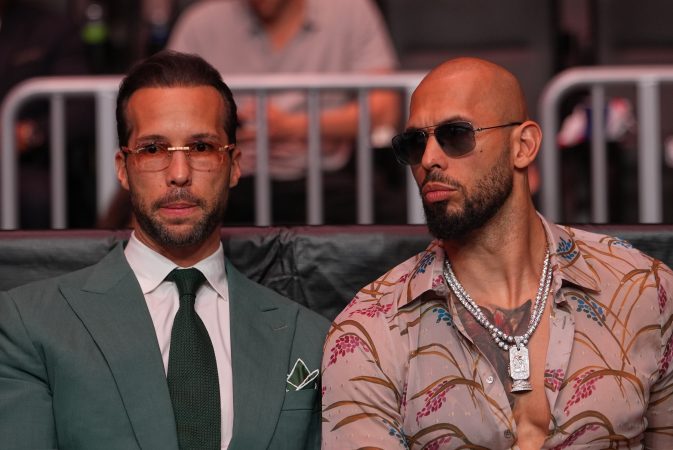
    Andrew Tate, 39, and Tristan Tate, 38, are dual U.S.-British citizens known for their social media empire promoting wealth, male dominance, and misogyny.

    Andrew Tate is a former professional kickboxer and self-described misogynist who has amassed more than 10 million followers, most of them boys and young men, on X. He has been banned from platforms like YouTube, TikTok, and Instagram for violating hate speech guidelines.

    He also runs an online academy where he says he teaches young men how to get rich and attract women. Tristan Tate is also a former kickboxer.

    The brothers are avid supporters of U.S. President Donald Trump.

    What the Tates are charged with

    Andrew Tate and his brother have faced multiple charges in the U.K. and Romania, where they moved in 2016.

    British prosecutors said the new charges relate to alleged offenses that took place between 2010 and 2017. They said Andrew Tate was charged with seven further counts of rape, three counts of arranging or facilitating trafficking for sexual exploitation, three counts of assault, and 19 charges for offenses relating to indecent images of a child and extreme pornography.

    Tristan Tate was charged with one count of sexual assault, two counts of rape, and three counts of arranging or facilitating sex trafficking.

    The Crown Prosecution Service said in a statement it “has requested the extradition of the Tates from the U.S. They have been arrested and await extradition proceedings to the U.K.”

    The Tates already face previous charges of rape, bodily harm, human trafficking, and controlling prostitution for gain relating to three other alleged victims in the U.K. between 2012 and 2015.

    In June, a U.K. High Court judge threw out a legal bid by the Tates to be told the names of their accusers.

    In Romania, the siblings were arrested in late 2022 along with two Romanian women. The four were accused of participating in criminal schemes to lure women for sexual exploitation. They denied those allegations and the Romanian case hasn’t gone forward because of legal and procedural problems.

    The case hasn’t been closed, and there is also a separate legal case against the brothers in Romania.

    Andrew Tate has repeatedly claimed that prosecutors in Romania have no evidence against him and that there is a political conspiracy to silence him.

    How the extradition process could work

    The brothers are expected to appear this week in a U.S. federal court, where a judge will make an initial determination about whether they meet the conditions for extradition. If they do, they are unlikely to get bail, which is rarely granted to those held for international extradition.

    The decision about whether to order the extradition will then fall to U.S. Secretary of State Marco Rubio. While the State Department has some discretion to deny extradition requests from the U.K., it has granted nearly every British request since ratifying a strengthened extradition treaty in 2007.

    One exception came during Trump’s first term, when the U.S. declined an extradition request for the wife of a former American diplomat involved in a fatal crash in England, citing diplomatic immunity. The rejection prompted an international outcry.

    Why the Tates were in the U.S.

    British police previously sought the Tates’ extradition to the U.K. once their legal proceedings in Romania concluded.

    But in February 2025 they were allowed to leave Romania after authorities lifted travel restrictions, and they flew to Florida on a private jet.

    Romania’s foreign minister said at the time that a U.S. official in the Trump administration had expressed interest in the brothers’ legal case in Romania.

    Trump said he knew “nothing about” the case when asked if his administration pressured the Romania government to release the Tates.

  • Mount Olympus, home of the ancient Greek gods, vies for World Heritage status

    Mount Olympus, home of the ancient Greek gods, vies for World Heritage status

    LITOCHORO, Greece — Snow-capped for much of the year, Mount Olympus, mythological home of ancient Greece’s Olympian gods, has captured the imagination through the millennia. The mountain rises to 9,573 feet from a base practically at sea level, and the ancient Greeks believed the throne of Zeus, king of the gods, stood on the highest of its craggy, often mist-shrouded peaks.

    Now, modern Greeks hope their tallest mountain will be inducted into UNESCO’s World Heritage List as a mixed cultural and natural site. The nomination was set to be discussed as the World Heritage Committee meets in Busan, South Korea, from July 19 through July 29.

    “Olympus is our life. It is the place we grew up in,” said Evagelos Geroliolios, mayor of Dion-Olympus, based in Litochoro, the mountain’s main town. “It is the place we see every day, but at the same time, it is also a place which carries with it myth, history, biodiversity, extraordinary beauty, and a very great cultural weight.”

    Seat of the gods

    Few locations are as central to ancient Greek mythology as Mount Olympus. It was here that Zeus was said to have established his court after overthrowing his father, Cronus, in a 10-year war that ended the reign of the Titans.

    Interest in Olympus may receive another boost with the theatrical release of Christopher Nolan’s The Odyssey, a new adaptation of Homer’s epic, in which the mountain serves as the home of Zeus and the Olympian gods who influence Odysseus’ journey.

    On one of Olympus’ lower peaks, excavations have uncovered an open-air sanctuary, with the oldest finds dating to the Hellenistic period, which ran from 323 B.C. to 30 B.C. According to Greece’s original UNESCO nomination, the sanctuary is believed to have been one mentioned by the ancient philosopher and historian Plutarch, who in the 2nd century wrote of processions to one of Olympus’ peaks for animal sacrifices to Zeus.

    The mountain retained religious significance into the Christian era. A chapel on the peak of Prophet Elias, at 9,196 feet, is believed to be the highest altitude chapel in the Christian Orthodox world. The mountain’s Enipeas Gorge holds the remains of a monastery founded in 1542, while a roughly 20-minute walk from there leads to the Holy Cave of St. Dionysios, a chapel built into a cave from where a small spring flows, believed to carry holy water.

    The mountain’s slopes, which reach practically to the sea, also host a wealth of flora and fauna, including endemic species. It is this blending of culture, myth, natural beauty, and biodiversity that locals hope will see their mountain declared a World Heritage site.

    “It is a place we love. It is a place that many people from all over the world visit to see, to live, to experience. We want to protect it,” Geroliolios said. Its inclusion on UNESCO’s list would be “something very big that goes beyond not just local boundaries, but national boundaries. It is something that concerns the entire world. It is very important.”

    Inclusion in World Heritage List far from certain

    Greece began the process to have Mount Olympus recognized as a World Heritage site in 2014, inscribing it on its Tentative List — the mandatory first step in any nomination. The Tentative List is where countries include sites they can then formally nominate over the next five to 10 years.

    The nomination process includes a preliminary assessment followed by submission of a full nomination file, which is then evaluated over 14 months by advisory bodies, including the International Council on Monuments and Sites and the International Union for Conservation of Nature.

    Recommendations by the advisory bodies are then discussed during the World Heritage Committee’s annual meeting, where representatives of 21 countries vote on nominated sites.

    Greece’s Mount Olympus nomination is far from certain. A draft of the Busan meeting’s agenda indicates the committee will refer the nomination back to Greece and request further details.

    Still, locals hope the mountain’s cultural and natural wonders will secure it a place and will play a role in gaining more protection for the mountain.

    The need for protection

    The mayor, Geroliolios, said inclusion on the World Heritage list “places some greater obligations on our part to protect this environment.”

    Environmental protection is also foremost in the mind of mountain guide Babis Marinidis, president of the Alpine Club of Litochoro.

    Including Olympus on UNESCO’s World Heritage list would likely attract more people to the mountain and the surrounding area, Marinidis said. “How many people can this mountain, this ecosystem, bear?” he asked. Although much of Olympus was designated a national park decades ago and there are regulations in place, many are openly flouted, with Marinidis saying visitors regularly ignore “no swimming” or “no camping” signs.

    The ever-growing number of visitors had led local authorities to consider imposing entrance fees and registering visitor numbers. “I used to be against that,” Marinidis said. “But now with so many people, I believe some limit must be imposed.”

    Mount Olympus has claimed many lives

    The mythological home of the gods attracts hikers and mountaineers from across the world. While technical climbing experience isn’t mandatory to reach the summit, the mountain is also not to be trifled with.

    With its combination of changeable weather and treacherous terrain, it has claimed many lives. The most recent fatality was on July 11, when a 64-year-old Greek hiker died after collapsing on a trail. In May, rescue crews found the body of a 25-year-old Spanish man days after he went missing while attempting to reach the summit in the snow.

    “You need to be careful,” and safety measures must always be kept in mind, said 32-year-old hiker Triantafyllos Giannospyros, who was visiting the mountain for the first time. “But with care and with good organization, it isn’t something you should be afraid of.”

    Stavroula Vourou, who runs a hotel in Litochoro, the town from where many hikers set off, echoed his sentiment.

    “Everyone sets off to go up and conquer a mountain that needs respect,” she said. “You respect this mountain, it respects you too.”

  • The world wants more high-protein products, but there’s not enough whey to go around

    The world wants more high-protein products, but there’s not enough whey to go around

    Global consumers want more protein in every bite, but the dairy industry is struggling to give it to them.

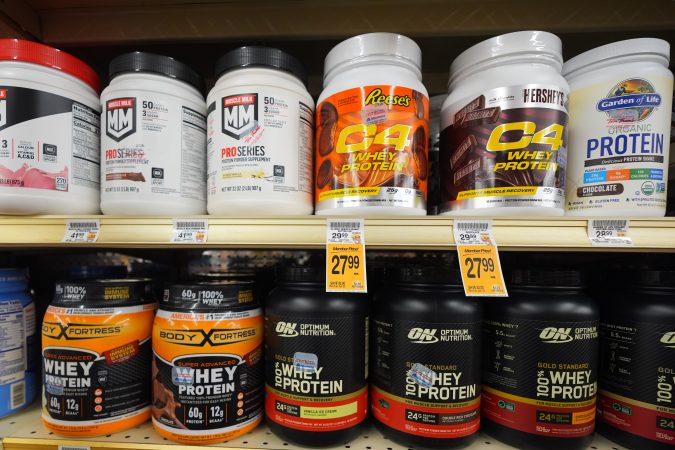
    Athletes and older adults have long used smoothies and shakes blended with whey protein concentrate — a powdered byproduct of cheese-making — to build or maintain muscle. More recently, food companies have sprinkled it into everything from breakfast cereals, Pop-Tarts, and potato chips to bagels, tortillas, and Starbucks drinks to meet growing consumer demand.

    The average U.S. supermarket now has 38,708 products advertising their protein content, according to NielsenIQ, a market research company. But the eagerness to appeal to ingredient-focused shoppers is causing shortages of food-grade whey protein and pushing prices to new records.

    “Demand is very firm and seemingly outpacing supply for right now,” said Kathleen Wolfley, vice president of Ever.Ag Insights, a data provider and consulting company for the agriculture industry.

    Wholesale prices for whey protein began rising in 2024, and the pace accelerated last year and so far this year, Wolfley said.

    Whey protein concentrate with 80% protein — the type often used by food makers and supplement companies as a booster — is trading on the dairy commodities market at more than $13 per pound in the U.S., up 250% from a year ago, according to Ever.Ag. Whey protein isolate, a more refined version that contains at least 90% protein, is 150% more expensive than last year, the company said.

    That’s raising prices for consumers. U.S. prices for whey protein concentrate powder have increased by around 15% over the past year, while more premium whey isolate powder has seen steeper gains, according to Datasembly, a price-tracking company.

    It’s a similar story in Europe. In late May, 80% whey protein concentrate hit a record average of 26,450 euros ($30,518) per metric ton, a price more than double from less than a year earlier, according to DCA Market Intelligence, a Netherlands-based commodity pricing firm.

    Here’s what’s happening with whey protein and when strained supplies might be alleviated.

    Curds and whey

    Milk contains two proteins: casein and whey. During the cheese-making process, the casein — which forms solid curds — is separated from the liquid whey, which is dried to form a powder. Every pound of cheese yields nine pounds of whey, according to the U.S. Department of Agriculture.

    U.S. milk consumption has fallen for decades as Americans shifted to beverages like sodas. But the appetite for cheese remained strong, Wolfley said. A nation of cheese-eaters generated a lot of whey protein, and some of the excess used to be exported to China and other countries.

    The domestic hunger for high-protein snacks and meals is now keeping more whey protein in the U.S. for use as a food additive or a nutritional supplement. U.S. exports of 80% whey protein concentrate and whey protein isolate to China fell 47% from January through April compared to the same four-month period a year ago, according to Vesper, an Amsterdam-based company that tracks commodity prices.

    “There simply isn’t enough product for the U.S. customer, and exports have therefore been paused as much as possible,” said Jasper Endlich, a Vesper dairy analyst.

    China is seeking more whey protein from Europe, which also is seeing shortages thanks to reduced U.S. exports, Endlich said.

    Whey and weight loss

    Use of GLP-1 weight-loss drugs is one of the factors that has supercharged demand for whey protein concentrate, Wolfley said.

    Obesity drugs like Wegovy and Zepbound are designed to suppress the appetites of people taking them. The foods they do eat need to be nutritionally dense, experts say. GLP-1 users often are advised to consume enough protein to help them feel full for longer and to retain muscle mass as they lose weight.

    Around 6% of obese and diabetic patients in the U.S. and 2% of obese and diabetic patients worldwide were using GLP-1 drugs last year, according to an estimate by the investment bank Morgan Stanley. Some estimates have put GLP-1 use as high as 12% of the U.S. adult population, since not everyone on GLP-1 drugs is obese or diabetic.

    Food and nutrition companies are creating added-protein products to attract those consumers as well as people who think drinking protein shakes to replace meals will help them lose weight.

    Pricey protein

    Tight supplies and higher costs have caused some manufacturers to increase the prices consumers pay for protein powder or protein-enriched products.

    Now Foods, an Illinois-based maker of health foods and nutritional supplements, said tubs of whey protein powder are consistently the biggest seller in its sports nutrition category. But after two years of paying more for raw ingredients, the company raised the price of its own whey protein products earlier this year.

    Bryan Morin, the sports brand manager at Now, said the company doesn’t anticipate further price increases on whey protein powder this year. It’s trying to absorb some of its increased costs by cutting back on discounts. It’s also considering expanding its portfolio to include products made with milk protein concentrate, a powder that contains less whey and is cheaper.

    “From our perspective, broader market dynamics continue to indicate a tight and evolving protein landscape,” Morin said.

    More on the whey

    Wolfley, at Ever.Ag, said manufacturers are investing in whey protein production, which should eventually improve supplies. But the relief won’t be immediate.

    Glanbia, an Irish nutrition company, said in November that it planned to increase its whey protein isolate production in New Mexico, but the additional capacity won’t be in place until 2027. In February, Canadian dairy company Agropur said it intended to increase whey protein manufacturing at plants in Quebec, Nova Scotia, South Dakota, and Wisconsin by 2029.

    In the meantime, higher prices could cause some consumers to stop buying whey protein powders, especially at a time when groceries are getting more expensive overall, Wolfley said. Reduced retail demand might reduce shortages at the wholesale level.

    “The supply-demand dynamics could start to improve, but I don’t know if that’s a tomorrow dynamic or within a year. Some of these things are going to take time,” Wolfley said.

  • Federal appeals court rules that New Jersey’s assault weapons ban is unconstitutional

    Federal appeals court rules that New Jersey’s assault weapons ban is unconstitutional

    A federal appeals court ruled Friday that New Jersey’s bans on assault firearms and magazines that can hold more than 10 rounds are unconstitutional.

    This is the first time a federal appeals court has struck down a state ban on such weapons, and it comes as the U.S. Supreme Court is set to consider whether bans on semiautomatic rifles violate the Second Amendment. Just last week, a different federal appeals court upheld Illinois’ ban on semiautomatic weapons.

    Friday’s appeals court ruling in the New Jersey case goes further than a July 2024 ruling from a federal judge, who said that the state’s ban on AR-15s specifically was unconstitutional but upheld the provision barring larger magazines. The 3rd U.S. Circuit Court of Appeals said Friday in its opinion that the state’s ban on all semiautomatic rifles it deems to be “assault firearms” and restriction on “large capacity ammunition magazines” were unconstitutional.

    New Jersey Attorney General Jennifer Davenport, a Democrat whose office defended the law, said in a statement that the decision is “as unfortunate as it is legally incorrect.”

    “Every other federal circuit court to consider the issue has come out the other way,” Davenport said. “Assault weapons and large capacity magazines play a dangerous role in the modern epidemic of mass shootings, and New Jersey acted reasonably and lawfully in restricting them. We are considering our options.”

    John Commerford, executive director of the National Rifle Association Institute for Legislative Action, called the ruling a “historic victory for the NRA, the Second Amendment, and law-abiding Americans.”

    In addition to New Jersey, 10 states, as well as the District of Columbia, have laws that generally ban the manufacture, sale, and transfer of assault weapons, according to the Giffords Law Center to Prevent Gun Violence. The District of Columbia, New Jersey, and 11 other states cap magazine capacity at 10 rounds generally or for certain types of firearms.

    Adam Winkler, a law professor at the University of California, Los Angeles, said that Friday’s ruling was surprising because federal courts of appeals have upheld assault weapons bans in the past. On the other hand, he added, the decision “may be foretelling the Supreme Court’s coming opinion on assault weapons bans.”

    “What this Third Circuit opinion shows is that there are very few gun laws that are safe from being struck down right now,” Winkler said.

  • U.S. cancels automatic protections for imperiled animals as critics warn of extinctions

    U.S. cancels automatic protections for imperiled animals as critics warn of extinctions

    BILLINGS, Mont. — The U.S. Interior Department on Friday canceled a rule meant to protect plants and animals that are determined to be threatened with extinction, the latest step by President Donald Trump’s administration to dismantle key provisions of the landmark Endangered Species Act at the behest of industry.

    Instead of receiving automatic protections, imperiled species will need individualized protection plans once they are added to the threatened species list. That’s a potentially lengthy process in which companies could seek exemptions for oil and gas drilling, mining, and other development where those species live.

    Opponents said it would make it harder to save wildlife that’s awaiting federal protections and in danger of disappearing, such as monarch butterflies and alligator snapping turtles.

    Interior Secretary Doug Burgum said in a statement that the Endangered Species Act had been used for too long “to stop almost any new project in America, driving up costs for families, weakening our competitiveness, and undermining our national security.”

    “Success should be measured by species recovery and delisting, not by adding more species to the list,” Burgum added.

    A second change finalized Friday requires officials to analyze economic impacts when deciding whether habitat is critical to a species’ survival. Critics say it gives corporations an opportunity to put their thumb on the scale so that officials will allow development in those areas.

    “If you’re exempting certain industries that cause habitat destruction, in many instances you’ll be exempting the main threat to those species,” said Noah Greenwald with the environmental group Center for Biological Diversity.

    Officials made similar changes during Trump’s first term but they were reversed under former Democratic President Joe Biden.

    The rules that gave what some consider “blanket protections” to threatened species were first adopted for wildlife in 1975 and for plants in 1977.

    There have been no species added to the endangered or threatened lists in Trump’s second term. By comparison, more than 20 species were added in Trump’s first term, and about 60 during Biden’s presidency.

    About 30 species are currently proposed to be listed as threatened. Besides monarchs and alligator snapping turtles, they include California spotted owls and various snakes, fish, clams, and insects.

    Changes to government policies for endangered plants and wildlife have come faster and extended further in Trump’s second term than in his first.

    The administration in March exempted oil and gas drilling in the Gulf of Mexico from the Endangered Species Act after Defense Secretary Pete Hegseth said environmentalists’ lawsuits threatened to hobble domestic energy supplies as the U.S. wages war against Iran.

    Last week, Interior officials sharply narrowed the definition of what constitutes “harm” to a species. The change would allow development on critical wildlife habitat so long as the animals themselves are not immediately killed or injured.

    This week officials sharply reduced the amount of critical habitat in the U.S. Rocky Mountains designated for Canada lynx, forest dwelling wildcats that are threatened by climate change and other pressures.

    Also this week, Burgum said in a visit to Montana that the U.S. Fish and Wildlife Service would turn over more management authority for grizzly bears to states where the bruins live. That’s been a longstanding priority for the Republican governors of Wyoming, Idaho, and Montana.

    The Endangered Species Act is credited with bringing back iconic animals including the bald eagle and American alligator from the brink of extinction.

    Burgum noted Friday that 97% of the species that have been given protections still have them. That’s a frustration for Republican lawmakers who say species should be taken off the endangered and threatened lists more quickly once they’ve recovered.

  • Paying for early access to Trump’s Truth Social could raise big money — and major ethical issues

    Paying for early access to Trump’s Truth Social could raise big money — and major ethical issues

    NEW YORK — America’s first billionaire president may soon be profiting from a new line of business tied to his office: charging access for a first peek at certain posts on his Truth Social platform.

    Donald Trump’s struggling media company plans to sell Wall Street traders the chance to see posts from “highest-ranking” accounts — including possibly his own — milliseconds before others.

    That could mean big money for them, and Trump.

    Trump’s posts are often important enough to rattle financial markets, sending prices soaring and plunging within seconds. Until this moment, presidential policy announcements were considered a sort of public property that should be free and available to all at the same time.

    The president has the most followers on Truth Social — 12.9 million — so presumably will be included in the mix of high-ranking accounts.

    Truth Social’s public parent, Trump Media & Technology, did not respond to emailed questions, including whether Trump’s posts will be excluded from the offering, but the planned service is attracting plenty of attention — and not just from traders.

    “It’s odious, selling access to highest bidders on Wall Street,” said Dylan Hedler-Gaudette, an expert on federal ethic rules at watchdog Project on Government Oversight. “Everything he says has market implications.”

    How the new business hopes to make money

    Called Truth PSI, the service announced in a short news release Thursday would allow Wall Street trading firms and institutions to see certain posts earlier than other users so they could profit off subsequent moves in stocks, bonds, and interest rates.

    The Trump Media release did not give any sense of the size of the new business but quotes CEO Kevin McGurn as saying he expects it to become a “meaningful” source of revenue as part of a strategy to ”monetize proprietary assets.” The company added that it expects to launch the service next month.

    The customers that Truth Social is targeting are high frequency traders who jump ahead of others in reacting to news to buy and sell bonds and other financial instruments. And a few thousands of a second often spells the difference between profits and losses.

    Trump posts are big news, and big moneymakers

    When Trump announced his sweeping tariffs on April 2 last year, it was major political and financial news — and many found out first on Truth Social.

    “It’s Liberation Day in America,” Trump posted hours before a formal Rose Garden announcement, sending stocks plunging nearly 5% over the next few hours. Safe haven investments like gold and Treasury bonds soared.

    A few days later, Trump reversed course by suspending the tariffs for 90 days with an announcement again on Truth Social, writing, “THIS IS A GREAT TIME TO BUY!!!”

    Stocks soared 9.5% that day, adding $4 trillion to investor wealth as measured by the S&P 500 index.

    “It’s yet more brazen corruption,” said Kathleen Clark of Washington University School of Law and an expert in government ethics rules. “Trump can line his pockets by selling access.”

    His Iran war posts are must reading for oil traders

    Trump has announced major decisions and musings about other topics, including staff changes, immigration crackdowns, and matters of war and peace in Ukraine and Iran.

    “THE CEASEFIRE IS NOW IN EFFECT. PLEASE DO NOT VIOLATE IT!” he posted on June 24 last year about a short-lived Iran deal, sending oil prices plunging instantly.

    No other social media platform has such access to the president, and presumably banks and traders will have to pay up for it.

    Trump Media did not state in its release how much it plans to charge but said it has already signed up customers.

    The law doesn’t bar Trump from doing this

    The service is similar to others at rival social media firms but with a key difference: It’s the president posting. But there appears to be nothing to stop Trump from doing this, at least legally.

    Conflict of interest laws would bar U.S. government officials from owning a company that profits off their office by selling access to their decisions through public posts, says Washington University’s Clark. But the president and vice president, she notes, are excluded from the provision.

    Despite that, all presidents since the law was passed decades ago have acted as if it applied — selling individual stocks, dumping business holdings, or putting their financial assets in a blind trust so they wouldn’t know what was being bought and sold on their behalf while they wielded power — but Trump has refused.

    No response from the White House, or his businesses

    The White House referred questions, including those about the president profiting off its office, to the company that owns Truth Social. Several messages sent to that company, Trump Media & Technology, have not been returned. And Trump’s own family company, the Trump Organization, declined to comment.

    Trump himself has repeatedly denied that there any conflicts between his obligation to act in the public interest and the opportunity to make money off the presidency.

    The White House has previously said Trump only does what is good for the country and is not involved in his family business.

    Trump Media needs the help

    The new service is the latest in a series of moves to try to revive the fortunes of Trump Media, whose stock has plunged more than 70% since the president took office last year

    The company has been diversifying into various businesses — crypto, financial services, and nuclear fusion — but all to no avail.

    It recently replaced its longtime CEO, former U.S. Rep. Devin Nunes, with McGurn — but the stock kept sinking anyway.

    The stock rose 0.6% on the news Thursday, and up by half that amount the next day at $9.66. Before Trump took office last year, it closed at $40.

  • Man charged with hate crimes after confrontation with ‘Today’ show’s Melvin at NBC studio

    Man charged with hate crimes after confrontation with ‘Today’ show’s Melvin at NBC studio

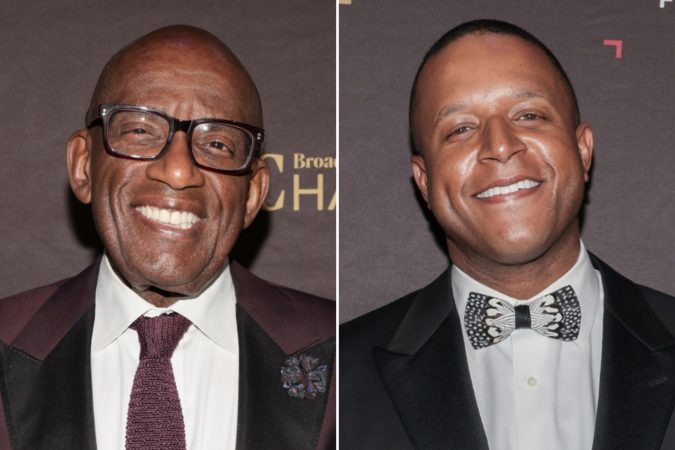
    NEW YORK — A 40-year-old New York man faces hate crime charges following a confrontation with Today show host Craig Melvin at NBC’s studio in Manhattan.

    The man was arrested Thursday morning inside 30 Rockefeller Center in Midtown by an officer responding to reports of a disorderly individual inside the building, police said Friday.

    NBC News says in a statement that an individual approached Melvin after entering an unauthorized area in a vestibule near Studio 1A. Melvin notified security, who held the man until police arrived, according to NBC.

    No altercation occurred and no injuries were reported. NBC did not say how the man gained access to the area.

    “We are reviewing the incident and our security protocols and remain committed to providing a safe and secure environment for everyone who works at and visits our studios,” the network said in a statement.

    The man has been charged with burglary, menacing, and criminal trespass as hate crimes, as well as harassment. It was not clear Friday if has appeared in court or if he has an attorney.

    Police did not say what led to the hate crime enhancements on the charges. Police records show a court date has been scheduled for Wednesday.

    Melvin, who is Black, discussed the incident on-air Friday morning.

    “Unfortunately, an intruder made his way into an unauthorized area here at Studio 1A,” Melvin said. “Thankfully, he was apprehended quickly. He was placed under arrest. We are just very happy that everyone is safe.”

    Melvin also posted about the incident on Instagram.

    “Hey everyone. I’ve heard from so many of you over the last few hours,” he wrote on Thursday. “I’m doing just fine. Thanks for reaching out.”

    Longtime Today show meteorologist Al Roker also took to social media to thank everyone reaching out to check on Melvin.

    “We are both okay,” Roker posted on Instagram. “It’s moments like these that serve to pull us together. You all, like Craig, said ‘You come after one of us, you come after all of us.’”

    Melvin and Roker are among a relatively small group of prominent Black journalists and anchors with regular, highly visible roles on national broadcast network news programs.

    Melvin joined NBC and MSNBC in 2011, according to the Today show’s website. He replaced Hoda Kotb in 2025 as co-host of the 7 a.m. to 9 a.m. hours of Today. He had been hosting the show’s third hour while serving as the news anchor during the first two hours.

    Roker also is a feature anchor on Today and co-host of the show’s third hour. He joined the show in 1996. Roker also co-hosted the Wake Up with Al morning show on the Weather Channel from 2009 to 2015.

  • Trump urges Darline Graham to run for full Senate term as funeral scheduled for Lindsey Graham

    Trump urges Darline Graham to run for full Senate term as funeral scheduled for Lindsey Graham

    COLUMBIA, S.C. — President Donald Trump said Friday that Darline Graham, the sister of the late Lindsey Graham, has his support to run for a full term to replace her brother in the U.S. Senate.

    He wrote on social media that she “has been a WINNER all of her life and, should she accept, has my Complete and Total Endorsement.”

    “RUN, DARLINE, RUN!” Trump added.

    The president said he had discussed a potential campaign with Darline Graham at the White House. Four people familiar with the deliberations, none of whom were authorized to speak publicly, had previously said that she privately expressed interest in running.

    Trump’s endorsement dramatically reshapes the scramble to fill Lindsey Graham’s seat after he died last weekend. The president had previously suggested he could back a potential candidacy from Rep. Russell Fry. Several other noteworthy politicians — including Fry, Rep. Nancy Mace, Rep. Ralph Norman, and Lt. Gov. Pamela Evette — have been eyeing a run.

    The filing period for a special primary runs from July 21 to July 28, and the primary is scheduled for Aug. 11.

    Plans for Lindsey Graham’s funeral were also announced Friday. There will be a service in Washington on July 28 and more in South Carolina on July 29.

    South Carolina Gov. Henry McMaster appointed Darline Graham to serve the remainder of her brother’s term, which ends in January.

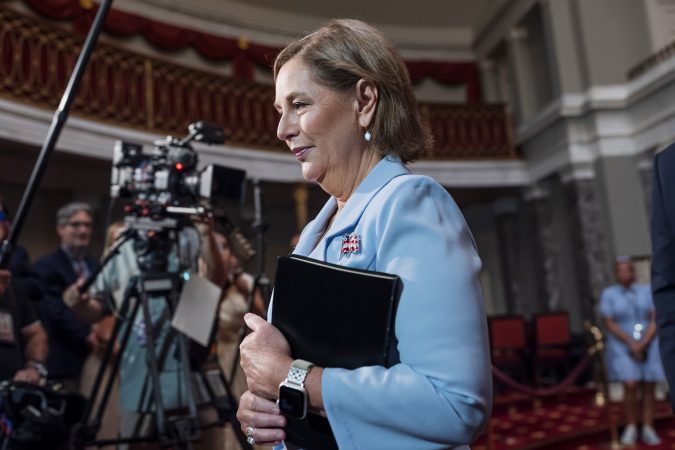
    The first woman to represent the state in the Senate, Darline Graham called it “such an honor,” as dozens of her brother’s staffers and campaign advisers stood behind her, some with eyes glassy from welling tears.

    “Lindsey has always been there for me. And now, I will be there for him,” she said.

    Lindsey Graham died July 11 at age 71. A preliminary report from the medical examiner said he suffered a tear in his aorta.

    He never married or had a family of his own, but his sister was often by his side for the political touch points of his career, speaking at events and appearing in some of his campaign ads. After both of their parents died when Darline Graham was only 13, her older brother became her legal guardian and later adopted her, to ensure his military benefits would flow to her.

    In forging a relationship with Darline Graham — who is new to politics but was a constant in her brother’s political career — Trump could be angling to develop another ally to help steer his agenda through the Senate.

    Although they had at times a tumultuous relationship, Lindsey Graham had been one of Trump’s top Senate confidants, and the day after his death, the president said he was “like a member of the family.”

    In his announcement Monday, McMaster made no reference to Darline Graham as a placeholder or symbolic appointment.

    However, a person familiar with McMaster’s thinking but unauthorized to speak publicly said the governor, in selecting Darline Graham, had never contemplated that she would run for the seat herself.

    Sen. Tim Scott, another South Carolina Republican, said he would not endorse any candidate in the primary because he also serves as chairperson of the National Republican Senatorial Committee.

    But, he said, “as Tim Scott, the voter of South Carolina, I might indeed wade into the water at some point.”

    “I think the truth of the matter is that Darline has so far been off to a remarkable start,” Scott told reporters, asking about her as a possible special primary contender. “‘Why not her?’ would be my question.”

    When he died, Lindsey Graham had millions in his campaign account and was expected to raise much more heading into the general election. But those aren’t funds that Darline Graham could directly access, if she were to run, according to Bradley A. Smith, a former chairperson of the Federal Election Commission.

    Under federal rules, Lindsey Graham’s campaign would be limited to transferring just $2,000 to a potential Darline Graham candidacy. However, Smith said there is no limit on how much it could transfer to the National Republican Senatorial Committee, which could — thanks to a Supreme Court decision last month — “spend an unlimited amount in coordination with Darline’s campaign.”

    “It can’t be earmarked for Darline’s campaign, but in those circumstances I’m sure that the party will make sure she’s not short of cash,” said Smith, now serving as a professor at Capital University Law School in Ohio.

  • Clara Ester, activist who rushed to Martin Luther King Jr. after he was shot, dies at 78

    Clara Ester, activist who rushed to Martin Luther King Jr. after he was shot, dies at 78

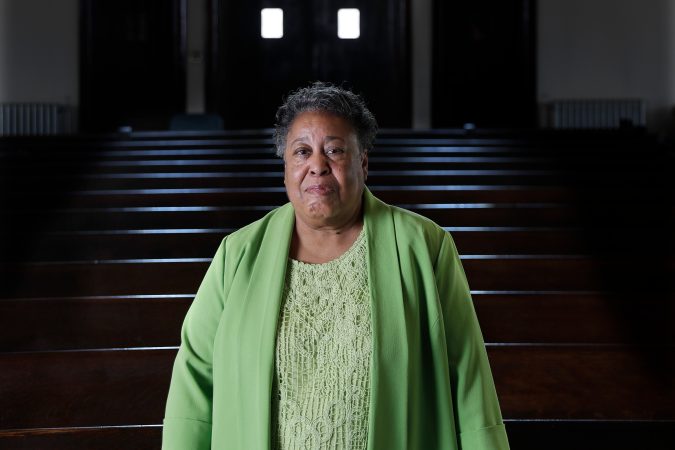
    NASHVILLE, Tenn. — Clara Ester, an activist who as a 20-year-old college student rushed to the Rev. Martin Luther King Jr.’s side when he was shot, has died.

    Ms. Ester, who died on July 9 at the age of 78, was among the few remaining witnesses to King’s assassination and its immediate aftermath in Memphis. With the passing of the Rev. Jesse Jackson Sr. in February and Ms. Ester this month, King aide and former U.N. ambassador Andrew Young is believed to be the last surviving eyewitness to the shooting.

    Ms. Ester grew up in Memphis attending Centenary United Methodist Church, where her pastor was civil rights leader the Rev. James Lawson.

    “We used to joke about colored water being Kool-Aid and the white water just being water, and so that satisfied us as children,” Ms. Ester told the Associated Press in 2018, around the 50th anniversary of King’s death. “But until you see the racism, until you see what has been withheld from you because of your color — is what started to really truly anger me. And I knew if there was a movement that could help change any of that, I had to be in it.”

    Civil rights issues were often discussed from the pulpit of her church, Ms. Ester said. Lawson was very involved in the sanitation workers’ strike, so it was natural for her to become involved too.

    “I got to the point that I didn’t miss a mass meeting,” she said. “I picketed every day that the picket lines were up.”

    Even 50 years later, she clearly remembered the impact of hearing King’s speech at the Mason Temple the night before he was assassinated and how it seemed to foreshadow his death the next day.

    “He had seen the mountaintop,” Ms. Ester said. “It was evident on the balcony — how calm.”

    Ms. Ester had gone to the Lorraine Motel for dinner on April 4, 1968, when she saw King chatting on the balcony with people below. Then she heard a shot.

    “He was speaking calmly and pleasantly to a crowd,” she said. “And so he was happy at that moment. But to lay there with his eyes open, looking toward heaven. He had seen the promised land, and he may not get there with us, but he promised that we as a people will see the promised land.”

    Ms. Ester said she ran to King and saw he was struggling for air. She tried to loosen his belt and asked someone to bring towels to try to staunch the bleeding. After King was taken away by ambulance, she had to stay at the hotel, where she was questioned by police.

    When she was finally allowed to go home, her parents asked if she was OK.

    “I said, ‘No, I’m not OK. There’s something wrong with this.’ And it was many months later that I guess at some point, I just broke down,” Ms. Ester said.

    She left Memphis to work elsewhere that summer, and as soon as she finished school, she left for good.

    “It’s just too much to … it hurt me that it happened, but it hurt me that it happened in my hometown, that that’s the legacy for this city,” she said.

    Ms. Ester moved to Mobile, Ala., where she found work as a neighborhood organizer at the Dumas Wesley Community Center, a Christian service program supporting children, seniors, and people experiencing homelessness. She later was named the executive director of the center, serving in that role until she retired in 2006.

    In 1986, she was commissioned as a deaconess, a type of lay minister, in the United Methodist Church. She remained active in the church throughout her life and held leadership roles that included serving as the national vice president of United Methodist Women.

    Methodist Bishop David Graves met Ms. Ester when he was assigned to the Alabama-West Florida Conference in 2016. He wrote in a remembrance that Ms. Ester did not take to him at first, but gradually they came to love each other.

    “Thank you, Clara Ester, for a life well lived and for loving me. It changed me,” he wrote. “Clara will be missed immensely, but what a day of rejoicing is going on in heaven. For love will always find a way for those who trust in Jesus and seek to love even in our differences.”