Category: Associated Press

  • New kind of flu shot is on the way as the FDA approves Moderna’s mRNA-based vaccine

    New kind of flu shot is on the way as the FDA approves Moderna’s mRNA-based vaccine

    WASHINGTON — The Food and Drug Administration has approved a new kind of flu vaccine for older people, the first made with the same mRNA technology that was key to ending the COVID-19 pandemic, manufacturer Moderna said.

    The shot, named mFlusiva, is intended for adults age 50 or older. Other brands of flu shots already have begun arriving in pharmacies ahead of fall vaccination season, and Moderna said late Wednesday that it expects some of its new version to be available soon at select retailers.

    While there already are multiple flu vaccine options in the U.S., including three specifically recommended for people age 65 or older, tens of thousands of Americans die from influenza every year, and older adults are among the most vulnerable.

    Flu vaccines must be updated annually to best match circulating strains of the virus. Vaccines made with the Nobel Prize-winning mRNA technology are faster to manufacturer than other types, and experts say this additional option might help if the shape-shifting flu virus mutates in a way that requires suddenly brewing new doses.

    Moderna said the FDA granted full approval for mFlusiva’s use in people ages 50 to 64, based on a study of 40,000 people that found 27% fewer flu cases among people who got the new shot compared with those who got a different common flu vaccine brand. For people 65 or older, the Cambridge, Massachusetts-based manufacturer said the FDA granted what’s called accelerated approval for the shot — based on a smaller study showing it generated a strong immune response compared with an existing high-dose vaccine for seniors — while it conducts an additional study.

    Moderna’s data showed no major safety issues although the shot did cause some temporary reactions including injection site pain, fever, headache, tiredness and aches that occurred somewhat more than with today’s flu shots.

    The FDA action comes after a highly unusual public dispute over mFlusiva earlier this year. A then-top FDA official blocked the company’s application, a sign of the agency’s heightened vaccine scrutiny under Health Secretary Robert F. Kennedy Jr. Days later, the agency changed course after Moderna publicly challenged the ruling — and in June a panel of independent advisers to the FDA unanimously recommended the vaccine’s approval.

  • Fauci contempt vote reflects the enduring politics of COVID

    Fauci contempt vote reflects the enduring politics of COVID

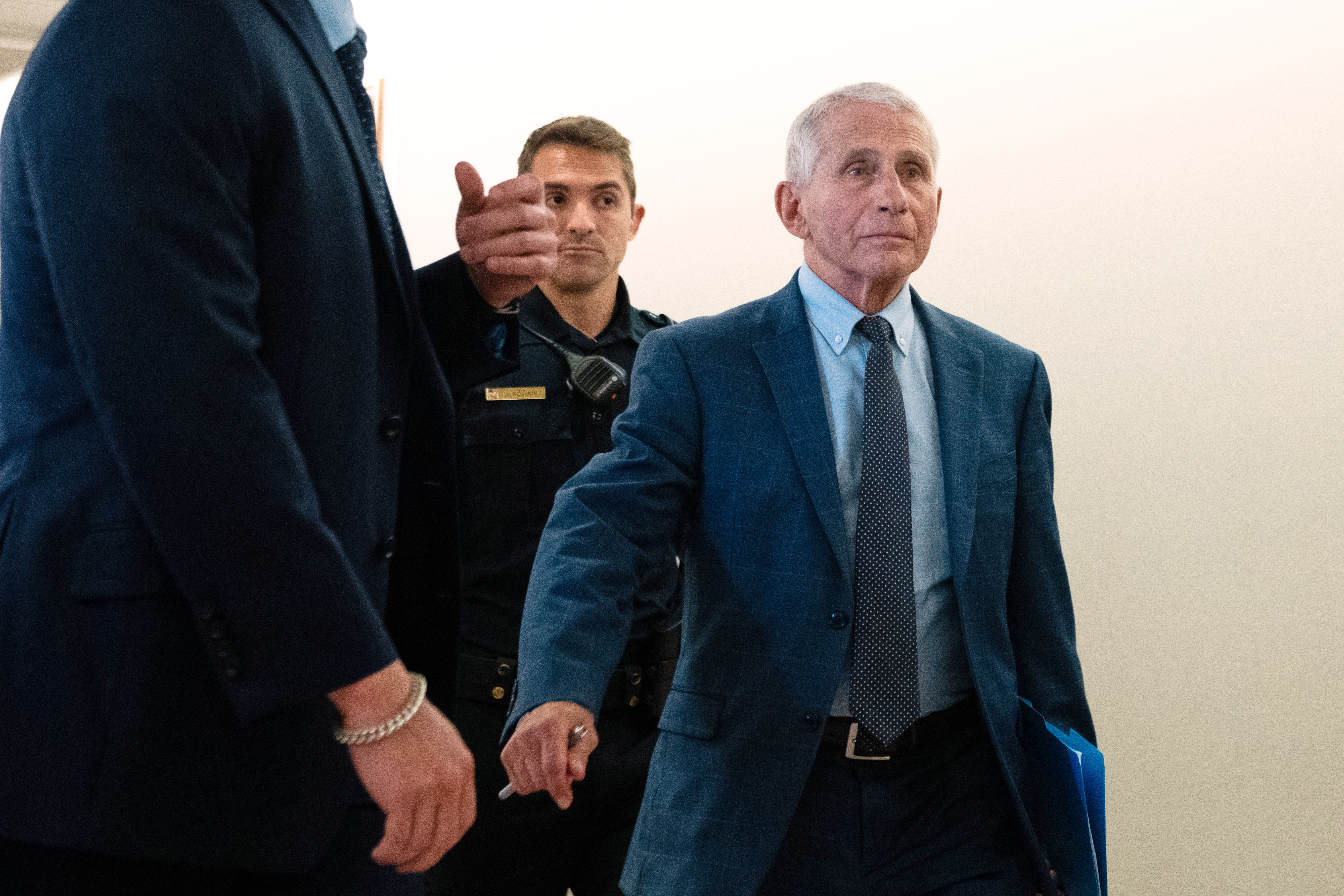
    NEW YORK — Dr. Anthony Fauci is sitting before Congress, Robert F. Kennedy Jr. is on TV debating COVID lockdowns, and Americans can’t agree on what science to trust.

    You might think it’s 2020 again.

    Six years after COVID-19 thrust the world into the fear and uncertainty of a global pandemic, Republicans in power aren’t leaving it in the past. Instead, they’ve returned its familiar political arguments to center stage for new scrutiny, demanding accountability for the scientists and media figures whom they feel deceived and mistreated Americans years ago.

    The efforts ramped up last week, when a Republican-led Senate committee chaired by Kentucky Sen. Rand Paul subpoenaed the now-retired, 85-year-old Fauci to testify about his handling of the COVID-19 pandemic.

    The former National Institutes of Health immunologist repeatedly invoked the Fifth Amendment, after accusing the lawmakers of trying to coerce him to perjure himself to justify criminal charges. In response to his choice, on Thursday, the committee passed a vote to hold Fauci in contempt, a stunning move that could motivate the Justice Department to initiate an investigation.

    Separately, Kennedy, a politically independent former anti-vaccine activist who now serves as the Republican President Donald Trump’s health secretary, spent part of his weekend in a combative live debate with CNN host Dana Bash about the pandemic’s management and the media’s role.

    Political scientists and historians say the focus on COVID grievances half a decade after the virus’ peak demonstrates how some wounds it opened have never been closed. Democrats, meanwhile, have slammed the federal government’s blaming of Fauci as a performative distraction that’s not based in facts.

    While both Paul and Kennedy have spent years airing their frustrations about COVID, the Republican takeover of Congress and the White House last year created a new platform for them to steer how America remembers the pandemic, and who is held responsible for it, according to Matt Dallek, a political scientist at George Washington University.

    It’s also allowed them to use the administration’s resources to surface new information.

    “The response to COVID has become a touchstone for Trump’s Republican Party,” Dallek said. “They’re using their power now to argue they were right all along.”

    Pandemic grievances have simmered for years

    When the coronavirus began spreading widely in 2020, under Trump’s first administration, groups of Americans revolted against requirements imposed by local authorities and businesses telling people to wear masks and stay at home to control the spread of the virus.

    Vaccines supercharged those sentiments. Figures like Kennedy, then a leader of the anti-vaccine movement, accused the federal government of trampling on personal liberties by supporting vaccine mandates and social media takedowns of dissenting ideas.

    While Trump has long expressed pride in his first-term Operation Warp Speed effort to disseminate COVID-19 vaccines quickly, saving millions of lives, his second administration has taken a different tone.

    Under Kennedy’s leadership, U.S. regulators have limited the availability of COVID-19 vaccines for Americans. Kennedy on CNN on Sunday questioned whether the COVID-19 vaccines protected children, even as the Centers for Disease Control and Prevention says on its website that they “help keep children from getting really sick from COVID-19.”

    Frances Lee, a Princeton University political scientist, said debates over COVID-19 have erupted on the fringes for years. Now that some of the leaders of those debates are in power, they’re hashing it out on the national stage — something she said needed to happen eventually.

    “There are aggrieved parties, people who have a sense that they were done wrong during the pandemic and that there’s never been an accounting for that,” Lee said. “Most people don’t want to think about this topic, but nevertheless there are constituencies – so Congress is speaking to those constituencies.”

    Lee said Kennedy’s decision to surface numerous diary entries that Fauci had made on a government computer – and Paul’s decision to publicize them last week – created an opening for “the first real showdown” in years around the pandemic’s handling.

    While some of the entries – including Fauci’s uncertainty in the pandemic’s earliest days about how best to curb the virus — already were reflected in a 2024 memoir and in interviews at the time, they have nonetheless drawn attention from people who blame Fauci for policies they believe infringed on their rights as hundreds of thousands of people were dying.

    Also discussed at Fauci’s hearing last week was whether NIH-funded research in China played a role in how the pandemic started. The day of the hearing, Trump’s White House also directed social media followers to a federal website that used to feature information on COVID vaccines, testing and treatment that now promotes the theory that the pandemic originated with a lab leak.

    Many scientists believe the virus most likely emerged in nature and jumped from animals to people, coming to light when it spread at a wildlife market in the Chinese city of Wuhan. There’s no new scientific evidence supporting the theory that the virus might instead have leaked from a laboratory, a theory Paul champions. A GOP-led subcommittee that studied the question in 2024 found no evidence linking Fauci to wrongdoing.

    Fauci has long said publicly that he was open to both theories but that there’s more evidence supporting COVID-19’s natural origins.

    Republican lawmakers aren’t stopping at the contempt vote. Sen. Ron Johnson said Thursday that Kennedy’s department had given a subcommittee he chairs a copy of Fauci’s cellphone from his time in government. Johnson indicated he intended to investigate it.

    “Hopefully, this device will address many of the questions he refused to answer at last week’s hearing,” he wrote on social media.

    Many doubt that Republicans’ COVID fact-finding is genuine

    As Republicans hold up scrutiny of Fauci as important accountability, Democrats have called it disingenuous. Paul said Thursday he’d invited Fauci to appear for a private, transcribed interview, but Democrats accused him of not allowing the full, bipartisan committee to be present for it.

    Paul also referred the committee’s contempt vote directly to the Justice Department, instead of to the full Senate. He said he did not “want to waste time” with that route, while Democrats insisted all senators should get a chance to vote.

    Last week’s hearing, at which Fauci pleaded the Fifth, came after the immunologist had repeatedly appeared before Congress over the years and talked about his thinking in the beginning of the pandemic and how it changed over time. Critics have raised concerns that the ordeal surrounding him will deter scientists from taking government jobs for fear of being similarly targeted.

    Paul has long argued that Fauci should be criminally investigated, based on his belief that the scientist has been dishonest to Congress about National Institutes of Health-funded research and COVID’s origins. Fauci’s attorney last week called Paul’s accusations about the scientist “false and disgraceful.” More than 150 infectious-disease experts also came to Fauci’s defense, writing that “no credible evidence has been produced to support these absurd charges.”

    Norm Ornstein of the American Enterprise Institute said the hearing didn’t represent legitimate truth seeking.

    “They were looking for a platform in which they could attack him, and he would not respond, and he would say ‘plead the Fifth’ over and over again,” Ornstein said.

    He said while some Republicans are likely true believers that Fauci committed crimes, bringing him to the forefront serves a dual purpose in a midterm election year — distracting voters from less favorable headlines, including on the economy and foreign conflicts.

    Michael Osterholm, an epidemiologist at the University of Minnesota, said there are real lessons to learn from the pandemic, including more deeply examining which efforts to contain the virus worked and didn’t work. But he said Republicans in Congress aren’t chasing those.

    “A review of revisionist history will accomplish nothing,” he said. “We won’t be any better prepared for the next pandemic.”

  • Iran war renews concerns about the lasting toll of traumatic brain injuries to U.S. troops

    Iran war renews concerns about the lasting toll of traumatic brain injuries to U.S. troops

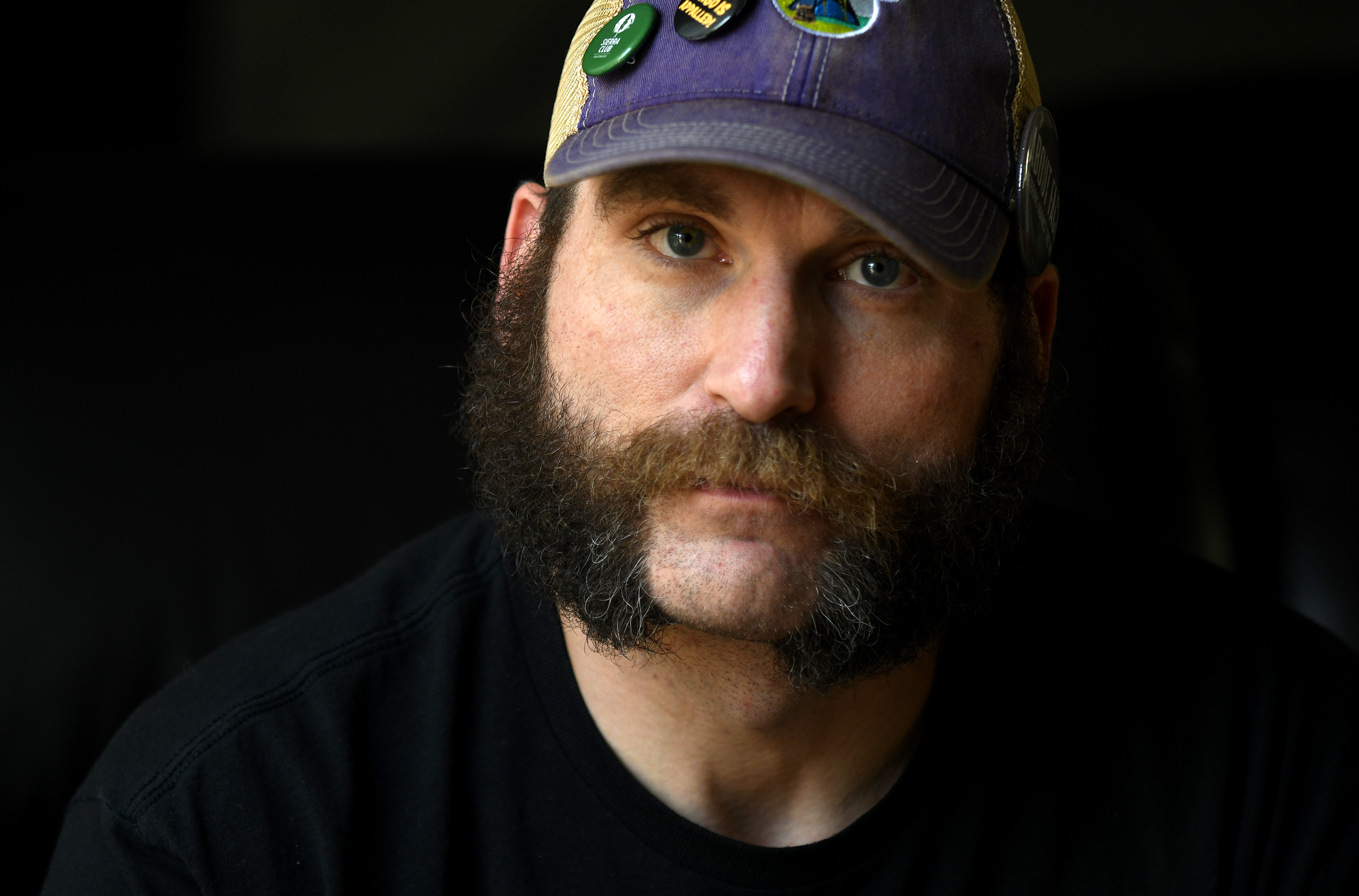
    WASHINGTON — When Joe Shearer was a Marine fighting in Iraq, a blast from an enemy mortar round knocked him down and made him vomit. He got up and kept going despite a searing headache.

    When a roadside bomb struck his Humvee convoy months later, the explosion’s shock wave swept through his body before headaches and sleeplessness set in for days.

    “As long as you got back up and could go back on patrol, that’s kind of what you did,” he said.

    Shearer, 40, of Colorado Springs, Colorado, links both events in 2005 to traumatic brain injuries, which were only recently diagnosed. He’s still plagued with symptoms ranging from dizziness and migraines to forgetting daily tasks and responsibilities to his wife and children.

    The lasting effects of traumatic brain injuries are raising fresh concerns about the toll of the Iran war on American troops who are suffering those wounds during a conflict without a clear end. Nearly 700 U.S. service members have been wounded by drone and missile attacks on bases in the Middle East and other fighting. Most have experienced traumatic brain injuries, or TBIs, and returned to duty, according to public statements from military officials.

    The Pentagon’s chief spokesman, Sean Parnell, last month called the vast majority of injuries over a two-week period “minor concussions.”

    Doctors can’t predict who may have lasting effects from a TBI

    Concussions often are termed “mild” TBIs, and many people recover within weeks. But sometimes those with seemingly mild initial symptoms go on to have problems persisting for months or years, such as headaches, dizziness, or difficulties with memory or attention that’s sometimes called “brain fog.”

    Doctors have no way to predict who will suffer lasting problems, a vexing enough question that there’s medical debate over whether to retire the term “mild TBI.” Repeated blows are known to increase the chances of lasting problems, including a degenerative brain disease called chronic traumatic encephalopathy, or CTE. It has gained attention for links to deaths in the National Football League and other sports.

    It’s imperative that people recover from a concussion before doing activities that put them at increased risk of another, said Dr. David Okonkwo, a University of Pittsburgh brain trauma specialist.

    Doctors also are still learning how explosive blasts injure the brain versus a physical blow.

    “The blast wave itself can be injurious,” said Dr. James Kelly, an emeritus professor of neurology at the University of Colorado School of Medicine and chief medical scientist at the Invisible Wounds Foundation, which is focused on military brain injuries. “It’s a different cellular injury. Blast is a different thing than a blunt injury to the head.”

    Troops have been facing a new type of warfare with Iran in which drones may explode closer to their heads, as opposed to the ground-level roadside bombs and improvised explosives that were more common in the wars in Iraq and Afghanistan.

    Democratic lawmakers are calling for an investigation into the care that wounded troops received following an Iranian drone strike in Kuwait that killed six U.S. soldiers early in the war. Wisconsin Sen. Tammy Baldwin pressed the military in a letter on Wednesday to release the findings of its investigation into the March 1 attack.

    “I spoke directly with Wisconsinites who sustained traumatic brain injuries from (President Donald) Trump’s war in Iran and went weeks without so much as a screening, let alone specialized care, for their injuries,” Baldwin said in a statement.

    Defense Health Agency spokesman Peter Graves said in an email that “it is policy that service members are screened for TBI.”

    Experts say the military has made strides in screening and treating TBIs, a signature injury in Afghanistan and Iraq. More than 500,000 service members were diagnosed between 2000 and 2025, with 82% of cases considered mild and not all of them related to combat. But advocates say the injuries could still be undercounted because symptoms often overlap with post-traumatic stress disorder and other conditions.

    A TBI diagnosis can emerge years later

    Neither of the two blasts Shearer experienced in Iraq produced obvious injuries, and medics prioritized Marines who were more badly hurt.

    “You don’t want to be the guy who goes to sick call or says, ‘Oh, I’m hurt,’ because you’re away from your team,” Shearer said. “There’s this culture of you don’t want to be seen as lesser or weak, so you hide injuries inherently.”

    When he came home at age 19, he denied he had PTSD and didn’t know what a TBI was. Plagued by nightmares, sleeplessness and headaches, he initially turned to drugs to self-medicate and considered suicide.

    Shearer eventually got help for PTSD, but it took years for him to consider that he suffered traumatic brain injuries. He was working for the Wounded Warrior Project and screening fellow vets for TBIs when he realized he checked many of the same boxes.

    He’s since been diagnosed and received treatment. But challenges remain, including vertigo and light sensitivity. He also forgets important conversations with his family.

    “I know that some of that stuff is stereotypical, but for me, it’s got a different ring to it,” Shearer said. “There will be no memory of the conversation happening.”

    The brain can adapt with treatments and therapies

    Memory loss is something Army veteran Frank Sonntag also experienced following a TBI from a mortar blast in Iraq in 2004.

    He was in his 50s and training reservists when he felt a blast of wind against his ear from an explosion 70 feet (21 meters) away. He didn’t know he was hurt and didn’t seek treatment for two years, ignoring intensifying headaches and brain fog.

    It got to the point where it took 30 minutes to write an email, while colleagues told him he spoke one word every 10 seconds. He considered suicide and was diagnosed only after he got lost driving home. Neurologists prescribed medication for his migraines, among other treatments.

    “Speech therapy was one of the greatest things I had,” added Sonntag, 75, of Queen Creek, Arizona. “They taught me how to practice the words I was speaking and how to put sentences together again.”

    Kelly Parker, director of independent services at the Wounded Warrior Project, said it’s hard to predict an injury’s trajectory.

    “If you’ve seen one TBI, you’ve seen one TBI,” she said.

    Screening, early treatment and support can be crucial to returning to a more normal life. Physical, speech and art therapies can lead to improvements, she said.

    “There’s still so much we don’t know about the brain, but one thing that we do know is it can heal itself,” Parker said. “We know that new neural pathways can be created, and we absolutely believe that the brain can adapt. We’ve seen it happen.”

    Army veteran Spencer Milo said some people struggle to understand why he’s still dealing with migraines, seizures and forgetfulness after so many years out of uniform.

    His first TBI occurred in Iraq in 2008, when his Humvee smashed into a wall to evade fire. His second came from the blast of a suicide bomber in Afghanistan in 2011.

    “I’ve had fellow service members that were even with me on those days, and they’re like, ‘Dude, why can’t you just kick it?’” said Milo, 41, of Parker, Colorado. “I really wish it was that simple. It’s tough because when you can’t see something, it’s hard to believe that it’s really there.”
  • Europe maintains World Cup boycott threat after Gianni Infantino’s FIFA crisis meeting

    Europe maintains World Cup boycott threat after Gianni Infantino’s FIFA crisis meeting

    European soccer’s governing body has retained its threat to boycott FIFA competitions despite FIFA apologizing for its failed plan to sell stakes in the World Cup.

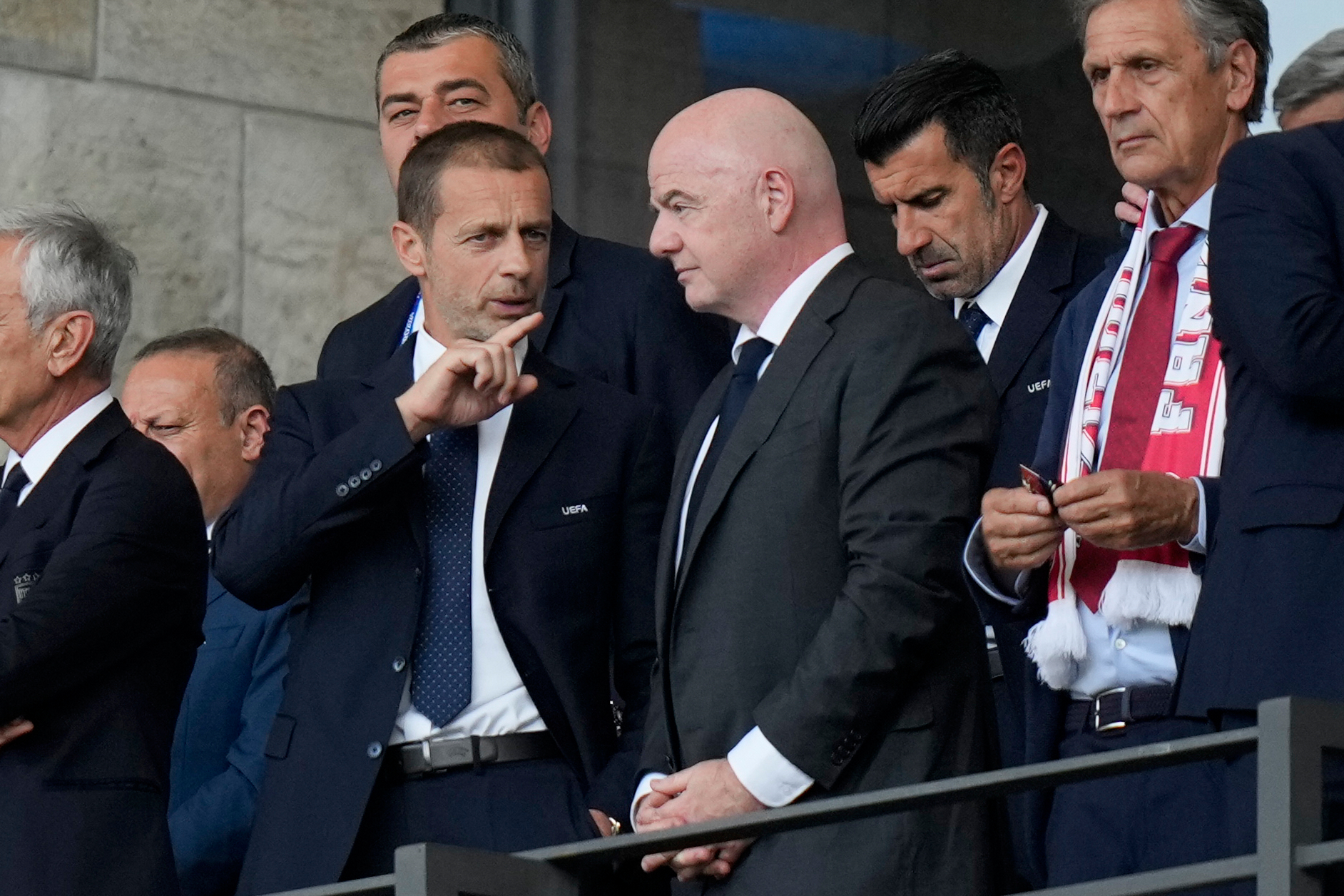
    UEFA on Thursday reiterated that it had lost confidence in FIFA president Gianni Infantino and said conditions to withdraw its boycott threat had not been met.

    “UEFA’s associations were very clear about the conditions attached to the non participation in FIFA competitions,” it said in a statement. ”First, the proposals to sell off the major competitions had to be withdrawn and secondly, assurances have to be made that such attempts to disfigure the game in this way will never be made again.

    “These conditions have not been met. In addition, UEFA made it abundantly clear in its statement on Saturday that it has lost confidence in Gianni Infantino’s presidency. That position holds.”

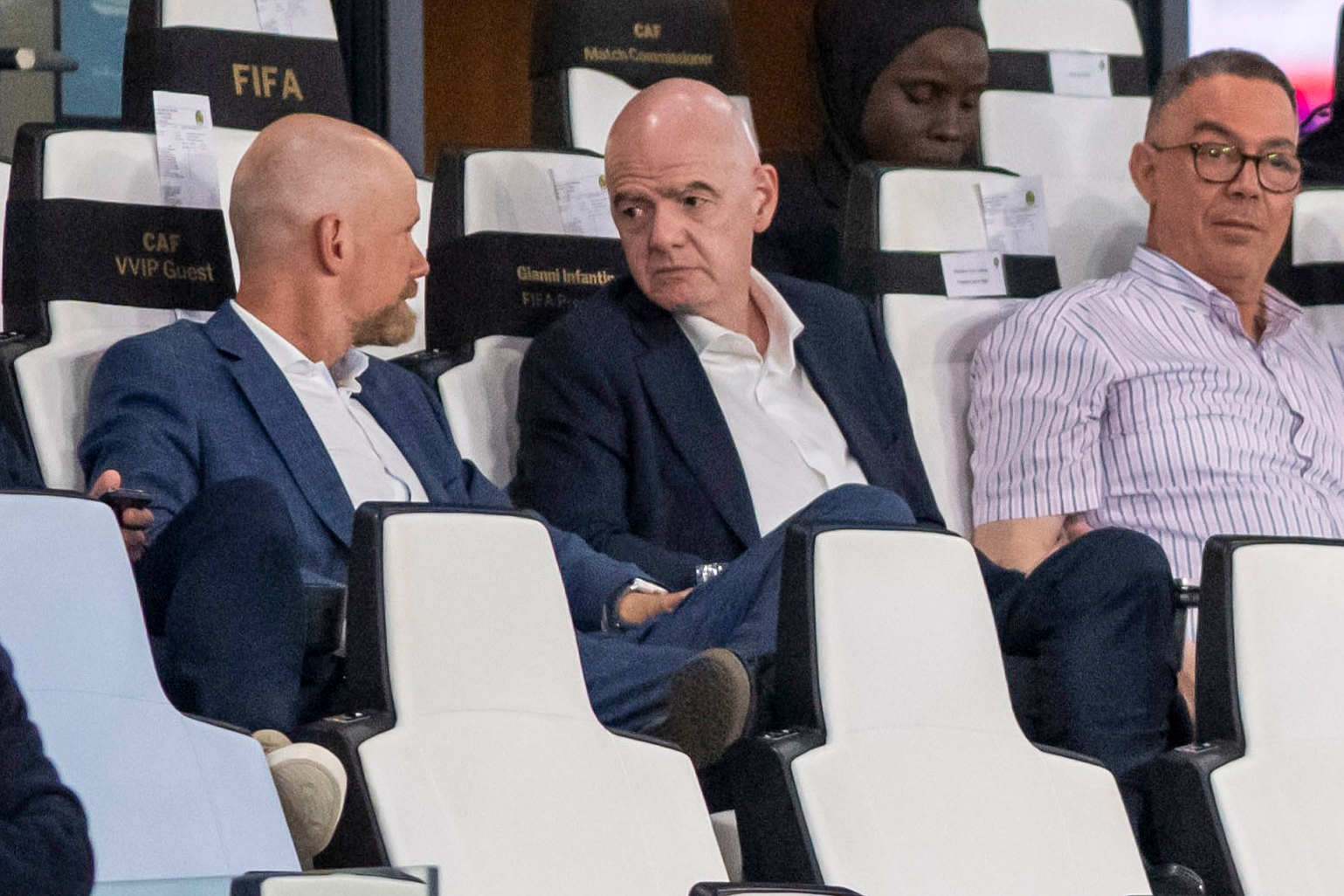
    FIFA president Gianni Infantino (center) with secretary general Mattias Grafstrom (left) and Moroccan soccer federation president Fouzi at a women’s Africa Cup of Nations game in Morocco on Wednesday.STR

    It was another bruising day for Infantino, with global soccer players union FIFPRO accusing him of “a profound abuse of presidential power.”

    The English Football Association has also withdrawn its support for Infantino’s reelection.

    Even Amnesty International said the “current crisis spotlights the need for governance reforms.”

    FIFA and Infantino tried to present a united front following a high-level summit in Morocco on Wednesday when it announced the president had the full support of top staff in attendance.

    The world governing body also apologized for errors made over its controversial plan to sell profits in the World Cup through a commercial subsidiary and committed to “ensure they do not happen again.”

    FIFA said it hoped its meeting would “help restore confidence” in the organization after the turbulence created by Infantino’s now abandoned project, which provoked widespread condemnation.

    UEFA voted to abandon FIFA competitions if it went ahead. And even after Infantino’s hasty climbdown, Europe’s governing body said it had lost confidence in FIFA’s leadership — paving the way for a challenge to his presidency.

    In its defiant statement, UEFA made it clear its position still held.

    “Yesterday’s announcement that some people employed by the FIFA president (and whose careers depend on his favor) agree with him changes nothing,” it said.

    The next FIFA event on the calendar is the under-20 women’s World Cup from Sept. 5-27 in Poland.

    Inquirer staff writer Jonathan Tannenwald contributed to this article.

  • Tupac Shakur was killed in Las Vegas in 1996. Here’s who was there that night

    Tupac Shakur was killed in Las Vegas in 1996. Here’s who was there that night

    LAS VEGAS — New details about one of hip-hop’s most enduring mysteries — the 1996 killing of rap icon Tupac Shakur — could finally come to light in the upcoming trial of Duane “Keffe D” Davis.

    Davis, 63, is accused of orchestrating the drive-by shooting near the Las Vegas Strip that also wounded rap music mogul Marion “Suge” Knight. Davis’ jury trial will begin Monday, nearly three years after he was arrested in 2023. He pleaded not guilty.

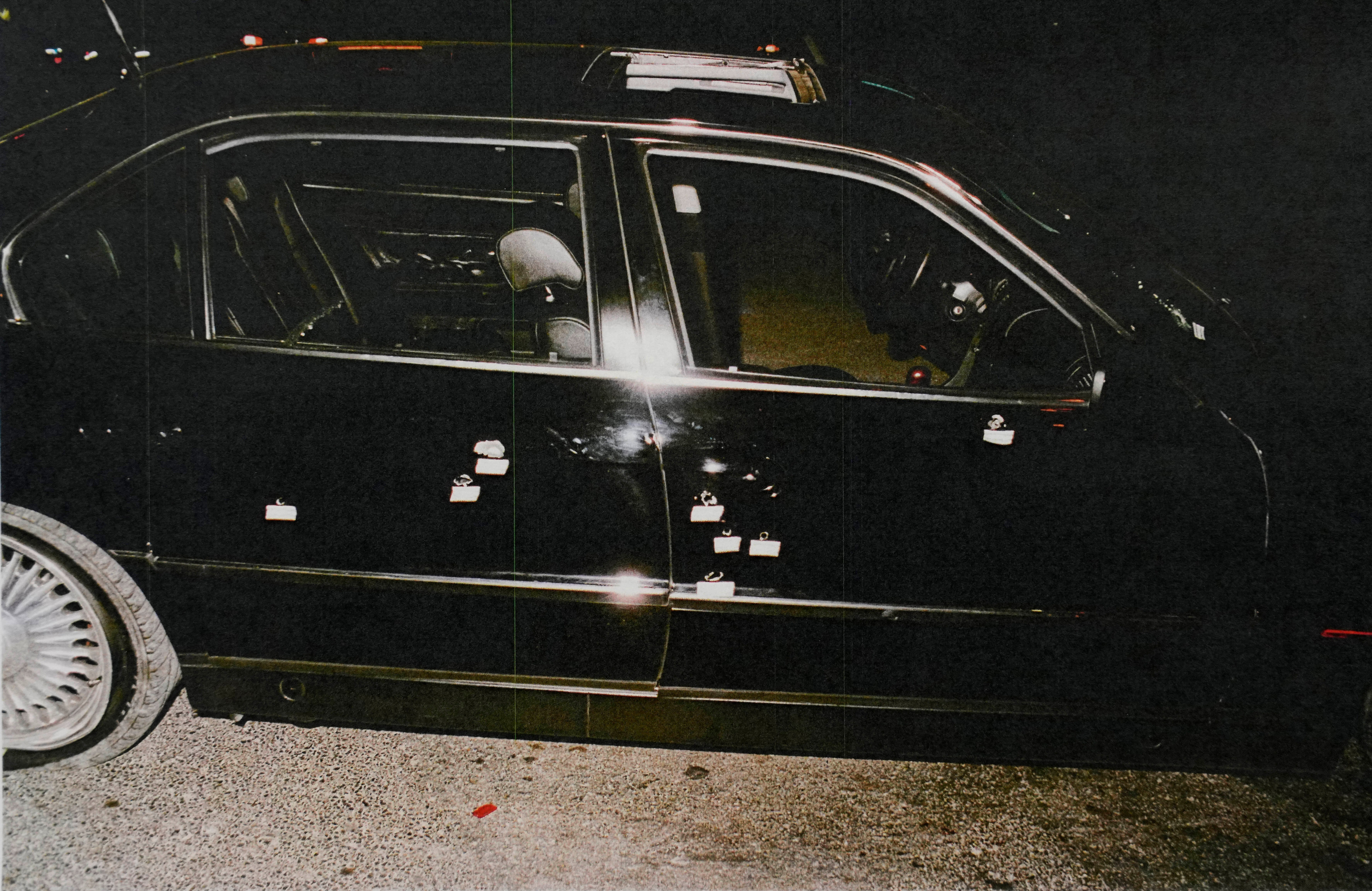
    On the night of Sept. 7, 1996, Shakur was in the passenger seat of a black BMW that Knight was driving when a white Cadillac pulled up on their right side and gunfire erupted. Knight was wounded but survived. Shakur died a week later at the age of 25.

    Police and prosecutors say the shooting stemmed from a fierce competition for dominance in a musical genre that pitted East Coast members of a Bloods gang sect against West Coast members of a Crips sect that Davis has said he led in Compton, Calif.

    That night, three others were with Davis in the Cadillac, but none of them faced charges in Shakur’s killing before they died.

    Here’s what we know about who was in both vehicles from authorities, court records, grand jury testimony, interviews, and Davis’ 2019 tell-all memoir, Compton Street Legend.

    Tupac Shakur

    Shakur is considered one of the most influential rappers of all time. He had five No. 1 albums, was nominated for six Grammy Awards, and was inducted into the Rock & Roll Hall of Fame in 2017. He received a posthumous star in 2023 on the Hollywood Walk of Fame and he will appear in the upcoming video game Stranger than Heaven.

    His death came as his fourth solo album, All Eyez on Me, remained on the charts, with some 5 million copies sold. He also used the stage names 2Pac and Makaveli. As an actor, he starred in several films.

    Shakur was born Lesane Parish Crooks in New York in 1971, and his name was changed a year later. His late mother, Afeni Shakur, and late stepfather Mutulu Shakur were active in the Black Panther Party in New York. Tupac Shakur was not close with his biological father, William “Billy” Garland.

    Two of the rapper’s siblings, Sekyiwa “Set” Shakur and Maurice “Mopreme” Shakur, have criticized authorities for inaction and slowness in charging anyone with their brother’s death.

    Marion “Suge” Knight

    Knight founded Death Row Records, a Los Angeles-based music label that represented Shakur at the time of his death. Knight’s moniker was shortened from “Sugar Bear,” his nickname growing up in Compton.

    Knight and Shakur were headed to a nightclub when their car was shot at near the Las Vegas Strip. Knight was grazed by a bullet or shrapnel.

    Now 61, Knight is serving a 28-year prison sentence in California for running over and killing a Compton businessperson outside a burger stand in January 2015. The case capped the former rap music mogul’s downfall from his heyday as one of the biggest — and most feared — names in the music industry.

    Davis said he and Knight knew each other growing up and even played on the same youth football team in Compton. Knight went on to play college football at the University of Nevada, Las Vegas. Briefly, during the 1987 NFL players’ strike, he was a replacement player for the Los Angeles Rams.

    In his memoir, Davis describes Knight and himself as the “only living eyewitnesses to what truly happened.”

    “Like two rams locking horns, Suge and I looked each other dead in the eye,” he writes when describing the moments right before the shooting.

    Orlando “Baby Lane” Anderson

    Law enforcement authorities long suspected that Anderson was the gunman. He was 22 at the time. Though Davis was his uncle and 12 years older, he described their relationship as that of brothers, friends, and even father-son.

    Shortly before the drive-by shooting, Anderson was beaten in a brawl at the MGM Grand casino involving Shakur and his associates, including Knight. Authorities, authors, and Davis himself say the shooting was an act of retaliation for beating up Anderson.

    “Them jumping on my nephew gave us the ultimate green light to do something,” Davis writes in the book.

    Davis said he obtained a handgun from an associate and tossed it into the back seat of the Cadillac but did not say who fired the fatal shots. Anderson was sitting in the backseat of the car, behind his uncle.

    Neither the Cadillac nor the gun used in the shooting were recovered, according to retired Las Vegas police Detective Clifford Mogg, who was assigned to the investigation in early 2018.

    “We were never able to identify the person who rented the car, where it was rented from, and then when it comes to the gun, we have never recovered as of this date, the weapon that was used in the murder,” Mogg said in testimony to the grand jury.

    Anderson, who denied involvement in Shakur’s killing, died two years later in what police said was an unrelated shooting at a Compton car wash.

    Deandrae “Freaky” Smith

    Also known as “Big Dre,” Smith was in the back seat of the car that night, sitting next to Anderson.

    Although authorities have said they believe Anderson pulled the trigger, the grand jury testimony challenged that theory.

    Denvonta Lee, a former associate of Davis, told the grand jury that it was Smith who shot Shakur and Knight. He said Anderson tried reaching over Smith but didn’t have a “clear shot” out the left-rear passenger window.

    The former associate, who wasn’t in the car but recounted a conversation he had with Smith days after the shooting, said Smith took the gun from Anderson, opened fire and let Anderson take credit for Shakur’s death.

    Smith was 30 when he died in 2004 of natural causes, according to the Los Angeles County coroner’s office.

    Terry “Bubble Up” Brown

    Brown was driving the Cadillac from which the shots were fired.

    Davis said in his memoir that they were driving toward Las Vegas Boulevard that night but spotted Shakur “hanging out of the window” of the BMW and waving to fans. Davis told Brown to make a U-turn, and they drove slowly past the rapper’s convoy until Davis said they “found who we were seeking.”

    Brown died in a 2015 shooting at a medical marijuana dispensary in Compton.

    The Los Angeles County coroner’s office said his full name was Terry Tyrone Brown, although Brown has been referred to as both “Terrence” and “Terrance” in investigative records.

  • Caitlin Clark, Angel Reese, Paige Bueckers set for World Cup debuts; Kahleah Copper returns to Team USA

    Caitlin Clark, Angel Reese, Paige Bueckers set for World Cup debuts; Kahleah Copper returns to Team USA

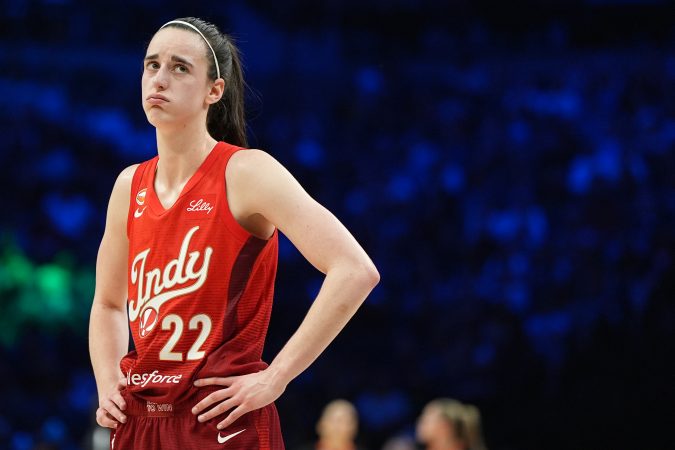
    NEW YORK — Caitlin Clark, Angel Reese, and Paige Bueckers will make their World Cup debuts as members of the U.S. women’s national team next month.

    The trio will try to help the U.S. win its fifth consecutive FIBA World Cup title. The young stars will be joined by 2024 Olympic gold medalists A’ja Wilson, Breanna Stewart, Napheesa Collier, Chelsea Gray, Jackie Young, Kahleah Copper, and Kelsey Plum.

    “It’s always good when you compete for a gold medal, it’s a big honor,” said Wilson, a four-time WNBA MVP. “It’s something I don’t take lightly. Time to go there and have some fun and also win.”

    Rhyne Howard and Aliyah Boston also will be making their World Cup debuts to round out the team.

    “I’m so excited to announce the 2026 USA Basketball Women’s National Team,” USA Basketball national team managing director Sue Bird said. “This is an incredibly talented group that has earned the opportunity to compete in Berlin. Wearing a USA jersey is a privilege, and I know these 12 players will embrace that responsibility as we go after another gold medal. I can’t wait to see what this team accomplishes together.”

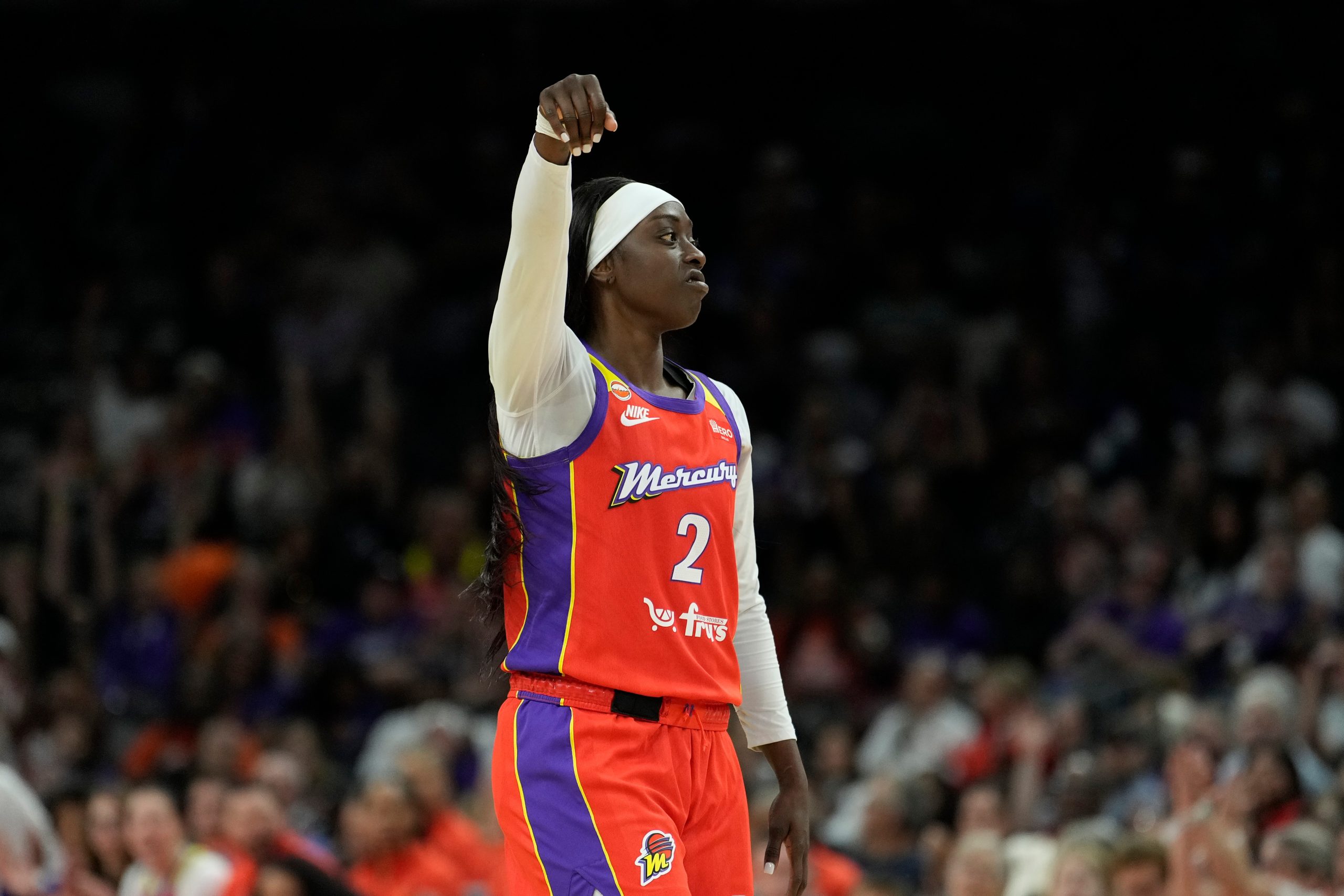
    Copper, a North Philly native and Prep Charter alumna, is among five returners from the 2022 World Cup squad that won gold. Copper also recently was a WNBA All-Star for the fifth time. She’s currently averaging 21 points for the Phoenix Mercury, good for fifth in the WNBA.

    Wilson leads the league in scoring (26.6 points per game) and blocks (2.0 per game) and is third in rebounds with 9.6 per game. Clark is fourth in scoring (21.5 points per game) and second in assists (8.0 per game).

    Phoenix Mercury guard Kahleah Copper, a North Philly native, is heading to the FIBA World Cup with Team USA.Ross D. Franklin

    This is the first time that USA Basketball has had a managing director choose the team; in the past, it was a committee. Duke women’s basketball coach Kara Lawson, an assistant on the 2022 team, will coach this year’s squad.

    Stewart is the third player in USA Basketball history to appear in four World Cup tournaments, joining Bird, who played in five; and Diana Taurasi, who also played in four.

    The Americans will face China, Italy, and the Czech Republic in pool play at the World Cup, which will be held Sept. 4-13 in Berlin. The WNBA will take a nearly three-week break in its season to accommodate the event.

    Clark, Bueckers, and Reese helped the Americans win a World Cup qualifying tournament in March in Puerto Rico.

    Sabrina Ionescu has been a big part of the U.S. roster the last few years but was left off this season’s team.

    Bird said she called many of the players who didn’t make the team this time, including Ionescu.

    “I think we can all agree the hardest part, which is a problem I would never trade, is that we have so much talent,” Bird said. “The beauty of that is it means almost all players are wanting to be on this team, willing to be on this team. It is a sacrifice. It is a time commitment.”

    Alyssa Thomas helped the U.S. win gold at the Paris Olympics but hasn’t taken part in any USA Basketball camps since. Minnesota rookie Olivia Miles also hadn’t taken part in any USA camps, either.

    “Tremendous player. So much fun to watch,” Bird said of Miles, who is the frontrunner for the WNBA Rookie of the Year. “It’s been amazing watching her grow in this league. … She’s played with USA Basketball before. She will undoubtedly be in the mix for teams in the future.”

  • The first small steps taken in Neil Armstrong’s childhood home inspired a giant leap for mankind

    The first small steps taken in Neil Armstrong’s childhood home inspired a giant leap for mankind

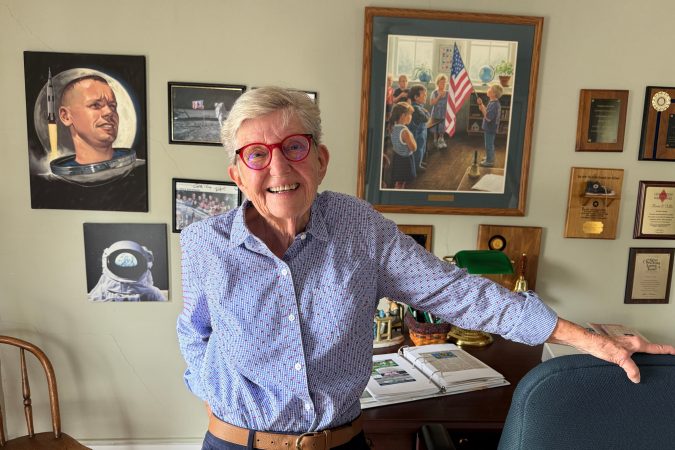
    WAPAKONETA, Ohio — Inside Neil Armstrong’s boyhood home, at the top of a creaky stairway, sits his bedroom where he launched model airplanes out of the rear window to measure how far they’d fly.

    Hanging in the room now are autographed photos of astronauts who have visited the privately kept house to see where Armstrong’s first steps to the moon began.

    Owned by a retired history teacher devoted to preserving its past and charming character, the home is for sale for the first time in nearly 40 years. What will become of it remains uncertain.

    All over Armstrong’s hometown of Wapakoneta, there are reminders of his history-making moonwalk. But few places played a bigger role early in his journey than 601 W Benton St. — the house where the Armstrong family settled in western Ohio when he was a young teenager.

    It’s where Armstrong built planes out of balsa wood and glue in the dining room and constructed a basement wind tunnel to test his models. He’d often pedal his bike from home to take flying lessons at an airstrip.

    At age 16, Armstrong made his first solo flight and got his pilot’s license. Just 20 years later, he rocketed into space for the first time. After the 1969 moon landing, he taught at the University of Cincinnati.

    A parade of astronauts has visited Armstrong’s house

    Today, Armstrong’s two-story boyhood home is an occasional stop for visitors to the Armstrong Air and Space Museum in Wapakoneta, even though the house isn’t open for tours.

    When Karen Mikesell bought the place in 1988, she had no idea who once lived there until another teacher soon told her.

    As a history teacher who later became a school principal, Mikesell felt a responsibility to “keep it like the Armstrongs had it,” she said.

    She’s hosted nine astronauts, including Buzz Aldrin, who flew to the moon with Armstrong and Michael Collins in 1969.

    Aldrin stepped inside the bedroom upstairs a few years after Armstrong died in 2012, Mikesell recalled, “and the tears just streamed down his cheeks.”

    Over the years, she’s been given a moon rock and received a piece of gold foil that covered the Apollo 11 capsule — a gift from one of the Navy frogmen who helped recover the command module and its crew.

    Some astronauts autographed their photos with personal messages to Mikesell — “thanks for taking such great care of Neil’s home!” wrote Mike Foreman, who flew on two space shuttle missions.

    “You can read books, but you can never have those kinds of experiences that I was able to have because I lived here,” she said. “I could go on and on.”

    House holds many reminders of the first man on the moon

    Armstrong’s family bought the home in 1944 after his father had moved them about a dozen times with his job as a government auditor. The oldest of three children, Neil was born in a farmhouse just outside Wapakoneta, today a city of just under 10,000 people.

    The house on Benton Street with its big front porch has changed little on the outside. Inside, the layout is similar too, though it has been updated.

    In the backyard, a garage that Armstrong and his father built with scrap lumber still stands, though a chicken coop where he and his friends gathered for Boy Scout meetings is long gone.

    Armstrong’s old bedroom is now decorated with photos and paintings of the moon landing. Hanging from the ceiling is a model of the Wright brothers’ first production airplane — the aviation pioneers were from nearby Dayton and an inspiration for Armstrong.

    Mikesell never met Armstrong, who was famously private. She did talk with his parents, siblings, and children about the 1908 home and its place in Armstrong’s upbringing.

    A part of American history is for sale

    Mikesell, who’s 82, said she hopes someone might be willing to buy the house and donate it to the Armstrong museum, which doesn’t have the funds to acquire the property, according to Logan Rex, its spokesperson.

    She is just one of a handful of people who’ve owned the home since the Armstrongs sold it in the mid-1960s. By the time she bought the house, the rooms were covered with wallpaper in a rainbow of colors, so she sought to restore its original look.

    While the house, which is listed at $430,000, isn’t legally protected from alteration, Mikesell is also optimistic that the new owners will respect it — whether it remains a private residence or becomes a place for overnight stays.

    “It’s time to let someone else have the opportunity to be as blessed as I’ve been,” she said, “and to take care of it and keep it as a part of history.”

  • Stefon Diggs is signing with the Washington Commanders, AP source says

    Stefon Diggs is signing with the Washington Commanders, AP source says

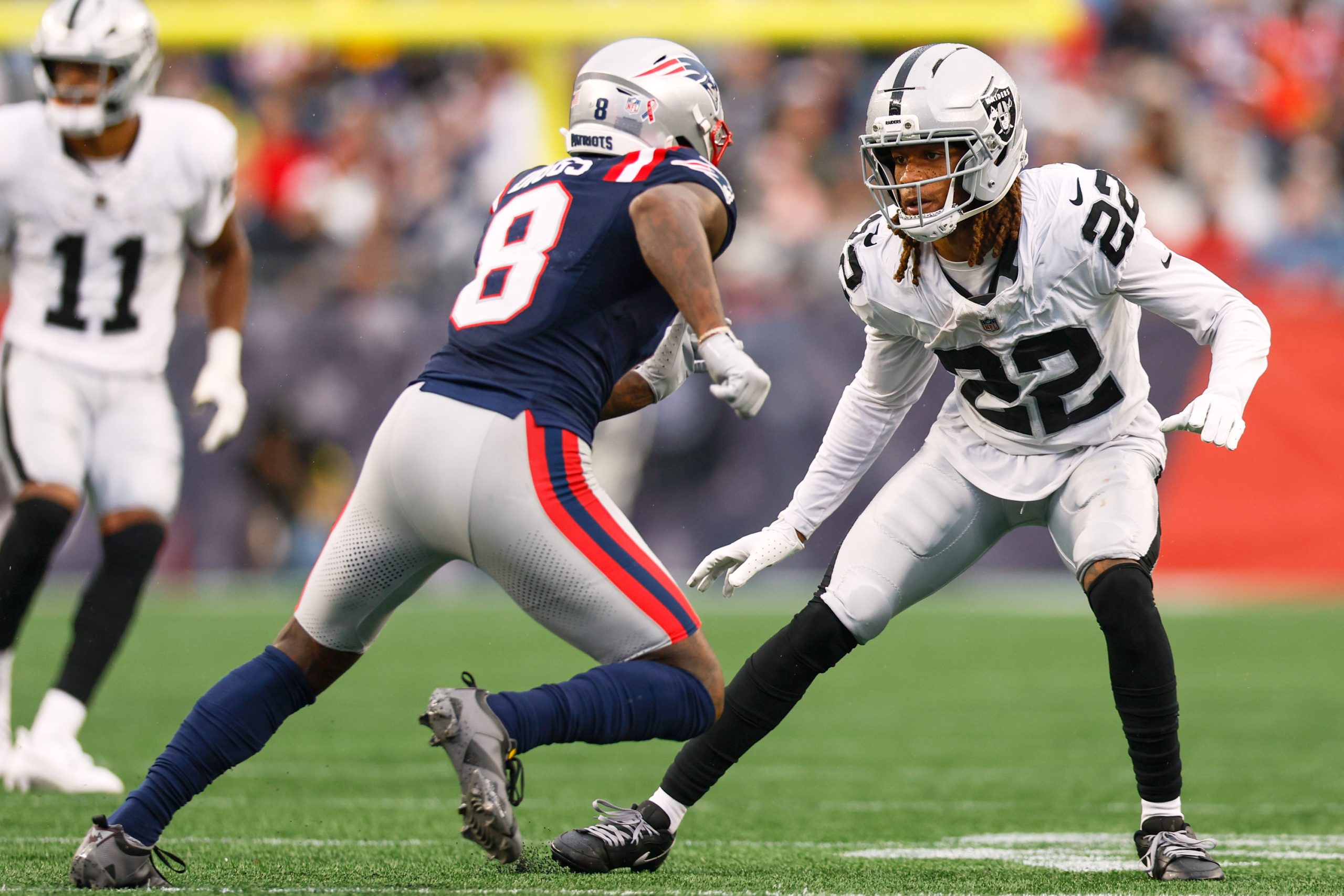
    Stefon Diggs is signing with the Washington Commanders, a big addition at wide receiver to give quarterback Jayden Daniels and the offense a proven commodity who showed last season he can still be productive more than a decade into his NFL career.

    The Commanders agreed with Diggs on a contract for this season, according to a person familiar with the agreement. The person spoke to The Associated Press on condition of anonymity Wednesday because the deal had not been announced.

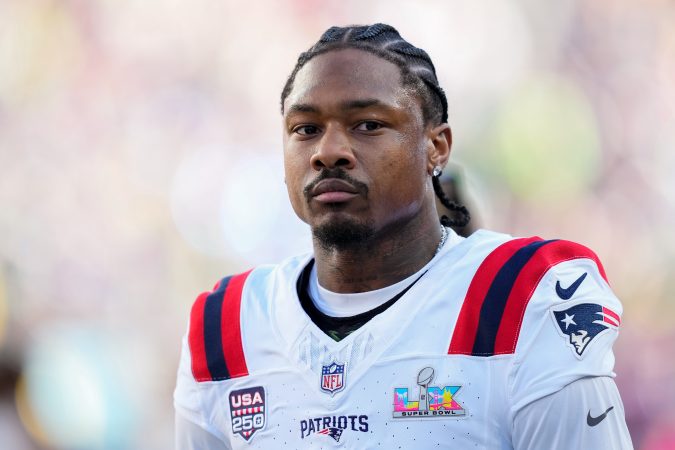
    Diggs, a native of nearby Gaithersburg, Md., joins Washington for a 12th year in the league and reportedly can make up to $12 million. He spent last season with New England, making 99 catches for 1,123 yards and five touchdowns in 21 games, including the Patriots’ playoff run to the Super Bowl.

    Stefon Diggs had 99 catches for 1,123 yards and five touchdowns in 21 games last season, including the Patriots’ playoff run to the Super Bowl.Robert F. Bukaty

    New England released him in March, and the 32-year-old went unsigned in free agency while facing strangulation and other criminal charges in connection with a dispute with his former private chef. Diggs was found not guilty in May, and the NFL said in June that he wouldn’t face any discipline after a review determined there was not enough evidence to punish him under its personal conduct policy.

    The Commanders had a hole at the position, and they are banking on Diggs filling it. The in-house options of Treylon Burks and Luke McCaffrey would have put Daniels in a tough spot and likely made No. 1 receiver McLaurin deal with plenty of double teams this coming season.

    Signing Diggs could rule out going after Brandon Aiyuk, a friend of Daniels’ who is still under contract with San Francisco. Aiyuk said on social media in June that he would join Washington immediately if the 49ers released him.

    Aiyuk remains on the reserve/left squad list out West, while Diggs is now in an NFC East that features receivers CeeDee Lamb and George Pickens with Dallas, DeVonta Smith with Philadelphia and Malik Nabers with the New York Giants.

    Diggs previously played for Minnesota, Buffalo and Houston during a career that included him being an All-Pro selection in 2020, when he led all players with 127 catches and 1,535 yards. Since making his debut in 2015 after the Vikings took him in the fifth round of the draft that year, Diggs has 1,025 catches for 12,523 yards and 79 TDs in the regular season and playoffs combined.

    That included the “Minneapolis Miracle” catch for Minnesota in the divisional round in January 2018. With 10 seconds left, Diggs leapt and evaded a tackle to score a 61-yard touchdown and beat New Orleans 29-24.

    Stefon Diggs (left) will join his fifth team in the NFL.Greg M. Cooper

    Off the field, it has been a more tumultuous ride, including getting fined more than $200,000 by the Vikings during his final season with them in 2019 for unexcused practice absences. Diggs was traded to Buffalo in March 2020.

    Diggs led the Bills in receiving four seasons in a row, but sideline outbursts and cryptic social media messages were also part of his tenure before being traded to Houston in April 2024. A torn ACL ended his time with the Texans, and skipping a voluntary offseason workout got him off to a bumpy start with the Patriots before he turned out to be a reliable option for QB Drake Maye.

    Cut in part because he was owed $20.6 million, Diggs now is teaming up with Daniels, who was taken one spot ahead of Maye when they were the No. 2 and 3 picks in the 2024 draft.

  • Senate confirms Erica Schwartz as CDC director, bringing new leadership to troubled agency

    Senate confirms Erica Schwartz as CDC director, bringing new leadership to troubled agency

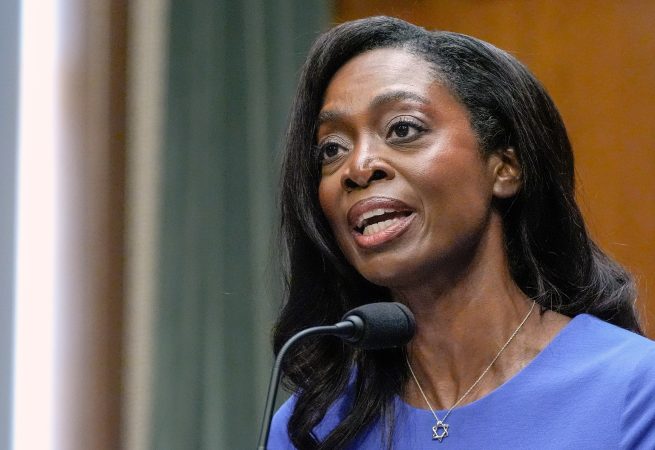
    NEW YORK — The Senate on Wednesday confirmed Erica Schwartz as director of the Centers for Disease Control and Prevention, placing her in charge of a public health agency beleaguered by political meddling and low morale.

    Schwartz was confirmed in a 51-44 vote. The 54-year-old becomes the 22nd leader of the Atlanta-based CDC, which is charged with protecting Americans from preventable health threats, and the agency’s first confirmed director in nearly a year. Her resume includes medical and law degrees, a stint as deputy surgeon general, and a leadership position at the U.S. Coast Guard.

    Schwartz’s nomination appeared to be on shaky ground after a hearing before the Senate Health, Education, Labor, and Pensions Committee last month. The chairperson, Sen. Bill Cassidy (R., La.) and others questioned whether she would be willing to stand up to Republican President Donald Trump’s health secretary, Robert F. Kennedy Jr., if he ordered CDC to do something unsupported by science and good public health practice.

    But weeks later, Cassidy said he had spoken with Schwartz after that hearing and with others who knew her, and said he had gained confidence in her.

    U.S. Department of Health and Human Services officials did not immediately respond to questions about when Schwartz will start the job or her salary.

    The CDC has been in turmoil since Trump returned to office last year.

    Largely due to layoffs and resignations, the agency has lost 3,000-plus employees, more than one-quarter of its workforce. Morale has plummeted as a succession of mostly temporary leaders has come and gone. The front office has been staffed by political appointees with little or no training in medicine or public health.

    “Now, Dr. Schwartz needs to prove that her leadership will serve science and not the whims of politicians. CDC needs a Director who will protect public health workers, defend evidence-based guidance, and refuse any directive that would undermine public safety,” said the National Public Health Coalition, an organization of former and current CDC workers, in a statement Wednesday.

    When Schwartz was nominated in April, public health experts were cautiously optimistic, citing her background. They also noted that Schwartz was the choice of Trump and not Kennedy, who is a leading voice in the anti-vaccine movement before he was tapped to oversee the CDC and other federal health agencies.

    Schwartz was the third Trump nominee for CDC director in the past 18 months.

    The first was a former Florida congressman, David Weldon. His Senate hearing in March 2025 was canceled an hour before it was to begin. Weldon said at the time that he had been told not enough senators were willing to vote for him.

    The White House then moved on to Susan Monarez, who had been serving as the CDC’s acting director. Monarez was confirmed by the Senate, but ousted from the job in less than a month. Trump administration officials said she was not aligned with the president’s agenda, so they terminated her.

    Since then, there have been a series of HHS officials as acting CDC directors.

    “With all the turmoil of the past two years, the CDC desperately needs stability, experienced leadership, and a steadfast commitment to science,” said Georges Benjamin of the American Public Health Association in a statement Wednesday.

    The CDC position was one of several leadership vacancies among federal health agencies, including the U.S. surgeon general and the commissioner of the Food and Drug Administration.

  • FAA is investigating why a plane was allowed to take off as President Trump’s helicopter approached

    FAA is investigating why a plane was allowed to take off as President Trump’s helicopter approached

    WASHINGTON — The Federal Aviation Administration is investigating why a plane was allowed to take off as President Donald Trump’s helicopter was approaching Reagan National Airport Tuesday afternoon in what appears to be a violation of safety procedures put in place after last year’s midair collision near that busy Washington, D.C., airport.

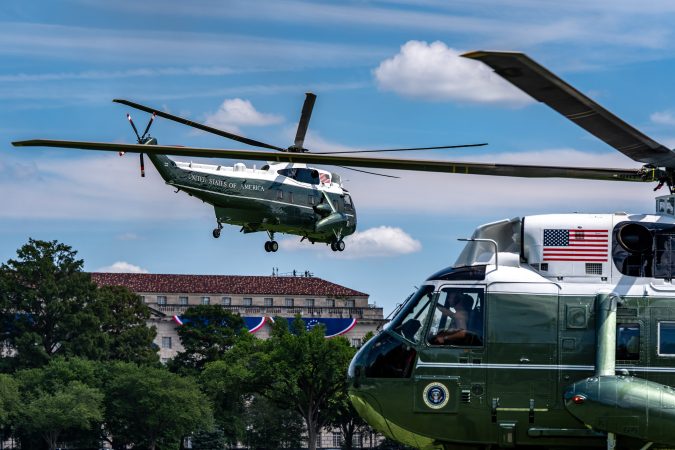
    The incident occurred as Marine One left the White House for Andrews Air Force Base with the president aboard for the first leg of a West Coast trip. A commercial jet took off at the same time. The FAA decided after 67 people died on Jan. 29, 2025, when an airliner collided with an Army Black Hawk helicopter that all takeoffs and landings at Reagan would be halted anytime a helicopter passes by the airport.

    The airplane that took off Tuesday was climbing above Marine One as the helicopter approached, so the two aircraft were not on a collision course.

    The FAA said in a statement that the preliminary investigation showed “there was a momentary loss of separation after which the aircraft continued to move away from one another.”

    “The air traffic controller was in contact with both the commercial pilot and Marine One pilot during the loss of separation,” the FAA said.

    The White House emphasized that President Trump was not in danger during the incident.

    “Marine One flights are piloted by some of the best aviators in the world, and at no point was the President in harm’s way,” said White House spokesperson Kush Desai.

    And the Marine Corps defended the actions of their helicopter pilots.

    “There were no ‘close calls’ with the routine Marine One movement,” Tuesday, said Marine Corps spokesperson Capt. Jacob Sugg in an email. “Washington National Tower did not delay the helicopter crew, ask them to hold, or otherwise alter their flight profile. To the contrary, the ATC team approved the requested route and provided timely and appropriate traffic information.”

    The Wall Street Journal first reported the incident.

    The airspace near the White House and Reagan is heavily congested with military and commercial aircraft.

    Poor communication between the military and the civilian air traffic controllers at Reagan has been an issue in the past. It came out last spring after one of the hearings on the midair collision that a hotline connecting the Pentagon to the tower at Reagan hadn’t been working for more than three years, and the FAA hadn’t even realized it.

    The Federal Aviation Administration took steps to ensure that helicopters and airplanes would no longer share the same airspace around Reagan National Airport shortly after the investigation into last year’s midair collision began. The rules also prohibit air traffic controllers from relying on visual separation and require all military aircraft to broadcast their locations.

    The main group of family members of the victims of last year’s crash questioned why the government hasn’t done more to prevent collisions in the crowded airspace around Reagan in a post on X Wednesday morning. The family members have been urging Congress to reach a compromise and pass the package of aviation safety reforms that the NTSB recommended after the midair collision.

    The NTSB said Wednesday morning that it is still gathering information about Tuesday’s incident involving Marine One and hasn’t yet decided whether to investigate.