Category: Style

  • How Philly’s own Buzz Bissinger became the foremost authority on leather jackets

    How Philly’s own Buzz Bissinger became the foremost authority on leather jackets

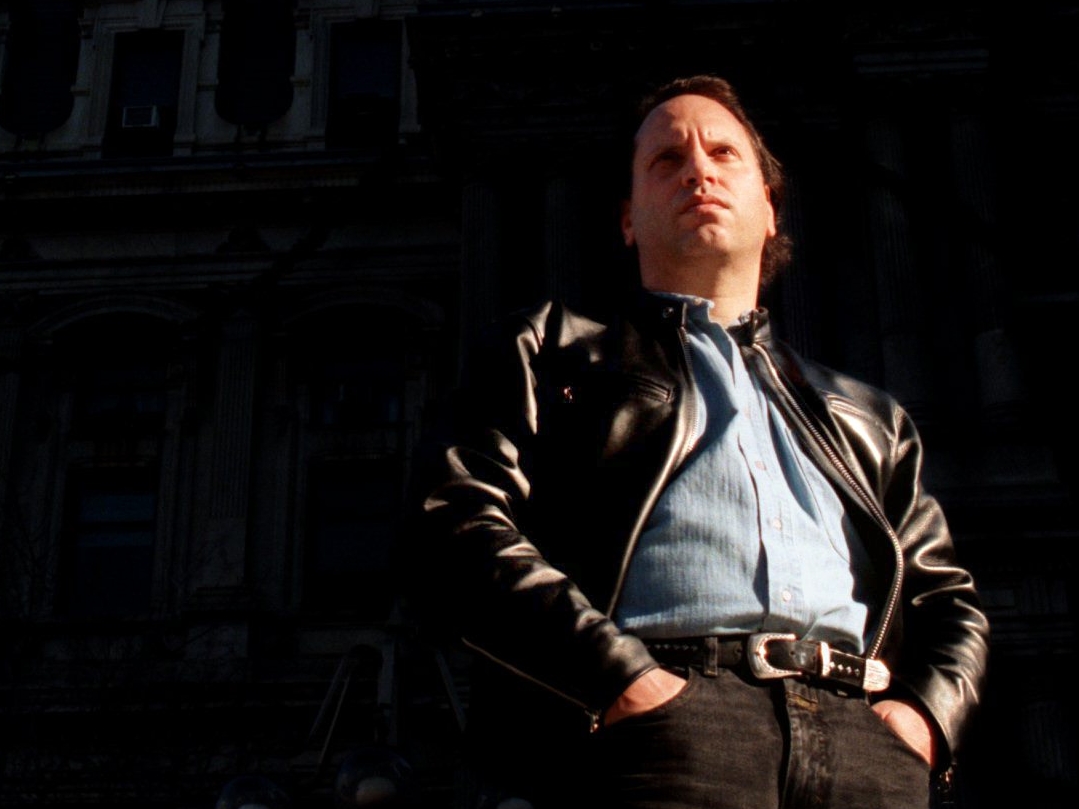
    Buzz Bissinger is tired of the stigma associated with leather jackets — regardless of whether the wearer is a best-selling author or a scandal-plagued, recently ousted tech mogul.

    He let those thoughts be known in his Wall Street Journal essay “In Defense of Middle-Aged Men in Leather Jackets,” which explores Nvidia CEO Jensen Huang’s signature look. Bissinger is, of course, no stranger to the subject.

    The Friday Night Lights author and Philadelphia Inquirer alum became an early internet main character for sharing similar enthusiasm for leather more than a decade ago.

    Huang, the entrepreneur who built an empire as a leader in the AI revolution before getting caught up in a personal and national security scandal and forced to resign, is well known for regularly wearing leather jackets.

    As Huang made headlines for his extramarital dalliances, the New York Times covered his jacket-wearing at length, likening his signature item choice to Steve Jobs’ turtlenecks or Mark Zuckerberg’s T-shirts. The Times also explored the leather jacket’s potential negative implications, cautioning that as details unfold about Huang’s affair with a Chinese businessperson and his second extramarital relationship with an Nvidia executive, that the jacket has gone from feeling “rebellious” to “reckless.”

    That’s where Bissinger comes in.

    Thirteen years ago, the Pulitzer Prize-winning author dropped a lengthy essay for GQ magazine about his self-proclaimed “Gucci addiction.”

    Buzz Bissinger (left) and Peter Berg participate in a photo call for “The Mosquito Bowl” at the Whitby Hotel last month in New York.Evan Agostini / Invision / AP

    “In the past few years, I’ve bought 81 leather jackets. Dozens of boots and leather gloves. I’ve purchased pants that cost $5,000. I own a $22,000 coat,” Bissinger wrote at the time. “My name is Buzz Bissinger … And I am a shopaholic.”

    The 2013 confessional was both lauded and mocked, but it started a conversation that stuck with people about shopping, public image, luxury items, and aging.

    “The self-expression feels glorious, an indispensable part of me,” Bissinger wrote in the essay. “As a stranger said after admiring my look in a Gucci burgundy jacquard velvet jacket and a Burberry black patent leather trench, ‘You don’t give a f—.’”

    As Emily Gould of New York magazine recalled on X about the essay, “Obama is in office. Glossy magazines are still a going concern, and they publish epic, glorious stories about being addicted to buying leather jackets.”

    Bissinger documented over thousands of words how he’d spent more than $600,000 in a few years on luxury clothing, primarily leather jackets, putting his personal life and health at risk.

    The mix of his vulnerability — revealing intimate details about his marriage and fatherhood alongside his flashiness, flexing on readers with his $14,000 ostrich skin jacket and his trips to Milan for exclusive access to Gucci showrooms — made for a perfect internet storm, becoming a talker that stuck with readers for years.

    “I felt it was important to write,” Bissinger told The Inquirer about his GQ essay. “I felt proud that I’m able to wear what I want and don’t feel self-conscious or silly, and I refuse to be influenced by the parochialism of others.” Bissinger eventually went to rehab for addiction and compulsive disorder.

    When Huang’s own penchant for leather jackets became an item of interest all this time later, some mused that there was only one appropriate subject matter expert prepared to dive into it all. The Wall Street Journal put out a call to the foremost leather jacket aficionado.

    “[The] Wall Street Journal came to me because of my openness in the past,” Bissinger said. “I was happy to write it because I’m tired of the stigma that leather creates. It’s a piece of clothing, and it’s fun to wear, and no one should be judged for it.”

    In his piece for the Journal, Bissinger calls himself “the world’s leading authority on all things leather,” citing his GQ essay. “It is only fitting that I pass final judgment on the sartorial choices of Jensen Huang,” he wrote.

    In his opinion, Huang could actually go further on his leather journey.

    “Much has been made of the fact he owns 30 to 40 leather jackets. It might seem excessive unless you are a leather fetishist. Then it’s child’s play,” Bissinger wrote. “Huang did not go far enough.”

    Much like what happened 13 years ago, Bissinger’s new essay about leather also had a field day on the internet, garnering hundreds of thousands of views across social media platforms.

    “FINALLY the most qualified person alive on this issue has weighed in,” Dennis Young at Front Office Sports tweeted. “Can’t remember the last time I clicked on something so fast,” Laura J. Nelson at the Wall Street Journal wrote.

    So, what does Bissinger think about being “the guy” when it comes to leather?

    “I gave myself the title, but I figure when you have spent as much money as I have on leather, I deserve it,” he said. “At the peak of my compulsive spending, I did have an exquisite collection that I’m pretty sure few could match. Since then, I’ve given much away. I could no longer justify it, much less afford it. But I still have my favorite babies.”


  • Meldoria Miles, award-winning cosmetologist and retired salon owner, has died at 88

    Meldoria Miles, award-winning cosmetologist and retired salon owner, has died at 88

    Meldoria Miles, 88, of Philadelphia, award-winning cosmetologist, longtime beauty school instructor, retired salon owner, mentor, and big sister extraordinaire, died Wednesday, Aug. 26, of heart and lung disease at Jefferson Abington Hospital.

    The oldest of 11 children, Ms. Miles grew up in a two-room farm house in rural Mercer County, Kentucky. Naturally affable and supportive, she not only helped her mother with the household chores, she mentored her younger siblings, giving good advice, styling their hair, and generally making life more pleasant.

    “She always helped people,” her sister, Maureen Meaux, said. “She listened to people. She was beautiful inside and out.”

    After high school, Ms. Miles moved to Louisville, went to beauty school, and styled hair for clients at a salon and privately in her home. She left for Philadelphia in 1971 to work for Luster Products Inc. and became so proficient at developing, testing, selling, and demonstrating personal care products that Luster sent her to workshops, demonstrations, competitions, trade shows, and conventions across the country and around the world.

    Ms. Miles was at home in her shop, El Salon, (above) and at personal care product events (center below).Courtesy of the family

    She was especially skilled at matching colors with style, and anticipating ever-changing cosmetic trends. In 1971, she was named dean of technicians at Luster. She helped develop its groundbreaking hair relaxing formula in the 1980s and was named educational director in 1991.

    For decades, Ms. Miles, often with her sister Maureen along as her model, traveled to cosmetology events in Canada, Europe, the Caribbean, Africa, and elsewhere. She was dynamic in front of crowds, her family said, and won competitions for her use of cosmetics and wigs, and awards for her innovation.

    In 1996, she was named Philadelphia’s hair dresser of the year by the Affirm hair care line.

    Ms. Miles opened her own five-seat shop, El Salon, in 1973 on East Washington Lane in West Oak Lane and managed it for 37 years. Before Philadelphia, she worked in sales and product development for two companies in Louisville.

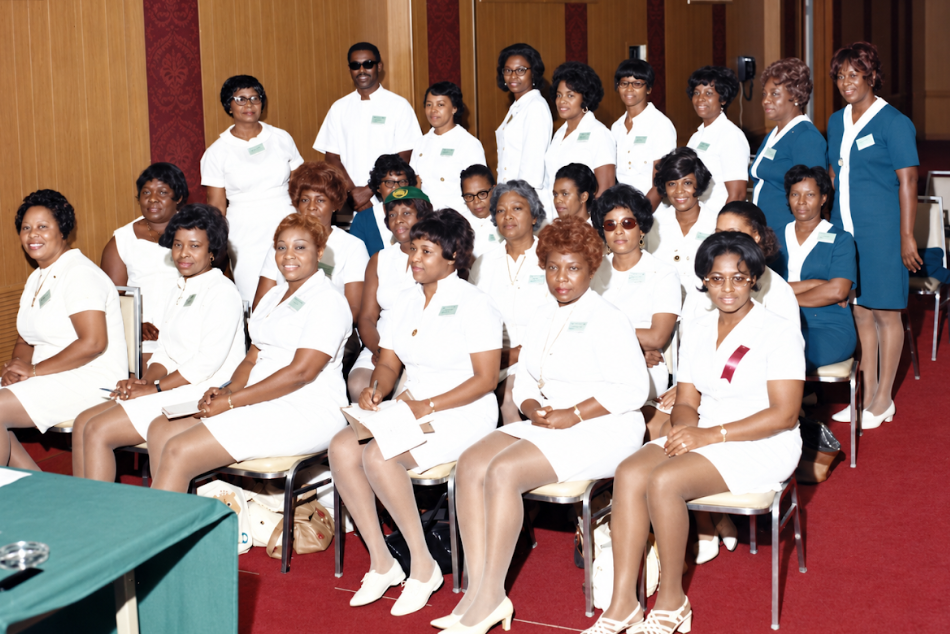
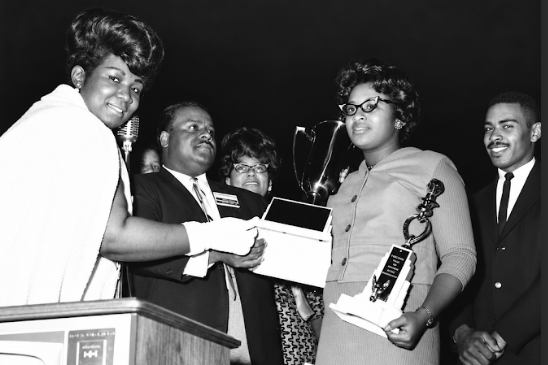
    Above, Ms. Miles (front right) attended several beauty schools. Below, she (right) won several competitions for personal care skills.Courtesy of the family

    In 1974, Ms. Miles earned her teaching certification at the old Wilfred Academy of Hair and Beauty in Philadelphia. She went on to teach chemical hair relaxing, manicuring, and other personal care skills for decades at Wilfred, Devine, Pearson VUE, and Gordon Phillips beauty schools in Philadelphia; the National Beauty Culture League in Washington; Clairol in New York; and Pivot Point Academy in Chicago.

    In addition to Wilfred, she studied at the National Beauty Culture League, Pivot Point, and Vidal Sassoon in Paris. In 1980, she took business management classes at the University of Colorado.

    She was good at everything, her sister said, but “she dedicated herself to hair.”

    Meldoria Louise Meaux was born Sept. 12, 1937. She moved to Louisville after high school and spent a year at the old Tucker’s Beauty and Barber School.

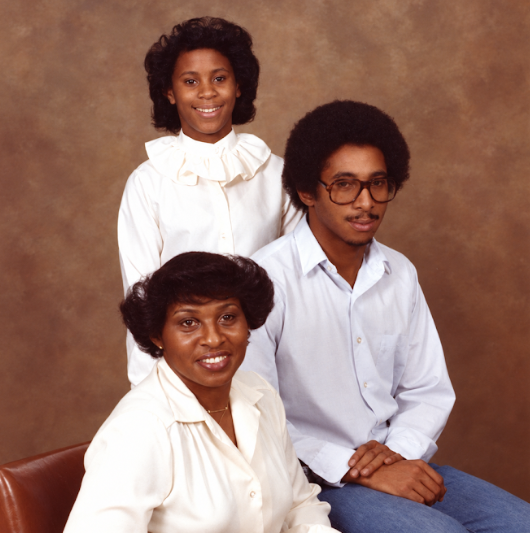
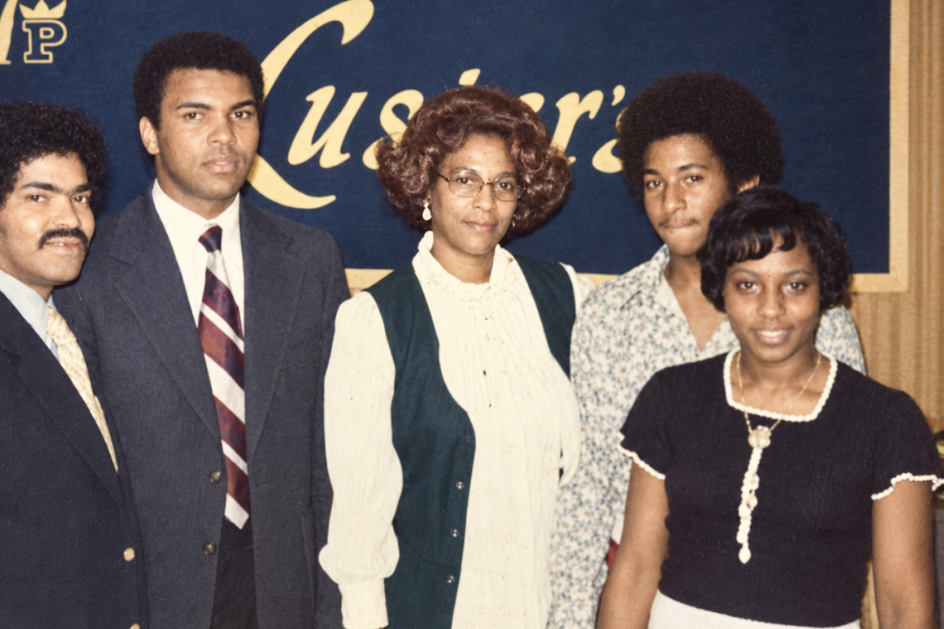
    Above, Ms. Miles sits with her children. Below, she (right) stands with Muhammad Ali (second from left) and others. Courtesy of the family

    She married James Miles, and they had a daughter, Lamarr, and a son, Gary. She and her husband divorced later. She married Jerome Wortham, and they divorced later.

    Ms. Miles lived in West Philadelphia and Mount Airy. She was active at church, taught Sunday school, and doted on her family. “She built a life of purpose, service, and faith,” her family said in a tribute.

    A friend said: “Mel was my teacher, mentor, friend, and I will miss our monthly visits and conversations.” Her daughter said: “She was the most caring, giving, positive, beautiful soul. She was effervescent. Her smile lit up the room.”

    In addition to her children, Ms. Miles is survived by four grandchildren, six siblings, and other relatives. Her first husband died earlier.

    Memorial services were held earlier.

    Donations in her name may be made to Pastor Jacob Sanders, Pleasant Grove Baptist Church, 85 Bay Hill Rd., Magnolia, Del. 19962.

    Ms. Miles “built a life of purpose, service, and faith,” her family said in a tribute.Courtesy of the family
  • Metropolitan Museum of Art scraps John Galliano-focused Met Gala plans

    Metropolitan Museum of Art scraps John Galliano-focused Met Gala plans

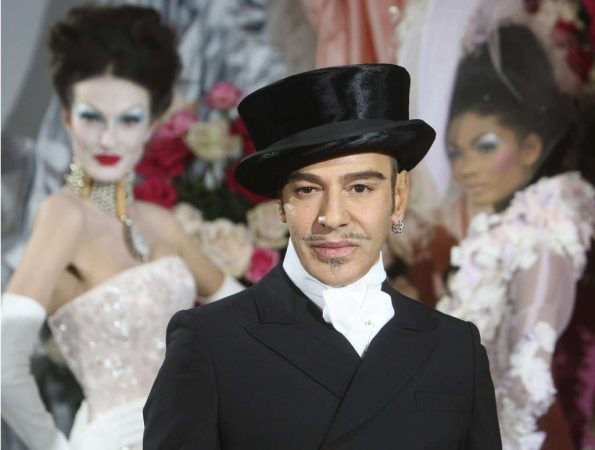
    Next year’s Met Gala will not spotlight controversial fashion designer John Galliano after all.

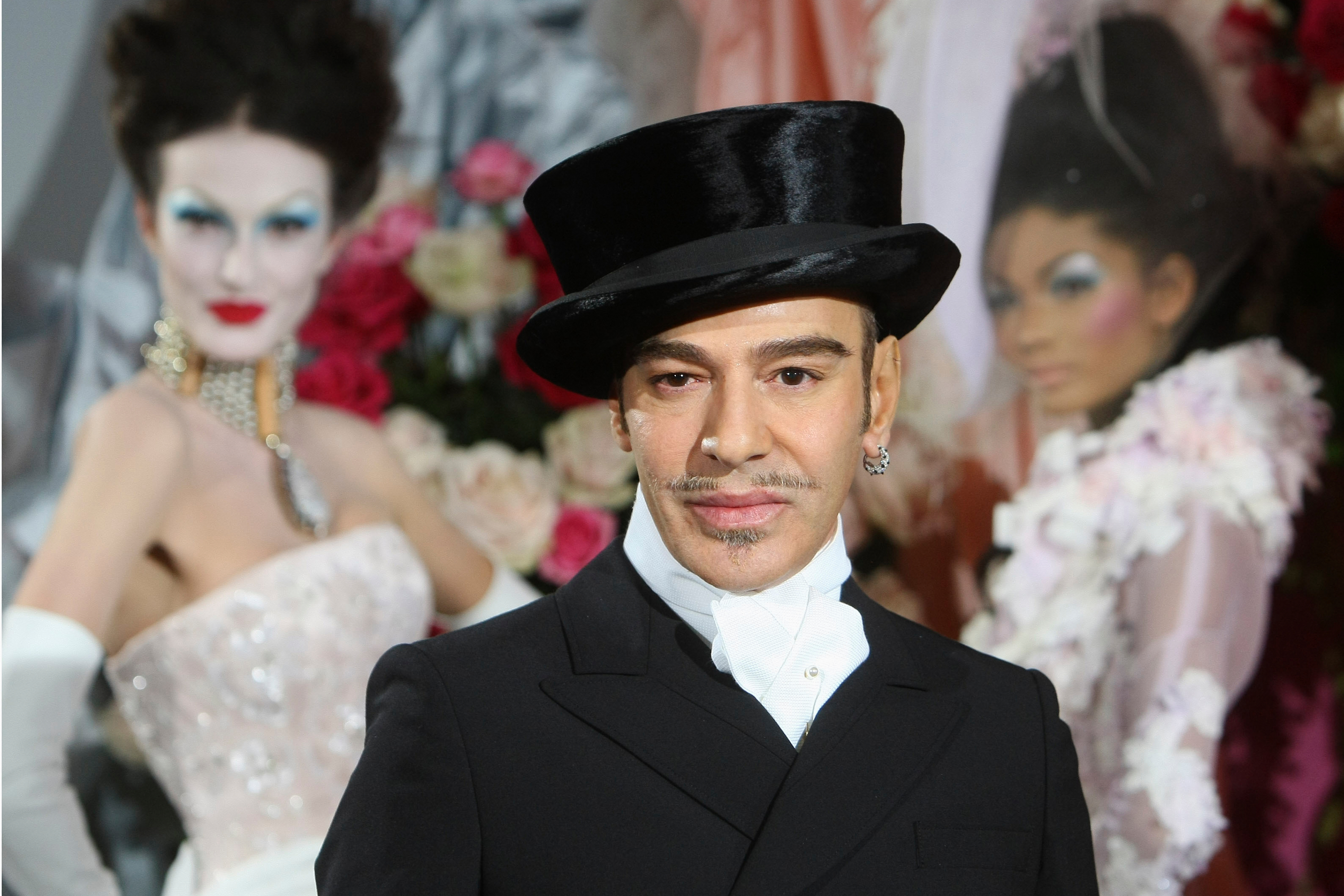
    The Metropolitan Museum of Art and Galliano announced in a joint statement that the museum would not move forward with John Galliano: Horizons. Galliano, 65, is a British designer who has worked for some of the industry’s top fashion houses, including Christian Dior, Givenchy, and Oscar de la Renta.

    At the peak of his career, he served as Dior’s creative director for nearly 15 years. But in 2011, he was infamously canceled after his conviction in a Parisian court over a series of racist and antisemitic comments. It cost him his job leading Dior. At the time, Galliano said his alcohol abuse sparked the outburst.

    The museum’s retrospective was reportedly going to highlight the fashion director’s portfolio while also addressing his personal life, including his public exile and the work he later did to atone and get sober.

    “Following thoughtful discussions with many stakeholders and with John Galliano, we together have decided not to proceed with the exhibition,” said Metropolitan Museum of Art director Max Hollein.

    The announcement came exactly one month after the initial Met Gala theme reveal. Galliano’s exhibit would have only been the third retrospective for a living designer in the Costume Institute’s history.

    While fashion experts largely agreed the fashion director’s work is seminal, critics said the exhibit’s timing — which coincides with a global surge in antisemitism — was cause for concern.

    Professional thrifter and fashion writer Virginia Chamlee previously told The Inquirer that while the Met was equipped to accurately cover the designer’s checkered past, she was concerned about whether the storytelling would resonate with the average Met Gala consumer.

    The annual exhibit’s largest publicity draw is a televised red carpet where celebrities invited often wear pieces by or paying tribute to the spotlighted designer — not the exhibit itself.

    “Even if the museum intends to offer a complete examination of Galliano’s complicated legacy, it may come off as a straightforward celebration of someone who said things so heinous and racist that they were charged and fired for them.”

    In the joint statement, Galliano himself said he requested not to move forward with the exhibit.

    “After much reflection and discussion with The Met and all those involved, I have decided, with great sadness, that it is best for the exhibition not to take place at this time,” Galliano said. “I remain fully accountable for the pain caused by my words in the past, particularly the hurt I caused to the Jewish and Asian communities, and I remain deeply sorry for it. I understand that meaningful atonement is not achieved through an exhibition, institutional recognition or a single public gesture. It is a continuing responsibility, demonstrated through listening, learning and one’s conduct over time.”

    Galliano went on to thank Anna Wintour, a longtime champion of Galliano’s and the global editorial director of Vogue, chief content officer of Condé Nast, and Met Gala chairperson responsible for the event’s programming.

    In her extended statement to Vogue, Wintour framed Horizons’ cancellation as a “postponement.”

    “John’s decision to ask the Museum to postpone the exhibition devoted to his work is very courageous and a measure of the man he is,” she said. “I believe this is the right decision, and both he and the Museum have my full support.” The Met’s version of Wintour’s statement does not use that phrasing.

    Information on a new Spring Costume Institute exhibition and the 2027 Met Gala will be announced later, the museum said. The Gala itself was initially scheduled to take place May 3, though it’s unclear if that date would shift in light of the exhibit change.

  • Joan M. Satterthwaite, talented tailor and seamstress, and longtime office administrator, has died at 92

    Joan M. Satterthwaite, talented tailor and seamstress, and longtime office administrator, has died at 92

    Joan M. Satterthwaite, 92, of Philadelphia, talented tailor and seamstress, longtime office administrator for the Mayor’s Commission on Aging, volunteer, and community caretaker, died Tuesday, Aug. 4, of sepsis at Jefferson Washington Township Hospital in Gloucester County.

    Adept at designing, constructing, fitting, and altering garments of all kinds, Ms. Satterthwaite worked at the Botany 500 factory at Broad Street and Lehigh Avenue, and for other clothing manufacturers in Philadelphia, for more than 20 years. She could do every job on the intricate clothing assembly line, her son Kevin said, and she did them fast and well.

    She joined the International Ladies’ Garment Workers’ Union in the 1950s and supplemented her weekday work by producing gowns, dresses, suits, and other clothing for family, friends, church choirs, wedding parties, and local businesses.

    She made Halloween costumes for her two sons when they were young and tailored suits when they were older. She designed a wedding dress for her daughter-in-law.

    She could duplicate many patterns by looking at them just once. Over the years, she collected eight sewing machines. “Her craftsmanship and attention to detail earned her the admiration and loyalty of countless clients,” her family said in a tribute.

    Her son Kevin said: “We would call her an entrepreneur today.”

    In the mid-1980s, Ms. Satterthwaite left garments and became certified in office administration and computer technology at the old Philadelphia School of Office Technologies. For a decade, she worked for the Joseph Shein Law Firm.

    She tried to retire in the mid-1990s. But she impressed officials at the Mayor’s Commission on Aging so much as a client that they recruited her as a receptionist and administrative assistant. She left that job in 2018, at 85.

    Ms. Satterthwaite reared her sons in Philadelphia. Courtesy of the family

    After that, she volunteered with veterans groups, was active in the community, and opened her home to anyone in need. “If someone asked for help,” her son Kevin said, “she was there.”

    Her family said: “Joan’s life was a testament to perseverance, faith, compassion, and determination. Her kindness, generosity, and genuine concern for others became hallmarks of a life well lived.”

    A friend said online: “Ms. Joan was the nicest person ever. … Her kind spirit reminded me of my grandmother.”

    Joan Marie Watts was born Dec. 28, 1933, in North Philadelphia. Her mother died when she was 2, and she was reared by her grandfather and his wife.

    Ms. Satterthwaite doted on her grandchildren.Courtesy of the family

    She studied tailoring and sewing at William Penn High School and graduated in 1952. She married Charles Satterthwaite in 1953, and they had sons Kevin and Eric. Her husband died earlier.

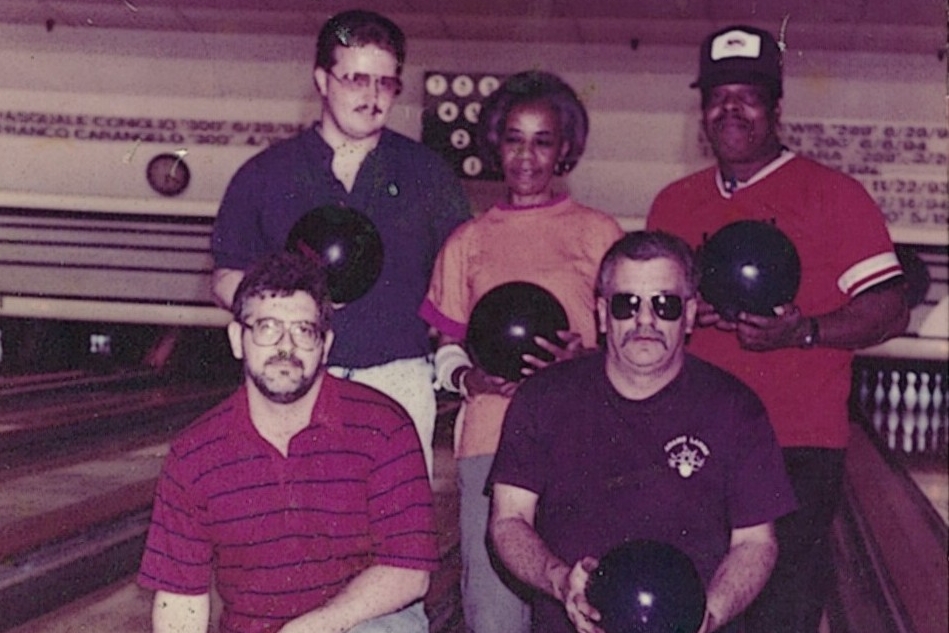
    Ms. Satterthwaite was a member of Triumph Baptist Church for more than 35 years, and she went to breakfast with others often after Sunday service. She had breakfast with her sons on Saturdays, bowled every week for 30 years, hosted memorable family gatherings on holidays, and pored over puzzle books when she was older to stay sharp.

    Her family noted her “warm heart, generous spirit, and love of people” in a tribute and said: “Her kindness, patience, and genuine concern for others left a lasting impression on all who knew her.”

    She doted on her family and told them often that education was a key to success. She lived in Nicetown and Logan, and most recently in Washington Township.

    Ms. Satterthwaite graduated from William Penn High School. Courtesy of the family

    Her son Eric praised her “unwavering belief that nothing in life was more important than family.” Her son Kevin said: “She was welcoming and warm. She liked being around people. Her life force kept her going.”

    In addition to her sons, Ms. Satterthwaite is survived by four grandchildren, two sisters, a brother, and other relatives. Two brothers died earlier.

    Services were held earlier.

    Donations in her name may be made to Triumph Baptist Church, 1648 W. Hunting Park Ave., Philadelphia, Pa. 19140.

    Ms. Satterthwaite bowled every week for decades. Courtesy of the family
  • Why is honoring John Galliano at next year’s Met Gala controversial?

    Why is honoring John Galliano at next year’s Met Gala controversial?

    The next Met Gala is nine months away, but it’s already sparking charged opinions. The controversy centers around the Costume Institute’s decision to honor one designer at its next exhibit: John Galliano, a lauded fashion designer with a checkered past.

    Galliano’s exhibit at the Met will be significant, marking only the third solo show for a living designer in the gala’s history. (The others were Rei Kawakubo in 2017 and Yves Saint Laurent in 1983.)

    But it’s not all pierced leather and newspaper print (just two of the designer’s many signature elements). In 2011, Galliano was infamously canceled after his conviction in a Parisian court over a series of racist and antisemitic comments.

    It cost him his job leading Dior. At the time, Galliano said his alcohol abuse sparked the outburst.

    After “two years of exile‚” the designer’s career bounced back. Now, it will be showcased at length. Still, the Met is working to emphasize that the exhibit would not shy away from the problematic aspects of Galliano’s history.

    “His career isn’t defined by a moment — something that he will live with for the rest of his life. The exhibition won’t shy away from any of the darkness in John’s past,“ Anna Wintour told Vogue. Wintor is the global editorial director of Vogue, chief content officer of Condé Nast, and Met Gala chairperson responsible for the event’s programming. “It’s part of what has shaped him. The show will take in the full arc of his career and grapple with all of it.” Wintour is a longtime champion of Galliano and his work.

    The exhibit’s announcement — and the rehashing of Galliano’s comments — come during a time when antisemitism is surging globally. Fashion expert and professional thrifter Virginia Chamlee says the Met is equipped to accurately cover an influential artist without sanitizing the ugly parts.

    Still, Chamlee noted, the biggest publicity draw for the Met’s annual exhibit is the televised red carpet walks leading up to the gala itself — not the exhibition that follows. She’s concerned that whatever efforts the Met has devoted to accountability could be lost to the larger audience.

    “So there’s a real risk here,” Chamlee said. “Even if the museum intends to offer a complete examination of Galliano’s complicated legacy, it may come off as a straightforward celebration of someone who said things so heinous and racist that they were charged and fired for them.”

    Met Gala attendees often wear looks by or inspired by the artists being honored, meaning Galliano’s pieces will likely be worn on celebrities whose looks will be photographed and televised prominently.

    Fashion influencer and writer Ashley Ballard has collected vintage Galliano Dior-era pieces for years.

    “It’s undeniable that Galliano’s time at Dior had a ripple effect on fashion and greater culture,” she said. The designer’s work redefined haute couture with immersive fashion shows, used historical references in fashion, and often bled into pop culture, with top celebrities wearing his designs.

    “It’s key for us to remember that pioneers from this time period [1996-2011] — particularly Galliano and Alexander McQueen — created pieces that challenged high fashion as an institution,” Ballard said.

    Citing Galliano’s incorporation of subcultures into his art, breaking the traditional molds of luxury fashion, Ballard called the designer’s work art that “bridged the gap between traditional fashion houses and audiences that historically were considered an afterthought.”

    Ballard said the controversy over honoring Galliano was valid.

    “This doesn’t exist in a vacuum, and people have the right to be upset by what was said 15 years ago,” she said. “[But] as a culture, if we genuinely care about minimizing hatred and the effects of addiction, it’s imperative that we support rehabilitation and reconstruction, offering the possibility that change is possible and welcomed — otherwise we become participants in the continuity of harm.”

    Here’s everything else you need to know.

    Who is John Galliano?

    Galliano, 65, is a British designer who has worked for some of the industry’s top fashion houses, including Christian Dior, Givenchy, and Oscar de la Renta.

    At the peak of his career, he served as Dior’s creative director for nearly 15 years. Galliano went on to work for Maison Margiela from 2014 through 2024.

    Earlier this year, Zara announced a two-year creative partnership with Galliano.

    What work is John Galliano best known for?

    While at Dior, Galliano’s haute couture and ready-to-wear collections were hailed as among the best of the best.

    He designed the fashion house’s signature Saddle Bag, premiering in 2000 and remaining a staple shape.

    He’s also responsible for iconic looks, including the newspaper dress worn by Sarah Jessica Parker’s Carrie Bradshaw in Sex and the City, and model Kate Moss’ 2011 wedding dress.

    “Galliano’s work as a fashion designer is very highly regarded [and collectible],” Chamlee said. “Just look at the asking price [$375,500] of this Galliano for Dior Homme menswear leather skirt. The industry also largely welcomed him back years ago.”

    Why was Galliano canceled?

    Galliano made a string of antisemitic and racist comments in 2010 and 2011, leading to his conviction in an antisemitism trial held in Paris.

    Galliano was recorded at a Paris bar making drunken, antisemitic comments to a group of Jewish women.

    The video recording surfaced in February 2011, just before Paris Fashion Week. Dior suspended and ultimately fired the creative director.

    Galliano was tried by French authorities under national laws against antisemitic speech, where he was found guilty and ordered to pay €16,500 (about $19,000) in fines and damages. He also lost a compensation case against Dior in labor court.

    What happened to Galliano after Dior fired him for his antisemitic comments?

    Galliano spent years involved in public and private efforts to rehabilitate.

    The 2024 documentary High & Low — John Galliano suggests Galliano was overworked and abusing alcohol and drugs when he made the disparaging comments. The documentary features interviews and analysis on Galliano’s efforts to repair the harm he’d done.

    After a period of silence, alcohol rehabilitation, and outreach to Jewish organizations, some of the designer’s fashion peers and religious leaders began publicly forgiving him.

    Notably, Anna Wintour has repeatedly championed Galliano’s work, both in the early days of his career and later, after his period of cancellation.

    She reportedly helped the designer secure funding over the years, as well as his positions at Givenchy and Dior prior to his conviction and at Oscar de la Renta in 2013. In March, he announced his partnership with Zara.

    Wintour and Galliano met with Jewish leaders to discuss the planned Met Gala showcase, according to the New York Times.

    The Times quoted Jonathan Greenblatt, chief executive of the Anti-Defamation League, as saying: “We believe John Galliano has genuinely worked through the issues that led to his antisemitic outburst years ago in Paris, and we have long since accepted his apology.”

    Greenblatt added: “His efforts to repair the damage his words caused and to learn from that incident should be applauded.”

    What has the Met said about the Galliano exhibit?

    In a news release Friday, the museum promised John Galliano: Horizons would address the good, bad, and ugly of Galliano’s career.

    “It will directly address the rupture caused by his antisemitic, racist, and anti-Asian conduct in 2010 and 2011, which resulted in his dismissal from Christian Dior and his eponymous label and his conviction by a Paris court for public insults based on race, religion, ethnicity, or origin,” the release said. “It will also consider his subsequent treatment for substance addiction and his later public acknowledgment of his actions. Rather than presenting a conventional narrative of disgrace and redemption, the gallery will examine how memory, experience, cultural values, and historical circumstances continually reshape the reception of a designer’s work.”

    Have other ‘canceled’ designers been honored at the Met Gala?

    Several Met Gala showcases and exhibitions have been considered controversial over the years, but experts say this time is different.

    This year’s Met Gala faced backlash and boycott threats for accepting a corporate sponsorship from Amazon founder Jeff Bezos. A “Ball Without Billionaires” counterprotest, which took the form of a grassroots fashion show, took place outside the museum’s entrance.

    The celebration for Yves Saint Laurent in 1983 was criticized for being the first to celebrate a living artist. Critics and art historians suggested the precedent could lead to a promotional advertorial-style treatment for an active brand.

    In 2023, the gala’s Karl Lagerfeld showcase — which highlighted the late designer’s work for Chanel, Fendi, and Chloé — was criticized for celebrating a man known for a history of fatphobic, misogynistic, anti-Me Too, and anti-immigrant views.

    “Lagerfeld had a long record of cruel and discriminatory public comments … But Galliano’s conduct was explicit enough to result in his firing and a criminal conviction,” said Chamlee. As a living designer, Galliano stands to benefit professionally and financially from the renewed attention, she added.

    When is the 2027 Met Gala?

    The Met Gala will take place May 3. John Galliano: Horizons will premiere to the public May 9 and be on display through Jan. 9, 2028.

    The Associated Press contributed to this article.