Good morning, South Jersey. I’m with you for a few days from my little corner of our region. I’ve been a New Jersey resident almost all my life, and I can’t help but notice that even critics of our state like to visit our Shore towns. 🤷♀️
In Camden, Battleship New Jersey will be getting a two-year, $24.25 million upgrade. Some will be on the vessel itself, while other work will improve the visitor’s experience.
And New Jersey — along with Pennsylvania and Delaware — had more deportation orders issued in June than in any other month since 1997.
Battleship New Jersey is about to get another facelift, this one costing $24.25 million and involving work on and off the ship.
The project could take about two years to complete and will make it more visitor friendly, with an expanded visitor center, double the parking, and a new event space.
Big J, as it is known, is nearly 2½ football fields long. The World War II-era ship returned to the Camden waterfront in June 2024 after being dry-docked in Philadelphia for 78 days. At that time, it got a paint job for the first time in three decades, as well as multimillion-dollar routine maintenance and repairs.
Immigration courts in New Jersey, Pennsylvania, and Delaware are ordering people removed from the country in numbers not seen since at least 1997.
In New Jersey’s courts, orders of removal or voluntary departure rose 47%, from 2,348 in May to 3,446 in June. (At the Philadelphia immigration court — which hears cases for most Pennsylvania and Delaware residents — orders rose 71%, from 1,230 in May to 2,105 in June.)
The figures are the highest since at least late 1997.
More than 46,000 removal and voluntary deportation orders have been issued in New Jersey, Pennsylvania, and Delaware since President Donald Trump’s return to office, slightly more than the total issued over former President Joe Biden’s entire term.
A New Jersey resident won $500,000 in a Powerball Double Play drawing, the Courier Post reports. The person’s name and location have not yet been released.
This North Wildwood cottage was too small for a big family. The owner rebuilt it from scratch with the home’s history in mind.
The owner of Chicken or the Egg in Marlton and Beach Haven and LaScala’s Fire in Marlton and other locations has bought a Bucks County restaurant to add to his LaScala’s Fire collection. He also plans to expand the concept in Jersey.
A Voorhees seafood restaurant is closing after 35 years, NJ.com reports.
🗓️ The best things to do this week
🌭 The Glizzy Gauntlet: The hot dog eating competition is back for its third year at the board game café pdk. NINE. The contest will test both speed and endurance as contestants compete in multiple rounds to claim the title of the Glizzy Gladiator. ⏰ Saturday, Aug. 15, 11 a.m.-1 p.m.💵 Free for spectators, $20 for participants 📍 pdk. NINE, Mount Laurel.
🎨 Collingswood Crafts & Fine Art Festival: The annual festival is back for its 20th year. The two-day event highlights the work of more than 190 artists mostly from across the tristate area. There will also be live music, various dining options, and family craft activities. ⏰ Saturday, Aug. 15, and Sunday, Aug. 16, 10 a.m.-5 p.m. 💵 Pay as you go 📍Haddon Avenue, Downtown Collingswood.
🎉 Dominican Restoration Day Parade and Concert: Celebrate Dominican culture with a parade that kicks off at noon at Market and Fifth Streets with floats, music, and community pride. At 3 p.m., the party shifts to Wiggins Waterfront Park for live music, cultural performances, and various vendors. ⏰ Saturday, Aug. 15, and Sunday, Aug. 16, 10 a.m.-5 p.m. 💵 Pay as you go 📍Wiggins Park, Camden.
Battleship New Jersey will soon undergo another facelift through a $24.25 million redevelopment project tackling work on and off the ship.
The project, which could take about two years to complete, includes an expanded visitor center, double the parking, and a new event space.
Marshall Spevak, Battleship New Jersey’s CEO, said it is the biggest capital investment in the ship since it opened its doors 25 years ago.
Big J, nearly 2½ football fields long, returned to the Camden waterfront in June 2024 after the World War II-era vessel was dry-docked in Philadelphia for 78 days while it received multimillion-dollar routine maintenance, repairs, and a paint job for the first time in three decades.
Back on the water, the Battleship New Jersey Museum and Memorial announced plans Wednesday for infrastructure improvements to the ship, along with landside renovations, that are scheduled to start during the second or third quarter of 2027.
The visitor center at 62 Battleship Place has not changed much since the USS New Jersey went public in 2001, Spevak said.
Camden Mayor Victor Carstarphen finishes his talk on the Battleship New Jersey during a news conference Wednesday, Aug. 12, 2026 to announce the museum’s multimillion-dollar renovation. Tom Gralish / Staff Photographer
At the time, the center was deemed temporary. At less than 4,000 square feet, Spevak said, the structure was comparable to a Butler building — a cost-effective, ready-made storage warehouse — and to a shipping container.
But after 25 years, the nonprofit is looking to build something permanent.
“Right now, we do what we can,” Spevak said. “But this entire project is building a campus that’s worthy of the ship.”
The new $9.5 million visitor center, at the same address, will be about 8,700 square feet, more than double its current size. The facility, three stories with a roof deck, will include a new store, a small cafe with a commercial kitchen, exhibit and collection spaces, and offices for staff.
The plan will also add a level to the current parking lot at Wiggins Marina, which will double visitors’ parking options to 240 spaces.
Battleship New Jersey’s new visitor center, set to start construction in 2027, will sit along the Camden waterfront in South Jersey. This rendering by PS&S shows the northeast aerial view of the upcoming center.PS&S
That $5 million parking project will allow all visitors to park in one place, Spevak said, and hopefully resolve confusion drivers currently face when their GPS devices lead them to various spots along the waterfront.
Battleship New Jersey will also undergo $6 million in upgrades on board, including a new private event space on the main deck, painting and repairs to the ship’s superstructure, new exterior lighting, accessibility improvements, a better generator system, more than $1 million in bathroom renovations, pier repairs, elevator shaft fixes, and more.
The U.S. Army Corps of Engineers is also set to dredge Big J’s berth, or remove sediment and silt from where the ship currently sits. Spevak said that likely will not take place until the second half of 2027, when the ship will close for a couple of weeks while it temporarily relocates during the dredging process.
PS&S, an architectural and engineering firm based in Cherry Hill, is leading the project, Spevak said, with help from engineering firm Pennoni. A general contractor has not been assigned to the project yet, though Spevak said that decision could come later this year.
Battleship New Jersey’s new visitor center, set to start construction in 2027, will sit along the Camden waterfront in South Jersey. This rendering by PS&S shows the west elevation of the upcoming center.PS&S
The New Jersey Economic Development Authority will support the project with $19.9 million in tax credits awarded through its Cultural Arts Facilities Expansion program, according to Camden County officials. The program incentivizes capital projects at arts and culture spots statewide.
Because Battleship New Jersey is a public charity and does not pay taxes, the nonprofit has a buyer lined up to purchase the tax credits, Spevak said, which will allow the organization to pay down its debt service on the project.
Spevak said the nonprofit could not have pursued the renovations, which he hopes will help revitalize the Camden waterfront, without the state program.
“This project is what will keep us growing on the waterfront,” Spevak said.
After the tax credits, the outstanding project costs come from “a mix of Battleship funds, revenue, and investments along with a grant from the Camden County Open Space & Historic Preservation Fund,” Spevak said in an email.
Camden County will help out, too.
Spevak said the county will support the structure by giving the nonprofit a long-term lease for the parking garage, provide some cash equity, and guarantee the bond required for the project, which allows Battleship New Jersey to borrow using the county’s bond rating and get better interest rates.
Food insecurity nearly doubled in New Jersey since 2020, with some 1.2 million people struggling to regularly afford food here, according to a nonprofit analysis of federal data.
Statewide, 13% of Garden State residents could not always count on three meals a day in 2024, the latest federal figures available, up from 7.4% in 2020, according to a new analysis of U.S. Department of Agriculture figures released by the nonprofit advocacy group Feeding America. That included nearly 330,000 children, the analysis found.
Hunterdon County had the least food insecurity in 2024, with just 7.2% of its residents struggling to put food on the table, while Hudson had the highest rate, with 19.1%, Feeding America found.
Feeding America has surveyed food insecurity since 2011 and produces the annual “Map the Meal Gap” study to help illustrate the scope of the problem. Nationwide, nearly 48 million people — 14.4% of Americans — meet the federal definition of food insecure, meaning the household did not earn enough to always afford food.
The latest report notes that the U.S. Department of Agriculture has since canceled its collection of food-security data.
“Feeding America is collaborating with the nationwide network and partners to explore alternative data sources to ensure local updates can continue in 2027 and beyond,” the organization said.
In New Jersey, close to 900,000 people benefit from federally funded food stamps, which provide cash payments based on their income level to help them afford groceries. These payments, which average $194 a month, have been shown to reduce stress and boost the local economy, prompting some $33 million in direct spending between 2023 and 2025, according to a report commissioned by the state Department of Human Services, which oversees the food stamp program, formally known as the Supplemental Nutrition Assistance Program, or SNAP.
“SNAP remains a critical lifeline that helps ensure families can meet their basic needs and maintain food security,” Human Services Commissioner Stephen Cha said when the office released that data in June.
New Jersey’s food stamp program costs $1.9 billion annually, most of it traditionally covered by federal funding. Feeding America said it would have cost another $920 million to eliminate food security in New Jersey in 2024.
Changes enacted by the Trump administration recently shifted some of the cost of the food stamp program to state governments. Other changes, including new rules requiring certain recipients to prove they are working, in school, or caring for a loved one at least 20 hours a week, could reduce benefits for some people and force at least 47,000 people from the food stamp program entirely, experts warn.
In 2022, the state launched the New Jersey Office of Food Insecurity, as part of the Department of Agriculture, to help more families access nutrition. New Jersey had the fifth-lowest prevalence of food insecurity nationwide in 2024, according to the office.
Gina LaPlaca, the former mayor of Lumberton Township who pleaded guilty earlier this year to driving drunk with her toddler in the car, has been charged with faking signatures on a nominating petition to run for township committee, the Burlington County Prosecutor’s Office said.
LaPlaca, 47, and her husband, Jason Carty, 49, were both charged by summons with third-degree knowingly filing a false petition, two counts of third-degree tampering with public records or information, and fourth-degree falsifying or tampering with records.
LaPlaca also was charged with fourth-degree making a false statement under oath.
According to the prosecutor’s office, multiple people whose names and purported signatures appeared on LaPlaca’s nominating petition indicated that they had neither signed the petition nor authorized anyone to do so on their behalf.
The petition was submitted by Carty to the Lumberton Township municipal clerk and contained an affidavit signed by LaPlaca that she “personally circulated the petition [and] that such petition was signed by each of the signers thereof in his/her own handwriting,” the prosecutor’s office said.
Carty also allegedly collected signatures for the petition.
Without the allegedly fake signatures, the prosecutor’s office said, LaPlaca’s petition would have lacked the needed number of signatures required to qualify for the primary.
Both LaPlaca and Carty are scheduled to appear in Superior Court in Mount Holly on Sept. 21.
In March, LaPlaca, who served as mayor until December and is still a member of the township committee, pleaded guilty before Burlington County Superior Court Judge Craig Ambrose to driving under the influence and child endangerment.
Under a deal with prosecutors, LaPlaca entered a three-year diversionary program for first-time offenders. She also agreed to attend regular Alcoholics Anonymous meetings and install an ignition interlock device in her vehicle. LaPlaca told the judge she had installed an interlock device last October. And she had already completed inpatient and outpatient treatment, prosecutors said.
Prosecutors said cell-phone video showed LaPlaca driving a blue 2019 BMW erratically on Route 38, swerving across the center line and nearly striking a utility pole. After the motorist who recorded the video alerted police, officers located LaPlaca and found an open container of alcohol in her vehicle, authorities said.
LaPlaca told police she had been drinking before picking up her 2-year-old son from daycare, prosecutors said. At the time, her blood-alcohol concentration measured 0.30% — more than three times New Jersey’s legal threshold for intoxication.
Despite calls from state lawmakers to step down, she declined to resign as mayor and remained in office until her term ended in December.
In a text message Tuesday, LaPlaca said: “I’m still in process of retaining counsel so there’s not much I can say other than these charges are absolutely baseless.”
Carty could not be reached for comment Tuesday. A lawyer for Carty also could not be reached.
In a separate case, Carty was arrested in late May and charged with aggravated assault and harassment, court records show.
The New Jersey Globe news outlet reported last month that LaPlaca had alleged that Carty tried to strangle her. But then she allegedly wrote a letter to the Burlington County Prosecutor’s Office saying that her husband did not assault her and that she wished for the charges to be dropped, the New Jersey Globe reported.
A spokesperson for the Burlington County Prosecutor’s Office declined to comment on the alleged letter, but did say that the case had been transferred to the Mercer County Prosecutor’s Office.
A spokesperson for the Mercer County’s Prosecutor’s Office could not be reached for comment.
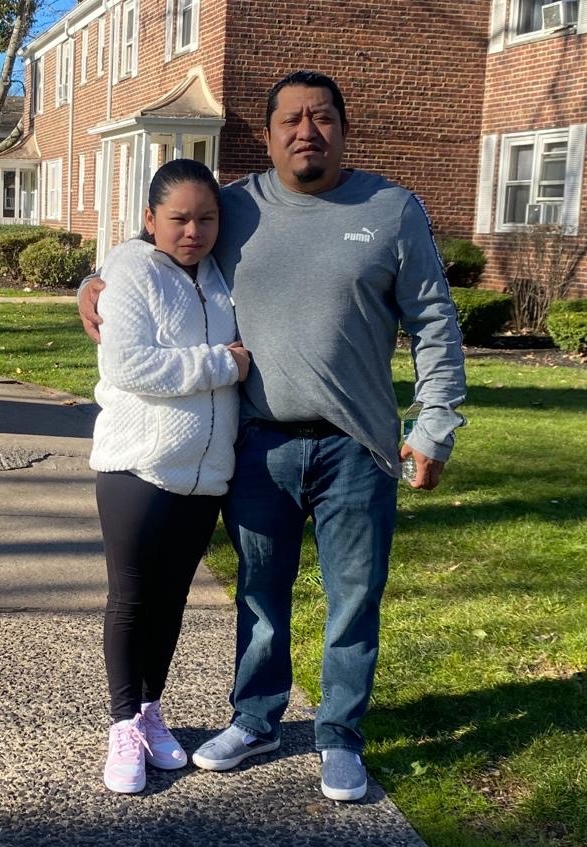
Half a year into fatherhood, Edwin Jeovanny López Cornejo found the sight of his daughter, Ashley, revitalizing after a long day at work.
It was 2014. López Cornejo, an immigrant from El Salvador, had been working at a packaging company in South Plainfield, N.J., for about seven years. He came to the United States in 2007, filed an asylum claim, and received employee authorization from the federal government after being deported the year prior, according to court documents.
As he would often do in the years that followed, he took to Facebook to express his gratitude to God and his love for his daughter.
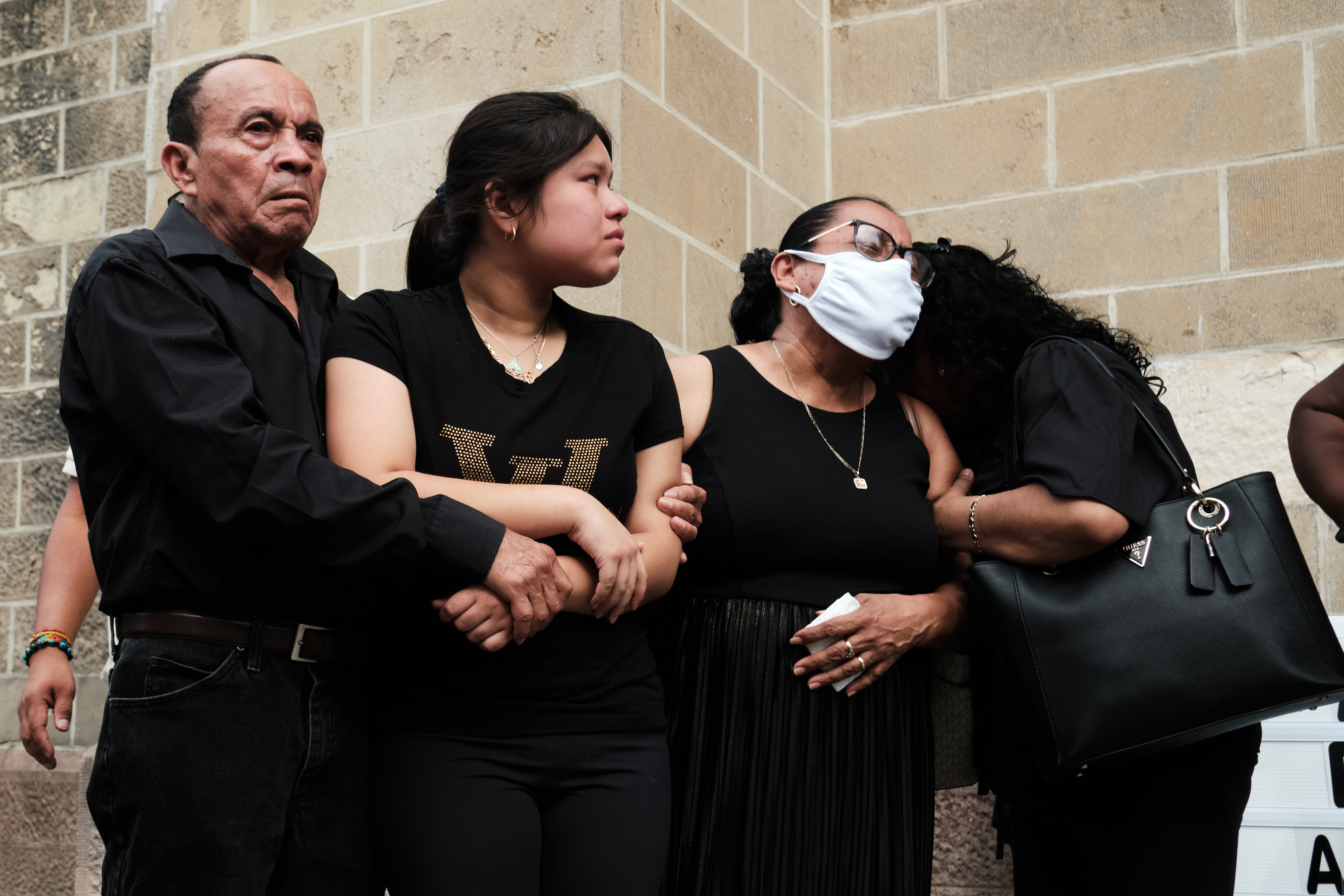
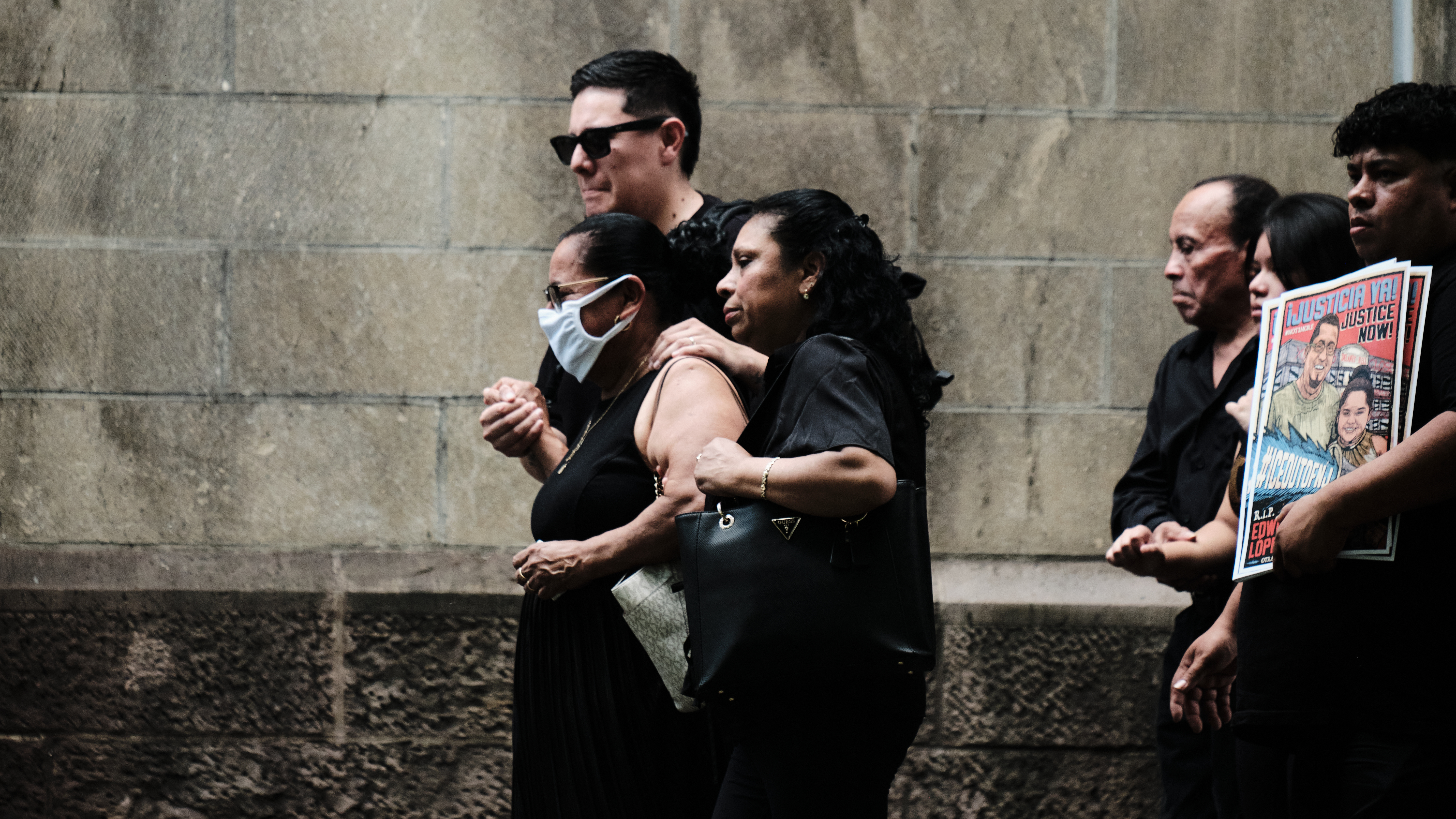
This past Friday, Ashley Lopéz, now 12, wore all black. She stood between her paternalgrandparents as they held each other and wept at her father’s wake at Crescent Avenue Presbyterian Church in Plainfield.
López Cornejo had died in ICE custody just under a week earlier at the age of 39 after experiencing what the federal agency called a medical emergency at Delaney Hall, an ICE detention center in Newark run by the private company GEO Group.
Ashley has barely been speaking. Or eating. And she does not want to be around people, María Cornejo, her paternal grandmother, told The Inquirer in an interview on Monday, speaking in Spanish.
Letters of support submitted to the court after his June arrest, remarks from his family, and more than a decade of public Facebook posts written in Spanish paint the picture of a father who deeply loved his daughter.
Twelve years ago, Lopéz Cornejo and his then-girlfriend were expecting twins, but the boy died in the fifth month of pregnancy, Cornejo said.
“She is the only child he had. You should have seen him when she was born. That man was the most joyful man with his daughter in his arms,” Cornejo said. “It was his first time being a father, and he wouldn’t even sleep so he could watch her sleep and make sure she was OK.”
López Cornejo was unable to see his daughter at Delaney Hall. He had been there for about six weeks.
Delaney Hall has been the site of high-profile political clashes representing the national conflict between Trump’s supporters and immigrant rights advocates. The detention center serves a critical role for the president’s mass deportation agenda, and complaints of poor and unsanitary conditions have sparked continuous protests, uproar from Democratic lawmakers, and a reported hunger strike inside, which the Trump administration denied happened.
In December, a 41-year-old Haitian national named Jean Wilson Brutus died one day after entering Delaney Hall, and U.S. Rep. Rob Menendez (D., N.J.) recently said another person died at the hospital after a potential seizure at the facility earlier this summer. Nationally,at least 23 fatalities in ICE custody have been reported this year as the rate has increased during Trump’s second term.
López Cornejo’s asylum claim was still pending — 19 years after he filed it — when ICE agents arrested him, according to a habeas corpus petition challenging his detention.
An undated photo of Edwin López Cornejo and his daughter, Ashley, in a pool.Courtesy family of Edwin López Cornejo
Around 9 a.m. June 18, López Cornejo headed out to pick up his car from a towing company, where it had been taken for being parked for too long, his mother recounted Monday. She urged him to take a taxi and avoid walking, given a heightened fear of running into ICE in the community.
She said goodbye, unaware it would be the last time she would hug her son.
Lopéz Cornejo ended up walking because roads were closed.
Masked agentsstopped him and asked for his ID. When he produced his Salvadorian identification, they put him in an unmarked vehicle with two other people who had already been detained, his lawyer Ingrid Echeverria recounted in the habeas corpus petition.
Cornejo said her son called her from inside Delaney Hall that evening. The first question he asked was about Ashley.
According to his family and court documents, he took medicine for diabetes, epilepsy, and high blood pressure. Interruption of his strict medication schedule carries the risk of breakthrough seizures and associated harm, according to the petition. That July 24 court document did not accuse ICE of denying him his medication but expressed concern over potential medical risks if he was transferred to another facility, as the agency at one point planned.
On. Aug. 1, Cornejo got a call from University Hospital in Newark. The person on the phone told her that her son’s heart was not beating by the timehe arrived, after he collapsed at Delaney Hall. ICE has not released an official cause of death, but U.S. Sen. Andy Kim (D., N.J.) said it was a heart attack and cardiac arrest. Days after his death, Kim and fellow New Jersey Democratic U.S. Sen. Cory Booker put forward legislation that would require the shuttering of Delaney Hall.
New Jersey Attorney General Jennifer Davenport said last week that her office was launching a civil rights investigation into Delaney Hall, citing reports of “alarming conditions” and recent deaths.
Sen. Andy Kim (D., N.J.) stands between federal agents and demonstrators in an attempt to prevent a clash outside the Delaney Hall migrant detention center in Newark, N.J., on May 25.DAKOTA SANTIAGO
In response to López Cornejo’s death, ICE put out a statement saying that everyone in ICE detention gets proper, around-the-clock medical care, and that López Cornejo “was seen by medical professionals.”
His family doesn’t buy it. They blame ICE for detaining him and accuse the agency of failing to provide him proper medical care. Danilo López, his brother, said at a news conference that his brother told him over the phone that he had to fill out a form to just get Tylenol at Delaney Hall and it could be days before he received it, a claim ICE did not directly address when asked.
“He lived a normal life and worked normally while taking his medicine and with a proper diet, working more than eight hours a day, and had no problem,” Cornejo said in the interview.
Just days after her father died, Ashley López said at a news conference: “On the same day, we were both dead. The only difference was his heart stopped beating. I am going to grow up without a father.”
Family members of Edwin López Cornejo including (from left) his mother Maria Cornejo, daughter, Ashley, and his former wife, attend a news conference on Tuesday, Aug. 4, 2026, in Highland Park, N.J. Yuki Iwamura
‘The true love of my life’
On his daughter’s first birthday, López Cornejo wrote on Facebook that Ashley gave him “one more reason to live.”
“I want to tell you that when I learned you were going to be born it felt like it would be forever before I had you in my arms,” he wrote. “I will never forget the first day that I changed you and gave you a feeding bottle. Wow my girl, those moments I will never forget and now you are turning one. Wow how the time passes.”
An undated photo of Edwin López Cornejo with his daughter, Ashley.Courtesy family of Edwin López Cornejo
On her third birthday, he called her “the true love of my life,” and said she motivated him to be strong and keep moving forward.
“I would be willing to give my life for yours,” he wrote.
On his own birthday, he often thanked God for another year of life. And as a birthday wish, he asked for another year to see his daughter grow.
Ashley, a U.S. citizen, was born in New Jersey, according to the petition, which includes her birth certificate and public school records to support his lawyer’s argument that López Cornejo has community ties. The documents show she receiveda certificate of achievement for math at 9 years old “for demonstrating fluency of division” in less than six seconds. And shortly after she turned 10, she was crowned “Art Leader of the Week.”
Ashley lived with her dad half the week, but he picked her up from school every day, and she would run into his arms to greet him, Cornejo said. He took pride in her success in school.
“He would tell her, ‘I want you to be a doctor so you can cure me one day,’” she said.
Family members of Edwin López Cornejo arrive at an Aug. 4 news conference in Highland Park, N.J.AP Photo/Yuki Iwamura
A hard worker
López Cornejostarted working in construction just three weeks before his detention after the warehouse he worked at changed locations, his mother said.
Court documents show he worked at UpperClass Warehouse in South Plainfield from March 2021 until this May, and he previously worked multiple restaurant jobs in New Jersey. He paid taxes to the state of New Jersey and the federal government.
Jesse Fischbein, vice president of finance at Just Packaging, where López Cornejo worked from 2007 to 2015, said in a letter of support attached to the petition filed with the court last month that he “truly was a company-first employee, who didn’t believe that the workday was simply 7 AM to 3:30 PM.”
“He was punctual, always pitching in to help other employees when his tasks were completed, and always asked management if there was more to be done,” Fischbein wrote.
People detained inside Delaney Hall stand at windows in Newark, N.J., as demonstrators gather outside on May 28, 2026. The protests were fueled by reports of detainees staging a hunger strike over the conditions of their confinement.TODD HEISLER
ButFischbein said there was one thing López Cornejo would always be better at than his job: being a father.
“From what I know about him outside of work — he is a father, and that is the job he excels at more than any function he performs for my company,” Fischbein said.
A coworker-turned-friend, Juan Zavala, said in another letter of support that López Cornejo had “earned the respect of everyone around him” through kindness, compassion, respect, and honesty.
“He is a loving, responsible, and caring parent who is deeply involved with his daughter’s life and always puts her well-being first. It is very clear that his family means everything to him,” Zavala wrote.
One of the ways López Cornejo expressed himself to his loved ones was by sharing links to music on Facebook. He dedicated love songs to his daughter and others, he shared reflections during the pandemic with a Christian worship song, and he said the music video for “Pose”by Daddy Yankee — the singer known for the hit song “Gasolina” — inspired him to learn to dance reggaeton.
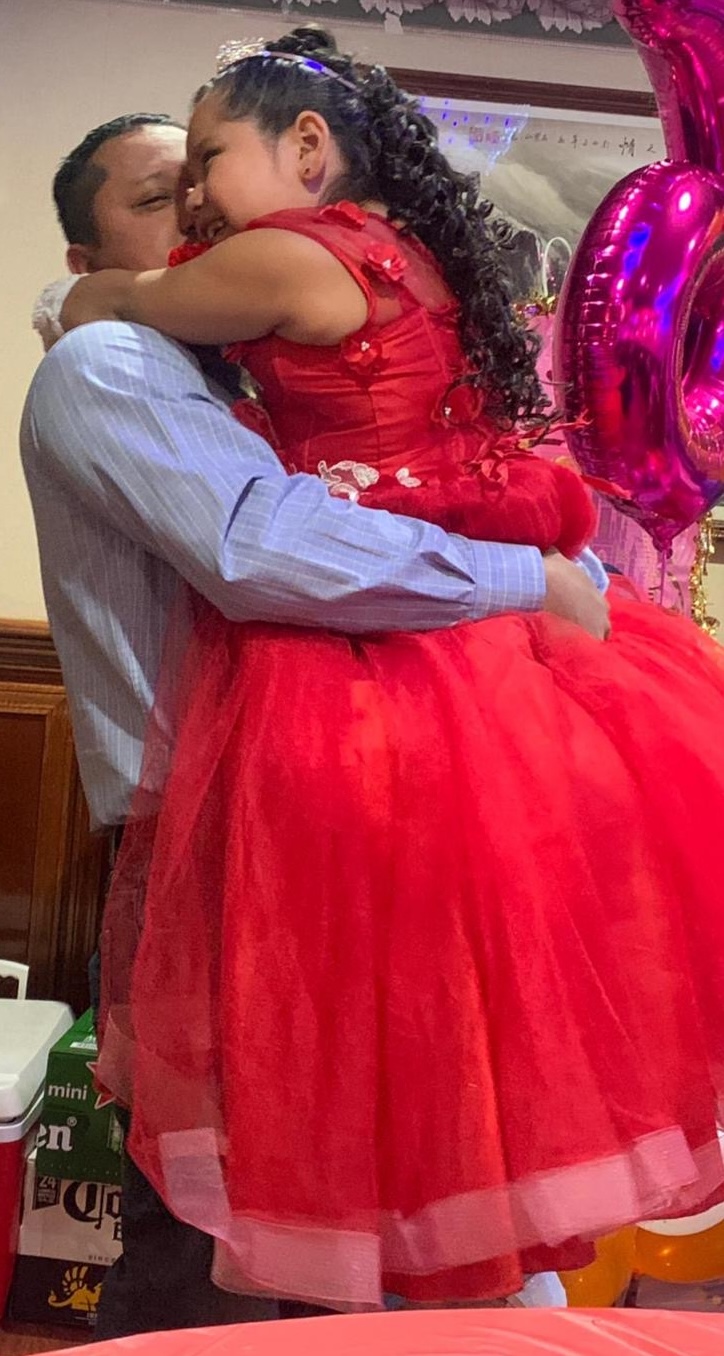
López Cornejo and Ashley dreamed about dancing together at her quinceañera, a celebration for her 15th birthday.
“He just wanted to dance the waltz with his little girl, and they so looked forward to that party,” Cornejo said, crying. “Now my little girl won’t have her dad.”
Family members walk to the church side entrance during the wake of Edwin López Cornejo, after his death in ICE custody in New Jersey on Aug. 7 in Plainfield N.J.Max Blease / For The Inquirer
‘Profoundly difficult consequences’
In the July 24 petition, his lawyer called on ICE to explain why he was detained, and consider either his immediate release or a hearing in front of an immigration judge.
His lawyer said that he was served with documents in English he could not read, and that hedid nothave a criminal record and always showed up for his court dates.
His friends and family described him in similar terms in letters of support submitted to the court last month.
Kelvin E. Urquilla Flores, who met López Corneja at Just Packaging nearly 20 years ago, described him as “a peace-loving, law-abiding individual” who is “an asset to this country and to his community.”
Edgar Fabián Guaman, who said he had known López Cornejo for almost two decades, said that his family friend did not present a risk to the community — but instead improves the well-being of those around him.
“I respectfully express that a possible separation of Mr. López Cornejo from his family unit would have profoundly difficult consequences for his daughter and his mother, who depend on his presence, support, and emotional stability,” Guaman wrote.
An undated photo of Edwin López Cornejo and his daughter, Ashley.Courtesy family of Edwin López Cornejo
Through his Facebook posts, López Cornejo shared a deep appreciation for his parents. In May 2016, he thanked God for giving him “an exemplary mother,”whom he also described as a “second mother” to his own daughter.
“Maybe I’m not the perfect son, but I try to behave at your level, mother,”he wrote. “I know you gave me the greatest gift, life, and I will never be able to repay you, mother.”
The last post that shows up on López Cornejo’s Facebook page was a message directed to God and his daughter on her 12th birthday last November.
Staff writer Abraham Gutman contributed to this article.
Social media platforms will face a bevy of new restrictions in New Jersey that limit their use of children’s data, restrict algorithmic content recommendations to minors, and block notifications during school hours, among a range of others.
The new restrictions, which are set to take effect in September 2027, flow from legislation Gov. Mikie Sherrill signed Tuesday and are New Jersey’s bid to regulate tech giants the governor said federal policymakers had largely left to their own devices.
“Big tech isn’t just the big tobacco of our era. They are worse. They designed platforms that highjacked our kids’ attention spans,” Sherrill said at a bill signing ceremony in Jersey City. “The typical American teen spends about 35 hours a week, almost a full-time job, on platforms like TikTok, Instagram, and YouTube.”
The restrictions in the New Jersey Kids Code Act would require privacy settings on minors’ social media accounts be set to their strictest mode and would limit platforms’ ability to request minors change those settings.
It would restrict platforms’ use of children’s data to the purposes for which it was collected and bar algorithmic content recommendations unless a minor specifically requests more or less content from a given account or of a specific type.
The restrictions mandate that social media platforms limit the discoverability of children’s accounts, both to adults on their own sites and through search engines.
And the law will bar social media platforms from sending notifications to minors between 8 a.m. and 4 p.m. on school days between Labor Day and Memorial Day and block notifications between 10 p.m. and 6 a.m. at all times of the year.
Assemblywoman Andrea Katz was a chief sponsor on the bill to restrict how social media platforms deliver content to children.Anne-Marie Caruso / New Jersey Monitor
“Half of parents say their children’s mental health has suffered over the past year because of social media,” said bill sponsor Assemblywoman Andrea Katz (D-Burlington). “Nearly half of teenagers say they lose sleep every single night because they feel stuck on these platforms.”
The law permits both parents and the New Jersey attorney general to sue over violations. If they’re victorious, courts could award $5,000 per violation or treble damages — an amount equal to three times the harm suffered — whichever is greater, plus attorney fees.
They can also order punitive damages for reckless or knowing violations and injunctions to bar offending conduct.
Lawmakers on Tuesday described a social media landscape that had sold children’s mental health for engagement and shifted threats that once appeared in physical spaces to digital ones.
“When I was a kid, our parents worried about strangers and who’s talking to us at the park or at the mall,” said bill sponsor Sen. Raj Mukherji (D-Hudson). “Today, we have to worry about who’s DMing them, what algorithms are pushing into our kids’ feeds, and what sensitive information is being collected, used, even sold before they’re old enough to understand what they’re giving away.”
Meta, which operates Facebook, Instagram, and other social media platforms, did not immediately respond to a request for comment.
The state’s higher education office began accepting proposals for the center Tuesday and aims to open it sometime this fall with a $500,000 appropriation from the state’s budget.
Hours before Mohamed Coulibaly was found dead in his Gloucester County home, one of his alleged victims said, the 23-year-old entrepreneur had been desperately seeking a $75,000 loan.
A recent Barron’s investigation alleged Coulibaly defrauded three former NFL players out of $1 million in an e-commerce scheme involving fake Shopify stores. Now others who invested in the venture or lent Coulibaly money were blowing up his phone. They wanted to know if Jalen Carter and several former members of the Eagles, including Nakobe Dean and Terrell Edmunds, were even real clients, a claim Coulibaly made on promotional materials.
Above all, these people wanted their money back.
The morning of his death, July 31, Coulibaly solicited money from a New York man, who agreed to speak with The Inquirer on the condition of anonymity to protect his family’s privacy. He is one of at least 10 people, including the three former NFL players, alleging Coulibaly scammed them out of more than $5 million through phony investments over the last year.
Coulibaly, who lived in Mullica Hill, a section of Harrison Township, promised to send a Lamborghini, two gold Rolexes, and a signed Lionel Messi cleat as collateral for what was to be a weeklong loan.
Coulibaly still owed the man $1 million for a bridge loan due in March. Yet he insisted the additional loan somehow would make it possible to return the initial money owed. His alleged victim said he figured he could only gain from the arrangement — if the collateral proved to be real.
But a driver — not in a Lamborghini — arrived at his doorstep with two fake watches, an unauthenticated signed cleat, along with an insurance card and a bill of sale for the promised luxe car, according to the man.
The man called off the loan.
“[Coulibaly] then started to cry hysterical on the phone,” the victim said. “He said, ‘I’ve lost it all, please help me here, please help me here.’”
Coulibaly was found dead later that day.
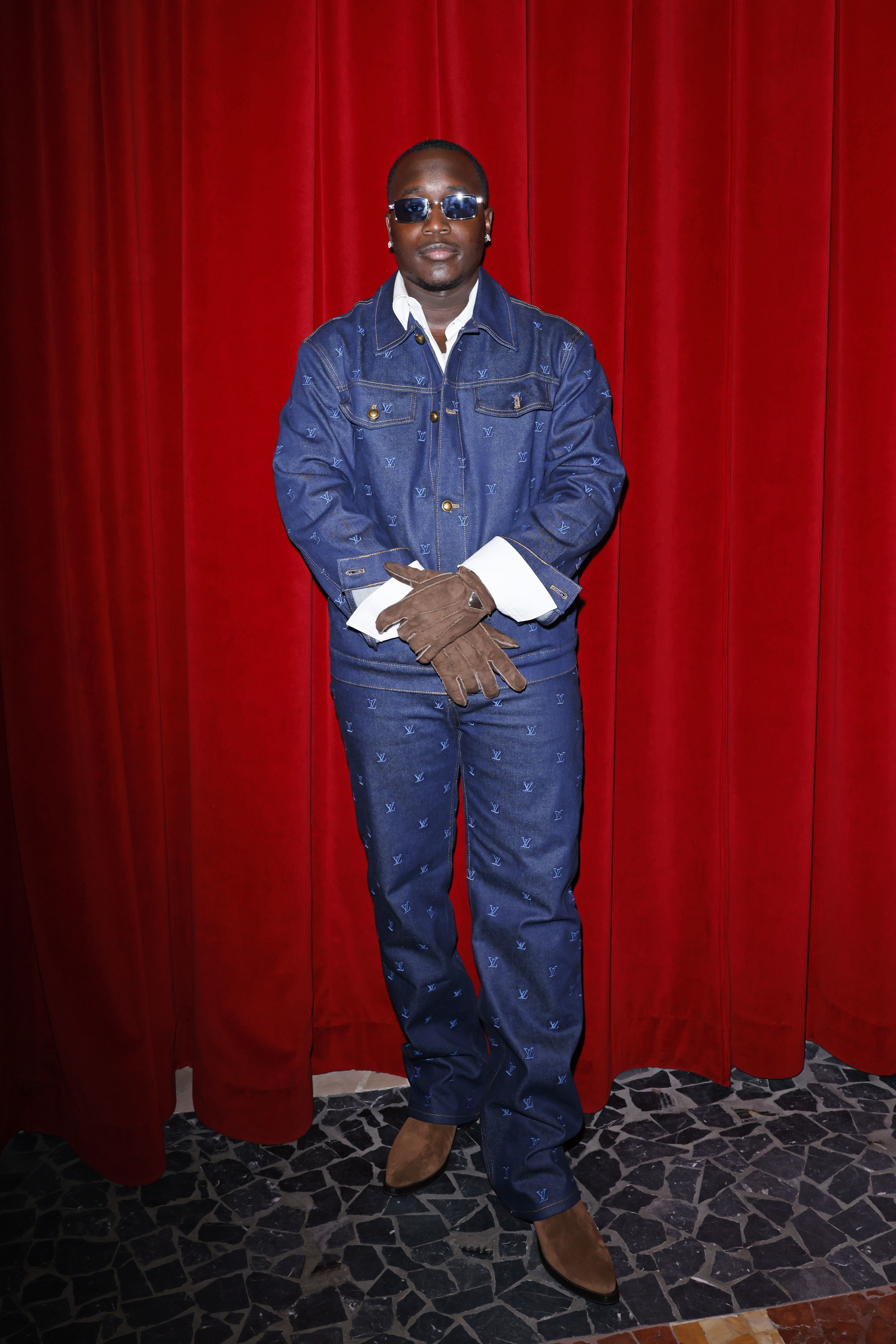
Mohamed Coulibaly attends Milan Fashion Week on Jan. 19 in Milan, Italy.Dave Benett/Getty Images
The Gloucester County Prosecutor’s Office is leading the investigation into Coulibaly’s death and declined to comment. No charges have been filed in connection to the alleged scams Coulibaly is accused of spearheading.
Coulibaly’s death has only added a layer of uncertainty for his allegedly defrauded clients, who now believe they were unwitting participants in a Ponzi scheme. New so-called investments went toward paying off other clients. But the chain could not be sustained.
“In terms of his death, it sounds rather brash or harsh, but the only reason I’m upset for his passing is that he’s not able to go to jail and suffer,” the bridge loan investor said.
The Inquirer spoke with four victims, all but one of whom asked to remain anonymous citing lingering shame, privacy concerns, and, in one case, safety considerations. They provided alleged contracts Coulibaly gave them, text messages, screenshots of their purported Shopify store sales, and a whistleblower report sent to federal and Pennsylvania financial regulators.
In hindsight, the business always seemed too good to be true. The young entrepreneur convinced them they could rake in millions each month selling vacuums, printers, desktop humidifiers, and silicone trays on Shopify, an e-commerce platform similar to Amazon.
At first, investors said they had no reason to question Vent Motion LLC, also known as Motion Venture. Shopify alerted the victims to a steady stream of sales through their phone apps.
But at least two Shopify stores victims bought into were fake, full of transactions a Barron’s analysis suggests are also a sham. Shopify did not respond to requests for comment.
The alleged victims say Coulibaly lured them in by highlighting purported investor relationships with wealthy and connected people. His pitch deck listed several former members of the Eagles and the NBA as clients. Representatives for the current and former Eagles declined to comment or could not be reached.
“A selling point [Coulibaly] gave me was, ‘Hey, we only have about 90 to 100 people in this,’ insinuating you can make it behind the velvet rope because everybody involved is celebrities or athletes, and this is just a venture they do,” said another of the defrauded investors, requesting anonymity because family and friends do not know about the scam.
Yet as more victims have found one another in the wake of Coulibaly’s death, it has become clearer the scheme was not limited to targeting NFL players.
It involved everyday investors from Arizona, Pennsylvania, and New York who now want to know if any of it was real.
A ‘magnetic’ man with the digital footprint of a business phenom
Coulibaly knew how to sell the image of a successful entrepreneur.
His story always hit the same beats: Coulibaly was a professional soccer player. He made $4 million reselling rare sneakers before he turned 21. His success was largely attributed to “building connections” with athletes and influencers. Grinding was the key to success.
But much of that was embellished.
A database for American high school sports coverage noted Coulibaly played soccer for Roxborough High School.
Coulibaly said he began his professional career with the New York Red Bulls soccer team, but a spokesperson said Coulibaly never had a contract.
A friend from Coulibaly’s days at Temple University said the sneaker venture Heatkickcity was also a scam that swindled students out of thousands. He asked not to be named out of safety concerns, saying Coulibaly often touted relationships with gang-affiliated people.
While Coulibaly told publications he was born in Mali, West Africa, and immigrated to the United States at a young age, while in college, he often intimated that he was a trust fund child and that his parents worked for the French government, the Temple friend said.
He added that may have helped induce so many of their peers to pay a $1,200 membership for monthly access to rare sneakers that ultimately never came.
“He’d be like, ‘It’s stuck in shipping,’ or ‘my assistant forgot to order them,’ or ‘my assistant’s slacking,’ and then he would just keep on extending it, extending it,” said the friend. “If you questioned him in any way, shape, or form about the product that you paid for, then he would switch to angry mode.”
The friend eventually got his money back after pressuring him for weeks but said Coulibaly continued his self-proclaimed pursuit of becoming a billionaire.
“He scammed his best friends,” the friend said. “Nobody was off-limits.”
Coulibaly’s next venture was fashion line Motion Apparelz. It was profiled in Forbes last year, where the author describes Coulibaly’s energy as “magnetic.” In the piece, Coulibaly name-drops artist friends, including rapper YG, who was later listed as an investor in Motion Venture promotional materials.
Rapper YG performs at the Coachella Music & Arts Festival in 2019.Amy Harris
YG’s agent could not be reached for comment.
Outside of the glowing profiles, a now-defunct Instagram account also detailed a lavish lifestyle full of run-ins with celebrities, boat jaunts on luxury yachts with city skylines in the background, and snapshots of Coulibaly in or in front of private planes. Often, Coulibaly could be seen wearing gold watches, what appear to be Van Cleef & Arpels bracelets, and diamond-studded chains.
Coulibaly’s digital footprint set the stage for an even bigger business pitch.
A business promising exorbitant returns
When it came to Vent Motion LLC, Coulibaly told clients he operated “factories in China and India with a combined team of 125 full-time employees,” according to a pitch deck he showed investors that was obtained by The Inquirer.
This allowed stores to operate without keeping any inventory and reducing overhead — a model known as drop-shipping.
The savings from eliminating the middlemen, he said, could then be reinvested into artificial intelligence-driven ads and “influencer amplification” to drum up more customers. Coulibaly’s company would set up and manage the Shopify stores on behalf of investors, pushing out additional advertising or swapping out products if sales slowed.
Clients would be charged a 20% to 25% service fee for that work, and even so, Coulibaly dangled extraordinary returns for those who joined the venture.
One Shopify store that began with a $550,000 investment in January 2024 had allegedly generated $2 million in revenue in April and a whopping $23 million in July of that year. By August, this particular store had generated a total of $84 million in revenue, according to the company’s unsubstantiated pitch deck.
Further sweetening the deal was an initial investment “protection” guarantee if their store did not generate profit within six months.
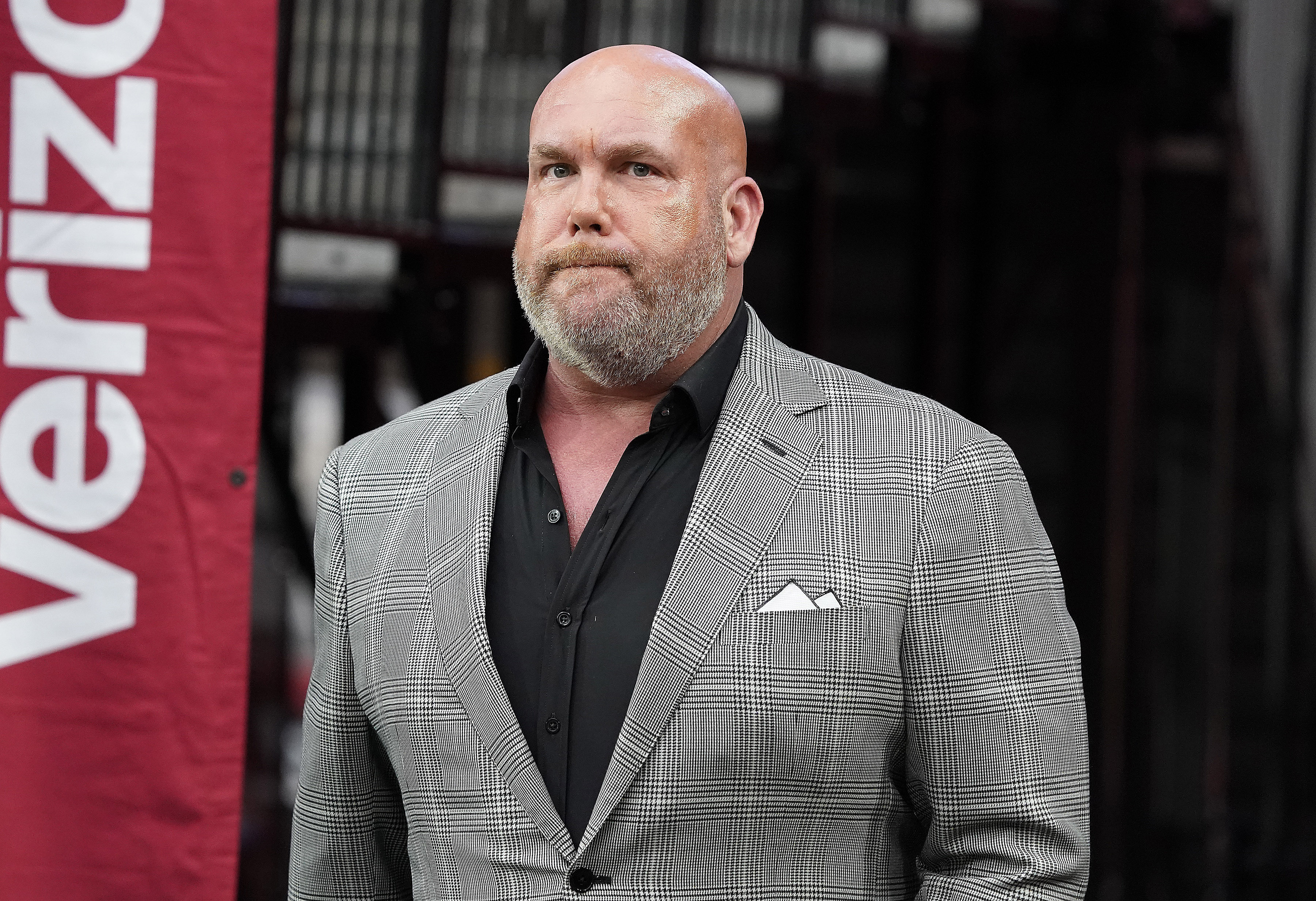
Former Arizona Cardinals General Manager Steve Keim says he was just as much of victim of Mohammed Coulibaly’s alleged scam.Darryl Webb
It’s what got Steve Keim, former general manager of the Arizona Cardinals, into the business.
Keim said he met Coulibaly through mutual Eagles acquaintances and by August 2025 he had bought his first Shopify store, which was recording sales at a pace that had him on track totriple his investment over six months. Keim bought into six more stores the following month, he said. His son and ex-wife would also buy into the business for at least a $1 million investment between all three.
Keim said he was soon offered the role of chief operating officer/chief growth officer, which he now sees as a way for Coulibaly to “legitimize his business.”
“I introduced him to people to sell stores to and that sort of thing,” said Keim, who describes fulfilling a figurehead role with no decision-making power. “He called me the COO but he also made promises to give me health insurance and to have some kind of bonus structure.”
The health insurance, bonuses, and exorbitant returns never materialized. Keim said he never had access to bank records and was never made aware of how many people gave money to Motion Venture. But by the start of the year, Keim claims, a flood of disgruntled investors were asking him for help getting their money back. Around this time, Keim said, he asked Coulibaly to stop using his name in promotional materials and told him he no longer wanted to be COO.
Keim contended he was as much of a victim as anyone else, holding onto hope that he could recover his money until Coulibaly’s death.
“This went downhill fast,” he said. “Not only did I get my name drug through the mud, I lost a lot of money since I was an investor.”
A Dubai deal
As more investors were demanding access to their Shopify funds in the fall, Coulibaly was telling them that the Dubai firm Middle East Venture Partners was interested in buying the operation for $215 million.
All they had to do was reach 175 online stores and meet other benchmarks by Aug. 1.
To back his claim Coulibaly produced a letter of intent dated Aug. 14, 2024.
Troubling for investors: The letter was dated more than a month before the company was registered in Pennsylvania.
The discrepancy was the biggest red flag for Barry Minkow, a convicted fraudster who now investigates scams on behalf of fraud victims. He started poking around the company at the start of the year for an investor who had put up $150,000.
“So here you are looking at a private equity company saying they’re going to buy up this company that doesn’t even exist for $200 million?” Minkow said in disbelief.
Middle East Venture Partners did not respond to an email to asking if a relationship existed with Coulibaly’s Vent Motion LLC.
With the permission of three of the alleged victims, Minkow submitted a 23-page whistleblower report to the U.S. Securities and Exchange Commission, FBI, and Pennsylvania Department of Banking and Securities. The report laid out victim accounts and flagged glaring issues with Motion Venture’s business model.
Minkow warned regulators in February thatintervention was essential to “halt ongoing solicitations, trace misallocated funds,” and stressed the importance of doing so “before the scheme inflicts further, irreparable harm.”
Minkow would prove to be right. Motion Venture was still actively recruiting new investors that month.
Picking up the pieces
Coulibaly’s college friend thinks he might have been one of the first victims of the Shopify sometime about three years ago. It involved less paperwork back then, more of a handshake deal. The friend put in $5,000 in a store with an investment protection promise in place, he said. Unlike that time in college, however, the friend only got half his money back.
The friendship with Coulibaly cooled after that.
“People just keep on saying he scammed NFL players,” said Coulibaly’s college friend. “No, anybody with money could be scammed, no matter how small.”
Coulibaly would insist money issues were the Dubai firm’s fault until his death, according to his alleged victims who shared screenshots and voice memos of conversations.
He ricocheted from distraught, lamenting the financial ruin that awaited him if he did not acquire more investors, to defiant, celebrating the Philadelphia 76ers’ LeBron James trade on X as he dodged investors.
When Keim and another investor flew into Philadelphia to meet with Coulibaly in late July, they spent a day and a half trying to figure out how much money was left, to no avail.
It was around that time that Coulibaly was soliciting the New York man for the $75,000 loan.
Coulibaly’s last post on X was a reshare a day before his death. “Trying to be everyone’s friend is a foolish behavior,” it read.
Whether any investor money remains is unclear. A now-defunct GoFundMe page put together by a man claiming to be Coulibaly’s brother raised more than $12,000 for the body’s “international transportation arrangements.”
Investors are also trying to figure out what legal recourse they might have, if any.
Coulibaly’s death has shattered any last remaining hope some victims had that a Dubai firm was to blame for cash-flow issues, and they are now seeking legal help.
It also left them feeling cheated one last time.
Staff writer Ryan W. Briggs contributed to this article.
The 60-foot-by-100-foot plot on her Cape May property boasts about 200 varieties of native plants, which she estimates have drawn roughly 135 wildlife species. Monarch butterflies, hummingbirds, cardinals, gray catbirds, moths, and a host of other creatures suck nectar from her flowers and drink water from the small waterfall that flows into a pond.
Once she even saw a black-billed cuckoo, a rarity in Cape May.
“During spring and fall migration, millions of birds fly through Cape May County, and every blade of vegetation is critically important for them when they need to stop for food,” Rettig said.
Rettig owns Cape NativeScapes in Cape May. After a 30-year career in the U.S. Fish and Wildlife Service, she is sharing her knowledge and passion for managing wildlife habitats by helping clients create native gardens.
Virginia Rettig photographs a bush of bee balm and Eastern swamp milkweed outside her home.Vernon Ogrodnek / For The Inquirer
She’s found plenty of customers who live at the Shore and want to help — not hinder — native species with their own landscaping choices. Nearly 80% of self-identified gardeners incorporate native plants into their outdoor spaces, according to gardening consumer research organization Simple Spring. And over a third dedicate a quarter to half of their garden to local flora.
“People love nature and are itching for good information and support so they can provide these habitats for wildlife,” Rettig said.
Areas once covered by native vegetation have been lost to development, replaced by ornamental landscapes, manicured lawns, and invasive species.
But this increasingly popular practice of replenishing native plants serves the environment, birds, and wildlife, while growing roots to hold off erosion and conserve water.
Types of plants at the Shore
Native plants adapt well at the Shore where the conditions include wind, sandy soil, and salt spray, said Andrew Bunting, vice president of horticulture for the Pennsylvania Horticulture Society.
Popular varieties include native grasses, such as American beachgrass, coastal panicgrass, and little bluestem varieties, which have a steely blue-green color in the summer and a coppery red hue in the fall.
Butterfly milkweed, a favorite of monarch butterflies, blooms in Rettig’s garden.Vernon Ogrodnek / For The Inquirer
“Butterfly weed is one of the most iconic of all the pollinator plants,” Bunting said. It “has vibrant orange flowers and is especially a magnet for the monarch butterfly, which is a threatened species.”
It’s important to have perennial varieties that bloom at different times in the season to consistently provide nourishment to wildlife, Bunting said. For example, early spring might include a beach plum shrub, butterfly milkweed in midseason, and goldenrod late in the season.
Native species are very hearty, need full sun, and require little care once established. They need to be watered when first planted, but once they take hold, rainwater is usually sufficient. Native plants can be mixed with non-native varieties as long as they have similar sun and water requirements.
Attracting wildlife
Pat Sutton, a working naturalist since 1977 for the Cape May Point State Park, and then the New Jersey Audubon’s Cape May Bird Observatory, hopes education will encourage more people to move toward native gardens.
“There has been a lot of focus for too many years on instant gratification — pretty things that are forced to be in bloom well before nature intends,” Sutton said. “The focus on native plants is a focus on making sure wildlife can persist.”
A bumblebee pollinates a bush of wild bergamot in Rettig’s garden.Vernon Ogrodnek / For The Inquirer
Sutton’s website includes resources for native plants that attract birds and insects. For example, the coral honeysuckle vine and southern arrowwood shrub are especially attractive to moths when laying their eggs.
Along with her husband, Clay, Sutton transformed her property into a wildlife habitat containing 205 native plants, including perennials, native trees, shrubs, vines, grasses, and ferns. She has recorded as visitors 213 bird species, 79 butterfly species, and 121 assorted other pollinators, including wasps, flies, bees, and beetles.
“When I step outside, it’s like going into a wilderness, and it’s just a tiny yard,” she said. “But that’s what’s possible for people who embrace gardening with native plants.”
Civic responsibility
Strathmere residents have made native plantings a priority in homes and public areas throughout town. Along with N.J. Fish & Wildlife and Upper Township, the Strathmere Improvement Association Native Plant Committee members have erected gardens at several beach entrances, in front of the Schiavo Library, and around the Welcome to Strathmere sign.
“We have a gem of a town and wanted to maximize the beauty of our beaches by cleaning up and planting at our entrances,” said Linda C. Bateman, a member of the committee that began planting gardens three years ago, adding a couple streets at a time.
Native plants, including goldenrod, milkweed, bayberry, elderberry, Virginia rose, and New Jersey-native wildflowers, are labeled to educate beachgoers. The committee has raised awareness by offering talks led by gardening experts, holds native plant sales, and presents garden awards to residents who have dedicated yard space to pollinator plants. The town is a designated monarch butterfly way station.
“Before development, there were areas across the barrier islands that were covered in low shrubs and small patches of forest,” said Chris Konicki, a Strathmere resident who is heading up the Maritime Forest Project with Peter Manzelmann from Belleplain State Forest.
Their goal is to reintroduce native species that are indigenous to the area. Tree species such as eastern red cedar, American holly, black cherry, sassafras, black gum, and pitch pine will be planted, along with shrubs including bayberry, wax myrtle, beach plum, and Virginia rose. Small trees will feature winged sumac, a non-poisonous native species.
A bumblebee pollinates a bush of Eastern swamp milkweed in Rettig’s garden.Vernon Ogrodnek / For The Inquirer
“It’s an ongoing project that will slowly evolve over time and highlight some historical species that are no longer common in Strathmere and the surrounding islands,” Konicki said.
These initiatives are important, Bateman said, as the native gardens do much more than just beautify and unify the beach entrances. Bees, butterflies, moths, and other insects are drawn to them. Wildlife including bats, frogs, songbirds, red wing blackbird, and finches, will feed on the insects.
“We used to have fireflies in town, we used to have frogs trying to jump into our garage, and our windshields used to be covered in bugs,” Bateman said. “Where are they all? Clean air and clean water are not just human needs.”
Descendants from one of the oldest families of Lawnside, the Stills, met for their annual gathering on Sunday. And this one was particularly special.
Nearly 200 people attended the family reunion in a tradition that began in 1870.
And it happens that this year coincides with Lawnside celebrating 100 years of being the first Black self-governing municipality with roots dating back to the 18th century.
After Lawnside was established, it became a cultural hub. Its churches, jazz scene, nightclubs, shops, and other gathering spaces attracted visitors from across the region.
It’s also best known as a stop on the Underground Railroad.
Lawnside is celebrating through various ways including a centennial celebration with various events, sermons at the second-oldest A.M.E. church in the state, and history lessons.
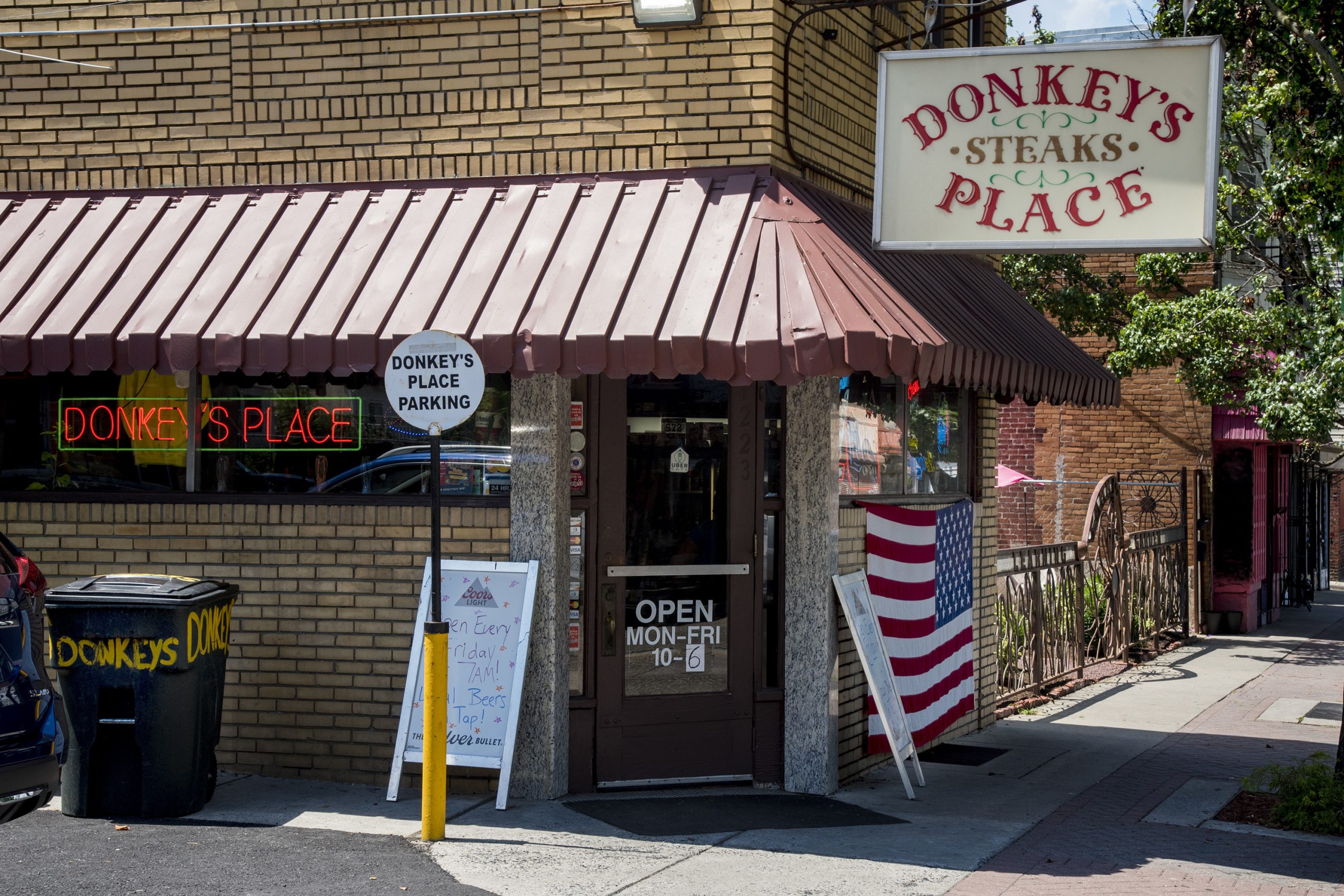
Since 1943, Donkey’s Place in Camden has a been point of pride for South Jersey.
Donkey’s cheesesteak — donned with fried onions and American cheese on a poppy seed kaiser roll — is legendary. Chef Anthony Bourdain stopped by for his Parts Unknown show in 2015 and gushed with praise, such as calling it “sublime” and “unbelievably good.”
Founded by Olympic boxer Leon “Donkey” Lucas nearly 80 years ago, it’s still family-owned and is run by Rob Lucas Jr., the third-generation owner and grandson of Leon.
Plus: New Jersey Gov. Mikie Sherrill recently posted about Donkey’s and said it has better cheesesteaks than the “millions” she’s tried in Philadelphia.
What to know today
AG Davenport announced on Friday that her office’s civil rights division is investigating the operation of the Delaney Hall ICE facility in Newark after multiple detainees died at the detention center.
According to the New York Times, the person behind the botched renovation of the Lincoln Memorial Reflecting Pool in Washington is the manager at President Donald Trump’s golf club in Bedminster.
A man was fatally shot after an hours-long standoff with police in a home in Millville on Thursday, according to the New Jersey Attorney General’s Office. There is an ongoing investigation.
Celebrated South Jersey teacher, singer, and poet of Cherry Hill Betty J. Wilson died of cancer at 92 at her home. The longtime educator was a two-time president of the Mount Laurel Teachers Association and taught elementary school students in Bordentown, Bridgeton, and Mount Laurel.
Two South Jersey towns were targeted in a nationwide cyberattack on local water agencies. Officials of Cape May and Woodbine confirmed they were hacked on July 27.Officials say both systems were impacted for about 12 hours, but water never stopped running and remained safe to consume. Both also said no personal data or customer information were compromised.
The $220 million project to restore the Commodore Barry Bridge which links Delaware and Gloucester Counties is underway. It’s also causing traffic jams this summer with one lane open in each direction from 7 p.m. to 5 a.m., as well as residual morning delays.
🧠Trivia time
Adam Weiner is the front man of the rock and soul band, Low Cut Connie.
A sunny Friday afternoon at Cooper River Park in Pennsauken.Taylor Allen
I didn’t stay out too long because of the heat last week, but it was still worth it to get a chance to be outside and sit near the water.
What does your community look like? What South Jersey memory would you like to share? Submit a photo and/or a brief description for a chance to be featured in the Monday edition of this newsletter.
New Jersey Gov. Mikie Sherrill made a bold statement on a social media post last week.
“The best cheesesteaks actually aren’t in Philly,” she said. “They’re right here in Jersey, and we’re about to go have one.”
She was talking, of course, about Donkey’s Place — the Camden cheesesteak staple that has long been a point of pride for South Jersey.
Founded in 1943 by Olympic boxer Leon “Donkey” Lucas, Donkey’s earned its name from Lucas’ hard-hitting fists. “They said he had a punch like the kick of a donkey,” says Rob Lucas Jr., the third-generation owner of Donkey’s Place after his father, Bob, and grandfather Leon.
Donkey’s has long been a favorite of locals and foodies in the know — Anthony Bourdain stopped by for his show in 2015.
Lucas sources the rolls from Del Buono’s Bakery in Haddon Heights. Customers old and new cite it as a secret to the sandwich’s success.
“I like it a lot,” says Bryan Neill, a real estate developer from Jenkintown who — after getting out of work from Moorestown early — decided to make the commute to Donkey’s for the first time. “You know, I don’t like too much bread. It’s a very thin roll. You get some flavor with the bread and the poppies, but a lot more focus on the meat and the onions.”
John Lynch, a warehouse owner from Maple Shade, who has been coming to Donkey’s for roughly 25 years, agrees. “His rolls are the best. Most rolls get soft and break apart — not these. You can eat a whole sandwich and the roll never deteriorates. It’s such a difference.”
The seeded roll has had some detractors — in a 2002 profile of Donkey’s in The Inquirer, food writer Rick Nichols noted that some “customers who are on probation worry the [poppy] seeds will taint their urine tests.”
So why a seeded roll? Lucas has a theory. “I think they put the poppy seeds on so it wouldn’t slide out of your hands when you were trying to eat it, to give it a little traction,” he said. “It’s just so much better. Hard on the outside, soft on the inside, and the poppy seeds really put it over the top.”