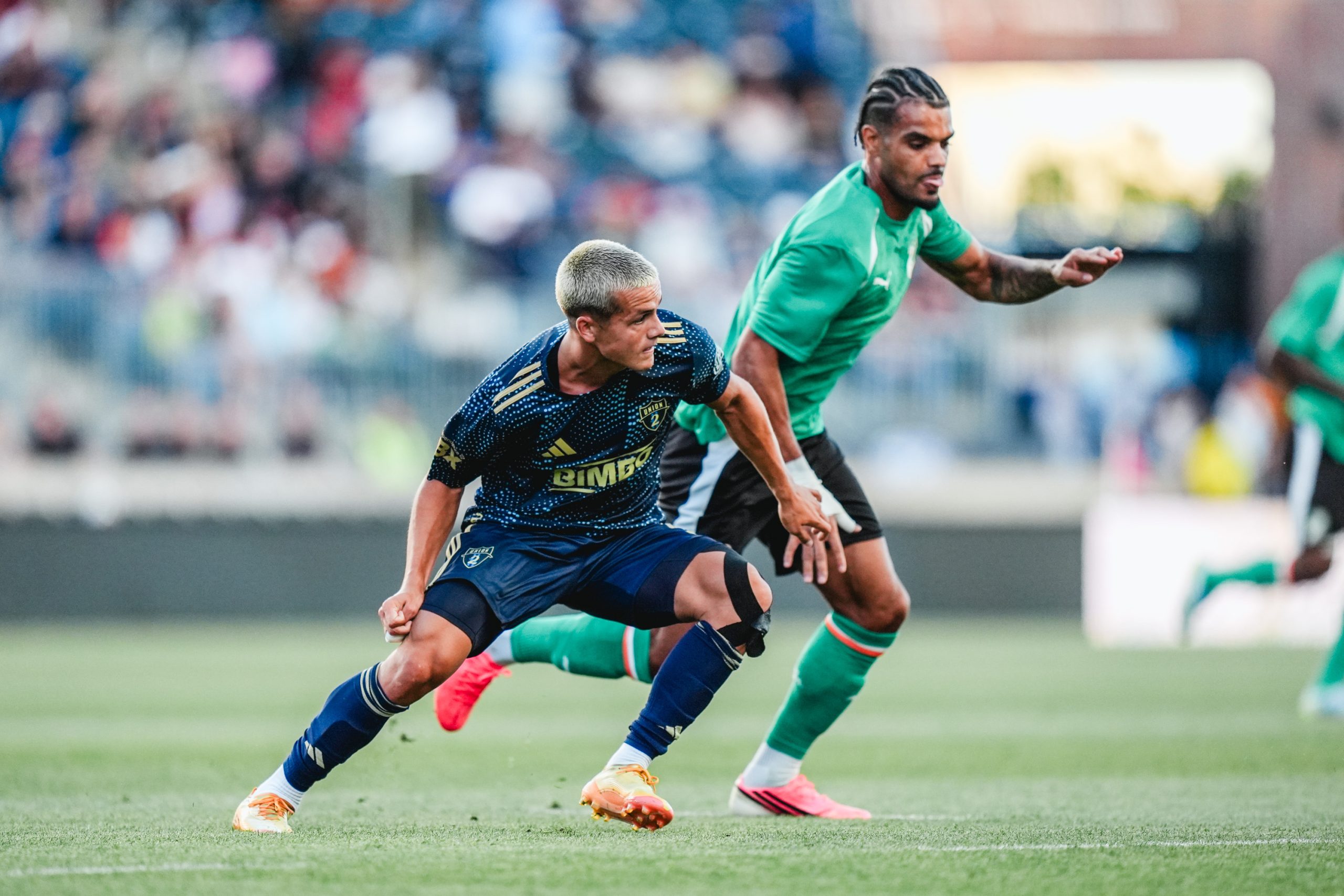
When the Union resume their season Wednesday night at Subaru Park against Red Bull New York (7:30 p.m., Apple TV), the spotlight should be on two stories: the many young American prospects who will be on the field, and interim manager Ryan Richter’s debut on the first team bench.
For now, though, those items are overshadowed by a potential upheaval of the team’s defense.
Key centerback Olwethu Makhanya hasn’t returned to the team yet after going to the World Cup with South Africa. Multiple sources have told The Inquirer that it’s a personal matter, but there seems to be more to it.
The Union received an offer from Belgium’s Genk of around $4 million, and there’s been interest (though apparently not a formal offer yet) from Scotland’s Rangers. The sources also signaled there was an agreement of some kind that the club would sell him if an offer came.
But there were different portrayals of how ironclad that agreement was, and whether the Union could hold firm on demanding a presumably higher fee.
Unsurprisingly, Makhanya isn’t happy about the situation, as the Athletic first reported Monday morning. There’s been plenty of communication between his side and the Union front office, but it isn’t clear right now when he’ll be back on the field.
What is clear is that Richter will be without one of his best defenders for his first game in charge, and possibly more than that.
“I worked with Olwethu when he first joined the club, and we have a good personal relationship,” he said. “But right now, his situation, he’s away from the club for personal reasons, and I think we’re going to leave it like that for now with him.”
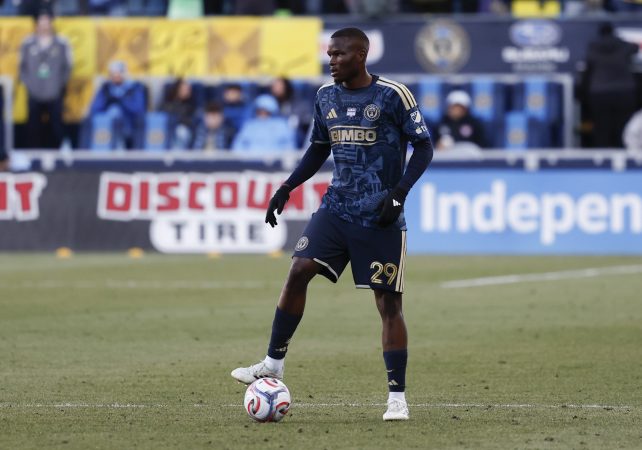
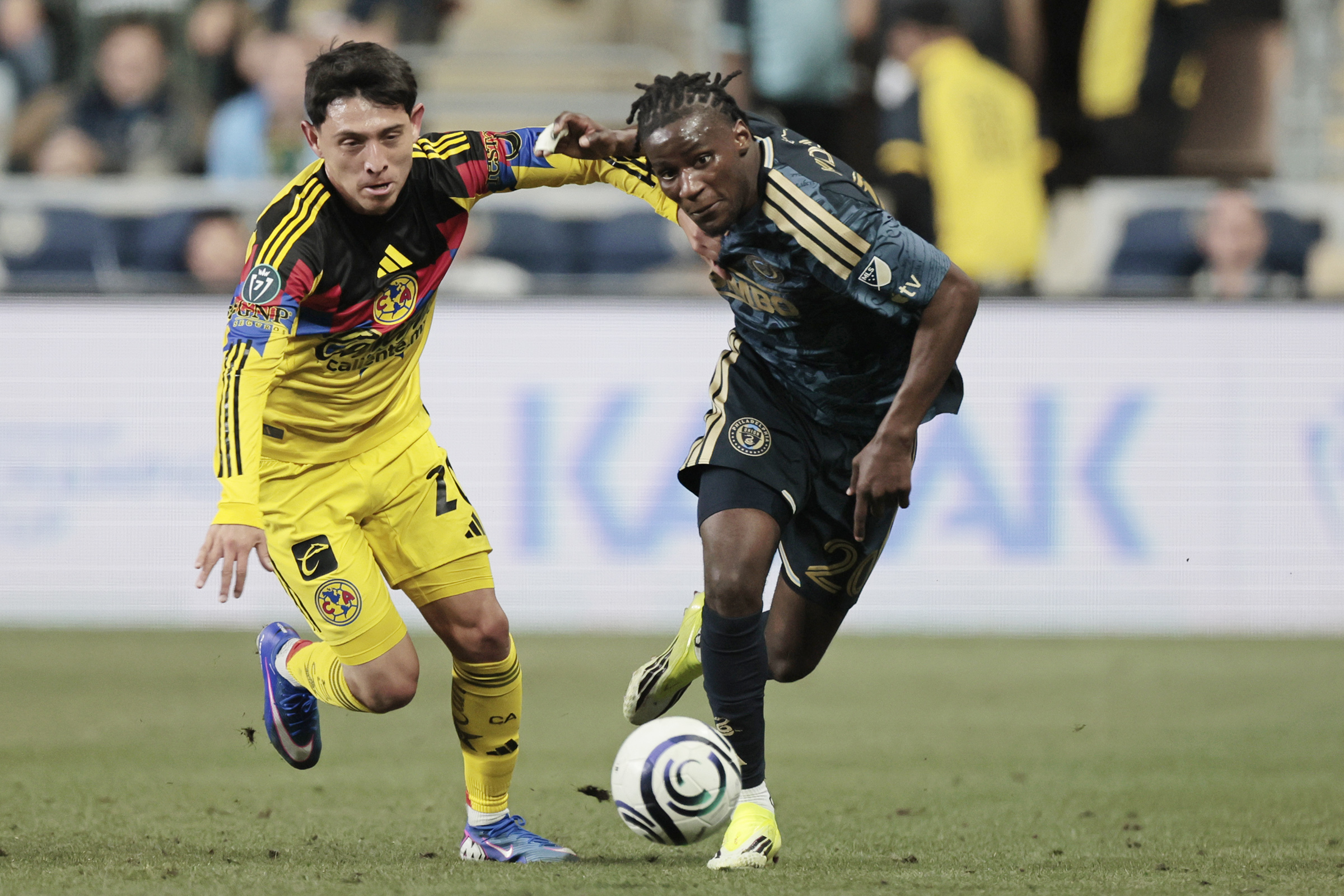
Makhanya’s departure isn’t the only one on the table. A source who knows confirmed a report by the Courier of Dundee, Scotland, that the Union are in talks with Scottish Premiership club Dundee United to loan outside back Philippe Ndinga there for the European season that starts July 31.
Philippe Ndinga (right) hasn’t lived up to expectations so far.Elizabeth Robertson / Staff Photographer
If the move gets done and Ndinga doesn’t play again for the Union before it, the player who was supposed to be Kai Wagner’s successor will leave with eight games played, four starts, and 310 minutes on the field. It will be hard to see that as anything other than a punt.
When Scheer met with the media over the weekend, he tried to not portray it that way. But in the end, he couldn’t quite keep his cards hidden.
“He’s a young player, he’s got a lot of athletic tools,” Scheer said. “We need more production from the left fullback spot. But it doesn’t mean that Philippe doesn’t have talent and a skill set that he can offer ourselves, or any other club.”
The good news for Wednesday is that Wagner is expected to be ready to play his first game back with the Union.
Kai Wagner is ready to get back at it with the Union.Yong Kim / Staff Photographer
“He’s fit, he’s ready to play, and it’s not only Kai and the fans that want him out there — it’s the coaching staff and it’s his teammates that also want him out there,” Richter said. “We [will] see exactly how he is for the 90 minutes in the match, but he’s in a really good spot, and I think he’s ready. And I don’t know if he would let me keep him out from this game.”
Quinn Sullivan might also be ready for his first game minutes since tearing an ACL last September.
“It’s not going to be that he’s just available 90 minutes from the start, but he will be available for the match,” Richter said.
The bench might also include Neil Pierre, the promising 18-year-old centerback who spent the first six months of this year on loan at Danish club Lyngby — part-owned by the Union. He’s been dealing with an injury that Richter called “something that’s minor,” but the indication was that Pierre should be available.
By the standards of hospitality, enthusiasm, atmosphere, and drama, the 2026 World Cup was a smashing success throughout the United States. Anyone who was at or in the vicinity of Lincoln Financial Field for any of the six matches there picked up on the magnitude of the event for the 48 participating teams, their fans, and the tournament’s other host cities. As meaningful as it is to cheer on a team from your hometown or home state, that power can’t compare to being invested in a club that represents your home country.
Now, in the aftermath of Spain’s 1-0 extra-time victory Sunday over Argentina in the championship match, come the inevitable questions: Will this World Cup help soccer gain a greater foothold (no pun intended) in the U.S.? Will it inspire the sport’s leaders here to improve the grass-roots training and development of coaches and players? Will it allow soccer to penetrate the bubble of conversation among casual sports fans in the way that the NFL and, to a lesser extent, Major League Baseball, the NBA, and (once every two years) the Olympics have? Will talk-show hosts start ranting about it? Will certain markets become true hotbeds for Major League Soccer? Late June through mid-July is a relative dead zone in the major-sports calendar here; will people tune in when they have other, more traditional options?
It’s certainly possible that soccer is finally having its moment in the United States and that its popularity, as women’s basketball’s has in the last several years, will soon surge. But there’s a reason to doubt that it will, or at least a reason to think it will struggle to attract and keep fans, and the reason is about as basic as it gets.
Flopping.
Yes, criticizing soccer players for embellishing injuries lapsed into cliché long ago. The thing about clichés, though, is that they tend to be true, and the cold reality is that flopping’s place in soccer makes the sport less attractive to those who don’t already love it. For all the cracking down that FIFA has done on flopping, a player who bounces up immediately after being taken down on a slide tackle is less likely to draw a foul than one who writhes on the ground as if his opponent had just gone full Kathy Bates-in-Misery on him. Fouls lead to free kicks and set plays, and free kicks and set plays sometimes lead to goals, so any semblance of contact often leads to the kind of overacting that only Nicolas Cage could appreciate. The potential payoff of flopping incentivizes players to do it.
“When it is beneficial,” a 2016 study published in Frontiers of Psychology concluded, “soccer players can and do successfully feign injury to stop the game. Consequently it is possible that others might also successfully feign injury, pain or disease when motivated to do so.”
This aspect of soccer’s culture cuts against one of the strongest attractions people have toward sports: They are witnessing, and want to witness, athletes display physical courage. (It’s worth noting, lest anyone lapse into any insulting gender stereotypes, that female soccer players flop far less often than their male counterparts.) Pelé called soccer “the beautiful game,” and the sport’s experts and aficionados fall back on that phrase often, and it can apply. As evidence, go watch a replay of the gorgeous header pass from Nico Williams that set up Ferran Torres’ World Cup-winning goal. But it’s rare that a soccer team earns praise for its toughness or grit, for the factor that so many fans of football, hockey, and other sports prize in their players.
The quarterback who hangs in the pocket to deliver a deep downfield strike … the wide receiver who goes over the middle to catch that pass … the Conn Smythe Trophy winner who can’t lift the Stanley Cup because he separated his shoulder three weeks earlier … the guard who slashes into the paint and takes an elbow to his or her face from a center 6 inches taller and 40 pounds heavier … the tired starting pitcher who still wants the ball in the eighth inning … the figure skater who risks tumbling to the ice for the sake of a triple Salchow — competition is more compelling and the athletes more admired for these qualities and circumstances. Look at the backlash around the NBA against the Oklahoma City Thunder’s foul-hunting style of play, consider Carli Lloyd’s criticism of Christian Pulisic, and you understand the collective-action problem that soccer has to overcome before it will be fully embraced here.
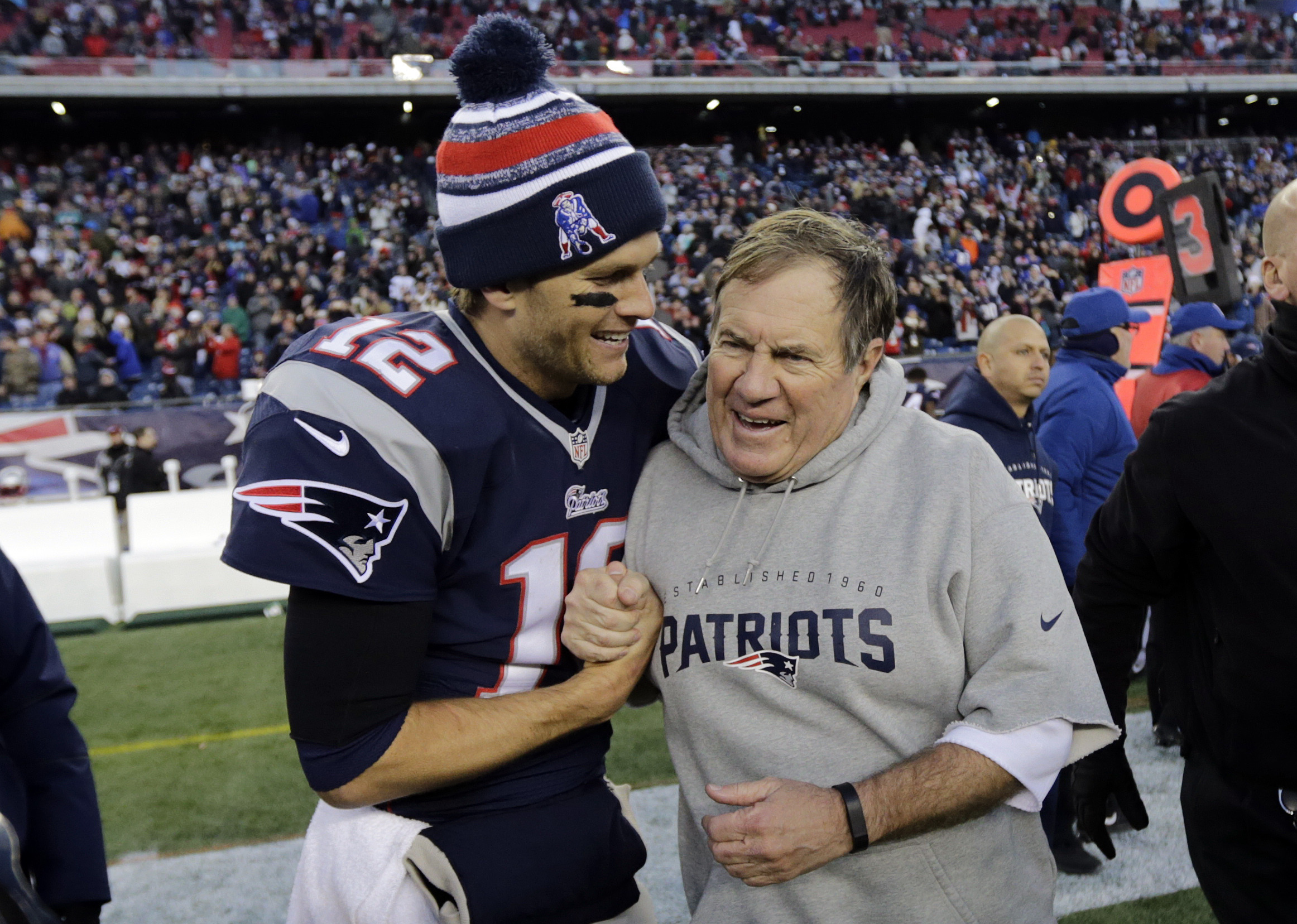
Tom Brady and Bill Belichick have become embarrassing. Charles Krupa
Grow up, GOATs
One is fiddling around with pro wrestling publicity stunts. The other has been fiddling around with a romantic partner 49 years his junior. All this time, everyone thought that Tom Brady and Bill Belichick’s greatest achievement was the six Super Bowls they won together. Turns out, their greatest achievement was that each apparently kept the other from falling into a humiliating midlife crisis.
Domo delivers
Shoutout to longtime Daily News/Inquirer scribe Paul Domowitch, whose new book, Just Give Me a Chance to Fail: The Life of NFL Hall of Fame Linebacker Sam Mills, hits stores next week. If it’s anything like the rest of Domo’s football journalism, the book will be smart, thorough, and impossible to put down.
As we speak, the last of FIFA’s traveling caravan has packed up, ready to move onto its next stop, while leaving American fans looking at the soccer landscape in this country, wondering why, with the wealth of raw athleticism we have here, couldn’t one of those two teams in Sunday’s final have been us?
Good news. Historically speaking, every World Cup spawns change. Bad news? When it comes to soccer, the United States has been historically bad at making the changes needed to make a stir. In 2026, emerging from the group stage shouldn’t be a hope — it should be the norm.
The change needed to push American soccer forward is not an easy fix. OK, well, it is, but it requires a dedicated strategy and a collective belief that development, not greed, needs to be at the forefront.
That investment begins at the grassroots level and comes in two main tiers: Investing heavily in identification and developing raw, untapped talent.
The other? Educating parents that there’s more to the game than striving to make the top club team in your area.
You could add a third — offering greater exposure to the game — but that topic sits on its own almost entirely when you consider the level of gatekeeping that exists, from broadcasting contracts going to cable and streaming services to the outrageous price points of tickets.
Cavan Sullivan (left) is an example of the type of player the U.S. could produce behind a deeper focus on development. Philadelphia Union
It already is in some states, like here, in what the Union is doing with youth development that spawns real American hopefuls (see: Cavan Sullivan). Undoubtedly, that last sentence ruffled a few feathers among the club soccer community.
If that’s the case from where you’re standing, well, therein lies the problem.
Recent history has shown that’s not always going to arrive via a traditional club model where parents are overspending, because at the starting-out level, they honestly don’t know any better. It’s not saying the model is all that ails when it comes to development, just that it can no longer be widely considered as a preeminent pathway for children as young as 5.
U.S. Soccer recognizes this. Just last week, it noted that in the aftermath of the national team’s round of 16 exit, it’s “trying to create a new system that then we’d make highly affordable. It’s a bold strategy that comes with a ton of roadblocks. The current model is not just fully ingrained into how we develop talent, but it makes a lot of people really rich off kids with a dream and parents with deep pockets.
But what would an argument be without a solution? Here are two.
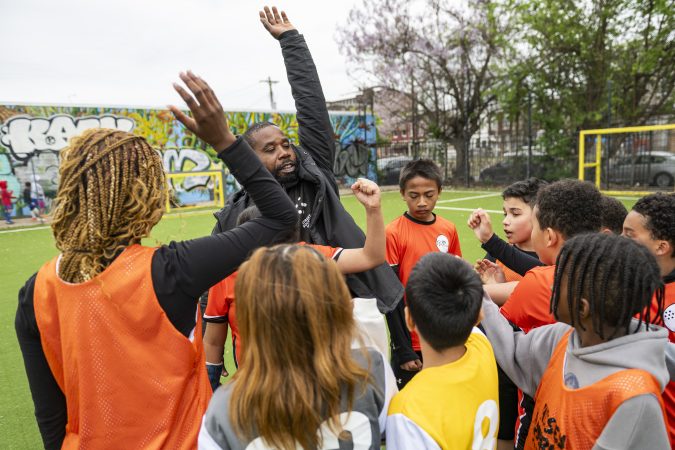
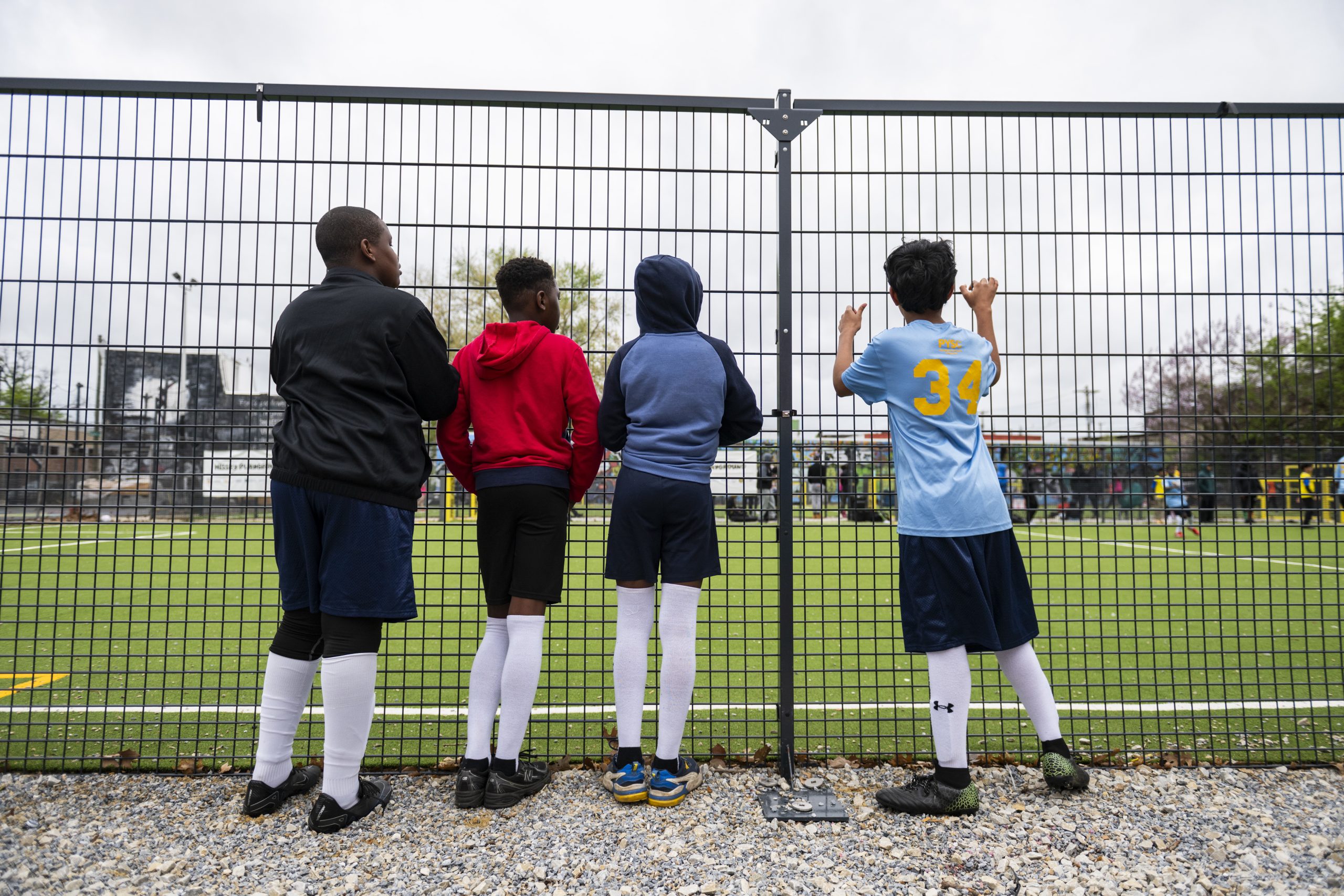
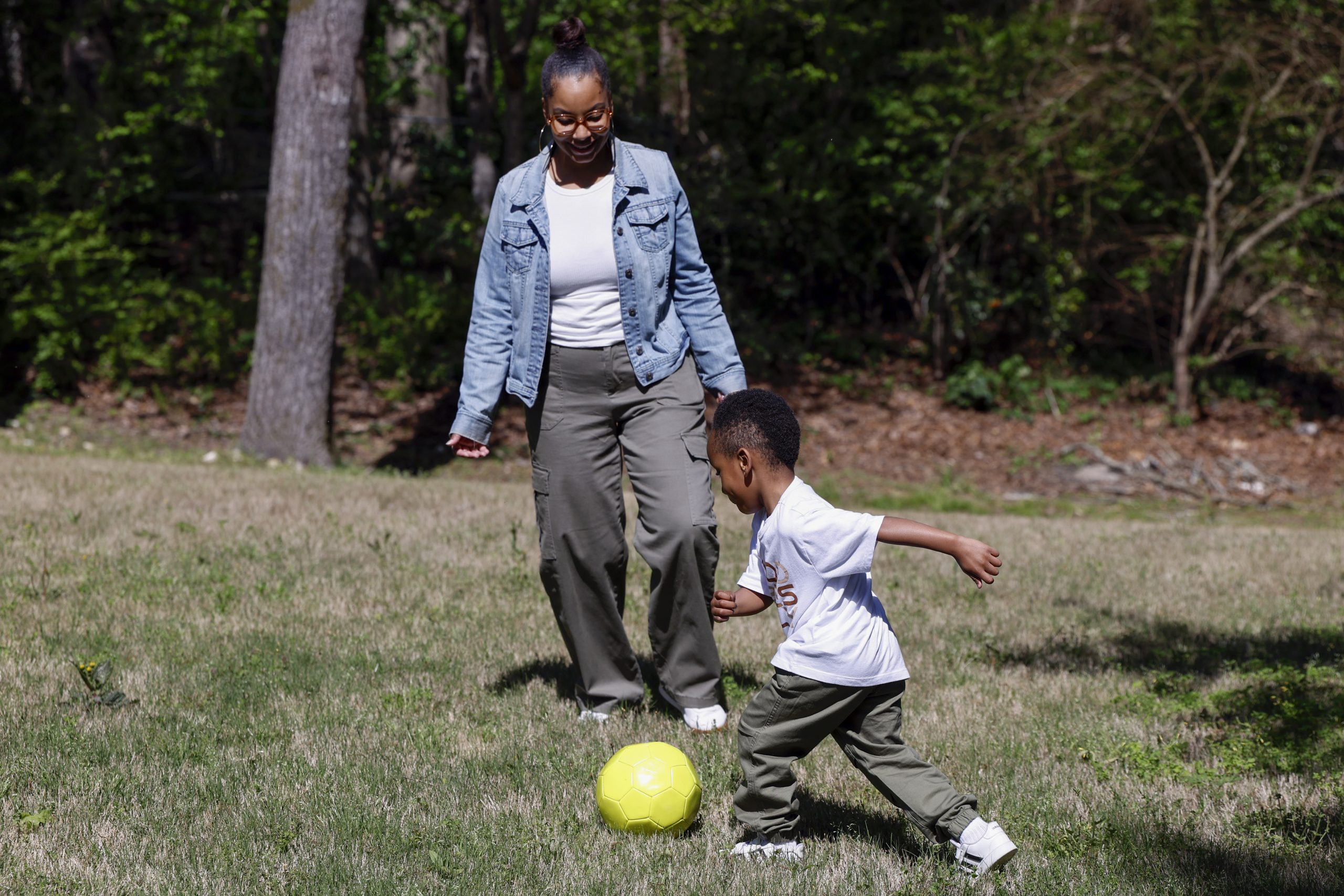
Giving kids an opportunity to ignite a passion for soccer starts with making sure there are ample, unlocked places to play.Allie Ippolito / For The Inquirer
First, foster excitement by putting the game everywhere. Start with a focus on inner cities and rural communities. Loosen the restrictions on accessibility, price, and most importantly, the gates of locked-up ballfields that kids could be playing on.
Second? Put some skin in the game.
Imagine pouring financial resources into underserved neighborhoods. You’ve built the fields, now get kids playing on them. How about a series of cash prize tournaments at multiple age ranges and skill abilities?
Organizers receive winnings under the demand that a substantial amount of the proceeds is used to create more opportunities to foster interest. In turn, U.S. Soccer and the academies of Major League Soccer teams plant scouts at these events to find the raw talent and develop them.
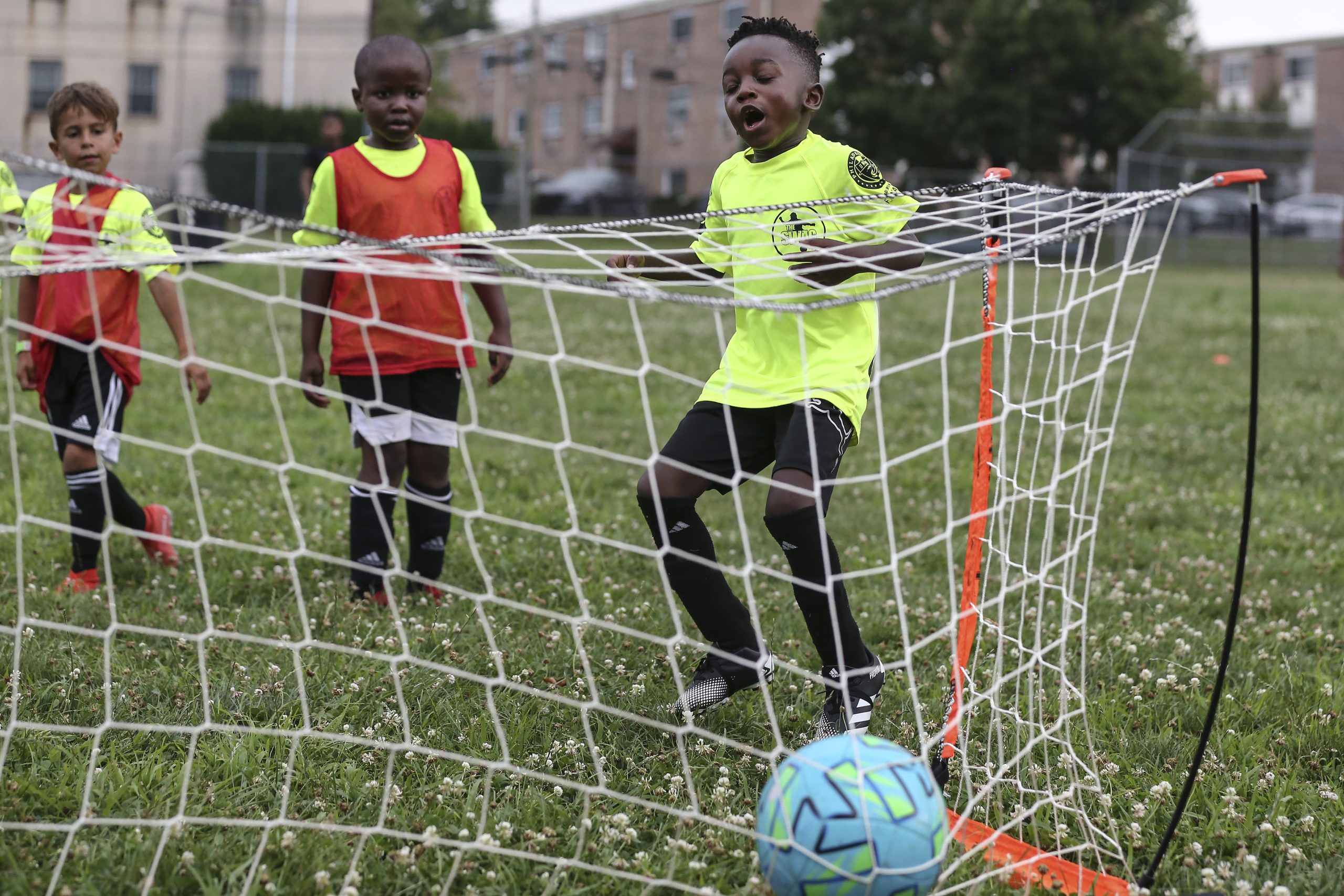
Started in 2018, the Philadelphia Union’s SWAG program offers underserved kids the opportunity to learn the game, and for the ones that show promise, get placed on a developmental path to pro track. STEVEN M. FALK / Staff Photographer
Some of that is already happening. In 2018, the Union created the SWAG program, going into schools, finding kids, developing them from the age of five, and grooming them to be on a professional pathway. It’s the kind of pipeline that city-based organizations like Kensington Soccer Club and Capitolo Soccer AC Fairhill, Street Soccer USA and many more are at the ready to be, and are already finding diamonds in the rough all along the way.
The problem is, as it stands, not enough people in power when it comes to the game care to look.
The parent trap
Listen, at the end of the day, you don’t know what you don’t know.
According to figures from Project Play, a study created by the Aspen Institute, youth sports is a $40 billion a year business, with youth soccer a sizable chunk of that equation.
The reason why there’s so much money to be made? Here’s a big one: uninformed parents.
At a certain level, there is this real fear of missing out from parents when it comes to their kids’ trajectory. The FOMO isn’t in every case, but here’s how it typically works when it comes to soccer in America. It starts innocently, a parent signing a child up for in-house soccer, where you discover, and it’s affirmed by a coach and others, that your kid has real talent.
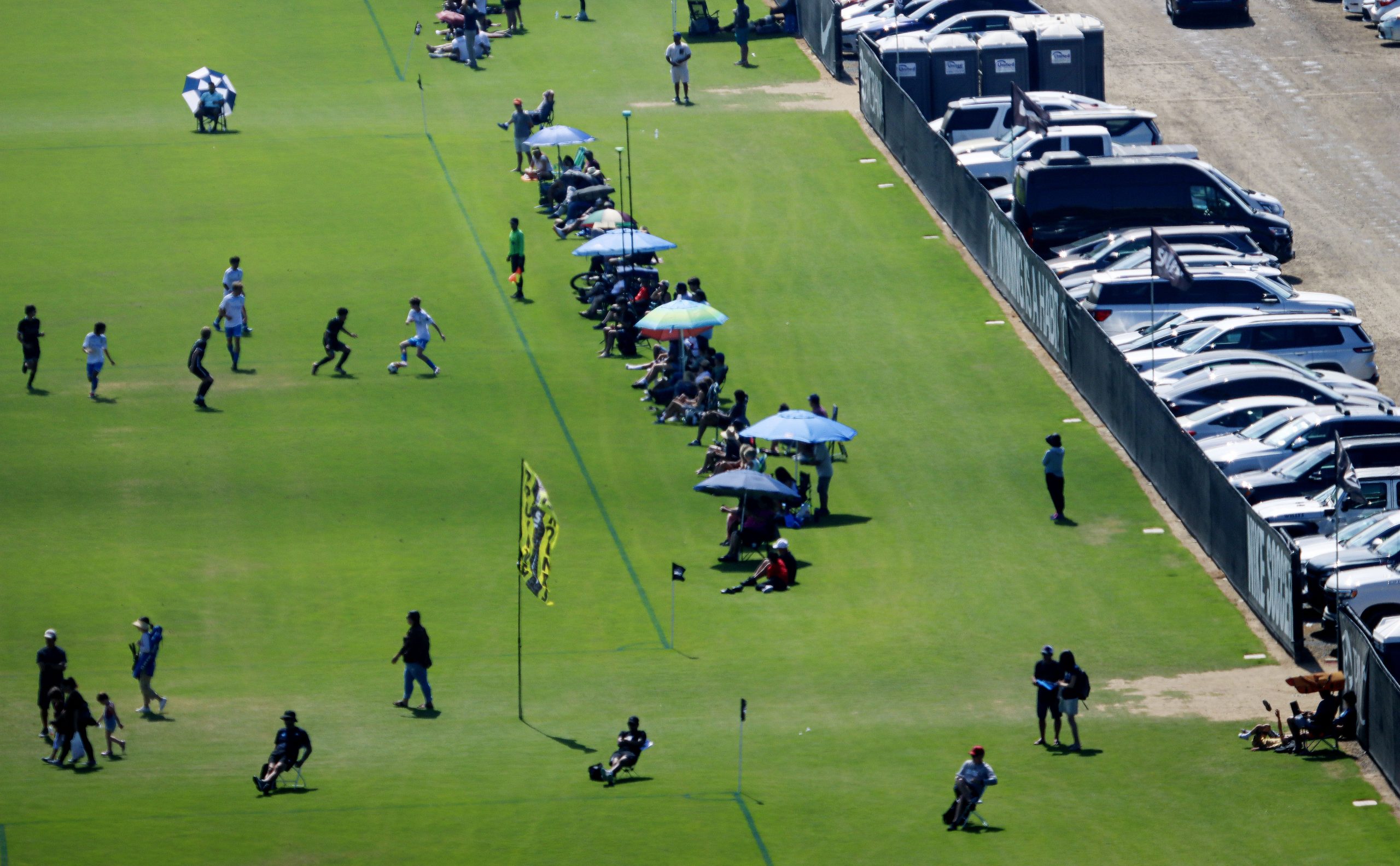
Parents typically spend hundreds on top of committing multiple days of their family’s time to youth soccer tournaments all over the country. Sandy Huffaker
But instead of offering programs to develop that talent and get that child acclimated to the sport at a young age through actual development at a continued low cost, parents are coerced into believing that their child would fit seamlessly on a travel club team. One that competes year-round, practices 2-3 times a week, and plays games and tournaments on the weekend.
And then there’s the time cost. Traveling back and forth between states, sometimes to play the same team from the next town over from your club in a tournament.
If you’re a soccer parent, undoubtedly, you’re nodding your head as it probably sounds like your trajectory in youth soccer to date.
Suppose the solace comes in that you’re not alone?
For many parents, looking for the best place for their child to play the sport at a top level comes at a high cost. Butch Dill
And then there are the buzzwords. “Select.” “Premier.” “A-Squad.” All of these focus not on developing kids into the talent needed to put the U.S. in the best position to win a World Cup, but instead compile the best kids to help that club win across multiple age groups. They’re also words that make parents salivate, spending money they believe will deliver their child to greatness.
Or at least, that team that everyone is talking about.
At the end of the day, parents want to provide what they believe is the best opportunity for their child. Some don’t know what that looks like in soccer.
Can’t fault that. The real fault is in the subsequent exploitation of this ideology by organizations charging thousands for a child to have said opportunity.
Parents in these same circles have revealed that for kids as young as nine and 10 years old, their club won’t even look at kids who don’t already come in with a certain level of skill. Ask yourself: If the mindset has to be about development, how is that mentality not a perceived problem?
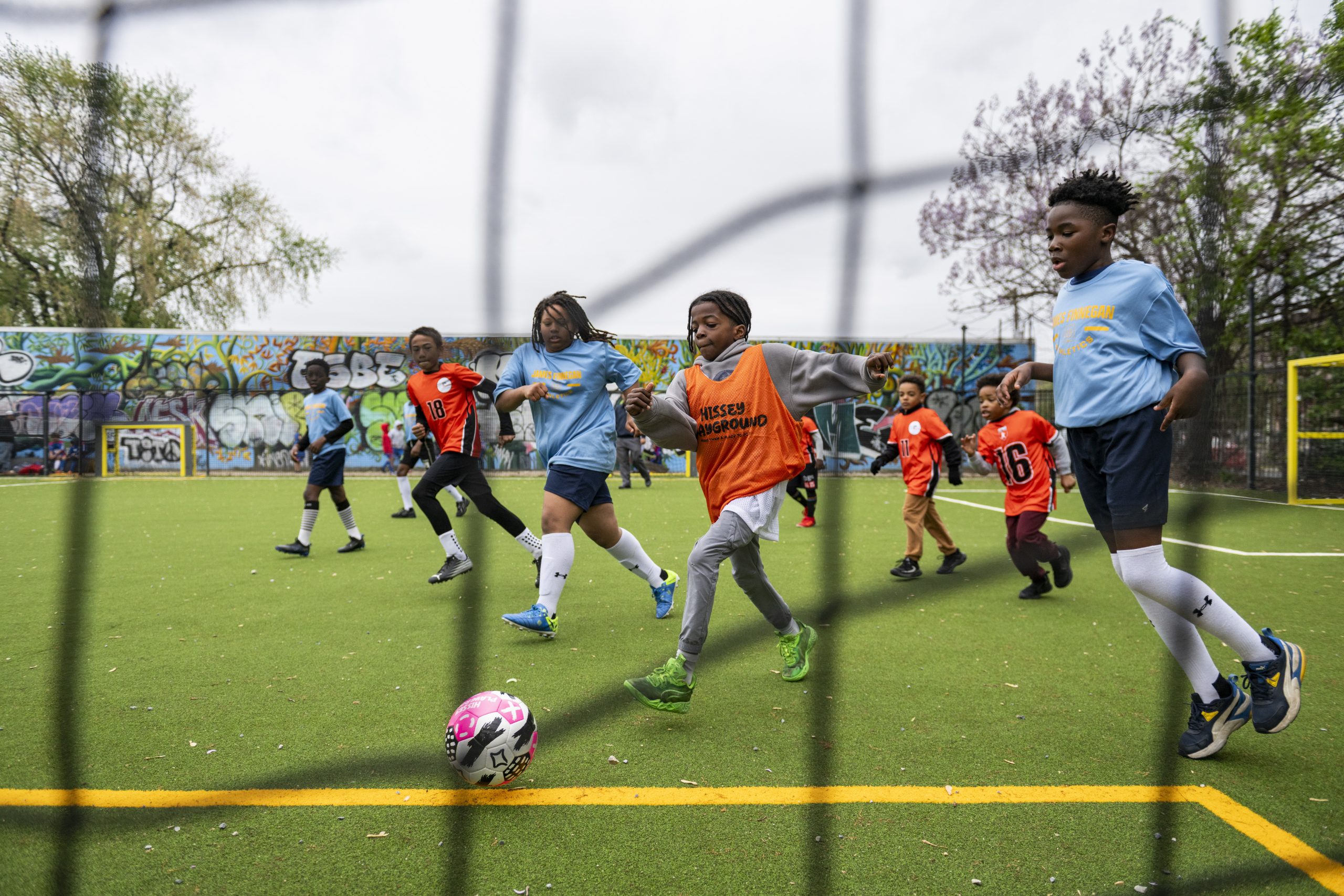
Kids play in Kensington Soccer Club’s Love Street League program at Hissey Playground in Kensington.Allie Ippolito / For The Inquirer
So, of course, that begs the question: “Who pays, then?” Well, there are plenty of youth systems around the world with strategies that give youth soccer in America a fantastic roadmap. Anyone tuning in to Sunday’s final was treated to a great page to start reading if you look at what Spain has been able to do on almost every level over the last 10 years, right up through yesterday.
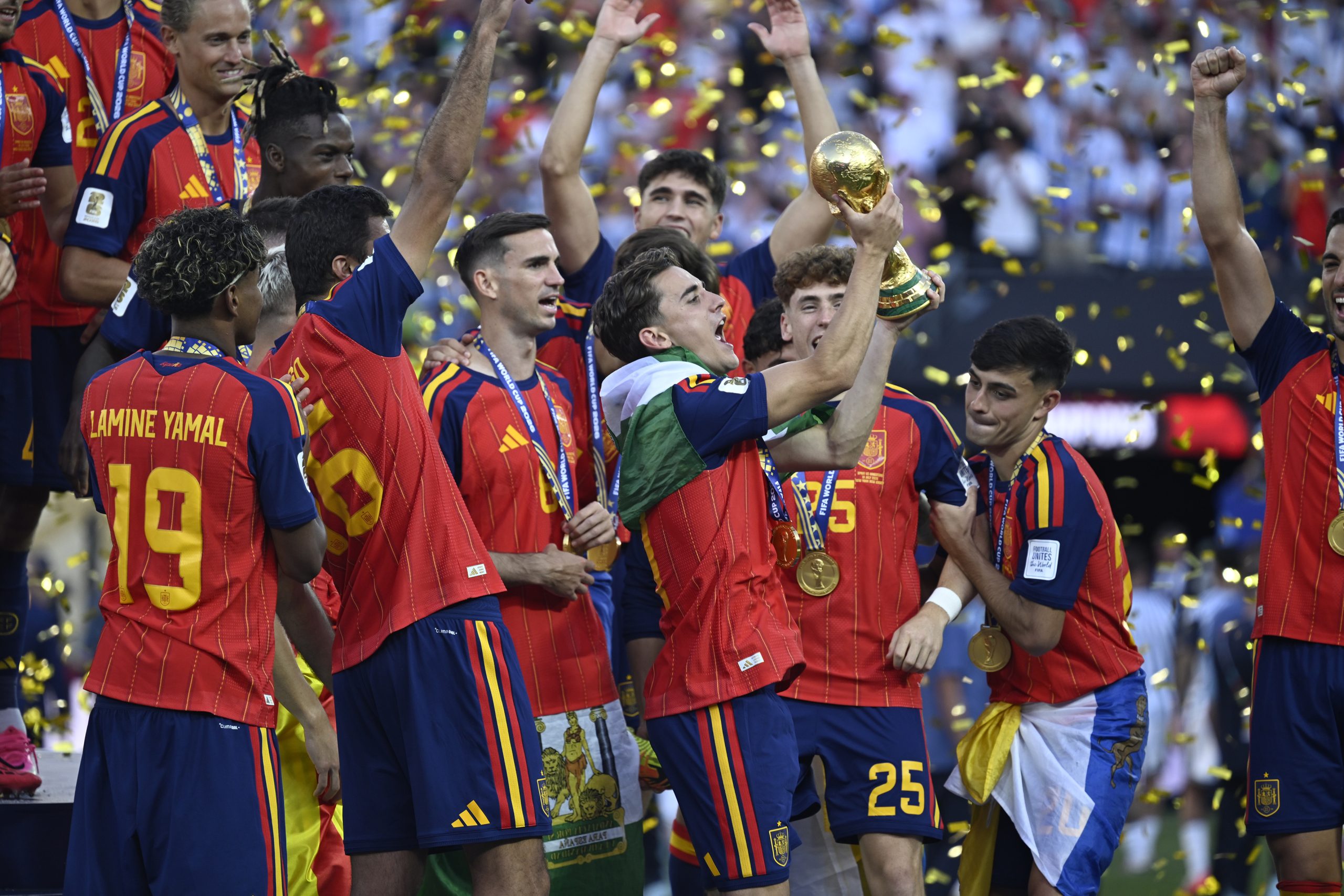
Two World Cup titles in less than 20 years. A European title. The only nation where both the men’s and women’s teams are defending world champions. If the goal is to crack the code on how to produce players who can go far in a quest to chase a World Cup trophy, maybe start there.
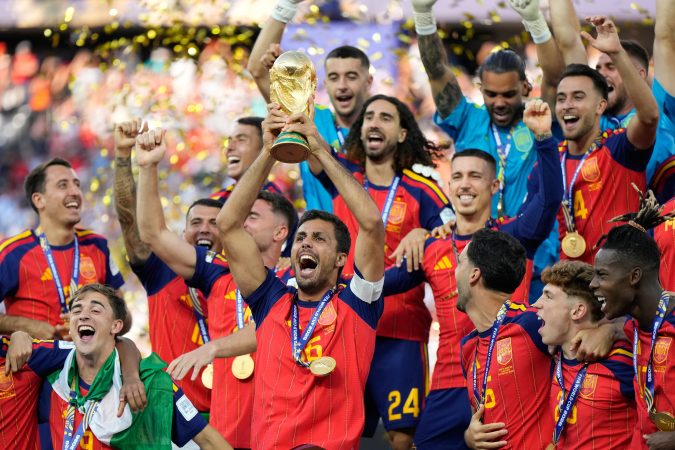
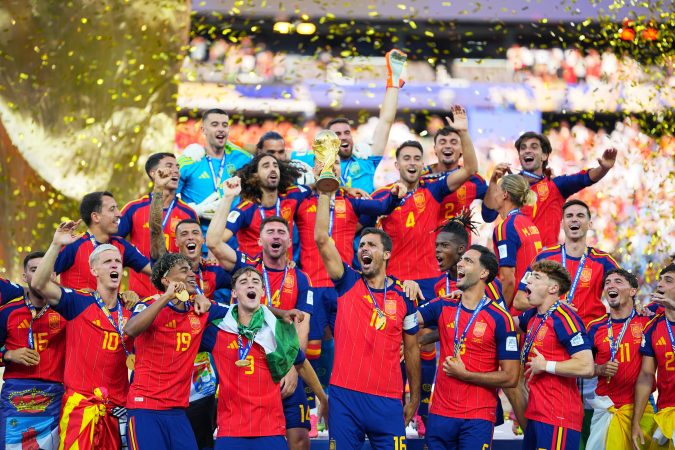
Spain’s Gavi (9) holds up the FIFA World Cup trophy as Spanish players celebrate after winning the World Cup final against Argentina in East Rutherford, N.J., on Sunday.VINCENT ALBAN
As it stands today, club soccer in America serves a purpose. It’s a great conduit for exposure. It offers youth players a firsthand look at the rigors of competition at a very young age. It teaches teamwork and being dedicated to a collective mission.
But it’s not about development. If it were, parents wouldn’t need to consider paying even more for privatized training or skill development camps and clinics. And now, the notion is growing that private equity sees ways in which it can get involved in the gambit. If there isn’t more of a fight to make sure that the status quo doesn’t become the legacy of this World Cup, history looks pretty bound to repeat itself in four years.
EAST RUTHERFORD, N.J. — At the start of this World Cup, Spain was one of the biggest favorites to win it all. And in the end, it was the team that deservedly won the title.
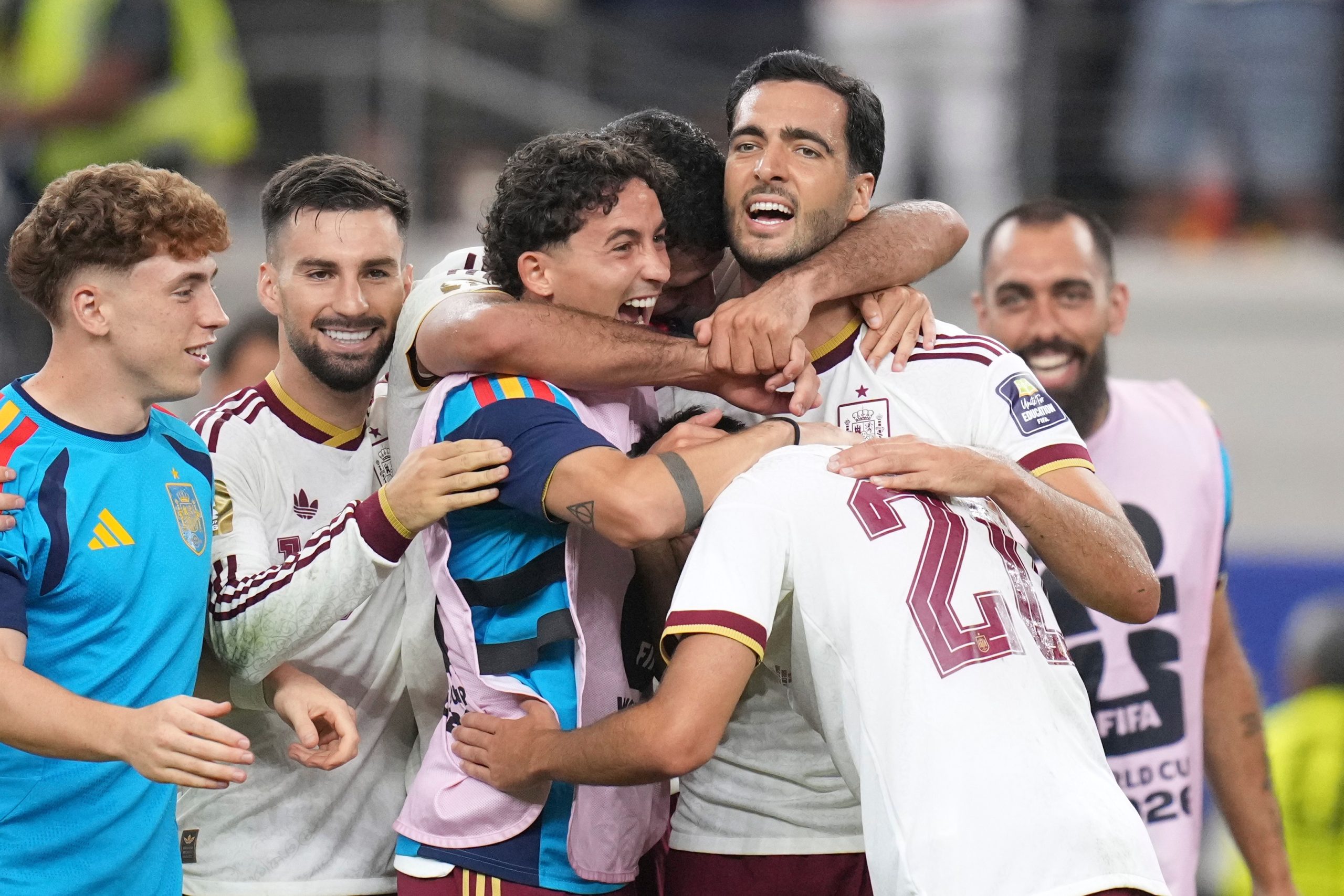
Spain’s second-half substitute Ferran Torres’ scored in the 106th-minute goal to fuel a 1-0 victory over Argentina. La Roja dethroned the reigning champions with a 20-2 advantage in shots over Lionel Messi’s side.
It was Spain’s second men’s World Cup title in a brilliant era from 2008 to now, which also includes three European championships and a UEFA Nations League title. The country is also the first to hold the men’s and women’s World Cup crowns at the same time, thanks to the women’s team’s triumph in 2023.
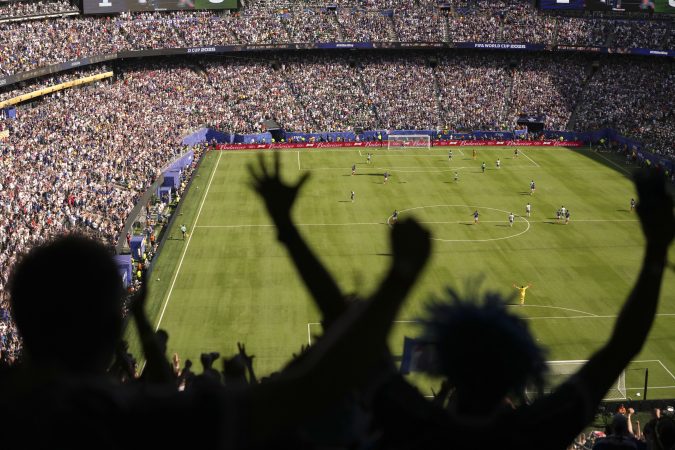
A sellout crowd of 80,663 was on hand in the Meadowlands — though with quite a few empty seats in the lower deck — and heaven knows what they paid to be there. Projections of $14 billion in revenue from this summer rose to $15 billion, the Guardian reported, with fans paying a lot of the bill.
FIFA was no doubt also happy with the 11-page list of “VVIPs and Celebrities,” spanning Spain’s reigning King Felipe VI and its prime minister, Pedro Sánchez. Argentina’s president Javier Milei didn’t attend out of superstition, putting his fandom ahead of his friendship with President Donald Trump, who emerged to a chorus of boos during the trophy presentation.
Madonna, Anna Wintour, Brad Pitt, Tom Cruise, and Mick Jagger alongside halftime show performers Shakira and Justin Bieber were also some of the names in attendance.
From the sports world? How about soccer legends Ronaldo, Zinedine Zidane (who will soon be France’s manager), and Roberto Baggio; current U.S. women’s stars Rose Lavelle and Alyssa Thompson; the Eagles’ Saquon Barkley and the Chiefs’ Patrick Mahomes; a pile of basketball players led by Victor Wembanyama, Jalen Brunson, and Union part-owner Kevin Durant; Olympians Ilia Malinin and Mikaela Shiffrin; and tennis’ Carlos Alcaraz.
They might even have watched the game, and if they did, they got to see other stars. Lionel Messi, Julián Álvarez, and Enzo Fernández started for Argentina against Spain’s Lamine Yamal, Dani Olmo, and Rodri, the last of whom captured FIFA’s Golden Ball, given to the player of the tournament.
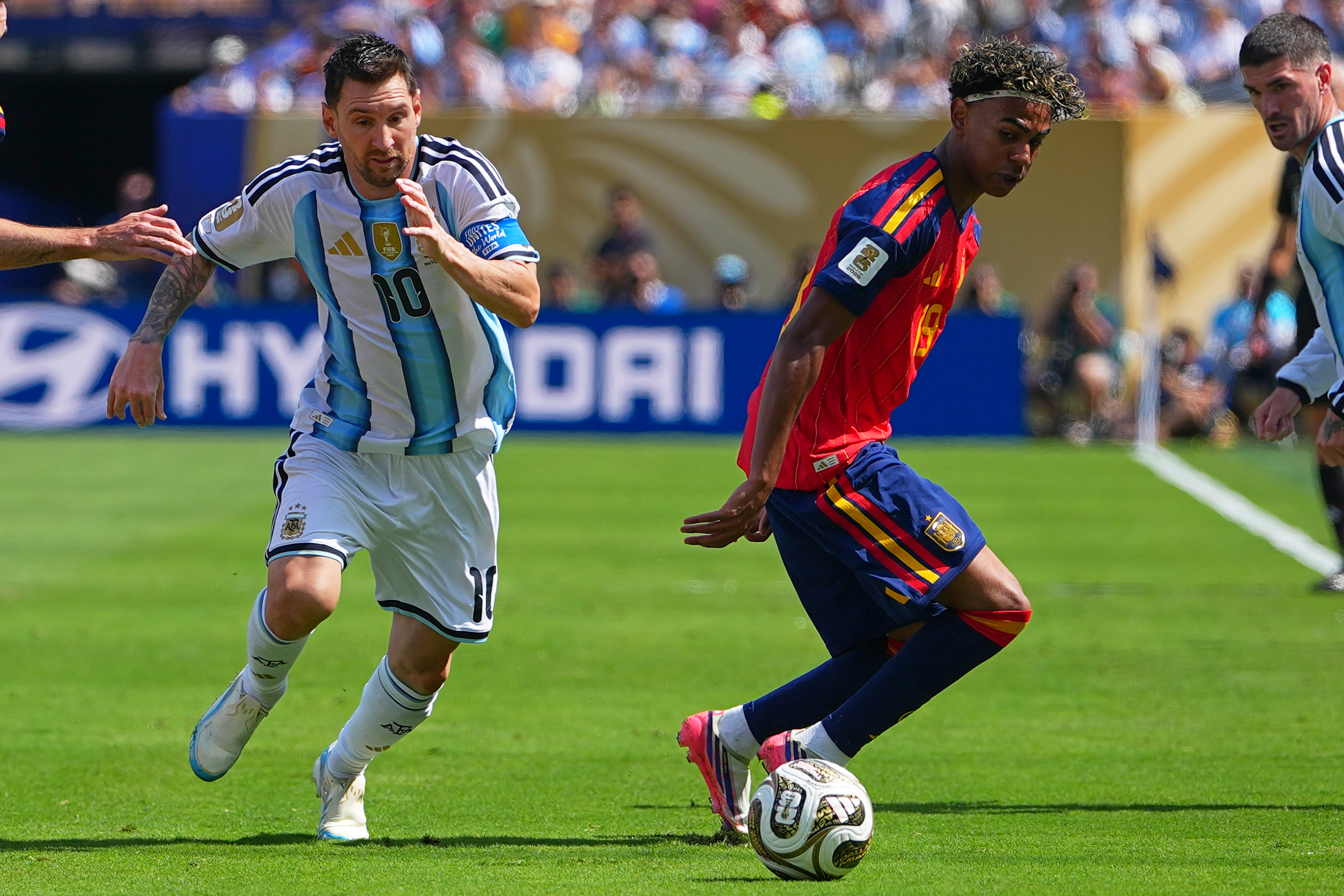
Lionel Messi (left) and Lamine Yamal battling for the ball during the first half.Julio Cortez
But while it was a superbly sunny, surprisingly breezy, and thankfully wildfire-smoke-free afternoon, there wasn’t much action to enjoy early on. Instead, there was the first scoreless half of a men’s World Cup final since 2014. Spain outshot Argentina 3-0, with Yamal forcing a save in the fifth minute and Marc Cucurella firing narrowly wide from 18 yards in the 43rd.
Perhaps that shouldn’t have been too surprising. Soccer finals are usually cagey, and on top of that Spain likes to win games by controlling them. Argentina, meanwhile, is often content to take its time and strike late. Messi’s renowned playing style exemplifies that: he often spends the first stretch of any game just walking, so he can watch how the opposing defense moves and find gaps in it.
The other end of the field was a different story. Along with Spain having the better of the play in the first half, Argentina centerback Lisandro Martínez had to leave the game injured in the 44th, not long after picking up the first of his team’s eight yellow cards. Nicolás Otamendi replaced him, and Spain might not have minded seeing the 38-year-old come in.
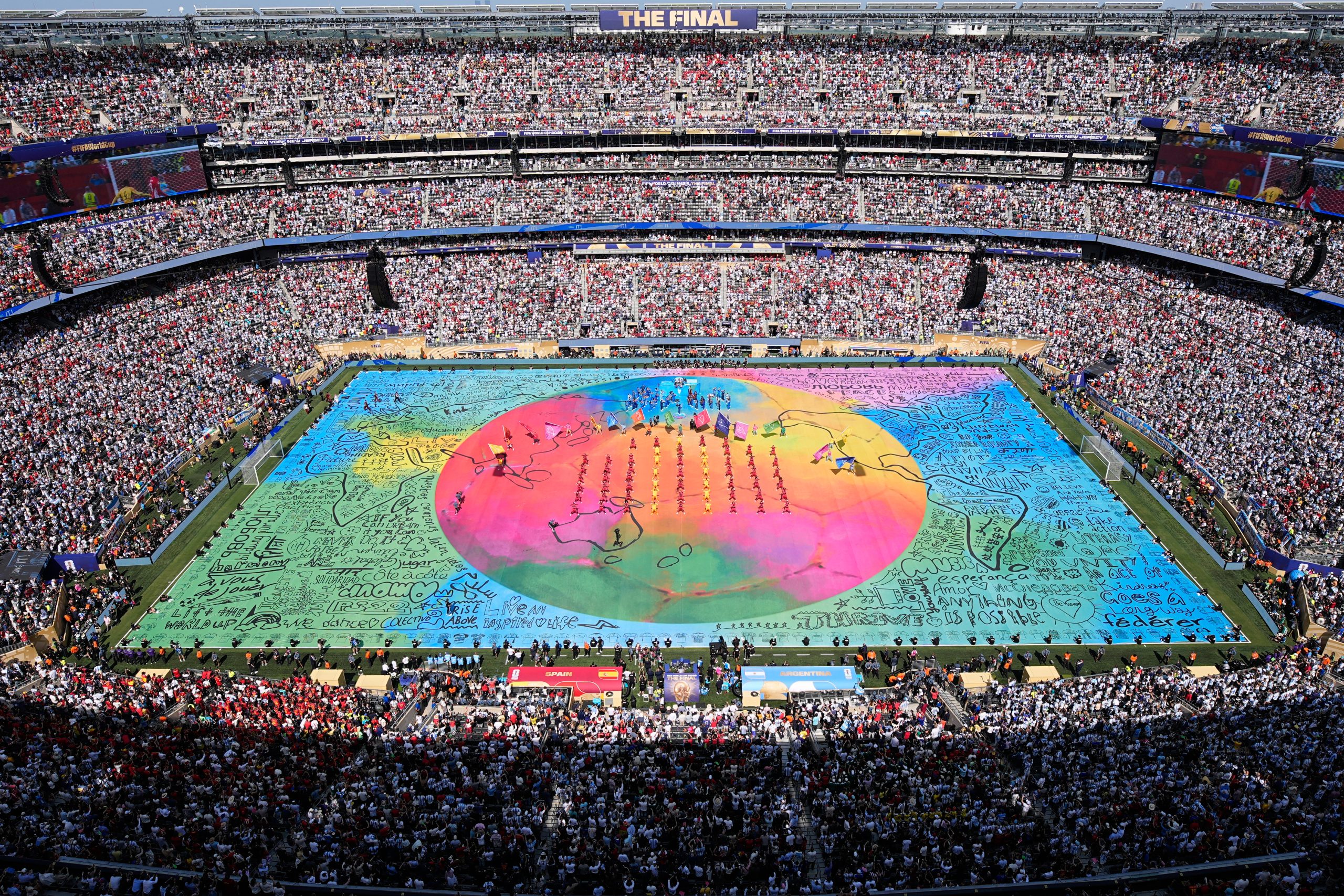
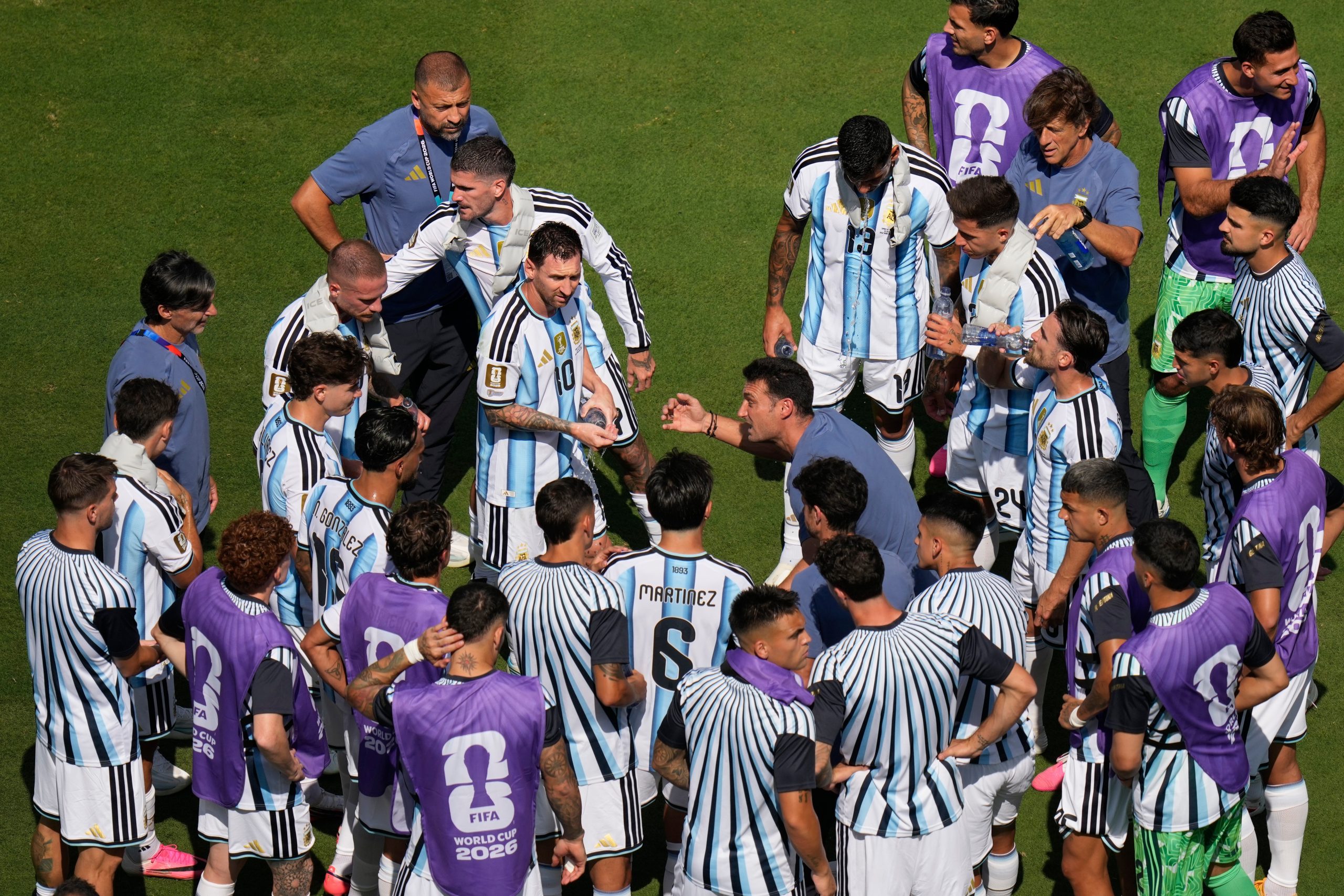
After the first halftime show concert in World Cup final history (which enough of the supposed American target audience didn’t like), Albiceleste manager Lionel Scaloni made another swap: Leandro Paredes for Nicolás González at left wing in their 4-4-2 setup.
There were quite a few empty seats in the stands during the World Cup halftime show.Matt Slocum
In the 58th, Scaloni made it three subs before his players had taken a shot by withdrawing right back and 2022 World Cup final hero Gonzalo Montiel for Nahuel Molina. Spain was starting to assert control by then, and four minutes later manager Luis de la Fuente upped the ante with a double-sub: Ferran Torres for Mikel Oyarzabal at striker and great playmaker Pedri for Fabián Ruiz in midfield.
Spain’s big cluster of red-clad fans behind one goal could sense the momentum, even more when Yamal split two defenders and crossed for Torres to head right at Emiliano Martínez.
Scaloni tried to bolster his side by sending defender Facundo Medina and midfielder Giuliano Simeone on for Cristian Romero and Rodrigo de Paul in the 70th. Those were his last subs in regulation, and Argentina still hadn’t recorded a shot. Meanwhile, a lot of firepower watched from the bench: midfielders Giovani Lo Celso, Nico Paz and Thiago Almada (formerly of Atlanta United), and especially striker Lautaro Martínez.
De la Fuente, meanwhile, countered in the 75th with two more attacking moves. Nico Williams replaced Álex Baena at left wing, and Mikel Merino replaced Olmo in attacking midfield.
Lamine Yamal creates a huge chance for Spain but the header is saved by Dibu 🧤 pic.twitter.com/RFH2QyUBoa
It took until the 92nd minute for Argentina to finally register an attempt, and it wasn’t even officially scored a shot. But Messi was on the ball for enough of the buildup that the stadium held its breath.
With everyone just about ready for extra time, the plot took a big twist. Fernández sent Pau Cubarsí flying into the air from a collision, and referee Slavko Vinčić quickly gave Fernández his second yellow card of the day. A red followed right afterward.
But there were still no goals when regulation ended, making this the fifth men’s World Cup final of the last eight to require bonus sessions. The only one to reach penalty kicks with no goals was the last one in this country, 1994 at the Rose Bowl.
Williams finally put the ball in the net in the 96th, which Spain fully deserved for its 15-0 lead in shots through 90 minutes. But the goal was ruled out for a foul in the buildup, and that was the right call.
Argentina manager Lionel Scaloni (center) had lots of words for his players, but he left a lot of attackers on the bench.Seth Wenig
Extra time grants each side an extra sub. Scaloni chose to use his not just to send in another defender, but to take off a striker: Álvarez for Marcos Senesi.
The goal finally came in the 106th, and it was perfectly executed. Right back Pedro Porro hit a cross over the crowded 18-yard box, Williams headed it down, and Torres slammed the loose ball in with all his might.
Everyone knew Spain deserved it, but Argentina wasn’t dead yet. In stoppage time of the extra time, officially the 122nd minute, Cubarsí had to scramble to clear a chance Messi and Simeone created. From the ensuing corner kick, Simeone shot over the bar.
The clock read 125:01 when the final whistle blew. Most importantly, the scoreboard read 1-0 with Spain as the winner.
WOULD YOU BELIEVE IT?! SPAIN TAKES THE LEAD IN EXTRA TIME 🇪🇸🤯
Philadelphia has beenflush with tourists flocking here for the World Cup and the nation’s 250th, patronizing local restaurants, bars, and stadiums.
And in the aftermath, bar owners are weighing the exact size of any World Cup sales boom, how it compares to an Eagles’ Super Bowl run, and whether Philadelphia truly is a 4 a.m. bar town as the state allowed some establishments to stay open later.
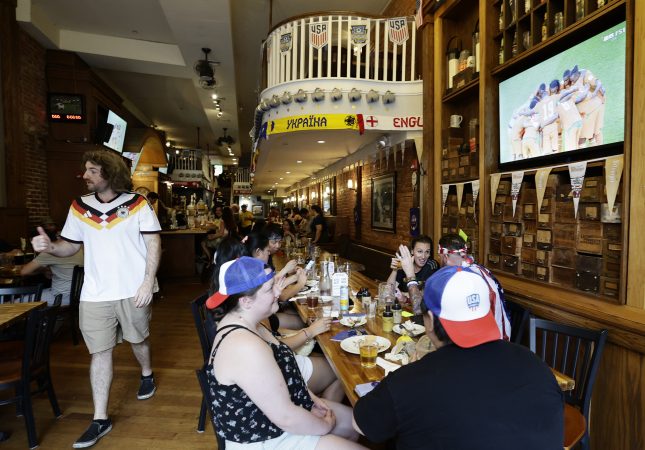
One thing is clear: If the bar had TVs playing World Cup games, it had a chance at cashing in on fans eager to experience the game with others.
Sports bars and tourism hot spots made out well
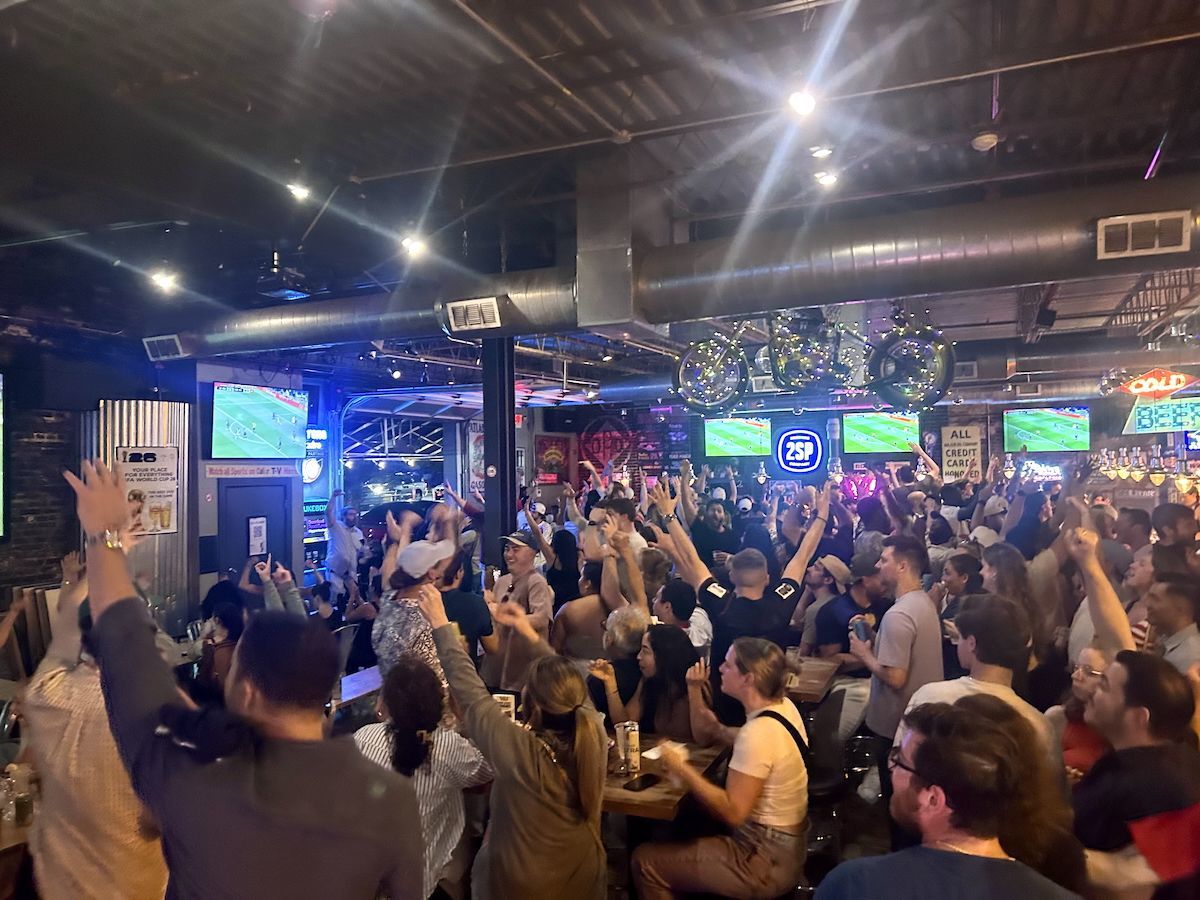
Jason Evenchik’s Garage bars in Fishtown, Passyunk, and Rittenhouse saw “a nice bump in sales” throughout the World Cup, driving business up 30% to 40%, he said. Evenchik said the TV bars fared better than usual during what’s typically a summertime lull — and much better than when World Cup games were being broadcast from Qatar in 2022.
Lucy’s Rittenhouse, a sports bar from FCM Hospitality’s Avram Hornik, also did well during the afternoon and evening games, especially when Team USA played, Hornik said. And it attracted patrons during its 2 a.m. to 4 a.m. shift, thanks to a Philadelphia 250 Permit, a temporary license that allows eligible bars to serve alcohol two hours past the city’s usual 2 a.m. closing time.
“I don’t think it could have gone better,” Hornik said. FCM also operates the Center City nightclub Concourse, the family-friendly taproom Craft Hall, and riverside deck Morgan’s Pier, among other bars.
“It was a mix of tourists. A lot of South Americans stayed out later because they’re used to places open late. Europeans we found like to camp out at a bar and stay for a while. There was also just a lot of Philadelphians who were happy to have some place to go and experience this moment,” Hornik said.
Even bars without TVs like the decades-old Fergie’s Pub, nestled smack dab in Center City’s bar scene, saw a tourism boom, said owner Fergie Carey, attracting tourists to its authentic Irish experience. Carey evendecided to open for the Fourth of July, when the bar usually closes, because there was so much foot traffic. But having no TVs can have repercussions.
“The most people I’ve ever seen leave our pub because there are no TVs was on the Fourth of July,” Carey quipped.
Evenchik and Hornik also saw lower engagement at some of their bars with little to no TVs or sports vibe, such as Evenchik’s Vintage wine bar, which he said suffered a 30% decline in sales during World Cup weeks. Hornik’s neighborhood restaurant and bars like Rosy’s Taco Bar or Harper’s Garden didn’t necessarily take a sales hit, but their private dinner party business “almost disappeared during the time of World Cup,” he said.
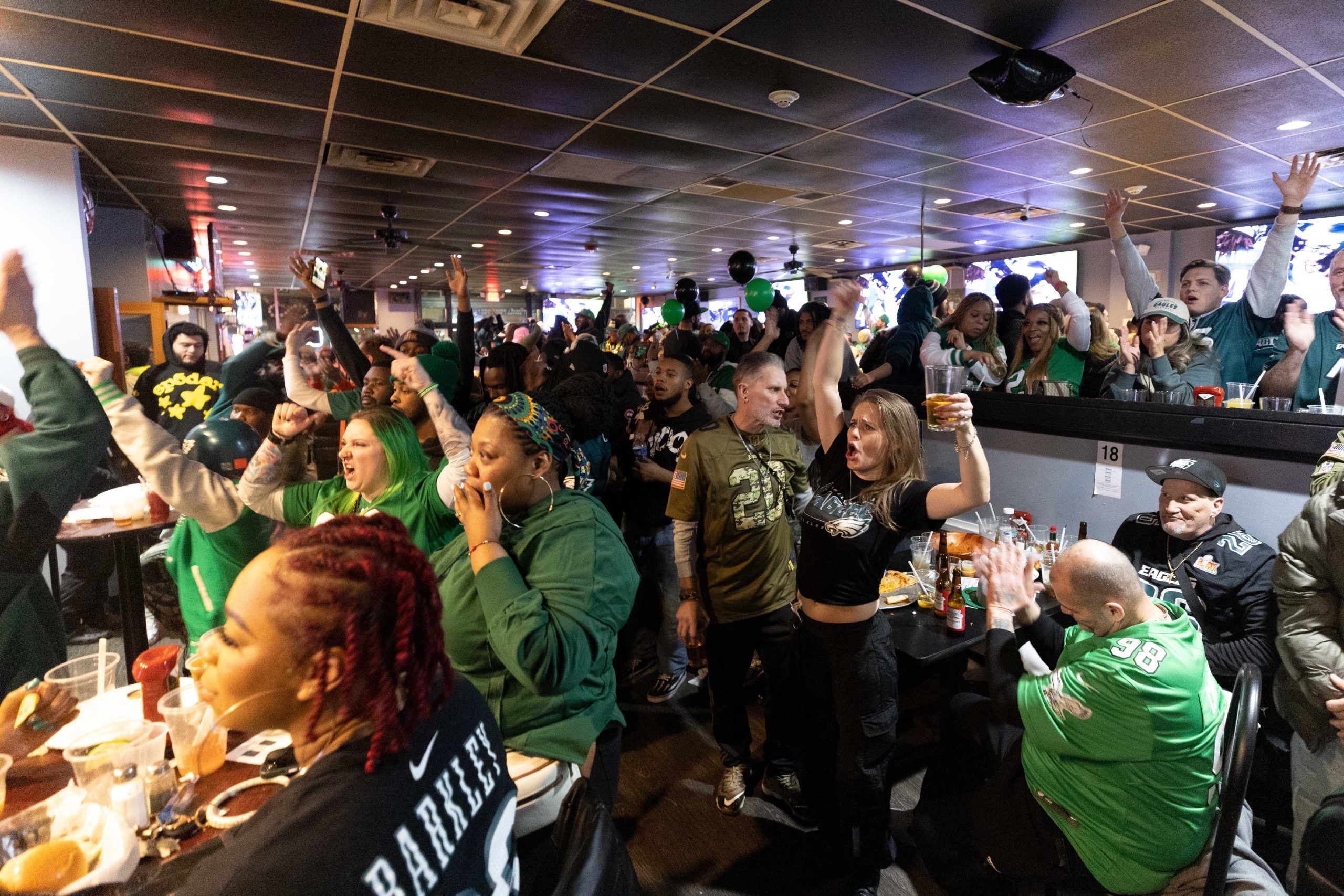
Fans react to the Eagles play the Chiefs in the NFL Super Bowl LIX, in a bar near Frankford and Cottman Aves., Saturday, Feb. 8, 2025, in Philadelphia.Tyger Willliams / Staff Photographer
The World Cup pales in comparison to a Super Bowl at Philly bars
While the sports bars and hotter tourism areas saw a World Cup sales bump, bar owners say it was nothing compared to the revenue brought in from the Eagles going on a playoff-to-Super Bowl run, or the Phillies in the World Series.
“I don’t think there’s anything that compares to Philly sports fans and their loyalty to our Philadelphia teams when they do well,” Hornik said.
When a Philly sports team is doing well, Evenchik said, people seem more willing to go out and celebrate on the town.
“In those times we see a bump in the sports bars, but also everywhere else, including restaurants, because everyone’s so joyous,” Evenchik said. “The World Cup doesn’t really get close to the Super Bowl madness.”
At Philly’s oldest craft and woman-owned brewery, Dock Street, bartender Jessica Head and assistant general manager Abby Stover said they’ve been relishing the fervor of World Cup fans for every game, regardless of who is playing.
“The World Cup finals are truly similar to us Philadelphia sports fans in their passion and how much they are willing to ride for their teams, but nothing can beat a good Eagles playoff run,” Stover said.
“With an Eagles playoff run, we get the bursts during the games once a week, and the energy is undeniable. But the World Cup is really something so special,” Head said. “We’re so lucky we get to see that excitement every single day during the tournament.”
Fans watch a Team USA match at the Fishtown sports bar, Garage, during the 2026 World Cup.(Courtesy of Jason Evenchik)
4 a.m. bars in Philly aren’t as popular as believed
Hornik applied for the Philadelphia 250 Permit at several of his bars.
But only Lucy’s really enjoyed the benefits of 4 a.m. closing times. FCM’s other nightlife-oriented locations generally didn’t take advantage of their permits, Hornik said.
While Hornik found success at Lucy’s, others have said the 4 a.m. party culture in Philadelphia just didn’t materialize.
“I’ve spoken to a couple people who are involved in some of the bars that had a 4 a.m. license, and everyone kind of universally agreed that it cost a bit more than it was worth,” Evenchik said.
The permit itself cost $500 to apply for, and another $250 for safety training from the city.
Additionally, only a handful of the 104 World Cup matches were broadcast close to times near Philadelphia’s usual 2 a.m. closing time. “It didn’t really make sense because none of the games were really that late,” Evenchik said.
World Cup fans share pizza and beer while watching matches at Dock Street South on Washington Avenue in South Philadelphia during the 2026 World Cup.(Courtesy of Renata Vesey)
What lasts is the cultural exchange
Neighborhood bars largely didn’t see a boom like Center City and established sports bars, but the World Cup did bring more business and, occasionally, international tourists, said Renata Vesey, creative director at Dock Street, which operates a brewery along Washington Avenue and a taproom in Fishtown.
“When Côte d’Ivoire played, we got a big crew of Ivorians of all ages,” Vesey said. “It happened to be on a Sunday that we were also hosting a line-dancing event, so it was just such a random, cool mix of people and interests and vibes.”
Bars were livelier and more crowded than usual, and Dock Street opened for a few games on Mondays, when it is normally closed,she said.
Hornik’s neighborhood bars and restaurants like Rosy’s continued to draw their usual crowds as well. But what stands out to him is the role that Philadelphia bars and restaurants played in making the city one of the more memorable places to watch the World Cup, he said.
“It’s not just our job to entertain them for one night, but to make them want to come back here,” Hornik said. “I think that Philadelphia did a great job of showing how great a city Philadelphia is.”
It might be too cliché to say that, as Kai Wagner walked off the Union’s practice field on Saturday, it felt like he’d never left.
But considering that he was only gone for six months, he really did fit right back into things when he returned to Chester.
Of course, the clearest sign that he really did leave is the Union having the worst record in MLS (1-10-4, 7 points) as the league returns from its World Cup break. The quest to change that will begin Wednesday when Red Bull New York visits Subaru Park (7:30 p.m., Apple TV) for the first of the 19 remaining regular season games.
“We have to step with the right mindset on the field, and go in there and get the fans back behind us,” Wagner said. “And then we will see what the second half of the season brings for us. But I came here because I want to go back to the playoffs, and that’s the main target.”
Some of what Wagner said sounded a little more like his side of the story than the full story. He didn’t go too deep on how much his family wanted to return here, and he didn’t say anything about the Union paying a $4 million transfer fee to bring him back — one of the higher sums in team history, and well above the $2.5 million they sold him for.
But it was nonetheless clear that Wagner had kept a close eye on the Union after leaving, and wasn’t happy about the team’s collapse this year.
“It’s sometimes hard to say, maybe stupid to say for myself, but I also personally felt a little bit guilty that the team doesn’t do that well anymore,” he said. “When I see all my friends here and how they wrote me the whole time after each game — I was watching the games at 1:30 in the morning [in England] … I couldn’t [bear to] see the ship going down.”
So when Jon Scheer called to make the first big deal of his tenure as sporting director, Wagner was open to it.
Kai Wagner (left) in action for the Union during last year’s playoffs.Yong Kim / Staff Photographer
“When Jon called me and told me the clear message of what he wanted to bring to the team and what he wanted to change in the team, for me it was straight [away] clear that I wanted to talk to the club to try to make this happen,” he said.
Wagner enjoyed his time in Europe, as brief as it was. He wanted for years to go, as the perennial offseason rumblings from his camp showed. But the Union got the point, and ultimately agreed to help make it happen.
“I would always do that step again,” Wagner said of going abroad. “For me this experience was something really special. I hopefully have a lot of years left, but at the end of my career if I would say to myself I never tried it or I never did it, I would always say to myself why I never did it — even if it was just seven months, the experience was unbelievable.”
Being at Birmingham City specifically came with some extra perks. Though he didn’t meet part-owner Tom Brady, they exchanged text messages a few times. And in a February FA Cup home game against Leeds United, Wagner got his first chance to play against a Premier League opponent — one that happened to have an old friend in Union alum Brenden Aaronson.
“We had a long, long chat after the game, and that was a special game,” Wagner said, adding that he got to talk with Brenden’s father, Rusty Aaronson, too. “I saw one post from you guys where you said you thought that I would tackle Brenden, but Brenden tackled me the first time. It was really fun to play against him — I got his jersey, too, at home, and we had a really good relationship with each other.”
Though the penalty shootout loss after a 1-1 tie didn’t go Birmingham’s way, Wagner still called it “one of the top three games probably of my career, just with the atmosphere and all that stuff.”
He particularly noted that he “was not the main guy anymore, and maybe also had a little bit of pressure off my shoulders.” That won’t be the case with the Union, and he knows it.
“That was the main target from Jon, just bring mentality and leadership back to the team,” Wagner said. “He knows that I can step in and I don’t need a lot of time to adapt to everything. … I think these are all players who really have belief now on the field again, and just to see them this morning, I felt so, so happy that I made that step back.”
NEW YORK — When Spain played France in the World Cup semifinals on Tuesday, there were 32 players on the field and 20 more across the respective benches.
At the final whistle, the reigning European champions had reminded the world that soccer is a team game. Spain didn’t just win 2-0; it delivered the most comprehensive performance of the tournament against the most prolific attacking team in the tournament field.
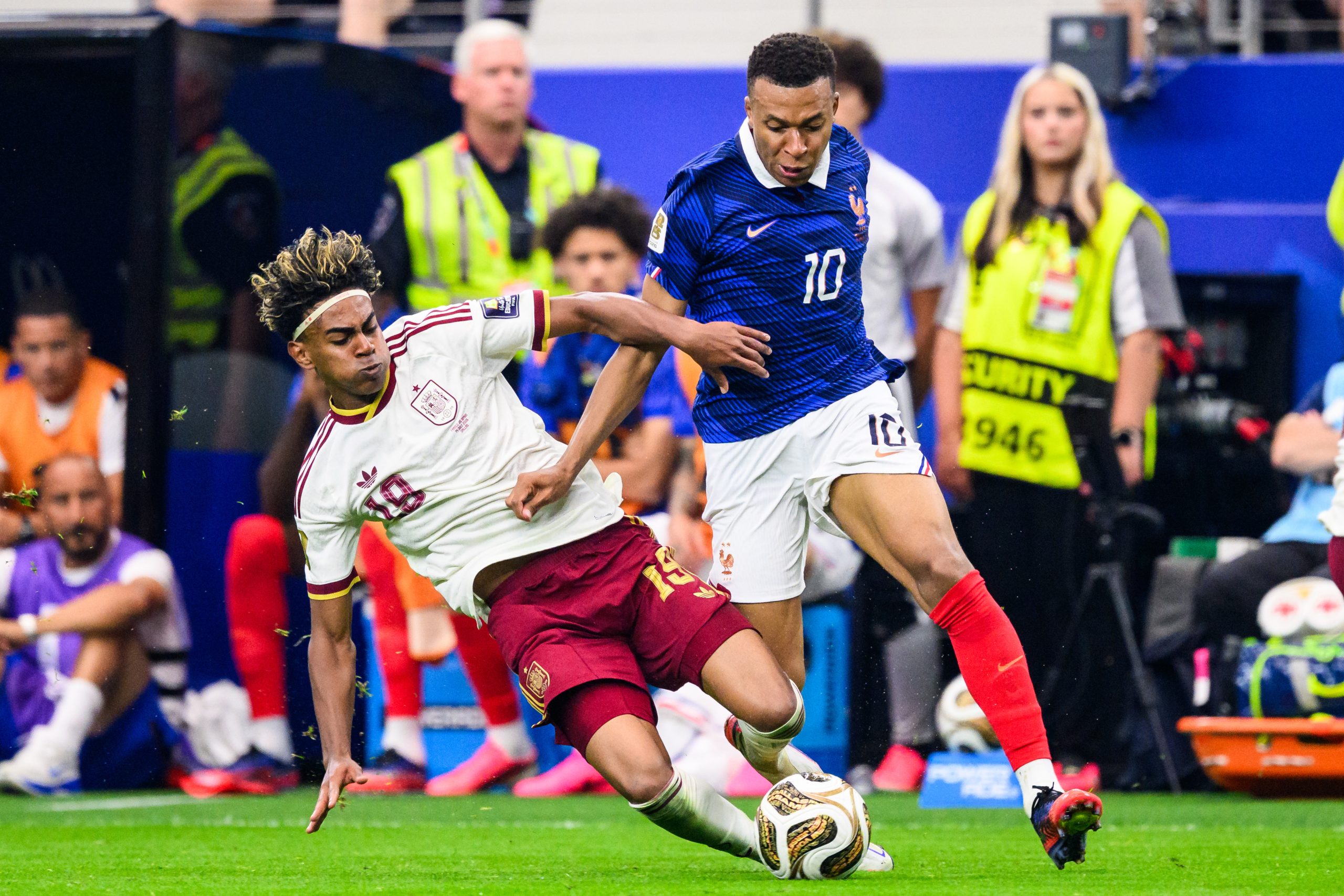
But before the game, the hype was about individuals, and for good reason: It was the first World Cup meeting of France’s Kylian Mbappé and Spain’s Lamine Yamal. For as many stars play in World Cups, there hadn’t been a semifinal matchup with that much individual sizzle in decades.
The framing was justified. And in a country that loves star power, it was a sign of how far this World Cup has broken through in America.
Lamine Yamal (left) battles France’s Kylian Mbappé in the FIFA World Cup semifinal match between the two teams on Wednesday.Tom Weller
Before Lionel Messi and Cristiano Ronaldo became the sport’s standard-bearers, the only men’s soccer players who’d really made it here were Pelé in the 1970s and David Beckham in the 2000s — the latter more for reasons off the field than on it.
Now Messi and Ronaldo aren’t the only household names. At least five more from beyond American shores have reached that level of notoriety before any American player: France’s Mbappé, Spain’s Yamal, England’s Harry Kane and Jude Bellingham, and Norway’s Erling Haaland.
As Messi gets set to face Yamal for the title on Sunday in the Meadowlands (3 p.m., Fox29, Telemundo 62), it’s worth taking a moment to step back and realize how that’s another sign of soccer’s growth here.
Falling for France
Mbappé was the closest to being a household name in the U.S. of the quintet. Thanks to his back-to-back World Cup final runs with France (including the 2018 title) and a big stage in the Champions League, both his national team and Paris Saint-Germain jerseys became big sellers in the U.S. At almost any youth soccer clinic you’d come across, even around Philadelphia, you’d almost certainly see a few kids with his shirt.
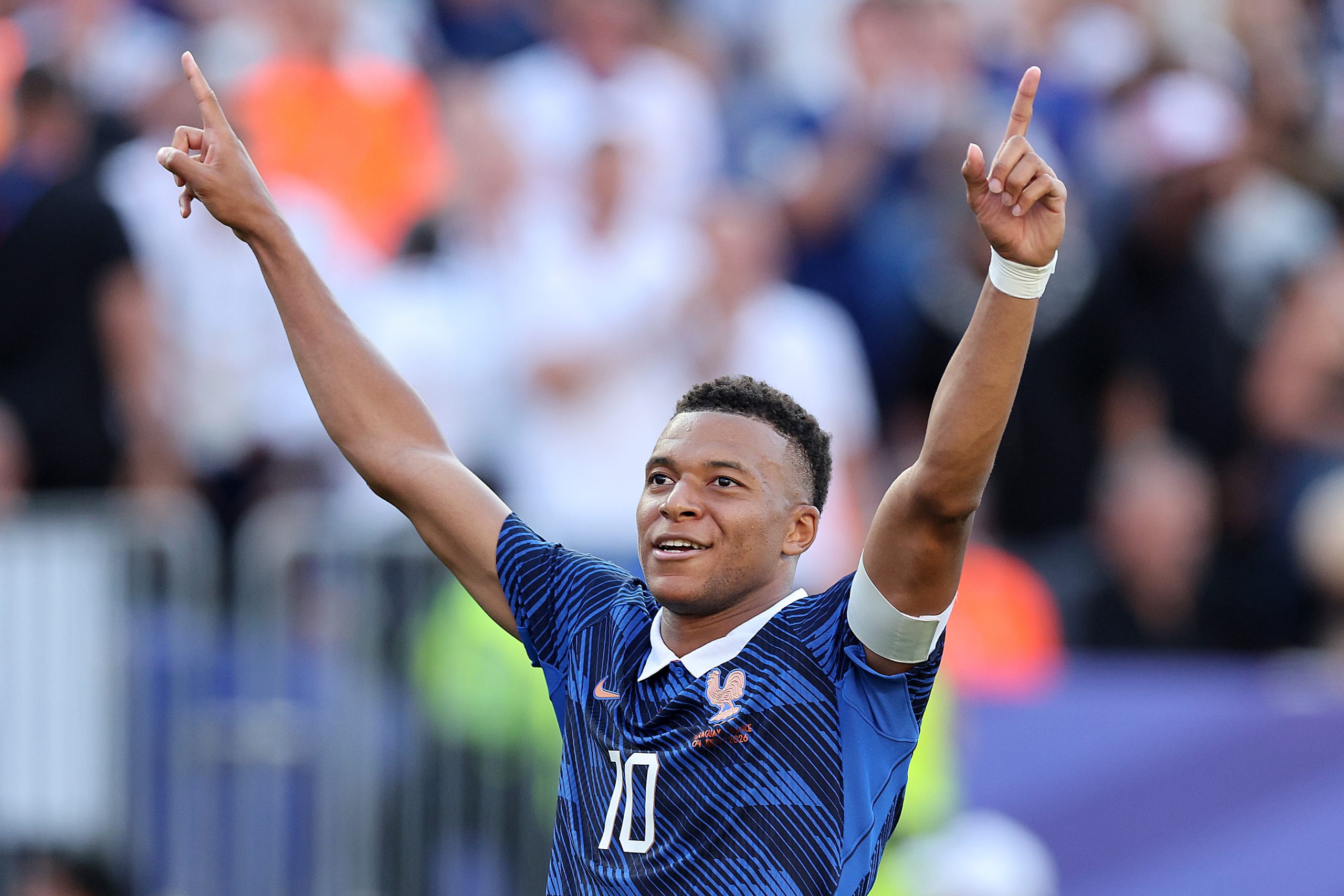
Kylian Mbappé celebrates scoring what proved to be France’s winning goal against Paraguay on July 4 in Philadelphia.David Maialetti / Staff Photographer
His status rose further when he moved to Spanish superpower Real Madrid in 2024. And when he arrived at the World Cup to captain the tournament’s most star-studded team, he was immediately a marquee attraction. Philadelphia saw that up close: He scored in both of France’s games here, including one of the tournament’s best goals against Iraq.
You could see that without even watching the France-Spain game itself. (And given how badly it went for him, Mbappé might prefer you didn’t.) All it took was being in the seating bowl when the video board showed him getting off France’s bus at the stadium. A massive roar went up from a crowd that had only just started to make its way in.
French journalists weren’t surprised, especially those who know American sports culture. A conversation on Radio France’s pregame show was an example: One of the analysts said Mbappé “isn’t just the symbol of the French team to America, he’s the symbol of all of France.”
Or take the scene a day earlier at France’s practice, in the lush surroundings of Southern Methodist University’s sports complex. Though the field was surrounded by covered fences, a cluster of kids still shouted Mbappé’s name in hope he’d stop by.
Alas, they couldn’t see how far away he was. But as he spoke about in Philadelphia before the France-Iraq game, he knows how big a deal he is here, and he likes it.
“The United States is a country that has a different culture from ours in Europe,” he said. “It’s true that I’ve always liked its culture, where ambition is limitless and where no one is afraid to say what they want to do and what they can do. It’s not like that everywhere, but it is here.”
So was his manager. Didier Deschamps saw often how popular Les Bleus are in the land of red, white, and blue.
“When we went out when we could, yes, I heard it, that we’re an enjoyable team,” he said that day in Dallas. “We’re enjoyable because we’ve won games, too. But even if the most important thing is results, with the attitudes, we’ve seen a lot of photos of the moments we’ve left camp, videos shared of the group interacting, and so on.”
And when French fans didn’t travel here in huge numbers, Americans packed the stands instead. Deschamps understood the bigger picture.
“It’s something that we appreciate, and all the better if it helps the development of soccer in the United States,” said Deschamps, one of only three men’s players to win the World Cup as a player (1998) and coach (2018). “We gain from the support of the public, which we obviously have in France, but to have it here in the United States too is something that we very much appreciate.”
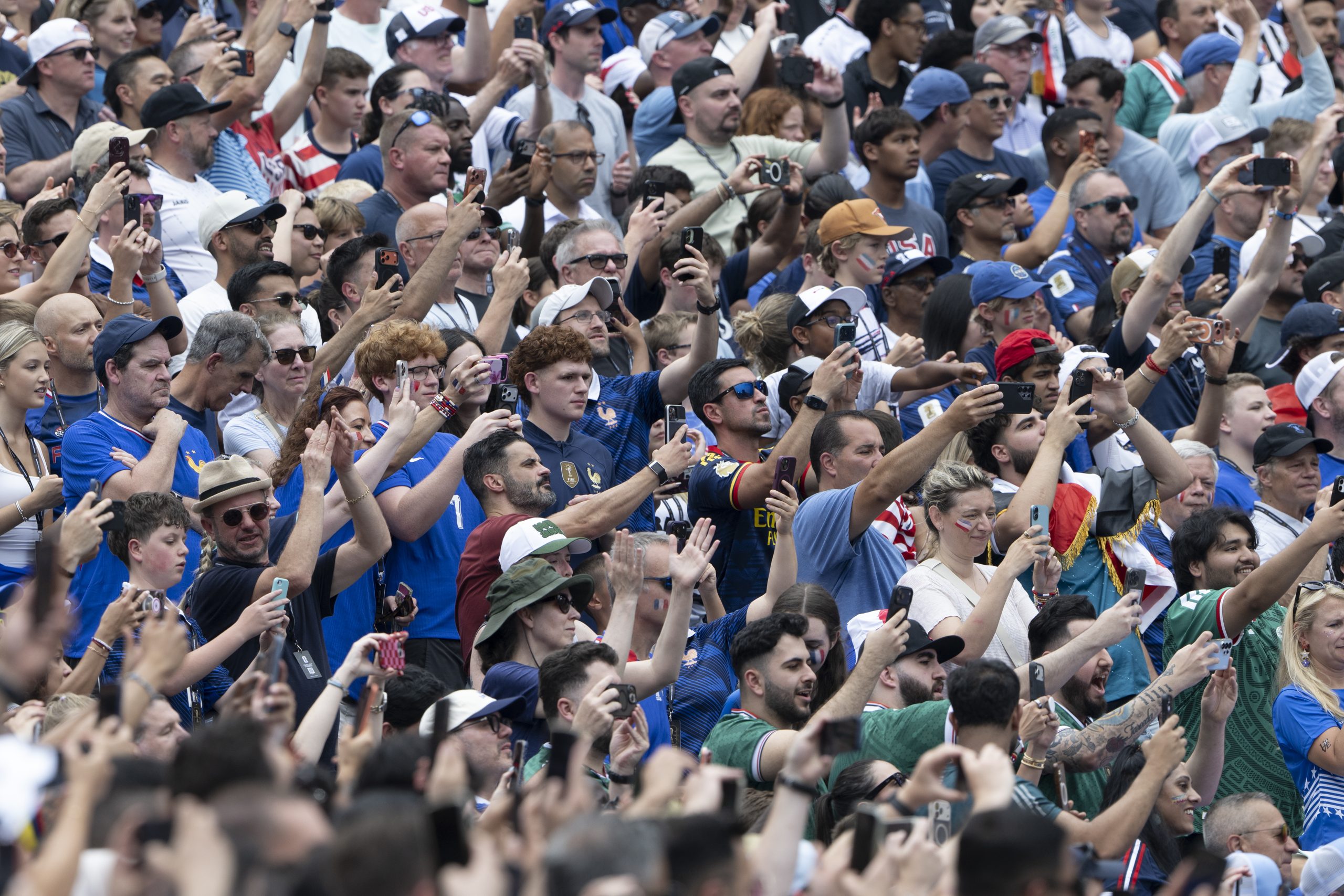
France fans, whether from there or from here, in the stands for Les Bleus’ group game against Iraq in Philadelphia.Jose F. Moreno / Staff Photographer
He even drew a smile from the American media when he said: “I know that there are five major sports here, and soccer today hasn’t quite made it — apart from women’s soccer.”
Deschamps meant it in terms of trophies won, referring to a U.S. women’s team that won its last World Cup in France in 2019. But just as he was in the stands when the Americans beat the hosts in an all-time game, he has had a front-row seat to soccer’s wins in this summer’s sports popularity contest.
All but one of France’s games so far have drawn TV audiences of over 10 million viewers combined between Fox and Telemundo, led by just under 23 million for each of the semifinal and the July 4 quarterfinal in Philadelphia. Fox’s audience alone for the semifinal was just over 13 million — far bigger than the 8.8 million who watched the same channel’s broadcast of baseball’s All-Star Game a few hours later.
‘Well-known in Chattanooga’
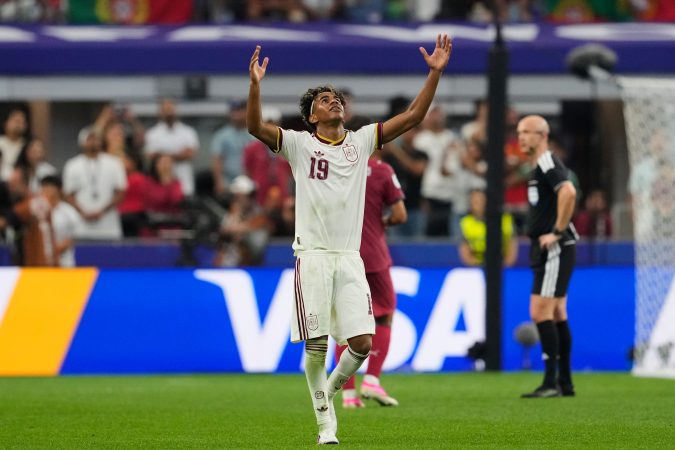
Yamal entered this summer as the sport’s top young phenom, already a three-time La Liga winner with Barcelona and a European champion with Spain in 2024. Soccer fans knew about him when the World Cup kicked off, especially younger ones who play the sport’s video games — a huge entry point for kids — and follow him on Instagram.
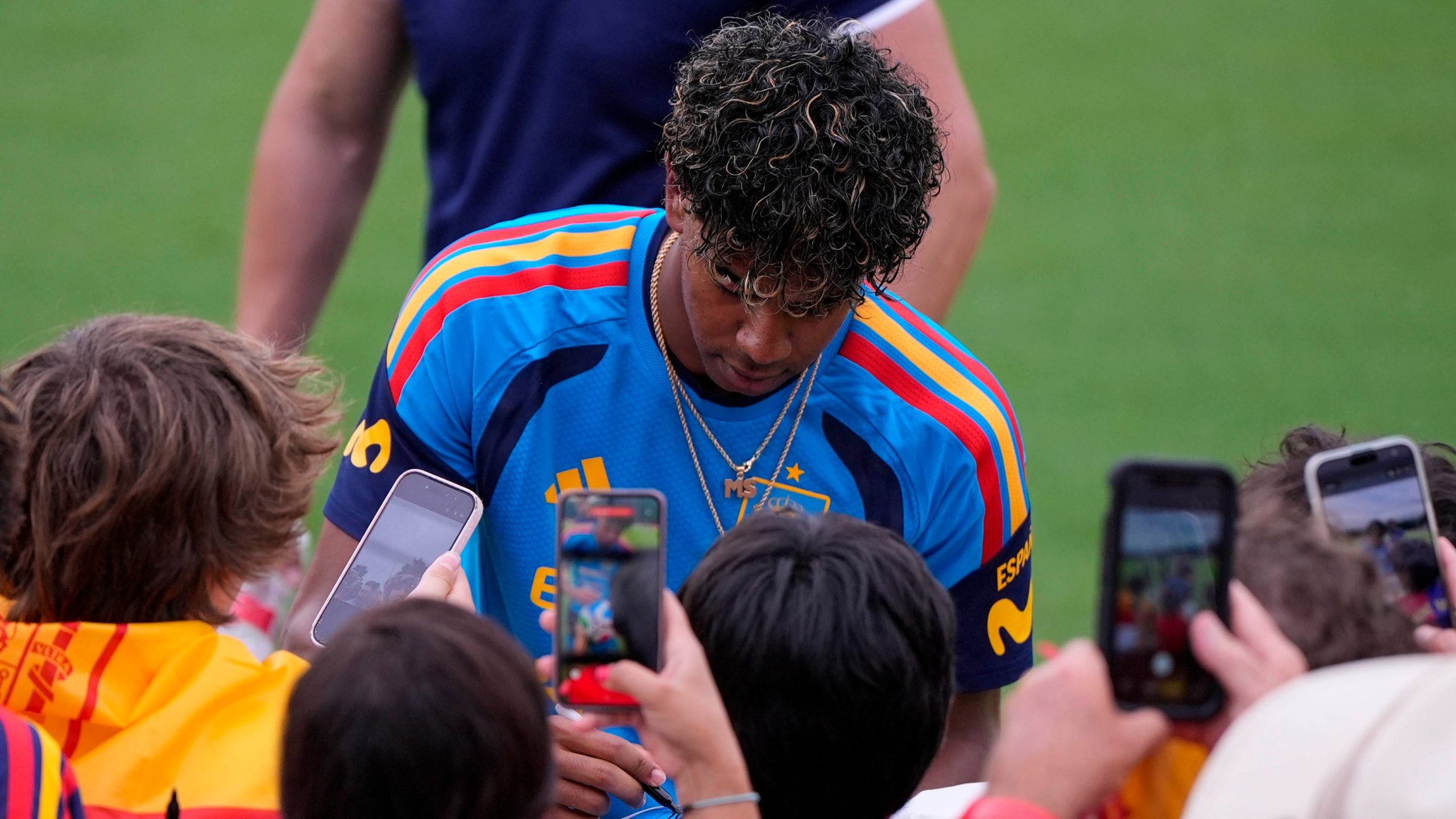
Lamine Yamal signing autographs for kids at Spain’s World Cup base camp in Chattanooga, Tenn.Mike Stewart
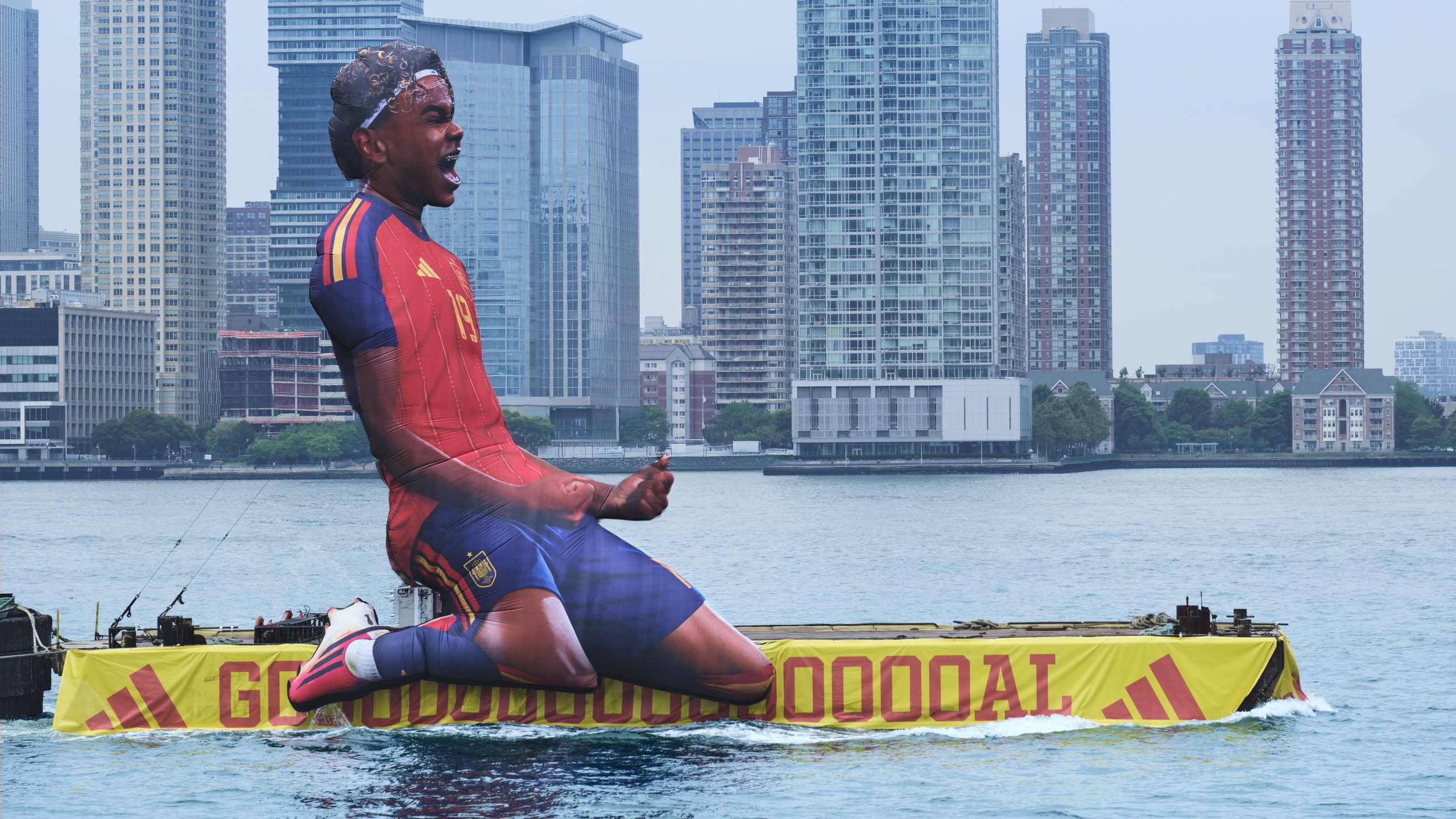
A big sponsorship deal with Adidas meant Yamal was all over the company’s pretournament marketing, just as much as Messi, a longtime client of the apparel giant. A few days after Yamal scored his first World Cup goal, on June 21 vs. Saudi Arabia, Adidas constructed a huge cutout of him celebrating, and sent it parading on a barge in New York’s East River.
And was it Yamal’s idea or someone else’s that he wore a Yankees cap as he left the stadium on Tuesday? Whoever it was, you can be sure he knew where he was headed: to the Big Apple for Sunday’s title clash in the Meadowlands.
But he isn’t just known in New York. Or in Atlanta, where Adidas put up big billboards as Spain played two of its group games there.
“Soccer has given me the opportunity to be well-known in Chattanooga, for example, which is something very beautiful,” Yamal said of the Tennessee city where La Roja had its base camp. “I never could have imagined that I’d go out for a walk in a town in the United States and be recognized. So I value it a lot. I know where I come from, and each day I’m proud of what I’ve achieved.”
A few days after Lamine Yamal scored his first World Cup goal, Adidas stuck a huge cutout of him celebrating on a barge in New York’s East River.adidas
Kane and Bellingham’s status here is helped by being English. The former gained from the Premier League’s huge commercial presence here, as a legend of Tottenham Hotspur before moving to Germany’s Bayern Munich in 2023. He’s also a big NFL fan, which opened more American doors for him as the league grew its presence in London.
Bellingham took a different path. He played just one professional season in his home country before moving abroad, and it was at second-tier Birmingham City. Then he spent three years at Germany’s Borussia Dortmund, and Real Madrid bought him from there in 2023 for over $110 million.
You don’t go to the world’s most famous club for that kind of money unless you’re already a star or soon to become one. But for a long time, you couldn’t get the full status in England unless you played in the Premier League. As a result, Bellingham has sometimes been seen as a kind of outsider in his home country.
Over here, he is simply a star. Though the Premier League is the most popular European circuit in the U.S., Real Madrid is the most popular club team — as Philadelphia saw firsthand last summer. When Real played here last summer in the Club World Cup, there were a lot of Bellingham’s jerseys in the sellout crowd. Now, this summer has made him even bigger.
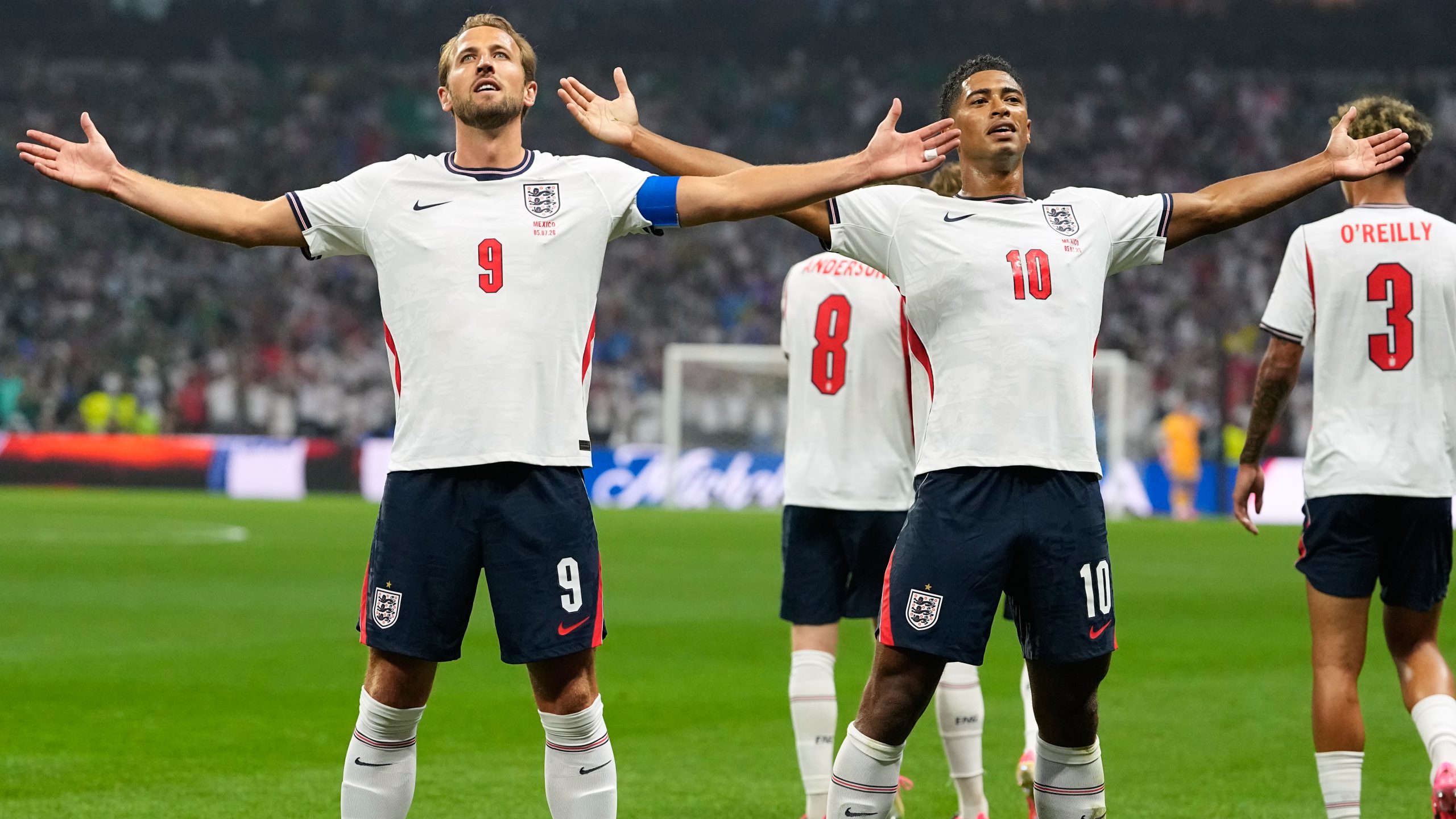
Harry Kane (left) and Jude Bellingham celebrate teaming up for one of England’s goals against Mexico, in a game that drew over 46 million TV viewers in the United States.Natacha Pisarenko
Haaland’s popularity, meanwhile, is mostly a product of the Premier League’s power. Not entirely, to be sure: His first spotlight came at Dortmund, including when the Bundesliga returned to action before other leagues amid the pandemic.
His fame skyrocketed after moving to Manchester City, where he has piled up 112 goals in 132 games and won two Premier League titles and a Champions League trophy. Combine that with the club being the Premier League’s dominant force for nearly a decade, and the odds are if you know someone with a City jersey, it has Haaland’s name on the back.
Until this summer, his resumé lacked one big line: playing at the World Cup. It is now filled in with style: seven goals in six games, leading Norway fans’ ‘Viking Row’ chant, and a love of American culture. He went to a western goods store in Dallas, posed for photos in a cowboy hat and boots, and left with a stuffed raccoon.
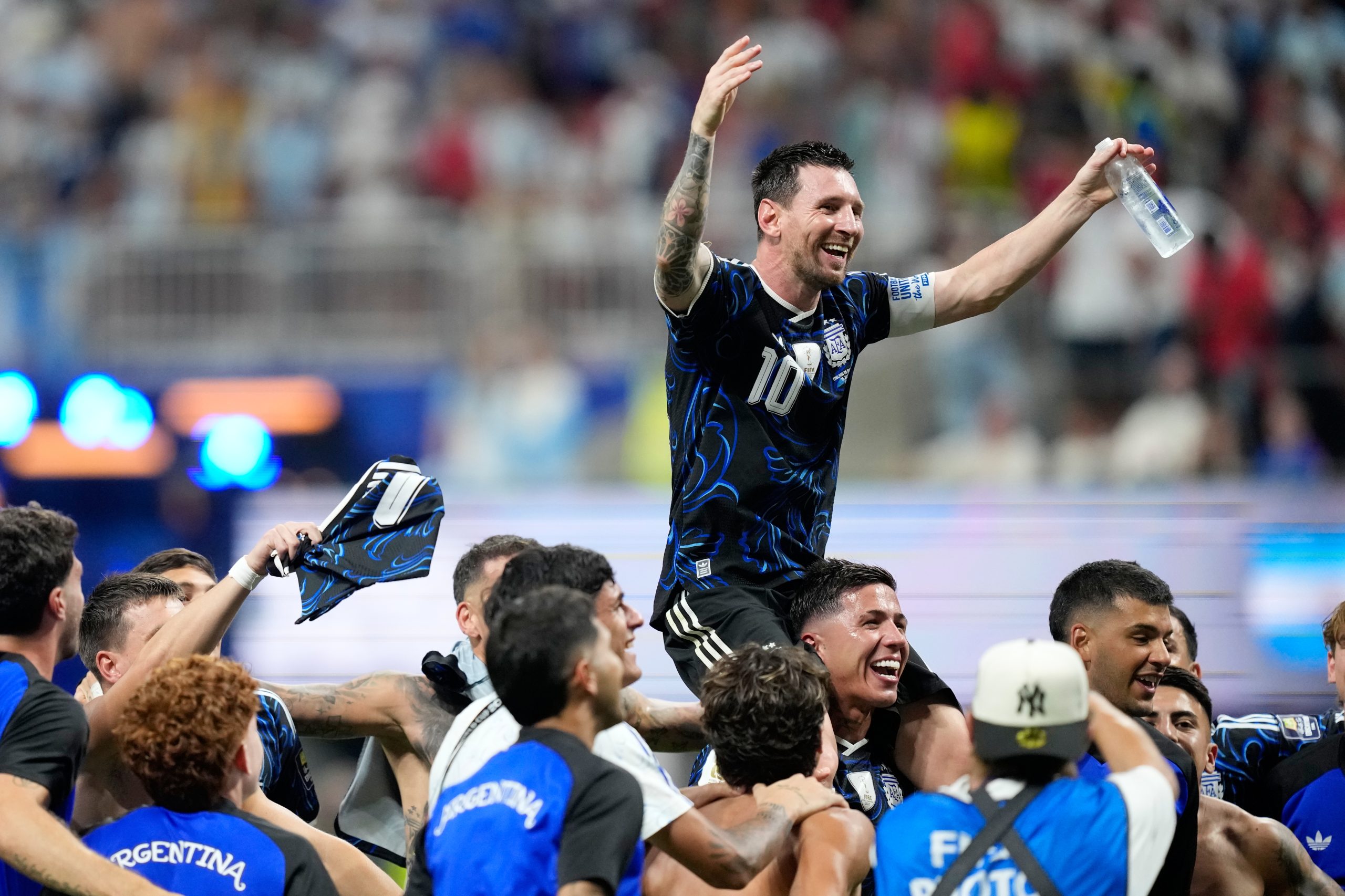
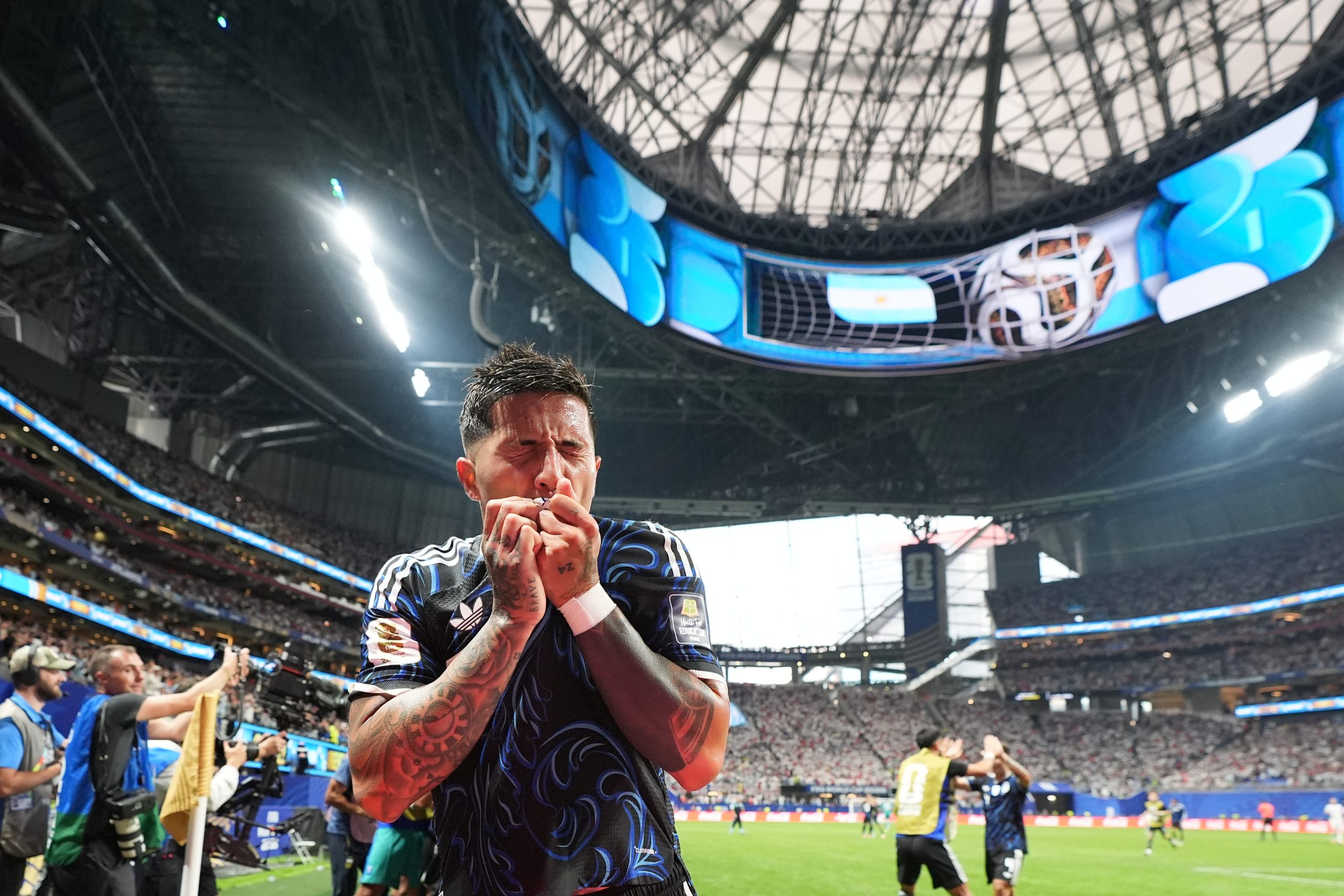
Finally, there’s Messi. Major League Soccer has made piles of money from his presence here, and stands to make piles more from his playing a World Cup final in America’s biggest market. Any remaining belief that Miami was a retirement destination vanished when he led Argentina’s stunning 2-1 comeback win over England in Atlanta.
“To see him reach a final like this, at his age, 39, is incredible,” Scaloni said. “He is history and legend, along with this entire group of players who have given us such wonderful years. Even though we might always believe an Argentine futbolista is capable of achieving greatness, actually doing it is incredibly difficult.”
There are days when it feels like MLS’s marketing team focuses on Messi too much. But a lot of people think the league actually hasn’t done enough to spotlight his presence (and Argentina and Inter Miami teammate Rodrigo de Paul) this summer.
That is for getting into later. For now, Messi will play a World Cup final in the country he has come to call home on Sunday, and he will face a player he has known for a long time.
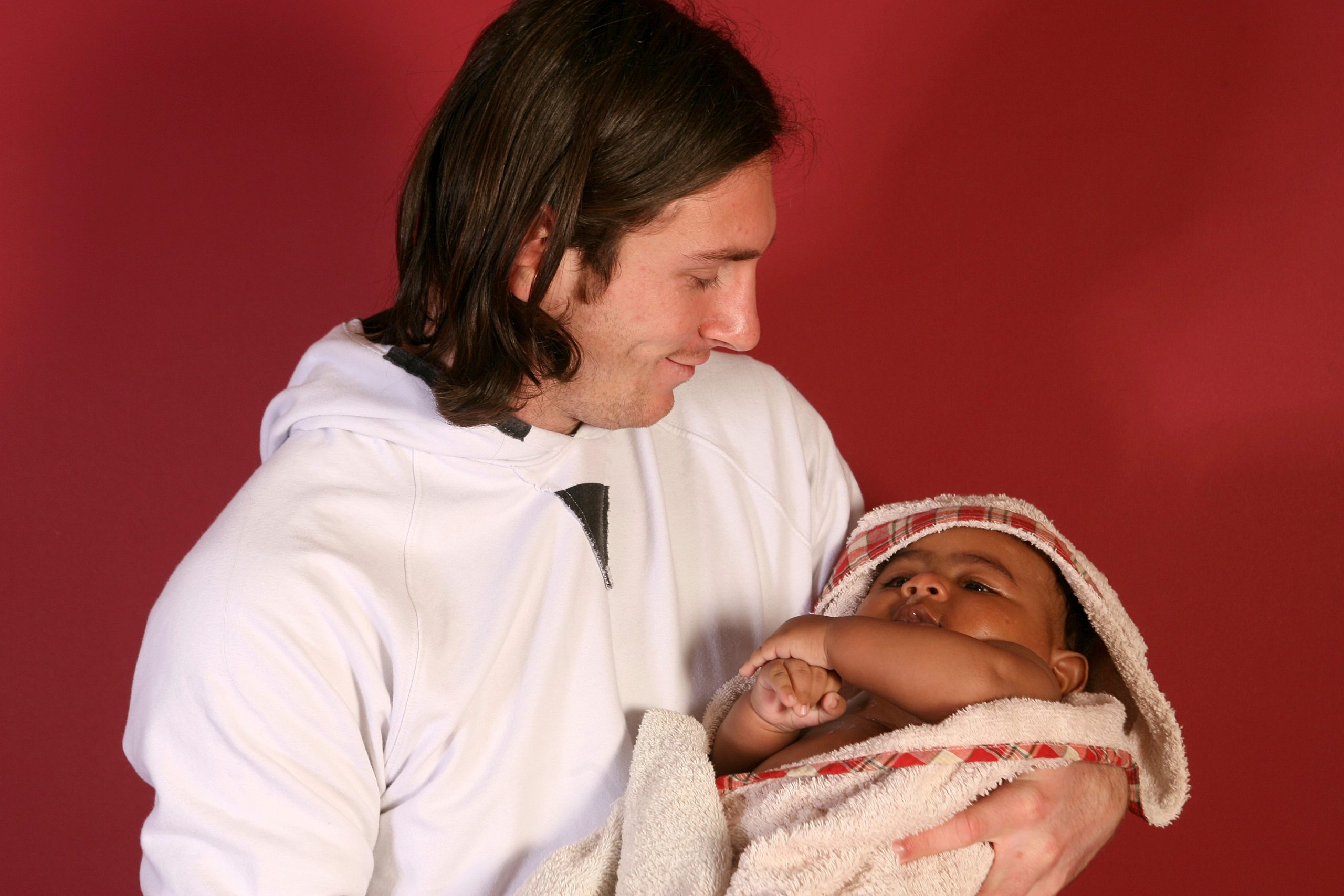
How long? When Yamal was a baby, Messi played for Barcelona, as he did for many years. In 2007, the Yamal family won a raffle to have a photo shoot with Messi, organized by a local newspaper and UNICEF. Thus was Messi pictured holding a baby Yamal, and washing him in a bathtub.
One of the famous photos of Lionel Messi holding a baby Lamine Yamal in 2007.Joan Monfort
Sure, they couldn’t really have known each otherback then. But fans the world over hoped they’d someday see a Messi vs. Yamal game with real stakes.
Many fans hoped for it here in America, too, even as others hoped for England or France to make the final instead. Now it’s here, and the marquee at the Meadowlands is ready for a show.
The final game of what has been a World Cup to remember — particularly on the pitch — pits Spain against Argentina for arguably the greatest prize in all of sports.
But it will once again create a new chapter in the longstanding argument that South American soccer is on par, if not better than, European. Europe is widely regarded as the continent that is the class of the sport, despite Argentina’s dominance on the world stage, with many of its players being stars on the world’s best clubs.
When the two converge on the Meadowlands for Sunday’s finale (3 p.m., Fox29), it will mark the first time a European champion has played a South American champion in a World Cup final. Spain, winner of the 2024 European championships, hasn’t lost a match in any competition since June 2025, and features one of the world’s best players in 19-year-old sensation Lamine Yamal.
Lionel Messi (top, center) celebrates with his Argentine teammates at the end of the World Cup semifinal against England on Wednesday.Rebecca Blackwell
On the other side, you have an improbable run to the final led by 39-year-old Lionel Messi, the catalyst in three consecutive late winners to thrust Argentina, the reigning world champions, back into soccer’s biggest spotlight.
Oddsmakers have given the slight edge to Spain, which has been near-flawless down the stretch, highlighted by the absolute clinic they conveyed in their 2-0 win over France in Wednesday’s semifinal. But Argentina has shown fight to lift themselves to late victories against Cape Verde, Egypt, and England, the latter a pair of matches in which they trailed until the game’s final moments.
Analyzing both, The Inquirer’s team of soccer writers offer their predictions of which nation will be raising the FIFA World Cup Trophy after 90 minutes (or 120 minutes, plus penalties) ahead of Sunday’s final.
You can frame Argentina’s semifinal win over England in two ways. Either it was an all-time choke job by the Three Lions, or more proof of how Argentina’s mental force is like nothing else in the sport right now.
But there’s only one way to frame Spain’s win over France: total domination. While I don’t expect this game to go quite like that, I do expect La Roja to be ready for what Argentina will throw at them. And because of that, I expect the better team to prevail.
Prediction: Spain 2, Argentina 1
The Spanish national team hasn’t lost a match since June 2025, winning 17 matches in international competition since.Eric Gay
What a treat. The first 48-team World Cup may have lacked knockout-stage upsets, but it managed to produce the highest-quality semifinal round imaginable, which set up a meeting of two global giants in the final.
Spain has looked like a complete force of nature all tournament, aside from a draw in the group stage against Cape Verde. Its ability to move the ball and build through possession allowed it to smother France in the semifinal. If the Spanish can repeat that performance against Argentina, it may be too much for La Albiceleste to overcome.
But let’s not count out Messi’s magic quite yet. Argentina has rarely looked like a perfect side in this tournament, but in three of their four knockout stage games, the Argentines have managed to defy logic and reason to find a win when they need it most.
I think Spain is the better team, but who am I to pick against a team of destiny?
Prediction: Argentina 2, Spain 1 (after extra time)
Argentina’s Enzo Fernandez celebrates after scoring his side’s first goal during the World Cup semifinal against England. Fernandez was also the hero in the team’s quarterfinal win against Egypt. Rebecca Blackwell
Any way you choose to pore over this matchup, one thing continues to come back to the forefront: You can’t count out Argentina. One of the things Spain does exceptionally well is keep its shape defensively, forcing attacking teams to thread the needle in La Roja’s final third every time.
Even the best players in the world can’t sustain that type of perfection in their offensive play consistently to give Spain fits. That’s why it was so shocking that of all the teams that were able to crack the code, it was tiny Cape Verde in its first World Cup ever, as it kept Spain’s backline on its toes in addition to exhibiting one of the greatest defensive displays we’ve seen in the World Cup.
Coincidentally, Argentina just so happens to have the best player in the world at age 39 in Messi, who is surrounded by a supporting cast that has been equally solid. Argentina comes in waves, and it comes down to whether Spain can weather that storm defensively. We know Spain can since it did so against a high-powered French side that bullied its way to the semifinals.
The real question is: Can Argentina do it again?
Prediction: Spain 2, Argentina 2 (Spain wins in penalties, 5-3).
So, thinking about going to MetLife Stadium for the World Cup final?
It’s easier coming from Philly than you might think. I know because I’ve taken the trip to New York/New Jersey Stadium (or MetLife Stadium as it’s customarily called) three times for matches between Brazil and Morocco, France against Senegal, and Norway’s quarterfinal win against Brazil.
Certainly learned a lot along the way. Each time felt very different from the first.
I took the public transit route to save some dough and avoid traffic: SEPTA’s Trenton line on Regional Rail from William H. Gray 30th Street Station, and thenthe NJ Transit Northeast Corridor line to Secaucus Junction.
Based on the gridlock I saw on the highways while riding the train — not to mention the cost of gas — this is the cheapest and most efficient way to travel from Philly to MetLife Stadium.
Just make sure you’re ready to get your steps in.
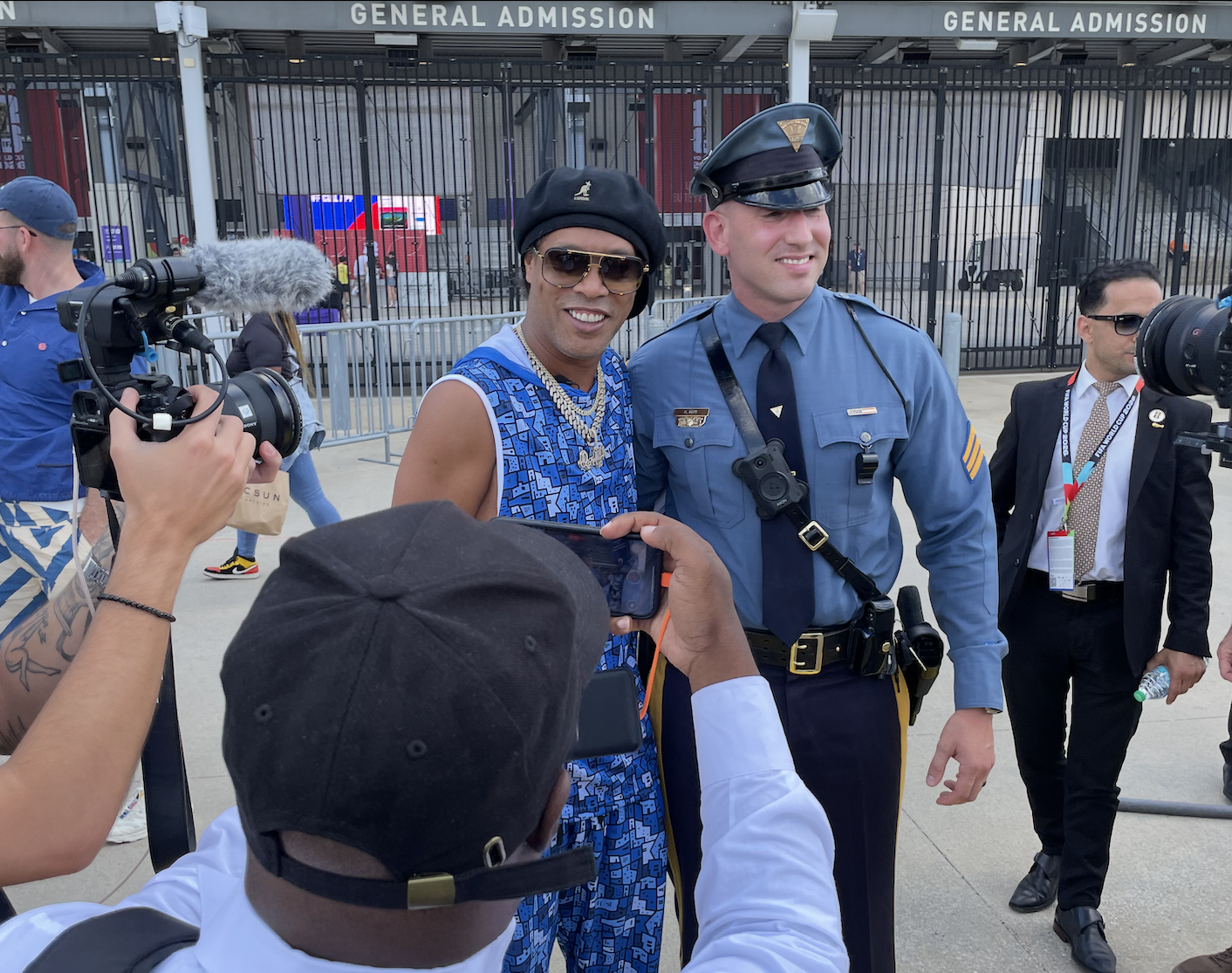
You’ll never know who you might run into once you’re at New York/New Jersey Stadium, kind of like when we stumbled upon soccer great Ronaldinho outside the main gates during the June 13 Brazil-Morocco match.Kerith Gabriel / Staff
Buy your tickets online
Purchasing your trip ahead of time is the way to go, and you can lock that in right now. I bought my train tickets 12 days before through the SEPTA and NJ Transit websites.
A round-trip ticket on SEPTA’s Trenton line on Regional Rail from Jefferson, Suburban, or 30th Street Station is $20. It’s $26 if you purchase on the train. Not only is it cheaper, but buying online allows you to skip the lines at the station.
NJ Transit round-trip tickets to Secaucus Junction are just $40.70 and available for purchase on the NJ Transit website. (It almost makes you feel fortunate you’re coming from Philly and not Penn Station, where tickets are upward of $100.)
The total cost for a trip to MetLife Stadium and back to Center City? Right around $60. For comparison, parking a car in Philly for World Cup games cost between $115-180, and reached $700 for an oversized vehicle.
Getting there
The beauty of taking the train out of the city is that Trenton is the last stop on the line, so no need to ask the conductor when it’s your stop; you’ll know, given that the whole train clears out.
Once you step off the train at Trenton, you’ll need to switch trains. Find the escalators that only go up to the main floor, and according to an NJ Transit ambassador at the station, Northeast Corridor local and express trains have left from a combination of either Track 1 or Track 2, which are located on the same platform.
When in doubt? Look at the big board, which will read New York-SEC (SEC for Secaucus). Secaucus Junction is one of the final station stops before New York Penn Station, so yes, you’re on the right train.
From there, it’s a straight shot to Secaucus. Getting on at Trenton means you’re the first stop on the line, so you’re sure to find a good seat.
Every stop was announced, and conductors shouted instructions to fans on how to navigate Secaucus upon arrival.
New Jersey is going to great lengths to get people over to matches at MetLife Stadium. If you do it by regional rail, Secaucus is going to be your final stop. Kerith Gabriel / Staff
You’ve arrived in Secaucus …
FIFA volunteers and NJ Transit ambassadors were stationed on the platform to answer questions and direct fans to the ground floor, where NJ Transit buses are ready to shuttle people to the stadium.
The shuttle fare? It’s included in your train ticket, and ambassadors will ask to see both your ticket to the match and your train ticket.
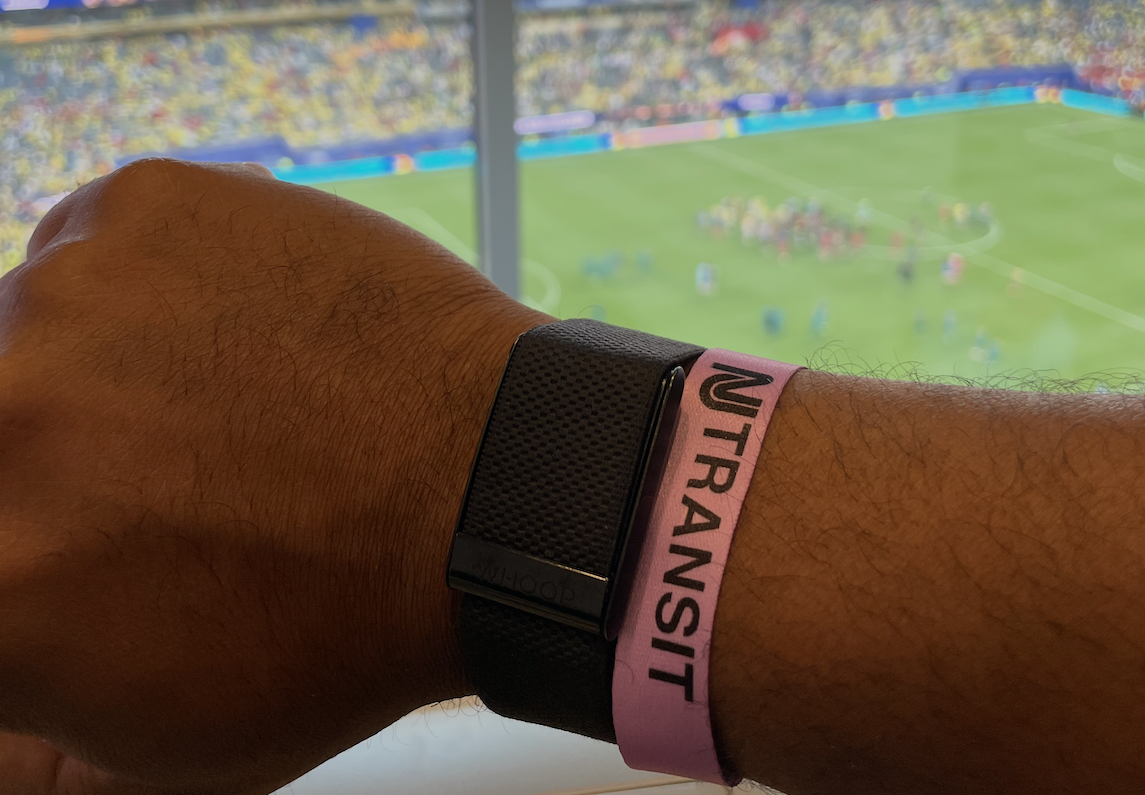
Also, with the snaking line to get to the shuttle, have that ticket ready to show so you’re not holding up the line. You’ll receive a wristband that allows you to board there and come back when the game is over. Don’t lose it.
Technically, you don’t have to worry about losing it, it’s one of those that will require something sharp or really skinny wrists to remove.
If you’re headed to the World Cup final, consider the train, but make sure ambassadors give you a bracelet so you can get back on the train.Kerith Gabriel / Staff
Shuttles run continuously up to an hour before the match. After that, there’s a final courtesy train that makes a run over to MetLife for any remaining passengers. There’s no parking at MetLife, so if you miss that, a ride share is your best bet.
Heading back
Outside MetLife, there are giant purple signs that direct fans looking for shuttle buses. If you get turned around after exiting the stadium, walk toward American Dream, the concert venue adjacent to the stadium. You’ll see the massive bus terminal that shuttles fans back to Secaucus Junction.
You’ll need to show your NJ Transit wristband to ambassadors and some police. Then you’ll board a bus back to Secaucus. The ride will take about 15 minutes, depending on traffic. Then you’re on your way back to Philly, where you’ll have earned bragging rights for your cheap and efficient travel to the world’s grandest sporting event. Enjoy.
The Union don’t often pull off surprises, but Kai Wagner’s return to the club definitely counts as one.
Why did the left back want to come back here, after finally getting the move to Europe he’d dreamed of for years? And why did a Union organization that defines itself on the development of young prospects want to pay a $4 million transfer fee to re-sign a 29-year-old who had those wandering eyes in multiple offseasons?
The answer, according to multiple sources, is that both sides had stayed in touch after his departure — and they had some things to admit.
On the player’s side, Wagner’s family started missing life off the field here, and notably hadn’t sold their home in South Jersey. On the team’s side, being in last place in Major League Soccer when the World Cup break arrived (1-10-4, 7 points) set some alarms ringing.
Welcome back, Kai 💙💛
Philadelphia Union acquire defender Kai Wagner via transfer from Birmingham City F.C.
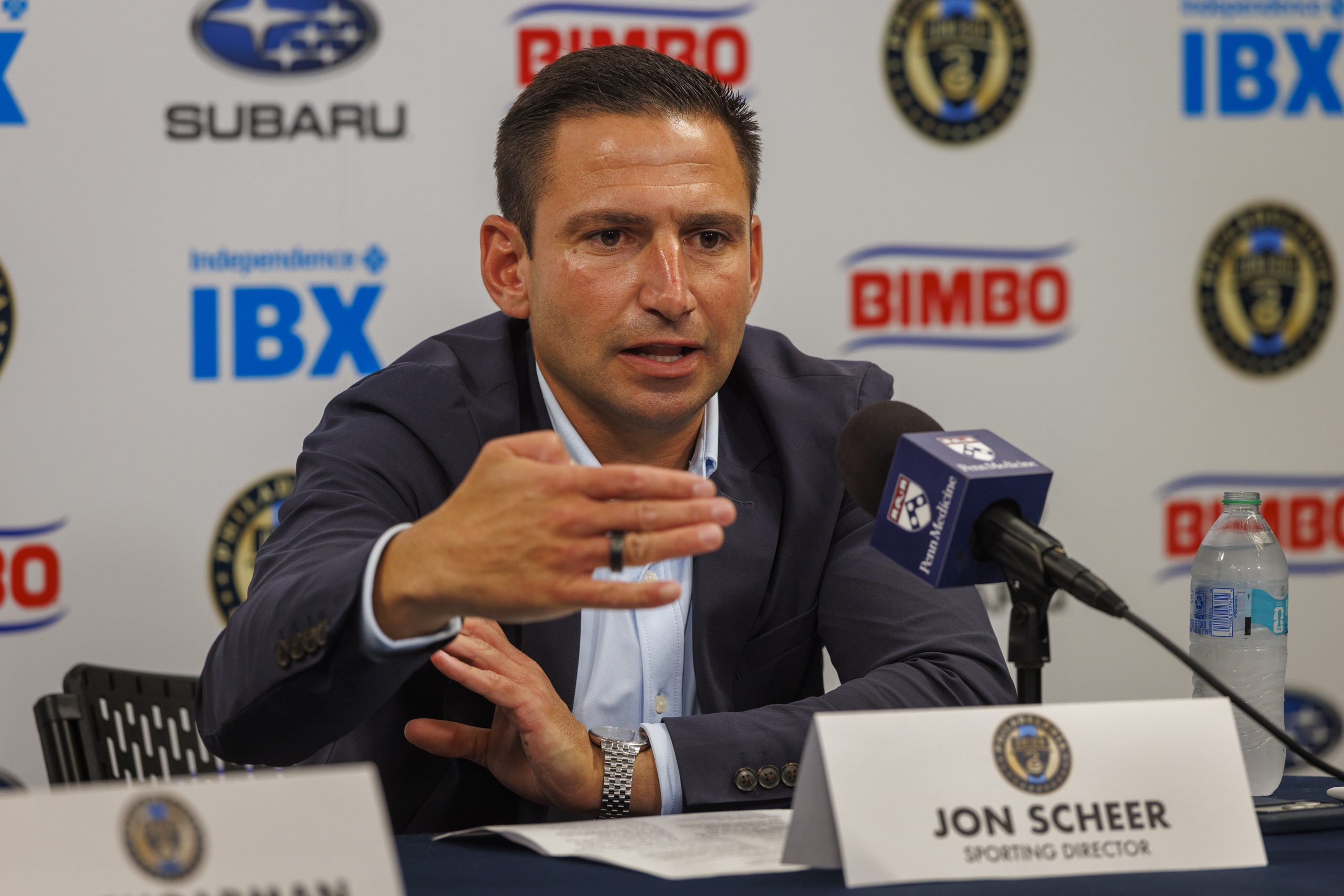
“Through our conversations with Kai, we know what his motivations are, and what he wants to achieve with us,” sporting director Jon Scheer told The Inquirer. “That’s given us a lot of confidence that this is the right decision.”
Now the race is on to save the season, which is doable with 19 games left.
“I would say we need more at that position, in terms of some positional characteristics,” Scheer said. “This is not against any one individual, but I think if you look at the way our attacks are coming, there are limitations if you’re not naturally left-footed, particularly at this position.”
As sincere as he was about “any one individual,” it was still about a few of them. Philippe Ndinga, whom the Union signed as Wagner’s replacement, and Frankie Westfield are both right-footed. Ndinga hasn’t delivered as hoped, and Westfield has had some injuries. That led now-former manager Bradley Carnell to shoehorn attacking midfielder Ben Bender in a few times.
Philippe Ndinga (right) was signed to be the Union’s new left back, but hasn’t earned the starting job.Elizabeth Robertson / Staff Photographer
The Union have also missed Wagner’s set-piece deliveries, though the unusually bad execution this season has been a teamwide problem.
‘A club that wants to win’
But the most striking thing was where Scheer went next.
“I would also say that for our group in general, I think we need character, we need mentality,” he said. “And I would say, having kept in touch with Kai, you could tell how much he wants this club to be successful and win. That was something to me that was the most important, more than anything in terms of what he can produce on the field.”
Those words were different from Scheer’s usual ones. He’s the face of a front office that wants the Union to be a “development club,” as he has said many times since taking the helm — first as interim when Ernst Tanner was suspended, then full-time when the suspension ended and Tanner didn’t get the job back.
Union sporting director Jon Scheer.Alejandro A. Alvarez / Staff Photographer
There’s a promising left back prospect in 17-year-old Jordan Griffin, for example. He has played a lot for the Union’s reserves this season. Would a purely developmental club have promoted him instead of bringing back someone from the past at a considerable cost?
This was put to Scheer, and he was not surprised.
“We are a club that wants to win,” he said. “We are a development club, and that’s our vehicle, we feel, to win — and that’s not just homegrowns, but that’s any player that we sign. So, yes, while this is a move that is not always ‘on brand’ for us, I would say that the starting point is what will give us the best chance to be successful and to win.”
“We feel like our young players can learn a lot from veteran players that still have the ability to improve and get better by seeing their habits, by seeing their quality,” Scheer continued. “I think right now, with where our club is, we knew going into this window what those ingredients were that we needed to look for in terms of positions, but also in terms of some of the intangibles that we’ve been talking about.”
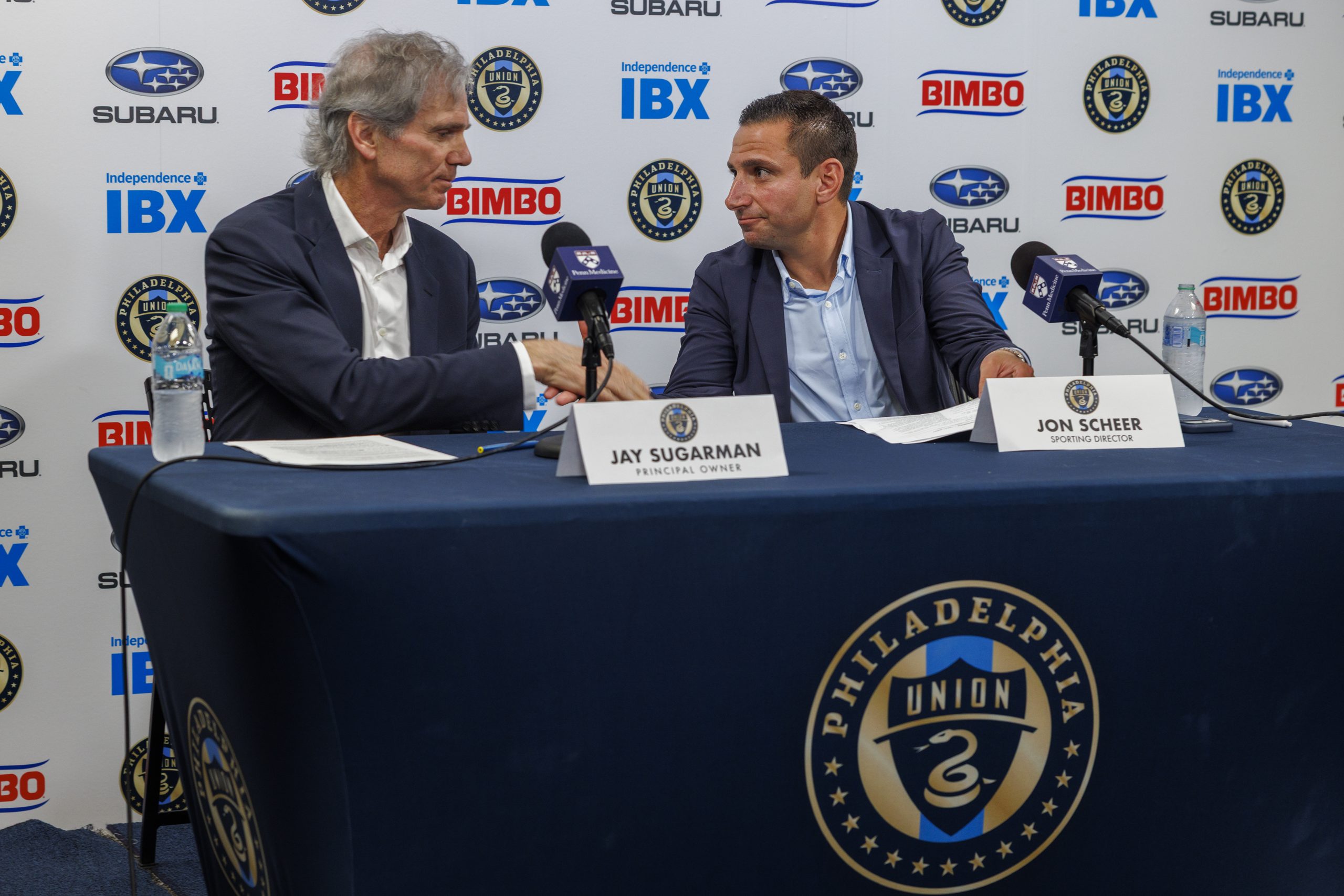
Jon Scheer (right) with Union principal owner Jay Sugarman at the news conference where Scheer was confirmed as the full-time sporting director.Alejandro A. Alvarez / Staff Photographer
How will the Union look now?
The $4 million transfer fee isn’t much by MLS standards, but it’s among the bigger ones the Union have stumped up. It’s also more than the $2.5 million they got from Birmingham City in the first place.
That’s another odd look. Wagner wanting out should have given the Union some leverage on the price tag. But Birmingham didn’t want to give him up, having signed him there until the summer of 2028. So the Blues held firm, and the Union were ready for that.
The size of the fee means Wagner is a Designated Player for the rest of this year. His salary won’t make him one, and he might not be one next year, but transfer fees count toward the status. So he is for now. He also got a new contract that’s guaranteed until the summer of 2029, with a team option for the 2029-30 season.
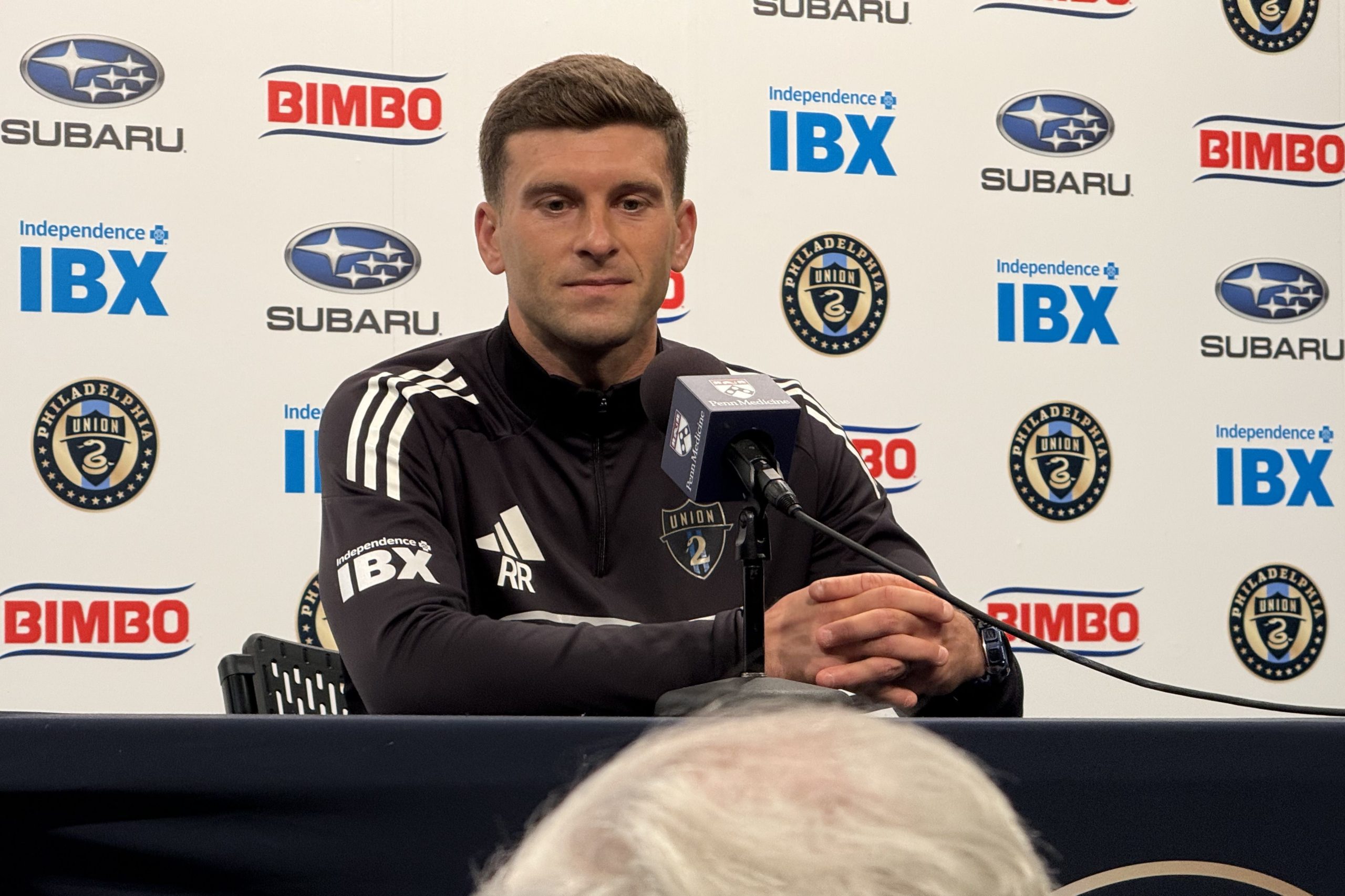
We’ll see if he jumps straight into the starting lineup when the season resumes Wednesday with Red Bull New York’s visit to Subaru Park (7:30 p.m., Apple TV). That game will also give us a first glimpse of how interim manager Ryan Richter wants to play, and how different it is from Carnell’s 4-2-2-2.
Ryan Richter is the Union’s interim manager in the wake of Bradley Carnell’s dismissal.Jonathan Tannenwald / Staff
Scheer said Richter has latitude to be flexible.
“I would say that what formation and shape we play is not as important and significant as the game model itself, and our principles,” he said. “We want to be aggressive, we want to be ball-oriented, we want to be forward-first in our approach in all phases. The shape in which we play more than likely at times will still look like a 4-2-2-2, but Ryan has flexibility, as does the staff, to press out of a different shape, to attack out of a different shape.”
He added that there is an expectation to stick with two strikers, “because this is something that we’ve scouted and recruited for over a period of time now for quite a few years.”
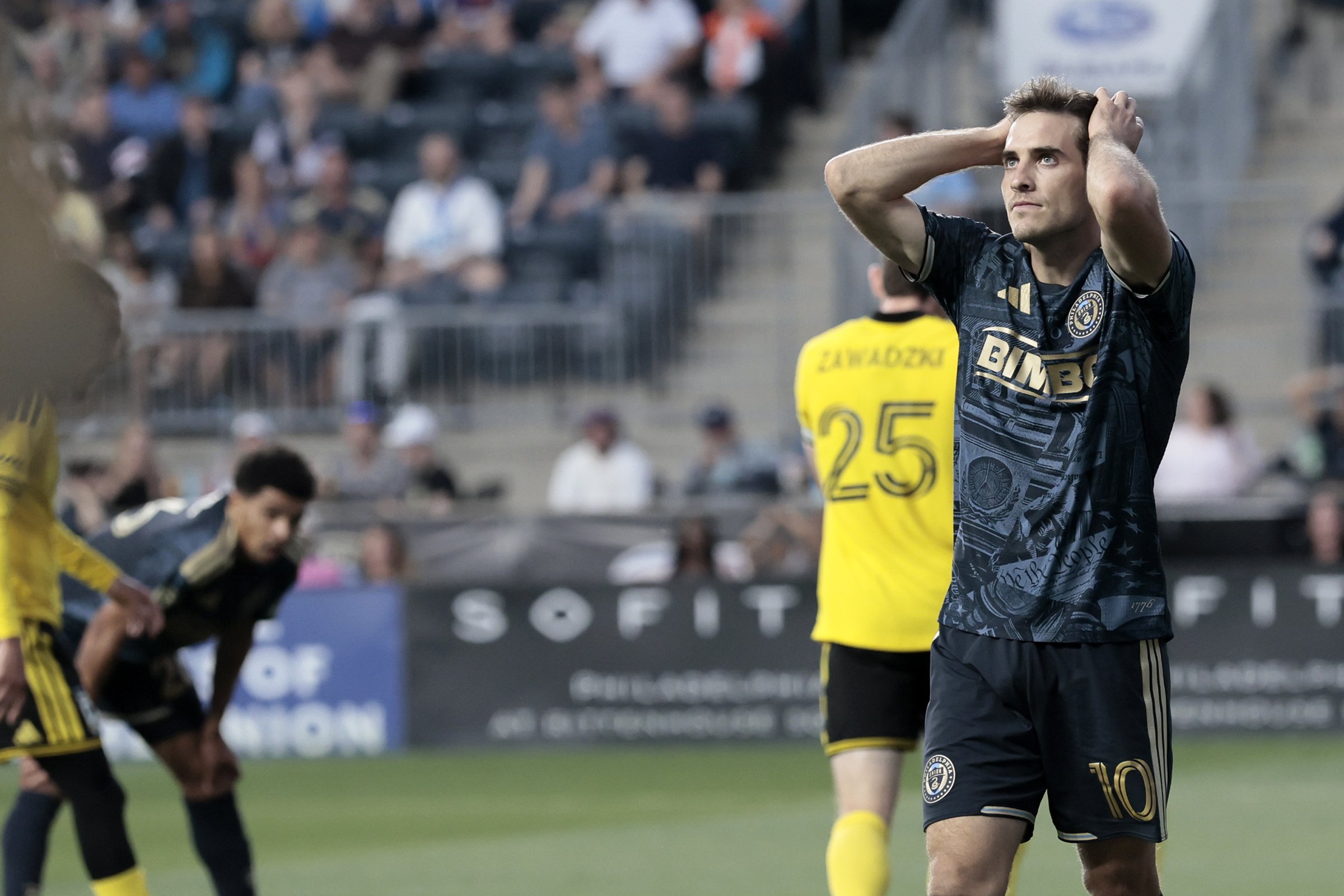
Milan Iloski and the Union entered MLS’s World Cup break with the league’s worst record.Elizabeth Robertson / Staff Photographer
That means there still won’t be traditional wingers, a philosophy Tanner first implemented. It makes the outside backs especially important, even though the 4-2-2-2 lets the attacking midfielders move wider than the previous diamond-shaped 4-4-2’s central midfielders could.
“Finding Cavan [Sullivan], Quinn [Sullivan], Agustín [Anello], these types of players in 1-v-1 situations a little bit wider, is a little bit more apparent in a 4-2-2-2,” Scheer said. “But yes, we don’t play with pure wingers, and I don’t see that changing in the near future.”