Category: Gardening

  • On a tree-lined Fairmount row, a newer resident became an instant gardening prizewinner

    On a tree-lined Fairmount row, a newer resident became an instant gardening prizewinner

    Toward the end of April, Noah Johnson’s street in Fairmount fills with pink cherry blossoms. The cherry trees may have been planted, he believes, when rowhouses were built in 1876.

    Longtime Fairmounters call the block Centennial Boulevard. The homes were designed to showcase the latest trend in residential architecture as part of the celebration of the 100th anniversary of the signing of the Declaration of Independence.

    The three-story homes were faced with stucco modeled to resemble stone and had tiled mansard roofs and enviable front gardens. Most houses in Fairmount, then and now, have small backyards but no front yards. Owners compensate with window boxes and planters.
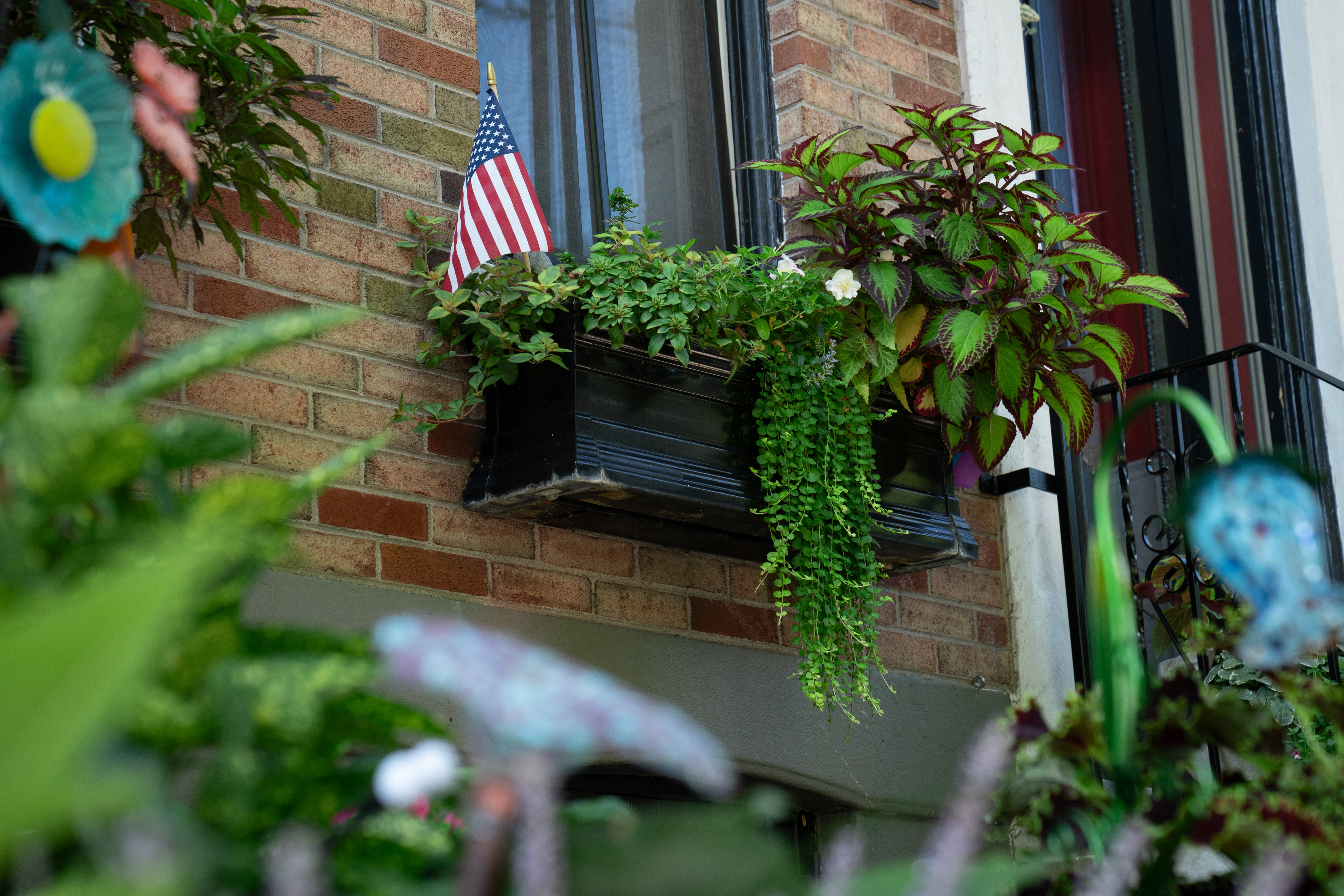
    A window box at Burns and Johnson’s Fairmount home.Sarah Silbiger / For The Inquirer
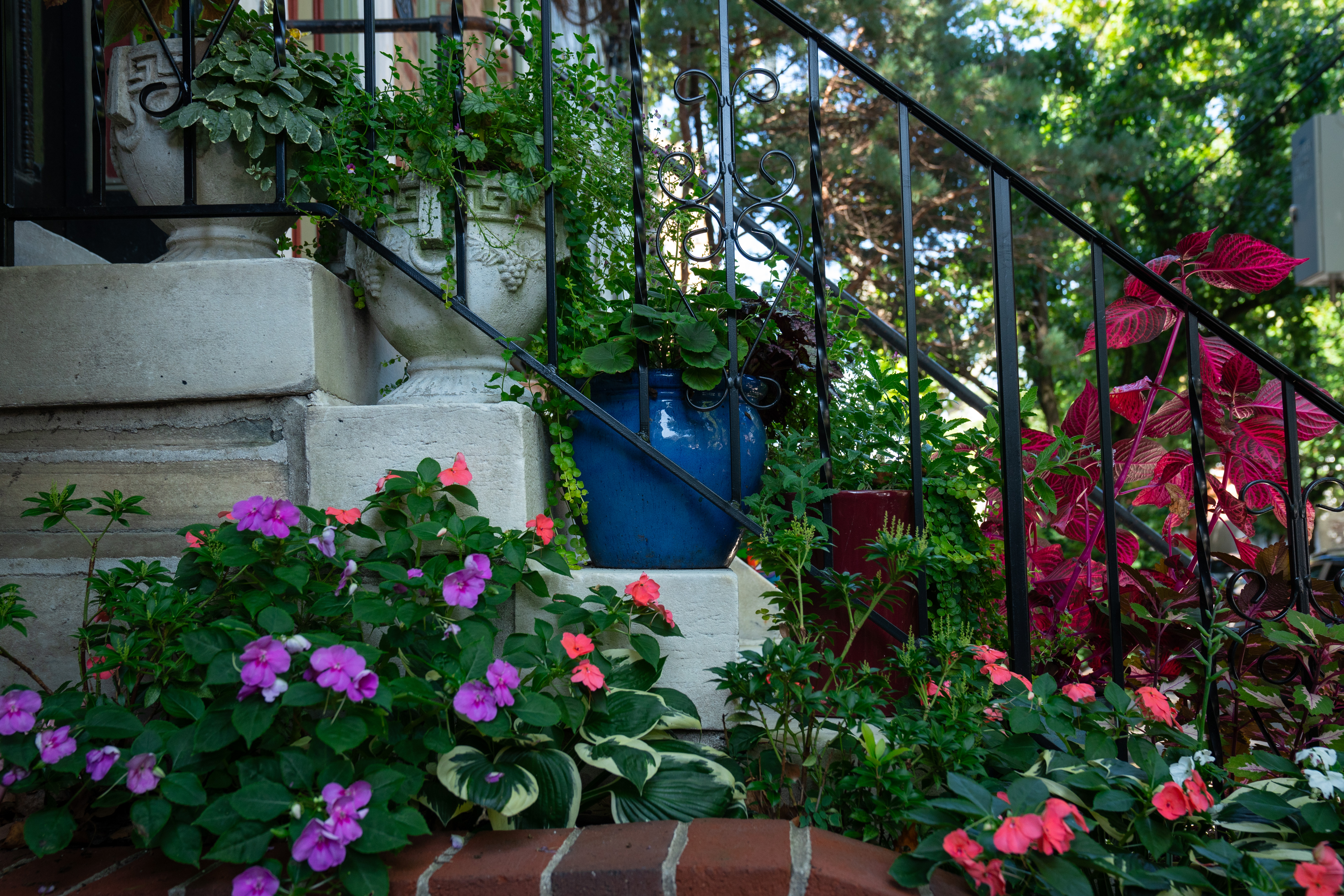
    Impatiens and verdant potted plants line the front steps of the home.Sarah Silbiger / For The Inquirer

    Over the last 150 years, the “Centennial” homes have been altered. Some have been re-stuccoed or faced with brick. But they all still have their front gardens.

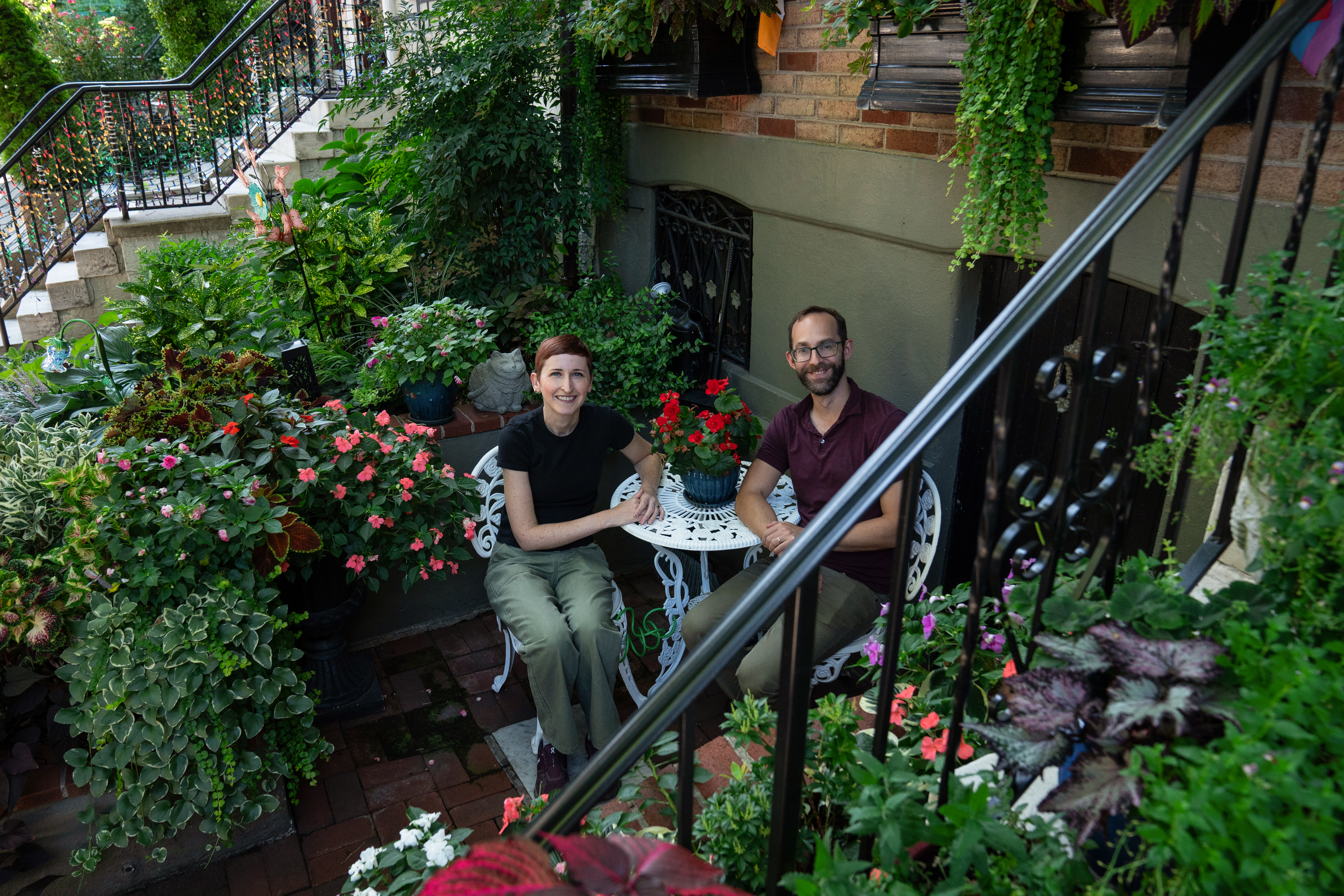
    Johnson and his wife, Charlotte Burns, like their neighbors, have planted their precious plot with flowers and greenery.

    The floral motif begins at the east end of the block, where Brian Augustine has painted a mural on the garage wall adjacent to his house. Augustine, a contractor and amateur artist, copied a Claude Monet painting of the garden at Giverny, the famous impressionist’s home in France. Augustine planted white rocktrumpet vines in his garden to complement the white water lilies in the mural.
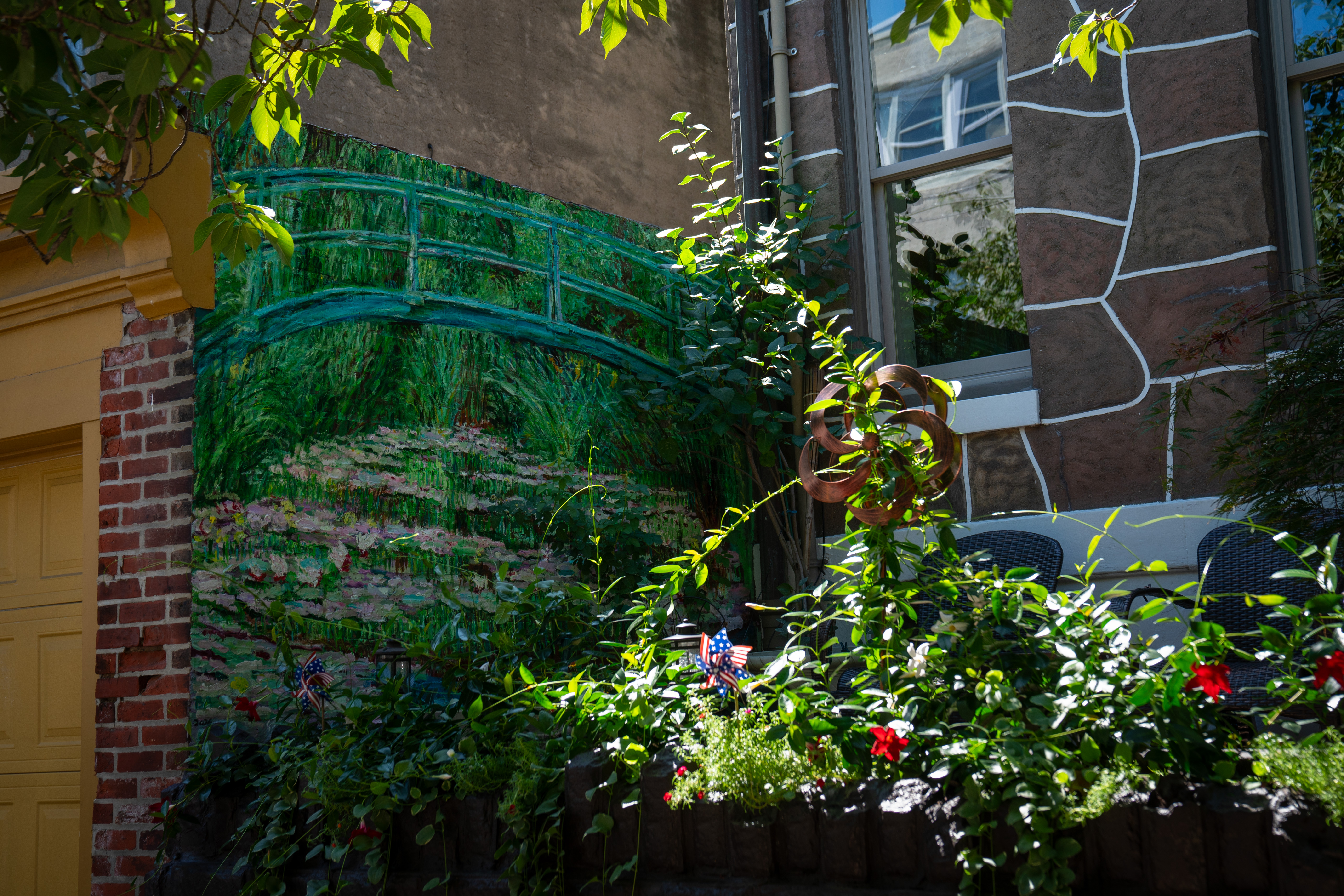
    A mural by Brian Augustine, imitating a Monet painting, is seen in the neighborhood, known as Centennial Boulevard.Sarah Silbiger / For The Inquirer

    Farther down the block Sam Cifelli has wound Christmas lights around the handrail going up his front steps next to shrubbery. He adds more lights during the holidays to the delight of Johnson and Burns, who live next door.

    The couple purchased their four-bedroom, 2½-bath home in February 2025. Johnson said he let Charlotte do all the gardening.

    By summer, Burns’ plantings were so lush a neighbor gave her a flier about the Flowering Fronts of Fairmount Competition sponsored by the Fairmount Civic Association. Burns entered the contest and won a prize. This summer she was a finalist in the Pennsylvania Horticultural Society’s Citywide Gardening Challenge.
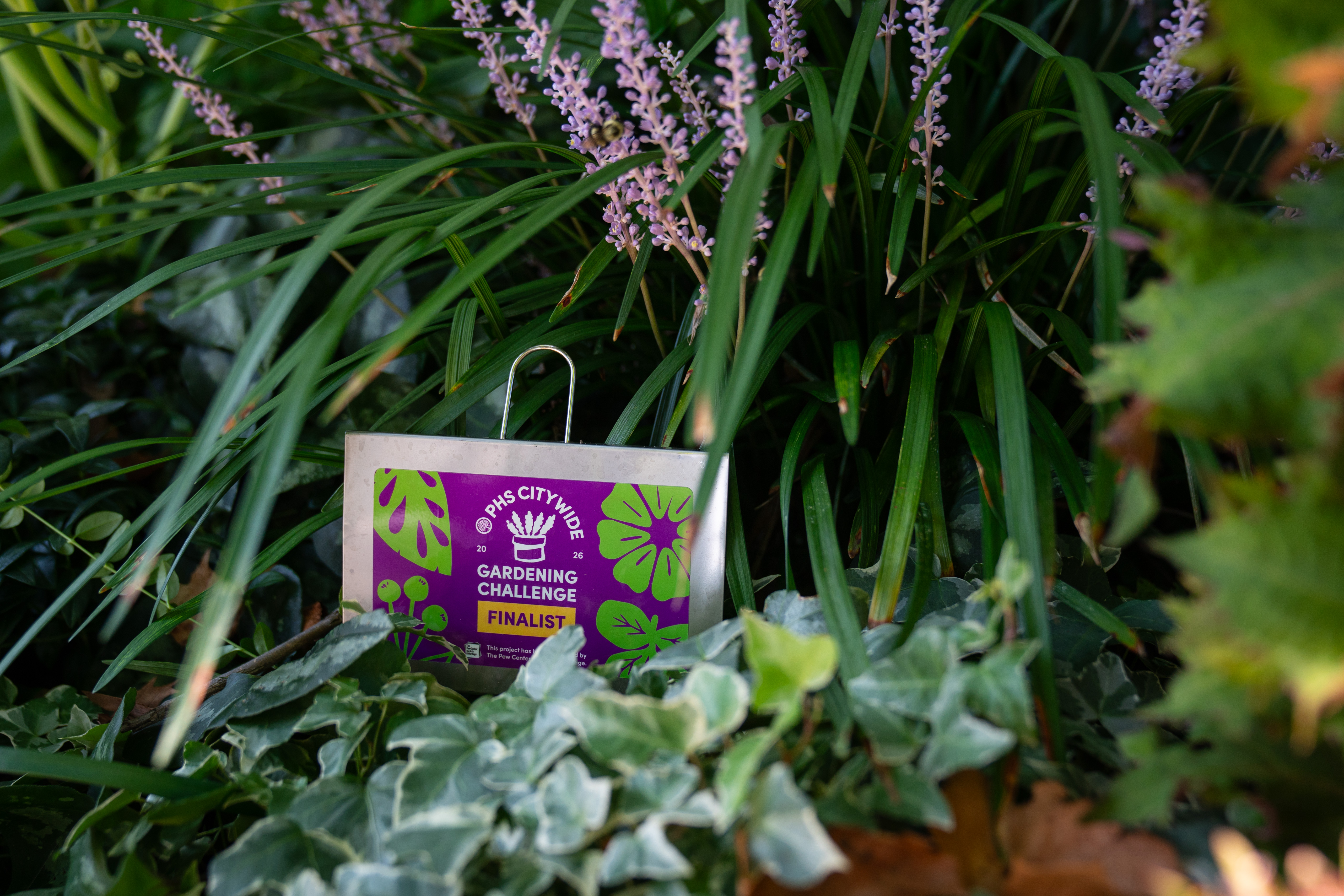
    A plaque from the Pennsylvania Horticultural Society 2026 Gardening Challenge sits in front of some purple liriope.Sarah Silbiger / For The Inquirer
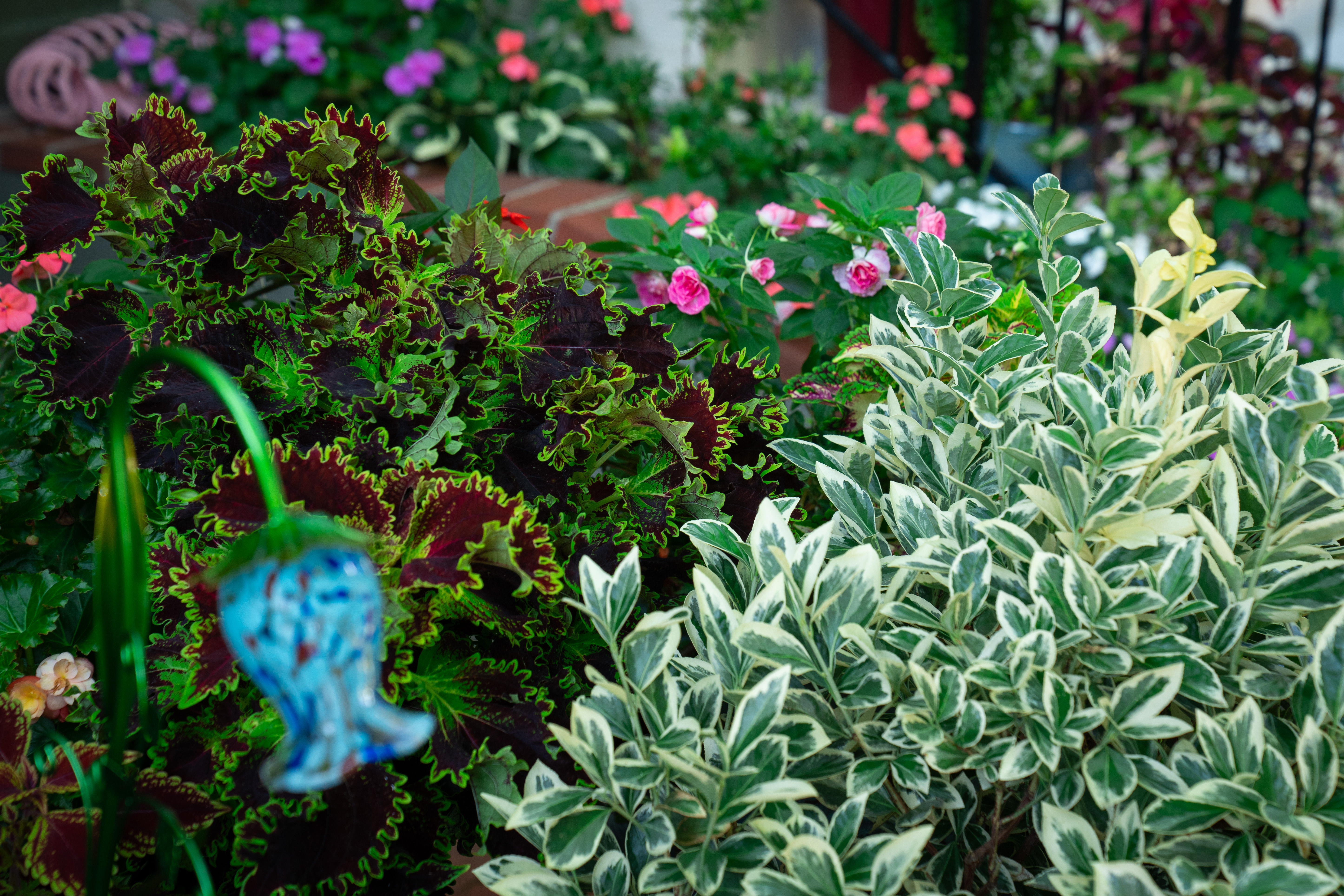
    Coleus and Silver King Euonymus, with flowers behind.Sarah Silbiger / For The Inquirer

    Burns’ success wasn’t just beginner’s luck. She grew up watching her landscape designer father, Brian Burns, at work. Before moving to Philadelphia she gardened at a house she and her husband rented in Georgia.

    Burns kept the English ivy and the heavenly bamboo she found in the garden and purchased annuals including begonias, impatiens, vincas, and multihued coleus at the local Ace Hardware store.

    Her father helped Burns choose and plant perennials such as spikes of purple liriope, Silver King Euonymus — which has green, leathery leaves edged in white and speckled with gold dust — red-tinged pieris japonica and glossy abelia.

    Gardening is challenging. While Burns’ creeping Jenny, an annual, “grew back this year,” she said, the hydrangea did not bloom, and she had to use a pesticide “for the first time” to remedy a lace bug infestation on the Japanese hosta.
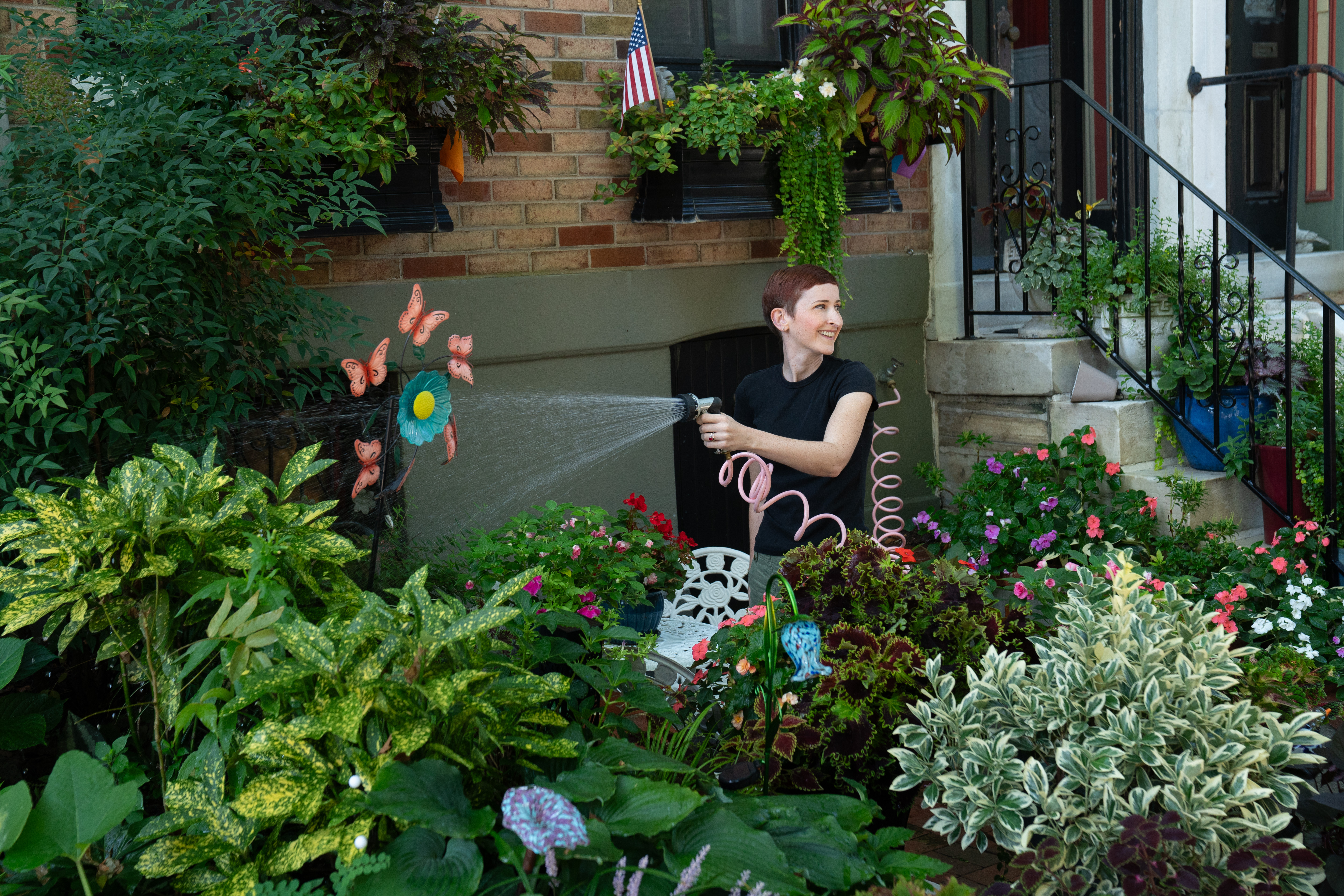
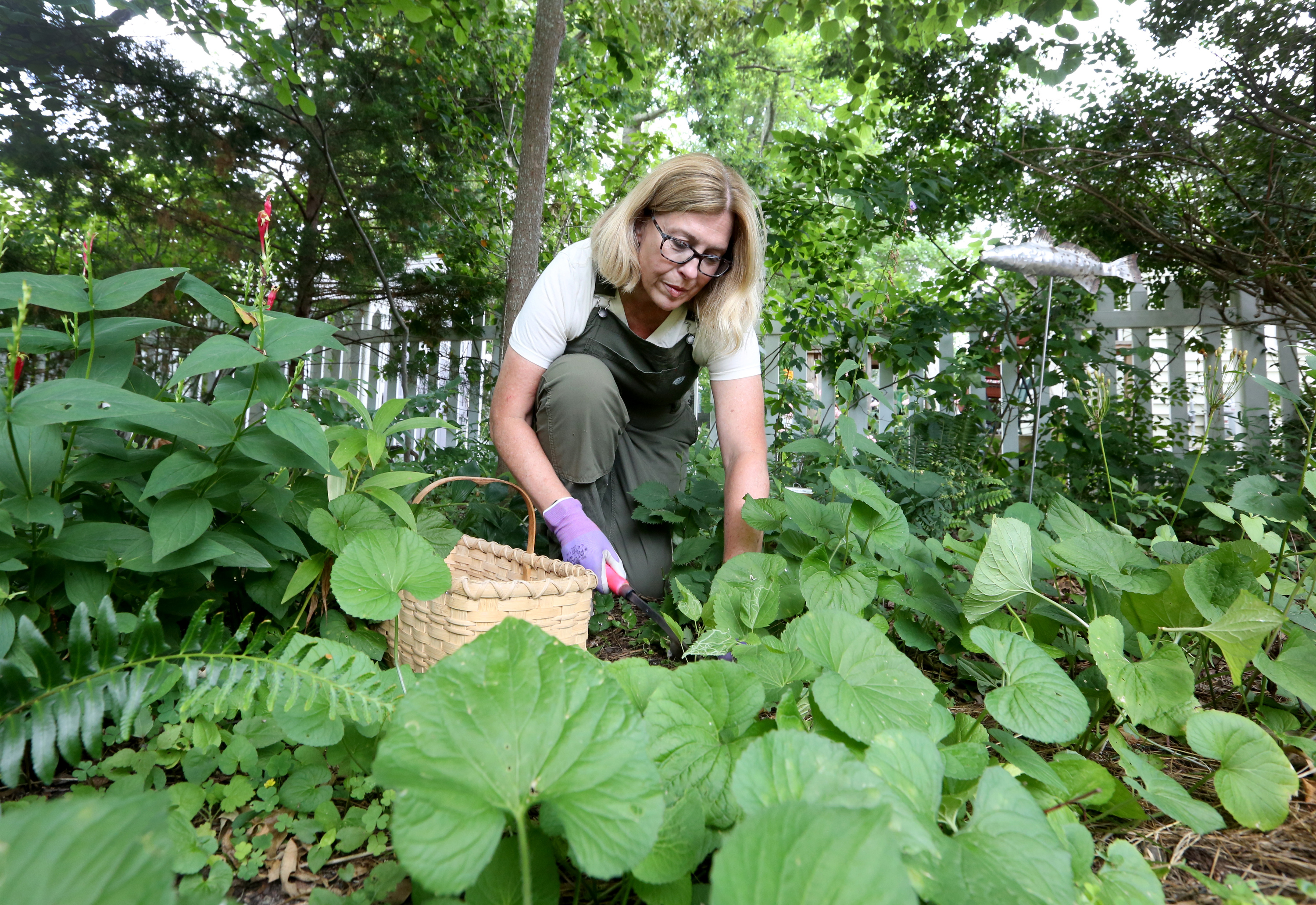
    Charlotte Burns waters her prize-winning garden.Sarah Silbiger / For The Inquirer

    Besides planting in the ground, Burns has filled window boxes and ceramic pots with colorful plants that line her front steps.

    On the brick patio in the middle of the garden red begonias in a blue pot are centered on the white wrought iron table. She found the table and matching chairs at a Bucks County estate sale.

    Burns embellished the garden with glass birds from the Pennsylvania Renaissance Faire and glass flowers from the Philadelphia Flower Show. A ceramic frog was purchased at the annual Fairmount Flea Market. The cat banner and front door wreath were gifts from her mother, Cheryl Cunningham.

    Johnson helps his wife with the heavy lifting, spreading bags of mulch, and moving the pots to the basement for storage in the winter.

    Burns, a veterinary anesthesiologist, and Johnson, a battery scientist, met as students at Drexel University and married in 2021.
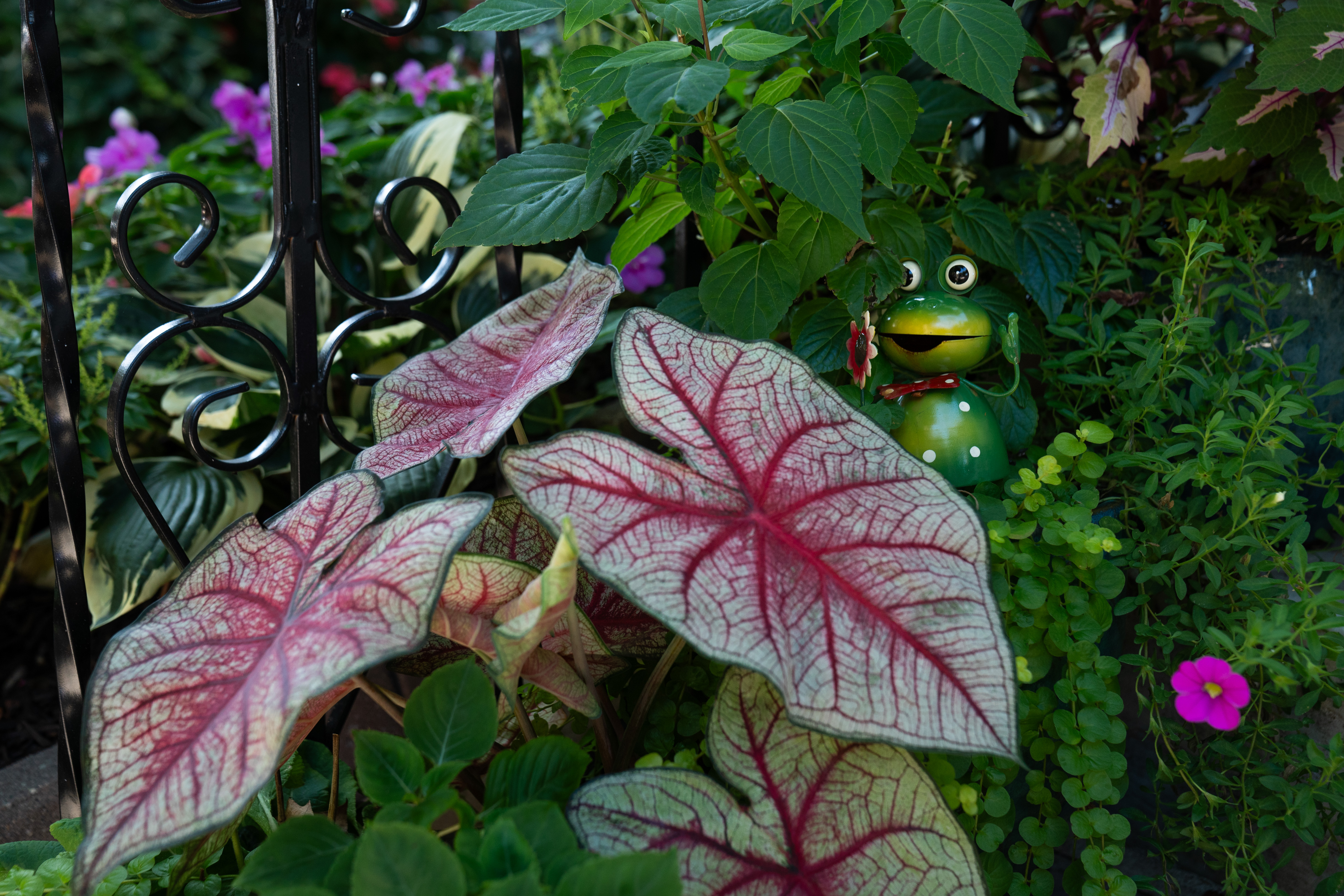
    A frog figurine peeks out from behind caladiums and other greenery.Sarah Silbiger / For The Inquirer
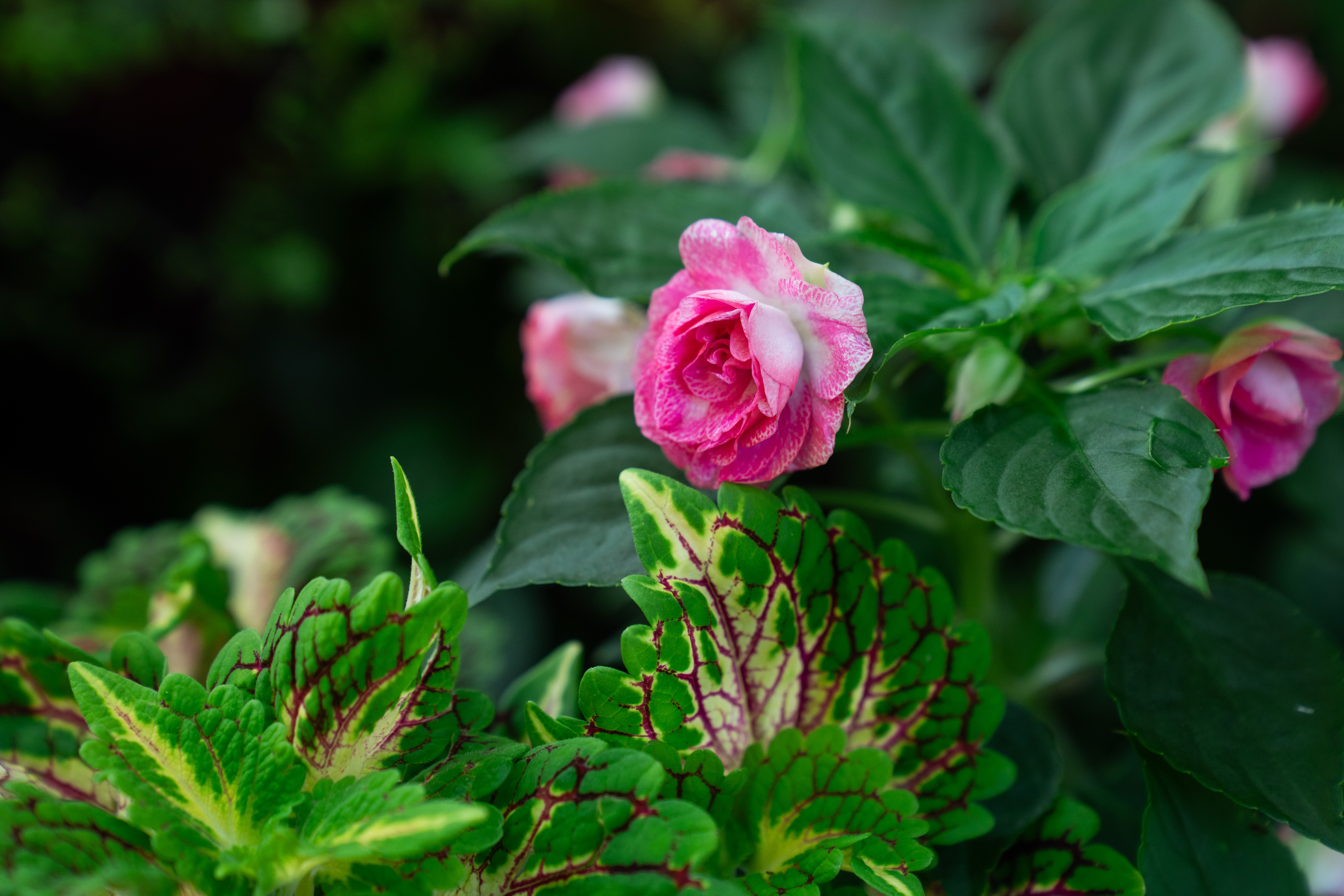
    A rose in bloom among the coleus.Sarah Silbiger / For The Inquirer

    The couple had permission to string lights around Mario and Anna Crociata’s oak tree next door.

    Burns planted periwinkle and hosta in the tree well and created a miniature village with gnomes and tiny houses. If an enchanted child takes one of the gnomes, Burns will purchase more at the nearby dollar store.

    They hope Fairmounters will enjoy the flowering fronts on Centennial Boulevard for another 150 years.

    Is your house a Haven? Nominate your home by email (and send some digital photographs) at properties@inquirer.com.
  • Their Merion Station yard didn’t have much life. Now it’s filled with flowers.

    Their Merion Station yard didn’t have much life. Now it’s filled with flowers.

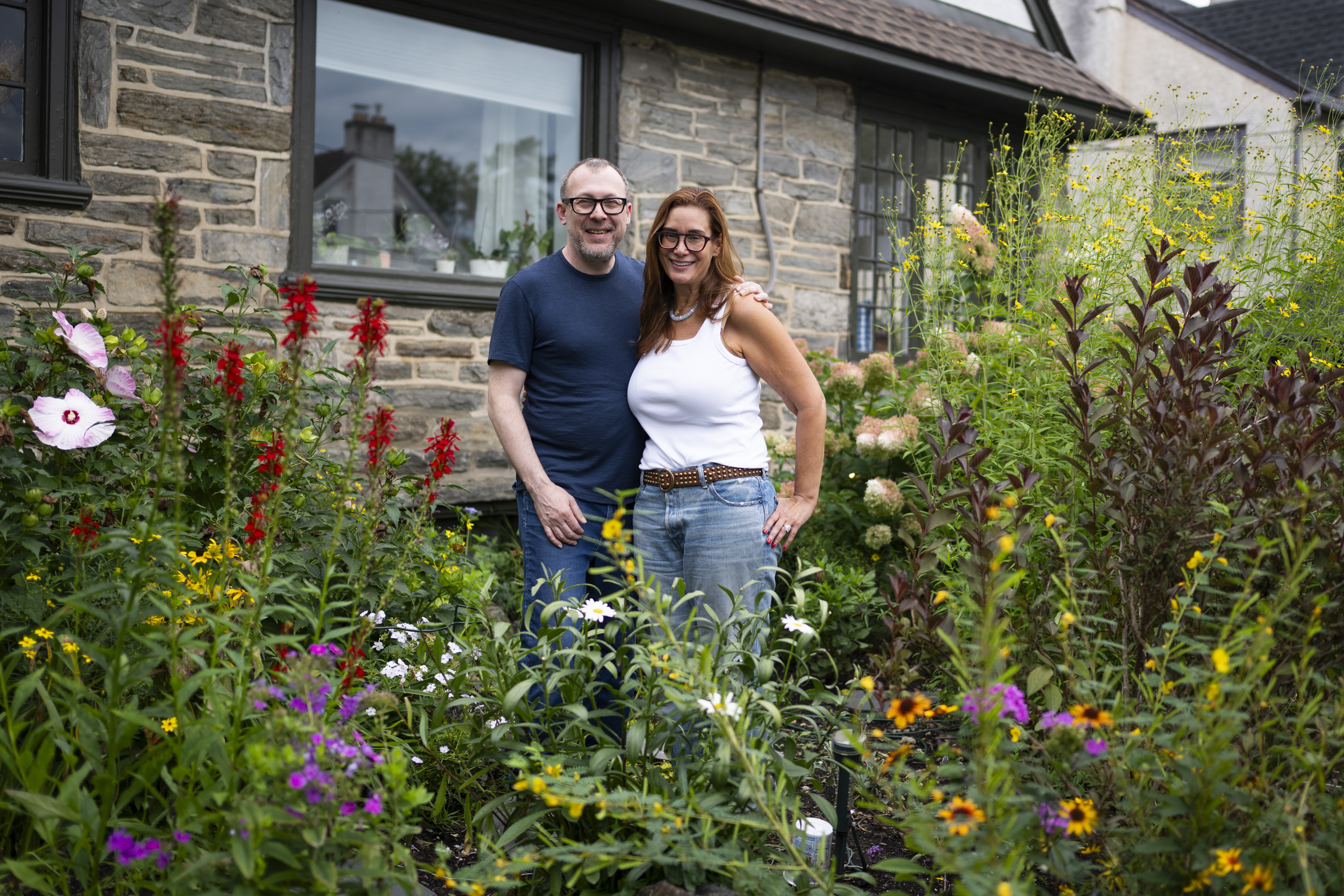
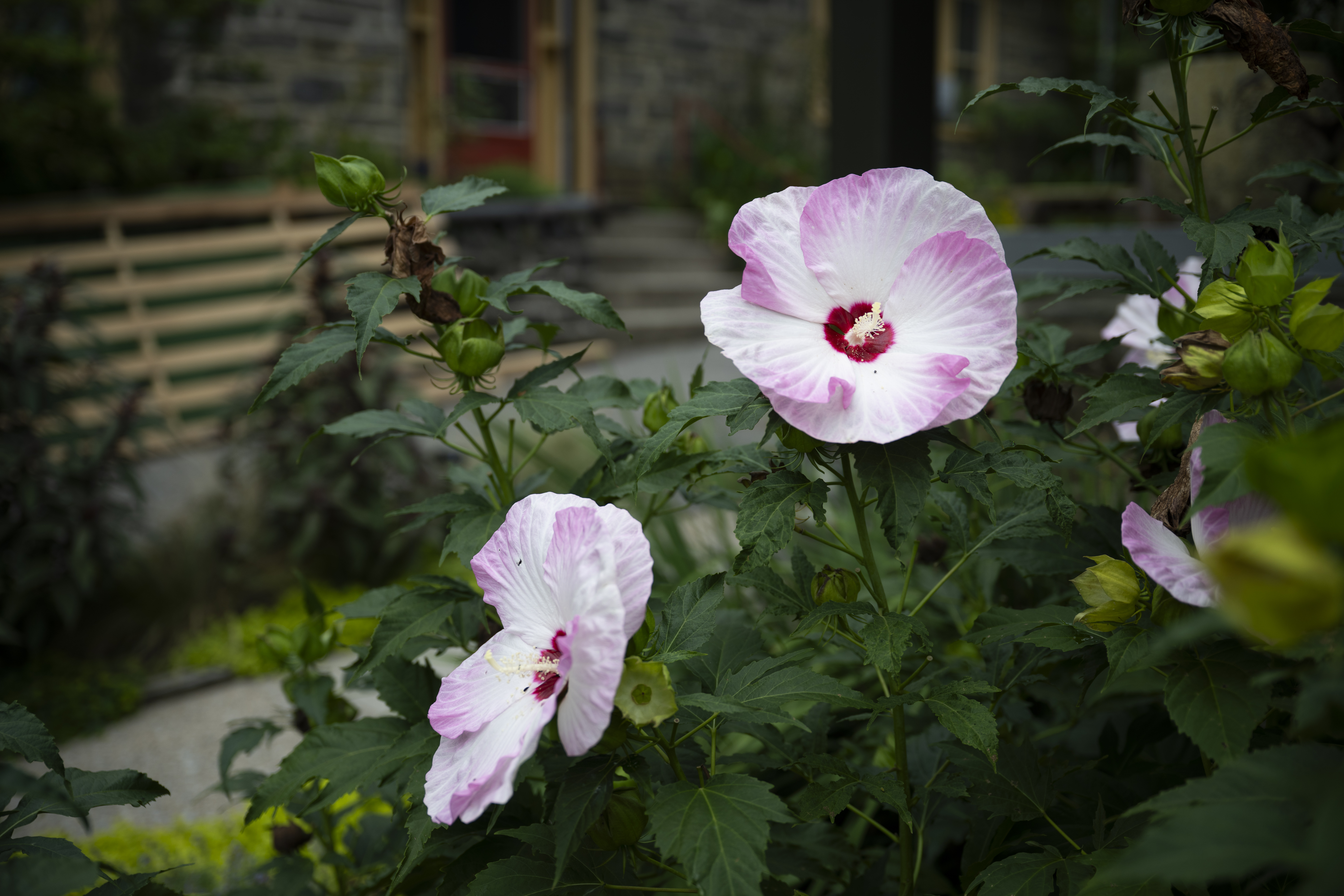
    Platter-sized hibiscus, hydrangea, cardinal flowers, small yellow blooms called partridge peas, chartreuse creeping Jenny, daisies, and lavender fill the front yard of the Merion Station home.

    The plantings extend from the porch to the curb, where parked cars push against tall stems of deep pink celosia. “It’s a hostile environment. You hope for the best,” said Boots Levinson.

    Levinson and his wife, Laura White, own the three-story Tudor surrounded by colorful vegetation.

    “Laura’s the gardener,” Levinson said. “I’m the waterer and manual laborer.”

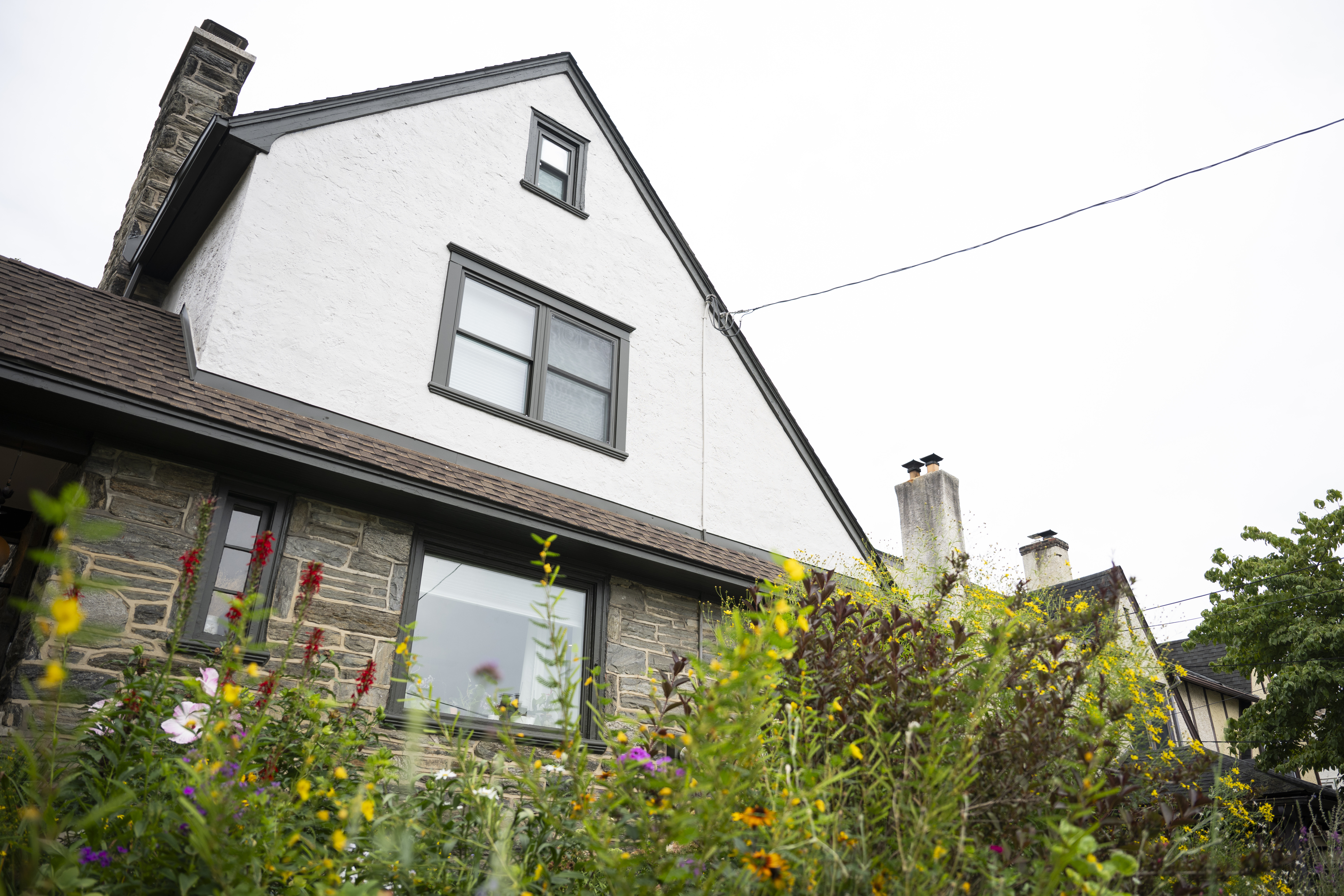
    White and Levinson’s home is surrounded by flowering gardens.Joe Lamberti / For The Inquirer
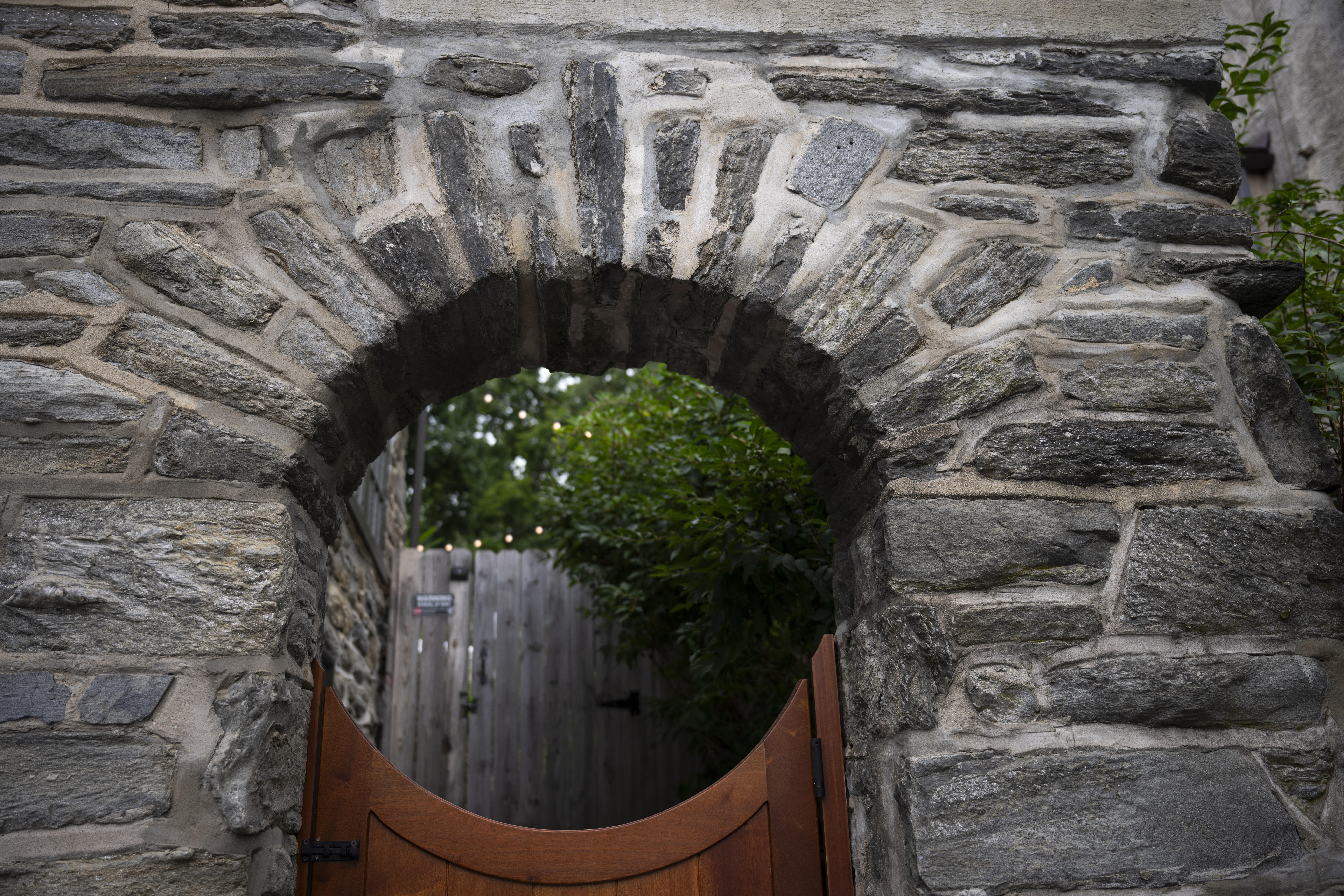
    The Tudor-style home has an arch that required repairs.Joe Lamberti / For The Inquirer

    The couple moved to the 3,000-square-foot property in 2021 from a one-bedroom condo in Center City. “We bought the first house we looked at,” White said, then conceded, “We had no idea what we were getting into.”

    The stucco-and-brick, four-bedroom, 2½-bath house had a new kitchen and bathroom. There was space to entertain and for corgis Archie and Ozzie to romp.

    Levinson and White met on Jdate, an online dating service for Jewish singles. They had in common a Midwest background. She grew up in Missouri, while he lived in Minnesota until moving to the Philadelphia area in the sixth grade. White came to Philadelphia for her medical training. The couple married in 2013.

    The house needed new air-conditioning and heating systems, and a basement leak exposed a drainage problem.

    Hibiscus flowers bloom in the front yard.Joe Lamberti / For The Inquirer
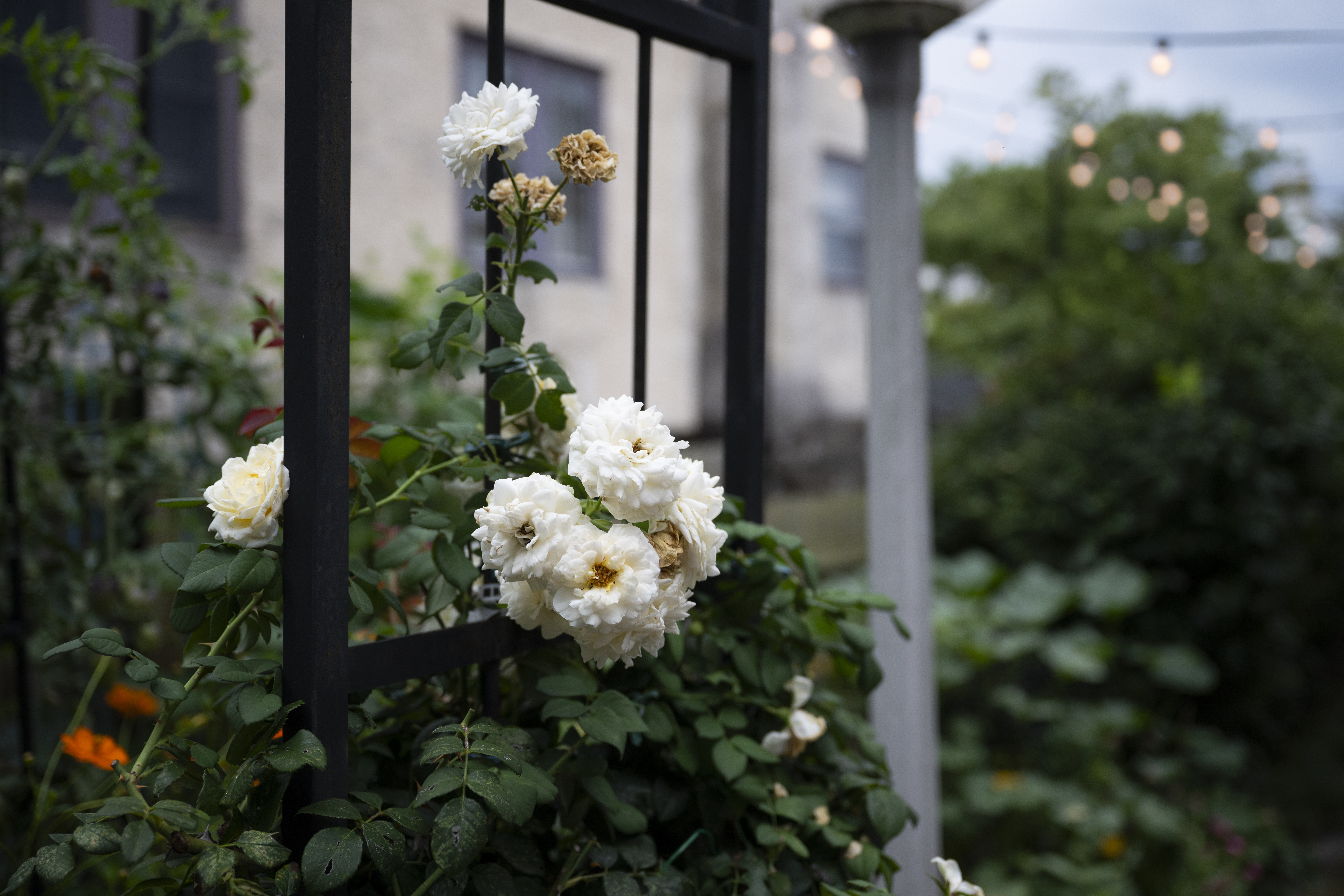
    White roses in the garden.Joe Lamberti / For The Inquirer

    Landscaping amounted to little more than a crab apple tree in the backyard, rocks and dirt, and a flower bed covering a parking space in front of the garage.

    White and Levinson hired mason Deen Vinci of Surrounded by Stone in Merion Station to repoint and repair the stone arch that leads to the backyard. Vinci also built the arch’s wood door and paved the front driveway. In the backyard he reset and repaired patio bricks.

    White furnished the patio with a wood table and chairs from Arhaus. The large umbrella from Wayfair is set in concrete so it won’t tumble over in a storm. Plants in the backyard include hydrangeas, zinnias, jasmine, dahlias, gardenia, a juniper and a pine tree.

    White, a psychiatrist, had no horticultural training. But she learned a bit from watching her father, Bruce, garden and is grateful to neighbors who share knowledge and plantings with her. Watching hummingbirds and bees flit about her flowers, she and her neighbors “have created a pollinator pathway.”

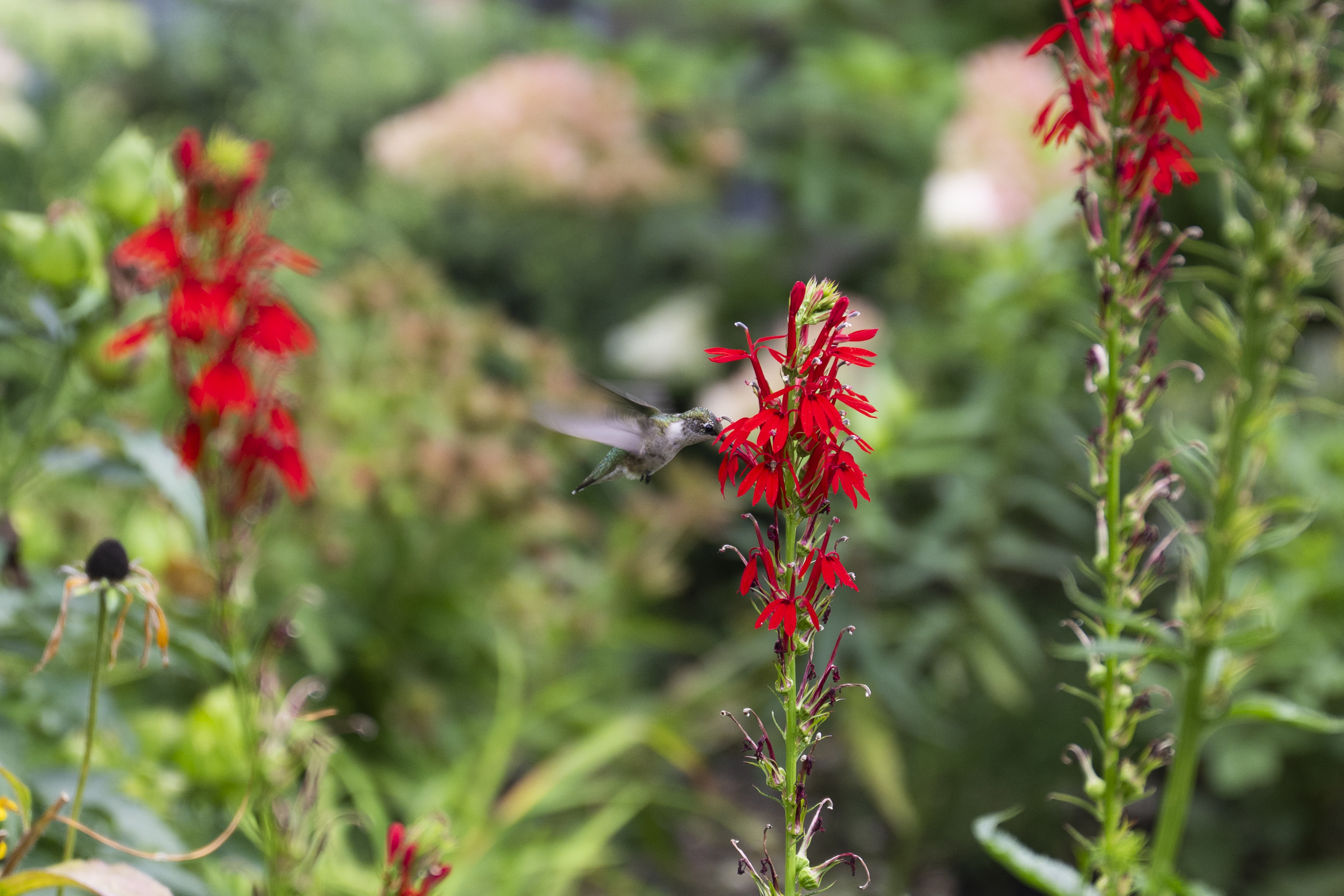
    A hummingbird enjoys cardinal flowers in White and Levinson’s garden.Joe Lamberti / For The Inquirer

    Neighbor Suzanne Kane, who tends a lush garden across the street, is a particularly helpful mentor, White said.

    Levinson, a Realtor, said his wife’s cultivating talents have been aided by her medical training. “She’s a scientist and is observant and nurturing.”

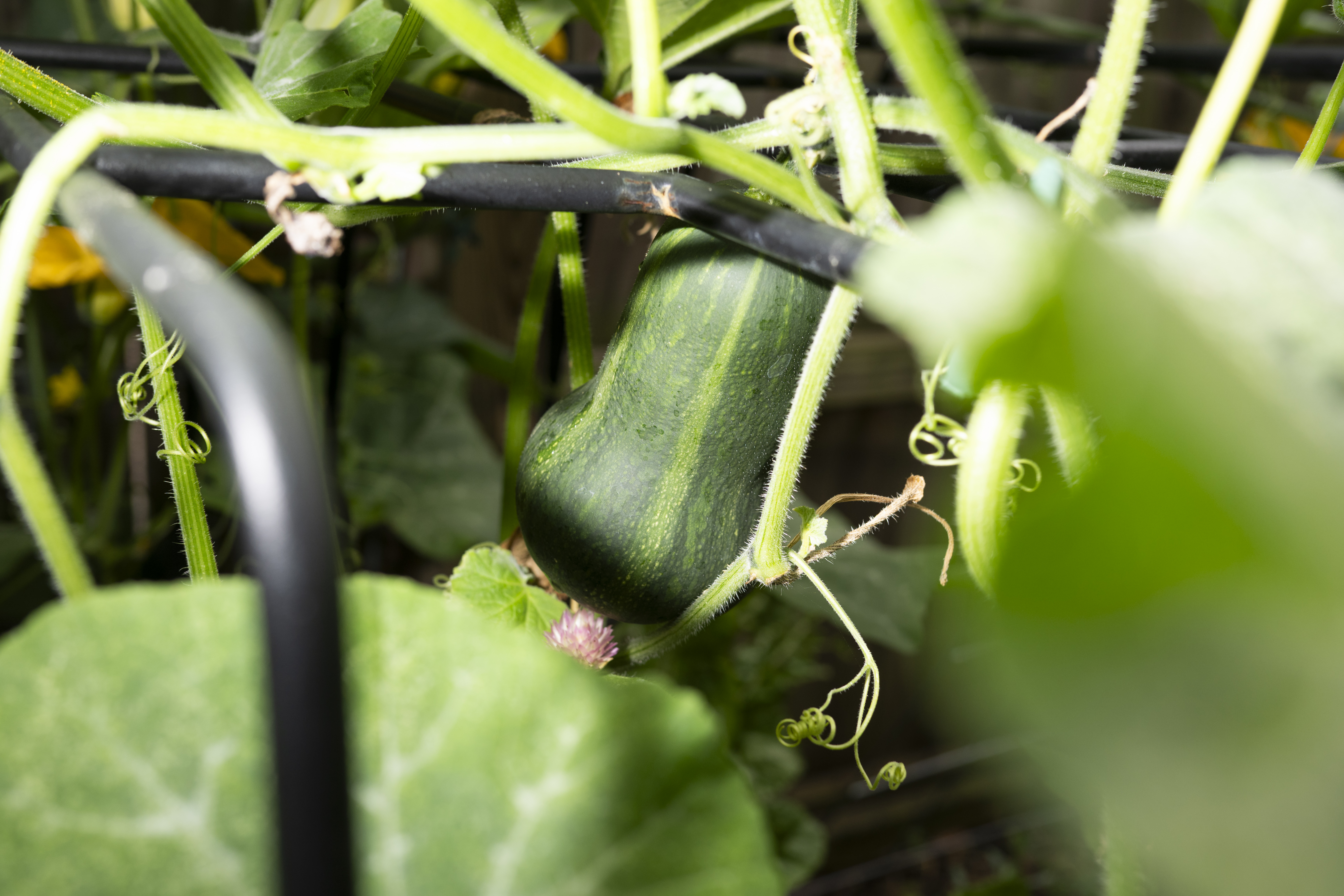
    White planted a kitchen garden on one side of the house with honeynut squash, Swiss chard, Thai and Shishito peppers, and varieties of plum tomatoes she will can. Cucumbers grow on a trellis. In late summer, Ozark strawberries are ripening. Alpine strawberries, which ripen in the front yard in late spring, are so sweet neighborhood children pilfer them.

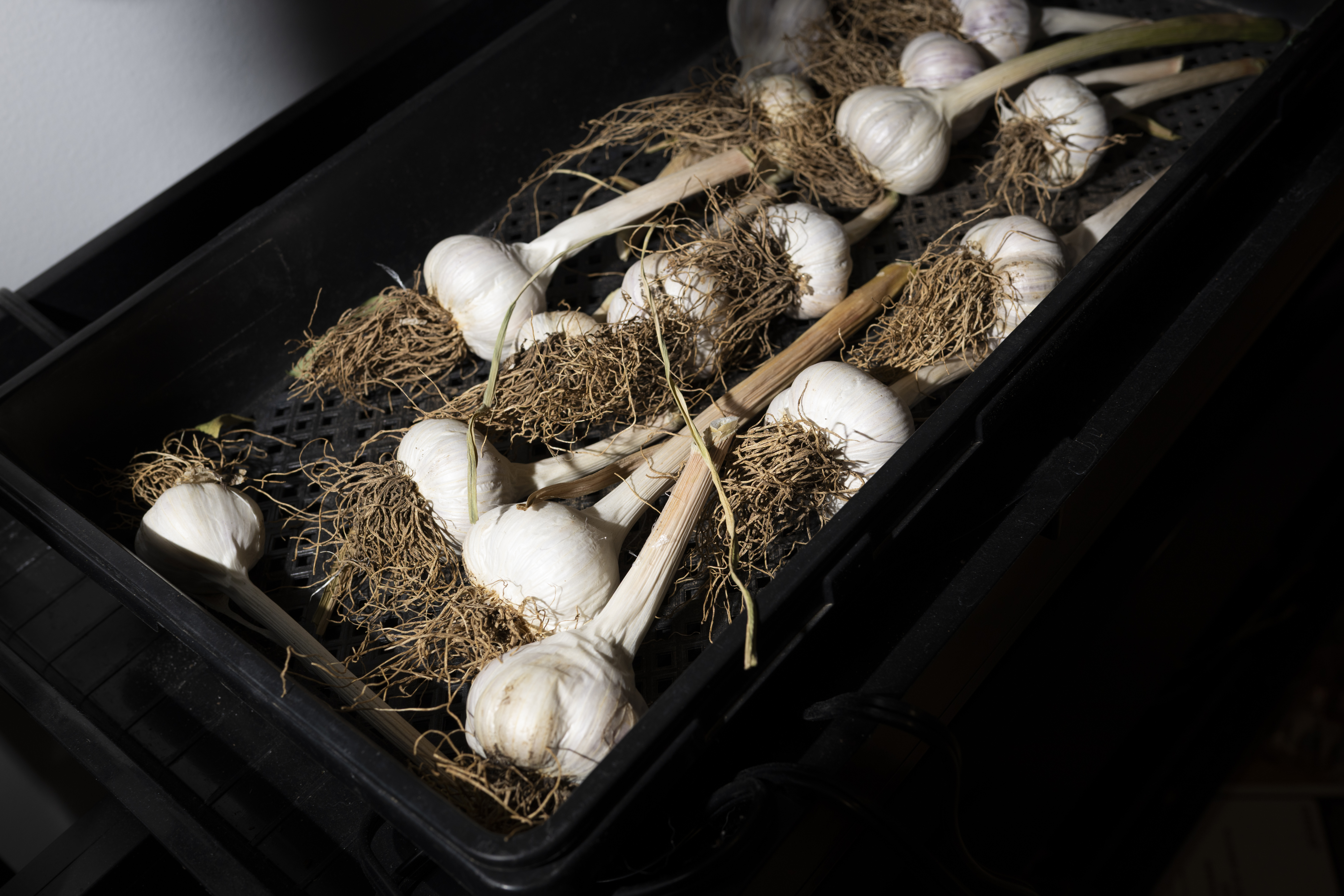
    White stores garlic harvested from her garden in the basement.Joe Lamberti / For The Inquirer
    A squash growing in the garden.Joe Lamberti / For The Inquirer

    White has harvested garlic stored in trays in the basement where she starts seeds in the winter with hydroponic lamps. She likes to garden year-round. Soon she will move the Amaryllis plants from outside to the basement for eight weeks or so before placing them in a sunny spot indoors in time for them to bloom at Christmas.

    White grows straw flowers because they are easy to dry for year-round flower arrangements. And she chooses perennial plants that span the seasons, such as Muhly grass, which turns from green in the summer to fluffy pink in the fall. Amsonia grass has blue blossoms in the spring and turns from green to gold in the fall.

    White shops for plants at several locations, including Primex Garden Center in Glenside, Wynnewood Garden Center, and Lancaster Farmers Market.

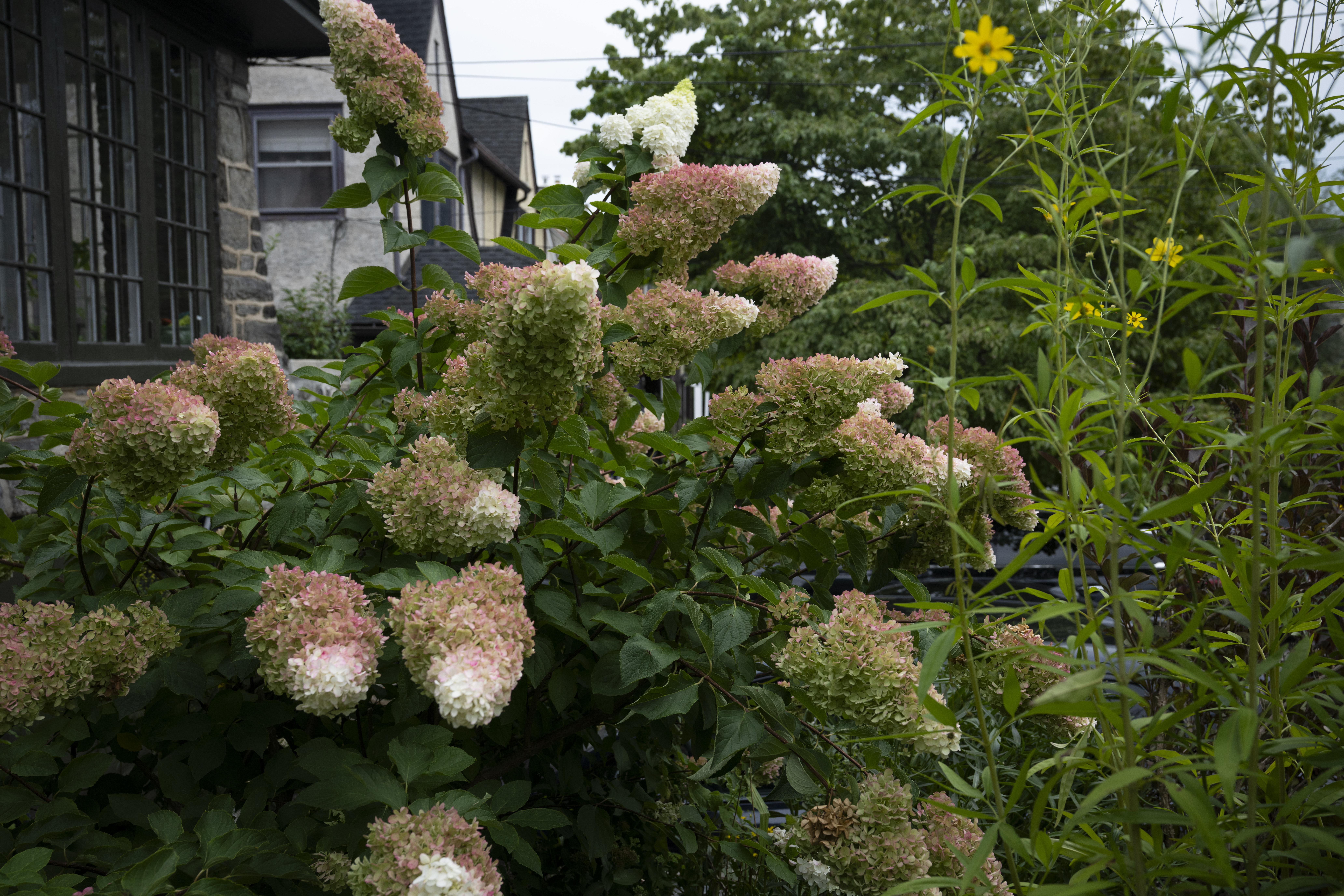
    A hydrangea in the front yard.Joe Lamberti / For The Inquirer
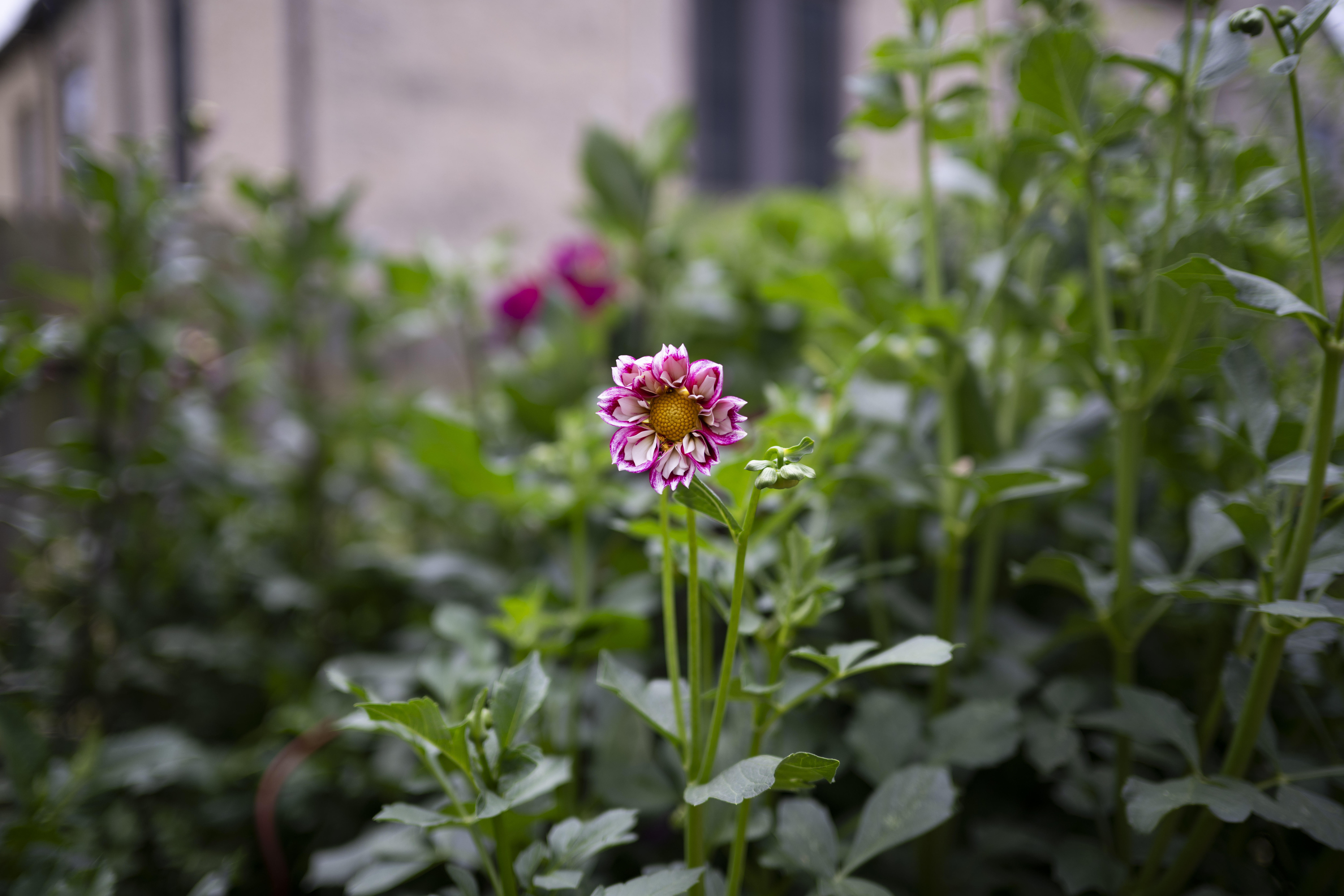
    A dahlia in bloom in the garden.Joe Lamberti / For The Inquirer

    Caring for the property is work.

    “Sometimes,” Levinson admitted, “I miss just paying a monthly condo fee.”

    Still, he said having gardens on all sides of his home is “like having four extra rooms.”

    Is your house a Haven? Nominate your home by email (and send some digital photographs) at properties@inquirer.com.
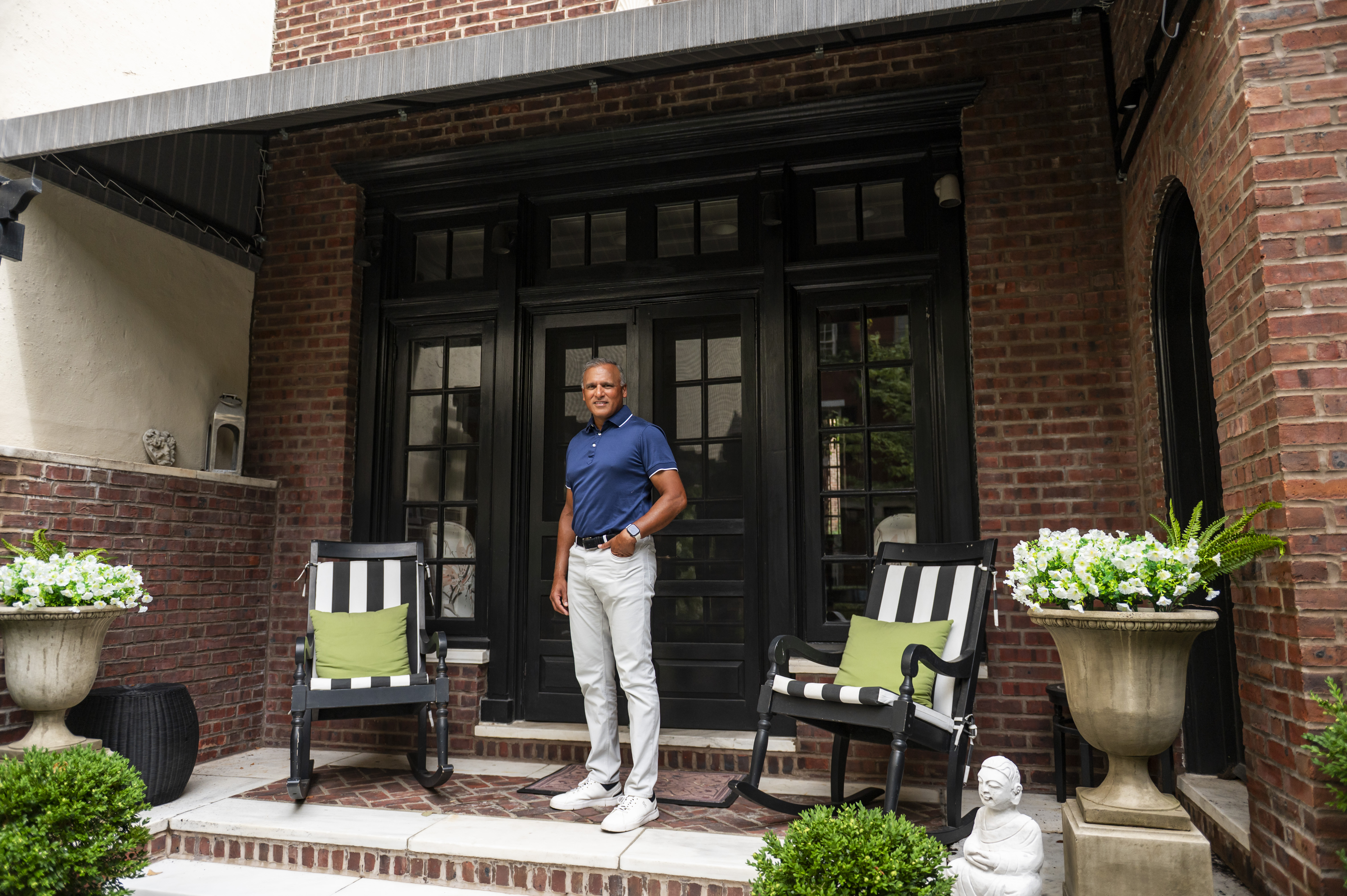
  • From a simple awning to a six-figure outdoor room, how Philly homeowners add shade to their yards

    From a simple awning to a six-figure outdoor room, how Philly homeowners add shade to their yards

    Carla and Steve Red had a pair of covetable outdoor living spaces on their Fitler Square rowhouse, with a first-floor patio and a rooftop deck. But they weren’t so pleasant in the summer.

    “During Philly summers, you want to spend a lot of time outside on your patio, but the roof is basically baking in the sun,” Carla said. “There aren’t trees to cover you, and you really get crushed.”

    So last year they added some shade, and it was a game changer.

    With the help of a landscape designer and Paul Construction & Awning, the couple installed motorized retractable awnings over each deck. They now escape the summer heat and extend the outdoor season through the fall and early winter.

    The roughly 600-square-foot roof deck is the prime spot for entertaining guests and enjoying an evening glass of wine while watching the sunset. During rain showers, they’re no longer forced to retreat inside and instead enjoy the pitter-pattering of precipitation on the gray-and-white striped awning.

    The patio awning on their first level covers about half the 300-square-foot space, allowing for a mix of shade and sun. The couple also upgraded the furniture and added colorful flowers, a koi pond, and gas firepit.

    “We created extensions of the house where people really want to hang out,” said Carla, who spent about $27,000 on the two awnings. “It’s a Zen experience.”

    Outdoor structures, including pergolas, arbors, and gazebos, were added or upgraded by 35% of homeowners in 2026, according to the 2026 Houzz Outdoor Trend Study. That’s up from 20% in 2024. It’s a sign that homeowners are thinking about outdoor spaces less as occasional-use areas and more as functional living spaces, said Marine Sargsyan, head of economic research at Houzz.

    The most budget-friendly shade options, like a simple pergola kit ordered online, have price tags of a few hundred dollars at the low end. Customized structures offering year-round comfort can come with six-figure costs.

    “Shade structures are a key part of how homeowners turn outdoor areas into true extensions of the home,” Sargsyan said. “By adding comfort, definition, and protection from the elements, these structures help transform a yard, patio, or deck into an outdoor room.”

    Choosing an outdoor structure

    No matter the size of the property — from a city rowhouse’s garden to a sprawling yard in the suburbs — outdoor living can be enhanced with a thoughtfully designed shade structure. Options range from a DIY shade sail, constructed from UV-resistant fabric hung onto poles, to an elaborate gazebo outfitted with a retractable louvered roof and walls, rain and wind sensors, and radiant heat or air-conditioning.

    People just want to spend more time outside, said Gregg DiSantis, president of Distinctive Outdoor Structures in North Wales. Finding a new appreciation for the outdoors during the pandemic, homeowners sought out ways to turn their decks and patios into structures they could enjoy year-round.

    “They got used to being outside and really enjoyed it,” he said. “Now it’s a way of life.”

    Popular options include a pergola, cabana, awning, or screen. The yard’s layout and the homeowner’s budget shape the options.

    Rooftop decks, prevalent in the city and at the Shore, are a popular spot for a louvered pergola system with adjustable horizontal slats that open and close by the push of a button. The closed roof offers relief from the hot daytime sun and then opens to enjoy the evening breeze under the stars.

    Structures come in a multitude of colors, wood grains, designs, and styles. Homeowners can choose decorative features and trim to match the home’s architecture. A custom-built pergola from Distinctive Outdoor Structures costs $35,000 to $45,000 on average.

    Building an outdoor room at a historic city home

    Construction projects in the city, even for an outdoor feature, come with additional challenges. Permitting, installing electricity, and using a crane to get materials up to the roof are more likely to be part of the project. These steps take time and are costly.

    Bob and Amy Kothari’s outdoor space at their home in Washington Square West.Allie Ippolito / For The Inquirer

    Amy and Bob Kothari took the time to see these challenges through. After many years living in the suburbs, the couple were anxious for city living when they bought a Washington Square West rowhouse in 2019. But they didn’t want to give up the outdoor space they enjoyed and depended upon when they lived in Ardmore.

    Their new home offered the best of both worlds: the benefits of urban living and an 800-square-foot yard. The house is a designated historic home, requiring special permits before starting construction.

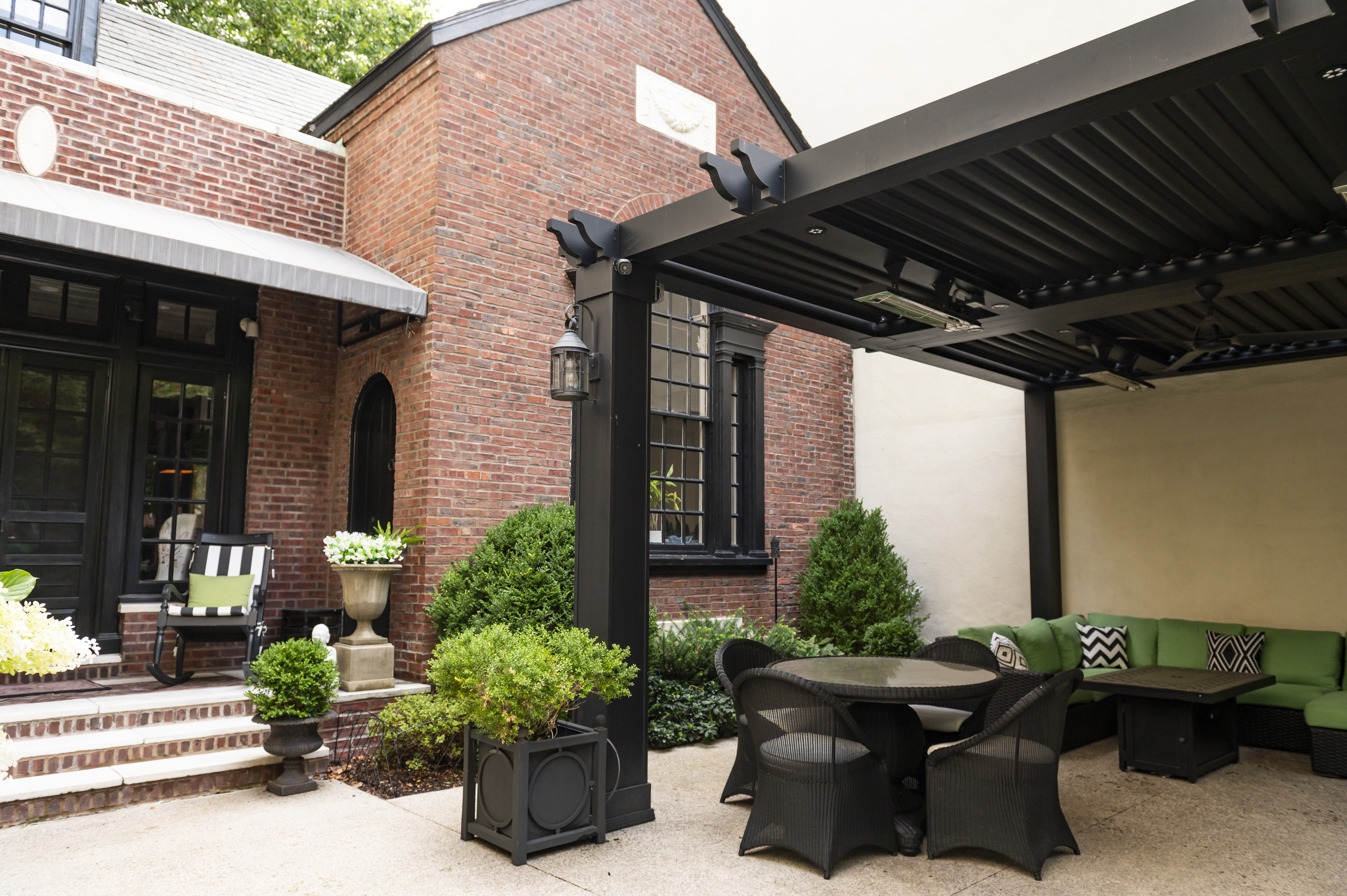
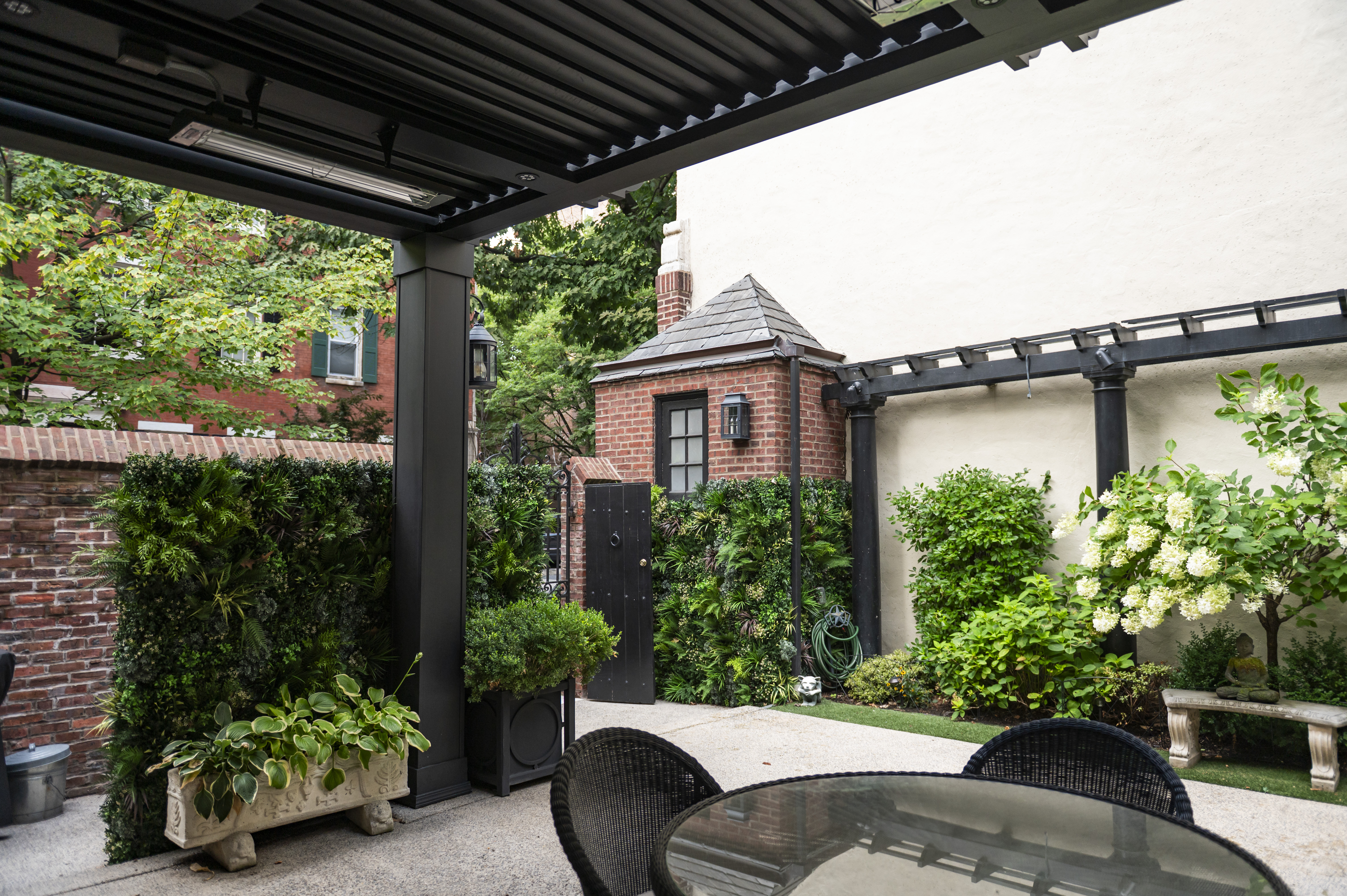
    Distinctive Outdoor Structures built a 10-foot square pergola in their yard, complete with a louvered roof operated by a remote. In inclement weather, the roof closes automatically. The space includes lights, a ceiling fan to keep it cool in the summer, and heaters that kick on when it’s cold outside.

    They use the space to entertain, enjoy evening cocktails and morning coffee, and for private work-from-home space. The project cost about $140,000 for the pergola, brickwork, lighting, landscaping, and flagstone.

    “It’s a very functional but comfortable area,” Amy said. “It extends the inside of the house outside.”

    Budget-friendly shade

    Awnings and motorized retractable shades and screens are popular ways to create a cooler, more comfortable outdoor space.

    “An awning is ideal when the homeowner wants protection from direct sun overhead, shelter from light rain, a lower-cost alternative to building a permanent roof, and the flexibility of a retractable system — sun when desired, shade when needed,” said AnnMarie Salassa, executive assistant at Paul Construction & Awning in Skippack.

    Awnings are especially common over patios, decks, outdoor dining areas, and windows to reduce indoor heat gain.

    Bob Kothari stands in his yard, under an awning that also provides protection from the elements just off the back of the house.Allie Ippolito / For The Inquirer

    Screens are selected when homeowners want to enjoy fresh air without being bothered by mosquitoes and other insects, Salassa said. Screens also keep space clean from debris, pollen, or leaves, and reduce glare while maintaining views, she said.

    Motorized screens are often paired with covered patios or decks because they can disappear when not needed.

    “The shades we install can withstand 100-mile-per-hour winds,” DiSantis said. “They block out the sun and rain, and keep the heat in. They are a game changer in how people enjoy their spaces.”

    Motorized awnings range in price from about $6,000 to $10,000 for a 12-foot installed product, depending on the materials used, DiSantis said. A 10-foot-wide retractable screen costs $4,500 to $6,000 on average. On the lower end, the screens offer shade or keep out insects but aren’t able to withstand strong winds, he said.

    Budget-friendly shade options aren’t limited to awnings and shades. A prefabricated pergola, for instance, can be more affordable than a custom-built one. Hanso, for instance, a Scandinavian-based company with a large U.S. market, sells prefabricated aluminum gazebos and pergolas starting at $6,000. Ordered online, these are shipped to the consumer, who can then DIY the installation or hire a local contractor to help.

    Home improvement stores and other manufacturers also offer pergola kits, the simplest of which are less than $1,000.

    These structures are made with a powder coating that “last more than 30 years and does not require repainting,” Hanso CEO Darius Kunca said. And, he noted, “Aluminum kits can move with you when you move houses — simple to pack and rebuild again.”

  • Planting native species is gaining popularity. Here’s how Jersey Shore gardeners do it.

    Planting native species is gaining popularity. Here’s how Jersey Shore gardeners do it.

    Virginia Rettig’s garden is her passion.

    The 60-foot-by-100-foot plot on her Cape May property boasts about 200 varieties of native plants, which she estimates have drawn roughly 135 wildlife species. Monarch butterflies, hummingbirds, cardinals, gray catbirds, moths, and a host of other creatures suck nectar from her flowers and drink water from the small waterfall that flows into a pond.

    Once she even saw a black-billed cuckoo, a rarity in Cape May.

    “During spring and fall migration, millions of birds fly through Cape May County, and every blade of vegetation is critically important for them when they need to stop for food,” Rettig said.

    Rettig owns Cape NativeScapes in Cape May. After a 30-year career in the U.S. Fish and Wildlife Service, she is sharing her knowledge and passion for managing wildlife habitats by helping clients create native gardens.

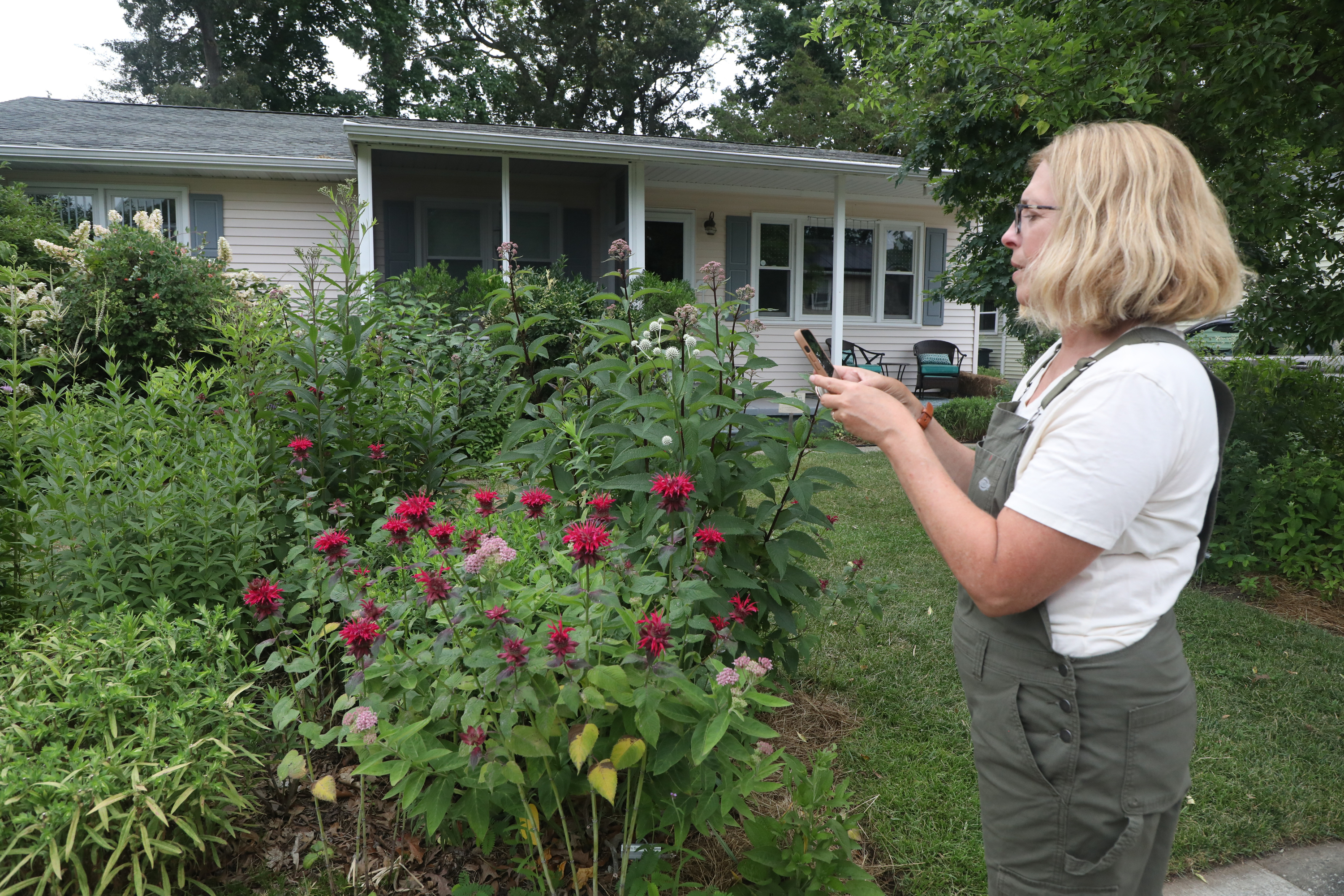
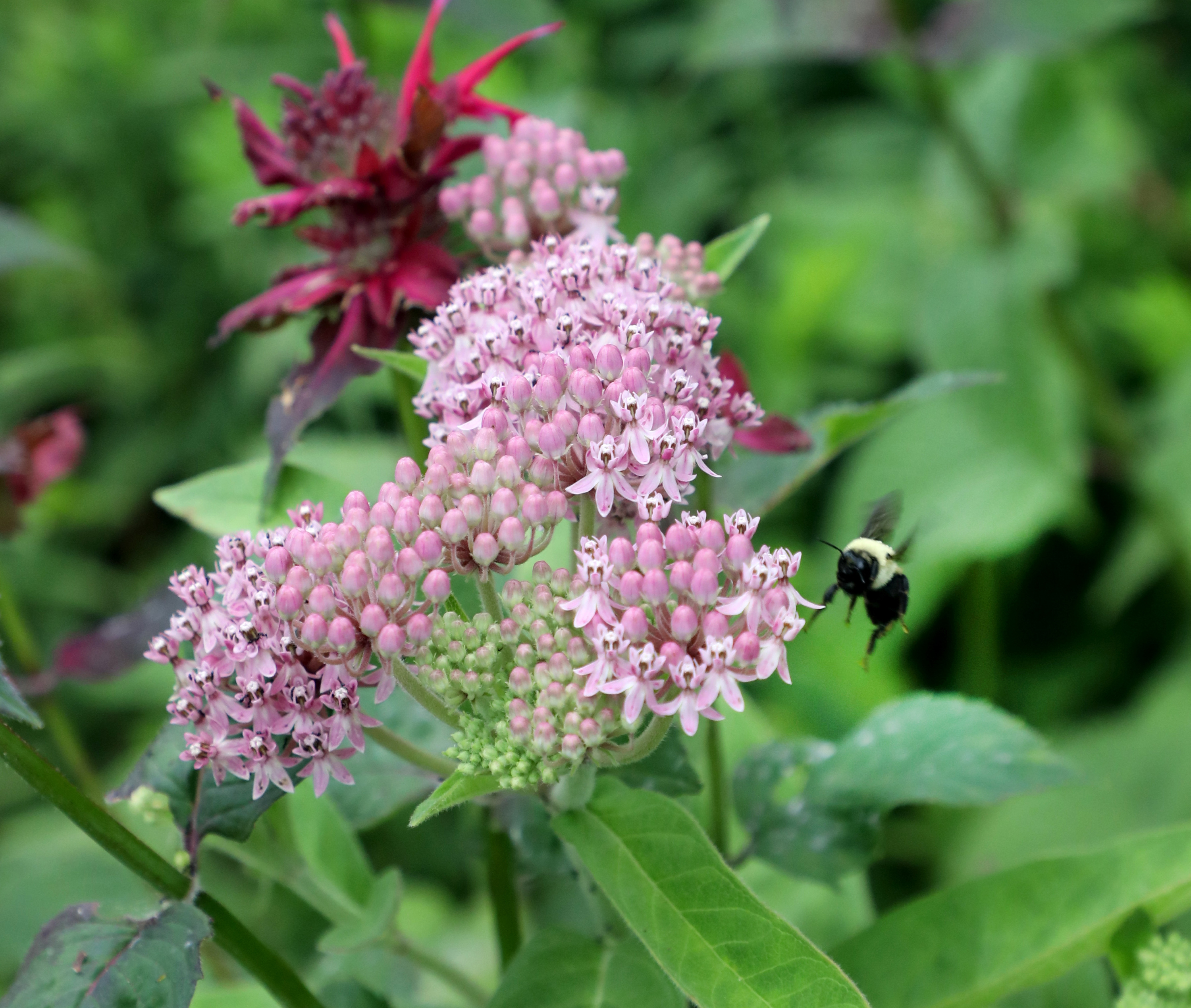
    Virginia Rettig photographs a bush of bee balm and Eastern swamp milkweed outside her home.Vernon Ogrodnek / For The Inquirer

    She’s found plenty of customers who live at the Shore and want to help — not hinder — native species with their own landscaping choices. Nearly 80% of self-identified gardeners incorporate native plants into their outdoor spaces, according to gardening consumer research organization Simple Spring. And over a third dedicate a quarter to half of their garden to local flora.

    “People love nature and are itching for good information and support so they can provide these habitats for wildlife,” Rettig said.

    Areas once covered by native vegetation have been lost to development, replaced by ornamental landscapes, manicured lawns, and invasive species.

    But this increasingly popular practice of replenishing native plants serves the environment, birds, and wildlife, while growing roots to hold off erosion and conserve water.

    Types of plants at the Shore

    Native plants adapt well at the Shore where the conditions include wind, sandy soil, and salt spray, said Andrew Bunting, vice president of horticulture for the Pennsylvania Horticulture Society.

    Popular varieties include native grasses, such as American beachgrass, coastal panicgrass, and little bluestem varieties, which have a steely blue-green color in the summer and a coppery red hue in the fall.

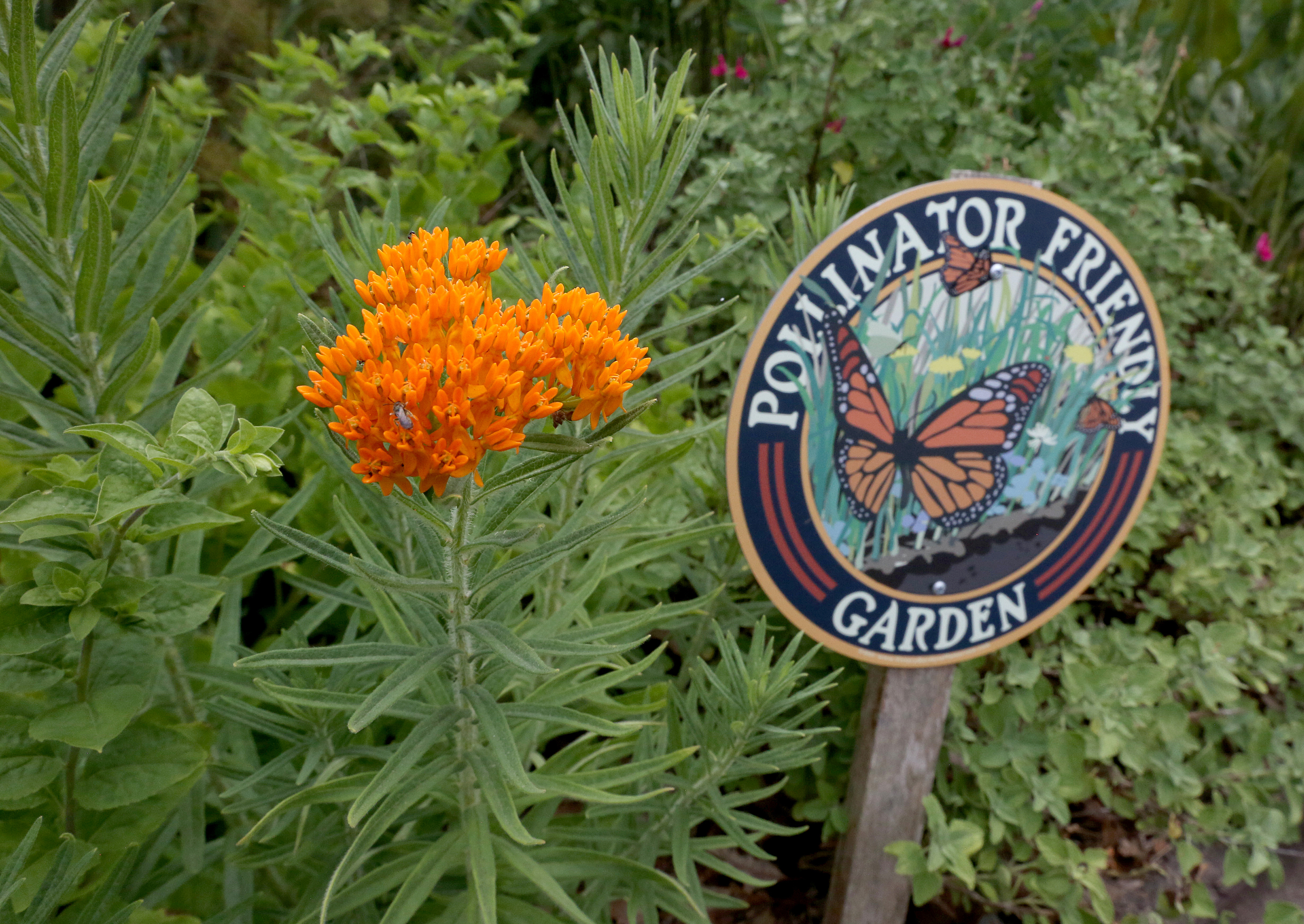
    Butterfly milkweed, a favorite of monarch butterflies, blooms in Rettig’s garden.Vernon Ogrodnek / For The Inquirer

    “Butterfly weed is one of the most iconic of all the pollinator plants,” Bunting said. It “has vibrant orange flowers and is especially a magnet for the monarch butterfly, which is a threatened species.”

    It’s important to have perennial varieties that bloom at different times in the season to consistently provide nourishment to wildlife, Bunting said. For example, early spring might include a beach plum shrub, butterfly milkweed in midseason, and goldenrod late in the season.

    Native species are very hearty, need full sun, and require little care once established. They need to be watered when first planted, but once they take hold, rainwater is usually sufficient. Native plants can be mixed with non-native varieties as long as they have similar sun and water requirements.

    Attracting wildlife

    Pat Sutton, a working naturalist since 1977 for the Cape May Point State Park, and then the New Jersey Audubon’s Cape May Bird Observatory, hopes education will encourage more people to move toward native gardens.

    “There has been a lot of focus for too many years on instant gratification — pretty things that are forced to be in bloom well before nature intends,” Sutton said. “The focus on native plants is a focus on making sure wildlife can persist.”

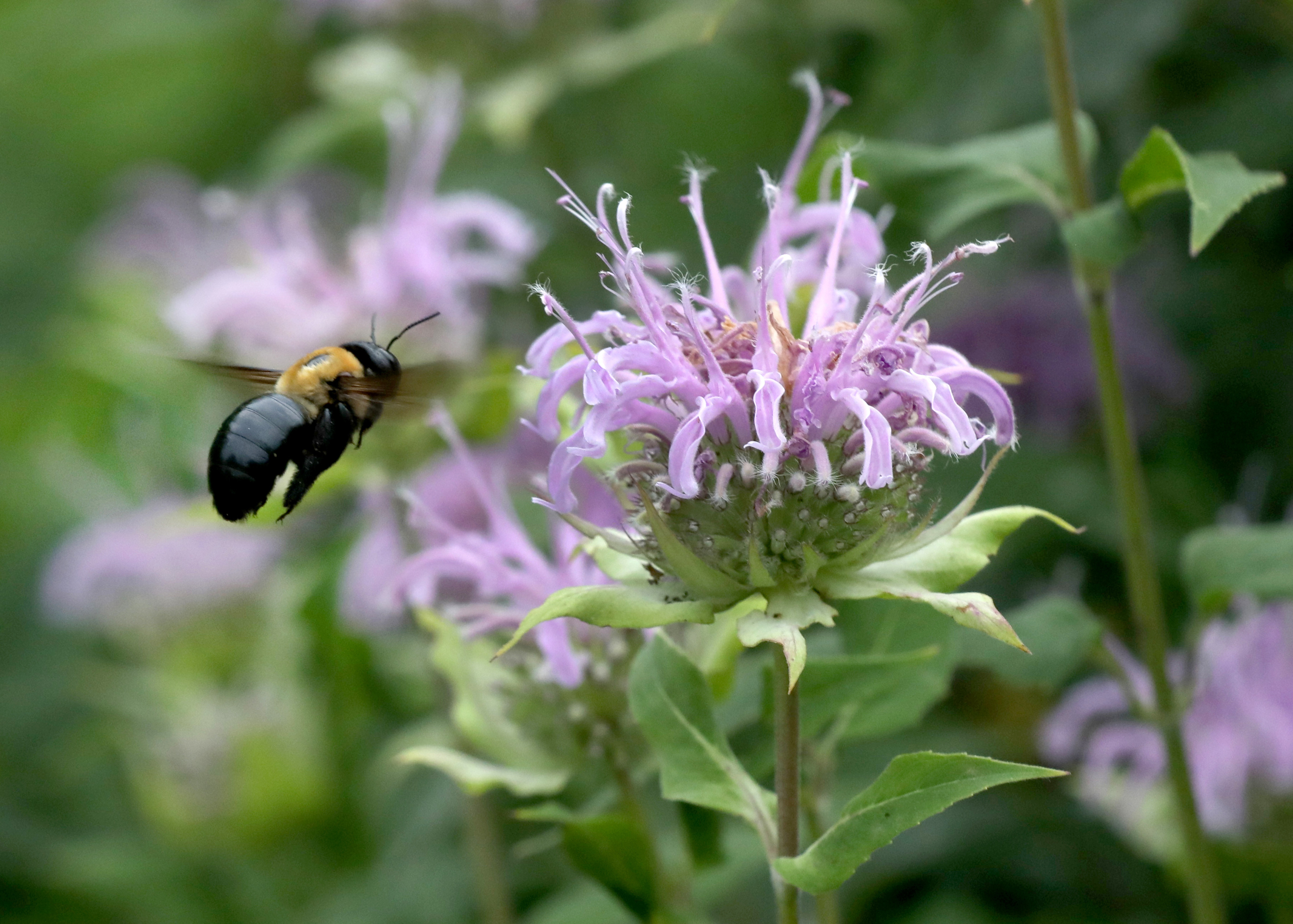
    A bumblebee pollinates a bush of wild bergamot in Rettig’s garden.Vernon Ogrodnek / For The Inquirer

    Sutton’s website includes resources for native plants that attract birds and insects. For example, the coral honeysuckle vine and southern arrowwood shrub are especially attractive to moths when laying their eggs.

    Along with her husband, Clay, Sutton transformed her property into a wildlife habitat containing 205 native plants, including perennials, native trees, shrubs, vines, grasses, and ferns. She has recorded as visitors 213 bird species, 79 butterfly species, and 121 assorted other pollinators, including wasps, flies, bees, and beetles.

    “When I step outside, it’s like going into a wilderness, and it’s just a tiny yard,” she said. “But that’s what’s possible for people who embrace gardening with native plants.”

    Civic responsibility

    Strathmere residents have made native plantings a priority in homes and public areas throughout town. Along with N.J. Fish & Wildlife and Upper Township, the Strathmere Improvement Association Native Plant Committee members have erected gardens at several beach entrances, in front of the Schiavo Library, and around the Welcome to Strathmere sign.

    “We have a gem of a town and wanted to maximize the beauty of our beaches by cleaning up and planting at our entrances,” said Linda C. Bateman, a member of the committee that began planting gardens three years ago, adding a couple streets at a time.

    Native plants, including goldenrod, milkweed, bayberry, elderberry, Virginia rose, and New Jersey-native wildflowers, are labeled to educate beachgoers. The committee has raised awareness by offering talks led by gardening experts, holds native plant sales, and presents garden awards to residents who have dedicated yard space to pollinator plants. The town is a designated monarch butterfly way station.

    The entrance to Corson’s Inlet State Park, a part of Strathmere overseen by Belleplain State Forest, is also getting a makeover to include native plants.

    “Before development, there were areas across the barrier islands that were covered in low shrubs and small patches of forest,” said Chris Konicki, a Strathmere resident who is heading up the Maritime Forest Project with Peter Manzelmann from Belleplain State Forest.

    Their goal is to reintroduce native species that are indigenous to the area. Tree species such as eastern red cedar, American holly, black cherry, sassafras, black gum, and pitch pine will be planted, along with shrubs including bayberry, wax myrtle, beach plum, and Virginia rose. Small trees will feature winged sumac, a non-poisonous native species.

    A bumblebee pollinates a bush of Eastern swamp milkweed in Rettig’s garden.Vernon Ogrodnek / For The Inquirer

    “It’s an ongoing project that will slowly evolve over time and highlight some historical species that are no longer common in Strathmere and the surrounding islands,” Konicki said.

    These initiatives are important, Bateman said, as the native gardens do much more than just beautify and unify the beach entrances. Bees, butterflies, moths, and other insects are drawn to them. Wildlife including bats, frogs, songbirds, red wing blackbird, and finches, will feed on the insects.

    “We used to have fireflies in town, we used to have frogs trying to jump into our garage, and our windshields used to be covered in bugs,” Bateman said. “Where are they all? Clean air and clean water are not just human needs.”

  • Northwest Tool Library in Mount Airy aims to make home maintenance more accessible

    Northwest Tool Library in Mount Airy aims to make home maintenance more accessible

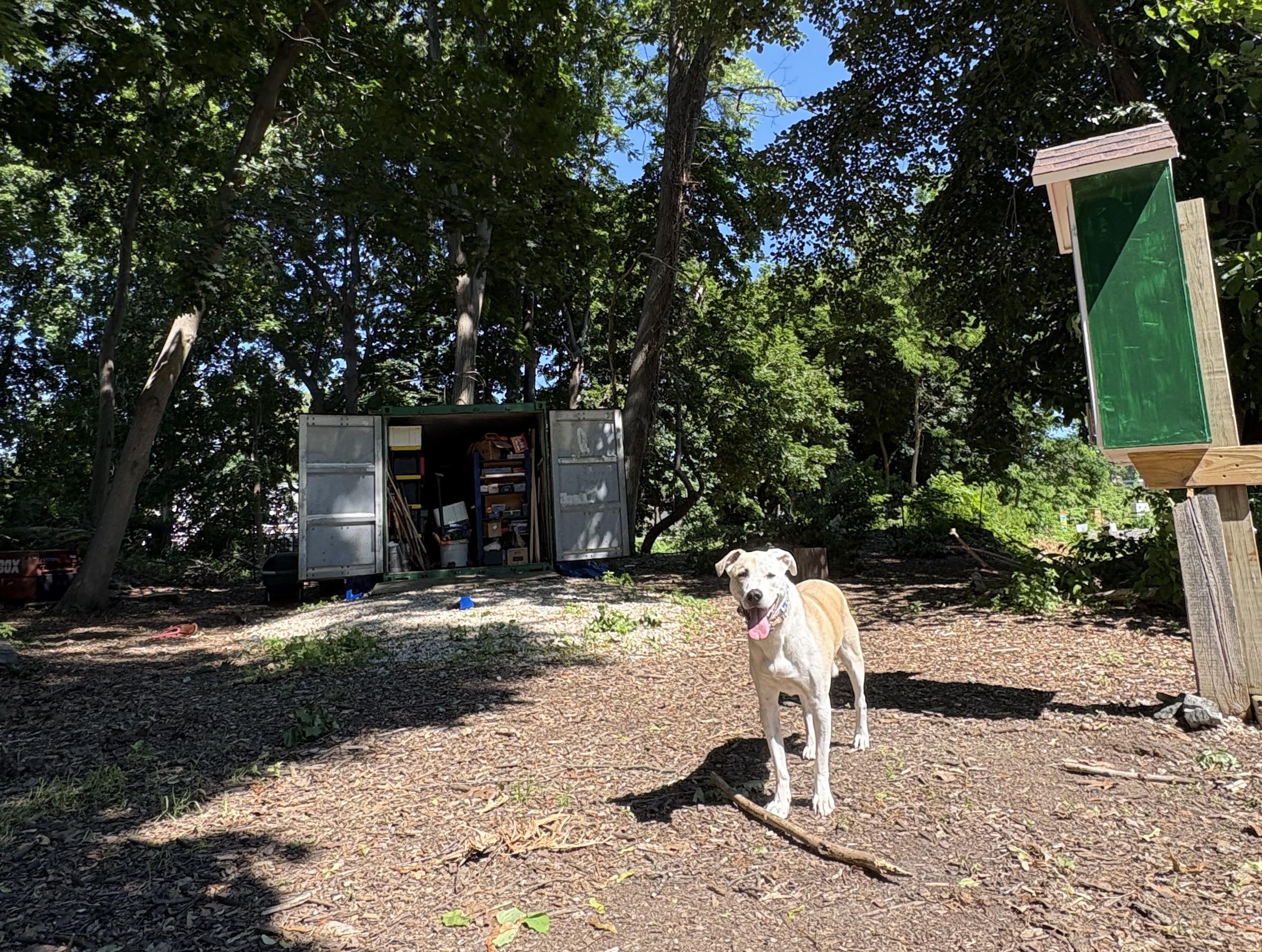
    Inside a shipping container on a lot beside SEPTA’s Carpenter train station in Mount Airy, thousands of old tools sit waiting, ready for a new life as part of the new Northwest Tool Library.

    Set to open on Sunday, the tool library will lend hand tools, power tools, ladders, and various other gadgets to members in an effort to make home maintenance more accessible.

    “We don’t all need to have leaf blowers,” said Jo Winter, executive director of West Mount Airy Neighbors (WMAN), the nonprofit civic group sponsoring the initiative. “If some of us have them in our shared space, it can be another effort to speak to the ethos of our community.”

    The idea for the project sparked a few years ago when a Mount Airy resident died and his wife donated his tools to WMAN, Winter said. The neighborhood organization runs EcoLab, a community project revitalizing green space in a once-neglected lot behind a nearby Regional Rail station, and stored the tools in a shipping container on the lot for tree tending.

    Mount Airy residents have long traded tools through the Facebook group Mount Airy Tool Exchange, especially as downsizing neighbors wanted to get rid of equipment they no longer had room for. But interest grew in having a designated tool library, as locals looked to the West Philly Tool Library as an example.

    Ash Fritzsche was one of those interested residents. As an electrician, she has taught classes at the West Philly Tool Library, but when she moved to Mount Airy, it became too far to frequent. So she got involved in bringing one northwest.

    Ultimately, WMAN realized the shipping container, which already housed landscaping tools, could also be used for “this other project everybody’s been talking about,” Fritzsche said.

    As a sponsor, WMAN provides organizational support for the library, while volunteers run the day-to-day operations.

    “It ticks all the boxes of something that would work in our community,” Winter said. “It’s mutual aid; it’s green; it’s this idea of sharing what you have, not throwing it into the trash.”

    Organizers ran tool drives to collect donations, and now the library has thousands of tools in its still-growing inventory. Once the tool library opens, volunteers will run two shifts a week on Wednesdays and Sundays when members can stop by and borrow tools.

    To join, members must pay an annual fee based on a sliding scale, so individuals contribute what they can afford. Fritzsche recommends removing three zeros from one’s annual income: If you make $50,000, pay $50 a year to support the library.

    The organizers dream bigger than a shipping container — which they have already maxed out with the size of their stock. They hope to move into a brick-and-mortar location and offer programming, such as home improvement and life skills classes.

    For example, Fritzsche believes everyone should know how to change a tire, change the oil, and know the basics of their plumbing and electrical systems, so they are empowered to be self-sufficient when something goes wrong.

    “Life is so cyber right now,” Fritzsche said. “I’m interested in any sort of simple crafts that can be taught so that people can engage with the real world.”

  • Their Spring Garden backyard was all brick. They replaced it with kid-friendly play space.

    Their Spring Garden backyard was all brick. They replaced it with kid-friendly play space.

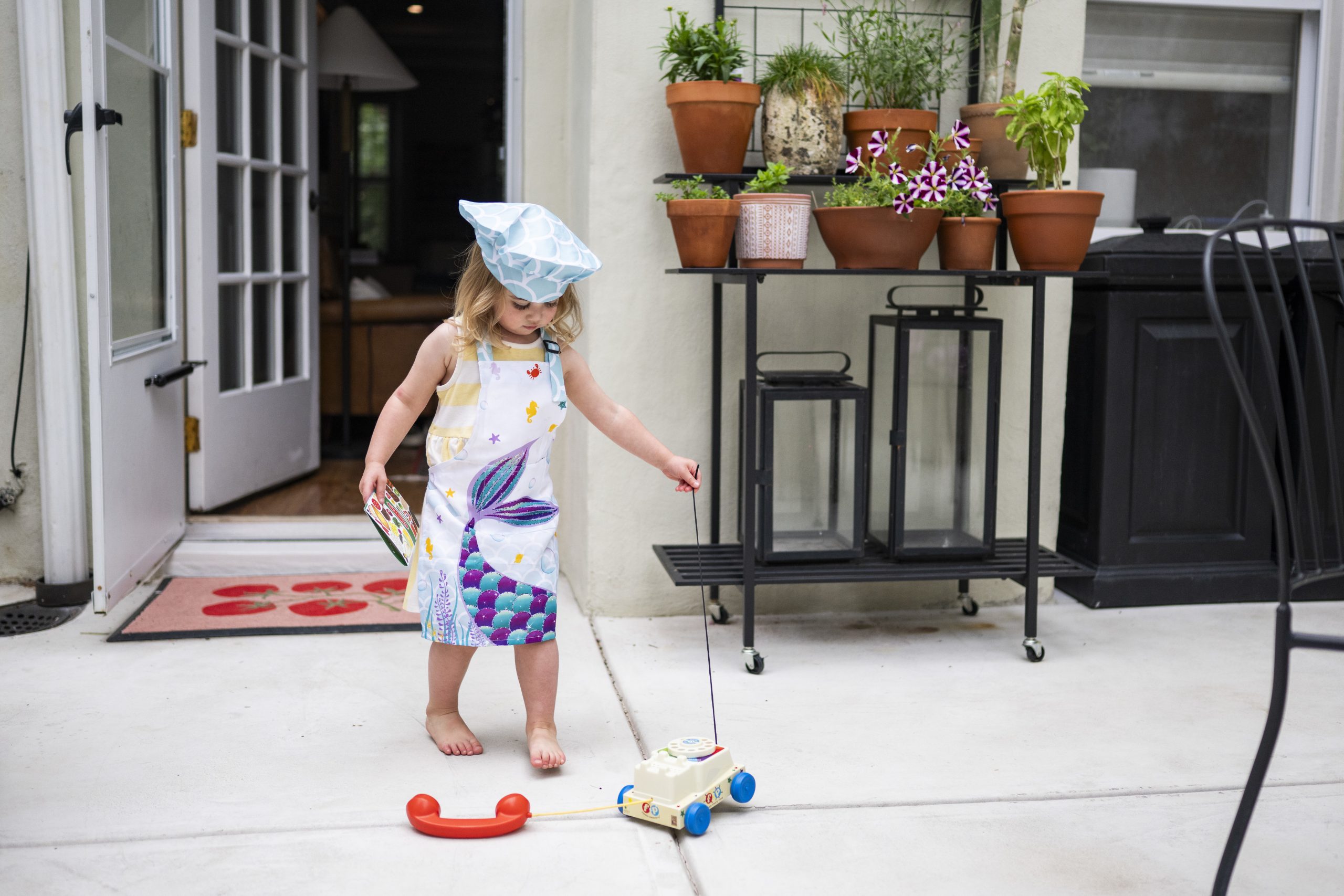
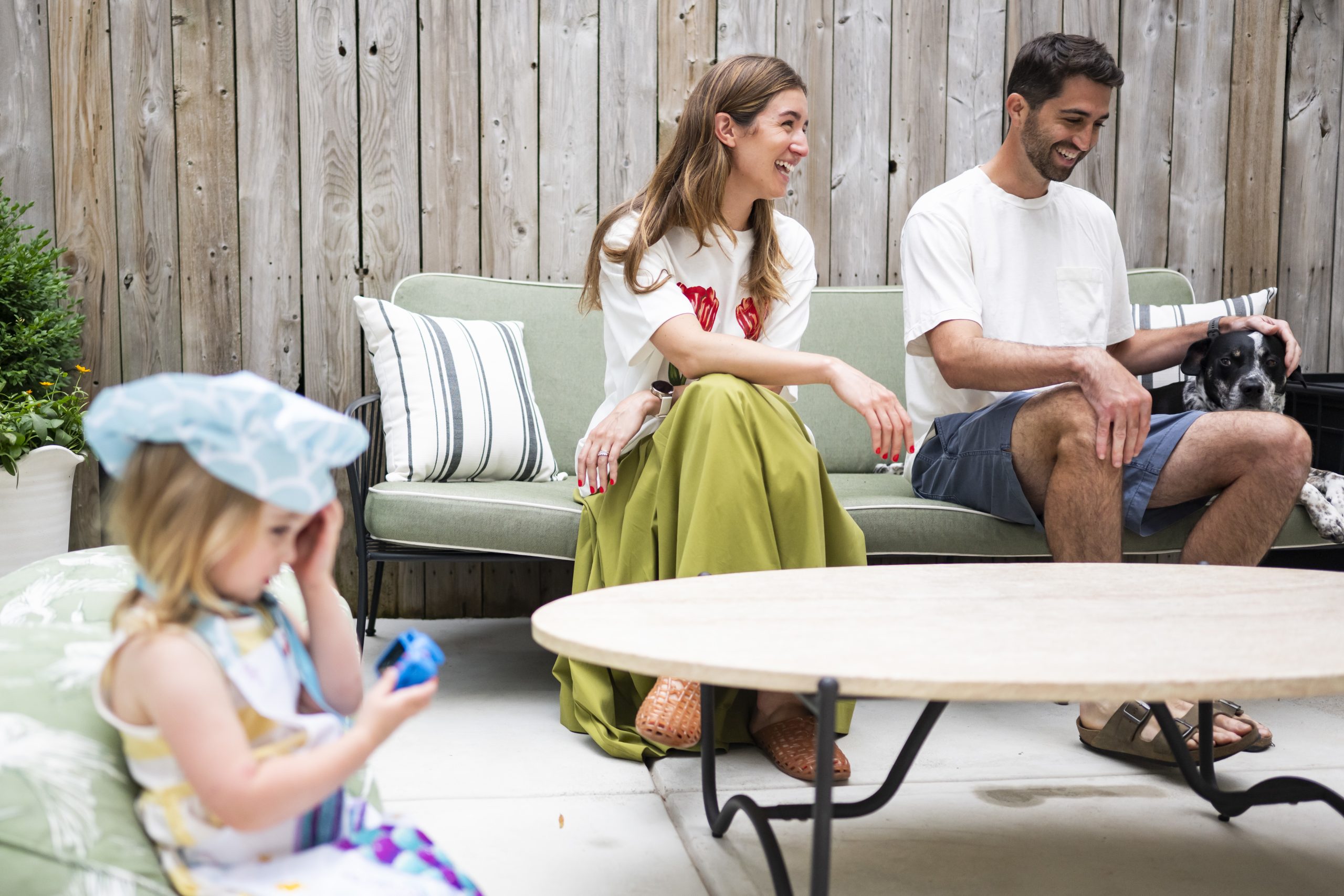
    Wearing a child-sized apron and a chef’s hat, Lana Shapiro stirred a tiny spatula around an empty miniature pot.

    Lana who is “almost 3” prepared her pretend meal while sitting on the soft grass in her backyard in Spring Garden. Her dog, Blue, was stretched out nearby.

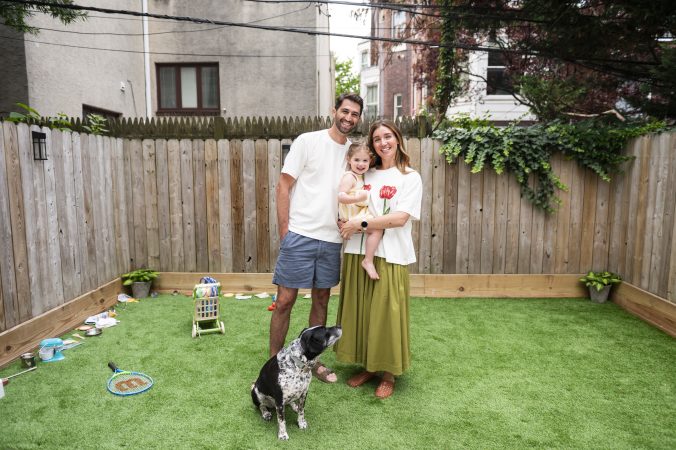
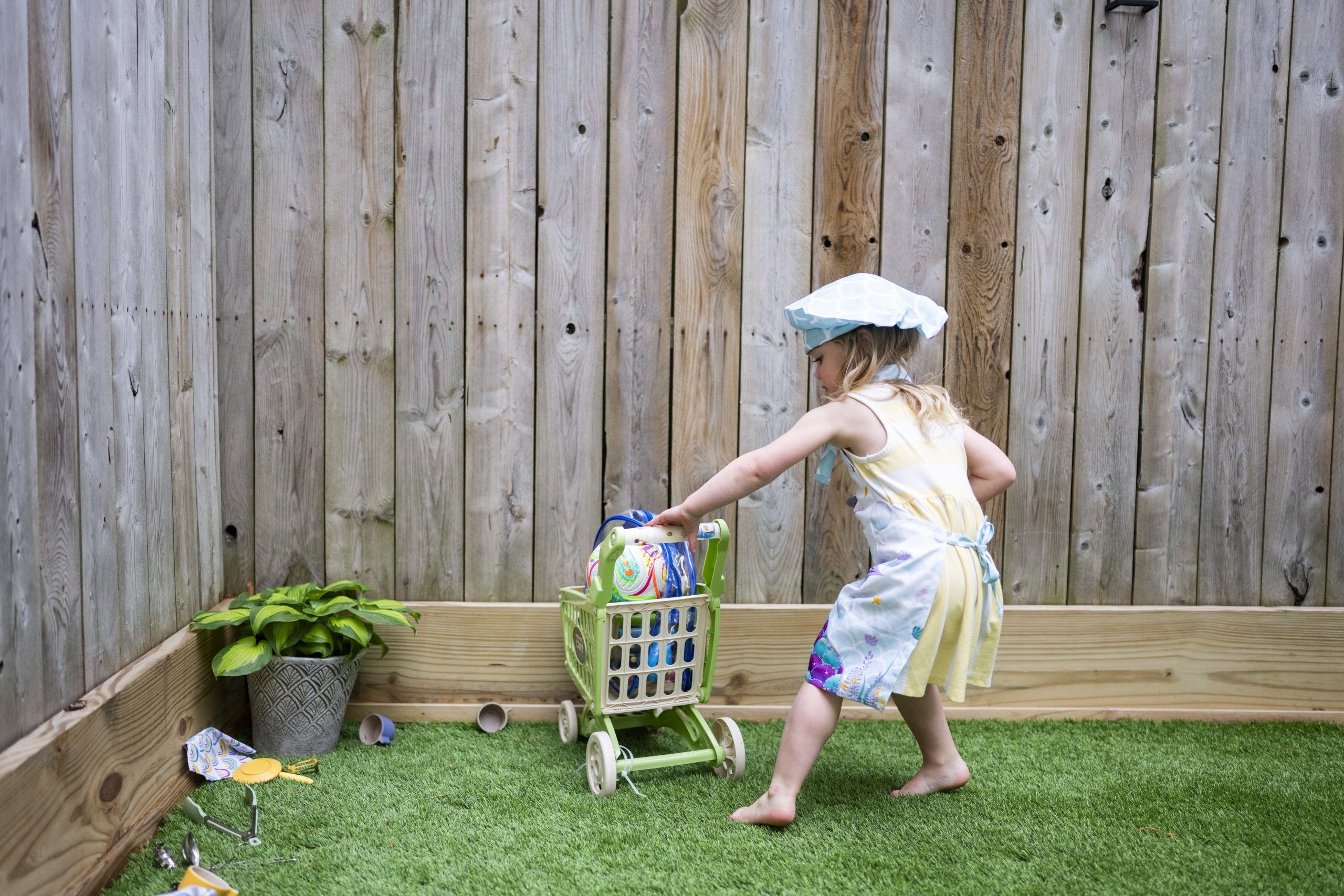
    But, much like Lana’s cooking, the grass was not real. Her parents Maddy and Andrew Shapiro had installed a kid- and pet-friendly stretch of artificial lawn across their rowhouse backyard.

    Lana Shapiro plays with a telephone toy on the back patio.Allie Ippolito / For The Inquirer
    Lana maneuvers her shopping cart through the artificial lawn.Allie Ippolito / For The Inquirer

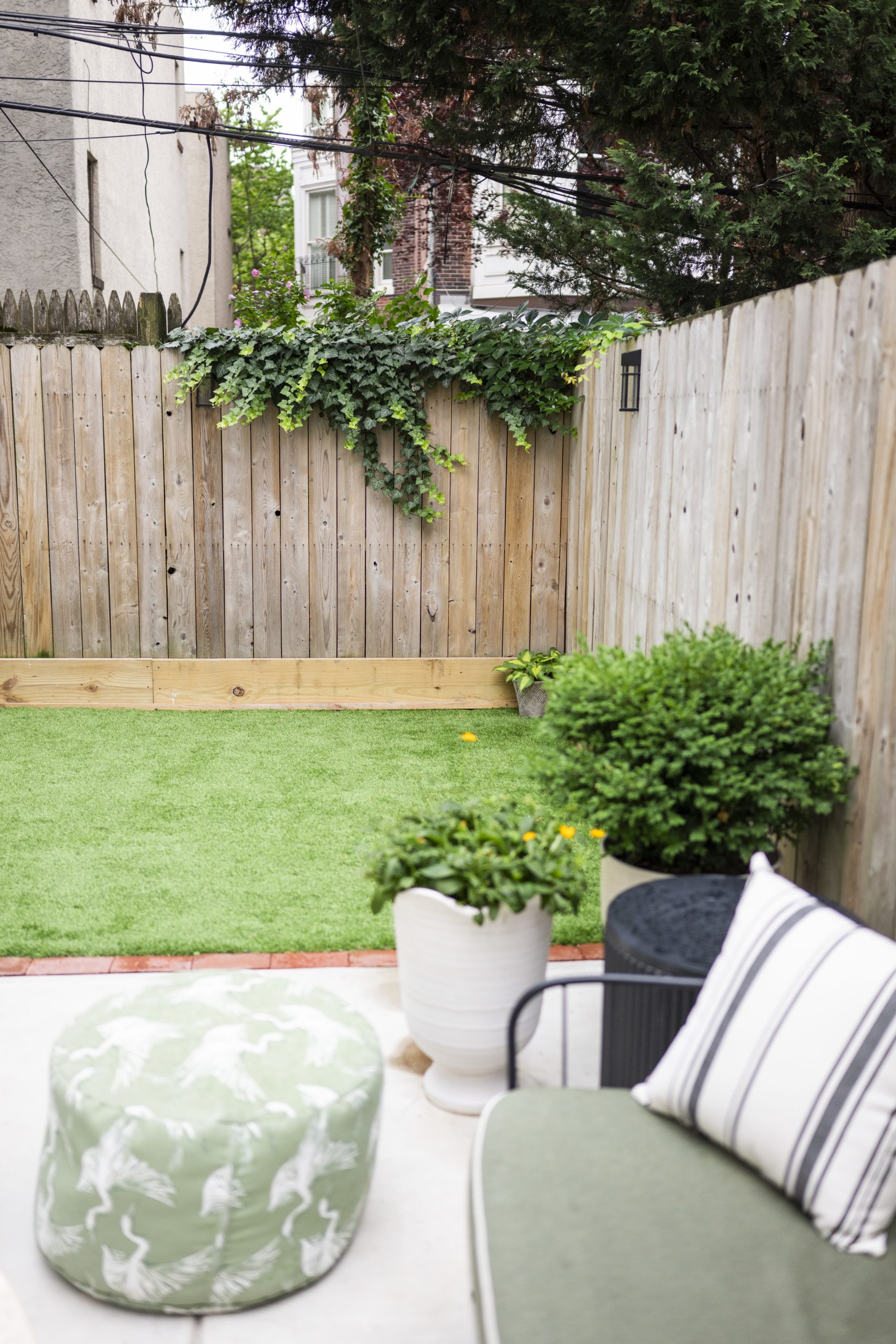
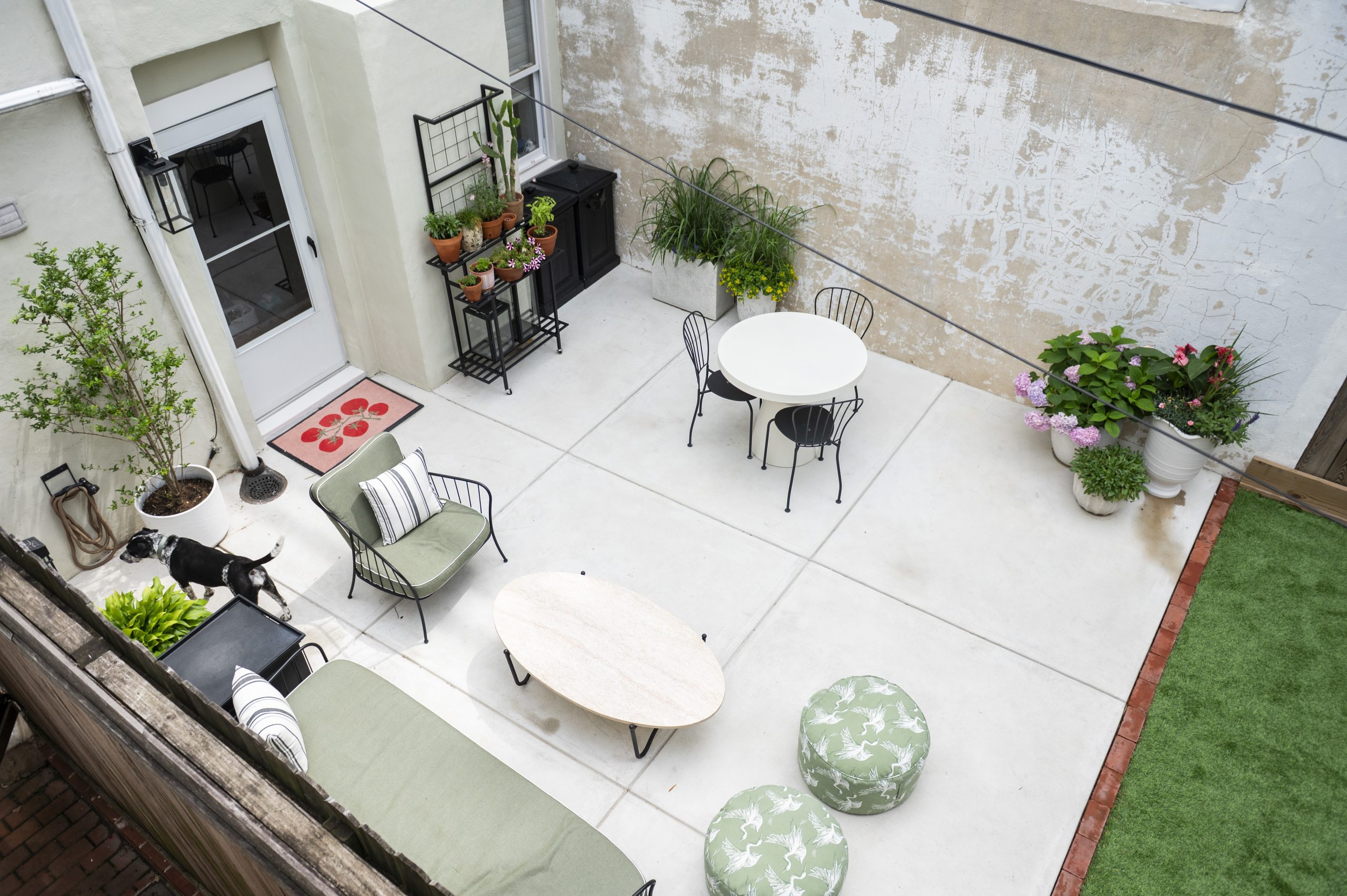
    The adjacent cement patio is furnished with a round white table — for real dining — and two black metal chairs, as well as a moss green couch, a beige coffee table, and two green and white patterned ottomans.

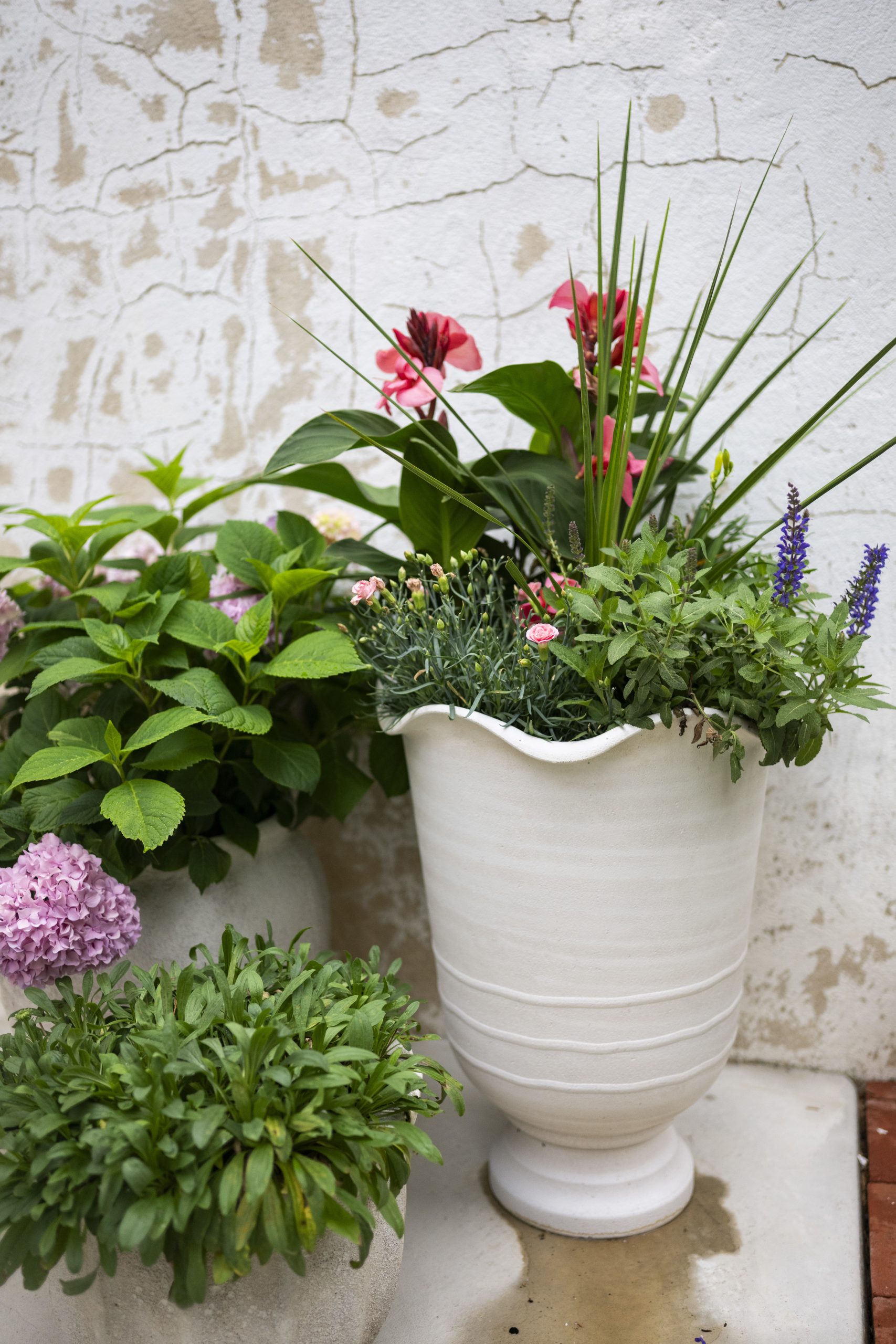
    The outdoor space is festooned with white containers filled with flowers and greenery, including coral-colored Cannas, pink carnations, pale purple Hydrangeas, yellow creeping groundsel, mint, basil, rosemary, and oregano.

    Green patio furniture harmonizes with potted plants, artificial grass, and the neighbor’s shade-providing tree.Allie Ippolito / For The Inquirer
    Brightly colored flowers pop out of neutral-tone vases against the backdrop of a wall the Shapiros stripped down.Allie Ippolito / For The Inquirer

    When the Shapiros purchased their three-story rowhouse in 2022, brick steps led to a brick backyard. It was all sharp angles and moldy surfaces that were hard to clean, Andrew said. He and Maddy replaced the brick with the cement patio and nontoxic, lead-free synthetic grass from SGW-Fresno. Andrew washes the grass with vinegar and soap and water.

    He made repairs to the original fence, power-washed it and added a baseboard around the grassy area.

    Recently he and Maddy’s stepfather, Jimmy Lee, power-washed flaking white paint off the cement wall dividing the Shapiros’ house from their neighbor’s. “We did it twice,” Andrew said, but white swirls remained on the beige wall.

    He and Maddy decided they liked the “patina,” and the wall has become the focal point of the small yard. A new awning and a neighbor’s tall evergreen provide shade.

    An overhead view of Maddy and Andrew Shapiro’s backyard.Allie Ippolito / For The Inquirer

    A rose bush from the original backyard was replanted in the narrow flower bed across the front of the house along with lilac, crepe myrtle, hosta, and rhododendron.

    Inside the home, the previous owner had taken down walls on the first floor for an open floor plan with a white-cabineted kitchen, an expansive living area, and an exposed-brick party wall.

    The second floor has a bathroom, a guest room, Lana’s moss green bedroom, and an office for Andrew, who works in retail sales for Masienda, a specialty food company.

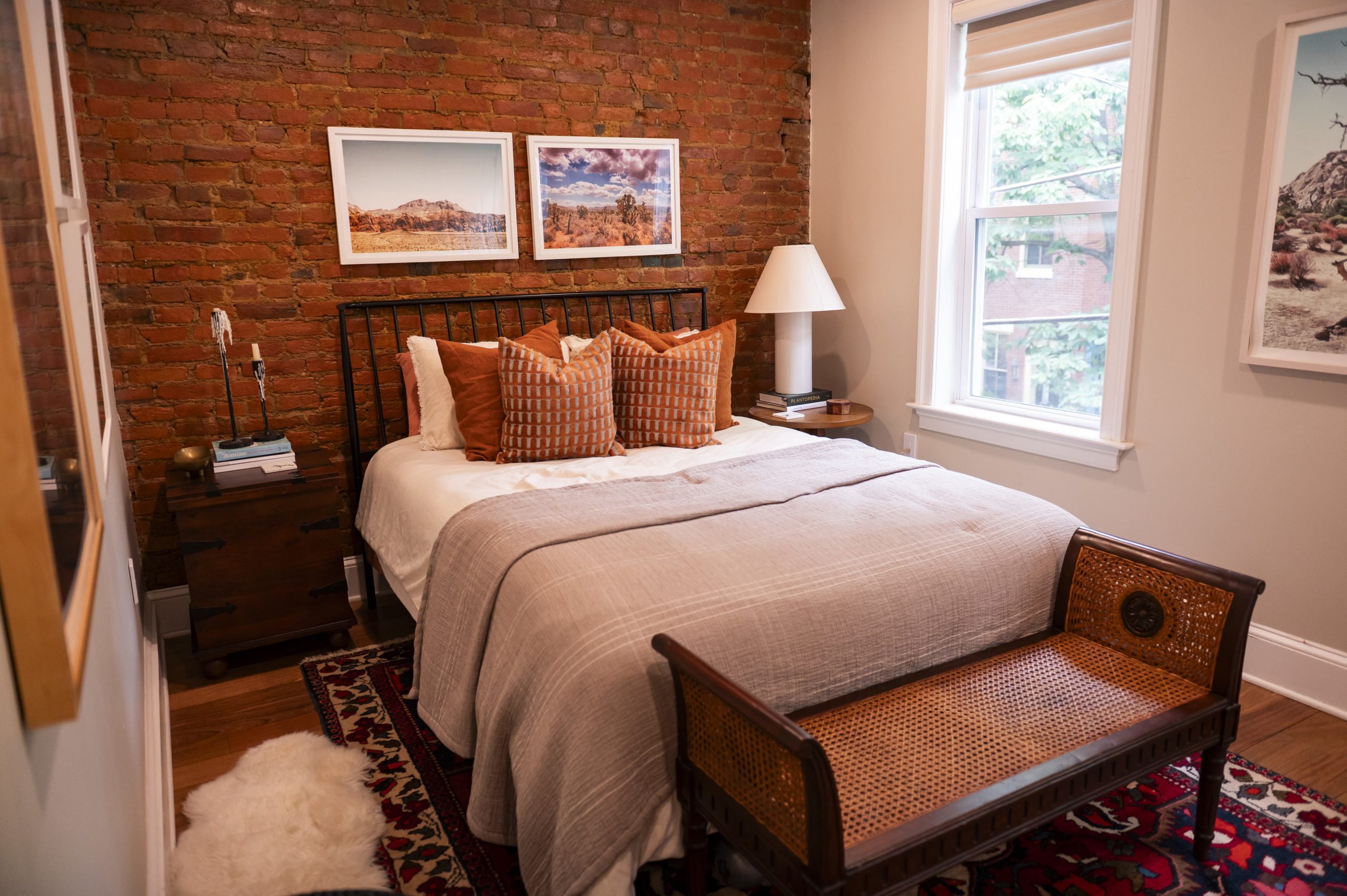
    The guest bedroom features exposed brick and warm-toned accents.Allie Ippolito / For The Inquirer
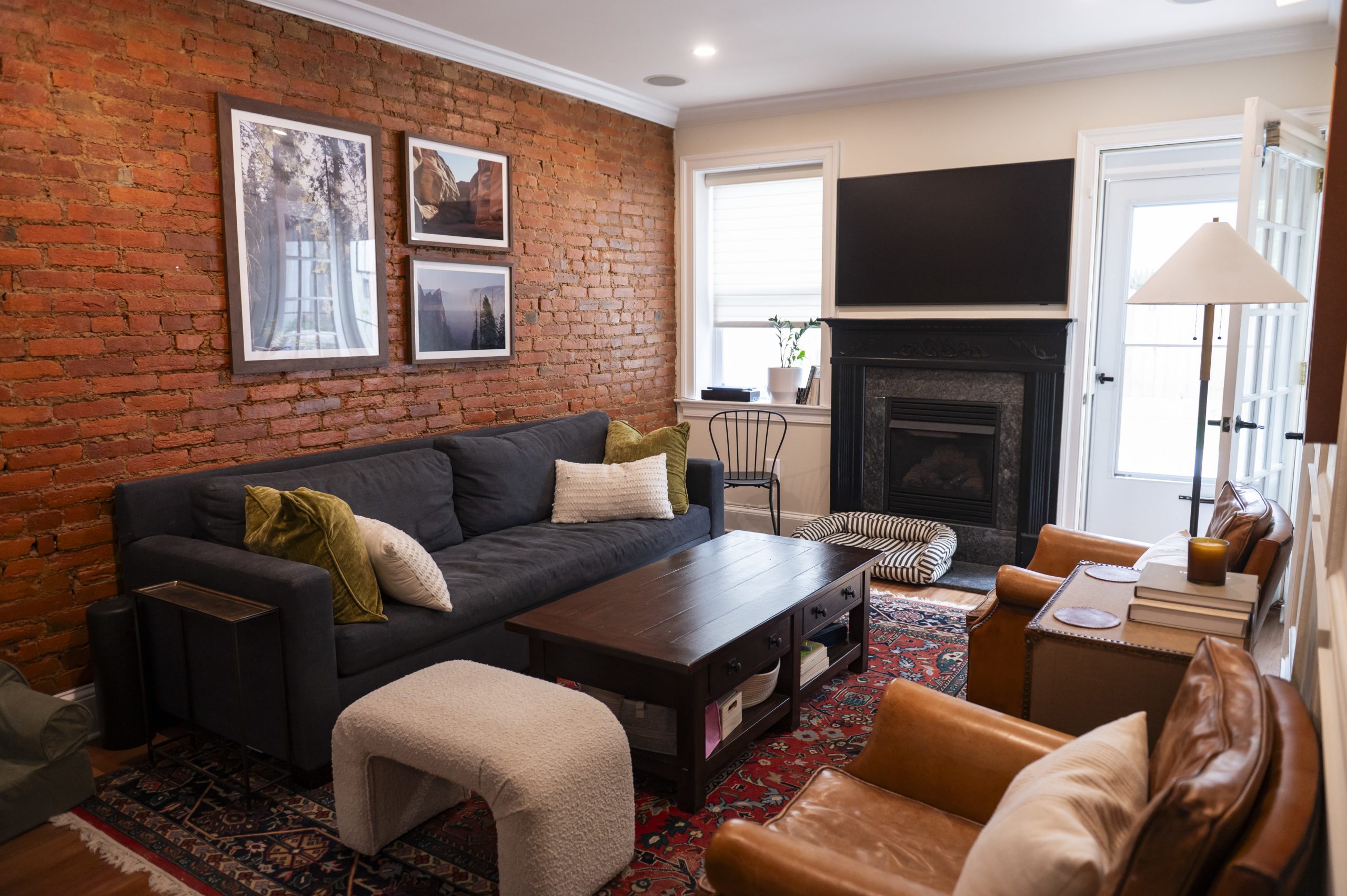
    The living area, including a fireplace, on the main floor.Allie Ippolito / For The Inquirer

    In addition to replacing the brick backyard, the Shapiros added a vestibule and reconfigured the third floor as a primary bedroom, dressing room, and bathroom with a soaking tub and walk-in shower. They painted the vanity in the powder room gray and papered walls with a leafy gray and black pattern.

    The vestibule, which keeps out cold drafts, and the decorative wood carvings on the staircase would have been features in the house when it was built in 1859.

    Maddy, a nurse-practitioner, has decorated with items from several sources. A coffee table and couch came from Pottery Barn and an end table belonged to her parents. An Oriental rug and runner were purchased on Craigslist and a mirror from Anthropologie. Two vintage tan leather armchairs came from upstate New York.

    Blue’s black-and-white striped bed is positioned in front of the gas-lit fireplace. Nearby is a small green chair with “Lana” embroidered in white.

    The sleek dining table, crafted by woodworker George Nakashima, belonged to Andrew’s grandmother, Ellen Shapiro. Dining chairs and a buffet came from West Elm.

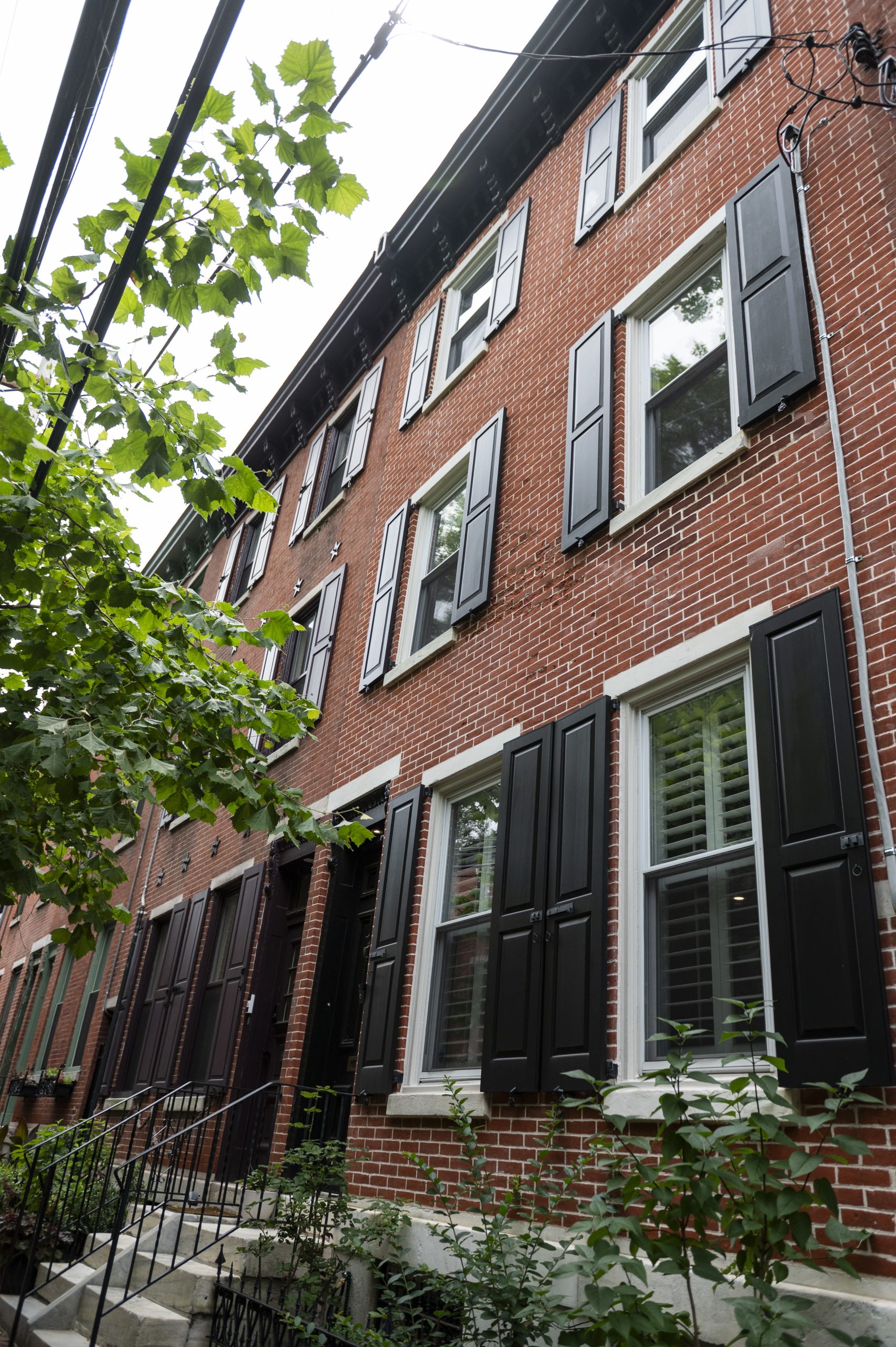
    The exterior of the Spring Garden home.Allie Ippolito / For The Inquirer

    A Nakashima side chair in the primary bedroom also belonged to Ellen. The Shapiros hired Osborne Construction in Northwest Philadelphia to renovate the third floor and Jim DeMarco of Tri-State Property in South Philadelphia to install the grass and cement backyard.

    Maddy and Andrew, who married in 2022, met as students at Florida State University. Maddy grew up in Florida and Andrew grew up in Chester County. They were living in New York City when COVID-19 struck and decided to move to Philadelphia to be closer to family.

    Maddy and Andrew Shapiro spend time with their daughter, Lana, in the backyard.Allie Ippolito / For The Inquirer

    After Lana finished her faux meal preparations she played peek-a-boo with Maddy under the bed covers in the guest room. She then ran to her bedroom to ride on the wooden rocking horse with a yarn mane and tail, which belonged to her mother as a child.

    Is your house a Haven? Nominate your home by email (and send some digital photographs) at properties@inquirer.com.
  • How a Schwenksville couple built a wildlife habitat in their yard

    How a Schwenksville couple built a wildlife habitat in their yard

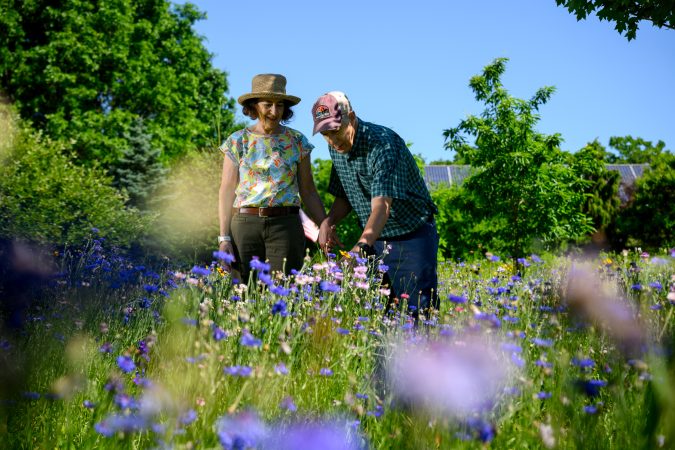
    Larry Cohen and Marla Hexter’s Schwenksville neighbors often stop by to admire the wildflower meadow in front of their home.
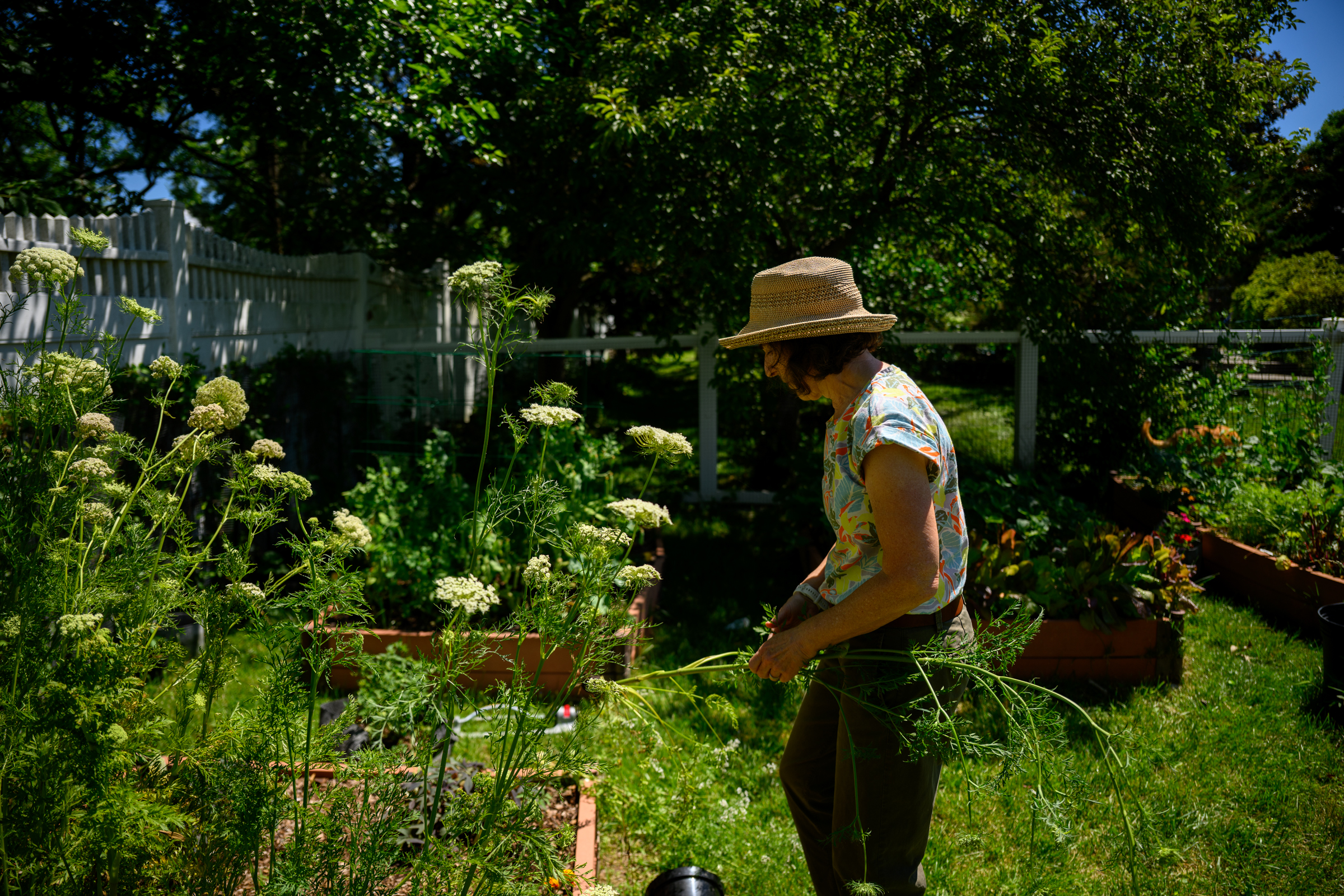
    Some admirers, Larry said, ask for advice. They are considering replacing their front lawns with a meadow as he did.

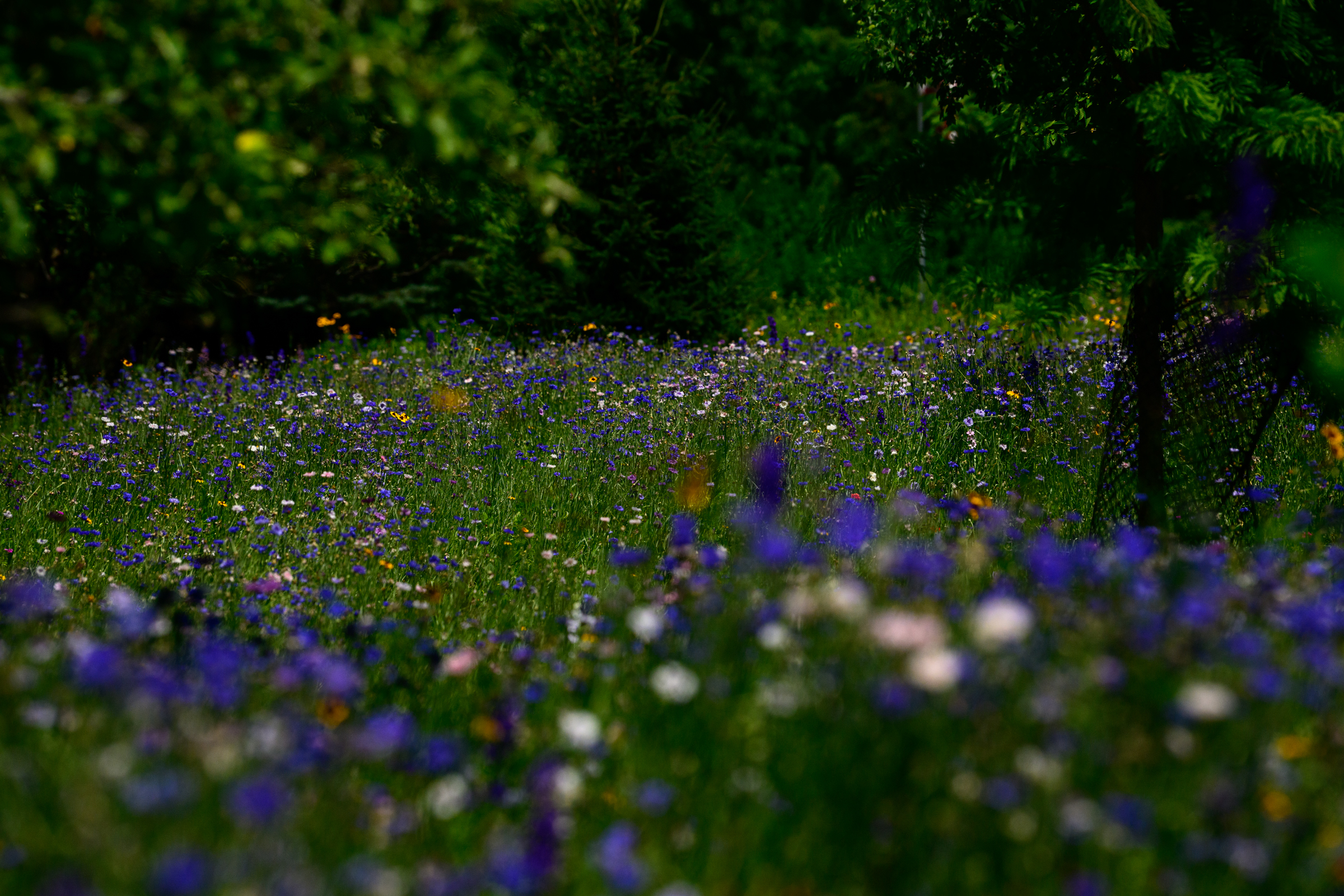
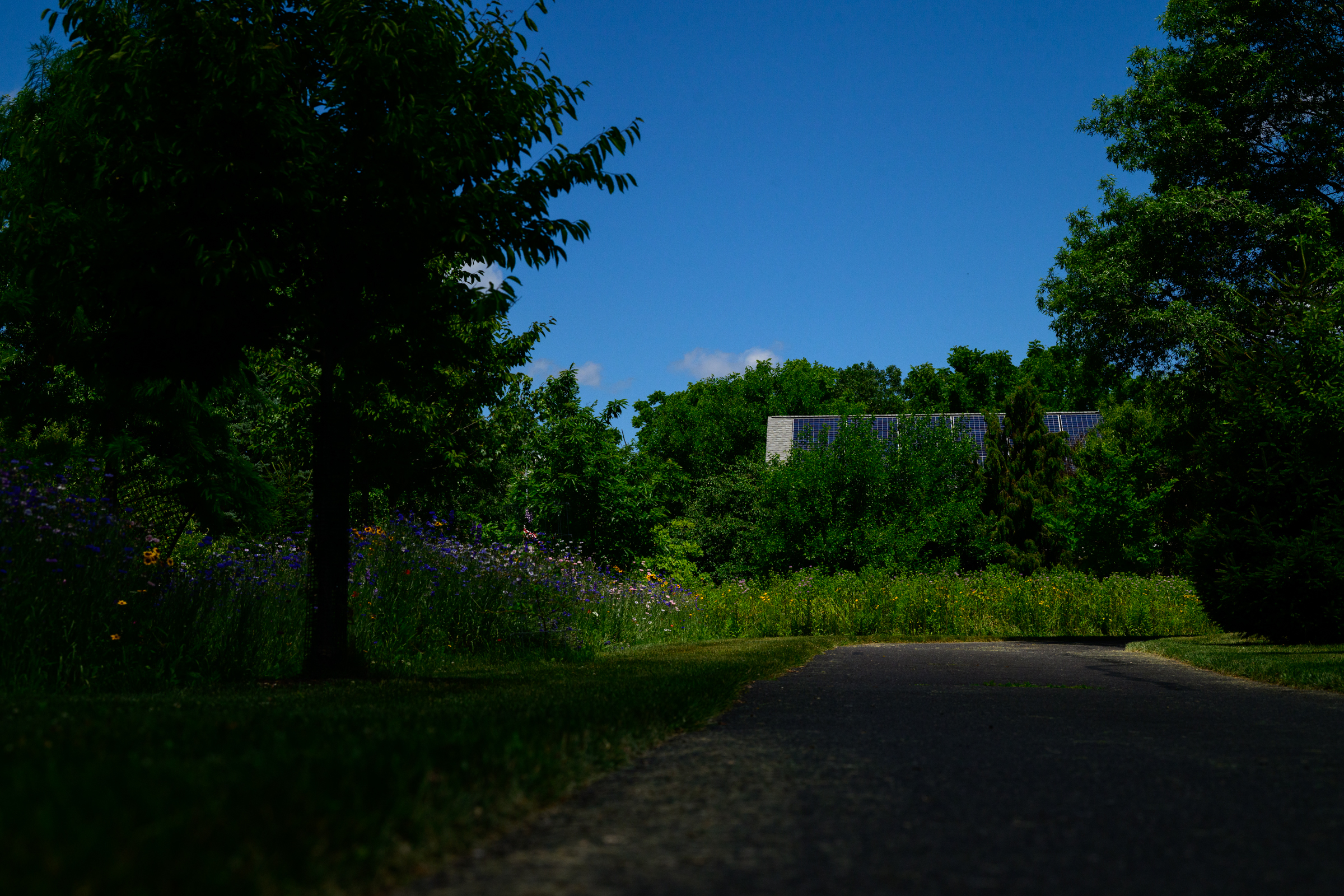
    They crave the profusion of blue cornflowers, red poppies, yellow black-eyed Susans, purple larkspur, a variety of bee balm and more. The flowers attract 17 bird species including bluebirds and gold finch, as well as pollinating insects. The meadow now extends from the frog pond in front of the house to the curb where wisteria entwines the mailbox.

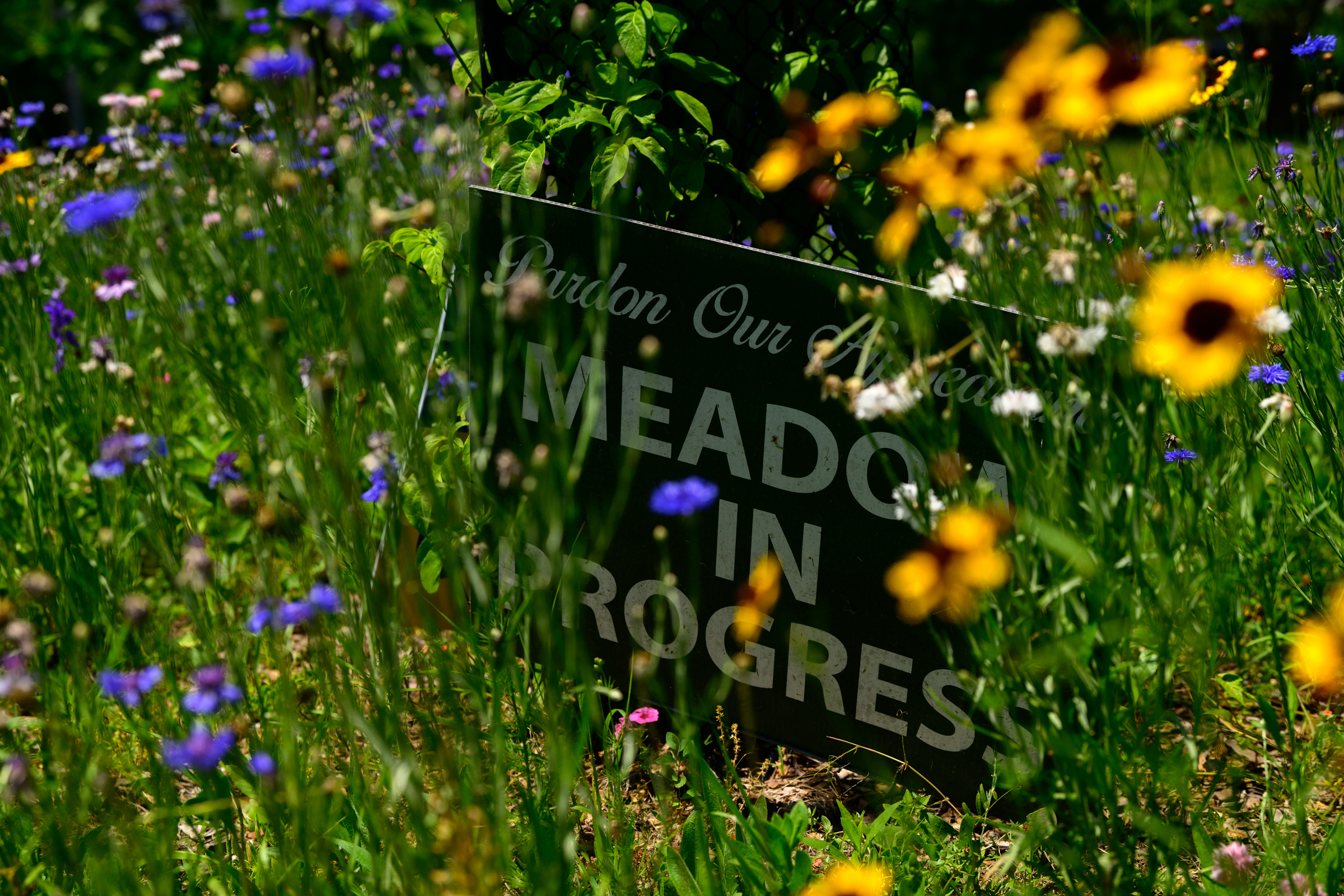
    A sign reading, “Pardon Our Appearance, Meadow in Progress,” sits in the newer of two meadows planted in Hexter and Cohen’s front yard.Kriston Jae Bethel / For The Inquirer
    The newer of two meadows grows in Hexter and Cohen’s front yard.Kriston Jae Bethel / For The Inquirer

    Set among the blossoms is a metal sculpture of a woman holding the female symbol of a circle over a cross. It was fashioned by the late Zieglerville artist Phillip Smith.

    The meadow project began in 2023 when Cohen and Hexter enlisted the services of S. Edgar David of SED Design in Blue Bell. David Brothers Landscape Services in Collegeville removed the grass, seeded wildflowers, and continues to cultivate the meadow.

    When Cohen and Hexter purchased the property of more than an acre in 2015, Callery pear trees flanked the driveway. The invasive species has been replaced with yellowwood, larch, maple, and swamp oak and smoke trees. Cohen protects the bark of the young trees with chicken wire to deter deer.

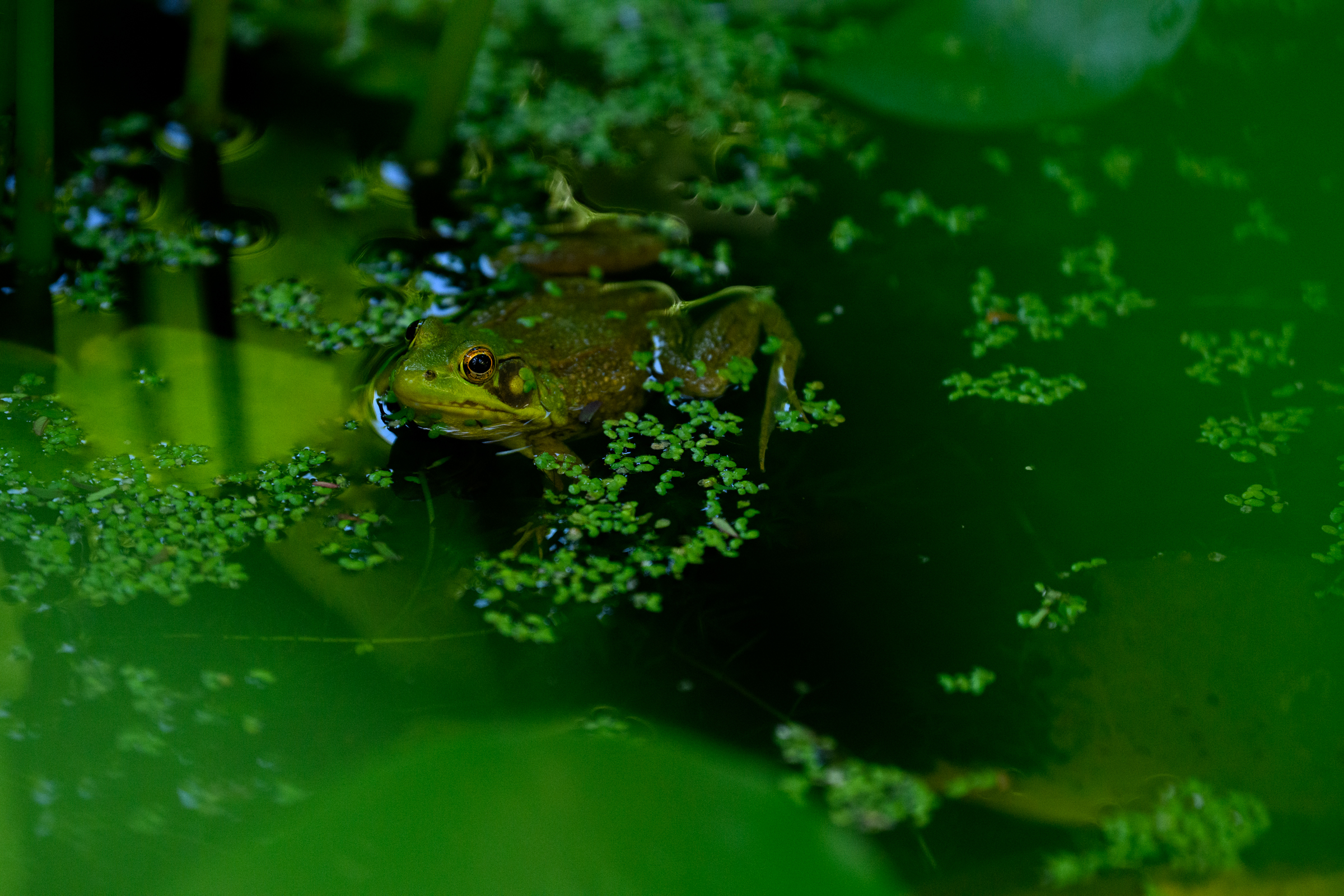
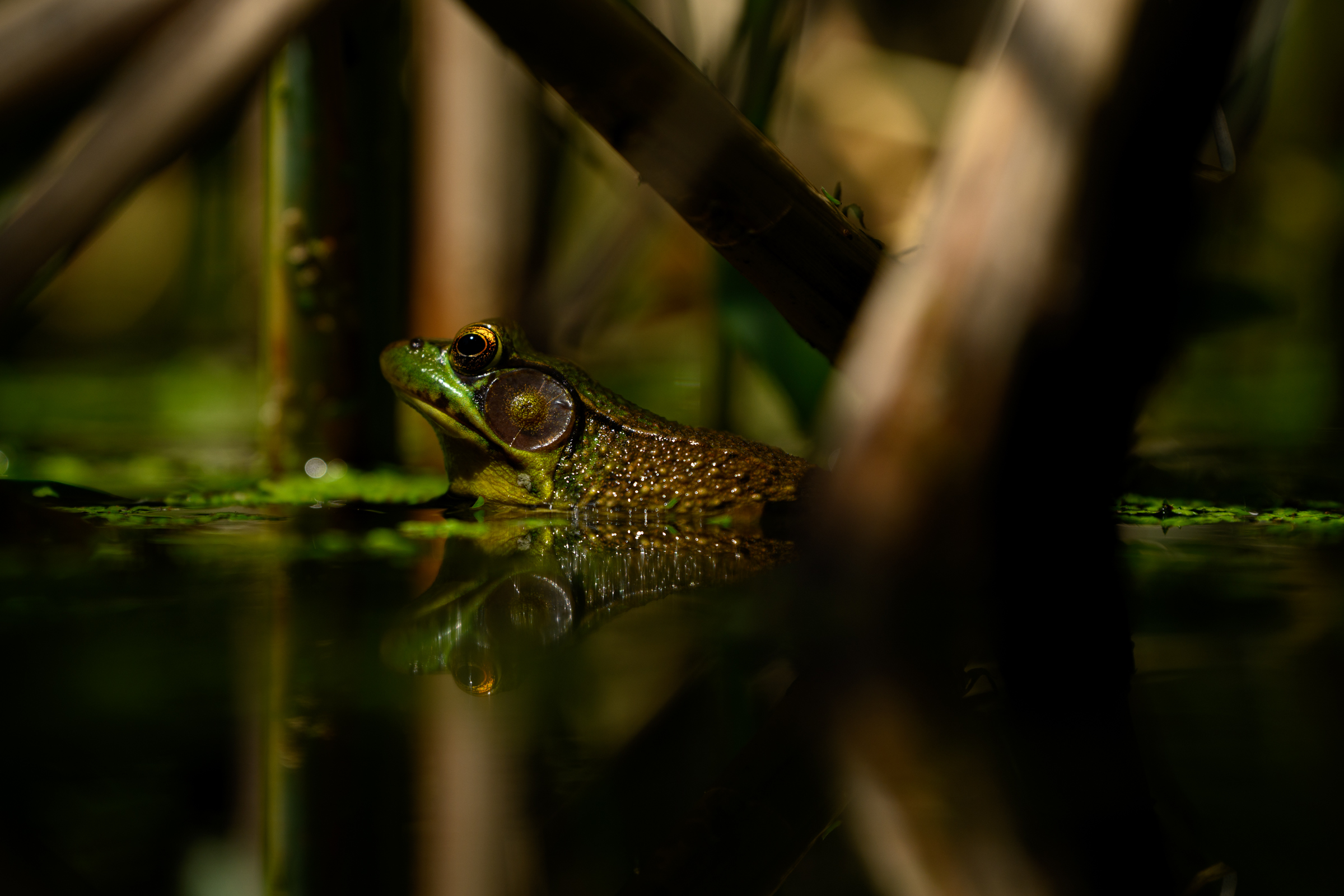
    A frog sits in the pond in the home’s front yard.Kriston Jae Bethel / For The Inquirer
    Another frog in the pond.Kriston Jae Bethel / For The Inquirer

    The backyard, where rescue dogs Barkley and Caleb romp, has an azalea-shaded swimming pool and a vegetable garden fenced in to keep out rabbits and other marauders.

    In raised beds, Hexter grows beets, carrots, cabbage, green beans, English peas, garlic, blackberries, and raspberries — which birds eat — and onions, a deterrent to slugs and snails. Strong scented marigolds also repel pests.

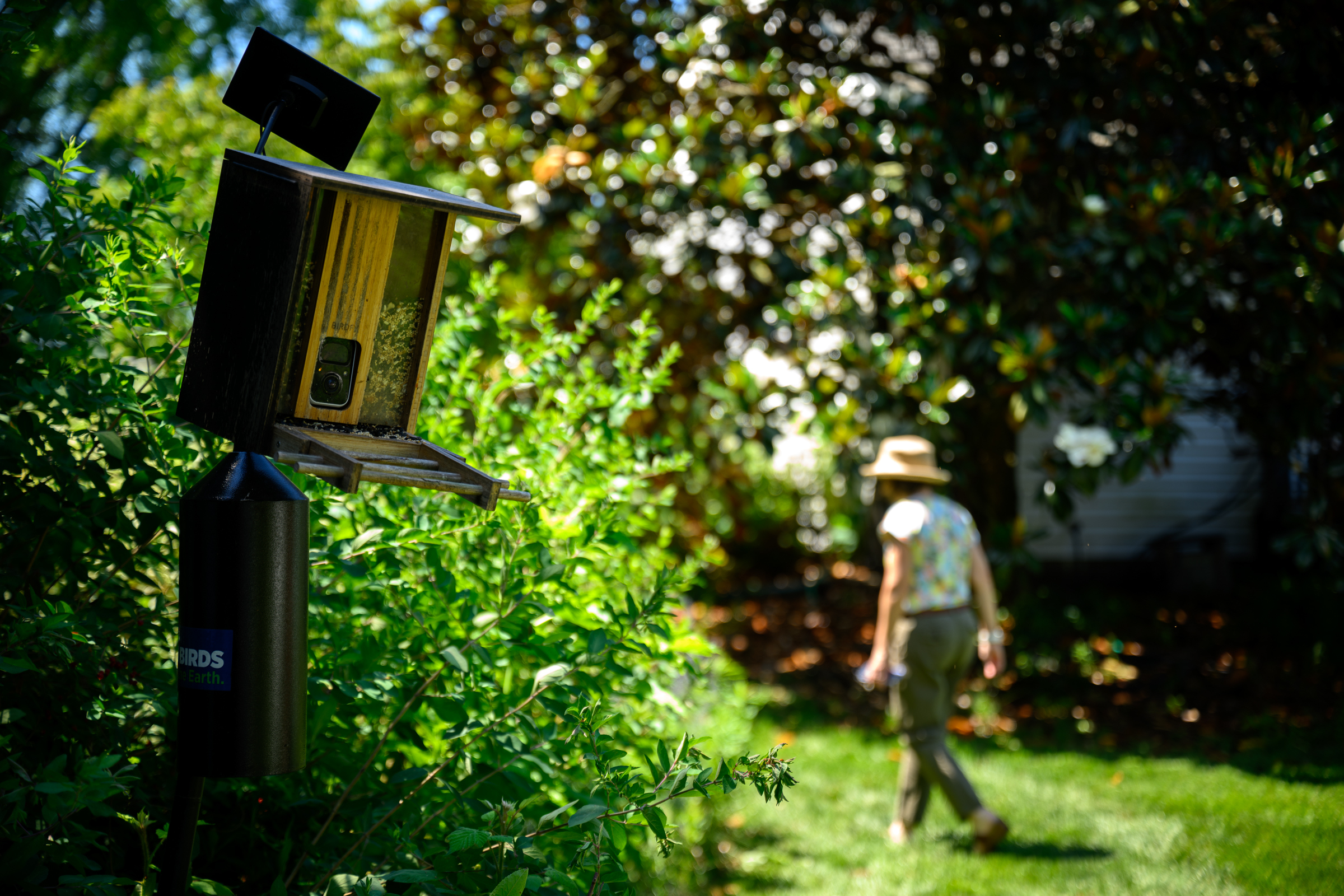
    There are five rain barrels around the house as well as several bird feeders, a blue bird house, and a bat house — as yet unoccupied.

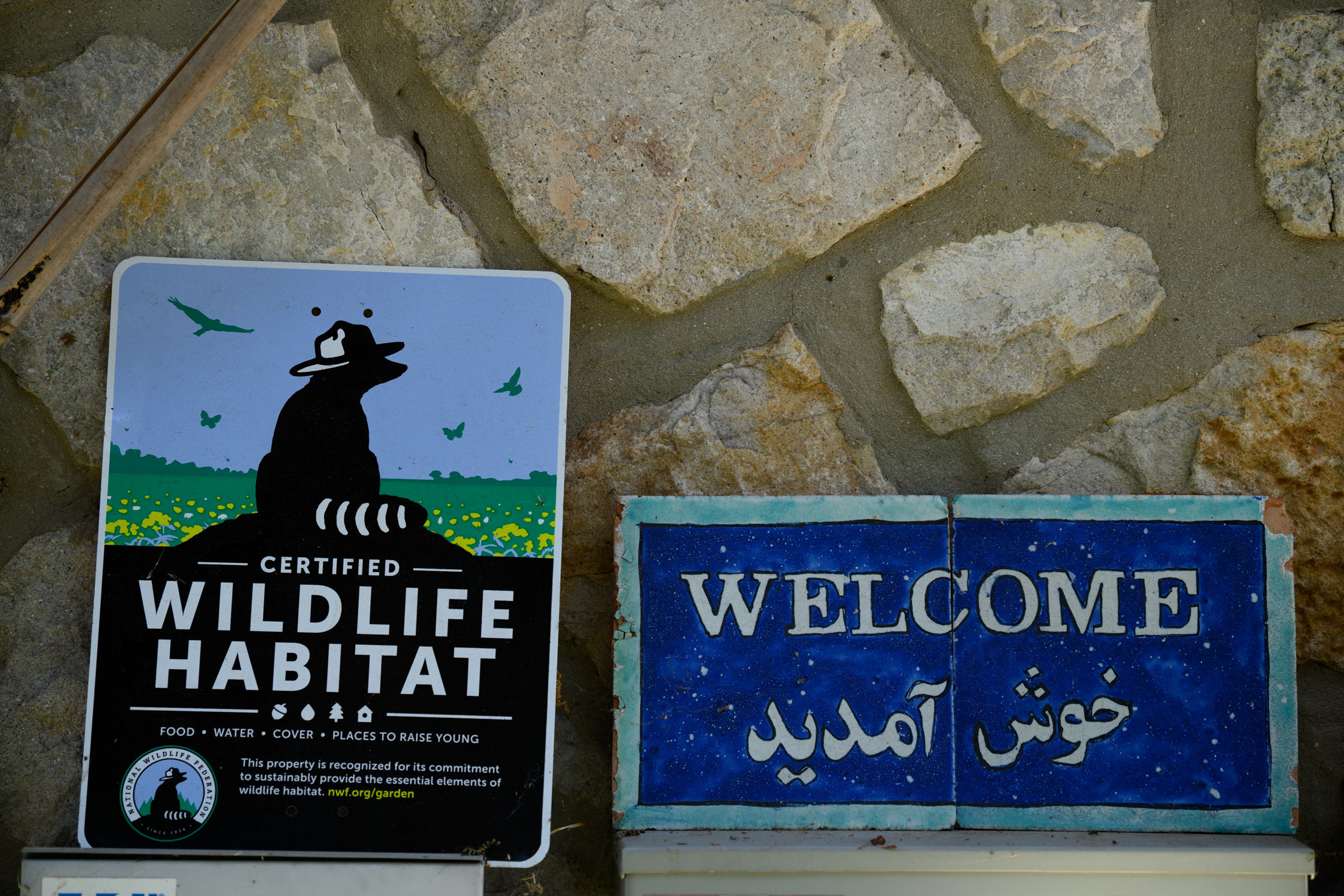
    By the front door is a sign designating the property as a “Wildlife Habitat.” Another says “Welcome” in English and Farsi. Cohen spent time in Afghanistan.

    A “Certified Wildlife Habitat” sign and a “Welcome” sign on display in the couple’s yard.Kriston Jae Bethel / For The Inquirer
    A bird feeder with a built-in camera sits in the backyard.Kriston Jae Bethel / For The Inquirer

    His and Hexter’s careers sent them all over the world. He worked in the foreign service for the U.S. State Department and she was with the CIA.

    The couple live by the motto “Think globally act locally,” considering the broader health of the entire planet while focusing on practical, hands-on solutions to protect habitats and help the environment.

    They have solar paneling on the south-facing roof of their two-story home; a geothermal heating and cooling system; energy-efficient insulation, doors, and windows; and two electric vehicles.

    Between meadows and trees, only the roofline and solar panels are visible from the driveway.Kriston Jae Bethel / For The Inquirer

    Cohen and Hexter met on a blind date in Washington, D.C., and married in 2000. After postings in Africa and Brazil they lived in Virginia.

    When they retired they wanted a home where Hexter would have space to garden, and where they could age in place. They were familiar with Montgomery County because Cohen grew up in Pottstown, where his great-grandfather emigrated from what is now Slovakia in the late 1880s.

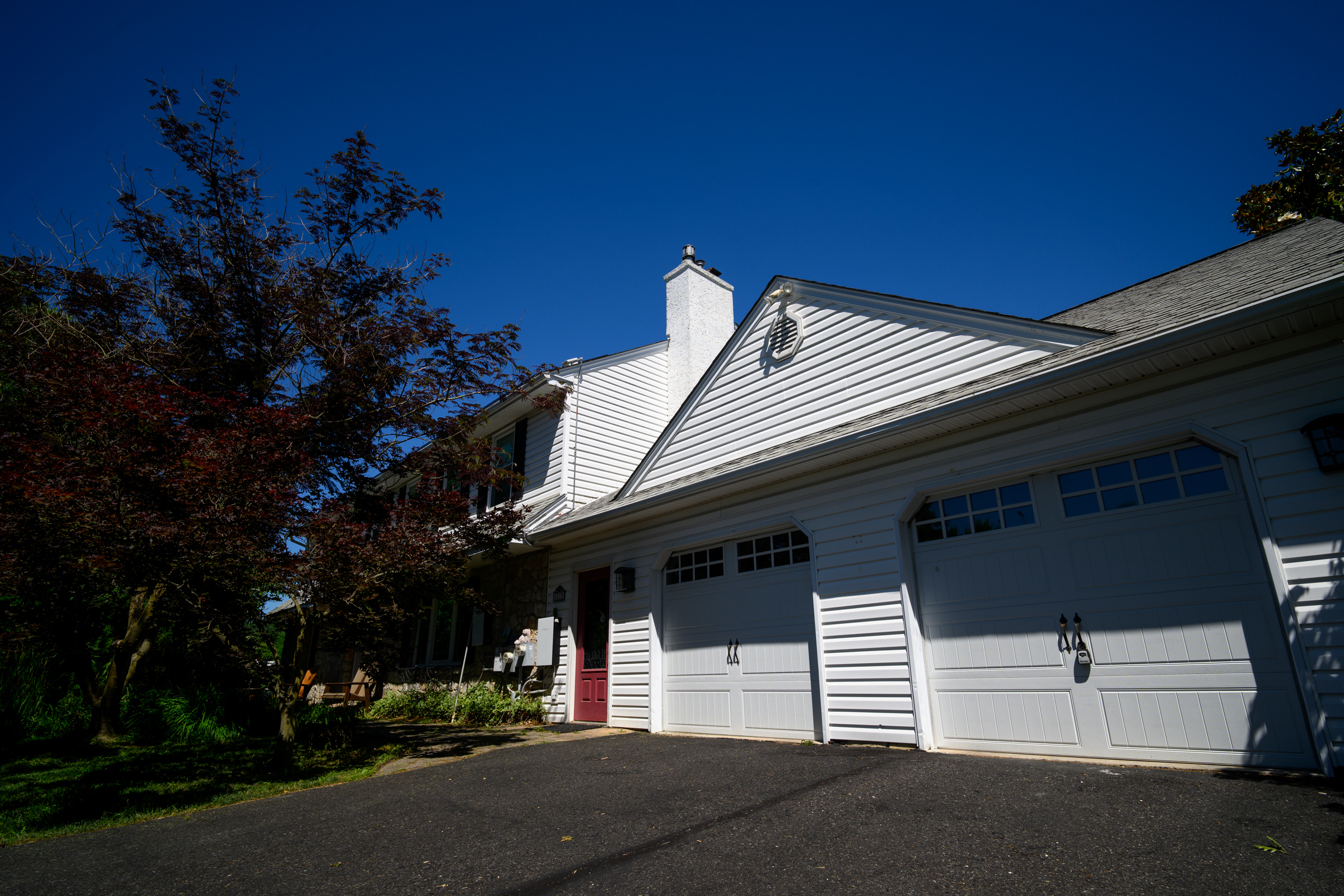
    The home Cohen and Hexter bought was built in 1986 as a one-story with two bedrooms and a bath. In the 1990s a second floor with three bedrooms and two baths was added as well as a two-car garage.

    The two-car garage was added onto the home by a previous owner.Kriston Jae Bethel / For The Inquirer
    Marla Hexter cleans up some overgrown carrots in her vegetable garden.Kriston Jae Bethel / For The Inquirer

    The couple liked the downstairs sleeping area and walk-in shower and rooms upstairs to host family. They each have a son and daughter from previous marriages, and three grandchildren.

    The house has a ramp to the backyard deck and a ramp from the house to the garage, built by prior owners.

    But the wooden deck was rotting. The couple replaced it with Trex, a sturdy wood composite. They furnished the deck with an attractive table and chairs made of recycled plastic and decorated it with containers of flowers and potted fig trees.

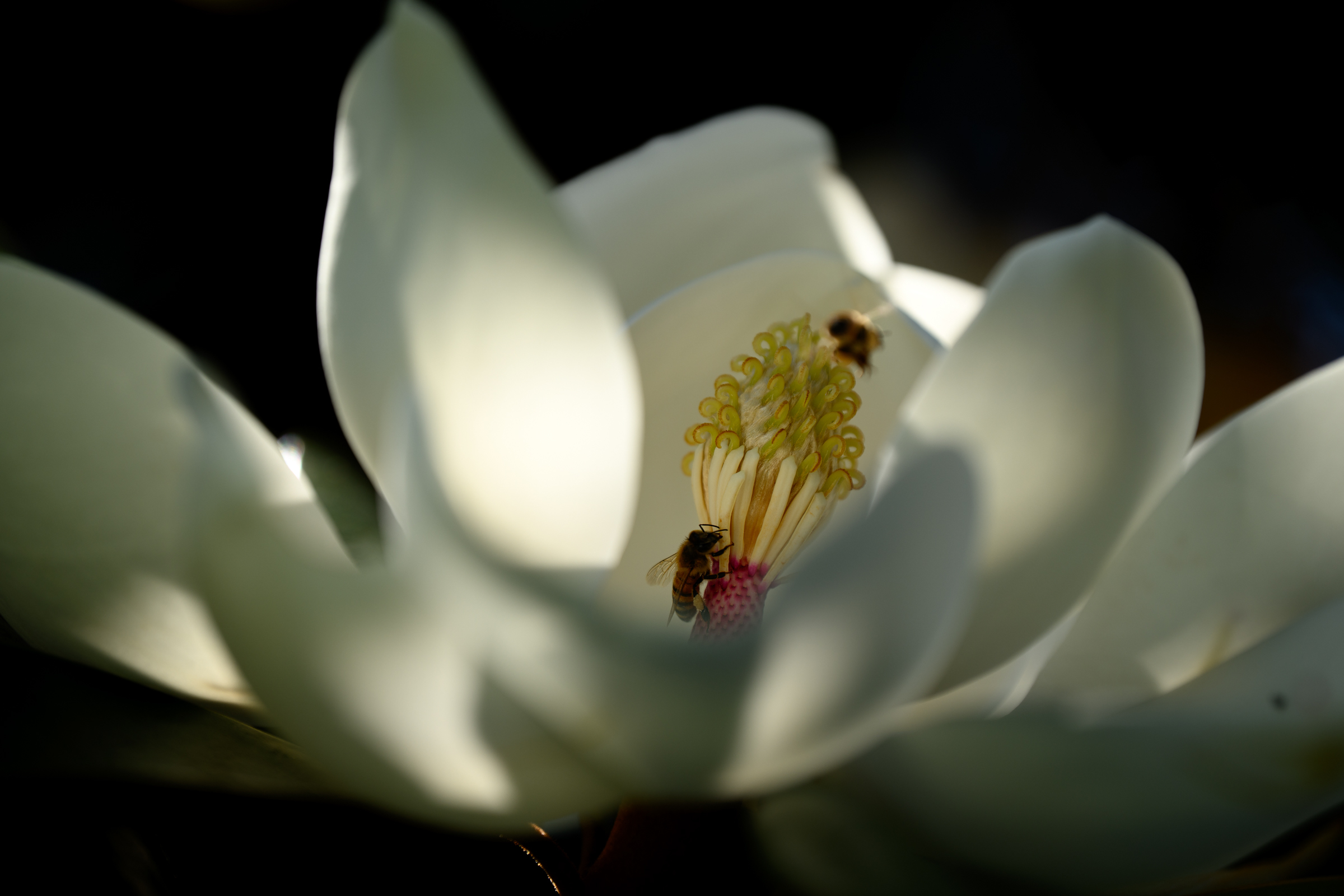
    Bees collect pollen from a magnolia flower in the backyard.Kriston Jae Bethel / For The Inquirer
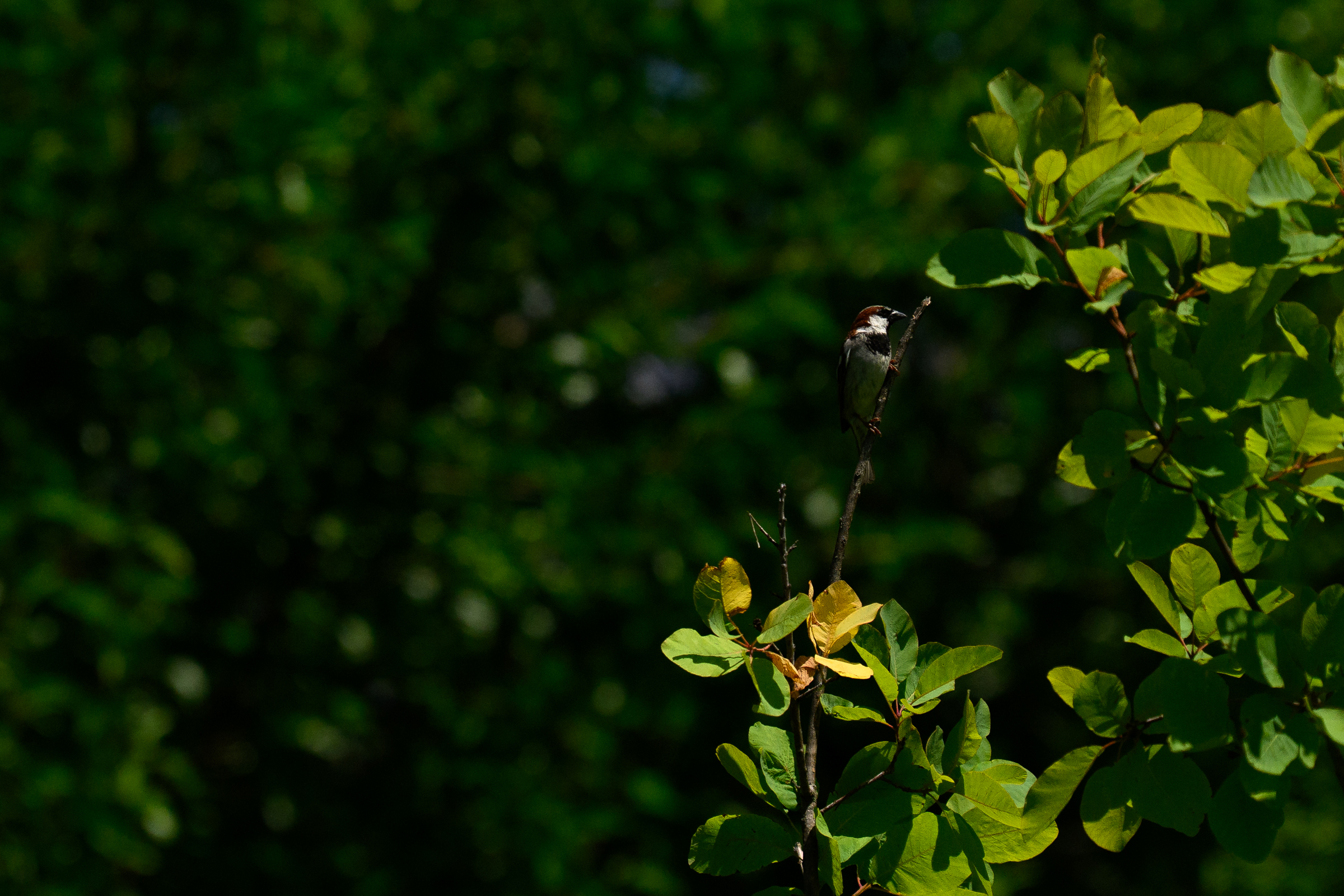
    A house sparrow grips a tree branch in the front yard. Since they planted the meadows, neighbors have commented on the number of birds that visit their neighborhood, the couple said.Kriston Jae Bethel / For The Inquirer

    Growing the fruit has been a challenge for Hexter who gathered tips from local growers and from the annual fig festival in Upper Pottsgrove.

    She and her husband are active in the community. “It is our plan to stay here forever,” Hexter said.

    Is your house a Haven? Nominate your home by email (and send some digital photographs) at properties@inquirer.com.