Category: Philly First

  • Why Claire Borelli Embraces Change

    Why Claire Borelli Embraces Change

    For Claire Borelli, the future of work isn’t a choice between technology and humanity, but an effort to bring the two together. A native Philadelphian and an enormous Eagles fan, Borelli is the senior executive vice president and chief people officer at the retirement services provider TIAA. She is helping lead the organization’s 13,000 employees through one of the most consequential shifts facing today’s workforce: the rise of artificial intelligence. Drawing on three decades of experience in HR, Borelli is a champion of an employee-first approach to AI adoption. She believes technology should be used to augment human capabilities and that change is an opportunity for growth. Her philosophy is simple: Welcome change while valuing the humanity at the heart of the workplace.

    What does it mean to be a changemaker?

    The first thing it means, and this is much easier said than done, is being okay with change. I’ve always been energized by change because it creates opportunities to make things better. I’ve been fortunate to have a platform to help drive that change and, more importantly, help others see the possibilities that come with it.

    You are the driving force behind TIAA’s ELEVATE program, an internal workforce development initiative that gives employees dedicated space to build new skills, connect with peers and leaders, and actively manage their professional paths within the company. Did something in your own career inspire this mission?

    My career changed because I said yes to something I wasn’t ready for. I didn’t set out to work in HR, but at Merrill Lynch, I was asked to help build an employee service center and rethink how HR operated. I had no HR background. I was way over my skis, and it scared me.

    But I learned to take risks, trust the process, and give an opportunity a chance, even when it isn’t what [I] imagined for [myself]. That stretch assignment gave me new skills, relationships, and exposure, and ultimately launched my HR career. That’s what I love about ELEVATE: creating those unexpected opportunities for others, especially in the age of AI, when roles may shift and employees can take advantage of expanding their skill sets to prepare for an AI-powered future.


    Was there a moment that shifted your thinking about AI?

    My oldest son changed how I think about AI. Two years ago, when my CEO asked me to help lead our AI transformation, I was intimidated. My son said, “Mom, imagine having someone in your office 24/7 who knows more than you do and can help with anything: recruiting, compensation, talent. And yes, they’re smarter than you.” That visual stuck. AI wasn’t going to replace me; it can make me better.

    That’s the message I share with our people. Some jobs will disappear, new ones will emerge, but many will simply get better. If AI gives someone 30% of their time back, that’s 30% they can devote to a new project, skill, or opportunity. The challenge now is reimagining how we put that capacity and our people to work.

    TIAA has emphasized an employee-first approach to AI adoption. How did the organization put that into practice?

    What built trust wasn’t just talking about an employee-first AI strategy. It was putting action behind it. We knew AI would change roles, and in many cases, expand them. We doubled down on internal hiring and strategically paused most external hiring. Rather than immediately going to market and backfilling, we asked our leaders to consider if AI could take on the work or if it made sense to expand the scope of an existing internal role.

    We told managers: before you look outside, look at our existing talent first. There were skeptics initially, but it worked. Year over year, we saw a 67% increase in internal hiring. That sent a powerful message to our associates: as AI changes work, we’re investing in you, not leaving you behind.

    Which leadership traits do you believe will matter most over the next decade as AI automates more routine work?

    AI is changing the landscape. When I was growing up, knowledge was power. If you knew your subject and were sharp, you were good to go. That won’t be enough in the future. As AI takes on more technical and routine work, traits like empathy, innovation, emotional intelligence, and strong communication skills will become even more valuable.

    Think about an architect designing something for Philadelphia. Technical knowledge will still matter, but AI can increasingly support that expertise. What becomes more important is understanding the context: What is Philadelphia’s history? What does its art and culture tell us? How do its neighborhoods and politics shape what people need? And how can you think differently to solve for those needs?

    That’s what we need to teach the next generation: not simply what to know, but how to think, connect, and understand people. You can’t always get those nuances from data. Sometimes you need to have coffee with someone, walk a neighborhood, or understand what motivates people. That humanity, and the relationships that come with connecting to others, will be essential to success in an AI-powered world.

    You report directly to CEO Thasunda Brown Duckett and serve on TIAA’s executive committee. What have you learned about leadership by working alongside her?

    Thasunda is a force, probably the most inspirational leader I’ve ever worked with. What sets her apart is that she truly leads with people and culture in mind. Technology and products can be replicated; people are the real differentiator, and she walks that talk.

    She’s also a rare combination of visionary and operator. She can set a bold vision and get into the details to make it happen. She’s taught me the importance of connecting with people personally, understanding what motivates them, finding purpose, and having fun at work.

    You’ve said trust accelerates decision-making and collaboration, especially during periods of rapid change. What are some practical ways leaders can build that trust?

    Trust starts with transparency, communication, and active listening. Leaders need to explain what they’re doing and why, but also create opportunities to hear what people are saying and then be clear about what they can and can’t change.

    At TIAA, we heard that employees at some of our smaller office locations weren’t feeling as connected as those in bigger hub offices. We introduced site leaders who could listen, communicate, and bring people together. Engagement scores rose significantly, by nine percentage points in Philadelphia. It reinforced for me that trust isn’t just about communicating early; it’s about listening intentionally and showing people that you’ve heard them.

    How do you strike a balance between empathy and accountability when making tough organization-wide decisions or delivering news that may affect employees’ lives?

    People may forget what you told them, but they remember how you told them. As a leader, especially in HR, you sometimes have to make difficult decisions that are right for the organization.

    The key is to be clear about the decision and the why, transparent and timely in communicating it, and empathetic in how you deliver it. The same applies to tough feedback: holding someone accountable and telling them what isn’t working early, honestly, and with care is ultimately an act of respect.

    If you could give one piece of advice to a young professional, what would it be?

    Take risks. Don’t assume your career has to follow a straight line. The sideways moves and unexpected opportunities often teach you the most and make you more versatile.

    I’m a Type-A person; I like a plan, so I had to learn this myself. Every career “swerve” adds something to your toolkit. And in an AI-driven world, that range of experiences, perspectives, and human judgment will only become more valuable.

    You raised five kids while building a C-suite career. What advice would you give to other parents on how to manage big jobs and big families? Any secrets to keeping everything and everyone on track?

    There’s no such thing as balance. At any given moment, work or family is going to get more of you, and you have to be okay with that.

    I’ve been fortunate to have a true partner in my husband, especially raising five kids (now ages 42 down to 29). But the biggest lesson is to be present where you are. If you skip the staff meeting for the soccer game, be at the soccer game. If you stay for the meeting, be at the meeting. Shut down the voice telling you that you should be somewhere else.

    Our CEO Thasunda says life is like a diversified portfolio: how you invest your time will shift. Stop trying to give everything 100% at once.


    PHILLY QUICK ROUND

    Favorite Philadelphia neighborhood? Rittenhouse is great to walk to and have dinner, but I just love the neighborhood where my two younger children live, which is Queen Village. I just love the historic feeling of it.

    Favorite place to celebrate an Eagles win? Lincoln Financial Field, unless it’s an away game, and then it’s in my home. I like all the cooking and all that family time.

    What do you cook for a game? Every Sunday game is a pot of gravy. We’re Italian!

    Favorite local restaurant or hidden gem? I love The Saloon. Their appetizers are fabulous. They have the long hots, poblanos, and fabulous steaks there. Just open the menu, and I’ve ordered them all.

    Which Philadelphian past or present do you most admire? Can I say Rocky? I’m kidding. I admired Kobe Bryant, for sure. I think about how driven and Type-A he was. And in his later life, he became more like a coach to his daughters and really inspiring.

    Personal motto or mantra? It’s “This too shall pass.” Because no matter how good life is, we always have moments that take us out. It’s important to remember that those moments pass.

    What are you most grateful for right now? I’m pretty happy about LeBron James coming to the Sixers!


    Lucy Danziger is a journalist, an author, and the former editor-in-chief of Self Magazine, Women’s Sports & Fitness, and The Beet.
  • How Independence Blue Cross has Built a Legacy of Volunteerism

    How Independence Blue Cross has Built a Legacy of Volunteerism

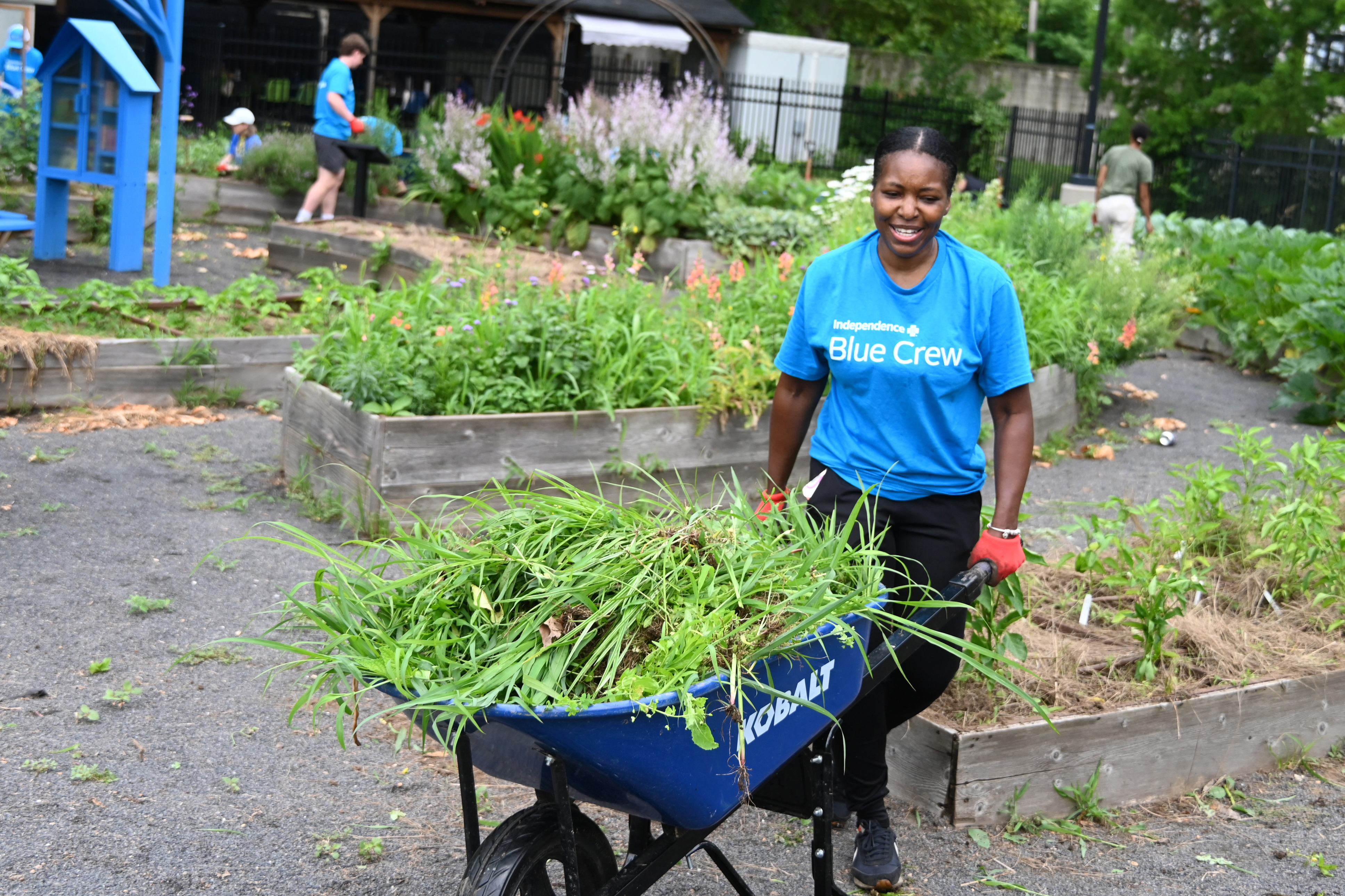
    At Independence Blue Cross, serving the community is more than a corporate value. It’s part of the company’s identity as a leading corporate citizen and hometown health insurer for almost 90 years. This comes to life every day through the work of the IBX Blue Crew program, which supports hundreds of nonprofits serving the Philadelphia region.

    Now in its 25th year, the Blue Crew has become a model for corporate volunteerism in the area. What began as an idea from a small group of IBX employees in 2001 has evolved into a cornerstone of the company’s culture and community engagement strategy, with participants collectively dedicating thousands of hours each year to volunteer efforts, from cleaning green spaces to providing food, clothing, and school supplies to those in need.

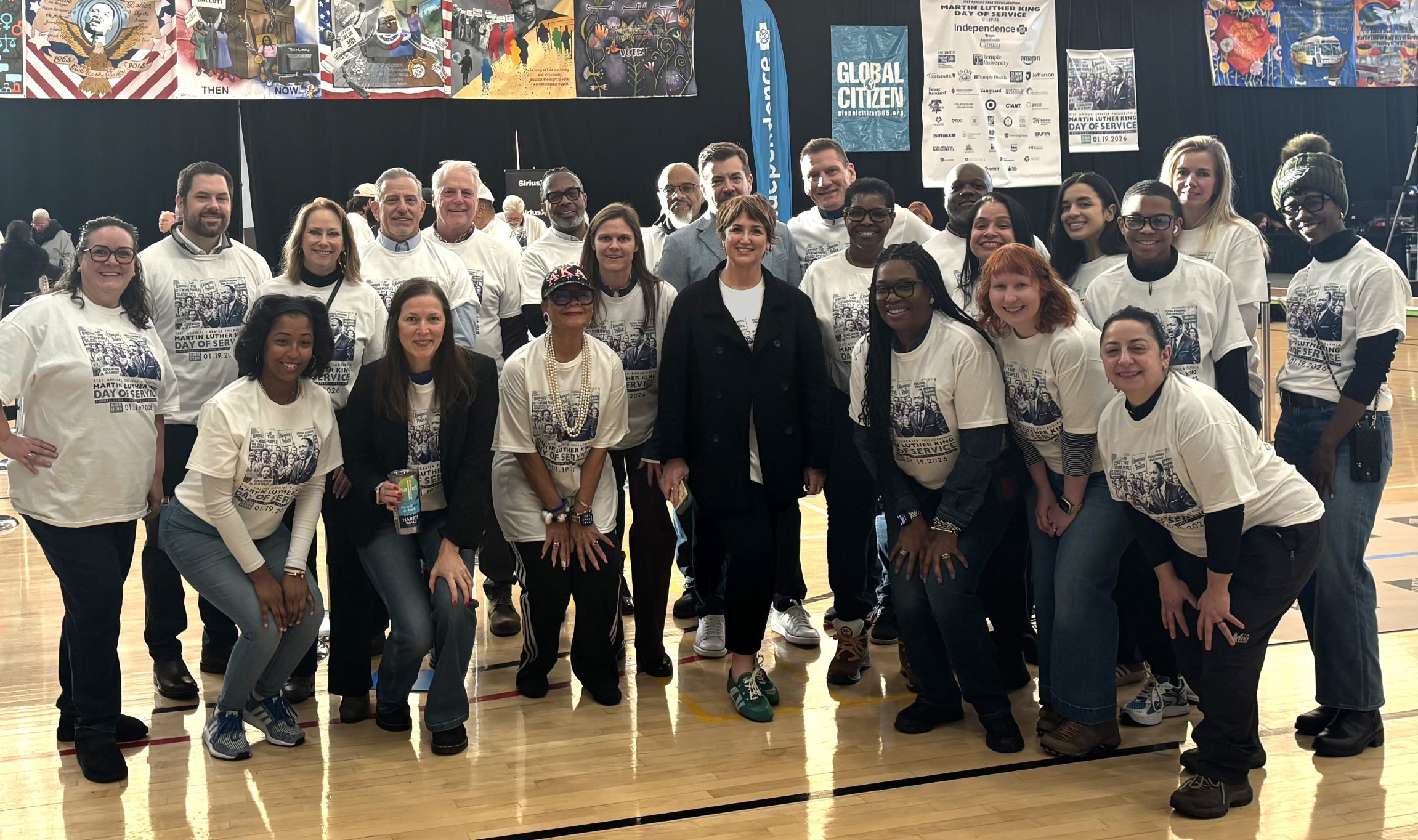
    IBX President and CEO Kelly Munson with the Blue Crew at the annual Greater Philadelphia Martin Luther King Jr. Day of Service.Courtesy Independence Blue Cross

    “The Blue Crew reflects the best of Independence Blue Cross. For 25 years, our associates have invested their time and talents to strengthen communities across our region. In the first half of 2026 alone, Blue Crew volunteers contributed nearly 10,000 service hours to 272 charities and nonprofits, doubling the number of hours volunteered at this point last year,” Kelly Munson, Independence Health Group president and CEO, said. “Giving back is part of our culture, and we’re proud to stand alongside our neighbors as partners in building healthier, stronger communities.”

    A Record Year to Ring in a Quarter-Century of Service

    As the Blue Crew celebrates a milestone anniversary, IBX is doubling down on its community-focused efforts to make 2026 a record year for engagement and impact. Led by a call from Munson for employees to increase their community engagement, participation in the Blue Crew continues to grow. “We’ve encouraged employees across the organization to join us in giving back in ways both big and small because every associate’s contribution is valued,” Steve Fera said. Fera is IBX’s executive vice president of public affairs, president of government markets, and the executive sponsor of the Blue Crew. “The response has been tremendous, and it’s inspiring to see so many colleagues stepping up to make a difference in the communities we serve.”


    “Through June 30, 2026, we’ve seen more than 1,400 volunteers engaged and the impact is significant,” Marie Gillespie, IBX’s community affairs programs manager, said. Last year, Blue Crew members logged approximately 13,000 volunteer hours, Gillespie said, noting that they’re on track to double that figure by the end of 2026.

    This year, the Blue Crew also held one of its largest volunteer events since 2019. In March, the program teamed up with the Pennsylvania Horticultural Society, a longtime partner of IBX, to send 100 employees to work in the PHS Community Farm at Norristown Farm Park. Blue Crew members planted, mulched, and constructed raised beds on the 3.5-acre farm, which uses sustainable agricultural practices. The fresh produce harvested is donated to food pantries and community-based partners, like PHS’s Food As Medicine program, which provides food and nutrition education to individuals who are experiencing food insecurity.

    The Blue Crew has longstanding relationships with other nonprofit organizations focused on similar concerns, including MANNA, which provides medically appropriate meals to individuals with serious illnesses, and the Share Food Program, Philadelphia’s leading food bank. “Food insecurity is closely tied to health and well-being,” Gillespie said, adding that there’s an increasing need to address the issue in our region, where it affects more than 600,000 people.

    Blue Crew volunteers worked on another special project this year through their partnership with Cradles to Crayons, a nonprofit tackling children’s clothing insecurity that also provides kids with school supplies. For the organization’s annual Backpack-A-Thon, which equips kids with volunteer-packed backpacks containing back-to-school essentials, IBX associates wrote more than 5,000 cards sharing encouraging words about the upcoming school year. Beyond this initiative, the Blue Crew regularly sends volunteers to Cradles to Crayons’ Giving Factory to sort through donated clothing, footwear, diapers, and other staples before they’re distributed to families.

    Partnerships Driven by Purpose

    For IBX, many volunteer partnerships focus on the social and community factors that influence health, including access to nutritious food, stable housing, and support services. Successful partnerships with nonprofits and community partners are central to the Blue Crew’s mission.

    In particular, IBX’s two-decade-plus relationship with Ronald McDonald House Philadelphia, which provides lodging for families with children receiving medical care in the area, shows how partnering around a shared goal can drive lasting impact.

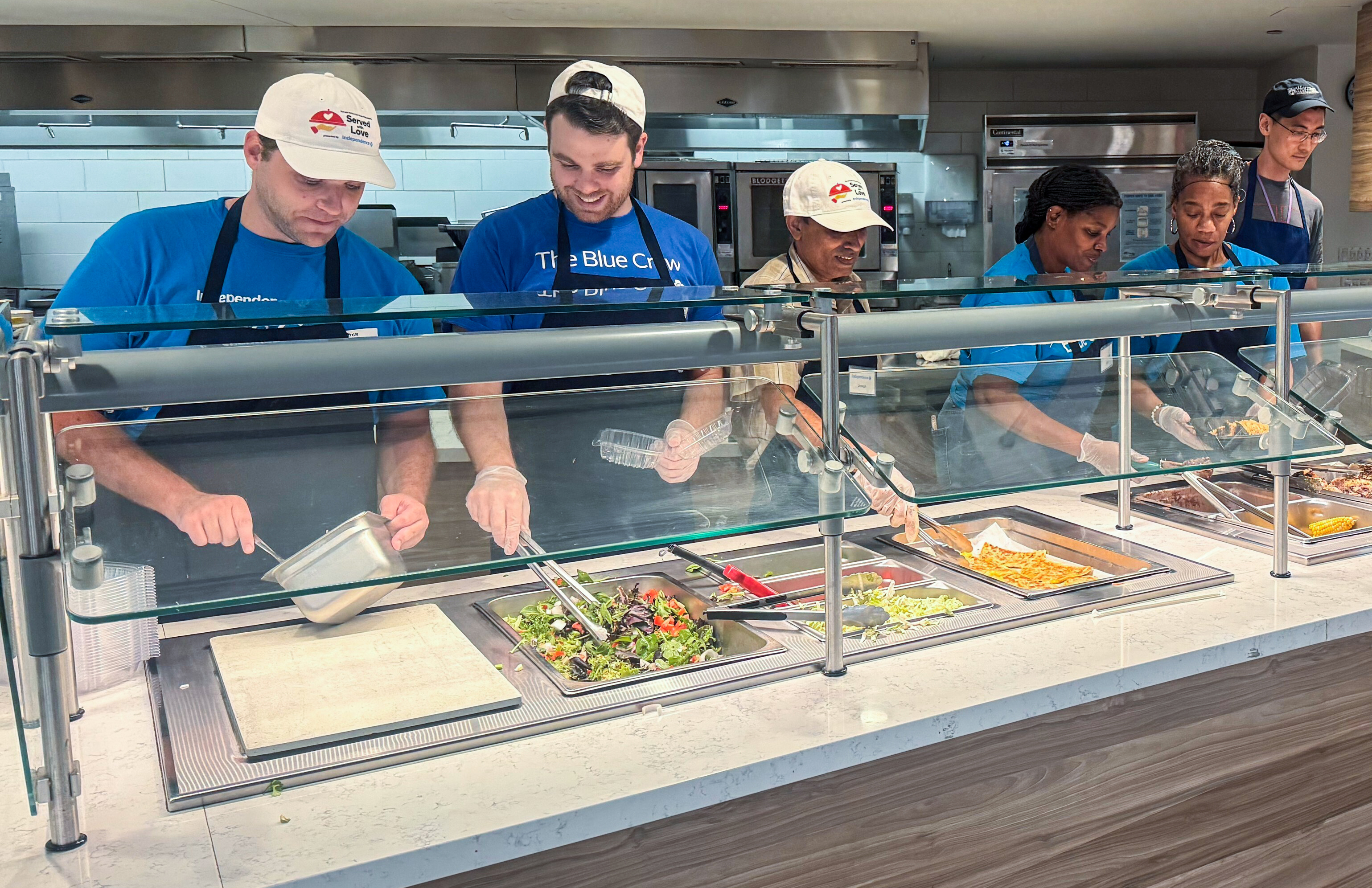
    Blue Crew volunteers help serve healthy, nutritious meals at the Ronald McDonald House hot bar.Courtesy Independence Blue Cross

    While the Blue Crew assists with several RMH projects, it’s been instrumental to the charitable organization’s Served With Love program, regularly sending volunteers to prepare and serve chef-made breakfasts and dinners to families at RMH’s Philadelphia locations. “Through the Served With Love program, we work hand-in-hand with our friends at Ronald McDonald House to provide comfort and nourishment for families so they can focus on their children’s health,” Fera said. “Last year, the Blue Crew dedicated nearly 400 hours in support of RMH families.”

    The Blue Crew became involved with the initiative in its early days and eventually helped scale the meal-service operation to feed three times as many people. “As our program has evolved, the Blue Crew has adapted and helped us evolve in how we provide dinners and breakfasts to our families,” Susan Campbell, the CEO of Ronald McDonald House Philadelphia, said. “IBX employees assisted with logistics, like determining how many volunteers would be needed per shift, creating instruction sheets for the kitchen’s new commercial equipment, and marketing the program to other corporate volunteer groups,” she said.

    The IBX group has been “essential” to Served With Love’s success, Campbell said. “When we look at how much it would cost for us to run our Ronald McDonald House without volunteers, it would be unfeasible to provide these meals in the ways that we do.” The executive added that the Blue Crew is “a great example of what other companies can create” as they look for ways to engage their employees with the community and with each other, especially as more people work remotely.

    Engaging Employees Around Community

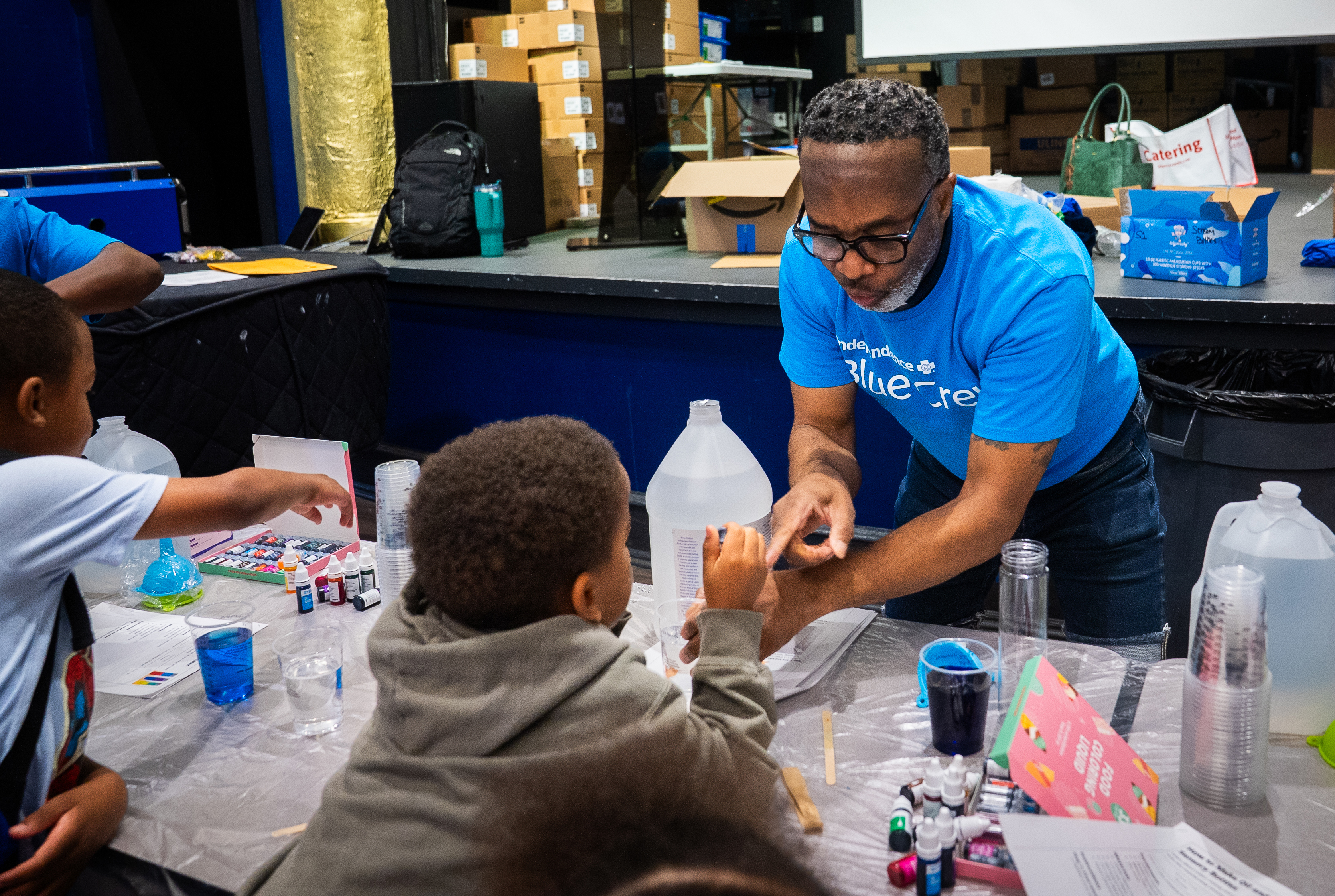
    Like many IBX employees, James Angelo Christopher, a clinical care quality coordinator, joined the Blue Crew when he started working at IBX to connect with colleagues while giving back. A member since 2014, he’s contributed thousands of volunteer hours as one of the Blue Crew’s most involved participants, regularly dedicating time to initiatives like Big Brothers Big Sisters, through which he mentored a student from third through eighth grade. He has also regularly served Thanksgiving and Christmas meals at the Philadelphia Senior Citizen Center.

    Blue Crew’s James Angelo Christopher, a clinical care quality coordinator, volunteers at the Boys & Girls Club.Courtesy Independence Blue Cross

    Over the years, Christopher said he has met colleagues through the Blue Crew whom he wouldn’t otherwise have met. In recent years, he’s also seen more new employees become engaged in the program. “Volunteer participation has grown tremendously based on word-of-mouth,” he said, adding that IBX staff members are often inspired to join after seeing the Blue Crew in their own communities.

    IBX makes it easy for employees to turn their passion for service into action. In addition to coordinating hundreds of volunteer opportunities each year, the company provides paid volunteer time, matches charitable donations through Blue Crew Gives, and supports employee volunteerism through its Dollars for Doers program. In 2025 alone, more than $1 million was donated to over 800 nonprofits through employee contributions and IBX matching gifts.

    Inspiring the Next Generation of Volunteers

    IBX’s commitment to volunteerism seeks to inspire those at the company and beyond to make an impact, including the next generation.

    Blue Crew employees are encouraged to bring family members to certain volunteer events, like park cleanups in partnership with the Fairmount Park Conservancy, which IBX regularly supports. “It’s important for people to be able to bring a friend or a family member and be able to have that be part of the experience,” Gillespie said, noting that some of the most rewarding Blue Crew projects she’s worked on have allowed her to teach kids about volunteering.

    Looking ahead, IBX plans to build on the Blue Crew’s legacy of service. “I hope that 25 years from now, [the Blue Crew] continues to be one of the defining programs of IBX’s mission and that it is still a central part of our culture and our purpose as a company,” Fera said. “It’s a program about neighbors helping neighbors. That’s what makes the program so special.”


    A History of Impact

    For generations, Independence Blue Cross has invested in the health and well-being of the Philadelphia region through community partnerships, charitable giving, volunteerism, and public health initiatives. This investment reflects IBX’s longstanding commitment to building healthier communities and strengthening the region it proudly calls home.

    Learn more at ibx.com/corporatecitizenship.


    Chloé Pantazi-Wolber is a writer and editor. Her work has appeared in Business Insider, Philadelphia magazine, The Rooted Journal, Travel Bulletin, The Paris Review, and more.

  • The Temple Alumni Behind Philly’s Big Summer

    The Temple Alumni Behind Philly’s Big Summer

    This summer, Philadelphia threw a 250th birthday party and invited the world.

    In the weeks surrounding Independence Day, Philadelphia welcomed visitors to major sporting events — including six FIFA World Cup matches at Lincoln Financial Field and the MLB All-Star Game at Citizens Bank Park — and bolstered the city’s annual traditions, including the Wawa Welcome America festival, which served as the centerpiece of its semiquincentennial celebrations.

    Putting on the country’s largest Fourth of July party was a labor of love, requiring the vision and hard work of thousands of people behind the scenes, many of whom were Temple University Owls. The passion for the city they demonstrated in their roles can be traced back to their roots on North Broad Street, where they developed the skills and connections that prepared them for moments like this.

    “It’s Temple alumni who drive and run this city behind the scenes,” said Jacki Mowery, Phambassador program director at the Philadelphia Visitor Center Corporation. “The positive outcomes from this summer all tie back to what we experienced and learned at Temple.”

    Here’s how Mowery and three other Owls made Philly shine for the celebration of the century.


    Jacki Mowery

    Phambassador Program Director, Philadelphia Visitor Center


    As Phambassador program director at the Philadelphia Visitor Center Corporation, Jacki Mowery recruited more than 10,000 volunteers (including Temple students) to serve as stewards of the city by showcasing the best of Philly to visitors this summer. She structured the program and spearheaded activations, beautification projects, and celebrations in preparation for Philadelphia’s moment on the global stage.

    “My job has been to keep engagement going and to keep people excited, energized, and ramping up that love for Philly, which comes very naturally to me because I’ve always loved this city,” said Mowery, who majored in history as an undergraduate. She later returned to Temple for a second master’s degree in travel and tourism at the School of Sport, Tourism and Hospitality Management. Her graduate capstone project focused on how Philly can be known for food beyond cheesesteaks.

    Before joining the Visitor Center, Mowery worked in international education, managing study abroad programs at Temple and elsewhere. She once helped Philadelphians discover the world. Now, she helps the world discover Philadelphia. “I’ve gotten the chance to explore the world, but I always came back to Philadelphia and found the world here,” she said.


    Sean McClatchy

    Account Executive, Service & Retention, Philadelphia Phillies


    “Baseball is about as American as it gets,” said Sean McClatchy, an account executive with the Phillies’ season ticket sales and service team, graduate of Temple’s School of Sport, Tourism and Hospitality Management, and lifelong Phillies fan.

    McClatchy manages relationships with more than 350 clients and played a key role in ticket fulfillment for the 2026 MLB All-Star Game, coordinating VIP ticketing for the organization’s executives, partners, and business leaders while ensuring guests enjoyed a seamless game-day experience.

    He attributes his career opportunity with the Phillies to the resources offered to him at Temple. “I got this job because a guest speaker from the Phillies came to my class and I talked her ear off,” he said. “Here I am, eight years later.”

    For McClatchy, working for the Phillies is about more than baseball. “It’s become like family,” he said. “To work for the team I grew up rooting for in the city I love is pretty close to living the dream.”


    Whitney Constable

    Volunteer Program Coordinator, Philadelphia Soccer 2026


    Whitney Constable, volunteer program coordinator of Philadelphia Soccer, thrives behind the scenes where careful planning creates unforgettable experiences for fans. This summer, she managed the daily operations of more than 750 host city volunteers who welcomed people to FIFA Fan Fest and greeted them as they entered Lincoln Financial Field before World Cup games.

    “As someone who grew up in this region and attended Temple, it was special to play a part in welcoming international fans to share the love of soccer while showcasing Philadelphia’s history and culture at the same time,” said Constable.

    A graduate of the School of Sport, Tourism and Hospitality Management, Constable studied event and entertainment management with a concentration in tourism and hospitality. Through internships and contract work with Wawa Welcome America, Philadelphia’s Thanksgiving Day Parade, and the Pennsylvania Horticultural Society’s Flower Show, she gained the hands-on experience that prepared her for large-scale event operations.

    She hopes Philly left a lasting impression on visitors. “I wanted people to leave remembering not only the matches they attended, but also the kindness and hospitality they experienced here,” she said.


    Zorita Dorsey

    Festival Director, Wawa Welcome America


    After building a career behind some of the nation’s biggest live events — including managing entertainment at Walt Disney World, coordinating scripts for Miss America’s Outstanding Teen Pageant, and overseeing transportation for six consecutive Super Bowls — Zorita Dorsey was tapped to lead Wawa Welcome America in 2022.

    This year, as the Fourth of July tradition took on greater significance, the College of Liberal Arts grad was the driving force behind the signature event. At the same time, she served as producer of the Commonwealth Concert Series, helping bring marquee performances and civic celebrations to communities across Pennsylvania.

    Dorsey has remained closely connected to her alma mater throughout her career and will join Temple as an instructor this fall. “Temple shaped me into who I am,” said Dorsey. “I have always wanted to give back to the university that gave so much to me.”

    Read more about how Temple powers events and hospitality in Philly.

  • How PECO is Tackling Energy Affordability on Three Fronts

    How PECO is Tackling Energy Affordability on Three Fronts

    Rising energy costs have become a mounting burden for families across Southeastern Pennsylvania. For an average family of four, even the smallest increase on a monthly energy bill can force difficult tradeoffs between, for instance, groceries and keeping the air conditioning on.

    That creeping financial instability is the problem PECO is addressing through the Exelon Promise, an all-of-the-above approach to affordability designed by Exelon, PECO’s parent company, to keep bills manageable through three connected strategies: immediate relief, near-term cost protection, and long-term policy reform. “The Exelon Promise has to be felt in a very immediate and tangible way,” Doug Oliver, PECO’s senior vice president of governmental, regulatory, and external affairs, said. For customers, that means the plan must translate into meaningful support now.

    While PECO doesn’t produce energy or set supply rates, it is responsible for the infrastructure that delivers energy to customers in Southeastern Pennsylvania. Now, as rising costs put pressure on household budgets, the company is expanding its role in addressing energy insecurity and finding creative ways to make sure that anyone who needs help knows where to find it.

    Finding solutions today

    For PECO, delivering on the strategies in the Exelon Promise begins with providing immediate solutions for struggling customers.

    Established energy assistance programs are critical to the mission. The company connects more than 140,000 customers with energy assistance annually and delivers more than $200 million in support to households across its service area. That support took on several forms, depending on a household’s income, needs, and eligibility.


    For customers with a household income at or below 150% of the annual federal poverty level (FPL), for instance, PECO’s Customer Assistance Program (CAP) limits monthly bills at a percentage of household income. A qualifying family of four earning less than $4,125 per month might owe only a fraction of a $200 bill.

    For customers who need support but do not qualify for CAP, Exelon provided another form of relief through its Customer Relief Fund, which offered direct grants to qualifying customers. Since August 2025, the $12.5 million fund has supported more than 9,000 customers in Southeastern Pennsylvania. The PECO-specific program closed after available funds were fully allocated due to strong customer demand, but according to Oliver, it succeeded in its goal “to get more protection for more people.”

    That same philosophy extends beyond direct financial assistance. PECO also works to connect customers with community organizations like the United Way, which can help them apply to federally-funded programs like the Low Income Home Energy Assistance Program (LIHEAP). The company provides detailed application guidance and hosts virtual and in-person enrollment sessions for those who need support applying to energy assistance programs.

    “We’re actively meeting customers where they are,” Oliver said. “We’re out in our communities talking to people and connecting them to our programs in the short term.”

    Still, Oliver said, the most immediate month-to-month tool for lowering energy bills is reducing energy use by adjusting thermostats, weatherizing homes through utility-sponsored programs like the Low Income Usage Reduction Program (LIURP), and participating in energy efficiency programs that can help customers use less energy without sacrificing comfort. “The biggest saving comes from a kilowatt you don’t use,” said Oliver.

    Smart thermostats and other energy-efficiency tools can help customers monitor usage and lower monthly bills without sacrificing comfort.Getty Images

    Protecting customers from future costs

    While immediate resources can help customers manage their bills today, PECO’s affordability strategy also depends on protecting customers from costs that could emerge in the future, especially as new large-scale users connect to the grid.

    One likely pressure point is the rise of data centers. According to Oliver, there are more than a dozen data centers in development that, once built, could require nearly as much power as PECO’s entire current customer base. Some estimates forecast that peak energy demand will increase by more than 30 gigawatts by 2030, primarily driven by data centers.

    As part of the Exelon Promise, PECO is engaging large users, including data center developers, in contracts designed to ensure they pay their fair share. These agreements stipulate, among other conditions, that customers will not be responsible for grid upgrade costs if a proposed data center is never built. Instead, data centers and other large energy users would be expected to cover the costs created by their own demand. “We don’t want to make investments and then the data center doesn’t come to fruition,” Oliver said.

    Pennsylvania’s energy future

    The efforts above are designed to address affordability on short- and medium-term timelines — from the next monthly bill to the next few years of grid growth. But for Oliver and his team, keeping energy affordable over the long term will also require confronting the supply constraints driving up costs for customers. Because Pennsylvania utilities like PECO are currently restricted from building or owning their own power generation, they cannot directly add supply when demand rises. Instead, PECO must largely work through power generators, suppliers, and policymakers. That is why the company is also pushing for policy changes in Harrisburg that would protect consumers and give PECO more tools to respond when power supply falls short of demand.

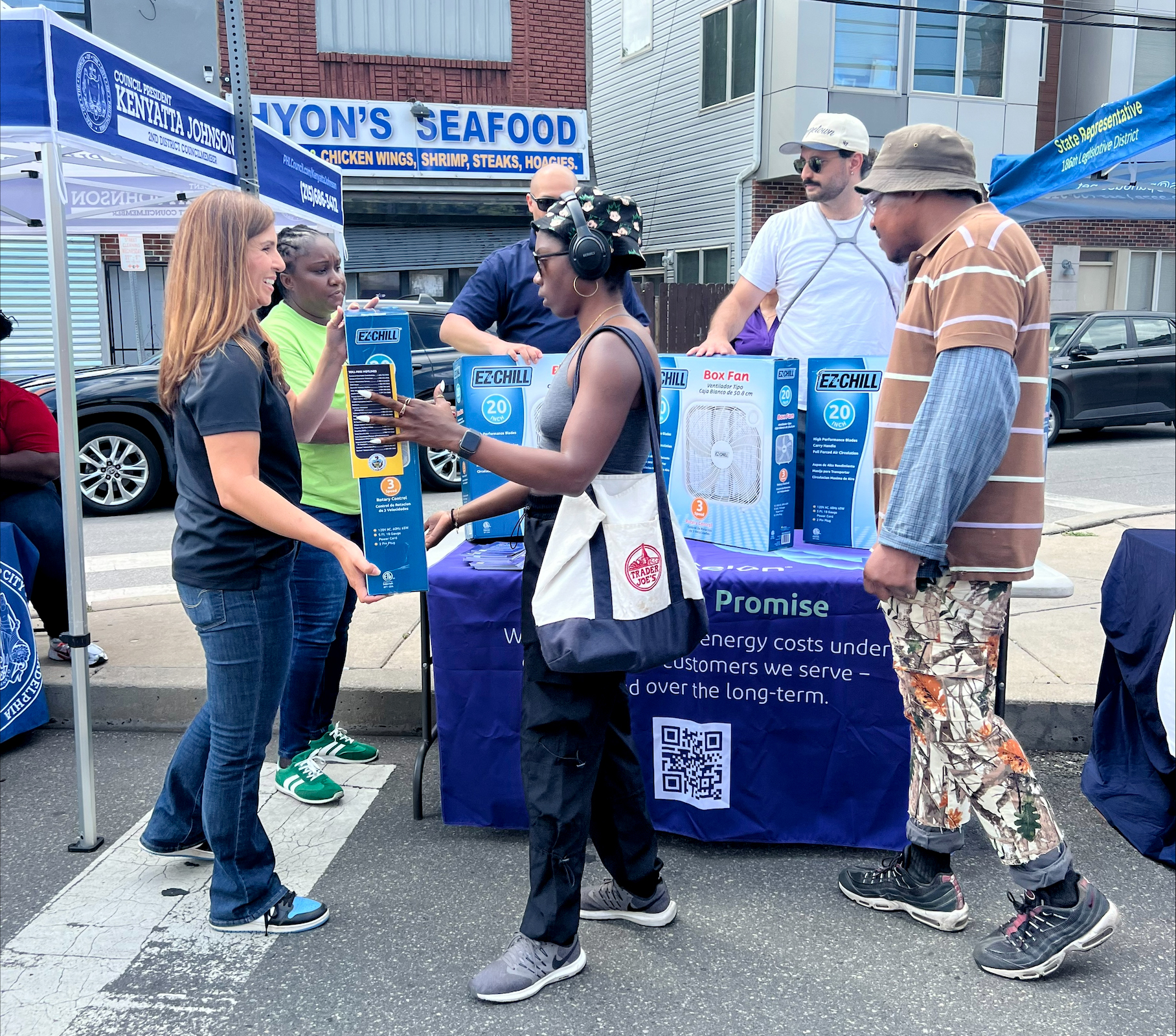
    PECO employees distribute free fans and share energy assistance resources during the company’s annual Summer Fan Distribution Program.Courtesy PECO

    One focus is Pennsylvania’s competitive retail power market. PECO is advocating for two recently introduced bills, HB 2131 and SB 312, that would reshape how customers are served by third-party electricity suppliers. The retail market was originally intended to lower electricity prices through competition by allowing customers to select their power supplier. In practice, however, some contracts begin at competitive introductory rates then become increasingly expensive after those rates expire. Some suppliers have also been found to use deceptive marketing practices and target vulnerable populations.

    According to PECO, residential customers on competitive supply paid about 65% more in 2025 than they would have under default service. The proposed bills would return customers to PECO’s default service once their contracts with third-party suppliers end, unless a customer opts back in. The goal, Oliver said, is to prevent customers from being rolled into higher post-contract rates without fully understanding the change. “When we buy it, we buy it at the [lowest] cost, and we pass it through,” he said.

    PECO is also advocating for changes to the Electricity Generation Customer Choice and Competition Act, a 1996 law that bars Pennsylvania utilities from generating power themselves. Prior to the law, Pennsylvania’s utility companies both generated and distributed electricity through vertical integration, and Pennsylvania had some of the highest energy rates in the country. It was thought that prices would come down once private companies could build power plants based on demand in the retail power market. But nearly three decades later, rising demand and insufficient supply have exposed limits to that model.

    Two proposed bills, HB 1272 and SB 897, would roll back part of this restriction, allowing utilities like PECO to build or contract for energy generation if competitive markets fail to deliver enough power to the grid. “The biggest driver of bill increases in the last year and a half has been supply inadequacy,” Oliver said. “Utility-owned generation isn’t the only solution, but someone has to put a shovel in the ground to save our customers money.”

    For PECO, these policy efforts are part of the same affordability strategy as bill assistance, customer outreach, and cost protections for large energy users. The goal is not only to help customers weather the current moment, but to change the conditions that are making energy more expensive in the first place.

    Using every tool in the box

    Even as supply costs have driven up utility bills, Oliver said PECO has worked to keep its operating costs at or below inflation. According to Exelon, that operational discipline has saved customers $580 million system-wide over the past decade.

    For PECO, operational efficiency is another part of the affordability strategy set by the Exelon Promise. Immediate assistance helps more families keep their homes warm in winter and cool in summer. Agreements with new large-scale energy users can help protect customers from bearing the infrastructure costs associated with serving data center developers. And long-term policy changes could help secure the region’s energy future. “We have to be visible in all three swim lanes,” said Oliver, referring to PECO’s three-part approach. “That’s our commitment to all of our customers in the Exelon footprint and to all 2.1 million customers that we have here in southeastern Pennsylvania.”

  • How Jefferson is Deepening its Community Ties to Improve Health Outcomes

    How Jefferson is Deepening its Community Ties to Improve Health Outcomes

    From the Poconos to Cherry Hill, Jefferson has become a familiar presence. As the largest academic health system in the Greater Philadelphia region, the nonprofit institution sees millions of patients each year across its 33 hospitals and more than 700 care sites spanning Pennsylvania and New Jersey. That reach, said Keith Leaphart, the executive vice president and Humana chief health equity and community impact officer at Jefferson, gives the organization a particular responsibility to its communities.

    “We are the primary safety net system here,” Leaphart, who also serves as vice chair of The Inquirer’s board of directors, said. “We’re serving a lot of people who are uninsured and underinsured, and we’re not turning them away.”

    Jefferson’s 2025 Community Impact Report, “Driven to Improve Lives,” explains how the anchor institution is using its unique model as an integrated health system that includes a university and a not-for-profit health plan to address the region’s needs. The report highlights more than $2.7 billion in community funding, including investments in access to care, health professionals’ education, and community-based services. It also offers a road map for Jefferson’s community partnerships and initiatives: building trust through neighborhood partnerships, expanding access to nutritious food, creating pathways into healthcare careers, and preparing the next generation of providers to meet people where they are. “At Jefferson, we believe our responsibility goes far beyond the walls of our hospitals,” Jefferson CEO Dr. Joseph Cacchione said.


    Building Bridges to Bring Healthcare to All

    Jefferson’s 2025 Community Impact Report that approach through investments in initiatives like the Community Health Worker Academy, a paid job-training program for new healthcare professionals who help their neighbors navigate health and social services.

    The program is an example of how Jefferson has been intentional about mobilizing health workers who come from the same communities that they serve and are often able to speak with patients in their preferred languages. Empowering community members to provide care creates a powerful access point for residents who may not otherwise connect with care systems. Community health workers also help build trust between their neighbors and health institutions.

    Similarly, Jefferson’s Inspire Network, which launched last November, partners with faith-based organizations across the region to empower faith leaders to help their congregants better understand the healthcare system. “When someone gets sick or they need care, they’re often going to a community of faith and asking for prayers and support and comfort and meal trains,” Leaphart, the Jefferson leader, said. By teaming up with faith leaders, Jefferson can help them meet their congregations’ needs directly. The health system also invites faith leaders to its quarterly Partners in Purpose events to foster relationships and collaborate on their work together. To date, Jefferson has partnered with more than 150 faith-based organizations to offer health services like screenings. The organization also hosts family-friendly events like Night at the Zoo, an annual visit to the Philadelphia Zoo that provides residents with access to affordable health options. Last year’s occasion drew 4,000 residents.

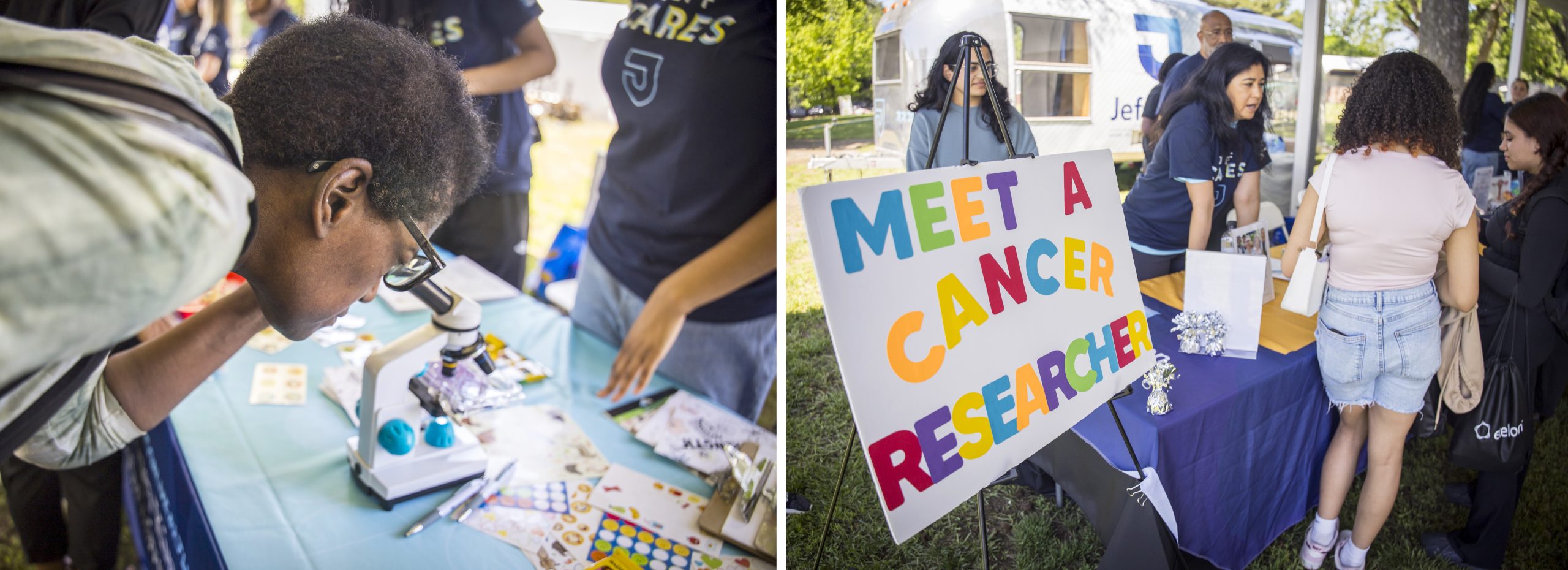
    To build on the success of partnerships like these and create opportunities for future collaborations, Jefferson recently launched a community engagement request form through which workers with community-based organizations can request a JeffCARES team visit to their place of worship or social event to provide free screenings and other health services.

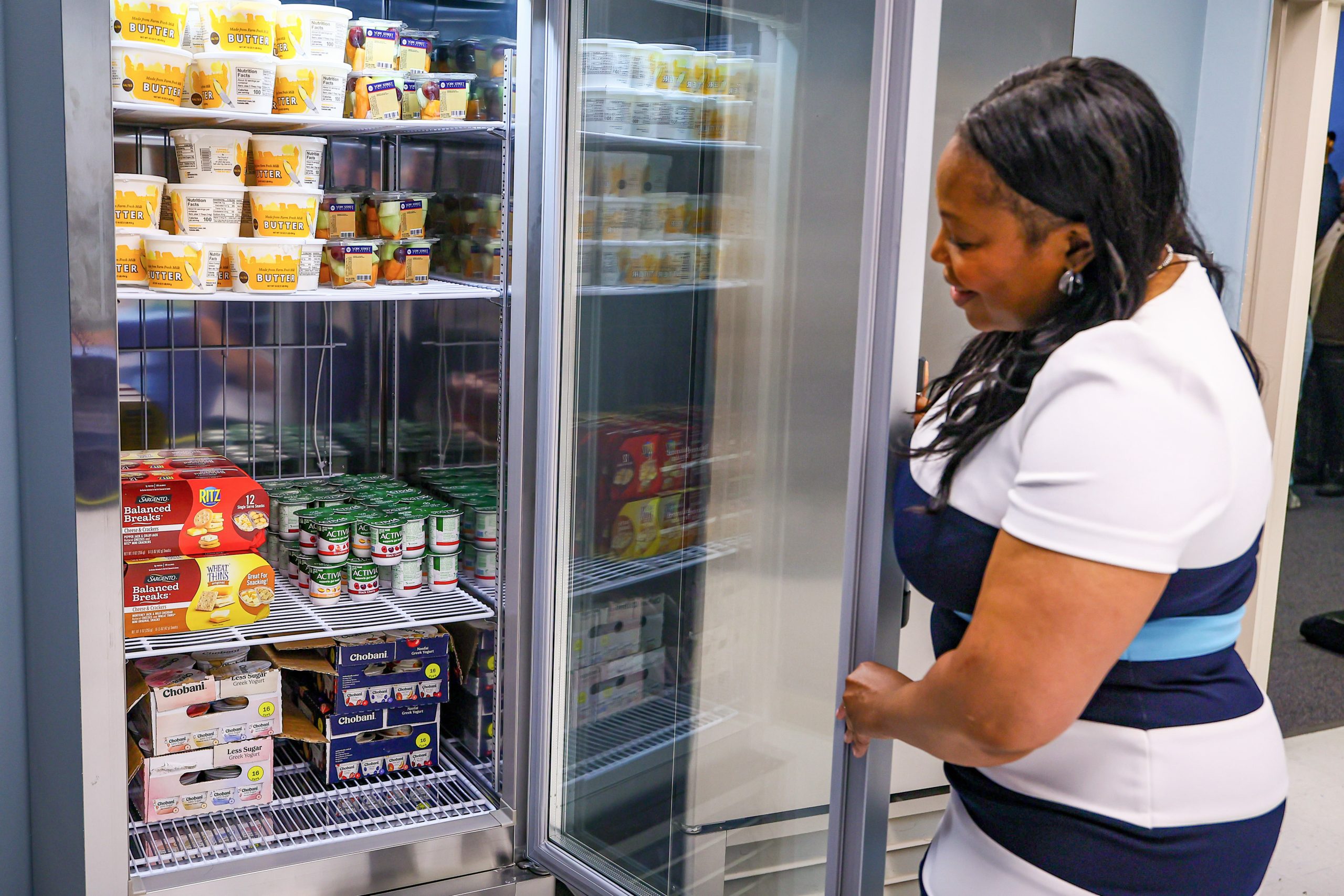
    Cortney Reed, Jefferson Health’s director of Community Engagement, at the JeffCARES Community Food Pantry, which offers fresh food and recipes to support healthy eating, at Jefferson Einstein Philadelphia Hospital.Courtesy Jefferson Health

    A Recipe for Expanding Food Access

    Jefferson’s community-impact report also shines a light on the work the organization is doing to increase access to healthy meals in the Philadelphia region, where more than 600,000 people experience food insecurity. The health system partners with food banks like Philabundance and Second Harvest Food Bank of the Lehigh Valley and Northeast Pennsylvania and runs a number of community pantries, volunteer programs, and initiatives, including custom meal plans that support cancer patients undergoing treatment in Willow Grove.

    One highlight from the report is the JeffCARES Community Food Pantry, the first Philabundance food pantry located within a hospital. It opened in April 2025 at Jefferson Einstein Philadelphia Hospital in North Philadelphia. “Philabundance has been a valued partner of ours for many years, but establishing a hospital-based site was something our community truly needed,” Dixie James, the president of Jefferson Health’s Central Region and the chair of the Philabundance Board of Directors, said.

    In addition to fresh dairy products, meat, and shelf-stable items, the pantry provides recipes for nutritious meals tailored to support a variety of health conditions, including diabetes. The pantry is open to patients, community members, and Jefferson colleagues.

    “Access to safe, healthy, nutritious foods, [and] fresh produce is something that we know is directly connected to overall better health. If you’re able to eat healthy, you’re going to have better health in general. We want to be at the center of that,” Leaphart said. “That doesn’t happen without partnerships.” Jefferson serves around 150 meals per week to families and has distributed about 6,700 bags of food so far this year.

    Jefferson’s $2.7 billion investment in community impact expands access to care and inspires future healthcare professionals through education and a school speaker series.Courtesy Jefferson Health

    Careers That Grow With Community Partnerships

    Another important part of Jefferson’s community-impact work, as detailed by the report, is career development. “One of the things that we’ve been really intentional about is building out pathway programs and pipeline programs for young people to be exposed really, really early to careers in medicine,” Leaphart said. The organization, which is the region’s largest employer with 65,000 employees, is getting kids interested in the healthcare industry by inviting staffers to visit classrooms to talk about their careers as Jefferson School Speakers.

    Jefferson has more than 20 programs across the enterprise engaging students from elementary to high school in career exploration, as well as pipeline initiatives with reputable workforce development organizations. Jefferson also runs dedicated programs for high school and college students through partnerships with educational institutions. “One that we’re really excited about is the Jefferson Workforce Development Program, a partnership between the School District of Philadelphia, North Philadelphia’s Esperanza College, and Jefferson Health,” Leaphart said. The program offers free training to high school students interested in careers as patient care technicians or medical assistants.

    Students who successfully complete the training are qualified to enter the healthcare industry as entry-level workers. Since launching the program last April, Jefferson has hired 27 students who earned their certification in the course.

    Community partnerships are also emphasized within Jefferson’s own academic institution. Students at Thomas Jefferson University, for instance, are encouraged to actively volunteer in the community. “Volunteering is core to everything that we do,” Susan Aldridge, Ph.D., the president of Thomas Jefferson University, said. “When you start here at Jefferson as an undergraduate student, within your first week, you’re volunteering in the local community, which is really unique and reflects the culture of our institution.”

    Many medical students with Sidney Kimmel Medical College volunteer with the student-run program JeffHOPE, through which they work alongside physicians to provide health screenings to vulnerable populations through a network of free drop-in clinics at homeless shelters — yet another example of how Jefferson is committed to expanding access to care. To date this year, Jefferson has hired 1,308 Thomas Jefferson University graduates.

    Community-First Leadership

    For Jefferson, improving access to health and education extends beyond hospital campuses and care sites into schools, shelters, food pantries, houses of worship, and community events — places where people feel comfortable and are already seeking support.

    “As a leading academic health system, we have both the reach and the obligation to improve health across entire communities — by expanding access, investing in people, and partnering in ways that create lasting impact,” Cacchione said. As the report makes clear, Jefferson’s mission to improve lives depends on building the partnerships, pathways, and trust that help communities thrive.


    Chloé Pantazi-Wolber is a writer and editor. Her work has appeared in Business Insider, Philadelphia magazine, The Rooted Journal, Travel Bulletin, The Paris Review, and more.

  • At Jefferson Health, a High-Tech, High-Touch Vision of Care

    At Jefferson Health, a High-Tech, High-Touch Vision of Care

    For Dr. Baligh Yehia, transforming health care starts with a simple idea: access should feel effortless. As president of Jefferson Health, one of the nation’s largest academic health systems, Yehia is rethinking what access means and focusing on helping patients move through every step of their care journey seamlessly.

    Jefferson Health is building a model that goes beyond traditional sites of care to meet people where they are — whether that’s through virtual visits, community-based programs, or care delivered directly in the home. The goal isn’t just about convenience; it’s also about confidence: reducing uncertainty, easing anxiety, and making care feel more human. Patients can now connect with oncology teams within 48 hours of a concerning diagnosis. Virtual care accounts for a significant share of visits, expanding Jefferson’s reach well beyond its campuses. And, programs like Telestroke and Teleneurology are bringing specialized care into underserved communities in real time.

    For Yehia, leadership in health care today demands a redesign of the experience. “Every person is different. Every community is different,” he said. “If we’re serious about access, we have to design care around that reality.” At Jefferson, that philosophy shows up in a powerful commitment: put people first, and build everything else around them.

    How do you define true access to health care?

    Access to health care today is about far more than getting an appointment. It’s about how easily people can find care, understand it, and move through it. That includes virtual visits, in-person care, home-based services, follow-up support, and connections to medications and specialists.

    True access is coordinated. It’s personalized. And it meets people where they are: in their lives, not just in our system.

    Jefferson is creating as many “front doors” as possible for patients. What does that look like in practice?

    At Jefferson, we think every interaction is a front door to better health, whether it’s an ER visit, urgent care, primary care, a community health screening, mobile unit, or one of our education programs. The goal is simple: make it as easy as possible for people to get the care they need, when and how they want it.

    We’ve invested heavily in virtual care, because it expands access in meaningful ways. For example, our virtual primary care program has expanded rapidly and now represents about 10% of appointments. It enables patients to connect quickly while still maintaining the trusted relationship with their care team. And when you pair that with programs like Teleneurology and Telestroke, which deliver neurological evaluations via secure video technology, you can deliver world-class specialty care to communities that otherwise wouldn’t have access. We’re able to support local communities with expert care through a combination of in-person and virtual care. That’s powerful.


    The Same Day/Next Day Cancer Care program allows patients to see an oncology clinician at Sidney Kimmel Comprehensive Cancer Center via telehealth in 48 hours or less. Why does being able to make an appointment quickly matter?

    Because it removes one of the hardest parts of care: uncertainty. When someone hears the word “cancer,” time slows down, and all too often, patients need quick interventions. This program addresses that. Within 48 hours, patients are connected to an oncology team and a path forward.

    It’s about acting quickly but also about giving people reassurance, clarity, and a sense of control at a moment when they need it most. It’s about access to peace of mind.

    How do you compete with new companies offering medications online?

    It’s true: there are more options than ever for accessing medications online, but not all are rooted in coordinated, comprehensive care. At Jefferson Health, we believe access must be paired with expertise, safety, and a relationship you can trust.

    Patients aren’t just accessing a service; they’re entering a system designed around their needs. That’s what we can offer, and it’s fundamental to who we are.

    What are some of the most effective ways Jefferson is serving diverse communities throughout Philadelphia?

    This is fundamental to how we think about access. It starts with communication, ensuring every patient can engage with their care in a way that feels clear, comfortable, and personal. We’ve expanded translation services to support more than 200 languages, allowing patients and caregivers to connect more easily with their care teams. But access goes beyond language. It’s also about understanding people in the context of their lives, their families, their cultures, and what matters most to them. That’s what it means to truly live out our first value to “put people first.”

    We’ve also made significant investments in the communities we serve, including $2.7 billion in community benefits. That includes expanding health literacy, supporting community health workers, and partnerships in the neighborhoods we serve. Our community health workers are trusted voices who help connect people to screenings, healthy food, and preventive care, and help them navigate a system that can often feel complex.

    Ultimately, this is about building trust and improving outcomes at the community level. When we understand what matters most to someone — whether it’s staying healthy to dance at a child’s wedding or simply maintaining independence — we can better support them in achieving their goals.

    Jefferson recently launched a systemwide artificial intelligence strategy aimed at reclaiming more than 10 million hours of clinician time by 2028. How is Jefferson using AI without losing the human touch?

    AI should give clinicians something back: time. Today, too much of their day is spent on administrative work: filling out forms, documenting in the electronic health record, and communicating with insurance companies. If we can use AI to reduce that burden, we enable them to be more present with patients and with each other.

    Joe Cacchione, Jefferson CEO, and I talk a lot about the importance of being high-tech and high-touch. Technology should enhance the connection, not replace it.

    What’s one thing you wish people knew about Jefferson Health that they may not know?

    Jefferson Health combines deeply compassionate, personalized care close to home with some of the most advanced therapies and innovations in medicine today. While many people know us for our community connection, they may not realize just how cutting-edge our care truly is.

    For example, our Neurorestoration program is leading the way in innovative treatments like vagus nerve stimulation (VNS) therapy, offering new hope to patients with complex neurological conditions. We are also pioneering breakthroughs in transplant care, including performing North America’s first living-donor RAPID liver transplant — a novel, staged approach that expands access to lifesaving transplantation for patients who previously had limited options.

    As an academic health system, we provide patients access to hundreds of clinical trials, giving them early access to therapies that are shaping the future of medicine and improving outcomes every day.

    Whether it’s heart and vascular care, neurology, oncology, women’s health, rehabilitation, transplant, or beyond, our teams bring together expertise, innovation, and humanity to deliver exceptional care at every stage of life.

    How do you lead in an era of rapid change?

    Leadership today is less about having all the answers and more about setting direction.

    I often think of it as being a compass rather than a map. A map tells you exactly where you’re going and how to get there through predictable steps. However, all too often, the path isn’t clear. You have to be the compass that moves your team in the right direction, while staying grounded in your values: put people first, do the right thing, and pursue excellence. You can guide teams through uncertainty with clarity and confidence.

    When you think about the culture you’re building at Jefferson Health, what do you prioritize?

    At Jefferson, our most important asset is our people, period. Not our buildings or our technology, but the individuals who care deeply about their work and about each other. That shared commitment shows up in how we serve our patients every day, and it drives our focus on putting people first. That mindset extends to how we lead. It’s about doing the right thing consistently, whether that’s a small, everyday action or supporting someone at an important moment in their career.


    PHILLY QUICK ROUND

    I feel most like a Philadelphian when… I am walking or running along the Schuylkill and past the Art Museum. You move through so many of the city’s most iconic symbols — the river, Boathouse Row, the Rocky statue — and you can feel the energy and history of Philadelphia all at once.

    On a day off, you’ll find me… spending time outside gardening, grabbing a coffee, or walking our standard poodle, Buzz.

    What I love most about Philly is… its grit. It can be mistaken for toughness, but to me, it’s really a deep sense of pride and commitment Philadelphians have to the city and to each other.

    What does being a changemaker in Philadelphia mean? It means making a tangible difference: strengthening communities, expanding opportunity, and finding ways to give back. At its core, it’s about improving lives and helping move the city forward.


    Lucy Danziger is a journalist, an author, and the former editor-in-chief of Self Magazine, Women’s Sports & Fitness, and The Beet.