Pet loss is a painful and often isolating experience. But for one South Philadelphia family, the end of their cat Tormund’s life is being grieved by thousands of strangers across the internet.
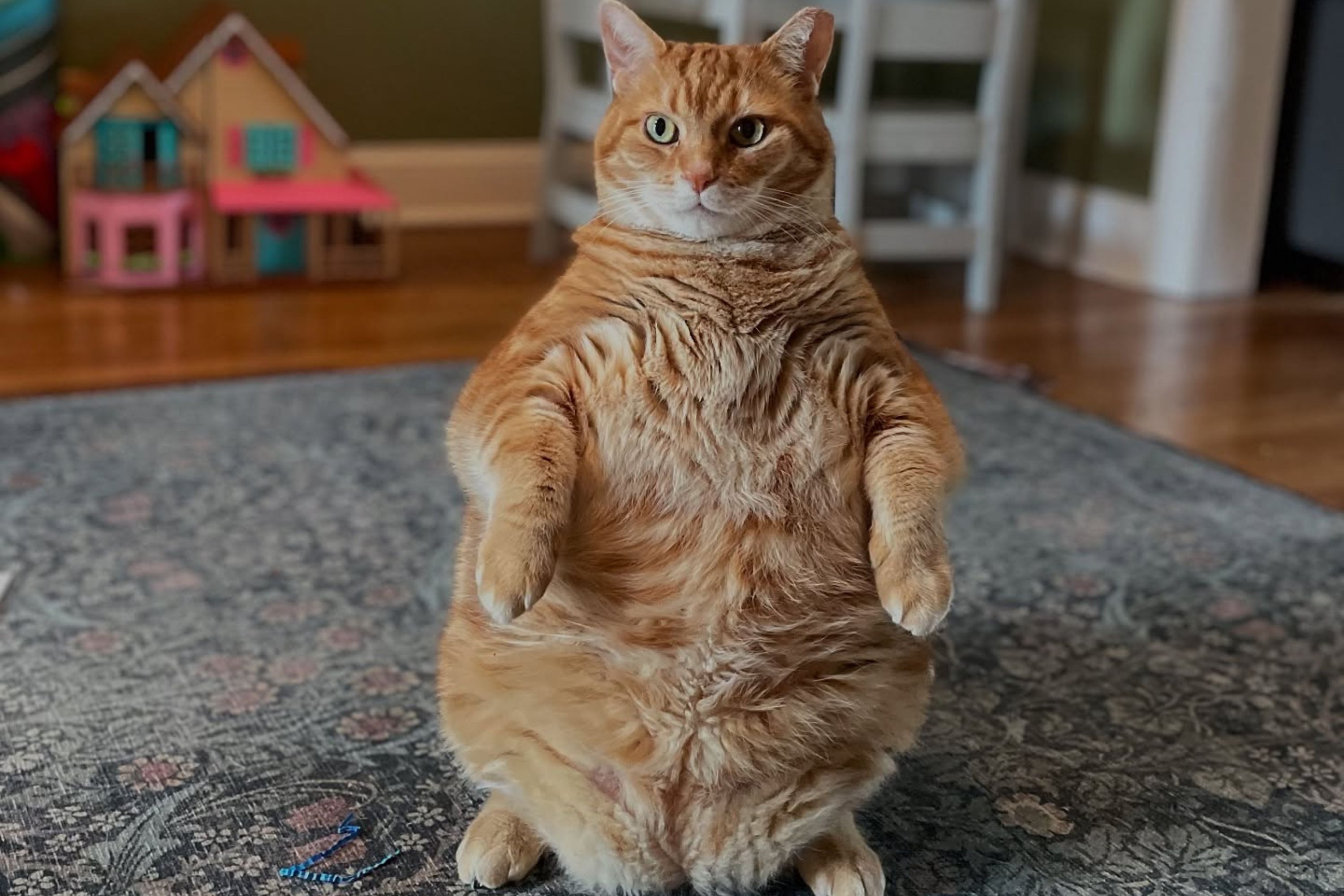
Tormund, best known as Standing Orange Cat, has died of medical complications, his humans said in a social media post. He amassed nearly 300,000 fans across his dedicated social media platforms because of, well, the funny way he would stand.
The bulbous orange tabby, with white whiskers, freckles on his lips, and green eyes, was a rescue from the streets — so his exact age was unclear. His owners, Alex and Jeff Holden, began posting photos of Tormund online in 2020.
In hundreds of photos and videos posted of the chunky feline since, Tormund could be seen perched on his short hind legs, belly protruding, and front arms awkwardly flapping in the front.
Quickly, the followers came. Comments on social media would call him “rare,” “aloof,” “hilarious,” and “adorable.”
“We don’t know why he started standing,” the Holdens wrote on Tormund’s website, orangecatstanding.com, which they used to sell stickers and other merch. “We’re just glad he did.”
His charming standing pose became fodder online for memes, even inspiring a birthday cake carved in the shape of a standing orange cat for Alex Holden’s birthday celebration last year.
Despite his online virality, Tormund’s owners say he was a sweet, affectionate boy behind the scenes.
“He would jump on the bed and force me to cuddle,” Alex Holden wrote on social media. “He slept on Jeff’s sweatpants, beside his side of the bed almost every night.”
And, Garfield-esque appearances aside, Tormund had never tried lasagna. His favorite human foods were popcorn and turkey. The Holdens said he was on an exercise and diet regimen under their care and that the way Tormund stood made him appear larger than he was.
Last week, the Holdens posted that Tormund’s health appeared to be declining quickly. Veterinarians said he likely had a mass on his spleen, and the cat’s family needed to weigh options fast.
Within about 72 hours, fans raised nearly $5,000 to go toward Tormund’s ultrasounds, scans, and veterinary care.
In a Facebook post, Alex Holden wrote that fans’ quick mobilizing efforts gave her family the ability to make decisions without finances being a factor.
Monday night, she posted the update all pet owners dread.
“We took Tormund to the vet and it was determined it was time to let him go,” she wrote, explaining that a prolonged vet stay had no guarantees and would be traumatic on the cat who famously already hated going to the vet. “We are absolutely heartbroken and feel his loss around us every minute.”
Alex Holden added that leftover funds raised for Tormund would go to Jeff Holden’s cousin, Lindsay Gaspari, who is credited as “Tormund’s original fan” and the woman who encouraged Alex Holden to post photos of Tormund standing online.
Gaspari was diagnosed with an inoperable cancerous brain tumor last year. She has undergone radiation and chemotherapy to slow the cancer’s growth. The Holdens have directed Tormund’s fans to Gaspari’s GoFundMe if they feel compelled to support.
Alex Holden says she plans to continue posting to Tormund’s Orange Cat Standing social media profiles in time — “when I can look at pics without crying” and plans to do a run of holiday-themed merch.
“Thank you all for loving him and the community we have created,” she wrote.
Tormund is survived by “his humans,” Alex and Jeff Holden, their son (known as his “human brother,” Oliver), his cat brothers, Gandalf and Lazlo, and his dog brother, George Costanza.
Since the Academy of Natural Sciences of Drexel University museum closed its doors to the public on Sept. 27, a fiery City Council meeting, a significant financialoffer from a local foundation, and packed public protests have aimed to save the nearly200-year-old institution. But, inside the museum’s brick walls, a quieter act of care and compassion was taking place.
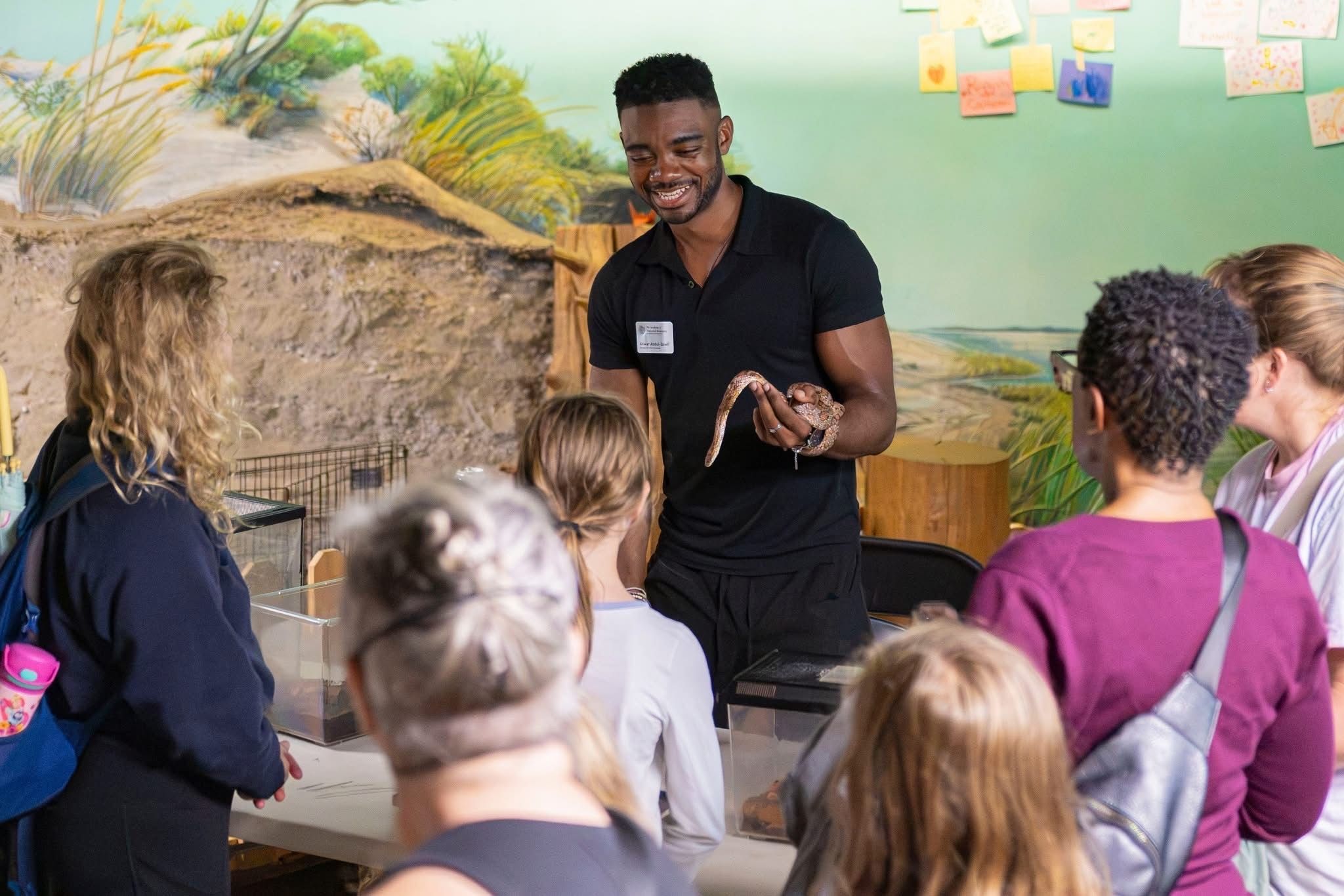
In their final weeks of employment, a small group of museum staffers secured new homes for the museum’s animals from its live animal shows and “Outside In” center. Every tortoise, snake, and cockroach got settled in its new home by the start of November, said Anwar Abdul-Qawi, formermanager of animal programs at the Academy of Natural Sciences museum. His last day of employment, like the rest of his team at the museum, was Nov. 1.
Planning for the relocation of the animals started soon after the museum’s closure was announced on Sept. 1, Abdul-Qawi said.
“Me and my team were preemptive with everything,” he said. “We got that ball rolling immediately.”
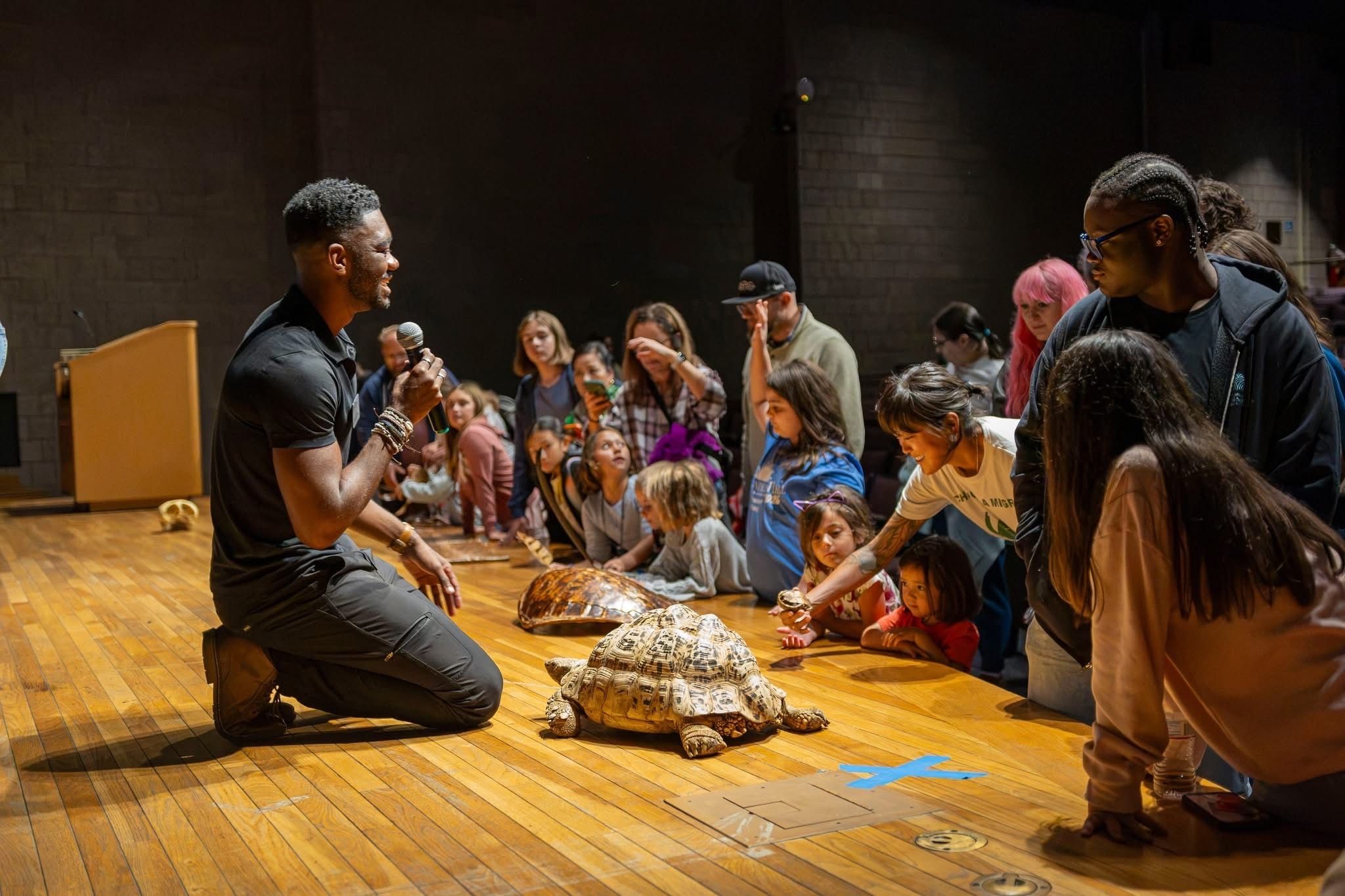
Anwar Abdul-Qawi, former manager of animal programs at the Academy of Natural Sciences museum, does a live animal show on the museum’s last day open, Sept. 27.John Hutelmyer
Industry peers who work at other live animal facilities were more than willing to help, said Stephenie Koniers, previouslyan animal programs coordinator on Abdul-Qawi’s team.
“All of these people that have reached out, and we have been sending our animals to, are all very entrusted,” Koniers said.
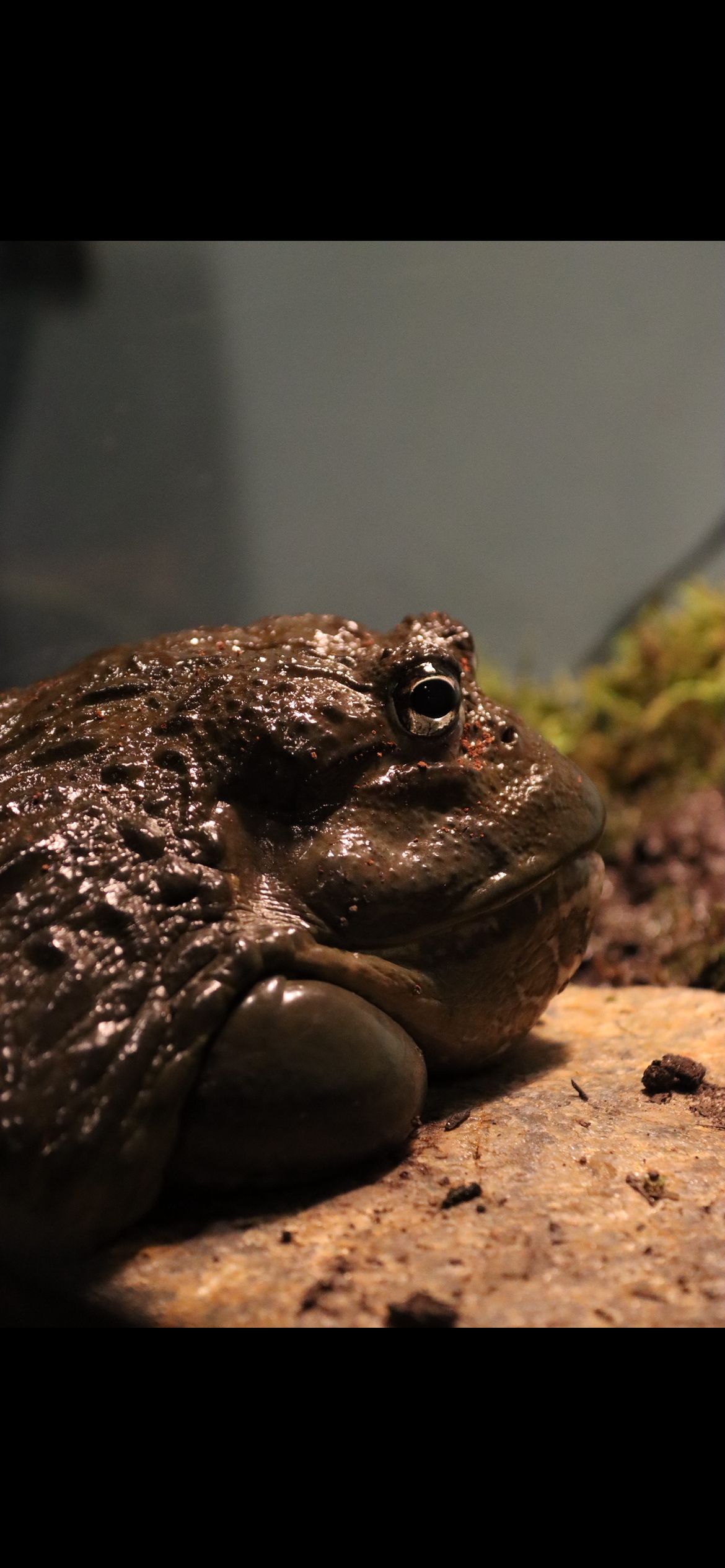
Some of the most well-known animals at the museum, including the African bullfrog “Morbo the destroyer,” and Ollie the leopard tortoise went to nearby zoos last week.
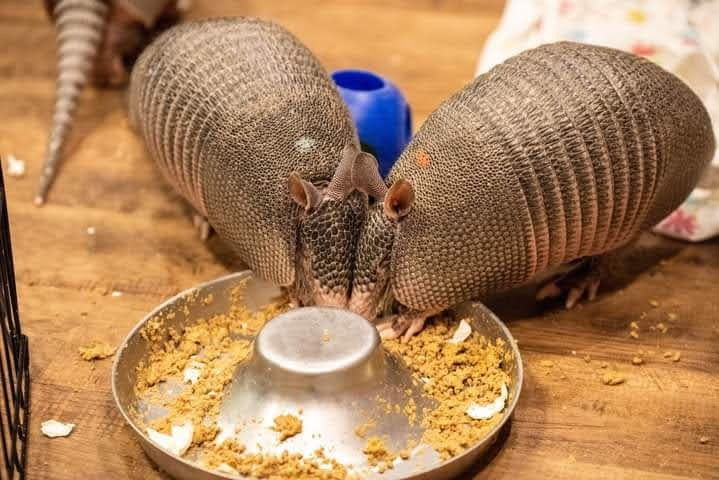
Cohanzick Zoo in Bridgeton, N.J., took Ollie and Kobe, a fellow leopard tortoise (museum staff consider them girlfriend-boyfriend), as well as their beloved third wheel Francis, who is a red-footed tortoise. Armadillo sisters, Blue and Violet, moved there too and “are having a blast” already, Koniers said, running on a giant wheel and tearing up their quarantine enclosure within hours.
Two armadillos eat cheek to cheek. Blue, the armadillo on the left, is now at the Cohanzick Zoo in Bridgeton, N.J.Karen Verderame
The Philadelphia Zoo, meanwhile, took Morbo, as well as a yellow-margined box turtle, a wood turtle, five red-eye tree frogs, and two American green tree frogs.
All the animals from the museum at both zoos will become visible to the public once their quarantines end, representatives from the zoos said. The armadillos at theCohanzick Zoo are quarantining in a place where the public can view them now.
Many of the decisions around which animals went where centered on what animals area zoos were looking for, and what resources and space were available at each, said Rachel Brown, formerly lead animal keeper on Abdul-Qawi’s team.
Morbo, an African bullfrog, was in the Academy of Natural Sciences museum’s collection until last week. He’s now at the Philadelphia Zoo.Anwar Abdul-Qawi
Some of the animals that are older and heading toward retirement wentto private homes, others moved to animal sanctuaries and other museums and zoos, Brown said.
All of them are staying within a two-hour drive of the museum.
“There’s not one of them I would have placed differently,” Brown said. “I think that they’ve all ended up where they needed to be.”
Moving more than 30 vertebrate animals and at least six invertebrate colonies in the museum’s collection wasn’t simply a matter of driving them from one location to another. It involved checkups from vets, legal paperwork, and permits.
Former staffer Karen Verderame returned to the museum, where she worked for nearly 20 years and previously held Abdul-Qawi’s position, to help orchestrate the rehoming as a consultant. She now works at Penn Vet doing outreach and teaching about animal welfare.
“Any change on any living organism can be a little stress,” she said. “Every one of these animals, including the cockroaches, the welfare is the priority.”
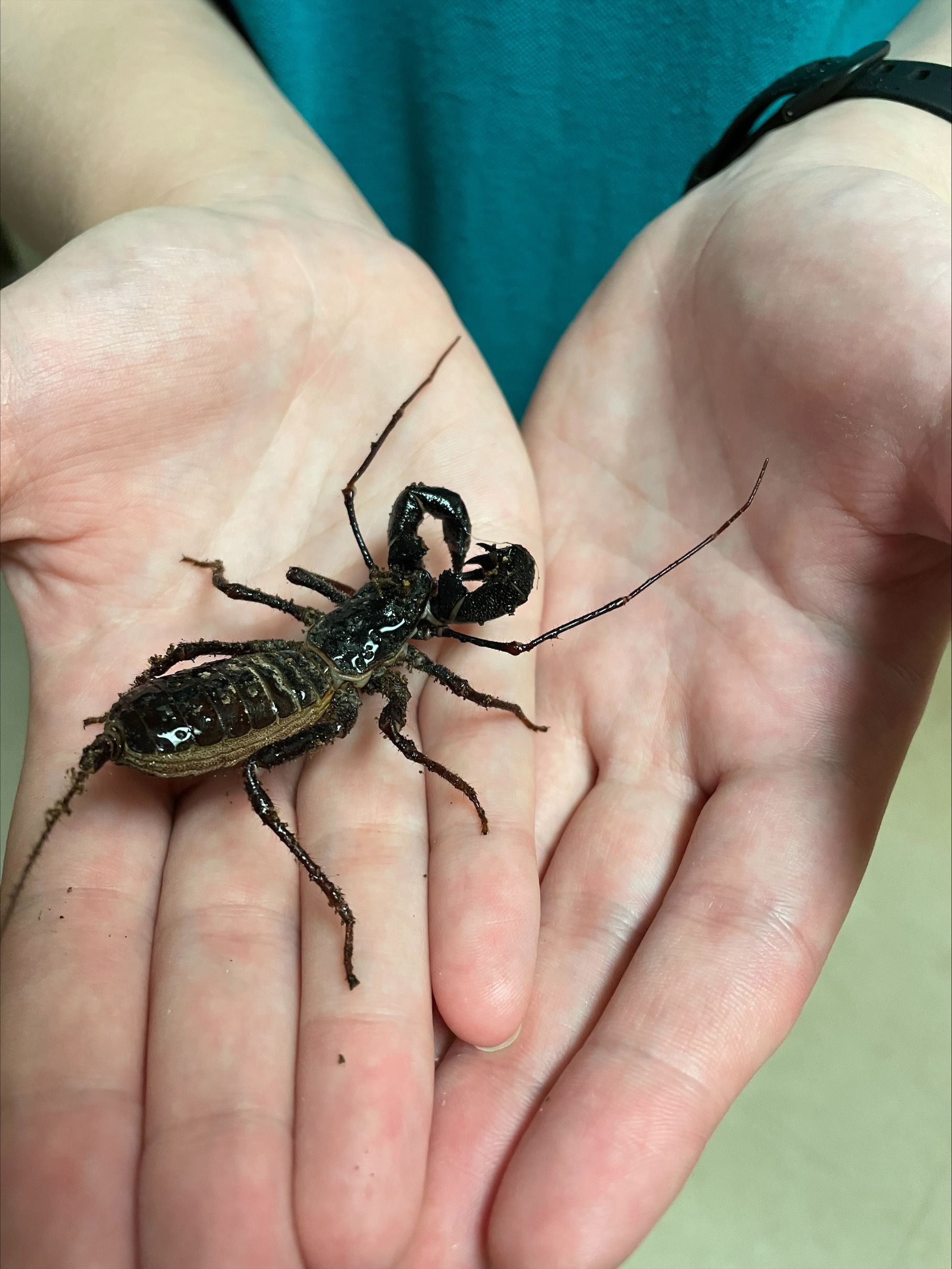
Verderame herself took some of the hissing cockroaches, vinegarroons, and spiders mostly to be used in educational programming through Penn Vet.
Rachel Brown, formerly lead animal keeper at the Academy of Natural Sciences museum, holds a vinegarroon.Rachel Brown
The Academy museum team moved animals primarily during the last week of October. Koniers and Brown took five animals to the Cohanzick Zoo and the Philadelphia Zoo picked up 10 last week.
Knowing some of the animals are at the Philadelphia Zoo, particularly, is a comfort to the staffers; that’s where Stefan Gallini works. He’s been a contract veterinarian for the museum’s animals for three years and now works as an associate vet at the zoo.
Since the museum’s closure, Gallini’s role shifted from doing monthly assessments of all the animals to doing health checks on them all before they relocated. That primarily involved looking for infectious diseases and illnesses that can flare in times of stress.
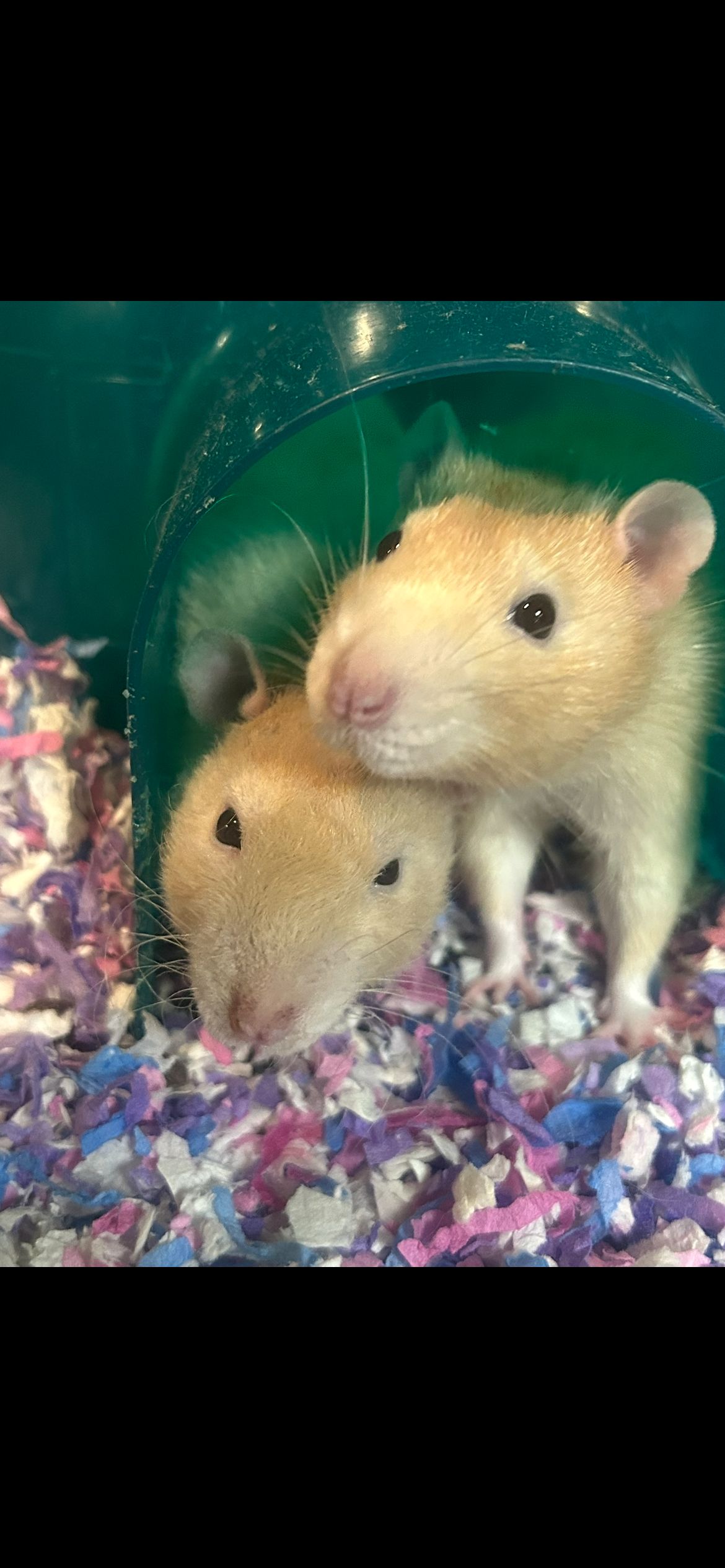
Two rats in the museum’s collection, Elton and Freddie, get cozy in a tunnel.Anwar Abdul-Qawi
He said he didn’t find any big issues with the animals’ health as he did his final assessments. He credits much of that to the museum’s animal care team including Abdul-Qawi, Koniers, and Brown.
“As resources were kind of minimal, especially these few years that we’ve been working with them, they’ve done an excellent job working with what they’ve had and keeping these animals in great shape,” Gallini said.
Visitorship at the museum had slipped in recent years, according to the museum closure statement signed by Drexel president Antonio Merlo and Academy board chair Suzanne Biemiller. The Academy worked to rebuild attendance after the pandemic, but “patterns of visitation and audience behavior changed in lasting ways, while the costs of operating the museum continued to rise,” the Sept. 1 statement said.
Drexel University, which became affiliated with the Academy in 2011, estimates the closure-causing deficit to be $4.4 million. But recent financial documents show that the budget deficit, according to Biemiller, could be as low as $960,000.
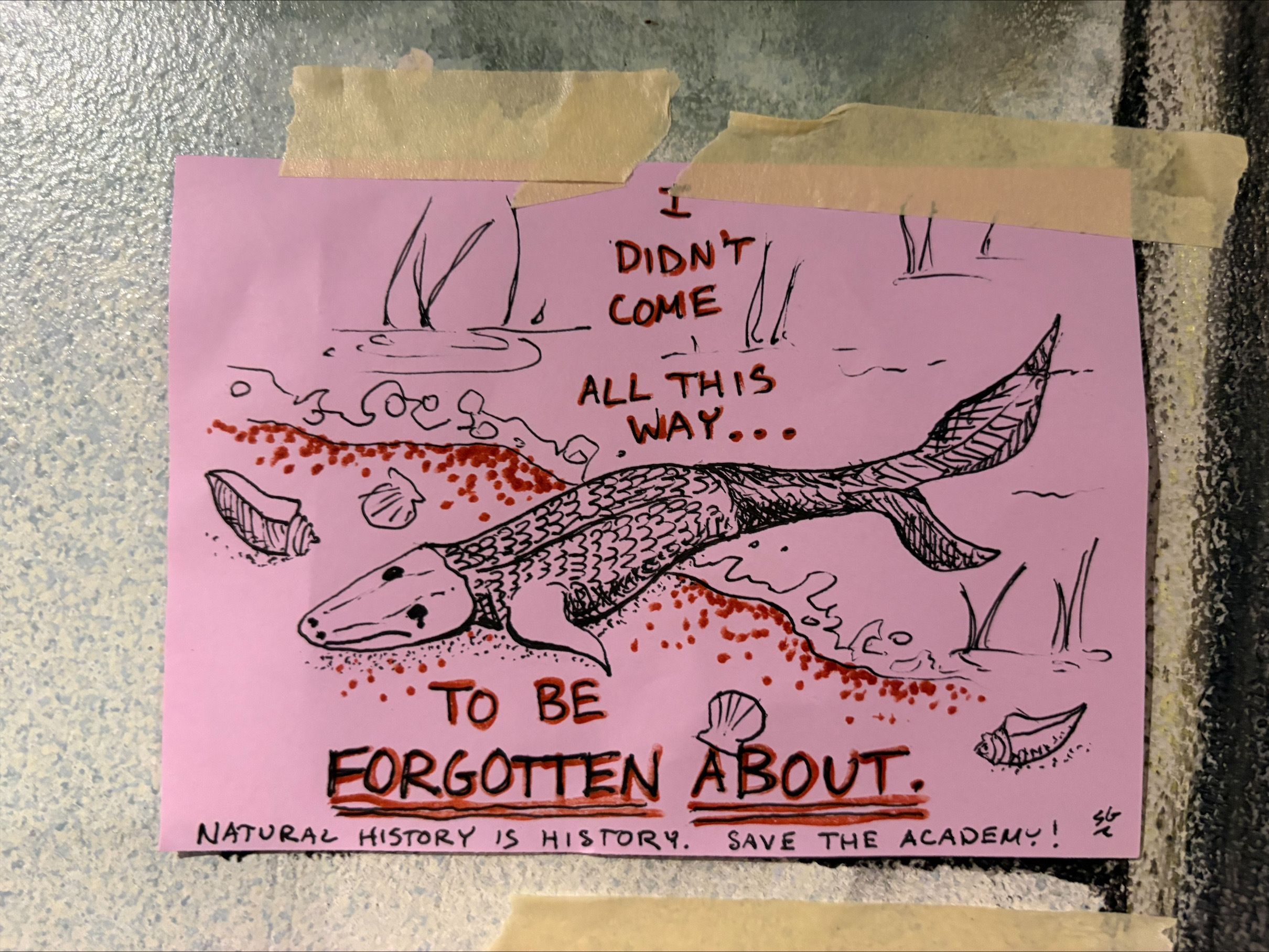
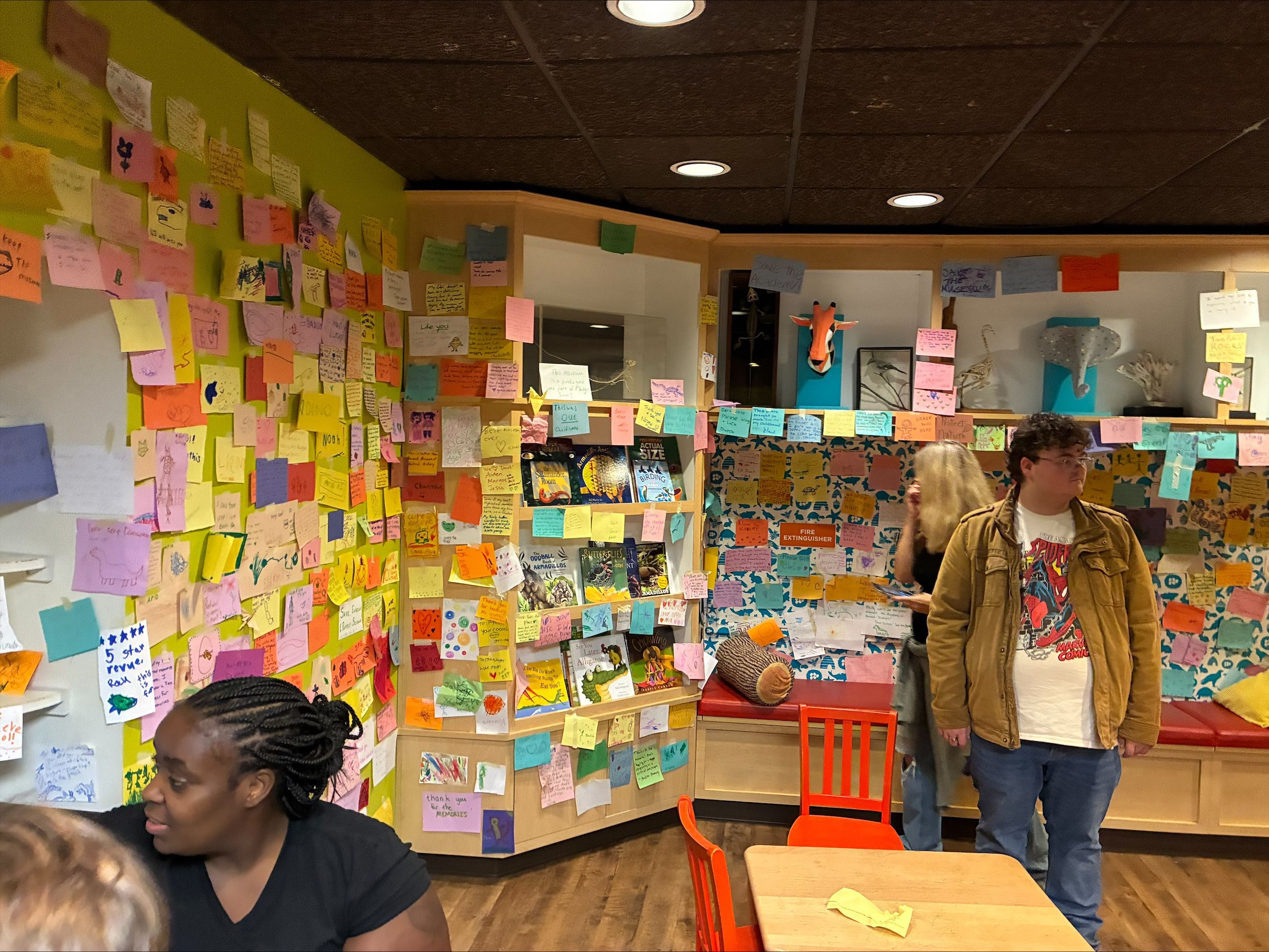
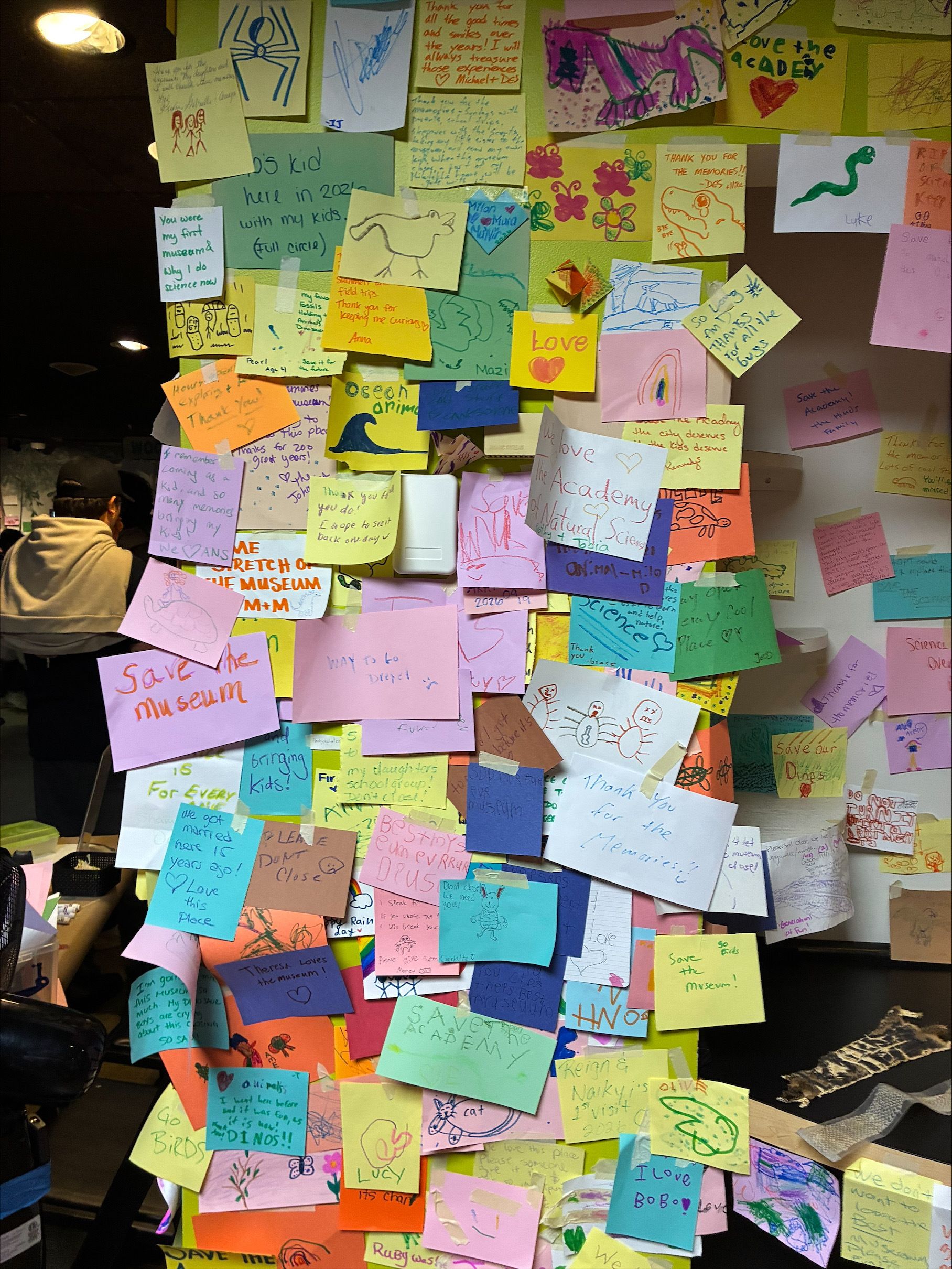
In the last month the Academy of Natural Sciences museum was open, visitors left hundreds of notes for the animals on the walls of its Outside In center.Rachel Brown
As far as the animals go, moving to thesenew homes may be a little jarring for them, but they probably don’t really know what’s happening, Verderame said. The real emotional toll primarily rests on the caretaking team.
“We don’t consider these guys as pets, they’re co-workers,” Koniers said. “We work with them, we take care of them, but they also take care of us.”
It’s bittersweet. She’s confident the animals are going to suitable homes, but it’s hard not to grow attached.
“When you’re having a rough day, they can sense it and feel it. They come up and they’re like, ‘Oh OK I’m going to sniff your shoes’ or ‘OK we will cuddle’,” she said. “I’ve had tortoises climb up on my lap.”
In the last month the Academy of Natural Sciences museum was open, visitors left hundreds of notes for the animals on the walls of its Outside In center.Rachel Brown
The museum has had live animals for 100 years, Koniers said. The “Outside In” center is now covered in hundreds of love letters to the animals written by museum visitors in its last month open, but all its living creatures are gone.
Though many prominent Philadelphians are fighting hard to find a solution to reopen the museum, watching life vacate the museum hallsmakes the closure feel more final.
“Seeing all of the tanks getting emptied out and the empty shelves, it’s been hard,” Koniers said. “It feels very, very permanent.”
In the last month the Academy of Natural Sciences museum was open, visitors left hundreds of notes for the animals on the walls of its Outside In center.Rachel Brown