Category: Made By History

  • What U.S.-Vietnam reconciliation can teach us about Afghanistan

    What U.S.-Vietnam reconciliation can teach us about Afghanistan

    After the Taliban captured Kabul on Aug. 15, 2021, numerous news articles compared Washington’s withdrawal from Afghanistan to similar events in Vietnam on April 30, 1975. Some articles highlighted differences in the conflicts, such as media coverage and troop motivations, while others underlined similarities, including the evacuation of nearly identical numbers of Afghans and Vietnamese in the days leading up to collapse of Kabul and Saigon.

    It’s been five years since America’s withdrawal from Kabul — and the experience of the United States leaving Vietnam still resonates as Afghanistan has become one of the poorest countries in the world.

    In Vietnam, Hanoi’s counterproductive domestic and foreign policy stifled the economy, undermined diplomacy, and caused a mass exodus of millions of Vietnamese from the country. And yet, 20 years later, Vietnam normalized relations with the United States and embraced a global market system that has since made it one of the world’s fastest-growing economies.

    Two main factors explain U.S.-Vietnam reconciliation. The first stemmed from Hanoi’s moderation in foreign policy, which downplayed Cold War rhetoric and acknowledged the need to integrate into the international system. The second stemmed from Washington’s diplomatic strategy toward Vietnam, which maintained consistent conditions for normalizing relations.

    When the United States left in 1975, Vietnamese Communist Party leader General Secretary Le Duan implemented socialist policies, including agricultural collectivization and forced relocation to New Economic Zones. Hanoi also imprisoned hundreds of thousands of South Vietnamese who had cooperated with Americans during the war in order to “re-educate” them in Marxist thought.

    Relations deteriorated with China and Cambodia, two countries that cooperated with Vietnam to resist America’s presence in Indochina. Hanoi invaded Cambodia in December 1978, following Pol Pot’s repeated incursions into Vietnam. China responded by sending 200,000 soldiers into northern Vietnam, leading to a three-week border war. The nation became one of the poorest countries in the world, kept afloat only by subsidies from the Soviet Union. The U.S. embargo did not help.

    The Carter administration attempted to normalize relations with Vietnam without preconditions prior to Hanoi’s occupation of Cambodia. Vietnam refused to do so, demanding the United States pay $3.25 billion in war reparations. After the December 1978 invasion, Jimmy Carter conditioned normalization on Vietnam’s signing of a peace agreement on Cambodia. Ronald Reagan upheld his predecessor’s stipulation, adding that Vietnam must make significant progress on locating and repatriating approximately 2,500 American prisoners of war (POW) and missing in Action (MIA). Hanoi’s leadership cooperated, hoping to secure economic and political concessions from Washington.

    During the Reagan years, numerous other humanitarian issues compelled Washington and Hanoi to sustain a diplomatic dialogue, including the resettlement of refugees, Amerasians, and former Vietnamese political prisoners. Diplomacy on these issues helped foster a favorable atmosphere prior to reconciliation.

    Such negotiations begot economic opportunities as long as Vietnam remained in Cambodia.

    It wasn’t until 1986, after General Secretary Le Duan’s death, that the Communist Party changed course and pursued a market economy. In 1989, Vietnam withdrew from Cambodia and began pursuing new economic policies. Sustained U.S. pressure during negotiations and consistent conditions for establishing economic and diplomatic ties contributed to Vietnam’s moderation.

    Lastly, U.S. businesses wanted Washington to lift the economic embargo to give American companies access to Vietnam’s resources. Hanoi’s leadership eventually moderated its domestic and foreign policy, advancing negotiations and proving to U.S. policymakers that Vietnam could manage bilateral and multilateral relations.

    Made By History sponsors. FOR USE ON MADE BY HISTORY STORIES ONLY.Inquirer Staff

    In April 1991, President George H.W. Bush provided the Vietnamese with a road map to normalization outlining economic and political concessions in exchange for progress on the POW/MIA issue. The road map gave both sides a diplomatic plan to follow. President Bill Clinton continued Bush’s plan, and in 1994, he lifted the economic embargo. The following year, the United States and Vietnam normalized diplomatic relations.

    Certainly, the postwar conditions that fostered U.S.-Vietnamese dialogue are different for Afghanistan. There are no American POW/MIAs listed in Afghanistan. While Washington welcomed nearly 200,000 Afghan refugees since the fall of Kabul, refugee admissions are currently suspended for most nationalities, including Afghans.

    Kabul has not invaded any of its neighbors, but the United States remains committed to its partnership with Pakistan. Washington does not currently have Kabul under an embargo, but fewer countries are interested in investing in Afghanistan than at a similar time for Vietnam. Nor does it help that Hibatullah Akhundzada, leader of Afghanistan, is wanted by the International Criminal Court for imposing severe restrictions on women and girls in the country.

    But diplomatic exchange could be fruitful, politically and economically. The Taliban are increasingly desperate to modernize its economy and end its international isolation. Rather than cutting off diplomacy entirely, the example of U.S.-Vietnam reconciliation suggests that a new phase of U.S.-Afghan relations could benefit both the people of Afghanistan and U.S. interests.

    Zachary Tayler is a doctoral candidate in history at Ohio University, specializing in U.S.-Vietnam postwar relations.

    Made by History takes readers beyond the headlines with articles written and edited by professional historians. Opinions expressed do not necessarily reflect the views of The Inquirer.


  • Eliminating a key radiation regulation would hinder hopes of a nuclear power revival

    Eliminating a key radiation regulation would hinder hopes of a nuclear power revival

    Driven by the surging energy demands of artificial intelligence, America is resurrecting its nuclear past. Earlier this month, the Department of Energy finalized a $1.9 billion loan to restart Iowa’s Duane Arnold Energy Center, idle since 2020, so it can power Google’s expanding AI operations.

    Yet, as the United States prepares for this nuclear revival, regulators are rethinking a principle that has governed radiation protection for more than a half century. In July, the Nuclear Regulatory Commission (NRC) proposed eliminating the requirement that radiation exposure remain “as low as reasonably achievable” — what is known as the ALARA standard. That would leave some limits on radiation exposure in place, but it would remove the expectation that the operators of nuclear plants continually work to reduce unnecessary exposure.

    Supporters argue that this change simply does away with a standard that added little value. NRC Chairman Ho Nieh compared ALARA to setting a 55-mile-per-hour speed limit and then telling drivers to go “as slow as reasonably achievable.” If regulators have already set a safe limit, why insist that workers stay even further below it?

    The analogy is persuasive — and historically misleading.

    During the 1950s and 1960s, regulators employed a system with only a limit on exposure. And as Americans learned that staying under it didn’t necessarily keep people safe, they demanded more stringent limits and lost faith in regulators and the safety of nuclear reactors.

    ALARA emerged to assuage such fears, and it has successfully reduced exposure in the half century since. History suggests that eliminating it will hinder the public’s willingness to go along with a nuclear power revival.

    The question of how much radiation exposure is too much emerged almost as soon as radiation entered modern life. Physicians who embraced the diagnostic power of X-rays in the late 19th century quickly discovered their dangers, as doctors, technicians and researchers suffered burns, tissue damage and cancers after prolonged exposure. Clarence Dally, an assistant to Thomas Edison who tested X-ray tubes on his own hands for years, had both arms eventually amputated and died of cancer in 1904.

    Rather than abandon the promising technology, however, experts tried to determine how much radiation the body could tolerate. By 1934, the International X-ray and Radium Protection Committee had settled on numerical “tolerance doses,” premised on the belief that a threshold existed below which radiation caused no harm.

    The Atomic Age tested that confidence. The Manhattan Project turned radiation from a specialized medical hazard into an industrial one, as thousands of workers handled uranium, plutonium and other radioactive materials. At the same time, geneticist Hermann Muller and others warned that radiation could damage genes in ways that might not surface for years or generations.

    Given these warnings, and the newly expanded pool of people facing the risks of radiation, confidence in the ability of experts to set a safe limit for radiation exposure collapsed.

    In 1934, the protection committee had set a tolerance dose of roughly 0.2 roentgens a day. Within two decades, fear of risk had driven that number down by three-quarters. But even this lower figure came with no claim of safety. Authorities had stopped believing any single number could mark a clean line between safe and unsafe exposure.

    They also understood the perils of public concern continuing to rise. An internal Atomic Energy Commission memo from 1948 flagged the risk of a “shattering effect on morale” should employees learn how uncertain the safety standards were. Accordingly, the agency kept much of the research quiet.

    Instead of trying to reduce risk, regulators tried to reframe how people thought of radiation risks. They scrapped the language of “tolerance doses” and instead focused on the concept of a “maximum permissible dose.”

    The shift sounded technical, but it marked a real change in thinking: no longer would authorities guarantee that a permissible dose was a safe dose. Rather, as historian Shannon Cram has written in her history of U.S. radiation-worker regulation, officials were setting a level that they judged to involve an acceptable risk, given radiation’s benefits and the practical costs of reducing exposure further.

    The limits of that guarantee became clear in the uranium mines that supplied the Manhattan Project and, later, civilian reactors. For years, miners worked under exposure guidelines that officials considered acceptable, though no binding federal limit applied. By the early 1960s, however, a Public Health Service study of Colorado Plateau miners found lung cancer rates several times higher than expected, rising sharply with cumulative exposure.

    Made By History sponsors. FOR USE ON MADE BY HISTORY STORIES ONLY.Inquirer Staff

    The lesson was blunt: the exposure level deemed permissible had not protected miners, and those who set it knew the ground under that number was shakier than they let on. In 1967, amid press exposure and growing unrest among miners, Secretary of Labor W. Willard Wirtz proposed a binding federal radon limit; it did not take effect until 1971.

    As nuclear power grew rapidly throughout the 1960s and 1970s, the concerns about radiation exposure spread from miners and industrial workers to the general public. People in areas around nuclear plants wondered if only having a maximum exposure limit truly protected them adequately.

    In 1969, Northern States Power sought to open its new Monticello plant on the Mississippi River. But in response to public concern, Minnesota’s Pollution Control Agency tried to impose radioactive-release limits tighter than the AEC allowed.

    The dispute sparked a court fight, in which 20 states sided with Minnesota. The battle became a flashpoint for the burgeoning environmental movement. Activists had doubts about whether the federal ceiling on releases was protective enough for the communities living near reactors.

    In 1971, recognizing the need to reassure the public, the AEC responded by requiring plants to keep releases “as low as practicable.” A few years later, the NRC, the successor to the AEC, refined that standard into ALARA: exposures should stay “as low as reasonably achievable.”

    The word “reasonably” did real work. As historian J. Samuel Walker has explained, ALARA never demanded eliminating every conceivable exposure regardless of cost; it accepted that nuclear work carried risk. What it rejected was the idea that staying under a number settled the question of safety.

    The importance of this new standard was evident on shop floors. The earlier “maximum permissible dose” had simply told plants when they crossed legal lines. ALARA, by contrast, made managers ask a harder question: can this job be done with less exposure?

    Plants started engineering exposure away, shielding jobs in advance, sending in robots instead of people and timing shifts so no one lingered in a hot zone. Compliance stopped being enough on its own.

    ALARA has been successful: even as the maximum permissible dose never moved, the average dose of radiation exposure for workers has fallen. Regulators didn’t lower the bar; plants just kept clearing it by more.

    The nation’s most infamous nuclear accident illuminated the importance of ALARA: during the 14-year, billion dollar operation to clean up the 100 tons of ruined fuel from the contaminated plant at Three Mile Island, workers were never exposed to more radiation than they’d have encountered operating ordinary reactors.

    This history exposes the problem with Nieh’s analogy. A dose limit marks the point at which regulators judge the risk to workers unacceptable, not the point at which risk begins. The NRC itself still relies on a radiation-risk model that assumes any dose carries some risk. ALARA is the rule that acts on that assumption, requiring plants to use available technology to cut exposure wherever the cost is reasonable.

    At a moment when the U.S. faces rising energy demands thanks to AI, and nuclear power offers a way to meet them without driving up carbon emissions, maintaining ALARA is important. The regulation was crucial for reassuring skeptical Americans that nuclear power could be safe.

    Abandoning ALARA would mean returning to a system in which meeting the limit is the whole obligation, and in which Americans see compliance as a guarantee of safety. No regulator can honestly make that guarantee. History suggests that letting people believe otherwise risks destroying regulators’ credibility and turning workers and communities against nuclear operations. As the industry works to meet America’s growing demand for power, that is a bet it can ill afford.

    Thomas Bishop is a senior lecturer in American and environmental history at the University of Lincoln and author of “Every Home a Fortress: Cold War Fatherhood and the Family Fallout Shelter” (2020). He is currently writing “A People’s History of the Permissible Dose,” a history of radiation risk and worker activism in the United States.

    Made by History takes readers beyond the headlines with articles written and edited by professional historians. Opinions expressed do not necessarily reflect the views of The Inquirer.

  • Why nationalist leaders turn to territorial disputes to manage political tensions at home

    Why nationalist leaders turn to territorial disputes to manage political tensions at home

    In July, Argentina defeated England 2-1 in the 2026 World Cup semifinal. Argentine players celebrated the victory on the field, unraveling a banner that read, “Las Malvinas son argentinas” [The Malvinas are Argentine].

    The slogan invoked Argentina’s longstanding claim to the South Atlantic islands, over which the country had gone to war with the United Kingdom in 1982. The UK refers to this territory as the Falkland Islands, but Argentina disputes this name in favor of Malvinas.

    The gesture drew criticism from the UK, and Argentina’s President Javier Milei demanded that his countrymen not mix football with politics. “We shouldn’t fall for cheap, populist, nationalist, and rancid slogans,” he announced on Radio Mitre.

    Just months later, Milei made the slogan his own.

    “The Malvinas are Argentine, by history and rights,” he declared in a televised address on Sept. 3. He announced plans to sanction foreign companies involved in oil exploration around the islands and proposed measures to strengthen Argentina’s ability to defend its national sovereignty.

    The president’s reversal on the Malvinas is striking but falls into a broader political pattern. Facing political tension at home, nationalist leaders often turn to territorial disputes to project strength and rally patriotic support. Vladimir Putin’s invasion of Ukraine, Donald Trump’s aspirations to Greenland, and Xi Jinping’s claims over Taiwan all fit this playbook. In Argentina, presidents have long turned to the islands as a source of national unity, particularly when confronted with domestic problems.

    The Malvinas took on new political urgency in the 1960s, when the United Nations recognized the sovereignty dispute within its broader decolonization framework.

    Argentine President Javier Milei speaks during a ceremony commemorating the 43rd anniversary of the conflict between Argentina and Great Britain over the Falkland Islands, known as the Malvinas Islands, at a war memorial in Buenos Aires, Argentina, April 2, 2025.Natacha Pisarenko

    The UN’s call for peaceful negotiations between the UK and Argentina coincided with the military’s growing influence in Argentine politics. Throughout much of the 20th century, the armed forces repeatedly overthrew democratic governments. This cycle culminated in progressively longer and more violent dictatorships. After Juan Perón’s death in 1974, escalating violence between rival Peronist factions paved the way for a 1976 coup, amid a wave of U.S.-backed military regimes across Latin America.

    The 1976 dictatorship promised to restore order and economic stability but failed to deliver. Over the next six years, the junta’s economic policies led to deindustrialization, rising unemployment, and deepening poverty. Inflation remained in the triple digits every year except 1980, and Argentina’s foreign debt surged from $8 billion to $45 billion. Alongside these austerity measures, the junta’s political repression resulted in thousands of deaths and disappearances.

    By 1982, the military’s hold on power had weakened as the economy plunged into a deep recession. Strikes and protests became more frequent as Argentines denounced soaring inflation and massive human rights abuses. On March 30, the General Confederation of Labor called a general strike — the first since 1975 — and thousands gathered in Buenos Aires to demand “peace, bread, and work.” Federal police responded by arresting more than 2,000 protesters.

    To bolster popular support for an increasingly fragile regime, military dictator Leopoldo Galtieri invoked the Malvinas. On April 2, the junta invaded the islands, which Britain had controlled since 1833. The regime framed the invasion as a “recovery” of Argentine territory and urged citizens to rally behind the national cause. The generals hoped to redirect public anger toward a longstanding territorial claim and to unite Argentines behind the dictatorship.

    The Argentinian cruiser General Belgrano sinks amid orange life rafts holding survivors in the South Atlantic Ocean, May 1, 1982, after being torpedoed by the British Royal Navy.Uncredited

    For a time, the strategy worked. Argentines gathered in Plaza de Mayo to celebrate the invasion, transforming the space where police had violently suppressed protesters only days earlier into a scene of patriotic celebration.

    However, the junta had badly miscalculated, and Britain retook the islands in June. The swift defeat exposed the Argentine generals’ inability to coordinate planning and action and left more than 600 dead and over 1,600 wounded. The Malvinas War weakened the regime and ultimately accelerated its collapse. Within months, the military announced democratic elections for 1983.

    The Malvinas defeat discredited the junta but did not diminish Argentines’ patriotic fervor for the islands. Instead, the return to democracy created space for Argentine governments to distinguish the legitimacy of the sovereignty claim from the illegitimate junta that had pursued the invasion.

    In 2012, President Cristina Fernández de Kirchner turned to the Malvinas amid soaring inflation, rising capital flight and a growing energy deficit. After she won reelection with 54% of the vote in 2011, her second term marked a shift toward more explicitly nationalist politics. In April 2012, Fernández de Kirchner expropriated a controlling stake in the Spanish-owned oil company, YPF. She directly linked this move to the renewed claim to the Malvinas and posters declaring, “The Malvinas and YPF are Argentine” littered the streets.

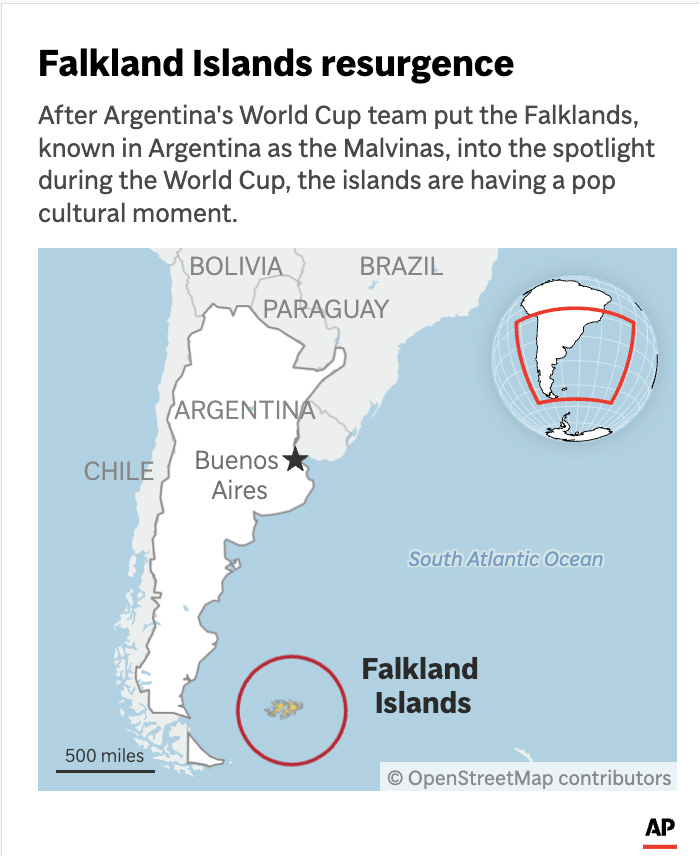
    A map showing the locations of Argentina and the Falkland Islands, known in Argentina as the Malvinas.Peter Hamlin

    Speaking on the 30th anniversary of the Malvinas War, Fernández de Kirchner explicitly rejected the junta’s 1982 actions while venerating the veterans’ sacrifices. The junta had been wrong to attempt “to perpetuate itself in power,” she argued. Yet she framed Argentina’s sovereignty claim over the islands as part of her own administration’s efforts in support of memory, truth, and justice for the dictatorship’s crimes. Those efforts included reopening trials against those responsible for torture, disappearances, and other human rights abuses committed during the dictatorship.

    Adopting the language of the human rights movement, Fernández de Kirchner identified British control of the islands as an enduring colonial injustice. This discourse allowed her to claim the Malvinas as a national and patriotic cause while disavowing the dictatorship that had waged the war. The Malvinas thus offered a powerful symbol to connect territorial sovereignty, economic independence and a democratic reckoning with the past.

    In September 2026, President Milei has drawn similar connections between sovereignty and resource extraction as Argentina clashes with Britain over the planned Sea Lion oil project.

    The project, operated by British company Rockhopper and Israel’s Navitas Petroleum, could begin producing oil as early as 2028, turning the longstanding territorial dispute into a more immediate struggle over access to valuable natural resources. As Fernández de Kirchner did with YPF, Milei has framed control over natural resources as inseparable from national sovereignty.

    Made By History sponsors. FOR USE ON MADE BY HISTORY STORIES ONLY.Inquirer Staff

    Milei’s shifting approach to the Malvinas accompanies his bid for reelection in 2027. Since his election in 2023, inflation has fallen dramatically, but his administration’s economic record remains deeply contested. Unemployment has grown and real wages have weakened, driving discontent with the government’s austerity measures. The president’s approval ratings have fallen to 38% in recent months.

    As domestic tensions rise, the Malvinas once again offers a patriotic cause capable of rallying support across political divides. Various governments have pursued radically different strategies to recover the Malvinas, yet each found in the territorial dispute a powerful language of national sovereignty and anti-colonialism.

    When Argentina’s players held up a banner after defeating England, they were not pushing a foreign-policy agenda. They were drawing on a decades-old expression of national identity that has come to encompass Argentine sovereignty, resistance to colonialism, and perhaps most importantly the memory of los pibes de Malvinas, the young men sent to war in 1982.

    The Malvinas remain politically useful not because Argentines have forgotten the war or its devastating consequences, but because those memories have become part of what the islands represent. The players’ banner resonated for the same reasons: the fight for the Malvinas has become part of what it means to be Argentine.

    Gabrielle Esparza is a historian of Latin America, specializing in transitional justice and democratization in Argentina.

    Made by History takes readers beyond the headlines with articles written and edited by professional historians. Opinions expressed do not necessarily reflect the views of The Inquirer.

  • President Donald Trump admires Theodore Roosevelt — but he isn’t following the former president’s lead

    President Donald Trump admires Theodore Roosevelt — but he isn’t following the former president’s lead

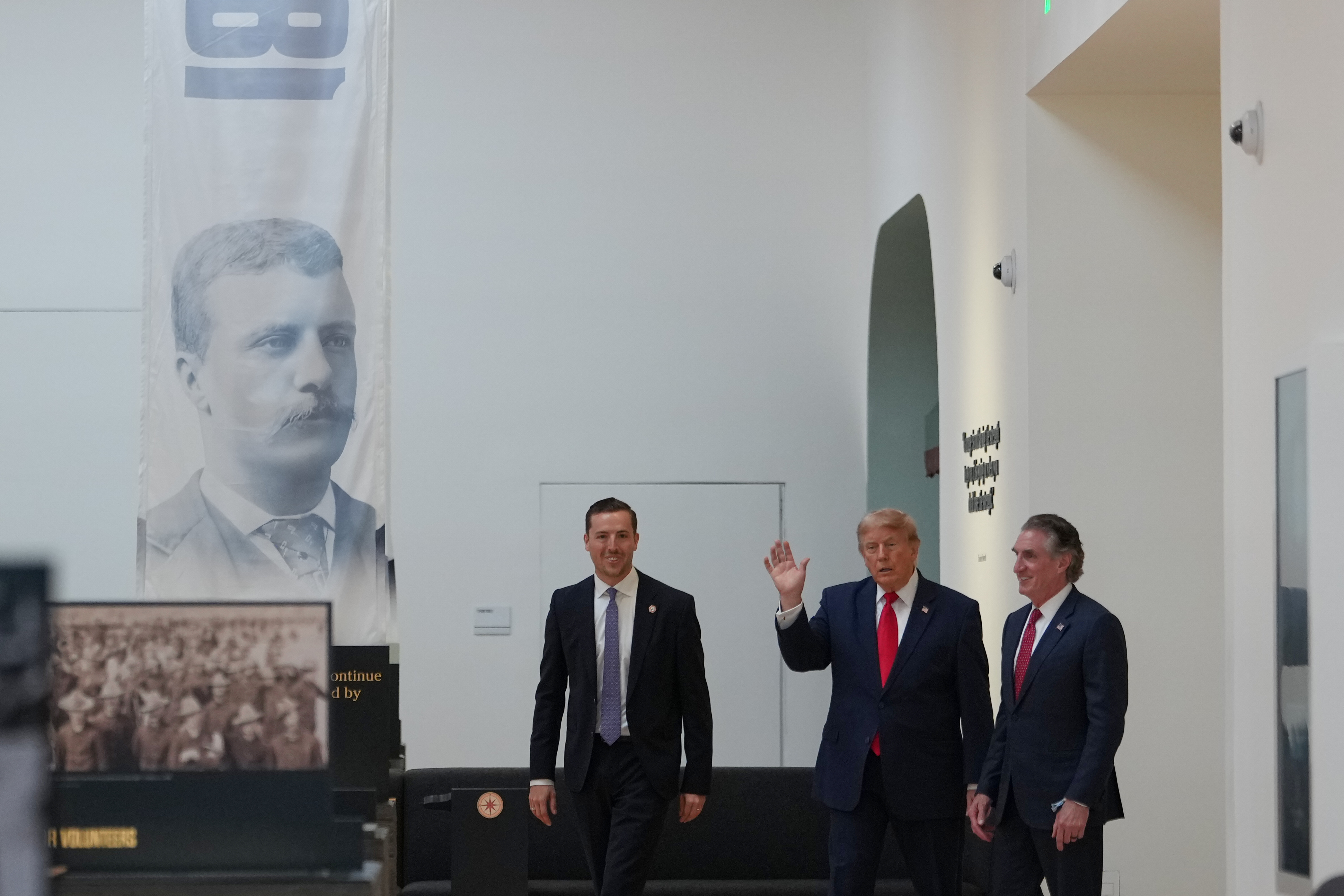
    In July, President Donald Trump dedicated a new museum in North Dakota honoring Theodore Roosevelt. Addressing an enthusiastic crowd of supporters, Trump praised his predecessor for his military courage and physical strength, as well as for successfully shepherding construction of the Panama Canal. Trump then drew an interesting parallel between himself and Roosevelt saying they both like “big things — big prairies, big forests and mountains, big wheat fields, big, tremendous railroads, [and] big factories and steamboats.”

    Trump wasn’t the only one who saw similarities between the two presidents. In his tribute to Roosevelt, Interior Secretary Doug Burgum noted, “The parallels between Theodore Roosevelt and President Trump just keep adding up.”

    Up close, however, the differences between these two native New Yorkers are far more substantial. Roosevelt broke the monopolies and brought the Gilded Age to a close. He established 230 million acres of public land and created the United States Forest Service.

    Today, by contrast, Trump is creating a 21st century Gilded Age by empowering business titans through reduced regulation, approval of mergers and handing them plum government positions. Moreover, he is undoing environmental laws and opening previously protected land, policies Ted Roosevelt IV says his great-grandfather would find “appalling.” Aaron Weiss, executive director of the Center for Western Priorities, maintains that the Trump administration’s record “reads like a checklist assault on everything that Teddy Roosevelt has built.”

    The differences between Trump and Roosevelt are starkest when it comes to character — and the role it plays in executing public policy.

    When Roosevelt ran for a seat in the New York State legislature in 1881, he was endorsed by the powerful men in his district for his “high character, honesty, and integrity.” These traits were essential to Roosevelt’s vision of leadership. Yet, few would apply these adjectives to Trump.

    Roosevelt’s vision of character and integrity guided his policy and actions on everything from treatment of racial minorities to his handling of the business interests who dominated American society when he entered the White House.

    He maintained that “the best test of true love of liberty in any country is the way in which minorities are treated.” In 1901, therefore, he set aside his racial prejudices and invited Booker T. Washington to dine with him at the White House, the first president to issue such an invitation to a Black American.

    The reaction was immediate. One southern newspaper called it “a blunder worse than a crime.” Another called it a “damnable outrage.” But Washington praised Roosevelt’s courage and wrote that the controversy was “providential,” noting that “good is going to come out of it.”

    Roosevelt’s willingness to risk blowback to do what he thought was right was also evident in his handling of big business. In his annual address to Congress, the new president acknowledged the public revulsion to the monopolies controlled by the ultra-wealthy. He maintained that the federal government must intervene whenever such companies “are found to exercise a license working to the public injury.” To that end, he took on John D. Rockefeller’s Standard Oil and J.P. Morgan’s railroad conglomerate in the name of reinstituting fair competition in the marketplace.

    Assessing his presidency, Roosevelt wrote in his autobiography, “The one bond of interest among all of us was the desire to make the Government the most effective instrument in advancing the interests of the people as a whole.” The then British ambassador to the U.S. agreed, telling Roosevelt that he had never seen “a more eager, high-minded, and efficient set of public servants, men more useful and credible to their country than the men doing the work of the American Government.”

    While historians praise Roosevelt for his role in taking on the wealthy and the powerful, these testaments speak to how integral his character — and his ability to surround himself with high character individuals — was to these efforts.

    In 1910, Roosevelt delivered one of his most famous speeches — what became known as the “Man in the Arena” address — at the Sorbonne in Paris. It summarized his thinking on the importance of virtue in a republic.

    The former president argued that the success of a republic was contingent upon the character of its citizenry and its leaders. Speaking of the broader public, Roosevelt likened the character of a country’s average citizen to a stream, noting that “the stream will not rise higher than the main source.” National greatness, therefore, could only be achieved if the average citizen adhered to a high moral standard.

    Made By History sponsors. FOR USE ON MADE BY HISTORY STORIES ONLY.Inquirer Staff

    But if the average citizen must be of sound character, it was up to the nation’s leaders to maintain an even higher standard.

    According to Roosevelt, danger lurked when voters chose “men of inherited wealth and position” for elected office. Such men, Roosevelt declared, could yield to a “cheap temptation” to set aside one’s morality and become a cynic to whom “good and evil are as one.” And when those amoral leaders exploited the less fortunate, Roosevelt maintained they were “at heart the same as the greedy and violent demagogue who excites those who have not property to plunder those who have.” In such cases, those wealthy officials were no longer of “useful service.”

    Roosevelt’s warning represented his view toward the wealthy more broadly. He neither admired nor accorded them high status merely based on wealth alone. To him, those whose sole purpose was to accumulate money without returning any “corresponding benefit to the nation as a whole” were “unworthy citizens.”

    Roosevelt’s audience surely would have caught his allusions to the titans of the Gilded Age like Rockefeller and Morgan, who he had taken on during his presidency.

    Trump brings to the presidency a very different understanding of the role of wealth and diversity in society. Running for a second term, he declared that minority groups are “poisoning the blood of our country,” and are “genetically disposed” to commit crimes. Rather than risking backlash to model inclusivity, Trump stoked prejudices to advance his electoral fortunes.

    When it comes to wealth, the president often spends weekends at Mar-A-Lago and Trump Bedminster, private clubs with hefty buy ins and dues, surrounded by elites. He has also elevated wealthy and powerful businesspeople to important government positions, including selecting the wealthiest man in the world, Elon Musk, to head what became known as the Department of Government Efficiency. As if to advertise his admiration for the wealthy, Trump assembled the richest Cabinet in U.S. history with a combined net worth of $7.5 billion.

    Trump’s glorification of the wealthy has extended to his own behavior during his second term in office. In May 2025, the president hosted an exclusive dinner for top sellers of the $TRUMP$ meme coins, which brought $148 million into his family’s coffers. This was just one example of how Trump has profited from the presidency. One investigation estimated that he and his family made more than $2 billion in profit during the first year of his second term. Ironically, to get to North Dakota to fete Roosevelt, Trump rode on a $400 million airplane gifted by the Qatari government.

    Trump has long aspired to add his face to those of George Washington, Thomas Jefferson, Abraham Lincoln and Roosevelt on Mount Rushmore. But Trump fundamentally misunderstands what made Roosevelt such a great president, worthy of having his face carved into granite on one of the nation’s most famous monuments: character and the willingness to focus on the needs of the less fortunate, not the rich and powerful. In his 1910 speech, Roosevelt asserted that presidents must surround themselves with people “who possess the gifts of sympathy with plain people and devotion to great ideals.”

    Every American, including Trump, should read Roosevelt’s address. He challenges all of us to maintain high standards in our personal and public conduct. And in times of crisis, Roosevelt argued that both ordinary citizens and national leaders must exhibit “heroic virtues.”

    Praising Roosevelt, Trump declared that he was a “man who I have long admired. He’s one of the few — I don’t admire too many people.” But Trump would do well not just to admire Roosevelt, but also to understand the former president and the lessons he hoped would shape America.

    John Kenneth White is a professor emeritus at The Catholic University of America who writes on Substack. His latest book, co-authored with Matthew R. Kerbel, is titled “Democracy on the Edge: The Trump Elections and the Future of American Politics.”

    Made by History takes readers beyond the headlines with articles written and edited by professional historians. Opinions expressed do not necessarily reflect the views of The Inquirer.
  • ‘Culture wars’ can matter deeply

    ‘Culture wars’ can matter deeply

    Trans rights, trad wives, and a testosterone-fueled military: these hot-button topics generate intense emotions in online spaces and cable-news panels, driving the culture wars that energize MAGA warriors. Culture wars focused on gender issues have been especially heated during the Trump era, but they are not new. Indeed, gender-based culture wars have long been a feature of democratic systems, particularly during times of political upheaval.

    Consider the example of France in the 1790s. The French Revolution of 1789 led to a change of government from one ruled by an absolutist monarch to one where (some) men could vote for their governing bodies. With the introduction of a new electoral system in 1791, suffrage and regular elections became part of the system and ambitious politicians needed constituents to vote for them.

    Rapid political and social change, including the debate over who qualified as citizens with the right to vote, generated both movements for change and a sense of impending disorder. Urban workers and peasants demanded the vote, as did some women. Dissatisfaction with the government’s response led to increasing violence, including riots and the overthrow of the monarchy in August 1792. The constitution that came into effect in June 1793 — after the creation of the French First Republic and the execution of King Louis XVI — granted universal male suffrage, including for workers and peasants. But it refused the same political rights to women.

    Still, representative government brought legal changes that benefited women. In the fall of 1792, the National Convention legalized and made divorce quite easy, a change vehemently opposed by church authorities. In the years that followed, more women than men sued for divorce under the new laws, reflecting their desire for greater autonomy. At the same time, adjustments to inheritance laws made it possible for women to demand a fair share of their family’s material goods, in many cases interfering with previous settlements that had disproportionately favored sons over daughters.

    While many French men and women approved of these transformations as promoting greater fairness, those disadvantaged by the changes expressed their outrage at the disruption to longtime religious and economic practices anchored in traditional ideas about gender. Conservatives were especially unhappy about restrictions on the ability of husbands to discipline a wayward wife or of fathers to direct the family’s resources toward an eldest son. His diminished patriarchal authority had profound implications for familial relations.

    Uneasiness about these cultural shifts intensified as war broke out in 1792, followed by civil war within France itself, triggered by resistance to what many saw as unacceptable attacks on their way of life. Opposition to the revolutionary government was particularly strong in western France, where religious sentiment and an attachment to the king and traditional hierarchies fueled resistance to government “meddling.”

    The Terror — an effort by the radical Jacobin government, with the support of the newly empowered lower classes, to clamp down on dissent by executing anyone perceived as a threat to the unity of the nation — was an attempt to impose order. But it instead created panic and paranoia along with a sense that giving power to the lower classes and women gave rise to chaos. The closure of women’s political groups along with the execution of several prominent women, including political activist Olympe de Gouges and the former queen Marie Antoinette, in the fall of 1793 was a response to those fears. The Terror’s end, with the execution of Maximilien Robespierre and his closest collaborators in July 1794, led to the creation of a new regime that promised to restore order: the Directory, a conservative republican government established by a new constitution in 1795.

    But the culture wars continued, fueled by fights over gender and family issues. While the new constitution significantly curtailed the power of lower-class men — the franchise was restricted to wealthy male property owners — many legislators were still committed to the egalitarian goals of the revolution and thus unwilling to overturn all previous social legislation. However, the visibility and perceived political and cultural influence of women became a flash point as critics continued to debate changes to divorce and inheritance laws that benefited women. Politicians and journalists blamed divorce as a root cause of social disorder; a woman who could threaten to leave her husband undercut his masculine authority and disrupted families.

    Writer and cultural critic Louis-Sébastien Mercier offered a harsh critique of the divorce law in 1797, asserting that “Friends of law and order, sensible people recognize that it opened the door wide to licentiousness and moral depravity, already so widespread.” Politicians demanded divorce law reform on behalf of their voters, decrying its “disastrous and scandalous effect.” French newspapers printed polemical essays and letters to the editor on the topic and reported on legislative debates.

    Purported sexual misbehavior also generated concern. Between 1794 and 1799, legislators and social critics complained about the shamelessness and political meddling of elite women who wore revealing clothing and pursued the pleasures of life beyond the home. The argument was that the changes in inheritance laws gave them access to resources that financed their independent and luxurious lifestyles, attending balls and hosting salons. One politician decried the consequences of female independence, which, he believed, led inexorably to adultery, warning, “Establish the independence of the mother, and you will render all paternity uncertain.”

    Made By History sponsors. FOR USE ON MADE BY HISTORY STORIES ONLY.Inquirer Staff

    Eventually, Napoleon Bonaparte took advantage of France’s disorder and cultural anxieties to establish male authoritarian rule. Defenders of Napoleon and his November 1799 coup d’état pointed to the political and social chaos of the Directory, exacerbated by the corrupting influence of ostensibly licentious women on weak men who had shown themselves incapable of exercising control over their families and the government. Napoleon believed this as well. It was high time that strong, “manly” men — preferably those with military credentials — took control of the government and their families. The Napoleonic Code of 1804 made getting a divorce more onerous, at least for women, whose ability to initiate divorce proceedings was severely limited (divorce would be outlawed entirely in 1816), and it tightened husbands’ control over their wives and family resources.

    The lesson? Deriding the power and potential liberty that sexual freedom and divorce offered women became a way to critique a society that empowered a more diverse citizenry. But in reality, perceptions of “chaos” and proposed solutions creating “order” through “traditional” values was — and still is — about restoring power to older regimens and hierarchies. It can also be cruel, limiting choices and freedoms. Perceived disorder is a powerful force for constraint; the desire for fairness is a powerful force for change.

    Christine Adams, a former American Council for Learned Societies and Andrew W. Mellon Foundation fellow at the Newberry Library, is professor of history at St. Mary’s College of Maryland and author of “The Creation of the French Royal Mistress” with Tracy Adams.

    Made by History takes readers beyond the headlines with articles written and edited by professional historians. Opinions expressed do not necessarily reflect the views of The Inquirer.
  • The colonial policing roots of today’s data politics

    The colonial policing roots of today’s data politics

    Data is at the top of everyone’s mind this year: how it’s collected, where it’s stored, who can access it and how it’s used.

    The Electronic Frontier Foundation, a data rights NGO, warns in a new report that law enforcement agencies have been partnering with tech companies to collect large swaths of data on private citizens without warrants under the guise of “fighting crime” or “reducing lawlessness.” Police have been using facial recognition software, audio recording devices, automatic license-plate readers and other “dragnet” technologies to aggregate huge databases on the habits of everyday Americans.

    Watchdog organizations like the ACLU have sounded the alarm that these databases have already been weaponized against the public by organizations such as U.S. Immigration and Customs Enforcement and the U.S. Department of Homeland Security.

    One might be tempted to conclude that this is unprecedented, an outgrowth of the panopticism of the Information Age. But debates about privacy, free speech and data governance have been ongoing for centuries. These debates were especially fraught in the colonial context, where individual rights, national security and public interest were often in conflict.

    The British first established police forces in India in the late 1800s, after nearly two centuries of bloody succession conflicts. In 1857, a great rebellion almost dislodged the British from the subcontinent entirely. Initially disgruntled Indian East India Company soldiers led the rebellion against their white commanding officers in a mutiny. However, the conflict quickly spread across the subcontinent, uniting competing segments of Indian society against the British establishment. Though this rebellion didn’t succeed, it left a lasting political and psychological impact. British accounts describe a sense of helpless horror, a feeling for the first time that their place in the world was no longer secure.

    The British establishment in India believed that the rebellion occurred due to a failure of British intelligence. They had erred by trusting their Indian allies and intermediaries too freely and missed obvious rumblings of disorder. The crown took direct control of India from the East India Company and began to build a new system of governance from scratch.

    The British Raj established its first official police departments in India in 1859, modeled on the Royal Irish Constabulary. The police understood that their job was to maintain order rather than to serve the public. Most departments’ first project was to assemble official statistics and compile them into annual reports. This data, aggregated and synthesized, became the lifeblood of the Empire.

    Nowhere was this development more apparent than in the use of crime statistics. In the 1860s police forces in Northern India reported a supposed explosion in crime, perpetrated by wandering gangs, “criminal tribes” who were criminals by birth. Unlike the “ordinary” criminals of Europe who fell into crime by chance, the criminals of India were born into their “professions.”

    Officials felt that by bringing quantitative data to policing — counting and tracking crimes, where they occurred, and who committed them — allowed them to more fairly and effectively allocate resources. In truth, though, police and other officials used data to reinforce existing biases, arguing that the numbers showed that race, caste and other “biological traits” could be used to predict criminality. Hyper-policing of certain populations produced even more data “proving” that these populations committed more crimes. This decontextualized data gave the government the veneer of objectivity, while serving as the basis for many harmful and discriminatory policies.

    In 1871, the legislative assemblies of three provinces passed the Criminal Tribes Act into law. The Act defined a “criminal tribe” as a “wandering gang, community, or group of persons addicted to the commission of non-bailable offences,” a definition that targeted groups already socially disadvantaged by the caste system.

    In truth, “criminal tribes” as described by British administrators probably never existed. Instead, nomadic and semi-nomadic merchants or artisans, groups of religious mendicants, highway men (usually unemployed former soldiers), pastoralists and any other group who did not fit were all folded into the “criminal tribe” label. Unlike settled agriculturists within the dominant caste order, these groups were difficult to control due to their mobility and lack of social or economic capital. Under the law, they were criminalized and subject to extremely intrusive regimes of surveillance. The police tracked the most minute details of the lives of targeted groups: their fingerprints, their bodily measurements, their habits and their preferences.

    The impact of the state’s surveillance campaigns was that these communities lived in a state of hypervisibility. Communities complained that they were unable to live, work or travel without being disproportionately targeted by police. The increase in police interactions eventually led to a corresponding increase in arrests—which, in turn, was used to justify further surveillance and policing.

    One police officer recounted in the early 1900s that he recommended a whole nomadic community be criminalized under the Act and forcibly settled. The reason? They were reportedly adorned in silver finery while living in weatherworn tents with sparse and shabby furnishings. The only reasonable explanation, he claimed, was that the jewelry was stolen loot.

    Data gave the government the visibility and the leverage required to recruit collaborators. Police relied upon wealthy and landed (“trustworthy”) communities to identify “criminal tribes,” and recruited officers from their ranks. In return, the police offered elites protections against peasant uprisings or labor disputes. Data ownership was thus not just a privilege but a favor, doled out by the state to its allies in exchange for “good behavior.”

    Data collection and policing transformed everyday life. Community and family spaces—town squares, local government offices, playgrounds, parks, schools, shops, even streets—went from being “private” spaces, governed by the people who inhabited them, to “public” spaces subject to the control and surveillance of the state. Regular community events like food festivals, religious processions and public gatherings often felt distinctly different in the presence of police. People knew they were being watched.

    Disputes at street processions and festivities frequently became highly publicized court cases, written about in the newspapers and read aloud in coffee shops and tea stalls. In turn, groups began to use processions to garner such publicity and “make a point” in the first decades of the 20th century: “cow protection” parades by Hindu extremists to intimidate religious minorities, festivals commemorating anti-British war heroes like the Maratha King Shivaji, even protest marches by Muslims against the dissolution of the Ottoman Empire after WWI. Divisive political processions came to replace weddings, funerals and naming ceremonies that had been common in the 19th century.

    At a time when it was considered both scientifically sound and fashionable among the Western-educated class to believe that Indians were too loud and disorderly to govern themselves, public gatherings became performances to authority rather than community events. As debates raged about whether India was ready for independence in the 1920s and 1930s, communities policed themselves and each other, critiquing rituals and expressions that were too loud, too emotional, too rowdy.

    Where there were multiple communities in conflict over public spaces, police involvement caused small disagreements to escalate. In March 1925, a small fight during a religious procession in Delhi sparked communal riots across Northern India that lasted periodically until late September, causing dozens of casualties and at least six deaths.

    Made By History sponsors. FOR USE ON MADE BY HISTORY STORIES ONLY.Inquirer Staff

    Class, caste and religious divisions hardened throughout the 1930s and 1940s, leading to the segregation of formerly integrated spaces. In these ways, the British used information to divide and rule communities, to target the vulnerable, and to suppress dissent. These efforts prolonged the British presence in India for decades, until its hasty exit in 1947 after overseeing a violent and bloody partition of the subcontinent. The ghost of the Empire continues to haunt the region today.

    One critical lesson the Indian public learned during this era was that the collection of information is never neutral. Power shapes how information is collected, stored and interpreted, and information can be used and abused to protect those in power.

    Today every app, website and device contains a back door to collect and sell our information. Companies and officials tell us that these capabilities are benign, used to improve our lives and make us safer—and we believe them at our own peril.

    Niveditha (Nive) Senthilvel is a 2026-27 Fulbright-Nehru scholar and PhD Candidate in South Asian History at Boston University.

    Made by History takes readers beyond the headlines with articles written and edited by professional historians. Opinions expressed do not necessarily reflect the views of The Inquirer.
  • Military power alone cannot keep the Strait of Hormuz open

    Military power alone cannot keep the Strait of Hormuz open

    Recently, the Strait of Hormuz has become a flashpoint in the escalating conflict between the United States and Iran, with the Trump administration alternating between military strikes and threats of further attacks amid negotiations.

    This waterway is one of the world’s most important shipping corridors. It connects Persian Gulf energy producers to global markets and carries a substantial share of the world’s energy trade. This applies further pressure on the need to keep it “open,” even as that story is far more complicated than it appears.

    The strait is more than a physical waterway. It is also an institutional and commercial corridor sustained by trust, pricing, financing, commodity markets, and insurance premiums. In a modern economy, a waterway like the Strait of Hormuz allows merchant ships to function as part of the circulatory system of global commerce. But passage requires more than the physical opening of the waterway. It also depends on whether insurers, lenders, shipowners, crews, and governments are willing to price, bear, and distribute the risks associated with the passage.

    The Trump administration is focusing primarily on one end of the problem: suppressing Iran’s ability to alter the threat landscape in the strait. Crucially, it has paid far less attention to the other end of the equation: owning, transferring, or guaranteeing the residual risk that American military forces cannot eliminate. The history of the Suez Canal crisis shows the consequences of a similar conceptual mistake. It demonstrates how military control of a strategic waterway can prove insufficient when broader risks remain unresolved.

    In 1956, Egyptian President Gamal Abdel Nasser nationalized the Suez Canal after the United States and Britain withdrew their financial support for the construction of Aswan High Dam. Nasser announced that, in the absence of external financing, canal revenues would be used to fund the project. Suez was vital for European trade and Middle Eastern oil supplies, so Britain and France saw these actions as a direct challenge to their strategic influence in the region. And so, in coordination with Israel, they took military action against Egypt to seize control of the Canal Zone. Their calculation was that if Nasser were removed and the canal returned to British and French control, then their broader geopolitical problem would be resolved.

    Militarily, this plan worked. Their forces advanced rapidly. Israel swept across the Sinai while British and French troops established air superiority and took Port Said at the northern mouth of the canal.

    Despite this success, the broader strategic goal remained beyond their reach. Britain’s military might masked a far weaker financial position. The sterling was still a major international currency, but defending its value depended on Britain’s dwindling gold and dollar reserves. American opposition to the invasion, mounting pressure on sterling, disruptions to oil supplies, and Britain’s dependence on external financial support ultimately made the operation unsustainable. As the dollar and oil reserves declined, London increasingly needed the very international financial cooperation, especially from the United States, that the invasion had put at risk.

    The crisis left both European powers, particularly Britain, politically humiliated. They had been willing to assume the military risks of invading Egypt, but they overlooked the financial, diplomatic, and alliance risks that also had to be absorbed to sustain the operation and turn their military success into durable strategic control of the canal.

    Three decades later a comparable problem surfaced in the region, but this time, the United States responded differently. In 1987, during the “Tanker War” phase of the Iran-Iraq War, Kuwait’s oil exports were increasingly threatened by repeated Iranian attacks on its tankers. With limited options, the Kuwaiti government sought protection from both the United States and the Soviet Union because neither Kuwait nor any private commercial actor could adequately absorb or manage the risk alone.

    By July of that same year, Ronald Reagan took action, but he did not rely on warships alone. Instead, he approved Operation Earnest Will, under which eleven Kuwaiti tankers were reflagged as American vessels and escorted through the Persian Gulf. This action did not eliminate Iranian mines, missiles, or the possibility of further attacks. In fact, during the first convoy, one of the reflagged tankers struck a mine. Although no one died and the tanker completed its voyage, the incident made clear that the danger remained real.

    Certainly, reflagging the vessels changed the legal and political meaning of these voyages. Sailing under American colors placed U.S. sovereignty and military credibility behind the Kuwaiti vessels. The United States did not absorb every commercial loss, but it assumed enough of the political and strategic residual risk to make continued passage more credible. Operation Earnest Will did not eliminate risk. It instead gave the residual risk a more capable owner.

    Made By History sponsors. FOR USE ON MADE BY HISTORY STORIES ONLY.Inquirer Staff

    This does not mean that the military dimension is insignificant. But military measures are not the only instruments available. Washington can also strengthen the ability of governments, private firms, and financial markets to absorb the risk that remains through tools like sovereign war-risk insurance or reinsurance, multinational risk pools, and lender guarantees. These mechanisms can help distribute, transfer, and absorb the residual risk that remains, even when real danger persists.

    The region has changed significantly since Operation Earnest Will. Through the 1990s and early 2000s, the United States established an enduring presence in the Persian Gulf while Iran increasingly relied on asymmetric capabilities to offset its conventional military disadvantage. The result is a different strategic environment with the same underlying problem. Even with a superior military presence, Iran’s asymmetric capabilities continue to inject uncertainty into the region in ways that American military power alone cannot eliminate.

    As it has done before, the United States can use military power to make Iran less capable of creating risk. But it must also make insurers, lenders, shipowners, and governments more capable of carrying the risk that will inevitably remain. Force can make passage possible, but a durable strategy for keeping Hormuz commercially open will require both.

    Oscar Blanco is a historian who teaches history and cybersecurity risk management at Miami Dade College and Florida International University. He holds a Ph.D. in history and researches U.S. foreign policy and United States relations with Latin America.

    Made by History takes readers beyond the headlines with articles written and edited by professional historians. Opinions expressed do not necessarily reflect the views of The Inquirer.

  • Dolly Parton’s many contradictions hold lessons for Americans of all stripes

    Dolly Parton’s many contradictions hold lessons for Americans of all stripes

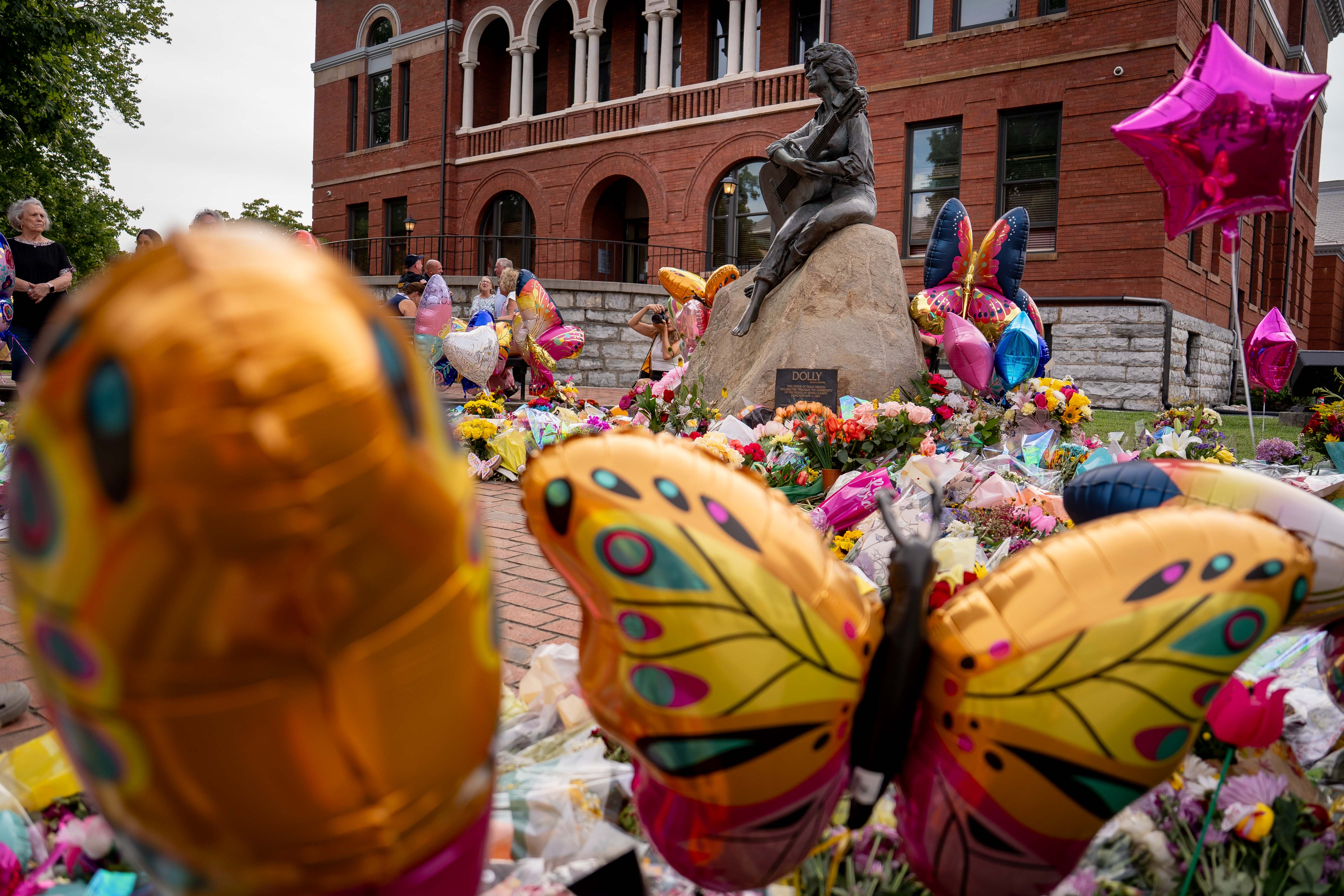
    Americans of all stripes are mourning the loss of singer and philanthropist Dolly Parton, who died on Aug. 26 at the age of 80.

    The outpouring of grief and mourning has exposed the complex and often contradictory identities Parton inhabited.

    She was self-proclaimed poor “trash” from rural Appalachia — and proud of it. She regularly wore loud makeup and big hair, and had even bigger breasts, but she made sure she was taken seriously as a businessperson by the music establishment and Hollywood. She was a multimillionaire who connected with the working class.

    Musically, Parton was a symbol of traditional country music, even as she crossed over into pop music in the 1980s. And she was a queer icon, yet, in her honor, the loudly anti-queer Trump administration ordered that flags be flown at half-mast.

    Her complexities and contradictions reflected Parton’s enormous contributions to American history and culture, which crossed all sorts of ideological lines and made her genuinely beloved.

    Dolly Parton’s aesthetic and style allowed her to celebrate a background that traditionally had been scorned. Women who were visibly sexual were branded trashy or sluts, and terms like “poor white trash” and hillbilly denoted racial and class hierarchies.

    Parton, however, dismissed these historical connotations from her first days in the spotlight. She admitted that her style was “gaudy,” or “tacky,” and confessed that as a little girl she idolized a woman her mother called “trash.” She responded with, “Well mama, I want to look like trash.” She also embraced the “trash” label to talk about her hyperfeminine body presentation, which included ostentatious costumes, long nails and big hair.

    As Parton’s star grew in the 1970s, and she refused to adopt markers of high-class femininity, she forced a rethinking of how society characterized women who had long been maligned for their sexuality and poverty.

    Dolly Parton, Symphony Hall, Boston, 1972.HENRY HORENSTEIN

    For instance, in 1971, she released one of her biggest hits, “Coat of Many Colors,” which talked about her poor upbringing and a colorful coat that her mother made for her out of discarded rags. Her classmates ridiculed her, but rather than feeling ashamed, she felt pride in her “new” coat. This story demonstrated the hardscrabble, can-do spirit of the working class and illustrated the love Parton held for her family and her people.

    The song’s reception also highlighted Parton’s unique knack for reaching multiple audiences. While its cultural dynamics shined through initially, years later, the song gained a new dimension when it became an anthem for LGBTQ Americans because of its message of pride in one’s self and the colorful similarities the coat shared with the LGBTQ pride flag.

    “Coat of Many Colors” reflected how, throughout Parton’s career, her work subtly advocated for the marginalized. Nothing epitomized this better than “9 to 5,” one of her most famous songs and acting roles. In 1980, Parton released the iconic song as the theme for the movie of the same name.

    The movie spoke to women, who were entering corporate America at an unprecedented rate. Yet, the Supreme Court had not yet declared sex discrimination illegal, and they encountered an environment full of glass ceilings, discriminatory language, sexual harassment and societal expectations to succeed even while maintaining a traditionally gendered home life. The song and the film took a clear stance: women belonged in offices and deserved to be treated with respect, regardless of their hair color or bust size.

    In particular, Parton’s character Doralee spoke directly to the constraints clerical and administrative workers faced. Increasingly, as America deindustrialized, women constituted a growing percentage of the working class, and working class jobs became feminized. Invigorated by second wave feminism, working class women had been pushing for improved workplace conditions, including better wages and expanded opportunities for female administrative workers to move into management positions.

    Made By History sponsors. FOR USE ON MADE BY HISTORY STORIES ONLY.Inquirer Staff

    Parton’s title track directly addressed the frustrations driving these demands, lamenting, “They just use your mind and they never give you credit … for service and devotion you would think that I would deserve a fair promotion / Want to move ahead, but the boss won’t seem to let me / I swear sometimes that man is out to get me.”

    The song was classic Parton, both celebrating workers’ daily grinds and speaking clearly about class exploitation.

    The film itself presented these experiences of gender and class discrimination as part of a slapstick comedy. Yet, for mainstream audiences across the country, this softer, comedic approach to feminism and activism, made the very real plight of Judy (Jane Fonda), Violet (Lily Tomlin) and Doralee (Parton) relatable.

    Two years later, in 1982, Parton once again used an acting role to speak up for women who were denigrated as disposable items when she starred in the movie adaptation of The Best Little Whorehouse in Texas. Parton’s character Miss Mona was a brothel owner who was fighting against moral crusaders attempting to close her down.

    Denouncing the hypocrisy of men who privately availed themselves of women’s sexual services and then publicly shamed them as immoral, Parton’s character firmly established sex workers as people worthy of respect and dignity. Situated against the backdrop of a rising Moral Majority movement that fought to overturn reproductive rights, ban pornography and reverse anti-discrimination laws protecting people based on sexual orientation, Parton again used comedy to bring humor to a very real issue and, in doing so, made visible a group of people usually shunned by society.

    Her devotion to calling for acceptance of people excluded from mainstream society continued throughout Parton’s career. In 1991, she released the song “Family,” which referenced LGBTQ people for the first time and exhorted people not to turn their backs on family members who were different. “Some are preachers / some are gay / some are addicts, drunks and strays / But not a one is turned away when it’s family.”

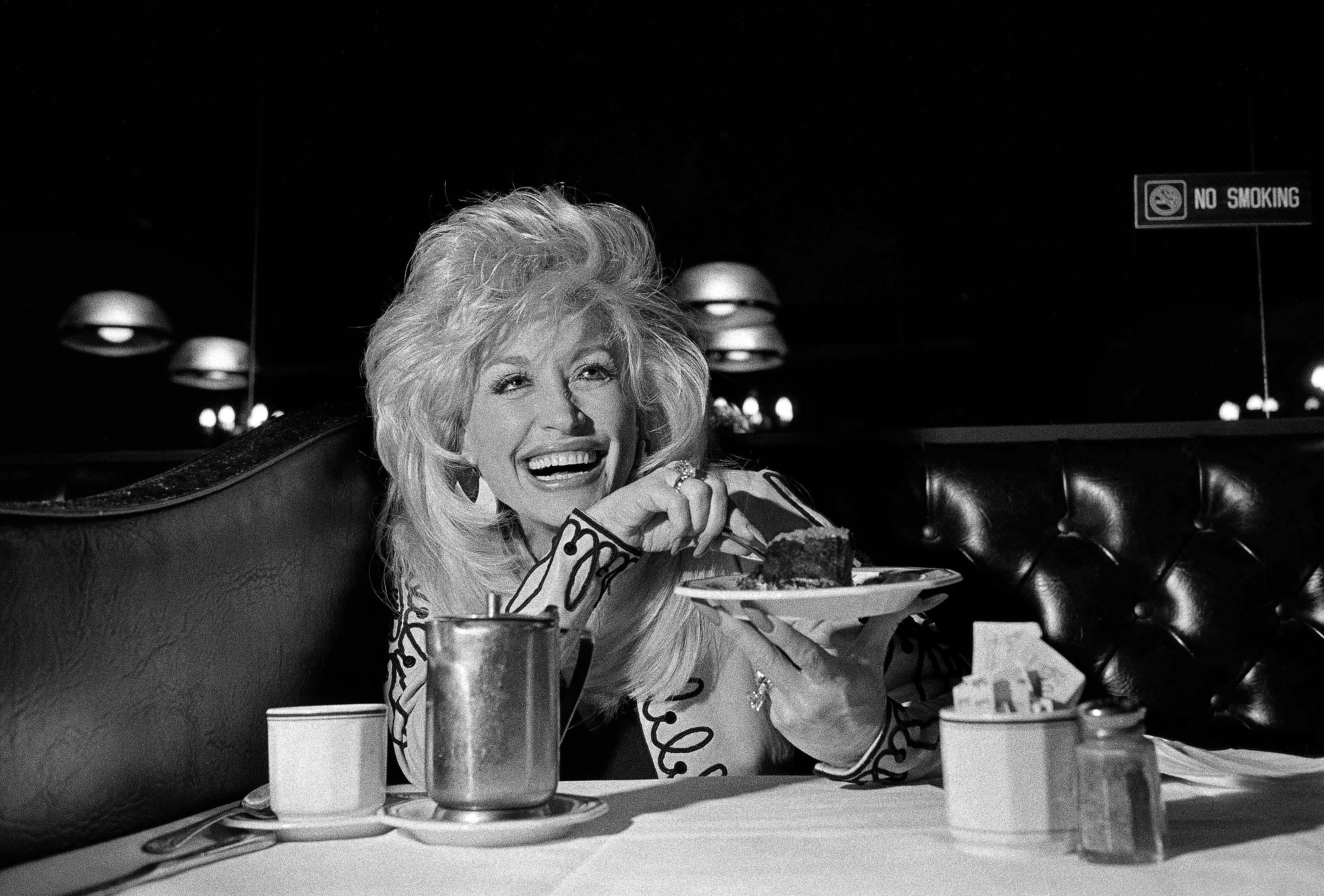
    Dolly Parton savoring a chocolate mousse cake in New York in 1992. EDWARD KEATING

    This was a powerful message at the height of the AIDS epidemic when gay men and intravenous drug users were among the most at-risk groups — both of contracting the virus, and of being shunned because of it.

    At a moment when society was ostracizing and legislating against LGBTQ people, Parton instead called for acceptance. She stood by her message in “The Family” over the following decades. In a 2009 interview, she endorsed same-sex marriage, and in 2016 she opposed bathroom bans that limited transgender people’s access to public toilets.

    Because of these stances, the LGBTQ community embraced Parton right back. Her songs and image have become mainstays used by drag performers, and in 2012 Parton related that she once lost a Dolly Parton look-alike contest to a drag queen. The ties between Parton and the queer community became so interconnected that, upon her death, CNN inadvertently aired an image of a drag performer during a tribute to the late singer.

    Parton famously said, “Honey, there is no such thing as the real Dolly Parton.” She created a life of contradictions, and while her hair and makeup may have been fake, the power Parton held was very real.

    She had a unique ability to transcend boundaries, allowing her to speak for people across classes, gender identities and sexualities. Her calls to support the downtrodden and shunned are her lasting legacy. Her ability to engage in such advocacy while continuing to be beloved across the political divide offers a lesson for all Americans.

    Elyssa Ford is associate professor of history at Washington State University. Rebecca Scofield is professor of history at the University of Idaho.

    Made by History takes readers beyond the headlines with articles written and edited by professional historians. Opinions expressed do not necessarily reflect the views of The Inquirer.

  • Gloria Steinem told us where her feminism came from

    Gloria Steinem told us where her feminism came from

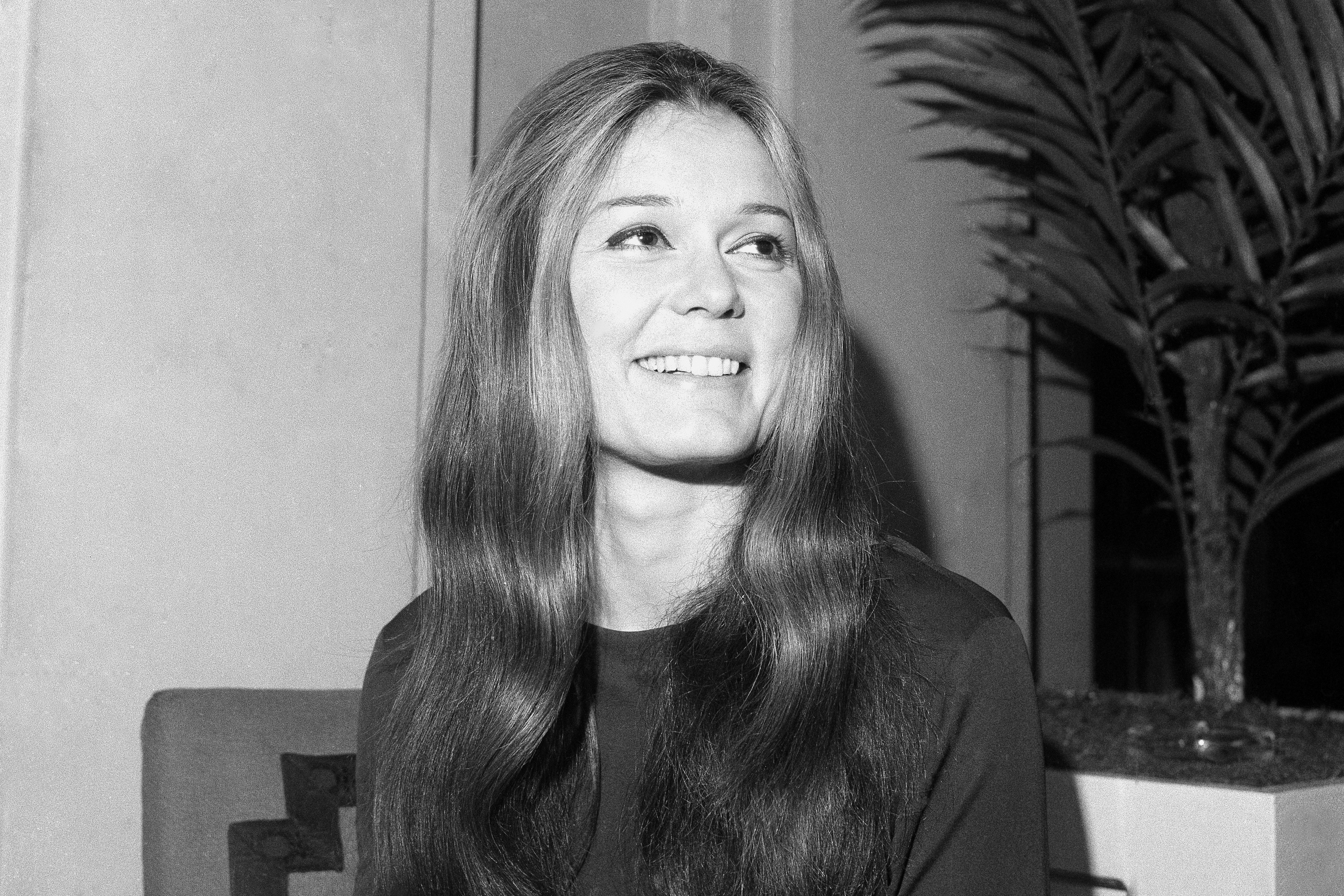
    Gloria Steinem spent 18 months in India in 1957 and 1958 that set the trajectory for the rest of her life. She credited those pivotal months with teaching her to listen, to organize from the ground up, and to understand “radical” as going to the root of a problem rather than to its extreme. In 2007, she told two Indian interviewers, “If you want people to listen, you have to listen to them. I believe I learned that in India.”

    Her connection to India began long before she got there. Her mother and paternal grandmother were Theosophists, or followers of a spiritual movement that borrowed from Hindu and Buddhist thought and treated India as the home of ancient wisdom. While a student at Smith College in the 1950s, Steinem studied with Vera Micheles Dean, a foreign policy scholar who wrote about India and was publicly accused of communist sympathies in 1954. During her junior year in Geneva in 1954-1955, she wrote a research paper on why the Communist Party of India had never become the country’s dominant party.

    Then she got engaged, and she did not want to be. “Marriage meant the end of life to me,” she said years later. The Chester Bowles Asian Fellowship in India in 1956, the year she graduated from Smith, saved her from the marriage.

    Smith students had spent years raising money to send graduating seniors to India as unofficial goodwill ambassadors to a country that had declared itself nonaligned in the Cold War. Chester Bowles, the former U.S. ambassador to India, gave a lecture and waived his fee; the money it raised went into two $1,000 scholarships the students named after him, each less than half what they estimated a fellow would need to live on. They sent two students anyway. Steinem was one.

    She landed in Bombay in February 1957 expecting one country and finding another. A tall, turbaned man stooped into the plane and turned toward her. “I rose, sure that he was going to begin a speech of ‘Welcome to India, mystic heart of Asia, land of ancient cultures.’ He namasthed politely before me” — greeted her with palms pressed together — “took out a shiny red insecticide bomb, and said, ‘Stand still while I spray you.’” India, she wrote in her fellowship reports, “shatters Western romantic illusions with little ceremony.”

    She was initially tasked with explaining American culture and excellence to Indian students. However, at Miranda House, a women’s college at Delhi University, her classmates ended up asking her to explain American politics instead. In one class, she reported, “we were asked the difference between the U.S. interference in Guatemala and the Soviet action in Hungary” — the CIA-backed coup of 1954 and the Soviet crushing of the Hungarian uprising in 1956. It “nearly shocked us into silence,” she wrote.

    After the semester, when she could have gone home like most of the students around her, she chose to stay. She went first to the Himalayan foothills, to a study camp run by followers of M. N. Roy, an Indian former communist who had broken with Moscow. That is where she absorbed the idea that “radical” means going to the root of a problem, not to its extreme.

    In the fall of 1957 she traveled south, to the ashram of Vinoba Bhave, a disciple of Gandhi who walked from village to village asking landowners to give land to the landless — and she found it nearly empty. Caste riots had broken out in Ramnad, a rural district in what was then Madras State, after the murder of a Dalit leader. The government had sealed the district and barred reporters. Teams from the ashram had walked around the roadblocks anyway.

    She joined a team because it was short a woman. For a week they walked between villages. At night people came out and sat around a kerosene lamp in circles of six or twenty or fifty and told what had happened to them — burnings, murders, rapes. The teams listened. Steinem later called it “the ancient and modern magic of groups in which anyone may speak in turn, everyone must listen, and consensus is more important than time.”

    She had no word for it at the time, but a decade later American feminists called it consciousness-raising, as they sat together and discussed their experiences in their everyday lives as women — soon coming to the conclusion that the challenges they faced were largely attributable to systemic inequalities.

    Made By History sponsors. FOR USE ON MADE BY HISTORY STORIES ONLY.Inquirer Staff

    Fifteen years after Ramnad, the first issue of Ms., the feminist magazine Steinem famously founded, had an eight-armed goddess on the cover holding a typewriter, a steering wheel, a frying pan. Steinem said the image “had come out of my Indian past.” The masthead listed everyone alphabetically. The editors met in a room she called “comfortable and shoe-less,” and set their own salaries around a table in a Chinese restaurant, with the highest capped at three times the lowest.

    She showed up in India with every assumption a white American in the 1950s could have, then spent sixty years being corrected and saying so out loud. When she went back to India in the late 1970s, she met Kamaladevi Chattopadhyay, who had led Gandhi’s national women’s organization, and told her: “Well, of course, my dears. We taught him everything he knew.” Steinem repeated that story and others from her time in India for decades.

    Here was a young woman whose assumptions were challenged, and who still wrote down her honest reflections. Steinem kept doing that her whole life — approaching new ideas, learning from her mistakes, adapting. For fifty years she acknowledged the global influences that shaped her, especially at home, in a country that mostly ignored them.

    Rashida Shafiq is a historian of American foreign relations and women’s history. Her book manuscript, “The Method and the Machinery: Gloria Steinem, India, and the Cold War Making of American Feminism,” is in the works.

    Made by History takes readers beyond the headlines with articles written and edited by professional historians. Opinions expressed do not necessarily reflect the views of The Inquirer.
  • Will the real William Howard Taft please stand up?

    Will the real William Howard Taft please stand up?

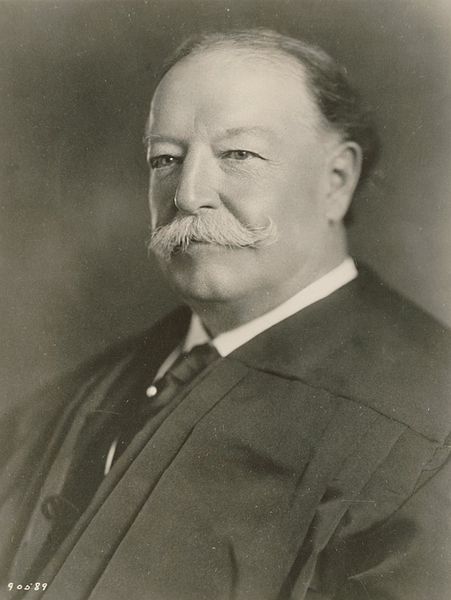
    Chief Justice John Roberts and his conservative majority like to cosplay as historians when they write court opinions that determine what rights we get to have and exercise. In August, though, Roberts tried the real thing. He took to the In Pursuit project’s Substack to write a brief history of a man he admires: former president and chief justice, William Howard Taft.

    Roberts’ version of Taft is a sober, steady president (1909-1913) to be hailed for his refusal to unduly use executive power. And for Roberts, Chief Justice Taft (1921-1930) is “one of [the nation’s] great Chief Justices” because he started modernizing the Supreme Court by growing the institution’s status and constitutional authority — a project Roberts continues to make his own.

    But Roberts’ history of Taft is irresponsibly shoddy; he cherry-picks facts, ignores narratives that don’t fit with his rosy portrait of Taft’s presidency, and he completely omits Taft’s damning record on race relations and civil rights.

    In truth, Taft was a white supremacist. He admitted as much on the campaign trail in 1906, when he told Republican voters in North Carolina that Black people were “a class of persons so ignorant” and likened them to the “mental stature” of children.

    Taft’s racism was partly opportunistic. In 1908 he was running as the Republican standard-bearer against Democrat William Jennings Bryan to succeed President Theodore Roosevelt. Since Reconstruction, the southern states had voted exclusively for Democrats. But Taft believed he could find a way to “break” the “Solid South” by luring away racist white voters to vote Republican. His preferred tactic was a racist dog-whistle.

    And so, while Taft once lamented the arsenal of racist laws that disenfranchised Black Americans throughout the country, he didn’t think Jim Crow discrimination was a very big deal. After all, it was merely “the ignorant colored voter,” he believed, who was being kept away from the polls — downplaying the violence that upheld disenfranchisement. Perhaps things might change, he added, if Black men got smarter and worked harder. For Taft, Black Americans needed to earn the vote and prove to white society that they could be entrusted with that privilege.

    Taft’s electoral strategy never panned out. Even though he handily won the 1908 election, the “Solid South” stuck with Democrats. Nonetheless, as president, Taft continued to side with white supremacy.

    In 1911, the Ninth Cavalry Regiment of Black troops — the famed “Buffalo Soldiers” — were stationed in San Antonio, where they encountered Jim Crow streetcar laws that mandated segregated seating. The troops refused to obey, destroying the segregation signs and standing up to streetcar conductors who demanded compliance. Democratic congressman and future Vice President John Nance Garner lobbied Taft to punish the U.S. soldiers, and the Taft eagerly complied, dispatching the Buffalo Soldiers to the desert to monitor the U.S.-Mexican border.

    President Taft also did nothing to confront the lynching epidemic that claimed roughly 250 Black lives during his presidency. In his first Annual Message to Congress — the forerunner to today’s State of the Union address — Taft explained that he sympathized with those who might choose to become part of the lynch mob. Yes, he conceded, lynchings involved “lawless violence and cruelty.” But Taft excused this, arguing that white people conjured the lynch mob because they were sick and tired of waiting for the ponderous court system to deal with Black people that supposedly broke the law. Faced with this “injustice,” the white lynch mob’s actions were justified, according to Taft.

    Taft’s forgiving attitude toward the lynch mob wasn’t just theoretical. On April 20, 1911, a white lynch mob in Livermore, Kentucky murdered a Black pool hall manager named Will Potter inside the local opera house. For the supposed crime of kicking white ruffians out of the pool hall, Potter “was dragged before the footlights and his body riddled with bullets from the guns of an audience of half a hundred determined avengers,” according to the New York Times. Rumor had it that witnesses were charged admission. Those who wanted to be part of the firing squad had to pay extra. When the shooting stopped, “the lights were then extinguished, the curtain lowered, and the mob then filed out.”

    The NAACP’s executive committee dispatched a plea to leading government officials, including Taft, demanding action. An NAACP committee even visited Taft to request that he condemn lynching. According to an NAACP internal document dated June 11, 1911, “The President assured the Committee that he could do nothing, that it was a matter to be left to the individual states.”

    Taft’s refusal to use executive authority to confront lynching is shocking. However, it is this type of inaction that Chief Justice Roberts believes made Taft a model chief executive. Roberts’ favorable interpretation of the Taft presidency highlights his restraint. “Steady competence, self-restraint, and respect for the other branches were the hallmarks of the Taft Administration,” writes Roberts.

    Taft’s contemporaries were less impressed with his presidency.

    Taft was one of the few incumbent presidents to lose reelection, somehow coming in third in what should have been a two-way race in the 1912 contest. He’d promised to lower tariffs but ended up raising them, and Taft’s unwavering support for an ultra-conservative Supreme Court all but doomed progressive reforms in areas like labor rights. So dire was Taft’s record that his former mentor, Teddy Roosevelt, came out of retirement to challenge him for the Republican nomination. In the general election, Democrat Woodrow Wilson trounced Roosevelt — running as the Progressive Party candidate — as well as Taft and Socialist Eugene Debs.

    Roberts reserves his greatest appreciation for Taft’s contributions as chief justice between 1921 and 1930, which grew the “prestige” and “authority” of the Supreme Court. Namely, Taft pushed passage of the Judiciary Act of 1925, “which gave the Supreme Court control over its own docket,” and oversaw construction of the court’s august building on Capitol Hill.

    But what about the Taft Court’s actual decisions? Here Roberts has little to say, but recent scholarship by law professors Nikolas Bowie and Daphna Renan shows that, at best, Taft and most of his colleagues had a studied disinterest in civil rights. At worst, Taft used his opinion in the 1926 case Myers v. United States to stamp the Supreme Court’s imprimatur on the white supremacist version of the history of Reconstruction.

    The case concerned a Reconstruction-era law that prevented President Andrew Johnson from firing federal officers committed to implementing the Reconstruction Acts after the Civil War. For Taft, Reconstruction wasn’t an attempt to use the law to right the wrongs of slavery and legislate equality, but an attempt “to reverse” the Constitution.

    Of all his contributions on the bench, this was the decision of which Chief Justice Taft was most proud. Taft’s prized decision was of a piece with an emerging white supremacist revisionist history of the Civil War and Reconstruction seen, for example, in D.W. Griffith’s film Birth of a Nation (1915) and in the explicitly pro-slavery, pro-Confederacy approach to writing American history pioneered by William Dunning and his students, whose work was used to bolster Jim Crow.

    Made By History sponsors. FOR USE ON MADE BY HISTORY STORIES ONLY.Inquirer Staff

    So the question, then, is: why did Roberts write this fluffy, mythological history of Taft? Is it because Roberts’ selective historical method ignored Taft’s abysmal record on civil rights and lynching? Or perhaps Roberts has never heard of Taft’s Myers decision.

    A less generous answer might be that while Roberts chose to airbrush Taft’s race relations and civil rights story out of his history, the current chief justice knows more than he’s letting on. After all, in cases like Callais v. Louisiana (2026), Brnovich v. Democratic National Committee (2021), and Shelby County v. Holder (2013), Roberts led the charge to destroy the single most significant civil rights legislation ever enacted: the Voting Rights Act.

    If Taft’s legacy was to retrench the freedoms won during the Civil War and Reconstruction, Roberts’ legacy may one day be recognized as an assault on the victories of the Civil Rights Movement.

    It doesn’t take much digging in the history of race relations and civil rights to see that Taft’s executive restraint and court stewardship that Roberts so admires served the agenda of perpetuating Jim Crow white supremacy. This is bad history. But perhaps Roberts’ methodological sins of omission tell us exactly why the sitting chief justice sees so much to admire in his predecessor.

    Gautham Rao is Associate Professor of History at American University, and author of “White Power: Policing American Slavery.”

    Made by History takes readers beyond the headlines with articles written and edited by professional historians. Opinions expressed do not necessarily reflect the views of The Inquirer.