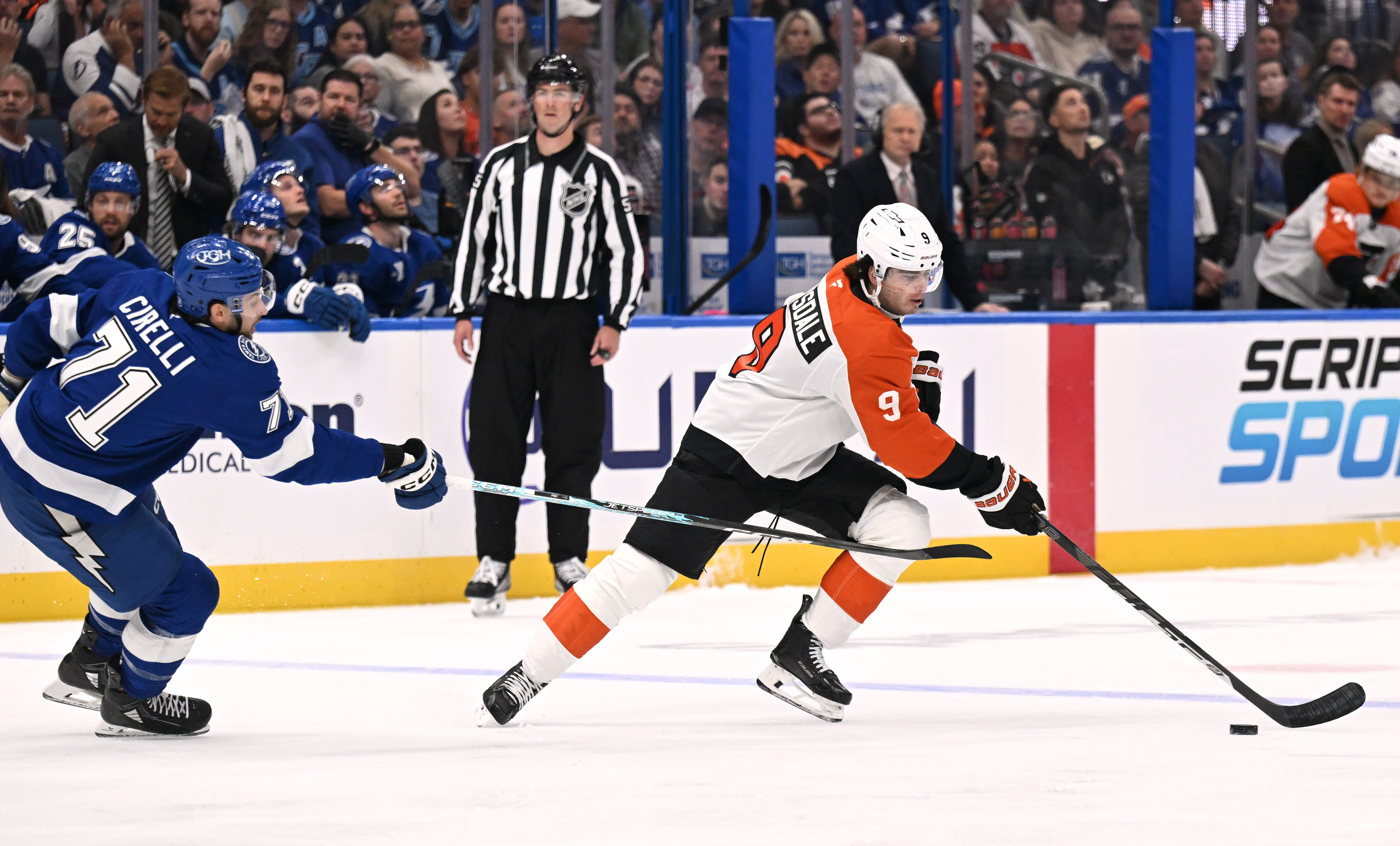
Despite their five-game losing streak, there are plenty of positives to take away from the team’s most recent performance, and also a few negatives, as the Flyers attempt to round into form.
Here’s a look at whose stock is up and whose is down after the loss in Ottawa:
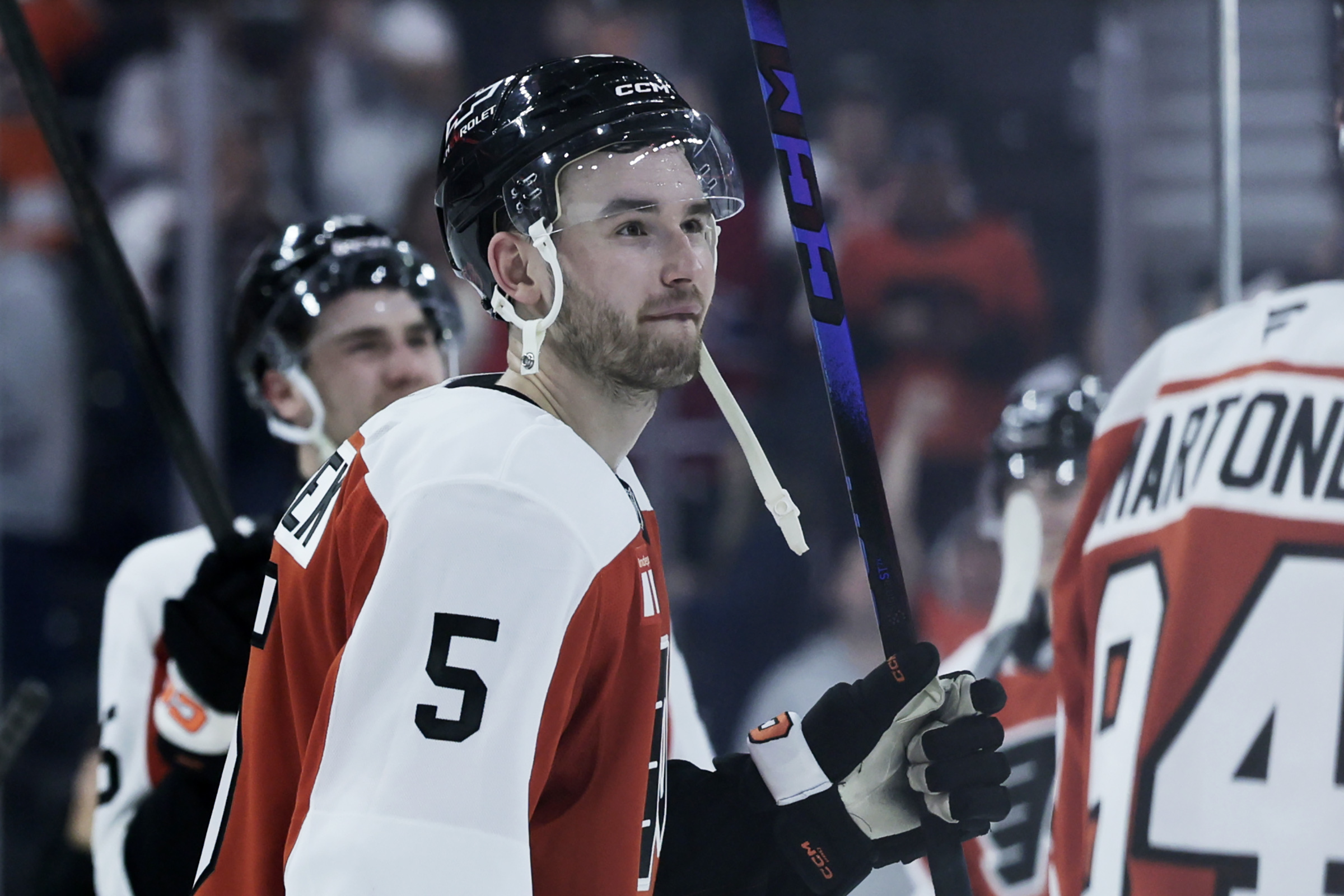
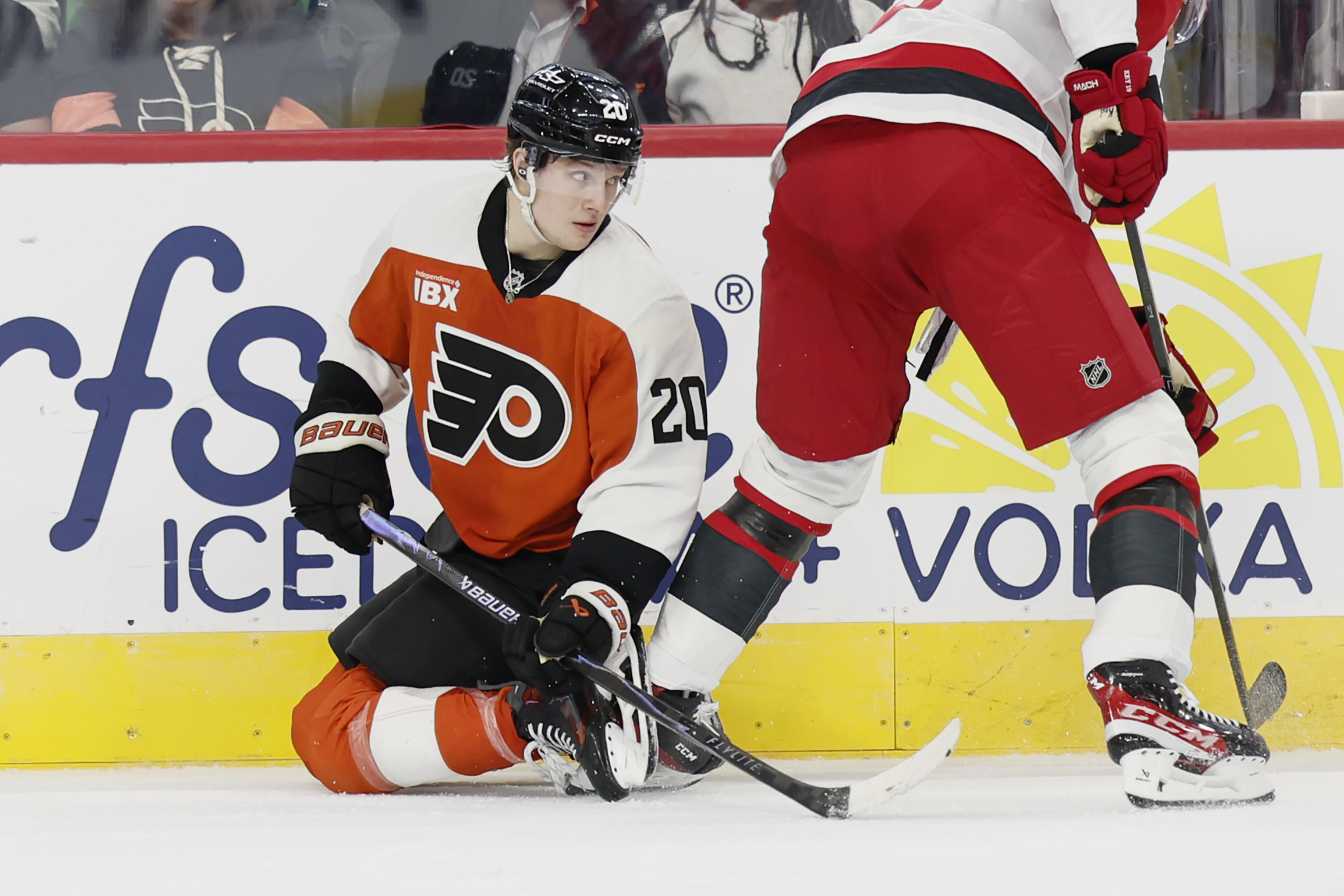
Thursday’s game was exactly what the Flyers want to see from Jiříček: threatening on offense and not an active liability on defense. Jiříček had a few great defensive plays, including one to save an empty-netter, but was most noticeable offensively.
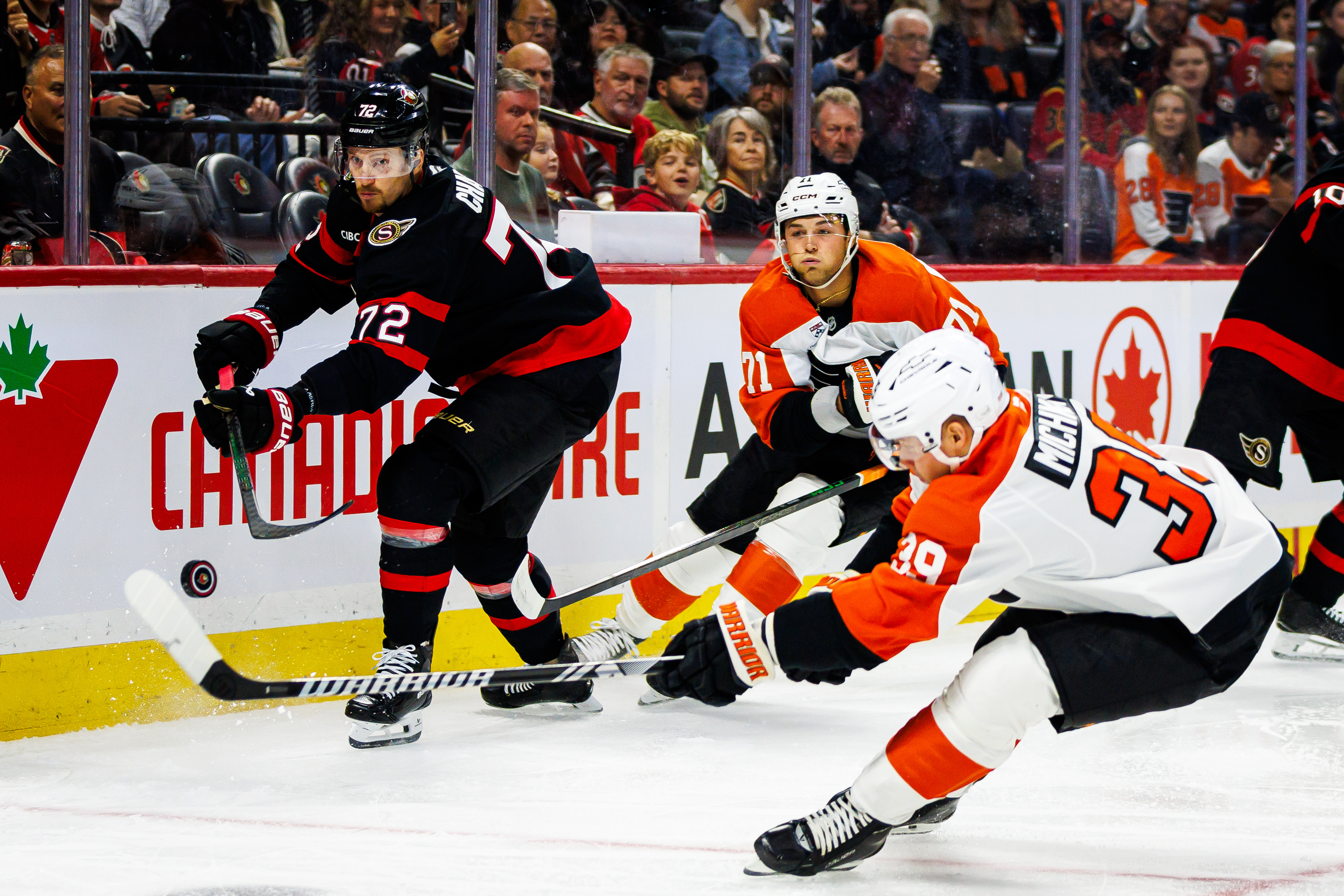
Jiříček, moved up to the first power-play unit, was part of maybe the two best power-play sequences of the season, between sole goal of the game — scored by Matvei Michkov — for the Flyers and the subsequent power play. He had one especially nifty pass through the legs to set up Tyson Foerster.
After trading for Jiříček at the deadline last year, his stock has gone up and down, with the preseason game against Washington a notable step back. But given another chance with Ristolainen out, Jiříček recovered with a solid performance after making a big mistake in Tampa. If Jiříček is going to stick in the lineup, he will need to continue stringing together games like Thursday, but it’s evidence of the vision the Flyers had when acquiring him.
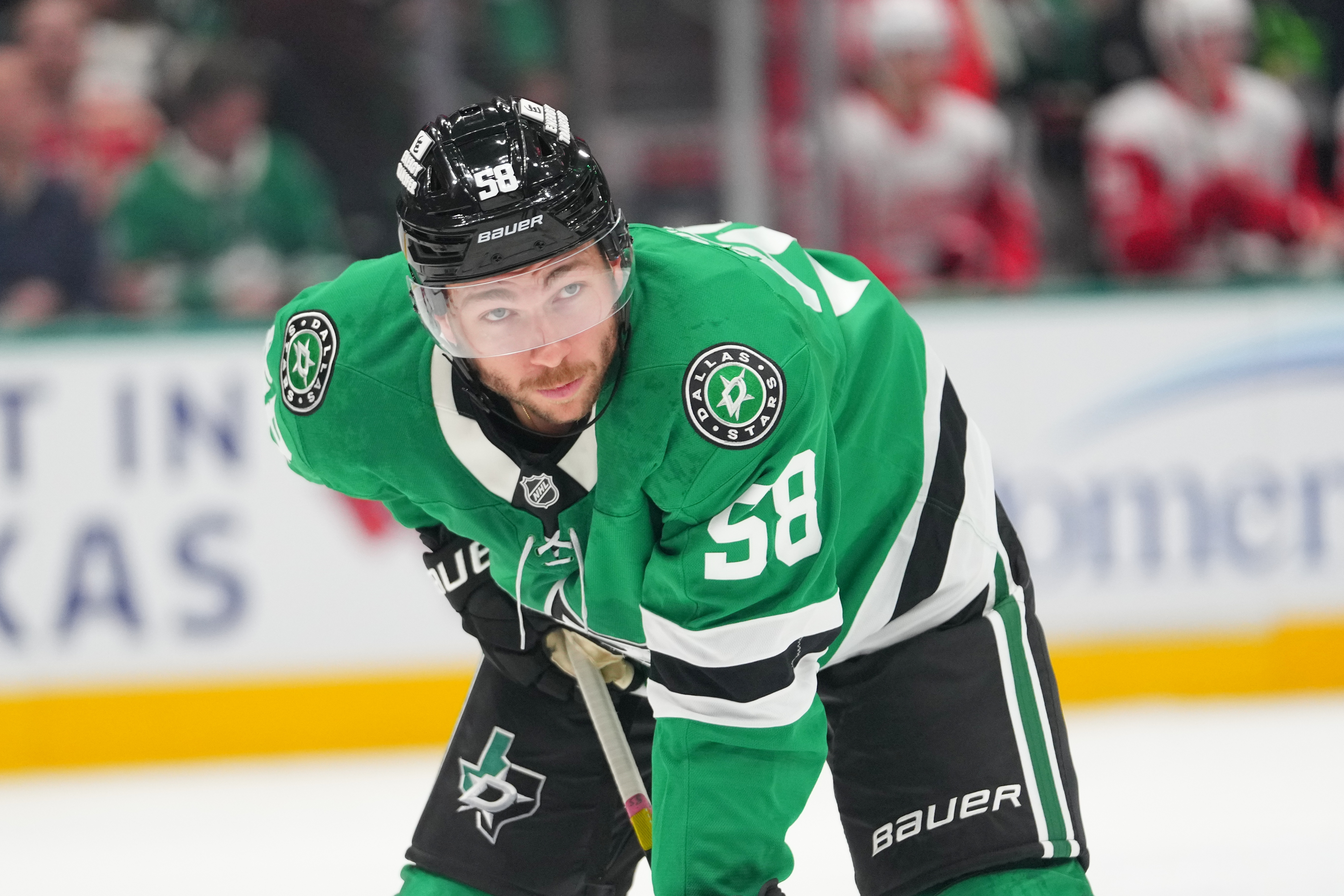
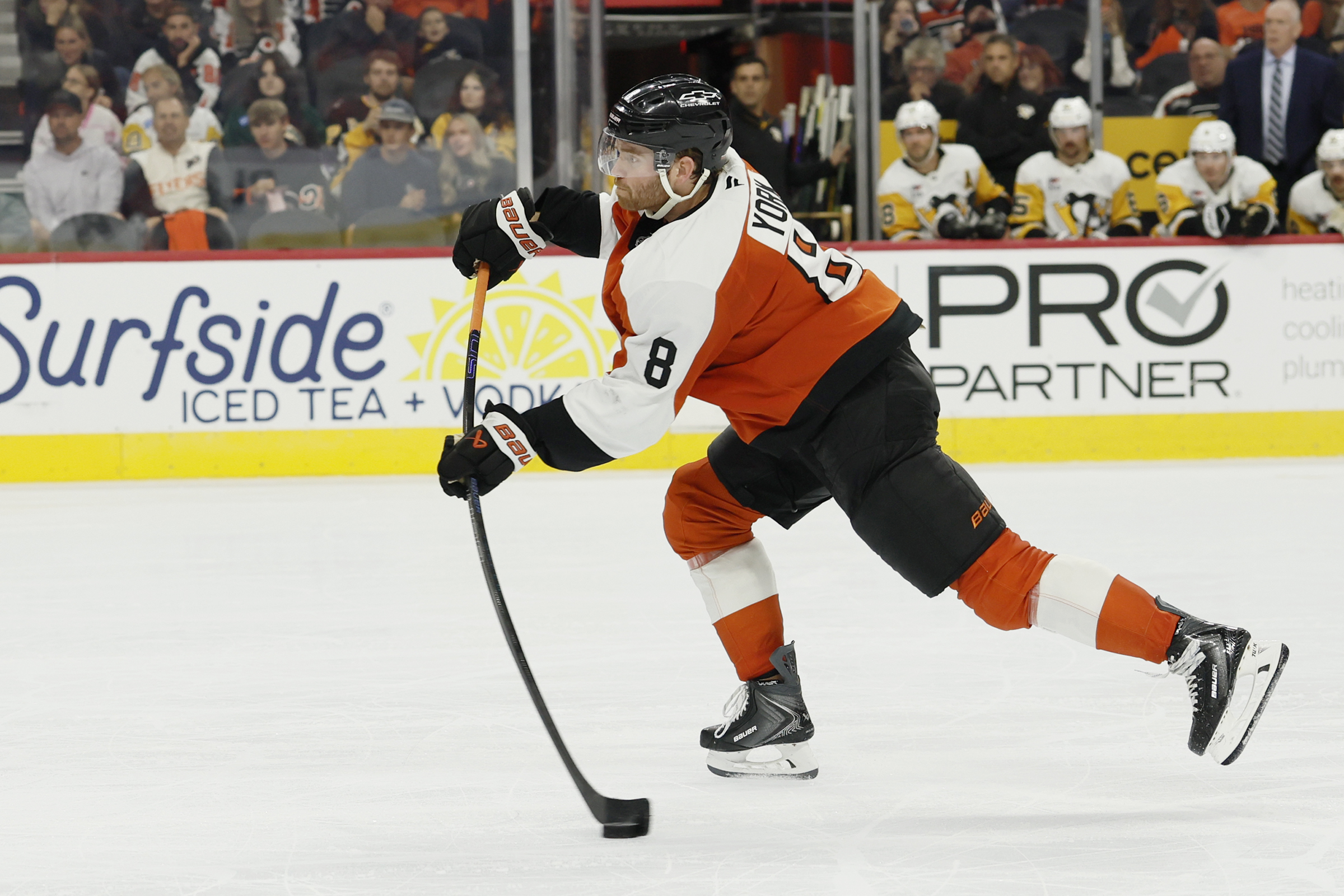
Stock down: Cam York
In a better game for virtually everyone on the Flyers’ roster, Cam York still struggled. The Flyers conceded five high-danger chances with York on the ice and generated just one at five-on-five. He was also a victim of the Flyers’ lack of discipline, spending 5 minutes, 1 second on the penalty kill.
With Ristolainen out, York was separated from his usual partner, Jamie Drysdale, and paired with Jiříček. Drysdale, paired primarily with Travis Sanheim, was on the ice for seven Flyers high-danger chances at five-on-five and didn’t concede any.
York took a step forward to end last season, becoming a reliable penalty killer on that second pair. But he hasn’t been able to maintain that level heading into the year, even on Thursday, which was a better defensive performance from the team overall.
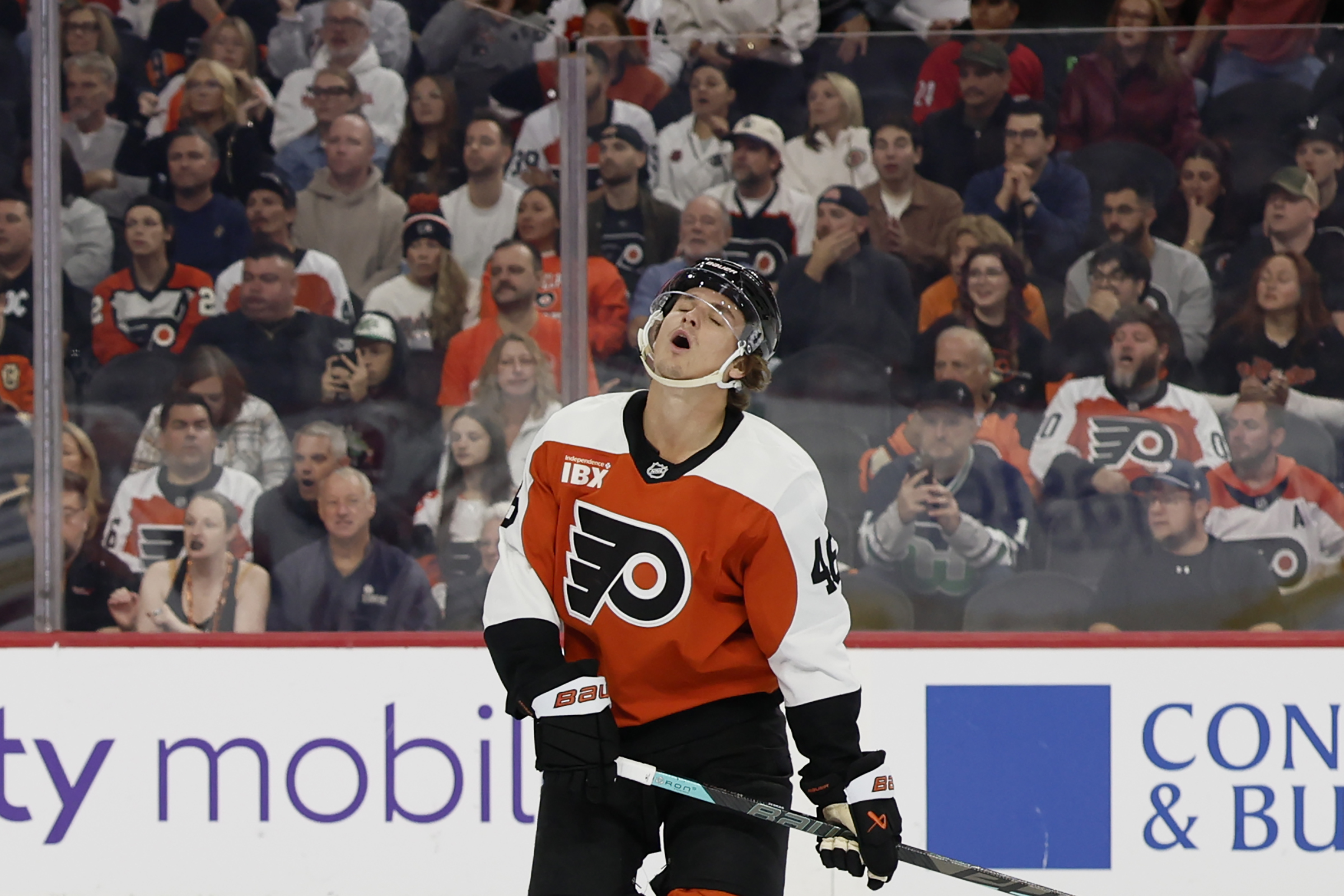
Stock up: Matvei Michkov
After an up-and-down sophomore campaign, Michkov has shown his commitment to improving his two-way play to start the season. Outside of a bad penalty immediately following the Senators’ first goal, Michkov played his best game of the young season.
Another L but this shift at the end from Konecny-Couturier-Michkov gave them a chance. Again, Konecny and Michkov just have a great ability to cycle and create chances together. If not for a Cozens shot block, Matvei ties the game from TK's behind the net pass.#LetsGoFlyerspic.twitter.com/gHhZKRLHe1
He scored the Flyers’ only goal, a greasy rebound on the power play, and now has two of the Flyers’ six goals this season. Michkov’s also improved a lot of the little details of his game, making a few noticeable defensive plays. Without a traditional center on the No. 1 power-play unit, the Flyers even had Michkov taking face-offs.
“He won a couple of draws there, so maybe there’s something there at the dot,” Flyers coach Rick Tocchet said. “I think he made a couple this year, and we said to just give him a shot.”
OTTAWA, Ontario ― The Flyers played the best game of their young season so far. It still wasn’t enough for their first win of the season.
“The compete was there,” head coach Rick Tocchet said. “Guys really worked hard.”
The Flyers got off to their best start at five-on-five of the year, before a series of four consecutive penalties killed their first period momentum. Nick Cousins snuck the Senators’ only goal in the slim strip of time between the first two penalties, but you wouldn’t have known the Flyers spent 8 of 20 minutes on the penalty kill based on the shot totals.
In the first period, the Flyers had more shots on goal (11-8), more scoring chances (5-4) and more high danger chances (2-1) than Ottawa. That’s in spite of taking four penalties and having just one power play.
But they quickly reset, and cycled the puck with relative ease around the zone, and Trevor Zegras wound up with a wrister on Linus Ullmark. The Ottawa goaltender made what looked like an easy initial save, but Matvei Michkov kept at it, and cleaned up the rebound in the crease which slipped through Ullmark’s pads to tie the game at 1-1 in the second period.
After that power play, the Flyers continued to apply pressure, nearly doubling the Senators up on shots midway through the second, before a late Ottawa surge closed the gap.
“We thought we had a good first period other than the penalties, we killed half the period, but we still got 10, 11 shots,” Sean Couturier said. “Five-on-five, we knew we were playing good. We played a good game, we just didn’t find that extra opportunity that we needed, and they did.”
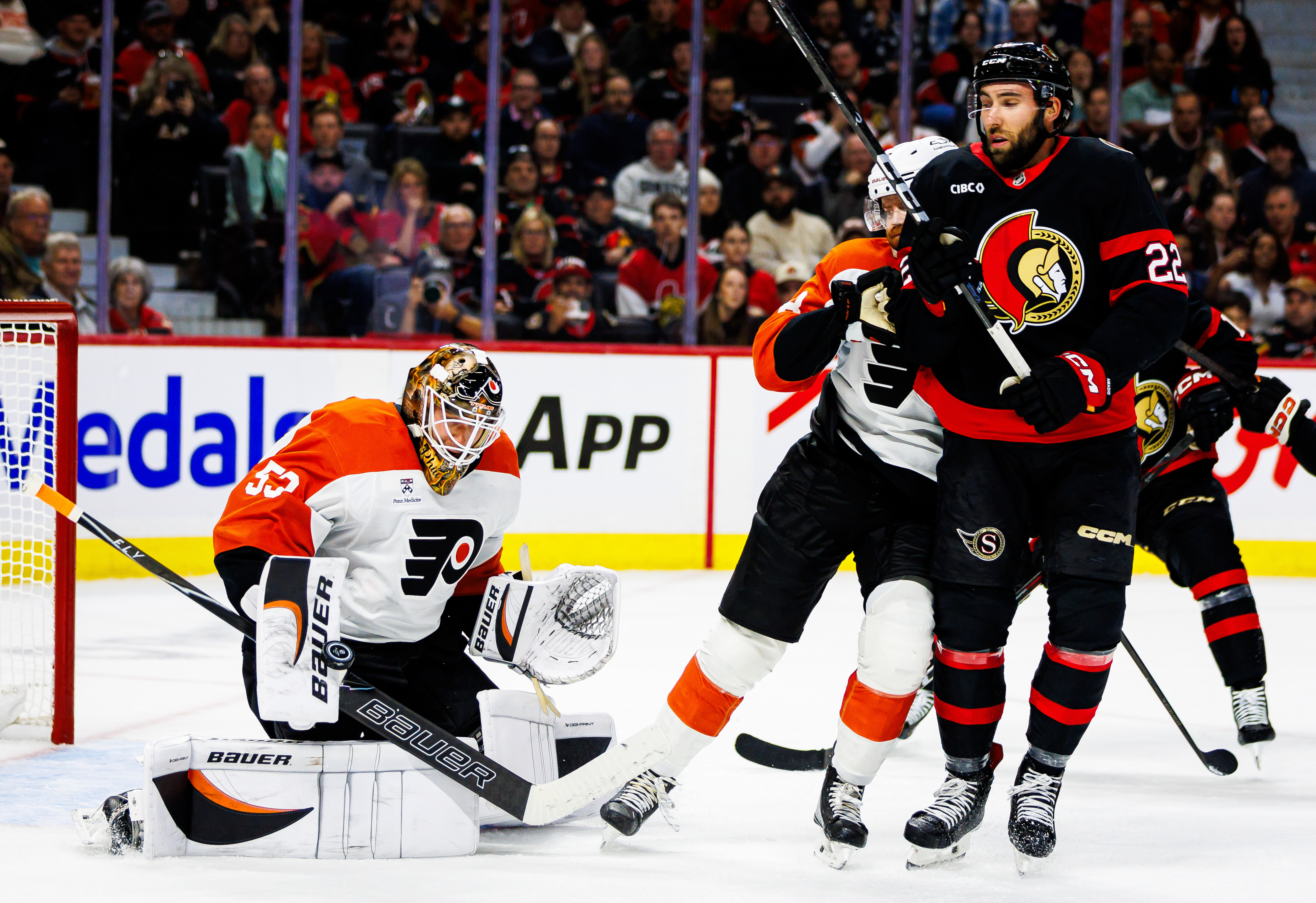
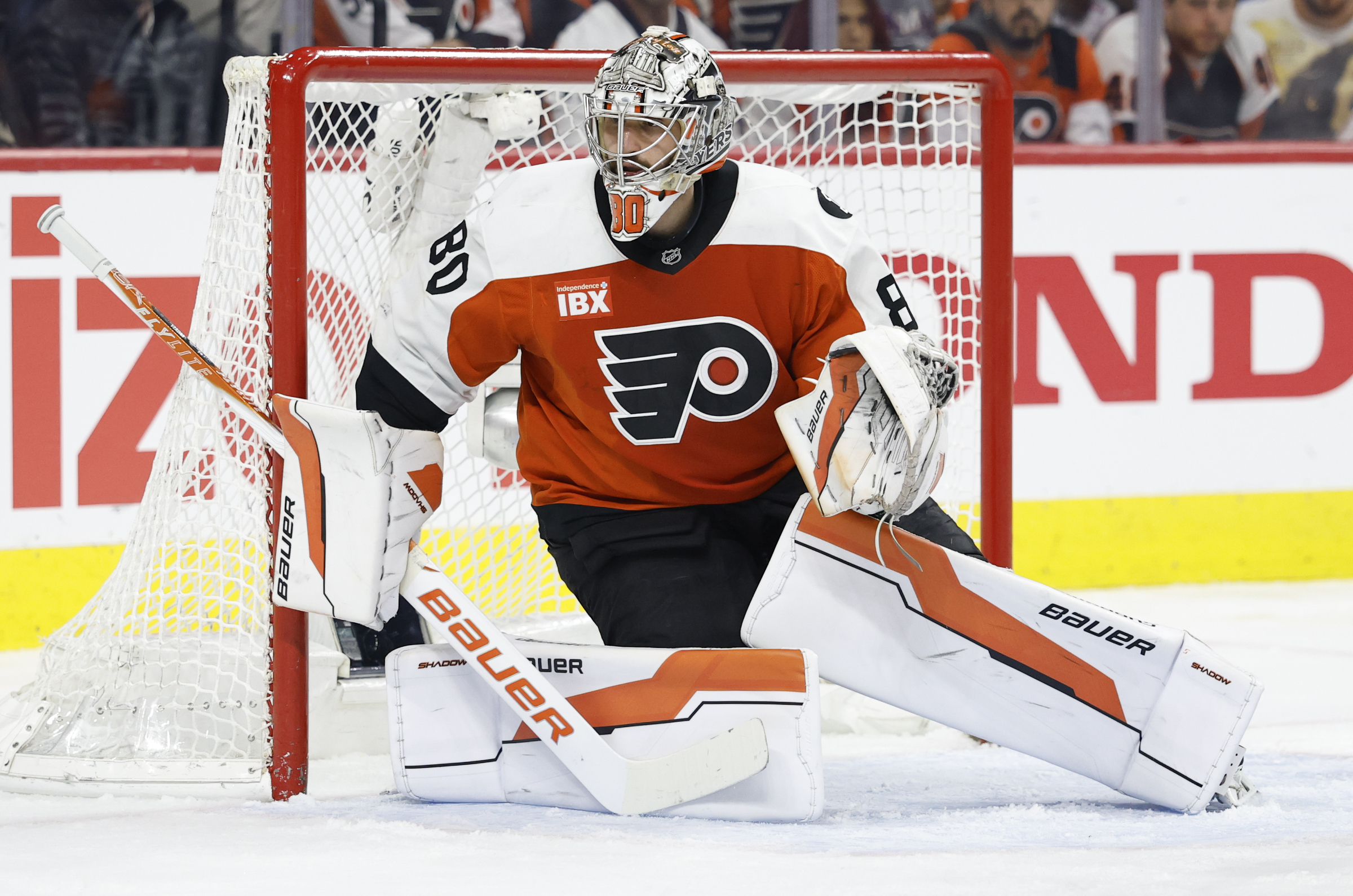
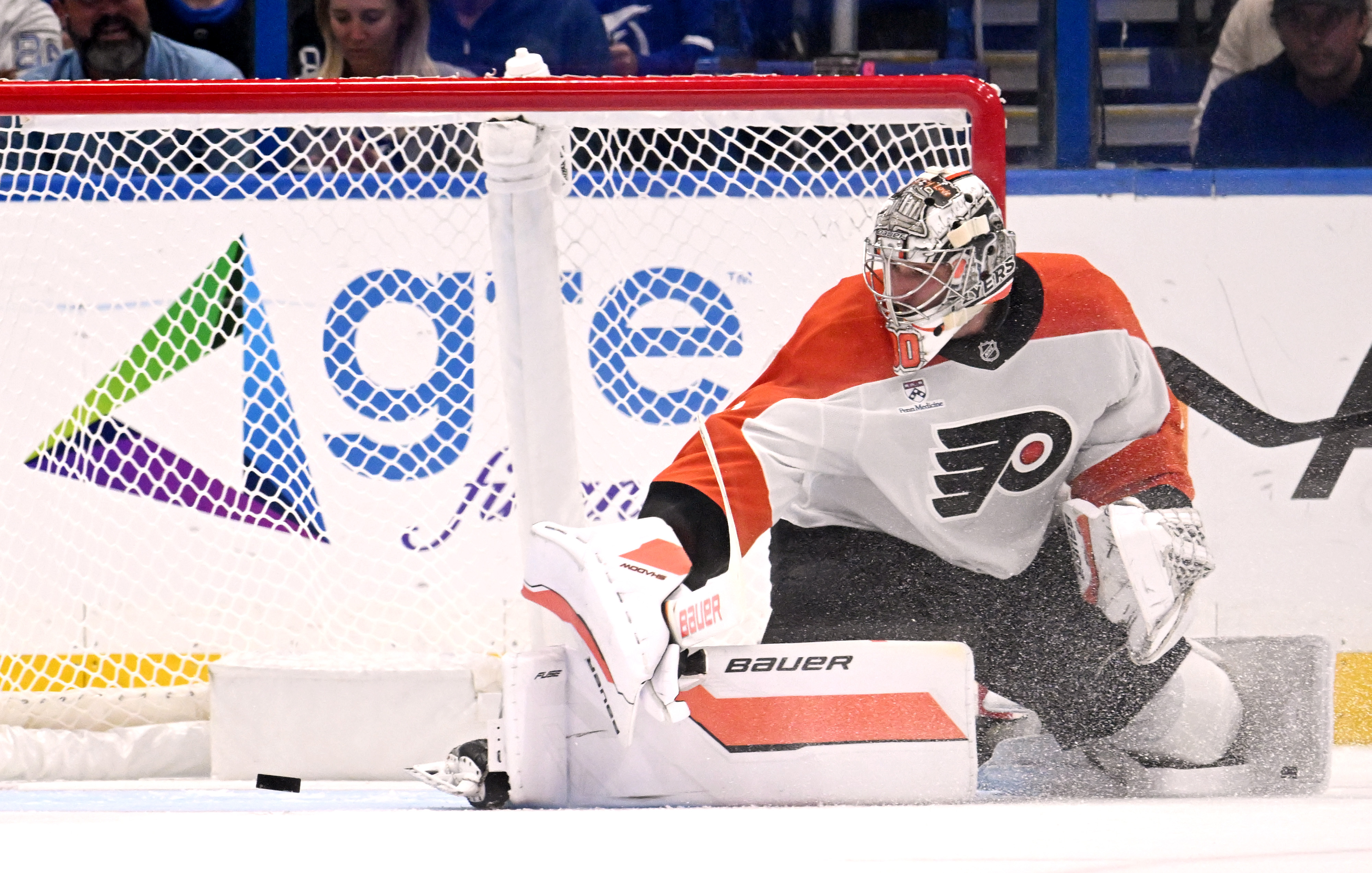
Flyers goaltender Joseph Woll (left) makes a save during the second period. He finished with 24 on the night.Keito Newman
On their third-period power play, the Flyers once again strung together passes and got a few good looks on Ullmark. Without a traditional center on the Flyers’ top unit, Michkov was in at the faceoff dot, and won four of his seven draws.
After the Senators got called for a puck-over-glass penalty, earning the Flyers 30 seconds of a five-on-three, they had a massive chance to break through again.
But Ottawa forward Shane Pinto broke up what could have been two great scoring chances, and the Flyers proceeded to allow multiple dangerous shorthanded rushes. Then, late in the third, the Senators finally capitalized on a power play opportunity of their own, as Carter Yakemchuk broke the tie with a wrister from the blue line off a Claude Giroux give-and-go.
“That five-on-three is probably where we need to get one. I take responsibility for that, maybe not having us as ready as possible,” Zegras said. “It’s those moments that win or lose you games.”
The Flyers managed just three shots in the third period until the final three minutes, and ultimately did not score with the net empty.
Up next
The Flyers travel to Boston to face the Bruins on Saturday (1 p.m., NBCSP).
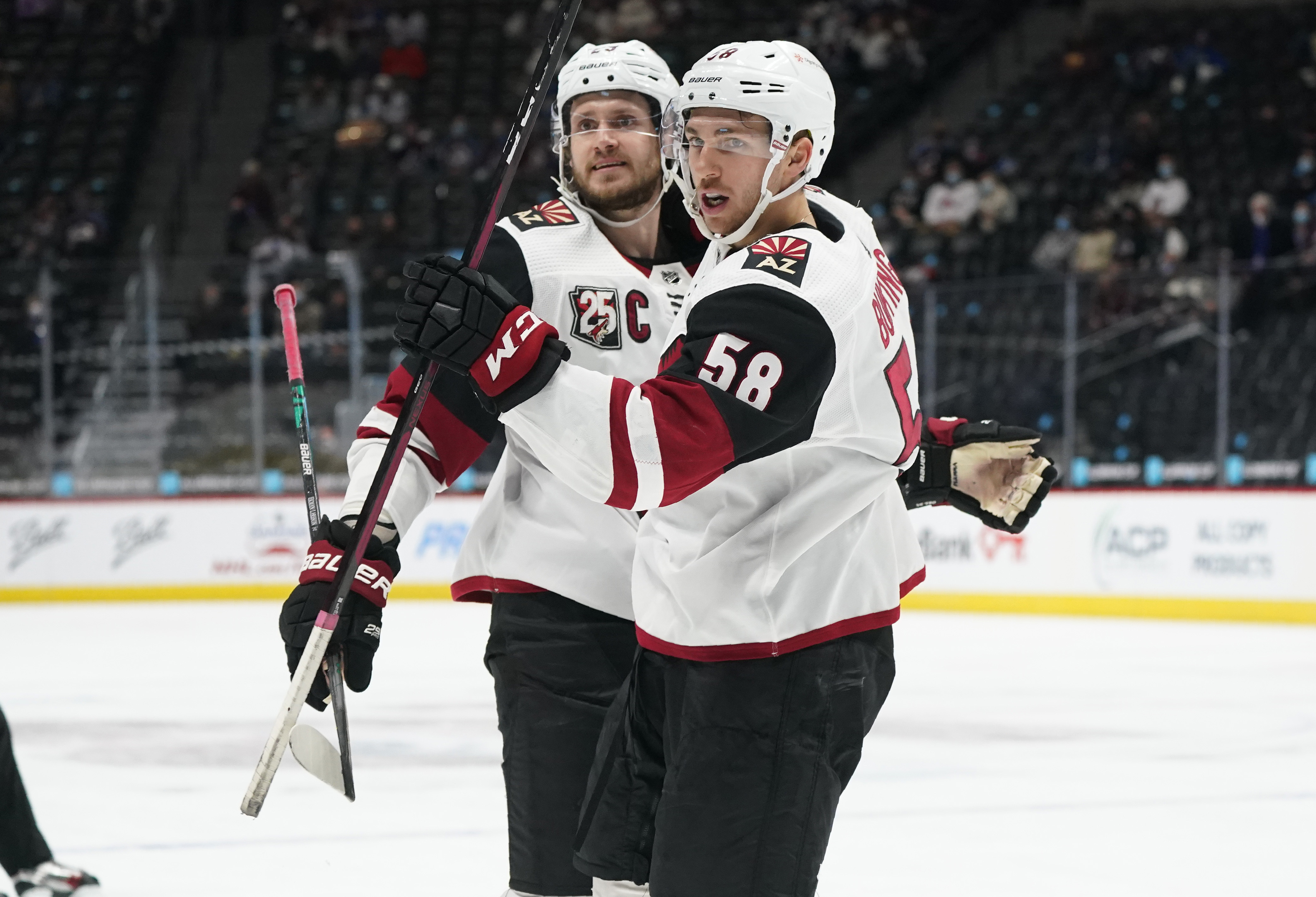
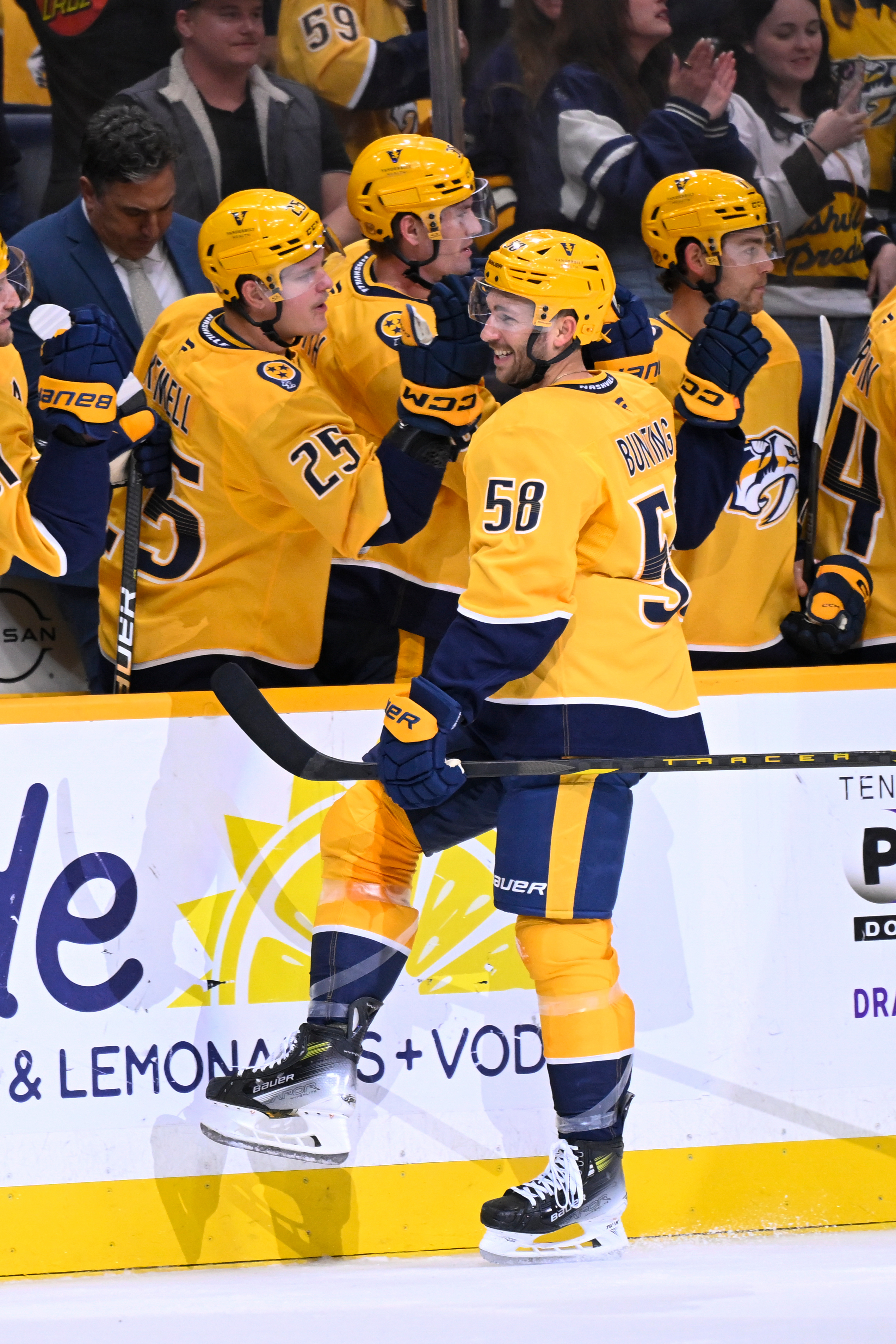
OTTAWA, Ontario ― Michael Bunting, the newest Flyer, hasn’t even been to Philly yet. The team initiated talks Tuesday, just before he signed, and he hopped on a plane from Toronto the same day to join the team in Ottawa for Thursday’s game.
“It was about 40 minutes, so it was nice and easy,” Bunting said after morning skate. “I was happy they weren’t on their West Coast swing or something like that when I was joining the team. It was a really easy transition.”
Bunting said he “wasn’t anticipating” going into the beginning of the season unsigned, but he spent most of the summer training with fellow NHLers in Toronto. Since then, he has been training with the Ontario Hockey League’s Brampton Steelheads, with whom Porter Martone played junior hockey, and Oshawa Generals. He previously played under Rick Tocchet in Arizona in 2019 and 2021, and also with assistant Todd Reirden in Pittsburgh in 2023.
“They know what I’m all about, and I know what I’m all about,” Bunting said. “They just told me to play my game. I’m here for a reason, so don’t overthink it.”
Bunting, who had 14 goals last year split between Nashville and Dallas, has notched at least 19 goals in four of his five full NHL seasons. He also has developed a reputation for agitating his opponents.
The forward looks likely to draw into the Flyers’ lineup for the first time on Thursday, after he took reps on the fourth line with Noah Cates and Noel Acciari and also on the second power-play unit as the net-front on Thursday morning.
The winless Flyers (0-2-2) are in desperate need of a shakeup. They’re 0-for-11 on the power play and have been outshot 158-77 over the first four games. After a practice in Tampa that Tocchet said focused mostly on “battle drills,” the Flyers added Bunting, a player that fits the grittier mold Tocchet is looking for.
“Energy,” said Tocchet when asked what Bunting brings to the group. “A lot of stuff around the net, loose puck battles, things like that, I think that hash-mark game, he’s good at, so yeah, a little energy for us.”
Michael Bunting looks like he’ll get a crack at the net-front role on one of the Flyers’ power-play units.Nick Wass
The 31-year-old has 66 career power-play points, including 36 power-play goals, in 418 career games. Teams like the Toronto Maple Leafs and Carolina Hurricanes have made use of him at the net-front, due to his ability to score greasy goals and deflect the puck.
Tocchet said the Flyers have gotten a few good looks on the power play, but said they’ve struggled to capitalize on two-on-ones and other net-front opportunities. Instead of making better passes, they keep throwing pucks into the middle of the ice, according to the coach.
“When we don’t have those looks, we’re really egregious on the mistakes, you know, giving pucks away,” Tocchet said. “The same thing, simplifying, getting pucks to the net, there’s not a lot of things where you want to put too much in their head, but we’re missing these opportunities.”
Line blender
It looks like Tocchet is making significant changes to the lines after “a bad 10 days.”
With Rasmus Ristolainen still likely sidelined, Jamie Drysdale hopped up to the top pair with Travis Sanheim, and Cam York slid down to the second pair with David Jiříček. Nick Seeler and Simon Benoit practiced together on the third pair. Ristolainen, who remains day-to-day, was on the extra pair with Helge Grans.
With Bunting seemingly entering the lineup, Carl Grundström was an extra during breakout drills. Sean Couturier, who has been playing on the fourth line, was promoted to the top line to center Travis Konecny and Martone, and Christian Dvorak centered Trevor Zegras and Owen Tippett. Zegras, who has played center to start this season, skated much of last season on the wing besides Dvorak. Denver Barkey centered Tyson Foerster and Matvei Michkov, while Bunting slotted into the fourth line with Cates and Acciari.
#Flyers are really shaking up the lines at morning skate in Ottawa:
The wholesale changes aren’t a tremendous surprise for a group that just hasn’t been able to find the right combinations to spark offense and puck possession.
“Obviously you need more energy,” Tocchet said. “We talked about one-on-one battles. We talked about getting pucks to the net and defending, but you can’t harp it every day. You can’t give these guys 10 different things. Their brain will be fried. We’re just trying to dial a couple of points here and there the last couple days and just get back to our base.”
At 3:08 p.m. on July 3, right before everyone headed off for their holiday barbecues, the Flyers sent shock waves throughout the NHL with a single tweet:
“We have tendered an offer sheet to Anaheim center Leo Carlsson. The offer is a five-year contract worth an average annual value (AAV) of $18M, which would require four of the Flyers first-round draft picks in each of the next four seasons as compensation.”
We have tendered an offer sheet to Anaheim center Leo Carlsson. The offer is a five-year contract worth an average annual value (AAV) of $18M, which would require four of the Flyers first-round draft picks in each of the next four seasons as compensation. https://t.co/nfhD4h6nEc
Ultimately, general manager Daniel Brière’s Kyle Schwarberian swing for Carlsson did not connect, as the Ducks matched and retained the player. But the signal was clear: the Flyers, after several years mired in a rebuild, were “big-game hunting” again for a star and were willing to use any means available to them to land one. Now, it might be time for Brière to reload his bow.
After summer links with Detroit over disgruntled center Dylan Larkin, the Flyers could circle back with the Red Wings about another suddenly want-away player: defenseman Simon Edvinsson.
The 23-year-old restricted free agent remains without a contract and recently returned to Sweden to regroup after the Red Wings failed to work out a deal with him during training camp. Edvinsson notably participated in camp without a contract in an act of good faith, and while the Red Wings say they remain committed to signing the Swede, according to Sportsnet’s Elliotte Friedman, the defenseman now “prefers” a trade out of Detroit.
Should the Flyers, who have been linked with interest in Edvinsson, pounce? Let’s take a closer look.
Why the Flyers should make a move for Edvinsson
The Flyers, particularly president of hockey operations Keith Jones, have made no secret of their affinity for big defensemen who are hard to play against.
In a 2024 interview with The Inquirer, Jones cited the Vegas Golden Knights’ size and nastiness on the blueline as a potential blueprint for teams trying to find consistent postseason success. The 2025 Florida Panthers and last year’s Carolina Hurricanes also both featured three defensemen who stood at least 6-foot-3, adding further credence to Jones’ belief.
The Flyers have tried to follow suit. Since 2024, five of the seven defensemen they have drafted have been 6-4 or taller, including 2026 first-rounder Maksim Sokolovskii, who is 6-7 and 238 pounds. They’ve also acquired Simon Benoit and David Jiříček, both of whom are 6-4, in that time frame via trades. Could the 6-6, 225-pound Edvinsson be next?
Edvinsson, the No. 6 overall pick in 2021, is one of the league’s top young all-around defensemen and seems to be only getting better. While not the true power-play quarterback the Flyers covet, he has all the tools — size, skating ability, nastiness, an ability to kill plays at the blue line — to develop into one of the league’s top shutdown blueliners … and soon.
While defense is his calling card, he’s averaged eight goals, 29 points, and nearly 22 minutes per game from the back end over the past two seasons. According to Natural Stat Trick, Edvinsson and all-world partner Moritz Seider ranked 17th last year in Corsi for percentage (52.9%), 11th in goals for percentage (57.3%), and 20th in high-danger chances for percentage (51.97%), among defensive pairs to play 600 minutes together. Edvinsson likely still hasn’t reached his offensive ceiling either, as he’s never gotten the benefit of any power-play time.
A left shot, he would instantly give the Flyers a second top-pair caliber defenseman alongside Travis Sanheim. And given his size and skill set, he would make it easier for the Flyers to recoup assets now for veteran Rasmus Ristolainen, whose contract expires at the end of the season. Young defensemen with Edvinsson’s tools and pedigree simply don’t become available often, so the Flyers should certainly pick up the phone and check in.
Simon Edvinsson is a player the Flyers are reportedly “circling around” on.Yong Kim / Staff Photographer
Why the Flyers might hesitate to make a move
The Flyers, and 31 other teams, would love to add a defenseman of Edvinsson’s ilk and potential. The two big questions are: Is Detroit willing to move him, and if so, what would it cost?
Technically, the Flyers could try to acquire Edvinsson for purely draft picks, as Edvinsson is a restricted free agent and offer-sheet eligible. A long-term contract offer with an average annual value between $7.16 million and $9.55 million would cost the Flyers their 2027 first-, second-, and third-round picks if Detroit were to elect not to match. Given the rising salary cap and Edvinsson’s profile, a long-term contract would probably fall somewhere between $9-11 million AAV.
The other avenue would be to work out a side trade with Detroit, which is probably more interested in landing a combination of proven NHL players, prospects, and picks. The Flyers would likely include fellow left-shot defenseman Cam York in any deal for Edvinsson, and while Porter Martone and Matvei Michkov are likely untouchable, Detroit could ask for a winger like Tyson Foerster or Owen Tippett, the latter of whom now has a 10-team no-trade clause.
The Flyers would also likely have to part with one of their two first-round picks in 2027 or a young prospect with upside like Jett Luchanko, Jack Nesbitt, or Maksim Sokolovskii to round out the deal. Noah Cates, Denver Barkey, and Alex Bump are other auxiliary pieces who might interest Detroit if they concede elsewhere.
The Flyers have maintained that Foerster is not someone they want to move and backed that up by signing him to an eight-year, $56.8 million contract July 1. But would that still apply in a swap for a player of Edvinsson’s age and profile, especially given the team’s logjam on the wing? That remains to be seen, but Foerster’s injury history is a real concern.
While Friedman said Monday that the Flyers are “one of the teams circling” for Edvinsson, the cost could prove too high, especially when the Flyers’ two biggest needs are a No. 1 center and high-end offensive defenseman. While Edvinsson may very well grow into a No. 1 blueliner, they could view him as too similar to Sanheim and not the ideal fit given his limited offensive ceiling.
The Flyers also could prioritize holding onto their top assets and cap flexibility in case a more dynamic type of player — Quinn Hughes, Auston Matthews, Nikita Kucherov, Jason Robertson, etc. — suddenly becomes available. They may feel they have Edvinsson comparables in the system if they are patient, especially with how highly they talk about towering defensive prospects like Sokolovskii (left shot) and Carter Amico (right shot). Carolina’s Alexander Nikishin, 25, is available and a more offensive-minded defenseman if the Flyers wanted to go that route.
It would be surprising if the Flyers haven’t at least checked in with Edvinsson’s camp to gauge his interest, but they wouldn’t be alone. Amid the team’s disastrous 0-2-2 start and on the heels of a very underwhelming offseason, a move would certainly inject some life and positivity back into the group and the fan base. There’s also the outside chance of doing a bigger deal including Larkin, although that would require the 30-year-old center signing off on Philly.
Brière, Jones, and the Flyers have said they want to consistently be in on the best players, particularly ones that fit their age timeline, and Edvinsson certainly applies.
Cam York would likely be a part of a potential trade involving Simon Edvinsson.Elizabeth Robertson / Staff Photographer
Sometimes I feel like I missed my window. As a sportswriter, I mean. Paul Simon has a song called “Born at the Right Time” that he released in 1990, which is fitting, because when it comes to covering pro sports, I struggle to shake the sense that I was born at the wrong time.
It would have been cooler, and perhaps more fulfilling, to have been a sportswriter in that era, the mid-1980s into the mid-1990s, not just because the nature of the job was different, but because the nature of sports was, too.
Access to the athletes, coaches, and executives was much greater, of course, and traditional media had a wider reach, more influence, and healthier expense accounts. But the games and teams themselves were themselves more colorful, more daring, full of characters and strategic experimentation.
The most popular terms, trends, and names in the NFL included Buddy Ryan and the 46 defense, the Buffalo Bills and the K-Gun, Jerry Glanville and the run and shoot, Brett Favre, Deion Sanders. It wasn’t unusual to see NHL players score between 65 and 80 goals in a season: Wayne Gretzky, Mario Lemieux, Steve Yzerman, Brett Hull, Teemu Selänne, Alexander Mogilny.
The ’93 Phillies, bawdy and beer-bellied and built to beat you or beat you up, didn’t have to win the World Series to define baseball in this city for a generation. And in the NBA, you could ricochet from the Bad Boy Detroit Pistons dynasty to the 1990-91 Denver Nuggets, coached by West Philly native Paul Westhead, who quoted Shakespeare on the regular, tried to implement his breakneck “system” at the pro level, and won just 20 games … but goosed the offensive stats of such immortals as Michael Adams, Orlando Woolridge, and Blair Rasmussen.
The point is, it’s possible — and I’d argue it was much more common back then — to lose, or to have a season with a disappointing ending, while still being interesting. Why the reminder? Because the last two weeks might have convinced people around here that following their favorite teams must be the emotional equivalent of having Joe Pesci put your head in a vise and start slowly turning the handle.
Trevor Zegras and the Flyers are off to one of the worst starts in NHL history.Elizabeth Robertson / Staff Photographer
It has been rough, all right. The Phillies had every baseball-loving teenager in the Delaware Valley asking ChatGPT about “1964 COLLAPSE” before the Braves knocked them out of the National League wild-card round. The Eagles are an injury-riddled, identity-missing mess, fortunate to be 2-2. And over their first four games, the Flyers have done little more than lie down at center ice with their skates in the air.
Even the most dispassionate observer would have to acknowledge that it has been excruciating just to pay attention to these three teams lately, let alone care about them deeply. But the reasons that they’ve been such a hard watch, that so much anger and angst has been bubbling up, go beyond the Phillies’ dropping their fourth straight playoff series or the Eagles’ squandering a double-digit fourth-quarter lead. It isn’t just that these teams have been losing. It’s that these teams have been boring.
The 2026 Phillies were exactly the club that everyone (other than John Middleton and Dave Dombrowski, apparently) expected them to be. They had their moments, thanks to their starting pitching and Kyle Schwarber, but those flickers were snuffed out by the team’s atrocious baserunning, lousy situational hitting, and poor defense. All of those flaws were present and visible when the regular season began, and the Phillies corrected none of them. They were on track most of the season to meet every worst expectation, so it was hardly surprising or fascinating when they did.
A similar dynamic is playing out with the Eagles. Sure, the offense had a new coordinator in Sean Mannion, some question marks along the offensive line, and some work to do to make up for the departure of A.J. Brown. It was natural to think Mannion, Jalen Hurts, and everyone else would need time, maybe a few weeks into the regular season, before they got their footing, except they’re wobbling and wiping out like rookie surfers. (Turns out, converting on third down is kind of important for an offense!)
Hurts can’t operate the system from under center. Lane Johnson retired. Cam Jurgens has been traded. DeVonta Smith, Dallas Goedert, Saquon Barkley, and Landon Dickerson are hurt. The result of all this upheaval, inexperience, and incompetence is that Mannion might as well be drawing up plays in the dirt at FDR Park. OK, Darius, you’re the bottle cap. Elijah, you’re the piece of glass. Remember not to cover up the tight end this time.
The Flyers are a different category of bus crash altogether, because they were supposed to be fun. They were supposed to be the young, up-and-coming team hitting its stride. Instead, they’re the perfect example of the distinction between bad and dull. If they were losing 5-4 or 6-5 every night, if Porter Martone and Matvei Michkov were scoring and setting up one goal after another, if the team merely needed to clean up some defensive deficiencies, that would be one thing. It’s another thing, though, to be outscored, 17-5; to be outshot, 158-77 —tied for the league’s second-highest such differential through four games since 1959 — and to be a shallow speed bump for opponents to drive over.
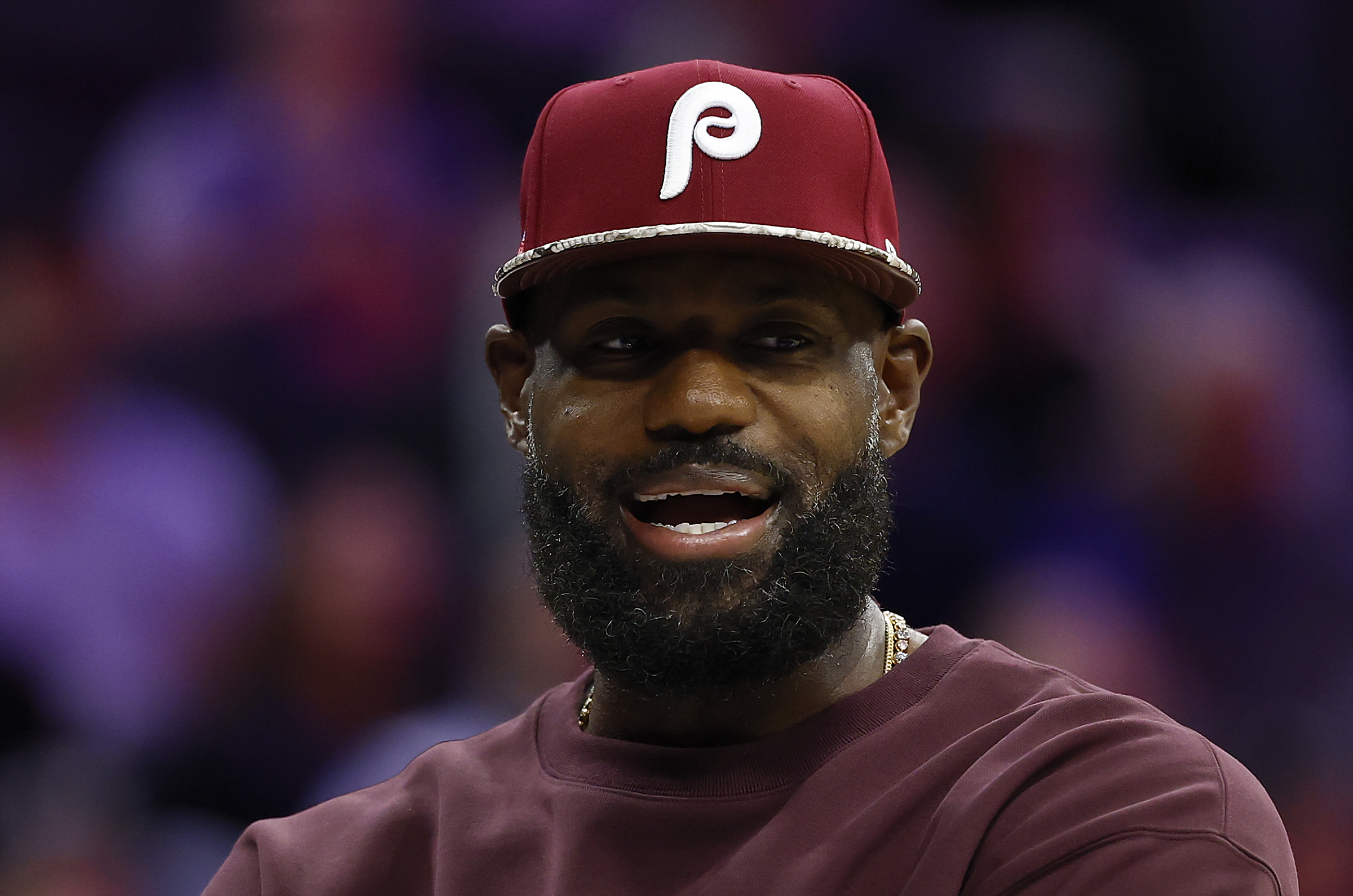
Philadelphia’s hopes for a winner this year might be down to LeBron James and the 76ers.Yong Kim / Staff Photographer
Hopelessness. That’s the prevailing feeling here. The Eagles’ defense might improve enough that they can slog through the rest of the season into the playoffs, dragging the offense along. The Flyers could make a franchise-altering trade or, in theory, straighten things out without one. But at the moment, there’s no sign of either of those happy outcomes on the horizon. There seems to be just the same predictable tedium until Oct. 20, when the 76ers open their regular season. Help us, LeBron. Hey, entertain us, at least.
Although the Flyers had plenty of cap space to bring in Michael Bunting, adding the forward to the roster meant a spot needed to open up.
Not wanting a young player to watch from the press box, forward Alex Bump was loaned to Lehigh Valley of the American Hockey League on Wednesday. Still on his entry-level contract, he did not need to clear waivers.
The 22-year-old left wing played in the Flyers’ first three games of the season and did not register a point while averaging a little over 12 minutes. A known goal scorer, Bump started the season on the third line with Noah Cates and Matvei Michkov, moved up to the second line with Trevor Zegras and Owen Tippett in Game 2, but was dropped to the fourth line with Noel Acciari and Sean Couturier in Saturday’s loss to the Carolina Hurricanes.
Although he skated on the second power-play unit in all three games, when Denver Barkey returned to the lineup Monday against the Tampa Bay Lightning, Bump was a healthy scratch. According to coach Rick Tocchet, it’s not merely a numbers game for the forward.
“I think for him [it’s] confidence. The first couple of games, I had him up and tried to get him up in the lineup, and I think when he thinks so much, that’s when he gets in trouble. So, we’ve got to build his game back. He’s a young guy. That’s really what it comes down [to] with him,” Tocchet said Tuesday after the Flyers’ practice at Benchmark International Arena in Tampa.
“Get him in the lineup, in the right situation where he can thrive, but he also has to be able to do the things we’re asking to be in the right spots. Like all young guys, you want them to be creative, but they also have to be, if you’re F3, you can’t just dive in, you have to be that F3. You can’t just play the game yourself — I’m not saying he’s doing that; I’m just saying in general, and I’m not blaming young guys because veterans are doing the same thing — [but] we need to be counted on to be in certain spots at certain times.”
The Flyers’ acquisition of Michael Bunting made Alex Bump the odd man out.Julio Cortez
Bump made his NHL debut last season on March 7, scoring his first career goal against the Penguins in Pittsburgh. The Minnesota native notched five goals and nine points in 17 regular-season games and two goals in six playoff contests.
Through the first three games this season, the offensive-minded Bump ranked third in hits per 60 (11.53) and first in takeaways per 60 (3.29). According to Natural Stat Trick, Bump was not on the ice for a five-on-five goal for or against, had the second-best Corsi For percentage (34.62%) among forwards, and was tied with Christian Dvorak for the highest individual expected goals (0.6) thanks to his six individual shot attempts, including three from high-danger areas.
TAMPA, Fla. ― Needing a jolt to their lineup, the Flyers went outside the organization — kind of — to bring in a sparkplug.
0n Tuesday the Flyers inked veteran forward Michael Bunting to a one-year, $1.2 million contract.
A biting left winger who plays on the edge and is known for his high-compete level and scoring touch, Bunting is a familiar face to coach Rick Tocchet and Christian Dvorak from Arizona, assistant coach Todd Reirden and forward Noel Acciari from their days in Pittsburgh, and goalie Joseph Woll in Toronto.
Selected in the fourth round of the 2014 NHL draft by the Arizona Coyotes, Bunting played 26 games under Tocchet across two seasons, notching 11 goals and 14 points. Since then, he’s played on five teams, including the Maple Leafs, where he had his best seasons.
Still considered a rookie due to the small number of games he had played when he went home — he is a native of Scarborough, Ontario, which is part of Toronto — Bunting was a finalist for the Calder Trophy as the NHL’s top rookie in 2022. The then-26-year-old led all rookies with 63 points across 79 games. He tied Trevor Zegras and Lucas Raymond for second in rookie goals with 23 and bested Zegras by two points for the rookie scoring title. Bunting notched 23 goals again in 2023 with the Leafs.
Michael Bunting (front) got his NHL start under Rick Tocchet with the Arizona Coyotes in 2018-19.David Zalubowski
Last season, he racked up 13 goals and 31 points in 61 games with the Nashville Predators before being acquired by the Dallas Stars for a 2026 third-round pick the day before the trade deadline. He played 13 regular-season and one playoff game with the Stars as he dealt with a groin injury.
The Flyers hope the 31-year-old Bunting can provide a spark to their anemic offense. A competitor known to drive to the net and muck it up in front, he has 252 points (109 goals, 143 assists) in 418 career games. Per 82 games, Bunting has averaged 21 goals, 49 points, 67 penalty minutes, and 165 shots on goal for his career.
Bunting could be an alternative to Carl Grundström at left wing on the fourth line to start. Alex Bump, who has been moved around the lineup and was a healthy scratch Monday night, might benefit from more regular game time and an expanded role in the American Hockey League. Neither he nor Grundström (already cleared) would require waivers if optioned to Lehigh Valley to make room for Bunting.
This is a developing story. Please check back for further updates.
TAMPA, Fla. ― There is a video clip from Monday night’s 4-1 loss to the Tampa Bay Lightning circulating online.
As a Flyers power play ends early in the third period, forwards Matvei Michkov and Trevor Zegras get off as Travis Konecny skates down the left side and drops the puck to Cam York. Konecny then skates to the bench himself along with Jamie Drysdale. York has no way to advance the puck as the Lightning bear down with five skaters in front of him.
The defenseman blindly tried to go back to Porter Martone, who had hopped on when the forwards went to the bench because, for a second or two, they were the only Flyers on the ice. Travis Sanheim didn’t hop on immediately when Drysdale went to the bench. Only one player, Martone, went on for Zegras and Michkov. And Konecny was just getting to the bench when Gage Goncalves stole the puck.
Martone was the only one back when the Lightning crashed the net and got two good shots on goalie Dan Vladař, who made two even better saves.
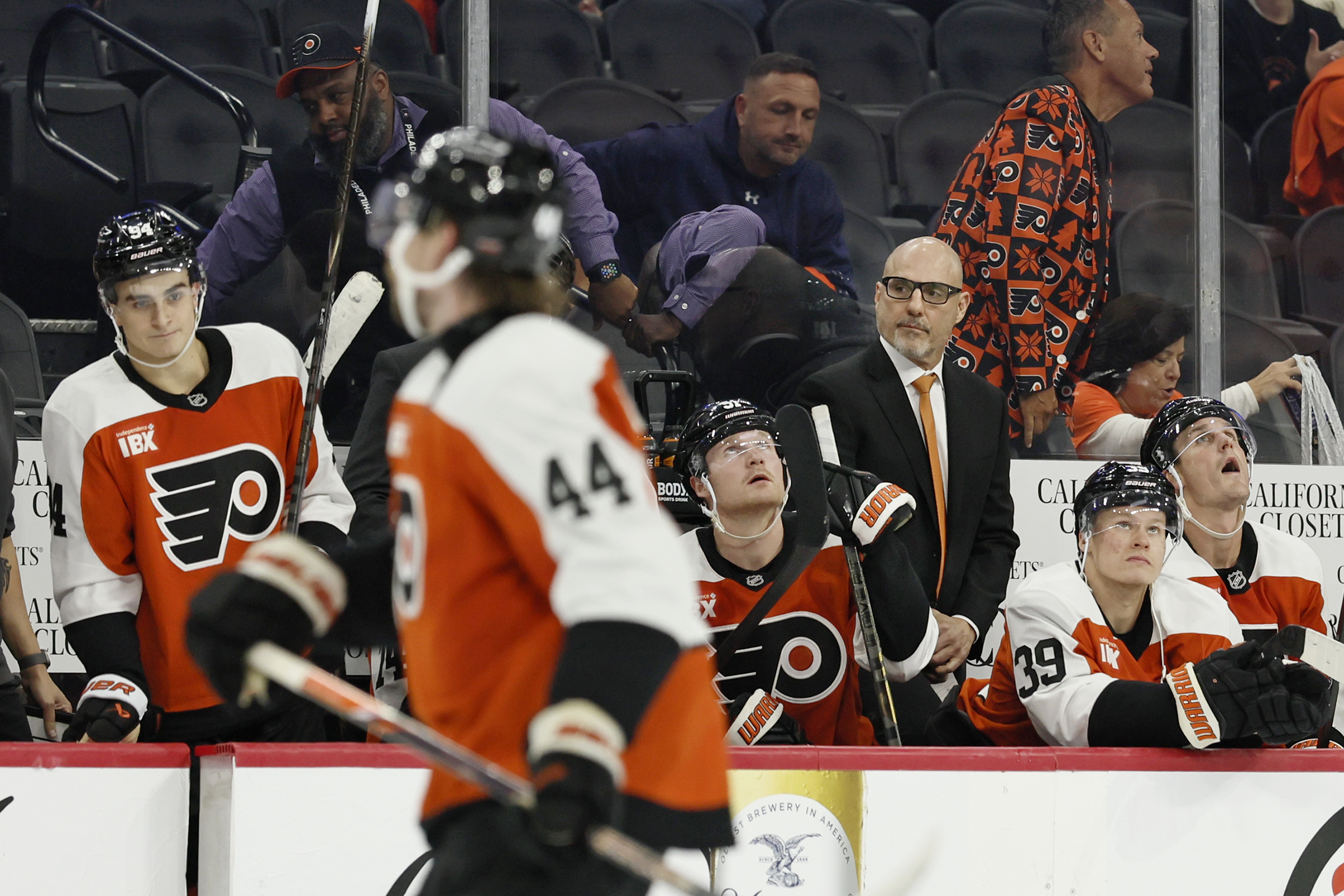
That 14-second snafu really encapsulates the Flyers’ issues these days. Is it a mental block now for the guys in orange and black?
“It’s a game of mental toughness and confidence,” coach Rick Tocchet said Tuesday. “So obviously, we’ve got to give the players confidence, but also there’s got to be a mental toughness in the sense [that] if you’re getting beat up the ice consistently, or you’re getting beat to a puck, that’s where you know, are you working hard enough?”
Work was evidently on everyone’s mind as the Flyers practiced for more than 70 minutes at Benchmark International Arena in Tampa, Fla. on Tuesday.
During a full skate, with only Rasmus Ristolainen missing — he came on toward the end to get some solo work in — the Flyers went through several drills. The session ranged from running breakouts to five-on-five compete drills, to a small-area game below the hash marks where it started two-on-two and progressed to a three-on-two.
One drill had the forward line stay on, but get off for a line change as soon as the other team took the puck back.
“I think it all starts with work,” Drysdale said Tuesday. “And even when stuff hits the fan, like a cute play or a give-up or not moving your feet isn’t going to be what fixes it. Even if you mess up or make a bad pass or whatnot, it’s go get it back. [It’s] have that mindset and win the battle, or even harder, to do it again.
“And yeah, I think it feels a little bit like we’re doing that, and then we’re just accepting the pressure back again once we miss that pass or miss that whatever, rather than continuing pressure. So we’re going to click. We just got to work harder, work for it. The only way we’re going to get out of this is through work. At the end of the day, it’s not Xs and Os. I don’t think it’s not. It’s gonna be hard.”
Looking for a spark, the Flyers signed veteran forward Michael Bunting on Tuesday.John Amis
The practice was long and arduous, as it should be when a team has shown little effort across its four straight losses to start the season. Assistant coach Jay Varady sounded like he was losing his voice as it wore on. Martone wasn’t happy with a drill; he slammed his stick. So did Michkov, who opted to switch it out for a new one.
Tyson Foerster bowled over Denver Barkey, who returned from a lower-body injury on Monday, minutes after he fired off a one-timer on a pass by Martone. Christian Dvorak put a puck into a teammate’s skate on a breakout drill, and the play was blown dead. And Owen Tippett blew past everyone as he drove to the net and beat Vladař.
“It’s pretty easy to get down and start worrying and thinking about everything. And I think if you get in a bad mindset, it can kind of go worse before it gets better,” Tippett said Tuesday. “I think we know what we have to do and what we have in here, and we just can’t turn on each other. And I think everyone’s spirits are pretty good. We know we’re in it together, and the only way we’re going to get out of it is with one another.”
“Lean on each other and hold each other accountable. Sometimes there’s got to be tough love, and it is what it is,” Tippett added.
“If a guy you’ve known for a long enough time, if you say something corrective or something to get them going, they should take it in the right way. If not, sit down, have a beer, and talk about it. I think it’s about leaning on each other and not turning on each other, holding each other accountable, and making sure we’re all going the right direction.”
Breakaways
Zegras was holding his left arm awkwardly after doing the two-on-two progression drill. It occurred toward the end of practice, and he was seen speaking to the trainer before sitting on the bench for the last few minutes. Zegras was one of the first guys off. Tocchet did not see what happened and did not have an update.
The Flyers are fresh off a 98-point season and an appearance in the second round of the playoffs, but ESPN apparently isn’t impressed.
The network released its list predicting the top 100 NHL players for the 2026-27 season on Tuesday, and only one Flyer made the cut — and barely at that — as Trevor Zegras checked in at No. 99. The list was compiled using ratings sent in by ESPN broadcasters, analysts, reporters, and editors predicting how good players will be this season as compared with their peers.
The Tampa Bay Lightning, Dallas Stars, and Montreal Canadiens led the way with six players each, while the Calgary Flames, Seattle Kraken, and Vancouver Canucks were the only teams not to be represented.
Zegras’ inclusion comes after a huge bounceback season for the former viral sensation. The 25-year-old rediscovered his love for the game and posted career highs in goals (26) and points (67) in his first season in Philly following a trade from Anaheim. Zegras, who was a restricted free agent, then signed a four-year, $36.5 million contract extension in July.
While Zegras made the cut, goalie Dan Vladař, defenseman Travis Sanheim, and winger Travis Konecny notably did not. Vladař, who finished sixth in Vezina Trophy voting last season for the league’s best goaltender, was not one of the eight goalies to make the cut, despite ranking third among goalies with 40 games played in goals-against average (2.42) and eighth in save percentage (.906) a year ago.
Flyers goaltender Dan Vladař finished sixth last season in Vezina Trophy voting.
Sanheim, the team’s top defenseman and a regular for Canada at the Olympics, and Konecny, the team’s top scorer in six of the past seven seasons, were also players who could have deserved inclusion. But while these might seem like snubs, maybe ESPN was on to something given the Flyers’ winless start.
In terms of the top 10, Connor McDavid, Nathan MacKinnon, and Nikita Kucherov went 1,2,3, as expected, while 20-year-old sensation Macklin Celebrini checked in at No. 4 following his 115-point sophomore campaign. They were followed in order by Cale Makar, Leon Draisaitl, Zach Werenski, David Pastrňák, Quinn Hughes, and Kirill Kaprizov.
Some other notable ranks included Auston Matthews (No. 11), Matthew Schaefer (16), Sidney Crosby (23), Leo Carlsson (36), Connor Bedard (43), Cutter Gauthier (65), Dylan Larkin (69), Alex Ovechkin (78), and Evgeni Malkin (100).
Tocchet was asked why: “It’s hard. It’s hard to do it consistently. So, starts with me. This team is way too comfortable, and it did not compete tonight.”
Joseph Woll has a .929 save percentage across his two starts, and, after a rusty performance in the season opener, Dan Vladař posted a .914 save percentage on Monday, stopping 32 of 35 shots.
The goalies are doing their part to hold everything together but, unfortunately, aren’t getting enough help.
“End of the day, it doesn’t matter. We lost,” Vladař said when asked about his game. “I think overall, as a group, we’ve got to be better. Obviously, starts with me and Joe. We’ve got to be even more dialed in now. Hopefully we are going to turn this thing around because obviously this is not fun and this is not us.”
It may not be fun for the goalies, but they are not to blame when the team is averaging 19 shots a game and allowing 39.5, a slight tick down from over 40 entering Monday’s game. Through their four games, the Flyers are allowing the most shots on goal, almost seven more than the next team, and are averaging the second-fewest offensively.
According to Natural Stat Trick, Vladař faced 13 high-danger shots from the Lightning, with 11 coming at five-on-five, and seven rebound shots across all strengths. By comparison, Lightning goalie Andrei Vasilevskiy faced one high-danger shot, zero rebound shots, and eight from low-danger areas.
Compared to opening night, Vladař moved incredibly well and tracked the puck. His first save was not easy, but he kicked out the pad on a Jake Guentzel backhand shot from atop the crease on a power play.
He also made an authoritative glove save on Brandon Hagel, stopped Gage Goncalves’ redirect attempt on the doorstep, made a stretch save on Guentzel during a two-on-one, and made two diving saves on shots by Max Crozier and Pontus Holmberg in the third period.
“Our game is not at the level that it should be. So, starts with us goalies, and [we’re] the backbone of the team, so we’ve got to be better, and then hopefully we can bring even more confidence for the players in front of us,” Vladař said.
“And then they can just focus on offense because we have a lot of talent in the front and lots of really good guys that want to win, but we just got to find a way to start winning.”
18 feet
During a John Tortorella-like, 62-second postgame interview, Tocchet said his team had “not enough compete” and looked “too comfortable.”
When asked why there is such a disconnect, especially heading up ice, Tocchet replied: “Eighteen-foot pass. … When you’re an NHL player, you’ve got to execute some passes. So we got to keep continuing to work on that.”
The Flyers have curiously struggled to string basic passes together this season.Jason Behnken
The Flyers’ passing is a mess. Several times they looked like they were either sustaining pressure or ready to set up a play, but instead the passes were either intercepted or missed connecting.
In the first minute and 39 seconds of the game, the Flyers iced the puck twice, with the second coming after a Travis Sanheim pass went by its intended target. On a penalty kill, Tyson Foerster went for a pass that didn’t work instead of shooting.
Despite the roster being the same — Noel Acciari was the only new forward skating against the Lightning — they don’t have the same cohesiveness as last season.
One of the most egregious miscues came off the rush when Travis Konecny opted to drop the puck to Jamie Drysdale, who didn’t appear prepared to receive it. Typically, the trailer calls for the drop pass. The Lightning went the other way on an odd-man rush, forcing Vladař to make that stretch save on Guentzel. A few minutes later, Matvei Michkov played with the puck too much just inside the Tampa blue line and lost it.
In the second period, 2:35 after the Flyers made it 2-1, Porter Martone drew the Flyers’ first power play. But on the man advantage, Michkov gave the puck away; Konecny lost it along the end boards; Foerster had a giveaway that the Lightning took the other way; and Trevor Zegras dumped the puck in, but the Flyers failed to get it back.
That Flyers power play had zero shot attempts and, across a total of six minutes on the night, the man-advantage generated seven shot attempts and three shots on goal.
“I think going back to just executing,” said forward Denver Barkey, who made his season debut. “Obviously, yeah, we look a little disconnected, but I think it just comes back to being ready from the puck drop and executing the game plan that the coaches have in place.
“And figuring out amongst ourselves too; talking to your linemates, talking to the D, just communicating, working through things. It’s a long season. We’re only four games in, but definitely got to start figuring some things out here.”
The third period didn’t get much better as Cam York, who seemed to struggle all night alongside his old defensive partner Sanheim, with Rasmus Ristolainen out due to injury, lost the puck to Goncalves, who skated in for a snap shot Vladař had to stop. David Jiříček and Zegras had a miscommunication in the neutral zone, and later on, Zegras tried to center the puck to Foerster, but it didn’t work.
For the fourth straight game, Tocchet tweaked his lines — albeit Monday was because Barkey returned from a lower-body injury. And for the fourth straight game, they didn’t generate much.
Natural Stat Trick tracked every line that played more than a minute together as allowing more shot attempts than they took. The line of Michkov, Konecny, and Christian Dvorak had two shots on goal and gave up seven across a little more than seven minutes. They did not create a high-danger chance, while the Lightning had five when they were on the ice. The Bolts outchanced the Dvorak line, 9-2.
“Honestly, no. I mean, we’re all smart hockey players. We can play with anyone. We play in the NHL for a reason, and the coaches got to do what they got to do to get us ready and make lines. And it’s for us to be able to adjust on the fly,” said Martone, who easily had his best game of the season.
“So, I think this is [more] the blame’s on us right now. We’ve got to be better. We’ve got to show up, and we’ve got to do what we got to do.”