Category: Music

  • Decades after Tupac’s murder, a talkative gang member is convicted

    Decades after Tupac’s murder, a talkative gang member is convicted

    A jury in Las Vegas on Monday found a man guilty of orchestrating the 1996 murder of Tupac Shakur, delivering a conviction nearly 30 years after one of hip-hop’s most notorious killings.

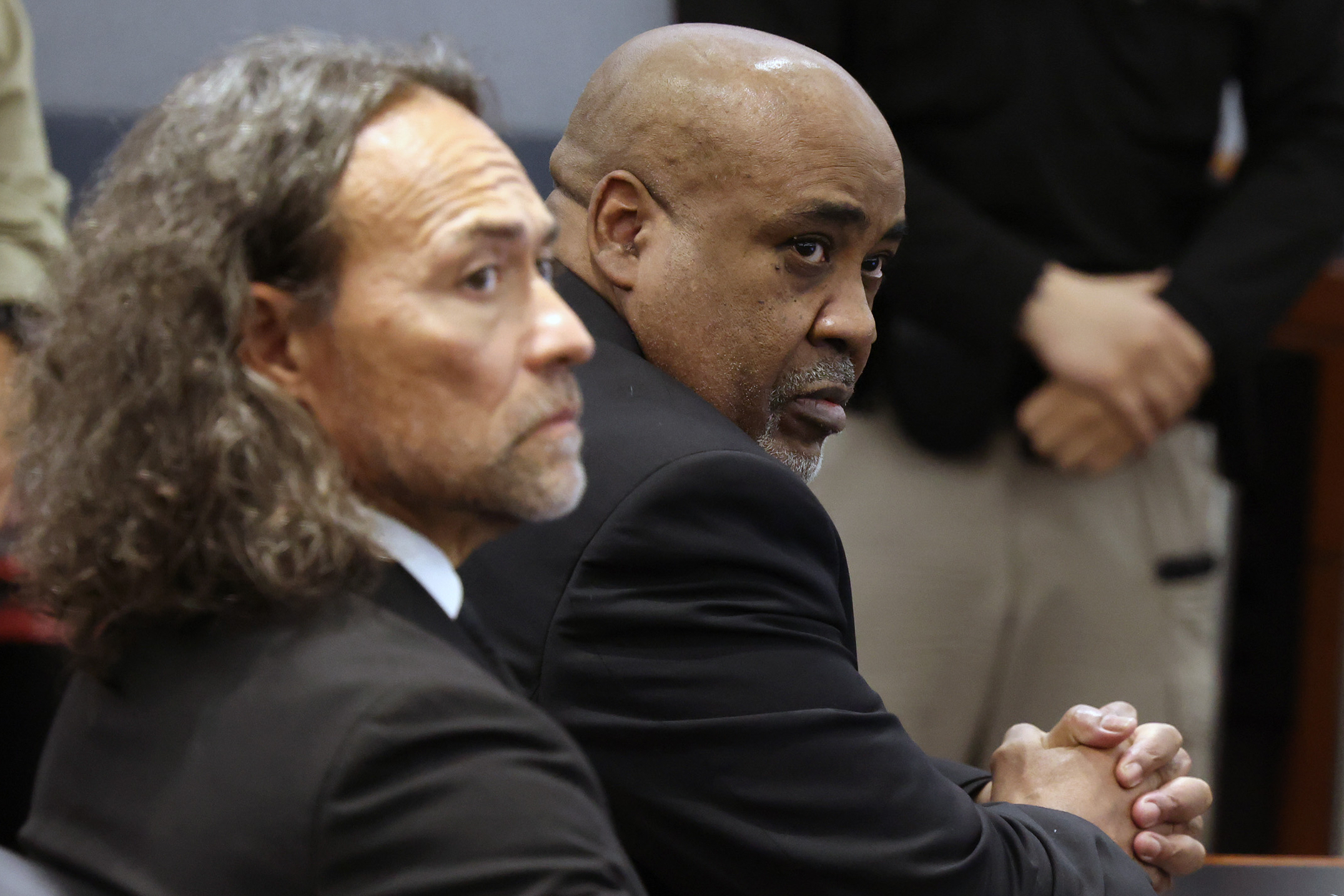
    Duane Keith Davis, 63, was accused of obtaining the gun used in the shooting and pursuing Shakur during a gang war that had become entangled with a feud between East Coast and West Coast hip-hop labels.

    After about three hours of deliberations, the 12 jurors announced they had found Davis guilty of first-degree murder. Members of Shakur’s family who were seated in the courtroom embraced and passed around tissues to wipe away tears.

    Straight-faced but agitated after the verdict, Davis addressed the judge to promise he would appeal. He is scheduled to receive his sentence — up to life in prison — on Oct. 13.

    In a three-week trial, prosecutors depicted Davis as a shot caller for a group of Crips from Compton, California, who were out for revenge on the night of Sept. 7, 1996, when they happened to encounter Shakur in a black BMW stopped at a traffic light. Shakur, who was 25 and in the prime of his career, was shot four times and died at a hospital days later.

    A socially conscious poet who was on his way to becoming a cultural icon, Shakur became only more popular as he was increasingly associated with violence and gang culture. His death turned him into a hip-hop martyr, joined only six months later by Christopher Wallace, the rapper known as the Notorious B.I.G., a onetime friend who turned into a bitter rival.

    After Wallace was gunned down in Los Angeles in March 1997, the shootings became twin tragedies that had never led to a conviction, until now.

    For years, the Shakur case had languished as important evidence, including the murder weapon, remained missing and key witnesses — including Shakur’s label boss, Marion Knight, known as Suge — refused to cooperate. The standstill turned the case into fodder for true-crime enthusiasts and conspiracy theorists.

    Then, in 2008, Davis began speaking to the police in an effort to avoid drug charges that could have put him in prison for life. Law enforcement considered him untouchable because he had shared the information under an agreement that he could not be charged based on it.

    But prosecutors changed their calculation once Davis began repeatedly addressing the shooting publicly — in podcasts, a documentary and a 2019 memoir.

    “I’m one of the only living eyewitnesses to Tupac’s killing,” read the introduction to the memoir, “Compton Street Legend.”

    Under the mistaken belief that he was fully immune from prosecution, Davis effectively handed prosecutors the evidence they needed to bring a case.

    After he was indicted on a charge of murder in 2023, Davis, who is known by the nickname Keffe D, asserted that the statements in his memoir and in interviews were fictional stories invented to turn a profit on the hip-hop media circuit.

    “Mr. Davis is attempting to escape responsibility for a crime everybody knows he committed — even him,” Marc DiGiacomo, a prosecutor in the case, said in court Monday, “and he admits to it seven or eight times over the course of 30 years.”

    Throughout the trial, Michael Sanft, Davis’ lawyer, argued that the prosecution’s case was based on presumptions rather than hard facts, and that it was absurd to rely on Davis’ own statements, which were riddled with inaccuracies and inconsistencies.

    “What facts do they have to even put Keffe D in a car in Las Vegas on Sept. 7, 1996? What facts?” he said at the trial.

    The two weeks of testimony at Clark County District Court chronicled a story that had long been told in books, podcasts and true-crime specials, but never at a murder trial.

    Prosecutors painted a picture of simmering gang tensions in Compton between local sets of Bloods and Crips, the temperature increasing by their entanglement with the bicoastal rap beef of the 1990s.

    The Bloods were aligned with Shakur and Knight’s Los Angeles-based Death Row Records, prosecutors said, while the Crips were hired to provide security when New York’s Bad Boy Records, run by Sean Combs, traveled out West.

    In 1996, two gang skirmishes sent hostilities boiling over.

    There was a brawl over a Death Row chain between young Crips and Bloods at a Southern California mall. Then, in September, both sides converged in Las Vegas for a Mike Tyson prizefight. After the fight, Orlando Anderson, a member of the Crips who had been present at the mall, received a beating by a group of men that sent him to a hospital.

    Among the assailants, identified to jurors on hotel security footage at the MGM Grand, were Shakur and Knight.

    According to Davis’ account to the police and in interviews, he obtained a .40-caliber Glock from an associate and set out with a group of Crips to find Shakur and his boss. “Them jumping on my nephew gave us the ultimate green light,” his memoir read.

    Driving around Las Vegas in a white Cadillac, the group spotted Shakur on the road, visible in the passenger’s seat of a black BMW driven by Knight.

    In an interview with law enforcement in 2009, Davis described how his associate behind the wheel made a U-turn to pull up alongside Shakur and Knight’s vehicle.

    A woman in a car nearby, Ingrid Stokes, testified that a hail of gunfire erupted. “All hell broke loose,” she told jurors.

    The BMW was riddled with bullet holes, the tarmac glinting with spent cartridge cases. Knight had been grazed in the head; Shakur, in far worse condition, was loaded into an ambulance.

    Garry Dale, a former police officer who rode with Shakur on the way to the hospital, testified that he had asked him to divulge the names of the assailants but that Shakur had brushed him off.

    “We’ll take care of it,” Shakur replied, according to Dale.

    Word soon spread in Compton that Anderson had been the person to open fire in retaliation for the beating at the MGM Grand, but other accounts suggest it was Deandrae Smith, who had been sitting next to him in the back seat. Davis is the only person still alive who was said to have been in the white Cadillac.

    Although Davis did not testify, the prosecution centered its case on his own words, played for the jury through audio of interviews with police officers, documentary filmmakers and YouTube personalities.

    Prosecutors acknowledged that his statements could be inconsistent, and they did not embrace everything as true. His repeated allegation that Combs had offered him $1 million to kill Shakur and Knight, which the music mogul has vehemently denied, was left on the far periphery of the case.

    In total, the jury heard more than eight hours of Davis’ voice, according to prosecutors.

    “I didn’t tell nobody, nothing, that we killed Tupac,” Davis said in 2009, when he was speaking to the police.

    He added: “I was gonna keep this secret.”

    This article originally appeared in The New York Times.
  • Pearl Jam will release its Philly ‘Ten’ concert on vinyl

    Pearl Jam will release its Philly ‘Ten’ concert on vinyl

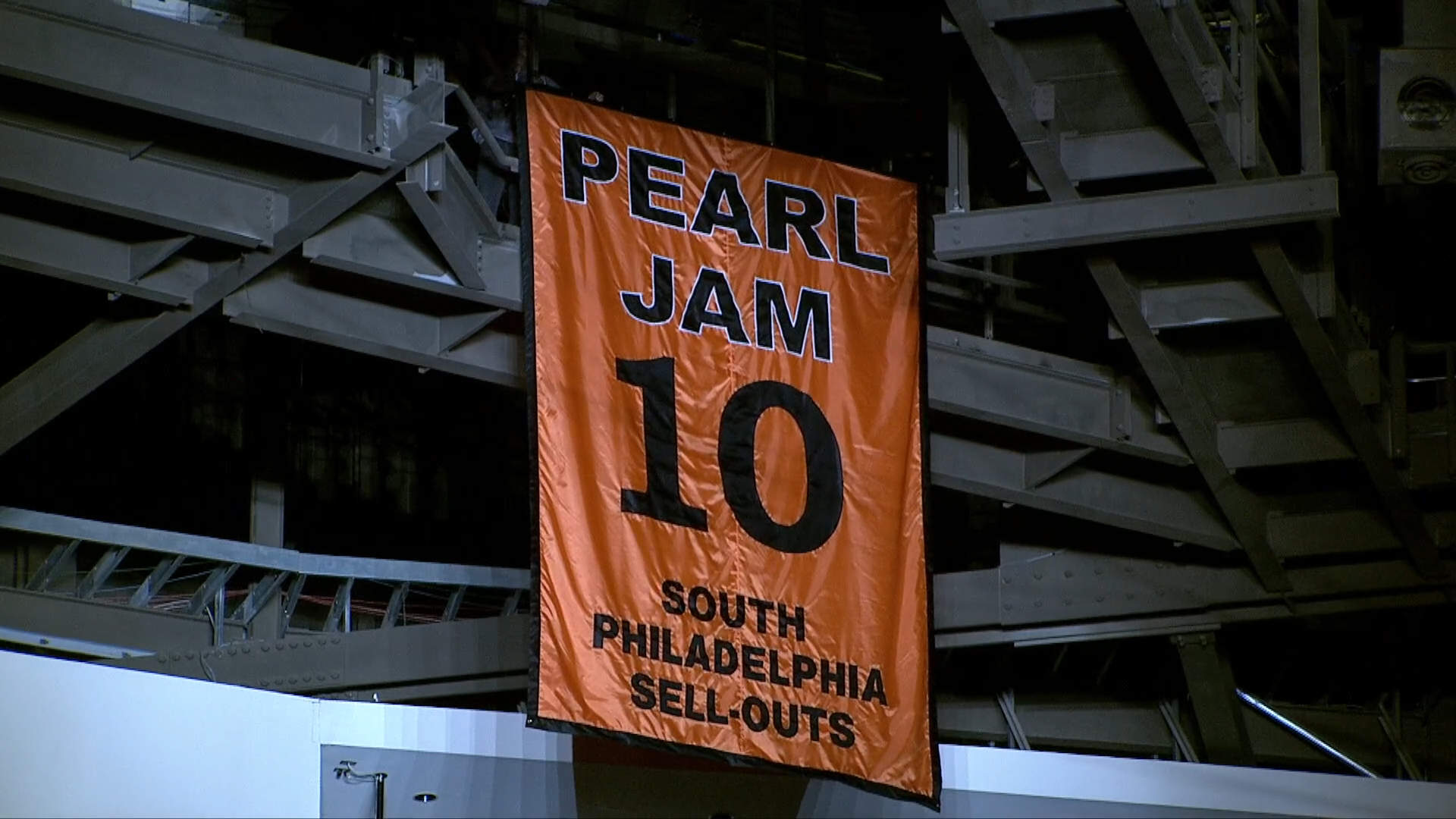
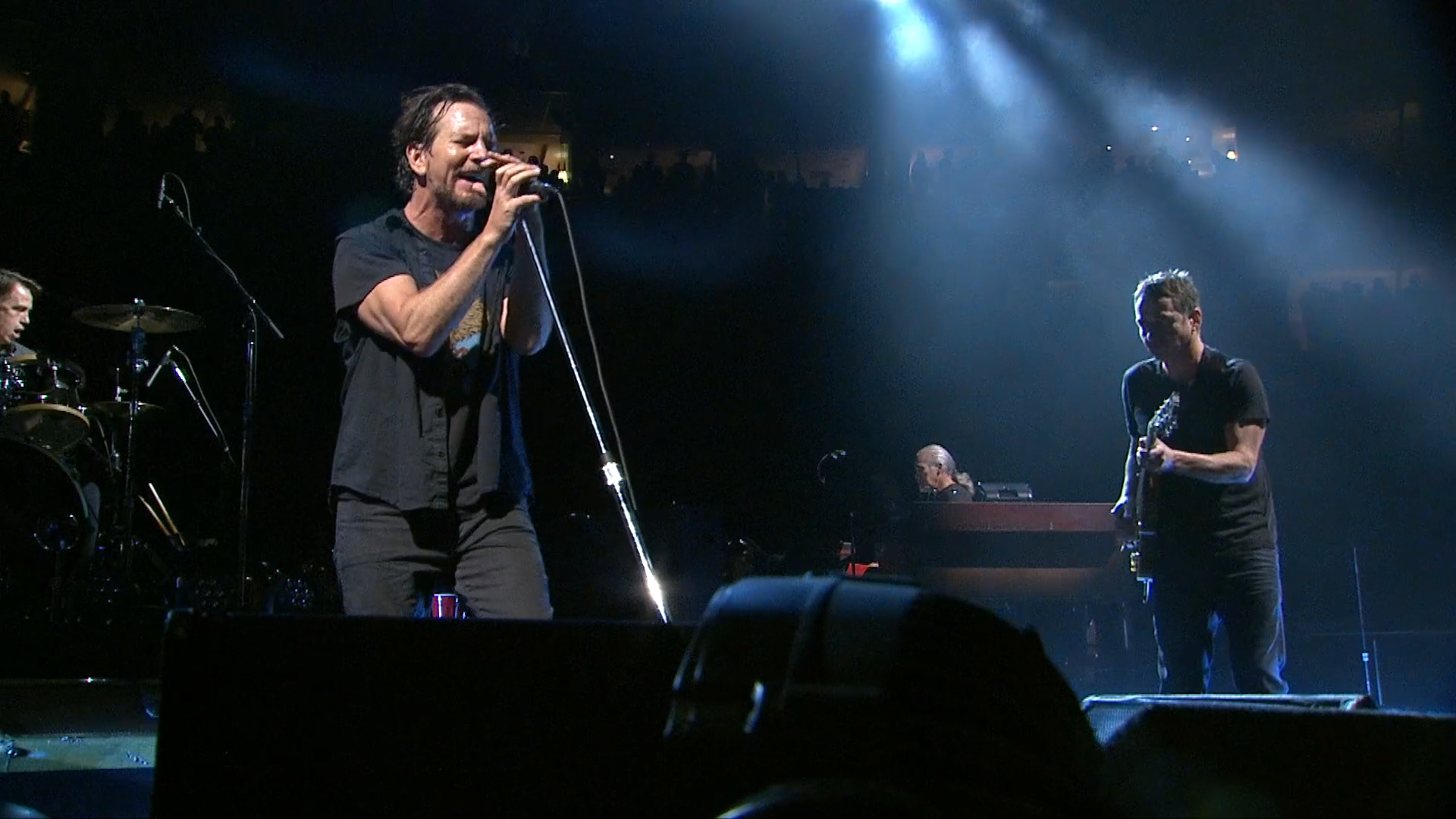
    Pearl Jam’s concert at the Wells Fargo Center in April 2016 is legendary among fans because the band played its 1991 debut album Ten in its entirety.

    The performance happened after Eddie Vedder was struck by the idea during the sound check for the show. The venue had surprised him by hanging a Flyers-style banner made by Native Colors Flag Co. in Haddonfield marking the band’s 10th sold-out performance in a South Philly arena.

    “I saw that number, and it was like, ‘I think we gotta do it,’ ” Vedder said with a smile that night, after the band had finished playing Ten from start to finish for only the second time in its career.

    Now, Pearl Jam is releasing Ten Live, a three-sided vinyl LP that captures live versions of the 13 songs on the album, which includes songs that have long been centerpieces of the band’s repertoire, such as “Even Flow,” “Alive,” and “Jeremy.”

    The live album recorded April 29, 2016, in the building that is now known as Xfinity Mobile Arena comes out Nov. 27. That’s Record Store Day Black Friday, the holiday season day on which music retailers put limited-edition vinyl exclusives on sale in shops in Philly and around the U.S.

    In 2020, Pearl Jam made a video stream of the entire 32-song 2016 concert available through Philly-based music platform nugs.net. That release was timed to promote PJ Votes, a voter mobilization initiative ahead of the 2020 presidential election.

    At the time, Pearl Jam guitarists Stone Gossard and Mike McCready spoke to The Inquirer about the band’s special relationship with Philadelphia. That dates back to a 1991 show at J.C. Dobbs on South Street (now Nikki Lopez), and the final four shows at the Spectrum in 2009 before that venue was demolished the next year.

    “I remember playing Dobbs, and it was the strangest stage I’ve ever been on,” McCready recalled. An oversize column on one side of the stage made it difficult to see an entire band at the defunct South Street club. “I’ll never forget that.”

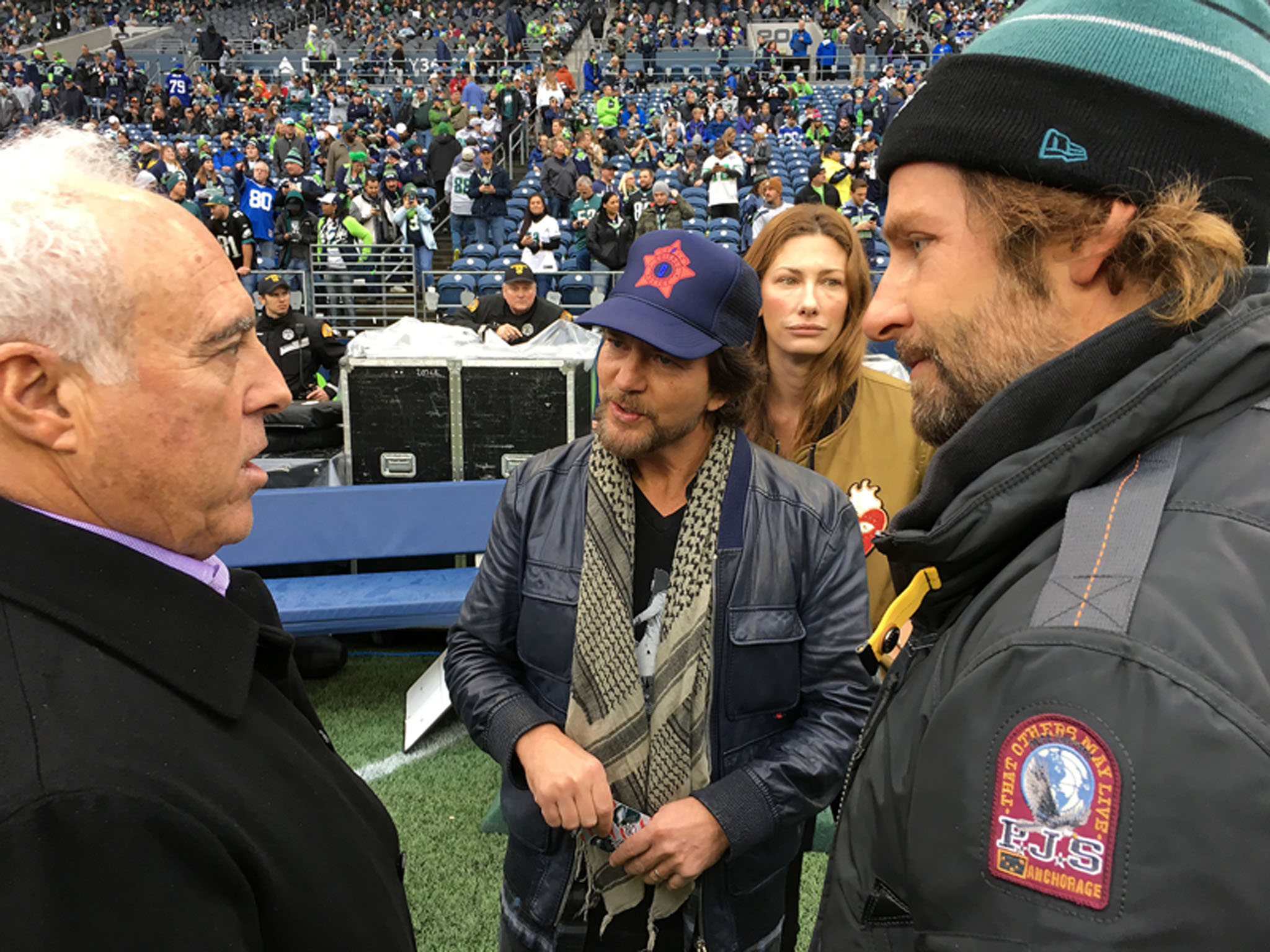
    Eagles’ owner Jeffrey Lurie (left) talks with Eddie Vedder (center) of Pearl Jam, and Bradley Cooper (right) before the Philadelphia Eagles play the Seattle Seahawks in Seattle, on Nov. 20, 2016. David Maialetti / Staff Photographer

    During the October 2009 Spectrum shows, which ended on Halloween with the band dressing up like Devo and playing “Whip It,” McCready said “in four nights, we tried to play every song we’ve ever written.”

    “There’s something about Philadelphia,” Vedder said during the Ten show.

    “It seems tough, and intense. I get the City of Brotherly Love. But I also know brothers beat the [stuffing] out of each other! So to see all these intense people … release themselves and open up and celebrate and seem to love each other, it’s really powerful.”

    The Pearl Jam banner at the Wells Fargo Center on April 29, 2016.nugs.tv

    At one point in the show, Vedder looked up to see the Bruce Springsteen banner in the rafters with a number 56 much larger than Pearl Jam’s 10. He then did an impression of the Boss: “Hey Ed, I hear you’ve got a little banner up there. You’ve got some catchin’ up to do. Call me in 20 years.”

    In 2020, Gossard spoke about the bond between Pearl Jam and fans in Philly, and also Camden where the band has played many times at the venue now known as the Freedom Mortgage Pavilion.

    ”I think there really is a tangible difference in the level of engagement. I mean, since we started playing Philadelphia and over into New Jersey, it’s … insane. Things are generally sort of twice as big there.

    “Some of it has to do with the longevity, I think. There’s a consistency with talking to fans, and then having them turn their kids on to the music. It’s magical, and I don’t want to know too much about it. I just want to honor it. It feels real.”

    A version of the 2016 Ten show, which includes covers of Pink Floyd, Wayne Cochran, the Dead Boys, Neil Young, and the Who, can be streamed on YouTube. And a pro-shot video of the concert can be rented or purchased on PearlJam.com, where the Ten Live vinyl can be preordered.

    Eddie Vedder and Pearl Jam perform during their Dark Matter World Tour stop at the Wells Fargo Center in Philadelphia on Saturday, September 7, 2024.Elizabeth Robertson / Staff Photographer
  • Sheri Herman, pioneering internet and cable TV executive, has died at 71

    Sheri Herman, pioneering internet and cable TV executive, has died at 71

    Sheri Herman, 71, formerly of Philadelphia, pioneering internet and cable TV executive, former senior vice president of content and business development for E! Entertainment Television, former president of internet startup American Cybercast, founder of SLH Communications, tech prophet, and dancer, died Thursday, Aug. 6, of heart failure at her home in Telogia, Fla., about 35 miles west of Tallahassee.

    A magna cum laude communications graduate at Temple University, Ms. Herman went to New York after college to produce commercials for an ad agency. Over the next 27 years, she relocated to Denver and Los Angeles, successfully marketed, programmed, and developed dozens of TV networks and online companies, and pioneered the integration of TV and the emerging internet.

    She was “mesmerized” by Apple cofounder Steve Jobs, her sister, Nadine, said, and predicted in the 1970s that one personal device would eventually take pictures, send messages, stream content, and still make phone calls. Jarl Mohn, former president and chief executive officer at E!, called Ms. Herman “a pioneer in incorporating new technologies and branding in entertainment.”

    He said: “She also brought passion and conviction to everything she worked on.”

    Ms. Herman founded her own firm, SLH Communications, in 1999. Courtesy of the family

    Ms. Herman helped turn the startup Movietime channel into E! Entertainment Television in 1990 and told the Los Angeles Times: “We’re going to totally reposition the network. You won’t recognize us.” Over the next few years, E! grew its subscriber base from two million to 55 million, and Ms. Herman won industry awards for her marketing campaigns.

    At American Cybercast, she championed The Spot, a groundbreaking interactive online reality show, in 1995, and told the Los Angeles Times in 1996: “We’re creating a new medium, but we’re kind of a cross between publishing and broadcasting in that we’re going to be advertising driven. If we were a movie studio, we’d be Miramax with a little more edge.”

    Russell Collins, founder of American Cybercast, said: “Sheri Herman was nothing if not fearless. Her determination was boundless and fierce.”

    Ms. Herman was especially effective at fundraising for projects and combining online content with ads and product placement. She trailblazed new internet publishing formats that included text, photos, and videos, and predicted the collision of TV and internet content. In 1996, she told Variety: “Eyeballs will move from TV to PC.”

    Ms. Herman (left) oversaw the development of the Discovery Channel, the Fashion Channel, QVC, and other networks.Courtesy of the family

    As director of programming for the United Cable Television Corp. in the mid-1980s, Ms. Herman collaborated with dozens of networks and oversaw the development of the Discovery Channel, the Fashion Channel, QVC, and other networks.

    As senior vice president of programming and production for the Access Entertainment Network in the late 1990s, she reintroduced popular music videos and, according to Variety in 1998, gained six million subscribers in the network’s first three months of existence.

    She founded her own firm, SLH Communications, in 1999 and contracted with TV Guide, Barnes & Noble, Hilton Hotels, musicians Quincy Jones and Jon Bon Jovi, and other entertainers and businesses. In New York, in the 1980s, she worked with cosmetics mogul Estée Lauder.

    Temple officials noted her “influential career” in a tribute, and longtime friend and colleague Martin Lewis said: “She had a relentless thirst for charting new paths forward. She proselytized new media, new approaches, new everything.”

    Ms. Herman (right) enjoyed time with her family.Courtesy of the family

    In 2007, Ms. Herman reduced her daily responsibilities after being seriously injured in an auto accident in California. She moved to Florida in 2021.

    Lewis said: “She was inventive, creative, exhilarating.”

    Sheri Lynn Herman was born May 21, 1955, in Philadelphia. She grew up in Overbrook Park with her parents and older sister, and graduated from Philadelphia High School for Girls.

    Her family featured several singers, and she spent many holidays singing songs and playing guitar around the piano at her grandparents’ home in Wynnefield. She loved music, studied ballet when she was young, and performed later with the Janosik Polish Dance Ensemble.

    Ms. Herman was a magna cum laude communications graduate at Temple University.Courtesy of the family

    Stylish and social, Ms. Herman enjoyed traveling and entertaining. She was a skilled seamstress who made her own clothes, an accomplished chef, and adept at interior decorating. She doted on her cats and dogs.

    She married and divorced twice, and, after Philadelphia, lived in New York, Denver, and Los Angeles before Florida. Her sister said: “She was brilliant.”

    In addition to her sister, Ms. Herman is survived by other relatives.

    A celebration of her life is to be held later. Family, friends, and colleagues can connect at www.SheriHerman.com.

    Donations in her name may be made to the Temple University Klein College Recruitment Fund, Annenberg Hall, 2020 N. 13th St., Philadelphia, Pa. 19122.

    Stylish and social, Ms. Herman enjoyed traveling and entertaining.Courtesy of the family
  • Summer’s not over yet! Bruno Mars, Chris Stapleton, and Wu-Tang Clan headline a busy Philly music week

    Summer’s not over yet! Bruno Mars, Chris Stapleton, and Wu-Tang Clan headline a busy Philly music week

    Summer’s not over yet, at least when it comes to music schedules in and around Philadelphia. This is one of the busiest music weeks of the season, with big Bruno Mars and Chris Stapleton tours coming through, and Rufus Del Soul, Wu-Tang Clan, Squeeze, and Demi Lovato down the Shore.

    Thursday Aug. 27

    Swervedriver

    Indie bands with a fuzzy guitar sound that embrace the shoegaze label have proliferated this decade. Swervedriver is among the 1990s originators of the style, and the members of the British band are celebrating the 35th anniversary of their debut album, Raise. 8 p.m., Underground Arts, 1200 Callowhill St., undergroundarts.org

    Pinkshift

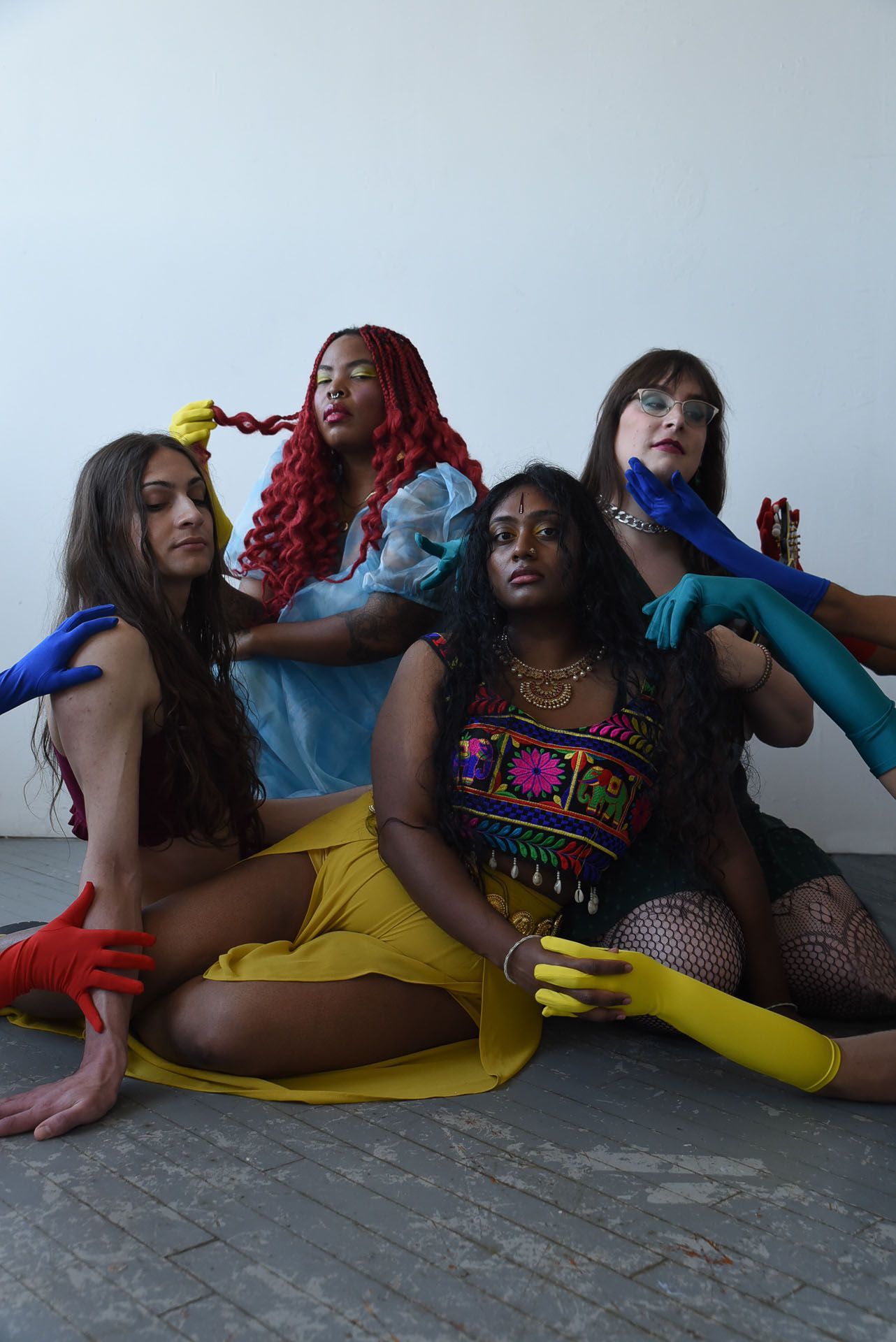
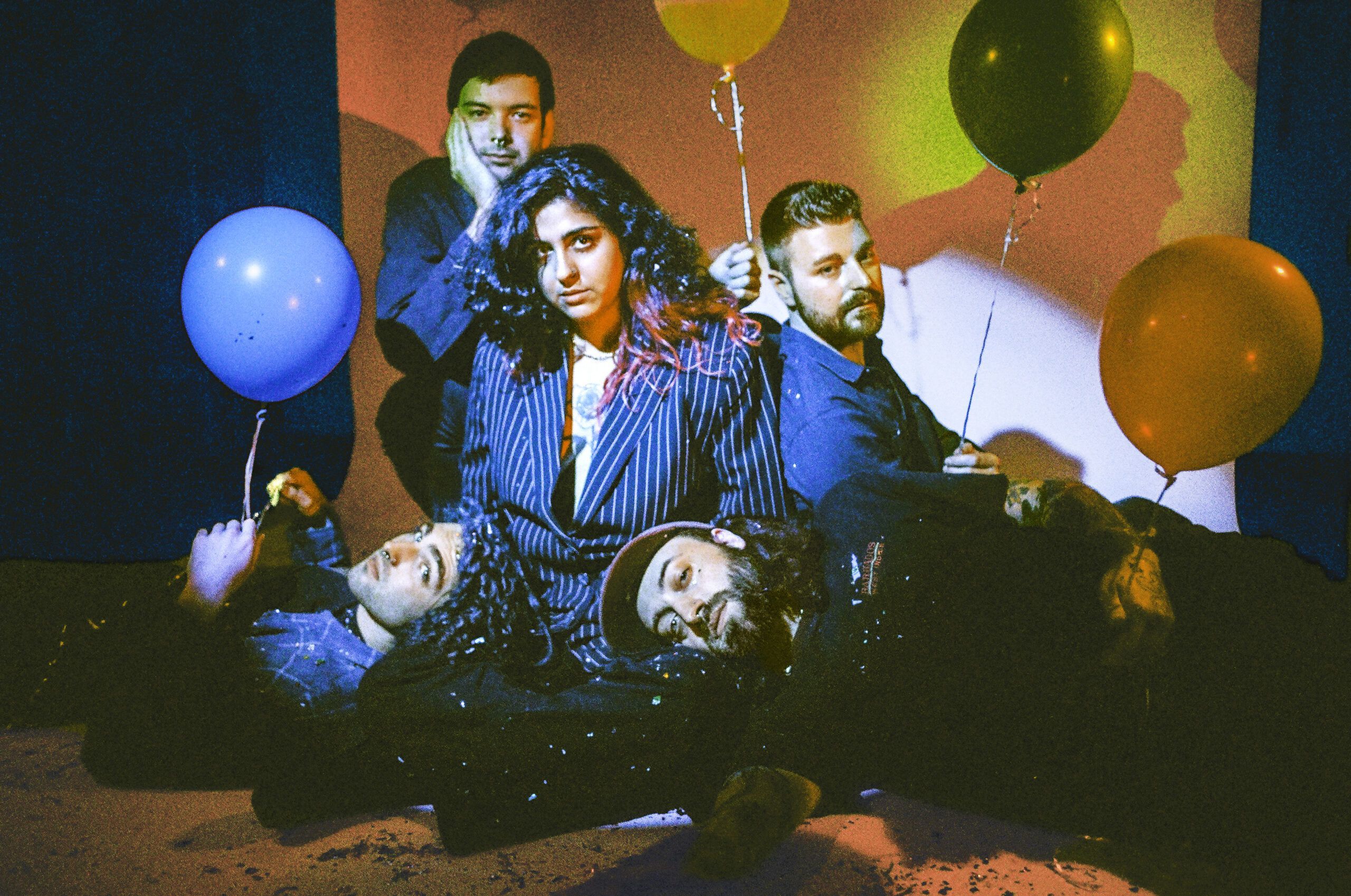
    Pinkshift, the hard-hitting Baltimore punk band fronted by Ashrita Kumar, is celebrating an expanded version of their 2021 debut EP Saccharine. Two Philly bands will join them: Kulfi Girls, the foursome fronted by Abi Natesh that mixes hard rock with Indian classical influences, and Nicolle Maroulis’ emo outfit Hit Like a Girl. 8 p.m., Ukie Club, 847 N. Franklin St., 4333Collective.net

    Kulfi Girls play the Ukie Club on Thursday, Aug. 27.Philly Music Fest

    Good Flying Birds

    Three winsome indie pop bands are on this free Live & Local show. Good Flying Birds, whose charming Talulah’s Tape came out in 2025, is a band of Midwesterners, who will be joined by two promising Philly quartets in Smarthearts and Heatloaf. Free. 6 p.m., Spruce Street Harbor Park, 301 S. Christopher Columbus Blvd., 4333Collective.net

    Friday Aug. 28

    Jerry Garcia Symphonic Celebration

    The Grateful Dead guitarist would have turned 84 this month, and his family organized this tour in his honor. Together with the Philly Pops, the lineup includes Jerry Garcia Band veterans Melvin Seals on organ and Jacklyn Branch on vocals, Philly guitarist Tom Hamilton, Phil Lesh’s son Grahame Lesh on bass, drummer John Morgan Kimock, and singer Kanika Moore. 8 p.m., TD Pavilion at Highmark Mann, 5201 Parkside Ave, highmarkmann.org

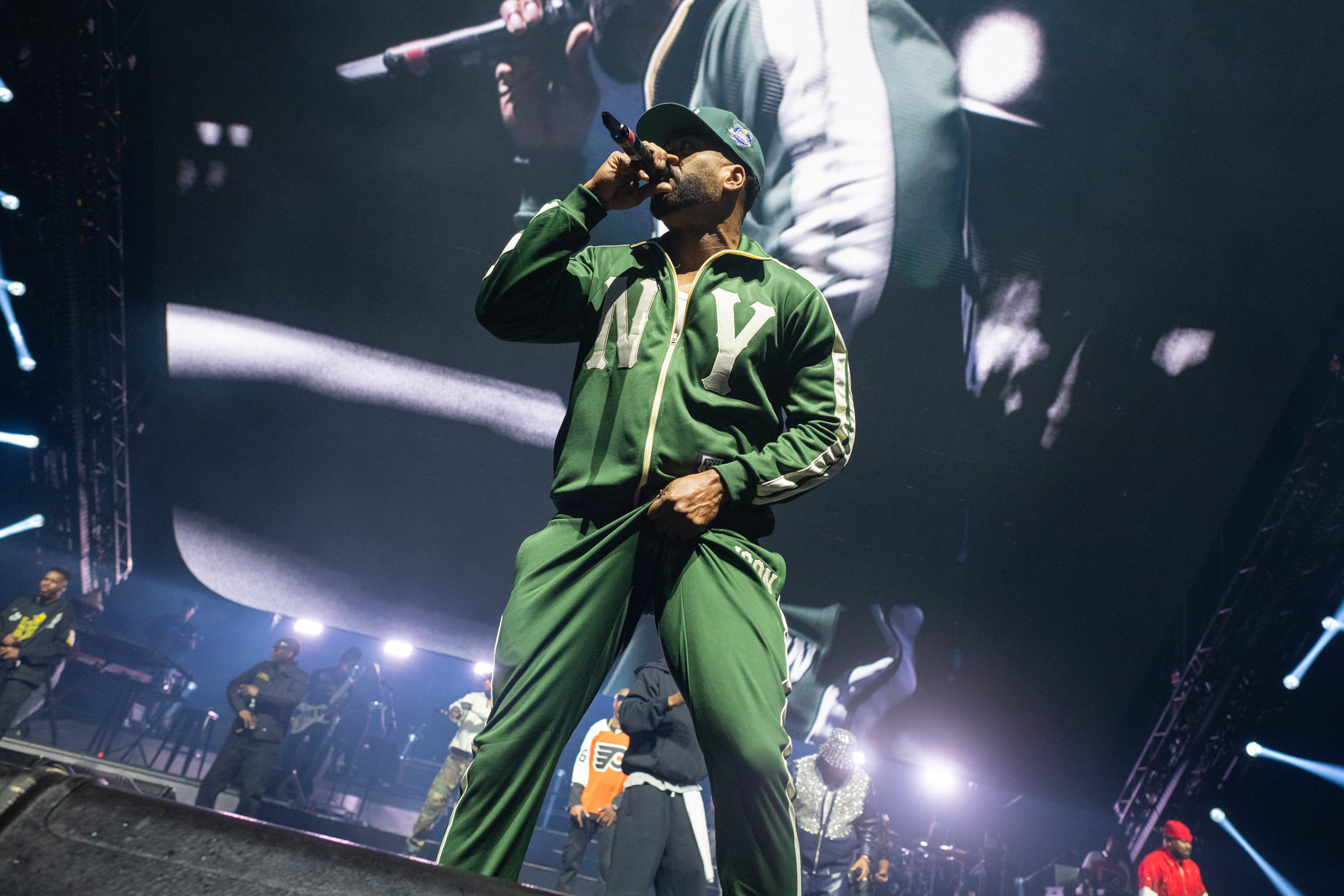
    Wu-Tang Clan’s Method Man performs at the Wells Fargo Center in Philadelphia on July 18, 2025. The Staten Island hip-hop crew is in Atlantic City on Friday.Kaiden J. Yu / Staff Photographer

    Wu-Tang Clan

    Remember the “Wu-Tang Forever” tour, which had its grand finale in South Philly last summer? Shockingly, that farewell didn’t last very long. Just over a year later, the RZA, Method Man, Ghostface Killah, and their brethren are playing Atlantic City. 8 p.m., Hard Rock Live at Etess Arena, 1000 Boardwalk, casino.hardrock.com/atlantic-city

    Squeeze

    Before the band went on a run with albums like Argybargy in 1980 and Sweets From a Stranger in 1982, Squeeze songsmiths Chris Difford and Glenn Tilbrook wrote Trixies, a song cycle about a nightclub that was never recorded. Now 50 years on, they have released it as a full-length album produced by the band’s bass player, Owen Biddle, who is a former member of The Roots. Adam Ant and Haircut 100 are also on the bill. 8 p.m., Borgata Event Center, One Borgata Way, Atlantic City, borgata.mgmresorts.com

    Demi Lovato

    Former Disney child actress and pop singer Demi Lovato has pivoted from the punk-pop of the 2022 album Holy F— to return to a more dance pop sound on the new It’s Not That Deep. 8 p.m., Ovation Hall, the Ocean resort, 500 Boardwalk, Atlantic City, theoceanac.com

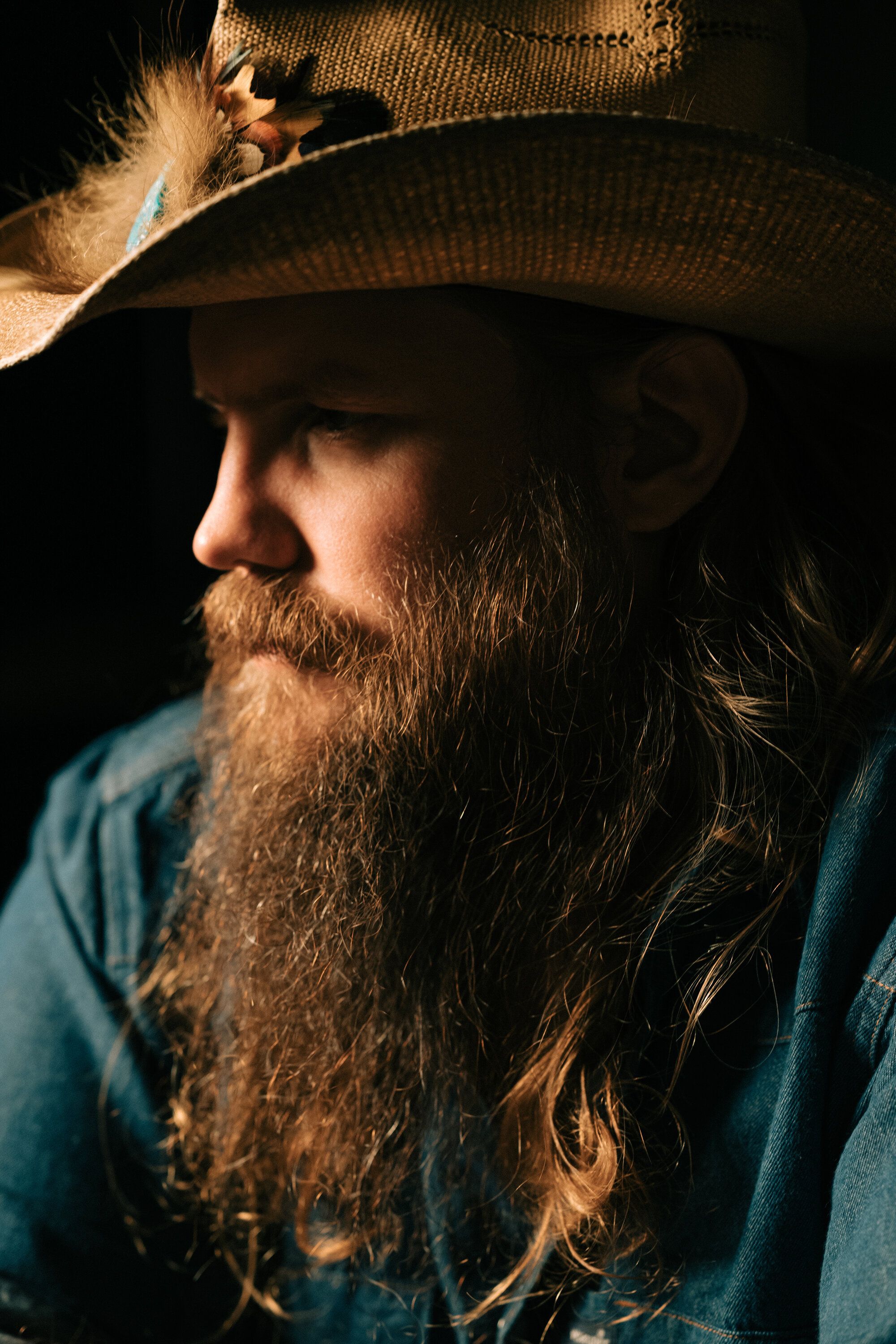
    Chris Stapleton brings his All-American Road Show to the Freedom Mortgage Pavilion in Camden for two nights this weekend.Becky Fluke

    Friday and Saturday Aug. 28-29

    Chris Stapleton

    Eleven-time Grammy winner Chris Stapleton has built himself a huge audience with his brand of beardy, rugged country-soul that’s rarely as slick as the manicured Nashville acts he rubs elbows with on the country charts. For this year’s two-night Camden stop on his “All-American Road Show,” he’s supported by North Carolina-born “Sex, Drugs and Country Music” singer Carter Faith. 8 p.m. Freedom Mortgage Pavilion, 1 Harbour Bvld., Camden, freedommortgagepavilion.com

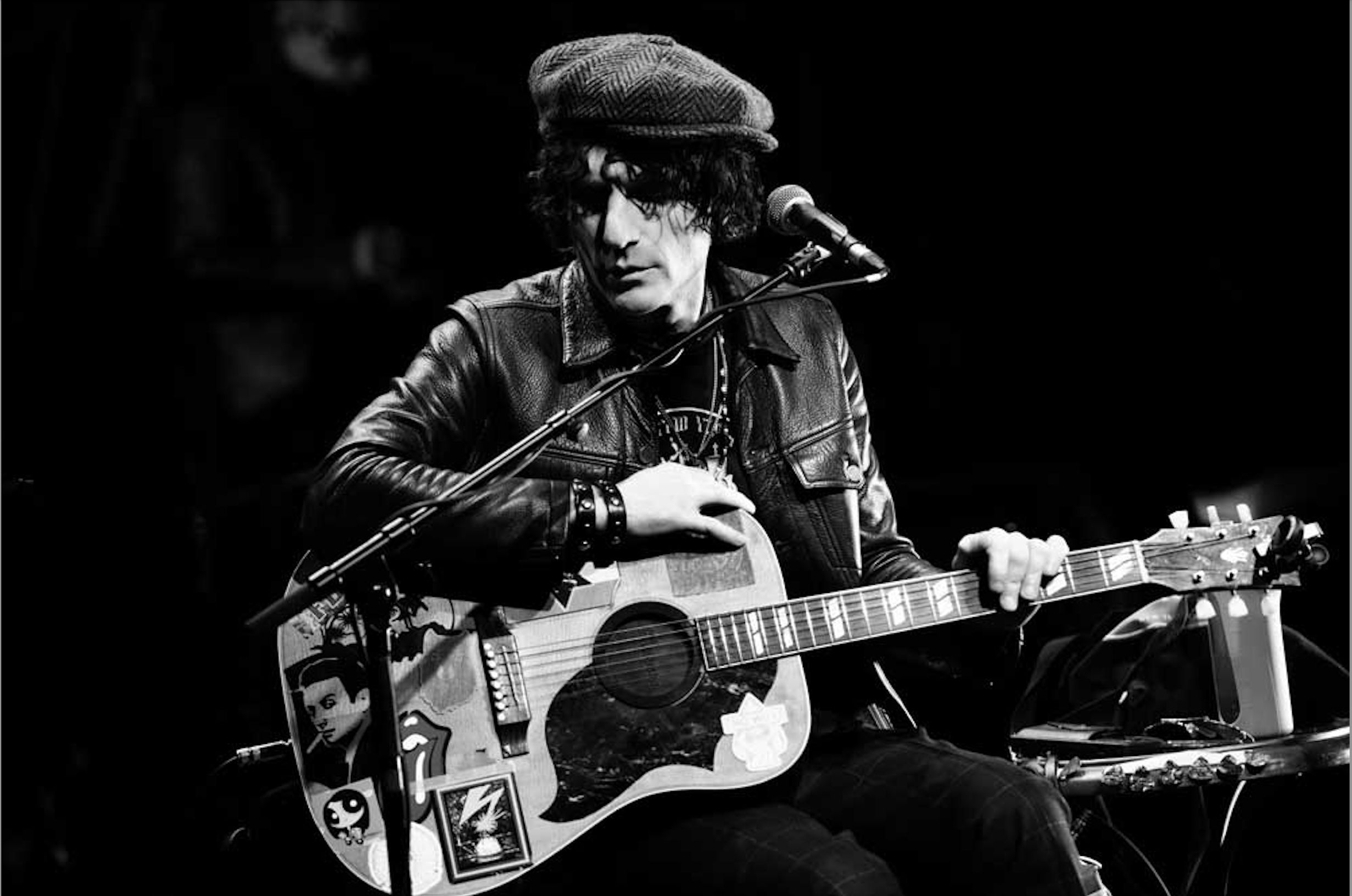
    Jesse Malin will headline the Queen Jeans Ball in Wilmington on Saturday, Aug. 29. with Craig Finn and Tommy Stinson opening.Vivian Wang

    Saturday Aug. 29

    Queen Jeans Ball with Jesse Malin

    New York songwriter Jesse Malin has always been a rock and roll true believer, dating back to his hardcore band Heart Attack (which he founded when he was 12). Then came D Generation and nine solo albums, including 2019’s Sunset Kids, which was produced by Lucinda Williams.

    In 2023, Malin suffered a rare spinal stroke that left him paralyzed from the waist down. The next year, he was the subject of a tribute that featured Bruce Springsteen and Billie Joe Armstrong, among others. Now, he’s returned to the stage with his Silver Manhattan musical and is back to touring with his band.

    Malin is headlining the annual Queen Jeans Ball in Wilmington, which benefits the nonprofit Donate Delaware. Craig Finn of the Hold Steady and Tommy Stinson will also perform and undoubtedly join Malin on stage. 8 p.m., the Queen, 500 N. Market St., Wilmington, thequeenwilmington.com

    Australian electronic dance music act Rüfüs Du Sol will perform on the Atlantic City beach on Saturday, Aug. 29.Boaz Kroon

    Rüfüs Du Sol

    Dance music arrives on the Atlantic City beach with Rüfüs Du Soul, the Australian alt-pop band who mix live instrumentation and electronic beats. The band fronted by singer Tyrone Lindqvist is touring stadiums for its 2024 album Inhale / Exhale. The show marks a return to Live Nation booking toes-in-the-sand shows in tandem with Visit Atlantic City for the first time since 2023. Ben Bohmer opens. visitatlanticcity.com

    Zac Brown Band

    The official name of this tour is “Love & Fear Tour presented by Margaritaville at Sea.” So it’s safe to say the Georgia country-rock singer who sang the national anthem at the UFC Freedom 250 cage fight at the White House in June, will be giving Jimmy Buffett vibes. His album Love & Fear features Snoop Dogg, Marcus King, and the late great Dolly Parton. Grace Potter, who also plays Free at Noon on Friday, opens. 7 p.m., TD Pavilion at Highmark Mann, 5201 Parkside Ave, highmarkmann.org

    Sam Sodomsky is The Bird Calls. He plays Young American Cider in Germantown on Sunday.Jake Fromm

    Sunday Aug. 30

    Cloud Nothings / Knifeplay

    Cleveland-born indie band Cloud Nothings, fronted by now Philly-based guitarist-songwriter Dylan Baldi, released its eighth album, Final Summer, in 2024. Sharp-edged Philly band Knifeplay open. 7 p.m., Ruba Club, 416 Green St., 4333Collective.net

    The Bird Calls

    The Bird Calls is Sam Sodomsky, a Brooklyn songwriter raised in Philly whose new album, Take Leave, is due Friday. Sodomsky, also a contributing editor at Pitchfork, makes homespun, open-hearted folk rock about trying to find a place in the world with songs like “Clockwork” and “Ethan Frome” that linger in the imagination. He’s playing a hard cider tasting room in Germantown. Kristin Daelynn and Adeline Hotel open. 7 p.m., Young American, 6350 Germantown Ave., youngamericancider.com

    Monday Aug. 31

    Arlo Parks

    The British singer and poet born Anaïs Oluwatoyin Estelle Marinho vaulted into stardom in the UK with her Collapsed Into Sunbeams debut, which won the prestigious Mercury Prize. Her third album, Ambiguous Desire, is a pleasant soul-searching work shaped by club culture, though it’s more likely to be heard by coffee shop latte sippers than dance floor denizens. 8 p.m., Union Transfer, 1026 Spring Garden St., utphilly.com

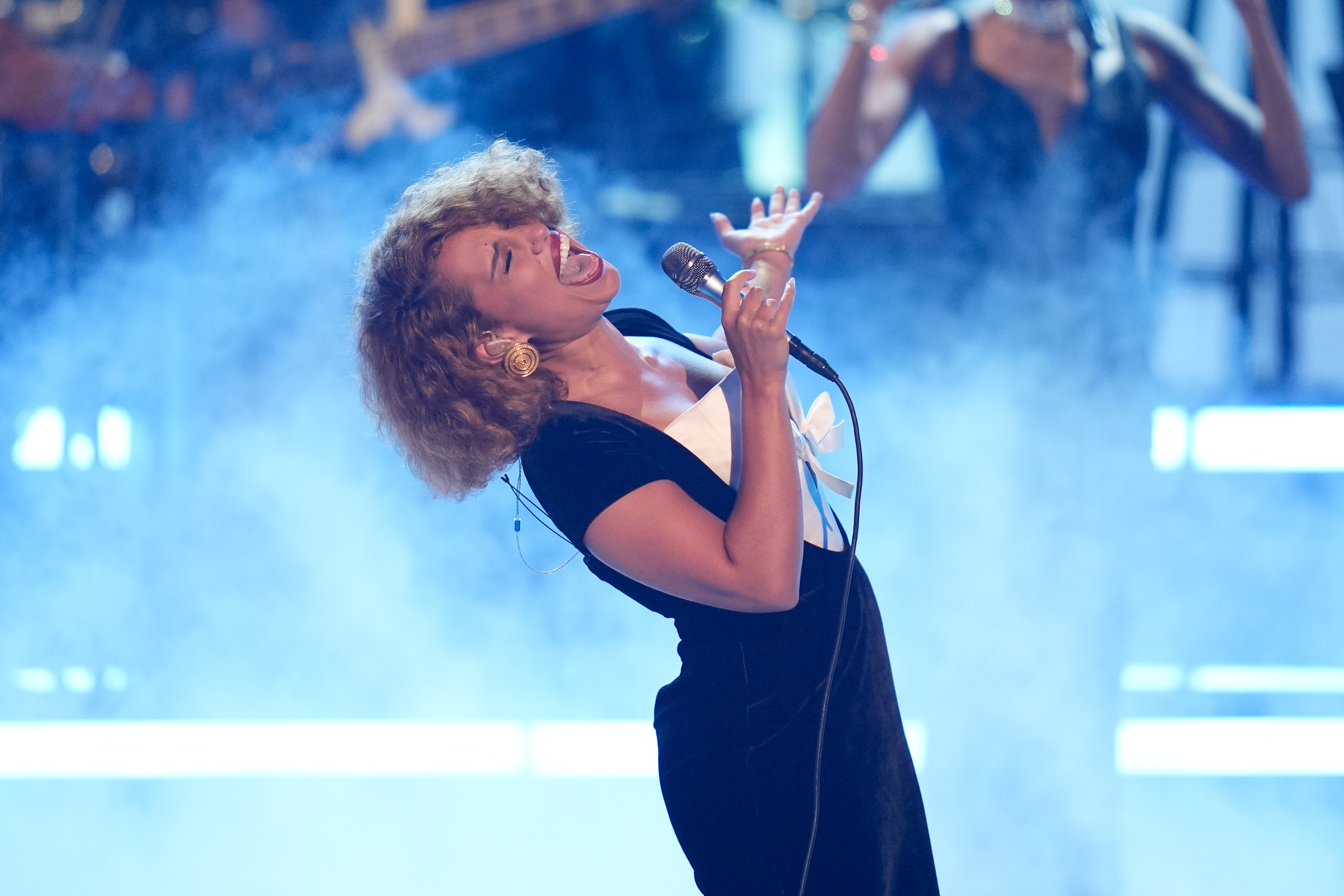
    Raye performs at the BET Awards on June 28, 2026, at the Peacock Theater in Los Angeles. She opens for Bruno Mars on Tuesday and Wednesday, Sept. 1 and 2, at the Linc. (AP Photo/John Locher)John Locher

    Tuesday and Wednesday Sept. 1-2

    Bruno Mars & Raye

    Bruno Mars has been making hits nonstop since his 2010 Doo-Wops & Hooligans debut. His 2024 chart toppers “Die With a Smile” and “APT.” — with Lady Gaga and Rosé, respectively — and this year’s “I Just Might,” from his new album Romantic are the most recent examples. Raye, the British singer who has a knockout stage show, opens. Things get going with DJ Pee. Wee, who is Mars’ Silk Sonic bandmate Anderson .Paak in disguise. Shopper alert: There will be a Bruno Mars x Hello Kitty pop-up at the Fashion District from Aug. 31-Sept. 2. 7 p.m., Lincoln Financial Field, One Lincoln Financial Way, lincolnfinancialfield.com

  • Frank Spagnuola, original ‘American Bandstand’ dancer and longtime interior designer, has died at 85

    Frank Spagnuola, original ‘American Bandstand’ dancer and longtime interior designer, has died at 85

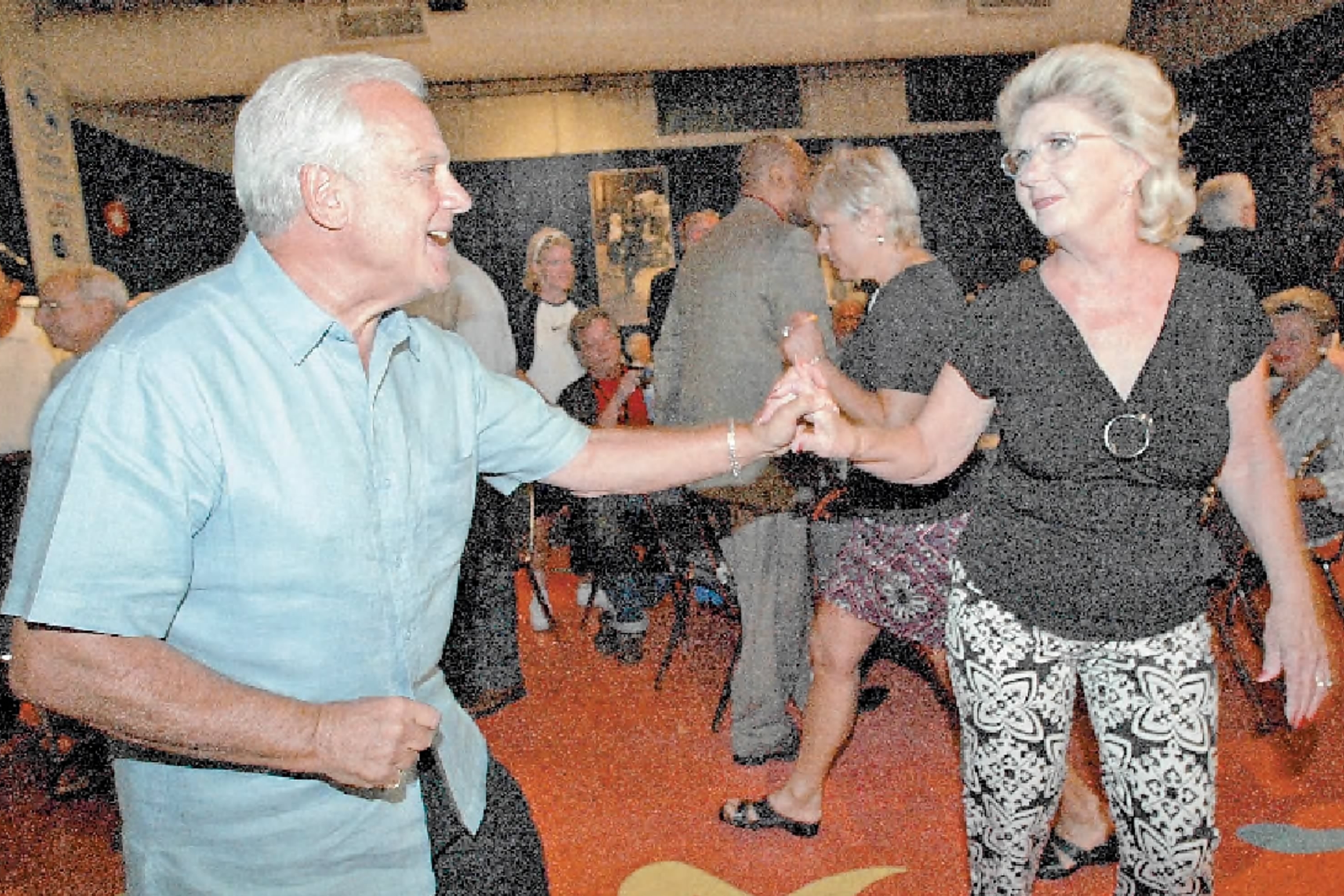
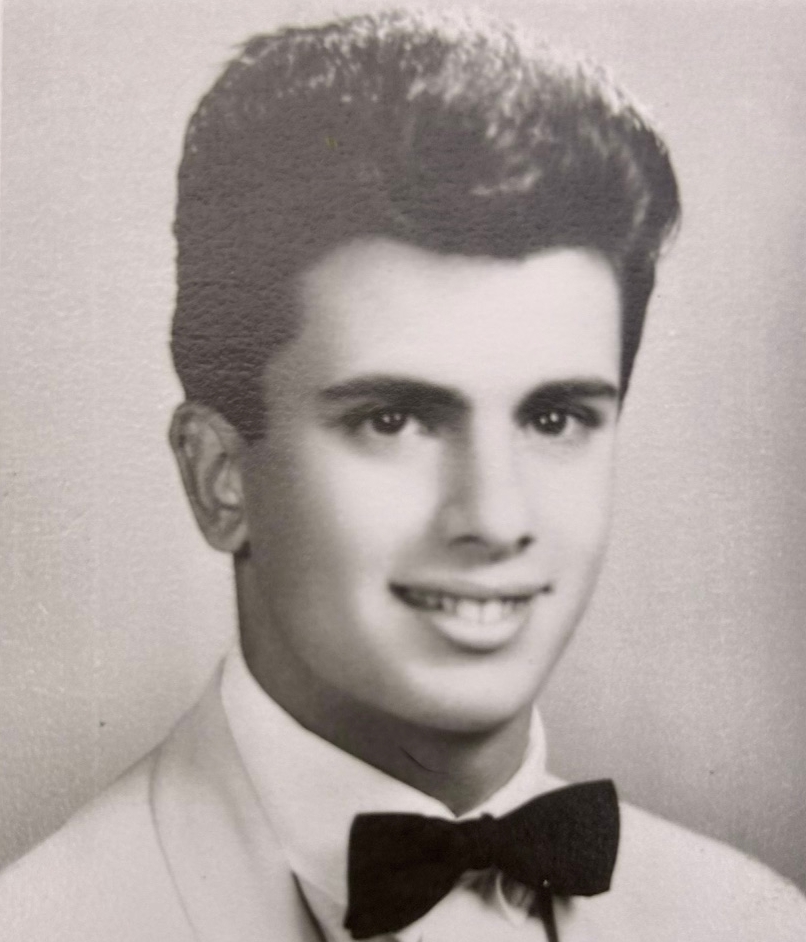
    Frank Spagnuola, 85, formerly of Philadelphia, one of the original American Bandstand dancers, 1957 Chalypso dance champion, longtime interior designer, and gourmet home cook, died Monday, Aug. 17, of congestive heart failure at the Complete Care at Court House nursing center in Cape May Court House.

    Born and reared in South Philadelphia, Mr. Spagnuola was lifelong friends with performers Bobby Rydell, Frankie Avalon, Fabian Forte, James Darren, and Jerry Blavat, and dozens of other singers, dancers, musicians, and disc jockeys from the neighborhood. He enjoyed socializing as well as music and dancing, and, at 15, became one of the original dancers when the old WFIL-TV station hosted Bandstand and then American Bandstand in the 1950s and ’60s.

    The TV station invited local teens to dance to the latest hits in its Studio B on Market Street in West Philadelphia, and Mr. Spagnuola did just that on many afternoons from 1955 to 1963. In 1957, he and partner Dottie Horner finished first in American Bandstand’s first Chalypso contest, spotlighting an original Philly dance that combines the cha-cha and the calypso.

    “We would cut classes” to dance on Bandstand, Mr. Spagnuola, a graduate of the old Bishop Neumann High School, said in a 2017 video interview. “We had eight or nine classes, and we would leave, like, the sixth class. Father would say, ‘Where are you going?’ Well, you know where we’re going, Father. The priests watched the show. I mean, everybody watched the show.”

    Mr. Spagnuola graduated from the old Bishop Neumann High School in 1958.Courtesy of the family

    It was downstairs at Studio B, Mr. Spagnuola said, that he encountered Bandstand guest stars Pat Boone, Bobby Darin, and Sal Mineo. As a teen in the neighborhood, he performed in local skit shows with Rydell and played football and double-dated with Fabian.

    On Facebook, Fabian called Mr. Spagnuola “a gentleman and talented dancer,” and said: “Frank Spagnuola was one of the most popular and beloved regular dancers on Dick Clark’s American Bandstand during the show’s iconic Philadelphia era.”

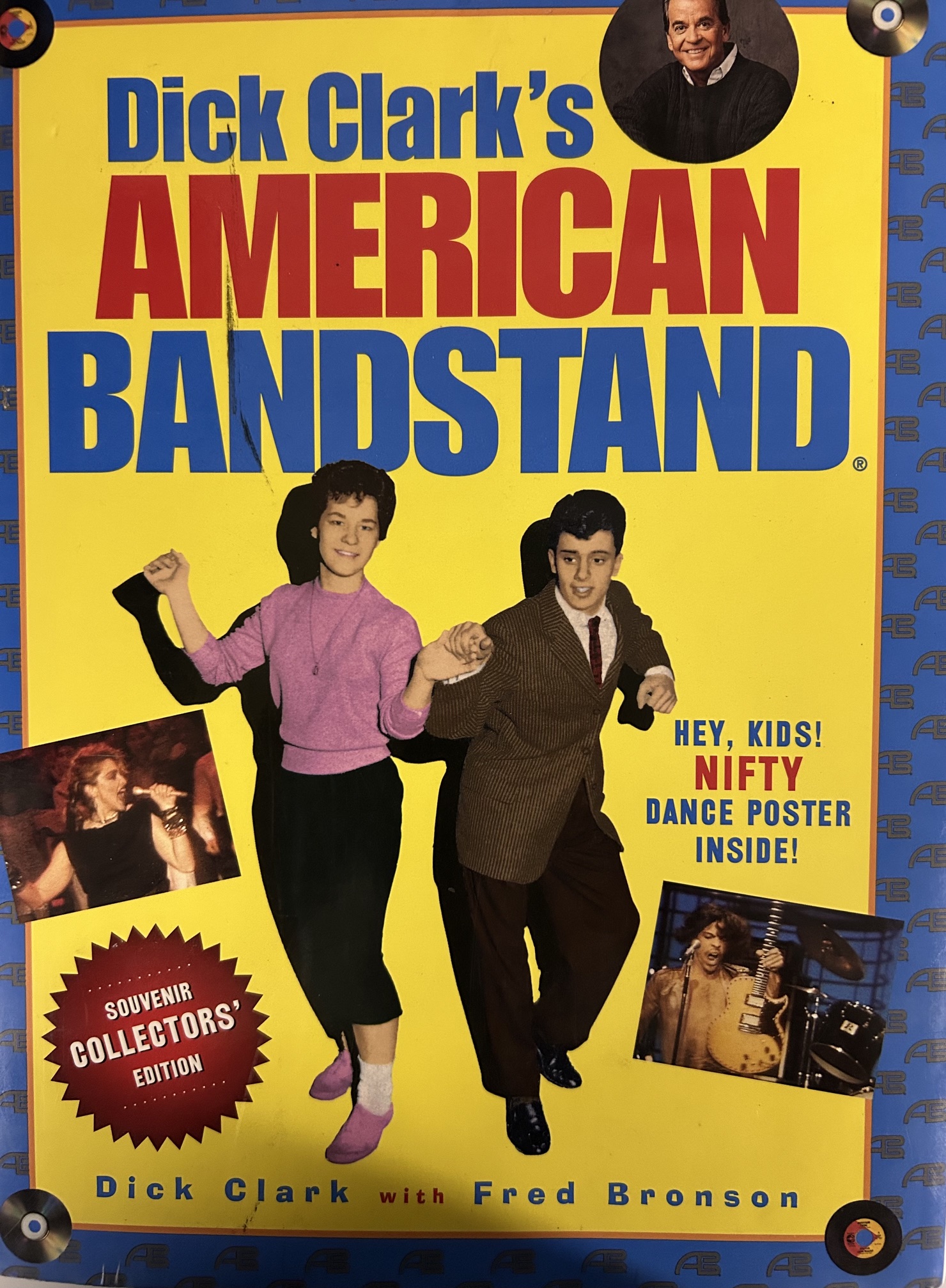
    Mr. Spagnuola is profiled at history-of-rock.com and bandstand.cafex.biz, and he and Dottie Horner are on the cover of the 1997 Dick Clark’s American Bandstand souvenir collectors’ magazine. He is featured in the 1997 New Jersey Network documentary Bandstand Days and called the show “part of American history.”

    Over the years, as Bandstand’s popularity ebbed and flowed, he routinely reconnected with other original dancers — they were called the Bandstand Regulars — at reunions, public events, and celebrations in the region. American Bandstand went off the air in 1989.

    Mr. Spagnuola and his dance partner, Dottie Horner, were on the cover of this 1997 souvenir collectors’ magazine. Courtesy of the family

    “Everybody loved Frank,” said longtime disc jockey and music director Tommy McCarthy. “He had an infectious smile. He was a guy you just liked.”

    Friends on Facebook called Mr. Spagnuola “movie star handsome,” “a rock & roll soldier,” “a Bandstand pioneer,” and “one of the nicest gentleman you could ever meet.” One said: “Wonderful dancer, wonderful person, wonderful friend.”

    After graduating from Bishop Neumann in 1958, Mr. Spagnuola worked in a high-end carpet store, studied interior design, and earned an associate’s degree at the old Philadelphia College of the Arts. He became an interior designer, worked for Sears at the Moorestown Mall for 25 years, and was active with the American Society of Interior Designers.

    On his own, he did private design work for Muhammad Ali, former Eagles assistant coach Jon Gruden, and other local notables. “He cultivated an eye for beauty and design,” his family said in a tribute, “shaping spaces with elegance and functionality.”

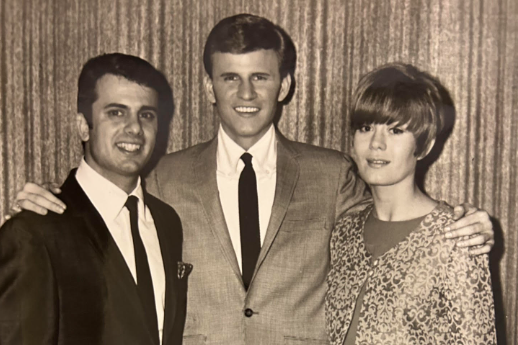
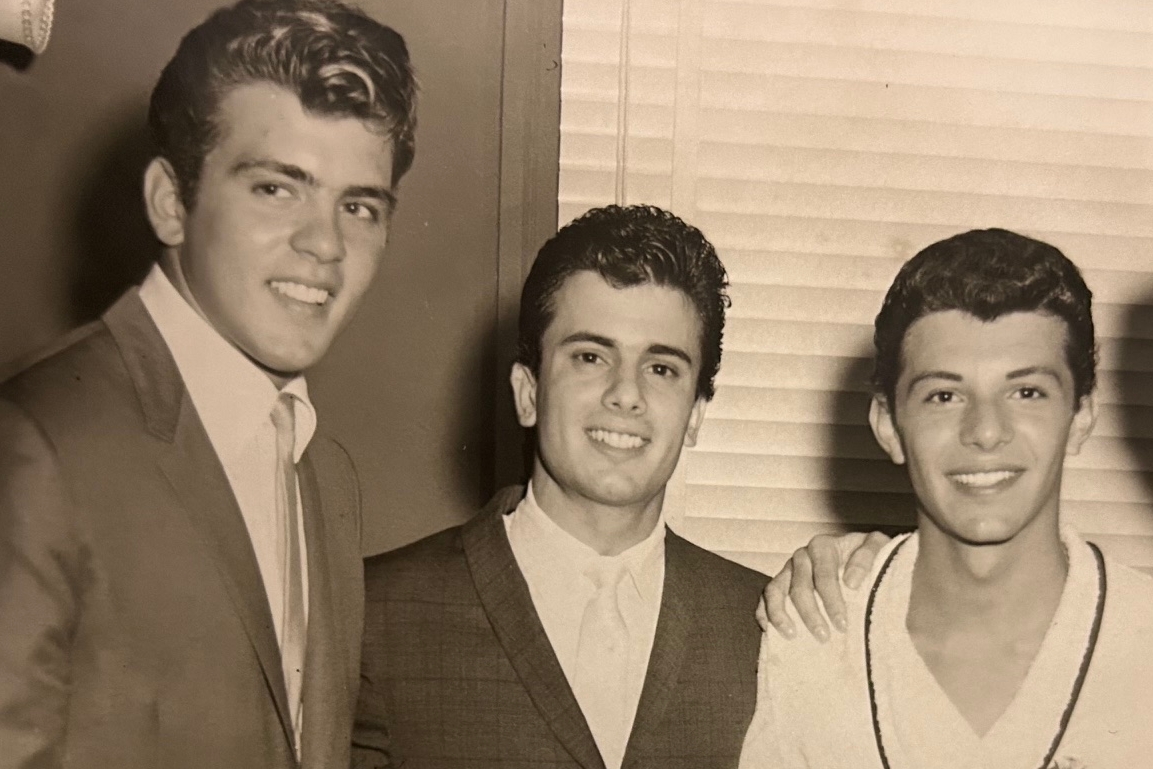
    Mr. Spagnuola (left above) stands with his wife, Janet, and Bobby Rydell. Below, he is flanked by Fabian (left) and Frankie Avalon.Courtesy of the family

    Francis Michael Spagnuola was born Nov. 2, 1940. The oldest of three brothers, he liked to hang out at the Jersey Shore and dine on Italian food.

    He married Janet Moretti, and they had a son, Stephen, and a daughter, Carrie, and lived in South Philadelphia and Center City. His wife died in 2005.

    Mr. Spagnuola moved to Cape May later, became an accomplished home cook, and was known for his crab salad dip. He was passionate, upbeat, and funny, everyone said, and his children called him “a steadfast anchor and a lifelong source of support.”

    His family said: “He leaves behind a memory as warm and enduring as the summer shore and the Wildwood days he so dearly cherished.”

    Mr. Spagnuola enjoyed time with his children (above) and grandchildren (below).Courtesy of the family

    His son said: “He loved life. He loved people. He loved characters.”

    In addition to his children, Mr. Spagnuola is survived by three grandchildren and other relatives. Two brothers died earlier.

    Services were held earlier.

    Donations in his name may be made to the American Heart Association, Box 840692, Dallas, Texas 75284.

    Mr. Spagnuola “loved life. He loved people. He loved characters,” his son said.Courtesy of the family
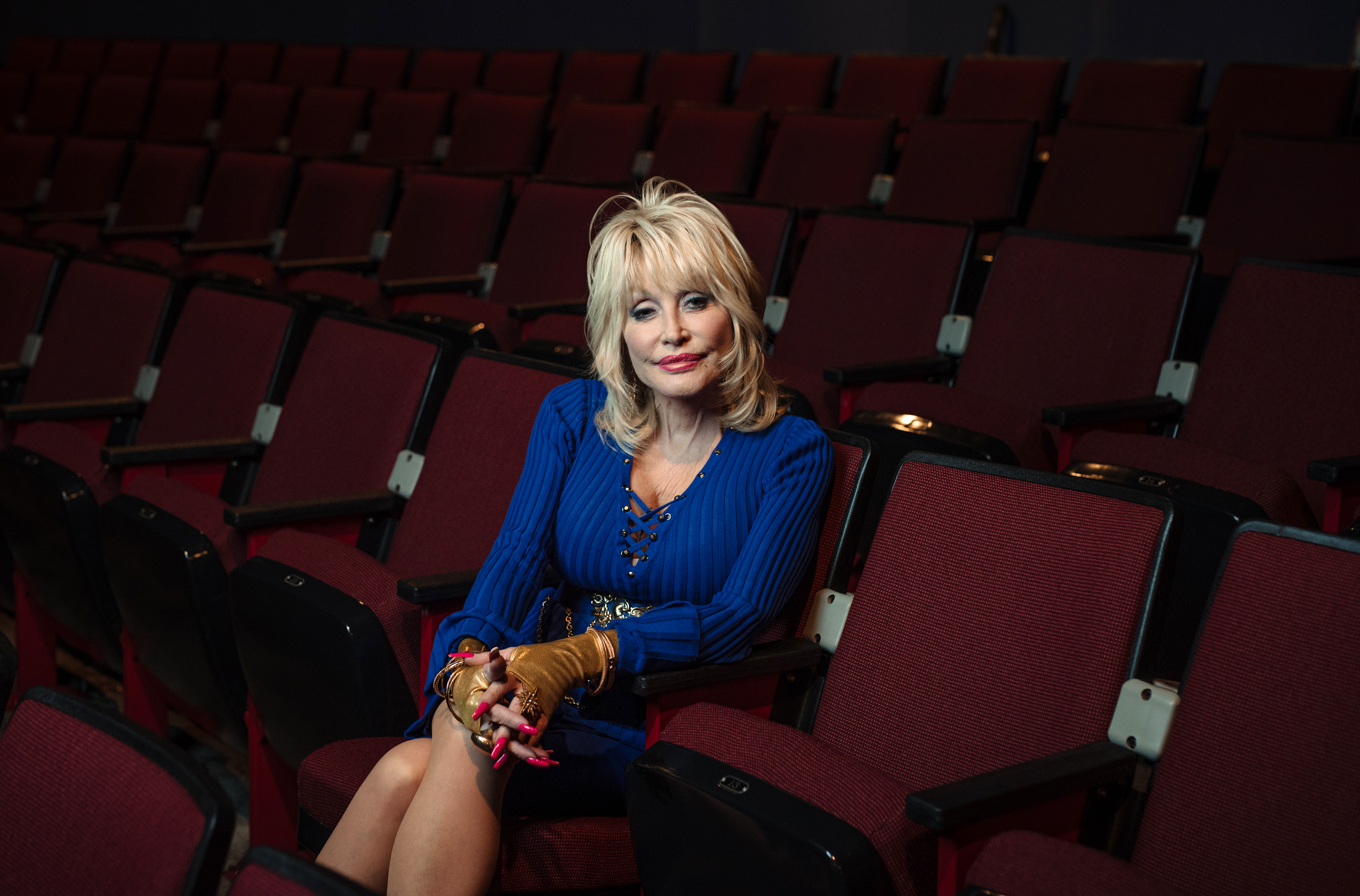
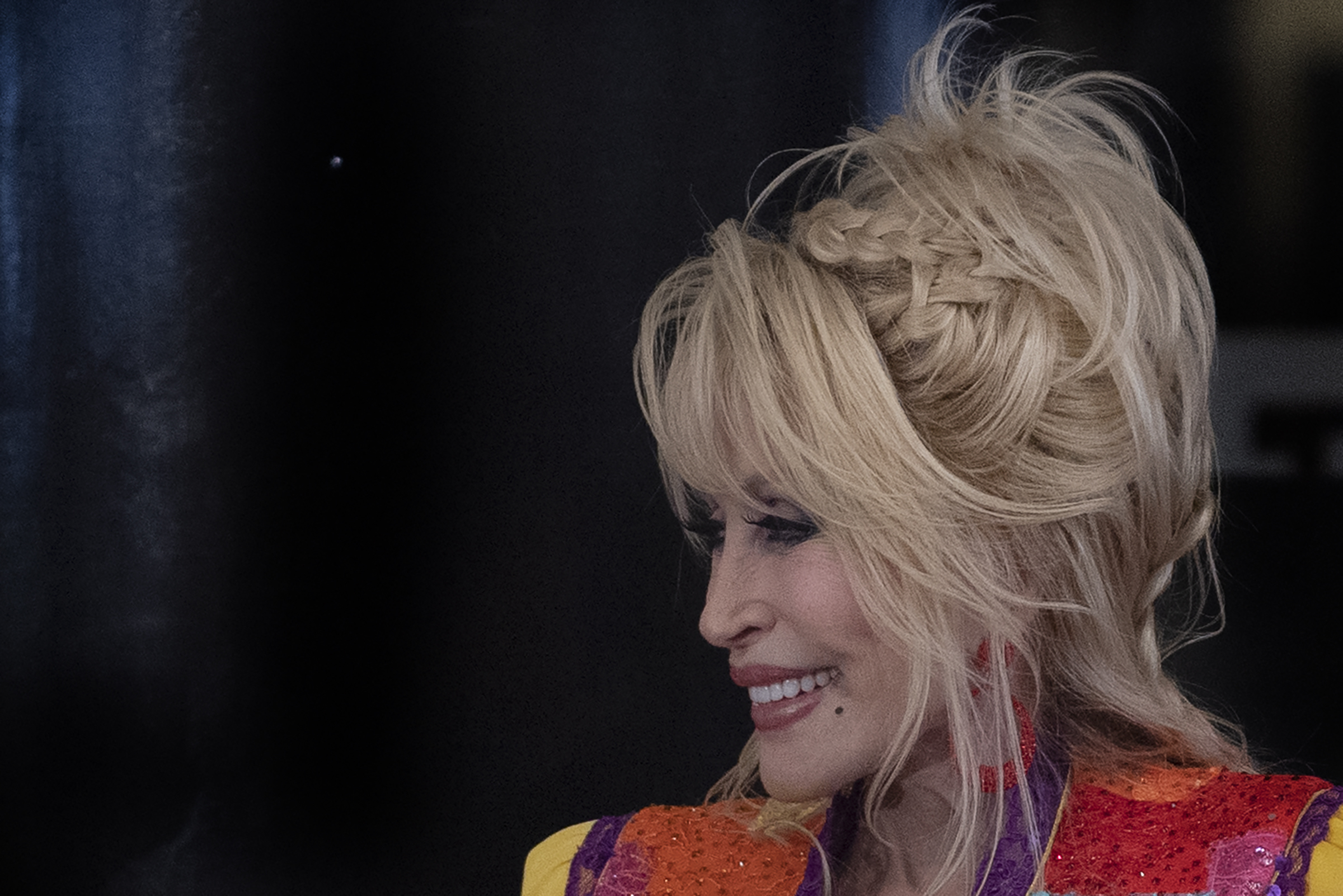
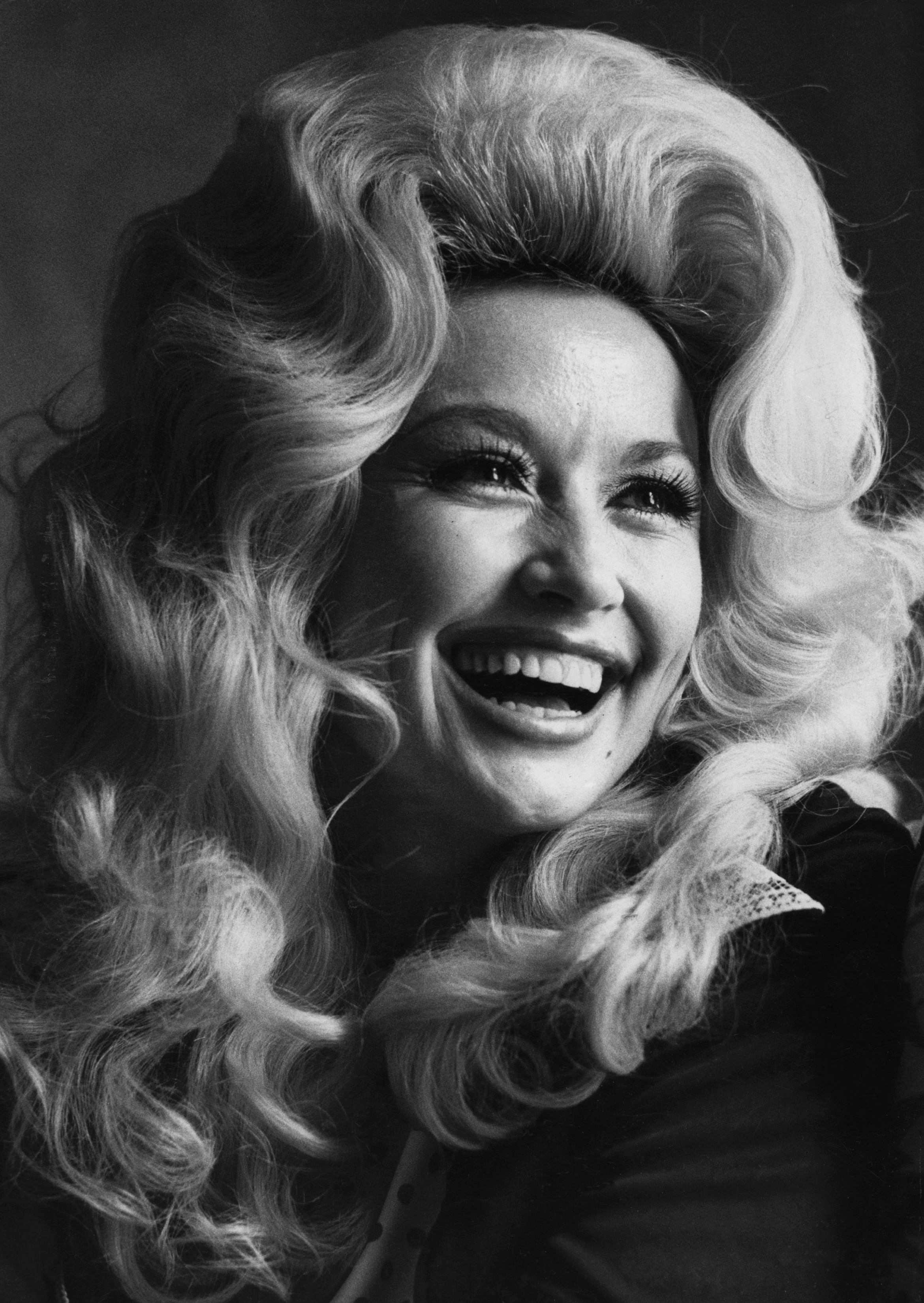
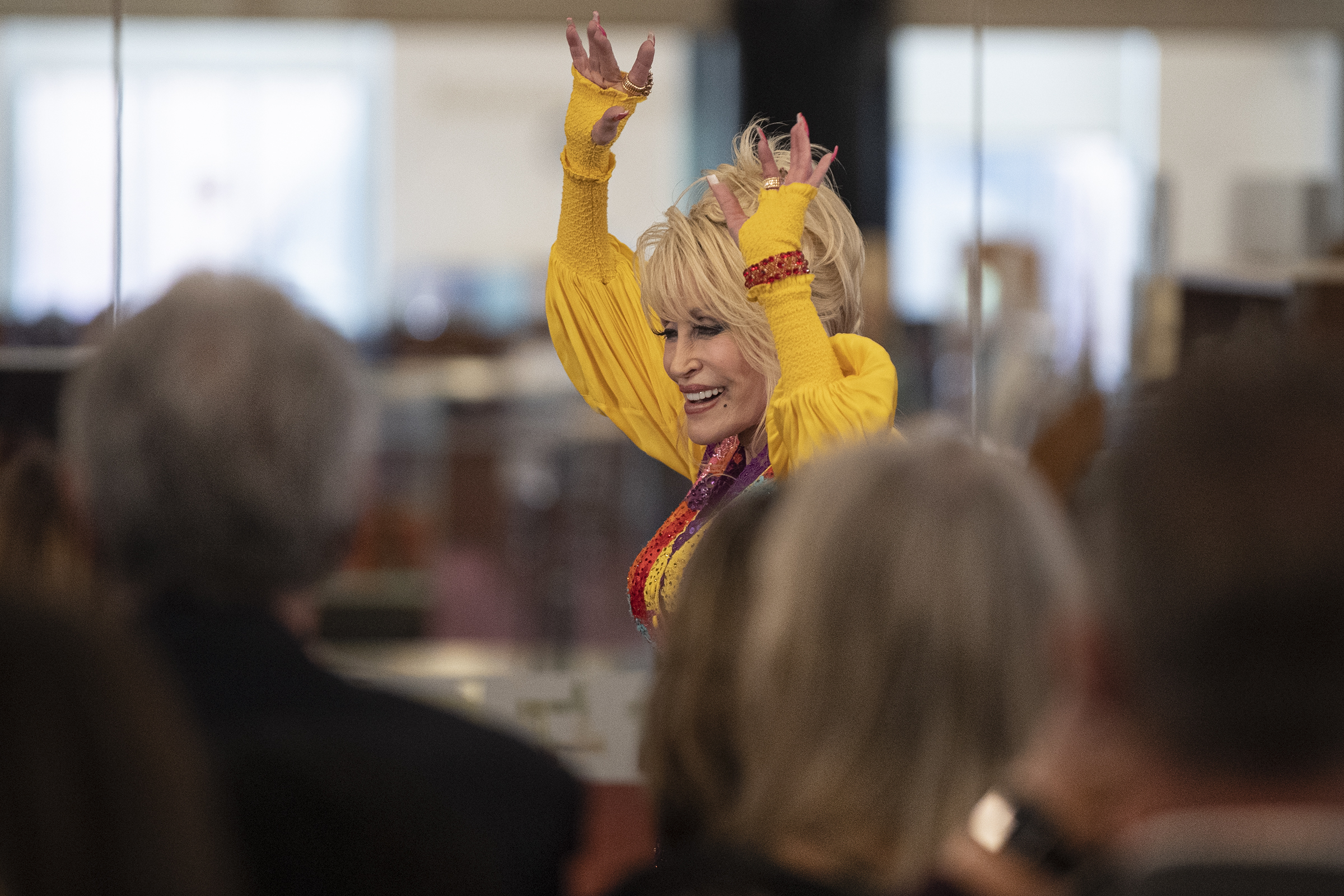
  • Dolly Parton had the voice, and concerns, of an earth angel

    Dolly Parton had the voice, and concerns, of an earth angel

    Usually when we say someone has the voice of an angel, we mean that they don’t quite sound human — that they have an airy, clarion, pristine falsetto hovering far above mortal concerns. Dolly Parton, who died Tuesday at age 80, had the voice of an earth angel. She knew all about the dirt and the muck and the ugliness, the shame of poverty, the chill of sorrow, the burning throb of a jealous heart. That meant she also knew precisely how best to soothe those pains in song, composing her own homemade balms for whatever ailed.

    Her voice was angelic not because it possessed some kind of divine perfection or unattainable beauty, but because it seemed to be personally invested in the well-being of anyone and everyone who listened to it, illuminated from within with an almost otherworldly benevolence. How many singers in the history of popular music have told us some variation of “everything’s gonna be all right / it’s gonna be OK”? When Dolly did it, though, as on her soaring 1977 single “Light of a Clear Blue Morning,” the sentiment somehow transcended cliche. Dolly made you believe.

    To speak of her in the past tense still feels wrong. Dolly Parton was an American icon who seemed taller than death itself, a Paul Bunyan in a beehive wig and rhinestone stilettos. That stature came in part because she wrote her legend over and over, wittily but with a savvy control over her own image, in the so-called Dollyisms that she peppered throughout interviews, stage banter and public appearances.

    And so we know from her own lips that her parents were so poor that they paid the doctor who delivered her in cornmeal, and that their one-room cabin in the Great Smoky Mountains had “running water, if you were willing to run and get it.” We know, too, that if she had it her way she would have lived well past 80. Once, when she was asked how she’d like to be remembered in 100 years, Parton quipped, “I want ’em to say, ‘God, don’t she look good for her age!’”

    The most enduring parts of Parton’s legend were the ones she captured in song. Some of her most beloved compositions elevate key scenes from her life into modern-day folk tales, animated in vivid, almost cinematic detail. “Coat of Many Colors,” from 1971, recalls a time in her youth when her mother stitched rags together to make a coat that the other schoolchildren mocked: “I couldn’t understand it,” the adult Parton sings, still aching, “for I felt I was rich.” The beautiful redheaded bank teller who flirted with her husband lives on in infamy in “Jolene,” a lyric and vocal performance that combine to create one of popular music’s most wrenching (and oft-covered) confessions of neediness and insecurity.

    Parton forever dramatized her decision to go solo in “I Will Always Love You,” a tenderhearted goodbye to her boss and former duet partner Porter Wagoner that kick-started a country-to-pop crossover. That unapologetic ambition to become something more than the so-called “girl singer” on Wagoner’s television show paved the way for women of subsequent generations (Reba, Shania and Taylor, to name just a trio) to follow in her path. The song also gave Parton an opportunity to flex her savvy as an entrepreneur: She refused to sell half of its publishing rights to one of her idols, Elvis Presley, when he wanted to cover it. “Everybody’s going to use you if they can,” Parton reflected decades later. “These are my songs — they’re like my children.”

    The ’80s — a decade she kicked off in grand fashion with the working woman’s anthem “9 to 5” — brought Parton some of her greatest mainstream success, but the climate of the times also conspired to reduce her to a punchline and a caricature: The self-made country-pop queen who had pulled herself up by her bra straps. She played along, as an act of self-preservation, but it is a consolation to know that she lived long enough for her reputation as a songwriter to rise considerably in the 21st century. The work of her Dollywood Foundation, and especially her Imagination Library’s focus on child literacy, also cemented her status as a dedicated philanthropist.

    In the third act of her impossibly long career, Parton became a creature who by all other accounts had gone extinct: a celebrity just about everybody likes. The volume and variety of tributes pouring in after her death attest to that — it is difficult to imagine another person who inspires kind words from both President Donald Trump and Parton’s “9 to 5” co-star Jane Fonda. But the universal goodwill Parton engenders also makes her death sting more sharply, because we mourn the loss of something even greater than one of the most beloved singer-songwriters of our lifetimes. We also mourn the concepts she embodied with grace right until the very end: compassion, good-humored joy, a genuine wish for the well-being of her neighbors. All that and a bone-deep belief that everything’s gonna be all right, gonna be OK.

    This article originally appeared in The New York Times.
  • ‘High heels to heaven’: Remembering Dolly Parton’s Philly shows

    ‘High heels to heaven’: Remembering Dolly Parton’s Philly shows

    Dolly Parton was a genius-level songwriter, a rhinestone-studded glittering country music queen from Sevier County, Tennessee. Her vaulting ambition manifested itself in down-home masterpieces that transcended the genre, like “Coat of Many Colors,” “Jolene,” and “I Will Always Love You.”

    She was an undeniable gracious force of nature and a multimedia star whose “aw-shucks” persona and disarming sense of humor — coupled with bountiful talent — made her that rarest of commodities in a bitterly divided time: a genuinely universally beloved public figure.

    Parton, who died at age 80, her nephew Brian Seaver announced in an Instagram post on Tuesday, was always ready with a self-deprecating quip about her flamboyant appearance. “It costs a lot of money to look this cheap,” was one of her favorites, and when asked what she hoped people would think of her 100 years from now, she would say: “Dang, she looks good for her age.”

    I met her once, back in 2001 for an interview at the Pierre Hotel in Manhattan. She was promoting Little Sparrow, the second of two excellent bluegrass albums she had released in a little over a year at a time when country radio had all but given up playing her music.

    Dolly Parton in New York, in 1975. Parton, the country singer, songwriter, entertainer, and entrepreneur whose rags-to-riches story, outsize persona, and prodigious vision and talent placed her in a class by herself, died in Nashville on Tuesday, Aug. 25, 2026. She was 80. (Jack Manning/The New York Times)JACK MANNING

    Like Johnny Cash and other icons of her generation, she had attained legendary status, but the industry wasn’t interested in the new music she was making, focusing on younger stars rather than golden greats.

    But the last thing Dolly Parton was going to do when Music City turned its back on her was pout or complain.

    “We’re older than God!” Parton, who was then 55, told me.

    “It ain’t like we ain’t had our day,” she said, referring to herself as well as fellow travelers like Cash and Merle Haggard. “It wasn’t like I didn’t have a great career.”

    “But we can’t last forever. And I always try to think ahead,” she said, adding that “ever since I got started in show business, I’ve always tried to pay attention to the business of the show.

    “I believe in progress. Change is going to happen … You can’t just stay the same way … I can’t just not sing because I’m not getting played on the radio,” she told me. “I can’t not write just because there’s no real place for me in Nashville.”

    Parton, who was the fourth of 12 children, wrote her first song when she was 7. “Little Tiny Tassel Top” was an ode to a corncob doll.

    Dolly Parton waves to her fans on May 5, 2022, at the Wilmington Public Library in Wilmington. Parton joined Delaware Gov. John Carney to promote her Imagination Library, a free book gifting program for children.JOSÉ F. MORENO / Staff Photographer

    When it came up in conversation, she couldn’t resist singing it.

    “I love you an awful lot, my little tiny tassel top,” she sang in a little girl’s crystalline voice. “You’re the only thing I’ve got. Hope you never go away, ’cause I want you to stay.”

    At the time, Parton said she planned on continuing to record music that brought her back to her hardscrabble roots because she knew it would resonate with audiences.
    “I’ll never do anything that’s as real, that I enjoy singing as much, and that I can sing as well as these songs” so close to her heart, she said.

    “These are the kind of statements you want to make. You know, long after you’re dead and people research your career and say ‘Damn, that was good!’ These are the things you want to leave behind.”

    I saw Parton sing for larger audiences than just me four more times over the next 15 years.
    In 2004, she played the Spectrum in South Philly. At that show, she played a banjo and fiddle while gender-flipping John Denver’s “Thank God I’m a Country Boy.” She accompanied herself on piano on “The Grass Is Blue” and played auto-harp on “Coat of Many Colors.”
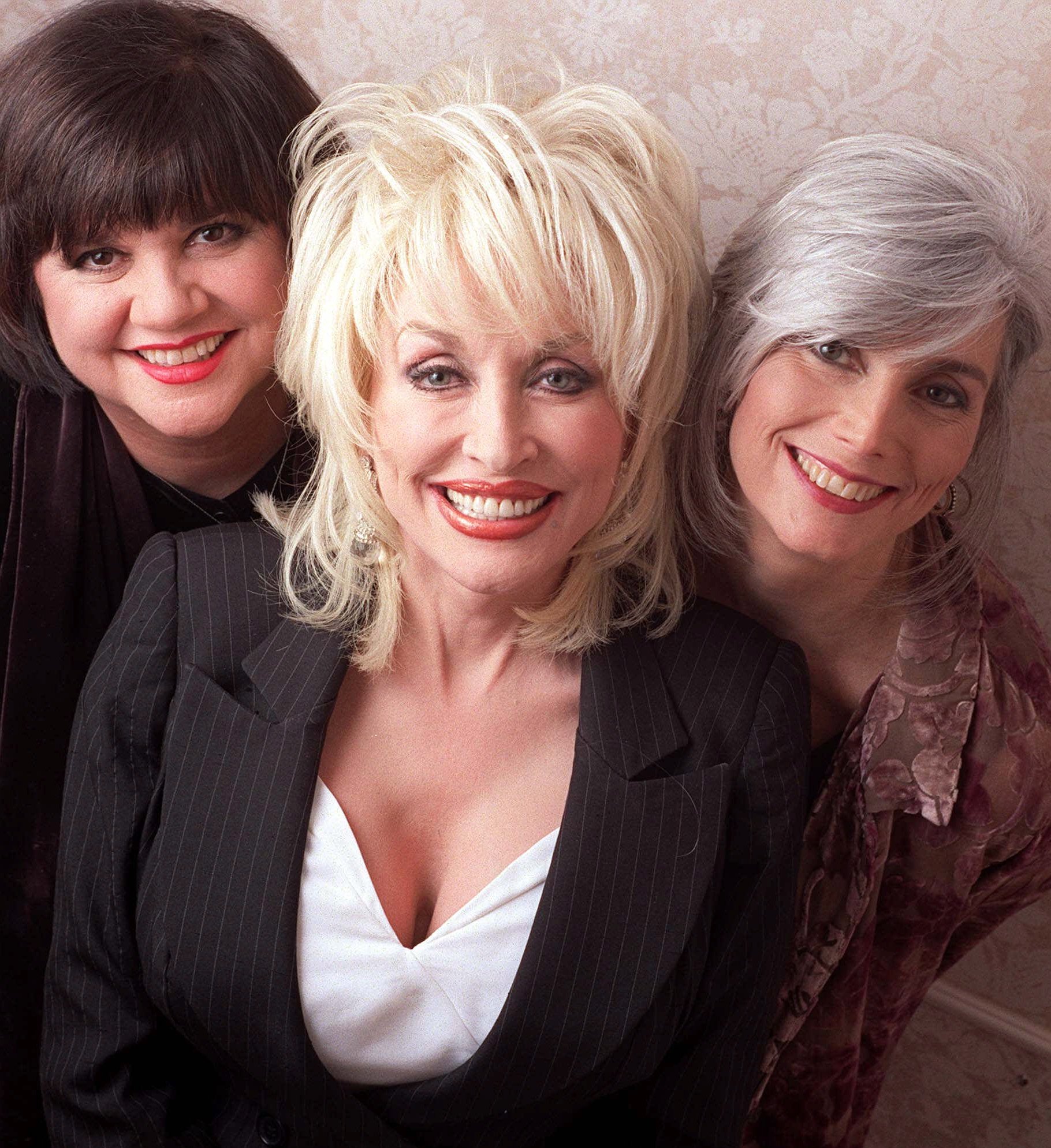
    FILE – Singers Linda Ronstadt, from left, Dolly Parton, and Emmylou Harris pose in New York on Feb. 11, 1999. (AP Photo/Jim Cooper, File)Jim Cooper

    And of course, she made jokes, kidding about the size of her chest while referring to a Super Bowl halftime show wardrobe malfunction: “If I was to pull a Janet Jackson tonight, I’d take out everybody in the first three rows.”

    Before a show at the Mann Center in 2005, Parton spoke to The Inquirer about her album Those Were the Days, on which she covered folk and pop songs like “Imagine,” “Blowin’ in the Wind,” and “Turn, Turn Turn.”

    “I’m one of those people that love all kinds of music,” she said. “I was always listening to all styles of music, and still do.” She went on: “Those songs give you a kind of hope … I am getting that sappy in my old age, to kind of wish things could be better.”

    In 2008, Parton performed at the Borgata in Atlantic City in support of her album Backwoods Barbie. In addition to the aforementioned instruments, she also played penny whistle and dulcimer.

    She kidded about Whitney Houston’s success with Houston’s smash hit cover of “I Will Always Love You”: “She made me lots of money,” she said. “I will always love her.”

    In Atlantic City, Parton reaffirmed the theme that there was always more to her than meets the eye: “I’m just a backwoods Barbie, in push-up bra and heels,” she sang. “I might look artificial, but where it counts I’m real.”

    That night, she also talked about working hard on writing new songs for the musical 9 to 5, which opened on Broadway the next year. She predicted that her work ethic was going to compel her to keep clocking in until the end of her days.

    “I’ll fall dead on in the middle of a song in front of y’all,” she said cheerfully, “high heels to heaven.”

    Dolly Parton performs in concert on her “Pure & Simple Tour” at the Mann Center for the Performing Arts on June 15, 2016, in Philadelphia. (Photo by Owen Sweeney/Invision/AP)Owen Sweeney/Invision/AP

    Parton’s last Philadelphia concert was at the Mann Center in Fairmount Park in 2016.

    On that hot summer night, she was touring behind her 45th album, Pure & Simple, and told the story about writing both “Jolene” and “Coat of Many Colors” in one creative burst early in 1973.

    For an encore, she sang “Hello God,” a song of desperation and anger at the suffering that transpires on earth in heaven’s name: “We’re so selfish, cruel and blind / We fight and kill each other in your name, defending you / Do you love some more than others? / We’re so lost and confused.”

    Parton also played saxophone that evening, and sang about goosebump-inducing love and spirituality in Pure & Simple’s title cut, using words that could describe how her fans felt about her music:

    “It’s so pure it’s almost sacred / Simply put, it feels divine.”

  • Dolly Parton, music star, actor and beloved figure who spanned generations has died at 80

    Dolly Parton, music star, actor and beloved figure who spanned generations has died at 80

    Dolly Parton, the country music icon whose soaring vibrato vocals, poignant songwriting and sparkling costumes defined her rise from a log cabin in the Tennessee mountains to the height of stardom and acclaim, has died. She was 80 years old.

    Known for her curvy physique, massive blonde wigs and skin-tight outfits that served her self-deprecating wit, she was among the most beloved personalities in music and beyond — the rare celebrity whose appeal transcended generations, geography and politics.

    She wrote hundreds of songs, including classics like “Jolene,” “Coat of Many Colors” and “I Will Always Love You,” that totaled more than 100 million worldwide sales and more than 1 billion online streams. Parton, who plucked bejeweled banjos, guitar and dulcimers with her long fingernails during performances, was a generous philanthropist and successful businesswoman whose projects included a theme park in the Smoky Mountain foothills near her birthplace.

    Her career was forever influenced by her upbringing as one of 12 children born into what she called a “dirt poor” Tennessee family. She started her education nonprofit, Imagination Library, to send free books to children in Tennessee because her father, who quit school to work on the farm, struggled to learn to read.

    Parton’s first musical performances were in church, where her grandfather was a preacher. By age 10, she was learning guitar and singing on local television shows. At 13, she appeared on the Grand Ole Opry in Nashville, where Johnny Cash introduced her as “a little girl here from up in East Tennessee.”

    With a suitcase of songs, she followed her uncle, Bill Owens, also a songwriter, to Nashville after graduating high school in 1964. Fred Foster, who produced Roy Orbison, Willie Nelson and more, saw her potential and got her songs cut by other artists, as well as recording and releasing Parton singing her own material. By the mid-1970s, Parton was a Nashville queen.

    A key collaboration with Porter Wagoner

    Parton’s partnership with Porter Wagoner, a pencil-thin pompadoured star with flashy rhinestone outfits, was key to her career. She honed her acting skills on his syndicated TV show and he advocated for her to get a record deal at RCA. Their first duet, “The Last Thing On My Mind,” was released in 1967, the same year she started her own publishing company.

    While their duets were often big radio hits, Parton’s solo singles didn’t chart as high at first. With Wagoner as a co-producer, she began to adjust her country warble to a more polished, pop-leaning style.

    She got her first No. 1 solo single with “Joshua,” and reached the Top 5 with the ballad “Coat of Many Colors,” about how her mother sewed together scraps of clothes to make a coat Parton wore “so proudly” even as her peers mocked her for being poor. The song, with its Biblical references and ode to maternal love, was later made into a children’s book and a TV movie.

    In 1973, she had the hit that made her career — “Jolene,” a country music standard with its steady, churning rhythm and Parton’s repeated delivery of the title as she pleads for the woman not to steal her man.

    The song topped the country charts, crossing over to pop and later being released internationally, opening up new audiences for Parton. “Jolene” is one of her most covered compositions, including by Miley Cyrus (Parton’s goddaughter), Olivia Newton-John and The White Stripes.

    She left Wagoner’s show in 1974, amid reports of squabbling between the two, although they continued to record together and Wagoner stayed her producer for years after that. But the relationship turned litigious when Wagoner sued her in 1979 for millions in management fees and royalties.

    A pop crossover star

    She followed “Jolene” with a huge hit in 1974, “I Will Always Love You,” an ode and farewell to Wagoner that helped her win the Country Music Association’s female vocalist of the year back-to-back in 1975 and 1976. She famously turned down Elvis Presley, who wanted to record it, because she would not share publishing rights.

    Decades later, Whitney Houston’s version of “I Will Always Love You” became a smash for the soundtrack of her 1992 film “The Bodyguard,” and broke sales records. Houston won a Grammy for her performance in 1994, presented to her by Parton.

    “Here You Come Again,” a pop crossover hit and one of the few she didn’t write, further established Parton as a multi-genre entertainer and brought her first Grammy Award in 1979.

    “A lot of people thought I had totally lost my mind,” she told The Associated Press in 1979 of changing her singing style. “But I had no fear of change. I expected success, but I was braced for failure. I didn’t care if people thought I was wrong. In my own heart, I knew I was doing the right thing.”

    Parton’s other crossover hits included the title song from “9 to 5,” the 1980 comedy starring Parton, Jane Fonda and Lily Tomlin; and her duet with longtime friend Kenny Rogers, “Islands in the Stream,” written by brothers Barry, Maurice and Robin Gibb of the Bee Gees. In 1987, she collaborated with Linda Ronstadt and Emmylou Harris on the million-selling “Trio” album.

    Down home charm

    For millions of fans, she was simply “Dolly,” a mixture of Southern charm, humor and glamour. But she was also considered a feminist role model for holding the reins of her own career, writing her own songs, owning her content and looking after her finances in an entertainment world dominated by men.

    Parton was open to making fun of herself; when she hosted “Saturday Night Live” in 1989 she told the writers that her only restrictions were she wouldn’t curse and she wouldn’t make fun of Jesus. She regularly joked about her breasts or her dumb blonde appearance, but with a wink that she was the one controlling the laughs. In the memoir “My Life So Far,” Fonda remembered Parton’s way with a wisecrack, “usually high raunch,” and a laugh that was “somewhere between a girl’s giggle, an explosive shriek, and a cascade of little bells.”

    After her gown split down the front when she won CMA’s entertainer of the year in 1978, Parton quipped: “My Daddy said that’s what I got for putting 50 pounds of mud in a five-pound bag.”

    Throughout her career, she embraced her glamorous style, often wearing custom curve-hugging rhinestone dresses and bodysuits even if they drew tsk-tsks from others in the industry. Her look was always a part of her larger musical business plan.

    “I knew my songs were good even if I had been ugly as sin,” she told the AP in 2014. “So I thought, ‘Well, I would have probably chose to look this way even if I had been a waitress.’ I mean, this is my look. I mean, I like a lot of makeup. I like a lot of hair. I like flashy clothes. I like to show it off. But that’s just who I am.”

    She married Carl Dean, an asphalt paving contractor, in the mid-1960s; they were together until his death in 2025 at the age of 82. Though rarely seen in public, he was an influence on her career. She told NPR that she wrote “Jolene” about a flirty bank teller who seemed to take an interest in Dean.

    ‘9 to 5’ to Hollywood and Broadway

    In her first major film role, Parton played alongside Fonda and Tomlin as office workers who rebel against their tyrannical boss in “9 to 5.” Critic Roger Ebert called her a “natural-born movie star” and the title song earned her two Grammy Awards and a ranking of 78 on the American Film Institute’s list of top 100 movie songs. Starring roles in the “The Best Little Whorehouse In Texas” and “Steel Magnolias” followed.

    “I never thought of myself as a movie star,” she told AP’s Bob Thomas in 1979. “I knew I’d be a star, but as a singer or as a writer of songs or books or poetry. I wanted to be a famous performer and wear flashy clothes, but singing in movies was not one of my ambitions. My family lived in the mountains and we didn’t see movies.”

    Her love affair with TV and film continued for decades, with appearances alongside Cyrus on “Hannah Montana” and adaptions of her music for Christmas specials, films and streaming series. She also became an author, her books ranging from the memoir “Dolly” to a bestselling novel co-authored by James Patterson, “Run, Rose, Run,”

    The stage adaptation “9 to 5: The Musical” debuted in 2009, and “DOLLY: A True Original Musical” had been set to open in December 2026.

    United States of Dolly

    Beyond her music, Parton’s most lasting legacy might be her generosity and broad appeal.

    When a deadly wildfire swept through the Smokies in 2016, she held an all-star telethon and set up a foundation that sent monthly checks to residents whose homes were damaged or destroyed.

    She opened up her Dollywood theme park in East Tennessee, a major economic driver in Appalachia that draws tourists from around the country, and established the Dollywood Foundation. She wrote books and memoirs, was inducted into the Country Music Hall of Fame and was given a lifetime achievement award by the Recording Academy. She was selected for the Jean Hersholt Humanitarian Award from the Academy of Motion Picture Arts and Sciences in 2025.

    With 55 Grammy nominations and 10 wins, Parton is the third-most nominated woman in Grammy history, only behind Beyoncé and Taylor Swift.

    Parton spanned social and political divides, through multiple generations of fans, urban and rural and in between. In tumultuous election years, it wasn’t uncommon to see “Dolly for President” shirts. But she was strict in not voicing her own political beliefs, often turning aside questions about presidents, candidates, policies and other controversies.

    “I don’t do politics,” Parton told host Jad Abumrad on his hit podcast “Dolly Parton’s America.”

    “I have too many fans on both sides of the fence. Of course, I have my opinion about everything, but I learned years ago to keep your mouth shut about things.”

    When the Rock & Roll Hall of Fame Foundation sent out a ballot in 2022 with her name on it, though she said she felt she hadn’t earned it, the voters answered with a “Hello, Dolly.” Parton showed up to the induction ceremony, performed and then put out a rock album.

  • The Philly Music Fest has announced this year’s surprise headliner

    The Philly Music Fest has announced this year’s surprise headliner

    It’s a Philly Music Fest tradition.

    The nonprofit, “Our Genre Is Philly” festival that celebrates its 10th anniversary in October, has made a habit of holding back the name of a mystery headliner whose identity can’t be announced until the artist is done playing another previously booked show in the Philadelphia market.

    Surprise headliners in recent years that PMF founder Greg Seltzer has brought into the cozy confines of Ardmore Music Hall have included Mt. Joy, Waxahatchee, and, last year, Dr. Dog.

    This year, it’s Gregory Alan Isakov, the singer-songwriter who was born in South Africa and raised in Philadelphia.

    Isakov now lives on a farm he owns outside Boulder, Colo., where he grows organic salad greens and root vegetables — and records roots music songs, like those on his 2023 album Apaloosa Bones, in his home studio.

    The announcement of Isakov’s PMF shows — which will feature openers Cailoa on Oct. 12 and Madi Diaz on Oct. 13 — couldn’t be made until he was done playing with the Philly Pops at the Highmark Mann on Friday night. He also was scheduled to perform with the Philadelphia Orchestra at the Saratoga Performing Arts Center in New York state on Saturday.

    This year’s PMF performers — who will raise money for Philly music education organizations including Rock to the Future, Settlement Music School, Beyond the Bars, and Key of She — include Mo Lowda and the Humble, RJD2, Wax Jaw, Sweet Pill, Owen Stewart, Roberta Faceplant, Sug Daniels, Marietta, the Dillinger Escape Plan, and Immanuel Wilkins.

    Philly band Sweet Pill plays Philly Music Fest in October. Their new album is “Still There’s a Glow.”Juliette Boulay

    The fest includes nine showcases in six clubs over seven nights. Tickets to each event are sold separately, and available now for Isakov and all other shows at phillymusicfest.com.

  • Rush’s bittersweet first Philly stop sounded like a wake at times, but only in a raucous Irish way

    Rush’s bittersweet first Philly stop sounded like a wake at times, but only in a raucous Irish way

    Rush didn’t waste any time before making things emotional.

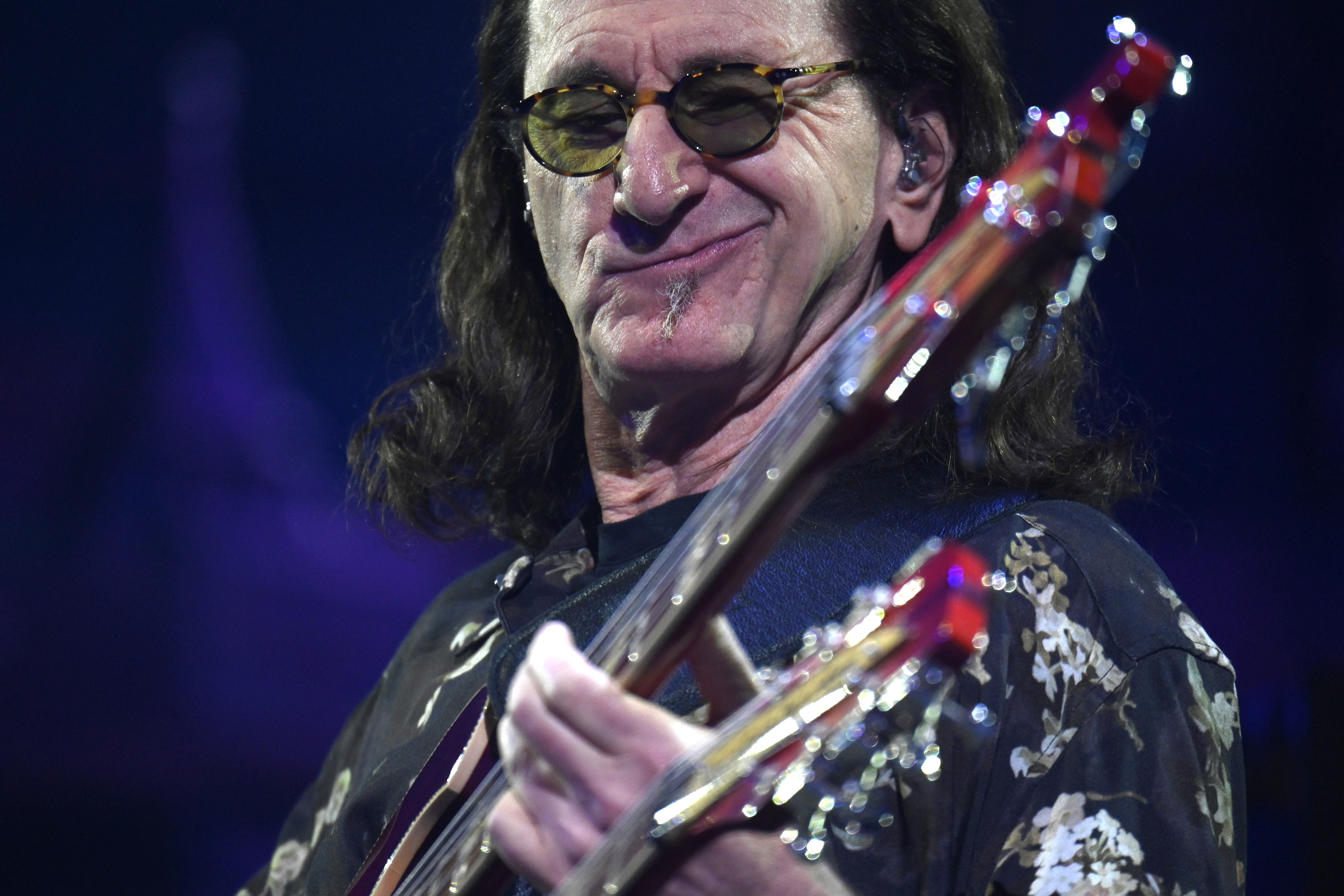
    Just one song into their nearly 2½-hour set on Friday night, bassist and frontman Geddy Lee stepped to the mic to take care of some business. “Before we move along, there’s something about this city that I need to pay tribute to,” he told the sold-out Xfinity Mobile Arena, proceeding to dedicate “The Spirit of Radio” to the late Pierre Robert, the beloved WMMR host who died last year.

    The heartfelt encomium was in keeping with the tone of the evening, far more bittersweet than your usual triumphant comeback. The band last appeared on the same stage in 2015, when the venue was still known as the Wells Fargo Center, its lengthy absence owing to the loss of drummer Neil Peart from brain cancer in 2020.

    Bassist Geddy Lee of Canadian rock band Rush performs onstage during their ‘Fifty Something’ reunion tour at Xfinity Mobile Arena in Philadelphia on Aug. 21, 2026.Bastiaan Slabbers / For The Inquirer

    The “Fifty Something” Tour, which makes its second stop at the arena on Sunday, was framed as a tribute to the revered drummer and lyricist as much as a celebration of the band’s history. Introducing “Freewill,” from 1980’s Permanent Waves, Lee spoke about the philosophical nature of many of Peart’s lyrics, choking up as he mentioned the topics of “loss, recovery from loss, and love.”

    This Canadian wake was decidedly of the raucous Irish variety, though, as the poignant videos and heartfelt dedications proved to be brief interludes amid an overwhelming sense of joy.

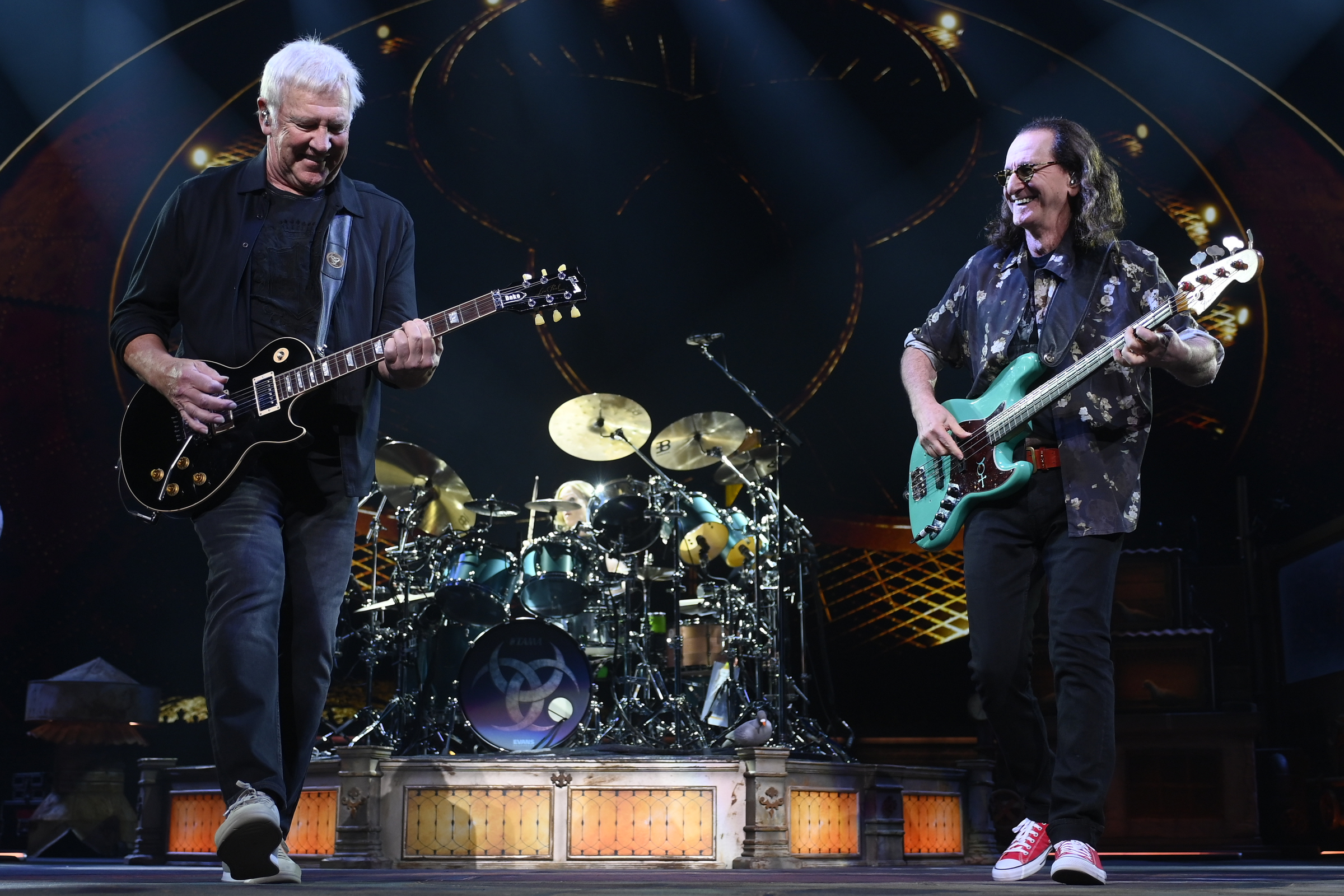
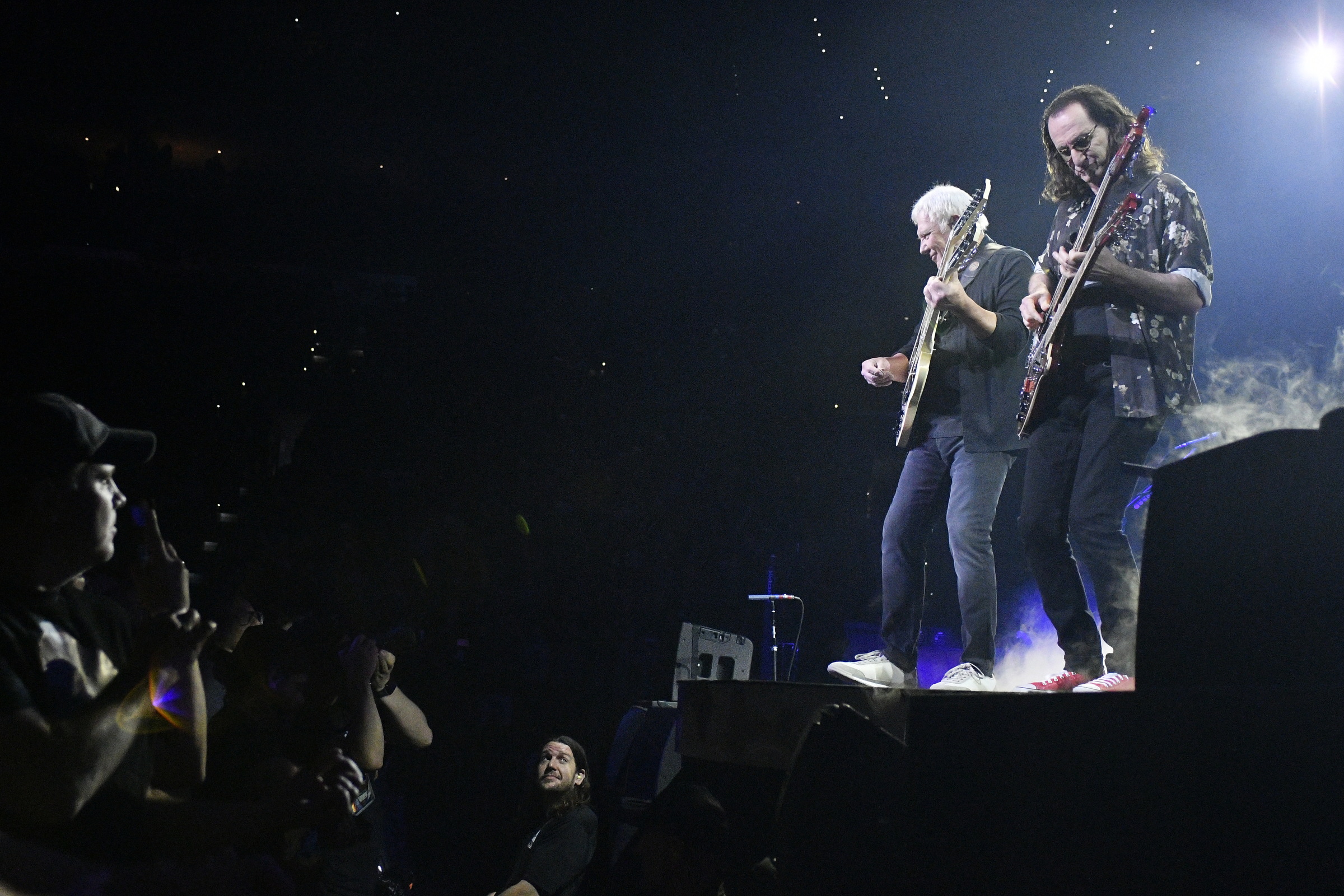
    The 70-somethings Lee and guitarist Alex Lifeson are lifelong friends, and their playful interactions often feel like they are reverting to childhood, albeit at the same time pulling off the musical equivalent of higher mathematics. Lee skipped and leaped across the stage with giddy youthfulness, laughing and sneaking behind Lifeson for mid-song bouts of hide-and-seek.

    The bassist was downright giddy following the band’s daunting 1978 instrumental “La Villa Strangiato.”

    “Man, that’s a boatload of fun,” he gushed.

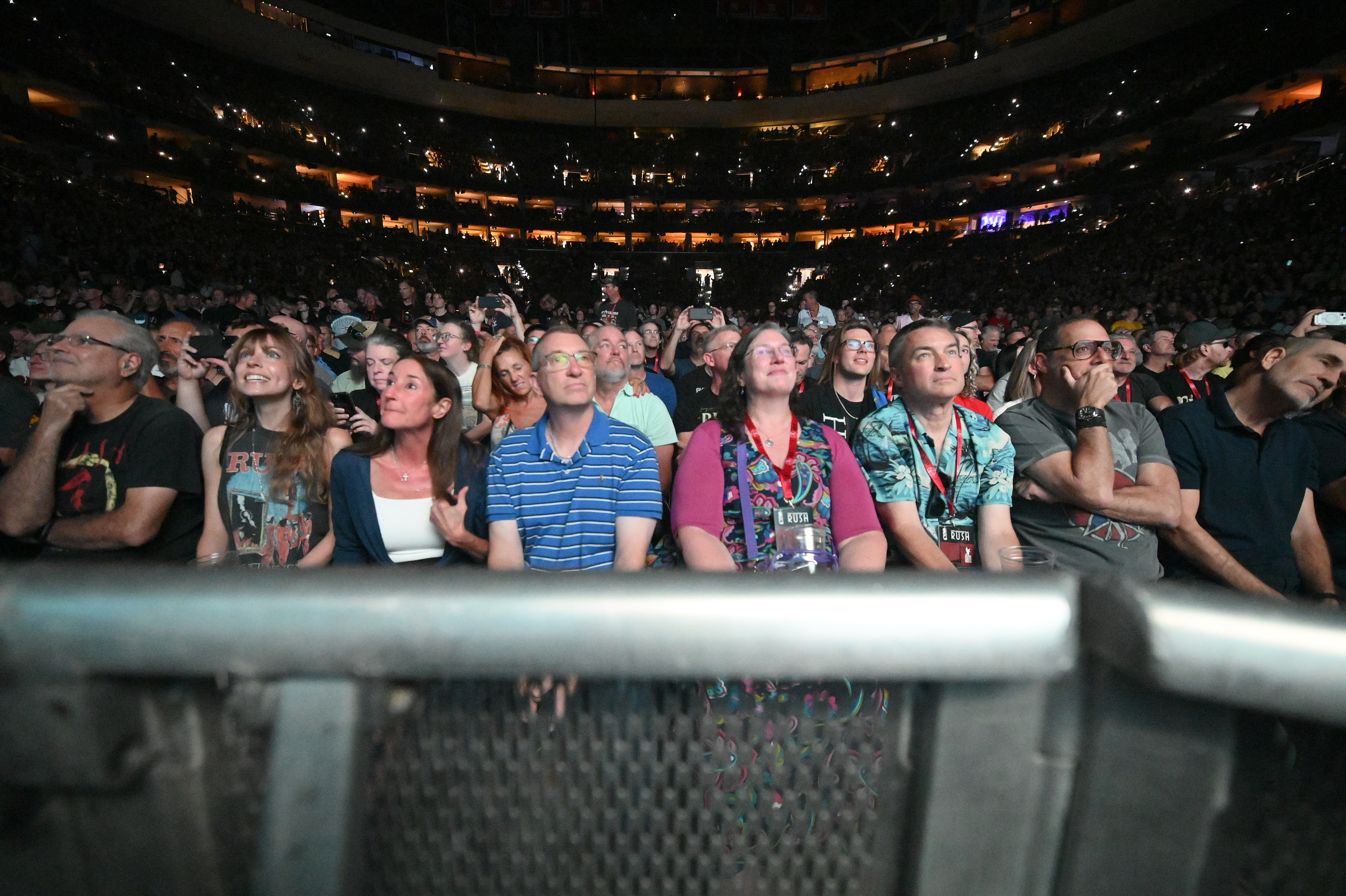
    Fans of Canadian rock band Rush watch the opening film during the ‘Fifty Something’ reunion tour at Xfinity Mobile Arena in Philadelphia on Aug. 21, 2026.Bastiaan Slabbers / For The Inquirer

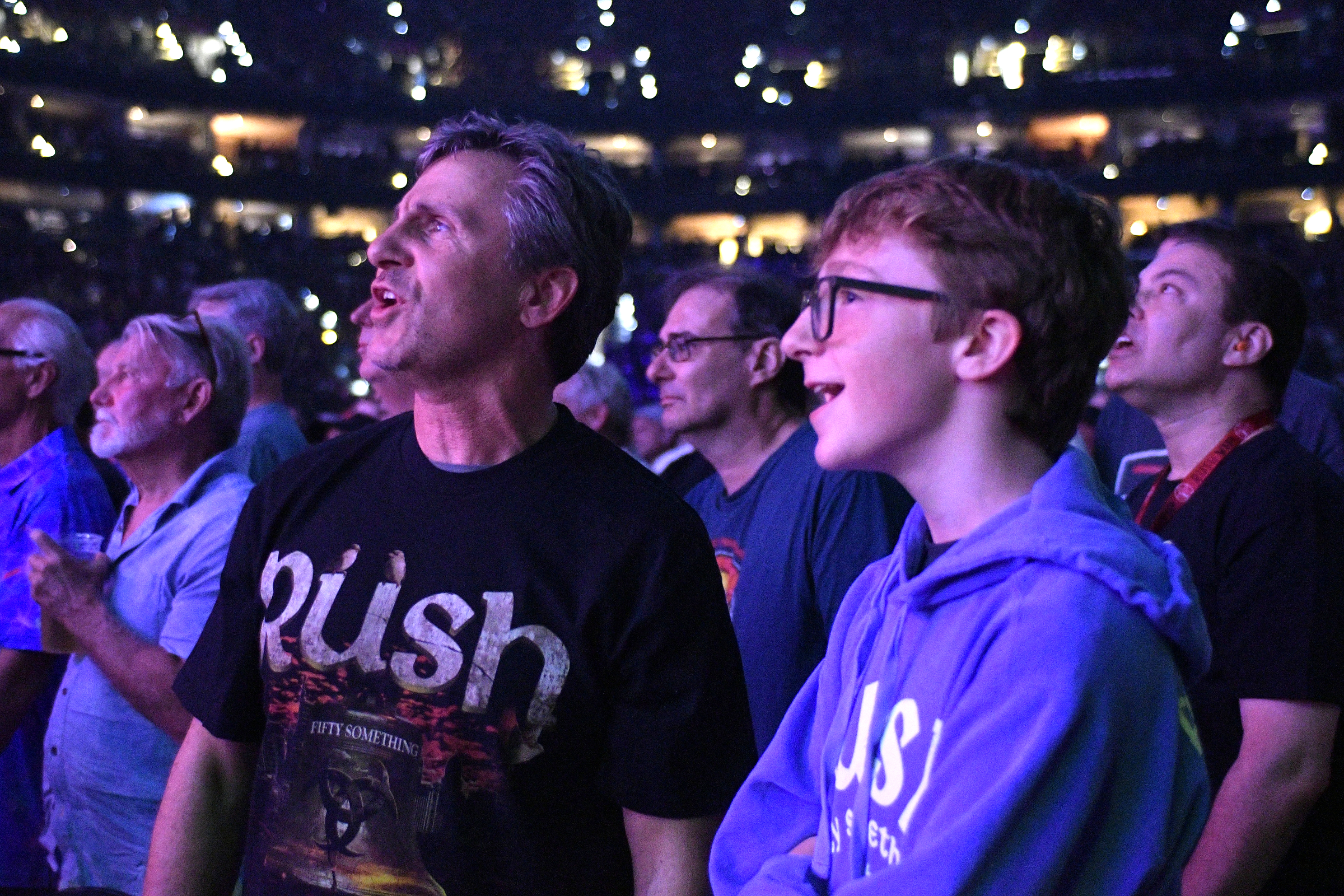
    Rush’s return to performing after more than a decade was clearly a source of rabid anticipation for the Philly faithful, the vast majority of whom had shrugged off the usual taboo about wearing the T-shirt of the band they had come to see.

    But the band, almost as well-known for its offbeat sense of humor as for its complex time signatures, decided that if one of the most dedicated fan bases in rock could wait 11 years, they could wait just a bit longer.

    When the lights went down, the crowd’s ovation was answered by a six-minute video in which the septuagenarian rockers mocked their own longevity.

    Fans of Canadian rock band Rush react during the ‘Fifty Something’ reunion tour at Xfinity Mobile Arena in Philadelphia on Aug. 21, 2026.Bastiaan Slabbers / For The Inquirer

    Following a Citizen Kane-inspired crane into a foreboding retirement community (“The Villas of Strangiato,” naturally), the camera follows a Wonka-like trio of curiosity seekers on a quest to find Rush. Along the way they find Lee and Lifeson in outlandish costumes and silly accents as, respectively, a “slightly used sausage” vendor and a doughnut-hoarding ex-general, and transformed into a pair of animated blackbirds a la Dumbo; the South Park kids as “Lil’ Rush”; and Jason Segal and Paul Rudd reprising their roles from I Love You, Man.

    Finally the seekers discover a pair of magical robes (don’t ask), opening a portal that travels through half a century of Rush history to unveil a steampunk rooftop set and the band itself, Lee and Lifeson both spryly wielding double-necked axes and kicking off not with one of their classic rock staples but with 1977’s 11-minute epic “Xanadu.”

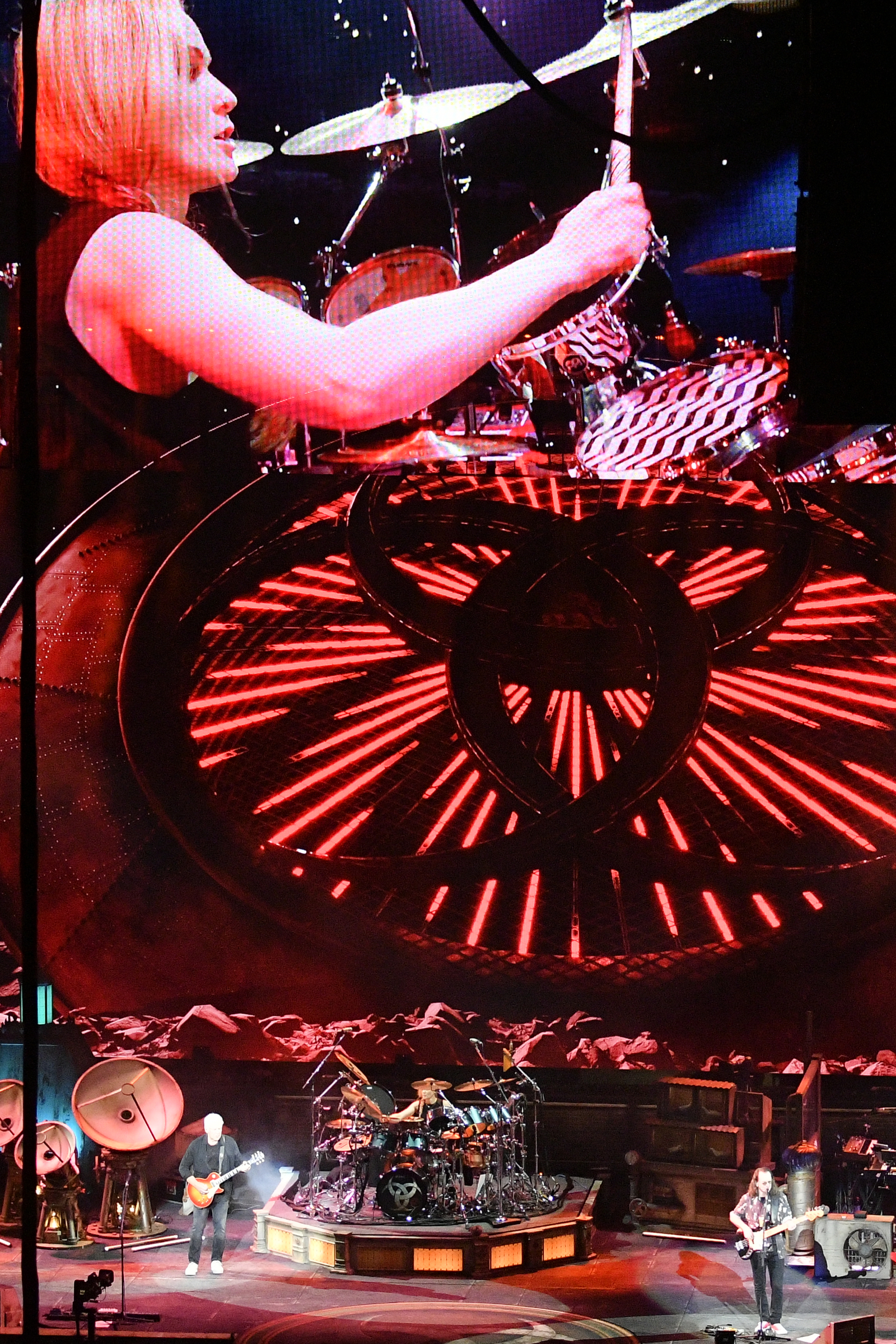
    Guitarist Alex Lifeson, lead vocalist and bassist Geddy Lee, and drummer Anika Nilles of Canadian rock band Rush perform onstage during their ‘Fifty Something’ reunion tour at Xfinity Mobile Arena in Philadelphia on Aug. 21, 2026.Bastiaan Slabbers / For The Inquirer

    Did I call the fan base “dedicated”?

    True enough, but it would be at least as accurate to use words like demanding and persnickety about an audience that likes its arena rock intricate and exacting.

    Lee and Lifeson arrived with decades’ worth of nostalgia-tinged goodwill behind them, meaning that the skeptics’ eyes were trained almost exclusively on the drum chair, populated for the first time by the 43-year old German YouTube phenomenon Anika Nilles.

    Stepping behind the drum kit of the late Neil Peart has to be one of the most thankless gigs in all of rock, but Nilles executed it thrillingly. Peart’s unique alchemy was his ability to pair his mind-boggling precision and intricacy with ebullient, almost vocal cadence.

    Drummer Anika Nilles of Canadian rock band Rush performs onstage during their ‘Fifty Something’ reunion tour at Xfinity Mobile Arena in Philadelphia on Aug. 21, 2026.Bastiaan Slabbers / For The Inquirer

    Nilles brought her own personality to that blend while knowing — and nailing — those iconic barrages that every fan in the place expected to hear. It was well appreciated, with the crowd roaring louder at certain drum fills in “Tom Sawyer” or “YYZ” than they did for some of their favorite singalong choruses.

    For their part, the veteran members didn’t need the goodwill.

    Lee was in strong voice all evening, soaring to vibrant highs on “Freewill” or “Closer to the Heart.” Instrumentally, he and Lifeson retain their exuberant virtuosity. They navigated the labyrinths of “YYZ” or the multipart, 20-minute epic “2112,” which opened the second set in its entirety, with the fervor of a teenage garage band paired with the exactitude of lab technicians.

    Guitarist Alex Lifeson and lead vocalist and bassist Geddy Lee of Canadian rock band Rush perform onstage during their ‘Fifty Something’ reunion tour at Xfinity Mobile Arena in Philadelphia on Aug. 21, 2026.Bastiaan Slabbers / For The Inquirer

    The musical acrobatics were obvious high points, but the concert was equally memorable for its emotional standouts — the band pouring its hearts into “The Garden,” a relatively obscure choice from its final album, 2012’s Clockwork Angels; or the highway-speed abandon and wistfulness emanating from an exhilarating “Red Barchetta.”

    Rush went back to the beginning for its two-song encore, both dating back to its self-titled 1974 debut. “Finding My Way” was the show’s purest rock and roll song, while “Working Man” acknowledged original drummer John Rutsey, who died in 2008.

    One last bit of mourning, one last moment of life-affirming euphoria.

    Rush performs on its “Fifty Something” tour again Sunday, Aug. 23, 7:30 p.m., at Xfinity Mobile Arena.