The period following mandatory minicamps generally is a quiet time in the NFL. But the Eagles have not been closed for business on the personnel front.
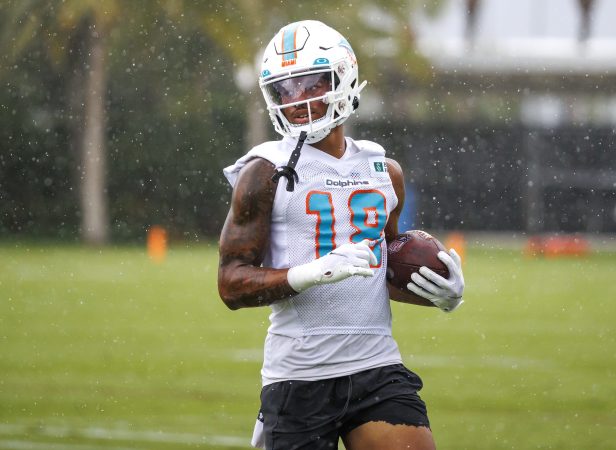
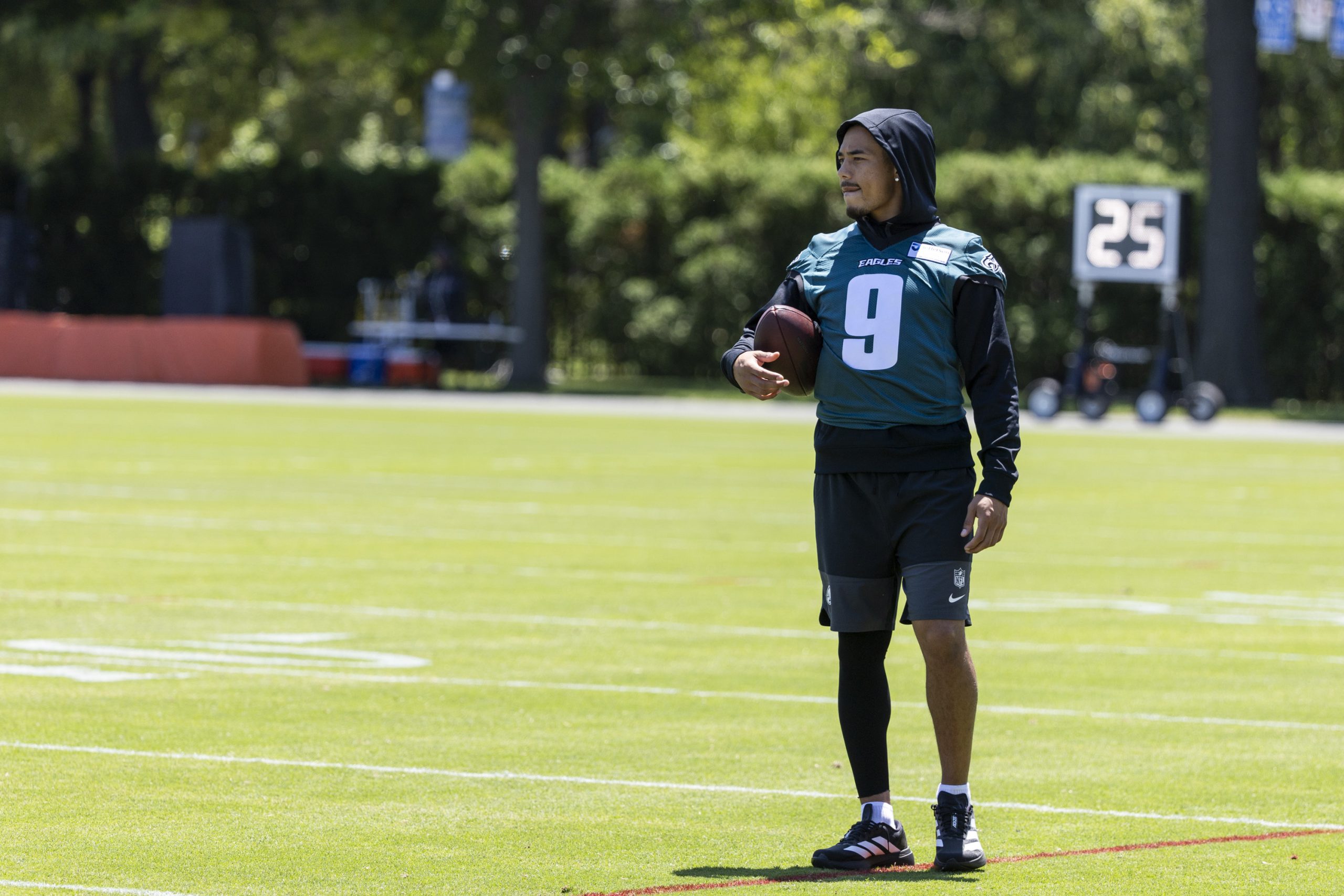
Ezukanma, 26, is a former Texas Tech standout who was the Dolphins’ fourth-round pick in 2022. He spent time on the Jaguars practice squad in 2025, but spent this past season with the DC Defenders of the UFL. DC lost to the Louisville Kings in the league championship — the United Bowl — last Saturday.
Ezukanma was one of the top kickoff returners in the UFL, returning 18 kicks for 443 yards (24.6 yards per return) while catching 15 passes for 227 yards and one touchdown. He already has chemistry with Eagles passing game coordinator Josh Grizzard, who was a quality control coach in Miami during his stint there.
Wade, 27, was a fifth-round pick by the Ravens in 2021. He played college ball at Ohio State and played in 20 games in three seasons with the Patriots. Wade was drafted by the UFL’s Dallas Renegades, where he logged three interceptions in eight games this season.
In other team moves this week, the Eagles waived defensive back Brandon Johnson and placed linebacker Joe Tryon-Shoyinka on the reserve/retired list.
The offseason program is over, and the next time the Eagles get together at the Jefferson Health Training Complex, it will be for training camp — the official start to the 2026 NFL season.
The longest stretch of downtime around the league is right now, so it’s a good time to take stock of what we just saw during organized team activities and mandatory minicamp.
The workouts allowed for a first look at new offensive coordinator Sean Mannion’s offense and a few new key players for the Eagles, but they also left some lingering questions about the team during the break.
Here are some of the things we’re still thinking about:
How long should the probationary period be for the new-look offense?
The short answer: Longer than will probably be allowed.
Eagles fans read and watched analysis here and probably elsewhere that told them Mannion’s offense was little match for Vic Fangio’s defense during the recent practice sessions open to reporters.
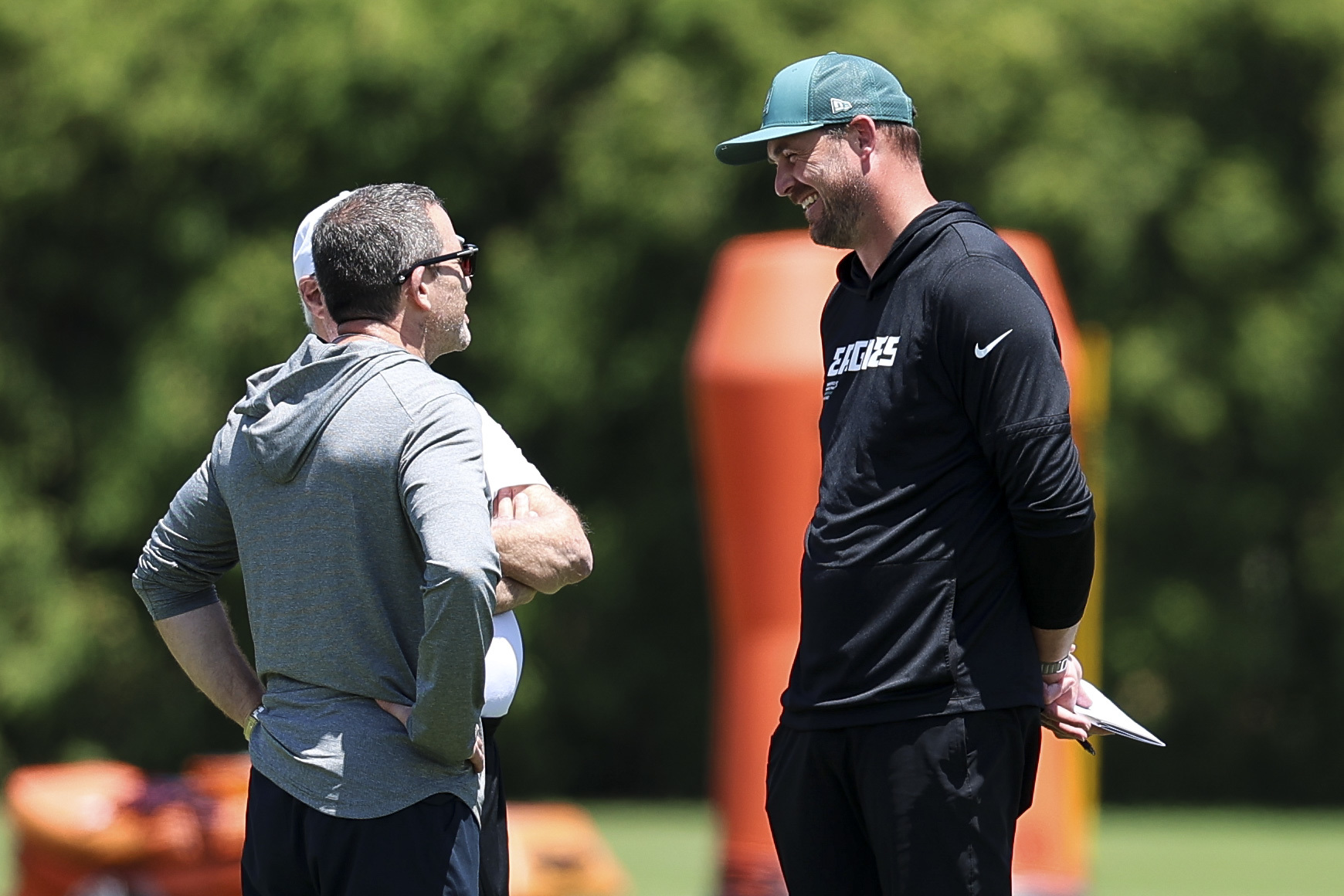
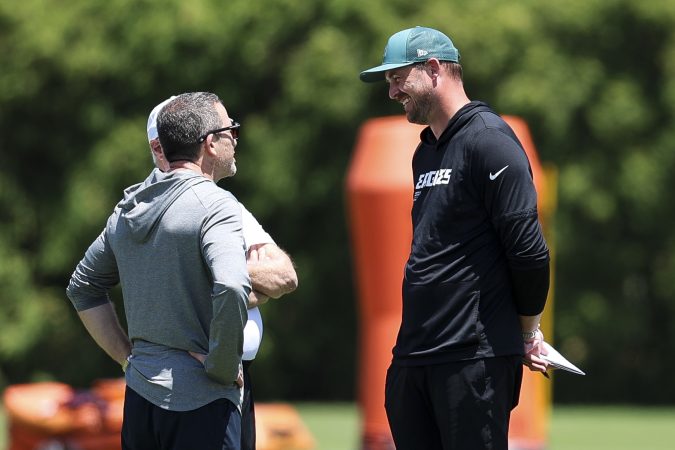
Jeffrey Lurie and Howie Roseman speak with Sean Mannion (right) during mandatory minicamp.Monica Herndon / Staff Photographer
What’s the reaction going to be if the offense looks sloppy a few practices into camp? It’ll be an outsized one, for certain. But it shouldn’t be.
There are a few reasons why:
Fangio’s defense might be among the best in the NFL this season.
The Eagles are installing a new offense with new blocking schemes.
Jalen Hurts is taking more snaps from under center.
The Eagles are using more play action and more motion.
Football is football, and some players will say as much, but there are going to be some growing pains before the offense is firing on all cylinders.
Plus, while the focus of many will be on the play-calling and what the playbook looks like, it may all just come down to the health and force of the offensive line anyway.
That’s not what the question asked, though. How long should the probationary period be? The view here is that drawing major conclusions about Mannion’s offense won’t have enough context until at least three games into the regular season. Patience levels are personal, right?
Is it possible that the A.J. Brown trade was such a foregone conclusion that the biggest roster storyline in an otherwise pretty standard offseason program was the backup quarterback position?
Andy Dalton and Tanner McKee are splitting reps behind Hurts, Nick Sirianni says, but the coach wouldn’t commit to saying McKee is the backup quarterback, the spot on the depth chart he held last season. He doesn’t have to commit to anything in June or even July or August.
But the fact that Dalton took so many reps with the second-team offense was interesting.
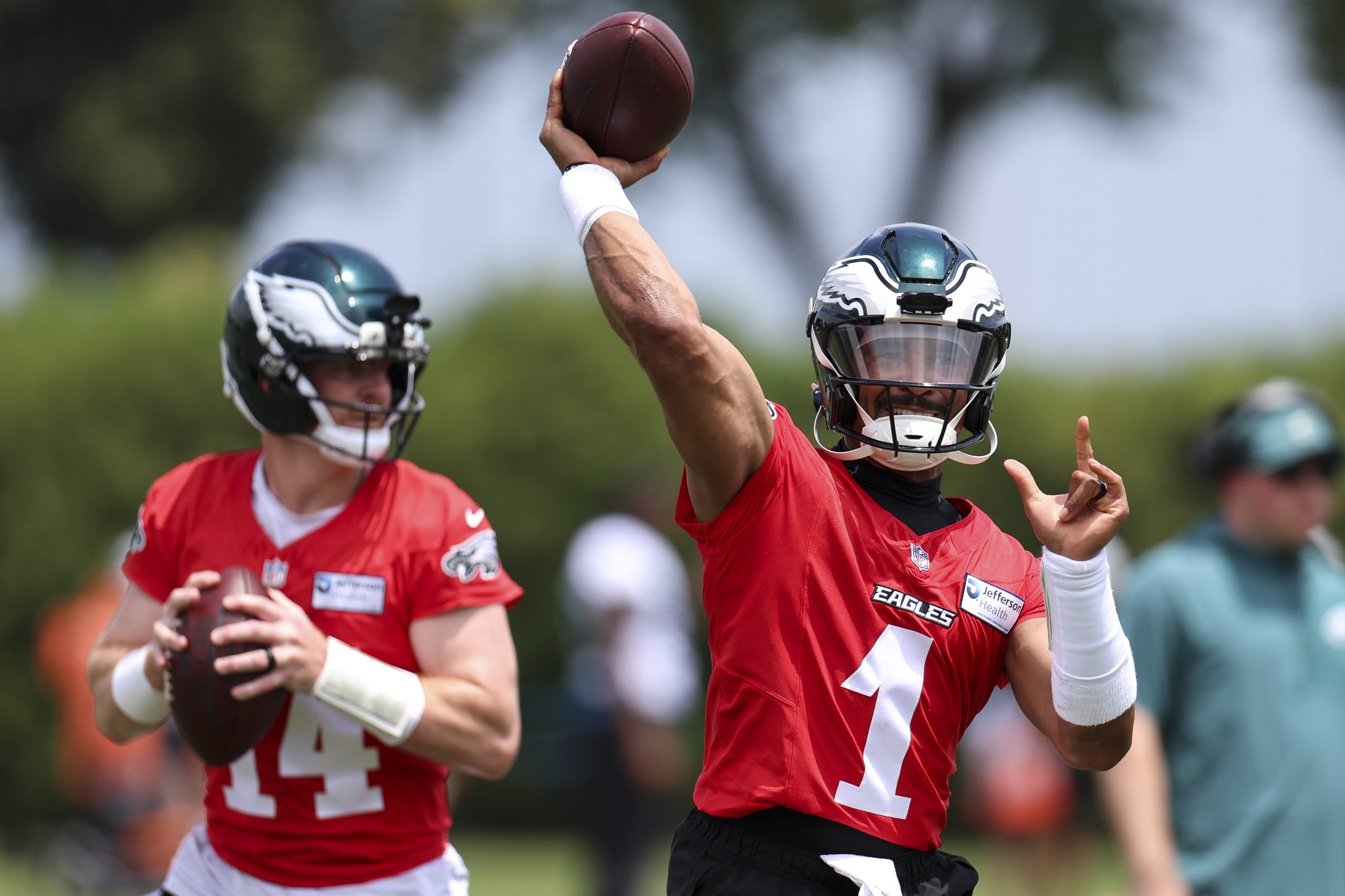
Quarterbacks Andy Dalton (left) and Jalen Hurts work out during mandatory minicamp.Monica Herndon / Staff Photographer
It’s fair to wonder if McKee will be on the roster by the time camp breaks, and the Eagles are crunching numbers to get to their initial 53-man roster. The Eagles used a fifth-round pick on quarterback Cole Payton after sending a seventh-round pick to Carolina for Dalton.
It’s hard to imagine they will keep four quarterbacks on the roster, and it’s hard to imagine them wanting to expose a fifth-round pick to waivers unless Payton has the type of uninspiring training camp sixth-round pick Kyle McCord had last year.
The guess here is that Howie Roseman is hopeful McKee puts some good play on tape in the preseason, and the Eagles get some draft value back in a trade for their 2023 sixth-round pick, who is entering the last year of his contract.
Is a quiet spring from top Eagles rookies concerning?
It shouldn’t be.
But their first three picks were hampered by injuries.
First-round pick Makai Lemon, who will be asked to contribute in a big way right away with Brown out of town, missed some time with a hamstring injury but is expected to be ready for camp. Sure, he didn’t get a ton of on-field reps, but it wasn’t like he was on an island somewhere while the Eagles were installing stuff in the meeting rooms.
Makai Lemon was bothered by a hamstring injury during minicamp. Tyger Williams / Staff Photographer
Eli Stowers, the second-round pick out of Vanderbilt, did not stand out in early workouts despite the Eagles raving about his athletic traits after selecting the tight end at No. 54. He then wore a sleeve on his right leg during the final workout of minicamp and sat out some drills.
Markel Bell, the big tackle the Eagles took in the third round, also missed the last practice of minicamp.
As for Stowers, Sirianni continued to have a lot of good things to say about him on the last day of the spring session. The former college quarterback is still only a few seasons into playing tight end, and while the Eagles are high on him — “He has an unusual skill set at the tight end position with the matchups that he is going to be getting,” Sirianni said— they also know he has a lot of work to do.
It’s way too early to be alarmed about the rookie class.
Will there be any roster additions before training camp?
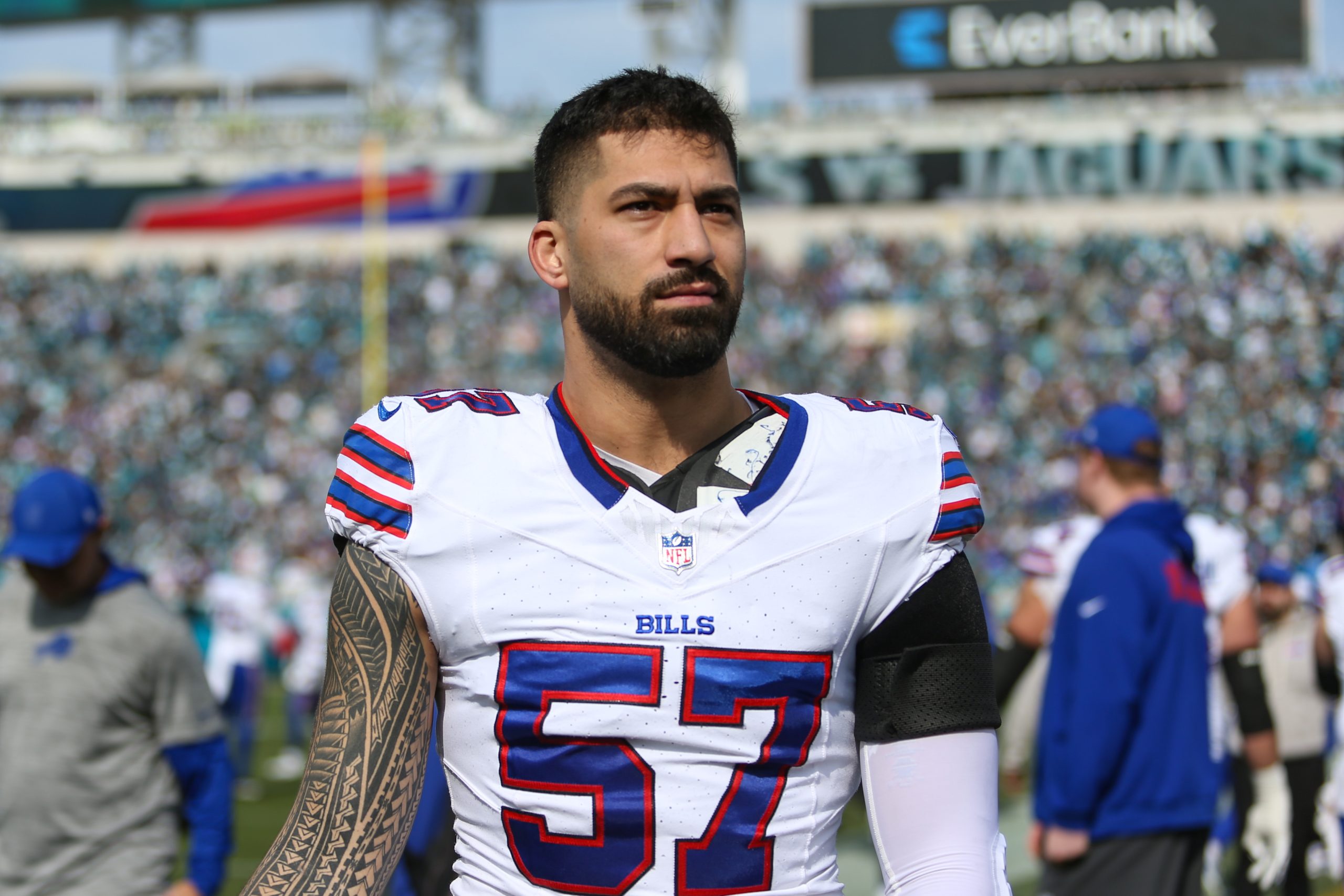
Roseman kind of answered that question just hours after the final on-field workout finished when he signed former Bills edge rusher A.J. Epenesa. That move made some more sense on Tuesday, when the Eagles placed free-agent signing Joe Tryon-Shoyinka on the reserve/retired list.
Epenesa, who was drafted one spot after Hurts in 2020, originally signed with the Browns, but that deal did not finalize after Epenesa’s physical. Edge rusher was one spot, however, where the Eagles needed some more talent for some bottom-of-the-depth-chart competition. There’s a clear trio at the top in Jonathan Greenard, Jalyx Hunt, and Nolan Smith, and then there’s Arnold Ebiketie. Epenesa, who had six-plus sacks in three consecutive seasons from 2022 to 2024, figures to be in the mix for a roster spot.
A.J. Epenesa, seen here as a member of the Bills, is a recent addition to the pass rushing depth chart. Gary McCullough
Where else could the Eagles upgrade?
Safety might be the only position on the team that still has some question marks. The Eagles plan to use Cooper DeJean at safety in their base defense with Quinyon Mitchell and Riq Woolen manning the outside corner spots. But that leaves around 75% of the reps next to Drew Mukuba for someone not named DeJean. Right now, it’s Marcus Epps’ spot to lose. But Epps is 30 and was available as a practice-squad addition last August.
Behind Epps is Michael Carter II, who has played mostly nickel, and J.T. Gray, another 30-year-old with mostly special teams experience. Then there’s a mix of young and unproven players.
Fangio has expressed confidence in Epps, and thinks Carter has the chops to play safety, but don’t be surprised if Roseman adds some more talent to the group before camp.
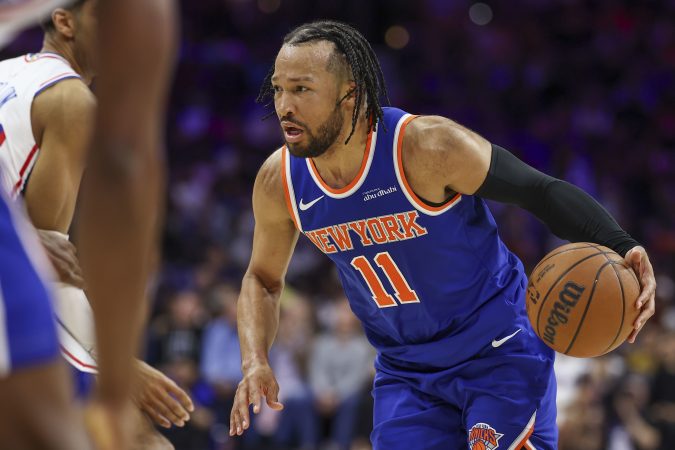
At 10 a.m. Thursday, Knicks superstar Jalen Brunson will ride up Broadway through Manhattan’s “Canyon of Heroes,” showered with the same sort of ticker tape that fell upon Teddy Roosevelt, John Glenn, and Queen Elizabeth II.
If Brunson has any sense of loyalty, he’ll wear his Jalen Hurts jersey. He’s done it before.
Why not? After all, Brunson and Hurts are essentially the same guy. Soft-spoken leaders. Tireless workers. Kind-hearted humans.
And, after the Knicks’ five-game series win over the Spurs in the NBA Finals on Saturday, they are both unlikely champions.
On Jan. 18, 2023, three nights before the Eagles hosted the Giants in a wild-card playoff game, Brunson entered Madison Square Garden wearing a midnight green Eagles jersey with the No. “1″ on the front.
It read, “Hurts” on the back.
The athlete whose mirror image Brunson has become.
As they left college and began their pro careers, experts measured everything about them — everything, that is, except grit, determination, work ethic, and heart. That didn’t seem to matter.
What mattered was that Brunson was too short, too slow, didn’t shoot well enough, couldn’t defend. What mattered was that Hurts was too short, his arm was too weak, he couldn’t run a prostyle offense, he’d never won the Big Game.
Sure, they won as amateurs. But on the pro stage? Bah. These guys weren’t going to win anything.
Now, they can compare rings.
Roots
Brunson went to high school about an hour north of Chicago, but he spent his preteen years in South Jersey. Naturally, he developed a passion for the Eagles.
When he wore the Hurts jersey to MSG three years ago he was trolling the New York fans as much as he was supporting the Birds. Brunson, a social media virtuoso with a mischievous personality, delights in this sort of subtle jousting.
Brunson also is an unlikely NBA success story, in the manner and mold of Hurts.
Both were viewed as athletes who likely had reached their peak in college. Neither was considered a viable option to lead a team to a title.
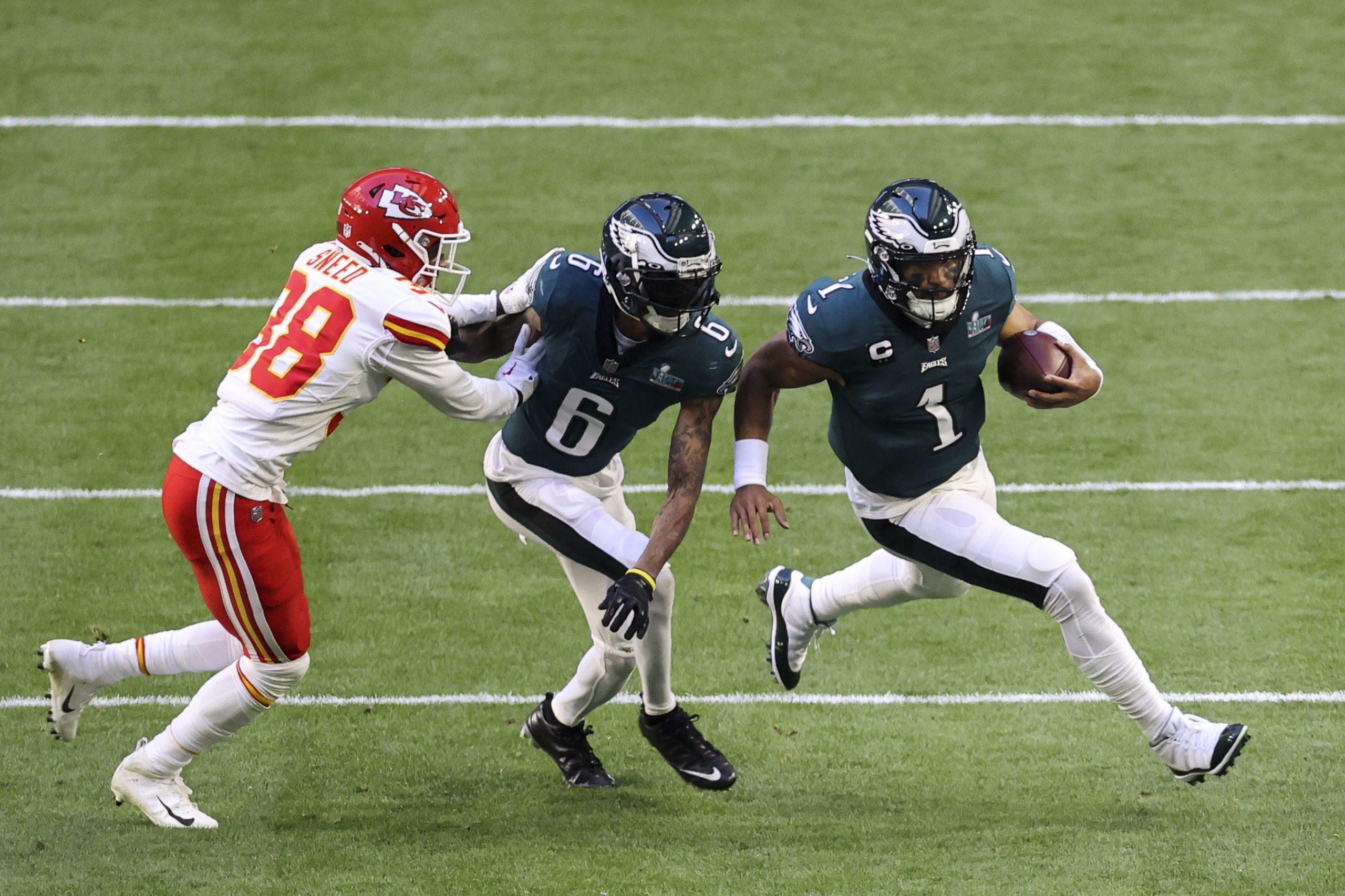
Jalen Brunson said that Jalen Hurts (1) motivated him after beating the Chiefs in Super Bowl LIX: “He just wants to win. So I commend him for that.”Monica Herndon / Staff Photographer
Who could know that, 3½ weeks after Brunson wore his jersey, Hurts would fall just three points short of winning Super Bowl LVII? Who could know that, two years later, Hurts would win Super Bowl LIX and the game’s Most Valuable Player award?
Did that inspire Brunson?
“Absolutely,” he told the New York Post after the Eagles beat the Chiefs for the Lombardi Trophy in Super Bowl LIX. “Obviously, all the criticism about Jalen Hurts and him not being a champ. And he’s said the whole time that he doesn’t care about anything individual. He just wants to win. So I commend him for that.”
Who could know that, 3½ years after Brunson wore Hurts’ jersey, that Brunson would lead the Knicks to their first NBA championship in 53 years? Who could know that he would score 45 points in a Finals closeout game, tied with Michael Jordan for third-most all time?
Nobody. That’s who. That’s why their parallel ascent to the top of their games thrills and warms your heart.
Brunson was a two-time NCAA Tournament champion at Villanova who, as a junior, swept player of the year awards in 2018, after which he declared for the draft. Mistake? He wasn’t drafted until the second round, the 33rd overall pick, by the Mavericks, who, in 2022, let him escape to the Knicks via free agency. (Don’t give the Knicks a pass: In 2018, they drafted Kentucky bust Kevin Knox 24 slots ahead of Brunson).
The 2018 draft was remarkably fruitful. It produced two-time reigning NBA MVP Shai-Gilgeous Alexander, who also won an NBA title last year. It produced six-time All-Star and two-time scoring champion Luka Dončić, for whom the Mavericks traded Trae Young and a first-round pick on draft night (then, insanely, traded again, to the Lakers, last year).
Luka went third in the draft. SGA went 11th.
However, eight years later, Brunson carries the greatest value of anyone in that draft. For that matter, Brunson is the greatest 33rd pick in league history.
Hurts might be the best 53rd pick in NFL history.
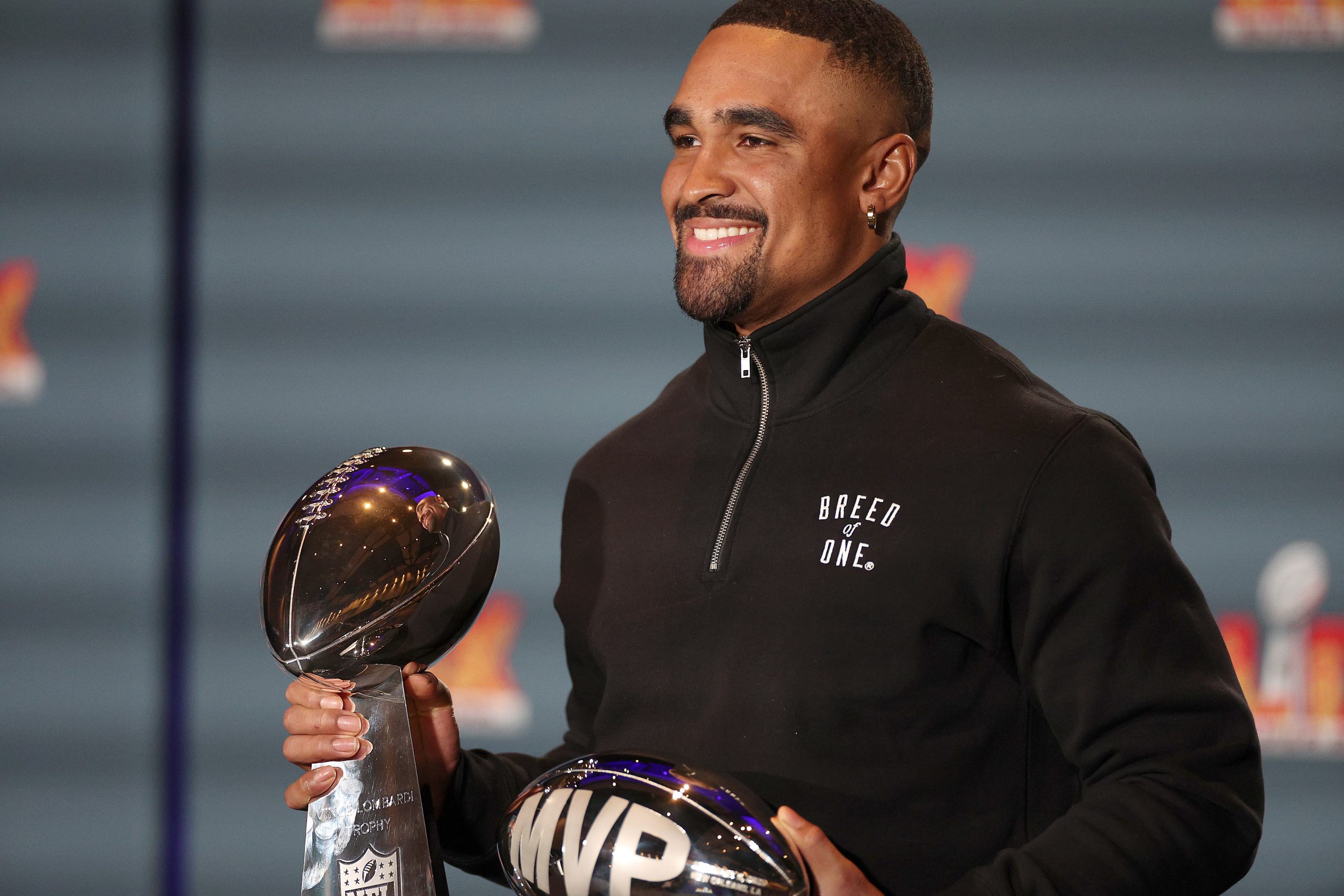
Jalen Hurts poses with the MVP and Lombardi trophies the day after winning Super Bowl LIX in 2025.David Maialetti / Staff Photographer
Winner, Part 2
Like Brunson, Hurts wins like he breathes.
He helped win a national title at Alabama as a sophomore starter but lost his starting job. After a final season with the Crimson Tide and early graduation, Hurts transferred to Oklahoma, where he led the Sooners to the four-team College Football Playoff and finished second in Heisman Trophy voting. Still, like Brunson, Hurts didn’t fit the NFL quarterback mold and fell to the Eagles in the second round, a team that announced they considered him a long-term solution as Carson Wentz’s backup. By the end of his rookie season, Hurts had stolen Wentz’s job.
Hurts might not be the best second-round player in NFL in history, considering Brett Favre and Larry Allen were second-rounders. In this moment, he might not be the best 53rd overall pick; wideout Davante Adams went 53rd in 2014.
But Hurts is, inarguably, the best value in the 2020 draft. That included Joe Burrow, Justin Herbert, CeeDee Lamb, and Justin Jefferson.
Those guys have two things in common:
They all were drafted at least 31 picks ahead of Hurts.
And none of those guys have rings.
Winner, Part 3
Brunson articulated the core trait that drives both of the Jalens when he said Hurts “just wants to win.”
Indeed, Hurts’ most consistent motto, often recited after ugly wins in which the Eagles’ passing game sputters, is: “Keep the main thing the main thing.”
This is how badly Brunson wants to win:
He left more than $100 million on the table when he signed a contract extension in 2024 instead of 2025, money that allowed the Knicks to pursue starters OG Anunoby and Karl-Anthony Towns, Brunson’s chief wingmen in the Finals against the Spurs.
Brunson can recoup some of that money in his next deal, but he risked injury for two years on a lesser contract, all so he could win.
Mission accomplished.
Reality check
No matter how deep his love for Philly’s football team, and no matter how strong his admiration for Hurts, there’s no chance that Brunson on Thursday will recognize the kinship with the man who shares his name. After all, Brunson’s Knicks and their fans swept the Sixers out of the playoffs and swept team president Daryl Morey out of his job.
But no matter what Brunson wears Thursday morning as he rides down Broadway, he and Hurts will forever be linked as storybook athletes who bucked the measurables, ignored the analytics, and, in their quiet, determined way, put two big-shoulder cities on their own broad shoulders, quieted their critics, and walked away as ultimate winners.
Julian Lurie wanted to push the Eagles beyond their normalities. Two years into his nebulously titled role in “business and football operations strategy,” the owner’s son had immersed himself in all facets of the team, but he had taken particular interest in — and authority over — original content and social media.
For NFL teams’ multimedia departments, schedule release day is their Super Bowl, and the Eagles’ creators had come up with a concept that was off-color by team standards. There would be censored curse words and jokes made at the expense of opponents.
Lurie loved the idea — which called for passionate Eagles fans to undergo psychological evaluations — and saw it as cutting edge. But a few senior leaders weren’t comfortable with the swearing and ridicule and liked it even less after watching the first cut. Lurie still advocated for the video, but he listened to counterarguments, and edits were made.
“There was a compromise,” a senior leader told The Inquirer.
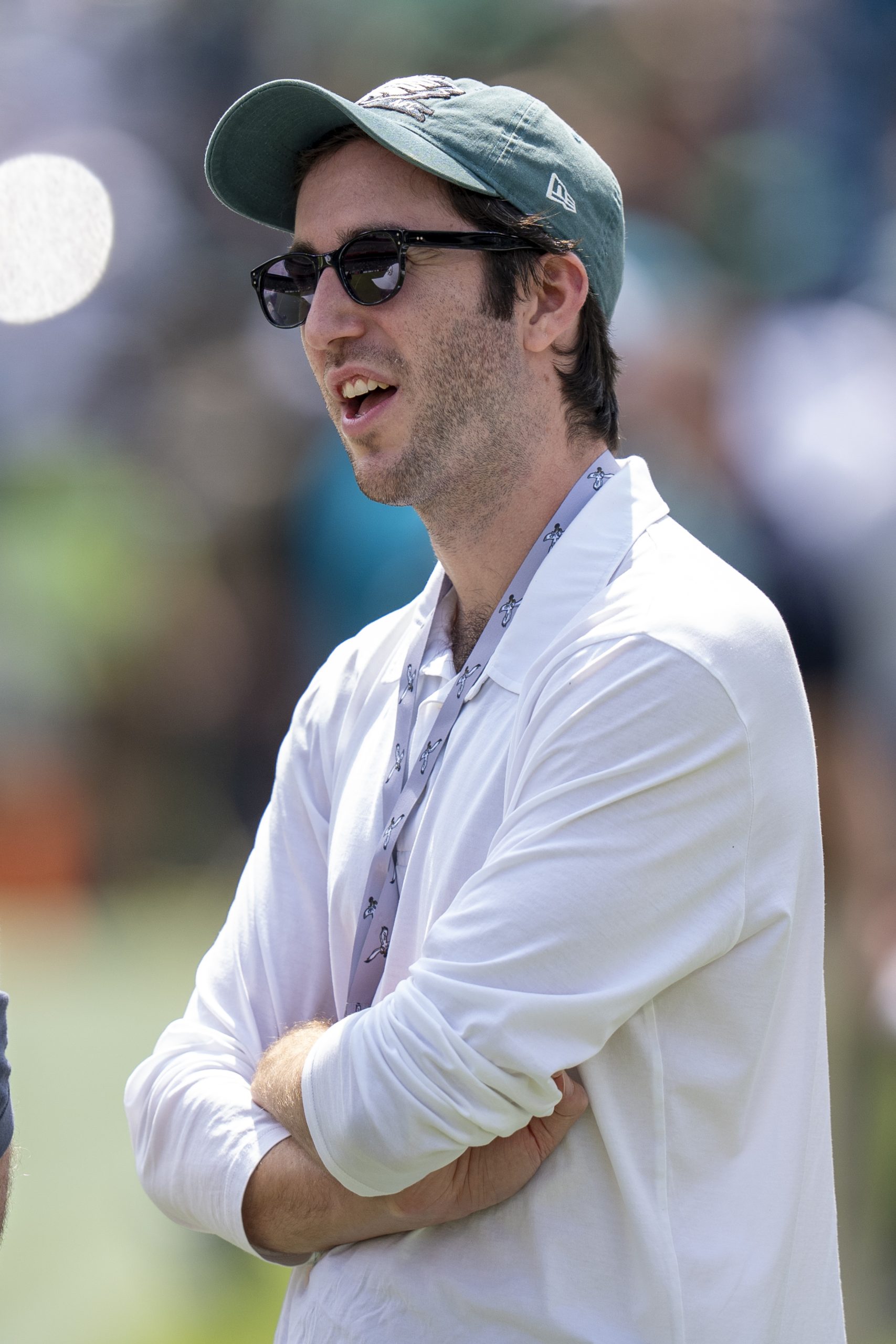
Julian Lurie’s title with the Eagles is “business and football operations strategy.”Chris Szagola
Obscenities and insults were taken out — but not all of them. Asked how Lurie could hold that much sway without having an official executive role, a high-ranking team source gave the following explanation:
“His last name.”
Lurie is not just Eagles owner Jeffrey Lurie’s only son, he is his successor. And while that reality has caused occasional challenges since he took a formal role in the family business four years ago — and as management navigates his increasing influence — many key figures within the organization believe the younger Lurie already has been an asset.
“He is really smart. He’s very creative. He’s very empathetic,” an Eagles source said. “He’s really good at putting himself in other people’s shoes. He’s fair, and he listens and is making a real attempt to understand everything about the organization.”
The Inquirer spent the last several months talking with nearly two dozen Eagles sources, past and present, as well as other NFL sources familiar with the team’s inner workings, about the 31-year-old Lurie. Many sources requested and were granted anonymity because they were not authorized to speak publicly on the subject or felt they couldn’t speak freely if named.
The Eagles declined interview requests for the Luries and other key members of the organization for this story.
The interviews with sources revealed Julian’s already considerable prominence. They also depicted an intense but thoughtful young man who was born not only into great privilege, but with a shared civic passion for the football team his father bought in 1994, the year before Julian was born.
“If I lived in Philadelphia and I was an Eagles fan, I would feel really good about him as a steward of the franchise in the future,” a team source said. “I really do think he cares about the team and the city and the players.”
To prepare for his eventual birthright, Julian has delved into the nuts and bolts of operations. From affairs as expansive as spending on the business and football sides to matters as minute as the strains of grass on the practice fields, he has asked the “why” behind the “what.”
His 74-year-old father remains chairman and CEO and has said he has no plans of ceding control, even if he now spends less time in Philadelphia than previously. But Julian has been a part of decision-making for some time now, which may come as a surprise to outsiders who know next to nothing about the Eagles’ future owner.
Inside the Jefferson Health Training Complex, his standing — if not his title — is clear.
“I didn’t even know he had one,” an Eagles staffer said about the younger Lurie’s job description. “To everyone here, he’s an owner.”
And as an owner, Julian can sit in on every high-level meeting. On the business side, it might be about the exploration of a new stadium concept or corporate sponsorships. On the football side, he may be present for team meetings or sit-downs on free agency and the draft. And he’s often in the building.
Jeffrey Lurie has final say and still exerts control when it comes to major decisions. But he has longtime direct reports in team president Don Smolenski and general manager Howie Roseman, whom he has empowered. The same applies to sixth-year coach Nick Sirianni.
In his first few years with the Eagles, Julian might have sat in the corner and said nothing. But as his understanding of the team has grown, so has his voice. Like his father, he is a questioner.
“He likes to ask the opinions of people,” a high-ranking team source said of the younger Lurie. “Some people here don’t like to be questioned. But he’s a smart guy, and he doesn’t think he has all the answers. He’s willing to change his mind.
“He says, ‘I’m not right all the time, but I want people to be real and be honest with me.’”
The initial ambiguity about his role and his relatively speedy inclusion into decision-making, however, led to an adjustment period and occasional bumps in the road. The biggest sticking point, according to several sources close to the situation, was over the budget.
“When you add another dynamic to that, there’s always growing pains,” a team source said, “but not to the point where relationships have suffered.”
The Eagles have been one of the most successful NFL franchises over the last decade, having won two Super Bowls and gone to the playoffs in eight of the last 10 seasons. Smolenski, who has overseen business operations since 2012, and Roseman, who was given full authority over football in 2016, have built a robust enterprise.
That growth has mirrored the increase in wins. But there has been some bloat, and Julian took it upon himself to examine the Eagles’ expenditures. Some of that was for his own knowledge in preparation for when he succeeds his father.
But the Harvard graduate also wanted to explore more efficient ways to allocate spending, team sources said. “Honest conversations” were had, according to one source close to the situation, and Julian eventually came to appreciate much of the existing process. He also was credited with making suggestions that contributed to on-field success.
“From where he’s started to now,” a team source said, “it’s like night and day.”
His more significant contributions have come in presiding over fan-facing parts of the franchise, like original content and image and likeness. Julian spent two years working for Overtime, a sports media company based in New York, before joining the Eagles. And before that, he was a member of the NFL’s Junior Rotational Program, a two-year undergraduate internship.
His bosses at both outlets said Julian was serious-minded, hardworking, and brought zero entitlement to the job.
“He’s quiet, but he has a sense of humor and he laughs, and he’s willing to use that constructively,” former Overtime CEO Dan Porter said. “It’s not like he fits hardcore into some archetype like that. He’s honestly just a young person wanting to add value and learn in the world.
“And he also just happens to, a) be really smart, and, b) his dad owns the Eagles.”
Jeffrey Lurie is widely considered one of the NFL’s best owners after his three-plus decades in the league. His son will have big shoes to fill when the time comes. Julian is an outside-the-box thinker like his father, but he also wants to bring a younger sensibility to the Eagles — as he did with the schedule release video — sources close to him said.
He’s also become the more visible Lurie at team headquarters. But the elder Lurie, who spends most of his time at his West Palm Beach, Fla., estate, said his absences aren’t representative of a loosening of the reins.
“Maybe I still have a lot of gray hair, but I am probably more involved than ever, ironically,” Jeffrey Lurie said in March. He added, “It’s not that it’s behind the scenes. It’s very overt. But I will talk to my executives more often and probably with more intensity because I have a son that’s growing and learning everything.
“And, so, he can both watch how focused and intense I am still and yet, at the same time, learn from all the executives we have.”
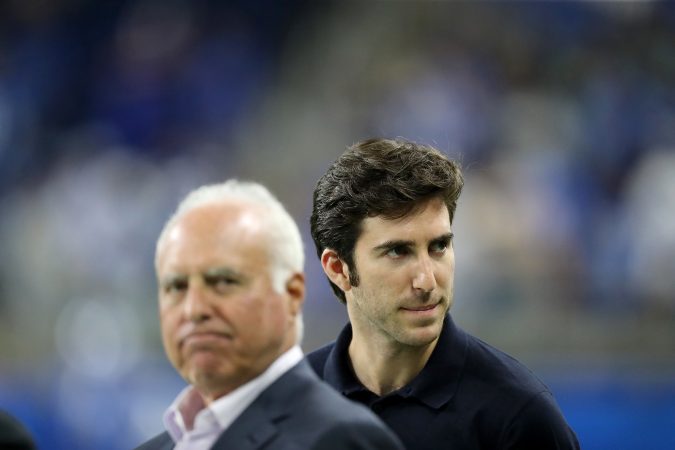
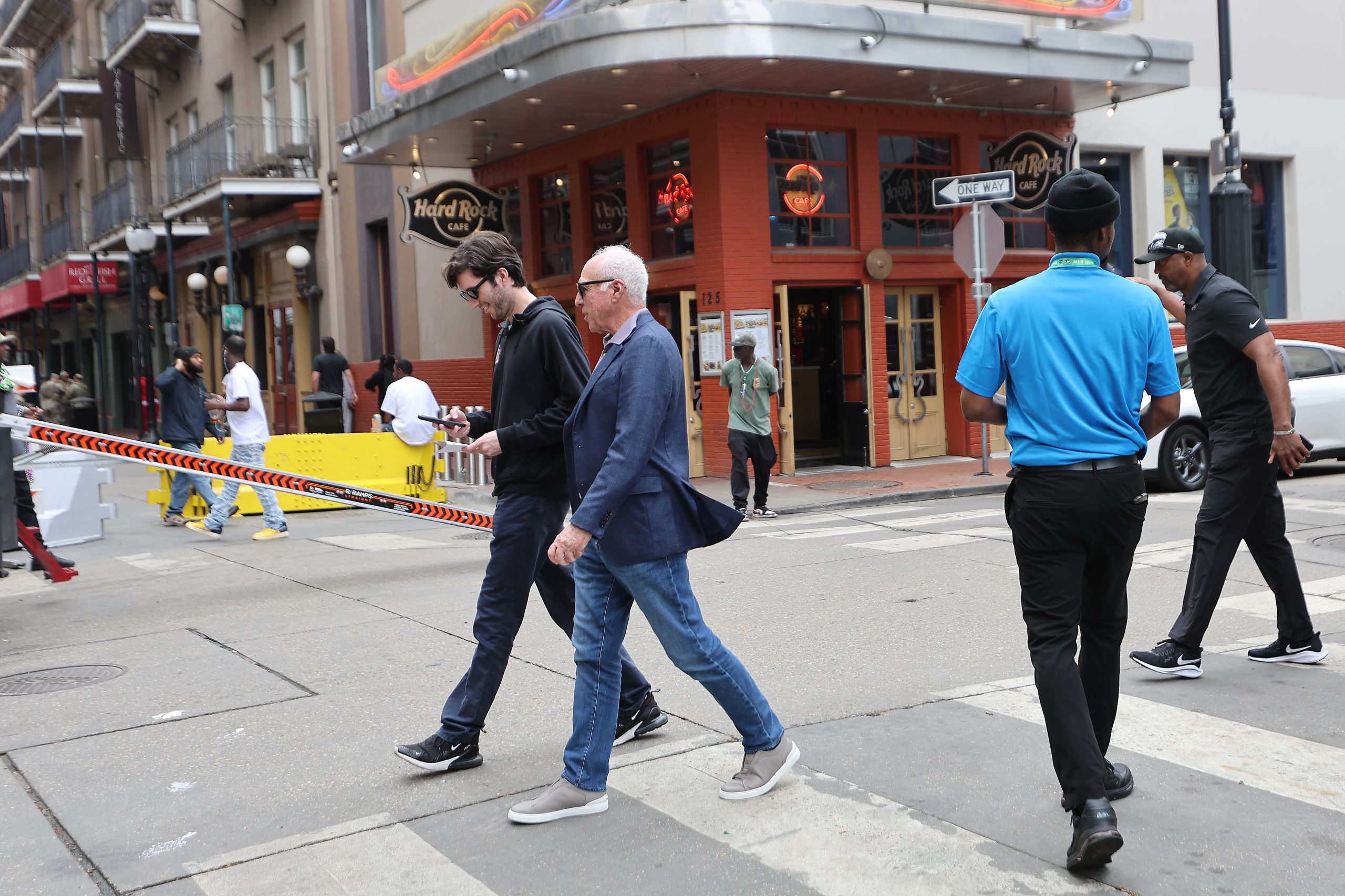
Julian Lurie (left) and his father, Eagles owner Jeffrey Lurie (right), walk across Bourbon Street during Super Bowl week in 2025.David Maialetti / Staff Photographer
Be a learner
Jeffrey said he has no plans to retire soon. When he talks about his good health in private, he often mentions his mother, Nancy Lurie Marks, who recently turned 99. But that hasn’t stopped some team leaders from wondering about a timeline regarding Julian’s succession.
“There’s no timeline, but I love the way it’s been going,” Lurie said three months ago at the league meetings in Phoenix. “He’s quite involved in the business operations, the football operations, philanthropic operations, marketing. He’s getting a great, great sort of feel for everything, and that’s the best way to do it.
“It’s not to speed it up.”
NFL owners recently approved succession plans for two teams. Last year, the Colts transferred Jim Irsay’s ownership to his three daughters following his death. And in March, the league affirmed the plan for Raiders owner Mark Davis, who doesn’t have children, to give a minority owner, Michael Meldman, the option to purchase a majority stake.
NFL ownership has long been a family enterprise. More than half the league’s 32 teams remain under family control, with prominent last names like the Rooneys, Maras, and Hunts having owned prosperous franchises for 60-plus years.
There also have been family-run teams that haven’t thrived or experienced generational decline.
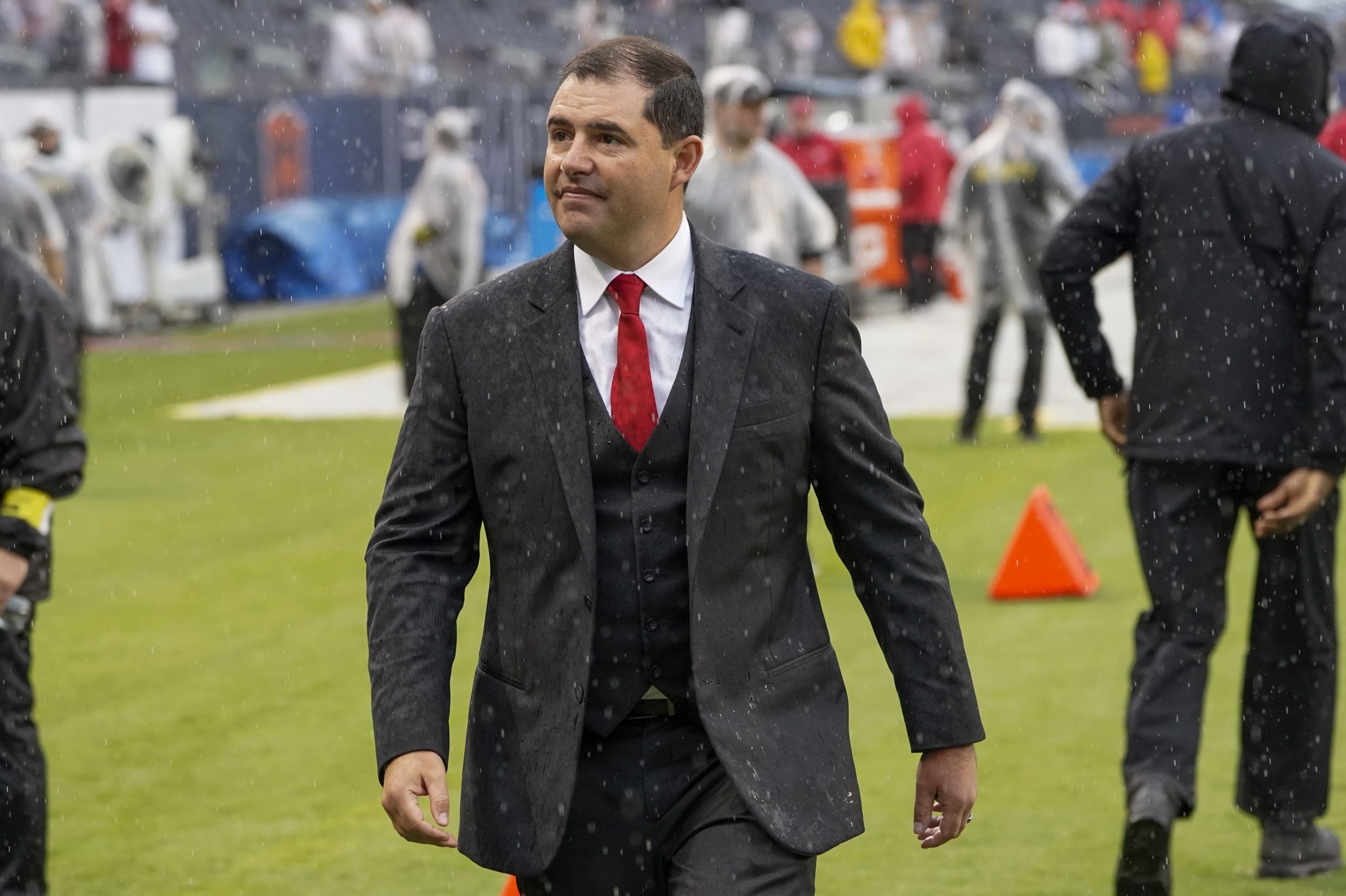
The 49ers have not been one of them. Team owner Jed York, like Julian Lurie, was brought into the fold of his family’s franchise in his mid-20s. As “special projects manager,” he worked in every department of the 49ers and recalled that one of his first stints was in the equipment room, where he helped sew players’ names on jerseys.
By age 30, York had become CEO. While his Ohio-based parents, John and Denise York, remained principal owners until 2024, he effectively ran the organization.
“It was Undercover Boss without the undercover part,” York said.
He said his transition to power happened organically.
“I think the organization sort of accepted it and sort of dictated when it was going to happen more so than me or my parents,” York said in an interview with The Inquirer. “Like, it just became clear when people started coming to me for answers and not necessarily waiting until my parents came out from Ohio to be able to make decisions and move forward.”
Jeffrey may not be in Philadelphia as often, but he still returns for games, favorite events like the draft, and various other days. He was present for most of the workouts that were open to reporters this spring — at a much higher rate than last season.
Either way, team employees still look at the elder Lurie as being the boss.
“Julian is here every day, so we do see him more,” a team source said. “But Jeffrey is still viewed as the owner.”
Julian’s office at “the Jeff” is situated near his father’s and Smolenski’s. That is by design. Among senior leaders, he spends most of his time with Smolenski. But he has conversations with many staff members, even if he is described as naturally introverted.
He’ll drop into any office, not necessarily with a purpose, but just to chat, often about every staffer’s favorite team. Some sources consider his way with people one of his strengths.
“You got to be a learner,” said Porter, who recently stepped down as Overtime’s CEO. “You have to understand that as soon as I am the CEO, I’m in a bubble. I only know what the people who talk to me tell me, right? You [have to] make people feel seen and heard because you want them to give their all to an organization.
“But you also don’t want your experience of the company to be in a very small echo chamber.”
So while Smolenski continues to make final decisions on the nonfootball side, Julian will gather intel on his own. That might include talking to facility manager Chris DeBellis about operations at Lincoln Financial Field or vice president of grounds Tony Leonard about how to install heaters under the practice surfaces so they no longer freeze.
The Eagles’ practice facility, previously known as the NovaCare Complex, is undergoing renovations with an expansion of the training room and eventually the locker room. Julian has been a part of planning, but he’s also explored other possible changes like a full-length indoor field.
Many of his inquiries have been about the Eagles’ expenses.
“I don’t see what he’s been doing as any different to anyone whose dad said, ‘Here are the keys. Go in there. See what you think,’” a team source said. “This is going to be his team someday. He wants to understand how it works from a fundamental level.”
Julian Lurie has a way with people, some of his colleagues say.Monica Herndon / Staff Photographer
Productive conversations
While it’s unclear if Julian’s budget analysis was a Jeffrey directive or not, some staffers felt the team’s accounting could have benefited from a fresh set of eyes. In some cases, spending was cut. It could have been something sizable like the budget for food and beverage or something less significant like the number of hats ordered for employees.
The money often was then redistributed into other resources, such as the facility expansion. But other sources for revenue were explored as well, like selling naming rights to the cafeteria.
“I don’t think the goal was necessarily to cut costs. I think it was to understand what we’re spending on,” a team source said. “NFL teams — we’re not perfect in our spending. Things can get distorted over time. They can get out of whack. I think it’s healthy to evaluate that.”
The Eagles are always looking to be prudent. Jeffrey has long entrusted his lieutenants with fiscal responsibilities. But his son’s increased involvement and “probably being more into the bottom line,” according to one source, faced resistance from some staffers.
“The easiest way to impact the bottom line is by cutting expenses. And that is great in the short term, and you definitely improve margin,” an NFL source familiar with the Eagles said. “But if you have unlimited resources and the business is successful on the field, off the field, is that really a common-sense approach?”
Some of the excess could have been people. For instance, why have X number of full-time employees in the ticket office when it’s mostly a seasonal job? Did the Eagles really need to send as many staffers to the Senior Bowl and the NFL combine as they had for years?
On the football side, the Eagles have had considerable growth. That’s not exclusive to them among teams in the booming and hypercompetitive NFL. But Roseman has constructed a multifaceted operation that has depth in many departments.
Julian’s new oversight meant that staffing and salaries were questioned, like having three highly paid senior advisers in personnel when the Eagles brought back former Jets general manager Joe Douglas last year.
But Roseman’s modus operandi has been to have a deep bench in case there are departures. When former senior adviser Dave Caldwell left for the University of Florida in December, Douglas already was in the fold. Just recently, he was promoted to senior vice president of player personnel.
Last month, assistant general manager Alec Halaby stepped away from the Eagles, and the well-regarded Adam Berry was promoted into his position. Two years prior, vice president of football administration Jake Rosenberg left the Eagles, and Roseman had Bryce Johnston waiting in the wings to manage the salary cap.
Rosenberg sought other opportunities after seemingly reaching his ceiling with the team, but some Eagles sources wondered if his exit was precipitated by Julian’s deconstruction. The Atlanta Falcons poached Johnston in May. His replacement, Grant Reiter, is a relative unknown with far less experience.
Two sources compared staff reductions to playing Jenga.
“If there’s a high headcount, it’s hard to pull it apart and say, ‘This is responsible for this, this is responsible for that,’” one of the sources said. “You never know which thing you pull is going to be the thing that causes it to fall down.”
Rosenberg declined to comment. Johnston didn’t respond to an interview request.
It’s hard to argue with Roseman’s approach, considering the Eagles’ success, which has come with multiple head coaches and starting quarterbacks. Roseman hasn’t been perfect, of course, but Jeffrey Lurie has given him ample room to take big swings and make corrections when there are misses.
Julian made inquiries based partly on the Eagles’ staffing vs. other organizations. There was an acclimation phase with some give and take, and ultimately an understanding of Roseman’s process that has improved over time, team sources said.
“I think they have a productive relationship,” one source said. “I think they can walk into each other’s office and have productive conversations.”
The Eagles’ largest expense is on player contracts. There’s a salary cap, but no team has spent more on their roster over the last decade. According to Jeffrey Lurie, that aggressive mindset won’t change.
“This is where the emotional part probably gets in the way. I can’t help myself,” Lurie said in March. “Try to have every edge you can and willing to spend the cash. And I think we have a chance to win multiple more Super Bowls. There’s nothing I want more than that third Lombardi.”
Jeffrey remains integral to Roseman’s major roster decisions. After years together, the two can communicate in shorthand. The general manager still has his direct line to the owner, and their process is “overall, similar,” a team source said. There’s just now an additional layer.
“When it comes down to final decisions, I still feel like that’s totally Jeffrey,” a team source said. “But Julian has been a part of all of it.”
“Julian is here every day, so we do see him more,” a team source said. “But Jeffrey is still viewed as the owner.”David Maialetti / Staff Photographer
Roll up sleeves
When Jeffrey Lurie purchased the Eagles in May 1994, he was 42 and a longtime New England Patriots fan. He had tried to buy his boyhood team just the year before. But the Hollywood executive, who had worked for his family’s movie theater company, shifted his attention to the franchise located roughly 300 miles south of his native Boston.
Jeffrey and then-wife Christina Weiss Lurie, married for two years, arrived in Philly with daughter Milena when he bought the team. Julian was born the following year. When Jeffrey was first publicly asked about his son in March 2022, he focused on Julian’s inherited passion for the Eagles.
“Obviously, he grew up in the family that owns the team,” Jeffrey said then. “He’s an avid Philadelphia sports fan. He loves the Eagles, loves the NFL. He really has a great feel for many aspects of the sport.
“He’s going to have so much more going into it than I ever did if he chooses to want to someday own and run the team.”
Jeffrey had exposed his son to various aspects of the family business for years, but in January 2021, he had him participate in interviews for a new head coach. Julian handled questions related to analytics.
While it might have seemed peculiar at the time that he would be involved despite not having a formal role with the Eagles, associates describe Julian as an “analytical thinker.” At the league’s junior program, he rotated through four groups focused on strategy and development.
Grace Senko, currently vice president of media strategy and business development at the NFL, was one of Julian’s managers. They worked closely on the league’s licensing of media rights and spent time tracking performance in the burgeoning digital streaming of games. It sometimes was menial work.
“There was a lot of nights the two of us were here, the only people working to pull together very large amounts of data,” Senko said. “Because of how much we were pulling in together, we made a lot of mistakes. And Julian — he has a lot of integrity. If something is wrong or he makes a mistake, he owns it. … He is willing to roll up his sleeves.”
After the completion of the two-year rotation, Julian went to Overtime, a media company that says it “builds disruptive” content “at the next generation of sports fans and athletes.” The company is perhaps best known for Overtime Elite, its developmental basketball league for high school-age players. Porter, the former Overtime CEO and a Philly native, heard through an intermediary that Lurie was interested in his startup.
“Julian’s very intense, but he’s also very reserved,” Porter said. “He’s just very deliberate. And so, in our first conversation, I was like, ‘Oh, he’s clearly extremely smart and very, very focused, but he’s not that kind of person in an interview who’s going to, like, talk for 10 minutes straight.’”
Julian reported to Porter as senior manager of business strategy. He focused on analytics and helped create, for instance, a free-to-play app that took aspects of betting apps and was designed for consumers under 21, Porter said.
All told, Julian spent four years working in New York. Senko, who also had gone through the NFL’s junior program, said she worked with other family heirs and that Julian, like many who had connections, overcompensated to avoid claims of nepotism.
Porter said Julian was unassuming at Overtime’s Brooklyn office.
“He’s got a different burden, maybe, than most people,” Porter said. “He’s a serious guy, but he’s not unfriendly. Smiles. He’s just serious about his job. He was integrated in the culture. He wasn’t like some weird guy in the corner. He was a part of the company.”
Julian was in some ways shielded by his protective parents. When The Inquirer did a feature on Weiss Lurie in 2010, the names of her children were withheld from the story at her request.
Milena and Julian attended the Shipley School in Bryn Mawr. One teacher, in a school website post, recalled a junior-senior football rivalry game in which Julian and other seniors wore fake bushy mustaches like then-Eagles coach Andy Reid as Jeffrey watched from the sideline.
When Julian attended Harvard to study philosophy, he watched Eagles games at the Baseball Tavern, a local bar whose owner had been a fan of new coach Chip Kelly. Julian might have been among the progeny of one-percenters who went to the elite university, but he didn’t carry himself that way, a fellow student said.
“You’re around a lot of kids from billionaire families that are out of touch and act like their s— don’t stink,” a former Harvard classmate, who asked not to be named, said. “That wasn’t Julian. That card never got played.”
Dan Porter, Julian Lurie’s supervisor at Overtime, said: “He’s a serious guy, but he’s not unfriendly. Smiles. He’s just serious about his job.”David Maialetti / Staff Photographer
Going to the Eagles
Julian’s destiny was different from most, though. In early 2022, he decided to leave Overtime for an official post in the family business.
“One day he just called me and he said, ‘Thanks, it’s been amazing. It’s time to move on. I’m going to the Eagles,’” Porter said. “And I was like, ‘Yeah, of course.’”
Julian already had been spotted at offseason NFL events like the Senior Bowl in Mobile, Ala., that January, but the Eagles didn’t announce his role until June of that year. His listed title, which reads more like a department — “business and football operations strategy” — reflected the duality of his position as he went about learning both arms of the organization.
It took Julian some time to find his footing, team sources said. He initially latched onto the decade-older Halaby, a fellow Harvard graduate who oversaw the analytics department at the time. It was a natural entry point considering his mindset and experience.
But Julian also took an active interest and lead in Eagles media content. He began to flourish.
“He’d come in, sit in the corner, not say anything, so a few people felt uncomfortable,” a team source said. “But the more that he got comfortable, the more he got involved, he started to throw out ideas and people saw it.”
Julian oversaw promotional videos that captured the local zeitgeist. He heard quarterback Jalen Hurts use the phrase, “It’s a Philly thing,” and made that a rallying cry for the 2023 playoffs. And he was behind the “Yo” hype video ahead of the 2024 opener in Brazil.
He has become, in some ways, the point person for the Eagles’ social media team.
“He wants it to be a really good fan experience. He wants people to enjoy using the Eagles app or seeing their posts on Instagram,” a source close to Lurie said. “Social media is a big part of an NFL footprint these days. It’s how a lot of fans connect with the team.”
He is, after all, one of them. Porter, also an Eagles fan, said he knows not to text Julian after losses. Like his father, Julian also has a passion for football. Last season when the Eagles played the Packers at historic Lambeau Field, he opted to watch from the bleachers rather than in a suite with team executives.
“He wanted to experience the game from that vantage point,” a team source said.
Julian watches a lot of games and has an interest in all its intricacies. He’s a part of strategic meetings when it comes to personnel and scheme. He might ask why a certain draft prospect has a red flag for character concerns, for example, or why the Eagles have made certain schematic choices, sources who have been in those meetings said.
Julian has a keen eye for X’s and O’s and he will query coaches. He often does his own research and he comes prepared, a team source said.
“It’s never like, ‘I have answers,’” a coach said. “It’s like, ‘I want to understand this.’”
During interviews with offensive coordinator candidates this offseason, Julian handled questions pertaining to player performance. His father has allowed him to sit in on head coach interviews dating back to 2016, knowing how important that responsibility is for an owner.
But for some in the organization who have been around since Julian was young and may have viewed him through that lens, there was apprehension about his presence. Although most have appreciated his development, a few believe he’s overstepped at times.
“There’s growth that still needs to occur,” a source said.
Not only does Julian have to balance his increasing involvement with any perception that he’s meddlesome, but he also has to walk the delicate line between his long-term goals and the shorter-term thinking of current leaders.
There is a generational strain that can exist in succession plans. York said he had a mentor in Patriots president Jonathan Kraft, son of owner Robert Kraft, who has been his father’s right-hand man since 1994. York said he has spoken to Julian on occasion and wants to be a sounding board for him, like Kraft was for him.
“I know there aren’t many people in these positions that can help you think through, ‘Well, how do you tell your dad or your mom that you want to do something a little different than they did, and do it in a way that’s respectful?’” York, 46, said. “How do you handle those things?
“How do you see something as a younger person in the NFL that you want to take the league in a different direction than … a bunch of guys that are in their 60s or 70s or 80s?”
San Francisco 49ers owner Jed York, an example of a family generational transfer of power that has succeeded, already has a good relationship with Julian Lurie. Charles Rex Arbogast / AP
Own path
Julian, like his father, is willing to push boundaries to gain advantages. Jeffrey likes having different perspectives in a senior leadership team that now includes his son. Jeffrey still mostly defers to Smolenski and Roseman in major decisions. He often just wants to see the finished product.
But Julian has been more hands-on than his father when it comes to details, for instance examining the blueprints of the practice facility expansion into the former NovaCare rehab center.
“He has a mindset for how he wants to lead and that’s going to be different in some ways,” a team source said. “He’s not trying to be exactly like his father because that’s not entirely his personality. He is his own person.”
Julian is a foodie and avid golfer like his father, but he does not flout his privilege, those who have observed him say. He might have the second-best parking spot at the “Jeff,” but he doesn’t ask for police escorts or special accommodations on game days, sources said.
He may engage in “casual conversation” with players before or after games, a veteran said, but he isn’t overly chummy. That is in part deliberate. He knows his limitations. But it’s also Julian being true to himself. He’s not as outgoing as his father.
“You can’t read Julian as well,” a team source said.
That can make more unsure members of the organization at times uneasy. Many value his brevity.
“I think he has a very kind of quiet confidence around him and when he says things they have a lot of weight to them,” Senko said, “because he’s not one of those people that just like speaks to be heard. He speaks when he has something important to say.”
His voice carries weight because he’s viewed as an owner, even if he’s not yet the Eagles’ principal owner. Some senior leaders expect Julian to eventually have an executive role in the front office.
The 59-year-old Smolenski could stay aboard until the next stadium deal is in place. There are other internal candidates to succeed him, like former Eagles player Connor Barwin, who currently is head of football development and strategy.
It doesn’t matter what title Julian is given. He already is involved at a senior level. And while the Eagles have absorbed his inclusion — and won a Super Bowl in the process — there is some question of the future as Julian advances.
“It remains to be seen how that goes,” a team source said.
If he were to become president, would he, like Smolenski, stay exclusively on the business side? Would he cross over into football, like predecessor Joe Banner did during his roughly 20-year tenure? Would the title matter?
Jeffrey signs off on all major football decisions. He has, on rare occasion, pushed for his preferences in the draft, sometimes with great results (e.g. Hurts), sometimes not (J.J. Arcega-Whiteside). But he has by and large delegated to Roseman.
For years, Jeffrey and his general manager standing together on the sideline before games or at practices conveyed their abiding partnership. They still strike that image, but Julian might also be in the picture, or alone with his father.
Few Eagles sources expect the dynamic at the top to change as long as the Eagles keep winning. Jeffrey has given the 50-year-old Roseman as much autonomy as any general manager. But if that power were to be curtailed, the two-time NFL executive of the year would have obvious options elsewhere if he wanted to leave.
“We’ve been successful. We’ve done things the right way. Sometimes maybe not in the most traditional way,” a team source said. “But as long as Jeffrey’s in charge and likes the direction of the team, he’s going to think, ‘If it’s not broke, we don’t need to fix it.’”
And Jeffrey has no apparent plans of abdicating his power. There may be some uncertainty about how often he’ll be in Philly once work is completed on a yacht he is having built near his Florida home, but he has been more present this spring, team sources said.
“If you want to live a long time, I was always told don’t ever retire and keep that intensity going,” Lurie said in March. “I love owning the Eagles. I love trying to make us even better in every way and that’s what I’m focused on.
“That’s why my energy’s high.”
But Julian, as the NFL-approved heir, remains only a heartbeat away from the throne.
There will be no Succession-like maneuvering for future control among family members. Weiss Lurie stepped down as director of the Eagles Charitable Foundation in 2019 — seven years after the Luries’ divorce — although she remains a minority owner. Jeffrey married Tina Lurie in 2013, but she has no official role in the organization, nor does the 32-year-old Milena.
Few, if any, within the franchise believe it will suffer the decline that can occur when families bequeath assets. Julian himself is unmarried and without children.
His devotion, for the time being, is to the Eagles.
“I respect the way he’s grinding and going about it,” York said. “It is not easy to be in his position, in his situation, especially with how successful his father has been. He’s trying to make his own path, and he’s working as hard as he can, and I respect the heck out of that.”
His ownership is written, if not his future. But Julian continues to show maturation. In the Eagles’ most recent schedule release, senior leaders again didn’t like the direction of the video. Alternative ideas were offered, one of which Lurie agreed was better.
“He is open to listening,” a team source said, “open to evolving.”
There was cursing from players in the video that wasn’t bleeped out, but it generally was wholesome entertainment. It wasn’t as inoffensive as the 2023 version that predated the controversial psych evaluation concept, though.
The 2023 video featured an Eagles employee listed directly above Julian, deep into the staff directory, and the only one other than the leader of “business and football operations strategy” to work in his own department:
“Director of joy” — mini goldendoodle and team pet — Reggie White Lurie.
In the summer of 2022, a sheepish teenager with a backpack walked into Moshood Abiola National Stadium in Abuja, Nigeria. He was there for a basketball camp, but his physique looked like that of an edge rusher; lean and athletic with sculpted calves.
Two coaches told him as much. Mustapha Musa and Dike Christian of Pro Prospects Program were in the same building for a flag football event coordinated by former New York Giants defensive end Osi Umenyiora’s agency, The Uprise. Musa and Christian approached the teenager and asked if he’d ever played American football.
The teenager said no. They asked if he would give it a try. He explained that this would be logistically difficult; he had traveled six hours from Unguwa Uku, a suburb of Kano, in the northern part of the country.
But the coaches were insistent. They asked if the teenager would consider extending his trip.
“You know,” Musa said, “you look like a footballer, not a basketballer.”
The teenager let out a laugh. He decided to stay, and underwent a workout the following day. Ejike Ugboaja, a co-founder of The Uprise, sent Umenyiora some video.
Former Giants star Osi Umenyiora has played a role in the discovery of players, including Uar Bernard, in Africa.provided by NFL Africa
He didn’t know the teenager’s name, but quickly came up with a moniker.
“[Ejike] just called him Bigfoot,” Umenyiora said. “And he was a freak athlete. I saw him running and moving around, and I was like, ‘OK, this kid, he’s got something.’”
By the time he showed up tothe next flag football event, everyone knew him as Uar Bernard. But “Bigfoot” stuck, in part because the coaches couldn’t find cleats that fit him.
“He had like a size 18,” Umenyiora said. “It was ridiculous.”
At 17 years old, Bernard was too young to qualify for the NFL’s International Player Pathway (IPP) program but too old for the NFL Academy. He would have to wait until he was three years removed from high school to try again.
Over those three years, Bernard trained with Musa and Christian in Abuja. In 2024, he attended another NFL Africa Camp in Lagos, but failed again to make the IPP, this time because he was not considered mobile enough.
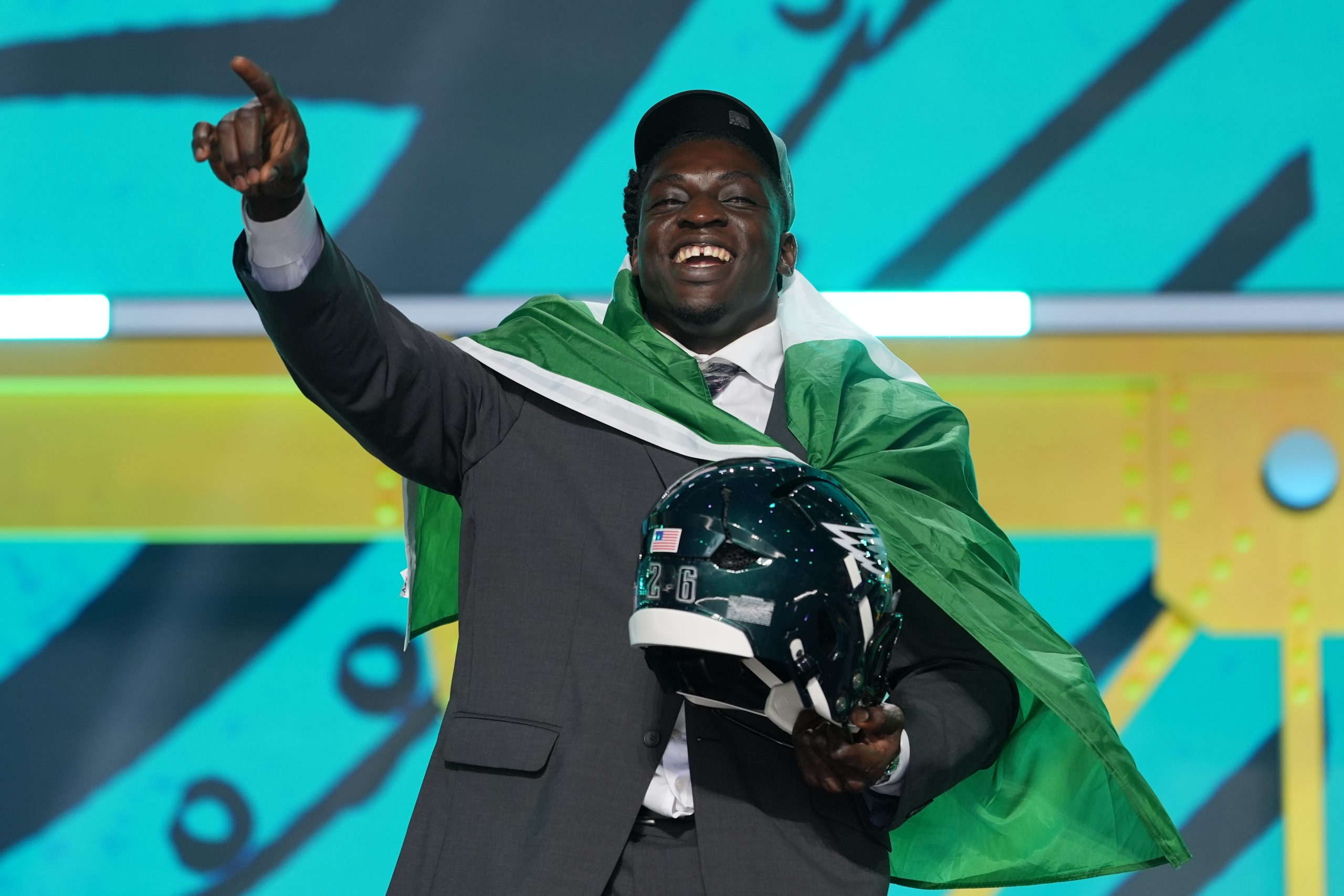
The Nigerian finally qualified in 2025. He entered a 12-week training program in Florida in January, and in April, he was drafted by the Eagles in the seventh round.
Bernard has never played a down of organized football. He didn’t spend his childhood on a Pop Warner team. But Musa and Christian have helped him prepare for this moment.
And Umenyiora is confident it is all going to work.
“I think one of the GMs for the Giants used to call it ‘planet theory,’” he said. “There are only so many people walking around the planet that have that type of physique and ability. And so whenever you get that, you have to take a chance on them, and give them an opportunity to develop.
“And hopefully, Philadelphia — who have been absolutely tremendous — will give him that opportunity.”
Training in ‘The Trenches’
Of the tens of thousands of players who have ever competed in the NFL, only 40 were born in Nigeria.
Twenty-one of those 40 hailed from Lagos, the country’s largest city; Umenyiora says most come from the southern and eastern regions.
Osi Umenyiora (center) has discovered players in Nigeria previously, but never from the impoverished community that Uar Bernard calls home.provided by NFL Africa
None have come from Kano. According to the World Bank Group, the state has a poverty rate of 53.75%, more than double that of Abuja, and more than six times that of Lagos.
“It’s a dangerous place,” Musa said. “You only see a few kids that will grow up in that area, and be like, ‘I want to do sports.’ It’s very hard and very rare in that kind of environment.”
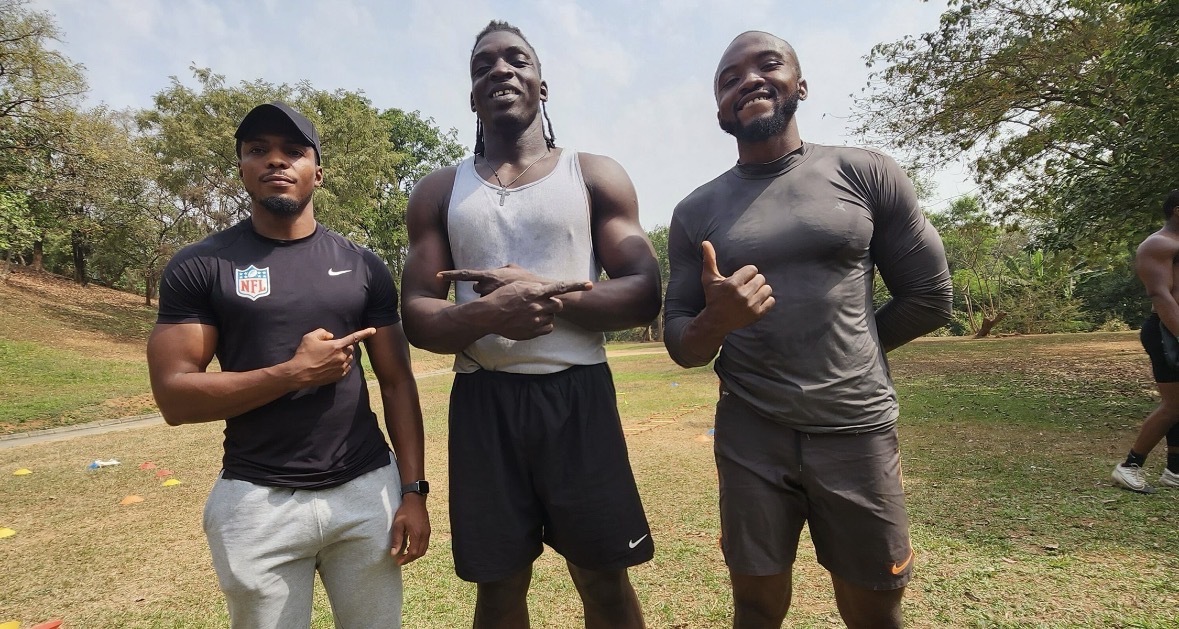
When Bernard moved to Abuja, Musa already hada handful ofaspiring football players living with him. So Christian took the teenager in. Together, they’d work every day, from 8 a.m. to 11 a.m., at a local public park they called “The Trenches.”
This wasn’t an NFL training facility, but Musa and Christian saw potential. The park had a sand pit. Its hills were steep, perfect for mid-morning sprints, and its trees were as sturdy as a blocking sled.
The coaches purchased small pieces of equipment, like cones, ladders and mini hurdles, and set them up on the grass, sharpening the players’ skills under the blistering sun.
They’d also use the natural resources around them. Bamboo sticks were repurposed for cross-chop drills and honing inside shoulder drops. Bernard and his fellow athletes had occasional access to a gym, but due to limited funds, everyone had to get creative.
This was especially true for Bernard. One of his biggest early obstacles was mobility, and he didn’t have access to a physical therapist in Nigeria.
So, Musa and Christian came up with an idea.
“We had to push him into a dance class,” Musa said. “We’re like, ‘Yo, you need to go to a dance class.’ It was to help his flexibility. More aerobics than Afro dance.”
“He laughed about it,” Christian said, “but even if he laughs, he will never say no. He will do it. He’s humble.”
Bernard knew virtually nothing about American football when he started working with the coaches. But even from West Africa, Musa and Christian had learned quite a bit.
In 2011, a former University of Maryland linebacker, Ricardo Dickerson, co-founded the American Football Association of Nigeria, an organization focused on youth development. He started going on visits to high schools around the country, which is how Musa was introduced to the sport.
He and his classmates stayed in touch with Dickerson, who sent them YouTube tutorials and documentaries. Musa had hoped to attend an American university on a football scholarship, but the pandemic — and a lack of financial support — made that a nonstarter.
The coach wasn’t getting any younger, and as months turned into years, he conceded that his dream had passed him by. But he and Christian still felt a passion for the sport, and continued to follow it religiously.
They’d seek advice from high-profile coaches on Instagram, like defensive line trainer Javon Gopie. They’d study film of pass rushers including Umenyiora and Myles Garrett.
Before long, Musa and Christian could recite defensive drills and plays by heart. And the two coaches would break them down for the future Eagle, bit-by-bit.
If a move required three steps, Musa, Christian and Bernard would spend a week working on each one. Their pupil had many God-given gifts — explosiveness, quickness, strength — but the coaches wanted to refine the basics.
Bernard would know exactly where his size-18 feet would need to be planted before and after the snap. He’d know exactly how to get off for a cross chop play, and which direction to break in the following moments.
He would know the difference between bull rush and speed rush, and when to use each move.
“Small details,” Musa said, “that will make him outstanding.”
Like his coaches, Bernard was a voracious learner. After spending three hours at The Trenches, he’d put in extra work, calling Musa or Christian with follow-up questions.
At night, over the West African dish soup and swallow, Bernard and Christian would study more video, usually of Uar’s favorite player, Aaron Donald.
“He would show me tape, and then say, ‘What’s my take?’” Christian recalled. “And then we’d try to dissect and talk about it.”
Unlike other athletes his age, Bernard wasn’t prone to distraction. When he wasn’t at the gym, he was at The Trenches. When he wasn’t at The Trenches, he was often in prayer.
“The boy only goes to church, gym, training,” Musa said. “That is his life. Because he came with the hunger that nobody believes in him. Sometimes we even needed to tell him, ‘You need to slow down before you break down.’
“He would go to the church and do overnight prayer, and early morning he would come to the field and keep working. And I’m like, ‘Yo, I know your eyes. You haven’t slept.’”
‘Our boy has been drafted’
Musa and Christian were 5,166 miles away from Pittsburgh on Day 3 of the NFL draft, but that didn’t help calm their nerves. In an homage to Bernard, Musa watched the broadcast at home, on his prayer mat.
He was concerned after the Kano native hadn’t been picked in the earlier rounds.
“I was like, ‘Oh God, please let this happen to us,’” Musa said. “It wasn’t just happening to him. It was happening to the whole of Africa.”
When Bernard was finally selected, with the 251st pick, the coach called Christian, who had dozed off. It was just past midnight in Nigeria.
“He woke me up,” Christian said. “He was like, ‘Yo, are you sleeping? Our boy has been drafted!’”
Uar Bernard’s seventh-round selection was one of the feel-good stories of the 2026 NFL draft. AP Photo/Jeff Roberson
Musa and Christian were overcome with excitement. So was Umenyiora. The longtime Giant may have hated the Eagles as a player, but as an ambassador for NFL Africa, he looked at the organization through a different light.
In his mind, Philadelphia was a perfect fit for “Bigfoot.”
“[The Eagles] have this mentality that they’re going to be patient with these guys,” Umenyiora said. “A lot of times, teams will get a guy who’s never played football before, and after maybe a month or two, they’ll cut him and get rid of him.
“And you’re like, ‘Well, what were you thinking was going to happen in a month or two?’ But with Philly, when they get them, they stick with the process. It’s like they’ve done so much homework, that when they get them, they are stuck in their belief system that they can turn this guy into a player.
“And they have the right coaches, and they believe in their coaches. So, when I found out he was going there, quite frankly, I was really happy. Because they get it. A lot of teams don’t get it. But they do.”
The work is far from over. Going from the basics to Vic Fangio’s defense will be challenging. The Nigerian is still getting used to wearing a helmet; soon, he’ll be facing the best players in the world.
But no matter what happens, Bernard has already proved something.
Back in Abuja, at The Trenches, a handful of football players are waking up each morning to run grueling sprints.
It wasn’t so long ago that locals used to mock them. They’d compare their drills to kung fu, as if their sport was a novelty.
Not anymore.
“The athletes here are super proud,” Christian said. “He’s the motivation to all of them who are working so hard. And we keep preaching that.
“‘Bernard was here with you guys. He’s not a stranger. He’s not a ghost. He’s someone you all know. So, if he can do it, you can do it.’”
You could use the same four words to describe the Eagles offense in 2025 as you would Elmer Fudd.
Uses shotgun, rarely well.
So says the conventional wisdom, at least.
During the Eagles’ recently completed mandatory minicamp, there was a lot of talk about new offensive coordinator Sean Mannion’s affinity for operating from under center and the adjustment it might require for those closest to the ball (namely, the quarterback). The topic of conversation was certainly valid. Throughout the Jalen Hurts/Nick Sirianni Era, shotgun has been the Eagles’ baseline look, more so than all but a small handful of NFL teams. I’m just not sure that the change under Mannion will be as radical as people hope/expect.
What if I told you that Saquon Barkley has only had one fewer carry from under center than the Packers’ Josh Jacobs over the last two seasons, when Mannion was in Green Bay? Or that, in 2025, Hurts attempted more passes from under center than Joe Burrow and Patrick Mahomes, both of whom can make a case as the best in the game?
All of this talk about scheme comes from a good place. But I think the term itself tends to get misapplied when we talk about what makes good teams good and bad teams bad. The perception of “scheme” is that it is some static, word-of-God recipe book that each coach draws up like a wizard and then carries with him from stop to stop. In reality, I think it’s closer to a core set of principles and best practices that guide the concrete aspects of coaching: teaching and game-planning. The actual output of all of those things — the plays — will look a lot different from roster to roster and opponent to opponent.
Jalen Hurts attempted more passes from under center than Joe Burrow and Patrick Mahomes in 2025.Monica Herndon / Staff Photographer
“There’s things I believe in and there’s things that schematically I have a background in, but ultimately it’s going to be a blend and it’s constantly going to evolve,” Mannion said earlier this offseason. “It’s about maximizing things for the players. How do we make the Eagles the best team we can be, how we make the Eagles offense the best it can be and how do we put all of our players in a position to really, really succeed and maximize their strengths.”
Don’t get me wrong. There will be change. As I wrote last week, it will be real change, more so than at any point in Sirianni’s time as head coach.
Reality is, the NFL has become a shotgun league over the last decade. That’s true regardless of coach or quarterback. Last season, Matthew Stafford and Sam Darnold were the only two quarterbacks to line up under center on more than half their snaps. Both quarterbacks threw the ball out of shotgun roughly twice as much as they did under center.
The evidence hardly supports the idea that the Eagles’ heavy reliance on the shotgun in recent years is an ipso facto indictment of Hurts and/or the offensive scheme. At least, not if you accept as fact that Burrow and Mahomes are two of the best quarterbacks in the NFL. Mahomes attempted just 32 passes from under center in 2025, 12 fewer than Hurts’ 44.
The big difference between teams like the Seahawks/Rams and the Eagles was their preference for running from under center. The Rams ran out of shotgun just 64 times in 2025, for instance.
At the same time, the Eagles ran the ball from under center more than you might think. Two years ago, nearly half Barkley’s 2,005 rushing yards came from under center. His 6.1 yards-per-carry average was best in the NFL, and better than his 5.6 yards per carry out of shotgun.
Saquon Barkley is looking forward to running Sean Mannion’s system.Monica Herndon / Staff Photographer
Again, to be clear, we should expect to see a significant difference. One takeaway from the Eagles’ pre-camp workouts is that Mannion’s run game philosophy is closer to the Shanahan/McVay/Kubiak tree than Sirianni’s.
“It’s no secret what this system is about,” Barkley said earlier this offseason. “I look forward to doing that. It’ll probably be the most I’ve ever done it under center and outside zone and all that good stuff. It’s a challenge I’m looking forward to work on and getting better at and trying to be the best at it.”
As for the passing game, one suspects we’ll still see plenty of shotgun. Jordan Love attempted roughly 30% of his passes from under center in 2025 when Mannion was with the Packers. That’s more than three times as often as Hurts did.
We could be talking about an additional 5-7 passes per game from under center. That’s not nothing. But we’re probably not going to see something that looks completely foreign. As tight end Dallas Goedert said last week, “You can only do so much [different] on offense.”
It’s Week 5 of the Eagles’ season. They’re 2-2, but their record is not the concerning thing, not really. They have lost their most recent game, at home to the Los Angeles Rams, but that loss, in and of itself, is not the concerning thing, not really. The Rams are favored to represent the NFC in the Super Bowl, after all, and any team would struggle to hold Myles Garrett at bay, and the Eagles could not.
No, here’s what’s concerning: Jalen Hurts is doing the one thing that he generally does not do. He’s turning the ball over. He’s throwing interceptions, and it’s clear that those interceptions are born of his acclimation to the Eagles’ new offensive system under their new offensive coordinator, Sean Mannion. The Eagles would be at least 3-1, perhaps 4-0, if not for Hurts tossing the ball to their opponents too many times.
The question cuts to the core not only of the Eagles’ fortunes this season but their long-term future. And Hurts’ future. And Sirianni’s. Spend just a few minutes watching one of the Eagles’ recent minicamp workouts or listening to Hurts and Lane Johnson speak about Mannion’s offense, and you understand how big a change this will be and how committed the Eagles are to making it. Hurts will be under center more. The offensive line’s blocking techniques and schemes will be different. Oh, and A.J. Brown isn’t here anymore.
Put simply, this transition may take some time, and it may be rough at the start. If it is, it promises to force Sirianni to choose between riding out Hurts’ rite of passage in Mannion’s system and falling back on one of his primary coaching principles: Above all else, protect the football.
“As long as I’m the head coach here, we’re going to be very diligent about winning that turnover battle and winning the explosive-play battle,” Sirianni said Wednesday. “I know it’s like, ‘OK, that sounds simple,’ but there’s an art to it because you’ve got to be able to create explosives in different ways and sometimes that puts the ball at risk. But at the end of the day, that ball is still the most important thing.
“We’ll know how to create explosives in that time, but taking care of the ball is the most important thing, and we talk about this all the time: Can we come out of a game with every drive ending in a kick? Whether that’s an extra point, hopefully, whether that’s a field goal, or whether that’s a punt.”
Will Jalen Hurts be given the bandwidth to struggle in his early moments within the Sean Mannion offense?Monica Herndon / Staff Photographer
A quick review of the last two seasons provides plenty of evidence that Sirianni is pastor of The Church of Do No Harm. In 2024, Hurts threw the ball at least 30 times in each of the Eagles’ first four games and was intercepted four times as the Eagles went 2-2. Over the remaining 13 regular-season games, he surpassed 30 pass attempts in a game once, and he threw just one interception, and the Eagles rode Saquon Barkley, their O-line, and their defense to a Super Bowl victory.
In 2025, Hurts’ most daring passing performance — and, in Sirianni’s eyes, his most destructive — came in Week 14 against the Los Angeles Chargers. Hurts made some dazzling downfield throws that night … and tossed four picks, including one in overtime that ended the Eagles’ hopes of winning. His subsequent four games were a case study in cautiousness. He attempted just 15 passes in a rout of the (awful) Las Vegas Raiders. He had 185 passing yards on 30 attempts against the Washington Commanders, then threw for a piddling 110 yards (in freezing and windy weather, granted) against the Buffalo Bills, then managed just 168 yards on 35 attempts in that maddening wild-card loss to the San Francisco 49ers.
The Eagles wouldn’t have hired Mannion if they believed such an approach were sustainable. The combined greatness of Barkley and their offensive line was responsible for the offense’s quick-strike and big-play capabilities in 2024, and it had the added bonus of cutting down the occasions when Hurts or anyone else had to put possession of the football at risk. But those circumstances and conditions were ideal and difficult, if not impossible, to replicate, and the Eagles couldn’t and didn’t in 2025.
Now they have Mannion, who is regarded as a sharp, up-and-coming mind in the NFL. And they have Hurts, who for the sake of his own improvement and his team’s fate has to master a system unlike any he has played in before. And they have Sirianni, whose instinct has been to minimize any possibility of a big mistake. Something might have to give, and the season just might come down to the head coach and his ability to resolve a fundamental conflict within himself.
Eagles safety Andrew Mukuba knows exactly how it feels to grow up facing an uncertain future. Years before he nabbed a starting role as a rookie in 2025, he grew up in Zimbabwe as his family sought refuge from Congo. Mukuba recently launched his new foundation, Mukuba Miracles, which held its first event Thursday night.
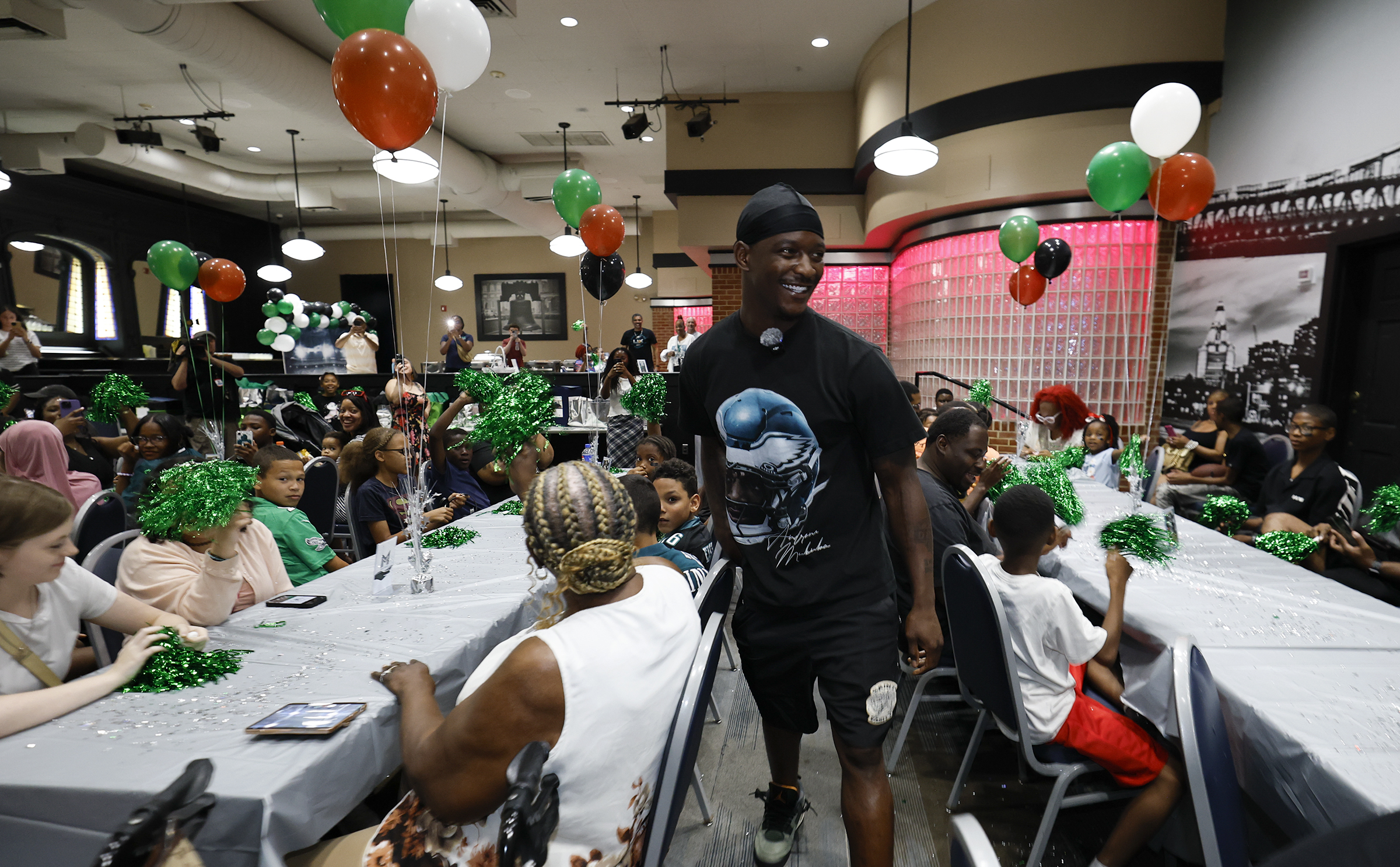
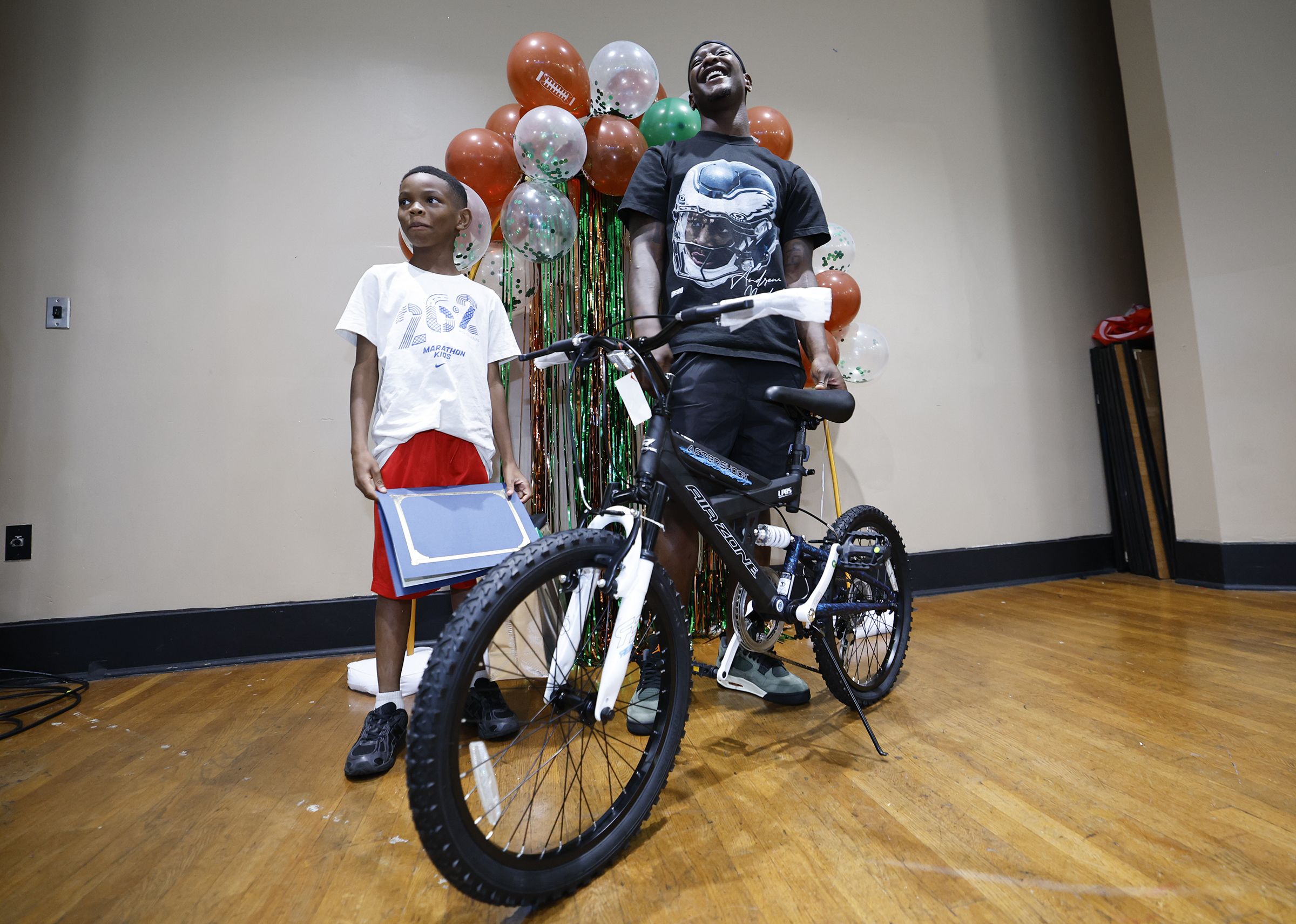
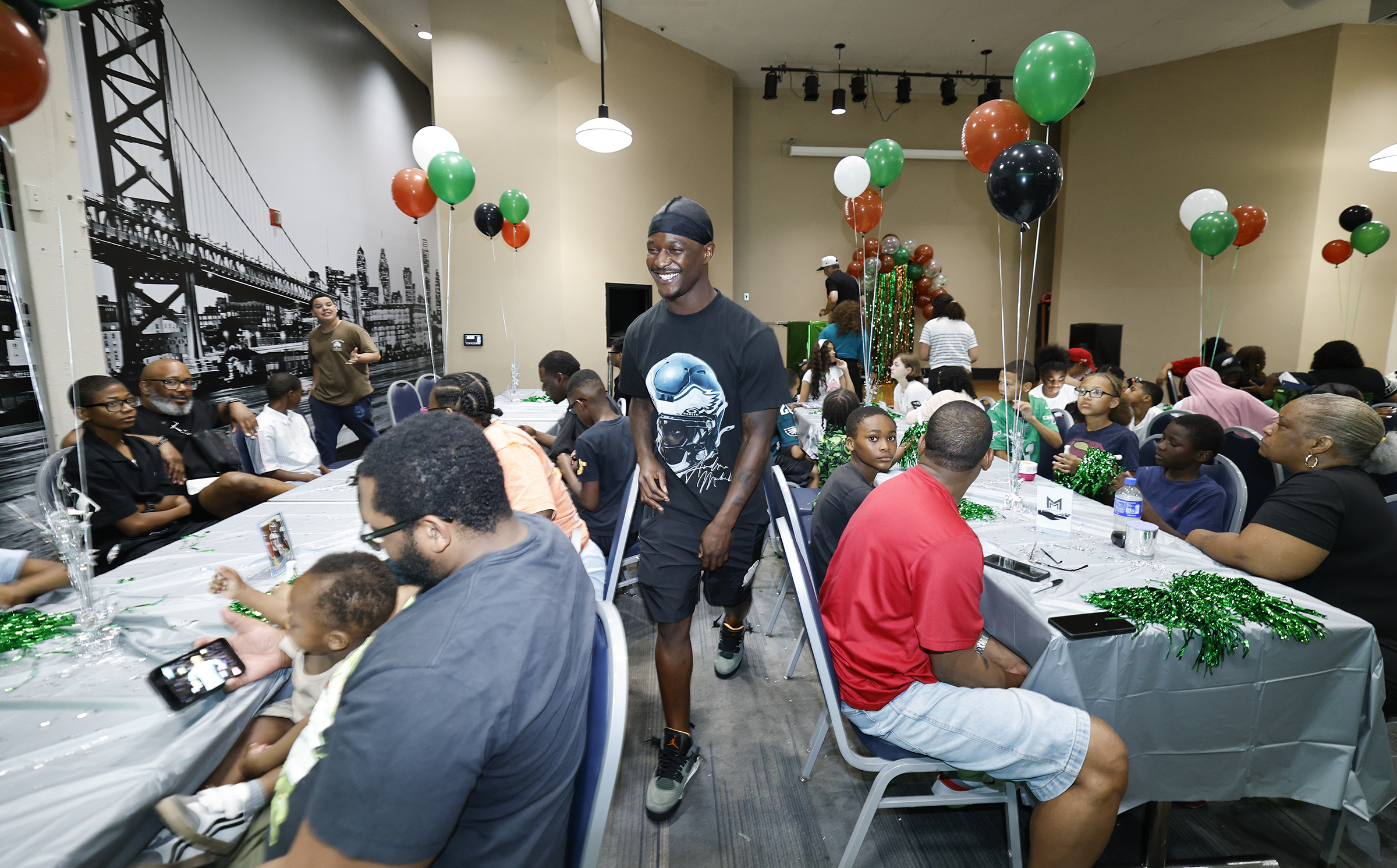
The defensive back partnered with Turning Points for Children, a Philadelphia-based organization focused on providing care to foster children and their families. Together, they hosted over 30 foster children at the Dave and Buster’s in Penn’s Landing. Over dinner, Mukuba gifted items kids had requested, ranging from art supplies to basketball shoes to a bicycle. Afterward, the 23-year-old played arcade games with the kids.
Eagles safety Andrew Mukuba smiles after presenting D’avion Faison, 10, with a new bike during a launch of the Mukuba Miracles Fund at Dave & Buster’s on Thursday.Yong Kim / Staff Photographer
“I’m just trying to make an impact in the communities that I’m involved in … and help in any ways that I can,” Mukuba said. “Being able to put smiles on the kids’ faces … that’s the goal for me.
The most fulfilling part of the night for Mukuba, he said, was seeing the reactions of those to whom he gave gifts.
“I was once a kid as well, and I know what a gift can mean to somebody, especially something so valuable to them,” he said.
The children attending the event had not been made aware that Mukuba would be there. As the 64th overall pick in 2025 was being introduced by Eartha Holland, Turning Points for Children’s director of stakeholder engagement and events, a large ovation ensued.
“Our kids are so humble, and they express great gratitude for the gifts,” said Ciera Carter, the organization’s director of family support services. “Our kids have been through a lot, and our program seeks to find permanent resources and connections for them.”
The event held a special meaning for Lorraine Dredden, a foster mom invited by Holland. Over the last 35 years, the Winslow Township school board member has fostered over 100 children and adopted 13. The Berlin Township native also was honored by the state’s Department of Children and Families last month for her commitment to giving foster children a home. Dredden, who had two children in attendance, felt touched during the ceremony.
“I didn’t know all of the children in here, but I was clapping so hard for them,” Dredden said. “Some of the children I had, they never knew about Christmas, so when Christmas came, they were so excited about Santa, they didn’t know what to do.
Andrew Mukuba is grateful to be back on the field and in the community after an ankle injury prematurely ended his 2025 season. Yong Kim / Staff Photographer
Along with growing his foundation, Mukuba is excited to get back on the field this fall. A fractured ankle ended the safety’s rookie season last November.
“The toughest part [last year] was just not being on the field,” he said. “But mentally, I felt like I was right where I needed to be at, as far as attacking rehab.”
Mukuba, who has made a full recovery, is projected to start for the Eagles alongside veteran Marcus Epps, who is in his second stint with the team. In a safety room now without Reed Blankenship, who departed for the Houston Texans, the former Clemson standout is anticipating the opportunity he likely will receive.
“I feel like a lot of people didn’t get an opportunity, and I [am] fortunate enough to get an opportunity after the injury I suffered,” he said. “So going out there and having fun all over again … that’s what I’m really looking forward to.”
There was closure. There were opportunities to set records straight and start fresh. There was a chance for the Eagles to take the new philosophies and personnel acquired during the offseason, and give it all a test run on the field. What did the team find out about itself? How well prepared are the Eagles to hit the ground running in training camp once they return from their offseason hiatus later in the summer? The Philadelphia Inquirer’s Jeff McLane and Jeff Neiburg watched this week’s mandatory minicamp practices at Eagles headquarters, and analyze what they saw.
00:00 Biggest impressions of new offensive coordinator Sean Mannion’s scheme
09:25 Now that A.J. Brown is gone, how did the wide receiver corps look?
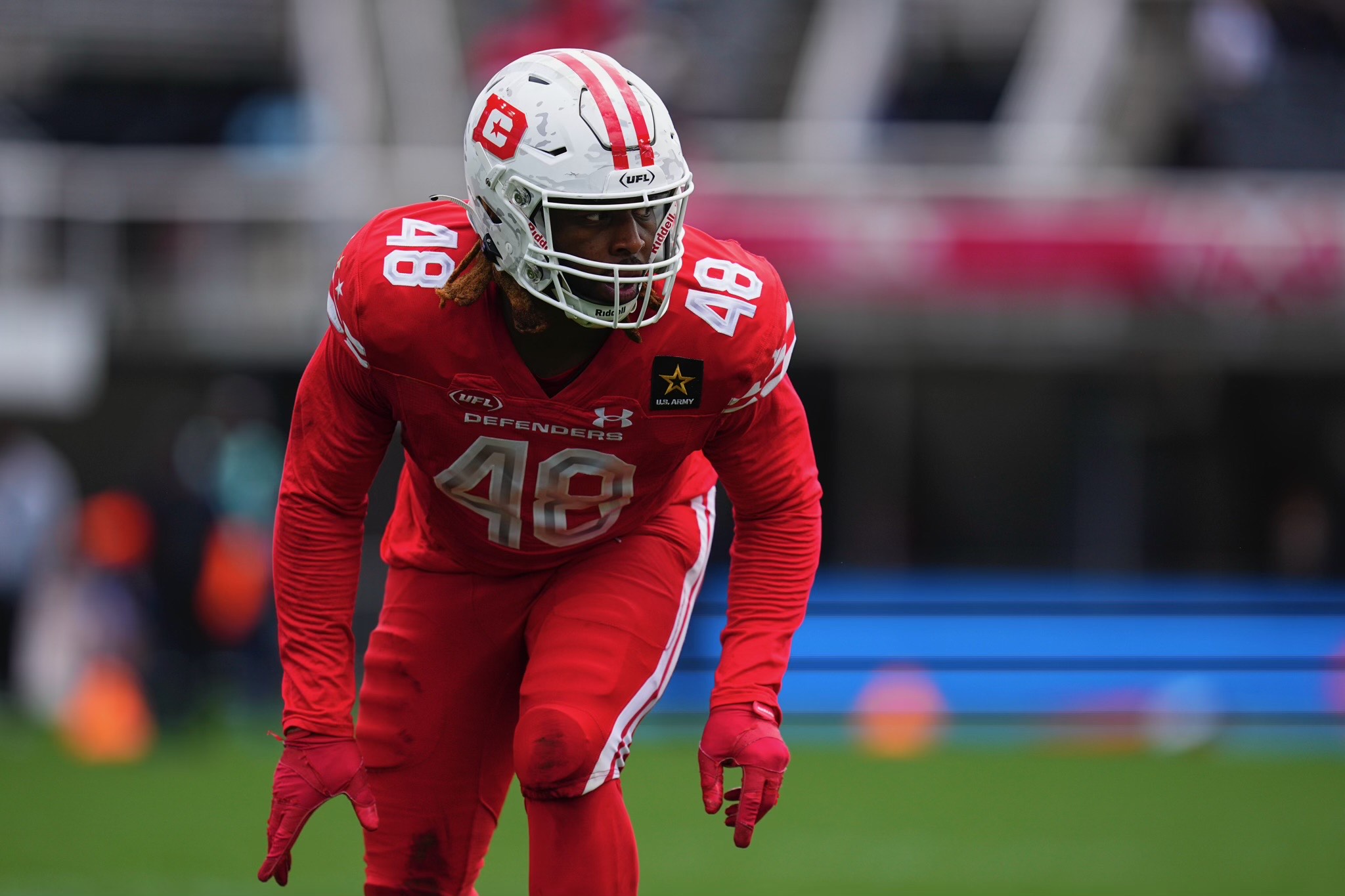
When Andre Mintze decided to end his brief retirement from football last week, two games before the DC Defenders were set to defend their United Football League title, he didn’t expect it to be a “big deal.”
The spring football league had been Mintze’s continued connection with the sport for the last three years. The 27-year-old Philly native’s journey, forged at Imhotep, saw him persevere through early adversity at Vanderbilt, and endure brief stops in the NFL with the Denver Broncos and Minnesota Vikings.
He became one of the top pass rushers in the UFL last season en route to the Defenders’ championship, and had walked away from the sport earlier this year after beginning his post-football career in healthcare. But there he was last Sunday, being interviewed by ESPN sideline reporter Tom Luginbill during the Defenders’ playoff game against the Orlando Storm.
Former NFL linebacker Andre Mintze took PTO from his day job and came out of retirement to help the DC Defenders during their UFL playoff run.pic.twitter.com/wViMxBwz7D
Mintze’s return wasn’t a big surprise to him. He had been in contact with Defenders coach Shannon Harris throughout the season. But what grabbed people’s attention was the fact he used paid time off to rejoin the Defenders for a two-week stint to chase a second consecutive championship.
“I was talking to [Shannon Harris] on the phone, and I was like, ‘Man, listen, I’ll do anything that’s needed to make sure you hold up that trophy, if it’s giving out water, if it’s running down on kickoff, or if it’s playing on defense, man, I’m going to do everything in my power to make sure that if the timing, if it works out, that we do this thing,’” Mintze told The Inquirer by phone this week.
“He sent me a picture of my locker number, and long story short, bought my plane ticket, and I ended up in Dallas … and it was all history from there.”
‘Stuff like this doesn’t happen often’
At Vanderbilt, Mintze earned a degree in medicine, health, and society, and was finally able to put it to use in Baltimore with Brighter Days Recovery Center, which provides psychiatric and substance abuse care. He began as a quality assurance director and was promoted to chief operating officer in January, two months before the UFL season started.
Making the connection, Mintze revealed, was a story in itself. Because spring football lasted just four months a year, players often needed another job to support themselves. Before his job at Brighter Days, Mintze sold cars at Mercedes-Benz in Catonsville, Md.
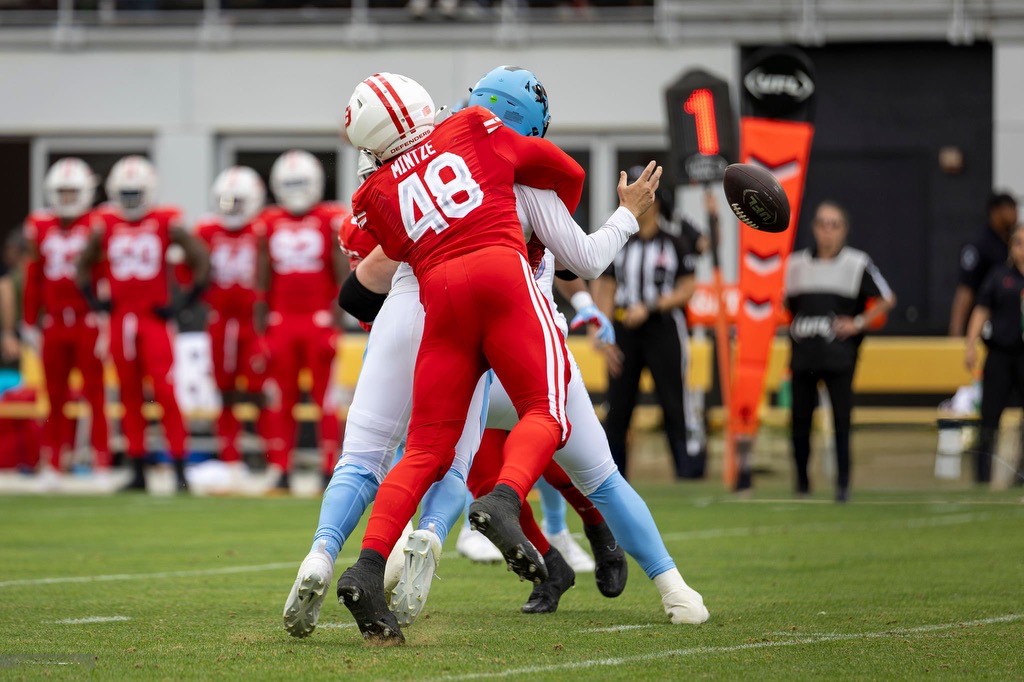
DC Defenders outside linebacker Andre Mintze sacks Dallas Renegades quarterback during a game this season.Andre Mintze
There, he met the owner of Brighter Days, Walter Toller III, and sold him a car two years ago. After sharing his story with Toller, Mintze returned to football for the 2025 season. Mintze needed to figure out his next role after winning the UFL title, and the pair reconnected at, of course, a football game.
“He responded and told me to come watch the Ravens game with him and people in his company,” Mintze said. “We watched the Ravens game with him and got to speak to him one-on-one, and he was like, ‘Hey, you looking for a job?’ I was like, ‘Yes.’
“He had someone reach out to me two weeks later. … He gave me a chance to jump start my healthcare career, and I was just kind of like, ‘Man, stuff like this doesn’t happen often, nor does it happen on purpose.’”
‘Kid in the candy store’
Just over two weeks ago, Mintze was in meetings, working his 9-to-5 job. Now, he is on the cusp of being on a football field one last time, competing in the UFL championship game against the Louisville Kings at Audi Field in Washington on Saturday (3 p.m., 6abc).
Mintze’s energy in his return to the Defenders last weekend, who had a 5-5 record entering the game against the top-seeded Storm, certainly emanated with his teammates in the 28-22 win. The edge rusher finished with one tackle.
“I was like a kid in the candy store, like it was Week 11 [of the UFL season], and I’m flying around shaking everybody’s hands, because a lot of these guys I’ve been on teams with for the past three years,” Mintze said. “We built the relationship, built the rapport, and I’m just extremely excited just to be there.”
Football, which Mintze has played since he was 10 years old, was his “lifelong dream,” and he now has a chance to close the chapter on his playing career on Saturday in front of several family members, who are making the less than three-hour drive this weekend. His boss at Brighter Days, Toller, will be there, too.
“Being a two-time champion in a professional football league is something not a lot of people say [they] can be a part of, so I think it would just be something for me to make sure that myself and the team that I’m on goes out on top,” said Mintze.
“I’m just kind of rolling with it, enjoying every moment of it, and doing my part to make sure that however capacity the team needs me, that we’re able to hold a championship trophy up at the end of the day.”