Category: Will Bunch

  • The other Graham Platner crisis for Dems | Will Bunch Newsletter

    The other Graham Platner crisis for Dems | Will Bunch Newsletter

    A journalistic mentor of mine back in the 1980s told me that Harry Truman, pressed for a comment on the passing of a political enemy, finally said, “It’s a damn shame when anybody dies.” Of course, like most perfect quotes, HST probably never actually said this, yet I find occasion to think of these words often. On Saturday night, South Carolina GOP Sen. Lindsey Graham — whose moral compass went haywire in the 2010s when a brief moment of truth–telling about Donald Trump melted into embarrassing capitulation — died suddenly from heart problems. He was just 71. It’s a damn shame.

    If someone forwarded you this email, sign up for free here.

    Dems need to give up on fake blue-collar campaigns like Platner’s
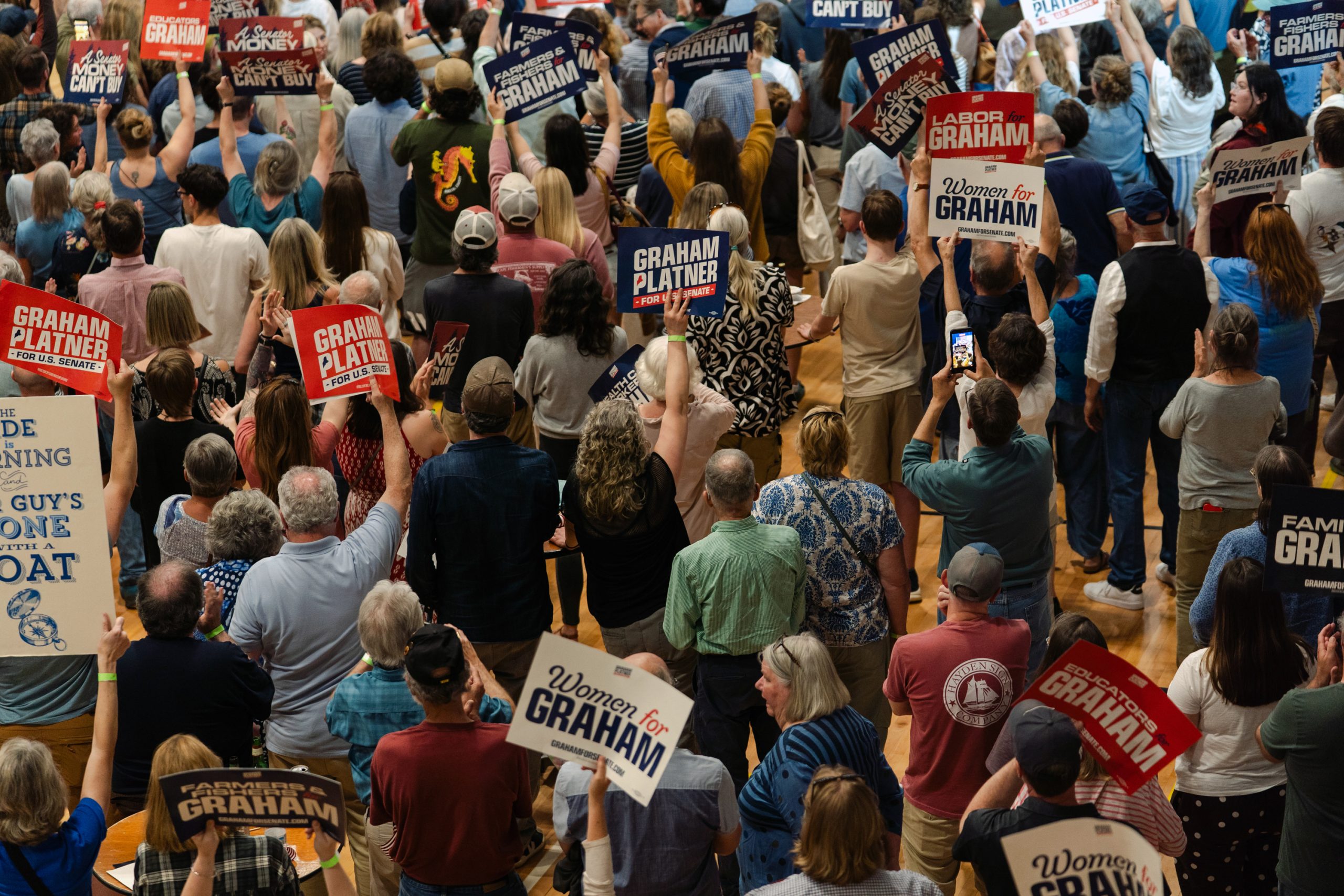
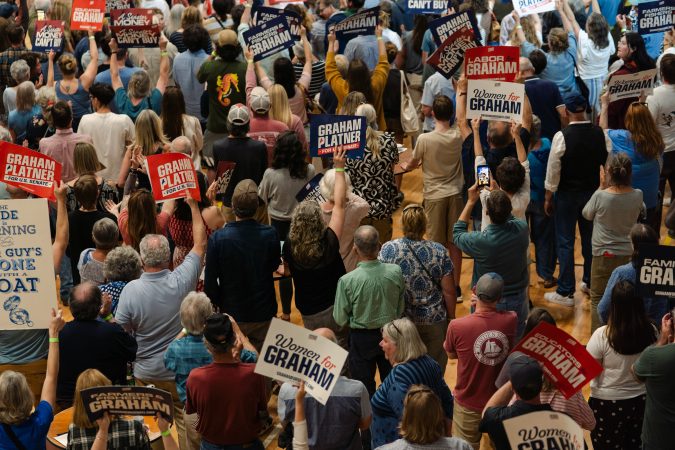
    Supporters cheer for Graham Platner in Blue Hill, Maine, after he won the Democratic Senate primary on June 9. Platner’s bid for the Senate inspired progressive Democrats. But the campaign, which he suspended July 8, was messy, disorganized and ultimately doomed by a steady drip of scandal. SOPHIE PARK

    Graham Platner, the failed Maine Democratic Senate candidate, was introduced to most of us outside of the Pine Tree State less as a human being than as a fully formed narrative.

    The rugged redhead with angry eyes was an ex-Marine from the Iraq and Afghanistan wars who became an oyster farmer and then a political outsider with all the right words for an electorate that’s mad as hell and isn’t going to take it anymore.

    We now know that Platner’s origin story — compelling, but larded with omissions and sprinkled with lies — belonged on the fiction shelf. But even after the Democrats’ scandal-scarred June primary winner accepted the inevitable and ended his candidacy on Friday, he lives on as an avatar upon which everyone with a stake in a badly broken Democratic party can project their distrust and rage toward others — folks who ought to be their allies in an all-out war against fascism.

    Days later, the Platner discourse is almost as toxic as the candidate himself. People who voice their opinions, even in 280 characters on social media, get called everything from sexist Bernie-bro rape apologists to Quislings who want big corporations to keep running the Democrats into the ground, and all the rest in between. Don’t even mention Israel. In fact, don’t @ me after this is posted.

    Having said all that, there is a conversation that must be had by the Democrats, and probably a wider circle. And the disappearance of Platner himself from the picture makes that easier, because I think we can all stipulate that as a human being he was clearly not worthy to be a U.S. senator, even in the Senate’s current morally diminished state.

    There is another Graham Platner somewhere on Earth 2 who also suffered PTSD and developed a drinking problem fighting in pointless wars, and who also got a Nazi tattoo and posted wretched stuff on Reddit, but turned his life around in a glorious redemption song. But that’s not the Platner we got on here on Earth 1. Instead of an apology, he was weirdly defensive about his past, because — we now know — he was hiding stuff that was even worse than that.

    Although Platner has denied the most serious charge of a sexual assault, there should be zero tolerance in the Democratic Party for the type of sexual misconduct that’s been confirmed, let alone what’s been additionally alleged. That’s not just the only proper moral stance, but it sets Dems apart from a twisted GOP that nominated Trump three times. Platner’s disappearance is a blessing to everyone.

    But even with that matter resolved, we still haven’t answered the bigger question that I posed the only other time I wrote about Platner back in the spring: Why did a majority of Maine Democrats — roughly 150,000 voters — ignore the party establishment to back this guy?

    The selection of Platner’s replacement over the next few weeks will show whether top Democrats understand that base voters want candidates who are younger, who support things like Medicare-for-all or Palestinian rights that many corporate donors do not, and who look like they will fight fascism, not bend the knee.

    But first Democrats — and just about everyone, frankly — need to do a better job understanding not just the “why” of Platner supporters, but the “who.” Baked into the Platner myth was this notion that in running a gruff-sounding ex-Marine and oyster farmer, Democrats had found a key to regaining the long-lost white working class.

    Two huge problems with this. First — and this will sound familiar here in Pennsylvania where shorts-and-hoodie-wearing Sen. John Fetterman grew up upper middle class before donning a blue collar — Platner comes from a fairly privileged background. He’s the son of a lawyer and upscale restaurant owner and grandson of a famous architect; he started high school at the super-elite Hotchkiss School.

    Which brings us to the crux of the problem: the notion that Platner’s pre-implosion success was his ability to win back working-class voters in an overwhelmingly white state. Polls exposed this all as a lie. A late June survey from the New York Times/Portland Press Herald/Siena showed Platner losing white, non-college educated voters by a whopping 21% to the GOP incumbent Sen. Susan Collins. So what gave him a shot at winning? A massive 37% edge among college degree holders.

    Look, we all know that it’s been the obsessive mantra of the political pundit class that Democrats will never fully win back America without restoring the working-class coalition that elected Franklin Roosevelt four times during the New Deal era. I hate to be a contrarian here, but what if that’s not true?

    A society that over a half-century has once again made higher education an elite sport and now has a right-wing media and demagogues like Trump to heighten working-class grievances and blame the wrong people has created voters who — at least for now (hold this thought) — arguably aren’t worth chasing after.

    The frayed alliance of progressives and liberals who comprise the core of the Democratic base do some dumb stuff — opposing new units that could lower housing costs, or “nice white parents” leading to de facto school segregation — that should stop.

    But the core values of the college-educated voter — that education makes a better person and not just a better worker, that the rights of every human including the trans community should be cherished, or that students should learn about America’s mistakes like slavery — are moral and good. They shouldn’t be mocked, and they shouldn’t be compromised by chasing votes that don’t exist.

    An America that’s not inclusive and that isn’t fair when it comes to gross income inequality, not to mention who gets to see a doctor or send their kid to college, isn’t a cause worth fighting for. And there’s already a healthy number of working-class people — not the majority, not yet — who would agree with this.

    Platner was a bad guy but he appealed to voters who wanted good things. Let’s not bemoan the fact that his movement was based on educated people. Let’s build on that. Instead of lowering our values to win elections, let’s play the long game to lift more people up to a better place.

    That means elevating education to the top of the agenda — including much more access to low-cost or even free college or trade school, plus an emphasis on critical thinking that ditches AI, while raising up civics and the humanities. Push a universal gap year of national service for high school grads — to work on projects that will remind young Americans what we have in common, not what divides us. Build a United States with available healthcare and affordable housing that will fuel ambition, not anger.

    It’s way past time for college-educated progressives and our allies to stop apologizing for the things we believe in. The current push to find a candidate who can replace Platner and fight for all the right stuff — without the personal baggage of their predecessor — is a great place to start. Maybe it’s even time to revive the old cliché: As Maine goes, so goes the nation.

    Yo, do this!

    • Tuesday is the folk-music legend Woody Guthrie’s 114th birthday. I use the present tense because it very much feels like the singer who influenced living icons from Bob Dylan to Bruce Springsteen is still with us. Now, a friend, the pioneering rock journalist Greg Mitchell, has directed a new documentary about the musician, his political activism in the mid-20th century, and his lasting influence: Woody Guthrie and the Ghost of Tom Joad. It’s now streaming on PBS.org and will also be popping up on PBS stations this summer. You can — and should! — stream it here.
    • Monday night I read a remarkable piece of journalism that I feel compelled to share. Last week, a lot of America was talking about a photo from July 4 that showed a young Black woman on a D.C. Metro train surrounded by masked members of the white supremacist Patriot Front. There was so much commentary about what this woman must be feeling and thinking, and almost all of it — as shown by some remarkable reporting by former Inquirer journalist Ellie Silverman, writing for NOTUS — was wrong. The truth is heartbreaking.

    Ask me anything

    Question: Why do we not know what’s going on with (ailing Kentucky Sen. Mitch) McConnell? What is the Republican endgame? What’s the benefit to prolonging the process of determining a replacement? What is that process (seems to be in dispute)?

    Answer: We know a little more now than we did when I addressed this issue last week. His staff on Sunday released a brief statement and what is being called a “proof of life photo” — with that morning’s Washington Post sports page visible in the shot — seeking to explain McConnell’s month-long hospitalization and hoped-for return to the Senate. There were, of course, immediate conspiracy theories that the photo was artificial intelligence, but there’s no compelling evidence of that. The biggest mystery is, why doesn’t the 84-year-old McConnell just quit, with only about six months left until he leaves office in January? Kentucky has changed its Senate replacement law a couple of times, mainly because GOP lawmakers don’t want Democratic Gov. Andy Beshear making the pick. The new law requires a special election, but there probably will not be one if McConnell stays in office through Aug. 3. Republicans seem desperate to avoid the special election, and I’m not sure why, since McConnell surely isn’t helping advance the Trump agenda from his hospital bed.

    What you’re saying about…

    You really didn’t think I could go a whole newsletter without mentioning soccer, did you? Last week’s question about Trump’s FIFA intervention and the reversal of the American Folarin Balogun’s red-card suspension drew a unanimous response: The president was wrong to get involved, and he seemed to create a negative vibe around the U.S. team before it got blown out of the World Cup by Belgium, 4-1. “To me, it appeared to be the wrong call, but the ref called it.” wrote ex-soccer mom Suzanne Urban Ryan. “We had to live with it. Trump getting involved was just really poor judgement based on his need to win a game that he is not even a player.” Added Jordan Lang: “I’m sure his corrupted meddling negatively affected the psychology of the U.S players.” Yup.

    📮 This week’s question: Trump plans to address the nation in prime time Thursday with ginned-up information about his bogus and debunked claim that the 2020 election was stolen from him. He is laying the groundwork for November, and election interference on a scale to rival the Jim Crow South. How can Congress, the courts, the media, and everyday citizens respond to this dire threat before it spirals out of control? Please email me your answer and put the exact phrase “Trump election meddling” in the subject line.

    Backstory on why ICE is killing immigrants, again
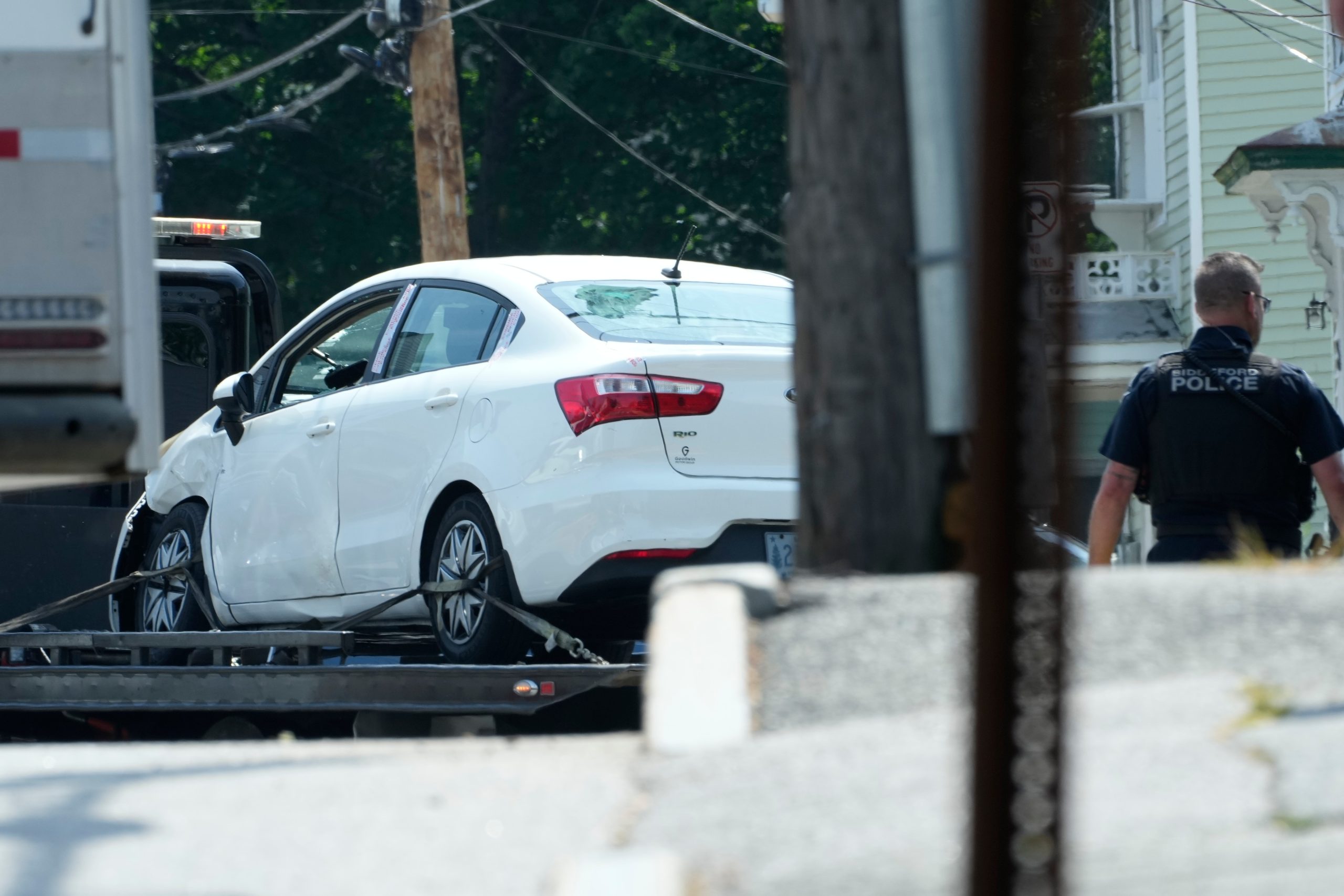
    A vehicle with a damaged window is transported away from the scene of a shooting involving U.S. Immigration and Customs Enforcement, Monday in Biddeford, Maine. Robert F. Bukaty

    The fight against police brutality against African Americans in the late 2010s found its rallying cry when New York City police choked and killed a street peddler named Eric Garner, whose last words were. “I can’t breathe!” Now, Monday’s latest fatal shooting by U.S. Immigration and Customs Enforcement agents that shattered the morning calm of Biddeford, Maine has produced a new mantra. As 26-year-old Joan Sebastian Guerrero lay dying on the pavement — shot in the head, then dragged from his car and handcuffed — a bystander heard him say in anguish: “I tried to stop.”

    Moments earlier, the man, reported to be a Colombian national with a U.S. work permit, had left his home, possibly with his daughter, in a white Kia sedan, which was hemmed in by ICE agents in their vehicles. Although the Department of Homeland Security changed the wording of its statements over the course of the day, it ultimately reported that an ICE agent shot Guerrero because the driver attempted to flee and the officer was “fearing for public safety.” But ICE and DHS, whose officers have now shot and killed at least 11 people since Donald Trump returned to office, have repeatedly seen their versions unravel as more video and witnesses emerged. The two most recent attacks — Monday’s assault on Guerrero and last week’s Houston shooting of 52-year-old Mexican national Lorenzo Salgado Araujo — happened on working-class residential streets without clear videos of the shootings, and with ICE agents not wearing body cams.

    Still, a pattern is starting to emerge as DHS and its new leader, the former Oklahoma senator Markwayne Mullin, put a flood of new, barely trained ICE recruits on the streets in attempt to make mass arrests of immigrants without the same level of hoopla and backlash that happened in cities like Minneapolis and Chicago under Mullin’s predecessor, Kristi Noem. In both the Houston and Biddeford shootings, ICE began the morning in what it claimed was a targeted operation seeking a specific immigrant with a removal order, only to try to arrest and ultimately kill men, in Salgado and Guerrero, who were not the supposed targets.

    It’s quickly becoming clear that ICE’s new strategy is a recipe for disaster. Both Salgado and Guerrero, according to what we know from witness accounts, didn’t seem to know what exactly to do when their vehicles were surrounded by unmarked vans and yelling men. In both cases, ICE agents interpreted the predictable panic and chaos as aggression, and made a split-second decision to end a human life forever. It increasingly looks as if the federal agents — facing an impossibly ambitious goal from the Trump regime of arresting and deporting 1 million people a year — insist they have a name on a sheet of paper, when in reality they are racially profiling brown-skinned men driving to blue-collar jobs.

    Like so many projects of our current government, the new ICE scheme is not only inhumane but also dumb and counterproductive. Mullin’s apparent new strategy was to meet the high arrest quotas sought by Trump and his immigration guru Stephen Miller without generating the kind of public protest and backlash that all but drove DHS out of Minnesota this winter. It’s not working. Even before Guerrero’s name was released, angry demonstrators took to the streets in Biddeford and stormed the office of the state’s GOP Sen. Susan Collins, who recently voted for a $70 billion cash infusion for immigration raids.

    The tactics may have changed slightly, but the repulsive devaluation of human life has not. Mass deportation is a failure — strategically, politically, and morally.

    What I wrote on this date in 2019

    Some days my past writings read like Nostradamus, but more often than not they reveal how fleeting our political moments can be. On this date seven years ago, this columnist joined a lot of progressive voters in swooning over the early-stage presidential ambitions of Massachusetts Democratic Sen. Elizabeth Warren, who had just spoken at the left-wing convention Netroots Nation here in Philadelphia. “With her slam-dunk performance Saturday,” I wrote, “Elizabeth Warren became president … of the American progressive movement, anyway.” But Sen. Bernie Sanders had other ideas about that, and then Joe Biden and South Carolina voters came along with different ideas about Warren, Sanders, and control of the Democratic Party. Read the rest: “Netroots Nation was the day Elizabeth Warren became president of the American left.”

    Recommended Inquirer reading

    • It was a full week for me, and for American outrage. First, I tackled the Houston ICE killing of 52-year-old Mexican national Lorenzo Salgado Araujo and the return of ambitious immigration raids to American cities. I noted that the new ICE strategy aimed to ramp up arrests without generating public outcry, and I urged readers not to go to sleep on mass deportation. Over the weekend, I wrote about the similarities between the Trump regime and the disastrous ancient reign of the Roman emperor Caligula. I detailed how Trump’s growing paranoia that he will be assassinated in office is causing new bloodshed in the Persian Gulf and inspiring fresh efforts to quash civil liberties here at home.
    • Kenesaw Mountain Landis must be spinning in his grave. He was the former federal judge who tried Chicago’s notorious “Black Sox” for throwing the 1919 World Series at the behest of New York gamblers, then became baseball commissioner to clean up the national pastime. For decades, Major League Baseball shunned even the slightest whiff of gambling connections that might taint the sport — but times have changed. My Inquirer colleague David Gambacorta — one of the best investigative reporters in the business — last week broke a remarkable story about how the lucrative betting site FanDuel egged on a local addicted gambler to keep playing until he lost some $1.5 million. Plot twist: FanDuel’s effort included having Phillies slugger Bryce Harper send a personalized video to please the local bettor. It’s disturbing that a) Harper, with a 13-year $330 million contract, also feels the need to peddle $899 videos on Cameo and b) he has a relationship with people at a gambling website. But FanDuel is now “the official sports betting partner” of MLB — an appalling relationship that only encourages morally dubious behavior like the Harper video. The rank corruption of modern American society, including sports, is why we need investigative reporters like Gambacorta. You can read the next installments in this saga, and support his work, when you subscribe to The Inquirer.

    By submitting your written, visual, and/or audio contributions, you agree to The Inquirer’s Terms of Use, including the grant of rights in Section 10.
  • Climate denial is what history will remember about July 4, 2026 | Will Bunch Newsletter

    Over the last decade, I’ve grown used to waking up before dawn and writing about a soul-crushing defeat from the night before. Usually it’s on a Wednesday, but somehow Donald Trump is always involved. Monday’s 4-1 demolition of the U.S. men’s national soccer team by Belgium pretty much confirmed that I won’t live to see Americans win the World Cup in my lifetime, so it’s time for acceptance. But these last three weeks have been a blast, and the party isn’t over. Sometimes the tritest words are also the truest: Maybe the real World Cup was the friends we made along the way.

    If someone forwarded you this email, sign up for free here.

    Future generations will remember America’s 250th for its state of denial

    The long-awaited arrival of the 250th birthday of the United States inspired a lot of talk about everything that’s changed since July 4, 1776, especially as “the man on a hobby horse” sinks to the founders’ worst fears about democracy and demagoguery.

    But historians of the future may dwell on another huge difference between the day the ink started drying on the American Declaration of Independence and July 4, 2026.

    The thermometer.

    Thomas Jefferson — his work as chief author of the nation’s founding document wrapped up — bought a new thermometer that morning and recorded the temperature in Philadelphia three times in his diaries that day, including a temperate 1 p.m. reading of 76 degrees.

    Jefferson’s thermometer might not have been up to the task of keeping up with Philadelphia’s climate 250 years later. On Saturday’s Semiquincentennial, temperatures maxed out at 101 degrees — the third straight day that the mercury reached that mark, which had never happened since records began in 1870. But with the fetid, humid air, it felt more like 110 degrees for anyone brave enough to celebrate America’s birthday outside.

    Philly should have seen this train coming. I mean, literally. Two days earlier, officials just outside of Reading, nearly two hours northwest of America’s founding city, plowed ahead with a welcoming party for Union Pacific’s Big Boy No. 4014, the world’s largest operating steam locomotive — even as the railway relic ran an hour late, with some thermometers posting 106 degrees.

    The result was what local officials called “a mass casualty event” — no one died, but rescue teams were summoned from neighboring counties to help revive more than 100 people suffering from heat exhaustion, in desperate need of water or an IV. Some 35 of the would-be train spotters were rushed to the hospital.

    “It was a little bit chaotic,” an EMS director told the local TV station in Reading. “I don’t think anyone anticipated the weather or the volume of crowds.”

    But they should have seen it coming. The Big Boy heat fiasco was almost too spot on as a metaphor for the slow train wreck of climate change, as the locomotive would spur on the Industrial Revolution that then triggered the rise of greenhouse gas pollution. To the extent that anyone out there still listens to scientists, they were quick to say this weekend: We warned you.

    The scientific group World Weather Attribution, which tracks the impact of human-made global warming, said last week’s heat dome over the Eastern Seaboard was indeed a rare event, yet — without the contribution of burning fossil fuels to a warming planet — it “would have been so extreme as to be virtually impossible.”

    Heat waves aren’t new. I was just 7 but still remember the July Fourth week of 1966 — exactly six decades ago — when it also topped 100 degrees. It’s one of the few things I remember from that grade-school time because it was so incredibly rare. Today, “once-in-a-century” heat waves are routine all over the planet. In June and looming again this week, Western Europe — where few homes are air-conditioned — has sweltered under temperatures that climate scientists weren’t expecting until around 2050.

    This suffocating July Fourth could have been — to steal a phrase from the multiplex marquee — America’s “disclosure day,” exposing the truth of a threat to humankind that’s been hiding in plain sight. Instead, it was our “denial day,” led by our planet’s denier-in-chief, Donald Trump, whose 250th birthday card to America only read: “Don’t look up.”

    The denial was immediate, as the president insisted — ignoring the experts who warned that the triple-digit temperatures and intense, gathering thunderstorms might spark a much bigger “mass casualty event” in Washington, D.C. — on going ahead with his bombastic and self-serving speech and a fireworks show that lasted well into the early morning hours of July 5.

    Our modern-day seersucker-wearing mayor of Jaws might as well have told the broiled holiday weekend throng, “But, as you see, it’s a beautiful day, the beaches are open, and people are having a wonderful time” — as ominous John Williams music swelled in the background.

    The denial was also metaphorical to the max — and not just when those predicted storms arrived and panicked MAGA Trump supporters were forced to take refuge at the National Museum of African American History and Culture, the history and culture their movement is so eager to erase.

    In New York Harbor, U.S. Coast Guard vessels forced the storied environmental sloop Clearwater — which took part in the historic Bicentennial tall ships parade back in 1976 — to leave the July 4 Parade of Ships because of two anodyne political banners taped to its sails: “Save the Clean Water Act” and “Indigenous Rights, Racial Justice, Climate Solutions.” Don’t look up, not even at a tall ship.

    Hours later, during the fireworks show, the Brooklyn Bridge caught fire, which had nothing to do with climate change, yet felt like a coded message from the overheated planet nonetheless.

    But maybe we shouldn’t wade too deeply into the metaphors when the worst denial is the all-too-real policy stuff. Every day, some nightmare headline about killer floods or disappearing glaciers is met with some nonsensical action from the U.S. government based on Earth 2, where none of this is happening.

    As the climate-change-intensified heat dome settled in over the Eastern United States, Trump issued pardons for nine people — and you really can’t make this stuff up — who’d been convicted of felony violations of the Clean Air Act by selling or installing devices for diesel trucks that defeated their emissions controls, because polluting our spacious skies is no longer a crime in Trump’s America.

    It cuts much deeper than this. Trump actually chose the July 4 peak of the heat wave to announce a massive cut in federal subsidies for wind and solar projects, a move that was expected under legislation passed last year. This was just one more layer to a sweeping agenda that has massively relaxed pollution regulations and even wasted taxpayer dollars to make sure clean energy projects aren’t built.

    America continues to get a whopping 82% of its energy from polluting fossil fuels, and that’s unlikely to drop over the next 30 months, regardless of how many Trump voters can cheat death on looming “mass casualty events.” But POTUS 47 warned voters he planned to set the world on fire if he returned to the White House.

    What’s harder to understand, frankly, is why the people who should be fighting Trump on climate change are running away from the front lines. Yes, I’m talking about Democratic Party leaders who’ve tossed climate action down the memory hole in the 2026 campaign — either terrified that any mention of climate will undercut their single-minded focus on affordability, or distract from fighting Trump’s brand of autocracy.

    And ditto for newsroom leaders who seem to have decided that environmental journalists are the first people to lay off, not to mention the other world chieftains who ought to be challenging Trump’s destructive policies, but are meeting the moment with a shrug. Even Canada’s center-left prime minister, Mark Carney, is now backing away from the aggressive climate action he once supported, claiming, “It’s too expensive.”

    That’s a lot of malarkey, as the president who just four years ago passed the largest climate action bill in U.S. history might say. Clean energy continues to rise elsewhere in the world because the alternatives, like wind and solar, are ultimately cheaper and also a source of desperately needed job creation. The fossil-fuel-boosted heat wave of July 4, 2026, proved that inaction is a threat not only to our lives and our liberty but also to the pursuit of happiness. It’s hard to celebrate 250 years of American democracy when climate denial is exposing that system as so badly broken.

    Yo, do this!

    • Did I mention the World Cup isn’t over? If you are a true fan of the Beautiful Game, you’ll brush off the quadrennial disappointment of the U.S. men’s team and get excited to watch one of the greatest generations of international soccer superstars we’ve ever seen. One of the more intriguing of the four quarterfinal matchups this weekend will occur when Harry Kane and his English squad face Erling Haaland and his Norwegian upstarts in the Miami heat. The match kicks off at 5 p.m. Saturday on Fox.
    • The new movie scene for the July Fourth holiday was a disappointment, so the heat wave was a perfect opportunity for revisiting the classics of the 1970s and ’80s with the generation that had not been born yet. We went back to the late Rob Reiner’s first great serious film, the coming-of-age saga Stand By Me. It’s hard not to feel nostalgia today for a time when 12-year-olds had to entertain themselves without iPhones and could disappear into the woods overnight, which felt less strange in 1986 when the movie was first released. It felt truly like a faint signal from a lost planet.

    Ask me anything

    Question: Talk about Mitch McConnell’s demise. — Wendy (@wensilver.bsky.social) via Bluesky

    Answer: Well, Wendy, that’s not exactly a question, and while the New York Times is reporting that the Kentucky senator and former majority leader was unconscious and in cardiac arrest when paramedics found him on June 14, his staff insists McConnell is still alive. That hasn’t stopped conspiracy theories that McConnell is on life support until August, when his replacement, named by GOP lawmakers, could avoid a messy November election. I don’t know about that, and I agree that it’s very poor form to speak ill of the dead. So the fact that he’s still alive is an ideal moment to remind everyone that his hijacking of the U.S. Supreme Court and his cowardice during Donald Trump’s second impeachment both started America on the path toward tyranny. So get well soon, senator. You still have a lot to answer for.

    What you’re saying about …

    Last week’s question about whether you are happy or concerned about progressive Democrats doing well in the 2026 primaries brought a mix of interesting responses that aren’t easy to categorize. Most of you want Dems who will fight harder than the current crew. “I have been voting since 1968, always for Democrats, but seldom with enthusiasm,” wrote Stephen Boone. “Finally, in my old age, there are a few decent politicians. I want more AOCs! More Zohran Mamdanis! …” Others felt more cautious. Wrote Thomas Desmond: “I think the progressive candidates are fine in deep blue seats, but may not be a great idea in purple or light-red seats that could prove winnable this year.”

    📮 This week’s question: It may be water under the bridge next week, but Donald Trump’s personal role in overturning the arguably wrongly given red card to U.S. star Folarin Balogun has sparked a heated debate. Was the red card an injustice to be reversed by any means necessary? Or did Trump’s involvement ruin the World Cup? Please email me your answer and put the exact phrase “Trump Balogun” in the subject line.

    Backstory on Trump ruining the World Cup like everything else

    If the big-screen tragedy of the U.S. men’s soccer team’s same-as-it-ever-was Round of 16 exit from the 2026 World Cup on Monday night had a theme song, it should have been John Lennon’s “Instant Karma.” For its first four (mostly) exhilarating matches, the USMNT gave a nation that was desperate for both an escape from relentless bad news — but also a connection to a wider world — the good vibes it desired. It truly felt like the Americans could go further than ever before (in modern times) in the planet’s greatest sporting event. TV ratings soared. Watch parties were packed. A broken land was coming together.

    Then Donald Trump showed up.

    To longtime soccer fans, the red card handed out last Wednesday to the U.S.’s top goal scorer, Folarin Balogun, for stepping (seemingly unintentionally) on the ankle of a Bosnian player during a 2-0 victory — a harsh punishment that meant not only his ejection from the pitch but a suspension for the upcoming Belgium match — was the essence of our love/hate relationship with soccer. It may be a beautiful game, but it’s the ugly calls that we debate for decades. For a non-soccer fan and malignant narcissist like Trump, for whom anything that goes against his desired outcome is proof of the world’s unfairness toward him, the looming loss of America’s star striker was an opportunity to act like the strutting strongman of a personalist dictatorship.

    The Trump White House called in the lawyers, treating soccer like it was a bad story about the president in the New York Times, or like trying to reverse the 2020 election. And POTUS got on the phone and called up a fellow dictator, Gianni Infantino, the president of the notoriously corrupt FIFA — a man who even invented a FIFA Peace Prize and gave it to Trump as protection so that his $13 billion soccer tournament wouldn’t get hurt. By Sunday, FIFA announced — without any effort at justification — that Balogun’s suspension was lifted and he was cleared to play. This had not happened during a World Cup since 1962. The raw power play cemented the world’s bitter opinion about today’s United States: a nation that refuses to play by the rules, whether it’s blowing up fishing boats or fixing a soccer tournament.

    There were too many ironies to bear — especially the fact that Trump had just gone all the way to the U.S. Supreme Court to fight to strip U.S. citizenship from people like Balogun, who was born to British-Nigerian parents in 2001 during an American visit, and millions of other immigrants who aren’t as talented with their feet. But the other irony was that — like so many corrupt schemes, whether from the mafia or the Trump White House — the president’s soccer coup failed. It felt like Trump had attacked the positive zeitgeist around U.S. men’s soccer with a neutron bomb. Balogun rarely even touched the ball. We’ll never know how much of Belgium’s 4-1 rout of the mistake-prone U.S. was simply a European powerhouse outclassing the Americans, as has happened so many times before, and how much was Trump destroying the juju.

    It did seem fitting that this sordid affair played out over the weekend of America’s 250th birthday, as it was more confirmation that Trump, in spite of what the hat says, actually has no clue what makes America great. If any one principle stood out from the founders’ 1776 and 1787 experiments, it is that the United States was to be based on fairness and following the rules, with no king imposing his will. The single greatest thing about America’s presidential elections was not who won, but the fact that the loser accepted the results, and there was a peaceful transfer of power — until Jan. 6, 2021. Likewise, nothing could ruin the often unbridled joy of the World Cup faster than a rigged competition.

    I’m still looking forward to the next 12 days, to watching the pinpoint passing of Argentina’s Lionel Messi or the raw power of Norway’s Erling Haaland, and to seeing who can actually win the World Cup on the pitch, and not in a back room. We already know the tournament’s biggest loser: Donald Trump.

    What I wrote on this date in 2014

    Looking back on this Attytood blog post from 12 years ago today is a reminder of how debates can evolve over time. My short piece on July 7, 2014, was a riff on an op-ed that called newspapers’ online comment sections in those early internet years “a hate crime” that should be cordoned off because of the vitriol spewed at immigrants or others outside the traditional American hierarchies. Back then, I disagreed, taking the side of free speech absolutism. “These are people who shouldn’t be censored … just set straight,” I argued. “The one true powerful weapon against offensive free speech … is your free speech, and mine.” Time proved me wrong: The Inquirer now avoids comments on most articles, including my columns. It turned out that “the wisdom of the crowd” that newsroom reformers once hailed was fatally infected with racism, sexism, and other forms of hate.

    Read the rest: “‘Newspaper Comment Sections Become Cordoned-Off Hate Crime Scenes.’”

    Recommended Inquirer reading

    • Only one column last week, as I enjoyed the July Fourth holiday by spending time with family and watching countless hours of soccer. In that piece, I wrote about an American 250th birthday that should have been a meditation on what makes our nation great, and where we so desperately need to improve — but which Donald Trump used as an excuse to rob the cash register when no one was looking. The president’s staggering $2.2 billion-plus payday during his first full year back in office — accomplished with a mix of crypto flimflammery, informed stock trading, and dealings with foreign dictators — is a five-alarm fire for the rule of law.
    • One final thought about the 250th birthday of the United States as the moment recedes into the rearview mirror. It’s true that 2026 has been a lousy year, economically, for newsrooms, but you would never know that from reading The Inquirer’s remarkable coverage of such an eventful time. I’ve already praised our world-class World Cup coverage, but our overworked staff also went out and covered a July Fourth party that happened despite killer heat, biblical storms, and a plague of locusts (not really, but it felt that way). This included some real accountability journalism, such as the Trump regime’s efforts to twist the truth around George Washington and slavery, as well as questioning the cost of the big day for city taxpayers. It was also a reminder that Philadelphia has been a hotbed for journalism and the rugged practice of bringing the First Amendment to life since the early days of the republic. Help keep it going another 250 years by subscribing to The Inquirer.

    By submitting your written, visual, and/or audio contributions, you agree to The Inquirer’s Terms of Use, including the grant of rights in Section 10.
  • Another Jan. 6 coup? Trump is screaming it out loud. | Will Bunch Newsletter

    What amazes me about the fact that America turns 250 on Saturday is that I’ve been alive now for 27% of U.S. history. When I was 17 and watched the Bicentennial parade of tall ships down the Hudson River from my dad’s conveniently located Manhattan skyscraper office on July 4, 1976, I thought I was celebrating ancient history. I was wrong. In a big, diverse world, the United States remains a young adult among nations. Like most young adults, we have a lot of issues.

    If someone forwarded you this email, sign up for free here.

    Trump thinks anything besides stealing the election is ‘a big yawn’

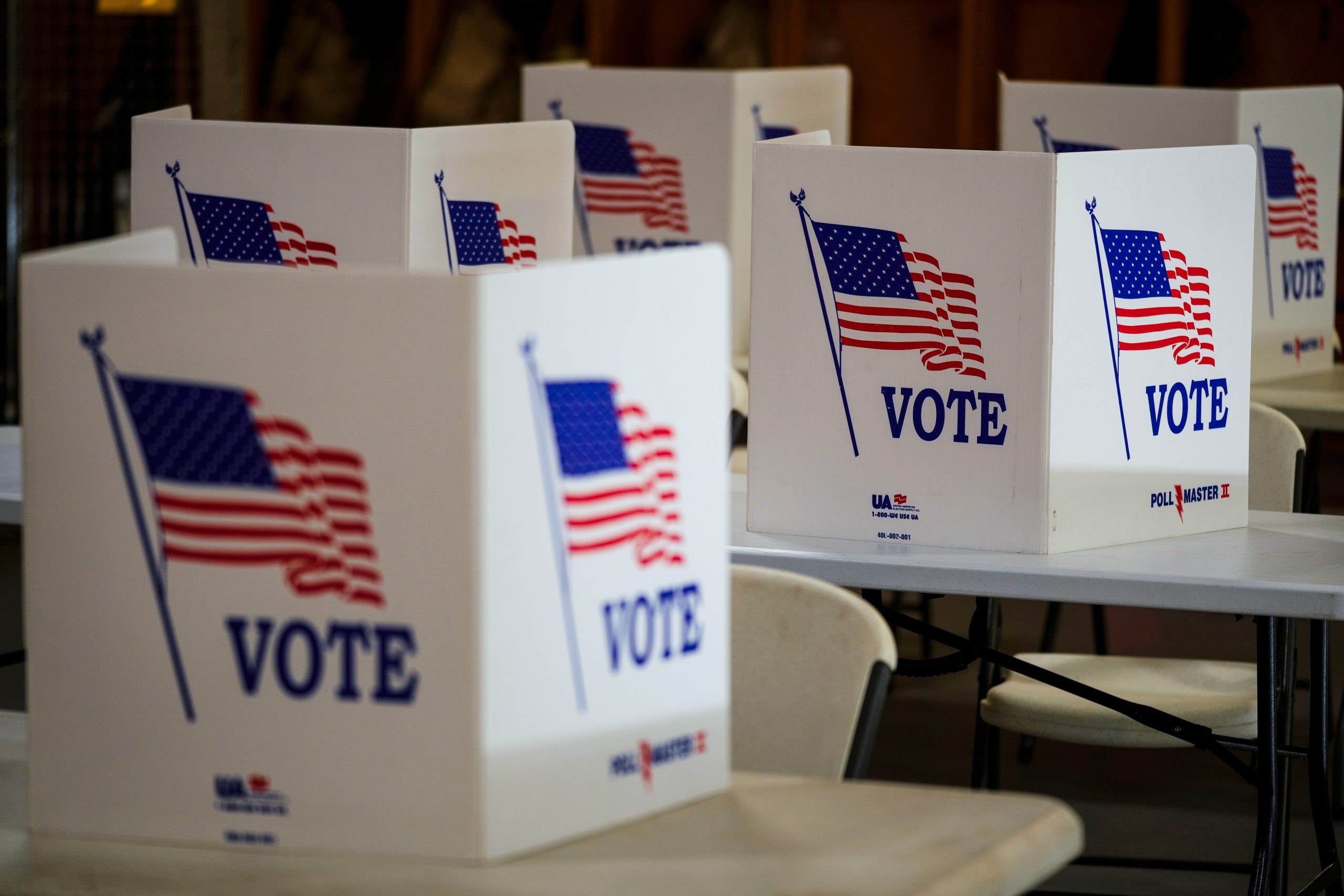
    Voting booths are set up at a polling place in Newtown in 2024.Matt Rourke

    Donald Trump gets a lot of flak, and deservedly so, for telling so many lies. On Monday, he held an Oval Office press availability, and much of what he said — false claims that other nations don’t have birthright citizenship or mail-in voting — was flat-out untrue.

    But nothing is scarier than when the 47th president speaks the truth about what’s really on his mind. Because the only thing that’s in Trump’s brain right now is stealing the November midterm election by changing the rules in his favor … or worse. If Trump’s vocal cords were not so weak and diminished, he’d have been screaming the quiet part out loud.

    A reporter asked the president about last week’s abrupt cancellation of a ceremony to sign a popular and surprisingly bipartisan bill to lower the cost of housing. Trump tied that move to an extortionary threat that Congress must pass his bill, which is called the SAVE America Act, but which could ruin democracy by suppressing votes.

    “Here’s what I would like to say,” Trump said of the still-unsigned housing bill, which passed in the House by a 396-13 vote. “It’s a yawn. Some people say it’s wonderful. To me, compared to the SAVE America Act, just about everything is a big yawn.”

    In quainter times, Trump’s disrespect for the housing bill — a grab bag of measures all geared toward encouraging contractors to build more units, which would lower both purchase prices and rents — might be the political gaffe of the year. Currently, only 29% of Americans think it’s a good time to buy a house, and nearly two-thirds are more likely to vote for a Congress member who helped lower prices. Republicans who voted for the bill are desperate for a win.

    Trump doesn’t care. He’s forgotten his “forgotten Americans” who think the rent is too damn high, not to mention the GOP members of Congress who’ve followed him off the cliff. But that’s not even close to the most alarming thing about Trump’s Oval Office moment of truth.

    The president says the only thing he cares about — even with his conflict in Iran becoming another “forever war,” and with the economy down the toilet for everyone who’s not a tech trillionaire — is a bill that critics say would be a disaster for free and fair U.S. elections. One report found that some 12 million people who fairly and successfully voted in the 2020 presidential election don’t have the documentation — such as a birth certificate or passport — that the bill requires.

    We don’t know how such a massive drop in turnout would change the election results, or whether a weakened Trump can pressure the GOP to find a way to pass a bill with zero Democratic support. But we do know this: The president’s maneuvers are not even the worst thing Trump has done this month on the steal-this-election front. Not by a long shot.

    The Trump regime has been signaling for months that it sees the U.S. intelligence community — spy agencies like the CIA — not as a tool for finding out what comes next in the Persian Gulf, or if or when China is invading Taiwan, or when Vladimir Putin’s Russian empire will fall. No, Trump wants secret agents who can creatively invent theories of foreign-born election fraud that would demand a strongman response.

    We saw this coming back in January, when the regime dispatched Trump 47’s first director of national intelligence, Tulsi Gabbard, to Fulton County, Ga., to oversee an FBI raid of voting materials from the 2020 election that Trump, with no evidence, continues to dispute. That link made it clear the regime is looking to create links to foreign actors.

    When Gabbard left the administration this spring, Trump named a temporary replacement who can serve through the November election: Bill Pulte, who also continues to lead the Federal Housing Finance Agency. Pulte lacks a key prerequisite for his new job — any experience in intelligence whatsoever — but has the only quality that matters to Trump: undying loyalty. Pulte’s main focus in the housing job has been combing through the mortgage records of the president’s political enemies, looking for undotted i’s and uncrossed t’s that could be used to manufacture criminal charges from nothing.

    In just a few days at intelligence, Pulte has not disappointed his boss. He showed up Monday and immediately began firing current staffers, with a rumored list of hundreds. The steep reduction in eyeballs on the world’s trouble spots is disturbing, but what’s even more alarming is the one person Pulte has hired.

    The newsletter SpyTalk described Pulte’s new chief of staff, Christina Norton, as “a party-loving MAGA activist with no background in national security issues but who last year boasted of running ‘the largest election integrity operation the Republican Party has ever seen’ …”

    The pairing of Pulte and Norton is an alarm bell that the national intelligence team under Trump will have one job: investigating fantastical “foreign election plots” that will be cited to justify radical measures like sending troops to polling places, seizing voting machines, or worse.

    SpyTalk noted that Norton, in her active Instagram feed, “talks about supervising more than 200,000 Republican poll watchers ‘standing guard’ at polling booths and vote-counting stations across the country” during her 2024 stint at the Republican National Committee.

    Yet, intelligence is just one of many tools in the federal government that the obsessive Trump is working to activate ahead of a November election that polls suggest will be a “blue wave” for Democrats hoping to retake Capitol Hill. Trump has issued several executive orders seeking to assert federal control over voting, which has been a state and local function throughout 250 years of American history.

    That effort suffered a bit of a setback Monday, when the U.S. Supreme Court ruled that states can continue to count mail-in ballots that are postmarked before Election Day but arrive after the polls have closed. But that will not stop the Trump regime from politicizing the U.S. Postal Service ahead of November.

    Last week, Postmaster General David Steiner told Congress that USPS plans not to deliver mail-in ballots in states that don’t turn their voter rolls over to the Trump regime, a demand many governors have resisted so far. “President Trump does not believe that elections he loses are valid,” Democratic Michigan Sen. Elisa Slotkin said after the hearing. “It’s all part of his authoritarian playbook.”

    This all feels very familiar. In the lame-duck days after Trump’s 2020 election loss to Joe Biden, the 45th president — instead of packing up to return to Mar-a-Lago — got busy putting in a new team at the Pentagon, ordering the U.S. Department of Justice to probe alleged voter fraud, challenging vote count certifications in court, and urging state lawmakers to seat rival slates of electors. Most pundits laughed this off, but I wrote a column — “So, is President Trump staging a coup, or what?” — that ran on Nov. 10, 2020, nearly two months before the actual attempted coup on Jan. 6, 2021.

    Now Trump is not only staging another coup, but he is yelling about it, in your face. There is nothing he won’t try over the next five months to prevent a Democratic Congress from investigating how he and his family have made billions of dollars off the American presidency.

    When Trump says anything that’s not election meddling is a “big yawn,” this should be our wake-up call. The time for a full-court press — lawsuits, public hearings, and investigative journalism — can’t wait until after the election. The new putsch has already begun.

    Yo, do this!

    • If you didn’t think I raced to download the new audiobook of Zayd Ayers Dohrn’s tale of growing up in the radical Weather Underground in the 1970s and ’80s — Dangerous, Dirty, Violent, and Young: A Fugitive Family in the Revolutionary Underground — then you must be new around these parts. Dohrn had already used his unique access to his parents — Bernardine Dohrn and Bill Ayers, revolutionary royalty — and their friends to tell a history of that era’s far left in 2022’s award-winning podcast, Mother Country Radicals. His new book aims to go deeper into the psychology of what it was like to be raised as a toddler on the run from the FBI, or whether bombings and bank robberies can change the world. That’s a question — also explored in this viral essay — with new resonance in the Trump era.
    • A few weeks ago, I suggested that folks see the new movie The Sheep Detectives. The film is already streaming on Amazon Prime (which produced it), and Sunday’s rare night off for the World Cup offered the excuse to finally watch. I can now highly recommend it. The movie — with an adapted script by the acclaimed showrunner of HBO’s Chernobyl, Craig Mazin — manages to merge police procedural cliches with moving thoughts about prejudice, existentialism, and what it means to belong to a flock. Even a flock of talking sheep.

    Ask me anything

    Question: Is Markwayne [Mullin, the Homeland Security secretary and former Oklahoma senator] the least qualified cabinet level official in American history? — Richard McGovern (@richardmcgovern.bsky.social) via Bluesky

    Answer: Good question from Richard, a fellow long-suffering Philadelphia Union fan. Not because I know the answer, when there are rivals for the title like Donald Trump’s war-losing “Secretary of War” Pete Hegseth, to name just one. But Mullin is now behind a move so outlandish that it showed me I haven’t lost my capacity for shock after all. This weekend, Trump nominated a previously unknown former Oklahoma state trooper named Lance Schroyer to run U.S. Immigration and Customs Enforcement, a powerful agency with 22,000 agents and a budget of around $30 billion a year. It turns out that just recently, Schroyer was heading a security detail for Mullin in Washington, D.C., and has become a close enough friend that he is an occasional dinner guest. Yes, he hired his bodyguard to run the equivalent of a large corporation. Stay tuned for all of this to unravel.

    What you’re saying about …

    I guess we’re not as close as we thought, as very few of you were eager to share your July Fourth plans with me or discuss what America’s 250th birthday means at such a dark moment. The ones who did reply are looking forward to spending time with family and friends, but all that patriotic jazz, not so much. “Probably, we will have our usual picnic and take the grandkids to see the local fireworks, but I have no intention to watch any special programming or parades, etc.” Marianne Zollers wrote. “It will just make me sad. Such a different feeling compared with the Bicentennial which was such a joyous and happy occasion for my entire family.”

    📮 This week’s question: One of the big stories of 2026 that’s finally getting a lot of attention is the success of more progressive Democrats, including democratic socialists, in key primary races against party moderates. Is this a good thing, lifting up candidates who’ll fight against Trump and for the working class? Or do you worry Republicans will capitalize against their opponents with more left-wing views? Please email me your answer and put the exact phrase “2026 progressive Democrats” in the subject line.

    Backstory on crossing the World Cup off my bucket list

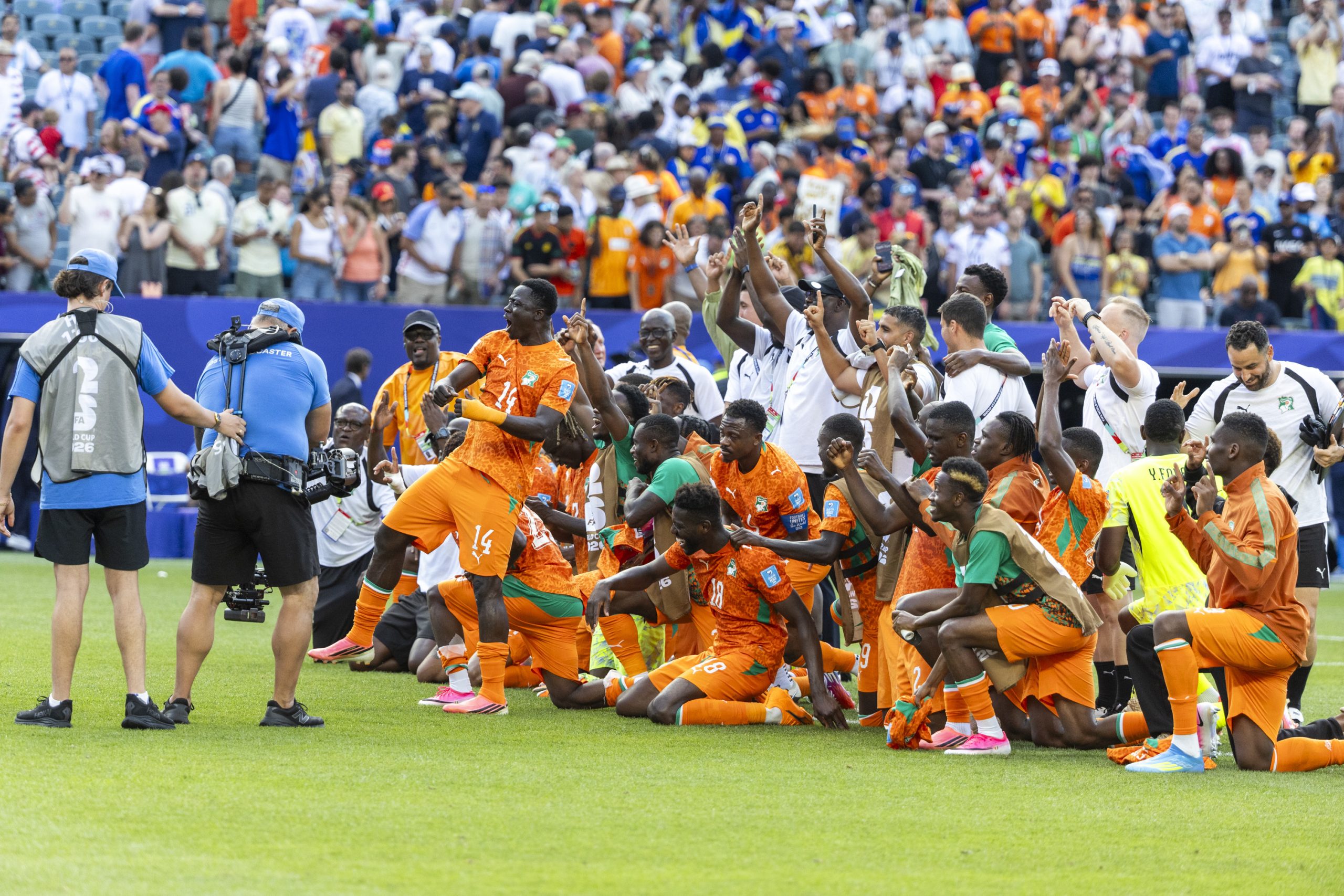
    The Ivory Coast team celebrates their win in the middle of the field against Curaçao with a score of 2-0 for the FIFA World Cup at the Lincoln Financial Field in Philadelphia on Thursday.Tyger Williams / Staff Photographer

    I can’t say exactly when, but at some point during my first-ever in-person World Cup match between Côte d’Ivoire and Curaçao, watching from the thin air of the top deck of the temporarily renamed Philadelphia Stadium, it struck me: My decades-long dream of being there for the world’s greatest sporting event was not like what I’d imagined.

    And yet, in some weird, quasi-religious acid test kind of way, it was even better.

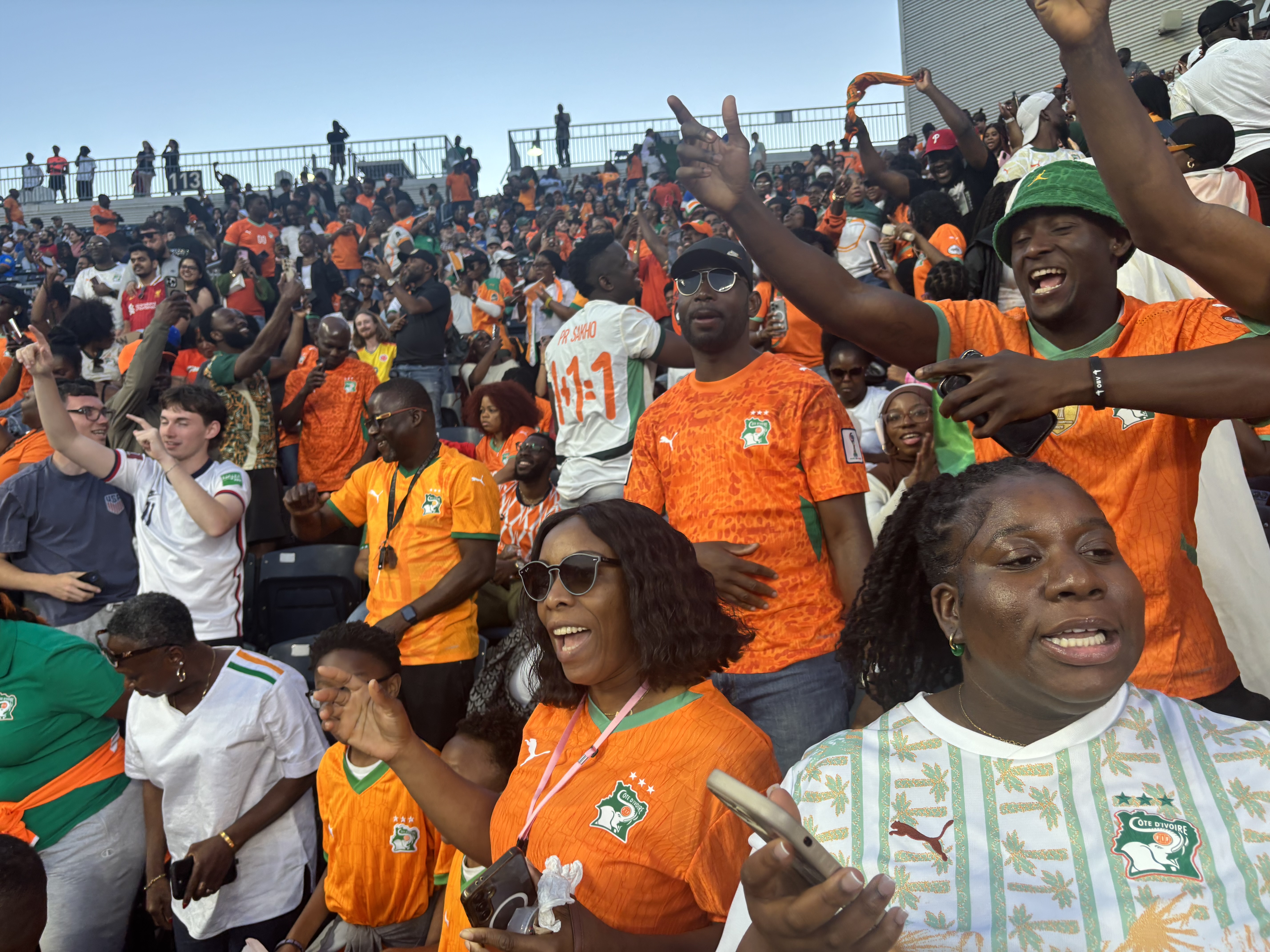
    I’ve been to countless sporting events going back to 1968, but never one where the vibe was basically: So happy to be here. I’ve certainly never been to a game where the PA announcer uttered something before the match about giving a big hand to both teams — and the sold-out crowd obliged. Fans would have burned down Section 220, Row 27, where I was sitting, if this had happened during an Eagles-Cowboys game. During a tense match with a place in the Round of 32 on the line, the gathering repeatedly did the wave and threw their vocal cords more behind the halftime singalong of the Bruce Channel 1961 oldie “Hey! Baby” than either of the two decisive goals by Côte d’Ivoire’s Les Éléphants.

    Up in nosebleed country, many of the fans repped soccer jerseys, but they were for club teams like Liverpool or Christian Pulisic’s USA No. 10, joined by me in my Philadelphia Union T-shirt. We were Philly’s soccer aficionados, desperate to be a part of maybe the only time in our lives the World Cup would take place in the City of Brotherly Love. A match pitting the smallest nation to ever qualify for the FIFA tourney (Curaçao, population 158,000) and an African underdog was pretty much the only way to crash the party without a bank loan. (Full disclosure: I paid about $280 apiece for two seats on StubHub — much like buying a stock, it could have been more or less, depending on how one timed it.)

    No, this wasn’t much like the Eagles games played here, where excitement merges with pins and needles of anxiety. On a picture-perfect late afternoon in June, bookended by the Philadelphia skyline and a lazy Delaware River, it felt more like a rock concert. It wouldn’t have seemed out of place if folks had started batting a beachball around at this soccer Woodstock. There was a mind-meld of the faithful, who saw FIFA and its commercialization as the devil, with the loudest boos for the TV-ad-laden “hydration breaks,” but with — I swear to God — a loud roar for the announcement of the attendance: 68,324. In a city where a 1976 Bicentennial match of some of the world’s best players took place in a mostly empty stadium, soccer is indisputably here to stay.

    Fans walked out of Philadelphia Stadium beaming less over the final score and more about the instant karma of the afternoon. After years of tavern taunts and ridicule from sports-talk radio, local soccer die-hards lived long enough to see America’s founding city become the world’s co-capital of the sport that, for its true believers, passes all understanding. It was all too beautiful. If I can somehow make it to Spain or Portugal or Morocco in 2030 (because, hey, I need a new bucket list now), I will be sure to wear some flowers in my hair. Soccer time will be a love-in there.

    What I wrote on this date in 2019

    I’ve been writing about the topic of journalism reform since the mid-2000s, or around the time it became clear to me and a lot of other folks that newsrooms needed to change or die. My fear, circa 2006 or so, was that we’d start seeing entire communities without newspapers or the accountability journalism that flows from that — which is exactly what happened in Youngstown, Ohio, when its paper closed seven years ago. I wrote: “The loss of the Youngstown Vindicator every morning doesn’t mean that the region’s 200,000 people will no longer be getting information. It just increases the likelihood they’ll be getting bad information — intentionally manipulated, and sometimes out-and-out fakery.”

    Read the rest: “How the first U.S. city with no daily newspaper will help Trump in 2020.”

    Recommended Inquirer reading

    • Only one column this week, as I took a well-deserved day off to attend the World Cup. In that piece, I looked at the sorry state of justice in America on the eve of its 250th birthday, with an emphasis on the outrageous sentences — ranging from 30 to 100 years — handed down to left-wing anti-ICE protesters convicted of rioting in North Texas. The U.S. Department of Justice that pushed these virtual life sentences is also pardoning the right-wing rioters of Jan. 6, 2021, as well as billionaire fraudsters who donate money to MAGA players and causes. They’ve made a mockery of liberty and justice for all.
    • Let’s be honest: People — not to mention sheep (see above) — can’t get enough of a murder mystery, especially a real-life true crime. It’s been a while since a crime saga has riveted Philadelphia readers as much as the stench of possible foul play that is growing at a home on West Chew Avenue in the city’s Olney section that police have branded a crime scene as they search for clues in the disappearance of two local women. Since the case broke open last week, nearly a dozen Inquirer reporters have produced riveting articles about the discovery of drugs, chemicals, and “a significant amount of blood” at the Horsch family residence, profiles of the two missing women — Amy McHale and Blair Tonzelli — and interviews with neighbors who talked about living next door to “a house from a scary movie.” The backstory here is that — whatever you may have heard about AI — it still takes a lot of human shoe-leather to get to the bottom of a story like this. Subscribing to The Inquirer is a twofer: You get to hurdle the paywall to read compelling journalism and feel good about being a supporter.

    By submitting your written, visual, and/or audio contributions, you agree to The Inquirer’s Terms of Use, including the grant of rights in Section 10.
  • In a dark 2026, a Summer of Love breaks out | Will Bunch Newsletter

    Some newsletters have a theme, and this week’s focus is a rare one: good news. Let’s start with the subject of a recent column: Izzy Aly, the 40-year-old Egyptian national from Orlando who’d been in U.S. Immigration and Customs Enforcement custody for nearly six months, amid allegations of neglect around his worsening health. Today, I can happily report that Aly is a free man: released from detention and back home in central Florida. But he still needs assistance for his legal bills and replacing what was taken during his time away; you can help out here.

    If someone forwarded you this email, sign up for free here.

    Soccer, Obama, Knicks give a glimpse of the America we can be at 250

    I’m old enough to remember when Lawrence, Kansas was the nightmarish vision of a dystopian U.S. future. The year was 1983, and the corn-fed university town seemed to producers the most fitting all-American location to decimate in a fictional Cold War nuclear apocalypse, ABC’s The Day After.

    In 2026, Lawrence is not only still standing, but it’s putting the heart in the American heartland — making love, not nuclear war. And its obscure object of desire is, of all things, a soccer team from 5,000 miles away: the national squad from Arabic-speaking, predominantly Muslim Algeria.

    When the Algerians chose Lawrence — about 40 minutes west of Kansas City, where two of its three World Cup matches are taking place — as its training base for the planet’s greatest sporting event, locals came out to greet the foreigners like rockstars.

    “I was just so happy that they chose our hometown,” an older man, tearing up slightly, told an Algerian reporter in a video that went viral, as he waited in a rainstorm for the team to arrive. He said he knew three things about Algeria — that it touches the Mediterranean in the north, the Sahara Desert in the south, and that it fought for independence from France. “We don’t know too much, but we want to welcome them here.”

    That they did in Lawrence. There are signs on all of the lampposts — “1,2,3, Viva l’Algérie!” — and an official welcome party featured the University of Kansas marching band nailing its cover of the Algerian national anthem while 800 Kansans saluted a rendering of the Algerian flag by local landscape artist Stan Herd. Herd told ABC News that what’s happening in his hometown is “not about football. It’s about cultures coming together. It’s about shared humanity.”

    What’s happening in his prairie town is special yet not unique during the second-ever World Cup on U.S. soil. Greensboro, N.C. is festooned with the flags of the Norwegian team that’s training there (although the team chef did have to fly in the players’ halibut) while Chattanooga, Tenn. has gone gaga over sightings of the Spanish soccer superstars training in their city.

    There’s a saying in soccer that if one team has all the momentum but then the other team nets a surprise goal on a counterattack, they’ve scored “against the run of play.” It’s hard to imagine anything more against the run of play than these outpourings of international love in states that have voted in the last three elections for the xenophobia of Donald Trump and his mass-deportation regime.

    The affection for Algeria is especially remarkable in Kansas, where in 2012 Republican lawmakers enacted a largely symbolic ban against Sharia law in state courtrooms, and in 2017 a man claimed he’d murdered “two Iranians” — the victims were actually of Indian descent — after Kansas candidates ran scare campaigns warning that Muslim terrorism might come to Middle America.

    Yet these World Cup welcomes in red America also seem to have captured what feels like a shift in karma that arrived just ahead of the summer solstice. Sure, the news on TV was still giving off bad vibrations — from the reality of a lost war in Iran to the cosmic metaphor of green slime in the Lincoln Memorial Reflecting Pool. But everyday people seem determined not to let our government drown us in their muck.

    With the United States less than two weeks from its 250th birthday, regular folks seem eager, even desperate, to celebrate what is good not just about our nation but the bigger world that’s showed up in North America with a soccer ball and a smile.

    There was a brief moment of epiphany last Thursday when I started to wonder if — in spite of everything, and there is a lot of everything — America was on the cusp of a Summer of Love, and a much more successful one than the original 1967 iteration.

    I’d hopped in the car for the only place I ever go — the dog park — and the dedication ceremonies for Chicago’s Obama Presidential Center were on the radio. I heard the former first lady, Michelle Obama, uttering words that are never formed on the lips of the 47th president: “equality, empathy, honesty, inclusion, fairness.”

    She said of her fellow Americans that “deep down in our hearts and souls we all know right from wrong. We know selflessness from greed, righteousness from injustice.” This was just four days, 900 miles, and about 2,000 light years from Trump’s beclowning of the White House grounds for the Caligula-style spectacle of a blood-soaked Ultimate Fighting slate of cage matches that ended with a horrific slur against — wait for it — Michelle Obama.

    The Obama Presidential Center was one window into the Bizarro World where America’s leaders are still deeply invested in democracy. Another was unexpectedly taking place in New York City, where the first NBA championship in 53 years for basketball’s Knicks spread joy from Fifth Avenue to Howard Beach, with bond traders high-fiving cabbies as old-fashioned ticker tape rained down on the hoops heroes.

    “Neighbors invited neighbors over,” first-year New York Mayor Zohran Mamdani said in his City Hall speech. “Strangers high fived one another in the street. Subway conductors sang their announcements and bus drivers danced behind the wheel. So often, when this city comes together, it is because we are forced to by a moment of tragedy or adversity. What a gift it is to be brought together by pure, unfiltered joy.”

    Indeed, it was a remarkable day, with the Chicago and New York celebrations wrapped around a full day of World Cup matches as Americans cheered the best players from Europe, Asia, South America and Africa — some from nations that have been travel-banned and others that have been bombed by a Trump regime that just doesn’t get it.

    Some cynicism is always necessary. The World Cup is still over-commercialized and overpriced, the Knicks are still owned by a pro-Trump billionaire jerk, and Barack Obama often did not live up to his lofty rhetoric, as residents of drone-struck villages from Pakistan to Somalia can confirm. Trump is becoming a laughingstock, but a laughingstock with nukes, and we don’t know what dangers lie ahead.

    Yet despite all of those things, it feels like America is having a People’s 250th birthday — one that doesn’t need Trump’s poisoned stamp of approval, or million-dollar donations from crooked corporations, or cage-fighting thugs, or rejects from the I Love the ‘90s Tour singing, or not singing, on the National Mall.

    Millions of Americans are looking for a workaround — ways to voice hope over hate, seek joy instead of despair, and wave the U.S. flag while saluting the banners of Algeria or so many places where people may not look or talk quite like us, but share the same dreams. You could squint last week and see the America we are supposed to be at age 250.

    Yo, do this!

    • The one story that truly epitomizes where we are at in the middle of the 2020s is the rise of Elon Musk as the world’s first trillionaire, even as he spews racist bile on his social-media platform X. The veteran writer Charlie Warzel, currently with the Atlantic, looks at the shaky vessel behind Musk’s surge in wealth: SpaceX, the rocket-and-satellite company that recently went public at a valuation that for a time topped $2 trillion — despite currently losing billions of dollars a year. He writes: “SpaceX is a rocket company, a complex financial instrument, a meme, a monument to a broken financial system.” Here’s a gift link for all of Warzel’s must-read essay.
    • One grossly underreported story that cuts especially hard here in Pennsylvania is the lingering health crisis in rural communities from the fracking boom of the 21st century. A journalist named Justin Nobel has been on the beat of exposing the health hazards of radioactive fracking waste for a decade now, and his latest report for the DeSmog blog from my long-ago western Pennsylvania stomping ground of Washington County is devastating. He finds waste with shockingly high levels of radiation right next to a popular hiking trail, and a possible link to the bone cancer that killed a local teen and devastated his family.

    Ask me anything

    Question: Is it possible to file against Todd Blanche now for disbarment and if so why is no one taking action or talking about it? — gordeaux (@gchdrake.bsky.social) via Bluesky

    Answer: This is a great question, as I’d been thinking about this as the topic for a future column. Blanche, the current acting attorney general who before that was the Justice Department’s No. 2 and before that Donald Trump’s personal attorney, has been accused of a smorgasbord of potential legal misconduct, from his mishandling of the Epstein Files to his role in sending immigration detainees to a Salvadoran hellhole prison. State bar associations are absolutely empowered to investigate misconduct by Justice Department lawyers not only in D.C. but around the nation. But they have been frustratingly slow in doing so. How worried is Team Trump? A recently proposed Justice Department rule would allow the attorney general — right now, this is Blanche — to block state bar-association misconduct probes. Stopping this rule would be one small step in the looming battle for truth and reconciliation in America.

    What you’re saying about…

    I got a healthy response to last week’s question about whether readers have stayed on X (formerly Twitter) since an openly racist, anti-democratic and extremely wealthy Elon Musk bought it in 2022. Not surprisingly, many of you left after his purchase, or the 2024 election in which he heavily funded Donald Trump. “I absolutely think governments, organizations, media companies and really just about everyone should at a minimum do as I have done and stop posting there completely,” Linda Mitala wrote. But Patrick Roan is conflicted. “I have stayed with it because there are some really good people who have not completely left, including a few who are only on X, but are good and knowledgeable writers with enlightened points of view,” he offered.

    📮 This week’s question: The looming Fourth of July is one of those round-number birthdays, America’s 250th. Are you planning to do anything special or different for this Independence Day? Or will you do less because Donald Trump is president? Please email me your answer and put the exact phrase “July 4 plans” in the subject line.

    Backstory on the quiet outrage of soldiers occupying D.C.

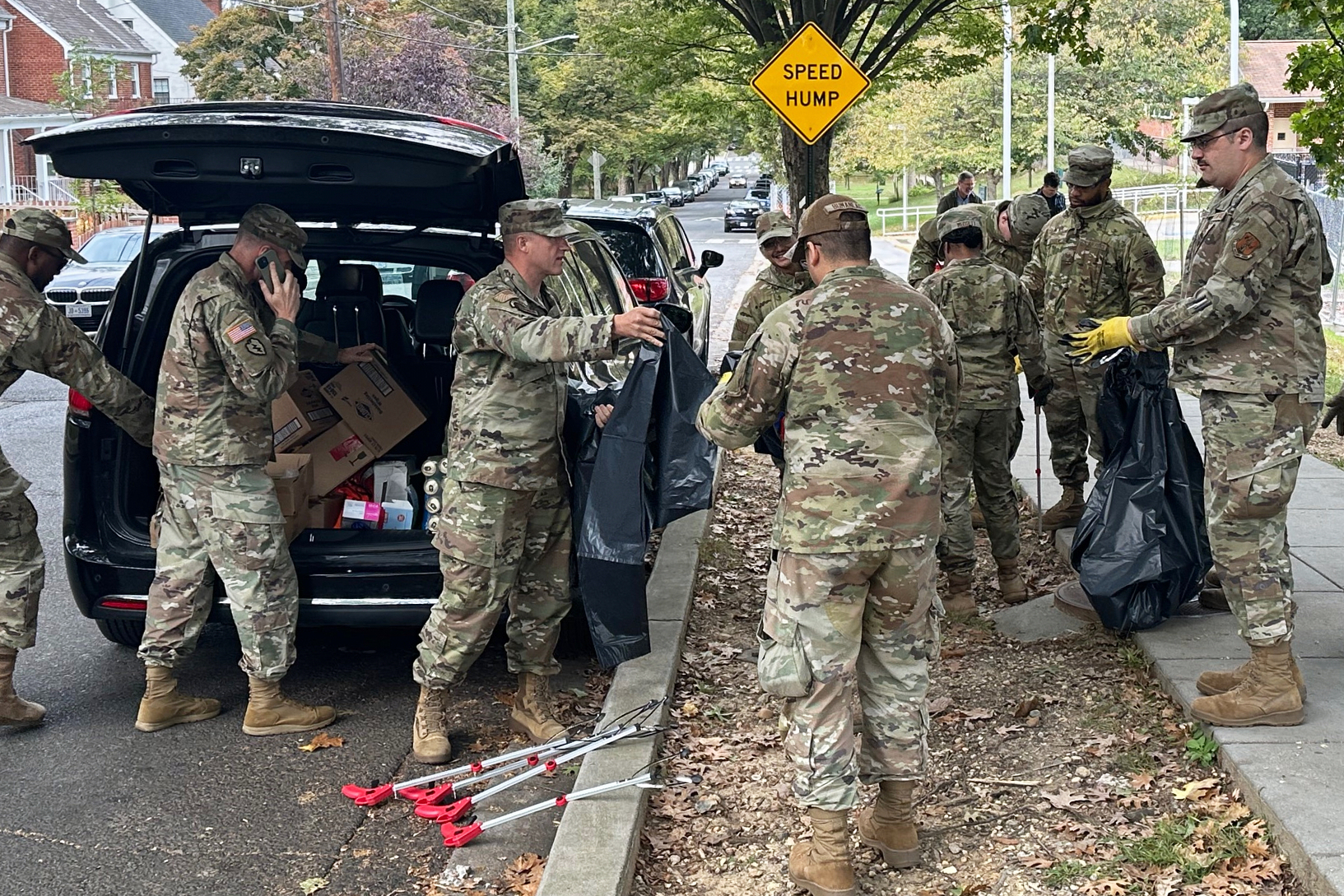
    D.C. National Guard members take part in an October clean up of the park around Fort Stevens Recreation Center in the Brightwood section of Washington.Gary Fields

    On Father’s Day morning this past Sunday, a longtime Washington, D.C.-based writer named Ian Livingston went out to get a breakfast sandwich. When he returned, he found a small platoon of National Guard soldiers, dressed in camouflage, patrolling an alley near his home. On a video that soon went viral, the troops smile slightly or ignore Livingston and his phone camera, which doesn’t make the scene any less disturbing. “Just a normal morning in our police state,” he wrote.

    The normalcy is the problem. It’s been more than 10 months now since Donald Trump first took the extraordinary step of ordering the large National Guard deployment in the nation’s capital, with soldiers from the D.C. armory — authorized by Defense Secretary Pete Hegseth to carry weapons — soon augmented by detachments from red states, rising to an occupation force in the thousands. The move, which the president linked to a surge in “violent gangs, bloodthirsty criminals, and homeless people,” made a lot of headlines, then disappeared from the news. But soldiers haven’t disappeared from the streets. In fact, Trump recently authorized an increase to some 5,000 troops ahead of the July 4 festivities.

    But what for? Researchers have found that the presence of the National Guard has had no apparent impact on violent crime rates — which were already at or near 30-year lows — although there has been a drop in “opportunistic crimes” like vehicle break-ins. But the legal parameters of their actual mission bar the troops from making actual arrests, although they can detain someone until district police show up. Typically, their squadrons have been spotted around D.C. picking up trash, although some are now deployed against the algae tourists of the Lincoln Memorial Reflecting Pool.

    And at what price? The annual cost to taxpayers of the constant Guard deployment has been estimated at as much as $600 million — money that could otherwise be spent on things like actual solutions to the city’s chronic crisis of homelessness. The unbusy troops are, unfortunately, a magnet for America’s growing number of unhinged people, including the one who killed a West Virginia Guard member and seriously wounded another in a shooting last year. For most, the extended deployments mean unwelcome days away from family, actual work, and their hometowns.

    But the real cost is a psychic one: the mental impact of living in an occupied city. Trump’s forever deployment of armed soldiers in our nation’s capital achieves some of the highest goals of his brand of strongman authoritarianism: a) a constant show of force aimed at demoralizing a population that’s increasingly unhappy with life under the 47th president and b) a threat that protesters should stay away from the White House and the Capitol when things really start to go south. We need to keep reminding ourselves what Ian Livingston conveyed to us this weekend: This is not normal. In the immortal 1971 words of singer Freda Payne, bring the boys (and the girls) home.

    What I wrote on this date in 2020

    This date six years ago was also nearly one month after the Minneapolis police murder of George Floyd, and America — and especially Philadelphia — was still dealing with the consequences. On June 23, 2020, I wrote about an Amnesty International report about police brutality in response to those protests, including the cops’ tear-gas assault on protesters blocking the Vine Street Expressway in Center City. ” We should be shocked that police forces in the United States are acting like the so-called ‘state security forces’ in an authoritarian banana republic,“ I wrote. ”Tear gas is banned in warfare under the United Nations, yet police commanders don’t think twice about lobbing it into crowds of Americans from Seattle to the gates of the White House.” Read the rest: “Amnesty International won a Nobel Prize for fighting torture. Next up: Philly police.”

    Recommended Inquirer reading

    • Only one column last week as I enjoyed a Juneteenth/Father’s Day extended weekend. In that piece, I looked at the real reasons behind the federal conspiracy indictment against a group of an anti-ICE activists that some are already calling “the Minneapolis 15.” The charges — mostly centering on constitutionally protected free speech such as discussing their protests on the Signal app — are outrageous. But they also signal that the Trump regime is desperate to quash political dissent ahead of the November election.
    • The World Cup is a remarkable moment for sports, but also an incredible time for journalism, because the stories in the stands are often as compelling as what’s taking place on the pitch. At The Inquirer, the five-week tournament has been a great way to reveal how Philadelphia relates to the wider world. Last week’s match between Brazil and Haiti might have been a rout on the field, but sports columnist Mike Sielski took in the scene with Haitian fans who were just delighted their violence-wracked nation was having a moment on the world stage. Alex Coffey spent the weekend with four French fans who played hooky from their jobs back home to spend an unforgettable week in America’s founding city. Longtime soccer writer Kerith Gabriel hailed the city’s joy over the World Cup as “the escape we didn’t know we needed.” It’s easy to join this party in print for the last three unforgettable weeks of the World Cup: subscribe to The Inquirer today.

    By submitting your written, visual, and/or audio contributions, you agree to The Inquirer’s Terms of Use, including the grant of rights in Section 10.

  • JD Vance can never become president | Will Bunch Newsletter

    One of my many New Year’s resolutions back in January was never to write what I call “Captain Obvious columns” about the Donald Trump scandal du jour that’s all over your social media feed. So you’ll have to imagine the column I didn’t write about Trump’s tacky UFC cage match that desecrated the White House, and the role of bread and circuses (or just circuses…where’s the bread?) in the inevitable decline and fall of decrepit empires.

    If someone forwarded you this email, sign up for free here.

    A ‘President JD Vance’ would be a different kind of dictator. The scary kind.

    They say you never get a second chance to make a first impression — unless your name is JD Vance, or it becomes JD Vance after a few false starts. In 2016, a then utterly unknown Yale Law grad introduced himself to America with a No. 1 bestseller, Hillbilly Elegy, that used his (sort-of) Appalachian family’s hardscrabble story to come off as an empathetic horse whisperer for the white working class.

    He cemented that first impression when we learned he’d privately described Trump as a kind of a demagogue feeding off the pathologies he’d written about in Elegy — someone he feared might become “America’s Hitler.”

    But Trump’s victory coupled with some exposure to the ketamine-fueled paranoia of Silicon Valley’s billionaires gave the former James Donald Bowman yet another shot at reinvention — now embracing extreme right-wingers and crackpot conspiracy theories all the way to his election, at age 40, as the 50th vice president of the United States.

    Today, less than two weeks before the 10th anniversary of Hillbilly Elegy’s publication, Trump has become America’s…Mussolini, a strutting yet sometimes buffoonish strongman and a hopelessly corrupt invader of faraway lands.

    It’s Vance who could actually become America’s Hitler, if he gets that chance…a very real possibility.

    That’s a strong statement, but it’s also perhaps the most powerful takeaway from the heavily promoted, about-to-be-published book from all-access New York Times reporters Maggie Haberman and Jonathan Swan, Regime Change. It portrays the vice president as eager to go much further than Trump in crushing domestic dissent.

    In book excerpts published Monday, Haberman and Swan depicted Vance — in a tag-team alliance with Trump’s ruthless mass-deportation guru Stephen Miller — as calling for the radical step of invoking the Insurrection Act to send in troops to put down protests by everyday Americans in Minnesota who were enraged by masked goon squads snatching their immigrant neighbors and the killing of two U.S. citizens.

    Describing a White House meeting of senior aides — but not Trump — in late January after Renee Good and Alex Pretti were gunned down, the Times reported that “Vance got to the point. They needed to invoke the Insurrection Act, swiftly, to crush the unrest in Minnesota. It would be painful in the short term, he said, but the message it would send — that paid agitators could not get away with disrupting ICE operations — would make sure no one tried it again.”

    There are many problems with Vance’s anti-democratic impulses. As Haberman and Swan reported, even most of the Trump aides in the room agreed that invoking the 1807 law in this circumstance would be both a significant expansion of presidential power and a public-relations nightmare. Even worse, the nation’s No. 2 official was urging this would-be abuse of power based on a right-wing internet lie — the falsehood that Minnesota’s angry neighbors were “paid protesters.”

    The deeply reported episode isn’t the only disturbing glimpse of Vance’s governing philosophy in recent months, but it’s the most revealing, and most damning: a true believer in the worst conspiracy theories about the left, with the inclination to wield dictatorial powers against them.

    Earlier this month, Vance — arguably the regime’s top cheerleader for Europe’s extreme far-right political parties — stunned the United Kingdom’s center-left government by weighing in on growing unrest over the stabbing death of an 18-year-old English college student by a Sikh migrant. He sounded more like a wannabe X influencer than a top official of the U.K.’s historic American ally. As racist hate mobs prowled streets in England and Northern Ireland, Vance said the murder of Henry Nowak proved that “European elites” had failed to oppose the “politics of self-hatred and the mass invasion of migrants.”

    One thing is clear: Vance is not on the side of calm, which is problematic when what the world needs now is love, sweet love.

    Increasingly, Vance seems to disappear for longer stretches of time, and when he reemerges he is bathed in the stench of the social media sewers where he seems to spend much of his time.

    That’s certainly appears to be the case with his main mission in 2026; rooting out fraud, which isn’t targeted at the nation’s biggest scam — the multi-dollar enrichment of the president’s family — but at alleged schemes by Somali immigrants and other heirs to Ronald Reagan’s racially coded “welfare queen.” A recent Washington Post report found many claims by a Vance-led task force are misleading or overhyped, and that legitimate business have been swept up in its wide net.

    Ten years ago, Vance wrote a book seeking your empathy because that served his true purpose: ruthless ambition. In that context, it was no moral conflict at all to pull a 180 and support a victorious Trump, or to leverage his rising fame into a hookup with Silicon Valley types like his billionaire patron Peter Thiel — people who believe in building private cities to protect them from the masses and the government, and who are more prone to conspiracy theories than your 79-year-old uncle on Facebook.

    Thiel and the other tech billionaires have programmed Vance into a true believer of whatever nonsense they believe, and lined him up next in the queue for power. That makes him even more dangerous than Trump, who believes in nothing beyond himself.

    Ever since Trump first claimed victory on Nov. 8, 2016, I’ve worried that the next guy would be even worse — chasing American autocracy with a real plan, not clown-car narcissism. Vance is the one I was worried about, and he is only an 80-year-old, Big Mac-infused heartbeat away from the presidency for the next 31 months.

    I’ve made clear my disgust at political violence, and the possibility of a Vance succession is another reason why I shudder to think what would happen if an attack killed or disabled the 47th president someday. If Vance was willing to send troops to Minneapolis to stomp down soccer moms and baristas with whistles, his militaristic power grab against the left after an assassination would end any last hope for our bedridden democracy.

    It’s one more item on the pro-democracy checklist. It may be the proverbial lost cause worth fighting for, but we should try to ensure that JD Vance does not become the 48th president of the United States.

    If Democrats stay on track to retake the House and possibly the Senate, they should hold hearings not only on Trump’s high crimes and misdemeanors but on the vice president’s involvement — and, based on that evidence, his possible impeachment. It may prove impossible to remove Vance from office, but hearings will help to establish a record that will end his dreams — and those of his billionaire buddies — about 2028.

    It’s past time for the next transition for this American chameleon who calls himself JD Vance: back to private citizen.

    Yo, do this!

    • The World Cup’s return to North America has gone much as I expected it would: Marred by its runaway commercialism and the U.S. immigration hassles that kept too many fans and a world-class referee from Somalia at home, but with a focus on joy on the pitch and in the stands now that the games have begun. Here in Philadelphia, the essence of everything good about the World Cup has been the FIFA Fan Festival at Lemon Hill, the city greenspace on the hill behind the Art Museum on the Schuylkill. It’s been a daily gathering post for thousands of fans to watch the matches on a 60-foot screen, imbibe from a beer garden, and load up on official merch. It’s free but ticketed; learn how to gain access and how to get there here.
    • Some 51 years after Jaws, filmmaker Steven Spielberg is still finding ways to get us out to the multiplex for a summer blockbuster. His new the-aliens-are-here epic, Disclosure Day, merges nostalgia for his greatest hits like E.T. with our 21st century anxieties about artificial intelligence, outsiders, space, and what it means to be human in our modern world. It’s getting excellent, but not perfect, reviews, and I’m looking forward to seeing it for myself.

    Ask me anything

    Question: What is your favorite fast food joint? — @funkndonuts.bsky.social via Bluesky

    Answer: Most of this week’s questions were in this lighthearted mode; it feels like the good sports excitement of the World Cup and the NBA finals has provided us a calm eye in the hurricane. Anyway, as an apparent donut lover you’ll be glad to know that my modern family runs on Dunkin coffee. As a kid, my barely-evolved-from-hillbillies family had low-brow tastes that I now appreciate in hindsight, and on our yearly road trips to the ancestral home of Peoria, I fell in love with the greasy pizza — later augmented by greasy fried chicken — at Shakey’s. The chain has shrunk to a few West Coast outlets and I haven’t been in decades. Probably for the best.

    What you’re saying about…

    Last week’s question about what the next, hopefully normal U.S. president should do about the ballroom monstrosity rising on the east side of Donald Trump’s White House drew a good array of responses. Although a couple of you wanted to see the project repurposed for community gardens or housing for D.C.’s homeless, others believe any Trump creation must be expunged in dramatic fashion. “Provide Pulaskis (fire axes) and sledgehammers and a good crew of competent supervisors and let we the people come and pay five bucks for the privilege of fifteen minutes of smashing it up,” wrote Linda Nafziger-Meiser. “Hell, I’ll bring my own Pulaski.” But architect Larry Weintraub thinks the White House needs a ballroom, as long as it meets historical and architectural standards. “Hopefully, the new design will be understated but appropriate and subordinate to the majesty of the White House,” he wrote.

    📮 This week’s question: In a recent column, I announced that I’ve deleted Elon Musk’s social-media app X, which once thrived as Twitter. I saw that as a way to protest Musk’s racism, and his obscene wealth. Should governments and corporations continue to use X for communications? Are you still on X or have you left, and why? Please email me your answer and please put the exact phrase “Deleting X” in the subject line.

    Backstory on the birthright citizen who’s a U.S. hero

    Folarin Balogun, now 24, grew up in London, which is where one of the world’s top clubs, Arsenal, spotted him as a potential soccer star at age 8. His parents are Nigerian. He currently plays club soccer in Monaco. So how was it that Balogun found himself last Friday wearing the red, white, and blue jersey of the United States in front of 70,000 delirious Americans on the pitch near Los Angeles, mixing skillful footwork with an aura of glee as he scored two goals in a 4-1 World Cup opener win over Paraguay?

    Credit the 14th Amendment — or maybe blame it, if you’re one of the reactionaries who believe that people like Balogun should not be U.S. citizens, soccer gods be damned.

    Even if for some weird reason you’re not yet a soccer fan, you’ve probably followed the heated debate over birthright citizenship. The notion that anyone born on U.S. soil is automatically an American citizen — an idea enshrined after the Civil War to remove any potential doubts about the citizenship of formerly enslaved African Americans — is disputed by the Donald Trump regime. The president’s executive order seeking to undo the longstanding interpretation of the 1868 14th Amendment, and strip citizenship from millions of people born here to immigrant, non-citizen parents, is currently before the U.S. Supreme Court. Trump’s xenophobic MAGA supporters have long slurred children of undocumented migrants with the epithet, “anchor babies.”

    It turns out that Balogun, when he’s not lighting up the back of the net, is a law-school case study of the immigration debate roiling his accidental country. In the summer of 2001, Balogun’s future mom, who was seven months pregnant, and dad decided to vacation in the United States. When the couple attempted to fly home to London, an unnamed airline worker who would change the course of soccer history told Florence Balogun she was too pregnant to safely fly. So she stayed in Brooklyn, gave birth to her son, and the family left America after two months.

    As he developed into a world-class striker on European soil, Balogun came to understand that his U.S. citizenship offered a much better shot at competing in the World Cup than the other two nations where he was also eligible, England or Nigeria. For his mom, Balogun’s fate was sealed in the summer of 2001. “Even when he wasn’t even thinking of making an international decision, I’d already made up my mind that he is going to play for America,” Florence Balogun said.

    They say that the Supreme Court, despite all the blather about “calling balls and strikes,” is in reality always aware of the political zeitgeist. Even a right-wing justice who happens to also be a long-suffering Phillies fan in Samuel Alito probably sees on some level that stripping citizenship from the breakout star of U.S. men’s soccer would be highly unpopular. The World Cup — the idea, and not its capitalist corruption by FIFA — imagines a society that abhors exclusion, where it takes every kind of people to make what life’s about. I dream of an America that can run with France and Argentina on the pitch, and that welcomes human beings like Balogun, even ones who’ve never kicked a soccer ball in their lives.

    What I wrote on this date in 2019

    This newsletter goes out Tuesday on the 11th anniversary of the day that changed America forever: Donald Trump’s gilded Trump Tower journey down an escalator to join the 2016 presidential race, as Neil Young’s “Rockin’ in the Free World” blared behind him. In 2019, I used that date to reflect how much we’d fallen in just four years since June 16, 2015. I wrote: “The president’s “shocking” tweet or statement of the day still sparked hours and hours of cable TV blather, including a parade of congressional Democrats who were concerned or saddened or what not. They called Trump’s worst acts impeachable offenses, but then nobody impeached him. They said Trump was unpresidential, but the next day he was still president.” Read the rest: “4 years since Trump came down that escalator and the cycle of empty outrage has become unbearable.”

    Recommended Inquirer reading

    • Last week I focused on the little people who’ve been crushed by the return of Donald Trump, and the big guys getting obscenely rich. In my Sunday column, I looked at the agonizing fate of Tuan Van Bui, an Amerasian born in Saigon at the height of the Vietnam War who was welcomed to Philadelphia in 1990 under a government-approved visa. Why was he violently arrested by U.S. Immigration and Customs Enforcement, and what is the truth about his April death behind bars in Indiana, at age 55? Over the weekend, I voiced my outrage over Elon Musk, who in just one week used his massive platform on X to whip up race riots in Belfast, and was rewarded by Wall Street as the world’s first trillionaire. I looked at how we enable this situation, and announced my small step in fighting back by deleting the X app.
    • One depressingly constant story in the 21st century is the way that supposedly liberal blue states and big cities still fall back on oppressive, militarized policing to crack down on protesters. Progressive activists in New Jersey took to The Inquirer this week to express their lingering disappointment in first-year Gov. Mikie Sherrill — a Democrat that many of them had worked to elect in 2025 — and her state police’s aggressive handling of demonstrations outside the ICE detention center in Newark, Delaney Hall. They would have found an amen chorus here in Philadelphia’s LGBTQ+ community, where city cops showed up at the annual Gayborhood Pride festival in riot gear and arrested 15 of the revelers. The backlash against the police actions has already triggered a City Council investigation. Journalists are typically society’s first line of defense against police misconduct. You support that mission when you subscribe to The Inquirer.

    By submitting your written, visual, and/or audio contributions, you agree to The Inquirer’s Terms of Use, including the grant of rights in Section 10.

  • Before the World Cup, a beautiful game for U.S. Ivorians | Will Bunch Newsletter

    This should be a moment for sports fans to be insanely happy. The finals are underway in both the NHL and NBA, and the matchups and the games so far have never been more compelling. Soccer’s World Cup — always the greatest show on earth — starts Thursday (see below). Yet, something seems off. If you wanted to attend Monday night’s Knicks-Spurs Game 3 at Madison Square Garden, it would have cost about $4,500 — not courtside, but in the last row. Equally insane and opaque ticket pricing has ruined the World Cup for many fans. Sports are supposed to be an escape from life’s problems, not a PowerPoint demonstration of them.

    If someone forwarded you this email, sign up for free here.

    Orange-clad Ivorians bring soccer joy to a World Cup tune-up in Chester

    Fans of the Côte d’Ivoire national soccer team erupt in cheers during their team’s 2-0 friendly match win over the Philadelphia Union II squad at Subaru Park in Chester on June 8, ahead of the 2026 World Cup.Will Bunch

    The cosmic vibes were not great Monday night. On the car radio, the news brought a new cycle of bombs dropping across the Middle East, and yet another onscreen meltdown from an American president who is stumbling toward his 80th birthday in confused anger. Reports from the eve of the much-anticipated return of soccer’s World Cup to North America were less about the game and more about U.S. immigration outrages, including a Somali referee turned away at the airport.

    Then at about 6:59 p.m., I walked through a long tunnel in suburban Chester and into an undulating orange sea of pure joy.

    On the green soccer pitch of Subaru Park, the national team from Côte d’Ivoire lined up in rapt attention as “L’Abidjanaise,” the national anthem of the West African nation, blared from a loudspeaker. But in the stands, fans wearing their native country’s iconic orange jerseys could not sit still, laughing and waving their cell phones, confirming with videos that their heroes were actually here, on U.S. soil.

    For a you-can’t-beat-it ticket price of zero dollars, in a year of maximum sports greed, members of an African diaspora scattered along the Eastern Seaboard had driven up or down I-95 for hours to watch Côte d’Ivoire — also known by the anglicized Ivory Coast — easily win its World Cup tune-up match against the young American prospects of the Philadelphia Union II, 2-0.

    Fatim Toure, 27, in her Côte d’Ivoire jersey, and her 26-year-old sister, Ferima, wearing her headwrap like many female fans at the stadium, had driven down from North Jersey to see the match, and were now beaming as they watched the kickoff from the tunnel as the sun set on a crisp, perfect June evening.

    Fatim said the sisters “were filled with nationalism and pride, so we’re excited to see how it goes.”

    The cheerfulness of the Côte d’Ivoire faithful who turned the 18,500-seat stadium bright orange — drowning out scattered dots of Philadelphians in the Union blue of the regular home squad — was infectious. It was truly what the world needs now.

    Soccer fans like me have been waiting since 1994 with patience, then anticipation, and finally something bordering on dread for the World Cup — Planet Earth’s ultimate sporting event — to finally return to U.S. grass. With the opener in Mexico City (75% of the matches are in the United States, with the rest in Canada and Mexico) slated for Thursday, news about the World Cup and soccer’s corrupt, authoritarian-loving governing body, FIFA, has been dominated by grim headlines.

    Formerly hopeful fans turned disillusioned by astronomical and often inscrutable ticket prices. Local tourism officials are dismayed at empty hotel rooms, as the expected international fans either balked at the cost, feared airport encounters with hostile U.S. immigration agents, or felt general revulsion at America’s autocratic turn under Donald Trump.

    Indeed, the political rise of Trump — the stuff of cartoon satire not long after the first World Cup matches were played here 32 years ago — and his hostile border regime have sparked the greatest angst, and on the eve of the kickoff, these fears are coming true.

    Top soccer referee Omar Artan from the African nation of Somalia was turned away at Miami International Airport on Saturday, denied the pinnacle of his profession by U.S. Customs and Border Protection agents for reasons still unknown. The star striker for the Swiss national squad was also initially denied entry (since reversed), while a star player from Iraq was interrogated for hours.

    Players from Iran — the nation Trump decided to bomb back in late February and is still engaged in a murky war — are going ahead with matches in Los Angeles and Seattle, but U.S. officials are forcing them to immediately return to their base camp over the Mexican border in Tijuana and not stay here overnight.

    Côte d’Ivoire, an ethnic melting pot of 32 million people on Africa’s Atlantic coast where French is the official language, hasn’t been immune to the xenophobic U.S. turn on immigration. The nation is one of several under a restrictive travel ban by the Trump regime, and efforts to allow visas for some soccer fans have been plagued by confusion, including a $15,000 bond that was announced, then canceled.

    While Monday’s free friendly match was a gleeful coming-out party for a diaspora that’s rooted in East Coast urban neighborhoods such as Southwest Philadelphia, most acknowledged that fans back in their native Côte d’Ivoire, where soccer is the national obsession, could never afford the cost of coming here — or the risk.

    “The ICE situation has killed the entire momentum of the World Cup,” a Liberian-born woman from Southwest Philly, who said she came out to support her African neighbors, told me. “America could have used this to boost the economy and generate income, but because of the whole ICE situation, a lot of people are afraid to come.”

    No World Cup squad will be more deeply tied to Philadelphia than Côte d’Ivoire, which plays two of its three matches at the temporarily unbranded Lincoln Financial Field, starting against Ecuador on Sunday night. The team is training in Chester at the Union’s facilities and staying in Delaware. But with the cheapest tickets on StubHub for that Ecuador showdown starting at $836, few whom I spoke with will be attending the matches that actually count for Côte d’Ivoire’s long-shot dream of becoming the first African nation to win the World Cup.

    “I wish, but I couldn’t get any tickets, unfortunately — it was too expensive,” Audrey Yao, a 32-year-old Ivorian American researcher from the University of North Carolina who was visiting Philly from Chapel Hill, told me. “So the opportunity to see the team today — that’s why I’m here.“

    For many Ivorians, Monday’s free friendly was essentially their World Cup, and they partied accordingly — swaying and gyrating to piped-in African Zouglou music between breaks, and celebrating wildly as keeper Alban Lafont stopped a penalty kick for Les Éléphants against rising young Union star Cavan Sullivan.

    As a die-hard — emphasis on the word die — Union supporter for their 16-year tortured history, I’ve seen some great matches in Chester, but I’ve never had so much fun.

    Monday night wasn’t just how the World Cup should have, could have been. It was very much the way America is supposed to be — with people who were proud and happy to be here, with one foot still planted in their bright-orange African heritage as they lived and breathed that Philadelphia freedom, with no masked goon squads there to hassle them.

    By the setting-sunlit banks of the Delaware River, there was no U.S. Immigration and Customs Enforcement, no need to raid the ATM, no bad news from outside the stadium walls. Just 90 minutes of the Beautiful Game.

    Yo, do this!

    • Don’t expect a lot of high-class book or film reviews this month, as my waking nonwork hours are devoted to watching the World Cup. Three games to circle this week are Thursday afternoon’s opening match in Mexico City between Mexico and South Africa (3 p.m., Fox); the first U.S. match against Paraguay in Los Angeles Friday night (9 p.m., Fox); and Philadelphia’s first contest between Côte d’Ivoire and Ecuador Sunday night at 7 p.m. on FS1, or in person at “Philadelphia Stadium” if you can spare the cash.
    • What if the biggest story of our time isn’t Trump’s outbursts, or even the World Cup — but the growing inability of our young people to sit down and read a book from cover to cover? The latest installment in this genre comes from university professor Tyler Jagt in a searing essay for the Chronicle of Higher Education: “My Students Can’t Read.” Is the culprit the smartphone and now AI, or the lost COVID-19 years, or the teach-to-the-test dictates of the Common Core curriculum? There’s a strong case for “All of the Above.”

    Ask me anything

    Question: You recently wrote about data centers. Have there been any groups who have successfully gotten data center plans aborted? What do you think are the most effective ways for communities to fight back? — @silvermoonfafo.bsky.social via Bluesky

    Answer: There are already signs that the backlash against these massive, noisy, energy-and-water-sucking data centers powering the artificial intelligence revolution is becoming one of the most successful grassroots movements in American history. I wrote this spring about how everyday folks in rural Montour County, Pa., successfully blocked an Amazon-backed site that started with a lot of support from elected officials. How’d they do it? I wish there was some big secret, but basically it was: showing up. They organized petitions and got big crowds to speak at county commission and zoning board meetings, and the politicians had little choice but to listen. They have money, but we have people. Never forget that.

    What you’re saying about …

    Well, you won’t know it from today’s soccer-heavy newsletter, but not all readers share my deep passion for the Beautiful Game. Most questions that aren’t some variation on how much do you hate Donald Trump, or John Fetterman, or the media get low responses, but my World Cup question about a favorite team besides the U.S. set a record for reader nonparticipation. Andrew Ross is rooting for Portugal because he moved there from Philly three years ago (and we are all jealous). Weekly correspondent Mary Ann Petro isn’t rooting for anyone and hopes the Yanks “go down in flames.” I’m rooting for the U.S. and Côte d’Ivoire, but you knew this.

    📮 This week’s question: Few things are more outrageous these days than Donald Trump’s expensive desecration of Washington, starting with that $1 billion-or-whatever proposed ballroom at the White House. So what happens to the ballroom when the good guys retake power? Tear the whole thing down, or blow it up on national television? Or repurpose it as a community health center or midnight basketball court, or something else? Please email me your answer, and please put “Ballroom future” in the subject line.

    Backstory on how an LA mayor’s race could blow up America

    Everything about the doomed bid of a B-list reality-TV star, Spencer Pratt, to become a Republican mayor in the ultra-liberal enclave of Los Angeles has been utterly predictable. That includes his campaign that was big on the kind of social media stunts that an entertainment-oriented LA media loved, and short on substantive ideas for a city with big problems that are both chronic (its incurable homelessness) and acute (violent immigration raids, the 2025 wildfires). It also includes the fact that Pratt wasn’t likely to get more than the roughly 27% his highest-profile fan, Donald Trump, received in 2024 from America’s second-largest city.

    And now the least surprising thing of all: The right-wing conspiracy theories that Pratt’s apparent defeat by two Democratic women of color — incumbent Mayor Karen Bass and progressive upstart Nithya Raman — is their long-sought proof of massive voter fraud, after Pratt had started the lengthy vote counting in second place.

    It’s not just the usual loudmouths on X. Trump is taking the lead role, again, in spreading election lies, telling Kristen Welker of NBC’s Meet the Press in their now-notorious Wisconsin interview that the California voting was rife with fraud, and, when asked for any proof, blurted angrily: “No, they’re crooked … Just like you’re crooked.” When House Speaker Mike Johnson was asked about these lies on Capitol Hill, he only amplified them, stating that “everybody knows instinctively that something is wrong.” No proof, just “instincts.” Trump’s handpicked and apparently incompetent top prosecutor for Southern California is now threatening an investigation.

    Here’s the thing. California’s elections are among the most democratic and inclusive in America. There is extensive opportunity for the convenience of mail-in voting, and voters are allowed to send these ballots right up until Election Day. Local officials then have up to 30 days to meticulously count all the votes. That means a) it takes longer to declare a winner in California than anywhere else, and b) it unexpectedly turns out there are significant differences between who votes by mail instead of in-person, and the shape of the race can change dramatically from election night to the end of the lengthy counting. To today’s GOP, any fair and measured vote-counting must be a conspiracy.

    Why does it matter? Pratt loses and — according to some reports — moves out of LA. End of story, right? Not exactly. We don’t know yet what ridiculous claims California’s train wreck federal prosecutor will make about supposed election fraud, but it’s almost guaranteed that the Trump regime is looking to make California the bogus argument for extreme measures to influence the general election in November.

    Sending in troops? Seizing election machines? Invalidating results? It will all be on the table for Team MAGA in November, and the fact that the former bad boy from MTV’s The Hills couldn’t get elected mayor of one of the nation’s most diverse and liberal cities will be cited as a reason. Spencer Pratt has landed a starring role in the worst reality show ever.

    What I wrote on this date in 2023

    Even though it was only three short years ago, memories of this week in early June back in 2023 are a little foggy — because the skies here in Philadelphia and around the Eastern Seaboard were filled with suffocating, thick smoky haze from wildfires up in Canada. Before digging up my column, I’d forgotten that a Phillies game at Citizens Bank Park was canceled because of the horrendous air quality. I wrote: “In a perfect world, [President Joe] Biden would have donned an N-95 mask Wednesday and spoken in front of the orange blur of the Statue of Liberty to declare unconditional war on fossil fuels.”

    Read the rest: “America sleepwalks through a climate crisis. Will this smoke alarm wake us up?”

    Recommended Inquirer reading

    • I’ve never had so many column ideas swirling around in my head as this chaotic start to the summer of 2026. Last week’s Sunday column looked at the openly fascist coming-out party for the former U.S. chief immigration raider Greg Bovino, who attended a European white supremacist conference. I said it matters a lot that he is now screaming the not-that-quiet part about U.S. xenophobia out loud. I shifted gears over the weekend and wrote about the growing panic of U.S. elites over grassroots opposition to data centers, which has sparked bizarre accusations of Chinese influence, as well as spying on activists by some police agencies. The 1 Percent can’t admit it’s really the noise pollution and higher electric bills.
    • Wrapping up this week’s theme in a bow, I have to say I’ve been blown away both by the quality and the quantity of The Inquirer’s coverage of the World Cup, which has truly matched, if not surpassed, some of the national outlets. Lead writer Jonathan Tannenwald, with a well-deserved reputation as one of the nation’s top soccer journalists, has been following the U.S. team in its Georgia training and at its warmup matches, profiling key American players like its star Christian Pulisic, and filing other human interest stories like a Penn soccer standout who’ll be taking the pitch for Haiti. Other Inquirer writers have contributed with in-depth features about everything from the role the late Tug McGraw’s widow played in bringing soccer to Philadelphia, to the storied history of the cinder (ouch!) pitch in Fishtown that brought Philly “attytood” to the sport’s slow rise here. That’s not to mention the comprehensive guide we published earlier this year. You won’t be able to read all this without a subscription, so now is the time to finally sign up. And let the games begin.

    By submitting your written, visual, and/or audio contributions, you agree to The Inquirer’s Terms of Use, including the grant of rights in Section 10.