Category: Villanova

  • Kevin Willard accomplished most of his goals in Villanova’s roster rebuild. Then came Luigi Suigo.

    Kevin Willard accomplished most of his goals in Villanova’s roster rebuild. Then came Luigi Suigo.

    Rumors of Villanova’s interest in 7-foot-3 Italian center Luigi Suigo already were swirling when assistant coach Ricky Harris posted a photo last month on his Instagram page from Milan, not far from Suigo’s hometown of Tradate. Villanova was trying to keep its pursuit of Suigo under the radar, but Harris’s post only fueled the speculation.

    Villanova is visiting Suigo in Milan! The staff is all-in on adding the future NBA center! Kevin Willard really wants the cherry on top for this roster rebuild!

    Let’s play a little game of Two Truths and a Lie.

    No, Villanova didn’t send Harris to Milan to visit its next center. The other things are true, though. And the lie is only a partial one. It wasn’t Harris visiting Suigo, it was Willard. Harris was just in Italy enjoying an offseason vacation, with the bulk of the roster overhaul already done. But it wasn’t Milan where Willard went, it was Belgrade, Serbia, where Suigo played this past season with Mega Basket of the Adriatic League.

    “Belgrade was beautiful,” Willard said Monday, nine days after Suigo announced he was leaving the NBA draft and signing with Villanova. “Food was great, people were awesome.”

    It was a short business trip, less than 48 hours. Willard had spent the past month reassembling the Wildcats’ roster. Only two players who dressed in a game from last season’s team, Tyler Perkins and Matt Hodge, returned. The staff surrounded them with plenty of talent, but still needed a true center to round out the roster. Any starting-caliber center would have been fine. The offseason had largely been a success even after losing a few top players like Acaden Lewis and Bryce Lindsay to the transfer portal.

    “We could have gone in a couple directions,” Willard said of the center spot. “For us, it was like, all right, how are we trying to win a championship here?”

    On film, Suigo looked the part of a player who could take the roster to the next level. The size component is obvious. But Suigo is a “really skilled center that can shoot it, that can pass at a high level,” Willard said. “I think one of his best attributes is that he’s extremely unselfish. He’s a great passer.”

    Willard wanted more than film studying, though, so he got on a plane and flew halfway across the world to watch Suigo practice in person, to meet with his coaches, to sit down with him for dinner.

    “Sometimes you can watch clips and you can get fooled,” Willard said. “When I went over there and talked to him in person, met him in person, and saw him play, it was like, yeah, this kid is the real deal.

    “He’s very professional. He knows what he wants. He knows how he wants to play. He knows where he needs to get better at.”

    In 26 games with Mega Basket, Suigo, 19, posted averages of 7.9 points, 5.1 rebounds, and 1 block in 18.8 minutes. He shot 64.9% on his 111 two-point shots, 27.1% on 48 three-point attempts, and 64.7% on 34 free throws.

    Draft evaluators had Suigo projected near the end of the first round or early in the second round. Luring a player out of that range surely was costly for Villanova. Willard declined to discuss financials with The Inquirer. But the region’s rich Italian-American culture and the timing of watching the Knicks on their championship run with Jalen Brunson, Mikal Bridges, and Josh Hart were added bonuses.

    Plus, Suigo was open about wanting to be a top-20 pick throughout the draft process.

    “I think he maybe would have gotten drafted late in the first round, but he doesn’t want that,” Willard said. “He wants to make sure when he gets drafted he’s going to play. The big thing is I think he needs to get Americanized a little bit, to American basketball. I think that’s why college will be really good for him. Get in shape a little bit, just kind of get used to American basketball. I think once he does, the sky is the limit for him.”

    Sky’s the limit for the team, too?

    The offseason had a clear objective.

    “We wanted to make sure that we just didn’t get manhandled the way we got manhandled last year against the top teams,” Willard said.

    He was talking about national champion Michigan and the two top Big East teams, Connecticut and St. John’s. Willard’s first season at Villanova was a success. A streak of three consecutive missed NCAA Tournaments was stopped, though Villanova lost as a No. 8 seed in the first round because it lacked experience and physicality against a veteran Utah State team.
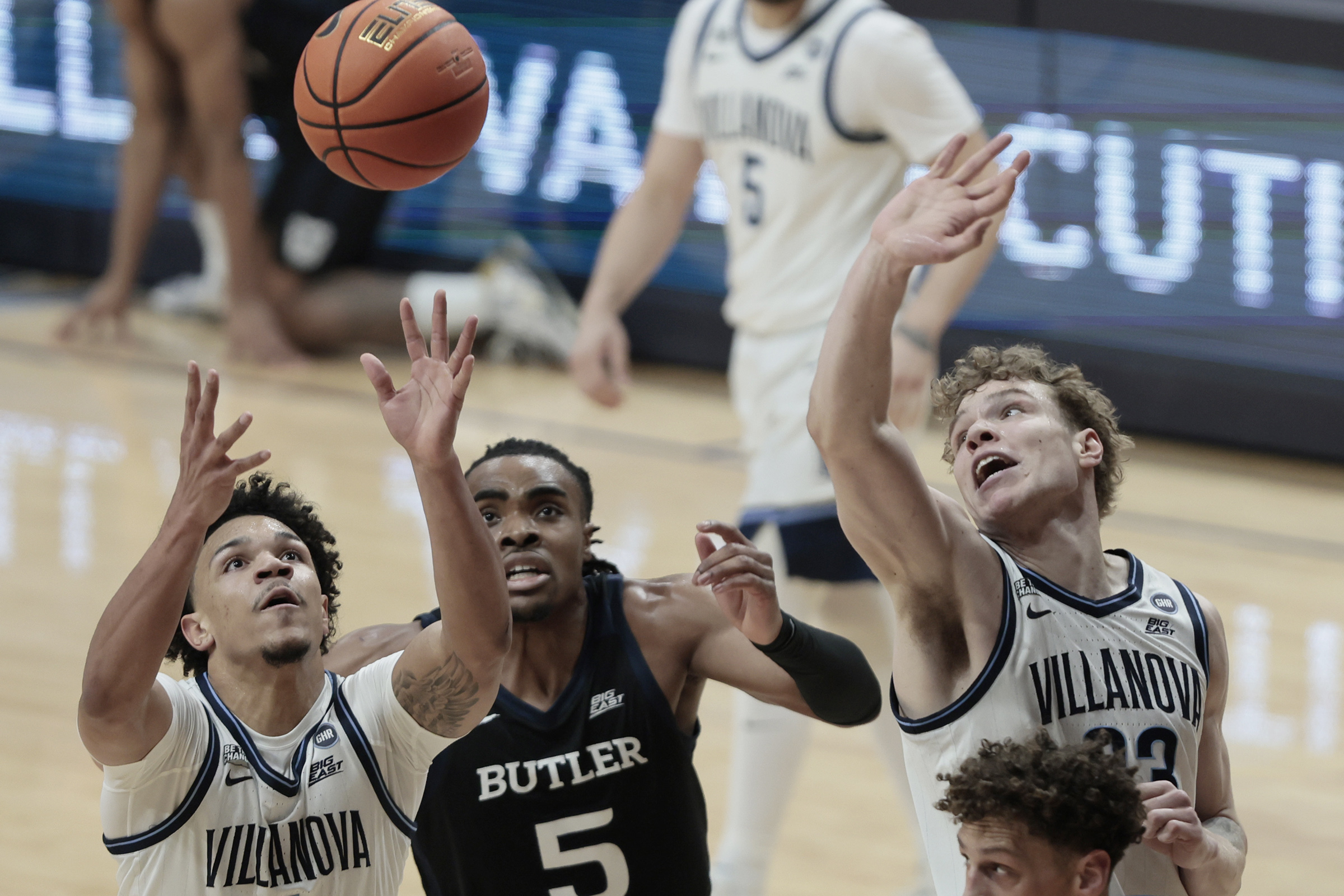
    Tyler Perkins (left) and Matt Hodge (right) will be key contributors again for the Wildcats in 2026-27.Elizabeth Robertson / Staff Photographer

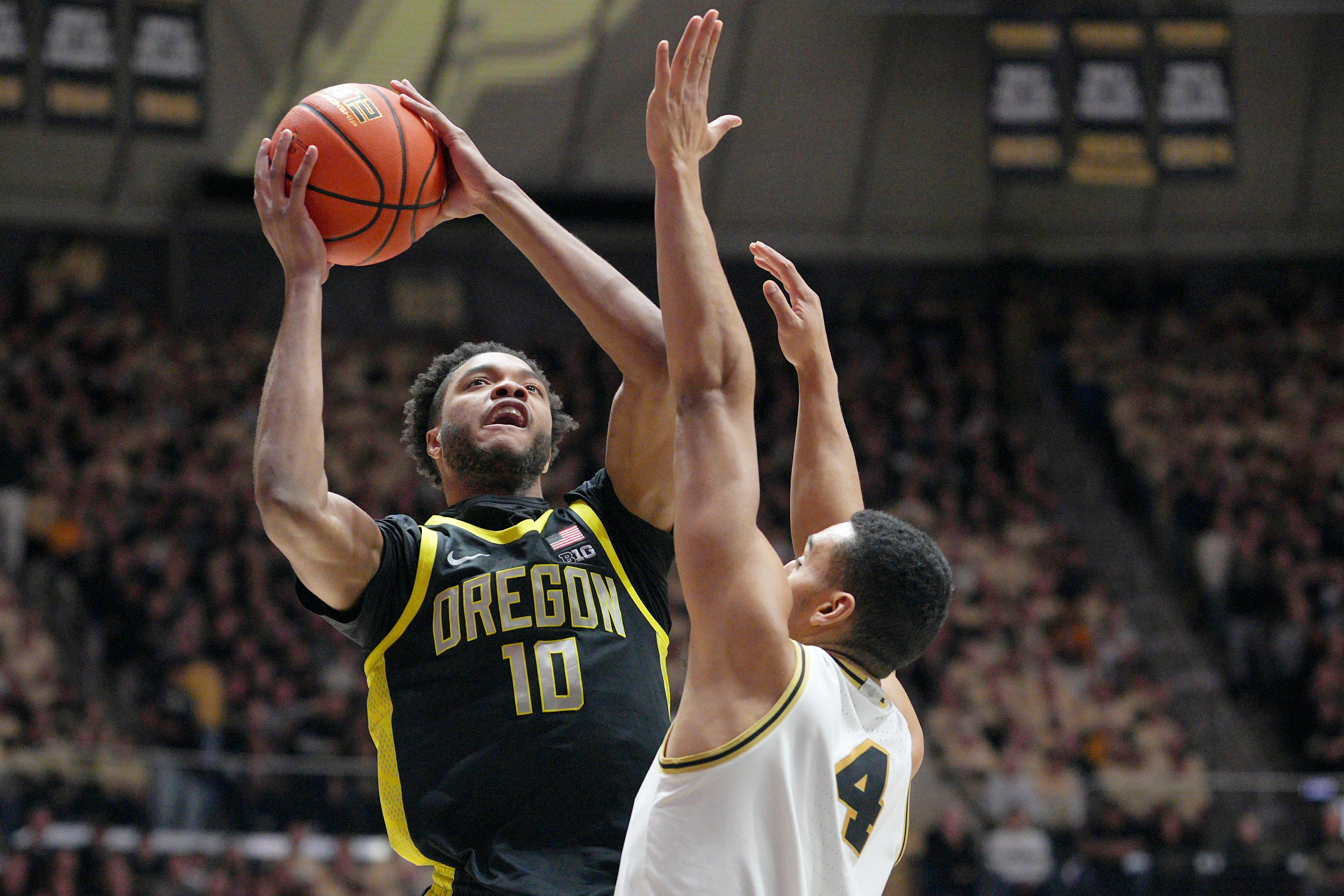
    The first additions of the offseason aimed to address that. Villanova signed Oregon’s Kwame Evans Jr. and Ohio State’s Devin Royal. Both players are incoming seniors who averaged more than 13 points in the Big Ten last season. Evans is 6-10 and Royal is 6-6 but is a physical player who averaged seven rebounds in 2024-25 and nearly six last season.

    With those two and Perkins and Hodge in the fold, the attention turned to the backcourt, specifically to the point guard spot. Willard said he watched more film to fill this spot than any other position during the offseason. Perhaps, then, he could ace a quiz on Illinois-Chicago hoops. Elijah Crawford scored 14 points and dished out five assists in 26 minutes per game last season. More importantly, his decision-making out of pick-and-roll stood out, as did his 75.3% rate from the free-throw line.

    Crawford is the likely starting point guard next to Perkins, with Royal, Evans, and Suigo rounding out the starting five.

    Backcourt depth was a problem at times last season. On paper, it won’t be in 2026-27. The Wildcats added Cornell shooting guard Jake Fiegen, who Willard said “analytically, was probably one of the highest-rated guys.” Fiegen shot 41.4% from three-point range on 5.5 attempts per game. He thrived in catch-and-shoot situations, of which he will have plenty with this Villanova roster.

    Then there’s St. Bonaventure transfer Buddy Simmons. Willard said the staff was actually watching another Atlantic 10 player when they became enamored with Simmons, a 5-11 guard who scored 16.4 points per game and shot 42.5% from deep. While Fiegen is more of a standstill shooter, Simmons produces off the dribble.

    Incoming freshman guard Adam Oumiddoch also is expected to contribute right away. He’ll add to a versatile bench that also includes Hodge, who Willard said is tracking toward being ready for the beginning of the season after undergoing surgery to repair a torn ACL in March.

    Evans could play some minutes at center, as could returning redshirt freshman Nico Onyekwere.
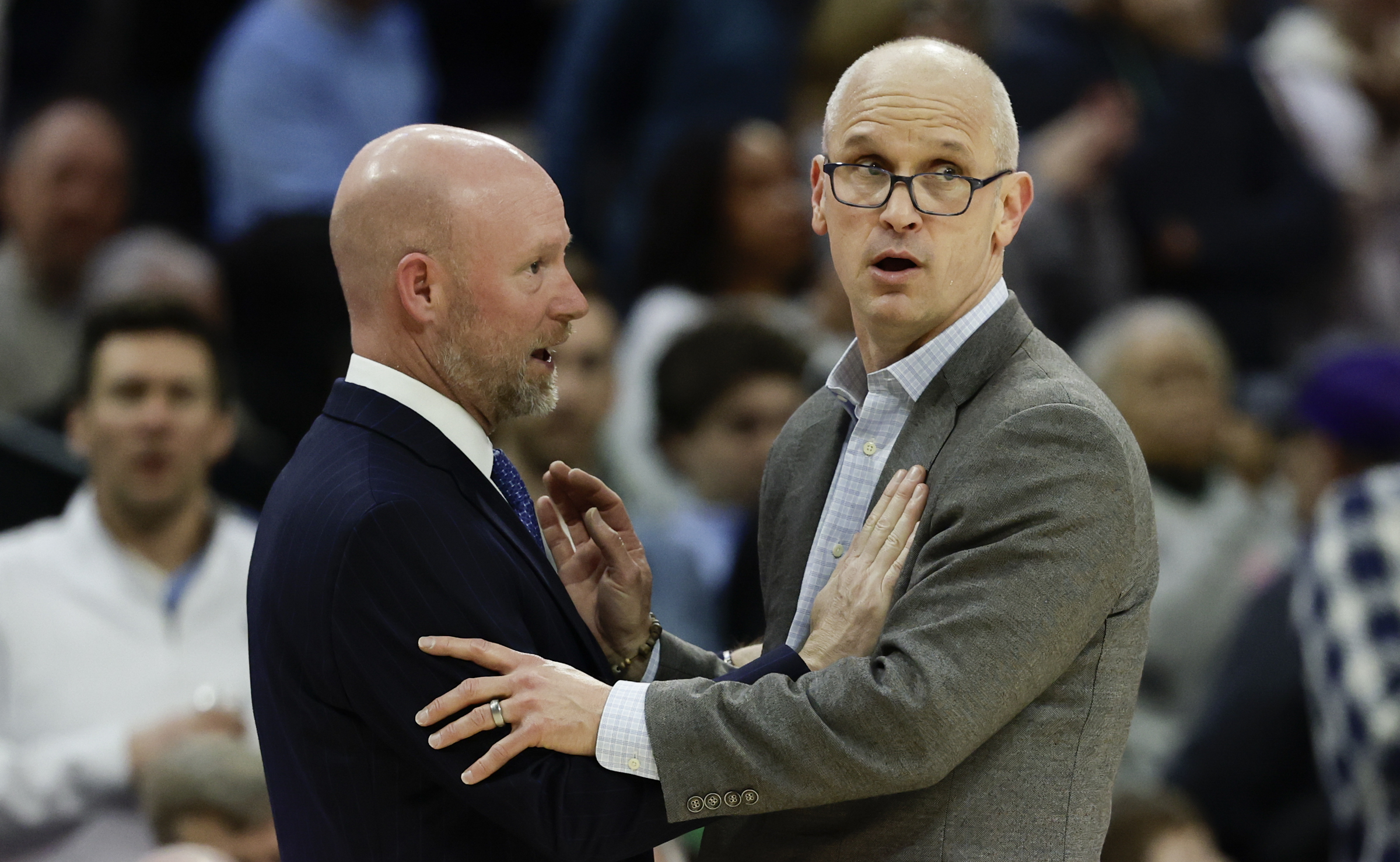
    Villanova hit the offseason trying to build a roster to compete with Dan Hurley’s UConn program.Yong Kim / Staff Photographer

    “We can play small or we can play really big,” Willard said. “That was my goal. Last year we were kind of hampered in how we could play. This year I think we have so much more flexibility.”

    Signing a 7-3 center helps.

    But Suigo’s signing should have done more than raise the expectations for the 2026-27 season. Sure, the Wildcats may get some preseason top 25 love. But they also showed they can compete financially with other programs.

    “From Father Peter to the board to our alumni and our donors, everyone understands how important Villanova basketball is,” Willard said. “We will never be the highest spender. That’s not in our DNA and it’s not what it is. But I will say that the university understands and financially has been extremely supportive of this program and the women’s program.”

    About those expectations …

    “I’m the head coach at Villanova,” Willard said. “The expectations are huge every year. I knew that when I took this job. I knew that when I took the Maryland job. It’s just part of the job. It’s what makes this job so great. You want those expectations.”

    It’s what you fly to Serbia for.
  • Ex-Villanova star Lucy Olsen continues her growth with the WNBA’s Washington Mystics

    Ex-Villanova star Lucy Olsen continues her growth with the WNBA’s Washington Mystics

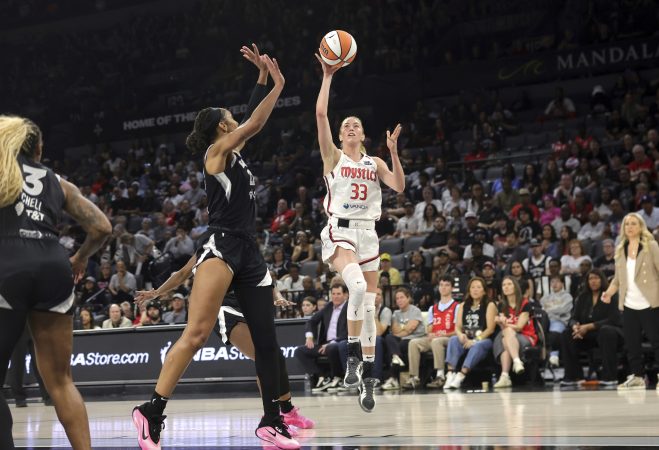
    Former Villanova star and current Washington Mystics guard Lucy Olsen has picked up a lot of experience with different teams.

    Moving around so much means she’s learned numerous systems during her years in college and the pros, which is keeping her adaptable as her role shifts in the WNBA.

    “Going from Villanova to Iowa, that was a big jump, system-wise, trying to learn how to fit the system, but also keep your own game,” Olsen said. “That was pretty hard, and then I got another chance at it, coming to the Mystics. Then I feel like just going to another team, you just learn how to adapt faster.”

    In college, Olsen was the primary ballhandler at point guard and took on most of the scoring responsibility. But in the pros, she often has come off the bench and plays as an off-ball guard, shifting her focus away from scoring to the other things she can do on the floor.

    “Run the play, but also keep looking for the different avenues so that you can be aggressive and then dish it off to someone else,” Olsen said. “I’m reading the defense a little more, and I think [playing in] Australia [in 2025-26] helped with that, being able to see different types of defenses and work on just getting more reps of pick-and-rolls, and how the pros play.”

    Lucy Olsen (center) averaged 23.3 points per game in her final season at Villanova before transferring to Iowa in 2024-25.Charles Fox / Staff Photographer

    After three years at Villanova, the Collegeville native and Spring-Ford alumna transferred to Iowa for her final season. Shortly after her lone season with the Hawkeyes, Olsen was drafted in the second round by the Mystics.

    After her rookie season in Washington, she moved to Australia to play in the Women’s National Basketball League, where she won Sixth Woman of the Year and a WNBL championship with the Townsville Fire.

    Now, she’s back with the Mystics for her sophomore season, and even with just one year of experience, she’s something of a grizzled vet on a roster with eight rookies.

    “Everyone’s so young and eager, and they want to learn,” Olsen said. “I think that helps with the environment and getting better.”

    Olsen is working to find her role in Washington and mostly comes off the bench in late-game situations.

    But there’s never been a better time for development in the WNBA. Previously, players had to come to the league fully formed. With extremely limited roster space — entering this season, the maximum number of players hadn’t been higher than 12 per team since 2008 — only a few draft picks each year would make a WNBA roster. Second-round picks like Olsen rarely got a chance.

    Between 2009 and 2024, when the Golden State Valkyries tipped off, there were 12 teams in the WNBA. The league then added the Portland Fire and Toronto Tempo this year. With three more teams entering the WNBA in the next four years — including the Philadelphia team set to begin play in 2030 — that’s six more full teams’ worth of roster spots as compared to the league in 2024. The roster maximum remains at 12 players, but the new collective bargaining agreement created two optional “developmental” roster spots per team.

    “How young our team is, I feel like that doesn’t happen a lot,” Olsen said. “There is so much opportunity, and there’s so much room for growth. There are more roster spots, so you can learn and actually build your game around the team.”

  • A ‘proud’ Jay Wright revels in the success of his former Villanova pupils with the ’Nova Knicks

    A ‘proud’ Jay Wright revels in the success of his former Villanova pupils with the ’Nova Knicks

    Jay and Patty Wright attended a wedding Saturday night in Red Bank, N.J., and Game 5 of the NBA Finals was at halftime when it was time for them to head home.

    Watching Jalen Brunson, Mikal Bridges, and Josh Hart is like watching his own children, Wright said, and he wasn’t going to miss this. Patty took the wheel, Jay put the game on his phone in the passenger seat. The game was nearing its end when it was time to exit the Blue Route.

    They weren’t going to make it home in time, so the Wrights pulled off the main road and onto a side street. They watched the ‘Nova Knicks win their first NBA title and end a 53-year New York Knicks championship drought in a Radnor cul-de-sac.

    Wright intentionally stayed out of the spotlight during the playoff run. He did a spot on ESPN’s Inside the NBA because the guy who asked him to come on was his old producer at Turner Sports and Wright wanted to do him a solid. He reluctantly attended Game 4 because Rick Brunson, Jalen’s father and a Knicks assistant, asked him to. He sat near the court with Patty on one side and Billy Lange — the former St. Joe’s head coach, and former Villanova assistant who is now in the Knicks’ front office — on the other. The epic comeback was followed by singing Frank Sinatra and Jay-Z, hugs with his former players and celebrities like Stephon Marbury and Spike Lee. It was, Wright said, “one of my favorite sports moments of all time.”

    But it was maybe fitting that he watched the series end in the car with Patty, just the two of them, proud “parents” watching the guys who played a huge part in delivering the family and the school two NCAA national championships.

    “What I enjoy about coaching is just sitting back and watching them all grow and then being a small part of their lives when they make a change or are accomplishing something and they call me or text me to ask me advice or share something with me,” Wright said Monday. “That’s what you love. It just happens to be that these three are doing it on the world stage and you’re watching them handle it with such maturity.

    “It’s really heartwarming, like if you watch your own kids do it.”

    Wright, 64, is a sort of basketball dad to Brunson, Bridges, and Hart. You don’t need to squint to see the style of play Wright and his coaching staff instilled in the trio during their time at Villanova. The staff would tell them that they would teach the “Villanova way” during their time playing college basketball, and it was up to them to take that to the next level and put their own spin on it.

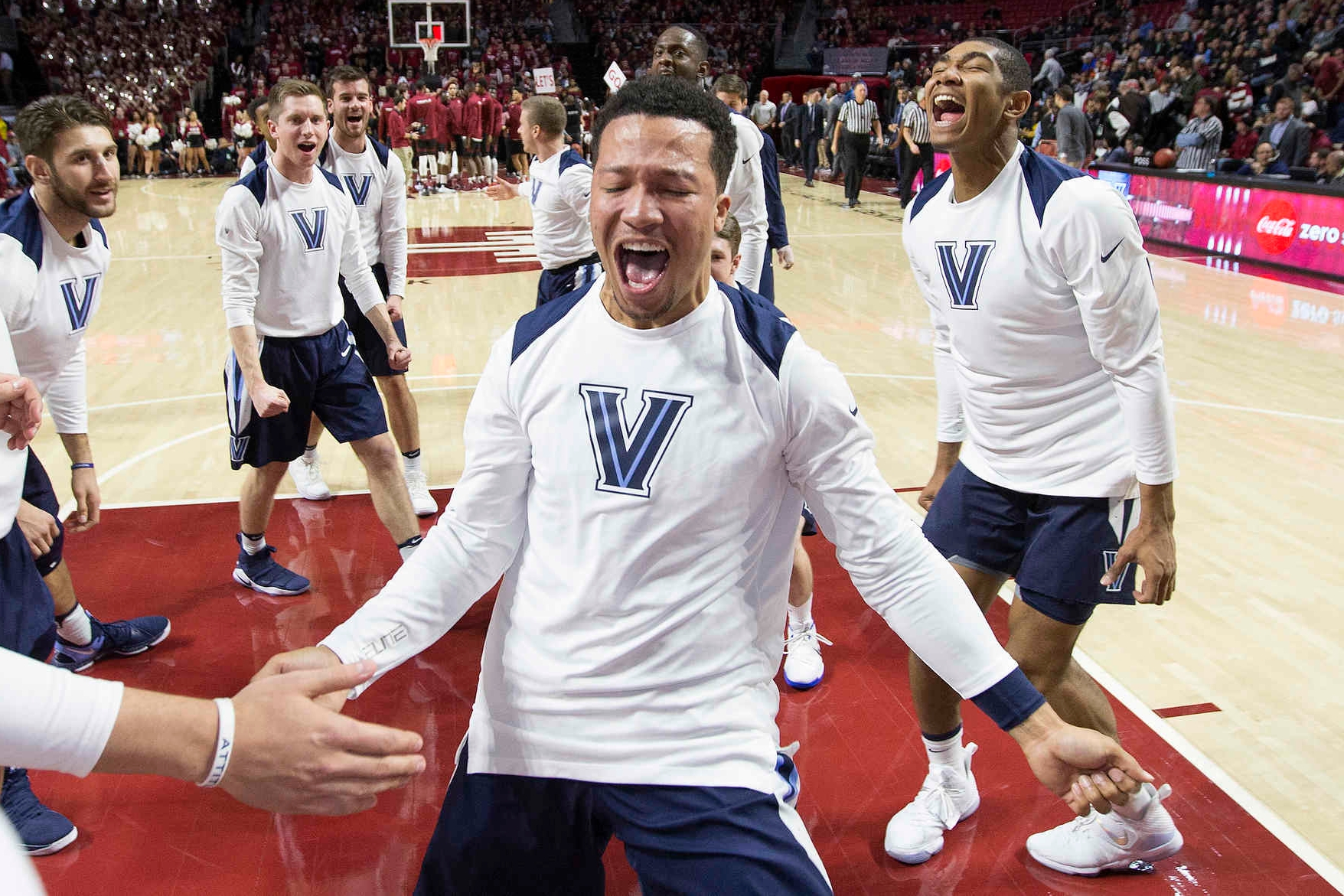
    Jay Wright, Jalen Brunson, and Josh Hart during a 2016 Villanova win over Temple.Charles Fox / Staff Photographer

    “You see things that they specifically took from our program,” Wright said. “You see the mentality that they took from our program. You also see what they added themselves to that, their own individualism, their own level of maturity, their own level of knowledge of the NBA game that I don’t have. It was fascinating for me to watch that.”

    There was no doubt this trio would end up contributing in the NBA in some capacity. Hart, who graduated from Villanova in 2017, was a first-team All-American. Bridges and Brunson left a year later after another title. Brunson was the player of the year.

    Wright talked to scouts both years. Hart, he told them, would be one of the greatest competitors a team could find. They didn’t need to worry about what position to play him at. Bridges, he said, would be the type of player who was capable of being a leading scorer but had the IQ to understand winning was more important than anything.

    He was right about those two evaluations. But Brunson? Wright thought he could be a point guard on a championship team. And that would be fine if he left the evaluation there. He’s right about that. But Wright thought he would need a leading scorer next to him. Dallas, where Brunson played before New York, was the perfect setup, Wright thought. Brunson could be the lead guard, but Luka Dončić was there to provide the bulk of the scoring.

    “I didn’t think he would be the guy that would score 45,” Wright said.

    Brunson, the Finals MVP, joined Michael Jordan as the only players in NBA history to score 45 in a road clincher. He averaged 11.2 points in the fourth quarters of the five Finals games. He is now in a new stratosphere of fame and is on a Hall of Fame type of path.

    All of this has been a unifying moment for the university and for the former teammates of the trio. It was alumni weekend and the school held a watch party on campus Saturday night. Later that night, after the Wrights pulled away from that cul-de-sac and returned to their home, Wright got a text message with a picture. On the court with Bridges was Phil Booth, a former teammate who now works with the Minnesota Timberwolves, and former Villanova walk-ons Matt Kennedy and Tom Leibig.

    “Personally, it has been a thrill for me,” Wright said. “I’m proud of all of them.”

  • Why signing Luigi Suigo is significant for Villanova, not just for 2026-27, but beyond

    Why signing Luigi Suigo is significant for Villanova, not just for 2026-27, but beyond

    Late Saturday night, Villanova basketball stars of yesteryear took center stage when the New York Knicks won the NBA championship behind the MVP performance of Jalen Brunson and the significant contributions of Mikal Bridges and Josh Hart. Champions at Villanova turned New York basketball heroes.

    The trio of Wildcats won in college at a different time, both in the sport and at their school. Villanova is on its second coach in the post-Jay Wright era, and while Kevin Willard’s first season was a step in the right direction after three consecutive NCAA Tournament misses, losing in the first round as a No. 8 seed was not cause to cue a cacophony of alarm bells to let the world know Villanova was back.

    But earlier in the day, hours before Brunson joined Michael Jordan as the only player in NBA history to score 45 points in a road clincher, a significant signing may have slightly altered the outlook for both the 2026-27 Wildcats and where the program stands in the New World of college basketball.

    Luigi Suigo, a 7-foot-3 Italian center, withdrew his name from the NBA draft process and signed to play at Villanova, joining a roster rebuild that already had the Wildcats rated among the best transfer portal classes in college hoops.

    There is at least some hyperbole happening here. It is June, after all. And if Suigo was truly the “Italian Wemby,” there would not have been any question about whether he would be taken in the first round of the draft. Suigo, 19, played professionally in Serbia this past season and entered the draft looking to go in the first round. There was no guarantee that would happen, though some experts and evaluators had Suigo going off the board in the mid-to-late-20s at next week’s draft.

    Consider what signing Suigo means. There is the short-term outlook: Villanova is a near lock to be considered among the top 25 teams in the sport heading into next season. Then there is the long-term meaning: Suigo surely wasn’t cheap. Players going off the board at the end of the first round still make $3 million-plus per season. The Wildcats had already committed quite a few dollars to signing top-end transfers like Kwame Evans Jr. (Oregon) and Devin Royal (Ohio State). They likely had to buck up to give leading scorer Tyler Perkins his market value. Other players on the roster came at a cost.

    That there was still plenty of money left in the bag to lure Suigo to the Main Line is a sign that Villanova plans to spend — and has access to — the financial resources required to compete with the top programs in the sport. It’s hard to view the signing in any other way.

    Roster retool

    Suigo’s signing completes a roster rebuild that was pretty drastic. The Wildcats finished their 2025-26 season with a first-round NCAA Tournament loss to Utah State. Eight players touched the floor. Only one of them, Perkins, will be back on next year’s roster (Matt Hodge, who is returning, missed that game after undergoing surgery to repair a torn ACL).

    Two of the other seven — Duke Brennan and Devin Askew — are out of eligibility. The other five entered the portal.

    Willard hit the portal cycle needing, well, everything.

    How did he do? It’s hard to argue that the 2026-27 team isn’t better on paper than the roster assembled at this time last year. Suigo’s addition is a major factor in that.

    Start with the categories where Villanova was most deficient last season. It was against bigger, physical, more experienced teams that the Wildcats struggled. They played Hodge at the power forward spot when he’s probably better served as a shooter on the wing. After Tafara Gapare left the program in December, the team lacked the requisite size and athleticism inside to rebound. Duke Brennan was a machine on the glass, but at times he struggled defensively. Not that UConn’s Tarris Reed Jr., or St. John’s big man Zuby Ejiofor are easy covers.

    Oregon transfer Kwame Evans Jr. will have a big center standing next to him in Luigi Suigo.AJ Mast

    The first two portal additions aimed to fill frontcourt needs. Hodge may not be at 100% when the season starts, and his long-term future is probably at the small forward spot. So Villanova signed Evans, a 6-foot-10 forward, and Royal, who is a physical player with a bulky 6-foot-6 frame. Both of them will be seniors.

    Villanova couldn’t come to an agreement with point guard Acaden Lewis, so the Wildcats found a cheaper version of him. Elijah Crawford isn’t as flashy as Lewis, and isn’t anywhere close to him on the various lists of transfer portal players, but the Illinois-Chicago transfer, a rising junior who played sparingly as a freshman at BYU, thrives in ball screens and has similar analytical metrics as Lewis in terms of his assist and steal rates. Neither is a proficient three-point shooter. Lewis, who commanded a high salary in the portal and eventually landed at Miami, also struggled at times in Villanova’s biggest games.

    Bryce Lindsay scored 25 points and made six three-pointers in Villanova’s NCAA Tournament loss, but he spent the majority of the Big East campaign mired in a shooting slump. He seemed possibly destined for a bench role if he came back. Instead of Lindsay providing shooting off the bench, Villanova will have Cornell’s Jake Fiegen, a 6-foot-4 shooting guard who scored 17.7 points per game and shot 41.4% from deep, and St. Bonaventure’s Buddy Simmons, a 5-foot-11 scoring guard who averaged 16.4 points and shot 42.4% from deep. Both of them will be seniors. They also have Adam Oumiddoch, a 6-foot-5 guard who is expected to contribute right away as a freshman.

    The projected rotation as it stands is Crawford, Perkins, Royal, Evans, and Suigo starting with a bench consisting of — in no order — Hodge, Fiegen, Simmons, and Oumiddoch. That’s three seniors, a junior, and a freshman center with first-round size and talent starting, and a four-man bench unit with two seniors, a soon-to-be-22-year-old redshirt-sophomore (Hodge), and a freshman. There are also deeper reserves in senior Abdou Samb, a Towson transfer, returning redshirt-freshman Nico Onyekwere, and incoming freshman guard Carter Fisk.

    Villanova guard Tyler Perkins is back with the Wildcats for 2026-27.Yong Kim / Staff Photographer

    For context, Villanova started a freshman, a redshirt freshman, a redshirt sophomore, a junior, and a senior last year. The 2026-27 team is bigger, older, and seemingly more versatile. Consider the team that cut down the nets in March. Michigan had 7-foot-3 center Aday Mara and a frontcourt that included big bodies in Yaxel Lendeborg and Morez Johnson Jr. Suigo, Evans, and Royal might not be that trio, but from a physical presence, it’s not far off.

    Suigo is still developing, but he’s a 7-foot-3 defensive anchor with some three-point shooting touch who should provide a big body for Willard to utilize in an offense that runs a high volume of ball screens.

    The makeup of this rotation gives Willard plenty of options to deploy “small-ball” lineups with Evans at center. He had limited choices down the stretch last season due to injuries and program departures.

    What the experts are saying

    All of this is a relatively rose-colored-glasses analysis of where the roster stands, but the high turnover rate in the sport makes so much of the roster analysis this time of year speculative.

    It’s meaningless rankings season. Portal players, portal classes, and so on. Last year’s portal class wasn’t ranked very high, yet Villanova won 24 games and earned a No. 8 seed.

    Kevin Willard’s Wildcats should be in the top 25 to start the 2026-27 season.Monica Herndon / Staff Photographer

    This year’s portal class is among the best. Analytics expert Evan Miya had the Wildcats at No. 8. Other outlets like ESPN, 247Sports, and On3 rate Villanova’s portal class among the top 25 in the sport. Suigo doesn’t factor into those ratings. He is technically an incoming freshman.

    What does all of this mean in June? Nothing. No one gets a prize for winning the offseason. But it’s a start.

  • You can trace Jalen Brunson’s greatness and the Knicks’ NBA title right to Villanova

    You can trace Jalen Brunson’s greatness and the Knicks’ NBA title right to Villanova

    In a Rock Hill, S.C., restaurant last Wednesday night, during a recruiting road trip to the Nike 100 Camp, Ashley Howard locked his eyes on a television above the bar, enthralled by the most dramatic comeback in NBA Finals history, his mind recalling a more modest rally from nine years earlier.

    Jalen Brunson, Josh Hart, Mikal Bridges, and the New York Knicks kept chopping into that 29-point San Antonio Spurs lead. Madison Square Garden kept getting louder. And as Game 4 slowly shifted from a series-tying rout to the surest sign that three former Villanova stars would soon bring about the end of a 53-year championship drought, Howard remembered a college basketball game from January 2017, from the season between ’Nova’s ‘16 and ‘18 national championships.

    An assistant under Jay Wright then, an assistant under Kevin Willard now, Howard reminisced with the friend sitting next to him — former Villanova head coach Kyle Neptune, now an assistant with the Charlotte Hornets — about a 61-59 Wildcats victory over Virginia. Villanova had trailed that day by 12 points with less than 10 minutes to go, an imposing deficit given how Tony Bennett’s Cavaliers teams could slow a game to a crawl. But Hart and Brunson had pulled ‘Nova back from the brink, and Donte DiVincenzo had tipped in an off-target Hart layup at the buzzer, and Howard saw the residue of that win in OG Anunoby’s soaring-eagle tip-in and the Knicks’ 107-106 stunner in Game 4. In Brunson’s 45-point masterpiece Saturday night in the clinching Game 5. In the title run of a team that was smarter, tougher, and tighter than every other in the NBA playoffs.

    “After winning the first national championship, every game these guys played together in ‘17 was the biggest game for whoever they played,” Howard said in a phone interview. “They have everything to lose, and their opponent doesn’t. There’s a different type of mental toughness and mental fortitude you have to have to not only play under that pressure but answer the call in those moments.

    “Now they’re all back together, and it’s almost like déjà vu where that Villanova connection is back. The other pieces are different. The coaches are different. But when you look at that Knicks team, you say, ‘Yo, those dudes are playing Villanova basketball.’ It’s really all about how they play hard. They compete for the entire game. They never, never quit. They play unselfishly, and you can tell that they love each other. That just makes my chest stick out as wide as all outside.”

    Josh Hart (right) won the 2016 national title with the Wildcats.Charles Fox / Staff Photographer

    Howard was at the nexus of the origin of the ‘Nova Knicks, and the irony of his role in that story is that he, with such deep Philadelphia hoops roots, had left town when he made his first connections with Brunson, Hart, and Bridges. A standout guard at Monsignor Bonner and Drexel, he was climbing the college coaching ladder — first four years at La Salle, then four back at Drexel — when in 2013 he accepted the chance to assist Chris Mack at Xavier. It was a more highly regarded mid-major, a better shot to jump to a bigger program, and in that one year he spent in Cincinnati, Howard recruited that trio before reuniting with them again at Villanova.

    In Hart, Howard saw a relentless and tenacious guard who pulled down as many as 25 rebounds in games at Sidwell Friends in Washington and for his AAU club, Team Takeover. He also met a low-maintenance kid who, when Howard coaxed him to Xavier for an on-campus, didn’t need a fancy dinner at an exclusive restaurant. No, when Howard offered to buy him lunch, Hart instead was desperate for a sack of double-cheese sliders from White Castle. “Shows what a freak of nature he is,” Howard said.

    Bridges’ and Brunson’s recruitments were more personal for Howard, starting at Xavier and continuing after he joined Wright’s staff at ’Nova. Howard was friendly with Bridges’ cousin Bernard Tyler, who forwarded him a video of the kid’s highlights from Great Valley High School and Team Final, one clip after another of Bridges cutting to the basket and creating shots within Great Valley’s motion offense, with an enticing text: This is the next one. Make sure you get this dude. And Howard could only chuckle when Mack called him one day after attending a high school holiday tournament in Chicago and asked him, Hey, Ash, do you know Rick Brunson? His kid is really good.

    “Reached out to Rick,” Howard said. “We caught up, and I jumped on Jalen from that point on.”

    There’s a chicken-or-egg aspect to the greatness that Wright’s program achieved during that stretch in the mid-2010s and to the qualities that Brunson, Bridges, and Hart developed there and still carry with them. Would these players, because of their inherent strengths, have thrived in other programs? Or did they need to learn under Wright and his staff and his culture? A dash of both, of course, and the conditions and choices that led to their flourishing at Villanova — and to those two national championships — aren’t likely to be duplicated in college basketball’s current era of status seeking and coin chasing.

    Mikal Bridges was on both the 2016 and 2018 Villanova championship teams.Yong Kim / Staff Photographer

    Bridges went to Wright and Howard and suggested that he redshirt as a freshman, that he sit out an entire season for the sake of his growth as a player and person. Hart started just three games over his freshman and sophomore seasons, could have transferred out of frustration and a search for more playing time, and didn’t. Brunson as a freshman took a secondary role alongside Ryan Arcidiacono, then ran the Wildcats’ show for two years before entering the NBA draft. Good luck being so patient in developing players and building a program now.

    “It was a period of time where you could build off your failure and mistakes and learn from them collectively,” Howard said. “You could develop young people over a course of time and nurture and appreciate the process. … All these guys in their own way trusted us and allowed us to push them to limits. Parts of their experience at Villanova, man, it was tough, but they allowed us to make them uncomfortable.”

    It was the perfect preparation for these playoffs, for these NBA Finals, for a remarkable run capped when Brunson took control of Game 5, when the sub-6-foot guard with the impeccable footwork, with the endless array of head fakes and midrange shots, with the glorious old man’s game was once again the coolest customer on the court.

    “You could see the Spurs getting tight,” Howard said, “and you could see Jalen saying, ‘Yo, get me the ball. I’m gonna make these plays.’ Me being around J, it’s like, ‘Here he comes. It’s on.’ When the stakes get high, that dude is coming.”

    It had been 53 years, long enough for any franchise and its fans to wait for that kind of ride, and all it took was something Ashley Howard and everyone at Villanova had seen a million times before. All it took was Jalen Brunson, Josh Hart, and Mikal Bridges doing what they’ve always done.

  • Villanova men’s basketball to sign 7-foot-3 Italian center Luigi Suigo

    Villanova men’s basketball to sign 7-foot-3 Italian center Luigi Suigo

    In search of its next center, Villanova went to northern Italy.

    The Wildcats will sign 7-foot-3 Italian professional Luigi Suigo, the school announced Saturday afternoon.

    Suigo, a 19-year-old from Tradate, in the Lombardy region, went through the NBA draft process and attended the combine but decided to withdraw his name from the pool and will play college basketball instead. Suigo faced a Saturday deadline to withdraw and maintain NCAA eligibility for the 2026-27 season.

    The draft projections for Suigo, who played professionally this past season with Serbia’s Mega Basket, were at the back end of the first round and into the second round. One mock draft at The Ringer recently had Suigo going 27th to the Boston Celtics. Another mock draft at ESPN had Suigo going off the board at No. 39.

    The Ringer’s scouting report called Suigo a “huge piece of clay just scratching the surface of his two-way impact.” His strengths include his major paint presence on the defensive end, where his 7-foot-6 wingspan is disruptive. That size also is useful in the pick-and-roll game. The scouting report notes that Suigo has soft hands and that his shooting form is better than his shooting percentages.

    In 26 games with Mega Basket this season, Suigo posted averages of 7.9 points, 5.1 rebounds, and 1 block in 18.8 minutes. He shot 64.9% on his 111 two-point shots, 27.1% on 48 three-point attempts, and 64.7% on 34 free throws.

    Suigo, who reportedly considered signing with BYU, also has experience representing Italy in international competitions.

    Suigo is part of a growing trend of European pros coming to the U.S. to play college basketball in the modern world, where Division I hoops effectively is professional basketball. The Final Four in April featured multiple former European professionals, most notably on Illinois’ roster.

    The NCAA, according to a report from Sports Illustrated, recently distributed “eligibility requirement guidance” that could affect the eligibility of international professionals. It’s unclear how the guidance will be enforced, and when, or if players from the ABA League, in which Suigo played, will face difficulties with eligibility.

    For now, Suigo is the latest international player to choose college basketball in an era when the higher levels of the sport offer paydays that oftentimes exceed a player’s earning potential in the pros. The 30th and final pick in the first round of the NBA draft makes just over $3 million in his rookie season. Wooing Suigo to put off the draft to play in college may have a price tag higher than that, though it’s unclear what Suigo will earn at Villanova during the 2026-27 season. Financial agreements between players and schools are not made public.

    Villanova was among multiple high-profile programs in pursuit of Suigo. In addition to BYU, others included Illinois, Indiana, and Purdue.

    Perhaps the Wildcats used their season-opening game in Rome in part of their pitch. Surely money talked, too.

    Suigo will slot in as the starting center, which was the missing piece of Villanova’s roster overhaul this offseason. He’ll have 6-foot-10 power forward Kwame Evans Jr., an Oregon transfer, next to him, and 6-foot-6 Ohio State forward Devin Royal rounding out the frontcourt. Elijah Crawford (Illinois-Chicago) likely is the starting point guard with returning leading scorer Tyler Perkins the other starter in the backcourt.

    Suigo’s addition brings Villanova’s roster to 12. Villanova added another portal player Friday night in Towson forward Abdou Samb. Samb figures to fill out a deep reserve role for the Wildcats, who will have a solid bench rotation. That bench includes returning forward Matt Hodge, who is recovering from ACL surgery, transfer guards Jake Fiegen and Buddy Simmons, incoming freshman guards Adam Oumiddoch and Carter Fisk, returning reserve center Nico Onyekwere, and Samb.

    Coach Kevin Willard wanted to get bigger and more experienced after his younger Wildcats struggled at times against the top teams on their schedule last season. The roster rebuild accomplished that. Suigo may not check a box in the experience category, but there won’t be many bigger players in college basketball next season.

  • Saquon Barkley, Dawn Staley, and more Philly ties on Time’s inaugural list of the most influential people in sports

    Saquon Barkley, Dawn Staley, and more Philly ties on Time’s inaugural list of the most influential people in sports

    On Tuesday, Time magazine dropped its inaugural list of the 100 most influential people in sports. And it should come as no surprise that the list is loaded with Philadelphia flavor.

    Among the Delaware Valley connections are athletes, coaches, entrepreneurs, and even gamers. Here’s a look at six people with ties to the Philly area, whether that means they played here or, as is the case for several, are actually from here …

    Dawn Staley

    The longtime South Carolina women’s basketball coach grew up in North Philly and graduated from Dobbins Tech in 1988 before playing collegiately at Virginia. Staley split an eight-year WNBA career with the folded Charlotte Sting and Houston Comets and simultaneously served as the head coach of Temple women’s basketball. During her nine seasons on North Broad, Staley led the Owls to six NCAA Tournament appearances and four Atlantic 10 titles.

    She’s found even more success since moving to the Palmetto State — her Gamecocks have won three NCAA titles in the last decade and have made eight Final Four appearances, including in each of the last six years. Staley, who has already been inducted into the Basketball Hall of Fame, also won four Olympic gold medals, three as a player and one as a coach.

    Saquon Barkley

    Barkley’s signing with the Eagles in 2024 marked a full-circle moment for the running back, who grew up in the Lehigh Valley. Out of Whitehall High School, Barkley committed to Penn State as a four-star recruit. Back-to-back seasons of 18 rushing touchdowns led to Barkley being selected second overall by the New York Giants in 2018. During his six years in North Jersey, Barkley only played in two playoff games.

    It almost feels as if Barkley’s inclusion is coming a year too late. In 2024, his first season in Philadelphia, Barkley became the ninth player in NFL history to rush for 2,000 yards in a season on his way to winning the franchise’s second Super Bowl and being named the NFL’s offensive player of the year and a first-team All-Pro. But given his overall dominance, high profile, and previous time in the Big Apple, Barkley’s influence remains.

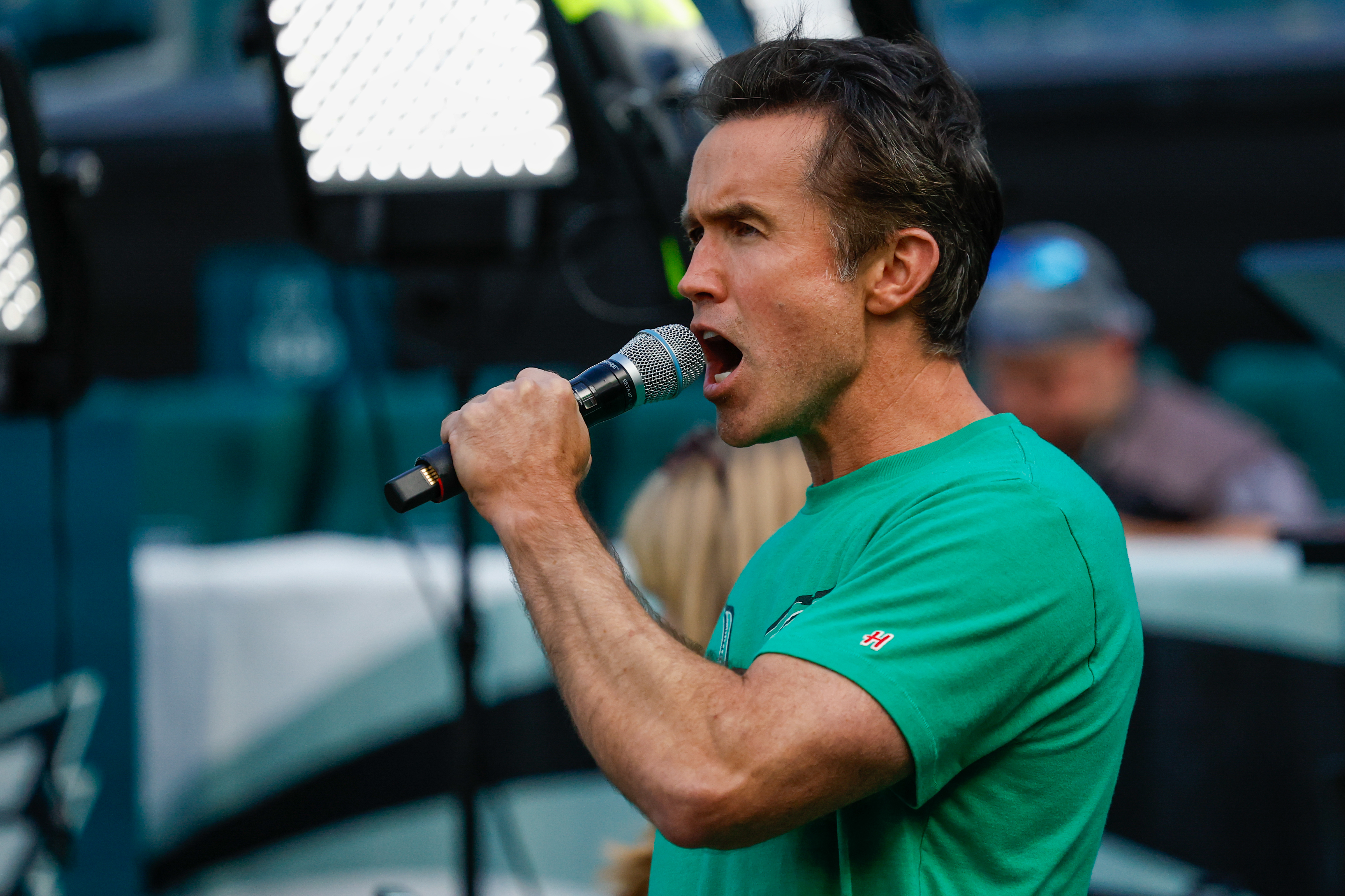
    Actor Rob Mac loves the Eagles, and was on hand for the team’s home opener last season.Yong Kim / Staff Photographer

    Rob Mac

    Many know Rob Mac (formerly McElhenney) as the creator of It’s Always Sunny in Philadelphia, which is still going strong more than two decades later as it prepares for its 18th season. But recently, the St. Joseph’s Prep grad has ventured into the sports scene. In September of 2020, McElhenney and fellow actor Ryan Reynolds purchased Welsh soccer team Wrexham AFC. The team earned a league promotion in three consecutive seasons, a feat nearly unheard of across the sport.

    Leveraging his TV background, the 49-year-old launched Welcome to Wrexham in 2022, a documentary series following the team. With Wrexham one promotion from the Premier League, Mac and Reynolds’ sports interest have extended outside English soccer. The pair also purchased minority stakes in the Alpine F1 team, as well as Mexican soccer team Club Necaxa, which also got the docuseries treatment last year.

    Michael Rubin

    The Fanatics CEO and former Sixers limited partner grew up in Lafayette Hill. His entrepreneurial spirit was ignited at the young age of 13, when he used his Bar Mitzvah money to open up a ski store. Now 53, Rubin’s slightly larger venture, Fanatics, has become a rapidly expanding empire. The New York-based company holds exclusive merchandise and collectibles licensing rights for all of the big four professional sports and produces on-field/ice jerseys for MLB and the NHL.

    In recent years, Fanatics has also taken over smaller brands, like Topps and Philly-based Mitchell & Ness, and has expanded into gambling and other sports-related businesses.

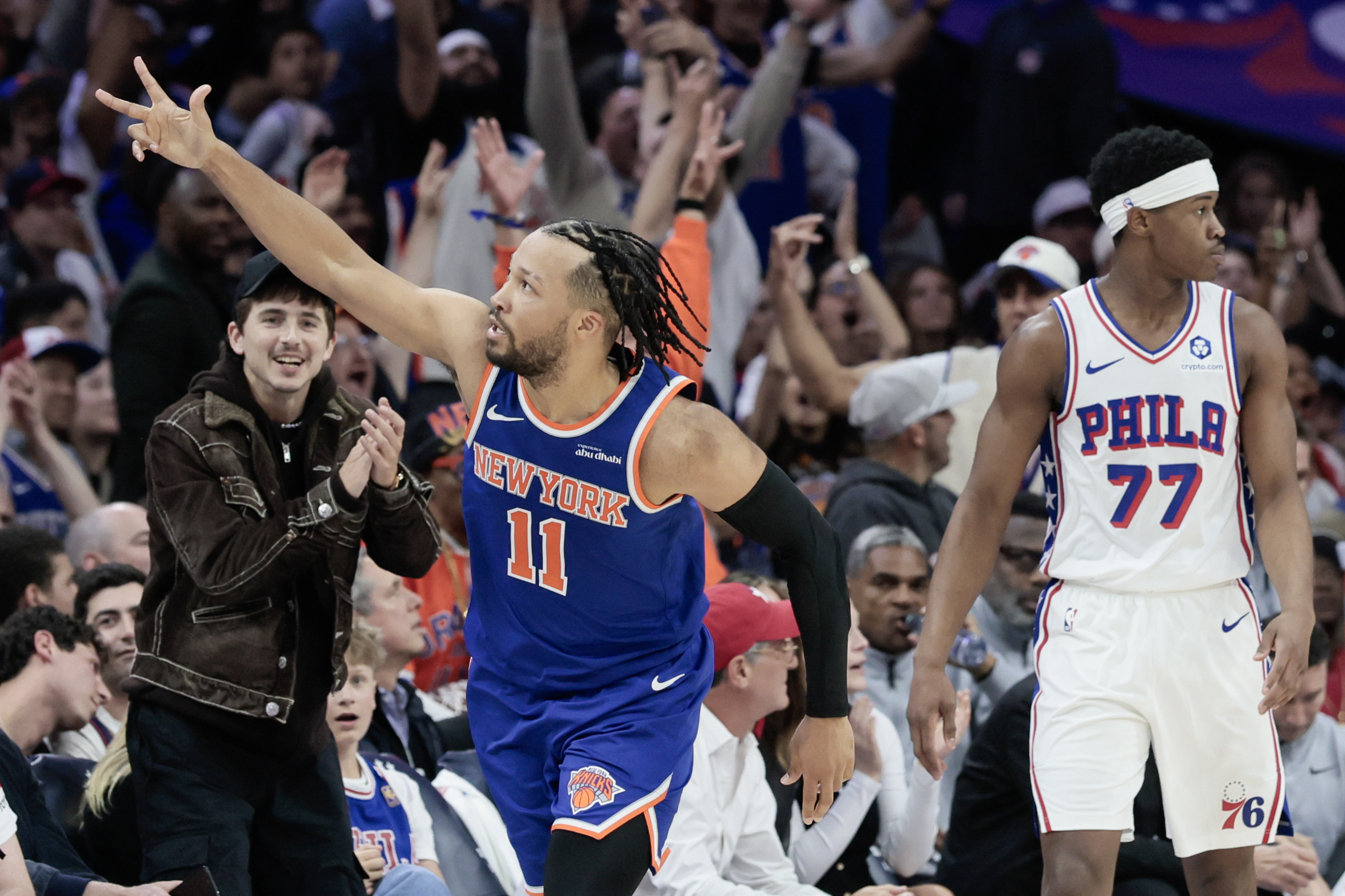
    Knicks guard Jalen Brunson celebrates a three-point basket in front of actor Timothée Chalamet during Game 3 of New York’s second-round series against the Sixers.Elizabeth Robertson / Staff Photographer

    Jalen Brunson

    The central New Jersey native grew up an Eagles fan, a fact many New Yorkers are content ignoring as the 29-year-old guard looks to lead the Knicks to their first championship since 1973. Brunson certainly knows a thing or two about winning. During three seasons at Villanova, Brunson won two NCAA championships. During the 2018 season, Brunson averaged 18.9 points and was the consensus national player of the year.

    Brunson’s Philly area connections run deeper, however. His father, Rick, now an assistant with the Knicks, played college basketball at Temple and spent several years as the head boys’ basketball coach at Camden High, which is likely what led Brunson to rooting for the Eagles over the Giants or Jets. When Brunson had his number retired by Villanova in 2023, he ended the ceremony with a “go Birds.”

    Faker

    Recognized as one of the world’s most dominant League of Legends players, Faker, “the LeBron James” of esports, is a team member and part owner of T1 Entertainment & Sports, a joint venture between Comcast Spectacor and Korea-based SK Telecom. Back in November, T1, which got its start in Philly and has some local ties in its leadership, won its third consecutive League of Legends championship.