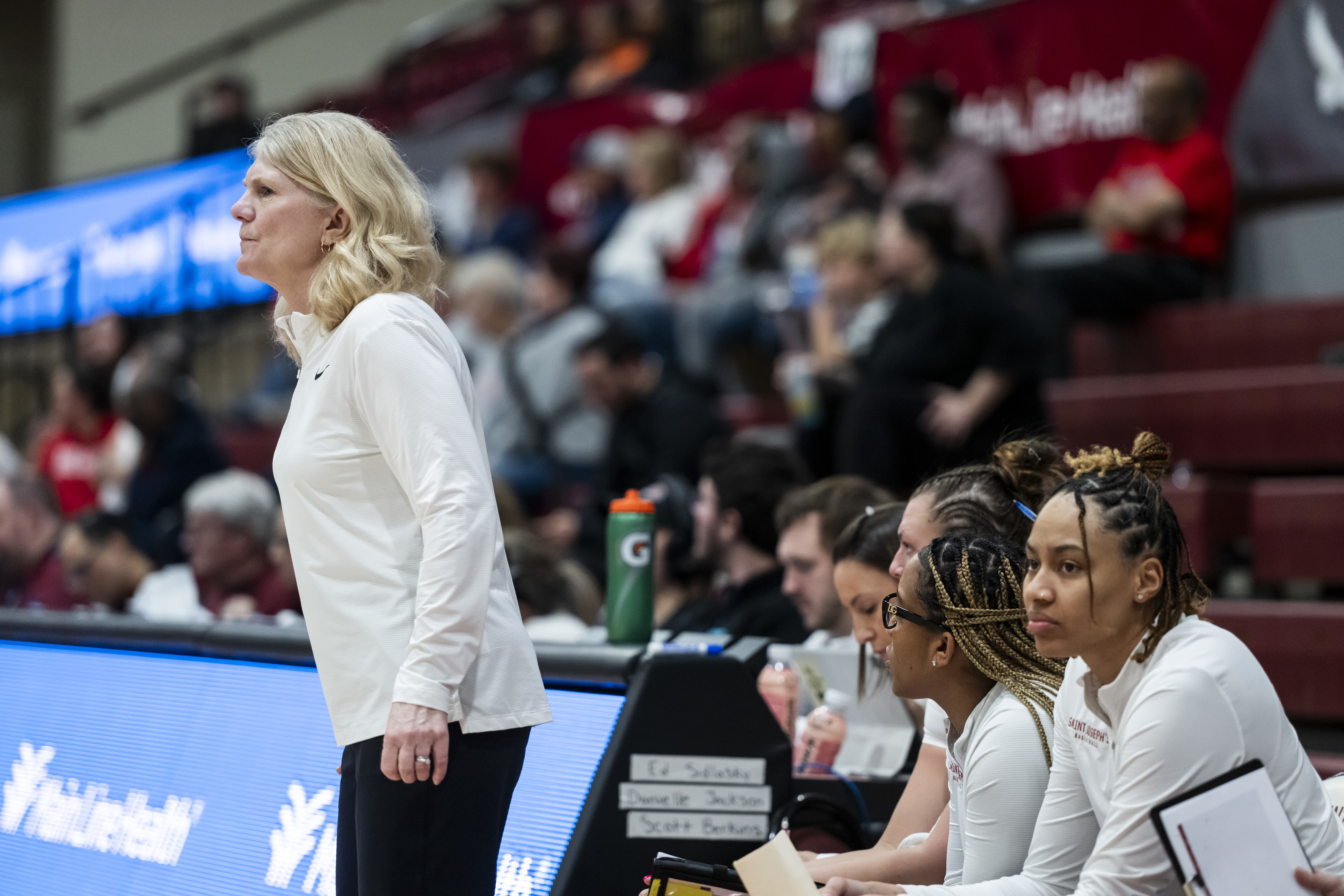
WASHINGTON — For the first time in over two decades, St. Joseph’s women’s basketball was selected to finish first in the Atlantic 10 preseason poll of coaches and media.
The Hawks were unanimously chosen as the preseason favorite, receiving all 14first-place votes.
“It feels good,” Hawks senior guard Gabby Casey said. “We know that it’s just preseason, it’s just a number. It’s a really good accolade, but there’s a lot to work for this year.”
Under coach Cindy Griffin, St. Joe’s has won 20 or more games in four consecutive years. Last season, the Hawks finished their regular season 20-11 overall and 11-5 in A-10 play. They were ousted by Davidson in the quarterfinal of the conference tournament.
Casey received all-conference first-team honors after averaging a team-high 15.7 points and 6.2 rebounds last season, with 3.1 assists. After doubling her scoring output from her sophomore season, the Lansdale Catholic graduate was named the conference’s most improved player.
Casey was not the only Hawk to receive recognition on Monday. Senior guard Aleah Snead, a Penn Charter graduate, was named to the preseason all-conference second-team and all-defensive team. Snead scored 11.6 points per game last season. Meanwhile, junior guard Rhian Stokes was a third-team selection.
One name to watch for the Hawks this season is Deja Evans. The senior forward averaged 9.8 points and 6.4 rebounds with Drexel last season and previously starred at Archbishop Wood.
“[Evans] brings immediate elite rebounding, which we needed to have in order to compete for a championship,” Griffin said. “I think first and foremost, she’s just a great defensive player. She’s a rim protector. She’s able to score with her back to the basket.”
St. Joe’s men
On the men’s side, St. Joe’s was selected to finish sixth out of the A-10’s 14 teams.
After starting slow under first-year coach Steve Donahue, the Hawks rattled off wins in 13 of their final 16 games of the regular season. They advanced to the A-10 tournament semifinals before being eliminated by Virginia Commonwealth. They accepted a bid to the National Invitation Tournament and won a game in the tournament for the first time in 20 years.
Junior Jaiden Glover-Toscano was selected to the conference’s first team. There was buzz that the guard, who averaged 15.7 points, would transfer following last season, but the sharpshooter opted to stay. Glover-Toscano played his freshman year at St. John’s but failed to crack coach Rick Pitino’s rotation.
“The biggest thing I learned about myself is how mentally strong I am,” Glover-Toscano said. “I’ve grown a lot mentally just through everything that I’ve been through, especially last year, playing all season, coming from a place where I didn’t play that much.”
Transfer forward Sean Logan was named to the A-10 all-defensive team after notching a conference-high 2.4 blocks per game with Davidson last season.
“I recruited Sean in high school,” Donahue said of the Westfield, N.J., native. “You can really run an offense through him, he’s a great facilitator. Reads screens well, so he gets in and out of them quickly. Knows how to deliver drill handoffs. Can rescreen well and kind of swallow the guy. Defensively, his discipline has to come that he can’t try to block every shot, and he’s growing into that.”
La Salle women
Despite an impressive 2025-26 campaign, the La Salle women were selected to finish 10th in the conference.
Last season, the Explorers finished 19-14 overall and 10-8 in the A-10 — marking a significant uptick in play. In the previous two seasons, coach Mountain MacGillivray’s squad went 18-45. A big reason why the team may have not been chosen higher is because of two key departures: Ashleigh Connor and Aryss Macktoon. The guards, who both transferred to high-major programs, ranked Nos. 1 and 2 on the Explorers in total scoring last season.
The Explorers did have two honorees on Monday’s poll. Junior Joanie Quinn, a product of Cardinal O’Hara, was named to the conference second team after averaging 11.2 points. With no seniors on MacGillivray’sroster, Quinn is expected to take on a greater leadership role.
“I feel like I was known as one of the younger kids and now I’m obviously one of the oldest on the team,” Quinn said. “That posed an interesting challenge over the summer, but I feel like now we’ve really settled into our roles and I think taking on a leadership position is something that I wanted to do anyway.”
Sophomore Kiara Williams was named to the A-10 third team. The forward put together an impressive freshman campaign last season, notching 9.6 points and 4.9 rebounds per game.
La Salle men
On the men’s side, La Salle was selected to finish 13th in the conference.
Last season, under first-year coach Darris Nichols, the injury-plagued Explorers finished 9-23 and 5-13 in A-10 play. The team was ranked the third-most injured team in Division I and was eliminated by St. Bonaventure in the first round of the conference tournament.
The big story for the Explorers this offseason was the team’s retention of 6-foot-6 guard Rob Dockery. Reports indicated that Dockery, who scored 12.5 points per game last season, had entered the transfer portal. However, two weeks after the initial report, the school announced Dockery would return. He was named to the conference’s second team on Monday.
“Comfortability is big in college basketball,” Dockery said. “Knowing I can trust [Nichols] and coming back and being comfortable while doing it was more important [than transferring].”
Silas Graham’s first basketball memory came from the inside of a penalty box.
His father, Nat Graham, was an assistant coach for Boston College at the time. Along with hosting basketball games, the Eagles’ Conte Forum doubles up as a hockey arena. When the hardwood is placed over the rink, the penalty box remained, and it was the perfect place to put a rambunctious toddler.
It was easier to keep Silas contained when he couldn’t walk, Nat remembers. Silas would crawl by his father’s feet while Nat ran drills as an assistant at Cornell — one of his first coaching stops. With Nat on the staff, the Big Red made March Madness appearances in 2008, 2009, and 2010. In diapers, Silas attended all three tournaments.
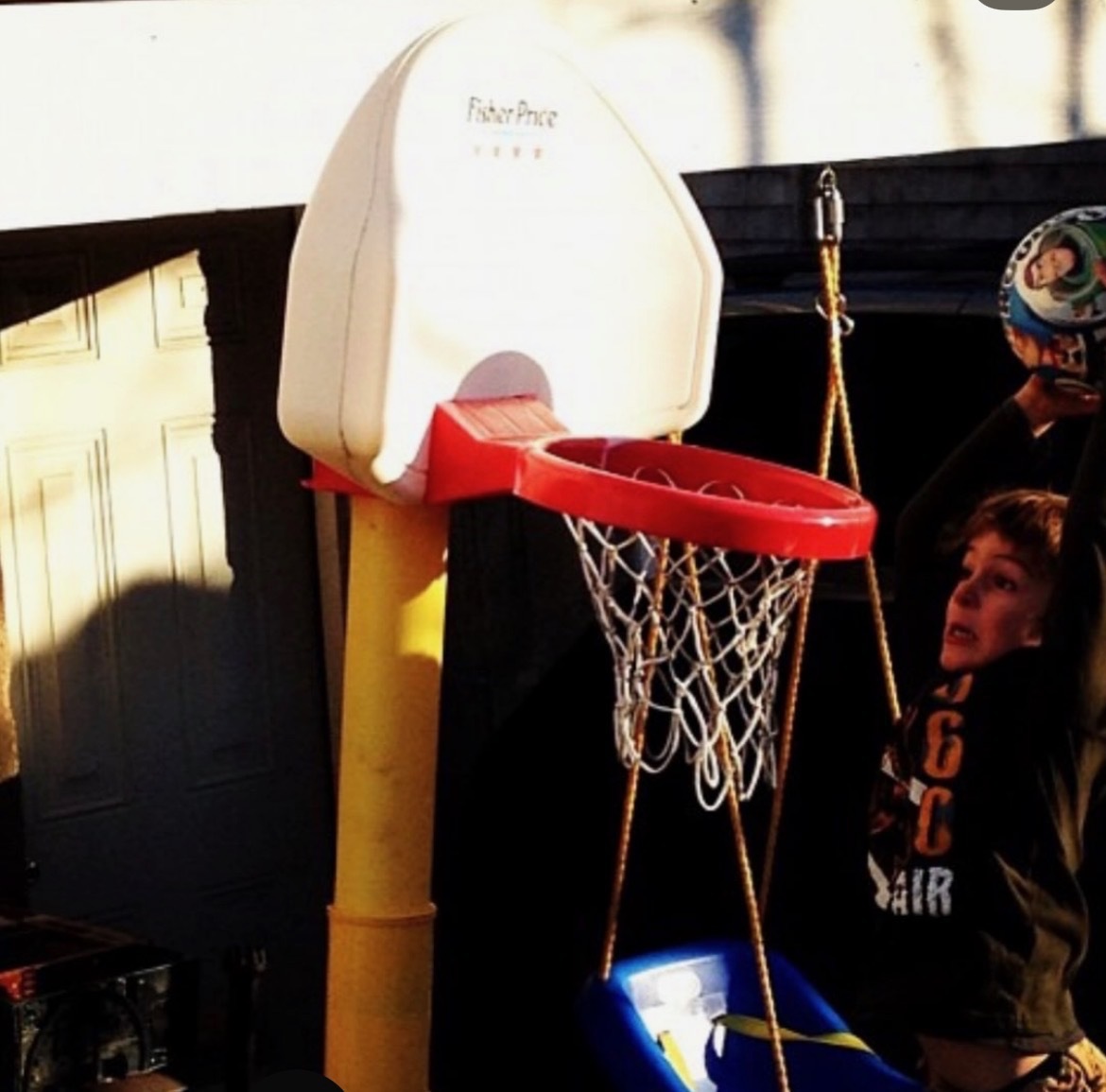
“It was such a part of his life at that stage,” Nat said. “He idolized the guys. By the time he was walking and talking, I can remember him playing in the living room and pretending to be the guys on the team.”
After a four-year stint at Boston College, Nat coached at Penn as an assistant from 2014 to 2025. Coaching alongside his father at Cornell, Boston College, and Penn was Steve Donahue. Silas and Donahue, now the head coach at St. Joseph’s, developed a strong relationship, and it continued once Silas picked up basketball.
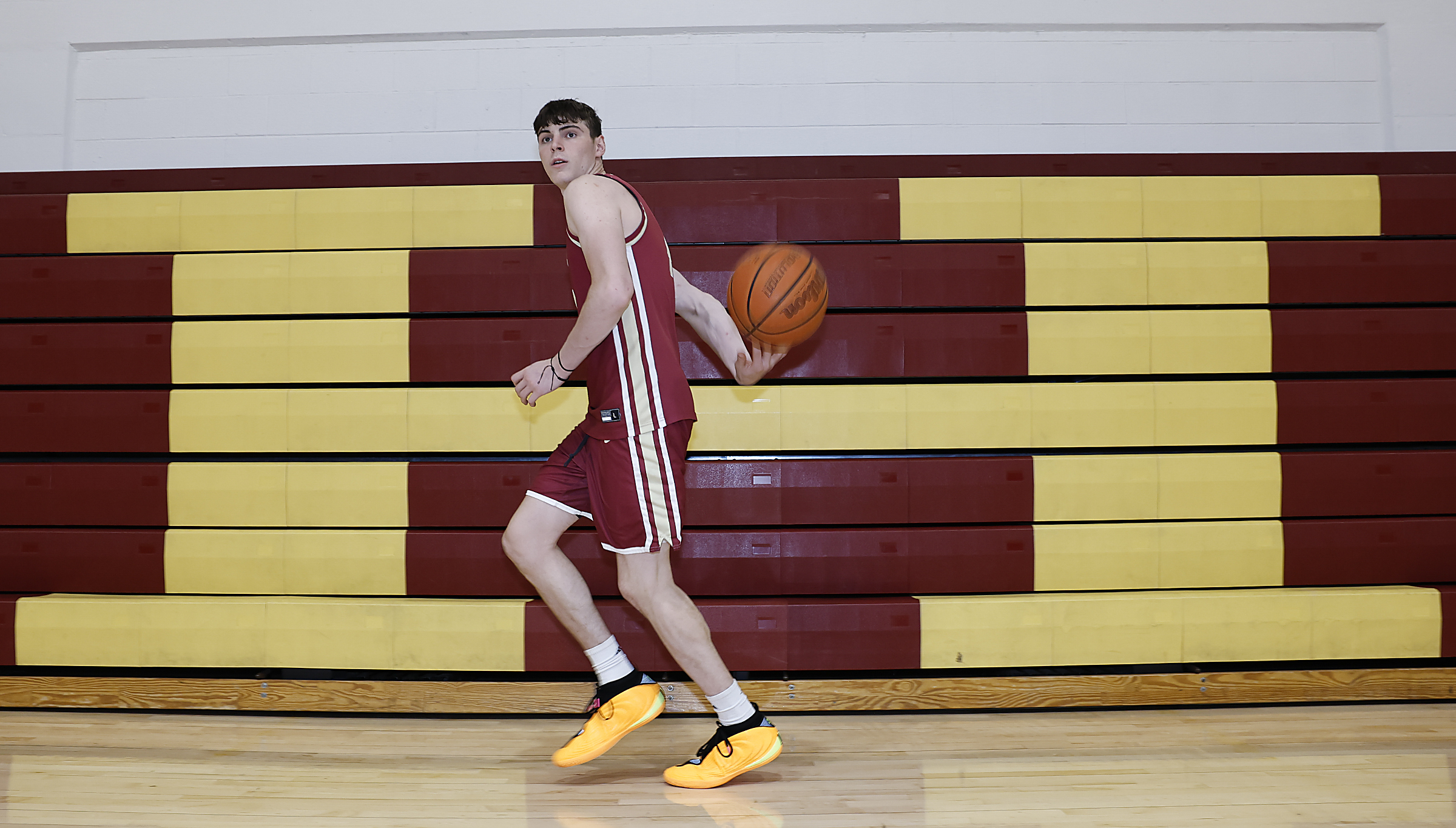
Last year, Silas — now a 6-foot-4 senior guard at the Haverford School — received scholarship offers from Notre Dame and Stanford. However, he gravitated toward Hawk Hill because of his familiarity with the program’s head coach. He announced his verbal pledge to St. Joe’s on Aug 4.
“I don’t need to build a relationship with Coach Donahue,” Silas said. “He can coach me, and I’m going to understand that it’s not the same relationship that it was before, and that he’s going be tougher for me, and I have to be prepared for that.”
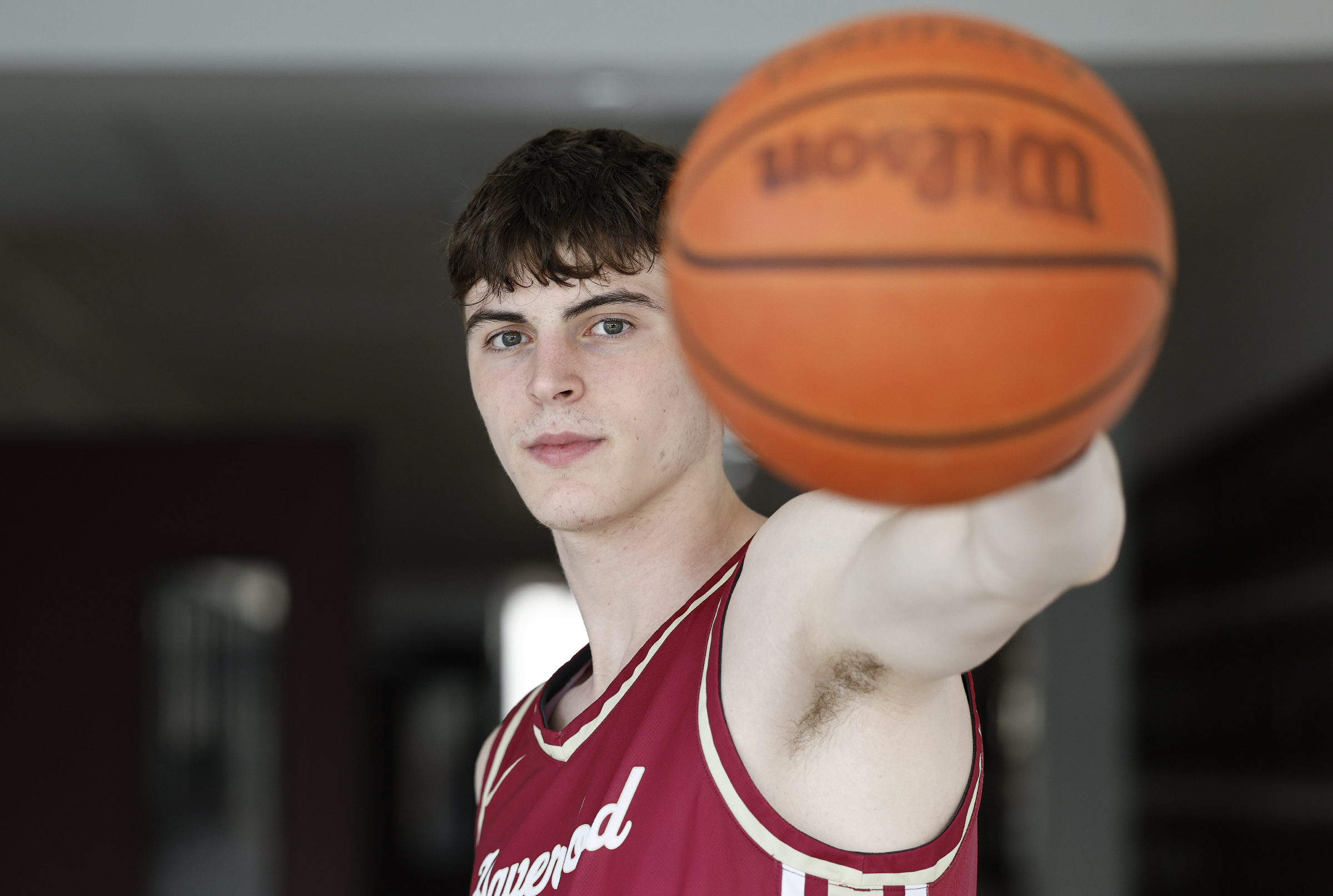
Silas Graham committed to play basketball for St. Joseph’s.Yong Kim / Staff Photographer
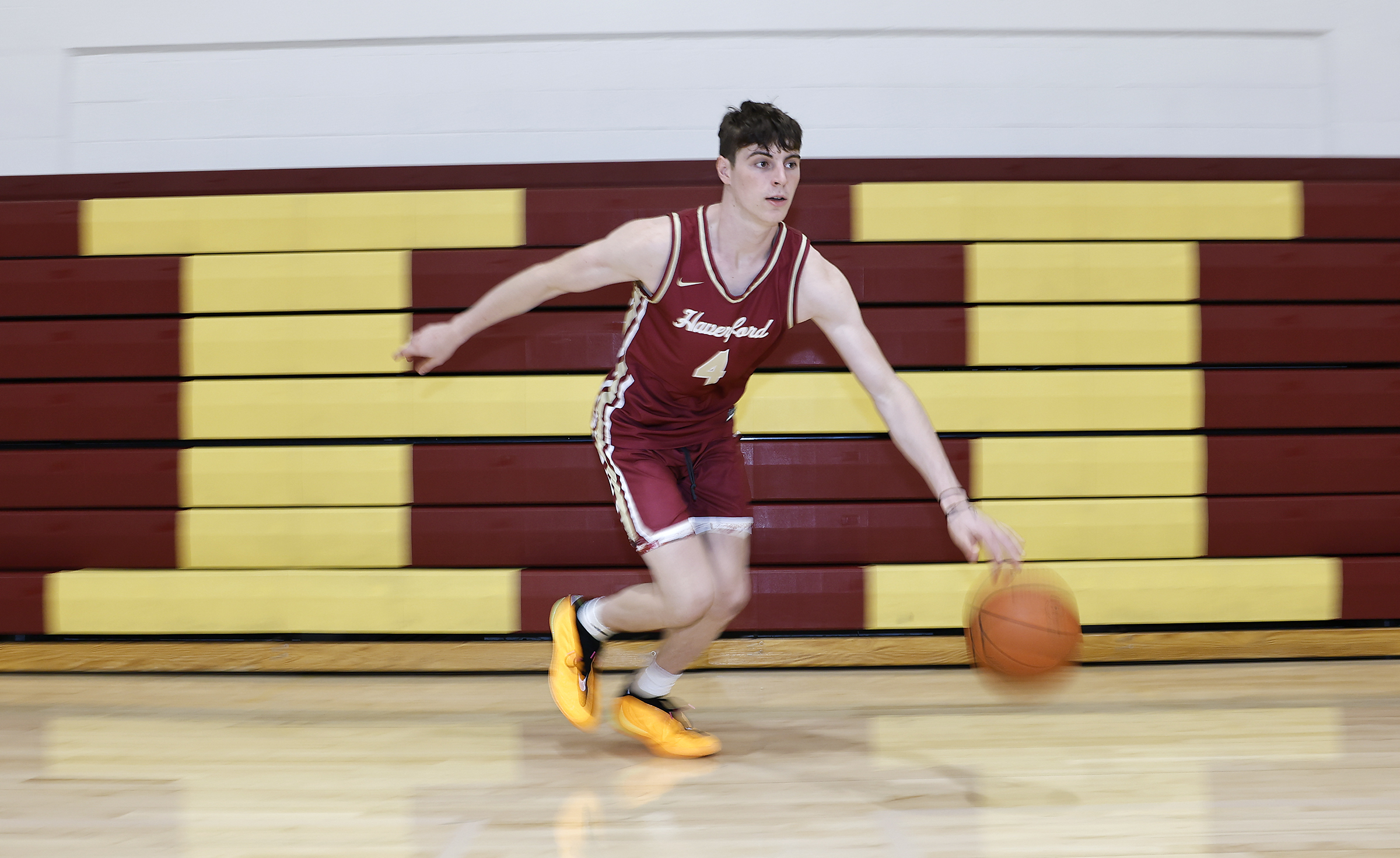
Silas enters his senior year as the Fords’ all-time leading scorer. Last season, he averaged 20.7 points, 9.1 rebounds, and 3.1 assists. 247Sports ranks Graham as the second-best player in Pennsylvania, trailing just Archbishop Wood’s Jaydn Jenkins in the class of 2027.
“I never take it for granted how coachable he is and what a joy [Silas] is to coach,” said Fords coach Bernie Rogers. “Forget all the points and the wins. He’s enjoyable to coach every day and we don’t take that for granted.”
‘Seeing how he operates’
Sitting in the Haverford School bleachers following a team workout, Silas wore a pair of red Cornell basketball shorts. After being dismissed by Penn following the 2024-25 season, Nat returned to Ithaca to serve as an assistant last season.
But just like Donahue, Nat found himself back in the Big 5. This summer, Nat was hired by Drexel to coach on Zach Spiker’s staff. In the near future, Nat will likely see his son on the opposing sidelines of a Big 5 matchup. In the meantime, he has enjoyed coaching Silas during summer runs at Drexel’s Daskalakis Athletic Center.
“We would play with some Haverford kids,” Silas said. “My dad [has] never really been a coach on one of my teams, so it was kind of cool to see that. Obviously he likes to give me pointers about myself, but even him just telling other guys what to do and seeing how he operates basketball-wise is nice.”
Silas Graham grew up around basketball with his father coaching at the college level.Courtesy of Nat Graham
As a child, Silas rarely responded well to his father’s postgame pointers — and Nat offered plenty.
“I have a friend who’s a trained musician,” Nat said. “He says when he goes to concerts or he goes to a small bar with live music, it’s hard for him to enjoy it because he’s always looking at it critically, and I think the same is true for coaches.
“I can’t turn the coach off. There’s things I see that no one else here sees, and I can’t not tell you. But that process was very difficult. I think in the long run, it may have been beneficial, but it’s not easy as a kid.”
Eventually, Nat broke through. Silas no longer brushes off his father’s criticism and welcomes the additional coaching. Last season, Nat attended two Haverford games while living in Ithaca. Silas is looking forward to having him back in the bleachers during his final high school season.
‘Want them to be well-rounded’
With the recruiting process behind him, Silas is exploring who he is outside of basketball. Nat has long given Silas and his two other children the support to so.
“As much as I love basketball and I can be on them about basketball stuff, I want them to be well-rounded, thoughtful [people],” Nat said. “More developed overall humans than sometimes can happen with sports people.”
Silas has watched his father develop himself outside of basketball.
Off the court, Nat is a committed racial justice advocate. He has written about several racial justice topics including white allyship and police brutality. In 2021, as a member of Penn’s staff, Nat sat during the national anthem to bring attention to institutional racism. Silas is taking an African American studies class, where he noted he is one of two white students.
“It’s cool to see another part of history,” Silas said. “Haverford, we say we’re like ‘woke’ and diverse, we don’t really like to go super deep into all that stuff. We kind of stay surface level, so this is the one class gets intense and emotional, but I think I like it. I think it’ll be interesting for me.”
One area of importance for Silas is wanting to help Philadelphia’s homeless population. This, too, is because of Nat. Growing up, Silas would regularly drive through West Philadelphia with his father to Penn’s campus. From his booster seat, Silas saw how homelessness affected the area.
Silas Graham averaged 20.7 points, 9.1 rebounds, and 3.1 assists last season at the Haverford School.Yong Kim / Staff Photographer
“That’s actually another big thing for my dad,” Silas said. “People don’t understand why people are homeless and they blame it all on them. There’s so many other factors that go into that, but like that’s something I took an interest in.”
Silas is looking forward to his future at Hawk Hill, where he expects to play early. He’s also proud to stay in Philadelphia.
“I love the Big 5,” Silas said. “I grew up around it, and I love like the history behind it. So many Philly guys leave now. Even in high school, Philly guys leave now. So l I think it’s cool that I’m one of the guys that stays.”
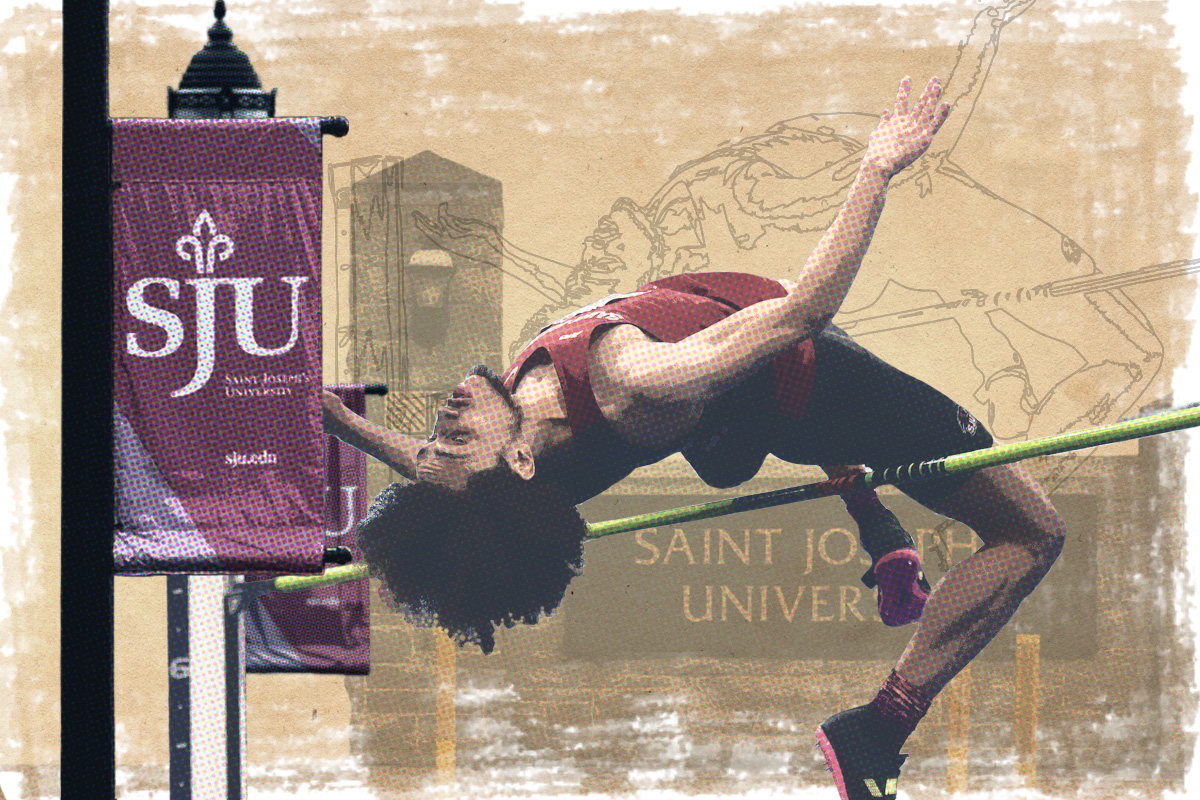
The Atlantic 10 track and field outdoor championships have long represented the end of the competitive season for many college athletes.
But for St. Joseph’s, the 2026 A-10 championships in Fairfax, Va., weren’t just the end of another season, it was the end of a chapter.
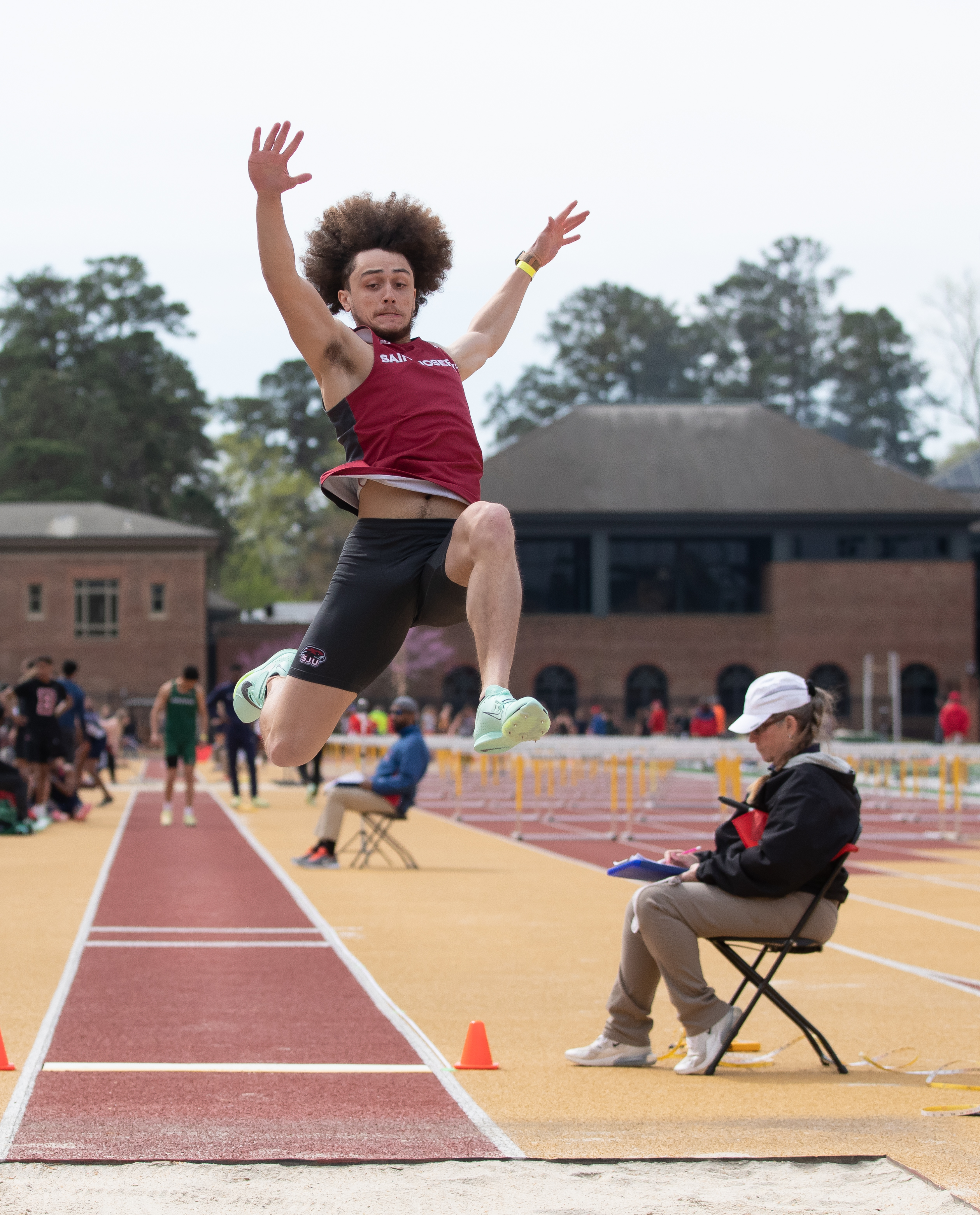
Senior Lily Ferguson’s 5.40-meter finish in the women’s long jump final on May 2 at George Mason Stadium was the final jump for St. Joe’s.
The jumps program, which was part of the St. Joe’s track and field team, started its phase-out process in the 2023-24 season, when athletes were notified of the eventual end of the program, three former Hawks told The Inquirer. Following the 2025-26 season, after the remaining three jumpers in the program, Ferguson, Logan Henry, and Cameron Campbell-Miller graduated in May, the program was terminated, the trio said.
“When it came to jumps, you can clearly see it was almost like we were more freelance than being a part of the team,” Campbell-Miller said.
With two full seasons ahead of him after learning this news, Campbell-Miller said he became “a lot more school-oriented,” and focused on taking advantage of the time he had left to get involved in other programs and opportunities. By the time he finished his jumping career, Campbell-Miller said he felt more detached from the team than ever before.
The group of jumpers remained close, though its size dwindled each year. By the end of their senior year, Campbell-Miller said the three remaining jumpers “were [their] own little family.” The rest of the team, he said, remained supportive, but ultimately still separate.
In the 2022-23 season, Yvonne Harrison and Brian Hirshblond were coaches for sprints, jumps, and hurdles. Following that season, no coach was listed as a jumps specialist.
“The head coach, if you talk to even the [coaches] below him, they didn’t jump when they were in high school. They didn’t really work with jumps beforehand,” Campbell-Miller said. “You could tell they would try. They’re trying their best with everything that they’re doing, and I give them kudos for that.”
St. Joe’s head coach Mike Glavin specializes in cross country and distance events, while assistant head coach and recruiting coordinator Chris Tarello coaches the middle distance group. Assistant coach David Reick focuses on sprints and hurdles.
Luke Noss, a fellow senior who competed in long sprints and hurdles, saw the events unfold from a different perspective but also noticed the coaching being spread thin.
“When you have 30 to 35 sprinters and you only have three jumpers, it’s a little hard to give the jumpers what they need, just based on numbers,” Noss said. “As a coach, you’re going to give the people that’s your biggest group of people the biggest chance of scoring the most time, so it was definitely, I guess, in one word, just an afterthought for the jumpers these past few years.”
Joel Maxcy, a sports business professor at Drexel said, in his broad understanding, there were a lot of factors that could have led to the decision.
Track and field isn’t a revenue sport or one that garners widespread attention like basketball. The House v. NCAA settlement, which came after the decision but imposed roster limits of 45 athletes for men and 45 athletes for women implemented in the 2025—26 academic year, likely only reaffirmed it.
“Probably, they looked at the costs and benefits of this and said, ‘The cost of either hiring a new coach or now complying with the house rules don’t make jumps worth it to us anymore. The cost of keeping jumpers is not worth the benefit of a somewhat more competitive and better track and field team,’” Maxcy said.
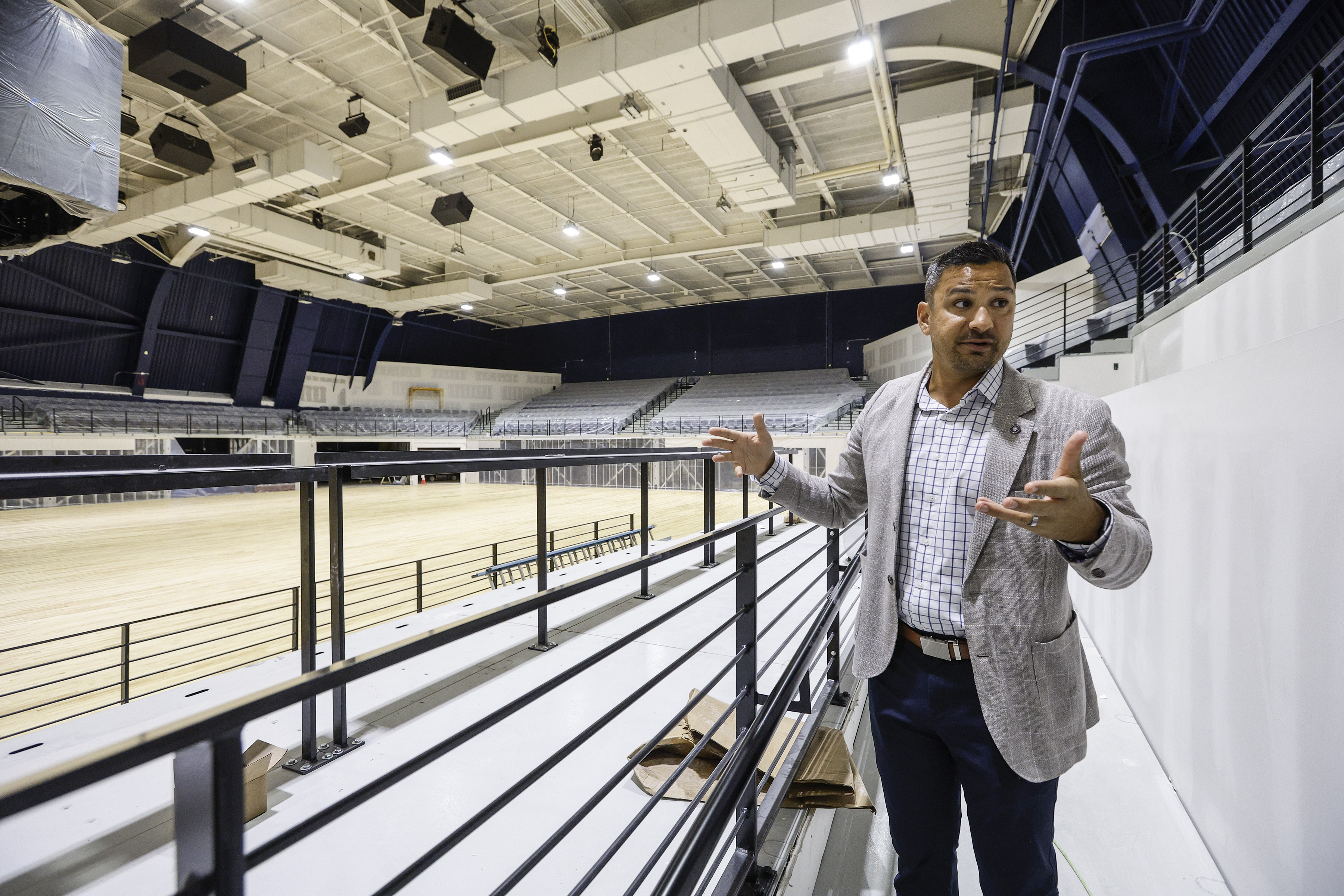
Ashwin Puri, the new athletic director at St. Joe’s, shared a similar sentiment about pouring resources into more competitive areas of the program in his written statement to The Inquirer about why the school decided to cut the program.
“Saint Joseph’s is committed to aligning its resources to best serve its mission,” Puri said. “In the current landscape of collegiate athletics, like many institutions across the country, that means focusing on areas of strength that allow our programs to flourish and set themselves apart. Saint Joseph’s track and field programs will continue to compete at the highest level and prepare student-athletes for bright futures both on and off the track.”
Ashwin Puri is the new AD at St. Joe’s.Steven M. Falk / Staff Photographer
Despite the program’s deterioration over the seasons, Campbell-Miller said that when he started at St. Joe’s in 2022, the jumps program was a big contributor to the team’s success at meets.
At that time, Patrick Fehm, who finished his career as one of the program’s best jumpers, was in his junior year. Fehm medaled eight times for St. Joe’s, including gold medals in the high jump at the 2023 A-10 indoor championships, at the 2022 IC4A outdoor championships, and at the 2024 IC4A indoor championships. He also won one silver medal and four bronzes.
Fehm was in his senior year when the future of the program was shared with the athletes. With one year of eligibility left because of COVID-19, that decision meant exploring other options for him. He completed his final year of eligibility at Tennessee.
Even though the decision altered his plans, Fehm said he felt worse for the jumpers coming up behind him in the program but understood what went into it as a nonrevenue sport at a mid-major school.
“To an extent, I can respect a little bit more, especially going forward, you want to recruit athletes and you want student athletes to be a part of the program or the thing they’re doing or specializing in, you want there to be consistency with the resources you’re getting,” Fehm said.
Patrick Fehm won eight medals during his time at St. Joe’s.SJU Athletics
However, Noss said the irony of the situation is that the only national champion at St. Joe’s came from the jumps program.
In 1991, Donna Crumety was the NCAA triple jump champion and remains the only athlete from the school to win a national title.
“We invest so much in our schools, in basketball, and field hockey, and etc., lacrosse,” Noss said. “Those are the big sports, but our only national champion is a triple jumper, and that program’s gone.”
Going forward, it’s unclear to the former athletes how this will affect the program’s ability to stay competitive. Without ever having throws and now cutting jumps, Noss said it’s not feasible to compete with bigger schools such as Rhode Island, Virginia Commonwealth, or George Mason that have an entire team.
Campbell-Miller said it could help with recruiting for sprints and distance runners with the focus on these athletes, but he ultimately thinks the lack of jumps and a full team can be harmful to the program.
“We have a more competitive track team than we’ve had in a very long time, both distance and sprints and hurdles,” Campbell-Miller said. “I feel like scoring may go up on the track, but without the jump scoring or that possibility points, I feel like where we’re going to be as a team will feel pretty stagnant, and we’re not going to be going, at least on the A-10 level, to where we want to be, so I think that hurts. Obviously, it was terrible for everyone who was here.”
When Brett Callahan was called up by the Detroit Tigers on Aug. 16 to make his major league debut, he became the fifth player in St. Joseph’s baseball history to reach his sport’s peak.
Callahan, who was drafted in the 13th round in 2023, then hit a two-run triple to left on the first major league pitch he saw in a 7-5 Tigers loss to the Chicago White Sox.
“Whenever a guy that you coached gets to the pinnacle of the game, it’s a thrill,” Hawks coach Fritz Hamburg said. “It’s a thrill for us as coaches. It’s a thrill for his teammates. It’s a thrill for, obviously, his family. And I mean, it’s just so cool to see. There’s no other way to say it.”
Callahan follows in the footsteps of Fritz Henrich, Jamie Moyer, Jimmy Yacabonis, and Brian O’Keefe, representing a long line of St. Joe’s baseball players who have chased, or are chasing, that dream. (A sixth MLB player, Allan Travers, was a student at St. Joe’s but not on the team when he played one game for the Tigers in 1912 under strange circumstances.)
Thirty-seven St. Joe’s players have been MLB draft picks, and another 25 have signed with MLB or independent clubs in free agency. Seventeen of those draft picks have come under Hamburg, who’s entering his 19th season with the Hawks.
Sunday: MLB debut, 2 RBI Monday: 2 more RBI Tuesday: the first Major League home run ever hit by a Hawk
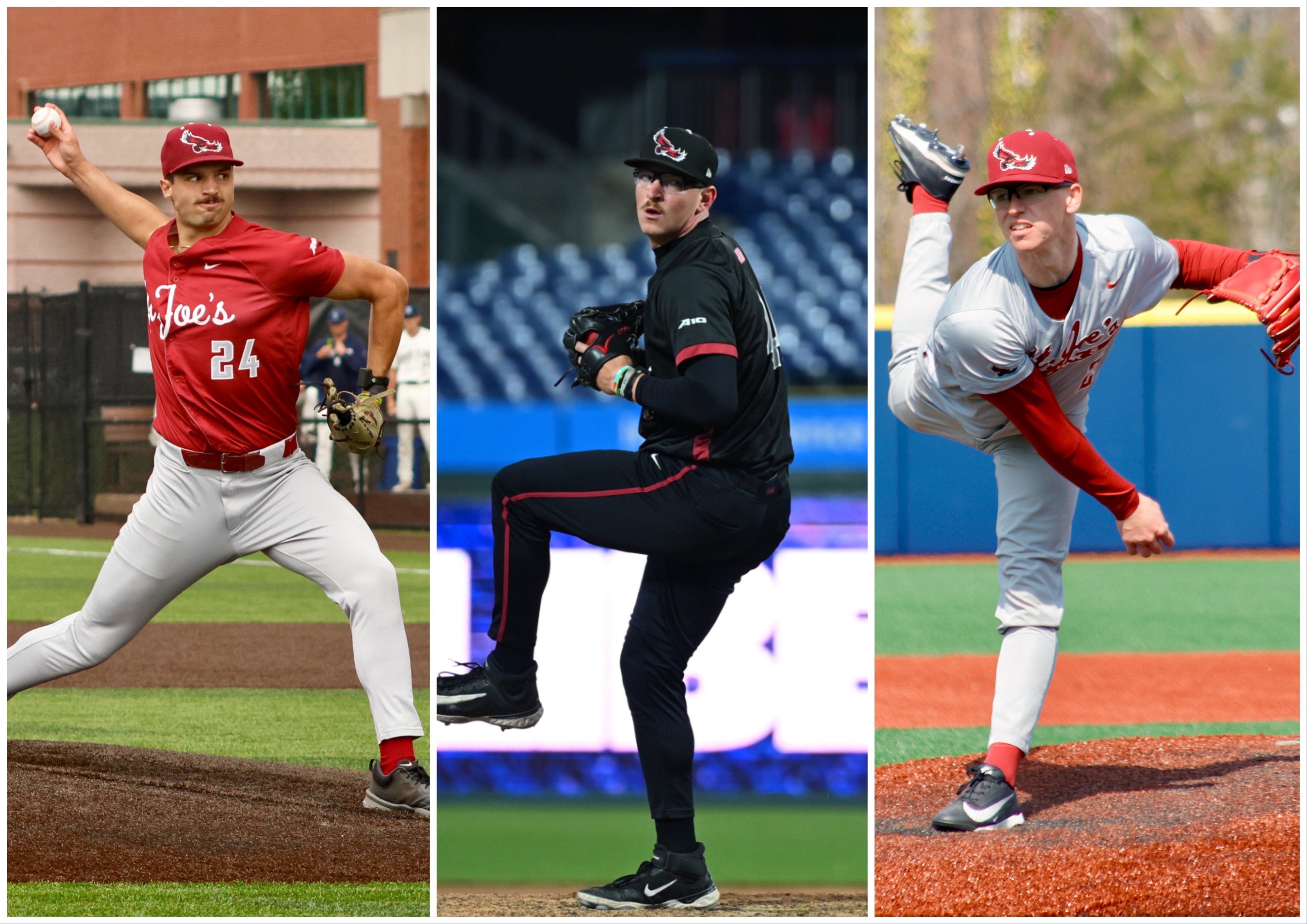
Earlier this summer, three Hawks pitchers were picked on the second day of the MLB draft — Andrew Gaines, in the 10th round by the Brewers, Christian Coppola two rounds later by the Phillies, and Duke McCarron in the 17th round by the Marlins. A few weeks later, left-handed pitcher Cole Fehrman signed a minor league contract with the Rangers on July 24.
While there is an excitement to hearing his players’ names called each summer, Hamburg also said it’s “a viable and an important part to any program.”
“First and foremost, it’s most important for the players, them having the confidence in our program, our coaching staff, and the development process,” Hamburg said. “That we’ve been able to have the number of players that have worked to have the opportunity to be drafted and to play professionally is, for me personally, really important. That’s always been a big driving force for what we do, and it speaks to, I think, the overall experience that the guys have in our program.”
Gaines, Coppola, McCarron, and Fehrman transferred into St. Joe’s ahead of the 2026 season, in which the program won a school-record 36 games, won its second Atlantic 10 regular-season title, and won the most conference games in A-10 history before falling in the consolation bracket of the conference championship.
Despite their short time with the program, Hamburg said their four pitchers’ careers “took off this year.” He credited that to both the pitching coach, Scott Boches, and to the players themselves, who put in the work with the Hawks.
When the group first committed to St. Joe’s, there was no pitching coach on staff. Boches’ hiring wasn’t announced until Aug. 18, 2025. But the group trusted Hamburg and the program. When Boches was hired, Coppola said it was clear Hamburg was blending metrics with “old-school baseball,” and the recipe worked for the Hawks.
“I think [Hamburg] has an understanding of what gets players drafted and what kind of pitching coach he needs to bring in to accomplish that,” Coppola said. “The fact that he’s still able to manage to recruit three draft picks and one free-agent signing in one portal transfer class, that’s amazing.”
In their final season with their previous programs, the quartet had ERAs in double figures. During the 2026 season with the Hawks, all four pitchers saw their ERAs drop and their appearances increase. Gaines also tied the school’s single-season saves record (10).
Gaines said the respect and trust from Boches helped. Boches offered open and honest feedback on how to improve the pitchers’ existing routines but didn’t try to change much. In return, this allowed them to pitch more free and loose.
“Obviously, you’re going to mess up, and they expect you not to be your best every single time. They expect you to go out there and do your job, but it’s baseball,” Gaines said. “At Pitt, I was super stressed about doing well because I wasn’t throwing well and worrying about what was going to be said, but [at St. Joe’s], it was so easy to go out there and do my job.”
For McCarron, the teammates surrounding him also made a difference.
“We were all pushing for each other,” he said. “Everyone around you is pushing for the same thing. It breeds a good environment. … Everyone really wanted the best for each other, and it was just a great team culture.”
Developing a reputation
The trio of pitchers were the second-most picks to come out of St. Joe’s in one draft. Four Hawks were selected in the 2024: pitchers Matt McShane and Luke Gabrysh, and outfielders Ryan Picollo and Ryan Cesarini.
Gabrysh and Cesarini are playing for the double-A affiliates of the Mets and Guardians, respectively. McShane is with the Red Sox’ high-A affiliate, the Greenville Drive. Picollo was released from the Mariners single-A affiliate in early August.
St. Joe’s has two other players playing in double A, one in triple A, and one in the rookie league. Yacabonis plays for the Diablos Rojos del México in the Mexican League. Of the dozen Hawks still playing, 10 are pitchers.
The most notable player to come from St. Joe’s, Jamie Moyer, who pitched in the majors for 25 seasons, said this is partially because all teams need good pitching, no matter the level.
“It’s always, ‘We need more pitching,’” said Moyer, a three-sport athlete at Souderton Area High School before his Hawks and major league career that included 2006-10 with the Phillies. “The game doesn’t happen without pitchers.”
Despite being months away, Coppola expects St. Joe’s to continue to get players drafted. Coppola projected that catcher Blake Primrose would be part of the 2027 MLB draft class. He set the single-season program records in home runs (24), runs scored (75), and RBIs (72), and was named the Atlantic 10 Player of the Year and a Buster Posey Award semifinalist as a sophomore in 2026.
With his 20th home run of the season on Sunday, Blake Primrose has set a new single-season program record! #THWNDpic.twitter.com/SS7c4l9BSC
— Saint Joseph's Baseball (@SJUHawks_Base) May 3, 2026
No matter what happens in 2027, St. Joe’s has a track record as a local school with draft success over the years, which Hamburg said is a “fun part” of the program that he’s proud of.
But what he remains most proud of is the players he watches every night on MiLB Network, talks to regularly, and learns from every time they come around.
“To have that and those guys remain part of our program, and to know that this is how people see our program, that we’re winning on the field and beyond, has always been a goal for me as a coach in my career, and something I’m very proud of,” Hamburg said. “Happy that those guys are getting to live out their dreams.”
The college basketball season is officially over, which means it’s time for the transactional period to begin. Welcome to the 2026 transfer portal.
More than 1,500 men’s basketball players were in the portal in the first 24 hours after it officially opened on April 7. The portal is open for two weeks, but players do not need to make their commitment to a new school during that window. The next few weeks will be filled with salary negotiations during the yearly NCAA free agency process.
We’ll be tracking it all here, from players moving in and out of — or around — the Big 5 to keeping tabs on Philly-area players at other schools. We’ll also take a look at where some of the top local high school recruits from the Class of 2026 will be playing in the fall.
Big 5 portal entries
Here are the players who were at Big 5 schools during the 2025-26 season but have entered the transfer portal.
Villanova
Acaden Lewis (point guard) started for the Wildcats during his freshman year and averaged 12.2 points, 5.3 assists, and 3 rebounds. (Transferring to Miami.)
Bryce Lindsay (guard) was a redshirt sophomore and Villanova’s best scorer during its nonconference schedule. (Transferring to Indiana.)
Malachi Palmer (forward) was a solid contributor off the bench who started down the stretch after Matt Hodge went down. But Villanova recruited multiple forwards out of the portal. (Transferring to Minnesota.)
Chris Jeffrey (guard), a freshman backup point guard who missed time after knee surgery but had promising moments.
Braden Pierce (center), a redshirt freshman reserve who followed coach Kevin Willard from Maryland, played 6.5 minutes per game and averaged 1.2 points. (Transferring to College of Charleston.)
Zion Stanford (forward/West Catholic graduate) transferred to Villanova from Temple, left the team in March after playing in 10 games. (Transferring to Towson.)
Tafara Gapare (forward), a senior, left the program at midseason after playing in just nine games.
Aiden Tobiason (guard) averaged 15.3 points, second on the team, and led the Owls with 39 steals. He’ll have two years of eligibility left. (Transferring to Syracuse.)
Babatunde Durodola (forward), a sophomore, started as a freshman and was a key rotational player this season. (Transferring to Ball State.)
Jamai Felt (forward) started in 23 games and averaged 4.1 rebounds. (Transferring to Arkansas-Little Rock.)
AJ Smith (guard) averaged 7.8 points in eight games and had his season cut short by a shoulder injury.
Spencer Mahoney (forward) made 13 appearances as a redshirt sophomore. (Transferring to Denver.)
Ayuba Bryant Jr. (forward) appeared in 27 games, averaging 8.1 minutes.
Connor Gal (guard/Great Valley High graduate) played 12 minutes across five games and will have one year of eligibility left.
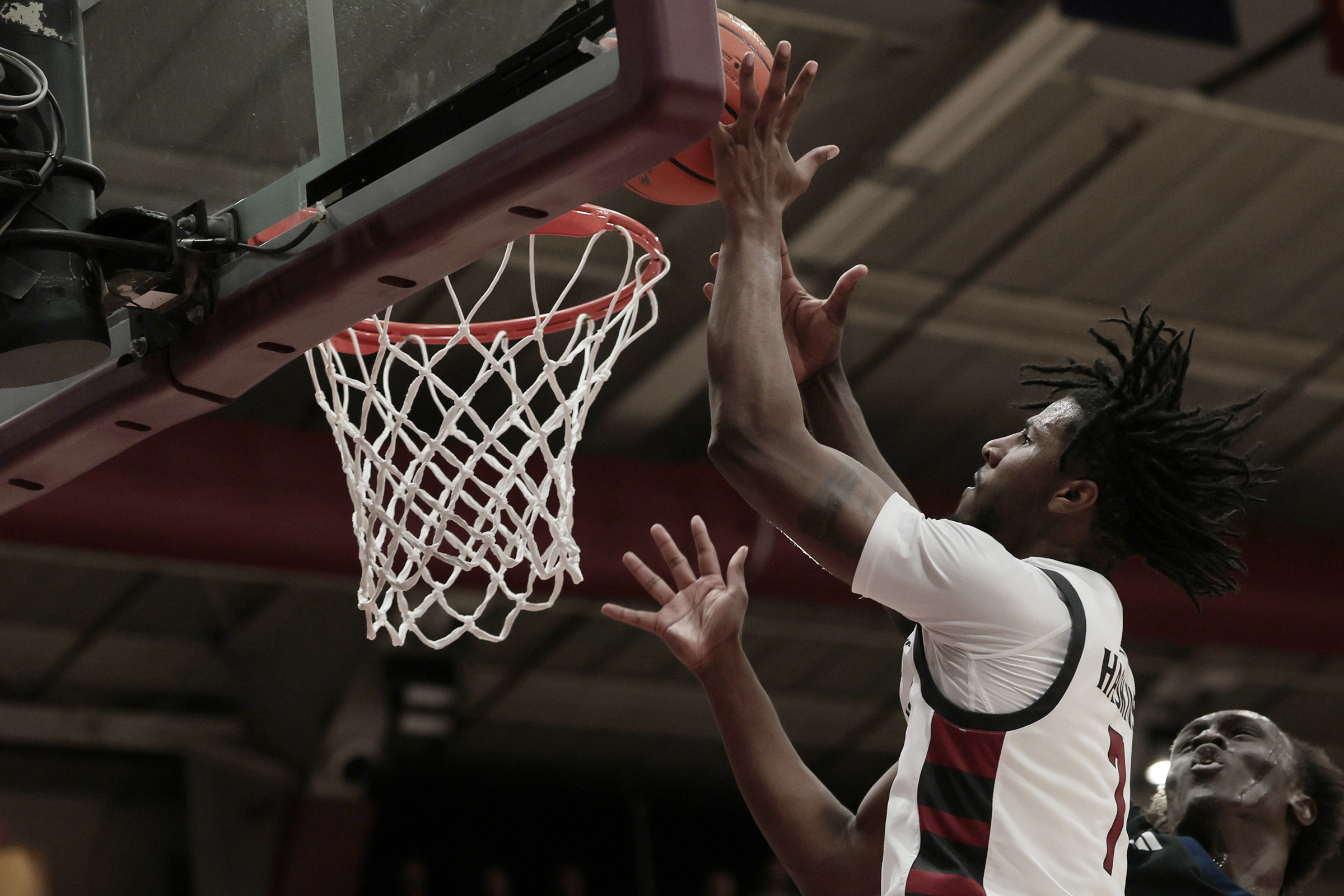
Dasear Haskins was a key starter for the Hawks this season.Elizabeth Robertson / Staff Photographer
St. Joseph’s
Deuce Jones (guard/La Salle), who led the Hawks in scoring during the first two months of the season, was dismissed from the team in December. (Transferring to Alabama-Birmingham.)
Dasear Haskins (guard/Camden High graduate) averaged 11.1 points and started for the Hawks as a redshirt sophomore. (Transferring to Ole Miss.)
Anthony Finkley (forward/Roman Catholic graduate), a junior, averaged 19 minutes in 35 games. (Transferring to La Salle.)
Kevin Kearney (forward) appeared in 14 games as a redshirt freshman. (Transferring to Manhattan.)
Jaden Smith (center) averaged 2.8 points and 1.8 rebounds in 9.1 minutes after transferring from Fordham. (Transferring to Ball State.)
Steven Solano (center), a redshirt freshman, played in eight games. (Transferring to Delaware.)
Al Amadou (center/Springside Chestnut Hill Academy graduate) transferred from Marquette and appeared in 11 games. (Transferring to Wisconsin-Milwaukee.)
Penn
Ethan Roberts (forward) has one year of eligibility remaining — the Ivy League prohibits graduate students from playing intercollegiate athletics — and was the Quakers’ leading scorer (16.9 points per game). (Transferring to Notre Dame.)
Cam Thrower (guard), a senior who spent four years at Penn, averaged 17 minutes in 27 games. (Transferring to Elon.)
Dylan Williams (guard) played in seven of Penn’s first 10 games before the senior missed the rest of the season with an injury. (Transferring to Northwestern)
Michelangelo Oberti (center) appeared in 12 games. (Transferring to Boston University)
Alex Massung (guard), who averaged 5.6 minutes in 10 games played. (Transferring to Saint Anselm.)
Bradyn Foster (forward) saw action in Penn’s season opener.
Drexel
Shane Blakeney (guard) was Drexel’s leading scorer, averaging 14.2 points in 33 games as a junior. (Transferring to South Carolina.)
Kevon Vanderhorst (guard) averaged 9.3 points and 2.9 assists while starting all 33 games for the Dragons. (Transferring to Iona.)
Villiam Garcia Adsten (guard), a junior, averaged 17.5 minutes in 32 games. (Transferring to Maine.)
Horace Simmons Jr. (forward/La Salle College High School graduate) appeared in 13 games.
La Salle
Ashton Walker (guard) started 21 games and averaged 8.2 points as a freshman. (Transferring to Monmouth.)
Eric Acker (guard), a junior, appeared in 26 games, starting 10, and averaged 18.9 minutes. (Transferring to Northern Kentucky.)
Nas Hart (forward) played in 20 games as a freshman. (Transferring to Quinnipiac.)
Edwin Daniel (forward) played 31 games (14.5 minutes) and averaged nearly four points and 3.5 rebounds. (Transferring to Stephen F. Austin.)
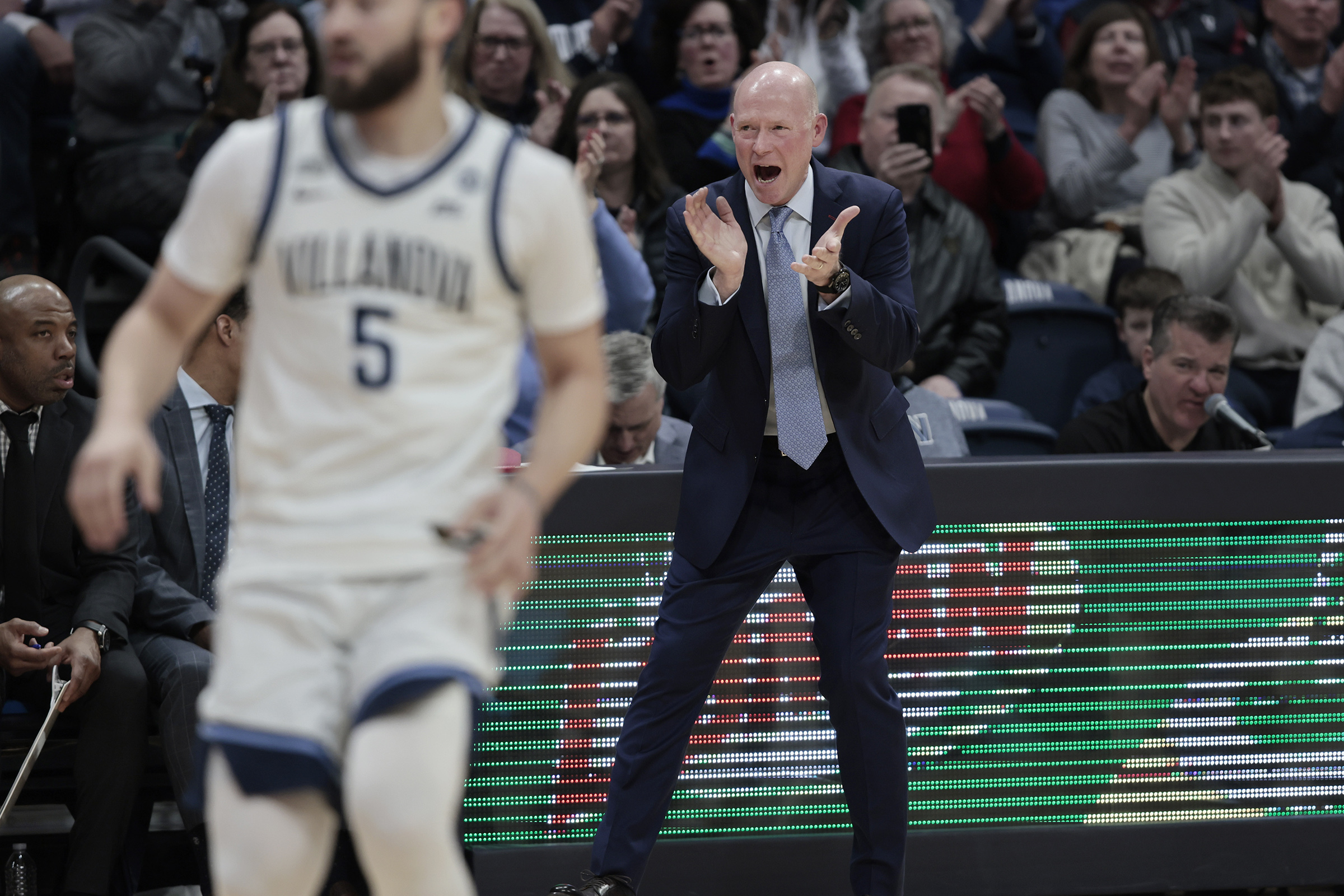
Villanova coach Kevin Willard directs his team against Butler on Feb. 25. Elizabeth Robertson / Staff Photographer
Big 5 portal additions
These are the players who are transferring to Big 5 schools.
The dates and locations for the men’s and women’s Big 5 Classic are set.
The men’s classic will be held at Xfinity Mobile Arena for the fourth consecutive year on Dec 5. Meanwhile, the women’s classic will come to the Palestra on Dec 6.
The choice of Palestra for the women’s classic coincides with the 100-year anniversary of the storied arena. The event was held at Villanova’s Finneran Pavilion for its first two years.
Along with the women’s Big 5 Classic, Penn is hosting an expanded Cathedral Classic during Thanksgiving weekend and the men’s and women’s Ivy League tournaments this season.
Both the men’s and women’s Big 5 Classic will feature the city’s six Division I programs playing in a triple-header. Seeding will be once again be determined by the teams’ performance in pod play. Each pod game will take place at the schools’ on-campus arenas in a round-robin format.
𝐀 𝐜𝐞𝐧𝐭𝐮𝐫𝐲 𝐨𝐧 𝐭𝐡𝐞 𝐡𝐚𝐫𝐝𝐰𝐨𝐨𝐝 🏛️
We’re excited to announce that the Big 5 Classic returns to University City this year to celebrate the 100th anniversary of The Palestra! 🔴🔵
For both the men and women, the teams that make up each pod are the same. Pod 1 will feature Drexel, Penn, and Saint Joseph’s while Pod 2 will consist of La Salle, Temple, and Villanova.
St. Joe’s and Villanova’s men’s teams are separated for a second year in a row. The Hawks won the first two iterations of the Big 5 Classic, while Villanova enters its season as the defending champions after it trounced Penn, 90-63.
In the women’s championship, the Wildcats also came out on top, defeating St. Joe’s 76-70.
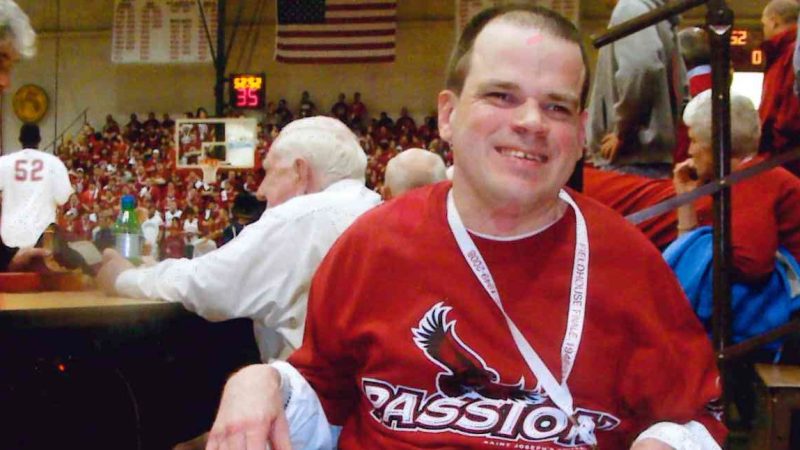
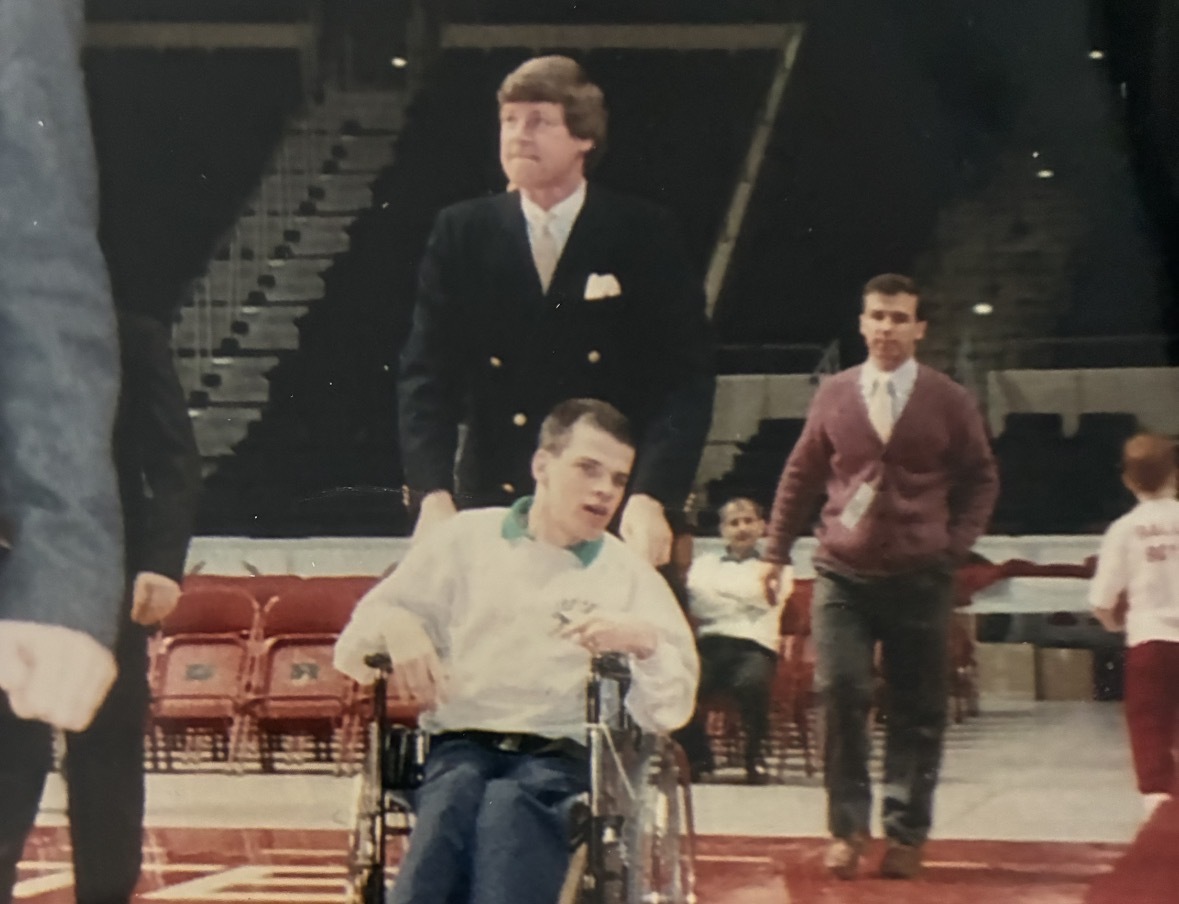
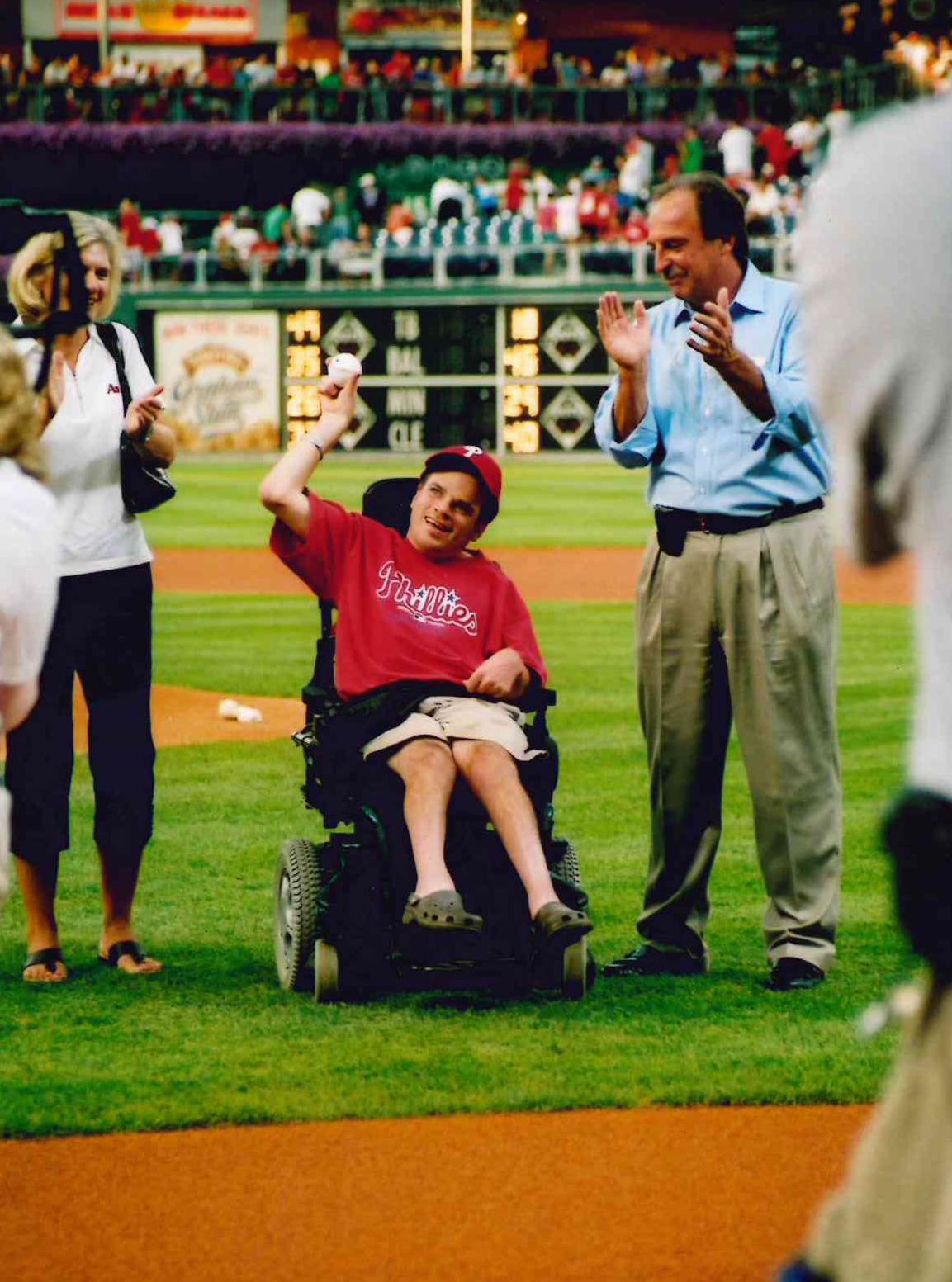
Chris DiJulia spent 56 years living as if he didn’t have cerebral palsy. He’d take “walks” in his wheelchair, down the block from his Havertown home. He was a regular passenger on SEPTA long before paratransit came to the suburbs in 1994.
The avid St. Joseph’s basketball fan would often go to Hawk Hill to visit his father, Don, the longtime athletic director, or to watch men’s and women’s basketball practice.
But he’d also venture to Eagles training camp in West Chester, games at the Palestra, Villanova, Temple, all on his own, boldly traversing a city unequipped to take him anywhere.
Of course, this came with its challenges. A broken elevator or an unexpected flight of stairs could derail an entire trip. Sometimes, a bus driver would pretend not to see DiJulia waiting at his stop because they didn’t want the hassle.
But DiJulia was no fool, and certainly no pushover. He’d scribble down the license plate, call SEPTA’s customer service line, and report the vehicle.
“And probably said a thing or two about them as they drove by,” his father added.
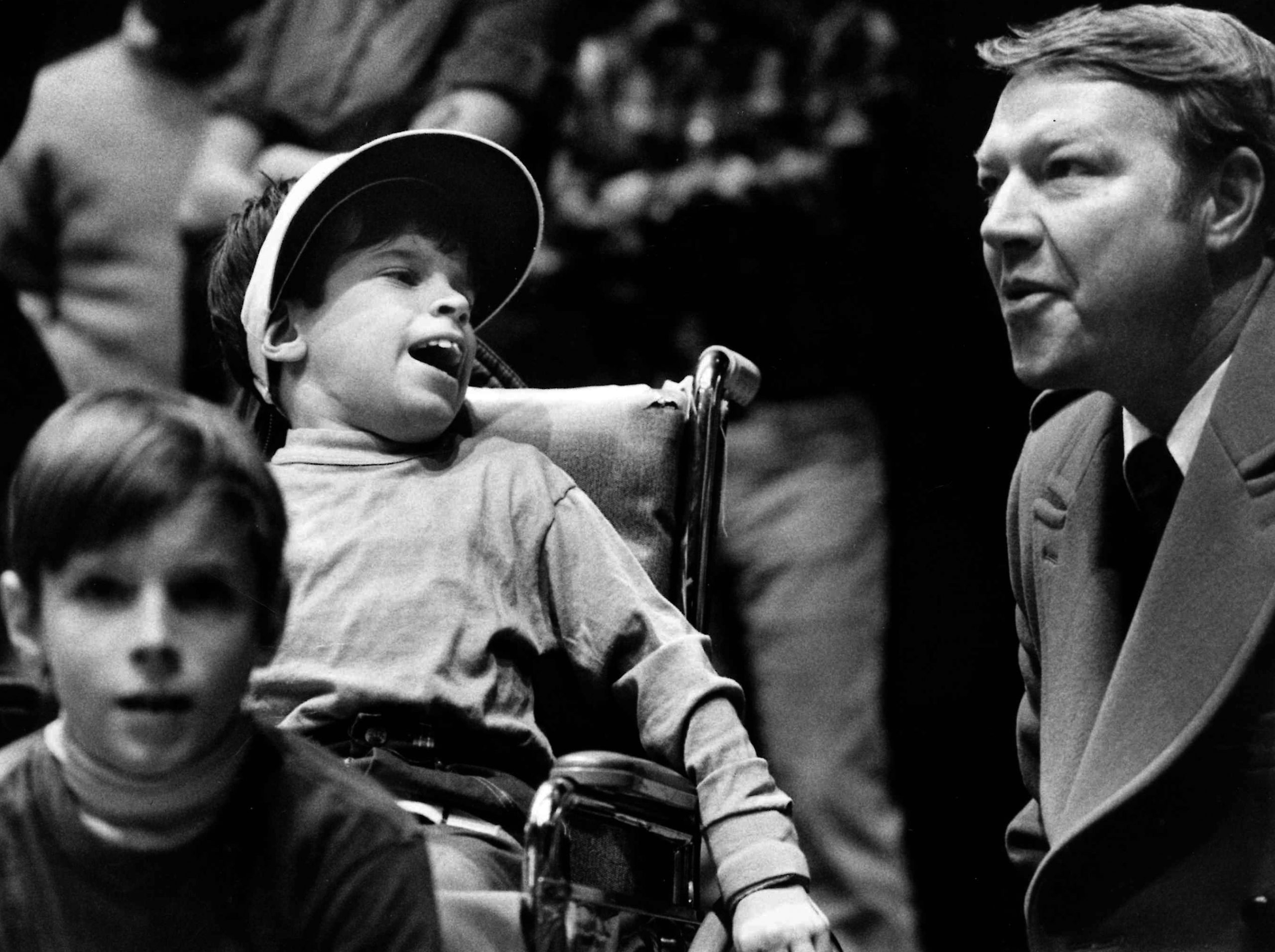
This spirit was what made DiJulia special. His limbs were short and stiff, his speech was slow and slurred, but between the ears, he was just like anybody else, and expected to be treated as such.
He frequently signaled this through his humor. If the St. Joe’s fan was among a group of coaches trading barbs, he’d join in. DiJulia was not above yelling “brick” when a player missed a shot, or expanding that sentiment to, “you’re building a whole house!”
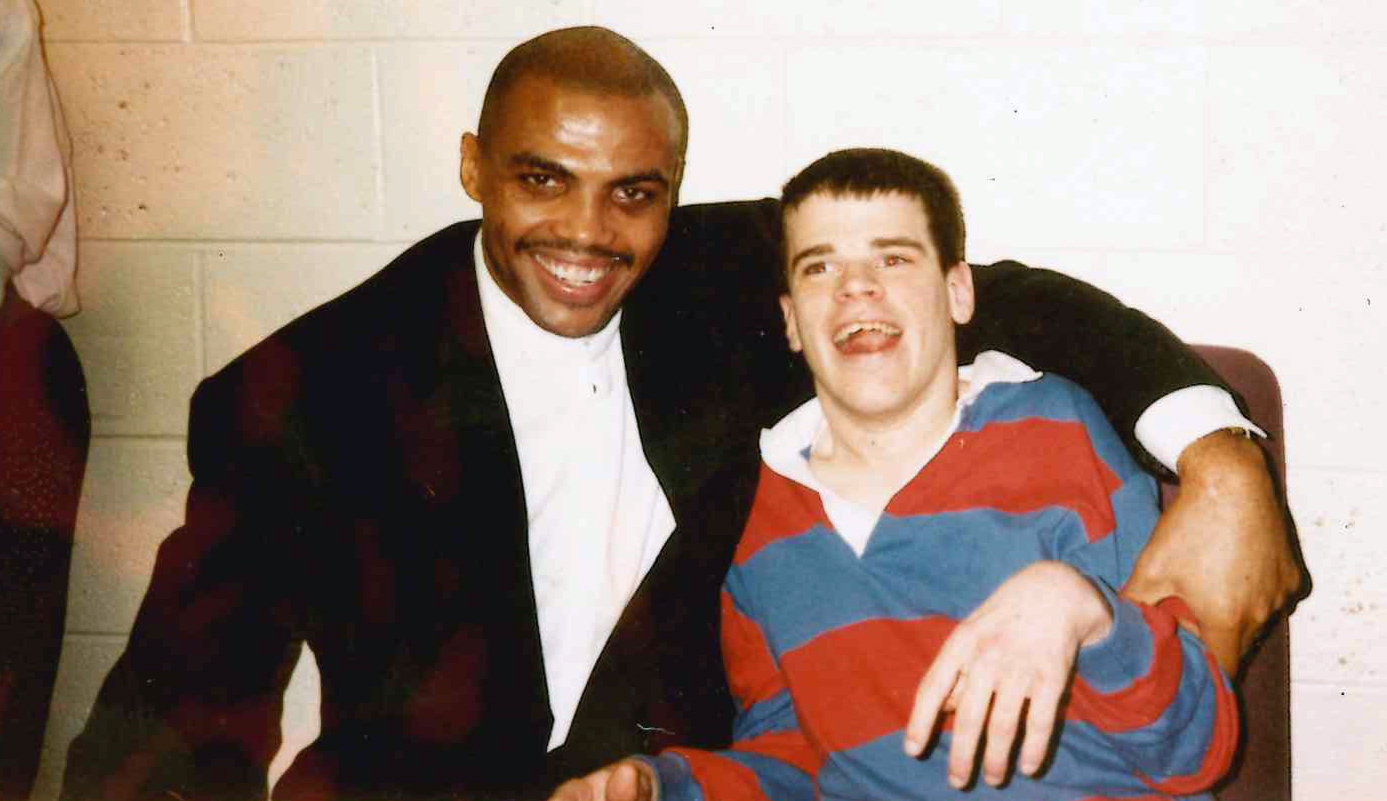
Charles Barkley (left) and Chris DiJulia became friends in the 1980s.provided by Saint Joseph's University
No one was exempt, not even NBA stars. Charles Barkley first met DiJulia in the late 1980s, at the start of his professional career. The Sixers practiced in the morning at St. Joe’s, and the teenager in the wheelchair was always there.
If Barkley had a poor showing, DiJulia would be quick to point it out.
“When I had hair, you never played bad and [went] to a Black barbershop,” Barkley said last week. “You never played bad and [went to] see Chris DiJulia the next morning. You know something bad is going to happen.”
DiJulia could’ve lived a smaller, less-adventurous life in Havertown, and no would have blamed him. But he chose to immerse himself in the world of Philadelphia sports, with all its eccentricities and quirks, and fit right in.
Now, that world is mourning his absence. On July 27, DiJulia died of natural causes stemming from cerebral palsy. The outpouring of support has been immense and wide-ranging.
The DiJulia family has heard from former St. Joe’s basketball players, softball players, field hockey players. Broadcasters and coaches have reached out, many of whom are no longer in the Philadelphia market.
On Thursday morning, Phil Martelli, another close friend of DiJulia’s, texted Delonte West. The former Hawks guard has long struggled with substance abuse and homelessness, but has been sober for the past 190 days.
Phil Martelli (right) was among those on Hawk Hill who drew endless inspiration from Chris DiJulia.provided by Saint Joseph's University
He asked Martelli to relay a message.
“Please send my condolences for Chris,” West said. “[He] was my brother, I carry him in spirit, he used to always have the right words and smile for me.”
A public funeral will be held on Aug. 12. The family is expecting a big crowd. Some will travel hundreds of miles, all to support a man who would do anything to support them.
Pushing through the pain
DiJulia was born in Connecticut in 1969. At first, his parents thought he was healthy; it wasn’t until the baby was baptized that a family member with a medical background noticed his head was oversized.
Doctors diagnosed him with cerebral palsy, and he underwent surgery at three weeks old (the first of over 20 surgeries throughout his lifetime).
Even as an infant, Chris radiated joy, with a big smile and bright blue eyes. Pat DiJulia knew her son had obstacles ahead, but when she’d look at his face, full of expression, she could tell he understood what she was saying.
Don was an assistant college basketball coach at Fairfield at the time. A few years later, when he was hired by George Washington, the family moved to Virginia.
Chris DiJulia (center, with longtime Phillies broadcaster Harry Kalas) developed a love of sports at a young age.provided by Saint Joseph's University
In 1973, he accepted an assistant coaching job at American. Chris was approaching pre-school age, but local options were limited.
The boy would need physical, occupational and speech therapy. The Americans with Disabilities Act was17 years from becoming law, and most schools didn’t provide those kinds of services yet.
So, the DiJulias were directed to three boarding schools on the East Coast. The one closest to them, in Virginia, was more like an institution; instead of catering to a specific population, it housed students with a number of physical and mental disabilities.
They chose to send Chris to Philadelphia instead, to the HMS School for Children with Cerebral Palsy. Both parents had family in the area who could visit him. Don started looking for work there, which is how he ended up becoming the St. Joe’s athletic director in 1976.
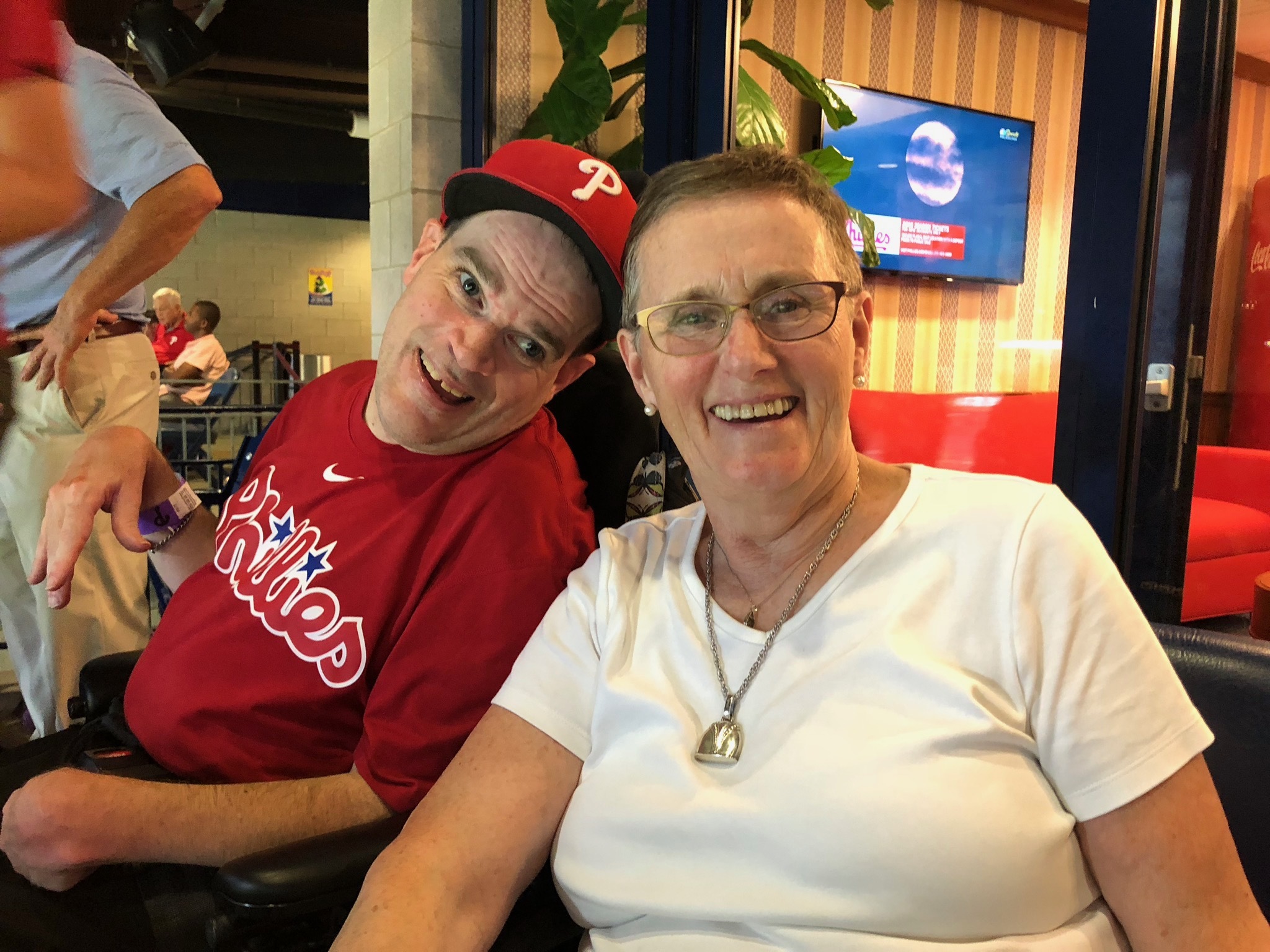
It was at HMS that Chris found his love for Philadelphia sports. Many staff members were Phillies fans and began to watch games with him. He quickly developed a talent for critiquing the local ball club (one that would serve him for the rest of his life).
The younger DiJulia would spend his weekends at Alumni Memorial Fieldhouse and the St. Joe’s athletic offices. He did not do so quietly. Women’s basketball coach Jim Foster said the 9-year-old would routinely bust into his office, so much so that he joked he was going to “need a new doorway.”
The family returned to Connecticut in 1984, when Don was named commissioner of the Metro Atlantic Athletic Conference. But they couldn’t stay away from Hawk Hill, and came back in 1988, after Don was re-hired as athletic director, a job he’d keep for the next 30 years before retiring.
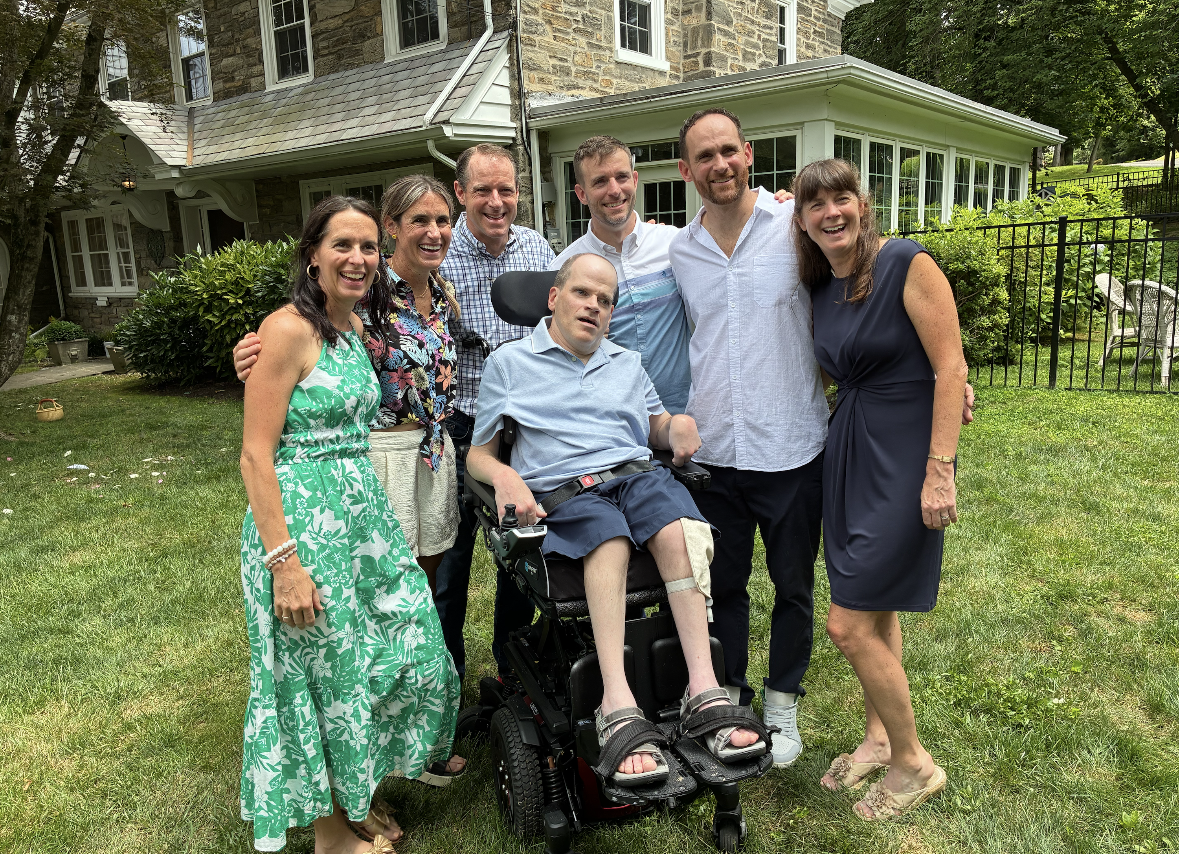
The DiJulia siblings were raised by their parents, Don and Pat, to stick together.provided by Kath DiJulia Cloran
By this point, Chris was a young man, brimming with confidence. This was due in large part to his upbringing. He was one of seven children, and Pat and Don treated him no different than the others.
The family would help Chris where he needed it, but always encouraged him to be independent. If he could lift his arms and put his shirt on with some minor assistance, then he would do it.
If he could shuffle his feet from the wheelchair to the bed, as someone hoisted him up, then he would do that, too.
“He was one of the seven,” his sister, Kath Cloran, said. “And yes, he needed extra care, but he was held to the same standards as all of us.
“He never wanted to be special. He just wanted to fit in and do what all of us did, really, and just live as regular a life as he possibly could.”
Transportation was integral to this. Don and Pat would map out a route for their son before each trip, making sure he was familiar with every curb and stair.
Some of these trips were laborious. To get to his technical school in Norristown, for example, Chris would travel a half mile on Haverford Road, to a platform for a high-speed rail.
Chris DiJulia (with his mother Pat) would stop at nothing to be close to the Philly sports scene.provided by The DiJulia Family
When he arrived at Norristown Transit Center, he’d take an elevator to the street level (if the elevator was working, which was a big if) and “walk” a few more blocks to school.
Despite any setbacks, the process was empowering. And paratransit made it even easier. Before long, Chris could travel all over the city, which meant ample trips to St. Joe’s and elsewhere.
Jim Lynam, the Sixers’ former head coach and DiJulia’s uncle, said it wouldn’t be unusual for his nephew to attend Sixers practice in the morning, St. Joe’s men’s basketball practice in the afternoon, and women’s basketball practice at night.
This was how he met Barkley.
The NBA star quickly realized DiJulia was able — and willing — to spar. So, Barkley and a few of his teammates, Rick Mahorn and Manute Bol, started going back and forth with him.
“Some fans, they’re just a-holes,” Barkley said. “They’re just mean. But the way he said something and just started laughing immediately, it took all the sting away.”
He added: “I literally met this guy 1,000 times, because he was always at practice. And I think it gave him joy. It gave us joy, but I think it really gave him joy, too.”
‘People just loved him’
DiJulia became omnipresent in Philadelphia basketball circles. When he wasn’t at St. Joe’s, he’d be at home, on the phone, usually with a coach.
In the late 1980s, Foster invited him to sit on the bench during women’s basketball games (a tradition that continued after Cindy Griffin took over the program).
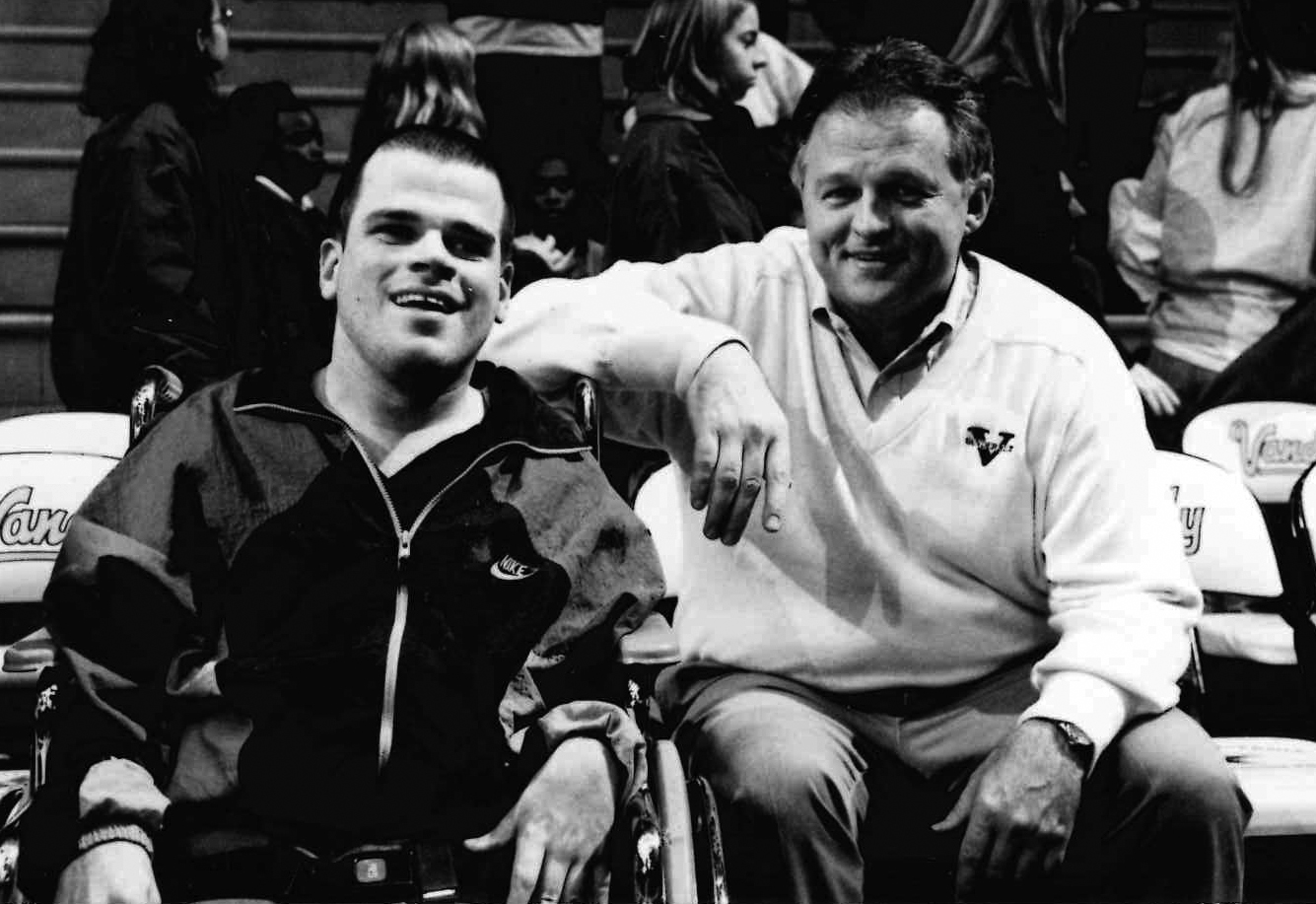
Chris DiJulia’s friendship with St. Joe’s women’s basketball coach Jim Foster (right) continued after Foster moved on to Vanderbilt.provided by Saint Joseph's University
The coach and his de facto assistant created a pre-game routine. After Foster gave his initial speech, he’d turn to DiJulia, who would share a few words.
“And then he would say, ‘But what it really comes down to,’ and he’d point to his heart,” St. Joe’s Hall of Famer Katie Gardler said. “And then he would point to his head.
“And you looked at all your teammates, and you’re like, ‘We’re doing this for him. Because he can’t get out there. We’re doing this for him.’”
DiJulia soon expanded his network beyond Hawk Hill, attending the NCAA and Atlantic 10 tournaments, among other events. If a coach left Philadelphia, he’d follow their careers, often traveling to go see them.
From the 1990s to the 2020s, DiJulia flew to Vanderbilt, Ohio State and Chattanooga to visit Foster, and drove to Michigan with his father to visit Martelli. Every year, he’d trek to Burlington to see Tom Brennan, the men’s basketball coach at the University of Vermont.
Brennan was among his closest friends. They first met in the 1970s, when the coach was assisting Rollie Massimino at Villanova. Brennan was hired by Yale in 1982, overlapping with DiJulia in Connecticut, which brought them even closer.
The two men discovered that they had a similar sense of humor; or as Pat put it, were “both crazy.” Games at Yale eventually led to daily phone calls, which led to trips to Vermont. In late November 2001, DiJulia visited Brennan when Cleveland State was in town, led by Massimino.
A Philadelphia jewel !! Chris DiJulia was as authentic and loyal as they come . An amazing man and a life full of inspiring others !! Love to the DiJulia family . pic.twitter.com/52X7Wglvvb
After the game, they got dinner with a few other coaches and family members. At one point, DiJulia asked Massimino a question that silenced the entire room.
“He said, ‘Rollie,’” Brennan recalled. “And back then, nobody called him Rollie. It was ‘Coach Mass.’”
The head coach turned to DiJulia, with an air of incredulity.
“Rollie?” Massimino said. “Rollie???”
The St. Joe’s fan grinned.
“That’s your name, ain’t it?”
DiJulia was a fixture at the University of Vermont. Every time he visited, he’d sit on the bench, right next to Brennan, tasked with keeping track of timeouts. This didn’t always go according to plan.
In February 1991, Vermont played at Delaware. It was a close game in the final minutes. Vermont was down three with the ball. Brennan turned to DiJulia and asked if they had any timeouts.
He said yes, but had counted incorrectly. Vermont got a technical foul. Delaware made one of two free throws, took possession of the ball, and won the game.
“The fun they’ve had with that over the years…” said Don.
Chris DiJulia and one of his best friends, Tom Brennan.Provided by the DiJulia family
Chris was also a regular on Brennan’s sports talk radio show on WCPV-FM. One time, he got the coach out of a parking ticket, because a police officer recognized DiJulia, and decided not to “mess up DeJules’ weekend.”
He was so beloved that in 2005, when Vermont was playing to reach the NCAA tournament, a booster chartered a plane to fly DiJulia to Burlington for the America East final. A gaggle of reporters met him at the airport.
After DiJulia returned home, Brennan checked in with his friend.
“I said, “Are you going to see St. Joe’s [in the NIT]?” Brennan recalled. “And he said, ‘Yeah… commercial.’ You got some balls. Commercial!
“But people just loved him. They loved him.”
DiJulia’s unflinching honesty was a big reason why. In the mid 1990s, amid a stretch of below-.500 seasons, he penned an angry letter to Phillies team president Dave Montgomery.
Chris DiJulia (with former Big 5 coach Fran Dunphy on the right and St. Joe’s women’s basketball coach Cindy Griffin on the left) was a massive Phillies fan.provided by Saint Joseph's University
Montgomery invited him to his box, with Brennan and Don DiJulia. The executive asked what he could do for the frustrated fan.
“And he said, ‘The first thing is to stop our team from sucking,’” Brennan recalled.
(Montgomery and DiJulia went on to have a very close relationship, one that improved when the Phillies ended their World Series drought in 2008.)
“He was always ready,” Brennan said. “You couldn’t throw him off his game, man.”
A spirit worth celebrating
DiJulia’s health declined over the past two years. He could no longer feed himself or travel. Sitting on the bench at St. Joe’s was not possible; neither was attending games at Citizens Bank Park.
But DiJulia adjusted, as he always did. He continued to work the phones, keeping in touch with coaches. He’d follow his favorite teams remotely, either on TV or an internet stream, rather than in person.
And through it all, he never lost his spirit. Last Easter, DiJulia’s sister, Tyl Sadoff, gifted him a T-shirt. On the front was a message he thought was hilarious: “Just call me Jesus, I keep coming back.”
Perhaps that is the lesson. Even in the darkest of moments, Chris DiJulia was able to laugh. And since his passing, loved ones have found that is the best way to honor him. To share their favorite stories, of their favorite guy, with a tinge of sadness, but a bellyful of joy.