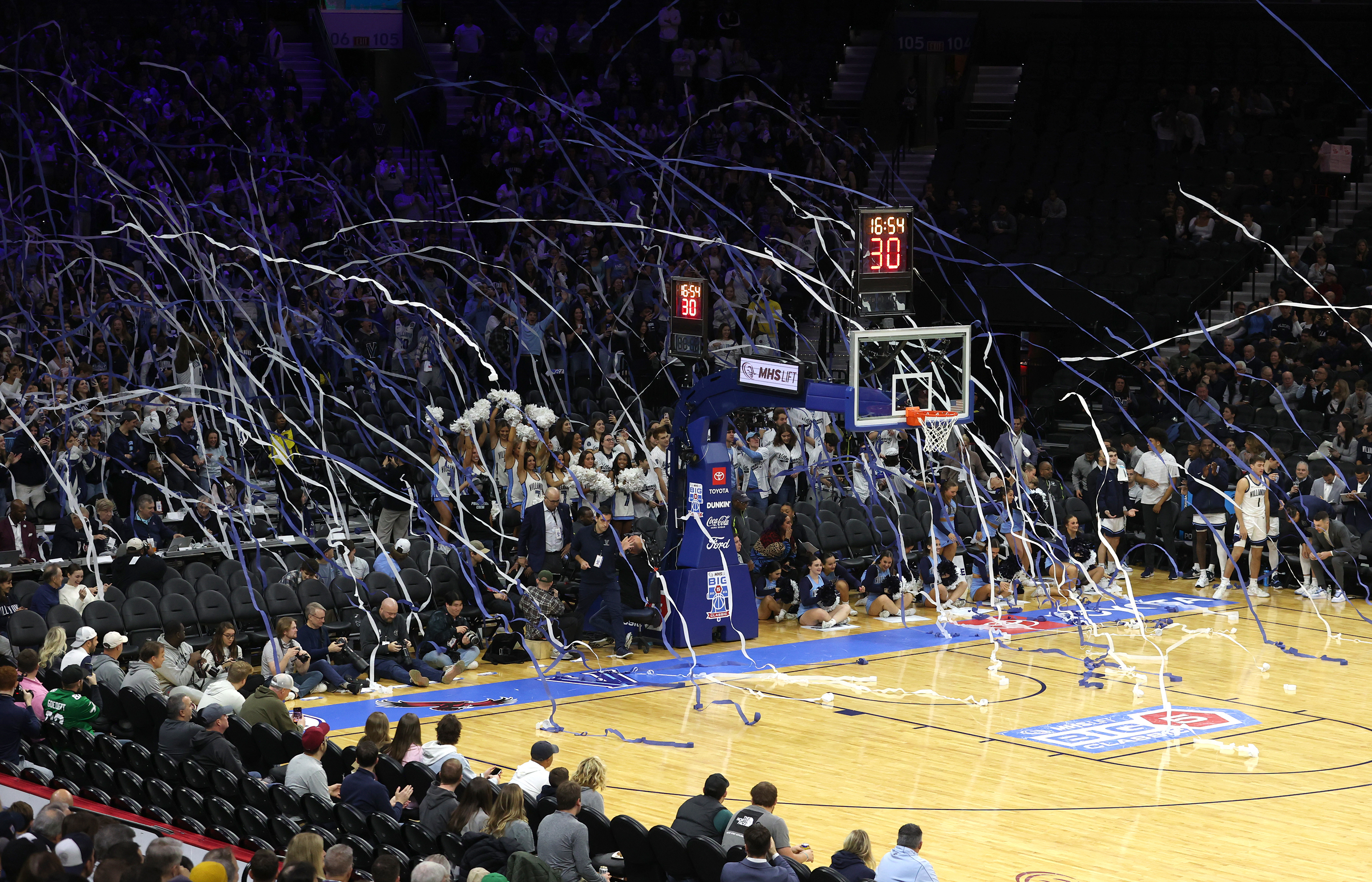
The dates and locations for the men’s and women’s Big 5 Classic are set.
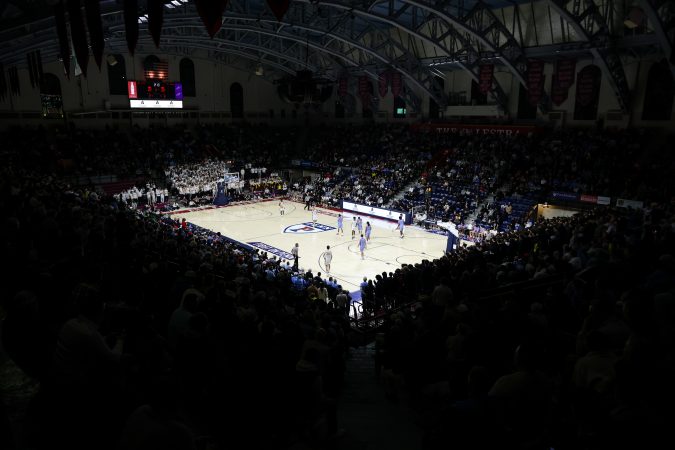
The men’s classic will be held at Xfinity Mobile Arena for the fourth consecutive year on Dec 5. Meanwhile, the women’s classic will come to the Palestra on Dec 6.
The choice of Palestra for the women’s classic coincides with the 100-year anniversary of the storied arena. The event was held at Villanova’s Finneran Pavilion for its first two years.
Along with the women’s Big 5 Classic, Penn is hosting an expanded Cathedral Classic during Thanksgiving weekend and the men’s and women’s Ivy League tournaments this season.
Both the men’s and women’s Big 5 Classic will feature the city’s six Division I programs playing in a triple-header. Seeding will be once again be determined by the teams’ performance in pod play. Each pod game will take place at the schools’ on-campus arenas in a round-robin format.
𝐀 𝐜𝐞𝐧𝐭𝐮𝐫𝐲 𝐨𝐧 𝐭𝐡𝐞 𝐡𝐚𝐫𝐝𝐰𝐨𝐨𝐝 🏛️
We’re excited to announce that the Big 5 Classic returns to University City this year to celebrate the 100th anniversary of The Palestra! 🔴🔵
For both the men and women, the teams that make up each pod are the same. Pod 1 will feature Drexel, Penn, and Saint Joseph’s while Pod 2 will consist of La Salle, Temple, and Villanova.
St. Joe’s and Villanova’s men’s teams are separated for a second year in a row. The Hawks won the first two iterations of the Big 5 Classic, while Villanova enters its season as the defending champions after it trounced Penn, 90-63.
In the women’s championship, the Wildcats also came out on top, defeating St. Joe’s 76-70.
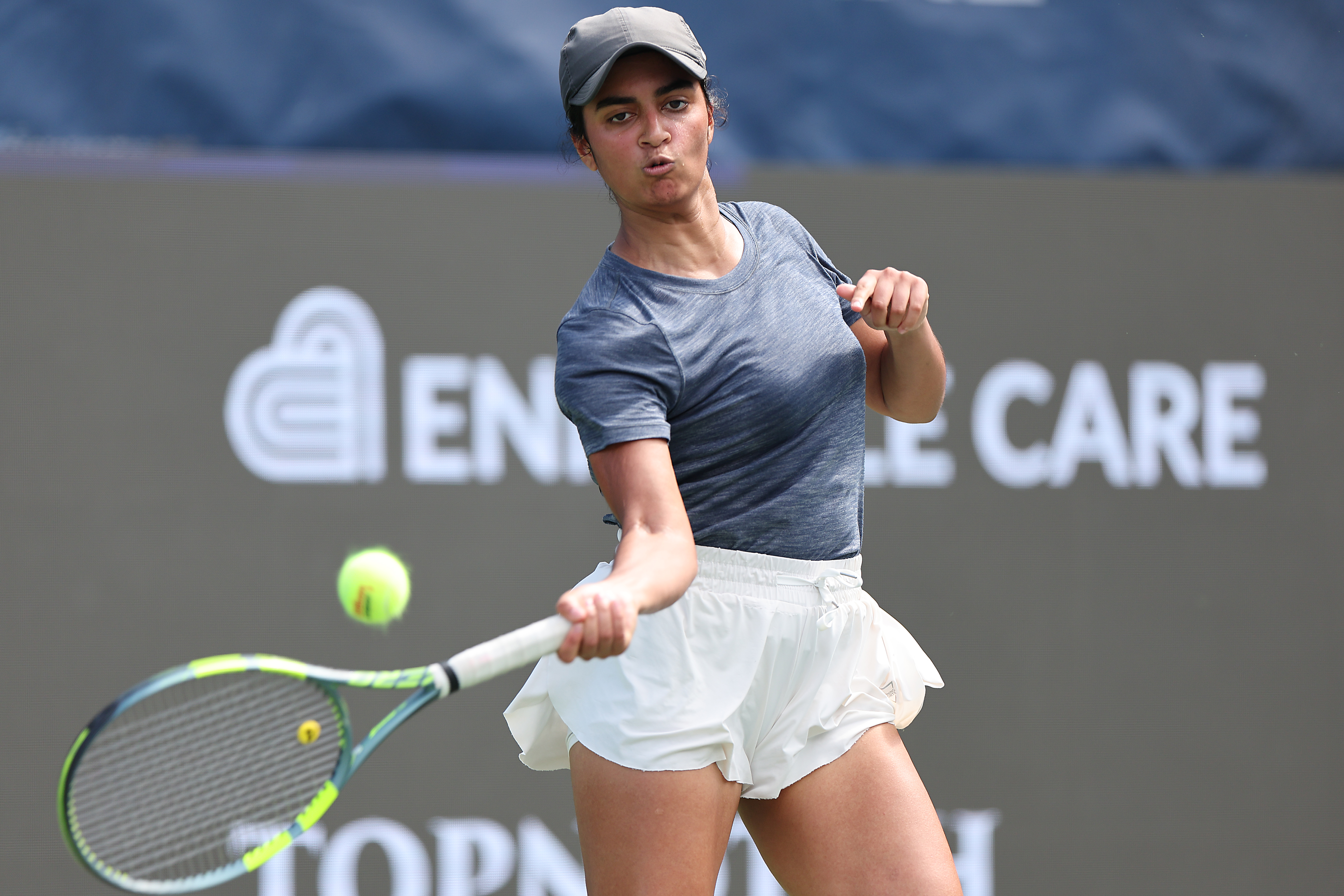
That gave her just about one day to prepare for her first professional tennis match at the Ennoble Care Philly Open, a WTA 125 event being held at the University of Pennsylvania’s Hamlin Tennis Center. Later that evening, she learned she was going to play her second — in doubles, with Penn teammate Lara Stojanovski, the next day.
“It’s been so hectic,” Velaga said. “Obviously, it didn’t go the way I wanted to in both singles and doubles, but no matter what, it was genuinely so cool. Even if I wasn’t necessarily preparing to the best of my ability, it was really fun.”
Velaga, a senior, lost her qualifying match 6-2, 6-4 to Ekaterina Ovcharenko in front of a packed crowd of Penn teammates, coaches, and friends cheering her on. She is headed for medical school after graduation instead of a professional tennis career. But she is planning on using the experience as a springboard for the Quakers’ upcoming season.
“We can compete here, even though we haven’t been doing professional-level training,” Velaga said. “I think we’ll definitely use the momentum and the good energy as well, and bring it into our very high-energy college season, and just know that no matter what team we compete against, we always have a chance, and we’re in it.”
Penn senior Esha Velaga played in her first professional tennis match on Sunday at the Ennoble Care Philly Open.David Maialetti / Staff Photographer
Velaga and Stojanovski were all-Ivy honorable mentions in doubles in 2025-26, but hadn’t practiced together all summer. They ultimately fell 6-4, 6-2 to the second-seeded team, but considering the circumstances, both were happy with the experience.
“It was a lot better than I expected,” Stojanovski said. “I think our chemistry since I came here as a freshman has been really good. We get each others’ games, so I don’t think we needed that much time to get on, but I do wish we had a little bit more time to prepare because I genuinely think we have the level.”
The Philly Open is the first WTA tournament in the area in over 20 years. Since the opening of the Penn Tennis Center, the university has been trying to attract a professional event, and they are taking full advantage of the opportunity.
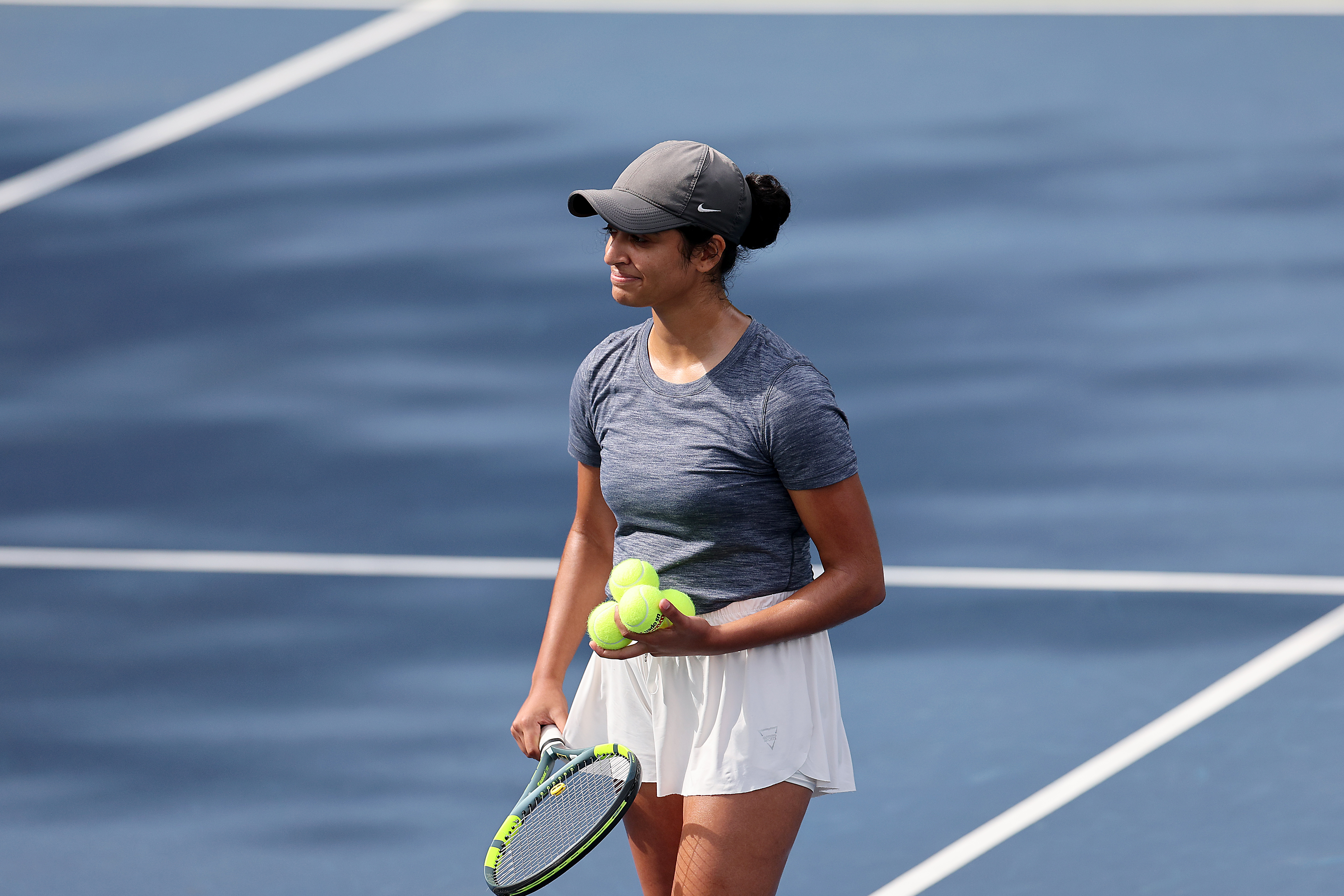
Velaga lost both her matches, but thinks the experience will pay dividends for the Quakers this season.David Maialetti / Staff Photographer
The event is a boon to all of Penn’s tennis players. Stojanovski and Velaga got the wild-card entries into the draw, but other Penn players on campus got the chance to serve as hitting partners for players on-site and to watch their trainings.
Stojanovski said playing against the professionals showed her just how high the level is in college tennis, and that they have the ability to compete.
“It’s been an amazing experience because we got to practice with professionals, see how they’re preparing, see how they’re practicing, how they’re recovering,” Stojanovski said. “What are they doing differently?”
These are the Philly area’s best athletes under 25 years old.
By
Inquirer Sports Staff
Published
The Philadelphia area's sports scene is on the rise — and we're not talking about the addition of LeBron James to the city's professional ranks.
The region's professional sports franchises are only part of the picture. There also are athletes enrolled in the area's many colleges and universities, a wealth of talent at the high school and amateur levels, and others who dominate individual sports like boxing or figure skating. We decided it was about time to spotlight some of the best.
Welcome to The Inquirer's first 25 Under 25 list, highlighting the region's best athletes under the age of 25.
story continues after advertisement
The criteria is simple. To qualify for our list, an athlete must:
Be under 25 as of July 1, 2026, and
Currently reside in or train in the Philadelphia area (the city, collar counties, or South Jersey) and/or play for one of the area's colleges or professional teams (including their minor league affiliates).
That second rule means that high school students from the Class of 2026 are ineligible, since many have already arrived on their respective college campuses across the country. A few of them can be found on our list of the best players fromhere, which includes Philly athletes playing elsewhere. However, there is one exception this year, which we'll explain when we get there.
With those qualifications in mind, we went searching for the best of the best. And after much debate among our sports editors, we came away with 25 athletes who truly show the region's depth of talent at every level across a variety of sports. Here they are, presented in alphabetical order.
Jasmine Bascoe
Age: 20
Jasmine Bascoe was an all-conference selection for Villanova as a freshman in 2024-25 after leading the Wildcats with 16.2 points and 4.3 assists per game in 34 games.
Bascoe, who’s from the Toronto area, followed a stellar freshman season with an even better sophomore campaign, again leading the team in points (18.9) and assists (4.8) per game. She was the Big East’s leading scorer last season, beating UConn stars Sarah Strong and Azzi Fudd. Bascoe led Denise Dillon’s Wildcats back to the 2026 NCAA Tournament after a two-season drought, and the Wildcats retained Bascoe for a third season. If Bascoe takes another step forward, Villanova could be a team to watch in March.
“Denise, she trusts me, and I have all my trust in her, so I’ll do whatever she needs me to do,” Bascoe said ahead of her sophomore season. “I love it in Philly — nowhere else I’d rather be.”
Bascoe’s Villanova inspiration
Villanova’s Jasmine Bascoe is having an impressive freshman season. She draws inspiration from a Wildcats legend.
She watched Jalen Brunson from home in Canada and hopes to shape her game around his. So far, it's paying off for her and the Wildcats.
Justin Crawford
Age: 22
Justin Crawford, one of the Phillies’ top five prospects entering the year, made his big league debut on opening day and has appeared in all but 10 games so far this season. Heading into play Wednesday, Crawford is slashing .270/.316/.361 as a rookie, and, after an early adjustment period at the plate, has hit .305 since June 1. The center fielder's defense also has steadily improved.
As for his struggles against left-handed pitching, which relegated him to a platoon role earlier in the season, Crawford hopes to pick the brain of new teammate Luis Arraez, a three-time batting champ and two-time Silver Slugger. And like Crawford, Arraez is a lefty who hits for average. Since Arraez’s arrival earlier this month, Crawford has been even better, slashing .342/.381/.500.
Commentary from David Murphy
Justin Crawford delights his dad Carl and showed the Phillies the weapon they might have in the nine-hole
Crawford didn’t just perform as advertised on opening day. He showed the value of what was advertised.
story continues after advertisement
Reese D’Ariano
Age: 17
The youngest member of the current United States field hockey team, Reese D’Ariano has plenty of international experience at just 17 years old. Before the field hockey World Cup in Belgium, D’Ariano won two gold medals with USA field hockey, including at the 2024 Indoor Pan American Cup in Calgary, Canada, where she was named tournament MVP. D’Ariano, who is a rising senior at Pennsylvania Leadership Charter School and committed to the University of North Carolina, is one of the top prospects in her class.
Before she began training with WC Eagles, her field hockey club, D’Ariano would train at a multipurpose field with her mother while her brother had swim practice. “Obviously, the progression was slow if you saw it day to day,” D’Ariano said. “But as the weeks and months went on, it was a pretty drastic change in how I progressed.”
Climbing the ranks
Reese D’Ariano embraces role as youngest player on USA field hockey’s World Cup roster
The 17-year-old, West Chester native was 9 the last time the U.S. women’s national team qualified for the FIH Hockey World Cup. This will mark her biggest stage, and she's looking to contribute.
Riley Davis
Age: 16
Entering her senior year at Academy of Notre Dame de Namur, Riley Davis is the top-ranked lacrosse player in the Class of 2027, according to Inside Lacrosse. The five-star recruit and Penn State commit is a two-way midfielder for the Irish and also plays on the school’s varsity basketball team.
Riley’s father, Ben, played seven years in the MLB as a catcher. Her mother, Megan, was a two-sport athlete at Rutgers. Her brother, Tague, set Louisville’s freshman home run record (18) last year and led the nation in home runs (34) as a sophomore. Her older sister, Finley, is entering her freshman year at Furman, where she will play lacrosse after playing with Riley at Notre Dame.
Despite all that competition, Riley is considered the most athletic in a family of high-level athletes. “Riley is the best athlete in the family,” Ben told The Inquirer in April.
A family of stars
Former MLB catcher Ben Davis’ family is full of athletes. His daughter, Riley, might be the best.
Riley Davis is ranked as the No. 1 lacrosse player in the class of 2027. Her mother, Megan, and older sister, Finley, are “the anchor and the force” that guided her success.
Cooper DeJean
Age: 23
Securing your first career pick-six in the Super Bowl on your birthday is the kind of story dreams are made of. But that’s Cooper DeJean’s real life. DeJean, however, is much more than just that moment. He earned first-team All-Pro honors as the league’s best slot cornerback in 2025. He’s also one heck of a basketball player.
Now, he is taking on a new role as a safety in Vic Fangio’s base defense. He’ll still see the majority of his snaps in the slot, but his growing positional versatility is a testament to his skill as he becomes one of the Eagles’ most important players.
“Playing nickel in this defense is kind of like playing safety in a lot of ways,” DeJean said. “A lot of the techniques are pretty similar.”
DeJean’s making moves
How Cooper DeJean’s ‘first love’ of basketball helped set him on a path to the Eagles
Growing up in small-town Iowa, playing multiple sports was the norm. But DeJean stood out, especially on the basketball court, and he has the highlight reel to prove it.
Audrey Derivaux
Age: 17
A four-time world junior swimming champion, Haddonfield’s Audrey Derivaux was the No. 1 recruit in the Class of 2027. But Derivaux recently reclassified to the Class of 2026 to start her collegiate swimming journey at Texas a year earlier than expected. Derivaux shared the news on her social media with an Instagram post captioned, “See you in August, Austin! Can’t wait to rep the Longhorns next season!”
(Editor’s note: Derivaux reclassified to 2026 after our list was complete.)
Derivaux, who turned 17 earlier this month, in 2024 was the youngest swimmer to reach the finals of an Olympic trial since 2012 when she was 14 years old. She competed in the women's 400 individual medley, but fell short of earning a spot in Paris. In July, she competed in the USA Swimming national championship, finished with the second-best time in the 100-meter butterfly, and won a trio of under-18 events (the women’s 100- and 200-meter butterfly and the women’s 400-meter individual medley).
Derivaux on the rise
Meet Haddonfield’s Audrey Derivaux, the 14-year-old who’s swimming’s next rising star
The rising sophomore at Haddonfield Memorial High School became the youngest swimmer to reach the finals of an Olympic trial since 2012. Could the 2028 Olympics be next?
story continues after advertisement
Natalie Dove
Age: 24
Since her professional debut in 2023, Natalie Dove is undefeated in nine fights — with two knockouts and five unanimous decisions. Dove, a super flyweight, remained undefeated in her most recent bout, an eight-round slugfest against Maria Micheo Santizo in April that ended with a split decision.
“No Love” Dove initially was exposed to the sport as a self-defense method and started sparring in Philadelphia at 14. She fought in amateur tournaments and trained as a hopeful for the 2020 Olympics before turning pro. Since May 2025, Dove has fought for Jake Paul’s Most Valuable Promotions. She credits her toughness in the ring to her upbringing in Philly gyms and learning to hold her own “in a gym full of grown men that … talk [trash] the entire time.”
“I really don’t care what anyone says,” Dove said last year. “If anything, I’m probably the biggest bully in the gym. I think it just made me tougher and it made boxing fun for me.”
When Doves fly
How Philly’s Natalie Dove went from shadow boxing in her sleep to fighting with Jake Paul’s promotion
The 23-year-old Philly native had Olympic dreams. Now, she's preparing to face Randee Lynn Morales on Saturday for Jake Paul's MVP.
VJ Edgecombe
Age: 21
By the end of his first professional game, VJ Edgecombe already had flashed his star potential. The No. 3 overall pick in last year’s draft finished third in NBA Rookie of the Year voting and is set to start alongside Jaylen Brown, Tyrese Maxey, Joel Embiid, and LeBron James. But don’t let him slip under the radar behind those huge names.
Edgecombe averaged 16 points per game last season and performed even better in the critical stretch in which Maxey, Embiid, and Paul George were sidelined. Brown, whose Celtics were eliminated in seven games by the Sixers, praised Edgecombe as a difference-maker in that first-round series. His teammates agree.
“He’s the guy,” Embiid said after the Sixers’ season ended. “I’m telling you guys, that guy is something different, and this was only Year 1. Year 2 is going to be better.”
Sixers’ future is now
‘I want us to go down in history’: Tyrese Maxey and VJ Edgecombe’s bond will shape the Sixers’ future
Maxey and Edgecombe have served as the life source of this Sixers season. The franchise will likely will go as far as they can take them — now and in the years to come.
Tyson Foerster
Age: 24
Before an upper-body injury sidelined Tyson Foerster for 49 games, the winger was on pace for career-best numbers with 13 goals in 29 games thanks to a shot head coach Rick Tocchet called “really elite.” The Flyers signed Foerster to an eight-year extension this offseason, so, barring a trade, the winger will be in Philadelphia for years to come. He couldn’t be happier.
“For me, I love Philadelphia, and I love playing with these guys,” he said. “They asked me if I would look to extend this year, and it was a no-brainer for me. I mean, I don’t play hockey for the money, so it’s all fun, and just happy to be here, hopefully, for the next nine years.”
Foerster’s big payday
Tyson Foerster talks lucrative extension with the Flyers: ‘It was a no-brainer for me’
Foerster missed 49 games because of injury a season ago, but cited his love of the Flyers and his teammates for why he inked an extension perhaps ahead of schedule.
Colton Hiller
Age: 16
Colton Hiller, the No. 2 player in the Class of 2028, is a 6-foot-7 small forward for Coatesville. In his sophomore season, he averaged 25 points, six rebounds, three assists, and 1.8 steals. Ahead of his junior year, Hiller is uncommitted but holds offers from more than 15 schools, including Villanova and Penn State. Last summer, he was part of the gold-medal winning Team USA at the FIBA U16 AmeriCup, where he averaged 13 points in six games.
In his two seasons with the Red Raiders, the five-star recruit has already surpassed 1,000 career points. He plays travel basketball in the Nike Elite Youth Basketball League, representing the 17-and-under PSA Cardinals, based in New York.
Despite having ‘a lot of eyes on me,’ hoops star Colton Hiller plans to stay at Coatesville
The 15-year-old, who’s nationally ranked, just wrapped up a stellar sophomore season. With the spotlight only getting bigger, Hiller has remained committed to developing in his hometown.
Maxwell Hiller
Age: 17
Maxwell Hiller — yes, he’s Colton’s older brother — also is a five-star recruit, but not in basketball. The Coatesville offensive lineman is entering his senior year and is the top-ranked interior O-lineman in the nation and No. 2 player overall for the Class of 2027, according to 247Sports. With more than 40 college offers, Hiller received his first college offer in eighth grade from Penn State. In April, the 6-foot-5 lineman committed to Florida.
“I don’t even watch the play, I just watch [Max],” Colton said of his brother. “I definitely like when he gets people on the ground, just pancakes, and that’s probably my favorite part.”
Max also played basketball, using it as a way to stay in shape, and even received an offer to play college hoops at La Salle.
Two Hillers are better than one
Meet Coatesville High’s Maxwell and Colton Hiller, who are rising stars in different sports
Max is a rising junior and ranked as one of the best offensive tackles in the country. Colton, who recently turned 15, is a 6-foot-6 shooting guard ranked No. 4 in his class.
Salman Khalil
Age: 21
Cairo-born Salman Khalil has been a standout in squash for Penn since he joined the Quakers in 2023. He was the Ivy League’s Rookie of the Year in 2023-24 and was the conference’s Player of the Year as a sophomore. Khalil, a rising senior, has been a standout for Penn as it has claimed its first two Potter Cups as the collegiate squash national champion in his first two seasons.
As a sophomore, Khalil became the first Quaker to claim the individual national championship (Pool Trophy) and the Potter Cup in the same season — and he did it while fasting for Ramadan. In addition to his career at Penn, Khalil is No. 52 in the squash world rankings. He holds a 42-16 record in noncollegiate events.
Khalil’s big win for Penn
Penn captured another national squash title even as three players fasted for Ramadan
Salman Khalil clinched the Potter Cup national team championship by beating Yale's Tad Carney. Khalil, Marwan Abdelsalam, and Omar Hafez of the Quakers were fasting during the final.
Makai Lemon
Age: 22
Makai Lemon, the Eagles’ first-round pick in 2026, hasn’t played a snap in the NFL yet. But with A.J. Brown gone, the rookie has big shoes to fill and a big opportunity in front of him. At Southern Cal, he averaged 14.6 yards per catch and racked up 1,156 receiving yards in 12 games in his final season. Lemon is known for his elite ball skills, despite being just 5-foot-11, on the smaller side for a receiver. He suffered an injury that sidelined him during minicamp and has been dealing with a hamstring injury during training camp. But when it’s time for him to take the field, Eagles fans will be “getting a dawg,” Lemon told the crowd on draft night.
“You drafted the guy that’s going to match the city’s intensity when it comes to pro football,” said Ray Fenton, Lemon’s former coach at Los Alamitos High School, located outside Los Angeles.
What Lemon brings
What the film says about Eagles first-round draft pick Makai Lemon
What does the newest Eagles wideout do well, and how does it fit in the new-look scheme?
story continues after advertisement
Isabeau Levito
Age: 19
Isabeau Levito became a household name this winter as one of the “Blade Angels,” the women’s figure skaters representing the U.S. at the Milan Cortina Olympics. She missed out on the podium, but she still got to bask in the experience of being an Olympian.
“It was just so cool with all these athletes from different sports all in one place,” Levito said. “It was very magical, and it was a dream come true.”
The South Jersey native also skated to a fourth-place finish at the 2026 World Championships in March. Levito has eight podium finishes at major events in her career, including silver at the 2024 World Championships and gold at the 2023 U.S. Championship. And she’s already started teasing her next routine.
What’s next for Isabeau?
South Jersey figure skater Isabeau Levito reached the peak this year with the Olympics. She wants more.
The Olympics were "very magical and a dream come true," Levito said. But she also wished she pushed herself more and is eager to get back to training and up her content for next season.
Porter Martone
Age: 19
Porter Martone, who got his start blasting holes in the wall of his parents’ basement before starring at Michigan State, made an immediate impact following his NHL debut, with 10 points in his nine regular-season games. After the Flyers’ season ended in the second round against Carolina, Martone joined Team Canada at World Championships and got ice time on the top line with Macklin Celebrini and Sidney Crosby, scoring one goal and four assists in 10 games.
“He wants to be out there when the game’s on the line,” coach Rick Tocchet said. “He’s unflappable.”
Martone’s origin story
Flyers rookie Porter Martone blasted holes in his parents’ basement before becoming an NHL phenom
The teenager has taken the NHL by storm in the playoffs. He honed his scoring touch growing up in Ontario, firing slap shots in the basement and beating "Jeff" the goalie in his backyard.
Matvei Michkov
Age: 21
Matvei Michkov’s sophomore NHL season was a bit turbulent, but the 21-year-old’s potential is sky-high, if his post-Olympic break stretch leading the team in points is any indication. At his best, the winger is a game-breaker and an elite talent the Flyers desperately need.
“He knows he needs to improve off the ice in his training — and that’s not a secret — he’s admitted that himself. … So, the big thing for Matvei is adapting," general manager Danny Brière said.
Coming to America
Matvei Michkov is 5,100 miles away from his home in Russia. But in Philly, ‘life has become easier.’
The 21-year-old's adjustment to North American culture, the English language, and the NHL is ongoing. But the Flyers winger is starting to feel more comfortable on and off the ice.
Quinyon Mitchell
Age: 25
Quinyon Mitchell is the oldest player on our list and the only one who has already turned 25 — he beat our cutoff date by about two weeks — but the Eagles cornerback is more than deserving. He won the Super Bowl and was runner-up for Defensive Rookie of the Year in 2024 and has just kept improving.
Mitchell was named first-team All-Pro in his second season and was ranked 47th on the NFL’s top 100 Players of 2026 by his peers, and there’s still room for him to grow. Mitchell’s lockdown coverage makes him a ball repellent. He was targeted just 85 times last year and gave up 36 catches for 451 yards and one touchdown. But in two NFL seasons, Mitchell still hasn’t picked off a pass in the regular season. He’s hoping to change that in 2026.
“I’ve been working with the staff on catching and eye placement and stuff like that, so I just need to get better,” Mitchell said.
Commentary from Marcus Hayes
Quinyon Mitchell looked like an All-Pro vs. the Lions. His Florida family and friends were there to see it.
The Eagles cornerback allowed zero catches against Amon-Ra St. Brown, Jameson Williams, Jared Goff, and the highest-scoring offense in the NFC.
Andrew Painter
Age: 23
After years of anticipation, Andrew Painter got his first crack at the Phillies’ rotation this year, and it didn’t go as many hoped. The 23-year-old had a 7.06 ERA in 14 appearances, including 12 starts, before being demoted to triple A. His first game back in the majors showed promise. After giving up a double and a home run early, he settled in for six strong innings and only allowed one hit after that.
“When he’s done some things with his delivery, which is going more directly to the plate rather than spinning off, he’s had more life,” Phillies president of baseball operations Dave Dombrowskisaid.
His three starts since — including one that was cut short by hamstring tightness — have been trending in the wrong direction. But at his best, Painter still represents a ton of potential.
Commentary from David Murphy
Andrew Painter has reached his Roy Halladay moment. It is on him to seize it.
Failing is easy. The hard work is what comes next with his demotion to triple A. It's an endeavor upon which Painter must embark, much like Halladay did at his age.
Jordyn Palmer
Age: 17
Westtown School star Jordyn Palmer is a 6-foot-2 rising senior guard/forward who is No. 9 in her class, according to ESPN. Palmer, a three-time Gatorade Pennsylvania Girls’ Basketball Player of the Year, averaged 23.2 points, 13.2 rebounds, 6.4 assists, 3.3 steals, and 2.5 blocks as a junior, helping lead the Westtown School (28-2) to the Pennsylvania Independent Schools Athletic Association championship game. She has 1,746 career points and 894 career rebounds.
She has offers from more than 20 colleges, including South Carolina and LSU. In June, she was named Miss Pennsylvania Basketball, awarded to the best female high school basketball player in the state, voted on by fans, coaches, and media.
Best is yet to come
Westtown’s Jordyn Palmer — a basketball phenom and highly sought-after recruit — has untapped potential
The 6-foot-2 junior, who is ranked No. 6 in the nation, has had constant attention on her since she was 14. She has taken her game to a new level, but the best of her talents has yet to be displayed.
Labaron Philon Jr.
Age: 20
Labaron Philon Jr. is one of a few professional players on this list who have yet to make their debut, but there are high hopes and plenty of hype surrounding the former Alabama point guard who fell to the Sixers as the 22nd overall pick in this summer’s draft.
Of course, the expectations have eased in recent weeks as the Sixers added Jaylen Brown and LeBron James. But the 20-year-old brings shooting (48.2% for the Crimson Tide in two seasons) and a spark off the bench behind Tyrese Maxey and VJ Edgecombe. Philon’s Sixers career already got off to a good start at NBA Summer League, and he’s got a plan for his transition into the league.
“Having the same ‘dawg’ mentality that I had at Alabama and being the same person,” Philon said after his Sixers debut. “Being me, really.”
Philon’s ready for Philly
Labaron Philon Jr. is ready for his rookie season with ‘a lot at stake’ after Sixers added LeBron James, Jaylen Brown
"Being a rookie and being able to be around all those guys is a privilege for me," Philon said after the Sixers added James and Brown this offseason.
Lavar Scott
Age: 22
South Jersey’s Lavar Scott comes from a racing family, so it’s no surprise that he was able to climb the ranks of stock car racing to become one of three active Black drivers in NASCAR. In two full seasons in the ARCA Menards Series, Scott finished in the top five 22 times for Rev Racing, including four second place finishes.
He earned a full-time spot in the NASCAR O’Reilly Auto Parts Series in 2026, making 22 starts in Alpha Prime Racing’s No. 45 Chevrolet. Scott has earned five top-20 finishes in 22 starts this season. Still looking for his first NASCAR win, Scott is chasing a feeling that he first learned racing go-karts at five years old.
“It’s a feeling that when I go to bed, I think about, [when I] wake up, [I] think about, [when I] sleep, [I am] thinking about. It’s just the feeling of standing on top of your car after a win and [celebrating] with your friends and family and knowing you did your job really well that day,” Scott said in June.
From South Jersey to NASCAR
South Jersey’s Lavar Scott, one of NASCAR’s three Black drivers, is chasing greatness and not looking back: ‘There was no Plan B’
Go behind the scenes at Pocono Raceway with 22-year-old South Jersey native Lavar Scott and the family that helped him become one of three active Black drivers in NASCAR.
Luigi Suigo
Age: 19
Standing at 7-foot-3, Italian-born center Luigi Suigo was the marquee addition for Kevin Willard this summer as he tries to lead Villanova back to the NCAA Tournament. Suigo, born in northern Italy, has played professionally in Europe since 2023. He averaged 7.9 points and 5.1 rebounds in 26 games during 2025-26 for KK Mega Basket of Serbia. Suigo entered the 2026 NBA draft and was projected as a late first-round, early second-round selection before he withdrew and decided to play college basketball at Villanova.
“He wants to make sure when he gets drafted, he’s going to play,” Willard said of Suigo in June. “The big thing is I think he needs to get Americanized a little bit, to American basketball. I think that’s why college will be really good for him.”
Even better for the Italian big man, Suigo will begin his college career with a game in Rome, where the Wildcats will play Notre Dame on Nov. 1.
From Italy to the Main Line
Big man Luigi Suigo has arrived at Villanova. His journey to the 2027 NBA draft is underway.
Suigo is expected to join the short list of Villanova players who are on campus for one season before being selected in the NBA draft. But his temporary stop at Villanova is a critical one.
Cavan Sullivan
Age: 16
Cavan Sullivan, the youngest professional on this list, has a chance to be the most internationally recognized real athlete to come from Philadelphia — apologies to Rocky. The attacking midfielder has a deal in place that will send him to English giant Manchester City once he turns 18, but for now, he’s tearing up the pitch for the Union. He netted his first MLS goal in May, and his role for the team has continued to grow.
“It’s a big year for me,” Sullivan said in January. “It’s exciting, but I’m not going to get ahead of myself. I know there’s still work to do and stuff to prove.”
Look out for Sullivan in stars and stripes, too. He’s still waiting on his first senior team call-up, but he’s received numerous call-ups to U.S. youth national teams and scored twice at the 2025 FIFA under-17 World Cup in Qatar.
A Philly soccer story
Why Cavan Sullivan, hyped as the world’s best 14-year-old soccer player, chose to turn pro with the Union
In a few years, Sullivan will play for English superpower Manchester City. But for now he has chosen to start with his hometown team. Here's the inside story of why he picked the Union.
Quinn Sullivan
Age: 22
While his younger brother has Europe’s attention, Quinn Sullivan has developed into an integral piece for his hometown club. Before an ACL tear ended his 2025 season, Sullivan scored three goals and logged eight assists in 31 appearances across all competitions as the Union claimed the MLS Supporters’ Shield.
Sullivan also has experience with the U.S. men’s national team and made one start during the 2025 Gold Cup.
Sullivan returned from his ACL injury in July 2026, and now that he’s fully healthy, he’s back in the Union’s starting lineup. Quinn isn’t making a move to Europe yet, but the Bridesburg native is happy to represent his hometown club for now.
“I’d love to be the face of this team,” Sullivan said in January. “I mean, I grew up supporting this team. I love this team; I love this city. I feel like I embody what Philadelphia means.”
Holding down the homefront
Quinn Sullivan ‘would love to be the face’ of the Union. When he returns from a torn ACL, he just might be.
Though the 21-year-old from Bridesburg likely won't be back on the field until July, he's in good spirits. He appreciates all the support he's gotten from fans, the Union, and the national team.
Gage Wood
Age: 22
Gage Wood, the Phillies’ first-round pick in 2025, made his first start at Citizens Bank Park in July — as part of the MLB All-Star Futures Game.
But the right-hander, who was promoted to double-A Reading earlier this season, is progressing quickly through the system. Wood’s elite fastball helped get him to No. 33 on MLB Pipeline’s Top 100 prospects, but there are questions about whether Wood is a starter or a reliever long-term.
“Obviously, I want to go back to the Bank as fast as I can,” Wood said. “I just keep working every day and try to get there as fast as possible.”
Patience paying off
Phillies prospect Gage Wood may have to take a longer road to the majors — and he’s OK with that
After the Phillies drafted the 22-year-old pitcher out of Arkansas, they plan to develop Wood as a starter. Fans caught a glimpse of the first-round pick in the Spring Breakout game on Saturday.
story continues after advertisement
That completes the first installment of The Inquirer’s 25 Under 25 athlete list. Naturally we couldn’t include every great athlete from the area, so be sure to check out our list of those who just missed the cut. We also have a list of the best under-25 athletes that are from the region but no longer play here. And, of course, we want to know who you think should’ve made the cut but didn’t, so email us at sports.daily@inquirer.com with anyone we might have missed.
Staff Contributors
Design and Development: Julia Duarte
Reporting: Gabriela Carroll, Owen Hewitt, Mia Messina
Editing: Matt Mullin
Illustration: Vivi John
List Curation: Inquirer Sports Editors
Digital Editing: Matt Mullin
Copy Editing: Maria McIlwain
Subscribe to The Philadelphia Inquirer
Our reporting is directly supported by reader subscriptions. If you want more journalism like this story, please subscribe today
Rick Santos has already implemented changes to Penn football as the new head coach.
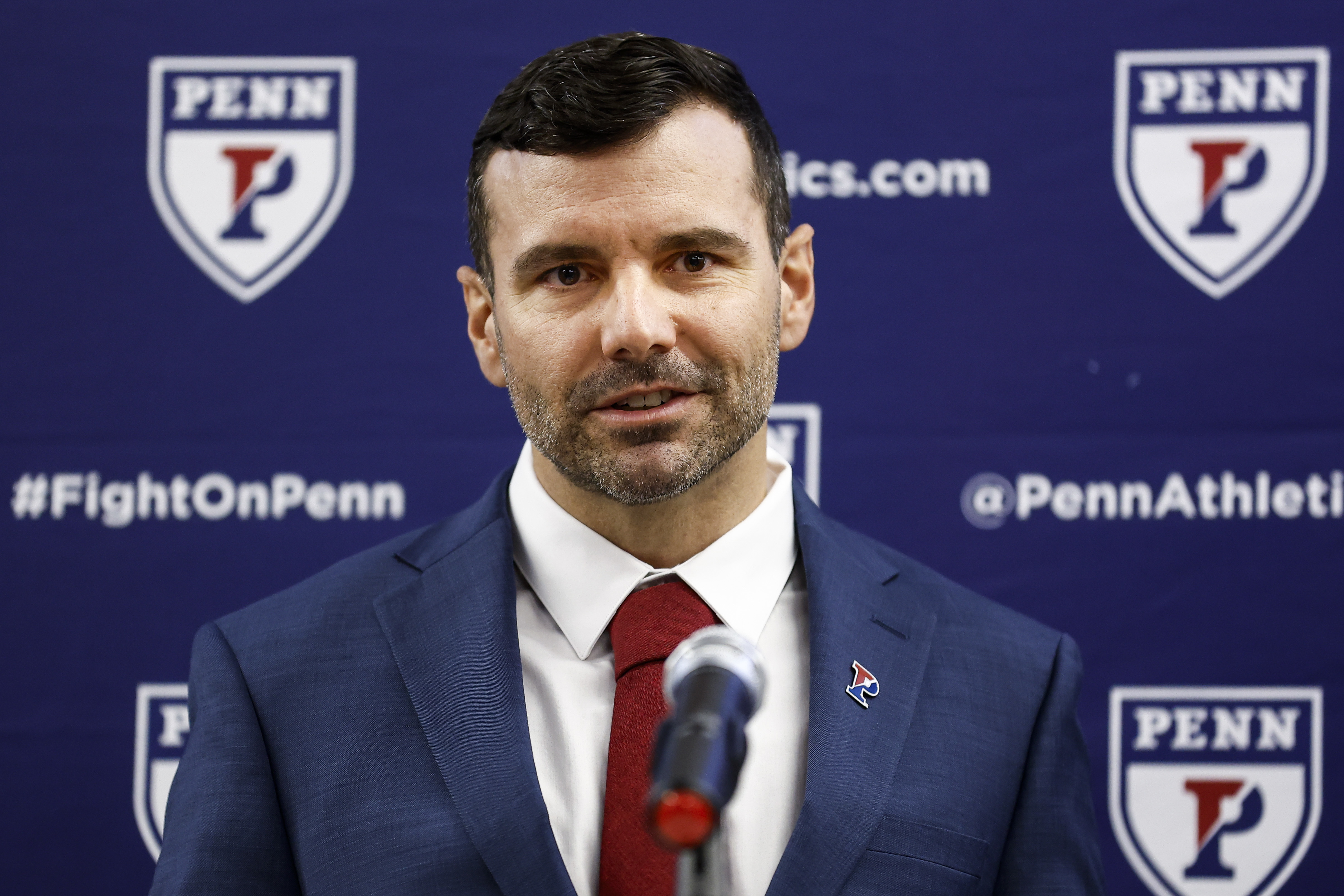
While fans won’t see those changes until the Quakers’ season kicks off on Sept. 19 against Bucknell, Santos gave a glimpse inside his program during the Ivy League’s media day on Monday.
Santos, who led New Hampshire to three FCS playoff appearances in five seasons, was hired in December to succeed longtime Quakers coach Ray Priore. He is taking over a program that finished 3-4 in Ivy League play last season and has not won a conference title since 2016.
“I don’t think there was a ton of hurdles [taking over the program],” Santos said. “I just think it was an opportunity for growth for all of us to work as hard as we could to get this thing [going] and lay the foundation that we feel like is going to be sturdy for championships to come.”
Senior guard Luke Sacchetti added: “The overall buy-in is greater than I’ve ever seen rolling into a season. It felt like every day of spring ball was like a new game. Guys were really fighting and battling, whereas some years it felt like we might have just been lulled to sleep. So I’m really excited to see what we can do in the regular season.”
Here are other notable takeaways from Ivy media day.
Penn’s starting QB
Santos confirmed that junior Karson Siqueiros-Lasky will start at quarterback this season.
Siqueiros-Lasky lacks experience in the quarterback room, but the junior, who was named a captain, backed up starter Liam O’Brien last season. Due to Ivy League rules, O’Brien was forced to transfer for his final year of eligibility following his graduation from Penn. He will play at Cincinnati this season.
Siqueiros-Lasky has not started a game in college. He was primarily a pocket passer at Seminole High School in Sanford, Fla.
“I thought it was a really good battle during the spring between Karson Siqueiros-Lasky and [sophomore] Shane Throgmartin,” Santos said. “Those guys battled back and forth. I think by the end of it … Karson really took a stronghold on the position. He finished with a really strong spring scrimmage that we had. Right now, he’s the clear-cut No. 1 going into it.”
Another name at quarterback that Santos briefly mentioned is freshman Miles Teodecki — the highest-rated Penn recruit since 2000. Teodecki originally signed with Kansas State before mutually parting ways with the Big 12 program. The Quakers could see the freshman get time under center this season.
Penn officially announces their quarterback of the future, Miles Teodecki.
Teodecki is the highest rated Penn recruit since 2000. He had originally signed with Kansas State before mutually parting ways with the program. He had multiple P4 offers, but opted for the Ivies. https://t.co/tkp0r6QtKh
Santos brought his codefensive coordinators and cornerbacks coach with him from New Hampshire. Penn will run a similar defensive scheme to the one the Wildcats employed the past few years: a 4-2-5.
The scheme, which sees five defensive backs on the field at once, also plays to the Quakers’ strengths in the secondary. Santos noted that the team will look to lean on the “defensive backfield” spearheaded by senior safety Josh Narcisse and play “a lot of man-to-man.”
Last season, the Quakers gave up 377.4 yards per game — the second most in the Ivy League.
“We’ll take advantage of some of the experience that we have coming back,” Narcisse said. “Overall, when you look at our defense, without getting into the technicals, what you’ll see is a violent defense. We’re going to communicate every single snap before the play, during the play, and we’re going to swarm to the ball. We’re going to tackle well. We’re going to be efficient, and we’re going to limit all explosive plays. We’re going to cause chaos in the trenches.”
Yale’s Abu Kamara named captain
Delaware County’s Abu Kamara, now a senior defensive back at Yale, starred on both sides of the field at Interboro High.
During his final campaign with the Buccaneers, Kamara rushed for 2,832 yards and scored 40 total touchdowns. Defensively, he accounted for 70 tackles and 11 interceptions.
His career at Yale followed suit. Last season, Kamara recorded 76 total tackles, 3.5 sacks, three forced fumbles, and two interceptions. For his efforts, he was named a unanimous All-Ivy selection and a finalist for the Buck Buchanan Award — which is given annually to the best defensive player at the FCS level.
This offseason, Kamara was named a captain for the Bulldogs. However, he is not looking to let the new title change how he approaches his role on the team.
#Delco has taken over Franklin Field as Interboro football alum Abu Kamara is returning home as a member of the Yale Bulldogs. The sophomore defensive back comes into today's matchup versus Penn leading the FCS in solo tackles per game with 7.6. pic.twitter.com/p4hKgsi2DM
“I want to still be that same player,” Kamara said. “Still be that same person that people can come up to and ask questions and be comfortable around. I don’t want there to be some sort of barrier just because I’m of a certain status now. I still want to be known as Abu Kamara, the Yale football player, the funny, charismatic guy on the football team.”
In 2024, when Yale traveled to Penn, the Interboro faithful packed Franklin Field to cheer on Kamara — who finished his day with seven tackles, a sack, and two turnovers. Bucs fans will get the chance to do the same come Oct. 23, when the Bulldogs face Penn at Franklin Field.
Tyler Nase is the new head coach of women’s rowing at Penn, the school announced Friday.
Nase, a Phoenixville native and graduate of La Salle College High School, will take over the program after former head coach Bill Manning resigned in May to focus on his health.
Nase will begin his duties starting on Monday.
Nase most recently served as the head coach of the men’s lightweight program at Cornell. Under Nase, Cornell finished sixth at the 2026 Intercollegiate Rowing Association national championship.
Nase’s coaching career started at Penn in 2017, where he served as an assistant coach for the men’s lightweight program. He became the head coach at Cornell in 2022.
Nase is a former Olympian who trained and competed with the U.S. team from 2013 to 2016. He rowed in the men’s lightweight coxless four race at the 2016 Olympics in Rio de Janeiro.
Before becoming an Olympian, Nase rowed at Princeton, helping lead the Tigers to an Intercollegiate Rowing Association varsity lightweight eight title in 2010.
“Twenty years ago, my rowing career began on the Schuylkill, and my coaching career began right here at Penn, so stepping into this role feels like coming home,” Nase said in Penn’s release. “I’ve witnessed what this program is capable of, and I’m excited to be a part of it. Women’s rowing is one of the largest and most competitive sports in college athletics — the female equivalent of college football in scale and depth.
“Penn has the foundation for success: a world-class boathouse, a phenomenal body of water in the Schuylkill, and an amazing strength and conditioning facility in the Greene Family Intercollegiate Strength and Conditioning Center, all right in the heart of Philadelphia.”
Penn finished seventh at this years’ Ivy League championship, with its third varsity eight boat earning bronze.
“Coming into this role, I want to listen first, then lead,” Nase said. “My goal is to build a program where every athlete feels heard, supported, and pushed to become the best version of herself on and off the water. This next chapter is about continued development and growth for our athletes and for this program.”
A change to Division I men’s soccer looks to be on the horizon.
After years of discussion and debate, the NCAA Men’s Soccer Oversight Committee adopted legislation to shift the sport’s season from the fall to a two-semester schedule. The change was set to go into effect before the 2027 season. But on June 24, the NCAA announced that the Division I Cabinet remanded the proposal for additional review.
Twenty conferences opposed the measure, according to the NCAA’s release, taking issue with “the duration of the season” and “the lack of clarity about related rules.” Additionally, the Cabinet noted issues relating to how the change could impact the “student-athlete academic experience.”
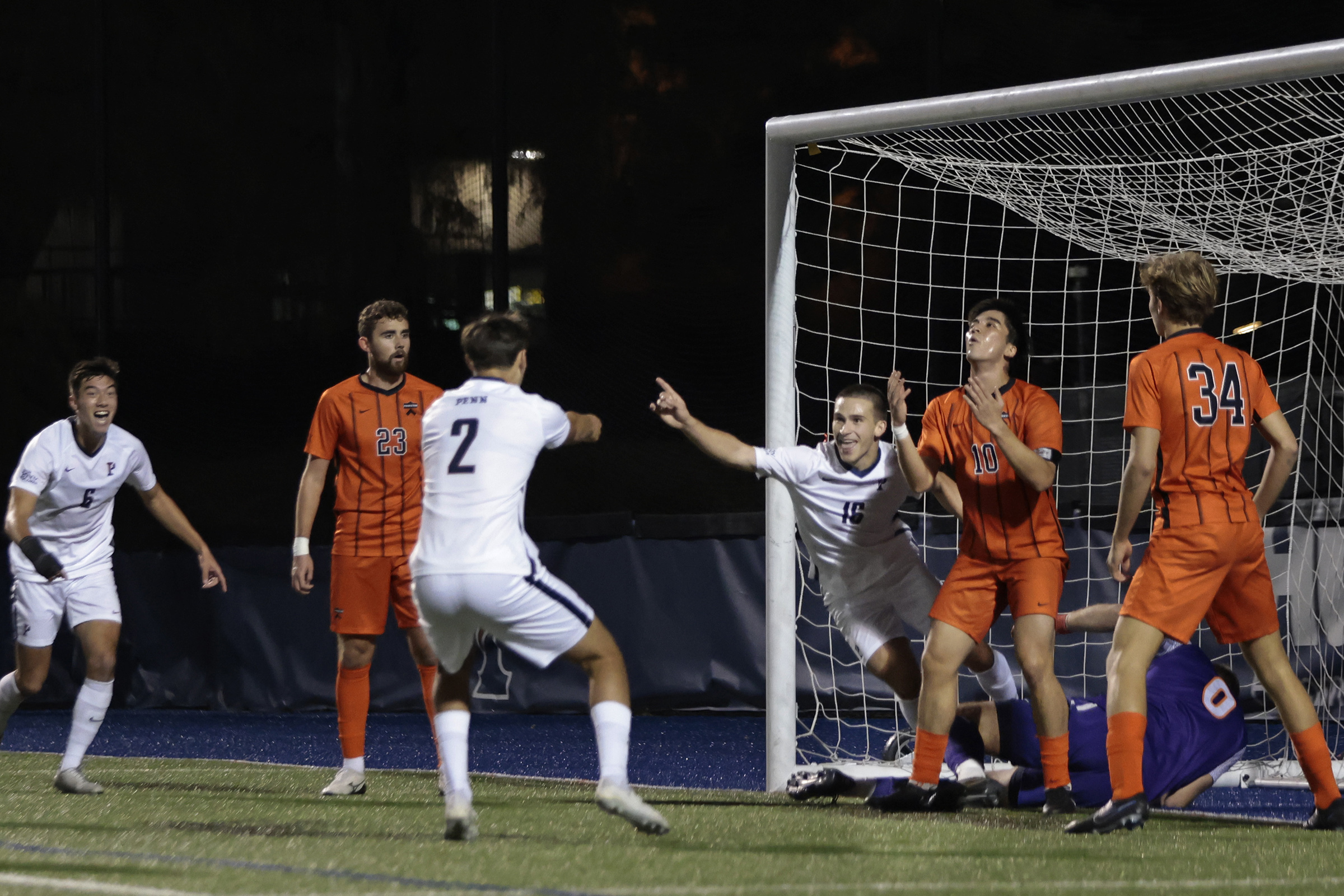
Philadelphia has six Division I men’s soccer programs: Penn, La Salle, Drexel, Villanova, Temple, and St. Joseph’s. The head coaches of each program reacted to the possible change. Some supported it, while others pointed out a variety of flaws.
Player development
Critics of the one-semester season have long lamented that the current setup impacts player development. Villanova head coach Mark Fetrow, who noted his program has been “big supporters” of the new legislation, believes a two-semester format will accelerate development and may be a necessity for college programs.
“When you space the games out, and now you’re saying we’ve got a year of competition, we can now periodize our training in a way where we’re getting more out of our training sessions from a week-to-week basis,” Fetrow said. “We’re really maximizing performance because guys are just healthier on game days. If we want to stay relevant, if we want to evolve, because the game has evolved a lot in the United States in the past 10 years, then we have got to be willing to make some changes as well.”
A main competitor for colleges, in terms of acquiring and developing talent on a path to the professional ranks, has been Major League Soccer Next Pro, MLS’s path to pro league. But a longer season could put college soccer on par with the emerging professional league, says Taylor Thames, La Salle’s head coach.
Oliver Pratt (No. 16) played four years at Penn before signing a pro contract.Elizabeth Robertson / Staff Photographer
“I think it makes us much more competitive in relation to MLS Next Pro, and some of these USL One contracts that are starting to take some high-level players from the college landscape, and it helps us develop them for longer spells,” Thames said. “There’s a bigger development cycle.”
Oliver Pratt, a 22-year old defender for MLS Next Pro’s Union II, played four years at Penn. He had to graduate a semester early to sign with an MLS team in time for the season. Having now experienced a full year of training in the pros, Pratt better understands the upside to shifting the college format.
“I definitely would have been able to maximize [training] more, and I would say be able to significantly improve within one season,” Pratt said. “It’s a different transition for me now. I’m dealing with a 10-month season, and my body’s definitely taking a toll.”
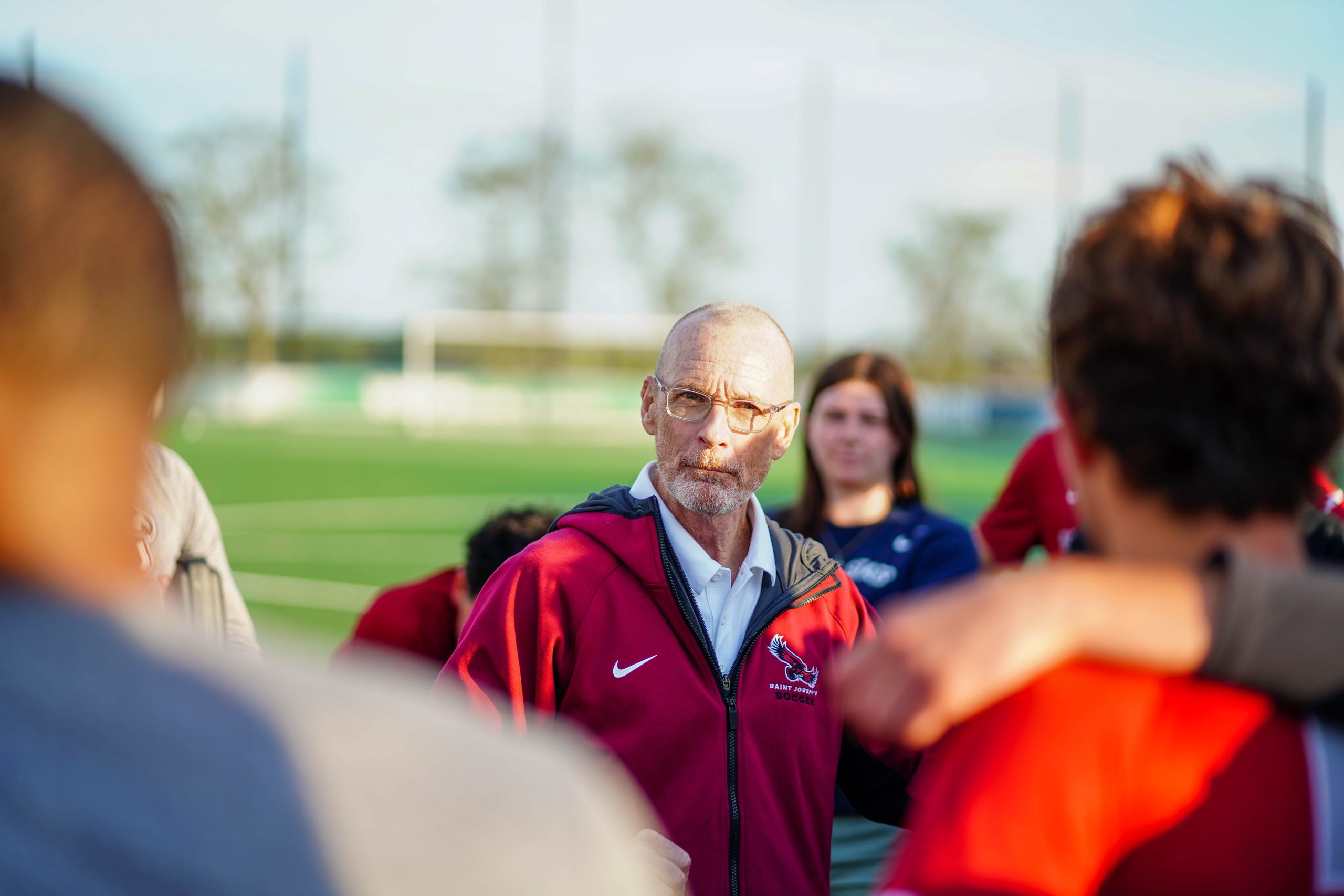
However, the majority of college players are not going pro, St. Joe’s coach Tim Mulqueen pointed out. He also noted that increased development would benefit the “top 1% or 2%,” but argued “that would happen for the top players anyway.” Mulqueen has seen premier development firsthand. He served in multiple roles with U.S. Soccer, including as an assistant coach for the 2008 U.S. men’s Olympic team.
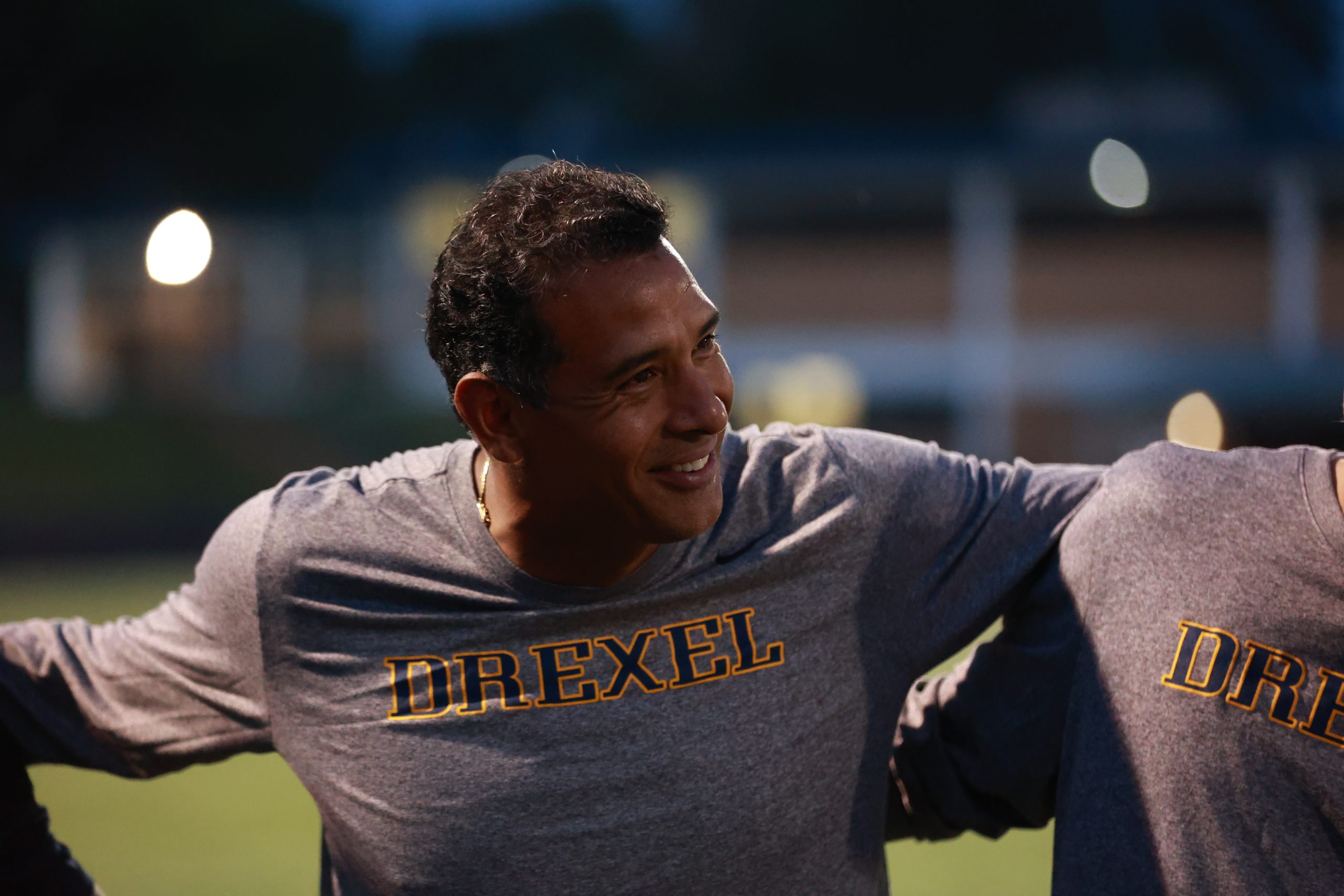
Meanwhile, Drexel coach David Castellanos believes the current system is yielding strong results and a “drastic change” would not be necessary. He said that the old model has produced “national team guys in the 1990 World Cup” and “MLS head coaches.”
Scheduling games, shifting operations
In a two-semester season, programs would have to adjust how and where games are scheduled.
Under the new format, the maximum match limit for each team would stay at the current cap of 25, meaning no additional games would be added in the 2027 season. With this, programs are required to schedule at least seven games or at most 10 games in the spring season. A team cannot opt to play all of its games in the fall.
Having to schedule games and additional practices in the spring could create issues for teams that share their facilities with other programs. For example, St. Joe’s shares Sean Sweeney Field with both of the school’s lacrosse teams and the women’s soccer program.
Tim Mulqueen has served in multiple roles with U.S. Soccer, including as an assistant coach for the 2008 U.S. men’s Olympic team. St. Joseph's Athletics
“When you’re sharing [facilities] with lacrosse or field hockey, that’s going to stress training times,” Mulqueen said. “It’s going to stress the [operations] people, it’s going to stress our trainers, who in small schools do multiple teams.”
Penn and Villanova are the only two local Division I programs that boast soccer-specific facilities, meaning that intra-program scheduling conflicts are unlikely to occur. Still, Quakers coach Brian Gill expressed concern with how the change may affect the other resources that his program relies on.
“Your infrastructure gets shared, so if that’s the actual facility or some of the people: trainers and strength coaches, sports information,” Gill said. “There’s a lot of shared overlap there, so that’s probably one of the biggest challenges. … How do you make this all feasible when it comes down to that stuff?”
Then, there’s the case of weather. Philadelphia boasts relatively cold Februaries, when spring play is slated to resume. From 1992 to 2021, the city’s average temperature in the month was 36 degrees — a cause of concern for a few of the City 6 coaches.
“It’s going to be brutal,” said Castellanos. “If you take, for example, the winter that we just had this year and then you’re telling me our playing season is going to be in the spring. You need January, February for preseason to ramp these guys up.”
Added Thames: “I think any coach should be concerned about competitive advantages — how to protect their program and fight for their program. That’s one concern that I would imagine for teams that don’t have an [indoor] bubble. [La Salle], for example.”
However, Temple head coach Bryan Green did not feel Philadelphia’s climate was a cause for concern.
“All the leagues in Europe, like Germany, have a pretty similar climate to us,” he said. “They play in December and January. It’s part of the sport to play outdoors and play in different environments and conditions”
David Castellanos believes college soccer’s current system is yielding strong results and a “drastic change” would not be necessary.Drexel Athletics
One way to escape the cold is to schedule early spring matches down South, which is what most of the area’s college baseball teams do. Fetrow noted that he has been in conversation with Villanova to “try to go down to a place like North Carolina” to start the second half of the season. Thames, Mulqueen, and Castellanos all shared similar interest.
Like anything, though, that will come with additional costs.
“Those are going to be travel expenses. I don’t see how you can get around it,” Mulqueen said. “We’ve gotten to the stage where the smaller schools, we have to adapt to what’s being done at an NCAA level that we really don’t have much say in.”
Player health
A leading factor in the new format’s adaption was the idea that spacing out games would result in fewer total matches missed due to injuries. The NCAA, in its formal announcement, wrote that increased recovery time “could support injury prevention and return-to-play protocol.”
For the most part, the area’s coaches agreed with the reasoning.
“Say a kid needs two and a half weeks to get back [from an injury], there’s a good chance that the player missed five or six games through one injury,” Gill said. “Versus [in the new format], the player maybe misses two to three games. You’re sort of giving some space for guys to naturally come back.”
While Castellanos agrees that total games missed will be cut down due to the new format, he believes that a longer season may bring more “wear and tear” injuries.
“When we think about these injuries, we think about some of the major ones, but we’re not talking about the soft tissue ones,” Castellanos said. “Now that you go 10 months, you’re on it every single day, right? I think that you know these things can linger. It’s going to put a lot more pressure on the training staff to maintain these guys to be healthy for 10 months.”
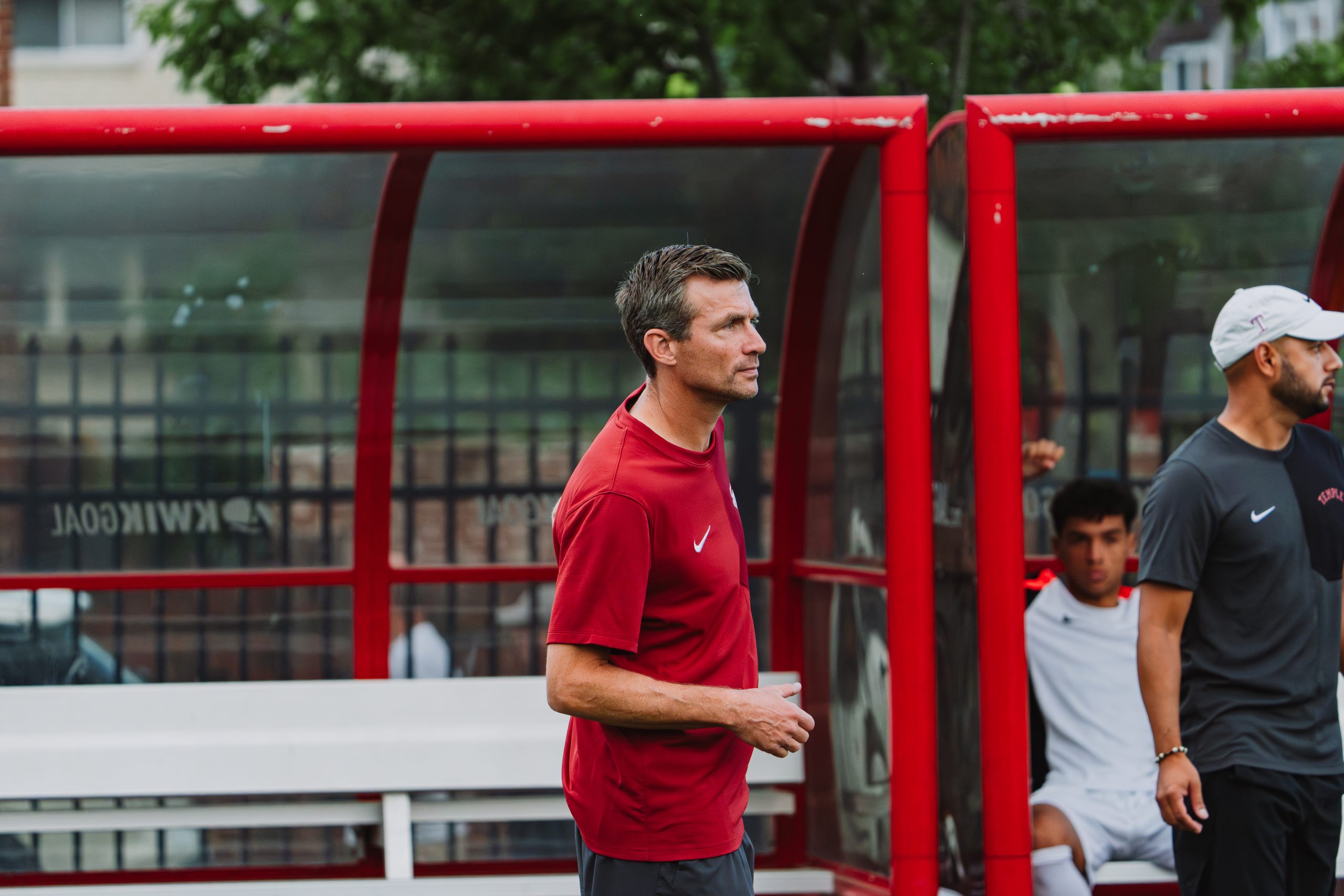
Bryan Green has led the Owls as head coach since 2022.Temple Athletics
Mulqueen is also concerned about new injuries sprouting due to the format.
“In my experiences, when you have more time, you do more things,” Mulqueen said. “No one’s going to sit idly by and say, ‘Right, we have 10 months now, or we’re going to give guys time off.’ Well [if] you get bad results, you’re going to do more.”
Now, Philadelphia’s coaches are in a waiting game to see when the proposal will make its way back to the NCAA’s desk. In the meantime, they will continue to prepare for what feels like the inevitable.
“There’s all kinds of different challenges every season, no matter what,” Green said. “I think that’s the one thing that college athletics does really well, is they’re nimble and adaptable, and this is just one more thing that we can prove that we can do.”
With this year marking the Palestra’s 100th anniversary, the fifth annual Cathedral Classic is expanding.
The multiteam event, which previously was a four-team round robin, will boast five teams this year: host Penn, La Salle, Bucknell, Buffalo, and Towson. The classic also is shifting from three days to two and no longer will crown a winner.
The two days of doubleheaders span Thanksgiving weekend, Nov. 27-28, and open with La Salle vs. Bucknell at 3:30 p.m., then Penn vs. Towson (6 p.m.). The next day, Towson takes on Buffalo (3:30 p.m.), and Penn will face Bucknell (6 p.m.).
“The Penn men’s basketball program is excited to celebrate 100 years of the Palestra with the return of the Cathedral Classic,” Penn coach Fran McCaffery said in a release. “There is no better way to honor our historic arena than with a weekend of great basketball games.”
The stage is set 🙌
Don’t miss the 5th annual Cathedral Classic at the Palestra on Thanksgiving weekend! pic.twitter.com/Qih5QryT2Y
La Salle coach Darris Nichols added: “We’re grateful for the opportunity to play at the Palestra during its 100th anniversary. Honoring the venue’s legacy was important to us when we first talked about this year’s schedule, and we’re excited to take on a good Bucknell team.”
Last season, Hofstra was crowned the tournament’s champion after defeating Penn to finish 3-0 in the round robin. However, for Big 5 fans, the most memorable game was on Day 2, when the Quakers faced La Salle. In that matchup, Penn erased a 15-point deficit to defeat the Explorers, 73-71.
The Supreme Court on Tuesday upheld bans in Idaho and West Virginia on transgender athletes playing on girls’ and women’s sports teams, the latest in a string of legal setbacks for the LGBTQ+ community before the high court.
In a decision led by the court’s six conservatives — but joined in parts by its three liberals — the justices found that states can separate teams based on “biological sex” without offending the Constitution’s guarantee of equal protection and Title IX, a landmark 1972 antidiscrimination law involving education.
“Separate sports teams for biological males and biological females are reasonable: Given the inherent physical differences between the sexes, allowing only biological females to play on women’s and girls’ teams can reduce the risk of physical injury and ensure fair competition,” Justice Brett M. Kavanaugh, who coached his daughter’s youth basketball team, wrote for the majority.
The court’s three liberals, led by Justice Sonia Sotomayor, agreed that West Virginia’s ban did not violate Title IX. But they disagreed with the majority on several fronts, especially the conclusion that the West Virginia law withstands scrutiny under the Constitution’s guarantee of equal protection for all.
Sotomayor wrote that a lower court should have the chance to sort out a question central to the case of the teenage plaintiff from West Virginia, Becky Pepper-Jackson: whether trans girls who have not undergone male puberty have physical advantages in sports.
“Because of the Court’s decision today, West Virginia, and any other state actor, can deny B.P.J. and others like her these experiences simply because it thinks they have an inherent athletic advantage, even if the facts show that they do not,” Sotomayor wrote.
The court did not address what is arguably the flip side of its ruling — whether schools and states can adopt policies allowing transgender athletes to compete on girls’ and women’s teams, as some liberal states and communities do.
“That question is currently the subject of litigation in some lower courts,” Kavanaugh wrote in a footnote. “Nothing in this opinion is intended to decide that question.”
The ruling is among several in recent terms that are consequential for the LGBTQ+ movement. The Supreme Court in March ruled a Colorado law banning “conversion therapy” for gay and transgender youths probably violated the free-speech rights of a religious counselor who wants to counsel such young people according to biblical teachings.
Earlier that month, the court sided with Christian parents in blocking, for now, California policies that discourage schools from informing parents of a student’s sexual orientation or gender identity without the student’s consent. Last year, the court upheld bans on gender transition treatment for minors.
Questions over whether transgender girls and women should play on girls’ and women’s sports teams has been a particular flash point in a broader conversation about transgender rights. Dozens of states have bans amid intense public debate about fairness at all levels of competition.
The debate over the allowance of transgender women in collegiate athletics gained national attention in 2022 after Penn swimmer Lia Thomas won the national title in the women’s 500-yard freestyle. Thomas, who is a transgender woman, competed for the Quakers men’s team during the 2018-19 season before medically transitioning.
In July 2025, Penn struck a deal with the Trump administration regarding Thomas’ participation. According to the deal, Penn agreed to ban transgender athletes, vacate Thomas’ records, release a statement in support of Title IX “as interpreted by the Department of Education,” and send personalized letters of apology to Thomas’ former women’s teammates. The deal came after the White House had paused $175 million in federal funding to Penn because of Thomas’ participation on the Quakers’ women’s team in 2021-22. The federal funding was restored following the agreement.
The issue came to the high court in a pair of cases, brought separately by Pepper-Jackson, a teen from West Virginia, and Lindsay Hecox, a Boise State University student in Idaho. Both argued that the bans in their states discriminated on basis of sex and violated the Constitution’s equal protection clause. In January, the justices appeared sympathetic to arguments for keeping the bans in place as the cases were argued back-to-back.
LGBTQ+ activists said the decision would be devastating for some young people.
“This is a heartbreaking ruling for our clients and transgender girls like them who’ve asked for nothing more than the same opportunities afforded to their peers,” said Joshua Block, senior counsel for the American Civil Liberties Union’s LGBTQ & HIV Rights Project, who argued the case for Pepper-Jackson.
Sasha Buchert, director of nonbinary and transgender rights at Lambda Legal, said the decision was upsetting but also narrow.
The ruling is “a serious loss — we’re not minimizing that,” she said. But noting that the court did not impose a national ban on transgender athletes in female sports, Buchert added, “This ruling says, sure, a state may discriminate, not that they must discriminate.”
Twenty-seven states have passed laws banning transgender student-athletes from competing on women’s or girls’ sports teams. Supporters of the bans say they are necessary to ensure fairness and safety because of inherent physical differences between males and females. Opponents say the laws discriminate against trans people and should be struck down.
President Donald Trump early last year signed an executive order aimed at keeping transgender women out of women’s sports. The administration has argued that there are only two sexes — male and female — and that they “are not changeable.”
Soon after the executive order on sports, the NCAA and the U.S. Olympic and Paralympic Committee updated their policies to bar trans women from playing on women’s sports teams. Since then, the administration has aggressively investigated schools that allow trans girls to participate in girls’ and women’s sports.
Education Secretary Linda McMahon welcomed the court’s decision Tuesday.
“For years, ideologues distorted Title IX to advance a radical transgender agenda, subjecting women to immeasurable harm,” she said in a statement.
Nicole Neily, founder and president of Defending Education, a conservative advocacy group, called the decision an “exercise in judicial humility” and noted that it may be disappointing to conservatives in liberal states that allow transgender athletes to participate.
“Although it’s certainly not as sweeping as parent activists would have liked, it means that the action shifts to the states and is now a persuasion game,” she said in a statement.
Views among Americans on transgender issues are nuanced. A Pew Research Center survey published in February 2025 showed 56% of adults support policies aimed at protecting transgender people from discrimination in jobs, housing, and public spaces.
But over the past few years, Americans also have become more supportive of restrictions for transgender people, according to the Pew survey. Fifty-six percent of Americans supported bans on providing gender transition care for minors, up 10 percentage points from 2022, the study found.
But athletics have always stood out.
The Pew survey found that 66% favored laws that require trans athletes to compete on teams that match their sex assigned at birth, up eight points from 2022. Even before the general shift in public opinion, a majority of Americans opposed allowing trans women to compete against other women at all levels of sports, according to a Washington Post-University of Maryland poll.
The science concerning biological advantages of transgender girls and women in sports is evolving and remains hotly debated. The case featured competing evidence about whether transgender girls are inherently better at sports. The transgender plaintiffs presented evidence that transitioning before puberty prevents them from building enough body mass to have an advantage in high school and college sports.
Lawyers for the states countered with studies that showed that nontransgender boys and men perform better at all ages. The study found that boys between the ages of 7 and 12 ran about 4% faster and jumped about 7% farther than girls in the same age group.
“The legislatures and the schools are better equipped — and under the Constitution, are the more appropriate entities — to assess the competing medical and scientific considerations and draw appropriate lines,” Kavanaugh wrote in the majority opinion. “Of course, no line that the States draw will satisfy everyone.”
While there’s no comprehensive tally of trans athletes nationally, an estimated 300,100 transgender youths between the ages of 13 and 17 live in the United States, according to the Williams Institute at the UCLA School of Law. The Human Rights Campaign, an LGBTQ+ advocacy group, has estimated that 14% of trans boys and 12% of trans girls play on a sports team.
Inquirer Staff Writer Conor Smith contributed to this article.
Before games, Michael Pereira needs some time alone to visualize the moment.
“I’m thinking about what I’m going to do and also trying to feel the emotion that would come with doing that thing,” Pereira said. “I’ll think of me dunking, and then feel the jolt of energy you get after you dunk it.”
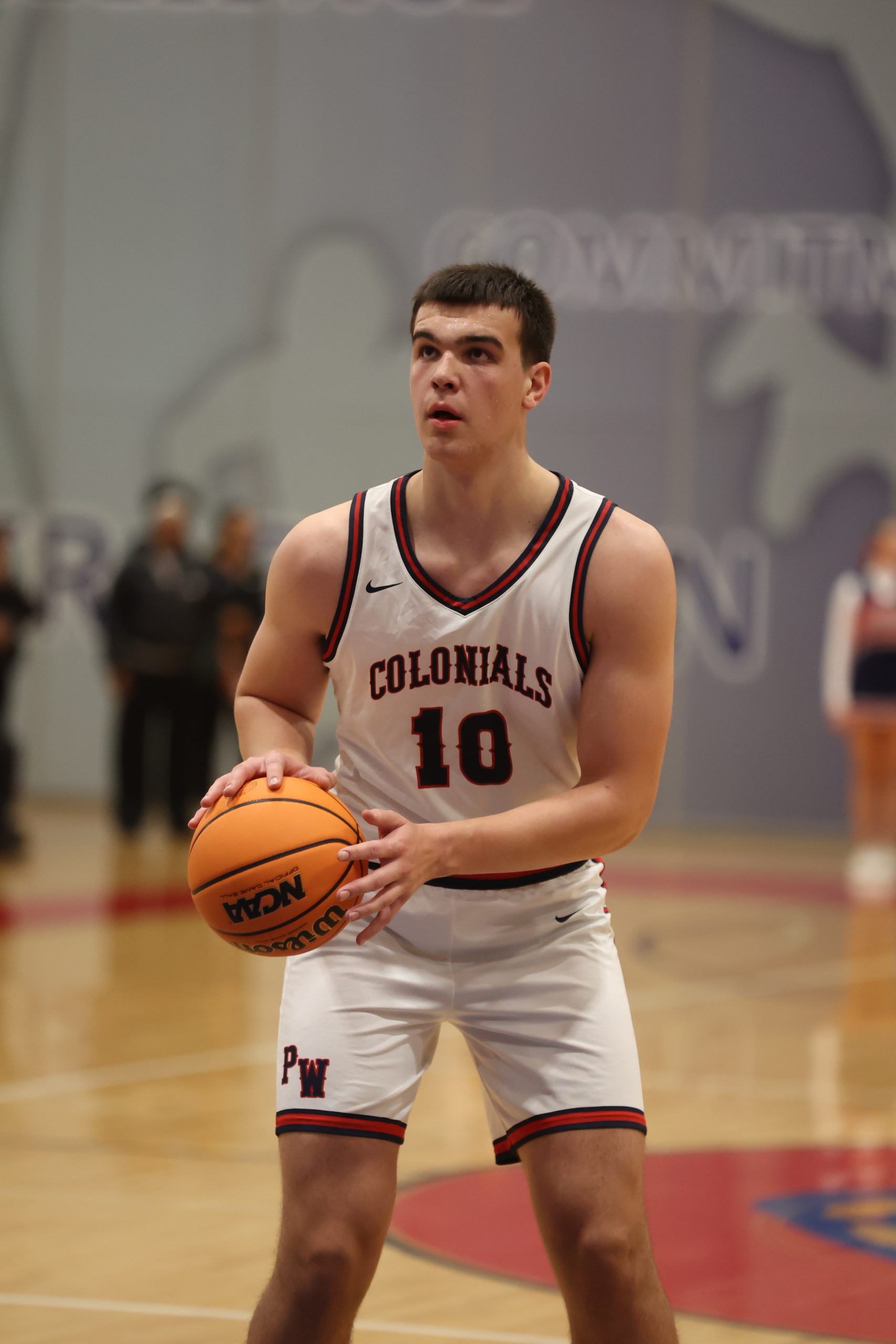
It’s a practice he learned from his mother, and being a visionary through his four years at Plymouth Whitemarsh High School has taken the 6-foot-10 center pretty far. After starring for the Colonials, Pereira has been playing internationally for Brazil, where his father was born.
In June, he missed his senior prom to help the country’s under-18 national team place third in the FIBA AmeriCup in Mexico. Come fall, Pereira will join Penn, where he’s a member of Fran McCaffery’s first recruiting class.
Pereira is hoping to bring what he learned from international play to Penn.
“[The AmeriCup] was a great learning opportunity, definitely,” Pereira said. “The pace of play, the physicality of the game was faster because everyone was higher level there compared to what I’m used to.”
After falling to the United States, 102-56, in the semifinals, Brazil faced Puerto Rico in the third-place game on June 7. At halftime, Puerto Rico led by 19. It seemed as if Brazil would end AmeriCup play with back-to-back blowout losses. Then, Brazil came storming back and took the lead in the closing minutes of the fourth quarter. From there, it was able to hold on to claim an 83-77 victory. Pereira notched 4 points, 11 rebounds, and 2 blocks.
Michael Pereira averaged 14.1 points, 7.6 rebounds, and 1.3 blocks this season with Plymouth Whitemarsh. Plymouth Whitemarch Athletics
Three days later, he was back at Plymouth Whitemarsh for his graduation.
“He’s a serious student-athlete,” said Plymouth Whitemarsh coach Jim Donofrio. “Anyone that can get accepted into Wharton early admissions obviously has a good resumé academically. Michael is a very curious guy when it comes to learning; he is open-minded to learning anything, he has high standards to want to excel in anything he takes on.”
‘Something special’
Pereira’s curiosity drove him into his coach’s Honors Philosophy & Ethics course. In class, Pereira did not shy away from offering his thoughts on whatever topic Donofrio covered that day. But before interjecting, Pereira would always stop and take in the concept.
Donofrio said this quality has become rare in today’s “hyper impatient society.”
However, it did not surprise the longtime coach that his player was a diligent and thoughtful student. Pereira showed the same characteristics in practice.
“One thing in the coaching world that we should emphasize constantly is when I’m talking to you, I want pure eye contact,” Donofrio said. “Michael gives you nothing but eye contact, he almost looks through you. He takes the message and he absorbs it, and that’s mind training — for a young guy to have that kind of discipline to want to listen.”
Pereira picked up the sport relatively late, in sixth grade. His parents had Chuck and Ronald Moore, two former Plymouth Whitemarsh players who went on to play collegiate basketball, train Pereira and his older brother Will. When Pereira entered eighth grade, Ronald was his coach.
Then, in high school, Chuck oversaw Pereira’s development as Donofrio’s assistant.
After McCaffery was hired by Penn, he brought in three assistants. One of them was Ronald Moore, who played under him at Siena. It was Ronald who put Pereira on his former coach’s radar.
“Tons of respect for Jimmy [Donofrio] and the job that he’s done for so many years there,” McCaffery said. “Also aware of the quality of play in that conference, the teams they played against, and I felt very strongly that Mike would be ready when he got here.
“When I saw him his junior year, I thought he had a chance. When I saw him his senior year, I knew he was going to be something special.”
Pereira received offers to play at various high-level prep schools for his senior season, but he wanted to stay at Plymouth Whitemarsh. His decision paid off. Pereira averaged 14.1 points, 7.6 rebounds, and 1.3 blocks, while leading the Colonials to a PIAA District 1 Class 6A championship.
“Something I liked about Plymouth Whitemarsh was that I could do more stuff, I could try stuff that was out of my comfort zone,” Pereira said. “Since it wasn’t like insanely good competition, I would get away with some stuff.
“I’ve tried different footwork. I would shoot a three or two in a high school game. But just considering my role in international play, I wasn’t really doing any of that, I was more so just doing what got me on the team in the first place.”
Improving as a Quaker
The Colonials’ 2026 campaign ended with a loss to Father Judge in the PIAA Class 6A quarterfinals. Pereira, who logged a double-double, wanted to get his mind off the defeat.
Coincidentally, Penn was playing in the Ivy League championship against Yale the next day.
“I don’t want to be depressed after this loss. Let’s just drive up,” Pereira said.
The game, played at Cornell, offered much more than a distraction. Penn junior forward TJ Power poured in 44 points to lead the Quakers to an 88-84 overtime victory and a ticket to the NCAA Tournament.
“I still think it’s one of the best games I’ve ever watched in person,” Pereira said.
Penn is expecting eight newcomers on the roster next season. Going into his second season at the helm, McCaffery has valued acquiring size and flexibility.
In order to take advantage of his frame, Pereira will need to continue his rapid progression as a player. McCaffery does not believe this will be an issue, noting he expects his new center to develop a “year-round obsession” with improvement under his watch.
Meanwhile, Donofrio believes that Pereira’s game will translate to the next level if he can better balance his intellectual side.
“He has to use his humble ability to listen like crazy and his curiosity,” Donofrio said. “All that stuff is really important, but he’s then going to have to learn how to be as aggressive as he can with that body without fouling out, but I almost want him to foul out a few times.”
“I always said, ‘Mike, you’re like in professor mode, then there’s the Hulk mode, where you turn into the Hulk.’ If we can just get the professor and the Hulk merged together, you got a guy that might be making money at the game someday.”
Penn will be well represented at the NCAA outdoor track and field championship this week.
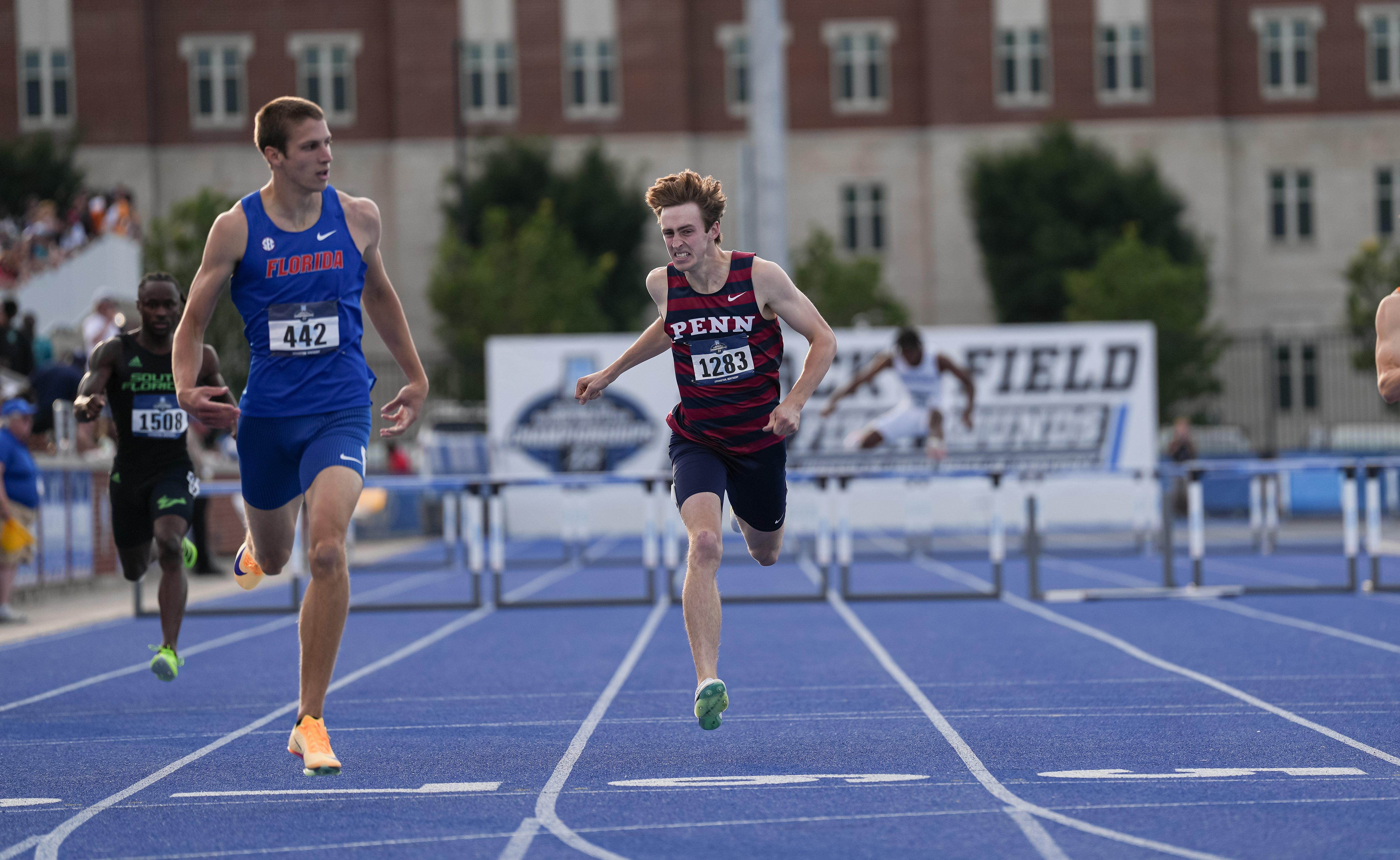
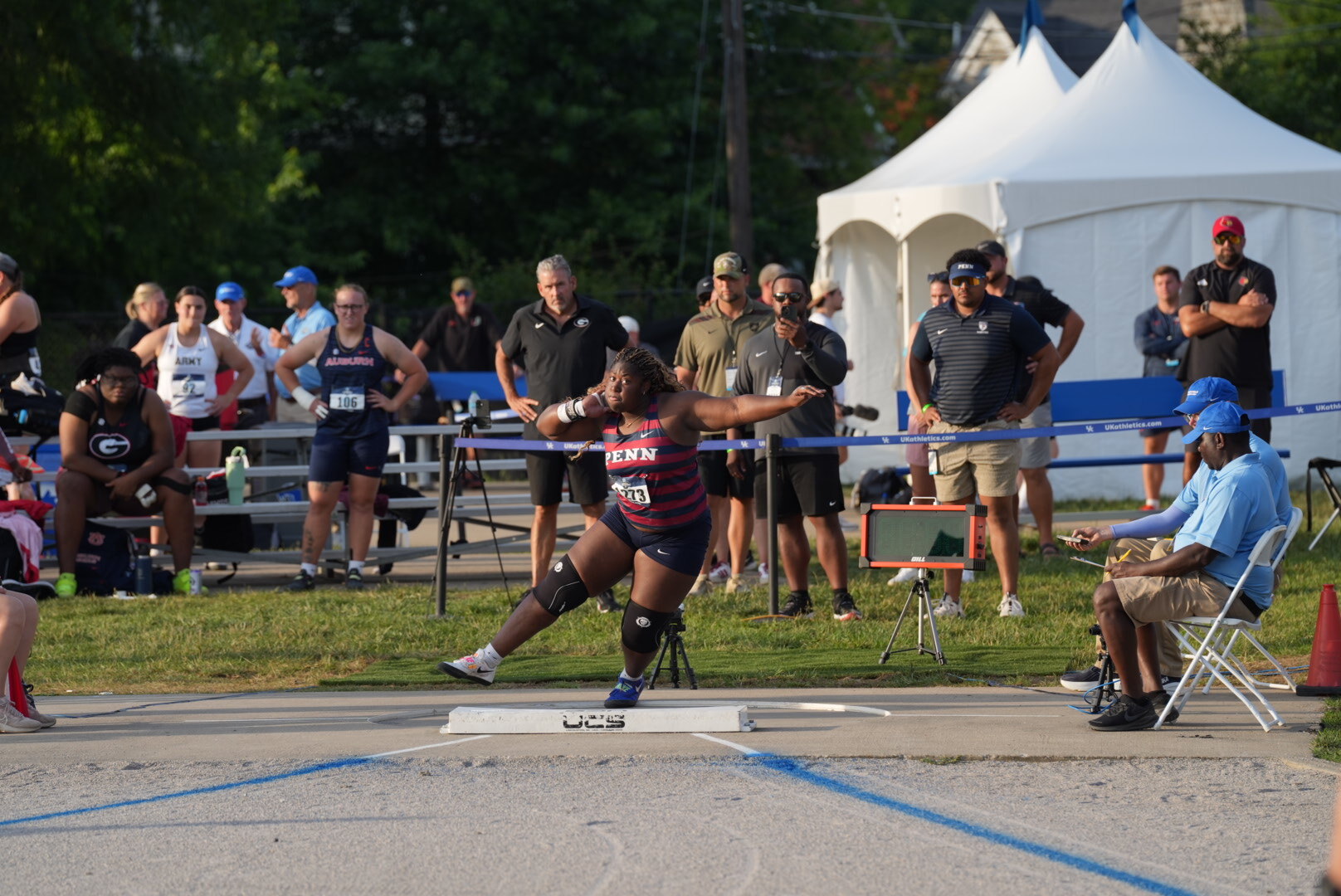
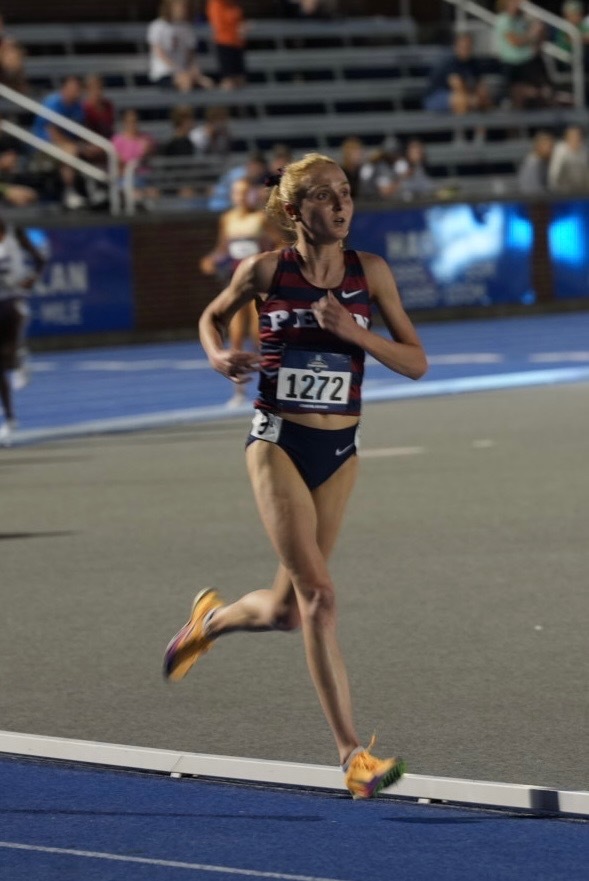
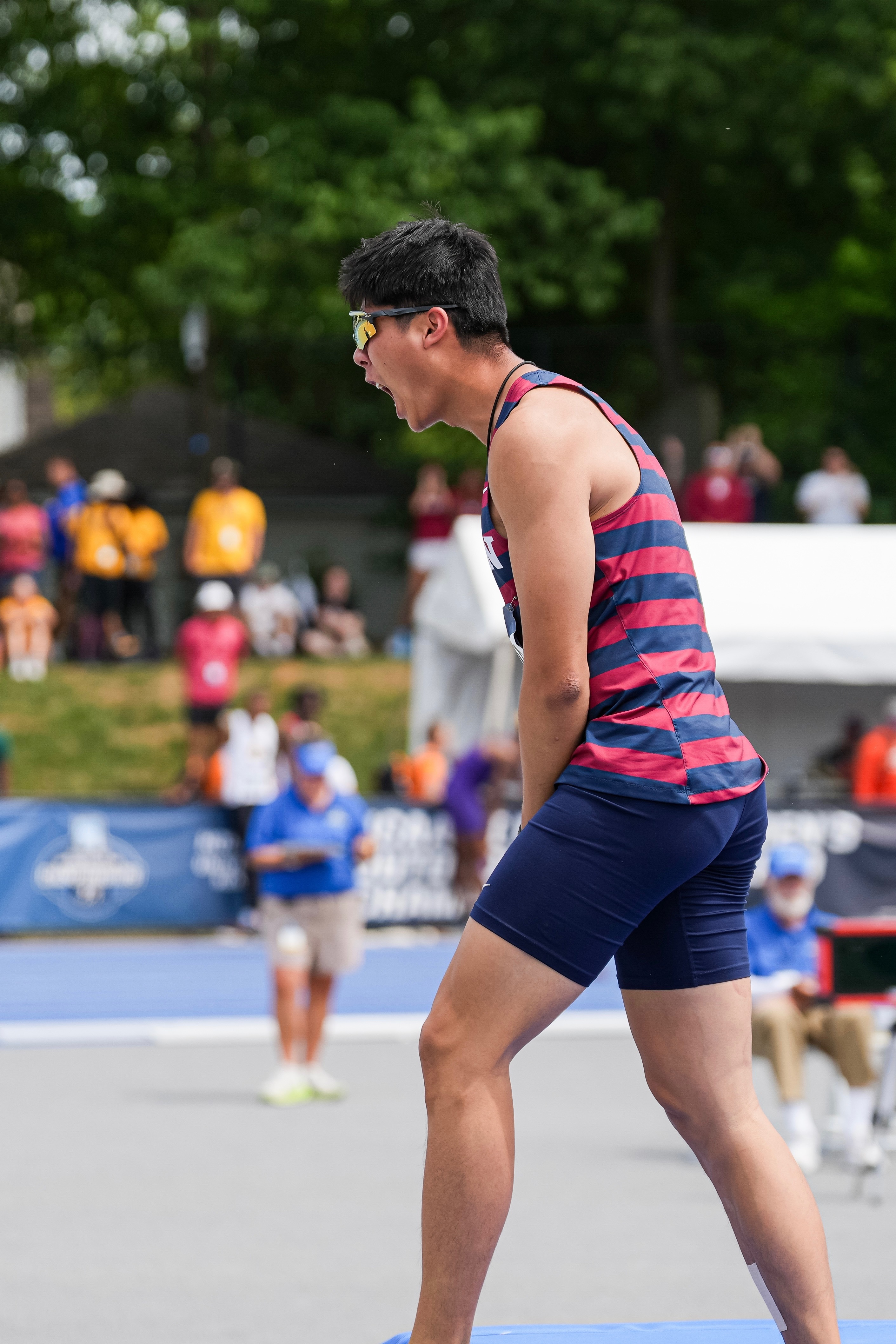
Four members qualified to compete in Eugene, Ore., from Wednesday to Friday: junior sprinter and hurdler Ryan Matulonis, freshman thrower Jessica Oji, senior long distance runner Lily Murphy, and senior high jumper Kampton Kam.
“We’re representing distance running, sprinting, jumping, and throwing,” Murphy said. “We have a pretty wide variety of personalities and grades going on this trip, but I think it’s very representative of the diverse community that Penn track is.”
Added Matulonis: “It’s definitely super motivating. We may all be from different training groups, and we don’t practice together. But at the end of the day, we’re all able to unite because of the fact that we all wear the Penn stripes. I think it just kind of goes to show how deep our program goes.”
All track events will air on ESPN or ESPN2, while field and combined events will be available to stream on ESPN+. Here’s what to know about each Penn athlete and the journey they took to get to outdoor track and field’s biggest stage:
Ryan Matulonis, 400-meter hurdles
Matulonis, a three-time Ivy League champion, was the only male Penn track athlete to advance past the NCAA’s East first round in Lexington, Ky. In the quarterfinals of the 400-meter hurdles, Matulonis achieved a personal-best of 49.25 seconds to place second and punch his ticket to Eugene.
Although he qualified for the championship, Matulonis was hoping to break the Ivy League 400-meter hurdles record — held by former Quaker Bruce Collins — in the first round in Lexington.
“It was great to make the national meet, but I missed the record by a 100th of a second,” Matulonis said. “[The Ivy League] record is 49.24, and I ran 49.25. So that one stung a little bit, but I still got another shot to race it.
“Winning was definitely very motivating. That competitive spirit really helped me get to where I am today, and obviously that never goes away. But as you start to get closer to some of these numbers — that when you’re a freshman, they’re not as in reach — and then you start to creep closer to them, and those are things that you start to have in the back of your mind as well that you’re going for.”
Ryan Matulonis set a personal record in the 400-meter hurdlers in the NCAA’s East first round.Penn Athletics
Matulonis will likely need to break the conference record to finish first in the 400-meter hurdles finals, which are held on Friday (at 6:27 p.m.). The national champion in the event has finished faster than his personal-record every year since 1996. First, he will have to advance past the semifinals, which are slated to begin Wednesday (7:14 p.m.).
Jessica Oji, shot put
In December, at her first collegiate meet, Oji broke the Ivy League indoor shot put record. During the indoor season, she broke her own record two more times. Then, in the outdoor season, she broke the Ivy’s shot put record.
Oji was the only Quaker to qualify for both indoor and outdoor NCAA championships this year. At the indoor championships, she placed seventh in the shot put.
Penn freshman Jessica Oji qualified for the indoor and outdoor NCAA championships this year.Penn Athletics
After placing first at the Penn Relays, Oji said her dominant start is just the beginning.
“I’ve always wanted to win [the Penn Relays] while wearing the Penn stripes,” Oji said in April. “It’s been a huge goal for me. When I committed here, I was like, ‘I have to win this meet all four years.’ This is just the start of it.”
She will have a chance for a championship finish in the women’s shot put final on Thursday (7:15 p.m.).
Lily Murphy, 10,000 meter
Last season, Murphy was injured and unable to compete in the East First Round. So, when it was her turn in Lexington, the senior had more nerves than usual.
“I was really nervous going into the regional meet, but once I got out there, once the gun went off, I was like a different person,” Murphy said. “I was just so happy to be back there … A switch kind of flipped, and I was just trying to enjoy it.”
Lily Murphy qualified for the NCAA track and field outdoor championship in the 10,000 meter event.Courtesy of Penn Athletics
Murphy finished fifth overall in the 10,000 meter with a time of 32 minutes, 53.30 seconds.
Now, she is back at the championship meet. She will race in the 10,000 meter final on Thursday (7:56 p.m.) in a competitive heat. New Mexico sophomore Pamela Kosgei, the defending national champion in the event, qualified for this year’s race and is looking to defend her title.
But Murphy, who is running her final meet as a Quaker, is not letting her nerves get the best of her.
“I’ve surprised myself before,” Murphy said. “I think just being able to test the waters but also just go out there and give it my all and see how far I can go against this competition — there’s something uniquely exciting about that.”
Kampton Kam, high jump
Unless Matulonis advances to the final, Kam will be the last Quaker to compete in Eugene. The high jump final is slated for Friday (4:30 p.m.).
Like Murphy, the meet will mark Kam’s last at Penn. The six-time Singapore national high jump record holder graduated from the Wharton School three weeks ago. With the majority of his teammates and friends leaving campus, Kam has been looking for new motivation leading up to the national championship.
Over four years at Penn, Kampton Kam has qualified for three NCAA outdoor championships in the high jump.Penn Athletics
“It’s been four good years, and just to see some of my friends leave it kind of like — not drains you, but it just makes you feel … how can I keep going [if] I don’t see them anymore? It does affect you a little bit that way. But definitely super happy to make it to finals after regionals, and just have one last dance with the team.”
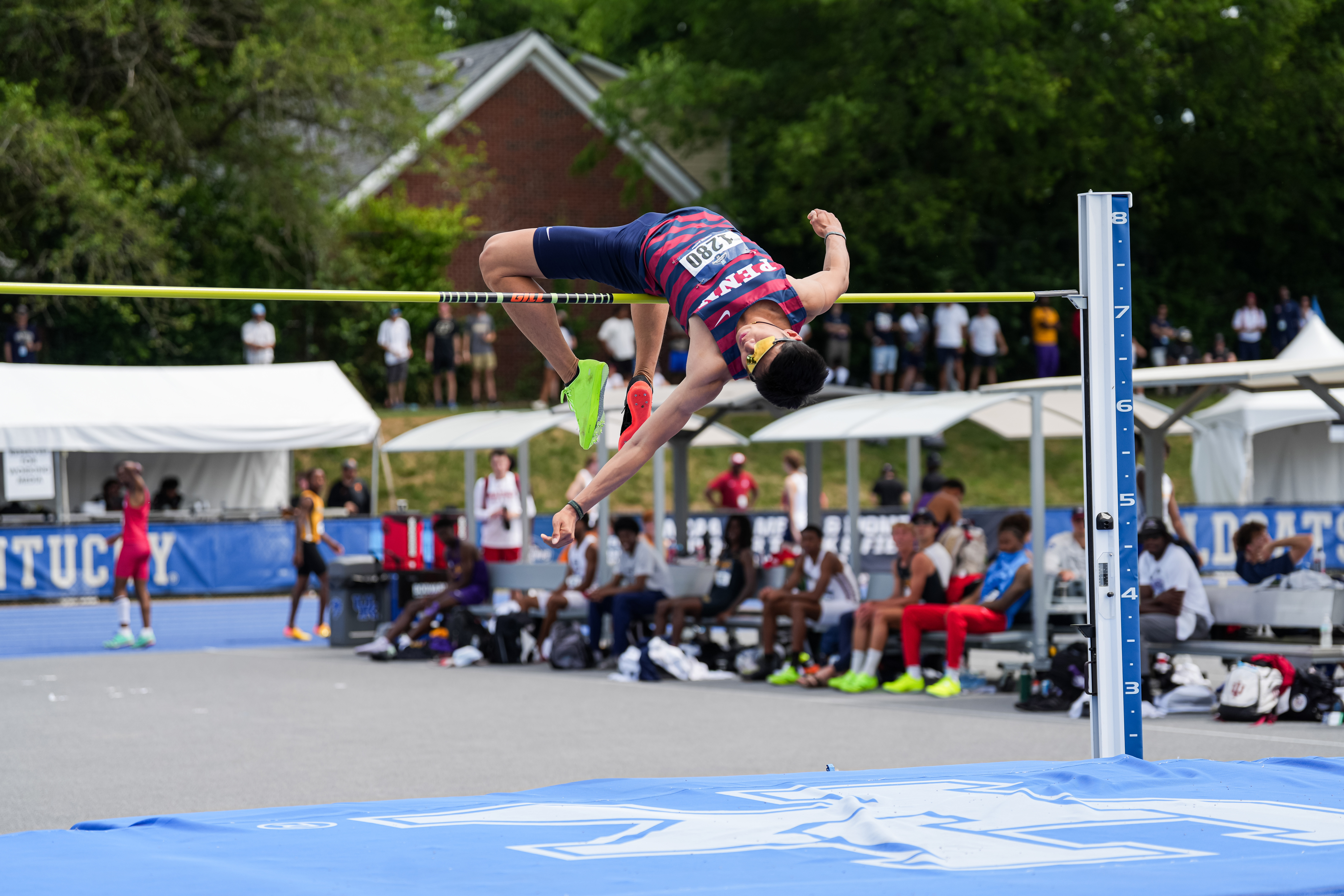
In Lexington, Kam defied projections. Clearing a 2.16-meter bar, he finished fifth overall despite being ranked 11th in the region going into the meet.
Friday will mark his third consecutive appearance in the meet, but he has yet to win a championship.