Category: Drexel

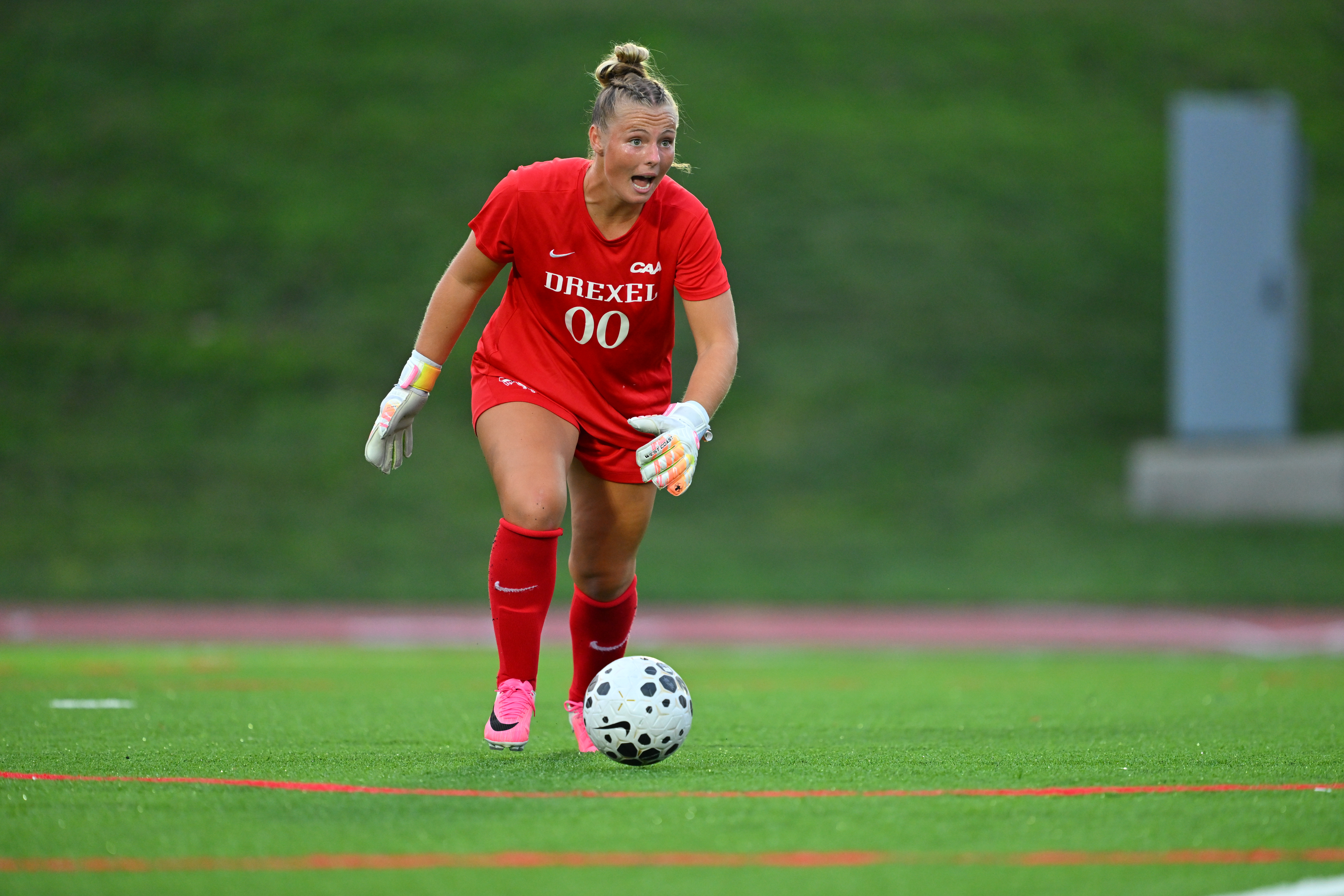
  • Meet Gracie Sullivan, Drexel’s starting keeper who’s making an impact as a sophomore

    Meet Gracie Sullivan, Drexel’s starting keeper who’s making an impact as a sophomore

    At the end of Gracie Sullivan’s freshman year at Drexel, the women’s soccer coaching staff approached her with a message: the starting goalkeeper position for next season was “up for grabs.”

    Sammy Widnick was transferring and Zara Wickert was graduating, leaving an opening at goalie.

    “That just pushed me because I felt like I knew I could do it,” Sullivan said. “It was just whether I wanted to do it or not.”

    Sullivan did not see the field during her freshman season, but that is common for a first-year student adjusting to the collegiate level.

    She used the season to learn from the goalkeepers ahead of her and spent the offseason working for her opportunity.

    “You can always say, ‘Do you want this?’ And they’ll say, ‘Yes.’ But then in training, you need to see the want and desire to develop,” said Mike Paznokas, Drexel’s assistant women’s soccer coach. “It was awesome because in the one-on-one sessions we did, you got to see that. You saw [Sullivan] asking questions, you saw her working her butt off in those sessions to make sure that she’s getting better and understanding the concepts we went over.”

    Sullivan is now the starting goalie for the Dragons and had a career-best 10 saves against La Salle on Aug. 28, which is the most saves by an individual Drexel keeper since 2017. Entering Thursday’s match against Hampton, Sullivan has 42 saves so far this season.

    The sophomore’s accomplishment has come as no surprise to Paznokas.

    “She is very level-headed and when she’s in the game and her brain’s turned off, she can perform amazing things as a goalkeeper,” Paznokas said. “So, not a shock to me she was able to achieve this in the slightest.”

    The relationship she built with the other goalies fueled her desire to get better even though she wasn’t seeing playing time as a freshman.

    “I really did look up to [Widnick], the starter goalie who was in front of me,” Sullivan said. “I really think she taught me and I just looked up to her during the sessions. There’s always a feeling of tension between goalies and last year there was three of us and there was no tension at all. Without them, I don’t think my freshman year would have been as enjoyable not playing as it was. But we were just so supportive of each other.”

    During spring training, Sullivan had extensive one-on-one training with Paznokas, he said, where she improved her feet in possession, long distance distribution, and communication skills.

    Soccer runs deep in the Sullivan family. Her grandfather and father played soccer at Holy Family and her second cousins, Cavan and Quinn, play for the Union. Cavan, 16, earned an invitation to the U.S. men’s national team last week.

    “I would say that all of the Sullivans, no matter first or second cousins, we’re all very close,” she said. “It’s really exciting to see the different places soccer takes our family.”

    Gracie Sullivan started playing soccer at 7 years old for Coppa at the Philadelphia Soccer Club. During her freshman year at Nazareth Academy, she started playing for FC Bucks, now HEX FC.

    She originally started as a midfielder in youth soccer. But when she played in the Beach Blast soccer tournament at the Jersey Shore, it sparked her love at goalkeeper.

    “I was crazy as a kid, so when we would play Beach Blast, I would be like no I want to play the whole game because I love diving around in the sand,” she said. “So ever since I was 10, I stuck to goalie.”
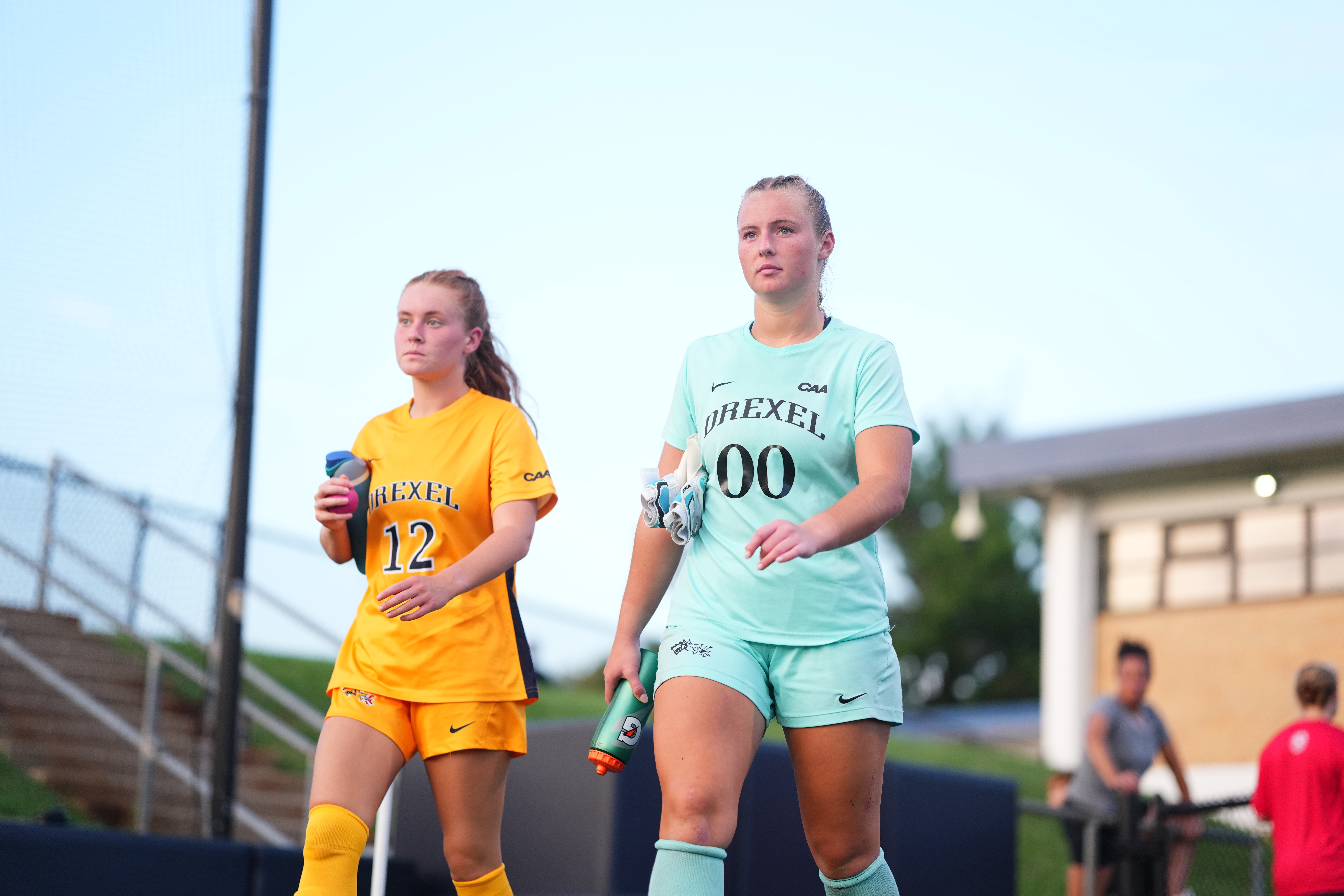
    Gracie Sullivan (right) walks out to the field with teammate Riley Lukach (12).Drexel Athletics

    This is Shannon Grogan’s first season at the helm for the 4-4-1 Dragons. Sullivan believes the culture shift has driven Drexel’s success.

    “This year with the new coaching staff, [Grogan] just brought so much energy and really believes in us, which I think shines down on us and then we believe in ourselves,” Sullivan said. “The team culture has just been so much different and I think on and off the field we have been such close friends and I can really see that on the field and that’s helping us win games honestly.”

    Playing goalkeeper comes with a unique pressure, Sullivan said. One little mistake can alter the outcome of the game.

    “The hardest part of being a goalie is that we have to be turned on at all times because if we make one mistake that could lose us the game,” she said. “It’s different if a forward were to make a mistake because the ball wouldn’t go in the back of the net. So it’s really important that we have to be our best at all times because if we’re not, then we sometimes could cost our team the game. It just sinks in more to you than it does to anybody else because you feel like you let your team down.”

    Though, the Dragons don’t dwell on individual mistakes, she added.

    “We all take accountability whether you’re on the bench or you’re playing,” Sullivan said. “We can’t point fingers because that’s not how you’re going to win a game.”
  • 2026 men’s college basketball transfer portal tracker: Latest Big 5 moves, where Philly-area recruits are heading

    2026 men’s college basketball transfer portal tracker: Latest Big 5 moves, where Philly-area recruits are heading

    The college basketball season is officially over, which means it’s time for the transactional period to begin. Welcome to the 2026 transfer portal.

    More than 1,500 men’s basketball players were in the portal in the first 24 hours after it officially opened on April 7. The portal is open for two weeks, but players do not need to make their commitment to a new school during that window. The next few weeks will be filled with salary negotiations during the yearly NCAA free agency process.

    We’ll be tracking it all here, from players moving in and out of — or around — the Big 5 to keeping tabs on Philly-area players at other schools. We’ll also take a look at where some of the top local high school recruits from the Class of 2026 will be playing in the fall.

    Big 5 portal entries

    Here are the players who were at Big 5 schools during the 2025-26 season but have entered the transfer portal.

    Villanova

    • Acaden Lewis (point guard) started for the Wildcats during his freshman year and averaged 12.2 points, 5.3 assists, and 3 rebounds. (Transferring to Miami.)
    • Bryce Lindsay (guard) was a redshirt sophomore and Villanova’s best scorer during its nonconference schedule. (Transferring to Indiana.)
    • Malachi Palmer (forward) was a solid contributor off the bench who started down the stretch after Matt Hodge went down. But Villanova recruited multiple forwards out of the portal. (Transferring to Minnesota.)
    • Chris Jeffrey (guard), a freshman backup point guard who missed time after knee surgery but had promising moments.
    • Braden Pierce (center), a redshirt freshman reserve who followed coach Kevin Willard from Maryland, played 6.5 minutes per game and averaged 1.2 points. (Transferring to College of Charleston.)
    • Zion Stanford (forward/West Catholic graduate) transferred to Villanova from Temple, left the team in March after playing in 10 games. (Transferring to Towson.)
    • Tafara Gapare (forward), a senior, left the program at midseason after playing in just nine games.

    Temple

    • Aiden Tobiason (guard) averaged 15.3 points, second on the team, and led the Owls with 39 steals. He’ll have two years of eligibility left. (Transferring to Syracuse.)
    • Babatunde Durodola (forward), a sophomore, started as a freshman and was a key rotational player this season. (Transferring to Ball State.)
    • Jamai Felt (forward) started in 23 games and averaged 4.1 rebounds. (Transferring to Arkansas-Little Rock.)
    • AJ Smith (guard) averaged 7.8 points in eight games and had his season cut short by a shoulder injury.
    • Spencer Mahoney (forward) made 13 appearances as a redshirt sophomore. (Transferring to Denver.)
    • Ayuba Bryant Jr. (forward) appeared in 27 games, averaging 8.1 minutes.
    • Connor Gal (guard/Great Valley High graduate) played 12 minutes across five games and will have one year of eligibility left.
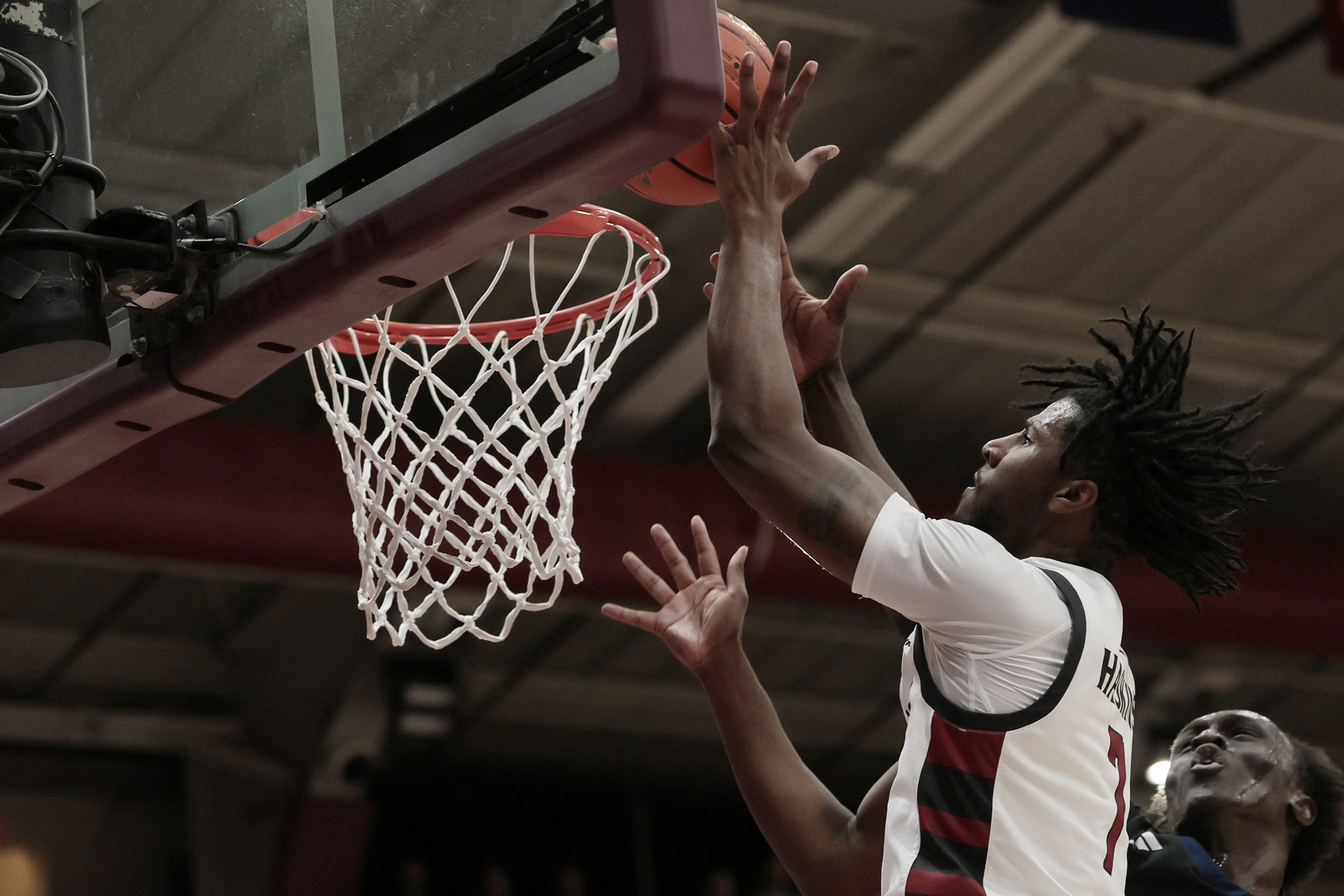
    Dasear Haskins was a key starter for the Hawks this season.Elizabeth Robertson / Staff Photographer

    St. Joseph’s

    • Deuce Jones (guard/La Salle), who led the Hawks in scoring during the first two months of the season, was dismissed from the team in December. (Transferring to Alabama-Birmingham.)
    • Dasear Haskins (guard/Camden High graduate) averaged 11.1 points and started for the Hawks as a redshirt sophomore. (Transferring to Ole Miss.)
    • Anthony Finkley (forward/Roman Catholic graduate), a junior, averaged 19 minutes in 35 games. (Transferring to La Salle.)
    • Kevin Kearney (forward) appeared in 14 games as a redshirt freshman. (Transferring to Manhattan.)
    • Jaden Smith (center) averaged 2.8 points and 1.8 rebounds in 9.1 minutes after transferring from Fordham. (Transferring to Ball State.)
    • Steven Solano (center), a redshirt freshman, played in eight games. (Transferring to Delaware.)
    • Al Amadou (center/Springside Chestnut Hill Academy graduate) transferred from Marquette and appeared in 11 games. (Transferring to Wisconsin-Milwaukee.)

    Penn

    • Ethan Roberts (forward) has one year of eligibility remaining — the Ivy League prohibits graduate students from playing intercollegiate athletics — and was the Quakers’ leading scorer (16.9 points per game). (Transferring to Notre Dame.)
    • Cam Thrower (guard), a senior who spent four years at Penn, averaged 17 minutes in 27 games. (Transferring to Elon.)
    • Dylan Williams (guard) played in seven of Penn’s first 10 games before the senior missed the rest of the season with an injury. (Transferring to Northwestern)
    • Michelangelo Oberti (center) appeared in 12 games. (Transferring to Boston University)
    • Alex Massung (guard), who averaged 5.6 minutes in 10 games played. (Transferring to Saint Anselm.)
    • Bradyn Foster (forward) saw action in Penn’s season opener.

    Drexel

    • Shane Blakeney (guard) was Drexel’s leading scorer, averaging 14.2 points in 33 games as a junior. (Transferring to South Carolina.)
    • Kevon Vanderhorst (guard) averaged 9.3 points and 2.9 assists while starting all 33 games for the Dragons. (Transferring to Iona.)
    • Villiam Garcia Adsten (guard), a junior, averaged 17.5 minutes in 32 games. (Transferring to Maine.)
    • Horace Simmons Jr. (forward/La Salle College High School graduate) appeared in 13 games.

    La Salle

    • Ashton Walker (guard) started 21 games and averaged 8.2 points as a freshman. (Transferring to Monmouth.)
    • Eric Acker (guard), a junior, appeared in 26 games, starting 10, and averaged 18.9 minutes. (Transferring to Northern Kentucky.)
    • Nas Hart (forward) played in 20 games as a freshman. (Transferring to Quinnipiac.)
    • Edwin Daniel (forward) played 31 games (14.5 minutes) and averaged nearly four points and 3.5 rebounds. (Transferring to Stephen F. Austin.)
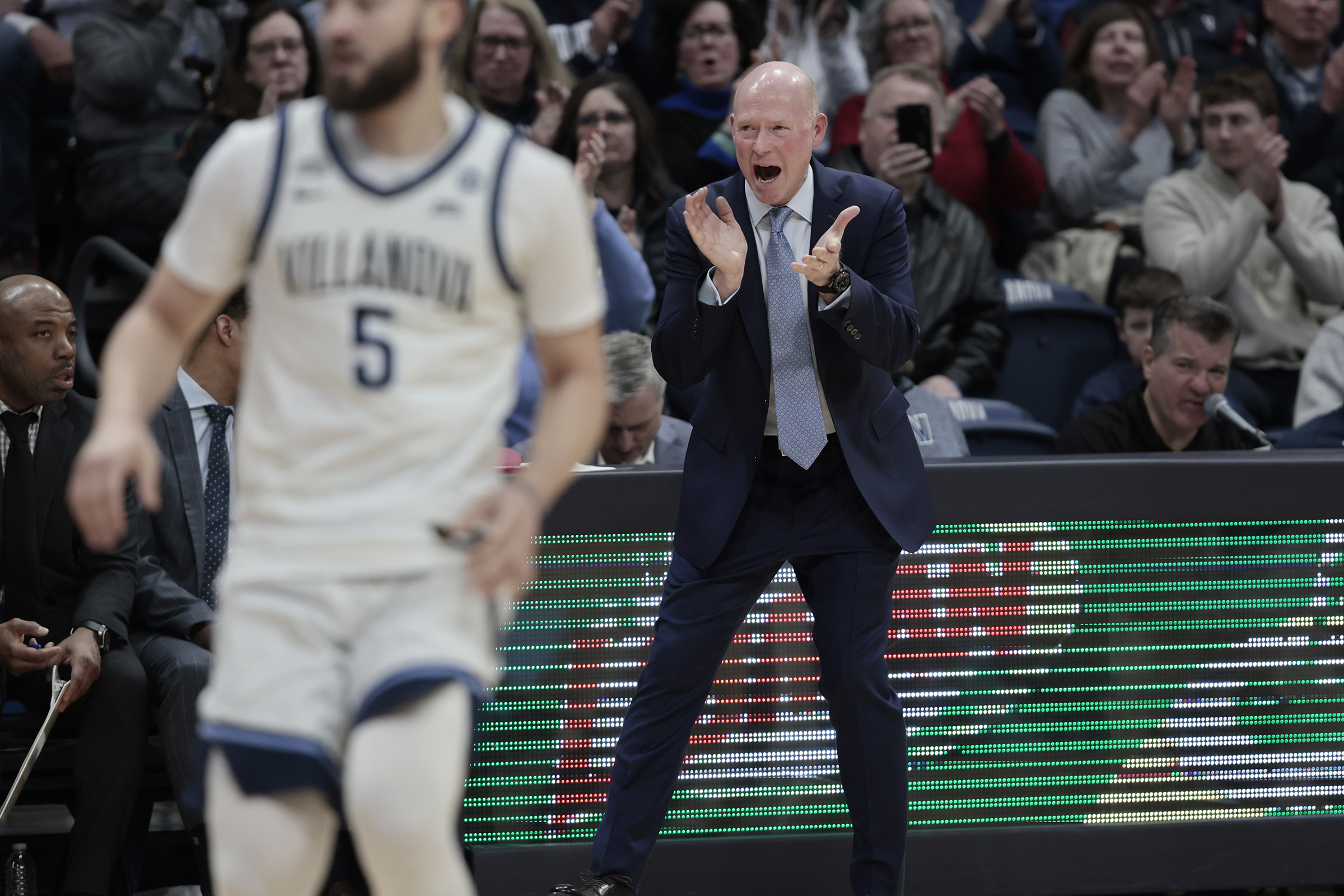
    Villanova coach Kevin Willard directs his team against Butler on Feb. 25. Elizabeth Robertson / Staff Photographer

    Big 5 portal additions

    These are the players who are transferring to Big 5 schools.

    Drexel

    • Panagiotis Pagonis (forward/New Orleans)
    • LaDricus Pittman (guard/LeMoyne-Owen College)
    • Adrian Petkovic (guard/Germany)
    • David Simonovic (center/Le Mans U21 in France)

    La Salle

    • Trey Moss (guard/George Washington)
    • Vice Zanki (forward/Niagara)
    • Anthony Finkley (forward/St. Joe’s)
    • Jamison Lynam (guard/Arcadia)
    • Kam Burton (guard/Stephen F. Austin)
    • Devin Booker (guard/George Mason/Cristo Rey HS)
    • Eunique Rink (forward/Hampton)

    Penn

    • Sir Mohammed (guard/Notre Dame)
    • Dorian Glogovac (guard/California Institute of Technology)

    St. Joe’s

    • Gavin Marrs (center/Oregon State)
    • Logan Carey (guard/Maine)
    • Don Flamer (forward/Elizabeth City State – Division II)
    • Sean Logan (center/Davidson)
    • Luis Nonfon (forward/Augusta University – Division II)

    Temple

    • Dez White (guard/Oregon State)
    • Dallis Dillard (guard/Indiana University of Pennsylvania)
    • Baboucarr Njie (forward/UTSA)
    • Cam Scott (guard/South Carolina)
    • Jason Drake (guard/Indiana)
    • Jordan Marsh (guard/USC)
    • Sir Isaac Herron (forward/Louisiana Tech)

    Villanova

    Local portal entries

    In addition to the local players in the Big 5 mentioned above, here are some notable players from the Philly area who are on the move:

    • Kevair Kennedy, Merrimack to Wake Forest (guard/Father Judge)
    • Jalil Bethea, Alabama to Pittsburgh (guard/Archbishop Wood)
    • DJ Wagner, Arkansas to Maryland (guard/Camden)
    • Justin Moore, Loyola-Chicago to Hofstra (guard/Drexel, Archbishop Wood)
    • Budd Clark, Seton Hall to Ole Miss (guard/West Catholic)

    Where local 2026 recruits are going to college

    Here’s a look at where some of the area’s top boys’ basketball players are heading off to play in the fall.

    • Sammy Jackson, Virginia Commonwealth (small forward/Roman Catholic)
    • Ethan Johnston, Marquette (shooting guard/Hill School)
    • Xavier Blake, Hofstra (shooting guard/Phelps School)
    • Derrick Morton-Rivera, Temple (shooting guard/Father Judge)
    • Mani Sajid, Towson (shooting guard/Plymouth Whitemarsh)
    • Darnell Lloyd, Boston University (center/Perkiomen School)
    • RJ Smith, La Salle (guard/Roman Catholic)
    • Michael Pereira, Penn (center/Plymouth Whitemarsh)
    • Latief Lorenzano-White, Drexel (guard/Imhotep)

    2026 recruits headed to Big 5 schools

    Villanova

    Penn

    • Isaiah Carroll (small forward/Blair Academy of Warren County)
    • Ethan Lin (point guard/Montgomery High of Somerset County)
    • Michael Pereira (center/Plymouth Whitemarsh)
    • Chase Geremia (guard/Newman School)
    • Finley Billy (forward/Bullis School)
    • Johnny Keenan (guard/St. Thomas More)

    Temple

    La Salle

    • RJ Smith (guard/Roman Catholic)
    • Breylon Webb (guard/Western Reserve Academy)

    Drexel

    • BJ Brown (guard/Sumter)
    • Tre Paulding (forward/Lee’s Summit North)
    • Latief Lorenzano-White (guard/Imhotep)

    St. Joe’s

    • BJ Ranson (guard/Mount St. Joseph)
    • Keoni Sacco (forward/Fork Union Military Academy)
  • Big 5 Classic men’s and women’s dates are set with a new venue for the women’s championship

    Big 5 Classic men’s and women’s dates are set with a new venue for the women’s championship

    The dates and locations for the men’s and women’s Big 5 Classic are set.

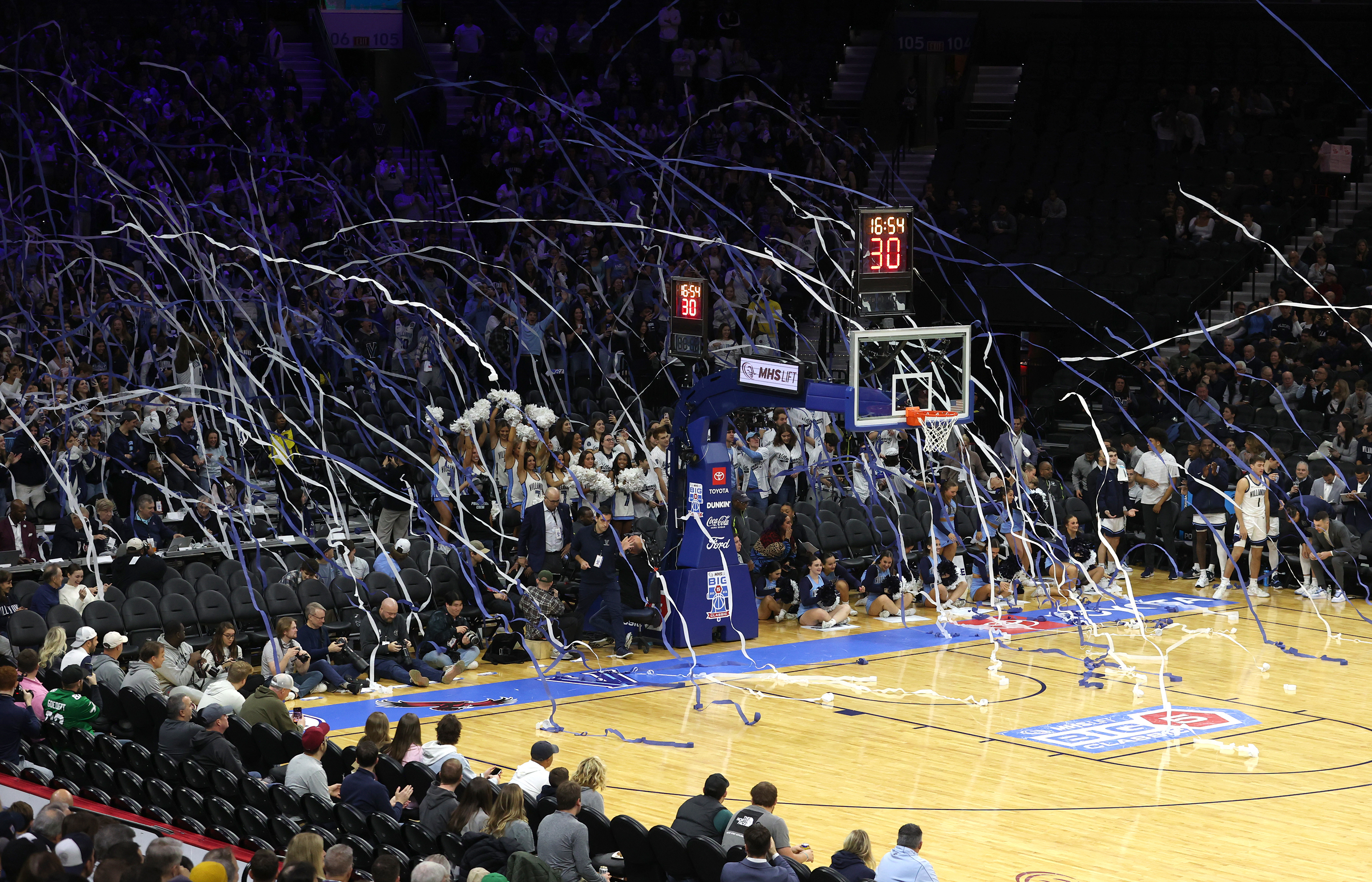
    The men’s classic will be held at Xfinity Mobile Arena for the fourth consecutive year on Dec 5. Meanwhile, the women’s classic will come to the Palestra on Dec 6.

    The choice of Palestra for the women’s classic coincides with the 100-year anniversary of the storied arena. The event was held at Villanova’s Finneran Pavilion for its first two years.

    Along with the women’s Big 5 Classic, Penn is hosting an expanded Cathedral Classic during Thanksgiving weekend and the men’s and women’s Ivy League tournaments this season.

    Both the men’s and women’s Big 5 Classic will feature the city’s six Division I programs playing in a triple-header. Seeding will be once again be determined by the teams’ performance in pod play. Each pod game will take place at the schools’ on-campus arenas in a round-robin format.

    For both the men and women, the teams that make up each pod are the same. Pod 1 will feature Drexel, Penn, and Saint Joseph’s while Pod 2 will consist of La Salle, Temple, and Villanova.

    St. Joe’s and Villanova’s men’s teams are separated for a second year in a row. The Hawks won the first two iterations of the Big 5 Classic, while Villanova enters its season as the defending champions after it trounced Penn, 90-63.

    In the women’s championship, the Wildcats also came out on top, defeating St. Joe’s 76-70.

  • Drexel grad Jeffrey Cunningham is making his mark in golf and pushing for diversity

    Drexel grad Jeffrey Cunningham is making his mark in golf and pushing for diversity

    For Jeffrey Cunningham, golf has always been more than the scores, wins, and losses.

    The Drexel alumnus started playing golf at 5 years old in Dallas. His coach, Dante Degrate, introduced him to his son Austin, another young Black golfer who was competing and winning U.S. Kids Golf tournaments. Seeing someone who looked like him playing golf made it easier for Cunningham to catch the golf bug.

    Now, the 27-year-old hopes to create the same sense of representation for the next generation.

    Cunningham graduated from Drexel in 2022 and earned a spot on the Advocates Professional Golf Association tour after finishing second in the APGA’s collegiate rankings. Cunningham returned to Philadelphia to compete at an APGA Tour event at The 1912 Club on Aug. 3-5.

    The APGA Tour provides competitive opportunities for underrepresented golfers and an inclusive future for the game. What began in 2010 as just three events has grown into a national schedule held almost every month from coast to coast.

    The APGA has provided Cunningham a place to compete, develop his game, and build a professional resume as he works toward earning his PGA Tour card.

    “The APGA Tour is definitely important for guys like me who need a place to play and get ready for qualifying school,” he said. “I don’t think what I’m doing now is possible without the APGA Tour because it gives me a chance to sharpen my game and learn more about myself to reach the highest level of the game.”

    Solomon Hughes, APGA’s chief operating officer, said co-founders Ken Bentley and Adrian Stills, the last Black player to make it through PGA Tour qualifying school for 25 years, created the organization to address the lack of access and opportunity for talented golfers from underrepresented communities.

    “Bentley and Stills started the organization really to help address access and opportunity issues for players who have the game but maybe haven’t had the resources,” Hughes said. “We give players you haven’t heard of, but certainly talented players, a chance to play and compete.”

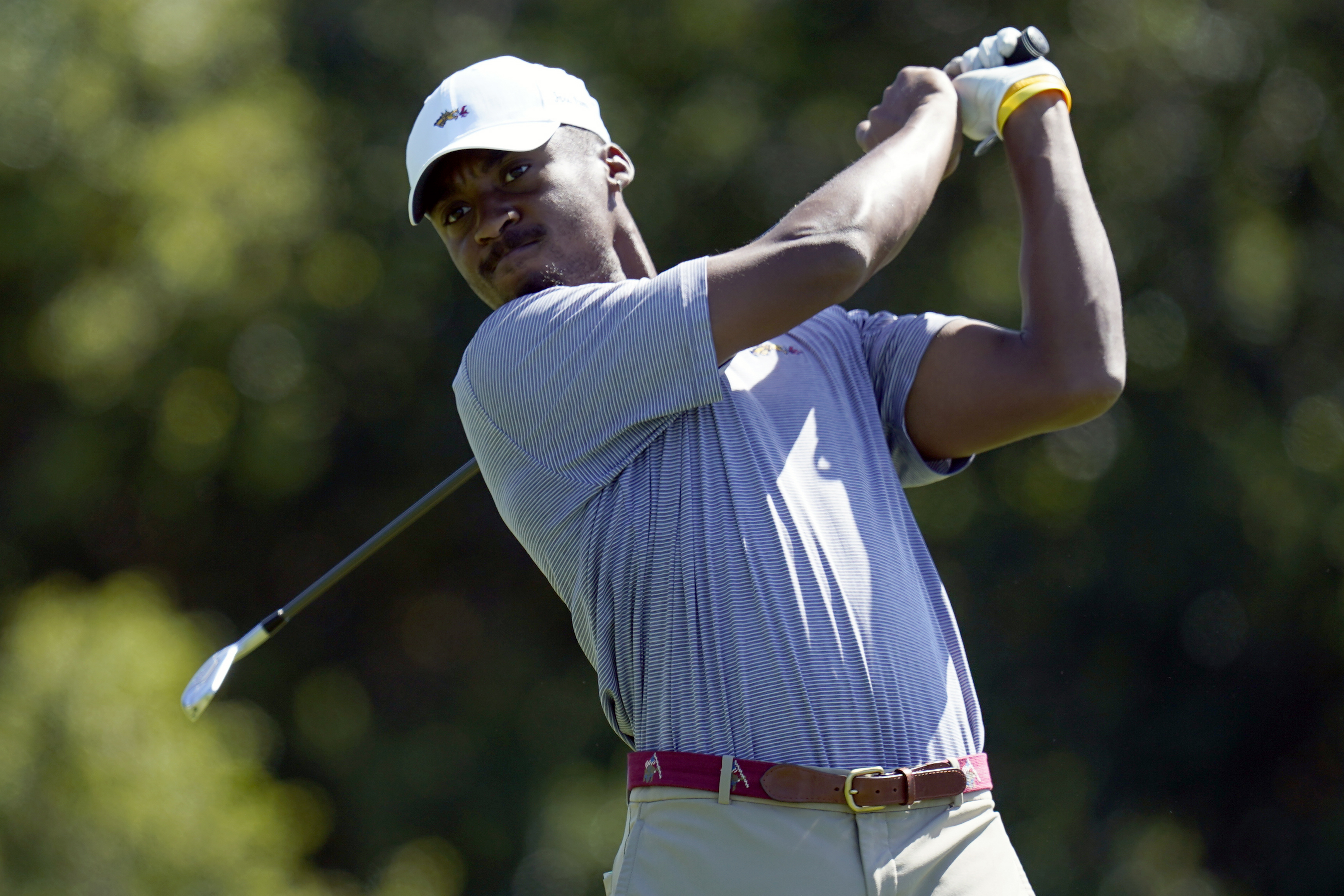
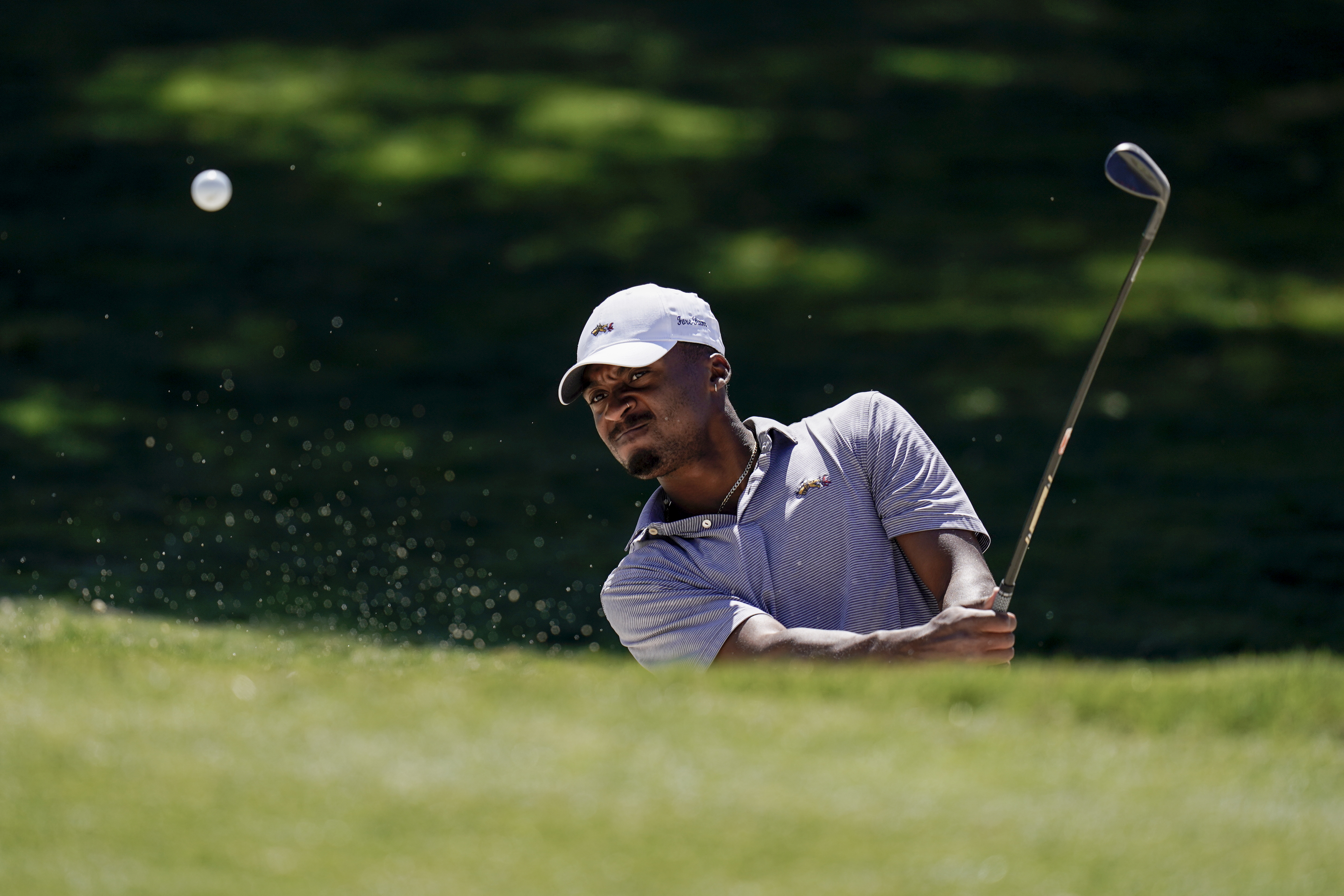
    In 2022, Jeffrey Cunningham was the first African-American golfer to advance to the finals of the BMW Philadelphia Amateur Championship.APGA Tour

    But Cunningham sees the work of the tour extending beyond professional golfers.

    Along with the tour, the APGA has a foundation focused on empowering underserved youth through golf, education, and wellness. While in Philadelphia, the tour hosted a youth clinic for members of the First Tee of Philadelphia at The 1912 Club.

    The youth clinics are for ages 13-21, and they participate in a three-phase program focused on golf education, career development, and mental health advocacy.

    “We really want to try to give the game of golf to people who may have a background in it, but also to people who don’t,” Hughes said.

    This year, the APGA had more than 3,500 participants in the youth clinics, Hughes said.

    “Getting out in the community and educating the youth on the etiquette of the game and the culture and how to fit ourselves within the culture of the game is important for our country,” Cunningham said. “I think the game and the industry would look a lot more represented if we met at those crossroads.”

    Austin Degrate was a major influence on Cunningham’s golf journey and pushed him to compete in tournaments in West Palm Beach, Fla., where he moved to when he was 8. As Cunningham got older, he became more serious about competition and playing in college.

    After visiting Drexel, he loved the coach and program, so he decided “to take a gamble on West Philadelphia.” The difference in style of golf and wearing his North Face parka between shots in qualifying rounds during the winter was an adjustment for Cunningham, but his time in the city pushed him to be where he is today.

    “It was the best decision that I’ve made for my career because it gave me a place to play for five years and hone in my game, then get into the APGA Tour through their collegiate program,” he said.

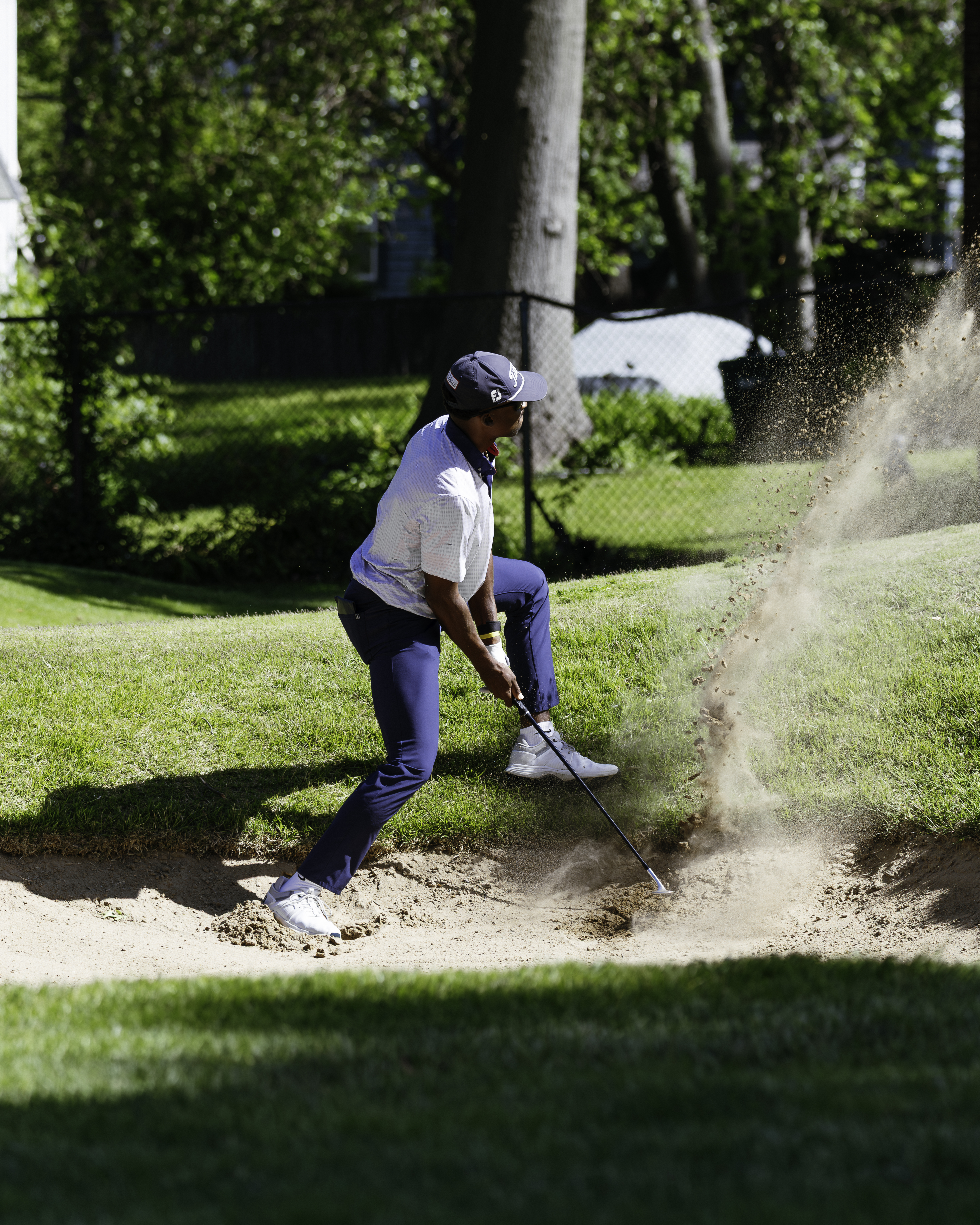
    Cunningham said playing golf at Drexel was the “best decision that I’ve made for my career.”Drexel Athletics

    His time in Philadelphia also gave him a firsthand look at the barriers facing Black golfers.

    In 2022, Cunningham was the first African American golfer to advance to the finals of the BMW Philadelphia Amateur Championship.

    “In the city of Philadelphia, there is a large population of African Americans and Black folks who have not gotten the opportunity that I have gotten, as we can see from me being the first African American to reach the finals of the Philly Am,” he said. “It is awesome to be able to break that barrier, but we can also learn that it was 2022. … We should be pressing and doing what we can and using the right resources to make that more possible for people who look like me.”

    America is diverse, Cunningham said, and golf should reflect that.

    “The misrepresentation is something we see in all levels,” he added. “Whether it be professional golf, teaching pro level, we are not giving enough opportunities across the board to underrepresented communities.

    “It is cool to see we are on the right path, but we still have a lot of work to do, and it starts with getting the youth into the game.”

  • Archbishop Wood’s Caleb Lundy becomes Drexel basketball’s highest-ranked commitment

    Archbishop Wood’s Caleb Lundy becomes Drexel basketball’s highest-ranked commitment

    Caleb Lundy announced his verbal pledge to Drexel on social media Thursday.

    The Archbishop Wood guard and Warminster Township native is ranked as a four-star recruit and the fourth-best rising senior in Pennsylvania, according to 247Sports.

    Lundy chose Drexel over Temple, La Salle, and St. Joseph’s, among others.

    Lundy has the highest composite rating of any Drexel recruit in the 247Sports database, which dates back to 2000. His four-star ranking bests former players Mate Okros, T.J. Bickerstaff, and former NBA guard Damion Lee, all of whom were three-star recruits.

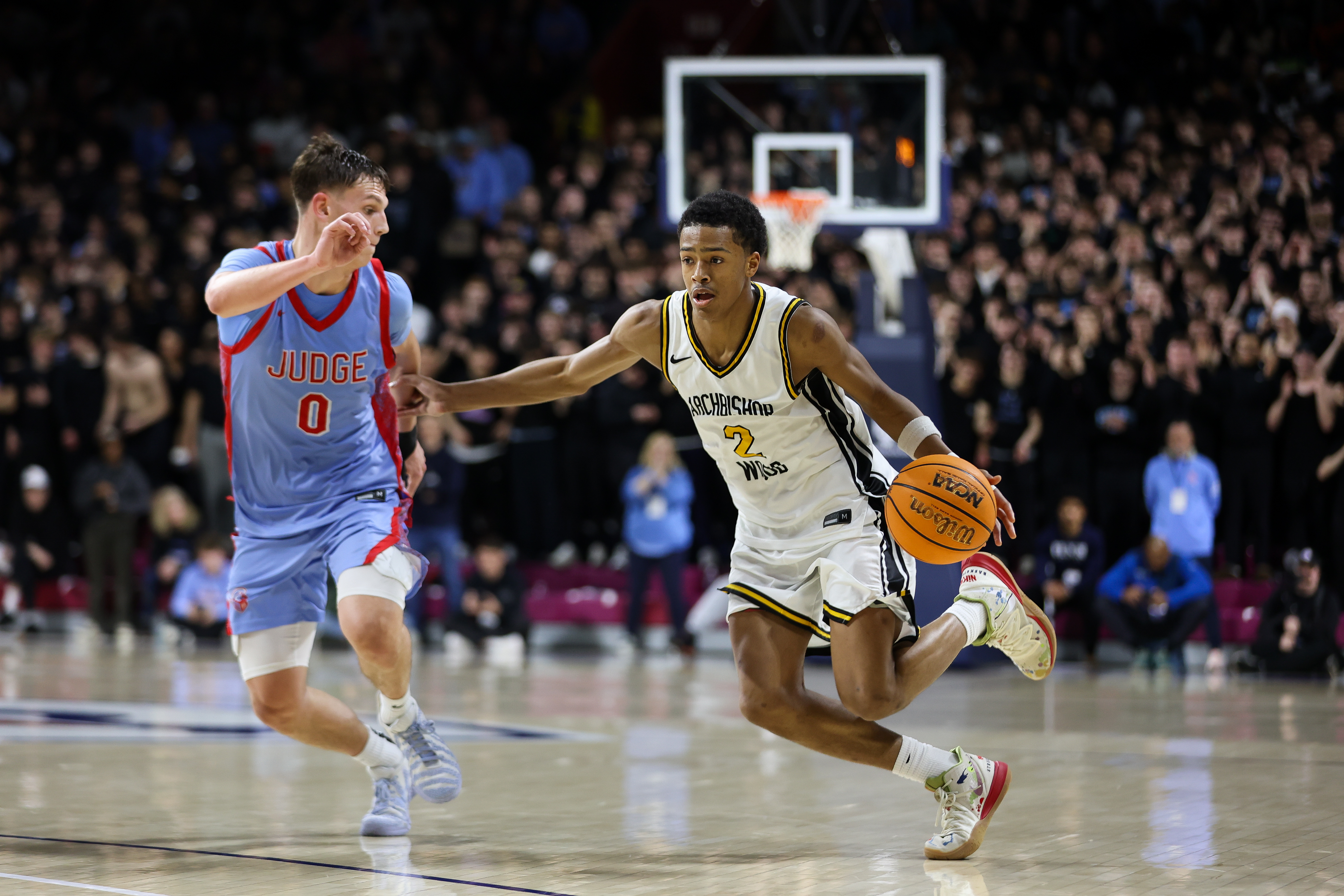
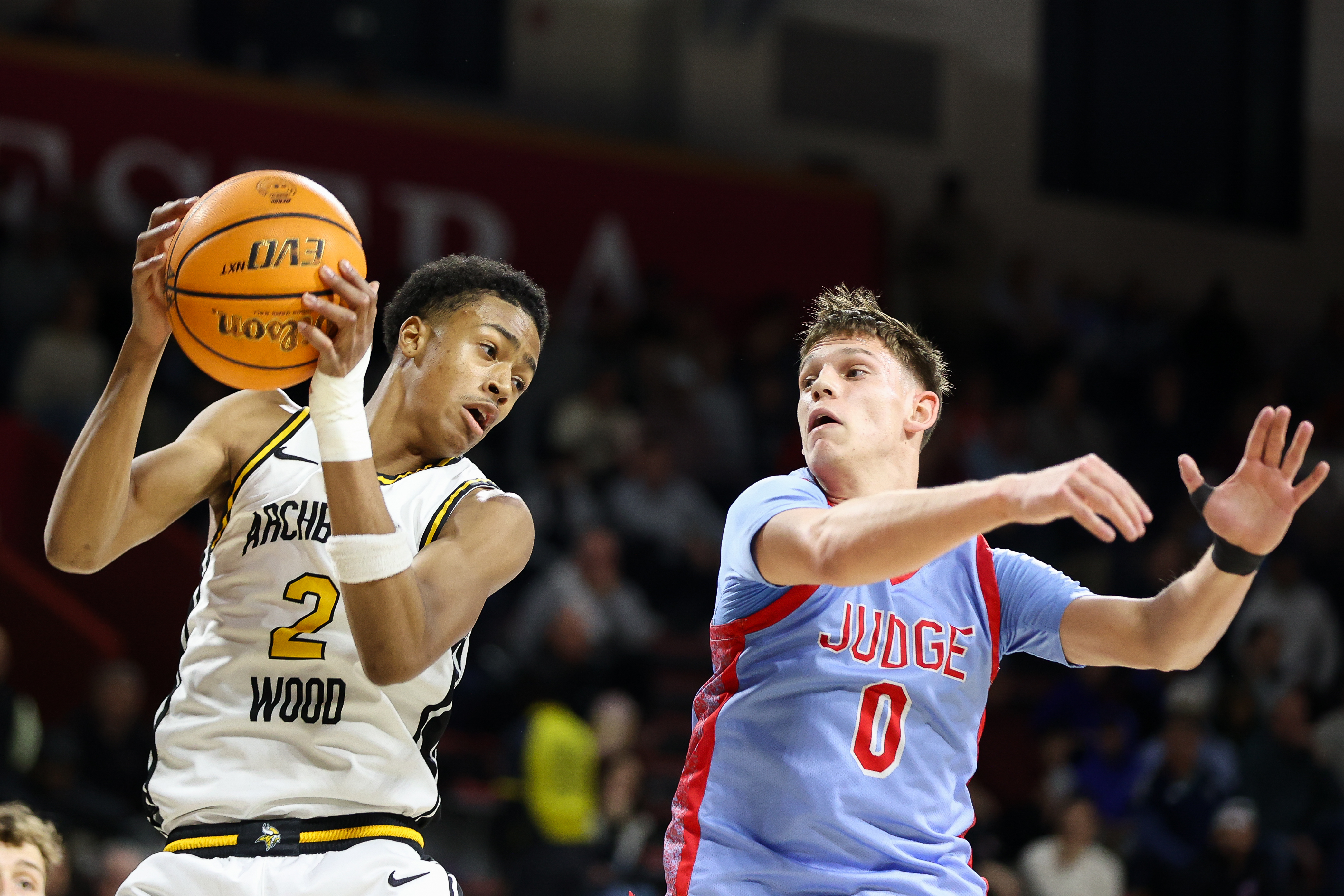
    Lundy, a 6-foot-4 guard, earned first-team all-Catholic League and second-team all-state honors as a junior at Wood. He was the Vikings’ leading scorer last season, averaging 17.1 points and 4.7 assists.

    Lundy and Marist signee Brady MacAdams led Wood to a 12-1 regular-season finish in the Catholic League and a semifinal appearance in the PCL tournament. The Vikings have not won a league championship since 2021.

    Lundy is the first player to commit to Zach Spiker’s 2027 recruiting class. The Dragons have also extended an offer to Imhotep Charter forward Zaahir Muhammad-Gray, a rising senior and four-star recruit who has yet to make his commitment.

    Lundy’s verbal pledge will not be official until he signs an aid agreement with the school. The early signing period for the class of 2027 begins on Nov. 11.

    Archbishop Wood’s Caleb Lundy (left) averaged 17.1 points and 4.7 assists last season.Isaiah Vazquez / For The Inquirer

    Lundy is the third player from Wood to commit to Drexel under Spiker, who is entering his 11th season as the Dragons head coach.

    Josh Reed was part of Spiker’s 2024 recruiting class, and former Wood guard Justin Moore spent two seasons in University City after joining the Dragons in 2022.

    Lundy comes from an athletic family. His father, Mikal Lundy, played running back at Kent State in 2000 and 2001. Caleb’s uncle, Wali Lundy, was a running back at Virginia. He spent one season with the Houston Texans after being selected in the sixth round of the 2006 NFL draft.

  • ‘Proud moment’: Drue Nicholas competes on his home course at the U.S. Amateur Championship

    ‘Proud moment’: Drue Nicholas competes on his home course at the U.S. Amateur Championship

    As Drue Nicholas approached the tee box of hole No. 1 at Merion Golf Club early Monday morning, he felt jittery.

    “[I was] just shaky,” Nicholas said. “It’s like I had a lot of caffeine, but I didn’t have any caffeine.”

    The Egg Harbor Township native took the first drive of the U.S. Amateur Championship at his home club, marking the return of the nation’s premier amateur tournament to Merion for the first time since 2005.

    Nicholas overcame some early-round nerves to shoot a 71, leaving him tied for 46th at 1-over in the 312-player field Monday afternoon, with many of them still on the course.

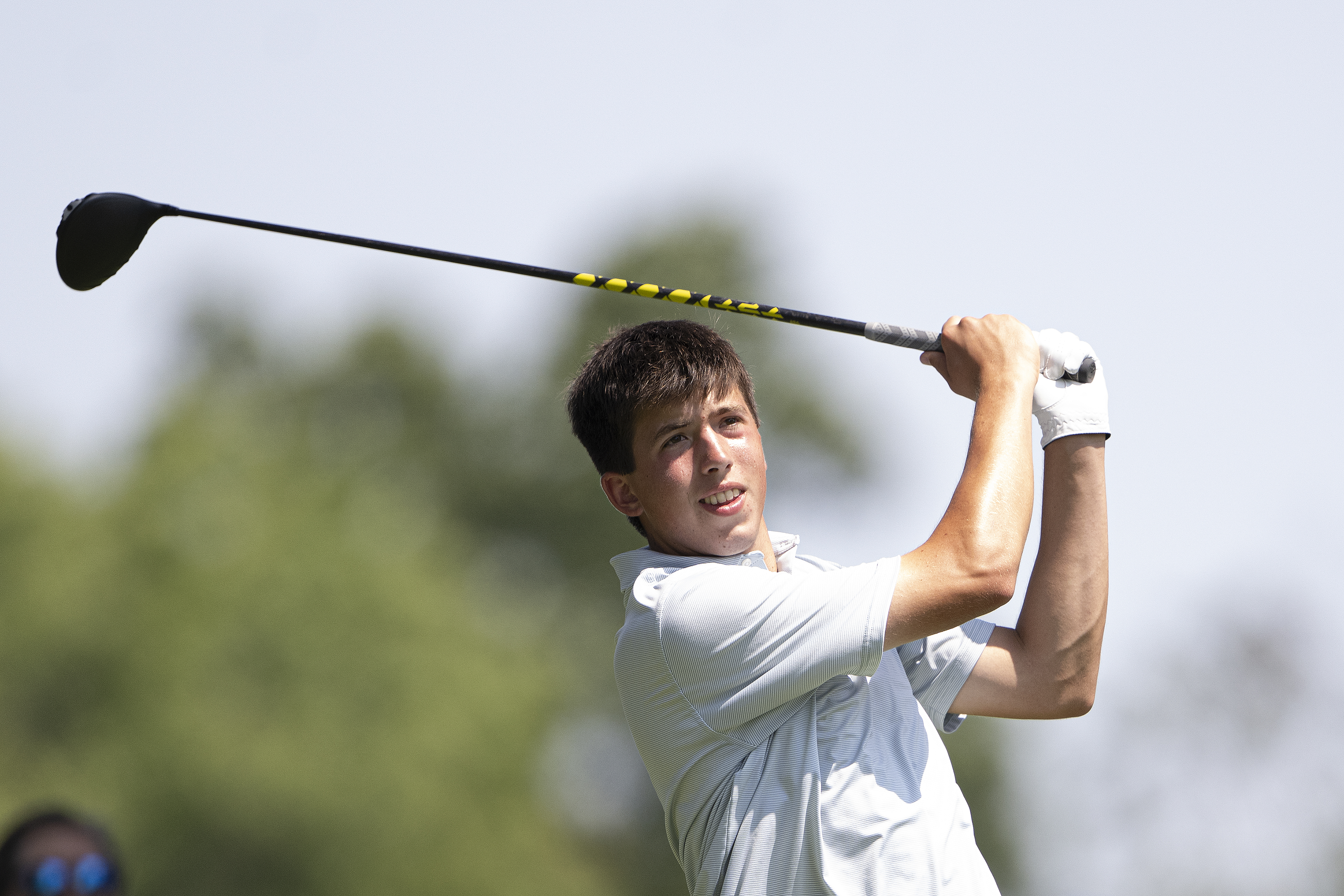
    Nicholas was a four-time all-Coastal Athletic Association golfer at Drexel before graduating in 2025. He won the Philadelphia Open in July and qualified for the U.S. Amateur with a two-under round during U.S. Amateur Final Qualifying at Llanerch Country Club in Haverford Township.

    That qualification opened the door for the Merion member to compete at his home course in his second U.S. Amateur. He finished stroke play 9-over par in the 2025 tournament at the Olympic Club in San Francisco.

    Nicholas became a member at Merion in April and estimated he’s played the course 20 times since joining.

    He had some trouble through the front nine, with bogeys on Nos. 1 and 6 and a double bogey on hole No. 5, but back-to-back birdies on Nos. 11 and 12, plus an early birdie on No. 3, kept him in contention to make the 64-player match play bracket on Wednesday.

    “The back five here are obviously very difficult, but I think I plotted my way around them pretty well,” Nicholas said. “I was thinking they’re hard, but if you hit it in the fairway, there are opportunities. Once I got through the first six holes — granted, I was 3-over and a little disappointed — but I knew I could do something on the back stretch.”

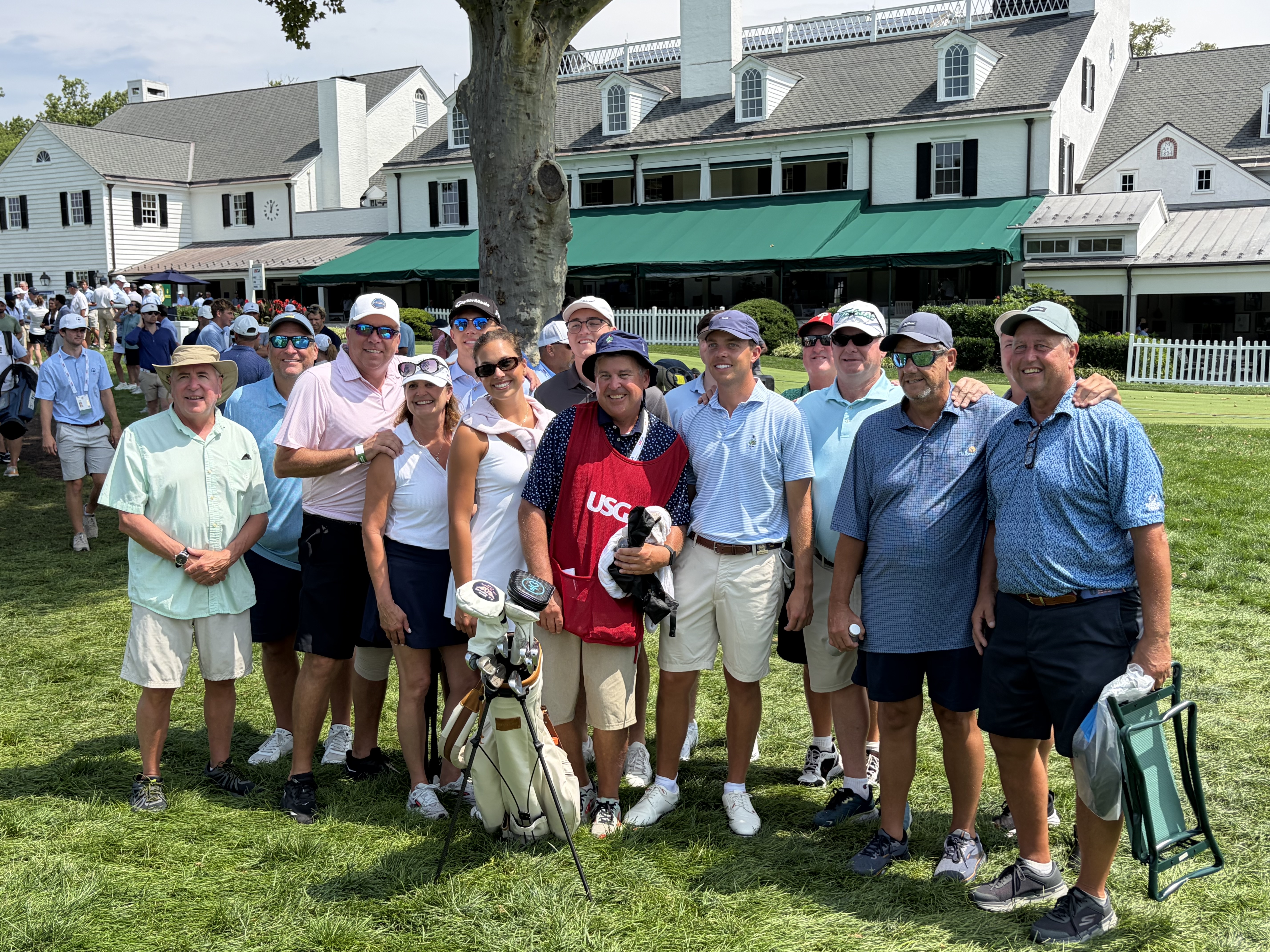
    Nicholas had a sizable crowd cheering him on Monday that included family, friends, former Drexel teammates, and Merion members.

    After he tapped in a putt on the 18th green to finish his round, he took a moment to pose for a photo with the group that had come out to support him.

    Caleb Taylor, Nicholas’ former teammate and roommate at Drexel, said seeing Nicholas compete on this course was a “proud moment.”

    “Everybody that loves golf knows Drue,” Taylor said. “He really embraces the golf culture of Philadelphia. As a former Drexel teammate of his, we’re proud as teammates and alumni. He represents Drexel really well. He represents amazingly. He’s a great guy.”

    Nicholas will spend Tuesday fighting to make the match play cut at Philadelphia Country Club, which is cohosting the qualifying stroke play with Merion. He’s much less familiar with the course at Philadelphia Country Club, but playing a round away from his home course may relieve some pressure.

    While the cut line for match play will be set after Tuesday’s rounds, Nicholas is hoping he could make it with a 1-under round at Philadelphia Country Club on Tuesday.

    “If I miss out shooting even, I can sleep at night,” Nicholas said.

    Philly roundup

    Joshua Ryan missed out on the Philadelphia Open championship in a playoff with Nicholas, but the Norristown native got off to a hot start at Philadelphia Country Club on Monday.

    Ryan shot a 67 with six birdies and sat two strokes back of the lead. Ryan, a former golfer at Liberty University, will try to shield his place in the match play bracket at Merion on Tuesday.

    “It’s going to be a different test tomorrow,” Ryan said. “You could very easily shoot a high number over there. I’m just going to keep playing. It’s nice to have a little bit of a cushion, but we’ll see where the field sits at the end of the day and just keep playing good golf.”

    Downingtown’s Nicholas Gross finished his round at Merion 3-over, and Newtown Square’s Hunter Stetson was 6-over at Philadelphia Country Club.

    Charlie Barrickman, 18, of West Chester, tees off on the sixth hole during the U.S. Amateur Championship at Merion Golf Club.Jose F. Moreno / Staff Photographer

    Some players, including three locals, were delayed by a thunderstorm that led to play being suspended at 5:02 p.m. Players were able to return to the course shortly before 6 p.m.

    At Merion, Charlie Barrickman (West Chester) and Michael Lugiano (Jackson Township) both finished the day at 1-over.

    Patrick Isztwan (Huntingdon Valley) shot 8-over in his opening round at Philadelphia Country Club.

  • Should Division I men’s soccer become a two-semester season? Here’s where Philly coaches stand.

    Should Division I men’s soccer become a two-semester season? Here’s where Philly coaches stand.

    A change to Division I men’s soccer looks to be on the horizon.

    After years of discussion and debate, the NCAA Men’s Soccer Oversight Committee adopted legislation to shift the sport’s season from the fall to a two-semester schedule. The change was set to go into effect before the 2027 season. But on June 24, the NCAA announced that the Division I Cabinet remanded the proposal for additional review.

    Twenty conferences opposed the measure, according to the NCAA’s release, taking issue with “the duration of the season” and “the lack of clarity about related rules.” Additionally, the Cabinet noted issues relating to how the change could impact the “student-athlete academic experience.”

    Philadelphia has six Division I men’s soccer programs: Penn, La Salle, Drexel, Villanova, Temple, and St. Joseph’s. The head coaches of each program reacted to the possible change. Some supported it, while others pointed out a variety of flaws.

    Player development

    Critics of the one-semester season have long lamented that the current setup impacts player development. Villanova head coach Mark Fetrow, who noted his program has been “big supporters” of the new legislation, believes a two-semester format will accelerate development and may be a necessity for college programs.

    “When you space the games out, and now you’re saying we’ve got a year of competition, we can now periodize our training in a way where we’re getting more out of our training sessions from a week-to-week basis,” Fetrow said. “We’re really maximizing performance because guys are just healthier on game days. If we want to stay relevant, if we want to evolve, because the game has evolved a lot in the United States in the past 10 years, then we have got to be willing to make some changes as well.”

    A main competitor for colleges, in terms of acquiring and developing talent on a path to the professional ranks, has been Major League Soccer Next Pro, MLS’s path to pro league. But a longer season could put college soccer on par with the emerging professional league, says Taylor Thames, La Salle’s head coach.

    Oliver Pratt (No. 16) played four years at Penn before signing a pro contract.Elizabeth Robertson / Staff Photographer

    “I think it makes us much more competitive in relation to MLS Next Pro, and some of these USL One contracts that are starting to take some high-level players from the college landscape, and it helps us develop them for longer spells,” Thames said. “There’s a bigger development cycle.”

    Oliver Pratt, a 22-year old defender for MLS Next Pro’s Union II, played four years at Penn. He had to graduate a semester early to sign with an MLS team in time for the season. Having now experienced a full year of training in the pros, Pratt better understands the upside to shifting the college format.

    “I definitely would have been able to maximize [training] more, and I would say be able to significantly improve within one season,” Pratt said. “It’s a different transition for me now. I’m dealing with a 10-month season, and my body’s definitely taking a toll.”

    However, the majority of college players are not going pro, St. Joe’s coach Tim Mulqueen pointed out. He also noted that increased development would benefit the “top 1% or 2%,” but argued “that would happen for the top players anyway.” Mulqueen has seen premier development firsthand. He served in multiple roles with U.S. Soccer, including as an assistant coach for the 2008 U.S. men’s Olympic team.

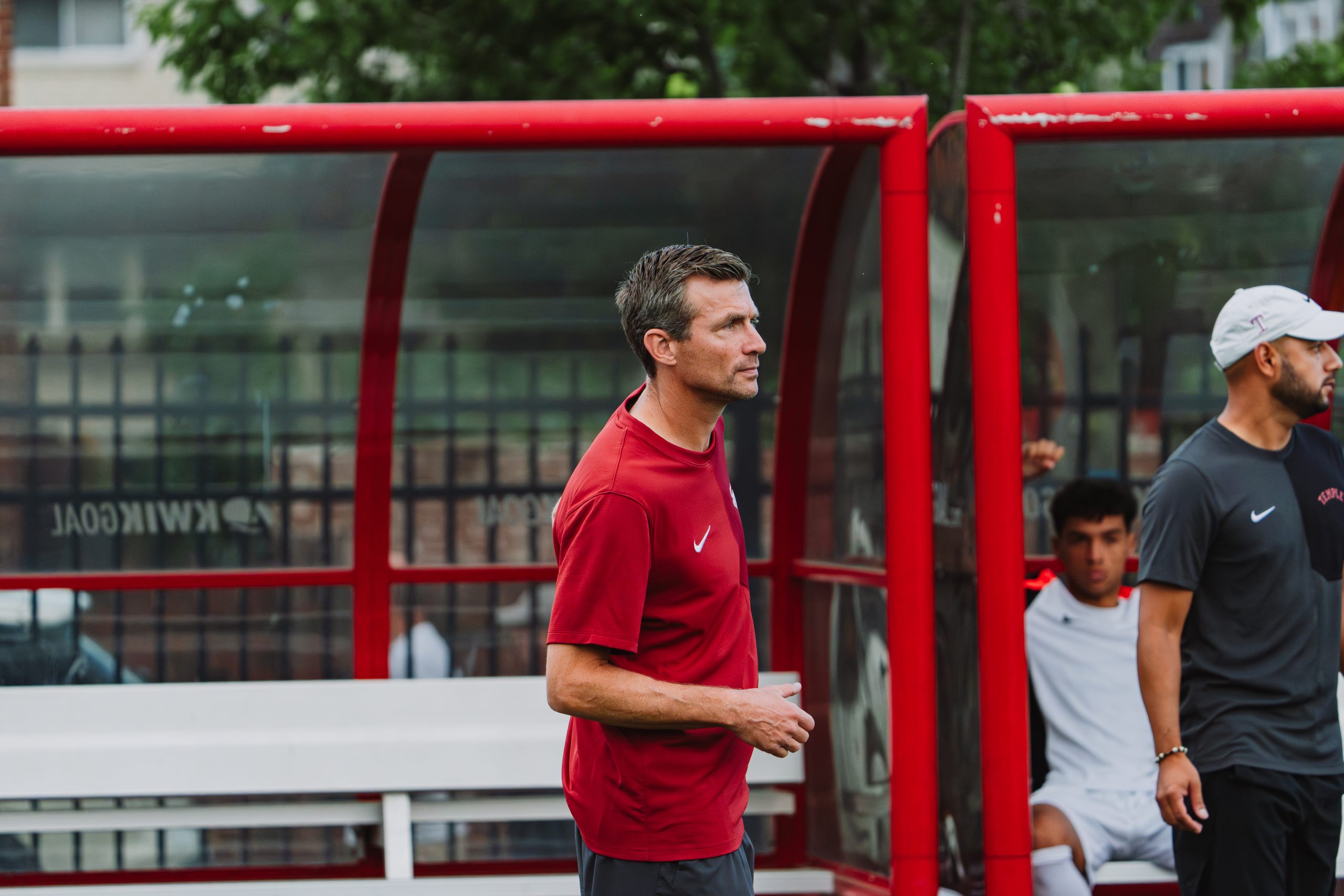
    Meanwhile, Drexel coach David Castellanos believes the current system is yielding strong results and a “drastic change” would not be necessary. He said that the old model has produced “national team guys in the 1990 World Cup” and “MLS head coaches.”

    Scheduling games, shifting operations

    In a two-semester season, programs would have to adjust how and where games are scheduled.

    Under the new format, the maximum match limit for each team would stay at the current cap of 25, meaning no additional games would be added in the 2027 season. With this, programs are required to schedule at least seven games or at most 10 games in the spring season. A team cannot opt to play all of its games in the fall.

    Having to schedule games and additional practices in the spring could create issues for teams that share their facilities with other programs. For example, St. Joe’s shares Sean Sweeney Field with both of the school’s lacrosse teams and the women’s soccer program.

    Tim Mulqueen has served in multiple roles with U.S. Soccer, including as an assistant coach for the 2008 U.S. men’s Olympic team. St. Joseph's Athletics

    “When you’re sharing [facilities] with lacrosse or field hockey, that’s going to stress training times,” Mulqueen said. “It’s going to stress the [operations] people, it’s going to stress our trainers, who in small schools do multiple teams.”

    Penn and Villanova are the only two local Division I programs that boast soccer-specific facilities, meaning that intra-program scheduling conflicts are unlikely to occur. Still, Quakers coach Brian Gill expressed concern with how the change may affect the other resources that his program relies on.

    “Your infrastructure gets shared, so if that’s the actual facility or some of the people: trainers and strength coaches, sports information,” Gill said. “There’s a lot of shared overlap there, so that’s probably one of the biggest challenges. … How do you make this all feasible when it comes down to that stuff?”

    Then, there’s the case of weather. Philadelphia boasts relatively cold Februaries, when spring play is slated to resume. From 1992 to 2021, the city’s average temperature in the month was 36 degrees — a cause of concern for a few of the City 6 coaches.

    “It’s going to be brutal,” said Castellanos. “If you take, for example, the winter that we just had this year and then you’re telling me our playing season is going to be in the spring. You need January, February for preseason to ramp these guys up.”

    Added Thames: “I think any coach should be concerned about competitive advantages — how to protect their program and fight for their program. That’s one concern that I would imagine for teams that don’t have an [indoor] bubble. [La Salle], for example.”

    However, Temple head coach Bryan Green did not feel Philadelphia’s climate was a cause for concern.

    “All the leagues in Europe, like Germany, have a pretty similar climate to us,” he said. “They play in December and January. It’s part of the sport to play outdoors and play in different environments and conditions”

    David Castellanos believes college soccer’s current system is yielding strong results and a “drastic change” would not be necessary.Drexel Athletics

    One way to escape the cold is to schedule early spring matches down South, which is what most of the area’s college baseball teams do. Fetrow noted that he has been in conversation with Villanova to “try to go down to a place like North Carolina” to start the second half of the season. Thames, Mulqueen, and Castellanos all shared similar interest.

    Like anything, though, that will come with additional costs.

    “Those are going to be travel expenses. I don’t see how you can get around it,” Mulqueen said. “We’ve gotten to the stage where the smaller schools, we have to adapt to what’s being done at an NCAA level that we really don’t have much say in.”

    Player health

    A leading factor in the new format’s adaption was the idea that spacing out games would result in fewer total matches missed due to injuries. The NCAA, in its formal announcement, wrote that increased recovery time “could support injury prevention and return-to-play protocol.”

    For the most part, the area’s coaches agreed with the reasoning.

    “Say a kid needs two and a half weeks to get back [from an injury], there’s a good chance that the player missed five or six games through one injury,” Gill said. “Versus [in the new format], the player maybe misses two to three games. You’re sort of giving some space for guys to naturally come back.”

    While Castellanos agrees that total games missed will be cut down due to the new format, he believes that a longer season may bring more “wear and tear” injuries.

    “When we think about these injuries, we think about some of the major ones, but we’re not talking about the soft tissue ones,” Castellanos said. “Now that you go 10 months, you’re on it every single day, right? I think that you know these things can linger. It’s going to put a lot more pressure on the training staff to maintain these guys to be healthy for 10 months.”

    Bryan Green has led the Owls as head coach since 2022.Temple Athletics

    Mulqueen is also concerned about new injuries sprouting due to the format.

    “In my experiences, when you have more time, you do more things,” Mulqueen said. “No one’s going to sit idly by and say, ‘Right, we have 10 months now, or we’re going to give guys time off.’ Well [if] you get bad results, you’re going to do more.”

    Now, Philadelphia’s coaches are in a waiting game to see when the proposal will make its way back to the NCAA’s desk. In the meantime, they will continue to prepare for what feels like the inevitable.

    “There’s all kinds of different challenges every season, no matter what,” Green said. “I think that’s the one thing that college athletics does really well, is they’re nimble and adaptable, and this is just one more thing that we can prove that we can do.”

  • From Philadelphia to Henley: Drexel men’s rowing takes on the world’s most prestigious regatta

    From Philadelphia to Henley: Drexel men’s rowing takes on the world’s most prestigious regatta

    Drexel men’s rowing has long dominated on the Schuylkill and Cooper Rivers, but now, it will have to navigate international waters.

    The Dragons are racing in the Henley Royal Regatta, which takes place on the River Thames in Henley-on-Thames, Oxfordshire, England. They will compete in time trials on Saturday before they begin racing on Wednesday in an event that continues through July 5.

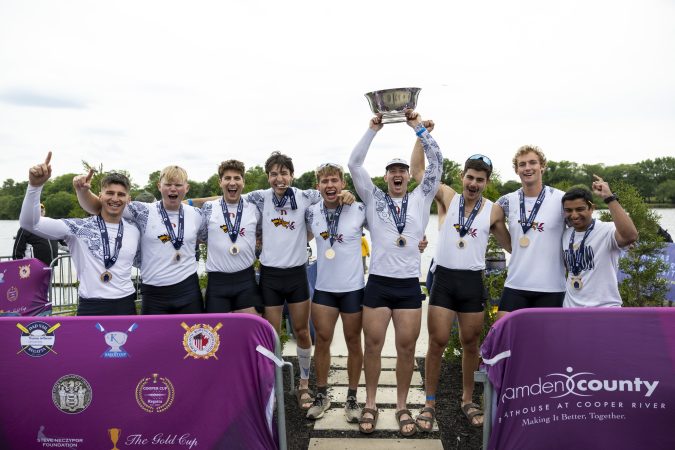
    Drexel won its fifth consecutive points title at the Jefferson Dad Vail Regatta in May, with the varsity eight boat reclaiming first place for its fourth top finish in five years. Head coach Matt Weaver said throughout the season that each race has felt like preparation for the Henley Regatta. The Dragons also competed at the IRA National Championship at Gold River in California three weeks after the Dad Vail.

    “The Dad Vail was the deepest field ever this year, competitors from all over the country and even into Canada, so we feel like that prepared us really well,” Weaver said. “and then [since IRA we’ve] kind of been doing a training camp here in Philly with some good practices. We did some races against Vesper Boat Club, and we’re excited, and we’re going to feel good heading into Henley.”

    Making the trip to England for the Henley for the first time in four years, the men’s team has been working on fundraising and logistics since the 2022 trip ended.

    And since January, the team has been in collaboration with Drexel fashion design professors Liz Goldberg and Jaeyoon Jeong, along with three students, to design the blazers that the rowers will wear at the regatta.

    “We’re really proud to have these designed and made here at Drexel, and in Philadelphia, specifically,” Weaver said. “I think there’s probably never been a rowing blazer that’s been specifically designed and constructed in Philly brought over to Henley, so probably the first of its kind there.”

    With the program taking a trip overseas, Weaver said the rowers have focused on jet lag protocol ahead of their flight to make sure they are adjusted to the time zone.

    During their day off on Sunday, the Dragons plan to roam London, Weaver said, hoping to gain educational and cultural experiences, but the focus is always on rowing and their upcoming races.

    This is the first time Weaver is making the trip since becoming the head coach ahead of the 2023-24 season. He has, however, done it a few times as an assistant coach at the high school and college levels. He’s seen how the trip “pays huge dividends” for the following season, from connecting in races to the team living together in a shared house.

    And it offers a new experience in terms of race format.

    Unlike the other regattas the Dragons have participated in this season, Henley features a head-to-head, bracket-style format. Weaver described it as “a little bit like March Madness,” with the crew hoping for some upsets, and having to bring their best every day. The hope is that the Dragons make it to next weekend, but it all depends on their draw, Weaver said.

    Drexel had head-to-head races against Columbia, Cornell, and Navy this season, but did not have the bracket style that Henley uses. In the head-to-head races, the varsity eight won against Columbia and Navy but fell to Cornell.

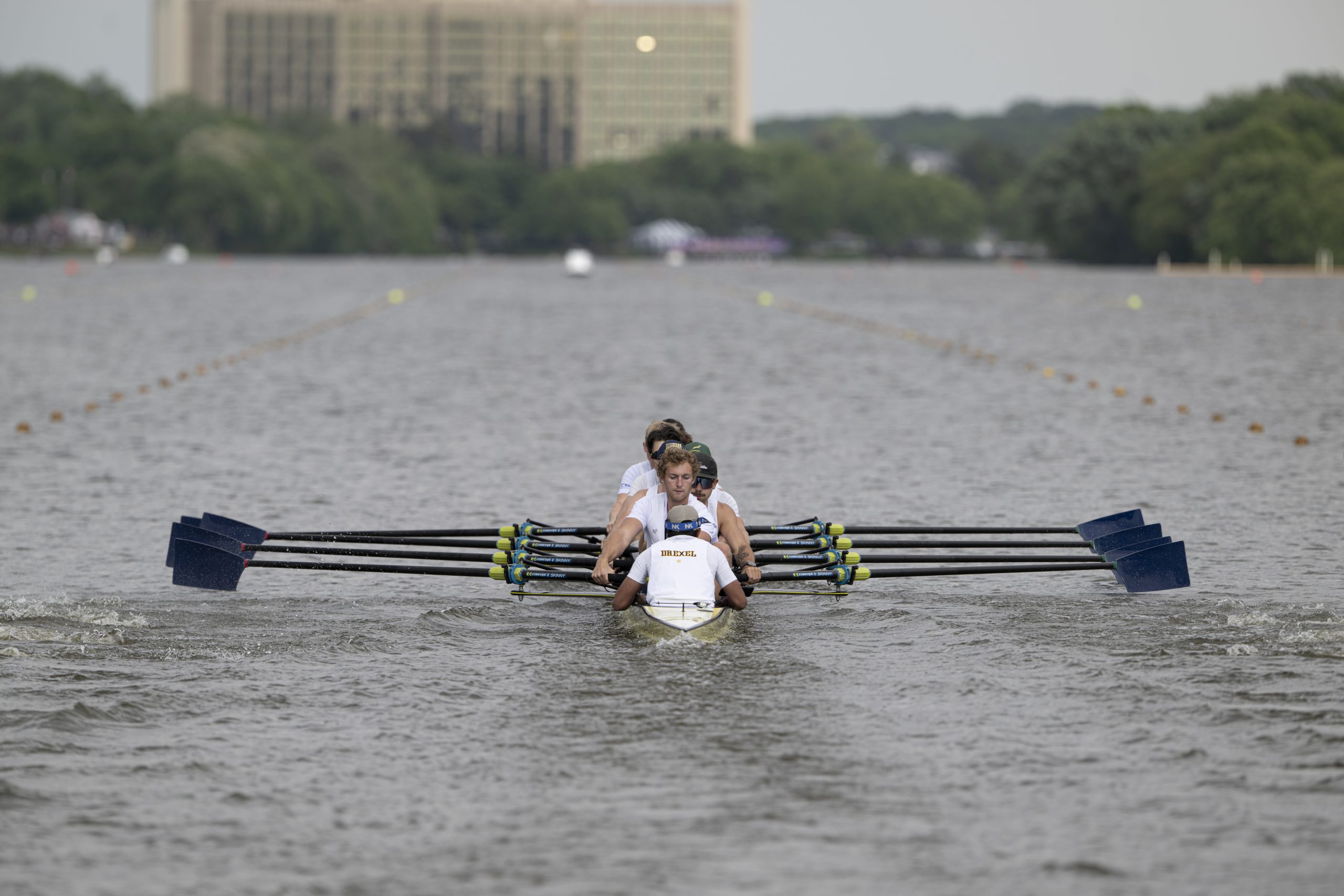
    Drexel men’s rowing has three boats competing in the Henley Royal Regatta, which starts on Saturday with time trials. Jose F. Moreno / Staff Photographer

    The varsity eight is one of three Drexel boats racing in England.

    The eight will be competing for the Temple Challenge Cup and face other college entries from around the world. The Dragons will also bring a coxed four to compete for the Prince Albert Cup, another college event. The third boat is a pair competing in an open event, which is the only pair event of the regatta and includes Olympians and high schoolers. The pairs race is for the Silver Goblets & Nickalls’ Challenge Cup.

    “It’s an opportunity for us to get out and race some of the best crews in the world, even outside the U.S., so for us, it’s definitely a unique experience,” Weaver said. “This will set us up really well for next season. We return like 49 of the 55 guys that were on our team. So, the guys that are making this trip are setting the tone for next year.”

  • New ‘Love Island’ contestant is a Drexel grad and ‘Jalen Hurts doppelganger’

    New ‘Love Island’ contestant is a Drexel grad and ‘Jalen Hurts doppelganger’

    A new bombshell has entered the villa, and it’s not Jalen Hurts — but, uh, close enough!

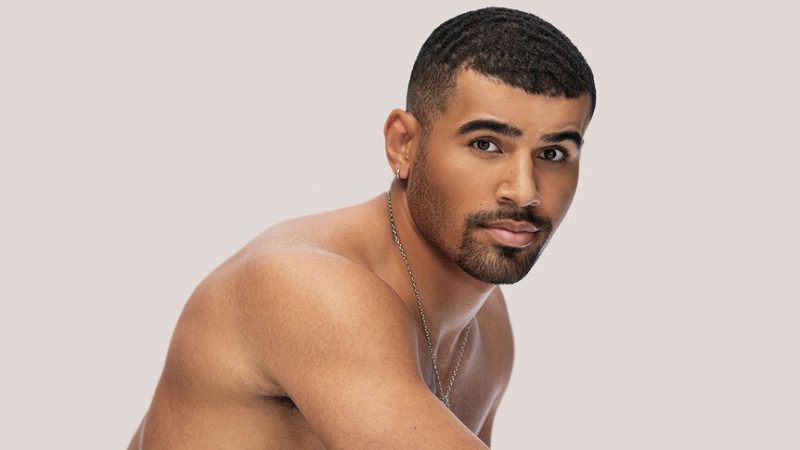
    Ronnie Gunter, a lacrosse player and recent Drexel graduate best known for his viral resemblance to the Eagles quarterback, made his TV debut Monday night.

    Sporting orange swim trunks and not much else, Gunter was one of 12 new men who entered the show on episode 18 of Love Island USA.

    It’s all part of Casa Amor, the mid-season twist where OG contestants split off into two villas and are forced to explore new connections. Gunter, 25, was one of a dozen men and six women who’ve been introduced to the show in the last two nights.

    He was also one of the men chosen to stay: Those 12 men were quickly cut to six in the same episode.

    Proving Philly is the center of the universe — even on a remote Fijian island and even at Casa Amor, Gunter was quick to tell North Philly native Melanie Moreno that he went to Drexel.

    In a prior episode, Moreno, 24, told her most consistent connection, Sincere Rhea — who’s from Cape May — that her dream first date for them would be to walk through Penn’s Landing.

    But with Rhea away at the other villa with new arm candy and the OG women forced to explore connections with their own new crop of islanders, Gunter stood out.

    He chose to kiss both Moreno and Jen Terry as part of a challenge and later won the women over by talking about family life and his cooking chops.

    “I want my wife sipping red wine on the countertop while I’m cooking,” he said. “I love to chef. Y’all will never go hungry with me around.”

    While attending college in Philly, where he majored in sports studies, Gunter achieved virality for his likeness to Hurts.

    Two years ago, in a TikTok reshared by accounts including ESPN, Gunter’s then-girlfriend (now-former Division I golfer and prominent sports broadcaster and social media personality Emma Carpenter) said he’d get mistaken for Hurts “everywhere we go.”

    @emmacarpenter

    No cuz it’s everywhere we go 😭

    ♬ MILLION DOLLAR BABY (VHS) – Tommy Richman

    Gunter told The Inquirer at the time that the comparisons started coming around his sophomore year — along with stares and photo requests — but he welcomed the attention for the most part.

    “I think it’s funny. And I mean, he’s not a bad guy to be compared to,” he said. “It’s an awesome comparison to be mistaken for that guy.”

    Even Drexel’s Lacrosse program got in on the fun, posting on Instagram in 2023: “All we’re saying is that we’ve never seen @_ronniegunter and @jalenhurts together.”

    Notably, Gunter’s comparisons to Hurts — and his graduation from Drexel — predated the popular look-alike contests that popped up nationwide months later. A different ringer won Philly’s grassroots quest for a Hurts double.

    Born and raised in Minnesota before heading Northeast for school, Gunter lives in New York these days, where he works as a program director for the nonprofit Harlem Lacrosse.

    So far, no one on Love Island has made any comments about Gunter’s resemblance to Hurts. But there’s a lot more island time to play out.