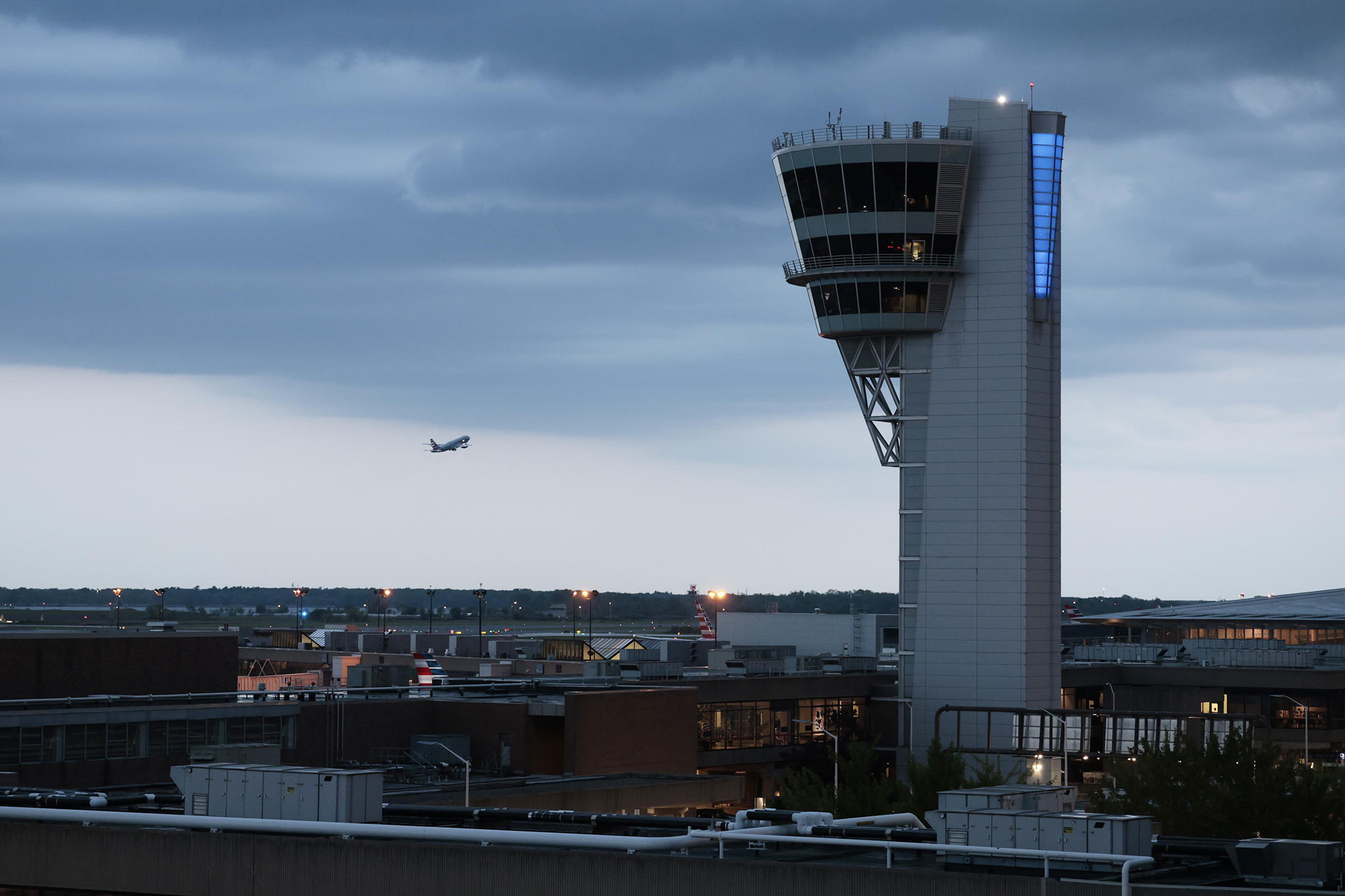
Delta Air Lines will begin operating a new daily flight between Philadelphia and Los Angeles next summer.
The airline will debut the nonstop route between Philadelphia International Airport (PHL) and Los Angeles International Airport (LAX) on June 7, officials said in an announcement last week. Tickets are already available for purchase.
The addition comes as Delta said it was also adding or increasing flights to LAX from several other destinations. Delta is PHL’s third-largest carrier by passenger volume, having carried nearly 2 million passengers through the airport in 2025. It currently offers nonstop service from PHL to five U.S. cities.
PHL’s largest carrier, American Airlines, also offers several daily nonstop flights to Los Angeles.
The airport is in the midst of a nearly $2 billion renovation, having spent significant amounts in recent years on upgrades to bathrooms, landscaping, painting, and more.
The airport has nonetheless continued to rank poorly in a prominent traveler satisfaction survey: Last week, JD Power said that for the sixth year in a row, PHL received the lowest score among large U.S. airports in its annual passenger satisfaction rating.
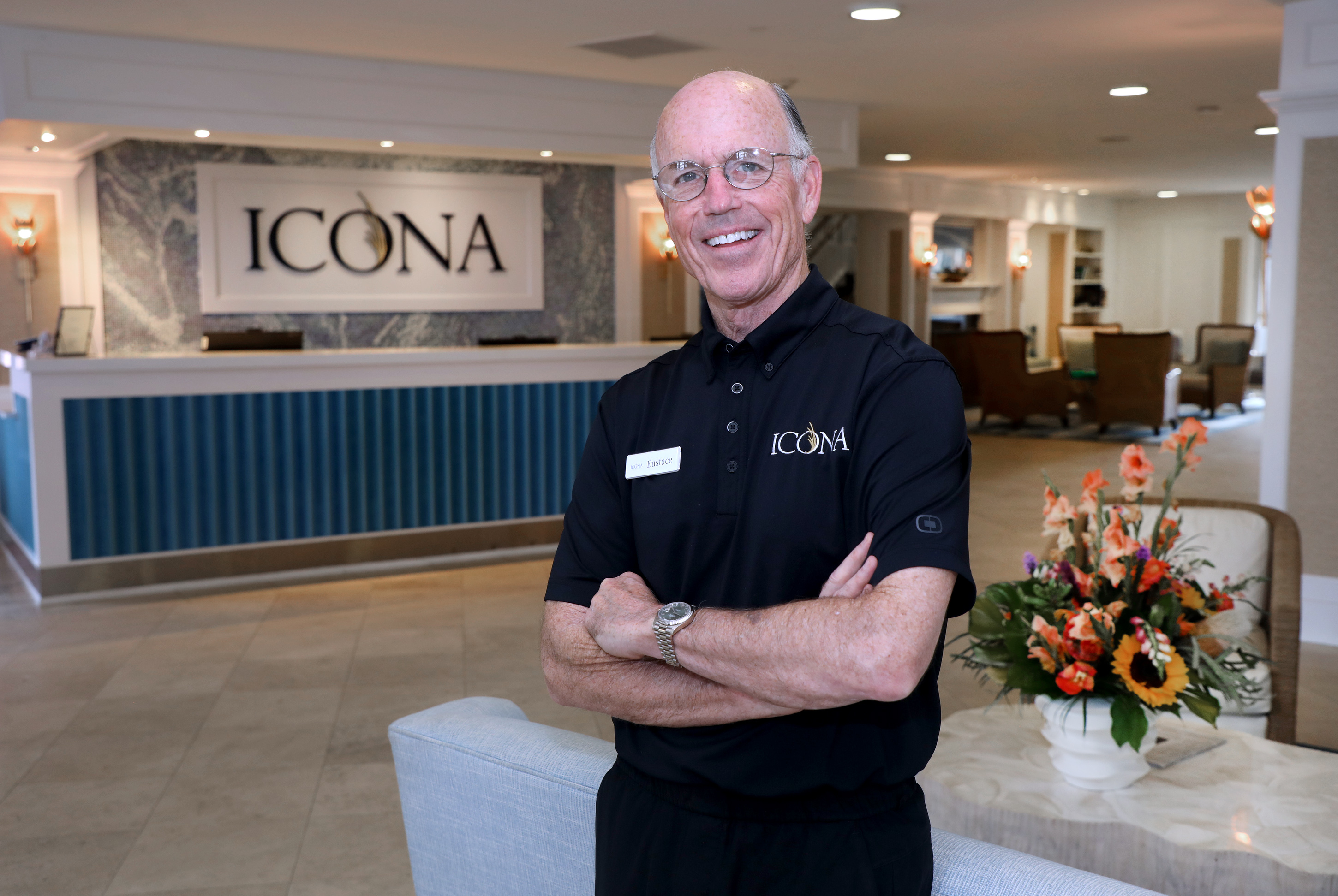
Icona Resorts founder Eustace Mita says he didn’t set out to change the Jersey Shore.
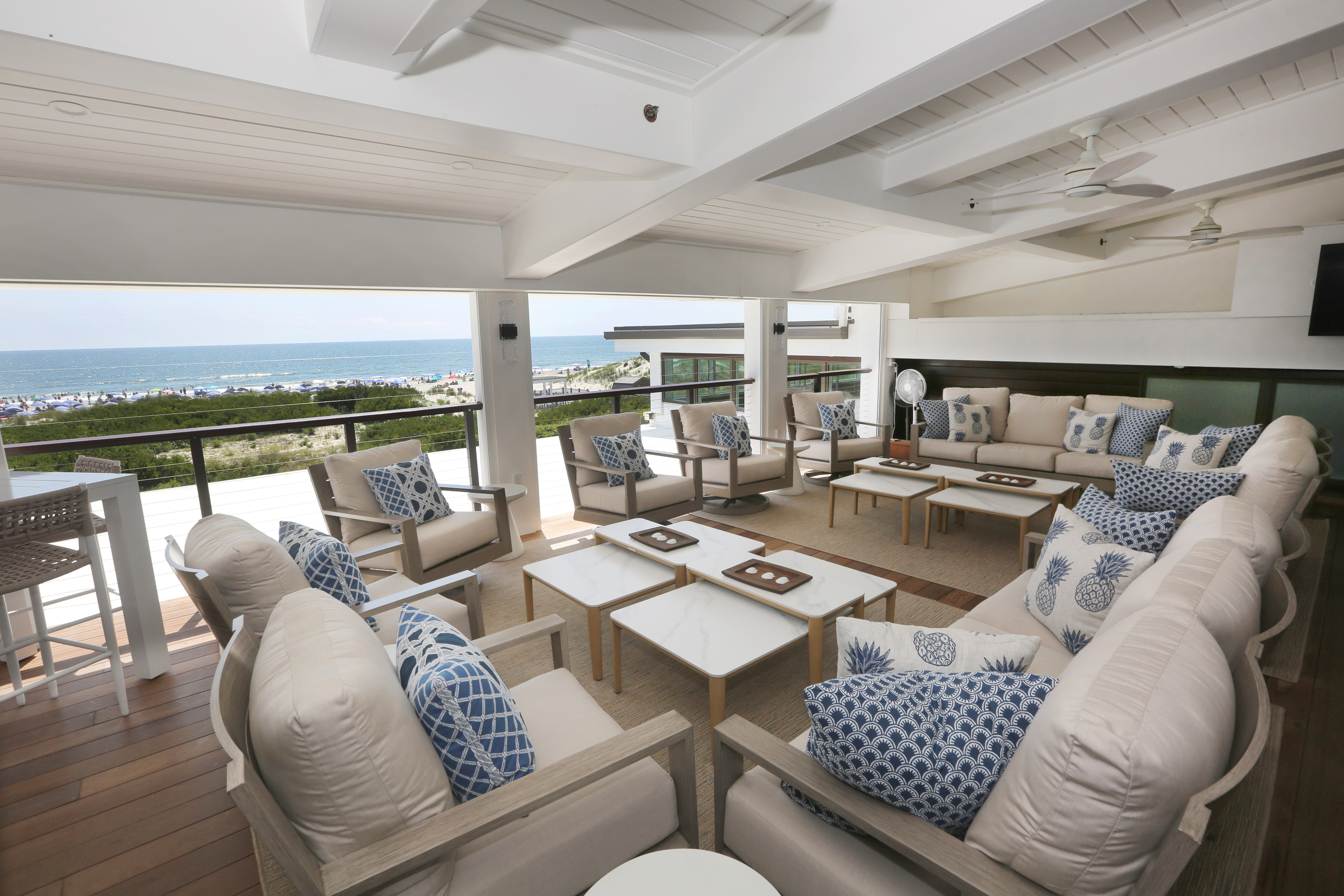
Sitting in a corner room at the Icona Avalon, the largest of Mita’s seven luxury hotels, the 72-year-old said it was the Shore, his lifelong “happy place,” that transformed him.
As Mita looked out onto the dunes, he recalled his baptism at St. Paul Catholic Church in Stone Harbor and his summer job as a teenage busboy and server at the Princeton Bar & Grill in Avalon.
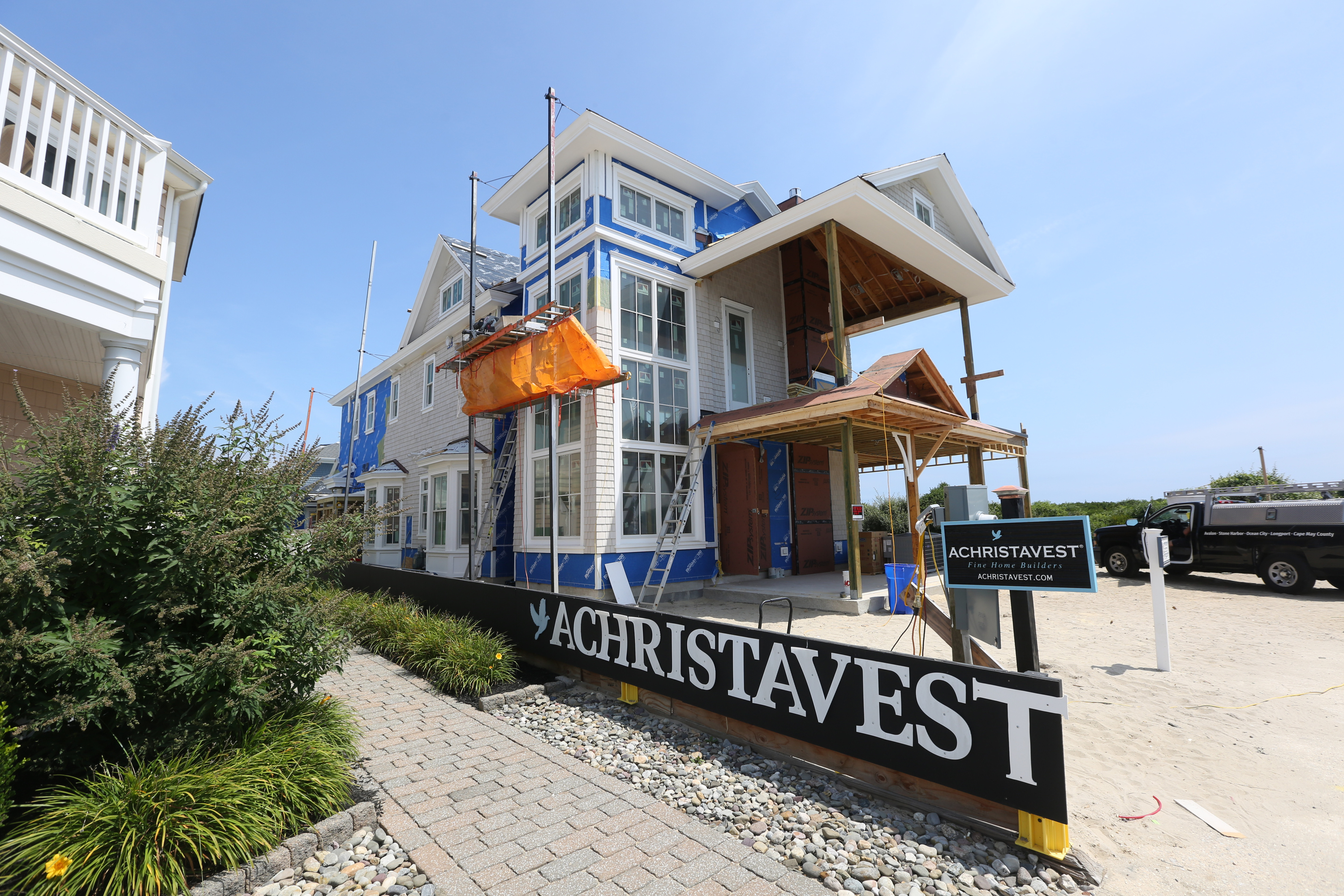
Decades later, Mita leads both Icona Resorts and Achristavest homebuilders, which constructs multimillion-dollar waterfront homes — including a controversial 18,000-square-foot mansion that would be the largest in Avalon. Built on spec, it will likely sell for several tens of millions.
His for-profit companies are all about luxury. At the same time, they are imbued with Mita’s faith: The names, Icona and Achristavest, were inspired by spiritual experiences and words, and he displays 18-inch statues of the Blessed Mother in the hotel lobbies.
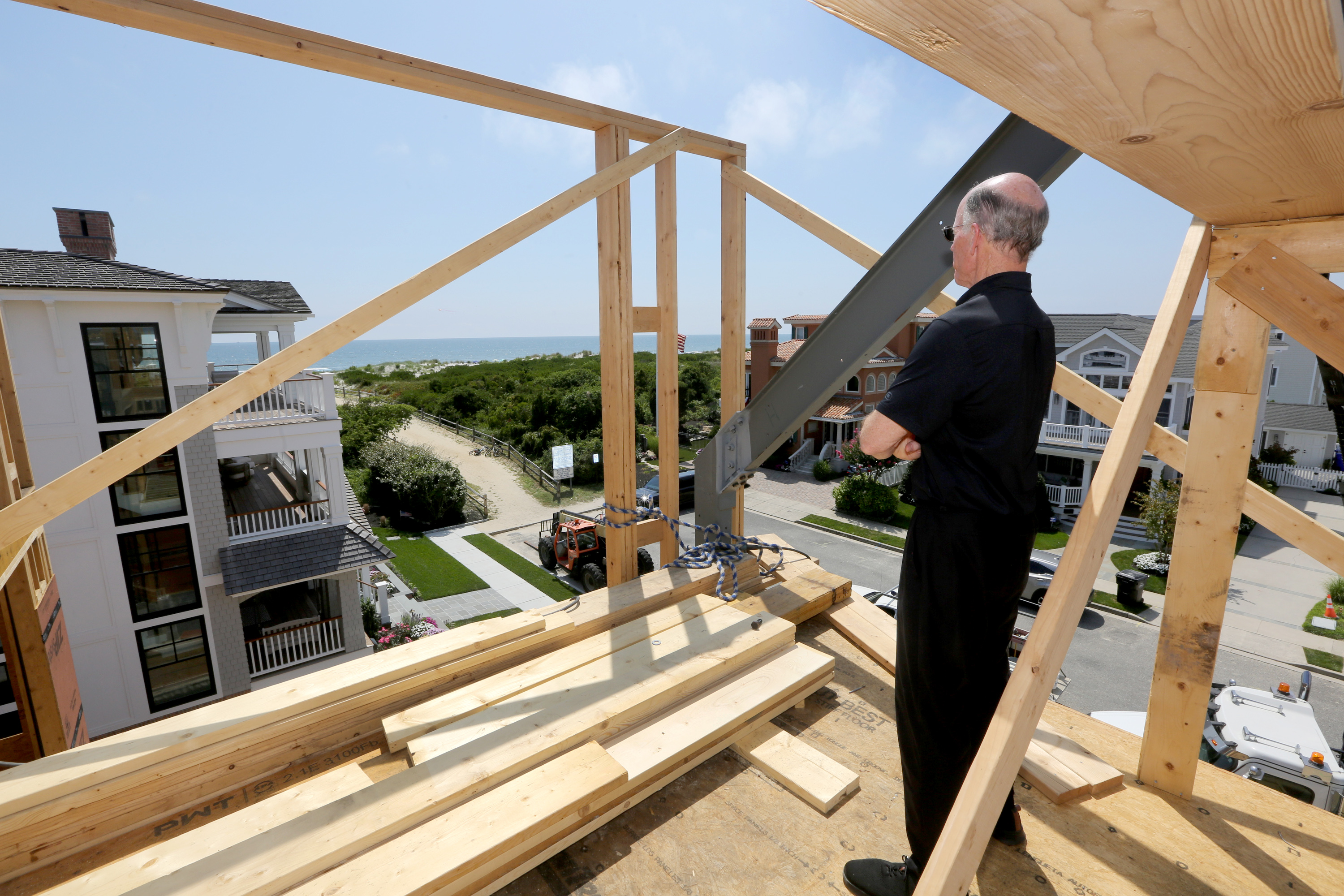
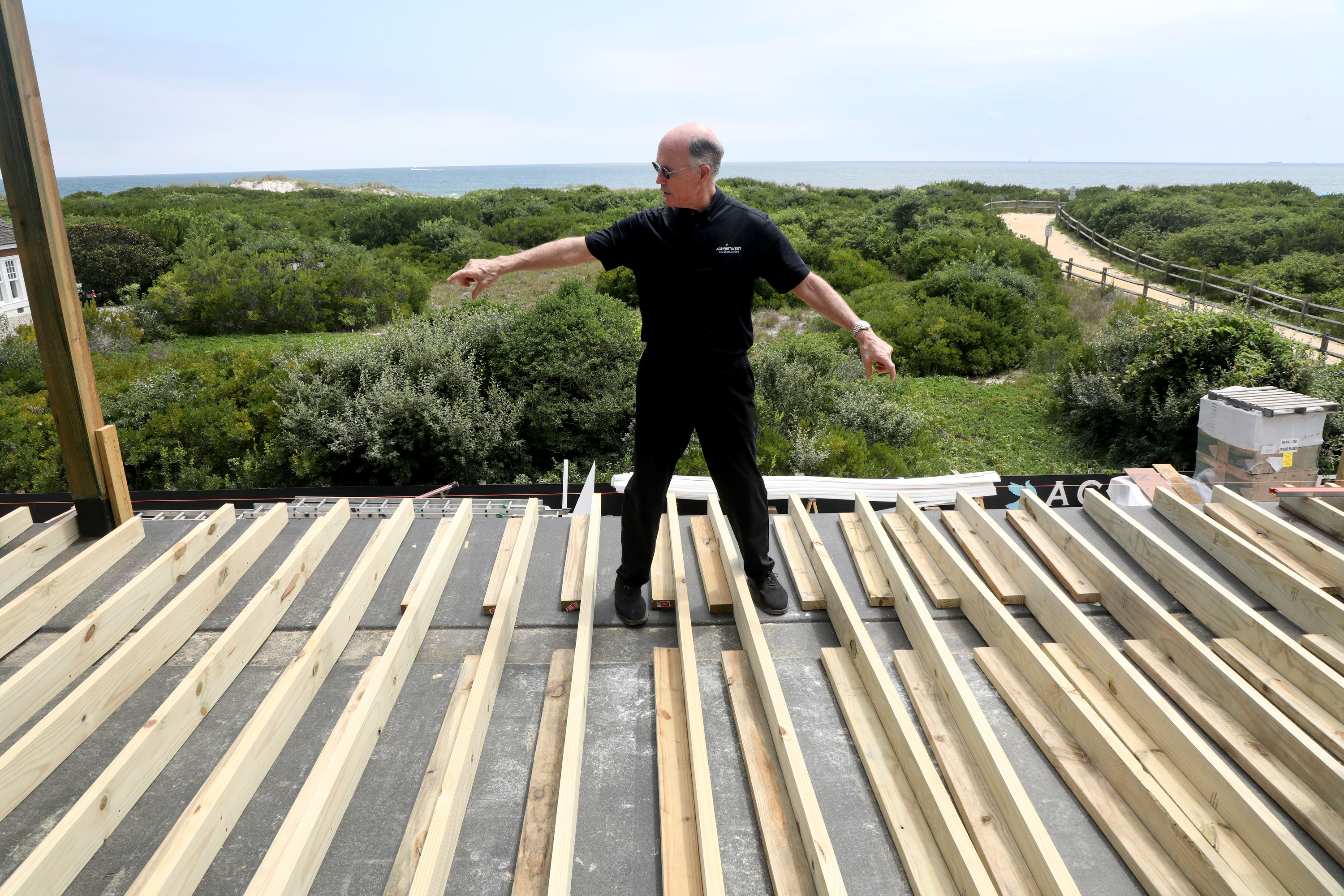
On a recent August day,he greeted employees by name and chatted with guests as he walked through Icona Avalon and neighboring Icona Windrift. Later, he visited under-construction homes, rattling off details about each project and staring in awe at the ocean views, as if seeing them for the first time.
Eustace Mita takes in the view from an under-construction Achristavest home on 77th Street in Avalon.Vernon Ogrodnek / For The Inquirer
“Do what you love and the money will come,” Mita said, referencing a lesson he learned from his grandfather, Eustace Wolfington, who owned Avalon’s first beachfront hotel, the Puritan, later renamed the Whitebrier. “That has been so true in my life.”
Mita declined to share how much his companies, which are privately held,are worth, or how much he’s invested in the Shore, saying only that it’s “hundreds and hundreds of millions of dollars” — and counting.
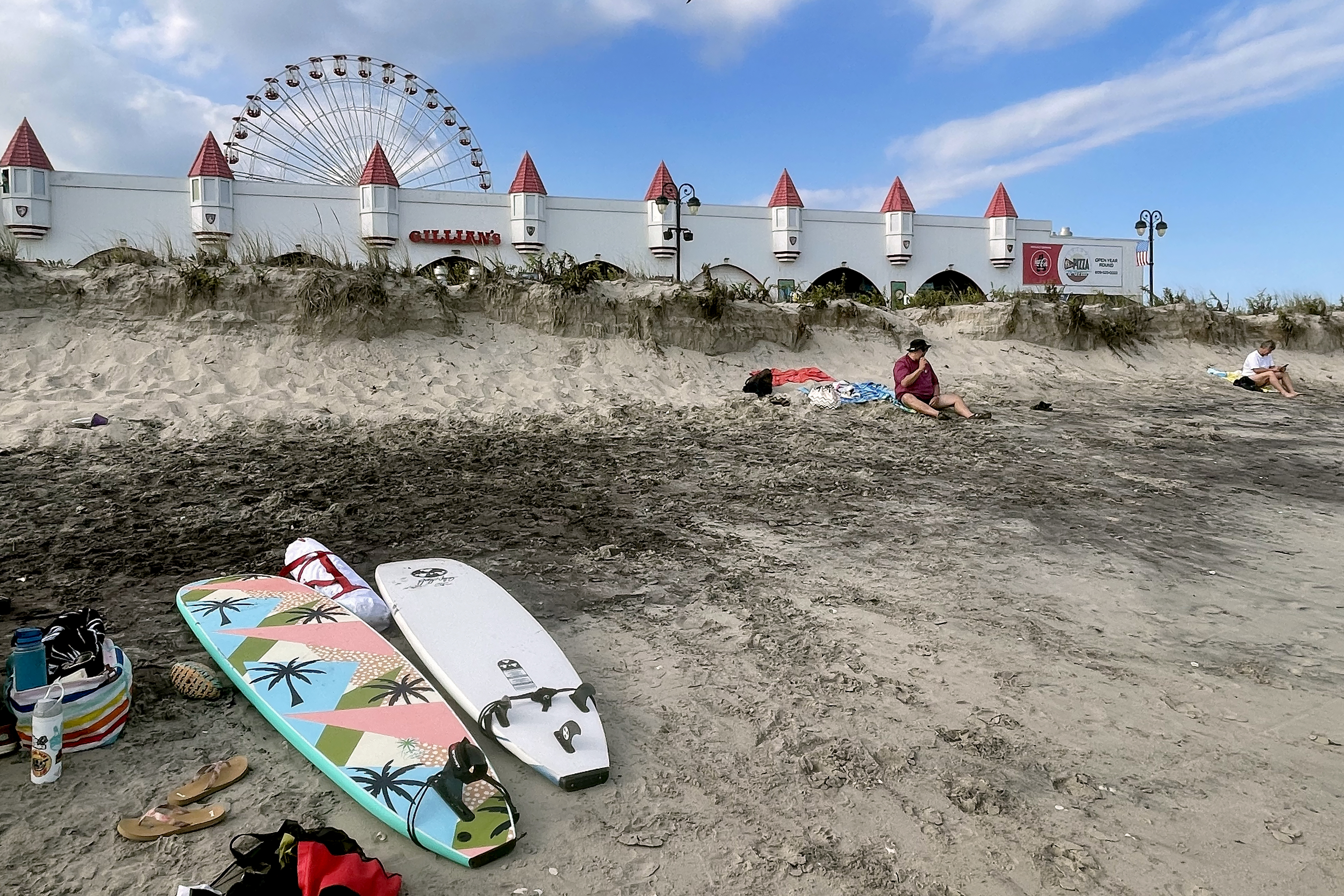
The now-closed Gillian’s Wonderland Pier rose above the dunes at Sixth Street and the Boardwalk in Ocean City during its final weekend in September 2024.Tom Gralish / Staff Photographer
For five years since he boughtthe now-shuttered Gillian’s Wonderland Pier, Mita says he has faced roadblocks and pushback, most recently from community groups who sued Ocean City and its council asking to void the site’s “in need of rehabilitation” designation. The designation allowed council to start talks with Mita about his plans to redevelop the former amusement park.
In a statement announcing the lawsuit, Jack Gutenkunst of Plaza Place Civic Association, one of the neighborhood-group plaintiffs, called the designation “deeply flawed” and said it “seeks to improperly strip away important planning protections that residents have long relied upon.”
“We have [millions] worth of real estate right here that would be degraded by this hotel, and our way of life would be degraded,” said Marie Crawford, who lives behind the pier.
Mita said the project, which has been downsized from the original proposal, would be an asset to Ocean City. The town calls itself “America’s Greatest Family Resort,” he added, but has not opened a new hotel in more than 50 years. He noted that several business owners on the boardwalk and elsewhere have spoken in favor of the project.
“We’re on the pathway now to being able to build Icona Ocean City, but we’ll see,” Mita said. “I don’t take anything for granted.”
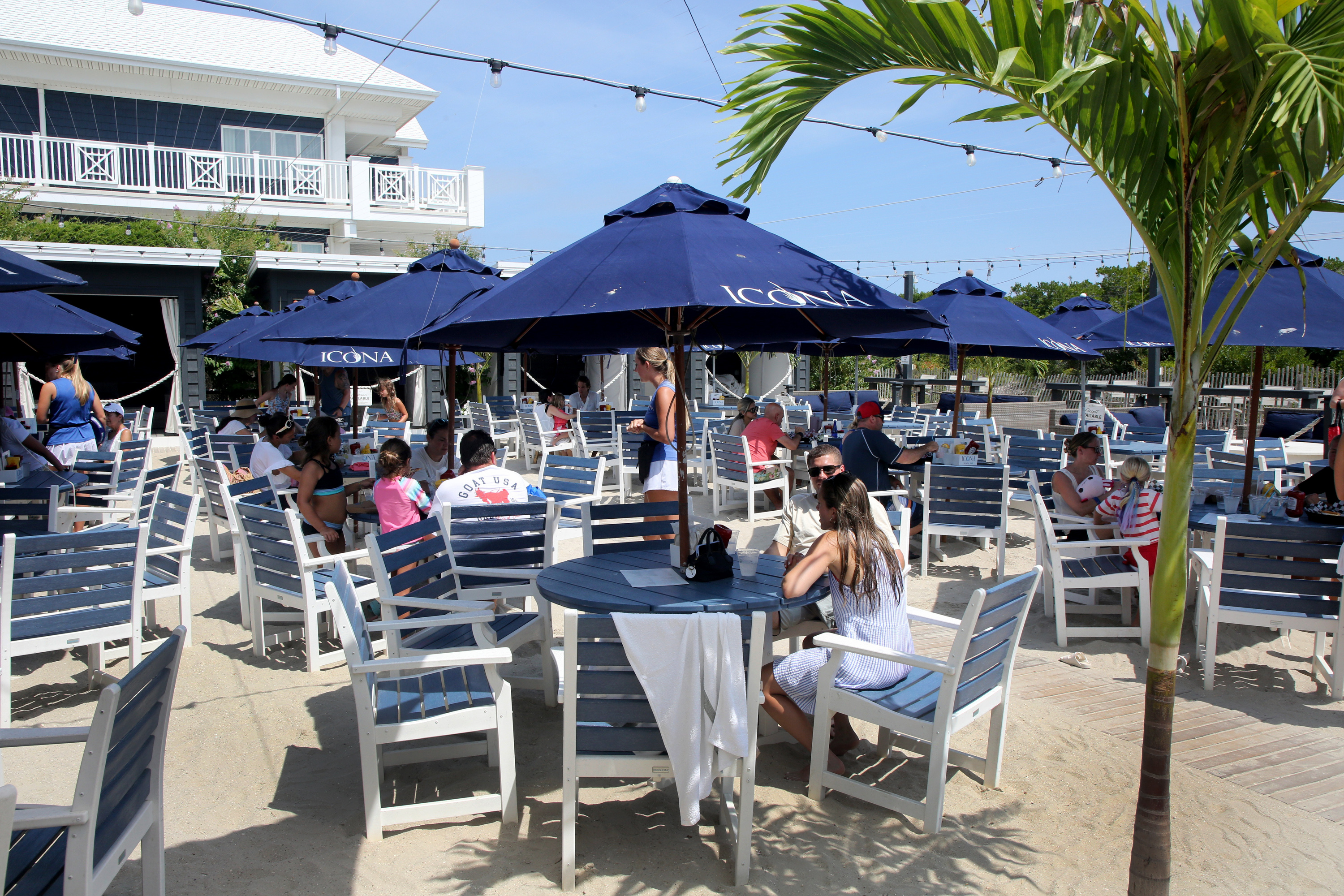
Guests eat lunch at Icona Avalon’s Beach Bar on a weekday in August.Vernon Ogrodnek / For The Inquirer
He has his sights on two other potential hotel properties, one in Cape May County, though he wasn’t ready to share details.
Despite many offers, Mita has no interest in selling Icona Resorts. He has told his five grown children that they could do so someday — as long as they don’t sell the prime beachfront real estate where his hotels sit.
For now, his answer to the near-constant acquisition proposals is polite but firm: “Thank you, we’re not interested.”
But, he added with a laugh, “we’ll sell you a house.”
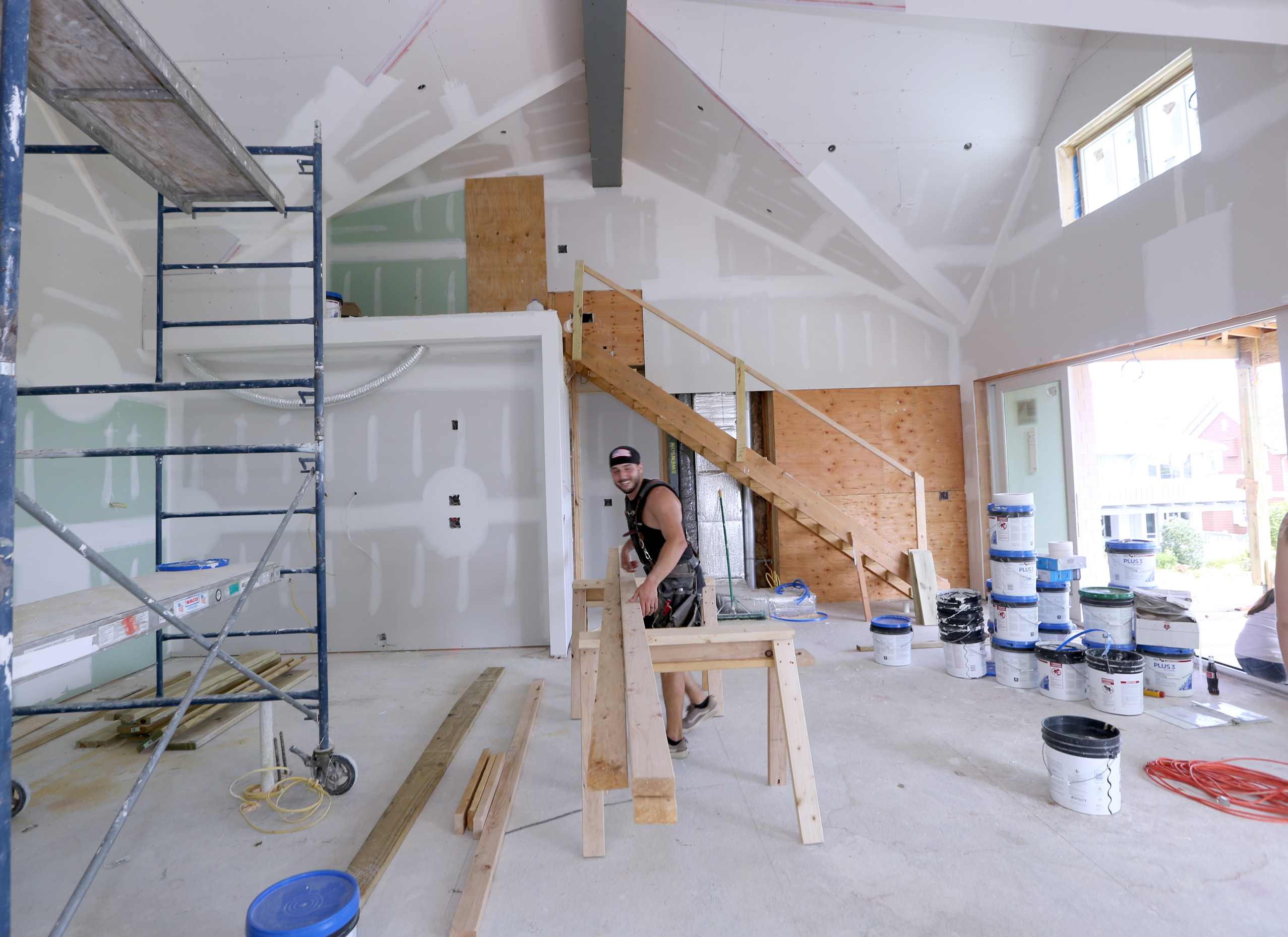
An Achristavest home is under construction on 116th Street in Stone Harbor.Vernon Ogrodnek / For The Inquirer
Mixing faith and luxury down the Shore
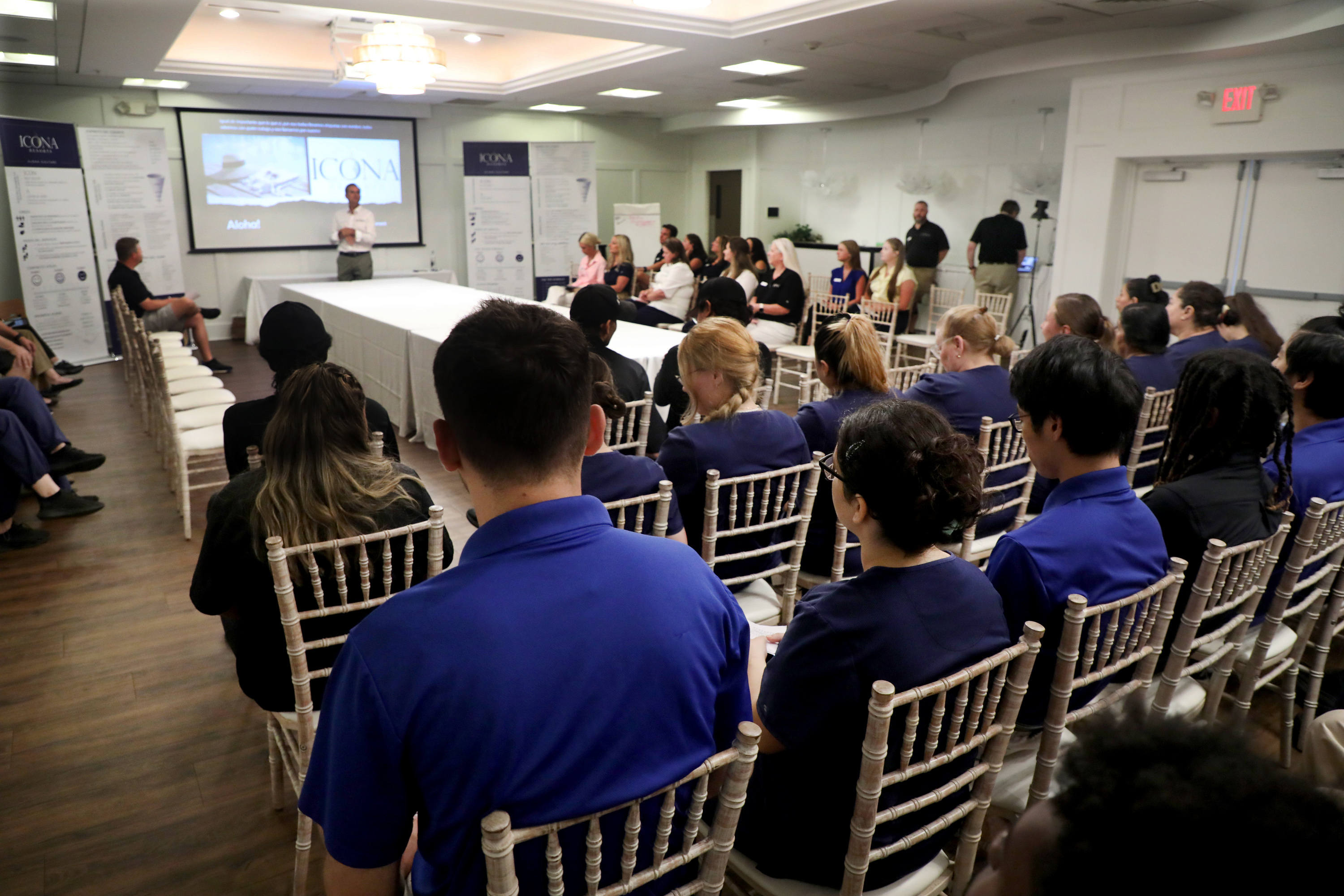
In a conference room off the Icona Avalon ballroom, dozens of hotel employees — many of them international workers on J-1 visas — sit facing a projection screen and white board where the company’s guiding principles are about to be reinforced.
Wearing a black Icona polo, black pants, and an unwavering smile, Mita slips into the morning meeting with little fanfare.
A manager kicks off a regular exercise: Stand, introduce yourself, and greet coworkers on either side of you by name. Seated in the back, Mita is among the last to participate, standing ramrod straight and speaking with a joyful lilt.
Randel Davis, general manager of Icona Avalon, leads an employee meeting.Vernon Ogrodnek / For The Inquirer
Whenever possible, managers remind the employees, they should call guests by their names, too.
“The sweetest sound to a person’s ears is the sound of their own name,” Mita said, referencing How to Win Friends and Influence People by Dale Carnegie, one of many books that influenced Mita’s leadership style. The most instrumental, he said, was Greatest Salesman in the World by Christian writer Og Mandino.
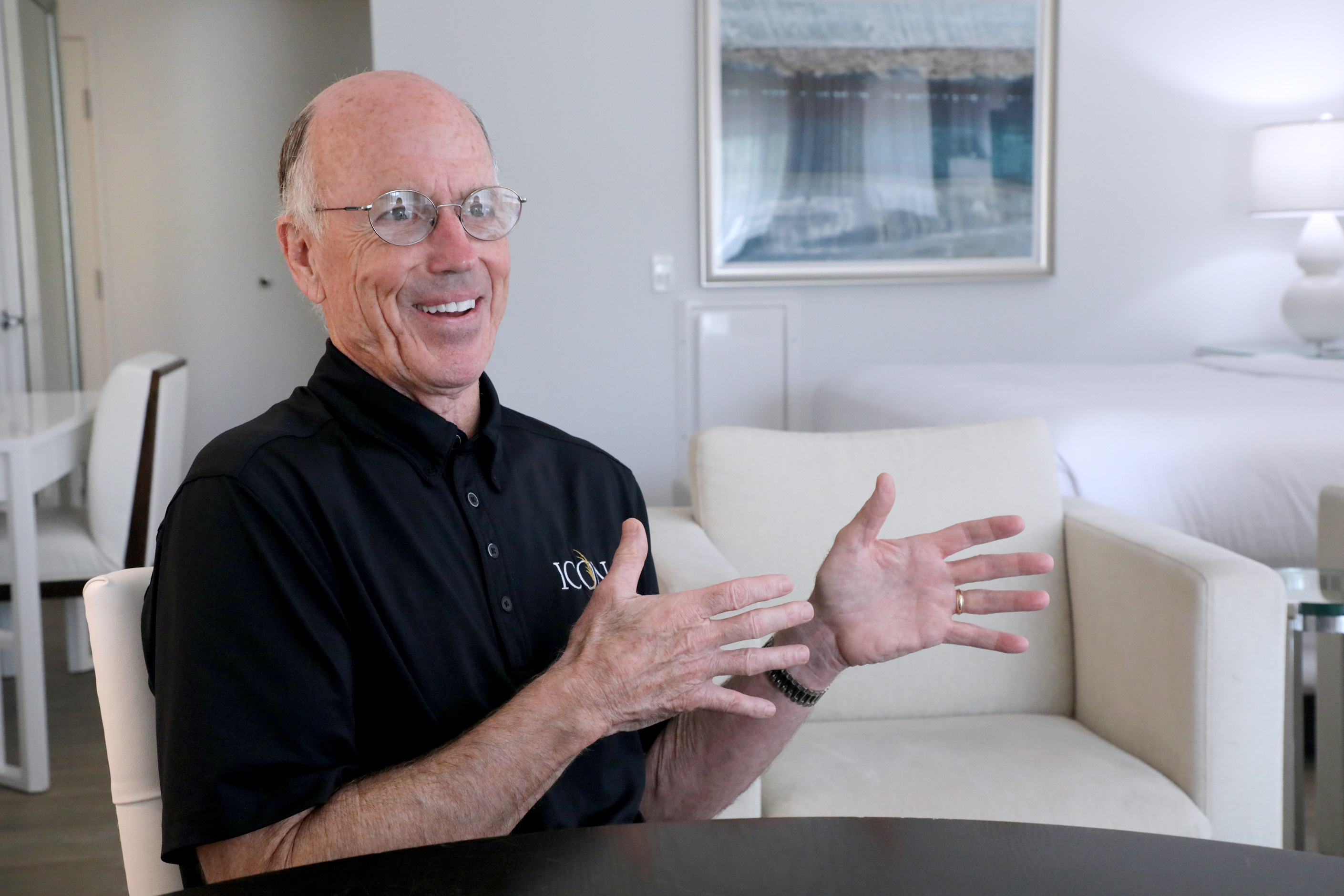
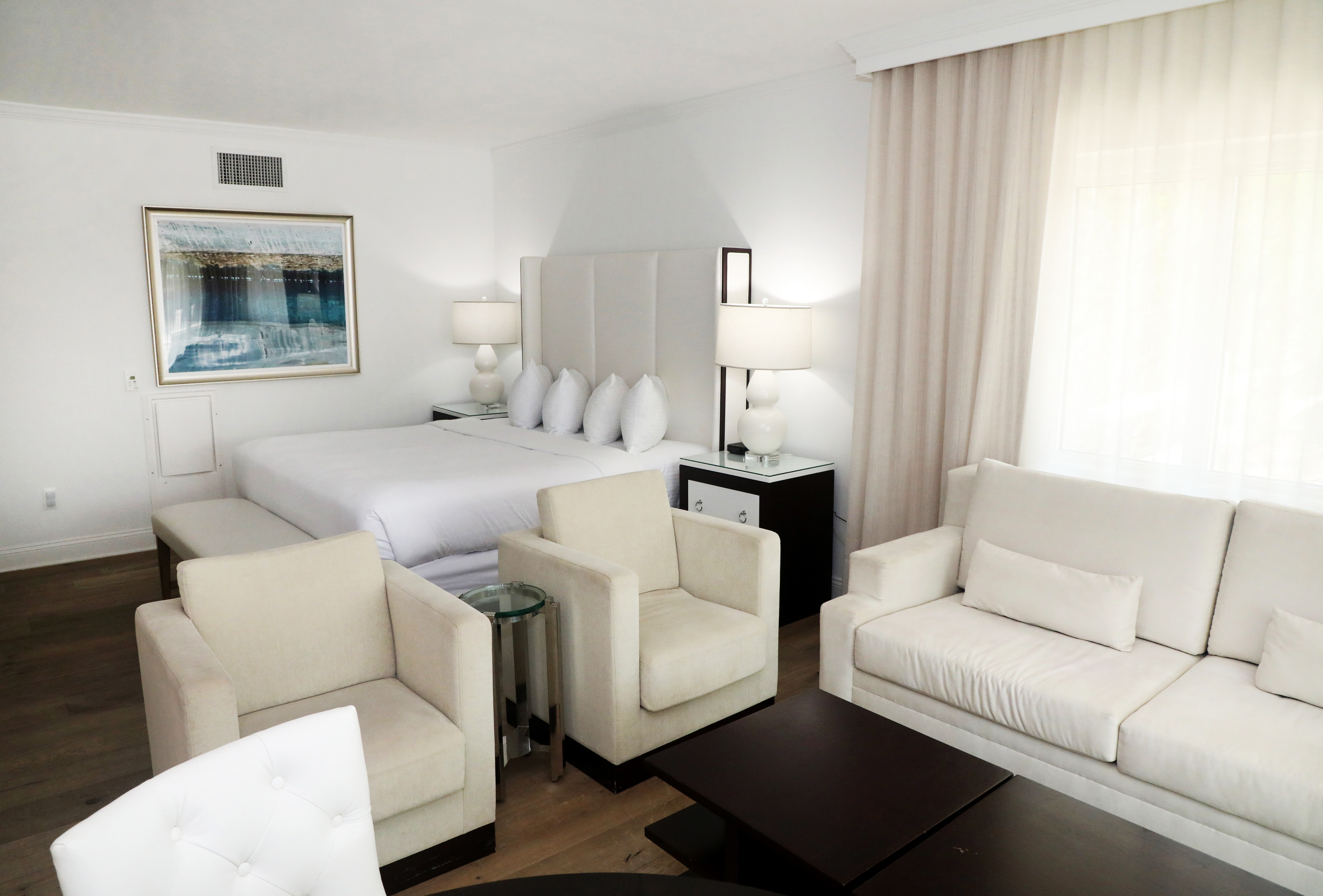
Eustace Mita talks about his business and life philosophy in a guest room at Icona Avalon.Vernon Ogrodnek / For The Inquirer
When Mita first placed Blessed Mother statues in his hotels, he said, some suggested it could be “a little too religious.” But he stood by it, saying the Blessed Mother is the matriarch of all people, not just Catholics.
“If you don’t like Mom,” he said, “you don’t have to stay with us.”
More often, Mita said guests compliment the statues. He sees some passersby bless themselves and say a silent prayer.
“We don’t apologize for that,” he said of the iconography. “But we honor all faiths.”
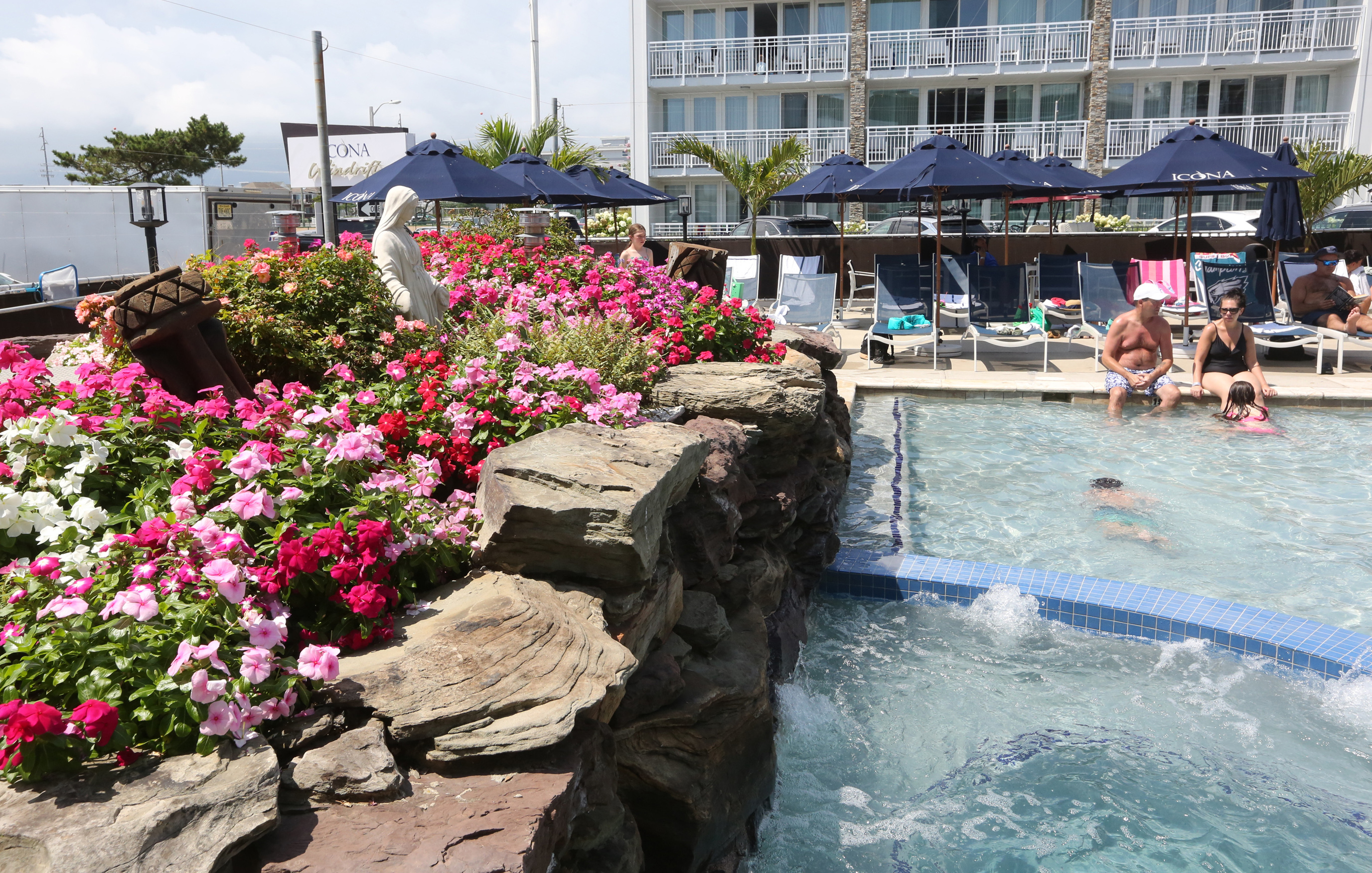
A statue of the Blessed Mother overlooks the pool at Icona Windrift.Vernon Ogrodnek / For The Inquirer
How Icona Resorts were built
In his pursuit of hotels, Mita was particularly motivated by scroll three of Mandino’s work: “I will persist until I succeed.”
After graduating from Archbishop John Carroll High School in 1973and studying for three years at Drexel University, Mita worked in the auto industry. In the 1980s, he founded Mita Leasing, then ran Half-a-Car, a lease-training company, with his uncle, Eustace Wolfington II.
Mita said he “backed into” the hotel industry around the time of the 2008 financial crisis, during which he lost about three-quarters of his net worth.
Back then, Mita’s Achristavest real estate company was knocking down small Shore hotels and building condo complexes, including the Grand at Diamond Beach, which sits between Wildwood Crest and Cape May.
Achristavest acquired the Grand’s neighbor, the Pier 6600 hotel, for $12 million in 2006, Mita said. Then, “Armageddon hit” with the recession.
Home construction at an Archistavest home in Stone Harbor in AugustVernon Ogrodnek / For The Inquirer
“Our homebuilding business didn’t slow down; it literally stopped,” Mita said. When you’re building second homes, “everybody wants one, but they don’t need one.”
While demand for Shore homes remained low, Mita said he found that families were flocking to the hotel for short beach vacations at lower prices. So he went all in on resorts.
The Pier 6600 became Icona Diamond Beach in 2012. Mita has spent $30 million renovating it, he said, including the addition of a third-floor ballroom for its thriving wedding business.
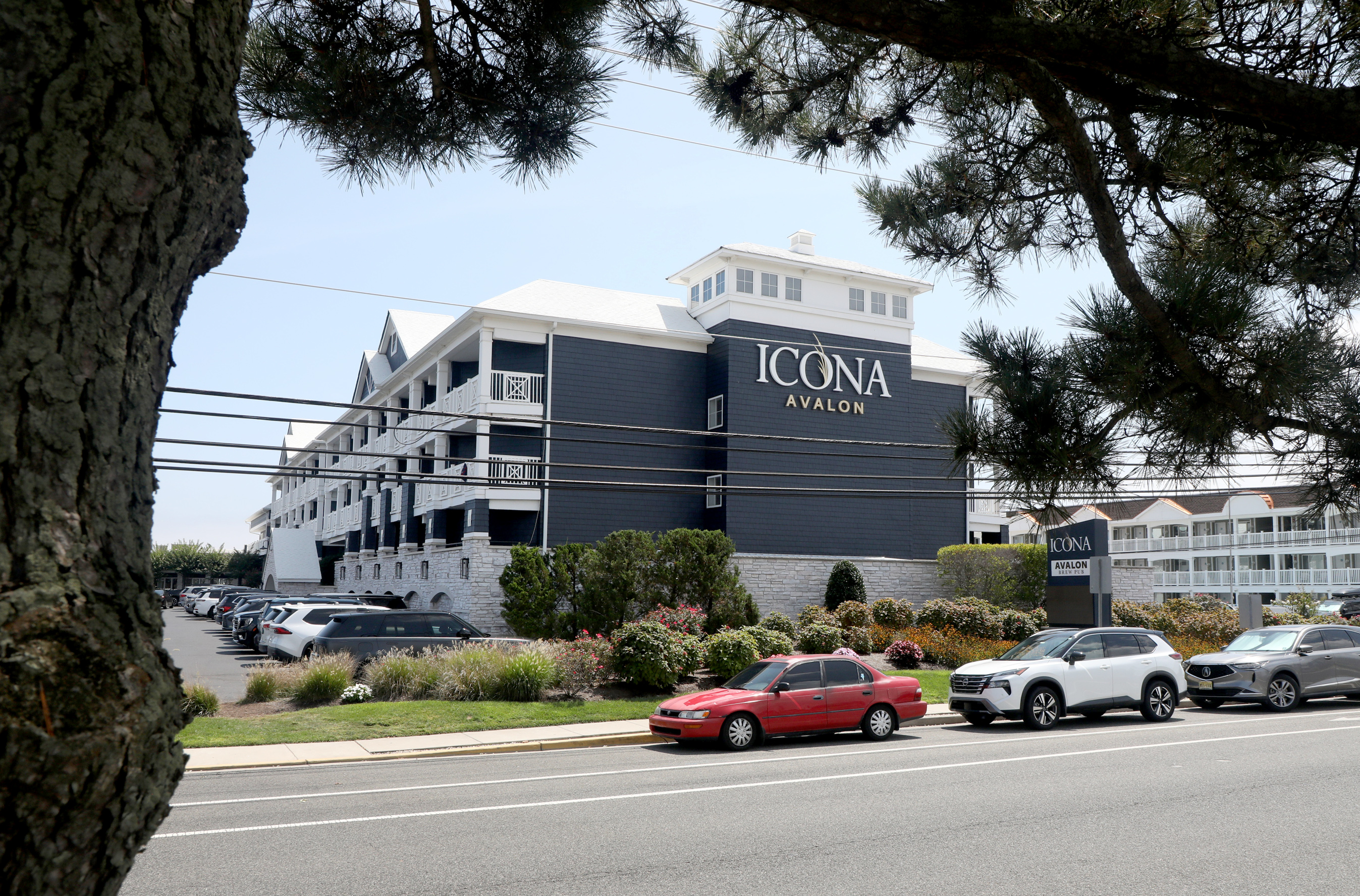
Eustace Mita bought Icona Avalon from the former owners of the Golden Inn in 2015. Vernon Ogrodnek / For The Inquirer
Then, after 16 years of knocking on the door at the Golden Inn in Avalon, Mita acquired the iconic beachfront property for $25 million, which in 2015 was the largest hotel transaction in Cape May County history, he said.
Mita renamed it Icona Avalon. He said he has spent $35 million to remodel it.
A few years later, he purchased the Windrift hotel next door for more than $30 million and spent $27 million on renovations there, which include the new Avalon Prime steakhouse and a private third-floor “sky lounge.”
The Icona Windrift in Avalon, which Eustace Mita has spent $27 million renovating since he purchased it five years agoVernon Ogrodnek / For The Inquirer
Icona Yacht & Beach Club members, who pay a $7,000 initiation fee plus $5,000 a year, can access the sky lounge, the Icona yacht, private beach service, and shuttle service.
They number about 25 now, Mita said, and he plans to cap membership at around 200 people.
It’s a similar setup as the Union League. The historic club, headquartered on South Broad Street, recently bought Avalon’s iconic Whitebrier for $23 million and last summer made it members-only. The move sparked debate over whether the Shore town was becoming too exclusive for even its wealthy homeowners.
The members-only Sky Bar at Icona Windrift in Avalon sits on the highest point on Seven Mile Beach, according to Eustace Mita.Vernon Ogrodnek / For The Inquirer
The Jersey Shore experience, elevated
While middle-class families have increasingly been priced out of the Shore, Mita said he doesn’t believe his hotels are contributing to the trend.
“We don’t cater to the wealthy,” Mita said, adding that Icona has opened two “select-service” hotels — Mahalo Diamond Beach and Mahalo Cape May — which have fewer amenities and sometimes lower prices.
Rooms there are about $200 a night on shoulder-season weekdays but can cost $500 to $700 on a summer weekend.
At Icona’s full-service resorts in Avalon and Diamond Beach, and its boutique hotel in Cape May, rooms start around $700 a night on peak summer weekends.
A corner guest room at the Icona Avalon.Vernon Ogrodnek / For The Inquirer
Outside South Jersey, Icona’s Grand Victorian boutique hotel in Spring Lake, Monmouth County, has slightly lower rates.
Icona is not the first brand to bring luxe hotel accommodations to Seven Mile Island, which contains Avalon and Stone Harbor.
The Reeds at Shelter Haven, a year-round resort in downtown Stone Harbor, opened a couple years before Icona Avalon. Rooms there start around $600 a night on midsummer weekends.
“It’s great to have healthy competition, right?” the Reeds’ general manager Carmen Russo said. “We always look at them and see what they’re doing, just as they look at us and see what we’re doing.”
Eustace Mita rattles off details about the construction of this Achristavest home on 116th Street in Stone Harbor.Vernon Ogrodnek / For The Inquirer
As for Mita’s home-building business, Achristavest builds on the beach and bay from Cape May to Longport, with properties starting at $5 million. By comparison, the median listing price for all homes — not only waterfront ones — in Stone Harbor is just under $4.7 million.
Achristavest homes being built on spec in Avalon and Stone Harbor will likely sell for $15 million to $25 million.
“I tell my children rent in Delaware County and buy in Cape May County,” said Mita, who grew up in Bala Cynwyd and now has homes in Malvern and Ocean City.
What’s ahead for Icona and Achristavest
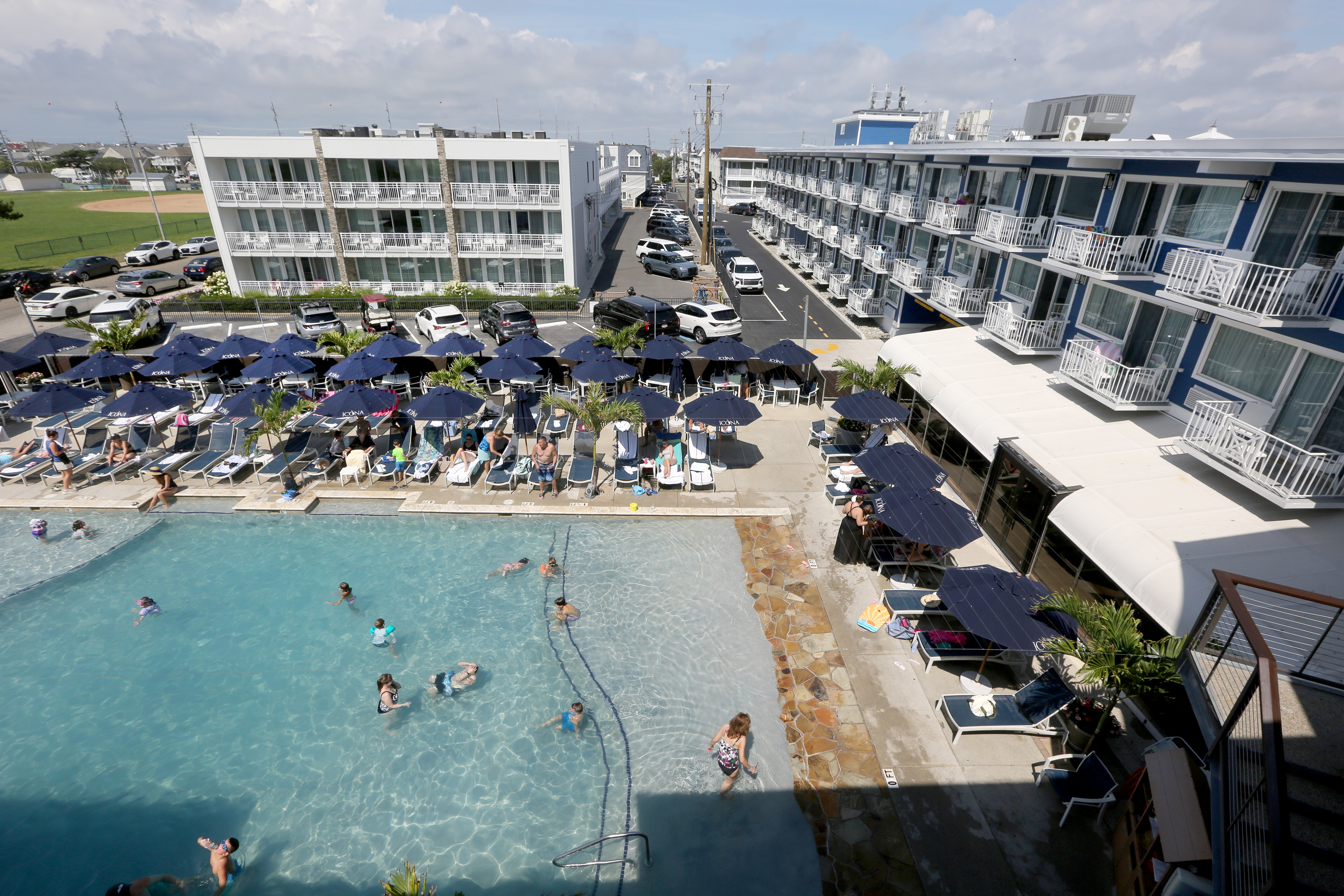
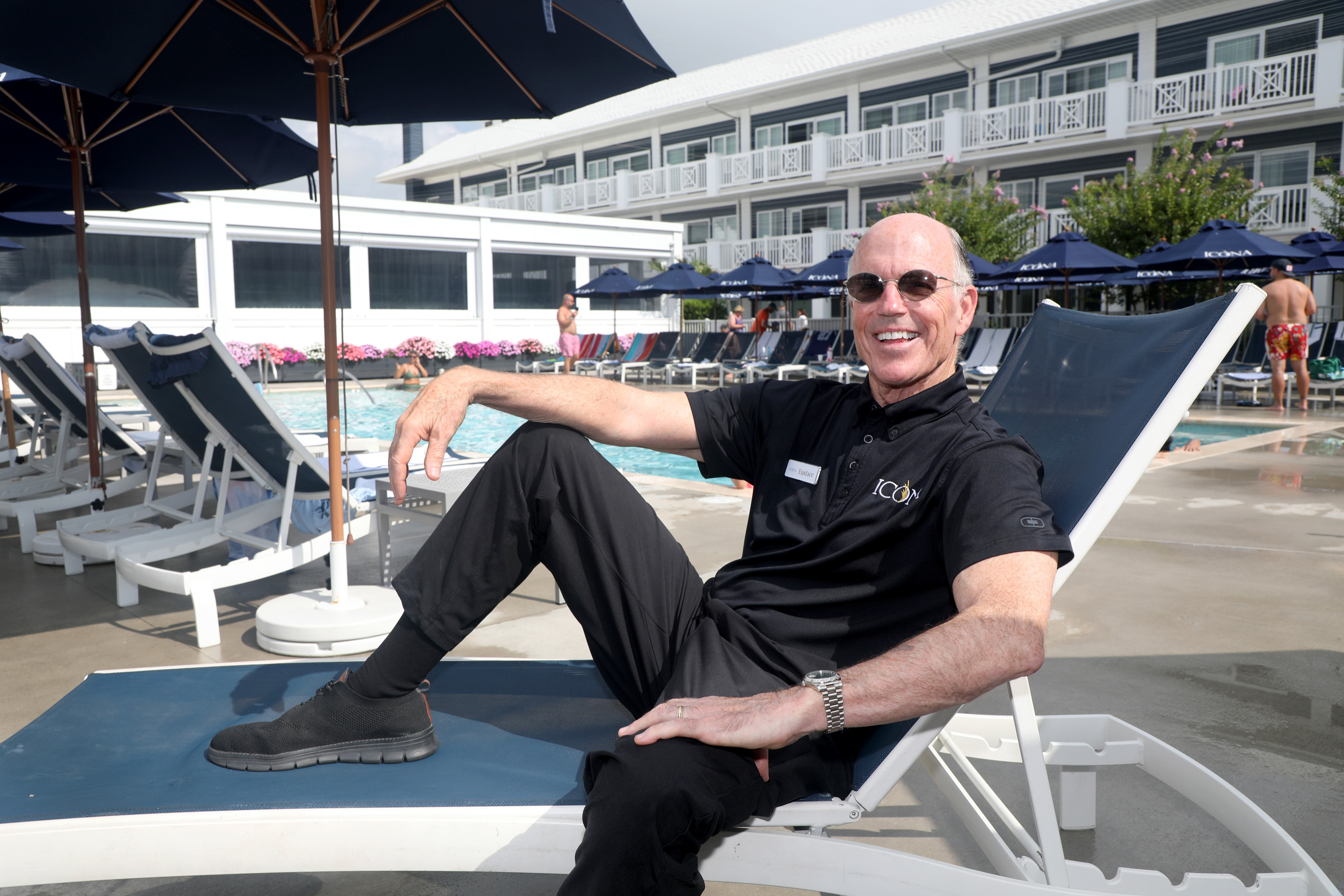
Eustace Mita, Icona’s chairman, poses by the pool at Icona Avalon.Vernon Ogrodnek / For The Inquirer
Mita speaks often of his legacy.
“I’ll be dead and gone, but imagine the next generation and then the next generation,” Mita said. “Everything we’ve built is built to last.”
And he said he hopes the lessons he instilled in employees are just as permanent.
One employee, Rob LaScala, worked at Mita Leasing and then went on to found LaScala Restaurant Group, which has dozens of locations across the region. In just a couple years working together, LaScala said, Mita left a mark.
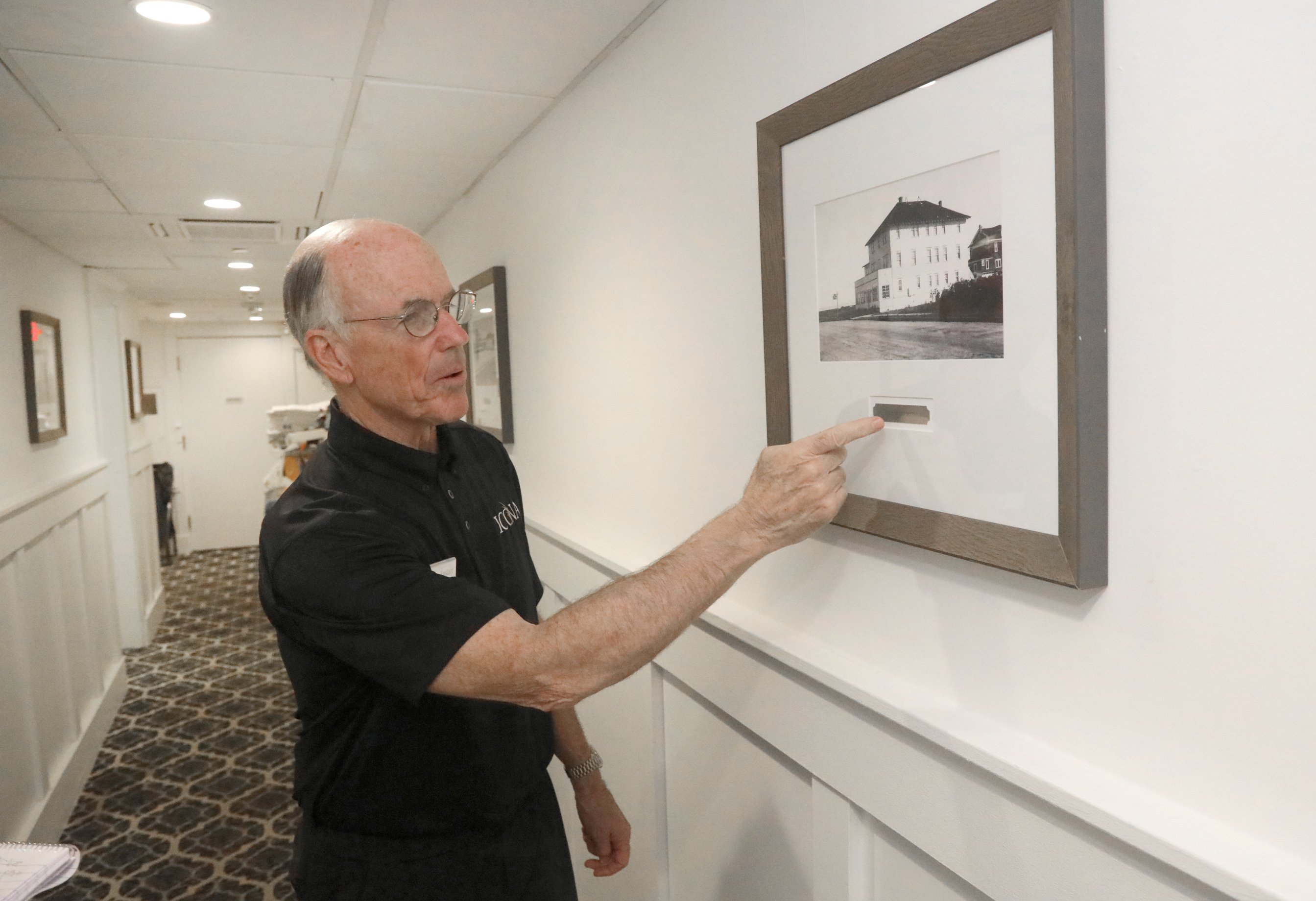
At his Icona Avalon hotel, Eustace Mita points to a black-and-white photo of the Puritan, Avalon’s first beachfront hotel that was founded by his grandfather, Eustace Wolfington.Vernon Ogrodnek / For The Inquirer
Mita is “just a make-you-feel-good type of person,” LaScala said. “I over the years have tried to emulate him” and create a company culture that transcends business.
Mita refers to his 1,100 employees as family but said he works to prioritize time with his actual family. He spends summer weekends with his wife, Susie, and some combination of their five children and 18 grandchildren. His oldest son, Euse, was recently named Icona’s president and CEO.
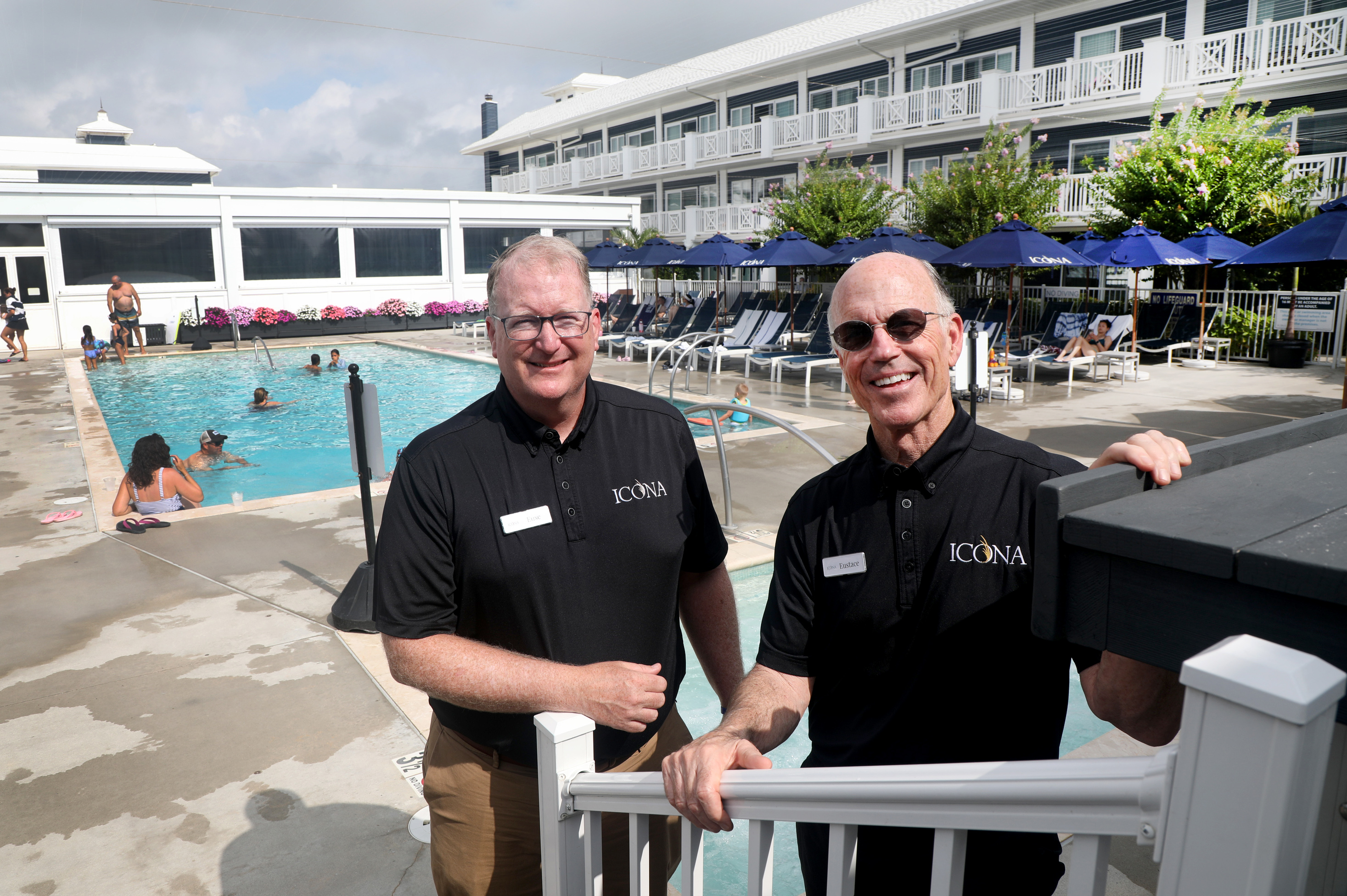
Eustace Mita (right), founder and chairman of Icona, with his son Euse, who was recently named president and CEO.Vernon Ogrodnek / For The Inquirer
But, of course, he said, work sometimes calls. On a recent weekend, with many summer staffers back at college, Mita helped clear tables at Icona Avalon while Euse was a fill-in valet.
Said Mita: “There’s no reason just because I’m a leader that I can’t bus tables, that I can’t sweep floors.”
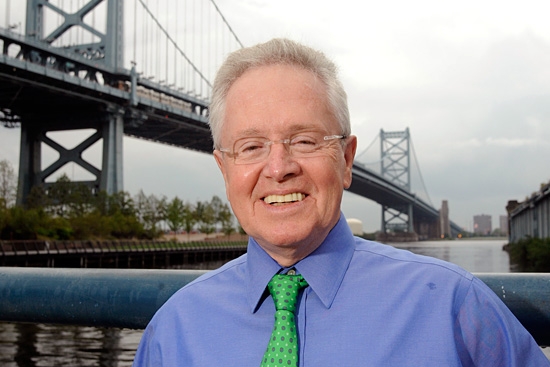
Tom Corcoran, 82, of Philadelphia, retired president of the Delaware River Waterfront Corp., founding president and former chief executive officer of the old Cooper’s Ferry Development Association in Camden, former business administrator for the city of Camden, onetime Peace Corps program director in West Africa, mentor, and poetry enthusiast, died Sunday, Aug. 30, of complications from dementia at his home in Center City.
Born in Chicago and a graduate of Loyola University Chicago, Mr. Corcoran earned a master’s degree in public administration at the University of Pennsylvania’s Wharton School in 1975 and never strayed far from the Delaware River after that. He spent 25 years, from 1984 to 2009, as president and CEO of the Cooper’s Ferry Development Association on the Camden waterfront, and eight years, from 2009 to 2017, as president of the Delaware River Waterfront Corp. in Philadelphia.
He championed what he called “the two cities, one waterfront strategy” and was especially adept, former colleagues said, at political maneuvering and marshaling funds and projects. Former colleagues on both sides of the Delaware called him “a tireless public servant,” “a visionary urban planner,” and an “economic development strategist with short-term practicality and long-term vision.”
In Camden, Mr. Corcoran added more than $550 million of investments to the waterfront area and oversaw the development of what is now the Freedom Mortgage Pavilion, the Adventure Aquarium, Wiggins Waterfront Park, the Riverlink Ferry, several office buildings, and other projects. Another New Jersey developer called him a “cult figure” among state lawmakers.
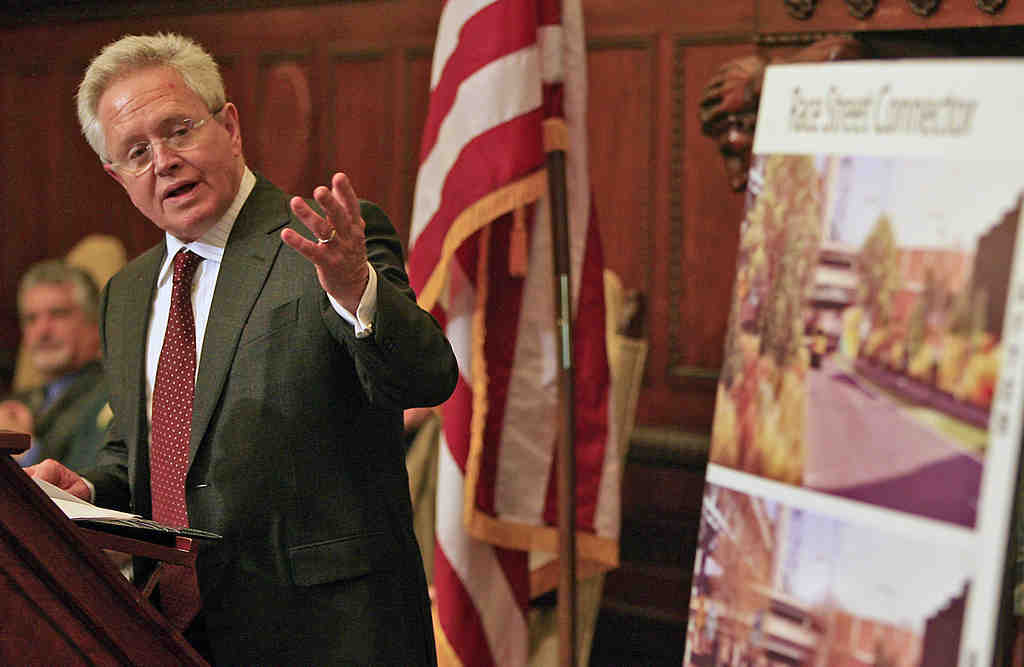
Mr. Corcoran talks at City Hall in 2011 about creating a string of parks along the Delaware River.Akira Suwa / Staff Photographer
He said education as well as development was key to building a strong local economy and told The Inquirer in 2006: “Until Camden has a good-quality education system, we’re not going to be able to attract families with school-age children back to the city.”
Dana L. Redd, former Camden mayor and current president and CEO of Camden Community Partnership, said on Facebook that Mr. Corcoran often slept on a cot in his Camden office and left daily handwritten messages that his project managers called “love notes.” Redd said: “He challenged a generation of urban leaders to think bigger, believe in Camden, and dream about what the city could become.”
In Philadelphia, he initiated the Race Street and Washington Avenue pier parks, the Spruce Street Harbor Park, a miles-long bike and walking trail, and the I-95 overpass park to reconnect Center City with its waterfront. “The more we look at the concept of one waterfront, two states, the more opportunities we’re going to find,” he said when he left Camden for Philadelphia in 2009.
When he retired in 2017, he said: “Instead of swinging for the fences, we decided we would hit singles and doubles and bunts and sacrifices, steal bases, and do whatever we could. Eventually, we thought, we’d always get back to the center.”
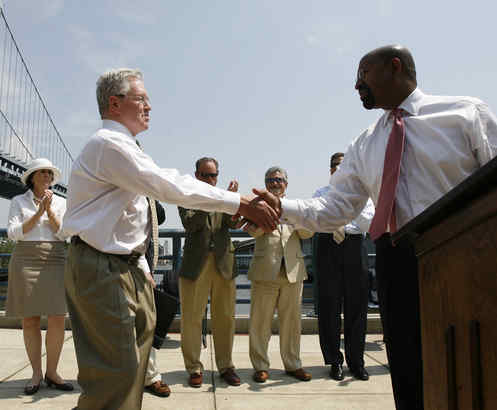
Mr. Corcoran (left) shakes hands with then-Mayor Michael Nutter in 2009 after joining the Delaware River Waterfront Corp. Alejandro A. Alvarez / Staff Photographer
Longtime colleague and friend Bill Hankowsky said: “It is truly unique that a single individual could have the vast impact across two facing waterfronts in the center of one of the country’s major urban metros.”
Earlier, Mr. Corcoran served nine years, from 1975 to 1984, in Camden city government, rising from administrative aide to business administrator. In 2001, he earned a Good Neighbor Award from the Camden County chapter of the American Red Cross for his “integral role in the revitalization of the city.”
In the 1960s, Mr. Corcoran joined the Peace Corps after college and spent seven years in Africa building dams and wells with local farmers. He spoke French and the local African language, and rose to program director.
“What an exemplary life he led,” a former Peace Corps colleague said in a tribute, “without fanfare or drama and always with service to others.”
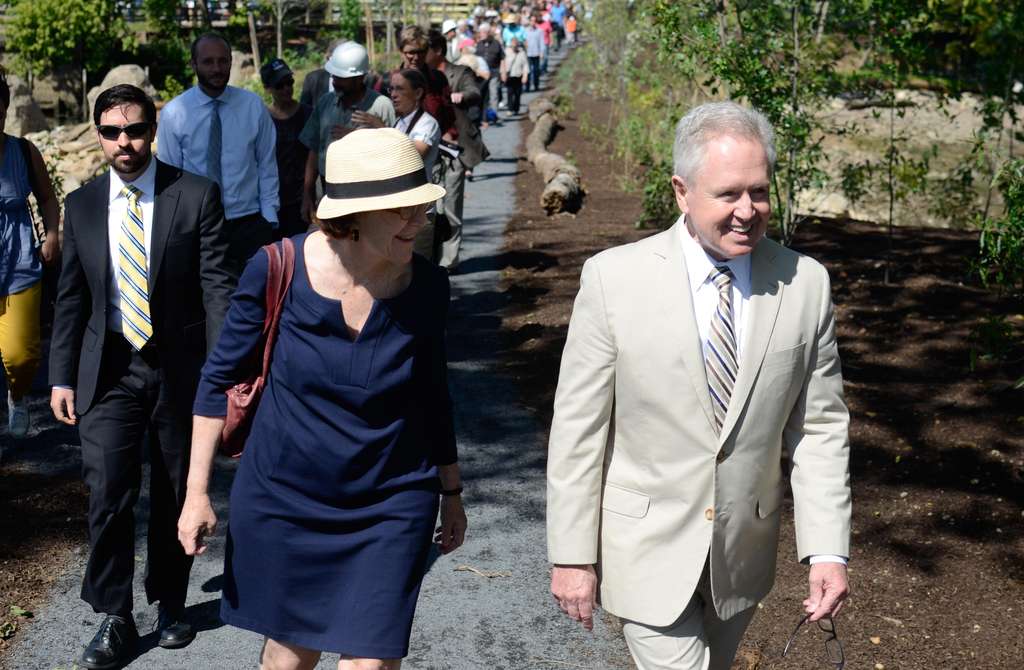
Mr. Corcoran (right) led visitors on a tour of the Washington Avenue pier park in 2014.Viviana Pernot / Staff Photographer
Off the waterfront, Mr. Corcoran was enthralled by poetry and his Irish heritage. He liked to recite lines from Ulysses and other poems, and sing songs from the old country.
“He was a true Renaissance man who had a remarkable vision for communities and people,” a former colleague said. Former colleague John Grady said: ”Tom was a giant, unassuming, persistent force for the local community.”
Thomas Patrick Corcoran was born May 13, 1944. He earned a bachelor’s degree in political science at Loyola in Chicago and rode camels to work in Africa during his time in the Peace Corps.
He met Robin Lowey at a dinner society event, and they married in 2003, and lived in Camden and Philadelphia. They enjoyed traveling and dining together, and hashing over world affairs.
Mr. Corcoran and his wife, Robin Lowey, married in 2003. Courtesy of friends
In 2009, he said he often peered through a telescope at the Philadelphia waterfront from his home in Camden and wondered how he would develop Penn’s Landing. “He’s the one who brought together the business leaders and was able to steer through difficult political waters,” then-Camden County freeholder Jeffrey Nash said in 2009.
His wife said: “He was a kind and generous gentleman. He was a good, nice person.”
In addition to his wife, Mr. Corcoran is survived by three sisters, a brother, and other relatives.
Services were held Thursday.
Donations in his name may be made to the Caplan Caring Difference Fund at the Penn Memory Center, Office of the Treasurer, Box 71332, Philadelphia, Pa. 19176.
Mr. Corcoran spent seven years in the Peace Corps after college. Courtesy of friends
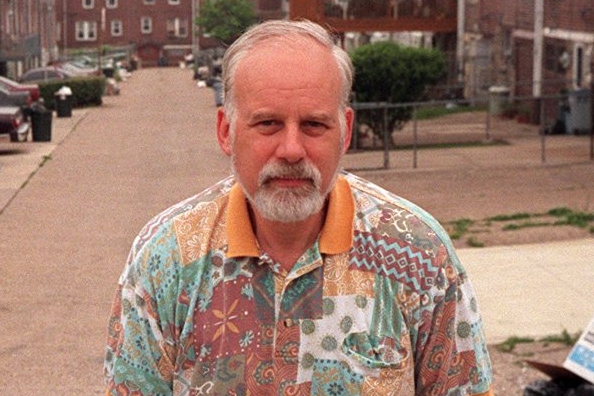
Ron Avery, 85, of Philadelphia, retired eclectic reporter and columnist for the Daily News, Philadelphia historian, volunteer city tour guide, author, high school history teacher, veteran, and canoe enthusiast, died Sunday, Aug. 2, of complications from amyotrophic lateral sclerosis at his home in East Falls.
Reared in Fairmount, Mr. Avery graduated from Thomas Edison High School and earned a bachelor’s degree in history at Pennsylvania State University. He was assigned to the ship newspaper in the Navy after college, found a creative niche in journalism, and went on to work for more than 30 years at the Associated Press, the Bucks County Courier Times, the Courier-Post in South Jersey, and the Daily News.
He wrote for the Daily News as a correspondent in 1981, joined the staff in 1982, and, until his retirement in 2000, wrote thousands of stories about crime, casinos, war orphans, historic houses, the MOVE bombing, local notables, and other subjects. His columns, “Poor Ronald’s Almanac” and “One of Us,” hammered away at local issues and featured everyday people doing exceptional things.
“He covered every nook and cranny of the city,” said his son Serge. “That burning curiosity sustained him till his last days.”
He wrote three books about Philadelphia, including A Concise History of Philadelphia in 1999. He produced a series of video guides he called the Urban Explorer for local TV in 2004 and posted blogs about the city from 2017 to 2019 on a website called Philadelphia Cracks Me Up.
“Like all cities,” he said in a 1995 Daily News column, “Philadelphia is honeycombed with hidden spaces and forgotten places.” In a 1997 review of his book, City of Brotherly Mayhem: Philadelphia Crimes and Criminals, The Inquirer’s Thomas Brady said: “The book … is decidedly a fun read.”
Alex Strang, his director on the Urban Explorer videos, called Mr. Avery an “unforgettable legend” and “a walking encyclopedia of the city’s history and eccentricities” in a Facebook tribute. Other former colleagues said he was “a clever journalist” and “a true Philadelphian.”
Longtime Daily News colleague Robin Palley said on Facebook: “He had an amazing knack of finding quirky people with fascinating skills or habits and making them come to life on our pages.”
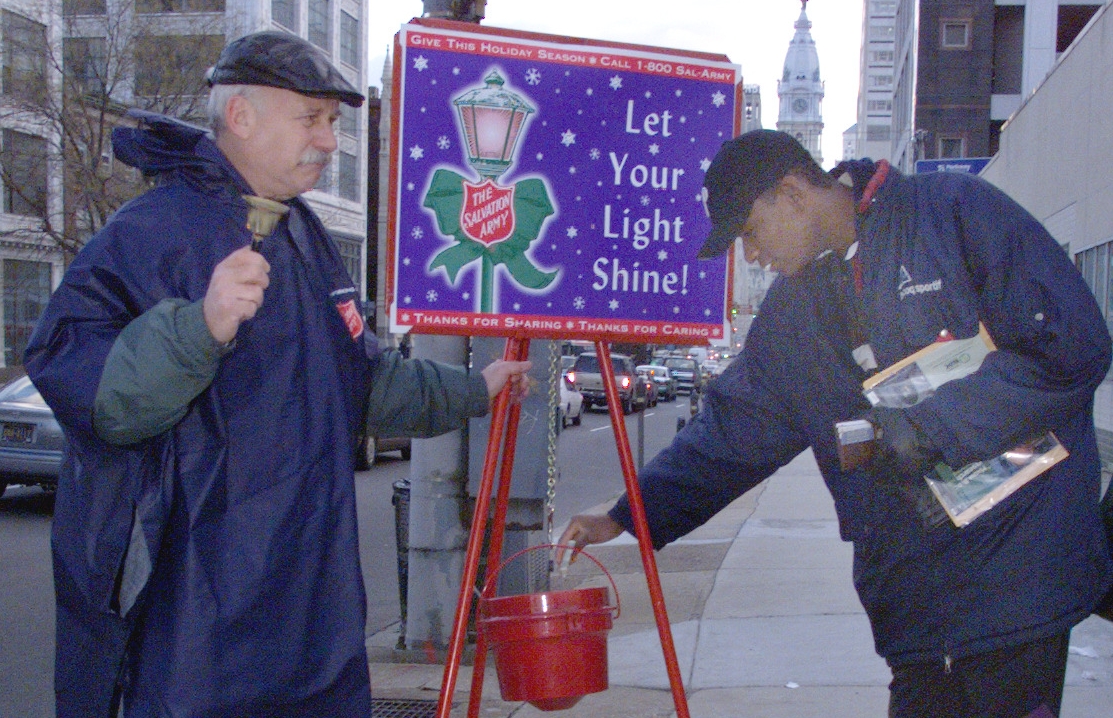
Mr. Avery (left) mans a Salvation Army donation kettle in 1999.Steven M. Falk / Staff Photographer
Before the Daily News, Mr. Avery wrote news and feature stories for the Courier-Post in the 1970s, and the Courier Times and the AP in the 1960s. He moved to Israel for six months in 1972 but returned to work for the Courier-Post in 1973.
He also wrote freelance pieces for the Hidden City Daily, PhillyHistory.org, UShistory.org, and op-eds later for The Inquirer and Daily News. He served in the Navy from 1964 to 1966, joined the Philadelphia Canoe Club later, and led water trips in the New Jersey Pine Barrens and elsewhere.
Knowledgeable, energetic, and naturally affable, he was a tireless promoter and volunteer guide in Philadelphia. He led walking tours throughout the city for students, civic groups, and other organizations, and his explanatory video tours featured cobblestone alleys, urban gardens, museums, statues, and other features of city life.
He was a stickler for details and historical accuracy, and he helped spur City Council to pass an ordinance in 2008 to educate and certify paid Center City tour guides. “They score high as Philadelphia ambassadors of good will,” he said in a 1995 column about uneducated guides, “but as historians they often flunk out.”
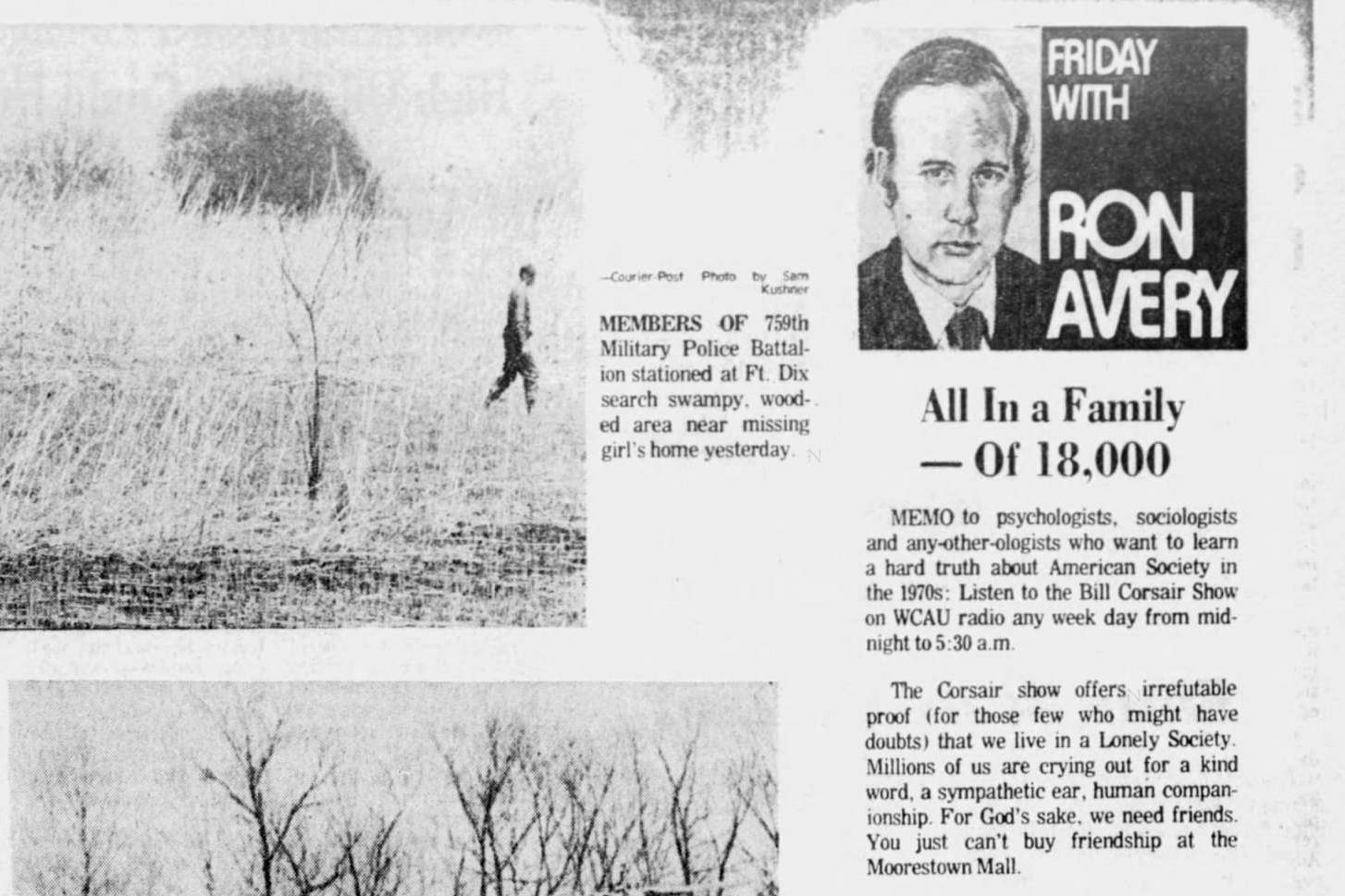
Mr. Avery wrote a column for the Courier-Post in 1974.Newspapers.com
Ronald Avery was born June 10, 1941, in Strawberry Mansion. He joined the Boy Scouts, earned his bachelor’s degree at Penn State in 1963, and taught history at Bensalem High School for a year.
He was a boxer in college and, mesmerized by the sport, later worked as a referee for amateur matches.
He met Suzet Habif in Israel in 1967, and they married in 1968. They had sons Serge and Ben, and lived for years in a rowhouse in Oxford Circle.
Mr. Avery cared for his wife during her long illness in the 1980s and ’90s. She died in 1993.
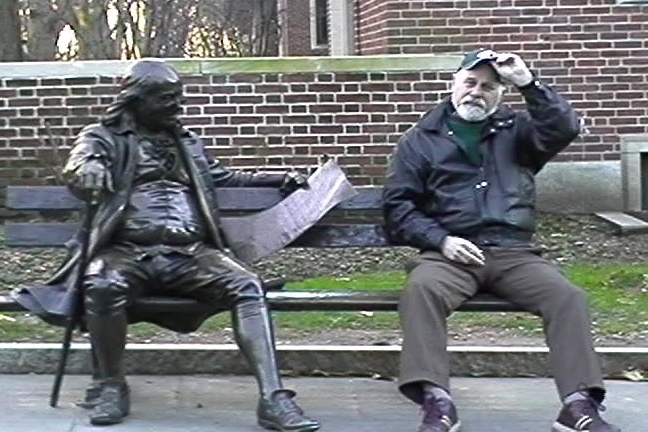
Mr. Avery liked to hang out with Benjamin Franklin and other historic figures. Alex Strang
He lived later in Pennsport and East Falls, was diagnosed with ALS in 2015, and proudly outlived its average life expectancy of 18 months by nearly a decade. “He defied that diagnosis and did not let it define him,” his son Serge said. “He always said he had a lot to live for.”
Mr. Avery was an avid reader and street photographer. He liked poetry, wrote limericks on birthday cards, and posted hundreds of his photos on flickr.com. One of his photos won a contest and was displayed at the airport.
He enjoyed jazz and jokes, led the prayers at family gatherings, and gave Yiddish quizzes to his two grandsons. He shared favorite recipes with Daily News colleagues and whipped up memorable homemade soups, especially white bean.
“I’ll greatly miss his endless anecdotes about all things Philadelphia,” said his daughter-in-law, Rebecca Houlding, “the stories about the local criminals, and his love of his family and friends.”
Mr. Avery wrote about his life in Northeast Philadelphia for the Daily News in 1997.Alejandro A. Alvarez / Staff Photographer
His son Serge said: “He loved chasing the stories from the back alleys and driveways, highlighting the working people of our town.”
In addition to his sons, daughter-in-law, and grandsons, Mr. Avery is survived by other relatives. A sister died earlier.
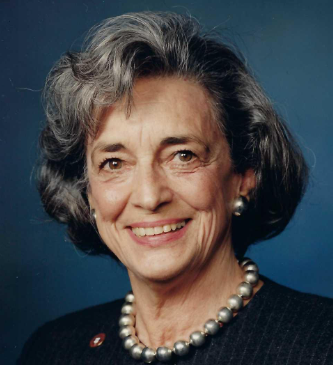
Janet Klein, 96, of Rydal, Montgomery County, former member of the Philadelphia Historical Commission, historic program director for the Fairmount Park Commission, regional project coordinator for the National Trust for Historic Preservation, chair of the Pennsylvania Historical and Museum Commission, volunteer, and philanthropist, died Tuesday, Aug. 4, of age-associated decline at her home.
Born in Philadelphia, Mrs. Klein earned degrees at Philadelphia High School for Girls and the University of Pennsylvania. She and her husband, Lewis, traveled the world after they married in 1952, and she told The Inquirer in 1973 that she became interested in local historic preservation after returning from abroad in 1964.
“I felt something was lacking here,” she said. “There was no pride nor a thorough knowledge of what we really have in Philadelphia to share with visitors.”
So she joined the Philadelphia Museum of Art’s tour guide program, rose to chair of guides for the Fairmount Park house tours, and conducted hundreds of tours for thousands of visitors to the eight historic houses in the park. “The guides,” she said in 1973, “can’t help but sense that somehow they have passed on to the visitors the continuing life of historic Philadelphia.”
Eventually, Mrs. Klein became historic program director for the Fairmount Park Commission, was appointed to the Philadelphia Historical Commission by then-Mayor Wilson Goode in the 1980s, and served as chair of the Pennsylvania Historical and Museum Commission from 1997 to 2003. Friends called her “formidable” and compared her to the Energizer Bunny.
Keen to spark public interest in historic sites, Mrs. Klein forged partnerships between site officials and schools, community groups, businesses, and the media. In 1997, she oversaw filmmakers as they shot scenes for the movie Beloved at the Landis Valley Museum in Manheim Township.
She appeared often in The Inquirer and said in 1989: “We often find that people who live just around the corner from a house museum don’t know it existed.”
At Fairmount Park, she redefined the commission’s operating procedures and enlisted students as volunteers at its public mansions. At the city historical commission, she led walking tours of Old City and helped determine the historic designation of the old Lit Bros. building, the Boyd Theatre, the Dilworth house, and other significant structures.
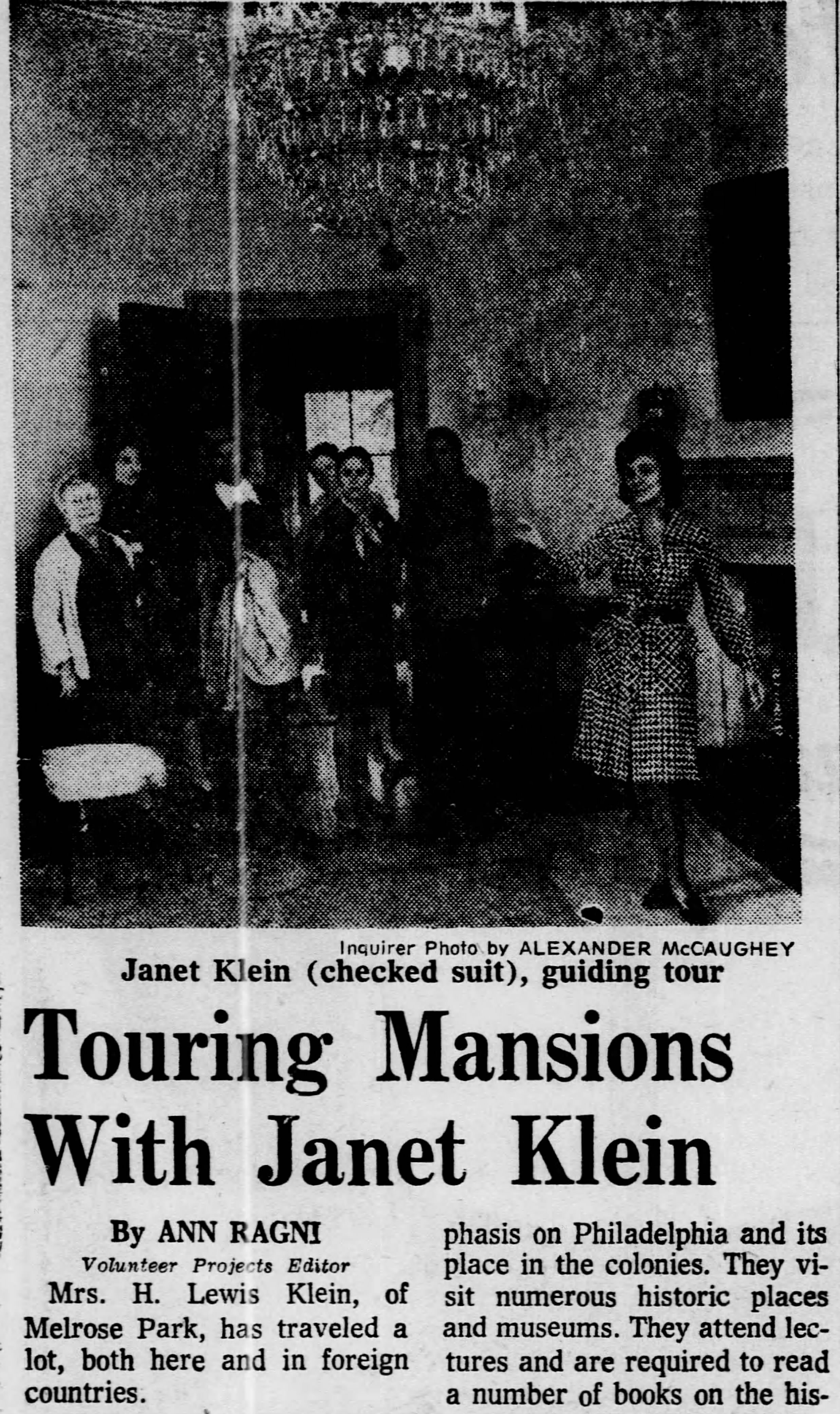
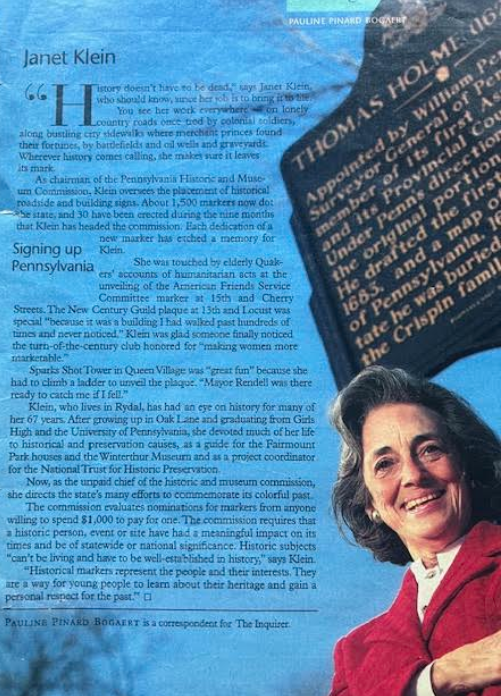
This story and photo of Mrs. Klein (right) was published in The Inquirer in 1973.Newspapers.com
With the state historical and museum commission, she erected historical markers across the state, helped designate the Art Museum as a Commonwealth Treasure in 2002, and directed the commission’s public relations, tourist promotions, and preservation efforts.
“History doesn’t have to be dead,” she said in 1998. “Historical markers represent the people and their interests. They are a way for young people to learn about their heritage and gain a personal respect for the past.”
She also led the Comprehensive Historic Assistance Program for the National Trust for Historic Preservation in the 1980s, helped create the Liberty Trail near Independence Hall, and directed the restoration of the first historic home in the Lukens National Historic District of Coatesville.
She served on the board of visitors at Temple University’s Ambler campus and Klein College of Media and Communications, on the collections committee at the Union League, and as a guide at the Winterthur Museum in Delaware. She was active with the Pennsylvania Department of Conservation and Natural Resources, the Museum Council of Philadelphia, and other groups.
This story and photo of Mrs. Klein appeared in The Inquirer in 1998.Temple University
She was honored for her service by the Women’s Center of Montgomery County in 1999 and by the Preservation Alliance for Greater Philadelphia in 2001, and was named a Distinguished Daughter of Pennsylvania in 2000. In 2018, she earned an award for service and philanthropy from Coatesville’s National Iron and Steel Heritage Museum.
As philanthropists, Mrs. Klein and her husband supported what became, named after them, the Klein College at Temple, the National Association of Television Program Executives, the Police Athletic League, the American Heart Association, and other organizations dedicated to education, healthcare, youth development, and social service. They created the Janet and Lew Klein Making A Difference Award for the Pennsylvania Association of Broadcasters and donated his professional papers to Temple.
“She was an inspirational community leader,” said David Boardman, dean of Temple’s Klein College, “who inspired others through her generosity, her brilliance, and her warmth.”
Janet Surman was born March 3, 1930. She grew up in Oak Lane and earned a bachelor’s degree at Penn.
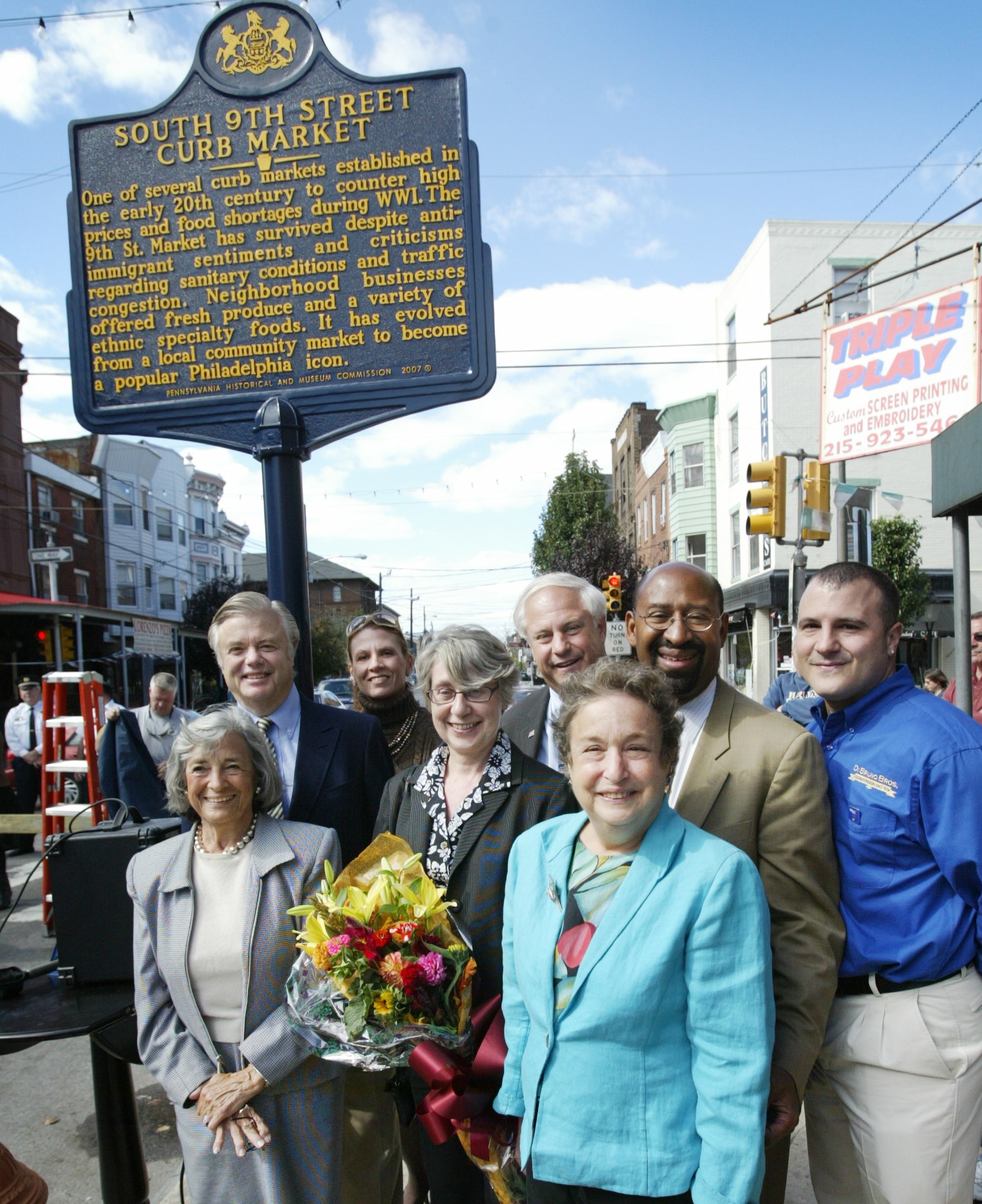
Mrs. Klein (left) appeared with others in 2007 to celebrate a historical marker at the corner of 9th and Christian Streets.Alejandro A. Alvarez / Staff Photographer
She met Lewis Klein in college, and they married in 1952. They had a son, Stephen, and a daughter, Ellen, and lived in Melrose Park and Rydal. Her husband, a pioneering TV broadcaster and cofounder of Gateway Communications, died in 2019.
Mrs. Klein and her husband traveled the world for decades and attended dozens of galas and fundraising events. She enjoyed gardening, was an avid reader, and liked to play Scrabble.
In 1993, Inquirer columnist Clark DeLeon called her “a wonderful, funny, vivacious lady.” Temple’s Boardman said: “She was truly one of the best human beings I’ve ever had the privilege to know.”
In addition to her children, Mrs. Klein is survived by a granddaughter, two great-grandchildren, and other relatives.
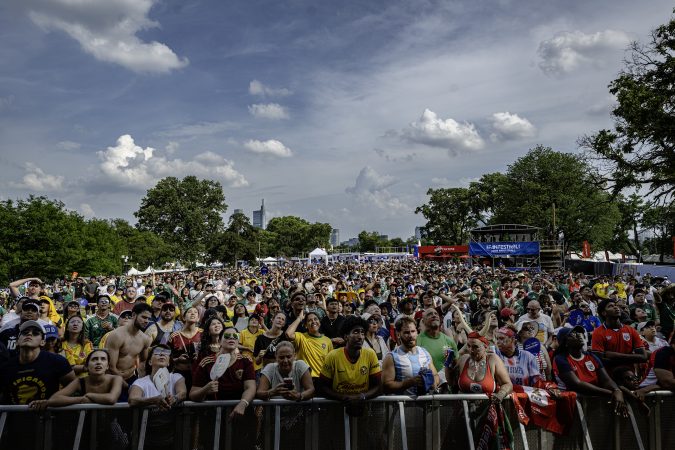
Philadelphia transformed Lemon Hill into the longest and one of thelargest World Cup watch parties in the country throughout the FIFA Fan Festival’s 39-day stay.
With the World Cup wrapped up, host committees throughout the country are taking stock of how many fans flocked to these festivals. Philly’s fan fest saw the second-highest number of attendees, with 575,304 between June 11 and July 19, according to the festival’s organizer, Philadelphia Soccer 2026.
Miami’s host committee was less precise in its count, but said its festival drew more than 600,000 guests.
Each one of the 11 host cities reported fan totals in the hundreds of thousands, but none quite reached the attendance levels of Philly and Miami.
However, despite South Florida’s high total numbers, Philadelphia set the record for most attendees throughout a single day at a U.S. fan festival with 55,000 attendees during the Brazil vs. Haiti group stage match on June 19. While Philadelphia’s fan festival operated for almost twice as long as Miami’s, opening every day of the tournament, Philadelphia worked with half the capacity limit that Miami did, capping crowds at 15,000 people at a time.
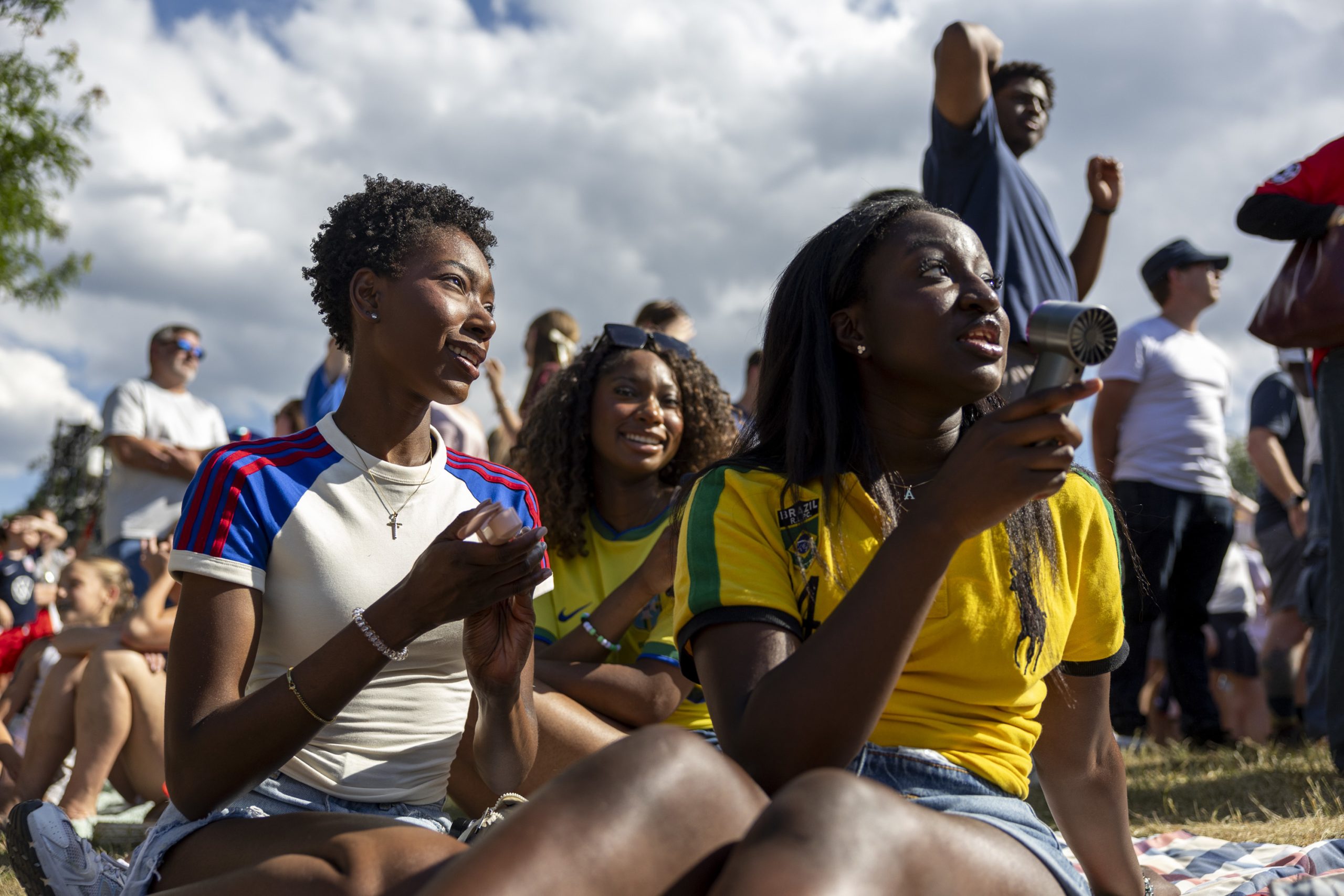
Anu Akinlotan, 19, of Darby, Pa., (right), Sandra Olaniyi, 25, of Drexel Hill, Pa., (left), and her sister Victoria, 22, (center), watch the USA vs. Australia game at FIFA Fan Festival at Lemon Hill Park in Philadelphia, Pa., on Friday, June 19, 2026.Tyger Williams / Staff Photographer
New York and New Jersey, home to the largest population among host cities and host of the World Cup final, netted more than one million fansacross their decentralized network of official fan zones. The San Francisco Bay Area host committee also chose not to do a single festival but rather a network of watch parties and events. Across those areas,900,000 people reportedly visited during World Cup games, according to CBS.
Philly’s million-square-foot watch party, akin to a Fairmount summer barbecue of epic proportions, featured large swaths of open space for fans to lay down blankets and picnic while they watched the game, with the Center City skyline as backdrop; mini soccer pitches to challenge friends to pickup games; and a line of sponsor exhibits, including one outrageously viral Bank of America bracelet-making workshop. Some later resold the bracelets online for upward of $150.
But the main course was the 60-foot-wide screen playing almost every 2026 World Cup game to a crowd of thousands. This is where Philadelphians and international tourists could experience the energy of the World Cup outside the pricey stadium seats.
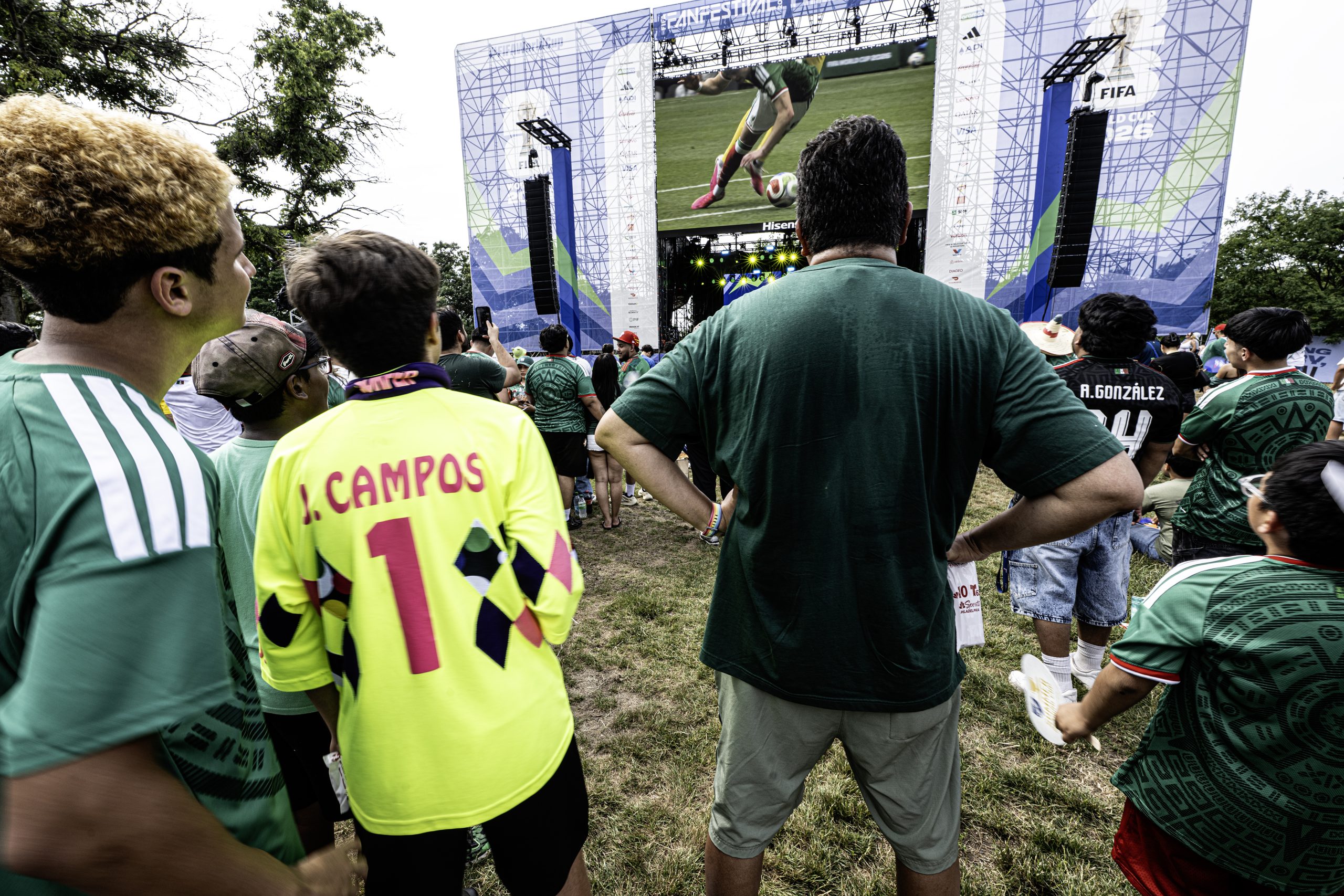
Soccer fans gather to watch Mexico play South Africa on a giant screen during the opening day of the FIFA Fan Festival at Lemon Hill on Thursday, June 11, 2026, in Philadelphia.Jose F. Moreno / Staff Photographer
Philly and Miami may win out for the highest attendances, likely due to their singular locations and being open much longer than celebrations in other cities, which opted for shorter-lived festival days or decentralized events. Still, most of the U.S. host cities boasted impressive numbers at fan events.
Atlanta, Houston, and Seattle all reported having hosted at least 500,000 fans at their festivals. Kansas City was close behind, reaching 400,000 fans across its 18-day run. Los Angeles brought in 250,000 people to its festival. Boston hosted 155,000. Dallas’s host committee has not released official counts yet.
Philadelphia has beenflush with tourists flocking here for the World Cup and the nation’s 250th, patronizing local restaurants, bars, and stadiums.
And in the aftermath, bar owners are weighing the exact size of any World Cup sales boom, how it compares to an Eagles’ Super Bowl run, and whether Philadelphia truly is a 4 a.m. bar town as the state allowed some establishments to stay open later.
One thing is clear: If the bar had TVs playing World Cup games, it had a chance at cashing in on fans eager to experience the game with others.
Sports bars and tourism hot spots made out well
Jason Evenchik’s Garage bars in Fishtown, Passyunk, and Rittenhouse saw “a nice bump in sales” throughout the World Cup, driving business up 30% to 40%, he said. Evenchik said the TV bars fared better than usual during what’s typically a summertime lull — and much better than when World Cup games were being broadcast from Qatar in 2022.
Lucy’s Rittenhouse, a sports bar from FCM Hospitality’s Avram Hornik, also did well during the afternoon and evening games, especially when Team USA played, Hornik said. And it attracted patrons during its 2 a.m. to 4 a.m. shift, thanks to a Philadelphia 250 Permit, a temporary license that allows eligible bars to serve alcohol two hours past the city’s usual 2 a.m. closing time.
“I don’t think it could have gone better,” Hornik said. FCM also operates the Center City nightclub Concourse, the family-friendly taproom Craft Hall, and riverside deck Morgan’s Pier, among other bars.
“It was a mix of tourists. A lot of South Americans stayed out later because they’re used to places open late. Europeans we found like to camp out at a bar and stay for a while. There was also just a lot of Philadelphians who were happy to have some place to go and experience this moment,” Hornik said.
Even bars without TVs like the decades-old Fergie’s Pub, nestled smack dab in Center City’s bar scene, saw a tourism boom, said owner Fergie Carey, attracting tourists to its authentic Irish experience. Carey evendecided to open for the Fourth of July, when the bar usually closes, because there was so much foot traffic. But having no TVs can have repercussions.
“The most people I’ve ever seen leave our pub because there are no TVs was on the Fourth of July,” Carey quipped.
Evenchik and Hornik also saw lower engagement at some of their bars with little to no TVs or sports vibe, such as Evenchik’s Vintage wine bar, which he said suffered a 30% decline in sales during World Cup weeks. Hornik’s neighborhood restaurant and bars like Rosy’s Taco Bar or Harper’s Garden didn’t necessarily take a sales hit, but their private dinner party business “almost disappeared during the time of World Cup,” he said.
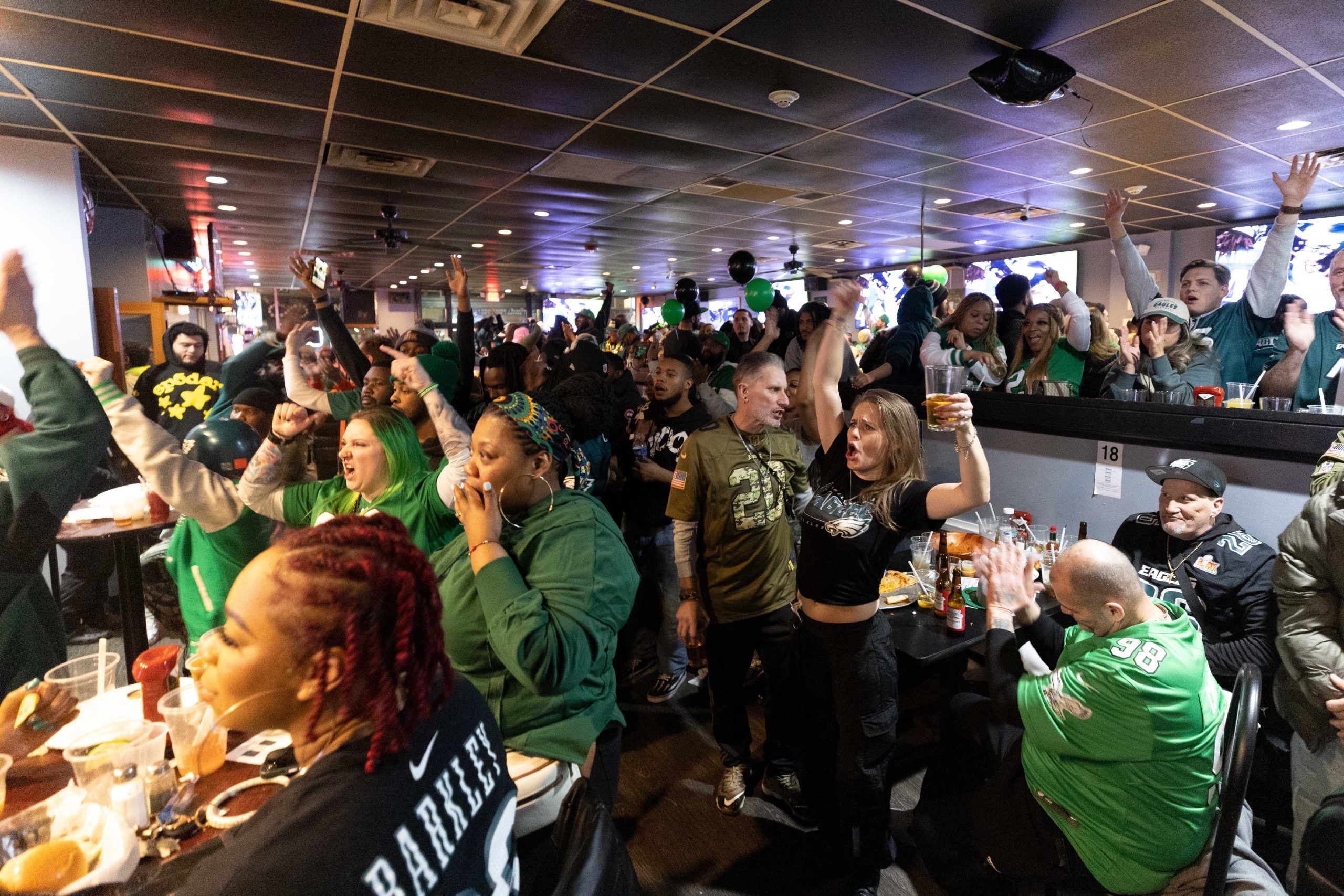
Fans react to the Eagles play the Chiefs in the NFL Super Bowl LIX, in a bar near Frankford and Cottman Aves., Saturday, Feb. 8, 2025, in Philadelphia.Tyger Willliams / Staff Photographer
The World Cup pales in comparison to a Super Bowl at Philly bars
While the sports bars and hotter tourism areas saw a World Cup sales bump, bar owners say it was nothing compared to the revenue brought in from the Eagles going on a playoff-to-Super Bowl run, or the Phillies in the World Series.
“I don’t think there’s anything that compares to Philly sports fans and their loyalty to our Philadelphia teams when they do well,” Hornik said.
When a Philly sports team is doing well, Evenchik said, people seem more willing to go out and celebrate on the town.
“In those times we see a bump in the sports bars, but also everywhere else, including restaurants, because everyone’s so joyous,” Evenchik said. “The World Cup doesn’t really get close to the Super Bowl madness.”
At Philly’s oldest craft and woman-owned brewery, Dock Street, bartender Jessica Head and assistant general manager Abby Stover said they’ve been relishing the fervor of World Cup fans for every game, regardless of who is playing.
“The World Cup finals are truly similar to us Philadelphia sports fans in their passion and how much they are willing to ride for their teams, but nothing can beat a good Eagles playoff run,” Stover said.
“With an Eagles playoff run, we get the bursts during the games once a week, and the energy is undeniable. But the World Cup is really something so special,” Head said. “We’re so lucky we get to see that excitement every single day during the tournament.”
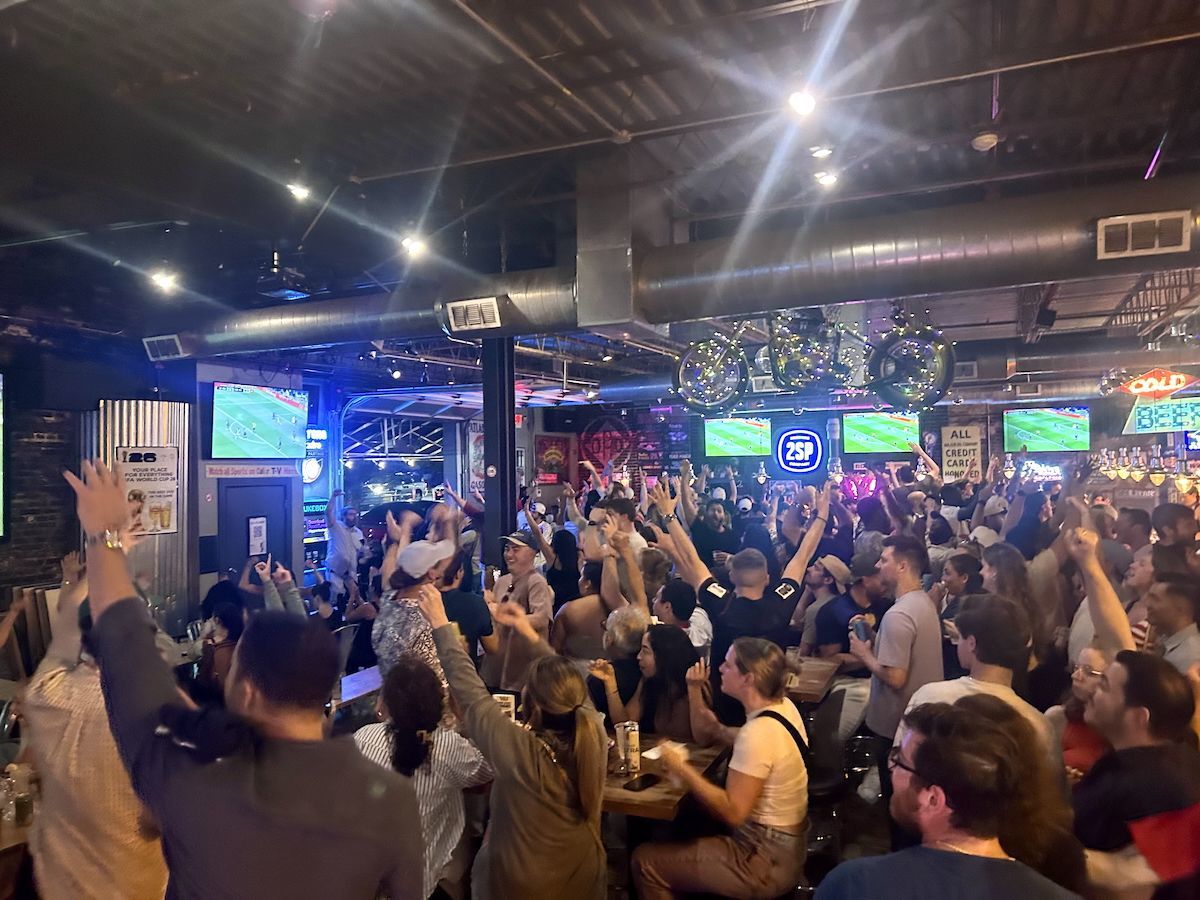
Fans watch a Team USA match at the Fishtown sports bar, Garage, during the 2026 World Cup.(Courtesy of Jason Evenchik)
4 a.m. bars in Philly aren’t as popular as believed
Hornik applied for the Philadelphia 250 Permit at several of his bars.
But only Lucy’s really enjoyed the benefits of 4 a.m. closing times. FCM’s other nightlife-oriented locations generally didn’t take advantage of their permits, Hornik said.
While Hornik found success at Lucy’s, others have said the 4 a.m. party culture in Philadelphia just didn’t materialize.
“I’ve spoken to a couple people who are involved in some of the bars that had a 4 a.m. license, and everyone kind of universally agreed that it cost a bit more than it was worth,” Evenchik said.
The permit itself cost $500 to apply for, and another $250 for safety training from the city.
Additionally, only a handful of the 104 World Cup matches were broadcast close to times near Philadelphia’s usual 2 a.m. closing time. “It didn’t really make sense because none of the games were really that late,” Evenchik said.
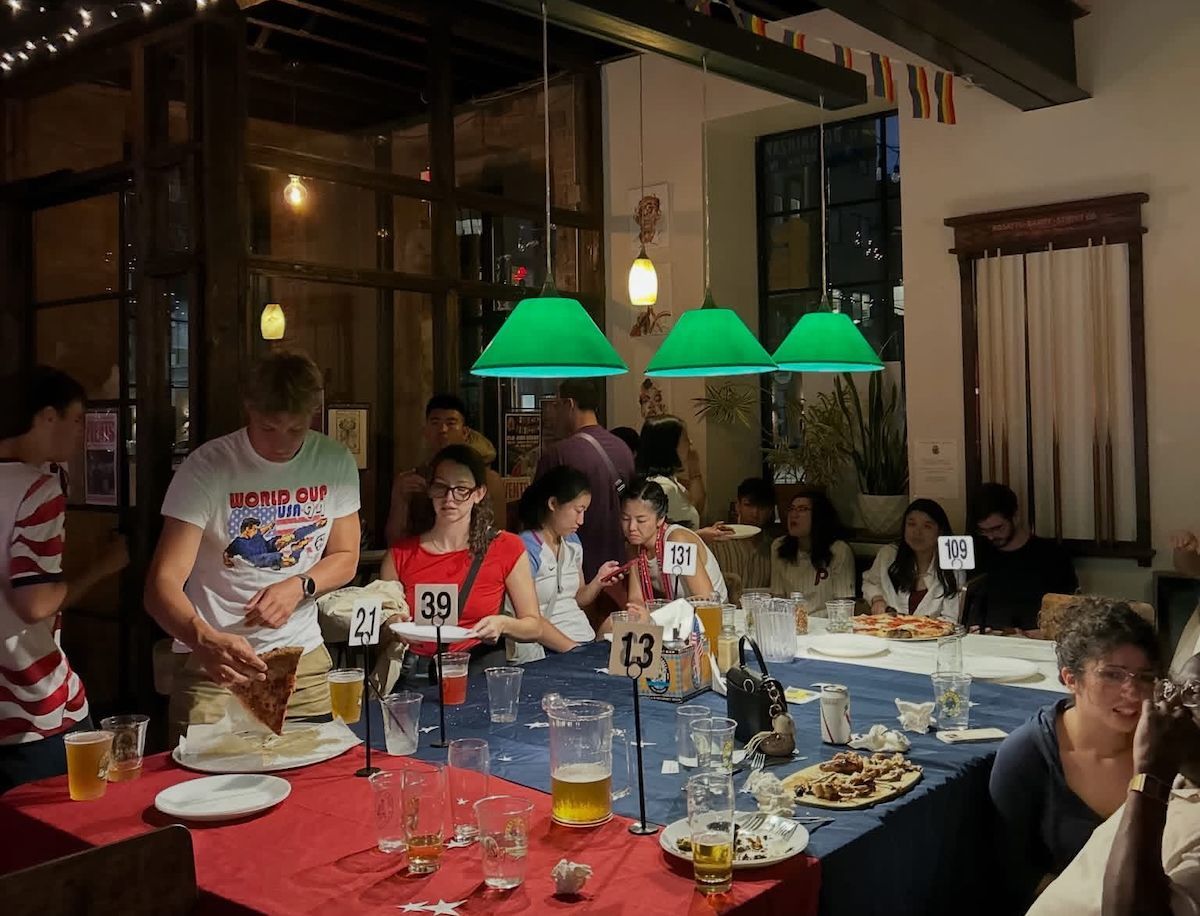
World Cup fans share pizza and beer while watching matches at Dock Street South on Washington Avenue in South Philadelphia during the 2026 World Cup.(Courtesy of Renata Vesey)
What lasts is the cultural exchange
Neighborhood bars largely didn’t see a boom like Center City and established sports bars, but the World Cup did bring more business and, occasionally, international tourists, said Renata Vesey, creative director at Dock Street, which operates a brewery along Washington Avenue and a taproom in Fishtown.
“When Côte d’Ivoire played, we got a big crew of Ivorians of all ages,” Vesey said. “It happened to be on a Sunday that we were also hosting a line-dancing event, so it was just such a random, cool mix of people and interests and vibes.”
Bars were livelier and more crowded than usual, and Dock Street opened for a few games on Mondays, when it is normally closed,she said.
Hornik’s neighborhood bars and restaurants like Rosy’s continued to draw their usual crowds as well. But what stands out to him is the role that Philadelphia bars and restaurants played in making the city one of the more memorable places to watch the World Cup, he said.
“It’s not just our job to entertain them for one night, but to make them want to come back here,” Hornik said. “I think that Philadelphia did a great job of showing how great a city Philadelphia is.”
Delaware County’s tourism agency wants to reward you for eating ice cream this summer. Really.
Visit Delco, Delaware County’s tourism promotion agency, launched the Delco Ice Cream Trail Pass in May, a 16-stop mobile “passport” that encourages participants to try out local ice cream and water ice shops, collecting points along the way that can be redeemed for prizes. The Ice Cream Trail takes participants across Delaware County, from Just Homemade Ice Cream in Aston up to the Vanilla Bean in Wayne, and back around to CJ’s Waterice & Ice Cream in Collingdale. It was borne out of a desire to get Delco residents into their communities, and local economies, through a treat that cuts across all age groups, neighborhoods, and walks of life.
“We just wanted to create a fun and accessible experience for the summer that encourages people to explore Delco,” said Amy Bohr, Visit Delco’s marketing director.
Participants on the trail, which runs from Memorial Day through Labor Day, can sign up online and save the “passport” on their phones before visiting theice cream shops, earning points at each location. Points can be applied toward rewards, including a baseball hat-shaped bowl, an ice cream scoop, or a bucket hat. Prizes can be collected at the Visit Delco office in Rose Tree Park.
So far, 1,500 people have signed up for the pass, and 450 have “checked in” at one or more ice cream shops, according to Visit Delco.
Visit Delco’s goal is largely to encourage nonresidents to visit, and spend money, in the suburban county. The agency helps connect visitors with places to stay, restaurants to patronize, and attractions to see, like the Delaware County Symphony or the Media Theatre. The agency also provides grants to local municipalities and organizations to help boost tourism and spur economic activity.
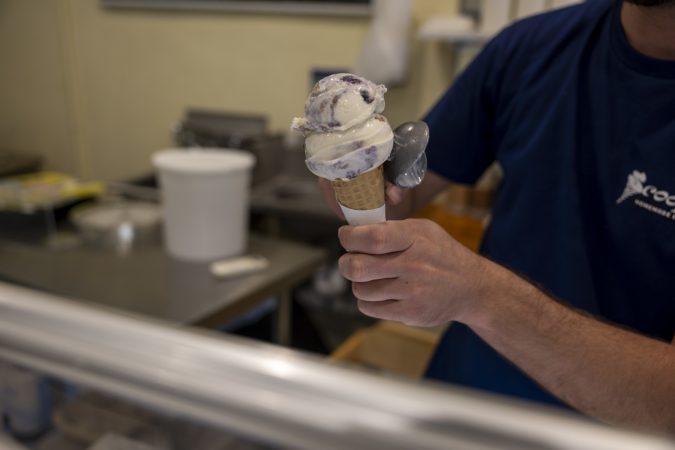
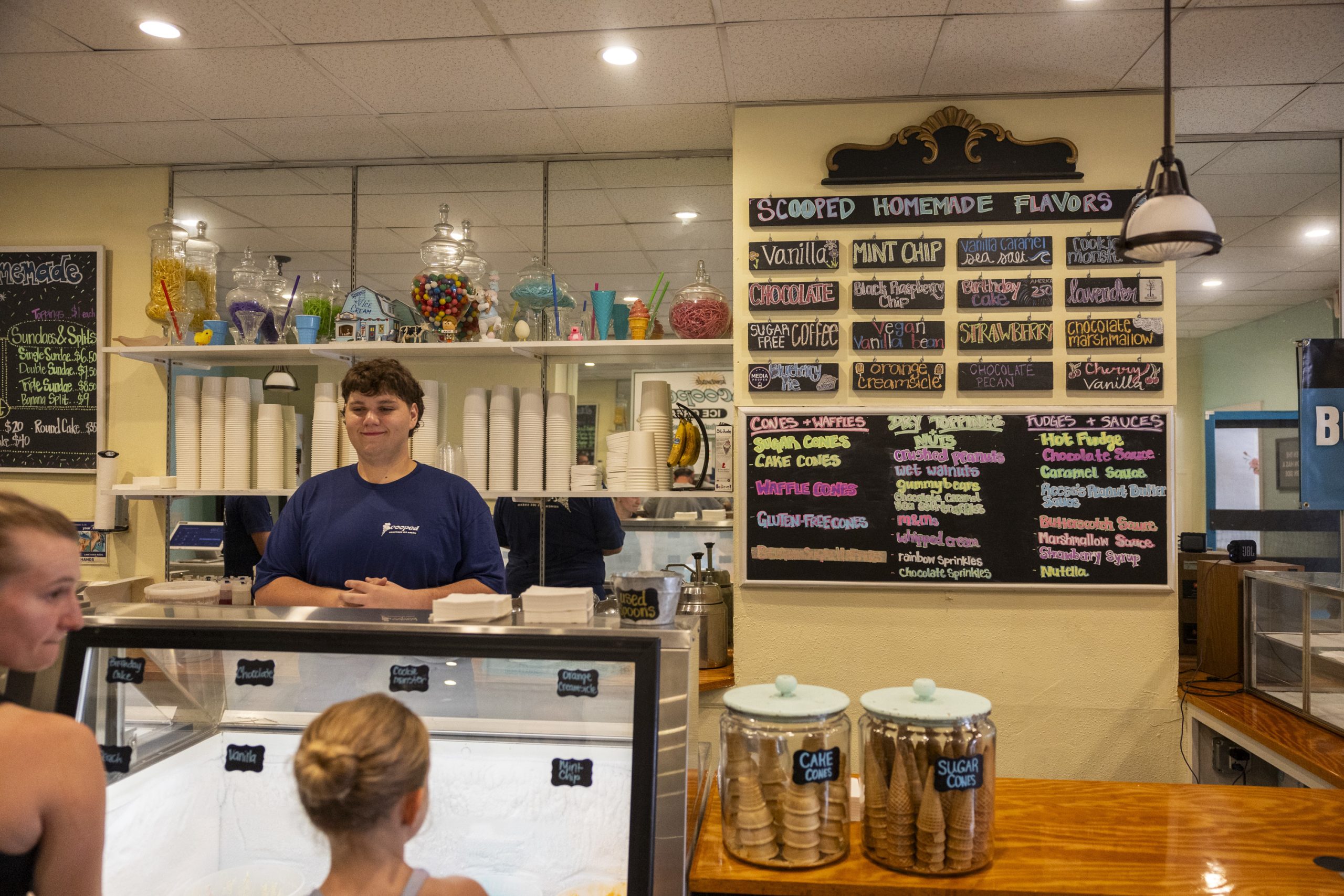
Michael Mooney, 19, of Ridley Park, helps customers at Scooped Ice Cream in Media. Tyger Williams / Staff Photographer
However getting locals out into Delaware County is also key for the agency, and for the economic health of the county’s many municipalities, Bohr said. The Ice Cream Trail, along with Trails and Tails, another “passport” program for dog-friendly trails and parks, are formulas to help encourage locals to visit a part of the county they might otherwise skip.
“When residents visit a new ice cream shop, or explore a town or a Main Street where that shop’s located, they spend a day in the community, perhaps they haven’t done it in a long time, and everyone benefits,” Bohr said.
Locals are Delco’s “best ambassadors,” she said, often recommending favorite spots to family and friends and coming back again to shop or dine.
Kyle Lefkof, owner of Scooped Ice Cream in Media and Chester Springs, said regulars and newcomers alike have stopped by to check a box on the Ice Cream Trail and enjoy a sweet treat.
“I think this is bringing in new business and giving the existing customers something fun to do,” he said.
Scooped opened in Chester Springs in 2009 and Media in 2017. Lefkof took over the business from his aunt and uncle in 2023, and has been running it since. Scooped serves “super premium, gourmet ice cream” with 14% butterfat and “top-shelf ingredients,” Lefkof said.
Ice cream is often “the highlight of people’s days,” he said. “It’s really nice to be a part of that.”
This suburban content is produced with support from the Leslie Miller and Richard Worley Foundation and The Lenfest Institute for Journalism. Editorial content is created independently of the project donors. Gifts to support The Inquirer’s high-impact journalism can be made at inquirer.com/donate. A list of Lenfest Institute donors can be found at lenfestinstitute.org/supporters.
In late April, Ken Martin, chair of the Democratic National Committee (DNC), visited Philadelphia to assess the possibility of the city hosting the 2028 Democratic National Convention. He toured Xfinity Mobile Arena and met with Mayor Cherelle L. Parker and business leaders, who rolled out a “blue carpet” aimed at charming him.
It seemed natural to see business leaders working with local politicians to try to convince the DNC to choose Philadelphia, as well as helping to raise the funds required for the city to be eligible to host the convention. Democrats dominate the city’s politics, and its elected officials tend to share local business executives’ visions for economic development.
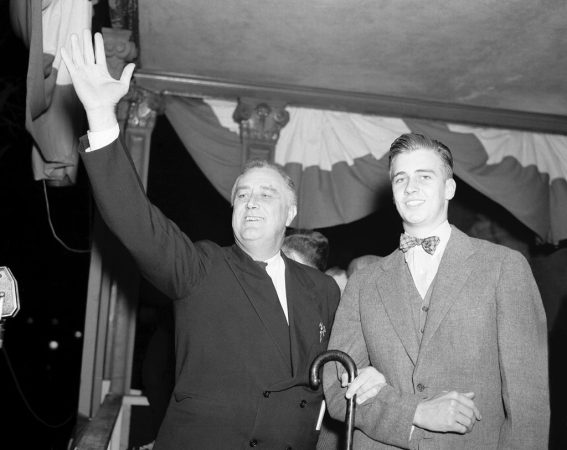
But these groups weren’t always aligned. In 1936, when Philadelphia made a similar push to host the Democratic Convention, the effort aroused skepticism in a city that had been a Republican stronghold for decades. Much of the skepticism was centered in the business community — where many vehemently opposed the policies of President Franklin D. Roosevelt.
It took a push by coalition builders like Albert Greenfield, a powerful business leader, to win over skeptics. Greenfield sold his fellow businessmen by framing the pursuit not as something partisan or political, but as a venture in civic boosterism. This argument proved compelling, and business support helped land the convention for Philadelphia. Today, Greenfield’s efforts provide a model for how to bring diverse interests together to boost a city, even in times of polarization.
Before the 1930s, Philadelphia was firmly a Republican city. In this era, the national party’s platform was dominated by pro-business politics, aligned around policies aimed at enhancing economic growth and competition.
A thoroughly corrupt political machine led by William Vare dictated the city’s politics. Each ward had Republican committee people who purchased individual votes at a going rate of one dollar. Loyal to the Vare machine, they also ensured voters headed to the polls on Election Day. In exchange, many of these committee people were rewarded with spots on the city payroll.
The flow of money linked voters and committee people alike to Vare and the GOP. The machine’s dominance meant that the Republicans won most local elections, and the city gave its votes to their party in federal and state contests, including in every presidential election dating back to 1856. That even included in 1932 when Roosevelt was first elected by a large margin nationally.
The Democratic Party — which, in other cities, drew power from local machines — remained weak and made little headway because Democrats, too, relied upon patronage favors from the dominant Republicans. That made them hesitant to rock the boat or wage an assault on the Vare machine and the status quo.
At the beginning of Roosevelt’s first term, however, the city’s politics began to shift thanks to the new president and his New Deal. Struggling Philadelphians started to feel the tangible effects of New Deal policies at precisely the same moment that changes began to occur in both parties’ leadership locally. The result was a restoration of genuine two-party competition.
The same Depression-era pressures loosening working-class loyalty to the Republican machine also began to pull Greenfield — who had once been a staunch Republican, but had soured on Herbert Hoover — toward the Democratic Party. The businessman benefited from several million dollars in funding from the Reconstruction Finance Corporation, the governmental lender of last resort, to prop up his business enterprises. Experiencing the benefits from New Deal policies firsthand, Greenfield started to express cautious support of Roosevelt.
From his position as chairman of the Philadelphia Chamber of Commerce Convention and Tourist Committee, Greenfield also launched an effort to recruit the Democratic Convention to Philadelphia.
His colleagues in the Chamber of Commerce shared Greenfield’s vision of landing a party convention in 1936 — but they didn’t care which party. Greenfield himself, however, remained focused on the Democrats in part because of his friendship with the liberal newspaper publisher J. David Stern.
In December 1935, he began soliciting donations from the city’s business leaders with the goal of raising $150,000 (more than $3.6 million in 2026 dollars) to help lure the Democrats. He framed the convention not only as an opportunity to increase business activity, but also as a means of enhancing the city’s national reputation.
Greenfield appealed to a wide range of constituencies, at times striking an unrelenting tone in his correspondence with business leaders. In one letter, Greenfield wrote that members of the Chamber, “feel that each individual enterprise has a moral obligation and responsibility with respect to the financial requisites for securing the convention.”
Made By History sponsors. FOR USE ON MADE BY HISTORY STORIES ONLY.Inquirer Staff
Greenfield’s efforts quickly bore fruit. Ledgers show contributions from both businesses and individual donors in sectors ranging from dentistry to distilling and hospitality. He also sold his fellow businessmen on their contributions being a non-partisan investment that would be “returned manyfold” to those who donated. This framing made it easier for many of his still staunchly Republican peers to support the bid.
In January 1936, after the Chamber formally invited the Democratic National Committee to hold its convention in Philadelphia, news headlines reflected the importance of the incentive package organized by Greenfield. When Philadelphia won the bid — with a financial package that ended up totaling $200,000 — The New York Times characterized the proceedings as an “auction and now a poker game.” The money Greenfield raised ultimately compelled national Democrats to shift their preference from Chicago to Philadelphia as their host city.
Greenfield soon became the chair of the city’s convention planning committee. In that role, he assembled a cohort of other prominent business and financial figures to orchestrate the programming surrounding the convention. He promised them pomp and circumstance — which he delivered.
When the convention finally arrived in Philadelphia in June, flags bearing the names of U.S. states and festive decorations lined Broad Street; ceremonial stamps depicted a triumphant, sun-illuminated city; press photographers documented a ceremony in which city officials registered a donkey that was part of the New York delegation to vote. The city even suspended its blue laws to allow Sunday drinking.
In bringing the convention to Philadelphia, Greenfield constructed his own alliance that worked to replace the system long sustained by Vare and the Republican machine. While he did not offer jobs and cash to individuals in exchange for loyalty like Vare did, he created a mechanism by which the success of the convention became materially valuable to the city’s business establishment.
If members of the city’s business community sought to access the economic benefits of this national political event, they had to do so through Greenfield, further aligning Philadelphia’s commercial interests with an individual who wanted the convention to succeed not only financially but politically as well.
What may have begun as tentative, pragmatic support for hosting the convention evolved into a more explicit embrace of the Democratic Party, with many businesses ultimately associating themselves with Democratic messaging. One newspaper advertisement praised the efforts of Roosevelt as a force behind Philadelphia’s economic revitalization. That message received endorsements from more than a dozen small businesses, whose names were featured alongside the message of support for the president.
At the close of the convention, Greenfield told delegates that their enthusiasm might one day lead historians to view the city as a Democratic stronghold — a prediction that ultimately proved correct. By constructing a new network of support within Philadelphia’s business community, Greenfield helped rally backing for a convention that proved to be far more than an economic boost or mere “convention fireworks.” Instead, the gathering would serve as an engine for a realignment that would hold the city for the Democratic Party through the next two decades.
The day after the 1936 election, the city of Philadelphia awoke to stunning results. Roosevelt had carried 43 of the city’s 50 wards and the city that the Philadelphia Bulletin had confidently described as unlikely to depart from “its long tradition” as a Republican stronghold had broken sharply with it. In 1940, when the city again explored hosting either the Republican or Democratic convention, the same committee which had led fundraising in 1936 initiated both efforts. Reflecting the changes in Philadelphia politics, however, the fundraising effort to attract the Democratic convention was far more successful than efforts to court its GOP counterpart. The business community in a city that had voted reliably Republican just four years earlier now raised three and half times as much money for potentially hosting the Democratic convention as the Republican one.
As business leaders in Philadelphia work to bring the convention back to the city, they are drawing from Greenfield’s playbook 90 years ago that brought together a new alliance of business leaders in support of a convention that proved to be a political inflection point.
Ethan Young is a rising senior at the University of Pennsylvania studying history and political science.
Made by History takes readers beyond the headlines with articles written and edited by professional historians. Opinions expressed do not necessarily reflect the views of The Inquirer.
To Ed Grose, the FIFA World Cup is not looking like a bust for Philly-area hotels.
Yet the president of the Greater Philadelphia Hotel Association said the matches, which start Sunday and end July 4, have not brought booming business.
“It hasn’t delivered what we thought it would in terms of hotel rooms,” Grose said Monday.
Some of Center City’s 14,500 hotel rooms remain available on game days and game-day eves, he said, though he declined to provide an estimated occupancy rate.
Grose’s assessment — based on conversations with local hoteliers, he said — exemplifies the tourism uncertainty that remains just days before kickoff.
Philadelphia has raised about $140 million in public and private funding to host the World Cup, according to Front Office Sports, and officials are heavily marketing the six South Philly games and other fan events across the city.
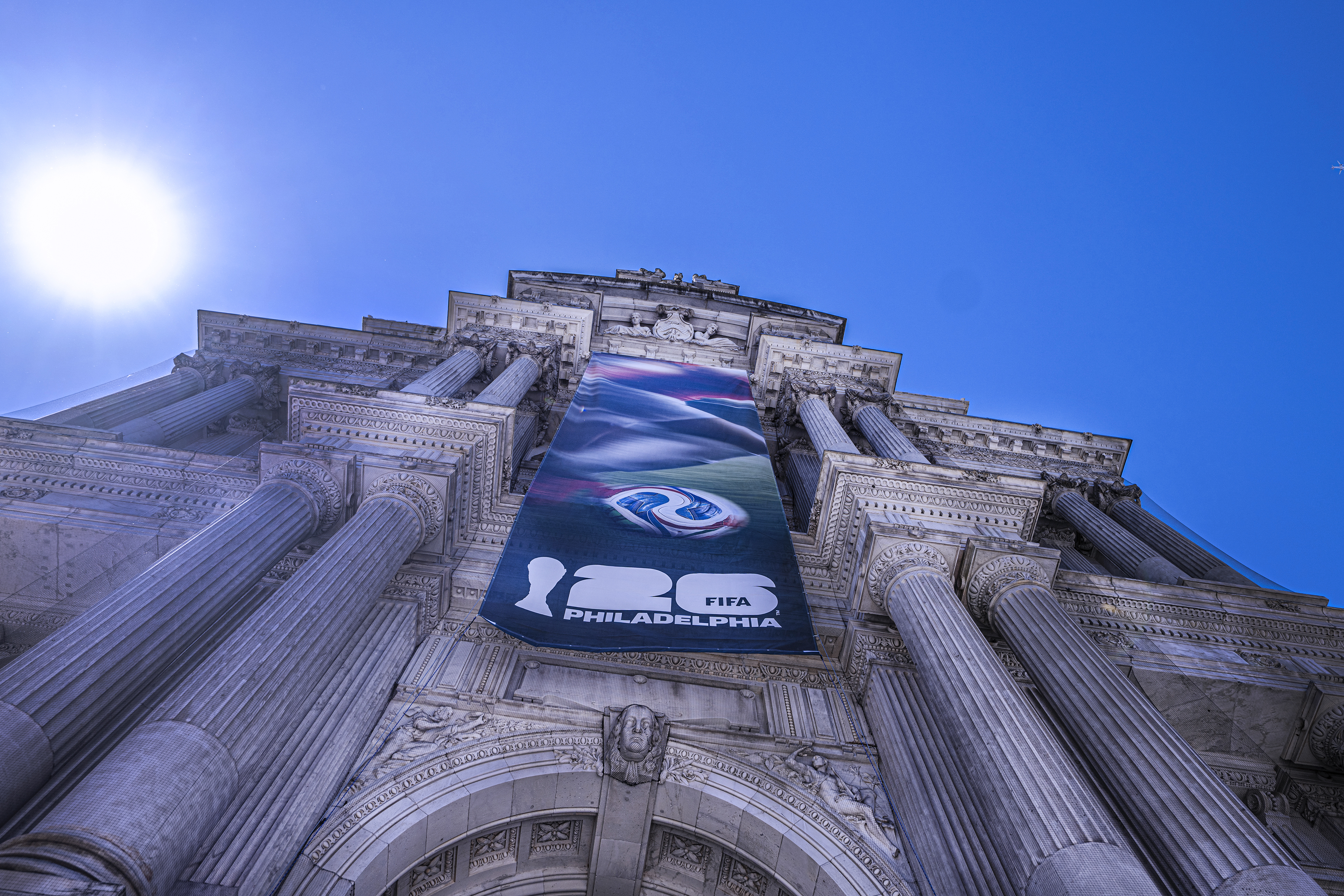
A FIFA World Cup banner hangs from an entrance of Philadelphia City Hall, as seen on June 3.Jose F. Moreno / Staff Photographer
The Wall Street Journal reported Monday that every U.S. host city except San Francisco was seeing hotel occupancy of 40% or less, citing a recent CoStar report. Host cities in Mexico and Canada saw slightly better hotel occupancy, though still under 50%, according to the Journal.
In Philadelphia, Google Travel searches show abundant hotel vacancies at prices under $300 or even $200 a night on some match days.
The region’s short-term rental market has seen some last-minute demand, with about 60% of local Airbnbs and Vrbos set to be occupied on game days and game-day eves, according to AirDNA, which analyzes the platforms’ booking data. In early May, fewer than half available rentals were booked on those days.
The inside of a South Philadelphia Airbnb was shown in early May, as its owner waited for last-minute World Cup bookings.Joe Lamberti / For The Inquirer
As of Monday, World Cup demand has helped drive a 15% year-over-year increase in the number of Philly-area bookings and an 8% increase in occupancy on game days and game-day eves, said Bram Gallagher, AirDNA’s director of economics and forecasting.
Those figures place Philly “right in the middle” of the World Cup markets, he said.
“Some places are doing very, very well and some places are seeing marginal benefits,” Gallagher said, noting that Mexican markets are doubling demand. “In Philly, Boston, Atlanta, we’re seeing respectable gains.”
Airbnb, which has partnered with FIFA, is still predicting that the World Cup will be “the biggest hosting event in Airbnb’s history — surpassing the 2024 Olympic and Paralympic Games in Paris,” according to a company statement, which noted “meaningful excitement for the tournament,” including among first-time guests.
Some Philly Airbnb hosts still wait for World Cup guests
Jenica Jones outside her South Philly Airbnb in early May. As of Tuesday, she said she has only gotten two World Cup bookings for a total of three nights.Joe Lamberti / For The Inquirer
A guest from the Dominican Republican reserved Jones’ South Philly rowhouse for two nights in June, Jones said, and the host was hopeful that World Cup demand would finally pick up.
It hasn’t.
The 42-year-old said she got just one other booking for a single night.
Her Airbnb has a perfect 5-star rating, sleeps seven people, and is less than three miles from Lincoln Financial Field, the site of Philly’s six World Cup matches.
The app’s dynamic-pricing tool had initially suggested she list the property for about $900 a night during the World Cup. Since then, she has dropped prices and offered discounts on some nights to entice soccer fans, she said.
“I was predicting being full the entire month of June,” Jones said Tuesday. “They’re just not coming in as I expected.”
Can World Cup fans get last-minute deals in Philly?
The Live! Casino Hotel Philadelphia (at left) is located in the stadium complex. As of Tuesday, it still had rooms available at high prices for some World Cup matches.Elizabeth Robertson / Staff Photographer
Despite the sluggish demand, last-minute planners shouldn’t count on scoring World Cup deals in the Philly region, according to hotel and short-term-rental experts.
Gallagher, of AirDNA, said the most affordable Airbnb and Vrbo properties were the first ones to book up during the tournament. But individual hosts like Jones may choose to lower prices if their homes remain unbooked.
Grose, of the Greater Philadelphia Hotel Association, said guests will pay higher rates on average during the World Cup than they would on a normal summer day.
Yet on Sunday and three of the other five match days, many Center City hotels appeared to have rooms available for about $300 or less per night, as of Tuesday, according to Google Travel. Prices skewed higher and availability seemed more limited on the holiday nights of Friday, June 19, and Saturday, July 4, though rooms were still available across the city, including at the few hotels near the stadiums in South Philly.
Grose said he remains optimistic about the coming weeks, which includes not only the World Cup and America’s 250th birthday celebration, but also the MLB All-Star Game in July.
“Overall, the summer is still going to be a good summer for us,” he said.