Category: Comcast

  • Julian Brodsky, a cofounder of Comcast, has died at 93

    Julian Brodsky, a cofounder of Comcast, has died at 93

    Julian A. Brodsky, 93, of Philadelphia, a cofounder of Comcast who helped grow a tiny cable venture in the Deep South into one of the biggest companies in the country, died Thursday, Nov. 5, while in hospice care.

    He passed away peacefully, surrounded by his family, Comcast said.

    Mr. Brodsky was described as “an extraordinary leader, a brilliant financial mind, and one of the architects of cable television” by Brian L. Roberts — Comcast’s co-CEO and chairman, whose late father, Ralph, founded the company in the 1960s.

    “He was a trusted partner and close friend to my father, Ralph, and someone I was fortunate to learn from and work alongside for so many years,” Roberts said in a statement Friday.

    Mr. Brodsky “established a culture of financial integrity, uncompromising standards, and respect for colleagues that remains at the heart of our company today,” Roberts said.
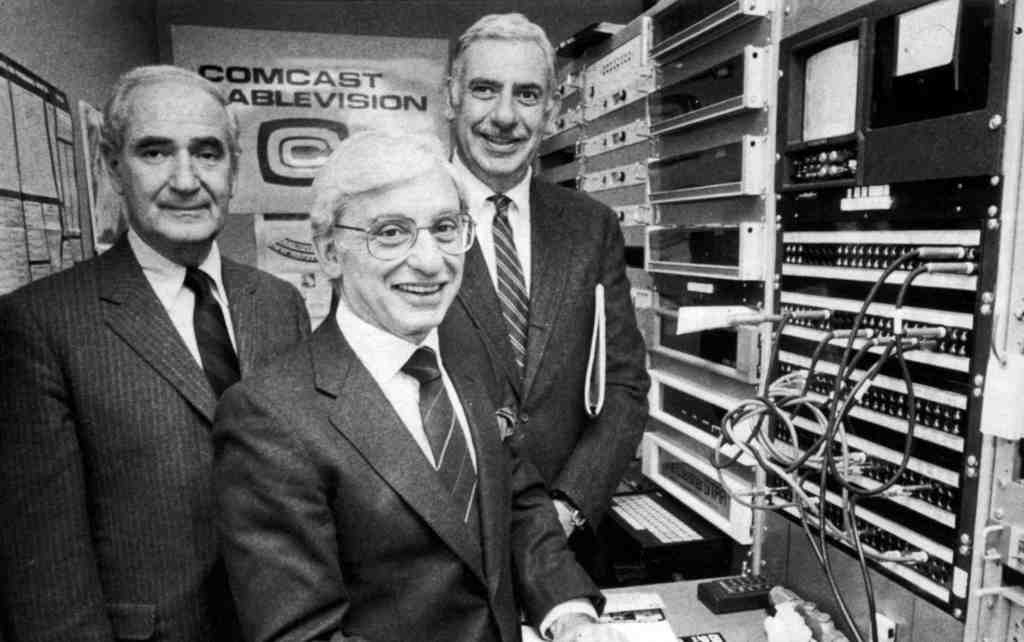
    Comcast’s founders — Ralph Roberts (left), Julian Brodsky (right), and Daniel Aaron — at a Comcast facility in Northeast Philadelphia in the late 1980s or early 1990s. The firm started with a cable TV venture in the Deep South in the early 1960s.

    While the elder Roberts was Comcast’s undisputed leader, Ralph credited Mr. Brodsky, an accountant, with much of the company’s success. “We were never short on money when we wanted to grow,” Ralph Roberts said in 2011, calling Mr. Brodsky one of the smartest men he ever met.

    What began as a single cable system in Tupelo, Miss., with around 1,200 customers is now a telecommunications and media giant headquartered in Philadelphia, with $124 billion in annual revenue.

    “We were lucky, and we were good,” Mr. Brodsky told The Inquirer in 2011. “We never saw a cable company we didn’t like.”

    At 6-foot-4, 250 pounds, Brodsky had a commanding presence — “a very powerful figure, both physically and mentally,” John Malone, a billionaire cable and media pioneer, said in a statement Friday.

    Mr. Brodsky was Comcast’s longtime chief financial officer and served as vice chairman from 2004 until his retirement in 2011. He was an early advocate at Comcast for focusing attention on the internet and started the company’s venture capital fund in 1999.

    Mr. Brodsky was also known as a philanthropist. He served as a trustee at the Philadelphia Museum of Art for almost three decades. Last month, he and his wife, Lois, pledged $20 million to the museum to create a learning and engagement center aimed in part at educating schoolchildren.

    “His impact on the Philadelphia Museum of Art will be felt for generations,” Ellen T. Caplan, chair of the museum’s board of trustees, said in a statement.
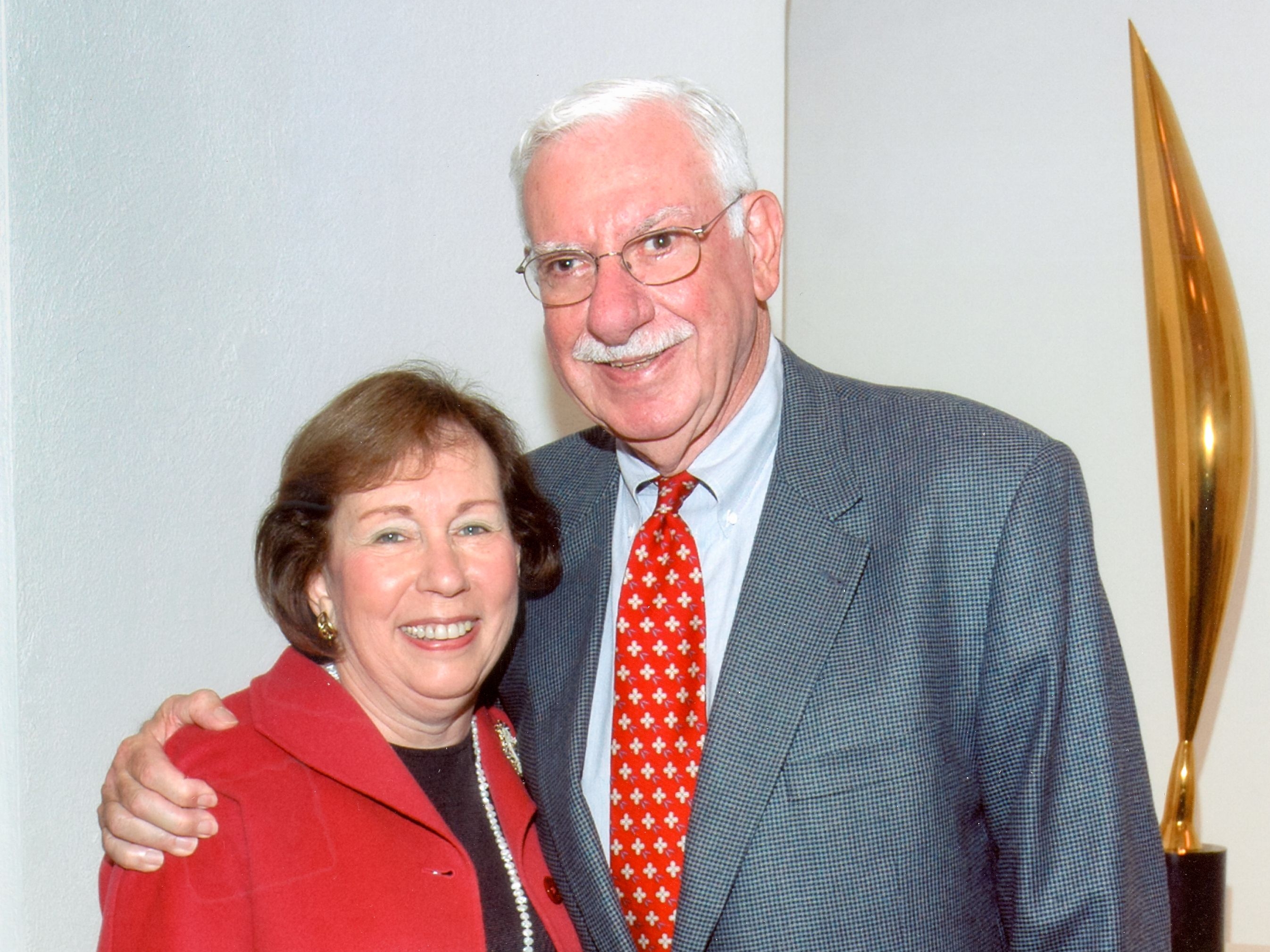
    Lois G. and Julian A. Brodsky in 2005 at the Philadelphia Museum of Art with Constantin Brancusi’s ‘Bird in Space’ behind them.Courtesy the Philadelphia Museum of Art

    Mr. Brodsky lived in Philadelphia’s Logan Square neighborhood for the last two years and before that resided in Cherry Hill for 42 years.

    The son of a homemaker and Dock Street produce wholesaler, Mr. Brodsky was born in Philadelphia in 1933 and went to Overbrook High School.

    When Mr. Brodsky was 17, he told an interviewer, he blocked a shot in a summer-league game by a teenager named Wilt Chamberlain — the future NBA superstar.

    Mr. Brodsky graduated from the Wharton School at the University of Pennsylvania in 1956 and served two years in the Army in Alabama. He joined the Philadelphia accounting firm of Adler, Faunce & Leonard — whose clients included Ralph Roberts, an entrepreneur and Navy veteran who at the time owned a belt-manufacturing business.

    Mr. Brodsky helped Roberts sell the company. Two years later, in 1963, Roberts bought the community antenna television system in Mississippi.

    Mr. Brodsky and Daniel Aaron, a former business writer for the Philadelphia Bulletin, joined Roberts as partners.

    “I said, ‘No way you’re doing this without me,’’ Mr. Brodsky recalled in a 1996 interview. “I loved cable, and I loved Ralph. What could be better?’’
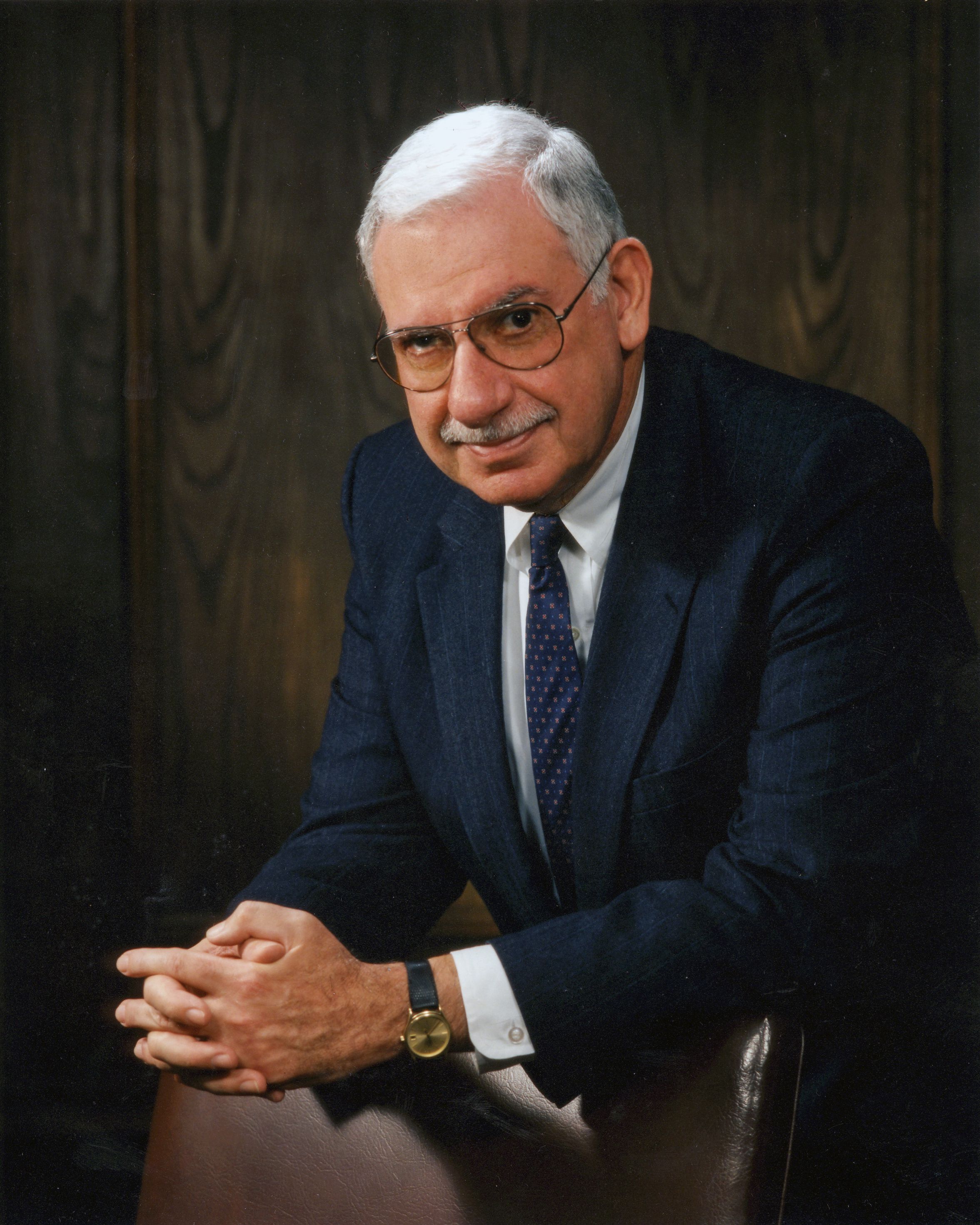
    Comcast co-founding partner Julian Brodsky.Courtesy of Comcast

    In the early days, Roberts operated out of a small office in Bala Cynwyd, where Mr. Brodsky used a card table as a desk.

    Early on, banks sometimes viewed Comcast with skepticism, but Mr. Brodsky sold them on new financing schemes like low-interest, long-term loans.

    With 40,000 cable-TV subscribers, Comcast went public in 1972. Mr. Brodsky played a “central role” in the initial public offering, the company said Friday.

    He was “instrumental in financing the company’s expansion, efforts to raise capital, and helped guide major acquisitions that transformed Comcast from a small regional cable operator into an industry leader,” the company said.

    Mr. Brodsky was the last remaining Comcast cofounder. Aaron died in 2003, and Roberts in 2015.

    Mr. Brodsky is survived by Lois, his wife of 70 years; daughters, Debra, Ellen, and Laura; as well as four grandchildren, one brother, and a niece. A celebration of Mr. Brodsky’s life will be announced at a later date.

    Donations can be made in honor of Mr. Brodsky to the Philadelphia Museum of Art, the Barnes Foundation, and the Free Library of Philadelphia.

  • Comcast is laying off more than 600 Philly employees amid big cost-cutting transformation

    Comcast is laying off more than 600 Philly employees amid big cost-cutting transformation

    Comcast is laying off 634 employees at its Philadelphia headquarters, as the telecommunications and media giant pursues a cost-cutting transformation and invests in artificial intelligence.

    The layoffs are to begin taking effect Dec. 31, according to a notice the company filed with Pennsylvania regulators. The company has started notifying affected employees.

    In addition to the layoffs in Pennsylvania, Comcast notified regulators that it was cutting 119 positions in New Jersey, 159 in Washington state, and 82 in California. Federal law requires large employers to notify regulators about layoffs that affect more than 50 people at a single employment site.

    Workers described a tense atmosphere at the company’s two-building Center City headquarters, with one describing seeing people “crying in the halls or the bathrooms.”

    “We are deeply grateful to the colleagues whose roles are affected and for the contributions they have made to Comcast,” said a company statement shared by spokesperson John Demming on Friday. “Philadelphia is our home. It’s where our company was founded and built, and it remains central to who we are and our future.”

    The company is planning to hire for more than 1,100 new positions as part of the restructuring, including more than 500 in Philadelphia, according to the layoff notice.

    “Comcast is fundamentally redesigning our organization to build a more agile company and better serve our customers,” the company statement said. “These changes will help us accelerate innovation and compete more effectively in a rapidly changing industry.”

    Dozens of Comcast employees across the U.S. have posted about the job losses this week on LinkedIn as they seek to tap their networks for new opportunities. Among the affected workers are engineers, product managers, executive assistants, social media analysts, construction specialists, business analysts, and information technology leaders.

    Several Comcast employees spoke with The Inquirer but requested anonymity so as not to endanger their severance or jeopardize future employment.

    “As a millennial, I’m starting to think ‘unprecedented times’ are actually just … times,” wrote one Philadelphia worker who said her position had been eliminated after more than eight years at the company.

    Comcast employs 179,000 full-time and part-time workers across several countries, including 15,000 in the Philadelphia area.

    The job losses at one of Philadelphia’s largest employers come a week after company executives said on an earnings call that they are “fundamentally redesigning our organization” to “move faster, improve execution, and operate more efficiently.”

    Executives said they plan to accomplish that in part by deploying AI agents to connect with customers.

    Employees interviewed by The Inquirer said anxiety around potential cuts spiked after chief financial officer Jason Armstrong said during an early September Goldman Sachs conference that Comcast had embarked “on the largest cost transformation in the company’s history.”

    “For seven weeks everyone’s kinda been panicking,” said one worker who was laid off. “They knew there were gonna be thousands of cuts but didn’t understand who, or how, or why.”

    Another sign of things to come: Comcast brought on management consulting firm McKinsey & Co. to advise the company, according to multiple employees. McKinsey consultants started showing up at Philadelphia headquarters around the time of the Goldman conference, one of the employees said.

    “Our larger team had meetings with senior leadership saying, ‘There’s gonna be some changes,’” said one laid-off employee who worked at the company for five years.

    But that employee said he wasn’t surprised by the cuts, given that Comcast has been losing cable customers for years and has also faced challenges in the broadband internet market.

    “I guess you could arguably say the writing was on the wall for years,” the employee said. “We’re losing customers, and we’re not changing how we operate.”

    Rumors that Comcast might merge with Stamford, Conn.-based cable and internet provider Charter Communications — a subject of speculation on Wall Street — also have been weighing on morale.

    “We know merging with another company [would] bring another wave of layoffs,” said another employee who lost their job after more than half a decade, describing the mood inside the company in recent weeks.

    Workers also are wondering what the restructuring means for Comcast’s identity. The cuts come after Comcast in June said it plans to split into two publicly traded companies, spinning off NBCUniversal and European television company Sky.

    “Are we trying to merge with Charter into one giant nationwide cable-internet behemoth?” said the employee with five years at the company. “Or are we trying to slim down to be acquired by Netflix or somebody?”

    “Who is Comcast now?” said one employee in the legal department. “You want to make it leaner, you want to be more agile — to what end? Is it that you’re trying to be this cutting-edge technology company? Is it that you’re trying to be an internet company? … What are you trying to be?”

    Executives have yet to articulate a new vision, said the employee with five years at the company. “The top-down communication has been completely anemic,” he said.

    While Comcast has not publicly announced the size of the total job cuts across the business, other big companies in recent months have been more specific. Tech giant Microsoft this week said it was offering buyouts to about 60,000 employees. Earlier this year, Facebook parent Meta Platforms told staff it planned to cut 10% of its workforce. And streaming platform Netflix in October told employees it was laying off 6% of its workforce.

    A Comcast employee in the construction department got pulled into a virtual meeting this week with dozens of others where he learned he would be laid off. He doesn’t know who will take over his work — but it can’t just be eliminated. The work has to get done, he says. The construction department maintains and builds Comcast’s infrastructure for internet, video, and phone services.

    “Everybody’s scared,” he said. “Nobody quite knows if they’re next or not. I certainly didn’t see it coming.”

    “I’ve got a family to support, so it was pretty crushing,” he said.

  • Comcast rolls out new AI home-security system for internet users

    Comcast rolls out new AI home-security system for internet users

    Comcast is launching a new AI-fueled home-security platform, building on its suite of internet-related services for broadband customers as it looks to bulk up that side of its business,

    While it’s not the company’s first foray into home security technology, the newest offering combines cybersecurity, parental controls, cameras, and sensors for streamlined protection over its Wi-Fi network. It comes at a slightly higher monthly price than its previous comparable iteration.

    The move represents the Philadelphia-based telecom giant’s latest effort to diversify its services amid a steady erosion of cable subscribers and a leveling-off of broadband customers.

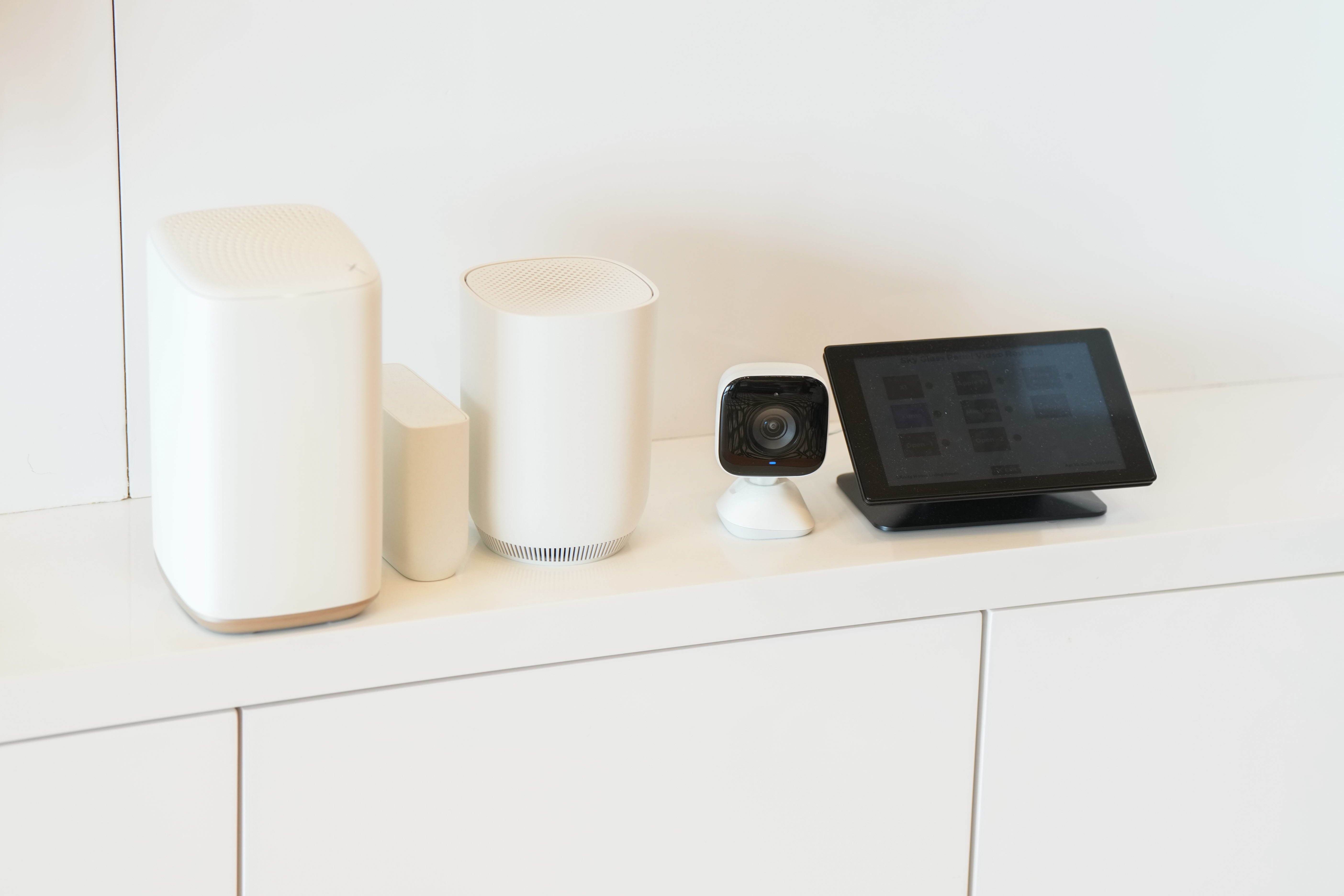
    The platform, Xfinity Shield, consists of cybersecurity and protection features that are available to existing Wi-Fi customers at no additional charge, as well as a premium tier of AI-powered tools that cost $15 per month.

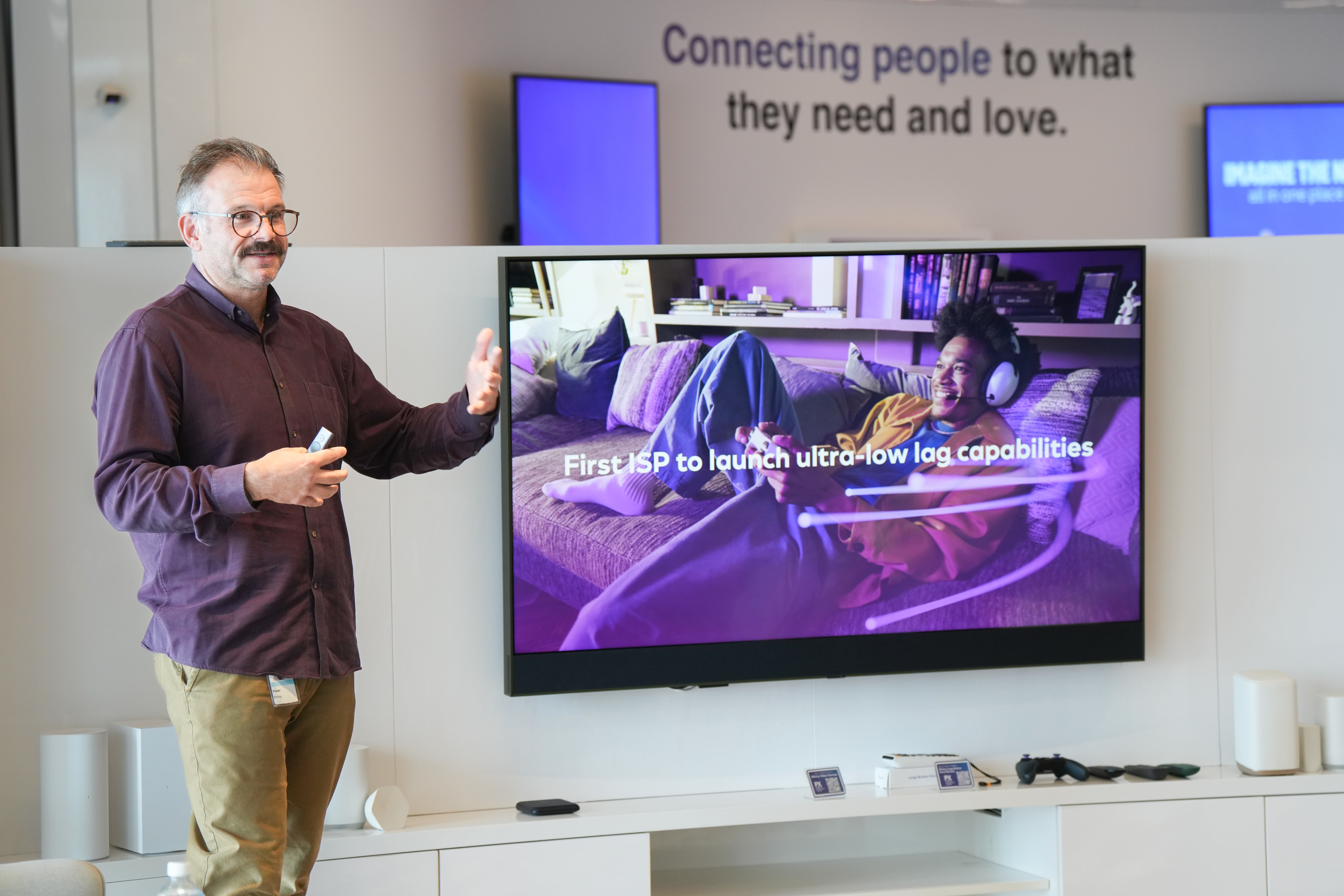
    “It is a combination of things that we’ve had and brand new innovations,” Fraser Stirling, Comcast’s global chief product officer, said in a recent interview. He added that platform creators tried to answer the question: “How do you make these complicated things simple for people?”

    Fraser Stirling, Comcast’s global chief product officer, gives a presentation in April.Jessica Griffin / Staff Photographer

    On customers’ Xfinity app, they can protect themselves from online threats, limit their children’s screen time, and detect movement in their home while they’re away. Users can customize their settings and notifications for different times, including at night and when they’re away.

    Starting Tuesday, existing Wi-Fi customers with advanced Gateway routers can use those tools, though they have to opt in to the Wi-Fi Motion monitoring. The feature detects changes in the radio frequency signals between the Gateway and Wi-Fi-connected devices in the home, without recording video, taking photos, or identifying people, according to Comcast executives.

    Wi-Fi customers who want more features can pay $15 a month for a package that includes an indoor camera, door and window sensors, video storage, and the ability to call for emergency help at the tap of a button. Called Xfinity Shield Select, this service can work with a range of compatible hardware including outdoor cameras and smart locks.

    The Xfinity Shield services are being rolled out as Comcast changes its company structure and responds to evolving consumer demands.

    In June, Comcast executives announced plans to split into two publicly traded companies by spinning off the NBCUniversal media group. Comcast will continue to provide consumer and business services, with a renewed focus on streaming and mobile.

    In recent months, Comcast has expanded its Xfinity Mobile services in an attempt to offset the departure of cable and internet subscribers.

    (function(){function e(){window.addEventListener(`message`,function(e){if(e.data[`datawrapper-height`]!==void 0){var t=document.querySelectorAll(`iframe`);for(var n in e.data[`datawrapper-height`])for(var r=0,i;i=t[r];r++)if(i.contentWindow===e.source){var a=e.data[`datawrapper-height`][n]+`px`;i.style.height=a}}})}e()})();

    The number of broadband customers has plateaued in recent years, while the number of traditional cable TV subscribers has fallen off precipitously. Comcast reported about 10.7 million cable customers in its second-quarter earnings report, down from 11.3 million at the end of last year and 18.2 million in 2021.

    Xfinity Mobile, meanwhile, has seen growth, with about 900,000 new wireless lines being added in the first half of this year, according to earnings reports. As of June, there were about 10.2 million Xfinity Mobile lines, with each customer having two lines on average. Many of these connections are part of a free-line-for-a-year promotion, which will end for some customers later this year.

    Only new or existing broadband customers can sign up for mobile, which costs $30 or $45 a month depending on the plan. Wireless uptake represents a fraction of the company’s 28 million home internet subscribers, and brought in about $5 billion last year, out of $71 billion total internet and cable revenue.

    Comcast executives are hoping that some internet subscribers are willing to pay for Xfinity Shield Select.

    “The more of these products you take from us, the better the experience is,” Stirling said.

    Xfinity’s older home-security system and products remain available for existing customers, but the $10-a-month Smart Home indoor-monitoring package is no longer offered to new customers. Current Smart Home customers can keep their plan or switch to Xfinity Shield Select for the newer features. The more traditional home-security system, which includes 24/7 professional monitoring, costs $55 a month and will remain available for new and existing customers.

  • Ex-Comcast employee was hit in the face with a pie and tied to a chair for low sales, lawsuit says

    Ex-Comcast employee was hit in the face with a pie and tied to a chair for low sales, lawsuit says

    Sales low? You might get a pie to the face.

    That’s what a former Comcast retail employee says would happen, according to a new lawsuit filed against the Philadelphia-headquartered company.

    David Figueroa, a former employee at a retail location in Connecticut, alleges a store manager subjected workers to hazing and assault, forcing him to quit within a month of employment. That treatment included a monthly ritual where an employee was tied to a chair and smashed in the face with a cream pie. The antics were also videotaped.

    Comcast, the $125 billion-a-year media and communications giant, operates hundreds of retail stores nationwide. The stores act as point-of-sales locations for Xfinity products, including internet and TV products. They also offer equipment swaps and general customer support.

    “The Company has zero tolerance for harassment, humiliation, or any behavior that compromises a respectful and safe workplace,” Comcast spokesperson John Demming said in a statement. “This matter is in litigation so we will not comment on the specific allegations, other than to say that we disagree with the claims in the complaint and its characterization of the alleged events, and intend to fully respond through the legal process.”

    According to a lawsuit filed on behalf of Figueroa against Comcast, he was hired as a retail sales consultant in February at a retail location in Plainville, Conn., about 15 minutes outside of Hartford.

    But Figueroa said he was quickly rattled by his direct supervisor, the store’s manager, for her treatment of the staff. That store manager is not named as a defendant in the lawsuit. Demming declined to comment on the manager’s current employment status, citing personnel matters.

    The lawsuit says the store’s manager tracked employee sales metrics on a whiteboard in the back office that all employees could see. In the corner of that whiteboard, employees’ names were correlated to an emoji. The employee with the lowest monthly sales was listed next to an upset-looking emoji with a pie on its face, according to photos included in court documents.

    “[The chart] identified the employees who either had been recently assaulted or were scheduled to be assaulted in this way,” the lawsuit says.

    On Feb. 25, Figueroa witnessed a coworker being tied to the chair and assaulted in the face with a pie. The store manager “ordered, was present for, and videotaped this assault, as did the Plaintiff and other coworkers,” the lawsuit says. The coworker who struck the tied-up employee “had better sales results” and was ordered “to assault his poorer performing co-worker, in front of his peers,” the suit says.

    Figueroa’s coworkers showed him a video of another pieing incident where the assistant sales manager was hit in the face with a pie because of a poor survey score from a customer, according to the lawsuit.

    He attempted to report the incident to the store’s regional manager, who instructed Figueroa to send a text message documenting his concerns. According to the lawsuit, the regional manager “never responded” to Figueroa’s complaints about the store’s “hostile and violent work environment,” leading to his resignation.

    The Plainville retail location could not be reached for comment.

    Figueroa “suffered a pervasive and ongoing fear of being subjected to management-condoned assaults and public humiliation in the workplace,” the lawsuit says. Now, he’s suing Comcast for damages, including past and future financial, emotional, and reputational harm caused by the incident, along with court fees.

    It’s not the first time Comcast has found itself in a lawsuit involving a former employee. As reported on by The Inquirer, several past lawsuits waged by former employees have touched on hostile work environments at different Comcast stores, facilities, and call centers.

    The company reported lower profits last week, citing drops in domestic residential broadband customers in the second quarter.