Category: Theater

  • Inis Nua, People’s Light, and Wilma Theater win big at the 2026 Barrymore Awards

    Inis Nua, People’s Light, and Wilma Theater win big at the 2026 Barrymore Awards

    It was a festive night full of laughs, songs, cheers, happy tears, and tequila shots at the Suzanne Roberts Theatre as Theatre Philadelphia hosted its 2026 Barrymore Awards ceremony on Monday.

    The celebratory crowd packed the house as the host, playwright and actor R. Eric Thomas, kept the jokes coming — opening the show with a cheeky original song “No Funny Business” and tossing props from nominated shows into the audience, like a soccer ball, leis, and packs of cigarettes (“Who wants to smoke cigarettes with Martin Luther King?” he asked, referencing The Mountaintop.)

    “Tonight is the night for recognizing ourselves, celebrating ourselves and each other,” said Thomas. “It is not about creating a hierarchy. It is about saying that we are a community. So I want you to turn to your neighbor and say, ‘You did that s—.’”
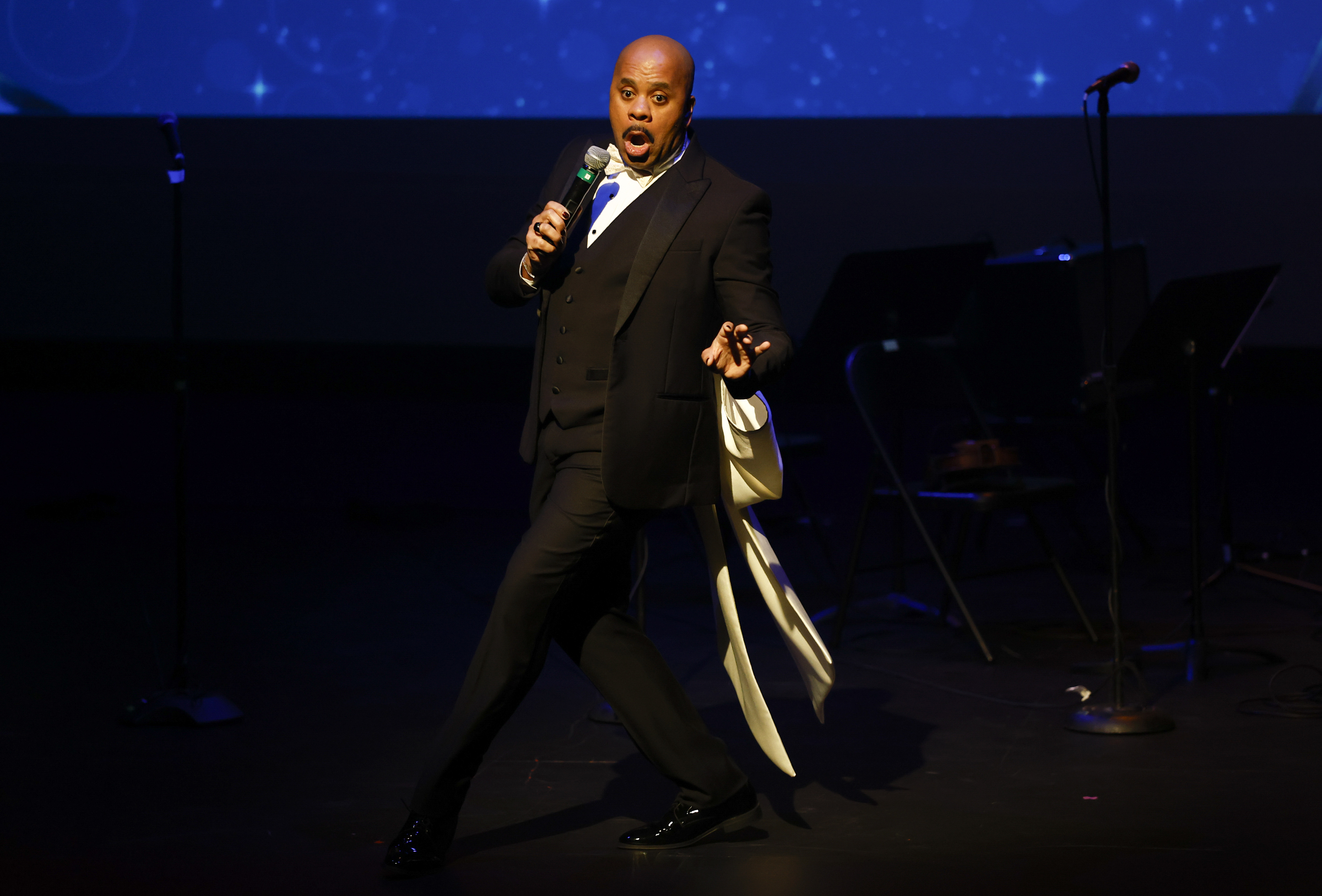
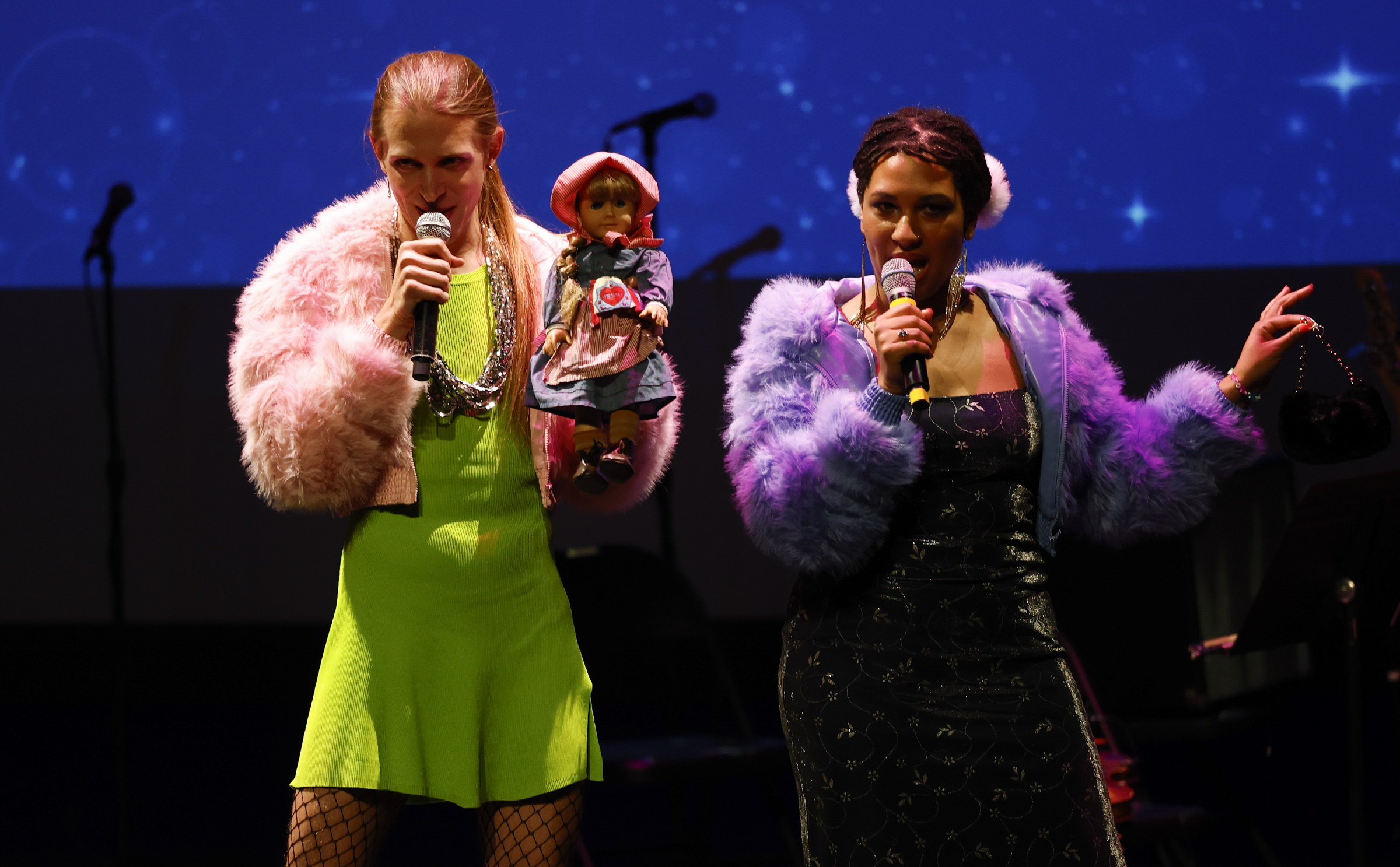
    Host R. Eric Thomas opens the 2026 Barrymore Awards ceremony at the Suzanne Roberts Theatre on Monday, Nov. 16, 2026.Yong Kim / Staff Photographer

    Over the course of the evening, Theatre Philadelphia highlighted dozens of productions staged by 18 regional theater companies, from Center City’s Inis Nua Theatre Company to Malvern’s People’s Light Theatre Company to Delaware Shakespeare in Wilmington.

    Award presenters included Philadelphia notables City Councilmember Rue Landau, PHL17’s Positively Philly hosts Abby Urban and Rachel Malak, and Pulitzer Prize-winning playwright James Ijames.
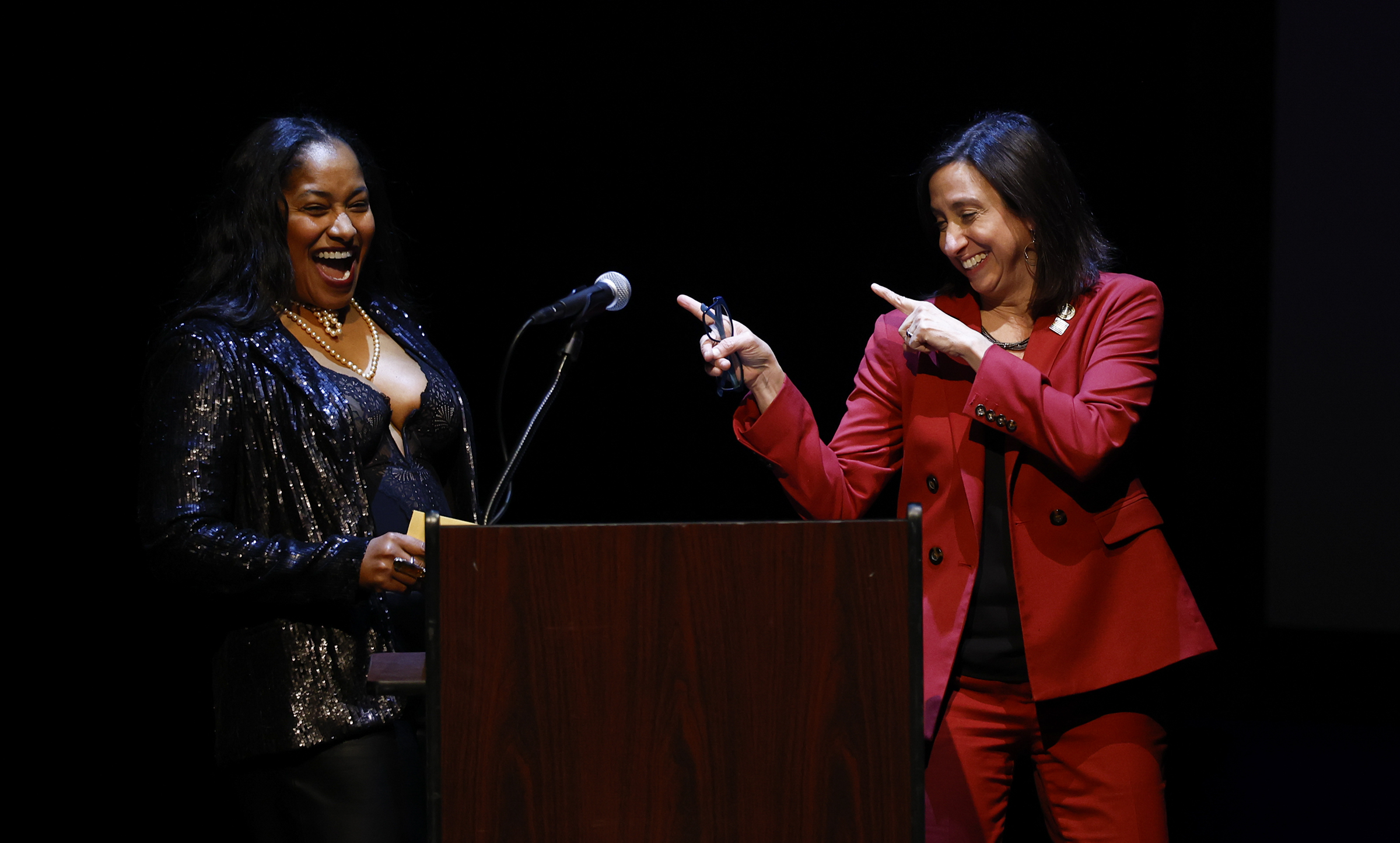
    Philadelphia City Councilmember Rue Landau (right) and performer Amina Robinson on stage before presenting 2026 Barrymore Awards, at the Suzanne Roberts Theatre on Monday, Nov. 16, 2026.Yong Kim / Staff Photographer

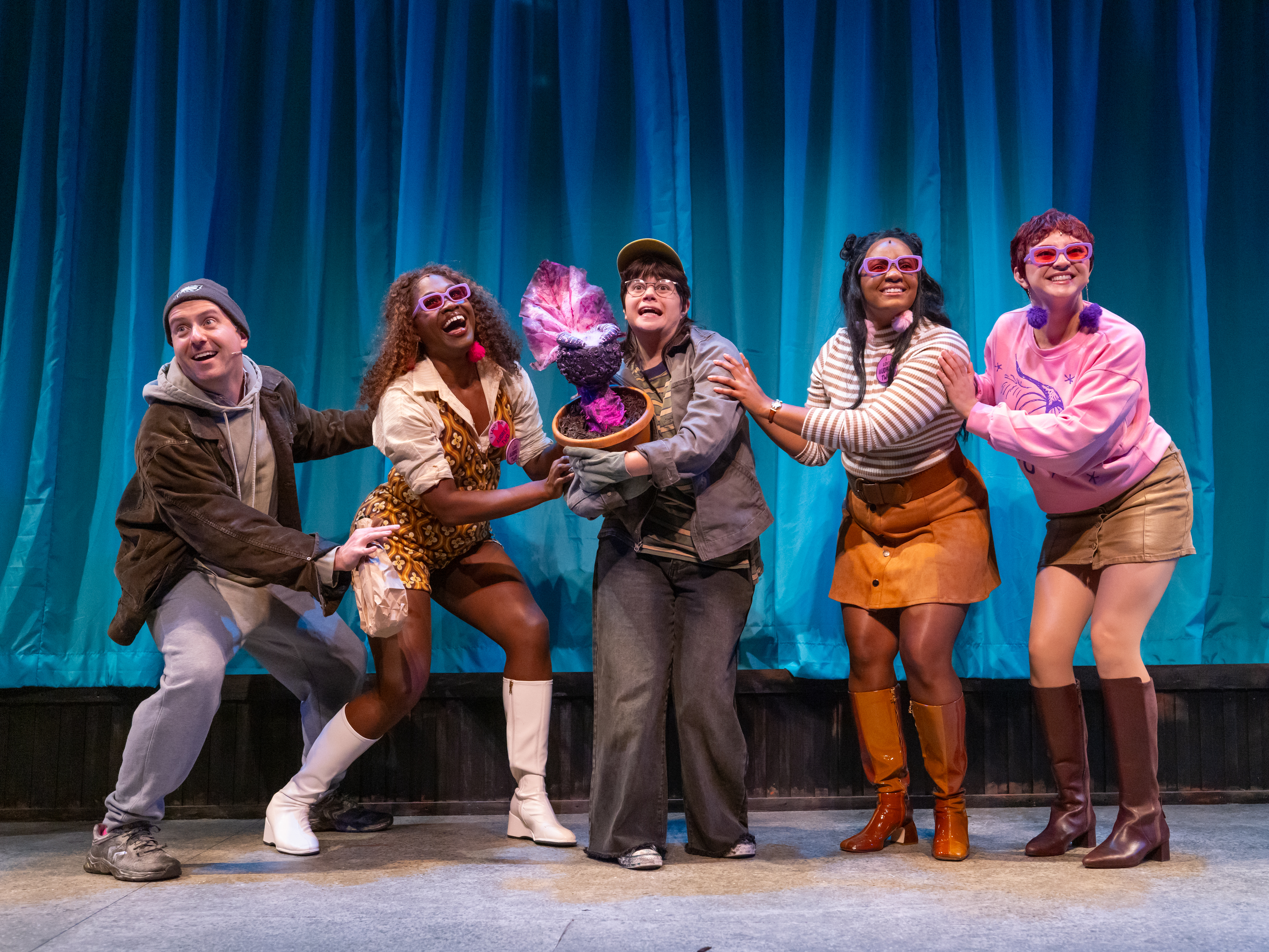
    People’s Light’s production of Little Shop of Horrors, which was nominated for 11 Barrymores, took home awards for outstanding overall production of a musical. The production also won the inaugural Barrymore for outstanding props or puppetry design — recognizing scenic and puppet designer Anton Volovsek and costume and puppet designer Camilla Dely — and outstanding leading performance in a musical for Anna Faye Lieberma, who played the kind and clumsy shop assistant Seymour.
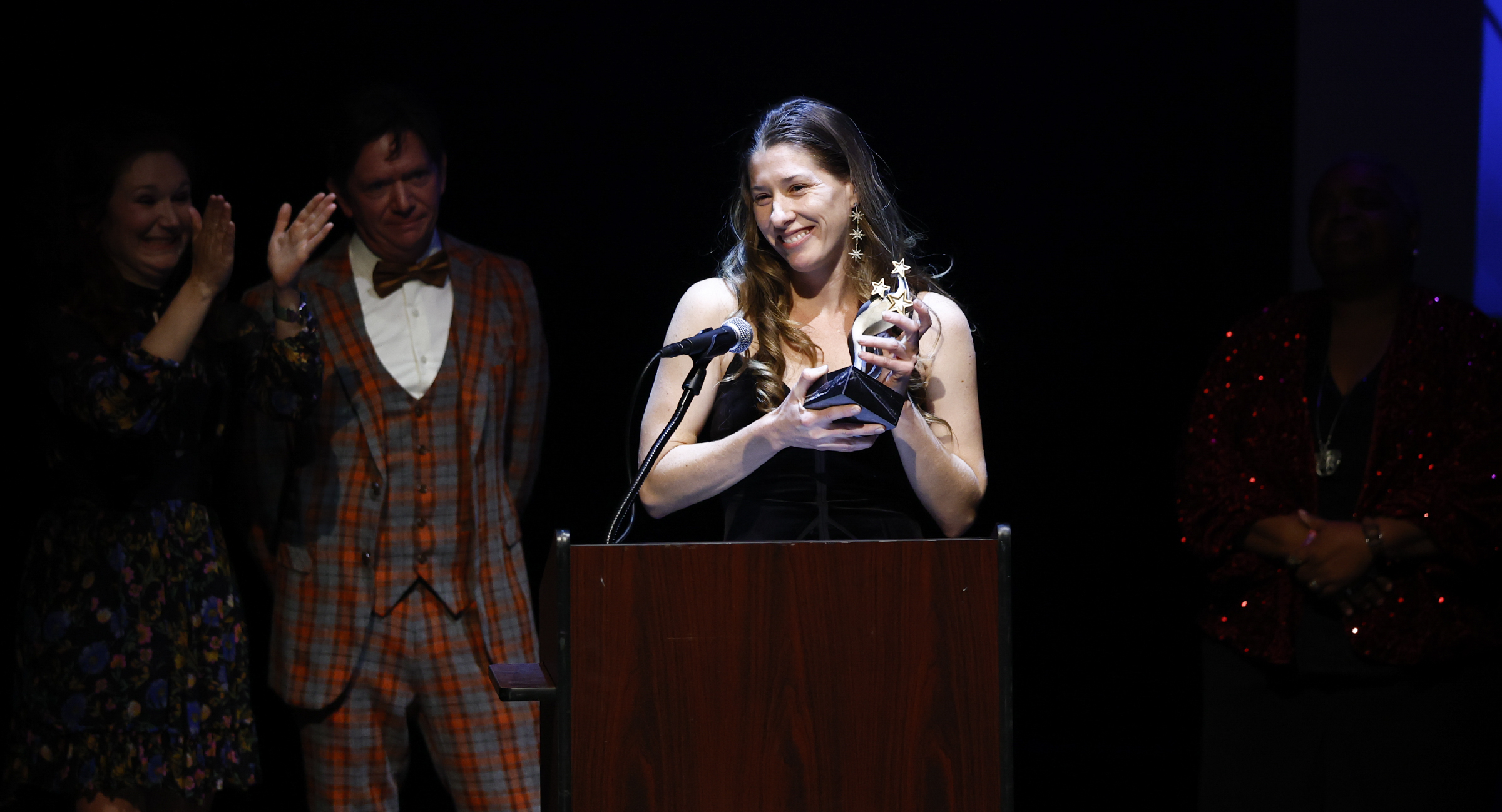
    Nikki Delhomme holds the 2026 Barrymore Award for outstanding costume design for the “Most Spectacularly Lamentable Trial of Miz Martha Washington,” at the Suzanne Roberts Theatre on Monday, Nov. 16, 2026.Yong Kim / Staff Photographer

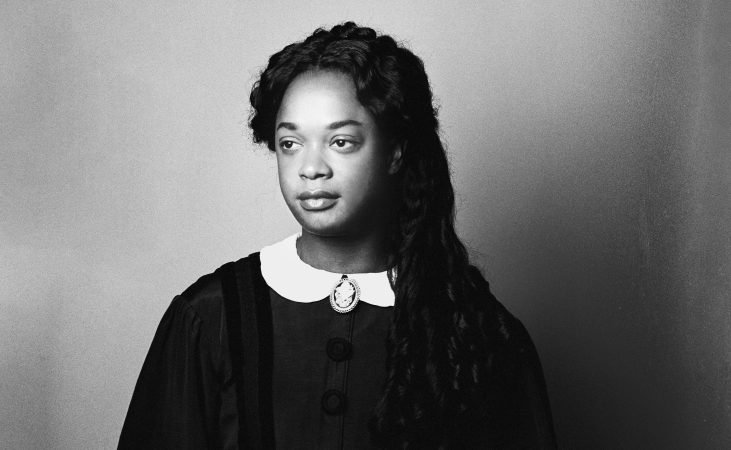
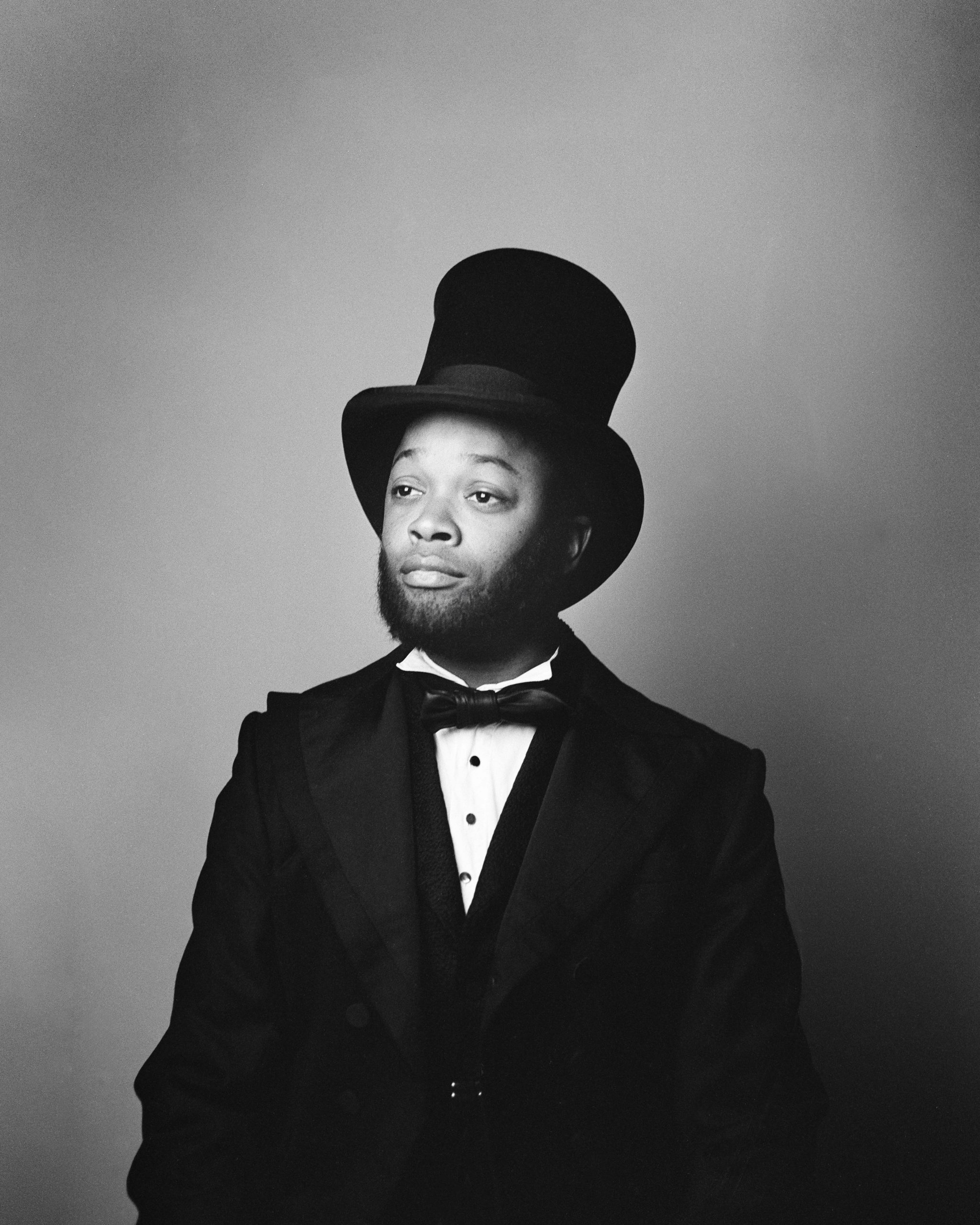
    Outstanding overall production of a play went to the Wilma Theater’s staging of The Most Spectacularly Lamentable Trial of Miz Martha Washington, a 2014 historical comedy from erstwhile South Philadelphian playwright Ijames (a former coartistic director at the Wilma). Ijames himself announced the award and longtime Wilma stage manager Patreshettarlini Adams accepted. Nikki Delhomme also won the Barrymore for outstanding costume design.
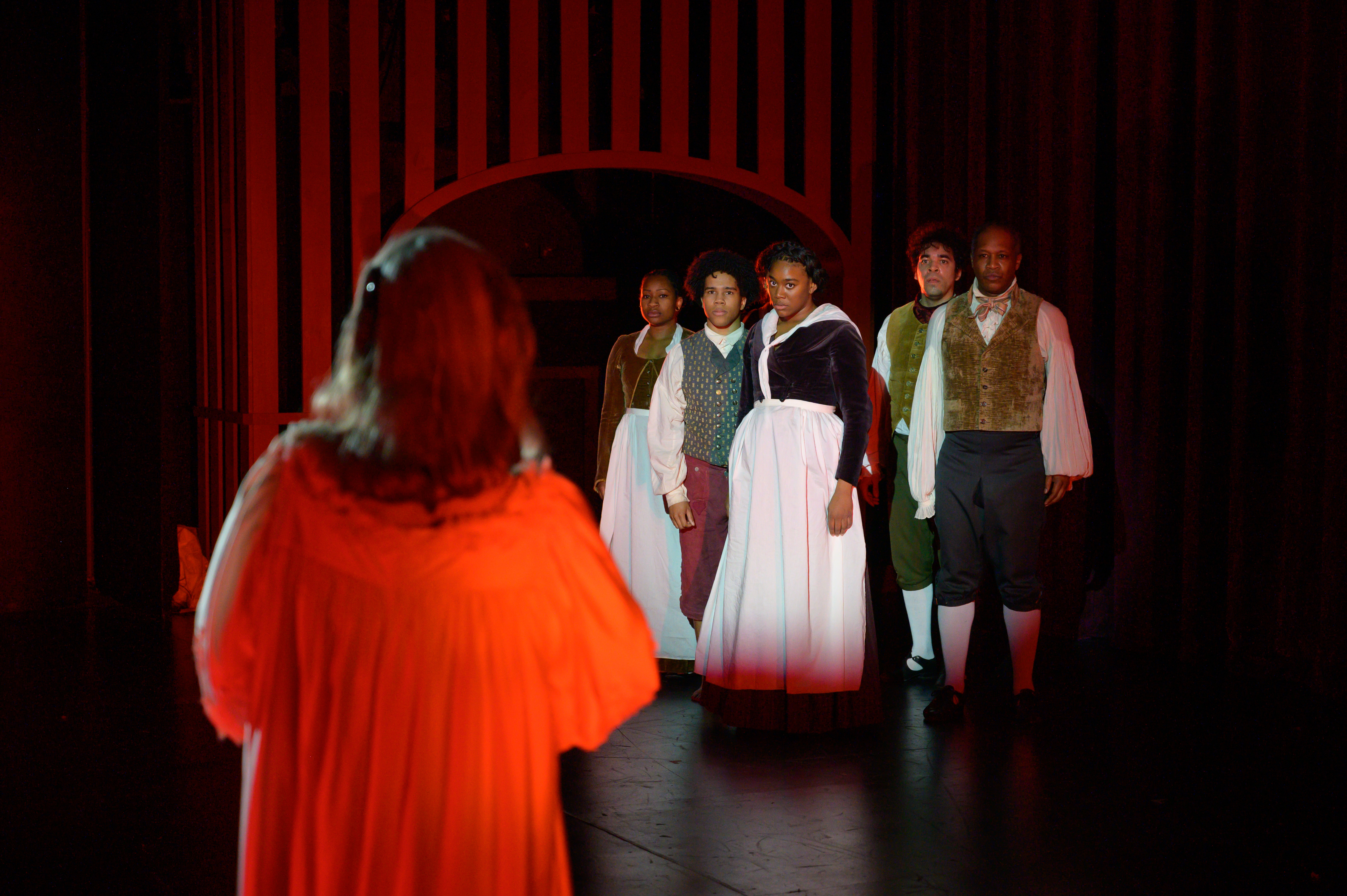
    From left: Nancy Boykin, Ciera Gardner, Jayson Brown, Jada Mayo, Anthony Martinez-Briggs, and Steven Anthony Wright in ‘The Most Spectacularly Lamentable Trial of Miz Martha Washington,’ running at the Wilma Theater through April 5.Johanna Austin

    The hilariously subversive play, which imagines the first lady on her deathbed hallucinating that the enslaved people around her are plotting her murder, arrived in Philadelphia amid the Trump administration’s efforts to whitewash the history of George and Martha Washington’s participation in slavery at the President’s House on Independence Mall earlier this year.

    Two theater companies went home with the highest number of wins, both receiving five Barrymore Awards each: Inis Nua, which stages works from the U.K. and Ireland at the Drake, and Arden Theatre Company, based in Old City.

    Inis Nua won for its productions Same Team, Can’t Forget About You, and The Greatest Play in the History of the World (a coproduction with Tiny Dynamite). A heartwarming story about a ragtag women’s soccer team in Scotland, Same Team won outstanding ensemble in a play and actor Page Whitman won the Barrymore for outstanding leading performance in a play.
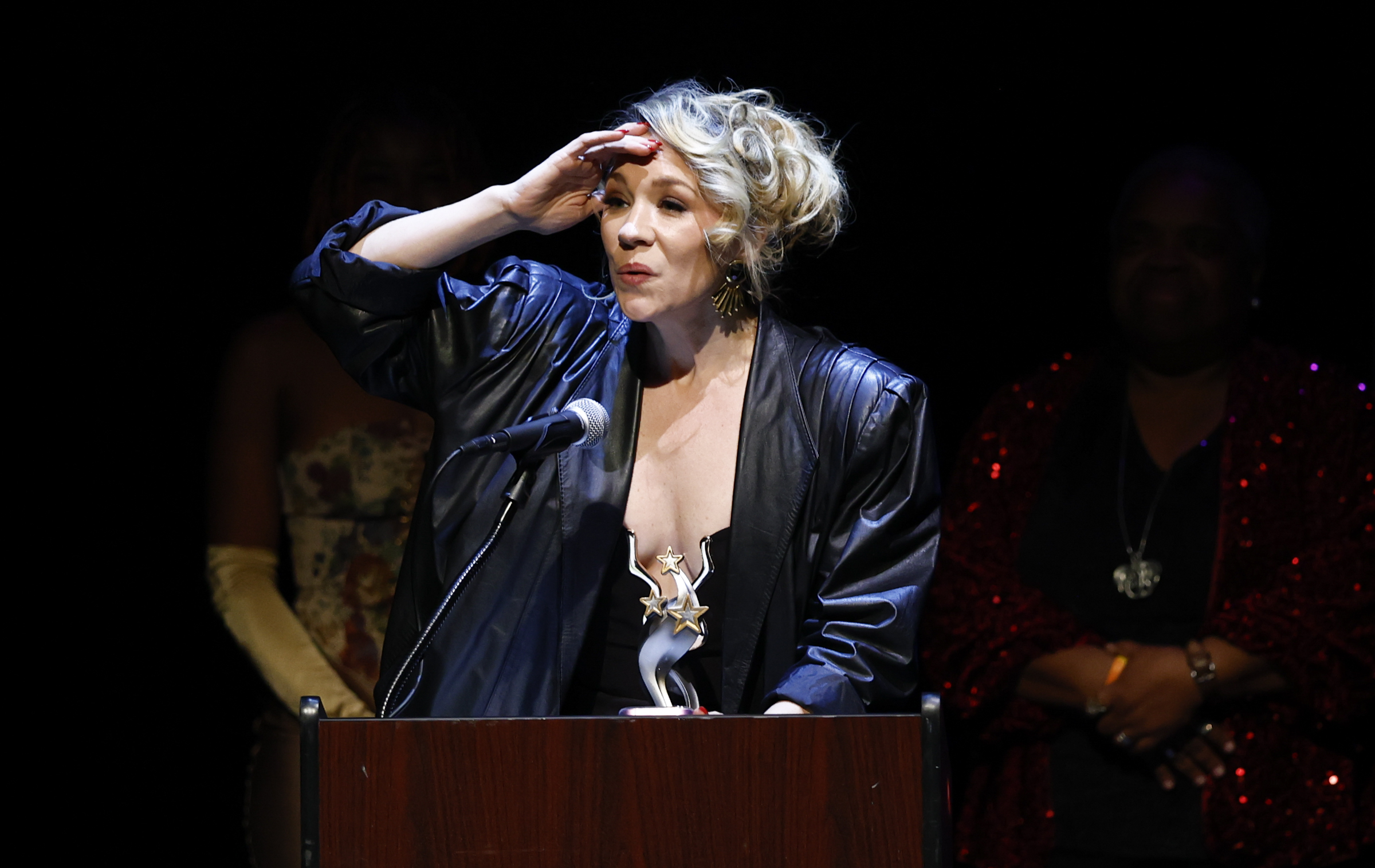
    K. O’Rourke reacts after winning the 2026 Barrymore Award for outstanding movement/choreography in a play for “Can’t Forget About You,” at the Suzanne Roberts Theatre on Monday, Nov. 16, 2026.Yong Kim / Staff Photographer

    The Irish rom-com Can’t Forget About You picked up two awards, including outstanding direction of a play for Kathryn MacMillan and outstanding choreography/movement in a play for K. O’Rourke. Lighting designer Shannon Zura won the Barrymore for her work on The Greatest Play in the History of the World; she had also been nominated for Good Bones.

    Arden’s actors received several awards across three productions. Both awards for outstanding supporting performance in a musical went to Falsettos actors Katherine Fried and Will Stephan Connell. They played Trina and Whizzer, respectively, in the complicated family story set during the AIDS epidemic. Behind the curtain, Gina Giachero won for outstanding music direction of a musical.
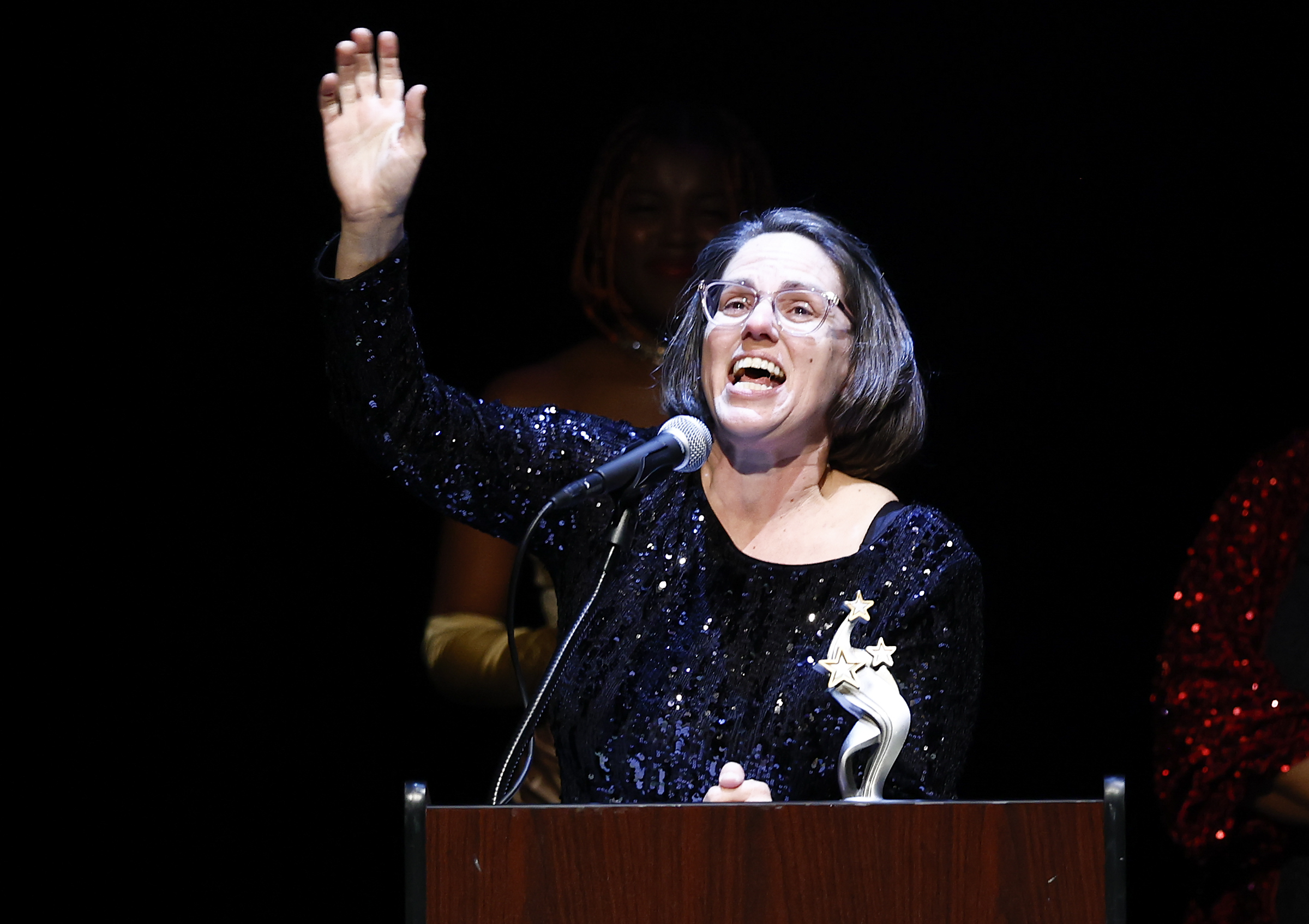
    Gina Giachero waves to her family after winning the 2026 Barrymore Award for outstanding music direction for “Falsettos,” at the Suzanne Roberts Theatre on Monday, Nov. 16, 2026.Yong Kim / Staff Photographer

    For the Arden’s production of James Ijames’ gentrification play Good Bones, South Philly-raised actor Walter DeShields won an award for outstanding supporting performance in a play, recognizing his compelling role as Earl, a contractor who’s passionate about his changing neighborhood and doesn’t want to see it demolished for the sake of a new sports stadium.

    In addition to Good Bones and Falsettos, the Arden’s production of Katori Hall’s The Mountaintop — which follows Martin Luther King on the night before his assassination in 1968 — also landed in the spotlight. Actor Kishia Nixon won outstanding leading performance in a play for her role as Camae, a fictional maid who mysteriously appears in his motel room with an important message.

    The other major acting awards went to Felicity Mundy, who won outstanding leading performance in a musical for playing Wendla Bergmann in the newly founded Relic Theatre Company’s inaugural production Spring Awakening, and David Ingram, who received the award for outstanding supporting performance in a play for tackling several roles in Philadelphia Theatre Company’s staging of Primary Trust. (Spring Awakening also won for outstanding ensemble for a musical.)

    Curio Theatre Company’s world premiere of Sacco & Vanzetti: A Tragedia dell’Arte received the Philadelphia Award for Social Insight, which spotlights a production that examined the complexity of our society and “shed light on customs, cultures, histories, and traditions that are too frequently overlooked.” The award comes with a cash prize of $25,000 for the West Philly-based theater. From Philadelphia actor/director John Bellomo, Sacco & Vanzetti was based on the true story of two Italian immigrants wrongfully convicted of murder in Massachusetts in 1921 and eventually executed — an injustice fueled by anti-immigrant bias.
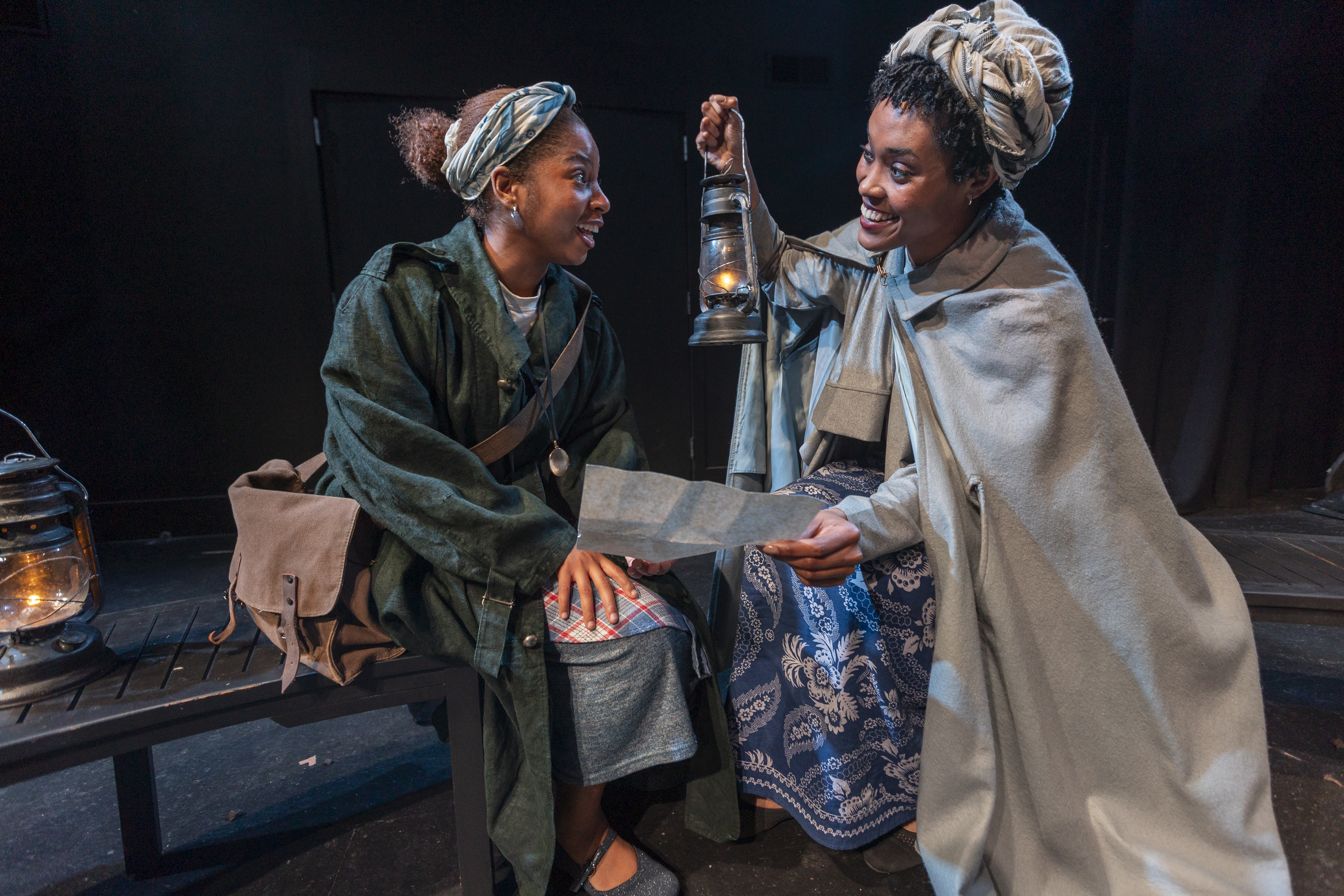
    Semaja Murphy and Rayne in “The Great Privation (How to Flip Ten Cents Into a Dollar).”Paola Nogueras

    Three finalists for the Social Insight Award each received a cash prize of $2,500: New Light Theatre’s The White Chip, Azuka Theatre and Simpatico Theatre’s 1 Pound 4 Ounces, and Theatre Exile’s The Great Privation.

    See the full list of winners (in bold) and nominees here:

    Outstanding overall production of a play

    1. The Most Spectacularly Lamentable Trial of Miz Martha Washington — The Wilma Theater, stage managed by Patreshettarlini Adams
    2. Same Team — Inis Nua Theatre Company, staged managed by Celia HuttonJohns
    3. La Otra — 1812 Productions, stage managed by Alexis Wells
    4. Walden — InterAct Theatre Company, stage managed by Abby Sturgis
    5. The Garbologists — Montgomery Theatre, stage managed by Brian Goldblatt
    6. Primary Trust — Philadelphia Theatre Company, stage managed by Jamel Baker
    7. The Mountaintop — Arden Theatre Company, stage managed by Matthew Ryan Melchior
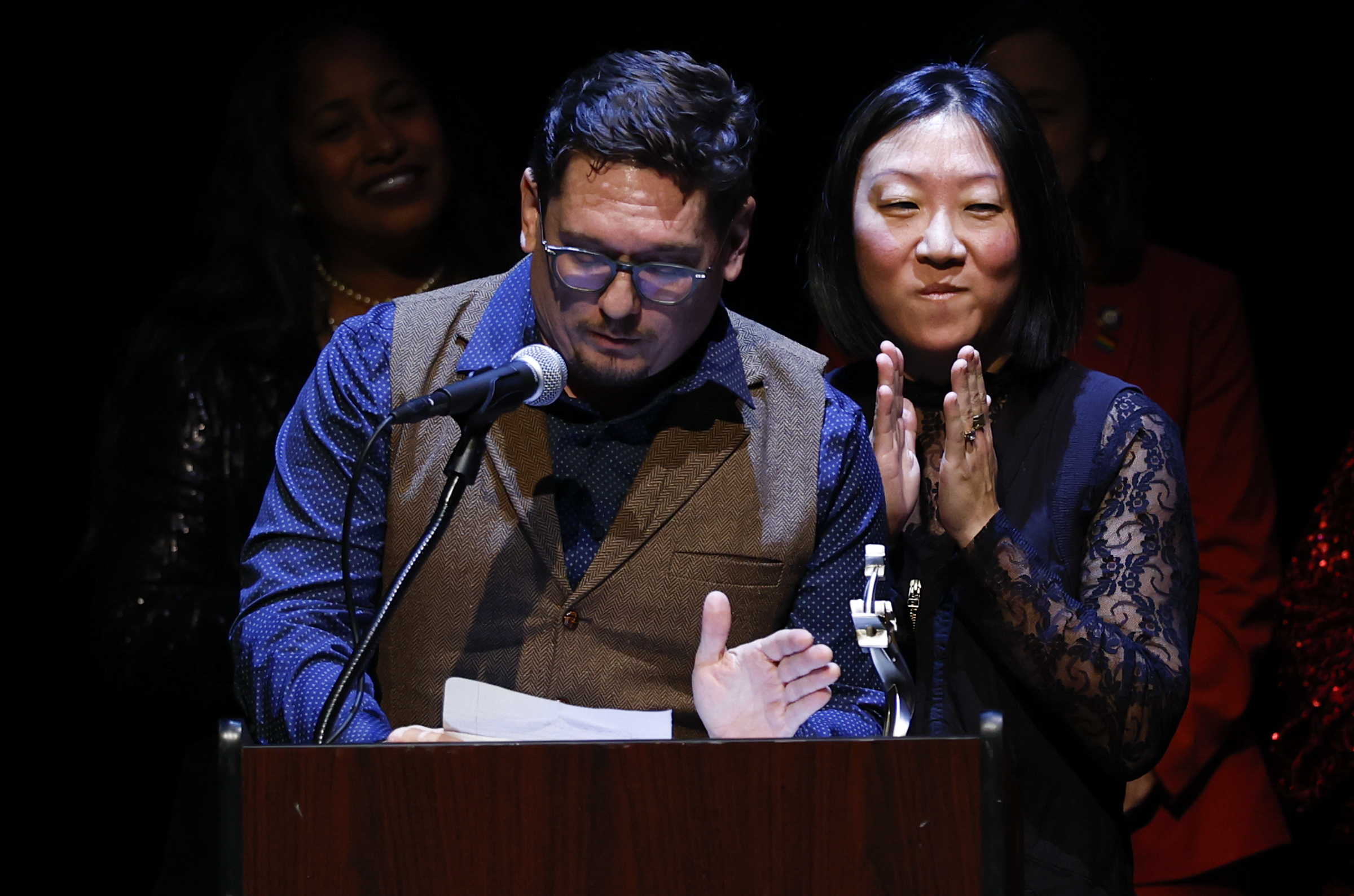
    Amanda Morton (right) claps as Josh Totora speaks after they won the outstanding original music Barrymore Award for “Wishing to Grow Up Brightly” during the 2026 Barrymore Awards at the Suzanne Roberts Theatre on Monday, Nov. 16, 2026.Yong Kim / Staff Photographer

    Outstanding overall production of a musical

    1. Little Shop of Horrors — People’s Light, stage managed by Jess McPhillips
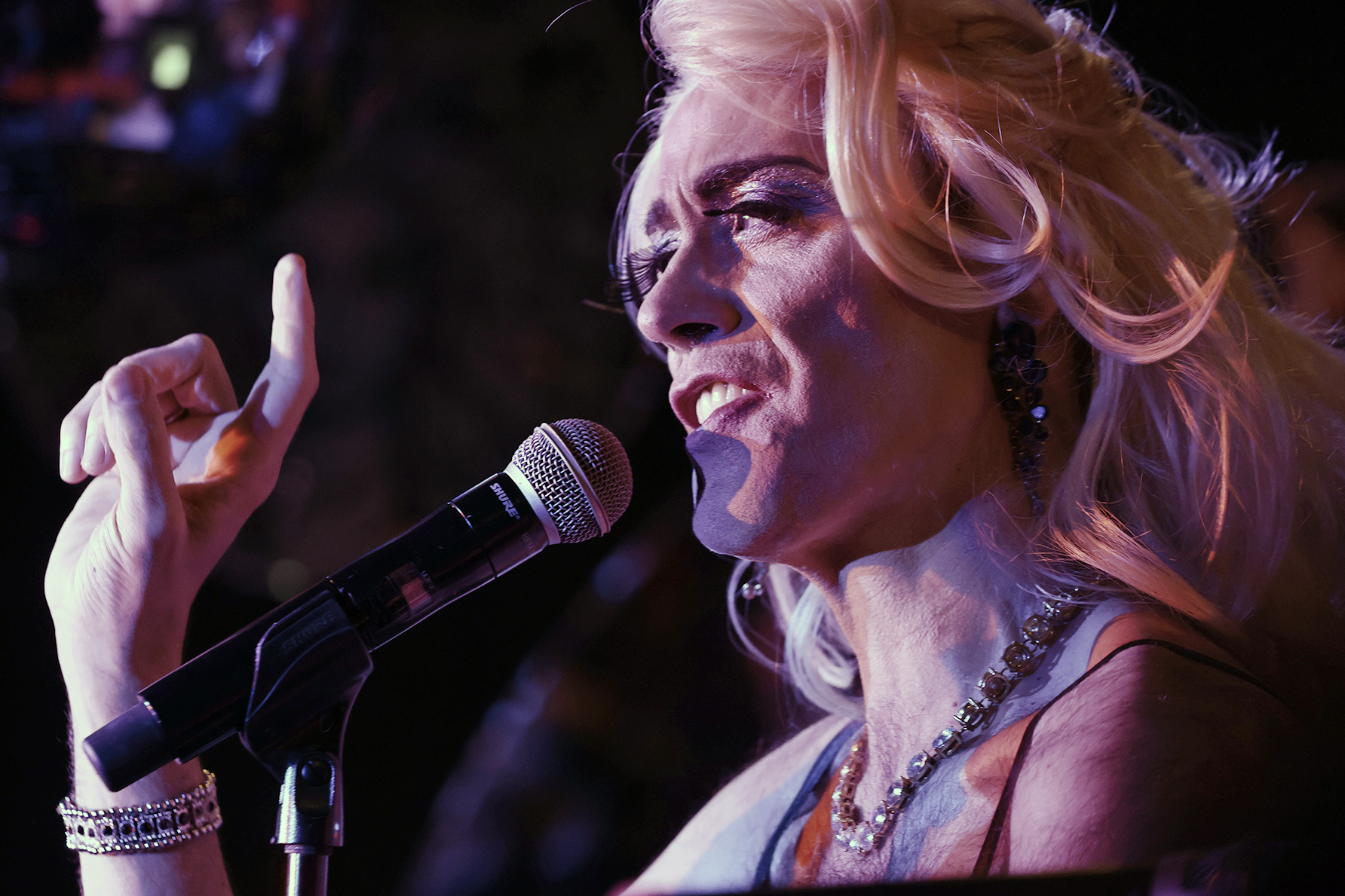
    2. GIRL DOLLS: The American Musical — Bearded Ladies Cabaret, stage managed by CD Kincade
    3. Wishing To Grow Up Brightly — Theatre Horizon, stage managed by Alec E. Ferrell
    4. Spring Awakening — Relic Theatre Company, stage managed by Asher Vaglica
    5. Falsettos — Arden Theatre Company, stage managed by Tom Shotkin

    Outstanding direction of a play

    1. Kittson O’Neill — Same Team, Inis Nua Theatre Company
    2. Kimille Howard — Plantation Black, InterAct Theatre Company
    3. Brett Ashley Robinson — The Most Spectacularly Lamentable Trial of Miz Martha Washington, The Wilma Theater
    4. Tanaquil Márquez — La Otra, 1812 Productions
    5. Amina Robinson — Primary Trust, Philadelphia Theatre Company
    6. Rebecca Wright — Class C, Azuka Theatre and Simpatico Theatre
    7. Kathryn MacMillan — Can’t Forget About You, Inis Nua Theatre Company

    Outstanding ensemble in a play

    1. The Most Spectacularly Lamentable Trial of Miz Martha Washington — The Wilma Theater
    2. FIRE!! — Quintessence Theatre
    3. Plantation Black — InterAct Theatre Company
    4. Little Women — Hedgerow Theatre Company
    5. Same Team — Inis Nua Theatre Company
    6. La Otra — 1812 Productions
    7. The Woman Question — People’s Light

    Outstanding leading performance in a play

    1. Ebony Pullum — Blues for an Alabama Sky, Lantern Theater Company
    2. Adam Howard — Why I Stuck a Flare Up My Arse for England, Inis Nua Theatre Company
    3. Noelle Diane Johnson — The Garbologists, Montgomery Theater
    4. David Pica — Class C, Azuka Theatre and Simpatico Theatre
    5. Leo Mock — Little Women, Hedgerow Theatre Company
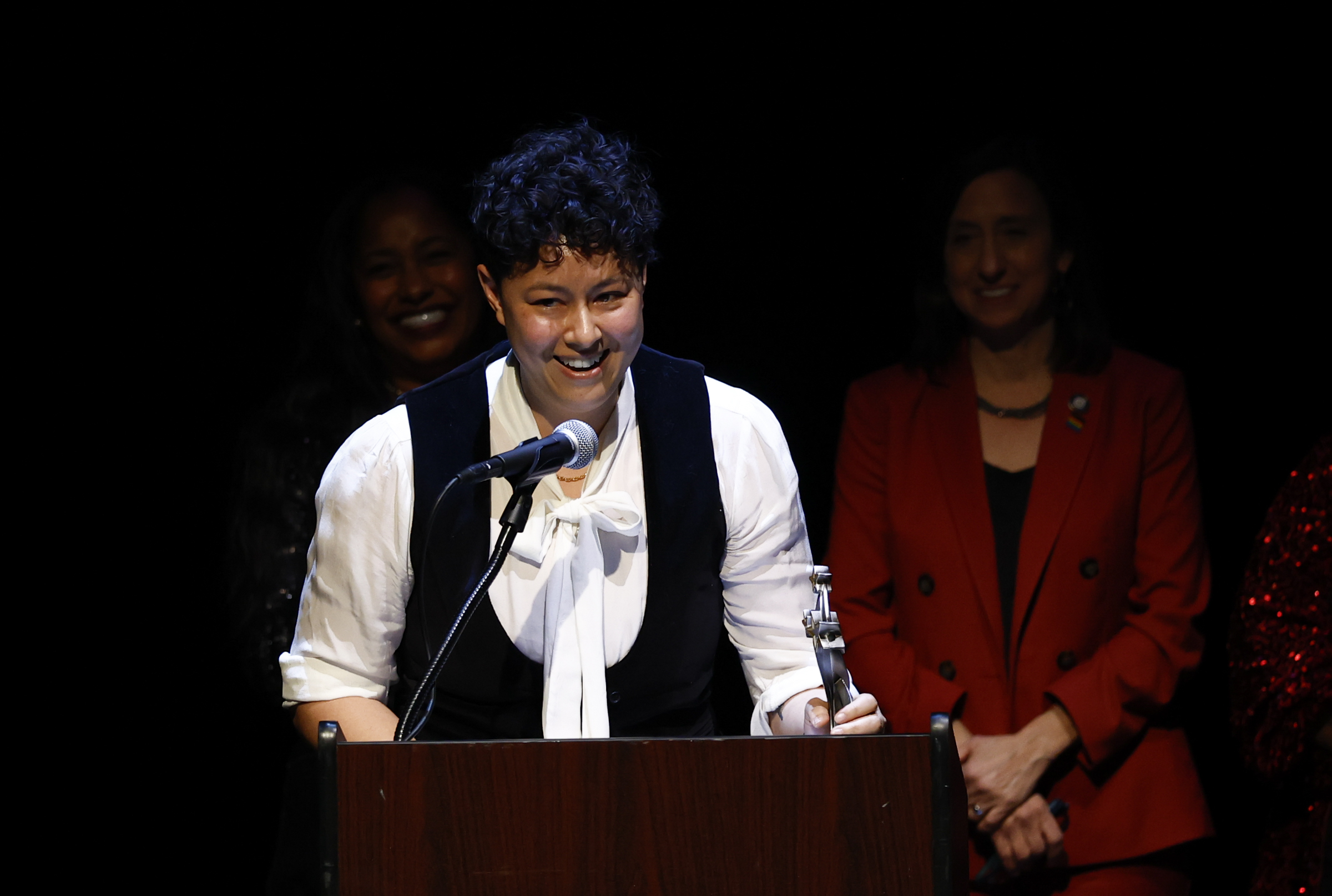
    6. Travoye Joyner — Romeo and Juliet, Arden Theatre Company
    7. Kishia Nixon —The Mountaintop, Arden Theatre Company
    8. Newton Buchanan — Primary Trust, Philadelphia Theatre Company
    9. V. Sterling — Same Team, Inis Nua Theatre Company
    10. Phillip Brown — Dutchman and the Slave, Passage Theatre Company
    11. Page Whitman — Same Team, Inis Nua Theatre Company
    12. Brett Ashley Robinson — The Greatest Play in the History of the World, Inis Nua Theatre Company and Tiny Dynamite
    13. Matthew Pfeiffer — The Garbologists, Montgomery Theater
    14. Olive Gallagher — Little Women, Hedgerow Theatre Company
    Chaz T. Martin speaks after winning the 2026 Barrymore Award for outstanding original production for the play “Class C” at the Suzanne Roberts Theatre on Monday, Nov. 16, 2026.Yong Kim / Staff Photographer

    Outstanding supporting performance in a play

    1. Megan Bellwoar — Can’t Forget About You, Inis Nua Theatre Company
    2. Jared Delaney — Romeo and Juliet, Arden Theatre Company
    3. Minou Pourshariati — Little Women, Hedgerow Theatre Company
    4. David Ingram — Primary Trust, Philadelphia Theatre Company
    5. Taylor J. Mitchell — Blues for an Alabama Sky, Lantern Theater Company
    6. Jered McLenigan — The Hypochondriac, Quintessence Theatre
    7. Unissa Cruse — Muleheaded, or Zora and Langston Write a Play, Passage Theatre Company
    8. Frank Jimenez — Romeo and Juliet, Arden Theatre Company
    9. David M. Raine — La Otra, 1812 Productions
    10. Daniel Burgess — A Wrinkle in Time, Arden Theatre Company
    11. Walter DeShields — Good Bones, Arden Theatre Company
    12. Dave Johnson — Spinner, Delaware Theatre Company
    13. Brandon J. Pierce — The America Play, The Wilma Theater

    Outstanding choreography/movement in a play

    1. Kittson O’Neill and Lane LaVonne — Same Team, Inis Nua Theatre Company
    2. Polanco Jones Jr., Quinton J. Alexander, and Bess Rowen — FIRE!!, Quintessence Theatre
    3. K. O’Rourke — Can’t Forget About You, Inis Nua Theatre Company
    4. Dominic Moore-Dunson — The Most Spectacularly Lamentable Trial of Miz Martha Washington, The Wilma Theater
    5. Fatima Sowe — The Woman Question, People’s Light
    6. MK Tuomanen — The Presented, Chris Davis
    7. Ryk Lewis — Coloring Book, Fusion Performing Arts Center

    Outstanding lighting design

    1. Shannon Zura — The Greatest Play in the History of the World, Inis Nua Theatre Company and Tiny Dynamite
    2. Lindsay Stevens — Walden, InterAct Theatre Company
    3. Shannon Zura — Good Bones, Arden Theatre Company
    4. Maria Shaplin — The Most Spectacularly Lamentable Trial of Miz Martha Washington, The Wilma Theater
    5. Christopher Ash — Caesar, Philadelphia Theatre Company
    6. Lily Fossner — The Garbologists, Montgomery Theater
    7. Cat Tate Starmer — The Unexpected 3rd: A Radical, Rollicking Rumination on the Optimism of Staying Alive, People’s Light

    Outstanding scenic design

    1. Chris Haig — Walden, InterAct Theatre Company
    2. Colin McIlvane — The Most Spectacularly Lamentable Trial of Miz Martha Washington, The Wilma Theater
    3. Meghan Jones — The Garbologists, Montgomery Theater
    4. Reiko Huffman —The Mountaintop, Arden Theatre Company
    5. Nick Embree — Can’t Forget About You, Inis Nua Theatre Company
    6. Nina Ball — The Unexpected 3rd: A Radical, Rollicking Rumination on the Optimism of Staying Alive, People’s Light
    7. Andrew Robinson — Gemini, EgoPo Classic Theater

    Outstanding costume design

    1. Nikki Delhomme — The Most Spectacularly Lamentable Trial of Miz Martha Washington, The Wilma Theater
    2. Rebecca Kanach — Twelfth Night, People’s Light
    3. Tiffany Bacon — Muleheaded, or Zora and Langston Write a Play, Passage Theatre Company
    4. Ivania Stack and Bailey Hammett-Colwell — The Snow Queen, The Wilma Theater
    5. Camilla Dely — Little Shop of Horrors, People’s Light
    6. Nikki Delhomme — A Wrinkle in Time, Arden Theatre Company
    7. Tracy Christensen — Steel Magnolias, People’s Light

    Outstanding sound design

    1. Larry Fowler — The America Play, The Wilma Theater
    2. Jordan McCree — The Most Spectacularly Lamentable Trial of Miz Martha Washington, The Wilma Theater
    3. Natali Merrill — Walden, InterAct Theatre Company
    4. Carsen Joenk — Steel Magnolias, People’s Light
    5. Andrew Nelson — JOB, Theatre Exile
    6. Jordan McCree — Caesar, Philadelphia Theatre Company
    7. Mel Hsu — A Wrinkle in Time, Arden Theatre Company

    Outstanding media design

    1. Jorge Cousineau —The Mountaintop, Arden Theatre Company
    2. Taj Rauch — Wilderness Generation, Philadelphia Theatre Company
    3. Taj Rauch and Nia Benjamin — Girl Dolls: The American Musical, Bearded Ladies Cabaret
    4. Michael Long — La Otra, 1812 Productions
    5. Christopher Ash — Caesar, Philadelphia Theatre Company

    Outstanding original music

    1. Jackie Soro and Pax Ressler — Girl Dolls: The American Musical, Bearded Ladies Cabaret
    2. Amanda Morton and Josh Totora — Wishing to Grow Up Brightly, Theatre Horizon
    3. Jordan McCree — The Most Spectacularly Lamentable Trial of Miz Martha Washington, The Wilma Theater
    4. Liz Filios — Twelfth Night, People’s Light
    5. Selena Seballo and Jack Denman — The Chequerboard Watch: A New Musical, Delaware Theatre Company
    6. Adam Faulk — FIRE!!, Quintessence Theatre

    Outstanding props or puppetry design

    1. Anton Volovsek and Camilla Dely — Little Shop of Horrors, People’s Light
    2. Paul Kuhn and Ren Bailey — Sacco & Vanzetti: A Tragedia dell’Arte, Curio Theatre Company
    3. Clare Wislar — Marsha Blovotnick and the Marvelous Magical Chicken Soup, Theatre Ariel
    4. Kelly McLaughlan — The Stinky Cheese Man and Other Fairly Stupid Tales, Arden Theatre Company
    5. Jen Burkhart — Wishing to Grow Up Brightly, Theatre Horizon
    6. Ryan Canney — The Garbologists, Montgomery Theatre
    7. Colleen Murray — Lions, Lightning Rod Special

    Outstanding direction of a musical

    1. Robi Hager — Spring Awakening, Relic Theatre Company
    2. MK Tuomanen — Girl Dolls: The American Musical, Bearded Ladies Cabaret
    3. Amina Robinson — Ain’t Misbehavin’, Theatre Horizon
    4. Molly Rosa Hulahan — Little Shop of Horrors, People’s Light

    Outstanding ensemble in a musical

    1. Falsettos — Arden Theatre Company
    2. Little Shop of Horrors — People’s Light
    3. Spring Awakening — Relic Theatre Company
    4. Jelly’s Last Jam — Bristol Riverside Theatre
    5. Ain’t Misbehavin’ — Theatre Horizon

    Outstanding leading performance in a musical

    1. Anna Faye Lieberman — Little Shop of Horrors, People’s Light
    2. Jessica Money — Little Shop of Horrors, People’s Light
    3. Felicity Mundy — Spring Awakening, Relic Theatre Company
    4. Evan Kaushesh — Dear Evan Hansen, Arden Theatre Company
    5. Steve Pacek — Falsettos, Arden Theatre Company
    6. Stanley Martin — Jelly’s Last Jam, Bristol Riverside Theatre
    7. Francesca Marchese — Fun Home, Media Theatre
    8. Sami Ma — Wishing to Grow Up Brightly, Theatre Horizon

    Outstanding supporting performance in a musical

    1. Alison Ansorg — Fun Home, Media Theatre
    2. Katie Boren — Wishing to Grow Up Brightly, Theatre Horizon
    3. Katherine Fried — Falsettos, Arden Theatre Company
    4. Will Stephan Connell — Falsettos, Arden Theatre Company
    5. Mary Elizabeth Scallen — Little Shop of Horrors, People’s Light
    6. Andrew Kane — Little Shop of Horrors, People’s Light
    7. Dana Orange — Jelly’s Last Jam, Bristol Riverside Theatre
    8. Charlie Barney — Annie, Media Theatre

    Outstanding choreography/movement in a musical

    1. Julianna Babb, Noelle Diane Johnson, and J. Oliver Donahue — Spring Awakening, Relic Theatre Company
    2. Melanie Cotton and Eli Lynn — Little Shop of Horrors, People’s Light
    3. yaTande Whitney V. Hunter and DeWitt Fleming Jr. — Jelly’s Last Jam, Bristol Riverside Theatre
    4. Eliana Pinckney — Ain’t Misbehavin’, Theatre Horizon

    Outstanding music direction of a musical

    1. Pax Ressler — Girl Dolls, Bearded Ladies Cabaret
    2. Brigitte Rottman — Little Shop of Horrors, People’s Light
    3. Brigitte Rottman — Wishing to Grow Up Brightly, Theatre Horizon
    4. Gina Giachero — Falsettos, Arden Theatre Company

    Outstanding outdoor production

    1. A Bottom’s Dream — Shakespeare in Clark Park
    2. Twelfth Night, O Lo Que Quieras — Delaware Shakespeare
    3. Fraternity — Theatre in the X

    Outstanding original production

    1. Jackie Soro and Pax Ressler — Girl Dolls: The American Musical, Bearded Ladies
    2. Chaz T. Martin — Class C, Azuka Theatre and Simpatico Theatre
    3. Alice Yorke and Scott R. Sheppard — Lions, Lightning Rod Special
    4. John Bellomo — Sacco & Vanzetti: A Tragedia dell’Arte, Curio Theatre Company
    5. Chris Davis — The Presented, Chris Davis
    6. Dan Kitrosser — Marsha Blovotnik and the Magical Chicken Soup, Theatre Ariel
    7. Saymoukda Duangphouxay Vongsay — Seng’s Hair Salon, InterAct Theatre Company

    The Philadelphia Award for Social Insight

    1. Inheritors — Philadelphia Artists’ Collective
    2. Draw the Circle — Hedgerow Theatre Company
    3. Good Bones — Arden Theatre Company
    4. The White Chip — New Light Theatre
    5. Sacco & Vanzetti: A Tragedia dell’Arte — Curio Theatre Company
    6. Ain’t Misbehavin’ — Theatre Horizon
    7. The Woman Question — People’s Light
    8. The America Play — Wilma Theater
    9. Franklinland — Lantern Theater Company
    10. Same Team — Inis Nua Theatre Company
    11. The Great Privation — Theatre Exile
    12. 1 Pound 4 Ounces — Azuka Theatre and Simpatico Theatre

  • Mark ‘Chumley’ Singer, eclectic events producer and community activist, has died at 65

    Mark ‘Chumley’ Singer, eclectic events producer and community activist, has died at 65

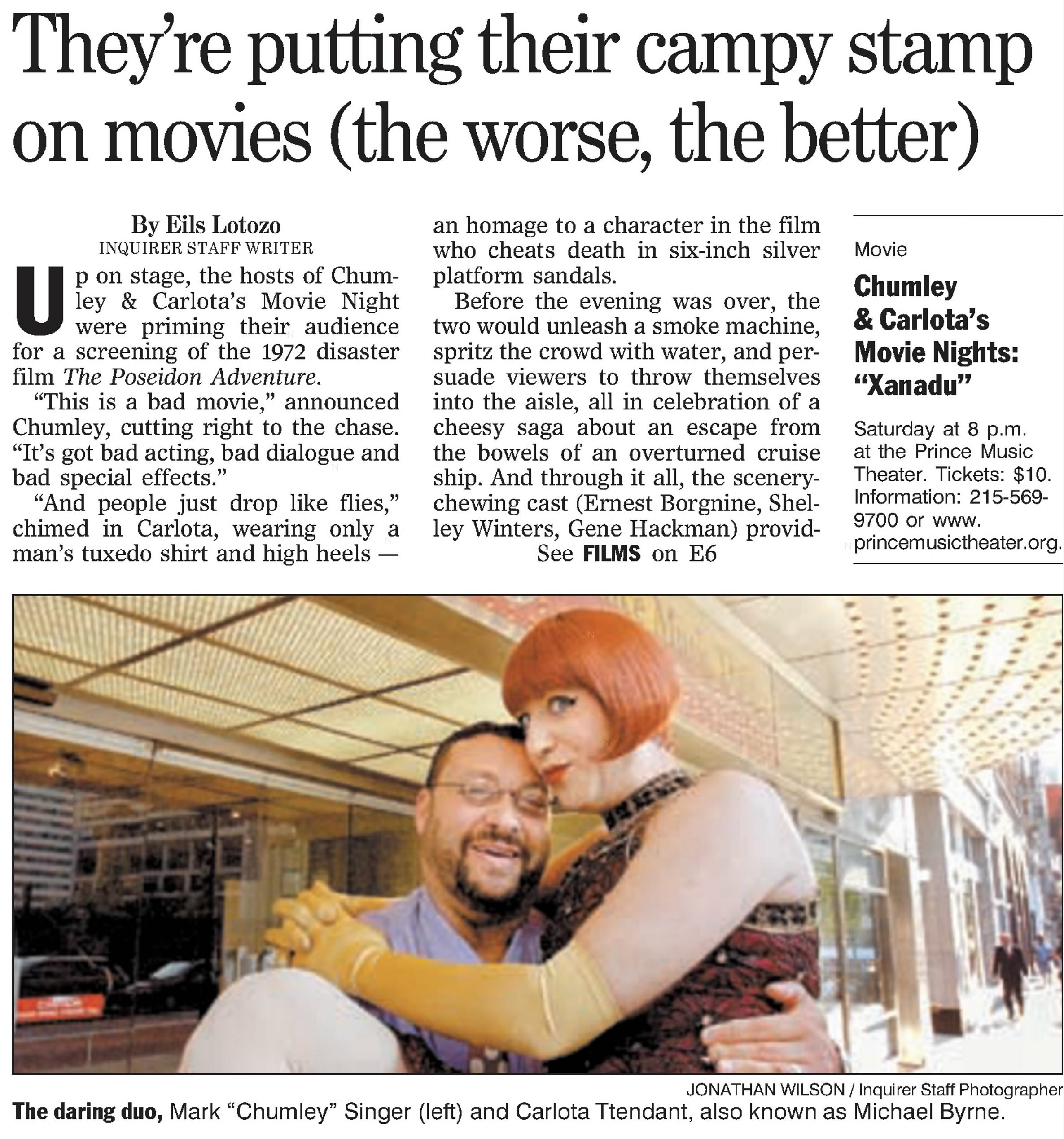
    Mark “Chumley” Singer, 65, of Philadelphia, eclectic events producer, graphic designer, entrepreneur, adjunct professor of visual merchandising at Drexel University, and community, charity, and gay rights activist, died Monday, Oct. 26, of pancreatic cancer at his sister’s home in Cherry Hill.

    Nicknamed after the lovable walrus sidekick to the 1960s penguin cartoon character Tennessee Tuxedo, Mr. Singer was what the Daily News in 2002 called “a local man-about-town.” He was onetime creative director for Welcome America Inc., events and marketing manager for the Eagles Youth Partnership, and a founding committee member of the Lights for the Cure breast cancer awareness project.

    He helped develop the city’s skyline lighting initiative in the early 2000s and coordinated marketing and community events affiliated with the city’s millennium celebration, the Liberty Bell Pavilion, the National Constitution Center, the Philadelphia Museum of Art, and the Mummers, Thanksgiving Day, and Independence Day parades. He was also a founding board member of the Philadelphia Gay Tourism Caucus.

    “The Philadelphia of today,” a longtime friend and colleague said on Instagram, “was formed by Chumley’s creative mind.”

    In 1999, Mr. Singer told The Inquirer: “My goal is to get the travel industry to think of Philadelphia and the Fourth of July as a package just as we link New Orleans and Mardi Gras. If that’s my legacy, I’d be proud.”

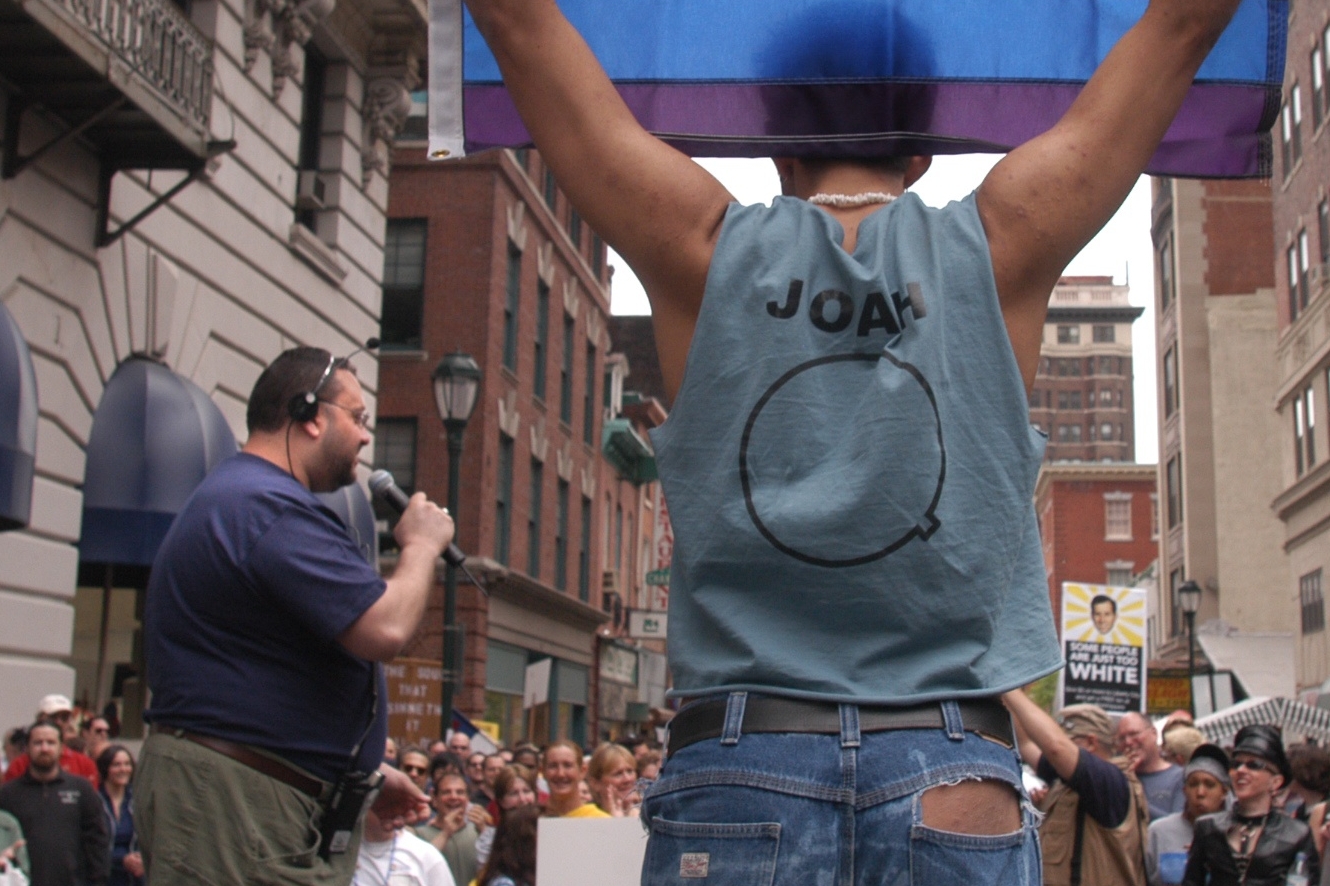
    He became a serious fundraiser after his best friend died of AIDS, and he organized popular gay bingo nights and other events to benefit HIV/AIDS services. He designed the rainbow street signs in Philadelphia’s Gayborhood and collaborated with fellow performer Michael Byrne to cohost gay bingo, movie night at the Prince Music Theater, and other community get-togethers.

    “He leaves behind a legacy of memorable celebrations, meaningful philanthropy, and lasting connections,” Byrne said. “He developed a reputation for transforming an idea into an experience that people would remember long after the lights came up.”

    Mr. Singer earned a bachelor’s degree in graphic design at Temple University’s Tyler School of Art and Architecture in 1984 and worked at first as a visual merchandiser at Gimbels, Macy’s, Urban Outfitters, and other retailers. In the 1990s, he painted frescoes for homeowners and opened a store that sold unique home furnishings.

    Mr. Singer appeared in The Inquirer in 1999, above, and 2002, below. Newspapers.com

    In 2003, to celebrate the gay community’s “hairy/beefy/burly/gay ‘bears,’” he established Chumley’s Bear Cruises, a group tour company that books cruises to Alaska, Aruba, and elsewhere around the world.

    Affable and engaging, Mr. Singer appeared on the podcast A Jaded Gay, was featured often in The Inquirer and Daily News, and was named to the Daily News’ Council of Cool in 2002. In online tributes, friends and colleagues called him “a creative visionary,” “an unspeakably beautiful man inside and out,” and “everyone’s advocate, cheerleader, and a voice of encouragement.”

    Byrne said: “He helped create spaces where people could gather, celebrate, and feel connected. If Chumley said, ‘I can do it,’ he could.”

    Mark Brian Singer was born April 18, 1961, in Philadelphia. His father died when he was 9, and he graduated from the Milton Hershey School in Hershey, Pa.

    Mr. Singer, left above, was a dynamic speaker and organizer. Rebecca Barger / Staff Photographer

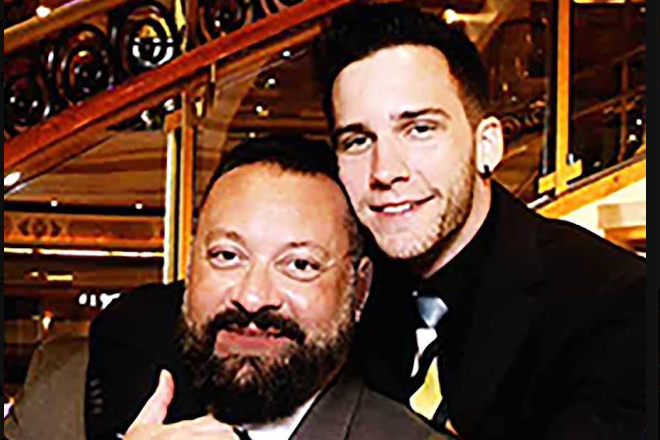
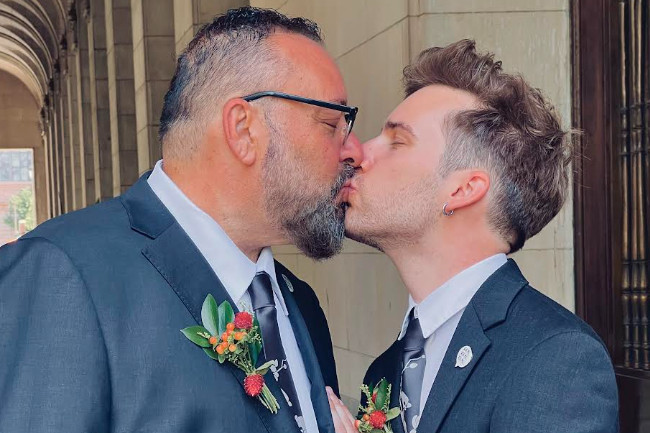
    He met fellow artist and actor Ven Schmidt in 2017, and they married in 2022 and lived in South Philadelphia.

    Mr. Singer enjoyed camping and traveling. He listened to the Smiths and followed the Eagles closely.

    He liked to watch movies and take weekend getaways to Atlantic City and New Hope with his husband. He was habitually punctual.

    “He not only advocated for the gay community as a whole, he made individual people feel uplifted and welcome,” his husband said. “He inspired me and truly changed my life. He had a heart of gold, and I wanted to be just like him.”

    Mr. Singer, left above and below, and his husband, Ven Schmidt, married in 2022.Courtesy of the family

    In addition to his husband, Mr. Singer is survived by a sister, Aline Zaslow, and other relatives.

    Services were held earlier. A celebration of his life is to be held later.

    Donations in his name may be made to the Breathing Room Foundation, Box 287, Jenkintown, Pa. 19046.

    Mr. Singer “not only advocated for the gay community as a whole, he made individual people feel uplifted and welcome,” his husband said.Courtesy of the family
  • ‘This Much I Know:’ InterAct’s latest production is an intricate puzzle, crammed with ideas and standout performances

    ‘This Much I Know:’ InterAct’s latest production is an intricate puzzle, crammed with ideas and standout performances

    With the lights still up, a bearded South Asian man with a British accent implores us to turn off our cellphones, not merely silence them. As he challenges the audience, we start to wonder: Is this prologue or play? What sort of reality are we in?

    Within moments, we realize we have become students in a lecture hall, and our interlocutor is a psychology professor, Lukesh (Sorab Wadia). Using illustrative projections, he articulates the dicta that will frame the action and set the thematic stakes of Jonathan Spector’s 2022 drama, This Much I Know.

    “We can’t really reconstruct past beliefs or thought processes,” Lukesh declares.

    Mark Worth (left) and Sorab Wadia in InterAct Theatre Company’s “This Much I Know” at the Proscenium Theatre at the Drake.Ashley Smith with Wide Eyed Studios

    “We make sense of things, even things there’s no sense to be made of.” And this: “False ideas can be dangerous” because “they’re sticky” and “we are so desperate to make things connect.”

    The playwright’s initial sleight of hand is so compelling that, during Thursday’s opening night performance, some audience members believed a fire alarm that emptied the Proscenium Theatre at the Drake was scripted. (It was not, and the normally two-hour, 15-minute performance resumed after a short delay.)

    Under producing artistic director Seth Rozin, InterAct Theatre Company has always been drawn to plays of ideas. This Philadelphia premiere, directed by Rozin, is among the densest of such dramas.

    Its themes include the tension between reality and illusion, and Spector, who loves to literalize his metaphors, injects a few magic tricks into the show. But he doesn’t stop there.

    Because the plot is an intricate set of puzzle pieces, one character, an aging alcoholic Russian, must be an aficionado of jigsaw puzzles. Another, an angst-ridden white nationalist, wrestles with a college thesis on H.G. Wells and his dystopian 1895 science fiction novel, The Time Machine, as the play itself shifts back and forth in time.

    From left: Mark Worth, Jessica DalCanton, and Sorab Wadia take on numerous roles during InterAct Theatre Company’s production of “This Much I Know.”Ashley Smith with Wide Eyed Studios

    Both these figures are played, with complete physical commitment and impeccable accents, by the same actor, Mark Worth. Worth’s metamorphosis into multiple characters, including Russians of diverse ages and inclinations, is this production’s indisputable highlight.

    There is considerable (self-conscious) cleverness and craft in the script. And Rozin’s fluid direction is aided by Nick Embree’s minimalist set, Michael Long’s projections, Lindsay Alayne Stevens’ lighting, and Alison Roberts’ quick-change costuming. But all this is in service to arguments, influenced by the behavioral economist Daniel Kahnemann, that aren’t always lucid and a narrative that isn’t fully convincing.

    InterAct’s This Much I Know nevertheless offers substantial pleasures. The play’s shape-shifting, with all three actors (Worth, Wadia, and Jessica DalCanton) skillfully taking on numerous roles, is fun to watch. And its ruminations on both the persistence and transitoriness of belief systems, as well as the seductions of storytelling, make for meaty post-theater debate.

    Spector is a graduate of New College of Florida, a public honors college and progressive bastion that was the object of a recent conservative takeover by GOP Gov. Ron DeSantis. (Patrick Brosnan’s 2026 documentary, First They Came for My College, shown at the Philadelphia Film Festival, offered a tendentious, grassroots view of the conflict.)

    Eureka Day (2018), Spector’s best known play, is a prescient, comic take on “woke” culture and vaccine denialism that lampoons the rigidity of both sides. InterAct mounted a production in 2019, and a Broadway revival won a 2025 Tony Award. Spector’s Birthright (2025), dramatizing the fierce debates of six Jewish friends who once took a “birthright” trip to Israel together, had a successful off-Broadway run earlier this year.

    This Much I Know focuses on Lukesh’s problematic relationships with his writer wife, Natalya, and his white nationalist student, Harold. Natalya is working on what she calls “an imagined family history,” neither novel nor memoir, “a hundred percent factual but totally made-up.”

    A tragedy in her own life propels her back to Russia to learn more about her family’s Soviet-era relationship with Joseph Stalin’s daughter, Svetlana, a tragic figure in her own right. DalCanton plays both (traumatized) women, who blur, perhaps intentionally, in the course of the drama. Wadia doubles as the gentle Indian man, Brajesh Singh, whom Svetlana describes as her greatest love.

    Harold is the scion of a prominent white nationalist, and from the beginning he insists that he agrees only in part with his father’s extremist views — a story with parallels to Svetlana’s. As Harold tracks the evolution in Wells’ ideology for his thesis, he experiences a profound transformation of his own.

    One key narrative question is whether Svetlana used her influence with her tyrannical father to plead for the lives of Natalya’s unjustly targeted great-grandparents. Her actions matter intensely to Natalya, but less so to us.

    Svetlana, a defector to the United States who abandoned her children in the process, represents the unsatisfactory murkiness and moral ambiguity of the stories we tell ourselves. “Once you have gained sight, it is impossible to feign blindness,” the character asserts. But that vision, she adds, was just “the first piece of a puzzle I did not know I was assembling.”

    InterAct Theatre Company’s “This Much I Know” runs through Nov. 22 at the Proscenium Theatre at the Drake, 302 S. Hicks St. 215-568-8079 or boxoffice@interacttheatre.org

  • Grappling with past, present, and the patriarchy, while sometimes in the nude: ‘Liberation’ at Philadelphia Theatre Company

    Grappling with past, present, and the patriarchy, while sometimes in the nude: ‘Liberation’ at Philadelphia Theatre Company

    Both Bess Wohl’s Liberation and David Auburn’s Summer, 1976 examine women’s choices, relationships, and regrets through the scrim of memory and against the backdrop of second-wave feminism. And both happen to be set primarily in 1970s Ohio, a middle American bastion being assaulted by changes whose effects are still being felt.

    The Lantern Theater Company’s poignant Philadelphia premiere of Summer, 1976, directed by Kate Galvin, closed Oct. 11. But you can, and should, see the Philadelphia Theatre Company’s Liberation, which opened Wednesday night and runs through Oct. 25. Also a Philadelphia premiere, it is the Pulitzer Prize- and Tony Award-winning show’s first regional production since its 2025-26 Broadway run.

    The two memory plays view women’s concerns through a contemporary lens, toying with theatrical conventions, decentering men, and moving almost seamlessly between eras. At critical moments, each also riffs on an imagined, and more expansive, future before returning with a thud to the compromised present.

    In Summer, 1976, Auburn (best known for Proof, a drama about a female mathematical genius) sketches an unlikely friendship between two women in Columbus, Ohio, at a key juncture in their lives. It’s an exquisitely well-crafted piece that seems, in the end, almost as evanescent as the relationship it portrays.

    Alice (played appealingly at Lantern by Grace Gonglewski) is a graduate school dropout, the tradwife of an economics professor at Ohio State University but also something of a free spirit. Diana (McKenna Kerrigan) is a tougher character — a single mother, artist, and art teacher. Their young daughters become friends, catapulting the women into an initially uneasy intimacy.

    The setting is the Bicentennial summer, evocative of our own Semiquincentennial celebrations. Fireworks illuminate the night skies, and the metaphor of independence undergirds the slight plot.

    Diana lives stoically on her own, and in the world of her imagination. Alice rebelliously subverts her husband’s model babysitting co-op. Together, they admire a hunky graduate student, share joints, feast on Diana’s cooking, buy a Bauhaus desk, and realize with a start that “people aren’t just one thing.” It’s the most modest of revelations. When Diana leaves Columbus, they recede from each other’s lives and move toward their different, still circumscribed fates.

    In Liberation, too, we are poised between memory and fantasy, stasis and change. While the protagonists of Summer, 1976, alternate narrative duties, Wohl’s play has a single, modern-day narrator, Lizzie (the engaging Julianna Zinkel), a stand-in for the playwright herself.

    Ciera Gardner and Noelle Diane Johnson in scene from “Liberation.”Mark Garvin

    Trying to recover — or imagine — her mother’s feminist past, she wonders: How could an instigator of a consciousness-raising group and onetime Ms. magazine editor have ended up in such a traditional marriage?

    Lizzie’s question opens up a broader interrogation, about how and why the revolutionary fervor of the 1970s women’s movement ran aground and how exactly contemporary women should respond.

    The central theatrical conceit is that Zinkel/Lizzie also plays Lizzie’s mother — except in pivotal instances when she doesn’t. (One of her stand-ins, Noelle Diane Johnson’s Joanne, articulates the objections of a working-class Black woman to the movement’s presumptive class and racial tilt.)

    Under Taibi Magar’s direction, the PTC production (in association with Baltimore Center Stage) hits all the play’s comic beats. Magar, PTC’s co-artistic director, has assembled a stellar ensemble to embody the half-dozen women who spar and spur one another on in the basement basketball court of a recreation center. The realistic set is by Sasha Jin Schwartz; costume designer LeVonne Lindsay dresses the women variously in print shirtdresses, bell-bottoms, overalls, and pastel suits.

    Dora (Campbell O’Hare, fabulous in a showy role) stumbles into the group thinking it is a knitting circle; over time, she finds her voice and her vocation. Margie (Susan Rome) is the oldest, with a retired husband who still leaves her a long litany of household tasks. Her ambiguous win will be getting him to do the dishes, badly, twice a week.

    Susan (Anna Faye Lieberman) is broke and living in a car with her bird — until invited to move in with Celeste (Ciera Gardner), a Black Radcliffe graduate caring for her dying mother. Lee Minora’s Isadora, an Italian immigrant with a sketchy accent and a green card marriage, is self-righteous, radical, and desperate for concrete action.

    All of them appear in the nude for a CR session devoted to assessing their own bodies. The scene is daring, overlong, somewhat gratuitous, and the reason that audience members are obliged to stash their phones in locked pouches for the show’s duration.

    Susan Rome comforts Julianna Zinkel in a scene from the Philadelphia Theatre Company’s production of “Liberation.”Mark Garvin

    On Broadway, the Tony-nominated Betsy Aidem did a star turn as Margie, anchoring an intense, tragicomic reunion. Collapsing past and present, the climactic encounter exposes the limits of both memory and invention and offers a hint of resolution. The PTC production, for all its polish, can’t quite scale the requisite emotional heights.

    Liberation supplies no road map for women to escape the trap of their own conflicting desires. It doesn’t pretend to, deliberately leaving the answers to us. But it remains a riveting evening of theater, likely to spark lively conversations about where feminism has succeeded and where it has fallen short.


    The Philadelphia Theatre Company’s “Liberation” runs through Oct. 25 at the Suzanne Roberts Theater, 480 S. Broad St. 215-985-0420 or philadelphiatheatrecompany.org

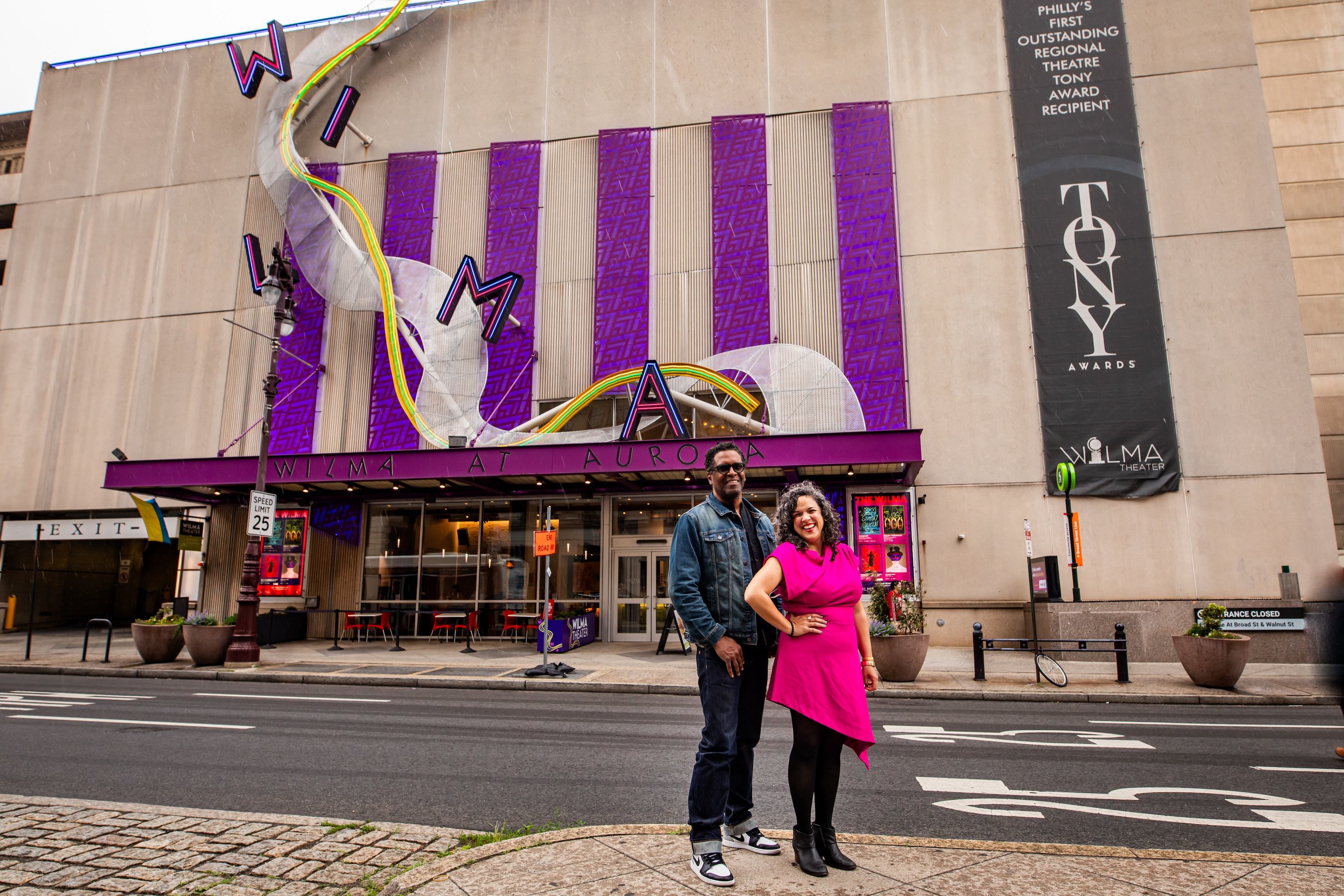
  • After Pulitzer- and Tony-winning success, the Wilma Theater goes big with streaming

    After Pulitzer- and Tony-winning success, the Wilma Theater goes big with streaming

    The Wilma Theater is expanding its digital programming. A new platform will provide streaming productions of its performances to audiences in Pennsylvania and beyond, the theater announced on Thursday.

    Called Watch Wilma, the digital theater platform will offer limited runs of shows filmed and staged at the Wilma and partner organizations, including Philadelphia’s Azuka Theatre and Pittsburgh’s City Theatre, for audiences both nationally and internationally.

    Thanks to a $200,000 grant from Bloomberg Philanthropies’ Digital Accelerator Program, the productions will be accessible directly on the Wilma’s website instead of a third-party site, like its previous streaming productions. Featured shows become available after their respective live runs close.

    The first three productions available on Watch Wilma will be Horsegirl & Cowdaddy, a world premiere from Philadelphia playwright DJ Hills about a trans woman living in rural Pennsylvania (streaming Oct. 8 to Nov. 1); City Theatre’s solo musical In Clay, a true story about French ceramicist Marie-Berthe Cazin (streaming Oct. 20 to Nov. 8); and the verbatim play #CHARLOTTESVILLE, the Azuka Theatre production about the deadly white supremacist march in Virginia in 2017, directed by the Wilma resident director Yury Urnov (streaming Nov. 5 to 19). Tickets are $35 per show, or $95 for a three-show package.

    “This is in no means trying to replace live theater,” said Wilma artistic director Lindsay Smiling. “We’ve seen the data that this gets the word out … and we can now actually help promote theater around the country, starting locally with Pennsylvania theaters, to promote theater as a thing to do. .”

    From left: Jennifer Kidwell, Kimberly S. Fairbanks, and Brennen S. Malone in James Ijames’ “Fat Ham,” the Wilma Theater’s 2021 digital production, which won the 2022 Pulitzer Prize for Drama. (Wilma Theater via AP)

    The Tony-winning theater has been a pioneer in digital productions since the COVID-19 lockdown in 2020. (The majority of arts organizations in the Philadelphia region have struggled to regain those pre-pandemic audience numbers.)

    Most notably, the Wilma’s filmed performance of James Ijames’ Fat Ham — a digital world premiere shot under CDC restrictions in 2021 — won the Pulitzer Prize for Drama in 2022 before it was staged with a live audience. The recognition marked the first time in Pulitzer history that the prestigious award went to a digital production. The show went on to Broadway in 2023 and received five Tony Award nominations, including best play.

    A year later, the Wilma received the 2024 Regional Theatre Tony Award, a recognition for theaters who have “displayed a continuous level of artistic achievement contributing to the growth of theatre nationally.”

    Digital productions have now become a regular part of Wilma’s programming, reaching viewers in all 50 states and more than 20 countries and providing between 5% and 15% of ticket revenue depending on the show.

    Wilma has streamed 19 shows over the past five years and has developed its streaming capabilities with funding from the Knight Foundation, which granted the theater $925,000 in 2023 over three years to build a digital lab, upgrade its equipment, conduct market research, and hire digital production staff.

    Director Leslie Juan Rivera Ramos, who filmed Fat Ham, leads the camera crew for Watch Wilma with the goal of evoking the live theatrical experience for viewers at home, using multiple cameras to emphasize the drama. He films two consecutive performances so there’s backup footage; For example, if an audience member coughs during a key moment during one night, he’ll edit the footage to use the scene from the other night. The play’s director reviews the film to provide their notes before the production goes online in a process that takes about a week to turnaround.

    Per the Wilma’s union agreement, the digital runs are limited in how long they’re available to stream and how many tickets they can offer; digital runs will end four weeks from the close of the live run, and the tickets sold online cannot exceed the number they could have sold in-person. Managing director Leigh Goldenberg likens it to “unused inventory” and adds that the limited scope and time of the digital productions maintains the ephemeral nature of theater.

    Outside of the Wilma Theater at Broad and Spruce Streets in Philadelphia are artistic director Lindsay Smiling (left) and managing director Leigh Goldenberg.Ashley Smith, Wide Eyed Studios

    On average, Wilma productions are reaching an additional 1,000 viewers online per show. One Wilma study found that roughly a third of its digital audience had already seen the show in-person and wanted to revisit it.

    “When we got back into the theater [after lockdown], we didn’t want to let go of this access that we created and the audience around the country and the world,” said Goldenberg. “We have found that we breakeven and a little better, but not all the time. So this is more about access than ‘Here’s this great new revenue stream.’ It’s a way to think about the full potential audience and just reach them in different ways.”

    Incorporating works from theater collaborators in Pennsylvania felt like an important next step for the Wilma’s digital work as it partners with organizations that similarly embrace boundary-pushing theater. Goldenberg described the effort as a “natural and sort of necessary pivot to keep us all thinking about the future.”

    She sees it as another way for the theater to continue taking risks.

    “Blanka [Zizka], our cofounder, said, I’m paraphrasing, ‘For all these years, my imagination has stayed within the theater, and now it could be anywhere,’” said Goldenberg. “I like to think about that in terms of the audience as well. That the Wilma’s work is inherently adventurous and risk-taking, and to have this other way that we’re experimenting with form help us bring people to the theater, albeit digitally, feels like a natural extension of what the Wilma has been for nearly 50 years.”

  • We pick our favorite shows from this year’s big, bizarre, and bold Philly Fringe Fest

    We pick our favorite shows from this year’s big, bizarre, and bold Philly Fringe Fest

    The Philadelphia Fringe Festival celebrated its 30th year with more than 338 productions across the city. Our reporters found shows that left us dazzled and confused, tearful but still laughing, and truly amazed by all the strange, weird, and delightful originality that artists from Philly (and beyond) had to offer.

    These were some of our favorite performances, including solo shows, interactive experiences, immersive dance, otherworldly journeys, and incisive political explorations.

    Most optimistic: ‘Lunar Retreat’

    To enter this performance, you must prepare for takeoff: Grab a set of headphones curated for your group (an audience of just a dozen or so, per entry time) and remove your shoes.

    Past the doors at Drexel University lies a transformed Pearlstein Gallery, with sections divided by flowing white curtains. The calm voice in your ears provides instructions, like a guided meditation through a constellation of dancers before you arrive in a maze of tall, twisting cardboard adorned with twinkling lights and images of the moon’s various cycles.

    After billions of years orbiting the earth, our moon has been slowly inching away from us, the disembodied voice explains. The show asks: What does it mean to enter someone’s orbit, to connect with another person, when we all drift apart eventually, inevitably? At its core, Lunar Retreat tackles grief, prompting the audience to imagine a loved one who is physically distant. What detail about this person do you never want to forget? After we write down our answers, we’re guided into the maze, where the answers from previous attendees dot the spiraling walls.

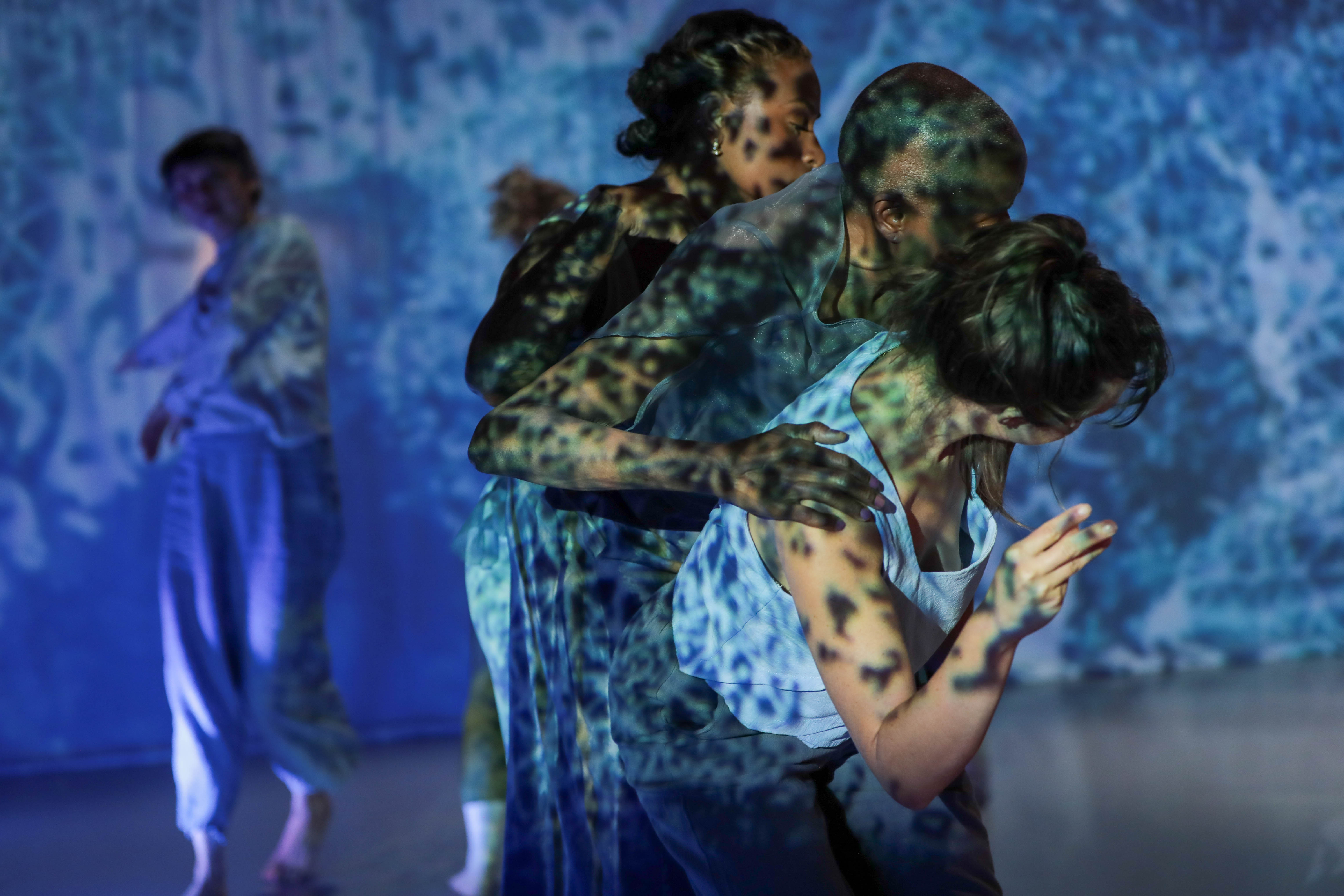
    Fringe Fest regular Nichole Canuso’s dance company Branching Paths is renowned for immersive and interactive performances; here she worked with ocean explorer/artist Rebecca Rutstein, sound designer Bobby McElver, video designer Kate Freer, and set designer Anna Kiraly, among many collaborators. The projections were especially astounding: In one room, a dancer performed a series of moves that were recorded and projected to the same location on a loop, allowing her to essentially dance with and embrace the projected version of herself. It was a mesmerizing collaboration between dance and technology.

    Nichole Canuso | Branching Paths presented “Lunar Retreat” in the 2026 Philadelphia Fringe Festival.Theo Cote

    At the end, the three audience groups gathered for the finale, when eight dancers (including the choreographer, Canuso) evoked ocean tides as they converged and separated, where they kept reaching for one another and then leaping apart. I was in awe not only of the performance itself but of my fellow audience members, who embraced the experience with open hearts and curious minds — leaving me surprisingly optimistic about the future of humanity.

    — R.C.

    Standout solo show: ‘Tuzluk’

    This wildly inventive coming-of-age story follows Turkish Colombian American theater artist izzy sazak as they deconstruct the heroes of their childhood. It’s a bold, imaginative examination of how we recontextualize the stories we are told as kids. Throughout the piece, sazak examines their father, his Turkish heritage, and the Turkish mythos that they were instilled with. It is a magnificent look at the crossroads of culture, legacy, and family, while also being frankly honest about how many people idolize political figures.

    Sazak is an effortless performer, immediately engaging with the audience, establishing a welcome and safe feeling throughout the performance. They are adept at comedy: their timing precise, and they can easily adapt and improvise.

    A promo image of izzy sazak for their show “Tuzluk” in the 2026 Philadelphia Fringe Festival.Courtesy of subject

    The word tuzluk is Turkish for “salt and pepper shakers,” but it is also a colloquial name for the folded paper toys that kids use to tell their futures. This item is used both as a literary device, as sazak unravels their future through the show, and also as set pieces.

    Several tuzluks of varying sizes are arranged on stage and utilized as props. The final moments of the show, when the last tuzluk is opened, is one of the most cathartic, community-focused finales I’ve ever experienced in a theater.

    — F.S.

    Best true story, retold: ‘Kramer/Fauci’

    C-SPAN isn’t usually the place where one might find dramatic inspiration. But for director/creator Daniel Fish, one hour of a televised debate in 1993 provided an insightful window into a painful history that still resonates deeply. His innovative verbatim play follows a contentious conversation between Larry Kramer, the fierce activist/playwright who founded ACT UP, and Anthony Fauci, head of the National Institute of Allergy and Infectious Diseases at the time, about then-President Bill Clinton’s new task force to address the AIDS crisis.

    On the sparse stage, only four actors appear, playing the moderator (Greig Sargent), Fauci (Pete Simpson), Kramer (Thomas Jay Ryan), and the callers who dial into the TV segment (Jennifer Seastone). There are no cameras, no desks or green screens to evoke the monotony of C-SPAN’s regular programming; instead, the moderator is seated and his guests move around freely while Seastone spins around on roller skates, occasionally donning a chicken suit. The pared-down production allows Kramer and Fauci’s sparring to take the spotlight (literally) but also creates a dynamic movement that keeps the audience engaged in their hot-and-cold ping-pong match without feeling like we’re watching a live podcast taping.

    It’s far from boring, no matter how wonky the dialogue gets. Ryan’s Kramer erupts on a dime, shouting and throwing barbs and teasingly threatening to slap Fauci, who deflects and delivers defensive, boilerplate responses typical of a bureaucrat, knowing that his answers are dissatisfying. Kramer is fuming and defiant, demanding urgency from a government and a public whose inert response to the epidemic was a systemic, fatal failure on an unimaginable scale. When the callers chime in, many express sympathy, but one chilling, virulently homophobic standout accuses him of infecting the nation’s bloodline.

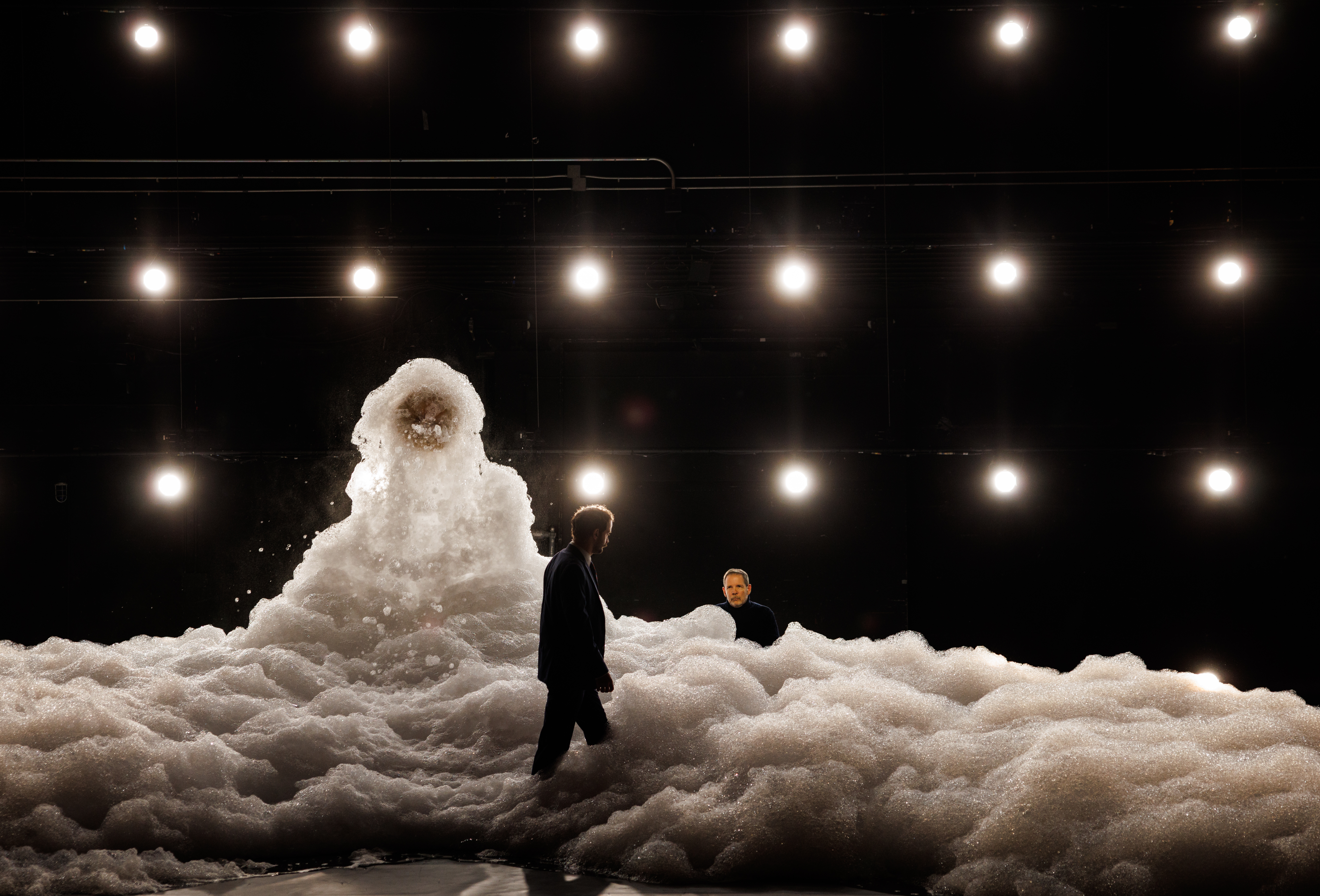
    The most dramatic moment comes rather abruptly, when a towering bubble machine churns out a mass of suds that slowly takes over the stage. Kramer sits next to it, arms crossed, resigned as the machine whirs and the foam spreads.

    Given the devastating subject matter, I didn’t expect to laugh so much. The pair at the center of the show hold profound respect for each other despite their disagreements and there’s a familiarity to their banter that underscores their shared goal; their debate is almost endearing to hear in retrospect today, if the reality weren’t so infuriating. It ends with an epic line from Kramer when asked for his last word: “I want Bill Clinton to come out of the closet … and do something about this disease.”

    — R.C.

    A scene from “Returned, Iridescent,” part of the 2026 Philadelphia Fringe Festival.Seph McAndrew

    Most promising: ‘Returned, Iridescent’

    There is a scarcity of narrative stories that showcase LGBTQ+ people growing up and living into old age. Oftentimes, these characters are burdened with struggle, defeat, and frequently, a tragic end, especially stories of trans people. Returned, Iridescent, the new work by playwright Rose Farrell, defies this trope by taking the audience on a beautifully poetic journey of two queer characters who constantly collide, combust, and separate, only to be drawn back together again and again. The text shifts between realism and poetry, allowing the characters to be both their true selves and romanticized versions. It is a beautiful story about finding yourself, loving yourself, and accepting the happiness that you deserve.

    Breathtakingly nuanced performances from the two leads (Olive Gallagher and Gideon Caro McDonald) help ground this work in the moment. Watching the two of them effortlessly push, pull, and play with each other is a joy. I’m eager to see what these two talents do next. Strong design elements, with direction by Jack McManus, help this play soar.

    This play is a timely one, given the current social and political discourse around trans people, which often serves to dehumanize or vilify them. I commend Theatre by Development for choosing to tell this story now, and hope that it is told many times more.

    — F.S.

    Nerdiest romance: ‘Wikipedilove’

    A Newfoundland town called Dildo. The erotic novella A Billionaire Dinosaur Forced Me Gay. Eva Braun?

    All are ripe for exploration at the love-and-sex-themed Wikipedilove, the lo-fi, musical PowerPoint presentation staged at West Philly Fringe hub Studio 34.

    Writer, singer, and guitarist Noam Osmond — who moonlights as a “troubadour for hire” and can occasionally be spotted serenading strangers in Clark Park — and singer and accordionist Anna Apostolidis take the audience through a whirlwind of weird internet, told through screenshots, academic analysis, and cutesy folk songs.

    In under an hour, we learn, for instance, that gray whales mate in threes (“#consensuwhale”) and that there’s a Wikipedia page of “List of sexually active popes,” among other NSFW topics.

    At the packed Friday night performance I attended, audience members were game to sing and sway along, emblematic of the participatory theater that makes the Fringe Festival so special.

    Two actors dressed as sparkly winged green and yellow bugs who appeared in the finale were a highlight — luna moths, which live for just one week, solely to mate. Because who says science can’t be silly and sexy?

    — J.Z.

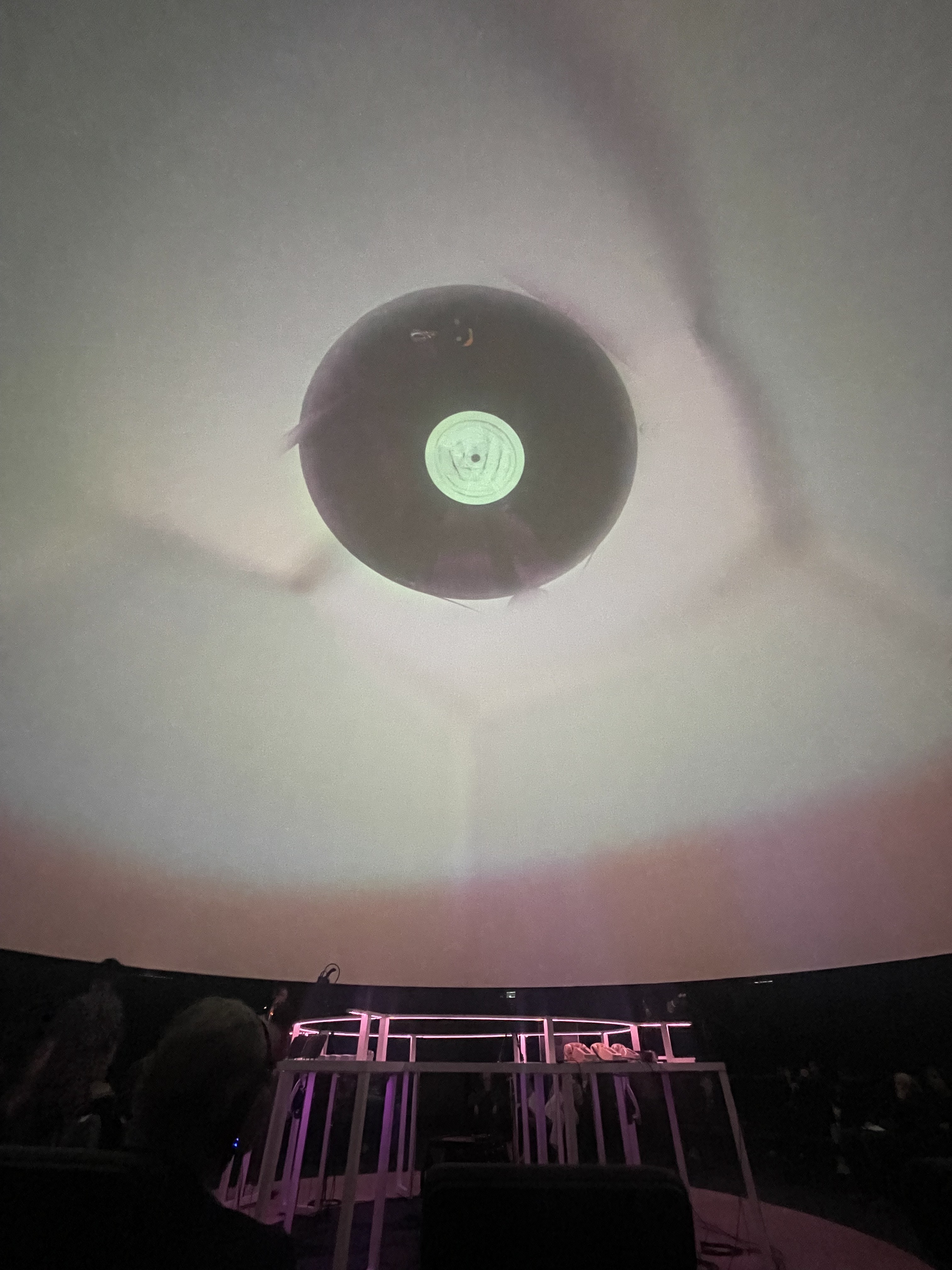
    A projection of a vinyl record on the domed screen of Fels Planetarium for “Utopian Hotline,” part of the 2026 Philadelphia Fringe Festival.Rosa Cartagena

    Strangest existential journey: ‘Utopian Hotline’

    A night at the museum is always a fun setup for a new adventure. This trip to the cosmos — courtesy of the theatermakers at Mitu, an experimental group based in Brooklyn — took place inside the Franklin Institute’s Fels Planetarium.

    At the center of the room sat a round desk with a camera, turntable, microphones, and telephones. Audience members wore headphones and sat back as the domed screen above came alive with the trippy, philosophical show.

    The titular hotline is real, inspired by the Golden Record that NASA sent to space that’s meant to represent earth, featuring sounds from voices to waterfalls to classical music. Mitu’s project imagines the messages we could send into the universe if we created another record with people answering the prompt, “How do you imagine a more perfect future?”

    Their respondents express variations of similar feelings: that it’s a hard question to answer, that it’s especially difficult to imagine a future when our current present time is so fraught, that we all want compassion and care and kindness no matter how far humanity travels from earth. (It’s an active hotline for anyone who’d like to add their voice.)

    The show was part listening session (headphones required) and part strange story time as the performers, akin to astronaut guides in matching gray suits, tinkered with the machines in front of them, sometimes taking over the mic to sing and other times recording with the camera so that their face would appear in the screen like a ghost. They posed existential questions about whether we’re alone in this universe or if we’ll ever truly understand the fickleness of time. The performance was somewhat disorienting, but the experience felt strikingly unique regardless of the occasional confusion, or maybe because of it.

    — R.C.

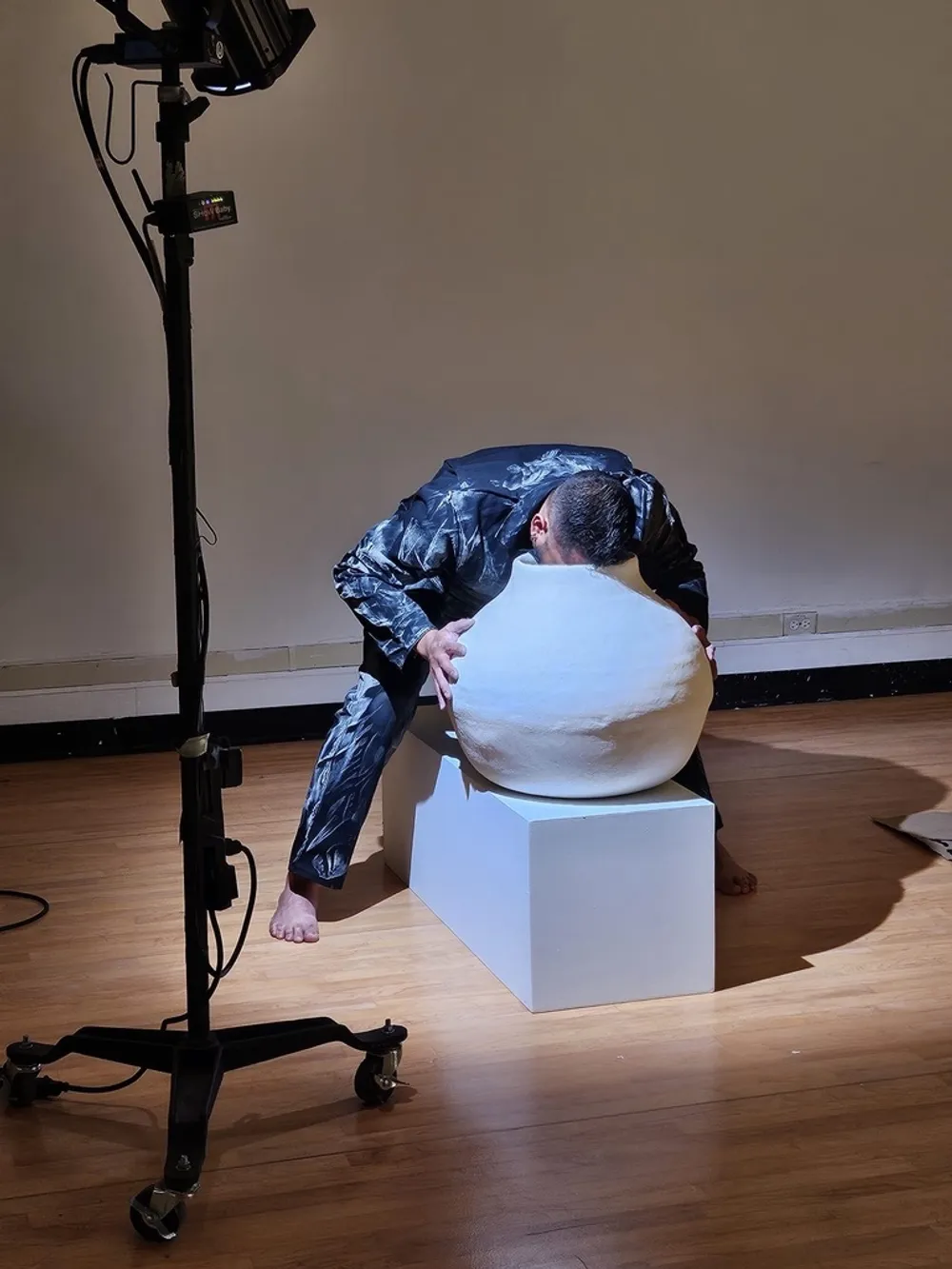
    Actor Justin Jain in “Bad Clay,” a show in the 2026 Philadelphia Fringe Festival.Wendi Van Horn

    Most thought-provoking: ‘Bad Clay’

    Justin Jain brings the audience to the cross section of sculptural ceramics and performance art in his original work Bad Clay. An experimental piece about migration, America, and sculpture, it delights in the way Fringe shows often do by highlighting something new and unexpected. Entering the space, the audience is greeted by a series of ceramics laid around the room, all of which are made by Jain. Throughout the piece, Jain interacts with each ceramic, and also throws clay on a wheel, creating sculptures in front of the audience. Conspicuously, there is also a mannequin in the room, dressed as an ICE agent and draped in an American flag. Ever present, this mannequin provides a feeling of unease that permeates the room, and when it is finally addressed and incorporated into the piece, it results in a truly harrowing moment.

    What really stood out about this piece was the prologue. In a prerecorded monologue from Jain, he explains that the piece we’re about to see is an experiment. He explains how he has struggled to be presented directly by the Asian Arts Initiative and how he came to be in the space that the piece is taking place in … as it was not the space he wanted to present in. According to Jain, he was looked over for fellowships and grants, which led to having to present this piece as part of the “pay-to-play” aspect of the festival. As a Philly artist of some notoriety, Jain still has struggled for financial and creative stability. It was an interesting breath of realism, a frank conversation about the state of arts funding in Philly. It also offered audiences a “peek behind the curtain” as they heard firsthand about the hurdles of presenting a fringe show, and how it affects performers and producers.

    Bad Clay is something I would be intrigued to see again, and to see what it would look like as Jain envisions it fully. It is a piece that raises interesting thoughts and questions, paired with honest reflection, and fully seeing it as the artist intended would be an exhilarating experience.

    — F.S.

    Shows we’re excited to seeing develop post-Fringe

    • Alpha by Lisa Villamil
    • Trauma Queen by Liv Shoup
    • Amor/Libertad by Joel De Jesus-Pacheco
    • The Suppliants by Sydney Marie Hughes
    • Dickie Dickie Dicky Donnie by BETTY
  • The Phillies camera operator who brings you the best slo-mo shots from the ballgame just released a stellar jazz album

    The Phillies camera operator who brings you the best slo-mo shots from the ballgame just released a stellar jazz album

    Greg Farnese always loved to sing.

    “I had a tape recorder I would sing into,” said the South Jersey jazz vocalist.

    “I was one of those kids holding a brush in the mirror, singing Billy Joel songs. I was that kid.”

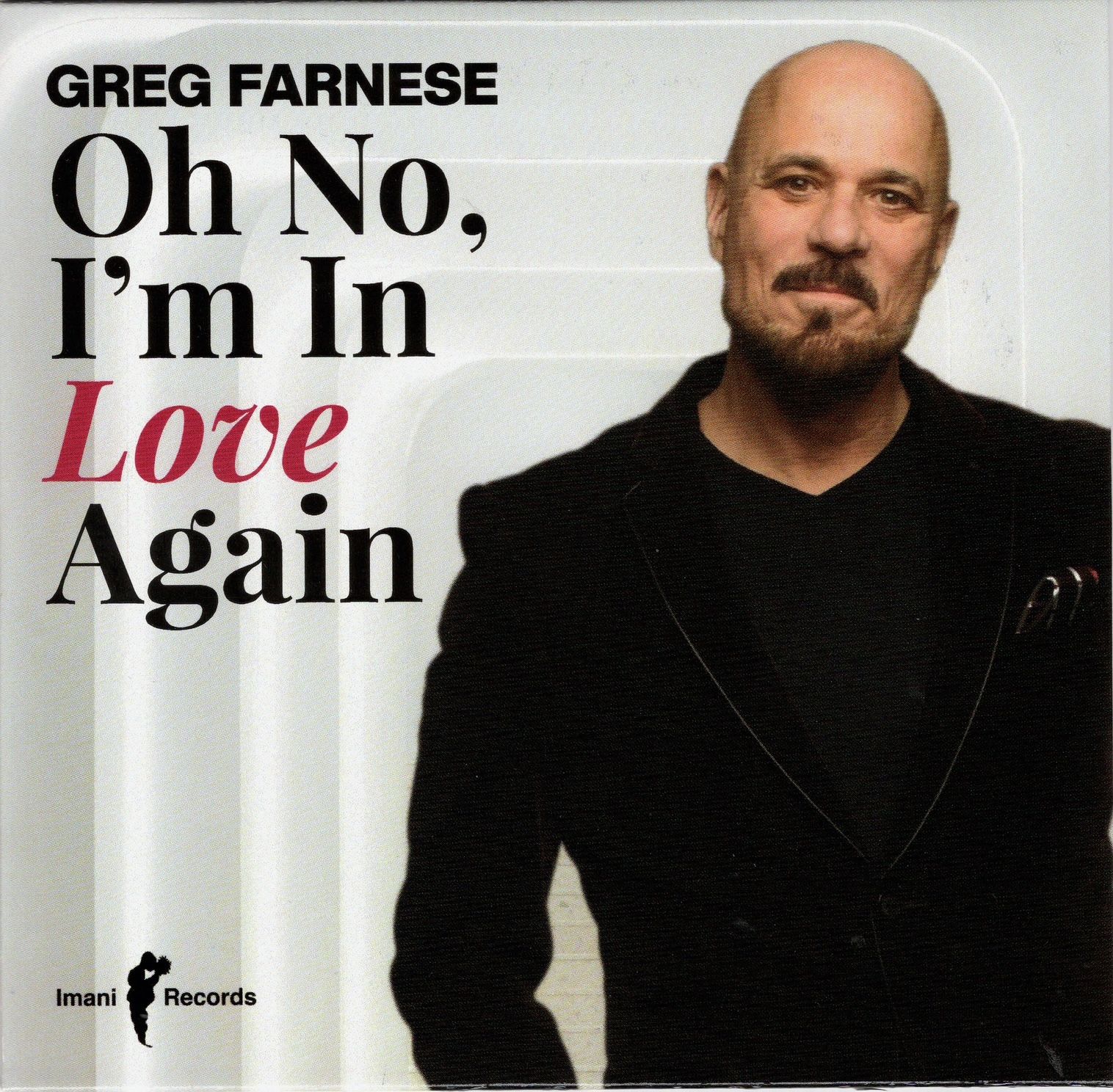
    But it was a roundabout route to the stage for Farnese, whose debut album, Oh No, I’m in Love Again, was just released on Philly jazz pianist Orrin Evans’ Imani Records.

    First, he followed his father, Aldo Farnese — the star of Philadelphia children’s television shows Dickory Doc and Adam Android in the 1960s and 1970s — in pursuing an acting career. After a stint in Hollywood working in production and scoring some small movie and TV roles, he came home to Philly in the mid-1990s.

    Since then, Farnese has had a day job — actually, usually a night job — as a TV camera operator for the Phillies, first at Veterans Stadium and, since 2004, at Citizens Bank Park. He operates a super slo-mo camera from the left field power alley in front of Ghost Energy Deck (formerly Harry the K’s).

    By 2012, Farnese was long settled into that job, and also working Sixers and Flyers games for NBC Sports Philadelphia. In 2012, he won an Emmy for his work on the World Series.

    But then he felt — as he puts it speaking via Zoom from his home in Woolwich Township, Gloucester County, while his golden retrievers Bailey and Oliver lounge on a sofa behind him — “a tap on the shoulder.”

    The cover image to Greg Farnese’s album “Oh No, I’m in Love Again.”Courtesy of Imani Records

    “When I was a kid, my father would sing throughout the house. We would say ‘Dad, you’ve got a great voice, you should be a singer,’” Farnese said. “And he would go, ‘Meh,’ and kind of blow us off.”

    Then one day, he said, “I was singing while putting my son’s air hockey table together.” His wife, Laurie, said “Greg, you’ve got a beautiful voice. You should sing.”

    “I started to go ‘Meh …’ — and then I stopped myself. Because I remembered that as a child, I thought my father was wasting his talent.

    “So I said: ‘Get me a karaoke machine for Christmas, and I’ll start working on my voice.’ And that’s what I did.”

    Farnese, who will perform at Tim McCloone’s Supper Club in Asbury Park on Oct. 4 and the Exit 0 Jazz Festival in Cape May on Oct. 23, is a poised vocalist and skilled song interpreter. Oh No! I’m in Love Again features two originals, including the title cut, both written with Alan Gardner, a former collaborator with Farnese’s father.

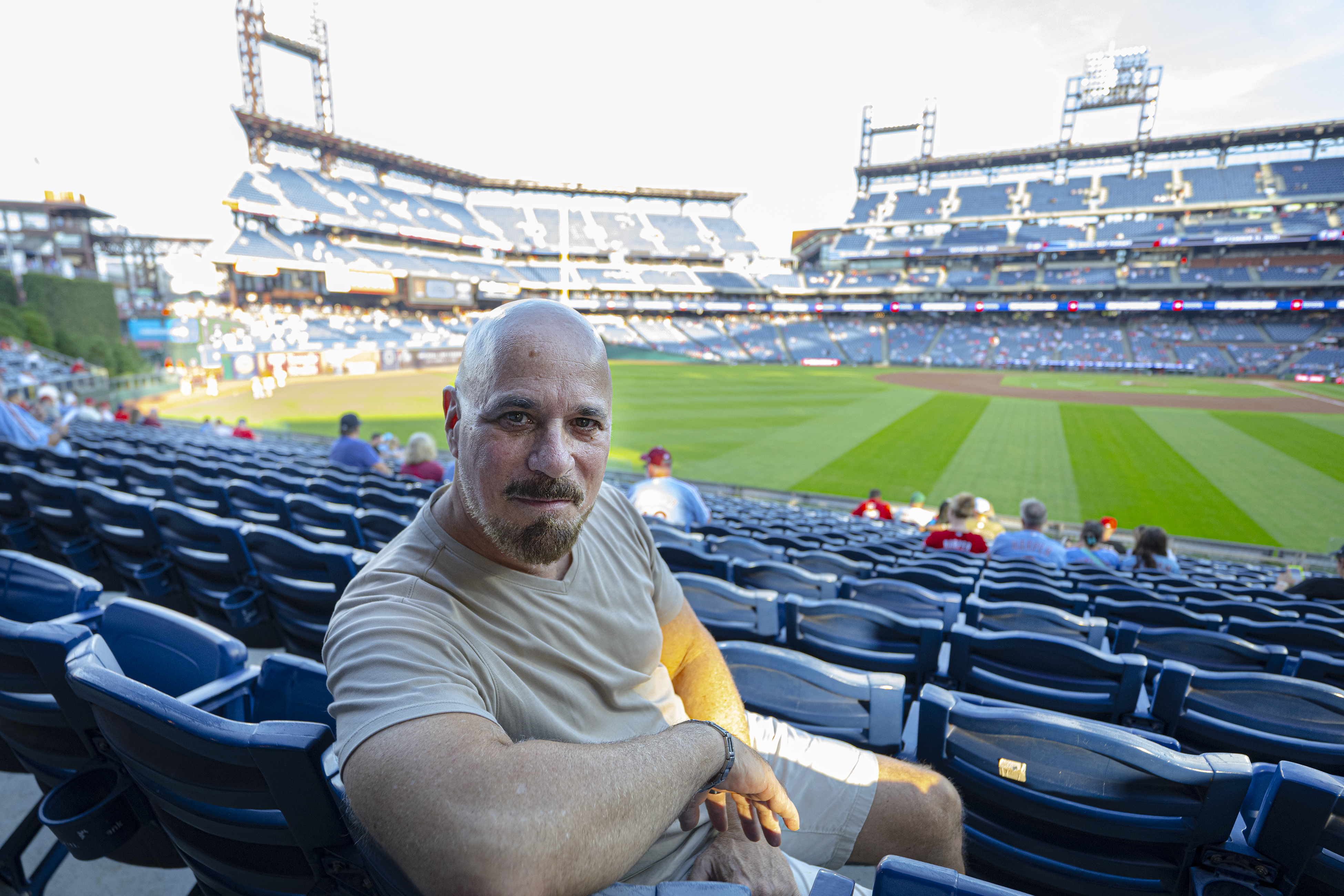
    Greg Farnese, a television cameraman and musician, is photographed Wednesday, Sept. 10, 2026, at Citizens Bank Park in Philadelphia, where he works as a camera operator in left field. Farnese, a crooner, recently released his debut album, “Oh No, I’m in Love Again,” on Grammy-nominated Philadelphia pianist Orrin Evans’ Imani Records. Farnese also works as a Phillies television cameraman for NBC Sports Philadelphia, stationed nightly in the left-field power alley.Jose F. Moreno / Staff Photographer

    ‘The magician canceled, can you come down and sing a song?’

    The album, whose polish belies that it was recorded in a single day at MorningStar Studios in Montgomery County, features Philly jazz players like drummer Leon Jordan Sr. and horn arrangements by trumpeter Elliot Bild.

    Along with a delicate version of Johnny Mercer’s “Dream” accompanied by guitarist Paul Bollenbock, the album includes Green Day, Oasis, and Tears for Fears songs, all artfully rearranged to make familiar sound fresh.

    It’s been a long road of confidence building for Farnese to work with a musician as accomplished as Evans, a three-time Grammy nominee who this spring was named artistic director of the Seattle Repertory Jazz Orchestra. (He’ll split his time between Seattle and Philly.)

    Speaking between innings during a recent Phillies-Astros game — an 11-7 win, thanks to a Kyle Schwarber grand slam — Farnese calls Evans “so smart and honest, and a great pianist. It’s like having Quincy Jones in my corner.”

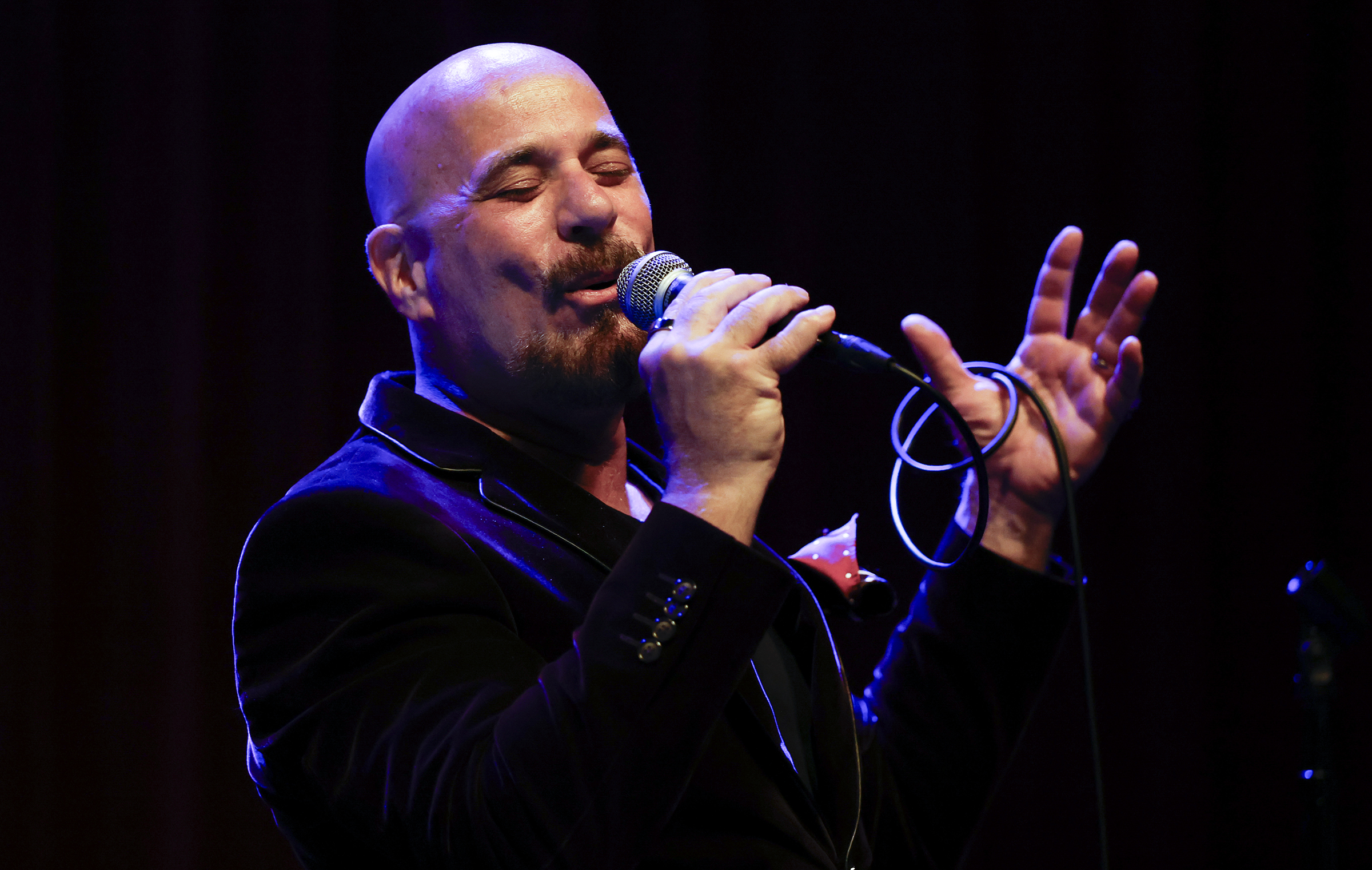
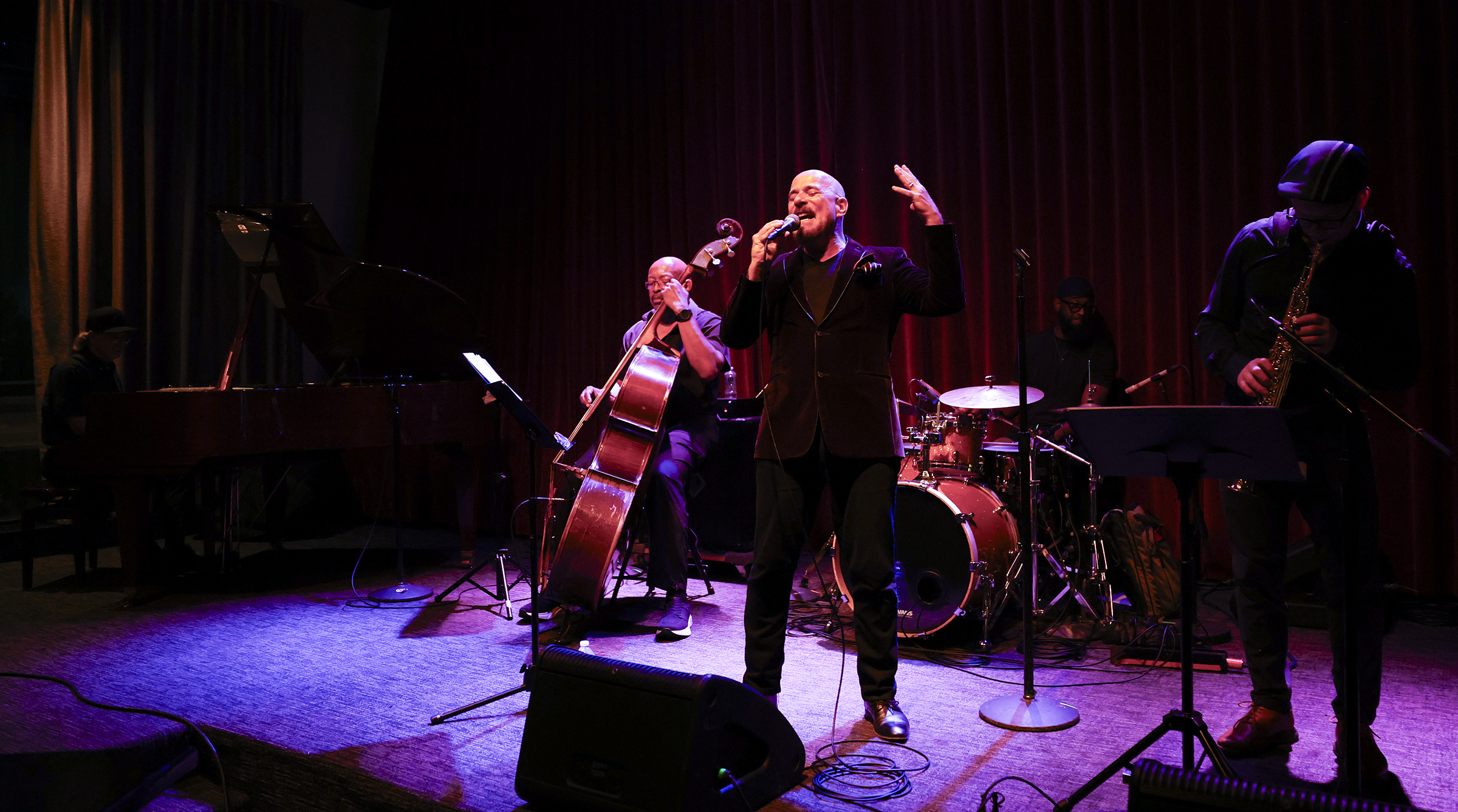
    Greg Farnese (center) performs at the World Stage in University City on Sept. 18, 2026. Farnese just released his debut album, “Oh No, I’m in Love Again.”Yong Kim / Staff Photographer

    “I started out singing in pizza parlors,” said Farnese, 62. “My wife is a psychologist and she used to work at nursing facilities. She called me one day and said, ‘The magician canceled, can you come down and sing a song?’

    “I told her no, I’m not ready yet. She said, ‘Get the hell down here, just do it!’ I was afraid, and I was so self-conscious about being good.”

    But as Farnese sang the 1940s standard “Moonlight in Vermont” to an elderly audience in Egg Harbor Township, he had a revelation.

    “The two ladies in the front started crying. I was bringing them back to when they were young. That moment I realized that it wasn’t really about me. It was about the effect the music had on the audience. I saw them crying and I thought: This is what I want to do.”

    Since then, Farnese has surrounded himself with first-class musicians and sung in area jazz clubs and private events, while also traveling for gigs in New York and Chicago.

    Working with the Phillies suits his ambitions. Knowing his schedule months in advance, he books shows when the team is on the road.

    “We’ve brought him on a couple of times to sing ‘Take Me Out to the Ballgame,’” said Phillies TV play-by-play announcer Tom McCarthy. “I love his energy. He just brings so much professionalism and creativity and knows how to get the crowd involved. He’s an entertainer.”

    Farnese put an exclamation point on one of the Phillies most memorable wins this year.

    “Schwarber hit a home run to center field onto Ashburn Alley,” McCarthy said of the Aug. 23 walk-off win. “It was an amazing comeback, and there was elation from the Phillies fans. But then Greg’s camera moved over to the Cardinals fans who had the total opposite reaction. It really buttoned up the story. It was just awesome.”

    ‘What would Ray Charles do with a Green Day song?’

    Evans wasn’t all that familiar with Farnese’s music before he decided to produce Oh No, I’m in Love Again and put it out on his label, home to artists like Philly keyboard player Luke Carlos O’Reilly and Los Angeles drummer Tina Raymond.

    Choosing who to work with isn’t about “it has to be the best vocalist, or the best saxophonist. It’s if somebody asks me to help them, and I believe in them as a human being.”

    Though he “wasn’t super-duper familiar with Greg’s singing,” Evans said, “I knew some of the people he was playing with. So I know this person doesn’t play with slouches, so he can’t be a slouch.”

    The key to success in recording, Evans says, was trust.

    “I just like working with people I like. And I know that if we can vibe off the bandstand, there’s no way we’re not going to vibe on the bandstand.

    “One of the best things I can say about Greg is his desire and ability to learn. He has an inquisitive spirit. He’s not done evolving. I really love this record, and I’m excited for the next one because of him.”

    “I love jazz and swing music,” Farnese said. “You know, Bennett, Bublé, Sinatra. That’s my wheelhouse. But growing up I was exposed to all these different styles. Everything from Simon and Garfunkel and the Beatles to Curtis Mayfield and Puccini.

    “So I’m creating a vocal style that combines songs I really love in jazz arrangements. What would Ray Charles do with a Green Day song? What would Duke Ellington do with a Blood, Sweat & Tears song? I want to be my own artist that creates my own music in my own style.”

    “I have a great job at NBC Sports Philadelphia. But when I got that tap on the shoulder, that was God saying. ‘This is not what you’re supposed to be doing.’ And being a middle-aged man, this is not a dress rehearsal. This is it. Now’s the time.”

    Greg Farnese will perform Oct. 4 at Tim McCloone’s Supper Club, 1200 Ocean Ave N, Asbury Park, timmcloonessupperclub.com and Oct. 23 at the Exit 0 Jazz Festival, Cape May, exitzerojazzfestival.com.

  • Barrymore Awards announce 2026 nominees for the best in Philly theater

    Barrymore Awards announce 2026 nominees for the best in Philly theater

    Theatre Philadelphia announced the nominees for the 2026 Barrymore Awards — recognizing the best theatrical productions, actors, directors, behind-the-curtain designers, and artists in the Philly area — on Friday morning.

    This year’s selection includes productions from more than 30 regional theater companies across 22 categories during the 2025-2026 season. Old City’s Arden Theatre Company led the nominations, receiving 20 nods, while People’s Light in Malvern trailed close behind with 19. Other theater companies with 10 or more nominations include Inis Nua Theatre Company, which stages productions from Ireland and the U.K. at the Drake in Center City, the Tony Award-winning Wilma Theater on Avenue of the Arts, and Norristown’s Theatre Horizon.

    “In the 250th year of our nation, Philadelphia theaters gave us the fuel we needed to get out of our houses and filled our year with great theater,” said Darnelle Radford, executive director of Theatre Philadelphia, in an email to The Inquirer. “We laughed, we cried, we got fired up and while we are celebrating our nominees, we are really celebrating the resilience of Philadelphia theater and we want the region to know there is world-class theater in our world-class city!”

    The 2025 production of the beloved classic Little Shop of Horrors, based on the 1960 monster comedy, was a clear favorite among Barrymore voters. Directed by Molly Rosa Houlahan and presented by People’s Light, the musical is up for 11 awards including outstanding overall production of a musical, direction, costume design, and props or puppetry design, a new Barrymore category this year.

    Little Shop actors Anna Faye Lieberman and Jessica Money earned nods for lead performances in a musical, while their supporting actors Mary Elizabeth Scallen and Andrew Kane were nominated in the corresponding category; they’re also in the running for outstanding musical ensemble.

    Leading in the play categories’ nominations is The Most Spectacularly Lamentable Trial of Miz Martha Washington, the Wilma’s staging of an irreverent early work from Pulitzer Prize-winning playwright James Ijames (a previous Wilma coartistic director and actor).

    The disarming satire follows a feverish Martha Washington who believes the people she and her husband enslaved are trying to kill her. The show ran this spring amid President Donald Trump’s contested but ultimately successful push to whitewash George Washington’s legacy of slavery at the President’s House.

    From left: Nancy Boykin, Ciera Gardner, Jayson Brown, Jada Mayo, Anthony Martinez-Briggs, and Steven Anthony Wright in “The Most Spectacularly Lamentable Trial of Miz Martha Washington,” nominated for nine Barrymore Awards.Johanna Austin

    Miz Martha received nine nominations, including outstanding production of a play, choreography/movement in a play (for Dominic Moore-Dunson), ensemble, and design categories in scenic, costume, and lighting. (Two other Ijames’ plays, the world premiere of Wilderness Generation and his 2023 play Good Bones, are previous Barrymore nominees.)

    Two theater artists, Pax Ressler and Jordan McCree, received three nominations each. For Girl Dolls: The American Musical, which they created with Jackie Soro in collaboration with Bearded Ladies Cabaret, Ressler is up for outstanding original music, music direction, and original production. McCree is also in the running in the original music category for their work on Miz Martha, in addition to two nods for outstanding sound design in Miz Martha and Philadelphia Theatre Company’s Caesar.

    Seven artists received double nominations. Theatre Horizon’s incoming artistic director, Amina Robinson, was nominated for outstanding direction of a play for Primary Trust and of a musical for Ain’t Misbehavin’, while Brett Ashley Robinson received nods for her direction of Miz Martha and her lead performance in the role of narrator in The Greatest Play in the History of the World.

    New this year: Stage managers for the nominees in outstanding overall productions in play and musical categories are now named in the Barrymore Awards nominations list. It’s part of the organizers’ efforts to spotlight the pivotal behind-the-scenes work that stage managers contribute to each show. (The awards recognize all participating artists for the winning productions.)

    “As the shepherds of these creative teams, the stage managers facilitate and encourage the smooth cohesion of all the incredible artists, technicians and administrators from all corners of the theater that make these Overall Productions so outstanding,” said CJ Higgins, Theatre Philadelphia’s director of programming and operations, in an email.

    Theatre Philadelphia also grants the Philadelphia Award for Social Insight, celebrating “the ability of theatre to illuminate the way we live and interact with others as we seek to build community,” reads the description. This year, 12 productions are nominated for the recognition, which comes with a $25,000 cash prize funded by the Virginia Brown Martin Fund of the Philadelphia Foundation.

    The 2026 Barrymore Awards ceremony will be held on Monday, Nov. 16, at 7 p.m. at the Suzanne Roberts Theatre in Center City.

    See the full list of nominees here:

    Outstanding overall production of a play

    1. Patreshettarlini Adams — The Most Spectacularly Lamentable Trial of Miz Martha Washington, The Wilma Theater
    2. Celia HuttonJohns — Same Team, Inis Nua Theatre Company
    3. Alexis Wells — La Otra, 1812 Productions
    4. Abby Sturgis — Walden, InterAct Theatre Company
    5. Brian Goldblatt — The Garbologists, Montgomery Theatre
    6. Jamel Baker — Primary Trust, Philadelphia Theatre Company
    7. Matthew Ryan Melchior — The Mountaintop, Arden Theatre Company

    Outstanding overall production of a musical

    1. Jess McPhillips — Little Shop of Horrors, People’s Light
    2. CD Kincade — Girl Dolls: The American Musical, Bearded Ladies Cabaret
    3. Alec E. Ferrell — Wishing to Grow Up Brightly, Theatre Horizon
    4. Asher Vaglica — Spring Awakening, Relic Theatre Company
    5. Tom Shotkin — Falsettos, Arden Theatre Company
    The cast of “La Otra,” an 1812 Productions show presented during the Philly Fringe Festival at Arden Theatre.Mark Garvin

    Outstanding direction of a play

    1. Kittson O’Neill — Same Team, Inis Nua Theatre Company
    2. Kimille Howard — Plantation Black, InterAct Theatre Company
    3. Brett Ashley Robinson — The Most Spectacularly Lamentable Trial of Miz Martha Washington, The Wilma Theater
    4. Tanaquil Márquez — La Otra, 1812 Productions
    5. Amina Robinson — Primary Trust, Philadelphia Theatre Company
    6. Rebecca Wright — Class C, Azuka Theatre and Simpatico Theatre
    7. Kathryn MacMillan — Can’t Forget About You, Inis Nua Theatre Company

    Outstanding ensemble in a play

    1. The Most Spectacularly Lamentable Trial of Miz Martha Washington — The Wilma Theater
    2. FIRE!! — Quintessence Theatre
    3. Plantation Black — InterAct Theatre Company
    4. Little Women — Hedgerow Theatre Company
    5. Same Team — Inis Nua Theatre Company
    6. La Otra — 1812 Productions
    7. The Woman Question — People’s Light

    Outstanding leading performance in a play

    1. Ebony Pullum — Blues for an Alabama Sky, Lantern Theater Company
    2. Adam Howard — Why I Stuck a Flare Up My Arse for England, Inis Nua Theatre Company
    3. Noelle Diane Johnson — The Garbologists, Montgomery Theater
    4. David Pica — Class C, Azuka Theatre and Simpatico Theatre
    5. Leo Mock — Little Women, Hedgerow Theatre Company
    6. Travoye Joyner — Romeo and Juliet, Arden Theatre Company
    7. Kishia Nixon —The Mountaintop, Arden Theatre Company
    8. Newton Buchanan — Primary Trust, Philadelphia Theatre Company
    9. V. Sterling — Same Team, Inis Nua Theatre Company
    10. Phillip Brown — Dutchman and the Slave, Passage Theatre Company
    11. Page Whitman — Same Team, Inis Nua Theatre Company
    12. Brett Ashley Robinson — The Greatest Play in the History of the World, Inis Nua Theatre Company and Tiny Dynamite
    13. Matthew Pfeiffer — The Garbologists, Montgomery Theater
    14. Olive Gallagher — Little Women, Hedgerow Theatre Company
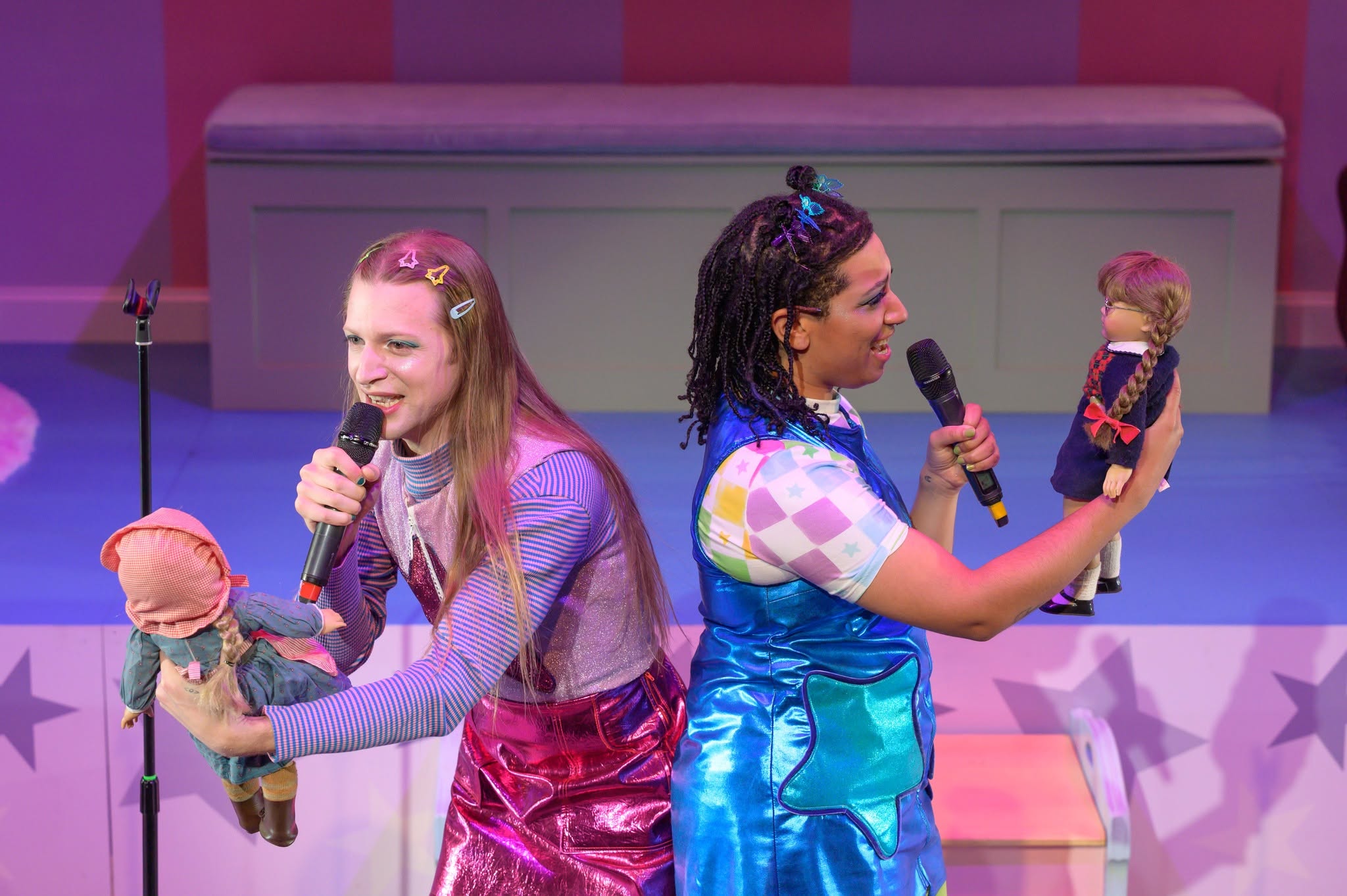
    Pax Ressler and Jackie Soro in “Girl Dolls: The American Musical” at FringeArts.Courtesy of Theatre Philadelphia

    Outstanding supporting performance in a play

    1. Megan Bellwoar — Can’t Forget About You, Inis Nua Theatre Company
    2. Jared Delaney — Romeo and Juliet, Arden Theatre Company
    3. Minou Pourshariati — Little Women, Hedgerow Theatre Company
    4. David Ingram — Primary Trust, Philadelphia Theatre Company
    5. Taylor J. Mitchell — Blues for an Alabama Sky, Lantern Theater Company
    6. Jered McLenigan — The Hypochondriac, Quintessence Theatre
    7. Unissa Cruse — Muleheaded, or Zora and Langston Write a Play, Passage Theatre Company
    8. Frank Jimenez — Romeo and Juliet, Arden Theatre Company
    9. David M. Raine — La Otra, 1812 Productions
    10. Daniel Burgess — A Wrinkle in Time, Arden Theatre Company
    11. Walter DeShields — Good Bones, Arden Theatre Company
    12. Dave Johnson — Spinner, Delaware Theatre Company
    13. Brandon J. Pierce — The America Play, The Wilma Theater

    Outstanding choreography/movement in a play

    1. Kittson O’Neill and Lane LaVonne — Same Team, Inis Nua Theatre Company
    2. Polanco Jones Jr., Quinton J. Alexander, and Bess Rowen — FIRE!!, Quintessence Theatre
    3. K. O’Rourke — Can’t Forget About You, Inis Nua Theatre Company
    4. Dominic Moore-Dunson — The Most Spectacularly Lamentable Trial of Miz Martha Washington, The Wilma Theater
    5. Fatima Sowe — The Woman Question, People’s Light
    6. MK Tuomanen — The Presented, Chris Davis
    7. Ryk Lewis — Coloring Book, Fusion Performing Arts Center

    Outstanding lighting design

    1. Shannon Zura — The Greatest Play in the History of the World, Inis Nua Theatre Company and Tiny Dynamite
    2. Lindsay Stevens — Walden, InterAct Theatre Company
    3. Shannon Zura — Good Bones, Arden Theatre Company
    4. Maria Shaplin — The Most Spectacularly Lamentable Trial of Miz Martha Washington, The Wilma Theater
    5. Christopher Ash — Caesar, Philadelphia Theatre Company
    6. Lily Fossner — The Garbologists, Montgomery Theater
    7. Cat Tate Starmer — The Unexpected 3rd: A Radical, Rollicking Rumination on the Optimism of Staying Alive, People’s Light
    A production photo of “Same Team” from Inis Nua Theatre Company.Wide Eyed Studios

    Outstanding scenic design

    1. Chris Haig — Walden, InterAct Theatre Company
    2. Colin McIlvane — The Most Spectacularly Lamentable Trial of Miz Martha Washington, The Wilma Theater
    3. Meghan Jones — The Garbologists, Montgomery Theater
    4. Reiko Huffman —The Mountaintop, Arden Theatre Company
    5. Nick Embree — Can’t Forget About You, Inis Nua Theatre Company
    6. Nina Ball — The Unexpected 3rd: A Radical, Rollicking Rumination on the Optimism of Staying Alive, People’s Light
    7. Andrew Robinson — Gemini, EgoPo Classic Theater

    Outstanding costume design

    1. Nikki Delhomme — The Most Spectacularly Lamentable Trial of Miz Martha Washington, The Wilma Theater
    2. Rebecca Kanach — Twelfth Night, People’s Light
    3. Tiffany Bacon — Muleheaded, or Zora and Langston Write a Play, Passage Theatre Company
    4. Ivania Stack and Bailey Hammett-Colwell — The Snow Queen, The Wilma Theater
    5. Camilla Dely — Little Shop of Horrors, People’s Light
    6. Nikki Delhomme — A Wrinkle in Time, Arden Theatre Company
    7. Tracy Christensen — Steel Magnolias, People’s Light

    Outstanding sound design

    1. Larry Fowler — The America Play, The Wilma Theater
    2. Jordan McCree — The Most Spectacularly Lamentable Trial of Miz Martha Washington, The Wilma Theater
    3. Natali Merrill — Walden, InterAct Theatre Company
    4. Carsen Joenk — Steel Magnolias, People’s Light
    5. Andrew Nelson — JOB, Theatre Exile
    6. Jordan McCree — Caesar, Philadelphia Theatre Company
    7. Mel Hsu — A Wrinkle in Time, Arden Theatre Company
    A scene from “The America Play” at the Wilma Theater.Johanna Austin

    Outstanding media design

    1. Jorge Cousineau —The Mountaintop, Arden Theatre Company
    2. Taj Rauch — Wilderness Generation, Philadelphia Theatre Company
    3. Taj Rauch and Nia Benjamin — Girl Dolls: The American Musical, Bearded Ladies Cabaret
    4. Michael Long — La Otra, 1812 Productions
    5. Christopher Ash — Caesar, Philadelphia Theatre Company

    Outstanding original music

    1. Jackie Soro and Pax Ressler — Girl Dolls: The American Musical, Bearded Ladies Cabaret
    2. Amanda Morton and Josh Totora — Wishing to Grow Up Brightly, Theatre Horizon
    3. Jordan McCree — The Most Spectacularly Lamentable Trial of Miz Martha Washington, The Wilma Theater
    4. Liz Filios — Twelfth Night, People’s Light
    5. Selena Seballo and Jack Denman — The Chequerboard Watch: A New Musical, Delaware Theatre Company
    6. Adam Faulk — FIRE!!, Quintessence Theatre

    Outstanding props or puppetry design

    1. Anton Volovsek and Camilla Dely — Little Shop of Horrors, People’s Light
    2. Paul Kuhn and Ren Bailey — Sacco & Vanzetti: A Tragedia dell’Arte, Curio Theatre Company
    3. Clare Wislar — Marsha Blovotnick and the Marvelous Magical Chicken Soup, Theatre Ariel
    4. Kelly McLaughlan — The Stinky Cheese Man and Other Fairly Stupid Tales, Arden Theatre Company
    5. Jen Burkhart — Wishing to Grow Up Brightly, Theatre Horizon
    6. Ryan Canney — The Garbologists, Montgomery Theatre
    7. Colleen Murray — Lions, Lightning Rod Special
    The 2025 production of “Walden” from InterAct Theatre Company.Wide Eyed Studios

    Outstanding direction of a musical

    1. Robi Hager — Spring Awakening, Relic Theatre Company
    2. MK Tuomanen — Girl Dolls: The American Musical, Bearded Ladies Cabaret
    3. Amina Robinson — Ain’t Misbehavin’, Theatre Horizon
    4. Molly Rosa Hulahan — Little Shop of Horrors, People’s Light

    Outstanding ensemble in a musical

    1. Falsettos — Arden Theatre Company
    2. Little Shop of Horrors — People’s Light
    3. Spring Awakening — Relic Theatre Company
    4. Jelly’s Last Jam — Bristol Riverside Theatre
    5. Ain’t Misbehavin’ — Theatre Horizon

    Outstanding leading performance in a musical

    1. Anna Faye Lieberman — Little Shop of Horrors, People’s Light
    2. Jessica Money — Little Shop of Horrors, People’s Light
    3. Felicity Mundy — Spring Awakening, Relic Theatre Company
    4. Evan Kaushesh — Dear Evan Hansen, Arden Theatre Company
    5. Steve Pacek — Falsettos, Arden Theatre Company
    6. Stanley Martin — Jelly’s Last Jam, Bristol Riverside Theatre
    7. Francesca Marchese — Fun Home, Media Theatre
    8. Sami Ma — Wishing to Grow Up Brightly, Theatre Horizon

    Outstanding supporting performance in a musical

    1. Alison Ansorg — Fun Home, Media Theatre
    2. Katie Boren — Wishing to Grow Up Brightly, Theatre Horizon
    3. Katherine Fried — Falsettos, Arden Theatre Company
    4. Will Stephan Connell — Falsettos, Arden Theatre Company
    5. Mary Elizabeth Scallen — Little Shop of Horrors, People’s Light
    6. Andrew Kane — Little Shop of Horrors, People’s Light
    7. Dana Orange — Jelly’s Last Jam, Bristol Riverside Theatre
    8. Charlie Barney — Annie, Media Theatre
    A scene from the play “Plantation Black” from InterAct Theatre Company.Wide Eyed Studios

    Outstanding choreography/movement in a musical

    1. Julianna Babb, Noelle Diane Johnson, and J. Oliver Donahue — Spring Awakening, Relic Theatre Company
    2. Melanie Cotton and Eli Lynn — Little Shop of Horrors, People’s Light
    3. yaTande Whitney V. Hunter and DeWitt Fleming Jr. — Jelly’s Last Jam, Bristol Riverside Theatre
    4. Eliana Pinckney — Ain’t Misbehavin’, Theatre Horizon

    Outstanding music direction of a musical

    1. Pax Ressler — Girl Dolls, Bearded Ladies Cabaret
    2. Brigitte Rottman — Little Shop of Horrors, People’s Light
    3. Brigitte Rottman — Wishing to Grow Up Brightly, Theatre Horizon
    4. Gina Giachero — Falsettos, Arden Theatre Company

    Outstanding outdoor production

    1. A Bottom’s Dream — Shakespeare in Clark Park
    2. Twelfth Night, O Lo Que Quieras — Delaware Shakespeare
    3. Fraternity — Theatre in the X

    Outstanding original production

    1. Jackie Soro and Pax Ressler — Girl Dolls: The American Musical, Bearded Ladies
    2. Chaz T. Martin — Class C, Azuka Theatre and Simpatico Theatre
    3. Alice Yorke and Scott R. Sheppard — Lions, Lightning Rod Special
    4. John Bellomo — Sacco & Vanzetti: A Tragedia dell’Arte, Curio Theatre Company
    5. Chris Davis — The Presented, Chris Davis
    6. Dan Kitrosser — Marsha Blovotnik and the Magical Chicken Soup, Theatre Ariel
    7. Saymoukda Duangphouxay Vongsay — Seng’s Hair Salon, InterAct Theatre Company

    The Philadelphia award for social insight

    1. Inheritors — Philadelphia Artists’ Collective
    2. Draw the Circle — Hedgerow Theatre Company
    3. Good Bones — Arden Theatre Company
    4. The White Chip — New Light Theatre
    5. Sacco & Vanzetti: A Tragedia dell’Arte — Curio Theatre Company
    6. Ain’t Misbehavin’ — Theatre Horizon
    7. The Woman Question — People’s Light
    8. The America Play — Wilma Theater
    9. Franklinland — Lantern Theater Company
    10. Same Team — Inis Nua Theatre Company
    11. The Great Privation — Theatre Exile
    12. 1 Pound 4 Ounces — Azuka Theatre and Simpatico Theatre
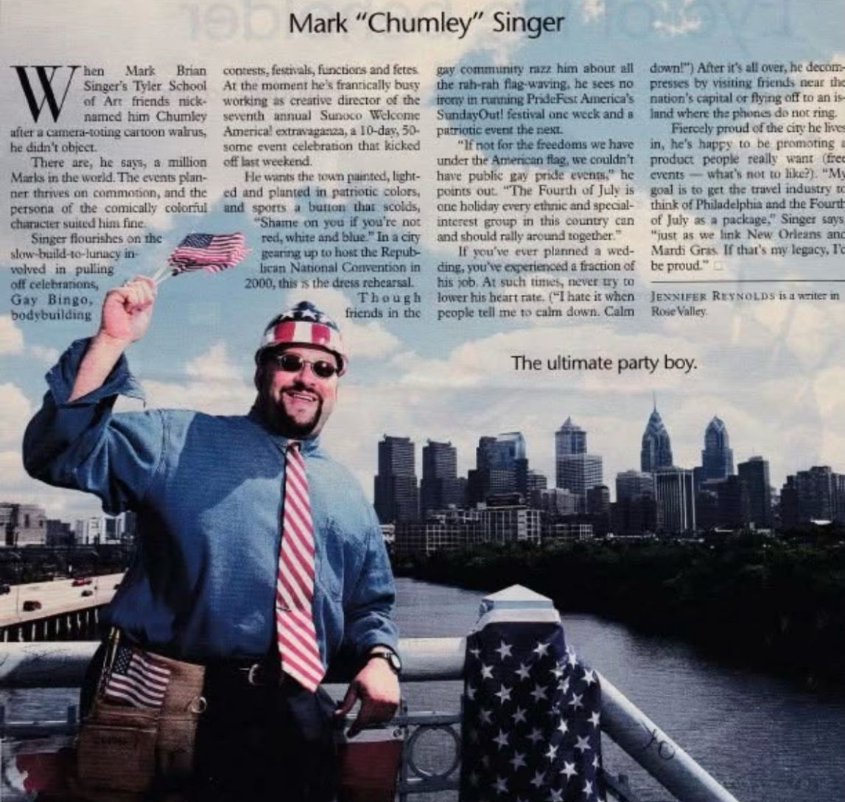
    Correction: This article has been updated to reflect updated information from Theatre Philadelphia. Eliana Pinckney and Andrew Kane’s names have been corrected and the nominee for outstanding sound design for ‘JOB’ is Andrew Nelson.
  • Two new scholarships named for Dito van Reigersberg, aka Martha Graham Cracker, will support Philly artists in drag, cabaret, and theater

    Two new scholarships named for Dito van Reigersberg, aka Martha Graham Cracker, will support Philly artists in drag, cabaret, and theater

    Following the recent death of beloved artist Dito van Reigersberg — who performed as Philly’s legendary drag queen Martha Graham Cracker — his friends, family, and fans are working on two scholarship funds for the city’s artists and students in van Reigersberg’s honor.

    Victor Fiorillo, the cabaret pianist who performed with van Reigersberg for years, has launched the Martha Graham Cracker Scholarship Fund to support drag and cabaret artists through microgrants. FringeArts will administer the funding, and the first phase will award $500 in unrestricted funds to three individuals or ensembles performing in the 2026 Fringe Festival.

    Fiorillo developed the idea in early August after seeing photos on social media remembering a Martha Graham Cracker Cabaret band fundraiser last year that celebrated the 40th anniversary of Philadelphia’s legendary Live Aid concert. Fiorillo and van Reigersberg raised more than $25,000 for Blood Cancer United (then called the Leukemia & Lymphoma Society) to help others struggling with the kinds of cancer that affected van Reigersberg, who died June 1.

    In less than a week, Fiorillo has raised nearly $11,000 with donations from van Reigersberg’s mom, Stephanie van Reigersberg, and longtime Martha fans, like Jose Pistola’s owner Casey Parker and Johnny Brenda’s owner William Reed. He initially raised $5,000 from friends and fans before opening the fund to public donations through GoFundMe. “It was just a no-brainer for people” to say yes, Fiorillo said.

    “It’s not only about Martha, of course, it’s about furthering the cabaret and drag arts in Philadelphia … I think of it as paving the way for the next Martha — not that I think that Martha could ever be replaced, but that’s certainly the idea,” said Fiorillo, a reporter at Philadelphia Magazine who lives in West Philly.

    “Dito and I both sort of came from privileged backgrounds. We had the money to pay musicians. We never struggled to make Martha a thing. We never had to bet the bank on it or take out a second mortgage. But having worked with so many artists over the years, we know how much some of them struggle.”

    Applications for microgrants for 2026 are now open. Fiorillo added that he plans to work with a financial planner to ideally establish the fund long-term. The next 2027 phase of microgrants will be open to drag and cabaret artists outside of the Fringe Festival as well.

    Another scholarship fund memorializing van Reigersberg is in the works at Pig Iron Theatre Company, the experimental theater group and school that van Reigersberg cofounded.
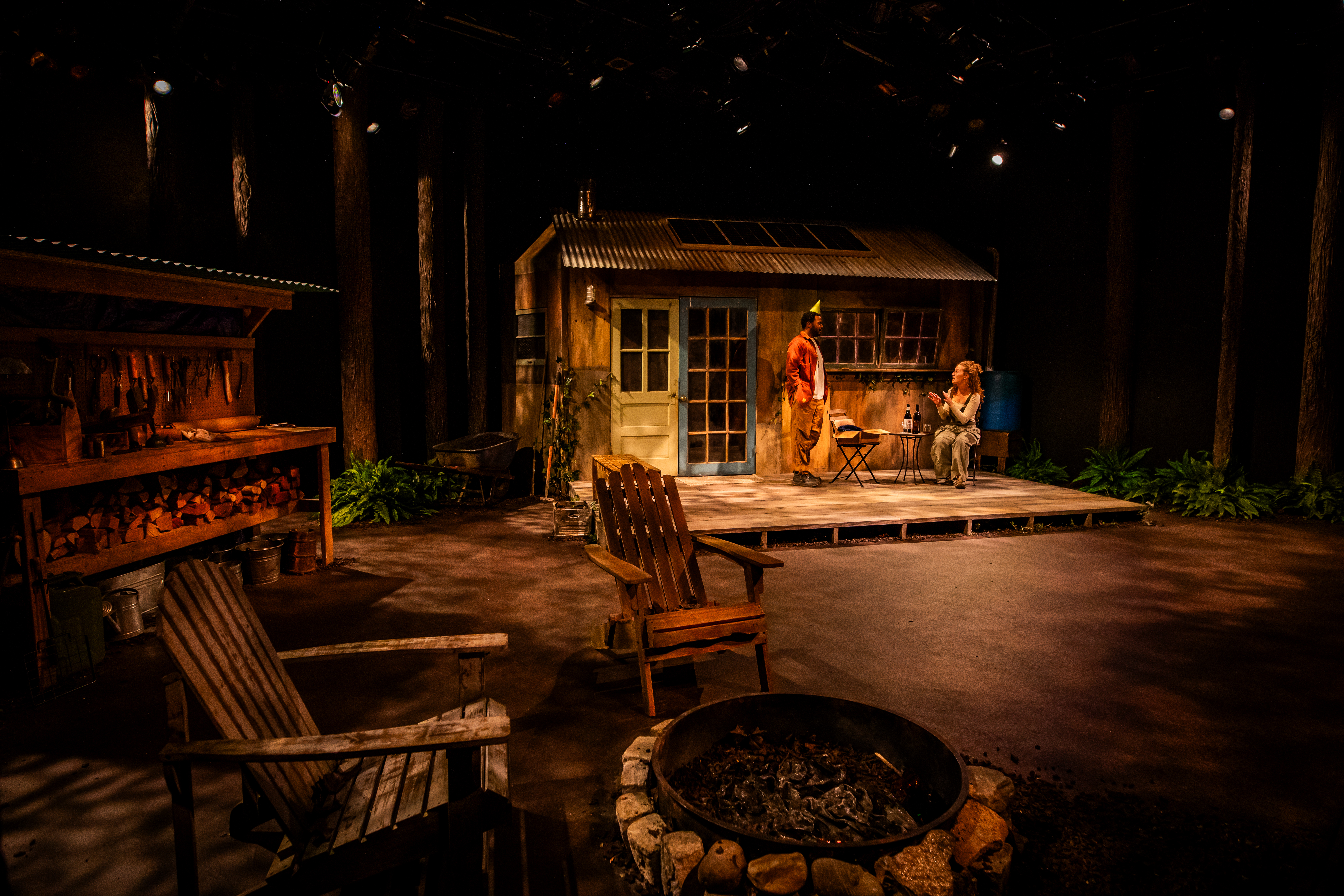
    Though still in early planning stages, the Dito van Reigersberg Legacy Fund would support artists and students in two ways: by establishing scholarships for Pig Iron graduate students to partially cover tuition costs and through funding Pig Iron’s program The Island, which van Reigersberg codeveloped.

    The Island provides artist ensembles with studio space and production support to experiment and workshop performances without the pressure of delivering a final product. (Pig Iron artists have used The Island to eventually create full productions, like 2008’s OBIE Award-winning Chekov Lizardbrain.) The Legacy Fund would finance Pig Iron’s current Island program and invite collaborations with new artists. Additionally, the fund would establish an Island residency for artists, either individually or as a group, to receive two weeks of dedicated time and space for ideation.
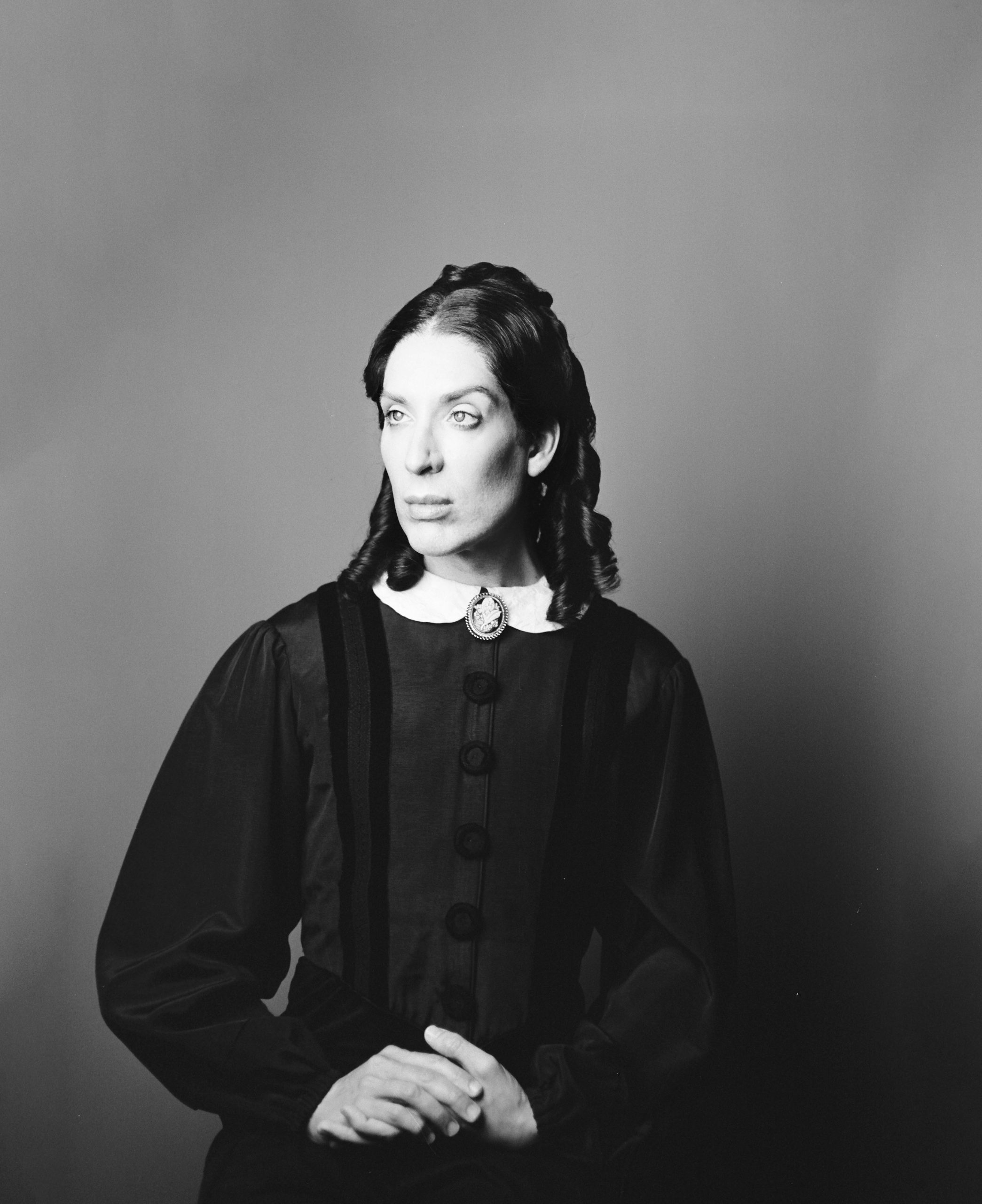
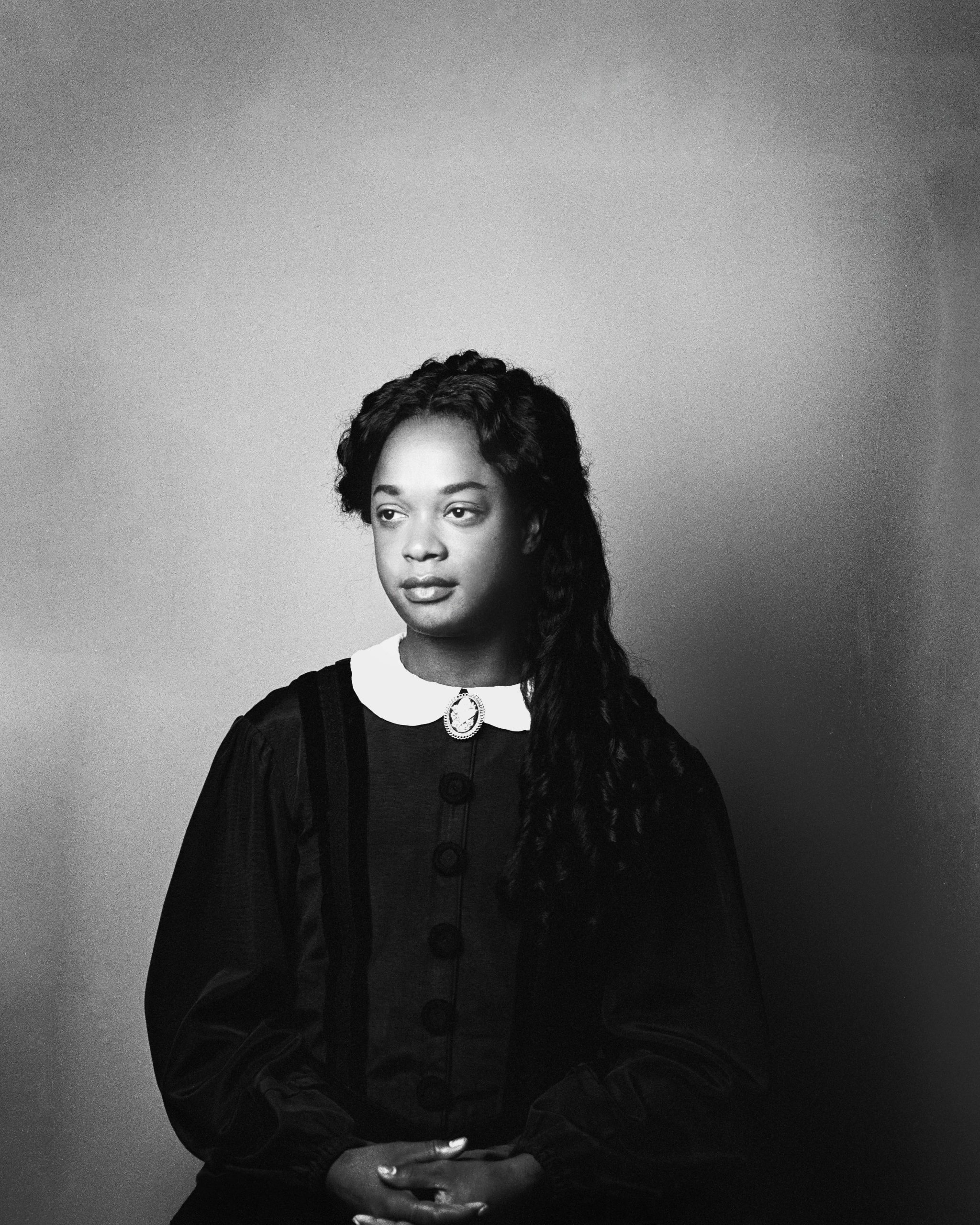
    “I watched Dito open so many doors for so many emerging artists [especially] in the queer community, just [by] saying, ‘You belong and what you do is valuable.’ For us to be able to carry that on just feels like a gift,” said Pig Iron coartistic director Quinn Bauriedel.

    Their goal, Bauriedel said, is to create “a board-designated legacy fund that would operate like an endowment, meaning there would be a principal and the interest would be spent every year,” supporting graduate student scholarships and The Island programs.

    Bauriedel hopes to raise between $1 million to $2 million in the coming years and begin offering the graduate student scholarships in fall 2027. Pig Iron will seek contributions from institutional and individual donors. He added that members of van Reigersberg’s family have agreed to serve on the selection committee for recipients.

    “Running an experimental theater company and school is a precarious enterprise … I just have this strong feeling that now, Dito, in his next phase, is helping to save the whole enterprise,” said Bauriedel.

    “He was always doing special things, and this is yet another one where he might help young artists … who just need to have somebody wrap their arms around them and say, ‘What you’re doing is important and meaningful, even if nobody quite understands it yet.’ Dito continuing to open that door is just beautiful.”

  • ‘Some Like It Hot’ actor J. Harrison Ghee will play Mary Todd Lincoln in the Philadelphia run of ‘Oh, Mary!’

    ‘Some Like It Hot’ actor J. Harrison Ghee will play Mary Todd Lincoln in the Philadelphia run of ‘Oh, Mary!’

    The riotous play Oh, Mary! has found two new leads for its first North American tour kicking off this fall: drag queen Alaska Thunderf— and Broadway darling J. Harrison Ghee. When the show lands in Philadelphia next March, Ghee will take the spotlight as the delightfully mad first lady Mary Todd Lincoln.

    First, though, the titular role will go to Alaska, a winner of RuPaul’s Drag Race All Stars, who grew up in Erie, Pa., and graduated from the University of Pittsburgh. While she stars as Mary, Ghee — a longtime New Yorker originally from Fayetteville, N.C. — will play “Mary’s Husband,” aka President Abraham Lincoln, becoming the first actor to play both roles in the play.

    J. Harrison Ghee will play “Mary’s Husband” opposite Alaska Thunderf-‘s Mary Todd Lincoln in the first part of the North American tour of “Oh, Mary!” before they take the titular role in Jan. 2027.Daniel Rampulla

    The 2026-27 tour starts in Hartford, Conn., in September and runs through May, with stops including Washington, Boston, Los Angeles, and Detroit. Alaska will play Mary through Jan. 17 and Ghee will take over the lead role beginning Jan. 19 in Chicago. They will be the star during the show’s brief Philly run at the Miller Theater from March 9 to 14.

    The camp comedy from actor/comedian Cole Escola follows a miserable, alcoholic Mary Lincoln just before her husband’s assassination in a satirical story that “finally examines the forgotten life and dreams of Mrs. Lincoln through the lens of an idiot.” Following Escola, several stars have put their own stamp on the role, including Tituss Burgess, Maya Rudolph, Jane Krakowski, and Jinkx Monsoon (another breakout star from the RuPaul’s Drag Race universe).

    Drag queen Alaska Thunderf— will play Mary Todd Lincoln in the first part of the “Oh, Mary!” North American tour.Daniel Rampulla

    The play was a massive hit when it landed on Broadway in 2024, becoming a Pulitzer Prize finalist and receiving five Tony Award nominations. Oh, Mary! won two in 2025, including best direction of a play and best performance by an actor in a leading role in a play for Escola — who made Tony Award history as the first nonbinary actor to win in that category.

    So it’s fitting that Ghee — a nonbinary actor who also achieved a historic first at the 2023 Tony Awards when they won best leading actor in a musical for playing Daphne/Jerry in Some Like It Hot — will get a chance to play Mary, too.

    The two actors haven’t yet talked in-depth about the roles, but earlier this year, they crossed paths when Ghee was waiting to hear back on their audition results. “We spoke briefly at the Tony [Awards] after-party at the Carlyle [Hotel], and they had kind of given me a hint,” said Ghee, who’s currently playing Hermes in Hadestown on Broadway.

    “They were like, ‘I feel like I’m gonna see more of you coming up.’”

    Ghee has seen Krakowski, Monsoon, and Hannah Solow play Mary so far and they can’t wait to take up the role. “I’ve seen a spectrum of Marys, and I’m excited to, as Billy Porter would say, ‘steal the good sh—,’ and also just bring myself to it and really have fun.”

    They first auditioned for the role of “Mary’s Husband” but had eyes on the lead, too.

    “It was very much a ‘yes, and’ [situation],” Ghee said. “A lot of my career has been based in duality. I am very that, and I love versatility. I don’t ever want to be pigeonholed … I want to show people the capacity — don’t let other people limit you.”

    J. Harrison Ghee pictured as Mary Todd Lincoln. “Oh, Mary!” lands at Philadelphia’s Miller Theater from March 9 to 14, 2027.Daniel Rampulla

    As for stopping in Philadelphia, Ghee said it’s one of the cities where they’re most eager to perform. They love visiting the city and enjoying the food culture.

    “I love to take an Amtrak down to Philly because you still get city vibes, but it breathes a little easier,” they said. “So I’m even considering, like, is there a world where I live in Philly one day? I don’t know!”

    Tickets are on sale now for “Oh, Mary!,” which runs March 9-14, 2027, at the Miller Theater, 250 S. Broad St., Philadelphia, 215-893-1999 or ensembleartsphilly.org.