Author: Mark Zandi

  • The first national AI election is coming | Expert Opinion

    The first national AI election is coming | Expert Opinion

    There is a widening gap between the economic fortunes of those enjoying the benefits of the artificial intelligence boom — mostly large corporations and the well-to-do — and everyone else. It is a significant reason why many Americans feel left behind.

    If the polls are to be believed, voters in the midterm elections Nov. 3 will take it out on the Republican Party, which has controlled the White House and Congress for nearly two years.

    AI is powering the economy’s growth. Most obvious is the massive AI infrastructure build-out, including the explosion in data center construction, electric power capacity, and the servers and other electronics that go into the centers. The tech giants and other AI-related companies have seen their stock prices soar, with total shareholder wealth doubling in the nearly four years since ChatGPT was unveiled and the AI boom began.

    The well-to-do who own most of these stocks are much wealthier and, not surprisingly, spending more. Over the past three years, spending by the top 20% of earners has grown close to 4% per year after inflation, compared with next to nothing for everyone else. And since much of the AI equipment and many consumer goods are imported, economies around the world are enjoying an AI lift.

    If you are fortunate enough to be in the AI economy, it is indeed booming. AI is generating jobs in the construction trades, the power industry, chips and other electronic equipment, and at financial institutions providing the capital needed to finance the AI build-out. Employment in the hospitality, retail, and transportation industries is also benefiting from spending by the well-to-do.

    Meanwhile, much of the non-AI economy is struggling.

    Hiring is moribund as companies gauge how to use AI to replace jobs. This is especially hard on young people entering the workforce and those in the professional and business services, information, and educational services industries, where AI already appears to be substituting for workers.

    AI investment is also crowding out other investment, as AI demand for credit is helping to drive up interest rates, making borrowing uneconomical for other companies.

    Adding insult to injury, booming AI demand is driving up electricity costs. Here in Pennsylvania, the price to ensure our regional grid has enough power is more than 10 times what it was two years ago, mainly because of data centers, and that is showing up in our electric bills.

    And with chipmakers catering to AI, memory chips used in iPhones, laptops, and other electronics are in short supply, pushing up prices for these items.

    The high cost of living is tough to bear for those in the non-AI economy, and AI is adding to the burden.
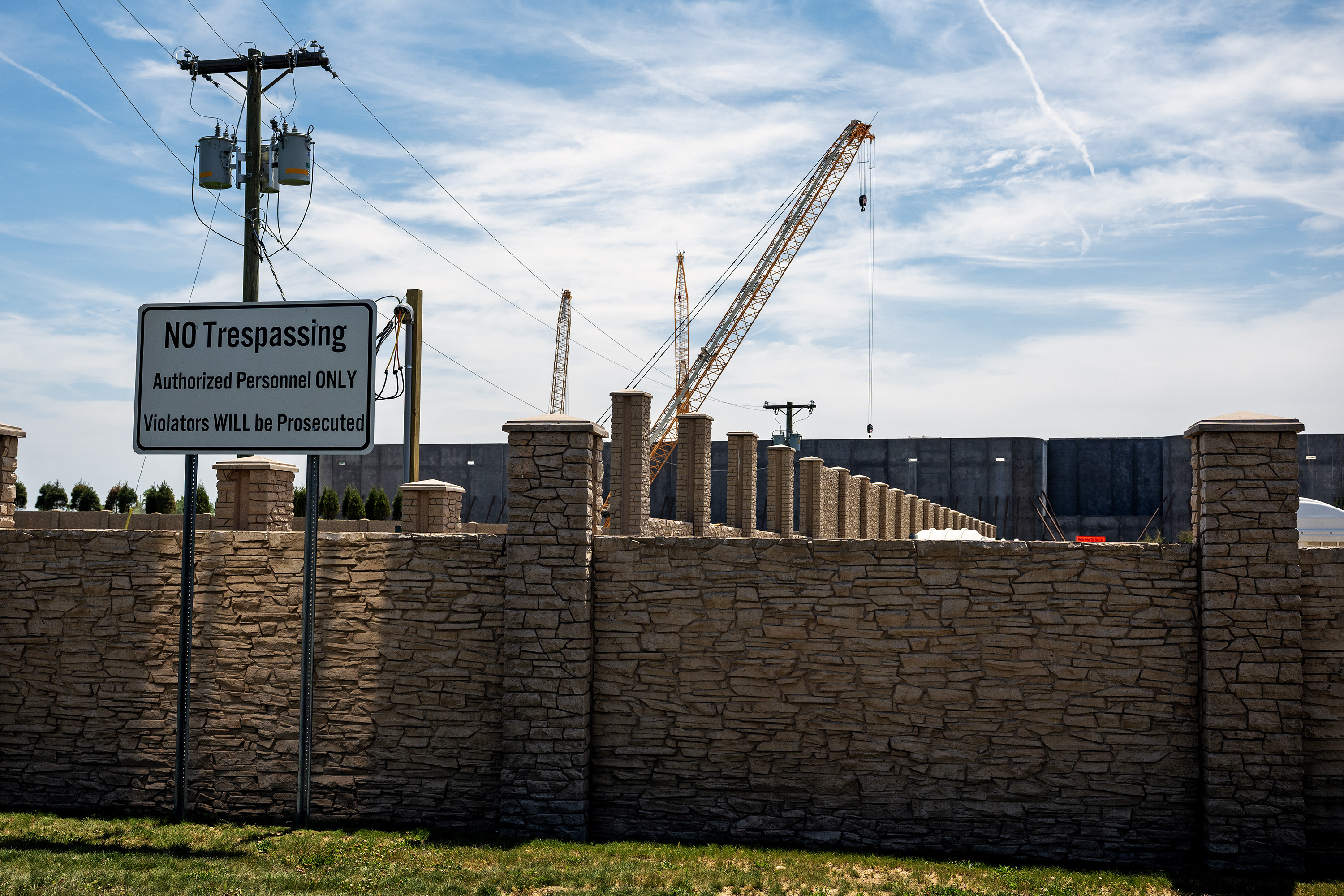
    Construction continues on the Nebius AI data center in Vineland, N.J., shown here in June.Tom Gralish / Staff Photographer

    Americans living in the non-AI economy are also being hit hard by the higher inflation and interest rates caused by the Iran war, higher tariffs, and heavy-handed immigration policy. The war is why we are paying well over $4 per gallon for regular unleaded, tariffs are partly behind the higher grocery prices, and immigration policy is pushing up the cost of childcare, elder care, and a range of other services.

    All this, along with AI-fueled inflation, contributed to the Fed’s decision to raise interest rates in September and pushed fixed mortgage rates well above 7%. The housing market is reeling as a result, putting renewed pressure on the value of homes, the biggest asset most Americans in the non-AI economy own.

    This brings us back to the midterm elections. The economy is at the top of voters’ minds in the campaign’s final days. Judging by the political polling and consumer sentiment surveys, voters are overwhelmingly down on the economy. In the more than 50 years the University of Michigan has surveyed consumers, sentiment has rarely been lower.

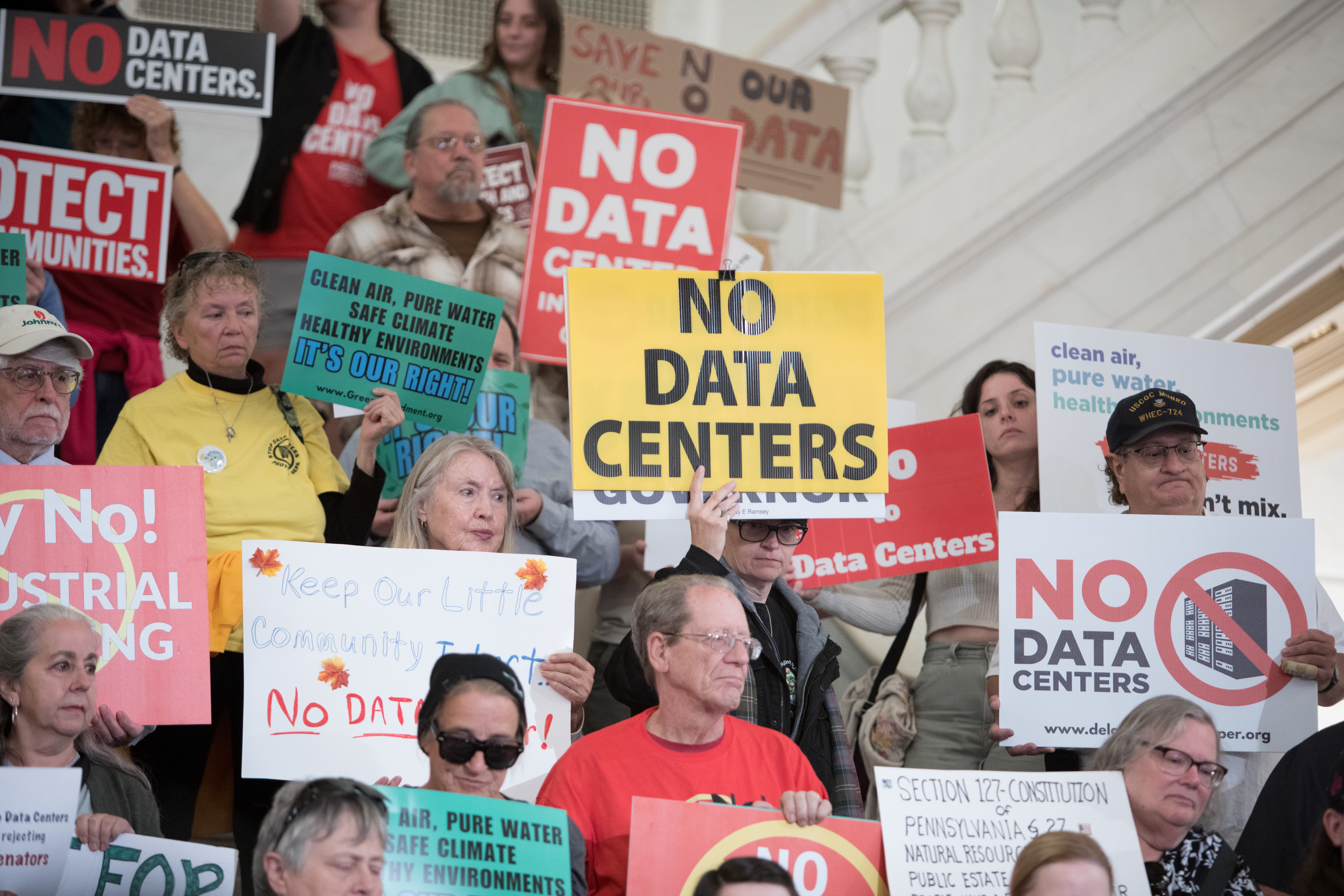
    AI is front and center in the election when it comes to data centers. Seven in 10 Americans don’t want one in their proverbial backyard, according to Gallup. This is about the cost of electricity, but also about water, noise, generator exhaust, and a loss of control, as much of the data center development has been done without consulting the people affected. Proposals for massive data centers in King of Prussia and Plymouth Township have run into growing local opposition.

    The closed Cleveland-Cliffs steel mill in Plymouth Township, where a developer has proposed a data center.Monica Herndon / Staff Photographer

    Voters also have AI concerns that are less tangible, ranging from job displacement to more cyberattacks, worsening problems created by social media, and even terrorism and the threat of human extinction.

    This is the first national election in which AI is playing a starring role, but it surely won’t be the last. And unless the benefits of the AI boom reach well beyond large corporations and the well-to-do, voters will keep taking it out on whichever party is in power.

  • Think U.S. government debt doesn’t affect you? Think again | Expert Opinion

    Think U.S. government debt doesn’t affect you? Think again | Expert Opinion

    The U.S. government’s debt recently hit $40 trillion. Beyond the shock value of a number so large, what does that actually mean for your economic life? Were you getting along fine when the debt was $39 trillion?

    It matters because persistent deficits and rising borrowing costs are fueling the affordability pressures households feel every day.

    Think of the debt as water in the tub and the annual deficit as the flow from the faucet. Of that $40 trillion, $32 trillion is held by investors here and abroad who buy our bonds; the $8 trillion difference is held in government trust funds. That public debt is about equal to 100% of U.S. gross domestic product, a near threefold increase over the past two decades.

    The war with Iran adds to the fiscal pressures, but the deeper problem is that we have, for years, been running recession-level deficits in good times and bad. It’s one thing to borrow historically large amounts in the face of an existential threat. After all, the U.S. hit its highest debt on record, 106% of GDP, following World War II. But heavy, routine borrowing is an entirely different scenario — a bad one.

    This fiscal posture most directly affects everyday Americans through higher interest rates.

    Long-term rates reflect many forces including inflation expectations, priorities of the Federal Reserve, global demand for safe assets, and investor confidence. But massive federal borrowing is an increasingly large part of the story.

    The 10-year Treasury yield has crossed 5% for the first time since 2023, up a full percentage point since the war with Iran began in late February. Mortgage rates followed, climbing from just under 6% to above 7%.

    That increase is costly. On a $400,000 mortgage, the difference between a 6% and a 7% rate is $265 per month — more than $3,000 per year, about what a typical household spends annually on gasoline. That helps explain why home sales have slowed to rates unseen since the housing crash, leaving many young families stuck as renters. The same arithmetic strains car loans, credit cards, and the loans small businesses need to expand and hire.

    Higher rates also increase the government’s own borrowing costs, putting more pressure on the federal budget. When debt is high, even modest rate increases drastically inflate the nation’s interest bill.

    Net interest on debt will reach approximately $1 trillion this fiscal year, surpassing military spending and roughly matching Medicare’s cost. That equates to over $7,000 per household, making interest the fastest-growing line item in the budget. The nonpartisan Congressional Budget Office projects this interest bill will double again to over $2 trillion annually within a decade, even assuming rates fall from current levels.

    There’s a circular logic to these budget dynamics. Consider the large budget package enacted last year.

    In an unfavorable trade-off for low-income families, last year’s tax cuts were partially offset by nearly $1 trillion in reductions to Medicaid and historic cuts to food assistance. Similar pressures are hitting the discretionary side of the budget, which funds everything from infrastructure to medical research to childcare. Ultimately, deficit-financed tax cuts and escalating interest costs can provide the political justification for cutting the programs that help families hardest hit by the affordability crisis.

    The pressure is also mounting on the tax side of the ledger.

    Tariffs generated nearly $200 billion in revenues last fiscal year, more than doubling the previous year’s total and costing about $1,500 per household. But that money is not paid by foreigners; it is collected from American importers and largely passed on to U.S. businesses and consumers.

    In effect, tariffs are a sales tax that falls hardest on families with the least room in their budgets. They may raise revenue for the Treasury, but they do so by making everyday life less affordable.

    The war with Iran is adding to the affordability squeeze by pushing energy prices higher. The U.S. average price of gasoline is back to nearly $4.50 a gallon this week, up about $1.50, or 50%, since the war began, and diesel has surged to a record price above $6 a gallon. Cars run on gasoline, but the economy runs on diesel. Trucks, trains, farm equipment, and delivery fleets depend on it, so higher diesel costs eventually show up in the prices of groceries and other essential goods.

    What can be done to help Americans deal with these pressures?

    Foremost, resolving the war with Iran and lowering tariffs. And it doesn’t take advanced math to see that repeated high-end tax cuts enacted without offsetting revenues only add to our debt.

    Also vital is a credible plan to stabilize the debt relative to the economy, targeting a deficit closer to 3% of GDP rather than the current more than 6%.

    Achieving this strictly via spending cuts would inflict further harm on vulnerable Americans, while tariffs are no substitute for a durable tax code. True fiscal health requires restraint and adjustments across both revenue and spending, and it takes a Congress and White House willing to say so.

    Global bond investors are losing patience. Interest rates are on the rise, and the U.S. Treasury’s efforts to stem the rise have done little to slow it. Investors don’t expect a balanced budget tomorrow, but they do expect a budget plan they can trust.

    If we provide one, long-term interest rates should moderate, the government’s interest bill should stop crowding out the rest of the budget, and the pressure to cut the programs families count on should ease. If we fail, investors will impose a plan on their own terms.

    The debt, the tariffs, the war, and the 7% mortgage are all of our own making. We can choose differently.

    Jared Bernstein is a senior fellow at American Progress. He was chair of the U.S. Council of Economic Advisers under former President Joe Biden.

  • Mortgage rates will rise even higher if bond market continues to choke | Expert Opinion

    Mortgage rates will rise even higher if bond market continues to choke | Expert Opinion

    If you’ve shopped for a home in the Philadelphia region lately, you’ve met the villain of this story.

    Before the Iran war began in late February, the 30-year fixed mortgage rate was dipping below 6%. Now, it is nearly 7%. On a $320,000 mortgage, approximately what it takes to buy the typical area home, that adds about $210 to the monthly payment, or more than $2,500 a year. That’s not for a bigger house, but the same house.

    Behind the mortgage rate stands the bond market. The 10-year Treasury yield, which sets the tone for mortgage rates, is near 4.75%, up more than three-quarters of a percentage point since before the war. The bond market is being asked to swallow a tsunami of new government debt, a Federal Reserve gone mum, and a war with no clear end. And it is choking.

    The Iran war has severely disrupted global oil supplies, pushing inflation to near 4% — double the Federal Reserve’s target — and flipping expectations for the Fed from cutting interest rates to raising them. That accounts for a bit more than half the run-up in rates. The good news is that bond investors’ expectations for future inflation have settled back near the Fed’s target. Investors still believe the Fed will do its job.

    However, new Fed Chair Kevin Warsh has long believed central bankers talk too much. Forward guidance on rates is gone, and communication is sparse, so investors are left guessing at what the Fed will do next — and they charge for guessing. That extra charge is called the term premium. Think of it as a nervousness fee for lending money over a long period. For a decade, it was pinned near zero. No longer.

    But what worries the bond market the most is the nation’s runaway debt. This year’s budget deficit will be more than $2 trillion, equal to more than 6% of GDP. It’s a stunning figure. And the government has been spilling red ink like this since the pandemic hit in 2020.

    Meanwhile, there are fewer buyers of the government’s debt. Foreign investors, who held about half our debt a decade ago, now hold closer to a third. The nation’s banks have become more circumspect bondholders after suffering big losses on their holdings when the Fed jacked up interest rates coming out of the pandemic. Highly leveraged hedge funds — fast money, but also the quickest out the door when trouble hits — filled the void.

    The Trump administration is trying hard to hold rates down. The Treasury doubled its bond buybacks, but this amounts to billions of dollars, a rounding error compared with the $32 trillion of debt outstanding. It facilitated Japan’s recent effort to rescue the weak yen, so our largest foreign creditor wouldn’t dump Treasurys and push rates higher. And it requires Fannie Mae and Freddie Mac to buy mortgage-backed securities to help pull down mortgage rates.

    Each move worked for a day or two, then quickly faded. More telling is the jump in gold and bitcoin prices and the lower value of the U.S. dollar. These are telltale signs that global investors are unsure about the safe-haven status of Treasury bonds. That is, during difficult times, money flows here because investors know they will get their money back on time. A Treasury bond is still the safest place on the planet to put your money, but it’s just a little less safe.

    The Treasury’s moves also risk what economists call fiscal dominance, a situation in which a government is so deep in debt that its borrowing needs pressure the central bank to keep interest rates artificially low to make the government’s debt easier to finance. We aren’t there, but we appear headed that way. The Treasury is increasingly doing what looks like the Fed’s job, and history is clear on how that ends: higher inflation and, eventually, higher — not lower — interest rates. The same problem this is meant to solve.

    It does not have to end that way. The most likely future is that the 10-year yield falls back this fall, and mortgage rates ease back toward 6%. Of course, this happens only if oil flows reliably through the Strait of Hormuz again, so inflation recedes, and Warsh gives investors some sense of how the Fed will set interest rates.

    But that’s a lot of ifs, and lawmakers are unlikely to address the nation’s disconcerting fiscal situation until the bond market forces them to. That could be in next year’s fight over increasing the Treasury debt limit, or early next decade, when the Social Security and Medicare trust funds run dry. The risk of a serious sell-off in the bond market that pushes the 10-year yield toward 6% and mortgage rates toward 8% is real: I would put the odds at about 1-in-5 over the coming year.

    A war, a Fed gone mum, yawning deficits — none of these is an act of nature. They are choices. Here’s hoping we start making better choices before the bond market chooses for us.