Author: Jackie Spiegel

  • Flyers mock draft 3.0: Could another Hextall be wearing Orange and Black soon?

    Flyers mock draft 3.0: Could another Hextall be wearing Orange and Black soon?

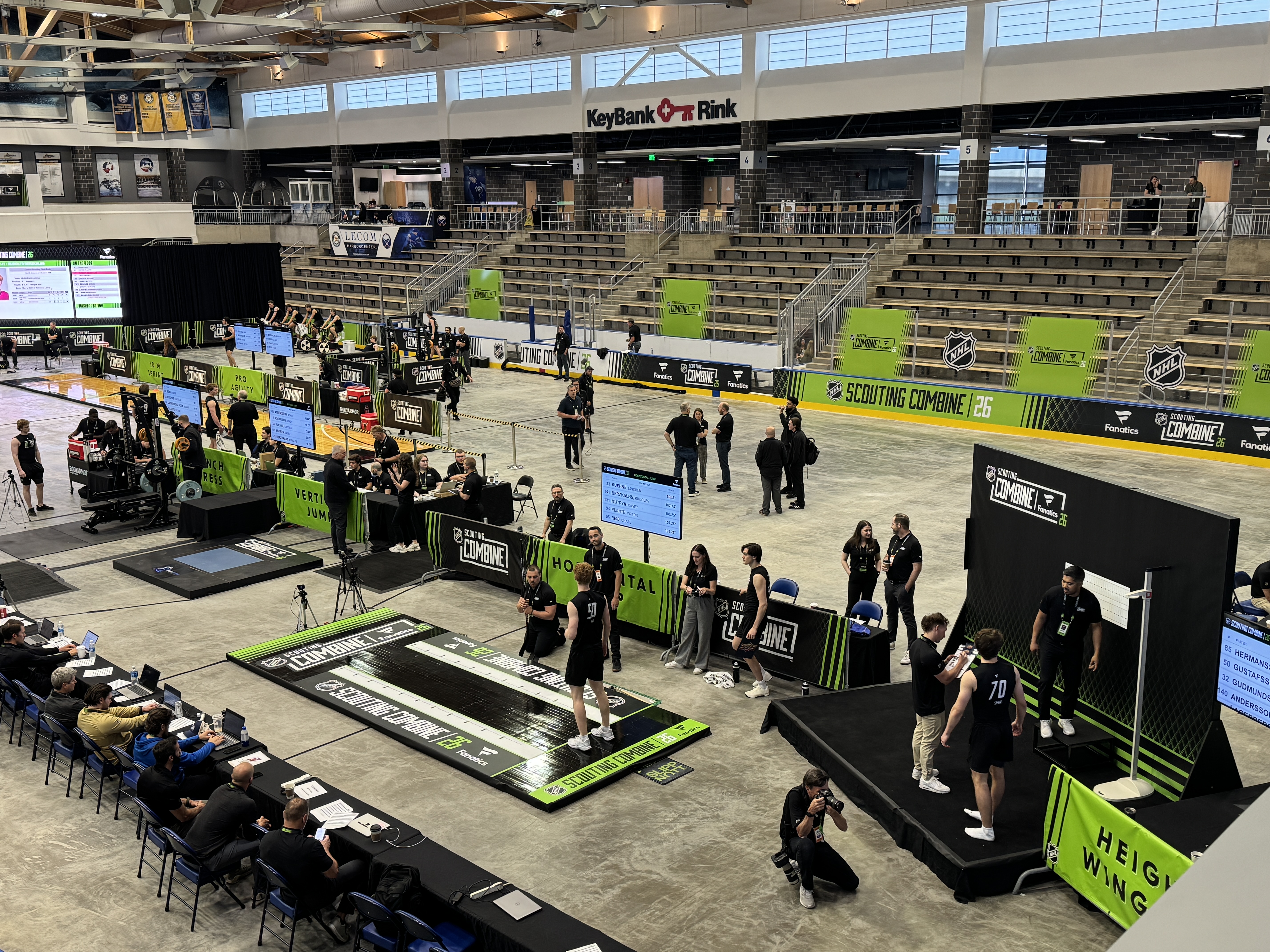
    The NHL scouting combine is over. The predraft news conference has concluded, and, starting Friday, the Flyers select their next generation in the 2026 NHL draft.

    Determining who they will pick is always a gamble, especially this season; the Orange and Black will pick 21st in the first round. But since the Flyers will be making their picks in Atlantic City, let’s test our luck and roll the dice here in our third mock draft — which will only be two rounds as the Flyers traded away their third-rounder to Toronto on Tuesday.

    First round: Jack Hextall

    In our first mock draft, published before the NHL scouting combine, this spot belonged to defenseman Tommy Bleyl. In our second, published post combine, it was center Alexander Command.

    Command likely will be long gone. Center Ilia Morozov, wingers Wyatt Cullen and Ethan Belchetz, and forward Maddox Dagenais, who is projected as a winger in the NHL, sound like they will be drafted before the Flyers pick, too. Fans also should keep an eye on Nikita Klepov as the Flyers brass travels to Florida to see the right winger and other Gold Star clients in their annual predraft camp.

    So, the question remains: why not go back to Bleyl, a dynamic offensive defenseman? Yes, the Flyers need help on the power play, and the New York native is considered a top-tier quarterback; however, as general manager Danny Brière was quick to point out on Tuesday, “right now you might have some needs, but in four years, five years, that need might be different” — and the Flyers desperately need help on the man advantage today.

    When asked about the small defensemen available, like the 5-foot-11 Bleyl, assistant general manager Brent Flahr said they need to be dynamic but then glossed over the position: “There are premier forwards at the top of the draft, a grouping of big-time defensemen, and then it goes back to forwards.” The Flyers do like 6-7¼ defenseman Maksim Sokolovskii, but taking him at No. 21 feels like a reach more massive than Jett Luchanko in 2024.

    So, reading between the lines, it sounds like the Flyers are keying in on a forward.
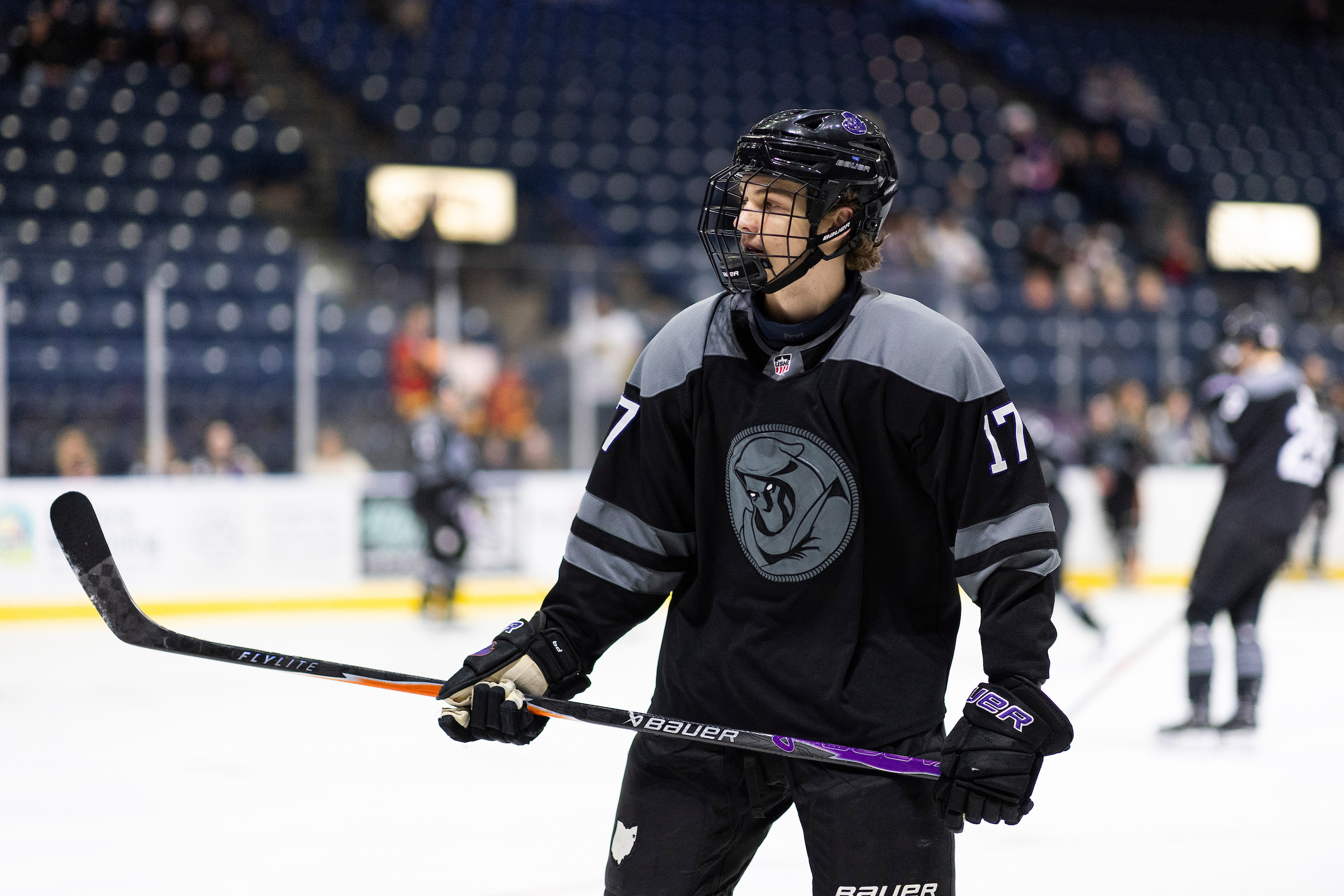
    Jack Hextall is one of several players the Flyers have been keeping tabs on this season. Scott R. Galvin

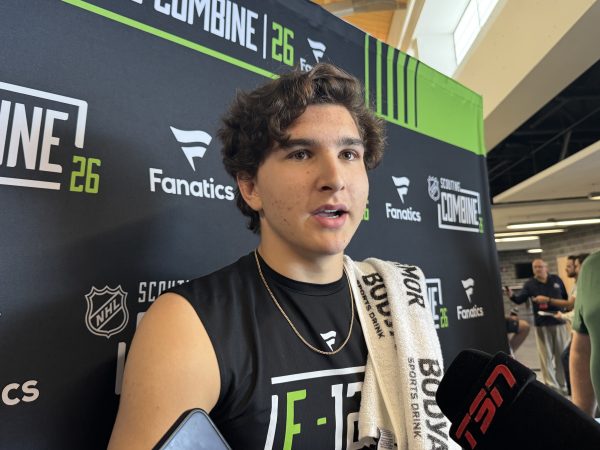
    With all that — if the Flyers do not trade the pick — let’s go with Jack Hextall, who, for the record, is a distant cousin of Ron Hextall, the former Flyers goalie and general manager. Jack told The Inquirer in Buffalo that the two have never met.

    This Hextall is a 6-foot-½ inch, 195-pound right-shot centerman who is projected to play a middle-six role. The fact he is a righty is intriguing, as Luchanko, Jacob Gaucher, and Cole Knuble, who is more of a winger but can play down the middle, are the only right-handed pivots in the organization.

    The 18-year-old from Illinois is known for his big motor, a high compete level, relentlessness, and, according to Ryan Ward, his coach with Youngstown of the United States Hockey League, “His brain is off the charts.” The Flyers love picking centers in the first round, plus they focus on all these traits when drafting, as seen with someone like Denver Barkey, who can play wing and center.

    Hextall finished with 58 points in 59 games for the Phantoms (apropos, no?) and had seven points for the winning USA Hockey squad at the 2025 Hlinka Gretzky Cup.

    “His bread and butter is how well-rounded he is,” The Athletic’s NHL draft and prospects reporter Scott Wheeler told The Inquirer. “The details off the puck, up and under sticks, retrievals, board battles, he’s got pro habits.

    “If you talk to the guys in Youngstown, the first thing they say about him is that he’s a pro; this isn’t a junior hockey player, like a lot of these kids are. [He] does everything the right way, no selfishness to his game and he doesn’t cheat for offense.”

    One more reason to keep an eye on him: he is heading to Michigan State in September.
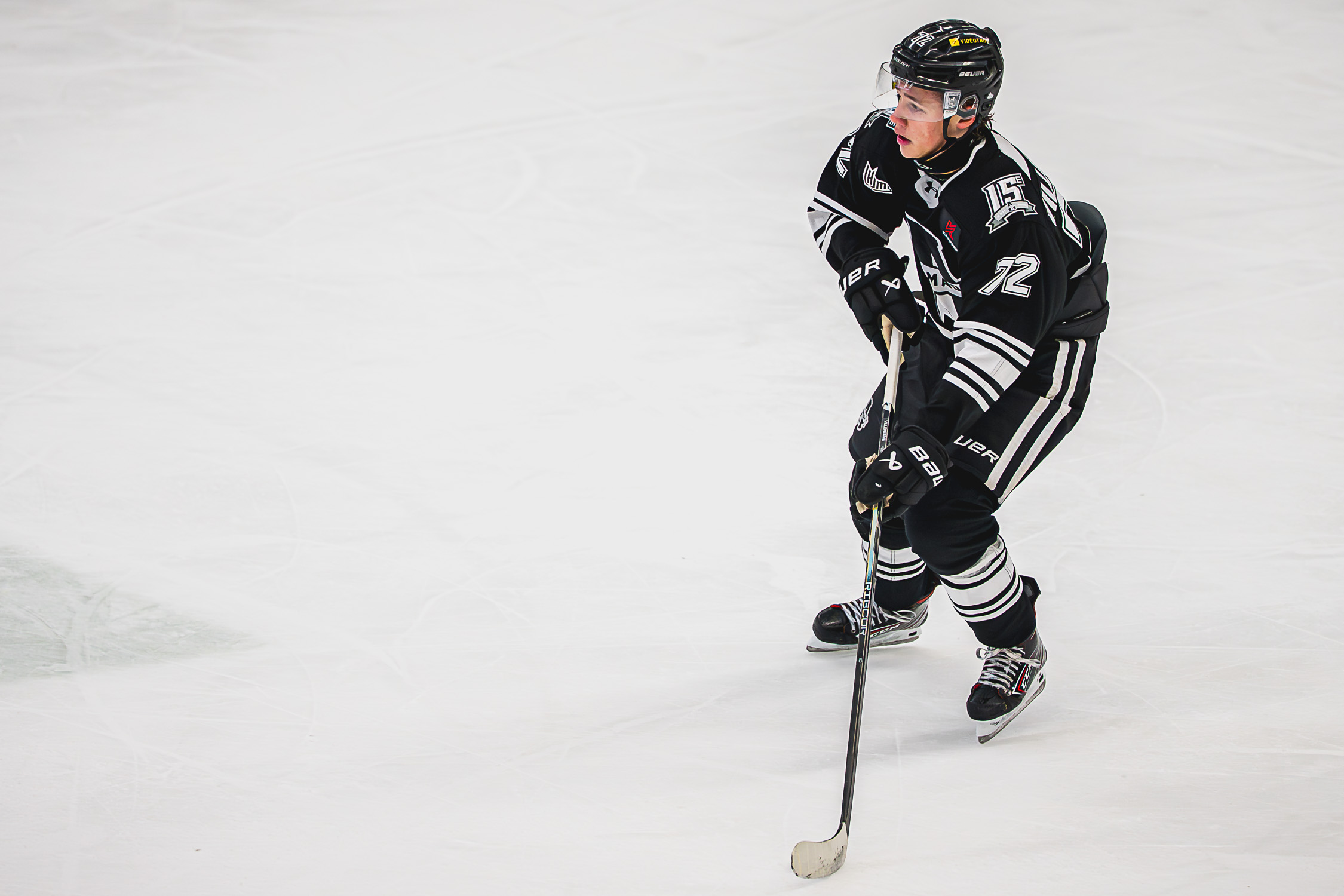
    Called “the draft’s most purely dynamic defenseman” by Elite Prospects, Xavier Villeneuve draws comparisons to former Flyers blueliner Shayne Gostisbehere.Sébastien Gervais/Armada Blainville-Boisbriand

    Second round: Xavier Villeneuve

    Where defenseman Xavier Villeneuve ends up is truly all over the map. He could end up going in the first or second round. As one coach told The Inquirer recently, if a team falls in love with a player, they may try to take them earlier than expected.

    The latest mock draft by Corey Pronman, the senior NHL prospects writer for The Athletic, has Villeneuve going to the Flyers in the second round with the 53rd overall pick. It matches the word on the street that his stock has dropped a bit as the 5-10¾, 164-pound blueliner needs to work on his defense and gain strength to accommodate his small stature; however, there is a massive upside to Villeneuve, especially offensively.

    The 18-year-old has a good stick, can skate, and dropped 38 points in an injury-plagued season — he had 14 points in 17 playoff games — for Blainville-Boisbriand of the Quebec Maritimes Junior Hockey League. He had 143 points in 152 regular-season games across three seasons in “The Q” and had eight points in seven games at last year’s Under-18 Championships for the gold-medal-winning Canadians.

    “He’s very dynamic. His first three, four steps are really dynamic. He’s got a great vision,” his coach, Alexandre Jacques of the Quebec Maritimes Junior Hockey League’s Blainville-Boisbrand Armada, told The Inquirer. “Offensively, he’s seeing things, and he’s able to create things that not too many players are able to do.

    “At the offensive blue line, he is really, really, really deceptive, so he’s able to create something out of nothing with his edge [work]. Skating sideways is probably one of his greatest attributes, and he’s good at using [his edge work] to create shooting lanes or to create offensive situations.”

    Down the road, yes, the expectation is that Villeneuve could help the Flyers power play as the quarterback. And you’d have to think the scouting and player development staffs have been keeping tabs on the Laval, Quebec, native as he was teammates with defenseman Spencer Gill, who is turning pro, with the Armada.

    Called an “exciting player to watch” by Boston University coach Jay Pandolfo, Villeneuve brings a hefty comparable in Lane Hutson and is following in his footsteps by joining the Terriers in September.

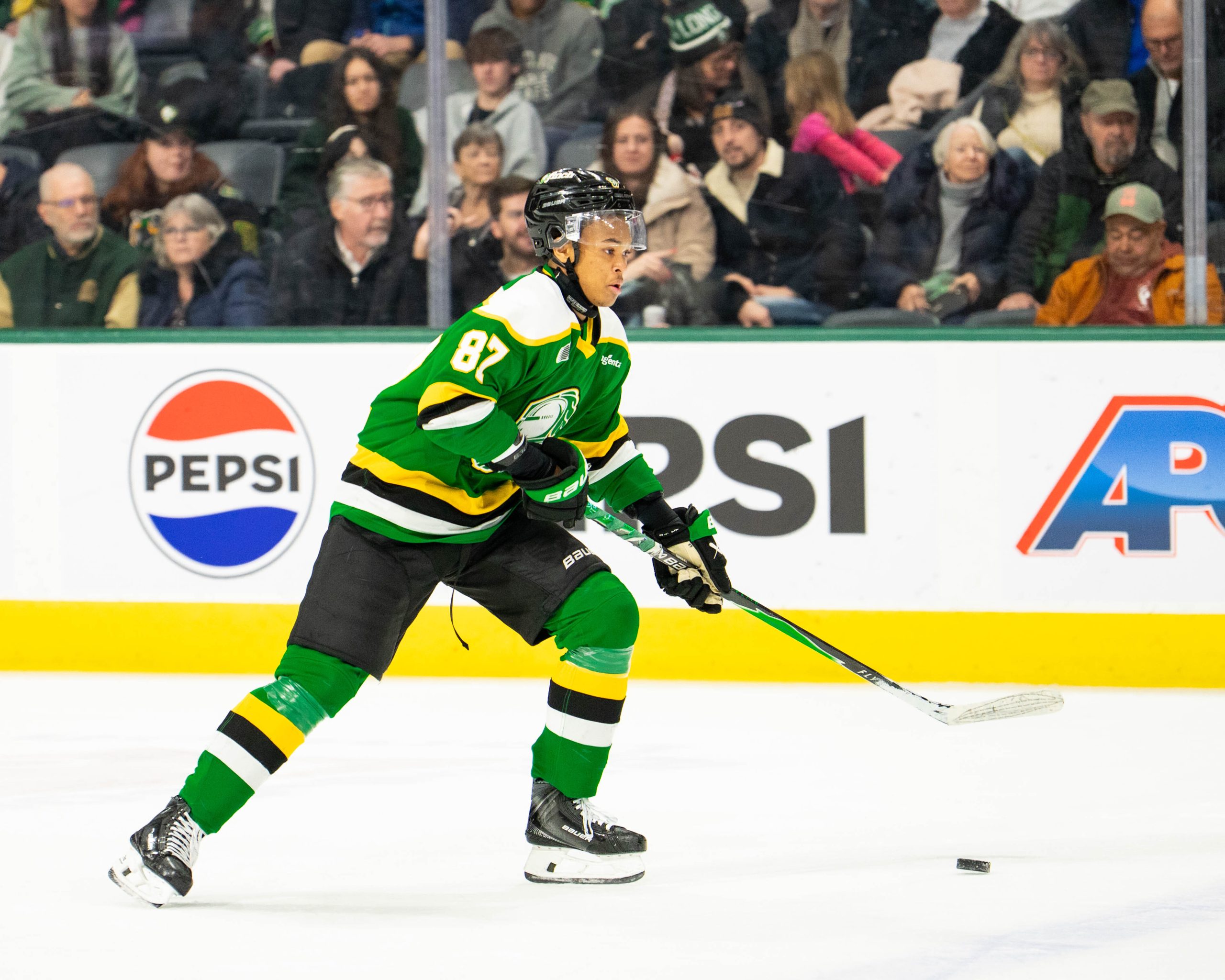
    One other name to keep in mind is Jaxon Cover. Although he does need to work on his skating — something the Flyers do not shy away from — he does have fantastic hands and creativity. A Penn State commit who plays for London of the Ontario Hockey League — the ex-team of Barkey and Oliver Bonk — a lot of his skill set comes from his time on the roller hockey rink while growing up in the Cayman Islands and playing in tournaments across North America before switching to ice hockey when he went to boarding school in Ontario in 2020.

    It feels similar to the path of Ty Murchison, a Californian who switched to ice from roller hockey when he was 11 — and neither could stop when they made the switch. Murchison, the Flyers’ fifth-rounder in 2021, made his debut last season and could crack the opening-night lineup in the fall.
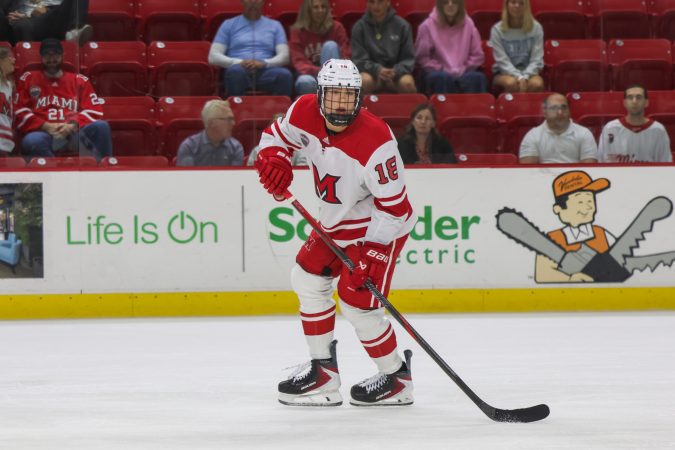
  • Flyers draft: Philly loves selecting centers. Is 17-year-old two-way pivot Ilia Morozov the next one to join the organization?

    Flyers draft: Philly loves selecting centers. Is 17-year-old two-way pivot Ilia Morozov the next one to join the organization?

    BUFFALO, N.Y. — The Flyers like taking centers.

    Since assistant general manager Brent Flahr took over, starting with the 2019 draft, the Flyers have drafted nine middle men, eight of them in the last three years with Danny Brière as general manager.

    “You can never have enough centers,” Brière told The Inquirer in early June at the NHL scouting combine. He doubled down on Tuesday in his annual pre-draft press conference alongside Flahr.

    Don’t stop the Flyers now; they’re having a good time picking centers with Jack Berglund, Heikki Ruohonen, Jett Luchanko, Jack Nesbitt, Nathan Quinn, and Matthew Gard starting to make some noise.

    And several pivots could be around when the Flyers pick at No. 21 in the first round, although Ilia Morozov may be the most interesting. He also may be the most interesting prospect in the entire draft.

    ‘Blazing down my trail to education’

    According to his Instagram post in August 2024, Morozov committed to Miami (Ohio) University and coach Anthony Noreen, who was hired that April. In July 2025, it was official that the kid from Moscow would head to Oxford, Ohio.

    There was only one thing that would make someone pause when reading the news: Morozov, who played one year for the Windy City Storm based out of Illinois as a 15-year-old, and had just wrapped up his lone year for Tri-City of the United States Hockey League, was still 25 days away from his 17th birthday.

    “We felt like his game was mature enough, but we really knew that, just who he is as a person, we felt he would thrive in our environment,” Noreen said.

    Spoiler: he did.

    When Morozov squared up to take the opening faceoff on the season against Ferris State — he centered the top line, to boot — the now 17-year-old began 2025-26 as the youngest player in men’s Division I hockey. Noreen says that the school’s athletic director, David Sayler, likes to remind him it was against a 25-year-old, and Morozov finished the game with 20 minutes of ice time and an assist on the RedHawks’ second goal in a 6-4 win.

    “Morozov is intriguing in that he went to college early and was one of the youngest players,” FloHockey draft and prospect analyst Chris Peters told The Inquirer via text.

    “He didn’t look out of place and has the size and skill combination that suggests he could be a middle-six center with some scoring ability. His production slowed as the season progressed, but there were flashes of a player that could have some higher-end production capabilities if everything goes right.”

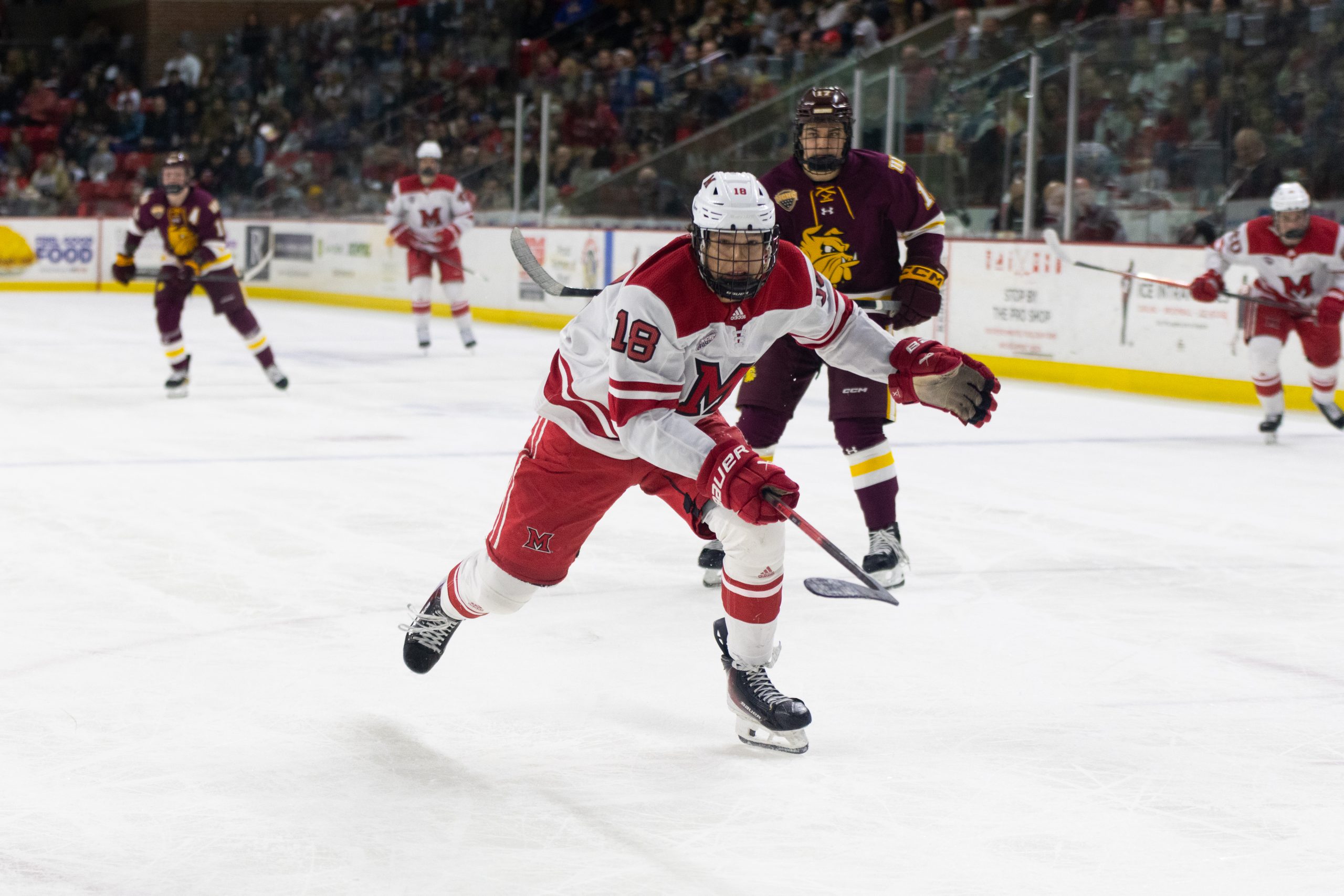
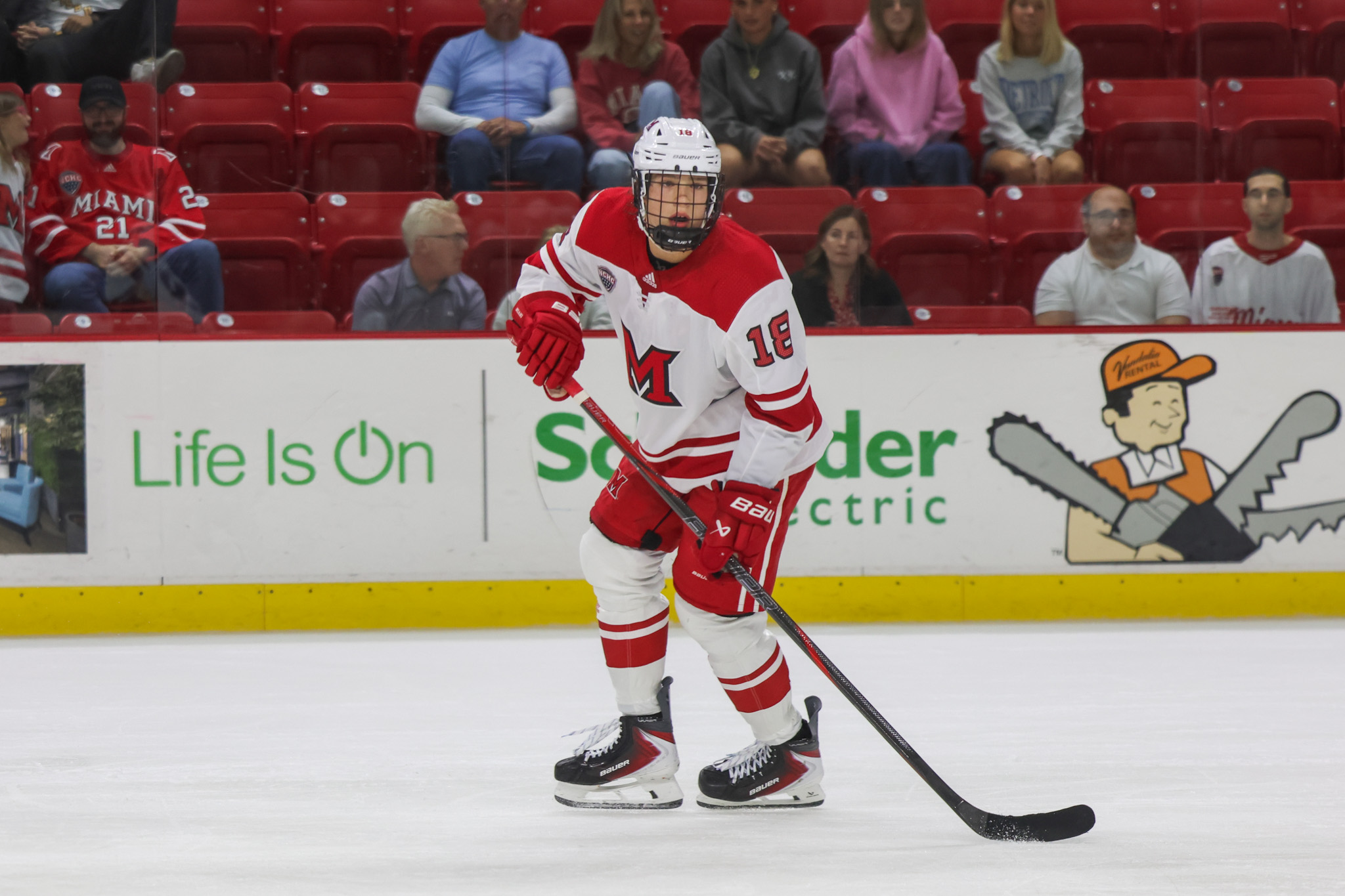
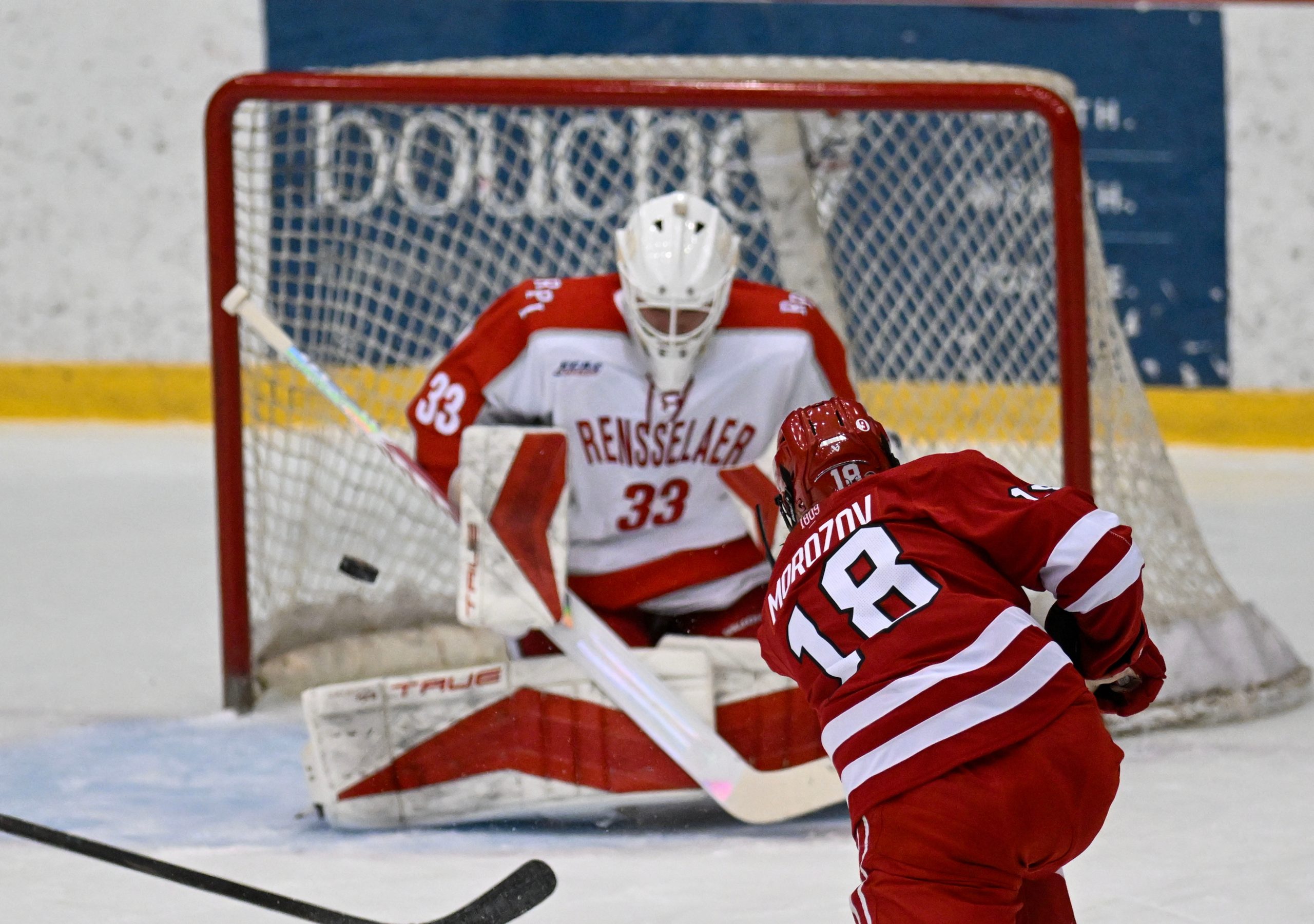
    Miami University forward Ilia Morozov (18) scores against RPI during the 2025-26 season. Hans Pennink

    A self-proclaimed two-way center who has good details in the defensive zone — the Flyers always like that — and can produce offensively, he went on a heater to start his collegiate career. In his first six games, he notched four goals and nine points.

    But then, as the RedHawks played their National Collegiate Hockey Conference schedule against teams like defending 2025 NCAA champion Western Michigan and eventual 2026 winner Denver, his scoring went a little cold. Morozov finished with eight goals — three on the power play and one shorthanded — and 20 points in 36 games, helping Miami go from a three-win season to 18 wins this past year.

    According to Elite Prospects, Morozov is a chaos creator in the offensive zone and a transition puck carrier who plays a middle-driven style. The lack of production did not impact him on or off the ice.

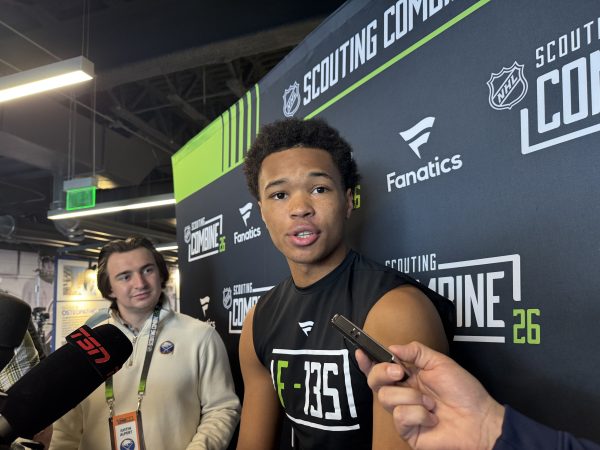
    “All the struggles and adventures and challenges [in life], they taught me that consistency just works, you should never give up and keep going,” Morozov said after finishing in the top 25 of eight fitness tests at the scouting combine, including atop the leaderboard for left-handed grip strength, tied for second on the right side, and tied for fifth all-time with 17 pull-ups. (The Flyers notably tend to draft players who do well in grip strength).

    “I believe that life’s fair, and if you put honest work, if you do 100% every time you have a chance, you will get the result.”

    What gives him such optimism?

    “Because that’s my experience,” he replied. “If I wasn’t doing something right, it was going one way. If I’m doing it right, it’s going the right way. So that’s personally just my experience, and I believe I did lots of work to be here.”

    ‘This Midwest way of ease’

    Like Peters, Noreen believes the offense will come for Morozov. And the coach was quick to note that while he may not have made the score sheet, the young center was involved in countless scoring chances each night, leading the team wire-to-wire in scoring chance differential.

    Using the word “involved” is important here because, keep in mind, when once asked what he wanted to be remembered for, Hockey Hall of Famer Brendan Shanahan responded, “That I was involved.”

    “I think he’s played such a mature 200-foot game that even when he’s not scoring — like, there’s certain players where, if they don’t score, they’re hurting you — he’s the guy that you love his game, you want him on the ice as much as possible,” Noreen said of Morozov. “When he scores, that even takes his game to another level, and we’re confident he’s going to do that.”

    But then Noreen said the part that should make every Flyers fan’s ears perk up:

    “You don’t get many guys that are 6-foot-2[¾], [205] pounds, and can skate and have a brain, and have all those things. He’s a rare package and … the makeup and the intentionality in which he goes about his business and [how he] works, and everything in the person is even more special. We know whatever his ceiling is, he’s going to get there because just the way that he goes about things.”

    On the flip side, Morozov said something that should also draw the Flyers’ attention. When asked how he looked at the opportunity to play against older players, he said: “I think that was an amazing opportunity, because I believe that if you play with somebody who’s better than you, it will make it better.”

    Ilia Morozov has a consolidated ranking of 20 on Elite Prospects, right in the Flyers’ wheelhouse.Lexie Cunningham/Miami Athletics

    This is all starting to fit the Flyers’ modus operandi since Brière took over:

    • a player over 6 feet — check
    • who is a center — check
    • playing hockey in North America — check
    • who is still 17 at the draft like seven players drafted since 2023 — check.

    And he would be the fourth Russian taken under the GM, too.

    And then there’s this: Although the question asked to Flahr on Tuesday was about the characteristics they look for in kids who are more of projects and not projected first-rounders, he gave more insight.

    “There are certain traits, whether it’s hockey sense, competitiveness, skill level. You can overcome size if you’ve got the great motor, big heart, and you’re smart, and certainly when you’re small, you’ve got to have some speed, quickness. … So, there’s different types of players you want to take a chance on, but there’s certain traits you have to have.”

    Well, let’s check these boxes, too.

    Competitiveness? A 17-year-old playing college hockey, he says one of his strengths is his compete level, and, per Noreen, “he’s a winning hockey player” with intensity across the board.

    Hockey sense? He’s a 200-foot, detailed center who can play at all strengths.

    Smart? He’s a finance major at a major university in his second language.

    Language was the biggest adjustment he said about coming to the U.S., but he was ready for the cultural aspects like how people don’t take their shoes off in their homes here. And he is learning French through Duolingo.

    Oh, and he said he’s working on his skating — a common theme for the Flyers — like his explosiveness and first few strides. Called an intense guy by Noreen, Morozov is putting in the work on the ice and in the gym by doing sprints, plyometrics, and weightlifting. The focus? So he can produce way more offense.

    And how about the intangibles like big heart or being a locker room guy? Well first, he stuck around after his media availability to translate for Maksim Sokolovskii.

    “I certainly think the size, the strength, the heaviness, the skating, the being a 6-3, 200-pound-plus centerman in a game that, when it comes down to it at the end, that’s what you need, and that’s what it takes,” Noreen said.

    “Also just the selflessness, the team first, the character, just all of those things added up, you want this kid on your team, you want him in your locker room, you want him as part of your organization. You can’t say that about every guy but this kid, without a doubt, you know he’s going to fit somewhere, and you know that you’re going to love.”

  • Flyers draft: Jaxon Cover and Ryder Cali grew up playing roller hockey in the Cayman Islands. Now they will be drafted into the NHL.

    Flyers draft: Jaxon Cover and Ryder Cali grew up playing roller hockey in the Cayman Islands. Now they will be drafted into the NHL.

    BUFFALO, N.Y. — Ryder Cali and Jaxon Cover were two of 90 players invited to the NHL’s scouting combine in western New York during the first week in June.

    They interviewed with NHL teams, including the Flyers, and members of the media. Together in the same group, they went through fitness testing on Saturday, with Cover finishing in the top 25 in two tests, including fifth in the dreaded Wingate test, and Cali getting on the board for seven tests, tying for first in the right-hand grip test.

    Cali and Cover’s hockey careers were intersecting once again. The two had first crossed paths in a locale not often associated with ice hockey greatness — the Cayman Islands.

    Island in the sun

    Like most teenagers who will be selected at the NHL draft in either the first round on June 26 or Rounds 2-7 the next day, Cali got on skates for the first time at 2 years old. He confesses that he hated it and cried the whole time, but skating has been in his blood — from his mom’s side.

    A Toronto native, Fiona McLeod played college hockey at St. Cloud State and then professionally for seven seasons in Switzerland for the Ladies Team Lugano, in what is now the PostFinance Women’s League. It is Switzerland, where she met Cali’s father and where the now 17-year-old Ryder was born.

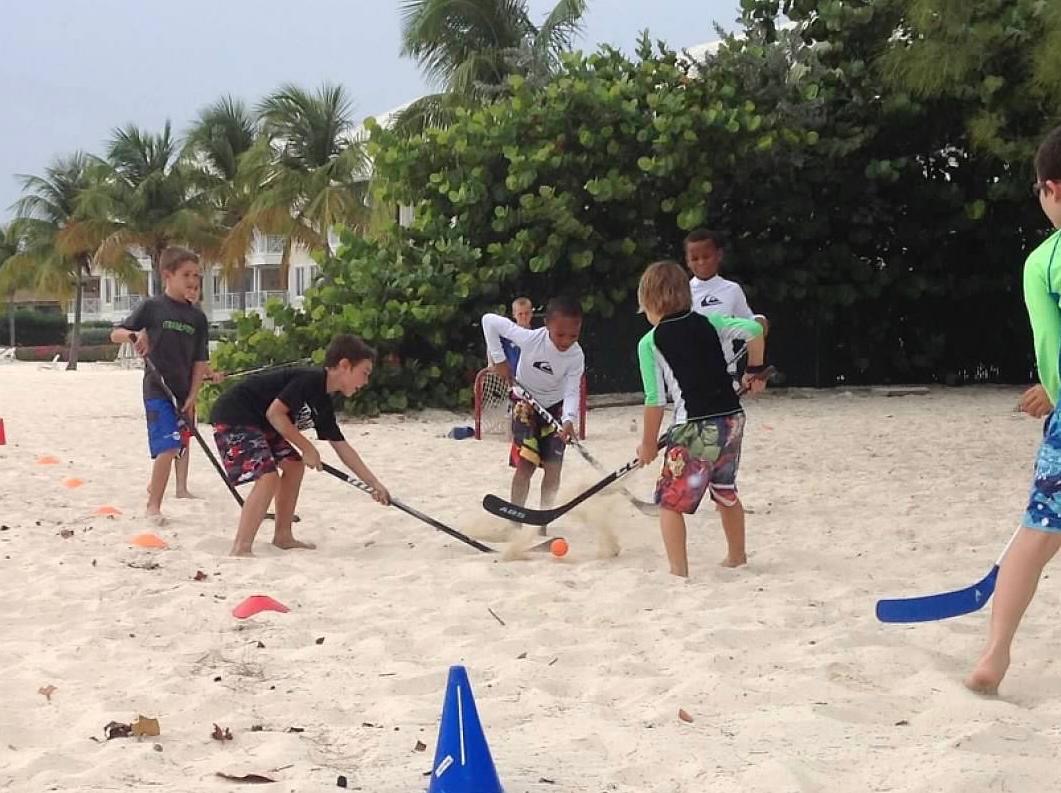
    Around the same time Cali was tying his laces for the first time, more than 5,000 miles away, a 3-year-old Cover was putting on his first pair of skates, too. But instead of steel blades, his boots had wheels, and there was no ice to be found for miles. He fell in love with the game at a learn-to-skate program on the only roller hockey rink in the Cayman Islands.

    Cali and his family moved not long after his twirl on skates when his banker dad got a new job. So it was on an island in the Caribbean Sea filled with sandy beaches and wafted by ocean breezes that Jaxon Cover and Ryder Cali met and where their hockey dreams took hold.

    “It was kind of a new thing growing up, because as I was growing up it started getting bigger too, and a lot more people were joining and joining,” Cover recalled in an interview with The Inquirer. “I feel like, especially with how far I’ve come in ice hockey, hopefully I can inspire some kids in Cayman to enjoy the game, and just anyone from an unconventional place of ice hockey to hopefully just enjoy the game and just try getting into the game.”

    Jaxon Cover (middle) and Ryder Cali (to his right with his back to camera) had easy access to beaches but also grew up playing roller hockey in the Cayman Islands.Courtesy of

    The two families became close, and the boys played roller hockey with Cover, who is seven months older, developing into a burgeoning roller hockey star at the ripe old age of 6. He played in tournaments across North America while skating against kids older than him, crediting the sport with amplifying his competitiveness.

    Cali and his family, meanwhile, moved to Ontario when he was 7, and he swapped his wheels for steel. Needless to say, it was an adjustment.

    “I do remember when I moved to Canada, I couldn’t stop. I couldn’t do anything,” he told The Inquirer with a grin. “I was the island boy who just saw ice for the first time.

    “I think roller hockey is much more of a skill game; I think that’s kind of where guys like Cover get all their skill from, is playing games like that, where I don’t think there’s as much contact.”

    Northern attitude

    At around 8 years old, Cover and his family would start visiting his grandfather — dad Patrick is from Etobicoke, Ontario — in the same province during the summer. While there, Cover would go to SK8ON Hockey School and, like Cali, he had trouble stopping.

    “It was a pretty weird switch, going from ice to roller,” he said. “I had to get the stopping down. It was a little weird to me not having wheels to just glide on, and it was just like these sharp blades on the bottom of my feet. But it was a lot of fun.”

    Jaxon Cover honed his skills as a member of the London Knights.Courtesy of London Knights

    However, Cover didn’t really start playing ice hockey until he went to boarding school. In September 2020, he began studying at St. Andrew’s College in Aurora, Ontario, with his brother Jaedon; however, due to the COVID-19 pandemic, he was unable to play organized hockey that first year.

    David Manning, Cover’s coach for the U18 AAA team his final two seasons at St. Andrew’s, said it was actually beneficial for the winger to get comfortable on ice without coaches and the pressure that comes with competing. It helped him work on some of his bad habits and switch from a sport that doesn’t have much stopping to one that thrives on quickness and consistent stopping and starting.

    “He had some ups and downs [but] there’s a higher level of accountability in terms of managing the puck,” Manning said. “He very much sees himself as an artist out there, and wants to create and make nice plays. I think there’s a balancing act with that mindset, and also playing the game in a strategic, smart way, and so he worked through that the entire year and had a solid season.”

    Cover spent the past season with London of the Ontario Hockey League, the same league where Denver Barkey and Oliver Bonk won a Memorial Cup. Cover played three games that season with the two prospects at the end of the 2024-25 season.

    From afar, Manning acknowledged the work Cover has put in — “He had more points in the OHL than he did with my team … he just keeps getting better” — as the winger dropped 20 goals and 52 points in 67 games with the Knights.

    The two kids from the Cayman Islands went head-to-head in an OHL game this season, with Cali getting the upper hand as North Bay won 3-2 in a shootout. But Cali finished behind Cover in scoring with 16 goals and 36 points in 47 regular season games, missing time with a separated shoulder.

    Just a place to call your own

    Cover will return to London in the fall before heading off to Penn State in 2027 — he wants to study law and go into corporate law after his NHL career is done, of course — but there is plenty of work still to do.

    “I feel like I did have to change some aspects of my skating style, and I still do have to change some aspects, because I still do have that roller hockey stride in my game,” he said, adding he wished his roller hockey speed translated better to the ice. “But I feel like it helps my lateral skating a lot, just playing roller, my shiftiness too, and my hands, I feel like I credit my hands a lot to roller.”

    Cali, who Canada’s U18 men’s ice hockey coach Drew Bannister called a power forward who is heavy on his stick, will be heading to Providence in the fall and plans to study psychology — he wants to understand the brain and how people work. Maybe it helps on the ice too?

    “He’s a bull in a china shop,” said Friars coach Nate Leaman. “I think he’s got that potential. He’s got this big frame … but I think he’s got a lot of potential that’s untapped. I think he’s got a really good release, he’s got a good IQ, he gets to the net. … And I think Ryder does a good job of always being around the net in the offensive zone for a big strong moose of a kid.”

    And the 200-foot center does not lack confidence, stating that “I think that’s a big part of my game is forechecking and stealing pucks and turning it into offense. I think I’m the guy you need to win, and I love winning.”

    The plan is to do a lot of that moving forward, while donning an NHL jersey.

    Jaxon Cover is a top NHL draft prospect after playing for the London Knights.Courtesy of London Knights

    Cover, a 6-foot-1, 183-pound creative winger, and Cali, a 6-1, 214-pound 200-foot center, are projected to go anywhere from late first round to the second round. As they await hearing their names called to become the NHL’s next generation, the two kids from the Cayman Islands are ready to inspire the generations coming behind them.

    “I’m just really honored, and just really humble about it,” Cover said. “Just trying to get better every day, and just make sure my game progresses. And it’s really cool; if you told me I’d be in this spot, maybe even two years ago I wouldn’t believe you.

    “I just dedicate a lot of my hard work to it, and just how much I love the game, and hopefully I can inspire some kids in unconventional places to play the game, and hopefully my story encourages kids like that.”

  • The NHL draft is next for the Flyers. Here’s what Danny Brière and Brent Flahr said about their strategy.

    The NHL draft is next for the Flyers. Here’s what Danny Brière and Brent Flahr said about their strategy.

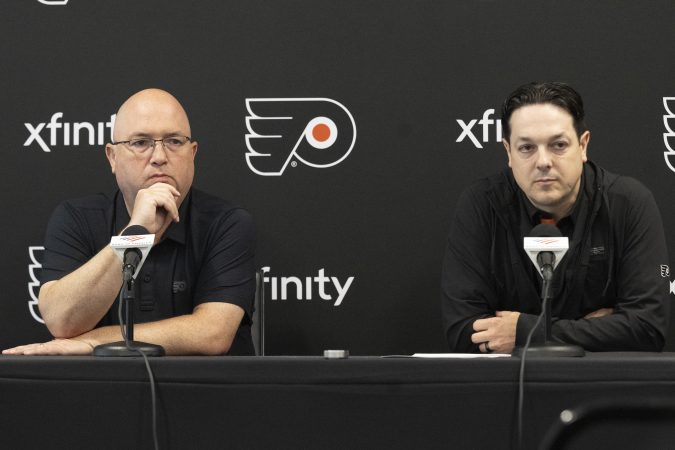
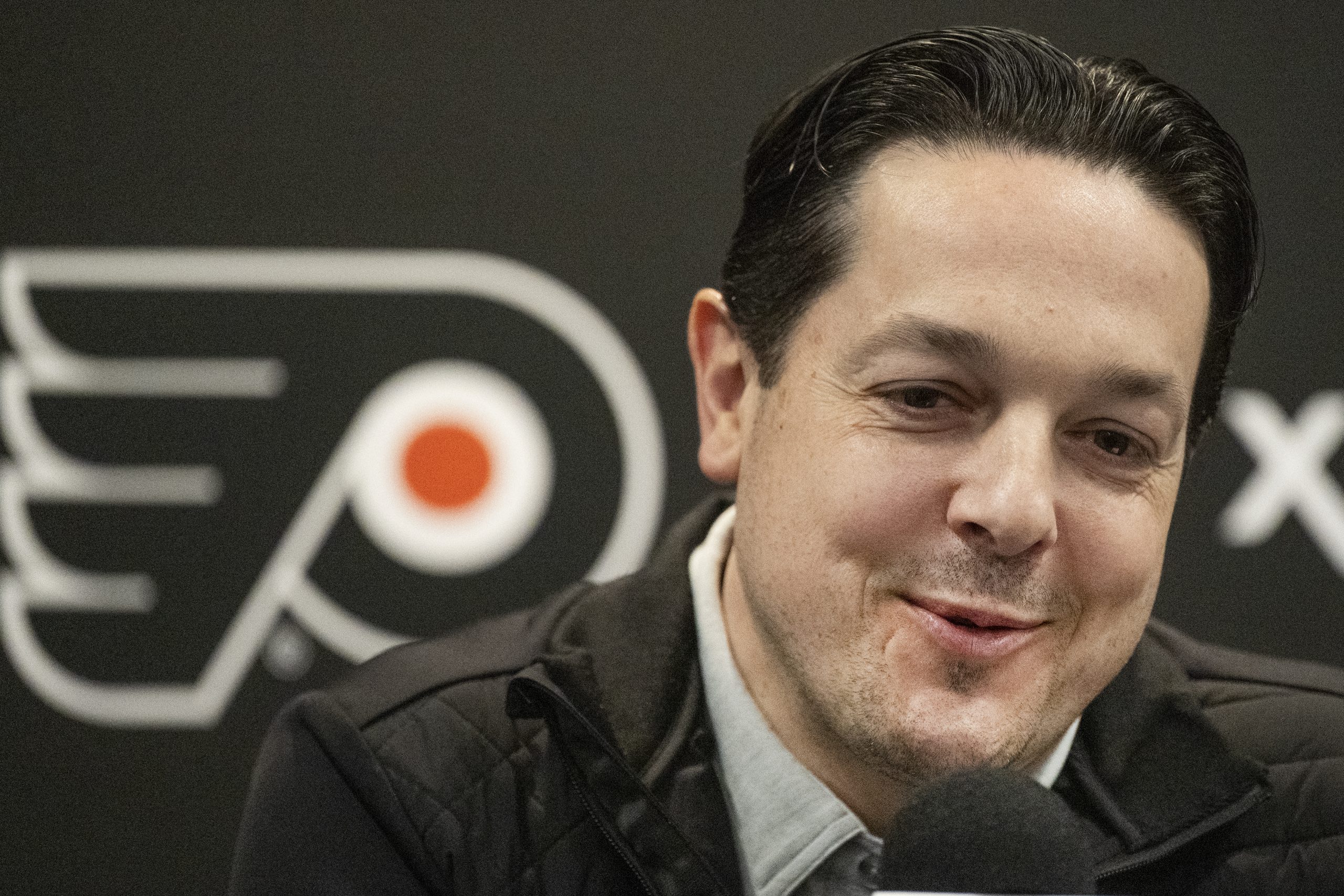
    With the NHL draft 10 days away, Flyers general manager Danny Brière and assistant general manager Brent Flahr, who runs the draft, met with the media.

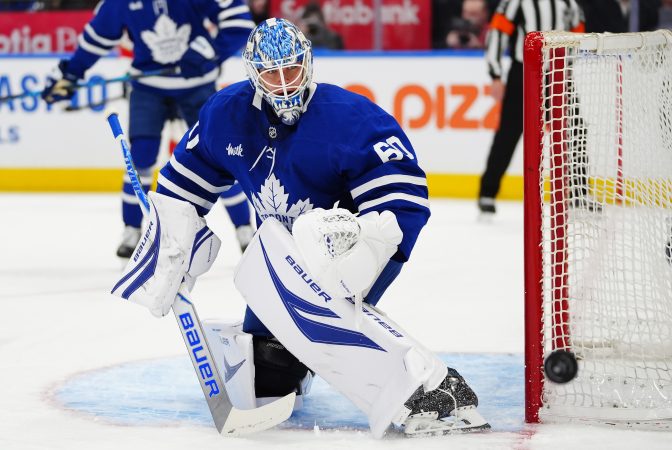
    Moments before they sat side-by-side, the Flyers announced the acquisition of goalie Joseph Woll and defenseman Simon Benoît from the Toronto Maple Leafs for Sam Ersson, Emil Andrae, and a third-round pick in the 2026 NHL draft.

    But this press conference was set up to chat about the draft. Here are three questions may have been answered on Tuesday.

    Flyers general manager Danny Brière acknowledged Tuesday that he would prefer to have more draft picks. Jose F. Moreno / Staff Photographer

    Could the Flyers trade away or acquire more picks?

    Maybe?

    Brière did say he was OK with having only four picks now in the upcoming draft — one each in the first, second, sixth, and seventh rounds — and he did call the first- and second-round picks “the key.” But he also said everything is on the table.

    “We’ve drafted so much the last few years [so] it might not be quite a bad thing to not have as many this year,” he said. “But, if I had the choice, yeah, I would rather have more picks.”

    Fair, because who doesn’t want to keep stocking the cupboard? But what if it meant trading a first-rounder for a young player who could fit into the lineup today?

    “Yeah, we’re getting closer to that. I don’t know that we’re quite there yet, but we’re certainly willing to listen on different ideas,” he said. “I’m not too keen on trading future first-round picks, because you never know where it can go, and we’re not at [where] Colorado or Carolina [are] at this point, where you know we’re going to be finishing [high] and picking late first [round]. I don’t think we’re quite there yet.”

    Assistant general manager Brent Flahr noted Tuesday that small defensemen must be dynamic. Jose F. Moreno / Staff Photographer

    Would they be open to drafting a small defenseman?

    With Andrae, a small, puck-moving defenseman, now shipped north, could the Flyers be open to drafting someone to step into that role in a few years? There are several high-end offensive-minded blueliners available in the draft like Xavier Villeneuve, Tommy Bleyl, and Ryan Lin.

    “If you’re drafting a small defenseman, they need to be dynamic, and there are a couple who could go into mid-to-later first round this year, but they are in the mix,” Flahr said, noting that not every small defenseman can be on the power play, which, to be frank, the Flyers’ power play needs help now.

    Added Brière: “And that’s a big part of it too when you draft. Right now you might have some needs, but in four years, five years, that need might be different. So, especially in the first round, I think we try to be careful, try to go with the best player in this case, and keep developing, because we have a pretty decent pool of prospects coming. It’s not like we’re depleted; we still have some really good ones at almost every position.”

    This is true, especially on defense with Oliver Bonk, David Jiříček, Ty Murchison and Hunter McDonald on the edge of making the main roster, and Carter Amico, Luke Vlooswyk and Spencer Gill working their way through the system.

    But Flahr did point out that they could use some more depth on the left side — “not necessarily being the first round,” he was quick to add.

    Ilia Morozov could be a target for the Flyers because of one important historical indicator: his grip strength. Liv Kakabeeke/Miami Athletics

    Any insight on the 21st pick?

    Of course, moving up or down is always on the table for the Flyers as the draft starts to pick up speed. But with them picking at 21, Flahr has now set the expectation for fans that, “Anytime you’re drafting in the 20s, you’re not getting the perfect player that’s completely polished and finished.“

    The Flyers do look for certain traits — i.e., when they took Tyson Foerster at 23rd overall in 2020 because of his body type and hockey sense, despite him needing to work on his skating. And the Flyers certainly do like projects, but those are usually in the later rounds.

    “We’re not drafting mature football players that they’re ready to go next year,” Flahr said when asked if they skew toward a certain type of project. “So these kids are sometimes three, four years away and have a long, long road ahead. But there are some players that are fundamentally flawed skating, and that’s our scout’s job to say, ‘I don’t know if this can ever improve.’

    “ … But there are certain traits, whether it’s hockey sense, competitiveness, skill level. You can overcome size if you’ve got the great motor, big heart, and you’re smart, and certainly when you’re small, you’ve got to have some speed, quickness. … So, there’s different types of players you want to take a chance on, but there’s certain traits you have to have.”

    The interesting aspect for the Flyers is that at 21, there could be several high-end centers available. However, they are projected as middle-six pivots and, while the Flyers need a 1C, as Brière mentioned, that’s probably not going to happen where they’re picking.

    But Brière and Flahr each mentioned that they will continue to target centers, with the GM adding, “I don’t feel like you can have too many centers, because it’s much easier to move a center to the wing.”

    With that, players like Jack Hextall, Ilia Morozov, Alexander Command, and Maddox Dagenais potentially being available when it’s time for the Flyers’ pick.

    Jack Hextall fits the profile of player who could be available for the Flyers at No. 21. Scott R. Galvin

    And two names to keep an eye on are Morozov and center Ryder Cali. Why? It seems the Flyers tend to draft players who finish among the leaders in grip strength at the scouting combine’s fitness testing, like Jett Luchanko and Shane Vansaghi. Cali finished tied with defenseman Lincoln Kuehne in right-hand grip strength, and Morozov, who tied with defenseman Charlie Morrison for third, was atop the leaderboard for the left-hand grip strength.

    Breakaways

    One nugget on the current squad from Brière regarding Dan Vladař, who can sign an extension on July 1: “As far as the contract talks, we’re working on it. He said he was interested; obviously, the team is interested. We’re working toward something that we hope can get done eventually, but it’s not over the finish line yet.” … Gill and Carson Bjarnason were on the ice at the Flyers Training Center before the press conference started.

  • Trade grade: Flyers take a step forward by upgrading the backup goalie spot with acquisition of Joseph Woll

    Trade grade: Flyers take a step forward by upgrading the backup goalie spot with acquisition of Joseph Woll

    Minutes before general manager Danny Brière and assistant general manager Brent Flahr were set to meet with the media, news broke of a Flyers trade.

    The team acquired goalie Joseph Woll and defenseman Simon Benoît from the Toronto Maple Leafs for goalie Sam Ersson, defenseman Emil Andrae, and the Flyers’ third-round pick in next week’s draft.

    Grade: A-

    In his annual one-on-one with The Inquirer at the NHL scouting combine, Brière said the goal this offseason was to improve his team by adding smartly and not mortgaging the future.

    This trade checked all the boxes and gave the Flyers an upgrade at the same time.

    It always felt like Ersson and Andrae’s days in Philly were numbered.

    Sam Ersson played well late in the 2025-26 season, but it was too late. Elizabeth Robertson / Staff Photographer

    Ersson will be a restricted free agent on July 1, and the GM never verbally committed to giving him a qualifying offer — even as late as the first week of June in Buffalo, N.Y. — and the Maple Leafs GM, John Chayka, wouldn’t commit either in his press conference on Tuesday.

    After an up-and-down 2024-25 season where, according to MoneyPuck, he had the worst goals saved above expected (-19.9), this season Ersson again struggled with consistency. He did play great after the Olympic break, posting the third-best goals against average (1.99) and the ninth-best save percentage (.912) among goalies who played at least eight games in the NHL, but it was too late.

    It was that uncertainty that finally broke the camel’s back, with Brière stating: “We hope that we’re not coming down the stretch with a tired goalie [again].” Dan Vladař started 19 of the final 26 regular-season games and battled injuries along the way.

    Andrae (also set to be an RFA) is a small, puck-moving defenseman with some pop and an edge, who was never truly given a chance by former coach John Tortorella and was then in and out of the lineup under Rick Tocchet, who preferred a penalty-killing blueliner in his spot on the third pairing.

    “Never easy,” Brière said when asked about moving Andrae. “There are relationships there with the players; you get to know them. Same thing with Sam. These guys, they were drafted by this organization, they went through the development process, the minors. Both of those guys were really well-liked and loved in the locker room — and not just the locker room, but from the staff and the whole organization — so, yeah, it’s always tough.”

    Now, losing the third-round pick in the 2026 draft isn’t ideal for the Flyers, who entered the day with only five — “Danny keeps trading our picks away,” Flahr joked at their press conference — but the Flyers never looked at this draft as one to set the bar. And moving the pick shows that they believe in the guys in the system to take that next step.

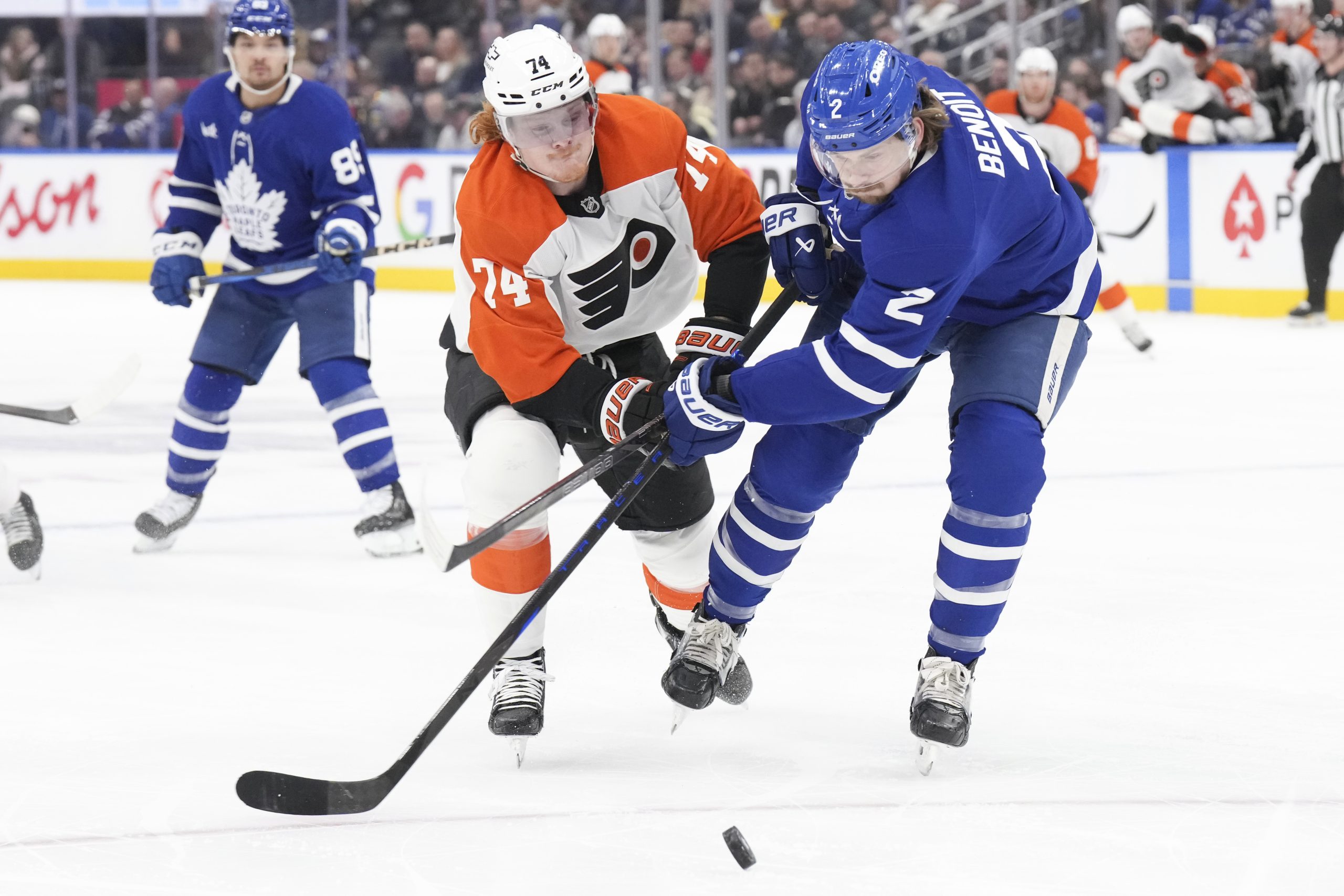
    Simon Benoît (right) is not afraid to get physical. Chris Young

    Benoît, who will turn 28 right around the start of training camp, brings some snarl the Flyers lost in trading newly crowned Stanley Cup champion Nic Deslauriers — he has 12 fights in his career — and some bite, as his 194 hits would have slotted in at No. 2 on the Flyers in what was considered a down season for Benoît.

    But don’t expect the undrafted Quebec native to help the power play, as he has 36 points across his 352 NHL games. Instead, he’ll eat minutes, averaging just above 17 per game in his career, and play on the penalty kill; he skated on average 38% of the time when Toronto was on the PK. As mentioned, it’s a key aspect for anyone on the third pair for Tocchet.

    So is he the new seventh defenseman for the Flyers? A league source told The Inquirer that Noah Juulsen, who will be an unrestricted free agent, will not be re-signed.

    “He might be; maybe he’s even higher up the lineup, too. Why not?” Brière countered when asked if that would be the role for the 6-foot-4, 210-pounder. “We like the physicality that he brings, and we like the size and the skating aspect, too; he’s a really good skater.

    “Emil, we loved his competitive edge inside, but it did make our defense a little small at times; we have Jamie [Drysdale] and [Cam York] there, so [having] the three of them wasn’t ideal. So I think it’s going to probably be a little easier for the coaches having a guy like Simon Benoît back there to use.”

    But while Benoît — a former teammate of Trevor Zegras and Drysdale in Anaheim — brings some depth to the blue line, the focus of this trade for the Flyers is the addition of Woll, with Toronto needing to make a move to clear a crowded crease.

    Across 117 games with the Leafs, Woll has a 63-43-9 record with a 2.94 GAA and .906 save percentage; by comparison, Ersson has a 3.01 GAA and .884 career save percentage. This past year wasn’t ideal, with him putting up a career-worst 3.34 GAA and .899 save percentage — but, a reminder: There is a reason why the Leafs are picking at No. 1 in the draft.

    A native of Missouri, Woll has dealt with injuries in the past and missed time early this past season due to personal issues. But the Boston College goalie has proved he can stop pucks, including in the playoffs. He should help to solidify the crease while Aleksei Kolosov and Carson Bjarnason work on their games in the American Hockey League, and comes with a nice, tidy cap hit of $3.67 million this season and next

    As Brière said: “We thought it was a chance to improve the team, help them take another step. … We felt that Woll is a step forward for us, and we’ll be able to help Vladdy in a tandem role.”

  • Flyers assistant GM Brent Flahr talks Jett Luchenko’s big summer, the value of NCAA hockey, and the team’s intriguing college prospects

    Flyers assistant GM Brent Flahr talks Jett Luchenko’s big summer, the value of NCAA hockey, and the team’s intriguing college prospects

    BUFFALO, N.Y. — In Part 2 of The Inquirer’s two-part interview with Flyers assistant general manager Brent Flahr, he gives some insight into the prospects already in the system.

    This interview has been edited and condensed for clarity and was conducted on June 3.

    Q: Was there anyone who set themselves apart, or surprised you this season?

    A: I don’t think there were too many surprises. Obviously, Porter Martone’s finish — we thought he could play [but] we didn’t know he was going to have that level of impact, maybe. But other than that, Jack Berglund, maybe for fans who didn’t know him well, that’s just been the way he’s played the last couple of years. … Heikki Ruohonen, at the World Juniors, that grouping there maybe stepped up. Overall, our kids have been good. … So it’s exciting.

    Q: Not everyone has the same opinion on Jett Luchenko and how things went this year. So, how do you think his season went?

    A: I don’t think he’s happy with his points or whatever. Still, there’s a stretch there where — I don’t know whether it was pressure — just wasn’t on his game, as far as offensively. But even his B-game is still very good with his speed, defensively responsible, and I think he lost a little confidence, maybe on the offensive side of things. But he bounced back, had some really good games down the stretch; he’s already been a really good player for us in the past, within the system, and he’ll get it back and get it going. You know, he’s also missed most of last summer training-wise too, which set him back due to injury, so I think he’s got a big summer here, hopefully.

    Q: Do you think getting that one playoff game gives him a little confidence moving forward?

    A: I shouldn’t say lack of confidence, but he knows he’s a good player. I just think it should give him confidence that he knows that the coaching staff thinks that highly of him — and that wasn’t our decision, that [was] the coach doing that. But, no, I think he knows what he is, but he also knows what he’s going to have to do to crack the NHL and stay there full time.

    Q: With the changing landscape, do you like that more and more players are going to college hockey?

    A: It’s up to every player. I don’t think a lot of these kids understand how hard college hockey is, and how fast it is, and you’re playing against older players. Some kids are ready for that, and some kids aren’t, so it’ll take longer for them to adjust. … So, yeah, it’s a new situation for us and the teams and agents; we’re all trying to figure this out as we go. But there’s some good programs out there that do a great job and get these kids stronger, and, obviously, the hockey is good.

    Like his fellow first-round pick in 2025, Jack Nesbitt will be heading off to college — except he is going to Porter Martone and Michigan State’s rival, the University of Michigan.Alejandro A. Alvarez / Staff Photographer

    Q: Several players in the Flyers system are playing college hockey now, and some are off to play college hockey, like Jack Nesbitt this September to Michigan and Nathan Quinn next year at Northeastern. How does that impact things on your end?

    A: Well, I think it will impact the American League a little bit, as not every kid at 19 or a CHL player is coming right in. In some cases, it might be beneficial [as] some kids aren’t quite ready for the American League physically or mentally at 20, so maybe having an extra year or two to play NCAA, and then transition. So, there might be a buffer zone in there where we have to find players to fill up rosters and stuff, but that’s not a big deal. Whatever is the best development path for these guys is fine. And there’s still going to be CHL kids that are going to be committed to schools, but maybe they’re ready for the American League right away, and they’ll go that route, too. So we’ll see.

    Q: Speaking of Quinn, what did you see from him this year and does it change your outlook on his projection?

    A: Well, he was a skilled kid. He was already a good junior when we drafted him, but when you see him off the ice, you see him on the ice — he knows how to play. A longer path, because physically, he’s got a ways to go, but he knows how to play the game. He has the ability to generate offense and make players around him better. I saw him a number of times because they have a number of draft picks on his team, and obviously I follow him as well, but he had a really good year. I thought he had some really high-end stretches, so he’s put himself in a position where he’s a legitimate prospect, and he’s improved from a year ago. Kind of met or exceeded expectations, and now that’s just a stepping stone for him, though; he’s got to keep working, getting better, and that’s his plan.

    Q: Porter Martone was brought up often by the prospects regarding him gaining strength and making himself NHL-ready at Michigan State. With that, how excited are you for Nesbitt to go to a college program and build up his strength?

    A: Porter, when we drafted [him], was a little more dense physically than Jack. Even though they were the same draft year, they’re far apart as far as where they are physically. So, Jack, we’re really excited about as a prospect, as a player. He’s got some work to do, just with his body type, to put on the right type of weight, get stronger. … He’s a good player, a good prospect, and it’s a great program for him to come in to play with top players, and the way they practice, the way they train, it’s really conducive for improving. So we’ll see the timeline — we don’t really have one — but he’s excited about going there.

    Q: Jack Murtagh, a 2025 pick, will be a sophomore in the fall at Boston University. How did you see his past season unfold?

    A: I think he was a little frustrated, just with the role, and his ice time kind of fluctuated all over the place. But the games I was at, he was good. I think he began to earn it, which is good and healthy. … But he’s going to have a much bigger role this year, and my expectation is he’s going to make a big jump statistically. He brings a lot of assets [like] his speed and his shot. … He played a lot of different roles, which, when he was available in the second round, it’s kind of why we drafted him. So there’s pro potential, but he’s got some work to do: get stronger conditioning-wise and fast, but he’s in a good program for that to happen.

    Q: Carter Amico was his teammate with the Terriers but left a few months in for Muskegon of the United States Hockey League. Where do you see things with him now?

    A: I think it was the right decision to go because he played a lot of minutes. He missed so much time last year [due to injury], and to not play a lot of minutes regularly, I think it wasn’t great for him. … The first couple games, he’s … catching his breath playing that many minutes, and then he started to go, and he really got better. But he’s an intriguing guy because of his size and skating ability and range and physicality, and his puck game and puck touches have really improved. And then they had a long playoff run, too, which was awesome for him, and selfishly for us, too, just to get him those games, which he needed. He’s going back to BU next year, and should be a lot more ready and more confident, I think, and obviously they’ll be more confident using him.

    Forward Heikki Ruohonen (playing for Finland at the IIHF World Junior Hockey Championship) will play for Harvard against next season. Abbie Parr

    Q: What about Heikki Ruohonen at Harvard?

    A: Yeah, I thought [this] last year was great. I was able to see him play a couple times there in Harvard, not just the World Juniors, but he had a big role there. One thing about playing [at Harvard], he was the first power play a lot of nights, first penalty kill, played in all situations, big faceoffs. So that was really healthy, and I thought he just got better and better. His skating is coming, his pace, he’s really working on his body, and he’s in a good environment for that to happen. He’s obviously a bright kid, too, and very focused on his school. And with his World Juniors tournament, I thought he opened people’s eyes, too, for the type of player he could become, and I think the way he played there translates to what he’s going to be in the NHL, hopefully, too.

    Q: Spencer Gill will be turning pro in 2026-27. He’s battled a few injuries the last couple years, so where do you see his projection now?

    A: Well, thankfully his team had a pretty good playoff run, so he got a number of games. He’s been frustrated, but he’s put on a lot of weight in his downtime because of injuries. Now we’ve got to get him quicker, stronger for the pro game. But I thought his playoff run was really good and he should be ready to jump in and play at the American League level. It’s going to be an adjustment period for him, but he’s a smart player, he’s puck friendly, he’s big. I think once his pace of play comes, and learning the details of the pro game, he should be a fairly quick study.

    Flyers prospect Spencer Gill (42) has dealt with a broken ankle and an upper-body injury that required surgery over the last two seasons in juniors.Jose F. Moreno

    Q: Luke Vlooswyk and Matthew Gard were traded out from Red Deer of the Western Hockey League this season. How do you assess their seasons?

    A: Vlooswyk, who just finished [with a loss in the Memorial Cup Final], had a great season in Everett, and he was a big part of that team — and we interviewed one of his teammates there this morning. But there’s another kid [who’s] got the tall, lanky frame that’s going to take some time to put on weight, get stronger; his mobility hopefully can come with that. He’s long, he’s rangy, good defender, and his puck game is improved dramatically. They’ve got a really good program there. I thought he just kept getting better and better, and a lot of big minutes, and he’s going to go back there next year and then the plan is to go to college. … He’s a longer-path guy, but he’s shown some interesting traits this year, and he’s certainly taken a step in the right direction.

    Gardo, I think once he got to Seattle, he emerged. But he’s another guy who’s tall and lanky. He’s got some work to do to get stronger, quicker with the explosiveness. He’s got a long stride, he’s got a powerful stride, so we project him to be a good skater — it’s going to take him the time to get there. Obviously, his defensive details have always been solid, but the offensive game in Seattle is good. … Big, exciting year for him, and he’s in the same category: go back and wants to play junior. He had options to go to college this year, but I think his agent and even his family thought playing one more year, getting stronger.

    Q: Max Westergård is an intriguing prospect: on the smaller side, but showed a lot of skill and a lot of upside at World Juniors. What did you see from him this year?

    A: He’s actually bigger than I thought when we initially drafted him, but what he brings is, he has a skill set … [and] he has dynamic speed, and he’s sneaky strong. He has one-on-one ability; he has the ability to generate offense out of nothing because of his speed, and he can score. … I think he’s in a good spot over there [in Sweden] to keep going. I know colleges are all over him, but he’s not going to college. I think he’s in a good spot, and hopefully earn his spot on Frölunda. We have a good relationship with them, so if he’s not having a bigger role than down to Allsvenskan, which is the second division, hopefully have a good role. But he’s determined to make it there, and they’re going to give him a chance, too.

  • Q&A: Brent Flahr on the Flyers’ draft strategy with the 21st pick, whether trading the pick is an option, and more

    Q&A: Brent Flahr on the Flyers’ draft strategy with the 21st pick, whether trading the pick is an option, and more

    BUFFALO, N.Y. — The 2026 NHL draft is quickly approaching, and things look a little different for the Flyers this year.

    After making it to the second round of the Stanley Cup playoffs for the first time since 2020, the Orange and Black are picking at No. 21 in the first round and only have five picks across all seven rounds.

    In Part 1 of The Inquirer’s two-part interview with Brent Flahr, who runs the team’s draft, the assistant general manager chats about the team’s approach heading into the draft, which will be held on June 26-27 back in Western New York.

    This interview has been edited and condensed for clarity and was conducted on June 3.

    Q: Several young players entered the lineup for the Flyers this season and impacted the game. Does how they performed change how you look at things for the draft?

    A: A little bit. But where we’re picking, we know we can’t be that selective, especially early, we’re going to go with the best player. But we know where maybe our holes and our depth charts are going forward, or where we need to add more depth. At the same time, sometimes the draft doesn’t fall that way; you can’t go way off. The way we do our draft is we have layers and, obviously, we’ll target the best player, and if it’s all equal, then we’ll go by position. It’s kind of the way it always works.

    Q: What do you consider missing in the depth chart then?

    A: Well, we do have a number of centers coming now, which was kind of our [issue in] depth before, and we have some younger D on the team. But besides Spencer Gill and Ty Murchison and Hunter McDonald, Oliver Bonk, the next layer of younger defenseman we would probably use. We didn’t draft a goalie — we drafted two a couple of years ago, which takes the heat off — but probably go with adding a goalie, maybe. And then up front, we can always add depth.

    Q: Does it change your approach when there’s only five draft picks?

    A: Certainly doesn’t change it early. We’ll look at options, whether you’re trying to trade up or trade back, maybe adding a pick or changing things to get another higher pick, but just the way the draft was, we were aware. I think it’s a good draft at the top end; it’s not quite as deep as maybe some of the drafts previously. So when we were talking about giving away picks, we kind of targeted this year as the year that we’re going to be short a pick or two. But we still feel like, as the year has gone on, we have some guys targeted to the later rounds, which our guys [will] be happy with and excited about.

    Q: When you see the success of players like Ty Murchison, Hunter McDonald, Alex Bump, who were late-round picks, does it give you confidence you can find someone there?

    A: For sure, and that’s the challenge of the draft. Not everybody plays — we’re well aware of that — but you’re trying to draft players with multiple assets to give them a chance down the road. Some guys you think are slam-dunk players maybe don’t come through, for whatever reason. … And there’s some guys who are overachievers that really push themselves, like a Murchison, and Alex Bump from where we drafted him to now; a lot of that’s because of how hard he’s worked to get himself in that position. It’s a competitive business, and it’s not only getting there but staying there, too. But obviously the key for organizational success is hitting on some of those late-rounders, too.

    Q: Do you look for that specific internal drive or confidence then?

    A: You can watch them play, but, yeah, when you meet with them — and we’re not talking about 24-year-old kids, either — we interview kids here. You’ve got to understand some kids are in high school, so they’re less polished than the kid that’s already been in college for a year, or a kid that’s [played for] Hockey Canada and been in front of microphones and rooms full of people before. So, you got to take that into account, but you can tell players who have a presence, people that are leaders, just by sitting there, the presence they have. And some kids can grow into it, but some people just have that.

    Selected by the Flyers in the second round at the 2025 draft, 6-foot-5 center Matthew Gard was one of six players over 6 feet the team selected.Alejandro A. Alvarez / Staff Photographer

    Q: In past drafts, the Flyers seem to prioritize size, 200-foot play, and high compete. With who you have in the system, does it change your outlook?

    A: A little bit. The one draft [in 2025] where we had a really big draft randomly, some of it was, obviously, a focus [that] we wanted to try to get bigger, but at the same time we had all those guys that were that big, and that was just kind of circumstance, too. So, there’s good small players in the game, and there’s certain things you have to have when you are a smaller player. For instance, our forward group, we have some top-end smaller players, and we also need some size to build around that. We’ve added a lot of size to the organization with the younger players, and you want to be as big and strong and fast as you can [but] there are some good players, and we’ll be cognizant of that.

    Q: There are several smaller players in this draft, specifically defensemen under 6-feet like Tommy Bleyl and Xavier Villeneuve, who are puck-movers and high-offense players. With the power-play struggles, does it impact your thought process?

    A: Yeah, obviously the power play is a problem. Realistically, the guys in this year’s draft, especially the guys you mentioned, are going to need quite a while to get there. So, hopefully, we have our power play addressed before these players arrive. But, no, for being a small player, a small defenseman, it’s getting harder and harder to play. I think you need an offensive dimension, or you’ve got to be special. … You watch the playoffs, size does matter, and it’s harder to get to the net. But it’s something we take into consideration, and this D class, especially at the top end, is pretty good — really good — especially top 10.

    Q: So, you’re not necessarily looking for size still?

    A: No, but I think in certain positions I think it’s certainly important. But if you’re undersized, you have to be dynamic.

    Q: Picking at 21 is very different than where you’ve been in the last couple of years. Does it change things and make it harder to build your draft board with such uncertainty?

    A: Yeah, still a little early, because we usually have a pretty good idea of the projection of where guys are going. There are always a few surprises, outliers, but yeah, we’ll build our list the same way. This year it’s obviously a little bit different, the number of players going ahead, but you’ve got to make sure your list is tight, and you can’t just assume players are gone because we will go off our list in the first round. And then maybe later in the draft you’ll go [for] guys you maybe have a stronger feel for or position or whatever, if it’s close. But, yeah, it’ll be interesting. Got a lot of work to do yet. We’ve had our meetings already, and obviously the combine kind of fills up some gray areas, testing and seeing the body type, personalities of these kids a little bit more. Yeah, we’ll tighten it up, certainly through the first couple rounds and beyond, and we’ll be ready to go at the end of the month.

    Q: Is there usually a big shift after the NHL scouting combine in your list?

    A: Well, we have some red-flag players. Or, maybe, players who, whether it’s body type, or our strength guys think they can get there, or we also have some maybe character flaws or something. So you just address it here, and sometimes you take players off, sometimes you move them up or down, and if there’s no issues, or whatever, you can move them up. But yeah, we still have some things to tighten up for sure.

    The NHL held its annual scouting combine in Buffalo, N.Y., the week of June 1, where teams were able to interview 90 draft prospects. The Flyers interviewed approximately 50.Staff/

    Q: How would you compare the value of having a 21st pick versus last year at sixth overall?

    A: Well, it’s a big difference, but at the same time, happy where our team got to this year. We’ll do the best we can to find players who can have impacts down the road, but obviously you’re dealing with a different level of player. … So, it’s a little more challenging, a little more projection probably because some of these kids, where we’re looking at, aren’t as maybe as close to playing or a little more work or a couple more years away. But, same time, we’ll have the same concepts, and what we like in players.

    Q: Is there any thought of moving up and seeing what you can get higher up in the draft?

    A: For sure. We’ll be talking about those scenarios here going forward, whether it’s trading up at a certain level if players are gone, maybe trade back and add a pick, or move up the pick and give them a later pick. Whatever you got to do. But I know Danny [Brière’s] talking to teams here already about certain scenarios, and then once you get to the draft and see what players are available, you react. But usually before then, we talk to the teams, and you have an idea what it’s going to take to move up and whether it’s worthwhile, and vice versa, to move back and have things in place. It’s a little more challenging now [because] you’re not right on the draft floor anymore; you’ve got to do it by phone and just keep in contact with teams. So you create the relationships now and put a bug in the ear that maybe we’ll move, and calls take place after that.

    Q: The Flyers have a history of taking players who played well at U18 Men’s World Championship or the Hlinka Gretzky Cup, like Jett Luchanko. How much do you actually factor that in?

    A: I think what happens is the media says that’s part of the case. … There’s kids that we see all year — our scouts see them all the time — and there’s certain players that the media have no idea about as far as the quality, and sometimes they don’t get to see them live, and then when they see them at the U18s, they see these guys climbing the list. So it doesn’t matter to the teams; lists are the same. But, no, in certain cases, you see these players against their peers, so I think any time a player has a lot of success at the end of the year in a big tournament and wins a championship, or whatever, puts up a big number and performs well, it’s the last thing on our minds. And vice versa, a kid has a tough tournament, or doesn’t produce, or whatever, doesn’t mean they’re not a good player. You’ve got to be a little careful with that kind of stuff. It’s a recency [bias] effect, but at the same time, it is real. We’re all there to watch, and you want to see guys perform on a big stage, too. That’s a big part of playing in the NHL.

    Q: Russia was not allowed to play internationally this year. How does that impact looking at those players?

    A: Well, me personally, and a number of our staff, we have to do everything by video. [Gold Star agent] Dan Millstein has a camp down in Florida [before the draft], which we’ll attend and get to know players personally, but for some of the other players, we have to rely on Kenny [Hoodikoff], our Russian scout, and [director of European pro scouting] Reid Simpson is able to travel, so he sees a number of these guys live. But other than that, it’s video and interactions with Kenny and the player interviews, and doing the background that way. But it is a challenge, and there’s some risk there, too.

    Q: What kind of involvement does Rick Tocchet have in the draft? Does he give you any directions?

    A: Not much. His coaches come by and talk to our scouts … just what type of players they like. But no, he doesn’t get involved.

    Q: It’s hard to gauge when a player will be NHL ready, and he may not be the coach when that time comes. Do you still look for players that would fit his structure or systems?

    A: Hockey sense is a big factor for players that we try to get. But there are types of players that his staff [and Tocchet] are confident they can develop. He’s had a lot of different players play for him that have had success over time. So, the biggest thing for our coaches, they want competitive people; they’re competitive, and they’re smart, and they can adapt and adjust to the league. So they’re pretty easy to deal with. Obviously, we’ve had a lot of guys jump in the lineup here this year, and they’ve been great.

  • Flyers mock draft 2.0: Alexander Command will surely garner attention in the first round

    Flyers mock draft 2.0: Alexander Command will surely garner attention in the first round

    Now that the scouting combine has come and gone, it’s a perfect time to take another swing at who the Flyers could take in the first two rounds of the NHL draft on June 26 and 27. Plus, we’re adding Round 3 this time.

    Of course, everything depends on how the teams in front of the Flyers draft, with the Orange and Black selecting deep in the pecking order.

    There is a possibility they try to move up, which general manager Danny Brière has tried to do in previous years. The Flyers could also move down a spot to gain more picks, like Brière did in drafting Jett Luchanko in 2024.

    With everything we heard in Western New York, here’s The Inquirer’s second mock draft.

    First round: Alexander Command, C, Örebro HK U20 (Sweden)

    In the first mock draft, defenseman Tommy Bleyl, who called his meeting with the Flyers in Buffalo “excellent,” was in this spot. The future Michigan State Spartan — he is returning to Moncton of the Quebec Maritimes Junior Hockey League for one more season — is still an option if the Flyers opt for a defenseman, which assistant general manager Brent Flahr hinted as a position where they need more depth.

    Maksim Sokolovskii, a 6-foot-7 1/4, 240-pound blueliner who plays for London of the Ontario Hockey League — Denver Barkey and Oliver Bonk won a Memorial Cup with the same team last year — was also someone the Flyers showed interest in at the combine.

    But the Flyers love drafting centers. Eight of the nine players Flahr has drafted during Brière’s tenure played down the middle. As the GM told The Inquirer, “You can never have enough centers.” So, if Alexander Command is available, it wouldn’t be surprising that they take him with their pick.

    “He’s a natural center, he’s strong over pucks, he’s competitive, he’s got good contact skills, he can make a play. He’s well-rounded,” The Athletic’s draft analyst Scott Wheeler told The Inquirer.

    “He just looks like he’s going to be a middle-six center in the league, and middle-six centers are extremely valuable, and almost never linger on draft day. He’s a player that virtually everybody likes, too.”

    That’s the crux: Will he be there at No. 21 overall?

    But Command, like Shane Vansaghi, who was taken in the second round last year, oozes that Flyers mentality of highly competitive and hard-working. When asked what he knew about Philly, he told The Inquirer: “They do right by themselves, take no [stuff], kind of like me.”

    His game is also reminiscent of Scott Laughton’s intensity and relentlessness on the ice, with Command calling himself a “glue guy,” much like how the former alternate captain was described.

    “Yeah, in practice, I mean, he can get angry, we can get angry at each other. I kind of like that. You push each other, and battle 100% every time,” teammate and fellow draft prospect Niklas Aaram-Olsen said when asked about Command’s intensity.

    A left-shot pivot, Command turns 18 on June 16 and measured in at just under 6-1, 187 at the combine. He can win faceoffs and has a swagger to him, and he helped Sweden win gold at the Under-18 Men’s World Championship by notching seven points in seven games — the same numbers for another gold medalist, Luchanko, in his draft year — while centering the top line.

    That came after he put up 44 points and 61 penalty minutes in 30 regular-season games and another 13 points in 14 playoff games for Örebro’s top junior team. He also earned a six-game promotion to the SHL squad in Sweden’s top league.

    As of June 11, the Flyers and assistant general manager Brent Flahr have five picks in the seven-round NHL draft. Jose F. Moreno / Staff Photographer

    Second round: Ben Macbeath, D, Calgary (WHL)

    If the Flyers snag a center in the first round, it could mean they look to the back end in Round 2 because, as mentioned above, they need depth on defense. But at No. 53, who will be there?

    A few names pop, with that uncertainty. Juho Piiparinen, who says he grew up a Flyers fan in Finland, is probably going in the first round, as is the rising Sokolovskii. Overage prospect Timmy Runtso would be an interesting pick, as he brings some offensive punch and attention to detail the Flyers like, and so would Vladimír Dravecký, an under-6-foot all-around defenseman.

    It’s always a guess here, but let’s go with Ben Macbeath, a 6-2 1/4, 196-pound defenseman who plays for Calgary of the Western Hockey League. Sound familiar? That was Travis Sanheim’s team when the Flyers drafted him in 2017.

    Macbeath met with 28 teams, including the Flyers, in Buffalo, and it’s fair to note that the scouting staff does like WHL players. The Flyers have drafted four since Flahr took over for the 2019 draft, including Luke Vlooswyk and Matthew Gard out of Red Deer last season.

    This past season, Macbeath notched 51 points (seven goals, 44 assists) in 67 regular-season games and added another two assists in seven playoff games. The WHL rookie killed penalties and got power-play time, but only had one power-play goal. He said at the combine his shot from the point “needs work.” He failed to mention he had 23 power-play assists.

    According to Elite Prospects, he also needs to work on his reads and killing plays quicker, but the hope is he can build his aggressiveness and urgency when he heads to the University of Denver in the fall.
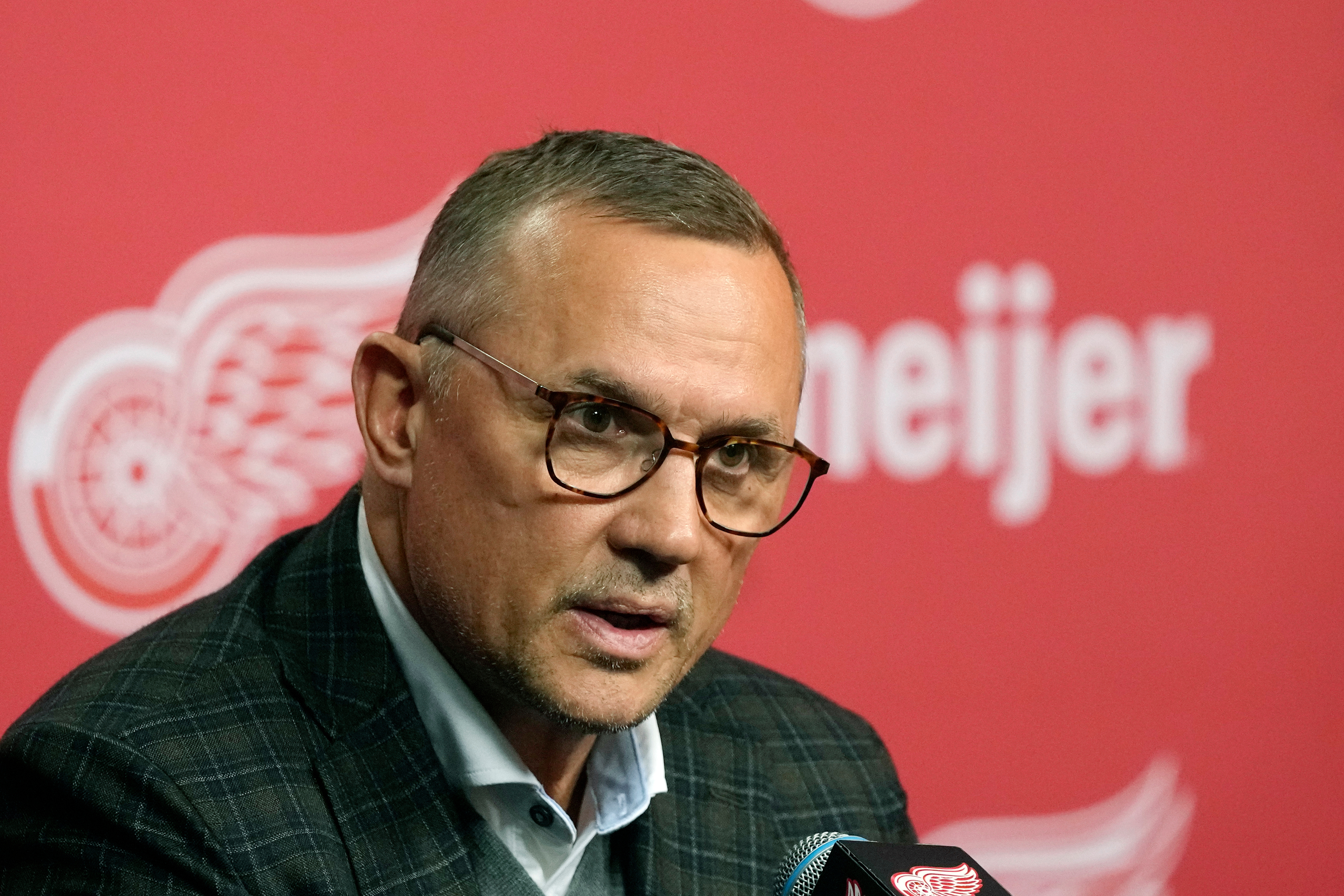
    “I’d say I’m a two-way defenseman. I think I got good feet, which allow me to impact both sides of the game. I think I can be that fourth wave in the rush,” said Macbeath, a Devon Toews comparable who played for Canada at U-18s, at the NHL scouting combine.

    “I can also create shooting lanes with my feet at the blue line, and I can also use it on the defensive side to close gaps and be hard on guys. So, I think that’s probably my biggest strength, for sure.”

    Third round: Filip Růžička, G, Brandon (WHL)

    Flahr acknowledged to The Inquirer that they’ll probably end up selecting a goalie in this year’s draft since the team has not done so in the past two years.

    Several good netminders could be available, but since it’s the third round, you never know. For this one, let’s go with Filip Růžička, a 6-8 behemoth in net who spent this season playing for WHL’s Brandon, the same team the Flyers snagged Carson Bjarnason from in 2023.

    “Obviously he’s massive, and takes up a lot of net,” Wheat Kings coach and former Flyer Marty Murray said in a text with The Inquirer.

    “He made tremendous strides throughout the season. I think he was really raw when he arrived, and worked hard on his game with our goalie coach, Tyler Plante. I think there is still room to grow, but I believe his ceiling is very high.

    “He had an outstanding season for us, and was exceptional in the playoffs.”

    A native of Třinec, Czechia, which sits on the border with Poland, Růžička went 26-14-1 across 42 games in the regular season. He posted a 3.19 goals-against average and tied for the seventh-best save percentage in the WHL (.906).

    In the playoffs, he started all four games, upping his save percentage to .936 while dropping his GAA to 2.47. The Wheat Kings were swept by Calgary in four games, with Růžička losing twice in overtime. In the series lid-lifter, he allowed the only goal in the game in triple overtime, stopping 64 of 65 shots; his opponent, Eric Tu, stopped all 49 shots he saw.

    The goalie was not at the scouting combine and, according to Elite Prospects, may be heading back to Mountfield HK in his native Czechia next season.

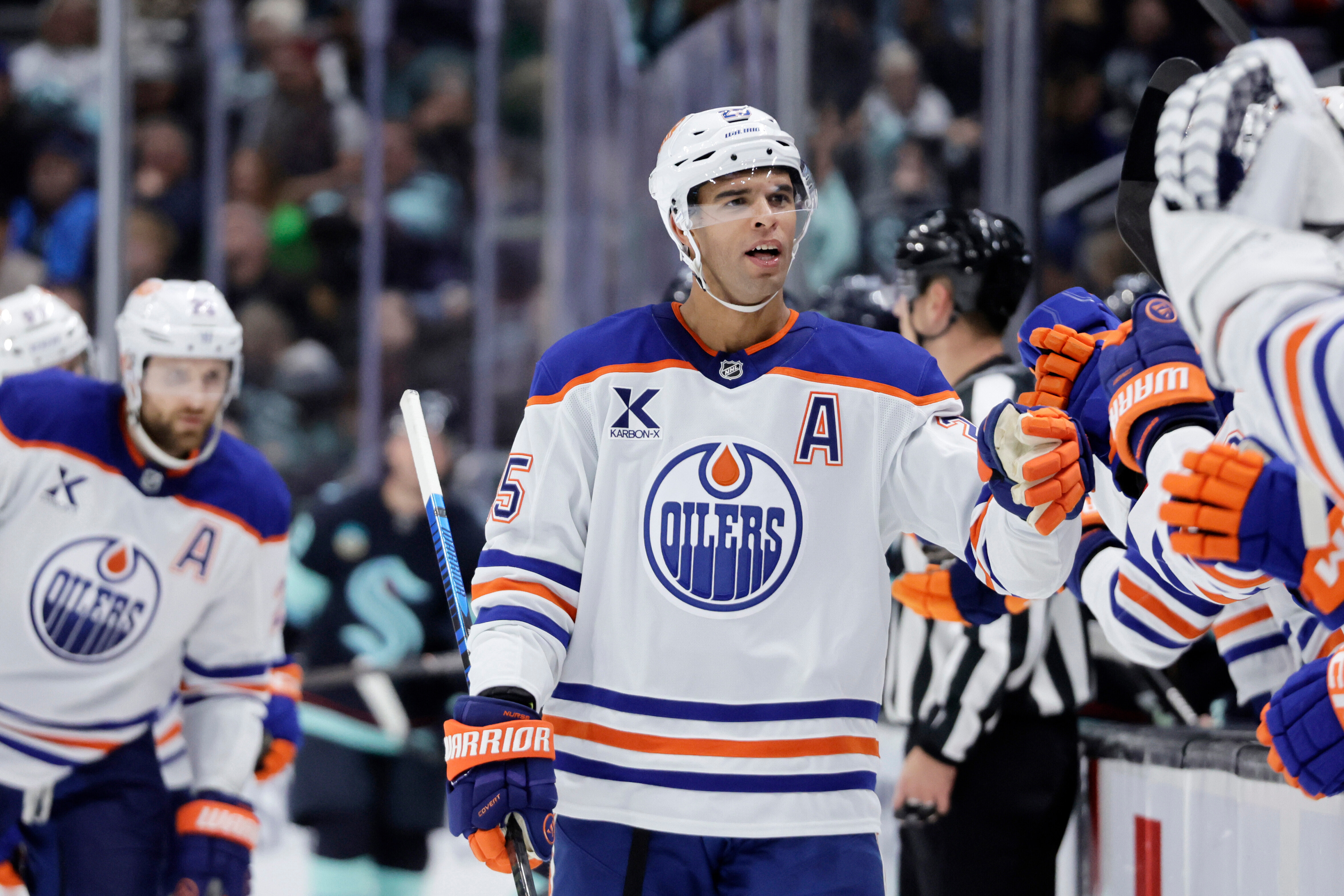
  • Darnell Nurse is interested in coming to Philly. Does it make sense for the Flyers?

    Darnell Nurse is interested in coming to Philly. Does it make sense for the Flyers?

    On June 4, news broke that a veteran player could be heading for splitsville with his team.

    No, not Dylan Larkin and the Detroit Red Wings.

    A few hours before Sportsnet reported that Larkin wanted out, the outlet reported on June 4 that all signs pointed to defenseman Darnell Nurse and the Edmonton Oilers heading for a breakup. The report stated that Oilers general manager Stan Bowman was expected to speak with Nurse in the coming days “about his wishes” and that the team would like to trade Nurse.

    Unlike Larkin’s impending divorce, this one sounds a bit more amicable, with Sportsnet adding Thursday that Nurse has officially requested a trade. League sources have told The Inquirer there is not only mutual interest, but the Flyers are on a short list Nurse sent the Oilers.

    But does it make sense for the Flyers to acquire the blueliner, who is a nephew of ex-Eagles quarterback Donovan McNabb? Let’s dissect.

    Darnell Nurse (left) will bring 100 games worth of NHL playoff experience to his next destination. JASON FRANSON

    The request by Nurse comes as he enters Year 5 of an eight-year deal with a no-movement clause for one more season, meaning he cannot be traded, sent to the minors, or waived without approval. The contract shifts to a modified no-trade clause — he can submit a list of 10 teams to which he can be traded — on July 1, 2027.

    That’s not the biggest concern, as he’s already said he wants to move out of Alberta. The issue is that the contract has a hefty cap hit of $9.25 million despite Nurse being on the middle pair. However, the contract was heavily front-loaded so he’s only owed $29.6 million the rest of the way. Either way, the consensus is that Edmonton would have to eat some of the money to facilitate a trade.

    And it’s a large contract for someone who doesn’t play top minutes. This past season, Nurse had seven goals, 24 points, and blocked the ninth-most shots in the NHL (167) in 82 games. He had his worst plus-minus (minus-12) since 2015-16 and the most penalty minutes in his career (104) while averaging his fewest minutes since his third season in the NHL at just under 21 minutes.

    His 164 shots on goal during the regular season tied for 20th among NHL defensemen, and, among all skaters, would have been the fourth-most on the Flyers. Could that be intriguing to the Flyers, who averaged 24.6 shots across 10 playoff games and finished the regular season at No. 28 (25.5)? Coach Rick Tocchet often brought up the need for more shots on goal from his defensemen, coupled with guys getting to the front to set screens or tip shots.

    There are pluses to Nurse’s game, including the fact that he has played in the Stanley Cup Final multiple times, which no one on the roster has done. Having a veteran presence, of someone who has gone that far, could provide a boost when they are pushing in the postseason. Still, the veteran of 798 NHL games does have some warts, like miscues and misreads.

    An intriguing thing is that general manager Danny Brière told The Inquirer at the NHL scouting combine that the Flyers probably are past signing a veteran to mentor the defensive corps.

    “If there’s a high-end defenseman that can help us, we’ll have to look at that, he said. ”It might be time now to give our young guys the chance to see if they can step into those roles, from David Jiříček, Emil Andrae, [Oliver] Bonk, Ty Murchison, Hunter McDonald. I think those guys have probably earned the right to get a look, and hopefully we can fill that all with our younger guys from within.”

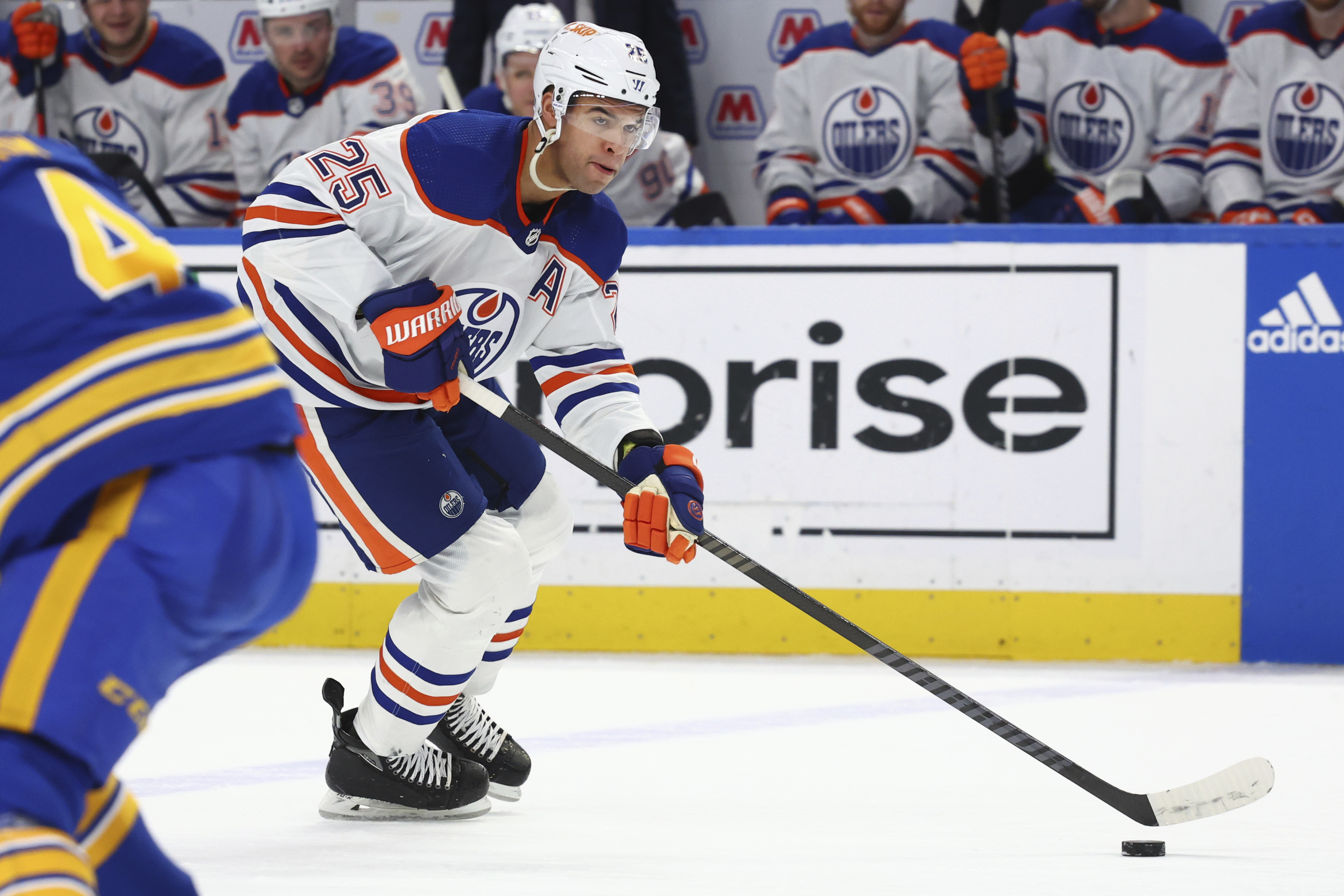
    Could a Darnell Nurse (25) acquisition help mitigate the potential departure of Rasmus Ristolainen?Jeffrey T. Barnes

    Does acquiring Nurse, or at least talking of acquiring Nurse, hint that there is another move pending? The Flyers need to make room for Jiříček, who will no longer be waiver-exempt in 2026-27. Brière also mentioned that “a high-end power-play quarterback on defense” is a need. Additionally, the team must make room to stay under the cap.

    Could Rasmus Ristolainen, who has been the subject of trade rumors for years, finally be on the move?

    “Yeah, I mean, we’re going to look into it. I think we have to,” Brière said in Buffalo when asked if the Finn would be part of trade chatter again. “That’s our duty as the organization, to explore what’s out there and see if there’s something that makes sense or not. But he was so good down the stretch for us, played on the top pairing with Travis Sanheim, how good he was at the Olympics, how good he was in the playoffs. So he’s a big asset.

    “As we talk about expectations, you trade a guy like Rasmus, and it weakens the team. So if we do it, it’s going to have to make sense for the future. It certainly wouldn’t be ideal for taking a step forward next season if we do trade him, but we have to explore everything that’s out there.”

    With Brière’s words in mind, if the team traded Ristolainen and brought in Nurse — maybe to play with Jamie Drysdale and reunite Travis Sanheim and Cam York — might the Flyers view it as a pretty clean swap?

  • The latest on Dylan Larkin’s trade market, and how some experts believe the Flyers fit: ‘It’s probably the ideal spot for him’

    The latest on Dylan Larkin’s trade market, and how some experts believe the Flyers fit: ‘It’s probably the ideal spot for him’

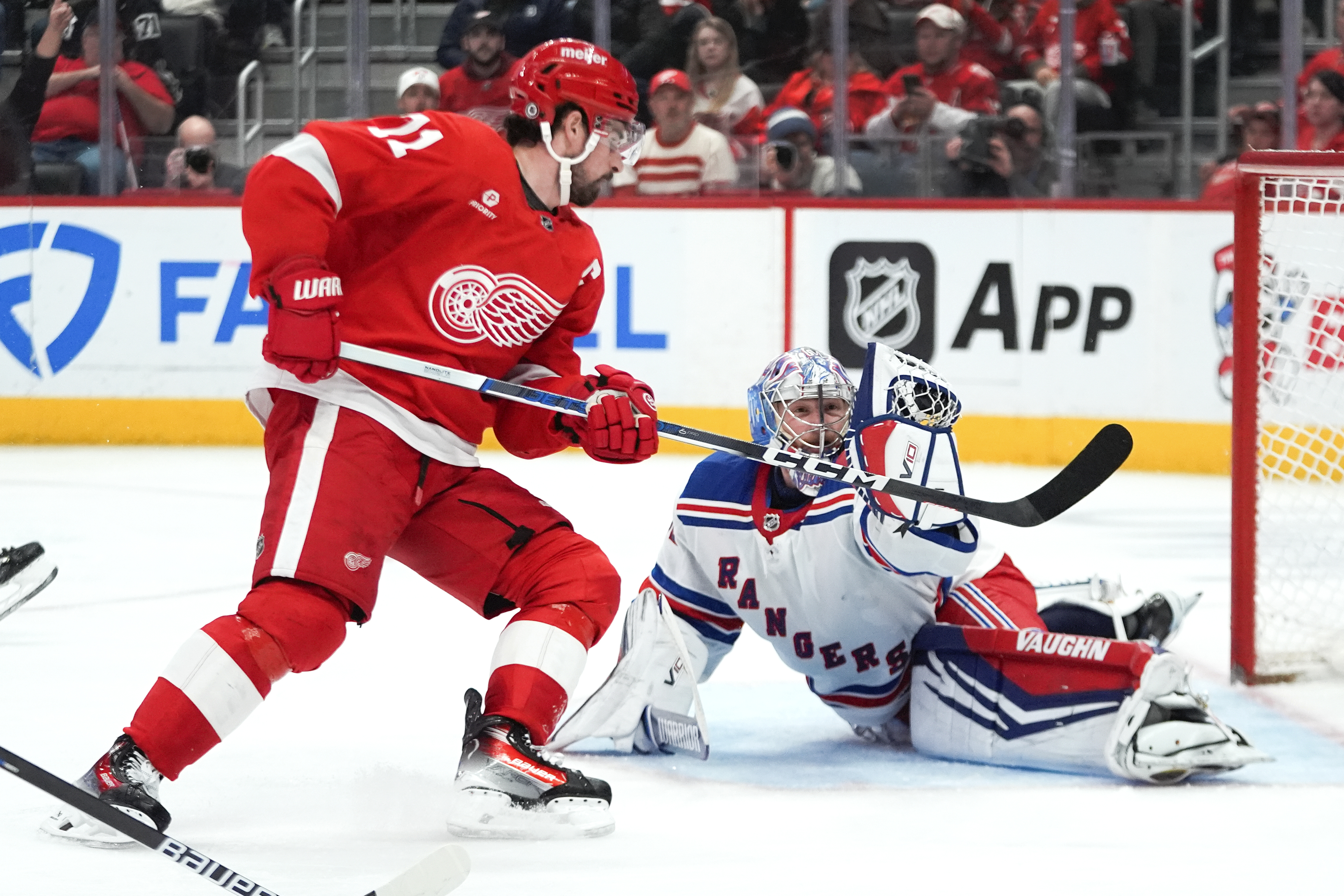
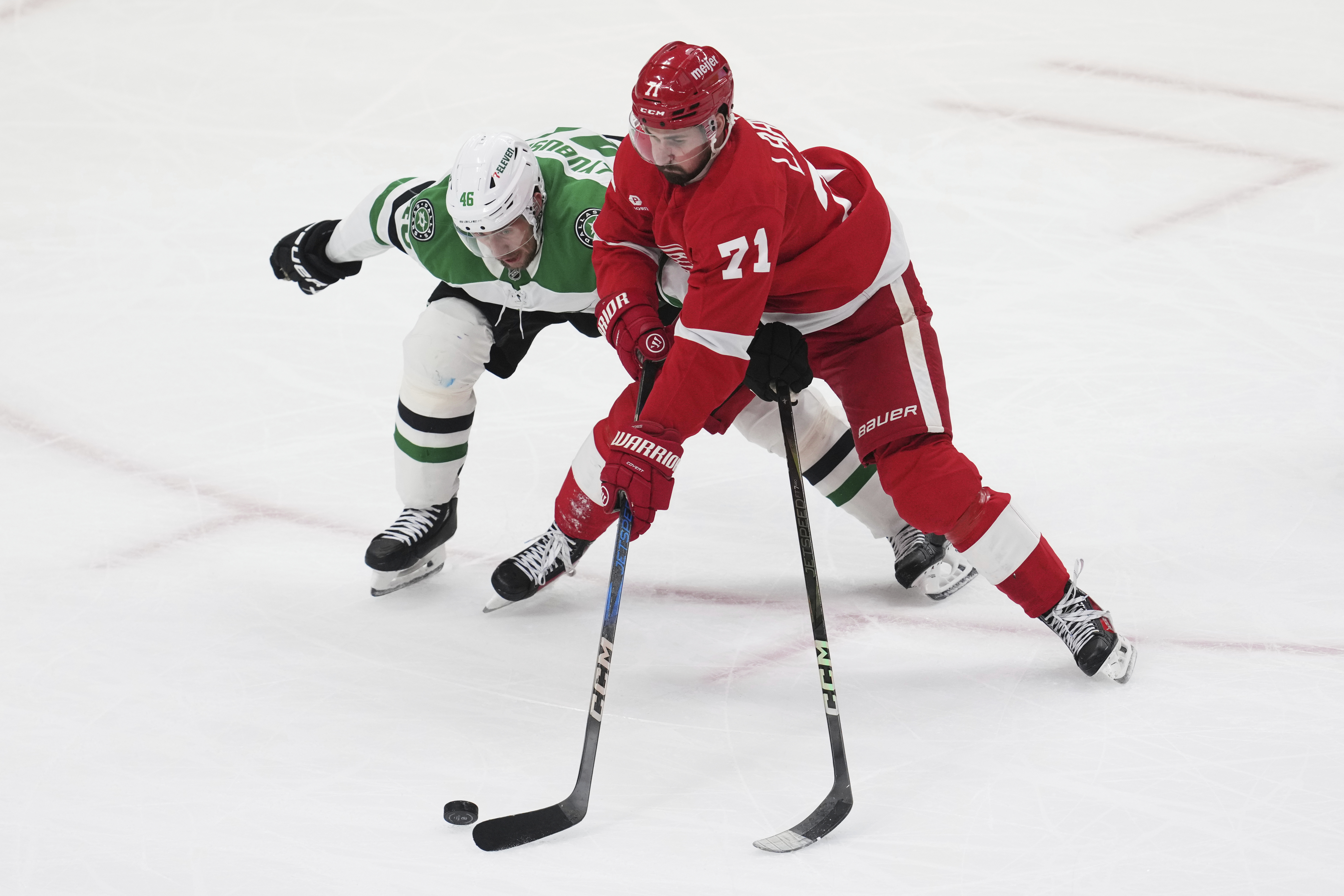
    Word began to spread quickly around the NHL scouting combine on June 4. It started as whispers and then grew to a roar as everyone heard about Sportsnet insider Elliotte Friedman’s report that Detroit Red Wings captain Dylan Larkin wanted a trade.

    A week on from that report, here’s what we know.

    What is the latest on the Dylan Larkin trade request?

    Larkin is set to begin Year 4 of an eight-year contract he signed in March 2023, with a cap hit of $8.7 million. The contract makes his trade request sticky, as according to Puckpedia he has a full no-trade clause until July 1, 2028. At that time, it becomes a modified no-trade clause with a 10-team trade list.

    On Tuesday, the Detroit Free Press reported that Larkin submitted three teams to general manager Steve Yzerman for which he was willing to waive his no-trade clause. The three teams — the Minnesota Wild, Florida Panthers, and Vegas Golden Knights — are all Stanley Cup contenders, with Vegas currently in the Final against the Carolina Hurricanes, and each team has some of his closest buddies on the roster.

    Friedman added on his “32 Thoughts: The Podcast” on Wednesday that there are two more teams possibly in the running — the Tampa Bay Lightning and Dallas Stars — that are also considered 2026-27 Cup contenders.

    Red Wings GM Steve Yzerman is believed to have a tense relationship with Dylan Larkin. Carlos Osorio

    How and why is Larkin suddenly available?

    Larkin grew up in the Detroit suburb of Waterford, Mich., played for the U.S. National Development Team in nearby Plymouth, and was drafted 15th overall in 2014 by his hometown team before heading to the University of Michigan for a season. Larkin has never played hockey outside of his home state, skating in 808 games and ranking 10th all-time in points (643) on a list littered with Hockey Hall of Famers like Gordie Howe, his general manager Yzerman, and Sergei Fedorov, for the winged-wheel club.

    For the captain of the Red Wings, who will turn 30 at the end of July, maybe it’s time to leave the comforts of home? Or maybe it’s a breakup that has been brewing for some time.

    Last year, Larkin hinted that he wasn’t too thrilled with how the trade deadline came and went without much action as the Red Wings were in the hunt for a playoff spot for the second straight year. “We didn’t gain any momentum from the trade deadline, and guys were kinda down about it,” Larkin told reporters last April. “It’d be nice to add something and bring a little bit of a spark on the ice and maybe a morale boost as well.”

    That came a little more than a year after his friend Tyler Bertuzzi was traded — Larkin had inked his extension the day before — and Larkin was visibly emotional when addressing the media. Frustration had to be mounting for Larkin, who enters next season with just one playoff appearance — as a rookie — in Detroit. But the GM put the onus on the players, stating at his end-of-season availability, “I’m counting on our best players, our leaders, to give us a bit of a morale boost. That’s what they’re paid for, and that’s the expectations for them.”

    The relationship has officially gone cold. According to Elite Prospects reporter Sean Shapiro, who is based in Michigan, an agent recently told him that Larkin and the GM are not on the same page:

    “They don’t speak unless they’ve had to, they haven’t for a while,” he quoted the agent. “That’s kind of become common knowledge about the situation in Detroit. Steve and Larkin coexisted, but they didn’t get along at all, and that’s kind of been known by others for a bit now.”

    Dylan Larkin (71) is a prolific goal scorer with much-coveted power-play skills.Paul Sancya

    What kind of player is Larkin, and what has he accomplished?

    Larkin is a perennial 30-goal scorer, having hit the mark for the past five seasons and in six of his 11 NHL seasons. His 34 goals this season would have landed atop the Flyers leaderboard, along with his 14 power-play goals — something the Flyers desperately need help with — and nine game-winners. His 67 points would have finished tied with Trevor Zegras for second, behind the 68 points Travis Konecny dropped.

    And the best part? He’s a center — a No. 1 center.

    “I think the thing about Dylan is that he is a bona fide, top-six center. He can be the number one center who — the rare thing about him is that he really embraces the head-to-head shutdown role part of it,” Shapiro told The Inquirer at the NHL scouting combine.

    “ … When Colorado comes to town, he wants the Nathan MacKinnon matchup, he wants the Connor McDavid matchup. And he’s one of the few players that has the foot speed to actually go into those battles and limit those guys. I think the reason he’s an $8.7 million player, and those guys are $12 million players, is because [while] he could be that offensive guy, he puts so much energy into kind of that defensive end.

    “And I think that’s what makes him a little bit rare, is he’s someone who has that ability to be that offensive guy, but has kind of embraced more of that defensive role.”

    Danny Danny Brière has explicitly cited an emphasis on the center position within the team’s offseason checklist. Jose F. Moreno / Staff Photographer

    Would the Flyers be interested, and at what cost?

    Multiple sources have confirmed to The Inquirer that the Flyers are interested in the center. And why wouldn’t they be? He brings the speed, can attack down the middle of the ice, and has that scoring touch — and he could be put into that 1C spot — that the organization has desperately needed for years.

    And as general manager Danny Brière told The Inquirer during the NHL scouting combine, they are searching high and low for that player.

    “I think the greatest need is a top-six center,” he said. “And we have guys that have really stepped up; Trevor [Zegras] has played center at times, and he has the skill to play in that role.

    “We’ve asked a lot out of Noah Cates, Christian Dvorak, and Sean Couturier to play some heavy minutes, and we’ve asked them to play in that role for a big part of the season. But looking at our team, that would probably be the one area that we could improve on.”

    Larkin checks that box, whether as a 1C or, as Shapiro said, in a 1A/1B tandem where you run Larkin in a strength-on-strength system where he plays against the other team’s top lines. But the Flyers also need a game-changer. Is he that guy too?

    “I think he can be,” Shapiro said in Buffalo. “I think we’ve seen it in stints in Detroit, and I thought last year at 4 Nations was a good example of — I know the U.S. lost at 4 Nations — but he kind of was someone who raised his game in that big element, and then he was really good at the Olympics. He’s done it in those moments.

    “I’ve always been curious about Dylan Larkin, just because we’ve only seen him play five playoff games in his career. He feels like he has kind of that ability that can break games in the playoffs, where you have those tight-checking chess-match games, and it’s a bit muddy, and everything like that, but he has that [ability] where he can break things open there.”

    But there is also the timeline part. The Flyers are not a true Cup contender just yet and, as noted by the teams Larkin is picking, that’s a high priority for the center. He’s also set to be 30 and the Flyers youngsters, like rookies Porter Martone, Denver Barkey, and Oliver Bonk, are still raising their games. Would he be willing to wait?

    “It’s funny because he is 29, but he’s never played a playoff game [since his rookie season]. His season has ended April 18 every single year for the last nine years,” Shapiro said. “I’m not going to pretend to know the physical limitations of age [but] I do think, for what is left on his current contract … I think his game is still going to age well, because it’s not like he’s someone who’s played an extra 20 games in the playoffs.

    “If you’re looking for a guy who’s a little bit older, who’s going to come in and set a bit of the tone of being willing to turn defense into offense, which is kind of my understanding of the way the Flyers want to do a lot of things, [then] yeah, Dylan is very open; that’s something that he’s all about. I think the fit is there stylistically. … [And] I think for him the next fit is going to be somewhere where he doesn’t have to lead the marquee. … If there’s talk about Philly, and you talk about a bunch of the guys they’re already trying to build around, and if he can be the third or fourth guy you mentioned, and you’re kind of building around this core, it’s probably the ideal spot for him.”

    It doesn’t sound like Larkin agrees, but if the Flyers come with the right package, maybe he could be swayed? Shapiro thinks the package needs to include a combination of prospects — especially center depth — an NHL player, and draft picks.

    Could that mean a Jett Luchanko or a Jack Nesbitt, who is off to play college hockey at Michigan in September? The Red Wings were reportedly interested in landing Rasmus Ristolainen at the trade deadline. And Detroit does not have a first-round pick this June after trading it to St. Louis for Justin Falk, so could the team take the Flyers’ top pick this year or that first-rounder they have from the Toronto Maple Leafs in either 2027 or 2028?

    Could Teddy Blueger (left) be a Plan B at center for the Flyers? ETHAN CAIRNS

    If not Larkin, what other centers could the Flyers target?

    The free agent market is thinner than thin this year, especially when it comes to top-six centers, which is why acquiring someone via trade makes the most sense.

    Yes, Claude Giroux and Scott Laughton are unrestricted free agents, but neither fit the top-six and would be short-term stopgaps, not the long-term projection the Flyers need. Giroux has also been playing wing in Ottawa.

    But if they want to add depth, someone like Teddy Blueger, whom Flyers coach Rick Tocchet had in Vancouver, could be an option.

    The other option is the good old offer sheet. Brière told The Inquirer an offer sheet is something the Flyers would consider, but “I would say it’s probably not likely with the cap going up; a lot of teams have extra dollars to spend.” If they do go that route, it needs to be done smartly, but options include centers Leo Carlsson, Adam Fantilli and his teammate Cole Sillinger, Cole Perfetti, Mavrik Bourque, and Kirby Dach.

    If they go the trade route, Robert Thomas of the St. Louis Blues is the most obvious name out there, although recent reports suggest they are not planning on trading the centerman. Matty Beniers of the Kraken has also been mentioned, as has his teammate Shane Wright; however, The Inquirer has learned that Wright may not be considered a fit by the Flyers, and, per a league source, there is no indication that Beniers is available.

    Mathew Barzal’s name has popped up, but sources say that is premature. The Athletic’s Pierre LeBrun has reported Auston Matthews is fine sticking around Toronto, and centers like Vincent Trocheck, Blake Coleman, and Nazem Kadri are all over 30 and do not fit the timeline.