The general managers’ meetings will begin Monday evening in Las Vegas, and the Phillies will be there. Former Mets and Orioles GM Jim Duquette, now the host of a show on MLB Network Radio, joined Phillies Extra to discuss how Dave Dombrowski can improve the roster and which free agents might fit best. He also offers a scouting report on Japanese slugger Teruaki Sato and weighs in on whether to expect a flurry of activity before the looming lockout. Watch here.
Author: Scott Lauber
-
MLB’s proposal to ‘phase in’ salary cap and floor could have implications on Phillies
If a salary cap comes to Major League Baseball — still a massive “if,” subject to fierce negotiation — a proposal Tuesday would have implications on high-payroll teams, including the Phillies.
MLB offered to “phase in” the implementation of a cap (and the accompanying salary floor) until the 2028 season “to allow a smoother transition” to the system, the league announced on social media.
The players’ union rejected the offer, consistent with its staunch and historic objection to a salary cap.
“Coming off another incredible season of baseball,” the MLBPA posted to social media, “MLB owners continue to propose blowing up the current system and replacing it with one designed to line their pockets and increase their franchise values.”
The fight between the owners and players will come to a head at 11:59 p.m. on Dec. 1 with the expiration of the collective bargaining agreement. At that time, the owners are expected to authorize MLB to lock out the players, halting all offseason transactions and effectively plunging the sport into a deep freeze that could eat into the 2027 season.
But if the owners eventually get their salary cap, teams like the Phillies would have additional time to become compliant.
MLB is proposing a cap of $258.2 million with a $180.2 million floor, figures that were amended from its initial offers of $245.3 million and $171.2 million. This year, the Phillies had the fourth-highest payroll, projected to come in at $322.2 million. They have approximately $239 million in luxury tax commitments for 2027 before making a roster addition.
Tuesday’s proposal didn’t push the sides any closer to an agreement. Phillies player representative Garrett Stubbs said last week that the players won’t accept any proposal that includes a salary cap.
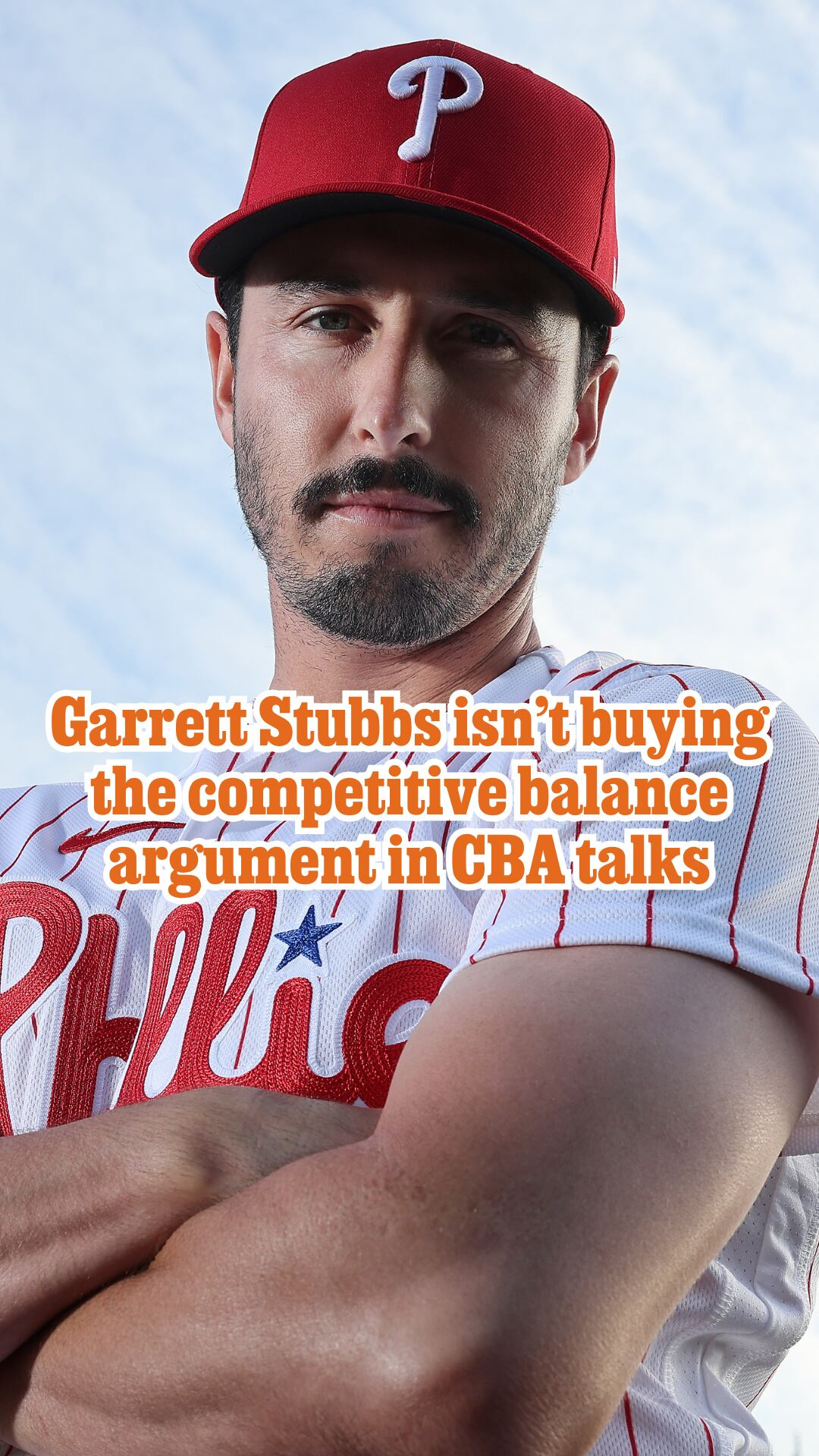
Video: Garrett Stubbs isn’t buying the competitive balance argument in CBA talks | Phillies Extra But with the free-agent marketing opening Monday night, delaying a possible salary cap could pave the way to a flurry of signings this month before the lockout.
To wit: The Phillies could sign a righty-hitting outfielder to bat in the middle of the order — Seiya Suzuki or Randy Arozarena, for instance — without worrying where it would leave them relative to a salary cap in 2027.
The Phillies have seven players under contract for 2028 (Kyle Schwarber, Trea Turner, Jesús Luzardo, Bryce Harper, Aaron Nola, Cristopher Sánchez, and J.T. Realmuto), but Zack Wheeler and Brad Keller are due to come off the books, freeing up $53 million.
Eight teams exceeded MLB’s proposed cap this year. Twelve teams had payrolls below the proposed floor.
Regardless, Stubbs made it clear that the players don’t have any intention of accepting a deal that includes a cap on salaries.
“Watching [MLB deputy commissioner] Dan Halem sit on the other side of the table and go over proposals that he goes over with the salary cap attached to every single proposal — and obviously they know our stance on the salary cap — it is the biggest waste of time,” Stubbs told The Inquirer’s Phillies Extra podcast. “It’s a charade. And it’s exhausting sitting there watching him give these proposals. I’m like, ‘Does he even believe some of the things that are coming out of his mouth?’”
-
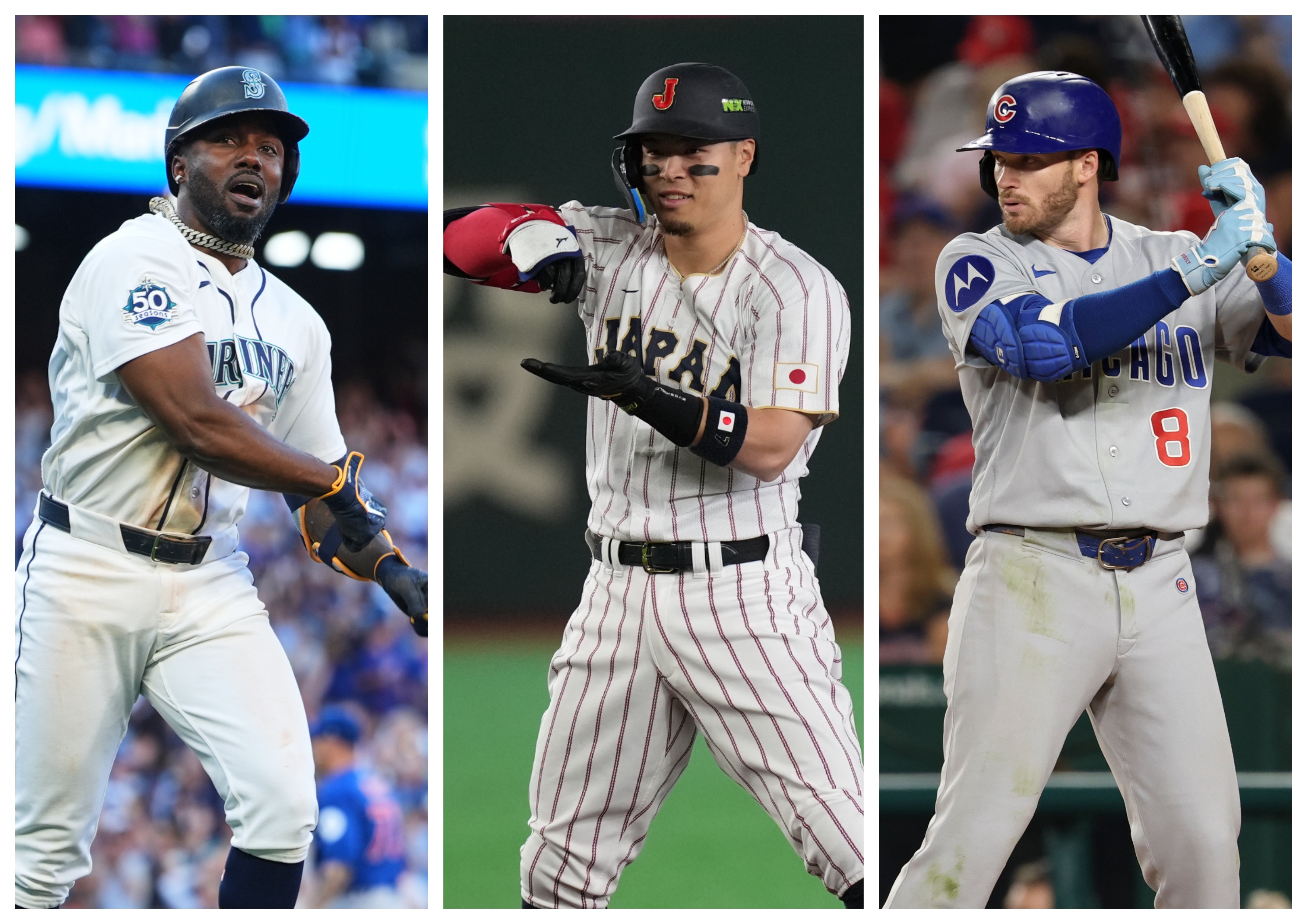
Will the Phillies spend to beef up the middle of the order? Here are some free-agent options.
In identifying where the Phillies fell short in the lowest-scoring season of the Bryce Harper era, the team’s new hitting coach suggests looking at one metric.
“At the team level,” Pete Fatse said, “you could make it as simple as OPS.”
OK, let’s not overcomplicate it then. The Phillies ranked 22nd with a .707 on-base plus slugging percentage, their lowest mark since 2018. Dig deeper and find they were 26th in OPS from their outfielders (.686), 29th out of the cleanup spot (.645), and 30th from the right side of the plate (.658).
Bad. Worse. Worst.
Given the lack of an in-house solution, and based on his history with the Phillies, Dave Dombrowski might be expected to throw money at the problem. And amid a middling free-agent market that opened for business Tuesday, there happen to be two righty-swinging outfielders who profile as No. 4 hitters.
Come on down, Randy Arozarena.
Or Seiya Suzuki.
In 2022, Dombrowski beefed up the offense by signing Nick Castellanos (five years, $100 million) and Kyle Schwarber (four years, $79 million). A year later, in need of a shortstop, he landed Trea Turner with an 11-year, $300 million contract. The year after that, he re-signed Aaron Nola to keep the top of the rotation intact and still pursued Japanese righty Yoshinobu Yamamoto.
Arozarena and Suzuki received qualifying offers Monday, so signing either would cost draft-pick compensation. Under Dombrowski, that hasn’t stopped the Phillies.
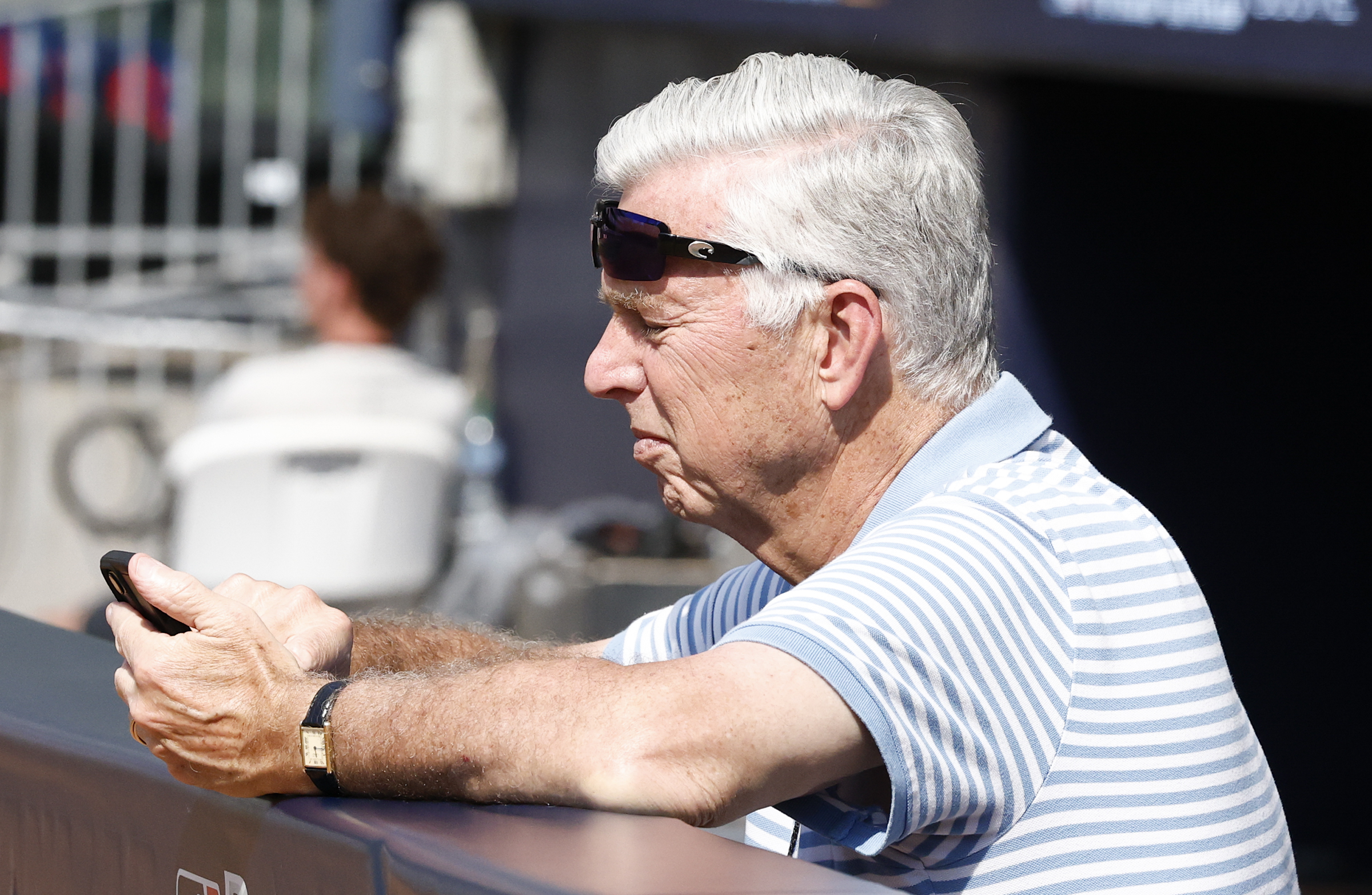
Phillies president of baseball operations Dave Dombrowski has decisions to make before the owners are expected to lock out the players on Dec. 2.Yong Kim / Staff Photographer But before everyone assumes there’s a red-pinstriped jersey on a hanger in Citizens Bank Park waiting for Arozarena or Suzuki, remember this isn’t a typical offseason. Not with the owners poised to lock out the players on Dec. 2, setting the stage for the sides to go 12 rounds (and maybe more) over a salary cap.
As Dombrowski put it recently: “I don’t know what the rules are.”
Even if there isn’t a salary cap at the other end of this work stoppage, there almost certainly will be harsher penalties on the teams with the highest payrolls. And after carrying the sport’s fourth-highest payroll this year, the Phillies have approximately $239 million in luxury tax commitments for 2027 before they consider signing another $20 million-plus free agent.
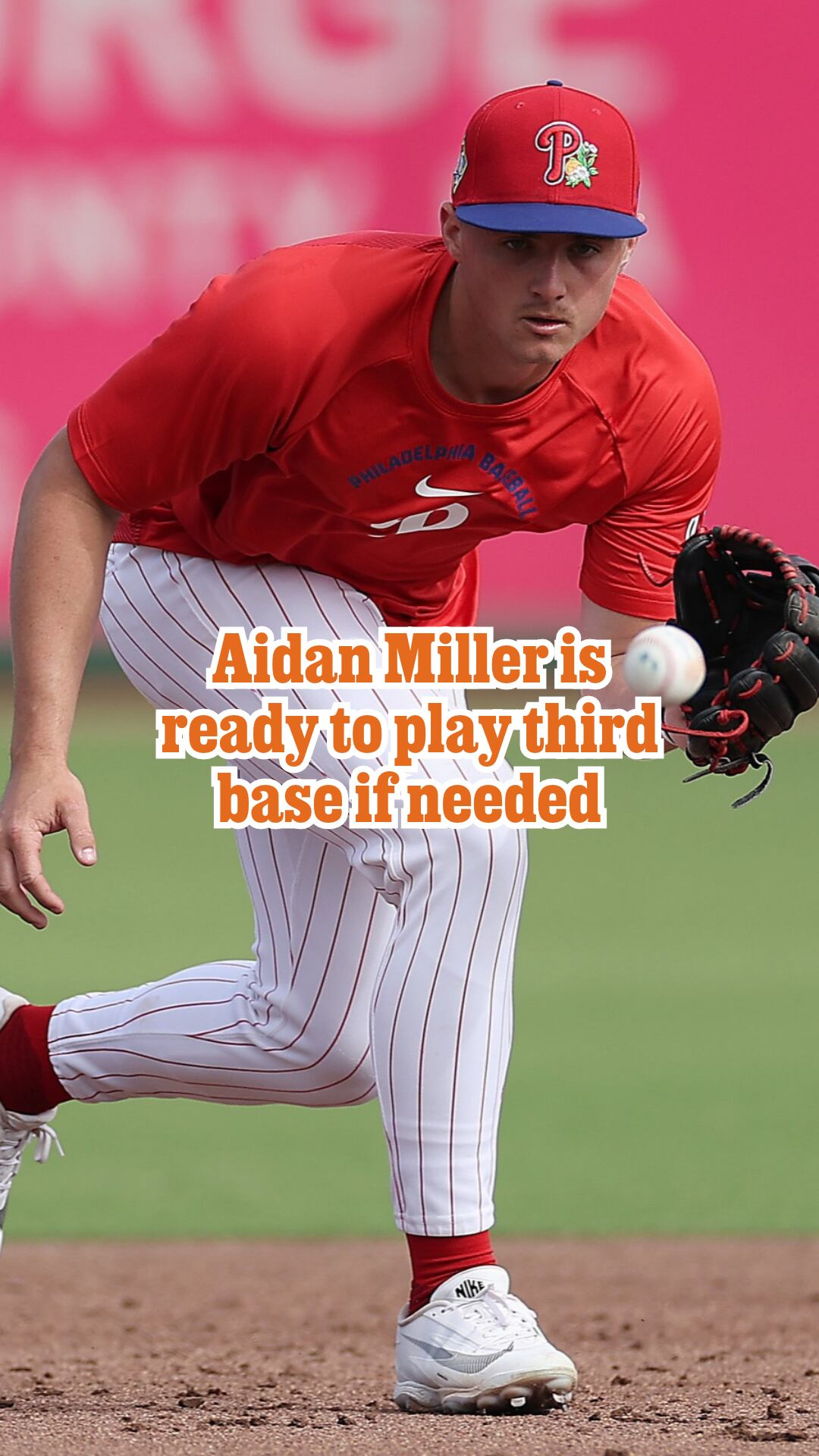
Video: Phillies Extra: Aidan Miller is ready to play third base if needed Top prospect Aidan Miller almost certainly will be a low-cost addition to the offense. After missing almost the entire season with a low back condition, the 22-year-old infielder was healthy and tearing up the Arizona Fall League (14-for-39, 1.154 OPS) through the weekend.
Miller won’t be impacted by the lockout. If opening day is delayed, he could begin the season in triple A and be ready whenever MLB resumes play.
The Phillies expect more from 23-year-old outfielder Justin Crawford in his second major league season. And they could attempt to fix the outfield by finding a solid defender and/or more productive righty-hitting platoon partner for Brandon Marsh.
(Last winter, Dombrowski overrated Otto Kemp’s impact in that role. A year later, Tyrone Taylor is a free-agent option; the Astros designated Jake Meyers for assignment on Monday; the Guardians could trade or nontender Jo Adell later this month.)
But none of that would mitigate the need for middle-of-the-order thump behind Schwarber and Harper. And the best way to find it, short of trading a prospect, might be to spend money in free agency, damn the consequences.
Let’s take a quick spin around the free-agent options:
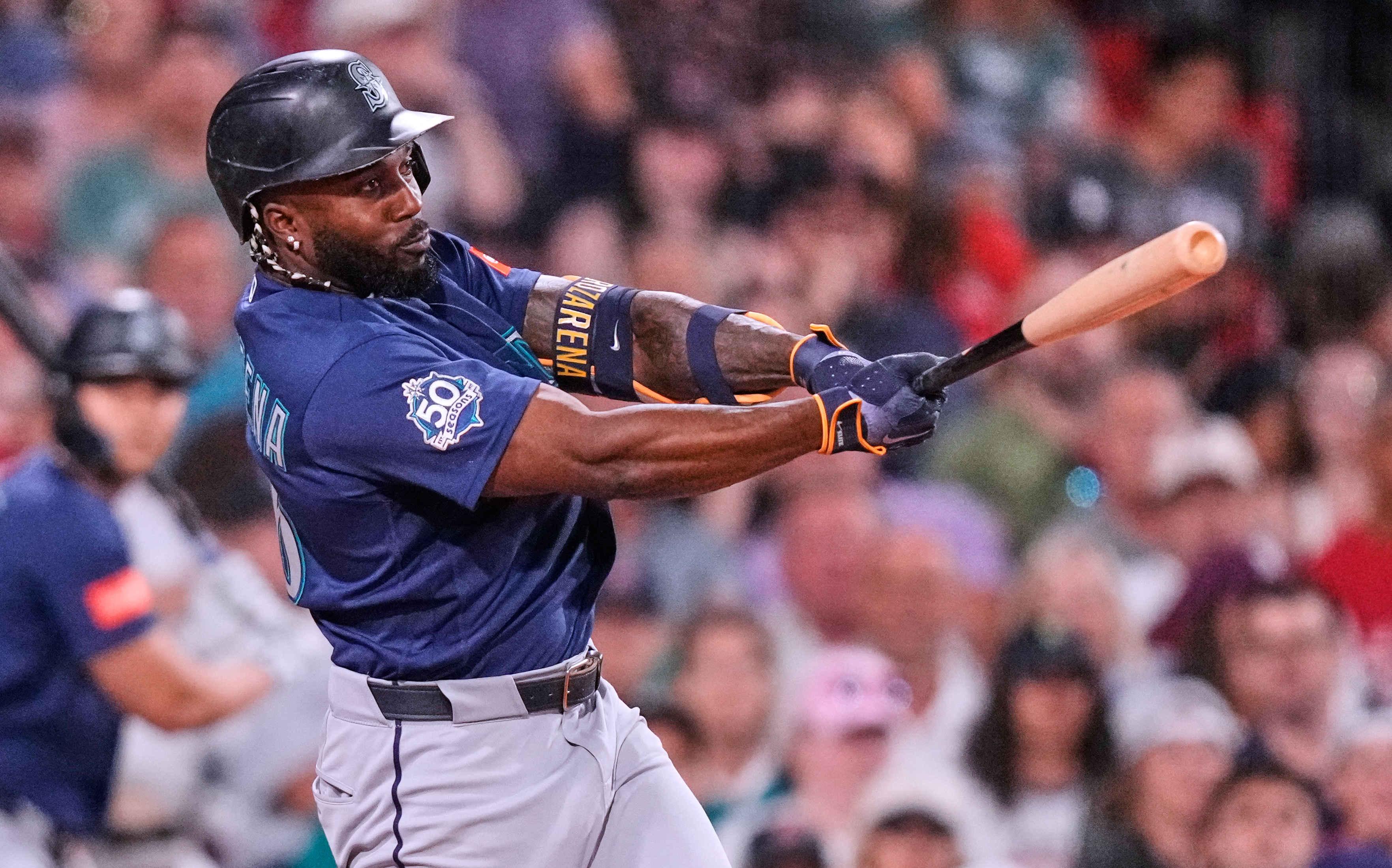
Free-agent outfielder Randy Arozarena hit 26 homers last season for the Mariners.Charles Krupa Randy Arozarena
Timing is everything, and he’s arriving on the market after the best year of his career: .281 average, 26 homers, 26 steals, and an .865 OPS with the Mariners.
But if you believe in Arozarena entering his age-32 season, it’s because you think he can sustain this year’s 4.2% reduction in his strikeout rate over his previous career mark.
Arozarena’s defense in left field has deteriorated. But he was a high performer in the postseason with the Rays. And he checks all the boxes for the Phillies as a righty-hitting outfielder who bats in the middle of the order.
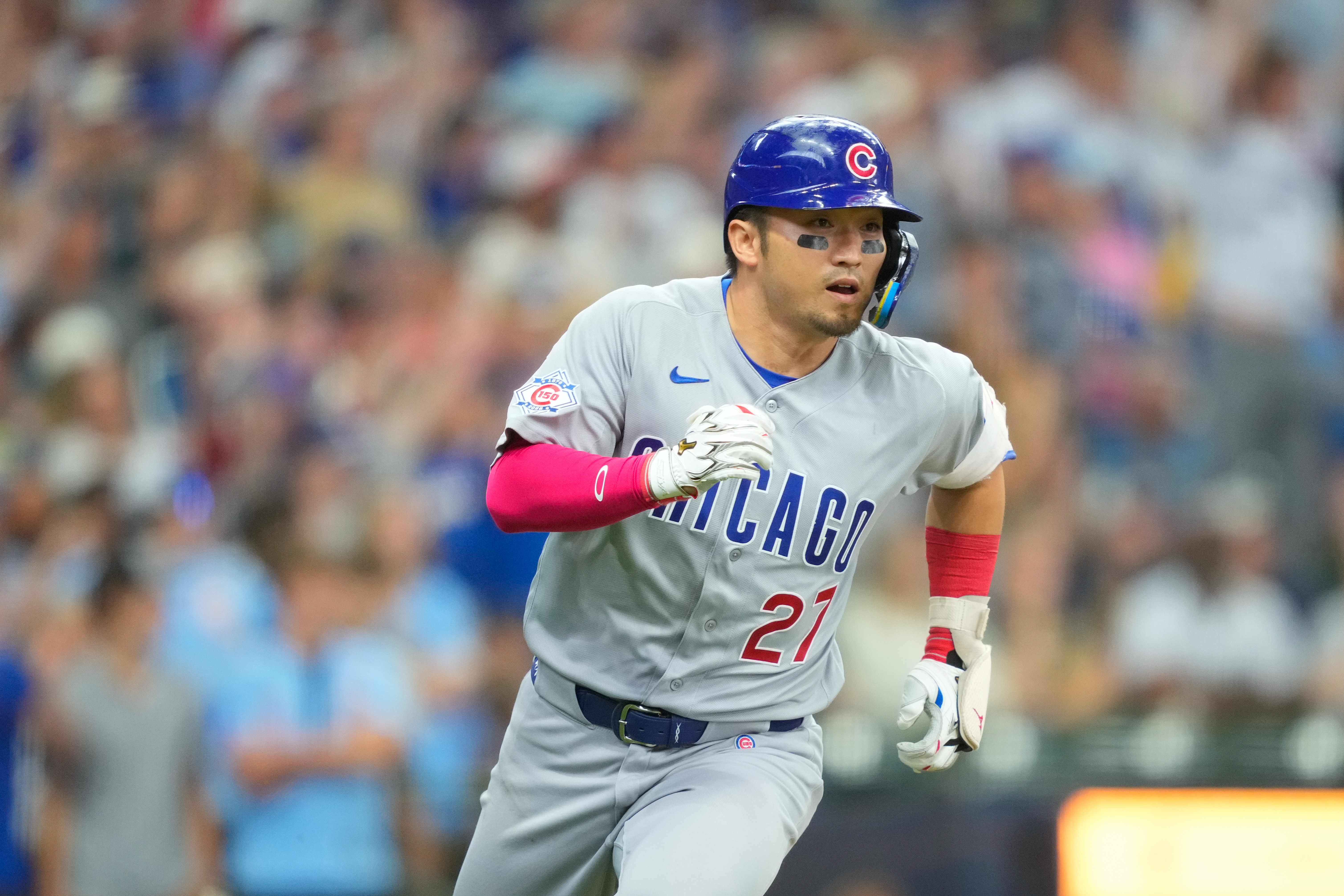
Seiya Suzuki, a right-handed batter, has hit 58 home runs over the past two seasons.Kayla Wolf Seiya Suzuki
Like Arozarena, he just had his best season: .270 average, 31 doubles, 26 homers, and an .841 OPS for the Cubs. He’s also 32 and bats right-handed. And he has been more consistent than Arozarena. Suzuki’s year-by-year OPS since coming to the majors in 2022: .770, .842, .848, .804, .841. His defensive metrics in right field were much better this season.
Two potential concerns: a right knee issue that hampered him early in the season and a 38.9% hard-hit rate that was well off his 45.4% career mark.
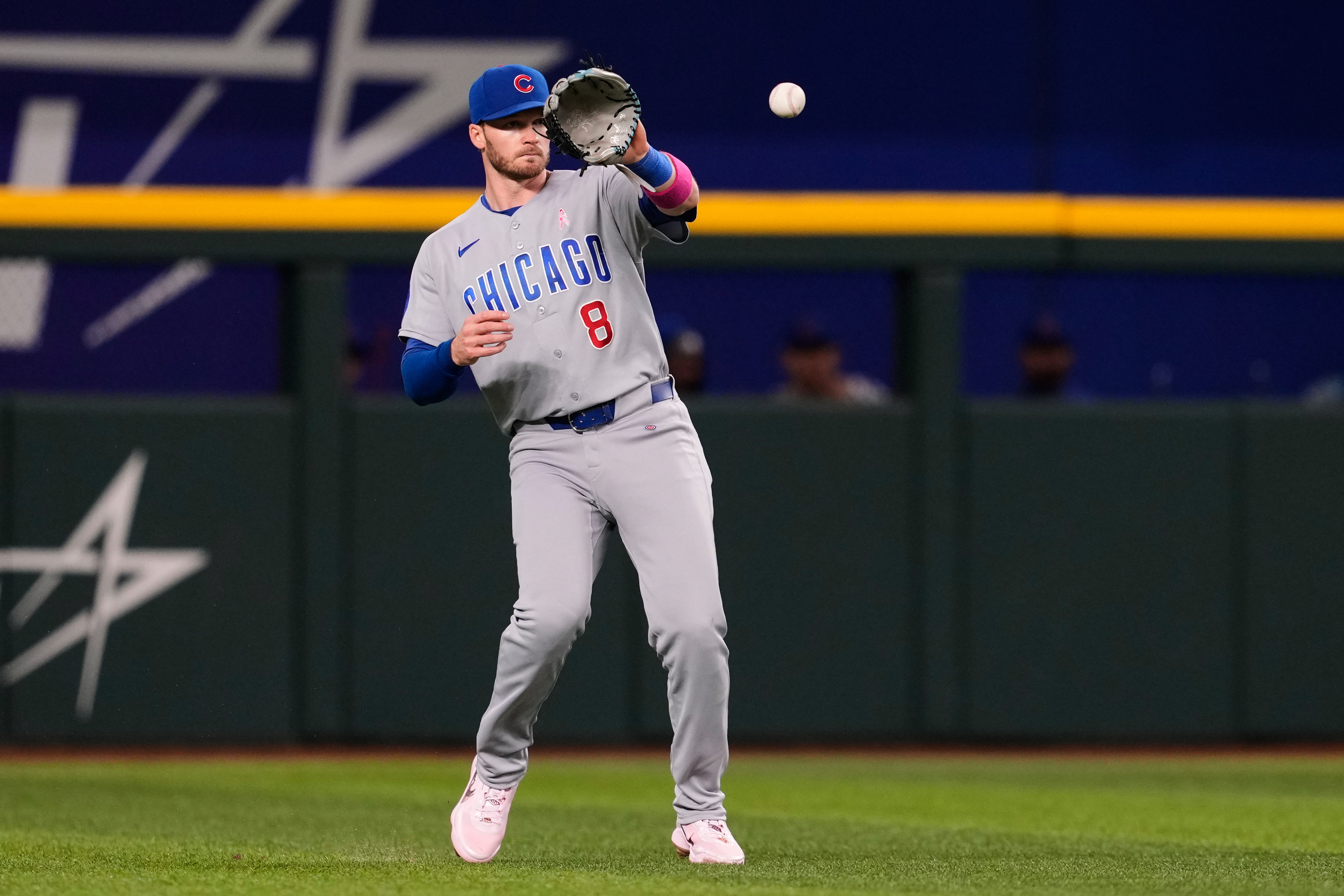
Left fielder Ian Happ’s streak of four straight Gold Gloves ended this year.Tony Gutierrez Ian Happ
The 32-year-old switch-hitter has always been more productive from the left side of the plate (.815 OPS) compared to the right side (.683), making him an imperfect fit. He’s also coming off a tough year at the plate: .218 average, 28 doubles, 24 homers, and .738 OPS for the Cubs.
But he has topped 20 homers in five of the last six seasons, including four in a row, and is a solid defender in left field.
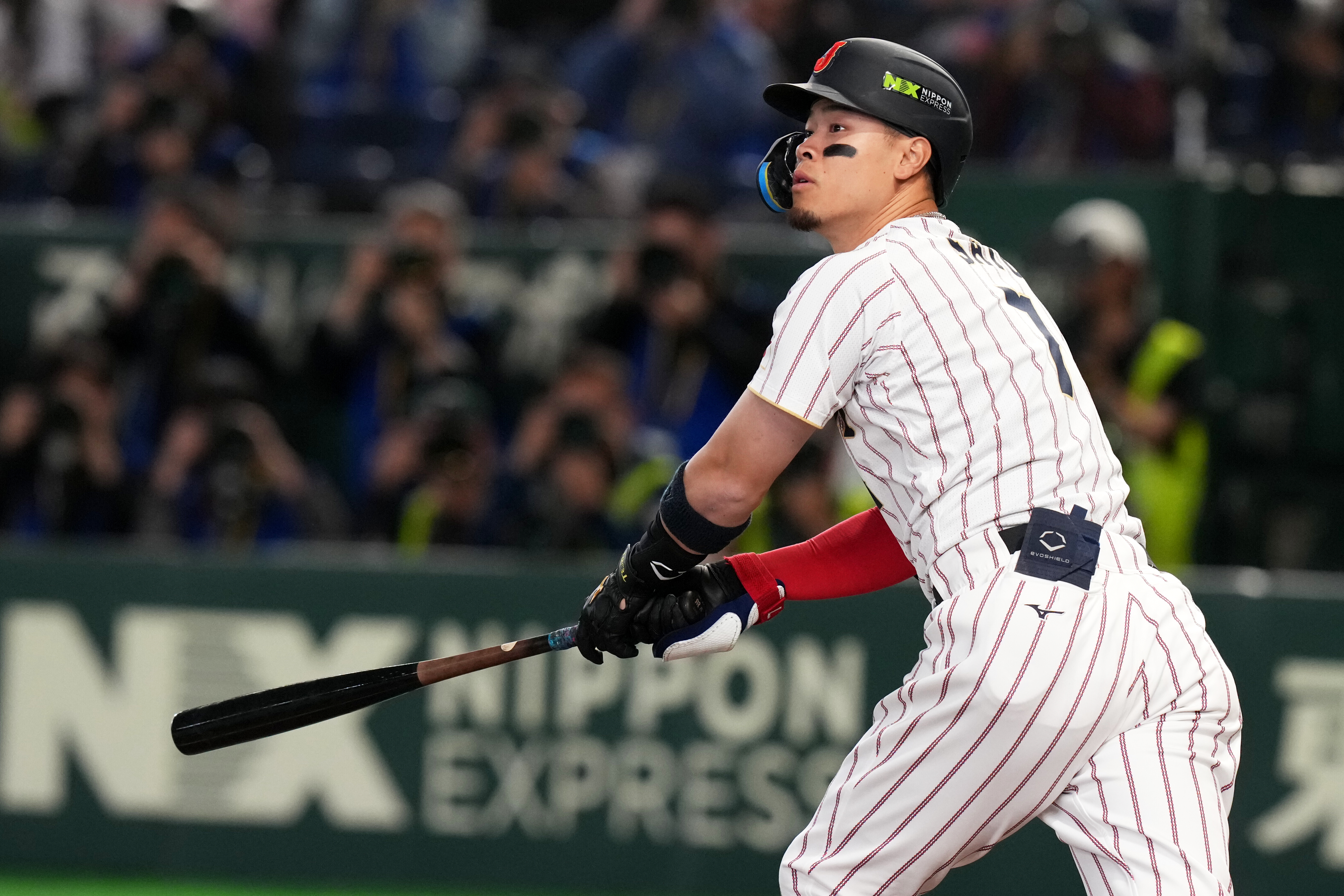
Teruaki Sato won the triple crown in Nippon Professional Baseball this season.Eugene Hoshiko Teruaki Sato
A reminder that the Phillies haven’t signed a player directly from Japan. But they are interested in Sato, whom they scouted extensively this season.
Sato was a third baseman in Japan, where he won the triple crown in Nippon Professional Baseball, but some scouts project he will move to first base or a corner outfield spot in the majors. It’s unclear how the Phillies feel about his positional fit.
He also bats left-handed, like Schwarber and Harper. His power — 39 homers, .609 slugging percentage this year; 40 homers, .579 slugging in 2025 — is reminiscent of Munetaka Murakami, who made a smashing major league debut this season with the White Sox.
Sato is also entering only his age-28 season, which may make him a better upside play than the 32-year-old outfielders.
-
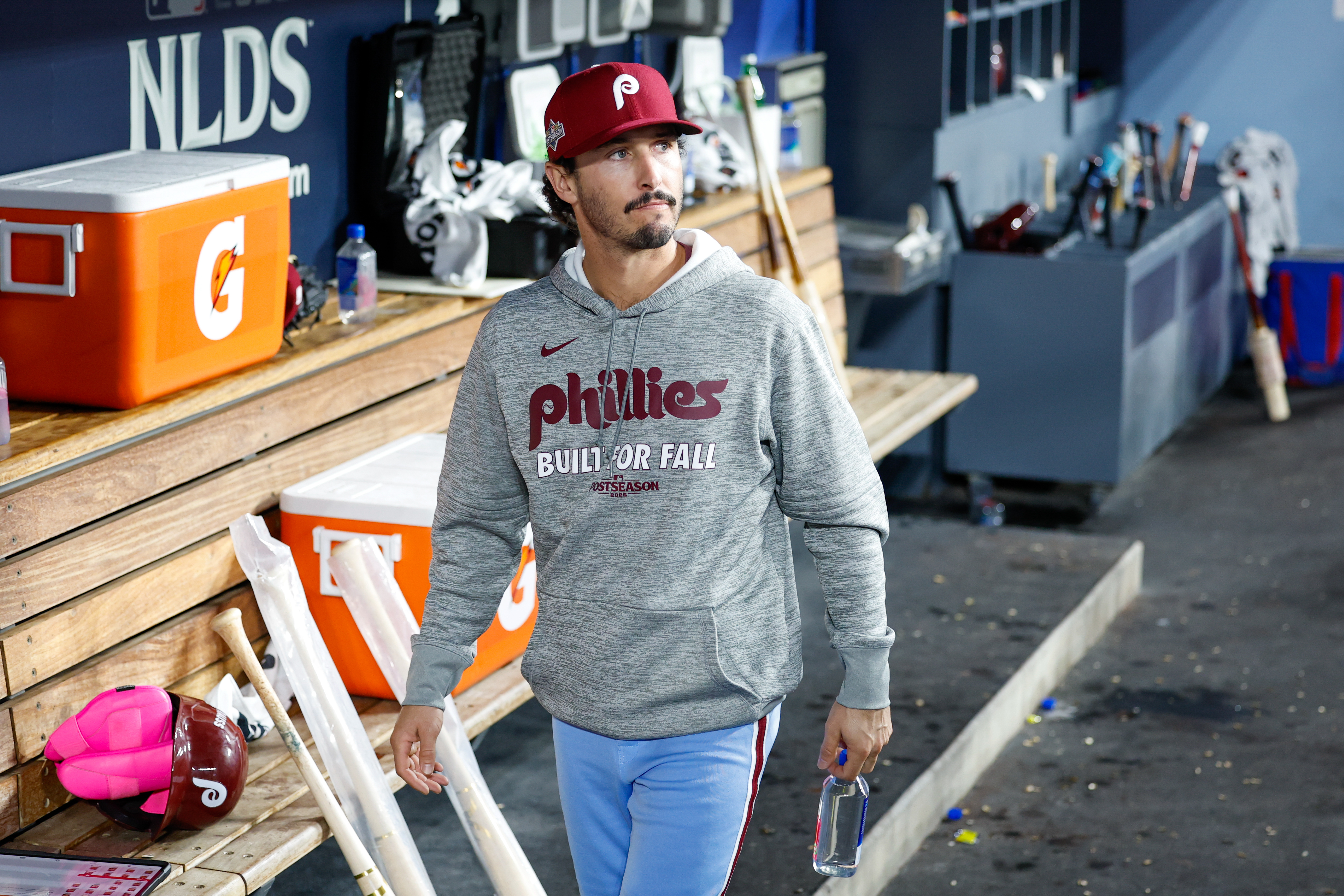
Garrett Stubbs on why a lockout will cost games, the salary cap debate, and more | ‘Phillies Extra’ Q&A
Garrett Stubbs found out last week that the Phillies are taking him off the roster, making him a free agent and likely ending his five-year run with the organization.
But he expects to keep representing his ex-teammates in the MLB Players’ Association through the offseason.
In that case, Stubbs, the Phillies’ union rep since 2024, will be on the front lines for a fight over baseball’s core economics. The owners are pushing for a salary cap, a system the players have opposed for a half-century.
Stubbs joined Phillies Extra, The Inquirer’s baseball podcast, to discuss the upcoming labor dispute, which is expected to begin when the collective bargaining agreement expires at 11:59 p.m. on Dec. 1 and the owners authorize MLB to lock out the players.
Watch the full interview below and subscribe to the Phillies Extra podcast on Spotify or Apple Podcasts. (Answers have been edited for clarity and brevity.)
Q: Based on conversations with people in the sport, I don’t have a ton of confidence that there’s going to be a new CBA without missing games next year. You’re close to the front lines in all of this. What’s your feeling? Are you an optimist or a pessimist?
A: Look, I’m certainly an optimist about where our game is. I don’t think that baseball has been in a better position than it is right now at any point in time during its tenure. … I don’t think that, as a business, we’ve ever been in a better place than we are right now. So, I’m optimistic about the game.
I think it’s a huge bummer to hear the commissioner [Rob Manfred] of your sport come out and tell fans that they should expect a lockout every single time a CBA is coming up for expiration. It’s not a good place to start. I don’t think that that’s negotiating in great faith. I don’t think that we’re sitting at the table and getting anywhere right now. Obviously, a salary cap is a non-starter for us [as players]. And I don’t think it puts our [sport] in a better position anyways if it were to be implemented, which it won’t. And because of that, I am not optimistic about when we’re going to start, and it’s super unfortunate.
You watch the World Series … and you’ve got two teams with very low payrolls — and it’s not to say that that’s the best way to go about your business, because going and getting the best players is the best way to win a championship. However, those are incredibly run organizations, just like the Dodgers. The Dodgers obviously have the most or one of the most resources in the entire league, so they are put in a really good position to be able to compete for a championship every year. However, you look at other teams around the league who are high, high payrolls and they miss the playoffs, so neither paying or not paying [high salaries] gets you to that World Series. It’s about a very well-run organization. That’s how you make the playoffs. That’s how you go into winning a World Series.
So, this idea of a salary cap solving some sort of competitive balance, I don’t see it. I don’t understand it. You look at the NFL and the NBA, there’s certainly organizations that make the same [runs for] championships every single year. Is that a payroll thing? No. They’re well-run organizations. That’s the bottom line. They have people that are at the higher positions making great decisions that end up turning into championships.
Video: Garrett Stubbs is not optimistic about the 2027 MLB season starting on time | Phillies Extra But to just comment on the actual CBA and where I think the season will start next year, it’s super unfortunate to be going into these meetings every single time and hearing from the other side that [the salary cap]’s their solution. When there’s a central revenue sharing system that allows teams at the bottom half not spending money to collect money from the top half spending teams that are trying to win championships and then just going about their business throughout the day, being a profitable business. And it’s unfortunate. So, I don’t believe that we’re going to start on time. I think it would be moronic to not have a season next year or miss a substantial amount of games because of the health of where we’re at as a league. So, we’ll see where Manfred and his team decide to land come Dec. 2 and on. But, yeah, I see some games getting missed this year because of where they stand on this salary cap idea.
Commissioner Rob Manfred and the owners are pushing for a salary cap in the labor talks.David J. Phillip Q: MLB has waged an actual ad campaign around competitive balance. I wonder if there’s a way for the players to counter in the PR battle there, and shed light on what it’s really all about. Because competitive balance is almost like the public face of what the real issue is, which is that the owners want to fix costs and raise their franchise values at a higher rate.
A: We all want to compete, right? And we want every single team to be competitive out there. A part of that is going and getting good players and paying them. A part of that is what I was just talking about with a well-run organization. But to me, looking at these teams that are in the World Series, they’re just gritty. [Brewers manager] Pat Murphy and [Rays manager] Kevin Cash have done a great job of getting these guys out there and playing hard every single play. We’ve heard it from postgame interviews and Alex Rodriguez and David Ortiz and Derek Jeter talking about this is the way that baseball is supposed to be played, and I agree with them. I love watching these guys play ball, and I think we have that in Philly, too. I think that that’s the kind of way that baseball should be played.
… We have conversations about [competitive balance messaging] all the time. And as far as us going out there and having some sort of PR campaign about it, it’s not going to happen. Fans are smart. And I know that people are influenced from people in these high positions like Manfred, but the fans are smart, and you watch it in comments. Obviously, there’s people that are like, ‘We want a salary cap,’ but I think the majority of fans realize that that’s not going to solve the overall issue of certain owners not caring about winning. We have GMs or president of baseball ops or owners literally coming out saying we want to win about 80-some games and that’s their formula. That’s embarrassing.
We are in a sport that you want to go out and win every single day. Just like if you were in business, you go out and you spend money on your product to make sure that your product is the best product available, you spend money on marketing so that people know what your product is. It’s the same thing in baseball. You go and spend money on players, and in order for your team to be the best, you go spend money on facilities so that your development in the minor leagues is the best possible option for players to go and develop and be good players, so that when they get to the big leagues, they can contribute.
So, it’s a formula as old as time. You put effort and money into something, and you get effort and money out. We’re seeing it with the effort that we see from the Brewers and the Rays right now, and you see it when you put money into an organization and go get good players, just like the Dodgers have. And so, both can coexist. I think the best formula is a mix of the two. But whether there’s a salary cap or not, the owners that don’t care about winning, they’re not going to care about winning, and that’s not fair to fans. They should be going and watching their team every single day, expecting them to put their best foot forward to try to win the game that day and make [the] playoffs.
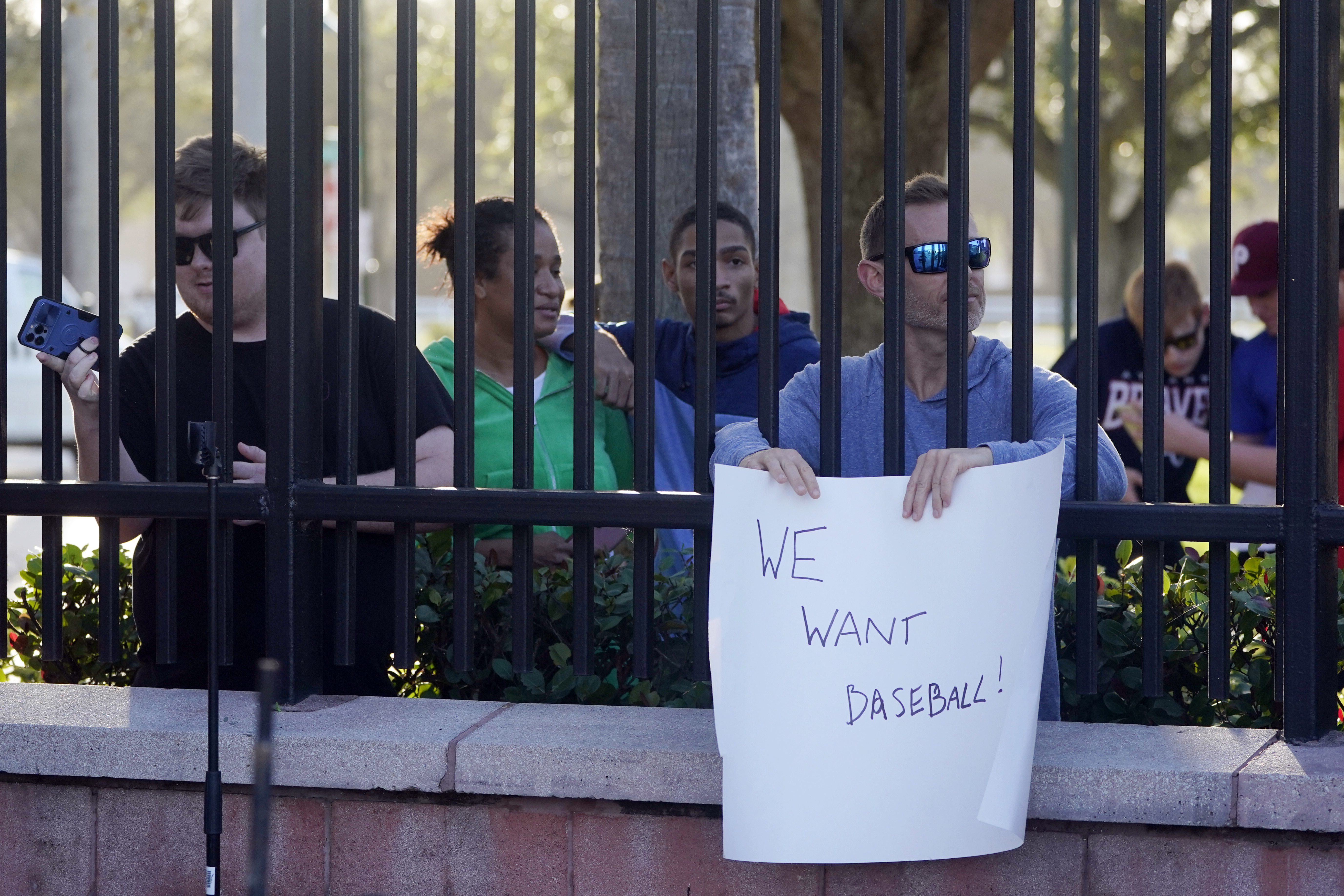
The last lockout in baseball spanned 99 days in 2021-22 and did not cost any regular season games.Wilfredo Lee / AP Q: What gives you confidence that the union, with all of these different interests of its approximately 1,200 players, will hold together through this whole thing?
A: I think the reason is, one, the history of our union. I talk to guys like Larry Bowa all the time, and he still gets fired up about our union talks because he was once a player, and he knows what it’s like to stand on our side of the conversation. And everyone has different opinions on what they want. Certain guys are closer to free agency, so they want free agency [moved] up. Certain guys are closer to arbitration, so they want arbitration [moved] up. Certain guys are trying to get to the league, so they want the minimum salary to be up. So there’s always going to be different opinions on what guys want.
At the end of the day, we want the game to be the healthiest it can be. And like I said, I think we’re at a really healthy position right now, healthier than we’ve ever been, and we just want to grow with the league. We are the product out on the field that is helping the league make [exorbitant] amounts of money because we’re putting our best product out there. We’re working hard off the field so that we can be the best on the field.
But I think a big question, too, that doesn’t get asked very often — and it’s not really put forward because many of the owners right now will not take interviews as instructed by Rob Manfred — but there are owners that don’t want the salary cap and missing games next season either. But you know we’re the ones that take the interviews like this and talk about it, and we’re open about how we feel, but the 30 owners are told by Manfred not to take interviews. So, they sit behind whatever Manfred says to them, and they’re all unified and want a salary cap and all this.
But there are plenty of owners that are sitting on the other side of the table that, sure, of course, they would want a salary cap. It helps their business, and they don’t have to spend as much money, no doubt about it. But you think [Mets owner] Steve Cohen doesn’t love that he has the resources that he has and can go get the best players possible and be the best team out there? He wants that. He wants that freedom. The Dodgers want that freedom. There are plenty of teams that want that freedom because they have that desire to win and that competitive edge to be able to go and try to be the best team possible.
So the owners are not unified either … and they won’t say that because they don’t take interviews the way that we do. But the owner side, they’re not wanting to miss games.
Listen or watch the full interview for Stubbs’ thoughts on his role as the player representative for the Phillies, why he thinks the current labor meetings are “worthless,” and more.
-
A (likely long) lockout looms again for MLB. Why a salary cap is at the center of it all. Again.
One month before the expiration of baseball’s collective bargaining agreement, how are the negotiations going between the owners and players?
“They’re worthless,” Garrett Stubbs said.
OK, some context: First, despite learning Thursday that the Phillies are designating him for assignment, a move that will likely make him a free agent, Stubbs expects to remain the team’s representative in the MLB Players’ Association through the offseason, which puts the backup catcher on the front lines of the labor conflict that is about to ensue.
And let’s be clear: It’s shaping up as a knock-down, drag-out fight that will plunge the sport into a deep freeze in the winter and impact when next season begins.
Because in one corner, the owners are making their most forceful push for a salary cap since 1994, when a 232-day strike wiped out the playoffs and World Series. It was baseball’s longest, most damaging labor dispute, and it took years — and steroids — for MLB to recover.
In the other corner, the players have opposed a salary cap for, oh, a half-century. At the World Series last week, interim union chief Bruce Meyer likened a cap to “a nuclear bomb,” a stance that has been passed down through the generations like it’s part of players’ DNA.
“No matter when we had these talks, they always wanted a cap,” said Larry Bowa, the Phillies’ World Series-winning shortstop in 1980. “That was the one thing that was embedded in our brain and our minds: ‘Don’t go for the cap. It’s not going to work. It’s going to hurt you guys.’
“I know there’s a lot of [former] players that tell these guys, ‘Hey man, whatever you do, don’t give up that.’”
Video: Phillies Extra: Aidan Miller is ready to play third base if needed There are other issues at the bargaining table, including divisional realignment and the postseason format, and negotiations are taking place almost weekly. But until the core economics are settled, not much else matters.
And a salary cap is at the center of it all.
“Watching [MLB deputy commissioner] Dan Halem sit on the other side of the table and go over the proposals that he goes over with the salary cap attached to every single proposal — and obviously they know our stance on the salary cap — it is the biggest waste of time. It’s a charade,” Stubbs told The Inquirer’s Phillies Extra podcast. “And it’s exhausting sitting there watching him. I’m like, does he even believe some of the things that are coming out of his mouth?
“[T]he players want to play. We want to grow with the game. We want to sit at the table and actually have a conversation. But right now it’s, ‘Hey, you’re either going to suppress your salaries with the salary cap or we’re not discussing anything.’ … There’s no back and forth.”
And no chance of reaching a deal by 11:59 p.m. on Dec. 1, when the collective bargaining agreement runs out.
The expectation, based on everything commissioner Rob Manfred has said, is that owners will authorize MLB to lock out the players and shut down a nearly $13 billion industry.
It happened five years ago. For 99 days, until a new CBA was finalized, free agency, trades, and other offseason transactions were halted; team officials weren’t permitted to communicate with players; even players’ likenesses were scrubbed from team websites.
Stubbs said it’s “a huge bummer” and “not negotiating in good faith” for the league to lock out the players. Manfred has maintained that it’s a way of spurring negotiations.
But if past is prologue, talks won’t really get serious until there’s a threat of regular-season games being missed. And that won’t happen until late February or early March. The 2021-22 lockout ended on March 10, and after a truncated spring training, a 162-game season was shoehorned into the calendar.
Maybe the sides will figure things out by then. But a salary cap wasn’t on the table five years ago. And unless one side acquiesces, this fight could be more protracted.
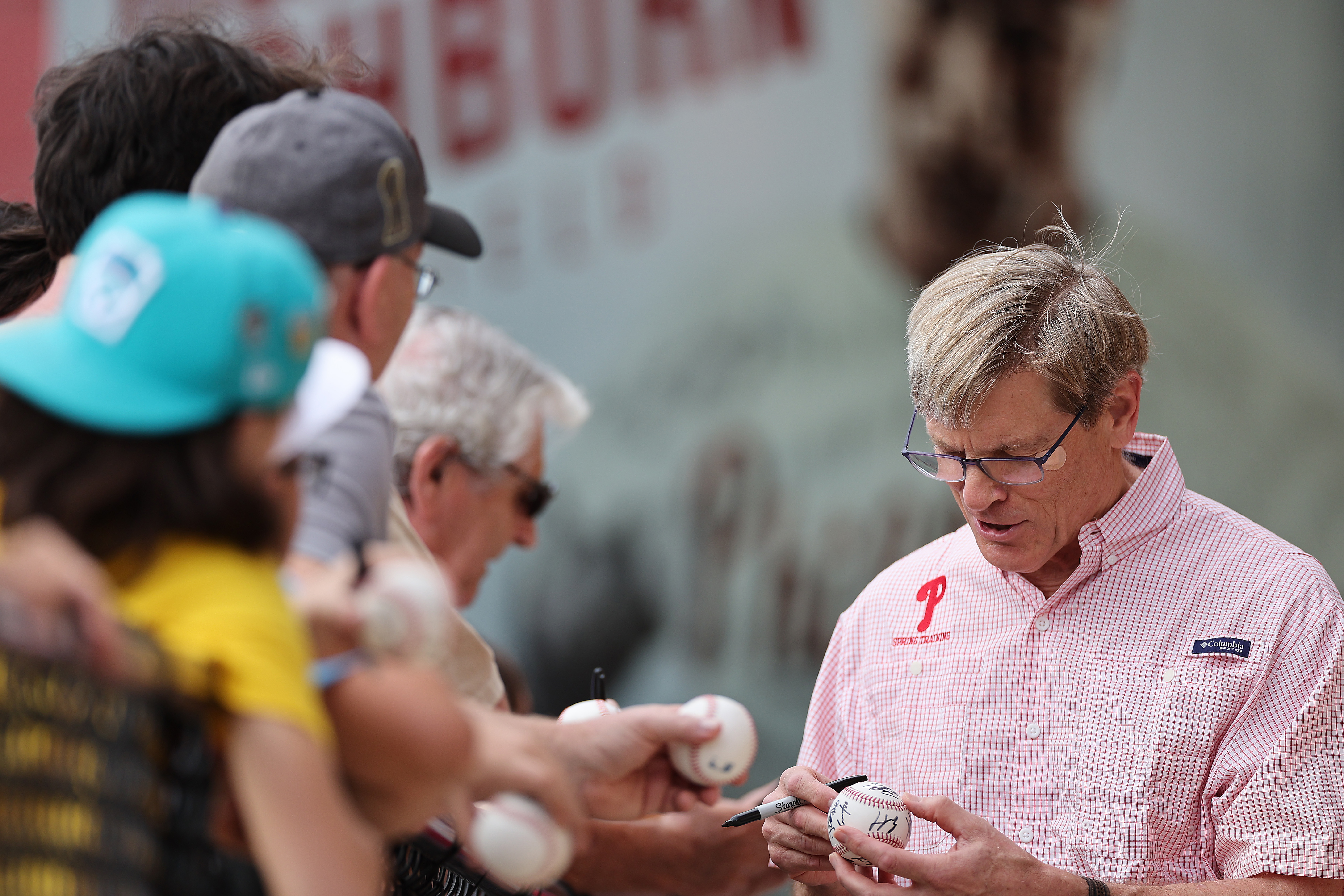
Phillies owner John Middleton has authorized one of MLB’s highest payrolls since 2022.David Maialetti / Staff Photographer Striking the balance
Thirty-two years after the fight over a salary cap led to a painful strike, MLB is taking another swing at it.
Why now?
Manfred maintains the league suffers from competitive imbalance caused by a payroll disparity between the bigger and smaller markets. In July, he cited a $441 million gap between the highest (Dodgers) and lowest (Marlins) payrolls.
“It defies human experience,” Manfred said at the All-Star Game, “to ask a fan to think that the bottom end of that gap has the same opportunity to win as the top end.”
And in case anyone won’t take his word for it, Manfred said MLB has conducted fan polling that backs up his assertion.
(It does seem strange, however, to officials from the players’ union that MLB launched a “Level the Field” advertising campaign for a salary cap, even though the league insists fans are already in favor of it.)
But baseball’s second-lowest payroll ($92.58 million calculated for the luxury tax, according to Spotrac) didn’t hold back the Guardians from getting to Game 6 of the American League Championship Series, while the Mets missed the playoffs with the second-highest payroll ($359.48 million).
The World Series pitted the Brewers and the Rays, who finished with the best regular-season records in each league. Milwaukee is MLB’s smallest market and ranked 19th in payroll ($154.71 million); Tampa Bay was 27th in payroll ($113.23 million).
“If you look at our results, not one year, but over the last two decades,” Manfred told reporters at the World Series, “there is a very strong relationship between market size, payroll, and your chances to get in the playoffs, and particularly your chances to go deeper.”
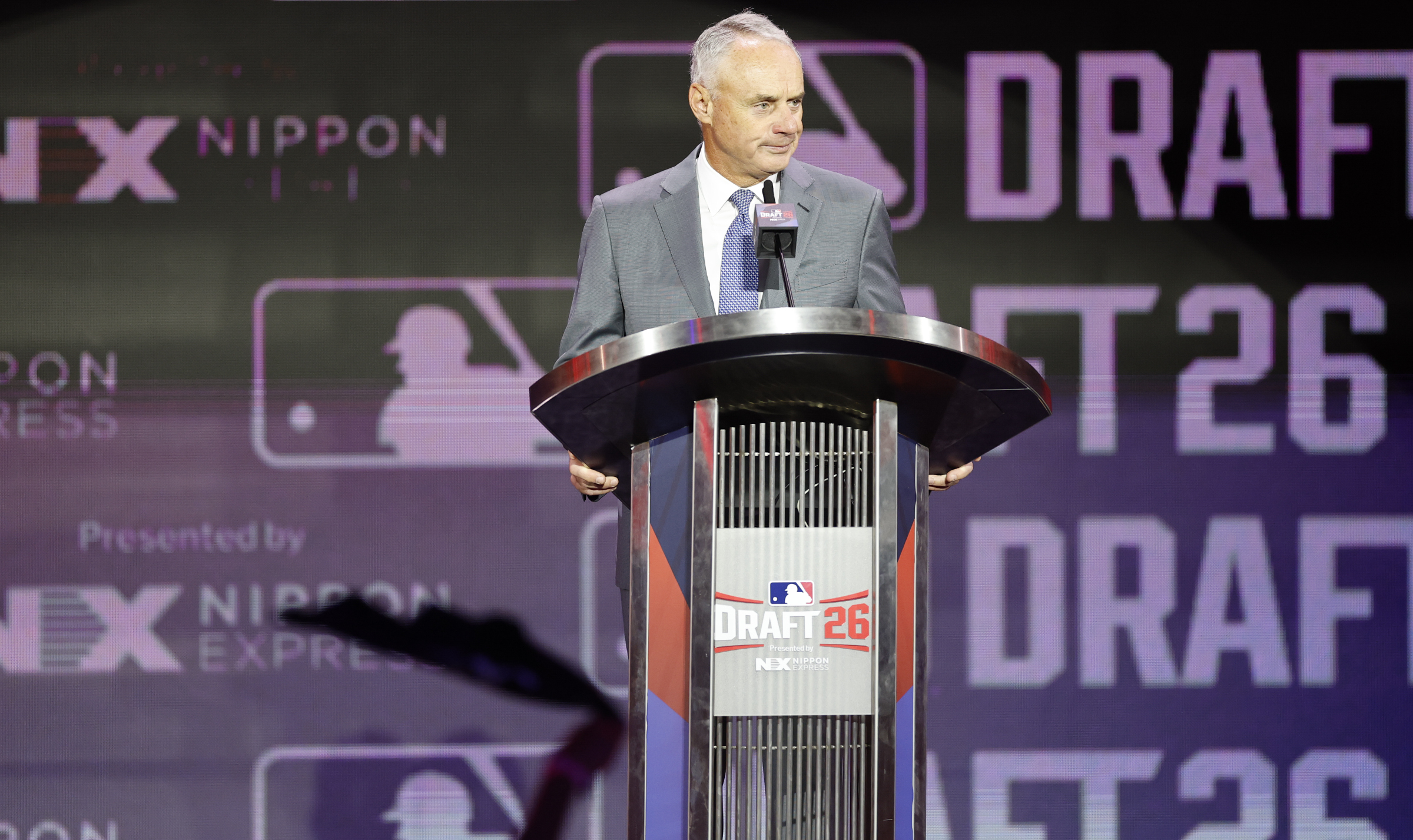
MLB commissioner Rob Manfred believes the league suffers from competitive imbalance due to the payroll disparity of large- and small-market teams. OK, but the Brewers have made the playoffs in nine of 10 years, the Rays in six of the last eight, and the Guardians in eight of the last 11. Fans of those teams surely expect to contend.
And although Manfred often notes that a small-market club hadn’t won the World Series since the Royals in 2015 (until the Brewers), the Yankees haven’t won since 2009 and the Mets since … checking notes … 1986. The Phillies have spent $1.4 billion on player salaries since 2022, and owner John Middleton didn’t get his trophy back.
Manfred claims the owners are “more united than any group in my entire time in baseball” in pursuing a cap. Even as the Brewers were on the cusp of winning the first title in their 57-year history, owner Mark Attansio said “the system that’s being proposed, which is similar to other leagues in terms of revenue-sharing system, not only will help us compete but more importantly all of the teams with lower payrolls too, which is something also I think the fans want.”
To the players, the league is using competitive balance as a proxy for the real reason the owners want a salary cap: to boost the value of their franchises by fixing costs.
Video: John Middleton discusses Dave Dombrowski’s future with the Phillies “The owners want a system that not only guarantees their profits, not only increases their franchise values, but essentially is a form of subsidized mediocrity,” Meyer said at the All-Star Game. “A salary cap is the ultimate excuse not to compete.”
Without naming names, Stubbs referenced Mariners president of baseball operations Jerry Dipoto, who said in 2023 that the club’s strategy was to win 54% of its games over a 10-year stretch, which averages out to 87-88 wins in a 162-game season.
“Fans are smart,” Stubbs said. “I think the majority of fans realize [a salary cap]’s not going to solve the overarching issue of certain owners not caring about winning. We have GMs or president of baseball ops literally coming out saying, ‘We want to win about 80-some games,’ and that’s their formula. That’s embarrassing.
“Whether there’s a salary cap or not, the owners that don’t care about winning, they’re not going to care about winning. And that’s not fair to fans.”
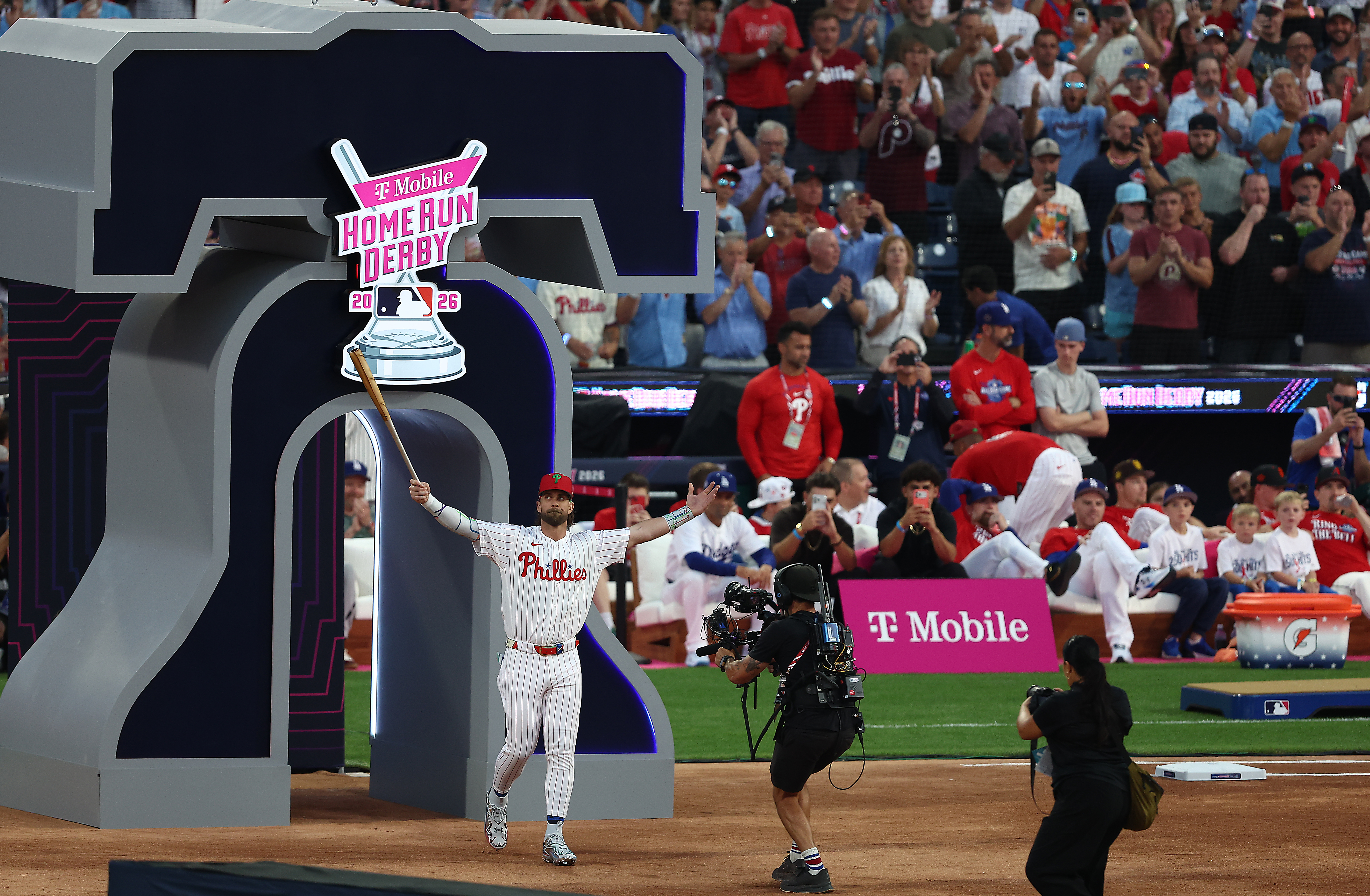
Phillies star Bryce Harper is among the faces of baseball.Monica Herndon / Staff Photographer Divide and conquer
In the 2022 negotiations, the eight players elected to the MLBPA’s executive subcommittee unanimously opposed the owners’ last offer.
The players took the deal anyway.
If it didn’t signal a fissure in the union, it reflected the varied demographics and interests of a 1,200-player membership. An All-Star with a multiyear, nine-figure guaranteed contract may be more resolved to oppose a salary cap than a rookie making the league minimum or an arbitration-eligible player who hopes to someday reach free agency.
Based on the earliest proposals, the league seems to be targeting rank-and-file players, perhaps in an attempt to weaken or break the union. MLB proposed increasing the minimum salary and the pre-arbitration bonus pool, which would be viewed as gains for younger players, and eliminating the qualifying offer for free agents.
Of course, each incentive is tied to a salary cap.
Meyer predictably labeled the proposals “unserious.” But the league feels similarly about the union’s solutions, which include increasing the luxury-tax thresholds.
Stubbs insists the players will stick together, even as their individual circumstances differ. He bases that on what he hears from his now-former Phillies teammates (Stubbs and deputy player rep Orion Kerkering keep them abreast of updates through a message thread on WhatsApp) and other players around the league.
“It can’t be about one individual or anything else,” Bryce Harper said a few months ago in a conversation at his locker. “There’s a fine line of wanting that over what Curt Flood did for us and what the guys did all through the ’70s, ’80s, ’90s. All the guys that sat out, went through strikes, went through situations that I couldn’t fathom — missed checks, missed meals, all that kind of stuff — way back when.
“I don’t want our decisions to be a negative for what those guys did for us. I couldn’t fathom being part of the group that took [a salary cap] and was like, ‘OK, yeah, we’re good.’”
Video: Scott Boras: ‘Bryce Harper has a legacy that he wants to fulfill in Philadelphia’ Stubbs also wondered if the owners are as unified as Manfred says. In particular, he guessed that new Angels owner Stan Kroenke and Padres owners José E. Feliciano and Kwanza Jones don’t want to miss games after buying their teams for $4 billion and $3.9 billion, respectively.
It’s all part of the rhetoric from both sides — and it will only get hotter with one month before a lockout and a bone-chilling winter without the hot stove.
“It’s super unfortunate to be going into these meetings every single time and hearing from the other side that [a cap] is their solution,” Stubbs said. “I see some games getting missed because of where they stand on this salary cap idea. I think it would be moronic to not have a season or miss a substantial amount of games because of the [health] of where we’re at as a league. I don’t think that baseball has been in a better position than it is right now.
“We’ll see where Manfred and his team decide to land come Dec. 2.”
-
Phillies Extra: Garrett Stubbs on baseball’s looming labor fight, the case against a salary cap, and more
As the Phillies’ representative in the players’ union, Garrett Stubbs is on the front lines of baseball’s upcoming labor dispute. The backup catcher, who was designated for assignment on Thursday, joined Phillies Extra to discuss why the players won’t go for a salary cap, sitting in on early negotiations, when baseball might be played in 2027, and (spoiler!) his plans to create content during the looming lockout. Watch here.
-
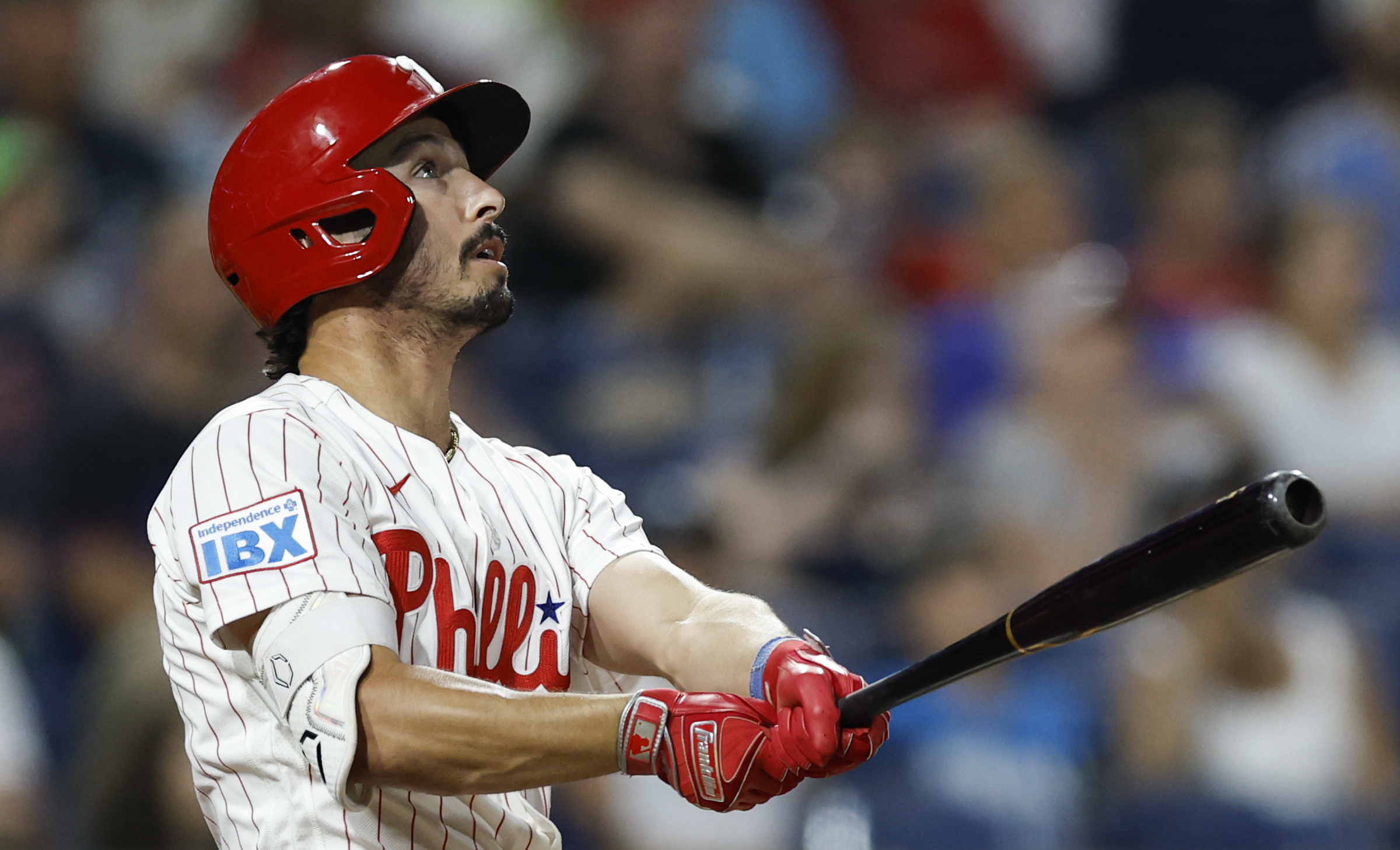
Garrett Stubbs will be designated for assignment by the Phillies
Garrett Stubbs’ run with the Phillies is over.
A popular backup catcher and one of the most dynamic personalities during the Phillies’ five-year run as a postseason team, Stubbs learned Thursday he will be designated for assignment.
In moving Stubbs off the 40-man roster, the Phillies have a week to trade him or put him through waivers. If he clears, the 33-year-old intends to elect free agency.
The Phillies are aiming to lighten J.T. Realmuto’s workload behind the plate next season and get more offense from the backup catcher spot, president of baseball operations Dave Dombrowski said recently. Stubbs and Rafael Marchán split that role this season and combined for a .316 OPS and two extra-base hits in 156 at-bats.
Stubbs backed up Realmuto since 2022, which meant seldom starting. He made only 128 starts behind the plate, including a career-high 47 in 2024, and batted .212 with seven homers and a .598 OPS. This year, he hit .153 in only 65 plate appearances.
But Stubbs’ impact went beyond the field. He was a regular attendee of the Phillies’ daily game-planning and scouting sessions with the starting pitchers, even when he wasn’t in the lineup, and caught most of their bullpen sessions.
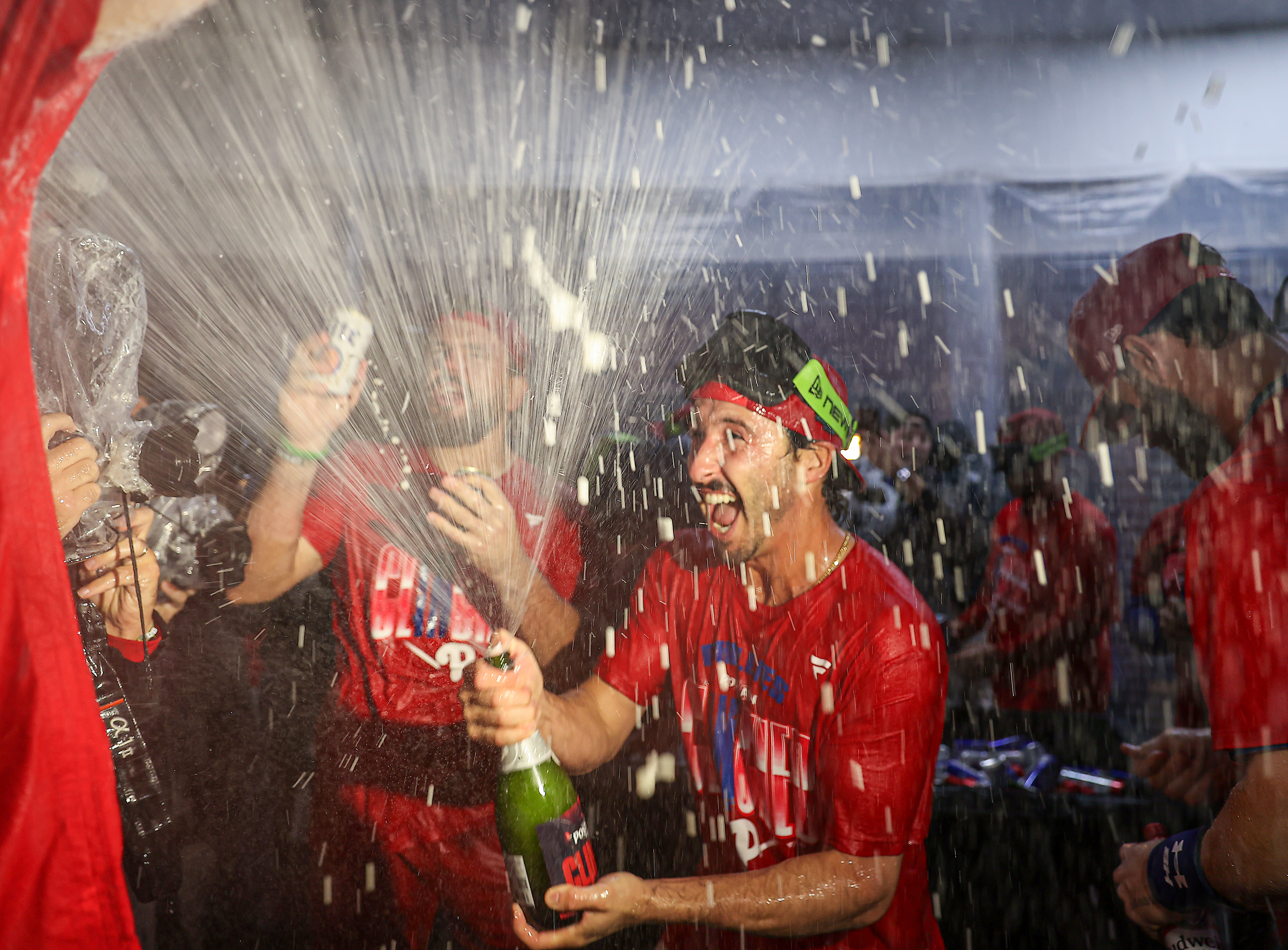
Backup catcher Garrett Stubbs was at the center of Phillies’ playoff-clinching celebrations since 2022.David Maialetti / Staff Photographer Stubbs also helped build a winning culture through his leadership and positive energy. Known for mentoring younger players, ordering T-shirts with catchy slogans, and curating the postgame playlist, Stubbs helped set the mood.
When he arrived in a November 2021 trade with the Astros for minor-league outfielder Logan Cerny, the Phillies hadn’t made the playoffs in 10 years. They’ve since made five consecutive postseason appearances for the second time in team history.
And Stubbs was at the center of playoff-clinching celebrations — often in his pinstriped overalls.
The Phillies also lauded Stubbs for his handling of a demotion to triple-A Lehigh Valley — “Piggyland,” as he calls it — in 2025. Several team officials suggested he would be an effective manager or coach after his playing career.
Stubbs intends to continue playing next season.
If Stubbs clears waivers, he would join free agents Alec Bohm, Luis Arraez, Edmundo Sosa, Adolis García, José Alvarado, Brooks Raley, and Nestor Cortes, all of whom hit the market Thursday with the completion of the World Series.
-
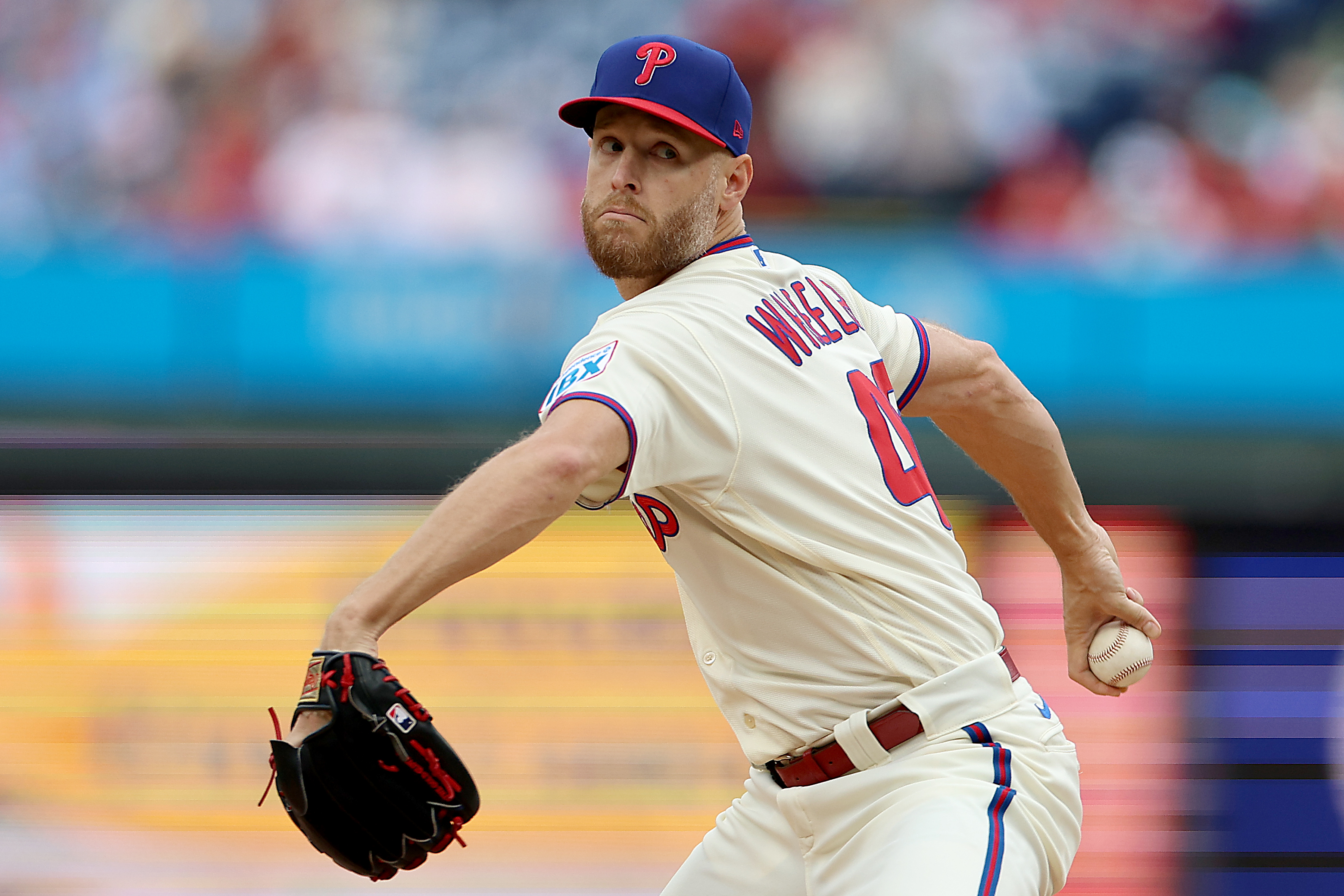
Phillies’ Zack Wheeler wins MLBPA NL Comeback Player of the Year
Zack Wheeler won’t know for another two weeks if he’s Comeback Player of the Year in the National League.
But his peers have already spoken.
Wheeler was named NL Comeback Player in the annual Players Choice Awards, announced Wednesday by the MLB Players Association. The Phillies’ ace edged fellow pitchers Sandy Alcantara of the Marlins and Martín Pérez of the Braves.
In 28 starts, Wheeler went 14-5 with a 3.00 ERA and 193 strikeouts in 162 innings. By any measure, it was a resounding return to dominance from thoracic outlet syndrome, a condition that has derailed the careers of several pitchers.
Wheeler’s 2025 season ended in mid-August with the discovery of a blood clot near his right shoulder. The clot developed when a vein got compressed between his collarbone and rib cage.
After having the blood clot removed, Wheeler underwent a second procedure to remove a rib and relieve the vein. His recovery involved physical therapy and a strict diet, not easy for an unabashed fast-food and junk-food lover. Wheeler left spring training at about 195 pounds, roughly 10 pounds less than normal.
It took time for Wheeler’s fastball to regain its usual zip. But concerns about diminished velocity during a minor-league assignment proved unfounded. The first pitch of his first start, April 25 in Atlanta, was 95 mph.
Wheeler didn’t miss a start the rest of the season. The 36-year-old righty had a 2.13 ERA through 15 starts but wasn’t selected for the All-Star team because he started the Phillies’ last game before the break.
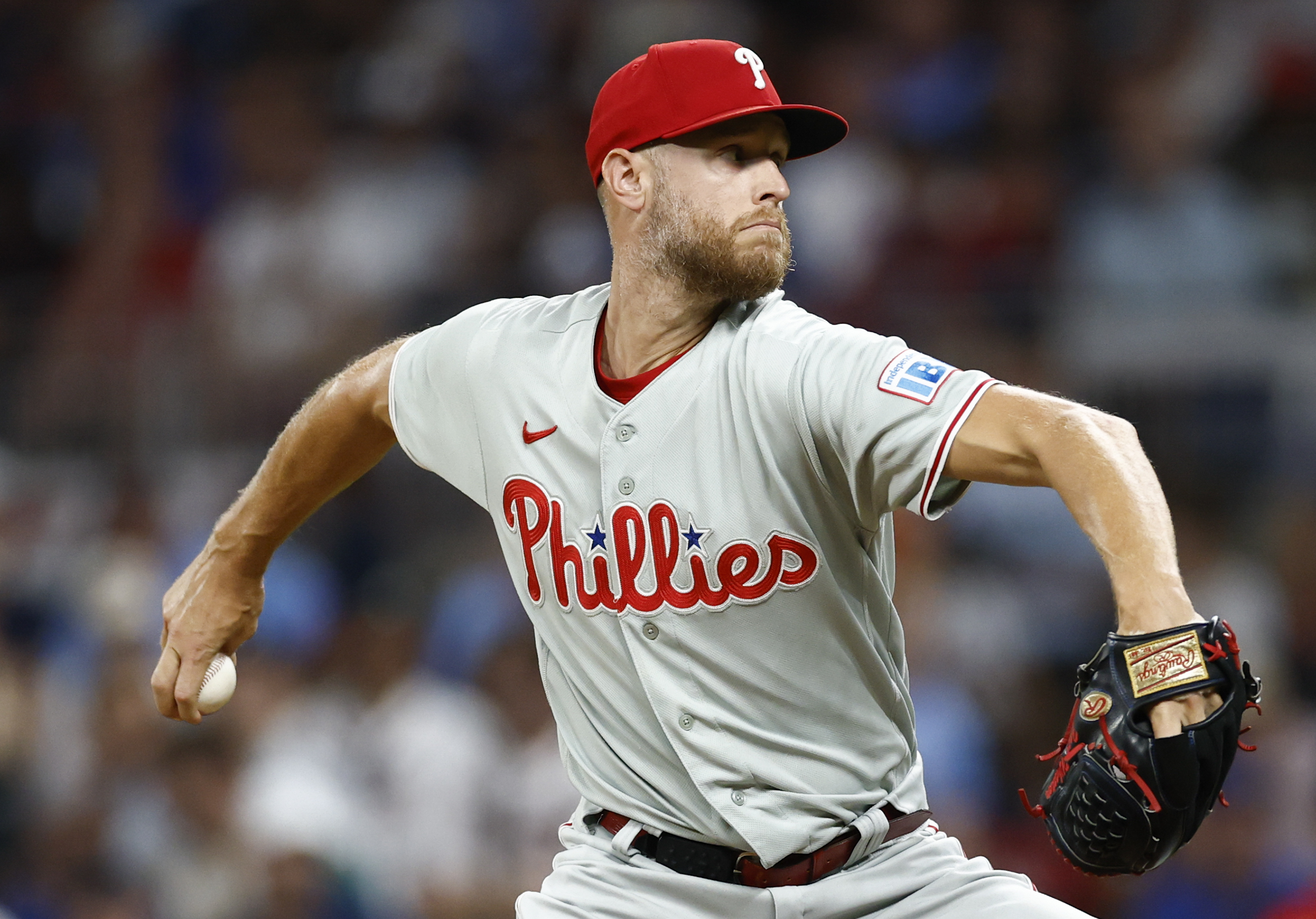
Phillies pitcher Zack Wheeler returned earlier than expected from thoracic outlet syndrome.Yong Kim / Staff Photographer After a six-start stumble in August, Wheeler finished strong with a 4-0 record and 1.67 ERA in his last six starts, including the season finale when he held Tampa Bay to one run in six innings to help clinch the final NL wild card.
If someone had told Wheeler that he’d be as effective as ever a year after surgery, what would he have said?
“To be expected,” he said in September. “When you have surgery, or anything along those lines, you just have to stay positive and keep a strong mindset, you know? You believe that you’re going to come back and be the same guy, if not better, because you’ve had more time to strengthen and fine-tune everything.
“For me, it was just come back, hit the ground running, and just be the same guy as I was, if not better.”
Wheeler, the highest-paid pitcher in baseball, has one season left on his three-year, $126 million extension. When he signed that deal, he indicated 2027 might be his final season.
But would he really walk away if he’s still pitching as well as ever?
“Honestly, I mean, it’s just still up in the air,” he said. “I think a lot of things have to kind of play out for me just to be able to see.”
Wheeler is a candidate for MLB’s Comeback of the Year, which will be announced Nov. 11 at the league’s annual awards show in Las Vegas. The winner is voted on by the 30 MLB.com club beat reporters.
-
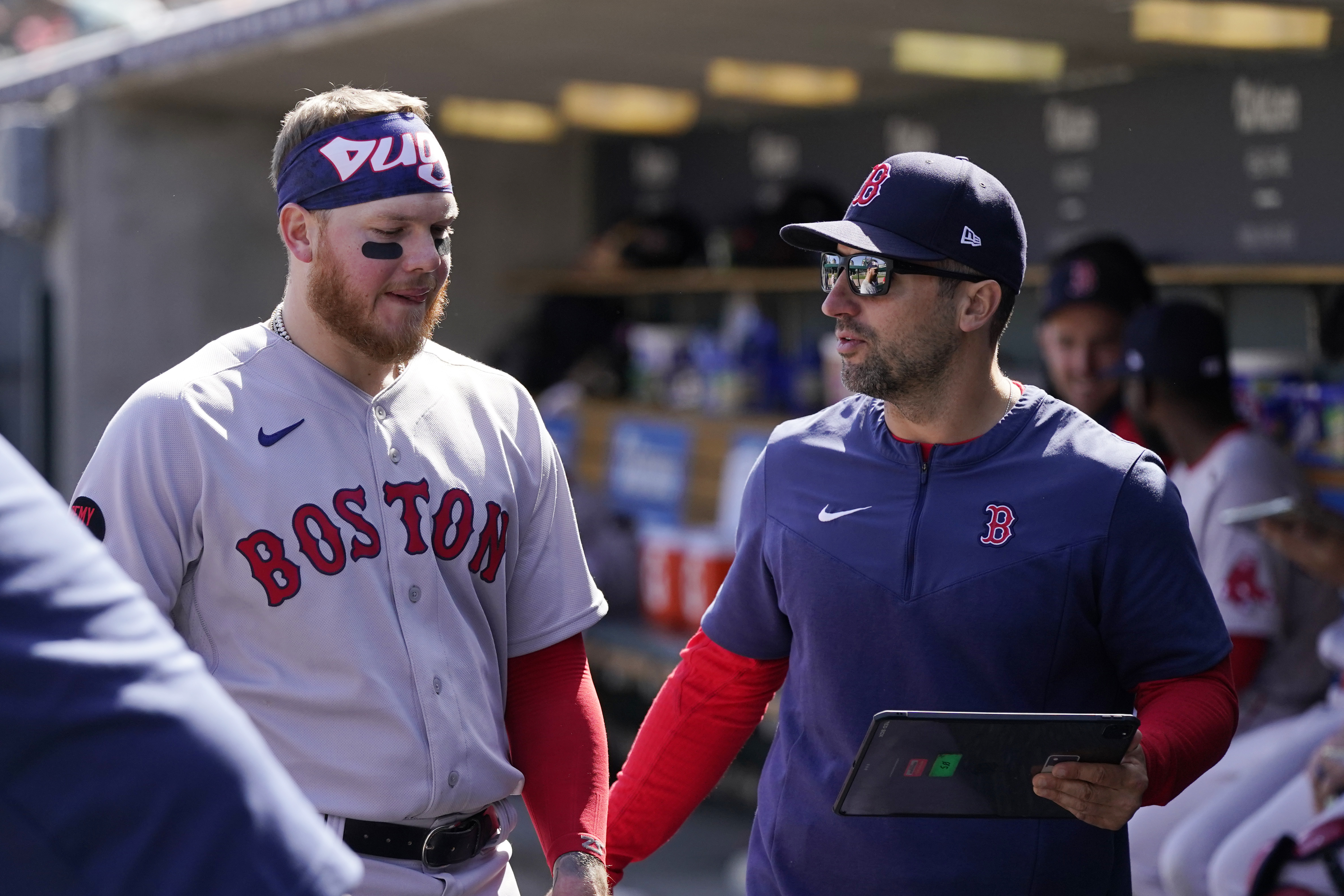
Phillies hire Peter Fatse as hitting coach
Alex Cora won’t manage the Phillies next season, but his former Red Sox hitting coach is joining Don Mattingly’s staff.
The Phillies hired Peter Fatse as their lead hitting coach and Joe Cronin as an assistant, the team announced Tuesday. Edwar Gonzalez, a holdover from the hitting department this past season, was retained as the other assistant.
Fatse, 39, is replacing Kevin Long, who was let go after five seasons — and despite having two years left on his contract — because the Phillies’ offense incurred a steep decline. Cronin, 32, is taking over for Rafael Peña, Long’s assistant for three years.
In a statement released by the Phillies, Mattingly said Fatse “has a track record of being a great communicator who prioritizes collaboration.” Two weeks ago, Mattingly and president of baseball operations Dave Dombrowski said they would seek a coach who blended data with traditional coaching techniques.
Fatse was the Red Sox’s hitting coach from 2022 until late April, when Boston fired Cora and five coaches. During his 674-game tenure as the lead hitting coach, the Sox ranked sixth in the majors in batting average (.254), seventh in slugging (.416), eighth in runs (3,139), and tied for 11th in on-base percentage (.321).
In June, Fatse joined the Rays as a hitting consultant in their research and development department. Tampa Bay finished with the best record in the American League en route to winning the pennant.
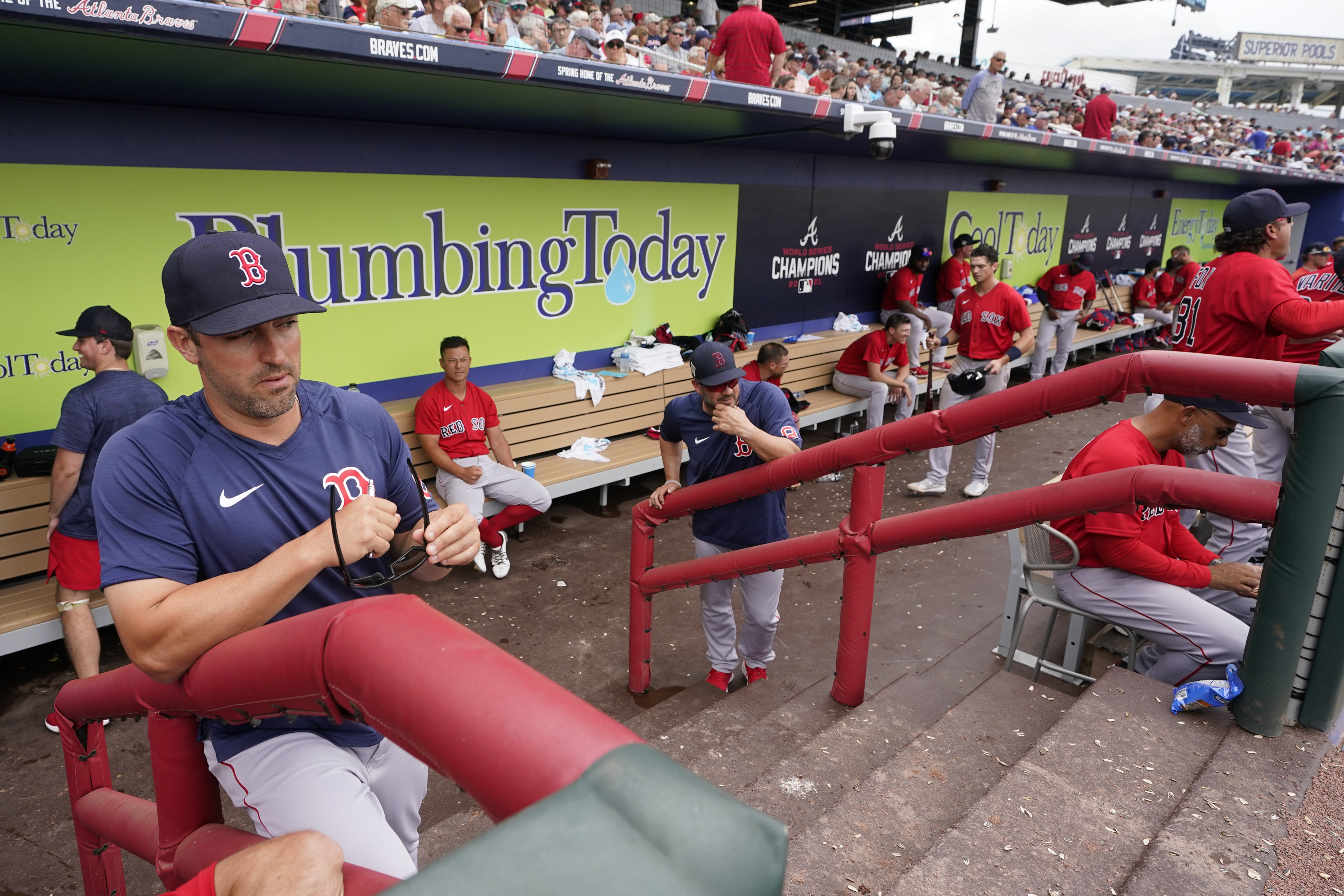
Peter Fatse (left) will join the Phillies coaching staff to help their hitters improve from a down 2026 season.Steve Helber Fatse got hired by the Red Sox after Dombrowski left the organization in 2019, but overlapped in Boston with Kyle Schwarber for a few months 2021. With Fatse as assistant hitting coach, Schwarber got traded to the Sox at the deadline and hit seven homers with a .957 OPS in 168 plate appearances over 41 games.
Long, a major-league hitting coach for 20 consecutive seasons, had close relationships with several veteran hitters, notably Schwarber, Bryce Harper, and Trea Turner. But he took the fall after the Phillies ranked 19th in the majors in runs, 22nd in OPS, and 23rd in on-base percentage. The Phillies scored three runs or less in 72 games, including the postseason.
Turner, in particular, had the worst season of his career.
Video: Phillies Extra: Aidan Miller is ready to play third base if needed “We have all the information that you need; I think you have to be able to use it,” said Mattingly, who signed a two-year contract to stay on as full-time manager. “But you also have to be able to help a guy and talk to a guy and help teach it, right? It’s not just use the information and don’t have any understanding of what’s going on with the swing.
“I think they go in conjunction together. So, you have to have both sides of that nowadays with the amount of information that comes in.”
Dombrowski hired Cora to manage the Red Sox in October 2017, and they won a World Series together in 2018. He spoke to Cora about the managerial job after the Phillies got booted by the Braves in three games in the wild-card round of the playoffs. For the second time in six months, Cora declined the job.
But Dombrowski and Cora remain close and talk frequently, with Cora now endorsing one of his former coaches to help revitalize the Phillies’ offense.
-
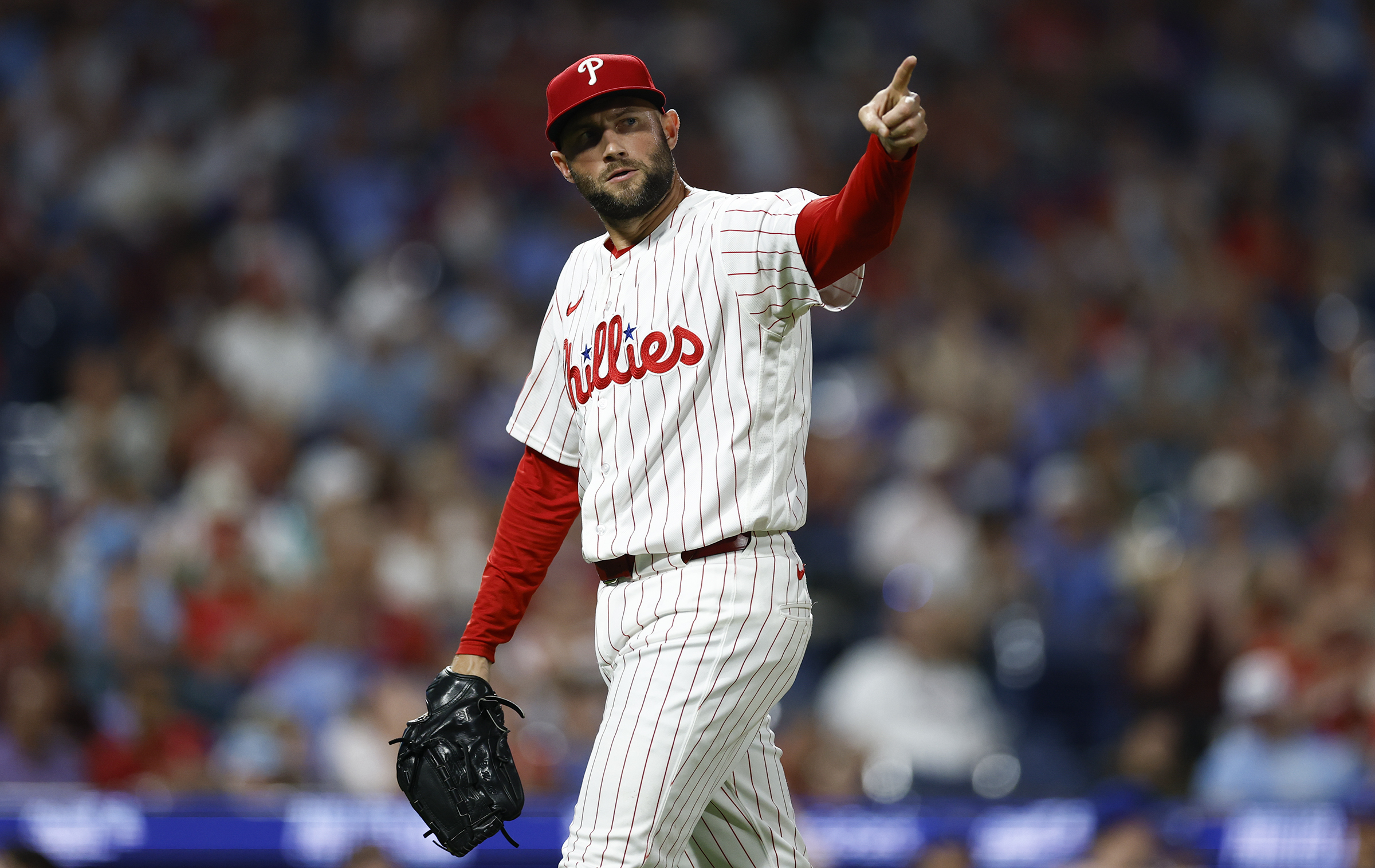
Reliever Tim Mayza on why he re-signed, how ‘The Sheriff’ nickname suits him, and more | ‘Phillies Extra’ Q&A
It was one of the best — and most under-the-radar — Phillies stories of 2026.
Tim Mayza signed a minor-league contract in January, went to spring training as a nonroster invitee, made the team out of camp with a restructured contract, and was the only reliever to remain on the Phillies’ active roster from opening day through the postseason. In between, the 34-year-old lefty had a 3.48 ERA in 60 appearances, including six as an opener, and achieved career-highs with 67⅓ innings and 64 strikeouts.
It was little wonder, then, that Mayza and the Phillies rushed to a one-year agreement for next year. Rather than testing free agency, Mayza will make $2.75 million, according to league sources, in 2027 to stay with the Phillies, his favorite team growing up in Montgomery County.
Mayza, who lives in Montgomery County and trains in the area in the offseason, joined Phillies Extra, The Inquirer’s baseball podcast, to discuss his solid season.
Watch the full interview below and subscribe to the Phillies Extra podcast on Spotify or Apple Podcasts.
Q: You’re a local guy through and through. You could have waited until after the World Series and filed for free agency and taken a quick look around the market to see what might have been out there for you. Can you take me through the process of choosing to re-sign with the Phillies?
A: The negotiations didn’t really start until after the season. I think just, from both sides, I wanted to finish out the season and really didn’t have any type of idea what next season was going to hold. And I can’t speak for the organization, but I feel like from their side they also wanted to take some time and evaluate kind of where they stood in terms of the bullpen and what pieces they wanted to go after and bring back. Obviously, fortunate and grateful that they called and we were able to get something done so soon.
Obviously, I feel very strongly and I think very highly of the organization as a whole. They’ve treated me great. They’ve treated my family fantastically. So, being home is kind of the cherry on top, and being able to kind of get a deal done and be able to move past that and not hit free agency, and now I can really get to work on the offseason and kind of start that dialogue with the Phillies on where they see me and what I need to improve going into the offseason. So, that was another plus. I get to have that communication with them early and often, and be able to have an offseason where I could tailor things on where they think that I need to improve on for next year.
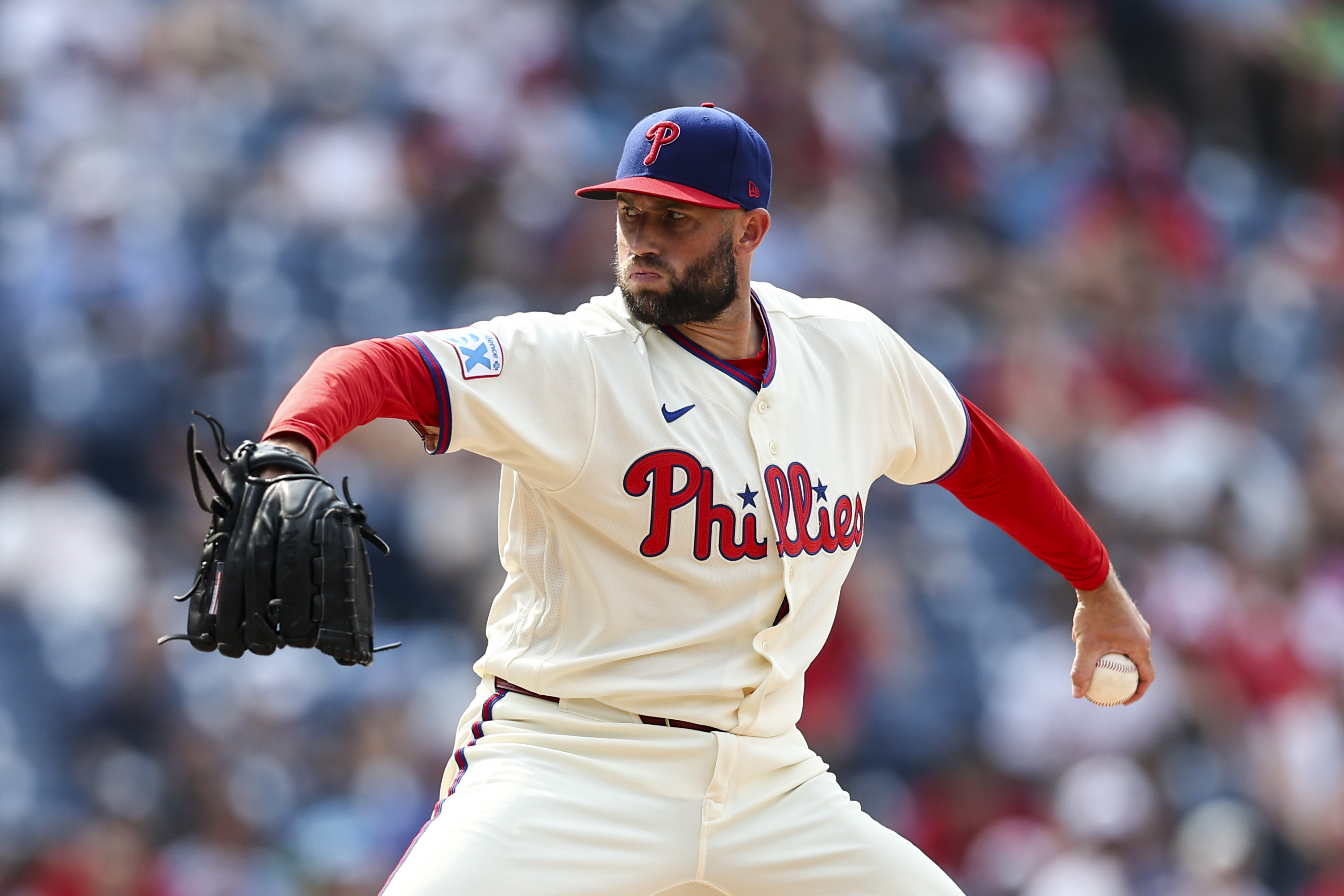
As “The Sheriff,” veteran lefty Tim Mayza took on a leadership role in the Phillies bullpen.Monica Herndon / Staff Photographer Q: This season you really reestablished yourself as the guy that you were for several years in Toronto. How much of it was being healthy again? How much of it was rediscovering your fastball?
A: … I think when you speak to anybody, as long as they’re healthy, they feel like they can let their abilities kind of shine and go out there and just worry about competing and not worry about the health side of things. When I came over here [as a waiver claim] in ’25, I had just gotten done a rehab assignment. I just missed four months, so I felt like I was trying to reestablish form in the big leagues and also remain healthy for the end of the season, for that final four to six weeks. But yeah, having a full offseason where health wasn’t an issue — I knew I was healthy at the end of ’25 when I got claimed by the Phillies, and that month I really liked the organization, and so signing the minor league deal, I kind of had to go in and prove myself, which to me is not out of the ordinary.
I think as any bullpen guy or really any player in the big leagues is going to say, ‘Hey, if I want a job, I have to perform,’ and that’s just the nature of the game. And so, I went [to] prove myself. I think I surprised myself a little bit with the fastball velo and kind of reestablishing that. I’ve always leaned on the sinker. It’s always been kind of a primary pitch for me, so being able to move that sinker around and work arm side/glove side and then have the extra velo on it made it a little more effective going into this year. So, [I] just ran with it, and still tinkering a little bit with an offspeed pitch, and kind of figuring out what direction I want to go with the slider. Toyed around a little bit with a split midseason. So, it’s one of those things: Do we want to revisit that this offseason [now] that there’s some time to really dive in and work on those things? But I was pleased with the way the sinker played and the results I was able to get with it.
Video: Phillies Extra: How much change is needed for the Phillies entering 2027? Q: Can you share a little bit about how you got the Sheriff nickname? Who gave it to you, and why did it stick throughout the season?
A: I think it kind of gained popularity when [Phillies reliever] Chase Shugart had his postgame in Miami, and they asked him who he felt like was the leader. Brad Flanders, one of the bullpen catchers, ran with it as well, and then kind of — I think he might have came up with it. But I hold myself to a high standard. … At times it’s sarcastic in the way I approach the leadership style. At times I’m sarcastic, but it’s like, ‘Hey, when it’s time to stretch and it says 2:40 on the schedule, it’s 2:40.’ There’s small things that I think are good in terms of a bullpen culture, and it’s more just holding guys accountable. It’s a long season and just keeping guys on the straight and narrow.
So, it really came about because I’m a stickler with the rules. The rules and guidelines I like. It goes to another level with me and [fellow reliever Jonathan] Bowlan because usually we’re bouncing off each other in the training room and he’ll have a time, I’ll have a time, so if he’s like five minutes late, I might be like, ‘Hey Bowlan, that five minutes that you’re late now cuts into my five minutes in the training room getting ready for the game.’ … It’s sarcasm, it just holds us accountable and making sure that we stay focused and on track. And I think if you do the small things right and you prep the right way, then a lot of things on the field will take care of themselves. But you got to take care of what you need to on a daily basis first.