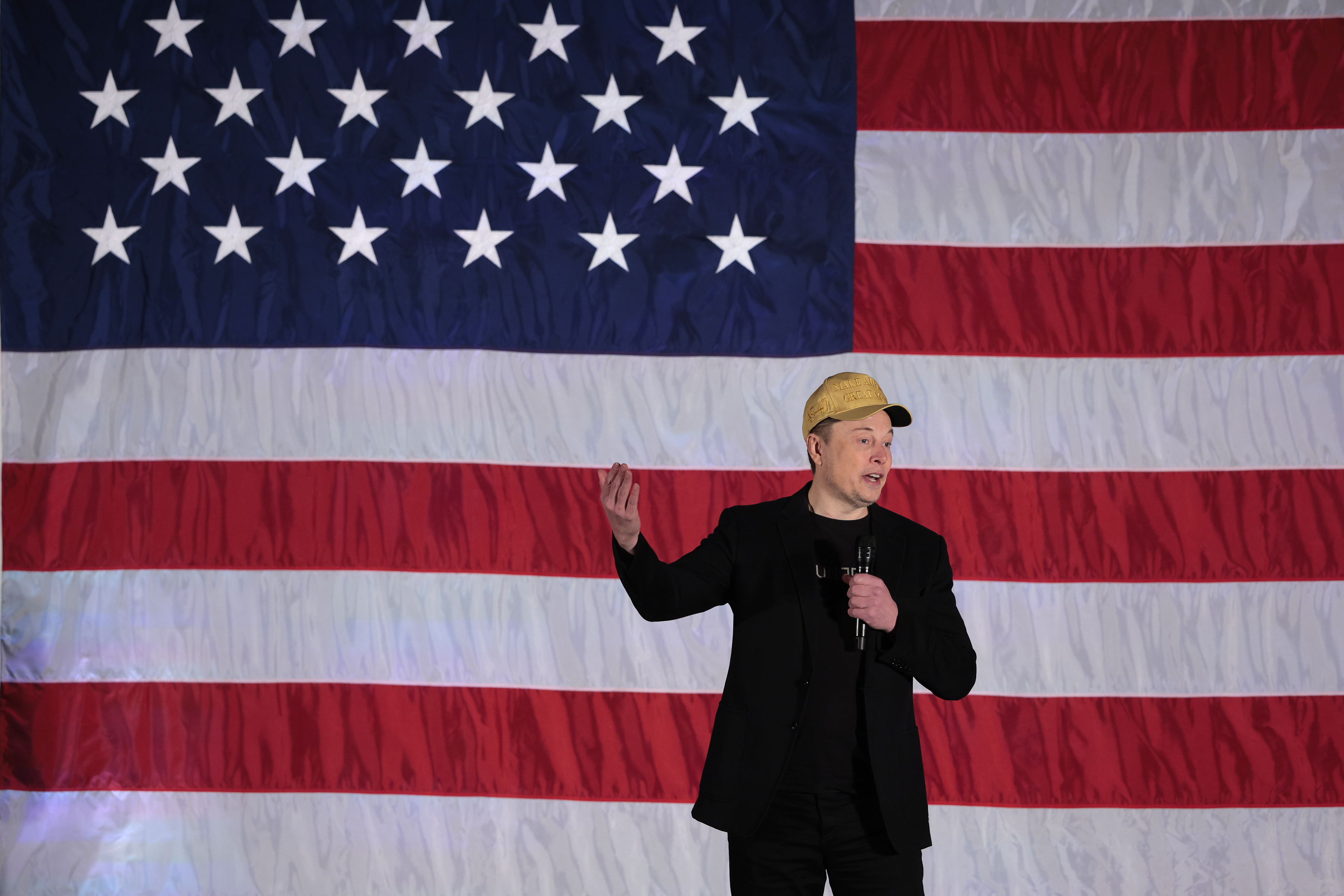
The richest man in the world, who was laser-focused on delivering Pennsylvania for President Donald Trump in 2024, is wielding his wallet in the Keystone State once again to support Republicans in three swing congressional districts ahead of the midterms.
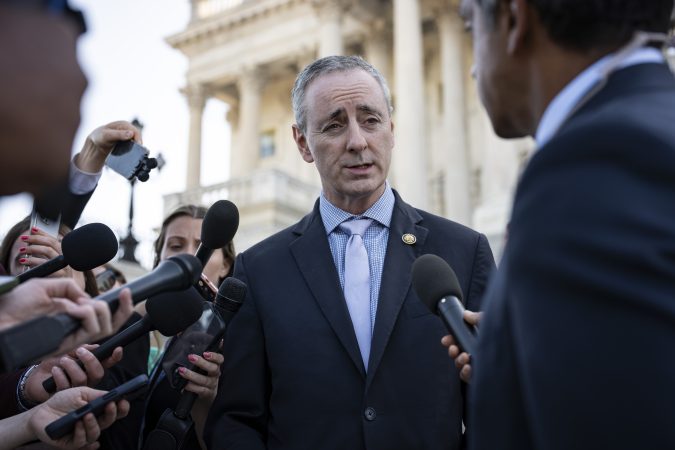
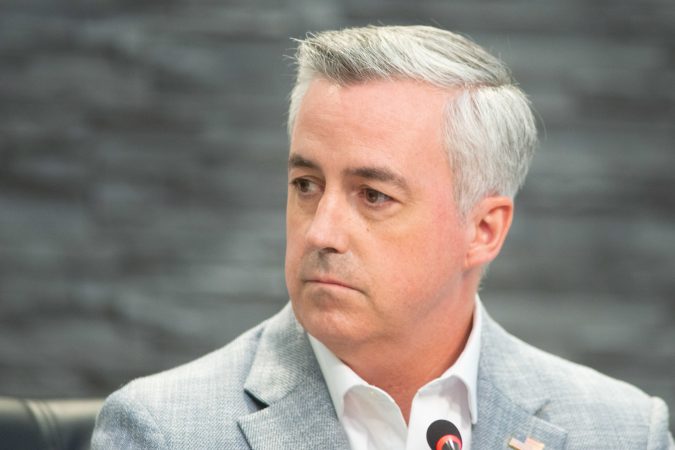
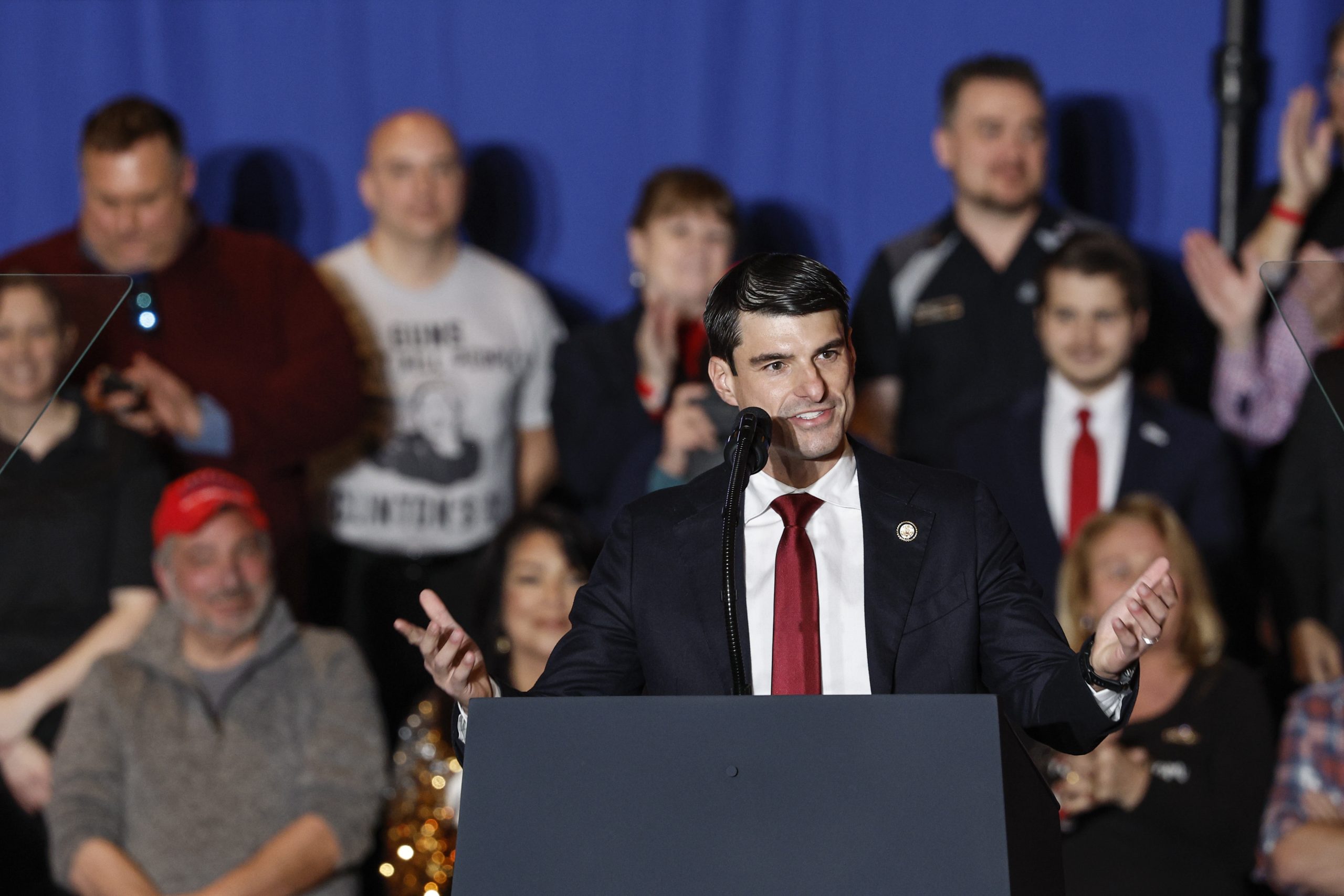
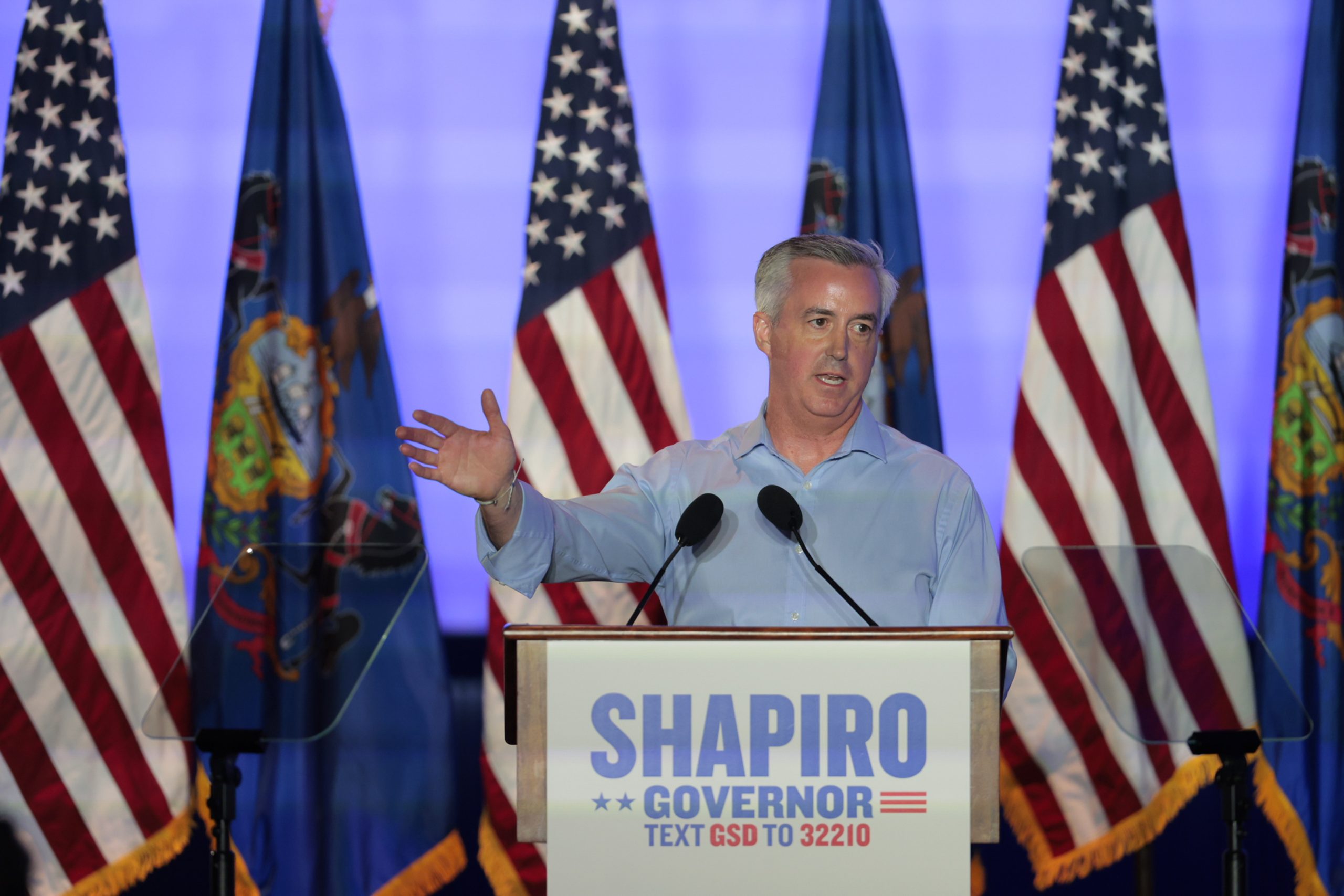
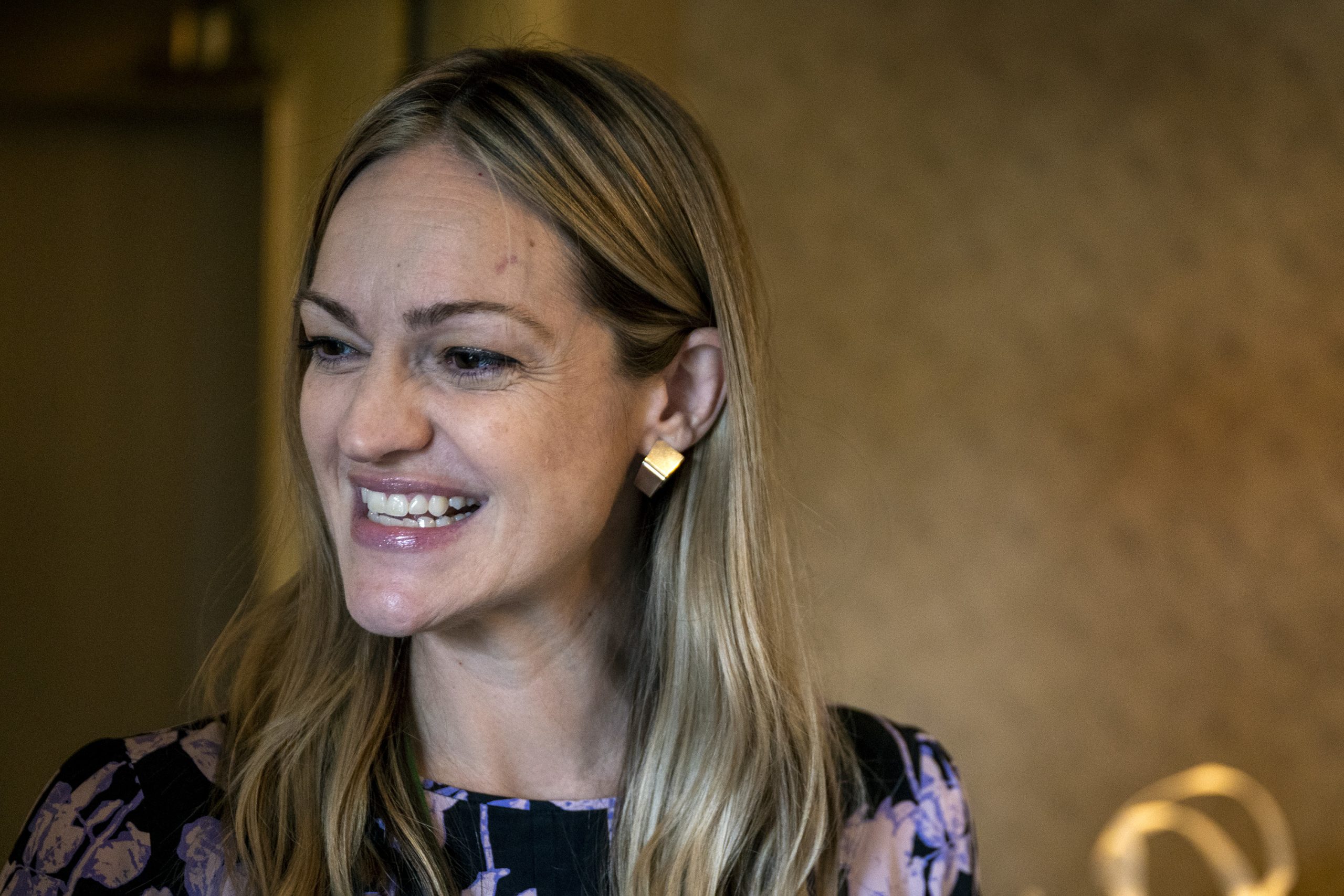
America PAC, Musk’s super PAC, has contributed roughly $12,000 apiece in support of U.S. Reps. Ryan Mackenzie, of Lehigh; Rob Bresnahan, of Lackawanna; and Scott Perry, of York — all GOP incumbents facing tough reelection challenges, according to an independent expenditure report filed Wednesday.
The PAC’s contributions for the congressional races went toward printing at Storytellers Group LLC, a Tennessee-based company, according to the report. He also contributed to several other competitive races across the country.
Even though Musk is not yet deeply involved in Pennsylvania, the PAC’s spending signifies that the billionaire likely views these three congressional seats as important as both parties vie for control of the U.S. House.
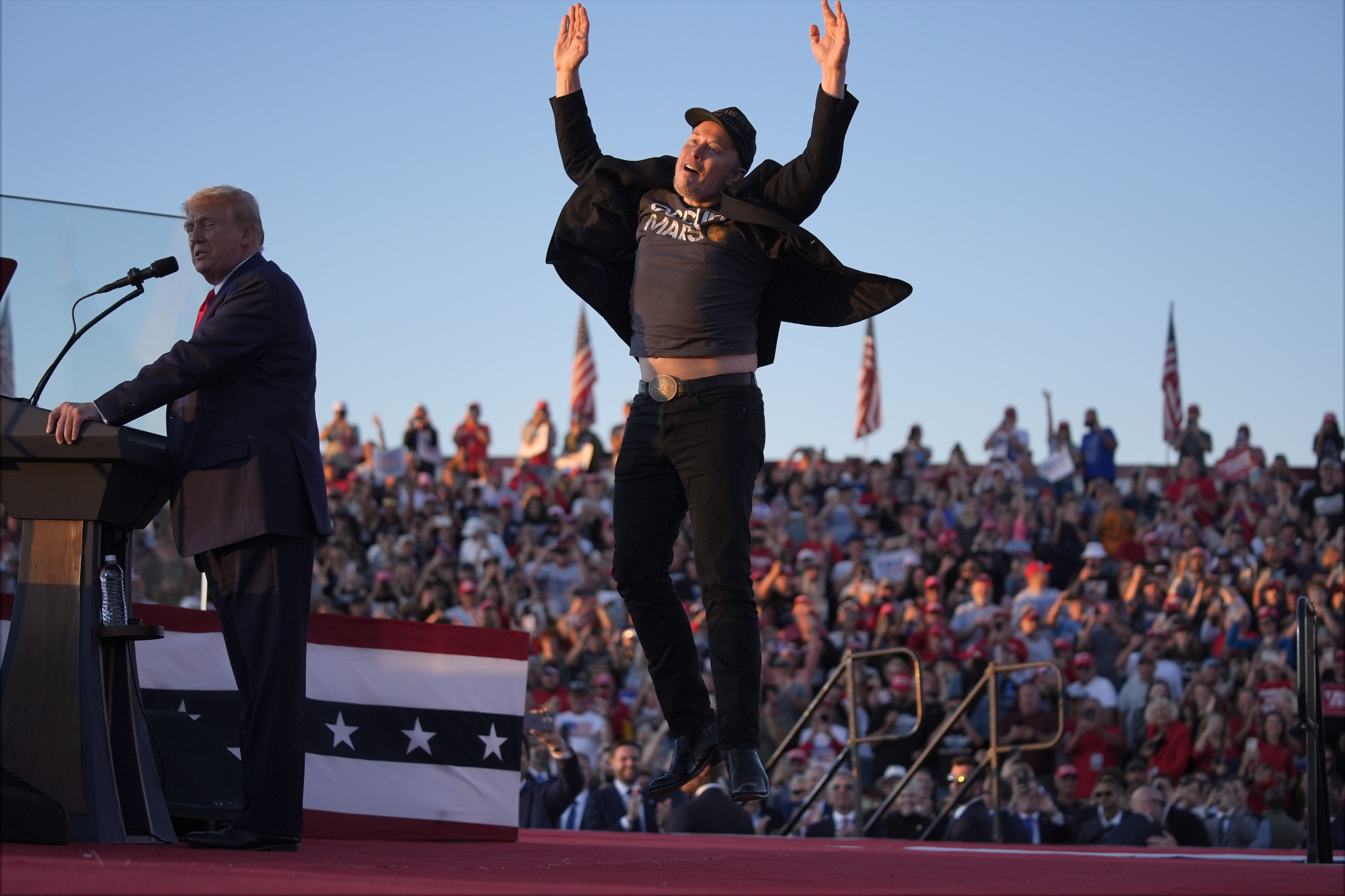
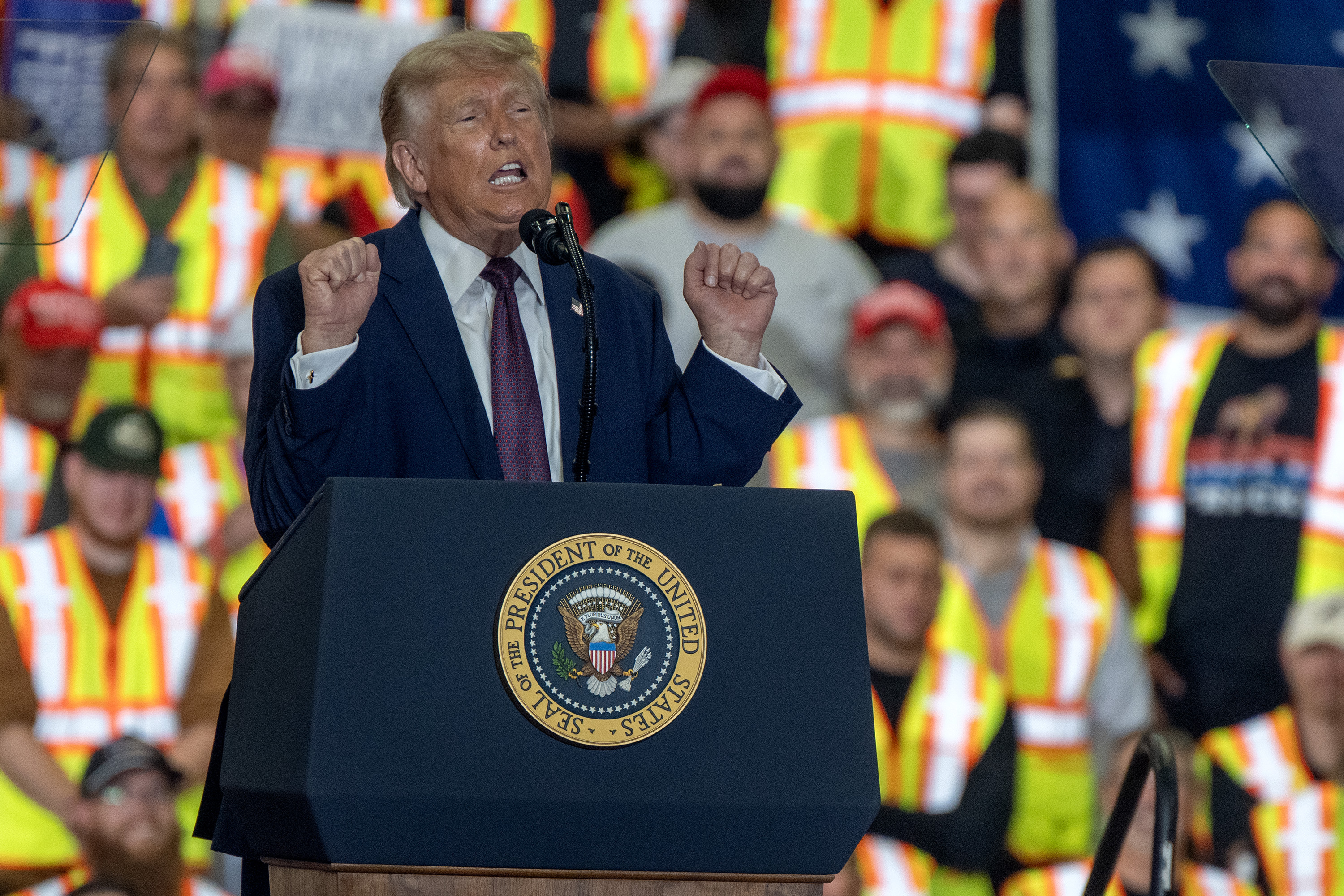
Elon Musk jumps on the stage as President Donald Trump speaks at a campaign rally at the Butler Farm Show, Oct. 5, 2024, in Butler, Pa.Evan Vucci
America PAC and spokespersons for Mackenzie, Bresnahan, and Perry did not immediately return a request for comment.
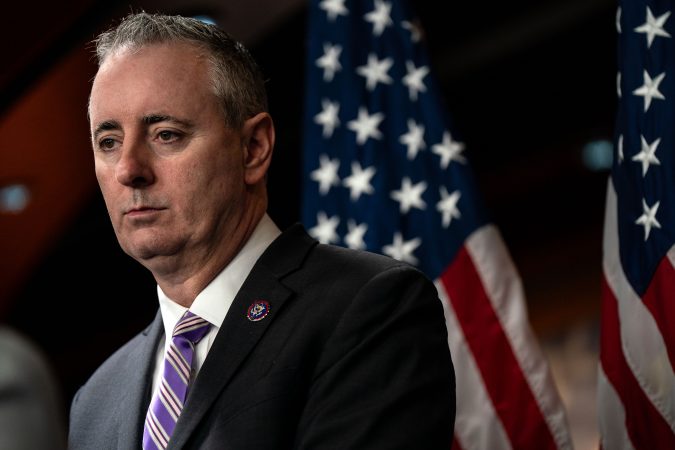
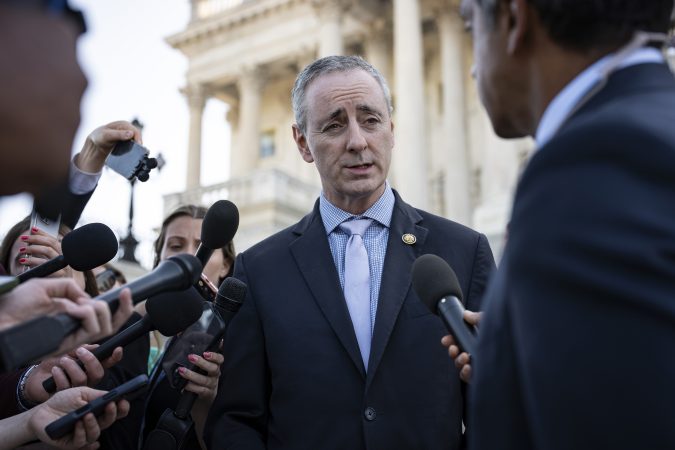
The PAC also has yet to make a contribution in support of U.S. Rep. Brian Fitzpatrick (R., Bucks) will also be defending his seat against Democratic challenger Bob Harvie in a swing district this November.
“I think Fitzpatrick is fairly well positioned regardless of what Mr. Musk does or does not do,” said Christopher Nicholas, a GOP consultant.
But the three GOP incumbents benefiting from Musk’s latest spending all lagged their Democratic challengers in fundraising during the most recent quarter. And Tesla and SpaceX’s CEO’s support could help close the gap.
Bob Brooks, a retired firefighter and union leader who is challenging Mackenzie, seen as one of the most vulnerable incumbents in the nation, said in a statement that Musk is “spending a fortune to buy this congressional seat” in the Lehigh Valley.
“I have a message for Elon and Ryan: Pennsylvania’s Seventh district is not for sale,” he said.
A spokesperson for former TV news anchor Janelle Stelson, who is running in a rematch against Perry in the 10th District, said that: “Scott Perry lacks the courage to highlight Musk’s efforts to increase corruption in our government, so now Musk is rewarding Perry for his subservience.”
And in the 8th Congressional District, Scranton Mayor Paige Cognetti said: “Unlike Rob, I don’t take a dime of corporate PAC money.”
“In Congress, I’ll answer to the people of NEPA, and no one else,” she said.
The 29-year-old Conshohocken resident recently got laid off from a local, financially struggling real estate company and is now trying to find work in a grueling job market for young workers where many of her applications are getting intercepted by AI bots, instead of a person.
That is a higher percentage than any in other age group in the poll, which found 58% of all Pennsylvania likely voters disapprove of the president.
Though 80% of young voters said they are satisfied with their own life, they overwhelmingly gave Trump low marks on his handling of the economy and other major issues in the United States.
Young people are overwhelmed by rising costs in what they see as an unstable economic and volatile international landscape with ramifications that they will one day have to shoulder.
“It feels like things are going downhill in a way that we don’t know how to recover, and our generation is going to be responsible for picking up the pieces environmentally,” said Harrington, a Democrat. “Also, politically, there are many things that have been done that are going to be hard to take back or that we have to figure out how to undo in the future.”
The poll, which surveyed likely voters in Pennsylvania between Aug. 17 and 21, underscores how deeply unpopular Trump is among the generation that came of age during his foray into politics and could foreshadow where the state’s politics are headed beyond November’s high-stakes midterm races.
“Young people are feeling as though they simply don’t have the same level of opportunity as do older people,” said Don Levy, director of the Siena Research Institute.“They are dissatisfied,” he added, and contending with housing expenses, the prices of goods and services, and how much it costs to get married.
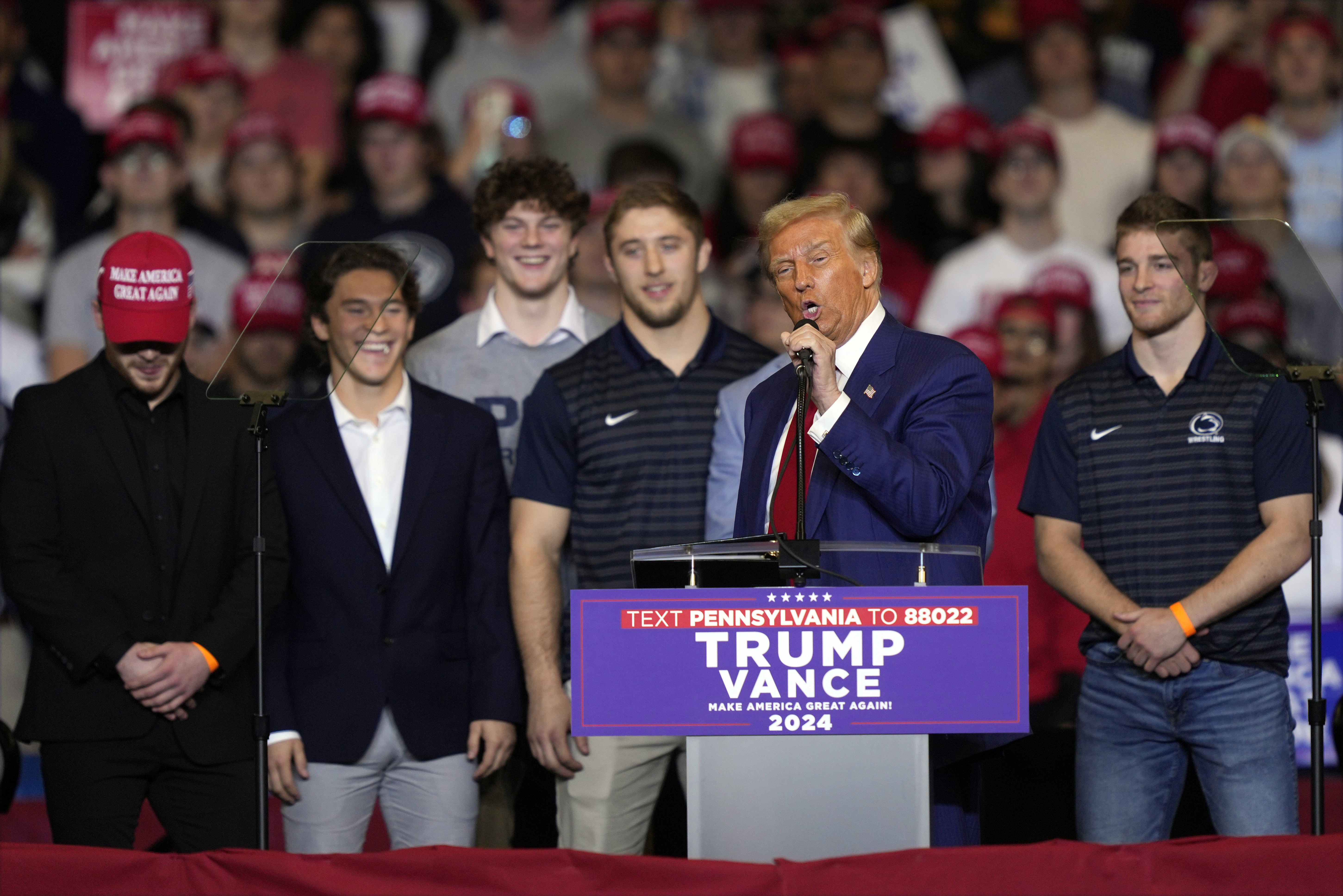
President Donald Trump speaks as members of the Penn State wrestling team listen at a campaign rally at the Bryce Jordan Center in State College in October of 2024. Trump went onto win the state. Matt Rourke
‘The cost of continuing to exist’
Sophie Showers, 19, wants kids, a stable job as a psychologist, and to one day be married.
But now that vision is getting hazier as costs rise, including at the grocery store and at the gas pump, which she needs for her 45-minute commute to school — what the Mechanicsburg resident and first-time voterrefers to as “the cost of continuing to exist.”
Trump, according to the poll, is most underwater with young voters on the cost of living: Only 9% approve and 90% disapprove of his handling of the issue.
That disapproval includes a quarter of voters under 30 who cast ballots for Trump in 2024, including a young voter from the Philadelphia area who asked not to be identified due to his role in his local Republican Party.
He supported Trump in 2024, but he has become disappointed with what he says is Trump’s ignorance of the country’s biggest problems, namely inflation.
“He wants to lower taxes. He wants to cut regulation. I agree with all those things,” he said. “But actually making major changes to people’s pricing, I don’t think he’s taking it that seriously.”
On the economy, 19% of young people approve of Trump’s handling and 81% disapprove, according to the poll.
“The current state of our country is that young people feel as though they have less opportunity economically than their parents or grandparents,” Levy said. “That’s a clear statement on dissatisfaction with the economy.”
(function(){function e(){window.addEventListener(`message`,function(e){if(e.data[`datawrapper-height`]!==void 0){var t=document.querySelectorAll(`iframe`);for(var n in e.data[`datawrapper-height`])for(var r=0,i;i=t[r];r++)if(i.contentWindow===e.source){var a=e.data[`datawrapper-height`][n]+`px`;i.style.height=a}}})}e()})();
“If the cost of living keeps increasing, whether it be due to gas prices … or tariffs increasing the costs of groceries, I don’t want to be in a world where I have to worry about those kinds of things for the family that I want to have or will have, and I personally don’t really see things getting better,” said Showers, an independent voter.
Miles Balfour, a graduate student pursuing a degree in human interaction at Carnegie Mellon University, is feeling similarly pessimistic.
“When it comes to the financial and economic goals that I have for myself — wanting to own a home, wanting to be able to help provide financially for my family — I don’t know, honestly. I wish there was a better sense of confidence or assurance that these things are much more likely to actually happen,” Balfour, 25, said.
According to a survey earlier this year from CIRCLE, a Tufts University program that studies youth civic engagement, many young people ages 18 to 29 are barely making ends meet, and nearly 60% said they struggle to meet their basic financialneeds.
“Young people’s personal situations are also really coloring their view of politics and of what’s happening in the country,” said Alberto Medina, CIRCLE’s communications manager.
Ben Hummer, 28, of Pittsburgh, said though he is new to his career in recruiting, raises have slowed down while expenses like rent have gone up. His auto insurance for his Hyundai skyrocketed to roughly $3,000 a year, and his favorite sneakers — for a race he will be running later this year — have jumped from $120 to about $170.
“My ability to afford my lifestyle comfortably has become more challenged,” Hummer, a Democrat, said.
Young voters grapple with international conflicts
Beyond struggles at home, young voters are also wrestling with questions about the U.S. role in overseas conflicts.
After the deadly Oct. 7, 2023, terror attack against Israel by Hamas, the country launched a military campaign against the insurgent group in Gaza. And with the death toll of Palestinians climbing to more than 70,000 over the last three years, the debate over U.S. support for Israel has become a defining issue for many young people in Pennsylvania and elsewhere.
As encampments and protests in support of Palestinians roiled university campuses ahead of the 2024 election, the issue hung over former President Joe Biden’s reelection campaign before his withdrawal and may have contributed to Vice President Kamala Harris’ loss.
Trump repeatedly vowed during his 2024 campaign to end the war. But fighting has continued, and now only 16% of likely young voters in Pennsylvania approve of Trump’s handling of the conflict, the poll found.
Hummer, the 28-year-old from Pittsburgh, disapproves of the president’s approach and said the U.S. “needs to balance its approach” in the Middle East.
(function(){function e(){window.addEventListener(`message`,function(e){if(e.data[`datawrapper-height`]!==void 0){var t=document.querySelectorAll(`iframe`);for(var n in e.data[`datawrapper-height`])for(var r=0,i;i=t[r];r++)if(i.contentWindow===e.source){var a=e.data[`datawrapper-height`][n]+`px`;i.style.height=a}}})}e()})();
“It doesn’t necessarily have to be pro-Palestinian by any means, but the United States has allies in the region outside of Israel that are being negatively impacted by the conflict, and we often just throw them under the bus,” Hummer said.
Many young people have coupled their anger about the economy with Trump’s decision to join Israel in striking Iranian nuclear facilities and military sites. The Iranian regime retaliated by blocking a key water channel where oil tankers flow, spiking the price of gas throughout the spring.
Among 18- to 29-year-old Pennsylvania voters, only 17% approve of Trump’s handling of the war in Iran, while 82% disapprove (it is also his least popular issue among all likely voters in the state). The war — which the president originally promised would go on for only a few weeks — has now lasted for six months.
“I’m concerned about the United States’ ability to extract itself from the war in Iran without taking some kind of loss — whether it’s loss of influence, loss of life, or loss of financial resources,” and the prospect gets worse the longer the U.S. remains involved, Hummer said.
Young voters are also more critical of Pennsylvania leaders’ positions on Israel than are respondents overall.
Nearly half, 47%, of respondents said Pennsylvania’s third Jewish governor, Josh Shapiro, has been just “about right on support of Israel,” with 14% saying he has been too supportive, despite his vocal opposition to the country’s leader, Prime Minister Benjamin Netanyahu. But among young voters, 40% said he was too supportive.
And more than half, 51%, of young voters said Pennsylvania U.S. Sen. John Fetterman, a frequent defender of Israel who has said he would leave the Democratic Party if anti-Israel sentiment grew too strong, is too supportive of Israel — compared with 30% overall.
‘Willing and ready to vote in 2026’
Young voters are now figuring out what to do next.
Darlene Jimenez, 19, of Philadelphia, said she is grappling with what she can feasibly do as a young person who cares deeply about many issues, including immigration (on which Trump has a 25% approval rating among young voters) and climate change.
“There’s so many times where I find myself thinking like, ‘What am I to do?’” said Jimenez, a Democrat and college student. “Like, I’m 19 and I have so many opinions, and it’s like, what am I supposed to do to actually make a change?”
Medina, communications manager for CIRCLE, said that while there is a sense of hopelessness among young people, “many of them are paying attention, and they say that they’re willing and ready to vote in 2026.”
“Often, precisely because they don’t like the way things are going, and they would like things to change, and they see themselves as having a role in bringing about that change,” Medina said the organization has found in its research.
In Pennsylvania, the youth vote has the potential to make a “decisive impact” on the four key competitive congressional district races this fall — in Bucks County, the Lehigh Valley, the Scranton area, and the Harrisburg region — according to CIRCLE’s 2026 Youth Electoral Significance Index.
(function(){function e(){window.addEventListener(`message`,function(e){if(e.data[`datawrapper-height`]!==void 0){var t=document.querySelectorAll(`iframe`);for(var n in e.data[`datawrapper-height`])for(var r=0,i;i=t[r];r++)if(i.contentWindow===e.source){var a=e.data[`datawrapper-height`][n]+`px`;i.style.height=a}}})}e()})();
But at the same time, young people are still trying to find their political home and historicallyhave been less likely to vote than other age groups, including in 2024, when there was a 54% turnout rate among Pennsylvanians ages 18 to 24 compared with 70% for the overall electorate, according to census data.
Others are a little more sure of where they stand. For instance, young women are the demographic most disapproving of Trump among likely voters in the Inquirer/New York Times/Siena poll. Fourteen percent of young women approve of his job performance, and 83% disapprove.
(function(){function e(){window.addEventListener(`message`,function(e){if(e.data[`datawrapper-height`]!==void 0){var t=document.querySelectorAll(`iframe`);for(var n in e.data[`datawrapper-height`])for(var r=0,i;i=t[r];r++)if(i.contentWindow===e.source){var a=e.data[`datawrapper-height`][n]+`px`;i.style.height=a}}})}e()})();
While a gender gap still exists among young voters, young men — who helped catapult Trump to the White House in 2024 — now disapprove of the president by a nearly 2-1 ratio: 33% approve of his job performance, compared with 64% who disapprove.
Will, a Democrat from Bucks County who works in academia, crossed the aisle to vote for Trump in 2024 because he — “a loyal Joe Biden guy” — vehemently disagreed with how Harris was nominated without a primary after Biden’s withdrawal and also believes Democrats have focused too much on identity politics.
The 27-year-old, who asked to be identified only by his first name because of concerns about workplace retaliation, has mixed feelings about Trump’s handling of the issues and called the Iran war “ridiculous.” But he does not fully regret his vote, citing Trump’s handling of Israel as one reason.
“My impression is that the Democrats have been moving further left to kind of compensate for the fact that MAGA and the tea party moved the Republicans further right, so it kind of leaves people in the middle stranded. … I would prefer the Democrats kind of bring things back to the center,” said Will, who supports Shapiro for governor and would back him for president in 2028.
And Luke Averill, 19, a registered Republican from Delaware County who voted for Harris in 2024, said he thinks he can make the most impact on the direction of the country by voting for moderate candidates in Pennsylvania’s GOP primaries, but he does not see himself as a “diehard for one party in particular.”
But for many young voters, the elected officials they are gravitating toward are indicative of what is most important to them.
Several young respondents to the poll said they findNew York City Mayor Zohran Mamdani’s style of politics and focus on affordability to be refreshing.
“He’s the inspiration for myself and many people in my generation and all around the country,” Balfour, the 25-year-old at Carnegie Mellon, said. Mamdani brings “a sense of hope and optimism” and the ability to see government “make our lives much more meaningful.”
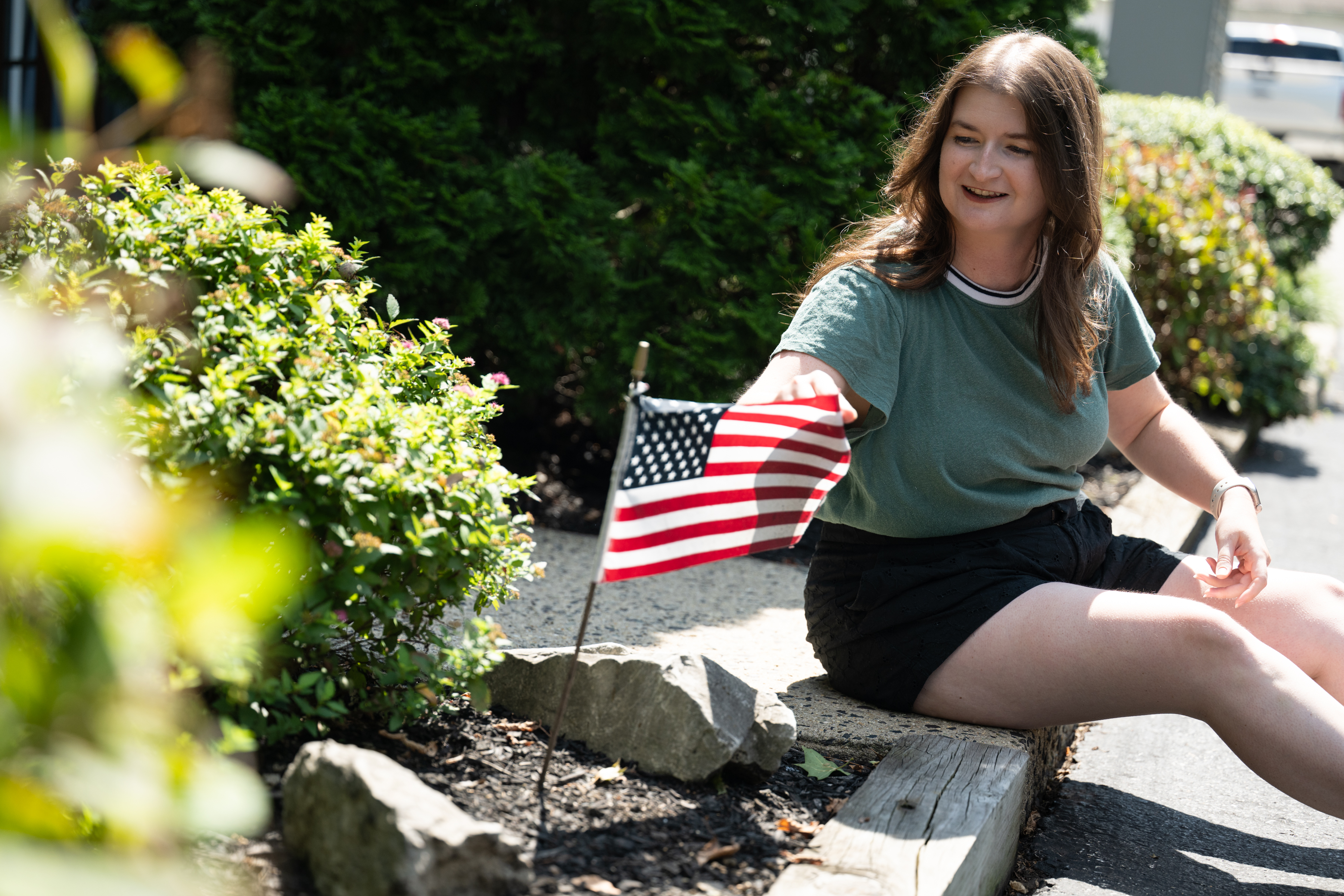
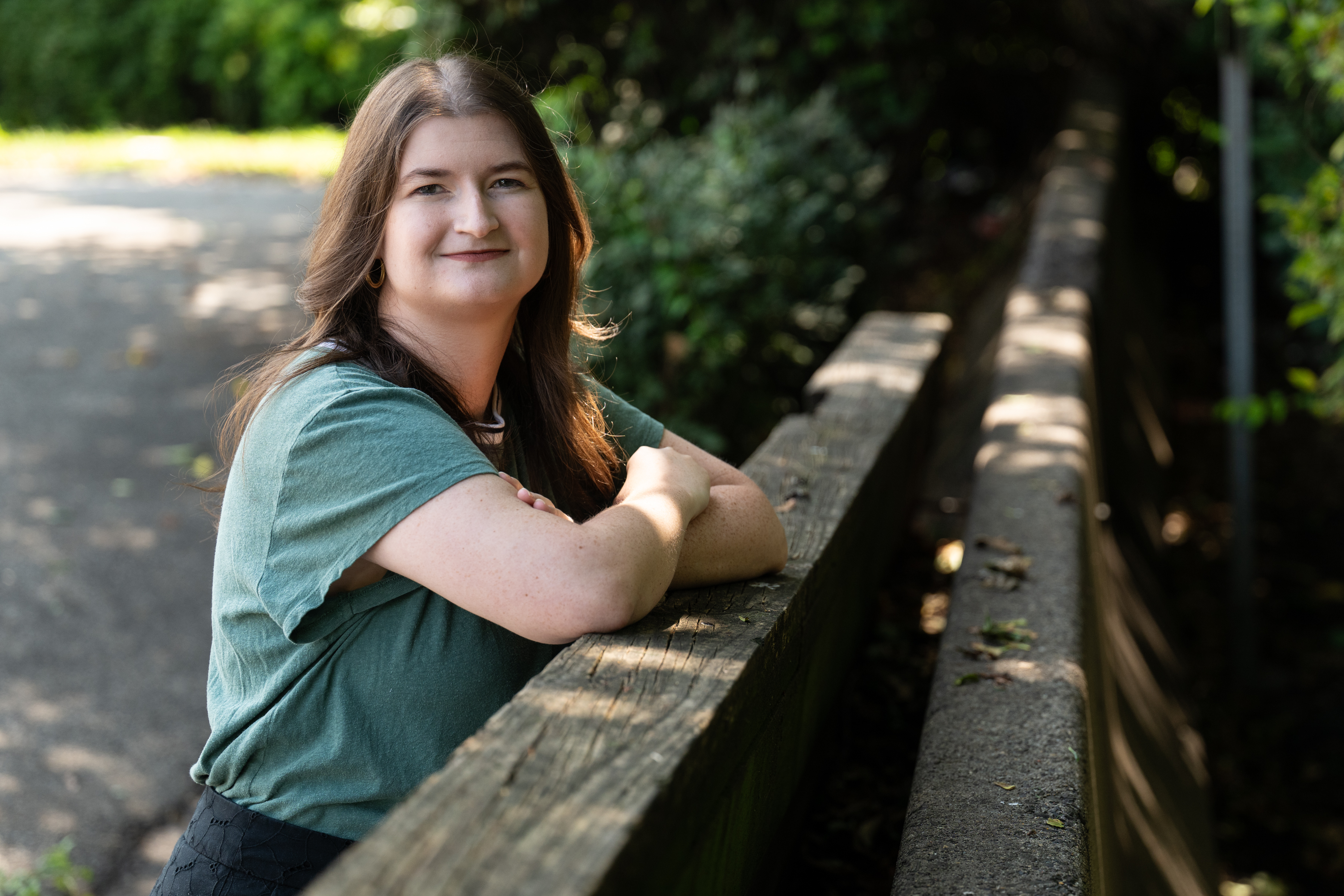
Kelly Harrington, 29, poses for a portrait near her home in Conshohocken, Pa., on Monday, Aug. 24, 2026.Erin Blewett / For The Inquirer
And as for Harrington, the 29-year-old from Conshohocken, she said though she feels “frustrated and sad about the state of the world,” she believes it is important to take those emotions to the ballot box.
“Politics is in every aspect of life,” Harrington said. “It affects you directly in almost every way, and if you get involved, you can make real change.”
More than half of likely voters in Pennsylvania’s forthcoming midterm elections disapprove of President Donald Trump’s job performance, and he is drastically underwater among the state’s electorate on key issues — some of which helped him win a second term in 2024.
Trump, who won the crucial swing state by nearly two percentage points in November 2024, now has an approval rating of 39% and a disapproval rating of 58% among Pennsylvania’s likely voters, according to an Inquirer/New York Times/SienaUniversity poll published Tuesday.
The poll, which was conducted from Aug. 17 to 21 among 760 likely Pennsylvania voters, raises questions about how voters’ perception of the president will affect November’s midterms, when many Pennsylvanians will cast their ballots in four critical swing district races that could determine which party controls the U.S. House.
(function() { var l = function() { new pym.Parent( ‘nyt-trump2__graphic’, ‘https://media.inquirer.com/storage/inquirer/ai2html/nyt-trump2/index.html’); }; if(typeof(pym) === ‘undefined’) { var h = document.getElementsByTagName(‘head’)[0], s = document.createElement(‘script’); s.type = ‘text/javascript’; s.src = ‘https://pym.nprapps.org/pym.v1.min.js’; s.onload = l; h.appendChild(s); } else { l(); } })();
Even among his Pennsylvania supporters who were surveyed, Trump faces some of his lowest approval ratings regarding his handling of the war in Iran and cost-of-living issues, according to the poll, counteracting campaign promises that proved successful in 2024: ending foreign wars and helping people pay their bills.
Once again,the economy will likely be at the front of voters’ minds heading into November — 22% of Pennsylvanians polled said it is their top issue in the governor’s race — and it could also serve as an indicator for the outcome of House races where Republicans will be on the defensive.
“Certainly it’s got to be a drag on their fortunes,” said Don Levy, director of the Siena Research Institute.
(function(){function e(){window.addEventListener(`message`,function(e){if(e.data[`datawrapper-height`]!==void 0){var t=document.querySelectorAll(`iframe`);for(var n in e.data[`datawrapper-height`])for(var r=0,i;i=t[r];r++)if(i.contentWindow===e.source){var a=e.data[`datawrapper-height`][n]+`px`;i.style.height=a}}})}e()})();</script
Trump losing ground on issues that propelled him to White House
The new polling on Trump’s management of top concerns facing the United States — particularly the economy and the cost of living — shows how the issues that helped propel him to the White House in 2024 are now souring his approval among Pennsylvanians, including some who previously voted for him.
Among likely voters in the Keystone State, 39% approve and 61% disapprove of Trump’s handling of the economy. On his handling of the cost of living, 33% said they approve and 66% disapprove.
The data come as voters continue to grapple with rising costs, including unusually high gas prices, and grocery prices that have been increasing for nearly six years. Trump’s tariffs, one of the defining policies of his first year back in office, also raised prices for consumers and businesses.
Now, a quarter of Pennsylvanians who voted for the president in 2024 say they disapprove of how he is handling of the cost of living.
Michael Patterson, 60, of Bucks County, is one of them.
Though Patterson said Trump’s term has been“great” overall, he was expecting more from the president on the economy and costs.
“The prices are still too high, interest rates are still too high,” Patterson said. “We still haven’t seen anything from that promise yet.”
(function(){function e(){window.addEventListener(`message`,function(e){if(e.data[`datawrapper-height`]!==void 0){var t=document.querySelectorAll(`iframe`);for(var n in e.data[`datawrapper-height`])for(var r=0,i;i=t[r];r++)if(i.contentWindow===e.source){var a=e.data[`datawrapper-height`][n]+`px`;i.style.height=a}}})}e()})();
Trump’s messaging on the economy in 2024 was part of why he won Pennsylvania with more votes than any other statewide GOP candidate in history. Pennsylvania voters cited Trump’s promises to bring costs down as a top reason that they voted for him and overlooked Democrats’ warnings about what his election could mean for democracy.
Trump is also hurting on other issues that helped boost him to the presidency, including his promise to end wars. Thirty-two percent of likely voters in Pennsylvania approve of Trump’s handling of the war in Iran and 66% disapprove — including 30% of Trump voters.
Kay Skripac, who voted for Trump in 2024, said thatthough she supports the president on almost every other issue, “I just don’t think that we should have invaded or bombed Iran. I was very surprised, because I didn’t vote for that.”
The 72-year-oldindependent votersaid, despite thinking Trump has done strong work on the economy (she says her retirement portfolio doubled from 2016 to 2026), she is feeling the war’s impact at the gas pump.
“I want everything to just be normal and stay the same, because everything was fine,” said Skripac, who lives in Crawford County. “We weren’t involved in any wars. You didn’t have to worry about any friends or loved ones potentially getting killed. I don’t like that at all.”
Trump’s handling of the Israeli-Palestinian conflict also received low marks from voters, with 62% disapproval, compared with 36% approval.
Republican Sandra Faust, 40, approves of Trump’s handling of that conflict. But her support does not extend to the war in Iran, which Trump launched in coordination with Israel.
Faust, who voted for Trump two years ago, said she strongly disapproves of the war due to rising gas prices and believes it conflicts with the president’s promise to end wars. The Pittsburgh resident, who has a family member in military training to become a jet refueler, said she wishes the conflict in Iran would end.
“Them dragging it on is not only harming us, locally with gas and, you know, pricing and stuff like that, but it’s putting our military in harm’s way, and I’m not happy about that,” she said.
Faust added that she opposes the war because of her belief in the “America First” ideology. That perspective also makes her supportive of Trump’s immigration agenda, she said.
The president is lagging in Pennsylvanians’ support of his immigration policies — which have included mass deportations and enhanced border security — but the disapproval is not as stark. Among likely voters, 44% approve of his handling of immigration and 55% disapprove.
“We are not responsible for taking care of the world’s problems,” Faust said.
What does Trump’s approval rating mean for November in Pa.?
So what does this mean for the midterms?
Time will tell.
But 51% of Pennsylvania’s likely voters who were polled indicated they would be more likely to vote for a Democrat in their congressional district, and 44% said they would support a Republican. More than half, 53%, say they would want to see a flip of control in the House, putting Democrats in charge, while 44% say they would want to see the GOP maintain control.
The polling for the GOP in November is not as bleak as Trump’s numbers, butitshows where voters’ heads are a little more than two months away from the midterms, when Pennsylvanians will weigh in on four competitive swing district congressional races.
(function(){function e(){window.addEventListener(`message`,function(e){if(e.data[`datawrapper-height`]!==void 0){var t=document.querySelectorAll(`iframe`);for(var n in e.data[`datawrapper-height`])for(var r=0,i;i=t[r];r++)if(i.contentWindow===e.source){var a=e.data[`datawrapper-height`][n]+`px`;i.style.height=a}}})}e()})();
Both parties are targeting GOP-held seats in Bucks County’s 1st Congressional District, the Lehigh Valley’s 7th Congressional District, the Scranton area’s 8th Congressional District, and the Harrisburg area’s 10th Congressional District.
Democrats are hoping that a message focused on affordability and tying opponents to Trump will usher in wins this fall. For instance, Democrat Bob Harvie in the heated 1st Congressional District race published a new campaign platform recently that focuses mainly on addressing economic issues.
“The task of Republicans running in various congressional districts, or for the governor of the state, is going to be to somehow separate themselves from the perception that Pennsylvanians have about the job that the head of their party is doing on the economy,” said Levy, the Siena polling director.
But for Democrats, connecting Harvie’s opponent, longtime Republican U.S. Rep. Brian Fitzpatrick, to Trump could be a harder sell. The Bucks County lawmaker consistently outperforms his party and has survived one blue wave after another.
The poll’s findings signal that both parties may also have to think about their branding to the public — 50% of respondents said the Democratic Party is too far to the left and 47% said Republican Party is too far to the right.
Republicans will also have to consider Trump’s unpopularity, especially with women.Sixty-two percent of female likely voters in Pennsylvania disapprove of Trump’s policies, while 34% approve. The president is also strugglingwith men — a key base for him in 2024: 51% of men disapprove of Trump’s policies, compared with 46% who approve.
(function(){function e(){window.addEventListener(`message`,function(e){if(e.data[`datawrapper-height`]!==void 0){var t=document.querySelectorAll(`iframe`);for(var n in e.data[`datawrapper-height`])for(var r=0,i;i=t[r];r++)if(i.contentWindow===e.source){var a=e.data[`datawrapper-height`][n]+`px`;i.style.height=a}}})}e()})();
Democrat Vincent Russo, 78, of Lackawanna County, where Republican U.S. Rep. Rob Bresnahan faces a challenge from Democrat Paige Cognetti in the 8th District, said he will be voting straight blue on his ballot in November and thinks opposition to Trump’s policies will motivate his party to get out to the polls.
“I think the people are starting to see he does nothing but lie,” Russo said.
Staff writers Michelle Baruchman and Gillian McGoldrick contributed to this article.
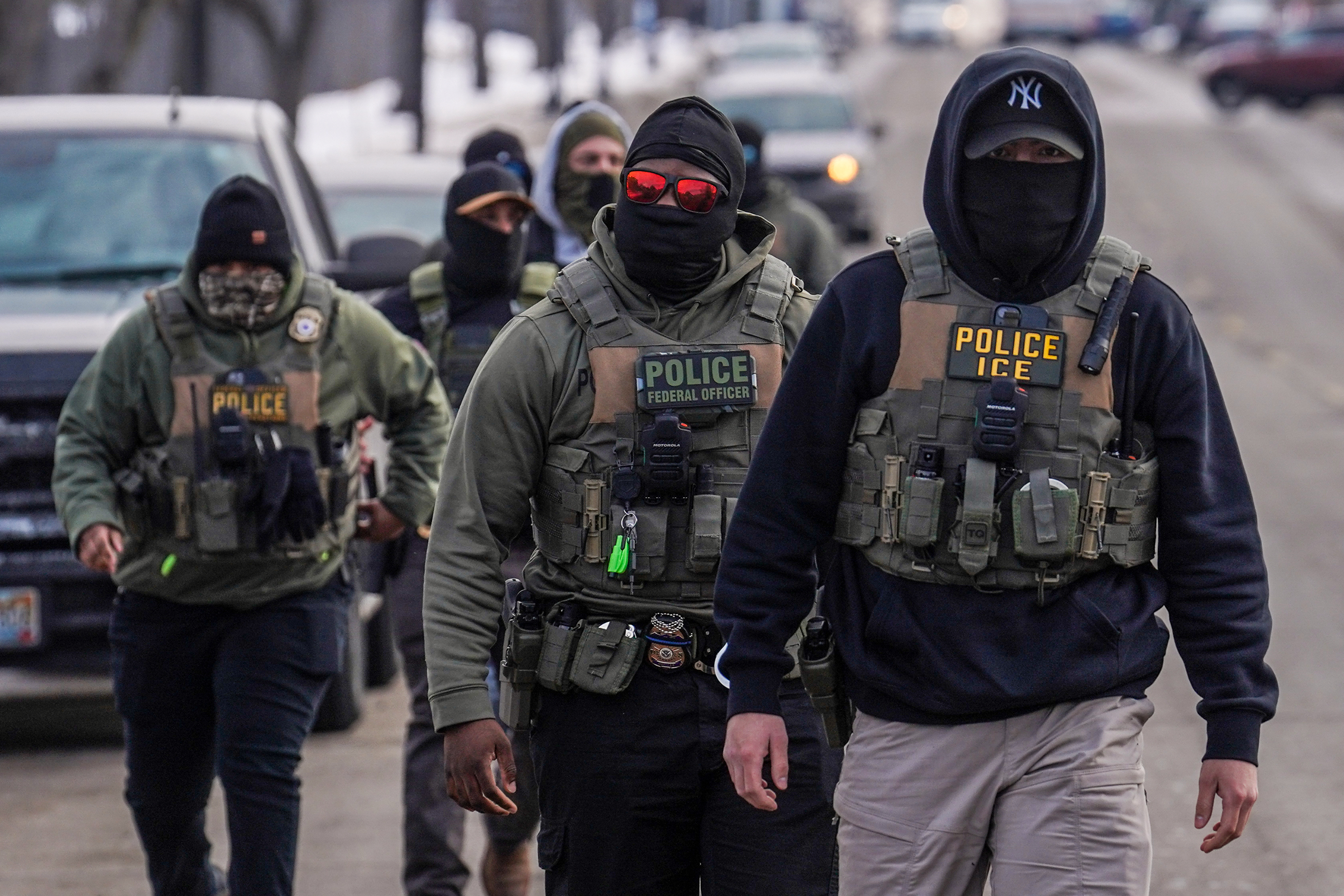
U.S. Immigration and Customs Enforcement has awarded more than $17 million in contracts, mostlyto businesses, in the Philadelphia area since the start of President Donald Trump’s second term, with more than half of that money going to a firearms manufacturer in Montgomery County.
The local data, compiled by The Appeal, highlights the Trump administration’s spending related to raids and enforcement operations as the agency carries out the president’s mass deportation agenda, including its purchases of weaponry.
Geissele Automatics, a firearms manufacturer based in North Wales, has the largest and perhaps most consequential contract with ICE in the Philadelphia area.
The company — which specializes in selling high-grade, AR-15-style semiautomatic weapons and parts to consumers, law enforcement agencies, and the military — entered a contract with ICE for nearly $9.1 million in September 2025, according to federal data.
The payment was for the delivery of “precision long guns and accessories” to support ICE agents as well as the agency’s tactical programs, the data show. It’s unclear where the equipment is being used.
Neither the company’s founder, Bill Geissele, nor a representative from the company’s sales team returned a request for comment.
Nationwide,ICE and U.S. Customs and Border Protection has dramatically increased spending on firearms in Trump’s second term, according to a report earlier this year from U.S. Sen. Adam Schiff (D., Calif.), leading to outcry from Democratic officials and voters who say the agency has become a militarized force with little oversight or accountability.
That outrage continued this month when Democrats voiced their opposition to ICE’s plan to provide ICE officers with electric shock gloves. Schiff’s oversight report, released earlier this year, called ICE and CBP’s contracts for weaponry a “misuse of taxpayer dollars to maximally arm federal immigration agents.”
A spokesperson for Department of Homeland Security said in a statement that $17 million in contracts in the Philadelphia region is “simply not accurate” and “conflates nationwide ICE contracts” with spending in the area.
“ICE contracts with vendors across the country to support its law enforcement mission. The existence of a federal contract, a vendor located in a particular region, or a nationwide contract vehicle does not mean that the full value of that contract was spent in Philadelphia,” the spokesperson said
“Reporting should accurately distinguish between nationwide contract values, vendor locations, places of performance, and actual federal expenditures before presenting a misleading figure as fact,” they added.
The details on the contracts come as residents and advocates in the Philadelphia region and nationwide are continuing to remain vigilant of ICE’s presence in their communities. Earlier this year, ICE struck deals to retrofit warehouses in Pennsylvania and New Jersey into mass detention centers before later backtracking after residents and leaders in both states voiced opposition.
Bill Geissele — who hosts the manufacturer’s podcast Shots Fired in Anger —has donated to Republican elected officials in Pennsylvania, including U.S. Sen. Dave McCormick and U.S. Rep. Dan Meuser. Geissele’s contract, while not the company’s first with the federal government, is by far the most significant contract between the gun manufacturer and the federal agency on record.
(function() {
var l2 = function() {
new pym.Parent(‘ice_contracts2’,
‘https://media.inquirer.com/storage/inquirer/projects/innovation/arcgis_iframe/ice_contracts2.html’);
};
if (typeof(pym) === ‘undefined’) {
var h = document.getElementsByTagName(‘head’)[0],
s = document.createElement(‘script’);
s.type = ‘text/javascript’;
s.src = ‘https://pym.nprapps.org/pym.v1.min.js’;
s.onload = l2;
h.appendChild(s);
} else {
l2();
}
})();
In August 2024 for example, under former President Joe Biden’s administration, Geissele Automatics entered a $12,224 contract with ICE for equipment to support a “sniper sustainment” course, according to data compiled by The Appeal.
By 2025, when Trump returned to the White House and significantly ramped up ICE operations nationwide, those contracts ballooned.
On top of the $9.1 million contract that year, Geissele was paid $27,936 to provide training rifles and magazines for the agency’s Office of Firearms and Tactical Programs, as well as $16,544 for rifles and accessories required for testing and evaluation.
ICE also took its spending across the river to Burlington County in New Jersey, where it awarded George J. Petronis Enterprises Inc., a gun shop, slightly more than $505,000 since the start of Trump’s second term for training ammunition and ink cartridges for 9mm training ammo to support ICE’s Office of Firearms and Tactical Programs in Fort Benning, Ga.
George J. Petronis Enterprises Inc. did not return an email requesting comment.
The Appeal’s dashboard also shows a contract for rental of a firing range between ICE and the county’s fire academy, located in Conshohocken, that has existed since at least 2021. But Montgomery County officials said Friday that the contract is with the broader Department of Homeland Security — which ICE is a part of — and not with the federal immigration enforcement agency directly.
County Commissioner Jamila Winder, a Democrat, said that the academy is used by local, state, and federal agencies for law enforcement training but “this facility is not available for training for those engaged in immigration enforcement activities.”
Other contracts highlighted by The Appeal dashboard may also be directly tied to DHS, instead of ICE.
Earlier this year, Montgomery County’s Board of Commissioners passed a resolution restricting federal immigration enforcement from using county property or resources for noncriminal investigations.
Other local contracts with ICE include a roughly $50,000 contract with the Philadelphia Parking Authority for rental spaces for 16 vehicles and more than $78,000 to Ricoh USA Inc., an office technology company headquartered in Chester County that was also used under the Biden administration. Coast2Coast Shredding LLC, which is headquartered in Montgomery County but shreds documents in California, received more than $94,000 from ICE.
Candidates are trading debate challenges in a contentious congressional race in a key swing district in the Philadelphia suburbs.
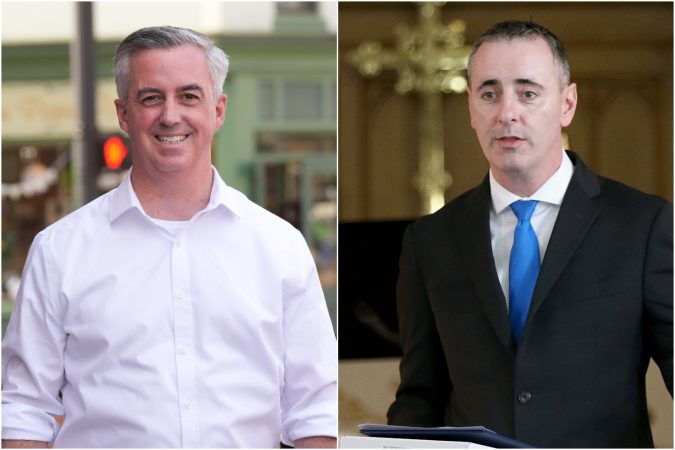
Democrat Bob Harvie is challenging Republican U.S. Rep. Brian Fitzpatrick to four debates, his campaign told The Inquirer.Fitzpatrick, after learning of Harvie’s challenge from The Inquirer, countered with 10 debates — but only if Harvie releases files related to an FBI investigation that Fitzpatrick and allies have routinely alleged focuses on the Democrat.
Harvie does not have files to release, said Dan McCormick, the candidate’s campaign manager. Harvie also has never been under investigation, lawyers for his campaign said. And he has already filed a defamation lawsuit against a pro-Fitzpatrick super PAC for making the same claim.
“Bob would be happy to participate in 10 debates,” McCormick said. “Bob has no files to release and Brian Fitzpatrick knows it. If Fitzpatrick has proof as he says he does, he should put up or shut up.”
The back-and-forth emerged Monday when the Harvie campaign told The Inquirer that the two-term Bucks County commissioner would be challengingthefive-term GOP lawmaker to three debates in Bucks — one each in the lower, central, and upper parts of the county — and a fourth in the Montgomery County portion of the 1st Congressional District.
Harvie said that Fitzpatrick“refuses to answer questions here at home” and “has nothing to show for his nearly 10 years in Washington.”
The increasingly heated race is one of four marquee congressional contests in Pennsylvaniathat could decide which party controls the U.S. House in November.
“It’s time for Fitzpatrick to show up in Bucks and Montgomery County — not Manhattan or the Lavender Fields in France,” Harvie said in a statement, referring to the venues for Fitzpatrick’s wedding and engagement to Fox News senior White House correspondent Jacqui Heinrich. “I’ll be there whether or not he shows, because I will never forget who I am fighting for.”
Heather Roberts, a spokesperson for Fitzpatrick, said as soon as Harvie releases “his full FBI files,” the campaign will move forward with date and venue selections for 10 debates.
“If the Subject of an FBI Corruption investigation is asking to be provided a platform by the only FBI Agent in Congress, he sure as hell will be required to come clean with the public and release these documents in their entirety,” Roberts said in a statement. “If he has nothing to hide, this should be an easy decision for him.”
Roberts also proposed a joint sit-down interview with Harvie and Fitzpatrick, conducted by The Inquirer, to discuss the allegations.
Roberts said that Fitzpatrick, who served 15 years as an FBI agent and a federal prosecutor, “is extremely familiar with this specific grand jury protocol and the documents that are generated.”
The debate drama is the most recent development in what has become an increasingly combative race, filled with personal jabs and legal filings related to controversial ads making allegations that Harvie is the subject of an FBI investigation.
Harvie, a former Falls Township supervisor, and other officials testified as witnesses to a grand jury in an FBI probe in 2022 into political donations and union contracts related to the Pennsbury School District. In 2020, the FBI interviewed several people connected to Falls Township and Pennsbury.
It has been fouryears since voters have been able to see a general election debate in the 1st Congressional District. In 2024, Fitzpatrick did not debate Democratic challenger Ashley Ehasz, after doing so in 2022.
The Harvie campaign said that it would be willing to work with the Fitzpatrick campaign on logistics and other event details, but that the commissioner’s preference is a town hall-style debate so voters can hear from him directly.
Fitzpatrick has held tele-town halls, including one in June, for constituents, and frequently posts on social mediarecapping the meetings and events he attends in the community.
U.S. Rep. Brian Fitzpatrick (R., Bucks) led a bipartisan group of lawmakers in a letter asking Homeland Security Secretary Markwayne Mullin to extend and expand temporary protected status (TPS) for Ukraine ahead of its expiration this fall.
The government status allows immigrants to live and work in the United States if conditions are unsafe in their home countries. For Ukraine, which has been in a war waged by Russia for nearly five years, TPS is set to expire on Oct. 19.
“More than 250,000 Ukrainians have sought safety in the United States after fleeing Russia’s brutal full-scale invasion,” lawmakers wrote in the letter, dated Aug. 4. “These individuals have become valued members of our communities, contributing to our economy, workforce, and tax base while complying with U.S. laws and rebuilding their lives in temporary safety.”
U.S. Rep. Brendan Boyle (D., Philadelphia) was also among the 27 lawmakers to sign onto the letter, but only three other Republicans joined Fitzpatrick’s effort.
President Donald Trump’s administration let TPS expire for Haiti and Syria late last month and has promised to deport individuals who lose their legal status, and Ukrainians who fled the war and live and work in the United States under TPS could face a similar fate this fall if the designation expires.
In a statement to The Inquirer on Thursday, Casey-Lee Waldron, a spokesperson for Fitzpatrick — who is a cochair of the Congressional Ukraine Caucus and was stationed in the country as an FBI agent in 2015 — said the lawmaker “urges the Secretary to act without delay.”
“Putin’s brutal unprovoked war continues to destroy communities, endanger innocent lives, and make any safe return impossible for Ukrainian families,” Waldron said.
On Haiti, Syria, and next month’s expiration for El Salvador, Fitzpatrick’s position appears to be more nuanced.
Waldron said that Fitzpatrick believes “upholding the rule of law and acting with compassion are not competing obligations,” and that temporary protected status for the three countries should be independently evaluated.
“And where the standard established by Congress continues to be met and a safe return remains impossible, those protections should remain in place,” Waldron said.
Last year, the Bucks County Republican, without naming the president, slammed Trump’s criticism of Ukrainian President Volodymyr Zelensky. Fitzpatrick also visited the country and met with Zelensky and soldiers on the front lines, and signed a missile to Russian President Vladimir Putin.
His support for Ukraine continued this week with the letter to Mullin, which argues that Ukraine continues to meet the statutory benchmarks for qualifying for a TPS designation. In addition to extending the Oct. 19 deadline, lawmakers are also calling on the DHS secretary to redesignate temporary protected status for Ukraine, meaning it would reset the country’s eligibility cutoff date, allowing more immigrants to apply for the protection.
“Without both an extension and redesignation, many Ukrainians lawfully residing in the United States could be forced to return to a country where their lives and safety remain at serious risk,” lawmakers wrote.
Iryna Mazur, an immigration attorney and honorary consul of Ukraine in Philadelphia, said it would be economically beneficial to the U.S. to extend and expand TPS for Ukrainians and emphasized the importance of the humanitarian efforts at the core of the law.
She said that maintaining a united front among political parties on support for Ukraine is key.
“I don’t think there would be anybody in their good mind with a good sense of justice in their heads who would say it’s a wrong thing to do right now under the circumstances,” Mazur said.
“This is a very active phase of war, and it just would be inhumane not to extend this particular temporary measure.”
Staff writer Jeff Gammage contributed to this article.
Attorneys for Bucks County Democrat Bob Harvie filed a lawsuit Wednesday against a political action committee and a consultant supportinghis opponent, Republican U.S. Rep. Brian Fitzpatrick, in a high-stakes congressional contest.
The lawsuit comes after what Harvie’s campaign says are repeated and false claims about his involvement in an FBI investigation. Harvie’s legal team is also disputing a new attack from the PAC alleging that the county commissioner had an inappropriate relationship with a county employee.
The lawsuit, filed Wednesday in the U.S. District Court for the Eastern District of Pennsylvania, claims that Defending America PAC Inc. and its president, Chris Pack, have sustained a “campaign to defame Harvie by repeatedly and recklessly publishing false and defamatory statements imputing criminal conduct that go beyond the bounds even of a highly contested political campaign.”
Harvie’s testimony to a grand jury in an FBI probe in 2022has sparked a firestorm in the race for the Bucks County-based 1st Congressional District, a seat that could help determine control of the U.S. House this fall. Harvie’s attorneys last month sent a cease-and-desist letter over such statements to Defending America PAC, which subsequently challenged Harvie to file a lawsuit.
Last month, Fitzpatrick and his campaign also received a cease-and-desist letter from Harvie’s lawyers, but neither the Bucks County Republican nor his campaign is named in Wednesday’s suit.
Website and social media posts and other materials from Defending America PAC and Pack this election cycle have stated Harvie is an “FBI corruption subject” or “under FBI investigation” related to his time as a Falls Township supervisor, according to the suit, but Harvie’s lawyers assert that the allegations are false and that he has never been under criminal investigation.
“Contrary to the meaning that out-of-state political operatives have endeavored to convey — to convince Harvie’s community that Harvie is somehow connected to a crime — Harvie is not now and never has been the target of any criminal investigation nor has he ever been charged with a crime,” wrote Harvie’s attorneys, Timothy J. Ford and Marion Barker Taylor of Dilworth Paxson, in the legal filing.
Harvie and his campaign are seeking an unspecified amount of damages greater than $150,000, as well as legal fees, for defamation and false light invasion of privacy.
In a statement to The Inquirer on Wednesday, Pack once again referred to Harvie as an “FBI Corruption Subject” and said the Democrat “has predictably chosen to engage in lawfare by filing a meritless lawsuit in an attempt to stifle our political speech” instead of releasing “complete” records “related to his corruption investigation.”
“Rest assured we will vigorously defend ourselves and seek every remedy available under Pennsylvania law, including Pennsylvania’s anti-SLAPP protections signed into law by Gov. Josh Shapiro,” Pack said, referring to a bill signed in 2024 by the Democratic governor that essentially offers extra layers of protections for defendants in defamation suits.
The organization appears to have been ready for this next step to happen. In an email blast and website post last week, the group said “we’re willing to pay for Harvie to sue us” so that the PAC could obtain any relevant records during the suit’s discovery phase.
In response, Harvie said in a statement Wednesday: “Put your money where your mouth is. Just tell us where to send the bills. See you in court.”
In that same post last week, the PAC made an additional claim — rebuked by Harvie’s lawyers Wednesday — that the Democrat had a “recent divorce” that “may have had something to do with Harvie getting a little too cozy with a county employee.” It links to a screenshot of a random Facebook account that alleges Harvie cheated on his wife with an employee from Bucks County’s children and youth services department and, in turn, helped her become a supervisor.
Harvie’s lawyers rejected the allegation, calling it “outrageous.”
“Harvie never cheated on his wife and never had sex with a Bucks County employee. Harvie never used his position to influence a decision to promote a Bucks County employee inappropriately,” they said.
Harvie and his wife divorced in 2023, public records show.
‘Not politics as usual,’ Harvie’s lawyers argue
The string of events that culminated in Wednesday’s suit dates back to 2022, when Harvie and other officials testified as witnesses before a grand jury in connection with an investigation into political donations and union contracts related to the Pennsbury School District. In 2020, the FBI interviewed several people connected to Falls Township and Pennsbury.
Harvie’s attorneys said in the filing Wednesday that he has not been asked to provide additional information or testimony and has not had any contact with the FBI since his 2022 testimony.
Similar allegations were made during Harvie’s 2023 reelection campaign forcounty commissioner and were also disputed by the Democrat at the time.
Three years later, they have again bubbled up to the surface as Harvie seeks federal office in one of four Pennsylvania seats being targeted by both parties.
Harvie’s attorneys said Wednesday that since the Democrat announced his candidacy for the U.S. House in April 2025, Defending America PAC has maintained a website entitled “Fire Bob Harvie,” where the group refers to him as “the subject of an FBI corruption investigation” or an “FBI corruption subject.” The lawyers estimate that the PAC has used similar language in at least 30 social media posts and that Pack has personally done so at least 27 times.
If you're going to send me a cease and desist about calling you "FBI Corruption Subject* Bob Harvie", at least release the documents backing up your baseless assertions.
The commissioner’s lawyers contend that Defending America PAC’s and Pack’s actions have harmed Harvie’s reputation and qualify as “actual malice.” Since Harvie is a public official, lawyers would have to clear a high legal bar toprove that the organization and Pack either knew the information they are pushing is false or otherwise exhibited a “reckless disregard” for its accuracy.
“Defendants’ conduct is not politics as usual. As shown by doubling down on their escalating rhetoric, Defendants’ conduct is willful, wanton, malicious, and undertaken with actual malice and reckless indifference to Harvie’s rights, thereby entitling Harvie to recover punitive damages,” Harvie’s lawyers wrote.
What is Defending America PAC?
Defending America PAC, a super PAC that is designed to work independently from a candidate, launched as Fitzpatrick was seeking reelection in 2024 and has scaled up its operation this year as the candidate faces his most high-profile challenge yet, according to filings with the Federal Election Commission.
Without the same donor limits as candidates, it raised $425,000 in 2024 and spent its money to oppose Fitzpatrick’s challenger in the Republican primary. In the current two-year cycle, it has raised more than twice that amount and started spending to oppose Harvie. The PAC currently has about $712,500 in its account.
About half the money it has pulled in this election cycle came from labor-affiliated groups that are backing Fitzpatrick, including $250,000 from LIUNA Building America, the political action committee for the Laborers’ International Union of North America. An additional $100,000 came from the PAC for the Transport Workers Union of America, and $50,000 came from the Air Line Pilots Association. In recent weeks, Fitzpatrick has continued to receive sweeping support from labor unions.
Defending America also appears to have received funds from some of the largest Republican donors in the country.
BillionaireHarlan Crow,a GOP mega-donor and real estate developer known for his association with Supreme Court Justice Clarence Thomas, donated $25,000. Craig Duchossois, the former chair of a Chicago-based investment firm, donated $50,000.
A $100,000 donation from Keystone Next — a super PAC that launched in 2025 with funds from an organization aligned with U.S. Sen. Dave McCormick (R., Pa.) — arrived in April. The donation was marked just two days after Keystone Next received a $250,000 contribution from Jeffrey Yass, Pennsylvania’s richest man and largest Republican political benefactor.
It also coincided with two other $100,000 donations that Keystone Next made to super PACs aimed at boosting Pennsylvania Republicans, including the more conservative U.S. Rep. Scott Perry in a competitive Harrisburg-based district.
Staff writers Michelle Baruchman and Abraham Gutman contributed to this article.
A high-ranking officialresignedfrom the Bucks County Sheriff’s Office earlier this month after having a few sips of beer at a reception then driving home in a county car, which violated department policy, county sources said.
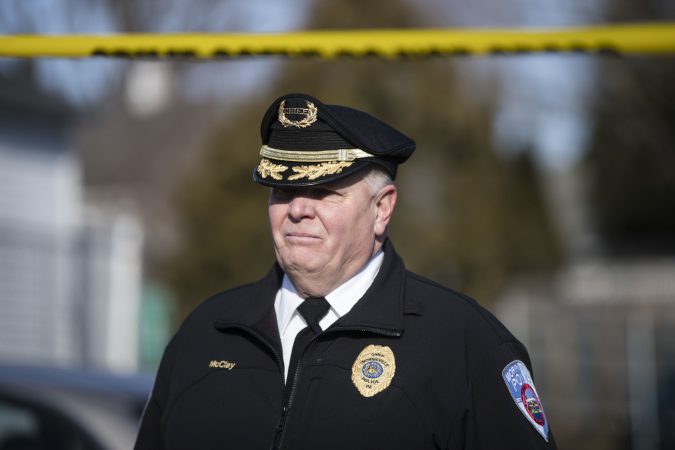
Lieutenant Deputy George McClay stepped down from his role after the incident, which occurred during a department reception held at Chambers 19, a Doylestown restaurant, after a July 9 promotionand new hire ceremony at the nearby county courthouse, according to county sources familiar with the incident but not authorized to comment on personnel matters.
Operating a county vehicle after drinking is a policy violation. McClay, 63, was not accused of driving under the influence, nor wearing his uniform during the incident.
Sheriff Danny Ceisler, a Democrat who took office in January, confirmed that McClay had stepped down, but would not provide details on an “HR situation.” McClay handled standards enforcement and discipline in the office and there was a conversation among command staff around July 11 as to whether he could properly do that job given the policy infraction, Ceisler said.
“The collective group felt that he would not be able to do it,” Ceisler said. “He offered his resignation.”
“It’s pretty difficult once someone has publicly committed a policy violation to have credibility to do that job,” he added.
Ceisler said he expects to eventually fill McClay’s position.
McClay denied being asked to step down in an interview Friday, saying the decision to leave was his own.
“I’m retired,” he said in a call from his home in Ocean County. “I’m 63, and it was time to go.”
When asked about the policy violation, McClay said he had “no idea” what a reporter was referring to. He chose to retire now, he said, because it’s summertime and he wanted to enjoy the season.
McClay’s seven-month stint with the sheriff’s office capped off a 40-year career in law enforcement, more than half of which he spent as a Philadelphia Police officer.
“Lt. McClay has spent over four decades in public service and deserves the opportunity to relax with his family and enjoy life,” Ceisler said.
Most recently, McClay served as the chief of police in Morrisville, a Bucks County municipality across the Delaware River from Trenton.
His nine-year tenure in Morrisville ended in a contentious dispute with the borough council, who terminated him in November 2023 amid allegations he had mistreated other borough officials and influenced matters that were beyond his authority as police chief, according to a report from The Bucks County Courier-Times.
Residents spoke out in favor of McClay at the time, criticizing the council for voting to fire him while he was on vacation and defending his record as a public servant.
McClay appealed his termination, calling it illegal, and was eventually awarded a $200,000 settlement by the borough council.
Early on in his tenure, U.S. Rep. Brian Fitzpatrick proved himself to the largest federal employees union in the United States.
In 2017, President Donald Trump signed a law to improve whistleblower protections and set guidelines for employee misconduct at the Department of Veterans Affairs. But the American Federation of Government Employees began noticing some adverse effects.
As Phil Glover, a national vice president for AFGE, tells it, veterans, including those with disabilities, and lower-level employees were being targeted instead.
AFGE officials went to Fitzpatrick with their concerns, and the Bucks County Republican introduced his own bill repealing and adjusting certain provisions.
That move, Glover said, was an inflection point in solidifying a long-lasting partnership with Fitzpatrick — one that gives the union a rare ally in the Republican caucus and Fitzpatrick a consistent endorsement from a powerful organization as he has repeatedly won reelection in a narrowly divided district.
“He’s carried a lot of water for us within the Republican Party, within the caucus, whether they were in the minority or majority,” said Glover, whose jurisdiction includes Pennsylvania.
In the high-stakes midterm elections this year, union endorsements behind Fitzpatrick and U.S. Rep. Rob Bresnahan, a freshman Republican trying to hold onto his seat in Northeastern Pennsylvania, are shaping up to be a potentially critical factor inthesetwoswing districts that could help determine which party controls the U.S. House.
“They all reached out. I didn’t even have to call them. They reached out to me right away and said we are 10,000% with you,” Fitzpatrick said, describing his relationship with the unions as “beyond advocacy” and “like family.”
Organized labor has traditionally backed Democratic candidates in the state —and that remains mostly true this year.
Fitzpatrick was the only Republican congressional candidate to get an endorsement Wednesday from the Pennsylvania AFL-CIO, which is also backing popular Pennsylvania Democratic Gov. Josh Shapiro.
In two other swing-seat districts centered on Harrisburg and the Lehigh Valley, unions have coalesced behind the Democratic nominees, including by spending big to help union leader Bob Brooks win his primary in May.
But the splintering of their endorsements in both Fitzpatrick’s Bucks County-based 1st Congressional District and Bresnahan’s Scranton-based 8th Congressional District seat has been a striking departure — underscoring some unions’ willingness to reward incumbents’ loyalty to give labor a voice in a Republican caucus that may not always work in their interests.
Last week, the Pennsylvania State Education Association — the largest union for teachers or any other labor organization in the state — backed Fitzpatrick even though Harvie, a former social studies teacher at Bucks County Technical High School, was previously a member.
How those endorsements move the needle in the election is still an open question.
But in a district with independent-minded voters who have shown a willingness to cross party lines, some observers say, the labor endorsements could make a difference — both in the get-out-the-vote and fundraising support that unions sometimes provide, and in appealing to swing voters.
“It suggests to an independent voter or even a moderate Democratic voter that this candidate isn’t a far-right candidate, that this candidate is somebody who will work with workers and work with unions,” said Paul Frymer, a politics professor at Princeton University who studiesorganized labor.
U.S. Rep. Rob Bresnahan introduced before remarks from President Donald Trump in Mt. Pocono, Pa., in December. Steven M. Falk / For The Inquirer
‘We consider them our friends’
With Trump in office and Republicans in control of Congress, Fitzpatrick and Bresnahan have won some union support by backing policies their own party leadership opposes.
In December, they were among 20 Republicans to join 211 Democrats to force a successful vote on the Protect America’s Workforce Act, which aimed to reverse a Trump executive order to strip collective bargaining rights from federal workers. In June, they were again among 20 Republicans — and the only ones from Pennsylvania — to vote for the Faster Labor Contracts Act, an effort to speed up bargaining negotiations.
And Bresnahan’s decision-making, as a freshman going against the White House, “had some guts to it,” Glover said. He said his group “didn’t entertain” endorsing Democrat Paige Cognetti, the Scranton mayor running against Bresnahan, or Harvie in the Bucks County race.
Angela Ferrito, president of the 700,000-member Pennsylvania AFL-CIO, which endorsed Fitzpatrick on Wednesday, said that while he has not always sided with labor, he has become the kind of Republican who will “sometimes almost put their neck out.”
Still, the union’s own public scorecard shows Fitzpatrick has aligned with its priorities far less often than Democrats — about 46% of the time in the current session of Congress. Bresnahan, who did not secure the union’s endorsement Wednesday, voted with the AFL-CIO just once — on the Protect America’s Workforce Act — to give him an 8% score.
Ferrito said the organization supports candidates who “support us and stand up when it matters.”
“Pennsylvania has always been unique in that way, where we do have moderate Republicans who will support unions and the rights of union workers. And so in those circumstances that we consider them, we consider them our friends,” she said.
State of play
As both of their districts draw national attention, Fitzpatrick has touted more than 40 labor-centered recommendations or formal shows of support and Bresnahan has highlighted about a dozen.
Fitzpatrick’s labor endorsements have ranged from local building trade affiliates — such as the Boilermakers Local 13 and the deep-pocketed International Brotherhood of Electrical Workers Local 98 — to national labor organizations, like the Transport Workers Union of America and the National Air Traffic Controllers Association.
The SEIU Pennsylvania State Council, which represents employees in public services, healthcare, and property services, backed him for the first time after a decade of either endorsing against him or staying neutral. But the council’s perspective changed after Fitzpatrick publicly supported reforms for U.S. Immigration and Customs Enforcement and was only one of two Republicans to vote against his party’s cuts to Medicaid in the One Big Beautiful Bill Act.
“For us, that means something,” said Matt Yarnell, president of SEIU Healthcare Pennsylvania and the state council, “if someone’s down to both organize and fight and stand up and speak out against your own party.”
Fitzpatrick said his “unique” role as a labor-friendly Republican has made him a “pivotal voice” in Congress — largely because of the hyperpartisan nature of politics that he has railed against, he said.
“That’s unfortunate,” Fitzpatrick said. “If we did away with the political parties and we just had people form coalitions around ideas, you would see so much support, so much more support for commonsense measures, like supporting labor.”
Bresnahan said he made it a personal mission to cultivate strong relationships with organized labor when he entered Congress last year after having had collective bargaining agreements as the CEO of his family’s electrical contracting business.
As a freshman Republican, he said, he had to prove himself. He got up to speed on the roughly 10,000 federal jobs in his district and made visits to a high-security federal prison with “serious staffing shortages”at the same time as Trump was laying off thousands of federal workers.
“I absolutely encourage my Republican colleagues to take another look at this and find a way to support the people that support us each and every day,” said Bresnahan, who narrowly defeated six-term Democratic U.S. Rep. Matt Cartwright in 2024.
Bucks County Commissioner Bob Harvie addresses supporters after winning the May 19 Democratic primary. Steven M. Falk / For The Inquirer
Harvie, the Democrat challenging Fitzpatrick, grew up in a union household and hasreceived the backing of two unions: the American Federation of Teachers Pennsylvania and Transport Workers Union Local 234, which represents SEPTA employees. His campaign said conversations are ongoing with labor and believes more support is in the works.
Harvie said Fitzpatrick’s endorsements have in some ways been a “reward for doing the bare minimum” while his own track record as a former Falls Township supervisor and as a twice-elected county commissioner proves he would be a steadfast supporter of labor in Congress.
He said he was “anxious to get the support of the rank-and-file workers,” who are bearing the brunt of cost-of-living issues.
“They’re the ones who are really going through all the pain right now with higher gas prices, higher grocery prices, higher energy prices, concerns about their healthcare,” Harvie said.
Cognetti, meanwhile, has credited her endorsements from nearly a dozen local labor unions to her record in Scranton, including increasing the number of jobs and wages for public workers. Endorsements from AFSCME, which represents municipal employees, and others that she announced this month underscore that support, she said.
She also said she would support more labor priorities than Bresnahan, including the PRO Act — a major effort to expand workers rights that Bresnahan has not endorsed — and repealing parts of the One Big Beautiful Bill Act, which Bresnahan voted for.
“It’s very important that you look at the whole picture of someone’s votes. It’s very easy to sign on to a letter and try to make yourself a hero,” Cognetti said.
In one unusual instance, Cognetti appeared to receive the endorsement of the Pennsylvania Conference of Teamsters with a voice vote during an April meeting, but the organization released a statement endorsing Bresnahan in June. But conference president Bill Hamilton, who had called for the vote at the April meeting, said in the June statement that Bresnahan “has always had our backs,” including through his vote for the Faster Labor Relations Act.
Bresnahan, in an interview, also referenced that bill and stressed his relationship with Sean O’Brien, the national Teamsters leader whose podcast Bresnahan appeared on in January.
The state and national Teamsters organizations did not respond to multiple requests for comment about the situation.
“Democrats just can’t take unions for granted anymore,” Bresnahan said.
Scranton Mayor Paige Gebhardt Cognetti hosts the national summer meeting of the Mayors Innovation Project in Scranton in 2023. Tom Gralish / Staff Photographer
‘Stick with them no matter what’
The union endorsements in the 1st and 8th Congressional Districts have been a sharp contrast to other swing-seat districts that have arguably already shown the power of labor as a political force.
In the Lehigh Valley district where Brooks, a statewide union leader and retired firefighter, is running against freshman Republican U.S. Rep. Ryan Mackenzie, high-profile Democrats recruited and rallied around the Democrat largely because of his union bona fides. And when opponents unleashed a last-minute ad campaign against him in the May primary, another political action committee padded with organized labor donations spent nearly $1.8 million to push back and help give Brooks the win.
It is not yet clear whether unions will similarly spend heavily to elect Fitzpatrick or Bresnahan — especially as they mostly look to elect Democrats elsewhere in Pennsylvania and across the country.
TJ Lepera, political director of IBEW Local 98, said he believed a Democratic blue wave would be highly favorable to labor interests. But his union has also backed Fitzpatrick,who“knows our issues, and that could be helpful in trying to calm down a lot of the crazy rhetoric that comes out of the Republican side, sometimes, on the attacks of labor,” Lepera said.
“If somebody has a great voting record with us and has been loyal to Local 98 and the way that we see legislation, we typically stick with them no matter what,” Lepera said.
That emphasis on loyalty was echoed by other unions, even if their political calculus led them to go the other direction.
“We were not going to support anything that would possibly turn the House or the Senate red,” said Joe Coccio, secretary-treasurer and political coordinator from TWU Local 234, which has endorsed Harvie. “If they were a good candidate by us … once we endorse a candidate, unless they break the law or do wrong by us, we continue to endorse them until they move up or move on.”
Coccio said Harvie had proved his appreciation for SEPTA employees when he served on the transit agency’s board.He is also accessible and pro-union, and has valuable experience as a teacher and county commissioner during the COVID-19 pandemic, Coccio said.
AFT Pennsylvania, which is backing Harvie, did not respond to multiple interview requests.
As November inches closer, unions backing both Fitzpatrick and Harvie are planning out their financial and ground-game support.
“For us, is it strategic? Yeah, it’s very strategic,” said Lepera, whose Local 98 has a long history as a political power broker in Philadelphia and statewide. “We want to have a voice on the other side of the aisle.”
The largest union representing Pennsylvania teachers and school support staff, including most in Bucks County, has endorsed Republican U.S. Rep. Brian Fitzpatrick in his high-stakes reelection bid to represent the key swing district.
The Pennsylvania State Education Association, by way ofits affiliate National Education Association, informed Fitzpatrick of the organizations’ endorsement in a letter Friday, telling the Bucks County lawmaker that “you have demonstrated a commitment to collaboration and problem solving, earning respect for constituents across the political spectrum.”
“We value the relationships you have built with the public school employees throughout the district and your efforts to support policies that strengthen public education and protect the rights of working people,” wrote Aaron F. Chapin, the president of PSEA, which is also the largest labor union in Pennsylvania.
The NEA and PSEA have endorsed Fitzpatrick before, but in a crucial election year, when party control of the U.S. House is on the line, the organizations are the latest labor unions to not leave Fitzpatrick’s side.
Harvie spent two decades as a social studies teacher and department chair at Bucks County Technical High School. He has received backing from the American Federation of Teachers Pennsylvania, which is affiliated with union locals in higher education, the School District of Philadelphia, and Bucks County’s Neshaminy School District. He has also been endorsed byTransport Workers Union Local 234, representing SEPTA employees. His campaign is expecting additional support from labor in the coming months.
Fitzpatrick, in a statement, said that he is “deeply honored to earn the trust of the educators and school employees who serve our children and hold our communities together.”
“They see the challenges facing students before those challenges ever reach Washington,” he said. “They know what is working, what is failing, and what our schools need to give every child a real opportunity to succeed.”
The 1st Congressional District, which represents all of purple Bucks County and a sliver of Montgomery County, is one of four critical Pennsylvania swing districts that both parties are eyeing this year as they battle for control of the U.S. House.
PSEA represents nearly 95% of the local school district unions in the 1st Congressional District, amounting to 11,489 public school employees, retirees, and educator-hopefuls, Chapin said.
Between April 30 and June 30, Fitzpatrick spent nearly $2 million and raised more than $1 million, bringing his total gathered to $6.7 million. Harvie spent $360,000 during that time and raised almost $552,300, pushing him just over $2 million raised for the entire span of his campaign.