Author: Amy S. Rosenberg

  • Atlantic City wanted to be the East Coast’s cannabis hub. Instead it got vacancies and an FBI probe.

    Atlantic City wanted to be the East Coast’s cannabis hub. Instead it got vacancies and an FBI probe.

    ATLANTIC CITY — In the 1700 block of Atlantic Avenue, the only cannabis for sale, once again, is from street dealers.

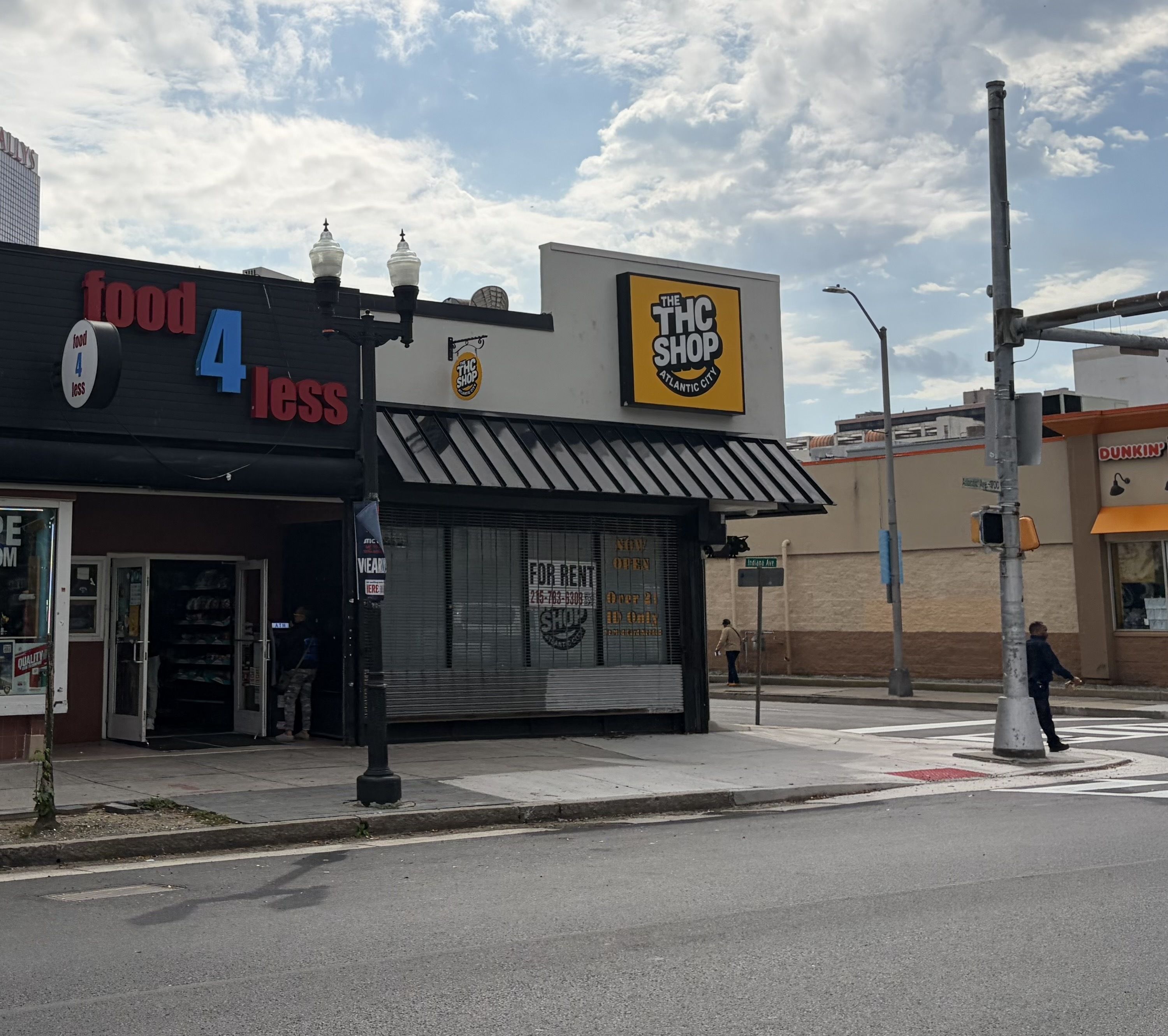
    Two legal dispensaries that opened on the block in 2024 have now closed: Honey Buzz Farms, which aspired to bring art and community events to the block, and, on the corner, the THC Shop.

    Both now have for-rent signs.

    In all, 18 dispensaries have opened their doors in A.C., out of 42 total that have received approvals from the New Jersey Casino Reinvestment Development Authority since 2021, when the state legalized, and regulated, the sale of cannabis.
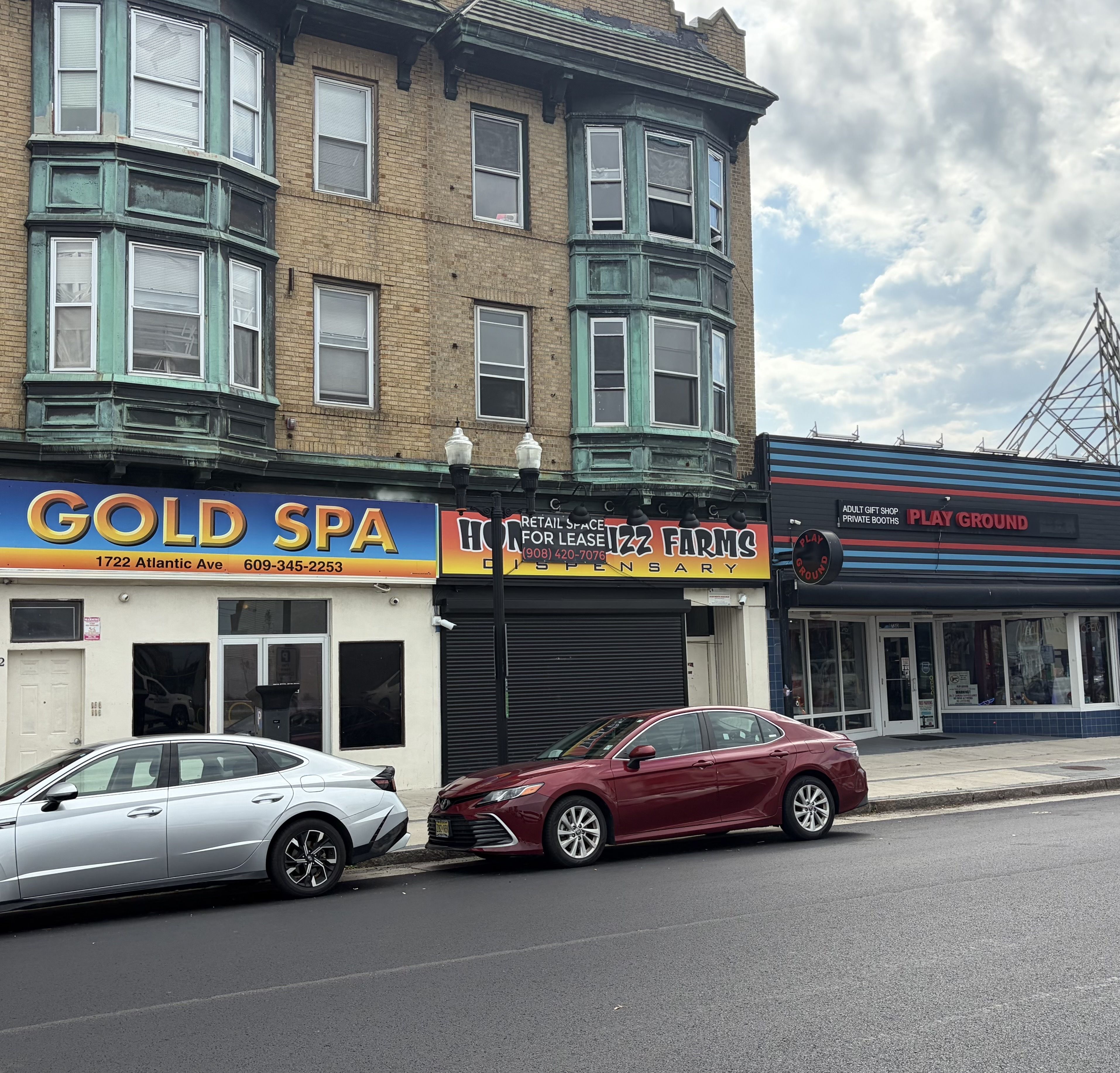
    Honey Buzz Farms, which opened in 2024 the 1700 Block of Atlantic Avenue with hopes of combining art and cultural events on a block where illegal drug sales have proliferated over the years, is now closed.Amy S. Rosenberg / staff
    The THC Shop at 1740 Atlantic Avenue, a block where illegal drug sales have proliferated over the years is now closed.Amy S. Rosenberg / staff

    At least five are no longer in business, leaving vacant storefronts on blocks they were supposed to invigorate. Andrew Kramer, a spokesperson for the city, said 13 had paid for their mercantile licenses for 2026.

    Some with ambitious plans, including one company that tore down the historic First Presbyterian Church on Pacific Avenue, donating its sandstones to the Smithsonian, have stagnated. Marvin’s Garden, a dispensary in a standalone building on Pacific Avenue, continues to post on social media but has never opened.

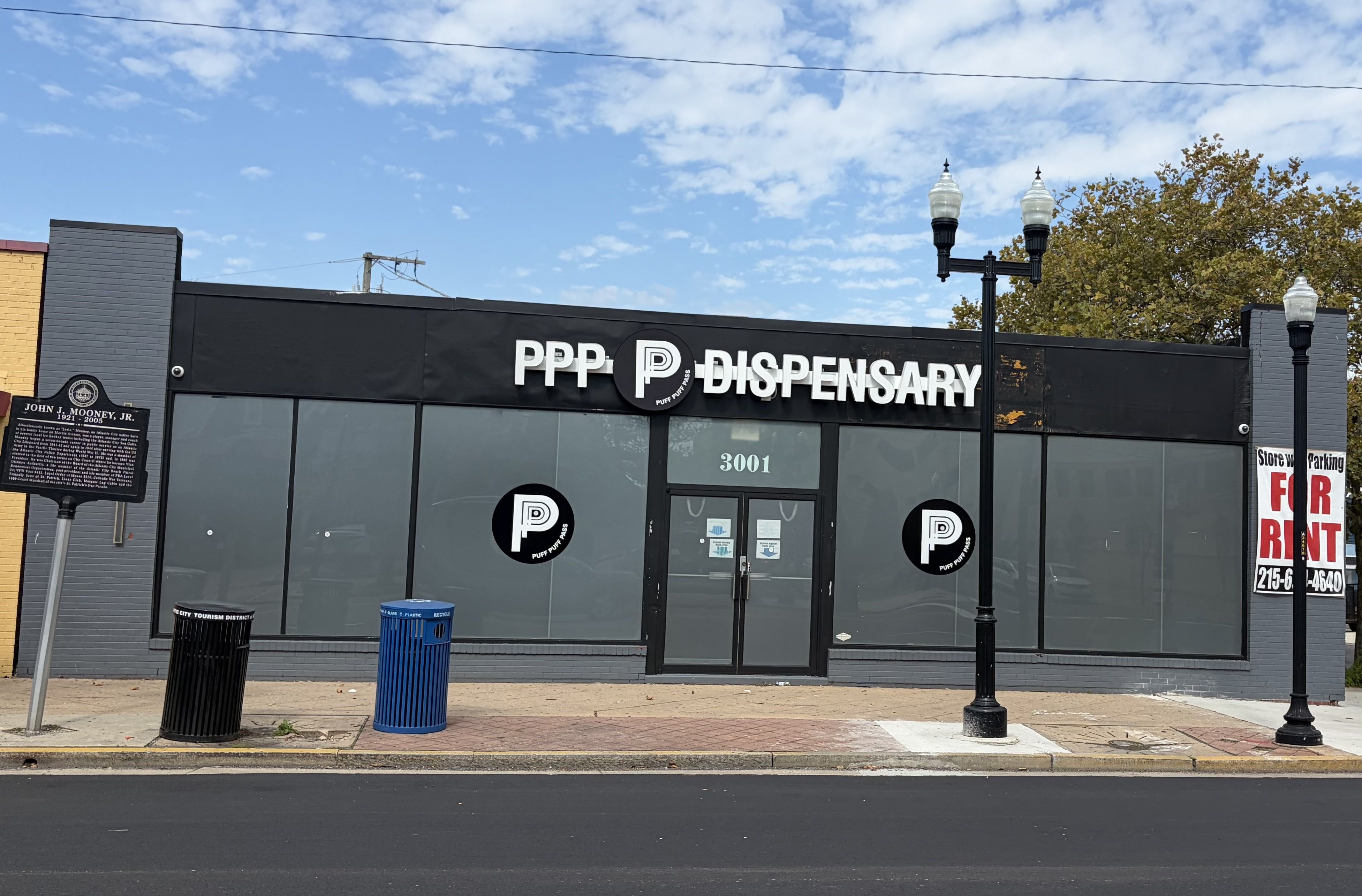
    Sweet Leaf on Tennessee Avenue, PPP Dispensary at 3001 Atlantic, and the Healing Side on Pacific Avenue, behind Boardwalk Hall, are no longer open. Salt Air Botanicals on Arctic Avenue appears, at best, temporarily closed.
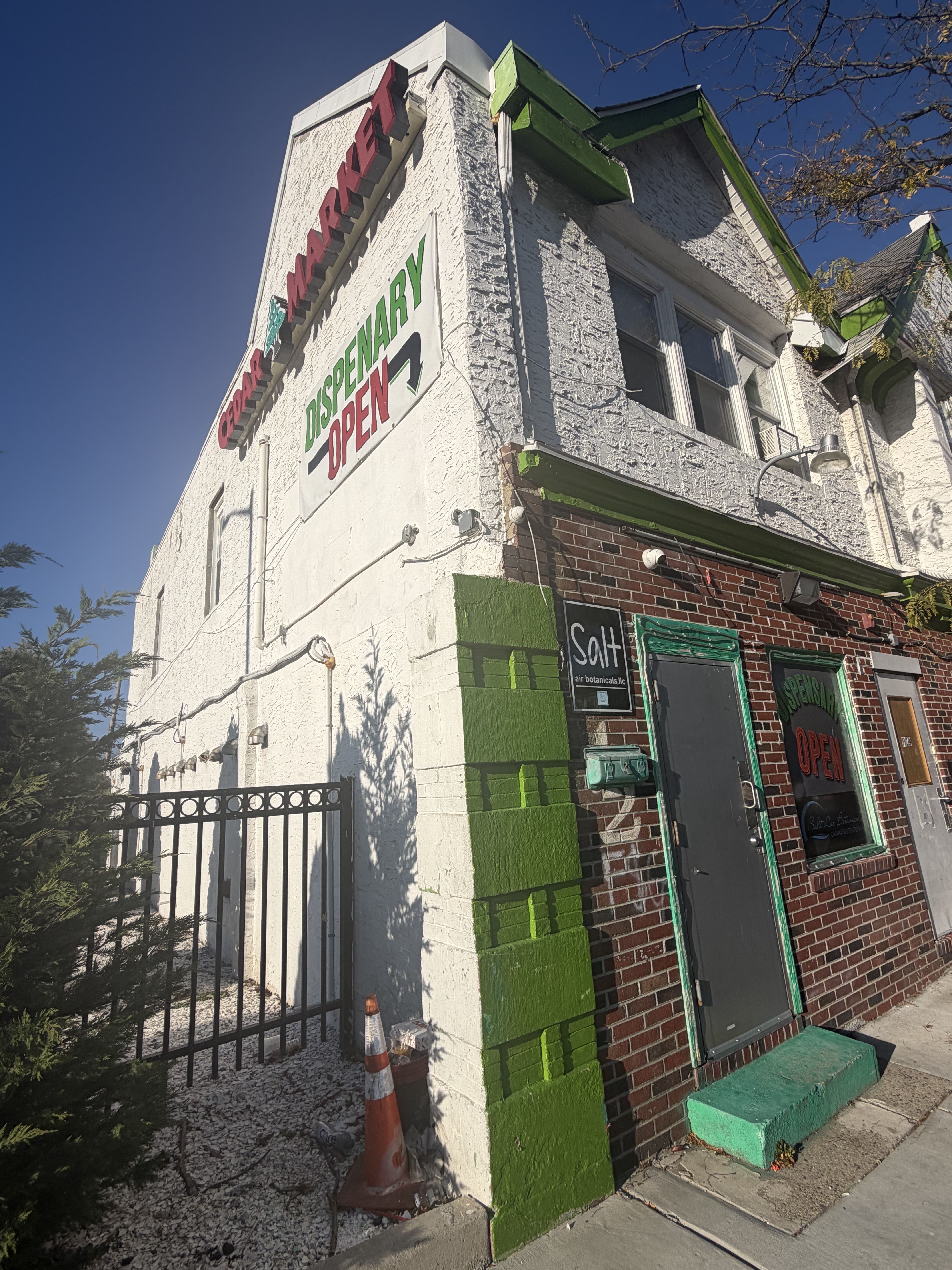
    Salt Air Botanicals on Arctic Avenue is one of 18 dispensaries that have opened in Atlantic City. Salt Air is believed to have closed, though its status is not entirely clear. Five others have closed.Amy S. Rosenberg / staff
    The PPP Dispensary on Atlantic Avenue was among the first to open in Atlantic City and among the first batch to close. In all, since 2021, 42 have been approved, 18 have opened, and at least five have closed.Amy S. Rosenberg / staff

    In September, Kashawn “Kash” McKinley, the city’s cannabis czar and director of constituent services, who said he aspired to make Atlantic City the premier East Coast cannabis hub, was charged by the U.S. Attorney’s Office with soliciting bribes. He has been suspended without pay by the city.

    The FBI, meanwhile, is continuing its investigation, issuing subpoenas of financial records of some dispensaries as recently as Nov. 10, according to owners.

    With McKinley sidelined, and prominent locations now vacant, some dispensaries are struggling to thrive in a mostly disappointing market, even as others work to get their businesses open.

    ‘Nobody’s crushing it’

    Even before the feds made their presence known, Atlantic City’s high hopes for its cannabis future had yet to materialize.

    “Nobody’s crushing it,” said Colleen Begley, owner of Juniper Lane Dispensary, which opened in December 2025, boosted by a $150,000 grant from the New Jersey Economic Development Authority.

    Amid complaints by businesses that the market was oversaturated, the city passed a cap at 16 in October 2025, which prompted complaints by approved businesses that had yet to open.
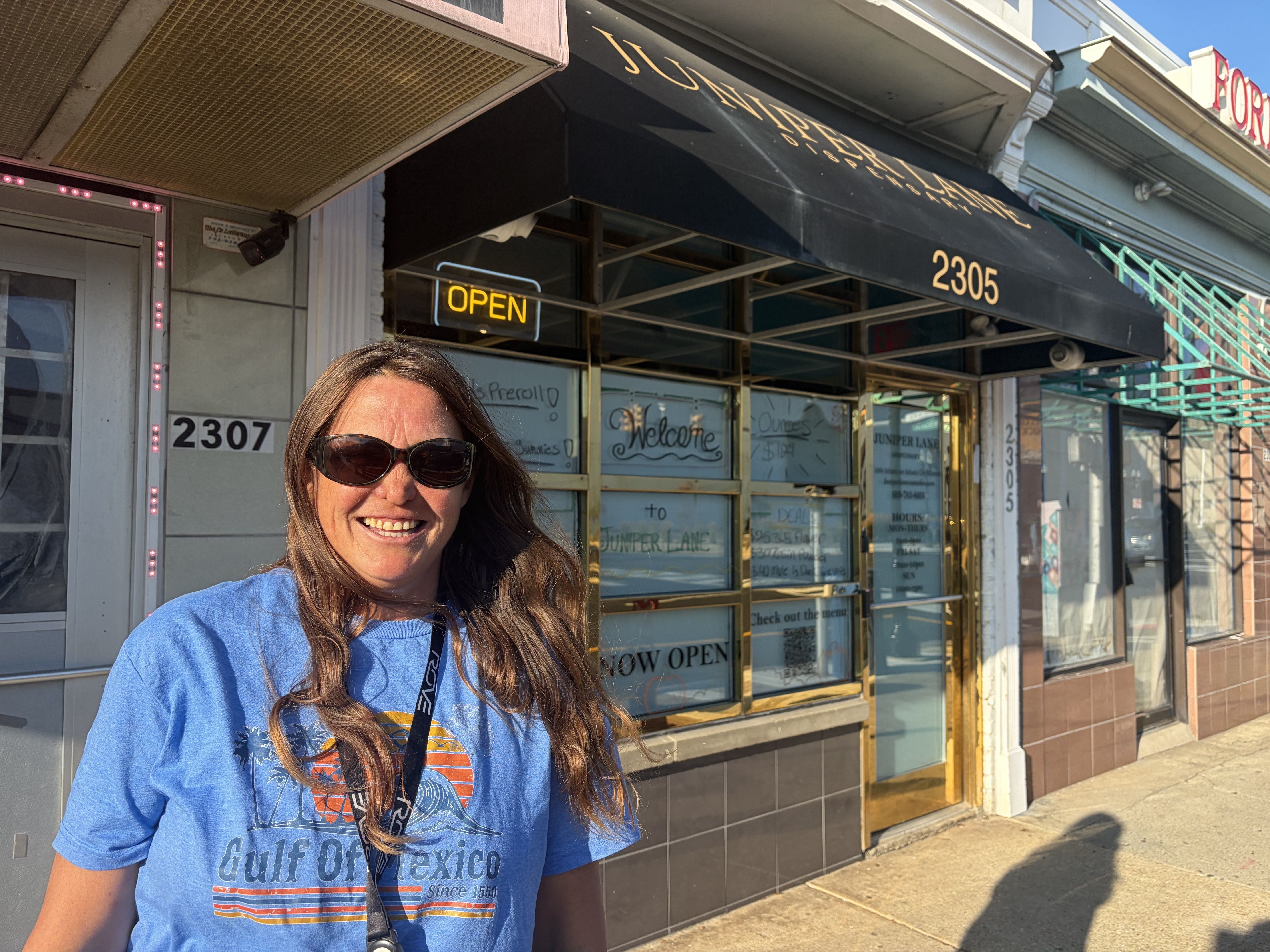
    Colleen Begley, owner of Juniper Lane Dispensary on Atlantic Avenue in Atlantic City, said entering the cannabis business in Atlantic City has been at times like “Boardwalk Empire.” The city’s cannabis czar, Kashawn McKinley, is currently under federal indictment for soliciting bribes, and the FBI is continuing its investigation, owners say.Amy S. Rosenberg / staff

    But the number of dispensaries currently open still remains under the cap. And the dozen open dispensaries mostly continue to struggle.

    The current mix of dispensaries stretches from Legal Distribution on the Ventnor end of Atlantic Avenue to Everest, the Tibetan-themed dispensary at 1226 Atlantic, toward the inlet.

    (function(){function e(){window.addEventListener(`message`,function(e){if(e.data[`datawrapper-height`]!==void 0){var t=document.querySelectorAll(`iframe`);for(var n in e.data[`datawrapper-height`])for(var r=0,i;i=t[r];r++)if(i.contentWindow===e.source){var a=e.data[`datawrapper-height`][n]+`px`;i.style.height=a}}})}e()})();

    Having spent nine months in the Atlantic County jail on cannabis distribution charges, Begley argued for a pathway for people such as herself to enter the market legally. And so she did.

    Juniper Lane landed on a pleasant block of Atlantic Avenue, paying $3,500 a month for rent, next to Rosita’s Bakery, down the street from the local favorite Pho Sydney. In the next block is the venerable Dock’s Oyster House. But the city won’t let her put a sandwich board out to advertise her wares, saying it would violate regulations.

    Standing outside Juniper Lane the other day, Begley said the experience has been surreal, and not that lucrative.

    Between 2021 and 2025, the city has collected $531,791.85 through a 2% tax on all dispensary revenue, which translates to about $26 million in total revenue. Nearly half is attributable to the first dispensary to open, MPX, on New York Avenue in the city’s Orange Loop district.

    “We’re just kind of barely getting by,” she said.
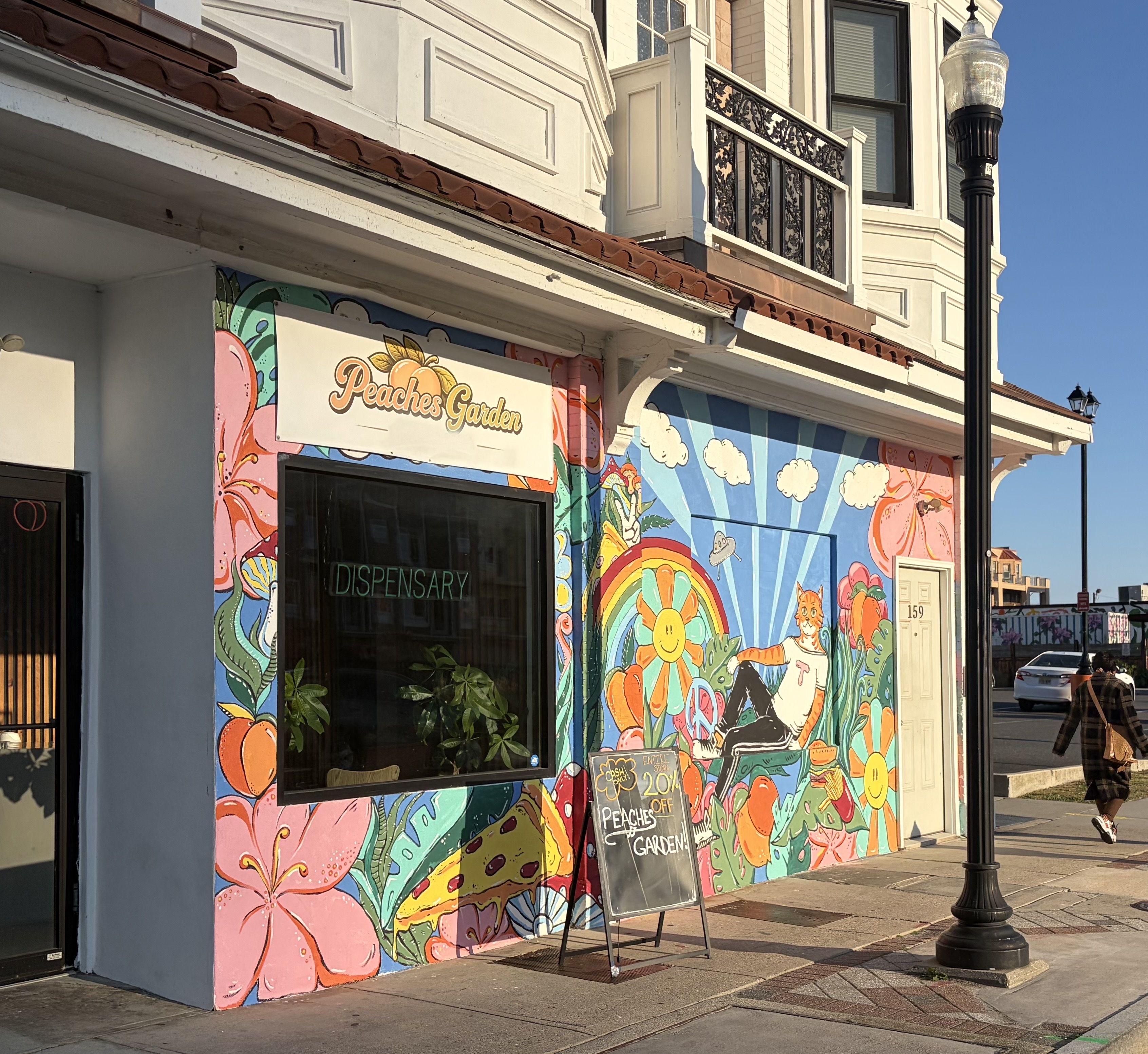
    Peaches Garden on New York Avenue is one of 18 dispensaries to have opened in Atlantic City and continues to operate in the city’s Orange Loop neighborhood.Amy S. Rosenberg / staff

    ‘You don’t have to worry about nothing’

    McKinley was charged on Sept. 24 by the U.S. Attorney’s Office in New Jersey with soliciting bribes from a dispensary owner, later identified as Victor Diaz of Sweet Leaf.

    “You want to think Atlantic City is doing it right, but I also feel like I stepped into Boardwalk Empire immediately within my first year of opening,” said Begley of Juniper Lane. “The guy’s indicted, like it was so predictable.”

    Diaz has filed a claim indicating his intent to sue the city for $5 million, saying McKinley’s behavior sank his business on Tennessee Avenue.
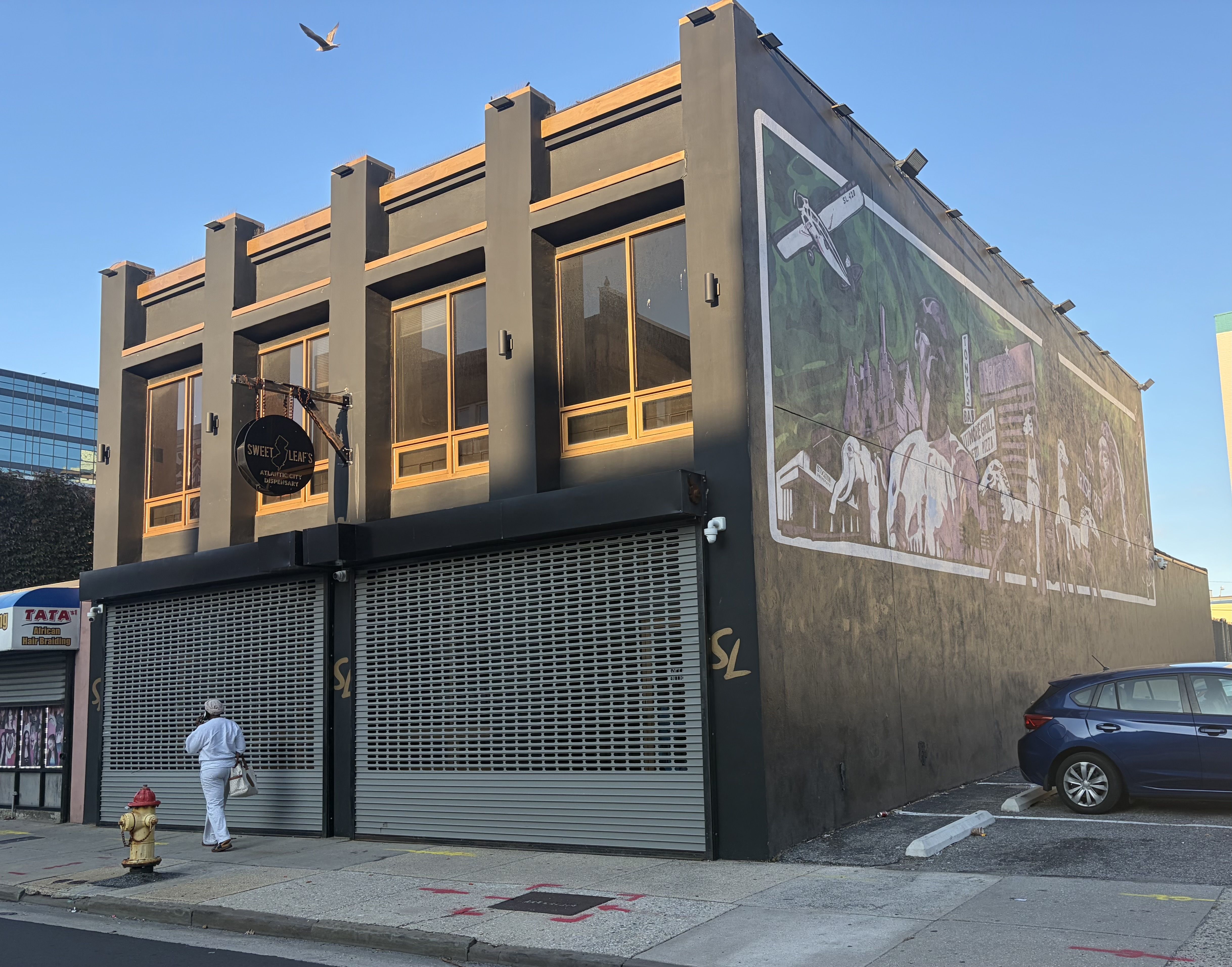
    Sweet Leaf Dispensary on Tennessee Avenue in Atlantic City has closed its doors, and says it intends to sue the city over conduct by its cannabis czar, Kashawn McKinley, who is under federal indictment for soliciting bribes. Sweet Leaf is one of at least five dispensaries that have already closed in Atlantic City.Amy S. Rosenberg / staff

    The charges paint a sordid series of events, in which McKinley offered to help classify the dispensary as a micro business, which would reduce the city’s annual mercantile fee from $25,000 to $2,500, in exchange for about $20,000 in cash and some cannabis.

    McKinley also oversaw the “community host agreements” the city asked dispensaries to sign. MPX, for instance, agreed to make good-faith efforts to hire A.C. residents and make payments to the city above the 2% tax, totaling $750,000 over a 10-year period.

    In the Sweet Leaf case, the charges say as part of the bribe, McKinley allegedly asked the owner to arrange for a critic of the city to be assaulted, and to be shown a photo as proof, so that he could show an unidentified “Public Official 1.”

    After being shown “what appeared to be a photograph of the injured victim,” the U.S. Attorney’s Office said in a news release announcing the charges, McKinley expressed pleasure and assured the cannabis business owner that when it came to the fee disputes with Atlantic City, “You don’t have to worry about nothing.”

    Cannabis for sale, but no cannabis culture

    Slamn Sammy’s took over a tattoo shop on Pacific Avenue but, despite an “opening soon” sign in the window, has yet to open.

    Stephen Weiss, a consultant who hopes to help Sammy’s with events and marketing, says the business is working its way through the cumbersome approval process.

    He says the lackluster cannabis business experienced by most in A.C. so far reflects the limited way New Jersey has allowed the legal businesses to set up.

    He wants the state to allow places like A.C. to nurture a true cannabis culture, with pre-rolls and other products for sale at concerts, food venues, and other entertainment events.
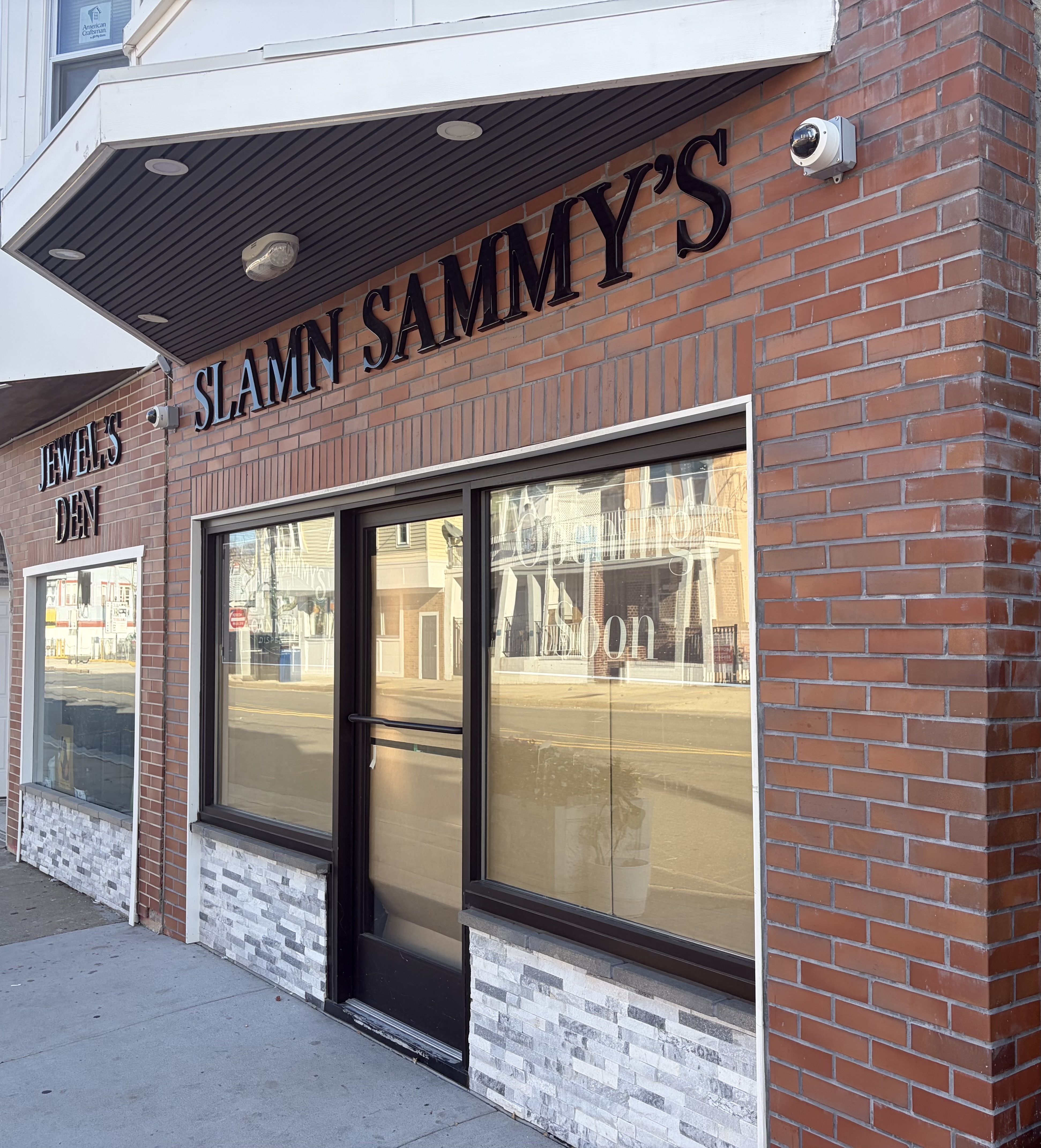
    Slamn Sammy’s, a dispensary that took over a tattoo shop on Pacific Avenue in Atlantic City, had not opened as of November 2026.Amy S. Rosenberg / staff

    “Nobody needed a place to buy marijuana,” Weiss said. “We need a place to go enjoy marijuana. We need concert venues, movie halls, restaurants. We don’t have things to do with the cannabis. There’s no cannabis culture.”

    Currently, even the cannabis consumption lounges at High Rollers and SunnyTien are not allowed to sell any food or drinks.

    Spencer Belz, general manager of SunnyTien, says the half-dozen closures reflect a market correcting itself, though that has not stopped the new businesses from coming in.

    “If they wanted to make Atlantic City the East Coast cannabis hub like they’ve flaunted so many times, they could have done more than just get our doors open,” Belz said.

    A study by Stockton University conducted in June 2025, when there were 15 open dispensaries, described the market as “among the most densely licensed municipalities in the state,” despite its population of 38,500, and warned of oversaturation. Jersey City and Newark, with a balance of caps and “equity carve-outs,” were better positioned for long-term market health, the study said.

    It estimated A.C.’s top-performing dispensaries generated between $4 million and $6 million, while the lower-performing ones generated less than $1 million. Rents were between $5,000 and $15,000 and mercantile fees were typically $25,000 a year. Winter months saw declines of about 35%, putting seasonal pressure on the businesses and “threatening the viability of small and independent operators,” the report said.

    The study noted that if all licensed businesses became operational, Atlantic City’s cannabis density would exceed all other legally regulated locations in the country. The study recommended the current cap of 16 and noted other jurisdictions, like Oregon and Oklahoma, where a lack of a cap had led to “severe market saturation and price collapse.”

    Operators like Belz say A.C.’s market should be able to flourish.

    “At the end of the day, there’s still 25 million people who come to Atlantic City every year,” Belz said. “There’s plenty of opportunity for dispensaries to thrive.”
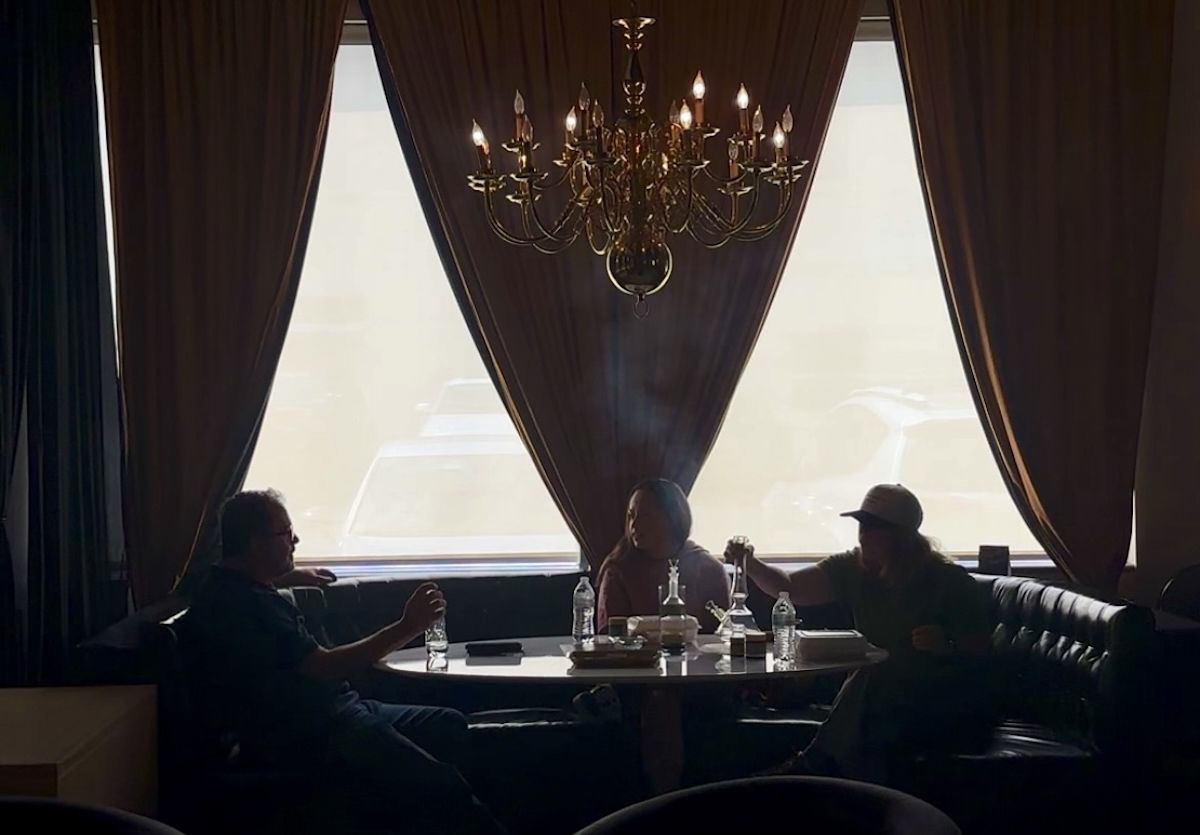
    Patrons of SunnyTien cannabis lounge sit around leather couches and enjoy the lounge in Atlantic City, on Sept. 25, 2025. SunnyTien, High Rollers, and Gynsyng cannabis dispensaries and lounges are the first legal weed lounges on the East Coast.Hira Qureshi / Staff

    Belz, Weiss, and other owners are working with the state commission to ease certain restrictions on food and beverage in the cannabis lounges, on advertising, on the need to obscure windows. Las Vegas has seen some success with its cannabis lounges and nightclub-like cannabis “experiences.”

    The ban on billboard advertising is why drivers see dispensaries advertised only on the Pennsylvania side of Delaware River bridges, where cannabis sales are not legal.

    The effort recalls the cycle of casino legislation that led to a first generation of casinos whose exteriors offered little visual appeal to passersby, with designs that were more giant box than tourist attraction. This was tough to correct, even when design restrictions were eased.
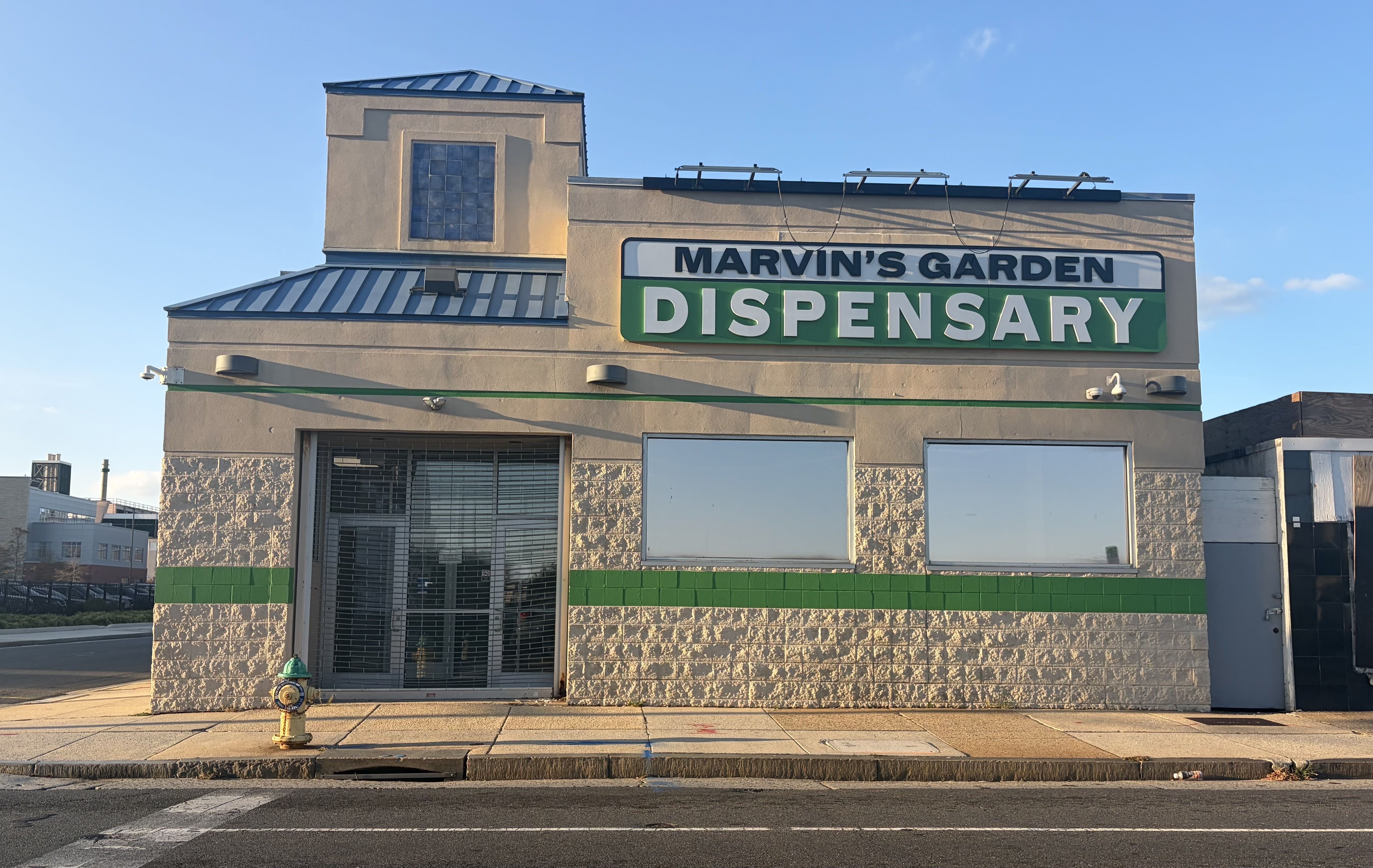
    Marvin’s Garden Dispensary on Pacific Avenue in Atlantic City boasted a veteran’s museum and a human touch, but has never opened, though it continues to post on Instagram.Amy S. Rosenberg / staff

    The highs and the lows

    Belz says some of the businesses were unprepared for the “roller coaster of this business.”

    “They weren’t prepared for the highs or the lows,” he said. “Coming into Atlantic City, they were supposed to utilize old storefronts in a beautification effort. We’ve done a full 360 back to the beginning of empty storefronts.”

    And FBI investigations.

    Reached on Nov. 10, Lou Freedman, owner of Legal Distribution on Atlantic Avenue, said the business had just received an FBI subpoena for its records that morning.

    “They want all my records from the beginning of time,” he said.

    He defended McKinley and said, “He actually was a pretty good guy, never asked me for a penny.”

    But as for business, he said, “we’re just as bad as everybody else.”

  • Bart Blatstein is facing possible foreclosure on his Showboat Hotel in Atlantic City. (He’s also looking to expand it.)

    Bart Blatstein is facing possible foreclosure on his Showboat Hotel in Atlantic City. (He’s also looking to expand it.)

    ATLANTIC CITY — On a Saturday night in August, Bart Blatstein entered a boxing ring inside the Showboat.

    Sporting red boxing gloves, a red top, and black shorts, the 71-year-old real estate developer scored a victory against Steve Schiavoni during a weekend-long USA Boxing sanctioned Masters Championships.

    Outside the ring, though, Blatstein’s gloves continue to be up.

    Amid his proposals to bring more events to Atlantic City, he and the Showboat, which Blatstein owns and runs as a non-casino hotel, are the defendants in a foreclosure lawsuit filed in N.J. Chancery Court in June.

    Underscoring Showboat’s precarious footing, the New Jersey Economic Development Authority in September terminated a $4.2 million grant after Blatstein was unable to satisfy liens on the property, an NJEDA spokesperson said.

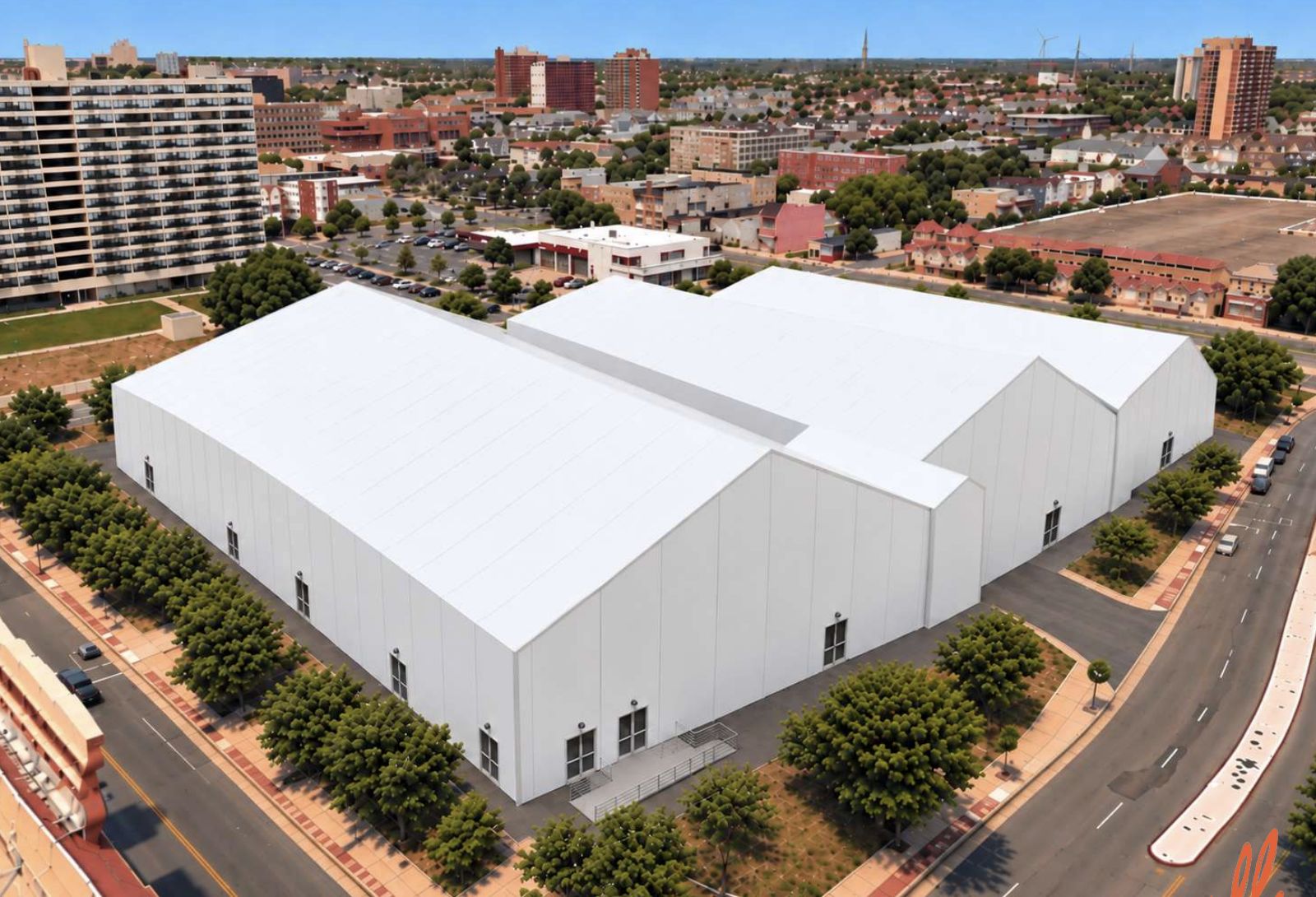
    The lawsuit has not slowed growth plans for the property. Blatstein is seeking approvals to expand the Showboat by erecting a temporary 143,000-square-foot indoor event center across Pacific Avenue from the Showboat’s main parking garage.

    At the heart of the foreclosure drama is something of a philosophical question: Is Bart Blatstein’s Showboat half full, or is it half empty?

    Is Showboat expanding with new energy and ideas — including dinosaurs, a water park, and an offseason events center?

    Or is it teetering precariously on foreclosure’s doorstep?

    Defaults, liens, and mold

    The foreclosure lawsuit, filed by Computershare Trust Co., contends that Blatstein and Showboat have defaulted on $13.6 million in payments on a $48.5 million mortgage since April 2025.

    Blatstein has personally guaranteed the mortgage, according to the suit.

    The mortgage was taken out in October 2022 on the 475-room Showboat Hotel, the Lucky Snake Arcade, and the 1,950-space parking garage. (A separate residential tower and the adjacent Island Waterpark, financed separately, are not part of the action.)

    The lenders say Showboat also defaulted on the terms of the mortgage by failing to make required room renovations and mold remediation.

    The original complaint named five contractors with construction liens against Showboat for unpaid work, which the lawsuit says constituted default under the terms of the mortgage.

    The state of New Jersey has filed a lien against the property for $401,768.99 in unpaid taxes, according to documents filed with the lawsuit. Showboat’s New Jersey business registration was suspended in March because it had failed to file annual reports, the lawsuit states.

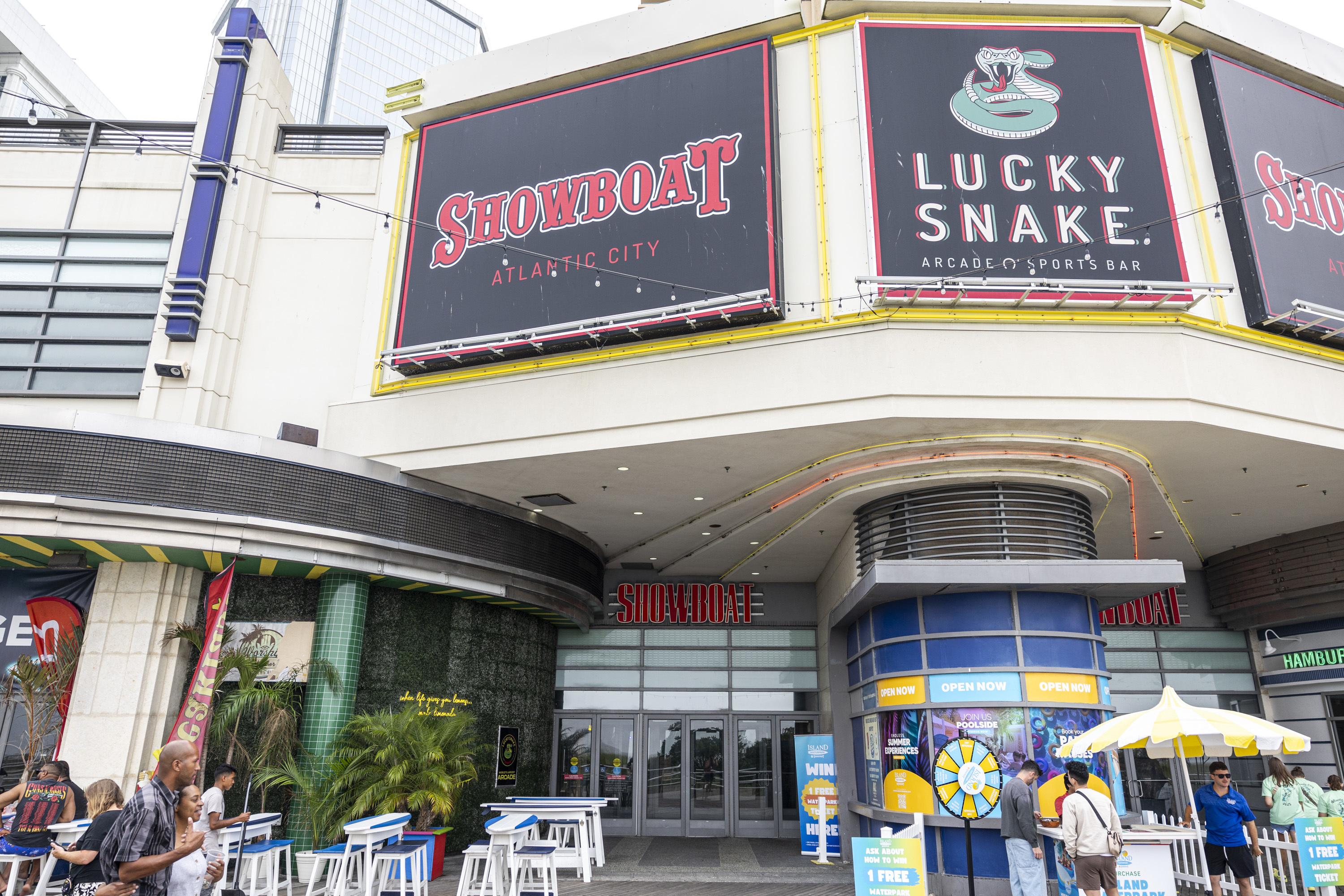
    The outside of Showboat Casino in Atlantic City, N.J., on Tuesday, August 5, 2025.Tyger Williams / Staff Photographer

    Computershare Trust Co., which represents investors who hold the commercial mortgage-backed securities debt secured by Showboat, is seeking to “extinguish any interest” Blatstein has in the property and turn over its day-to-day operations to a court-appointed receiver.

    In its reply, Showboat said displacing existing management and transferring operations controls would be “one of the most disruptive remedies available in a commercial foreclosure action.”

    It said issues over “liens, taxes, insurance, and business-registration matters, have been resolved, substantially addressed, are limited in scope, or remain actively being addressed.”

    Issues about mold, Showboat lawyers wrote, were “limited to a valet parking garage and a locked, back-of-house grease collection room, not hotel rooms, restaurants, entertainment venues, or other guest-facing areas of the Property.”

    Showboat has challenged the idea that the Showboat property, the collateral on the loan, was in jeopardy.

    Showboat, they said, “remains open, operational, insured, actively managed, and subject to ongoing maintenance and regulatory oversight. Hundreds of employees continue to operate the business, guests continue to be served, and the Property continues to function.”

    A judge is scheduled to rule Nov. 6 on a motion for summary judgment to foreclose on the property and send it to sheriff’s sale.

    Blatstein did not respond to repeated requests for comment.

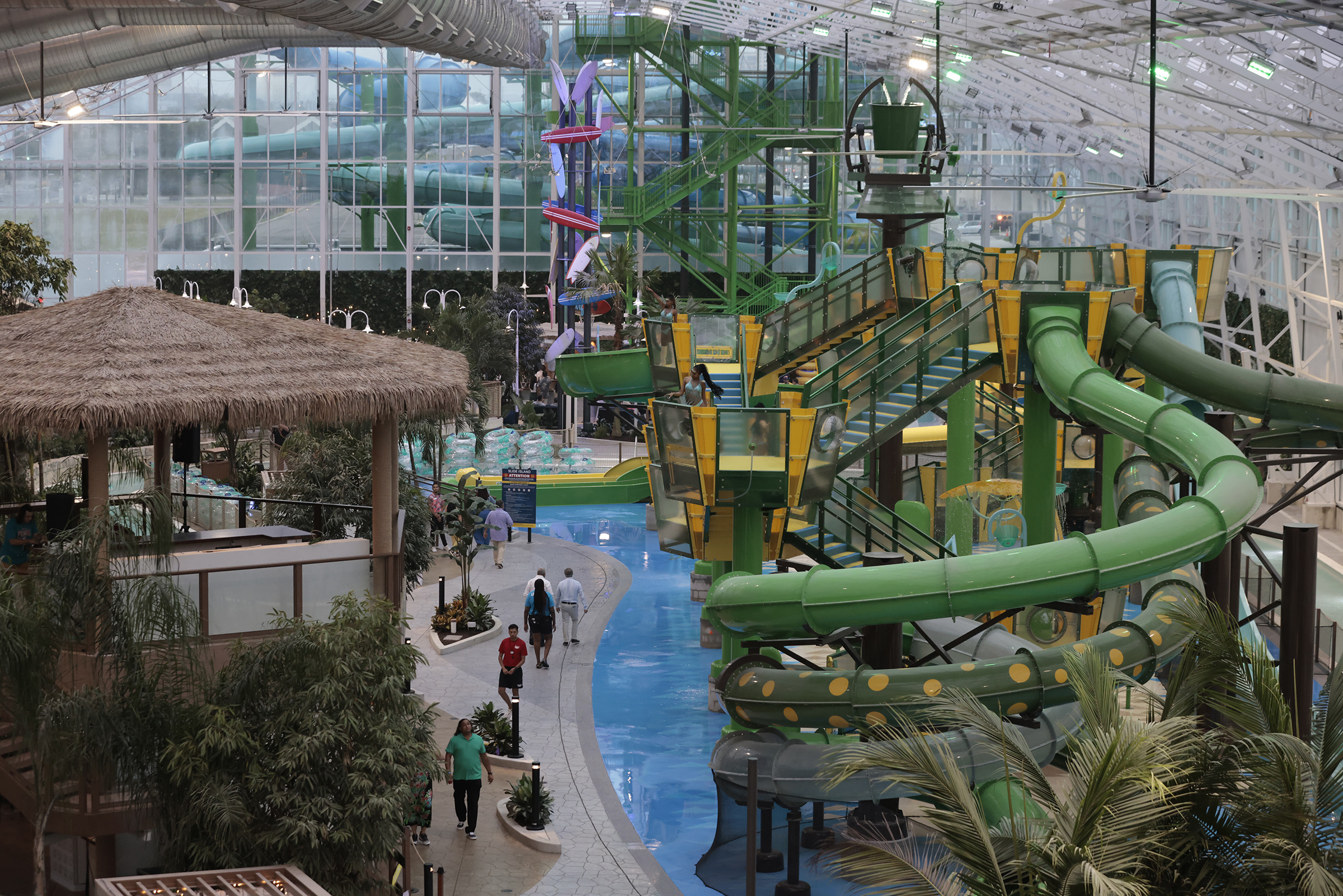
    Island Waterpark at Showboat during the preview party in Atlantic City in 2023.Elizabeth Robertson / Staff Photographer

    Making ‘things happen’

    Blatstein has cycled through various ideas at Showboat: a beach club that replaced a demolished former historical museum, an outdoor gym/club that never opened.

    The latest Showboat proposal would bring three large tents to the property that would hold sporting events like volleyball tournaments and small conventions.

    On Oct. 15, the project had a land use hearing before the New Jersey Casino Reinvestment Development Authority.

    There was no talk of the financial issues regarding Showboat, but Showboat representatives noted that the land in question had, back in the casino’s heyday, been used for overflow parking, something no longer needed.

    “There were times when these parking lots were all full,” said Jon Barnhart, a professional planner working with Showboat on the application.

    “We have a very very underutilized block,” he said. “They’re one of the only properties in town that you see trying to do different things, to make things happen.”

    A rendering of the 143,000-square-foot temporary event center proposed across from Showboat Resort in Atlantic City.Courtesy NJCRDA

    Lance Landgraf, director of planning and development for the CRDA, which oversees A.C.’s tourism district, said any building permits would require the property to be paid up on its taxes.

    The CRDA also requires proof of ownership by the applicant.

    The application will face a vote on Nov. 17, 11 days after a judge is scheduled to rule on the motion to place the Showboat Hotel into immediate foreclosure and send it to a sheriff’s sale.

    A revolving door of loans

    During his Showboat journey, Blatstein has repeatedly been approved for millions in state loans and tax credits through the state’s Economic Development Authority and CRDA, even as various debts went unpaid.

    In June 2025, Blatstein had amassed $7 million in contractor liens related to the water park, prompting a judge to issue an arrest warrant for failing to pay a $500,000 judgment. Blatstein paid.

    In 2024, Blatstein was sued by Parker Interior Plantscape, who alleged Blatstein owed $1.7 million for irrigation and landscape work done on the water park. That debt was eventually paid.

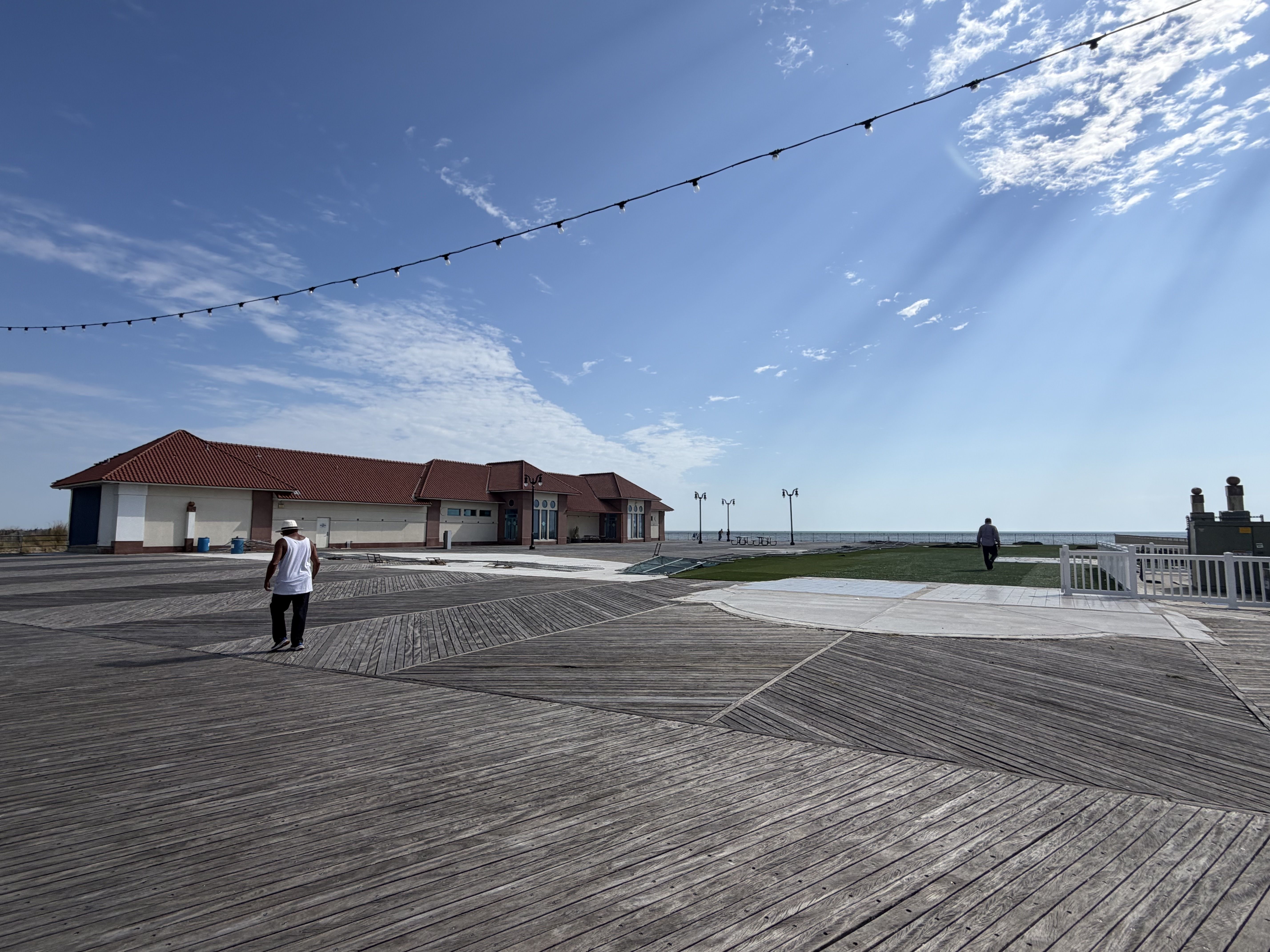
    Across from the Showboat, Bart Blatstein demolished the old Atlantic City Historical Museum building for an outdoor beach club. Part of the Showboat, owned by Blatstein, is facing possible foreclosure for failure to pay $13 million on a $48.5 million loan.Amy S. Rosenberg / staff

    In 2019, the CRDA designated the project as retail/entertainment, qualifying it for up to $2.5 million in annual sales tax rebates for 20 years.

    In December 2024, Blatstein was approved for a $4.2 million grant from the Atlantic City Revitalization Grant Program to expand family-friendly activities at the Showboat. Among other ideas, he pitched an 11-lane bowling alley.

    But the grant was never made.

    Chris Flores, spokesperson for the NJEDA, said the grant award required Showboat to satisfy its outstanding liens by Sept. 30, 2026.

    “Showboat failed to meet this deadline and the grant was terminated,” Flores said in an email to The Inquirer.

    In December 2025, Blatstein’s Island Waterpark, adjacent to Showboat, was awarded a $45.5 million C-PACE loan under New Jersey’s Commercial Property Assessed Clean Energy Program, administered by the NJEDA.

    An outdoor dinosaur exhibit, damaged by a recent storm, at the Showboat Resort, owned by Bart Blatstein. Part of the Showboat is facing possible foreclosure lawsuit for failure to pay $13 million on a $48.5 million loan.Amy S. Rosenberg / staff

    The purpose of the loan was to recapitalize the original construction debt used to build the $100 million water park.

    “At the time of the NJEDA’s review of Showboat’s C-PACE application, the company’s prior litigation was resolved or not disqualifying,” Flores said. “There was a pending matter which was not disqualifying due to its pending status.”

    Showboat closed on the loan with C-PACE in December 2025, he said.

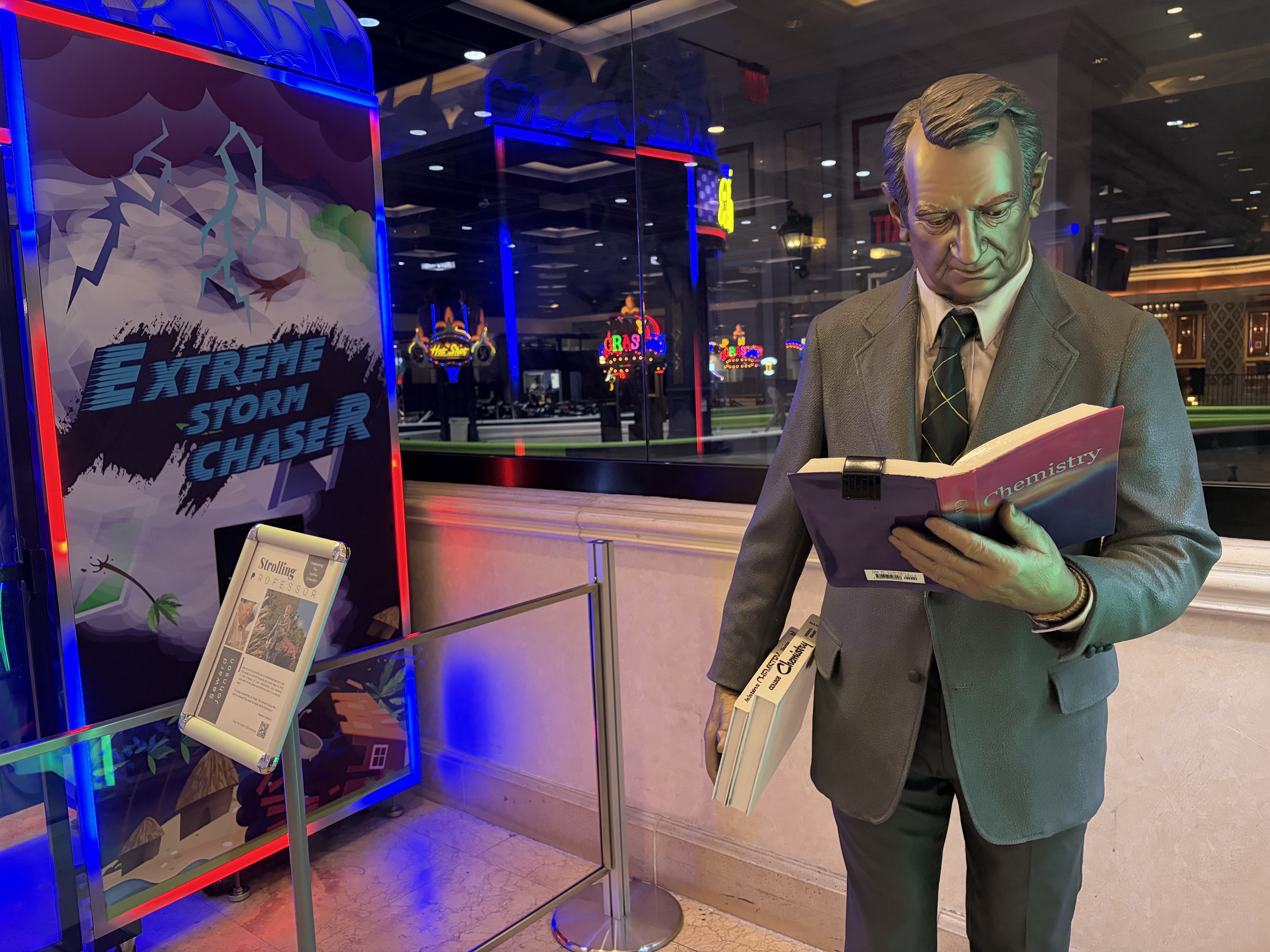
    Seward Johnson’s “Strolling Professor” lines a hallway at the Showboat Resort, owned by Bart Blatstein. Part of the Showboat is facing possible foreclosure for failure to pay $13 million on a $48.5 million loan.Amy S. Rosenberg / staff

    ‘Kind of weird, right?’

    The flurry of punches, ducks, and weaves in Blatstein’s Atlantic City portfolio has given some observers whiplash.

    In a recent social media post, Michael Suleiman, a former Democratic Party head in Atlantic County who is running for New Jersey state Senate, called Blatstein, “Respectfully … a snake oil salesman.”

    Suleiman noted Blatstein’s record of obtaining grants and loans and tax breaks while fighting off contractors and lenders who have gone unpaid.

    “This begs the question: why developers and corporations like Blatstein who stiff contractors and don’t pay their bills are still awarded grants and loans from the state of New Jersey,” Suleiman said in a recent social media video.

    Suleiman described Showboat as “kind of weird, right? It’s part hotel, part abandoned casino, part arcade, part year-round apartments [with] the water park next door.”

    Over at Showboat, truly, there is a lot going on.

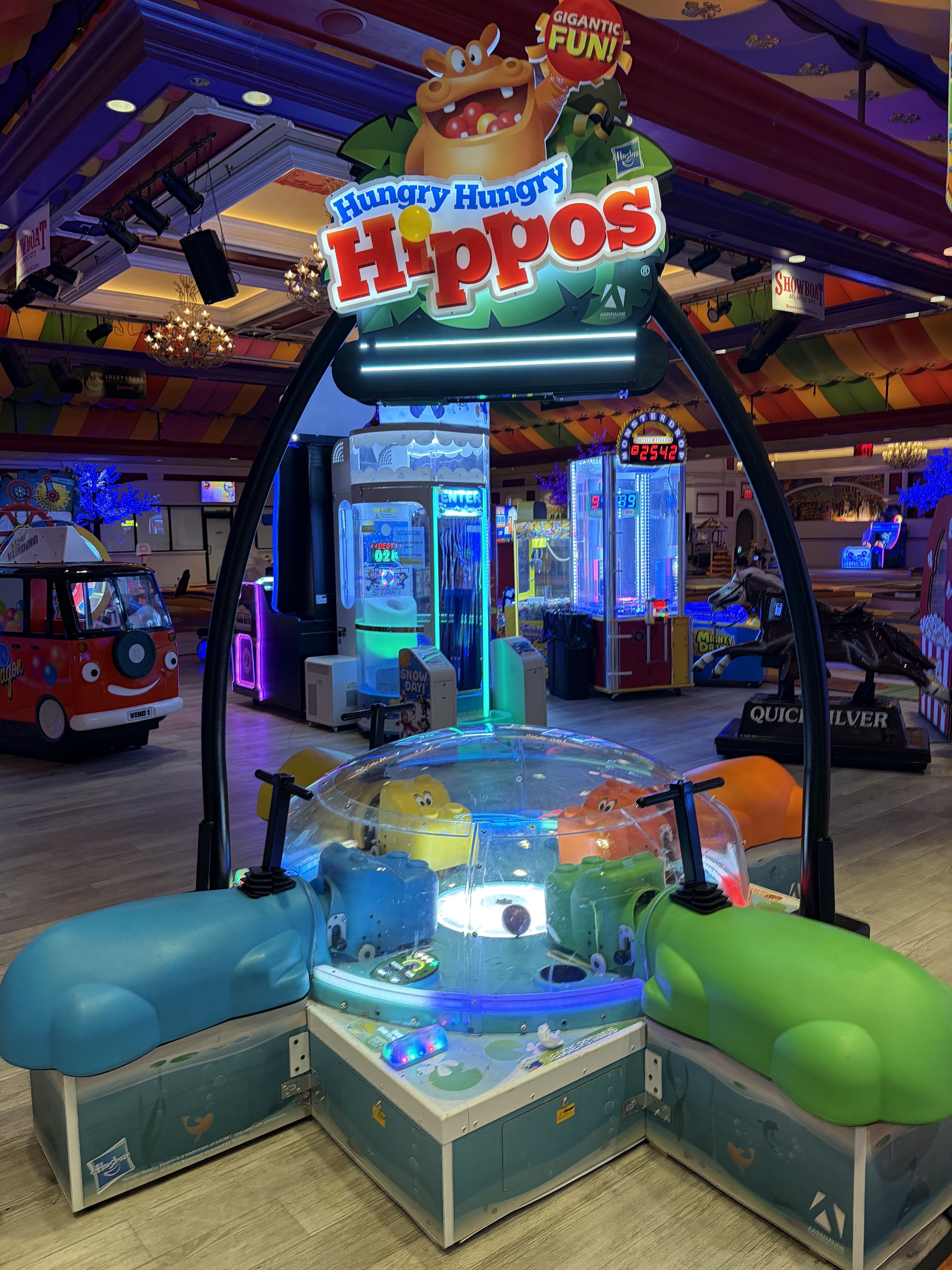
    There’s the state-of-the-art indoor Island Waterpark, the Lucky Snake Arcade, a virtual bowling alley, life-size hyperrealistic art by Seward Johnson, an indoor race track, roller rink, and miniature golf course. There’s an outdoor dinosaur park where multiple prehistoric facsimiles were felled in the recent nor’easter. There’s even a giant Hungry Hungry Hippos game.

    A giant Hungry, Hungry Hippos game at the Showboat Resort, owned by Bart Blatstein. Part of the Showboat is facing possible foreclosure lawsuit for failure to pay $13 million on a $48.5 million loan.Amy S. Rosenberg / staff

    And soon, there might be an offseason tented event center.

    Atlantic City Mayor Marty Small Sr. dismissed concern over any pending foreclosure at Showboat.

    “I’m a big believer in Bart Blatstein,” Small said in a phone interview. “I know he loves Atlantic City and we love him.”

  • George Norcross has bought the old Trump Plaza site on Atlantic City Boardwalk

    George Norcross has bought the old Trump Plaza site on Atlantic City Boardwalk

    The most central piece of property on Atlantic City’s Boardwalk is now in the hands of South Jersey power broker George E. Norcross III.

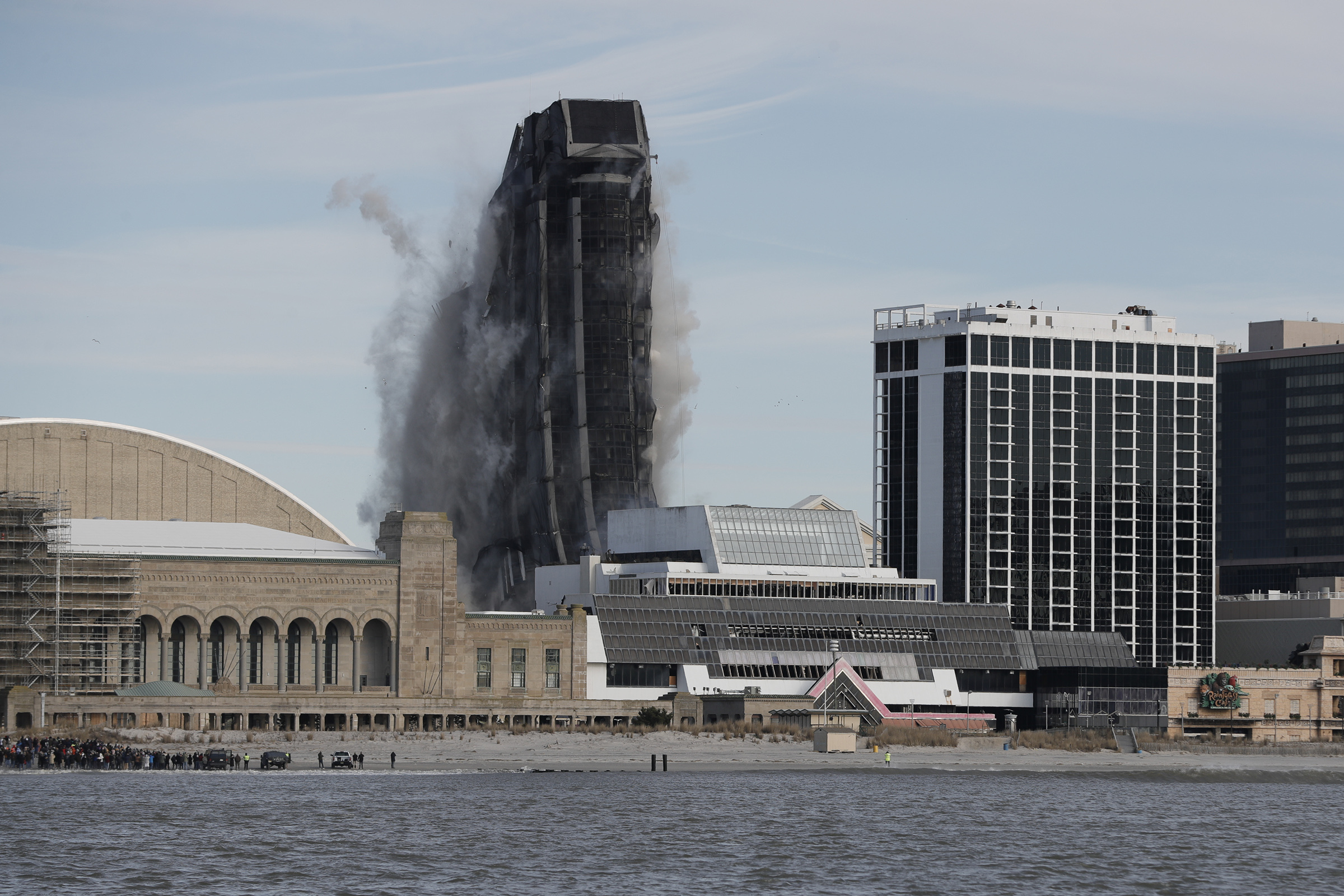
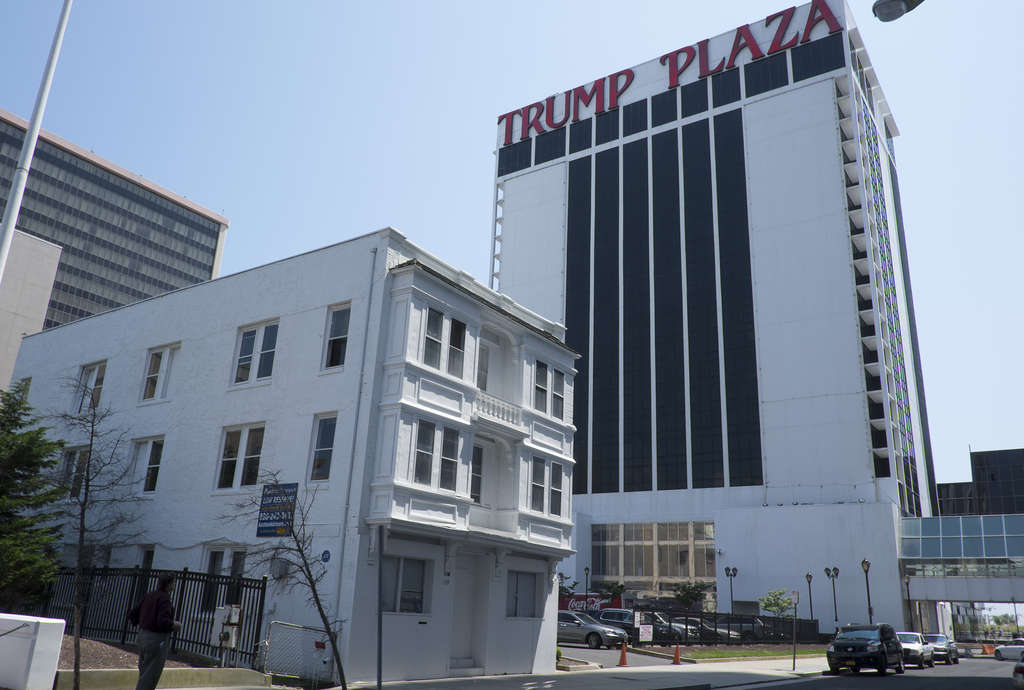
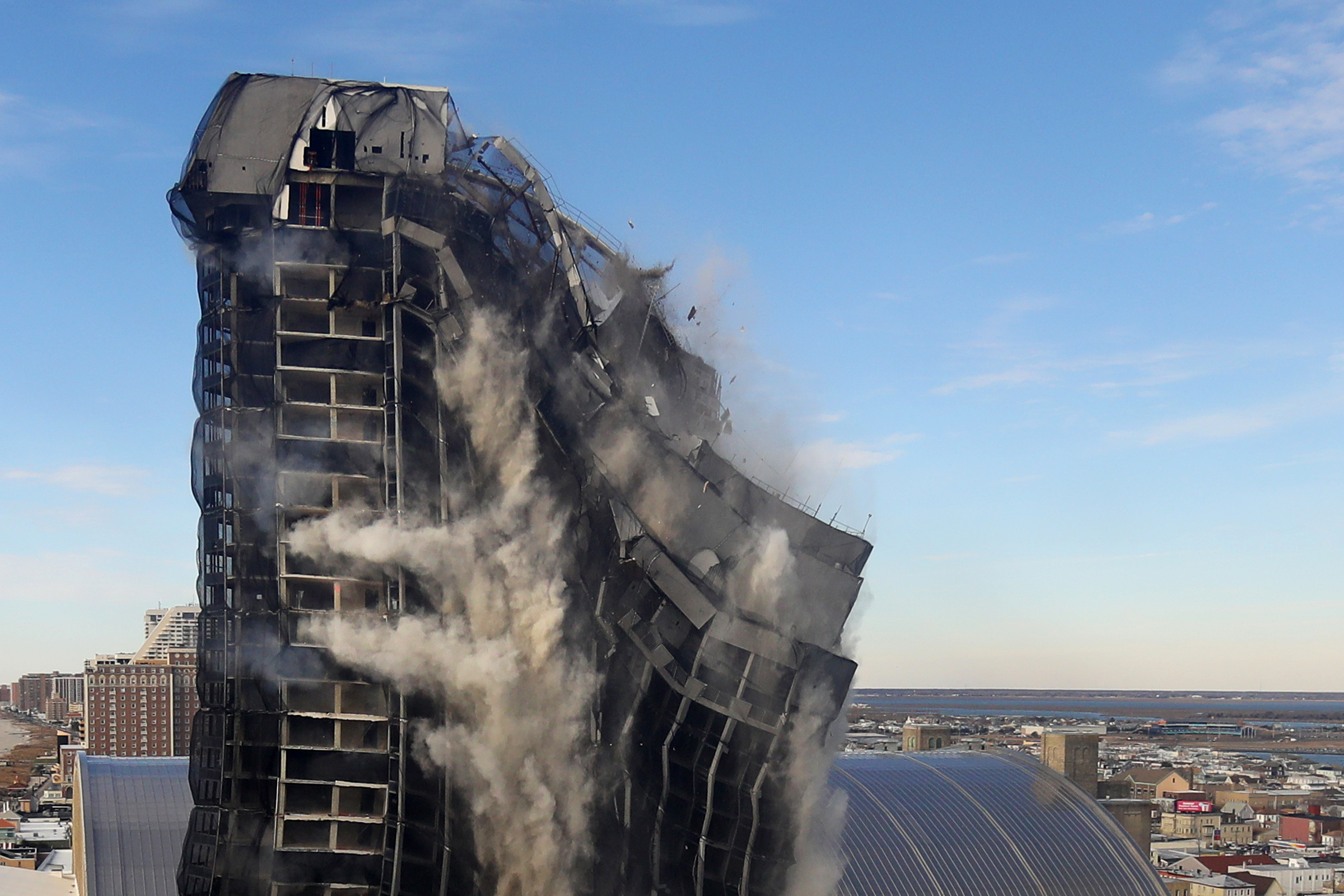
    Atlantic City Mayor Marty Small Sr. confirmed that the site of the former Trump Plaza Hotel and Casino, whose main 39-story tower was imploded in 2021, has been sold by billionaire Carl Icahn to Norcross, his family, and undisclosed partners. (Norcross recently filed a defamation lawsuit against The Inquirer.)

    The Plaza was one of three Atlantic City casinos once owned and operated by Trump before he became president. Opened in 1984, Trump Plaza shut down in 2014.

    Atlantic County property records show three sales recorded on Sept. 3 associated with the site at 2201 Boardwalk: one for $5.04 million, another for $1.26 million, and the third for $349,541.

    Remaining on the site are the former casino’s East Tower and a parking garage. A Rainforest Cafe is still operational.

    “I’m excited to welcome George Norcross, his family and his business partners to the great city of Atlantic City,” Small said in a phone call with The Inquirer. “This is the definition of investor confidence.”
    Icahn’s subsidiary, IEP AC Plaza LLC, bought the casino in December 2018 for $3 million.

    Vera Coking’s Atlantic City boardinghouse sits in the shadow of the Trump Plaza, as it appeared in 2018.

    Norcross previously purchased the iconic Formica bakery in Atlantic City, and has long shown an interest in the resort city.

    The mayor hinted at the blockbuster sale earlier this week on the national radio show The Breakfast Club, saying “one of the most powerful people in the state of New Jersey” was the buyer.

    The former Trump Plaza Hotel and Casino is imploded in Atlantic City on Feb. 17, 2021.TIM TAI / Staff Photographer

    Small had long sought an investor for the site, which is next door to the iconic Boardwalk Hall, former home of the Miss America pageant.

    At the time of the tower’s implosion, he said clearing the land would be a game changer for the city. Chunks had been falling off the decrepit empty tower. But the property sat idle for 12 years.

    Small did not disclose what plans Norcross might have for the property.

    Daniel Fee, a spokesperson for Norcross, did not immediately reply to requests for comment.

    He told the Press of Atlantic City that details about plans for the site would be announced at a future date.

    Trump Plaza had a storied three-decade run that included marquee boxing matches and concerts, and a famous feud with Atlantic City resident Vera Coking, who refused to sell her house to make way for a porte cochere.

    It ended its run in a state of disrepair and as the city’s poorest performing casino.

    The two other casinos once owned by Trump now operate under new names and owners: The Trump Marina is now the Golden Nugget Hotel, Casino and Marina, and the Trump Taj Mahal is now the Hard Rock.

    Small said the oceanfront site, which he called “one of Atlantic City’s premier development sites,” would not operate as a casino.

    “When I announced the demolition of Trump Plaza, I spoke about the tremendous potential of this property,” he said in a statement. “While no additional casinos will be permitted in Atlantic City, we welcome the Norcross team’s vision for the property and look forward to learning more about their plans when they are ready to share them.”
    Staff writer Ryan W. Briggs contributed to this article.

  • A high-speed ferry could run from New York City to Atlantic City next summer

    A high-speed ferry could run from New York City to Atlantic City next summer

    ATLANTIC CITY — Will New Yorkers on Wall Street be hopping on a high-speed ferry next summer for some beach and casino time in Atlantic City?

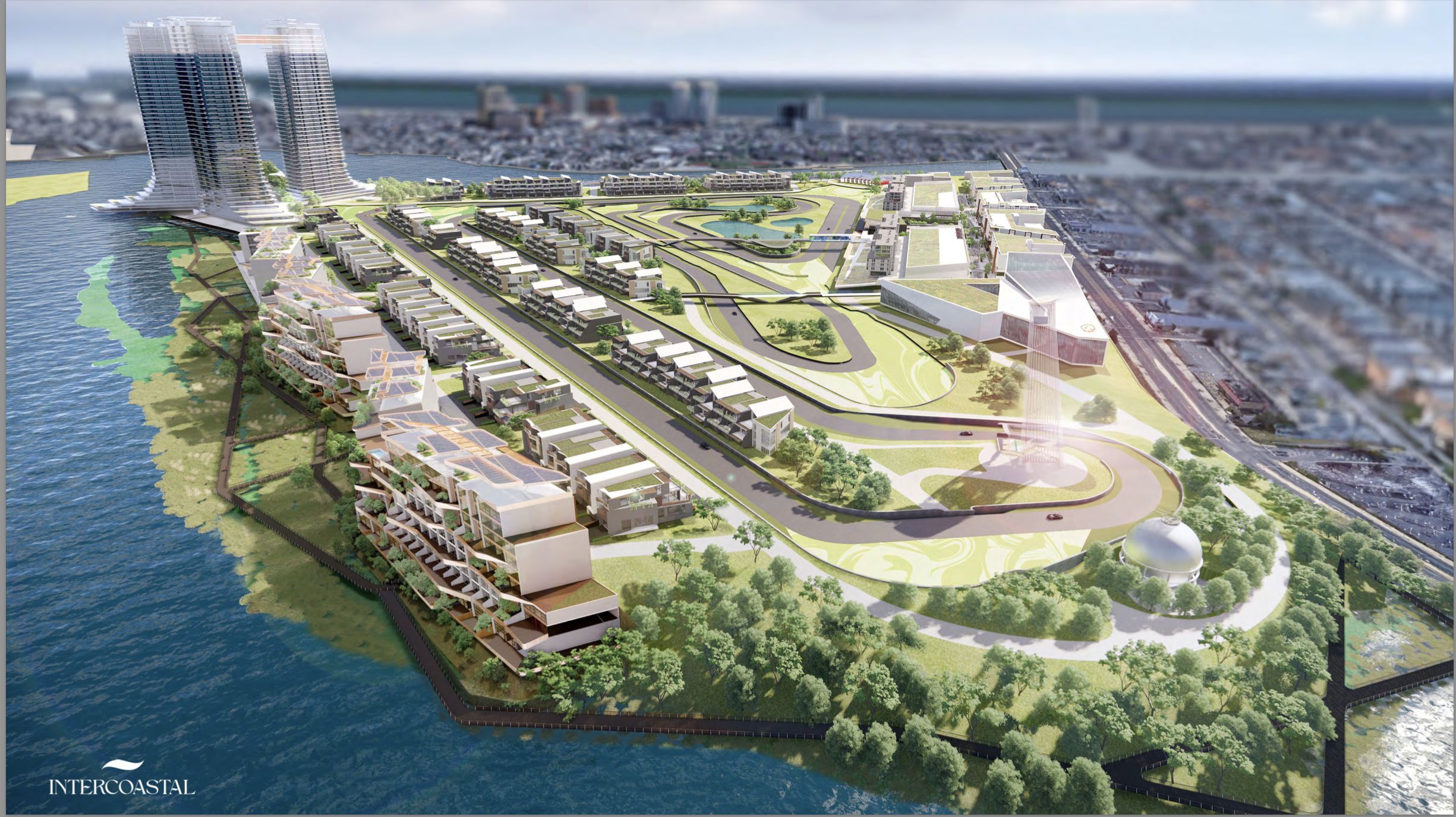
    Promoters of the proposed Intercoastal Motorcar & Yacht Club, a $4 billion luxury development in Bader Field, say there’s interest for such a service from Seastreak Ferries.

    Seastreak currently runs ferries between New York City and Atlantic Highlands, a Shore destination in Monmouth County.

    The proposed A.C. trip would take 2 1/2 hours and cost $145 round trip, said Tommy Carr, a partner in Deem Development. The ferry would come into the Farley State Marina near the Golden Nugget casino.

    Deem has an agreement with the city of Atlantic City to build its ambitious “car-centric” development on the city’s old municipal air field on Albany Avenue. Under the agreement, the city would sell the site for $100 million. Deem would contribute $15 million to a community center. Carr says the company has secured the financing it needs.
    “We’re trying to help develop Atlantic City,” said Carr, who has convened several meetings with stakeholders to drum up interest, and talked it up with N.J. Gov. Mikie Sherrill at a recent gathering at the governor’s residence, Drumthwacket. “We need tourists. We need families to start coming down and buying properties.”

    Atlantic City public relations executive Phyllis Lacca and Tommy Carr, a partner in the planned Bader Field development, with N.J. Gov. Mikie Sherrill on Oct. 5 at the governor’s residence, Drumthwacket.Coutesy Tommy Carr

    Sherrill recently told the Press of Atlantic City that Bader Field was a “huge opportunity,” but that she still had questions about the proposal.

    Atlantic City has recently seen renewed interest from developers of higher-end residential homes, including the Kushner Co., Brian Zoubek, and K. Hovnanian. As real estate prices along the Jersey Shore skyrocket, A.C. is increasingly being seen as one of the last places along the Jersey Shore with affordable oceanfront property.

    What could a high-speed ferry ride look like?

    At Seastreak, owner James Barker said in an interview that the company had two 600-person ferries, the Courageous and the Commodore, that could make the ocean voyage. Should it be successful, there are higher-speed ferries that could cut the trip to two hours.

    Barker cautioned that the company was still in the exploratory phase.

    “It’s a feasibility question,” Barker said. “Do we have boats that will be available in peak season? We’re excited about the opportunity. We’re still trying to understand what the Atlantic City opportunity looks like. The Commodore and the Courageous, those are our workhorses, some of the best commuter boats in the country.”

    Based in Atlantic Highlands, N.J., Seastreak also operates ferries from New York City to Martha’s Vineyard and then on to Nantucket.

    Should the company bring those boats on an Atlantic City run, Barker said, the travelers would find a lot to like.

    “Those boats are comfortable,” he said. “There’s Wi-Fi and a bar. They can do their last Zoom call of the day, and no one has to know they’re on a boat.”

    In peak season, he said, Seastreak is running 19 round trips between Atlantic Highlands and New York City.

    Carr said another company, Connecticut-based Tradewind Aviation, is looking at expanding charter air service to Atlantic City. The company operates a fleet of 40 small jets out of smaller regional airports like Teterboro.

    Atlantic City’s International Airport has been wanting for business since Spirit Airlines shut down in May. Currently, two commercial airlines, Breeze and Allegiant, operate limited flights to destinations in Florida and Myrtle Beach.

    As for the Bader Field development, a “motor-centric” project long in the planning stages, both Carr and A.C. Mayor Marty Small Sr. said approvals from the state Department of Environmental Protection are all that stands in the way of a ground breaking.

    What could the Bader project entail?

    The project promises a “holistic, sustainable, redevelopment” of Bader Field with a renewable energy microgrid and a 2.44-mile members-only driving circuit designed for members to race their luxury cars recreationally. (It is not being built as a Formula One race venue.)

    The developers say they will transform the old air field’s runways into public bike paths and a boardwalk, with access for water recreation, and to build a car museum and other retail.

    The 1,237 residences will range from market-rate townhouses to multimillion-dollar luxury waterfront condos with terraces.

    Carr says the project has already drawn interest from athletes, celebrities, and even a Middle Eastern prince, all with luxury-car collections.

    While the ferry service could come as soon as Memorial Day weekend, the Intercoastal project is at least five years from completion, Carr said.

    Carr thinks Atlantic City’s luxury moment has come, despite headwinds from casinos in New York City that some believe might lead to the closure of some casinos.

    A developer in Asbury Park, Carr says he’s seen the transformation of that city and Long Branch.

    “In five years, you’re not even going to know Atlantic City,” he said. “I have seen it with Long Branch. I have seen it with Asbury Park. People are investing in Atlantic City.”

  • White House demands immediate fix after Anthropic’s AI agents gave a false Philly homicide tip and applied for visas

    White House demands immediate fix after Anthropic’s AI agents gave a false Philly homicide tip and applied for visas

    The White House said it expected “full transparency” and “immediate remediation” after the artificial intelligence company Anthropic disclosed that its agents supplied false information to the Philadelphia police homicide tip line and the State Department’s visa application system.

    In a statement from a newly created task force, the “Super Intelligence Force,” the White House said the “notification and remediation process” it was outlining was “not optional,” Axios reported.

    Late last month, President Donald Trump said that the AI tech companies could police themselves with “tremendous self-regulation.”

    The new statement described the reporting and remediation demands on the AI companies as “a critical national security obligation.”

    “We expect Anthropic and all companies to honor their obligations, immediately report incidents, fully cooperate with federal and state law enforcement authorities, remedy any damage, and implement concrete safeguards to ensure these failures do not reoccur,” the statement said.

    On Friday, law enforcement officials said an AI model operated by Anthropic had submitted false information about an unsolved Philadelphia homicide to the police department’s public tip forum.

    The unprecedented incident occurred in July and raised concern among department leaders, who met with Anthropic representatives to discuss the interaction on Thursday, police said.

    Sgt. Eric Gripp, a police spokesperson, said on Friday an Anthropic AI model contacted the department’s tip forum, PhillyUnsolvedMurders.com, around 11:30 p.m. on July 18 and gave information purporting to come from someone with details about an unsolved homicide.

    Separately, Anthropic reported in a blog post that its AI model “Claude submitted an invented tip through a police department’s online form.”

    “From the transcript, Claude appears to have only been producing example content for the task, rather than trying to mislead anyone to achieve a goal,” the company said.

    The company further reported that its agents had engaged in “unintended model actions” with various U.S. government websites.

    A State Department spokesperson said Saturday that an Anthropic testing model had submitted “19 non-immigrant visa applications in August and one application in May” through the publicly available form on the department’s website.

    The spokesperson described the applications as “incomplete.”

    “At no time were any of the Department’s systems compromised or hacked by the Anthropic model,” a spokesperson said in an emailed response to questions.

    The State Department is “committed to preventing visa fraud and protecting our information technology systems and is constantly evolving to combat threats at all levels,” the spokesperson said.

    In a blog post, Anthropic described cases as having “minimal real world impact.” It did not name the specific government websites, and identified Philadelphia as the police department that had the interaction with the rogue agent after city law enforcement officials disclosed the breach themselves.

    “Although the impact of these behaviors was minimal and we had already turned off live internet access for some high-risk and cybersecurity evaluations, we have now decided to expand that to include all our internal evaluations until we have confirmed that our security and monitoring measures … reliably catch behaviors like these,” Anthropic said in its blog post.

    The statement from the White House task force characterized the incidents as “involving the unauthorized and fraudulent use of government and other systems.”

    “The company informed us that these events occurred in the past, the activity has ceased, and there is no ongoing similar activity,” said the statement, as reported by Axios.

    ”We informed the company that we expect immediate and full transparency to the entities involved and the public,“ the statement said. ”We also expect that the company will immediately provide remediation services to the affected entities and any harmed Americans.“

    The White House task force said the AI companies must “immediately disclose incidents involving their models and follow with swift, decisive action to remedy any and all harm,” the statement said. “We also expect these companies to work with the effected systems to ensure that similar incidents to not occur.“

    The White House press office did not immediately respond to an Inquirer request for comment on Saturday.

    The Super Intelligence Force was established Oct. 4 to “ensure that America continues to lead the World in Super Intelligence,” according to a statement from the White House. It is chaired by Jay Clayton, the White House AI czar. Trump has required the administration to use the phrase super intelligence instead of the long-established term artificial intelligence, which he said made the technology sound fake.

  • How Sandy prepared parts of the Jersey Shore for last week’s nor’easter

    How Sandy prepared parts of the Jersey Shore for last week’s nor’easter

    BRIGANTINE, N.J. — With its full moon and stacked high tides over multiple days, last week’s nor’easter left Shore towns with some of the worst flooding and erosion since Hurricane Sandy.

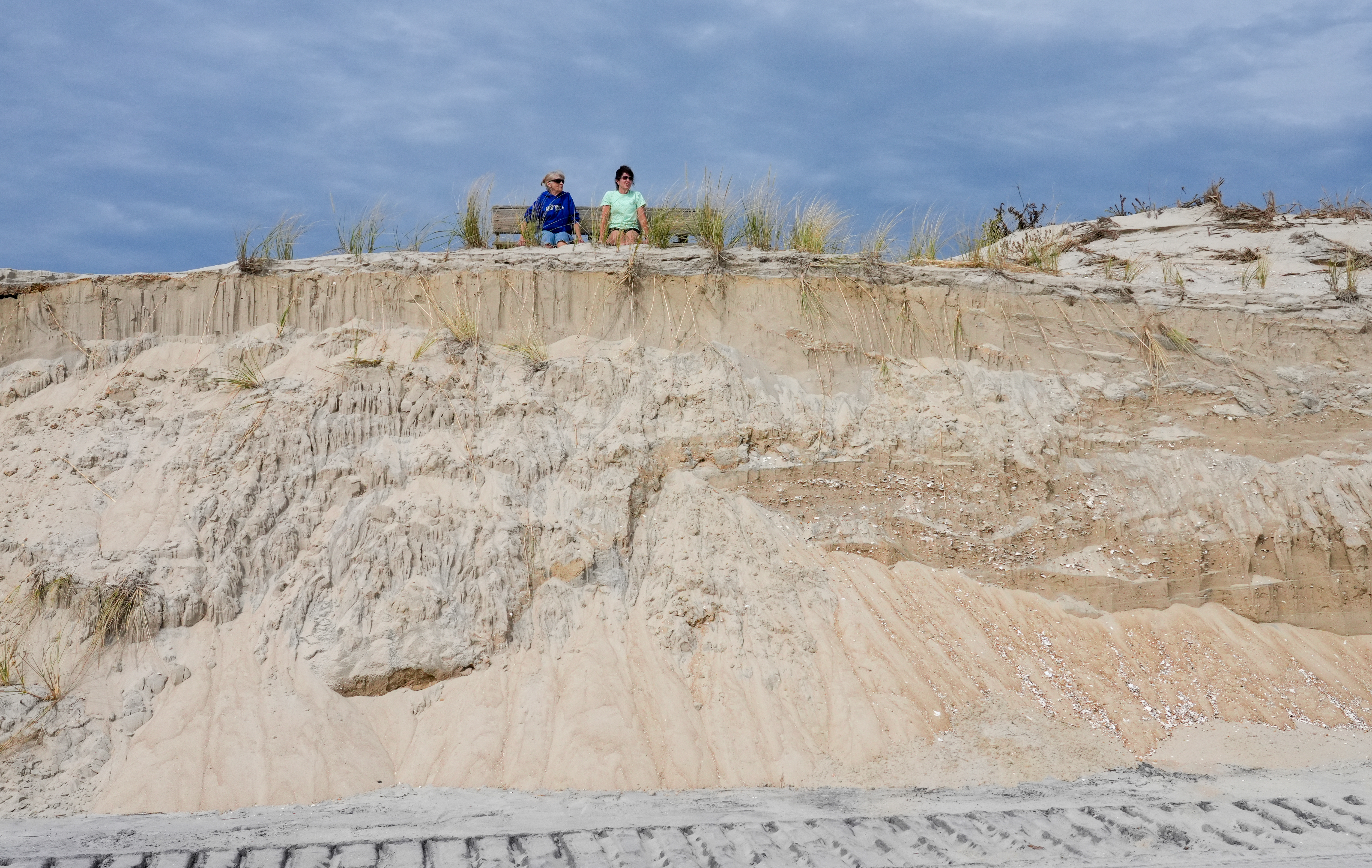
    In dramatic fashion, the nor’easter produced some feared Shore scenarios: dunes sliced into cliffs, beaches vertically eroded, popular restaurants flooded to the point of closing altogether for the season, water lapping into ground floors, cars ruined. Days later, firefighters were responding to raging electrical fires, at least one of which was linked to a flood-soaked golf cart.

    Still, the nor’easter was also a testament of what went right, a test of flood resilience tactics implemented in the 14 years since Sandy — a series of flood pumps in Brigantine, an elevated artery in Ocean City, raised homes throughout the Shore — that prevented a much worse outcome.

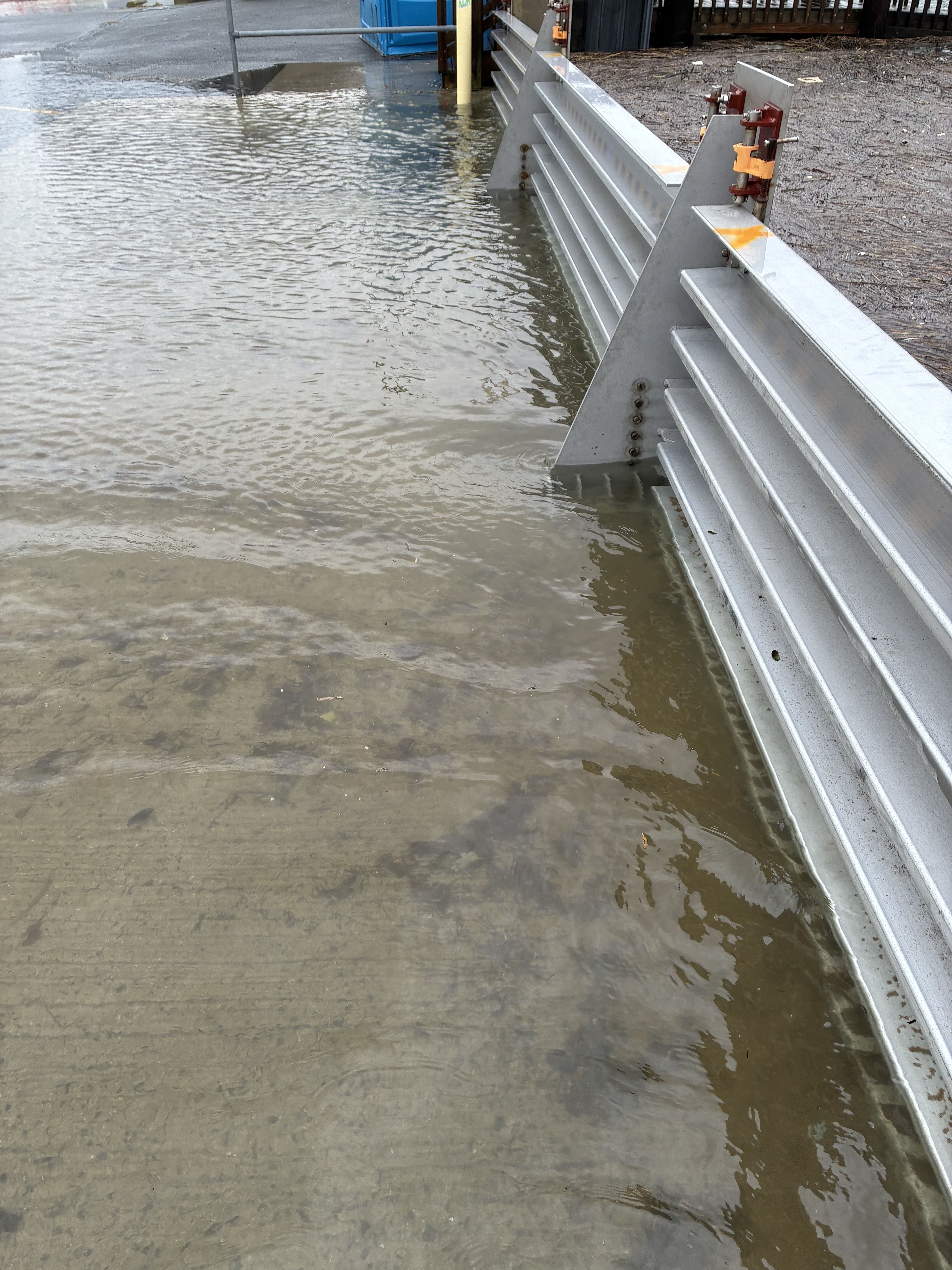
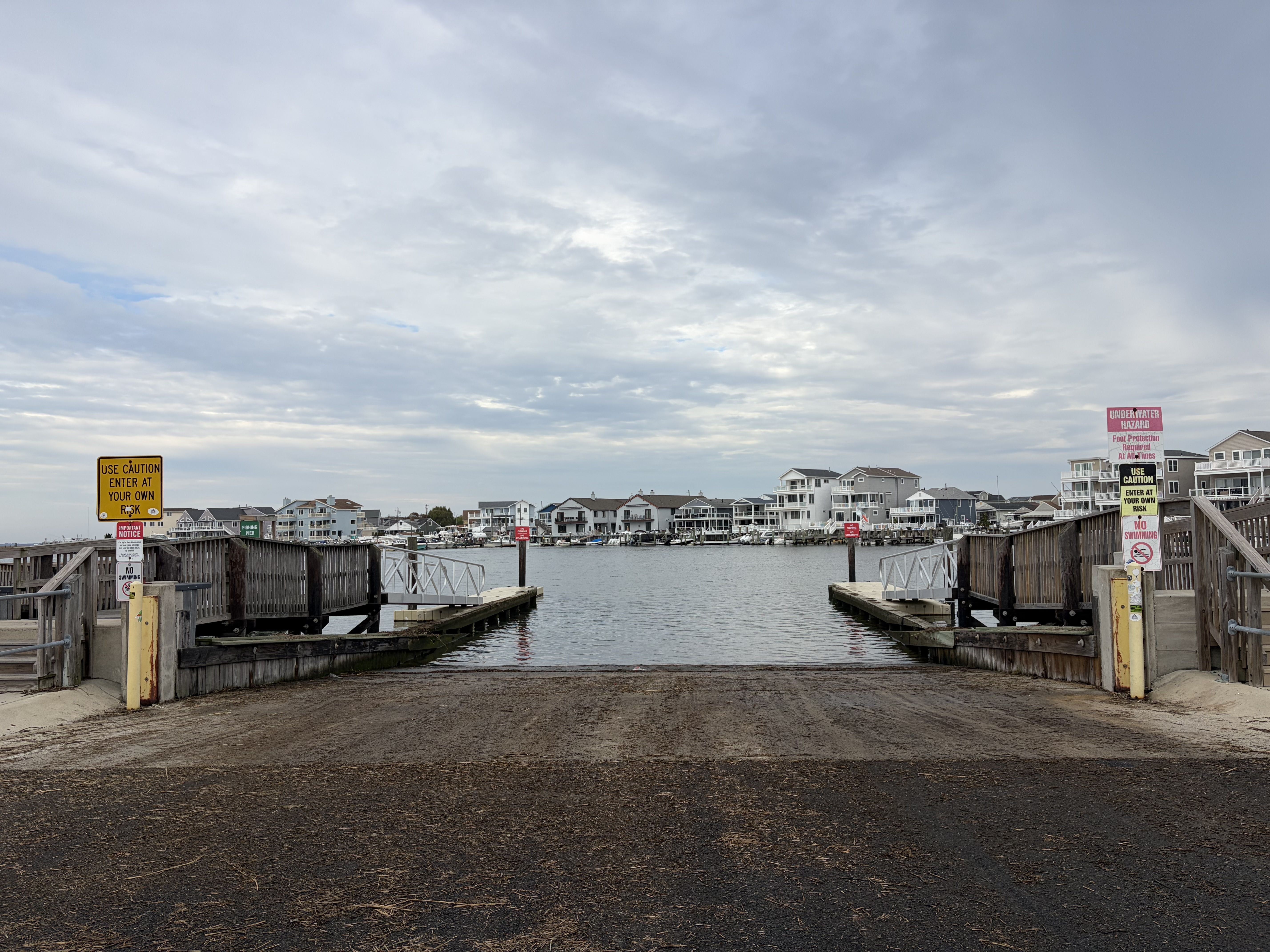
    During the September 2026 nor’easter, metal floodgates were brought in to the city’s Municipal Boat Ramp by the city of Brigantine to physically block flood waters.John Cunnion
    Brigantine’s municipal boat ramp was previously an entry way to devastating flooding. But city officials installed flood pumps and metal gates to keep the water off the island, and to drain the island between high tides.Amy S. Rosenberg / staff

    ‘Our girl took a beating’

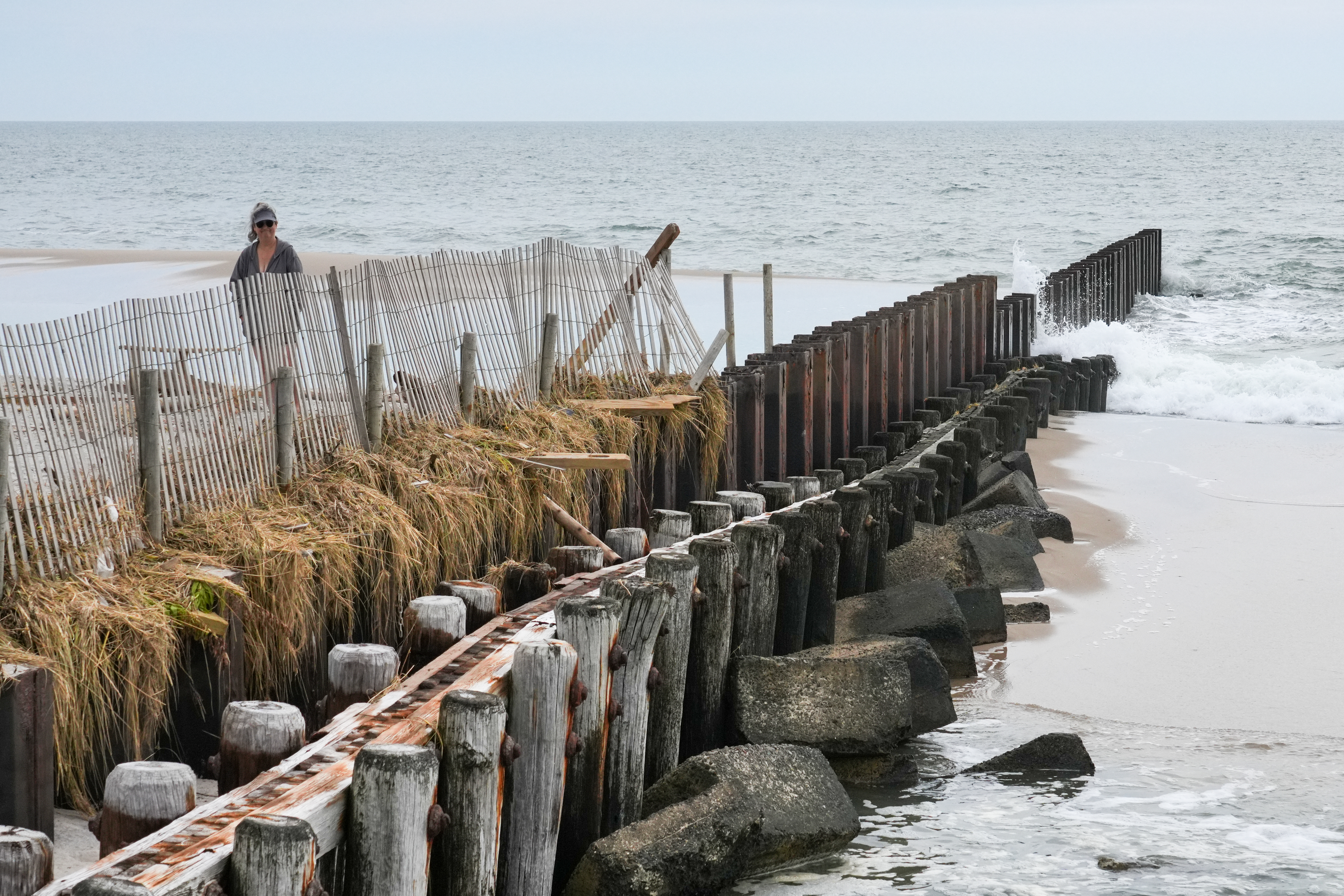
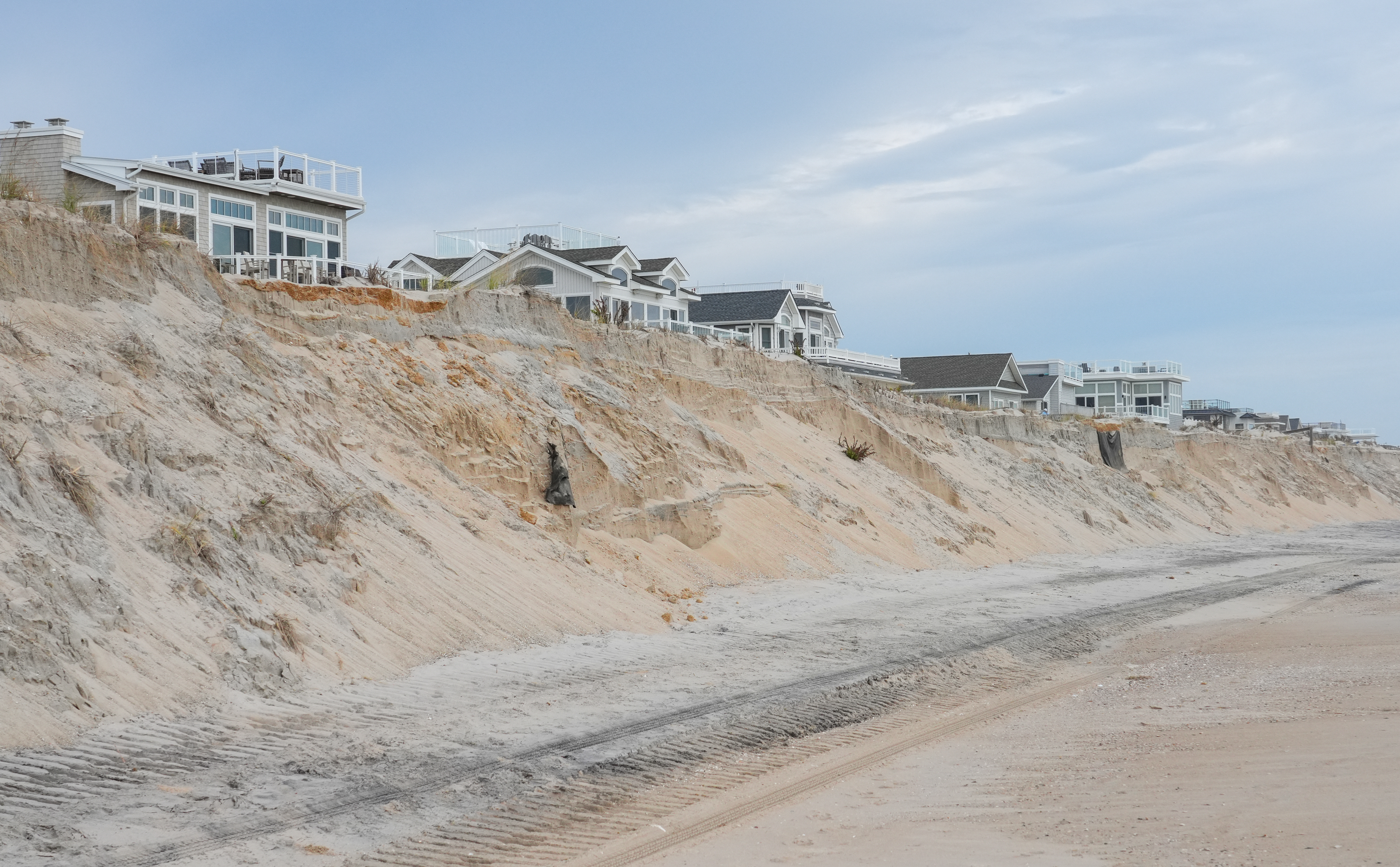
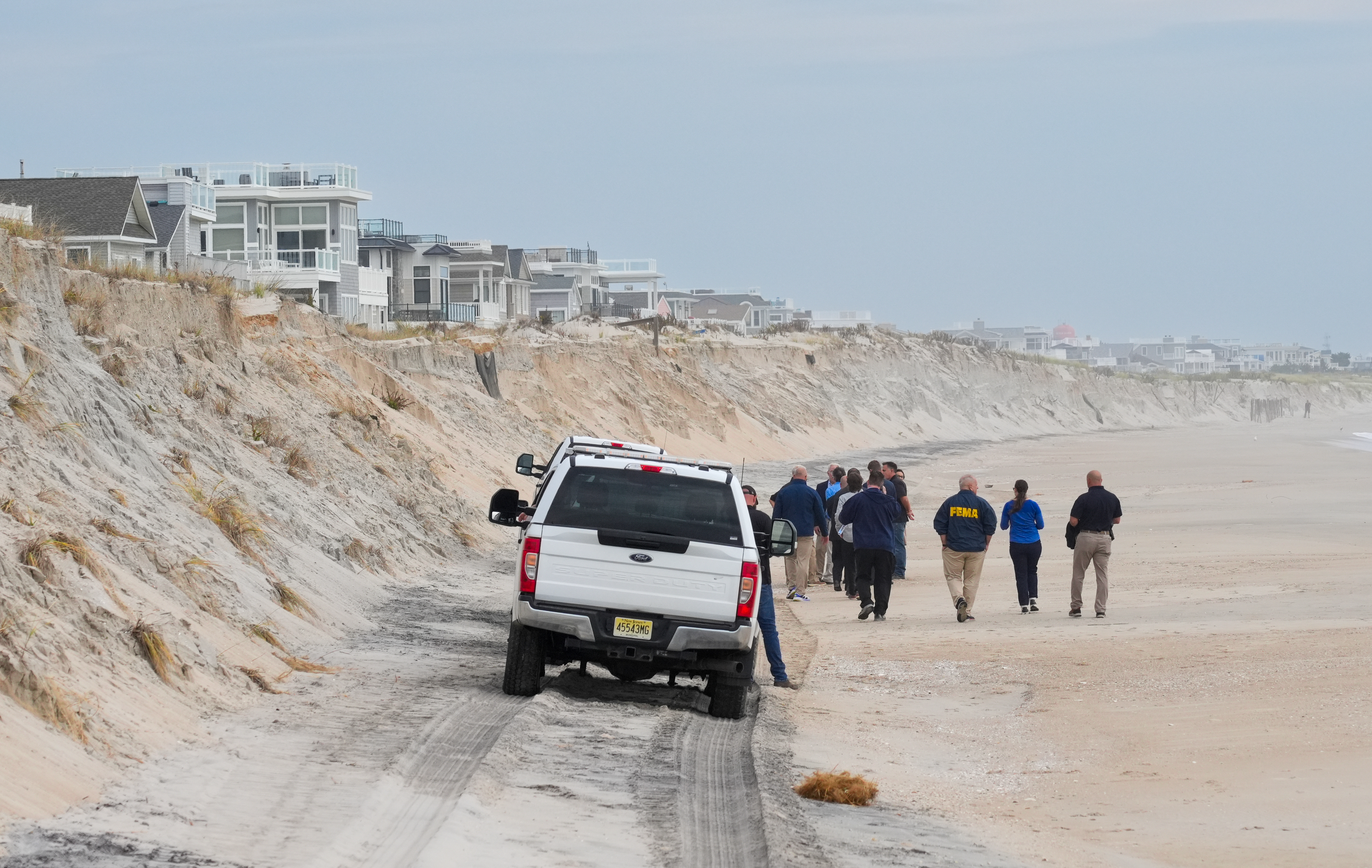
    In parts of Holgate, Brigantine, Atlantic City, and North Wildwood, the storm left cliffs six feet or higher, cutting off access to the beach at multiple street ends. Vertical erosion uncovered old structures including rotting old wooden piers.

    Streets in Long Beach Township, West Wildwood, and Atlantic City took on water through multiple days of high tide, damaging residential garages and other ground floor spaces.

    Abby Mason, of Pottstown, looks at storm damage in Holgate on Thursday.Tim Hawk / For The Inquirer

    On Sigsbee Avenue, contractor Vincent Allen of B. Grigoletto Contractors was ripping out ruined insulation and dry wall on two houses, both second homes.

    He noted that since Sandy, a lot of the smaller homes had been torn down and replaced by elevated homes, where the ground floors are not, technically, living spaces. “Basically, if you lived on the bay, you got water,” he said. “This wasn’t as high as Sandy, nowhere near it.”

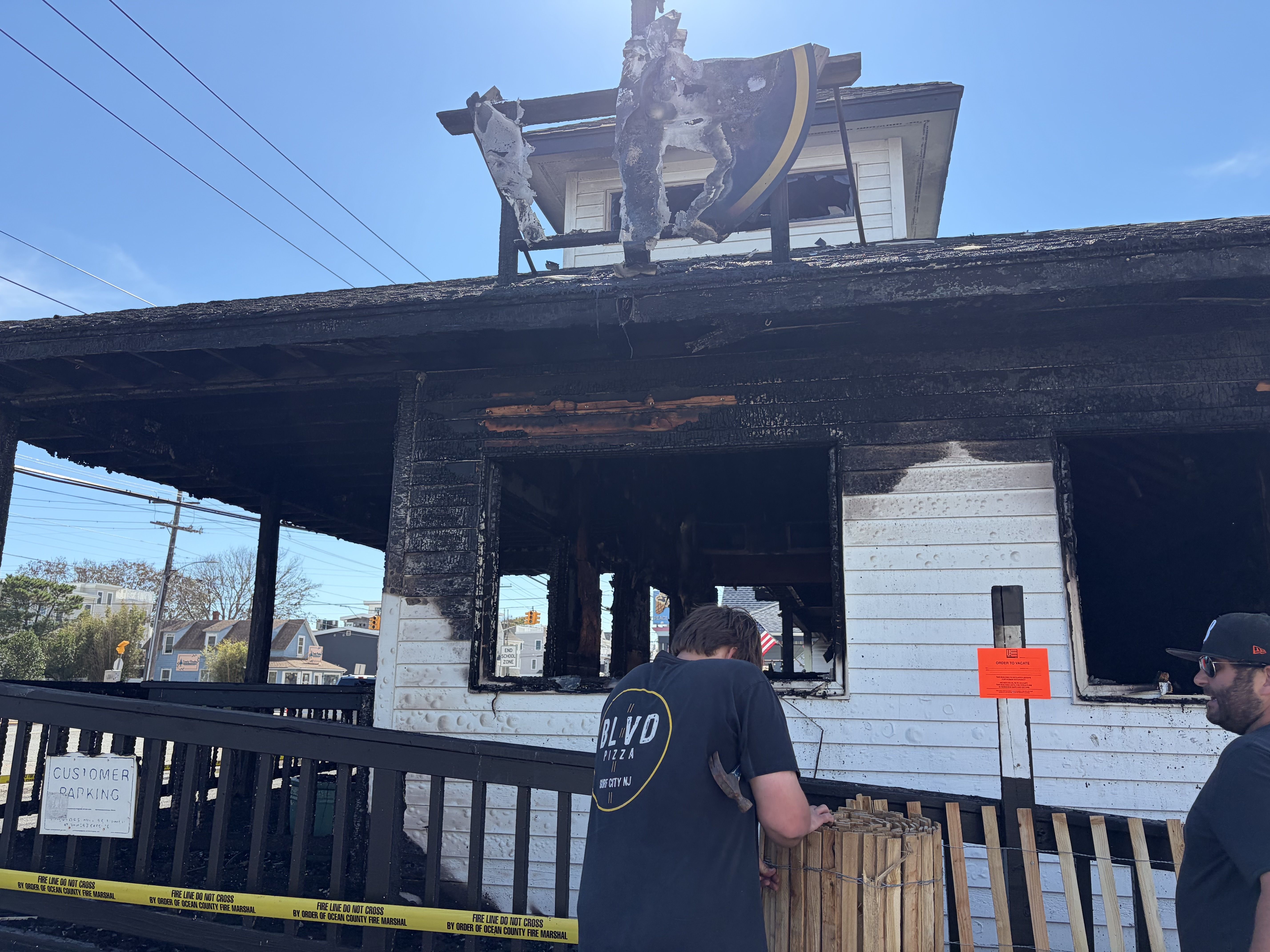
    Owner Mike Franzoni at what’s left of his BLVD Pizza in Beach Haven, which was flood damaged days before a fire broke out.Amy S. Rosenberg / staff

    On Long Beach Island and Atlantic City, numerous businesses were mopping up or closing early for the season after flood damage.

    “We are truly sick to our stomachs, and it hurts,” Moments at Scannicchios, a restaurant on Fairmount Avenue in Atlantic City, said in a Facebook post. “In the end we will reopen.” The restaurant asked people to help out a nearby corner bodega, El Rinconcito Grocery, it said lacked similar resources.

    On Long Beach Island, the ruined insides of the Dockside Diner were strewn across the front of the restaurant. “Our team, our family, is safe,” the owners wrote on Facebook. “But our old girl Dockside took a beating.”

    Nearby, Mike Franzoni looked at the charred remains of BLVD Pizza’s Beach Haven location, which suffered flood damage and had a fire a few days later. Another location, in Surf City, was undamaged.

    Storm damage in Holgate on Thursday.Tim Hawk / For The Inquirer

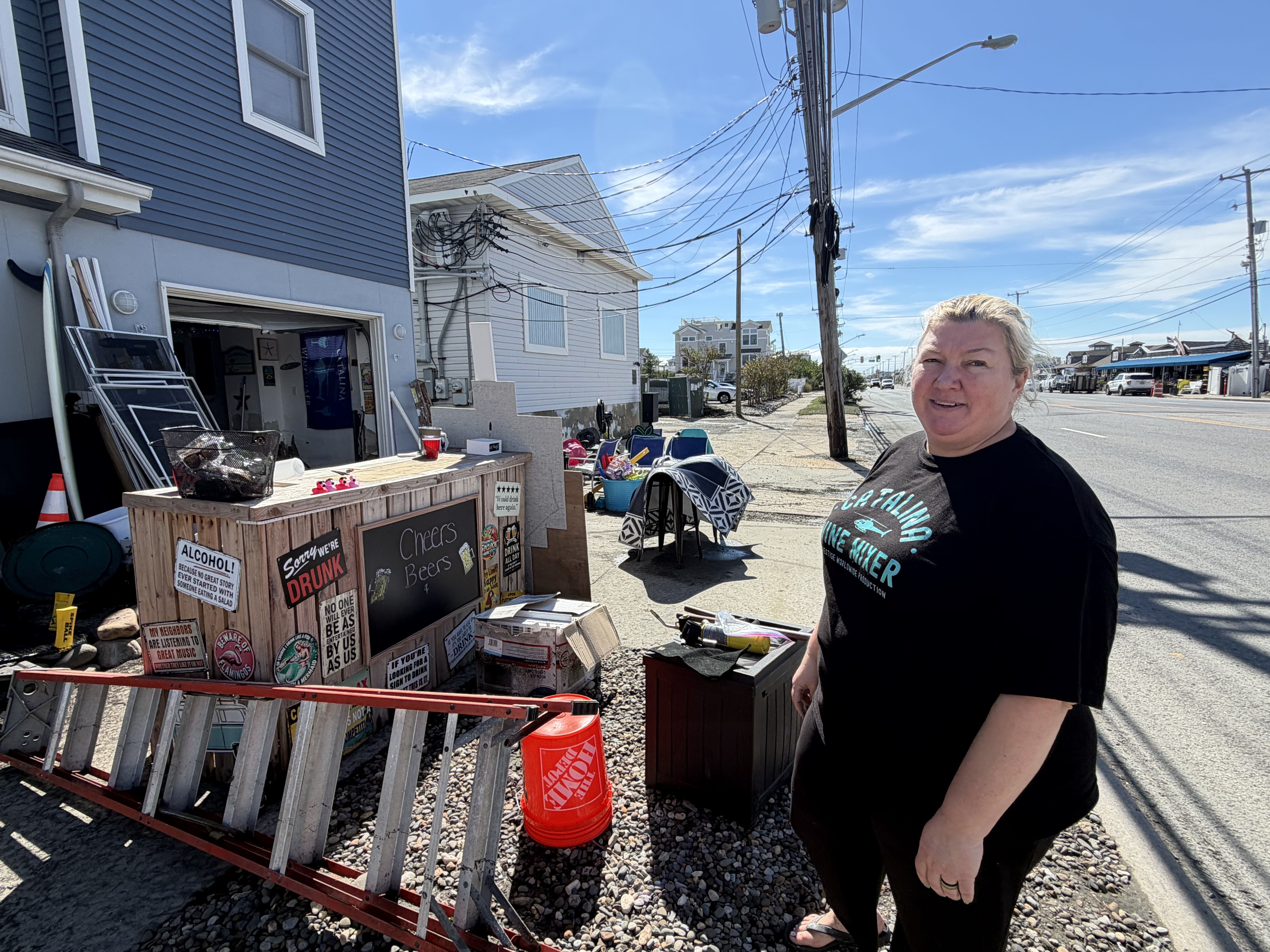
    On Long Beach Island, the beloved “karaoke garage,” belonging to the family of Diane O’Donnell, 80, of Yardley, Pa., took on two feet of water, half of Sandy levels.

    Last week, an Indigo Girls song was playing out of the space where Kelly Kolbjornsen and her family would recruit people to stop and sing karaoke on their way down Long Beach Boulevard.

    “It’s part of having a beach house, but it’s a little overwhelming,” Kolbjornsen said.

    ‘A good gauge’

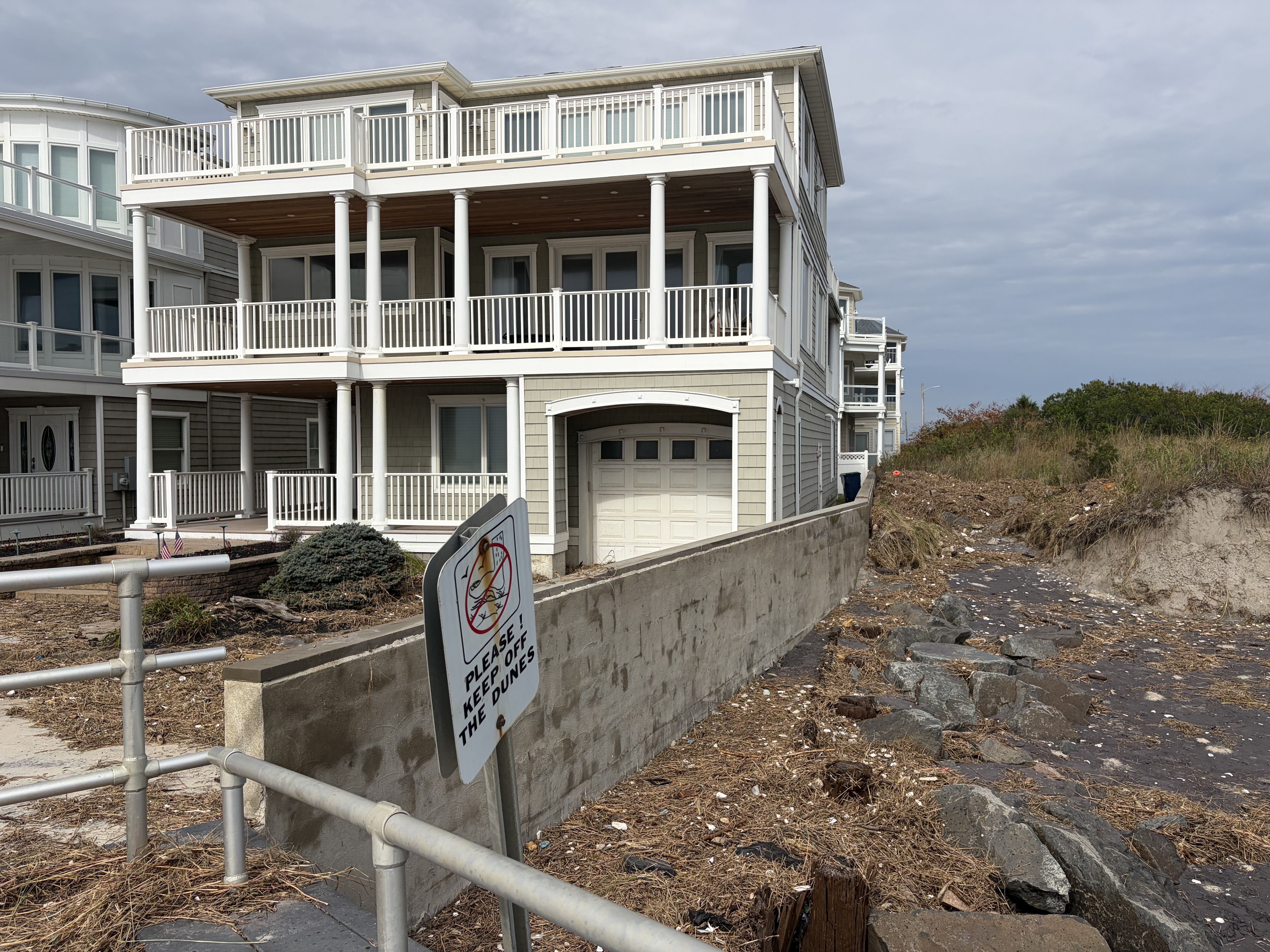
    New Jersey Gov. Mikie Sherrill and U.S. Rep. Jeff Van Drew brought representatives from FEMA and the Army Corps of Engineers to focus on severe damage to ramps from Brigantine’s concrete promenade in the north end and the near breaching of a private retaining wall that was the only line of defense after surging waves destroyed dunes at the promenade’s edge.

    But Mayor Vince Sera also pointed out that neighborhoods devastated during Sandy remained mostly damage-free.

    “We put floodgates in before the storm came into Brigantine,” he said. “They closed all of the floodgates and prevented a lot of water from coming in. On each low tide, they let the water out to drain, and closed them again for the next high tide.

    “Any water that comes into the streets, we have pumps around the island,” he said. “It pushes the water out over the bulkhead and back into the bay. It drains the island.”

    Residents near those points of vulnerability took note.

    “Without the pumps, it would have been horrible,” said Terri Cunnion, whose home sits on Bayshore Avenue across from the boat ramp, a major thoroughfare of flooding during Sandy (when the previous home on her lot was destroyed). “Without those gates, this block wouldn’t be.”

    Through multiple high tides, last weekend’s floodwaters never got past the lip of the garage in the Cunnion’s house, whose living spaces are built 14 feet to new elevation standards.

    Ocean City’s newly elevated Roosevelt Boulevard was also credited with mitigating damage from the nor’easter, staying above floodwaters and allowing an evacuation route, said Mayor Jay Gillian. The road was reconstructed so that portions were raised by 12 to 20 inches.

    During Hurricane Sandy, bay waters roared right up Brigantine’s municipal boat ramp and surged across Bayshore Road, totaling houses with four feet of water.

    Since the installation of eight permanent flood pumps and two portable flood buster pumps, vulnerable spots like Bayshore Drive and the neighborhood around the town’s golf course are newly fortified. In addition, bulkheads were raised.

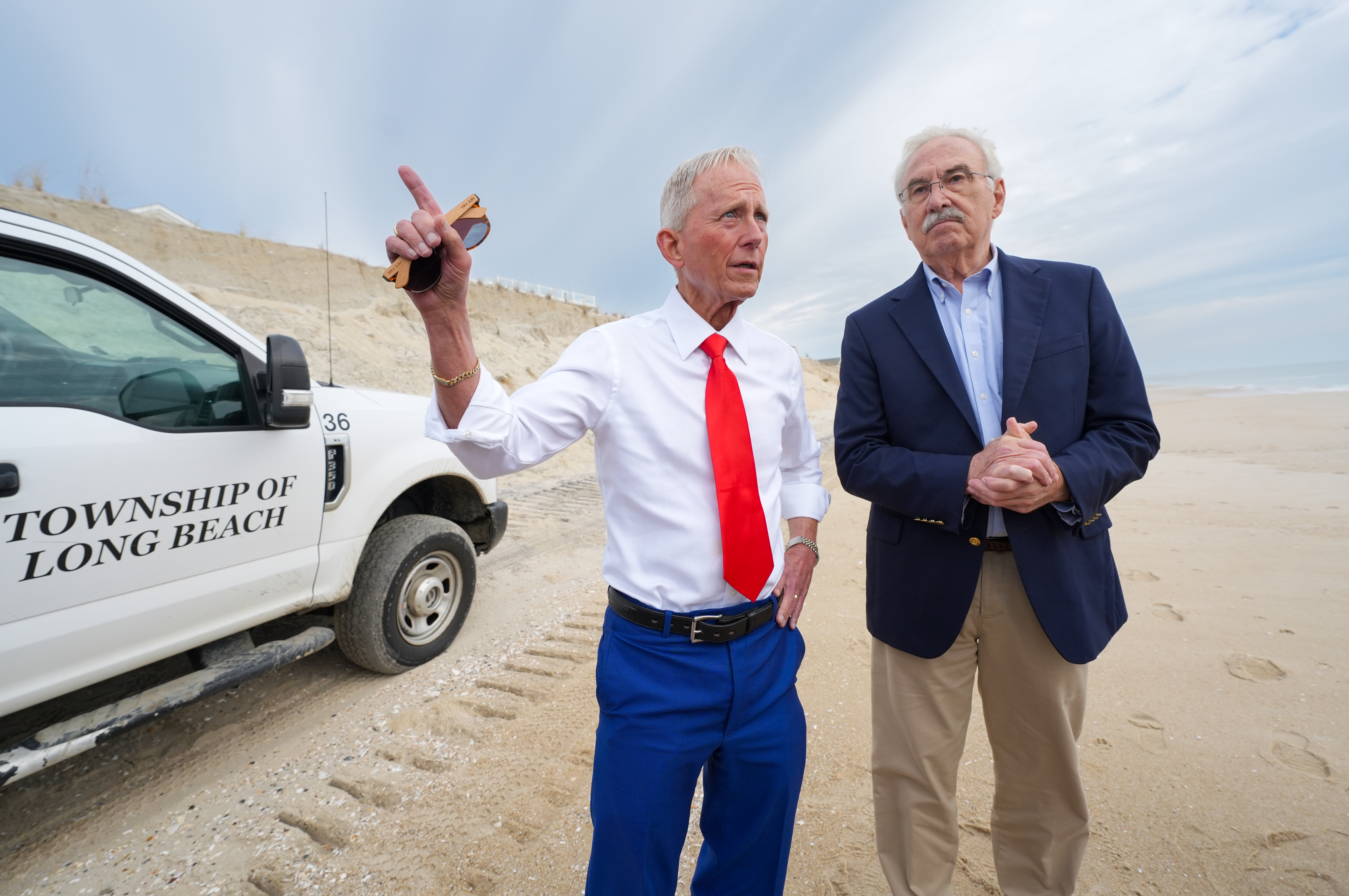
    U.S. Rep. Jeff Van Drew, together with federal, state, and local officials, tour storm damage in Holgate on Thursday.Tim Hawk / For The Inquirer

    Atlantic City, similarly, installed pumps at its Atlantis Avenue station and rebuilt bulkheads in Chelsea and Chelsea Heights. It has yet to complete similar projects in its Ducktown neighborhood, which saw major flooding last weekend, leaving some businesses with tens of thousands of dollars in equipment and merchandise loss.

    Van Drew pointed to other improvements since Sandy that protected utility infrastructure and homes. Homes that were elevated had ground levels that allow water to flow in and then out, he noted. He is advocating a permanent $1 billion “Coastal Trust Fund,” funded by revenue from federal offshore oil and gas leases to provide a stable source of funding for beach fills, dune restoration, and other coastal remediation.

    “The good news is we’ve done a lot of good work,” Van Drew said. “We’ve hardened a lot of structures. When you look at electrical substations, in many cases, they’ve been raised. When you look at transmission lines, rather than being on wooden poles, they are now on industrial grade steel lines that are actually put on much, much stronger holes.”

    Kelly Kolbjornsen looks at the damaged bar from her garage, where she and her family recuited passers by to sing karaoke, on Wednesday, days after the nor’easter.Amy S. Rosenberg / staff

    ‘Sacrificial sand projects’

    On an Oct. 1 tour from Long Beach Island to North Wildwood, Van Drew made the case for continued beach replenishment funding, despite the storm eating through a good chunk of the $99 million in recent beach replenishment, most recently in Sea Isle City, Strathmere, Ocean City, Avalon, and Stone Harbor.

    D. Lee Forsgren, the performing assistant secretary for the Army for Civil Works, who oversees the Army Corps, made a point of calling beach replenishment projects “sacrificial sand projects.” He compared the engineered beaches to your car’s “crumple zones” that are made to take the initial beating.

    U.S. Rep. Jeff Van Drew (left) talks with Holgate Mayor Joseph H. Mancini in front of beach erosion in Holgate on Thursday.Tim Hawk / For The Inquirer

    “We don’t put sand on these beaches to make them pretty beaches,” he said. “They are designed for storm damage reduction.”

    Still, he cautioned Van Drew that “the best opportunity to really make progress would be with a supplemental appropriation associated with the storm because there’s not a lot of pocket change sitting around in the core budget.”

    That will require a disaster declaration from Sherrill, who toured Brigantine on Tuesday.

    Aside from more sand, Van Drew said the towns, state, and Army Corps were looking at funding hard structures — like jetties, groins, and seawall extensions — as ways to keep the elevated tides that accompany storms from overwhelming beaches.

    A house on Brigantine’s north end belonging to Clay and Lori Goldsmid and other nearby homes were spared major damage during the recent nor’easter.Amy S. Rosenberg / staff

    In Brigantine, Mayor Sera rode out the storm at the tip of the promenade, watching railings get blown off, dunes disappear, and the nearby retaining wall nearly buckle. He said city officials had compiled a list of who was in nearby homes in case of an emergency evacuation.

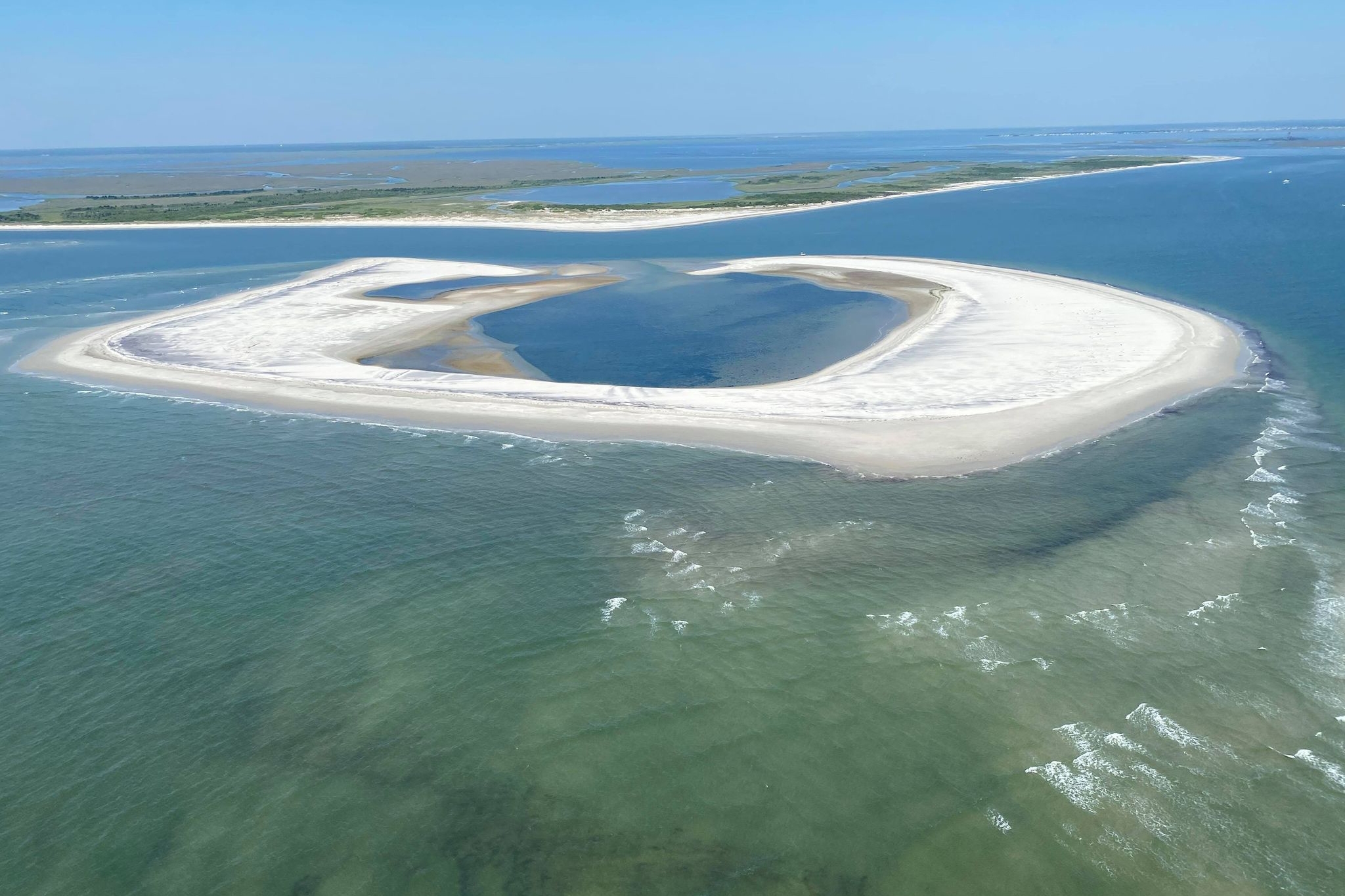
    He is seeking to extend the promenade another 250 feet north, and says the state is studying whether adding hard structures to keep the sand in place will help a situation where a sandbar that has in recent years grown into what is now called Horseshoe Island is starving Brigantine of sand.

    The city’s flood mitigation efforts since Sandy have resulted in a 25% discount for residents on flood insurance, he said. And he wholeheartedly recommends flood pumps and gates to other municipalities, like Ventnor, whose Ventnor Heights section was cut off at both ends by flooding for hours during high tides.

    Sera and other knows the big storms will come again, probably this winter, with the El Niño warming in the equatorial Pacific.

    With sea levels rising, some residents who came out to see the federal officials in Brigantine wanted to know about timelines.

    “How fast is fast,” interrupted Louise Seitel, of nearby Absecon, as officials spoke of extending the seawall.

    “A study is probably going to be 18 months,” Nate Barcomb, an Army Corps deputy district engineer based in Philadelphia, acknowledged.

    “Government is tough,” Van Drew said.

    Aerial photograph of New Jersey’s Horseshoe Island in June 2021.N.J. Department of Environmental Protection / U.S. Fish & Wildlife Service
  • Meet the artist who makes art out of Ikea material board, steer horn, curtain rod, a toy velociraptor, and more

    Meet the artist who makes art out of Ikea material board, steer horn, curtain rod, a toy velociraptor, and more

    Calling Anna Tsouhlarakis’ sculpture She Dares You to Steal Her Hair mixed media doesn’t begin to describe the multitude of parts in Tsouhlarakis’ whole.

    Part of the new exhibition “Indigenous Irregularities: Anna Tsouhlarakis” at Temple Contemporary, here is the full list of materials for the piece:

    A glass cast of Tsouhlarakis’ hand and forearm, found metal, horsehair, hardware, shed antler, bicycle mirror, beads, artificial sinew, ermine, Ikea remnant, curtain rod, steer horn, rope, thread, football face mask, adhesives, paint, marker nail, toy velociraptor.

    The ingredients come together like accidental theater, from the flimsiest of human creations — an exposed remnant of Ikea particleboard, a material she has been working with for the better part of a decade — to the sturdiness of the steer horn.

    In Coyotes Run From Her, there’s a similar clash of natural and manufactured ingredients: a security camera, press-on nails that form a cascading echo of nearby horsetails, a softly furred deer leg stands next to a tower of tin tobacco lids.

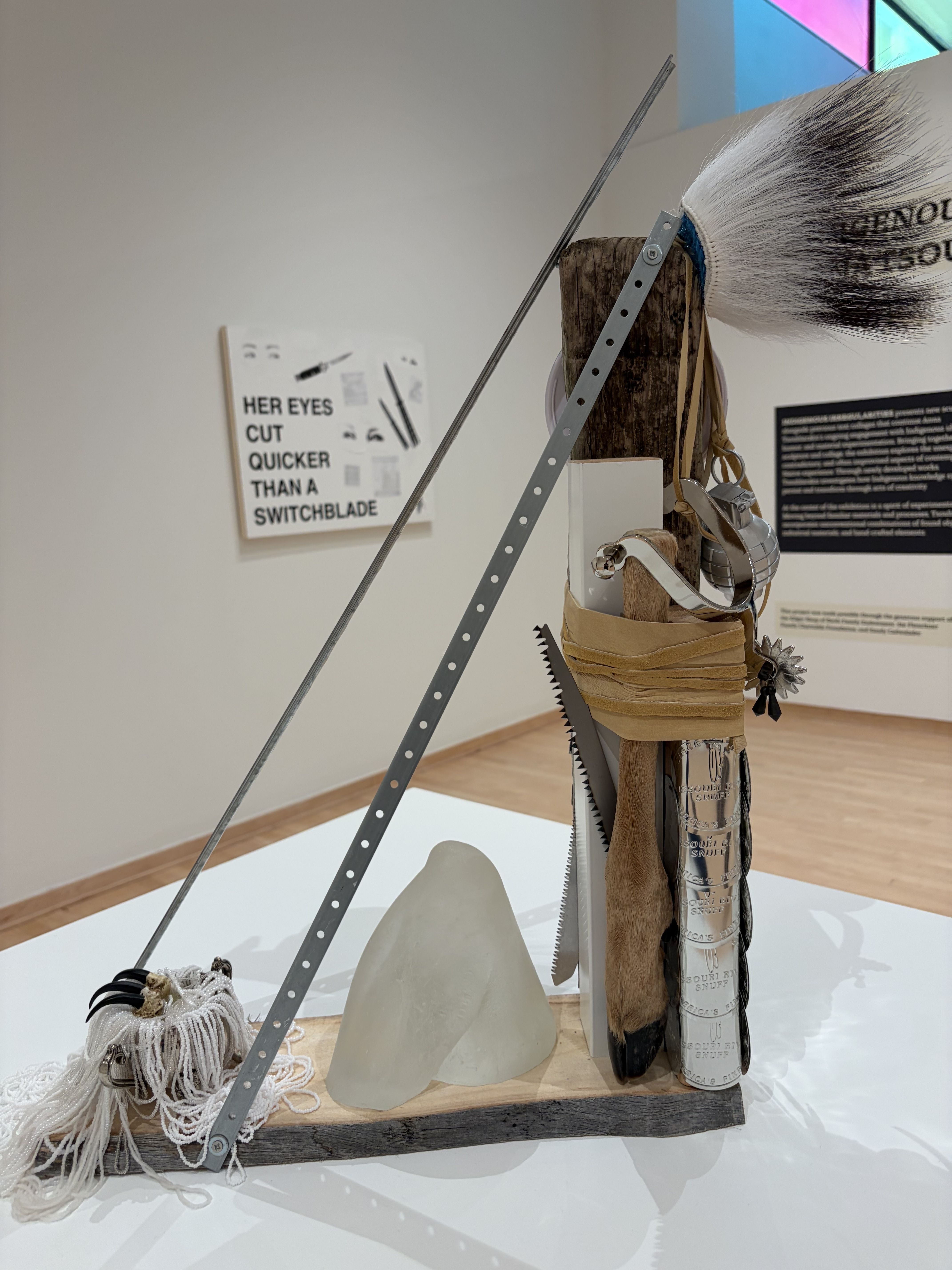
    Other materials used in Coyotes Run From Her: glass cast, found metal, deer hair, porcupine hair, yarn, leather, Aspen wood, saw blades, hardware, deer leg, spur artificial claws, beads, toy grenade, paint adhesives, tobacco lids, Ikea remnant, security camera, faux silver object, press-on nails, driftwood.

    Her art contains multitudes.

    “Coyotes Run From Her,” a sculpture from the exhibition, Indigenous Irregularities: Anna Tsouhlarakis, at Temple Contemporary, 2001 North 13th St., on Temple’s campus. Its materials include a glass cast, found metal, deer hair, porcupine hair, yarn, leather, Aspen wood, saw blades, hardware, deer leg, spur artificial claws, beads, toy grenade, paint adhesives, tobacco lids, Ikea remnant, security camera, faux silver object, press-on nails, driftwood.Amy S. Rosenberg / staff

    The materials come together to, as the exhibition says, “embrace irregularity as both a formal strategy and a conceptual framework.”

    “I’m a complex individual that comes from diverse heritages,” Tsouhlarakis, 49, a citizen of the Navajo Nation and Creek Tribe who also is of Greek descent, said in a recent interview. “I’ve lived all across the United States. When I’m bringing in those pieces, all of those disparate objects, that’s a representation of my narrative, and my experiences.”

    Her work is art that can be contemplated and processed for long stretches, ingredient by ingredient, or as a cascading whole. It can be picked apart, whimsically, then put back together, more profoundly as a whole.

    She said she starts with the titles first, but does not view the works as literal expressions of those. As an Indigenous woman, she said people often expect her to be a storyteller, but she purposely sees and conceives of her work in less linear terms.

    “It is complicated,” she said. “It seems disconnected. It forces people to reckon with it. I hate the idea of linear narrative. I fight back. What else can I do to throw in here to mess up?”

    Around the walls are five black-and-white collages with cheeky sentences that play off Native identity asserting itself in a modern white world: You know she buys her sage at urban outfitters,” “Her look might say rez but her accent says city,” and “Her eyes cut quicker than a switchblade.“ The text collages also contain faded out images of Native internet memes and other cutout images.

    Sculptor Anna Tsouhlarakis, photographed at the Whitney Museum in New York City, in front of a piece from the Whitney Biennial, “SHE MUST BE A MATRIARCH.”Amara Johnson.

    Tsouhlarakis says she’s been thinking about Navajo cultural taboos, “how one moves through the world, especially within this moment, within our country.”

    “How I have to hold myself when I walk through an airport, how I notice I’m not necessarily at ease,” she said. “The way my presence in a place is questioned or uncomfortable for people. It makes me more aggressive immediately.

    “How would this imaginative female figure that I have in my mind confront these things with all the power in the world,” she asks herself. “By having cultural taboos and flipping them.”

    This dynamic shows itself in the sculpture’s title, She Dares You to Steal Her Hair. “In Navajo culture, if somebody takes a lock of hair, it takes away your power,” she said.

    Tsouhlarakis was the Edgar Heap of Birds Family Artist in Residence at the Tyler School of Art and Architecture last year, where she worked with glass for the first time. The residency was established through a gift from Edgar Heap of Birds (MFA ’79), a leading Native American artist.

    Tsouhlarakis said she typically models casts of body parts on other Native women. But while in Philadelphia, she used her own body for the first time. One sculpture uses a cast of her arm and forearm, the other, her bent elbow.

    Matthew Jordan-Miller Kenyatta, the curator of the exhibition, as well as another exhibition now at the gallery, “Dream Different: A Wonder Rebellion,” says Tsouhlarakis’ work recalls the line from Stephen King: Humor is almost always “anger with its makeup on.”

    In Tsouhlarakis’ work, “absurdity coexists alongside this stance of awe,” he said. “You are defamiliarizing yourself of things that seem mundane and everyday.”

    “It’s an accumulation of history, of uses,” he said. “Beautiful accumulations of different moments she’s experienced.”

    Of the wall pieces, Kenyatta called them “collections of absurd moments were she’s had to contort herself or people she knows contorting themselves.

    “I’m sitting with the absurdity,” he said.

    “Indigenous Irregularities: Anna Tsouhlarakis” is on display through Dec. 5 at Temple Contemporary, 2001 N. 13th St, Philadelphia. now.temple.edu

    An Artist Talk will take place Sept. 17, 2026, at 4:30 p.m.

  • Wonderland Pier showing signs of collapse; Ferris wheel will be ‘torched’ and cut into pieces, developer says.

    Wonderland Pier showing signs of collapse; Ferris wheel will be ‘torched’ and cut into pieces, developer says.

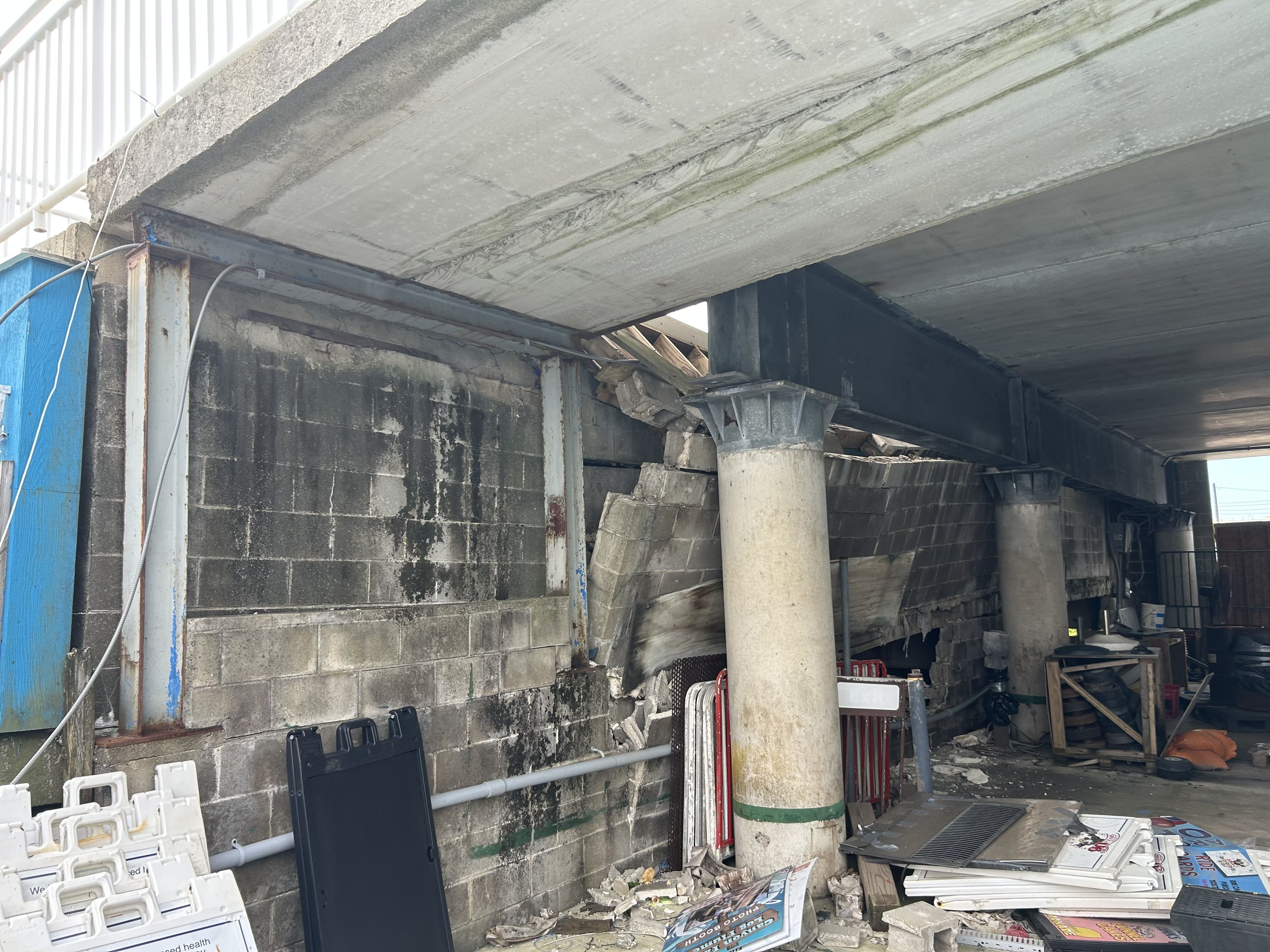
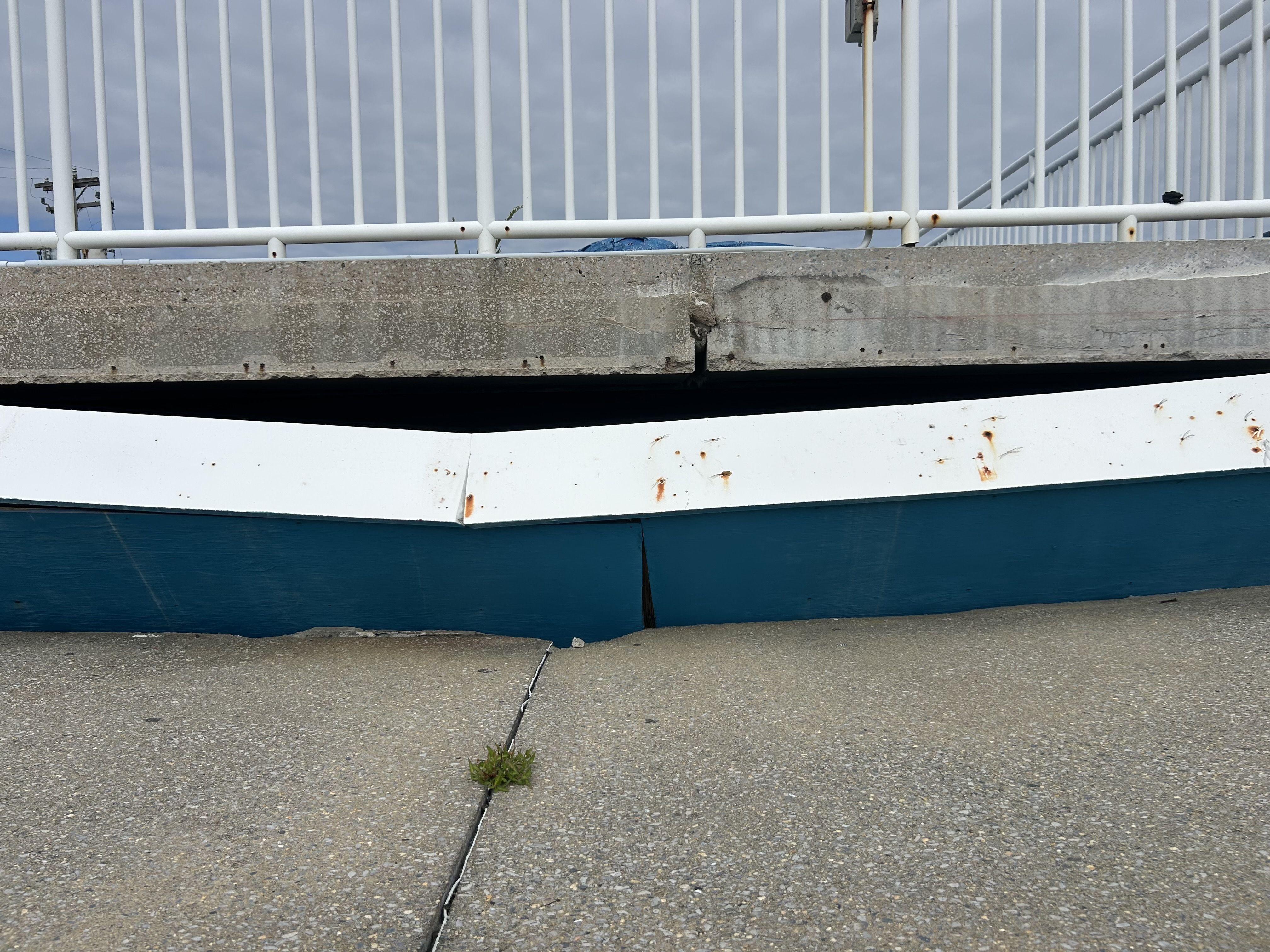
    The wall under the decking of Wonderland Pier is caving in and showing signs of collapse, say owner Eustace Mita and Ocean City inspectors.

    Ocean City has sent Mita a “Notice of Unsafe Structure,” along with a request for an engineer’s report and a plan of corrective action, city spokesperson Doug Bergen said.

    “It’s an emergent condition,” Bergen said. The wall is toward the rear of the structure and is “not anywhere near where the public would walk by,” he said.

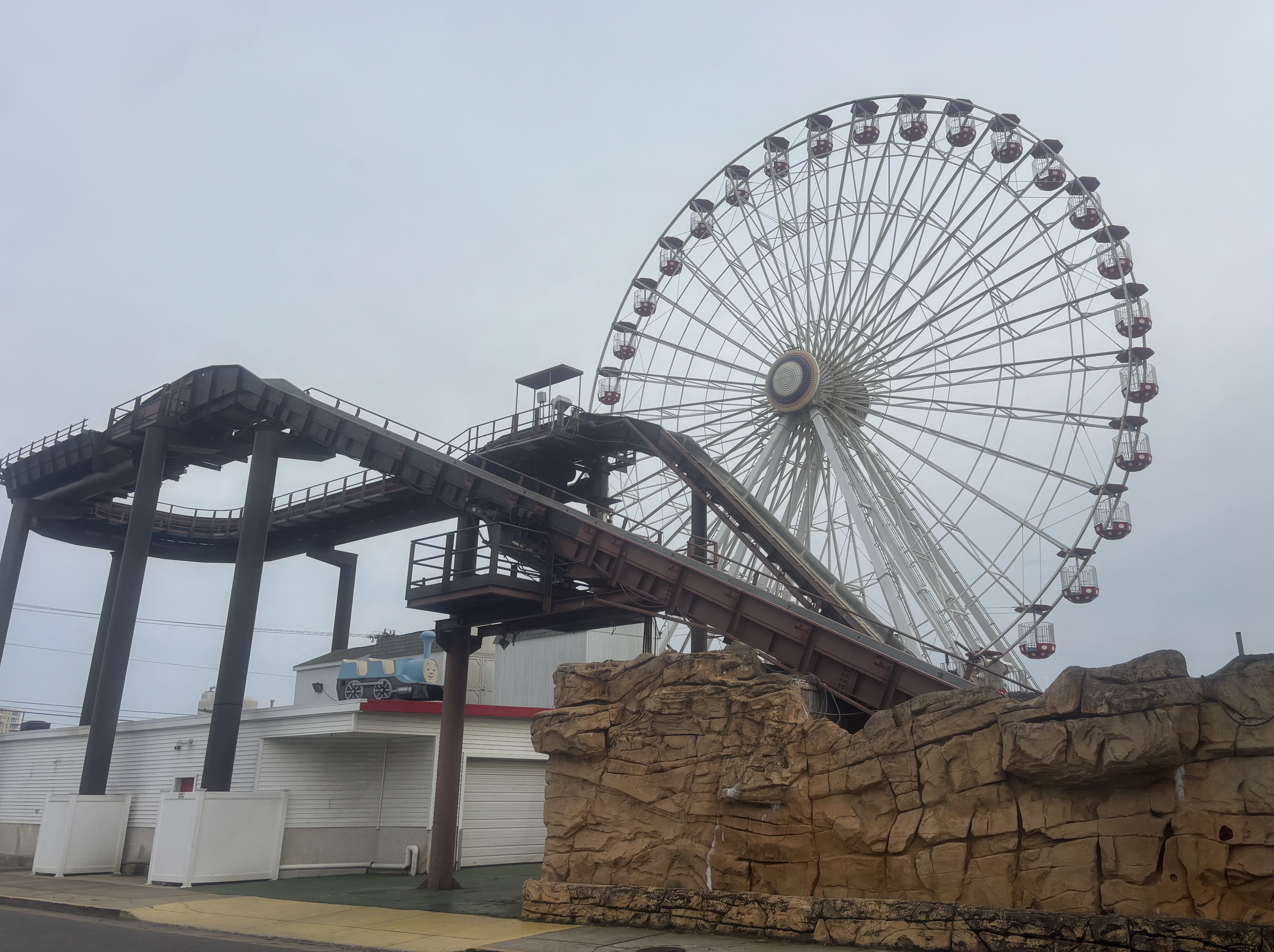
    The decking is caving in on the landlocked Wonderland Pier in Ocean City, prompting Ocean City to issue a notice of unsafe structure. The city says the cinder-block wall below one of the decks toward the rear of the property is unstable.Courtesy Eustace Mita

    “The city’s only involvement is with the cinderblock wall that’s caved in and falling over,” he said.

    Mita, meanwhile, was sounding the alarm that the conditions of the pier and the iconic Ferris wheel were dire.

    He said Monday that he was consulting engineers and that the Ferris wheel would need to be “literally torched” and cut into pieces to be taken down.

    “It’s going to take a long time and a lot of engineering,” he said.

    “The original plan was to dismantle the Ferris wheel and reassemble it,” Mita said.

    However, the steel company that dismantled the Morey’s Piers Ferris wheel for refurbishing told Mita that would not be possible for the Wonderland Ferris wheel.

    Mita said “even the bolts that hold it together” are beyond dismantling, permanently welded in place, “because of the conditions of being oceanfront, and non-operable for so long.”

    The Giant Wheel Ferris wheel and Raiders (right) interactive maze with tunnels, bridges, and slides.on the final day for the beloved Wonderland Pier in Ocean City Sunday, Oct. 13, 2024.Tom Gralish / Staff Photographer

    Mita is negotiating with Ocean City to build a hotel on the site, which was declared “in need of rehabilitation,” in part because of the deterioration of the pier.

    While Mita used the condition of the pier to justify a designation that would allow him to build the hotel without zoning changes, community members have contended that, as the owner, Mita was responsible for allowing the pier to deteriorate.

    The amusement pier, owned for decades by the family of Mayor Jay Gillian, closed for good in October 2024. Despite community opposition, City Council approved the rehabilitation designation in June, triggering ongoing negotiations over Mita’s project.

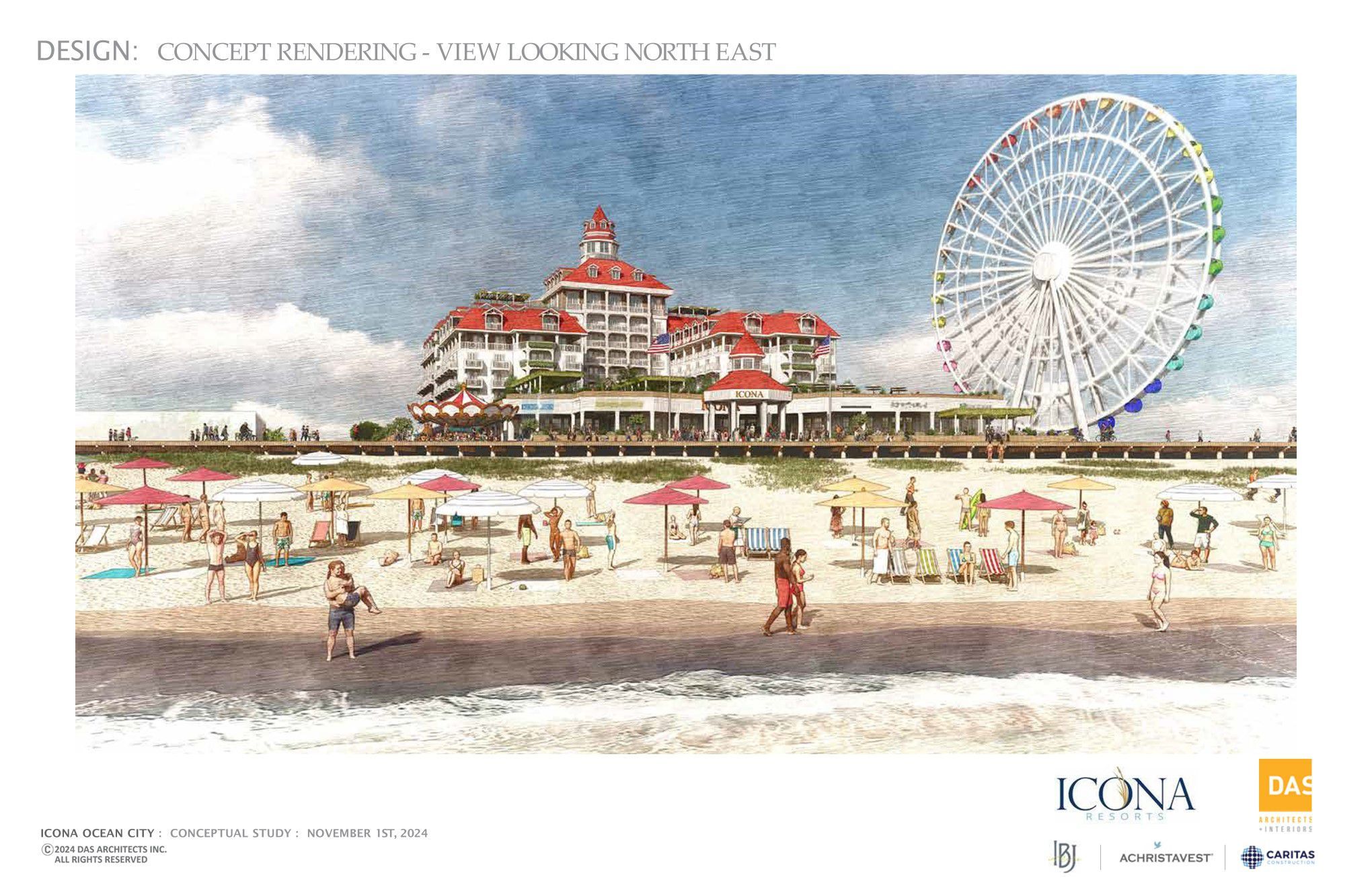
    A rendering of the proposed new Icona in Wonderland Resort, to be built on the site of the old Wonderland Pier. The proposal for a 252-room resort includes saving the iconic Ferris Wheel and carousel.Courtesy Icona Resorts

    His original plan for a seven-story hotel included preserving the Ferris wheel and the historic carousel, in addition to several other kiddie rides. He said Monday he was still trying to save the carousel.

    Mita said he would try to “limit the damage as best we can” to the pier.

    “We can’t make repairs because it’s imploding,” he said.

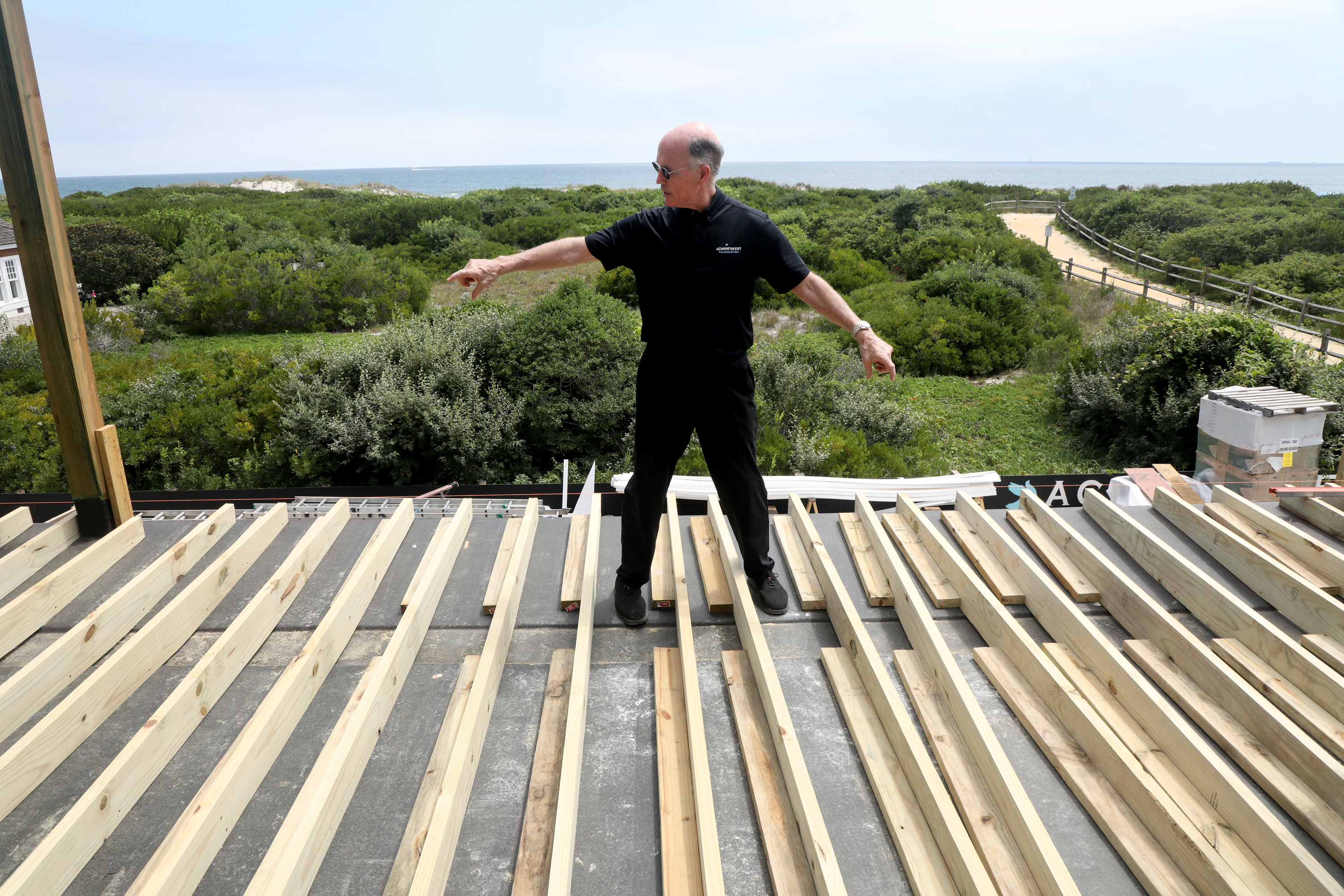
    Eustace Mita talks about the construction of this beachfront Achristavest home on 116th Street in Stone Harbor on Tuesday, August 18, 2026.Vernon Ogrodnek / For The Inquirer

    Mita told the Ocean City Sentinel last week his latest design proposal called for the hotel to be set back from both the Plaza Place neighborhood at the rear of the property and the boardwalk in front.

    He described a hotel that gets higher toward its center, with a public plaza in front, and a building that will be about 23 feet higher at the rear border than the 50-foot high log flume that is currently there. “It will have a beautiful plaza, which will be open to the public and will have firepits and the like,” he told the Sentinel. “That’s really where we’re at.”

    The old Wonderland Pier site on the boardwalk in Ocean City, N.J. as seen from Wayne Avenue on Jan. 6, 2026. The beloved amusement pier shut down in October 2024. A developer wants to build a luxury hotel. A report put the cost of repairing the Ferris wheel, Carousel and log flume at as much as $6.5 million.Amy S. Rosenberg / staff
  • We made 10 Shore predictions for 2026. Here’s how we did.

    We made 10 Shore predictions for 2026. Here’s how we did.

    Things not on my 2026 Jersey Shore predictions bingo card: a canceled luau, and a dispute over live outdoor music featuring audio of 911 complaints posted to Facebook.

    But, at the start of the season, I did make 10 predictions on how the Shore summer would go.

    Here’s how I did.

    Full speed ahead for Icona in Wonderland. ✅

    I’m calling this a win (for my predictions score; people have very different views of the hotel). In June, Eustace Mita finally got his dream of a declaration that the old Wonderland Pier site at 600 Boardwalk in Ocean City is “in need of rehabilitation.”

    The Icona developer is now in negotiations with Ocean City about a hotel proposal, which he says will be a scaled-down version of his initial seven-story, 252-room plan that called for saving the Ferris wheel and historic carousel. City council is vowing to be guided by recommendations from a Boardwalk subcommittee. Meanwhile, council hired a lawyer to defend against a lawsuit by citizens’ groups.

    Eustace Mita talks about the construction of this beachfront Achristavest home on 116th Street in Stone Harbor on Tuesday, August 18, 2026.Vernon Ogrodnek / For The Inquirer

    Atlantic City’s Irish Pub will rise again. ❌

    Alas, not even the sale of the Irish Pub in Philadelphia appeared to jump-start any renovations in Atlantic City, where owner Cathy Burke has been in a stalemate with state inspectors over whether the iconic, beloved pub on St. James Place should be considered a high-rise. The pub has been closed since January.

    Will locals have their fish and chips and Guinness on Christmas Eve as per usual? You never know. Burke did not answer a text message seeking an update. Asked about the Irish Pub’s status, Atlantic City spokesperson Andrew Kramer said he had “nothing new from my end on this one.”

    But, in an upset, the city has begun paving Atlantic and Pacific Avenues, in a development Mayor Marty Small Sr. called “massive,” and said would be completed by year’s end.

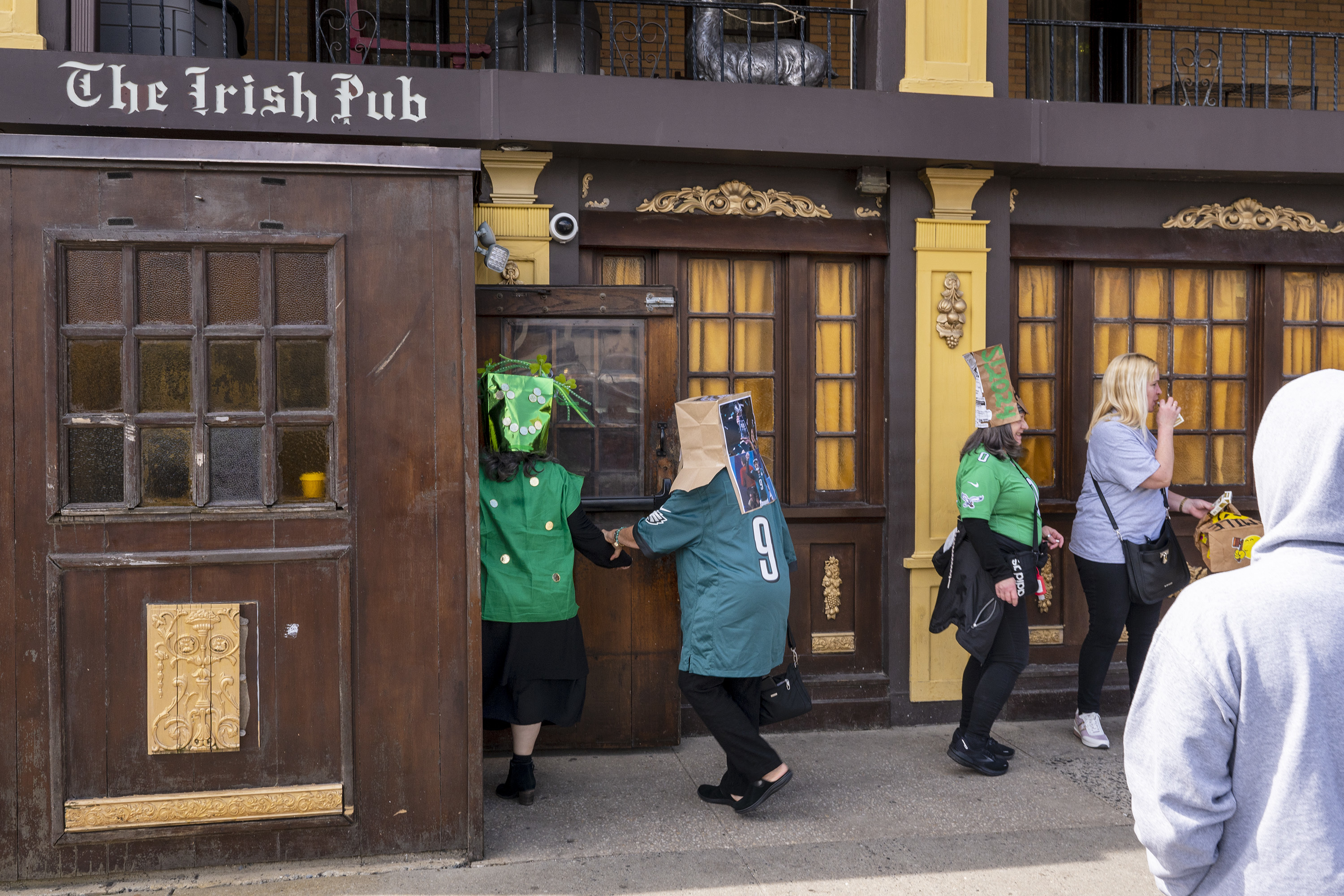
    Fran Cann (left) helps Debbie Stiles (#9, right) get through the door, since she can’t see as well wearing a “St. Nick” Foles bag over her head, as they celebrates Bag Day at the Irish Pub in Atlantic City Monday, Mar. 18, 2024. The friends, from Berlin, N.J.were attending their first Bag Day. The tradition got started when a late-to-the-party patron showed up to the 24-hour bar a day after St. Patrick’s, then put a bag on their head.Tom Gralish / Staff Photographer

    Shore restaurants will tough it out, but struggle. ✅

    Restaurants were stressed this summer. As is usual in late summer, many lost employees as the season wore on all the way to Sept. 7, and had to cut back seating or hours. Others pleaded with their clientele for patience. Still, there were lines down the block for coffee places, and booked up reservations for favorites like Steve & Cookie’s and Cafe 2825. New places were opening deep into summer, like Culina Mundi in Ventnor and Sabrina’s Kitchen in Atlantic City.

    Bakeria 1010 owner and pizza savant Mike Fitzick posted a mock obituary for himself at summer’s end: “Welp that’s all she wrote folks. … Right from start I knew this season was gonna be rough. All the staff I tried to hire fizzled out and the staff I had last year were mostly gone. This summer was pretty treacherous in every aspect … June was trash, July was ok and we finally hit our stride in August. Better late than never, I guess. Unfortunately I have passed away due to self-inflicted cortisol poisoning. In lieu of flowers please donate to the Bakeria 1010 all winter. Jokes aside we WILL be open for lunch today…”

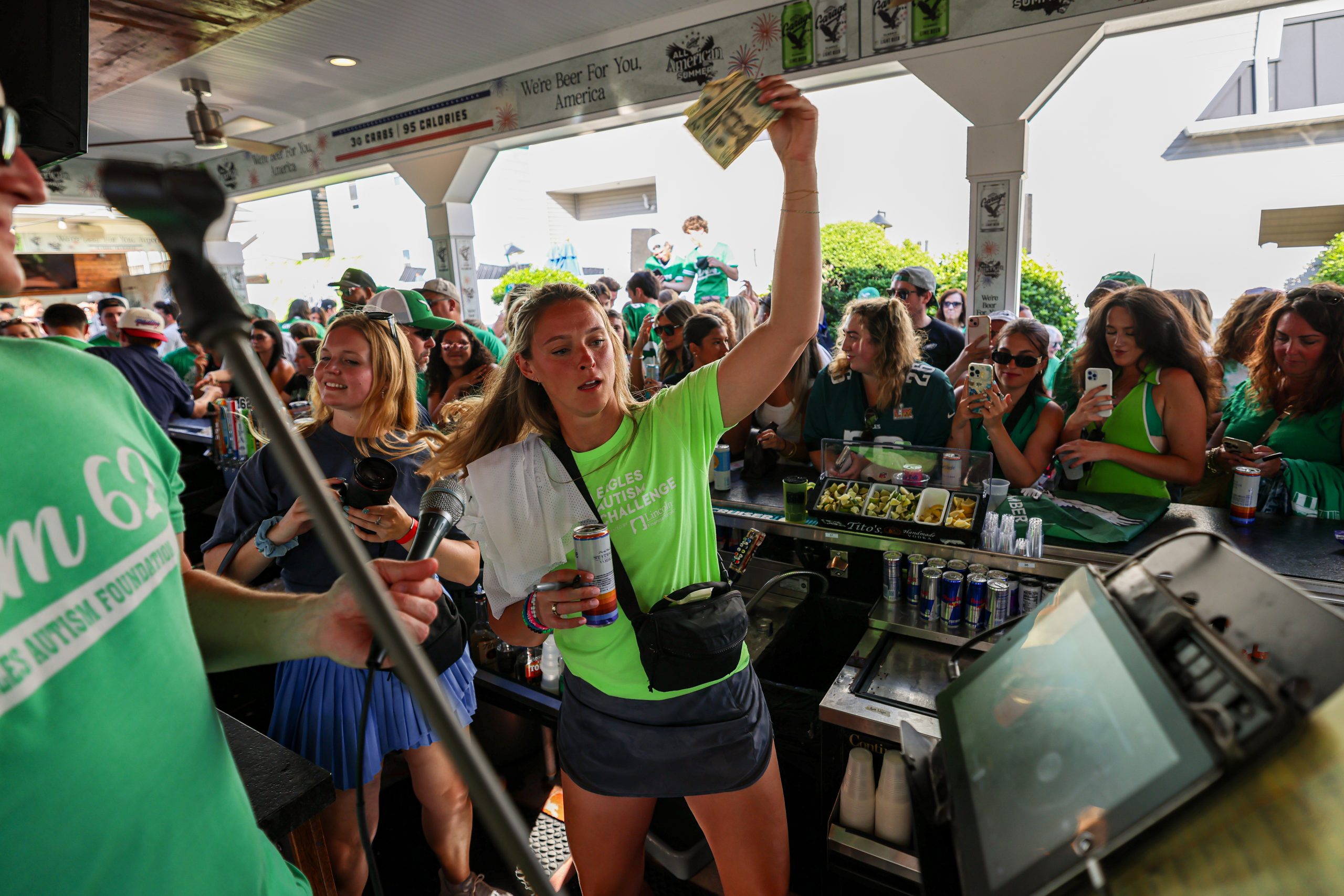
    Kylie Kelce adds some money to the cash register during the Shore Birds celebrity bartending event in Sea Isle.

    Taylor and Travis will not honeymoon in Sea Isle, but…? ✅ ❌

    No, they did not honeymoon in Sea Isle, choosing instead Big Sky, Mont. (a lovely place), so that’s an easy one in my favor. But my leaving open the possibility that they would make an appearance in Sea Isle seems, on balance, ridiculous. Maybe they’re waiting for Jason and Kylie Kelce to finally make it off the waiting list for the Sea Isle Yacht Club. Maybe a celebrity bartending gig for Taylor at the Eagles Autism extravaganza next summer? Meanwhile, have fun in Ohio!

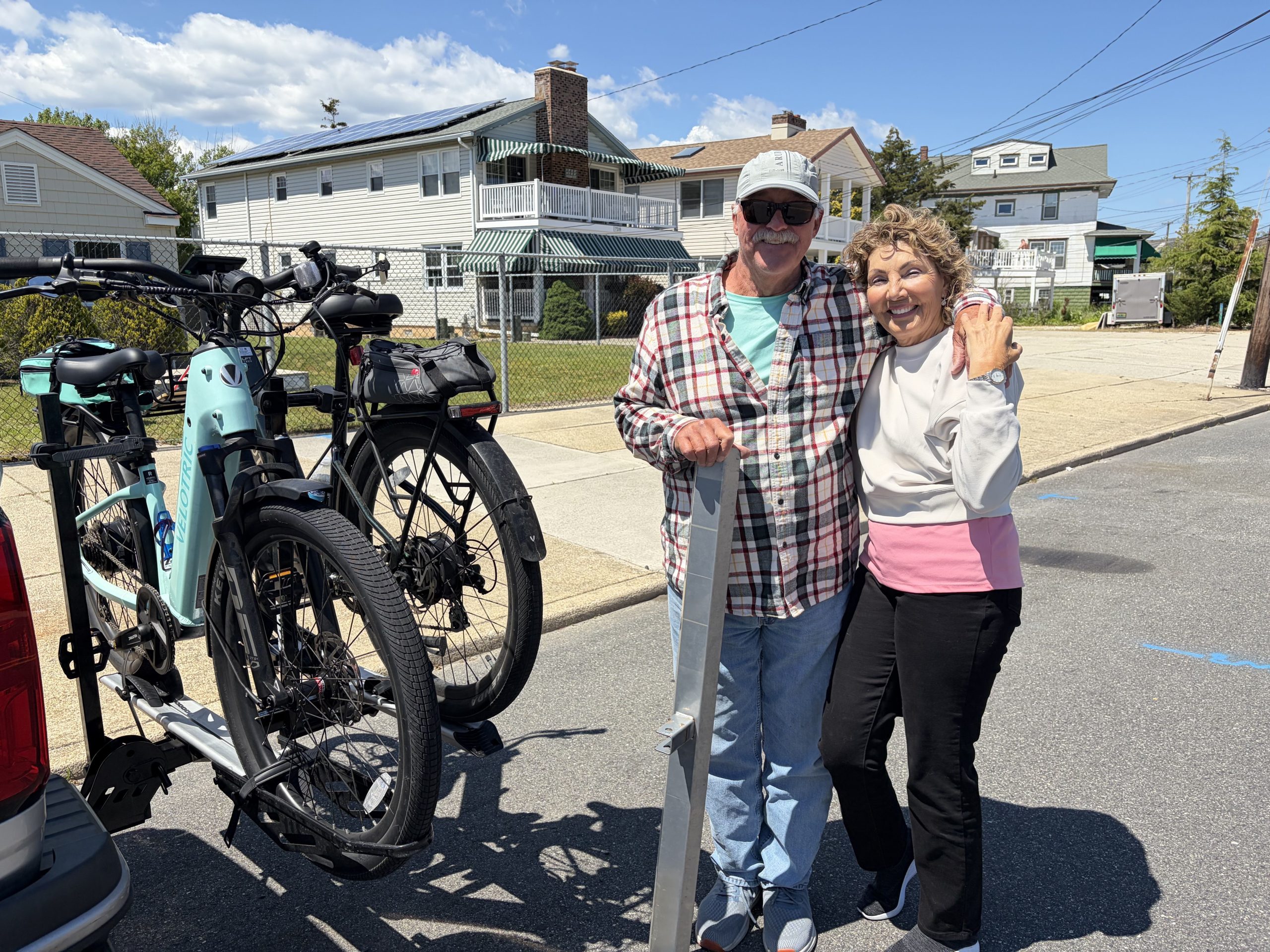
    Mike and Annamarie Carr of Ventnor, owners of Jagielky’s candy shops, with the e-bikes they love to ride. Ventnor won’t allow them on its own Boardwalk. The couple drove to Ocean City on June 2 and started and ended from there.

    E-bikers will be hauled off the boardwalks and fill municipal court Zoom hearings. ❌

    There was a lot of confusion over the new e-bike law in New Jersey.

    First the state Motor Vehicles Commission said Pennsylvania visitors shouldn’t sweat the new registration requirements, then they changed their mind and said visitors should start their week down the Shore with a trip to the DMV. Adding to the confusion, the MVC requirements explainer page that says out-of-staters should comply now also says, “This page is intended for New Jersey Residents.”

    In all, the MVC has issued a total of 13,850 e-bike registrations, according to commission statistics; 365 of those for out-of-state residents.

    But police were generally light-handed on enforcement measures for the new law, with departments focusing on safety issues, like helmets, and age restrictions, rather than registrations.

    Doug Bergen, a spokesperson for Ocean City, said no citations were issued there this summer under the new law.

    In Ventnor, Lt. Bryan Gaviria said between May 1 and Sept. 10, the department issued six curbside warnings to juveniles, 10 e-bikes on the boardwalk warnings, and one ticket for riding on the boardwalk.

    “We’re still in the education phase,” he said.

    Statewide, statistics show 628 total citations under the e-bike and motorized bicycle law for July and August, according to data supplied by the New Jersey Judiciary.

    Of those, just 77 were given for low-speed electric bicycles, 22 citations were for failing to have the registration required by the new law, and two were for drivers being under 15. The rest of the citations issued were for motorized bicycles, the higher speed classification.

    Retiring boomers will continue their takeover of Shore towns. ✅

    Yes, who else can afford to buy?

    Real estate prices remained mostly in rarified air, like this adorable yellow 760-square-foot North Wildwood cottage that sold for $1.7 million in mid-August. It’s a tear down, naturally.

    Or how about this 17,684-square-foot house in the Avalon dunes, built on spec by Eustace Mita (see above), with the distinction of being Avalon’s largest house and an expected price tag in the tens of millions.

    In related news, the home elevator, once considered a luxury, is now considered an essential amenity for new homes in Ocean City, N.J., among other towns.

    Rendering of a 17,684 square foot home being built as a spec house in the dunes in Avalon, at 5745 Dune Drive, by developer Eustace Mita. It will be the largest home in the borough.Courtesy Avalon Borough

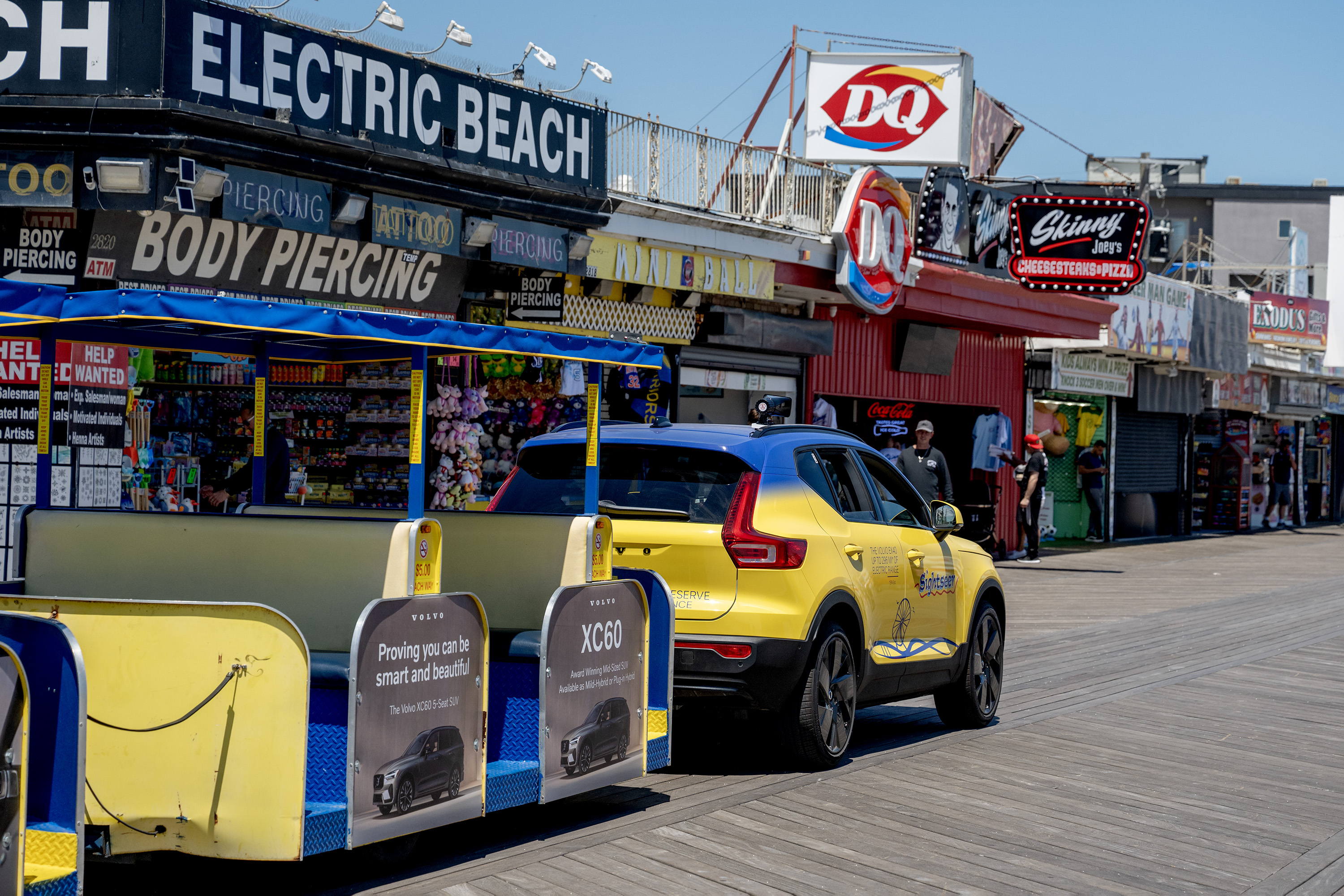
    Wildwood boardwalk hours will again be expanded overnight, but all people will talk about are the electric Volvo SUVs driving the tram cars. ✅ ❌

    Wildwood spokesperson Alicia Deluca says the hours remained curtailed, with the boardwalk closing between 1 and 5 a.m.

    The grumbling over the new Volvo tram cars continued all summer, though. People do not like change. Meanwhile, though, Wildwood is preparing a 20-year redevelopment plan for its boardwalk that will see mixed-use projects, including hotels, apartments, condominiums, businesses, and centralized parking garages.

    A Sightseer tram car is pulled by a Volvo EX40 electric vehicle on the Boardwalk in Wildwood Tuesday, June 2, 2026. The Wildwoods Boardwalk Special Improvement District struck a deal with Volvo to provide three free electric vehicles in return for ads placed on the individual tram cars. Four of the older engines remain in use for now.Tom Gralish / Staff Photographer

    There will be a lot of complaining about changing parking regulations. ❌

    I didn’t hear much over the din of loud music from Gully’s, and Facebook groups seemed preoccupied with other things: flies, shaming noise complainers, and finding the best chicken Parm.

    The return of the day-tripper. ✅

    This prediction was a good one. Costs continued to rise, making shorter trips and day trips appealing. I predicted Atlantic City would get renewed attention, and it did, with groundbreakings for new housing developments, a container retail park close to opening, and the enduring appeal of a wide, free beach and a relatively inexpensive real estate picture.

    Obvious miss on the predictions front: Atlantic Avenue is finally being paved. The odds were very long on this one.

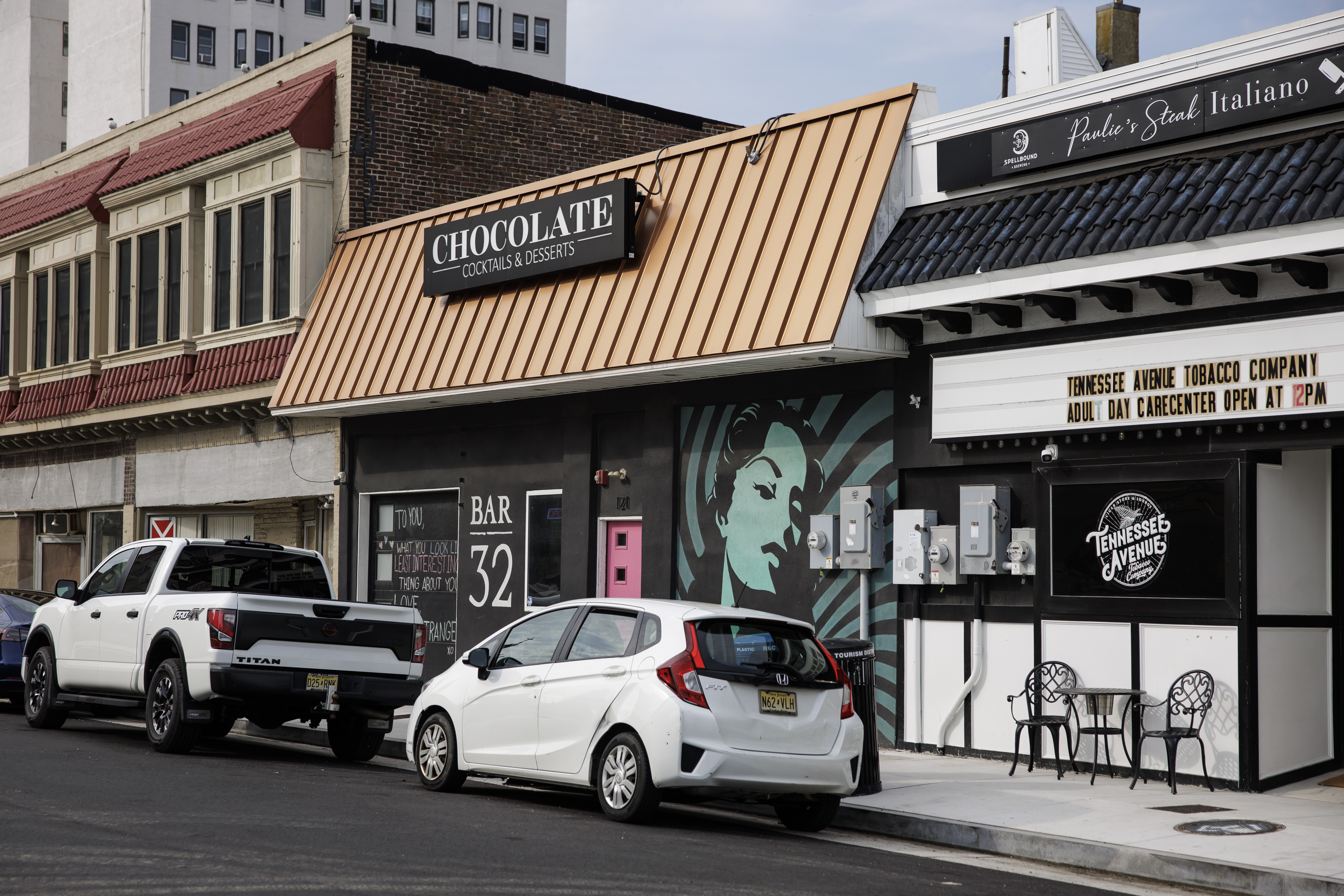
    The exterior of Bar 32 on Thursday, June 11, 2026 in Atlantic City, NJ. Bar 32 offers bean-to-bar chocolate, handmade desserts, and craft cocktails.Monica Herndon / Staff Photographer

    The summer will seem verrrrry long. ✅

    So long. How long? Basically an extra week until the Sept. 7 Labor Day. Which left beach patrols, restaurants, and other business strapped for employees, and rewarded marathon beach lovers with two days of atrocious flies on the beach Sept. 4 and 5, worse than anyone had ever experienced, like, really terrible! See ya next year!

    Total score: 6/10. We’ll get ‘em next summer, hopefully over a plate of lollipop meatballs at the Irish Pub.

  • Atlantic City Mayor Marty Small Sr. made a ‘massive’ announcement about street paving

    Atlantic City Mayor Marty Small Sr. made a ‘massive’ announcement about street paving

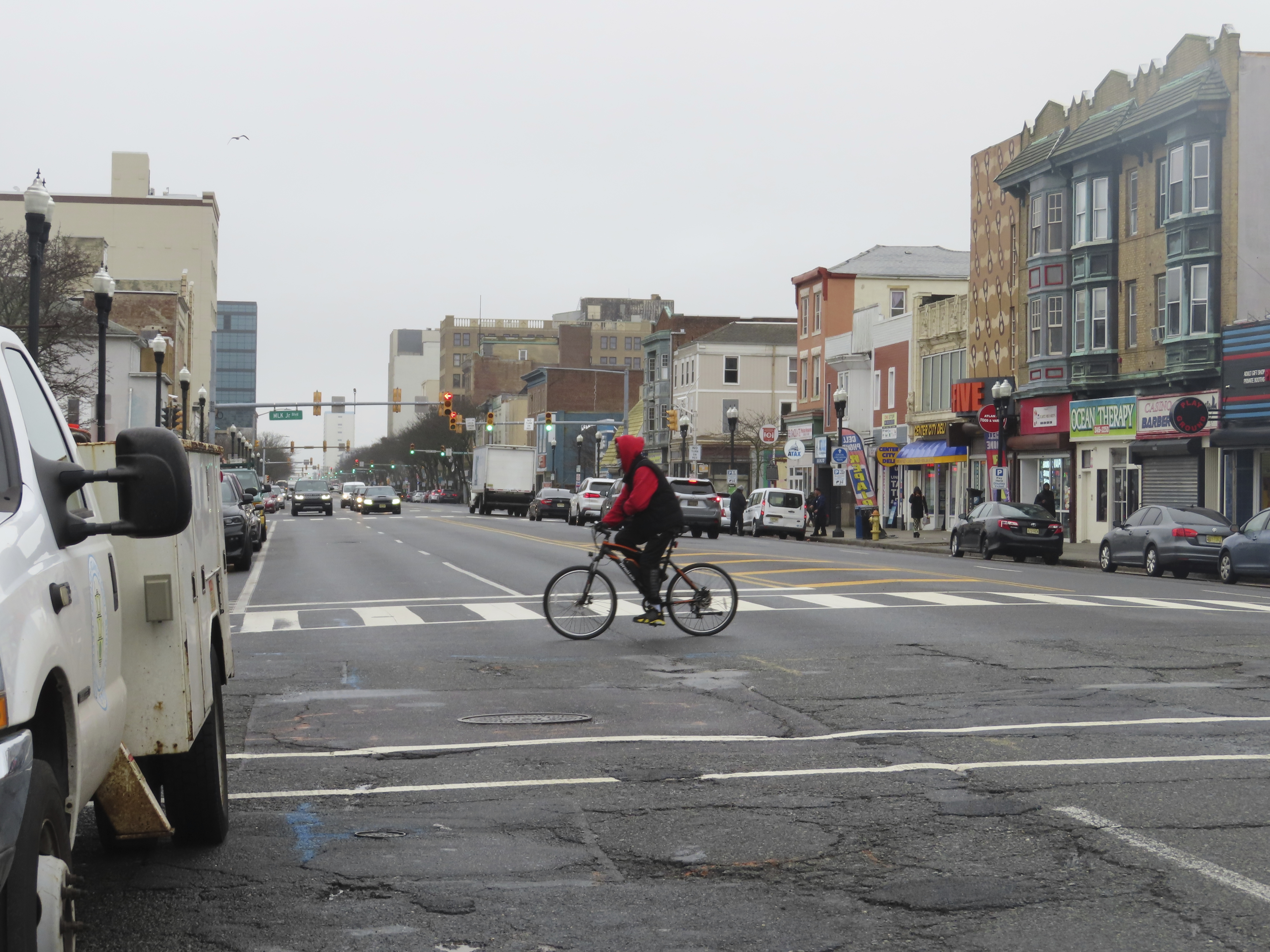
    ATLANTIC CITY — Only in Atlantic City, a town with hype in its original DNA and, more recently, a teeth-grindingly bumpy main artery through town, would the announcement of street paving be billed as “massive.”

    But the long-awaited paving of Atlantic Avenue is set to begin at 8 p.m. on Monday, Sept. 21, Mayor Marty Small Sr. announced Thursday. It will be preceded at 6:30 p.m. by a celebration with food and music at Florida Avenue before contractors from South State begin.

    Small and City Engineer Uzoma Ahiarakwe were positively giddy with the news that the much-maligned roughness of the city’s main arteries would finally be addressed. Pacific Avenue will be paved, too, they said.

    “We’re really happy that we’re getting this done, and I just thank the residents and everyone for their patience and even the critics,” Small said. “We deserve to be criticized, and I told you from the bottom of my heart, I wholeheartedly apologize.”

    A bicyclist rides across Atlantic Avenue in Atlantic City, N.J. on Jan. 26, 2024. (AP Photo/Wayne Parry)Wayne Parry

    Small added that the traffic lights will soon be synchronized. The Democratic mayor credited the intervention of U.S. Rep. Jeff Van Drew, a New Jersey Republican with a close relationship to President Donald Trump, with wresting some stalled federal funding for the project.

    The stretch from Tennessee to Maine Avenue will include a road diet and new bike lanes. There will be new lighting. Also slated for paving: Fairmont Avenue from Missouri to the Albany Avenue Bridge.

    “The Small administration is paving and behaving,” Small said. “So you’re not going to talk about Atlantic Avenue anymore. You’re not going to talk about Pacific Avenue anymore. Let’s pick a new topic.”

    He added: “In all seriousness, I’m proud, and like I told the people of Atlantic City, I live here, too, and it was unacceptable.”

    Atlantic Avenue’s paving will take place at night, while Pacific Avenue will be paved during the day, he said. The work on Atlantic is expected to be completed in time for the city’s Christmas Parade on Dec. 12, with all the work expected to be completed by year’s end.