Author: Andrea Padilla

  • ‘People are sacrificing necessities.’ Ahead of Pa. governor’s race, the economy weighs heavily for Latino voters

    ‘People are sacrificing necessities.’ Ahead of Pa. governor’s race, the economy weighs heavily for Latino voters

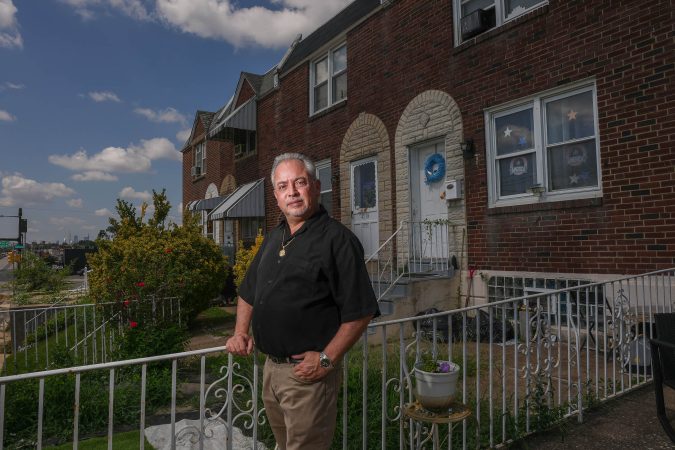
    Jorge Luis Burgos of North Philadelphia, a registered Democrat, was one of many Latino voters who shifted to the right and voted for President Donald Trump in the 2024 presidential election.

    Now he’s planning to shift back and vote for Democratic Gov. Josh Shapiro as he runs for reelection in the key swing state.

    “Shapiro 100%. I love the way he manages everything,” Burgos said while attending Arte en las Calles, an event last weekend celebrating Latino culture held by the Esperanza Art Center in North Philadelphia.

    Burgos, 57, who moved to Philadelphia from Puerto Rico in 1980, said he voted for Trump in 2024 because he was worried about inflation and felt betrayed by the last-minute switch that swapped then-President Joe Biden for Vice President Kamala Harris as the Democratic nominee. But he said Trump has failed to fulfill his promises, and he has found himself turning back to the Democratic Party.

    “I was disappointed, and that’s why I switched. But you ask me now, I’m disappointed, too. Big time,” Burgos said. “Trump didn’t accomplish his promise: ‘On Day One,’ inflation is gonna go down. It didn’t happen.”

    In the past decade, support of Republican candidates, specifically Trump, has grown in the majority Latino precincts of Philadelphia — with Trump’s share of the vote increasing from 6.1% in 2016 to 21.8% in 2024.

    While Harris still won these wards — and a slight majority of Latino voters nationally, according to exit polls — Trump’s improved performance with this voter group helped him win both Pennsylvania and the presidency.

    Burgos, like many other supporters who shifted to the right, said Trump’s promises to bring the cost of living down to its pre-COVID rate ultimately won over their vote.

    Ninety-three percent of Trump’s Latino supporters cited the economy as the main issue driving their vote in the 2024 election, according to a September 2024 Pew Research Center poll.
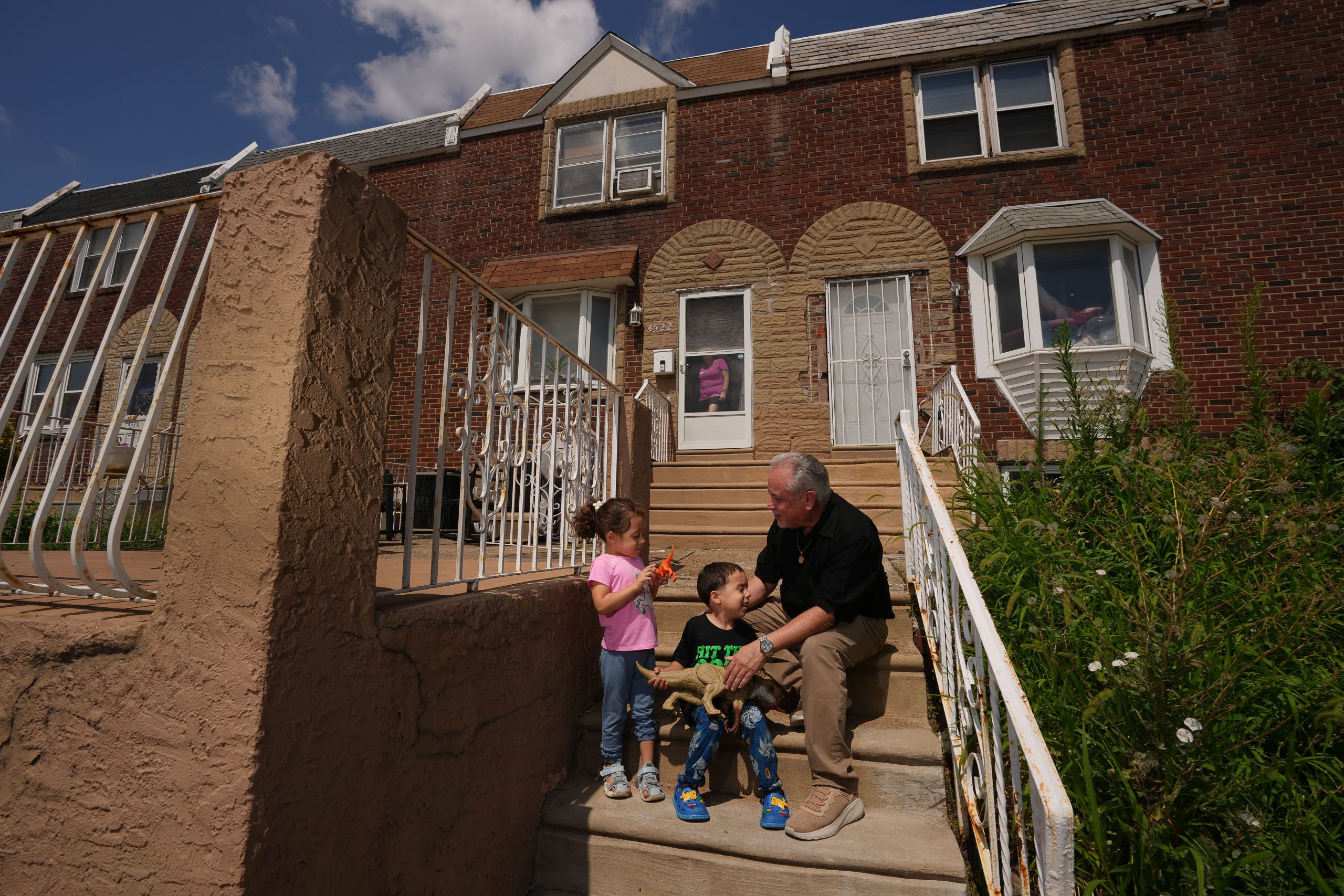
    Jorge Luis Burgos with his grandchildren Luis Burgos Jr. and Athena Burgos, in Philadelphia. His wife Carmen is standing in the doorway in this photo.Jessica Griffin / Staff Photographer

    But now many Latino voters have not seen the outcomes they were hoping for, with a May poll from Pew finding that Trump’s support has fallen more sharply with Latino voters than other voters. Only 66% of Hispanic Trump voters approved of his job performance in the poll, falling 27 percentage points from the start of his presidency.

    According to a May poll from UnidosUS, a national Latino civil rights organization, 66% of Latino voters say Trump and congressional Republicans are not focused on fixing the economy.

    Pennsylvania Democrats and Republicans will be seeking to sway these voters in November when Shapiro faces off against Republican nominee Stacy Garrity, the state’s treasurer, in the race for governor.

    What are the issues on the minds of Latino voters?

    Latino voters, who make up more than 600,000 of eligible voters in Pennsylvania and are the fastest-growing demographic group in Philadelphia, said in interviews that the economy, immigration, and support for small businesses are the issues that will determine who they vote for.

    “They’re focused on cutting costs,” Shapiro said of the region’s Latino voters at a rally with congressional candidate Bob Brooks and House Minority Leader Hakeem Jeffries in the 7th Congressional District, one of four GOP-held seats in the state Democrats are hoping to flip after the area accounted for some of Trump’s biggest Pennsylvania gains in 2024.

    “They’re focused on their small businesses getting help,” Shapiro said. “They’re focused on more cops on the street for safer communities and schools that are stronger.”
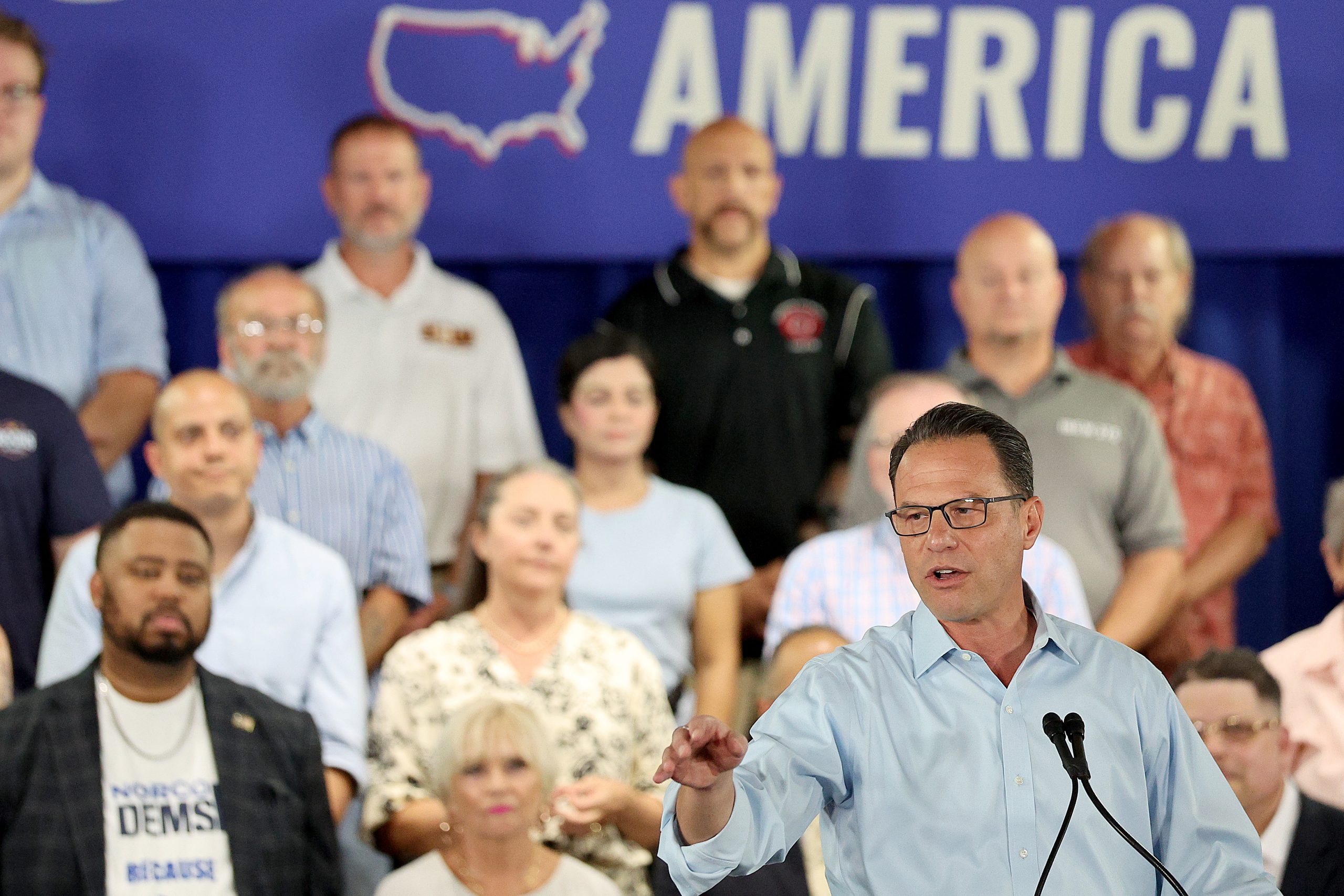
    Gov. Josh Shapiro addresses the audience during a rally for congressional candidate Bob Brooks at the United Steelworkers Union Hall in Bethlehem, Pa. on Sunday, July 26, 2026.David Maialetti / Staff Photographer

    Jaime Negrone, 67, from North Philadelphia, has lived in Pennsylvania his whole life but has roots in Puerto Rico. He said the cost of living is the major issue he is hoping to see tackled.

    “Everything has become so expensive,” Negrone said. “People are sacrificing necessities on one end to cover for the other end: food, gas, housing.”

    Negrone said he will vote for Shapiro over Garrity because the governor seems to be more connected to the people of Pennsylvania.

    “Shapiro has a pulse on the issues in Pennsylvania,” Negrone said. “He’s been in the office, he knows the politics, and he seems to be a politician for the people.”

    Seth Ortiz, 30, a second-generation Puerto Rican from Northeast Philadelphia, said he’s going to vote for Democratic candidates in November because he feels that’s the only way to protect people’s rights amid increased immigration enforcement.

    “I don’t like the fact that ICE is pretty much doing what they want in U.S. cities. At some point, even killing American citizens and getting away with it, it’s horrible,” Ortiz said. “So anyone who is going to stand up for immigrant rights is probably the most important thing for me. And it’s probably always going to be the Democrat.”

    Gladis Avila, 55, a Venezuelan business owner from South Philadelphia, said she is not sure who she is going to cast her vote for yet. She wants a candidate who is going to stand up for her community and small businesses but has not heard much outreach from either campaign.

    “The Latino community needs people who work more for our community,” Avila said. “…When we vote, we want to feel like we are voting for someone who is going to help our community. Because that’s our voice, and our voice has an impact.”
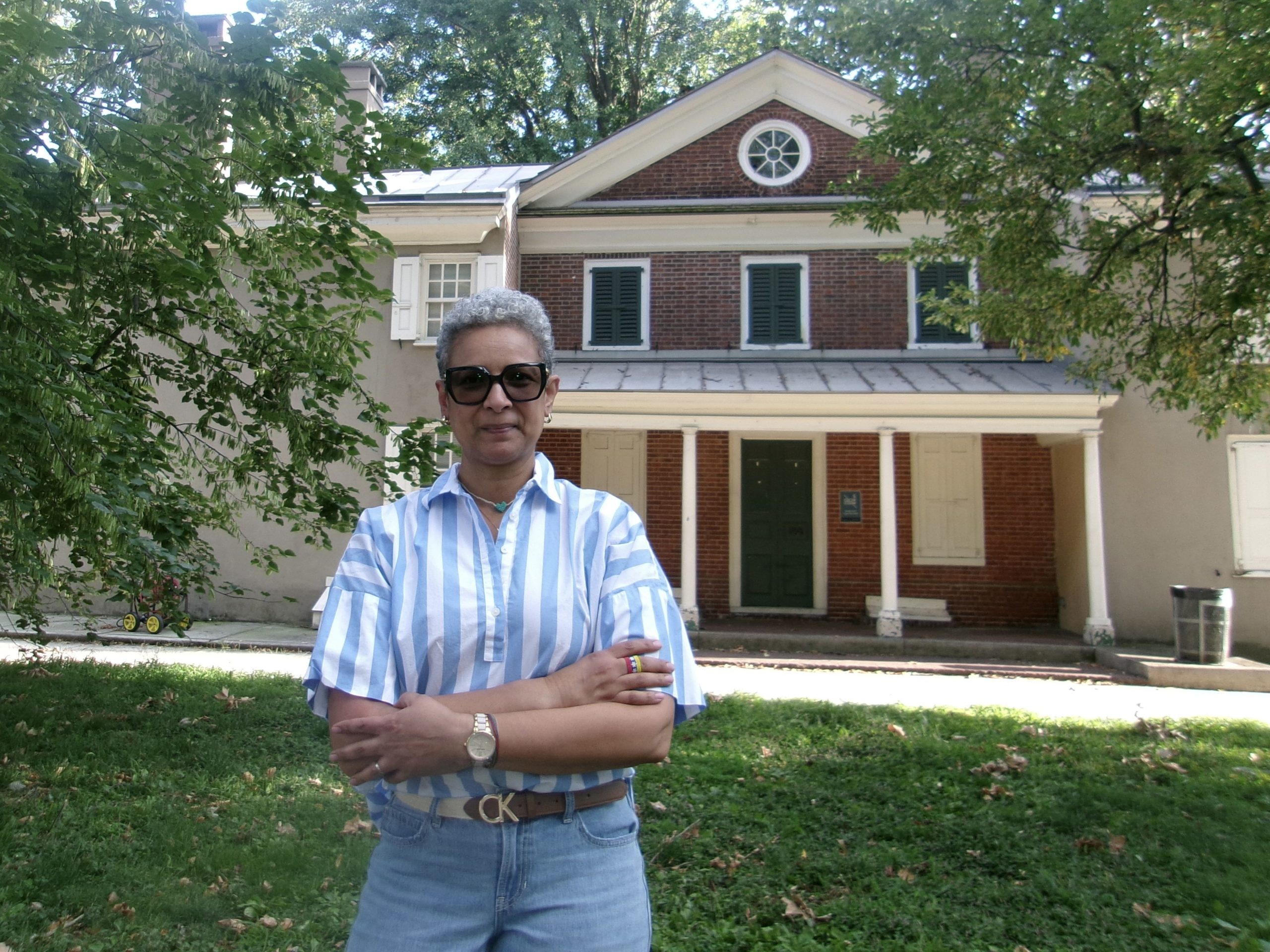
    Gladis Avila stands in a park near her house in South Philadelphia.Andrea Padilla

    Echoing this, Jennifer Rodriguez, president of the Greater Philadelphia Hispanic Chamber of Commerce, a nonprofit focused on the economic growth of the Hispanic community, said she’s heard worries from businesses about being able to keep up with their expenses.

    “Small businesses are very, very concerned about the viability of their businesses,” she said. “And in the really escalating cost environments. Particularly, the labor force has become very costly.”

    How are campaigns reaching the Latino community?

    Matt Beynon, a representative for the Garrity campaign, said that helping small businesses is the main concern the campaign has heard from Latino voters.

    “And a lot of concerns she’s hearing are about the overregulation and red tape that is preventing them from either starting a business, growing their business, expanding their business,” he said.

    Outreach to the Latino community has so far included attending community events in Philadelphia and other communities with large Latino populations, like Allentown, Beynon said.
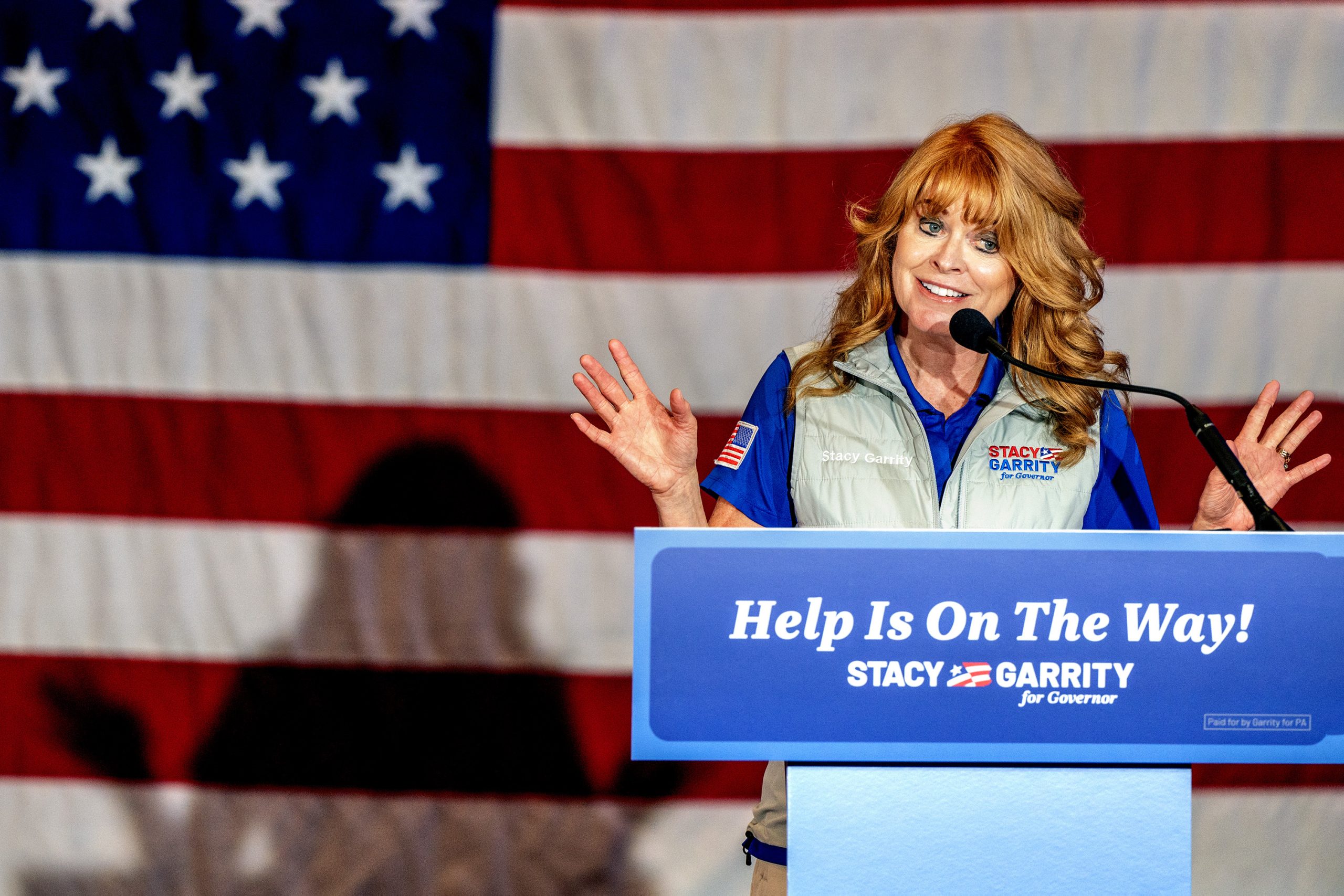
    State Treasurer and Republican candidate for governor Stacy Garrity holds a rally in Bucks County Sept. 25, 2025 at the Newtown Sports & Events Center.Tom Gralish / Staff Photographer

    Shapiro has also spent time in majority Latino areas. In May, he attended and co-hosted “Fiesta on Hamilton,” in Allentown, a street festival that celebrates Latino culture in the Lehigh Valley.

    “During Fiesta on Hamilton, Gov. Shapiro met with local small business owners, entrepreneurs, creators, cultural leaders, and local officials as part of Shapiro for Pennsylvania’s ongoing commitment to engaging, uplifting, and investing in Latino communities across the Commonwealth,” the Shapiro campaign wrote in a statement.

    Samantha Reposa, a representative for the Shapiro campaign, said the campaign is also running Spanish-language radio ads to further engage voters.

    ‘I feel left behind’

    Despite this, many Latino voters in Philly said they haven’t felt reached by either campaign.

    Rodriguez expects messaging to ramp up closer to the election. Because of the Latino community’s lower voter turnout in relation to other groups, Rodriguez said they are often the last to be reached, a strategy she is hoping to see change

    “One thing that typically happens is that the Latino community oftentimes is the last community to be approached by politicians and their systems,” Rodriguez said. “The Latin community’s voter engagement is relatively low. And a lot needs to be improved, but a lot of it has to do with candidates really seeking the relationship with our community much earlier on.”

    Carolina Hansell, 61, immigrated from Venezuela 33 years ago and is planning to vote for Shapiro, but said she has seen and felt the conservative shift in her community and that it’s in part due to a lack of outreach.

    “They need to work and talk to real people and the neighbors over here,” Hansell said. “It’s the only way to convince people and have a good plan. There’s not a plan right now, not in that Democratic Party.”

    Anjoli Santiago, 41, said it’s not just the Democrats that are lacking but feels like both political parties have lost touch with the Latino community and sees that trend continuing.

    “I think it will continue if we don’t have more conversations about how diverse our people are and the different needs that our people have,” Santiago said. “I feel left behind by both parties definitely. It feels like we are voting and those who we vote for no longer represent us.”

    Staff writer Michelle Baruchman contributed to this article.
  • Philly-area Haitians brace for possible deportations as protected immigration status nears its end

    Philly-area Haitians brace for possible deportations as protected immigration status nears its end

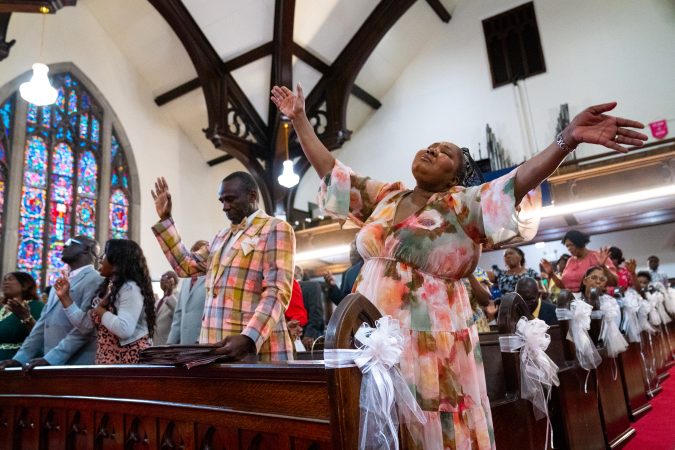
    After taking the pulpit at the First Haitian Church of God of Prophecy on Sunday, the Rev. Frantz Ulysse immediately spoke to the calamity that confronts families in his congregation:

    The end of the special immigration status that for years has allowed thousands of Haitians to live and work in Philadelphia and across the United States with their homeland in chaos ― ruinous natural disasters, governmental collapse, and gang violence that has displaced more than a million people.

    “We, as Haitians, we are in trouble,” Ulysse told worshipers at the Olney church. “We need to pray, because our God is a faithful God, and I believe he’s going to do something for us. … Our homeland, Haiti, it is not a safe place to go back to right now.”

    Prayers have been buttressed by petitions and by pleas to Congress to help before it’s too late.

    President Donald Trump is poised to return roughly 350,000 Haitians to a country that the U.S. government says is too dangerous for Americans, after the Supreme Court ruled last month that he could end temporary protected status for immigrants from Haiti and Syria.

    TPS is a humanitarian status that the U.S. can grant to foreign nationals whose nations are embroiled in war, environmental disasters, epidemics, or other extraordinary circumstances. It provides work authorization and protection from removal, but no path to permanent residency or citizenship.

    Among Philadelphia’s 11,000-strong Haitian community, disbelief over the court decision has turned to misery and fear, advocates say.

    The U.S. State Department has told Americans to stay out of Haiti, issuing its highest “Do Not Travel” advisory and warning those who insist on going to prepare a last will and testament.

    Many Haitians ask: How can Haiti be safe for my family if it’s not safe for others? Some face the prospect of separation from spouses and children who are U.S. citizens. Some will not step outside their homes to go to work, church, or school, afraid that federal agents could be watching, advocates said.

    “A lot of people are suffering now,” said Clifford Solomon, a church usher who is the father of four American children and whose wife is about to deliver a fifth. “A lot of my family is here [under TPS], my friends, my neighbors, all of them.”

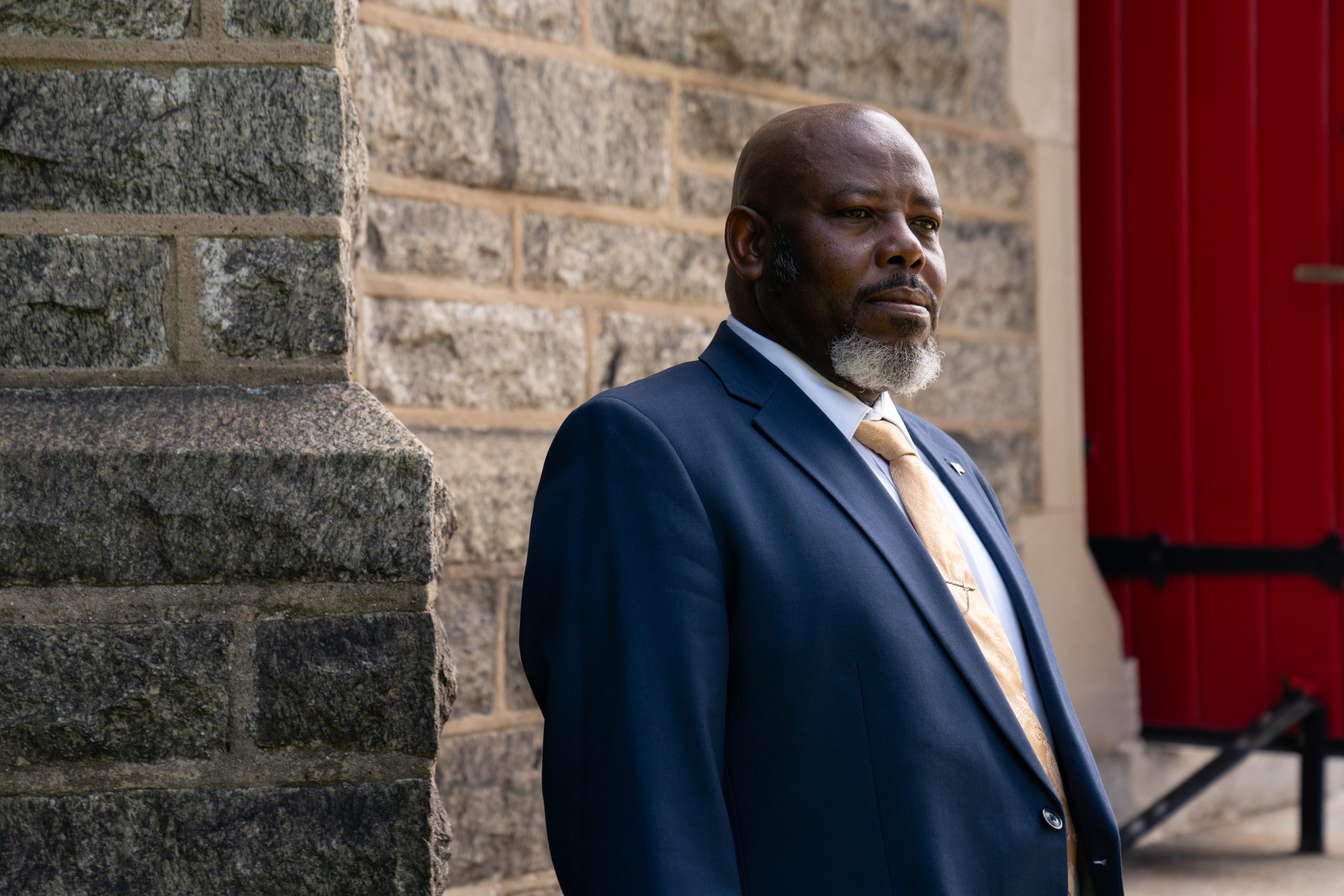
    Clifford Solomon, a church usher at the First Haitian Church of God of Prophecy, poses for a portrait before service in Philadelphia on July 12.Sarah Silbiger / For The Inquirer

    The Trump administration insists that “temporary” means temporary. The president tried and failed to end TPS for Haiti, the poorest nation in the Western Hemisphere ― two-thirds of residents live in poverty ― during his first term.

    While running for president in 2024, he falsely accused Haitian immigrants in Springfield, Ohio, of eating cats and dogs, and blamed those in tiny Charleroi, Pa., set on the Monongahela River about 20 miles south of Pittsburgh, of causing “massive crime.”

    The court decision did not immediately terminate TPS for people from Haiti and Syria, but started the process for implementing an order that typically takes 32 days. Once TPS ends, holders revert to their previous immigration status, meaning those Haitians who were undocumented or have no other protection will be subject to arrest and deportation.

    Meanwhile, U.S. Citizenship and Immigration Services says work authorizations for Haitians will expire on July 24.

    “We are seeing the impact on the community in Pennsylvania, in Philadelphia, and across the country,” said Guerline Jozef, founder of the California-based Haitian Bridge Alliance, a national nonprofit. “The fear of deportation, the fear of family separation, the fear of losing everything.”

    The alliance has helped commence a series of pro-TPS rallies led by labor unions, faith leaders, and immigrant rights groups in cities from San Diego to Boston, proclaiming that “families who have built their lives, careers, and communities in the United States deserve stability, dignity, and protection — not fear and uncertainty.”

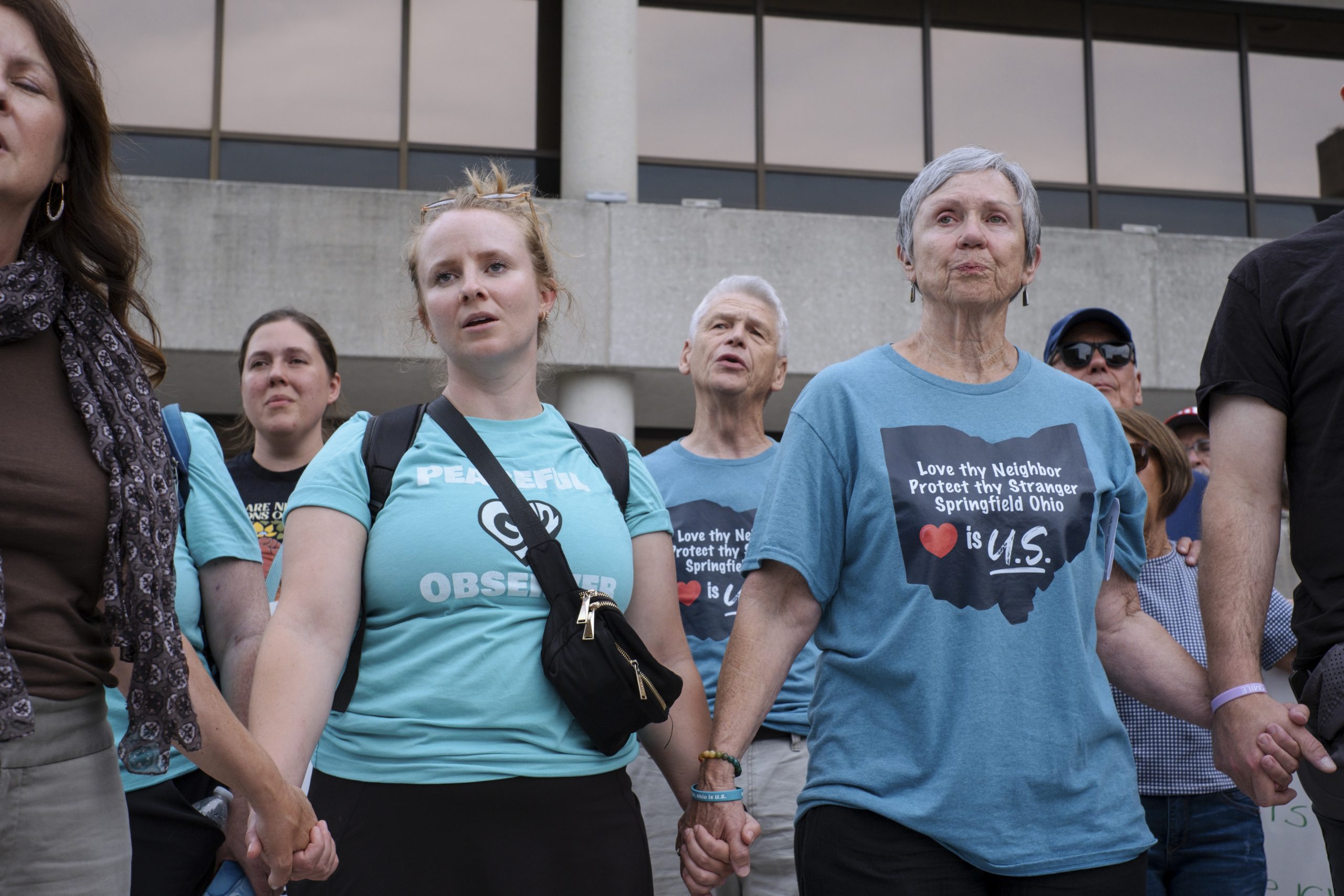
    Supporters of the Haitian community rally at City Hall in Springfield, Ohio, June 25. In Springfield, some residents see the end of an economic boom after the end of a humanitarian program for immigrants. Others see still darker possibilities. AMY POWELL

    Yet uncertainty rules, and many Haitians with TPS are investigating options even as they hope for relief from Congress.

    Esaie Pierre, founder of Men Anpil, a Philadelphia-based nonprofit that helps Haitian migrants, said he is assisting people who want to apply for asylum in the United States. Others who come to him are considering where else in the world they might be able to live.

    One young man is thinking about Chile, Pierre said.

    “They are not wanted here, but have established some kind of life here,” Pierre said. “We’ve assimilated. I’ve assimilated.”

    The events that led to this moment began in January 2010, when Haiti suffered a massive earthquake ― the 7.0-magnitude seism followed by a 6.1-magnitude aftershock ― that, as the National Immigration Forum put it, fundamentally altered the nation’s trajectory.

    Estimates of the death toll ranged from 100,000 to 300,000 people, while about 1.5 million were forced into unsanitary, overcrowded camps. The damage crippled the government.

    Three days after the initial quake, the Obama administration announced that undocumented Haitian immigrants in the U.S. would be granted TPS.

    Thousands more would be welcomed over time under humanitarian programs, and become eligible for TPS, as Haiti grew mired in crisis ― a deadly cholera epidemic the same year, Hurricane Sandy in 2012 and Hurricane Matthew in 2016, and a 7.2-magnitude earthquake in 2021 that killed more than 1,000.

    That year the assassination of President Jovenel Moïse ― elected four years earlier amid allegations of fraud and corruption ― saw the collapse of basic government functions and the rise of armed gangs.

    “You send them back, it’s like you’re signing a death sentence for them,” said Esther Emmanuel, a church soloist who has family members here under TPS. “We’re asking God to do a miracle and to hear the cries of his people, and to also soften the hearts of Congress.”

    Esther Emmanuel, a church soloist who has family members in the United States under temporary protected status at the First Haitian Church of God of Prophecy in Philadelphia on July 12.Sarah Silbiger / For The Inquirer

    Today the United Nations estimates that 90% of Port-au-Prince, the capital and largest city, is under the control of criminal groups, the violence having left thousands dead and displaced more than 1.4 million people.

    The State Department warns of robberies, carjackings, and sexual assaults. It advises U.S. citizens who go to Haiti to establish plans in case they are kidnapped ― including a “proof of life” protocol, so family members can ask specific questions to kidnappers as a way to determine if their loved one is still alive.

    “The only general hospital in Port-au-Prince has been closed for over two years,” Jozef said. “There’s no infrastructure in Haiti for people to be received. … We find ourselves as a community without a home, without a home to go to, without a home to stay in.”

    Talie Cerin, who lives in Philadelphia’s Cobbs Creek neighborhood, was visiting Haiti at the time of the 2010 earthquake. She watched her childhood home crumble.

    She has lived here under TPS, graduating from Immaculata University, then earning a master’s degree in education from Eastern University, and now working as the founder and lead editor of Woy Magazine, an internet publication about Haitian experiences.

    “The toughest part about being a TPS recipient is the ambiguity,” Cerin said. “The confusion keeps you from making long-term plans. It traps you in a prison of conjecture, whispers of ICE raids, and stories of people in detention centers.”

    Her sister, Lunise Cerin, was born in Philadelphia but lived in Haiti from age 5 to 16 before returning here to attend high school and college. The worry of losing her sister, and possibly their home, has been disorienting, Lunise Cerin said, generating “an enormous cloud of grief.”

    Her family has lived in Philadelphia since the 1980s, she said, and for them the end of TPS would mean the end of an established, multigenerational life.

    “Are we going to be gone?” she wondered.

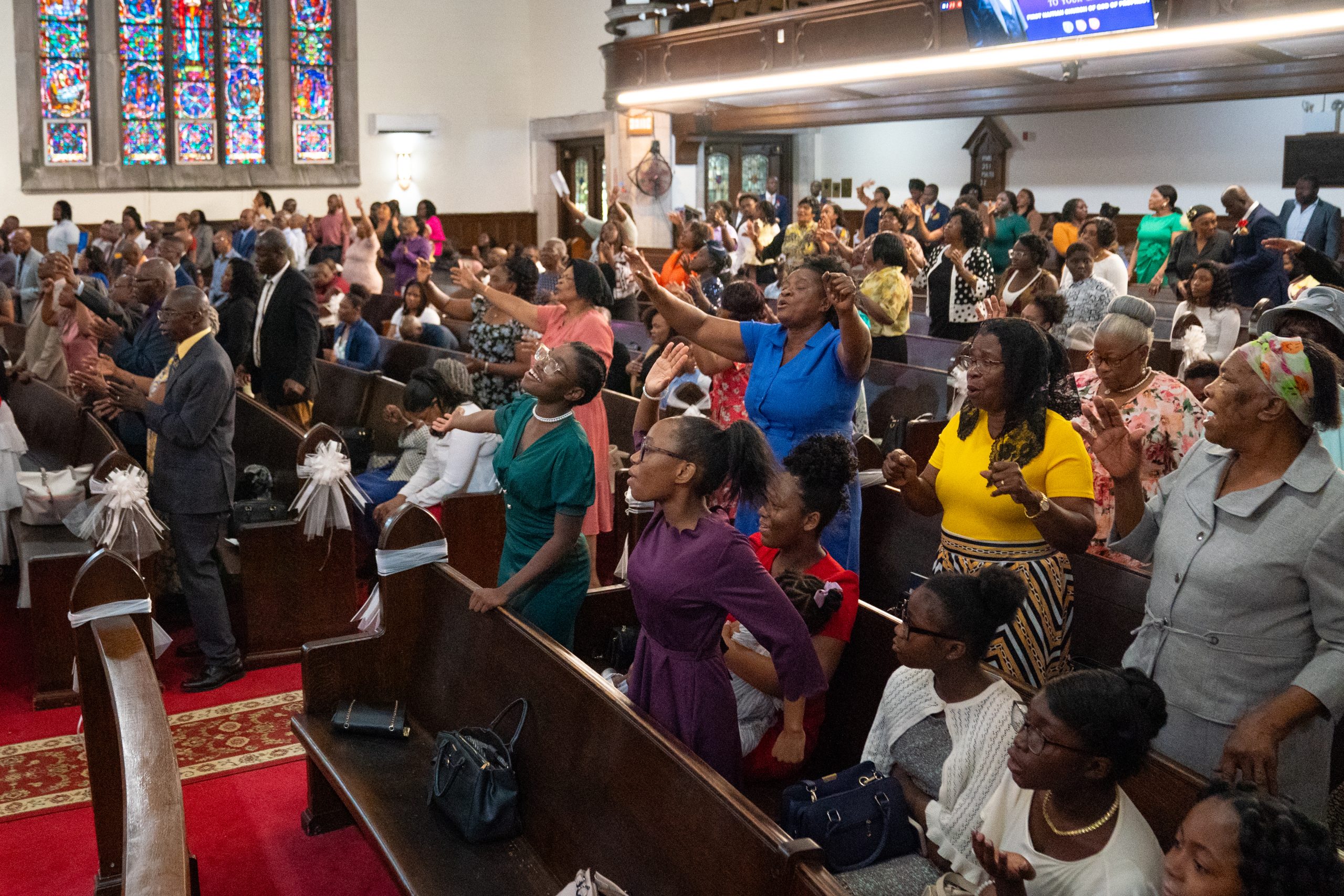
    Congregants sing during service at the First Haitian Church of God of Prophecy in Philadelphia on July 12.Sarah Silbiger / For The Inquirer

    Many at the First Haitian Church of God of Prophecy ask the same.

    The pastor’s office has been deluged with phone calls. Some people tell Ulysse that they might as well die, that returning to Haiti is impossible, but trying to stay here without TPS means they cannot work to pay rent or to buy food for their children.

    “They don’t know what to do,” Ulysse said. “I let them know God is the same yesterday, today, and forever, to trust the Lord. … Me, my heart is telling me something good is going to happen.”

  • Fetterman says he’d leave the Democratic Party if it becomes anti-Israel. A majority of House Democrats voted to end aid.

    Fetterman says he’d leave the Democratic Party if it becomes anti-Israel. A majority of House Democrats voted to end aid.

    Only one House Democrat from Pennsylvania voted against an amendment on Wednesday that would have ended aid to Israel.

    The rest backed the measure, along with a plurality of Democrats in the chamber, highlighting shifts and factions within the party. The vote also inches closer to crossing a line that Democratic Sen. John Fetterman of Pennsylvania says could cause him to abandon the party.

    The amendment, which would have cut $3.3 billion in military and humanitarian aid to Israel, was offered by U.S. Rep. Thomas Massie, a Kentucky Republican who has clashed with President Donald Trump and was the only member of his party to support the measure.

    Massie’s amendment failed in a 104-314 vote, but it showed shifting sentiment around Israel in the Democratic Party.

    U.S. Rep. Brendan Boyle, who represents parts of Philadelphia, was the only Pennsylvania Democrat who voted against the amendment.

    Boyle said that the U.S. should push back against the actions of Israeli Prime Minister Benjamin Netanyahu’s government, but that the amendment was too broad to present a viable solution.

    “This amendment would have forced the closure of the U.S. Embassy in Israel, ended refugee resettlement programs, cut off vital humanitarian and diplomatic efforts, and weakened our ability to combat terrorist organizations,” Boyle wrote in a statement to The Inquirer. “The United States must change course in response to the far-right Netanyahu government’s conduct, the settler violence, and the devastating suffering of Palestinian civilians. But this sweeping amendment was not the answer.”

    The six other Pennsylvania Democrats supported the measure, while all Republicans present from the state voted no; U.S. Reps. Scott Perry of York County and Ryan Mackenzie of Lehigh County missed the vote.

    The share of Democrats voting for the amendment showed a striking difference from two years ago, when a similar amendment from U.S. Rep. Summer Lee, a progressive from Pittsburgh, garnered only 37 Democratic votes and 21 GOP votes.

    “Thousands and thousands of Palestinians have been killed using our tax dollars,” Lee wrote on X. “This shift in the party is a testament to the movement but it’s still unconscionable for any member of Congress to justify sending any aid to fuel Israel’s genocide.”

    The Israel-Hamas war started in October 2023 after a Hamas-led attack killed 1,200 Israelis. Since then, the Palestinian death toll has surpassed 73,000, the Associated Press reported.

    Fetterman, a staunch supporter of Israel, said that though he has no current plans to leave the Democratic Party, ending support for Israel is a line that could push him out of the party.

    “If our party ever becomes — and just makes it official — the anti-Israel party, that’s when I would leave because that’s been a moral clarity for me,” Fetterman said to the Hill on Wednesday.

    Fetterman has been insistent that he is still a Democrat, publishing an opinion piece in the Washington Post in May emphasizing he is still “pro-choice, pro-weed, pro-LGBT, pro-SNAP, pro-labor and even pro-rib-eye over bio slop.”

    But recently, more and more of Fetterman’s support has been coming from across the aisle.

    According to a Quinnipiac University poll released on Wednesday, 77% of surveyed Republicans said they approve of Fetterman, while only 19% of Democrats do.

    The poll also found that more than half of registered Pennsylvania voters want Fetterman to leave the Democratic Party altogether — a number that reflected majorities of voters from both parties.

  • Pa. says it will not hand over voter rolls to federal government in reply to DOJ letter

    Pa. says it will not hand over voter rolls to federal government in reply to DOJ letter

    Pennsylvania Secretary of State Al Schmidt stressed that the state was not in violation of any voting regulations in a response letter to a Department of Justice inquiry that threatened criminal charges over suspicions of noncitizen voting.

    The letter, sent Monday, pushed back against the Trump administration’s insistence that allowing federal assistance in inspecting voter rolls was the best way to avoid criminal prosecution for “aiding and abetting the violation” of federal voting laws.

    The Trump administration’s letter, sent July 7, was addressed to voting officials in all 50 states and requested a reply within the week. Schmidt’s reply made it clear that Pennsylvania would not hand over voter rolls to the federal government and reiterated that voting regulations were followed meticulously.

    “I take seriously the obligations under both federal and Pennsylvania law to ensure that only eligible voters have access to the ballot box and to see to it that Pennsylvania’s voter rolls are appropriately maintained and updated,” wrote Schmidt, an appointee of Democratic Gov. Josh Shapiro.

    “That means working with the election officials of our 67 counties who are statutorily responsible for voter list maintenance,” Schmidt said. “Be assured that these dedicated local officials, as well as our employees who serve at the Department of State, work tirelessly to ensure that Pennsylvania’s voter rolls are accurately maintained.”

    Pennsylvania officials have warned since last year that turning over the voter rolls to the federal government without redactions could put sensitive information at risk.

    The DOJ letter comes after President Donald Trump’s long history of spreading voter fraud conspiracy theories and falsely claiming that he won the 2020 election.

    Schmidt, who used to serve as Philadelphia’s Republican city commissioner, first found himself at odds with the Trump administration when he pushed back on the president’s claims of voter fraud.

    “I have seen the most fantastical things on social media, making completely ridiculous allegations that have no basis in fact at all,” Schmidt told CNN in 2020.

    Following his refusal to give merit to the fraud allegations, Trump blasted Schmidt on X, which led to threats against the election official, Schmidt testified to the House Jan. 6 committee in 2022.

    In his capacity as Philadelphia city commissioner, Schmidt in 2017 identified a glitch in the Pennsylvania Department of Transportation’s system that had allowed 168 noncitizens to register to vote.

    But noncitizen voting does not happen at a rate that would change presidential election results, Schmidt emphasized in a recent interview with VoteBeat.

    “One thing that became very clear through that research and all evidence suggests that noncitizens voting in elections in the United States occurs very rarely,” Schmidt said. “It doesn’t mean that it’s not important. Like I said before, every vote is precious, and we want to make sure that we do everything we can to safeguard and strengthen election integrity. But there’s no evidence to suggest that it happens in any widespread way whatsoever.”

    While Schmidt’s letter did not grant the Trump administration access to voter rolls, it did link to the state’s most recent voter registration report, which outlines the outcomes of officials’ efforts to keep the rolls accurate.

    According to the report, 338,000 voter registrations were canceled in 2025, most of them because the voter died or moved. In around 120 cases, a registration was recalled because an official found the person was ineligible to vote.

    “We [Pennsylvania Department of State] have worked closely with the Department of Justice on matters that have led to criminal charges as recently as this year,” Schmidt wrote in reply to the DOJ. “The Department consistently cooperates with our state and federal partners in their investigations to help ensure that only eligible voters are registered and able to cast ballots in our Commonwealth.”

  • Philly Democrats call Trump-promoted Freedom Fuel stations a ‘PR stunt’ that won’t solve high gas prices

    Philly Democrats call Trump-promoted Freedom Fuel stations a ‘PR stunt’ that won’t solve high gas prices

    Philadelphia-area Democrats criticized President Donald Trump’s recent promotion of Freedom Fuel gas stations in Pennsylvania and New Jersey as an effort to fool people about the high price of fuel rather than a long-term solution to the problem.

    “This appears to be a PR stunt of some sort, which is designed to distract people from the fact that gas prices have gone up because the president started a war against Iran,” said Democratic U.S. Rep. Mary Gay Scanlon, who represents Delaware County and parts of South Philadelphia.

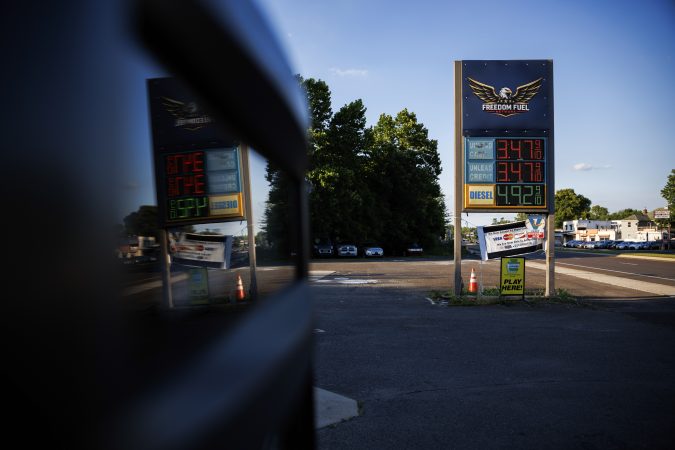
    Questions still abound about who is behind the Freedom Fuel Network, which popped up around the region earlier this month with 25 gas stations sporting the branding.

    No entity is registered in Pennsylvania or New Jersey with the name, but an application for a trademark was filed in Delaware on July 1, two days before the July 3 launch that was heavily promoted by the White House.

    Trump was posting about it on Truth Social ahead of the launch, praising the retailer’s patriotism and promising that gas prices nationally would soon fall after they surged following his decision to attack Iran earlier this year.

    “This Retailer is taking the lead, and others should follow. They are doing this because they love the U.S.A. We are proud to celebrate America’s 250th Birthday in the Great Commonwealth of Pennsylvania, the Birthplace of our very special, one-of-a-kind Declaration of Independence, and where I won BIG in the Presidential Election!” Trump said on Truth Social on July 1.

    The stations started selling gas at $3.47 a gallon on July 3, with the price a nod to the 47th president, according to the White House. Scanlon said that when she stopped by Friday morning, prices were already going up just seven days later.

    “I actually went to one this morning just to get a sense of what was going on,” Scanlon said. ”They may have started with a price of $3.47, but it’s already going up; this one was at $3.57,″ she added, without identifying the location.

    U.S. Rep. Brendan Boyle, a Democrat who represents Philadelphia, said these stations are too little, too late for constituents who have been feeling squeezed by gas prices.

    “Gas was $2.98 a gallon before Trump’s disastrous Iran War. Prices then jumped 50% — the biggest jump in gas prices in American history. These few discounted gas stations are a band-aid on a gunshot wound,” Boyle said in a statement to The Inquirer.

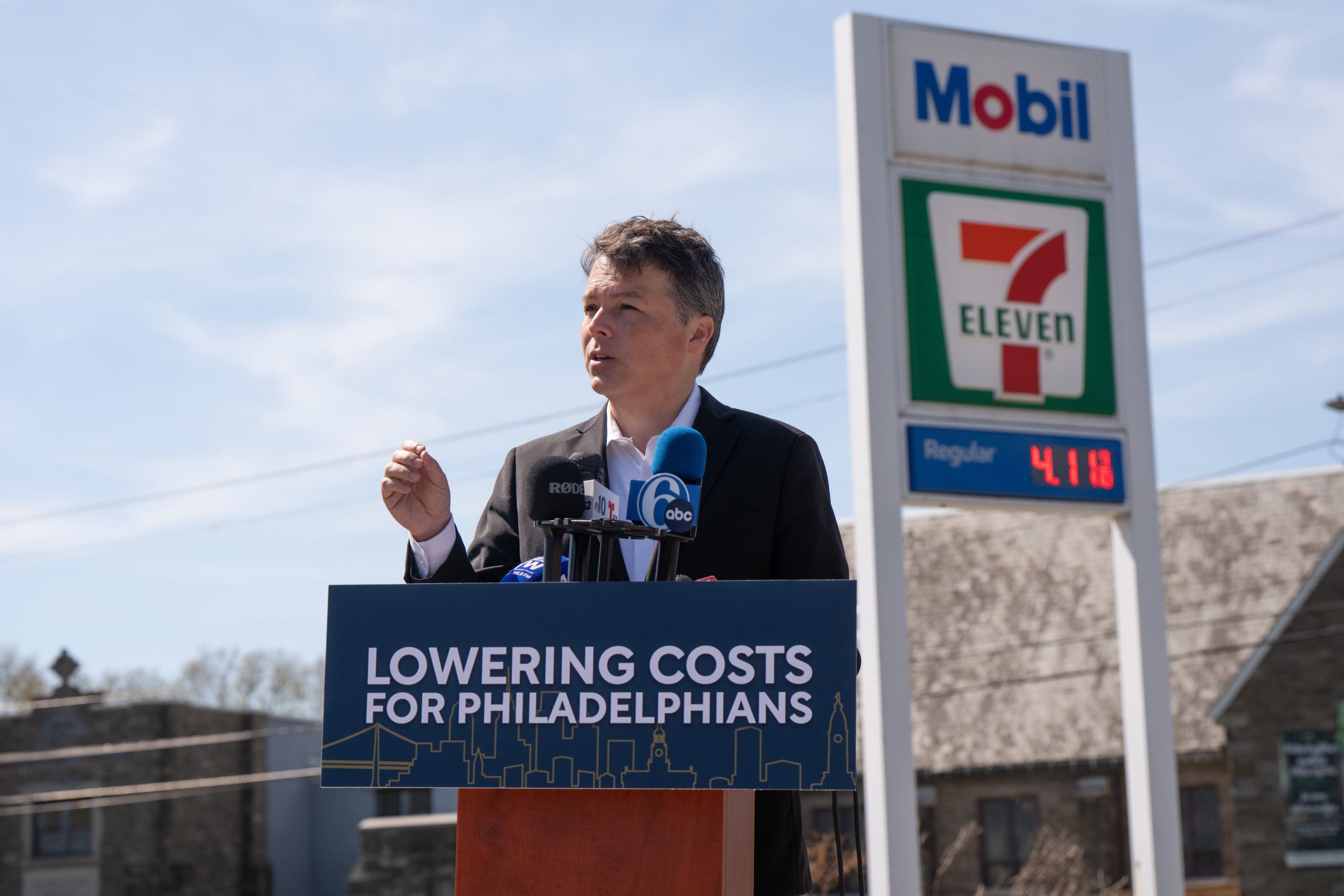
    U.S. Rep. Brendan F. Boyle holds a news conference at a Philadelphia gas station to announce legislation to suspend the federal gas tax whenever the national average price of gasoline exceeds $4.00 per gallon.Jessica Griffin / Staff Photographer

    Boyle has been outspoken about gas prices while in office. In April, he announced a bill to suspend the federal gas tax when gas prices exceed $4 per gallon.

    The average gas price in Philadelphia as of Saturday was $3.99 per gallon, about 11 cents above the national average, according to AAA’s fuel price tracker.

    Gas prices peaked in May but have remained volatile because of the ongoing conflict with Iran. Following U.S. attacks, Iran closed the Strait of Hormuz — an essential trading route — causing gas prices to spike. Recently, the U.S. and Iran resumed attacks, marking the end of a three-week ceasefire.

    “In no uncertain terms, the Cease Fire is OVER!” Trump posted on Truth Social on Friday.

    U.S. Rep. Dwight Evans, a retiring Philadelphia Democrat, said that ending the war in Iran would be the long-term solution for lowering gas prices.

    “As of now, it [the Freedom Fuel Network] doesn’t sound like a long-term solution,” Evans said. “Gas prices are high because Trump has been more focused on vanity projects like a ballroom than on ending his over-four-month illegal war of choice — a war which both houses of Congress have now voted to stop.”

    According to the White House, Freedom Fuel is an independent company that the Trump administration does not fund, and it says the company was not buying gas at a discounted price.

    But the White House has been heavily promoting the effort. It posted a video to social media Tuesday featuring patrons at Freedom Fuel gas stations crediting Trump.

    “I thought gas was more expensive, but it’s not. So thanks Trump for saving me some money!” a man says in the opening of the video, which touts the prices as being 50 cents lower than the Pennsylvania average.

    Scanlon said that identifying the people funding the initiative would make clear the motive for the low prices and whether they would be there to stay.

    “Someone is making it worthwhile for these independent stations to rebrand themselves and sell at under market rates,” she said. “I mean, they’ve got to be making up that money somehow. So the question just is, who is doing it and why? Although it seems there can be no other reason than to prop up the president’s faltering poll numbers.”

  • Norcross family takes home rare copy of Declaration of Independence after bidding $3.6 million

    Norcross family takes home rare copy of Declaration of Independence after bidding $3.6 million

    A rare copy of the Declaration of Independence found a new home after South Jersey Democratic power broker George E. Norcross III placed the winning bid of $3.6 million on behalf of his family at an auction on Wednesday.

    The document, which was put on sale to celebrate the nation’s 250th anniversary by Camden County auction house Goldin, is considered to be one of the oldest copies of the Declaration of Independence.

    The copy was printed in Exeter, N.H., in 1776 by local printer Robert Luist Fowle, according to PhillyVoice.

    Only 11 copies of an Exeter broadside are known to have survived, with two others having been sold in January 2026 and January 2025 by Christie’s auction house in New York for $5.7 million and $2.4 million, respectively, reported PhillyVoice, which was founded by Lexie Norcross, the daughter of George Norcross.

    “This one is in tremendous condition, it may have been posted in a tavern or some kind of hall,” Ken Goldin, founder of Goldin Auctions, said to PhillyVoice. “The fact that any of them survived is remarkable.”

    Lexie Norcross and Alex Norcross, George Norcross’ son, said in a statement it was a privilege to own such an important historical document, especially so close to the 250th anniversary.

    “As America celebrates its 250th anniversary, we are deeply honored to become the stewards of such an extraordinary piece of our nation’s history,” Lexie and Alex Norcross said in a statement. “The Declaration of Independence is far more than a historic document, it is a pivotal document that belongs to the story of every American and a symbol of the ideals that continue to unite and inspire generations.”

    According to PhillyVoice, the Norcross family plans to make the document publicly accessible, with Lexie and Alex Norcross saying they are dedicated to preserving it.

    “We recognize the responsibility that comes with preserving this remarkable piece of our nation’s heritage and committed to preserving it with the care and respect it deserves so future generations can continue to appreciate its enduring significance,” Lexie and Alex Norcross said.

    George E. Norcross III, an insurance executive and major Jersey political boss, is also the owner of two other declaration-related artifacts.

    In July 2021, the Norcross family paid $4 million for a copy of the Declaration of Independence, presented to Charles Carroll of Carrollton, one of the 56 signers.

    The family also purchased the Proctor-Sang-Newell Collection of Signers of the Declaration of Independence, one of 40 complete sets of the signatures of the 56 signers of the declaration known to exist.

  • Pa. state and religious leaders hold vigil to honor lives lost in ICE custody ahead of nation’s 250th birthday

    Pa. state and religious leaders hold vigil to honor lives lost in ICE custody ahead of nation’s 250th birthday

    As Philadelphia gears up to celebrate the nation’s 250th, a group of political and interfaith leaders held a vigil Thursday at Christ Church to honor those who died in ICE custody.

    The event comes a day before the nation’s birthday celebrations but a week after the Supreme Court’s decision to take Haitians and Syrians off temporary protection status, opening them up to deportation.

    Nathalie Cerin spoke at the vigil about her experience as a Haitian-American on TPS, which allows people whose home countries are unable to accommodate them a way to stay in the U.S. legally. Cerin said she was still celebrating Haiti’s two goals against Morocco in a World Cup game (before ultimately losing) when she heard of the Supreme Court’s decision to end TPS for Haitians.

    Cerin also said her experience on TPS had been a confusing one that left her and others in limbo.

    “The toughest part about being a TPS recipient is the ambiguity, and that’s by design,” Cerin said. “The confusion keeps you from making long-term plans. It traps you in a prison of conjecture, whispers of ICE raids and stories of people in detention centers who didn’t make it out.”

    These vigils and ICE protests happen consistently, said Alisa Lasater Wailoo of First United Methodist of Germantown, who attends the demonstrations every Monday. Demonstrations also happen on Wednesdays and Fridays, Lasater Wailoo said.

    U.S. Rep. Mary Gay Scanlon, a Democrat who represents South Philadelphia and Delaware County, also spoke Thursday, thanking the city’s religious community for stepping up during a time of need.

    “Our faith communities have stepped up and have really been a bright light,” Scanlon said. “They’ve stepped up in defense of the humanity of our neighbors and the strangers among us. They have stepped up as individuals to bring awareness and muster opposition to the administration’s activities, and they’ve stepped up in service to those who are suffering from that cruelty.”

    Scanlon tied her speech to the country’s founding, reflecting on the words of Thomas Paine, the Founding Father who wrote Common Sense, calling for independence from Great Britain.

    “He [Paine] also reminds us we are all called to contribute to the greater good, and it is not in our numbers, but in our unity, that our great strength lies,” Scanlon said. “So I call everyone to hear these words as a calling and an invitation to show up, to shine and to love.”

    The vigil concluded with a Ringing of the Bell ceremony, where the names of 50 people who have died while in ICE custody nationwide since Donald Trump took office in 2025 were spoken and followed by a bell toll.

    Two of the people honored died at the Moshannon Valley Processing Center in Pennsylvania: Fouad Saeed Abdulkadir, who died after a medical event, and Chaofeng Ge, whose death was ruled a suicide.

    State Sen. Art Haywood, a Democrat who represents parts of Philadelphia and Montgomery County, said he hoped attendees would leave remembering that the nation’s future is mutable and that they can make a change.

    “I think the main thing I want people to see is a rededication to what the nation has become,” Haywood said. “I am not so much looking back at 1776. 1776 was a very bad year for Africans; that was a year of enslavement. So I’m not that comfortable celebrating, but I think the future of the nation is very powerful.”

    Following the vigil held at Christ Church, Haywood, multi-faith leaders, and other attendees walked eight blocks through the hot, muggy streets of Philadelphia to take a stand in front of the ICE detention facility on Cherry Street.

    Protesters tied a long red fabric to block the main driveway of the facility. The red cloth was meant to signify the blood of those lost and the red in Betsy Ross’s American flag.

    “Today, we mark this line with the same red that runs through Betsy Ross’s flag,” said the Rev. Kipp Gilmore-Clough of Chestnut Hill United Church. “It is a witness to the bloodshed and the lives lost. But it also symbolizes the possibility of unity.”

  • ‘You just feel proud’: Ecuadorians in Philadelphia find respite during World Cup celebrations

    ‘You just feel proud’: Ecuadorians in Philadelphia find respite during World Cup celebrations

    For Ecuadorians in Philadelphia, seeing their country in the World Cup is not just a chance to watch good soccer but also a way to embrace their culture and community in the face of heightened scrutiny under the Trump administration.

    As Ecuador went head-to-head with Germany last week, some Ecuadorian Philadelphians gathered in bars across the city, donning yellow and cheering on their team.

    “It’s been nice to be able to see how all the community has come together,” Yvonne Cedeno said at a watch party at Tradesman’s in Center City. “Whether you’re Mexican, Colombian, Ecuadorian, just seeing people in our community getting together, especially within this political environment, is just so great. It makes me happy to be Ecuadorian.”

    Though Philadelphia is a sanctuary city with some of the nation’s toughest restrictions on ICE, immigration arrests have still surged in the city and state. In January 2026 alone 802 arrests were made in Pennsylvania, more than tripling the amount just a year prior. Raids have often targeted predominantly Latino communities in both the city and suburbs.

    Cathryn Miller-Wilson, executive Director of HIAS Pennsylvania, said these raids have created intense anxiety in the community, with some clients telling staff they have opted to stay home during World Cup celebrations, fearing running into ICE agents at games or events.

    “They’re absolutely only watching from home because it’s too scary otherwise,” Miller-Wilson said. “It’s definitely a problem, really since 2025, but especially now, where there’s this confluence of joyful celebration, but also of the threat of increased ICE presence.”

    Still, many Latinos, who make up 16% of the city’s residents, have embraced the chance to celebrate their community during the World Cup, which has featured nine Latin American countries. Tuesday evening, Ecuador will face Mexico in a knockout match after last week’s 2-1 win over Germany secured the nation’s spot in the elimination round.

    Cedeno, 37, said the World Cup has always given her family a way to express their love for their culture by making traditional Ecuadorian dishes and coming together to cheer for their country.

    “Last game we woke up at 6 a.m. just to make a traditional Ecuadorian dish called encebollado, which takes hours to make,” Cedeno said, referring to the traditional stew often made with tuna and yuca. “And we all got together and we watched the game and rooted for Ecuador, so it definitely brings the World Cup definitely brings our family closer”

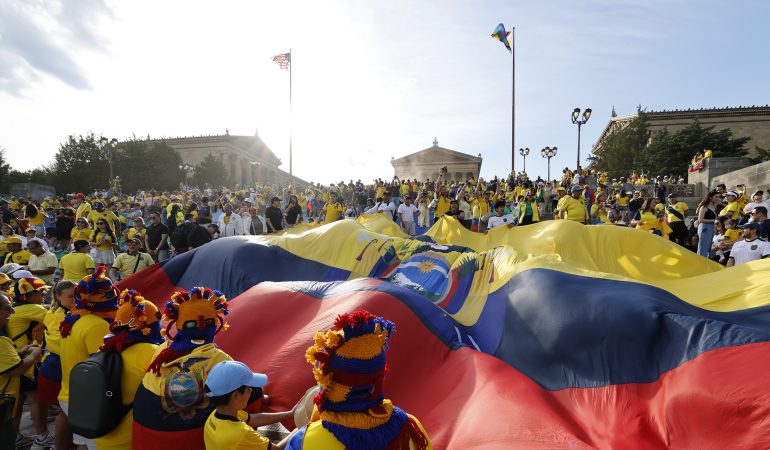
    Ahead of Ecuador’s math against Côte d’Ivoire at Lincoln Financial Field on June 14, a sea of yellow jerseys flooded around the Rocky statue in front of the Philadelphia Museum of Art.

    Rowan Teran, 24, said the scene filled him with pride — even if the team fell short that game.

    “I grew up Latino in a very Jewish-dominated community. I kind of wasn’t proud of who I was,” said Teran, who grew up Lower Merion after his father immigrated from Ecuador. “And then growing up, I became much more proud. And then one day you see thousands of Ecuadorians wearing your jersey, singing the national anthem that you wanted to sing when you were younger, and you just feel proud to be who you are.”

    Teran, who also attended the watch party at Tradesman’s, highlighted that the joy surrounding the World Cup feels like an act of resistance against the Trump administration.

    ”See what we are,“ Teran said. ”You don’t want any of us here, and now there are hundreds of thousands of us here, and the city’s even better.”

    Soccer fans watch Ecuador take on the Ivory Coast during a World Cup soccer watch party at Brauhaus Schmitz on Sunday, June 14, 2026.Yong Kim / Staff Photographer

    Christina Barradas, 44, is Mexican but came out to Tradesman’s to cheer on Ecuador alongside her Ecuadorian husband. She said while the World Cup has been great for the community, it’s a temporary respite from the struggles they’re facing.

    “It’s an opportunity to put on your jersey, to put on the colors, but we still don’t feel 100 percent free and safe,” Barradas said.

    On South Street, Nina Cueva-Castillo, 41, sat with the only other two yellow jerseys among a sea of Germany fans at Brauhaus Schmitz.

    Cueva-Castillo said the games give Philly’s Ecuadorian community visibility it usually does not have.

    “I love how people now know us,” Cueva-Castillo said. “They know our jersey, they know our colors, they know our flag. It’s a breath of fresh air to be ourselves, to be accepted, to be welcome, and for people to be like, ‘You know what, they are just like us’.”

  • ‘Blur our differences and find our commonalities’: Josh Shapiro stresses unity at World Cup

    ‘Blur our differences and find our commonalities’: Josh Shapiro stresses unity at World Cup

    Gov. Josh Shapiro thinks sports could be the key to unity ahead of the nation’s 250th anniversary.

    “To me, sports is still one of the few things that allows people from all different walks of life, and different political views, to actually come together and enjoy each other’s company,” Shapiro said in an interview with 6abc while in Philadelphia for Monday’s World Cup match between France and Iraq.

    Luckily for Shapiro, Pennsylvania has had no shortage of sporting events. After this spring’s NFL draft and PGA Championships were both held in the state, Philadelphia is hosting six World Cup games through July and the forthcoming MLB All-Star Game.

    Shapiro said this was intentional.

    “We worked really, really hard to stack these events up,” Shapiro told 6abc. “And I was really purposeful about this, that as we celebrate our history, we have to find ways to come together.”

    Shapiro has attended two of the three World Cup games held in the city so far, taking in Ivory Coast’s 1-0 win over Ecuador on June 14 before attending France’s 3-0 victory against Iraq.

    VisitPA has committed $31.6 million to Philadelphia Soccer 2026 to help aid World Cup costs. Through this sponsorship, the state, including Shapiro, has access to tickets and suites.

    “The Commonwealth has access to a mix of suite, VIP, and general admission tickets, which are being used to host business leaders, prospective partners, and other guests to further strengthen Pennsylvania’s economic development and promote the Commonwealth as the best place to visit, live, and do business,” Rosie Lapowsky, a spokesperson for Shapiro, wrote in an email.

    Shapiro said he stopped by the FIFA Fan Festival at Lemon Hill before the game and admired how welcoming Philadelphians were to tourists from all over the globe.

    “We are welcoming people,” Shapiro said. “We want you here, and we want you to celebrate not just a great sport; we want you to celebrate the greatest country on the face of the earth at this important moment as we celebrate the 250th birth of this nation.”

    Fan fests are being held in multiple locations, allowing Pennsylvanians to bask in the World Cup excitement across the state.

    “We were really insistent that this fan fest not be the only one, that we have them across the state,” Shapiro told The Inquirer during that event. “So we got one in Scranton, Reading, and Pittsburgh, and I think we’re going to see a lot of the excitement in there, too.”

    Shapiro, a potential 2028 presidential candidate, is among the many possible 2028 aspirants to attend World Cup events. According to Politico, California Gov. Gavin Newsom, Secretary of State Marco Rubio, and Health and Human Services Secretary Robert F. Kennedy Jr. have all also attended games.

    Politico reported that, ahead of the games, Shapiro distributed 700 free tickets to Philadelphia community organizations to make the games as accessible as possible and bring people together.

    “I think it [the World Cup] has a great way of allowing us to kind of blur our differences and find our commonalities and come together,” Shapiro told 6abc.

    Staff writer Owen Hewitt contributed to this article.
  • Youth summit turns teens into Philly lawmakers: ‘You are the change, ultimately’

    Youth summit turns teens into Philly lawmakers: ‘You are the change, ultimately’

    The City Council chambers looked as they always do: a sea of slacks and blazers, votes and debates, bills and budgets. The only difference? Every Council member was a teenager.

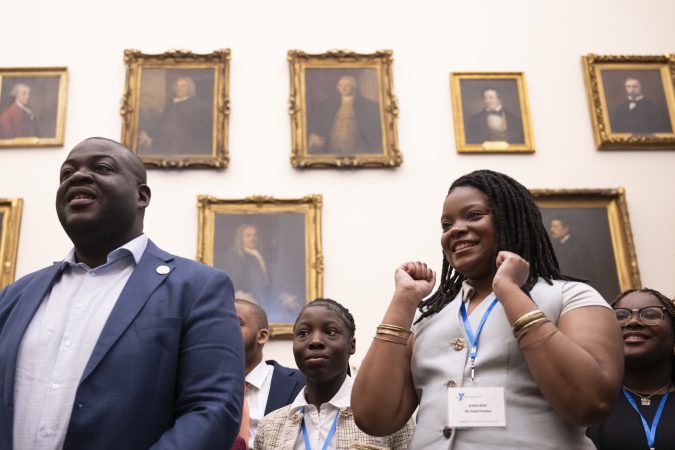
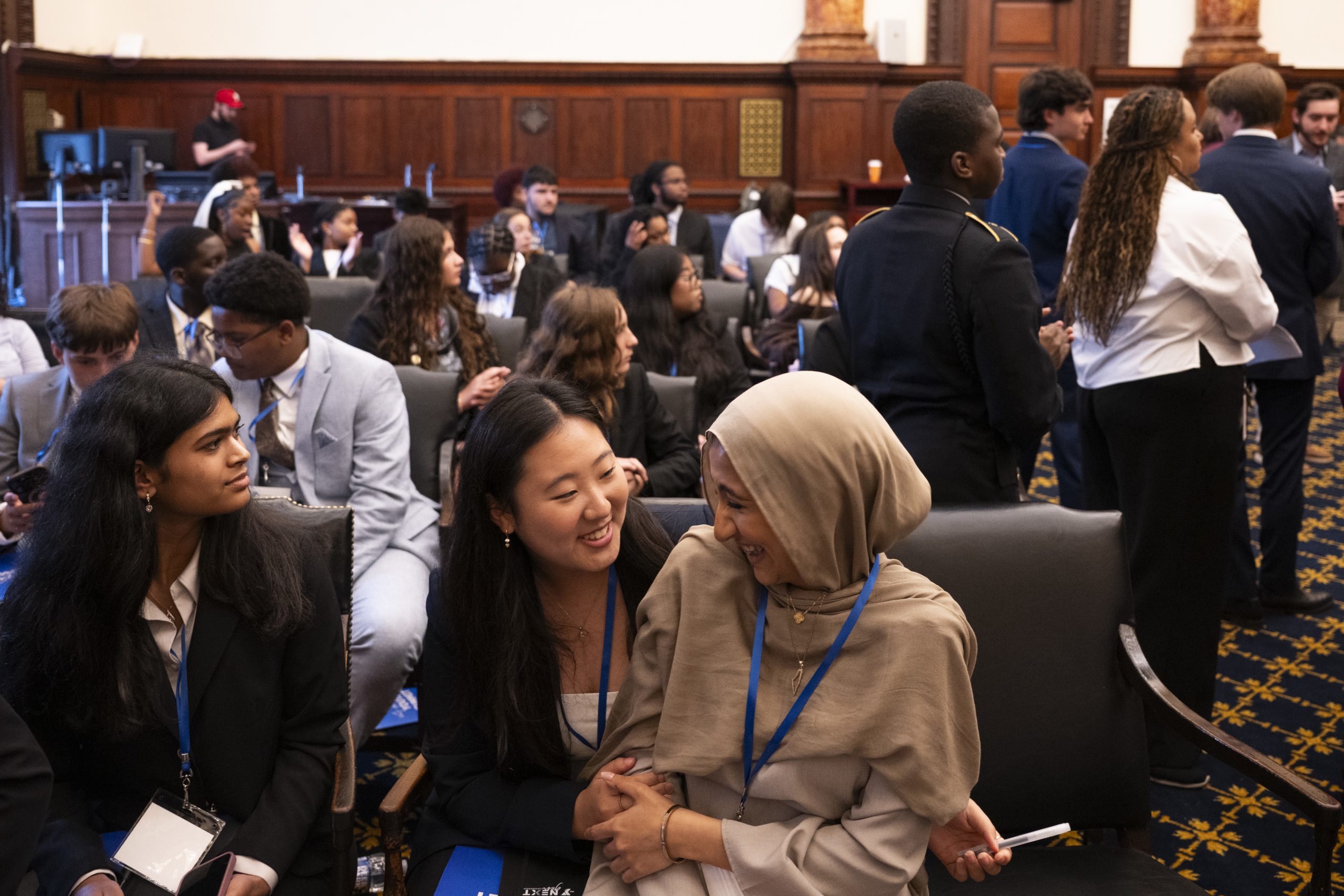
    Around 100 youths entered Philadelphia City Hall on Wednesday to take part in the Greater Philadelphia YMCA’s Government Youth Summit. The event, hosted by the YMCA for the first time, gave teens from Philadelphia and the surrounding area a hands-on way to learn about their city government.

    “This is our first shot at it. I think it’s been real successful,” said Shaun Elliott, president of the Greater Philadelphia YMCA. “And there’s two things we want to do: teach kids about civic government and how it works, but also help them develop the competencies of leadership.”

    At the beginning of the day, the participants were presented with a bill on spending and initiatives during the FIFA World Cup, which they then discussed, debated, and reshaped in line with their roles.

    Sitting alongside teens representing other districts, Justina Ndebhleh, 17, who was representing the Sixth District in Lower Northeast Philadelphia, led a discussion on SEPTA funding.

    “We’re talking about whether increasing SEPTA prices will be beneficial or not,” Ndebhleh said. “Because we know increasing the fare would be a regressive tax since lower-income communities do take SEPTA on a daily basis.”

    Students hold discussions after meeting with City Council President Kenyatta Johnson.Joe Lamberti / For The Inquirer

    Between debates and meetings, teens were given the chance to speak with Mayor Cherelle L. Parker and City Council President Kenyatta Johnson.

    Lindsay Doyle, director of youth civic engagement for the YMCA, said she hoped the participants left understanding that their opinions matter and that they can help make change.

    “It’s really incredible to see them in these spaces,” Doyle said, “and have them interact with City Council members, and have those elected officials reinforce the idea that their thoughts … and their beliefs really matter, and they can utilize those to change the entire city, state, and nation.”

    Kailey Reinboth, 18, from Boyertown Area Senior High School, said the experience gave her a better understanding of what it means to be an engaged citizen, especially at a young age.

    “I believe that it is really [giving] me insight into my roles and responsibilities as a citizen and being someone that needs to be civically engaged,” she said. “You are the change, ultimately. And being … the change that you want to see, not just in the future, because, you know, they talk about the youth being the future — the youth aren’t the future. They are the present, and we really need to enforce that in making sure that we’re not making change in the future. We are making change now.”

    Elliott said he hopes to see the program grow in future years, providing more teens with the experience to learn about local government.

    “We have 100 young people here. So how about 200 or 250 next year?” he said.