Malayshia Allford’s parents were arguing in the parking lot of a Springfield Township strip mall when someone called police. Her mother tried to board a SEPTA bus with the girl — but herfather pulled them back to the sidewalk. Then, he struck the mother in the head, police said.
That 2020 incident, and the investigations that followed, prompted a caseworker to remove Malayshia, then just 4 years old, from her mother’s home in Philadelphia.
Over the next six years of her short and tumultuous life, she would be shuffled through at least three homes by Philadelphia’s child-welfare system. On Nov. 5, one of those foster parents, Carprice Williams, was charged with killing the 10-year-old girl and leaving her body in the trunk of a car.
Williams was a Philadelphia fifth-grade teacher whose disciplinary style, including withholding lunch from students, worried colleagues and drew complaints from some children and parents. She had been a foster mother to at least four children dating back to 2019 or earlier. In 2021, another child who was placed in her care was hospitalized with what a doctor deemed near-fatal injuries.
The story of how their paths collided raises serious questions about the systems the city and state have in place to keep children safe, and to vet those who care for them.
Malayshia Allford, 10, was missing for more than a week before her remains were found inside the trunk of a car in South Jersey.Courtesy of Philadelphia police
Years in the system
Some of Malayshia’s relatives had not seen the child since she was a 4-year-old with a heart-melting smile and an affinity for Minnie Mouse. That’s how long she had been in the child-welfare system.
A caseworker had temporarily removed Malayshia from her mother’s home after the domestic incident. In April 2021, a Philadelphia Family Court judge found the home unsafe, noting that drugs had been found in the child’s bedroom and that the mother failed to seek care after she suspected her daughter had been sexually abused.
Malayshia was placed with a relative, and allowed weekly supervised visits with her parents.
The court noted that Malayshia’s parents, Everine Brown-Ward and Nazir Allford, had not cooperated with the child-welfare agency, and had sent threatening messages, including a shooting threat, to the relative who was caring for the child. The father also assaulted a child-welfare caseworker, according to court records. Allford’s brother, Nafis Horne, said the parents were grieving and not ready to comment.
A lawyer, Michael Graves Jr., was appointed to represent Malayshia’s interests, according to court records dating to 2021. Graves did not respond to messages.
Frank Cervone, who for years led the Support Center for Child Advocates, said his office and the city’s public defender both require lawyers to conduct twice-a-year in-home visits. But there are no such standards for private, court-appointed lawyers such as Graves.
“Most of them simply don’t do that,” Cervone said. “They don’t see it as part of their practice.”
In 2022, both parents were arrested after taking Malayshia from a supervised visit at Catholic Community Services in Northeast Philadelphia. Both pleaded guilty to interfering with custody. After that, they no longer were allowed visits, relatives said.
Still, multiple family members said, there were other options for the girl, who had three siblings — two in foster homes, and one living with a maternal aunt, Yolanda Brown.
By last year, Malayshia was in a different foster home. But caseworkers found that she was physically and sexually abused there, according to Nadeem Bezar, a lawyer representing Malayshia’s estate.
That’s why she was removed from that home and placed with Williams, he said.
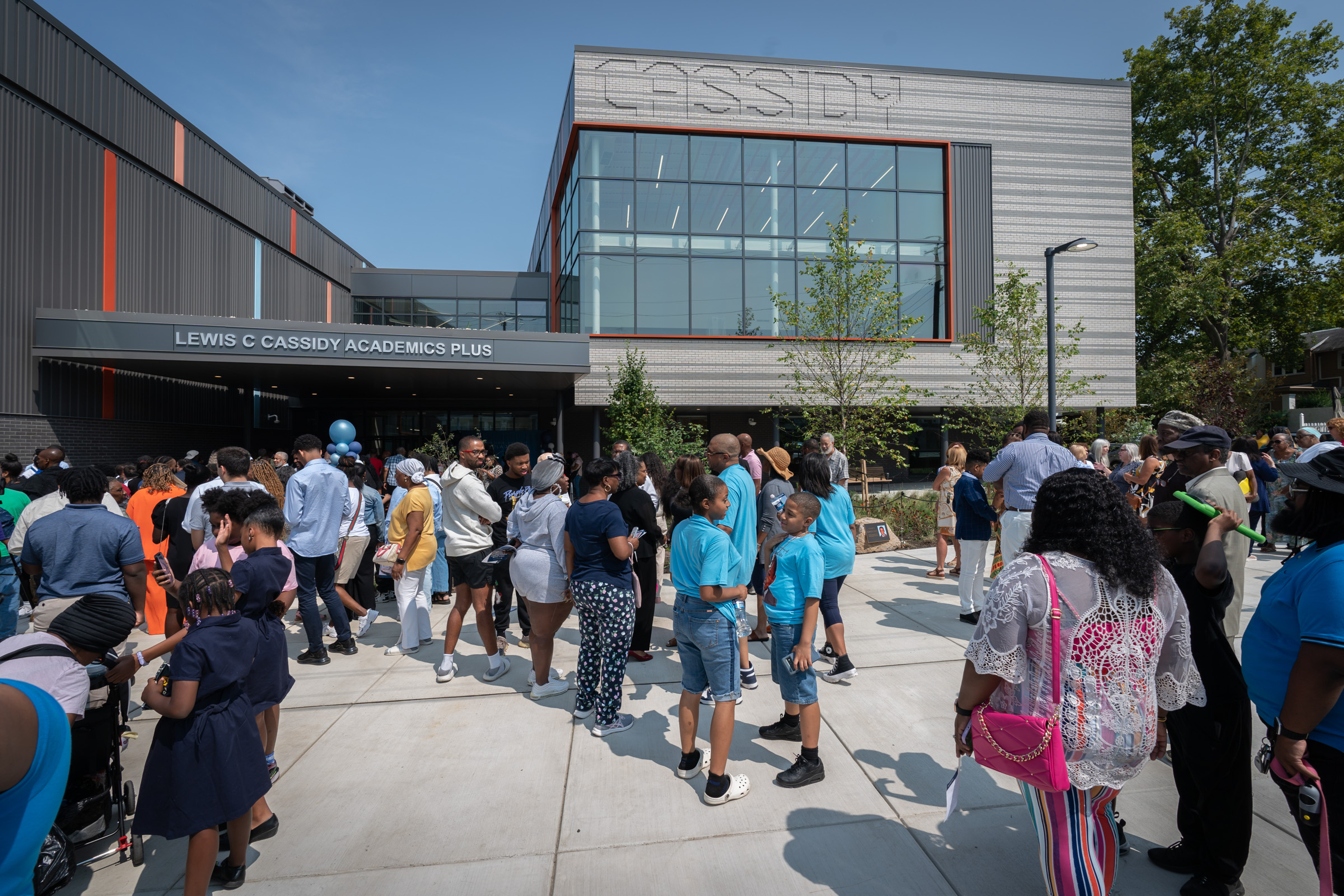
Visitors attend the opening of the Lewis C. Cassidy Academics Plus School in a 2024 file photo.Jessica Griffin / Staff Photographer
‘The care just wasn’t there’
A fifth-grade teacher at Lewis C. Cassidy Academics Plus in Overbrook, Williams, 36, was known as a disciplinarian with what some coworkers described as an imperious attitude.
She demanded to be called Dr. Williams, according to two coworkers and a parent, and touted a doctoral degree from Drexel University on her LinkedIn page. Asked to confirm that, a Drexel spokesperson said only that Williams had earned a master’s degree from the university in 2015.
A parent and a school staffer both said they had complained to the principal about what they viewed as harassment by Williams, and believed others had as well.
Cassidy parent Justin Forte said Williams seemed frazzled by her large class and ill-equipped to manage behavioral issues.
“She wasn’t handling things right,” said Forte, who said Williams had singled his 11-year-old son out for reprimands and repeatedly prevented him from eating lunch, in violation of district policy.
“The first thing a teacher’s supposed to do is care for children,” he said, “and it seems like the care just wasn’t there.”
Stephen Ford, who taught fifth grade alongside Williams, said she was an effective teacher, but stern. While some other teachers try to infuse teaching with humor, he said, “I didn’t hear a lot of laughing in her room.”
A Cassidy gym teacher, Corey Blakey, who also runs after-school and summer programs, said Williams repeatedly punished students in her class by forcing them to spend their lunch period in her classroom. He said the principal ended up warning her against such discipline.
Cassidy principal Herman Douglas did not respond to a request for comment.
“She’s really possessive,” Blakey said, adding that she urged students not to join an enrichment program and told him to remove certain students from after-school programs.
After observing a tense altercation between Williams and another staffer, Blakey urged the other staffer to file a complaint, he said.
Williams attended Lower Merion High School and Rosemont College, and was first licensed as a teacher in Pennsylvania in 2013.
She was hired by the Philadelphia School District as a substitute in 2015, taught at Young Scholars Charter School for the 2015-16 school year, and was a district teacher from 2017 through 2023, including at Thomas Mifflin School in East Falls. Philadelphia School District officials declined to provide further details about her postings or to comment.
A former friend of Williams’, whose daughter was in the teacher’s fifth-grade class at Mifflin, said troubling patterns were apparent back then: Williams was harsh with some children, but overly involved with others, ordering them UberEats to her classroom and hosting them in her home.
The friend, who asked not to be identified because she did not want to be associated with Williams’ alleged criminal conduct, said her daughter and some peers were enthralled with the teacher because she was “was more on their level. If they talked to each other crazy, she did it, too.”
Then, while visiting her home, the woman said, Williams punched her daughter with a closed fist.
“I put Carprice out of my house when she punched her,” the friend said.
In 2019, Williams took in a 14-year-old foster daughter, Maria Campbell, who said Williams punished her for taking snacks — locking her in her room during the pandemic for what seemed like months and forcing her to write out an apology over and over. When she got the chance, Campbell, now 21, said, she ran away and never saw Williams again.
On June 27, 2020, Williams took in two foster children in her rented rowhouse on Simpson Street in West Philadelphia. Six months later, records show, they were removed after one was hospitalized with severe brain bleeds, malnutrition, and vitamin deficiencies that a doctor said indicated that food had been withheld. Because of the apparent abuse and neglect, a state “near fatality” review team recommended that Williams “never be permitted to care for other foster children.”
Police investigated, according to the state review, but made no arrests because the child did not disclose what caused the hemorrhaging. In October, according to a lawsuit that did not name Williams and was later settled out of court, a child protective services report laid out detailed allegations of abuse by Williams — grabbing a child by the braids and slamming her head to the floor, smacking her in the face, forcing her to squat for long stretches.
Yet, the state review team report, finalized more than a year later in November 2022, makes no mention of that information. A state spokesperson said Williams had successfully appealed the finding of child abuse and had her record expunged.
Though the state maintains a registry of foster care providers, it is not clear if the information about that incident made it into the registry. Nor is it clear whether the Family Court judge, the Philadelphia Department of Human Services (DHS), or the foster care agency that certified Williams consulted that database. The agency, Pennsylvania Mentor, did not respond to requests for comment. Philadelphia DHS Commissioner Kimberly Ali said Saturday that she could not comment on any individual case, but that under state law it is the foster agency that is in charge of approving caregivers.
By early 2025, Williams had a young son of her own and was hired at Cassidy. And that summer, she took in another foster child, Malayshia.
She called the little girl May May. And, according to her friend, Williams said she had plans to adopt the child.
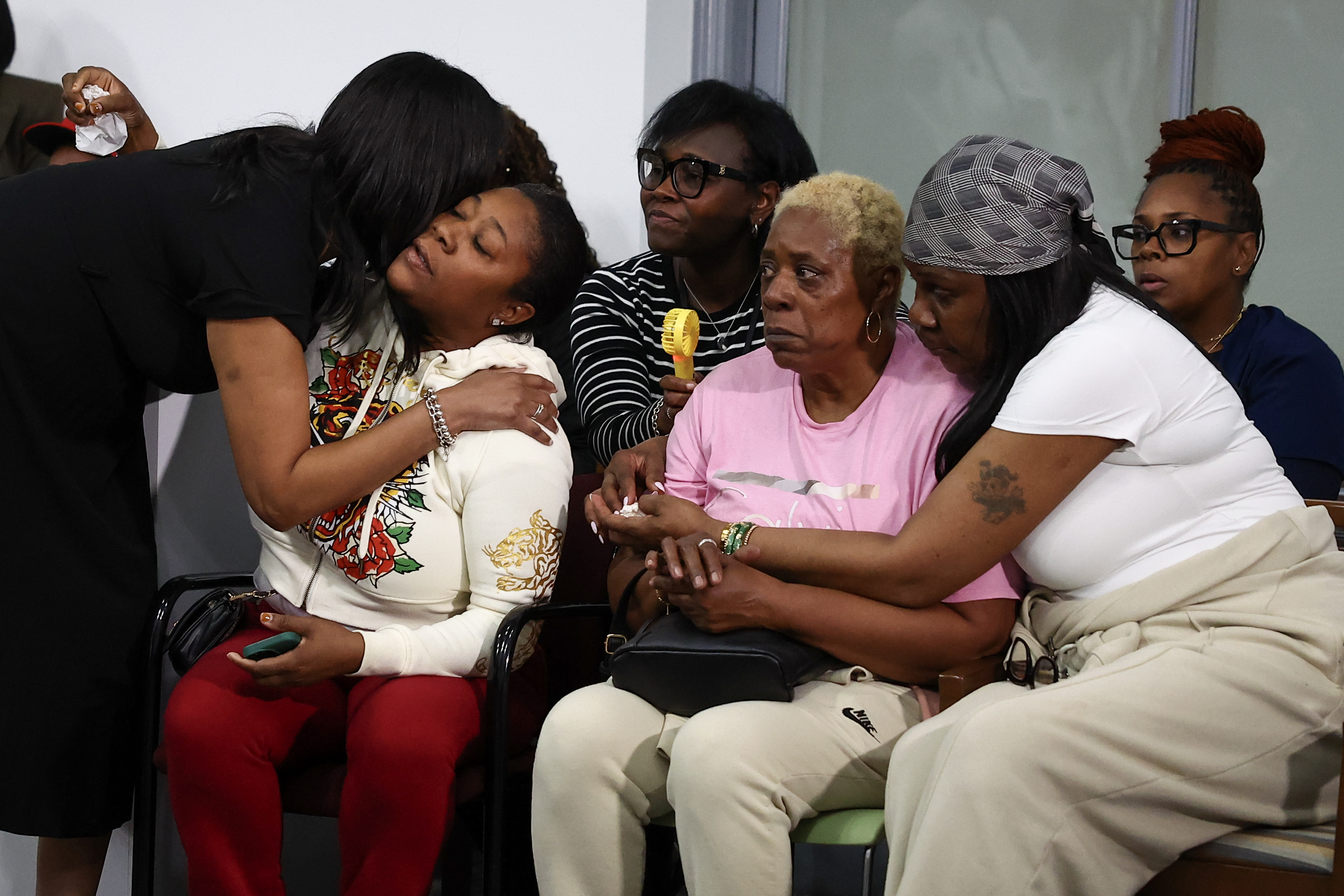
State Representative Morgan Cephas hugs Malayshia Allford’s aunt Marketa Brown, at a press conference at Philadelphia District Attorney Larry Krasner’s office on Thursday, Nov. 5. The family had gathered as Krasner announced charges against Carprice Williams.Monica Herndon / Staff Photographer
‘A really good kid’
This spring, according to Blakey, Williams asked to enroll Malayshia in summer programs he runs at the school and with the Tiger Woods Foundation. That is when he got a chance to meet the girl.
Blakey was impressed by the 10-year-old’s enthusiasm and curiosity.
“She was not a perfect student, but near to that. She was happy-go-lucky. She wanted to be in the program. She wanted to do all the activities. She wanted to do everything,” he said. “She was a really good kid.”
But Malayshia did not show up at Robert E. Lamberton School on Friday, Oct. 23.
Over that weekend, two witnesses who visited the home saw the child in bed, not moving, according to a police report. Williams did not report the girl missing until Monday afternoon. And when she did, she told Malayshia’s aunt that the girl’s parents had taken her.
As police, FBI, relatives, and neighbors began a frantic search, according to the report, Williams faked affectionate texts to cover her tracks. One phony text from Malayshia read, “Mommy I know you are waiting for me to come home but my family they don’t want me to be adopted. … I love you.”
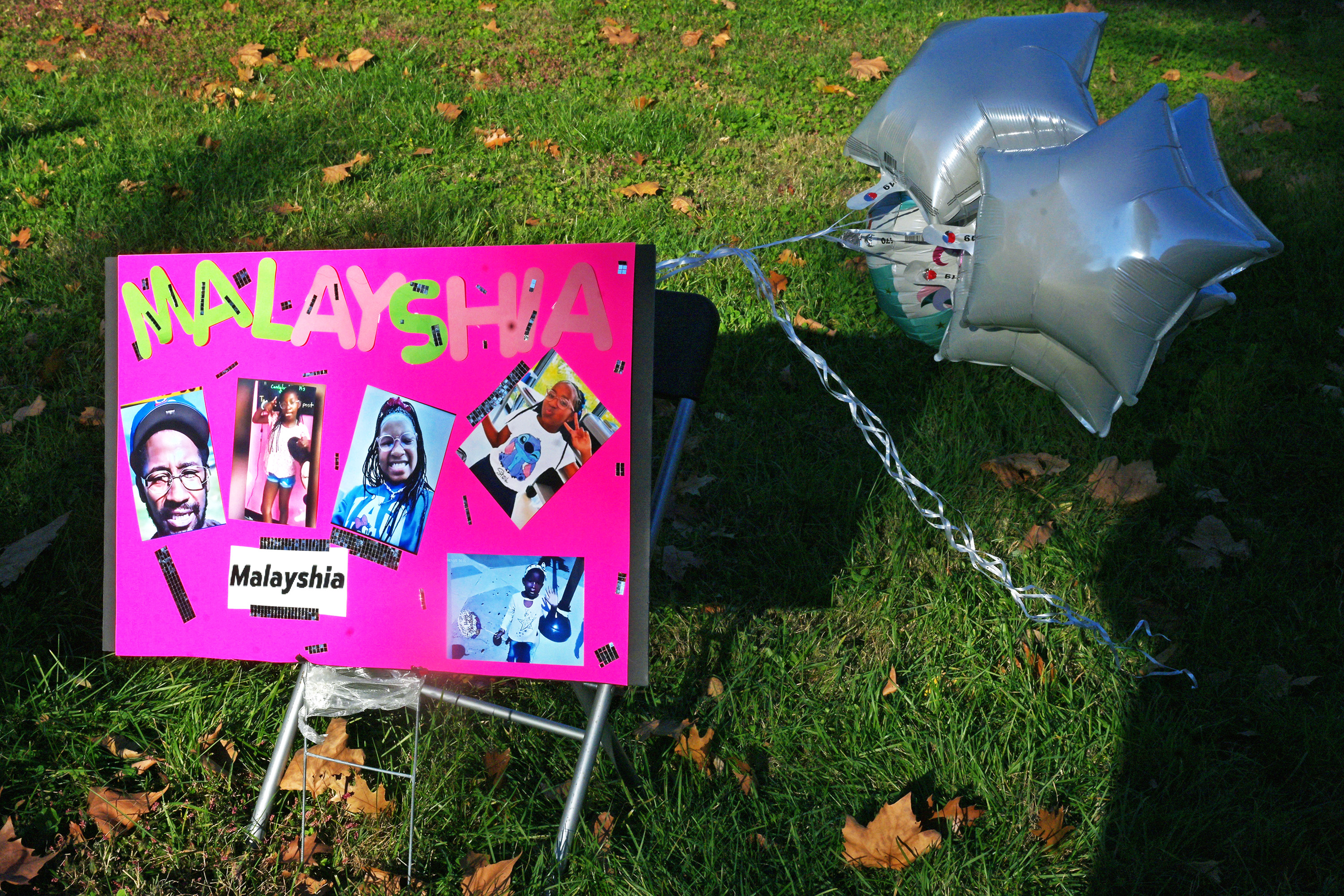
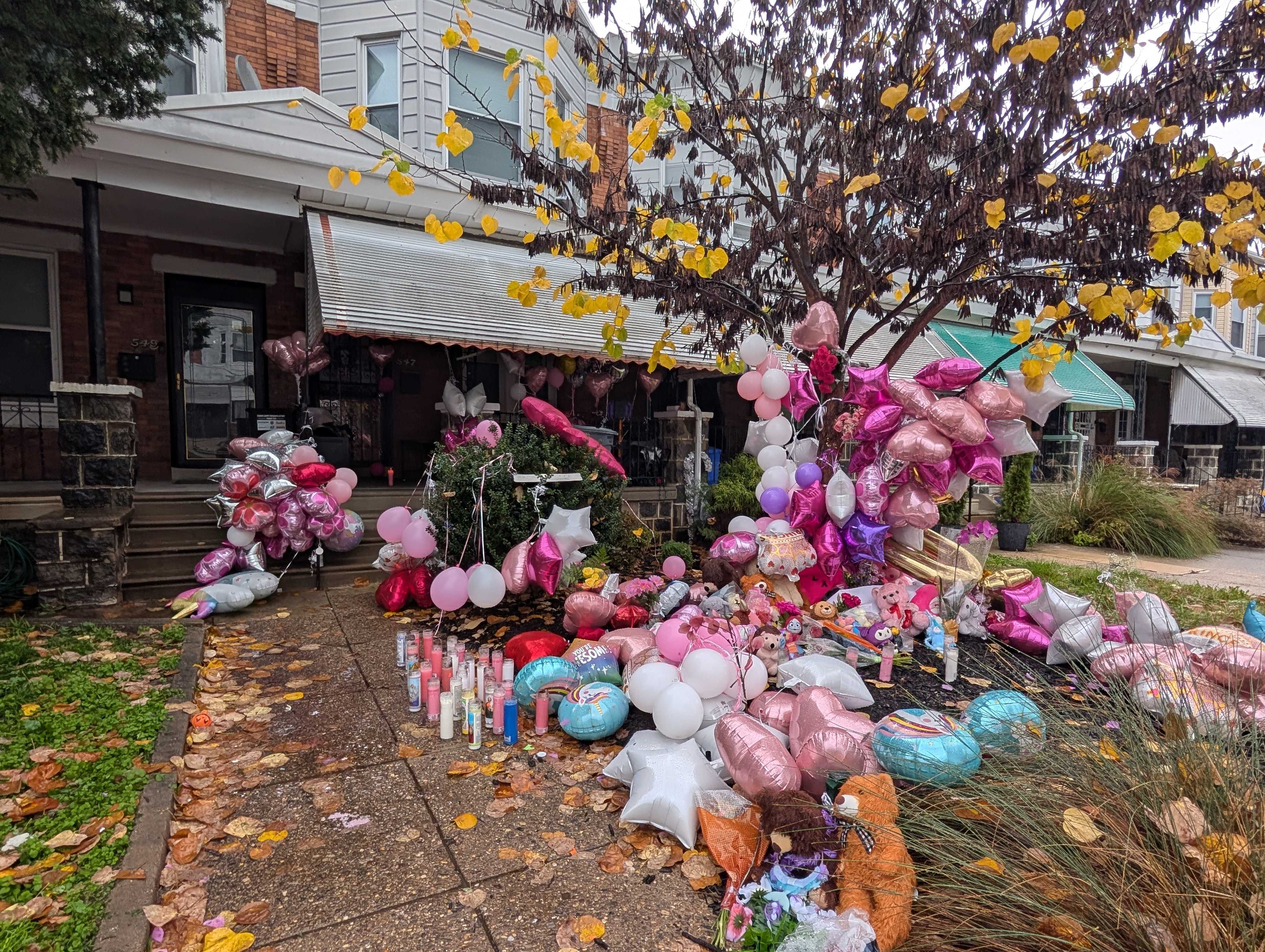
Mourners placed candles, balloons, and stuffed animals outside 547 North Simpson Street, where Malayshia Allford lived with her foster mother Carprice Williams.Jesse Bunch
Days later, investigators identified a man caught on video leaving Williams’ home dragging a cumbersome, oddly shaped bag with a long strand of braided hair trailing from it. The man, a relative of Williams’, eventually led them to a car parked in Lindenwold, South Jersey. Malayshia’s body — bruised and battered, with a fractured rib and whiplike marks on her legs — was in the trunk.
Witnesses later told police that Williams had thrown Malayshia down stairs, beaten her with a phone cord, deprived her of food, and forced her to wear a heavy vest and walk up and down the stairs. Williams denied that, telling police that the vest was only calming, and that Malayshia might have fallen but was not pushed.
But Malayshia’s relatives said they are still trying to understand how a failure this profound was possible.
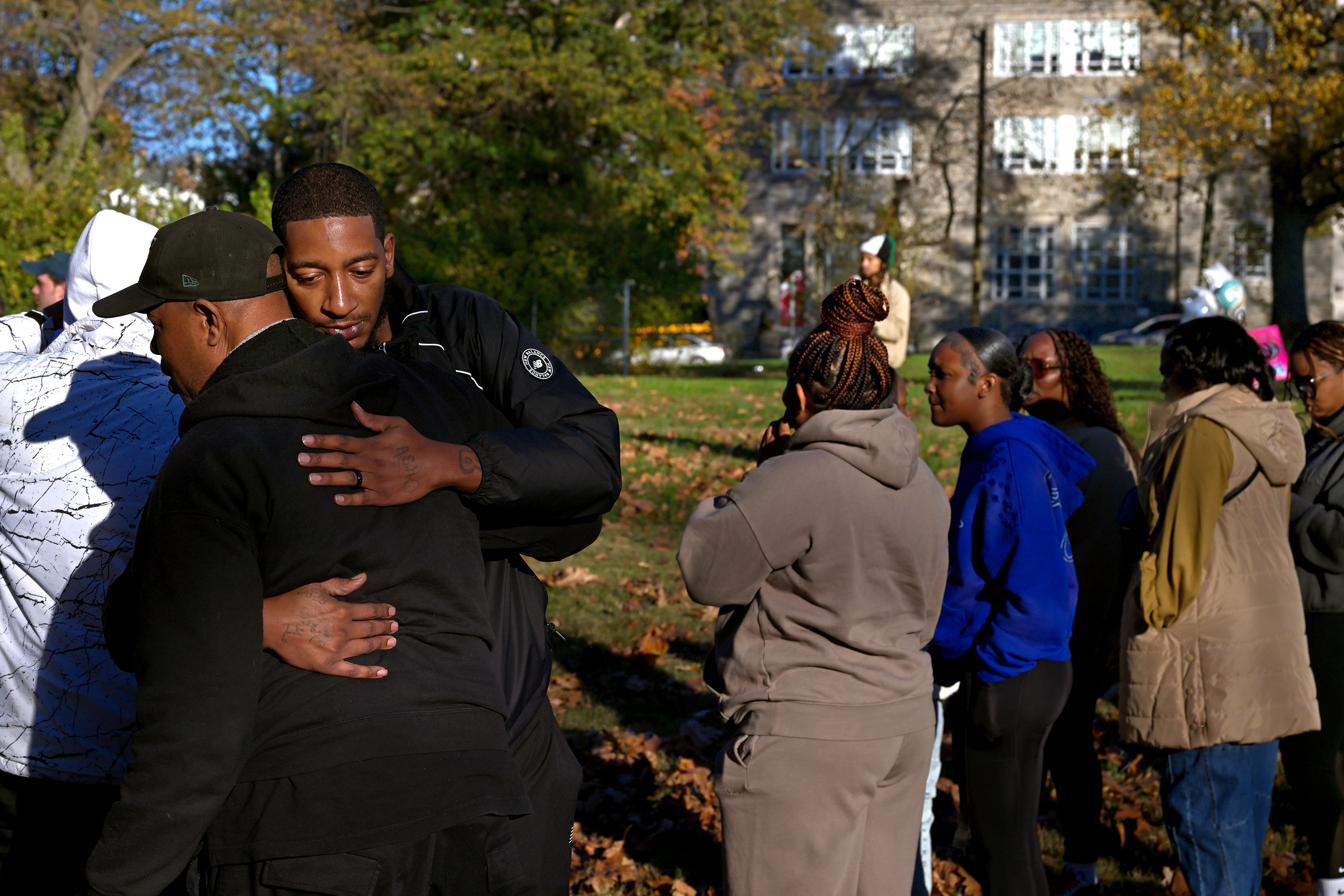
Nafis Horne, Malayshia Allford’s uncle, embraces a family member on Sunday, Nov. 8 in Morris Park in Overbrook as they gathered remember the young girl.Tom Gralish / Staff Photographer
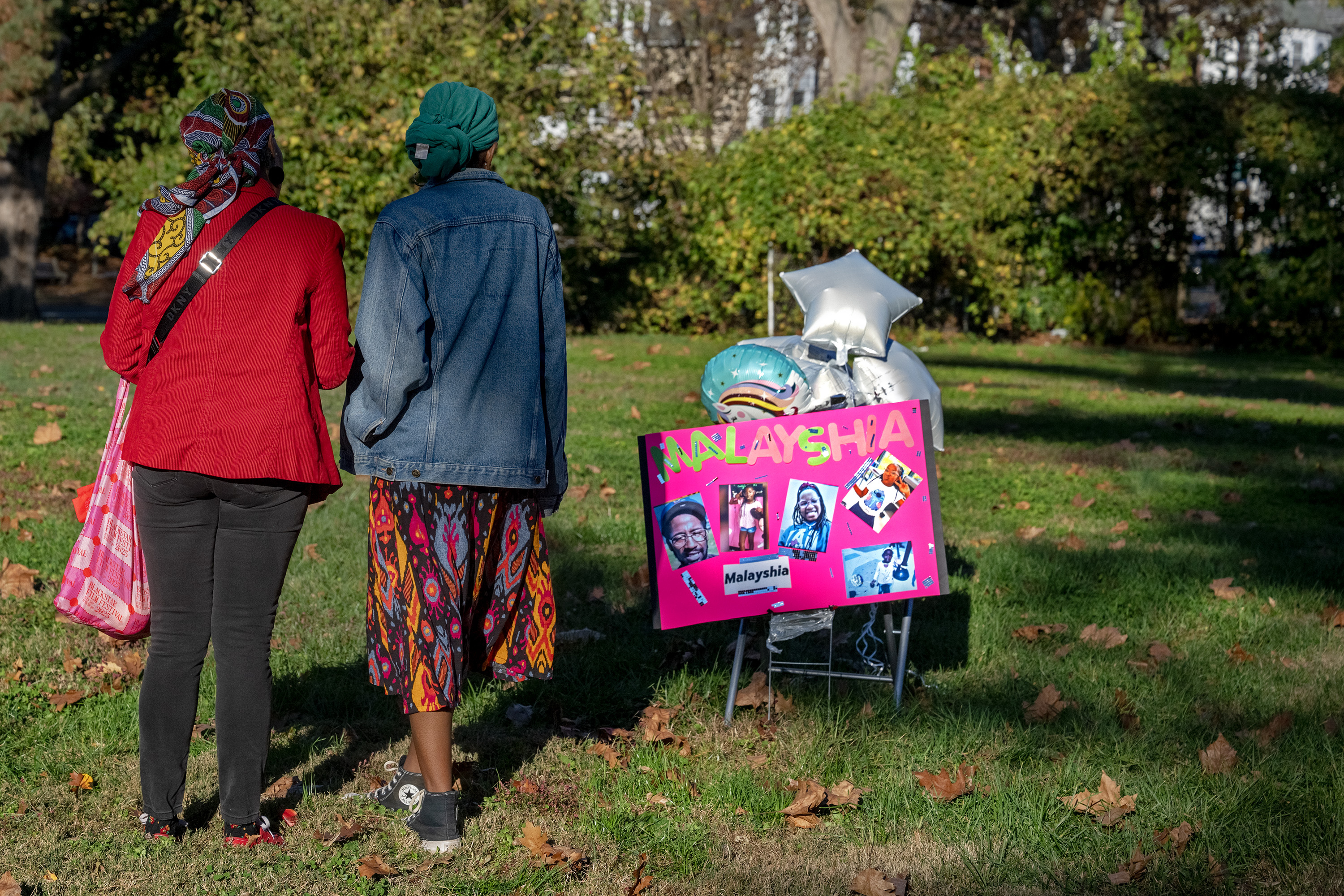
Last weekend, more than 200 people gathered in Morris Park in Overbrook to release balloons in Malayshia’s memory.
Nafis Horne, her paternal uncle, said he would have gladly taken in his niece. But no officials ever reached out, he said.
He said his sister, Nyfisha Allford, had sought custody of the little girl but got nowhere, despite city and state policies prioritizing placements with relatives over foster care.
“My sister tried to get her,” Horne said, “but that fell through the cracks.”
Staff writers Ellie Rushing, Jillian Kramer, and Jesse Bunch contributed to this article.
In the days after 10-year-old Malayshia Allford was reported missing, her foster mother went to great lengths to misdirect investigators: texting herself affectionate notes from the girl’s phone, responding throughout the day to feign concern, and later claiming the child had fallen down some steps, according to a police report.
All the while, police say, Malayshia was already dead — her body hidden in the trunk of a car in South Jersey.
Witnesses who spent time inside the West Philadelphia home of Carprice Williams, the foster mother charged with killing Malayshia, also described chronic and horrific abuses: withholding food from the child for as long as a week, beating her with a phone cord, and throwing her down stairs, according to the report obtained by The Inquirer.
The report, which details interviews with unnamed witnesses, provides a grim account of what happened inside Williams’ home. It also raises questions about what supervision city-contracted social workers provided, and how Williams was able to continue in her role as a teacher in the Philadelphia School District.
The Defender Association of Philadelphia, which represents Williams, did not immediately respond to a request for comment.
Malayshia Allford, 10, was missing for more than a week before her remains were found inside the trunk of a car in South Jersey.Courtesy of Philadelphia police
Since early 2025, Williams taught fifth grade at Lewis C. Cassidy Academics Plus School, a kindergarten-through-eighth-grade school in Overbrook. She had also worked at Mifflin Elementary in East Falls for a time, at Young Scholars Charter School in Northern Liberties, and at a Montgomery County preschool.
School district officials said they could not answer questions about Williams’ tenure, but her $114,041 salary is at the “senior career teacher” pay rate, indicating she had at least 10 years of teaching experience plus a master’s degree and further postgraduate education. Williams’ LinkedIn profile said she holds a master’s and doctorate from Drexel University. Asked to verify that, a Drexel spokesperson confirmed only the master’s degree.
Arthur Steinberg, president of the Philadelphia Federation of Teachers, said Malayshia’s death was “a horror” and “a tragedy.” Steinberg called for an investigation into the foster care system but said the matter “had nothing to do with her role as a teacher.”
“To have something like this happen, it’s just unspeakable,” he said.
The Philadelphia School District has declined to answer questions about the case. A city spokesperson did not respond to a request for comment Monday afternoon.
Williams had been a foster parent since at least 2020.
That is when she took in two young siblings — one of whom ended up in the hospital the next year with a traumatic brain injury, severe malnutrition, and marks indicative of being struck with an object, according to a lawsuit.
A doctor at Children’s Hospital of Philadelphia certified that 2021 event as a “near fatality,” triggering a review that found the foster mother had committed abuse and recommended that she never be allowed to foster again, the lawsuit said.
However, a Pennsylvania Department of Human Services spokesperson said, Williams successfully appealed the child-abuse finding and her record was expunged.
The Bureau of Hearings and Appeals, an administrative review board within the state human services agency, overturns roughly 90% of cases brought on appeal, according to a 2021 report by Pennsylvania’s auditor general that found the system was failing child victims.
Nadeem Bezar, a lawyer representing Malayshia’s estate, said that even if Williams was not in the child-abuse registry, the information about the 2021 incident would have been retained in an internal database and should have been used to bar her from future foster placements.
In that 2021 case, Williams told officials that she heard a loud noise and then found the child unresponsive with labored breathing. Later, the children in that case alleged that Williams had grabbed the child’s braids and slammed her head to the floor.
Last month she tried to cover up the circumstances of Malayshia’s death over the nearly two weeks the child was missing, the police report said. Williams provided relatives and law enforcement with conflicting accounts about when she had last seen the girl, and crafted a phony text exchange to support her story that the child’s biological parents had kidnapped her, according to the report.
Investigators concluded that Williams used Malayshia’s phone to text herself: “Mommy I know you are waiting for me to come home but my family they don’t want me to be adopted. … I love you.”
The report lays out allegations by witnesses it does not identify who told police that Williams bent a child’s fingers backward until they were injured, made another stand in a corner all night, directed her 4-year-old son to hit another child with a sword, and forced Malayshia to walk up and down stairs wearing a heavy weighted vest. Williams had the inside of the home under video surveillance, according to the report, and required Malayshia to ask permission to use the bathroom.
Williams contradicted the witnesses’ accounts, saying she had never hit Malayshia, though she told police the child had recently fallen down a few steps. She said Malayshia sometimes wore a weighted vest to calm her during tantrums but had not worn it in about six months.
A medical examiner determined that Malayshia died of blunt force trauma, according to the police report. She had a fractured rib, bruises on her head, torso, and buttocks, and whiplike marks across her legs, the report said.
Surveillance video recorded shortly before 2 a.m. on Oct. 26 shows a man dragging a large bag, with what appeared to be a strand of braided hair sticking out, from the alley behind Williams’ block and loading it into a vehicle, the police report said.
The man, a relative who initially denied his involvement, later told police that Williams said the little girl “didn’t wake up,” and when he urged her to call police she told him it was too late, according to the report.
Authorities have not said whether the relative is expected to be charged.
Family and friends gather on Sunday to remember Malayshia Allford.Tom Gralish / Staff Photographer
One morning in July 2025, I was the lone spectator in Judge Frank Palumbo’s courtroom in Philadelphia, watching prosecutors and public defenders haggle over the fates of defendants.
Palumbo paused the proceedings to talk to a lawyer he’d appointed to help a prisoner who had ineptly challenged his conviction. The lawyer profusely thanked the judge for the job. Then, Palumbo offered a bit of guidance: “I think I know where this is going to go. I don’t want to make it overly complicated. It’s real simple.”
The judge said he’d pass along a brief that a different lawyer had filed, arguing that there was no merit to the man’s claims in a related case. “I’m not saying plagiarize,” the judge said.
The attorney told the judge he got the message. “So it’s called a Finley letter,” he said, using the common legal term for that no-merit brief, in which an attorney can argue against the client’s claims and ask to withdraw from the case.
“It’s looking like it’s going to be a Finley dismissal,” the judge agreed after a bit more discussion, “but every option is open.”
I’ve spent years covering criminal justice in Pennsylvania, including the post-conviction system that allows people to argue that their lawyer had mishandled their case, or to raise newly discovered evidence. That day, I left the courtroom wondering how what I’d observed squared with the state’s promise of effective legal representation in cases like this.
That question sent me on a yearlong reporting odyssey, during which I read hundreds of Finley letters, tracked down court financial records from all 67 Pennsylvania counties, interviewed dozens of lawyers, and analyzed thousands of court dockets. What I wanted to know was: Why has it become the norm for Pennsylvania’s lawyers to argue against their own clients? And whom is this system serving?
I found that lax rules, low pay, and heavy caseloads have compromised legal representation under the state’s Post Conviction Relief Act (PCRA). Over the last year, I’ve reported on how lawyers, working under fee structures banned in other states, fell years behind on their cases. I spoke with prisoners who’d waited nearly a decade for their lawyers to file anything, and others whose lawyers filed Finley letters despite compelling evidence of innocence. I also looked at three years’ worth of invoices and found that, three-quarters of the time, Philly lawyers who wrote Finley letters had never spoken with their clients, contacted the trial lawyer, or obtained available police files before deciding their claims had no merit.
None of those seemingly basic steps, I was surprised to learn, are required under the law. In fact, dozens of lawyers I spoke to expressed sharply divided opinions about the extent of their obligations to these clients.
But court-appointed lawyers are not working unsupervised. Judges are largely in charge of appointing them to cases, and those same judges are supposed to make sure they’re doing a timely and diligent job.
I noticed that judges continued to assign lawyers more cases even after appeals courts flagged serious issues with their work. And when it came to Finley letters, judges accepted almost all of them over the three years of cases I reviewed, despite the lawyers’ minimal investigative efforts. Some of the letters they approved contained obvious factual errors or even named the wrong client.
Last fall, after Palumbo gave the lawyer a copy of a Finley letter, the lawyer followed the template. His no-merit brief said his client’s claim could not be considered because he’d missed his filing deadline. The bulk of the document was, in fact, identical to the other lawyer’s brief.
Palumbo, who didn’t respond to my requests for comment, accepted the Finley letter anyway, let the lawyer drop the client, and dismissed the claim.
Who judges judges?
I thought a fair way to evaluate judges would be to look at the rulings of Pennsylvania’s Superior Court, the state’s appeals court that hears hundreds of challenges to judges’ rulings on post-conviction matters each year.
And boy, did the Superior Court have thoughts on how judges are handling post-conviction cases.
In one withering opinion, a judge bemoaned an “embarrassing saga” of deficient lawyering that a Berks County judge had tolerated. Another derided a Philly judge and the five attorneys she’d appointed who all missed appeals deadlines, writing, “As Hall of Fame manager Casey Stengel said of the hapless 1962 New York Mets, ‘Can’t anybody here play this game?’”
After logging hundreds of rebukes laid out in Superior Court opinions by hand, I asked some colleagues with data skills to help identify as many of these cases as possible across the last 14 years, the time frame for which opinions were reliably posted online.
We found that the appeals court flagged more than 250 cases in which judges didn’t intervene as lawyers provided what the court labeled ineffective representation: “sandbagging” a client at a hearing, stonewalling a petitioner who’d mailed two dozen letters to the lawyer’s office, or filing boilerplate appeals so vague that they doomed their clients’ cases. In hundreds more cases, judges failed to appoint a lawyer at all, held hearings where petitioners went unrepresented, or allowed a lawyer to drop a case, leaving the client stranded on appeal. More than 200 times, they oversaw lawyers who abandoned clients, tanking their appeals or stalling their cases for years.
“Judges are in a terrific position to be able to prevent these kinds of injustices,” said Marissa Boyers Bluestine, a longtime post-conviction lawyer who now works at the University of Pennsylvania Carey Law School.
Marissa Boyers Bluestine leaves court with her newly exonerated client, Willie Veasy (center), in 2019. At the time, she was working for the Pennsylvania Innocence Project. She said judges have a duty to report unethical lawyering.HEATHER KHALIFA / Staff Photographer
The scathing reversals aside, the Superior Court affirms about 80% of lower-court rulings. That’s expected given the strict deadlines and complicated rules about how appeals must be filed. The appeals court is also required to defer to the lower court’s factual decisions. And when it reverses due to an error, the recourse is generally limited to ordering a do-over or, on rare occasions, instructing the lower court to explore sanctions. In one opinion, the court resorted to using boldface to call out an egregious failure: “The PCRA court did nothing in this case for 20 years.” Then, it told the lower court to try again.
Judges do have the authority — and, in fact, an obligation under state rules — to make disciplinary referrals. Because complaints are confidential, there is no way to know how often they do so. But only six lawyers in the last decade have been publicly sanctioned for work on court-appointed post-conviction cases.
Judicial discipline is even rarer. No lower-court judge in at least a decade has been publicly disciplined for mishandling a posttrial matter. Judges who, according to the Superior Court, exhibited biases, imposed vindictive sentences, or improperly denied recusal requests remained on the bench.
Even after the Superior Court raised alarms, more than 100 cases ricocheted between the appeals court and county judges two, three, four, or more times, as judges repeated errors or reappointed lawyers to cases they’d already mishandled.
One such case played out after Jefferson County’s only judge, John H. Foradora, sentenced a woman to up to 22 years in prison for passing two narcotics pills in prison. Her lawyer failed to object to or appeal the lengthy sentence. After she filed a PCRA, the Superior Court found that her lawyers’ inaction enabled the “unduly harsh and clearly unreasonable” punishment to stand. But each time the Superior Court reversed, Foradora again imposed a lengthy term. After three such reversals, the woman wound up serving more than eight years. Foradora said through a court spokesperson that he was unable to comment.
Shannon McDonald, an attorney in the Philly suburbs, said that “some judges don’t consider PCRA a priority.”
She described waiting as a petition languished on a Delaware County judge’s desk for two years, until her client had finished his sentence and been released from prison. Then, the judge finally ruled, dismissing the claim.
Rob Perkins, an attorney and founder of Allegheny Lawyers Initiative for Justice, says some court-appointed lawyers fear that litigating post-conviction cases aggressively would be bad for business. Justin Merriman / For the Inquirer
The Finley problem
Like lawyers, judges I’ve spoken with seem to be divided on their obligations, especially when it comes to the no-merit letters known as Finley letters. The state Supreme Court says that when a lawyer submits a Finley letter, the judge needs to conduct a review of the merits of the case.
Attorney Rob Perkins, who leads the nonprofit Allegheny Lawyers Initiative for Justice, told me that while he’s encountered some judges who take post-conviction matters seriously, others seem to view them as a nuisance. He said several lawyers told him they were afraid that if they litigated cases too aggressively, judges would withhold future assignments. The no-merit letter becomes the simplest path forward. “When a judge is handed a no-merit letter that sounds good, I think their inclination is to accept that the attorney did their job.”
Superior Court opinions reflect this pattern, as well. In my review, I found hundreds of cases overruling lower-court judges who accepted flawed Finley letters. The appeals court noted that lawyers claimed, incorrectly, that their clients had missed filing deadlines, rejected legitimate claims as meritless, or failed to notice that their clients were serving illegal sentences.
In dozens of cases, judges approved defective Finley letters that did not fulfill basic rules, such as including a notification to the client or addressing all the claims the client wanted to raise.
Several judges told me Finley letters serve an important purpose in shutting down frivolous challenges that waste resources.
“Not all [claims] have merit,” Judge John J. Mead of Erie said. “A lot of them initially you could look at and make a determination [as to] whether or not it’s going to require a hearing.”
I’ve noticed that the system makes accepting Finley letters the simplest choice for judges. A judge who rejects a Finley letter must either find a new lawyer willing to take the case or force the same lawyer to pursue a matter they previously deemed meritless.
Judges who take that path risk pitting a lawyer against his own client, the Superior Court wrote in one recent case, finding the judge’s actions resulted in the denial of a man’s right to counsel. His lawyer, forced to handle a hearing after writing a Finley letter, treated it “more like a cross-examination of a witness that [he] does not believe than a direct examination of his client.”
Jon J. Auritt, who retired after more than 50 years as a lawyer in Delaware County, said that these failures stem from a common cause: Instead of working independently, lawyers are beholden to the local judges who appoint them.
Even if judges are not as explicit as Palumbo was with their instructions, Auritt said, their message is often clear: “The judges are never incentivized to appoint a lawyer who might earnestly find a reason to overturn the conviction.”
Carprice Williams — the 34-year-old foster mother and Philadelphia public schoolteacher charged Thursday with killing a 10-year-old girl in her care — abused another child so severely five years ago that state officials recommended she never again be a foster parent, according to a lawsuit settled out of court this year.
In the earlier incident, a 4-year-old girl who lived in Williams’ West Philadelphia home for six months was hospitalized and nearly died from bleeding to her brain and severe malnourishment, court records show. That was in 2021, four years before Malayshia Allford was placed in her care.
Law enforcement sources say Williams abused Malayshia before killing her last week and leaving her body in the trunk of a car later found in Lindenwold. Her death marked a tragic end to a 10-day search that drew dozens of police officers, FBI agents, and community members desperate to find the child in a case that has drawn concern about the city’s child welfare system.
Now, newly uncovered court records raise questions about why Malayshia was ever in Williams’ care in the first place.
“We are trying to understand how this could have happened,” said Nadeem Bezar, a lawyer with Kline & Specter, who is representing Malayshia’s estate.
Malayshia’s care had been overseen by Catholic Community Services, a social work agency contracted by the city’s child welfare agency, according to a spokesperson for the state.
Bezar, in an interview Friday, said he’d been investigating the circumstances of Malayshia’s care before her death after the state Department of Human Services found that she had been physically and sexually abused in another foster home in Philadelphia. It was that earlier abuse, he said, that led her to be placed in Williams’ care.
Officials with Philadelphia’s Department of Human Services declined to comment Friday.
A community liaison for Catholic Community Services did not return messages seeking comment.
Mourners placed candles, balloons, and stuffed animals outside 547 North Simpson Street, where Malayshia Allford lived with her foster mother Carprice Williams. Malayshia, 10, was found dead this week and Williams was charged with her murder.Jesse Bunch
Williams had a documented history of problems with children, according to the lawsuit Bezar’s firm filed in 2024 against Tabor Children’s Services, another social work group contracted by the city. But Williams appealed those findings and the indicated report of child abuse was expunged, a state official said late Friday.
Filings in the case detailed the treatment of two sisters who had been placed in a foster home at 547 N. Simpson St., Williams’ address. The suit, filed on behalf of the younger girl, who was 4 at the time of the abuse, does not name Williams, but Bezar confirmed she was the foster mother involved.
Attempts to reach Tabor Children’s Services were unsuccessful late Friday. In court filings, the agency said the harm that befell the girl was not its fault, though it paid $2 million to settle the matter.
The then-4-year-old and her sister were placed in Williams’ care in June 2020, the suit says.
Then, in January 2021, Williams brought the 4-year-old to the Children’s Hospital of Philadelphia, saying she heard a loud noise and found the girl collapsed on the floor upstairs.
The treating physician diagnosed the girl with malnourishment, a traumatic brain injury, scrapes on her face, and marks indicative of being struck with an object.
The doctor deemed the incident a “near fatality,” a certification that triggers state and city officials to review the matter.
The girl later said the foster mother had grabbed her braids and slammed her head into the kitchen floor, beat her with a belt, and smacked her in the face until her mouth bled, according to the lawsuit. The complaint also said Williams forced the girl to squat against a wall for long periods of time, and said that the foster mother had tried to prevent the girl’s sibling from revealing the abuse.
Pennsylvania’s Department of Human Services later found the foster mother had abused the girl and her sibling, the lawsuit said. A panel of city and state officials reviewed the case, according to the complaint, and recommended that Williams “never be used as a foster parent for other children in the future.”
Both Catholic Social Services and Tabor were operating as Community Umbrella Agencies (CUA), contracted by Philadelphia’s child welfare agency to ensure the safety of children in care.
Cathleen Palm, who leads the advocacy group Center for Children’s Justice, said that if Malayshia was placed in the home of a woman with a documented history of child abuse, that raised questions about DHS’ safeguards.
“If [the near-fatality review panel] walked away with a recommendation that she should never be a foster parent, it’s hard to understand how she then was a foster parent again,” she said.
She also questioned whether any of the information was shared with the Philadelphia School District, where Williams worked as a teacher.
A school district spokesperson declined to comment on personnel matters, but said the district was heartbroken by Malayshia’s death.
Malayshia was placed with Williams last summer, a year after the lawsuit was filed. According to a law enforcement source who spoke on the condition of anonymity to discuss an ongoing investigation, she was the only foster child in the home, which she shared with Williams’ 4-year-old biological son.
On Oct. 26, Williams reported Malayshia missing. She gave her relatives conflicting accounts about the child’s last known whereabouts, officials said, and police later found the girl had not attended school in the days before. Her body was found 10 days later, in the trunk of a car in Lindenwold on Wednesday night.
Police recovered video that appeared to show that, in the early morning hours of Oct. 26, a man carried Malayshia’s body out of the back of Williams’ house in a large bag that had been used to hold a Christmas tree, a law enforcement source said.
Williams has been charged with murder, abuse of a corpse, endangering the welfare of children, and related crimes.
The Defender Association of Philadelphia, which is representing Williams, declined to comment Friday.
Pink and purple balloons, teddy bears, and prayer candles covered the lawn outside the West Philadelphia rowhouse on Friday morning.
Mourners arrived in cars, quickly placing a token of remembrance outside the North Simpson Street house before speeding off. Others stood in the rain, clutching umbrellas and gazing on in disbelief.
“The Department of Human Services need to take accountability,” said Daneika Overby, one of Malayshia’s relatives. “What happened here was a tragedy.”
Overby’s voice swelled with frustration as she listed the family members who would have been willing to take Malayshia in and keep her safe. “There’s other people in that family. That is a loving family.”
Mayor Cherelle L. Parker, at an unrelated news conference Friday, declined to comment on the details of the case, but said Malayshia’s death had “shaken our city at its core.”
Mayor Cherelle L. Parker during a moment of silence in memory of Malayshia Allford before a news conference outside of the Sturgis Recreation Center in Philadelphia on Friday, November 6, 2026.Elizabeth Robertson / Staff Photographer
Gabriel Li, the secretary-treasurer of AFSCME Local 2187 DC47, which represents Philadelphia DHS workers, said there were many unanswered questions about the supervision that had been provided. “You’re supposed to be seeing a 10-year-old at minimum once a month, so how do you not know what’s going on?”
Li said he was the city caseworker who removed Malayshia from her parents’ home in 2021. He said the fact that she was in foster care for so many years is another sign of system dysfunction.
City Councilmember Nina Ahmad, who has been working on a ballot measure to create a child-welfare oversight board, said the case raises questions about the city’s patchwork of CUA services.
“We need to look at this whole CUA system and how it’s operating,” she said. “We need a lot more oversight.”
Correction: This story has been updated to correct the spelling of Malayshia Allford’s last name after law enforcement reports included an incorrect spelling.
In 2020, seven years after he was appointed to represent a client who claimed he was wrongly convicted, attorney Scott Galloway told the judge that he was still looking into the case and needed more time.
“I am still in the process of interviewing individuals,” the lawyer wrote to the judge in Delaware County, outside Philadelphia, who had already granted him 32 extensions.
His client, Nolan O’Neal, had been a 20-year-old high school student when he was arrested in a murder case by Chester police, who had four eyewitnesses identifying him. At his 2005 trial, those witnesses all recanted, saying police had pressured them to accuse O’Neal.
By the time Galloway joined the case, in 2013, O’Neal had already spent eight years in prison insisting he was innocent. The lawyer’s job was to help him file a petition under Pennsylvania’s Post Conviction Relief Act. That law provided a narrow path to freedom if Galloway could find crucial new evidence or prove that previous lawyers had mishandled the case.
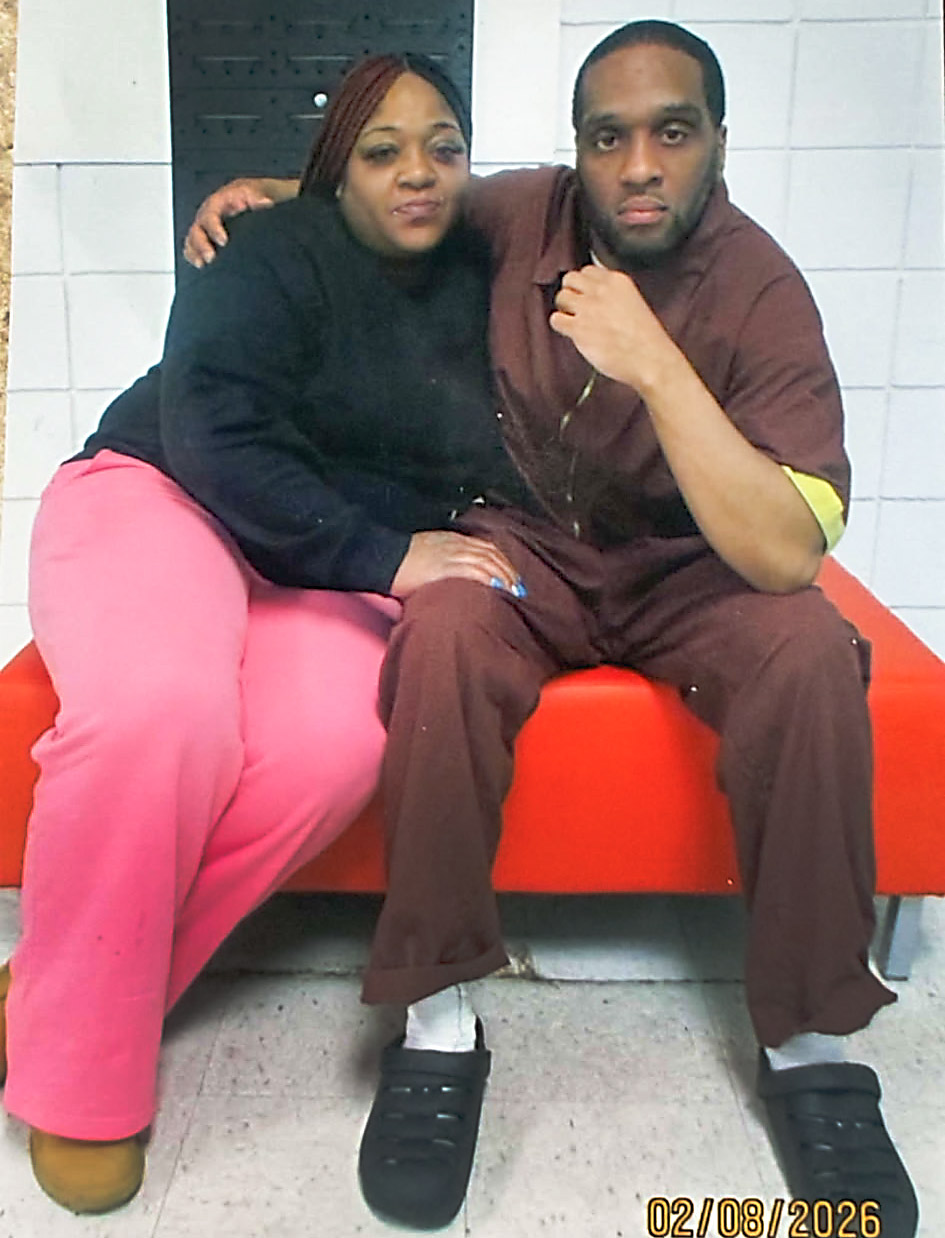
Nolan O’Neal spends time on a visit with his sister Erin O’Neal at the State Correctional Institution Chester, where he’s incarcerated.Courtesy of Erin O'Neal
But court records do not show that the attorney did much other than ask for more time.
In 2022, after nine years, one unsuccessful request to access evidence, and 41 extensions, Galloway filed a two-page petition addressing just one of the many issues O’Neal had wanted him to raise. It would not be enough to get O’Neal his day in court.
For more than half a century, Pennsylvania has promised people who claim they didn’t get a fair trial the right to “effective” post-conviction legal representation, regardless of their ability to pay. That is more than most states promise people after they have been convicted and lost their appeals.
Yet Pennsylvania has done little to fulfill that promise. The Philadelphia Inquirer and ProPublica previously reported that Pennsylvania lets lawyers resolve cases quickly using a practice that is discouraged in several states: filing “no-merit” letters, also known as Finley letters, urging judges to reject their clients’ handwritten or typed claims. In Philadelphia, dozens who had received such letters later had their convictions or sentences overturned based on issues their lawyers had rejected or overlooked.
But the problems go deeper than that: The state’s loose rules and its failure to fund post-conviction work have made the type of breakdown O’Neal encountered a recurring feature of this system.
By filing public records requests with courts serving all 67 Pennsylvania counties and analyzing a decade of court dockets, an Inquirer and ProPublica investigation found that the system Pennsylvania set up to protect the right to counsel instead allows, or even encourages, shoddy representation.
The news organizations found that:
Unlike in other types of appeals, attorneys handling post-conviction cases work under no particular timeline and are allowed numerous extensions. The state also has no standards regarding how many cases lawyers should be assigned, and many counties ask lawyers to sign contracts that set no limit on the number of cases courts can assign them. At least 250 people have languished in prison for five years or longer while waiting for their lawyers to act.
Unlike someotherstates, such as North Carolina and New York, Pennsylvania requires no specific training, experience, or qualifications for appointed posttrial lawyers, and it holds them to few standards. Lawyers are not required to speak to their clients or take other basic investigative steps before withdrawing from cases by writing no-merit letters.
Pennsylvania, which lags behind almost every other state in funding legal defense for poor people, known as indigent defense, dedicates no money for posttrial work. Instead, it leaves it up to each individual county to set pay rates. A majority of county court systems use flat-rate fee structures that some other states ban.
While almost every county in the state has a public defender office, most post-conviction cases are handled by private lawyers who are paid hourly, by the case, or by the year and work with little to no supervision. Our review of court records found pay as low as $500 per case and delays as long as 19 years without a single court filing.
In some counties, contracted lawyers’ backlogs spanned dozens of cases. In Chester County, an affluent region west of Philadelphia, a lawyer left cases untouched for as long as two years before the county ended his contract last fall.
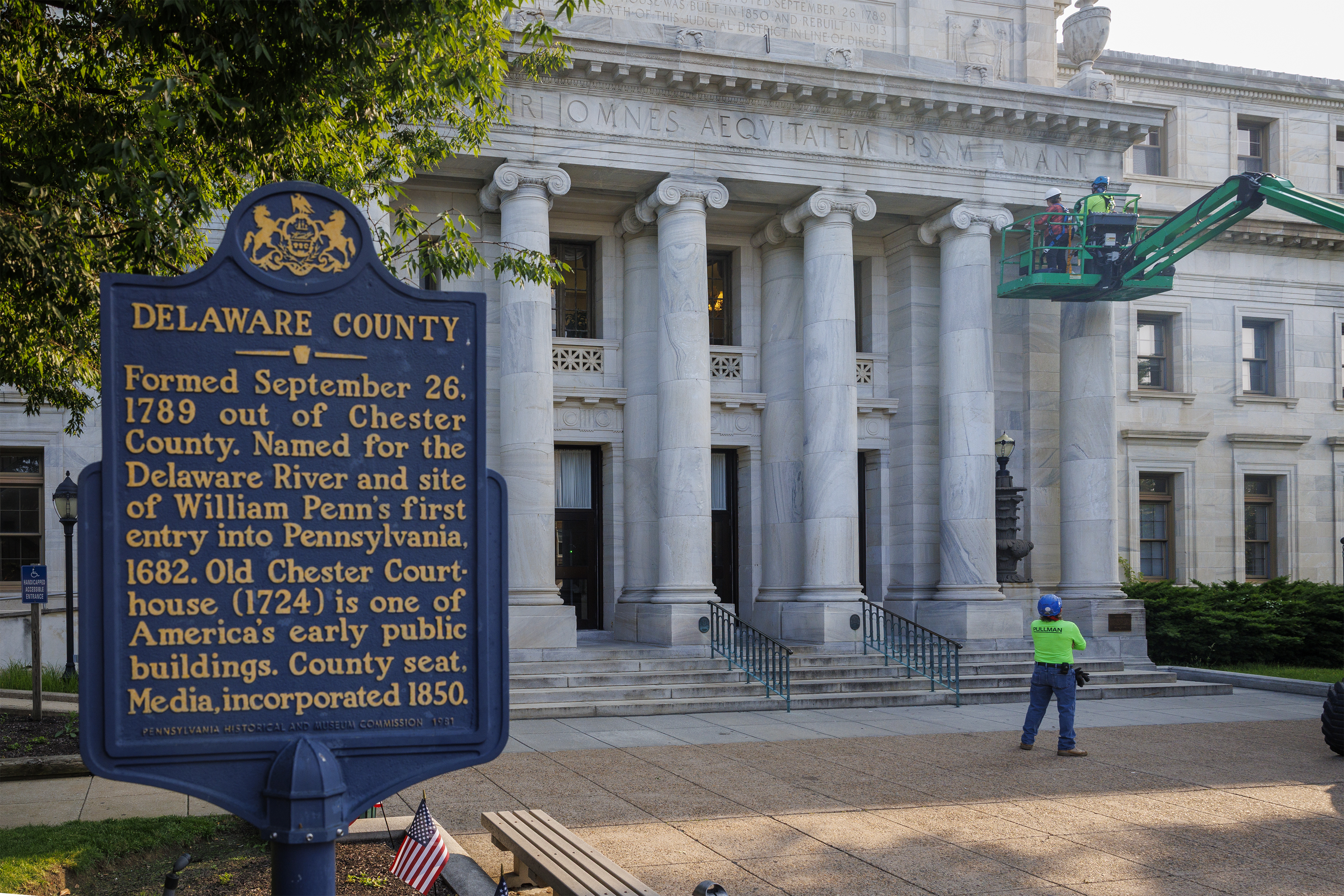
Delaware County, where O’Neal was convicted, relies on a group of part-time lawyers to handle most of its posttrial matters. One is Galloway, who has handled 20 or 30 posttrial cases per year for the county in addition to running his own law practice and, for a time, holding local elected office. Galloway said that his ethical obligation to confidentiality prevented him from commenting on O’Neal’s case. Judge George A. Pagano, who granted him 41 extensions on O’Neal’s case, declined to comment.
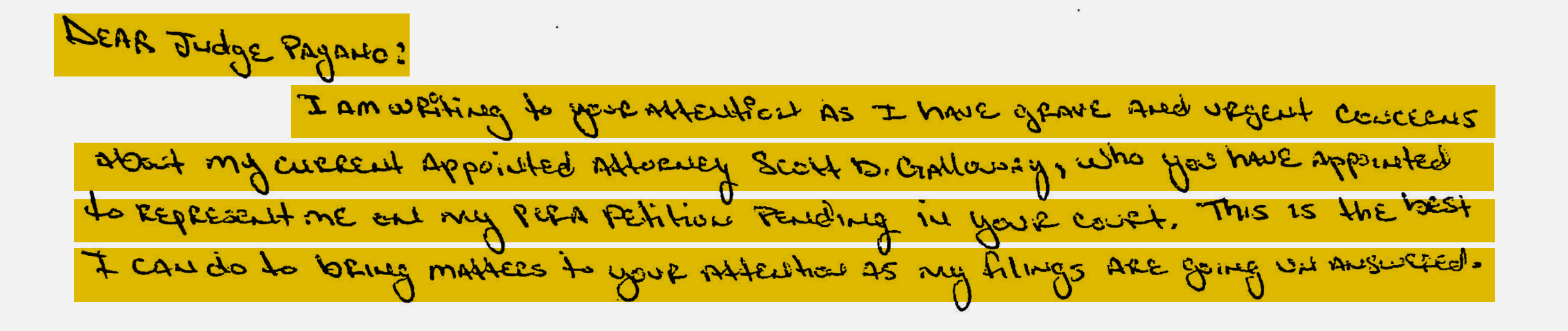
On Aug. 16, 2022, Nolan O’Neal wrote from prison to the judge deciding his post-conviction claim: “Dear Judge Pagano: I am writing to your attention as I have grave and urgent concerns about my current appointed attorney Scott D. Galloway, who you have appointed to represent me and my PCRA petition pending in your court. This is the best I can do to bring matters to your attention as my filings are going unanswered.”Courtesy of Nolan O’Neal
In the years Galloway was on the case, O’Neal wrote him dozens of letters from state prison, proposing legal arguments and sending leads to investigate.
“It is a daunting and exhausting task to navigate this legal process and be heard,” O’Neal said in an interview. “We at times even have to fight the attorneys who are supposed to represent us.”
In 2020, he received a letter from the brother of the murder victim, admitting that his testimony against O’Neal was a lie. “I want to fix it. I know my brother would want me to. It’s been long enough,” he wrote. O’Neal said he pleaded with Galloway to track down the man.
In 2022, Galloway attached the brother’s signed statement to a sparse two-page brief, which mentioned none of the other issues O’Neal had raised nine years earlier or the other witnesses who had come forward over the years. The judge started the process of dismissing the claim. One reason: The filing had been made too late. O’Neal is still fighting his case, now with a new court-appointed lawyer.
O’Neal’s claims have been pending in the Delaware County Court of Common Pleas for more than a decade.Alejandro A. Alvarez / Staff Photographer
Delays and extensions
Before they are assigned a lawyer, Pennsylvania prisoners must write the first draft of their post-conviction filing on their own within a strict one-year deadline. The lawyers appointed to revise their petitions, on the other hand, are not generally held to any timeline. The state courts say lawyers should act “expeditiously so as to reduce unnecessary delays.” Yet judges have granted extensions liberally, court dockets show, and in many cases failed to impose any deadlines at all.
An Inquirer and ProPublica review of court dockets found that hundreds of people have waited two years or longer, only to receive no-merit letters. That analysis is an undercount, since many court clerks do not clearly label attorney filings on their dockets. In Philadelphia alone, roughly 65 people have waited three to eight years for lawyers to take action before reaching that same outcome. Similarly, across the state, dockets show that lawyers received seven or more extensions in dozens of cases before filing Finley letters or nothing at all.
In 2017, Lee Mandell, who has been practicing law in Philadelphia for more than 50 years, sent a Finley letter saying that he had written to but never spoken with his client of four years and did not understand his claims.
“It is entirely unclear as to what the defendant really means,” Mandell wrote. In his own review of the case, Mandell failed to flag an erroneous jury instruction that four years later would lead to the conviction being overturned. Mandell was later formally reprimanded for allowing another client’s hearing to be delayed by six years, during which time two witnesses died. He did not return calls seeking comment.
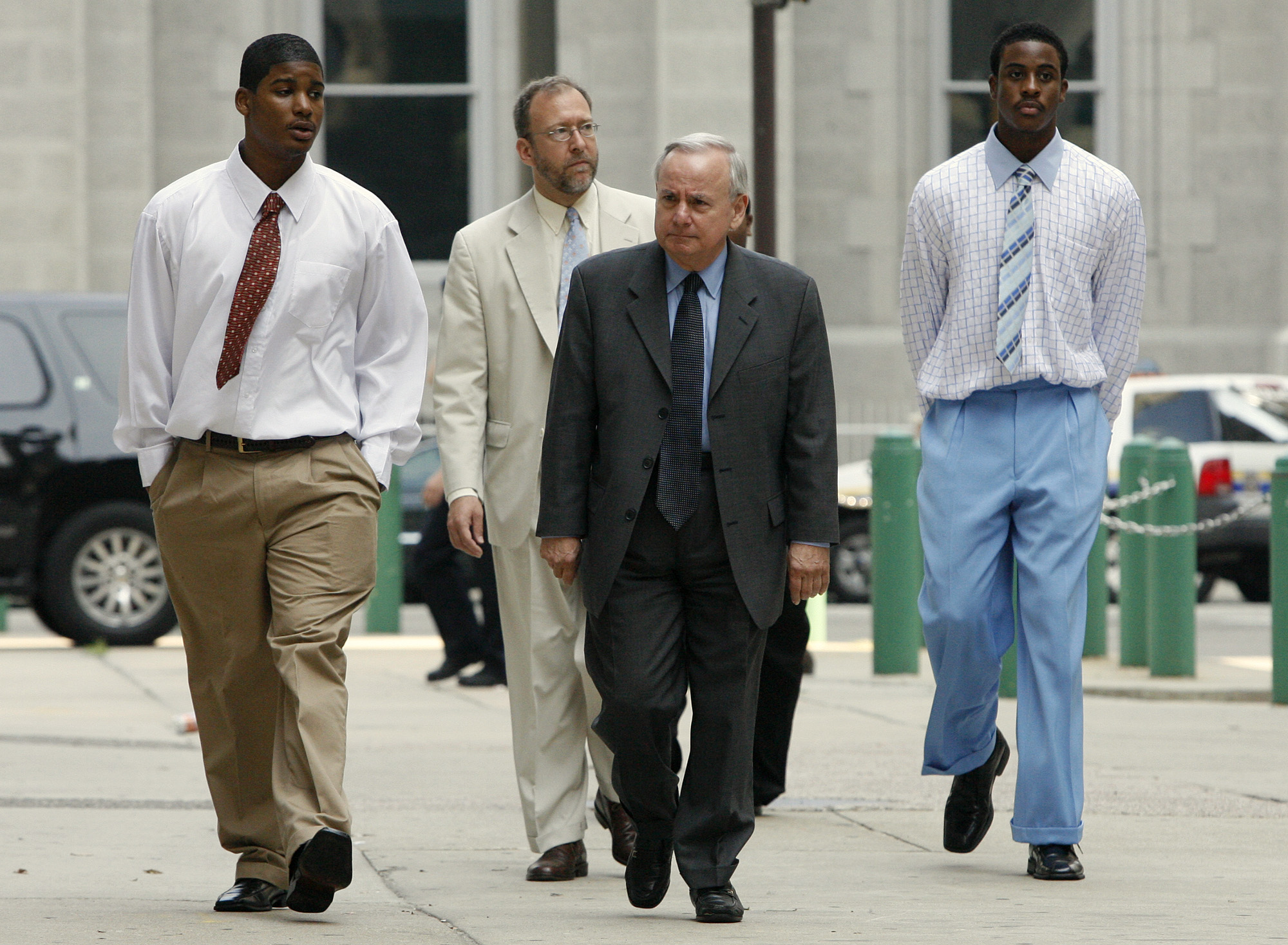
Attorney Lee Mandell (front, center) walks outside Philadelphia’s Criminal Justice Center in 2009. With him (from left) are Nashir Fisher, attorney Stephen Brown and Ameer Best.Alejandro A. Alvarez / Staff Photographer
Judges’ inaction added to lawyers’ delays, leaving matters to stagnate for years on end. In 2023, the state Superior Court registered such concerns about a case from Wayne County, where a lawyer filed a “two-page, deficient motion to withdraw, and the PCRA court did nothing in this case for 20 years.”
But in almost 200 post-conviction cases across Pennsylvania in the last 15 years, lawyers were appointed, then filed nothing at all over the span of a year or longer before being replaced with a new appointed lawyer. One of the cases stagnated for almost seven years, only for a new attorney to pick up the file. Another man was appointed five lawyers over eight years, dockets show, none of whom filed anything on his behalf.
Court officials have long been aware of the backlogs wracking this system, even publishing a law review article about it in 2003. The study outlined needed reforms but acknowledged the lack of political will, saying the “low status” of these cases stems from a bias among judges and lawyers who believe “that most post conviction claims are frivolous.”
No standards for lawyering
The loose timeline is just one dimension of a system with few standards. The state has published no best practices for indigent defense or guidelines on how many cases a lawyer can take; it has provided no training and instituted virtually no guidelines to ensure that court-appointed lawyers are qualified. As a result, lawyers hold widely diverging views on just what obligations they have to their clients.
“I do not know how you can evaluate trial counsel’s performance, which is the main role of post-conviction counsel, without talking to your client and reading trial counsel’s file,” said Jennifer Merrigan, a cofounder of Phillips Black, a nonprofit law firm. That file would reveal whether the lawyer had consulted with experts, received all relevant evidence from the prosecutor, and investigated potential witnesses.
The state’s lack of vetting and training stands in contrast with national norms. A majority of other states have centralized defender services or support offices that provide resources, education, and oversight. For instance, in North Carolina, appeals lawyers seeking court appointments must apply with the state appellate defender and submit references, work history showing the lawyer is qualified to litigate appeals, and legal writing samples. They are also required to take a training course covering strategy and best practices.
Even without a statewide office, Pennsylvania’s Supreme Court could establish minimum qualifications for lawyers handling indigent defense. In August, a state court committee published such a proposal, but it recommends only that lawyers have relevant work experience “to the extent practicable.” Work experience requirements have been enforced in some other states, such as Ohio, for years. But the committee’s proposal argued that work experience is not “possible to quantify” and that “less-than-experienced representation is better than no representation.”
Ted Skaarup, a public defender who has advocated for training and qualification requirements, said inexperienced and untrained lawyers are more likely to default to writing Finley letters. New lawyers, he said, are left to consult with older attorneys who may pass on bad practices. “You go to them for advice and they say, ‘I’ll send you a copy of my [no-merit] letter.’”
Only one of the state’s 67 counties provided written criteria requiring specific work experience for lawyers to be appointed to post-conviction cases in response to records requests. Philadelphia court leadership says that lawyers must complete a training session and show they have recently handled three hearings involving disputed evidence. A volunteer panel tasked with approving prospective lawyers there rarely meets and is not empowered to approve or reject candidates based on writing samples, a core part of screening appeals lawyers in some other places.
In Pittsburgh, the nonprofit Allegheny Lawyers Initiative for Justice has urged local court officials to set up a system to screen and supervise appointed lawyers. For now, the organization is running its own voluntary trainings, as well as a resource center with office hours, a library of sample motions, and help with social service referrals.
Without such systems, the organization’s executive director, Rob Perkins, said, “There’s no quality control.” Lawyers can get away with “doing a poor job in these cases for years without anyone really paying attention.”
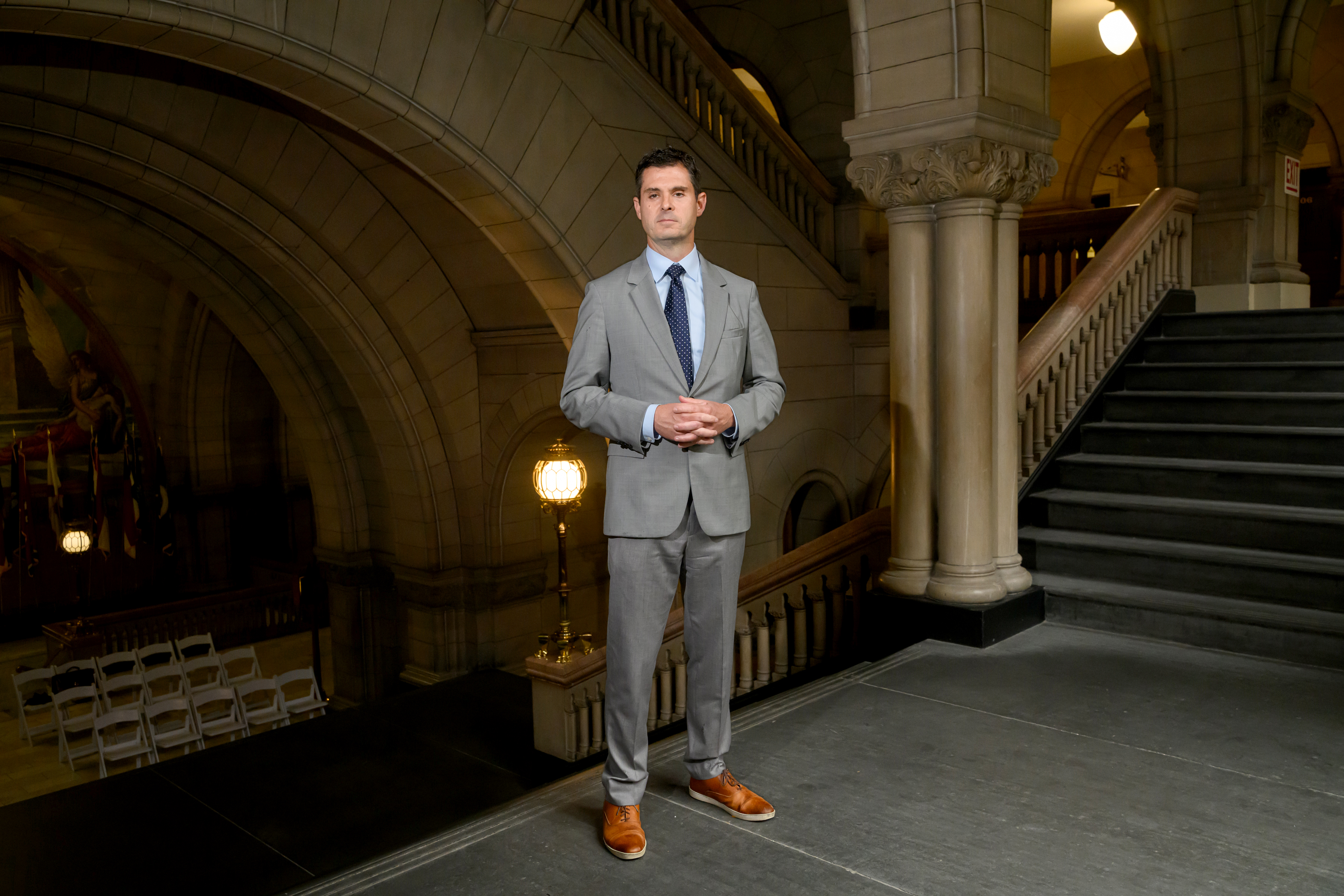
Rob Perkins, the executive director of Allegheny Lawyers Initiative for Justice, stands in the Allegheny County Courthouse in Pittsburgh, where he’s urged administrators to adopt training requirements.Justin Merriman / For the Inquirer
‘Your incentive is to do the least work’
When attorney Corrie Woods took over Washington County’s post-conviction caseload in 2020, he was startled to discover about a dozen files that had been untouched since being assigned to the previous lawyer in 2019 or earlier. In some, the lawyer’s inaction had caused the clients to lose their appeal rights.
Looking back, Woods said, it was not surprising, given that the Western Pennsylvania county was paying him $25,000 a year as a part-timer for up to 24 cases. “These cases are not going to take priority in most law offices,” said Woods, who now handles mostly personal injury cases.
Under such a contract, he said, “Your incentive is to do the least work. You’re not getting more for doing more.”
Not Pennsylvania. The state began contributing any money to indigent defense only in 2023. Today it kicks in just 57 cents per capita; neighboring states, on average, pay $26 per resident. Counties provide the rest as they see fit. A pending American Civil Liberties Union lawsuit claims that arrangement has resulted in widespread violations of the right to counsel.
Pennsylvania Spends Less Than Most Other States on Indigent Defense
At 57 cents per resident, Pennsylvania’s state-level contribution toward funding legal defense for poor people is a fraction of what neighboring states pay.
(function(){function e(){window.addEventListener(`message`,function(e){if(e.data[`datawrapper-height`]!==void 0){var t=document.querySelectorAll(`iframe`);for(var n in e.data[`datawrapper-height`])for(var r=0,i;i=t[r];r++)if(i.contentWindow===e.source){var a=e.data[`datawrapper-height`][n]+`px`;i.style.height=a}}})}e()})();
Source: State budget documents, U.S. Census 2025 population estimates
About three-quarters of Pennsylvanians live in counties that use flat-fee arrangements or cap the amount a lawyer can bill for a case. Daniel Buzard, the court administrator in the county where Woods held the contract several years ago, said in an email, “This provides financial stability for both parties.”
Some counties pay as little as $500 per case. Based on time estimates from Maine, one of the only states to publish post-conviction workload standards, that would come out to $11 per hour.
Twenty-one Pennsylvania counties offer flat annual pay for part-time lawyers — sometimes then assigning them caseloads that exceed Maine’s standard for full-time work.
Only five of the 18 contracts obtained in response to public records requests included a limit on the number of cases the court could heap onto a lawyer. None of the contracts set deadlines, specified a time commitment, or described any oversight mechanism.
Stuart Wilder said his contract to handle post-conviction cases in Bucks County, outside Philadelphia, kept the lights on in his office for years. He worked hard for clients, he said, and won several challenging cases. But he said the flat-fee structure did require him to deprioritize cases where he didn’t see merit.
“Being able to file Finley letters gave me the time to work on cases I could fix,” said Wilder, who recently retired.
But in at least three counties, contract lawyers left multiple clients stranded for a year or longer with no progress on their cases, dockets show.
In 2021, the court in Erie County yanked 50 cases from attorney James P. Miller and eventually reported him for discipline, citing extreme delays that cost some clients their appeal rights. Miller, whose law license was suspended as a result, declined to comment. But Erie court administrator Robert Catalde said the debacle spurred the county to double lawyers’ pay to $46,800 and provide benefits.
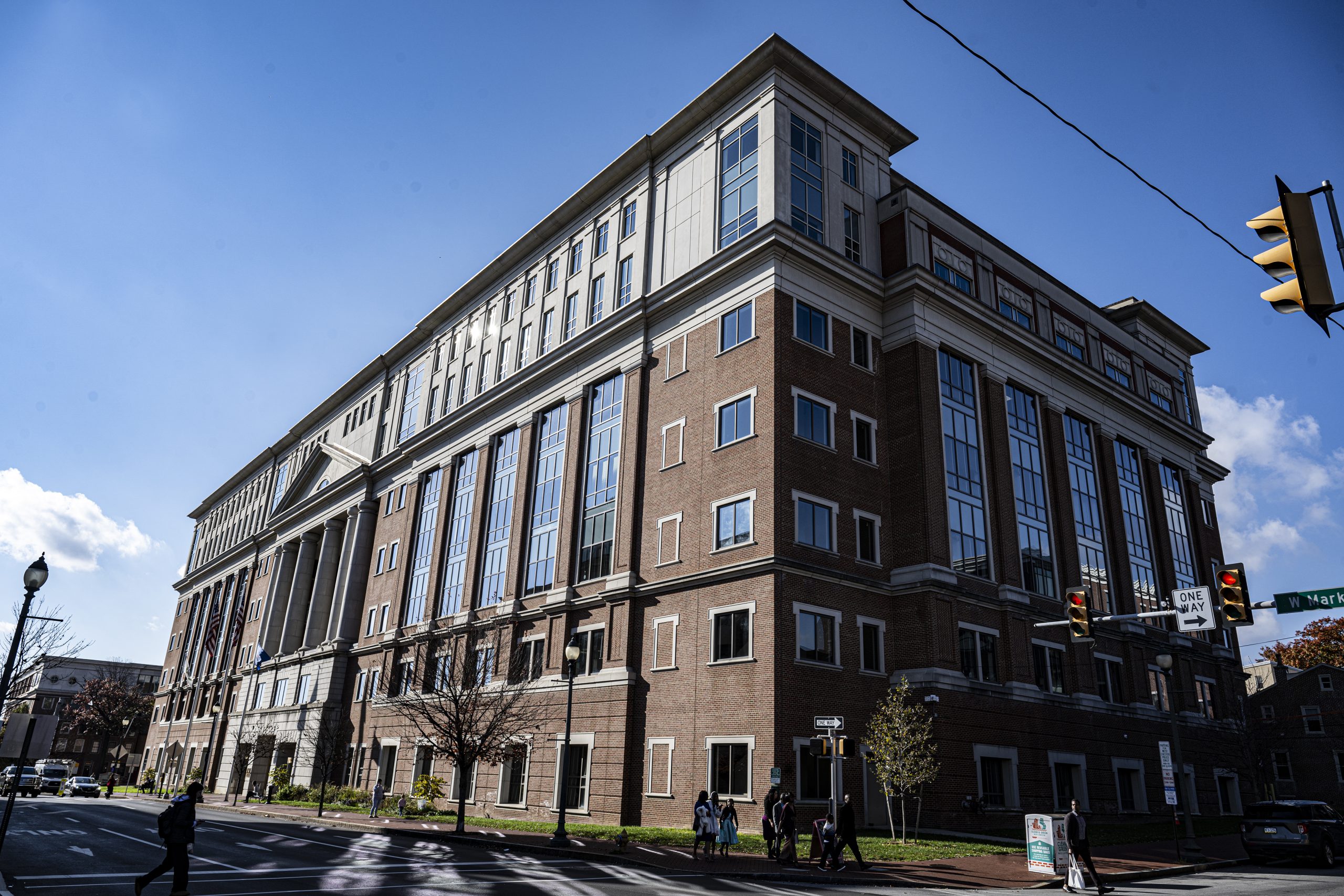
The criminal court administrator at the Chester County Justice Center had to pull a lawyer’s contract last year, after he fell behind on post-conviction cases.Jose F. Moreno / Staff Photographer
A similar situation played out last year in Chester County, which abruptly ended its contract with the lawyer handling all its post-conviction cases, Charles Thomas Jr., after discovering that he had been putting in an average of just five hours a week across his roughly 25 cases.
One client, Patrick Hickson, said he spent two years trying to get Thomas to track down evidence that could clear him of a 2018 shooting or at least prove he had not gotten a fair trial. His defense lawyer had failed to call a single witness — admitting to the judge, mid-trial, that he had wrongly assumed the prosecutor would send a summons to an eyewitness who had told police Hickson was not the shooter.
To raise the issue, Hickson needed Thomas to track down the missing witness. But when he reached Thomas by phone in August 2025, for the first time in months, the lawyer told him he was off the case. “He said the courts told him he was taking too long,” Hickson said. Thomas declined to comment.
Chester County criminal court administrator Jordan Ludwick acknowledged concerns about the delays but said he resolved the problem by finding a qualified lawyer to take over the contract.
That attorney, Shannon McDonald, said it was “not an easy transition.”
“There were many cases that had not been touched at all,” she said.
She cut through the backlog by filing 17 briefs in just over three months. All but three were Finley letters.
Patrick Hickson receives an associate’s degree from Eastern University in 2025, while incarcerated at the State Correctional Institution Chester.Courtesy of Patrick Hickson
“The case has to survive on the merits,” she said, “and, frankly, the deck is stacked against overturning a case.”
This March, she also sent Hickson a Finley letter. McDonald said ethics rules prevented her from discussing Hickson’s case, but in the letter she blamed Hickson for failing to track down the would-be witness and said his trial lawyer had a strategic reason for not sending the subpoena.
Reading the letter, Hickson said, “I felt defeated.”
Since McDonald asked to drop the case, he is pursuing exoneration alone.
Hannah Beckler of ProPublica contributed to this article.
Confrontations between large groups of teenagers and Philadelphia police made for a tense scene in Dilworth Park outside City Hall over the holiday weekend and led to at least three arrests.
On Sunday, Philadelphia police issued seven citations for disorderly conduct, a spokesperson said. In addition, three people were arrested, one for robbery, another for disorderly conduct, and a third for violating gun laws.
In addition, an Inquirer reporter observed police detaining several young people on Monday evening as police sought to keep teens from reconvening inside the park. In one of the incidents, an officer appeared to sustain a bloody nose while tackling a young woman.
Philadelphia police spokesperson Corporal Jasmine Colón-Reilly said she did not have information about what led police to respond to the scene Sunday, nor the extent of any injuries. She said she did not have information about the Monday evening incident.
Videos shared on Instagram appear to show a hundred or more young people gathered in the park on Sunday, before police rush into the park to detain a person. In one of those incidents, a young man appeared to be assaulted by others in the crowd. Another video showed an apparently injured person collapse in the street. It was not clear from the videos whether the person was part of the crowd.
Six years ago, the Pennsylvania attorney general sued a group of tow-truck operators for allegedly towing cars unlawfully — and then using intimidation tactics, including the threat of a pit-bull attack, to pressure car owners to pay excessive fees.
Now, the office’s Bureau of Consumer Protection says the companies violated the terms of a 2022 consent order settling that lawsuit, and has asked a Philadelphia judge to find them in contempt.
The contempt petition, filed Sept. 2 in Common Pleas Court in Philadelphia, seeks about $220,000 in penalties and restitution from the companies, Siani’s Towing and Recovery, Angelina’s Towing and Recovery, and Aubry’s Towing, which all operate out of the same address in North Philadelphia.
“The terms of this settlement were very clear, yet these companies continue to improperly tow consumers’ vehicles, and charge exorbitant fees,” Attorney General Dave Sunday said in a statement. “Predatory towing is a scourge that causes tremendous anguish and financial burden for the vehicles’ owners, and will not be tolerated.”
A person who answered the phone at the company hung up when contacted by a reporter.
According to the contempt petition, the Bureau of Consumer Protection has received 38 complaints about the towing companies’ conduct since the 2022 settlement.
Among them: The companies had persisted in towing peoples’ cars from spots not marked with proper signage, charging fees higher than what’s allowed by law, and harassing car owners who complained that their cars had been damaged while they were towed.
Some of the drivers were residents of apartment buildings, parking in the building lot with permission, when their cars were towed from their homes, according to the filing.
Under Pennsylvania’s Post Conviction Relief Act (PCRA), people in prison who have lost their appeals can challenge their convictions by introducing newly discovered evidence or arguing their defense lawyer at trial was ineffective.
If they can’t afford an attorney, the court will appoint one.
But there’s a catch: If the court-appointed attorney considers the challenge meritless, they can submit a letter asking the court to shut it down and allow them to withdraw from the case.
story continues after advertisement
Page1/28
Select pages
That type of letter is called a no-merit or Finley letter. An Inquirer and ProPublica examination of overturned convictions and sentences in Philadelphia since 2018 found that the letters had been filed in about one in five cases that would be overturned. The news organizations found that attorneys have written Finley letters without pursuing claims that courts later found were grounds for relief.
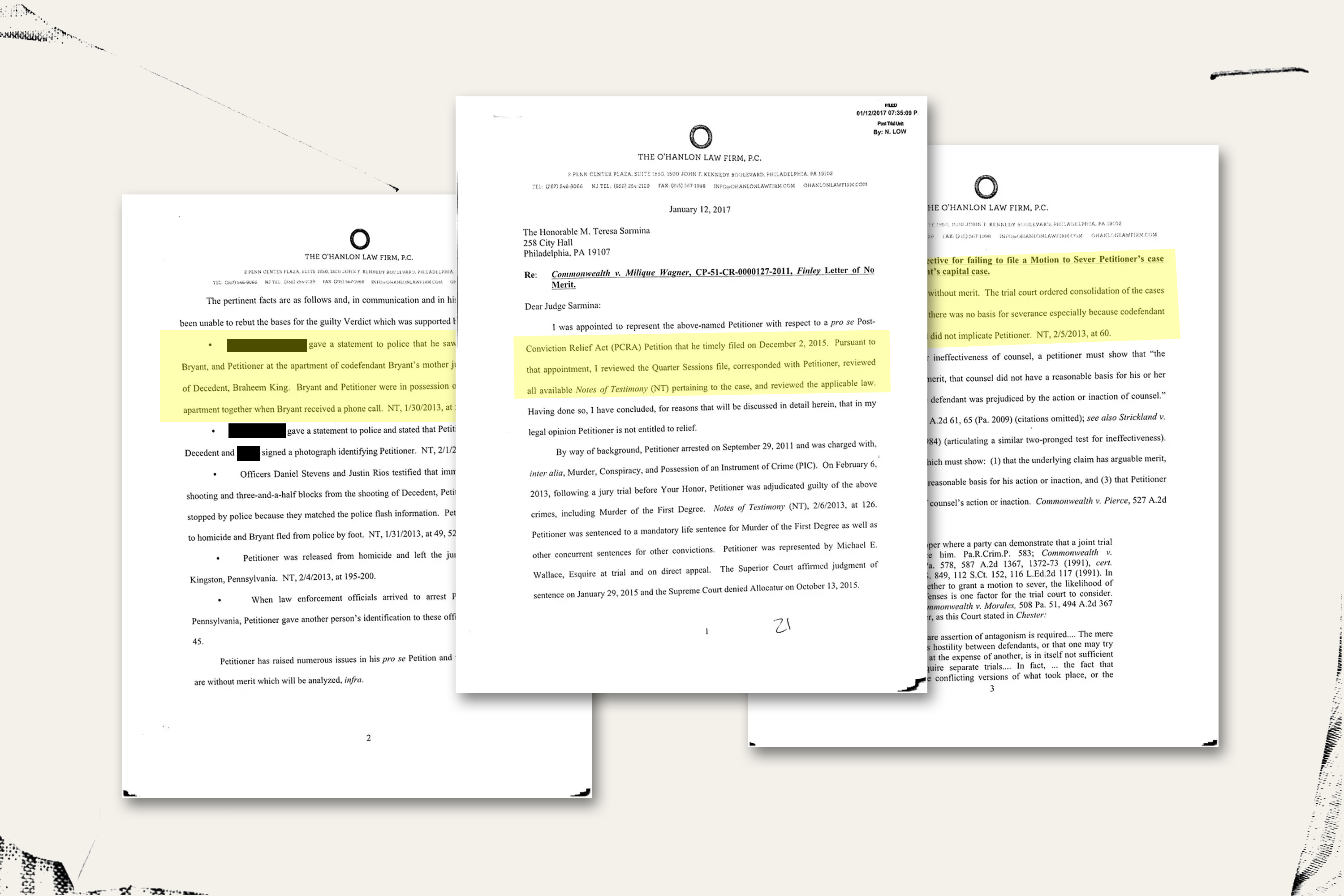
We’ve annotated a Finley letter that attorney Stephen T. O'Hanlon wrote after he was appointed to represent Milique Wagner, who was convicted of murder. Names of witnesses have been redacted. Use the view buttons to see each annotated section in the context of the original document.
The Finley Standard
Despite the stakes involved for the clients, the requirements for lawyers who decide to write a Finley letter are minimal. The lawyer must state the extent of their review of the case, identify the issues their client wished to raise, and explain why the issues have no merit. There is no requirement that the lawyer needs to meet with their client, contact prior attorneys, or get the trial discovery.
In this letter to Wagner, O'Hanlon mentions only corresponding with his client in writing. In an interview, O'Hanlon said they also spoke by phone.
Arguing Against His Client
O'Hanlon's Finley letter draws on evidence from Wagner's trial, but argues that it definitively proves his client’s guilt. He highlights damaging statements police collected from two witnesses but fails to mention until much later in the letter that both recanted — and that one of them testified that he had committed the murder, and that police and prosecutors knew the truth.
In an interview, O’Hanlon said he diligently investigated the case and came away convinced that Wagner was guilty. He said any concern about the Finley letter “comes from a misunderstanding of the whole process and the obligations that I have to clients and also to the court.”
Alleging Ineffective Lawyering
Under Pennsylvania law, the PCRA was Wagner’s first opportunity to argue that his trial lawyer was so ineffective that it resulted in an unfair trial. Wagner pointed out that his lawyer met with him only once, for 10 or 15 minutes, before trial, and argued that his lawyer should have investigated the star witness' history of false testimony. But O’Hanlon concludes in his Finley letter: “There is no evidence that trial counsel was not prepared for trial.”
A Prosecutorial Tone
The letter undermines Wagner's case by noting his failure to turn himself in, his decision to leave the area, and his attempt to give police a false name. It’s the type of language that most defendants would not expect to see from their own attorney.
"The reality of the case"
O’Hanlon’s letter emphasizes his belief that his client is guilty and that the prosecution presented "the reality of the case." He calls the evidence of Wagner's guilt "extensive."
The Witnesses Recant
It isn’t until page 19 of the Finley letter that O’Hanlon notes the two prosecution witnesses recanted their statements accusing Wagner.
O’Hanlon, in an interview, said the evidence against Wagner showed he was “factually guilty.”
“There were multiple people that gave statements identifying him,” he said.
A Second Finley Letter
After Wagner filed an additional PCRA raising more issues with his case, O'Hanlon filed a second Finley letter in June 2017. By then, the homicide detective who built the case against Wagner, Philip Nordo, had been benched, and a murder case he had built was called into question over evidence that he was secretly paying an informant. It was an emerging scandal that was covered in The Inquirer, and Wagner claims he asked O'Hanlon to look into Nordo, who took the statement from the star witness in Wagner’s case.
O'Hanlon said that Wagner’s court filings and letters did not mention Nordo, and he had no reason to look into the detective at the time.
“Having looked through all of my letters with Mr. Wagner,” O’Hanlon said, “it is my position that he never mentioned Detective Nordo to me.”
Nordo would later be convicted of sexually assaulting informants, prompting the district attorney’s office to review his cases. In 2023, the district attorney agreed to throw out Wagner’s conviction, citing hidden evidence about Nordo and the informant, whom police had suspected of committing the murder all along.
The decision allowed Wagner to plead to reduced charges and leave prison. He was released in January 2026, nine years after his attorney had declared there was no basis to challenge his conviction.
Read the full Inquirer/ProPublica investigation
With a chance at freedom, they faced an unexpected obstacle: Their own lawyers
Pennsylvania courts allow attorneys to argue against their convicted clients’ bid for justice. It has resulted in people spending years or decades in prison before being freed based on issues lawyers.
story continues after advertisement
Staff Contributors
Reporting: Samantha Melamed
Design and Development: Jasen Lo
Editing: Sam Morris and Matthew Doig
Copy Editing: Addam Schwartz
Subscribe to The Philadelphia Inquirer
Our reporting is directly supported by reader subscriptions. If you want more journalism like this story, please subscribe today