Author: Gillian McGoldrick

  • Gov. Josh Shapiro’s administration will rescind Pa. disease-tracking proposal that reignited pandemic-era outrage

    Gov. Josh Shapiro’s administration will rescind Pa. disease-tracking proposal that reignited pandemic-era outrage

    Gov. Josh Shapiro’s administration will rescind a series of proposed vaccination and disease-tracking regulations that reignited public outrage toward restrictive pandemic-era policies in Pennsylvania — a decision made after receiving more than 10,000 comments opposing the changes, the Pennsylvania Department of Health said Friday.

    The department will withdraw the regulations, incorporate feedback, and resubmit the public health rules “once Pennsylvanians’ feedback has been adequately incorporated,” Neil Ruhland, a spokesperson for the department, said in a statement.

    Shapiro’s administration earlier this year submitted the proposed regulations aimed at combating infectious diseases to the Independent Regulatory Review Commission, a little-known board that assesses and approves new state regulations, requiring public input before they can be implemented. These regulations had been in progress for years, but were not introduced to the public until June 4.

    The public comment period coincided with a high-profile clash between Shapiro and U.S. Secretary of Health and Human Services Robert F. Kennedy Jr. over two infant deaths that Pennsylvania attributed to measles — the first deaths from the highly contagious and preventable disease in the state in 35 years. And it quickly refueled public disapproval of government mandates enacted during the COVID-19 pandemic.

    The 502-page proposed regulations would have expanded the state health department’s investigatory powers deemed necessary to track, prevent, contain, or mitigate a contagious disease. Republican state lawmakers and thousands of enraged constituents were especially concerned by a provision that would allow the state health department or local health authorities to enter schools or private properties to investigate alleged outbreaks or review vaccination records. They also criticized the health department’s effort to change references to a “pregnant woman” to a “pregnant individual” throughout the policy, claiming it was an effort to remove women from the state’s public health rules.

    The pushback comes at a time when federal health officials, under Kennedy, who has a history of anti-vaccine activism, have worked to reduce the number of childhood vaccination recommendations — and as childhood vaccination rates hit new lows in Pennsylvania. The effort has prompted Shapiro and other Democratic governors to sign executive orders to protect vaccine access. Setting vaccination mandates for schoolchildren falls to the states, not the federal government.

    The proposals rescinded Friday will not affect federal or state executive orders related to vaccination access.
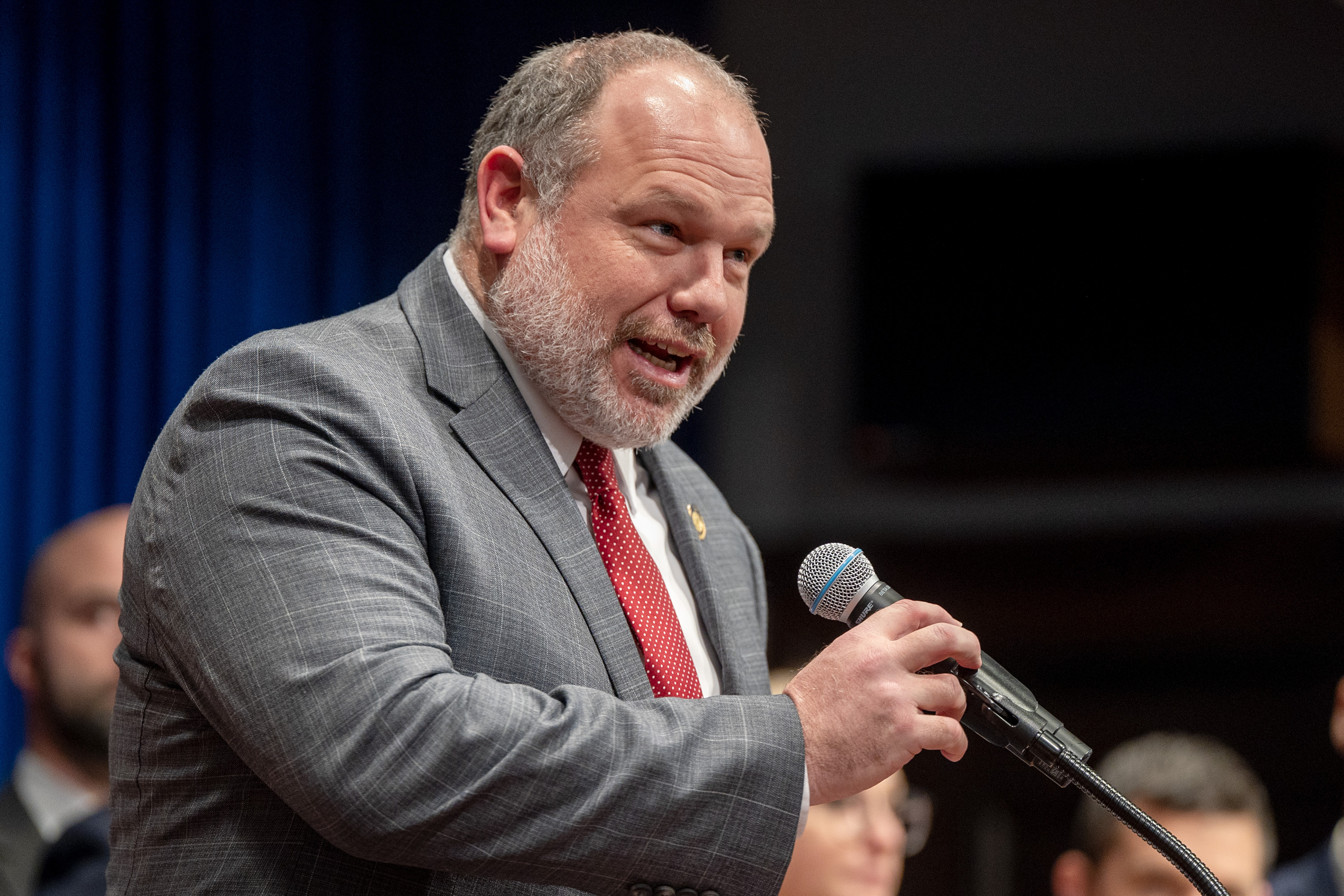
    State House Minority Leader Jesse Topper (R., Bedford) during a news conference at the Capitol in Harrisburg Feb. 3, 2026.Tom Gralish / Staff Photographer

    House Minority Leader Jesse Topper (R., Bedford) was among the first officials last month to raise alarm about the proposed regulations. In a statement Friday, he said it was the “correct and logical conclusion” for the health department, following the outpouring of public opposition.

    Senate Majority Leader Joe Pittman (R., Indiana) called Friday’s announcement “a tremendous victory for the grassroots efforts of Pennsylvanians.”

    ”This is a stark reminder that we must continue to be vigilant when the Executive Branch attempts overreach,” Pittman said in a statement. “We cannot and will not allow actions like we saw taken by the Executive Branch during the height of the COVID-19 pandemic to be put in place again.”

    Nearly all of the members of the Republican caucuses in Pennsylvania’s Senate and House submitted letters in opposition to the proposed regulations, arguing they were more restrictive than the ones enacted during the COVID-19 public health emergency and would infringe on Pennsylvanians’ constitutional rights.

    “The proposed regulations represent executive-branch overreach reminiscent of what we experienced during the COVID-19 pandemic — but this time, the rules would be permanent,” Senate President Pro Tempore Kim Ward (R., Westmoreland) said in a statement last week. “Every Pennsylvanian should understand these regulations and how they could impact their lives.”

    At least one Democrat — State Rep. Dan Frankel (D., Allegheny), who chairs the House Health Committee — submitted his support during the public comment period for updating the state’s existing communicable disease rules. Even so, his remarks recommended several changes to the proposed regulations, including to how the state would evaluate some vaccination exemptions to consider how children will be affected if their parent forgoes the preventive measures.

    Senate Minority Leader Jay Costa (D., Allegheny) said in a statement Friday he was looking forward to continuing the conversation about the regulations, adding that “public trust and buy-in is crucial to effective governance.”

    Beth Rementer, a spokesperson for House Democrats, said Friday that Shapiro’s administration was “acting responsibly” by considering public opinion.

    “After all, that’s how government is supposed to work,” Rementer said.

    Shapiro’s administration has rescinded at least 11 other regulation proposals since taking office in 2023, according to administration officials. But a deluge of feedback is rare, and most proposed regulations receive around five public comment submissions, a Shapiro administration official said.

    Monday was the final day for public comment submissions. As part of their opposition campaign, Republican lawmakers encouraged their constituents to voice their opinion as part of public comment. By the end of the day, the review commission had received more than 10,000 comments opposing the regulations.

    “The Department of Health received a historically high volume of feedback during the public commentary period, and it is clear additional stakeholder input is needed,” Ruhland said in the statement.

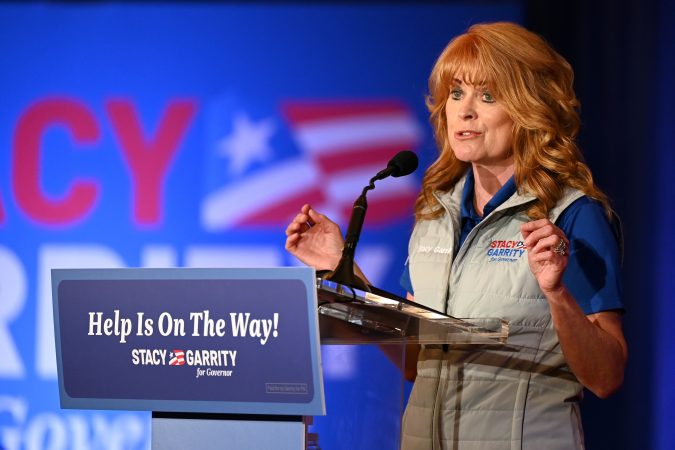
    Shapiro, a Democrat, is seeking reelection in November. His GOP challenger, State Treasurer Stacy Garrity, has criticized Shapiro over the proposed regulations, calling them “mandates that would make draconian COVID-era restrictions blush.”

    On Friday, Garrity celebrated the regulation withdrawal, and in a statement called Shapiro “the least transparent governor in America” who “got caught trying to sneak a 502 page invasion of privacy and parental rights through.”

    A spokesperson for Shapiro declined to comment Friday, deferring to the state health department.
  • 1 in 4 Pa. GOP voters doesn’t know who Stacy Garrity is as Josh Shapiro widens lead in governor’s race

    1 in 4 Pa. GOP voters doesn’t know who Stacy Garrity is as Josh Shapiro widens lead in governor’s race

    One in four likely Pennsylvania GOP voters has not heard of the state’s Republican candidate for governor, as Gov. Josh Shapiro continues to pull ahead with less than six weeks remaining until Election Day, according to a new poll.

    Shapiro, a Democrat seeking reelection and a potential 2028 presidential candidate, is ahead of his Republican challenger, State Treasurer Stacy Garrity, by 21 percentage points among likely Pennsylvania voters, according to the poll, conducted by The Inquirer, the New York Times, and Siena University.

    According to the poll, Shapiro’s lead has now expanded beyond the advantage he held the month before the 2022 election against State Sen. Doug Mastriano (R., Franklin). Shapiro went on to beat Mastriano in that election by nearly 15 percentage points, or 800,000 votes — a drubbing that the GOP vowed not to repeat.

    (function(){function e(){window.addEventListener(`message`,function(e){if(e.data[`datawrapper-height`]!==void 0){var t=document.querySelectorAll(`iframe`);for(var n in e.data[`datawrapper-height`])for(var r=0,i;i=t[r];r++)if(i.contentWindow===e.source){var a=e.data[`datawrapper-height`][n]+`px`;i.style.height=a}}})}e()})();

    Pennsylvania Republicans endorsed Garrity in September 2025 — an unprecedented early nod to unify behind her in an effort to put up a stronger fight against Shapiro after the party largely withheld its support for far-right Mastriano. Garrity has won statewide twice and received the most votes in Pennsylvania history for a statewide office, a record previously held by Shapiro. In January, President Donald Trump endorsed Garrity, calling her “an America First Patriot.”

    But building on that early enthusiasm has proven to be a challenge for Garrity, who for months has struggled to raise money, compete with Shapiro’s $60 million war chest, and gain name recognition in the critical battleground state where registered Democratic voters narrowly outnumber Republicans.

    Garrity, 63, who entered politics in 2020 after a long career in the U.S. Army Reserve, raised only $1.8 million this summer and spent $1.5 million, according to her latest campaign finance filing, posted Tuesday. Shapiro raised $13.3 million during that time and spent $31 million.

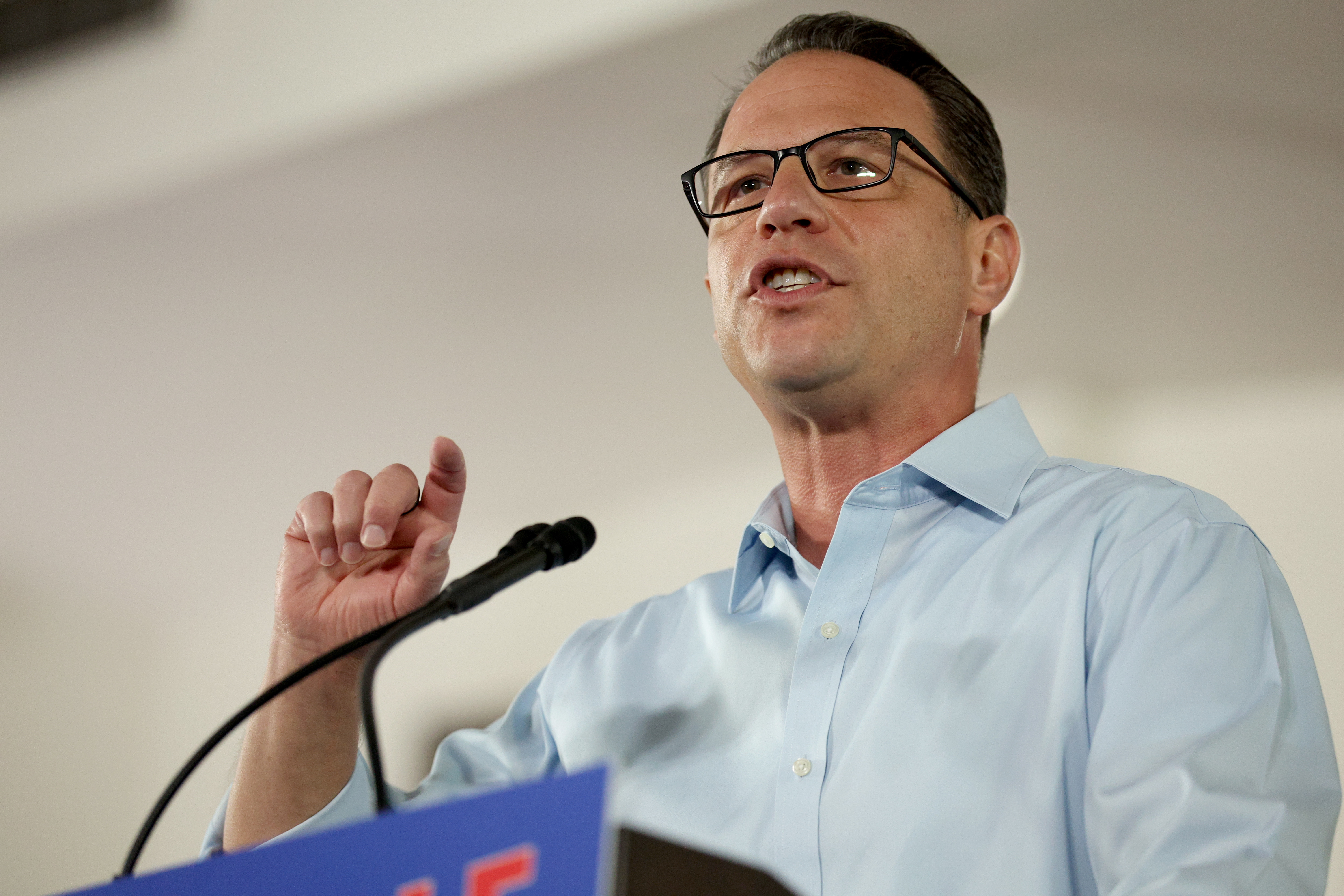
    Gov. Josh Shapiro addresses the audience during a rally for congressional candidate Bob Brooks at the United Steelworkers Union Hall in Bethlehem, Pa. on Sunday, July 26, 2026.David Maialetti / Staff Photographer

    And while Shapiro has dramatically increased his advertising spending on TV and streaming services to top $27 million this year, Garrity has spent a total of $744,000 on ads so far, according to media tracking firm AdImpact.

    Both Shapiro and Garrity have released ads attacking each other for their past support for data center development, an increasingly unpopular issue among both Republicans and Democrats. Garrity’s ad criticizing Shapiro has been viewed about 802,000 times in the Philadelphia media market, according to AdImpact. Shapiro’s commercial labeling Garrity as “Pennsylvania’s number one fan of data centers” has been viewed 416 million times.

    (function(){function e(){window.addEventListener(`message`,function(e){if(e.data[`datawrapper-height`]!==void 0){var t=document.querySelectorAll(`iframe`);for(var n in e.data[`datawrapper-height`])for(var r=0,i;i=t[r];r++)if(i.contentWindow===e.source){var a=e.data[`datawrapper-height`][n]+`px`;i.style.height=a}}})}e()})();

    “Within the data right now, Josh Shapiro is a favorite son in the state of Pennsylvania, and they see him as doing a fantastic job,” said Don Levy, the director of the Siena Research Institute, which conducted the poll of 615 likely Pennsylvania voters from Sept. 15 to 21. “Barring double lightning bolts or a triple rainbow, he’s going to win.”

    Garrity’s lack of campaign spending has allowed Shapiro to define her in the race, experts have said.

    George Stanton, 77, a registered Republican from Lebanon County who participated in the poll, said he will support Garrity in November. He said Shapiro’s attack ad about Garrity’s past support for data centers, which he said he agrees with, helped him learn more about her positions.

    Voters trust Shapiro more than Garrity on all of the top issues facing them, the poll found, including the state’s economy, the cost of living, data centers and artificial intelligence companies, and vaccine policy. In recent weeks, Shapiro has been embroiled in a battle with U.S. Health and Human Services Secretary Robert F. Kennedy Jr., whom he has blamed for spreading misinformation as Pennsylvania experienced a deadly measles outbreak. And at a summit in Pittsburgh last week, Shapiro called for more regulation of AI companies but said innovation of the technology should still be harnessed.

    (function(){function e(){window.addEventListener(`message`,function(e){if(e.data[`datawrapper-height`]!==void 0){var t=document.querySelectorAll(`iframe`);for(var n in e.data[`datawrapper-height`])for(var r=0,i;i=t[r];r++)if(i.contentWindow===e.source){var a=e.data[`datawrapper-height`][n]+`px`;i.style.height=a}}})}e()})();

    Scott Byers, 79, a Republican from Westmoreland County who supported Trump in 2024, is planning to vote for Shapiro this fall because “he just seems to be more in line with the public, with the feelings of his constituents.”

    That includes Shapiro’s position on AI and data centers, which Byers believes should be more difficult to build. All he knows about Garrity’s views is what he catches on commercials — but it does not feel comprehensive, said Byers, who participated in the poll.

    “I think technology in itself is going a bit beyond what is necessary. I feel that it’s hard to pinpoint, but I just feel that there’s too much emphasis on technology,” Byers said.

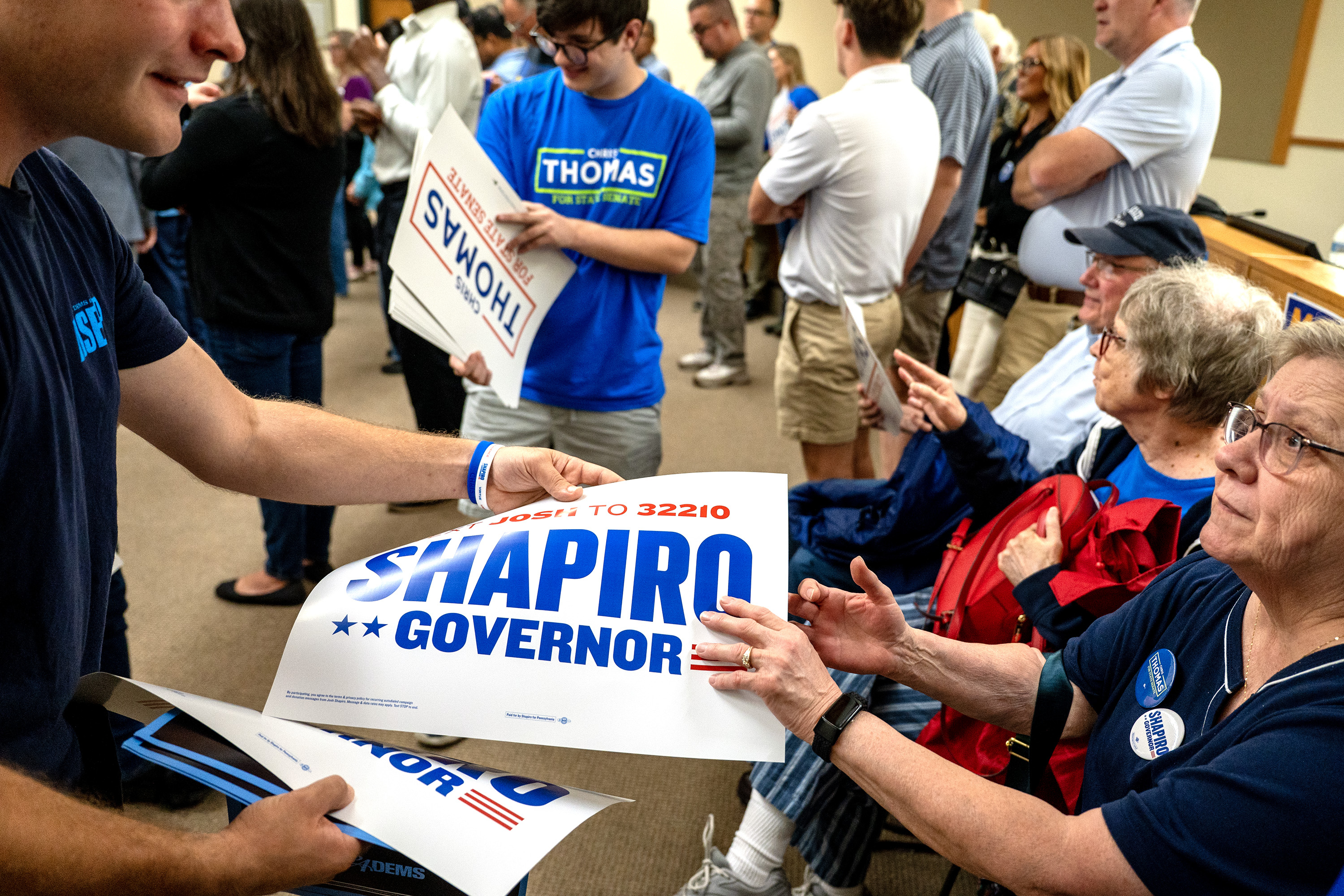
    Campaign volunteers hand out signs to supporters of Gov. Josh Shapiro and Democratic Pa. Senate candidate Chris Thomas at a rally in Towamencin, Montgomery County before heading out to canvass on Sunday, Sept. 29, 2026.Tom Gralish / Staff Photographer

    Approximately 60% of likely voters strongly approve or somewhat approve of the job Shapiro is doing as governor, according to the poll. That includes 30% of Republican voters, 89% of Democratic voters, and 59% of independents in the critical swing state where Shapiro maintains high popularity.

    As a moderate politician, Shapiro has been able to capture most independent voters and even win over some Republicans, according to the poll.

    Lesa Yeager, 63, considers herself an independent voter with centrist views who voted for a third-party candidate in the 2024 presidential election. She is an ardent union supporter and also thinks the nation should have a strong border. She said she trusts Garrity, as the state’s treasurer, to do a better job handling Pennsylvania’s economy.

    But she is supporting Shapiro this November, in large part, because of his work on schools.

    “I like that he’s very pro-education,” she said. “I am a fan of charter schools because I sent my kids to charter schools.”

    Two of her children, now 35 and 37, benefited from smaller classroom sizes and adjustable curriculums, she said.

    Yeager said she has also reached her limits with Trump’s behavior during his second term and believes Shapiro would continue to represent the state positively.

    “I just think Trump is such a bully and so mean and just does whatever he wants, and I just want someone who isn’t that,” Yeager said.

    She appreciates the Republicans who distance themselves from Trump. “But it’s tough to tell who is and who isn’t, a lot of times, and I would rather vote for someone I know isn’t going to support Trump on a lot of the things that he does,” she added.

    Still, Garrity has found some backing among Pennsylvania’s electorate, though even some of those supporters say they don’t know much about her.

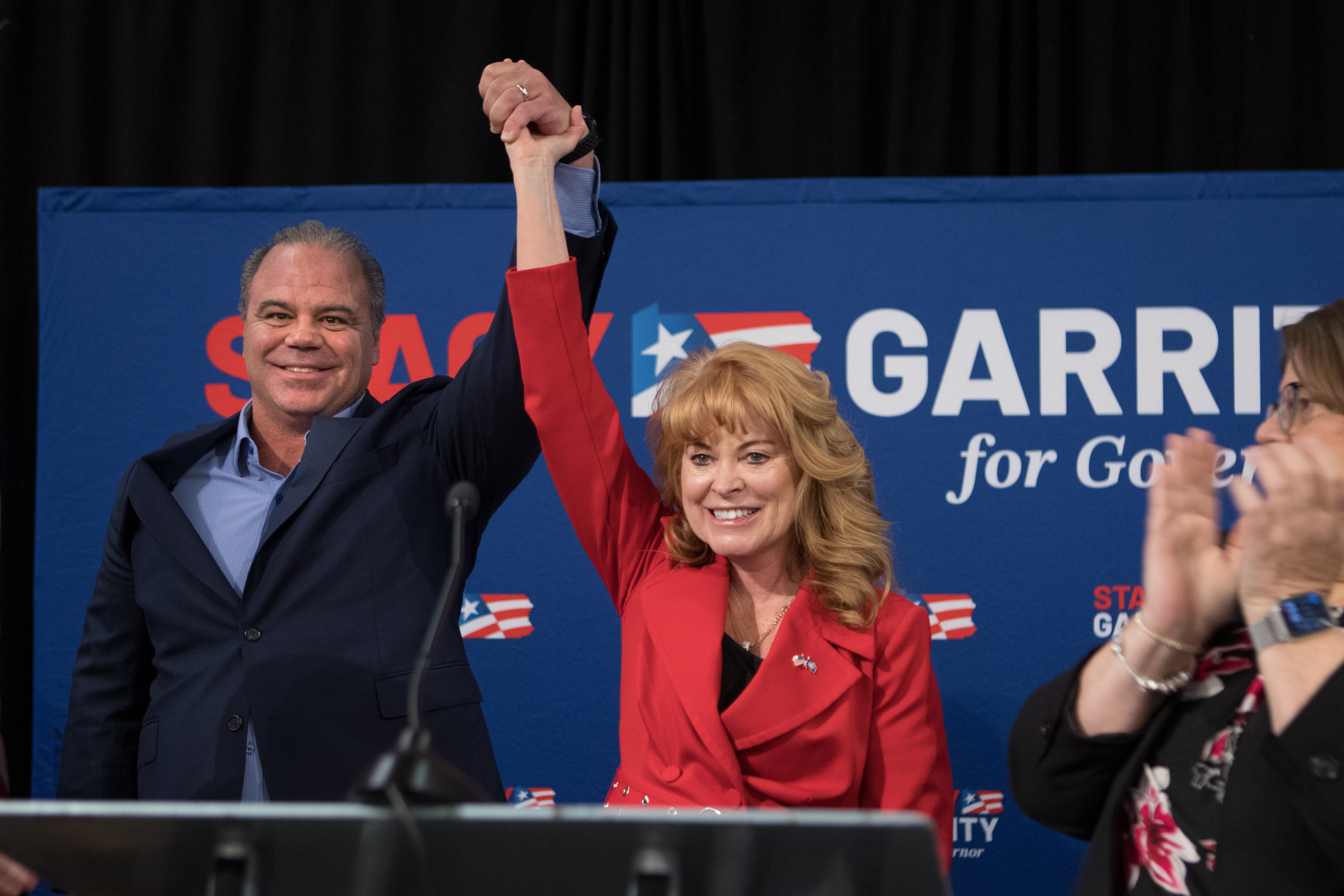
    GOP gubernatorial nominee Stacy Garrity and her running mate Jason Richey hold up their arms in Harrisburg, Pa., Saturday, February 7, 2026. Kalim A. Bhatti / For The Inquirer

    Susan Roller of Lancaster said she plans to vote for Garrity this fall because “she’s more responsible and will protect our freedoms.” Roller, who is retired, said she is particularly distressed about Shapiro’s positions supporting access to abortion and encouraging vaccines.

    But as far as getting to know more about Garrity, Roller, 72, said she has not “seen a lot” of messaging on television about her.

    Shapiro and Garrity are set to face off in a televised debate on Oct. 7.

    In 2022, Shapiro did not participate in any debates while he maintained a double-digit lead over Mastriano, declining the Republican’s requests as an “unserious stunt.” Shapiro held a 13-percentage-point lead over Mastriano in a New York Times/Siena poll conducted that October — a closer margin than Shapiro’s lead over Garrity this year.

    (function(){function e(){window.addEventListener(`message`,function(e){if(e.data[`datawrapper-height`]!==void 0){var t=document.querySelectorAll(`iframe`);for(var n in e.data[`datawrapper-height`])for(var r=0,i;i=t[r];r++)if(i.contentWindow===e.source){var a=e.data[`datawrapper-height`][n]+`px`;i.style.height=a}}})}e()})();

    The 2022 midterm election was a much different political moment for Democrats, said Levy of the Siena Research Institute.

    “That was a point in time when the Democratic star was on the decline,” he added. “Everything was a bit of a referendum on Democrats, on the job that [former President Joe] Biden was doing, how we were coming out of the pandemic.

    “The overall political climate in which the ’26 election is taking place vs. ’22 is really kind of night and day,” Levy said.

    Staff writers Joe Yerardi and Fallon Roth contributed to this article.

  • Gov. Josh Shapiro spent more than $2.4 million on ads this week. His GOP opponent, Stacy Garrity, spent $672.

    Gov. Josh Shapiro spent more than $2.4 million on ads this week. His GOP opponent, Stacy Garrity, spent $672.

    Gov. Josh Shapiro is dominating Pennsylvania’s media markets in his reelection campaign, spending more than $24 million with less than seven weeks left until the Nov. 3 election — and trouncing his GOP challenger, State Treasurer Stacy Garrity, who has spent a small fraction of that on ads.

    Shapiro, a Democrat seeking reelection and potentially a 2028 White House bid, has spent more than $2.4 million on advertisements per week since Aug. 25 from his campaign war chest of more than $50 million, according to media tracking firm AdImpact. One ad pitches Garrity as “Pennsylvania’s #1 fan of data centers,” and in another, Shapiro boasts about his efforts to cap energy costs. He has also released a number of audience-specific ads to reach Black and Latino voters, including a radio advertisement in Spanish in the Lehigh Valley.

    A clearer picture of Shapiro’s full campaign haul will become public this week, with updated campaign financial filings due Tuesday. The last filing deadline for state candidates was in June. But Shapiro’s multimillion-dollar flurry of ad buys offers early insight into his strategy heading into November in a race where he holds a double-digit polling lead — and where he is hoping to achieve downballot wins in the statehouse and critical congressional districts.

    Garrity has spent just $743,000 on ad buys so far, and paid out only $672 last week, according to AdImpact. No top GOP groups, such as the Republican Governors Association or the Jeffrey Yass-backed Commonwealth Leaders Fund, have purchased TV ads supporting Garrity, and she has struggled to fundraise to compete with Shapiro, a popular incumbent who has raised more money than any governor since at least 2010.

    State Treasurer and Republican candidate for governor Stacy Garrity is seen on a big screen as she speaks to supporters before the arrival of President Donald Trump at Mack Trucks in Macungie Tuesday, June 23, 2026. Tom Gralish / Staff Photographer

    Shapiro’s mass ad buys despite his commanding lead in the polls indicate the governor is a risk-averse politician, said Christopher Borick, a political science professor at Lehigh University.

    “He’s cautious. He wants to make sure nothing goes awry, and to do that, you buy insurance,” Borick said.

    “The governor has also been clear that the midterms run through Pennsylvania — and he is leading the fight to win critical races up and down the ballot in order to flip the House, put a check on Donald Trump’s chaos, cruelty, and corruption, and get even more stuff done,” said Manuel Bonder, a spokesperson for Shapiro’s campaign.

    Garrity, meanwhile, has spent the lion’s share of her ad buys on a digital social media video campaign called “Twilight Justice,” which promises the future release of bombshell details about Shapiro. She has also released an attack ad about Shapiro’s past support for data centers, but it has been seen by far fewer eyes than those Shapiro is reaching in his multimillion-dollar ad campaigns. Both Shapiro and Garrity initially embraced data centers, though both shifted their positions as the projects became increasingly unpopular among Democrats and Republicans.

    Matthew Beynon, a spokesperson for Garrity’s campaign, declined to comment on whether top GOP groups will get involved in the Pennsylvania governor’s race in the coming weeks. But he said any pro-Shapiro mailer or TV ad “is just another reminder to the people of Pennsylvania that Josh Shapiro sold them out.”

    “All the money in the world will not help Josh Shapiro paint over his administration’s failed economic record or erase his ethics scandals that have cost the taxpayers of Pennsylvania and embarrassed the entire commonwealth,” Beynon added.

    Data center power play

    The regulation of data centers and artificial intelligence have become key issues in midterm races nationwide, including in the Pennsylvania governor’s race, where Shapiro’s past support for the projects appeared to be the biggest test of his popularity.

    Shapiro changed his position last month and subsequently began running attack ads against Garrity for her past support of the unpopular centers. Garrity has also changed her position, from initially advocating for the rapid development of data centers around Pennsylvania to now calling for “a pause” on their development. Shapiro, in an executive order signed last month, will now require any prospective data center developers to meet a number of environmental and energy factors in order to build in Pennsylvania.

    “That’s why you’ve seen this enormous ad buy that she can’t even come close to matching, when, in reality, he’s as exposed as her on the issue, but she doesn’t have the resources,” Borick said.

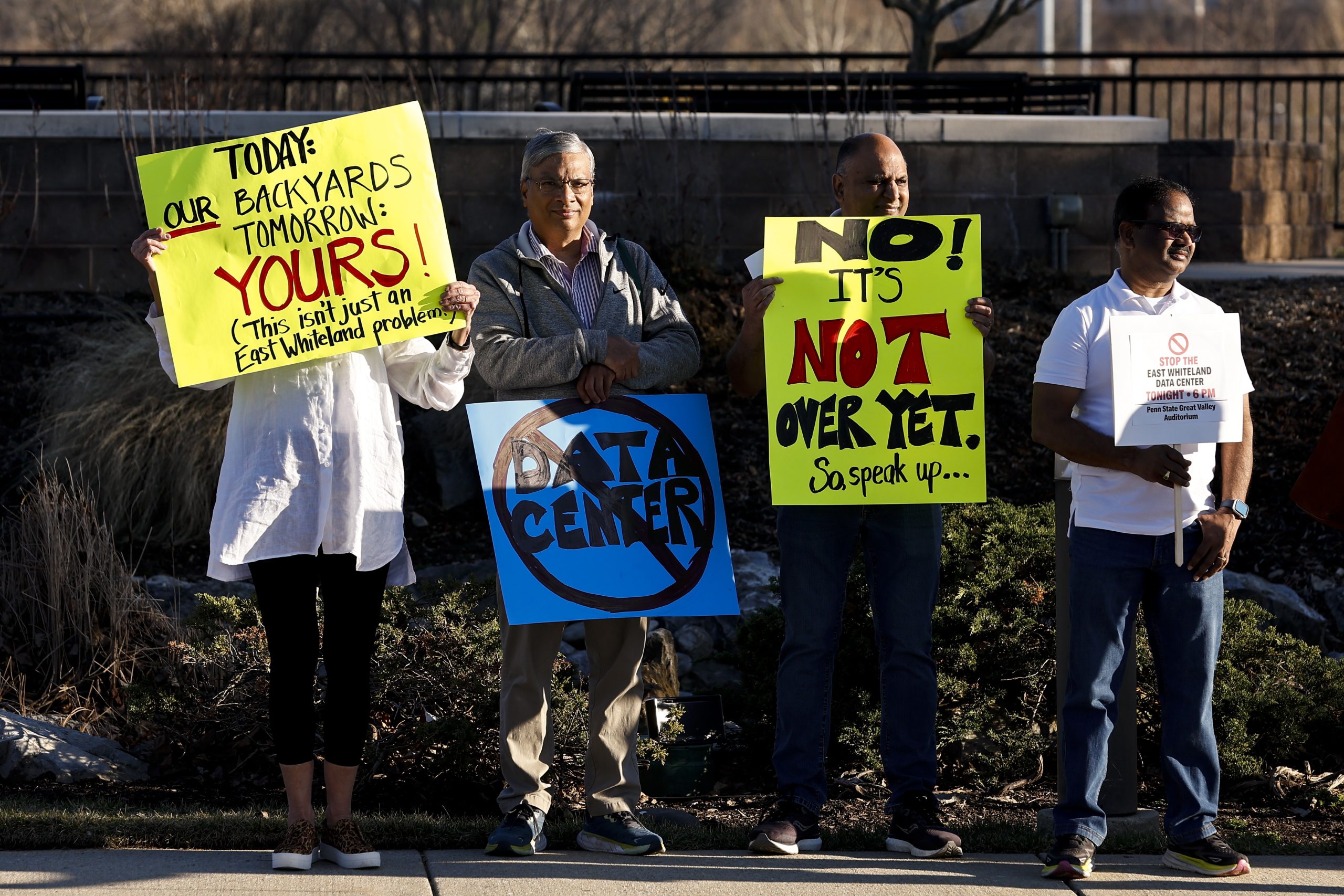
    People protest the expanded data center before the East Whiteland Planning Commission meeting held at Penn State Great Valley on Monday, March 9, 2026 in Malvern, Pa.Monica Herndon / Staff Photographer

    Pennsylvania Republicans endorsed Garrity in September 2025 — an unprecedented early nod that helped clear the field for her as the party’s nominee. President Donald Trump endorsed her in January, calling her an “America First Patriot.” She ran unopposed in the primary election, and top GOP leaders said they wanted to wage a stronger fight against Shapiro this time than in 2022, when far-right State Sen. Doug Mastriano (R., Franklin) won the endorsement in a crowded field and the state GOP largely did not financially support his candidacy.

    Despite all of the additional time to drum up support, Garrity has struggled to raise funds and has yet to be able to cash in on Trump’s backing. As of Thursday, she had spent just $300,000 more than Mastriano had at this point in the race. Shapiro, meanwhile, has spent less this election than he did at the same point in 2022, when he spent $28 million as of mid-September.

    “When you’re making comparisons to the amount of money Doug Mastriano raised, it’s a really troubling sign,” Borick added.

    Garrity and Shapiro will face off in a televised debate on Oct. 7 hosted by ABC27 in Harrisburg.

  • ‘Babies are dying’: How Pennsylvania’s measles outbreak changed the vaccine mindset of this Amish country midwife

    ‘Babies are dying’: How Pennsylvania’s measles outbreak changed the vaccine mindset of this Amish country midwife

    LANCASTER — Amish families peer into Roberta Devers’ Honda Passport as she drives between prenatal checkups along the rolling hills of Lancaster County. They ask her increasingly frequent questions about the vaccine: Do you have some measles in your car?

    Devers, 63, works as a traditional midwife in communities at the epicenter of Pennsylvania’s largest measles outbreak in more than 30 years. She belongs to a class of midwives who follow age-old practices and are unregulated by the state, unlike the state-licensed midwives one may find in a hospital. She received the full childhood vaccination schedule but, as an adult, chose not to vaccinate her son and is part of the rising number of people in Pennsylvania refusing to get vaccinated against preventable diseases due to unfounded concerns about their safety and necessity.

    But with the growing outbreak now linked to the deaths of two Amish infants and two adults in Pennsylvania — the first measles-related deaths in the state, and the most in the nation in more than three decades — Devers thinks everyone who can should get vaccinated against measles.

    And she thinks she should be able to offer the vaccine to her patients, as a trusted caretaker among Amish residents.

    “Babies are dying,” said Devers, who is not Amish but has been a traditional midwife for 38 years. She says she fears that Pennsylvania’s Amish community, one of the oldest and largest in the country, cannot wait to reach herd immunity. “You’re going to lose too many babies,” she said.

    Devers occupies a unique vantage point from the front lines of the nation’s largest measles outbreak this year. State health officials said the deaths of two local Amish infants were measles-related, sparking a clash between Democratic Gov. Josh Shapiro and President Donald Trump’s Health and Human Services secretary, Robert F. Kennedy Jr., over how to report the outbreak’s death toll. An 18-year-old from Mifflin County and a 40-year-old woman from Jefferson County also died from measles-related illnesses in recent days, according to the counties’ coroners.

    As of Wednesday, the state had reported 731 cases in 38 counties. Lancaster has recorded the highest number of known cases in Pennsylvania, as the highly contagious disease has spread among the area’s significant number of unvaccinated people, including many from communities beyond the county’s Amish population.

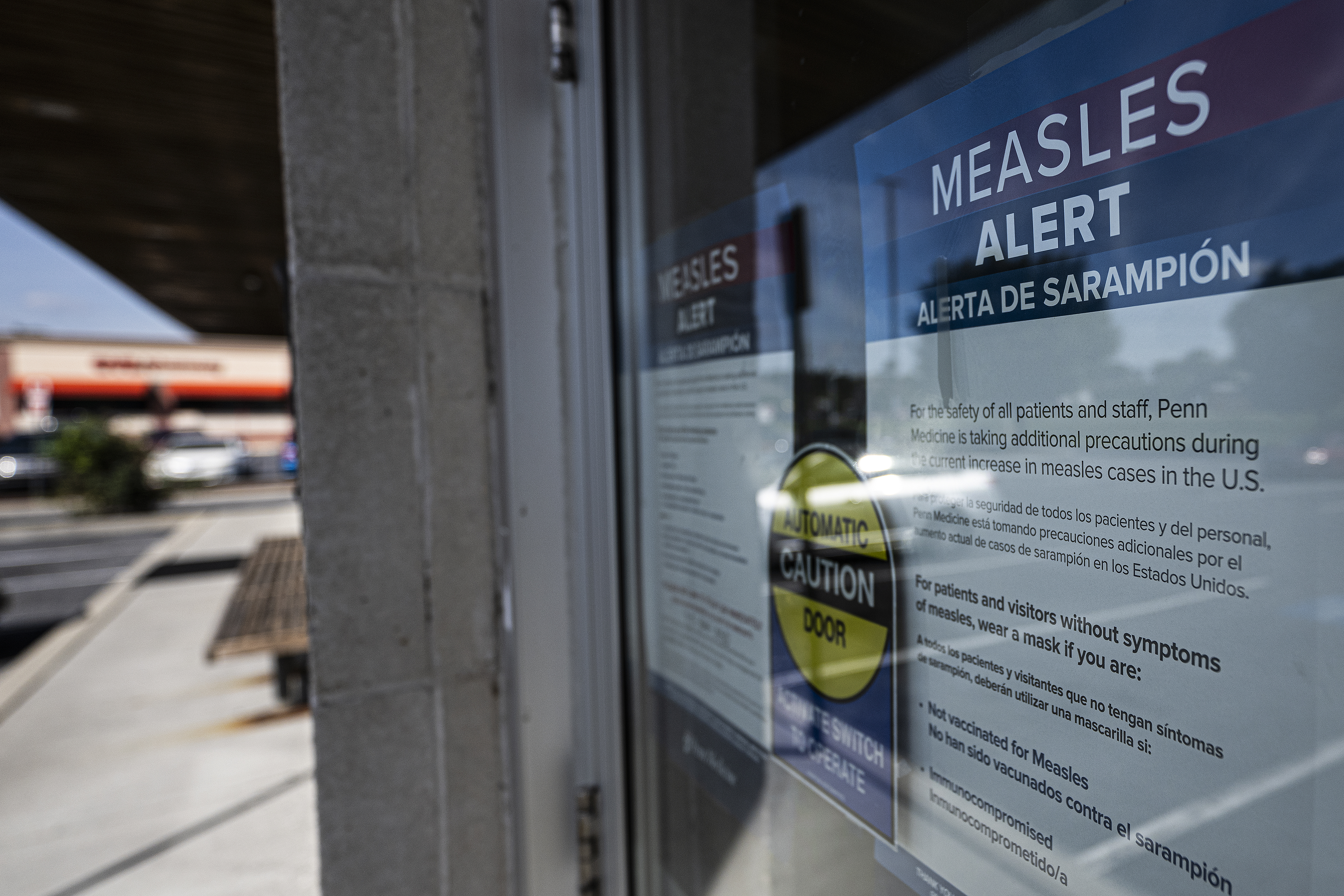
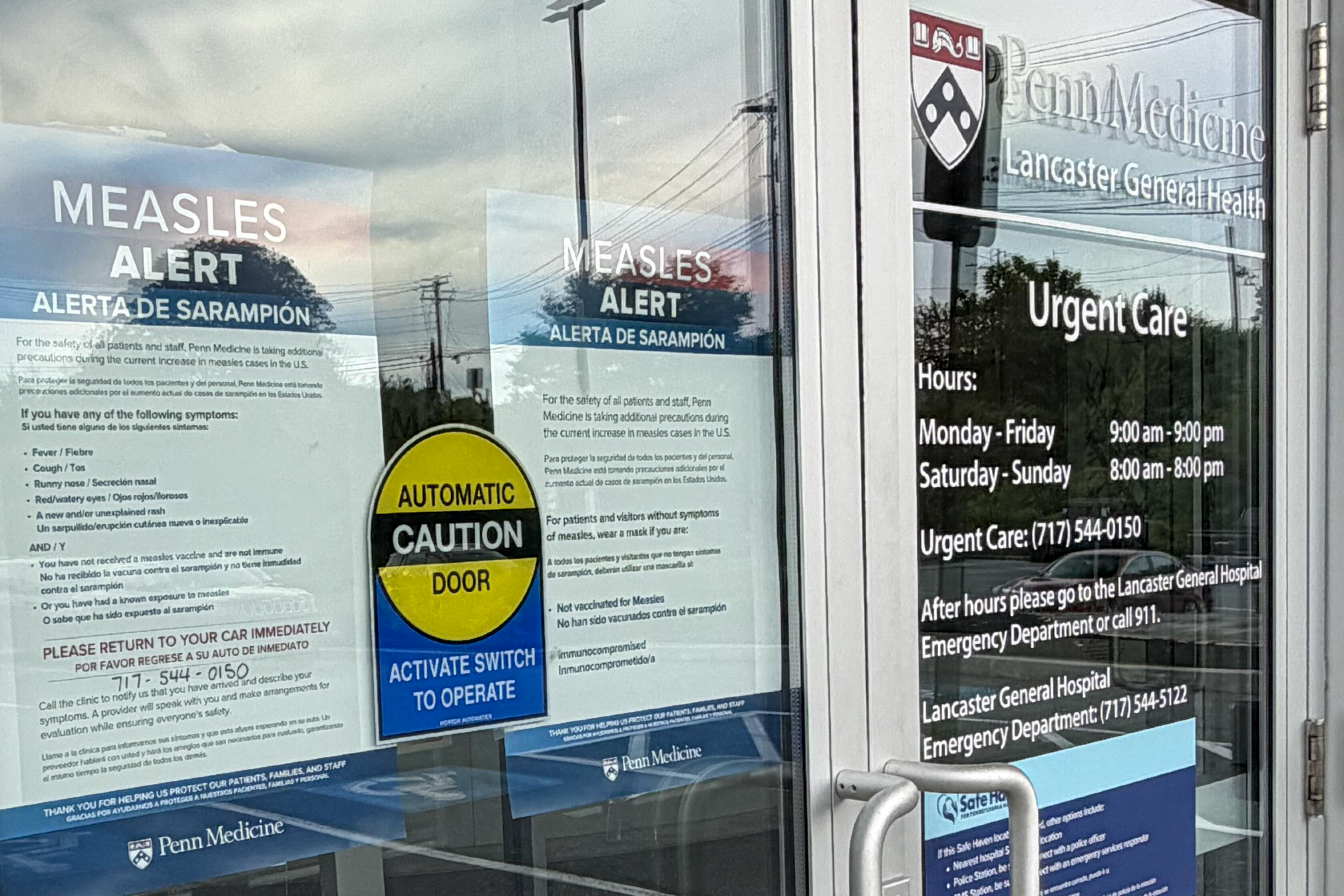
    Measles alert signs in English and Spanish are posted on the front doors of an urgent care facility Tuesday, Sept. 8, 2026, in Lancaster County, Pa., amid a measles outbreak that has affected local Amish and Mennonite communities.Jose F. Moreno / Staff Photographer

    Traditional midwives like Devers — also known as lay midwives or direct-entry midwives — broadly oppose being regulated by the modern medical system and often do not receive the medical and scientific training or college-level education required of certified nurse midwives and midwives. Because of this, top medical associations like the American College of Obstetrics and Gynecology oppose traditional midwives from being able to practice at all. State law also prohibits traditional midwives from practicing medicine, such as administering vaccines or sutures.

    Until this summer when it was quietly repealed in state budget documents, an unenforced 1929 law allowed traditional midwives to practice in Pennsylvania. A group of midwives have sued the state to formally recognize them, but that would still not permit them to practice medicine, including administering vaccines.

    Yet, traditional midwives are the main care providers who oversee home births in certain Amish communities, or for people who want their help with a personal and private birth experience. Their influence is particularly prominent in Pennsylvania, which has one of the nation’s highest rates of home births. Devers’ practice, Mount Laurel Midwifery, delivers about seven babies per month across south-central and Southeastern Pennsylvania, with a number of student midwives studying under her.

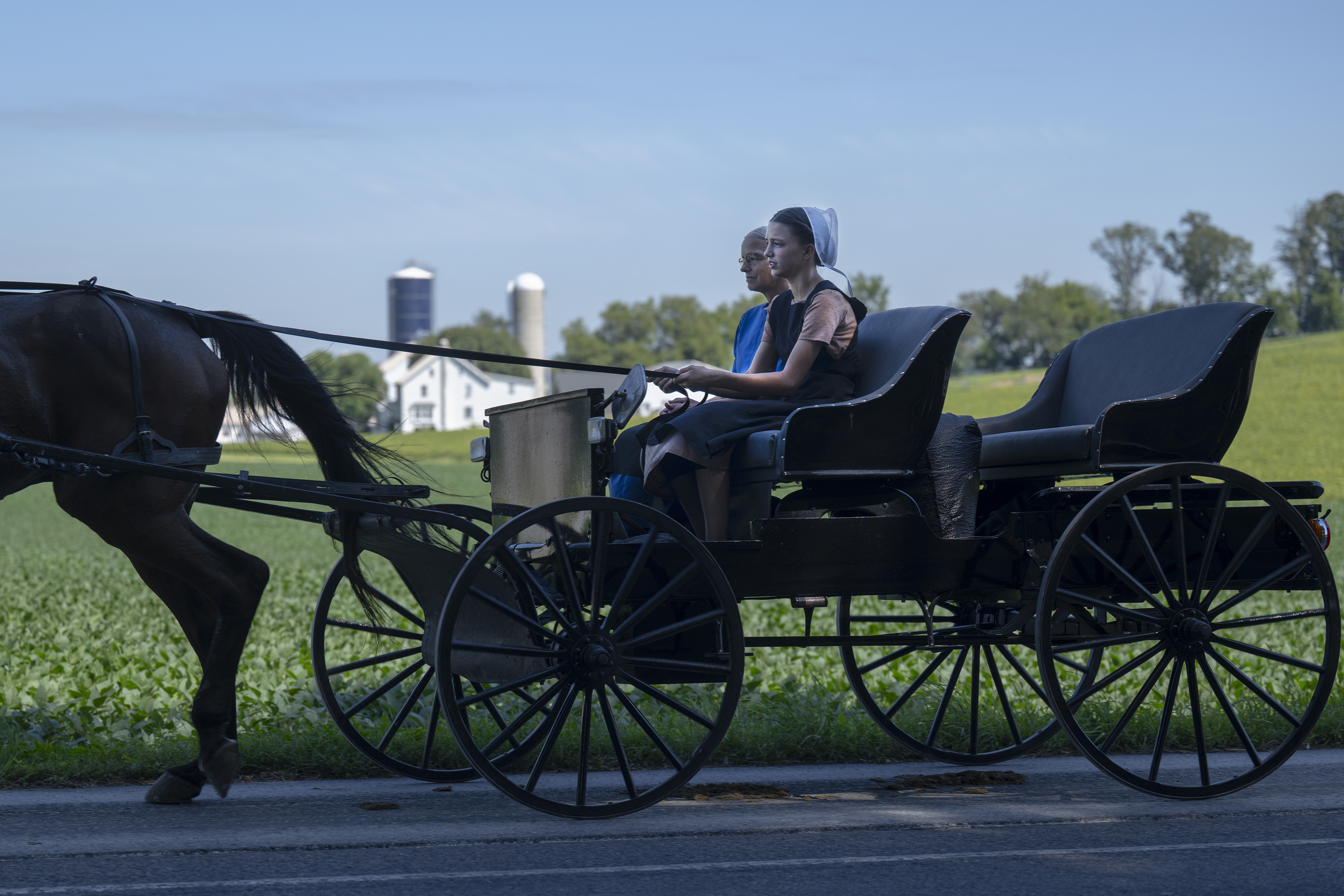
    An Amish woman drives a horse-drawn buggy along a road Monday, Sept. 7, 2026, in Lancaster County, Pa., amid a measles outbreak that has affected the local Amish and Mennonite communities.Jose F. Moreno / Staff Photographer

    In Lancaster, Devers’ clients are not talking about the political debate. Rather, their conversations center on the spread of measles — did she hear about the recent baby deaths, what should they do if they were exposed, does she have a vaccine with her?

    Two doses of the measles, mumps, and rubella vaccine have proven 97% effective at preventing the disease, the Centers for Disease Control and Prevention says. Nine in 10 unvaccinated people exposed to measles will acquire the disease.

    Pregnant people are not eligible to receive the vaccine.

    In her daily prenatal checkups, she is seeing moms who have the infection’s signature bumpy, red rash and fever, and families who have watched the sickness move through one family member to the next.

    About three in 1,000 children who contract measles will die, according to the CDC. Measles can cause severe complications, especially in young children, including pneumonia and brain swelling. And measles during pregnancy can lead to pregnancy loss, premature delivery, and low birth weight, according to the CDC.

    Devers said she recently saw a case in which a mother lost her baby at 17 weeks. The Amish woman was recovering from an active measles infection at the time of the miscarriage, in addition to at least one other underlying medical condition, Devers said.

    Amish families traditionally have funerals for stillborn babies or miscarried fetuses, sharing obituaries in the local newspaper. Devers attended the funeral for one such death, involving the 17-week-old fetus, last month.

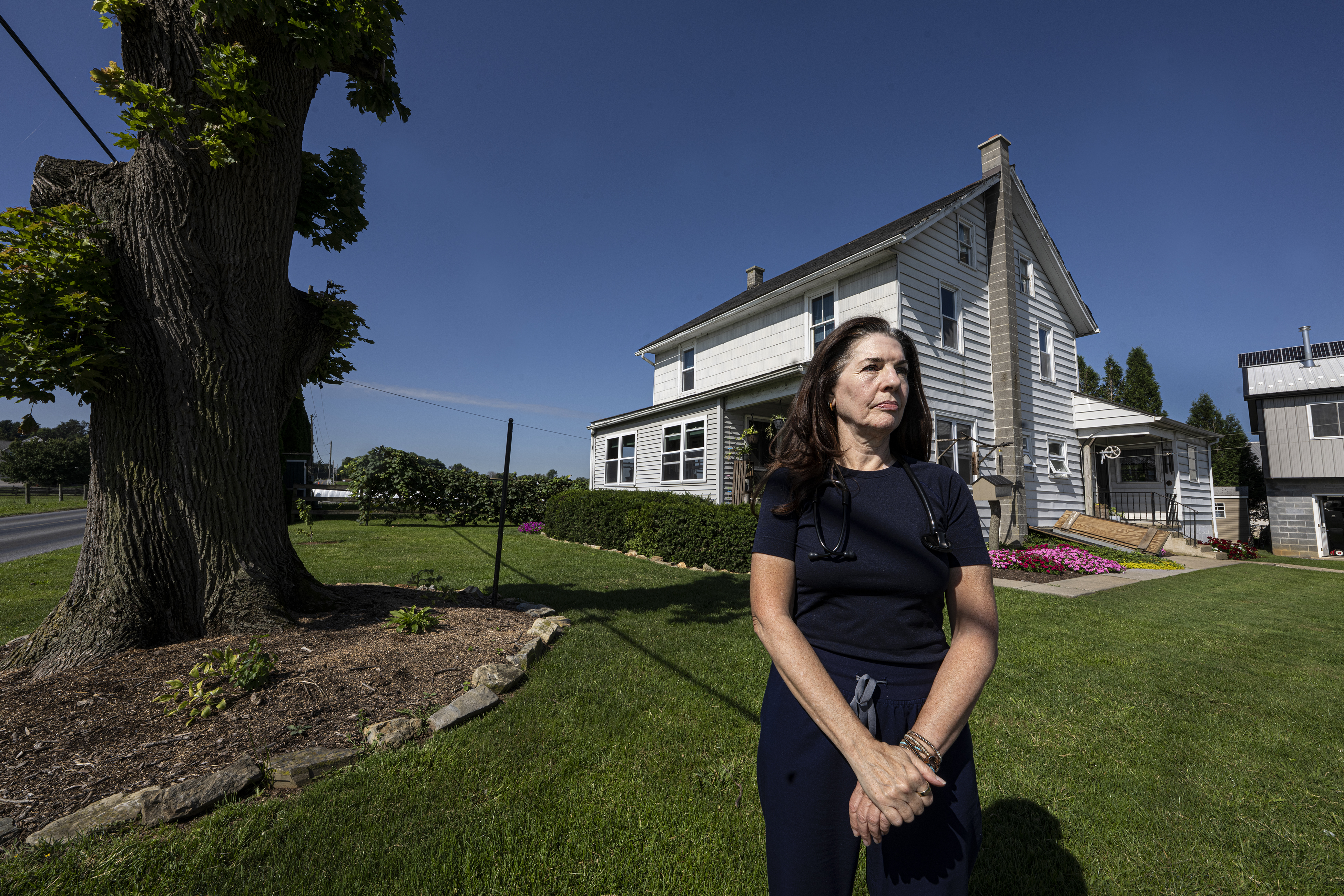
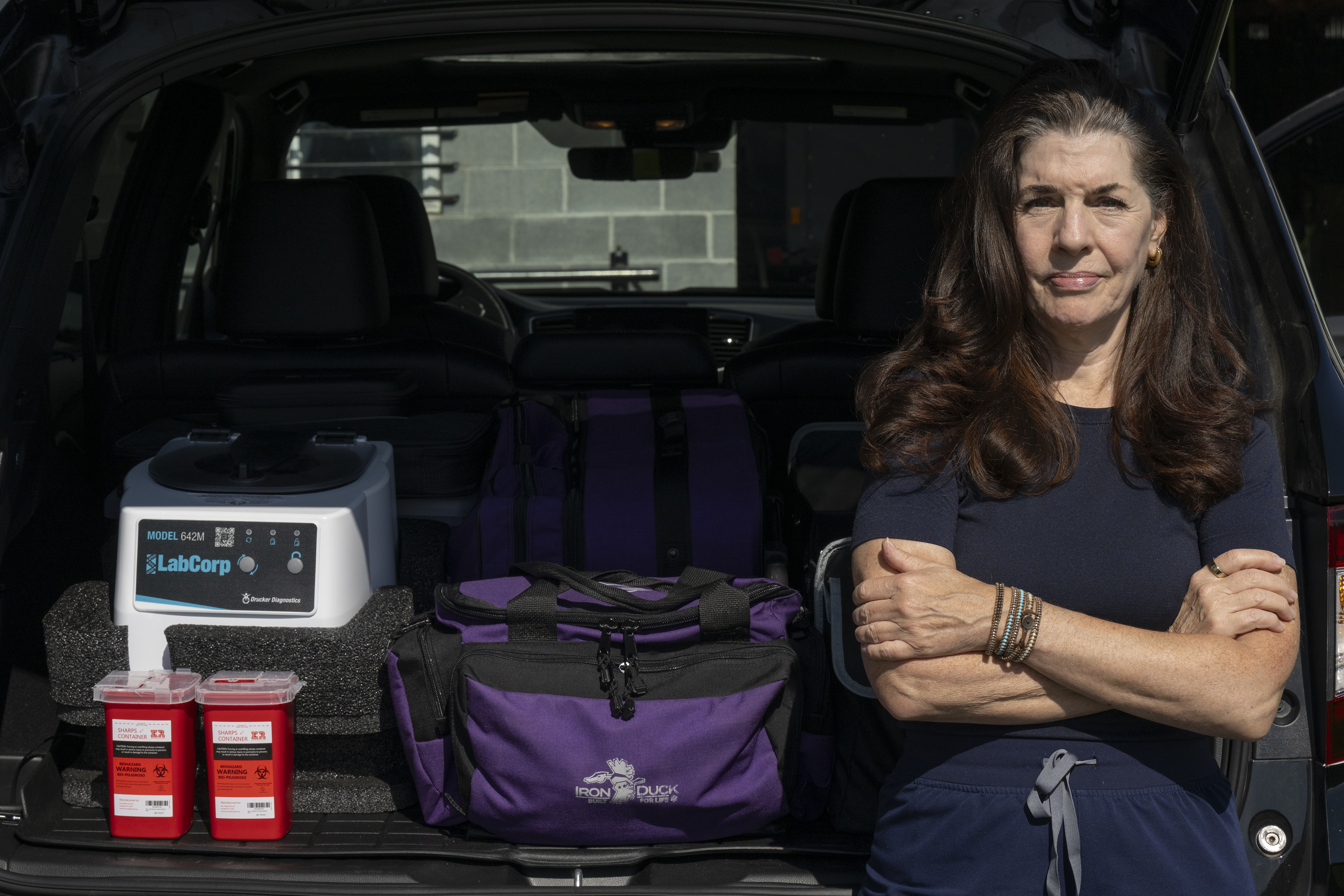
    Midwife Roberta Devers is photographed Tuesday, Sept. 8, 2026, near the home of one of her Amish patients in Lancaster, Pa. Devers, who primarily serves Amish mothers, discusses the measles outbreak and why she believes unlicensed midwives should be allowed to administer MMR booster shots.Jose F. Moreno / Staff Photographer

    During previous public health emergencies, state and federal governments have used limited emergency approvals to expand who is allowed to administer vaccines, though the authority was not extended to unregulated groups like traditional midwives.

    Now, Devers wants state or federal health officials to extend approval to allow traditional midwives to administer the measles, mumps, and rubella vaccine.

    But the Pennsylvania Department of Health says it does not have the authority to allow traditional midwives to administer vaccines, because they are not certified healthcare providers. Currently, state law allows licensed healthcare providers like doctors and certified nurse midwives to administer vaccines, and any expansion of the list would require an amendment to state law, spokesperson Stephanie Nojiri said in a statement.

    HHS and the CDC did not respond to requests for comment. Devers said she recently accepted an invitation from the CDC to participate in a paid interview to discuss how midwives serving Plain communities are approaching the measles outbreak. She sees the outreach as a signal of the agency’s interest in working with midwives.

    The Amish and vaccines

    Vaccination rates among Pennsylvania children have been falling for years. The spread of misinformation about vaccine safety reached the highest echelons of the U.S. government after Trump picked Kennedy, a longtime anti-vaccine activist, to lead the nation’s health agencies.

    In 2025, at least 249 Pennsylvania schools had vaccination rates below 95%, the level that scientists say is necessary to prevent the spread of measles.

    Amish communities do not have a religious objection to vaccinations, said Steven Nolt, a top Amish scholar at the Young Center for Anabaptist and Pietist Studies at Elizabethtown College.

    He said low vaccination rates in the groups, who dress in plain clothes and widely object to using technology in favor of a more traditional way of life, are due to their partial abstention from modern medicine, as well as a lack of nearby access given their rural lifestyles.

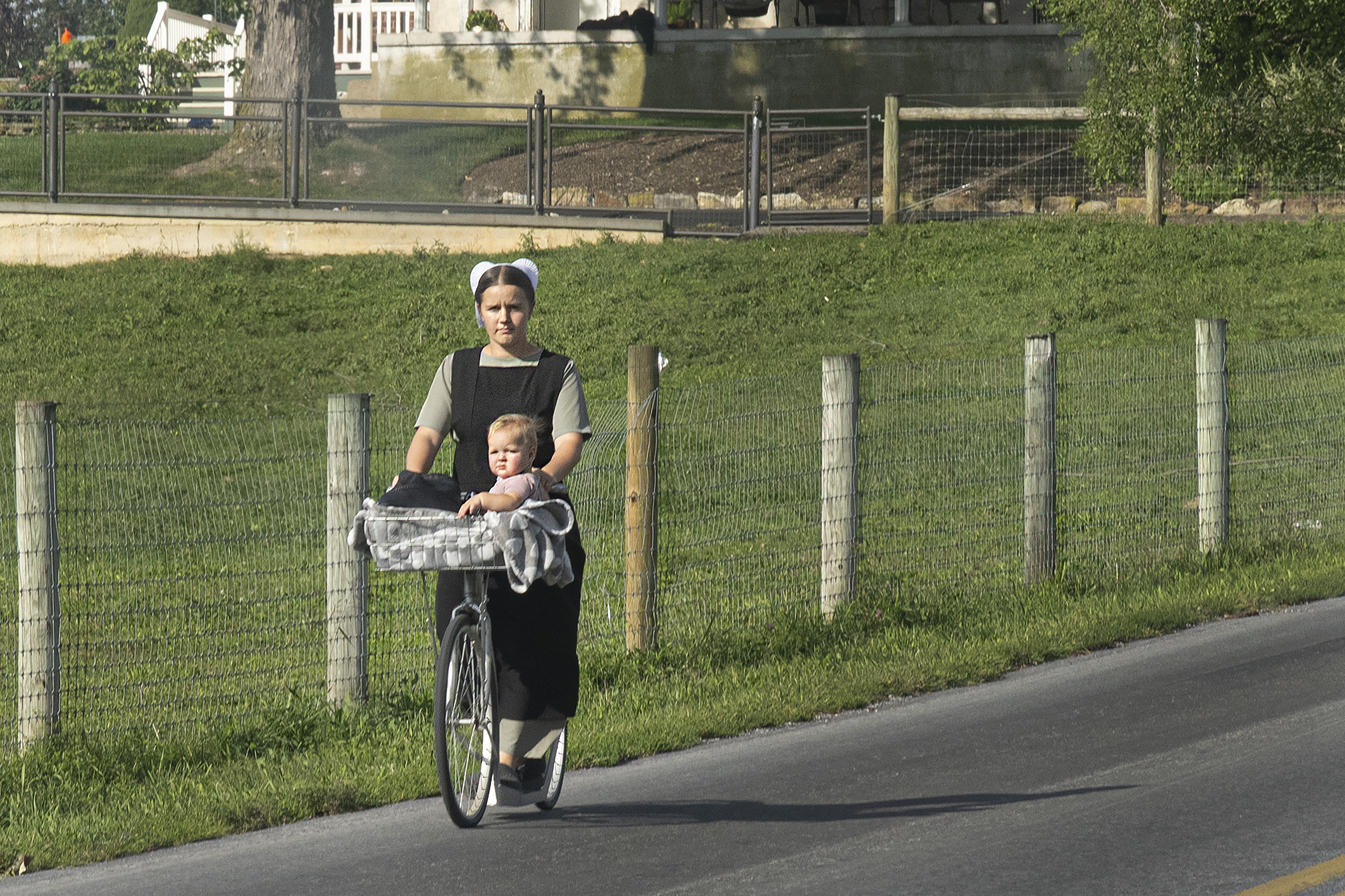
    An Amish woman rides a kick scooter with a baby secured in a front basket attached to the scooter Tuesday, Sept. 8, 2026, along a road in Lancaster County, Pa., amid a measles outbreak that has affected local Amish and Mennonite communities.Jose F. Moreno / Staff Photographer

    In Lancaster County, 30% of Amish families had their children vaccinated and believed vaccinations were safe and effective, according to a 2022 survey of 433 Amish and Old Order Mennonite residents, published by Elizabethtown College and conducted by Franklin and Marshall College.

    The numbers are much higher among Old Order Mennonites — a different religious group that similarly dresses in plain clothes — with 94% vaccinating their children and 72% believing they are safe and effective.

    When a 1991 rubella outbreak spread through Amish communities, families welcomed the booster shots, Nolt said. So did Amish groups during a polio outbreak in the 1970s.

    “When there would be an outbreak, that was a bit of a wake-up call,” he added. “Then people would come out for immunizations.”

    Another “wake-up call” has now arrived for Lancaster’s Amish residents, Devers said.

    Amish vendors work at their stands inside the popular Central Market in Lancaster, Pa., Tuesday, Sept. 8, 2026, amid a measles outbreak that has affected local Amish and Mennonite communities.Jose F. Moreno / Staff Photographer

    Amish groups broadly approach their health through a “medical pluralism” lens — a term coined by Martha King, a medical anthropologist at the University of North Carolina at Chapel Hill. This means Amish communities view medical doctors, chiropractors, midwives, and homeopathic remedies as all being “on the same playing field,” rather than being supplementary to a primary care physician, as is common among most Americans, Nolt said. Sometimes Amish people will choose treatments that contradict each other or lack any scientific backing.

    “They kind of all function in a way that doesn’t necessarily make sense the way many ‘normal’ Americans think about healthcare,” Nolt added.

    Prior to his appointment as HHS secretary, Kennedy helped lead anti-vaccination efforts across the country. During a 2021 speech in Lancaster County, he mocked measles as a serious threat.

    It is unclear what effect the efforts have had on Amish populations, Nolt said. During the COVID-19 pandemic, some anti-vaccine groups ran advertisements in Amish newspapers, discouraging the Amish from getting any immunizations, he added.

    Devers said she largely supports Kennedy, but believes Shapiro was right to raise alarm about the need to vaccinate against measles. She said she has been disappointed in Kennedy for downplaying the dangers of the outbreak.

    “My God, use your head,” Devers said. “He can’t mean this in the midst of an epidemic like this.”

    Pennsylvania’s health department, in partnership with local health systems, says it has been working with Amish communities. And Shapiro has emphasized that the outbreak stretches much further than just among any one community, now that confirmed cases have spread to more than half of Pennsylvania’s 67 counties.

    Since the start of the measles outbreak in Pennsylvania in April, state health officials have hosted 124 pop-up vaccination clinics across the state in locations like churches, fire halls, and private homes to give more than 4,100 doses of the MMR vaccine, Nojiri said. More pop-up clinics are planned in the near future.

    But traditional midwives should be part of the solution, too, Devers argued.

    “Different times call for a change in thinking,” she said.

    This story has been updated to remove identifying information.

  • How these four history-making House speakers are trying to protect the future of American democracy in their states

    How these four history-making House speakers are trying to protect the future of American democracy in their states

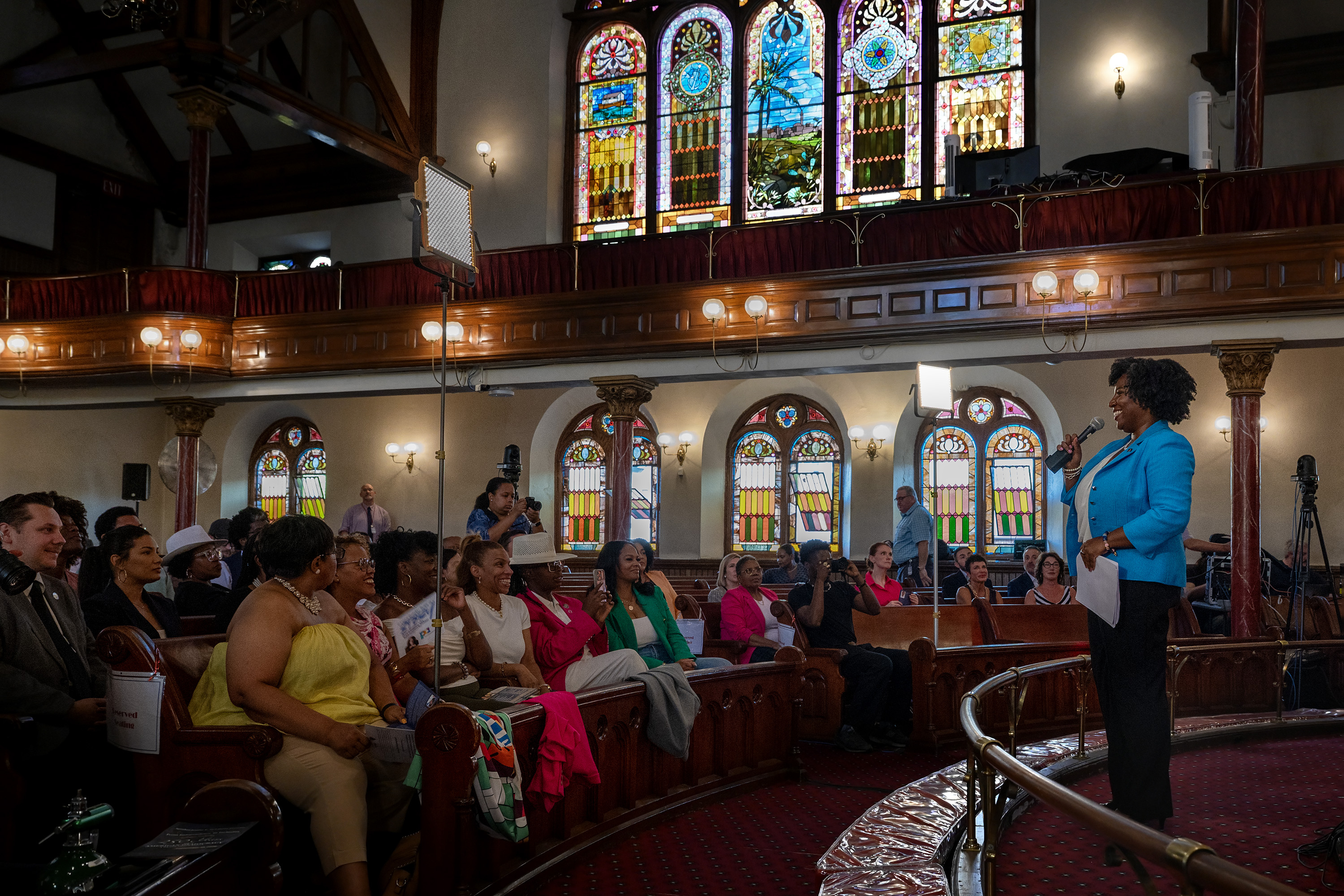
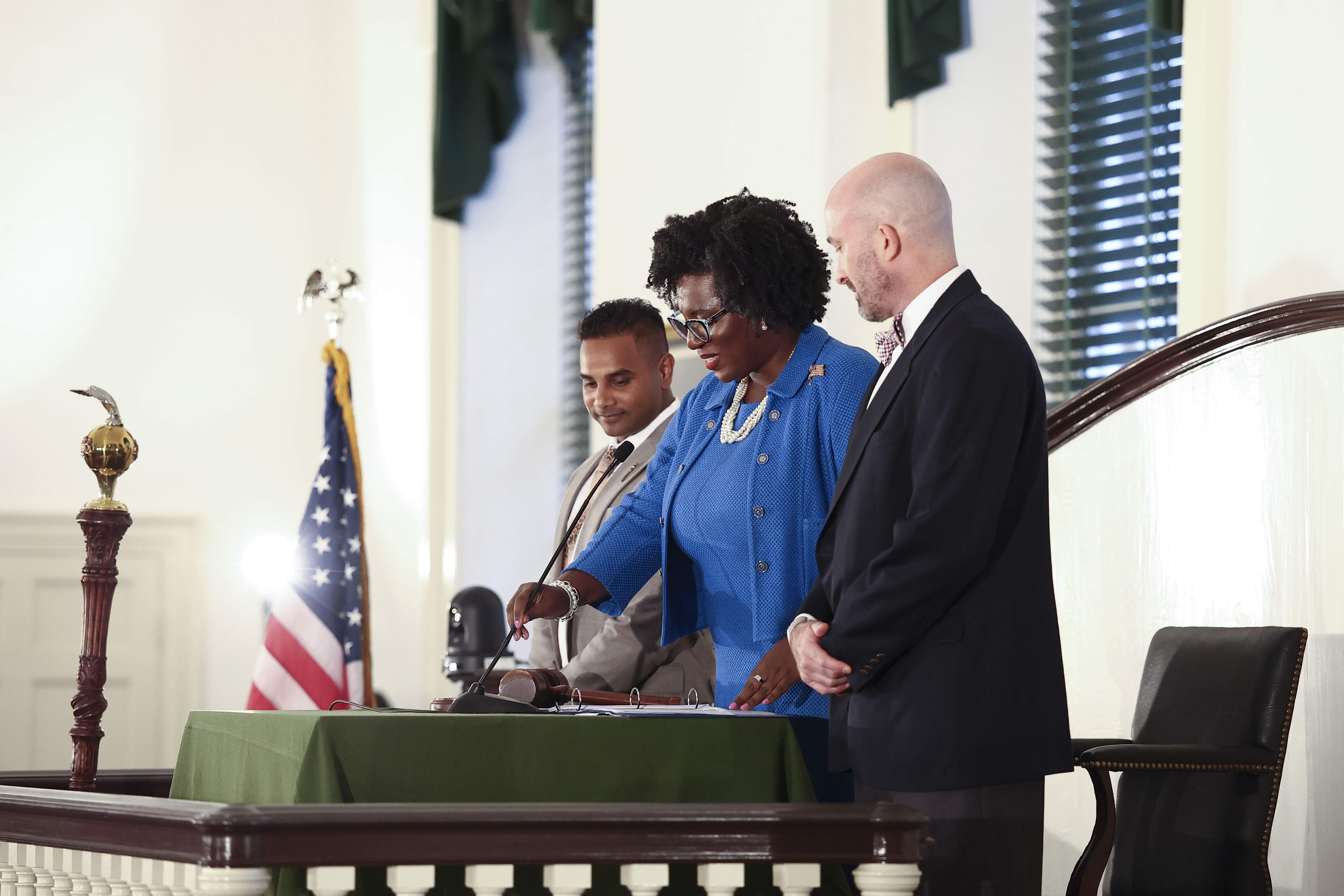
    Addressing the crowd packed into Mother Bethel African Methodist Episcopal Church in Philadelphia on Thursday, Pennsylvania House Speaker Joanna McClinton and three other Black House speakers from around the country outlined the steps they’re taking in their state legislatures to safeguard the future of American democracy under President Donald Trump’s administration.

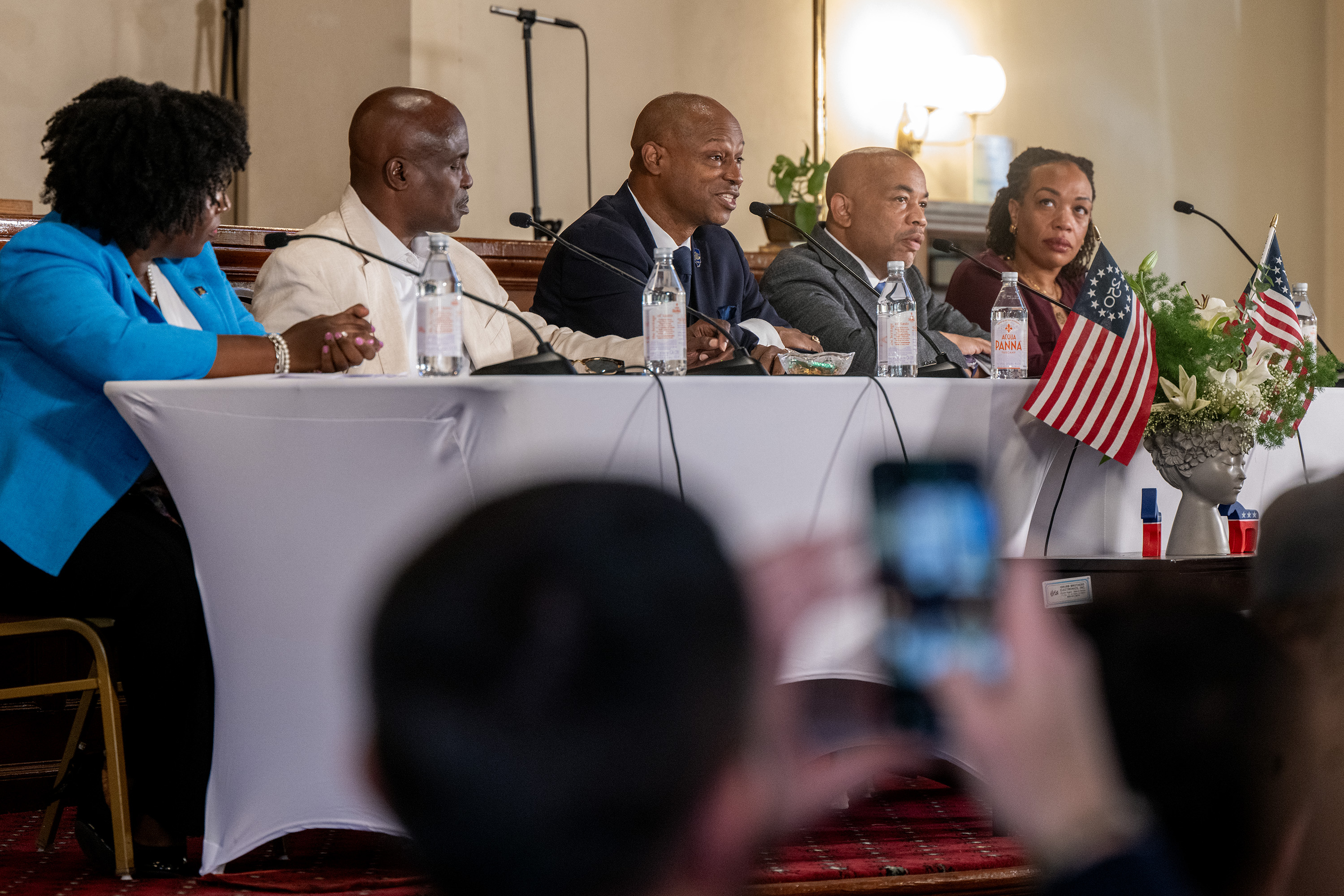
    McClinton hosted the three House speakers — Delaware House Speaker Melissa Minor-Brown, New York House Speaker Carl Heastie, and Illinois House Speaker Emanuel “Chris” Welch — for the discussion on America’s progress toward its founding ideals 250 years ago. Each of the speakers, including McClinton, are the first Black person or Black woman to lead their chambers.

    The event was moderated by WURD radio host Solomon Jones. Attendees from around the city, including at least two high school classes, packed Mother Bethel A.M.E. Church in Society Hill, which is on the oldest property continuously owned by African American people in the United States since 1791.

    House Speaker Joanna McClinton (left) hosts an America 250 Conversation at Mother Bethel A.M.E. Church on Thursday. Others reflecting on America’s history and path to inclusion for Black Americans are, from left, moderator Solomon Jones, Illinois House Speaker Emanuel “Chris” Welch, New York House Speaker Carl Heastie, and Delaware House Speaker Melissa Minor-Brown.Tom Gralish / Staff Photographer

    The three blue-state leaders from Illinois, New York, and Delaware have enshrined voting protections into state law under the John Lewis Voting Rights Act, following a U.S. Supreme Court ruling earlier this year that dismantled some federal protections.

    “When we talk about voting, it’s very personal,” said Welch. “When I first got elected to the state House in 2012, I won my election by 36 votes … Eight years after winning the election by 36 votes, I became the state’s first Black speaker. You can’t tell me every vote doesn’t count.”

    Similar legislation has yet to become law in Pennsylvania, where the General Assembly is split, with Democrats controlling the House and Republicans controlling the Senate.

    McClinton, the first woman and first Black woman to lead the Pennsylvania state House, said she was jealous of her blue-state neighbors, as Pennsylvania Democrats are vying for control of the state Senate in November. The state House passed a bill to expand voting access to include same-day voter registration in a bill titled the Leroy Irvis Voting Rights Protection Act to memorialize the late Pennsylvania House speaker, who in 1977 became the first Black person to lead any state legislature since Reconstruction. That bill has yet to be called up for a vote by the GOP-controlled Senate.

    “I know I’m not supposed to be envious of my neighbors,” McClinton joked from the table set up in front of the church pulpit.

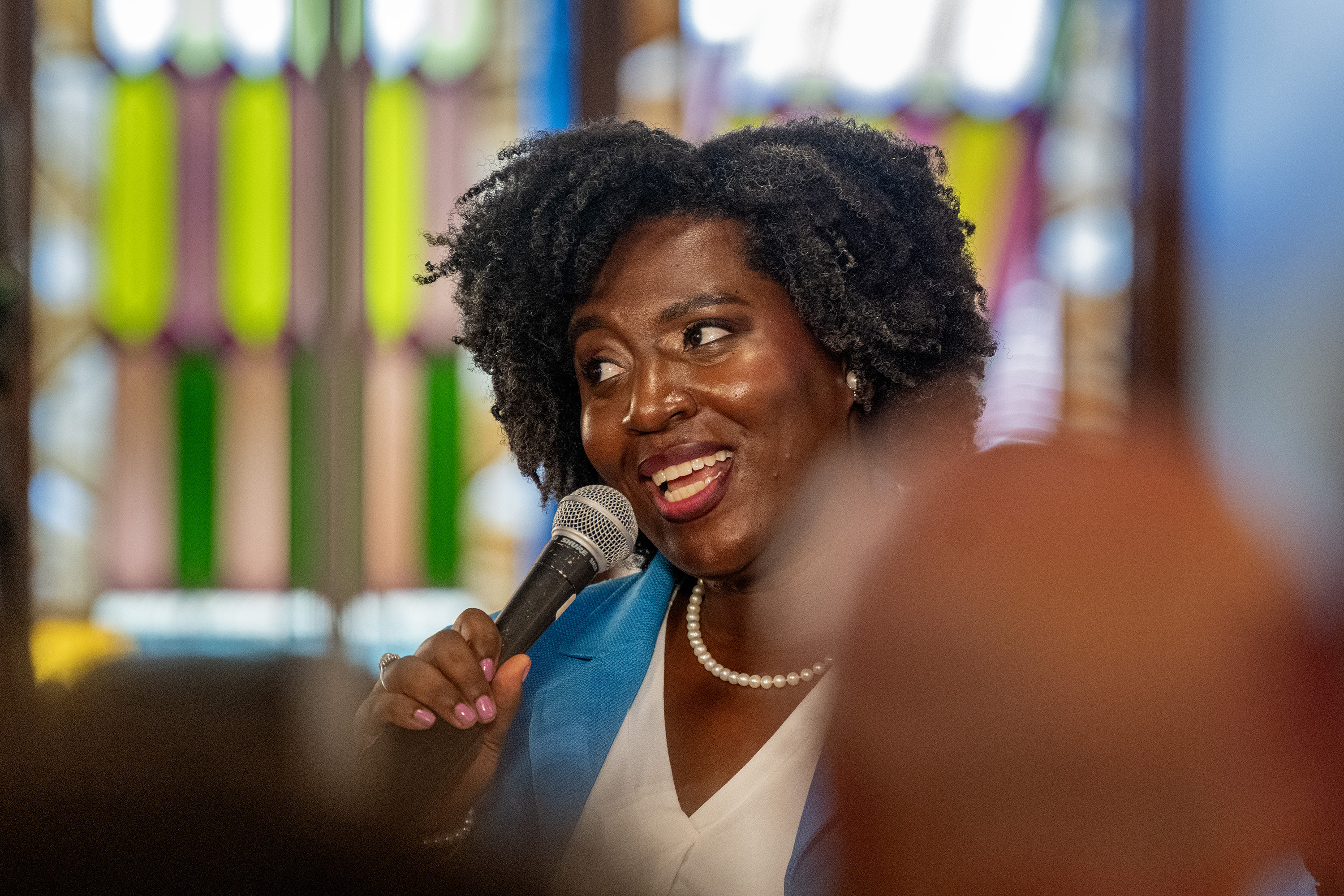
    House Speaker Joanna McClinton hosts an America 250 Conversation at Mother Bethel A.M.E. Church on Thursda. She hosted three other state House speakers from around the country at the event, reflecting on America’s history and path to inclusion for Black Americans.Tom Gralish / Staff Photographer

    Each of the leaders acknowledged the ways Black Americans were purposely excluded from many of America’s liberties by the nation’s founders, progress in broadening civil rights since then — and how their state governments are trying to safeguard those protections under Trump’s administration. They each expressed concern about voting access, immigration, healthcare, and their state-level efforts to protect them through legislation.

    “State legislatures have power,” McClinton said, noting Pennsylvania’s increased investments in public education and a focus on Black maternal health. “We are not in charge of ICE, we are not in charge of the president, but we do have power, and we do good work.”

    In New York, Heastie said state lawmakers included protections in this year’s state budget to discourage U.S. Immigration and Customs Enforcement from appearing near polling places as Trump ramps up his efforts against noncitizen voting that advocates fear will discourage American citizens from going to the polls.

    Each of the legislative leaders encouraged the young people in attendance to get involved in their local government, expressing hope for the future.

    “I look at pictures of my late aunt and uncle back in the ’60s and ’70s and I see them at protests,” Minor-Brown said. “When I see those pictures, I look at our young people today and know that’s the direction that we’re going in. That’s where we’re at right now, and that’s what brings me hope that we’re going to get to a better place. I know we will, because our young people are so energized and ready to move and ready to close these gaps.”

    McClinton also noted the ways the Trump administration has tried to rewrite history just a few blocks away from Mother Bethel A.M.E. Church at the President’s House Site, where officials swapped panels detailing the brutality of slavery for ones that sanitize George Washington’s history as an enslaver.

    “We see the fact that this federal administration continuously out an eraser and says, ‘Oh that didn’t happen, that’s not how it occurred,’” McClinton said. “We, in this moment, have to recommit to the promise of this nation.”

    During Thursday’s panel, the speakers fielded questions on a number of current events, including about the 25th anniversary of the Sept. 11, 2001, terrorist attacks. McClinton recalled her experience in college at the time, and said that America is at risk of another terrorist attack due to Trump eroding the nation’s image in the rest of the world.

    “Thank God we’ve not had another attack … But we have to also recognize that our policies are impacting our perception around the world,” she said.

    Several Pennsylvania Republicans were quick to seize on her comments on the eve of the anniversary as insensitive and trying to blame America for the terrorists’ actions.

    Earlier in the week, McClinton presided over a ceremonial session of the state House in Independence Hall, the same place where the Declaration of Independence was signed 250 years ago, and the building that also served as Pennsylvania’s first statehouse.

    Joanna McClinton, speaker of the Pennsylvania House of Representatives, along with members of the Pennsylvania House of Representatives convened a special session at Congress Hall on Wednesday in Philadelphia. The gathering commemorates the 250th anniversary of America and Pennsylvania’s Constitution.Monica Herndon / Staff Photographer

    She stood at the rostrum, leading the same room where in 1787 the nation’s founders decided that enslaved Black people would only be counted as three-fifths of the number of white residents when tallying America’s population to calculate congressional representation.

    “We are in a day where ‘We, the people’ should mean what it says, finally,” McClinton said Thursday. “But starting with the inception of this country, it did not mean all of us. ‘We, the people’ meant white men who owned a certain amount of property.”

  • For more than 20 years, Josh Shapiro has worn the same pin to remember the lives lost on 9/11

    For more than 20 years, Josh Shapiro has worn the same pin to remember the lives lost on 9/11

    HARRISBURG — For more than two decades, Gov. Josh Shapiro has worn it almost every day.

    The small, thin accessory affixed to his lapel — a compressed version of the 50 stars and 13 stripes — may require one to squint to see. But it carries significant meaning to the Democratic governor, with an origin story that began on Sept. 11, 2001, when Shapiro was a young staffer on Capitol Hill.

    Shapiro was working in Washington when he experienced the pain and confusion of the deadliest terrorist attack in the nation’s history, he said in a June interview.

    He was just steps away from the U.S. Capitol building in then-U.S. Rep. Joe Hoeffel’s office, where he served as chief of staff, when he watched as the Today show anchors announced a plane had hit the World Trade Center. And then another.

    He realized, like thousands of Americans, that the nation was under attack — with Washington as a potential target. Less than an hour later, Shapiro said, he saw the smoke coming from the Pentagon. Staff were given mixed signals on whether to evacuate before ultimately being told to hunker down in legislative buildings until the situation was clear, he said.

    When Shapiro arrived on Capitol Hill the next day, a woman who worked in the Capitol gift shop was giving out American flag pins to anyone who passed by — the “typical gift shop” pin depicting a waving flag that President George W. Bush and other politicians began to wear in the aftermath of the 9/11 attacks, he said.

    The pin became a part of Shapiro’s daily business uniform. He wore it every day, even after he left D.C. and began working at a law firm in Montgomery County while preparing to run for state representative — his first foray into elected office and the start of a decades-long career.

    When Shapiro was knocking on doors for his 2004 run for the state House, a veteran in Glenside told him his gift shop pin wasn’t cutting it. The veteran gave Shapiro a nicer one: an image of the American flag in a thin, metal bar.

    “And I’ve worn it basically every day since,” Shapiro said in June ahead of his appearance at a special session of the U.S. House at Independence Hall to commemorate America’s founding 250 years ago. Widely rumored to be a future presidential contender, Shapiro often talks about his pride in America and its ideals, and his fears that the country is becoming too divided and straying from the founders’ aspirations.

    “I am a proud, patriotic American,” he said, referencing his pin. “I don’t think patriotism belongs to one party. I don’t think it should ever be partisan.”

    Over the years, Shapiro has made slight changes to the flag accessory; he shaved down the pin stem and made it into a magnet.

    “It was destroying my suits,” he added.

    He said he once lost the pin when it fell off a jacket that he had hung up on a plane.

    “I freaked out. I literally freaked out,” he said.

    He said he and the flight attendant were on their hands and knees trying to find it in the plane’s closet. They found the pin, but never found the backing, which was replaced much more easily.

    “I found the most important thing, and I just got another magnet,” he said.

    Shapiro will appear at the Flight 93 Memorial near Shanksville, Pa., alongside members of President Donald Trump’s administration, including U.S. Interior Secretary Doug Burgum, for a service on Friday to commemorate the 25th anniversary of the attacks, in which more than 2,900 people were killed.

    United Airlines Flight 93, a San Francisco-bound passenger plane flying out of Newark, was hijacked on Sept. 11, 2001. It was believed to be headed to the White House or U.S. Capitol, near where Shapiro was working at the time — before its 40 passengers attempted to retake control and crashed the aircraft in a field near Shanksville.

  • A 6-week-old Amish baby died from measles in Pennsylvania, local coroner confirms, as feud between Shapiro and RFK Jr. continues over the deaths

    A 6-week-old Amish baby died from measles in Pennsylvania, local coroner confirms, as feud between Shapiro and RFK Jr. continues over the deaths

    A six-week-old Amish infant from Lancaster County died from measles last month after receiving the care of a community clinic for a deadly genetic disorder, Lancaster County Coroner Stephen Diamantoni said Friday.

    The disclosure comes amid an escalating clash between Pennsylvania Democratic Gov. Josh Shapiro and President Donald Trump’s administration over whether two deaths reported by the state last week should be attributed to the ongoing measles outbreak in Pennsylvania.

    The six-week-old infant died from measles at home and had been in the care of the Clinic for Special Children, a Lancaster County-based treatment and research center focused on diseases found in Old Order Amish and Mennonite communities, LancasterOnline first reported.

    The baby had been getting treated for a deadly genetic disorder, Amish lethal microcephaly, prior to the child’s death from measles, Diamantoni confirmed.

    The baby had been receiving palliative care and was not expected to live much longer than six months due to the genetic condition that occurs in one in every 500 newborns within Pennsylvania’s Amish community, Diamantoni said.

    The announcement follows a nearly two-week-long public feud between Shapiro and U.S. Health and Human Services Secretary Robert F. Kennedy Jr. over whether to classify the Pennsylvania deaths as measles-related. Their standoff has led to the Centers for Disease Control and Prevention taking the unusual step of withholding the deaths from its measles tracker, reportedly under pressure from Kennedy.

    Shapiro, a first-term Democrat seeking reelection in November, initially provided little detail about two measles-related deaths when he announced them last Tuesday in a news conference, saying only the state’s first deaths from the highly contagious disease since 1991 involved residents of the county who were unvaccinated.

    Diamantoni, an elected Republican who is also a physician, subsequently said his office was investigating the death of a newborn who had measles, but did not believe measles contributed to the child’s death. He said the newborn died of a lacerated spleen, and postmortem testing showed a measles infection acquired before birth. He later said “measles” was included on the newborn’s death certificate under a section that lists “significant conditions contributing to death but not resulting in the underlying cause.”

    The deceased baby’s family, who are also Amish, told The Atlantic they believed a severe case of measles during pregnancy contributed to their newborn’s death.

    The discrepancies between Diamantoni’s statements and the state’s created an opening for anti-vaccine activists, including Kennedy, to publicly question whether the deaths could be attributed to the measles. Kennedy accused Shapiro of fearmongering about the disease — suggesting his office may have even fabricating the deaths.

    But the six-week-old infant reported Friday was confirmed to have died from the measles, Diamantoni said, after his office investigated the child’s death that previously was not reported to his office.

    The Clinic for Special Children did not know it was necessary to report the death to the Lancaster County coroner’s office, Diamantoni said.

    Diamantoni said he reported the six-week-old baby’s death to the CDC on Friday, but had not reported it to the state Department of Health.

    He said he did not know whether the six-week-old was the second measles-associated death reported by Pennsylvania last week.

    The Pennsylvania Department of Health said it was aware of the information shared by Diamantoni, noting the state had no new measles-related deaths to report Friday.

    The state has said the Pennsylvania health department’s epidemiology team’s thoroughly investigated and determined the two announced deaths were measles-related.

    The state defines a measles-associated death as deaths of people where evidence of measles is present, even when the disease may not be assessed by the coroner as the immediate cause of death.

    The Shapiro administration has said state privacy laws have limited their ability to release more personal information about the two measles-related.

    Shapiro reshared Friday a local news article about the six-week-old baby’s death and criticized Kennedy in an X post for choosing “to sow doubt, play politics, direct the CDC not to acknowledge these deaths, and even accuse me of fabricating these tragedies.”

    “That led to a firestorm of conspiracy theories that denied these families’ pain, invaded their privacy, and undermined public health,” Shapiro added.

    Kennedy highlighted the Lancaster coroner’s new disclosure in another X post later on Friday, noting “the facts emerging now demonstrate why CDC waited for the evidence rather than allowing political grandstanding to dictate its reporting.”

    A rare death

    As of Friday, there have been 577 measles cases in Pennsylvania, including 115 reported within the last week, according to the health department’s online measles dashboard.

    Measles deaths are rare. About three in 1,000 children who contract measles will die. While many infections are mild, measles can also cause severe complications, especially in young children, including pneumonia and brain swelling.

    Babies with Amish lethal microcephaly frequently die from respiratory infections due to the genetic condition leading the baby to develop with a severely small head and underdeveloped brain, Diamantoni said.

    But infants with the genetic condition usually do not die from the measles because the disease had been largely eradicated in the United States until recent years due to widespread vaccination, he said.

    “Usually there are not a lot of cases of measles, until recently,” Diamantoni added.

    Staff writer Sarah Gantz contributed reporting.

  • 6 in 10 Pennsylvania voters oppose data center development, new poll finds

    6 in 10 Pennsylvania voters oppose data center development, new poll finds

    A majority of Pennsylvania voters oppose data center development in the United States, according to a new poll, as the issue has quickly become a flash point in the state’s gubernatorial race and other midterm elections.

    Six in 10 likely Pennsylvania voters do not want the U.S. to construct data centers to house artificial intelligence, according to a poll conducted from Aug. 17 to 21 by The Inquirer, the New York Times, and Siena University. The poll, which surveyed 760 likely voters in Pennsylvania, found that Democratic and independent voters oppose data centers at higher rates, while just over half of Republicans support their construction.

    (function(){function e(){window.addEventListener(`message`,function(e){if(e.data[`datawrapper-height`]!==void 0){var t=document.querySelectorAll(`iframe`);for(var n in e.data[`datawrapper-height`])for(var r=0,i;i=t[r];r++)if(i.contentWindow===e.source){var a=e.data[`datawrapper-height`][n]+`px`;i.style.height=a}}})}e()})();

    The United States is in an international race to lead advancements in AI, with $2.3 trillion in data center projects underway or in the planning stages across the country. Pennsylvania, with more than 100 proposed projects, is among the hot spots targeted by developers for its key location near top U.S. metropolitan areas, vast rural space for building, and significant energy resources.

    Gov. Josh Shapiro originally welcomed data center developments to the state, and last year championed a $20 billion investment from Amazon to build at least two data center campuses in Bucks and Luzerne Counties. He also offered developers fast-track permitting in an attempt to establish Pennsylvania as a leader in AI development.

    But in a year’s time, public animosity toward data centers has grown in Pennsylvania and beyond, as residents say they fear the facilities will drive up electricity costs, overuse water supplies, depreciate home values, and disrupt their daily lives. Last week, Shapiro, a Democrat running for reelection in November and a 2028 presidential prospect, announced plans to restrict data center development in the state.

    Shapiro said his position on data centers evolved as he listened to more constituents who live in areas like Archbald, a small northeastern Pennsylvania town with six data center campuses under construction, and pointed to a developer in Montgomery County who he said is “bullying” residents to push projects through amid public opposition.

    (function(){function e(){window.addEventListener(`message`,function(e){if(e.data[`datawrapper-height`]!==void 0){var t=document.querySelectorAll(`iframe`);for(var n in e.data[`datawrapper-height`])for(var r=0,i;i=t[r];r++)if(i.contentWindow===e.source){var a=e.data[`datawrapper-height`][n]+`px`;i.style.height=a}}})}e()})();

    Pennsylvania’s youngest voters were most likely to reject data centers, according to the poll: 83% of likely voters ages 18 to 29 opposed their development, as did 71% of voters ages 30 to 44. Opposition, while above 50% for all age groups, decreased among older voters.

    Kelly Harrington, 29, of Conshohocken, who participated in the poll, said she has been attending Plymouth Township Council meetings to oppose a controversial proposal for a 2 million-square-foot data center project there.

    “Some of my concerns about that specific data center are selfish in the sense that I think my home value is going to go down, I think it’s going to be loud and obstructive, I think it’s going to pollute the air that I want to breathe every day,” Harrington said. “But in a wider sense, I’m also concerned about the environmental impacts of data centers.”

    Front and center in the Pa. governor’s race and beyond

    Data centers have become a key issue in the Pennsylvania gubernatorial election, where Shapiro hopes to ride his high popularity to reelection and usher in Democratic gains in down-ballot races for the statehouse and Congress.

    Both Shapiro and his Republican opponent, State Treasurer Stacy Garrity, have released ads criticizing the other’s past support for data center development.

    The issue also is animating down-ballot races across the state, where candidates from both parties are campaigning on their opposition to data center development.

    Democratic and Republican politicians across the country have reversed course on data centers in recent months as the projects have grown increasingly unpopular.

    Gov. Josh Shapiro answers questions after signing an executive order restricting data centers in Pennsylvania during a ceremony in the Capitol in Harrisburg, Pa., Tuesday August 18, 2026.Kalim A. Bhatti / For The Inquirer

    Prior to Shapiro’s announcement last week touting the “strictest guardrails in the nation” for data center development, his support for the projects appeared to be one of the major tests of his popularity. A Quinnipiac University poll published in July found that while 56% of voters approved of Shapiro overall, only 24% approved of how he was handling data center development in Pennsylvania.

    And some Pennsylvanians who had voted for Shapiro in 2022 said his support for the developments had caused them to contemplate sitting out the November election or writing in a different candidate for governor.

    For some voters, like Montiese McKenzie, Shapiro’s change in position has been enough.

    “I’m very proud of Gov. Shapiro for being anti-data center,” said McKenzie, 48, of West Philadelphia. The Democratic voter said she fears that poor communities will face disproportionate consequences of the construction of AI data centers.

    “What happens will be very important for how I see him as a future leader,” McKenzie said.

    Montiese McKenzie, 48, poses for a portrait near her home in West Philadelphia on Monday, Aug. 24, 2026.Allie Ippolito / For The Inquirer

    Still, Shapiro’s recent change in position has not wooed all Pennsylvania voters.

    Maryann Klaus, 82, a Democrat in Upper Bucks County, supported Shapiro in 2022. But, she said, his initial embrace of data centers in the region without consulting the community was “just not good governance.” Despite Shapiro’s recent moves to restrict data center development, Klaus said, she is still reconsidering her vote for his reelection this fall.

    The executive order Shapiro signed last week is a “a start,” Klaus said. “But, unfortunately, when you open the door, too many things occur and then you can’t walk them back.”

    Others, like Steven Keenan of Ridley Township, say they want more data center development in the state.

    Keenan, 60, a Republican who is supporting Garrity in November, said he wants Pennsylvania to lead on data centers.

    “I’m not afraid of advancement in technology,” Keenan said. “I think we need all that [development]. We’re in a race with other countries that we want to dominate.”

    Keenan said Shapiro’s change in position reaffirmed his support for Garrity. The shift in stance, he said, showed Shapiro was reacting to public opinion instead of doing what is right for the state. (Garrity, too, has moved away from her public support for data centers. She has called for the state to temporarily pause all data center development.)

    “He goes where the wind blows,” Keenan added.

    Staff writer Fallon Roth contributed to this article.

  • Josh Shapiro has a 16-point lead in the governor’s race — and most Pa. Democrats would support him for president

    Josh Shapiro has a 16-point lead in the governor’s race — and most Pa. Democrats would support him for president

    With a little more than two months until Election Day, Democratic Gov. Josh Shapiro has a double-digit lead over his Republican challenger, Stacy Garrity, among likely Pennsylvania voters in the race to lead the critical swing state — an election that could also serve as an audition for the 2028 presidential primary.

    Shapiro holds a 16-percentage-point lead over Garrity, the state treasurer, according to a new poll of 760 likely voters conducted from Aug. 17 through 21 by The Inquirer, the New York Times, and Siena University.

    The numbers could foreshadow another commanding victory for Shapiro, as he hopes his popularity trickles into other down-ballot races, including four congressional districts that national Democrats think they can flip. Shapiro is also trying to flip the state Senate for the first time in 30 years and deliver a Democratic trifecta in the statehouse.

    (function() { var l = function() { new pym.Parent( ‘nyt-shapiro2__graphic’, ‘https://media.inquirer.com/storage/inquirer/ai2html/nyt-shapiro2/index.html’); }; if(typeof(pym) === ‘undefined’) { var h = document.getElementsByTagName(‘head’)[0], s = document.createElement(‘script’); s.type = ‘text/javascript’; s.src = ‘https://pym.nprapps.org/pym.v1.min.js’; s.onload = l; h.appendChild(s); } else { l(); } })();

    A majority of Pennsylvania voters — 60% — have a favorable opinion of the governor, compared with Garrity, who is viewed favorably by just 37% in the state.

    Shapiro’s popularity also eclipses that of President Donald Trump, according to the poll. Sixty percent of likely Pennsylvania voters approve of the job Shapiro is doing as governor, while 39% approve of Trump, who won the state two years ago.

    Lora Peluso, 63, a Democrat and retired catering director from Pittsburgh, said Shapiro has been a shield in Pennsylvania against some of Trump’s most harmful policies affecting low-income and older people.

    “I think [Shapiro] is trustworthy,” said Peluso, who participated in the poll. “His policies are things that actually benefit people, the average working person, seniors.”

    Garrity still unknown by some Republicans

    Pennsylvania Republicans this year had hoped to avoid another walloping by Shapiro, who has won three times statewide, with fears that a weak gubernatorial candidate could negatively affect the rest of the Republican ticket. So the state GOP took the unprecedented move of endorsing Garrity in September 2025 — approximately 14 months before the election — to try to raise her profile.

    Despite securing Trump’s endorsement, Garrity has struggled to raise money, attract support from national Republicans, or compete with Shapiro’s $13 million in ad buys so far this cycle. Her campaign has spent $679,000 on ad buys thus far, according to media-tracking firm AdImpact, as it seeks to introduce the candidate to voters.

    Now, with 70 days until the election, a quarter of likely Republican voters still did not know Garrity or know enough about her to form an opinion of her, according to the poll.

    Meanwhile, Shapiro maintains favorable opinions among 27% of Trump’s 2024 supporters, and 35% of registered Republicans approve of the job he is doing as governor, the poll found.

    (function(){function e(){window.addEventListener(`message`,function(e){if(e.data[`datawrapper-height`]!==void 0){var t=document.querySelectorAll(`iframe`);for(var n in e.data[`datawrapper-height`])for(var r=0,i;i=t[r];r++)if(i.contentWindow===e.source){var a=e.data[`datawrapper-height`][n]+`px`;i.style.height=a}}})}e()})();

    Michael Patterson, a Republican from Trumbauersville, Bucks County, who supported Trump in 2024, said he plans to support Shapiro in November because he likes the job the governor is doing and because he does not know much about Garrity besides what he has seen on social media.

    “Honestly, I don’t know much about her,” Patterson, 60, said. “I guess I don’t see advertisements on the TV. Other than Facebook, I really don’t see her. The stuff I see on Facebook is just typical partisan stuff.”

    Shapiro, on the other hand, appears more moderate and independent from his party in Patterson’s eyes.

    “He’s kinda doing his own thing. I have a lot of respect for that. He’s not playing partisan games,” Patterson said, contrasting Shapiro with Democrats in California and New York.

    Michael Patterson, a Bucks County Republican voter pictured in his Trumbauersville home, plans to vote for Democratic Gov. Josh Shapiro over Republican nominee Stacy Garrity. William Thomas Cain / For The Inquirer

    This attitude shows up among other Republicans, too, said Don Levy, the director of the Siena Research Institute.

    “Shapiro is seen as sufficiently middle of the road,” Levy said. “He’s got 35% of Republicans approving of the job that he’s doing as governor. That’s a really impressive number in today’s world.”

    Other Republicans like Steven Keenan, 70, of Ridley Township, are all in for Garrity, citing her military experience and support for Trump.

    “[Shapiro’s] a big phony. He’s a politician,” Keenan said. “She is, too, but she’s been through the wars. I think she’s earned her place. I think we should give a woman a chance.”

    A majority of Pennsylvania voters trust Shapiro over Garrity to handle top issues facing the state, including the economy, cost-of-living increases, the Trump administration, immigration, and doing what is best for ordinary Pennsylvanians.

    Tina Hoffert, 68, of Lenhartsville, Berks County, said she has not heard much about Garrity, but plans to vote for her in November because she is unsatisfied with Shapiro’s leadership.

    “He’s forever bashing Trump,” Hoffert, a Republican, said. “I’m sorry, I don’t care whether you like him or not, he’s our president. You work with him. You don’t fight him. And if there’s things you don’t like that he’s doing, then you go in there and you have discussions.”

    Shapiro’s presidential prospects

    If Shapiro is reelected in a landslide victory this November, it becomes even more likely that he jumps into the 2028 presidential race as the governor of a key swing state with 19 electoral votes.

    Among those surveyed who said they plan to vote in the Democratic primary in two years, 86% said they would be likely to support him — though the poll did not compare him with other potential primary candidates.

    Other prospective candidates include former Vice President Kamala Harris, Govs. Gavin Newsom of California and JB Pritzker of Illinois, U.S. Sens. Mark Kelly of Arizona and Jon Ossoff of Georgia, and U.S. Rep. Alexandria Ocasio-Cortez of New York.

    (function(){function e(){window.addEventListener(`message`,function(e){if(e.data[`datawrapper-height`]!==void 0){var t=document.querySelectorAll(`iframe`);for(var n in e.data[`datawrapper-height`])for(var r=0,i;i=t[r];r++)if(i.contentWindow===e.source){var a=e.data[`datawrapper-height`][n]+`px`;i.style.height=a}}})}e()})();

    Shapiro has brushed off questions about his ambitions and told a reporter Saturday, in response to whether he would commit to serving a four-year term in office, that “the only thing that I’m focused on — and the only thing anybody should be focused on — is winning in November and being a check on this president’s chaos, cruelty, and corruption.”

    Most voters in the poll — 58% — said that if Shapiro decides to run for president, doing so either would not distract from his role as governor or would not keep him from being effective at governing.

    “I mean, it would be a distraction, of course, but I think he’s a professional and a hard worker, and he would figure it out. It seems like he hires good people, too,” said Peter Hewitt, 62, of Devon, a Democrat who supports Shapiro’s reelection bid.

    (function() { var l = function() { new pym.Parent( ‘nyt-trump2__graphic’, ‘https://media.inquirer.com/storage/inquirer/ai2html/nyt-trump2/index.html’); }; if(typeof(pym) === ‘undefined’) { var h = document.getElementsByTagName(‘head’)[0], s = document.createElement(‘script’); s.type = ‘text/javascript’; s.src = ‘https://pym.nprapps.org/pym.v1.min.js’; s.onload = l; h.appendChild(s); } else { l(); } })();

    Shapiro’s potential candidacy has largely centered on his electability, especially his ability to win the top office in the nation’s premier swing state. He has pitched himself as a Democratic governor more interested in working with Republicans to make meaningful improvements to the state than in picking partisan fights, and voters agree: 58% of respondents said he is neither too far to the left nor to the right.

    “He’s done a good job of just being more of a moderate, middle-of-the-road Democrat,” said Andrew Perez, a 58-year-old self-described independent voter in Pittsburgh. He said he appreciated Shapiro’s focus on improving roads and highways and not “just blindly disagreeing” with Trump.

    “I think we need a strong presidential candidate who will try to unite the country instead of just keeping it being divisive, so I think that I’d be pretty likely to vote for him [for president],” said Perez, a physician.

    Montiese McKenzie, 46, of West Philadelphia, said she is supporting Shapiro for a second term, but is not quite yet sold on a presidential run. She said she has not seen him rise to the level of “fighter” she thinks the Democratic Party needs, and believes as of now, she would be more likely to support someone else in the Democratic primary.

    “You see people like Jon Ossoff and JB Pritzker, and they’re not putting up with it. They don’t make it pretty anymore,” McKenzie said. “If I saw some of that in Shapiro, I might be more likely to support him as a presidential candidate. Until then, I’m not sure he has the gumption.”

    Shapiro has signed on to dozens of lawsuits against Trump’s administration on a host of issues, from tariffs to gender-affirming care.

    But to win the party’s nomination, Shapiro would have to defeat more progressive candidates and make the case for his more centrist approach.

    Montiese McKenzie, 48, poses for a portrait near her home in West Philadelphia on Monday, Aug. 24, 2026. McKenzie is a supporter of Gov. Josh Shapiro’s reelection, but is hesitant to back his potential presidential run in 2028.Allie Ippolito / For The Inquirer

    He has already faced criticism from some progressive voters over his previous support for school vouchers, and his early embrace of data centers, which he reversed last week by implementing what he called some of the nation’s “strictest guardrails.” Shapiro, Pennsylvania’s third Jewish governor, has also faced a perception from some progressives that he has been too supportive of Israel during its war with Hamas, despite his vocal opposition to the country’s leader, Prime Minister Benjamin Netanyahu.

    Nearly half, 47%, of respondents said he has been just “about right on support of Israel,” with 14% saying he has been too supportive and 19% saying he has been not supportive enough.

    Should Shapiro launch a presidential campaign, Hewitt wants to see him “come out on the right side.”

    Hewitt, who emphasized his support for Jewish people in his community, said he considers the Israeli government’s actions toward Palestinian people in Gaza to be genocidal. More than 73,000 Palestinian people have been killed in Gaza since the war began nearly three years ago, and multiple international institutions have said Israel’s actions violate human rights.

    “I don’t think it’s really that big of a deal for governors per se. He’s not going to vote on national policy as the governor of Pennsylvania,” Hewitt said. But he added: “He does have a voice, and if he’s thinking about a next step beyond Pennsylvania, then he will have to come out in regard to that issue.”

  • Does Pennsylvania now have ‘the strictest guardrails in the nation’ for data centers?

    Does Pennsylvania now have ‘the strictest guardrails in the nation’ for data centers?

    HARRISBURG — As part of his new, hard-line stance on regulating data centers in Pennsylvania, Democratic Gov. Josh Shapiro said during a news conference last week that his sweeping executive order has the “strictest guardrails in the nation” on data center development.

    Fact check: That is technically true, if you exclude moratoriums, or the full-stop pauses on development that have been implemented in two other states.

    States around the country have taken different approaches to data centers in the race for AI supremacy — and, subsequently, how to rein in the increasingly unpopular massive developments that some fear will disrupt their communities, drain resources, and increase energy costs.

    Governors, including Shapiro, initially welcomed companies who had come knocking on their states’ doors offering billion-dollar investments to build there. And as the political tide has transformed data centers into widely unwelcome developments among most Americans, leaders have had to adapt — or even change their positions.

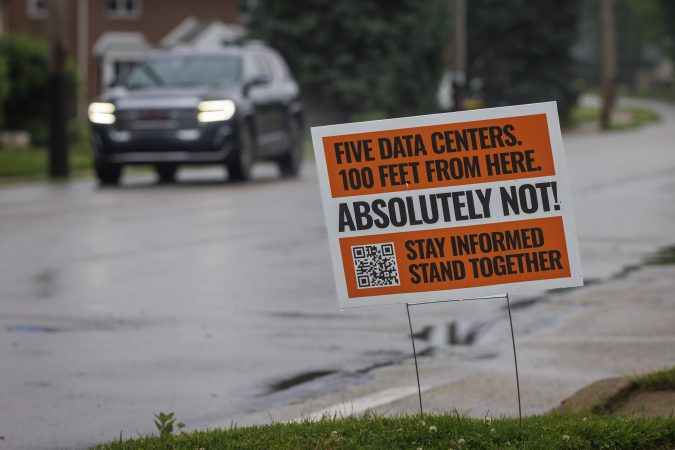
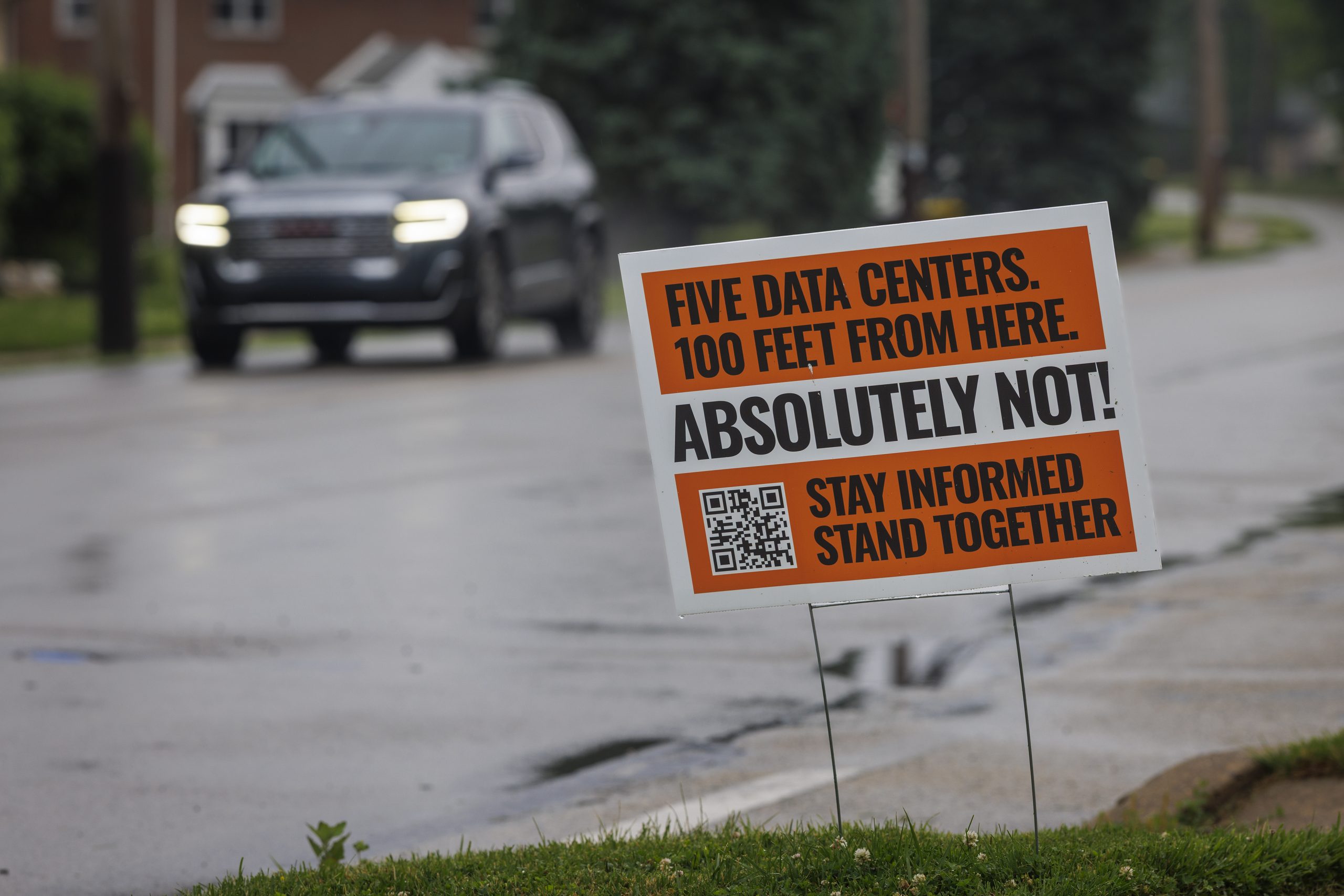
    Lawn sign along Crooked Lane in King of Prussia, Wednesday, May 27, 2026. Some residents are standing in opposition to building a data center in their community.Alejandro A. Alvarez / Staff Photographer

    To build a data center in Pennsylvania — where Shapiro just 14 months ago trumpeted a $20 billion commitment from Amazon to build at least two data center campuses in Bucks and Luzerne Counties — developers will now be required to sign a consent agreement detailing how it will follow new guidelines in four key areas: transparency, energy affordability, workforce development, and environmental protection.

    Many top Pennsylvania Democratic leaders and environmental groups lauded Shapiro’s order, while some Republicans called it a disingenuous flip-flop in an election year. And some of the loudest data center opponents said it did not go far enough — and they still want a moratorium.

    Thirty-eight states, including Pennsylvania, offer tax breaks for data centers. Many of these tax incentives were approved years ago, as the emerging artificial-intelligence industry began to come online. Pennsylvania’s legislature first approved its benefit in 2021.

    Some states, like New York, have halted all data center development for periods of time, while others, like New Jersey, have singled out specific areas, such as consumer protections, in which lawmakers want to curb data centers’ impact.

    Shapiro’s administration argues it is unfair to compare its multipronged requirements for developers to build in Pennsylvania to states with moratoriums. In other words, officials say, Pennsylvania has the toughest enforceable barriers for data center development, while moratoriums are a total stop.

    Most state legislatures are weighing proposals to restrict data center development through moratoriums or energy generation requirements. Pennsylvania has near-unanimous support among lawmakers to end tax breaks for data center developers, but legislators in the politically split General Assembly failed to do so before leaving Harrisburg for the summer.

    In absence of new state laws, a handful of governors, including Shapiro, have taken executive action to restrict data center development in their states. Here is a look at how several states, including Pennsylvania and its neighbors, are approaching data centers.

    Pennsylvania

    Moratorium: No

    Tax credit available: Yes

    Restrictions: After previously embracing data center development as a potential economic driver for Pennsylvania, Shapiro changed his position and signed a wide-ranging executive order last week requiring data centers to get local approval, bring their own power, hire and train local workers, and more. The order does not include a moratorium on data center development. However, its requirements for local approval may, in effect, block many from moving forward.

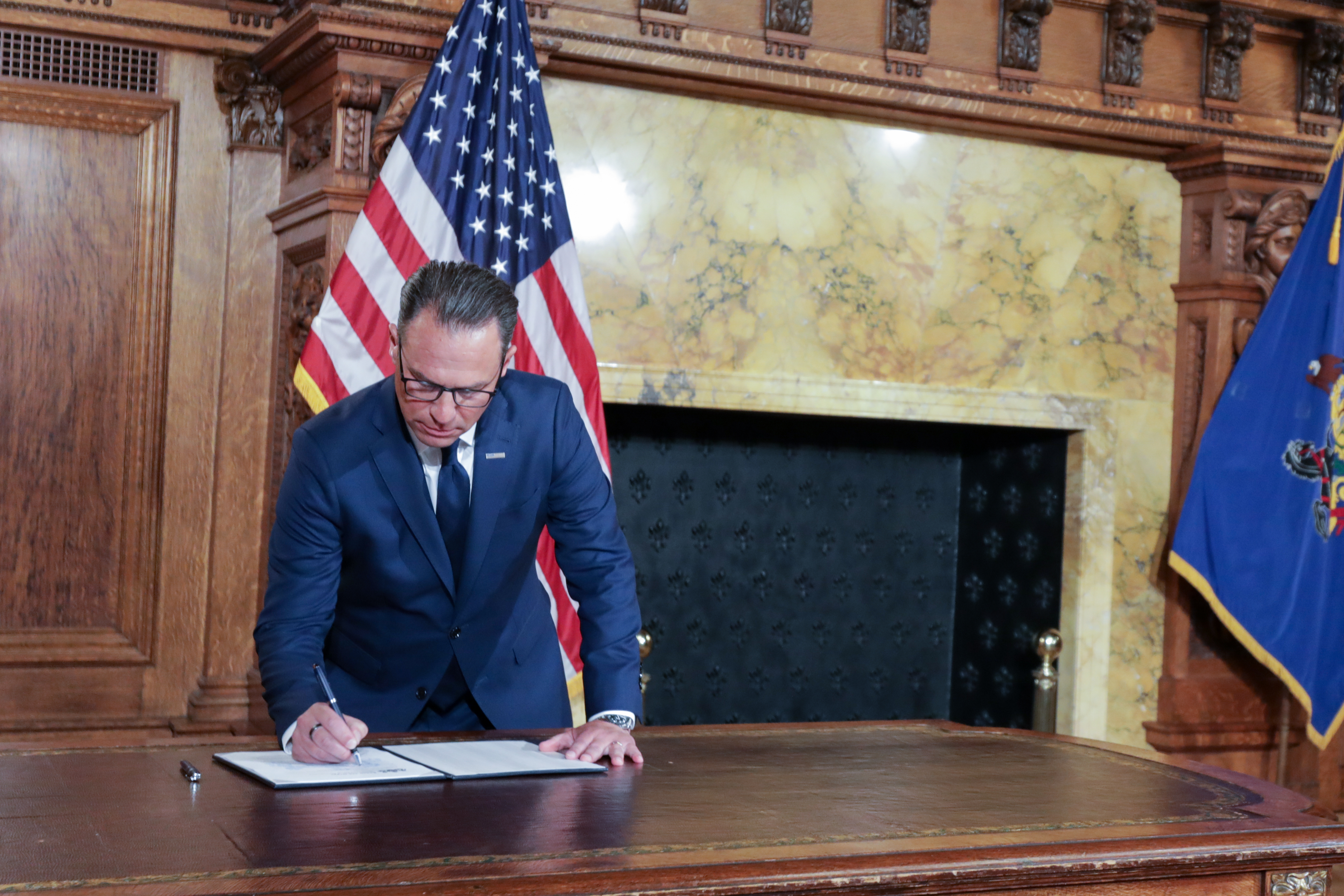
    Gov. Josh Shapiro signs an executive order restricting data centers in Pennsylvania during a ceremony in the Capitol in Harrisburg, Pa., Tuesday August 18, 2026.Kalim A. Bhatti / For The Inquirer

    Any developer looking to build a data center in Pennsylvania must sign a 33-page, legally binding consent agreement that follows Shapiro’s multifaceted and detailed requirements about the facility’s projected energy generation and water usage and a community benefits agreement in order to receive state-level permit approvals. If the developer does not agree to Shapiro’s rules, its project will be held up by the state indefinitely.

    Current projects that have received state permits will be allowed to proceed, but developers will need to sign the agreements for any future approvals.

    New Jersey

    Moratorium: No

    Tax credit available: Yes

    Restrictions: In July, Gov. Mikie Sherrill signed several bills into law to protect consumers from increased costs associated with data center development, including the creation of a new tax and rate structure specific to data centers so that the projects pay for their own energy usage and grid updates.

    Gov. Mikie Sherrill answers questions from press about the recent rainfall and flooding in Camden at the Fire Administration Building in Camden, N.J., on Tuesday, July 7, 2026.Tyger Williams / Staff Photographer

    Sherrill has released a plan with a framework similar to the regulations outlined in Shapiro’s executive order — including requirements for energy generation, community input, workforce development, and environmental protection — but unlike an executive order or legislation, it does not appear to be enforceable.

    Sherrill, a Democrat, began her first term earlier this year after running on a campaign promise to bring down utility costs.

    New York

    Moratorium: Yes

    Tax credit available: Yes

    Restrictions: Gov. Kathy Hochul in July signed the first statewide data center ban in the nation, blocking new construction for any project using 50 megawatts or more of electricity for up to one year. Fewer projects were proposed in New York, one of the nation’s most populous states that relies heavily on surrounding regions to generate its energy consumption, than in its neighbors. Hochul said she will lift the order once her administration develops guardrails for future projects.

    Hochul, a Democrat, took specific aim at hyperscale data center proposals, the main projects intended to power emerging AI technologies.

    Maryland

    Moratorium: No

    Tax credit available: Yes

    Restrictions: There has been no statewide action on data centers yet, as Maryland is limited on how much energy it can produce due to its size and dense population. Unlike in Pennsylvania, county and local governments in Maryland are allowed to pass their own moratoriums on data center development, which Baltimore and other densely populated counties near Washington have done.

    Wes Moore, Governor of Maryland, speaks during the National Action Network (NAN) Convention in New York, Thursday, April 9, 2026. (AP Photo/Angelina Katsanis)Angelina Katsanis

    Gov. Wes Moore, a Democrat running for reelection, backs a number of legislative proposals in the Maryland statehouse that would require the centers to bring their own power and hire local union workers. But he has mostly demurred on a statewide moratorium, saying it is up to local governments to decide, online news outlet Maryland Matters reported.

    Similar to Shapiro’s Republican opponent, Stacy Garrity, Moore’s GOP challenger, Dan Cox, has called for a statewide moratorium on the projects.

    Virginia

    Moratorium: No

    Tax credit available: Yes

    Restrictions: Virginia is among the hottest spots for data center development in the country, with more than 340 data centers in operation and hundreds more proposed. In July, the Virginia General Assembly imposed a new electricity-use tax set to run out in two years.

    Virginia is also seeing massive tax revenues from its burgeoning data center industry. One wealthy county just south of Washington is home to 250 data centers. The local government there is expected to bring in $1.3 billion in additional tax revenue from data centers, allowing the county to reduce property taxes by 30%, the New York Post reported.

    Like Moore, Gov. Abigail Spanberger, a Democrat for whom Shapiro campaigned last year, has bucked calls for a statewide moratorium and urged local governments to decide.

    Ohio

    Moratorium: No

    Tax credit available: Yes

    Restrictions: Ohio has the fifth-most data centers in the country, with more than 200 already operating, according to the state’s consumer protection office.

    The GOP-controlled state broadly still welcomes data center development. But its utilities commission approved a tariff for large data centers, requiring them to pay for at least 85% of their electricity capacity.

    It is also a top issue on the campaign trail in the state’s hotly contested U.S. Senate race that could decide control of the chamber: Top Republicans warned AI developers that they need to fix their public image or lose supportive candidates, Axios reported.

    Texas

    Moratorium: Yes, for future development

    Tax credit available: Yes

    Restrictions: In what was once the most welcoming state in the country for data center development, new developments in Texas are now indefinitely on hold.

    Gov. Greg Abbott announces his re-election campaign for Texas governor in Houston, Sunday, Nov. 9, 2025. (Jason Fochtman/Houston Chronicle via AP)Jason Fochtman

    This month, Gov. Greg Abbott, a Republican, announced a moratorium on future data center projects while the state’s utility commission and electricity council audit the current projects’ power and water use, and more.

    Kentucky

    Moratorium: No

    Tax credits available: Yes

    Restrictions: Gov. Andy Beshear, like Shapiro an ambitious Democrat and a potential 2028 presidential contender, also signed an executive order earlier this month that requires data center developers to submit an energy plan that outlines that the project will not raise prices for ratepayers. He also directed the state’s utility commission to deny any rate increases to cover increased costs from data centers.

    Beshear’s order was met with criticism from some experts who claim his order was not enforceable, particularly for its inclusion of a directive to an independent agency not under the governor’s discretion, the Kentucky Lantern reported.